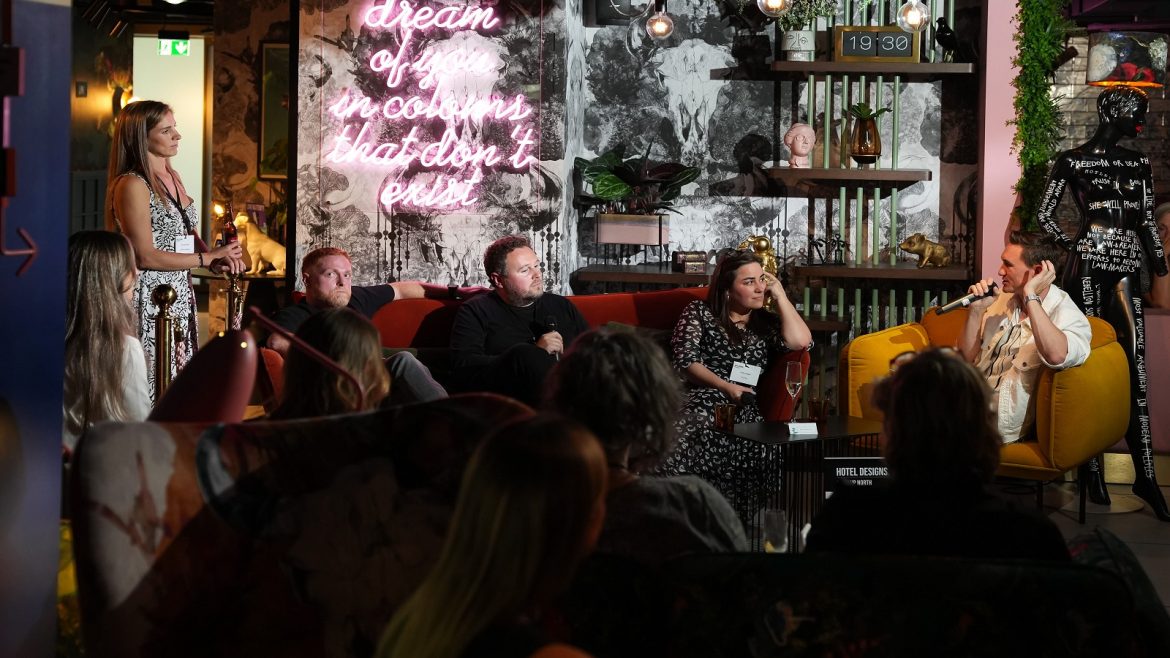
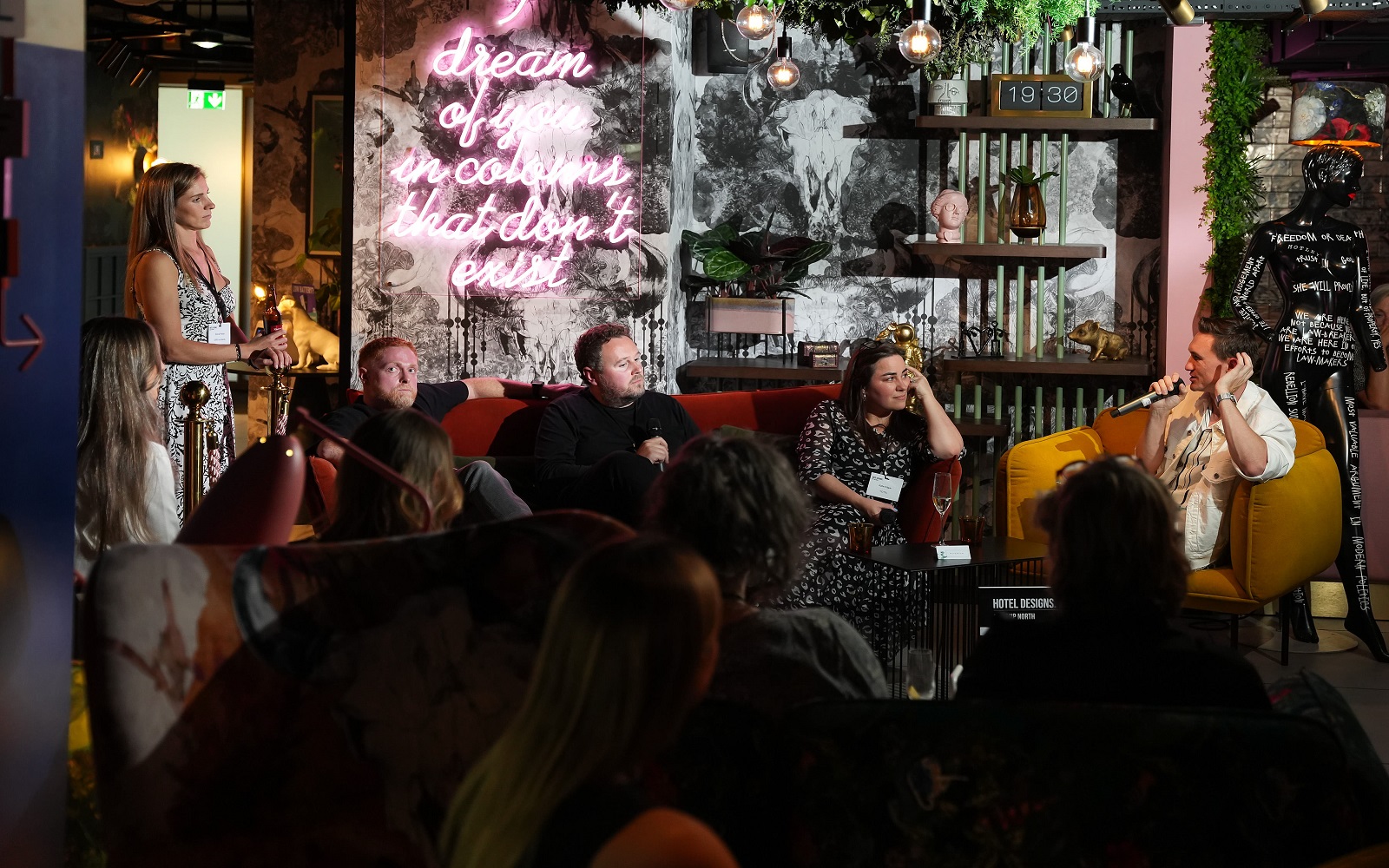
Northern Lights elevates dining experience at Radisson RED
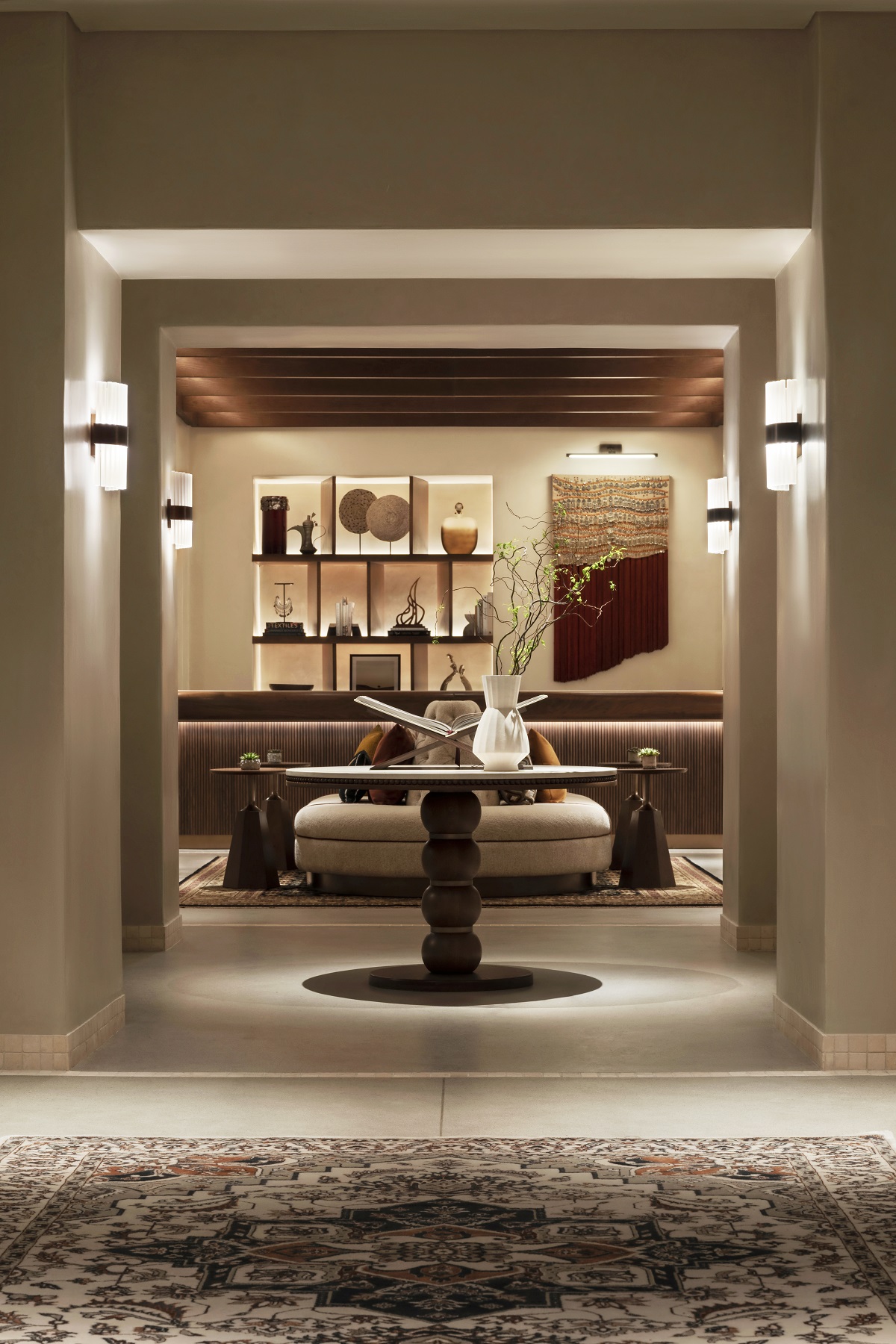
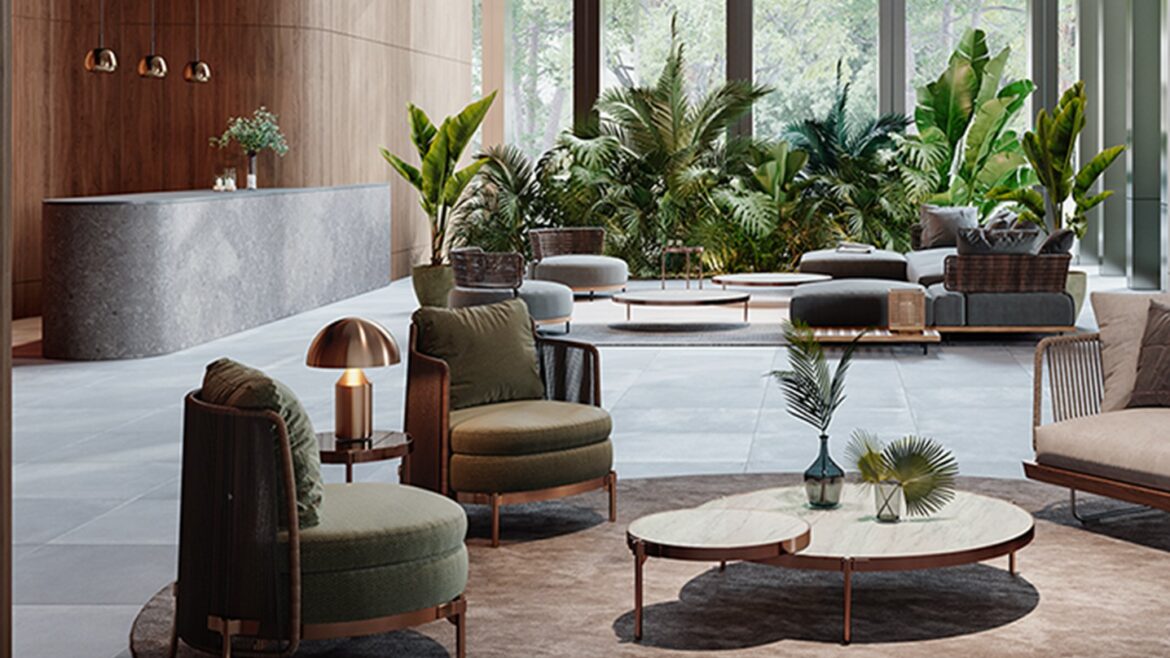
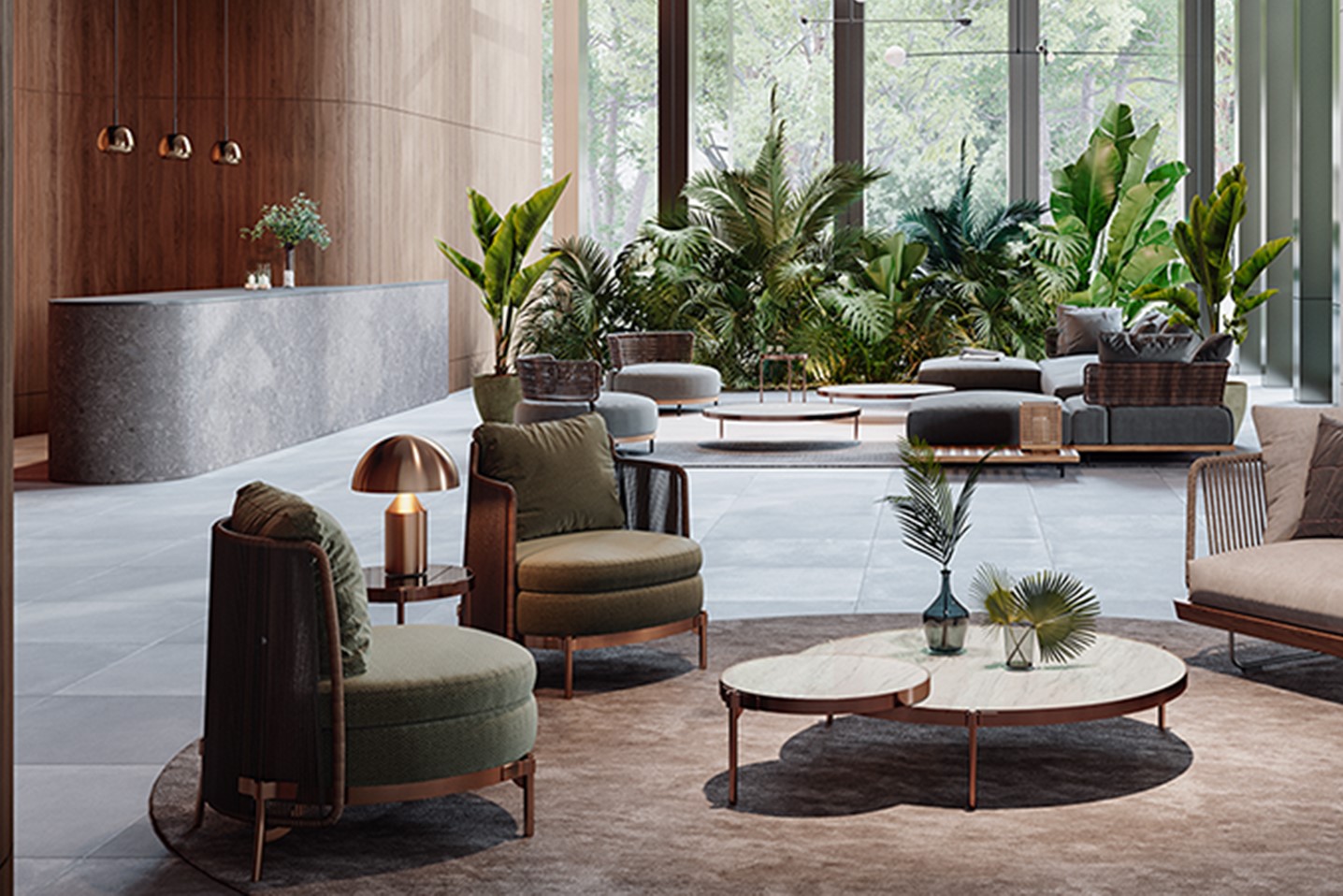
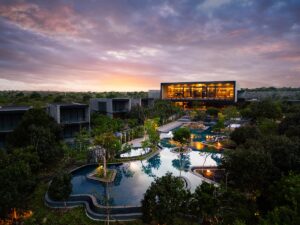
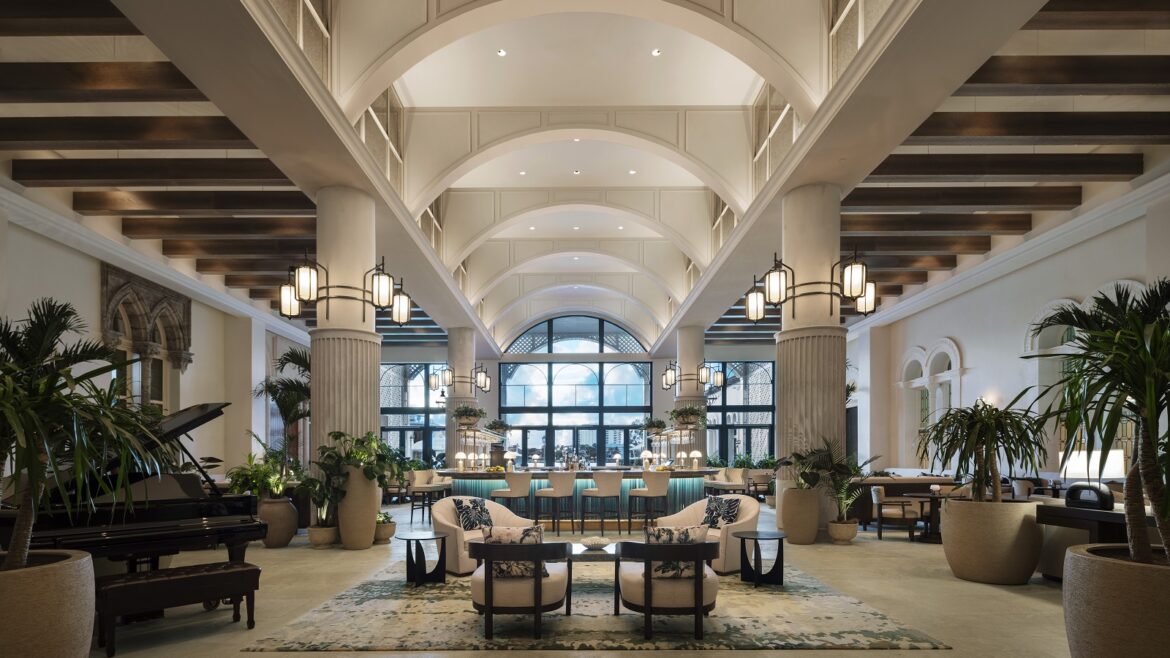
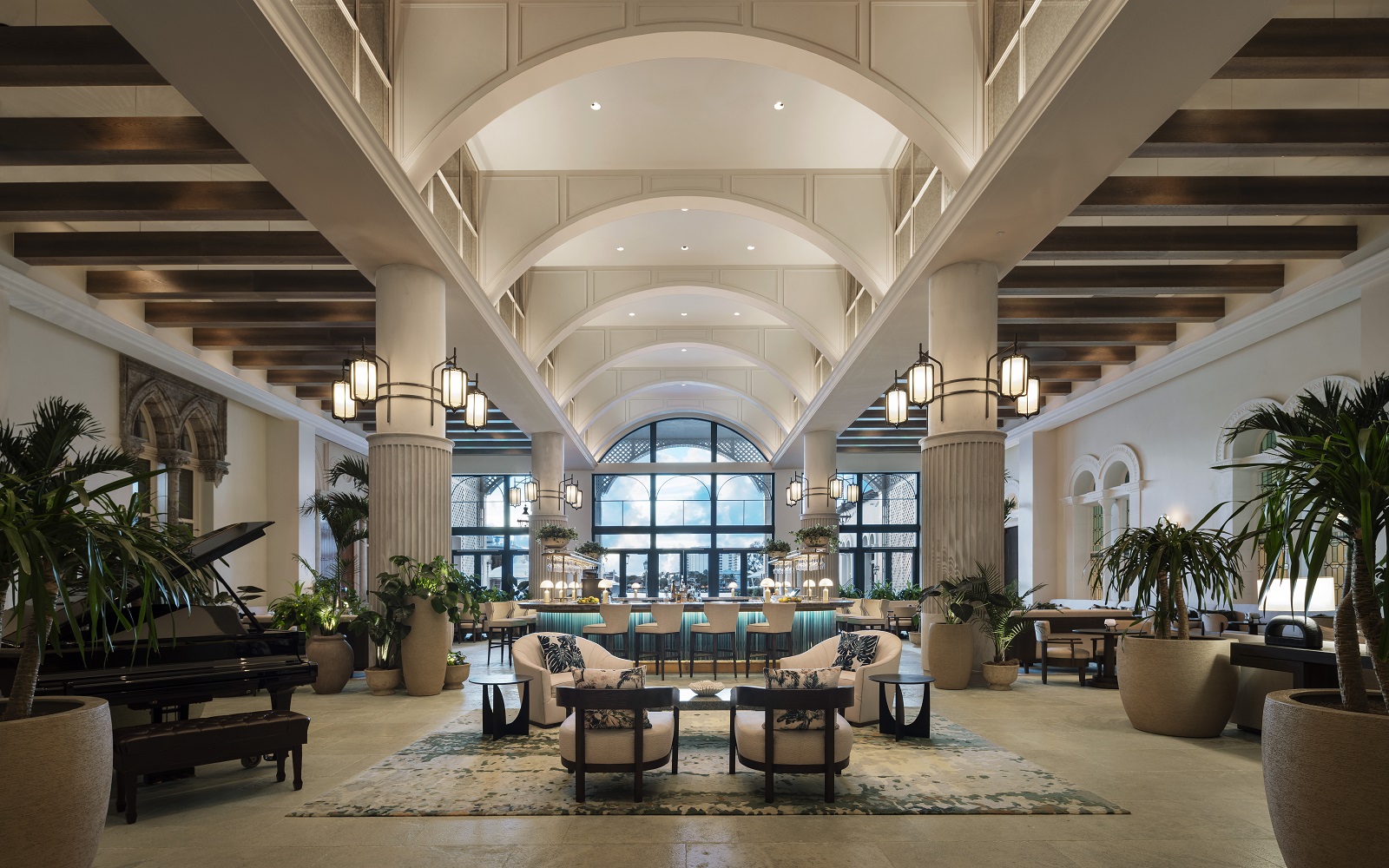
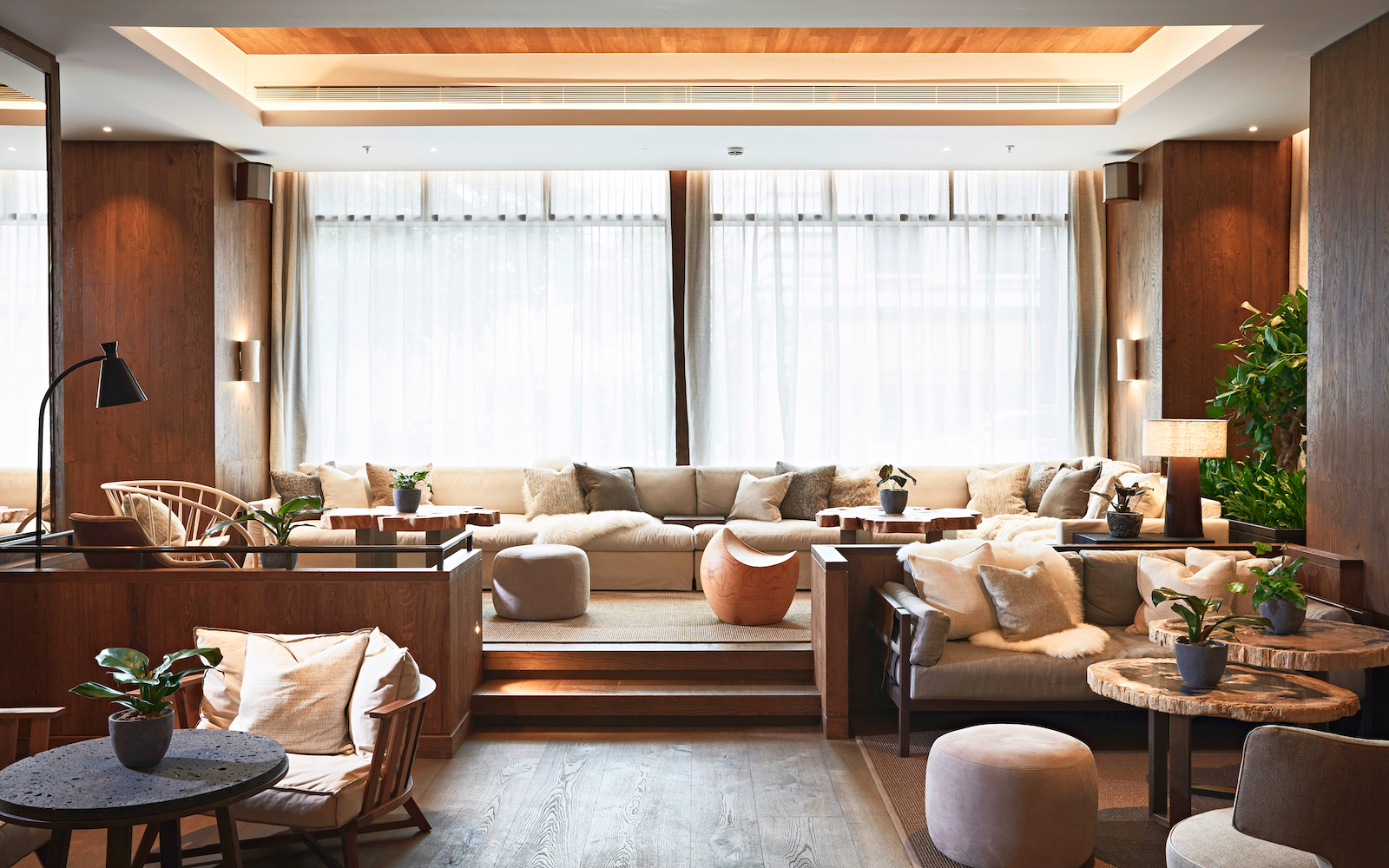
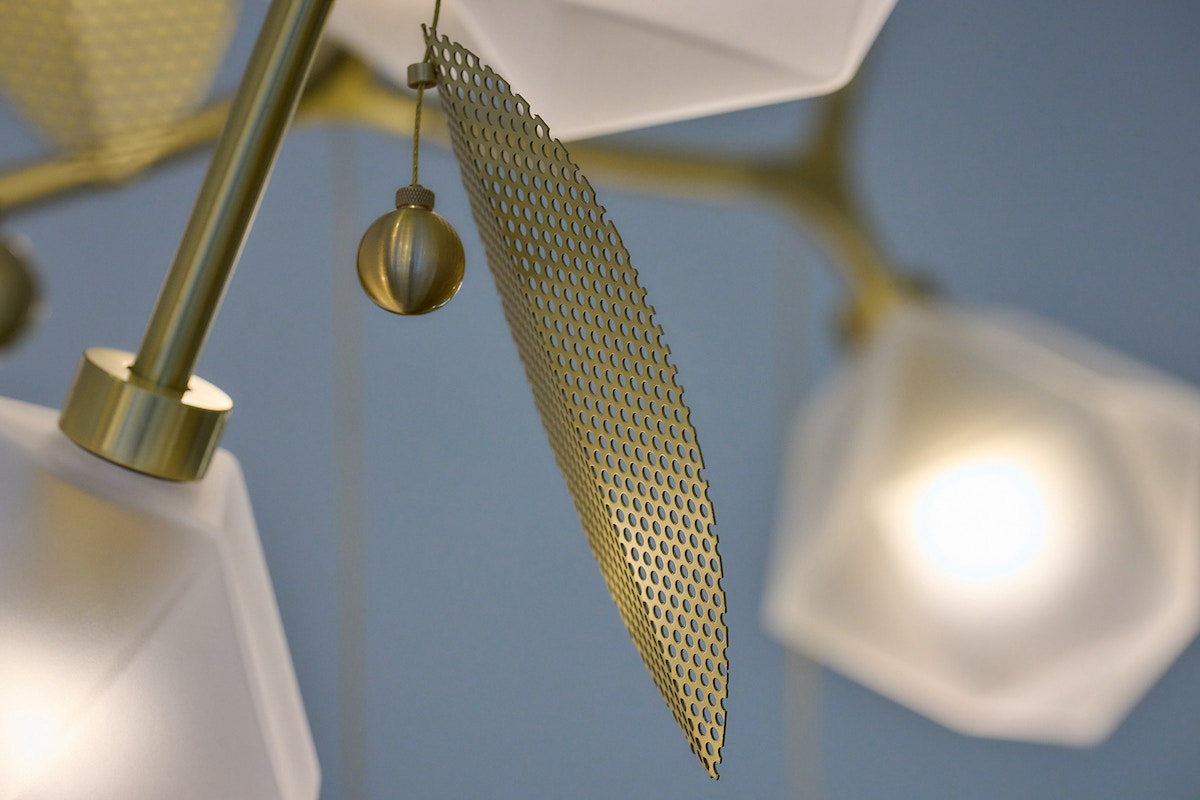
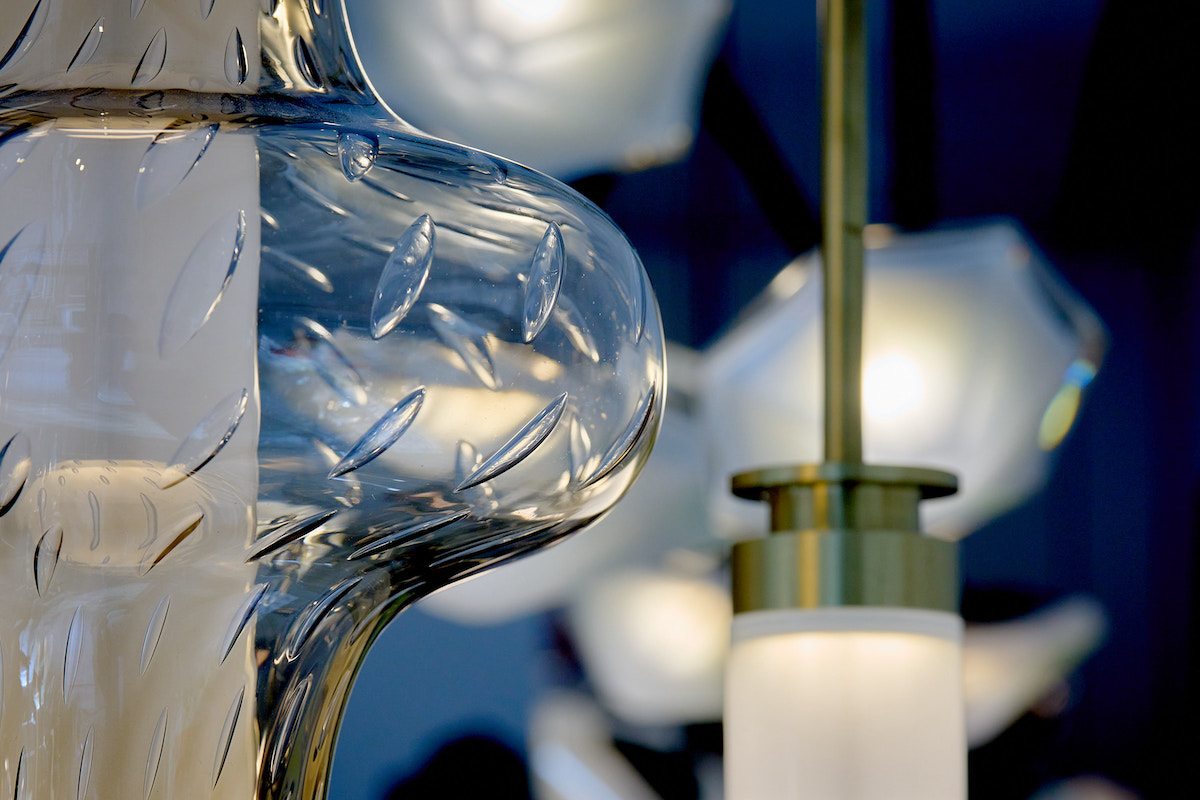
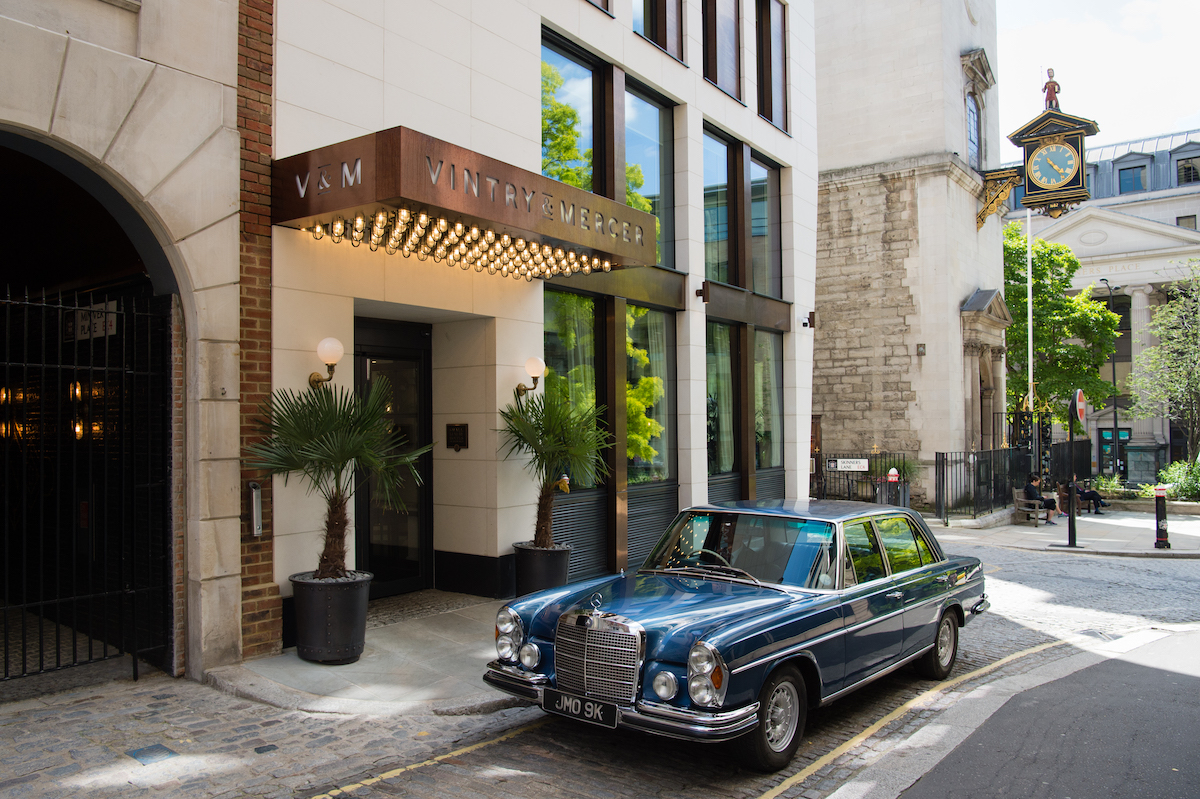
Radisson RED Liverpool was once used as student accommodation, but has recently been transformed by KONCEPT ID into a stylish boutique hotel with bespoke lighting handcrafted by the team at Northern Lights…
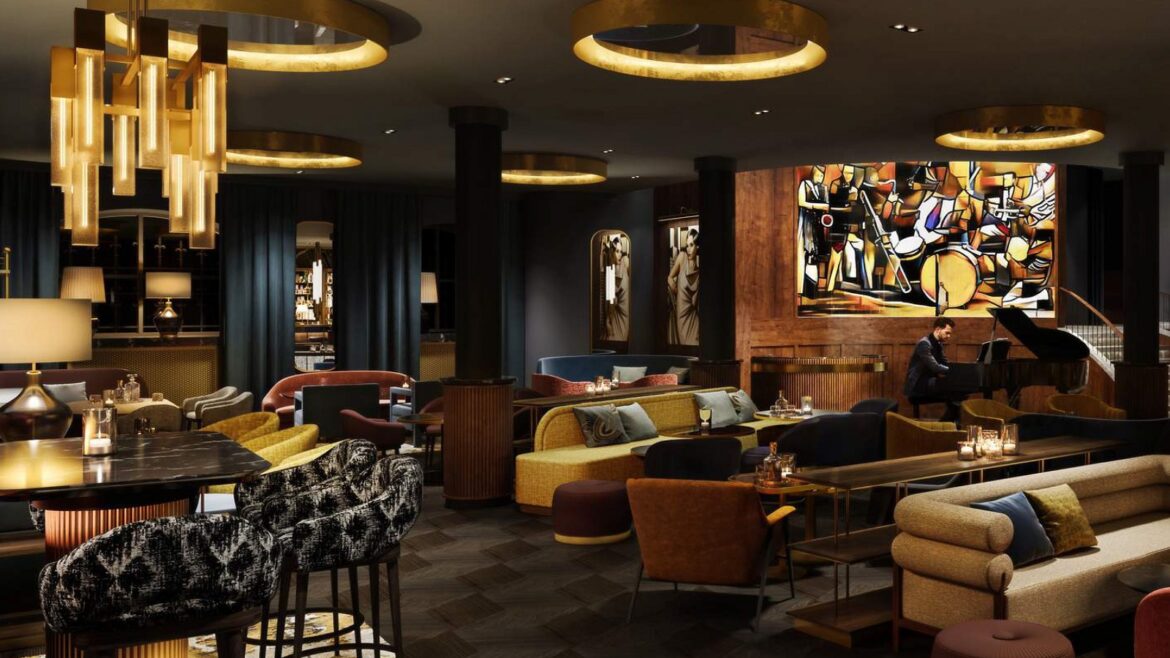
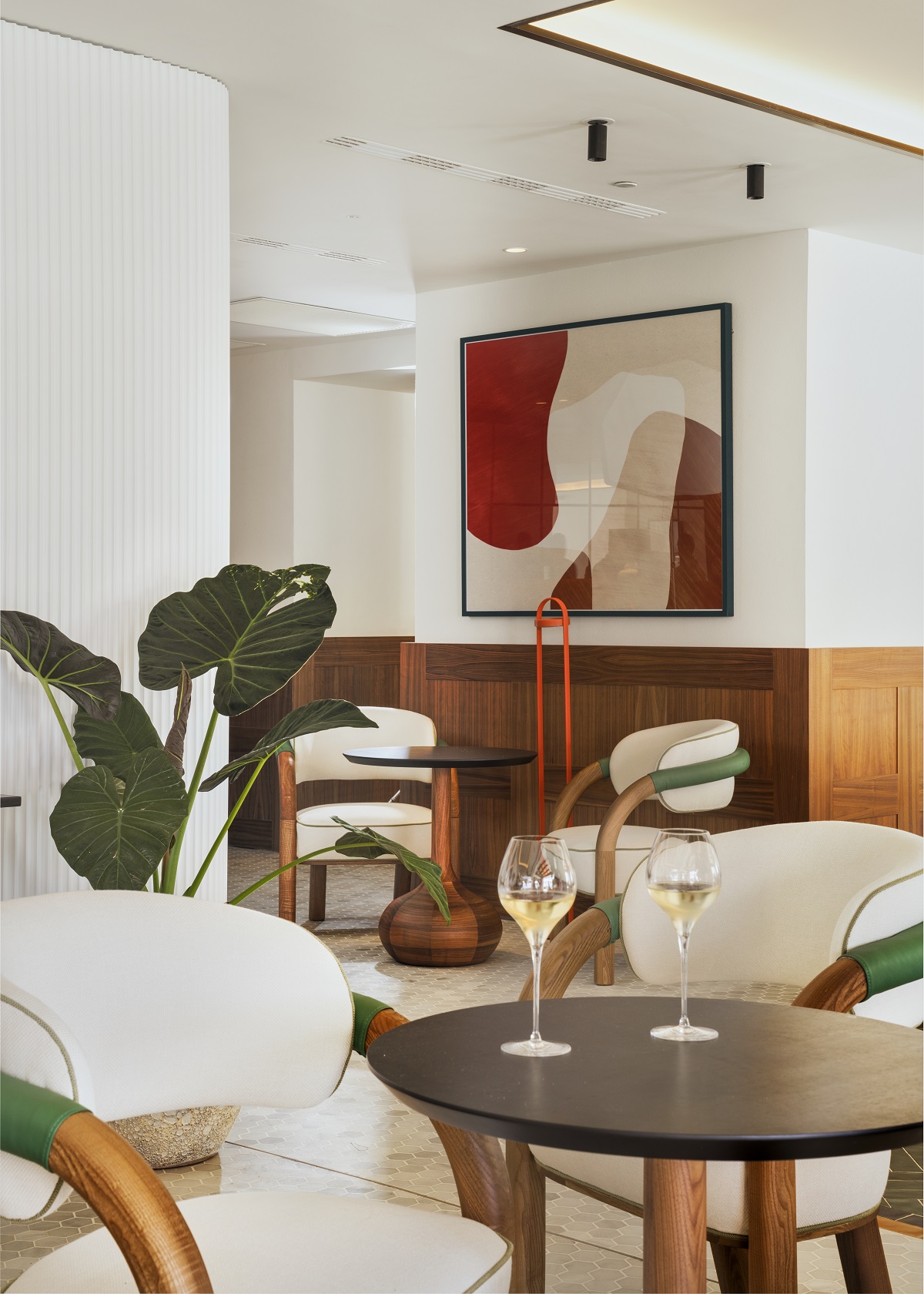
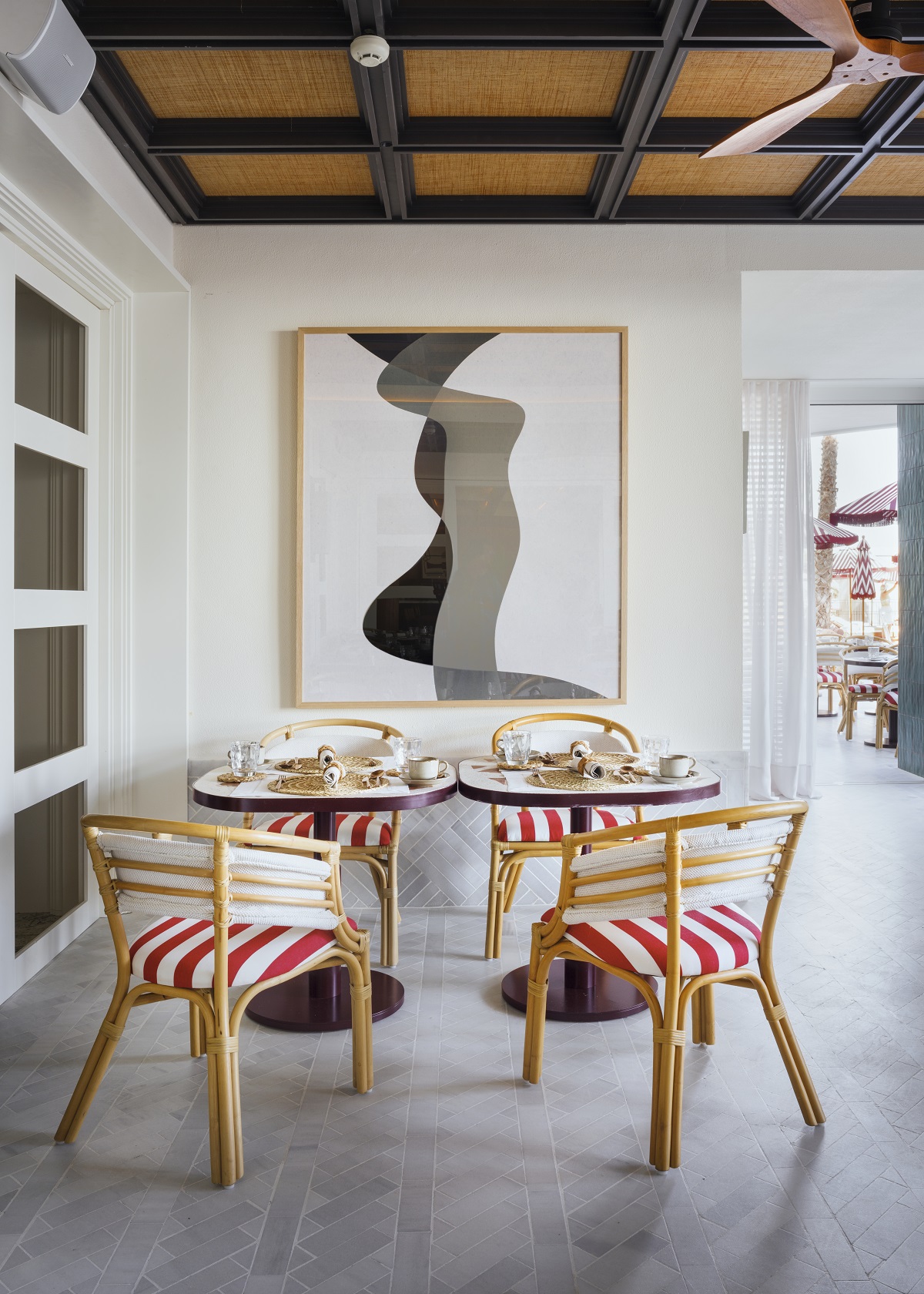
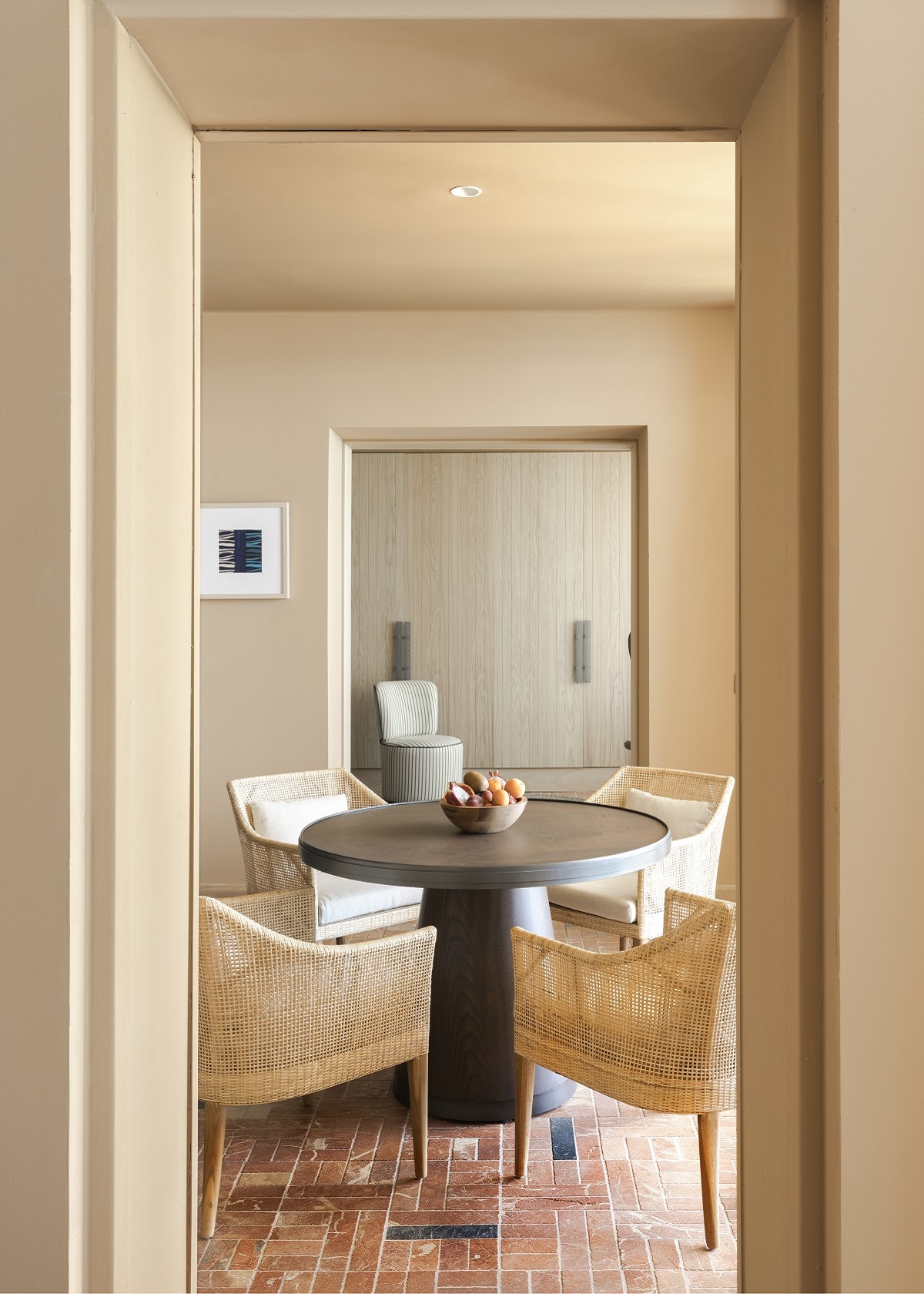
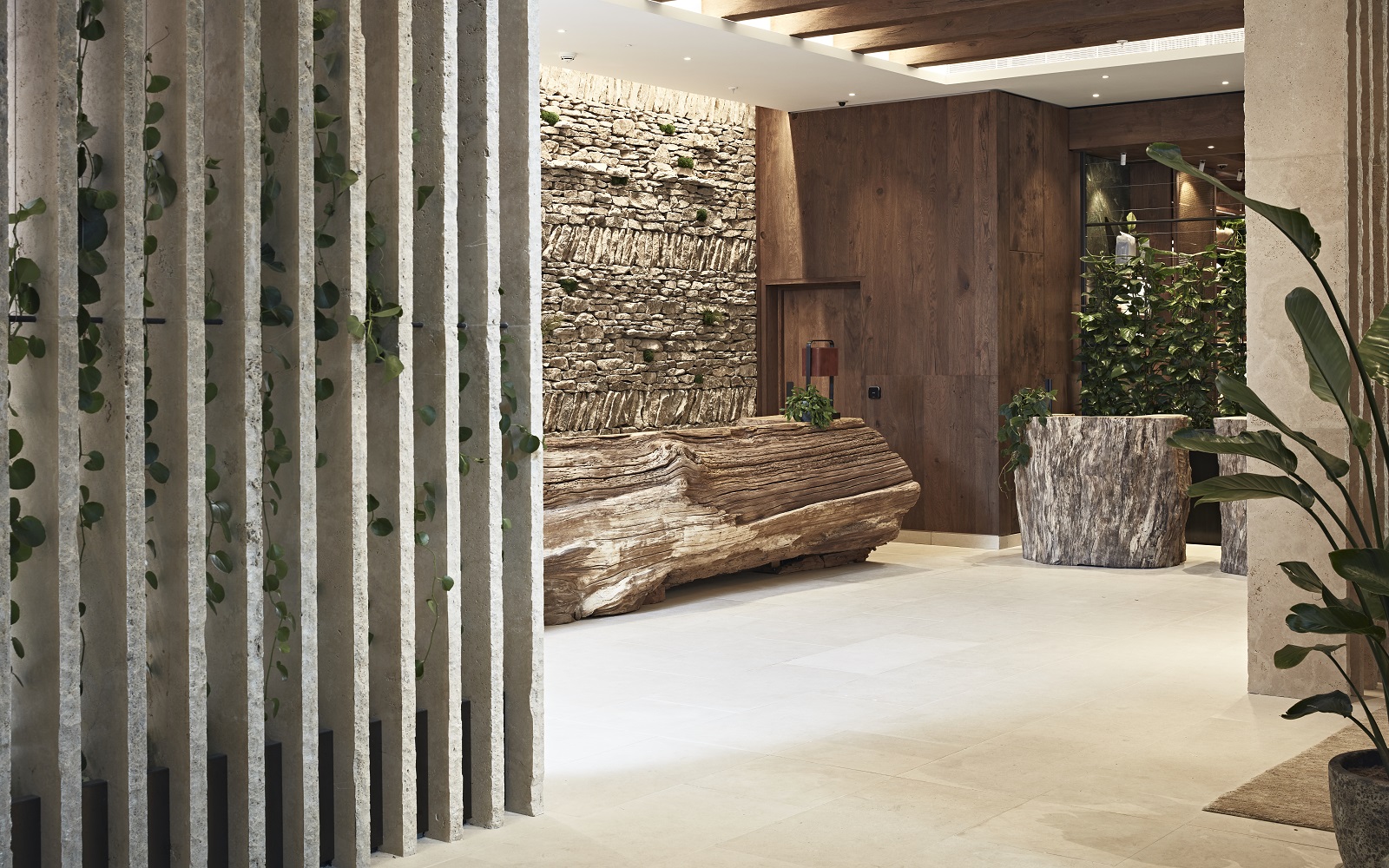
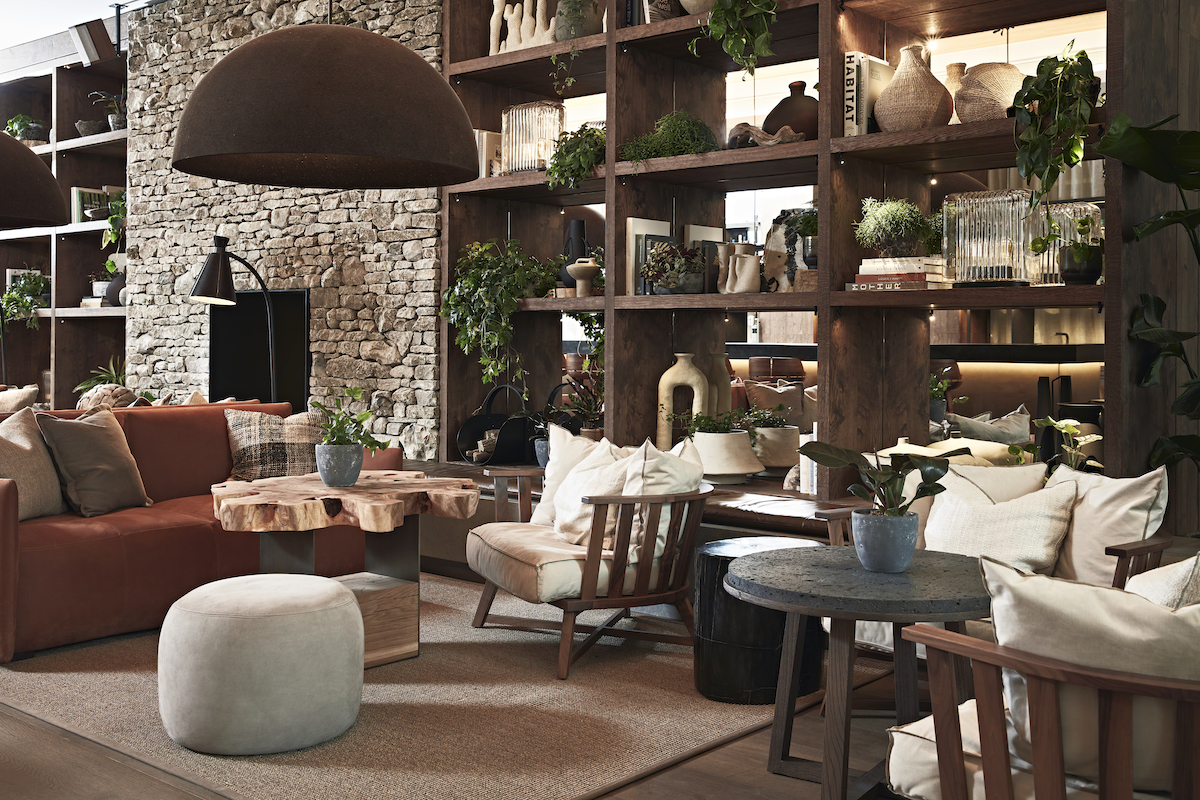
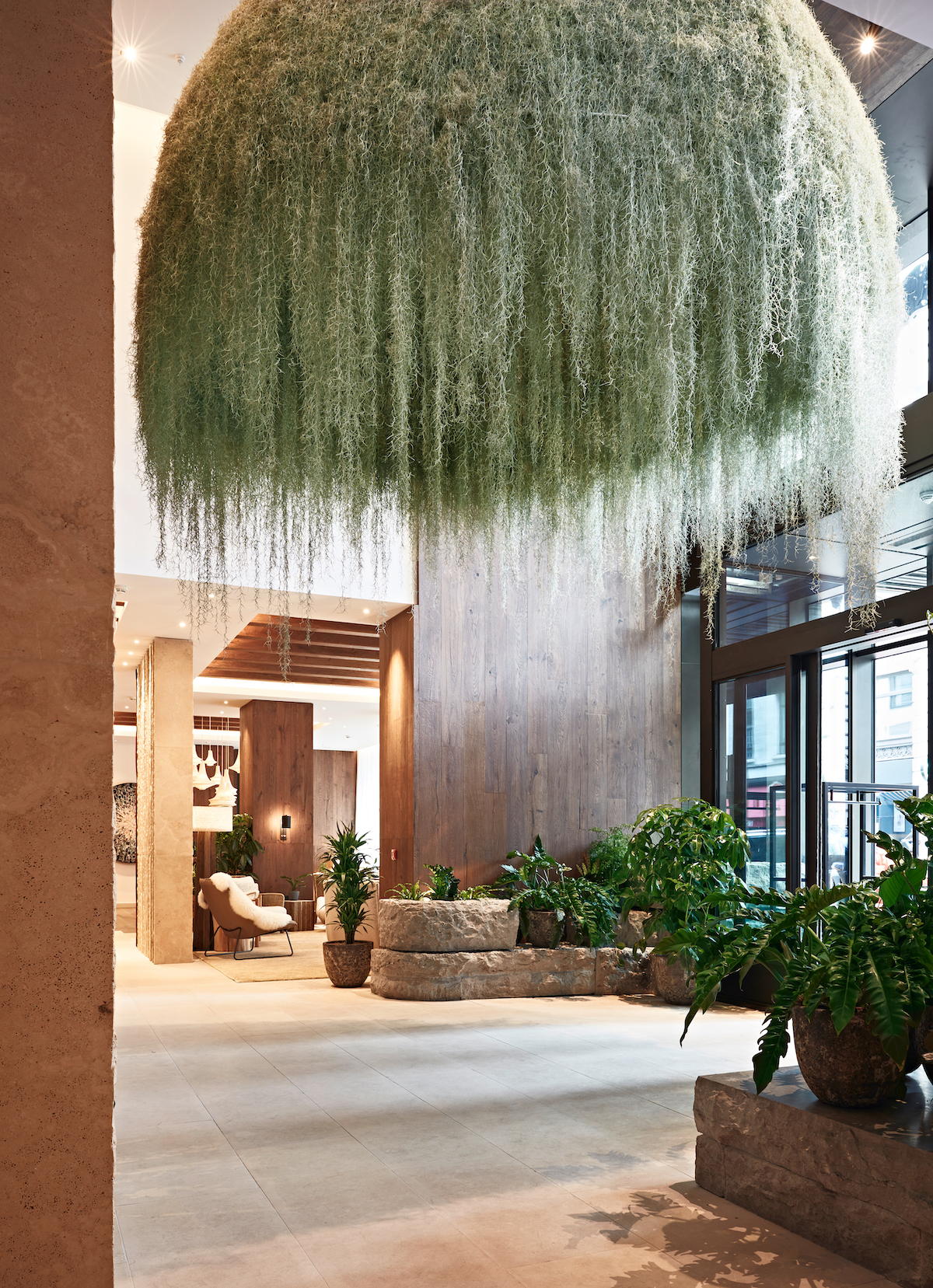
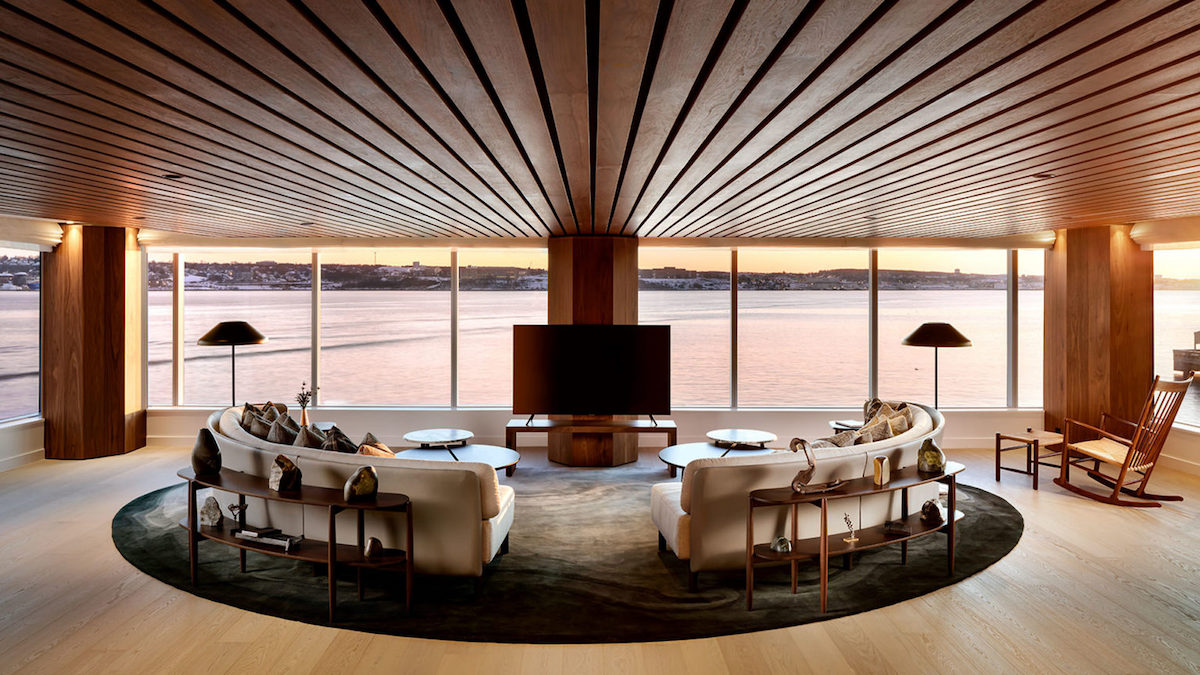
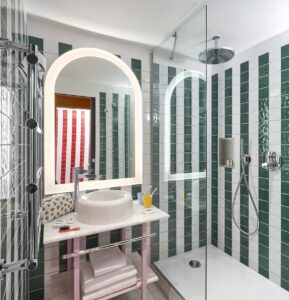
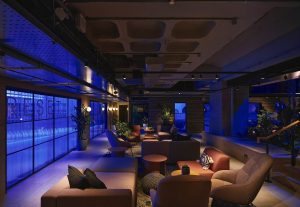
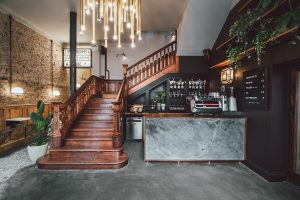
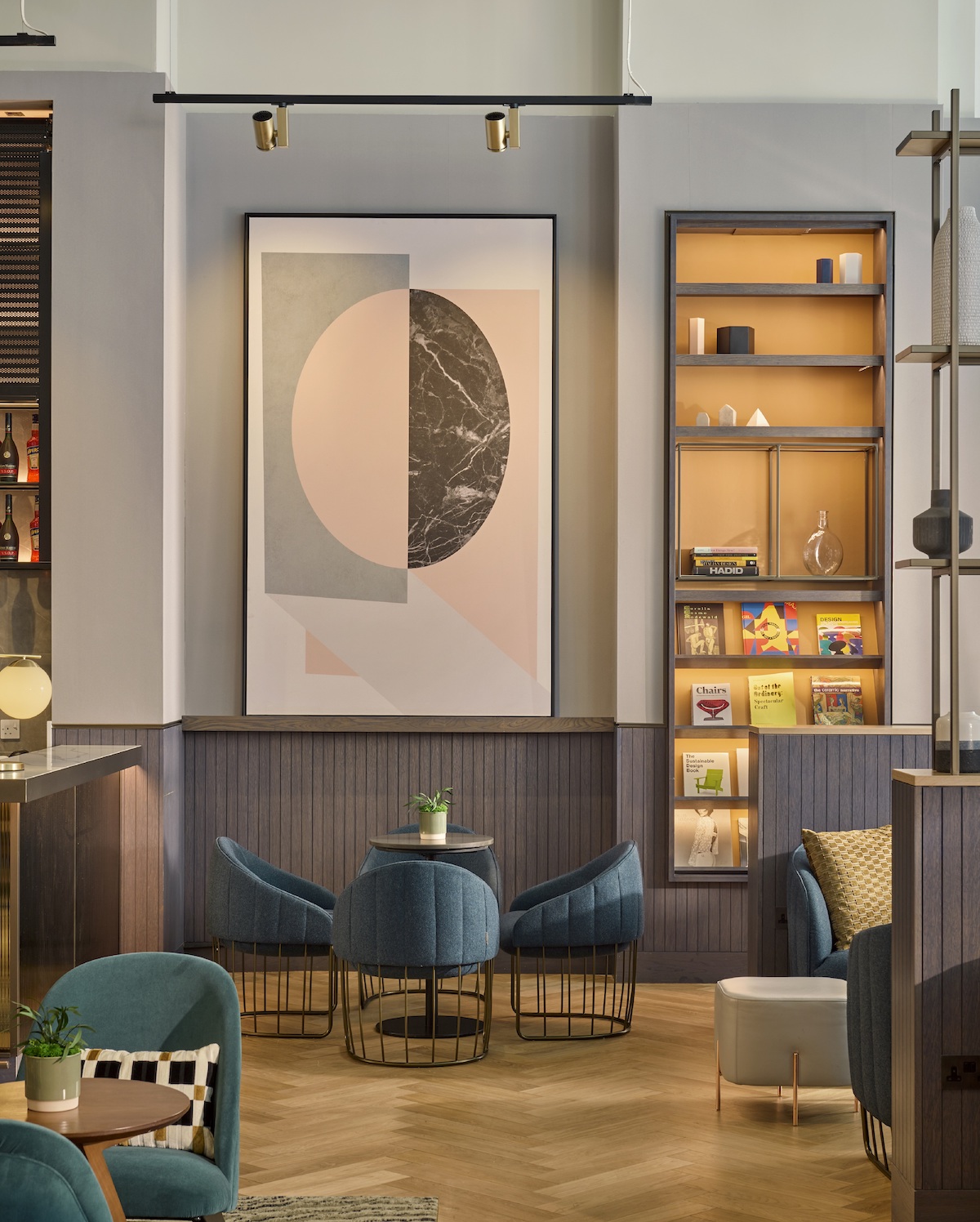
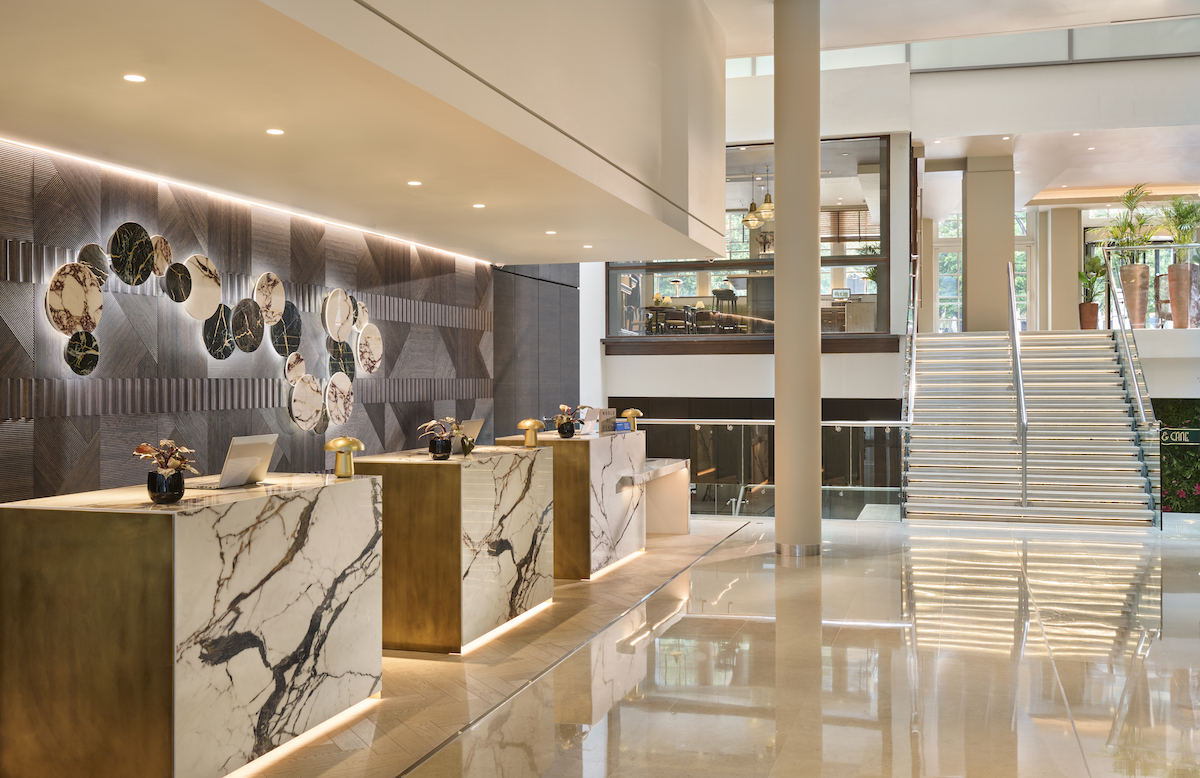
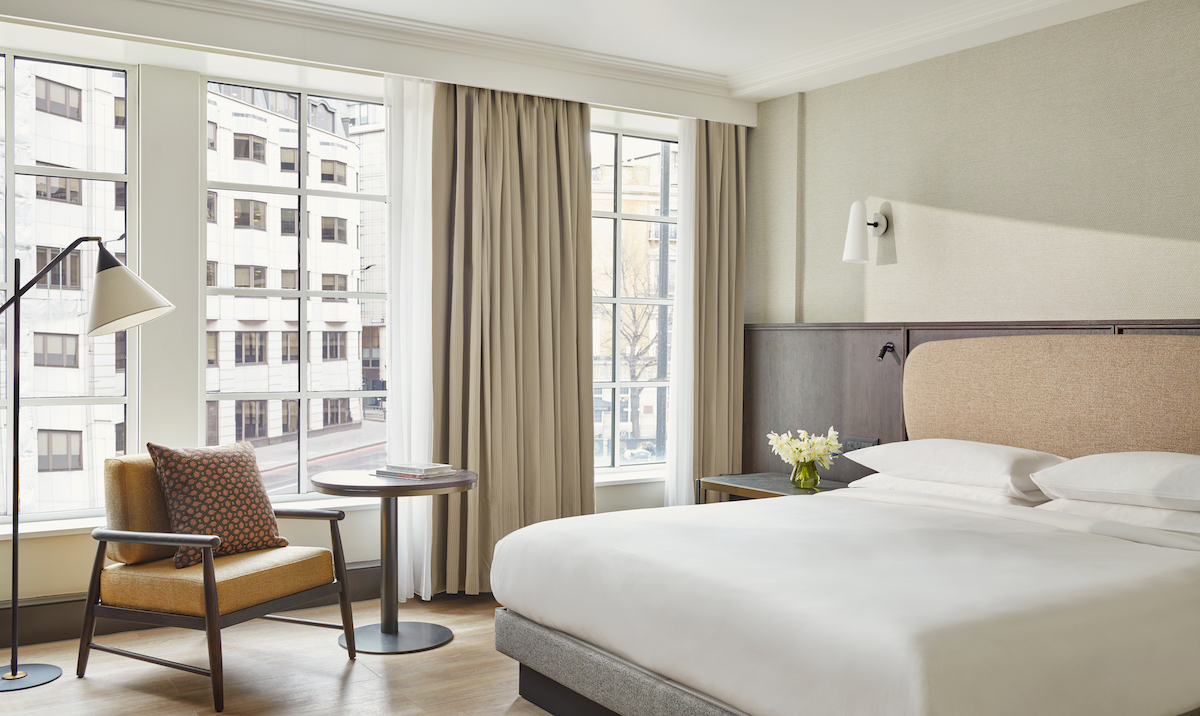
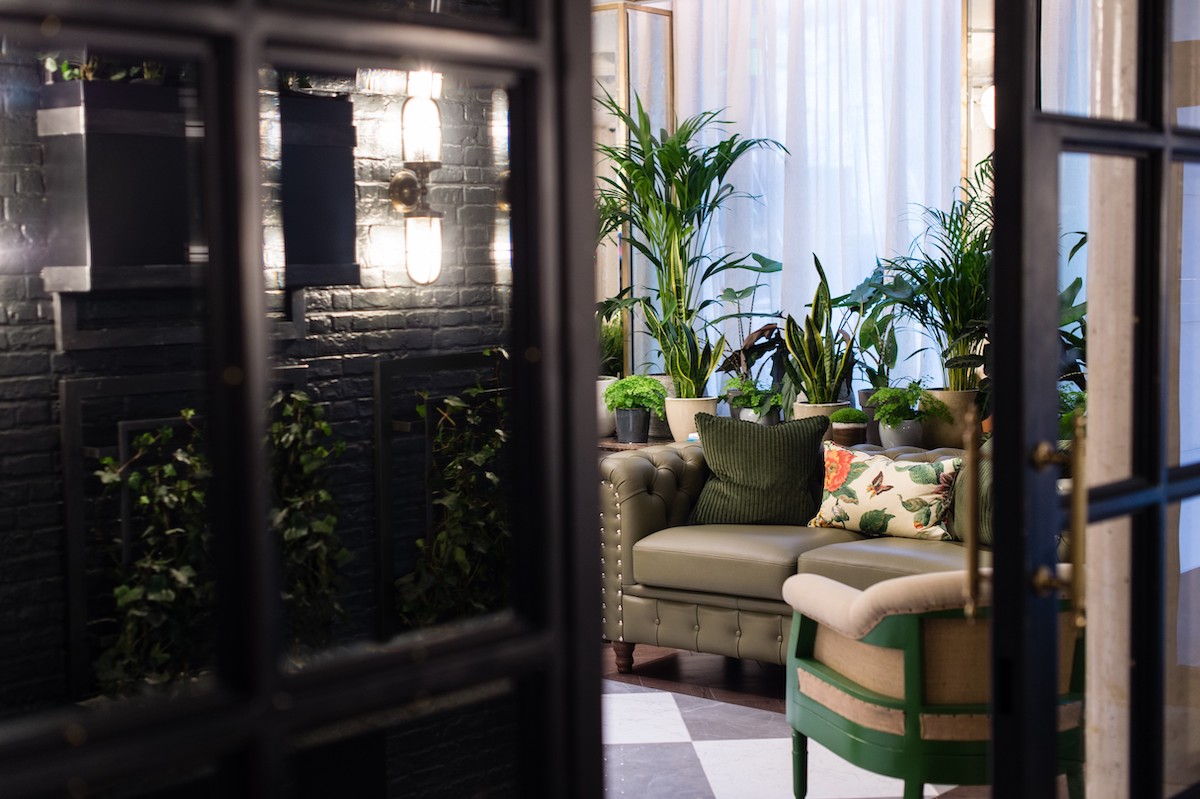
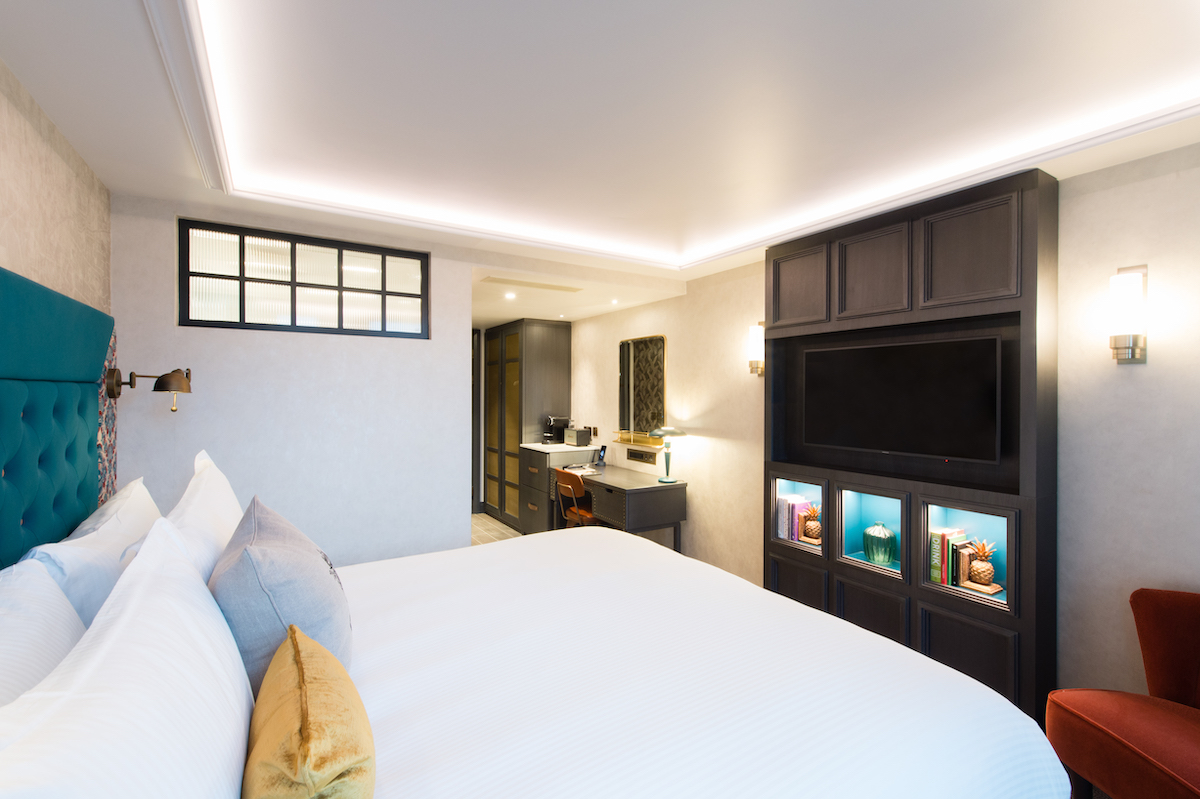
Radisson RED Liverpool has been reimagined to shelter 201 guestrooms, five meeting rooms and a restaurant and bar, all while maintaining the building’s Grade II listed original features. In conjunction with the statement lighting from Northern Lights, the design celebrates the high ceilings, archways and exposed brickwork to perfection. Incorporating luxurious materials, including marble, velvet, leather and sumptuous rugs, contemporary and decadent influences are fused effortlessly to great effect.
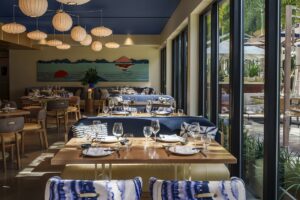
Image credit: Radisson RED Liverpool
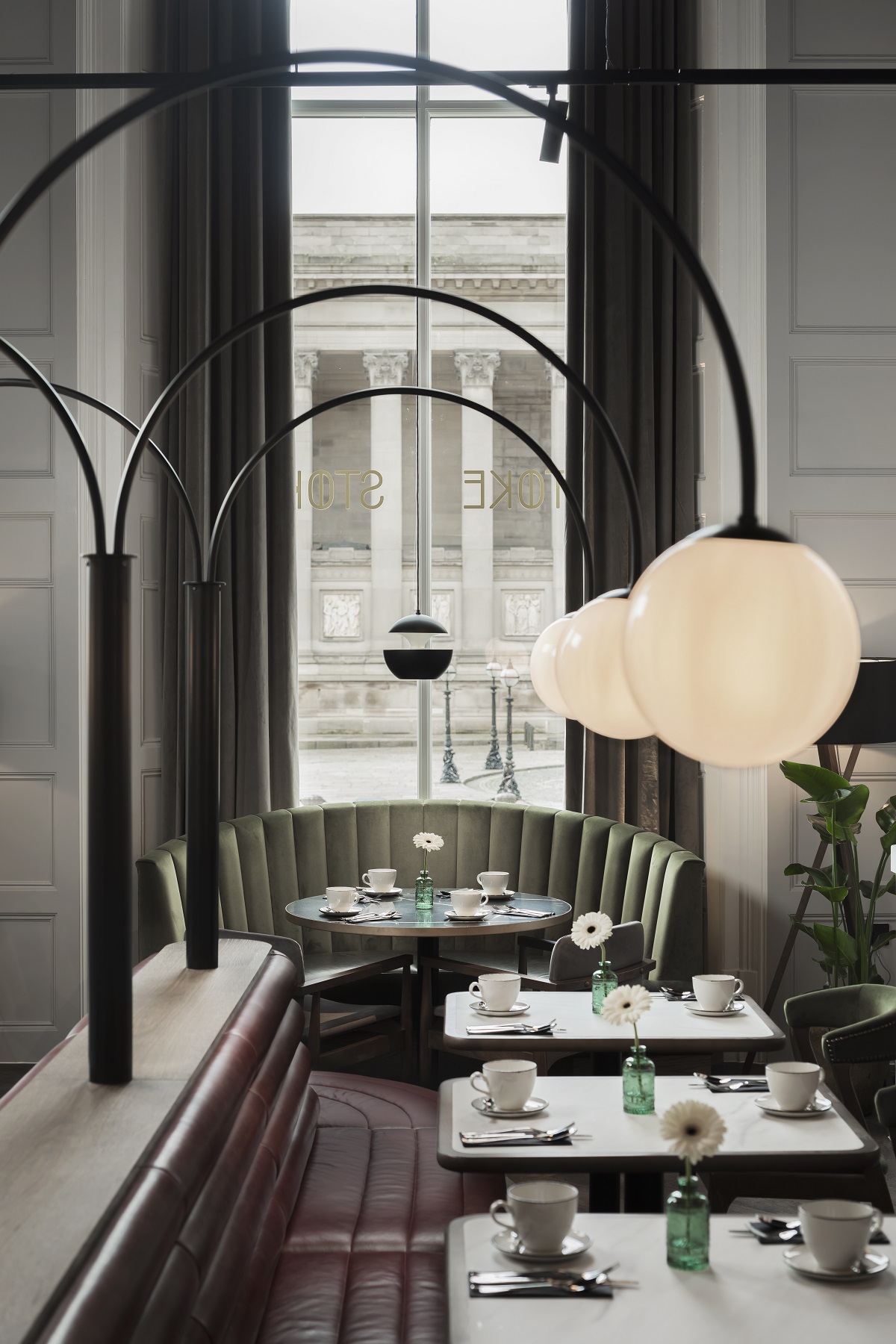
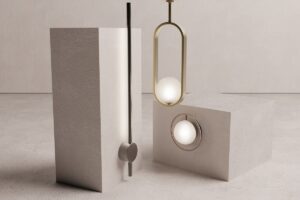
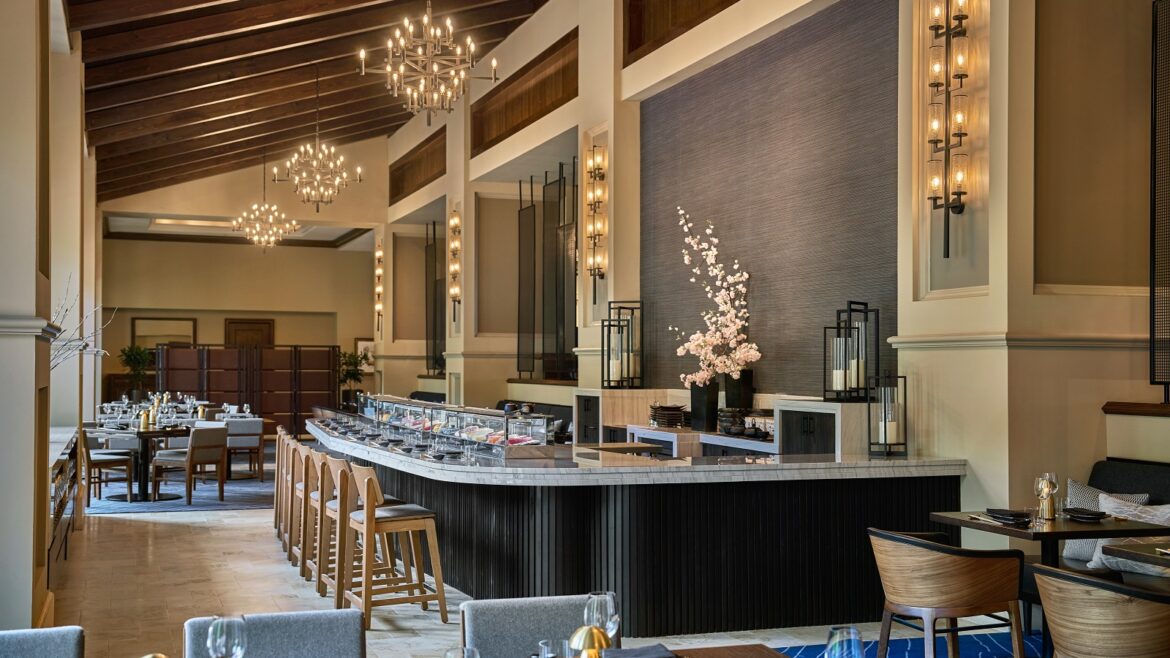
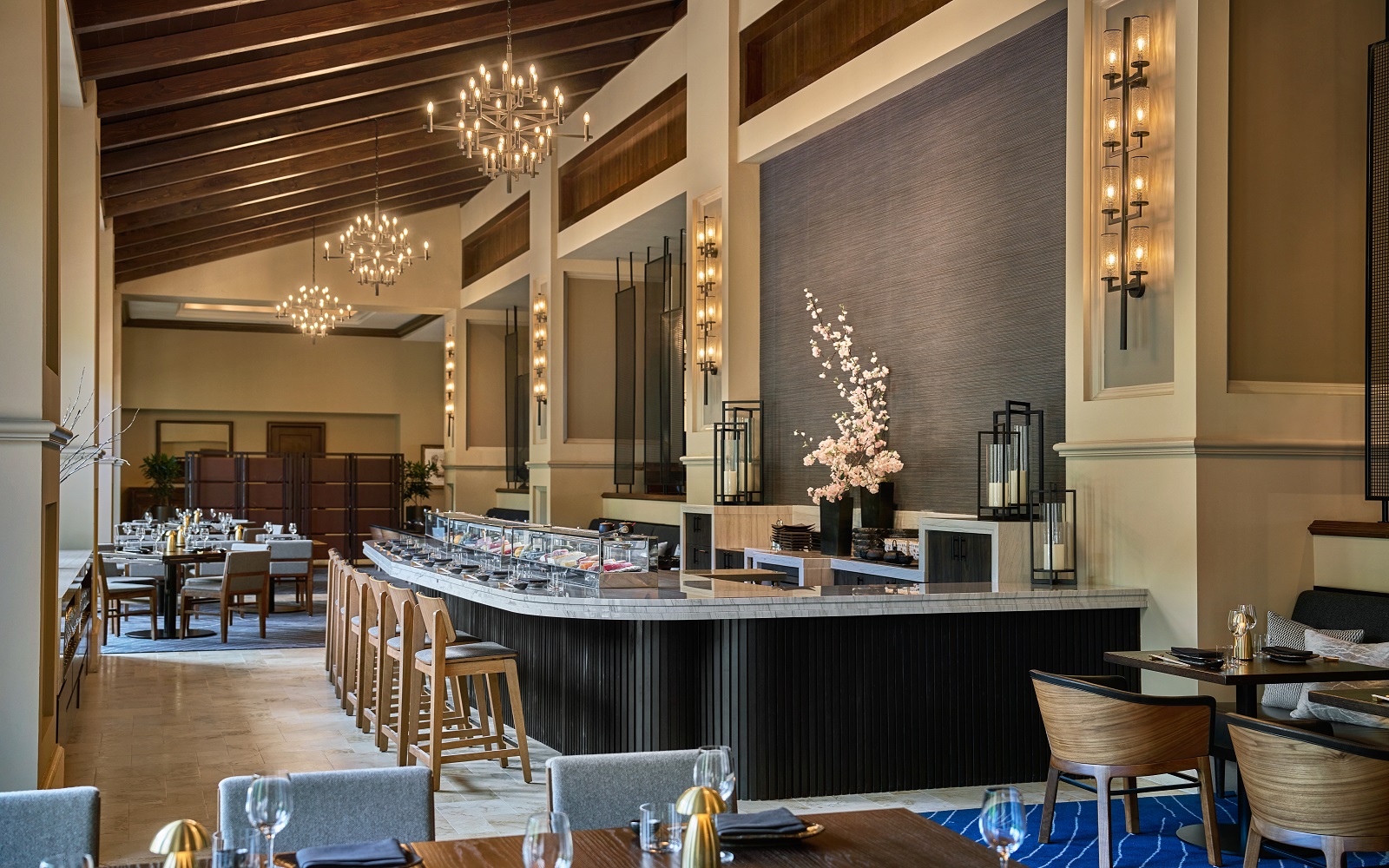
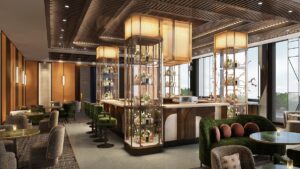
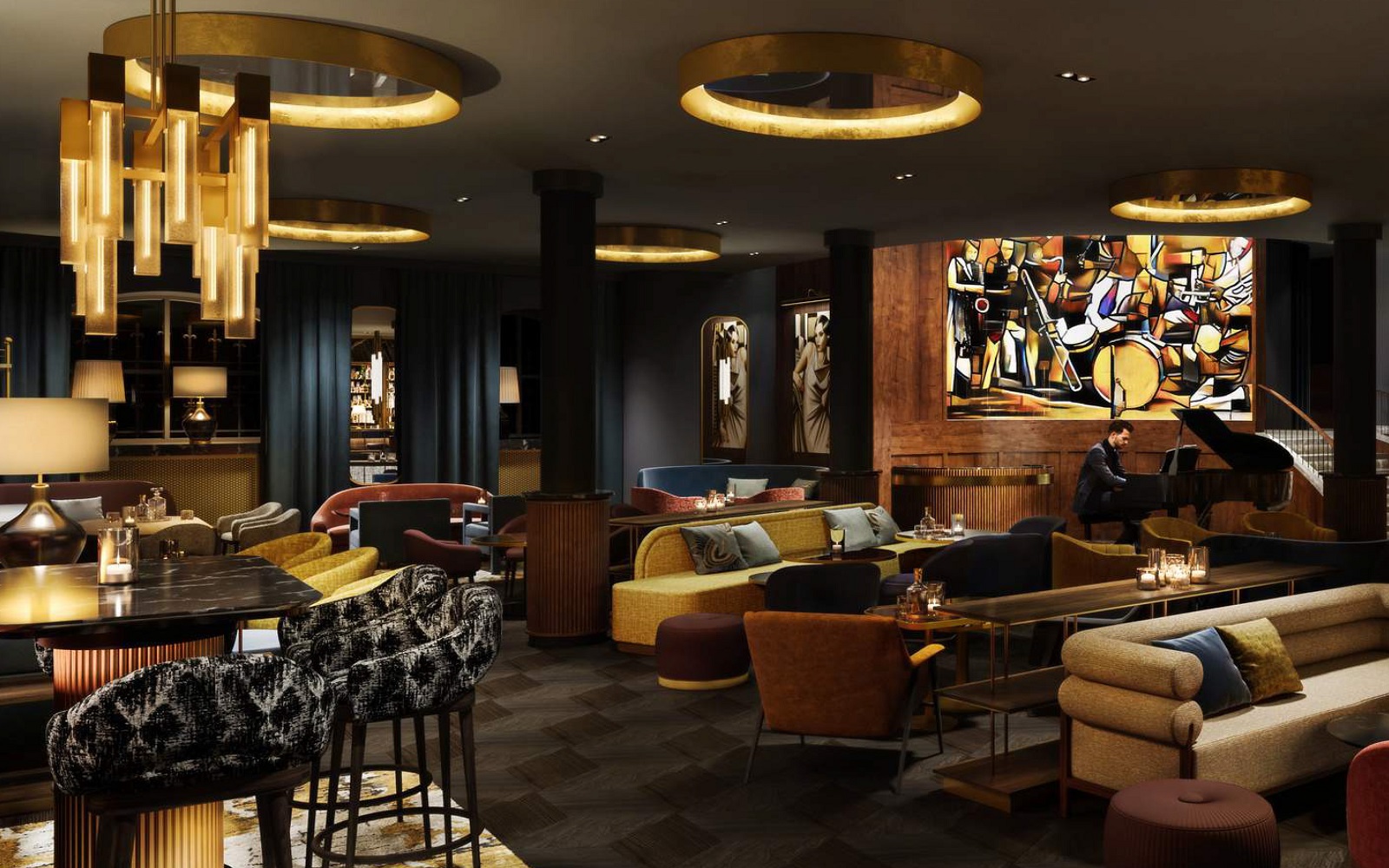
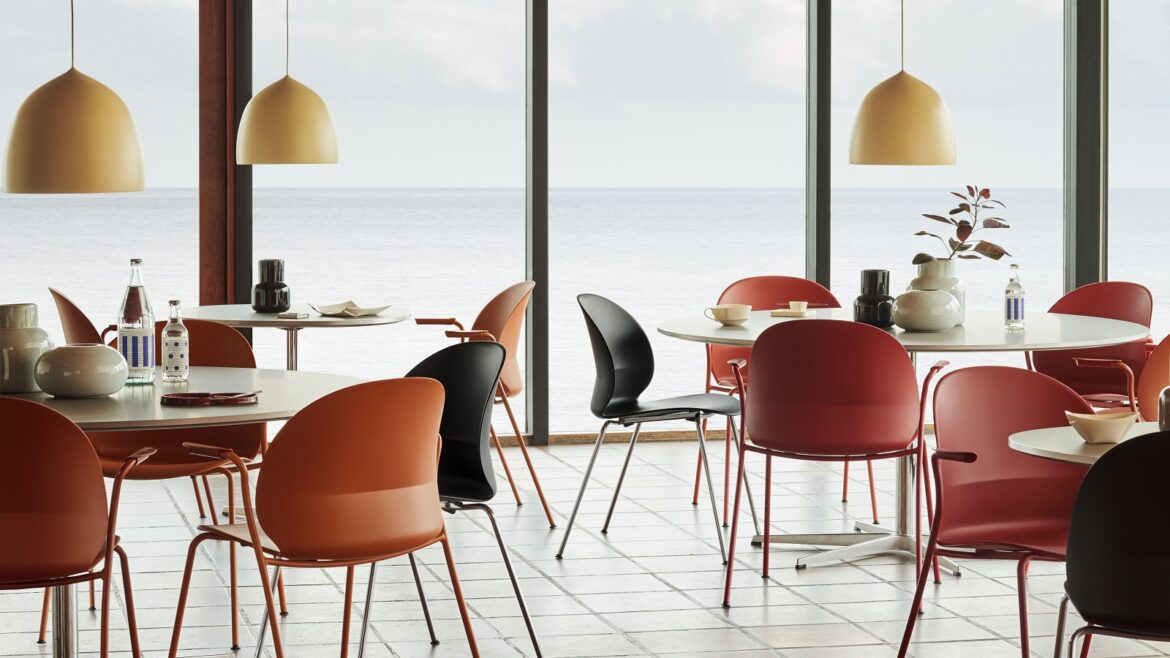
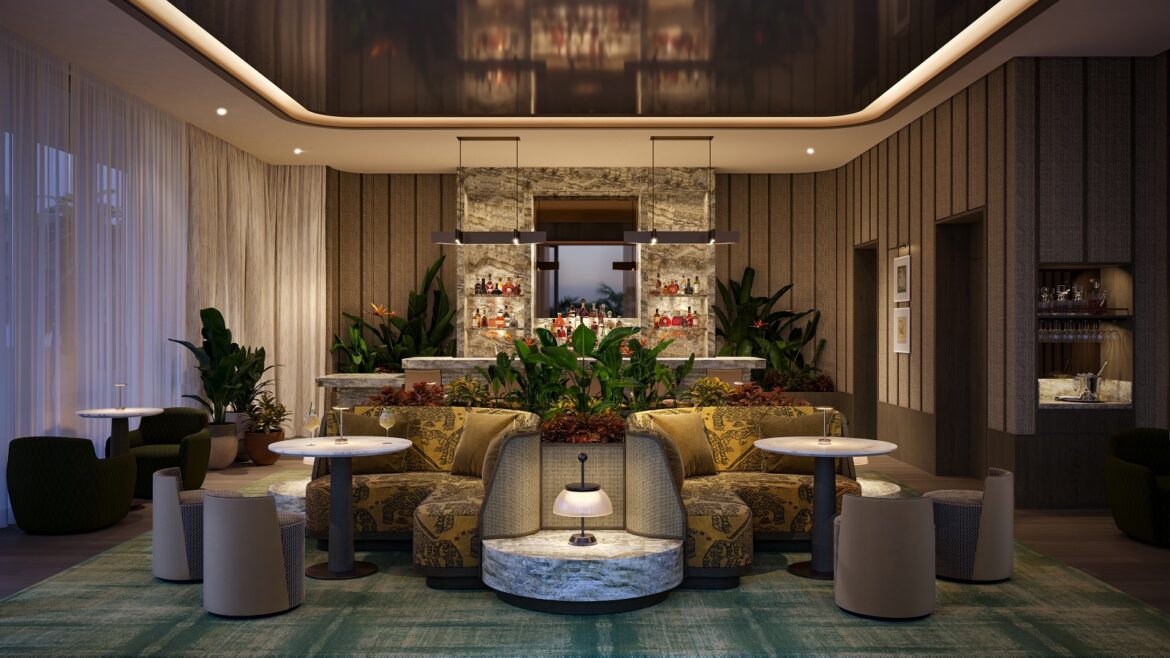
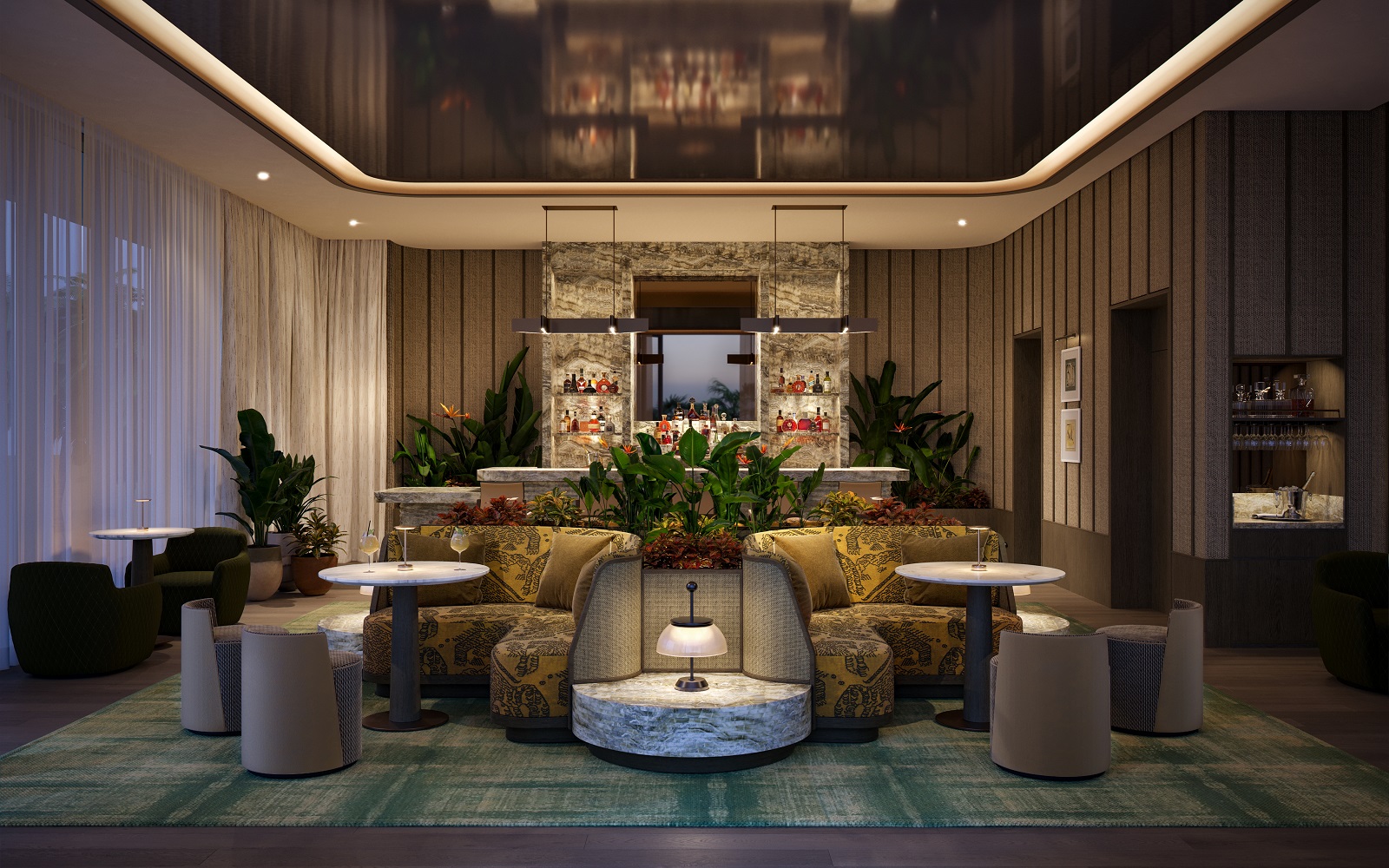
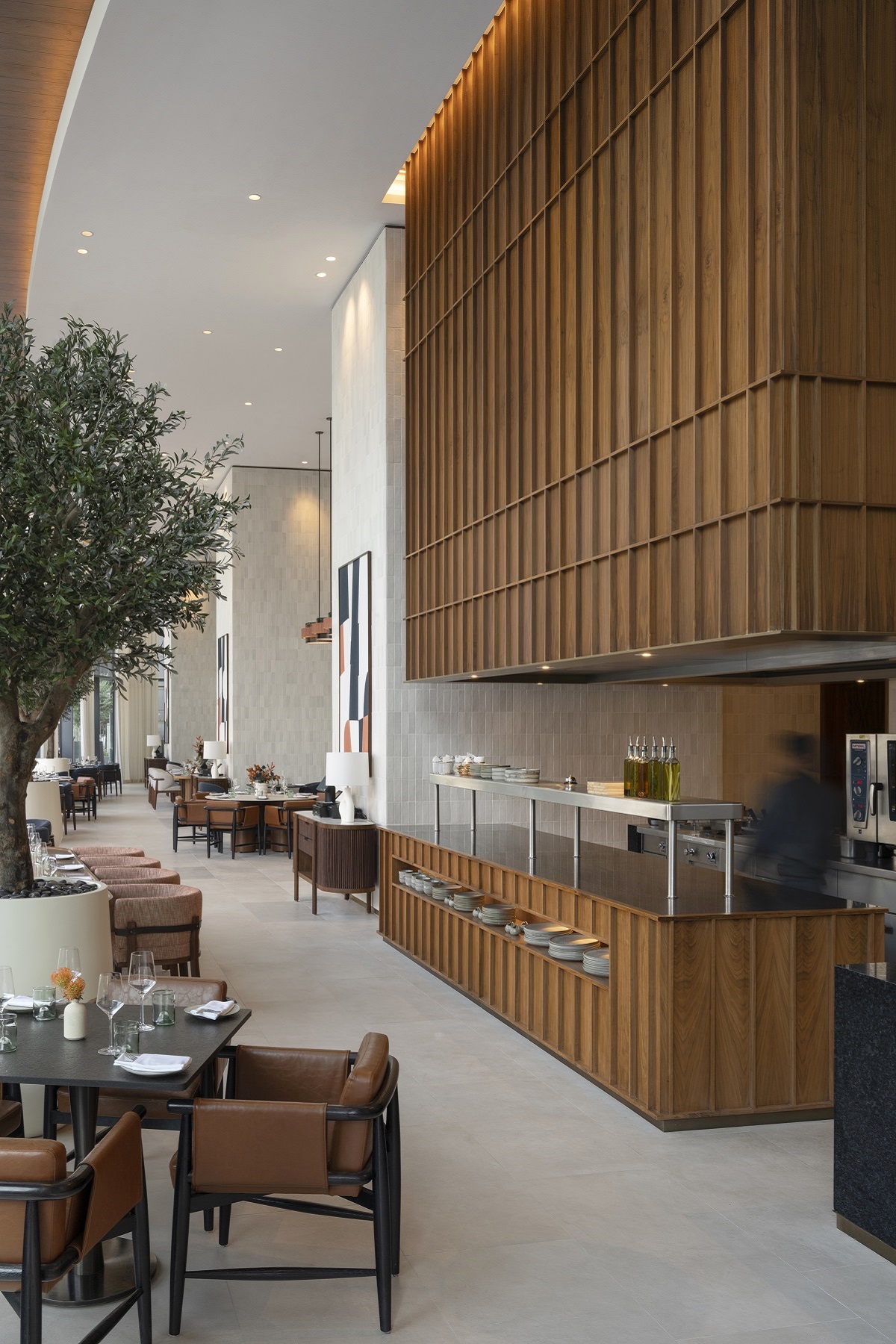
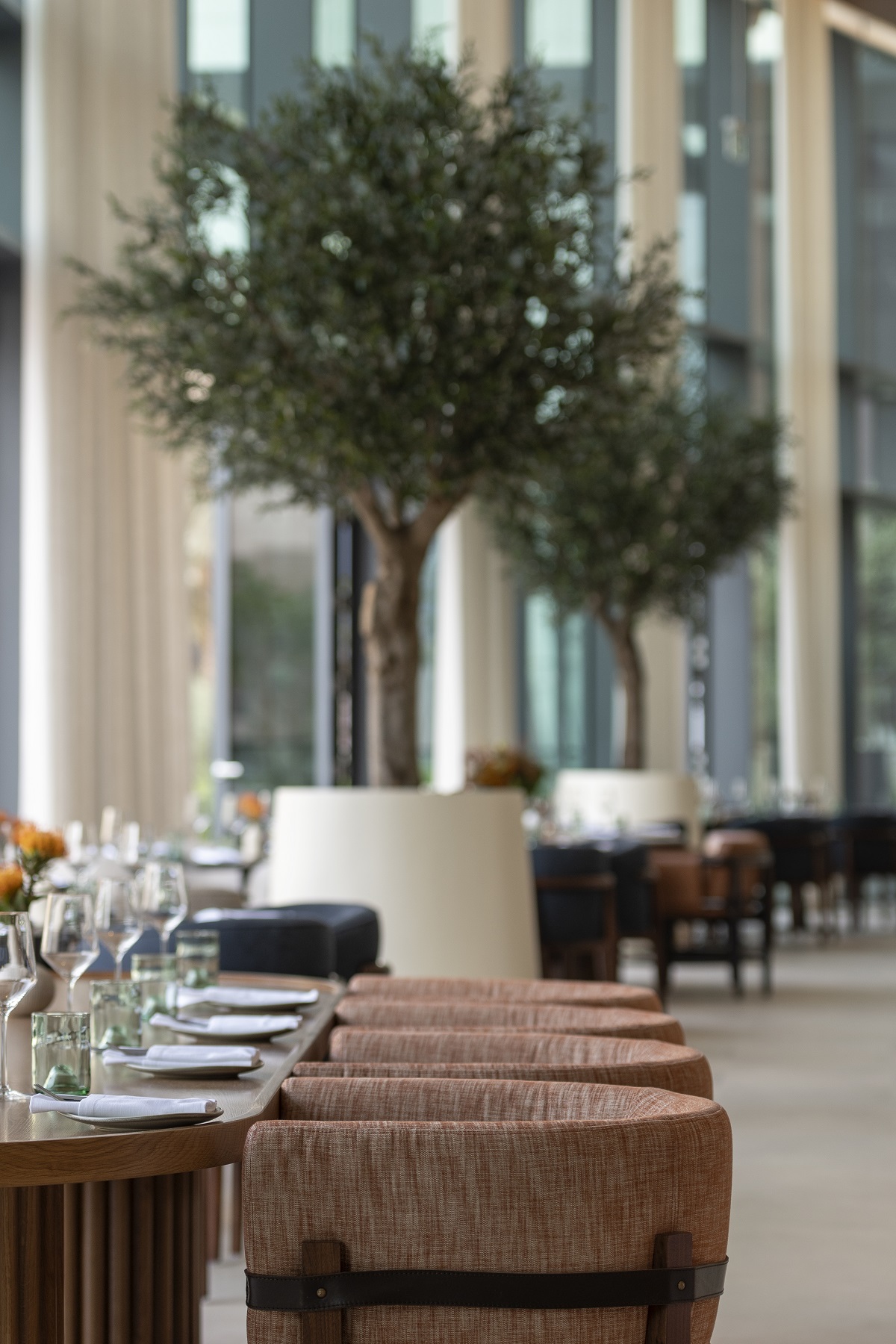
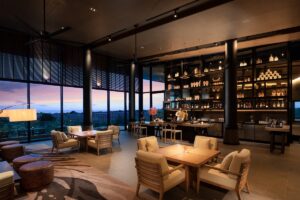
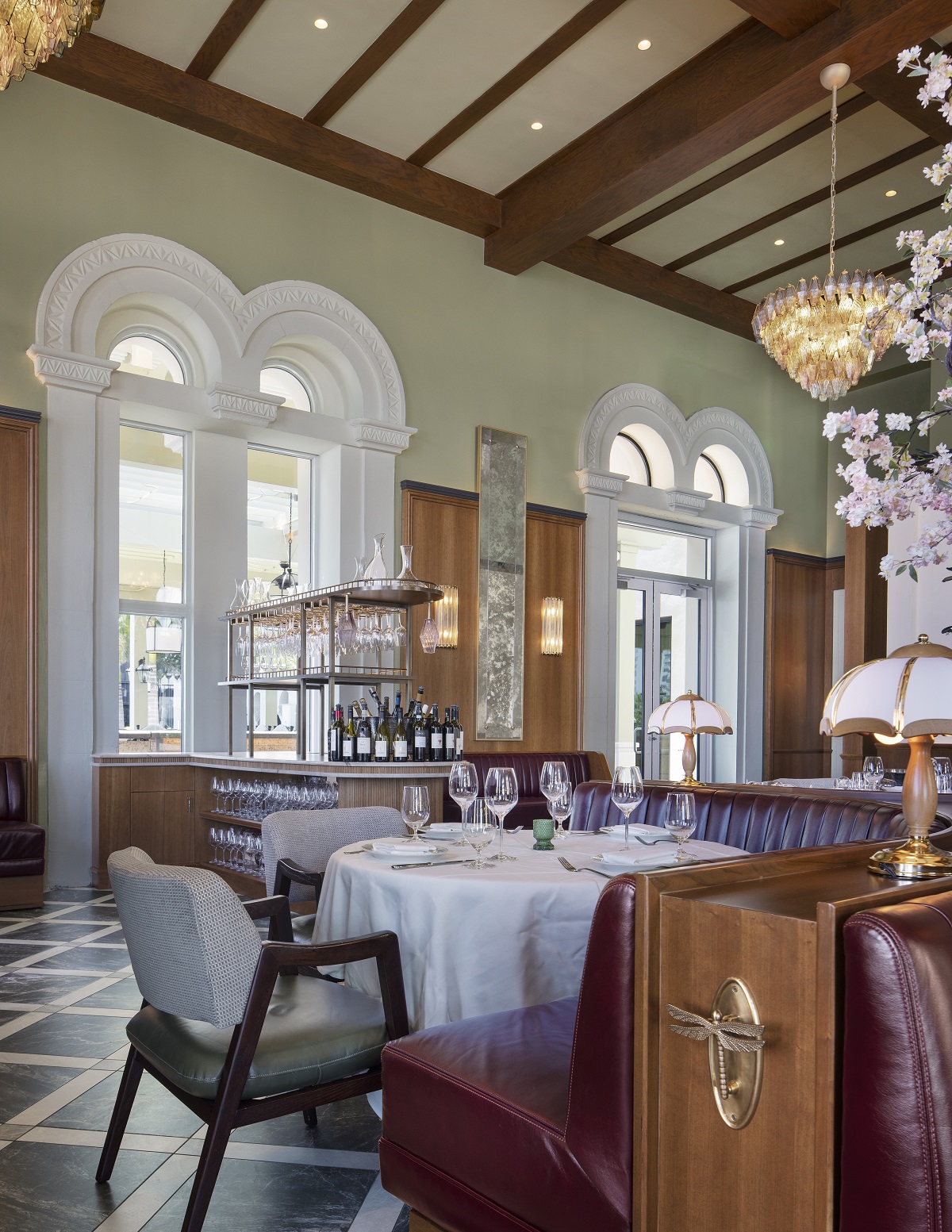
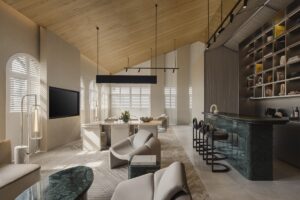
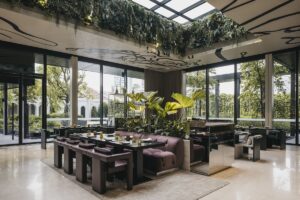
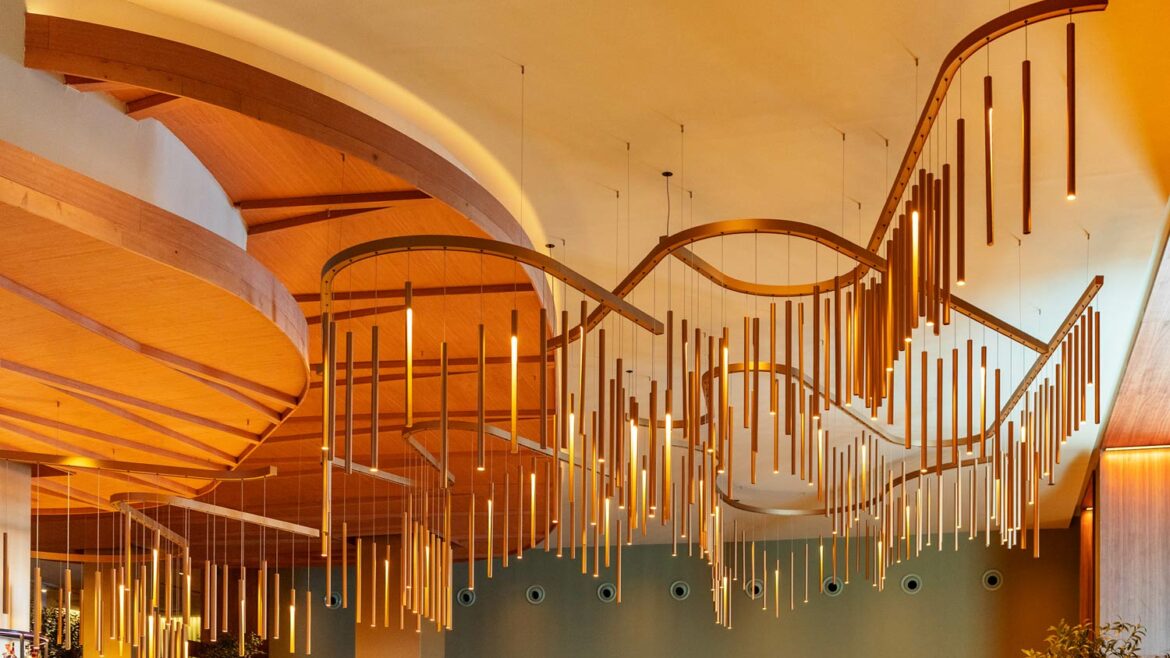
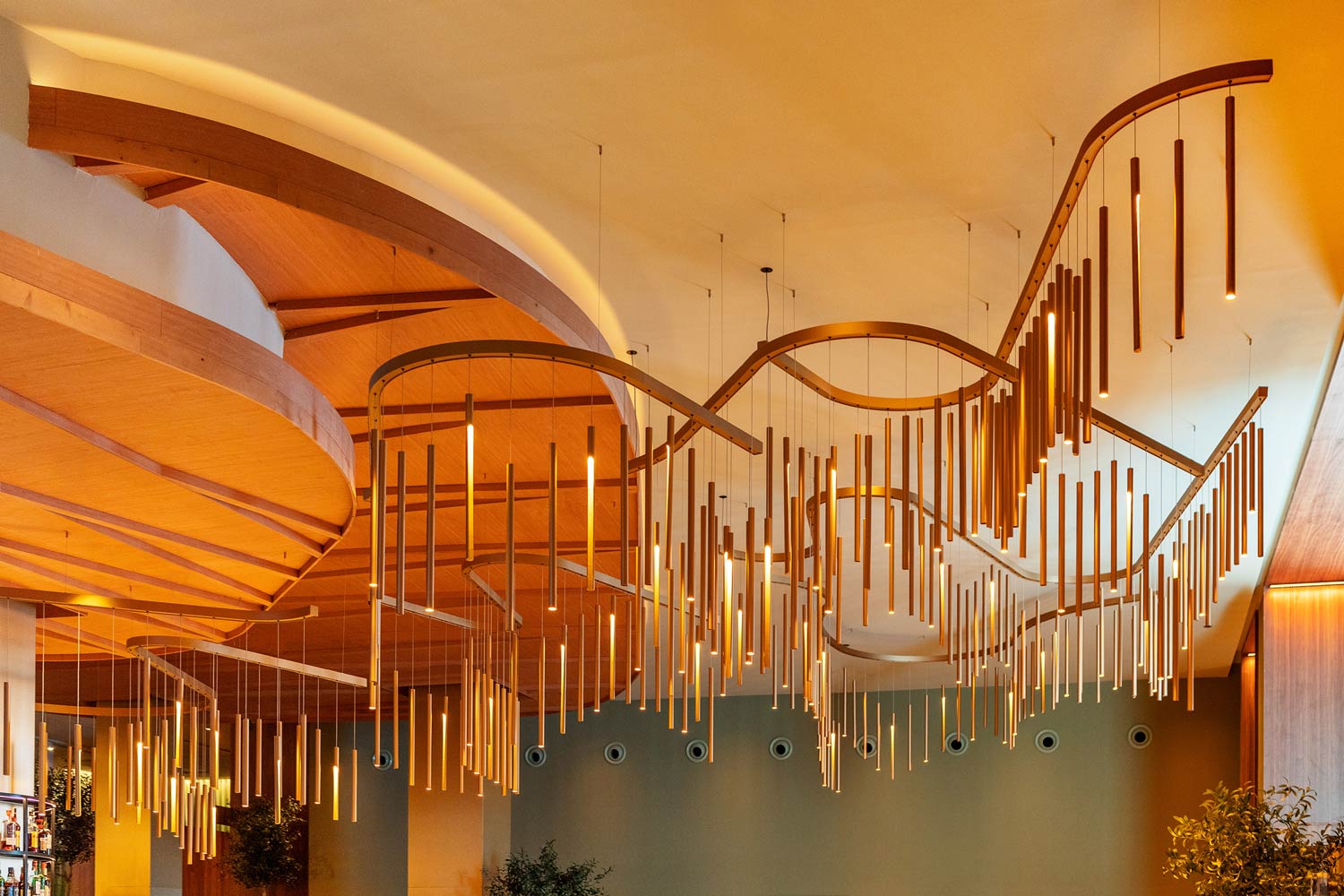
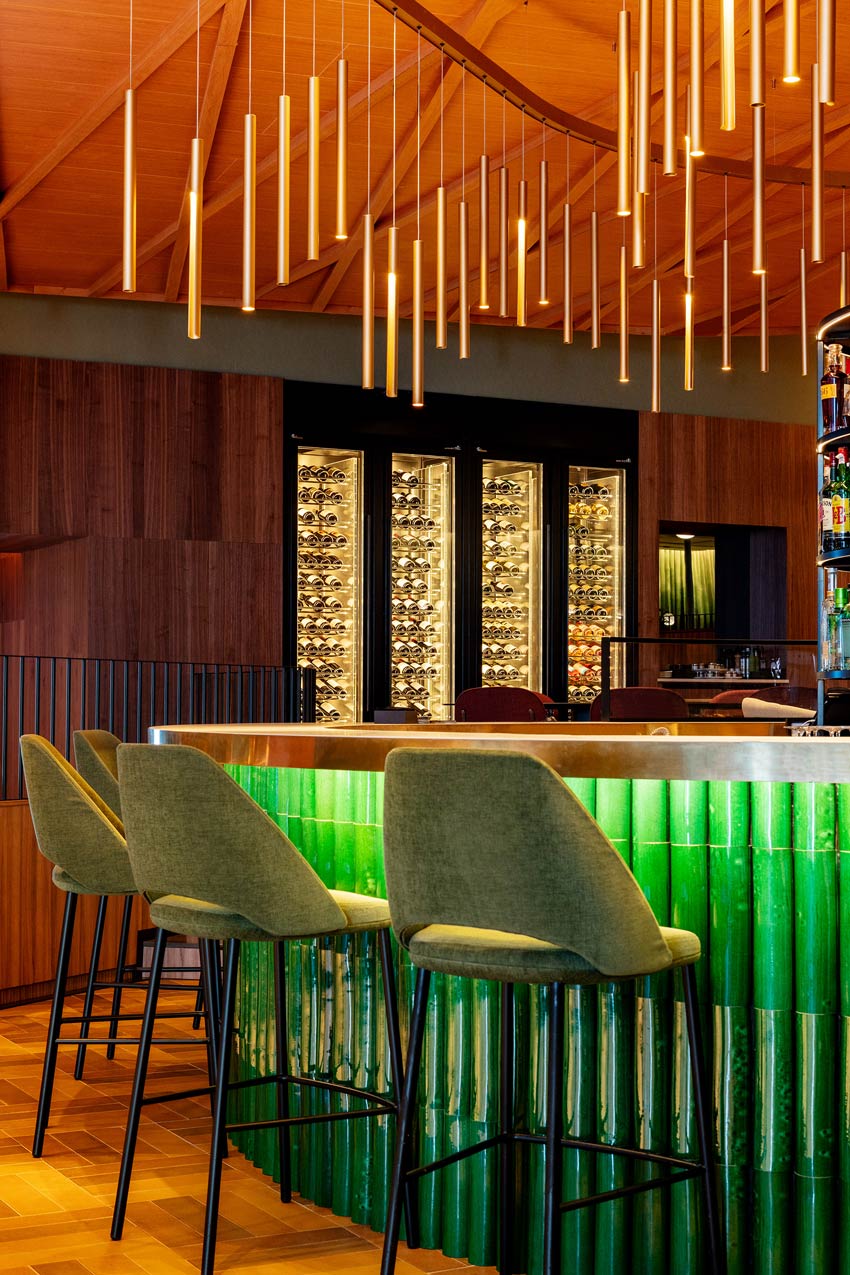
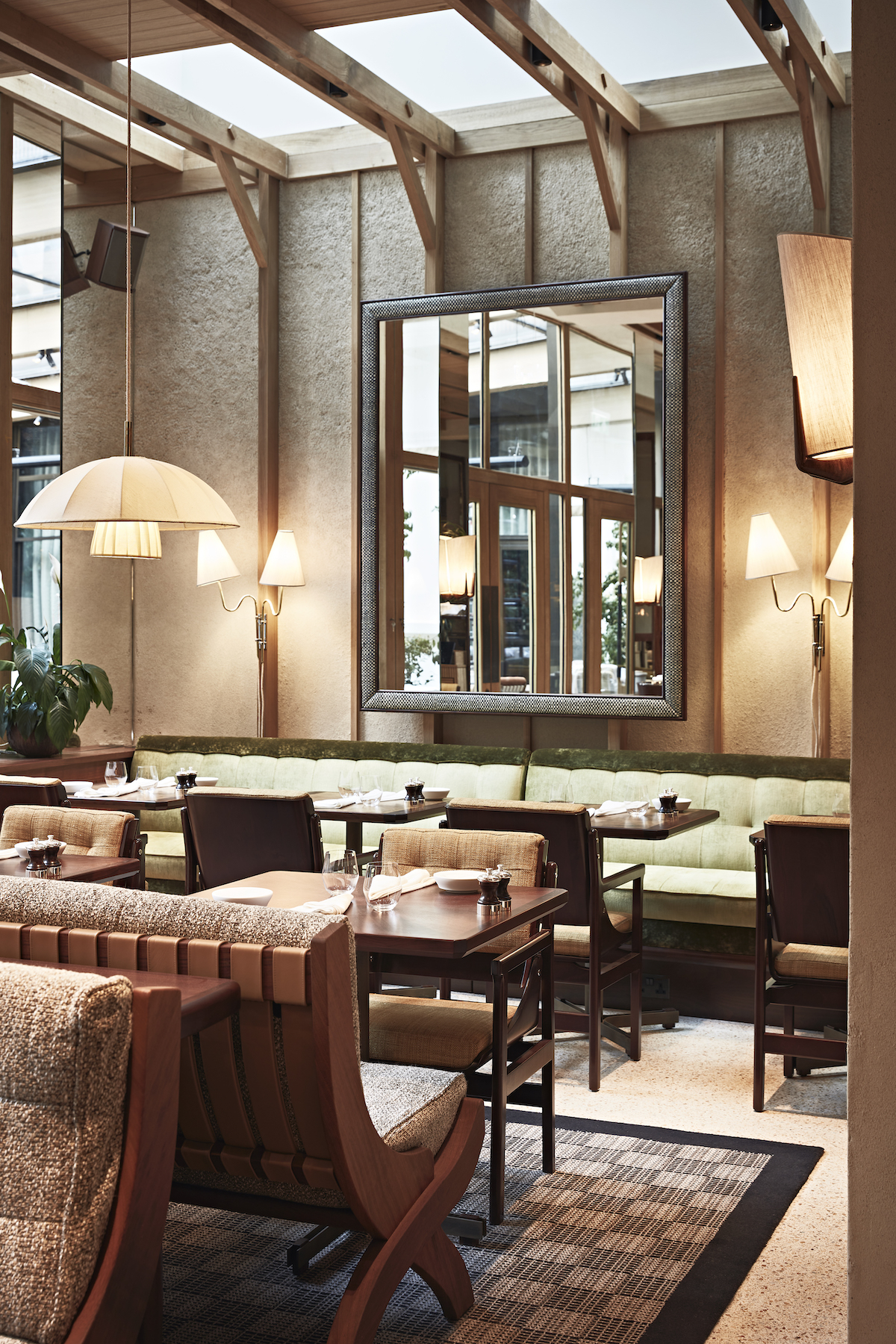
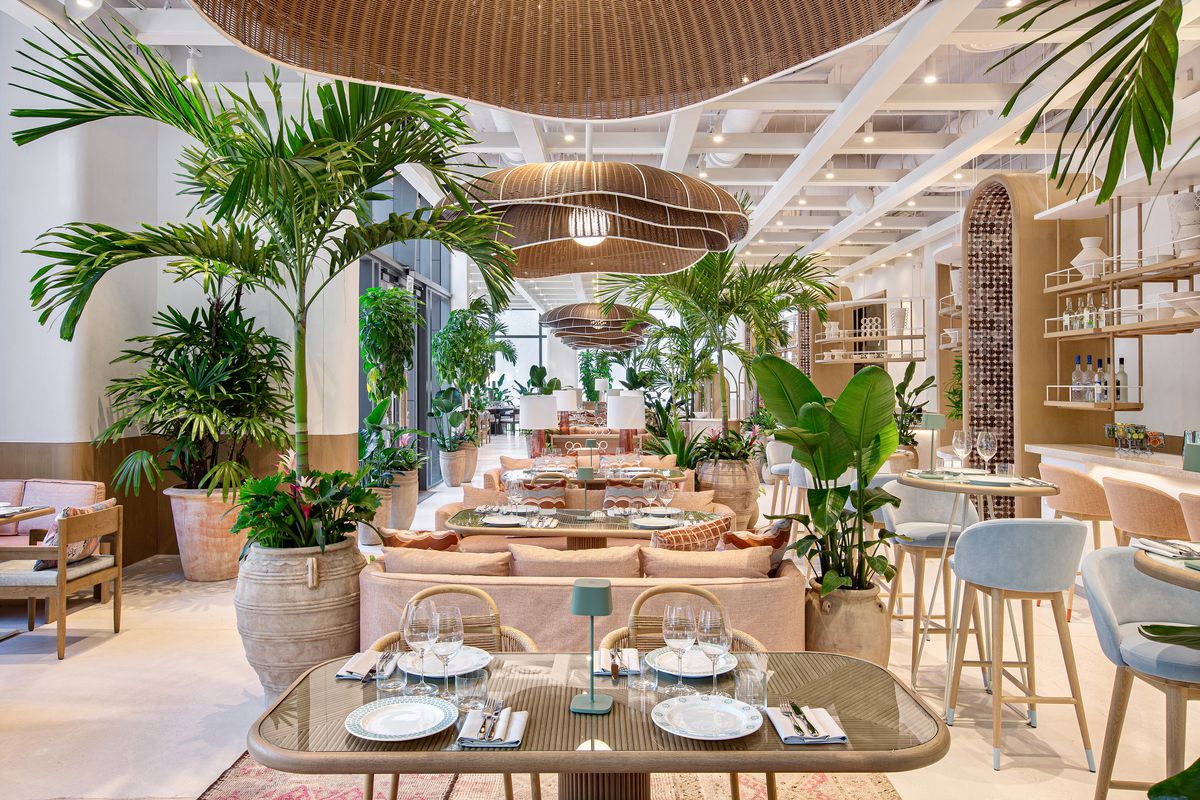
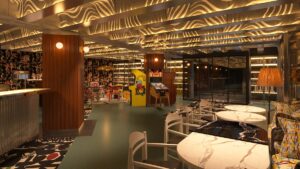
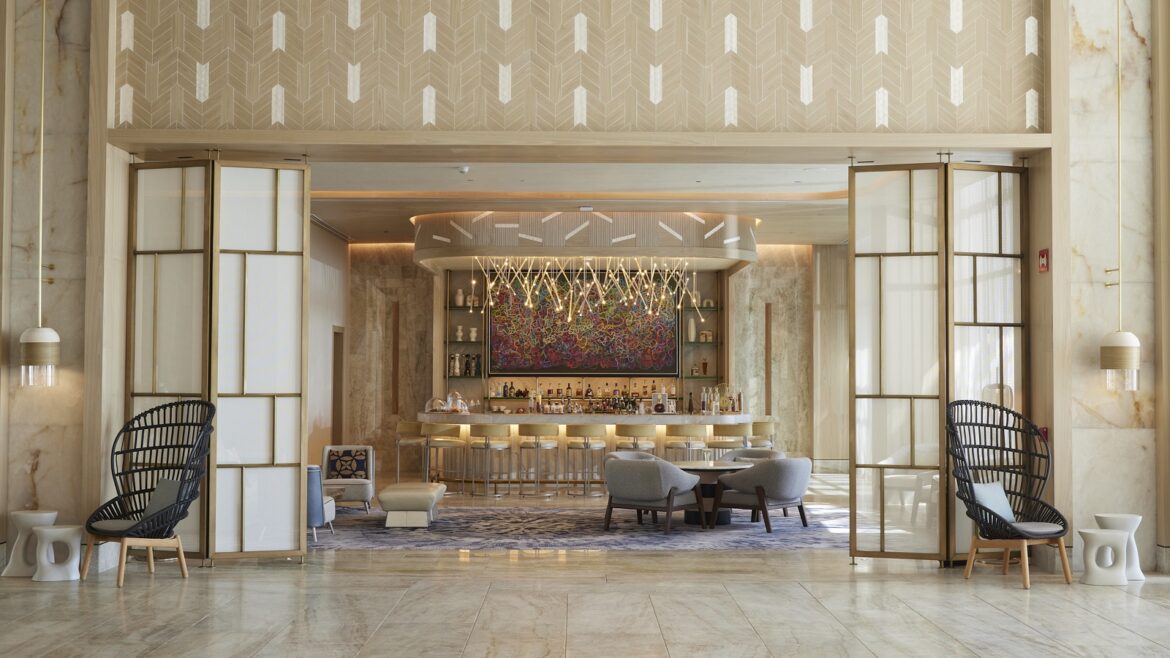
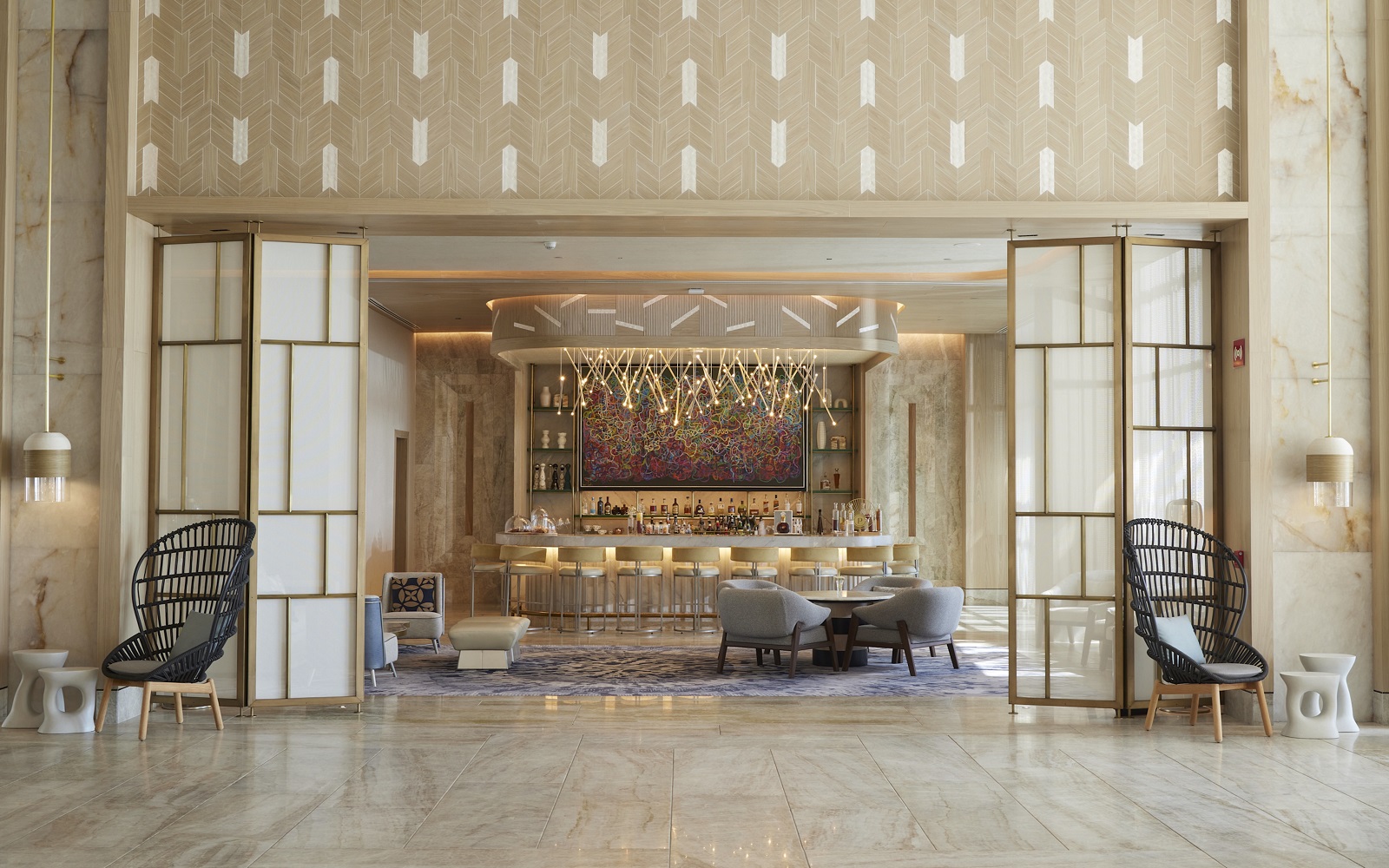
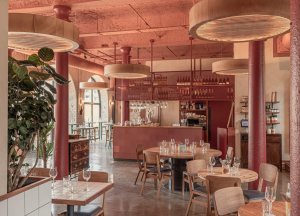
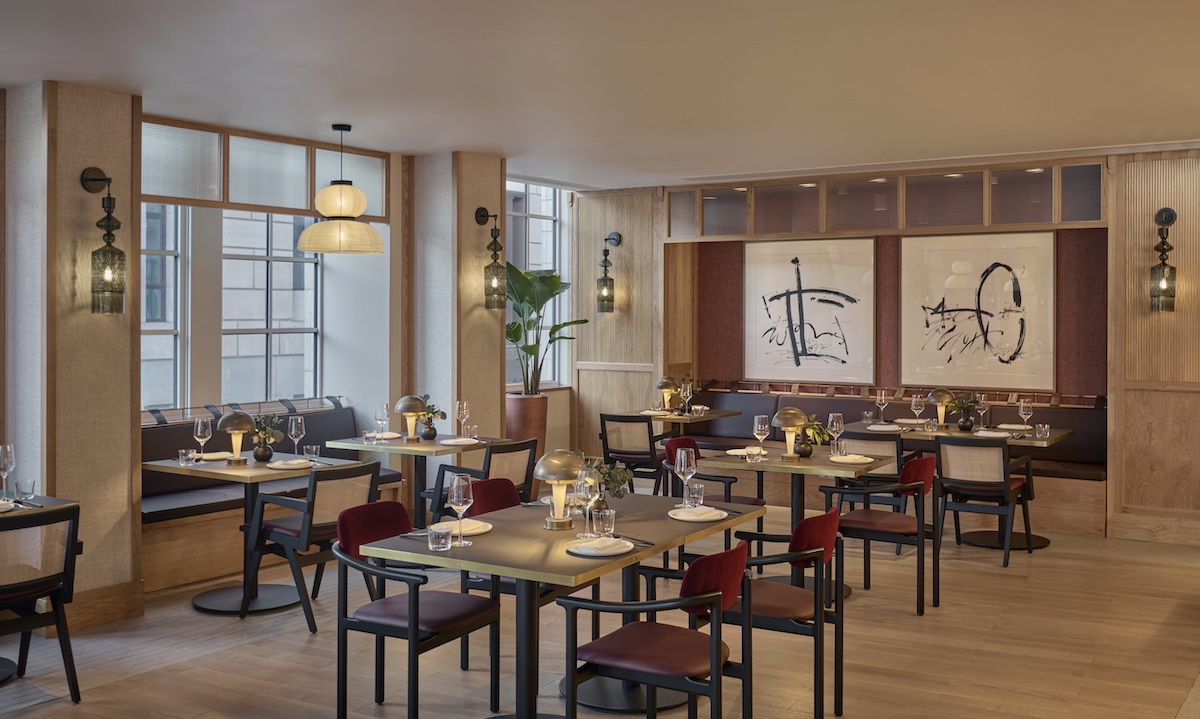
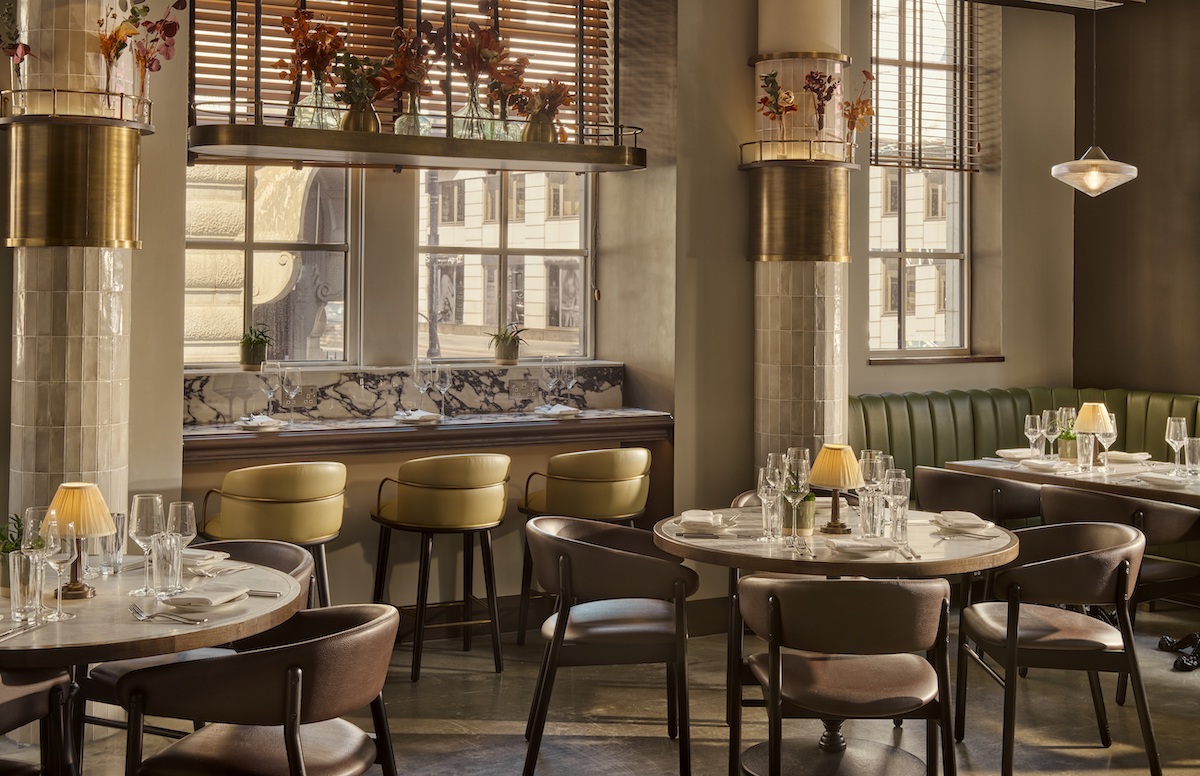
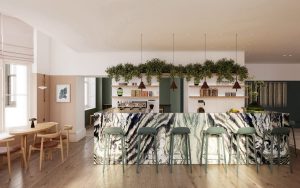
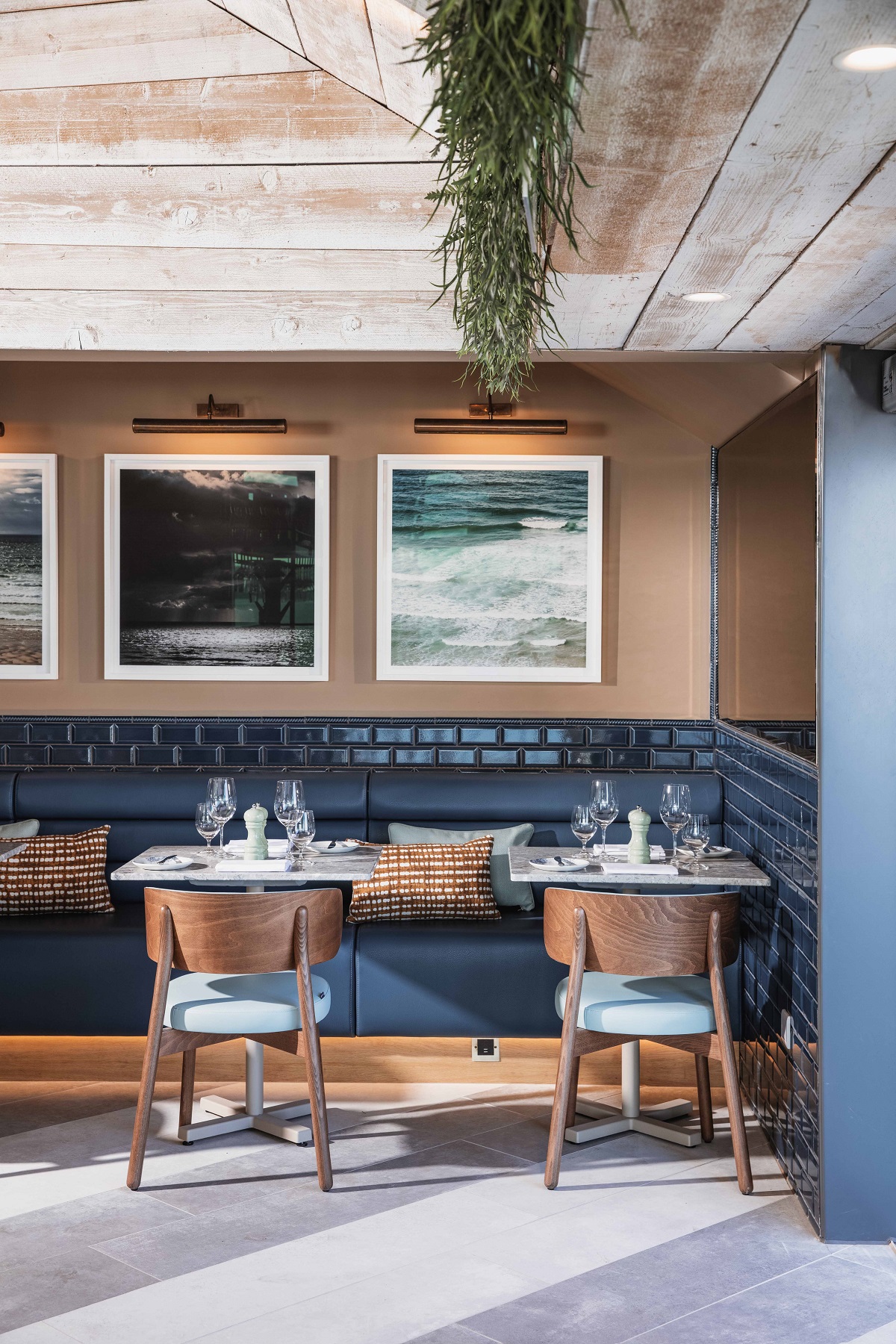
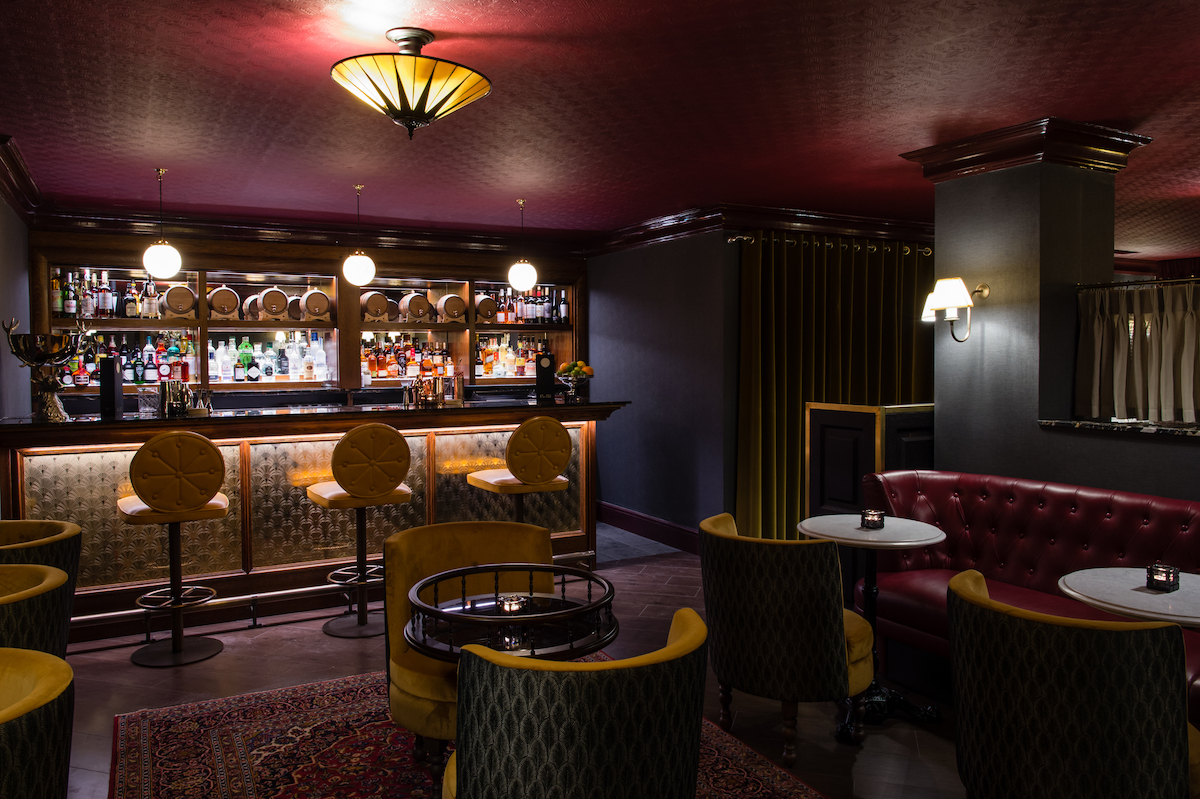
Working closely with designers KONCEPT ID, Northern Lights were tasked with developing an array of bespoke lighting for the Stoke restaurant and bar to capture the overall design intent whilst elevating the dining experience of the hotel’s guests. For luxury dining spaces, achieving the perfect balance of light diffusion and warmer, lower lighting conditions is critical to maintain an intimate setting where guests will linger longer.
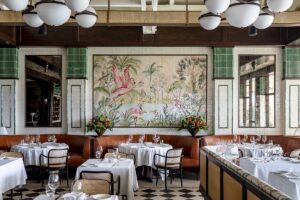
Image credit: Radisson RED Liverpool
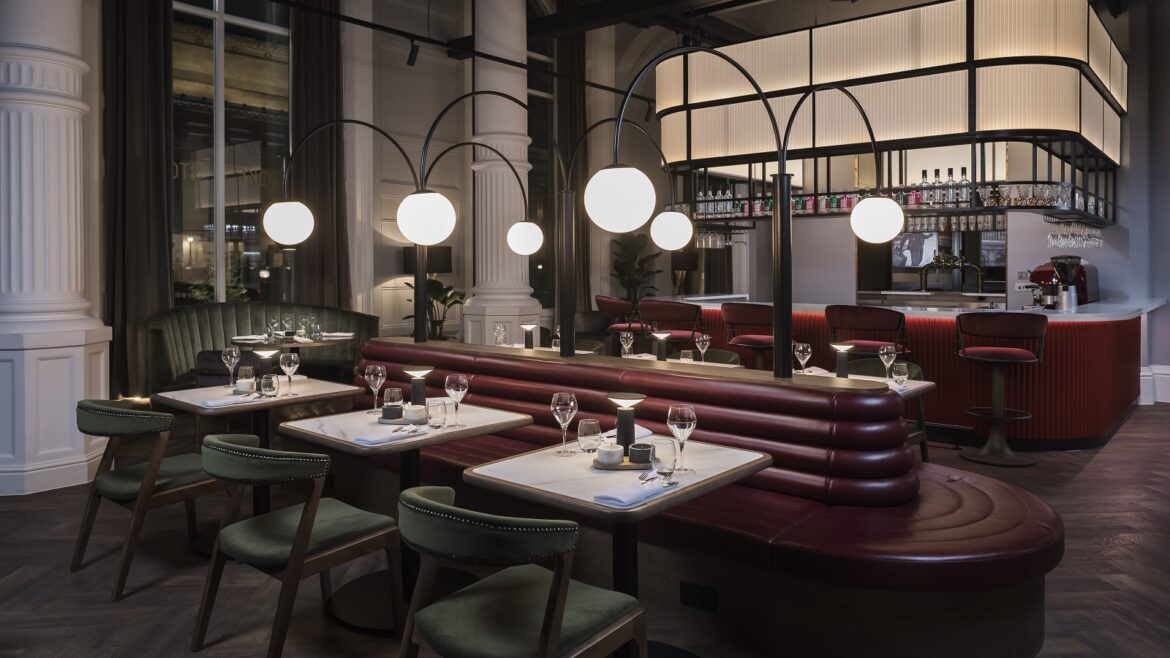
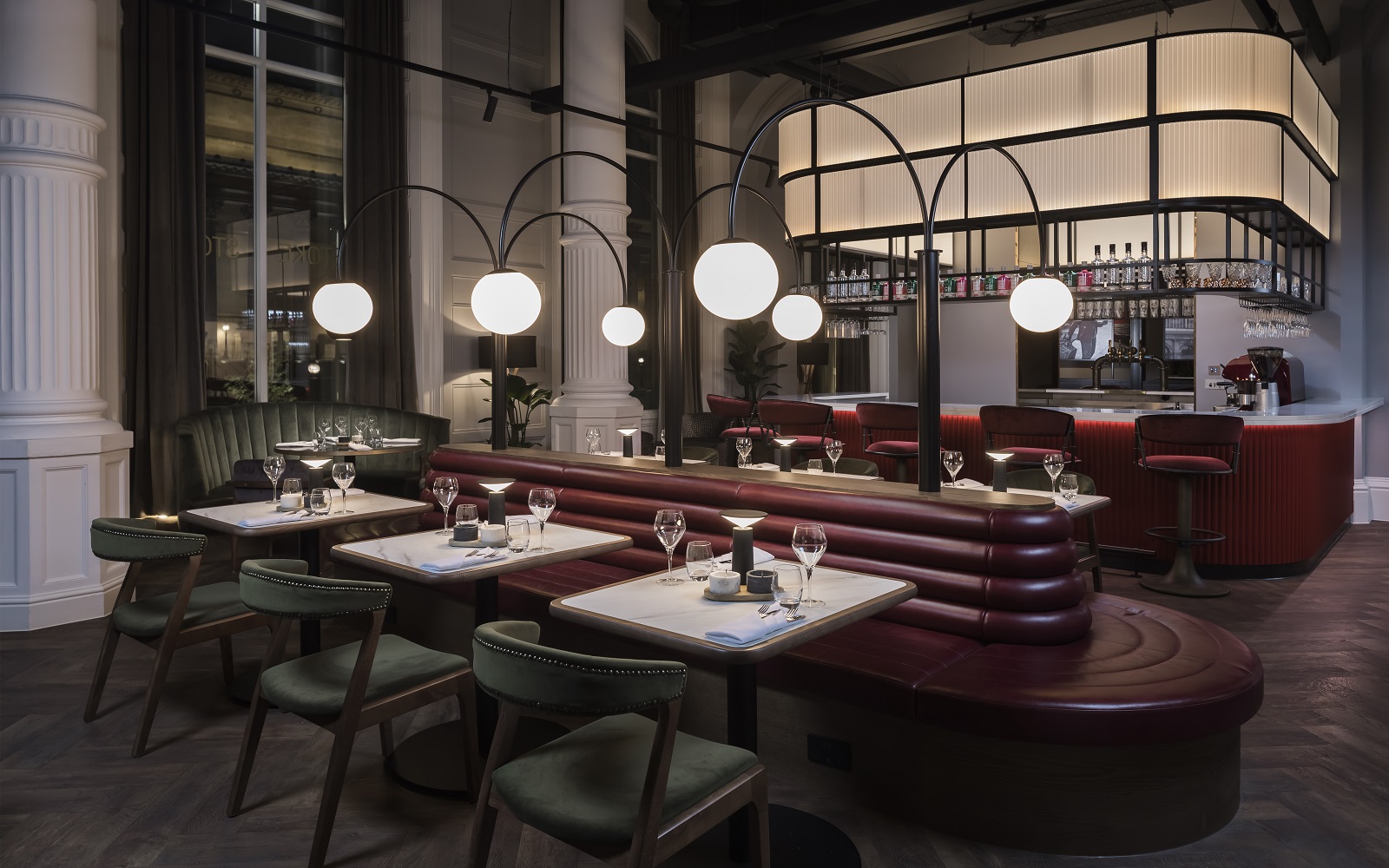
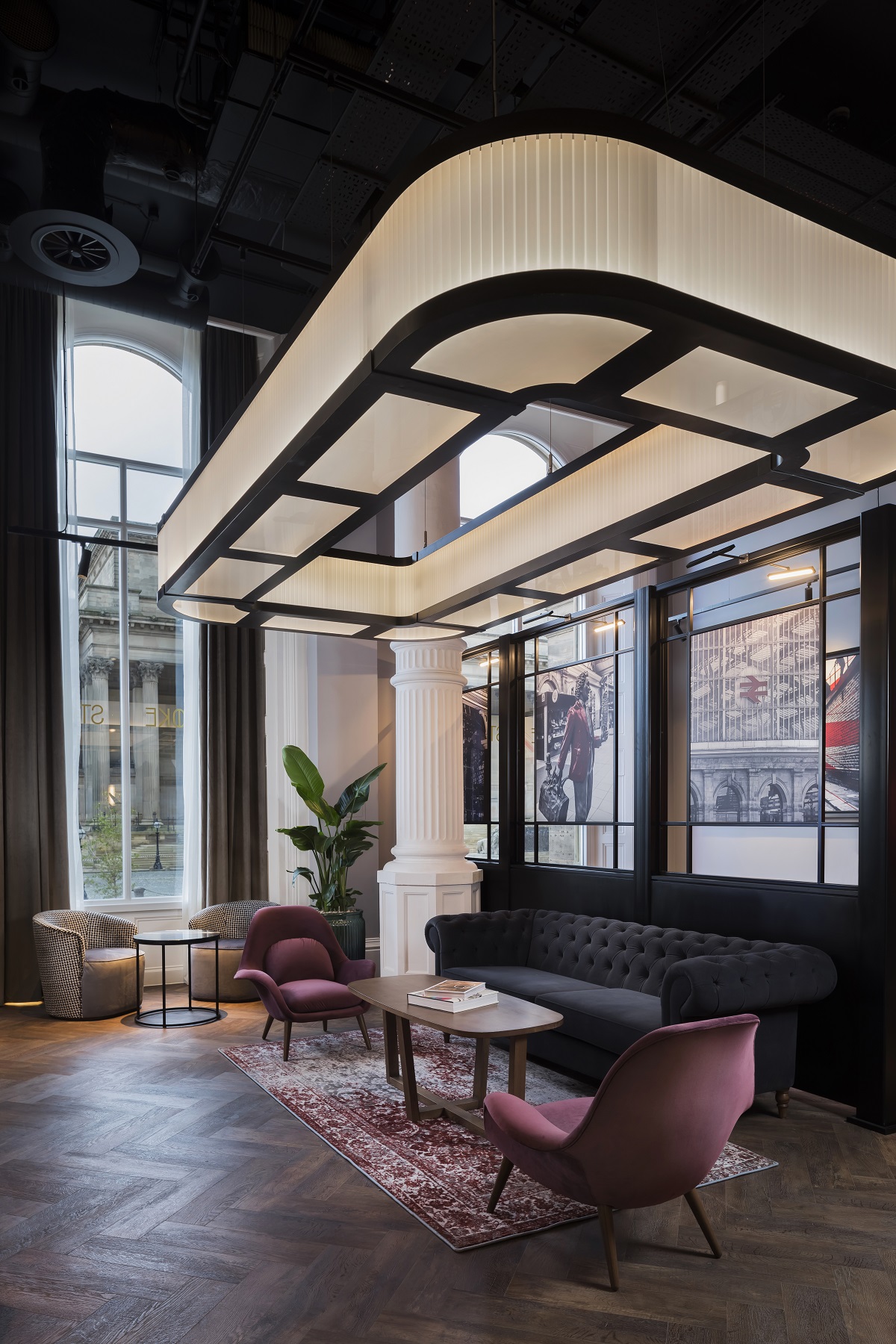
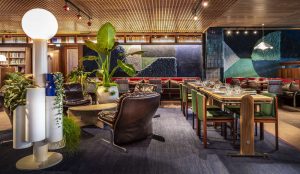
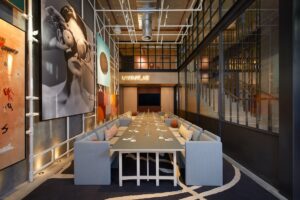
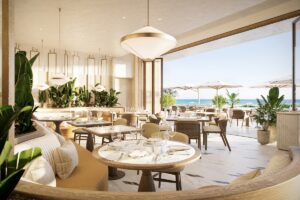
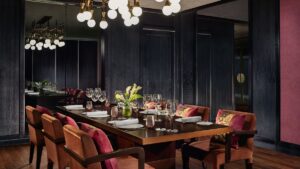
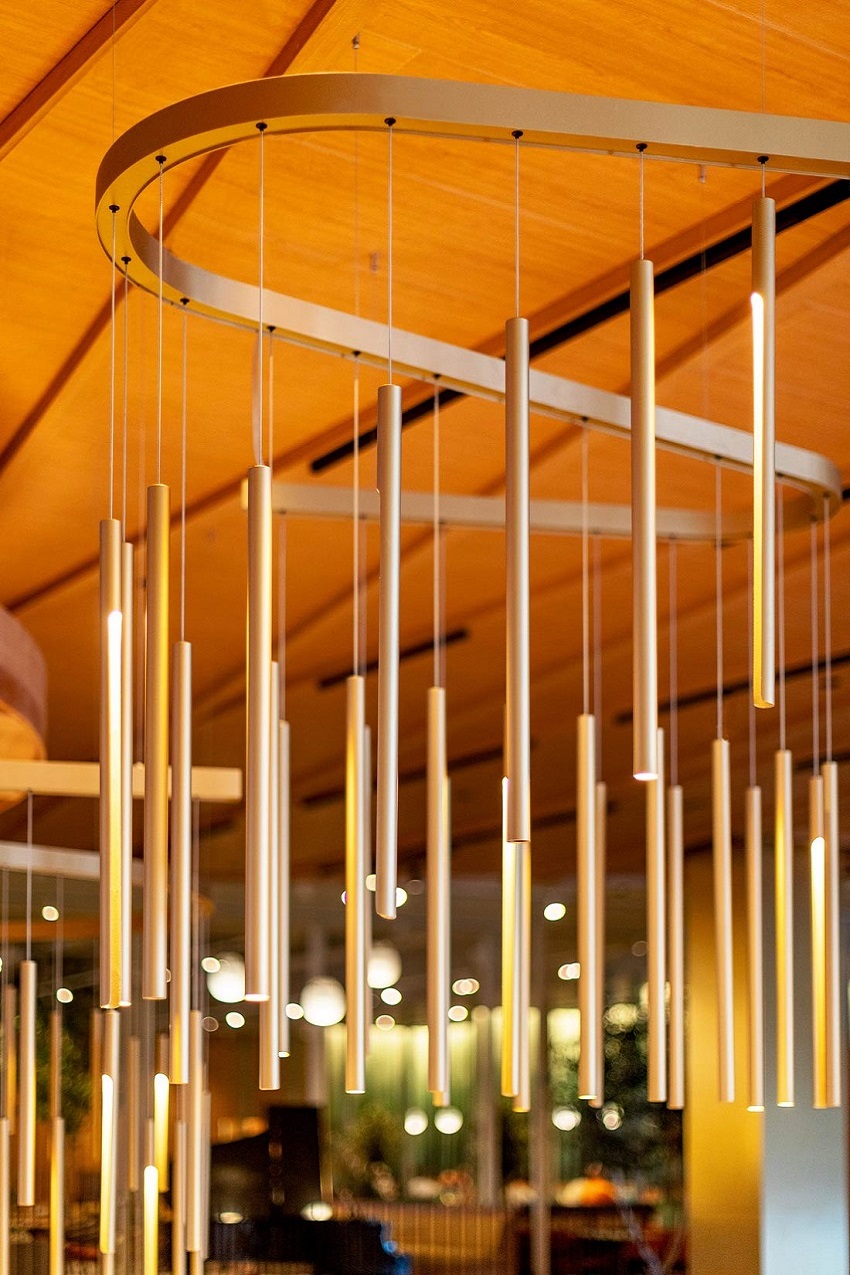
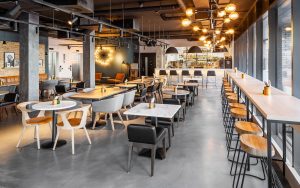
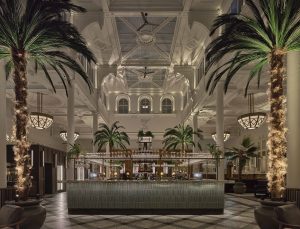
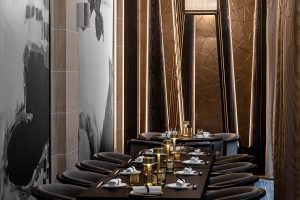
In the restaurant, sectional feature pendants are suspended over tables to provide a warming halo effect to diners below. Due to the sheer size the pendants were manufactured in four sections, each featuring a powder-coated matt black frame with rolled reeded glass to provide soft light diffusion. Each part was then hand-assembled and fixed to create a goliath fitting spanning the large ceiling area.
Image credit: Radisson RED Liverpool
Radisson RED Liverpool Refurbishment
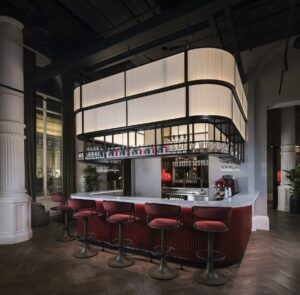
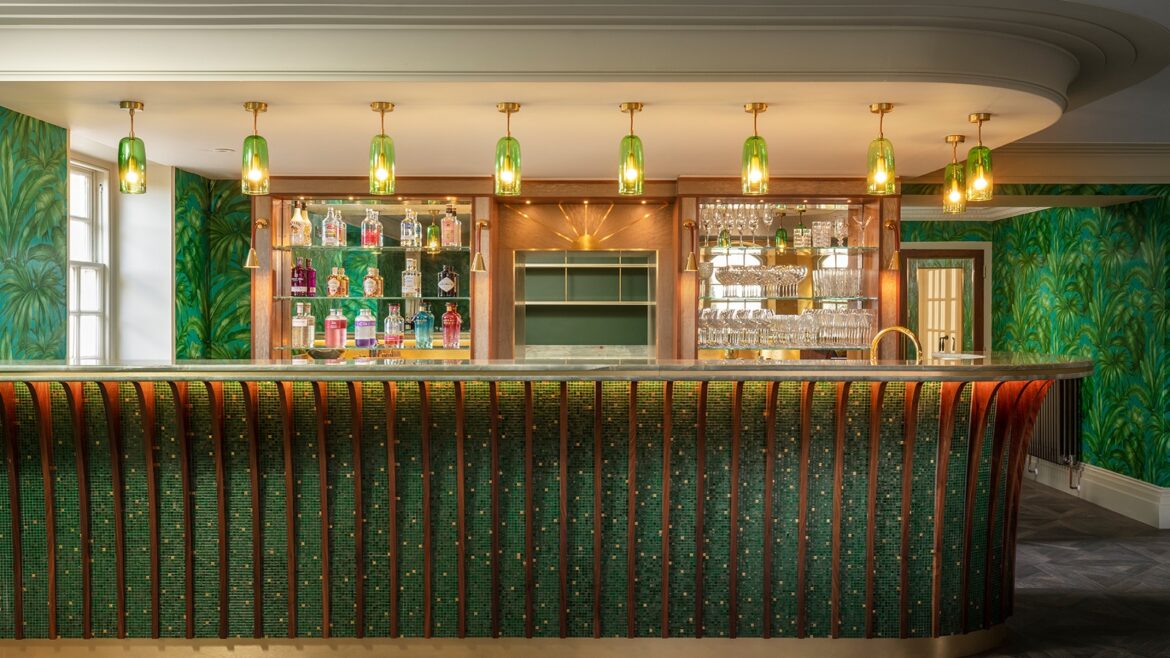
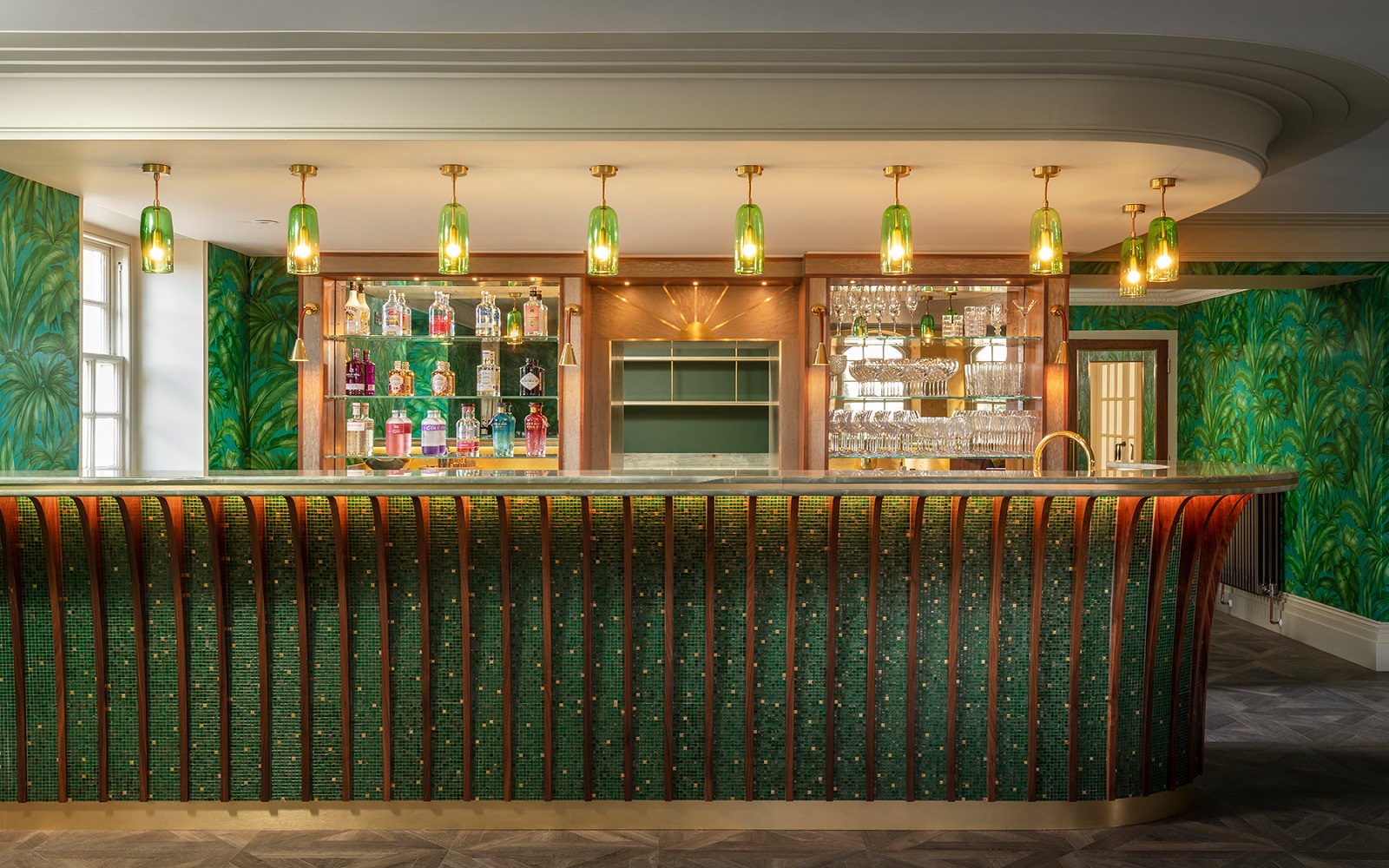
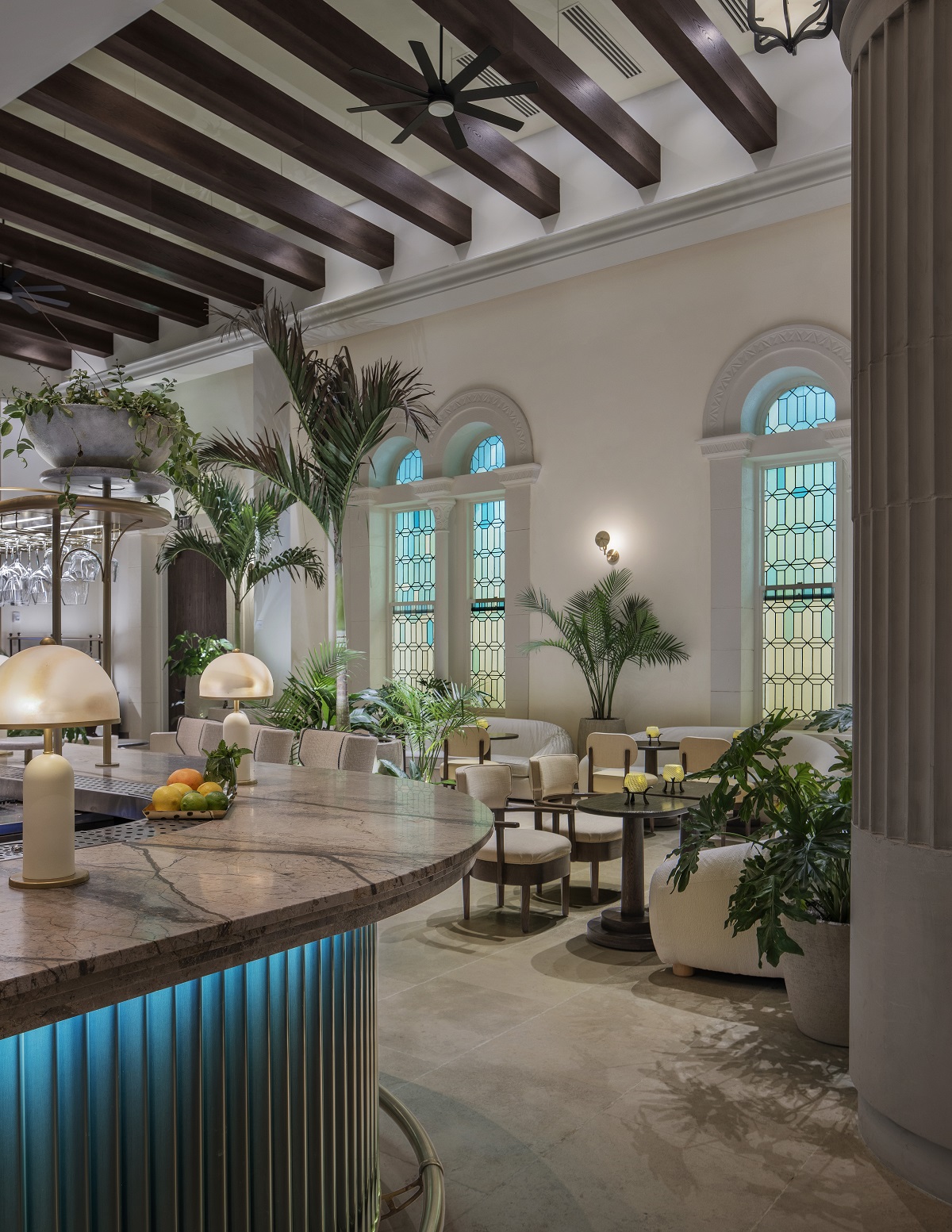
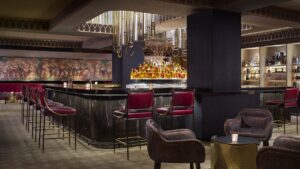
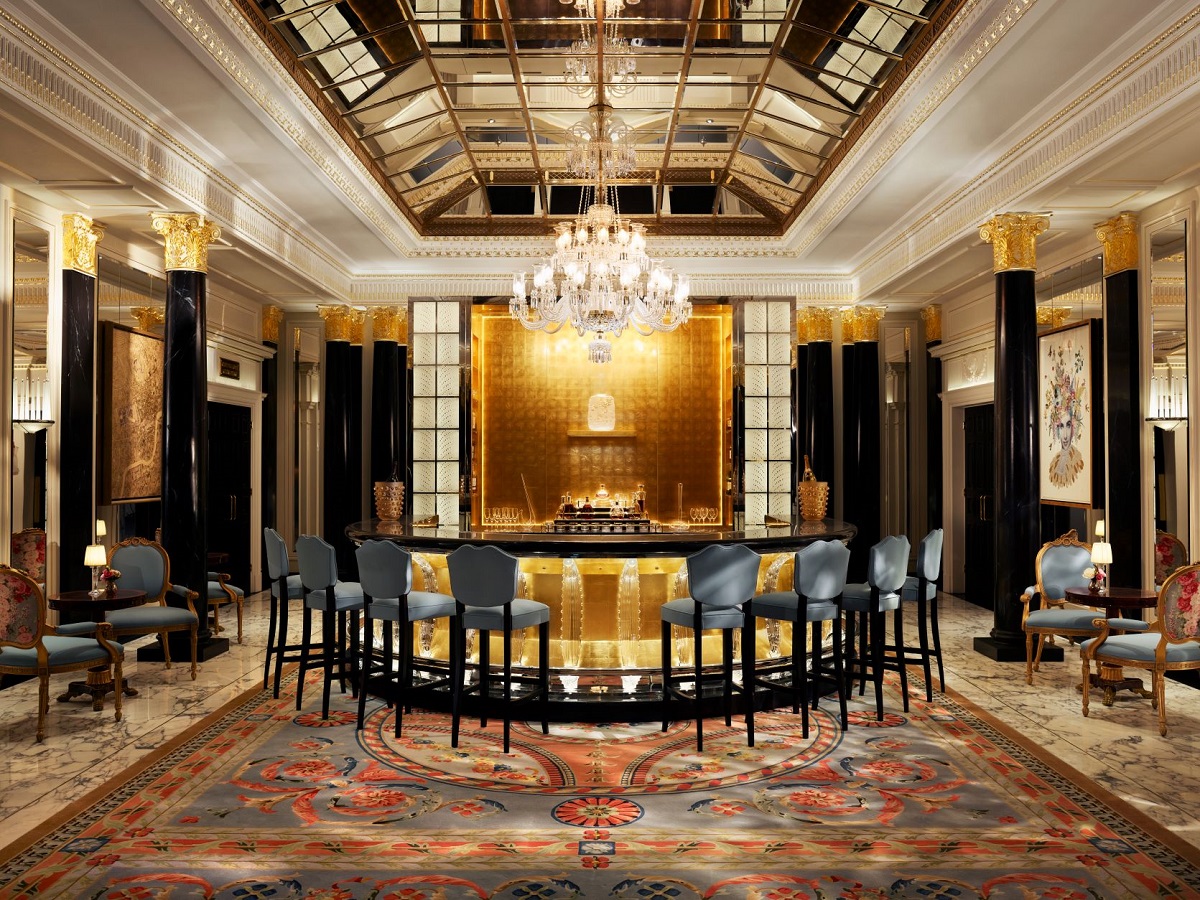
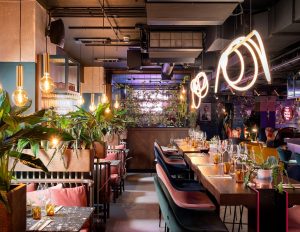
To create a fully connected experience, the same style fixture sits above the bar, having been duplicated, stacked and fitted with a gantry that houses various liquor bottles. Such well-considered illumination works to create an inviting space that welcomes and draws guests in, whilst balancing functional needs of the bar area.
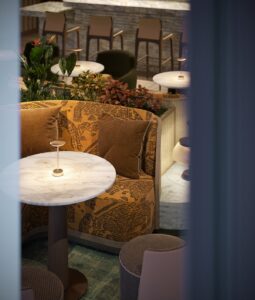
Nestled between the bar and the booths, a rounded seating area is cleverly illuminated by an assembly of fixed seat top lamps. The dramatic curved stems of the fixtures house six threaded acrylic globes, giving almost a ‘streetlight’ effect in their appearance whilst retaining the luxury design principles of the brief.
Northern Lights is one of our Recommended Suppliers and regularly features in our Supplier News section of the website. If you are interested in becoming one of our Recommended Suppliers, please email Katy Phillips.
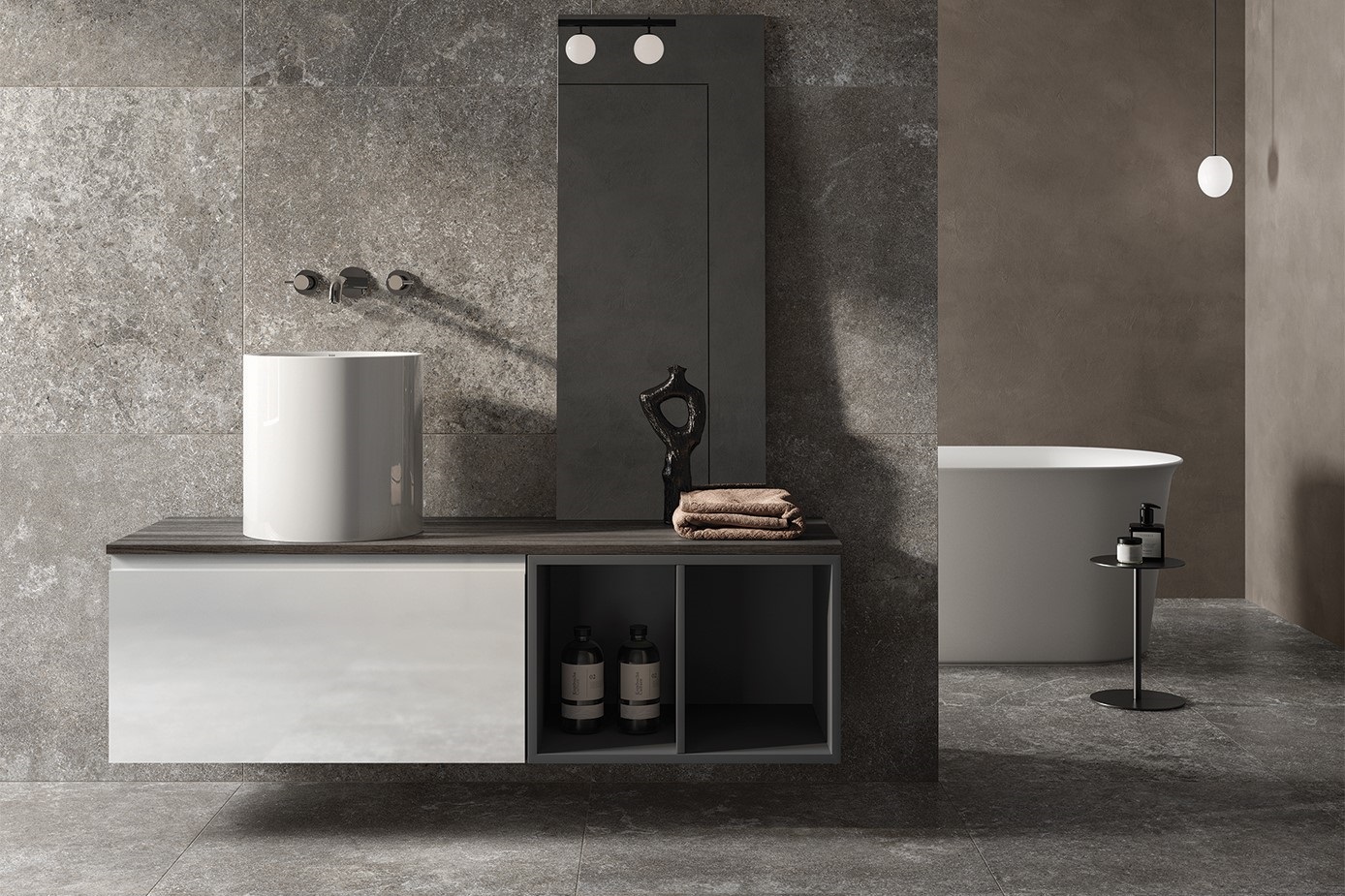
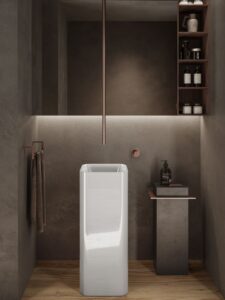
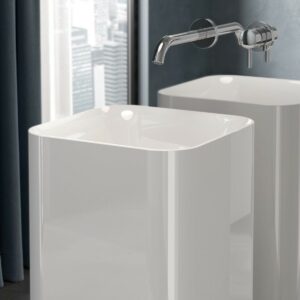
Known for its design-led pieces, the new additions to the LAUFEN washbasin range create flexible solutions for hotel bathrooms of all sizes…
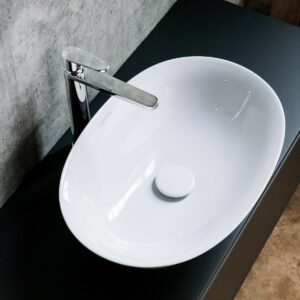
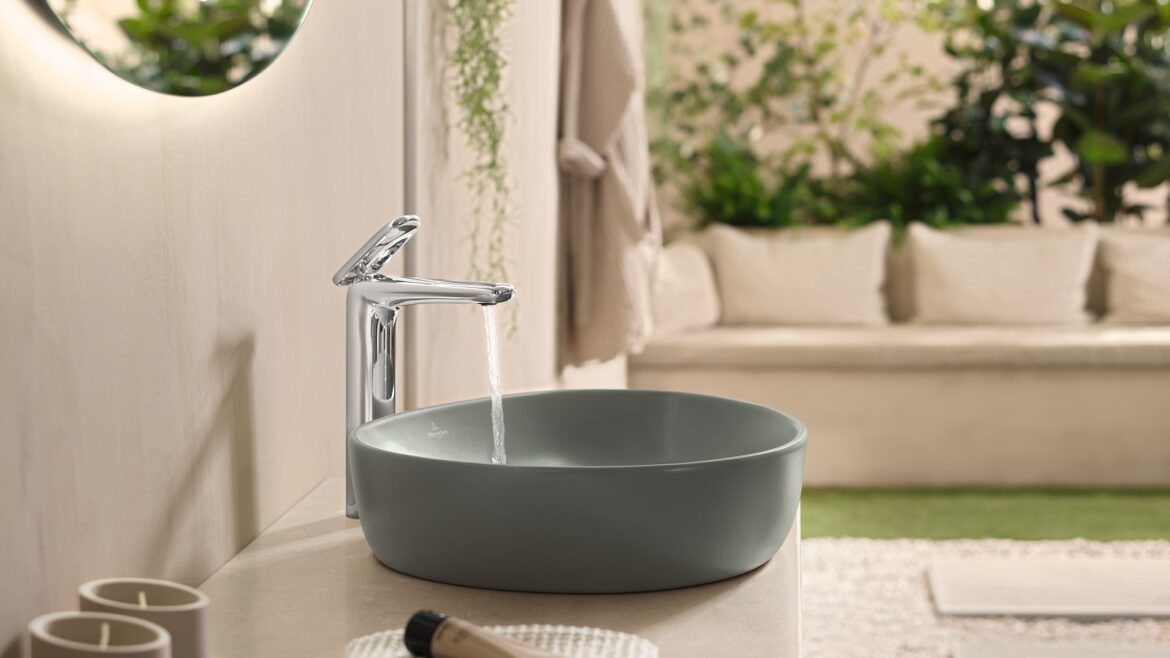
LAUFEN has long had a reputation for being a one-stop shop for stylish bathroom looks. The manufacturer is always striving to ensure it has solutions for every bathroom, whether classic or contemporary, large or small and with this in mind, it has added a number of washbasin options to its popular The New Classic, Kartell LAUFEN and Ino ranges.
“Whether it’s a bijou bedroom or a master suite, every room needs a bathroom that is a perfect partner, and which reflects the hotel’s style ethos,” commented Emma Mottram, LAUFEN Brand Marketing Manager. “And at LAUFEN, we want to be able to offer solutions to meet all requirements. As such, I’m proud to share details of extensions to The New Classic, Kartell LAUFEN and Ino ranges, which will help us provide a beautiful basin to suit all hotel bathrooms.”
Image credit: LAUFEN
As the name suggests, The New Classic takes its inspiration from classical curves but works equally well in both contemporary and traditionally styled hotel bathrooms. Already available in a choice of vanity washbasins and wider bowl versions, The New Classic range now includes a 450 x 310mm bowl, which
is compact enough to be used in a double basin configuration, even in relatively small bathrooms.
Image credit: LAUFEN
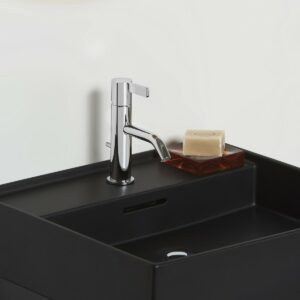
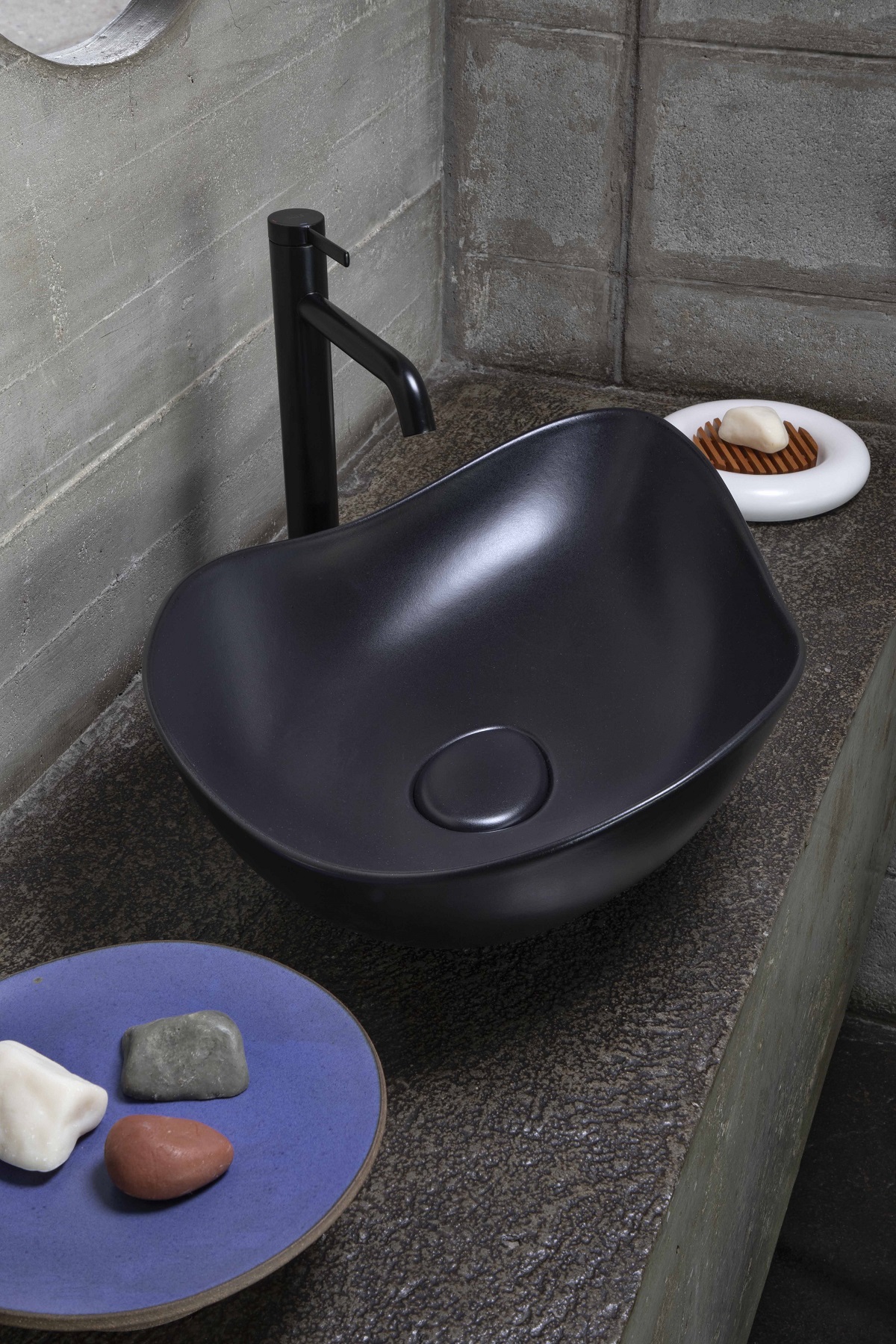
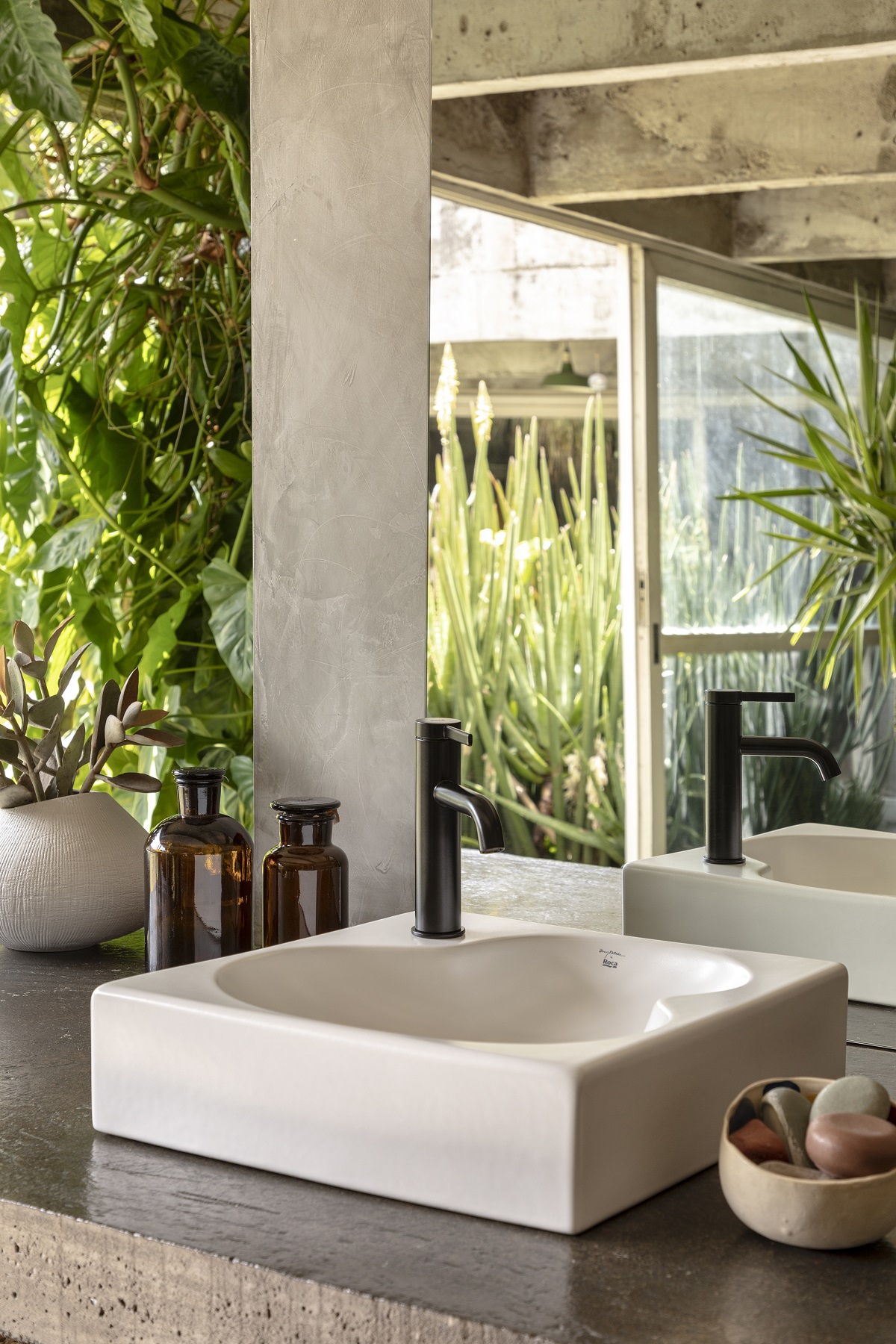
The Kartell LAUFEN collection combines the flair of Italian brand Kartell with the bathroom brands’ expertise to create iconic pieces for the bathroom. To extend its offering, LAUFEN has added three new widths (450mm, 800mm and 1000mm) to the range of basins. This makes them ideal for creating a coherent look across hotel bathrooms for all room types, from compact bedrooms to master suites. They are also available in range of contemporary colours and in on-trend matt finishes, perfect for hotels with more modern schemes, including Matt Grey, Matt White, Gloss Black, Matt Black and Anthracite.
Image credit: LAUFEN
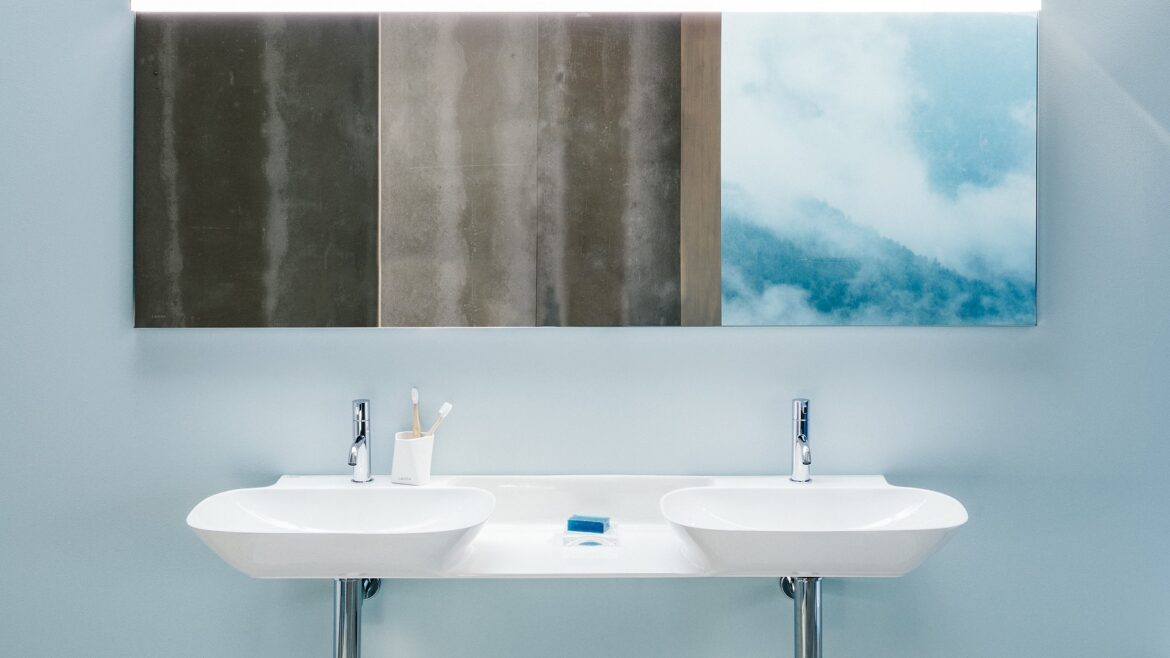
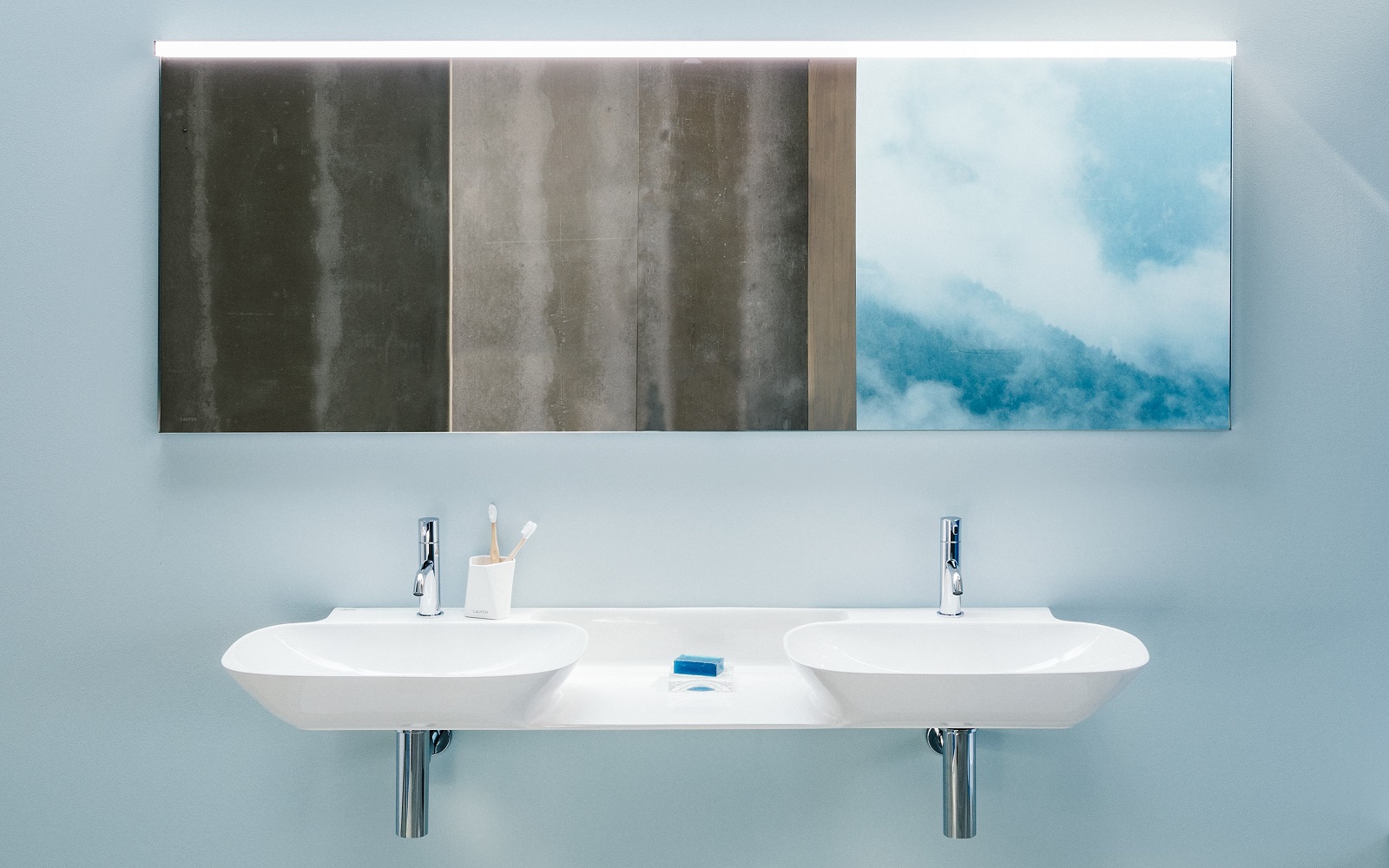
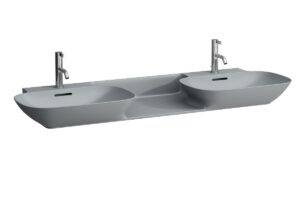
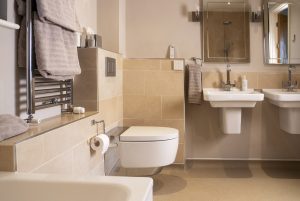
Designed by Toan Nguyen, the Ino range features basins with the thinnest of walls, giving the appearance of floating weightlessly on the wall. The secret to this effect is SaphirKeramik, a revolutionary ceramic that is as strong as steel but wafer-thin. Therefore even with small basins, you have a surprising amount of useable washing space, which is ideal when every centimetre counts. Being a ceramic, it is also durable, easy to clean and hygienic, retaining its good looks despite rigorous daily cleaning. The new Ino double basin further showcases the capabilities of SaphirKermik brilliantly, moulded in one 1400mm-wide piece. It includes an integrated counter with plenty of usable space between the bowls. This makes it a versatile and practical piece for hotel bathrooms, as there is no need to install a separate countertop. The new design also comes in a choice of Matt Black or Matt Grey.
LAUFEN is one of our Recommended Suppliers and regularly features in our Supplier News section of the website. If you are interested in becoming one of our Recommended Suppliers, please email Katy Phillips.
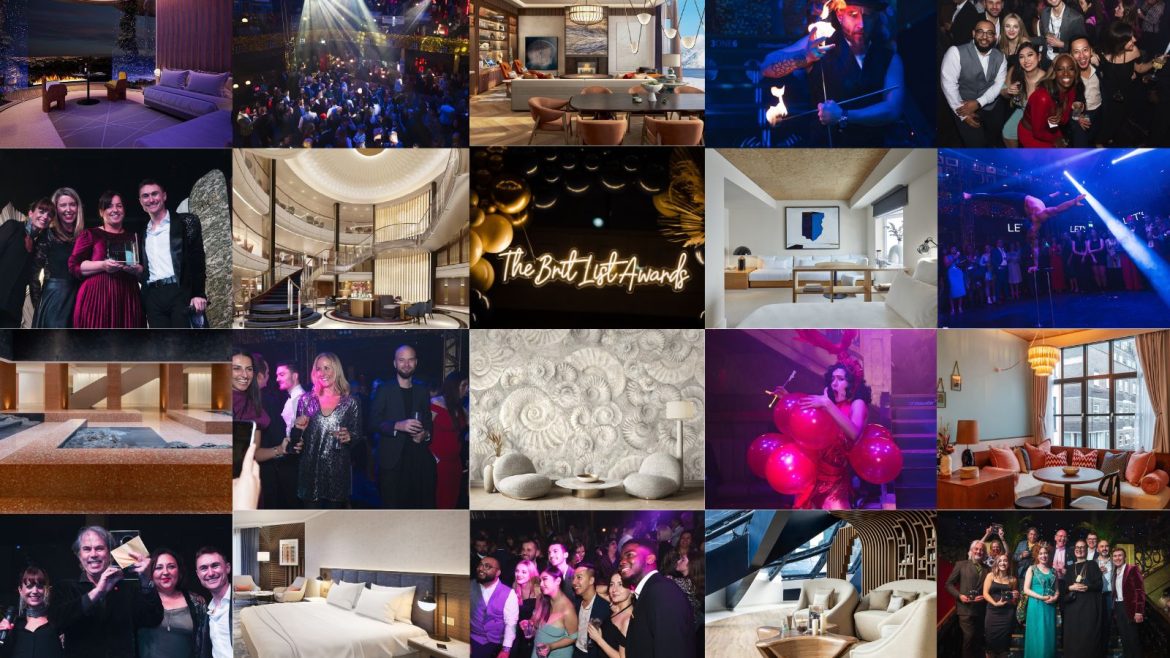
As the industry prepares for The Brit List Awards 2023, Hotel Designs’ the premier event of the year, Editor Hamish Kilburn highlights this year’s partners and sponsors…
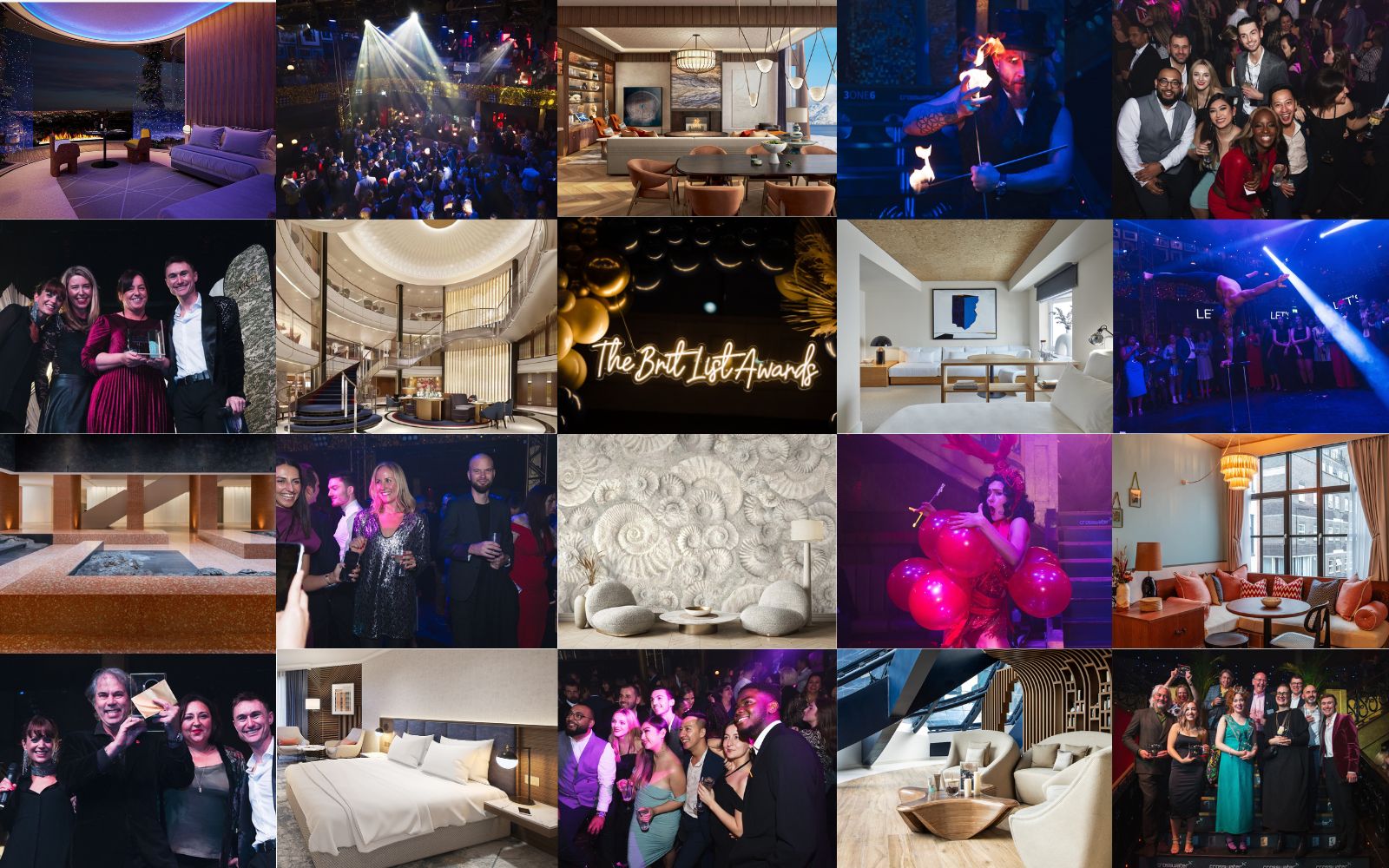
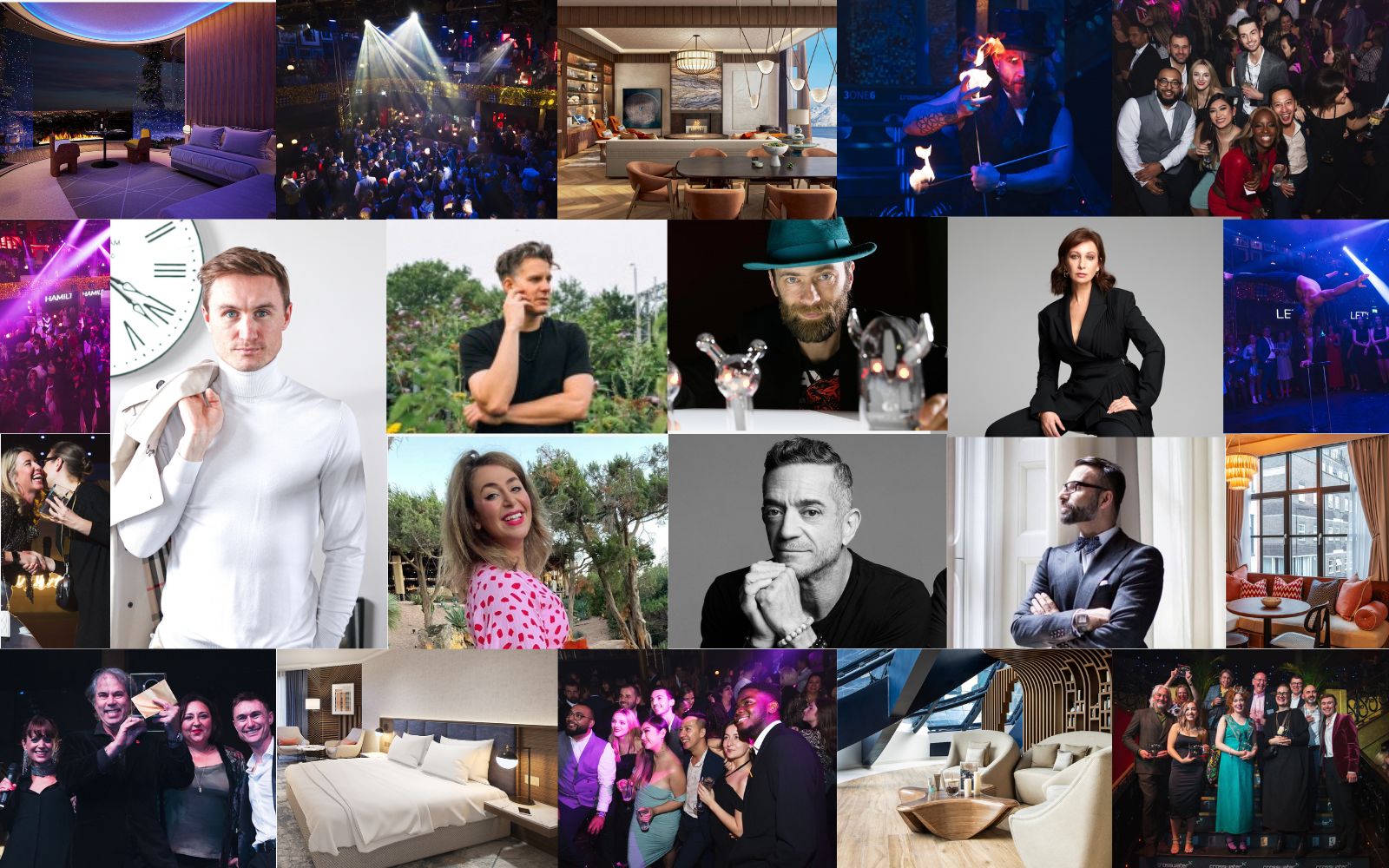
Glitz, glamour and good vibes. Yes, The Brit List Awards 2023 is just around the corner, this year taking place on November 1 at Circa Embankment.
For six years (and counting), the awards campaign has identified not just individual winners, but also, each year, it has identified the leading 75 interior designers, architects and hoteliers who deserve to be recognised as true influencers of tomorrow’s hotel design scene. The event is a chance for the industry to come together in harmony to celebrate the best in British – and international – design, architecture and hospitality.
While the event has somewhat grown over the years, the campaign would not be anything without the support of its sponsors and partner. So, taking a minute to champion our top supporters, allow me to introduce you to our sponsors and partners.
Headline Partner: Crosswater
Image credit: Crosswater
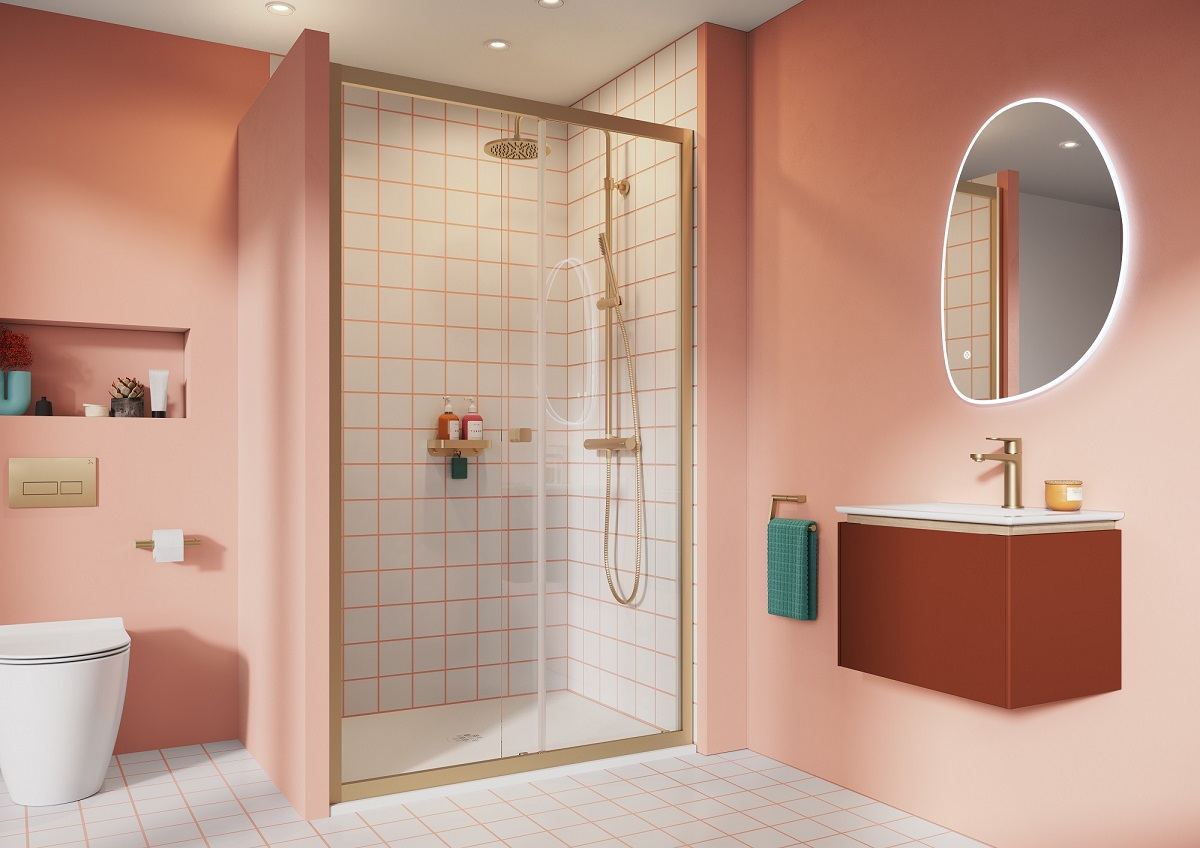
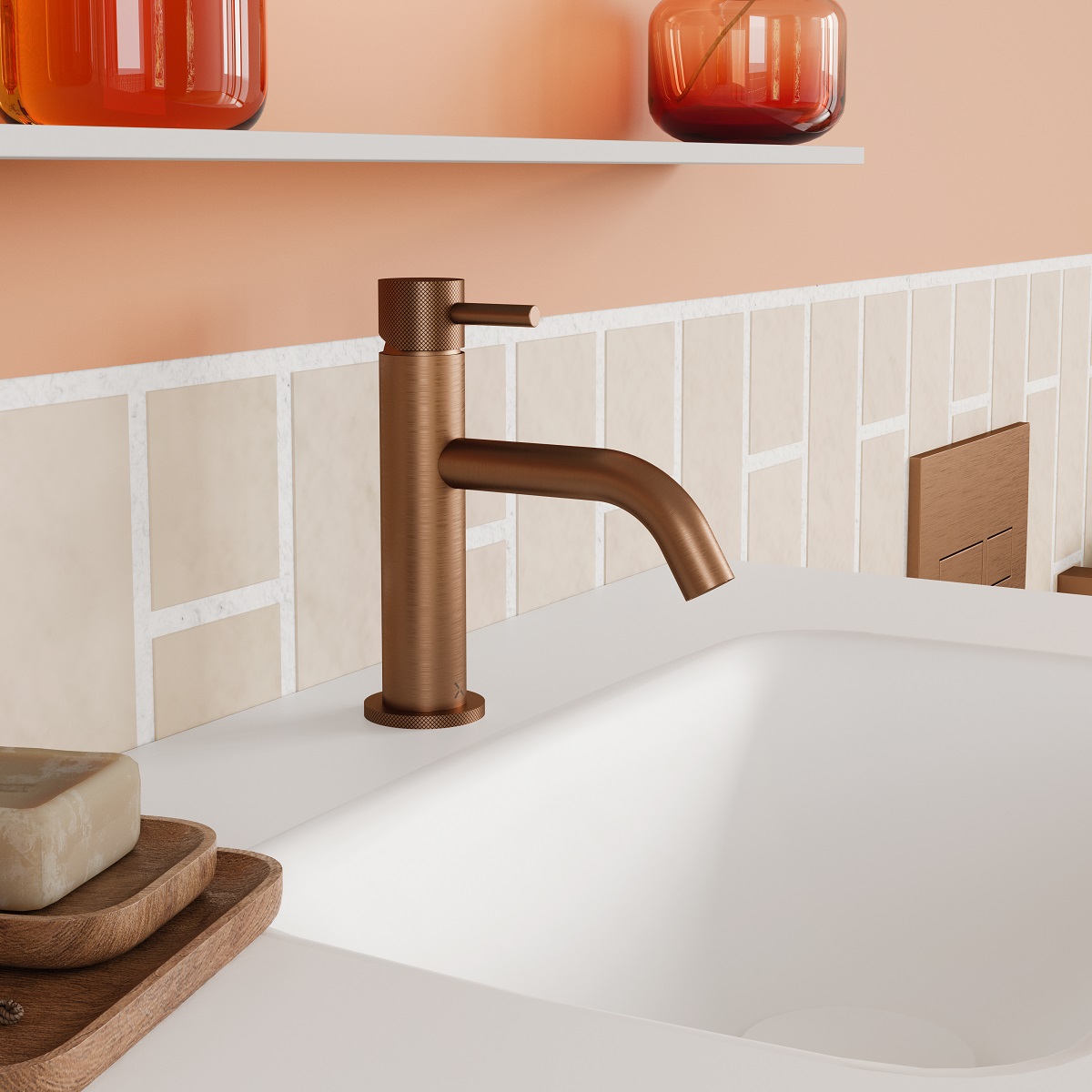
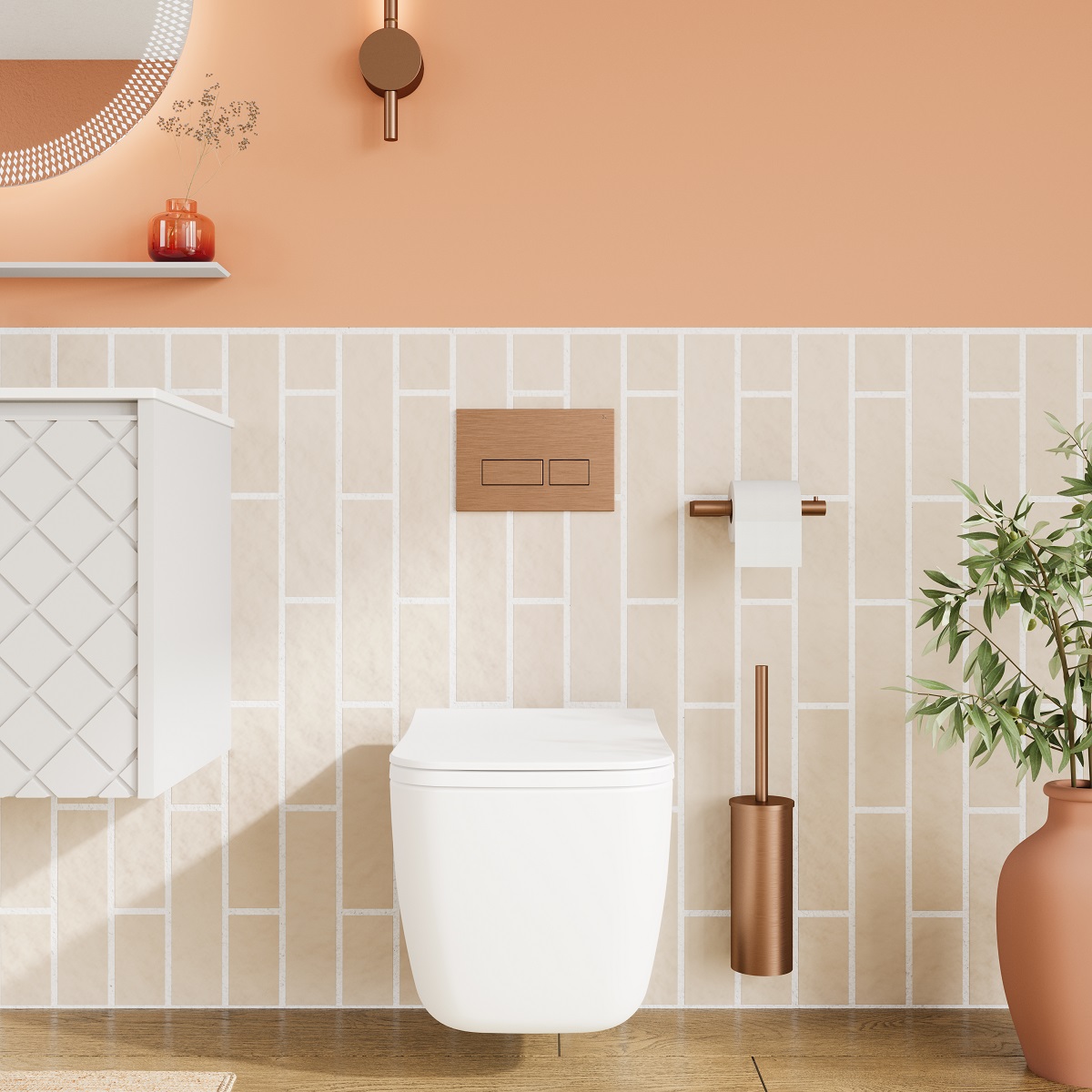
For five fabulous years, Bathroom Brands Group, under the identity of Crosswater, has been the headline act/partner. Recent news from the brand includes new finishes in the MPRO Collection, and new products (including its debut lighting collection) that will, quite literally, cover all corners of the hotel bathroom.
Showcase Partner: Schlüter Systems
Image credit: Schlüter Systems
Re-joining us as one of our Showcase Partners, Schlüter-Systems would paint the venue orange if it has its way. If you haven’t noticed already, Schlüter-Systems, with more than 10,000 products, is a market leader in essential accessories for tile and stone. Formed in 1966 by Werner Schlüter, a man who set out to provide practical solutions for bathroom tile installations.
To this day, the company remains a family-owned business with products born out of practical experiences. The headquarters resides in the town of Iserlohn, Germany, with a further eight subsidiaries aiding distribution across more than 20 countries.
Showcase Partner: Hamilton Litestat
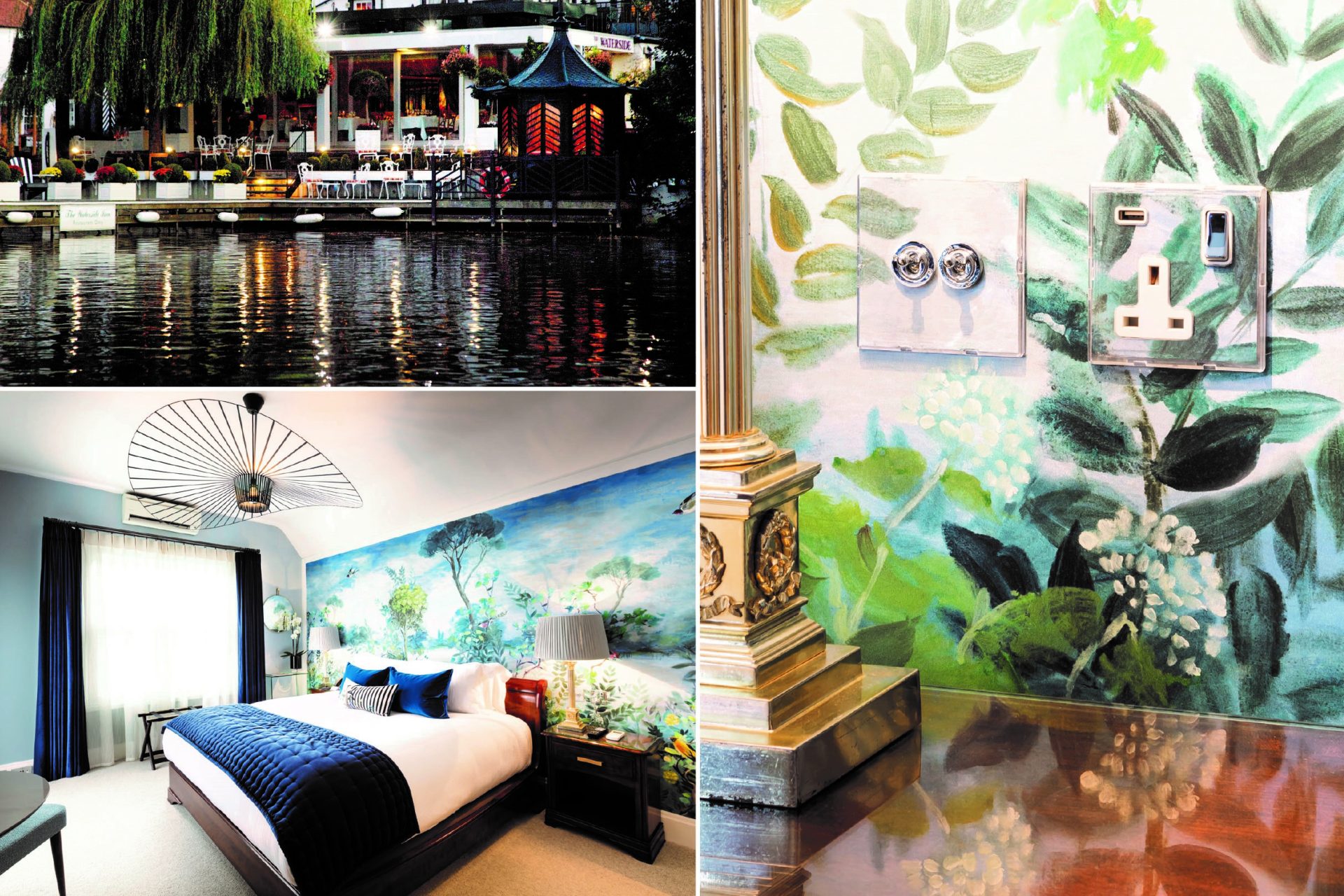
Image caption: Perception CFX | Image credit: Hamilton Litestat
For the fifth consecutive year, Hamilton Litestat, which produces quality wiring accessories and tech solutions, will join us at The Brit List Awards as Showcase Partner.
A British manufacturer, Hamilton Litestat has created an enviable portfolio of decorative switch plate and socket designs to please the hotel interiors fashion industry, as well as smart lighting control and multi-room audio systems designed to enhance the hotel guest experience.
Showcase Partner: Utopia Projects
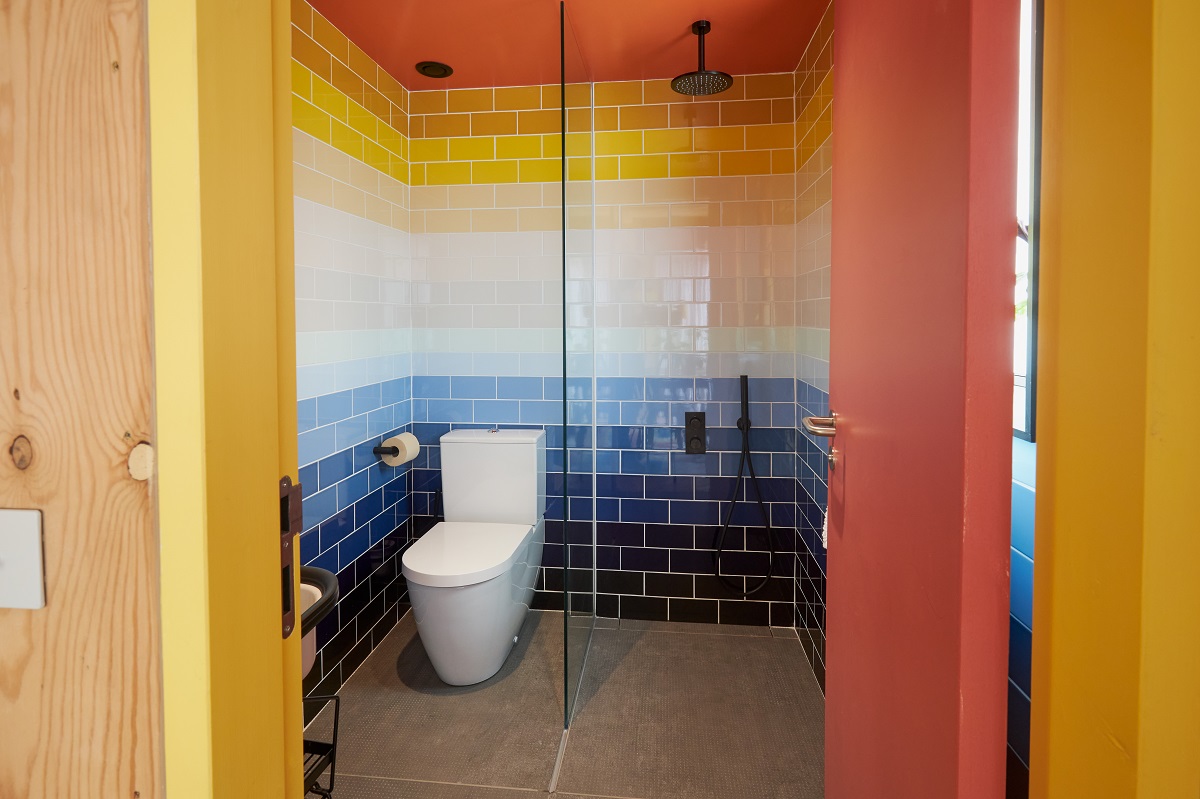
Image caption: The bathrooms inside Stock Exchange Hotel in Manchester, designed by Space Invader (specified by Utopia Projects). | Image credit: Stock Exchange Hotel
So, what’s better than two Showcase Partners? Three Showcase Partners. That’s right, Utopia Projects have levelled-up this year to have a major presence at the awards ceremony.
When it is not launching insane competitions to win a free bathroom makeover, Utopia Projects supports the design, supply and aftercare of bathrooms and spas to hotels, public buildings and residential properties nationwide. The bathroom design experts at the brand understand the time constraints often faced on a project and searching the market place for the right products is not just time consuming, but costly. With their key industry contacts and wealth of knowledge, the team aims to make life easier for A+D professionals.
Award Partner: Atlas Concorde
Image credit: Atlas Concorde
Atlas Concorde, which has just unveiled its collaboration with HBA, Marvel Trevertine, following the opening of its Clerkenwell Showroom last year, returns to The Brit List Awards 2023 as Award Partner. The Italian brand, with a strong persona here in Britain, is a benchmark player in the entire ceramic tile industry and one of the most important and solid companies worldwide.
Award Partner: Hansgrohe
Image credit: Hansgrohe
Forever looking to the future in bathroom and wellness design, Hansgrohe is joining The Brit List Awards 2023 as an Award Partner.
Faucets, debuting this year at The Brit List Awards 2023 as an Award Partner, is a leading British independent stockist and distributor of quality bathroom brassware and sanitary products — it has been a one-stop shop for quality bathroom fittings since 1983.
Red Carpet Partner: Balsan
Image credit: Balsan
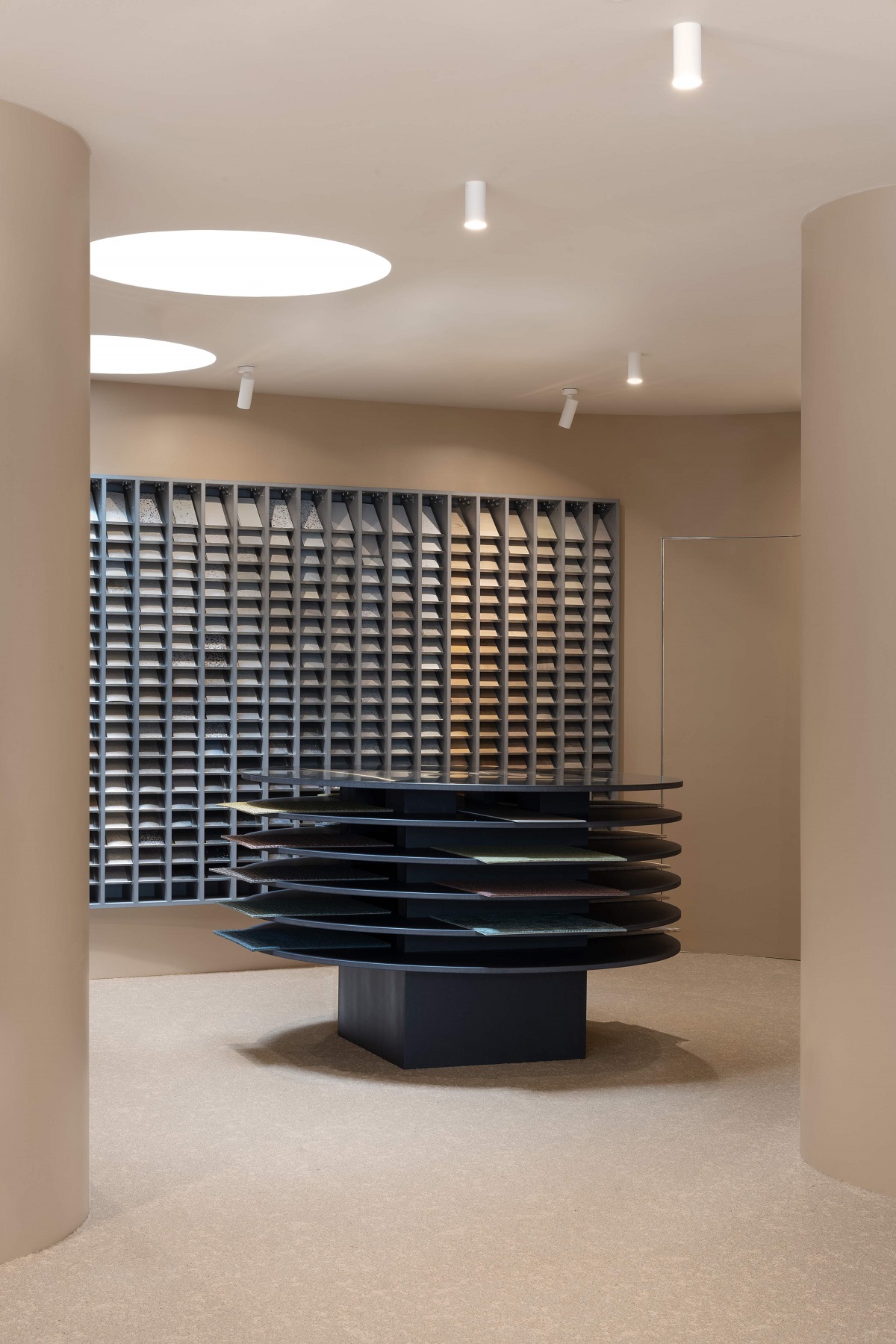
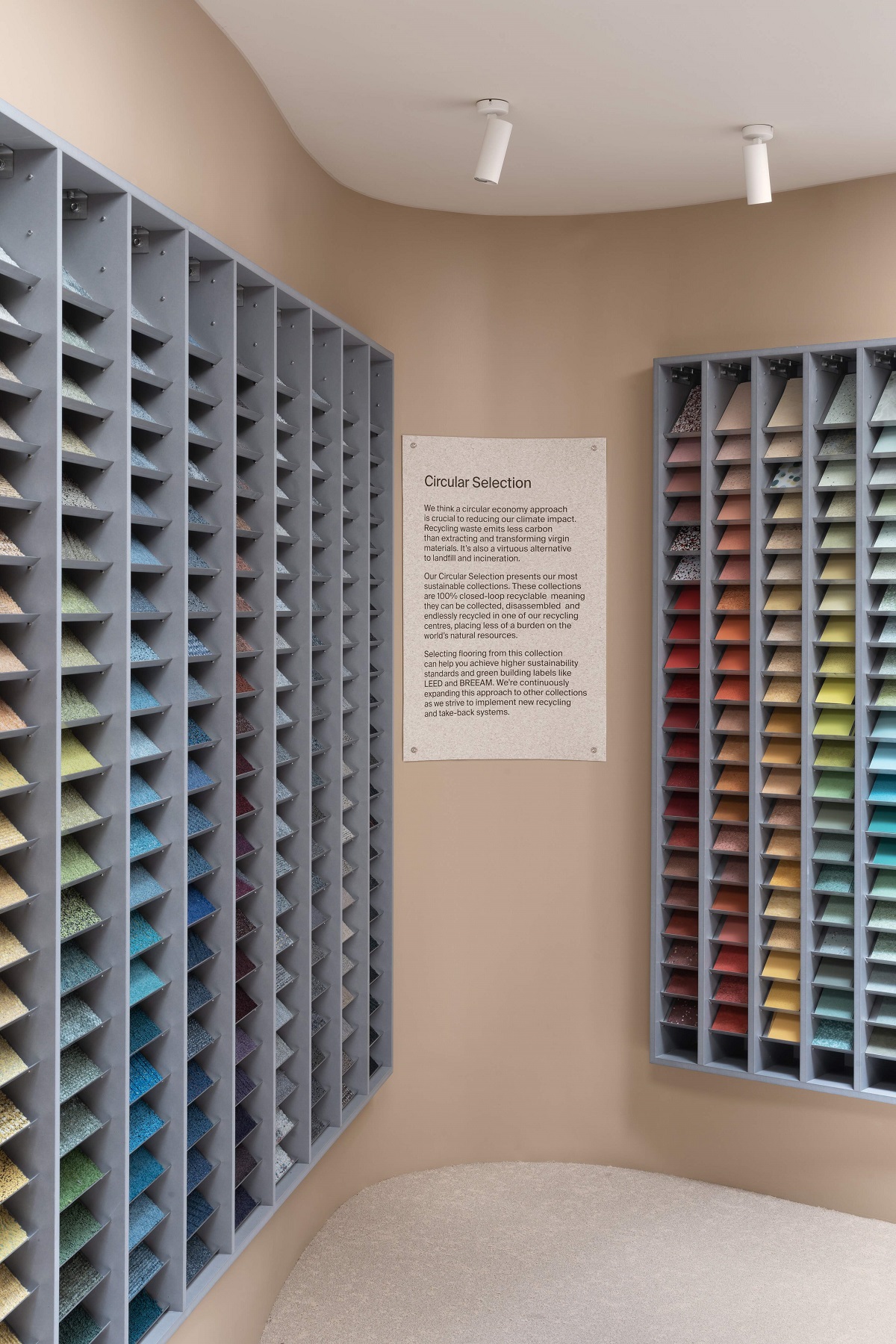
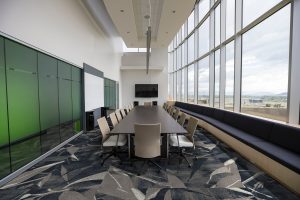
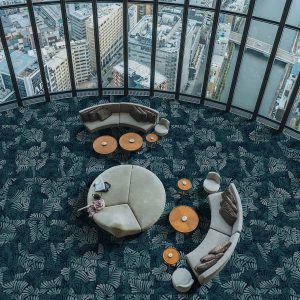
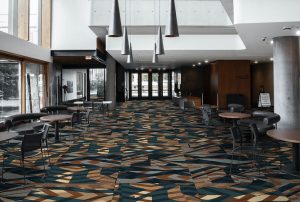
That’s right, for the first time in the campaign’s history, we are pulling out all the stops, working with our Red Carpet Partner, carpet specialist Balsan, to create an unrivalled arrival experience.
For as long as the company has been around for, Balsan has continued to stand out with its creative products and its cutting-edge industrial facilities, while benefitting from the expertise built up by the team’s long years of experience.
Entertainment Partner: BECK
Image credit: Mark Read Photography
Last year was a dress rehearsal compared to what we have lined-up for you this year regarding performances. With UK contractors BECK by our side as our Entertainment Partner (how apt), we have more than double the amount of acts who will be blowing the industry away this year at The Brit List Awards 2023.
Official Videographer: CUBE
For three years, CUBE has supported The Brit List Awards by capturing the magic on camera in a series of videos, which includes the winners’ interviews, the award ceremony highlights and a few cheeky teasers thrown in for good measure. The production company, which has worked with Hotel Designs on a number of projects this year, have recently launched its original documentary, A Broken Record, which framed a series of interiors designers discussing the future of conscious design and development.
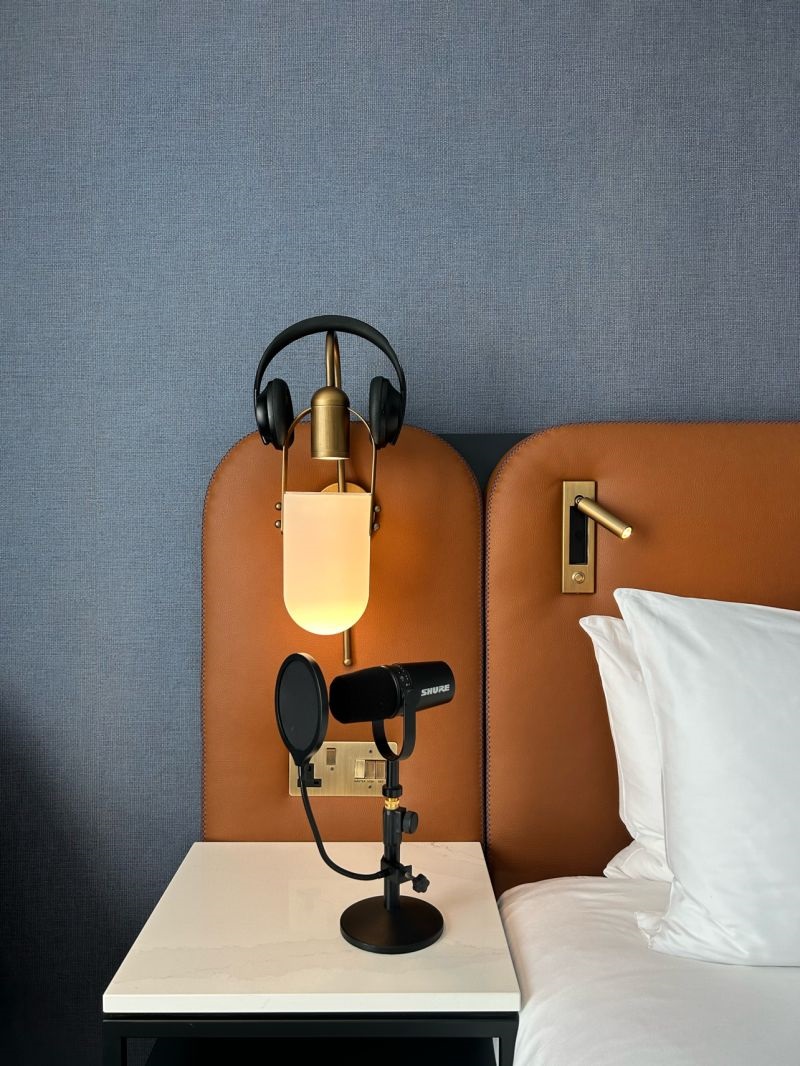
Podcast Partner: DESIGN POD
Headphones on. DESIGN POD is a design and architecture podcast that aims to cut through the noise. The topics and personalities amplified on the podcast have been carefully chosen to give texture and context on key issues that are impacting architects and designers.
Tickets to attend The Brit List Awards 2023, on November 1 at Circa Embankment are now on sale. If you are an interior designer, architect, hotelier or developer, click here to purchase your tickets. For anyone else wishing to attend, click here to purchase your tickets.
Product watch: the Rest Assured Collection from Silentnight
Silentnight has relaunched its Rest Assured collection with three newly developed mattresses for hoteliers seeking luxurious comfort for their guests…
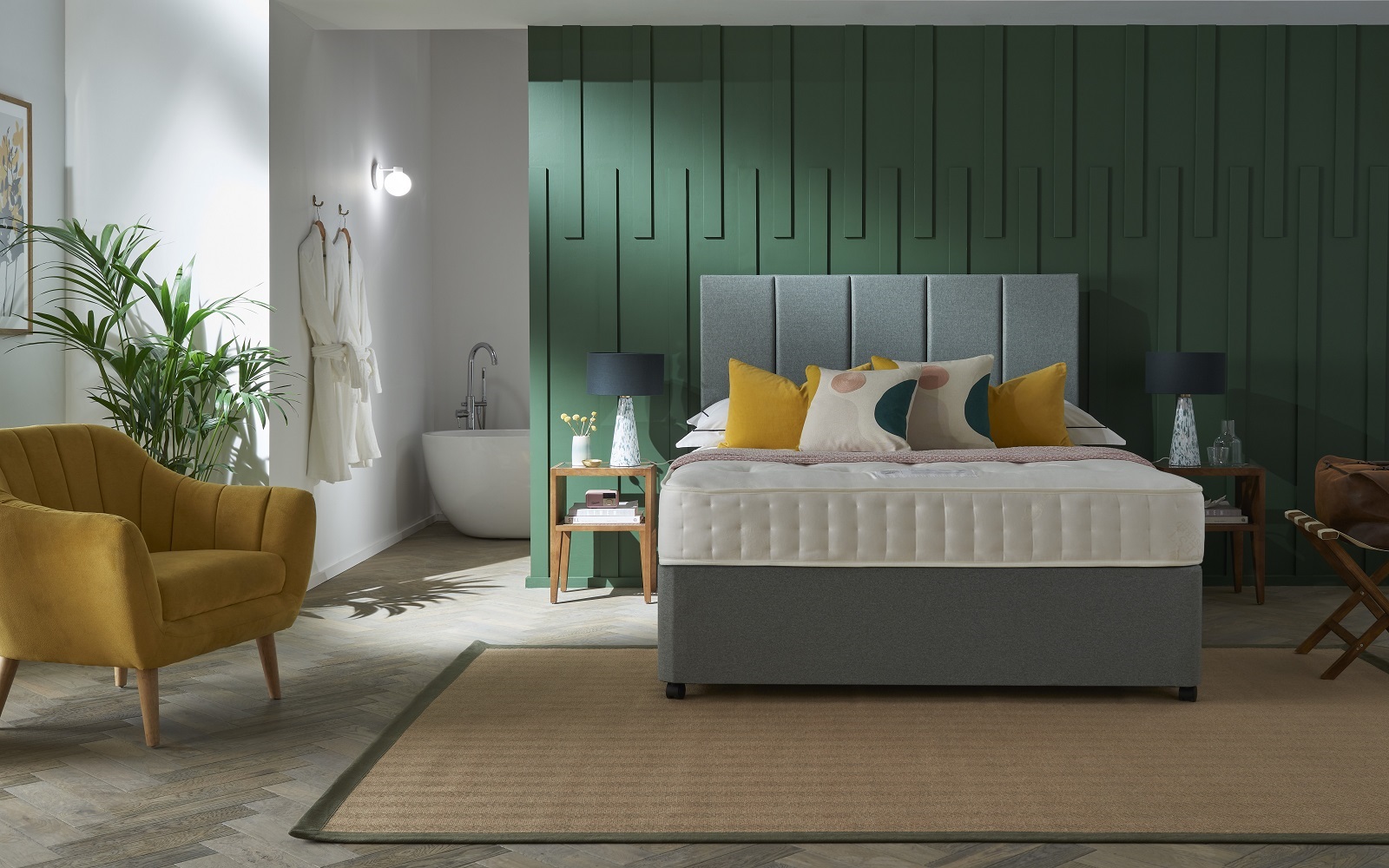
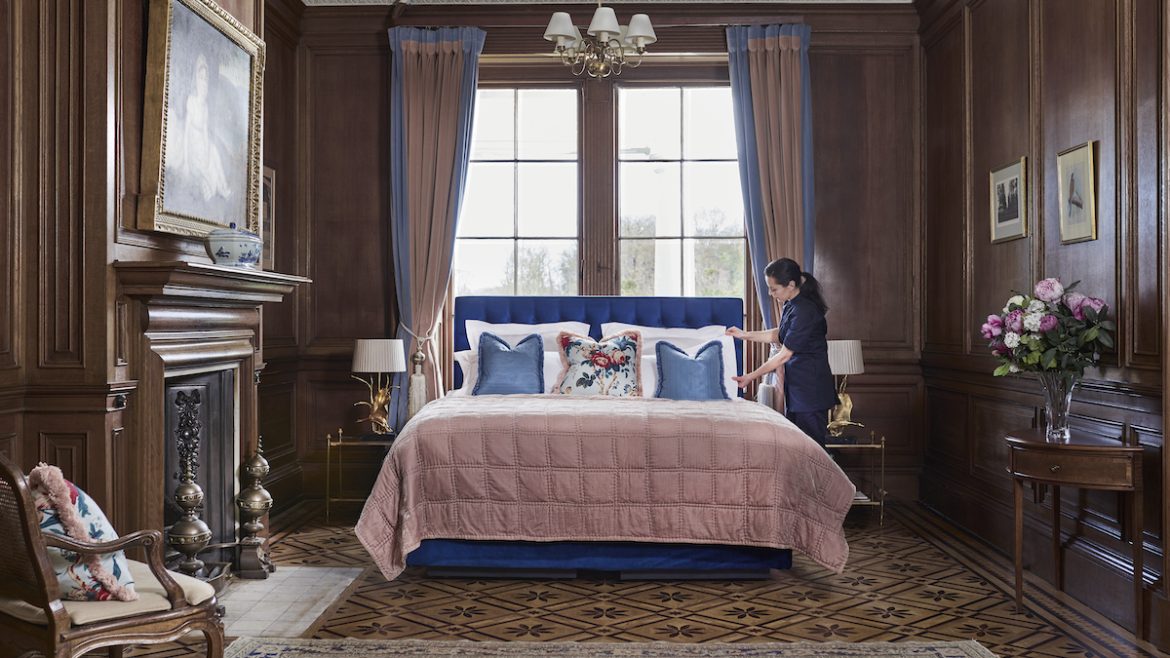
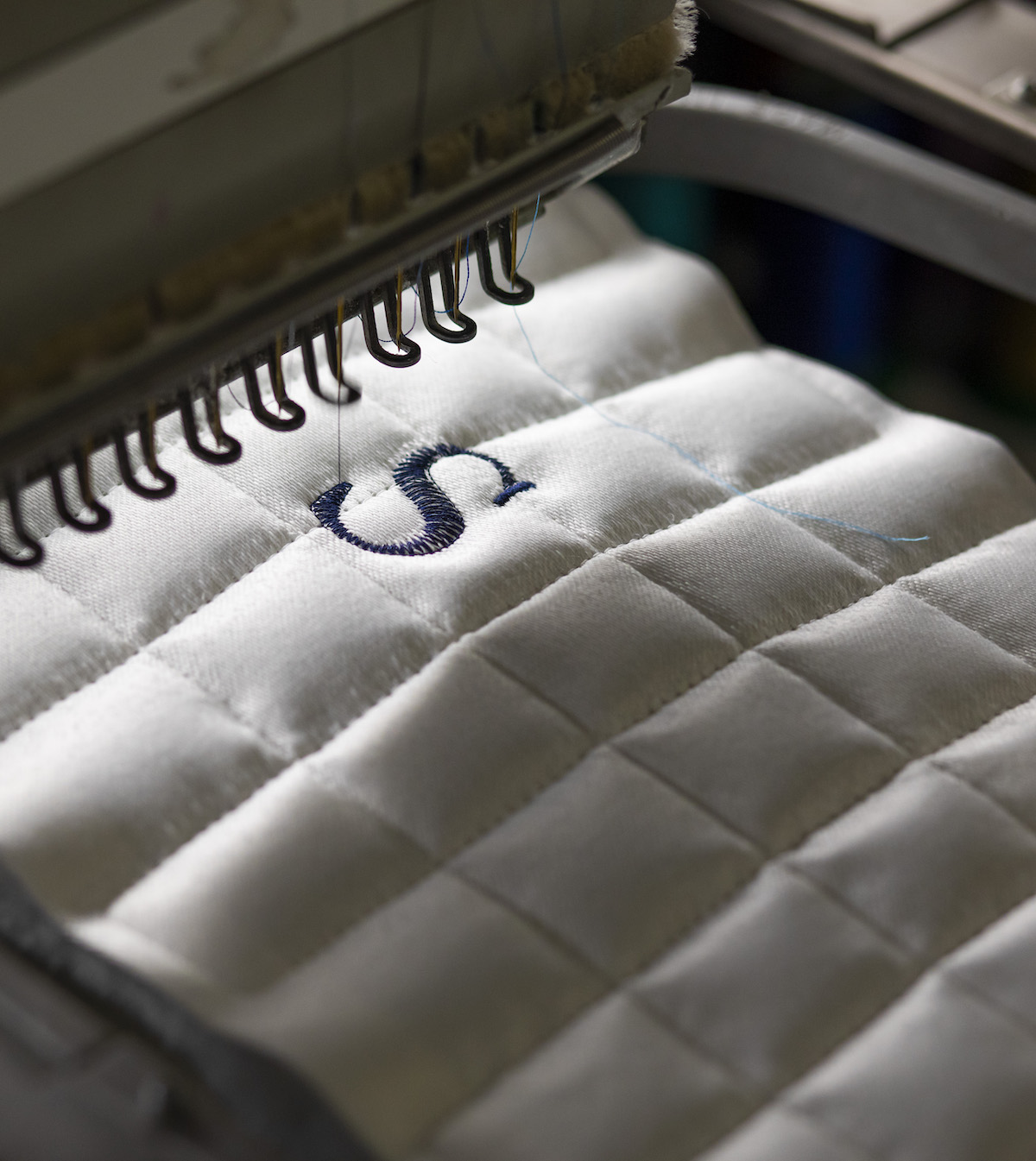
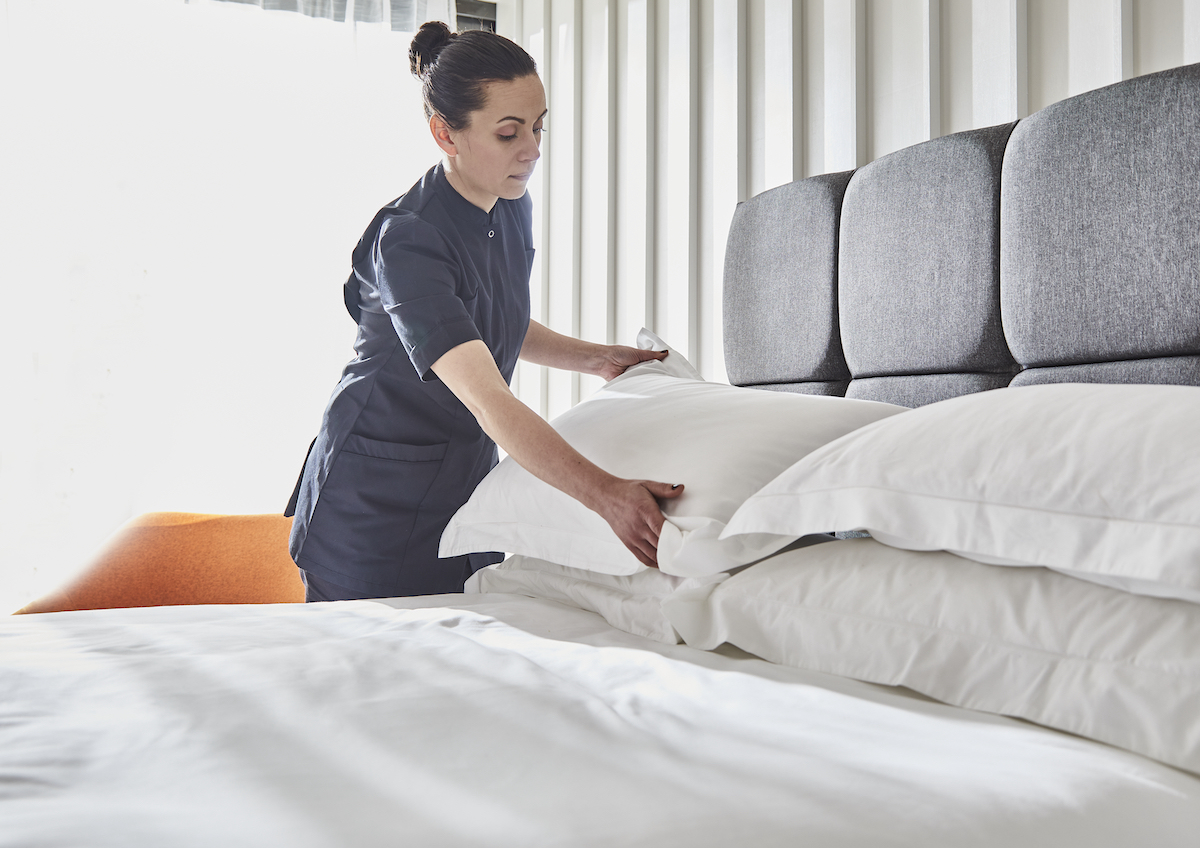
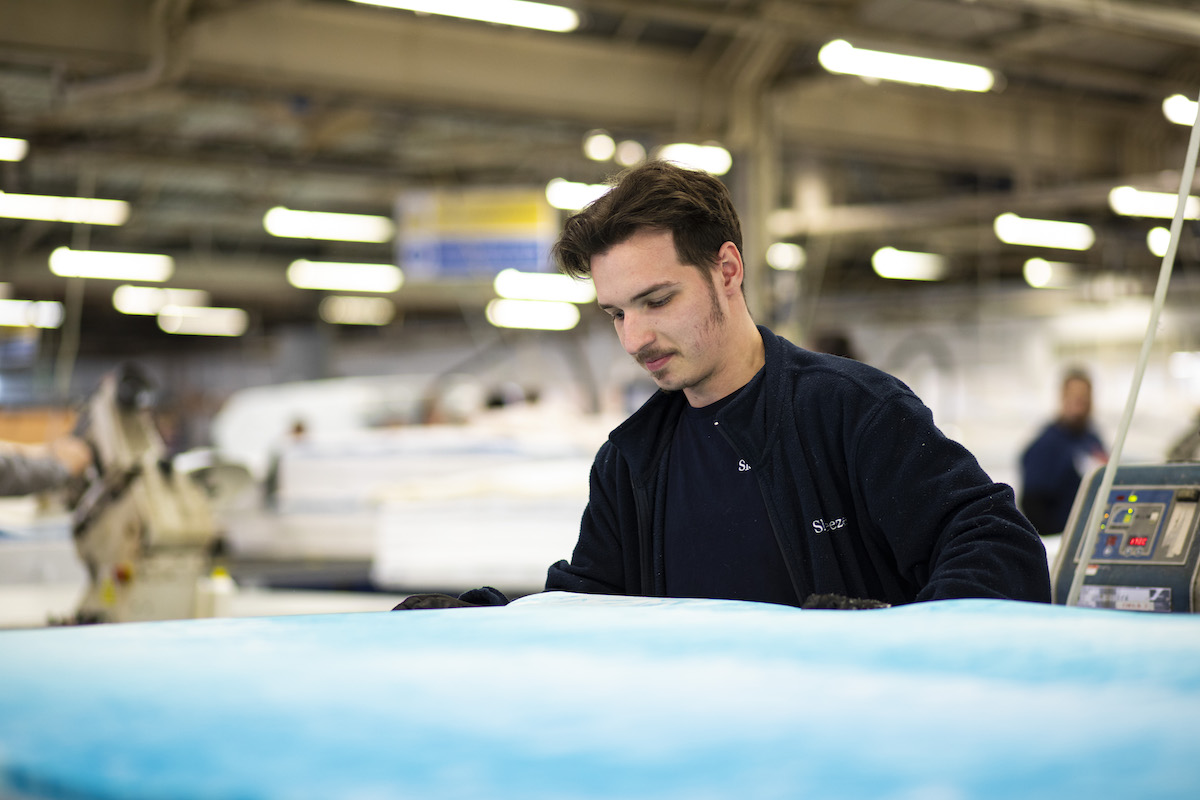
The Rest Assured range from Silentnight has been handcrafted with sustainability and sleep science front of mind, using natural and sustainable materials of the highest quality, durability and comfort. Each mattress is made with British-sourced Cheviot wool and includes zoned pocket springs to improve spinal alignment and posture. They are also made with single-sided construction to eliminate heavy seasonal mattress turning and using Smartshield, a skin-safe treatment designed to eradicate bed bugs and dust mites, improving hygiene and longevity.
Image credit: Silentnight
“We’ve taken a long-term view to developing our Rest Assured collection with sustainability, breathability and comfort firmly front of mind,” discussed David Lawrenson, Hospitality Sales Director at Silentnight Group. “We know we can only achieve our objectives by bringing together the lessons we’ve learnt from 125 years of manufacturing alongside the modern techniques and expertise we’ve invested in recently. We remain committed to prioritising sustainability and comfort and the relaunch of Rest Assured is testament to that.”
Tested in Silentnight’s state-of-the-art testing facility in Lancashire to exceed fire and flammability compliance and fitness for purpose testing, the collection consists of the entry-level Bancroft, mid-range Bowland and top-tier Berrington. All come with a five-year guarantee. The Bancroft’s zoned pocket springs, tufted sleep surface and layers made of Cheviot wool ensure a supportive, breathable and comfortable sleeping experience, while the Bowland features an additional layer of responsive mini springs that optimises breathability and comfort.
The premium Berrington range combines layers of premium British wool, sustainable fibres and an added layer of highly responsive nano springs, designed to provide unparalleled comfort for all types of sleepers.
Silentnight is one of our Recommended Suppliers and regularly features in our Supplier News section of the website. If you are interested in becoming one of our Recommended Suppliers, please email Katy Phillips.
Moving into bright new territory, bathroom brand Crosswater has expanded its growing product portfolio into the realm of lighting…
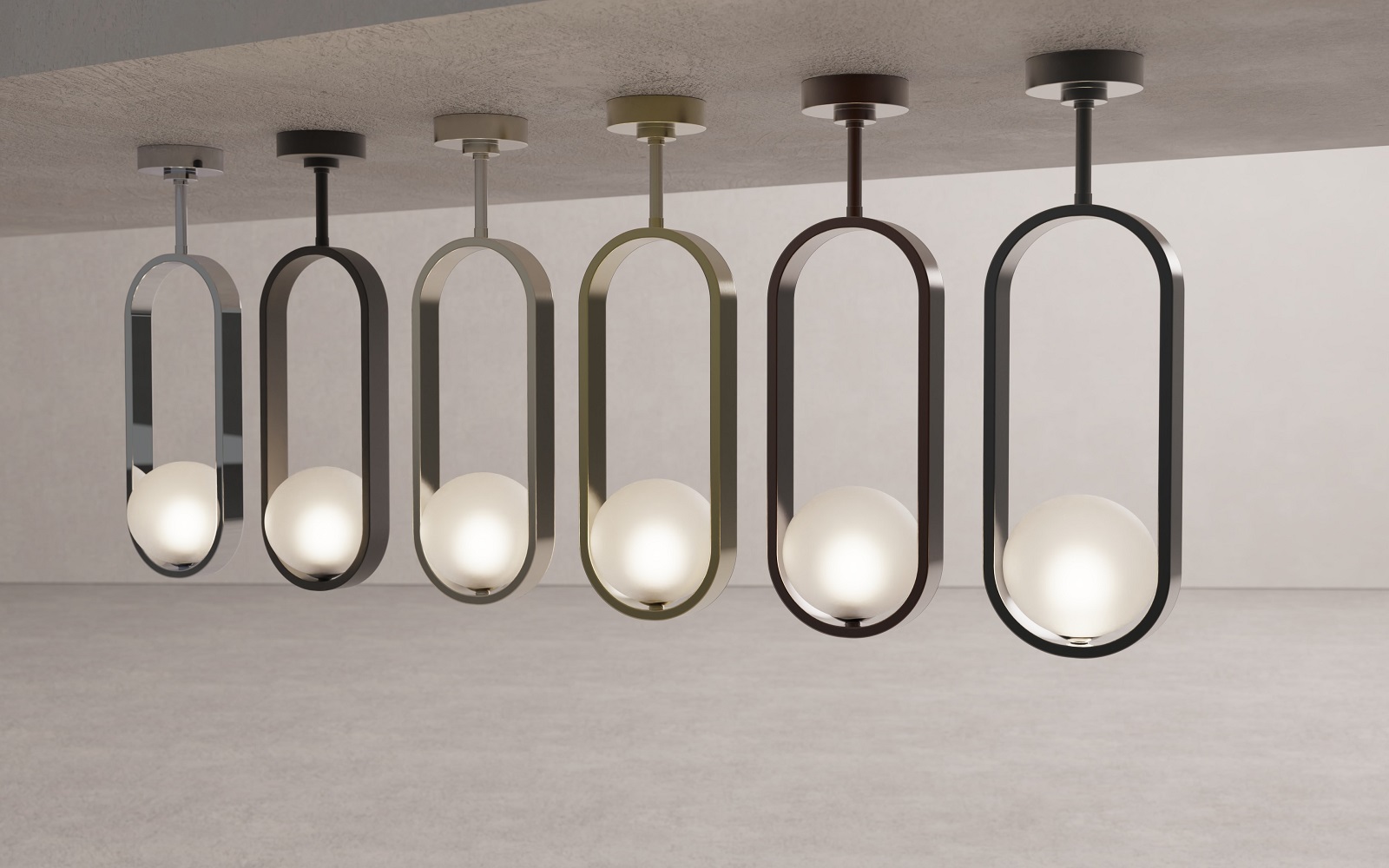
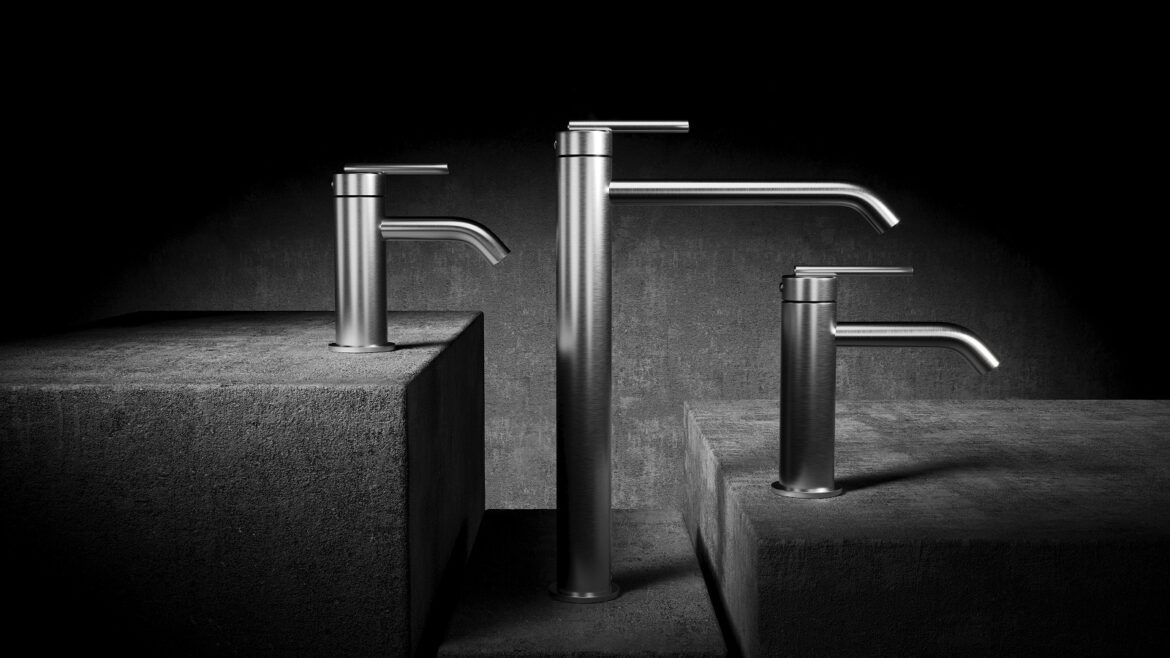
The new Tranquil Lights collection sees the exciting introduction of illumination to the growing Crosswater product portfolio. Designed to pair effortlessly with the brand’s brassware solutions, the new collection allows for metallic accent linking across the whole bathroom. Available in three versatile designs – a Pillar, Pendant, and Halo fixture – the Tranquil Lights collection is designed to enhance the mood of every bathroom.
Image credit: Crosswater
The collection is available in six of Crosswater’s metallic finishes, including Chrome, Matt Black, Brushed Brass, Brushed Stainless Steel and the new Brushed Bronze and Slate. The Tranquil Pillar Light provides a striking, unique light design that softly illuminates any bathroom space. Designed with adjustability in mind, each Tranquil Pillar Light allows the light direction to be adjusted by up to 45 degrees, provides 3000K warm light and comes fitted with a 40W LED
bulb for an effortless install. The IP44 rated lighting solution offers a versatile lighting solution for any luxury bathroom.
The design is available with both a 90-degree wall bracket and extender rods for a ceiling installation – the multi-use design can be effortlessly combined to create multiple lighting combinations for optimal mood-enhancing benefits. In addition, the Tranquil pendant light is supplied with a fitted 3W G9 dimmable bulb, ensuring that lighting can be controlled to suit the desired atmosphere.
Crosswater is one of our Recommended Suppliers and regularly features in our Supplier News section of the website. If you are interested in becoming one of our Recommended Suppliers, please email Katy Phillips.
Drawing inspiration from the Wasatch Mountain region, Montage Deer Valley has completed an extensive renovation of all of guestrooms, suites and dining outlets across the 16-acre resort…
The much-anticipated Montage Deer Valley project tapped the visions and creativity of two interior design firms – BraytonHughes Design Studios of San Francisco for resort accommodations and Denton House Design Studio of Salt Lake City for restaurants and lounges. Both firms drew inspiration from the year-round beauty of the Wasatch Mountains and the enduring history and modern sophistication of the destination surrounding the resort, which took root during a silver mining boom in the mid-1800s and has since been transformed into a world-class alpine oasis destination.
Image credit: Montage Deer Valley
“The beauty and history of the region are such an integral part of the experience we provide our guests, and the renovation of our accommodations and dining outlets succeeds in immersing everyone we host in our surroundings,” said Joseph Mattioli, General Manager, Montage Deer Valley. “The work of BraytonHughes and Denton House surpassed our expectations and will be a key selling point for years to come.”
Montage Deer Valley
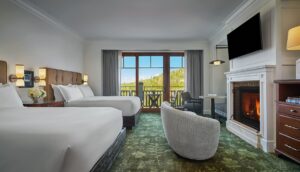
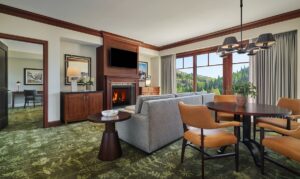
For the renovation of Montage Deer Valley’s 154 guestrooms and suites, BraytonHughes selected textures, colours, shapes and furnishings that pay tribute to the heritage and natural beauty of the region, blending traditional and classic elements with a contemporary design. Design accents include houndstooth fabric pillows, mirrors framed by wood with leather strapping and silver rivet detailing and subtle expressions of silver throughout both the in-room colour palette and materials, to reflect the rich mining history.
Image credit: Montage Deer Valley
The design draws directly from nature, with green sun print-inspired carpet in guestrooms, custom alabaster lamps with chiseled details inspired by rock formations and hand-forged ironwork on bedside lamps that evoke a tree branch. All-new artwork similarly plays off the design firm’s nature and history-inspired narrative, including historic local photographs, a colourful abstract landscape painting and a whimsical sketch of a ski pole morphing into a tree branch. Another framed work of mining certificates printed on sheet metal hangs over existing console tables at the entry to guestrooms, its subtle iridescent finish further highlighting the rich history of the destination for guests.
Image credit: Montage Deer Valley
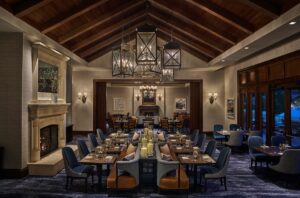
For its renovation of the dining outlets across the resort, Denton House also drew inspiration from nature, bringing the elements and surrounding outdoor landscapes inside at Yama Sushi, Apex and Burgers & Bourbon. At Yama Sushi, the design is inspired by the majestic peaks and flowing rivers of Japan, transporting guests to a tranquil landscape. The carpet pattern is reminiscent of water and mountains, while the dark blues, cool whites and grays, accented with warm wood tones pay homage to the earth and stones of the mountain region, and the veining on the stone countertops alludes to snow drifts blown across the mountain tops.
Image credit: Montage Deer Valley
Apex’s new design seamlessly integrates indoor and outdoor spaces, with textured wallcoverings and vintage images capturing the surrounding landscape, while a colour palette of cool blues, warm caramel leathers and terracotta accents creates a harmonious atmosphere. Meanwhile, Burgers & Bourbon has been transformed into a welcoming and casually elegant space featuring informal furniture, cosy fabrics, walnut-colored woods, vibrant accents, whimsical wall art and a menu that honors local artisans and farmers. Guests will also enjoy an all-new dining destination, Slopestream, a customised airstream eatery located mountainside with fireside outdoor seating and breathtaking views of Deer Valley, serving an elevated take on regional and seasonal on-the-go culinary classics and a selection of local beers and wines.
Innovation is on the agenda at the Independent Hotel Show 2023
The Independent Hotel Show is the UK’s only business event for the boutique and independent hotel sector and has become a trusted resource for hoteliers to keep up to date with the latest hospitality trends and insights, network with peers in the industry and streamline product sourcing…
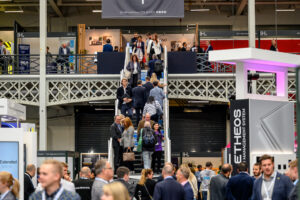
The Independent Hotel Show 2023, in partnership with James Hallam, returns to Olympia London on October 16-17 and is a highlight of the year for many independent hoteliers.
“When you’re a boutique luxury hotelier, connecting with your fellow industry colleagues is crucial,” commented James Sanders, General Manager, The Swan Hotel. “Creating memorable, quality experiences in these highly-priced competitive times is a challenge. The Independent Hotel Show merges the ‘know-how’ and the ‘nuance’ of blue sky thinking with a community of like-minded people. Quality seminars, suppliers and connections make this show my number one choice.”
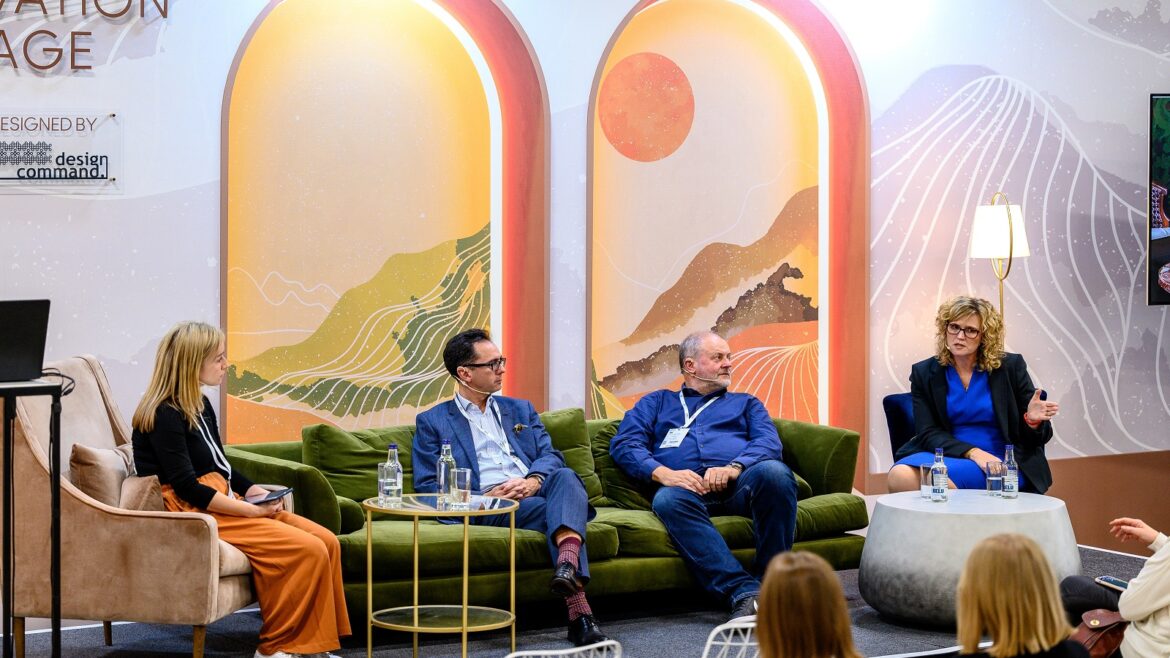
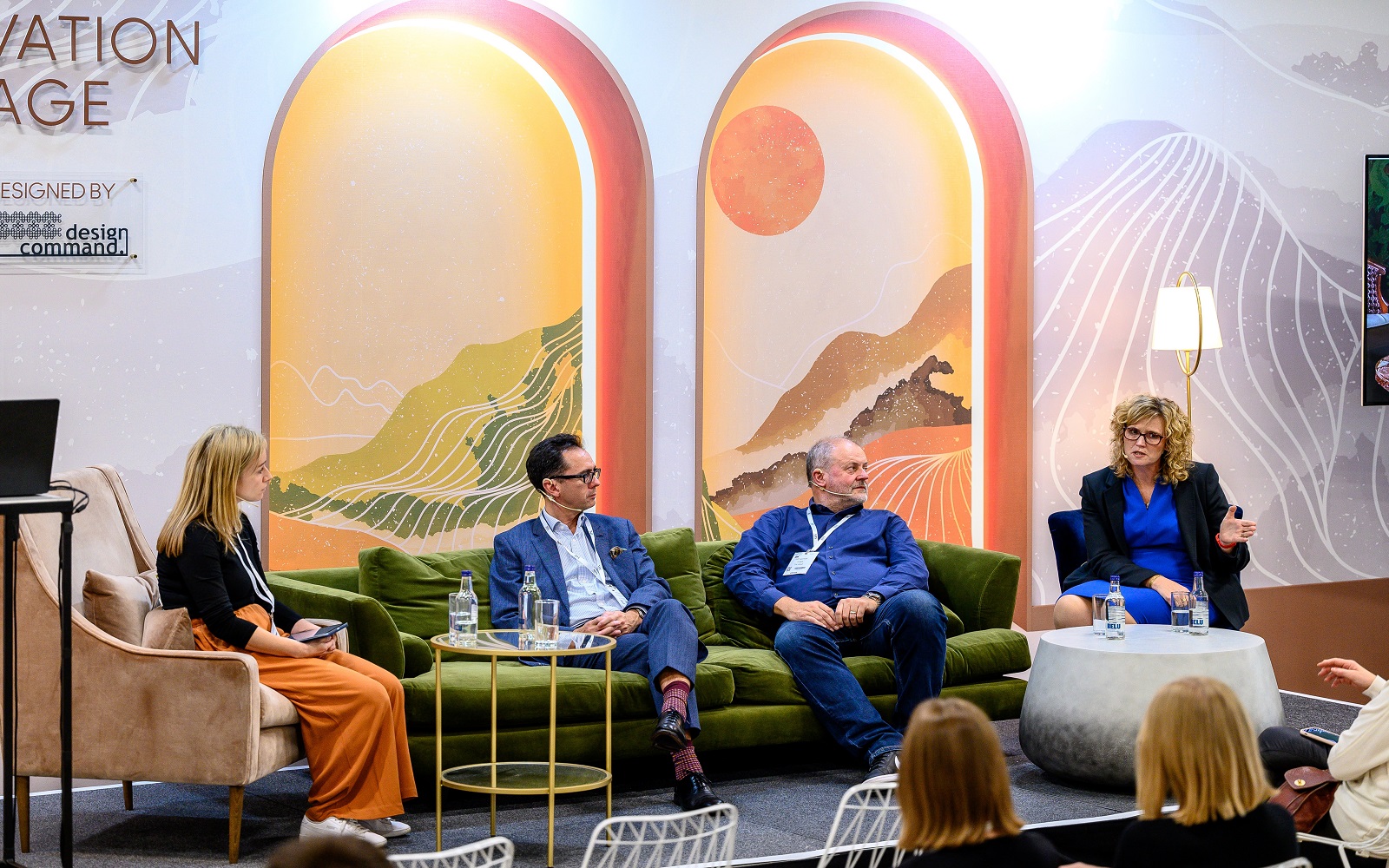
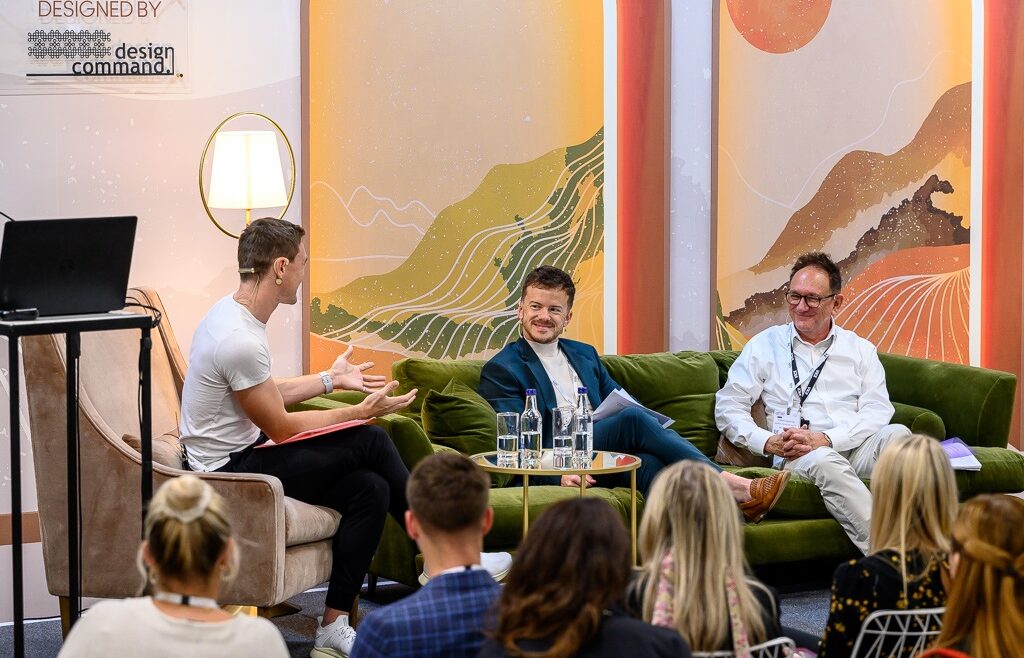
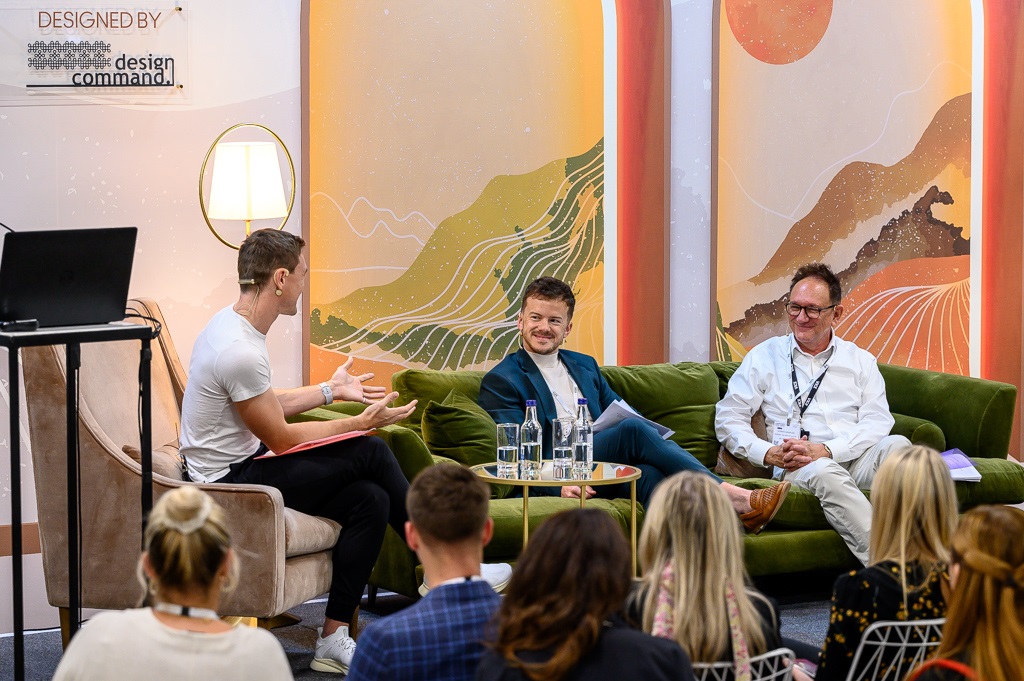
On the Hotel Business Stage, in partnership with HotelPartner and designed by Design Command, hoteliers at the show will have access to leading industry experts and sessions taking a close look at a number of key issues affecting the independent hotel sector.
Daniel Twigg of Clockwork Marketing will be leading a discussion on building authentic brands with The PIG Hotels’ Lotti Bruce and Clare Anna, brand Ambassador for Zedwell Hotels, while Ryan Haynes of Haynes MarComs will be joined by The Headland Hotel’s Veryan Palmer and Susanne Williams of Journey Consultancy to discuss the implications and opportunities of AI for the hotel sector.
The Hotel Business Stage will also see the launch of the #IHSPowerHour, where industry leaders and consultants including Andy Banner-Price of The 25 Boutique B&B and Chris King of Lightening Travel Recruitment will be presenting short, ten-minute sessions packed with valuable insights and actionable takeaways for hotel businesses. Also on the Hotel Business Stage, Hotel Magazine Editor Jade Evans will be leading a discussion on diversity & inclusion in the hotel sector with Rita Varga of RaizUp, Serena von der Heyde of The Georgian House and Abu Bundu-Kamara, Director of Inclusion & Diversity at Expedia Group.
For hoteliers looking for opportunities to grow and invest, Emily Newman of NewDog PR will be joined by Mohith Sondhi of OakNorth Bank, KSL’s Philip Ward, Nick Davies of The Cottage In The Wood Malvern and Sarah Green of HotelFinance to discuss the practicalities, risks and opportunities of refinancing.
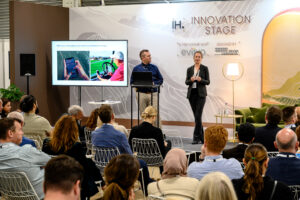
The Innovation Stage, in partnership with eviivo and designed by New Heritage Design, is a must-attend for hoteliers looking to the future of hospitality and who are eager to be inspired by the very latest trends and innovations. Day one of the show will kick off with sessions from VisitEngland’s Janet Uttley and Kate Nicholls OBE, CEO of UKHospitality, who will be discussing the latest legislation, opportunities and initiatives relevant to the independent hotel sector.
The intersection of wellness, design and guest experience will be high on the Innovation Stage agenda, with sessions covering the psychological impact of hospitality design, ‘sensory-centric creation’ and how to eliminate the ‘first night effect’ and deliver a killer first impression.
“Hospitality is so much more than good food and drink,” added panellist Ryan Thompson, General Manager, Forty-Seven. “Great hospitality can be a treat for all of the senses while mistakes upsetting any sense can be a big turn-off for any guest without even knowing why we haven’t created that WOW moment. In a time of so many business pressures ensuring all senses are stimulated in the right way is paramount for a business to succeed, at Forty-Seven I believe we have curated any experience to rest and wake, excite and relax the senses in harmony and I’ll share a few of our secrets.”
The Innovation Stage will also play host to a series of sessions breaking down the key components of ESG (environmental, social, governance). The environment session will focus on where to begin with sustainability accreditation and advise hoteliers on the steps required to measure and track sustainability efforts.The social session will take a look at staff health and wellbeing, but this time starting at the top. A panel of industry leaders and HR professionals will discuss how business leaders can learn to manage their own wellbeing alongside that of their teams.
Finally, the governance session will discuss the importance of transparency when it comes to ESG and how to avoid unintentional ‘greenwashing’ when it comes to promoting environmental efforts.
The Social Business Space, in partnership with Mews and designed by New Heritage Design will return with new and exciting opportunities for hoteliers to network and discuss key industry trends in an informal environment. Hoteliers can take part in sessions such as ‘Breaking boundaries as GMs of the Future’ with The Master Innholders, ‘Advice and guidance on today’s industry issues, with IN4Hospitality’, ‘Why hospitality needs a global chartered professional body’ with Institute of Hospitality CEO Robert Richardson and a podcast takeover from Ryan Haynes, Director of MarComs and host of the Travel Market Life podcast.
To learn more about everything happening at this year’s event, and to register for your complimentary trade ticket, visit independenthotelshow.co.uk.
Hotel Designs is a proud media partner of Independent Hotel Show, which takes place on October 16-17 at Olympia London.
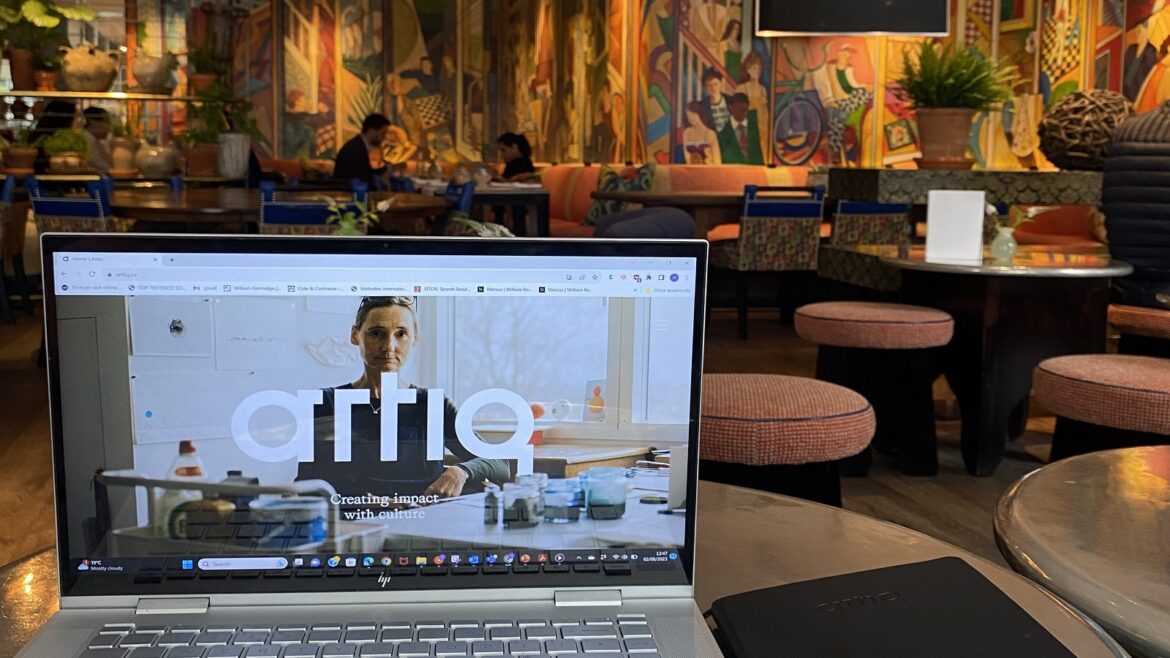
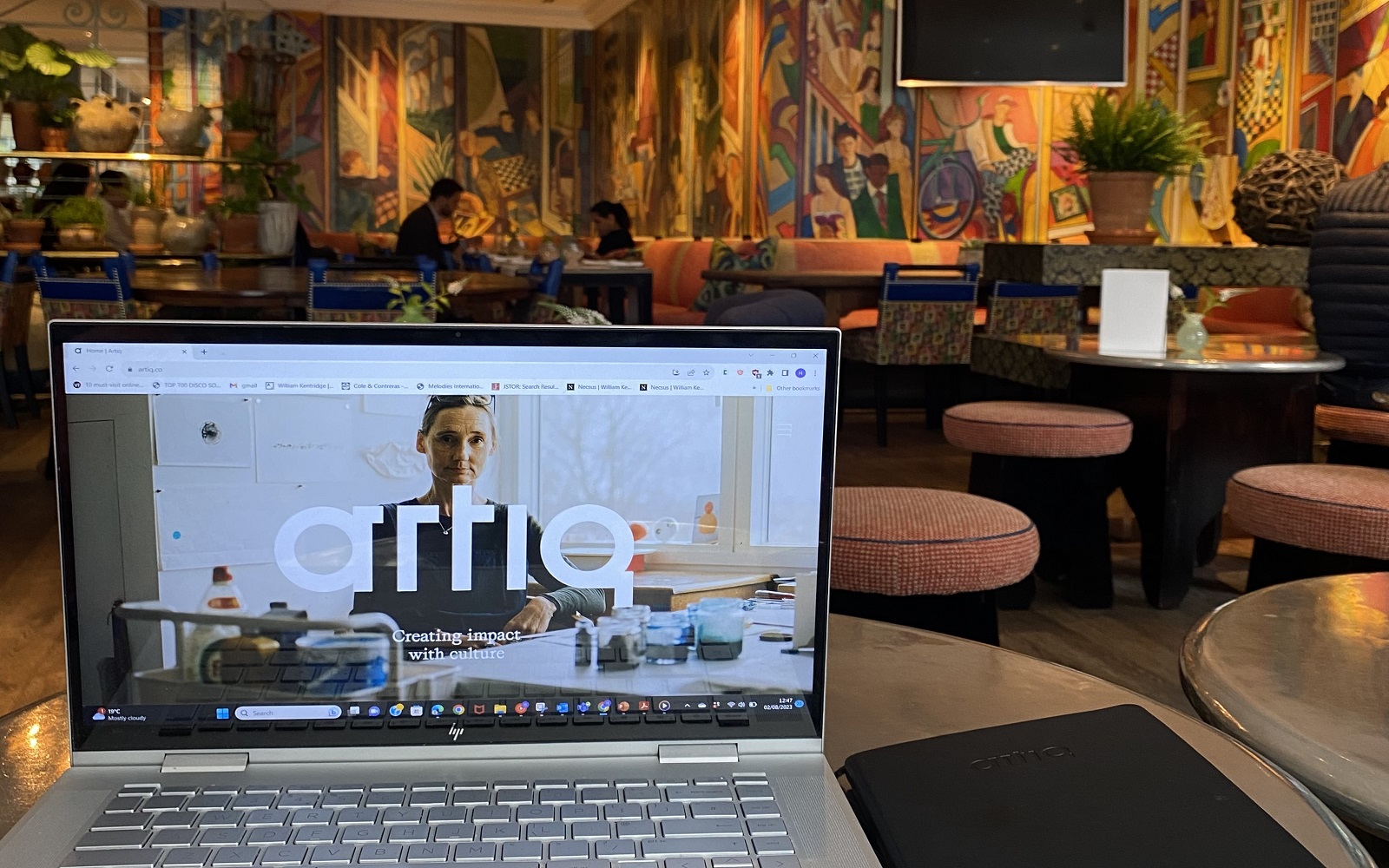
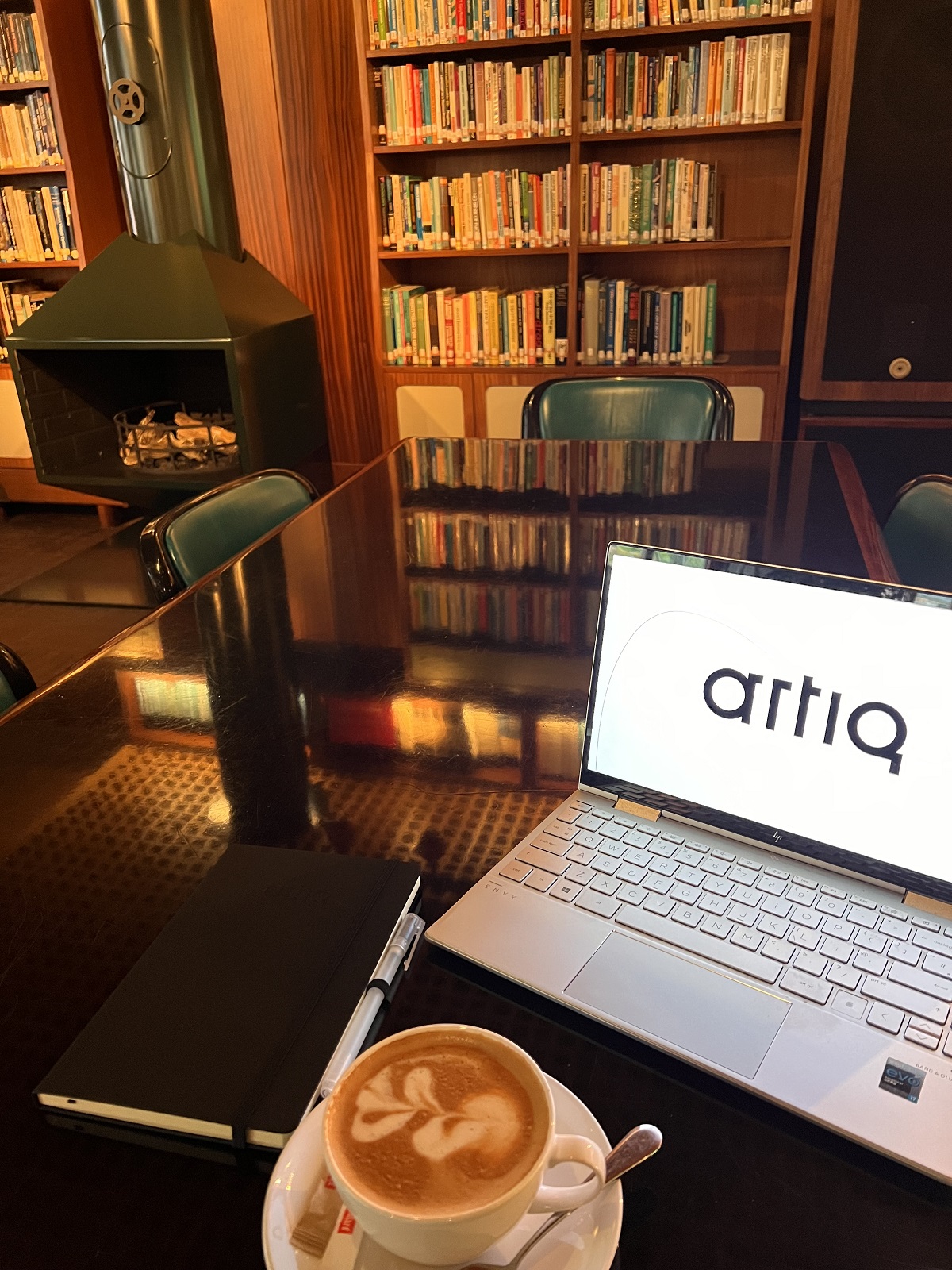
Is the working from hotels trend (WFH) living up to the hype? The team at Artiq think so – creative people need creative spaces, so over the course of a week, members of Artiq’s team went on a workcation, checking out some of the most well-regarded working spaces in London’s hotels…
The line between work and leisure has become increasingly blurred. Although the trend has been on the rise for some time, the pandemic, which saw us making banana bread and taking work calls from the same table, brought this debate to the forefront. Adding to the mix is the conversation about work-life balance. It’s tough to disagree with the idea that finding a healthy middle ground between our job responsibilities and personal relaxation is vital for our overall wellness. However, looking at it from another angle, the idea of pitting these two as opposites seems to suggest that work is the villain, a strictly burdensome task that needs to be counterbalanced with the joy and positivity of personal life. This perspective doesn’t feel entirely right either.
Image credit: Beckett Lodge
Parallel to this debate, or perhaps because of it, is the rising trend of multi-purpose environments, particularly in high-density urban areas, where the most interesting (to us) being the merging of workspaces and hotels. It feels like the best of two worlds: flexible workspaces are in demand and hotels already have space and service infrastructure to cater to the needs of workers.
Image credit: The Standard London
Artiq knows both of these industries well. Curating art collections and experiences for global clients across the workplace and hospitality sectors, it has witnessed first-hand the increasing overlap between the two. Traditional office spaces are adapting to accommodate hospitality-inspired features, while more and more hotels are designed to encourage drop-ins from working professionals.
Inbetween meetings and masterplans, while out and about in the city, hotels are often a preferred choice to work from and there is an abundance of beautifully designed hotels, that not only cater for productive working but also boost creativity. To discover which spaces work best Artiq team members went undercover to explore and experience some of the best WFH spaces that London has to offer.
Isabelle Guyer, Curator and Alexandra Vanburen Callender, Art Research Intern
Image credit: Artiq
Image credit: Artiq
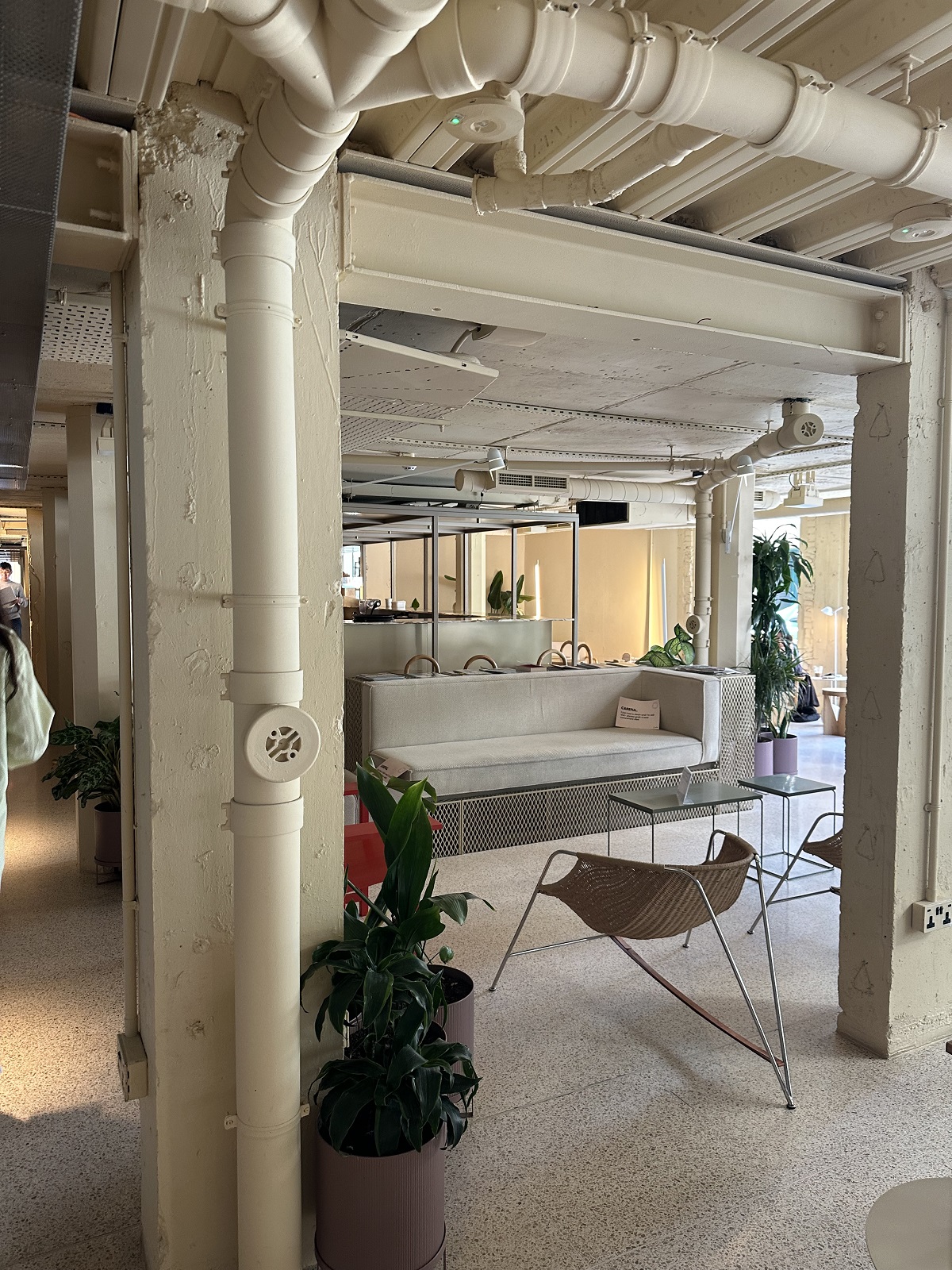
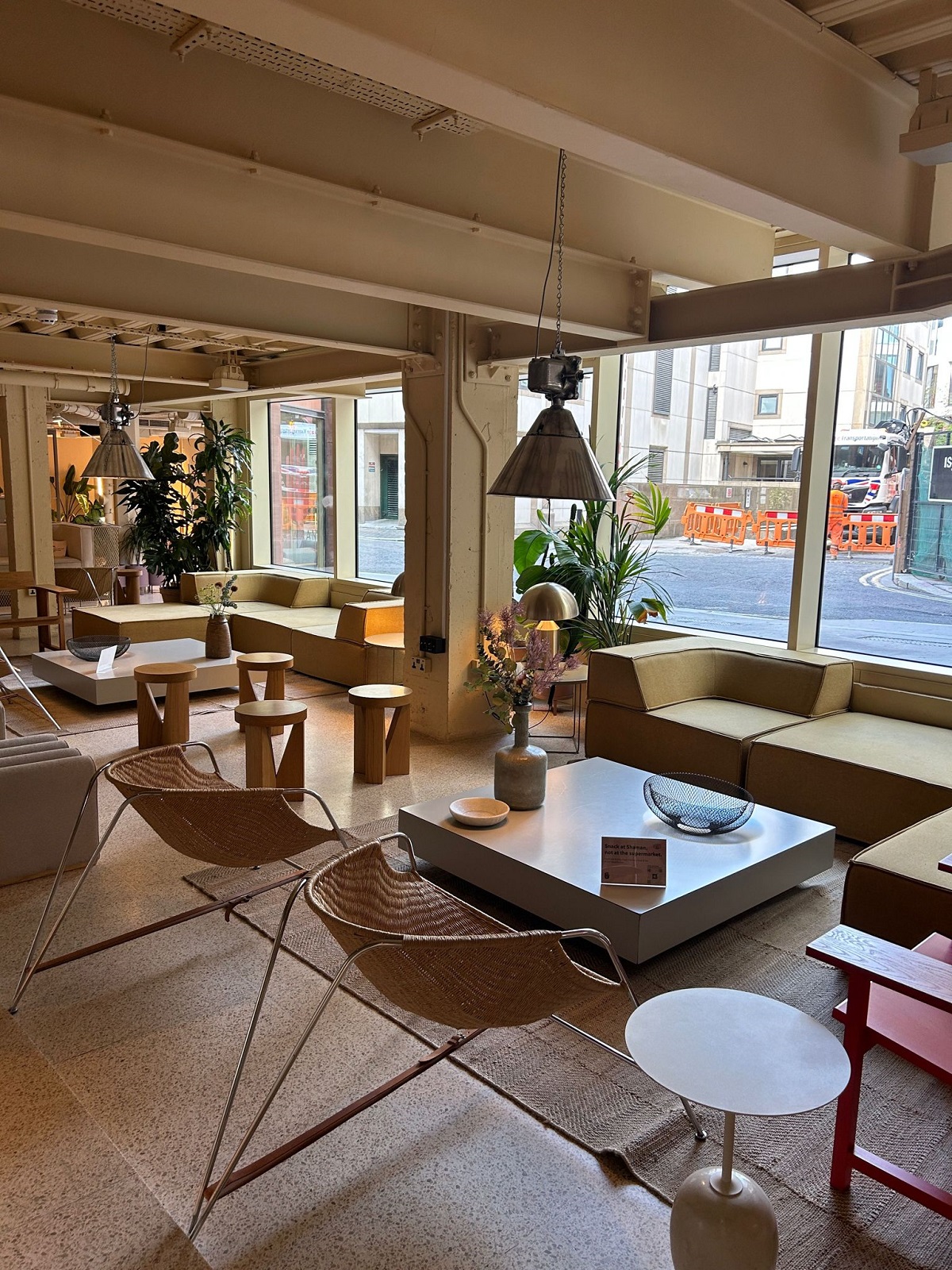
The first thing that caught our eyes when arriving at Locke at Broken Wharf was the sleek interior, with its low sofas and styled coffee tables. The space felt designed to encourage focused work, with a neutral colour palette and chill background music. A couple of people had quiet chatter, but this was a good thing for us – it contributed to the space feeling welcoming and relaxing rather than a strict workspace. We also met here to catch up before a nearby meeting, so it wouldn’t have worked if the space was too quiet, like a library.
The use of plants softened the space, giving a nice balance to the minimalist, industrial design. Similarly, the low ceilings were balanced with big windows; lots of daylight is a must for productivity. We were lucky to come here on a sunny day, so the table and chairs outside in the sun next to the river offered a great alternative for short breaks. Locke by Broken Warf is tucked away just by the river and it was surprisingly quiet for being so central in a hectic city. The only thing missing was a lie down in one the suites – Artiq curated the collection for the apartment here a few years back, and we would have loved to stay the night.
Meela Thurloway, Workplace Art Consultant
Image credit: Artiq
Image credit: Artiq
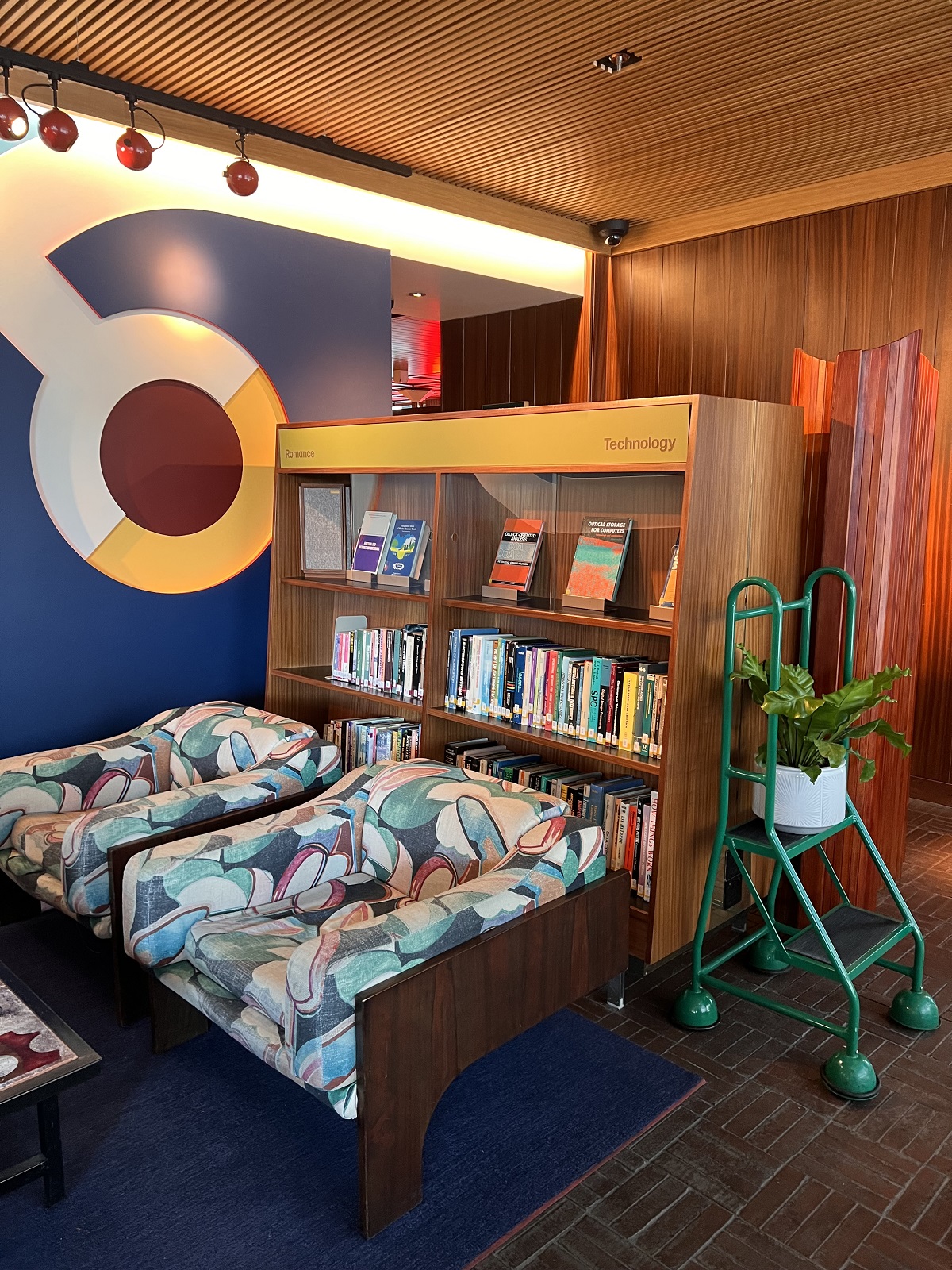
I came to The Standard to spend an afternoon working in The Library Lounge, the site of the former Camden Council Library. This space pays tribute to its former purpose yet with a contemporary edge whilst the décor throughout is extremely considered – a mid-century retro aesthetic with playful pops. As you enter through the main revolving doors, behind the reception desk is a geometric tile feature wall by artist Lubna Chowdhary and these shapes and palettes that are echoed throughout the property.
The space is laptop-friendly and being modelled on an actual library, it’s the perfect working environment. There are tables at varying heights. The work-desks are perfect for laptops, whilst the low relaxed seating is great for coffee meetings. There’s also real homely feel to the space with cosy fireplaces and greenery throughout the space and a cool casual charm.
It also had a good, undistracting playlist (not your typical hotel lobby tunes, more soulful with some contemporary jazz). The space is mood-lit, whilst this was no problem for me, some may find it a little dark. A big plus for lovely staff: from 6 pm the main library is a laptop-free zone and a polite 5.15 pm warning advised me that I could continue working around the corner.
The Library Lounge has a cool elegance to it and felt like a really creative space. It would be the perfect spot for meeting, whether with clients or artists! The décor and attention to detail throughout the space made it feels like a creative oasis away from the chaos of King’s Cross.
Fiorella Gianini, Hospitality Art Consultant
Image credit: Artiq
I started my day in Hart Shoreditch before a long day of meetings, as I had heard they have a great space for working. Artiq curated part of the art collection here a few years back, so I was excited to visit the space.
There were different areas where you could sit to work or take calls, which allowed you to pick and choose depending on your mood. The desks at the entrance felt more like serious business while the sitting area had a laid-back vibe and the café allowed you to hide at the back if looking for peace and quiet, which is where I decided to sit for a while.
It felt nice to have a change of scenery and looking at a different space felt inspiring. I’m always looking for inspiration and while sitting at the café I could spot some minimalist works of art hanged in a playful way. The café also has decorations all over the ceiling – an idea I would love to explore in one of my other projects.
Having different options to choose from was a plus and the feeling of being abroad that a hotel gives you made the experience more interesting. It felt like a mid-week break, despite just being a 20-minute walk from Artiq’s office.
Henry Dowson, Associate Curator
Image credit: Firmdale Hotels
The Charlotte Street Hotel is located in central London, next to Goodge Street Tube station, with easy access by public transport or other means. I arrived at the hotel around 10 am and found the café workspace easily, as it was next to the entrance.
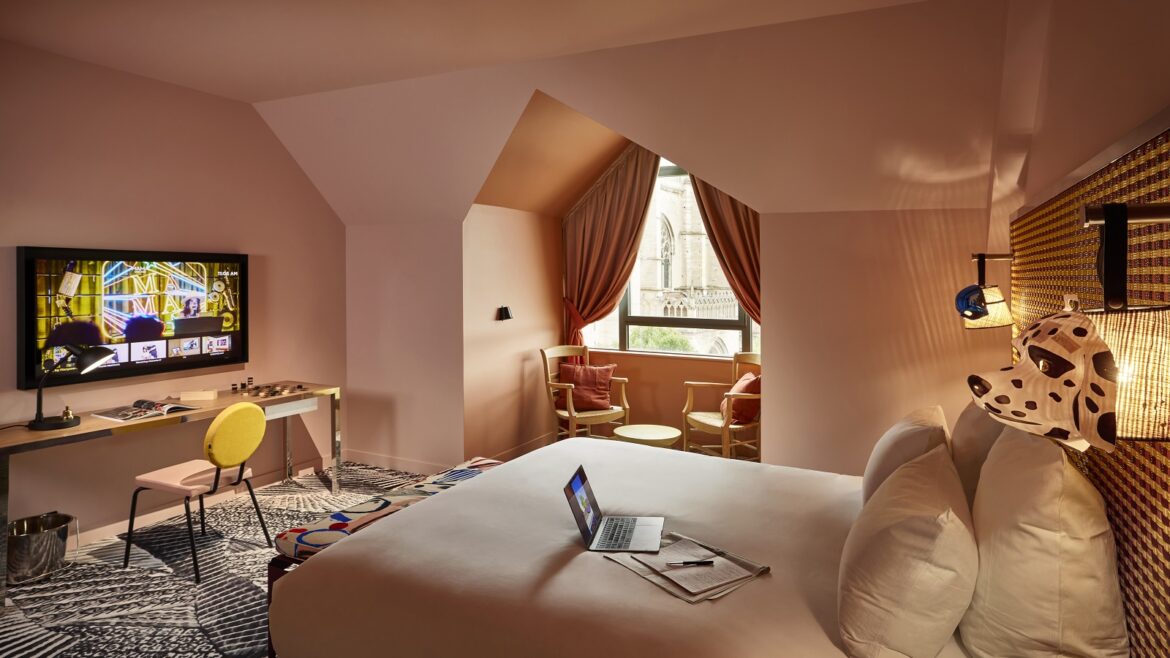
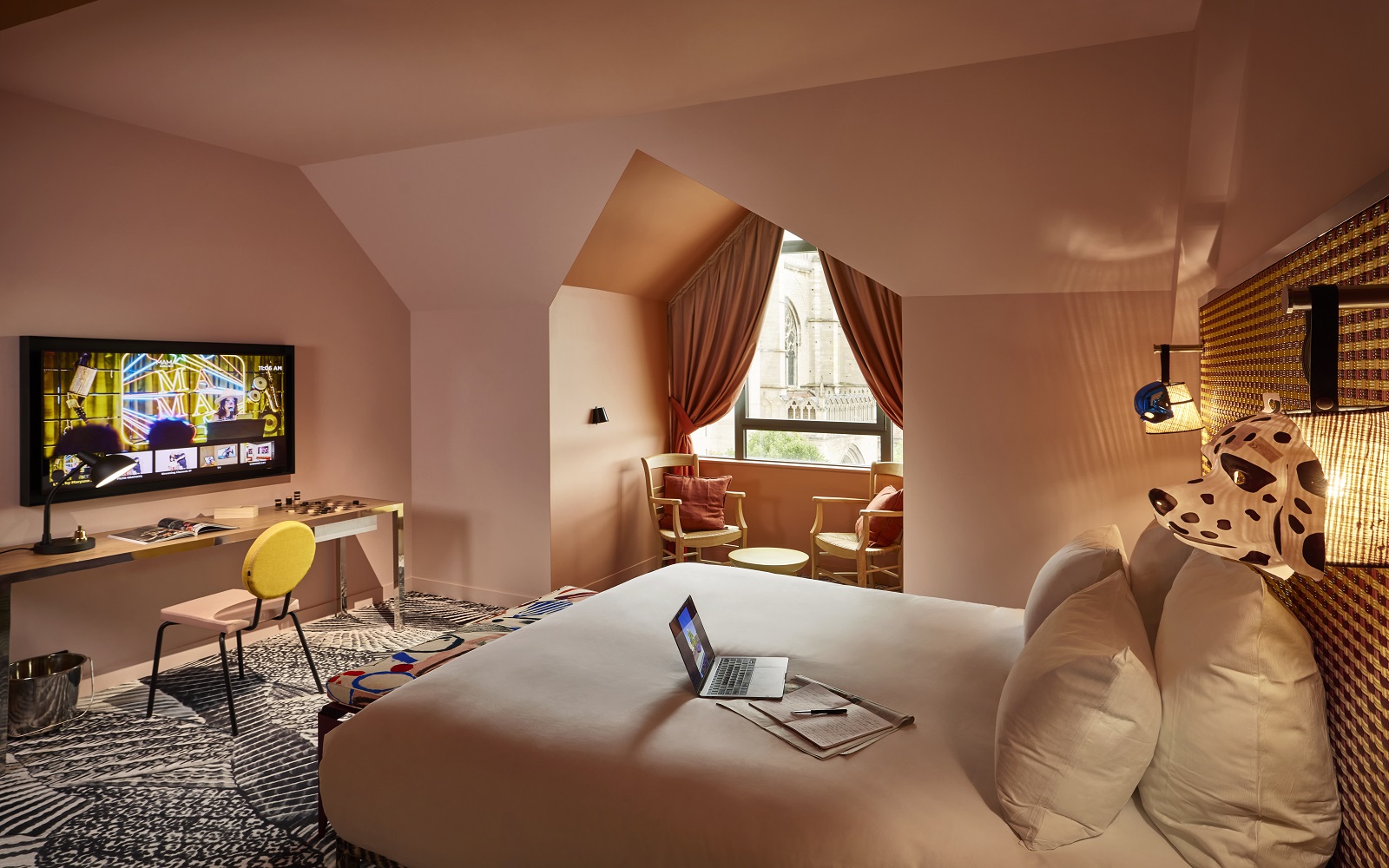
The interior was an interesting mix of a French bistro with quaint British heritage design and a somewhat jazzy wallpaper surrounding the space. The rest of the hotel was also nicely decorated, with some standout pieces of art, especially an eye-catching sculpture as you walk into the hotel, of an oversized dog.
The space I worked in, Oscar Bar & Restaurant, has a great atmosphere. However, if you’re after somewhere to buckle down on your laptop for hours on end, perhaps this may not be the place for you, as the lack of easily accessible wall plugs might put a timer on your visit. Nonetheless, it was perfect for a midway coffee or a relaxed meeting.
Artiq is one of our Recommended Suppliers and regularly features in our Supplier News section of the website. If you are interested in becoming one of our Recommended Suppliers, please email Katy Phillips.
With a range of tables and chests in a variety of finishes and materials, designers can look to Vaughan for an impressive solution to both traditional and contemporary hotel work spaces…
Furniture has been part of the Vaughan collections for many years, complementing and providing the perfect setting for its renowned lighting designs. With hotels having become an important part of the working day, it is not only fast Wi-Fi that is needed to create the perfect Work from Hotel solution, hotels also need to provide comfort between meetings, calls and events as well as a refuge at the end of the working day.
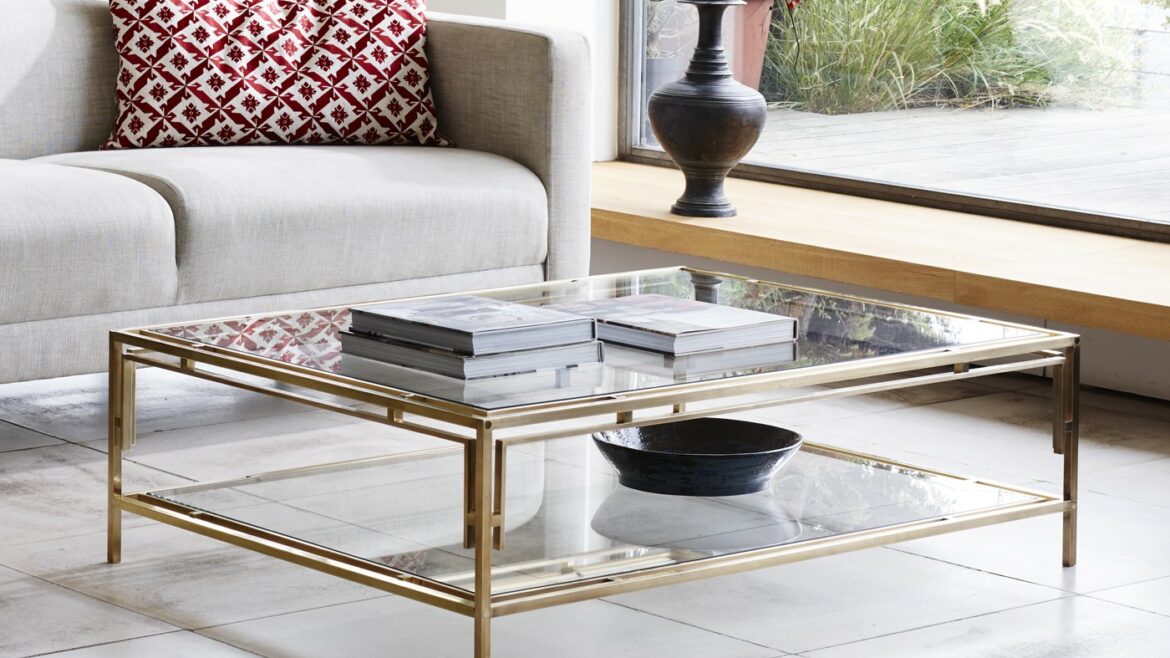
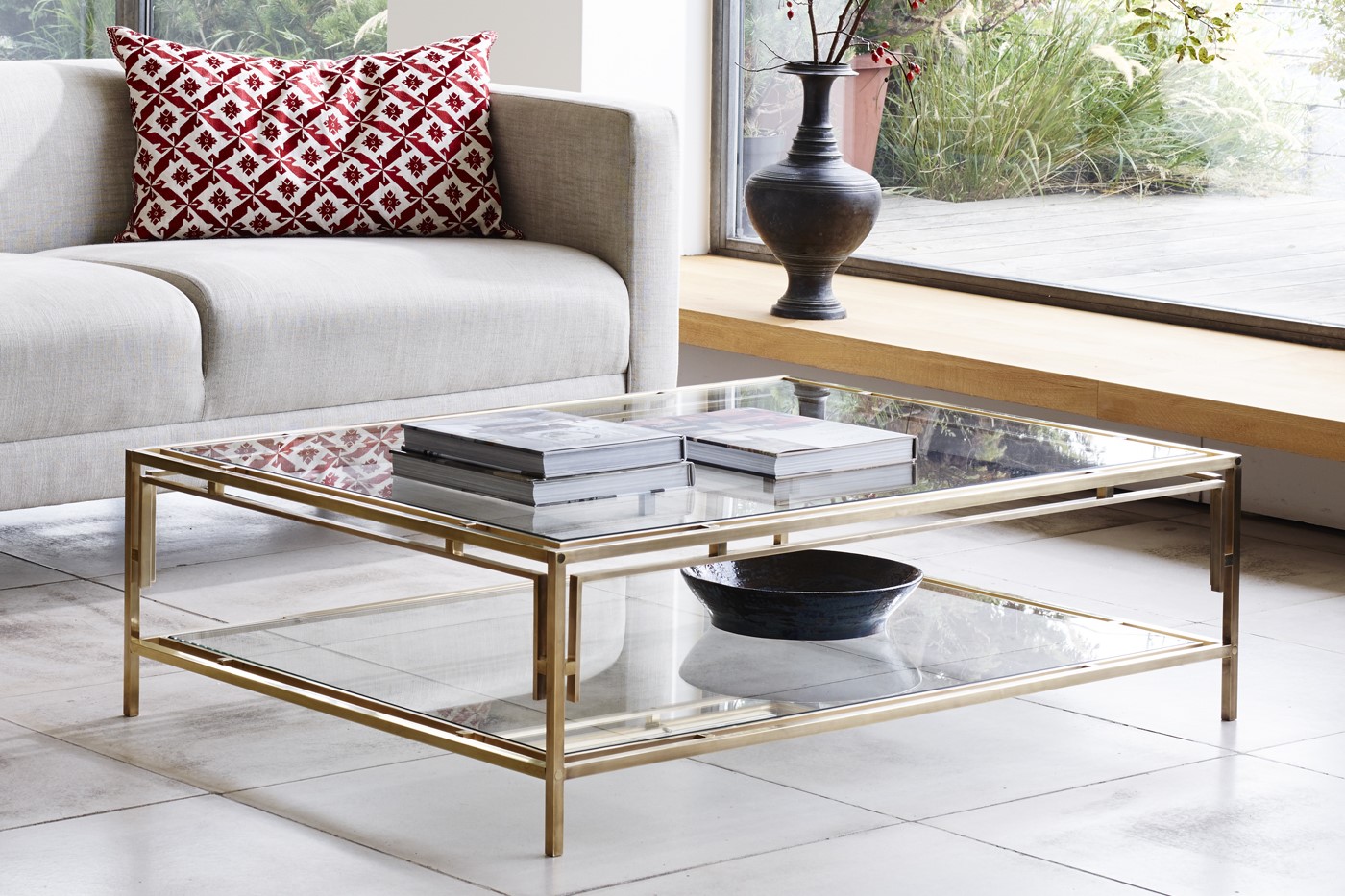
Suitable for a variety of hotel spaces and perfect for a morning coffee meeting, Vaughan’s Bridgehampton coffee table is made from brass rectangular tube and glass. With its two tiers of toughened glass this is a design that can be used in guestrooms as well as private and communal areas and for added drama, can be styled in pairs in larger spaces.
Image credit: Vaughan
The Bramdean Collection debuts in September and will feature new lighting, furniture and mirror designs as well as some new finishes on existing products. Six tables from this new collection pre-launched at the beginning of August adding to the current collection of decorative side tables designed and manufactured by Vaughan over the years.
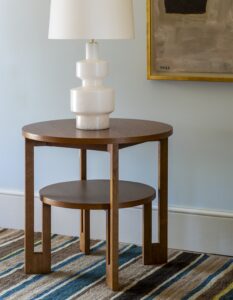
The Droxford Table takes its inspiration from Modernist mid-century design. The piece exemplifies how each of the new table designs retain the Vaughan pared back aesthetic whilst maintaining the essence of timeless elegance and unparalleled quality and craftsmanship. Two-tiers give the Droxford Table a multi-functional quality and the contrast of the round and the angled legs elevate its aesthetic.
Image credit: Vaughan
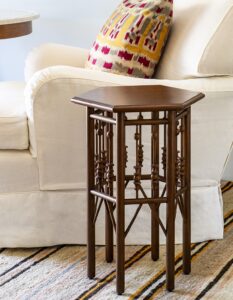
One of the new designs is the Ashfield Table which is both elegant and compact and featuring turned legs is typical of Vaughan with both decorative and practical elements. The Ashfield Table, as well as the others in the pre-launch, is designed to sit beside a chair or sofa and this one in particular is the perfect piece for a small space or corner and can in addition work as a bedside table.
Vaughan is one of our Recommended Suppliers and regularly features in our Supplier News section of the website. If you are interested in becoming one of our Recommended Suppliers, please email Katy Phillips.
Moxy Hotels, part of the Marriott Bonvoy portfolio, has announced the opening of Moxy Sydney Airport, marking the brand’s debut into Australia to delight the young and young-at-heart…
Located in Mascot, a convenient suburb in the Inner-South of Sydney, the new 301-key hotel is 10 minutes from Sydney International Airport via the Moxy Hotels pink airport shuttle bus, which greets guests as they arrive. The hotel is easily accessible from Sydney’s bustling CBD and iconic sites, while the local neighbourhood offers an exciting mix of great shopping and delicious dining right on the hotel’s doorstep. True to the brand’s experiential voice, the hotel boldly reinvents the traditional hotel stay with vibrant guest experiences and lively, sociable service.
“We are thrilled to continue to grow our global portfolio and introduce the energetic Moxy brand to Australia with the opening of Moxy Sydney Airport,” said Matthew Boettcher, Vice President and Global Brand Leader of Moxy Hotels. “Sydney is a city of iconic attractions and urban excitement, making it the perfect destination for a spirited brand like Moxy. We look forward to welcoming our fun-hunters to this world-class city and experience Moxy’s young-at-heart spirit and disruptive hotel experience.”
Image credit: Marriott International
Inspired by Mascot’s industrial and art-deco heritage, Moxy Sydney Airport features stylish interiors that are brought to life by eminent Canadian interior designers MAED. COLLECTIVE, instilling new experiences around every corner. The hotel’s façade is distinguished by a striking public art mural created by local artist Elliott Routledge, renowned for his distinctive, abstract designs. Routledge has also created a sculpture that celebrates Moxy’s Play On spirit, rising from an eye-catching podium on level four.
“Mascot, with its rich transit and industrial history, has been the birthplace of various transformative moments in Sydney’s history, so it’s the perfect location to launch Moxy’s first hotel in Australia” commented Michelle Scott, General Manager, Moxy Sydney Airport. “We are raising the bar in the airport hotel scene, with an urban hotel in an airport precinct where guests will have everything they want and nothing they don’t. Connecting with travellers through our spirited service, the Moxy Crew bring to life Moxy Sydney Airport as Sydney’s gateway to play.”
Image credit: Marriott International
The lobby’s exposed ceilings, wrought iron beams and natural materials capture the open, airy feel of a converted warehouse, paying homage to Mascot’s historic factory buildings. Designed as a multi-functional work and interactive social space, the lobby is centred around the hotel bar where guests check in with a complimentary ‘Get Moxy’ signature cocktail. Within the lobby, guests can also enjoy the hotel’s Living Room, a laid-back communal space where guests can relax surrounded by a curated collection of eclectic and nostalgic pieces, including a 1970s photobooth and reclaimed vintage lounge chairs.
Image credit: Marriott International
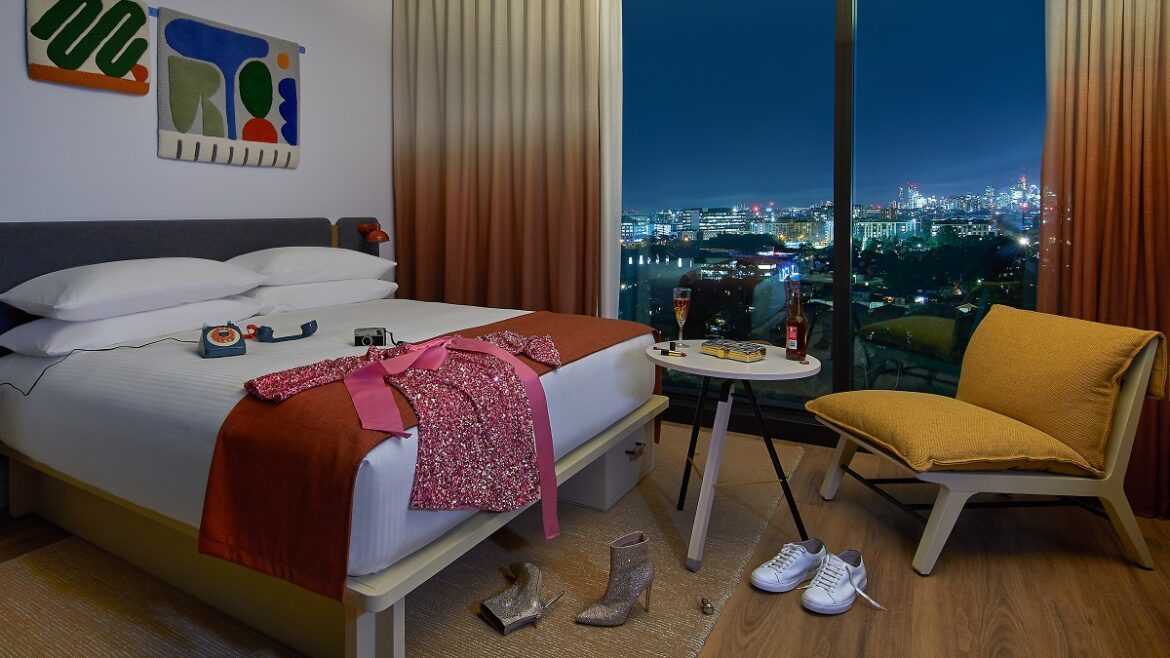
The industrial-chic bedrooms combine functionality and flexibility with edgy detail. Cleverly designed to maximise space, the rooms feature modular furniture including Moxy’s signature Stellar Works foldable workspace desks and chairs, as well as smart features like peg walls to allow guests the flexibility to adapt the room to their needs. Tech-savvy touches include motion-activated LED lights, keyless entry, 55-inch flat-screen TVs and complimentary Wi-Fi help, in addition to a retro phone where guests can listen to a themed bedtime story to doze off in style.
Image credit: Marriott International
Bold artwork from Sydney creator, Evi O, tells tales of Mascot’s history on the bedroom walls with an abstract take on the area’s historic market gardens and renowned local Australian fauna. Options range from stylish king and queen sleepers, to twins and quad bunks perfect for families and groups. Guests ready to break a sweat can visit the 24/7 gym, equipped with an iconic Moxy pink boxing bag, or rent a Moxy bike and explore the local area.
Image credit: Marriott International
Staking a place in Sydney’s iconic food and beverage community, Moxy Sydney Airport’s new drinking and dining concepts are unpretentious and laid-back yet still modern and stylish – creating a new centre for Mascot’s vibrant social scene. Bar Moxy is a haven for working and connecting during the day and transforms into a social hub at night, drawing Sydney’s top DJ talent. Partnering with local brands including Archie Rose and Young Henry, guests can choose from an extensive list of cocktails, wines and local brews. In the evenings, guests can indulge in a playful meal from the Pimp My Pita menu – a fresh and flavoursome Australian street food-inspired concept.
Image credit: Marriott International
In homage to the iconic Australian Milk Bar, the hotel’s streetside cafe, Little Baxter, offers a warm and welcoming space for those looking to linger a little longer. Taking pride in the grind, Little Baxter features signature blends and single origins from Marrickville’s Double Roasters, perfectly paired with daily baked pastries from local artisan baker, Sonoma. For guests looking for a convenient option without sacrificing flavour, Moxy Pick-Ups offers 24/7 grab-and-go snacks and drinks.
Image credit: Marriott International
The hotel features five meeting studios for private events from the ArtHouse, a not-so-typical boardroom with an enviable collection of contemporary Australian artwork curated by local art gallery, to Saint Cloche and The Record Room, inspired by Australia’s rock n roll era, with an alfresco option on Moxy Terrace.
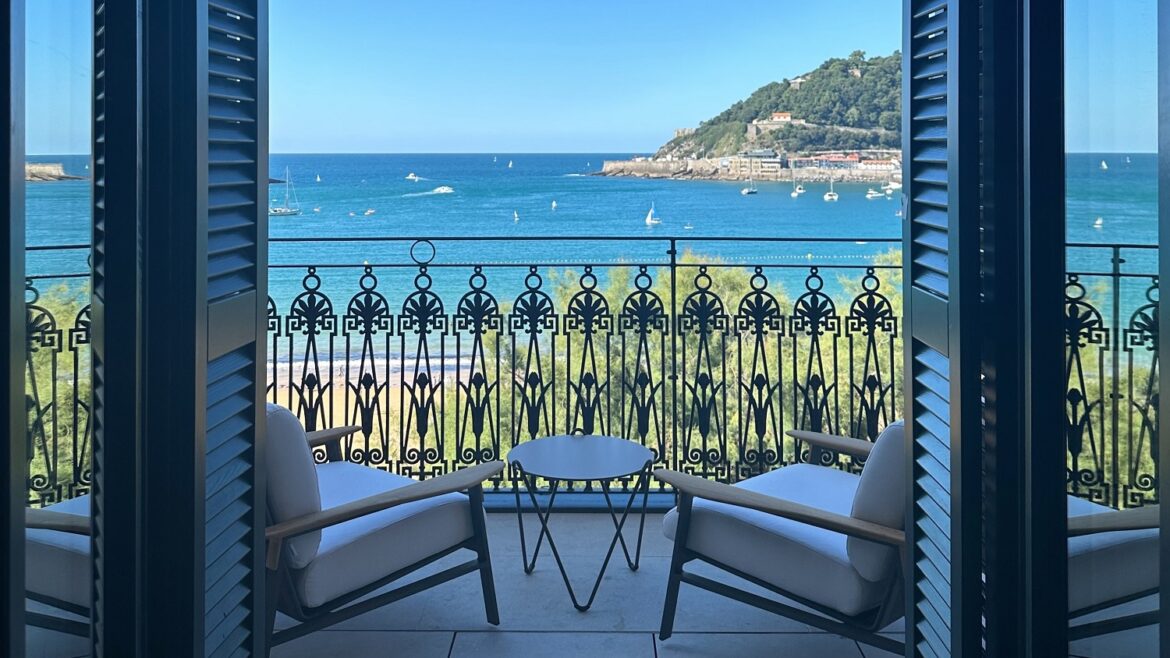
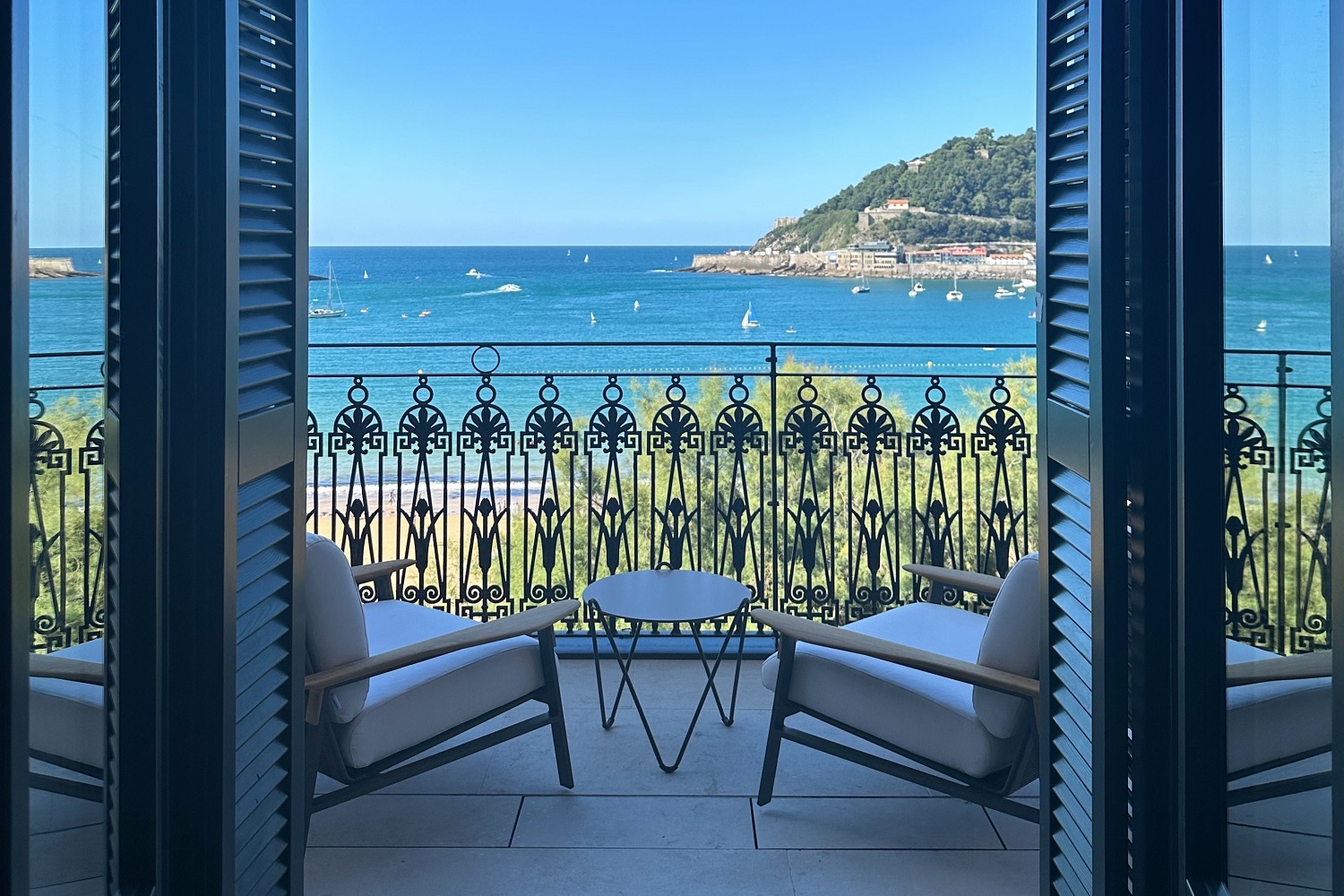
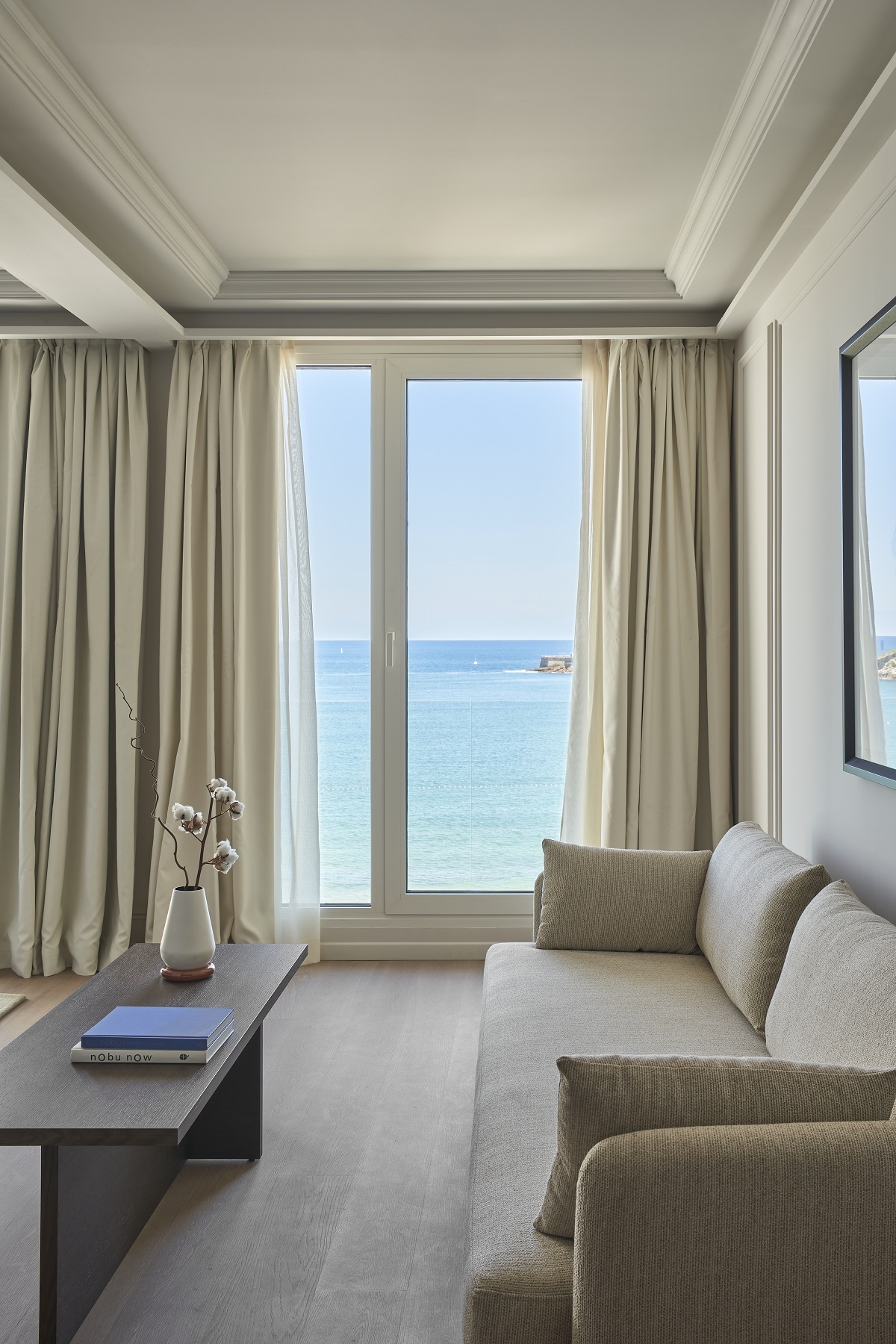
Nobu Hotel San Sebastián has finally opened its much anticipated doors as the fifth hotel in Spain for Nobu Hospitality. Working together with Spanish hospitality group, Millenium Hospitality Real Estate SOCIMI (MHRE), Nobu is boldly adding its own flavours to the city with the most Michelin-starred restaurants per square metre…
Housed in the former Vista Eder Palace, one of the last historic buildings on La Concha Bay designed by the architect Francisco Urcola, this exclusive boutique hotel offers 17 luxuriously designed guest rooms and suites, the iconic Nobu restaurant, Nobu Terrace with stunning sea views and a rooftop infinity pool exclusively for hotel guests.
Image credit: Javier Bravo
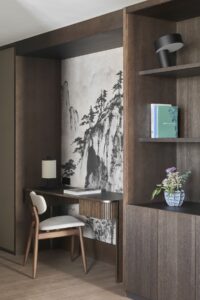
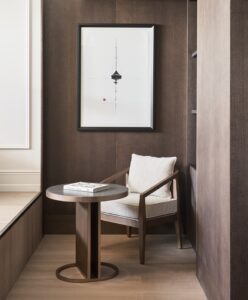
The interiors, conceptualized by Tomas Alía from Studio Caramba, seamlessly unite the Franco-Basque Belle Époque style of the building with Nobu’s signature Japanese minimalism. Using natural materials and traditional millwork, Alía creates a sense of calm and elegance from the moment the guest arrives. The entrance and lobby area are inspired by Torii gates with clean, simple lines, arriving at a stunning sculptural central staircase which leads to guest rooms and suites, where neutral tones contrast with dramatic floor-to-ceiling headboards.
Image credit: Javier Bravo
Nobu Terrace features an inside – outside space, creating a dialogue with the sea and coastline, while in Nobu restaurant, the classic, pared down Nobu aesthetic allows the dishes to be the star of the show. On the main floor of the property, guests can dine at Nobu’s world-famous namesake where Executive Chef Yannick Lohou and Head Sushi Chef Hideaki Mizushima serve Nobu signature dishes alongside specials which pay homage to celebrated local ingredients, such as txangurro crab, sea urchins, mackerel and cod cheeks. Nobu Terrace will be open for breakfast for hotel guests, and to the public throughout the day, to enjoy sweeping views over La Concha Bay, Nobu small bites and carefully crafted cocktails.
Image credit: Javier Bravo
Image credit: Javier Bravo
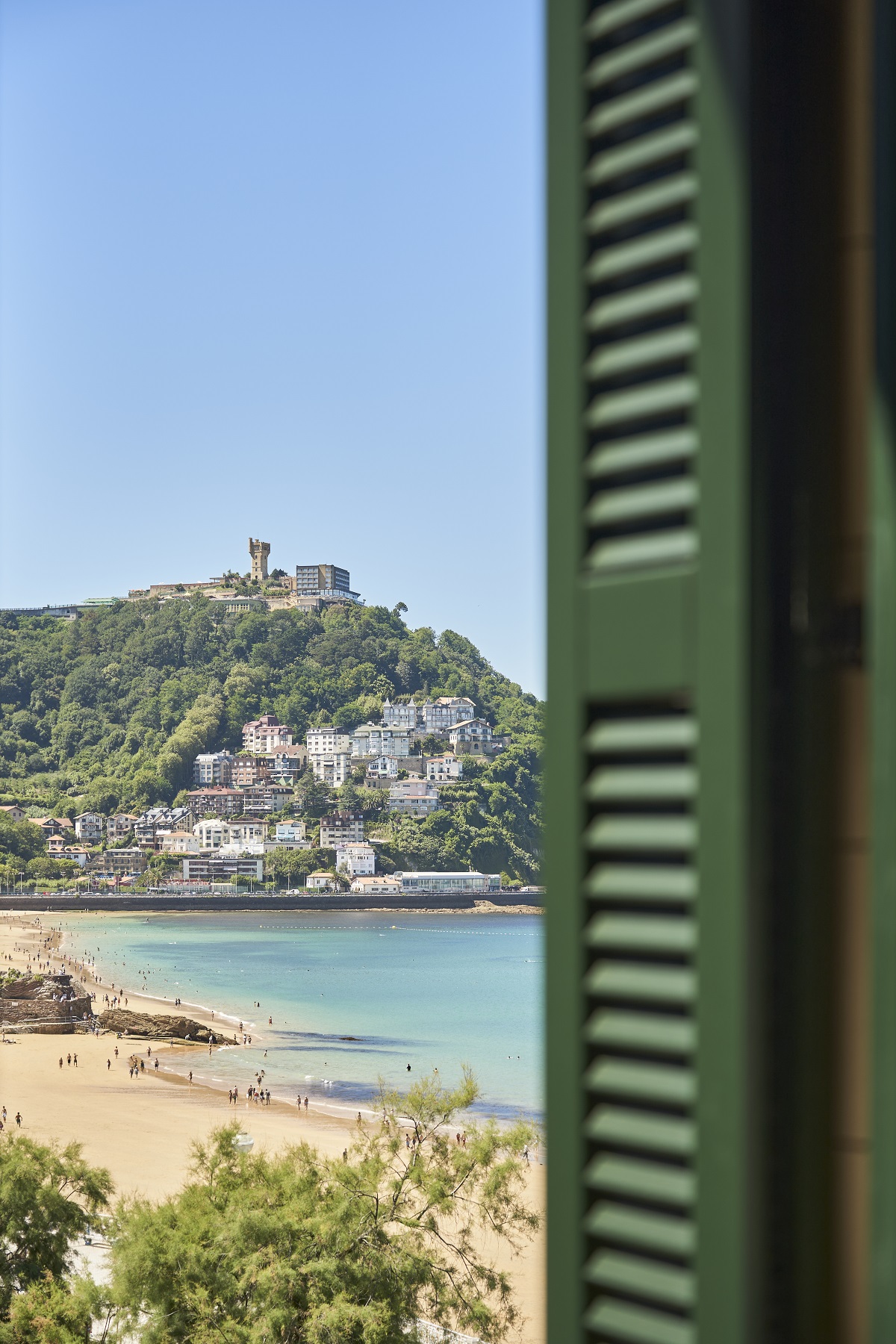
Located on the Paseo Miraconcha, the hotel boasts spectacular views over the La Concha Bay towards Santa Clara Island and is just a 15-minute stroll from San Sebastián’s Old Town, Parte Vieja, with its buzzy pintxo bars. The spectacular Piene del Viento coastal sculpture is a mere 10-minutes away, close to the main railway station with direct connections to Madrid and Barcelona, as well as regional trains to explore the stunning coastline of the Basque Country.
Harlequin maximises versatility with collection of wide-width sheers in stunningly delicate designs with inherent fire retardant qualities, making them a sheer joy to include in contract settings…
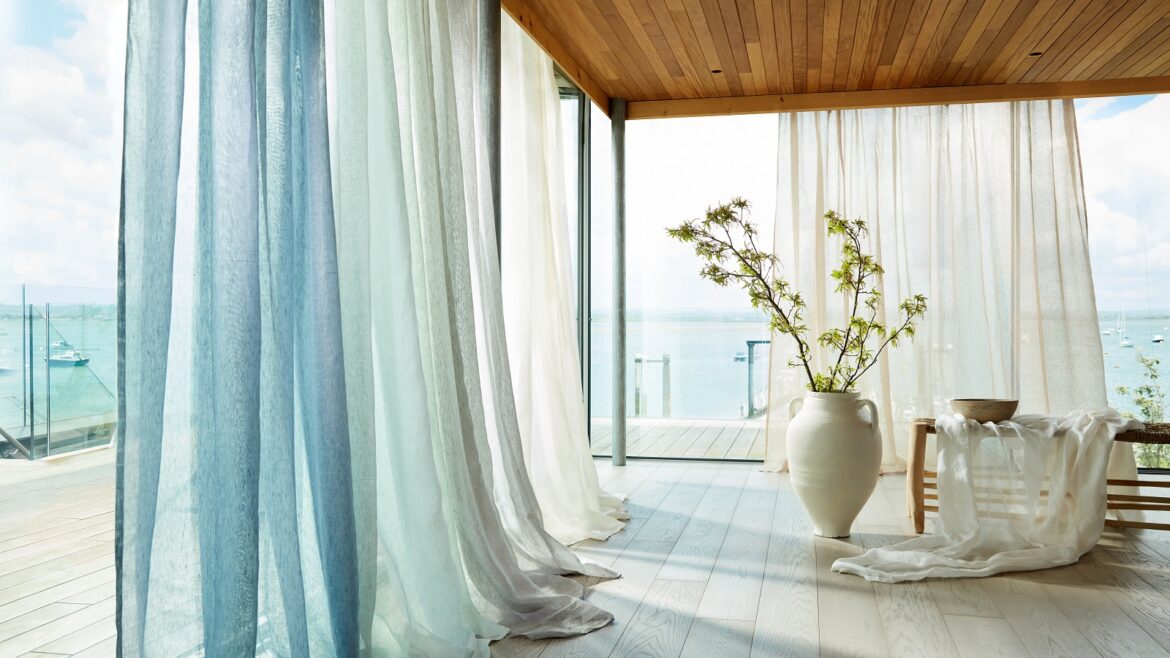
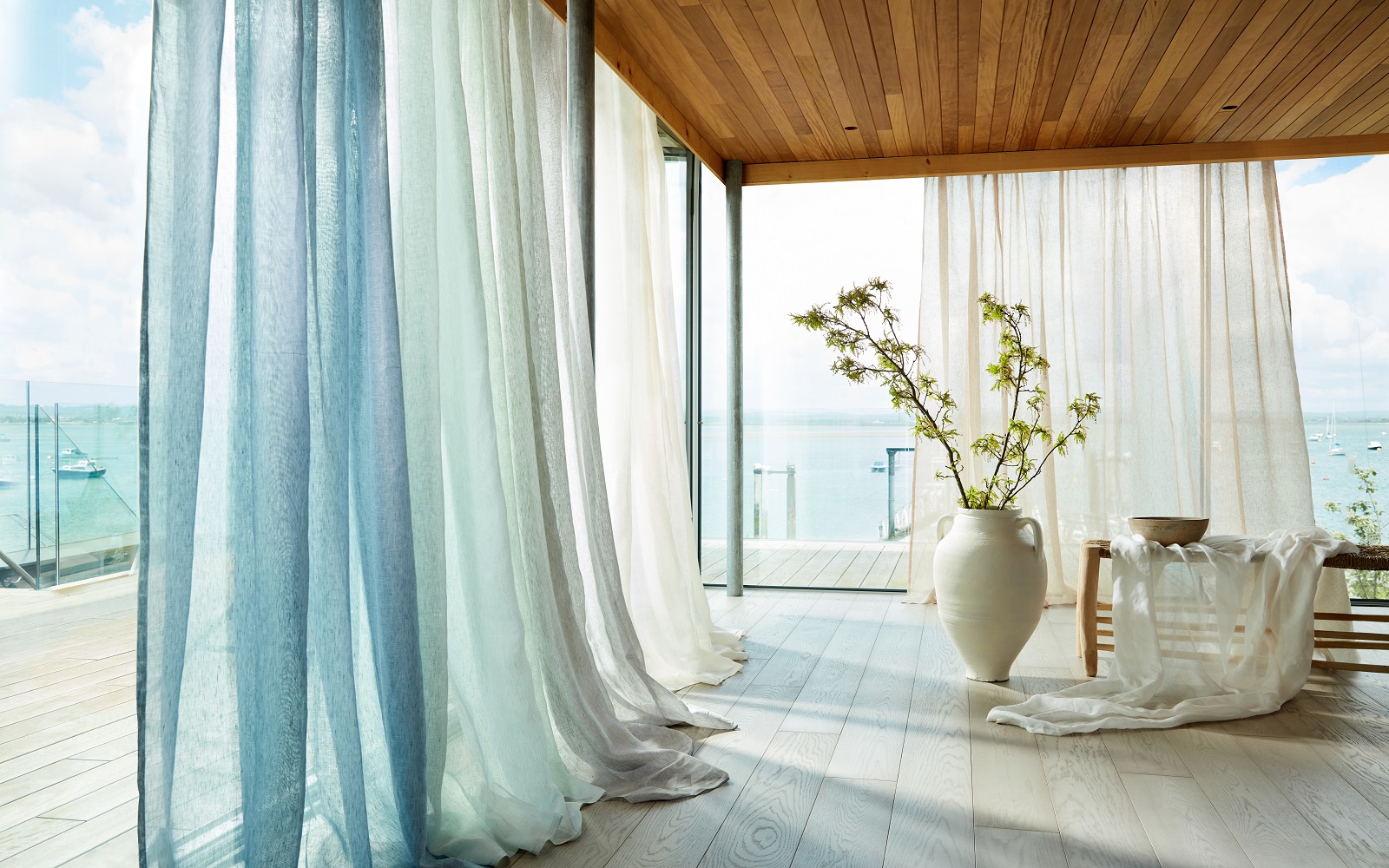
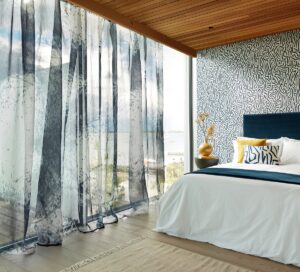
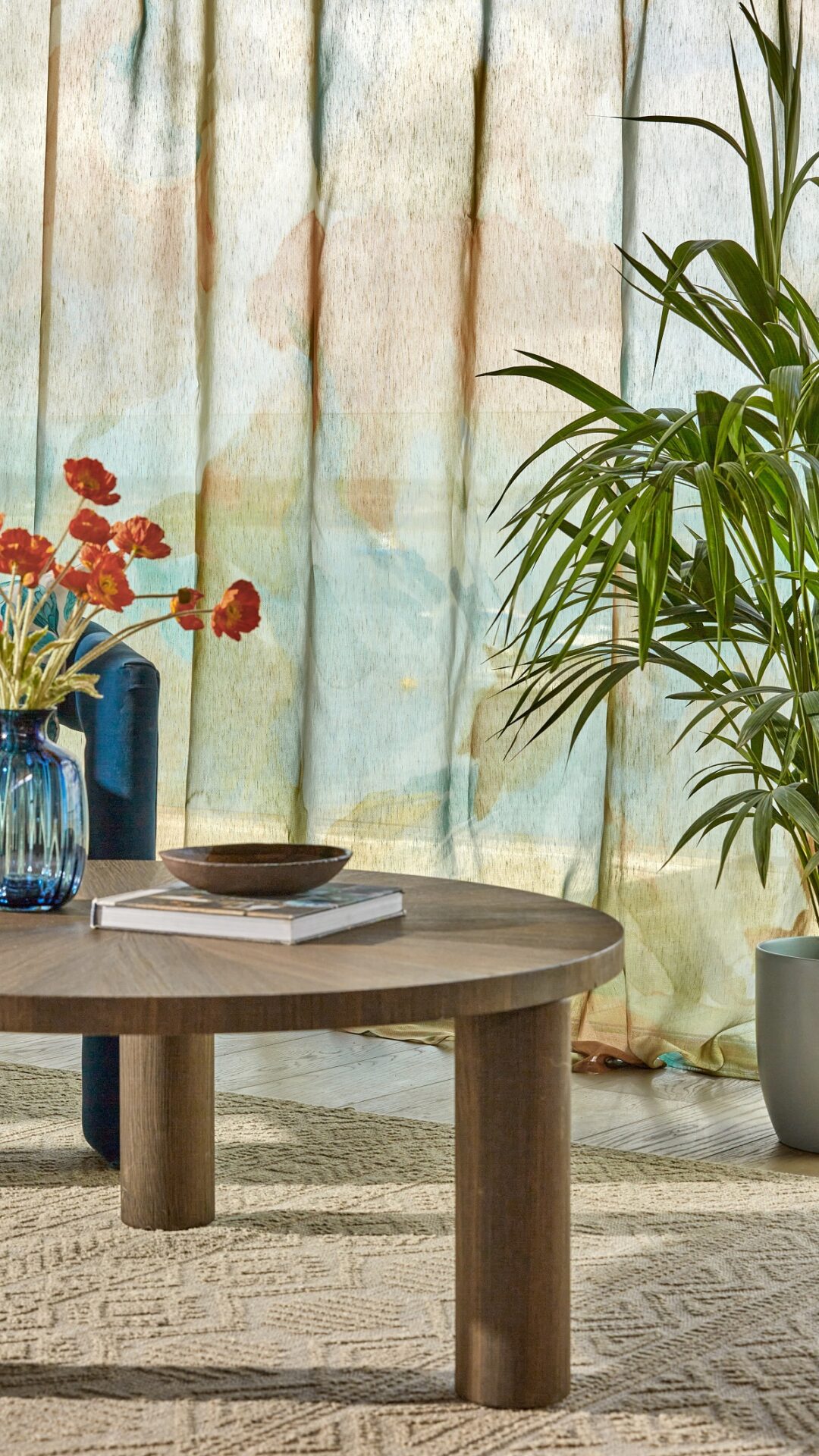
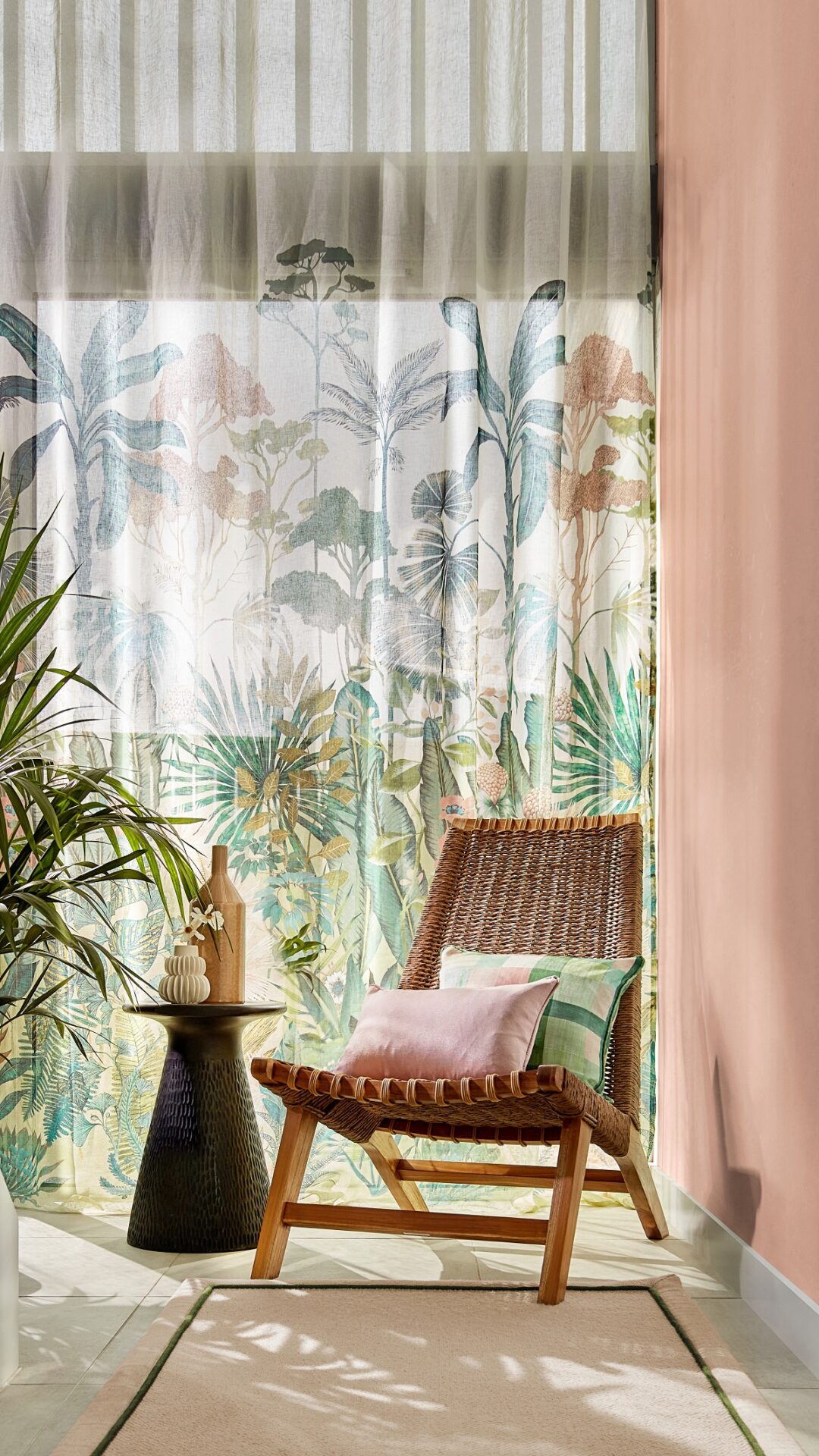
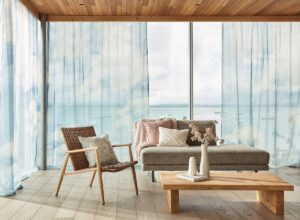
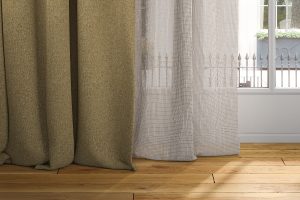
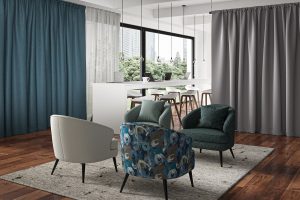
Expressive design doesn’t have to be overtly bold, as this new collection of stunning sheers from Harlequin demonstrates. Paired back, delicate and neutral and yet delivering a sense of drama with the luxury of layering designs for a beautifully rounded and thoughtfully design space that speaks to you.
This beautiful new compilation of 25 wide width sheers in a sublime offering of pared back, natural colour stories, comes to light in Sheers 1. Featuring original and reimagined designs, including 100 per cent linens and inherently FR qualities, this go-to collection reflects Harlequin’s signature style, from soft, tonal plains to bold, abstract patterns, in an expressive and individualistic range of sheers.
Image credit: Harlequin
The nature inspired designs are named after the calm of scattered clouds or the atmosphere that surrounds us. Floaty, ethereal and delicate, the collection features some of the brands statement wallpaper murals, translated into sheers for the first time. From Melodic’s raised fil coupé detail, to Air’s endless skies, drifting across 100 per cent linen, designs have tapped into an explorative and expressive nature and revealed a finely woven, beautifully neutral sheer weave. Himmel’s versatile stripe with subtle herringbone contrasts with the Art Deco nature of Nuvole and its delicate scalloped detail. There is beauty to be discovered in this wide width sheers and endless permutations for the way that this collection can dress the home or indeed, hospitality settings.
Image credit: Harlequin
Image credit: Harlequin
“Harlequin is well known as the home of pattern and colour, so we wanted to extend our portfolio with a new book of wide width sheers that are suitable for both contract and home settings,” commented Claire Greenfield, Lead Designer, Harlequin.”The launch includes a selection of finely woven linen qualities and a range of inherently FR designs in a wide range of colour stories. This is the first time we’ve translated any of our murals into sheers and we’re so pleased with the result – it’s given the traditional sheer a complete facelift, transporting it into something much more contemporary and exciting.”
Grounded is a sheer with a difference. FR rated, in other worldly tones including Celestial, Parchment and Black Earth, Grounded captures the calm of nature, with an elegant translucency coming through layers of chestnut leaves, from an original Harlequin artwork. This design is ideal for both contract and domestic settings.
Enigmatic taps into Harlequin’s expressive side, referencing the original three-metre mural painting and translating onto a contemporary, statemental sheer. Semi-transparent, it is beautifully free-flowing and artistically expressive, as well as being FR rated.
Image credit: Harlequin
Lucent is a classic, finely woven 100 per cent linen sheer, that sits across the entire Harlequin portfolio. In a wide range of 12 tonal colours, from neutral to soft pinks and blues, this elegant sheer is a go-to choice for any style of interior, pairing with the printed sheers for impact and texture.
Sitting within the four signature looks: Renew, Rewild, Retreat and Reflect, the sheers are evocative of the Harlequin interior personalities, offering a choice of lightweight window dressings suitable for any space.
Sanderson Design Group is one of our Recommended Suppliers and regularly features in our Supplier News section of the website. If you are interested in becoming one of our Recommended Suppliers, please email Katy Phillips.
Editor checks in: finding new voices in hotel design
Hotel Designs’ Editor, Hamish Kilburn, was left speechless this month, and it wasn’t just from the judging of The Brit List Awards 2023…
Until recently, I thought there was nothing I had not lost on a flight. Headphones, sunglasses, passport, laptop – the list evolves. I should take more photos because they really do last longer. But even I was shocked when, this month, somewhere over the Atlantic Ocean, I lost something a lot more precious, which certainly could not be replaced as easily as filling out a form. My actual voice abandoned me while I was en route to Washington D.C. to record a podcast episode of Travel By Design, a podcast show that I host for Marriott Bonvoy Traveller. Welcome to the start of my living nightmare.
As well as laying down voiceovers, and finally getting to meet my producer in real life, the trip included Hotel Designs getting exclusive access inside Marriott International’s Headquarters in Bethesda, to explore the group’s ‘design lab’, stay in one of the prototype rooms (review coming soon) and meet Marriott’s visionary design gurus who are creating new aesthetics and adding meaningful, material layers for each brand.
So, fuelled by enough honey and lemon tea to sink a ship, and being on ‘voice rest’ from the flight to when we hit the ‘record’ button the next day, the team somehow got through the episode, which airs, I’m told, later this month.
After we wrapped, and I could feel the sigh of relief exhale from the production team, it got me thinking about being forced to accept change. Yes, I had pretty much lost my voice, but it many ways the episode gained in volume considering I would usually be recording one of these episodes from my acoustically sound walk-in wardrobe. Instead, I was meeting, in person, the people who are ushering hotel design into a new era – allowing design to find its voice in the ever-evolving global hospitality arena. Suddenly, the narrative of my nightmare was turning into, well, a dream come true.
“I was left speechless. And this time, I reached for the champagne over the herbal tea.” – Hamish Kilburn, Editor, Hotel Designs.
Image caption: Season two of Travel By Design, a podcast by Marriott Bonvoy Traveller, coming soon. | Image credit: Instagram: @hotel_travel_editor
This apt metaphor – finding lost voices – followed me home from Washington. My whisper had turned into a croak by time we sat down with the judging panel to sift through this year’s entries for The Brit List Awards 2023 – the most entries, I hasten to add, that we have ever received in the six-year history of the awards.
In between bold hotel concepts, exceptional projects from all over the world, innovative designs and rising stars who are setting new tones and defying existing trends were voices from all corners of the industry – each one had a different and worthy message – that all deserve to be heard from whatever nook they came from.
Here’s the thing about The Brit List Awards. By the very nature of its design, it is an inclusive campaign – free to enter – created with the aim to discover authenticity, talent and celebrate true influencers. The hotel designers, architects and hoteliers are not measured by the size of their following on social media, but by the impact of their ideas and the reality of their visions. As the judging panel gathered in a private dining room at Hart Shoreditch, in many ways the perfect venue to shelter the judges’ lunch, for the second time in one month, I was left speechless. And this time, I reached for the champagne over the herbal tea.
As the tone of campaign shifts from discovery to celebratory, we are preparing to welcome the hotel design community to champion this year’s leading designers, architects and hoteliers. First, we’ve invited the hotel design community to our shortlist unveiling party this month at One Hundred Shoreditch before we turn up the amp at the awards ceremony on November 1, when we will take over London’s famous LGBTQ+ nightclub, Circa Embankment, to announce the winners in spectacular fashion. But that’s not all. On the same evening, we will unveil The Brit List 2023 publication, which will profile the top 75 leading interior designers, architects and hoteliers in Britain.
In addition to exploring new hotels to inspire the industry, Hotel Designs has also published a number of thought-proving articles. Among these is our exclusive sneak peek inside The OWO with the architect himself, our monthly look at VIP arrivals and our exclusive insight into the latest tech trends that are emerging, which we strategically published ahead of Hotel Summit and Tech in Hospitality Summit, two events that will take place parallel to each other this month but very much carry the same themes, exploring tech’s role on tomorrow’s hotel design scene.
As we prepare to focus the global hotel design conversation on London over the next few weeks as Raffles Hotels & Resorts and Peninsula Hotels open their doors in almost in perfect harmony, and we gear up to execute our role at London Design Festival where we will start conversations that are unlike any other, there’s something relevant about ‘finding new voices’ that has resonated with me. Not only are we keen to explore new narratives, as well as feeling responsible to protect the unheard voices in our community, we are also intrigued by how existing hotels that have earned ‘grand dame’ status will usher in new design schemes to, perhaps, offer a few words from the wise on what it takes to be iconic in yesterday, today and tomorrow’s hospitality landscape. I’m listening…
Editor, Hotel Designs.
Main image credit: Hotel Designs / Mel Yates Photography / Rosewood Hotels & Resorts / Jon Day / Goddard Littlefair / &BEYOND
Introducing Atto Suites – mindful simplicity in the South Tyrol
When the former bakery in Innichen was up for sale, the owners of Atto wanted to transform the building into something meaningful, to bring back to life the special memories it held…
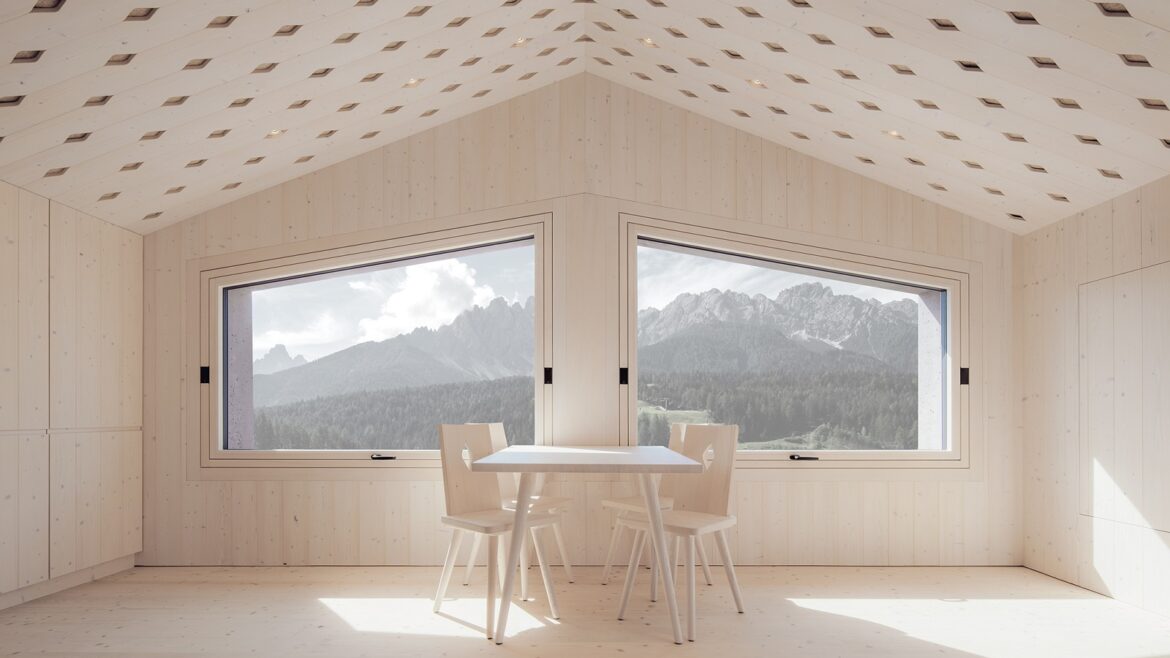
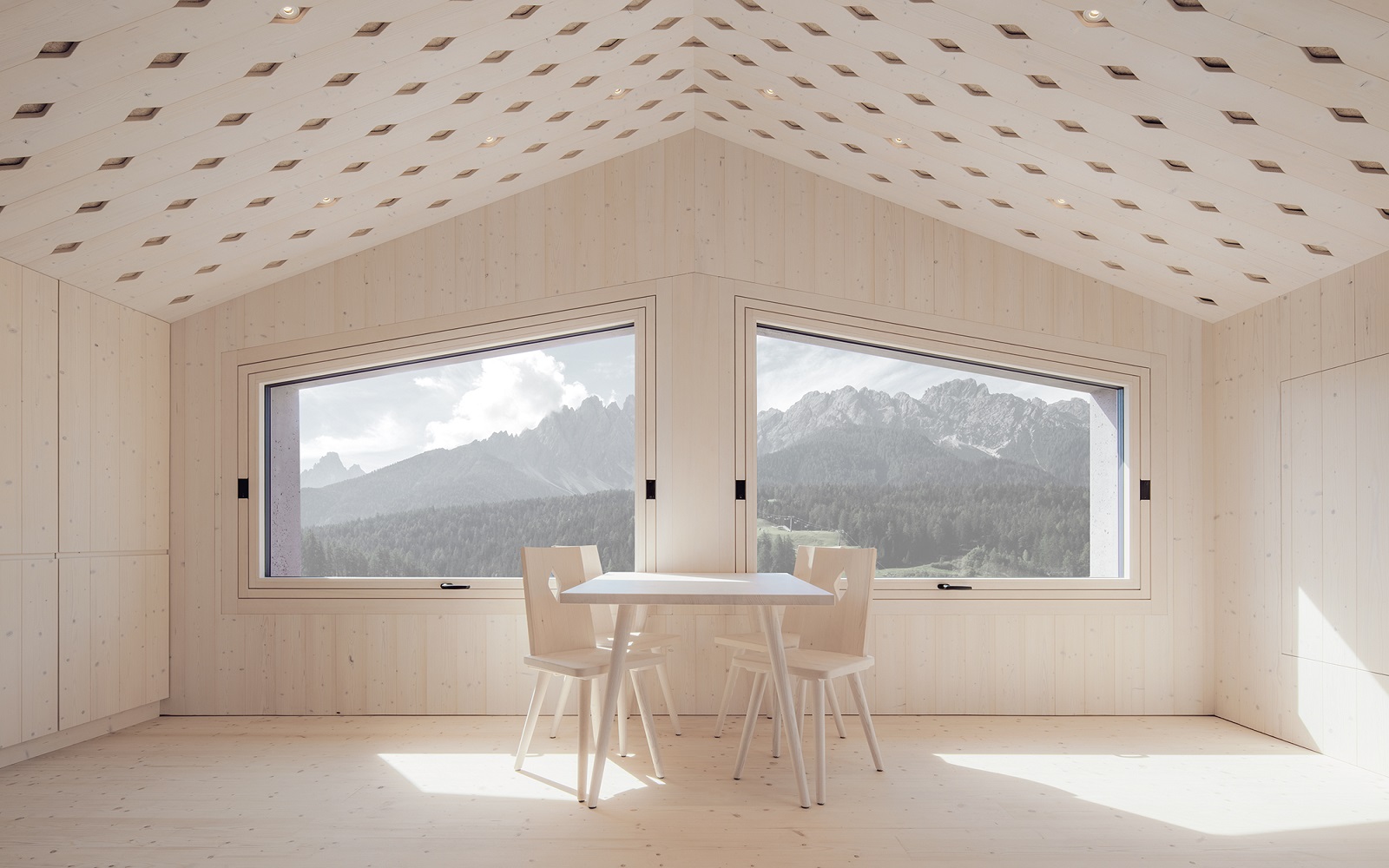
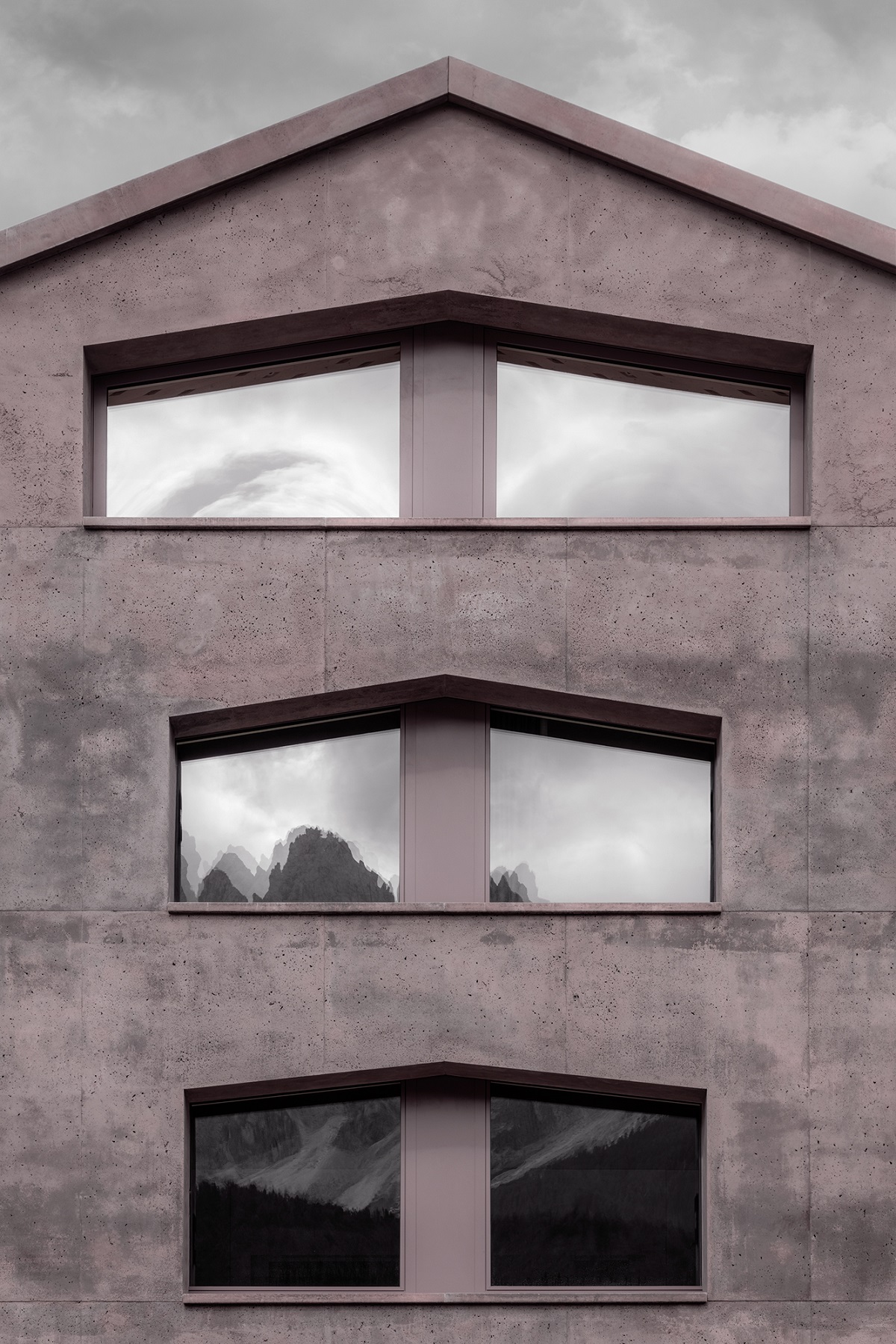
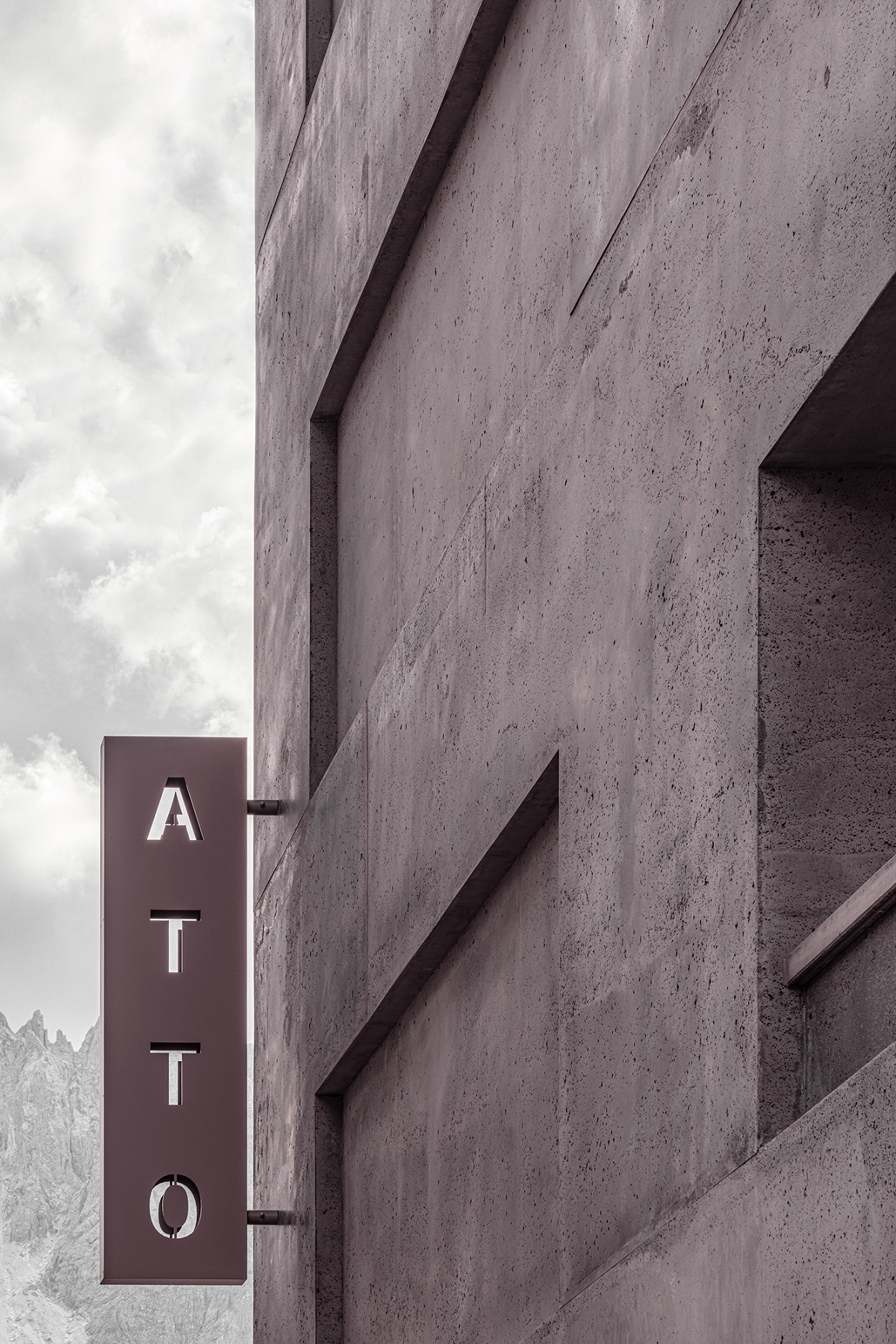
In the fertile Pustertal valley of South Tyrol, northern Italy, Atto, a member of The Aficionados portfolio, strikes an impressive architectural pose, wrapped in flushed porphyry and concrete – its interiors in contrast are smooth with spruce wood. A timber monolith coated in tinted porous stone, Atto has a sturdy, geometric presence, yet inside the softening cocoon of wood and its light fragrance, grounds the structure in alpine traditions. A project for Bruneck-based architect Pedevilla, Atto was built on respect for the original building, layered with a simple, formalised language of a design, which is impactful, confident and bold.
Image credit: Atto
Image credit: Atto
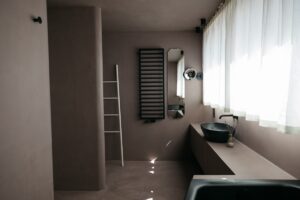
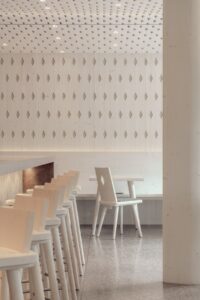
Running through the interiors are strong regional references, such as the recurring use of the rhombus cut-out that diffuses the light, an imprint in roof panels, benches and on the walls, which is a visual reminder of alpine heritage and vernacular presented in a modern format. Elsewhere absence is conspicuous, as Atto confidently highlights the less-is-more aesthetic. The interiors are an almost continuous journey of wood, smooth terrazzo flooring, polished plaster bathrooms and carved-out loggias for views that are big enough to stand alone. The tinted exterior also references the locale, with its colour matching with the rocks found in the Sesto river and one of the area’s most prominent sights – the 12th-century collegiate church of San Candido.
Image credit: Atto
Sticking to the rule book of thoughtful, sustainable design, the property weaves together the components of modern eco-living from the locally sourced untreated spruce and pine, the wood gas plant that produces electricity and heat from sustainable wood chips, to its own farm which rears Angus Black cattle and a host of colourful vegetables. The good life in essence, not so different from old, but somehow fresh, innovative and hopeful.
Image credit: Atto / Montamont
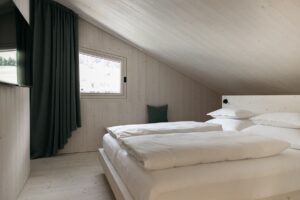
With three different room types spread over three floors, the suites at Atto continue the theme of authentic minimalism, each space smoothly cocooned in local spruce room, clean lines and views to the Haunold mountain. Pared-back to the essentials, the rooms feel warm and inviting, yet crisply modern, a blank canvas for guest to project. Thoughtfully orientated on two sides, the suites allow for a loggia to frame the steely grey of mountain views.
Image credit: Atto / Montamont
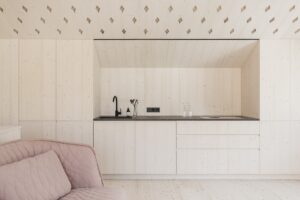
The suites and superior suites can sleep up to four and have and two bathrooms plus dining space and kitchen. Crowning Atto is the Penthouse Suite which takes up the top floor. With two bedrooms, a rooftop terrace and jacuzzi bathtub, the views really open up sensationally from this vantage point.
Image credit: Atto / Montamont
Respecting the foodie rule book traditions of the South Tyrolean region – often described as the meeting point between Mediterranean finesse and alpine fare, Atto dining means feasting on the local, seasonal and authentic. Farm-to-table has become a rather overused word, but at Atto it rings true – their own farm provides the substance for their carefully crafted menus. Breakfast is another showcase of the region – enjoy cold meats, cheeses from the alpine dairies, eggs from free-to-roam chickens, local bee-keepers honey, fresh fruit and freshly baked bread that goes so well with their homemade raspberry jam.
Image credit: Atto
Atto Suites is a sympathethic combination of modern architecture, skillfully mixed with original, South Tyrolean cosiness. The sense of detail, the scent of local woods and the craftsmanship interpreted in a contemporary way make the living spaces an experience for all the senses. Falling within the portfolio of with the Leitlhof, these two Innichen businesses are closely connected, giving guests access to the facilities of both.
In conversation with: Michael Mulhall, Director of Sales, Dernier & Hamlyn
Michael Mulhall is Director of Sales at bespoke lighting specialist Dernier & Hamlyn where he leads on strategic direction and business development, while overseeing the company’s growing engineering, design and manufacturing facilities ensuring that they work together to meet clients’ exacting requirements…
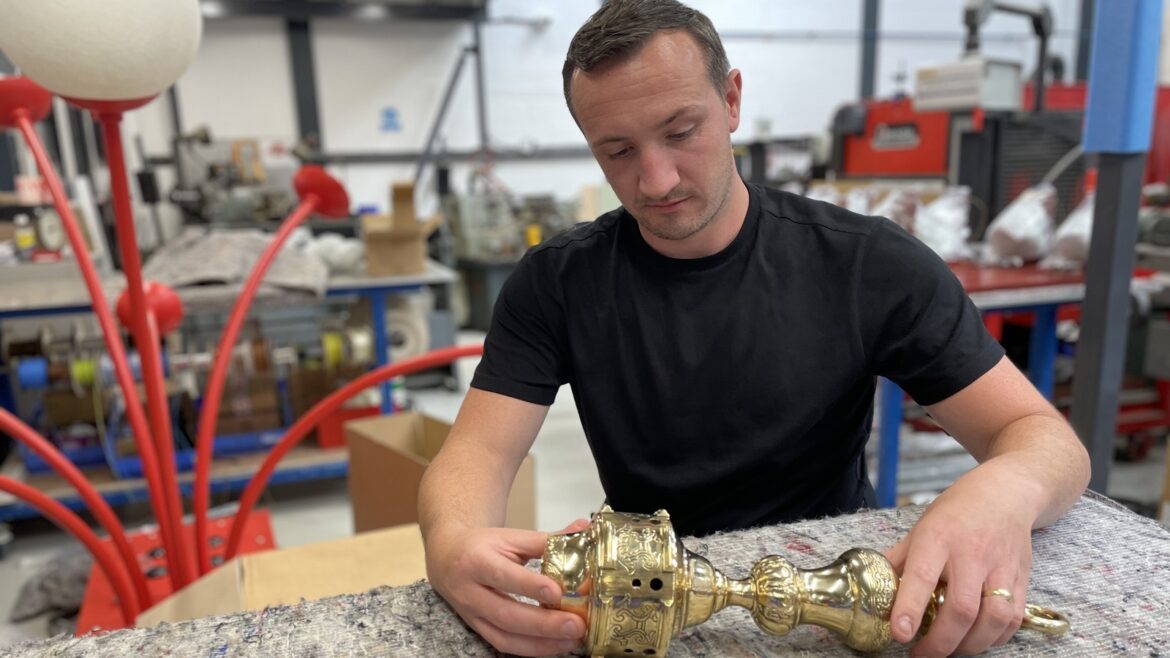
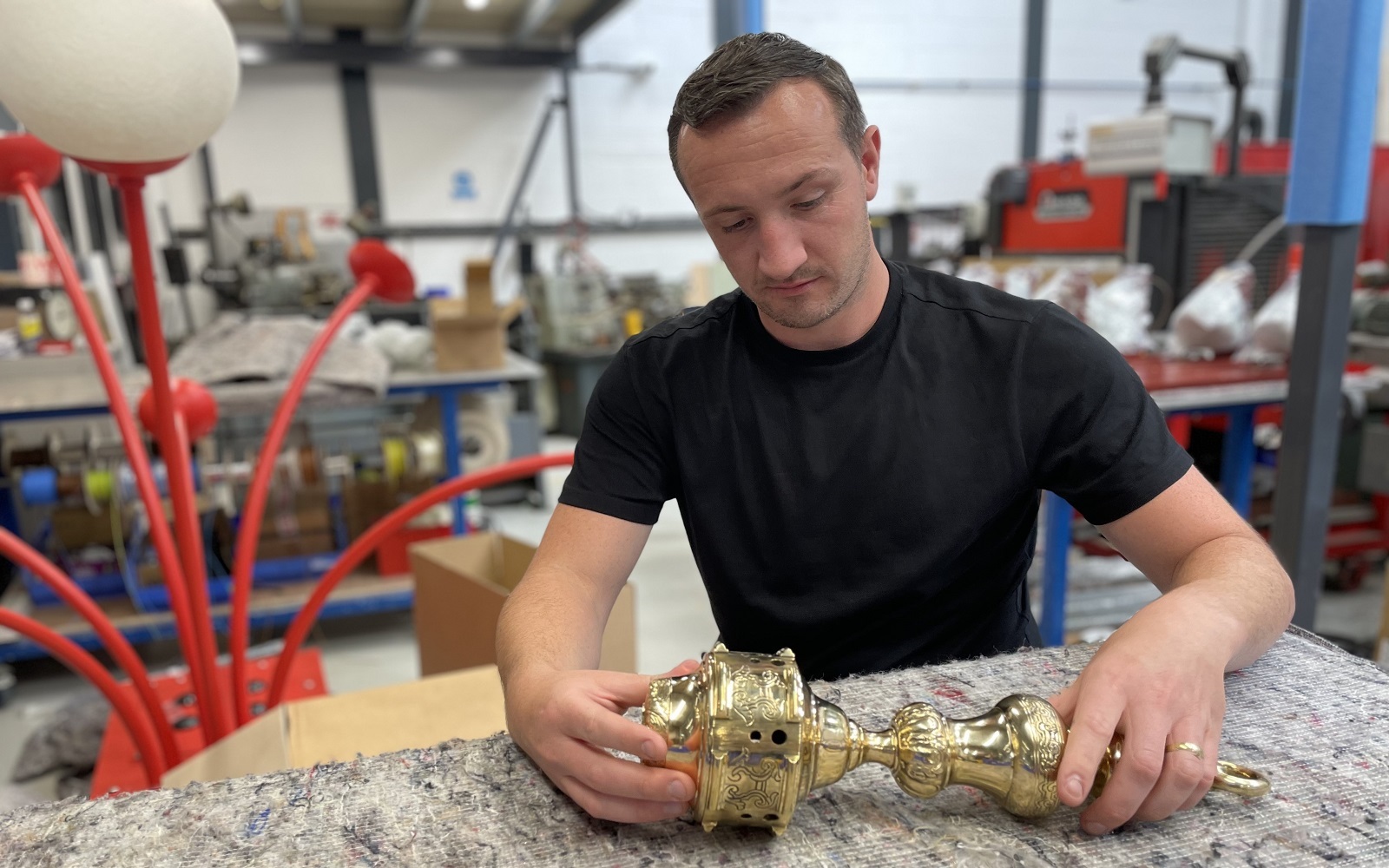
Dernier & Hamlyn is one of the few companies that designs and manufactures its fittings in the UK. Its factory in London is home to a team of specialist designers and artisans who produce pendants, chandeliers and other lighting individually made to meet designers’ specific requirements for luxury residences and hotels, superyachts and restaurants. With a rich history in the industry stretching back to 1888, the company is proud of its heritage and the unique experience and expertise the team has built up over the years, but the focus remains firmly on the future, with new techniques and materials being used alongside the traditional to produce beautiful custom-made lighting to meet designers’ requirements on time and on budget.
Hotel Designs sat down with Michael Mulhall to find out what is going on behind the scenes and on the workbenches in the Dernier & Hamlyn factory.
Image credit: Dernier & Hamlyn
Hotel Designs: What does Dernier & Hamlyn do?
Michael Mulhall: We design, make, refurbish, restore and install bespoke lighting for luxury homes, hotels, restaurants, superyachts and heritage buildings.
HD: What has changed for the company post pandemic?
MM: In terms of what we do day to day very little. We were working almost throughout because you can’t manufacture physical products by hand remotely. We do have more meetings with designers, suppliers and others remotely now, which certainly cuts down travel time. But there really is nothing like seeing the beautifully designed products our team turn into reality take shape from on screen images and printed engineering drawings to installation in their intended destinations using a whole host of traditional and very modern techniques and technologies.
HD: What’s in your factory currently?
MM: As ever it’s an eclectic mix. We have some chandeliers our team made around 40 years ago that are having their wiring updated and some broken elements repaired before they go back to a beautiful, listed building. Our studio team are working on some renders of lighting for reproduction art deco pendants and wall lights for a new hotel. And there is an awful lot of soldering and welding going on for a restaurant’s task lighting for their bedrooms and meeting rooms.
Image credit: Dernier & Hamlyn
HD: What keeps you awake at night?
MM: Not too much I’m glad to say. We have a business that’s almost unique in the UK and certainly none with our 135-year history and breadth of clients. We have a highly skilled, very experienced team that knows our business inside out, as well as some new people who have brought new and different experience and perspectives which is great too.
HD: What are you focussing on from a business perspective?
MM: We are quite a way down the route of venturing into complementary areas of lighting that is bringing challenges but also different opportunities which is very exciting. And, like many others, we are striving to be more sustainable and environmentally friendly. This makes moral and business sense, but also the more we can help our clients with their aspirations in this area the better. For example, where it makes economic and aesthetic sense, we encourage them to repurpose existing lighting rather than throw it away and manufacture from new. There has been a big shift on reusing materials and products differently. So that where it used to be seen as something you would only do if you absolutely had to, increasingly it’s designers preferred choice. If you can take existing bespoke lighting fittings and update them with, for example, new elements, different materials, alternative lamping options or hanging them in a more contemporary way you contribute to the design narrative by referencing a place’s past while acknowledging its future stories and it’s true circular economy stuff.
Image credit: Dernier & Hamlyn
QUICK-FIRE ROUND
HD: What is the best lighting project you have worked on and why?
MM:Nobu London Portman Square was one of the first hotel’s I worked on when I joined Dernier & Hamlyn and it was a fantastic project to be involved in. It was complicated, but as ever, our team stepped up to the mark and helped David Collins Studio achieve the ambience they wanted with more than 100 bespoke light fittings that are in various public areas of the hotel.
HD: What is your favourite part of the bespoke lighting process?
MM: I love it when designers come to us with an idea in their heads and we take them through from committing it to paper then to a digital format and into our factory and finally seeing it in its final destination where it was meant to be.
HD: What is your ideal client like?
MM: Clear on their vision, responsive to our ideas even if they don’t agree with them all, curious to push boundaries in the process but not beyond the realms of reality and happy to be part of the process rather than just a spectator. Oh and pay their invoices on time of course!
HD: Dernier & Hamlyn has always been based in and around London but you aren’t why’s that? MM: I love visiting London but I love my family and friends more and I also love going on country walks and perhaps finishing in a village pub for a bit of lunch and a drink. I’m a country boy at heart!
Dernier & Hamlyn is one of our Recommended Suppliers and regularly features in our Supplier News section of the website. If you are interested in becoming one of our Recommended Suppliers, please email Katy Phillips.
In its collection The Babylon, Arte takes us on a journey back in time to imaginative tableaux set in the lush landscape of ancient Babylon with a series of designs that appeal to the imagination…
The world’s first big city, Babylon, formed part of Mesopotamia, the cradle of civilisation and the inspiration for the collection from Arte of the same name. This is the birthplace of arable and livestock farming, astronomy, mathematics and writing, to name just a few. Cuneiform script was created by people carving and drawing in clay tablets and rock walls, and it is this technique of sculpting in clay that serves as inspiration for the Babylon collection. You could easily call the designs works of art, featuring large clay tablets that are shaped by hand with extreme precision and then translated into incredibly detailed creations that resemble plasterwork.
Image credit: Arte
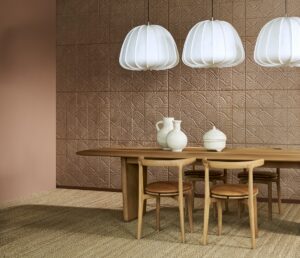
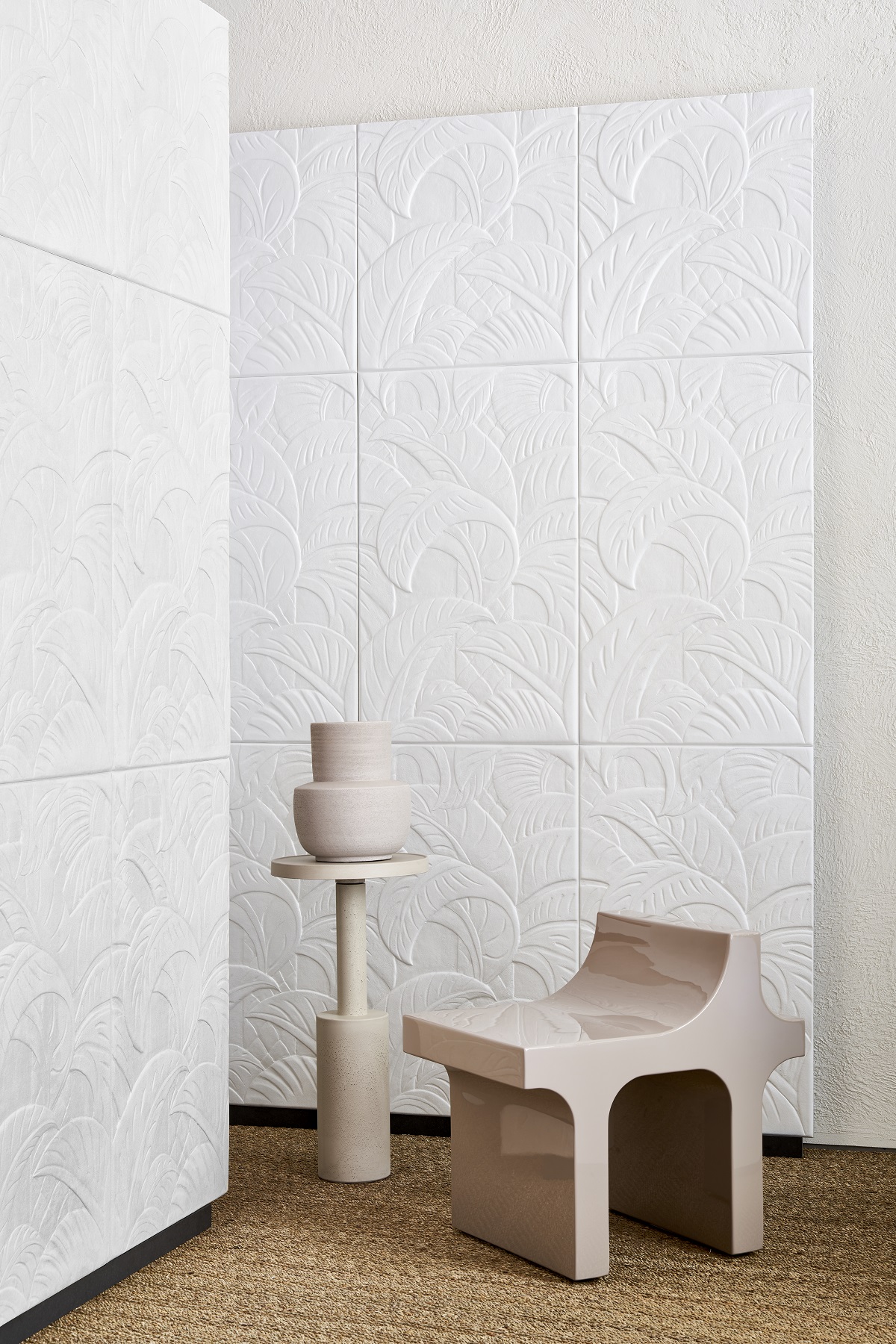
The combination of different light panels in tile form creates both a geometric and an earthy pattern in the Terracotta design. Thanks to the pronounced relief of the engravings, it is reminiscent of decorative earthenware or ripples in sand.
Image credit: Arte
Image credit: Arte
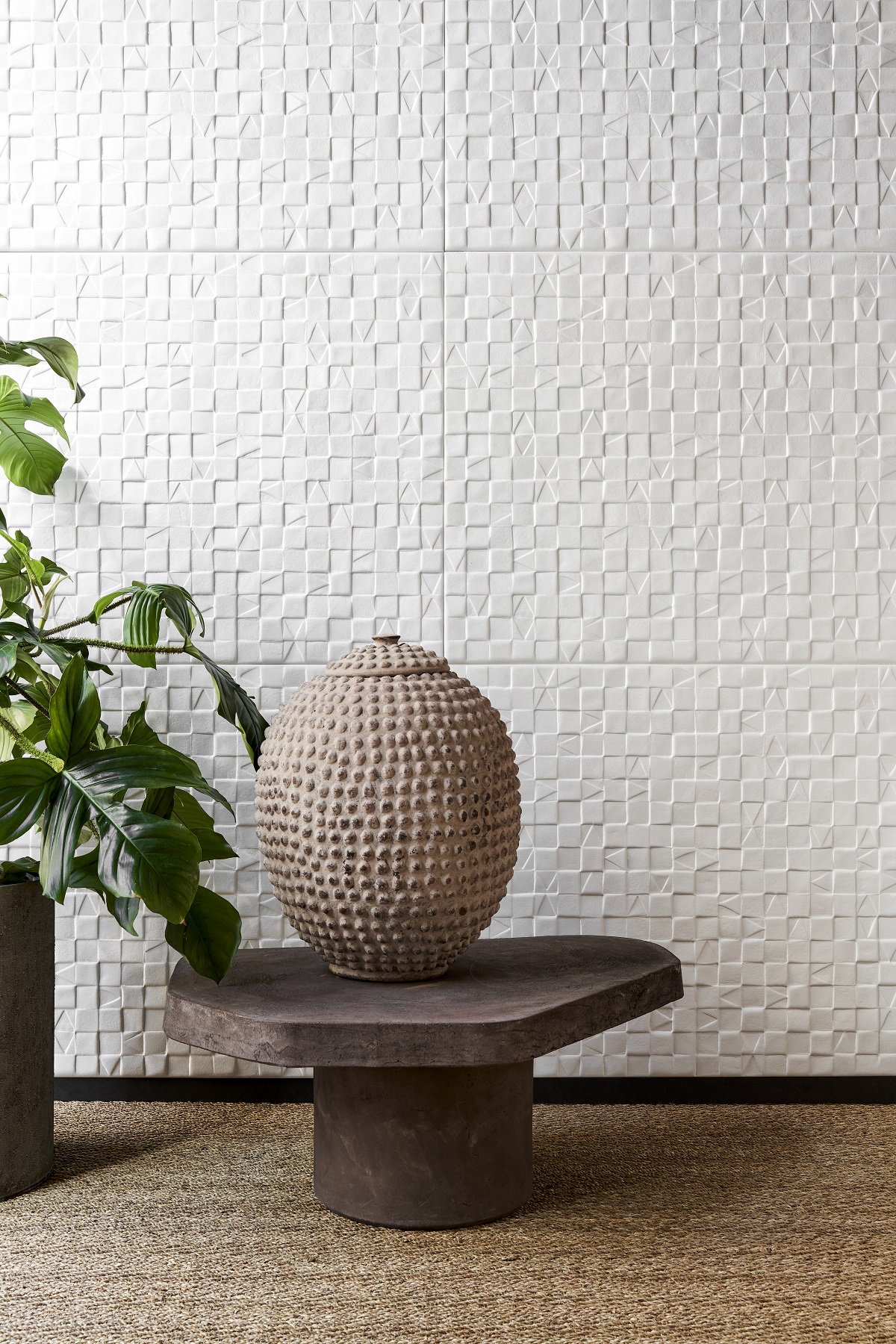
The tile-shaped design of Mejdoul has a great deal of relief, due to the technique used and the voluminous material. The pattern is inspired by date palms, a common plant in the Middle East. The Adobe wallcovering plays with various kinds of relief, both in height and depth. The irregular squares and triangles create a playful, geometric and intriguing effect. The design refers to unbaked clay tablets (adobe) that are dried in the sun.
Image credit: Arte
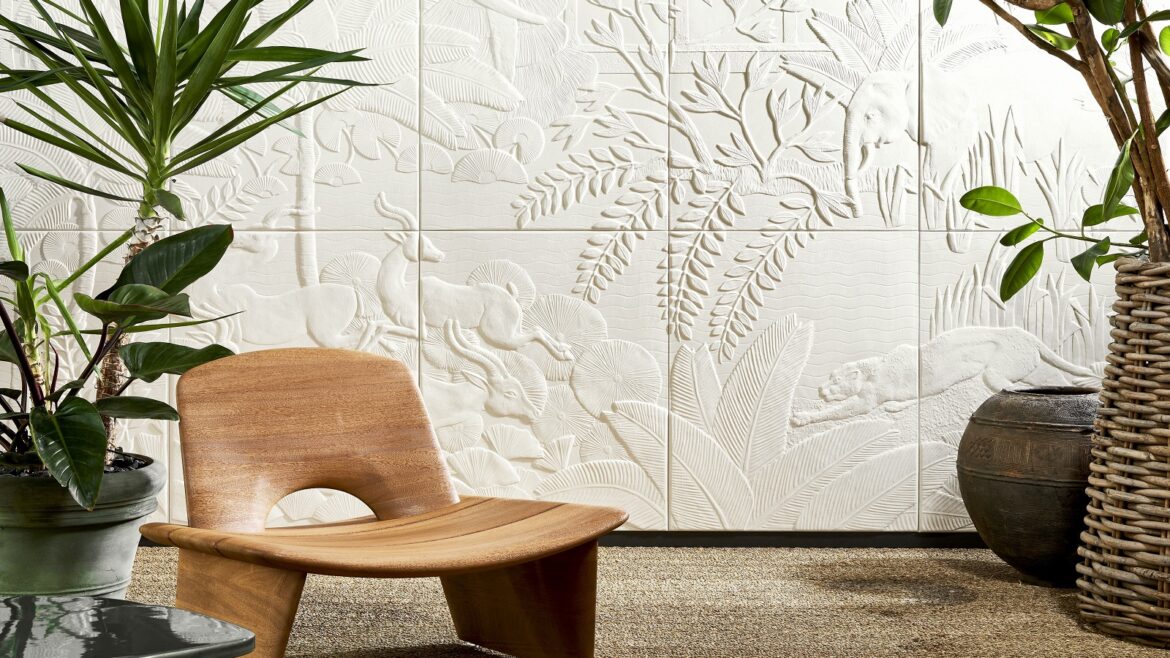
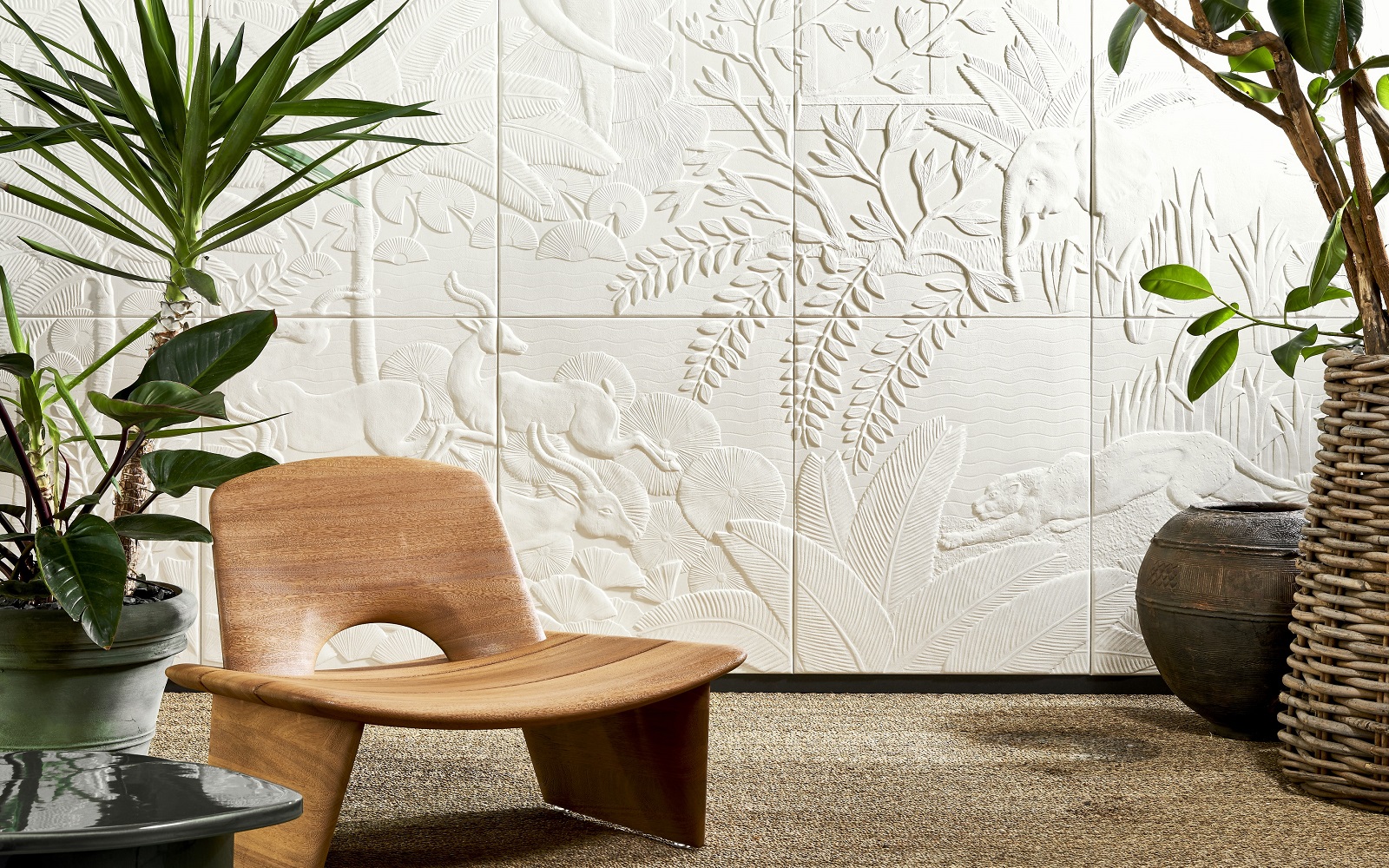
Between Rivers is the signature design of this collection. This mythical scene is set in the lush nature of Babylonia between the Tigris and Euphrates rivers, the region where arable and livestock farming originated. The imaginative tableau shows elephants, gazelles, date palms and the remains of ancient temples.
Arte is one of our Recommended Suppliers and regularly features in our Supplier News section of the website. If you are interested in becoming one of our Recommended Suppliers, please email Katy Phillips.
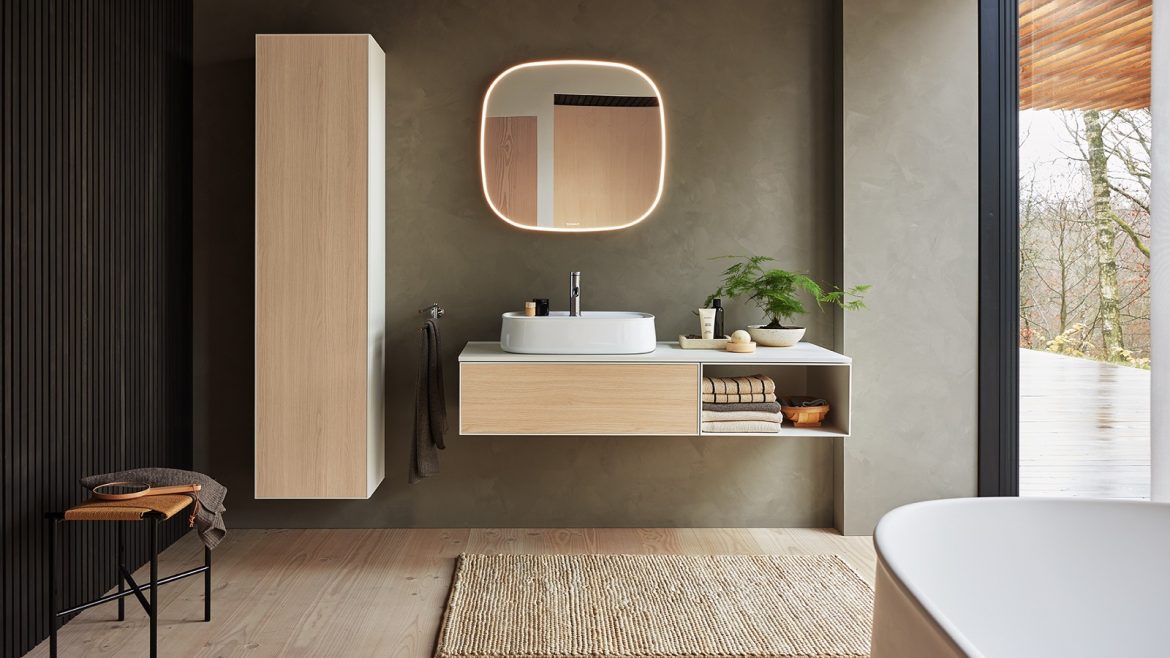
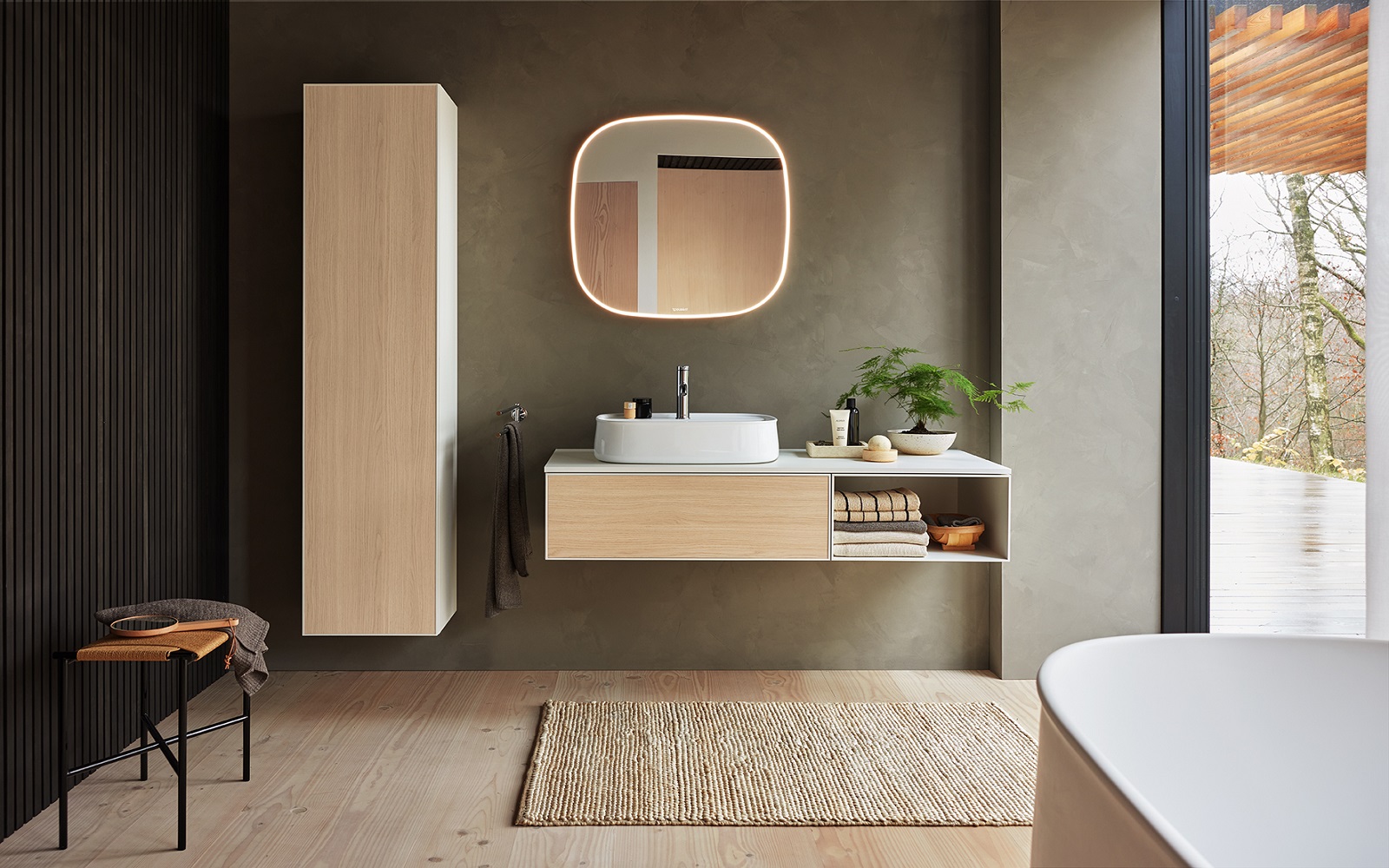
Antao by Villeroy & Boch – bathroom furniture inspired by nature
Together with the design duo at KASCHKASCH, Villeroy & Boch have encapsulated the natural world in its new Antao bathroom collection. With shapes and colours inspired by nature, the collection is defined by its gentle, asymmetrical curves…
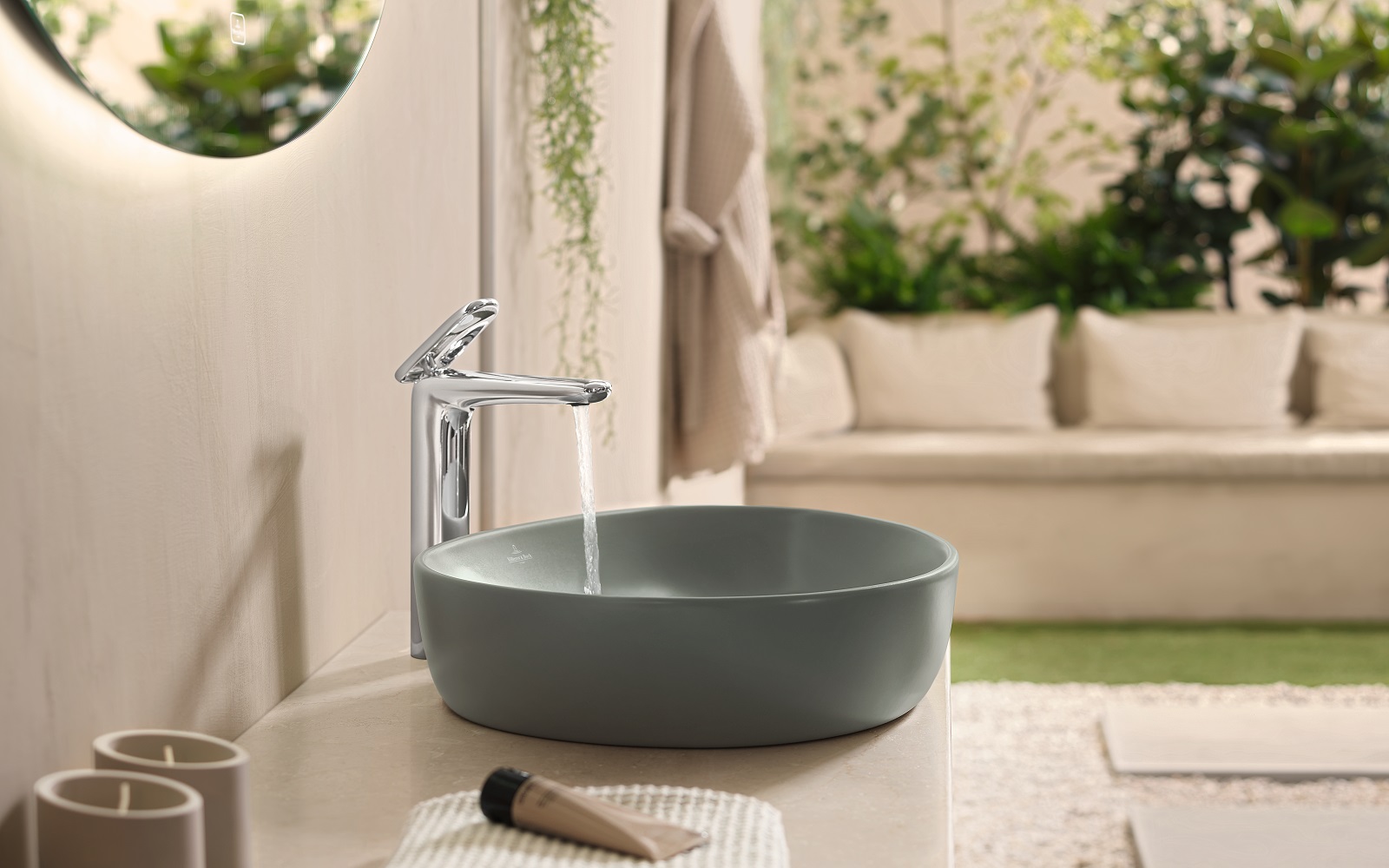
The Antao furniture collection from Villeroy & Boch offers a stylish material mix of high-quality natural materials, textured fronts and a harmonious selection of colours. As well as high-quality painted surfaces in mellow, natural trend colours, the collection also includes real wood furniture in a variety of tones including Honey Oak and Warm Walnut as well as an elegant natural stone panel in real Botticino marble.
Image credit: Villeroy & Boch
Designers Florian Kallus and Sebastian Schneider of Design Studio KASCHKASCH, found the theme for a natural design early one morning in a forest. The air was fresh, the light was soft and everything glistened in dewdrops. “We were fascinated by the dewdrops on the ferns and moss,” recalls Kallus, “organic, yet organised; asymmetric but balanced.”
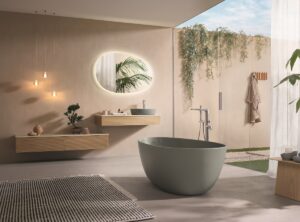
The result of this inspiration is a deliberately muted collection with earthy colours, natural materials such as real wood and natural stone and velvety matt surfaces. The eye-catching, design-led Antao furniture coordinates perfectly with the ceramic elements in the collection, including beautiful dewdrop washbasins and free-standing baths, all keeping in touch with nature.
Image credit: Villeroy & Boch
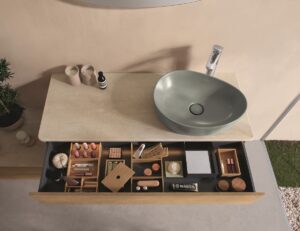
The harmonious design of the furniture offering includes rounded corners and edges and are available in various drawer configurations and surface-variants to suit every need. Long gone are bulky bathroom furniture which invite clutter – the push-to-open mechanism included in the Antao collection avoids the need for handles and the optional LED drawer lighting provides a clear view of the storage, even at night.
The extensive furniture range consists of different sizes of vanity units and consoles as well as a selection of complementary furniture such as a sideboard, tall cabinet and medium cabinet. All offer a great storage solution for any bathroom.
Image credit: Villeroy & Boch
To complement the vanity units, Villeroy & Boch also offer mirrors within the Antao range. With all the radiance of a real dewdrop, the mirrors round off the collection to perfection. From warm white to cold white, the Antao mirrors offer adjustable and dimmable light to help set the mood.
The new Antao collection also includes washbasins, baths and taps, which are all inspired by nature.
Villeroy & Boch is one of our Recommended Suppliers and regularly features in our Supplier News section of the website. If you are interested in becoming one of our Recommended Suppliers, please email Katy Phillips.
Situated in the tallest building in Croatia, AC Hotels by Marriott has announced its brand debut in Croatia with the opening of AC Hotel by Marriott Split…
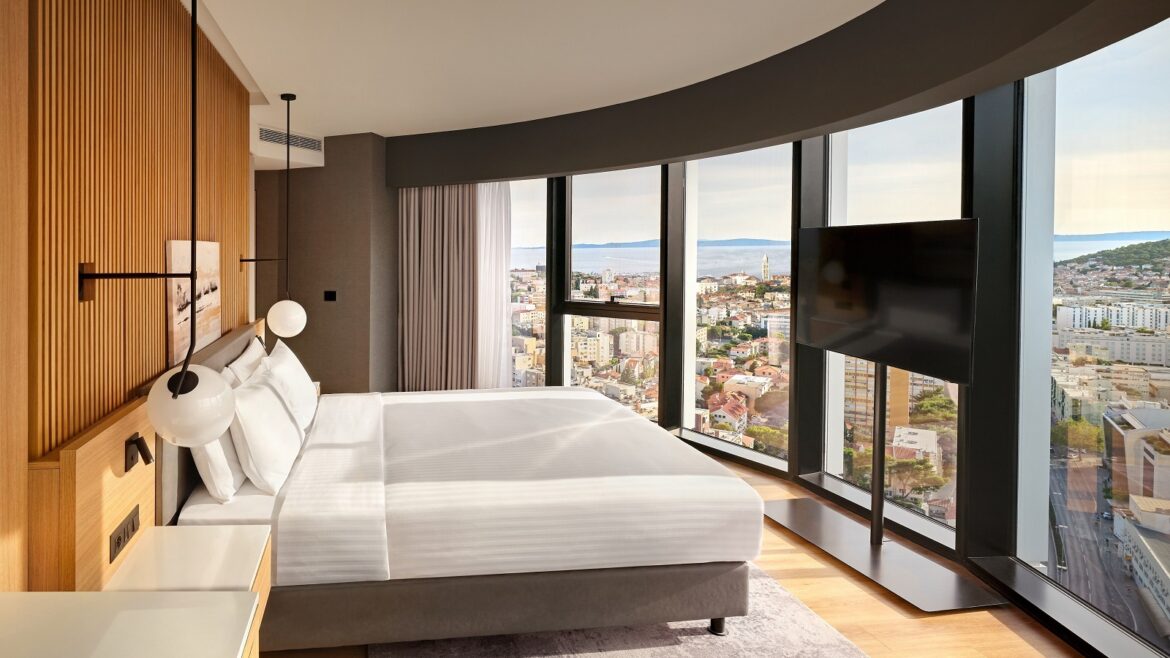
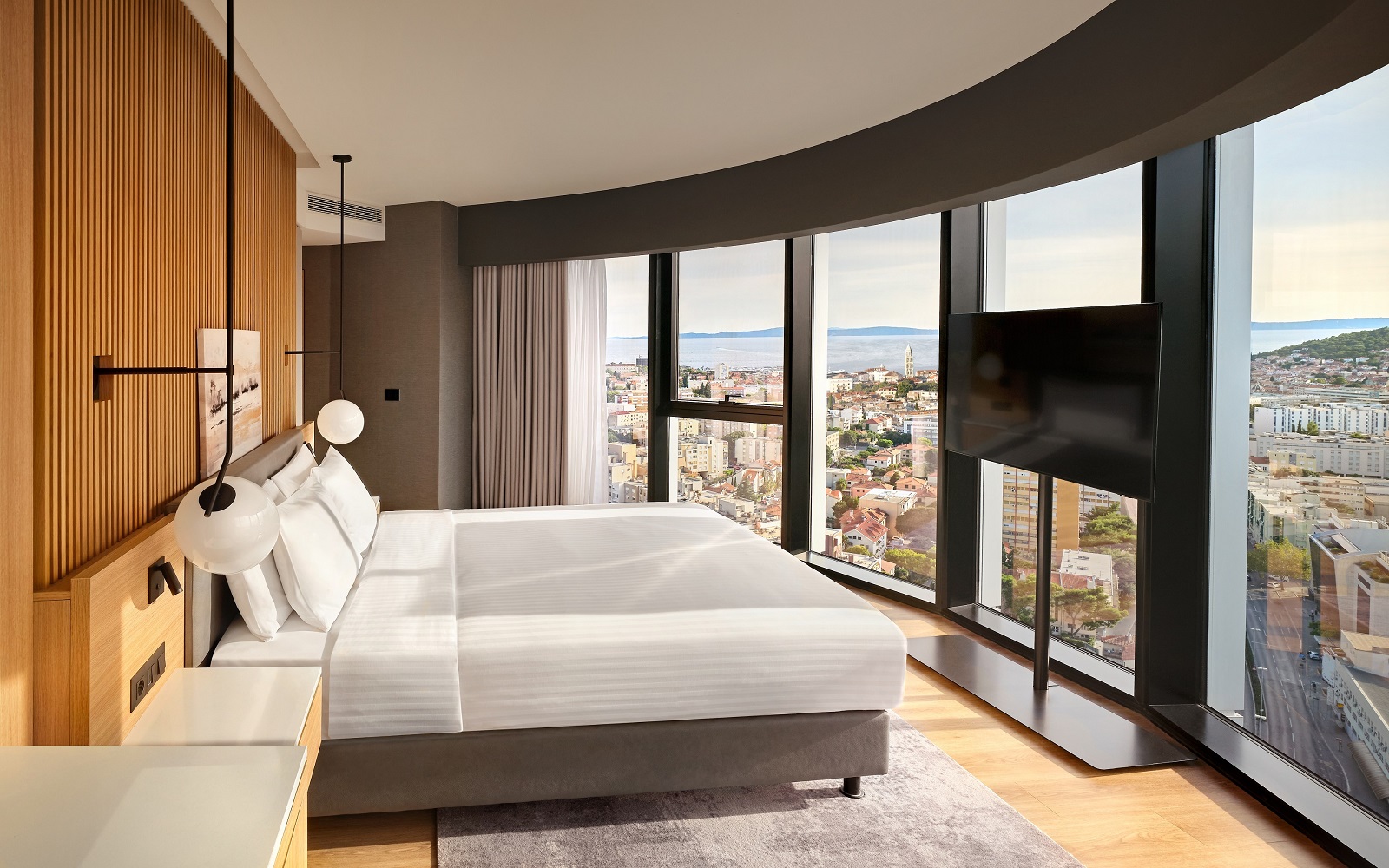
AC Hotels Split is housed on the high floors of the 135-metre-high Westgate Tower with spectacular views of the Adriatic Sea and Split’s unique cityscape. Designed by renowned architect Otto Barić and Croatia-based interior designer firm Atellior Studio, the hotel takes shape with clean modern lines and aesthetically proportioned spaces.
Image credit: Marriott International
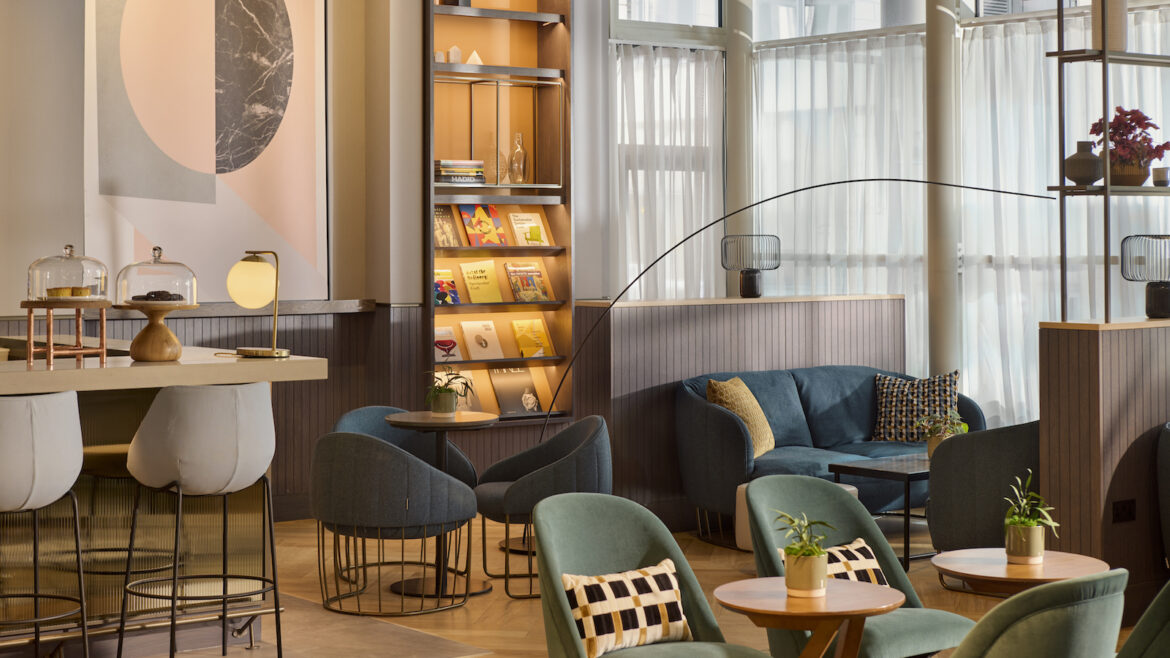
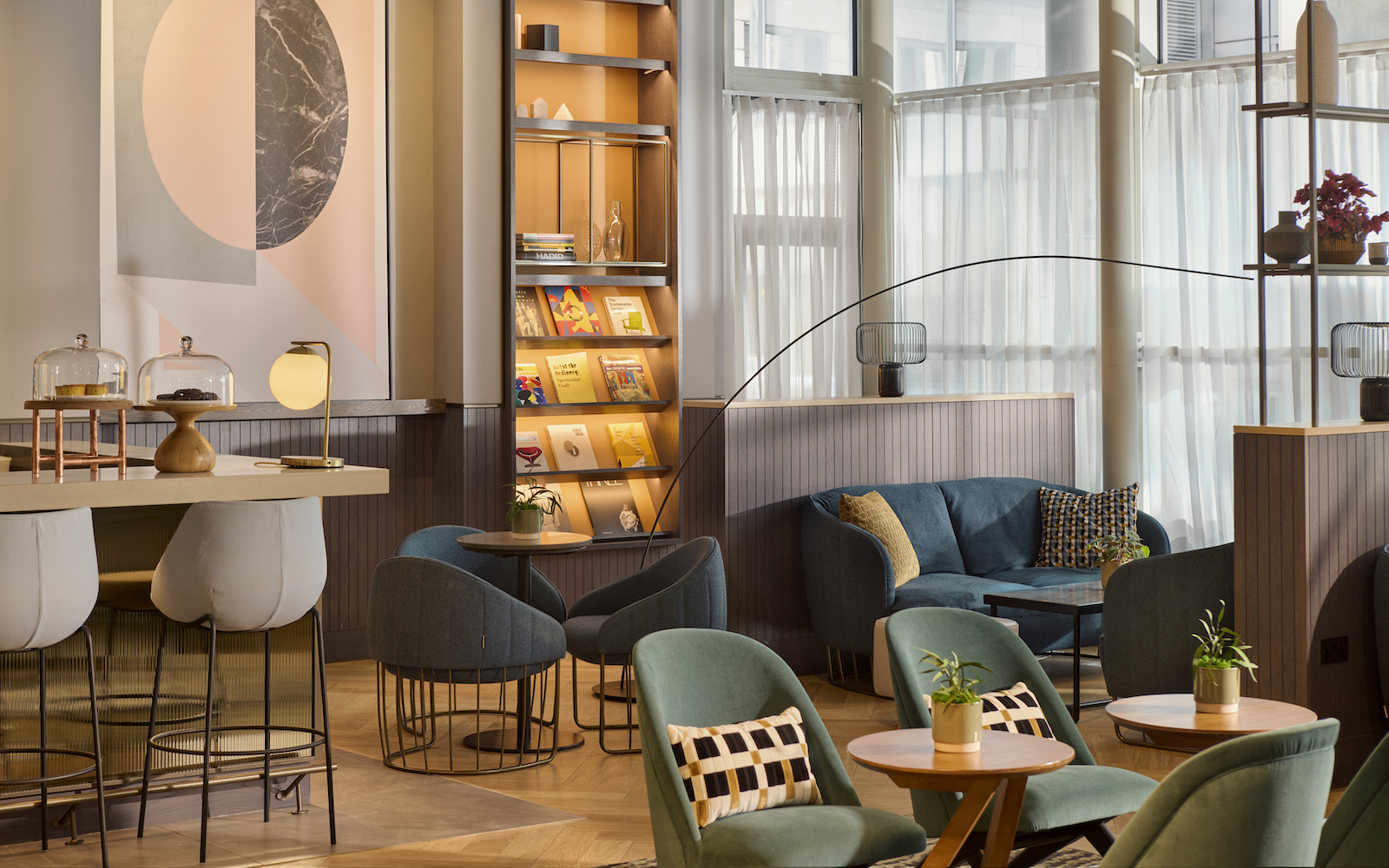
The soothing and warm colour palette, together with the adoption of natural materials like oak, patinated brass and linen effect wallpaper allows spaces to blend from one to another, blurring the line between inside and out. Curious travellers can peek through a glass door to view part of a 1700-year-old Roman aqueduct running throughout the property location. Flexible and open communal spaces are designed to provide maximum comfort and function, making them perfect for business meetings and socialising. The hotel’s AC Lounge features locally sourced art by prominent Croatian artist Vatroslav Kuliš, a collection of books, as well as architecture and fashion albums, to evoke the feeling of a well-curated gallery.
Image credit: Marriott International
The contemporary, minimalistic design of the 214 guestrooms allows travelers to use the space in whatever way they see fit, offering plenty of room to store luggage or pull up a chair and work efficiently. All rooms offer panoramic views of the city below.
Image credit: Marriott International
In keeping with Croatia’s coastal culinary scene, AC Hotel by Marriott Split serves delightful flavours of Mediterranean cuisine in Laureto Restaurant with Croatian Chef Goran Šikić at the helm. Cumano Bar offers a range of creative cocktails and timeless classics with a modern twist, including the signature AC Gin & Tonic. Other facilities include 178 SPA featuring an indoor pool, sauna and steam room, a 325 square-metre meeting space comfortably accommodating up to 240 people, and a gym with state-of-the-art Matrix equipment and unobstructed views of the Adriatic Sea.
Image credit: Marriott International
“The opening of AC Hotel by Marriott Split marks an exciting chapter for the local hospitality industry as Marriott International brings the AC brand to Croatia,” said Ljubica Bauk, General Manager of AC Hotel by Marriott Split. “We hope to contribute significantly to the region’s economic growth by attracting business and leisure travelers alike as well as fostering corporate partnerships. We look forward to welcoming guests to the AC Hotel Split and showcasing the distinctive offerings of our new hotel.”
Image credit: Marriott International
Croatia’s allure lies in its breathtaking natural landscapes, crystal-clear turquoise waters and charming coastal towns. As Croatia’s second-largest city renowned for its rich history and stunning architecture, Split serves as a gateway to the picturesque Dalmatian islands, offering easy access to breathtaking destinations like Hvar, Brac and Vis. With its prime location in the city centre, AC Hotel by Marriott Split offers easy access to popular attractions, including the iconic Diocletian’s Palace, the vibrant Riva promenade and the crystal-clear waters of the Adriatic Sea.
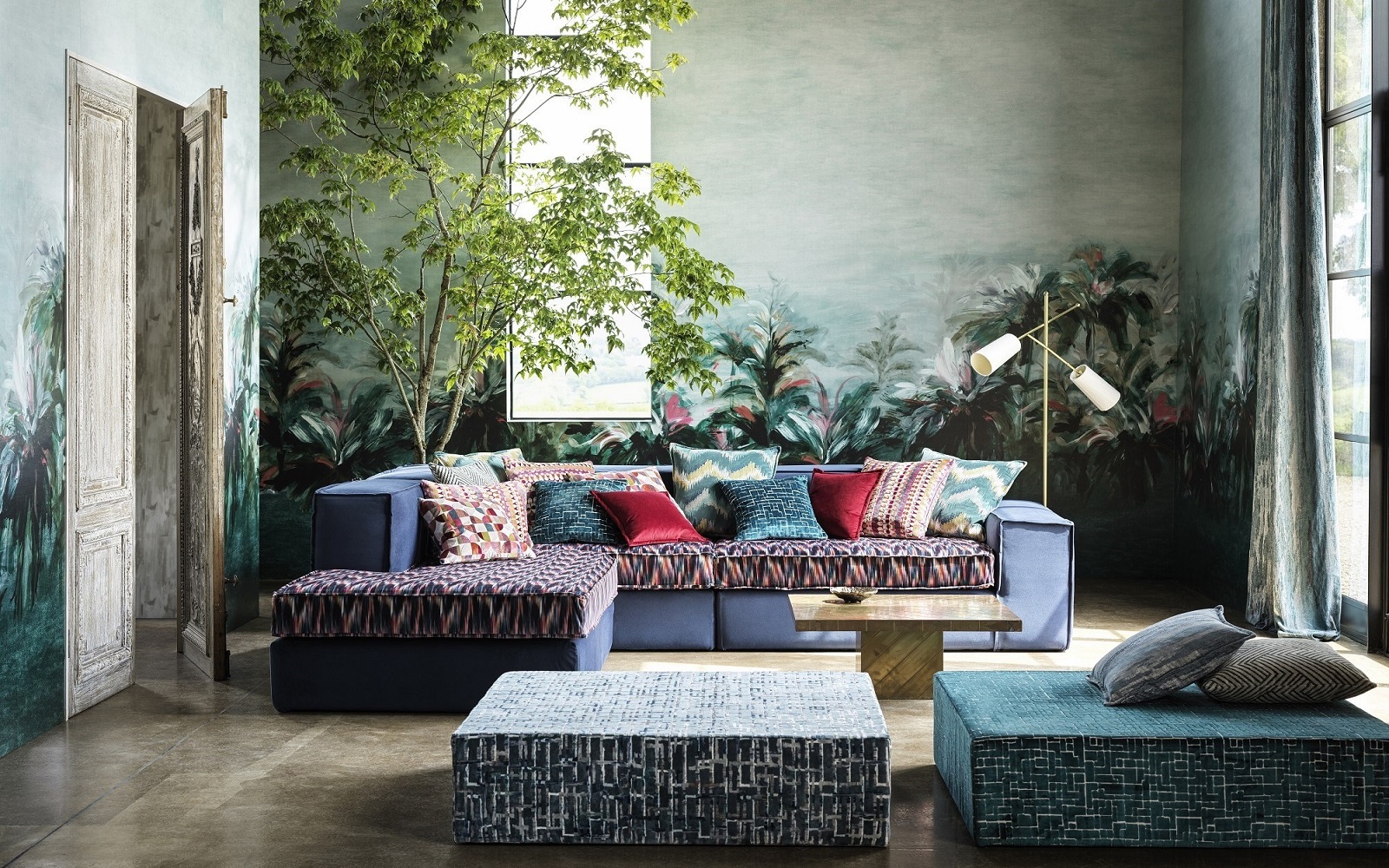
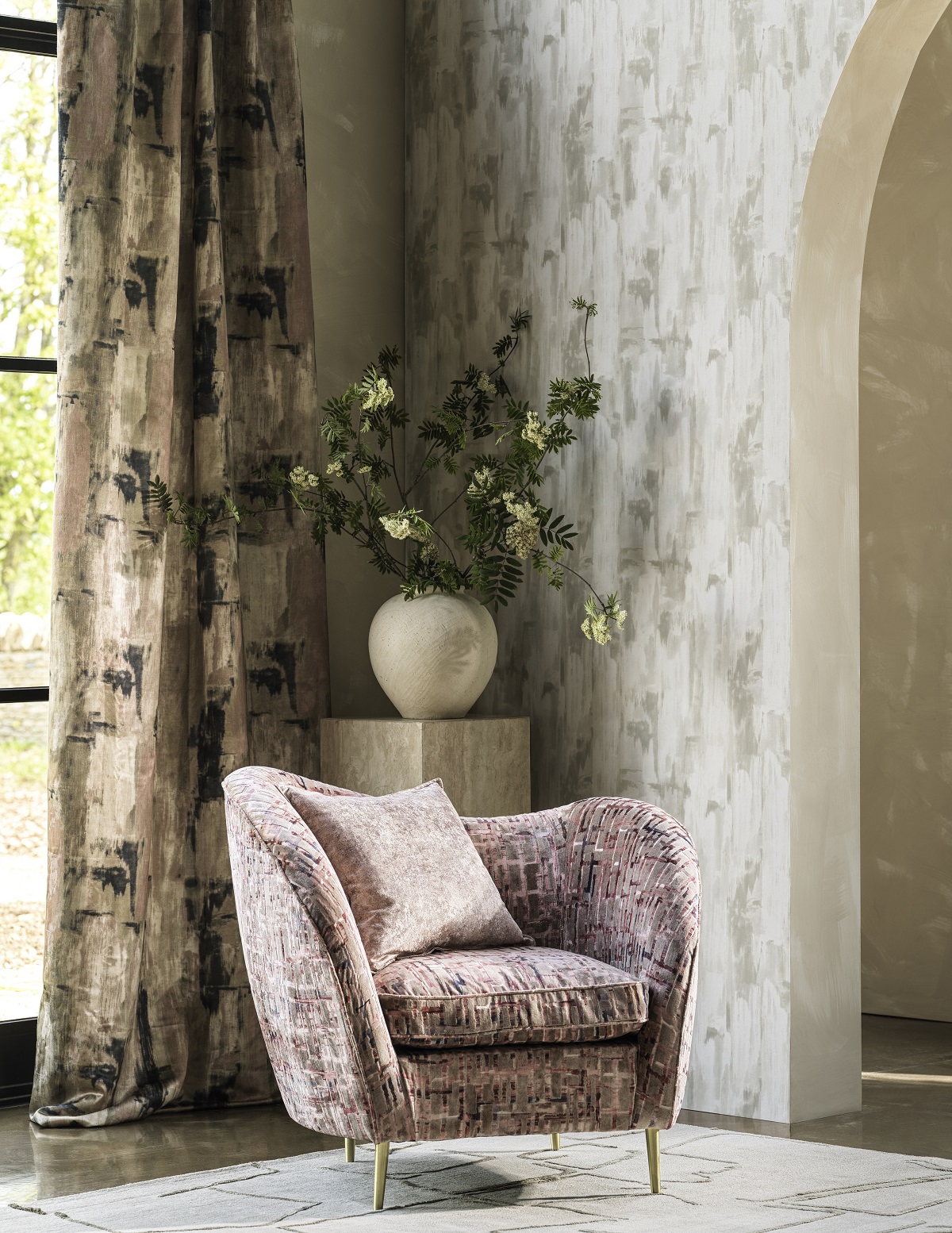
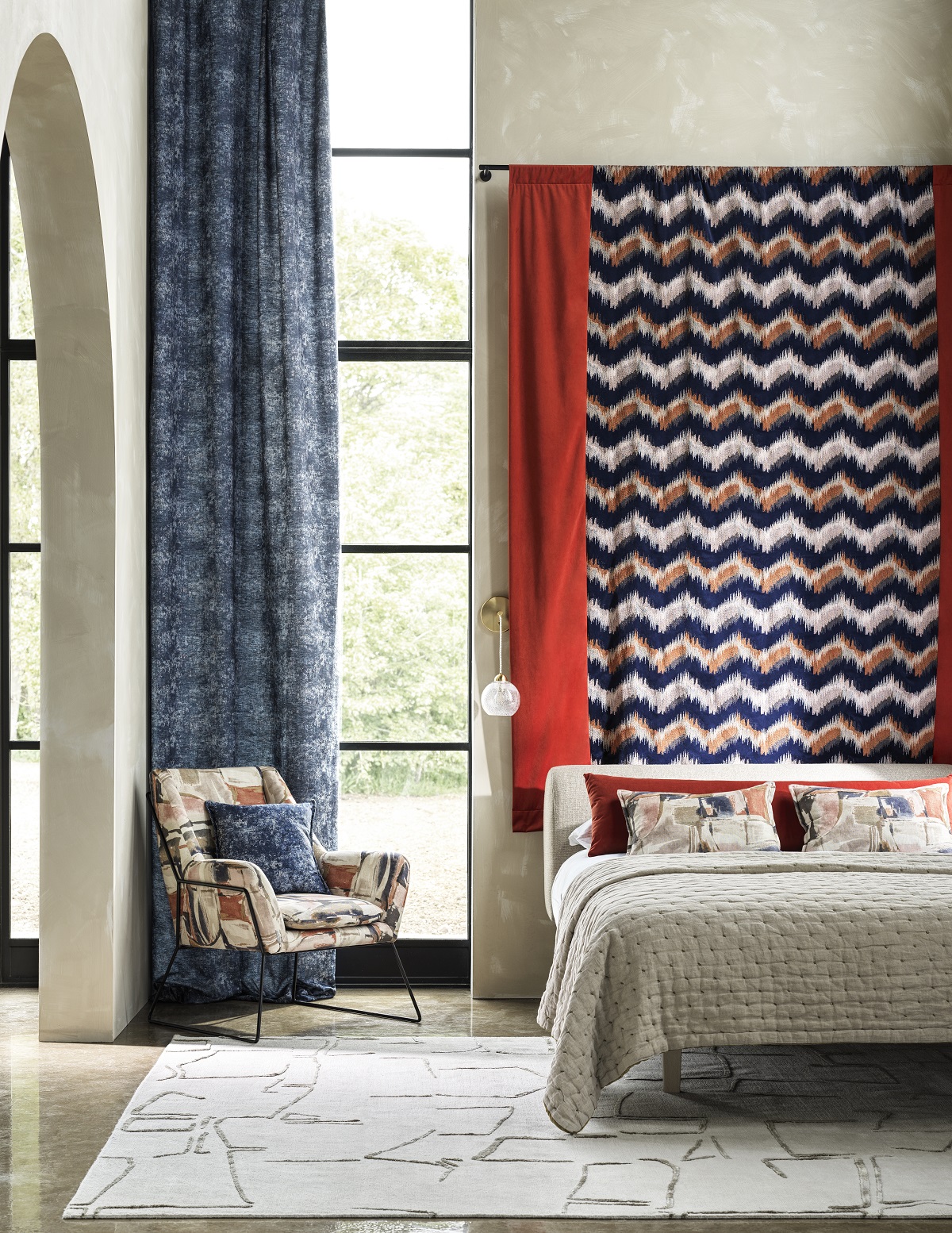
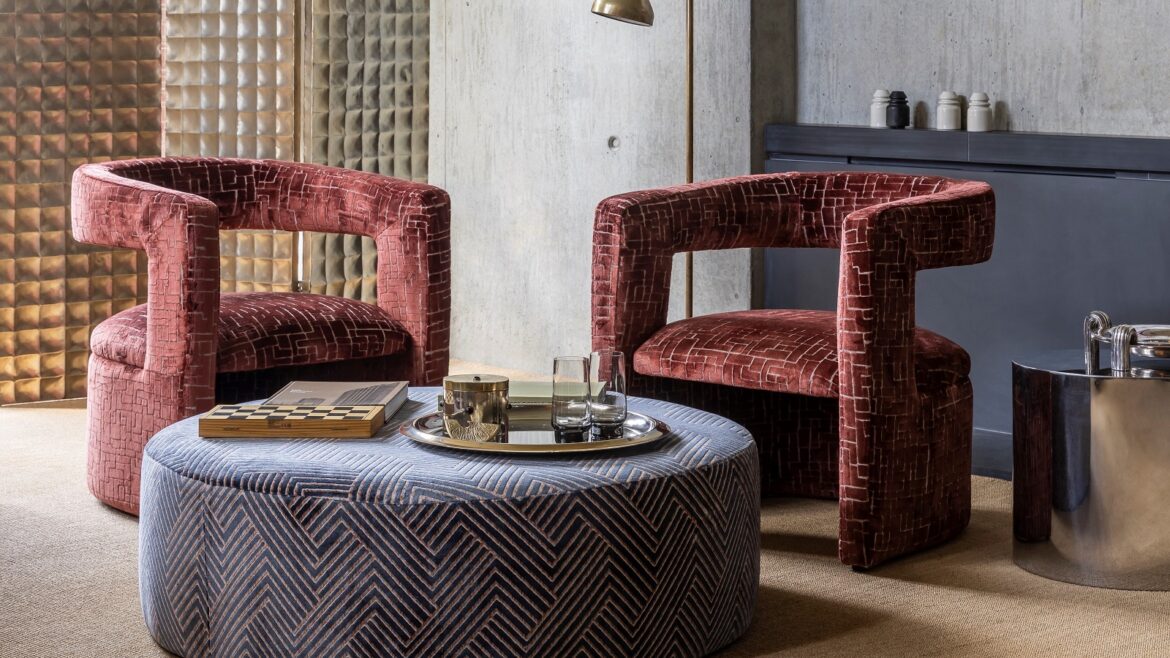
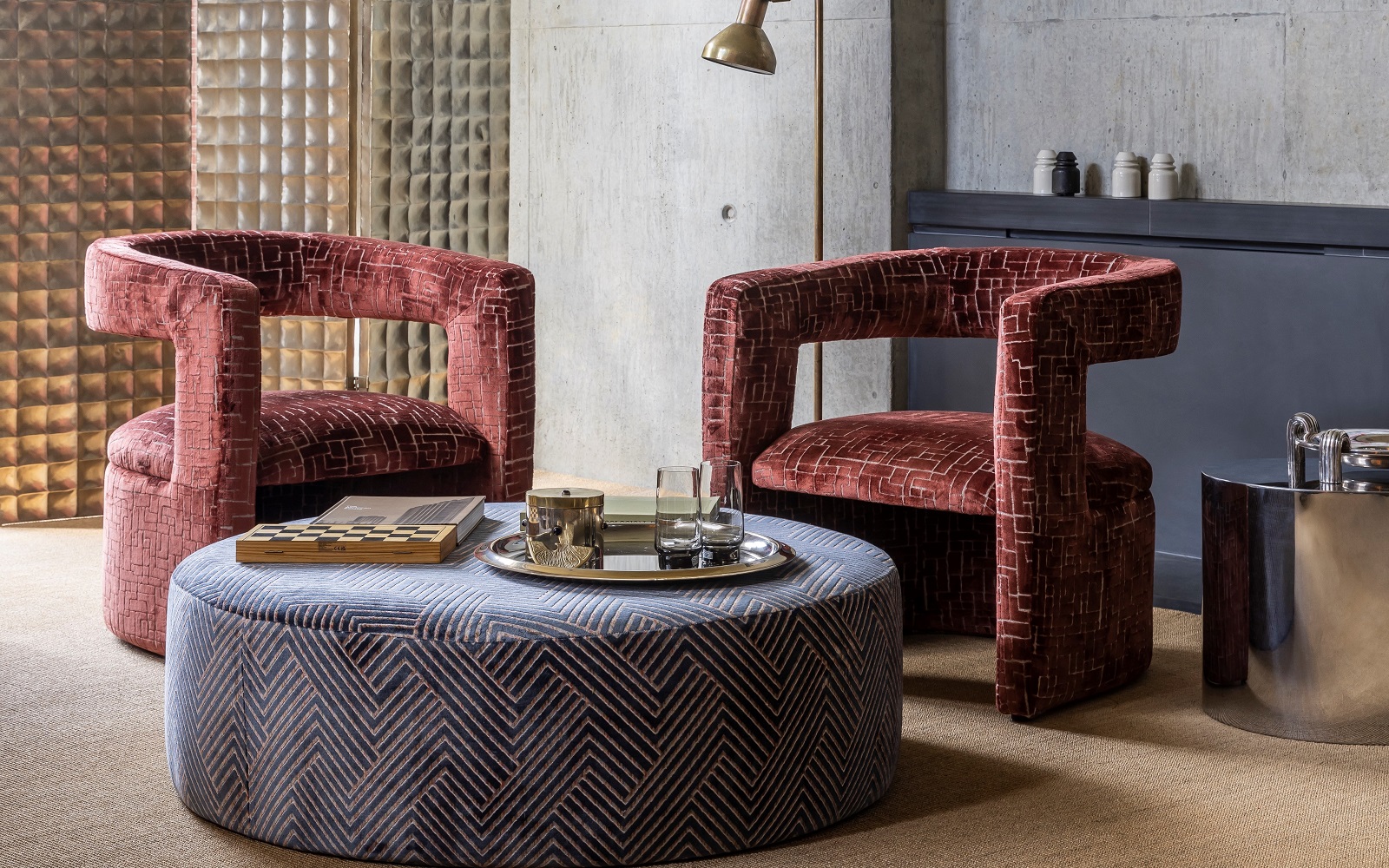
Inspired by architecture, elevated by texture, Vivido from Clarke & Clarke charts the sophistication of simple, abstract design through its mesmerising designs across wallpapers and fabrics including tactile weaves, embroideries and prints…
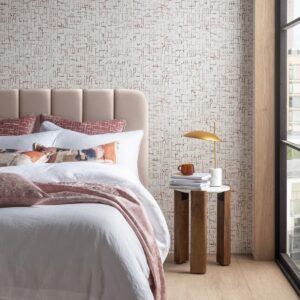
Luxurious and layered designs, lines have been blurred and ultimately softened by Clarke & Clarke to produce the Vivido Collection that is tonal, contemporary and in a palette that spans from deep inky hues to soft, muted colours. Layering techniques add depth to architecturally inspired designs, which are calmed by a relaxed, tonal palette, punctuated with metallic highlights in some designs as part of this inspiring collection.
Image credit: Clarke & Clarke
A beautiful artwork of watercolour brushstrokes layer and blend to create Figura’s organic appearance. Free flowing and abstract, this textural design is printed on a lovely linen blend cloth and a wallpaper which is matt to the touch with a gentle textural feel achieved by subtle, stipple impressions.
A lovely combination of painterly and contemporary design, Quadrata has a soft watercolour wash background that’s printed with an opaque, blocky grid motif in the wallpaper. On fabric a raised, velvet detail contrasts against a woven, gently textured ground. Contrasting brush strokes create an architecturally inspired layered geometric fabric.
Image credit: Clarke & Clarke
Image credit: Clarke & Clarke
Pittura is a gorgeous combination of matt and iridescent yarns woven to create this luxuriously textural fabric with a lovely fluid drape, while Dipinto is a glamorous printed velvet overlayed with distressed, tonal metallic highlights in the fabric. Shimmering, it has exceptional depth and movement. In the wallpaper a combination of metallic and matt starbursts overlay to create a glamorous look. Printed on a contrasting chalky ground, grit detail gives the starbursts a textural effect for exceptional depth and movement.
Image credit: Clarke & Clarke
Lagna is a distressed stripe wallpaper that’s gently stippled for added texture. Layers of expressive paint and inky brushstrokes combine to create this design’s arty appearance. The fabric in this design has an elegant, floaty drape in a woven jacquard, painted with inky brushstrokes and finished with delicate metallic highlights.
Sagoma is a tightly constructed chevron design in fabric only, with metallic yarns running throughout its tonal flame stitch, which is intricately embroidered on to soft velvet to create an oversized stripe effect. And finally, a luxurious addition to any home, Effetto is an irregular, large scale statement stripe with understated herringbone detailing in both fabric and wallpaper.
Image credit: Clarke & Clarke
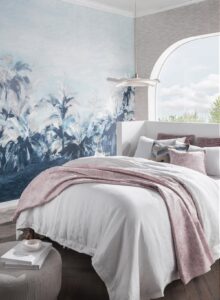
Grassetto, Dritto, Impatto and Alberi are four designs in the collection created exclusively as wallpapers. Alberi makes a strong statement as a jungle paradise of tropical leaves and colourful floral pops burst forth in this oil paint design, creating a textural, expressive wallpaper panel in two striking colourways.
Grassetto’s interlocking zig zags layer across a flat background stripe in this striking textural chevron wallpaper. Four colourways reflect the contemporary edge of this geometric design. Dritto is a mesmerising, horizontal stripe wallpaper that replicates the fabric of the same name. A deep emboss gives each individual stripe a ridged boucle feel, resulting in a beautiful tactile design full of tonal colour. Giving the illusion of stacked 3D blocks, Impatto is a geometric wallpaper that combines tonal print marks with cross hatch detail and gloss highlights. Largescale circular outlines overlay the design, adding an extra element of depth.
The Vivido collection reflects the power of abstract design when naturalistic elements are harnessed to create luxe designs through texture and depth of colour.
Sanderson Design Group is one of our Recommended Suppliers and regularly features in our Supplier News section of the website. If you are interested in becoming one of our Recommended Suppliers, please email Katy Phillips.
VIP arrivals: hottest hotels opening in September 2023
Editor Hamish Kilburn digs deep to identify what will be the hottest hotels opening in September 2023. This month’s round-up of hotel openings includes arrivals in Munich, Bhutan, Macau, London, Japan and Sri Lanka…
The hottest hotel openings in September 2023 – Hotel Designs‘ VIP arrivals, as we crown them – have come in from all angles. Each hotel that the editorial team have identified – whether it’s well-known luxury hotel brand making its debut in Munich, a new riverside retreat in Bhutan, a luxury hotel in London that has been teasing us for eight years or a fashion-led, disruptive brand making an obnoxious scene in Macau – is a game-changing hotel development.
So, make sure you are seated as we update you on just some of the new hotels we and the rest of the world will be talking about and celebrating in September and beyond.
&BEYOND Punakha River Lodge
Image credit: &BEYOND
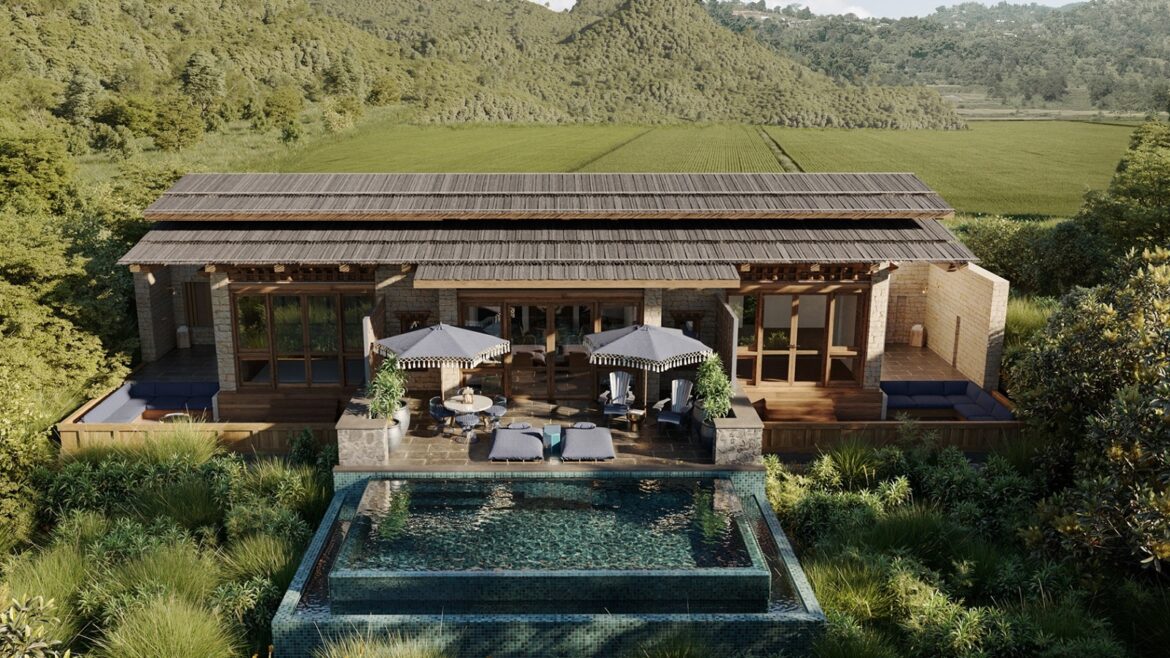
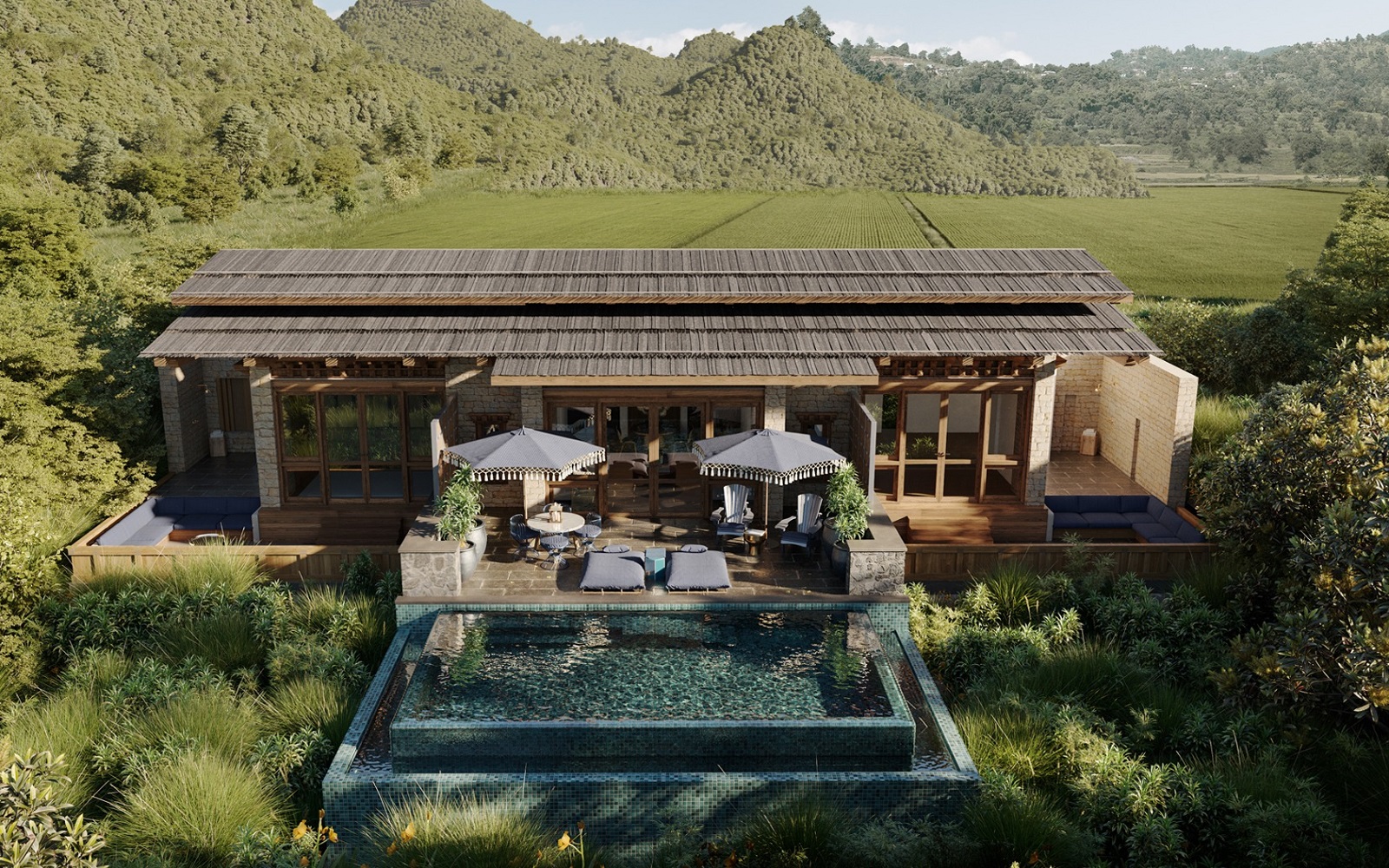
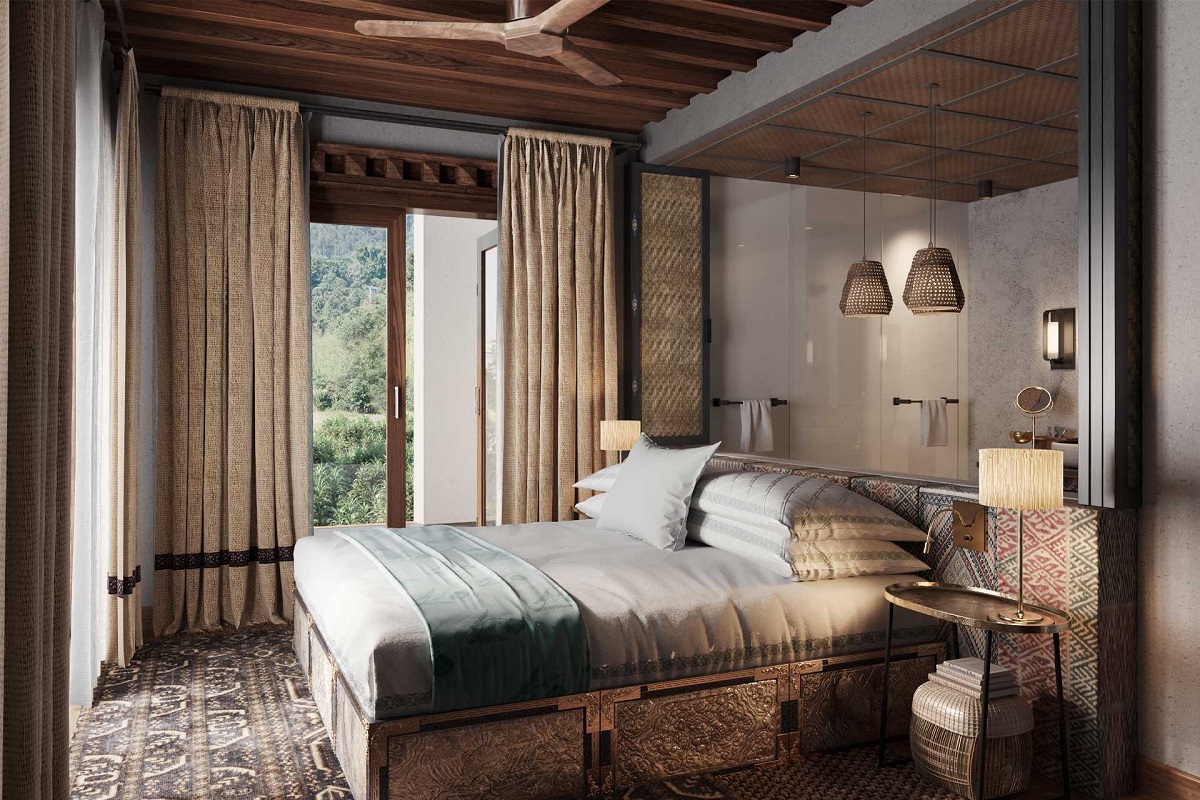
Tucked deep in the Punakha Valley, and situated on the banks of the Mo Chu River in Bhutan, &BEYOND’s Punakha River Lodge is a spectacular lodge, offering six intimate luxury tents, a one-bedroom suite (the River House) and a two-bedroom suite (the Family Suite). The opening of the Punakha River Lodge marks &BEYOND’s first lodge in the magnificent kingdom of Bhutan.
Intricately built, the lodge has been created in the traditional Bhutanese architectural style and is in ‘perfect harmony’ with the surrounding terrain – the site is enveloped by vast expanses of verdant paddy fields and dense clusters of forested hills.
One Sloane, London
Image credit: One Sloane
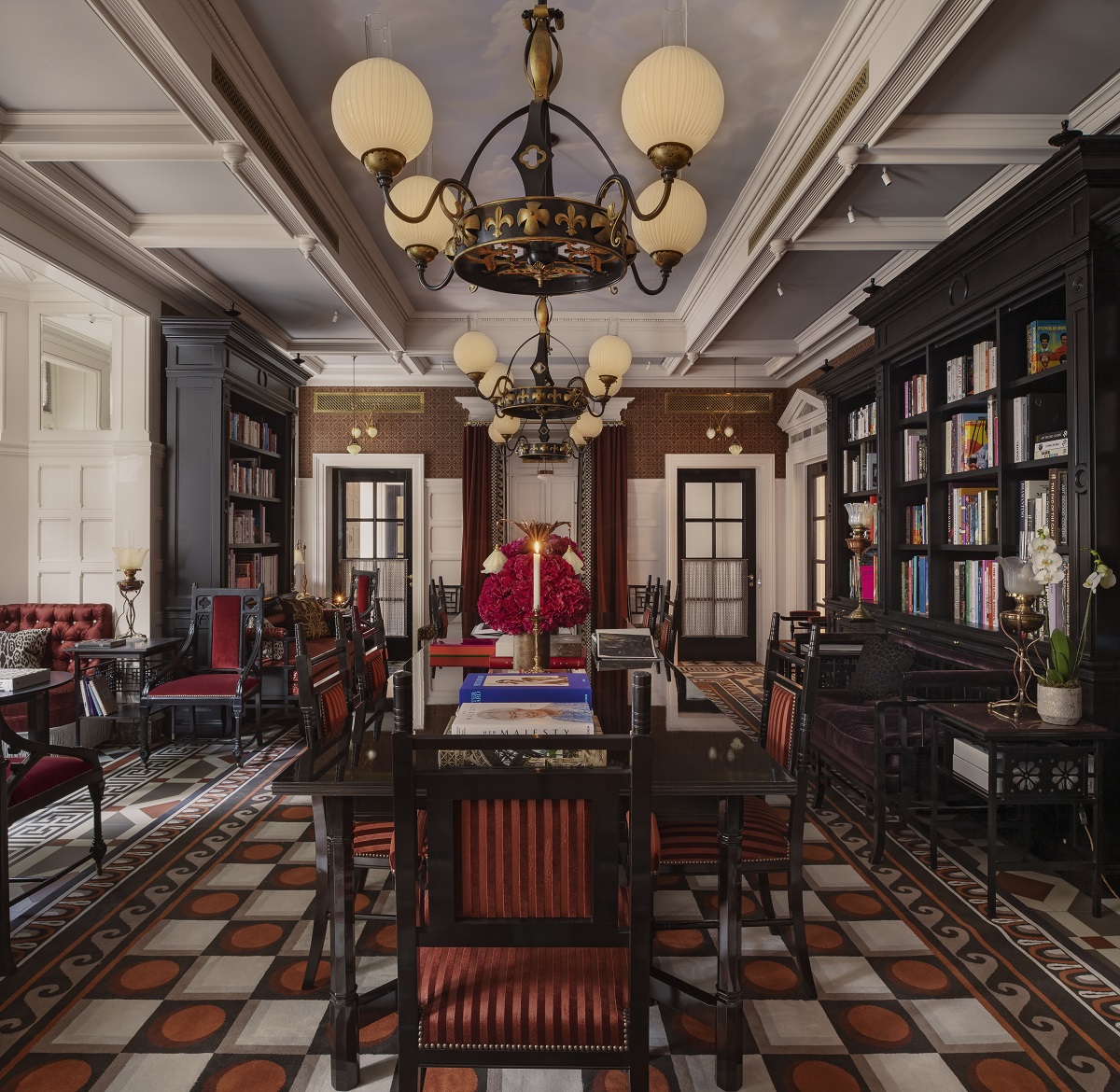
Nestled at 1 Sloane Gardens, One Sloane is a ‘home away from home’ – it exudes an air of timeless elegance where Chelsea charm meets Parisian chic. Comprising 30 bedrooms and suites, the hotel will house a top floor restaurant, lobby and a downstairs bar.
Originally crafted in 1889 by architect Edwin Thomas Hall, One Sloane comes following an extensive six-year building project, a collaboration between the world-renowned hotelier Costes, revered designer Francois-Joseph Graf and the 300-year-old Cadogan Estate. The historic façade has been retained whilst the interior was completely remodelled, and an additional sixth floor with its own cupola added. Graf and his select circle of trusted craftsmen have transformed the hotel, bringing an elegant Victorian mansion into the 21st century.
As one of Japan’s most famous scenic spots, the Yoshikien area where the hotel is located is surrounded by World Heritage Sites, such as Kasuga Taisha Shrine, Kofukuji Temple and Todaiji Temple – it has been protected by efforts to maintain the area’s lush greenery and serene environment. The name of the hotel derives from the ‘purple trunk and green leaves (Shikan Suiyou)’, which are scenic vistas that have been cherished in Nara since ancient times.
W Macau – Studio City
Image credit: Marriott International
Macau’s vibrant city of entertainment and rich history is, for many reasons, the perfect destination for the upcoming W Macau – Studio City. The mixed-use development, comprising of indoor and outdoor water parks, cineplex, and a modern MICE space, is set to become a landmark in the city.
The 557-key hotel, meanwhile, will include 128 contemporary suites and two dynamic dining venues – one with international cuisine with an Asian twist, and another featuring the finest Chinese and Portuguese dishes. In addition, the WOOBAR is expected to become a destination bar in its own right.
Hilton Yala Resort, Sri Lanka
Image credit: Hilton Hotels
Considerately built around an active elephant corridor, guests at Hilton Yala Resort will experience the real definition of luxury; the one-off experience of being up-close to wildlife encounters safely from a collection of design-led rooms, suites and villas.
This latest resort from Hilton will be home to a collection of restaurants, including contemporary Sri Lankan and Asian-inspired Dhira, grilled meat and seafood-focused Sandali and versatile bar and coffee lounge Vanya.
Rosewood Munich
Image credit: Rosewood Hotels & Resorts
Rosewood Munich, the first German property for Rosewood Hotels & Resorts, is slated to open at the end of September, bringing with it a combination of magnificent architecture, state-of-the-art design that evokes a unique sense of place and unparalleled hospitality experiences at every turn. The opening will mark the group’s seventh property in Europe and the 32nd in the portfolio, worldwide.
Munich-based architectural firm, Hilmer Sattler and London-based interior architectural design studio Tara Bernerd & Partners have worked in close collaboration to bring the spirit of Rosewood into the Bavarian metropolis. The property will feature an array of luxurious guestrooms, suites and spacious houses, each adorned with bespoke furnishings and will offer breathtaking views of the city skyline or into the courtyards.
The Peninsula London
Image credit: Peninsula London
And finally, the wait is over. Eight years after first hearing whispers of Peninsula Hotels making its debut in London, the monumental project, which some would argue casts a shadow over its neighbours, is complete. The doors to the 190-key luxury hotel are about to swing open for the first time.
The newly-built hotel, designed and appointed to embody the finest British craftsmanship, is situated at one of the city’s grandest junctures – where Hyde Park Corner meets Wellington Arch. With architecture conceived by Hopkins Architects to gracefully harmonise with the heritage buildings of Belgravia, the property shelters a sleek, spacious aesthetic that floods its exquisite interiors with natural light.
The design scheme is the inspired work of designer Peter Marino, who, in addition to ongoing architectural commissions for Chanel, has more than a few landmark hotel interiors in his portfolio. And yet we can’t help but feel that this latest jewel will feel like a milestone hit following its complex and captivating design narrative that has kept us on the edge of our seats for almost a decade.
VIP Arrivals is a dedicated editorial series brought to you by Hotel Designs, which drops monthly, to explore the hottest hotels opening around the globe. Please contact the editorial desk if there is a hotel that you think should be on our radar for future features.
Straight-line geometry is having a moment in bathroom design, a trend embodied by the latest additions to the designer RAK-Petit collection of washbasins from RAK Ceramics, now available in square…
With the size of the average British bathroom measuring around a modest four square metres, RAK-Petit, a designer collection from RAK Ceramics, solves the problem of creating luxury results in compact spaces. Created in collaboration with award-winning Italian designer Maurizio Scutellà, RAK-Petit is a comprehensive collection of sanitaryware and brassware, designed specifically with small bathrooms in mind, from en-suites to small family bathrooms.
Image credit: RAK Ceramics
Designer Scutellà is an industrial designer, focused on and sensitive towards the entire range of design and artistic currents of the past century, he designs products that are technical and artistic at the same time. Taking both the ‘Form Follows Function’ and the ‘Function Follows Form’ approach to his work, the minimal shapes and modest dimensions of the RAK-Petit washbasins are perfect for small spaces that are also big on style.
Image credit: RAK Ceramics
The collection includes deep-based washbasins that can be installed alone or combined with RAK-Joy vanity units in the domestic bathrooms, as well as freestanding washbasins that are statement pieces. The freestanding ceramic washbasins in striking Alpine White measure an elegant 360mm wide x 900mm tall.
The wall-hung washbasins in the collection are equally as stylish, again with round or square basin shapes combined with a ceramic ledge, providing an easy to wipe clean surface for soaps and toothbrushes. Measurements for the wall-hung basins are 765mm x 360mm.
The collection has been extended in 2023 to include even more choice. Straight-line geometry is having a moment in bathroom design, a trend embodied by the latest additions to the collection, now available in square, creating a sense of orderliness and simplicity with their straight lines.
RAK Ceramics is one of our Recommended Suppliers and regularly features in our Supplier News section of the website. If you are interested in becoming one of our Recommended Suppliers, please email Katy Phillips.
Rosewood Munich prepares to open its doors in the heart of Bavaria
Rosewood Munich, the first German property for Rosewood Hotels & Resorts, is slated to open end of September, bringing with it a combination of magnificent architecture, state-of-the-art design and unparalleled experiences. It will mark the seventh property in Europe for the group and the 32nd in the collection, worldwide…
Housed in two landmark, historical buildings which were formerly the headquarters of the State Bank of Bavaria and the grand aristocratic residence Palais Neuhaus-Preysing, Rosewood Munich is ideally situated in Kardinal-Faulhaber-Straße. Its location offers guests premier access to several of the city’s most iconic sights, such as the famous Marienplatz and the elegant shops of Maximilianstraße and Theatinerstraße. Within its walls, through exquisite, detail-oriented design and a sophisticated approach to personalized service, the hotel will welcome guests to indulge in a world of refined luxury.
Image credit: Rosewood Hotels & Resorts
The property will feature an array of luxurious guestrooms, suites and spacious houses, each adorned with bespoke furnishings and offering breath-taking views of the city skyline or into the courtyards. Gastronomic experiences will include an inviting lobby lounge, a distinct full-service brasserie and a vibrant bar. For ultimate relaxation, Rosewood Munich will house a full-service Asaya spa with six treatments rooms, as well as an indoor pool and fitness area.
Munich-based architectural firm, Hilmer Sattler and London interior architectural design studio, Tara Bernerd & Partners have worked in close collaboration to bring the spirit of Rosewood into the Bavarian metropolis. Their overarching objective was to bring the historic past of the legacy buildings into the modern world of today. To this end, the hotel is a contemporary interpretation of Baroque architecture and the sophisticated design blends seamlessly with the historical elements of the building to convey an expressly modern yet timeless Bavarian style.
“Rosewood Munich is our first project in Germany with Rosewood Hotels & Resorts and is a key moment for us,” commented Bernerd, Founder of Tara Bernerd & Partners. “We have sought to bring a refined residential style with a contemporary take on Baroque architecture. This elevated sense of sophistication will provide a place for locals and distinguished travellers to come together in this vibrant and eclectic city.”
Image credit: Rosewood Hotels & Resorts
The historic entrance hall of the hotel, which features impressive, vaulted ceilings and frescos, is original to the former bank building and has been carefully preserved. Purposeful lighting draws attention to the archival elements, with highlights including an ornate ceiling fresco. Juxtaposed with newly constructed doors and windows, the entrance exudes a stately yet contemporary feel. The central courtyard, which is a typical feature in Munich’s old town, has also been carefully restored, letting the building breathe while at the same time adding a completely new experience to the space.
At Asaya Spa, Rosewood Munich’s integrative wellness destination, guests will enjoy unique moments of relaxation. Extending over two floors and covering an area of 1,300 square metres, the facilities will boast a vitality indoor pool, two saunas, one steam room, six treatment rooms, a wellness suite for private spa experiences and a round-the-clock fitness centre equipped by Technogym. Spa memberships and offers will be available for local residents as well as visiting guests not staying at the hotel.
Image credit: Rosewood Hotels & Resorts
An epicurean journey will unfold at the hotel’s Alpine-inspired brasserie, CUVILLIÉS, where tradition merges with modernity. Open seven days a week, the restaurant will welcome patrons for a relaxing breakfast, a casual lunch, or a decadent dinner. Classic Alpine dishes, rooted in the cultural heritage of the region and the neighbouring states of Austria and Italy, will bring something truly unique and exciting to Munich’s culinary scene. All offerings will highlight seasonal produce sourced from local suppliers.
Bar Montez will offer a refined selection of handcrafted signature cocktails, an extensive wine list, and premium spirits. The cocktail menu will feature both tried-and-true classics as well as innovative original concoctions, all emphasizing fresh ingredients. As an additional highlight, the bar will offer a varied music programme with a roster of unique artists and performers.
In addition, the hotel will encompass six event spaces, including a spacious ballroom and a smaller historic ballroom, as well as four flexible meeting and breakout rooms. Both ballrooms will offer outdoor space. With over 600 square metres of indoor meeting space, Rosewood Munich can cater to all sizes and types of gatherings, from corporate meetings to intimate dinners, lifestyle events or social celebrations. All spaces boast complimentary wireless high-speed internet access and on-site audio visual and production services.
Crosswater adds new finishes to its MPRO collection
Brushed Bronze and Slate are the latest finishes joining the iconic MPRO brassware collection from Crosswater…
With colour at the heart of the range, the premium MPRO collection from Crosswater offers unique and luxurious brassware for every bathroom style and scheme. A result of expert design and beautifully meticulous craftsmanship, the collection uses only the finest components and materials to deliver unmatched flow performance, safety and water efficiency.
Image credit: Crosswater
Image credit: Crosswater
Joining the existing finishes, the stunning new Brushed Bronze and Slate collections are inspired by shades found organically in the natural world. These rich, earthy tones promote feelings of warmth, tranquillity and restoration in both modern and traditional bathroom schemes. Brushed Bronze provides a warm, rich hue, reminiscent of a Saharan sunset. Designed to pair effortlessly with a wide range of bathroom styles, the unique tone is guaranteed to instantly add a luxurious feel to any space.
Image credit: Crosswater
A cooler shade, Slate offers a high contrast yet more subdued finish to Matt Black. The versatile colour features a subtle brushed effect, providing on-trend texture and contrast to both high-gloss and matt finish bathroom products. The MPRO collection puts innovation at the forefront of brassware design. Stylish
and versatile, the designs seamlessly fuse function with precision to deliver a complete range of brassware that enhances the basin, bath and shower, providing cutting edge solutions that meet the demands of today’s contemporary bathrooms.
Associated with rarity and elusiveness, metallised finishes are guaranteed to provide understated luxury to any space. With the subtle injection of colour, warmth and grandeur, the two new finishes offer muted, nature-inspired tones that harmonise with many materials and on-trend textures in bathroom design, such as stone basins and wooden furniture.
Crosswater is one of our Recommended Suppliers and regularly features in our Supplier News section of the website. If you are interested in becoming one of our Recommended Suppliers, please email Katy Phillips.
La Fiermontina Ocean is the third chapter in the La Fiermontina Collection story – a tale that feels like one of those beautiful coffee table tomes whose pages you want to keep on revisiting. Pauline Brettell checks in to discover that the hotel is as much about design as it is about content, with a family history linking those pages that take you from Italy, France and now to the northern shores of Morocco…
The La Fiermontina Family Collection has been practicing the art of quiet luxury since its inception. Under the hands-on guidance of brother and sister Antonia and Giacomo Fiermonte, along with the design team of Charles-Philippe Mommeja and Christophe Vialleton from Laboratoire Design, Rabat, each property immerses itself in its location and invites its guests to do the same.
Image credit: La Fiermontina Ocean
With the location in many ways being the hero of this property, La Fiermontina Ocean has settled seamlessly into the northern Moroccan landscape. While the renaissance of Tangier might be grabbing the headlines, those in-the-know are discovering the quieter luxury beyond the city limits.
Located approximately an hour from Tangier, and a mere stones throw away from the fishing Port of Larache, this eco-retreat is centered in a protected natural park, surrounded by sand dunes, olive groves and the ultimate luxury of space and solitude. The property shelters 11 Pool Suites, two Pool Villas and four Traditional Stone Houses in the rural village of Dchier, which has been incorporated into the fabric of the hotel on several levels. In addition to the accommodation, La Fiermonte Ocean offers a beautifully designed hammam, private beach club and a restaurant championing its Italian roots alongside its Moroccan location.
Image credit: La Fiermontina Ocean
Shifting comfortably between tagines and tiramisu – and both where delicious, I might add – La Fiermontina Ocean is a built reflection of its owners roots. The Italian heritage is clear in the details, while the Moroccan roots shine through in a manner that avoids all clichés. The design brief was based on a desire to show Morocco today, a contemporary view set against the backdrop of family history that combines three cultures: Moroccan, Italian and French. With the Moroccan-based design team having already worked on the other Fiermontina properties in Lecce and Paris, those links were easy to weave into the story.
“We have chosen not to exploit the usual Moroccan codes and to present Moroccan art in an isolated way, to enhance it more,” commented Mommeja and Vialleton, Laboratoire Design.
Image credit: La Fiermontina Ocean
Image credit: La Fiermontina Ocean
But lets start at the beginning – the location. As you drive over a bumpy, dusty road flanked by cork trees and pass by a small roadside stall selling sunshine yellow melons, there is a moment when you wonder if you have taken a wrong turning. However, as you arrive at the gates and are greeted by the view across the fields and dunes to where the ocean meets the sky, everything falls into place. And it is always about the view, no matter where you are on the property.
The hotel accommodation is made up of a series of small stone villas, each facing the horizon and are settled into the landscape in such a way that each occupies its own space and feels like a private haven. It literally feels like its just you, that view, all accompanied by the quintessentially summer sound of the cicadas.
Image credit: La Fiermontina Ocean
“We have designed the location of the villas according to the configuration of the land,” explained Laboratoire Design, “with a concern for the preservation of privacy and distance between each villa.”
Throughout the property, the architecture clearly references the local environment and materials. In the village and hamman this is more obvious, but it is a clear thread that runs throughout all the elements. The apparent simplicity of the design has been anchored by attention to detail. The standout element in each villa is how it has been integrated into its location and boundaries are not only blurred, but in some cases can be completely removed at a switch of a button or a turn on a well designed hinge.
Image credit: La Fiermontina Ocean
The juxtapostion of contemporary Italian design and traditional Moroccan elements runs through the project – the statement detail being the collection of mid-century European lighting that catches the eye on every occasion, often underscored by the bold tribal designs that are typical of Moroccan carpets from the Atlas Mountains. These strong graphic statements of the traditional woven textiles underpin some of the more playful elements of contemporary design.
Image credit: La Fiermontina Ocean
You cannot discuss La Fiermontina Ocean without including the ethos at the core of the property – a sustainable tourism that both respects the region it is based in and is determined to enrich it, both economically and culturally. There is a strong sense of community as your wind your way through the various corners of the resort, which runs a lot deeper than your usual farm-to-table offering. The local community have been part of the process, from the preservation of the dunes, to offering viable alternatives to people in the surrounding villages, which are typically lacking in resources and at risk of being abandoned due to migration to urban settlements.
“La Fiermontina has put the Human Being at the centre of its project,” explained Antonia Fiermonte, who is also President of Fondation Orient-Occident. “Through our involvement in the community’s development, we have made it possible for the local villagers to remain in the land of their ancestors and lead a dignified existence.”
The collaboration between La Fiermontina Ocean and Fondation Orient-Occident has resulted in a holistic approach that is all about fostering a tourism economy firmly grounded in social solidarity.
Image credit: La Fiermontina Ocean
Image credit: La Fiermontina Ocean
This relationship is most visible in the village side of the property where the hammam and spa is located, alongside a cluster of more traditional cottage accommodation that overlook cultivated fields rather than the sweeping vistas of the Atlantic and where donkeys are king of the road.
Immersive and experiential tourism is nothing new to the Fiermontina brand, as it has been high on the agenda since its inception, from food experiences in Lecce, to art galleries in Paris and now includes the village of Dchier in its portfolio, where I was able to enjoy a traditional Moroccan breakfast in the courtyard of a village house with bread freshly brought to the table hot out of the clay oven.
Image credit: La Fiermontina Ocean
It does feel like time, quite literally, slows down at La Fiermontina – possibly the ultimate luxury a hotel can offer its guest. The undeniable, yet understated, luxury allows you to detach and listen to incredible silence of nature that the privacy of the design allows. This resort really is all about digging into a new luxury that is being defined in the hospitality arena – the indulgence of time and of space, the appreciation of considered design, coupled with expectations of sustainability and all with community at the heart of it, ensuring that luxury isn’t simply about indulgence, but is also about connection.
“We believe that Morocco has always had the magnetic power to inspire magic,” stated Giacomo and Antonia Fiermonte. “At La Fiermontina Ocean we want to tell of this magic, of a place which transforms those who touch the Dune of the Sahel with their fingers.”
Image credit: La Fiermontina Ocean
My day ended with a quiet, sustainably driven electric buggy taking me (slowly) through the reserve to the edge of the ocean. Having clambered down the last dune, we arrived at the beach club, which, like everything at La Fiermontina, is inspired by local vernacular architecture and is easily integrated into the sand and the sea.
Put the fluffy white towel and a personal hamper aside, the luxury of a wild beach with simply sand and seagulls as far as they eye could see, took me back to childhood holidays on a windswept beach on the southern edge of the same continent. Finding myself in a moment of solitude on the northern edge was an emotionally charged, deeply personal moment in time for me – and isn’t that what real luxury is all about?
How Geberit changed wellness in hotel design through research
Editor Hamish Kilburn joined the team at Geberit UK for the day, inside its headquarters in Warwick, to learn about the brand’s research, development and check out a few products while there…
In 2015, following the acquisition of ceramics company Sanitec, bathroom and sanitary brand Geberit doubled in size overnight. The Swiss bathroom company, with 26 production sites that are scattered mainly throughout Europe, embarked on a new mission. This involved competing alongside other bathroom manufacturers to offer more complete wellness solutions in both the residential and hospitality arenas – behind and in-front of the wall.
Inside Geberit’s UK headquarters, it’s impossible to miss the company’s history. That’s because there’s a full wall in the showroom area that has been transformed into an over-sized timeline showing many other milestones in the company’s history.
Five significant moments that stood out were:
1874 – Caspar Melchior Gebert started a plumbing business in Rapperswil, Switzerland.
1964 – Geberit launch its first concealed cistern.
1977- Launch of Geberit installation systems and shower toilets in Europe.
1997 – Geberit Silent-DB20, the world’s first welded acoustic drainage system is launched.
2016 – Geberit ranked in the top 100 most innovative companies by Forbes.
In terms of products, it is refreshing to see Geberit expanding its offering to include innovative and intuitive bathroom furniture as well high-quality WCs and ceramics – there is a product and / or solution for every corner of the market and sector, demonstrating how Geberit truly embodies their Design Meets Function ethos. For the hotel industry, hero designs include the Geberit AquaClean Mera Comfort Shower Toilet – offering freshness and cleanliness for everyone and an increasingly popular Swiss invention to add a sense of luxury to any hotel guest room. The Geberit Duofix Frame with concealed cistern allows hotel designers to reduce water consumption through low litre flushing without compromising on design or performance.
Image credit: Geberit
Beyond the conventional, people visiting the showroom can explore (and even test) the company’s ‘Shower Toilets’, of which there are three different products to choose from, all varying in price and of course, functionality. And if you ever worry about the robustness of a stylish ‘wall hung’ toilet, they are supported by a frame that can sustain the weight of four baby elephants (400 kgs).
Products aside, what strikes me most about Geberit’s style in this congested market is its dedication to research and development, which goes beyond lab testing. Every year, the company launches its Hotel Guest Report, which serves as a healthy injection of qualitative research around a particular topic. This year, the spotlight was on ‘stimulating wellness’, which involved the likes of Jane Pendlebury, CEO, HOSPA, Wren Loucks, CEO, BeKin and Alon Baranowitz of Baranowitz + Kronenberg to explore the role of sensory design in wellness.
Image credit: Geberit
Not only is the company investing in learning and insights from industry experts in terms of challenges, constraints and opportunities when it comes to noise reduction in hotel design, but it is also actively testing new concepts in their Building Technology and Acoustics Laboratory based at their Headquarters in Switzerland. During my visit to Warwick, I had the pleasure of speaking to a man who is arguably most in the know regarding the need for better acoustics in the UK. Martin Murray works as National Specification Sales Manager and was there to guide me through the topic. “Currently, despite there being legal requirements in Europe, the UK construction industry is, to an extent, designing blind when it comes to acoustics and noise reduction,” he said. “Can you believe that there are only guidelines and not government-led regulations to abide to.”
You might respond to this by asking why this matters. One of the many answers is ‘wellbeing’. As well as research showing that noise pollution contributes to stress and high blood pressure, cardiovascular disease, diabetes and even hair loss, Geberit’s extensive Acoustics whitepaper from 2021 revealed that prolonged exposure to noise can also create negative feelings, such as irritation, dissatisfaction and nuisance, as well as a feeling of having one’s privacy invaded. Noisy work and home settings have been proven to annoy people, with evidence of depression and anxiety resulting from noise annoyance (NCBI, 2015).
Image credit: Geberit
At the heart of Geberit’s research around noise is its very own Acoustic testing centre in Rapperswil-Jona, Switzerland – a four-storey building where virtually any construction situation can be acoustically recorded using state-of-the-art measurement technology. This truly global leading facility enables best-in-class experts to research products, technologies and also the impact that various installation techniques have on sound emissions, ensuring more effective solutions for all.
Murray goes on to tell me that the optimum sound produced by hotel rooms should be no higher than 25 dB(A). From this continual research, Geberit refines its products to adhere to what should be global industry standards. Its Geberit Silent-db20, for example, is made with acoustic dampening ribs – and the HDPE (plastic pipe) is augmented with a mineral filler, which in effect makes the walls more dense so that the sound is dampened.
Image credit: Geberit
The other heavily contested misconception in today’s bathroom scene is around water saving. While the intention has been to save water and, in the process, do better for the environment, the reality of less water in a drainage system can be messy. Through thorough research, Geberit has learned that many developers have become awash with complaints of pipes blocking due to not enough water volume being passed through the waste system. It is easy to demonstrate that lower water volumes should also result in smaller pipes, but this reality is much harder to manifest.
A solution to this wide-spread issue is to change the components themselves so that they manage better with the lower volumes that modern day demands – and in the case of Geberit Silent db20 – does so quietly. With Geberit’s lab facilities, which is available for visits by designers, architects, and contractors alike, it is Geberit’s resolution to show the industry tests of various configurations and even settings in order to create the best-performing system for the building the bathroom is in.
Geberit is one of our Recommended Suppliers and regularly features in our Supplier News section of the website. If you are interested in becoming one of our Recommended Suppliers, please email Katy Phillips.
In conversation with: Morten Lund Petersen on sustainable furniture design
Having been in the audience in the Fritz Hansen showroom during Clerkenwell Design Week, where Morten Lund Petersen, the brand’s sustainability manager, took on the task of giving us a deeper insight into questions and concerns around the process of specification and sustainability, writer Pauline Brettell sat down with him to take the conversation further…
The story of Fritz Hansen is characterised by remarkable craftsmanship, bringing to life beautiful and functional designs. These design credentials are now amplified with the brands’ impressive track record for sustainability, which, with a clarity of purpose, is being implemented on every level of production. Part of this process is making information more accessible to designers through a deliverable Carbon Footprint product impact calculation.
As Sustainability Manager at Fritz Hansen, Lund Peterson is passionate about working with both suppliers and technical experts to innovate sustainable product solutions, ensuring that by collaborating with designers, partners and suppliers who share the brand values, we can all move towards making a positive and sustainable change.
Image credit: Frtiz Hansen
Pauline Brettell: Can an industry like hotel design, that is profit-focused and is increasing its development rate, ever claim to be truly sustainable?
Morten Lund Petersen: I surely hope so, it is not easy but there are a lot of things you can do. Renovate instead of building new, repair instead of buying new, buy refurbished furniture instead of new, reduce food waste, cover your electricity use by a PPA. Keeping the interiors for longer, maintaining and re-editing. Don’t forget the social side of the equation — pay fair salaries and help the community around you.
PB: How has the understanding of longevity within conversations around sustainability changed the furniture specification process?
MLP: It is a balance between longevity, design for disassembly, clean and healthy materials and a clean production/supply chain process. At Fritz Hansen we mainly focus on the longevity and aesthetics of the product because life extension programs like reuse, repair, refurbish and remanufacturing is much better for the environment than recycling. And in respect of history, we must look back to how Danish design was initiated, learn from this and shape the future.
Image credit: Fritz Hansen
PB: Interior design is still fundamentally driven by trends and consumer demands. How can design avoid the pitfalls of short-term aesthetic gratification?
MLP: Learning from the past, being relevant in contemporary interiors (ways of living and meeting) and shape the future. Flexibility and design which can be maintained are key aspects for a longer lasting interior. Adding services like restyle and upgrade can extend the life of products, while considering changing trends and consumer demands. These models have again a much lower negative environmental footprint compared to buying new.
PB: In your opinion, what is the biggest challenge being faced by a company like Fritz Hansen on the road to sustainability?
MLP: Education of the younger generations is key, with an eye on collecting and curating interiors over time, with a focus on creating unique long-lasting designs. Also important is shifting the road from a linear world to circularity. It is about finding the right circular business models and making them profitable. There needs to be an incentive for companies to go circular, because in a circular world, unlike a linear model, companies are interested in keeping product alive as long as possible.
Image credit: Fritz Hansen
PB: The No2 collaboration with nendo is an interesting story in terms of its circularity – made entirely from household waste. Would you say this is one of your most sustainable products?
MLP: Yes and no, recycling is better than incineration and landfill. But there are lots of things we need to do first, as mentioned earlier, repair, refurbish etc. Our NO2 has for example, in an LCA, a carbon footprint of 36 kg CO2e, compared to Series 7 chair of 23 kg. CO2e. Experimenting, daring new things and learning from them is very important for the green transition that is needed – from that perspective the NO2 has been a great learning curve for us. But I would argue that our AJ stacking chairs are our most sustainable product.
Image credit: Fritz Hansen
PB: Would you or have you stopped production of an item based on a lack of sustainability credentials?
MLP: Yes, a great example of that is the white painted teak Skagerak collection that was discontinued due to a lack of sustainability credentials and despite dealer argument otherwise. In the future these decisions will I believe, be more common.
PB: With vintage trends comes circularity. Designs peak and trough but mid-century modern into which several of the Fritz Hansen classics fall is seeing a strong resurgence. Is this making life easier for you to meet your goals?
MLP: Yes definitely. The aesthetic durability of many classics from Danish design can teach us how to approach design, not following trends, but understanding communities and ways of living and meeting.
Image credit: Fritz Hansen
PB: Fritz Hansen is clearly looking at the ‘big picture’ when it comes to calculating the carbon footprint of a commercial project – making it quite a detailed and inevitably complicated process. Are there any guidelines in place for single items off the shop floor?
MLP: That will follow, but we need to make sure that the authorities support this, so that consumers can compare different products based on the same calculation methods. Our calculations are based on EUs PEF method that includes everything from harvesting the trees to end of life. The comparison needs to be fair for both consumers and competitors.
PB: A lot of your designs are classics. While the design stays the same, has production and material changed?
MLP: Yes, we are constantly improving our ways of working and have many improvements coming, while keeping the beautiful design intact.
Image credit: Fritz Hansen
PB: Slow fashion, slow living… is this lifestyle choice and trend playing out in furniture design and production – and importantly, consumption?
MLP: This is one of the key changes in behaviour, we need to slow down consumption by buying less but more quality and replacing buying with repair and reuse. We must also rethink how we build interiors and the aesthetic durability of many designs in the Fritz Hansen collection play a role in this curation.
PB: Finally, what is your personal favourite that hits all the sustainable targets?
MLP: PK25, very simple, very beautiful, very high quality, very easy to repair and in the end recycle. Can be made with a 100 per cent recycled material, we are not there yet, but soon.
Fritz Hansen is one of our Recommended Suppliers and regularly features in our Supplier News section of the website. If you are interested in becoming one of our Recommended Suppliers, please email Katy Phillips.
Bab Al Shams – reimagined as a A Rare Finds resort
With a design by LW Design, Nakheel and Kerzner International launched its first property, Bab Al Shams, A Luxury Desert Resort & Spa, under its new brand, ‘Rare Finds’…
LW Design was commissioned to reinvent Bab Al Shams, a landmark destination, into a contemporary and glamorous desert resort and significantly, the first property in the Rare Finds portfolio . The brief was to create a refined yet extravagant leisure and entertainment venue to attract local and international travellers with a cost and time-conscious approach. The eclectic and contemporary Arabic theme creatively maintains much of its original heritage, allowing a re-launch with ultimate style and offering cultured desert experiences under the new brand.
Image credit: Natelee Cocks
The overall fabric of the design is a seamless blend of the confluence between contemporary Arabic elements and sustainable heritage. Early during the concept phase, the design team paid special attention and made efforts to preserve and re-purpose key furniture pieces, iconic artwork and accessories into the new design, adding to the resort’s overall sustainable value and heritage.
Image credit: Natelee Cocks
Image credit: Natelee Cocks
As visitors enter ‘the gateway to the sun’ through oversized doors, the grand driveway, landscaped by Square M, has lush palms and water features and well-preserved decade-old foliage that instantly transports guests into a forgotten world. The restrained palette of materials marries the barasti-style canopies, adobe walls and columns with the existing vernacular-inspired architecture. The new porte cochere provides a threshold with dappled shade providing an engaging guest arrival experience.
Image credit: Natelee Cocks
A curious journey uncovers corners of mystery and intrigue, eventually leading to the main lobby bar. A grand traveller’s chest inspired the design of the back bar. The eye-catching piece of furniture is the perfect balance of heritage and glamour. Vividly lit, a collection of the finest bottles, intricate herb drawers and hand-cut crystal glasses add a playful layer to the design. The ornate counter, detailed with metal studs, walnut wood and mocha cream marble, is designed as an apothecary table. Mixologists interact with guests while they create unique infusions inspired by much-loved Arabic tea and coffee traditions.
Image credit: Natelee Cocks
LW Design retained the skylight in the lobby bar as one of the key features of the original design. Daylight softly filters through the intricately patterned architectural elements casting shadows and creating a magical atmosphere blending nostalgia with romance. Once the sun sets, supple decorative lighting creates an intimate ambience. The lighting designer Studio Lumen carefully considered soft hues throughout the resort to ensure a subtle and restrained approach to the lighting design.
Image credit: Natelee Cocks
The design team also retained the novel concrete flooring integrating indoor and outdoor spaces. The indoor flooring has been re-finished with durable micro-concrete. The solid teak doors were stripped and stained to a more authentic natural timber tone, balancing the soft bastakiya colour palette synonymous with Bab Al Shams. Challenged by the original small windows and doors, the rooms have limited daylight, so a lighter colour palette and mirrors reflect light where possible. Studio Lumen paid extra attention to the lighting within the guestrooms to ensure a brighter and more spacious guestroom experience.
Image credit: Natelee Cocks
Image credit: Natelee Cocks
A large shower, beautifully clad in marble mosaic, translates into a modern interpretation of Arabic patterns adding an authentic backdrop to the washroom. A stunning hand-carved vanity inset with mother-of-pearl inlay elevates the design to true luxury. A unique valet stand displaying the amenities adds a sense of extravagance to the limited space, with hand-picked items displayed on different tiers.
The five signature suites are a true ode to Arabian glamour. A rich colour palette of burgundy and teal immediately lifts the design. The living area is a luxurious depiction of a bygone decadent time with beautiful handcrafted furniture pieces detailed with rope and tassels. Sliding metal-studded doors reveal the bedroom, a floor-to-ceiling cabinet-style mini bar with an internal pop of colour, a walk-in wardrobe, a double vanity and a free-standing bathtub.
Image credit: Natelee Cocks
Al Hadeerah, the iconic Arabic heritage restaurant, also underwent a complete refurbishment, creating a dining experience full of Arabic glamour and theatre. Anwa, the rooftop restaurant, has been fully refurbished with an Asian concept. Fashioned around modern-day Asian cuisine, the small indoor space has woks and cold counters on display while the exterior is still in keeping with the original architecture of Bab Al Shams. A new central bar has been erected at the centre of the terrace to create a focal point around the seating under the barasti roofs with modern Asian FF&E. The outdoors maintains its original charm of subtle coves and seating, affording the best desert sunset views.
Image credit: Natelee Cocks
Art consultants, Capsule Arts, worked in parallel with LW Design to create a unified curated art collection to elevate the original hotel’s existing items whilst bringing new pieces to complement the contemporary design. The team re-purposed the existing collection and stylishly presented them to juxtapose seamlessly with the new additions sourced from local artists and artisans who offered a refined, feminine and unique perspective to the resort.
Image credit: Natelee Cocks
Image credit: Natelee Cocks
An exceptional original artwork is hanging behind the reception desk in the hotel lobby. The stunning textile art by Iranian artist Mahsa Baraghani was inspired by Bedouin jewellery and headdresses worn by Emirati women. The artist carefully selected a beautiful representation of traditional Emirati culture to enhance the story of the lost princess, which is woven throughout the project. Its careful placement ensures that it is one of the first pieces guests see upon arrival to Bab Al Shams, setting the tone for the rest of the resort’s art collection. In the same area, another textile artwork by Loretta Bilinskaite-Monie is a minimalist contemporary interpretation of an embroidered Bisht, a traditional cloak worn in the UAE.
Image credit: Natelee Cocks
Visitors will find works by Emirati photographer Mohammed Ahli presenting striking views of the Arabian desert throughout the resort, together with contemporary plasterwork on linen canvases inspired by the hotel’s architecture by Melissa Charlier. Each piece of art, from handcrafted items and framed objects to textile artworks and contemporary photography, was carefully selected to contribute to the hotel’s overall aesthetic.
“This approach is a prime example of how hotels can refurbish sustainably and stylishly,” commented Rachael Brown, Co-founder and Creative Director of Capsule Arts. “By re-purposing existing items and elevating them with expert curation, the hotel retained its authentic charm and legacy while embracing contemporary design elements.”
Image credit: Natelee Cocks
A stark contrast from the exterior, which maintains its original bastakiya appeal, the interior boasts a kaleidoscope of colour, texture and pattern defining the glamour of modern Arabia. Each space has a carefully curated selection of vibrant fabrics and accent finishes that balance with the fresh and neutral palette of the architecture. Sustainably re-used and upcycled existing FF&E, art and accessories are used throughout Bab Al Shams, providing a consistent theme throughout the resort.
Case study: Atlas Concorde sets the tone at San Antonio Resort
With the aim of creating a harmonious fusion between man and nature to amplify the beauty of the light reflected off the Ionian Sea and the pure white local architecture, porcelain floor and wall tiles were selected from the Atlas Concorde Boost World collection at this Greek island resort…
Overlooking the Ionian Sea in the heart of the Greek island of Corfu, the San Antonio Resort is the perfect blend of elegance and wellbeing. The way it relates to the landscape represents a lifestyle where everything contributes to creating beauty, in a perfect balance between nature and architecture. The choice of materials is decisive when pursuing this harmony, and Atlas Concorde surfaces are the key to establishing an interaction between the design and the surrounding environment, with the aim of making the boundary between natural and artificial less and less perceptible.
Image credit: Atlas Concorde
Atlas Concorde collections respond to this need by creating a sensory exchange of light and color with the landscape, while at the same time managing to make their own powerful stylistic statement. For the San Antonio Resort in Corfu, the troweled concrete-effect porcelain tiles proved to be the perfect choice for both the outdoor areas and the spaces adjacent to the bar, guaranteeing both beauty and superior technical performance. The ceramic surfaces of the Boost Collection, the first member of the Boost World family – the set of collections inspired by the endless looks of the concrete effect – are presented here in a muted coloring that has helped create a refined, original setting, in harmony with the Greek landscape.
Image credit: Atlas Concorde
In fact, the concrete-effect flooring was able to establish a balanced dialogue with the surrounding materials and colours, creating a total look with a striking visual impact, not to mention a surface that is both safe and easy to clean and maintain. The Grip finish, also used for outdoor areas adjacent to the pool, complements the tiles’ beauty with excellent performance as they reduce the risk of slips and falls, proving essential for a high-traffic area that is often wet. Atlas Concorde’s slip-resistant ceramic surfaces are also resistant to frost, stains, dirt, and bacteria, making them easy to clean and maintain.
Atlas Concorde is one of our Recommended Suppliers and regularly features in our Supplier News section of the website. If you are interested in becoming one of our Recommended Suppliers, please email Katy Phillips.
Bowie House prepares to open, combining country & luxury
Bowie House, part of Auberge Resorts Collection, is a new, luxury, urban retreat embodying the unique character of Fort Worth, merging the classic Western personality of Texas with a decidedly modern feel…
Preparing to open its doors in December, Bowie House captures the approachable sophistication, cultural vibrancy and equestrian spirit of Fort Worth on Camp Bowie Boulevard in one of the city’s most iconic neighbourhoods. Anchoring a 30-block promenade of museums and restaurants just moments from the legendary Will Rogers Memorial Centre, the hotel sits at the heart of Fort Worth and celebrates past, present and future with owner Jo Ellard’s signature, art-savvy style.
Image credit: Auberge Resorts Collection
Architectural and interiors firm BOKA Powell has achieved a masterful union of time-honoured and contemporary design, combining brick and cast stone harking back to the days of cowboys with gravity-defying glass features, a verdant pool terrace and convivial gathering spaces. A luxurious spin on Texan cuisine in three dining and drinking venues, a nature-inspired spa and adventures with a Texan soul offer kindred spirits the chance to revel in and appreciate every facet of this flourishing metropolis.
Image credit: Auberge Resorts Collection
“It’s with great excitement that we’ll soon welcome guests to Bowie House and bring our unique style of approachable luxury to this already vibrant city,” said Gaylord Lamy, General Manager, Bowie House, Auberge Resorts Collection. “Fort Worth is a culturally rich gem with some of the best parks, gardens, museums, restaurants and entertainment in Texas and we are excited to help open up this city to global travellers while providing a new and exciting home base for our beloved community. ”
Image credit: Auberge Resorts Collection
Image credit: Auberge Resorts Collection
Encapsulating the generous welcome of a classic Texas home, each of the resort’s 88 Studios, 12 Lofts and six Suites are imbued with the warm spirit of the West. Several boast open-air balconies and all claim beautiful views over the Cultural District or lush courtyard gardens. Inviting amenities such as hat racks, boot benches, customisable boot shines and bath rituals create a true sense of place and make guests feel at home, while original artworks adorn the walls.
Image credit: Auberge Resorts Collection
The spacious Lofts feature distinct lounge areas and naturally accented bathrooms with striking green marble vanities and soaking tubs. The expansive Suites offer abundant space with dedicated sleeping, living and dining spaces. The magnificent three-room Goodnight Suite with its dining room for eight and bird’s eye views of the Cultural District is the property’s signature suite.
Image credit: Auberge Resorts Collection
A new epicurean institution in Fort Worth that is set to be one of Texas’ most exciting new dining destinations, Bowie House offers a taste of modern Texan cuisine across its dining venues and through unique culinary experiences – from backyard cookouts to multisensory food and spirit tastings.
Open for breakfast, lunch and dinner, Bricks and Horses is the hotel’s signature restaurant – a contemporary chophouse specializing in dry-aged local beef – that will soon be the social hub of Fort Worth. The restaurant opens onto The Garden, the hotel’s nature-ensconced urban courtyard, featuring large and small social spaces to enjoy shareable bites and lively entertainment. Drawing on the rich history of Fort Worth ranching and the cornucopia of produce available locally, menus driven by the season’s bounty inspire connection.
Image credit: Auberge Resorts Collection
Artful cocktails, a vast range of whiskeys and all-day bites can be enjoyed at The Bar at Bowie House, where friends will come to linger and share stories from the day. The hotel’s tree-lined pool terrace is home to Whinny’s with its refreshing menu of bright bites, salads, ice cream sandwiches and frozen drinks perfect for warm-weather grazing. The Billet Room is the hotel’s game room, a social club as elegant as it is convivial, and The Mulberry Room is the library, a venue for discovery, sipping bourbon as you read or engaging in deep conversation over drinks and snacks.
Image credit: Auberge Resorts Collection
A haven for self-care and rejuvenation, Ash is the hotel’s serene spa, offering a luxurious and cutting-edge wellness experience that has never existed in the destination. Inspired by the outdoors and all things wild and free, this new wellness destination offers sanctuary and transformation in a space exuding all the comfort and steadiness of the barns so ubiquitous across Texas. Enjoying private access to the pool deck, it encompasses five treatment rooms, a sauna and steam room, a fitness centre, nail studio, boutique and relaxation lounge.
A modern retreat and gathering space, Bowie House, Auberge Resorts Collection is designed to connect family, friends and colleagues through experiences that embrace both the cultural sophistication of Fort Worth today and its wealth of Western traditions. The perfect destination to convene a crowd – whether an intimate gathering for a milestone celebration, a corporate retreat or a grand affair for up to 400 guests – the hotel boasts over 10,000 square feet of extraordinary indoor and outdoor space over seven distinct venues. No matter the occasion, a special Texan soul infuses every corner of this singular destination, ensuring every event exudes bespoke individuality and signature Western flair.
Before we digest tech trends that are developing on the hospitality and hotel design scene, we first have to understand the behaviour of today’s guests.
The digital guest journey for a hotel guest starts before a guest has even booked their stay at a hotel and continues right through to providing feedback after checking out. During each guest journey, the visitor will have touchpoints with a vast number of different technologies, and these systems are constantly evolving with new features and solutions emerging in the market, catering for the demands of existing consumers as well as for a younger generation of travellers coming through.
Cutting through the noise and gimmicks, the changes we see are specific to the type of technology. In a general sense, though, the evolutions and inventions are often aimed at the removal of guest ‘pain points’ to enhance the guest experience. This could be allowing guests to check in or out at any point within a 24-hour window, rather than pre-determined check in and out times; or enhancing the guest check-in experience, to allow guests to choose their exact room and check-in prior to arrival, as well as gain access to the room or hotel lift upon arrival via the guest’s mobile device.
Image credit: Blend Technology Consultants
Image credit: Blend Technology Consultants
Image credit: Blend Technology Consultants
The deployment of multilingual digital concierge apps for guests and staff, that bring together most of these touch points into one platform, is becoming more commonplace, with many of our clients deploying these, or considering the deployment.
The features of such an app can be extensive but will depend largely on integration with the hotel’s technology systems at the property, leveraging their capability and ultimately aiming to give guests choice, personalising their stay, and allowing staff to deliver an enhanced service. This might include guestrooms being set up in advance with guests’ known preferences for certain systems, such as room temperature or lighting (circadian enabled or brightness levels adjusted). Other features include key information on the hotel or local amenities/attractions, concierge requests, food and drink ordering and payment all from the guest’s device or in room tablet.
“No comment on technology in hospitality would be complete without mentioning Artificial Intelligence (AI).” – Oli Morgan, Director, Blend Technology Consultants.
The app can also provide control of the guestroom systems allowing the more tech savvy user to access more personalised control of the room systems than the traditional room control plates or TV remote control can provide. Whether voice control becomes the norm is debatable, given the obvious privacy concerns, but there are solutions that provide this option if operators so wish.
Image credit: Unsplash
The desire from travellers to experience something ‘unique’ is also leading to changes in the design of suites within hotels. We are seeing more clients explore having multipurpose suites where their use can change during the day from say, entertaining with friends to relaxing / sleeping at night. Similarly, operators are deploying more themed suites that might be focussed on different demands from guests such as large digital artwork throughout the suite or high-end gaming systems. In all scenarios, the technology must be well thought through and support the user experience.
No comment on technology in hospitality would be complete without mentioning Artificial Intelligence (AI), which is being used in a variety of ways in hospitality promising more efficient operations and a better personalised experience for guests. Systems that are already using AI include chat bots, CCTV analytics, data analytics and forecasting, predictive maintenance etc. The future will bring further use of AI including enhanced personalisation and more use of augmented reality technologies to provide immersive and interactive experiences for guests.
Pitfalls to avoid when specifying new technology in new-build or refurbishment projects
Whilst it’s not particularly exciting from a tech perspective, it is key to have a clear demarcation on scope and role/responsibilities from the start, so the project can commence on a sound footing. The number of technical systems that go into the operation of a hotel is vast. It is therefore key to have a clear understanding on what the responsibility is of the project team against what will be delivered by the operator and when. Whilst this might sound obvious, it is surprising the number of projects where this clarity is not achieved until well into the project, which can bring surprises in terms of costs and delays for the developer.
Image credit: Unsplash
Most of Blend’s hotel projects tend to be either new build or refurbishment projects and thus will have a programme that runs from two to five years or more. This kind of timeframe can bring obvious challenges to designer of the technology that needs to be procured and installed into such buildings. Time needs to be spent early in the project agreeing a procurement strategy. This needs to consider the benefits of procuring such systems in the main construction tender, or procuring them later, as a client direct package managed by the technology consultant.
One example of this would be delaying the procurement of the IPTV/guest entertainment system until much later in the programme to ensure the hotel has the latest available solution, commensurate with the brand and property. We also suggest there is a technology obsolescence/innovation review prior to the contractors actually ordering the hardware for installation. This allows us to assess the hardware that may be coming to the end of its life or new products that should be considered in their place.
One for the project manager’s reading this; there is often insufficient time allowed in design programmes for design team coordination. Too often the design team’s deadlines are all on the same date, meaning coordination is challenging. The architect or interior designer’s fixed plans need to be issued some weeks before these deadlines to allow the other consultants to carry out coordination activities.
Finally, I’d recommend being wary of introducing technology that hasn’t been developed for the hotel sector specifically, and an obvious example is guestroom entertainment systems. The products chosen for guestrooms needs to have certain hospitality features, whether this be volume limiting, or cache data clearing after checkout, careful consideration needs to be given when looking to introduce new technology that may have been developed without the specific hospitality sector requirements in mind. This is also a good reason to have fully functional mock up room during the design phase of the project, so the technology can actually be tested rather than just a visual sign off on aesthetics. In addition, the mock up room needs to be built at an early stage in the project so the changes that are needed can be captured in the design for the hotel. Too often the mock up room is built too late in the process, and it comes as a surprise that changes result from it.
Image credit: Unsplash
Tech’s role in hospitality and design
Technology has a variety of roles in hospitality and design. The obvious ones we have already touched on such as enhancing the guest experience, removing “pain points” or improving operational efficiencies. Other ways where technology is supporting key trends in hospitality and the design of such spaces includes sustainability, health & fitness, multi purpose public areas and guest safety.
For today’s traveller sustainability is an important consideration. Technology can support a hotel’s efficiencies across all operations. With accurate occupancy sensing that can detect when a guest has left the room or distinguish between whether the person in the room is housekeeping or a guest, the room systems can be set back to minimise energy usage. We are even exploring ways of gamifying this such that guests are rewarded for minimising their energy consumption during their stay.
Public areas in hotels have changed significantly. Gone are the stuffy reception areas with numerous check-in desks. Now these spaces are catering for a variety of needs and visitors that change during the day and the technology needs to support this. At a basic level this could be providing great Wi-Fi and with it the ability for the operator to track and understand how people use the space at different times of the day or providing a different ambience during the day through lighting control & high-quality background music systems.
We are also seeing technology being needed to help create ‘white box’ areas or F&B spaces that can be transformed for pop up concessions or events to encourage local residents to use the hotel. This might be through the integration of tie line infrastructure or go as far as large-scale LED walls or using the space as a blank canvas, to use projection mapping technologies to “dress” the space to suit the use case during that period.
Technology can be a driver for change in hotels and travel but also needs to respond to the often rapid changes in trends and demands from travellers. What is constant is the need for technology to underpin the guest experience and thus the success of a hotel.
Oli Morgan will be speaking at Tech in Hospitality Summit, which takes place on September 18 – 19 at Radisson Hotel and Conference Centre London Heathrow (taking place parallel to Hotel Summit). If you are a supplier (tech or otherwise) to the hospitality industry looking to meet top hotel professionals, contact Olivia Jackson (Hotel Summit) and Lisa Rose (Tech in Hospitality Summit). If you are a hotelier and would like to attend either Summit for free, please contact Josh Kingsmill (Hotel Summit) Hayley Purrell (Tech in Hospitality Summit).
Architextural uncovers the power of architectural films in hotels
The architectural film collection from Architextural offers an array of possibilities for creating stunning visual impact within hotel interiors. With a vast selection of designs, patterns, textures and finishes available, these films can be used to mimic luxurious materials like wood, stone, or metal, while remaining budget friendly…
In the realm of hotel and hospitality design, the quest to create memorable and captivating experiences for guests is an ongoing pursuit. To achieve this, architects and interior designers are increasingly turning to innovative solutions, such as architectural films. The collection from Architextural provides a versatile and cost-effective way to transform spaces, elevate aesthetics and enhance the overall guest experience. By applying architectural films to walls, ceilings, columns and furniture, hotels can achieve the desired ambience and elevate the overall aesthetic appeal of their spaces.
Image credit: Architextural
Renovation or redesign projects often face the challenge of working with existing architectural elements. Architectural films offer a cost-effective alternative to extensive renovations by allowing hotels to revitalise surfaces that are outdated or worn. Applying films to surfaces like walls, doors and other fittings can give them a fresh, contemporary appearance without the need for costly replacements, reducing downtime and minimising disruption to hotel operations.
Maintaining privacy while maximising space efficiency is crucial in hotel environments. Architectural films can serve as effective privacy solutions by obscuring views or providing visual barriers. Frosted or opaque films can be applied to glass partitions, shower enclosures, or windows, ensuring guests’ privacy without compromising natural light transmission. These films can also be used creatively to divide spaces, transforming open areas into more intimate zones or multifunctional spaces.
Image credit: Architextural
With sustainability becoming increasingly important in the hotel industry, architectural films support eco-friendly practices by promoting resource conservation. Instead of discarding or demolishing existing structures, hotels can refurbish and enhance them using films, reducing the need for frequent replacements and the associated consumption of new materials.
Architectural films are a powerful tool in the hotel and hospitality design sector, enabling designers to create visually stunning spaces, ensure privacy and revitalise existing structures – all while considering environmental sustainability. With their versatility, cost-effectiveness and ease of installation, the products provide hotels with a wide range of design possibilities, allowing them to offer unique and memorable experiences for their guests. By embracing the potential of architectural films, hotels can define their spaces and leave a lasting impression on visitors, ultimately contributing to a more successful and prosperous hospitality business.
Architextural is one of our Recommended Suppliers and regularly features in our Supplier News section of the website. If you are interested in becoming one of our Recommended Suppliers, please email Katy Phillips.
Exclusive – a first look at the oceanfront speakeasy by Tara Bernerd
Tara Bernerd, the British doyenne of luxury hotel and yacht design, has revealed her vision for her first-ever speakeasy and Hotel Designs is first across the threshold to explore Bernerd’s bold, patterned design for this unprecedented space in Miami Beach…
Celebrated for her ability to create new icons in every new market she enters, from Hong Kong and Osaka to New York and Los Angeles, Bernerd has thrown her design inspiration behind one of the most luxurious new residential property on the South Florida Atlantic coastline. The Perigon is a luxe OMA-designed Miami Beach oceanfront condominium tower, which will soon break ground.
Image credit: Binyan Studios
“We are designing more than a condominium at The Perigon, it is a private, highly serviced five star resort exclusively for the owners,” said Camilo Miguel, Jr., CEO of Mast Capital. “The Perigon is offering Miami Beach’s first-ever resident-only Michelin-starred chef dining concept, where residents can enjoy their privacy or mix and mingle with their neighbours. Additionally, our partnership with such a notable chef as Shaun Hergatt further solidifies the commitment to the quality of luxury, The Perigon will offer to its residents.”
Image credit: Tara Bernerd
The speakeasy, FiftyThree, which is located within the condominium and reserved for residents only, is a part of an exclusive culinary program created by Michelin-starred chef Shaun Hergatt for The Perigon. Bernerd has designed the venue to be the perfect night time retreat, with intimate interiors, a dark, sultry colour palette and rich bronze fixtures that complete the moody look.
Image credit: Tara Bernerd / Boundary
Bernerd has experimented with bold colours and patterns in dark browns and greens to amplify the ambiance of the location. The cocktails will also embody the more playful aesthetic, while focusing on fresh ingredients and creative curations. The private concept is slated to open with the building in 2026.
Image credit: Tara Bernerd / Boundary
In contrast to the darker palette of the speakeasy, Nota at The Perigon will be chef Hergatt’s first-ever Mediterranean concept, with interiors again designed by Bernerd. Nota has been designed to blend into the larger residential concept at The Perigon. In this space, inspired by the city’s natural environment and sailing culture, Bernerd has sought to create bright, sophisticated interiors that encapsulate the privilege of living on the water.The design will incorporate rich materials from intricate stones to linens. The furniture will integrate a unique combination of organic materials with subtle hues that cohesively blend to the environment of coastal living on the sands of Miami Beach. The oceanfront restaurant will accommodate up to 70 guests, with service extending to the pool deck.
Sleepeezee is proud to be attending the upcoming AIS Beds Winter Showcase, with a range of exclusive products and innovative designs for this members-only event…
The AIS Beds Winter Showcase is a two-day event, running from August 30 to the 31st, 2023. The event aims to bring together a range of exclusively developed products, offers and discounts, providing a unique opportunity for members to place orders and catch up.
Sleepeezee has been handcrafting mattresses in Britain since 1924, using a combination of luxury materials, innovative designs and traditional techniques, all in pursuit of the perfect night’s sleep and look forward to showcasing these designs and products to fellow AIS members next week.
Image credit: Sleepeezee
“On behalf of the team at AIS, we are delighted to have Sleepeezee attending the show later this month,” commented Rebecca Maloy, Beds, Cabinet & Semi Fitted Bedroom Cabinet Selector at AIS. “It is so exciting to have such a great brand on board and we can’t wait for them to join us. We look forward to seeing their showcase of the exclusive AIS products as well as their core ranges.”
Rising to the event, Sleepeezee will be showcasing a record number of 18 models. These will consist of their AIS exclusive products including the Ecological and Memory Luxe, which were launched in April this year. Alongside this, the two core collections, the Ortho Bespoke and Campaign for Wool, will also be in the spotlight.
Sleepeezee is one of our Recommended Suppliers and regularly features in our Supplier News section of the website. If you are interested in becoming one of our Recommended Suppliers, please email Katy Phillips.
Waldorf Astoria Hotels & Resorts has announced its expansion into Egypt and the African continent with the opening of Waldorf Astoria Cairo Heliopolis…
Waldorf Astoria Cairo Heliopolis has opened its elegant doors, bringing with it, its trademark welcoming atmosphere, unforgettable experiences and seamless, personalised service to the Egyptian capital. Perfectly located in the ancient city of Heliopolis, the hotel is close to Egypt’s main presidential palace, with the Khan El Khalili Bazaar and the highly anticipated Grand Egyptian Museum all easily accessible. Complete with beautiful botanical gardens, the property provides a tranquil oasis for guests to unwind away from the bustling streets of the city.
“Egypt welcomed 11.7 million tourists in 2022, up 46 per cent on the previous year and with Cairo often being the starting point for travellers’ journey to discover Egypt, we are delighted to bring the world-renowned luxury of Waldorf Astoria to this sought-after destination,” said Simon Vincent, Executive Vice President and President, Europe, Middle East & Africa, Hilton. “Waldorf Astoria Cairo Heliopolis will appeal to discerning guests seeking world-class luxury, offering enriching experiences and unparalleled service within easy reach of Cairo’s vibrant cultural and heritage sites.”
Image credit: Waldorf Astoria Hotels & Resorts
Drawing on influences from the city’s history and culture, the hotel boasts ancient Egyptian references reinterpreted in a modern way to invoke a deep sense of place. Designed by the London-based Adrian Barboza Design, the interiors are inspired by the Art Deco era and also include references to Pharaonic arts, with a calming colour palette of rich greens and blues, warm wood tones and natural materials.
On arrival, guests enter a soaring glass-walled atrium lobby curved into the shape of the eye of the Pharaonic god, Ra. Taking centre stage is the iconic Waldorf Astoria clock – a signature feature of Waldorf Astoria hotels across the globe – which displays the time within two rings of flowing water, inspired by the River Nile and Pharaonic architecture
Image credit: Waldorf Astoria Hotels & Resorts
The sense of calmness and serenity continues in the guest bedrooms. Believed to provide strength and power, the white and blue lotus are often found within ancient Egyptian decorations and have been subtly incorporated into the design and artwork of the beautifully appointed rooms and suites. From the hand
painted ceramics, plush velvet fabrics and marble mosaic tiles to the locally inspired artwork and intricately detailed rugs, each design element has been meticulously curated to reflect the cultural history of Egypt whilst providing a comfortable and luxurious haven for guests.
In line with the Waldorf Astoria legacy of food and beverage excellence, Waldorf Astoria Cairo Heliopolis presents a variety of exceptional dining options for guests to enjoy, whether it is for pre-dinner cocktails, a relaxed dinner or poolside refreshments. The hotel’s signature restaurant, Brasserie Ayda serves an eclectic ‘Mediterranean-without-Borders’ menu, with stylish interiors designed to resemble a Mediterranean garden, the open kitchen, vibrant bar and pretty terrace offer a buzzing energy from breakfast right through to dinner and into the night.
Channelling a bygone era, Bar Raa is named after the ancient Egyptian sun god and offers an intimate, elegant atmosphere. Eclectic jazz music and live performances set the tone, along with some of Cairo’s most creative cocktails and premium beverages, inviting guests to linger long into the night. Those looking to soak up the sun and lounge by the pool can enjoy lighter fare and refreshing treats at Le Jardin Pool Bar. With a secret garden ambience, guests choose from Mediterranean fusion dishes alongside refreshing cocktails.
Opening later this year, the Waldorf Astoria Spa will provide a luxuriously curated experience for guests looking to relax and enjoy wellness treatments. The interior design of the spa is inspired by nature and features four state-of-the-art treatment suites, each providing a full guest bathroom and private relaxation
zone, and one multipurpose treatment room. Guests can enjoy a comprehensive menu of treatments from face to body, including a traditional Hammam scrub experience.
Main image credit: Waldorf Astoria Hotels & Resorts
Onboard Explora Journeys’ first ‘floating luxury hotel’
Editor Hamish Kilburn was onboard Explora 1 as it made its first journey with passengers from Portsmouth to Copenhagen. Here are his thoughts on the whole luxury ‘suites at sea’ concept…
Somewhere in the North Sea, lost within a wilderness of vast, deep water that stretches out as far as the eye can see, Explora 1 carves through the waves and breaks new ground in maritime history. The new luxury brand, which sails as the first ship in the Explora Journeys portfolio, is MSC Group’s latest answer to the future of luxury at sea. It is also, arguably, the closest one could get to a luxury hotel on water.
In order to mark the milestone, Explora Journeys welcomed its first guests onboard to experience its ‘ocean state of mind’ – and I was privileged to join travel industry experts on a two-day trip from Portsmouth, England to Copenhagen, Denmark. In just 48 hours, I was determined to understand how cruise ships can become, or at least feel more like, luxury hotels. And it seems, with the hotel-style concept of Explora Journeys being deeply rooted in creating one-off experiences – on as well as off the ship – it really does understand design’s role in the future of hospitality.
Image credit: Explora Journeys
Explora by name, explore by nature. The brand has been conceived to celebrate the movement of travel. Using the ocean as its predominant influence, and its only constant ‘sense on place’, the brand pledges to connect its guests to themselves, other people and breath-taking locations around the world.
Designed to cater – if not exceed – modern traveller demands, Explora 1 is the first of a whole fleet of ships that will emerge, built by Fincantieri in Italy. The brand has announced that it will launch five new ships between now and 2028.
What’s onboard?
The 248-metre vessel that is Explora 1, weighing in at 69, 900 tons, features 461 suites (all of which face outwards onto a balcony), 18 bars and restaurants (all designed to look and feel different), a spa and three outdoor pools, as well as a casino, art gallery and a gym. The ship, as well as the five others that have been proposed, were and will be.
Image credit: Explora Journeys
Environmentally, which is rightly where the focus on the cruise travel industry currently docks, the ship is an architectural feat and sets an example for other brands to follow, with various innovative solutions onboard. Some that stand out as being exceptionally conscious include the ship being Rina Dolphin certified for reduced underwater noise, while featuring smart heating ventilation and air-conditioning systems. It also sails with a selective catalytic reduction (SCR) system, which is a fancy way of saying it has an high quality active emissions control technology system that reduces tailpipe emissions of nitrogen oxides (NOx) down to near-zero levels.
The arrival experience
With Explora 1 billed as ‘the next generation of luxury’ since construction began in 2021, arriving on the ship is, in all honestly, a surprisingly underwhelming experience – but that is also its charm. With the new definition of ‘luxury’ emerging and the demographic of luxury travellers ever-evolving, there is a loud demand for hospitality spaces to feel more understated; considered design schemes that feel blended together and paired with the occasional pop of personality.
Image credit: Explora Journeys
Once onboard, the first ‘statement area’ guests will experience is the lobby bar, which stands in the middle of the various boutiques. While understated, the bar radiates a luxury aesthetic that is complete with studded low-level sofas, textured surfaces and playful lighting.
Throughout the ship, the design feels soft. By the lifts, for example, the floor features a simple, circular pattern that effortlessly reflects the same aesthetic language as the lighting above.
The F&B spaces
Where Explora 1 excels – in both design and hospitality – is in its F&B offering. Among the 18 various options for guests to choose from, design highlights for me included Sakura, which shelters an Asian design scheme relevant to the culinary experience that it offers. The interiors, dominated by reds and pinks, are symbolic to its name that translates to cherry blossom, a symbol of regeneration and optimism in Japanese culture. The theme, echoed both on the plate and on the walls (and ceiling), becomes that much more powerful with the backdrop of the ocean.
Image credit: Explora Journeys
Other F&B highlights include the French-inspired Fil Rouge, Marble & Co. Grill, which serves up a redefined European steakhouse experience and Med Yacht Club, which celebrates the flavours of the Mediterranean.
Suites at sea
Taking ‘suite life’ to a new level, Explora Journeys designed what is comfortably being described as hotel rooms at sea thanks to their distint luxury feel. To achieve this, the brand worked with the likes of design firms NenMar and De Jorio Luxury and Yachts. The clever collaboration between the two firms has resulted in a design scheme that feels warmly relaxing – expect soft boundaries created with artefacts – yet they are also seamlessly practical with quality goods and brand partnerships.
Image credit: Explora Journeys
Not only is the bed sumptuously comfortable – I melted into mine each night – but the in-between nooks of the suite, such as the walk-in wardrobe and vanity area, have been carefully considered to work with guests’ needs. Here, guests will discover, what they will not take for granted, a Dyson drawer, as well as plenty of wardrobe space.
Image credit: Explora Journeys
The colour scheme of cream and white feels elevated, and the clever integrated lighting system paired with carefully placed spotlights gives the whole suite a flattering glow any time of day (and night) – from a design perspective, it is as close as I think any ship could get to being a hotel suite on the water.
Given the practical considerations and regulations that need to be implemented and adhered to when designing an interior scheme on a ship, creating a cruise ship that has multiple volumes throughout is a near-on impossible task. As I prepare to disembark on my mini adventure – while walking through the ship one last time – I can appreciate the design approach that is deliberately layered using emotion in design to give each space its own meaning as well as identity. With this, I leave Explora 1 rejuvenised and refreshed having experienced a travel experience unlike any other.
Located in the heart of the city’s lively Kaartinkaupunki area, alternative accommodation specialist Bob W has secured an iconic hotel property — the former Hotel Rivoli Jardin building — as it announces its expansion in Helsinki…
Adding to the brand’s existing three properties in the Nordic capital, the former Hotel Rivoli Jardin is a characterful property well-known within Helsinki’s cityscape. Providing accommodation to stay in style for days, weeks or months, the property will feature 55 rooms and suites with kitchenettes, a social kitchen and co-working space as well as a communal sauna, paying homage to Helsinki’s apartment building sauna culture. Combining the quality standards of a hotel with the authenticity of short-term rental accommodation, Bob W aims to retain the building’s unique design elements while infusing modern touches, seamlessly blending past and present.
Image credit: Bob W
Bob W takes pride in offering prime properties in neighbourhoods handpicked for their authenticity which provide the opportunity for guests to live like a local. Nestled in the inner yard at Kasarmikatu 40, Helsinki, its latest addition is no exception. Guests can enjoy a vibrant district filled with cafes, galleries, and boutiques, all while being within walking distance of Helsinki’s main attractions. Guests will also have unrivalled access to true Helsinki gems via the brand’s marketplace technology platform which connects guests with local amenities to enhance their stay, including breakfast options and gym facilities.
To ensure the iconic building retains its authentic charm, the company has partnered with award-winning local interior design agency Koko3 Helsinki.
“Our design will be based on the identity of Kaartinkaupunki district,” said Mari Relander from Koko3. “The interior will be about comfy functionality wrapped in Helsinki colours, hand-picked Finnish vintage pieces and art-inspired details that we have custom designed for this property. Simply, a sustainable gem, with art at heart!”
Image credit: Bob W
This distinctive property was acquired by real estate private equity partner Slättö and is now being leased to Bob W as its chosen operator.
“There is significant value creation potential in hospitality real estate in the current market,” discussed Erik Möller, Head of Hotels from Slättö. “We are seeing an increase in co-living trends, with people travelling for work and pleasure, over both shorter and longer periods. Slättö aims to grow in this segment and we are thrilled to collaborate with Bob W in this endeavour with its focus on quality and design, technology and sustainability.”
“We are excited to join forces with Slättö in transforming this iconic Helsinki property,” added Emilia Malmi, Bob W CEO Northern Europe.”By intertwining its historical charm with a genuine local design narrative and an unwavering commitment to quality, we’ll seamlessly integrate our cutting-edge technology and sustainable operations to elevate the experience for today’s discerning guests and contribute a fresh perspective to Helsinki’s accommodation landscape.”
Slättö’s investment in the Helsinki property is to be refurbished into a Bob W location certified under the environmental scheme LEED. The property is expected to open to the public in 2024.
The addition of Bob W Kaarti to the portfolio will see the innovative brand operating 32 properties across 20 cities in nine European countries, expanding the reach of its pioneering approach to 21st-century hospitality.
Family-run, independent tiles specialist Hyperion Tiles shares some top-tips on how to create a tiled cloakroom with the wow factor…
Small but mighty, the cloakroom is an area which can often be overlooked. However, despite its size, taking on board these tips from Hyperion Tiles, it is a space that can add value to a property and leave a lasting impression on guests.
“Homeowners don’t spend much time in the cloakroom so this space can give the designer the chance to experiment with bold colours, patters and textures,” said Richard Skeoch, Director, Hyperion Tiles, “and if guests are going to see it, you can certainly justify making this an enjoyable space to visit.”
Image credit: Hyperion Tile
Image credit: Hyperion Tile
With this in mind, Skeoch listed his top tips on how to create a super-stylish cloakroom: Tiles make a fantastic choice as they are easy to clean and can be ultra-durable. If you’re keen to make the space feel bigger, choose light, neutral tile shades, which will reflect light. Experiment with a wall mural or create a feature area behind a basin or as a backdrop for a WC.
Consider mosaic tiles, because these can be easier to fit into awkward spaces, such as around pipes. Pick a statement mirror, perhaps with illuminated or magnifying options, and use it help maximise the light. Get your artificial lighting right and work through your needs – do you require task, ambient, accent or decorative or perhaps a combination? Add suitable cloakroom accessories – shelves, bins, towels, towel rails and plants.
Image credit: Hyperion Tile
Hyperion Tiles deliver an exceptional portfolio of products for floors, walls and ceilings, which will last for years to come. In addition, the brand also has a range of designer bathroom products, from shelving and mirrors to towel rails and toilet roll holders – all to complete the design story in your cloakroom.
The highly skilled team is available to offer expert advice, such as technical know-how and in-depth product knowledge, to homeowners, designers, specifiers and architects. You can peruse and buy comprehensive collections of more than 15,000 types of tiles, flooring and wall panels and bathroom accessories for residential and commercial projects online or simply visit the Ascot showroom.
Hyperion Tiles is one of our Recommended Suppliers and regularly features in our Supplier News section of the website. If you are interested in becoming one of our Recommended Suppliers, please email Katy Phillips.
Enticingly flamboyant, Broadwick Soho prepares to fling open its doors
Broadwick Soho, created by a group of friends, is getting ready to open in the heart of London’s Soho, channelling all the grit, glamour and wild energy of London’s most storied neighbourhood into an opulent contemporary 57 room retreat…
As seductive and characterful as its historic location, Broadwick Soho is an independent luxury hotel in the heart of London’s West End that’s set to open its doors later this year. With an offer of impeccable service and quality, under the watchful eye of General Manager, David Monson and conceived by a group of friends, this glorious hotel perches on the corner of Broadwick Street and Berwick Street in a truly unbeatable and iconic location.
Soho, with its 90 intricate and colourful streets packed into one square mile, has been the heartbeat of the city for centuries and is a brand name in itself. It has character, soul and history. Broadwick Soho stands tall in the heart of the neighbourhood and draws inspiration from the community, essence and spirit of its surroundings.
Image credit: Broadwick Soho
With the architectural elements brought into play by Ica Studio, the hotel’s townhouse aesthetic was created by interior designer Martin Brudnizki, who artfully infuses a range of inspirations, from Jazz Age opulence to travels around Italy, with a dash of English eccentricity and a sprinkling of Disco fabulousness. The design is a feast for the senses that blends glamour and comfort in equal measure.
The eclectic range of restaurants and bars within the hotel offer something unique for every time of day and for every occasion. Dear Jackie, the flagship lower-ground restaurant, serves classic Italian gastronomy with a modern twist – and a decadent atmosphere. At Bar Jackie, Broadwick Soho’s vibrant street-level café, both hotel guests and passers-by can enjoy a barista-made coffee or evening aperitivo. The resident-only lounge, The Nook, offers a relaxing escape just moments from Soho’s hustle, with a fireplace and vinyl player for guests to enjoy. Heading up, the rooftop dining bar and terrace, Flute, has been pegged as the ‘crown jewel’ of the hotel for good reason, offering show stopping décor and incredible views over the rooftops of London. Sitting just above, is an eighth-floor private dining room; a truly unique space with floor to ceiling windows, showstopping art and a cosy fireplace. The Dining Room is set to entertain the most glamorous of London’s dinners and parties.
Image credit: Broadwick Soho
The group of friends who have conceived Broadwick Soho are committed to providing impeccable service and creating memorable experiences for every guest. The property’s owner, Noel Hayden, spent his childhood years living at his family’s hotel, Mon Ami, on the UK’s south coast in Bournemouth. Owned and managed by his mother Jackie and his father Noel Snr, a magician and true showman, Mon Ami saw many successful and memorable years, before closing its doors in 1988. Today, 35 years later, Broadwick Soho is a love letter from Noel to his family and is the culmination of a long-held personal dream to open his own luxury hotel in Central London.
Joining Noel in bringing Broadwick Soho to life are his friends Jo Ringestad, Joshua Gardner, Andrea Gelardin and Jamie Poulton. Managing Director Ringestad and Executive Director Gardner bring their expertise in hospitality to ensure that every aspect of the hotel is executed flawlessly. Creative Director Gelardin infuses the property with a vibrant and captivating lifestyle appeal and Poulton, Non-Executive Director (and co-owner of iconic Soho restaurant Randall & Aubin), provides valuable Soho knowledge and insight.
Image credit: Broadwick Soho
Each of Broadwick Soho’s 57 exquisitely appointed guestrooms and suites is a serene and restful sanctuary. All feature bespoke furniture and individually selected artworks, with high-quality finishes throughout. Rich geometric patterns and vibrant prints are complemented by a soft and soothing colour scheme and the artful layering of different materials, textures and styles. Custom-designed beds, sumptuous bedlinens and bespoke amenities add an extra dash of opulence to each room.
Comfortable and full of charm, the rooms are equipped with all the modern technology that today’s traveller expects, including complimentary high-speed Wi-Fi and state-of-the-art in-room entertainment. Large windows allow natural light to flood in, while heritage-inspired herringbone floors and tassel-trimmed furniture conjure a welcoming, home-from-home feel. The bathrooms are playful yet sophisticated with chic marble wash-tops, walk-in rain-showers and sustainable luxury amenities by Ortigia. Some suites also feature free-standing bathtubs for guests to unwind above the busy streets of Soho below.
Image credit: Broadwick Soho
Hidden on the lower-ground floor, Dear Jackie is a destination for Italian opulence, refined dining, and nighttime glamour. Seductive Murano lighting, red silk walls and plush booths give a sense of discreet intimacy and an atmosphere that is part Dolce Vita elegance, part Disco glamour. Open for dinner, the menu reflects modern Italian gastronomy – featuring exceptional pasta dishes and reimagined Italian classics, as well as an extensive list of exquisite wines.
The little sister of Dear Jackie, Bar Jackie is Broadwick Soho’s all-day street level Italian bar and terrace, paying tribute to the legendary and flamboyant Jackies of our past, present and future. Everybody has their Jackie — a personal icon that embodies fun, fabulousness and joy. The vibrantly decorated bar serves coffee and bomboloni, aperitivo classics such as Pinsa Romana, arancini and antipasti, as well as negronis, vermouths and homemade gelato and granita.
Image credit: Broadwick Soho
In the 19th century, Broadwick Street was home to a noted flute-maker, who inspired the name of the rooftop dining bar that crowns the hotel. Flute’s landscaped wraparound outdoor terrace offers spectacular views over the Soho streets and skyline. Inside, the décor combines cocooned comfort with maximalist glamour – animal-print upholstery, cork walls and mirrored ceilings united by an extravagant palm-frond carpet. From the onyx-topped central bar, Flute’s bartenders serve up an ever-changing list of innovative cocktails complemented by lunch and dinner menus featuring food designed to be enjoyed with friends.
Broadwick Soho’s residents-only ground floor lounge offers hotel guests an exclusive, convivial space in which to enjoy a cocktail or coffee, read a novel by the fireplace, or spin some vinyl from the eclectic collection that includes records from our Berwick Street store neighbours. Lavish and chic, The Nook is decorated with intricate Italian fabrics and vintage finds – including a 1970s Murano chandelier and a curated collection of vintage books.
Finally, the eighth-floor private dining room offers an elegant backdrop for some of London’s most exceptional celebrations. The Dining Room is an inviting light-filled space with floor-to-ceiling windows, show-stopping art and a cosy fireplace. Seating up to 24 on one table, guests can be wined and dined with magnificent views of the city, reaching the London Eye, St Paul’s Cathedral and beyond.
5 extraordinary hotel concepts currently on the boards
Writer Pauline Brettell cuts through the noise to uncover the hotel concepts that are currently on the boards that will make the biggest impact when they are made into reality…
When it comes to hotel concepts in 2023 that are currently on the boards, creativity, collaboration and community would appear to be the keywords taking the hospitality industry striding over the hills and into the future. The interesting thing about all of those c-words is how open to interpretation they are. While for some it is about retracing roots and exploring historical points of reference, for others it is about embracing all the technology our generation has acquired and directing it with – hopefully – a greater mindfulness and sense of responsibility.
In the process of trying to sift through the style to get to the substance, we discovered a few concepts that both caught our eye and gave us pause for thought. From 3D printing to biophilic bolt-holes, as boundaries shift and expectations rise, the only limit to hotel designs and concepts would appear to be the imagination. So, as hotels are built, resorts reimagined and interiors designed and redesigned on a daily basis, what are the concepts that have traction and are making an impact on our collective design directory?
A futuristic hotel in an ancient desert
Image credit: Bar Orian
With a strap like that, this project grabs attention from the drawing board, as it sets out its design inspiration that is scheduled to be set in bricks and mortar by 2025.
Located in the Judaen Desert, the design by Bar Orian Architects, in collaboration with Lambs & Lions Studio, is all about maximising the unique and relatively inhospitable Dead Sea terrain, the lowest place on earth. Having been drawn in by the futuristic aesthetic, reading through the concept, what is more interesting is how the building will be drawing on ancient local design principles. It is about immersing the design in its location and learning from it, exploring architectural principles based on protection from the desert weather conditions. For this purpose, the hotel is designed in the shape of a desert khan – a building with square proportions and a large courtyard in the centre. In this concept, the design is about collaborating with, not fighting against, the elements and it is in fact these environmental challenges which gives the property its USP.
El Cosmico, Marfa
Image credit: BIG
Referring back to the point made earlier about embracing technology, while at the same time celebrating the fact that the same technology does not have to take us down a chrome pillared path to Gotham city, is the El Cosmico campground hotel in Marfa, Texas. Set to be relocated and expanded to encompass 62 acres, El Cosmico will feature domed, arched, vaulted and parabolic forms.
The reimagination of the camping site is the result of a partnership with Bjarke Ingels Group (BIG) and Icon, the leader in advanced construction techniques using large-scale 3D printing. Breaking ground in 2024, El Cosmico will continue to celebrate the convergence of creative culture and the minimalist natural environment of the Marfa landscape. The words quiet luxury are being thrown around a lot at the moment – this project seems to encapsulate the essence of the trend, as it is both groundbreaking and understated at the same time.
The ONE Hotel Design
Image credit: Ajman University
Student projects often show us what to expect in the future from the next generation of hotel designers and the Interior Design students of Ajman University do not disappoint with reference as varied as The Queens Gambit and Memphis Design – who didn’t flirt with the colourful asymmetry and terrazzo of Sottsass and company as a design student? Personally this concept, The ONE Hotel, caught my attention with the following explanation: “The project consists of two historical buildings transformed into a hotel, which promotes traditional design, sustainability, hospitality and social community,” explained designers Abeer Aziz and Heba Dweik.
This project looks carefully at some of the key issues facing the industry and finds design solutions that work and it would be wonderful to see it off the board and on location.
Ancestral Handmade Hotels
Image credit: Ancestral Handmade Hotels
Ancestral Handmade Hotels is a new regenerative wellness hotel concept, which aims to revive and celebrate ancestral wisdom and tribal traditions at every step – from building methods to wellness programming. Rather than the umbrella brand taking the concept to a location, the concept is shaped from the bottom up starting with the location and its own history of wellness and healing and design traditions, with a particular emphasis on textiles in this process. The idea is to harness the language of nature while reviving local building traditions. With claims to create restorative and calm experiences on a biological cellular level, this is biophilic design on steroids!
With wellness clearly being one of the most important trends shaping the hospitality industry this decade, are concepts like Ancestral Handmade Hotels truly designing something new, or are we all being seduced by the biodegradable handwoven hemp of the emperors new clothes?
The Line
Image credit: Neom
No conceptual conversation is complete without mentioning the castle in the sand – The Line. Developed by Neom, The Line’s mirrored-wall city will cost a reported $500 Billion to design, and it will create 380,000 jobs. While on the outside The Line will reflect dessert landscape, inside the urban city is expected to contain residential, hospitality and leisure spaces as well as vertical gardens and educational buildings. Each building will be stacked and layered in an arranged that the visionaries behind its concept are calling ‘Zero Gravity Urbanism’.
As discussed previously on Hotel Designs, the design and architecture community continue to question the development’s social impact on Saudi Arabia and its people, while also being intrigued and dare we say inspired, by the forward-thinking approach from Neom. Whether you love it, loathe it, or are simply watching it unfold from a distance, this is a project that is undoubtedly going to make its mark on our planet.
With interiors by LW Design, Vida Dubai Marina is a lifestyle destination in the enviable location adjacent to the Yacht Club, with unparalleled views of the Dubai Marina. Home to the new Vida Hotels and Resorts by Emaar, we stepped inside to take a look…
The intuitive urban hub offers convenience, comfort and sensory stimulation to the next generation of entrepreneurial minds to stay, play and connect. The intuitive style, blended with technology and personalised service, ensures a business-savvy environment. LW Design was responsible for all the interiors, while Killa Design were the architects on the project.
Image credit: Natelee Cocks
The open-plan lobby has various pockets of carefully placed seating stretching from the drop-off to the edge of the marina, creating an inspiring yet cosy atmosphere for guests. Influenced by the soft hues of winter sunsets across the iconic Dubai skyline, the blush pink breeze blocks against planked-timber walls create the perfect backdrop for contemporary yacht club appeal.
Image credit: Natelee Cocks
Image credit: Natelee Cocks
Bold pieces of FF&E layered with textures, and organic shapes take subtle inspiration from the contemporary organic lines of luxury yachts. Floor-to-ceiling shelving creates eye-catching moments with carefully curated hand-cut tiles, artwork and inspired accessories. The coffee bar wraps around the lobby lounge, which leads guests onto the open terrace overlooking the marina skyline, perfect for morning coffee, afternoon cocktails or evening nightcaps.
Image credit: Natelee Cocks
The industrial-inspired staircase to the right of the lobby leads guests down to Origins, the hotel’s only restaurant. Situated at the base of the building, the narrow width and high ceilings are reminiscent of a luxury vessel, creating an exciting space for easy operational flow and exceptional guest experiences. Floor-to-ceiling windows with bi-folding doors open directly onto the Marina promenade, transforming the restaurant into a beachside eatery with magnificent views. The six metre timber-clad hoods with chiselled and tiled walls ensure an eye-catching backdrop for all passers-by.
Image credit: Natelee Cocks
Image credit: Natelee Cocks
The sixth floor is home to a unique business lounge and a generous guest lounge designed to be an open-plan living room with a kitchen counter that guests self-serve from. Different meeting rooms that open onto terraced gardens give plenty of flexibility to any group of guests. The design is playful with a combination of textures that continue from the lobby with a more restrained take on the FF&E accented with bold patterns and colours.
Image credit: Natelee Cocks
Situated at the podium level between the residential and hotel buildings, the space is home to a cosy pool bar with stunning views of the Dubai Marina. Eclectic pieces of furniture in a mixed setting of bar and lounge heights make this a perfect venue for evening cocktails while watching the sun go down. Cactus ceramics surround seating groups.
Image credit: Natelee Cocks
The guestrooms provide a quiet haven away from the busy city skyline. The neutral palette is enhanced with timber planks and graphic elements are added through design details like lighting. An openable bathroom mirrors the clean lines of the bedroom, while having access to to the natural light filtered though from the bedroom, creating an intimate and cosy space.
In collaboration with global experts, Geberit has published its latest Trend Guide, curated with hotel designers and architects in mind who want to elevate their bathroom designs. Sophie Weston, Marketing Manager at Geberit, delves into the key interior styles and explores how they can be recreated in hotel bathrooms…
The Geberit Trend Guide offers hotel designers and architects valuable insight, advice and inspiration, bringing together real-world surveys, studies and research to deliver four key trends matched with products, styling tips and colour suggestions, all driven by market insights. Here we have identified four core trends and paired that with more information on how to recreate them in your hotel projects.
Image credit: Geberit
The opening look, Botanical Retreat, speaks to the rise in maximalism, biophilic colour choices and new rituals. It’s all about plant-filled environments, lush greens and rich florals to create an environment perfect for relaxation. The ideal inspiration for creating an at-home spa, readers will find a wealth of inspirational imagery, accessory suggestions and Geberit styled bathrooms which bring the look to life.
Styling tips for this trend include an abundance of leafy houseplants, like Calathea’s Boston Fern, Spider Plant, Ivy and Cheeseplants. Include a tray or set up on the vanity with scented candles, bath salts, flower petals and botanical greens. Warm metallic accents are important, think brushed brass and gold for accessories like mirrors, cosmetic trays, toilet roll holders and towel racks.
Image credit: Geberit
Nordic Cleanse is driven by the self-care movement, Ice Man Wim Hof and the healing benefits of frosty greens and icy blues. This look is therapeutic and restorative, using subtle tonal combinations to create a calm and understated mood. The idea is to boost calm feelings and lower stress, making this look the perfect hotel bathroom environment for guests to relax and unwind in. Geberit’s black matt finishes fit right at home within this style, the ideal contrast to cool hues of Nordic cleanse.
Styling tips for this trend include the use of rounded and curved forms. Details like layered textures, such as towels over tiles. Again, plants are key to bring the benefits of green spaces indoors, such as trailing ivy and eucalyptus.
Image credit: Geberit
Reconnect is a reaction to slow living, harnessing natural materials such as clay and terracotta to inspire a warm Moroccan style bathroom. Breezy and summery, Reconnect offers hotel designers and architects ideas and inspiration for an earthy retreat. The trend has a traditional artisan feel, with carefully crafted ornaments and eco alternatives being centre to accessorising the look. With environmental concerns front of mind, consumers are seeking to buy less, so good quality sustainable products which provide longevity are important here. Think beautiful amber glass or travertine refill bottles, woven jute, ratten or sisal for storage bags and baskets.
The styling tips for this trend include bold bunches of dried flowers, leaves and grasses to represent the dry summer heat. Pampas grass is a key accessory for this trend. Limewash effects, micro cement or chalk paint provide a tactile backdrop for styling.
Image credit: Geberit
Finally we have Urban Sanctuary, a look which embraces the brutalist movement, mid-century modern style and urbanisation. Bathrooms in this style are functional, minimalistic and celebrate the use of industrial materials, powder coated steel and concrete composites. The colour palette is inspired by the urban environment, a blend of cool matt greys is combined with a deep and soft mint green, bringing a fresh contemporary feel to the bathroom. Grids and lines are important for surface patterns here, which can come through in accessories, towels or tiling. Durability and performance are at the heart of this look, with innovative, staple Geberit products littered throughout.
Styling tips for this trend include the use of practical and functional accessories. Architecturally inspired fixtures and fittings such as thin metal framework that is slick, refined, and sculptural in form. Materials that can stand the test of time are important, such as concrete, speckled stone or terrazzo for a more contemporary look.
The Trend Guide features some of the new product upgrades including the redesigned Sigma70 flush plates, the extended Option illuminated mirror collection and Geberit Monolith Plus. So, elevate your designs with Geberit’s Trend Guide and inspire your guests with bathrooms that are as stylish as they are functional.
Geberit is one of our Recommended Suppliers and regularly features in our Supplier News section of the website. If you are interested in becoming one of our Recommended Suppliers, please email Katy Phillips.
Opening late August, Hilton Yala Resort is a new resort located on the edge of Sri Lanka’s Yala National Park with a design that is set to maximise the experience with nature, with minimal impact on the environment…
Considerately built around an active elephant corridor, guests at Hilton Yala Resort will experience up-close wildlife encounters with some of the country’s most iconic residents, safely from a collection of design-led rooms, suites and villas. Personal Safari Rangers lead enchanting tours of the surrounding reserve, both on foot and by Jeep, where elephants, leopards, buffalo, sloth bears and crocodiles live amongst the lush vegetation.
Image credit: Hilton Hotels
This latest resort offering by Hilton, is home to a collection of restaurants, including contemporary Sri Lankan and Asian-inspired Dhira, grilled meat and seafood-focused Sandali and versatile bar and coffee lounge Vanya. Overseen by head chef Jerome Tissera, guests can look forward to Lanthaaruma, the resort’s bespoke dining experience, where fully customised menus along with a personalised dinner menu and wine pairing options make for an unforgettable adventure.
Image credit: Hilton Hotels
Built with nature as the primary focus, the striking resort – which also features a state-of-the-art, jungle-facing spa – has been designed to ensure minimal environmental impact and minimal vegetation loss, with tree preservation prioritised throughout the design process and bio areas set up to provide a haven for local wildlife.
Organised by Surface Design Show, the Awards highlight the work of industry’s leading architects and designers, judged by professionals in the same design sectors. The Surface Design Awards aim to celebrate and promote excellence in material innovation from across the UK and around the globe…
Back and better than ever for the 12th year, the Surface Design Awards are now open for entries.The Awards receive global recognition, attracting 130 entries from 12 different countries, displaying the most impressive use of materials in, and on, architectural and interior projects from around the world.
Image credit: Glenn Maguire
The 2024 Awards are to be judged by an expert panel, co-chaired by Charlotte McCarthy, Head of Interiors at Heatherwick Studio and Nimi Attanayake, Director & co-founder of NimTim Architects. The judging panel is made up of architects and interior designers, all of whom have made a name for themselves in the industry. Some of the panellists alongside Charlotte and Nimi include Carly Sweeney, the Director of Universal Design Studio, Chris Laing, an Architectural Designer, Activist, Consultant, Founder of Signstrokes and Deaf Architecture Front and Gurmeet Sian, Architect and Founder of Office Sian.
Image credit: Matt Bell
Working together, the judges will determine the 2024 Award winners in eight categories: Commercial Building, Housing, Landscape + Public Realm, Light + Surface, Public Building, Temporary Structure, Architectural Photography and new for 2024, Product of the Year Award.
Last year, 43 projects from 10 different counties were selected as finalists for the 2023 Awards, varying from an office in Haryana Sate in India, to a temporary installation in a pedestrian park in Jiaxing in China as well as projects in the UK.
The judges were impressed by the high quality of entries and made an unprecedented decision to crown two entries as the Supreme Winners. Monc by Nina + Co with Smile Plastic, London, UK and Glade of Light by BCA Landscape, Manchester, UK were both enthroned as the Surface Design Awards Supreme Winner 2023.
Image credit: Nina + Co
To welcome and encourage entries from both small and large practises or projects from around the world, the Surface Design Awards are free to enter. All shortlisted and winning entries will benefit from recognition on multiple platforms – through judging panel exposure, social media, the Surface Design Show website as well as the physical show itself taking place in February, where a huge community of thousands of architects and designers will gather.
The closing date for Surface Design Award entries is Friday 29th September 2023.
Judging will take place mid-November 2023 and finalists will be notified by late-November. The eventual winners will be announced on the final day of the Surface Design Show at London’s Business Design Centre on Thursday 8th February 2024.
Duravit turns on the taps – and out pours innovation
Duravit has expanded its product portfolio with three new tap collections in attractive designs and sophisticated metallic surfaces – to allow for greater interior design opportunities…
All three new tap lines from Duravit – Wave, Circle, and Manhattan – offer a wider range with alternative combination options with its various ceramic series. In addition, the new designs provide added value to architects and developers, with sustainable features such as FreshStart, MinusFlow and EasyClean. Duravit Best Match, a proprietary configurator developed by Duravit, helps users select the best combination of tap and ceramic for each bathroom.
Image credit: Duravit
The washbasin taps are available in sizes S and M, with the energy and water-saving features MinusFlow (flow limited to 40per cent = 3.5 l/min) and FreshStart, which means cold water flows at the start and hot water is only added when the user deliberately moves the handle to the left. This limits the energy-intensive production of hot water to situations where it is needed. The thermostat taps have HeatLock scald protection and all the washbasin taps feature an EasyClean aerator, where dirt and limescale can be simply rubbed off the silicone nozzle with a finger.
Image credit: Duravit
There are three different spout heights for the washbasin mixers (S, M, and Highriser) offering different variants such as concealed mixer, threeholetap and a pillar tap, to cater for different needs at the washbasin. Wave, Circle and Manhattan also provides a tap solution for any installation scenario in other areas of the bathroom – bidet, shower and bathtub. For the shower area and bathtub, users can choose between single-lever mixers and thermostat taps as well as surface-mounted and flush-mounted solutions. The Wave and Circle ranges feature a rim-mounted tap fitting and the shower systems with showerhead and height-adjustable hand shower are practical full solutions, for retrofitting.
The Duravit BlueBox, is a universal installation system for a range of tap designs (lever mixers or thermostats) and is used for concealed installation. This allows the design decision to be taken even after the basic set has been installed.
Image credit: Duravit
Image credit: Duravit
Wave is a contemporary and youthful design style. The slim, cylindrical base undergoes a soft, flowing transition into the gently rounded spout, creating an exciting contrast with its precise edges. The dynamic upward-facing handle guarantees a simple and precise operation. Available in Chrome, Matt Black and three additional scratch-resistant and durable PVD surfaces – Brushed Stainless Steel, Brushed Bronze, Polished Gold – Wave offers an attractive option for individual bathroom design.
Duravit offers the Starck T accessories as well as matching accessories from the whole portfolio as the perfect enhancement: showerheads, outlet fittings, furniture handles, actuator plates, and siphons are perfectly coordinated with the tap finishes and ensures a harmonious and stylish ambience in the room. For the first time, Duravit can offer an entire colour-coordinated bathroom fit-out with no compromises.
Image credit: Duravit
Circle represents a restrained and minimalistic approach to design that is an ideal match to modern bathroom ranges. The body, outlet, and handle are defined by the fundamental shape of the circle to form a harmonious whole. Details such as the reduction of the gap between the body and the handle to a minimum or the integrated aerator underpin the overall pared-down aesthetic. A practical side effect is that the rounded surfaces enable the water to flow away easily, making them particularly easy to clean in everyday use. The Circle range of taps is available in Chrome and creates a harmonious overall picture when combined with accessories of the D-Code series.
Image credit: Duravit
The cube is the defining design element of the Manhattan range. The distinctive design language is characterized by precise lines and edges. These are emphasised by subtle reflections of light to create a high-quality aesthetic. Whilst spacious surfaces and precise transitions underpin the striking elegance that creates clean and contemporary interior designs. Available in Chrome and Matt Black, a wide range of design options is possible. The Karree accessories series is a suitable accompaniment to the design language.
Duravit is one of our Recommended Suppliers and regularly features in our Supplier News section of the website. If you are interested in becoming one of our Recommended Suppliers, please email Katy Phillips.
New products from Crosswater cover all corners of the bathroom
From sustainable shower trays to compact cloakroom units – Crosswater has launched a range of products that provide solutions for bathrooms across the spectrum…
Innovative design and enhanced technology meets form and function with the new Creo and Vito 25mm sustainable shower trays from Crosswater. Whether the goal is to make a design statement or create a minimalist silhouette where the shower blends seamlessly into the wider bathroom, these will elevate any shower space. Crafted from 100 per cent recyclable Dolomite engineered stone and hand finished to perfection, Creo and Vito are expertly designed with comfort and efficiency in mind.
Smooth and warm to the touch, the engineered stone is soothing underfoot and creates a sleek, seamless feel. Designed with high-flow central or linear drainage systems for faster drainage and almost invisible gullies and edges, shallow pools of water are a thing of the past. And with no hard, uncomfortable ridges to step on, the designs allow continuous flow from the rest of the bathroom floor.
Image caption: Creo | Image credit: Crosswater
Image caption: Vito | Image credit: Crosswater
Using natural materials embraces relaxation and wellness principles that instill a sense of natural tranquility. Brilliantly resilient and hard-wearing with exceptional impact resistance, engineered stone retains water thermal temperature for longer, creating a warm and luxurious showering experience.
Manufactured in a zero-emission factory that uses 100 per cent solar energy, using engineered stone considerably reduces the energy required to make each tray and excess materials are simply repurposed. The trays are finished with a permanent Nanocoat gel, ensuring the surfaces are non-porous, anti-bacterial and easy to clean. Creo is available in rectangular and offset quadrant options and Vito is available in square and rectangular options.
Image credit: Crosswater
Crosswater’s first furniture unit specifically designed for cloakrooms is here! Inspired by current material and home decoration trends, Alo provides a bathroom storage solution to tie in with the rest of the home. The striking selection of finishes, including unique Rattan options, make this the perfect choice. Go bold with Soft Clay, keep it classic with White, or bring the outside in with Rattan. With a compact width of 400mm, these wall-hung vanity units are not only visually pleasing, but also great for providing the illusion that there is much more space available in smaller bathrooms.
The Alo unit’s feature an anti-bacterial, water-resistant finish, along with a pull to open, soft close hinged door and adjustable internal shelf to allow for personalised storage.These pre-assembled units are available in twelve distinct finishes including ‘Rattan and Black’ and ‘Rattan and White’, authentic oaks, and block colour options, along with three choices of handles to complement each unit’s style. Each unit also comes with an inset basin and single tap hole, that can either be left or right-handed depending on preference. This basin is available in either white or black ceramic.
Crosswater is one of our Recommended Suppliers and regularly features in our Supplier News section of the website. If you are interested in becoming one of our Recommended Suppliers, please email Katy Phillips.
Sneak peek: inside One Sloane, the new luxury address in Chelsea
One Sloane will be officially opening its doors in September 2023 — this exceptional address is located just off Chelsea’s Sloane Square and is a collaboration between hotelier Costes, designer Francois-Joseph Graf and the 300 year old Cadogan Estate…
Nestled at 1 Sloane Gardens, the hotel sits within easy reach of the characterful King’s Road, luxury of Sloane Street and the galleries and art filled boutiques of Chelsea. A ‘home away from home’, it exudes an air of timeless elegance where Chelsea charm meets Parisian chic. Sheltering 30 bedrooms and suites, One Sloane will house a top floor restaurant, lobby and a downstairs bar.
Originally crafted in 1889 by architect Edwin Thomas Hall, the hotel comes following an extensive six-year building project. The historic façade has been retained whilst the interior was completely remodelled and an additional sixth floor with its own cupola added. Designer Graf and his select circle of trusted craftsmen have transformed the hotel, bringing an elegant Victorian mansion into the 21st century.
Image credit: One Sloane
Upon entering One Sloane, atmospheric lighting draws the eye to intricate ceiling cornices, wood wall panelling, stained-glass windows and playful trompe l’oeil. Neo-Greek friezes adorn the vestibule decorated with mosaics and vases. Chandeliers suspend from a painted stormy skied ceiling, emblematic of over 700 lights throughout the hotel, a mixture of original Benson lamps or faithful recreations. Beauty is abundant in the form of Greek vases, antique chairs, curtains, rugs, mosaic tiling, while cabinets decorate the lobby, home to a curated library.
Image credit: One Sloane
Arts and Crafts detailing is inspired by Chelsea’s long association with this artistic movement, including William Morris wallpaper and mirrors on the stair walls, whilst the corridors contain hand-painted calligraphy leading towards the bedrooms and suites. In the rooms, an Anglo-Asian aesthetic is achieved through cream English panelling on the walls and ceilings, contrasting and complementing the Japonisme styled desks. Original pieces of antique furniture have been restored, sometimes replicated, with a nod to Godwin and Mackintosh.
“It is a joy to see so much of Chelsea’s exquisite architecture and rich artistic heritage reflected and celebrated throughout One Sloane – creating a truly beautiful and unique hotel which will appeal to both discerning visitors and locals alike,” commented Hugh Seaborn, Chief Executive, Cadogan. “We have been working closely as a team for six years to realise M. Costes and Graf’s exquisite vision for their first London property and it is inspiring to see the artisanship involved at every stage. We believe One Sloane will effortlessly and immediately feel part of the neighbourhood, while bringing a fresh new energy to Chelsea.”
Image credit: One Sloane
Stained-glass windows offer a characteristically British level of intimacy, but walk-in wardrobes cheekily named the ‘Mistress Door’, ‘Love’ and ‘Music’ switch controls and black and white photography celebrating love and personalities connected to the area take a more playful tone. Dozens of artisans and craftspeople collaborated to bring François-Joseph Graf’s vision to life, including the creation of no fewer than 21 carpet designs, 19 curtain designs and 50 custom made fabrics, which, next to exquisite objets d’art, ensure that each room assumes its own style. “The guiding principle is always the same: to respect the original features and enhance them so they can be brought into the 21st century,” said Graf.
Image credit: One Sloane
Housed on the new top floor, One Sloane’s spectacular light filled restaurant was inspired by the ‘Peacock Room’ created in 1876 by local artist Whistler (the original was later relocated to the Smithsonian Gallery). Panoramic views open across the city skyline, while the restaurant’s elegant cupola offers an octagonal space with views across Chelsea. Natural light floods through the stained-glass windows and antique mirrors and wooden shelves displaying Chinese vases add an air of grandeur. Epicureans can enjoy a menu that blends the best of traditional Parisian dishes, offering simply perfect French food at the hour of one’s choosing, thanks to the restaurant’s all-day dining.
The most ‘Parisian’ space at the hotel, the downstairs lounge has a private entrance on Holbein Place. A ‘speakeasy’ style space, guests can indulge in cocktails and fine wines to the sounds of One Sloane’s resident DJ. Brown-reds, soft lighting and candlelight create a moody yet enticing atmosphere, destined to be the hub of Chelsea and beyond.
François-Joseph Graf envisions One Sloane as a quintessential English guest house, radiating the elegance synonymous with British society and a private home feel. The address for those in the know, it is where glamour and charm combine to create a classically Parisian ambience, with signature scents and sounds to match. Marking a moment of regeneration in Chelsea, One Sloane will infuse the neighbourhood with a new energy, standing as a testament to tailor-made luxury.
One Sloane will be managed by a joint venture comprising Costes Etudes Projets and Hamilton Pyramid Europe.
JW Marriott Dallas Arts District opens, marking the brand’s debuts in thriving arts district…
JW Marriott Dallas Arts District has opened, marking the brand’s highly anticipated debut at the epicentre of the robust cultural arts scene in Dallas, Texas.
Located within walkable blocks from the Dallas Museum of Art, Nasher Sculpture Center, Crow Museum of Asian Art, Meyerson Symphony Center, Moody Performance Hall, and the Winspear Opera House, the first JW Marriott hotel in Dallas is sophisticated, yet welcoming with a design scheme that immerses guests in a showcase of artistic influences and experiences while providing the brand’s signature style of mindful luxury and hospitality.
The hotel’s design showcases countless artistic representations of themes that played a part in the growth and success of Dallas. A city that began as a trading post in 1841 and grew into a modern-day cosmopolitan center of commerce and the arts, presents a rich history of vision, creativity, fortitude and resilience. More than 20 original artworks in various mediums were commissioned for the hotel public areas and represent the nuances of the North Texas region.
Renowned hospitality design giants HKS Inc. and Looney Associates collaborated on the architecture and interior design of the sleek 267-key hotel, three restaurants, two lobby spaces, and more than 1,850 square metres of flexible meeting space. A grand mid-air pool and deck with cabanas offers stunning views of downtown Dallas as well as the hotel’s Arts District neighbours, many of which are museums and performance venues with historic architecture.
The F&B scene inside the hotel is complete with Margarets, a three-meal ranch-to-table restaurant, JW Market and Vincent’s Sky Lounge, all located on the hotel’s 11th floor. On the same level, the sky lobby is a double volume museum-esque space with a floating staircase and glass railing with displays of monumental original artworks including a brass and metal installation created by Dallas-based artist Chris Judy. It is reminiscent of sheet music, delicate harp strings, and the chandeliers in the Winspear Opera House.
James Latham continues support for Rycotewood Colleage
James Latham is on a mission to empower student creativity by supplying HIMACS and Valchromat for 2023 Rycotewood College competition on colour and curve – and it’s not for the first time…
For the second-year running, James Latham is supporting Rycotewood College in its student competition focused on colour and curve in furniture design.
Since first importing hardwoods into the UK in 1757, James Latham has been a longtime champion of the British furniture industry. So, when Rycotewood College (Rycotewood), Oxfordshire, one of the country’s top institutions for furniture-making vocational training, approached them to support its student competition for the second year running they were delighted to accept.
Building on the success of 2022, this year also challenged the students to focus on the captivating dual concepts of colour and curve within the overarching theme of storage.
To assist the students, James Latham donated a quantity of HIMACS and Valchromat, providing them with the opportunity to demonstrate their skills and initiative when working with these non-traditional materials to meet a challenging creative brief.
Following a 10-week entry period, in which 12 Rycotewood Degree students participated, judging took place ahead of the College’s end-of-year celebratory show, on Monday 18th June, where the winning and commended entries were announced.
This year’s competition proved to be a showstopper, with a collection of remarkable pieces that perfectly showcased the students’ ability to adapt, experiment, and transcend traditional furniture design.
Joe Fortune, who won the HIMACS category, created a visually striking and artistically ingenious shelving unit for indoor plants. Pushing the material to its limits, the smooth, delicate twists within the piece, seamlessly joined, demonstrate the thermoformable nature of the solid surface and its ability to retain its original rigidity post-heating. He went further, using CNC to cut out a series of holes within the curved pieces to evoke the cellular structure of a leaf.
The judges were particularly impressed with the range of different skills displayed. From the seamless curvature, invisible joints, and extensive cut-outs they felt it demonstrated technical mastery without compromising structural integrity; a remarkable example of how HIMACS can surpass initial expectations, creating visually stunning and functional features.
Commenting on working with HIMACS, Fortune said: “HIMACS’s ability to be heated and twisted without visual or structural compromise proved the perfect material to achieve what was, from the outset, a very ambitious design. The results speak for themselves. Personally, I was pleased with the seamless joins I was able to achieve, creating an appealing visual continuity within the finished piece.”
Meanwhile, Benjamin Scott was the competition’s other winner, using Valchromat to breathtaking effect in a sophisticated storage cabinet. A stunning fusion of yellow and grey Valchromat with oak, the modern day parquetry on the cabinet has more than 1,000 precisely arranged, extensively sanded, and polished Valchromat pieces, forming elegant herringbone-patterned panels, showcasing Ben’s incredible attention to detail.
Image credit: Ben Scott cabinet
The judges felt the piece truly exemplified the creative potential of Valchromat, representing a massive leap forward compared to its use in the previous year’s competition. Importantly, they felt it encapsulated Rycotewood’s growing proficiency in working with the material.
The designer explained: “Valchromat’s superior sanding and finishing capabilities are remarkable. It outshines alternative materials, effortlessly achieving a flawless surface. Additionally, it retains sharp edges when shaped by hand, offering a more refined look.”
Emma Harris was also commended for her chic drinks cabinet, which combined black HIMACS and solid oak for a cool, contemporary piece of furniture. Attractive, yet eminently practical, the addition of a mirrored interior adds an extra touch of luxury.
The judges praised its refinement and harmonious combination of textures and colours to achieve a cohesive composition. They also felt it demonstrated Harris’ keen understanding of HIMACS’ versatility, and its ability to complement and enhance other materials.
Image credit: Emma Harris
Commenting on the success of the competition, Josh Hudson, Furniture Lead at Rycotewood, said: “We’re thrilled to witness the tremendous growth of the students in their ability to work with new materials, as demonstrated through the ambitious and captivating pieces submitted for this year’s keenly-anticipated and hotly-contested competition. Partnering with James Latham has been fantastic and our ongoing collaboration allows the students to push their creative boundaries and showcase their talent to the full.”
Aside from the winning and commended projects, all other submissions showcased the massive potential of the materials donated.
James Latham is one of our Recommended Suppliers and regularly features in our Supplier News section of the website. If you are interested in becoming one of our Recommended Suppliers, please email Katy Phillips.
Duravit explains how it will be carbon-neutral by 2045
In this far-reaching sustainability report, Duravit’s stated objective is to drive forward its ambitious climate mission to achieve a global climate-neutral operating basis by 2045…
Duravit AG’s brand, sustainability strategy and long-term objectives can be found in its new sustainability report for 2020-22, much of which is geared toward the strict requirements of the internationally recognised Global Reporting Initiative (GRI).
The brand image, with its fresh focus and the statement ‘Upgrade your everyday’, is accompanied by four key core values. With the ‘responsibility’ category covering the self-imposed obligation to attain the highest possible levels of sustainability across all commercial activities.
Image credit: Duravit
In this far-reaching sustainability report, Duravit’s stated objective is to drive forward its ambitious climate mission to achieve a global climate-neutral operating basis by 2045. Climate-neutral manufacturing operations pose a huge challenge for an energy-intensive company such as Duravit – especially given that it seeks to achieve an even balance between profitability and its ambitious targets without relying on carbon offsetting.
The ‘climate mission’ component of Duravit’s overarching sustainability strategy is based on the UN’s Sustainable Development Goals (SDGs) and focuses on the four key areas of water, climate, resources and people. On its journey toward full climate-neutrality, the brand has already set numerous wheels in motion and has reached its first milestones. For example, construction is underway on the Canadian production facility, where the world’s first ever ceramic furnace powered with 100 per cent green energy will commence operations in 2025.
Image credit: Duravit
A technical highlight that showcases Duravit’s innovative capacity is the sustainable mineral material DuroCast Nature, which has a reduced weight, is especially sparing in its use of resources and is also recyclable. Duravit published comprehensive information about the lifecycle climate impacts of the products from the DuroCast (Plus and UltraResist) product group in the newly created Environmental Product Declaration (EPD) approved by the Institut Bauen und Umwelt (IBU) available for download here.
Duravit is one of our Recommended Suppliers and regularly features in our Supplier News section of the website. If you are interested in becoming one of our Recommended Suppliers, please email Katy Phillips.
Hot off the press – introducing the AW23 Collections from Clarke & Clarke
For AW23, Clarke & Clarke launches on September 1st four new collections, expressing new styles through luxurious mixes of fabrics and layered textures, for contemporary and versatile interiors…
These four collections, have been divided into Vivido, Urban, Whitworth and Northwood. For design that encapsulates the simplicity and striking form of abstract shapes, Vivido is a collection of fabrics and wallpapers that takes its cue from architecture and is softened by a considered, muted palette.
New to the fabric house, sartorial stripes bring a timelessness to interiors in a velvet that is fit for purpose in contract and domestic applications. Tailored stripes in a selection of widths take this linear look to the next level.
For a take on a modern geometric, Urban is inspired by Cubism, with its abstract take on shape, but delivers an artistic, cohesive collection of fabric designs in a rich palette.
Northwood completes the AW23 collection. Studio G’s collection of 100 per cent cotton fabrics bring an eternally English feel to the portfolio, with a colour palette inspired by the seasons and a beautiful blend of prints that take their inspiration from nature, whether in the luscious forest landscapes or the delicate florals of a meadow.
Image credit: Clarke & Clarke
Inspired by the trend for simple, abstract shapes, Vivido is a luxurious collection of nine wallcoverings and a mix of seven fabrics, including tactile weaves, embroideries and prints. Layering techniques add depth to architecturally inspired designs, which are softened by a relaxed, tonal palette. Contemporary colourways such as Midnight and Spice add a touch of contrast to this easy-to-use range, which is punctuated by subtle metallic highlights.
Image credit: Clarke & Clarke
Image credit: Clarke & Clarke
Taking its cue from the abstract aesthetics of Cubism, Urban transforms landscapes and objects into geometric artforms. Incorporating a range of statement designs on soft, cut velvet and one tactile weave, this expressive collection of stripes, circles and chevrons spans a rich colour palette in six fabric designs.
“For AW23 we have created a versatile range of collections that tailor to any market, from luxurious bold velvets, rustic textured linens and crisp cottons, there is something for everyone,” said Jessica Butler, Senior Designer Clarke & Clarke. “Creating these designs has been a journey, with inspiration from our Manchester studio, its amazing architecture, artistic movements and the rolling hills of the North all playing a part. Experimenting with tonal colour palettes and natural elements has brought our in-house artwork to life. It’s always our aim to combine new and exciting colours with timeless designs that will suit any interior and this launch really encapsulates that vision.”
Image credit: Clarke & Clarke
For the first time, the studio presents a timeless range of dual purpose tailored velvet stripes. Comprising four smart designs in a range of widths and bestselling colourways, Whitworth’s versatile aesthetic is suitable for both contract and domestic settings.
Sanderson Design Group is one of our Recommended Suppliers and regularly features in our Supplier News section of the website. If you are interested in becoming one of our Recommended Suppliers, please email Katy Phillips.
Paradisus Salinas Lanzarote opens in a reimagined architectural landmark
Paradisus Salinas Lanzarote is the second hotel in Spain for luxury brand Paradisus by Meliá. Originally designed by the renowned Spanish architect Fernando Higueras, the building is a true architectural treasure, having been listed as an Artistic and Cultural Heritage site in Lanzarote…
Paradisus Salinas Lanzarote is the second hotel in Europe from the luxury resort brand Paradisus by Meliá, which is reinventing the traditional ‘all inclusive’ concept, innovating and transforming it through new experiences linked to the destination’s nature and exploring everything it has to offer. Under the slogan, ‘Embrace Your Nature’, Meliá Hotels International offers an authentic cultural immersion into each of the places where its hotels are located.
Image credit: Meliá Hotels
With unique lunar landscapes, volcanoes, unspoiled beaches, picturesque villages and an exceptional climate, the island of Lanzarote, a Biosphere Reserve, is the perfect destination for travellers who love nature and who want to immerse themselves in the essence of this fascinating island. Nestled in a dreamy enclave, surrounded by the beautiful beaches of Costa Teguise and charming villages steeped in culture, is the brand new Paradisus Salinas Lanzarote. The reimagined property features 282 rooms and villas, a 1,800 square metre swimming pool, beautiful tropical gardens designed by César Manrique and seven dining options.
Image credit: Meliá Hotels
Image credit: Meliá Hotels
Originally designed by Fernando Higueras and César Manrique, the building combines rationalist architecture by Higueras, with murals, pool and garden design by the Canarian artist and painter. Over 40 years ago, the architect took over the principal building with the idea that the concrete, formwork and geometry of the folds and their monumental emphasis, blend seamlessly with the surrounding nature and environment. In turn, Manrique took charge of the hotel’s swimming pool, with a surface of 1,800 square metres, of the spectacular tropical gardens, home to more than 300 vegetable species and of the frescos and sculptures that bring colour and warmth to the building and its interiors.
Image credit: Meliá Hotels
In 1979, the hotel was awarded the International Prize for Architecture. Today, following a complete renovation and redecoration of the spaces, Paradisus Salinas Lanzarote is a luxury five-star, adults-only hotel, with direct beach access, spa, gym, meeting rooms, outdoor swimming pool, tennis court, rooms with private pools, villas and seven different dining options.
“Guests can escape to the most secluded corners, savour authentic cuisine, meet local artists and discover the culture of the villages and their people,” explained Susanna Mander, Global Director of Brand Marketing at Paradisus by Meliá.
Under the slogan, ‘Embrace New Adventures’, the brand has created unique Destination Inclusive experiences that range from guided tours to popular tourist sites, like the Jameos del Agua or the Cactus Garden, to artistic excursions brimming with creativity, like the emblematic El Grifo winery with its vines intertwined in the volcanic ash that is so characteristic of the island.
Image credit: Meliá Hotels
Haute cuisine is another of the attractive features of this hotel where international, Mediterranean and, of course, the signature Canarian cuisine is combined to reinterpret the classics on the traditional stoves of La Graciosa restaurant. To understand some of the elements cooked in this space, you need to travel to the renowned restaurant La Acuarela in Mogan, which has been under Germán Ortega’s leadership for many years. Awarded a Michelin star and two ‘soles’ from the Repsol Guide, its cuisine is one of the most renowned and revered on the island. With a diverse career trajectory behind him, Ortega has designed La Graciosa’s menu, including a tasting menu of three dishes that will be changed seasonally.
Image credit: Meliá Hotels
Combining luxury with local culture and nature is key to the Paradisus by Meliá brand ethos, which is providing guests with a truly unique experience. An innovative hotel concept where the guest’s entire stay is immersed in the local culture and traditions, from cooking workshops to excursions to the most hidden or iconic places of the Fortunate Isles or Islas Afortunadas.
The hotel is one of the assets that form part of the alternative investment vehicle Victoria Hotels & Resorts, a collaboration between Meliá Hotels International, Bankinter Investment and GMA.
Product watch: Introducing the DESSO & Ex Nature collection from Tarkett
Taking inspiration from the inherent beauty of the natural world, Tarkett and leading Dutch interior architect, Odette Ex have launched the DESSO & Ex Nature collection of wall-to-wall broadloom carpet and custom-made area rugs…
The collaboration between Odette Ex and Tarkett dates back to 2015 when they launched their first successful collection together. Renowned for her visionary approach that puts human wellbeing at the heart of the design process, the pairing is a true meeting of the minds.
“We wanted to design a collection that helps people feel grounded, but that would still surprise and delight,” commented the designer.”As humans we have an innate connection to nature, so we took cues from living matters and materials to bring people on a restorative journey with us. By bringing in bolder and playful contemporary themes into the design process too, we have injected a sense of fun along the way. I can’t wait to see how fellow designers use this collection to help bring interior spaces to life.”
Image credit: Tarkett
With organic textures and tones, DESSO & Ex Nature induces a feeling of calm that brings warmth, tactility and acoustic comfort to any setting. It reflects the emergence of multi-functional spaces for work, hospitality and leisure, with creative solutions that satisfy a more holistic set of conscious and subconscious needs. Combining wall-to-wall broadloom carpet and custom-made area rugs, the collection’s sensory appeal lies in its captivating, nature-inspired aesthetic. A beautifully authentic weathered effect is achieved with a natural palette of six mood boosting colours – Earth, Sand, Moss, Cosmos, Charcoal and Violet.
Image credit: Tarkett
Each colourway is available in a stratified pattern inspired by the vibrant structures of materials like stone, stucco and travertine. The hues work beautifully together to create an overall look and feel, while giving different rooms and areas within the space a distinct characteristic.
The collection’s more stylised patterns also provide balance and bring a more geometric playfulness to interiors, with boulder shape formations that stay true to the portfolio’s grounding philosophy.
Tarkett is one of our Recommended Suppliers and regularly features in our Supplier News section of the website. If you are interested in becoming one of our Recommended Suppliers, please email Katy Phillips.
Case study: TREND Mosaics goes green in a statement kitchen
Settling on bottle greens and golds for an overall vision of the bar and social space, the the final interpretation was left to TREND to work its mosaic magic…
Bringing a dark 15th century kitchen up to date and making it part of a modern home demanded some bold decisions. This was the challenge facing TREND Mosaics when reimagining a social space for clients making the move into a country estate in Nottinghamshire. Faced with a featureless 75 square foot sub-basement room, it needed to be transformed into a fun, opulent and creative entertainment space. It was decided to bring the room to life by injecting strong colour accents and bold, statement design features.
Image credit: TREND Mosaic
TREND’s Emerald Mix was chosen for its vibrant green shades and gold accents, adding real depth and interest to the feature bar. Made up from a combination Vitreo (opaque), Brillante (sparkling), Shining (iridescent), Feel (textured) and Aureo (24-carat gold) tesserae, the design creates a subtle background of varying shades and textures that capture and play with the light from every angle. Mosaics also allow the surface to curve around the contours of the bar with ease.
Image credit: TREND Mosaic
The design is also repeated around the mirror frames, extending the effect around the room. Supported by a rich leaf-pattern wallpaper, swirl-design seating fabric and gold bolster cushions, the overall effect creates a verdant interior landscape that balances relaxation with a latent energy. Comprised of up to 78 per cent post-consumer recycled glass, the tesserae take the ‘green’ theme beyond mere colour into the use of responsibly produced eco-friendly materials. For TREND, Emerald Mix was a natural choice for the project and one that achieved the desired effect perfectly.
TREND Group is one of our Recommended Suppliers and regularly features in our Supplier News section of the website. If you are interested in becoming one of our Recommended Suppliers, please email Katy Phillips.
In celebration of the historic hotel’s 100th anniversary, Rockwell Group completes an inspired redesign of Boca Raton, uncovering historic details and adding modern luxury…
Leading New York-based architecture and design studio, Rockwell Group, has completed the interiors for the guestrooms and many of the premiere amenity and dining venues at The Boca Raton in Florida, which was originally founded in 1926 as the Ritz-Carlton Cloister Inn. Set on over 200 waterfront acres, The Boca Raton is one of the premiere resort destinations and private clubs in the United States and one of the largest hotels in South Florida.
Rockwell Group designed and undertook a comprehensive multi-stage renovation of the Tower’s guestrooms and suites and a plethora of public spaces, such as Palm Court lobby lounge, four restaurants for Major Food Group and the Harborside Pool Club.
Image credit: Rockwell Group
Throughout The Boca Raton, Rockwell Group redesigned spaces to add cohesion and a sense of luxury to the property, while celebrating Florida’s indoor-outdoor lifestyle. In many cases, the design details embrace and uncover original architect Addison Mizner’s Mediterranean Revival ideals to tie back to the property’s origins, in time for the celebration of the hotel’s upcoming 100th anniversary.
Image credit: Rockwell Group
Image credit: Rockwell Group
The re-design stripped away remnants of previous renovations of property’s storied Palm Court to re-centre it as the heart of the property, embracing the hotel’s original Mediterranean Revival-style architecture to create a welcoming lobby lounge. Functioning as a bar and main social space, Palm Court features a storefront with glazed arches framed in black steel—a contemporary interpretation of the arches found throughout the property—that enhance views out to the lake and encourage connection between the indoors and outside.
Image credit: Rockwell Group
One of four signature restaurants created in partnership with Major Food Group, the minimal, contemporary Japanese Bocce Club embraces the simplicity and beauty of Japanese design through a neutral material palette with indigo blue accents. The corner entrance is screened with traditional noren panels and pale wood-wrapped columns that begin to suggest the tonality of the interior. The modern, clean-lined dining room glows under a blue ceiling with clusters of paper lanterns in varying sizes and lengths. Defined by a dimensional wood block feature wall, the combined liquor and sushi bar is a carved monolithic curved sculpture with a smooth plaster finish. Outside a covered dining patio overlooks Japanese rock garden-inspired bocce courts.
Image credit: Rockwell Group
The Flamingo Grill is a classic Floridian restaurant and members-only club with a tropical feel. The dining room spills out onto a covered terrace with a bright and airy atmosphere, custom patterned floor tiles, and views of the golf club. In the interior dining room, which was inspired by local flora and fauna, Rockwell Group enhanced the existing vaulted ceiling by adding white painted wood louvers along the perimeter. The outdoor club is shaded by large trees and has its own bar—an intimate oasis for members, with ping-pong and pool tables for an afternoon of fun.
Image credit: Rockwell Group
Image credit: Rockwell Group
The fine dining restaurant Principessa Ristorane transports guests to lakeside dining on the shores of a northern Italian villa, bringing forth elegance, grandeur and modern touches. For this historic room Rockwell Group brought in rich jewel tones and celebrated the timber beams in the ceiling. Warm wood wainscoting lines the dining room, which has a restored original terrazzo floor. Dramatic crystal light fixtures accentuate the historic beam ceiling and add a warm glow, while sconces and mirrors reflect water views. An outdoor dining terrace and bar, adjacent to the Palm Court patio, offers uninterrupted views of Lake Boca.
Image credit: Rockwell Group
Harborside Pool Club’s design invites guests through a grand arched entrance adorned with glowing lanterns into the reception area with greenery and exposed wood beam ceilings. The club leads to the main family pool, ringed with lounge chairs and cabanas, followed by the adult pool featuring a sophisticated, darker palette with emerald green touches and private cabanas. Completing the pool club is an open-air bar, a restaurant and a roof deck, all of which evoke the historic architecture of the resort towers with a lounge area and shaded seating.
Image credit: Rockwell Group
Built in 1969, the 27-story Tower is the tallest building in Boca Raton and overlooks the Atlantic Ocean and South Florida coastline. Rockwell Group reimagined the Tower from the ground up, including its lobbies and guestrooms, with a contemporary coastal feel. The bright and spacious rooms and suites have a casual luxury, with linen fabrics and bleached wood accents that emphasise the spectacular 360-degree views. Sand-like travertine tiles, ribbed glass and warm textured wood in the bathrooms respond to the waterfront setting. Florida-inspired artwork throughout the guestrooms celebrate the hotel’s location and add pops of colour to create a residential feel.
Harlequin launches new collection with Sophie Robinson
Harlequin x Sophie Robinson is the boldest collaboration yet from the fabric and wallpaper brand, with a collection colour palette that packs a serious punch…
Never have two creatives been so vibrantly aligned. Harlequin’s house of colour meets Sophie Robinson, designer, broadcaster and renowned queen of colour, in a masterclass of joyful colour and pattern mixing. The result is a daringly colourful collection of fabrics and wallpapers that takes its inspiration from Robinson’s own countryside garden.
Fusing natural references with archive designs and layering bold expressive colour on colour, this collection, including fabrics, weaves and wallpapers, journeys through nostalgic memories of alfresco dining, lazy summer days under the sun, picnicking, and embracing the beauty and glorious colour of nature.
Image credit: Harlequin
Abstract and archival designs collide in a symphony of colour. Uplifting and joyful, each design across fabric and wallpaper has been created to stir the senses and invigorate creativity in all. Every detailed design represents an exploration of the designers garden and the memories conjured from meandering across carpeted meadows, looking upwards towards basking tree canopies and lazily sipping on summertime tipples from the prettiest paper straws.
The collection harnesses the creativity of combining old and new, nature and art, colour and well, more colour. What has emerged is a maximalist moodboard, imbued with regenerative layers of pattern and print. Robinson’s eye for layering and being bold with colour and pattern harmonises with Harlequin’s renowned passion for bringing design confidence through the power of colour.
Ten wallpapers, eight prints and seven weaves make for maximalist dreamscapes in interiors, with the collection’s colours taking their names from gems and precious stones such as Ruby, Emerald, Amethyst and Rose Quartz.
Image credit: Harlequin
Image credit: Harlequin
“Sophie’s experience and authority of using colour in interior design dovetails perfectly with our passion for pattern and colour,” discussed Claire Greenfield, Lead Designer at Harlequin. “We’ve filled archive documents and contemporary artworks with bright, bold highlights, and brought her ideas to life in a way that empowers homeowners to create colour confident interiors that match their personality.”
While each design feels unique and expressive with its own print story, Wonderland Floral encapsulates the sentiment of the entire collection, with its joyous open florals in popping jewel tones. The exotic nature of the print makes for a stop and stare moment. The whimsy of the archival design, recoloured in Sophie’s signature bold colour palette, brings new meaning to the wildness of nature.
Image credit: Harlequin
“This collection is about nature running wild,” said Robinson.”It has been magnified in its psychedelic colours. Infused with enchantment, these are fantasy florals in fabric and wallpaper. Wonderland is a vivacious hero of this sentiment.”
Dappled Leaf is a statement design inspired by the enveloping nature of trees. This canopy of bowing branches is a bold focal point while remaining deeply connected to nature. “Dappled Leaf is the most gloriously versatile print, moving seamlessly from wallpaper to drapes and upholstery,” added Robinson. “It has such a lovely depth and sense of movement in the design.”
Image credit: Harlequin
Image credit: Harlequin
Something this collection delights in is a playfulness. Memories of embracing nature and the nostalgia that is stirred up in summer moments, comes to the fore in designs such as Sherbet Stripe and Jewelled Beetle. Bold, contrasting and delightfully playful, Sherbet Stripe is a candy cane of the designer’s favourite colours while Jewelled Beetle creates contrast and intrigue, beautifully juxtaposing the florals, stripes and wiggles of other designs.
“I very distinctly wanted a beetle for this collection, with its edginess and its natural suit of armour, ready to be bejewelled and adorned,” continued Robinson. “The humble but bold beetle is a symbol of disruption to the ordinary and this collection with Harlequin is anything but ordinary.”
Many fabrics in the collection have been produced using Harlequin’s new digital pigment inks, which, are considered one of the most sustainable and environmentally friendly ink options available. Additionally, BCI cotton has been used throughout and all materials are responsibly sourced and ethically produced, with all wallpaper printed in the UK on FSC certified substrates, from sustainable, traceable sources.
Sanderson Design Group is one of our Recommended Suppliers and regularly features in our Supplier News section of the website. If you are interested in becoming one of our Recommended Suppliers, please email Katy Phillips.
Product watch: Crosswater unveils 4 new brassware designs
The new Crosswater brassware designs – Foile, 3ONE6 Lever, Lazo and Limit – are a beautiful exploration of shape, colour and texture…
The sophisticated designs from Crosswater have emerged from the study of composition, perfectly balancing form and function as the brand’s evolution defines modern luxury. “Form, colour, texture and materials convey meaning equal to or greater than words,” said Jorge Hernandez, Product and Design Manager at Bathroom Brands Group.
Image credit: Crosswater
Foile introduces a stylish collection of brassware featuring a unique and precise curvature. The statement designs and textured finishes are inspired by forces of nature and pay homage to aerodynamics and refined airflow – super cars, yachts, aeroplanes – that exude their purpose and balance performance. Available in Brushed Brass, Matt Black and Chrome finishes, the collection includes basin monobloc, basin two hole set, basin three hole set (wall mounted), basin three hole deck set, bath spout, two handle trimset (module), two handle trimset and bath spout (module), two handle trimset and handset (module), two handle trimset and spout and handset (module).
Image credit: Crosswater
3ONE6 Lever encompasses all the excellent qualities of 316 grade stainless steel – durable, resistant to corrosion and heat, non-toxic, endlessly recyclable and low maintenance – and combines them with a new, timeless design that focuses on the material’s inherent beauty. The new minimalist, pared-back integrated lever design perfectly defines why less is sometimes more. A circular bar placed atop another bar is a simple interaction of two shapes that is raw, pure and timeless. this deisgn is available in Brushed Brass Effect, Stainless Steel, and a new Slate finish. The 3ONE6 Lever collection includes a full range of monobloc, mixer and outlet options and combinations.
Image credit: Crosswater
Lazo is a curious exploration of playfulness, inspired by the demand for practical and modern design that invites easy interaction. The tactile, minimalist loop design and soft aesthetic is the perfect blend of form and function. Available in Brushed Brass, Matt Black and Chrome finishes, the collection includes a basin monobloc, tall basin mixer, basin three hole set, basin two hole set, bath shower mixer and a full range of crossbox outlet trimsets.
Image credit: Crosswater
the fourth new design, Limit, is sharp with precisely engineered and chamfered angles. The exploration of harmony between shape and texture reflects the beauty of decisive geometric angles, with a fluted, continuous parallel repetition of delicate grooves adding texture and character. A streamlined silhouette with a detailed finish, Limit’s composition perfectly balances style and gentle user interaction. Available in Brushed Brass, Matt Black and Chrome finishes, the collection includes the full range of monobloc and hole set options and towel warmer.
Crosswater is one of our Recommended Suppliers and regularly features in our Supplier News section of the website. If you are interested in becoming one of our Recommended Suppliers, please email Katy Phillips.
Champalimaud Design adds imaginative layers to St. Regis Jakarta
New York-based interior design studio, Champalimaud Design, has created extraordinary spaces throughout the St. Regis Jakarta by incorporating Indonesia’s traditions of design, music and art. The concept tells the story of Jakarta, of the culture and of the people…
Throughout the public spaces, restaurants and bars, Champalimaud has created spaces that evoke connections, engagement and conversation – taking guests on an enriched journey through the hotel.
“Inspired by the rich jazz traditions of Indonesia, we looked to infuse Jakarta’s cultural heritage with a contemporary energy,” said Courtney Brannan, Principal at Champalimaud Design. “We collaborated with local artists to elevate our designs and create an immersive, memorable visit for guests. We hope the hotel will be experienced as a representation of the city, captivating for both locals and guests from far away.”
Image credit: St Regis Hotels and Resorts
Indonesia’s rich musical heritage provided key inspiration for the studio. Gamelan is the traditional instrumental ensemble of Indonesia and an integral part of Indonesian culture heard at religious ceremonies, celebrations and dance performances. The harmony between dance and music is echoed in the kinetic ‘Sound of Light’ chandelier in the Lobby, created in collaboration with celebrated Czech glassmaker LASVIT. The chandelier’s lighting elements follow the lead of the music playing, undulating and moving according to the sounds and rhythm of the music by Indonesian composer Andi Rianto. The installation produces a shimmering light that dances across the space and illuminates the ceiling, creating a memorable arrival for guests.
Image credit: St Regis Hotels and Resorts
Incorporating the work and spirit of the local community and artisans is integral to Champalimaud Design’s philosophy and the St Regis Jakarta is a celebration of Indonesian art, with the studio’s interpretations of Indonesian design and the work of Indonesian artists incorporated throughout the hotel. In a dynamic video work by artist collective Tromarama, local florals float across the reception area ceiling, adding life to the double volume space.
There are a diverse range of musical genres in Indonesia and the hotel’s signature St. Regis Bar, unique and different at every St. Regis hotel around the world, is full of details and nods to the different instruments and elements of music. The wallcovering mimics the sound waves of jazz, while the striking mural captures the interplay of jazz and art, reflecting the rhythm, energy and spirit of the history of jazz in Indonesia. The mural was created by Indonesian artist Eddy Susanto and the studio collaborated with Susanto on the colour, figures and segmentation of the piece.
Inspired by Java Jazz, the mural is ‘painted’ using texts depicting Javanese Wayang Figures in Javanese Shadow Puppet Performances. The central chandelier above the main bar is a custom designed glass sculpture inspired by the trombone and saxophone, incorporating long cylinders of bronze intermingled with clear and etched glass cylinders.
Image credit: St Regis Hotels and Resorts
Lumens Bar embraces and explores how light and metals play together, with a colour palette influenced by the bronze tones of instruments. The studio created a central feature that mimics liquid and captures light in different ways as guests walk around the bar, while over the bar are beautiful crystals that are reflected in the room itself and onto the deep red upholstery. The wall architecture is a beautiful rhythm of lines and arches with a champagne coloured gold leaf applied.
Image credit: St Regis Hotels and Resorts
Dining spaces include the Rose Gourmand Deli, Drawing Room, Tea Room, J.J.A. restaurant, offering upscale dining and Bel Étage, for all day dining. The colour palette of Bel Étage was inspired by the local cuisine of Indonesia. Rich reds, oranges and saffron colours, reminiscent of the persimmons and turmeric used in Indonesia were woven throughout the space. The studio introduced designs that would allow the space to transition throughout the day, morning light turning into a moodier setting at night.
Image credit: St Regis Hotels and Resorts
Champalimaud Design sees design as a form of poetic translation. At St Regis Jakarta a strong sense of history and heritage has been maintained, supported by innovative and playful design. The city’s multilayered history is at the heart of the hotel, with the symphony of Jakarta’s cultural refinements, design, music and art brought together. The studio is dedicated to expressing the individual character of each space through extensive research and the weaving of considered materials, colours and textures. The stories evoked, both visually and emotionally, draw guests to the different spaces of the hotel to experience something new and memorable.
Exclusive: inside Raffles London at The OWO with EPR Architects
Editor Hamish Kilburn accepted a very special invitation from Geoff Hull, Director at EPR Architects, to join him for a sneak peek inside The Old War Office (The OWO), which shelters the soon-to-open 120-key Raffles London, as well as 85 luxury residences and a plethora of new restaurants and bars. The building is wrapped in history — but that’s just the beginning of this fascinating and, quite frankly, unbelievable design and architectural narrative, which, almost a decade after acquisition, is modern history in the making…
For eight years, while working on and balancing time between other significant projects, the Old War Office (The OWO) in London’s Whitehall has been the centre of architect Geoff Hull and his team at EPR Architects’ world. The mission, to sensitively restore one of London’s most prestigious and imposing buildings – the Grade II* listed architectural shell that once sheltered the headquarters for Prime Minister Sir Winston Churchill during the second world war, and where he broadcasted many of his public announcements – into a 120-key luxury hotel, 85-key private residences and dining destination was not a project to be taken on lightly.
Image credit: DaeWha Kang Studio
Not only would EPR Architects, together with a team of no less than 37 consultants, reincarnate this majestic building into a new destination with a flagship Raffles hotel and private residences, but, in the process, they would also extend the already monumental building by 31 per cent, adding a three-storey roof extension, and digging down six levels of basement to create a five-storey spa and crystal-showered ballroom. In short, this architectural and engineering feat is worthy of its own chapter in the building’s history book.
The OWO has two and a half miles of corridor, and 32 new lifts, some of which pay homage to wrought iron scissor lifts via a series of mesh screen cores.
Image credit: EPR Architects / Raffles London / The Office of Thierry Despont
Following the original soft strip by Keltbray, the main demolition, substructure and concrete frame was constructed by Toureen. The envelope and the majority of fitting out has been undertaken by Ardmore, partnered with McCues for the spa areas (there are still some third-party F&B fit-outs underway). The contractors have been supported by a regiment of designers and consultants, who were:
Development Manager and Contract Administrator – Westminster Development Services
Architect and Lead Designer – EPR Architects
Structural Engineer – Elliott Wood
Services Engineer – Aecom
Interior Designer Hotel – The Office of Thierry Despont
Interior Designer Residential – 1508 London
Interior Designer Spa – Goddard Littlefair
Interior Designer Penthouse Suite – Winch Design
Interior Designers (4 No White Box F&B) – TBA
Pavilion – DaeWha Kang Design
Pavilion Engineer – Arup
BREEAM Assessor – Aecom
Quantity Surveyor – Gardiner & Theobald
Principal Designer (CDM Regulations) – Orsa
Fire Engineer – Jensen Hughes
Signage – Corlette
Specialist Lighting – DPA
Catering – Tricon
Landscaping – Marcus Barnett Studio
Building Control – Bureau Veritas
Access and maintenance- Orsa
FFE/OSE Procurement – Argenta and Richmonds
Planning Consultant – Gerald Eve
Historic Advisor – Donald Insall
Traffic and Waste – WSP
Sunlight and Daylight – Point 2 Surveyors
Project Administration – Gardiner & Theobald
Security – QCIC
IT – PTS
AV- Blend
Measured Surveys – Murphy Surveys
Verified Views – The Visualiser
Acoustic Consultant – Sharps Redmore
Archaeology – MOLA
Accessibility – Butler and Young / Socotec
Marketing and brand development (The OWO) – Graf London
“This project is like an iceberg,” Hull said as he unrolled the initial drawings to show me the sheer scale of the task he and his team confronted. From the surface, the building has been preserved perfectly. To meet the brief, however – and for the property to compete confidently with the surrounding hotel design scene – the owners and architects fought hard to get permission to restructure the building. They added layers, in design and architecture, where relevant so that it would answer to the hefty demands of luxury modern travellers. By doing so, today, The OWO has two and a half miles of corridor and 32 new lifts, some of which pay homage to wrought iron scissor lifts via a series of mesh screen cores that nestle within the existing stone staircases in-keeping with the building’s aesthetic.
Image credit: Patrick Williamson
With a project of this size, under the weight of vast historical context, extensions have to be approached with meticulous care. To ensure what was new sat in harmony with the existing structure, Hull secured the original architect’s actual drawings, which unlocked answers on the direction of the project. “The original building, for example, had a mansard – a roof style, typical in the Baroque era,” Hull explained. “We were able to look at the original drawings to understand the proportion and hierarchy of the architecture. Externally, we have been very true to the original architect’s aspiration.” It’s true, despite noticing a difference in colour, which will change once it has weathered, you cannot tell where the new part of the building starts and where it ends. It is, as Hull describes it, “a spot the difference” as you walk around the site.
Image credit: EPR Architects / Raffles London / The Office of Thierry Despont
To avoid the obvious pitfall of creating a hotel that felt more like a museum than a hospitality haven, several interior design studios were invited onto the project to add meaningful layers throughout. “Away from the exterior, internally we were able to afford to be braver,” the architect added. “In buildings like this, you need a different personality in each space to suit different moods – you need light areas as well as darker spaces and you need to explore textures, because you want to create a series of experiences that filter from exciting to calm.”
EPR Architects developed the overall masterplan of the development to offer permeability for guests and link the vertical and horizontal circulation routes for all key back-of-house to front-of-house spaces. This then sat as the backdrop for the interior designers to evolve their input. The overall design scheme of the hotel was created by The Office of Thierry Despont. The spa, meanwhile, which features nine treatment rooms, a 20-metre pool and an eight-metre vitality pool, was created by Goddard Littlefair. Elsewhere, various international design houses were selected to create the interior schemes inside the other F&B third-party spaces. The look and feel of the residences was designed by 1508 London.
Image credit: EPR Architects / Raffles London / Goddard Littlefair
One thing that is unequivocally apparent about Raffles London at The OWO is that its design and architecture sets guests up to be surprised around every turn; to experience unexpected moments that are soft touchpoints and reminders of the building’s importance.
There is perhaps nowhere in the hotel more exclusive – and more hidden from public view, for that matter – than one room located in the basement, tucked away behind an unassuming door in a back-of-house area. It’s the great secret that, for the time being, will remain nameless. It was designed, playfully, in collaboration with Thierry Despont and EPR Architects. “It [the bar] references famous spies and explores espionage – and references Ian Fleming,” said Hull. “We wanted to have a bit of fun, but we also wanted to create a secret destination. It was a thrilling process, rummaging through old James Bond photos and researching infamous vehicles. It was every schoolboy’s dream to have an Aston Martin built for you – advising them how it needed to be made so that it was integrated into the design – it became art.”
Image credit: EPR Architects / 1508 London
As the hotel is nearing completion, on site, there is an energy about the place. I arrived on a day when the official photographs of the spa were taking place, which felt rather special. And while the various spaces are truly breathtaking, speaking to the architect behind its magic was something I can’t quite (yet) put into words. But perhaps that is part of this project’s charm.
Image credit: EPR Architects / Raffles London / The Office of Thierry Despont
“We have taken what was a closed government building and opened it up for all to see,” reflected Hull as we sat in a café facing Horse Guards Parade, which felt like an apt place to end our tour. The statement from the architect felt like an exhale, and was followed by a beaming grin, which, to me, was clearer than any quote – it was an expression of pride, for the whole team who, together, made art, design and hospitality out of fragile pieces of history.
Miniview: Mondrian Singapore Duxton deconstructs the shophouse
Studio Carter has teamed up with DP Architects in Singapore to break bold new ground with a ‘deconstructed shophouse’ as the overarching design inspiration for the Mondrian Singapore Duxton…
Rooted in Singaporean culture, Mondrian Singapore Duxton, which opened its doors earlier this year, rises above Chinatown’s colourful historical shophouses and looks to the future with its sweeping views of the CBD skyline. Principal and founder Robbyn Carter, who spent six years in Singapore living in a shophouse before returning to her native Los Angeles three years ago, has captured the soul of the Duxton Hill experience and transformed it into a new statement in design.
“Duxton Hill is like nowhere else,” explained Carter, “it’s Singapore’s most happening district, it feels like a village with its preserved shophouses and eclectic mix of cocktail bars, restaurants and nightlife.”
Image credit: Mondrian Singapore Duxton
“As a nod to the rich history of Duxton, the façade design echoes the datum of scale and proportion of the adjacent shophouses, while common decorative elements are abstracted as architectural features,” continued Suneeth Changaroth of DPA. “Mondrian Singapore Duxton’s overall façade is an attempt to imbue a minimalist and modern design adaptation that is true to its time, yet still responding and reflecting the traditional shophouse typology.”
Image credit: Mondrian Singapore Duxton
The seamless connectivity, built into the design of the development, extends the vibrancy of this precinct during the day and into the night. Significantly, the Mondrian public linkway running through the property for the first time connects the Duxton Hill neighbourhood with the surrounding bar and restaurant-filled
streets of Keong Saik, Craig and Neil Roads. With some of Singapore’s hottest operators opening new F&B concepts over the coming months, it will create a new culinary epicentre for food and drink lovers across the region.
Image credit: Mondrian Singapore Duxton
Carter’s approach to design began with a stint as apprentice to sculptor Albert Guibara in San Francisco. A degree in environmental design followed at the Arts Centre College of Design in Pasadena, where she honed her ideas on bringing art into space. Further engagements with furniture luminaries Bernhardt and Dutch design guru Marcel Wanders followed, before Carter launched out on her own. “For me, it’s always about form, it’s always about space,” discussed Carter. “It’s not just about putting a beautiful object there, there and there, sometimes it’s about the negative space. A lot of my design is very sculptural and takes more of a compositional approach.”
Image credit: Mondrian Singapore Duxton
Image credit: Mondrian Singapore Duxton
At Mondrian Singapore Duxton, this manifests throughout the hotel. Carter was taken with the big idea of the deconstructed shophouse. “Rather than a direct translation, we took its parts and deconstructed it into contemporary forms,” she explained. “We wanted to recognise it but also reinvent it, that Singapore silhouette. To rediscover old details in contemporary and unexpected touches.”
Image credit: Mondrian Singapore Duxton
This approach comes to life in the distinctive Shophouse Suites, where the traditional features have a modern twist with vaulted ceilings and arched wooden shutters. With Murphy-style beds, the suites have been designed to transform from bedroom to meeting or entertaining space. In the hotel rooms, inspiration abounds. “We love the idea of a slick glass box of the shower protruding through the rough plaster walls. The minibar we call the cloud bar, I was inspired by flying in and out of Singapore. We brought in some warm timber accents, some beautiful lighting options, arches coated in copper or steel, and contemporary custom furniture which is very iconic to Mondrian.”
Image credit: Mondrian Singapore Duxton
The design mines Singapore’s rich melting pot of cultures and trade route neighbours for inspirations for art, furniture and materials. “We engaged an artist to create a beautiful graphic artwork on Bottega di Carna’s ceiling and that also carries through into the rooms, inspired by the things we love about the country. This graphic incorporates things that are distinctly Singaporean, the flora and fauna, the architecture, the new with the historical and the melting pot of cultures.”
Image credit: Mondrian Singapore Duxton
Inspired by the neighbourhood’s sense of community, Carter eschewed a stuffy conventional hotel lobby for a living, breathing restaurant and bar vibe. “We didn’t want the lifts and reception to be the main thing when you walk in, it’s more like walking into a vibrant, happening hotspot. All of this looks out onto the lush and beautiful greenery of the garden. The furniture is all custom made, very Mondrian. We play with reflections in large wavy metal mirrors, to echo the fact that there is a lot of water around Singapore, which distort and challenge perceptions.”
Image credit: Mondrian Singapore Duxton
At Bottega di Carna, the show kitchen is filled with bustling chefs, flames from the Josper grill and cuts of meat displayed in a jewel box showcase. Overlooking the Mondrian garden, this is the heart of the hotel and the space guests first experience on arrival. Jungle Ballroom enhances the feeling of stepping into a hidden sanctuary. The ‘secret tunnel’ arched entrance is covered in greenery that lights up at night, evoking the feeling of discovering a hidden gem within the hotel. Helping provide sparkle to the space are psychedelic, kaleidoscopic artworks, visual cocktails composed of photos of exotic blooms.
Image credit: Mondrian Singapore Duxton
With a 360-degree backdrop of the glittering Singapore skyline and the terracotta rooftops of the surrounding Chinatown shophouses, the jewel on Mondrian’s crown is the 1970s Hollywood-inspired Canyon Club Rooftop Bar and Poolside Cabanas. Retro-vibed low velvet pink-hued seating sets the scene at the bar,
leading to vibrant striped cabanas by the water.
Image credit: Mondrian Singapore Duxton
“Mondrian Singapore Duxton’s design has a considered simplicity and an inspired approach to celebrating our unique location and culture,” said Robert C.Hauck, General Manager. ” Mondrian is not exclusive, it’s very inclusive, it’s all about inviting the community in and providing a space where possibilities are endless.”
Mondrian Singapore Duxton is the newest addition to the Mondrian family of hotels, launched by Ian Schrager in 1996, joining the brand’s properties in Los Angeles, New York, Miami, London, Cannes, Doha and Seoul.
St. Regis Maldives Vommuli Resort – designed in nature
Designed by WOW Architects, The St. Regis Maldives Vommuli Resort combines innovative contemporary design with a profound appreciation for the natural environment in which it resides…
A striking silhouette set against the turquoise of the Indian Ocean, there’s no other property in the Maldives quite like The St. Regis Maldives Vommuli Resort. Combining innovative contemporary design with a profound appreciation for the natural environment in which it resides, it’s like an elegant sculpture sitting atop one of the most beautiful islands in the world. The design by by WOW Architects | Warner Wong Design Singapore, draws inspiration from the treasures found on and around the island. The overwater villas mimic graceful manta rays; the distinctive pods of the Iridium Spa form a lobster; the library takes its sinuous lines from a delicate spiral seashell found on the beach; and of course, the unmistakable shape of a whale shark juts out into the ocean and forms the bar, where guests can sip cocktails as they watch the sun go down.
Image credit: St Regis Hotels and Resorts
The resort is making a new and noteworthy addition to their cast of impressive restaurants with the opening of T•Pan, where guests will be able to experience a modern Japanese style Kaiseki cuisine, while enjoying the elegant architectural design and breathtaking views of the Indian Ocean. The design by the WOW studio, draws inspiration from the beach ecosystem, specifically the ghost crab. Like a burrowing crustacean, the exterior shell of the restaurant peeks out from the serene garden jungle at the ledge of the white sand beach. The minimalist charm and simple rough wood finish exemplifies its wabi sabi aesthetic. Additionally, the deep, dark shadows recall the tiny courtyards of Kyoto Machiyas, Japan’s traditional wooden townhouses that functioned as both a residence and place of business.
Image credit: St Regis Hotels and Resorts
Image credit: St Regis Hotels and Resorts
The sliding door entrance, interior walls and ceiling of dark rough cut cypress veneer, are made from YakiSugi, a traditional Japanese method of wood preservation. Each table in the restaurant is fitted with custom designed Manta Chairs as an ode to the magnificent Manta Ray, while the delicate lace of wire and lights floating on the ceiling are like bioluminescent dinoflagellates, plankton that form the basis of the marine food chain. In the entry hallway, guests can admire the coral-inspired ceramic artwork that celebrates the endangered reefs around the world and a second, knotted hemp seagrass piece that speaks of new life from old, and how these beds are breeding grounds for a multitude of ocean species.
Image credit: St Regis Hotels and Resorts
It’s not just the coast, that inspires and informs this unique resort. The island’s lush jungle, with its bounteous flora and fauna, is rightly celebrated. Vommuli House, where you’ll find a beautiful yoga studio, fitness centre, children’s play area and children’s kitchen branching right out into the greenery, is based on a sprawling Banyan tree that was discovered on the island amid coconut trees and coastal plants.
Image credit: St Regis Hotels and Resorts
Divided into four zones – Lagoon, Beach, Jungle and Coastal – the interior inside each building reflects its location. And whether it’s a piece of locally carved driftwood placed on the wall or a beautiful artwork made from glass bottles washed up on the shore, the St. Regis signature style of exquisite elegance and glamour can be found everywhere, with attention to detail, authenticity and unique design at every turn.
Re-opened: Maroma, a storied hideaway on the Riviera Maya
Maroma, a Belmond Hotel, has made its much-anticipated return with interiors by the design studio Tara Bernerd & Partners, honouring Mexican heritage while enhancing the original architecture of white stucco buildings aligned to the Sacred Geometry of Mayan masonry…
Set amongst 200 acres of lush tropical jungle and the secluded white sands of Mexico’s Caribbean coast, Maroma has been carefully reimagined with Mayan design, traditions and culture at the forefront. The reborn icon now has 72 guestrooms, suites and villas outfitted with a blend of local materials, artisanal patterns and traditional craftsmanship.
Image credit: Belmond
In addition, the property shelters four dining destinations including a new gastronomic restaurant, Woodend by Curtis Stone and Casa Mayor by Mexican-born Executive Chef Daniel Camacho, where authentic local cuisine takes centre stage. The biophilic Maroma Spa by Guerlain is a holistic wellness retreat with a menu of nature-focused treatments and immersive guest experiences including an onsite apothecary and Meliponario, housing the revered Melipona bee.
Image credit: Belmond
Image credit: Belmond
Tara Bernerd and her team, hand-selected local artisans to work in collaboration with, to showcase the extraordinary range of pan-Mexican art and design. Each piece of furniture and décor has been carefully designed by Bernerd exclusively for Maroma. A journey to showcase the best of the country, 80 per cent of furnishings and objects are handcrafted in Mexico, like ceramicist José Noé Suro, who in collaboration with Tara Bernerd and her team, crafted over 700,000 hand-painted Jalisco clay tiles for the guestrooms. Henequen Textiles were responsible for the rugs woven from a hemp-like material sourced from specific species of the agave plant and artist Eduardo Ricon, who created shadow boxes displaying native botanicals.
Image credit: Belmond
The reborn Maroma channels effortlessly chic, hacienda-style living. The relaxed, residential design encourages guests to flow between the public areas, discovering intimate, tucked-away corners and lingering on exquisite details like handwoven textiles from Oaxaca, traditional glazed Saltillo floor tiles from Guadalajara, traditional Yucatan doors crafted out of heavy timber frames and chandeliers crafted out of shells to Tara Bernerd & Partners’ designs, who took inspiration from local Mayan jade jewelry.
Curved lines, organic forms and expansive views of the Caribbean Sea inspire a feeling of being aligned with nature. The property’s three pools have also been completely redesigned with Sukabumi tiles handmade from volcanic stone , in the same vibrant turquoise tones as the region’s many natural cenotes.
Image credit: Belmond
Each of the 72 rooms, suites, and villas are spread across Maroma’s private stretch of sand and many have stunning ocean views. The ten new one- and two-bedroom beachfront suites offer unobstructed views and direct beach access, some with private pools and gardens. Those in search of more privacy can opt for the two-bedroom beachfront pool villas or the more generous Villa Maroma, with four bedrooms, a full kitchen, bar, spacious outdoor terrace, chaise lounges and a private pool.
Image credit: Belmond
Maroma partnered with socially conscious brand Collectiva Concepción on traditional Manta staff uniforms and in-room guest kaftans that have been hand-embroidered by female artisans in Chiapas. The Mexico City-based fragrance brand Xinú created a custom scent and bath amenities inspired by the regional Amate tree, the scent of clay, mystical incense and lemon.
Image credit: Belmond
Image credit: Belmond
Belmond has partnered with Michelin-star chef and world-class restaurateur Curtis Stone to debut Woodend by Curtis Stone, the hotel’s signature restaurant. A celebration of the connection between sea and jungle, Woodend by Curtis Stone features seasonal dishes inspired by the farmers and fishermen whose ingredients are the heart and soul of the local fare, prepared using Curtis’ signature open-fire technique. The menu is a nod of respect to the Yucatán Peninsula, its history, dishes and traditions.
Image credit: Belmond
Mexican-born Executive Chef Daniel Camacho also continues his legacy of celebrating his country’s rich culinary diversity at Casa Mayor. Sustainability is a central focus, with 90 per cent of ingredients sourced from Mexico and almost half from the Yucatán peninsula. A proud member of #PescaConFuturo, which promotes sustainable fishery and aquaculture, Chef Camacho reinvents traditional hometown Mexican cuisine using freshly caught seafood from Amigos de Sian Ka’an. Guests can expect creative, colorful dishes ranging from seafood towers and Michoacan corundas to Jalisco-style Birria and chocolate cake with Oaxacan black mole, flamed with house mezcal.
Image credit: Belmond
Bambuco bar offers a more casual affair, where seasonal herbal drinks made fresh from the garden are featured alongside an extensive collection of mezcal. Each signature cocktail tells the story of a different Mexican state such as the Solteco featuring watermelon, citrus, peppers and mezcal tobala from Oaxaca or the smoky Gallina Borracha with mezcal salmiana sourced primarily from Guanjuato and Zacatecas. The bar also embraces a ‘zero waste’ ethos, recycling and composting 100 per cent of its products and ingredients.
Image credit: Belmond
Image credit: Belmond
The legendary beach hangout Freddy’s Bar continues to channel the vibrant spirit of the Riviera Maya, with lively music, fresh seafood and cocktails, and a locally sourced raw bar. Every seat in the bar has sea views and the design channels the beauty of the surroundings, with inlaid pebble motifs, locally sourced woven fabrics and tropical pops of green and orange tones.
Image credit: Belmond
Image credit: Belmond
Founded on the principles of nature and vitality, wellness will take on a new dimension at Maroma Spa by Guerlain. Launching in November, the spa, a temple for rejuvenation and a place of deep spirituality, will mark the first Spa by Guerlain in Latin America. The newly renovated biophilic space will feature nine treatment rooms that look out to the jungle and incorporate local design elements with geometric shapes and artisanal objects.
Healing rituals are inspired by the four elements of nature — fire, water, earth, and air — ancient practices, and the sacred Melipona bee, revered by the Mayans for over 3,000 years as a symbol of spiritual resonance. A signature treatment will be the Bee Healing Ritual, a honey-based treatment renowned for its effective healing powers that calls on Guerlain’s Abeille Royale collection.
Image credit: Belmond
Other holistic wellbeing experiences incorporate the frequency of the buzzing bees and the healing vibrations of sound therapy to stimulate the brain, balance energy, and inspire connection with nature as well as Under the Sea Wave morning meditation combining gentle movement and singing bowls, a Temazcal ceremony and a constellation massage aligned with the cosmos.
The spa also includes a selection of daily workshops in meditation, movement and yoga as well as its own apothecary where guests can learn how to identify herbs in nature, classify them, and prepare and incorporate them into healing therapies. The Healing Remedies Workshop involves harvesting your own herbs from a traditional Kaánché and learning to make natural balms, scrubs and more using a copper alembic.
Image credit: Belmond
Maroma is proud member of the EarthCheck program, the world’s leading scientific benchmarking certification and advisory group for travel and tourism, in part to its measures to increase endemic biodiversity. An onsite nursery produces over two thousand endemic plants, some of which are in danger of extinction.
The property is also an important nesting and breeding area for Olive Throated Parakeets and White-Fronted Parrots, both of which are endangered species. To help conserve these endemic bird species in danger of extinction, Maroma has created a comprehensive conservation programme, identifying and protecting nests and hatchlings found on site and providing better environments for their reproduction. The on-site Turtle Sanctuary also protects White, Loggerhead, Hawkbill, and Leatherback sea turtles and assists in releasing the baby turtles into the ocean.
Product watch: TREND Mosaics – embracing the curve
Using mosaics to embrace the power of the curve, TREND leaves no surface untouched. Pillars, columns, arches, curves all help to bring a natural softness and flow to any structure, allowing the eye to travel more freely from one feature to another…
The trouble with most flat surfaces is basically that they’re just that – flat! Architecture in general follows rectilinear design principles, a combination of straight lines and sharp angles. In hotel design terms this translates into large spaces being broken up into box-like structures with different roles and purposes. From guest rooms to lobbies, restaurants and bars to corridors and even outside areas, all are limited to large areas of space enclosed by four walls.
For architects and interior designers, the challenge is to make these spaces work not just efficiently, but aesthetically and create areas that are warm, welcoming and friendly. Adding curves into the equation can help to add a dynamic that immediately makes one feel more relaxed, connected and human.
Image credit: TREND Mosaic
From a design perspective, whilst curves open a whole new world of creative possibilities, they also bring their own set of problems and limitations. How do you dress a rounded surface with a hard, flat material? The answer lies in an art form that is centuries old, yet completely in tune with modern design. Mosaics are naturally suited to the task. Their small size allows them to follow contours and shapes of all sizes and forms, creating intimate corners or sweeping vistas of colour and pattern. The interplay of light and shade on coloured glass can be visually stunning and totally captivating, adding an extra dimension to hotel interiors and exteriors.
Image credit: TREND Mosaic
TREND’s vast range of glass mosaics are perfectly suited to meet the demands of modern fluid design. Easily adapted to follow curved surfaces of any size or scale, they can be fully customised to create any design, pattern, or image. TREND even produce a range of special curved mosaics created especially for this purpose.
Available in various formats and a myriad of colours, including gold leaf, TREND mosaics feature an interlocking system that not only allows greater flexibility, but ensures seamless integration and easy installation.
Made from recycled glass, the tiles are also a fully sustainable and eco-friendly solution, while the brand is fully committed to green practices and producing the highest quality materials without compromise. TREND mosaics allow designers complete freedom to create original works of art that stand apart from the ordinary and create interior and exterior landscapes that shine with originality and grace.
With the goal of creating a welcoming and sophisticated ambience in the hotel lobby, LedsC4 collaborated with Equipo Creativo to enhance the architectural beauty and highlight the decorative details of the space…
Lighting up the lobby at the prestigious Hotel Plaza in Barcelona, the designers selected from the Candle collection by LedsC4, which, with its elegant and delicate design, was perfectly suited to this exciting lighting project.
Image credit: Jordi Anguera
Equipo Creativo, renowned for its experience in space design, collaborated closely on the project, adapting Candle to the specific functional and aesthetic needs of the space, successfully simulating a wave.
Image credit: Jordi Anguera
Image credit: Jordi Anguera
A control system with DALI tracks was also implemented to enable the efficient and customised lighting of the lobby. The DALI system provides the flexibility necessary to adjust the intensity and colour of the light from the Candle light fittings, creating different light settings depending on the time of day or the desired atmosphere.
MMAS Lighting Design Studio provided their technical and creative expertise to achieve a precise and balanced light distribution to define the overall ambience of the space.
LedsC4 is one of our Recommended Suppliers and regularly features in our Supplier News section of the website. If you are interested in becoming one of our Recommended Suppliers, please email Katy Phillips.
A utopian dream bathroom, designed by AXOR and Masquespacio
AXOR invited Valencia-based design studio Masquespacio and the studio’s founders — Ana Milena Hernández Palacios of Columbia and Christophe Penasse of Belgium — to design a bathroom concept for a unique hotel suite that embodies their vision of personal luxury…
With the ‘Make It Yours!’ concept AXOR is dedicated to making customised luxury a reality in the bathroom as it collaborates with world-renowned interior designers, who use AXOR’s extraordinary new products in inspiring and sophisticated projects. The futuristic bathroom concept ‘Utopian Dream’ by the Spanish design studio Masquespacio certainly leaves everyday life behind.
Mixing vibrant colours with unexpected details, the Valencia-based design studio creates distinctive interiors that stir the emotions and deliver unique experiences. The designers’ response is a high ceiling, 20 square metre space that balances neoclassical and futuristic influences. Conceived as the bathroom of a luxury hotel in a developing metropolis, ‘Utopian Dream’ reflects the designers’ love of travel, transcending the ordinary to present a space of harmony, reflection and wonder.
Image credit: AXOR / Masquespacio
Palacios and Penasse underlined their concept with an array of AXOR products in Polished Black Chrome, including wash basin taps and a floor-standing bath tap from the AXOR Starck collection, the new AXOR Suite basins and bathtub, the new AXOR ShowerComposition shower panel and the AXOR Universal Rectangular Accessories, all designed by Philippe Starck. The new AXOR Drain, also finished in Polished Black Chrome, serves as a finishing touch to this stunning concept.
For Palacios, a regular visitor of foreign locales, the hotel suite’s urban setting triggered a journey of the imagination. “The first thing I did was close my eyes and start to travel,” explained Palacios. “I travelled to big cities in the world, where you have skyscrapers and these environments are impacting and really modern.”
Image credit: AXOR / Masquespacio
Palacios’ vision is expressed in the use of materials such as sealed concrete, oak, and steel and in the presence of towering lancet windows that reflect the skyscrapers beyond. At the same time, the notion of an emerging metropolis, one that is still in development, freed the designers to experiment with new and unexpected materials such as brushed aluminium and iridescent chrome foil.
“The thing is, when you’re in a city that is in development, there is not too much like a style appearing,” Penasse added, citing Panama City as an example. “It’s evolving, it’s developing. So, there is, of course, a style, but you’re not limited to what you’re seeing… It’s much easier to innovate.”
Examining the sweeping arches held within the building’s architecture, Penasse and Palacios found a perfect stage for the shower area. “You know, when you integrate the arches, it gets more human. Even if it’s really futuristic and a bit surreal…it gives maybe a more feminine touch to the space.”
Image credit: AXOR / Masquespacio
Image credit: AXOR / Masquespacio
Another key element of the design vocabulary is the striking interaction of colours and surfaces. For Masquespacio, it all began with the choice of Polished Black Chrome, one of the exclusive AXOR FinishPlus surfaces. The perfect colour match creates a striking unity among the products from the collections and programs AXOR Starck, AXOR ShowerComposition, AXOR Drains and AXOR Universal Rectangular Accessories.
“We had a clear view on which colour the AXOR products would have and in our projects,” added Penasse, “it’s important that everything has a balance and we don’t just choose something… so we had the colour of the taps and said that we needed to start from this.”
Image credit: AXOR / Masquespacio
Image credit: AXOR / Masquespacio
Equally, the Polished Black Chrome of the fixtures engages in a dynamic interplay with the red reflections of the surrounding city, exaggerated by the iridescent chrome pillars. Concrete floors and brushed aluminium surfaces help provide the balance that Penasse mentions, as do the AXOR Suite washbasins and bathtub. Made with white Solid Surface material, the AXOR Suite products also feature Polished Black Chrome elements, bringing a personalised touch to their clean and timeless forms.
Image credit: AXOR / Masquespacio
Masquespacio has conceived a variegated layout for the bathroom, with the bathtub as an organising element. “The bathtub is a protagonist,” Palacios explains. “Every area has a different approach. For example, where the tap and the basins are, you have a plain surface. Where you have the shower itself, you have that form that’s like an arch. And then you have the centre, where we have the bathtub.”
Positioned under a domed ceiling and surrounded by water, the bathtub perfectly aligns with the hotel guest that Masquespacio imagined when designing the bathroom. “He’s a very decisive guy,” says Penasse. “He’s very masculine. But he’s always positive. Everything is magnificent for him. Everything is possible, and he’s open to everything, so this part of the project really represents this — his openness and positive spirit, his looking to the future and not being afraid of anything.”
Palacios and Penasse, celebrate the bathroom as a temple where we can take time out from the from the “dust of everyday life.” To achieve this, the designers concentrated on selected objects and materials. The sink, bathtub, shower, and accessories, like the towel rack, have all been refined with an AXOR Polished Black Chrome surface finish. Bold but balanced, ‘Utopian Dream’ offers a distinctive, immersive space in which its user can truly detach from the outer world.
AXOR is one of our Recommended Suppliers and regularly features in our Supplier News section of the website. If you are interested in becoming one of our Recommended Suppliers, please email Katy Phillips.
A design return to Emirates Palace Mandarin Oriental
Champalimaud Design returns this iconic landmark, Emirates Palace Mandarin Oriental in Abu Dhabi, to its palatial design splendour with overarching concepts originating from the destination’s layered and ancient history – a rich story of ‘The Land where the Ocean meets the Desert’…
The concept for the Emirates Palace Mandarin Oriental is inspired by its position between one of the world’s largest continuous deserts and the aquamarine waters of the Arabian Gulf. The Champalimaud Studio narrative was informed by an exquisite landscape of patterns shaped by nature and by the layered history of cultural exchange in Abu Dhabi. The redesign of the Emirates Palace Mandarin Oriental presents a vision of sophistication and modernity while authentically reflecting the traditions of the Emirates. Design elements come together to immerse guests and inspire an emotional connection to the location. Artworks throughout were curated by art consultant VISTO, completing the final layer in a rich visual story.
“This design narrative brings to life a romantic and bespoke, sophisticated yet understated residential sensibility,”said Kajsa Krause, Principal and Director of Strategy, Champalimaud Design. “There is a major focus on craftsmanship and precision. It is luxurious in every aspect, from the broad concept to the mood of the lighting and the tactility of the materials.”
Upon entering the lobby, guests are welcomed by ornate marble and gilded ceilings paired with new contemporary furnishings and finishes. Along the corridors, bright wall trim and inset wallcoverings are contrasted against dark stone door drops and custom carpet patterns inspired by raked sand, which pick up the tonality of the various existing marble colourations to blend in with the grand corridor atriums. Door signage is designed with layered cut-outs based on Arabic geometric patterns, backlit for added glow and ambiance as you move through the corridors.
The hotel’s rooms and suites possess a modern residential aesthetic. Headboard walls are adorned with back-lit screens inspired by the geometric lighting effects of traditional Arabic screens. An oversized mirror integrated at the end of the screen reflects the terrace and surrounding views, giving a sense of expanded space and deep connectivity to the sky and the ocean.
Headboards, bedside tables and lamps were designed and curated to bring a rich sensibility, using thoughtful leather and metal detail throughout. These are softened with bespoke colourful ceramic lamp bases, soft linen shades and custom area rugs inspired by the patterns created by water and sand. Each custom light fixture draws inspiration from organic forms and local gardens.
Image credit: Mandarin Oriental / Champalimaud
Bespoke furniture and upgraded finishes throughout the suites carry on the visual theme of tradition through a contemporary lens. Mother of pearl inlay in the bedroom dresser references the history of pearl diving that once sustained the Arabian Gulf, while sheer drapery and a deep aqua blue accent colour scheme connect the outdoors to the indoors. Cerused wood flooring is complemented by hand-tufted rugs with patterns inspired by the movements of sand and water. New screens have been added to the arrival entry areas, alongside an upgraded custom pattern at the headboard wall.
Integrated custom light fixtures evoke the heritage of oil lamps and hanging lanterns, a nod to local traditions of the past now interpreted in a modern design. The interior doors were replaced with new white door frames and fluted translucent inset panels for a renewed experience that provides more light between the rooms, without compromising privacy.
The Royal Suite delivers a superior private residential experience. At every headboard wall is a custom-made dimensional panel expressing a sand pattern motif. Rich in tonality and pattern, Champalimaud Design joined exotic marbles, stingray leathers and boldly veined woods with high-touch finishes, all speaking to the narrative of Abu Dhabi as a node along the ancient trade routes. Juxtaposed against this richness, a calm and contemporary layer is introduced in the choice of fabrics and wallcoverings, with abstract patterns inspired by local heritage and the surrounding nature.
The EP Club comprises 660 square metres of elevated living, dining, and relaxing areas exclusively for members and suite guests. Here the design studio has created a sequence of residential en-suite rooms, all with different characters and offerings to provide a breadth of experiences, from private moments to social gatherings. The open kitchen is located at the heart of the space, with secondary spaces radiating and connecting, such as a library lounge, a living room and a private dining room.
Material contrasts of white polished stone set against reflecting surfaces and darker millwork build visual excitement. In the various layers of seating arrangements, custom patterned metal screens speak to the tradition of moving light through screen elements and lanterns, with a floral pattern that takes cue from the Mandarin Oriental brand.
As part of the culinary destination EPISODES, Champalimaud Design has reimagined a series of three exquisitely designed dining spaces, each reflecting their sense of place. First is the Tea Apothecary, where inspiration from the Far East meets the Middle East with pastel tones evoking tea fields and gardens. The selection of furniture and materials brings a contemporary aesthetic, with crystal flowers and silk leaves integrating light for a dramatic transition from day to night. A gourmet Deli has been designed to deliver an energetic and less formal setting for all day dining. Luxurious white marble details, rich wood toned millwork and dark metal accents both play off the gilded backdrop of the Palace. A Gelateria perfectly complements the original Mandarin Cake Shop with a colourful and playful aura, adding softer, creamy colours with a nod to the old Italian art of gelato.
The Hideaway by Emirates Palace Spa and The Hideaway Spa Cabanas are an effortless and intimate sanctuary for the senses and include a new Moroccan spa where the lounge areas will be further enhanced with heritage pattern-cut screens. A Members Pool and Fitness Centre adjacent to the spa have been completely redesigned with new stone finishes and modern millwork. A sauna and steam room, a new fresh juice bar and a retail area are resplendent with contemporary wood and marble touches.
The forward-thinking ability of the design studio to infuse spaces with modernity while maintaining integrity, character and a sense of place, keeps the studio’s work relevant and captivating. Emirates Palace Mandarin Oriental is a globally recognised landmark with a rich history. It represents an urban oasis between the desert and the ocean offering an essentially Arabic sense of hospitality, meeting ancient culture with modern opulence. In the redesign of the Emirates Palace Mandarin Oriental, Champalimaud Design honours Abu Dhabi’s local heritage, joining traditional styles and craftsmanship with a contemporary point of view.
Main image credit: Mandarin Oriental / Champalimaud Design
Sofa.com walks us through choosing the perfect bed
Working with talented interior design partners on varied and often challenging, hospitality projects, has given the team at Sofa.com insight into the importance of choosing the perfect bed, by far the most crucial element of guestroom design. Here are a few of the key considerations…
Whether looking at aesthetic and design, or if more practical elements such as choosing the right type of frame and mattress are the priority, Sofa.com understands that all these elements need to work together to provide the perfect and stylish, nights sleep.
For hotel specifications, longevity is a necessity. In terms of the upholstery, high-quality, hardwearing fabrics that will withstand visiting guests and frequent changeovers are essential. Consider that the bed typically is subject to the highest levels of wear and tear, so smart fabrics with anti-stain and anti-scuff elements work best. However, wanting to incorporate elegant fabric like velvet does not mean a compromise on durability, as smart velvets are available in a wide range of beautiful, pigmented hues, look sleek yet offer a robustness that suits hotel design. For a more timeless and classic look, relaxed linens are practical and provide a touch of understated luxury.
Image credit: Sofa.com
Headboards are the perfect way to make a design statement – tall and tufted designs like the Bella and Avery are real showstoppers and are perfect for boutique hotels, or for recreating this look and feel in residential projects. They look particularly striking in rich velvets. Simpler shapes offer a blank canvas for patterns or stripes, but can also create a softer, more relaxed look when upholstered in plain linens or cottons.
In addition to its expansive collection of over 100 fabrics, Sofa.com offers a COM service which allows designers to choose any fabric and create a completely bespoke look.
Image credit: Sofa.com
As well as having a bed that looks great, make sure you have one that is well constructed and stands the test of time. These need to be sturdy, to carry the weight of the mattress and whoever may be sleeping in that space on any given night. Whilst frame and upholstery selected are important aesthetic choices within luxury hotel design, it’s the mattress that does a lot of the heavy lifting. Picking a high-quality, pocket sprung mattress will give guests the comfort they crave – these designs are created to perfectly support you while you slumber.
Image credit: Sofa.com
Bearing in mind how important it is for everyone to feel well-rested and refreshed at the end of a hotel stay, mattress comfort is usually the deciding factor on whether guests will return or recommend a stay to friends. After all, most of us spend around 30 per cent of our time in bed and nothing makes life better than a great night’s sleep.
Sofa.com is one of our Recommended Suppliers and regularly features in our Supplier News section of the website. If you are interested in becoming one of our Recommended Suppliers, please email Katy Phillips.
El Fuerte Marbella, a family-owned hotel, has recently re-opened following an extensive transformation. Making its mark on Marbella, the design, headed by Jaime Beriestain Studio, is contemporary and sleek, taking this much-loved destination in a new direction whilst retaining the Andalusian sense of place and spirit of hedonism…
Built as a former fortress, the site is steeped in history.The 20th century saw the building turn from a flour factory to a boarding house before opening its doors as a hotel in 1955. El Fuerte Marbella quickly became an emblem of hedonism and to maintain its rich legacy, the building’s original architectural features have been carefully restored, ensuring that the hotel will be personified by the same sense of fun and freedom.
At the helm of the project is Jaime Beriestain, who has playfully reimagined the interiors to reflect the laid-back Mediterranean lifestyle. Familiar whitewashed walls against the backdrop of Moorish gardens speaks to Andalusian tradition. Yet, Beriestain’s Studio has toned down the original grandeur of the building to redefine the hotel as an understated oasis of calm.
Image credit: Manolo Llera
“When faced with an iconic hotel like El Fuerte, my first mission is to connect with the local community to understand the sense of place and soak up the treasure trove of history and tradition,” commented Beriestein. “Along with my team, the goal is to create a space where guests find serenity in the beauty of their surroundings, whilst respecting the rich cultural heritage of the building.”
Image credit: Manolo Llera
Light open spaces are warm and inviting, weaving in elements of nature. The ground floor comprises an array of private spots to unwind. Nooks are created by the building’s original structure from fortress pillars to palatial arched doorways, hiding the hotel’s little library. The charming café leads to the botanical bordered poolside before meeting the sparkling sea. Every space has been thoughtfully designed to encapsulate the relaxed rhythm of the Costa del Sol.
Image credit: Manolo Llera
El Fuerte Marbella has 266 rooms, 78 of which are ‘Selected’, a higher category room. Again, the contemporary design schemes are a departure from the traditional bold and colourful Andalusian style. The earthy colour palettes of terracotta, golden brown and green tones are complemented by light and soft fabrics with natural textures to create a comfortable and relaxing ambience. Hand-painted washed ceramics adorn the walls and seamlessly blend with clay floors for a crafted feel. Décor includes hand-carved wooden ornaments and artwork – all championing local artisans and craftmanship.
Image credit: Manolo Llera
Image credit: Manolo Llera
The property shelters five restaurants and a bar. Nodding to Marbella’s seafaring traditions and sitting pride of place on the beach front is El Fuerte Marbella’s Chiringuito, Soleo. Here, guests can indulge in the freshest Mediterranean flavours. Also beachside is Levante, serving food infused with Andalusian aromas and flavours. Le Marche is the epitome of laid-back offering unpretentious food and will serve an unrivalled breakfast menu using produce of the highest quality. Guests can stop by the Qahwa Coffee House – serving speciality coffee, sweets and master chocolatier – for their morning fix or grab a snack from Grab & Go.
Image credit: Manolo Llera
Elevating the gastronomic offering at El Fuerte Marbella is a fine-dining restaurant headed up by 4 Michelin starred chef Paco Pérez. In tune with the vibrant culinary scene on the Costa del Sol, Pérez has curated an impressive menu. Reflecting the laid-back atmosphere of the hotel, the food is not over-the-top and lavish, but simple and down-to-earth. The hotel’s rooftop terrace is also home to Edge by Paco Perez – a picturesque sanctuary with panoramic views of the sea, as well as a rooftop pool. By night Edge becomes a buzzy bar with lounge seating.
Image credit: Manolo Llera
Image credit: Manolo Llera
The hotel is home to two swimming pools, both with unrivalled sea views and direct beach access. Both have plenty of space to bask poolside in the sunshine or lounge in a cool spot, shaded by a canopy of trees. Guests can also retreat to the impressive spa, complete with whirlpools, saunas, treatment rooms and a gym. The pool is surrounded by forest green tiling whilst individual treatment room walls are a brown ceramic colour to create an earthy ambience.
Image credit: Manolo Llera
El Fuerte Marbella is a short walk from the charming old town where Moorish architecture and pretty Spanish plazas sit side by side. Not to be missed is Plaza de los Naranjos where the scent of orange trees fills the square which bustles with authentic Spanish tapas spots. Direct access to the beach sets El Fuerte Marbella apart. Here, guests can stroll along the ‘paseo maritimo’ or take a boat out to sea.
Leading commercial tile supplier CTD Architectural Tiles is continuing to put safety first with the latest additions to its expansive collection of commercial floor tiles ideally suited to the busy hotel sector…
As part of its latest collection of new and updated tile ranges, CTD Architectural Tiles has further increased its floor tile offering with several tiles that not only look beautiful, but also prioritise safety with a Pendulum Test Value (PTV) rating of 36 or higher. The pendulum test for slip resistance is the only legally accepted measure of anti-slip flooring in the UK and is therefore a vital consideration for any hotel project.
Image credit: CTD Architectural Tiles
CTD Architectural Tiles is also aware of the importance of style when it comes to hotel design, so has carefully curated its latest collection of floor tiles to not only meet safety standards, but also to suit a variety of aesthetic requirements. Designed to cover a multitude of design choices, the latest additions to the brands vast collection feature an array of style, colour and size options for applications across a hotel, from reception areas to bathrooms and swimming pools.
Ideally suited to areas including swimming pools and bathrooms – which are likely to be exposed to excess water – the Antislip Mosaic collection comprises classic small mosaic in 23 beautiful colours from quintessential blue to vibrant red. A profiled finish for slip resistance, makes tiles from this collection ideally suited to any wet environment.
Image credit: CTD Architectural Tiles
For a more luxurious feel for hotel bathrooms, River embodies the regenerating power of water through its elegant marble-effect design. The enduring popularity of classic marble makes River the ideal choice for applications throughout a hotel, and its availability in five neutral shades and four size configurations offers design flexibility for any hotel project.
Image credit: CTD Architectural Tiles
Taking inspiration from another evergreen trend is the Terrazzo collection, which utilises natural-colour fragments for a timeless yet practical finish. These glazed porcelain tiles boast a PTV36 rating under both dry and wet conditions meaning they can be used outdoors as well as indoors, providing a fantastic choice for designers looking to create a seamless flow from the inside out.
Alternatively, Trevekever provides a traditional timber-effect flooring solution with all the modern benefits of glazed porcelain including durability and resistance to wear and tear, making it the ideal solution for even the busiest areas of a hotel. The collection comprises four warm shades with distinctive oak-like features to embrace the soothing effects of nature.
CTD Architectural Tiles is one of our Recommended Suppliers and regularly features in our Supplier News section of the website. If you are interested in becoming one of our Recommended Suppliers, please email Katy Phillips.
Geberit has announced one of its largest ever new product and finish upgrades across its collections. The product upgrades feature sleek, modern designs that reflect the latest trends in bathroom design, while still maintaining the high-quality performance and durability that Geberit is known for…
The first product to receive an upgrade is the Geberit Monolith Plus sanitary module for WCs. The innovative product, which saves disturbing an existing wall to install a WC, has received a fresh redesign and enhanced functionalities. The touch-sensitive flush buttons have been redesigned to provide a seamless and effortless dual flush operation. The system has an integrated odour extraction unit which uses ceramic honeycomb filter technology to eliminate odours. The Monolith Plus also boasts discreet LED lighting, available in seven different colours and a quiet, hygienic flush that ensures a clean and comfortable bathroom experience.
Image credit: Geberit
The stylish Sigma70 flush plate range has been refined and redesigned with precision mechanics, eight new colours and materials and a minimalist floating frameless design for an effortless look. The uniquely designed Sigma50 has also been upgraded and features new tone on tone finishes in rose gold, brass and black chrome, available as a finish on the cover plate rather than just the mounting plates and buttons. This allows complete coordination throughout all bathroom accessories and finishes.
Image credit: Geberit
Image credit: Geberit
Geberit is also now offering matt black finishes on a range of products including its pioneering Geberit ONE, as well as its Brenta and Piave ranges, with the finish now offered in products including free flow wastes, Sigma10 flush plates, Delta 50 flush plates, urinal controls type 10/30 and WC buttons.
“Geberit is committed to transforming the bathroom experience by offering innovative, sustainable and design-forward solutions,” said Peter Davis, Product and Marketing Director at Geberit. “Our new products represent the culmination of years of research, development and customer feedback, and we’re confident that our range extensions will exceed our customers’ expectations in terms of performance, reliability and design.From wellbeing and design to technology, hygiene and sustainability, we’re optimising and evolving our products to continue to set the standard in bathroom design.”
Image credit: Geberit
Another extended line is the elegant Option illuminated mirrors collection which has added 22 new models to its range. The mirrors are available in two new shapes, oval and round, to compliment the existing selection of square mirrors. This is accompanied by the addition of a new matt black frame within the premium Option Plus Square line.
Image credit: Geberit
Geberit’s minimalistic Clearline50 shower channel is now available in stainless steel and black, with its slimline design making it a perfect shower drainage solution. Adding to the choices, the Selnova product portfolio has also been extended with three compact bathroom furniture units and two new units with oval lay-on washbasin.
Image credit: Geberit
Finally, Twyford has added to its product portfolio with extensions across its Alcona range. The new additions will see Twyford further strengthen its offering with the introduction of square rimless WCs, round semi-recessed basins, 35cm handrinse basins and round raised height WCs.
Geberit is one of our Recommended Suppliers and regularly features in our Supplier News section of the website. If you are interested in becoming one of our Recommended Suppliers, please email Katy Phillips.
In conversation with: Damien Perrot, Global Chief Design, Accor
As we start anticipating the new trends and continuing conversations at trade shows like HIX 2023 taking place later this year, we caught up with Accors’ Damien Perrot to find out a little more about the Novotel design shift which was showcased on the Ligne Roset stand at HIX 2022…
The guestroom concept in the spotlight, designed by RF Studio and manufactured by Ligne Roset Contract, was one of four chosen by Novotel. Taking centre stage on the Ligne Roset stand last year, visitors were able to get a hands-on experience of how the design would come to life. In addition, editor Hamish Kilburn hosted an exclusive conversation within the stand where Belgian designer Ramy Fischler, who designed the concept on display, joined Perrrot, talking us through the concept from both a design and a hospitality and brand perspective.
This was part of a bold shift by the Novotel brand away from standardised concepts for its pipeline. Working with designers to create four distinct visions, Novotel saw the path forward as providing flexibility to its owning and franchise partners, allowing each to chooses and work with a style that was best suited to the destination and the location. The brief encapsulated the direction that hotel design was and still is, moving towards, as design teams were invited to submit concepts that included a lively social hub that would appeal to locals as well as guests and a modern, intuitive and ageless design that would incorporate high-quality, sustainable materials.
Image credit: Ligne Roset / Thierry Sauvage
Hotel Designs: Novotel recently collaborated with four designers to introduce the brand vision of modern 21st century style – can you tell us a bit more about this vision?
Damien Perrot: We pushed the boundaries to conceive modern and intuitive design ideas, aligned with what guests want today as well as what they will expect tomorrow and where each object or element serves a specific purpose. All the chosen designs responded to this request brilliantly, ensuring status and timelessness while taking Novotel’s style to new heights. We presented a unique task to the design teams, challenging them to bring higher-end design concepts to a midscale brand where affordability is still a key factor.
HD: Who are the designers you have chosen to work with and what have they brought to the Novotel table?
DP:RF Studio delivered an adaptable, sustainable, easy to renovate concept that delivers a homey feeling and unexpected atmosphere; guests are encouraged to discover a new way of hotel living and feel like they are at the heart of a village.
Metro imagined a concept modelled around Novotel’s maxim of ‘Time is on your side’. This modern design concept features natural tones and raw materials, inviting guests to enjoy a multifunctional and flexible space that evolves throughout the day.
Sundukovy Sisters created a concept blending business with pleasure and mixing well-being among unique ‘co-living’ spaces that embrace lively, social surroundings, current trends and timeless comforts.
Hypothesis finally offered a concept with a focus on reducing not only physical waste, but also reducing wasted space and time. This design concept allows guests to achieve the balance they seek during their stay.
Image credit: Novotel
HD: How does this shift support Accor’s vision to blur brand guidelines?
DP: This shift with Novotel, but also brands like ibis or Mövenpick, brings flexibility thanks to design concepts offering modernity, several programming choices, space organisations and styles, to create a guest experience unique for each hotel. Our goal is to bring the inside hotel experience outside in order to make both travellers and locals feel welcome. We also aim at increasing our investors profitability.
HD: The Novotel designer collaborations are about introducing design led interiors into a mid-range hotel – something previously the realm of high-end hospitality. How have consumer design expectations evolved in recent years?
DP: Our guests want to be free to choose the best place depending on what they want to do. Design is not just aesthetic. Our ambition is to elevate our eco, midscale and premium brands, by offering to our local and traveller guests, spaces that are modern, vibrant, open to the city, where they can work, play, eat, do what they need to do. All guests request a great design and so, we worked with talented designers for our luxury, lifestyle, but also premium, midscale and eco hotels. I would say that guests do not choose anymore their hotel depending on the segment, but on their need, the purpose of their stay, etc. They will never compromise on design. Moreover, a lot of guests experience all segments. That’s why Accor puts the design in the heart of its strategy to be recognised by guests on this topic.
HD: Accor is a portfolio of very strong individual brands – is there a common thread despite the differences?
DP: We aim at placing the hotel as one of the main points of interest in the city. There should always be a city-hotel at 15 minutes from home able to answer to both travellers and locals needs. We adapt our hotels design strategy to the society evolution by working with designers who have this ‘reset’ capacity and who can envision how people will live tomorrow. Our guests can stay in an economic hotel one day because of a one-night stop in their travel and stay in a 5-star hotel another day because of a special occasion. What is the most important, is what they will live there and the emotions they will feel and remember.
With this year’s theme at HIX being ‘A room with a point of view’, the theme of personalisation and a break away from standardised branded design would appear to be here to stay. With Novotel and Accor having set this particular design ball rolling boldly forward, it will be interesting to see how the journey progresses as travellers and guests increasingly demand greater personalisation in tandem with local and experiential travel. The challenge remains for brands to achieve a signature hotel experience while moving away from standardisation – and possibly, creating that room with a point of view.
Ligne roset is one of our Recommended Suppliers and regularly features in our Supplier News section of the website. If you are interested in becoming one of our Recommended Suppliers, please email Katy Phillips.
Editor Hamish Kilburn checks in to explore the organic design narrative inside 1 Hotel Mayfair, a VIP arrival that marks 1 Hotels’ debut property in the UK…
While London’s grand dame hotels battle it out to refresh their identities on the congested luxury hospitality map, a new brand has arrived in the capital to somewhat disrupt the conventional flow. Cue the opening of 1 Hotel Mayfair, a hotel that shelters a multi-layered, sensory enriching hospitality experience that transports guests away from the polluted noise of the capital and into a cosy sanctuary, surrounded by earthy materials and deep design narratives.
“We are delighted to bring nature and our mission of sustainable luxury to Mayfair, the very heart of London, one of the most important travel markets in the world,” said Barry Sternlicht, 1 Hotels Founder and Chairman of SH Hotels & Resorts, who describes the brand as a “unique fusion of fresh comfort, conscious sustainability, exceptional bespoke service, understated elegance, wellness and nutrition.”
Image credit: Jon Day
The concept of the hotel was born from Sternlicht’s vision, began in 2015, for SH Hotels & Resorts ushered the lifestyle hospitality sector into a new chapter – one that fostered the best of sustainable design and architecture, together with non-fussy comfort.
With a confident yet soft approach to interior design being almost iconic in the brand’s DNA, the overall look and feel of 1 Hotel Mayfair was entrusted to London-based design studio G.A. Group, which worked closely with the operator’s in-house team. Studio Moren, meanwhile, was appointed the hotel fit-out architects throughout the project.
Image credit: Jon Day
First impressions
The arrival experience is like nothing else I’ve seen on the London or European hotel scene – the lobby / lounge is more of a state of mind than an aesthetic. First impressions of the space are made under a four-metre-wide ‘living’ chandelier – I was told that it will need to be maintained, trimmed and watered by the team – and guests are greeted to the sound of running water – we’re not in London anymore, Toto!
Image credit: Jon Day
Clever boundaries have been formed using UK-sourced stone, and the whole space feels effortlessly organic. The check-in desk, for example, is a 200-year-old tree trunk. “We trawled around East Sussex to find the perfect fallen tree,” said Jessica Morison, Associate at G.A. Group. “When we found this beauty in Balcombe Estate, it was like our dreams had come true.” Behind the desk is a wall made from York stone, which required great skill to place each one perfectly. And all around these moments of great, British craftsmanship is a contemporary setting met with soft, low-level furniture and tactile surfaces that work in perfect harmony.
A conscious architectural and design narrative
Throughout the hotel, in fact, whether that be the living wall that wraps around the nine-storey building itself or the oversized cork chandeliers in the bar, there are unexpected fusions of sustainability and luxury. Built to BREEAM Excellent standards, the building itself called for nurturing, not destruction. The architects were able to preserve 80 per cent of the existing structure, and more than 200 local and regional plant species are alive throughout the property. At every turn, you encounter works exclusively commissioned from nature-influenced local artists that are designed to provoke a deep connection to the venerable landscape of Britain – it is art and design all wrapped into one.
Image credit: Milo Brown
Don’t be fooled by the architect’s mission to protect. 1 Hotel Mayfair is vey much an architectural story as well as an interior design one. Part of the aim, and solution, to ensure the property was suitable to house a modern lifestyle hotel was to shelter 35 suites – the signature accommodation styles, complete with floor-to-ceiling windows offering unparalleled views over London – over two new floors.
The double-height Green Park Penthouse Suite, therefore, features a sprawling footprint of 274 square metres, which makes it the largest one-bedroom suite in Mayfair. Meanwhile, The Green Park Penthouse can be further expanded to two bedrooms at 304 square metres and three bedrooms at 340 square metres. It features a wrap-around terrace and retractable sliding doors that open fully to sweeping and dramatic park views.
Image credit: SH Hotels & Resorts
All 181 rooms, including 44 suites, have been designed to evoke relaxation. I can’t help but notice a lack of right angles in furniture and the lounge area, in particular, feels more like a nest than a suite. Each one features a living moss wall, an innovative filtered water refill area, timber flooring crafted from fallen British Oak trees and Welsh slate in the bathroom vanities, as well as stylish and high-end showers, taps and flushplates from Gessi, while in the public areas it is refreshing to see Geberit products.
F&B experience
While G.A. Group attended to the overall look and feel of the public areas and guestrooms – including the stylish bar with what is the most beautiful and detailed bar worktop in London (perhaps even beyond) – the design of Dovetail, helmed by Tom Sellers, feels like it could stand alone. Although it features subtle differences compared to the rest of the hotel – you can tell this area has been influenced by a different design studio (Dion + Arles and the SH Hotels & Resorts internal design team) – the space, in it’s own way and with help from the personable team, answers to the rest of the hotel effortlessly.
Image credit: Jon Day
Checking out of 1 Hotel Mayfair, I reminded myself that this is a new arrival. Just a few days after hitting the milestone of opening, the building was buzzing with life – it already feels familiar in the area, which is a compliment to its unpretentious style mixed with confidence to create something different in a destination that is congested with iconic hospitality establishments.
Image credit: Milo Brown
What strikes me most about this chapter of hotel development is the respect and strive for meaningful collaboration, which filters throughout the neighbourhood. With other hotels in and around Mayfair also laying down ambitious renovation or development plans, it seems like this cluster of hotels – of which 1 Hotel Mayfair is unquestionably a major player – is consciously committed to scaling up the hospitality arena in the capital, with design’s role crucial to achieving a more textured hotel offering.
Also, the fact that I returned back to 1 Hotel Mayfair a few days after my stay to write up my copy says a lot, I feel, about the atmosphere the design team have created in this almost poetic design narrative. The jury is out, however, on whether it is possible yet to overstay ones welcome in what is London’s finest home-from-home to emerge in quite some time.
Panel discussion: adding context in luxury hotel design
The hotel design community were invited to a live panel discussion at the Gabriel Scott showroom in Mayfair to watch what one audience member described as ‘the most honest conversation the industry has heard this year’. Editor Hamish Kilburn, who chaired the exclusive chat between Alessandro Munge (Studio Munge), Elizabeth Walton (ReardonSmith Architects) and Scott Richler (Gabriel Scott), shares his takeaways…
Interior designers, architects, hoteliers and suppliers are surfing on the crest of a new wave. But while waves may be thrilling while they last, they will either eventually break as they hit the shore or lose their energy along the journey. For the hotel design community to maintain its impressive momentum, it will need to constantly jump to catch new waves, keeping a focus on the constant current below the surface, which is where Hotel Designs’ latest panel discussion, in association with Gabriel Scott, metaphorically took place.
Image caption: The hotel design community gathered at Gabriel Scott’s Mayfair showroom for the panel discussion. | Image credit: Josh Caius/Gabriel Scott
Adding context to luxury hotel design was the theme of a debate delivered with honesty between Alessandro Munge, Founder and Creative Director of Studio Munge, Elizabeth Walton, Associate Director at ReardonSmith Architects and Scott Richler, Founder and Creative Director of Gabriel Scott.
Image caption: Scott Richler, Founder and Creative Director, Gabriel Scott. | Image credit: Gabriel Scott
Image caption: Elizabeth Walton, Associate Director, ReardonSmith Architects. | Image credit: Gabriel Scott
Image caption: Alessandro Munge, Founder, Studio Munge. | Image credit: Gabriel Scott
Image caption: Hamish Kilburn, Editor, Hotel Designs. | Image credit: Gabriel Scott
To set the scene, Richler started by explaining how, as a manufacturer, Gabriel Scott added multiple layers into one of its most iconic collections, The Wells, by working with six leading interior design studios to create new versions of a classic. “As a creative person, I take inspiration from others,” he said. “In celebrating our anniversary of the product, there was no better way to do that than to invite other designers to add to what had already been created. This project, named the Wells Reimagined, was enriching – not only for the brand but also, I believe, for the overall design community.”
For ReardonSmith Architects, the studio that is currently at the helm of an extensive renovation inside The Dorchester in London, the perception of ‘adding context’ has wrongly been solely associated to interior design in the past. “I think hotels really need to respect the process,” Walton said. “That process allows us, as well as clients, to really understand the essence of the identity of that hotel. With all these distractions in technology, for example, it’s important to step back sometimes.
Image credit: Josh Caius/Gabriel Scott
“With The Dorchester, and any other iconic historical building, you have those other elements that inhibit immediate changes – that is a challenge in itself. To step up and embrace advancements and expectations of guests in that luxury sector allows us to then find solutions in what we can offer. For example, we have evolved the arrival experience by moving the reception desk to one side. This makes a vast difference to the overall feeling that guests now have when walking through the iconic revolving doors and arriving into the hotel.”
Image caption: The Dorchester. | Image credit: Mark Read Photography
When discussing the concept of adding layers to a space, Munge, who was the designer behind projects such as Muir Autograph Collection and the recently opened EDITION Residences in Miami, believed that process starts and ends with the guest experience. “I’m always asking how we can hold guests from the minute when they walk through the door and forget about what’s on the outside,” he explained. “In hotels, you can play with so much through design. Within brand guidelines, you can make a space behave (or misbehave). Once you understand the guest – the tribe, if you like – then you can start elevating their experience confidently.”
Munge went on to discuss materiality, and where that fits in the conversation around sustainability in luxury. “We have always been conscious about the materials we use,” he said. “In Muir Autograph Collection, for example, we echoed the architecture of the hotel by using muntz throughout, which is a highly corrosion-resistant metal. As a studio we are environmentally aware – we are always looking for new materials that have stronger sustainability credentials – but, rightly or wrongly, we would never let that alone dictate design decisions.”
Image caption: Muir Autograph Collection. | Image credit: Marriott International
Perhaps Munge is on to something. The fact that we are, at the very least, questioning materials and measuring embodied carbon is evidence that things have changed, and we are, naturally, moving towards a greener future in hotel design. “It really is dependent on the location and the client, to be honest,” added Walton. “Clients who have the appetite to really understand how they can enhance their hotel through a sustainable strategy and / or materiality are on to something. I think it’s harder for urban hotels to add ‘sense of place’ in a sustainable way, because materials are not always on their doorstep.”
The discussion soon highlighted the merge between hospitality and design when establishing design narratives and hospitality initiatives that serve today’s demographic of luxury travellers. “I feel there’s always been a deep understanding between the hotel and designers on why design and hospitality need to work together,” said Walton. “What I think is new, though, is the fact that guests are demanding a certain level of conscious luxury in both the design and the hospitality experience, which we first saw evolve in F&B, but is absolutely filtering into the core design.”
Image caption: The Gabriel Scott showroom in Mayfair was the perfect venue for the discussion. | Image credit: Josh Caius/Gabriel Scott
When the panellists were asked if they had any examples of projects that took U-turns or dramatic shifts from the period of the brief being set to the delivery of the design, Munge highlighted Amal Miami Coconut Grove, a high-end restaurant situated on the ground floor of a building that also shelters office spaces. This became a challenge for the client, but an opportunity for the designer.
When the client approached Munge with the issue of access – mainly how the workers on the above floors would access the offices, the designer suggested ‘through the restaurant’, which immediately changed the restaurant’s atmosphere to become more laid-back luxury. “We push our clients all the time, and with this project it just made sense to have one large restaurant that worked as both a diner and a sort of lobby.” By having this approach, and knowing the location well, Munge and his team were able to create a space that lived within the community – it didn’t have to work too hard thanks to its soft yet measured design scheme that felt layered.
Image caption: Amal Miami Coconut Grove. | Image credit: Maxime Broken
It’s one thing designing a luxury hotel that becomes a statement on the global hotel design landscape, but arguably the biggest luxury for any designer or architect is being invited back to one of their former projects to take it into its next design era. For ReardonSmith Architects, this has happened recently when they took on the task of extending one of London’s most successful independent hotels, The Beaumont. Walton explained how the studio is helping to pave the way to the next chapter for The Beaumont while acting as custodians of the design and honouring its Art Deco legacy. “As Alessandro was saying, it’s so important to have that close relationship with your clients, and this is absolutely the case with The Beaumont,” she said. “The client wanted to retain and enhance the crux of the hotel’s identity and since we already understood the soul of the hotel from our previous work there, we were able to quickly and seamlessly translate this into the new phase of work.”
Throwing a curve ball into the discussion, Kilburn introduced mid-scale hotels into the conversation to challenge the panellists to define what luxury is in today’s market. “Branding is challenging in itself,” admitted Munge. “When we worked with EDITION in Miami to launch its first residences, we had to be respectful of the brand’s DNA, which is a hotel model, and evolve that into a residential scheme. The clientele, who are purchasing property in an EDITION residence, want to feel the spirit of Ian Schrager’s style, but they also want the space to feel theirs.”
Munge continued to explain how this project – and its robust brand guidelines – challenged him to make conscious and meaningful decisions. “Every time we wanted to make three moves, we had to edit them to one,” he explained. “That’s not in any way a criticism – if anything, ensuring every decision was right for the brand allowed us to be more considered.”
From one pressured project to another, the conversation progressed with personality when panellists described the pressure of working on and inside buildings that lock in so much history, and have, by definition, become iconic. “That term lifestyle is an interesting concept,” Walton said. “The Dorchester’s latest renovation leans on responding to this demand for the hotel to feel relaxed without losing its luxury status. Of course, there is pressure to get it right, but it’s also such an honour to retouch and redesign a hotel that has such a legacy.”
Image caption: The Artist Bar at The Dorchester. | Image credit: The Dorchester
Steering the conversation back to manufacturing, Scott had the final word. “When discussing blurring the lines between hospitality and hotels in the luxury sector, from a manufacturer’s perspective I am seeing a push for residential quality in hospitality,” he added. “Guests are wising up to shortcuts being taken by hotels and, instead, expect quality materials in all areas of a luxury hotel, which is positive to see.”
In just 40 minutes, the topic of ‘adding context in luxury hotel design’ hit a number of chords – from redesigning iconic luxury landmarks to redefining brands and exceeding guest expectations for a design that feels as well as looks authentic. The question now is whether or not budgets for these projects will stretch to allow designers to access the tools and materials to create truly exceptional hospitality experiences and stand the test of time.
Image credit: Josh Caius/Gabriel Scott
Image credit: Josh Caius/Gabriel Scott
It seems like, once again, the power is in the hands of the developers who will either sink or swim as the tide changes and the entire hotel design industry drifts towards unchartered waters, looking for new land to claim and develop as demand for luxury continues to evolve. Prepare the lifeboats!
Gabriel Scott is one of our Recommended Suppliers and regularly features in our Supplier News section of the website. If you are interested in becoming one of our Recommended Suppliers, please email Katy Phillips.
Tarkett, a global leader in recyclable flooring solutions, has opened the doors of Tarkett Atelier – its brand new UK and Ireland showroom in the heart of Clerkenwell. Designed to be an inspiring gallery area, hero products and materials are showcased, allowing customers to understand the benefits of a product within a purposeful, structured environment that’s not just about samples…
The London Tarkett Atelier offers architects, designers and end users an immersive environment to deep dive into the latest sustainable and design-led interior finishes, demonstrating how materials can be used differently to spark inspiration. Designed in collaboration with Note Design Studio from Stockholm and contractor Area Square, the multifunctional space provides a showroom experience like no other. Atelier transcends the confines of traditional design, inviting visitors on an exploratory journey where technology seamlessly intertwines with digital experiences, through the use of interactive features and virtual reality.
Image credit: Tarkett
The design scheme for this showroom destination takes its cues from Britain’s industrial cities, drawing inspiration from the industrial revolution and adopting a ‘soft industrial’ look and feel. Embracing both sustainability and adaptability, every aspect of the interior has been thoughtfully curated from circular collections and using 100 per cent recyclable materials.
Contrasting materials and textures used throughout have been chosen for their tactility, durability and striking industrial appearance. Traditional materials appear in unexpected ways, with hard and soft flooring taking centre stage and being used for features including: linoleum counter bases and work tops, vinyl table tops, structural pillar cladding and light shades. A number of standout collections are featured such as: Desso Fields and Retrace, Linowall, iQ Granit and Natural and Parade Excellent.
Image credit: Tarkett
Image credit: Tarkett
Visitors can then move into the product lab – an open space designed for co-creation and experimentation. Here, they have the opportunity to bring project ideas to fruition, choosing from Tarkett’s extensive collection of carefully curated materials and products.
The multi-functional Atelier also includes areas for socialising, event spaces and meeting rooms, as well as quiet phone booths and working areas – which can all be used by visitors to their heart’s content.
“This is a pivotal moment for Tarkett,” said Marco Cordeiro, Managing Director UK & Ireland of Tarkett. “Our goal was to create a new showroom experience for our clients, highlighting our different solutions and the many different ways they can be used, inspiring new ways to design the next generation of sustainable buildings. We’re really looking forward to working closely with our clients in this new space, and our teams look forward to welcoming everybody throughout the first few weeks of launch.”
“We wanted the space to represent Tarkett – an innovative brand where people, the planet and products connect,” added Johannes Karlström , Architect and Founder of Note Design Studio. “We felt that the new Tarkett UK Atelier should be the natural meeting point of all of these influences; an exciting destination for specifiers. We also wanted to challenge the perception of how flooring material can be used and this was a key part of our design proposal. We’re very proud of what we’ve achieved together and are very much looking forward to the launch.”
But this is just the beginning. Tarkett will continually evolve the space to keep providing inspiring experiences for its visitors. Through collaborations and partnerships with external and international designers, Atelier will constantly adapt, ensuring it remains at the forefront of innovation. They will be hosting a series of events over the coming months to welcome everybody to Atelier.
Tarkett is one of our Recommended Suppliers and regularly features in our Supplier News section of the website. If you are interested in becoming one of our Recommended Suppliers, please email Katy Phillips.
Mandarin Oriental announces a new hotel and branded residences in Miami
Mandarin Oriental has announced an agreement to manage a new Mandarin Oriental hotel and branded residences in Brickell Key, one of the city’s most prestigious neighbourhoods. Located on a waterfront site along the southwest portion of Brickell Key, an 18 hectare island developed by Swire, the project will enjoy a prime location in Miami…
The new Mandarin Oriental, Miami and The Residences at Mandarin Oriental, Miami are set to open in 2030 and will set a new standard for luxury living. The project is being developed by Swire Properties, Mandarin Oriental’s joint-venture partner at the existing Mandarin Oriental, Miami, and will form part of the One Island Drive development, consisting of two towers connected by an amenity podium.
The new-build hotel will feature 151 guestrooms including 60 suites, as well as 61 private Residences and 28 hotel Residences, all enjoying spectacular ocean and city views. Kohn Pederson Fox will design the exterior architecture and Parisian designer Laura Gonzales will create the hotel interiors. Thai firm Shma will lead the lush landscape architecture throughout the property. A variety of dynamic restaurants and bars, flexible meeting and event space as well as an expansive Spa at Mandarin Oriental will offer guests and local residents a compelling lifestyle choice.
“I’m thrilled to be continuing our collaboration with Swire Properties, bringing a new level of Mandarin Oriental’s renowned hospitality and luxury to Miami,” commented James Riley, Group Chief Executive of Mandarin Oriental Hotel Group. “The new Mandarin Oriental, Miami hotel and residences are set to redefine hospitality and residential living in this vibrant metropolis.”
Image credit: Mandarin Oriental
Adjacent to the hotel, a stand-alone tower will house 220 Residences at Mandarin Oriental, comprising two to four bedroom residences and two exclusive penthouses. The Residences will be designed by Parisian designer Tristan Auer and all residences will be managed by Mandarin Oriental, providing a unique lifestyle with the best of both worlds: the comforts of a private home combined with the unsurpassed amenities and legendary service for which the brand is renowned.
Miami is known for its art deco architecture and beautiful beaches, while offering a vibrant cultural scene. From the Wynwood Walls to the Art Deco Historic District in South Beach, Brickell Key provides easy access to the city’s range of inspirational and cultural experiences.
Meet the speakers at Hotel Summit & Tech in Hospitality Summit 2023
On September 18 – 19, at Radisson Hotel & Conference Centre, London Heathrow, Forum Events will host two of its premium meet-the-buyer events – Hotel Summit and Tech in Hospitality Summit. Editor Hamish Kilburn explores the line-up of speakers who will deliver engaging sessions throughout the two days of face-to-face, pre-arranged meetings and entertainment…
For years, Hotel Designs has been fuelling the seminars and panel discussions at Hotel Summit and Tech and Hospitality Summit, which are brought to the industry by Forum Events. Due the two industry’s, technology and hospitality, complimenting one another, the two events take place parallel to each other. This year, on September 18 – 19, the events will shelter an engaging series of panel discussions and seminars, curated with the aim to explore challenges, opportunities and debates on topics that are stimulating both corners of the arena.
So, let’s meet this year’s experts – here is the line-up of panels and seminars:
MONDAY, SEPTEMBER 18
08:45 – 09:30 (Hotel Summit and Tech. & Hospitality Summit) Session title: “Elevating the hospitality experience through technology”
Oli Morgan, Director, Blend Technology Consultants, will join myself, Hamish Kilburn, Editor of Hotel Designs, to explore technology’s role in on the global hospitality scene. Morgan has worked with some of the world’s best designers and hotels to consult on how to sensitively introduce technology into tomorrow’s hospitality experience.
The session will cover:
Technology trends driving hospitality into a new era
Pitfalls to avoid when injecting technology into hospitality spaces
How technology trends are being translated on a global scene
09:45 – 10:30 (Hotel Summit and Tech. & Hospitality Summit) Session title: “The key to building successful teams is not what you think”
Building successful teams takes a lot more than defining everyone’s roles and responsibilities. In this presentation, Lena Thompson, Future of work consultant & Keynote Speaker, will share the key ingredient which will not only help you to build successful teams but also become a great leader.
The session will cover:
Understanding how to optimise personal energy and transform from being burnt out to a burning flame
Exploration of five Energy Types (using Human Design framework) and how each type is designed to perform and thrive
Cultivating emotional intelligence and rewiring negative beliefs (workshop)
Understanding what inner authority is and how it helps us to confidently make decisions and take inspired actions
17:00 – 17:45 (Hotel Summit only) Session title: “A customer-centric approach to growth in hospitality”
As guest expectations continue to evolve post-Covid, Nick Pilbeam, Commercial Director, Queensway Hotels & Hospitality, explores how hospitality brands can stand out from the crowd by putting guests at the centre of a personalised hospitality experience.
The session will cover:
A guest-centric approach to a personalised hospitality experience
How customer intimacy and technology can combine to delight customers
Positioning personalisation of the guest experience as an USP
17:00 – 17:45 (Tech in Hospitality Summit only) Session title: “AI Innovations for Enhanced Guest Experiences: Practical Applications in the Hospitality Industry”
This session, led by Dominic Norton, Managing Director, Prolithink, will explore practical applications in the hospitality industry around AI. It will aim to delve into the transformative potential of artificial intelligence in improving guest experiences in the hospitality industry.
This session will cover:
Understanding the role of AI in the hospitality industry
Exploring practical AI applications
Enhancing operational efficiency
Overcoming challenges and ethical considerations
Future trends and opportunities
TUESDAY, SEPTEMBER 19
09:00 – 09:45 Session title: “Tips and Service Charges – the new legislation”
With the new legislation coming into play in the coming months, Jane Pendlebury, CEO, HOSPA, will talk through the new regulations and discuss common practices. She will draw attention to some of the potential pitfalls to watch out for and to the opportunities to maximise the benefits.
VIP arrivals: hottest hotels opening in August 2023
From the jungles of the Mexican Caribbean to the reimagining of a brutalist French building, to the perfect stopover for your Californian road trip, this months VIP hotel openings span the globe as well as the design language being used to inspire these new properties…
This months rush of hotel openings could not be more diverse, making it clear that while their are broad brushstrokes of trends within the hospitality design world, these remain to be coloured and nuanced by the characters of the locations and the nature of the experiences on offer. The thread running through this list of openings and offerings is simply that – each hotel delivers a clear message of intent and location through design.
1 Hotel Mayfair
Image credit: SH Hotels & Resorts
1 Hotel Mayfair, located on Berkeley Street overlooking Green Park, has opened its doors as London’s very first mission-driven sustainable luxury hotel, setting the standard for a new kind of luxury experience that positively impacts the planet. The hotel has been designed by G.A Group in partnership with SH Hotels & Resorts internal design team and consciously creates an unexpected fusion of sustainability and luxury in the fashionable heart of London’s most exclusive hospitality district.
Nature is intertwined into everything and celebrating sustainability is intrinsic to the design, layout, creativity, culture, storytelling and service. Opening its doors as the UK and European brand flagship, the hotel shelters 181 guest rooms and suites, Dovetale restaurant by two Michelin-starred chef Tom Sellers and a neighbourhood coffee shop and signature bar. Under the helm of General Manager Francois-Xavier Schoeffer, the property will also feature a bespoke fitness centre and Bamford Wellness Spa. Sustainably sourced and recycled materials have been used throughout, including the use of reclaimed metal floor tiles, solar panels and large areas of green living walls to complete one of the most sustainable reuse developments in Mayfair.
Maroma
Image credit: Belmond
Nestled between 200 acres of lush tropical jungle and the secluded white sands of Mexico’s Caribbean coast, the legendary Maroma has been completely reimagined, with Mayan culture at its core and is the first, extensive transformation within Belmond’s North America portfolio, under LVMH ownership. This new chapter of the hotel includes ten new waterfront suites, a nature-focussed wellness experience in partnership with Guerlain, ground-breaking sustainability initiatives and a new gastronomic era under Mexican-born Executive Chef Daniel Camacho.
Designer Tara Bernerd, has been at the helm of the comprehensive restoration, working hand-in-hand with local artisans to honour Mexican heritage. Blending contemporary craft with the careful sourcing of indigenous materials, the team has created timeless spaces that are authentic to their roots and channel the healing energy of the locale. The original design and architecture of the property has been preserved, including the white stucco buildings, aligned to the Sacred Geometry of Mayan masonry. Curved lines and organic forms inspired by the property’s wild surrounds inform the harmonious indoor-outdoor flow of rooms, suites and villas.
Mama Shelter Dijon
Image credit: Mama Shelter
Mama Shelter has launched its latest hotel in the capital city of the historical Burgundy region in eastern France, Dijon. This property is the brand’s tenth hotel in France and the 18th worldwide. It is located in the former and very much reimagined, health insurance offices, a brutalist building from the 1960s, which is listed as a historic French building. “A large, luminous glass box, six minutes’ walk from the station, in the heart of the city,” explained Benjamin El Doghaïli, lead architect of the Mama Shelter design studio, reflecting on his latest playground. “The atmosphere of Dijon is uplifting, inspiring, light and playful.”
“My aim was to capture the Burgundian landscape and invite it into the walls of Mama,” continued El Doghaïli. “To be inspired by the undulating vineyards, the geometric patterns of the polychrome glazed roof tiles, known as ‘toits vernissés’ – or glazed roofs – which are the hallmark of this region. Tasting the wine, caressing the bottles to transcribe my emotions born of a terroir shaped by generations of craftsmen, growers, to humbly add my stone, that’s how I thought of this Mama with the help of revered artists and craftsmen.”
Mandarin Oriental Costa Navarino
Image credit: Mandarin Oriental
The group’s first property in Greece, Mandarin Oriental Costa Navarino, is located on the southwest coast of the Peloponnese, in one of the most unspoiled and breath-taking landscapes in the Mediterranean. The beachfront resort is a part of Costa Navarino, a well-established tourism destination. The Costa Navarino project is owned and developed by TEMES, a leading developer and operator of high-end tourism and real estate destinations in Greece.
Finally ready to open its doors, the hotel has a total of 99 guestrooms, including 48 pool villas, all with outdoor terraces and sea views, along with five restaurants and bars. In addition, there is a 1,500 sqm wellness facility with an impressive 25m indoor-outdoor pool that has magnificent bay views, along with the signature Mandarin Oriental wellness therapies with both indoor treatment rooms and outdoor pavilions. The guest experience will be further enhanced by its proximity to the destination’s leisure activities, water sports, biking and rock-climbing, as well as four signature golf courses designed by Bernhard Langer, Robert Trent Jones II and José María Olazábal.
Calistoga Motor Lodge and Spa
Image credit: Hyatt Hotels
Inspired by California’s fruitful and spirited wine region with design by New York-based design firm AvroKo, Calistoga Motor Lodge and Spa breathes new life into the classic roadside motel experience, evoking a spirit of exploration that’s powered by adventure and steeped in nostalgia. Framed by bucolic vineyards, natural hot springs and bike trails, the property is a hidden gem just 50 miles north of San Francisco, making it an ideal getaway for road trip warriors and backyard explorers alike.
The retro-inspired property shelters 97 guestrooms and suites and has joined the JdV by Hyatt portfolio. Perfectly placed at the head of the Silverado Trail in the heart of California’s wine country, Calistoga Motor Lodge and Spa marks the first Independent Collection hotel in Napa Valley.
The Ritz-Carlton, Fukuoka
Image credit: Marriott International
The Ritz-Carlton, Fukuoka is located on the island of Kyushu in Southern Japan, occupying the nine topmost floors in a 25-story glass tower designed by Kume Sekkei of Tokyo. Overseen by Melbourne-based Layan Architects + Designers, the hotel’s interior design and art take inspiration from Fukuoka’s traditional yarn-dyed silk and kimono weaving craft, called ‘Hakata-ori’. Throughout the spaces, folding screens, sculptures, paintings and woven textiles by local artisans are intermingled into the overall design narrative.
Rising above the city, the luxury hotel is situated within the 111-meter main tower of Fukuoka Daimyo Garden City, the tallest urban lifestyle complex in the city’s core commercial district. The hotel brings the brand’s unparalleled service and contemporary aesthetic to one of Japan’s fastest growing cities famous for its thriving start-up scene as well as for its enduring history, traditions and outstanding culinary culture. From the hotel, expansive views overlooking the Genkai Sea and surrounding hills form a backdrop that create an exceptional sense of place.
Meliá Hotels International continues to expand its portfolio in Vietnam
Spanish hotel group, Meliá Hotels International, has signed an agreement for a new hotel in Ha Long, the entry point to one of Vietnam’s most stunning tourist destinations, Ha Long Bay, further cementing the group’s position as one of the largest international hotel groups in Vietnam…
As part of an 18 month-journey of rapid expansion within Vietnam, Meliá Halong Bay is set to debut in 2027 with 240 rooms and 302 serviced apartments spread over two towers. The spacious hotel will feature four restaurants and bars, an indoor swimming pool and an expansive palm-tree lined outdoor swimming space with man-made islets dotted throughout, reminiscent of the neighboring UNESCO World Heritage site.
Image credit: Meliá Hotels International
The brand’s signature YHI Spa will also be part of the new property, along with 2,000 square metres of MICE Space. Meliá Halong Bay is the ideal base to explore Ha Long Bay, where visitors will navigate picturesque waters peppered with more than 1,000 limestone islands.
“Ha Long Bay, and its archipelago of limestone karsts are one of the natural wonders of the world and a thrilling vantage for our hotel group,” said Ignacio Martin, Meliá Hotels International Managing Director for Asia Pacific. “With this addition to our portfolio our guests can visit popular destinations from North to South and know they’ll receive the Spanish warmth and hospitality that our brand has become famous for wherever they are in the country.”
This announcement brings the group’s total number of hotels throughout the country to 23 hotels, both opening and in development, making Meliá Hotels International one of the biggest international hotel groups in Vietnam. This summer the group opens Gran Meliá Nha Trang, Meliá’s most luxurious hotel to debut in Vietnam to date, followed by Sol by Meliá Cam Ranh Bay, Meliá Nha Trang Beach Resort, and Meliá Quy Nhon Beach Resort, scheduled to open in the next few years, bringing an authentic Spanish passion for service to the country.
Sanipex Group specified in new east-London development, The Stage
The Stage, a new mixed-use development in Shoredirtch, London, will shelter quality bathroom products from Sanipex Group…
The Stage in London’s Shoreditch is a mixed-use development set to rival any City living. Some 412 suites, apartments and penthouses more than 37 levels have been designed to deliver ‘sophisticated avant-garde living’ – think edgy interiors throughout.
Set in the creative district and built on land where remains of the Curtain Theatre from infamous play write Shakespeare were discovered while laying its foundations, it’s only fitting that The Stage encompasses creative design. The brick effect wall is an industrial influence, yet the graffiti art – as homage to the street art in the area – creates an original urban edge to the boutique style apartments.
Image credit: The Stage
Internally, striking matt black accents contrast with walnut effect flooring for a rich yet refined rustic design, delivered with a soft industrial edge. The use of rich blue accents and celebrated bathrooms for unwinding in water are also inspired by the building’s history as a riverside warehouse.
The modern metropolitan design with black accents continues throughout the scheme. Harmonising matt black brassware, showering and accessories perfectly compliment the crittall style shower enclosures – a style synonymous with industrial design often featuring in warehouse conversions. Each enclosure is bespoke by Roman Showers, one of more than 40 brands in partnership with Sanipex Group.
Delivering the promise of luxury living, the bathrooms feature an over bath LCD TV, ensuring every amenity is provided. The Stage is one of the most modern, on-trend developments of London, yet set to stand the test of time.
Sanipex is one of our Recommended Suppliers and regularly features in our Supplier News section of the website. If you are interested in becoming one of our Recommended Suppliers, please email Katy Phillips.
Here’s why your guests will get a premium night’s sleep with Sleepeezee
Here at Hotel Designs, we are all about a decent night’s sleep on the hospitality scene, which can only really be achieved with an exceptional bed and mattress. Sleepeezee believes that it offers consistent quality across its hospitality ranges…
Founded in 1924, bed and mattress manufacturer Sleepeezee are masters of its trade. With the aim to become the go-to, long-term partner for hotel owners and hoteliers alike, Sleepeezee provides reliable and consistent quality across its hospitality bed and mattress offerings.
The group’s hospitality mattresses can be tailored to optimise any space, offering the highest standards of quality and craftsmanship to meet the needs and budget specifications of its customers. Sleepeezee’s premium hospitality service offers door-to-door delivery, providing a reliable supply chain that hoteliers can trust.
Image credit: Sleepeezee
Alongside the finest delivery, comes Sleepeezee’s professional installation service. No matter the size of your order, the company ensures that its hospitality beds are installed correctly and on time. The service takes the extra pressure off busy maintenance teams so that hotel guests can enjoy a comfortable night’s sleep as soon as possible, as well as ensuring that all its products are taken care of from the factory floor to the hotel room.
A brilliant example of premium comfort by Sleepeezee is the Hotel Supreme 1,400 mattress. This mattress combines 1,400 individual pocketed springs with quality fillings including wool blended with sumptuous rebound cotton, all helping to regulate body temperature and providing the most outstanding and uncompromising support and comfort.
Image credit: Sleepeezee
Each mattress is handmade and finished with a deep tufted damask cover, with nickel vents to promote cool airflow and durable handles for easy manoeuvrability. The Hotel Supreme 1,400 is also a double-sided offering, designed to keep your mattress in tip top condition. With a depth of 25cm, its natural fillings also provide luxurious comfort with its layers of blended wool and rebound cotton offering breathable and hygienic qualities. As well as this, its 1400 pocket springs independently contour to suit the body shape and weight, providing ultimate comfort and support for guest’s time and time again.
“At Sleepeezee, we are committed to providing the most outstanding and premium bed and mattress offerings for our clients,” commented Francis Leary, Divisional Contracts Director Sleepeezee. “As a business, we understand how important it is to provide your guests with a good night’s sleep which is why our team work closely with our hospitality clients to ensure we deliver the best outcome for their guests and staff.”
As Royal Warrant holders since 1963, Sleepeezee’s hospitality mattresses are made to premium standards by the company’s skilled team of more than 300 expert craftspeople at its factory in Rochester, Kent. Through innovation and market-leading mattress designs, Sleepeezee’s beds ensure all hotel guests get the best night’s sleep possible. Every detail is diligently checked for consistency and quality, making sure their customer’s beds are made and manufactured to premium standards.
Image credit: Sleepeezee
With Sleepeezee’s quality products and services, comes conscious attention to its environmental impact. As a carbon-neutral company since 2017, sustainability is a large part of its business.
Last year alone, Sleepeezee’s 591 energy-saving solar panels which were installed in 2021 generated a total of 249,160kWh of electricity which avoided a total of 52,9 tCO2e and helped reduce electricity use by 23.78 per cent.
Alongside this, Sleepeezee continues to provide its removal and recycling service with the delivery of mattresses. The service takes away customers’ packaging along with their old mattresses and divan bases for a fuss-free and sustainable installation experience.
The Sleepeezee hospitality team also know the importance of fire compliance throughout the industry and understand that the safety and welfare of your guests is top priority. Therefore, all Sleepeezee mattresses comply with British fire safety regulations including BD 7177, ensuring your guests are safe and your business is up to date with the latest legislation.
Sleepeezee is one of our Recommended Suppliers and regularly features in our Supplier News section of the website. If you are interested in becoming one of our Recommended Suppliers, please email Katy Phillips.
Case Study: Hypnos contribute to the calm in Zedwell Hotels
Zedwell is a lifestyle hotel concept designed for a whole new level of relaxation. Its nature-inspired cocoons have been created, with the assistance of Hypnos mattresses, with the sole purpose of promoting sleep, health and wellbeing…
The Zedwell interiors have been designed to create the most optimum conditions for sleep. From its own unique calming scent of lavender, rosemary and bergamot and the specially curated playlist to the air-purifying filters, luxurious Hypnos mattresses, and carefully considered lighting and temperature, Zedwell provides an oasis of calm and ultimate rest and relaxation from the busy streets of London.
Image credit: Hypnos / Zedwell Hotels
Darija Zivni Aziz, Head of Interior Design at Zedwell Hotels explained the brands ethos and design vision:
There’s an alchemy of different components required to design the optimum sleep environment, and simplicity is key. At Zedwell we’ve removed all clutter and distraction from the sleeping space and ensured that what remains is of the highest possible quality. From the purified air, calming scents, and state-of-the-art circadian lighting to the showers, natural materials and high-quality linens.
Image credit: Hypnos / Zedwell Hotels
What was essential for us was to ensure that the beds we use are of unrivalled quality. Beds that complete our vision to offer an unparalleled night’s sleep for each guest experience. Bed frames are made on site of high quality oak and are paired with the only mattresses we’d consider – those from the Hypnos collection. From personal experience, we know the quality and craftsmanship is what makes them a market leader in luxury in this sector.
Image credit: Hypnos / Zedwell Hotels
The Hypnos team have supported us at every step of the process, sharing an understanding of the importance of the painstaking detail required when crafting a concept designed solely for sleep. Ultimately, we chose the Beaumont Pillow Top Mattress and feedback from our guests has proven that this was undoubtedly the right choice.
We’ve worked with Hypnos for the procurement of all of our hotels beds, including those from Assembly Hotel Covent Garden and Victory House Hotel amongst others, and we proudly continue to work with them for all future developments under the Criterion Hospitality umbrella.
Hypnos is one of our Recommended Suppliers and regularly features in our Supplier News section of the website. If you are interested in becoming one of our Recommended Suppliers, please email Katy Phillips.
Mama Shelter has just launched its latest hotel in the capital city of the historical Burgundy region in eastern France, Dijon. This property is the brand’s 10th hotel in France and the 18th worldwide…
Having been included in the UNESCO World Heritage List, Dijon is the International City of Gastronomy and Wine due to its unique culinary traditions and the ‘climates’ of the Burgundy vineyards. From exceptional vintage wines to small dishes, everything is a pretext for rejoicing and sharing. Embracing local traditions in true brand style, Mama Shelter has created its own Dijon mustard in collaboration with Edmond Fallot, a family-run, independent company created in 1840.
Image credit: Mama Shelter
“For almost 15 years, Mama Shelter has worked to anticipate its enthusiasts’ desires for discovery, encounters and happiness,” commented Serge Trigano, co-founder of Mama Shelter. “Even more so after a pandemic that has turned the world upside down, shaken up our way of life, thinking and working, Mama has been ahead of society’s evolution, understanding the desire to see elsewhere, by setting up in towns, in regions, renowned for their gentle way of life, their traditions, their better ways of living together. It is therefore only natural that the latest addition to the Mama Shelter family should come to life in Dijon, where we look forward to welcoming you.”
Image credit: Mama Shelter
Mama Shelter, on rue du Maret, next to Saint-Bénigne Cathedral and Jardin Darcy, is located in the former health insurance offices, a brutalist building from the 1960s, listed as a historic French building. “A large, luminous glass box, six minutes’ walk from the station, in the heart of the city,” explained Benjamin El Doghaïli, lead architect of the Mama Shelter design studio, reflecting on his latest playground. “The atmosphere of Dijon is uplifting, inspiring, light and playful.”
“My aim was to capture the Burgundian landscape and invite it into the walls of Mama,” continued El Doghaïli. “To be inspired by the undulating vineyards, the geometric patterns of the polychrome glazed roof tiles, known as ‘toits vernissés’ – or glazed roofs – which are the hallmark of this region. Tasting the wine, caressing the bottles to transcribe my emotions born of a terroir shaped by generations of craftsmen, growers, to humbly add my stone, that’s how I thought of this Mama with the help of revered artists and craftsmen.”
Image credit: Mama Shelter
The property’s black and white carpeting is designed by Lila Mercier, representing Burgundian vineyards, while the patterns and colours on the caning on the headboards represent the glazed roofs found in buildings around Dijon.
“This Mama is a spoiled child, playful, adorned with warm colours, terra cotta, powder pink and green. Each of its rooms and suites is distinguished, for the first time at Mama, by separate toilets, Tom Dixon basins, large showers and in some cases, baths. Further details that affirm its personality include a charming bench, a desk with a chessboard-shaped top that can be removed to play… even in bed. But above all, they are flooded with natural light, generous, magical, which ennobles every corner, gives relief and depth, even to the concrete.”
Image credit: Mama Shelter
“We juggled again, on the one hand to avoid wandering around in a space that was too vast, we made the ceiling as dark as possible and put lights at eye level,” explained El Doghaïli. “Authentic grape harvest baskets were turned into light fittings and a monumental chandelier was hung with 136 pieces of enamelled ceramic reminiscent of traditional roofs, a unique object made by the Faïencerie de Charolles, a local company. In the lower part of the ceiling, a romantic score is played, with alcoves lined with Juliette Seban’s toile de Jouy, inspired by the paintings of Jérôme Bosch, gargantuan allegories.”
Image credit: Mama Shelter
Playing with the existing structure and honouring its history, while respecting the rules of the French building code, was quite the exercise. “When you find yourself with a forest of concrete posts supporting the impressive structure, you rack your brains.”
Like an alchemist transforming lead into gold, the architect has transformed each pillar in the lobby and restaurant into works of art, decorated with frescoes by Beniloys and golden ceramics by Arnold du Bazar d’Alger, a graphic artist, all of which compliment the cut-out silkscreens by Atelier Bingo. In the restaurant, attention is also drawn to the floor by two symmetrical carpets by Laureline Galliot where jacks clash, a reference to the archaeological digs that took place during the construction.
Sneak peek: inside renovated LUX* Belle Mare, Mauritius
The spirited, forward-thinking resort on the east coast of Mauritius, LUX* Belle Mare, will reopen with a striking new design where minimalism meets tropical island living…
The highly anticipated reopening of the LUX* Belle Mare, Mauritius – situated on the island’s wild east coast, tucked away in lush tropical gardens near the quaint village of Belle Mare – will welcome guests back on October 1, 2023. Unveiling a refreshed look after more than a year of extensive renovations, the reimagined resort with its timeless architecture designed by renowned Mauritian architect Jean-Francois Adam, has been elevated with a striking new design whilst retaining its celebrated family ethos.
Image credit: LUX* Belle Mare
Taking the resort to new heights, the interiors have been conceived by internationally acclaimed Mauritian designer, Jean-Marc Tang, dedicated to creating a revitalised vision of hospitality in the region. With a fresh feel, look and style, Tang brings soothing shades of pastels, coral, greens and sand white to LUX* Belle Mare, taking cues from the surroundings – where minimalism meets tropical design, emulating the essence of island living.
Image credit: LUX* Belle Mare
“Authentic Mauritian hospitality at its best is what the team at LUX* Belle Mare has always been known for,” said Ashish Modak, The Lux Collective Chief Operating Officer – EMEA. “From warm smiles to personalised service that is the hallmark of our LUX* flagship brand, the team’s passion shines through with the delivery of curated Extraordinary Experiences. Positioned as the best luxury beach resort in Mauritius, our team is bubbling over with excitement to welcome our guests soon.”
Image credit: LUX* Belle Mare
Inspired by the resort’s sublime surroundings, the 174 suites and 12 unique villas are minimalist and modern, whilst retaining the island’s rich Mauritian heritage and encapsulating laid-back living and family spirit. The result is a design concept that champions indoor-outdoor living by working in harmony with the natural surroundings. With thoughtful touches such as tables cast in reclaimed local sand, custom print wallpaper as a homage to the coral reefs and seating in whitewashed wood with nautical rope details woven by local artisans, each element has been carefully considered.
“I wanted to blend my expertise and local insights to create a unique tropical environment that elevates and inspires everyone,” explained Jean-Marc Tang, Architect. “Belle Mare is an incredible setting where nature is in perfect balance, and we wanted to showcase this throughout the design by inviting nature inside.”
Image credit: LUX* Belle Mare
The bounty of fine dining will return across five exclusive restaurants with an array of cuisines including Indian, Chinese, Mediterranean and international classics. Presenting laid-back dining, Beach Rouge – LUX* Resorts’ signature beach club concept – will serve fresh Mediterranean cuisine for lunch and dinner paired with unobstructed ocean views. When the sun dips below the horizon, the space will be lit in a spectacular red tint, with a notable programme of international DJs and performers setting the mood from chill to groove.
Signature restaurant Amari by Michelin-starred Chef Vineet Bhatia is a modern interpretation of India’s rich heritage served in earthy pink interior settings with contemporary murals. Much-loved Duck Laundry will offer modern Chinese dishes and chef-driven tasting menus.
Adjacent to the pool, at the heart of the resort, all-day-dining restaurant, MONDO, will serve a curated selection of international cuisines with a dedicated kids buffet to cater to all tastes. For a quick yet delicious lunch or afternoon snack, guests can head to Royce Street, where a vintage 1933 Hooper Limousine Rolls Royce will serve exceptional Southeast Asian cuisine. Guests will also be invited to discover the ‘Keen on Green’ concept, an impressive offering of plant-based, vegan and locally-sourced dishes on every menu.
Image credit: LUX* Belle Mare
A holistic approach to wellness is a key component in the design of LUX* ME Wellbeing and LUX* ME Spa. The five elements: earth, water, fire, air and space are the foundations of wellness journeys for guests. Each journey will be tailored to individual needs combining mindfulness activities, relaxing spa treatments and breath workshops to restore. With a core focus on rebalancing, signature movements and treatments comprise immersion to effortless fluidity on land, water and beyond, incorporating table stretch, suspension training, aerial massage and yoga as well as aqua therapies and fitness.
Through these practices and take-home lifestyle tips, guests learn how to regain balance for the body, mind and soul. In addition to cutting-edge cardio and Kinesis weight training equipment, the fitness centre offers Technogym’s newest modular functional strength system – Universe – a first in Africa and the Indian Ocean. Guests can access digitally several exercise possibilities, resistance and training content.
The hotel reopens with a range of enriching conservation activities, whilst retaining its commitment to championing sustainability through socially responsible and environmentally friendly practices. Guests will be invited to learn about marine life conservation with Eco-Sud, a NGO specialising in marine biodiversity, to rare endemic plants propagation at Ile Aux Aigrettes with the Mauritian Wildlife Foundation.
The resort will return with its very own farm, supplying fresh vegetables, herbs and leafy greens which are pesticide-free. Initiatives also include embracing the PLEDGE™ on Food Waste Certification, investing in energy and water efficiency to reduce waste through circular design and providing luxurious yet naturally-derived in-room amenities and ethically-sourced organic oils in the Spa. Sustainability audits will be conducted by Positive Luxury, with a publicly available dashboard on its performance in environment, social, good governance and innovation. LUX* Belle Mare is already on track to receive its Butterfly Mark, the luxury industry’s leading sustainability certification.
HBA designs Waldorf Astoria Cancun with jewel-like moments
HBA San Francisco conceived a story of place for the interiors of Waldorf Astoria Cancun, with inspiration from the white sand beaches of the Mexican Caribbean, the formation of natural pearls and the artistic and cultural significance of shells…
The design of the 173-key Waldorf Astoria Cancun incorporates memorable moments and bespoke detailing that embody the spirit of the locale and its surrounding elements. The arrival experience begins along the winding road through the sprawling mangrove jungle. Once at the private porte-cochère, hand-carved Tzalam entry doors are a portal to a modern sanctuary with a relaxed sense of luxury, seclusion and intrigue.
Image credit: Noah Webb
Inside the lobby lounge, guests’ eyes are immediately led outward to the cascading view beyond, framed by marching stone portals that emphasise the formality of the architecture and underscore the dramatic volume heights, crowned by twinkling chandeliers. Soft, moody lighting accentuates the material palette, where raw and polished stones combine with natural woods, warm metallic and pearlescent notes and carpet patterns that emulate the movement of water. At the centre is the signature Waldorf Astoria clock, designed with lightweight transparency to maintain a visual connection to the sea and adorned with jewelry-like rings and pearl-accented pendulums.
Image credit: Noah Webb
A hallmark of the Waldorf Astoria brand, Peacock Alley is an intimate respite from the grandeur of the main lobby. Furnishings are plush and soft with an emphasis on texture. Sparkling palissandro stone at the bar combines with translucent shelving and warm metal accents to establish a jewel-like presence. Directly opposite Peacock Alley is the Waldorf Astoria Lounge. Deep, saturated hues envelop the space while artwork, accessories and literature tell a story of a fictional character – an explorer, botanist and Yucatan enthusiast – whose studies and interests focus on the surrounding mangroves.
Image credit: Noah Webb
Image credit: Noah Webb
Chaya restaurant evokes the warm, welcoming vibe of an elegant residential kitchen. An architectural screening element at the entry recalls local flora and commands attention. At the front, dining tables intermingle with individual buffet stations while banquettes oriented toward the view line the rear. While the entrance itself reaches out and opens itself to the corridor, the host is stationed inside the space at a generous offering table, inviting guest inside with an informal yet elegant welcome. The interior vibe continues outside on the terrace, where guests can enjoy their meal while basking in the view.
Image credit: Noah Webb
An indoor-outdoor connection defines the design of Waldorf Astoria Spa. Beyond the double glass doors, guests traverse a lush corridor, fully open to the landscape on one side. Each treatment room is complete with its own private water closet, vanity, shower and changing area. Couples’ treatment rooms boast the addition of a luxurious private two-person tub.
Image credit: Noah Webb
The journey of discovery continues into the private sanctuaries of the guest rooms. Taking cue from the dramatic shadows cast by the abundant local flora, HBA San Francisco designers created an experience rich with layered materiality and playful interactions between light and objects in a fresh neutral palette. Luxury is expressed in the details with warm metal tones, sculptural forms, glowing light features and artful screening elements.
Image credit: Noah Webb
Upon entering the room, guests are immediately greeted by a sophisticated metal art screen. Framed in wood and elegantly suspended between floor and ceiling, the screen playfully and subtly filters the natural light while also providing an element of privacy to the sleeping area beyond. A rounded sofa recalls the welcoming curves introduced in the lobby, while an area rug provides an undeniable plushness underfoot and recalls the varied hues found in the waters directly below.
Image credit: Noah Webb
Image credit: Noah Webb
The bathroom experience spans the room’s entire length of the room and is defined by a dramatic wet vanity against a bold, blue ombre mosaic wall. Artwork explores the delicate detailing of coral. The shower experience is one to remember, surrounded by large, book-matched marble slabs and world-class views through the floor-to-ceiling windows.
Sitting within the protected Ngorongoro Conservation Area, Ngorongoro Lodge, the latest addition to the Meliá Collection has been designed with respect for the environment and in honour of its unique location…
Meliá Hotels International has announced the opening of Ngorongoro Lodge Meliá Collection. Located in northern Tanzania in the Ngorongoro Conservation Area, the new hotel is the brand’s fourth property in Africa and belongs to The Meliá Collection, a group of unique and exclusive hotels with their own distinctive personality.
Aligned with the brands values in sustainability, the hotel pays special attention to protecting the natural ecosystem of Ngorongoro and preserving the culture of the Maasai tribe. With a modern infrared system, the hotel manages energy consumption in the heat transmission of the systems themselves, making each of them 90 per cent self-sufficient. Additionally, 95 per cent of all products used across the property are acquired in neighbouring villages and the hotel will produce its own water through a bottling plant.
The hotel features 56 guestrooms, including six suites, 17 junior suites and one villa, all with breathtaking views of the Ngorongoro Crater, the world’s largest intact volcanic caldera. Inspired by the Maasai culture, guestrooms and public spaces feature earthy furnishings and a neutral colour palette that allow the expansive, light-filled living spaces and stunning views to take the spotlight. Rooms are defined with accents of traditional patterns and artwork from neighbouring villages. All guest rooms include local bathroom amenities and unique hand-made features such as traditional Sanaa wall art – an ode to the brand’s commitment to sustainability and charity.
Image credit: Meliá Hotels International
For those looking to immerse themselves in the nature and beauty of Tanzania, the Lodge provides a variety of unique tours, exhibitions, shows and excursions like no other. Guests can discover Ngorongoro Crater with a full-day Game Drive and observe Tanzania’s most extraordinary wildlife such as wildebeest, zebras and gazelles. Guests will be transported around the crater in their own safari vehicle with an experienced guide and a full picnic lunch.
For guests looking to learn more about local Tanzanian culture, the Maasai will open their homes to Ngorongoro Lodge. Guests are welcomed into the boma, the traditional Maasai house, where they are able to see and participate in their cultural activities including traditional dances, house making, creating handcrafted ornaments and cooking a variety of dishes. For thrill-seeking nature lovers, the Balloon Safari offers a birds-eye view of the famous Ndutu Region with its enchanting scenery.
Image credit: Meliá Collection
Ngorongoro Lodge’s food and beverage offerings are inspired by its unique surroundings, where guests can experience intimate dining throughout The Crater grill, lounge and bar. Inspired by traditional African cuisine with Asian influences, The Crater Grill prepares the best selection of local fish and poultry with an extraordinary fusion of Tanzanian aromas and ingredients. Guests can return from their day and watch the sunset at The Crater Lounge and enjoy a glass of the best East African wines, long drinks and local fruit cocktails. Throughout the day diners can enjoy the taste of Tanzanian coffee and local teas at The Crater Bar or indulge in a cocktail made from local African liquors such as Gin.
Image credit: Meliá Hotels International
For wellness offerings, the amenities at The Spa provide guests with unparalleled moments of relaxation and complete rejuvenation. With a wide range of treatments and luxurious massage techniques, guests will find soothing aromas and emotive musical sounds to ease themselves into complete zen. Spa-goers will also receive an authentic local experience, as the selection of natural beauty products commonly used throughout treatments are produced in Tanzania by Inaya Zanzibar, inspired by the remarkable properties of Africa’s rich and diverse nature. Ngorongoro Lodge’s Spa delivers total wellness of mind, body and soul amongst the most breathtaking of settings.
Ohtake from Roca brings curves and colour to the bathroom
The Ohtake basins, designed by the late architect Ruy Ohtake, are a cornerstone of Roca’s collection due to their eye-catching design. In honour of the famed designer, Roca has launched a new countertop design and added a matt black finish to the range…
Ruy Ohtake, one of Brazil’s most prolific architectural designers, is renowned for incorporating sweeping curves and round shapes into his timeless and elegant designs. The original award-winning basins do not disappoint and the new design is no exception. To create it, Roca has inverted the original shape to produce a sculptural design carved into a square surround for an innovative take on the countertop basin. All basin designs are available in six existing finishes: Gloss White, Matt White, Pearl, Beige, Coffee and Onyx, as well as the new Matt Black finish.
Image credit: Roca
“All the Ohtake basins are stand-out designs, certain to create a focal point in any contemporary bathroom,” said Natalie Bird, Brand Marketing Manager, Roca. “I’m particularly excited about the Matt Black finish, which is so popular right now and can’t wait to see how people style these pieces in their own bathrooms.”
Image credit: Roca
Image credit: Roca
In both his architecture and design work, Ruy Ohtake often spoke of his desire to create daring shapes that could surprise people. It was this quality that made him such a good fit for working on the original project with Roca and it’s also the reason the new basin design is a genuine evolution of Ruy’s concepts – it is a surprising shape and one that is destined to be a stunning centrepiece in its own right.
The updated Ohtake collection now comprises three countertop basins available in seven finishes: Pearl, Beige, Coffee, Onyx, Gloss White, Matt White and the new Matt Black.
Roca is one of our Recommended Suppliers and regularly features in our Supplier News section of the website. If you are interested in becoming one of our Recommended Suppliers, please email Katy Phillips.
Panel discussion: blurring boundaries between spaces
The sun was shining outside, while inside YOTEL Manchester, MEET UP North was throwing a light on design and blurring boundaries, as Editor Hamish Kilburn, along with three leading designers in their fields, moved – both literally and figuratively – through some key design touchpoints…
Taking an animated approach, the panel discussion, created to add content and context to this year’s MEET UP North networking event, moved around the space taking the conversation to all corners of the lobby. With the event as the backdrop, the designers discussed the relationship between branding and design, those in-between areas in hotel design and finally, looking at how accessible design can be integrated into the grand vision rather than left as an afterthought.
On the panel were:
Image caption: Panellist Luke Artingstall, Director and Founder, Artin Light. | Image credit: Hotel Designs / Tangerine Photography
Image caption: Panellist Katie Edgar, Director of Interiors at YOTEL. | Image credit: Hotel Designs / Tangerine Photography
Image caption: Panellist Joe Lane, Creative Director at 93ft. | Image credit: Hotel Designs / Tangerine Photography
Image caption: Hamish Kilburn, Editor of Hotel Designs, chaired the immersive panel discussion. | Image credit: Hotel Designs / Tangerine Photography
While the conversation was divided into three distinct elements as it moved through the space, it was clear that in reality, all aspects were linked and part of the same story. The elements that in fact underpin a hotel experience, should run coherently through a clear design via the branding and the story.
After introducing the panellists – all looking at the subject from different perspectives within the hotel design industry – Editor Hamish Kilburn kicked off the discussion by asking how the branding conversation begins and how it then translates into and effects a design.
Joe Lane, Creative Director, 93ft: We look for the stories, a narrative, the purpose behind a brand – when you can identify a real purpose in a brand you can get fully behind it and articulate it in every way, shape and form, so you are not just delivering it as a message, but presenting it in a physical way as well. That message needs to infiltrate every level of design, from the online presence to the table being chosen, to the style of service – the brand story needs to be visible through every channel.
Katie Edgar, Director of Interior Design, YOTEL : As in-house designers we are completely immersed in the brand, so it is great to work with external designers to keep things fresh. The YOTEL team all have substantial studio experience, so understand how to articulate what we need from the designers as a brand.
Luke Artingstall, Director and Founder, Artin Light: Touching on the experiential factor in branding, lighting clearly has a key role to play – in my opinion, lighting is the soul behind a design that is not always visible but plays directly into the concept of the experience and needs to be a part of the brand strategy.
JL: Ultimately, we are trying to create a customer journey through spaces in hotel design and they are emotive journeys – from arrival at the entrance to turning off the light when you get into bed – every single touchpoint along that journey needs to be supported by branding and the lighting strategy is key to this. While we are trying to present a simplicity in the delivery, there is so much work behind the scenes to make sure this journey is correct.
Finally, before shifting the conversation on to its next space, Kilburn asked the designers for their thoughts on the balance between blurring boundaries while still amplifying the brand.
Image credit: YOTEL
KE: In the case of YOTEL, blurred boundaries is really what the brand is about – creating flexible spaces that transition easily like the one we are sitting in right now – this is a space that needs to and does, move seamlessly from breakfast into co-working into cocktails, from day to night and interior design, branding, lighting are all part of this process.
The panel moved on through the blurred boundaries into a space that could clearly transition from a meeting to a mojito in one swift move and veered into the realm of the in-between spaces. Considering all the points already highlighted – branding, lighting, customer journey – the question was asked, how in fact can design enhance the customer journey in those in-between spaces? Are the corridors a place to push design boundaries or do they remain a neglected, transitionary space?
KE: Corridors are still often a target for value engineering, being considered a utilitarian space but, it is also often the first time a guest is alone in the hotel experience, making it really important to continue the design journey and make guests feel safe and welcome. Lighting again plays a key part in this process – in YOTEL the corridors are often slightly darker, to instinctively quieten people down and then, when they open the door to the guestroom, they are welcomed into a light bright welcoming space – again creating that moment of both contrast and transition.
Image caption: Bloc Manchester | Image credit: Artin
LA: It links back into the conversation about the brand and branding, as transition spaces are often a place where, as lighting designers, we feel we can take risks to create something special and iconic. They might be spaces where people are just passing through, but if you can create moments where they stop and are inspired, it is all worth it – YOTEL Glasgow is a great example of where we used lighting in a playful to do that. Lighting now has the opportunity to be much more dynamic and plays a key role in helping multi-functional spaces transition on a design and a function level.
JL: When talking about transitional spaces your mind often goes to the more obvious elements of wayfinding – but colour, material and finish can all play a role in directing a customer through a space. Materiality can be a great way to subliminally navigate through a space rather than more predictable directional prompts.
Image caption: The Pilgrim | Image credit: 93ft
Kilburn directed the conversation, asking if it was possible to ensure that a strong design concept isn’t ultimately diluted by its need to be multifunctional?
KE: It really is about the design ensuring that the transitions from day to night, or between functions is an easy one. A lot of the time this is about simple ergonomics – for example the height of a table is key, when it needs to work for breakfast, as a temporary desk and then later, as a place to rest your cocktail. Without designated rooms, the branding, lighting and design story, becomes key and needs to be really embedded in the space. At YOTEL nothing is random in these spaces, the ornaments, colours, artwork, all play a part in the narrative whether apparent on first glance or not and that is what makes a successful design, one that clients and guests will relate to on different levels.
Image credit: Yotel
And finally – in the iconic words of M people – moving on up, the panel shifted into the third space, where the concluding part of the conversation took place at the bar. Tackling the question of accessibility in design Kilburn asked the panellists, having identified so many key design touchpoints in designing a successful hospitality space, just how accessibility fits into this process? And, importantly, not only how accessibility is included in the hotel design process, but how can it be made both stylish and seamless?
JL: It is important to note that when we are talking about accessibility, it is not just about making sure there is enough space for a wheelchair, we also need to talk about visual impairment and other aspects of accessibility. For example, in spaces like the one we are in now, where lighting is low, it becomes key to create a distinction between finishes and materials. Using materials to create subliminal cues in design that work on both a design level and as a tool to enhance accessibility should be considered and woven into the whole design concept to integrate accessibility and not just make it feel like there is a specific drop in a corner of the counter for someone in a wheelchair – it needs to part of the design not an afterthought.
KE: Working in-house as a designer does give you the opportunity to do more research and design based on customer feedback. W hat is key is how the brand responds and endeavours to create solutions. In our experience at YOTEL, it is as much about the physical accessibility as it is about brand attitude and personal contact, which essentially takes us back to the broader conversation of branding and brand ethos and how that is communicated. Ultimately, this is still an area that is subjected to budget constraints – the design solutions are often out there, but budget can remain an obstacle.
Image caption: The Municipal Liverpool | Image credit: Artin
The question was then asked, if in fact all the current emphasis in design on sustainability and materials, has put the accessibility conversation at the back of the queue? Is the sustainability platform drowning out other design concerns?
JL: Broadly speaking about design, whether we are discussing accessibility or sustainability – it is all a work in progress. What is important is to approach it from a more general perspective of being regenerative – it has got to be about giving something back, however that is interpreted, being ingrained into every aspect of the design process.
Having walked thought the discussion with the panellists, it is clear that thinking consciously about design solutions is all directed to making spaces work better for the people in them. Whether that is about blurring the boundaries, or about removing boundaries, there are a multitude of layers in this process in both the physical spaces, as well as in all the less obvious spaces in-between.
Main image credit: Hotel Designs / Tangerine Event Photography
The design narrative inside Hyatt Regency London Blackfriars
THDP, the interior design studio tasked to reimagine the interiors of Hyatt Regency London Blackfriars, was inspired by the city’s local (and royal) history, and forms together a meeting of east and west…
Sheltered in a grade II listed building on the former grounds of King Henry VIII’s Bridewell Palace, Hyatt Regency London Blackfriars, which opened earlier this year, claims a prime spot in London’s business and leisure district.
Designed by THDP, the hotel’s interiors are influenced by its local history. The building’s past life as one of King Henry VIII’s royal palaces is referenced in the materials used throughout the hotel, with marble ceramics and gold finishes evoking its former regality. With Fleet Street, the historic hub of printing and publishing, just around the corner, the hotel pays homage to the craftsmanship of the trade through the bespoke artwork inspired by the art of newspaper printing that adorns its walls. The overall concept is a tribute to London’s iconic landmarks and details. References around the building recall street corners, underground details, patterns and window partitions that the guest can find by exploring a little.
Image credit: Hyatt Regency
“The geometry of the Grade II listed building inspired us during the design process,” says Nick Hickson, THDP’s co-founder and head design of the project. “We took elements from the facade such as the cast iron elements, the ceramic cladding pattern and the window partitions and developed them to create a unique reference with the exteriors.”
The colour palette is play on the ‘greens of London’. Throughout the area and famous London landmarks, the colour green is a constant feature throughout the city. The aim for THDP was to use this hue as a familiar symbol people can relate to, feeling the atmosphere of London on the journey from the outside to the guestroom.
Image credit: Hyatt Regency
204 guestrooms and suites provide impressive views of the listed buildings that once held iconic printing presses, while others offer the chance to marvel at the famous skyline of the city of London. With 10 room categories and up to 753 square feet (70 square meters) of space, guests can enjoy the hotel’s modern guestrooms, complemented by ergonomic work areas, rainfall showers and comfortable aesthetics.
Image credit: Hyatt Regency
In the rooms, the classic meets contemporary style, with dark wood panelling behind beds, soft furnishings inspiration, green marble details for a luxury feel, exposed open wardrobes, clean lines. Every room features area rugs to define lounge area, full length mirrors, box framed TV and classic British lighting with a modern twist.
The bathrooms feature luxury hand crafted tiling, a walk in shower and a custom vanity unit with wall mounted tap, whilst small the bathrooms feel luxurious and generous.
THDP designed two innovative food and beverage concepts, set to mark Hyatt Regency London Blackfriars as the new destination for inspired cuisine and mixology.
The Chinese Cricket Clubfuses traditional techniques and the finest ingredients to offer a contemporary take on Chinese classics. The restaurant is named in honour of the captain of the Shanghai XI cricket team, Feng, who travelled to England in 1857 with his bride, Xiu. When arriving to Blackfriars’ docks, the couple made their way to Limehouse, where Xiu opened the first traditional Chinese restaurant in London. Their legacy lives on in the inviting backdrop of The Chinese Cricket Club and its rich and diverse menu of homemade dim sum and signature specialties. The design elements here are oriental style seating, black ink artworks, fabric hues, boiseries with raffia wallpaper and timber inserts, rosso imperiale marble on the bar tops, tiled and wood flooring, organically shaped lighting elements and decorative wall tiles.
Image credit: Hyatt Regency
New York and London meet at NynLON, a neighbourhood-style bistro that celebrates the charm, heritage, and influence of the two great cities. The all-day menu brings together local and sustainable dining, with elevated comfort food favourites, accompanied by an extensive drinks list showcasing authentic American whiskies and exceptional natural wines.
Image credit: Hyatt Regency
The design elements here are industrial and vintage style seating, vintage illustration artworks, industrial and art deco lighting. The bar is a new creation feature light natural marble tops and dark wood cladding it’s the perfect place to enjoy an evening drink and light meal.
For seamless events in the city of London, Hyatt Regency London Blackfriars offers up to 4,628 square feet (430 square meters) of multifunctional, thoughtful event space. Two medium-sized spaces have been designed to optimize productivity, and are well suited for meetings, or small group gatherings. The main function room can seat approximately 150 people and is an ideal choice for conferences or large events, benefitting from technology-enabled features, enviable transport connections and a sophisticated city location.
Mandarin Oriental Exclusive Homes arrives in Africa
Designed by Studio KO, Villa D is a contemporary Moroccan haven set just outside the vibrant city of Marrakech and is the latest property to be added to Mandarin Oriental Exclusive Homes, a branded collection of the world’s finest private homes…
Perfect for large groups sleeping up to 20 guests in ten bedrooms, the spacious home designed by French architecture firm Studio KO– the designers behind the iconic Musée Yves Saint Laurent– fosters a deep connection with the natural desert surroundings, with a variety of perfectly arranged outdoor spaces to enjoy.
Image credit: Mandarin Oriental / Villa D
Guests can spend tranquil days beside the 25-metre pool, in the shade of the garden lounge, or in the traditional beldi-inspired farmhouse patio. A traditional hammam is nestled in the heart of the garden and a state-of-the-art spa is dedicated to relaxation and wellbeing.
Image credit: Mandarin Oriental / Villa D
Image credit: Mandarin Oriental / Villa D
Inside, textural architecture is ever present, with an uncomplicated yet elegant design which seamlessly complements the rustic structures. Two spacious living rooms feature open fireplaces and a spectacular dining room is perfect for cooler evenings. The sumptuous, 100-square-metre master suite boasts a private terrace, statement fireplace and freestanding bathtub. Two smaller independent suites enjoy a shared terrace and en-suites with both indoor and outdoor showers.
Image credit: Mandarin Oriental / Villa D
Four additional bedrooms are found within the main villa, each with a private patio and sharing an impressive shower room. Crafted by skilled local artisans and nestled amidst quaint paddocks, the separate farmhouse accommodates the three remaining bedrooms.
Image credit: Mandarin Oriental / Villa D
As with all Mandarin Oriental Exclusive Homes, Villa D includes an on-hand dedicated concierge to assist with pre-arrival requests, local experiences and transportation, along with a Villa Manager to ensure a seamless stay. Daily housekeeping service inspired by Mandarin Oriental’s exacting standards and 50 hours of private chef service per week are also included and approved by Mandarin Oriental’s culinary experts.
Image credit: Mandarin Oriental / Villa D
With Marrakech, the Atlas Mountains and the desert within close proximity to the villa, a wide range of activities can be arranged for guests from yoga and meditation and in villa spa treatments, to hot air balloon flights, desert excursions and stargazing, or a cooking class with home-grown produce. A short 20-minutes’ drive away is Mandarin Oriental, Marrakech – set among 20 hectares of landscaped, fragrant gardens and with renowned dining outlets Ling Ling by Hakkasan and Shirvan.
Image credit: Mandarin Oriental / Villa D
Following Mandarin Oriental Exclusive Homes’ successful debut in 2022, the Group is now delighted to introduce an expanded collection of properties perfect for summer 2023. Along with Villa D, new homes include an exquisitely restored masseria’s in Puglia, flawless contemporary villas with panoramic views from Super Cannes to Saint-Jean-Cap-Ferrat, a stunning property nestled in the hills of Marbella and an exotic Balinese estate perched high on a cliffside in Uluwatu.
Short-stay apartment operator Bob W is making further inroads into the European short-term rental market with the opening of its first properties in Greece…
The hospitality operator Bob W, continues its impressive growth trajectory with the addition of two properties in Athens to its portfolio, located in vibrant city centre neighbourhoods. Bob W Psyri and Bob W Akadimia will showcase the operator’s tech-driven approach to hospitality in the heart of the city.
The Akadimia district is an exceptionally convenient base for exploring Athens’ iconic landmarks, while its proximity to cultural institutions will connect Bob W’s guests to a lively arts and intellectual scene. Often compared to Soho in New York, Psiri is one of the oldest areas of Athens. Close to all the major attractions including the Acropolis Hill, this district offers the opportunity to soak up the authentic atmosphere of a working Athens neighbourhood and its artisan shops, coffee bars and street art.
Image credit: Bob W
“We’re excited to introduce Bob W to Greece and present our pioneering approach to hospitality to this market,” commented Niko Karstikko, Co-founder and CEO of Bob W. “Greece and particularly Athens, is one of the most exciting hospitality markets in Europe right now. These properties will deliver the exceptional, authentic, host-driven guest experience we’re super proud of to the heart of the action in Athens within bustling neighbourhoods packed with character.”
The tourism market in Greece is set to record a healthy growth rate and the largest segment of the Greek travel and tourism market is hotels. Bob W’s latest acquisition will see the operator capitalise on this growth market as it proactively expands its footprint across Europe’s rapidly evolving short-term stay sector.
Image credit: Bob W
Providing alternative accommodation to stay in style for days, weeks or months, Bob W harnesses technology to optimise both operational efficiency and guest experience, offering a seamless and personalised service to all customers. Bringing together the branded consistency, quality and scale of hotels with the practicalities of short-stay rentals, guests enjoy a five-star, contactless service in locally-designed apartments and rooms within handpicked neighbourhoods.
Bob W’s own tech platform and a suite of web apps provide a fully-digitised guest journey, allowing the brand to retain control of the customer experience from beginning to end. The chat-based perfect host ‘Bob W’ has been specifically designed to be empathetic and attentive at all times and a full-service offering can be delivered via Bob W’s local ‘marketplace’ connecting guests to local cafes, gyms and facilities.
The authenticity and quality of guest experience is key. The operator’s reinvention of hospitality and application of distinct tech and brand standards, as well as enviable sustainability credentials, regularly converts into brand loyalty and repeat bookings.
Bob W has grown rapidly since being founded just before the pandemic by Sebastian Emberger, who is from Germany, and Niko Karstikko, from Finland. Aside from organic growth, in May last year the company acquired Estonishing Stay which, at the time, was the largest short-stay apartment operator in Estonia. The following October it acquired Finnish competitor KOTI Hotel, simultaneously securing €21 million in series A funding, led by Elevator Ventures, Verve Ventures, IDC Ventures and Flashpoint. This took the total raised by the company to €31 million. April 2023 saw the operator make its entry into the German market with the acquisition of Charly Hospitality.
Following a seven restoration of Book Tower, hospitality company Method Co. and real estate developer, Bedrock, have opened the doors to ROOST Detroit, a 117-key hospitality experience sheltered in the historic downtown landmark…
Blending the comfort and practicality of apartment living with the amenities of a boutique hotel, ROOST Detroit offers a temporary living environment ideally suited for a long-term stay. The property offers a combination of 117 beautifully furnished studio, one and two-bedroom apartment hotel accommodations in downtown Detroit. All the extended stay units feature full-sized kitchens and modern stainless steel appliances, hardwood herringbone oak flooring, quartz countertops, along with trademark curated furnishings from design houses such as GUBI and Carl Hansen.
Image credit: Matthew Williams
A leader in the extended-stay hotel segment, the new ROOST Detroit marks the brand’s debut in the state of Michigan. Developing the hybrid aparthotel concept, ROOST Detroit has a 24/7 concierge services and guests will also have access to a bike share program, a fitness centre and a 300 square metre co-working space.
“We are incredibly excited to be opening our sixth ROOST location in Detroit and to be part of the renaissance that has been ongoing here for some time now,” said Randall Cook, co-founder and CEO of Method Co. “Book Tower has been under restoration and renovation for seven years and we could not be more thrilled to welcome people from Detroit, the region and the world to see what we have all been up to. In addition to several incredible food & beverage concepts, Method Co. is also excited to unveil Anthology, which will offer the city of Detroit a variety of fully customisable events and gatherings within Book Tower’s beautiful event spaces.”
Image credit: Matthew Williams
Image credit: Matthew Williams
In addition to the hotel accommodation, Book Tower has 229 residential units and almost 5,000 square metres of retail and office space, along with three new dining concepts. These include a new-to-market French restaurant with a boulangerie, a bar in the Rotunda and a Japanese restaurant and sake pub. Another key part of the concept, Anthology will feature a seasoned event planning, culinary and beverage team by Method Co. with the ability to curate a wide variety of special events ranging from personal celebrations to one-of-a-kind weddings to impressive corporate affairs — all hosted within the numerous, stylish venues at Book Tower.
Image credit: Matthew Williams
Event spaces include the Conservatory Ballroom, a magnificent space capped by a glass skylight and appointed with a state-of-the-art lighting and sound system, parquet wood floors and lush greenery. The ballroom accommodates 300 strolling and 225 seated. The Linden Room, with a capacity of 150 strolling which can be utilised as a pre-function space, for cocktail hours or other private events and a Green Room. In addition, Graystone Lane, a forthcoming activated alleyway, and other highly anticipated food and beverage spaces on the main level and rooftop of Book Tower, each customisable to accommodate any kind of event.
With the introduction of Anthology by Method Co, Book Tower becomes a destination for unique, one-of-a-kind events and functions within Book Tower’s dining venues and overnight or extended stay accommodations at ROOST Detroit.
Edmund Bell, a leading provider of high-quality textiles, has announced the launch of its groundbreaking new product, RESET. Representing a significant step forward in sustainability, it is the very first blackout fabric made from recycled yarns, reflecting the brands commitment to environmental responsibility and innovation…
RESET by Edmund Bell showcases an exciting blend of new materials, seamlessly combining texture and structure to create a soft, tactile wool look. Its aesthetic character is confident and refined, offering a timeless appeal that effortlessly complements any contract environment. The remarkable feature of the fabric lies in its composition, as the face fabric is crafted entirely from 100 per cent recycled polyester, with an impressive overall recycled content of 57 per cent.
Image credit: Edmund Bell
Image credit: Edmund Bell
One of the standout aspects of the range is its versatile colour palette. Featuring a range of warm and cool neutrals, including ash, mist, pumice, storm, chalk, natural linen, and clay, the collection provides an abundance of options to suit any design scheme. In addition, the palette includes stylish flat greens such as tarragon, thyme, forest and caper, as well as popular choices like denim, indigo and mineral.
“We are thrilled to introduce RESET, our first blackout fabric made from recycled yarns,” said Fiona Napier, Sales Director, Edmund Bell. “This revolutionary product represents a significant milestone in our ongoing sustainability efforts and showcases our commitment to providing eco-friendly solutions without compromising on quality or style. RESET offers not only a soft and luxurious feel but also a compelling story of environmental stewardship.”
Image credit: Edmund Bell
RESET is more than just a blackout fabric, it’s a symbol of Edmund Bell’s dedication to sustainable innovation. By incorporating recycled yarns into its production, the environmental impact of the textile industry is reduced and a circular economy is encouraged. The fabric’s super soft handle and timeless aesthetic make it a perfect choice for various contract applications, including hospitality, healthcare and commercial spaces.
Image credit: Edmund Bell
Edmund Bell is also soon launching DUO, a double-sided dimout fabric, again constructed from recycled yarns. Duo is perfect for the contract sector and being double-sided, means it can be used as a room divider or give a different feel to the external architecture when used for window coverings. Edmund Bell continues to prioritise sustainability and push the boundaries of eco-friendly textile solutions. RESET and DUO are a testament to the company’s ongoing commitment to creating innovative products that address the needs of both customers and the planet.
Edmund Bell is one of our Recommended Suppliers and regularly features in our Supplier News section of the website. If you are interested in becoming one of our Recommended Suppliers, please email Katy Phillips.
Registration opens for Independent Hotel Show 2023
The Independent Hotel Show (IHS), the UK’s only trade event dedicated to the boutique and independent hotel sector, is preparing to return to Olympia London on October 16-17 2023 and visitor registration is now open…
The Independent Hotel Show will be welcoming a diverse range of hoteliers for two days of networking, learning and product sourcing. A carefully curated selection of over 200 innovative businesses – including transformational hospitality tech, high-end design & décor suppliers and unique in-room F&B solutions – will be on hand to discuss their latest products and services.
“This year’s show is packed with fascinating discussions, quality suppliers and countless opportunities to celebrate what makes this community unique,” commented Glenn Wallace, Event Manager for the Independent Hotel Show.
Image credit: Independent Hotel Show
On the programme this year, IHS will be hosting a range of insightful presentations, discussions and debates across the Innovation Stage, in partnership with eviivo and designed by New Heritage and the Hotel Business Stage, in partnership with HotelPartner and designed by Design Command.
From marketing your hotel and working effectively with influencers to the psychology of design and putting the ‘S’ back into ESG, each stage will platform leading hoteliers and hospitality experts from across the UK. An exciting addition to this year’s event is a partnership with LEVEN Hotels for an interactive showcase of the LEVENverse, a fun virtual immersive hotel environment built in the Metaverse.
“We’re delighted to be partnering with the Independent Hotel Show this year and showcasing the possibilities of the metaverse for the hotel sector,” said Timothy Griffin, Co-Founder of LEVEN Hotels.
Image credit: Independent Hotel Show
Guests at the show will once again have the opportunity to meet with peers and discuss industry trends and best practice in the Social Business Space, designed by New Heritage, with hosted roundtables covering the latest opportunities and challenges in the hotel sector.
The event has also partnered with sustainability consultant Sarah Duncan to provide real value for hoteliers looking to learn more about how to improve their sustainability initiatives. ““The ESG Hub at this year’s Independent Hotel Show is designed to educate and engage – not to preach or intimidate,” discussed Duncan. “We hope that everyone visiting the hub will walk away with a nugget or two of knowledge or inspiration to help on their ESG journey, plus find some helpful solutions to common challenges.”
Also present will be leading hotel cosmetics supplier ADA Cosmetics. “Dispenser innovation and hygiene is at the forefront of trends in the hotel sector this year,” commented Delaine Walker, Vice President of Sales – UK & Ireland, ADA Cosmetics. “We will be showcasing an interactive wall of dispenser options for hotels to test and try out at this year’s show.”
Visitors can expect to meet with carefully curated, quality suppliers including fresh quality flower supplier Fredericks of London, digital marketing agency Umi Digital and sustainability focussed bed brand Hypnos.
Hotel Designs is a proud media partner of Independent Hotel Show, which takes place on October 16-17 at Olympia London.
Hotel art used to suffer from the unflattering stereotype of being both inoffensive and unmemorable, but with interventions from art agencies like Artiq, it has undergone a seismic shift, with curated art becoming synonymous with hotel design…
The concept of art in hotels has seen a 180 degree shift, giving us many instances where the art installations have become the primary reason guests check in to a particular hotel. Anthony Gormley’s ROOM at London’s Beaumont Hotel is a classic example.
The same could be said for office art. Although the phrase still doesn’t necessarily spark joy, there’s no denying the rise of considered art collections and innovative collaborations between corporate businesses and creatives. A collaboration worth noting is the Anton Alvarez installation ‘The Remnants’ with Brookfield Properties last year.
Image credit: The Beaumont
Whether luxury hotels, or businesses in the heart of the city, art is increasingly being seen as an investment in well-being, rather than simply something nice to look at. Businesses in both sectors want art collections that tell stories with local relevance, while supporting local creative communities. In addition, there is starting to be a clear understanding of the positive impact engaging with art and creativity can have on the people who occupy these spaces, whether temporary travellers, or permanent members of a team.
Image credit: Artiq
Exploring the positive impact engaging with art can have on us, is nothing new. Since the 1950s, it has been written and understood that creativity is a powerful factor in the human psyche. Throughout the 21st century, numerous studies have honed these explorations producing tangible results. Then came the pandemic, propelling the conversation around mental health and well-being and unsurprisingly, creativity plays a significant role in this.
According to a new report by UCL based on cohort studies, engaging in cultural activities can significantly reduce the risk of depression and anxiety while providing a greater sense of purpose and fulfilment. Similarly, a 2022 study by Brookfield Properties and The School of Life revealed that 75 per cent of those with enriched offices preferred working in the office to their home, compared to just 53 per cent in ‘lean office’ environments, highlighting the importance of art in the workplace as a tool for connection and community.
Image credit: Locke
As businesses try their best to attract and retain staff and as hotels compete to stand out to travellers in a competitive market, providing opportunities to engage in activities that make us feel good is key. There’s a growing demand amongst the Artiq corporate client base for creative workshops hosted by the artists whose work they have on their walls. As part of Artiq Experience, clients are given the opportunity to learn new skills such as etching or printmaking and switch off and channel their creativity, while spending time with peers in a way that forges a strong feeling of community.
Image credit: Artiq
Artiq is seeing the same increasing emphasis on creativity, community and connectivity across clients in the hospitality sector. One example of a brand that truly understands the connection between creativity and well-being is edyn. While staying in one of its Locke aparthotels, guests can access life drawing classes and terrazzo workshops or temporarily join the weekly running club.
The key takeaway from this conversation, is that engaging in creative and cultural activities as part of our routines can significantly impact both mental and physical health. Whether at work or in a hotel you’re visiting, or an interior you are designing – if there’s an opportunity to spark your creativity, take it!
Artiq is one of our Recommended Suppliers and regularly features in our Supplier News section of the website. If you are interested in becoming one of our Recommended Suppliers, please email Katy Phillips.
The new Mineral Form Ax Tile Collection from Modieus is the perfect fit for high traffic spaces that demand great design, but need the flexibility that broadloom Axminster carpet can’t deliver…
The design inspiration behind the new Mineral Form collection is nature and the beautiful structures and colours we find in naturally occurring minerals. We caught up with Leah Manwaring and Debra Ryan, the brilliant design duo at Modieus to understand more.
“Minerals are naturally occurring, inorganic solids that have a crystalline structure,” explained Manwaring, Designer, Modieus. “This means that their atoms are arranged in a regular, repeating pattern. When a mineral is fractured, the broken surfaces often exhibit characteristic patterns. This can be likened to the way that pieces of a grid can fracture. If you take a sheet of paper with a grid drawn on it and tear it in half, the two pieces will still have the same grid pattern. However, if you tear the paper into smaller pieces, the grid pattern will become more irregular. This is similar to how the crystal structure of a mineral can be disrupted when it is fractured.”
Image caption: Diamond | Image credit: Modieus
The non-critical tile designs start its life as a woven broadloom Axminster carpet. A cushion backing is applied for comfort and cut into one metre x one metre tiles. The designs have been inspired by mineral forms, which means that there is no need for an exact pattern match. This approach means that individual tiles can be moved to even out wear, damaged and soiled tiles can be easily replaced and for ultimate flexibility the project installation can be phased to minimise disruption. Tiles also allow for easy access to under floor cabling, which is more common in commercial interiors as they are no longer limited to office spaces.
Image caption: Sapphire | Image credit: Modieus
“Our business is built on the firm belief that our customers should never have to compromise,” said Xander Okhuizen, Founder, Modieus. “Modieus is the flooring specialist that says ‘yes’, whatever the design, whatever the style, whatever the floor, Modieus will make it happen. There are no limitations, only possibilities. The Mineral Form Ax Tile Collection is a fantastic addition to our portfolio, as it delivers excellence in design, installation and performance.”
“The ability of minerals to fracture and rearrange their appearance can be used to identify them,” added Ryan, Designer, Modieus. “For example, a mineral that fractures in smooth, flat planes is likely to be a sheet silicate, such as mica. A mineral that fractures in irregular, jagged lines is likely to be a brittle mineral, such as quartz. We’ve used this research to inspire four distinct design and colour stories in our Mineral Form collection: Topaz, Quartz, Sapphire and Diamond.”
Image caption: Topaz | Image credit: Modieus
Topaz can be found in a variety of colours, with teal and apricot being two of the more unusual colours. Teal topaz is a deep blue-green colour that is often described as being reminiscent of the feathers of a mandarin duck. Apricot topaz is a warm, peachy orange colour that is said to resemble the flesh of an apricot. Manwaring explains, “Both teal and apricot topaz are relatively rare and highly prized by collectors, so we had to include this colour combination. The end result is striking and simply beautiful.”
Image caption: Quartz | Image credit: Modieus
Quartz is the second most abundant mineral in the Earth’s crust. It is typically clear or white in colour. Teal quartz is formed when traces of iron and titanium are present in the quartz crystal, whilst deep terracotta quartz is formed when traces of iron and manganese are present in the crystal. This gives the mineral its deep, rich terracotta colour. “Both teal quartz and deep terracotta quartz are treasured by collectors for their unique and beautiful hue,” continued Ryan. “Teal quartz is often used in jewellery and other decorative items and deep terracotta quartz is often used in carvings and sculptures. This colour combinations also works really well in flooring design.”
Image caption: Sapphire | Image credit: Modieus
Sapphires are known for their vibrant blue colour. The dark navy colour of sapphires is often described as being like the night sky, with a deep, rich hue that is both mysterious and alluring. ” We’ve added highlights of gold and light beige to add touch of warmth and elegance to the sapphire blue,” described Manwaring. “This is true to nature, as highlights of gold and light beige are often found in sapphires from certain regions, such as Sri Lanka and Madagascar.”
Image caption: Diamond | Image credit: Modieus
“No matter what colour they are, diamonds are all incredibly beautiful, they have been valued for centuries for their rarity, beauty, and durability,” said Ryan, explaining the process of inspiration. “Our structured designs and monochromatic palette is ideal for architectural interiors that need high performance flooring.”
The Modieus Mineral Form Collection would be incomplete without the Diamond design chapter. Diamonds are a mineral of extraordinary elegance, they epitomize enduring beauty, symbolising love and resilience. Diamonds are typically colourless, but do bring blues and smoky grey hues into the palette.
Modieus is one of our Recommended Suppliers and regularly features in our Supplier News section of the website. If you are interested in becoming one of our Recommended Suppliers, please email Katy Phillips.
The judges for The Brit List Awards 2023 have been announced weeks before the application / nomination process closes for the 12 individual award categories, which remain free to enter…
For six years, The Brit List Awards, powered by Hotel Designs, has celebrated the leading interiors designers, architects, hoteliers and suppliers operating in Britain. In 2023, the campaign is back to find this year’s key influencers of the hotel design scene.
> ENTER FOR FREE (application / nomination process is quick and easy, and closes on August 11).
Previous winners of The Brit List Awards include, among others, Jo Littlefair, Co-Founder of Goddard Littlefair (Interior Designer of the Year 2019), Christos Passas, Director, Zaha Hadid Architects (Architect of the Year 2020), Franklite (Best in Tech 2021), Tina Norden, Partner, Conran & Partners (Interior Designer of Year 2021), Jacu Strauss (Interior Designer of the Year 2022), Kerry Acheson (Architect of the Year 2022) and Conor O’Leary, Managing Director, Gleneagles (Hotelier of the Year 2018).
The 2023 application and nomination process, which has always been and remains free-of-charge for all interior designers, architects, hoteliers and suppliers, has opened and closes on August 11.
The categories for The Brit List Awards 2022 are:
Interior Designer of the Year
Architect of the Year
Hotelier of the Year
Best in Tech
The Eco Award
Best in British Product Design
Public area of the Year – NEW FOR 2023
Lighting scheme of the Year – NEW FOR 2023
Hotel Concept of the Year – NEW FOR 2023
International Award
Rising Star
Outstanding Contribution to the Hospitality Industry
Just weeks after this year’s campaign launched, Hotel Designs has announced this year’s judging panel that consists of legendary interior designers, respected developers and design journalists alike. Let’s meet them.
Brian Messana, Co-Founder, Messana O’Rorke
Image credit: Messana O’Rorke
Brian Messana, who recently featured on the DESIGN POD podcast, established his New York-based architecture firm with Toby O’Rorke, Messana O’Rorke, in 1996. Before that, he was a project designer with Peter Marino and worked with Richard Meier & Partners and Asymptote in New York. Born and raised in Los Angeles, Messana is on the board of the Society of American Registered Architects and is a committee member of the American Institute of Architects (AIA) Customer Residential Architects Network. The architect is a member of the AIA, Architectural League of New York and International Interior Design Association, among others.
Tatiana Sheveleva, Co-Founder and Partner, Chapi Chapo Design
Image credit: Chapi Chapo Design
Born and raised in Kazakhstan, Tatiana Sheveleva is Co-Founder and Partner of Chapi Chapo Design, one of the world’s leading hospitality interior design firms.
After leaving her homeland to pursue education in the United States, Sheveleva followed her ambitions to Canada where she immigrated in 2003. Throughout her distinguished career as an international designer she has lead large-scale projects with the world’s most renowned five-star luxury hotel companies including Four Seasons, St. Regis, Ritz-Carlton, Aman, Park Hyatt, Mandarin Oriental, Baccarat and more.
A creator of experiences, Sheveleva believes that every new project is an invitation to embark on an immersive journey through storytelling. Her work tells evocative stories honouring the culture of each location and the people who call it home. Crediting inspiration from her heritage, Tatiana invokes a uniquely luxurious, crafty, and sharp approach.
Neil Andrew, Vice President, Design (EMEA), SH Hotels & Resorts
Image credit: Neil Andrew
Neil Andrew, who has worked in the past for the likes of Woods Bagot, Studio Moren and Perkins&Will, has more than 20 years’ experience in interior design. Recently appointed as the role of Vice President, Design (EMEA) at SH Hotels & Resorts, Neil, who recently joined as a guest on the DESIGN POD podcast, joins this year’s panel, bringing with him a wealth of multi-disciplinary knowledge, seeing this year’s entries through the lens of an in-house design expert.
Nicholas Oakwell, Founder, NO Uniform
Image credit: Nicholas Oakwell / NO Uniform
Founded in 2002 by designer Nicholas Oakwell, NO Uniform has built an unparalleled reputation in designing and delivering a directional fashion-conscious approach to customised uniforms whilst maintaining the client’s identity.
Fuelled by a passion for designing modern and innovative uniforms, NO Uniform has created unique and individual collections for some of the world’s leading luxury hotels, restaurants, bars, clubs, finance, and corporate industries with an eclectic client portfolio. With the blurring of boundaries between fashion and design, Oakwell joins the panel as this year’s wildcard judge.
Caroline Lewis, Freelance Travel Journalist
Image credit: Anna Windett’
Caroline Lewis is a renowned travel journalist specialising in luxury hotels, with an eye for what makes somewhere a stand-out and a deep aversion to the generic, bland and soulless. She is a long-time contributor to publications such as luxury hotel booking platform Mr & Mrs Smith and also writes for the digital editions of magazine brands including Harper’s Bazaar and ELLE.
Moritz Waldemeyer, Founder, Studio Waldemeyer
Image credit: Studio Waldemeyer
Studio Waldemeyer is an international creative studio run by Moritz Waldemeyer and Nazanin Farahbod. Their work occupies a diverse range of creative spaces, from art, lighting and product design through to fashion and entertainment.
Following our early collaborative work for the likes of Hussein Chalayan and Zaha Hadid, the studio soon established itself as a creative force in 2004. After its first two exhibitions in 2006 and 2007, Waldemeyer and Farahbod participated in MoMA’s Design & the Elastic Mind exhibition in 2008. In 2013, the studio’s lighting product ‘My New Flame’, developed for Ingo Maurer, was unveiled as part of MoMA’s permanent collection.
Studio Waldemeyer was built on a philosophy of playful experimentation by forging links between technology, art, fashion and design. This approach has resulted in a number of bespoke installations for clients such as Audi, Rinascente and Bicester Village, as well as light-studded costumes for the likes of U2, Rihanna, Jamiroquai and the London Olympics Handover Ceremony. In 2019 the studio joined the Bentley design team to illuminate the EXP100GT in celebration of the brand’s 100 years anniversary. Moritz and Nazanin act as head creatives in the studio’s projects, crafting their signature aesthetic into each piece.
Hamish Kilburn, Editor, Hotel Designs
Hamish Kilburn, Editor, Hotel Designs
Overseeing this year’s judging process for a sixth year, Hamish Kilburn is the Editor of Hotel Designs, and the host of two podcasts; Travel By Design, brought to you by Marriott Bonvoy Traveller and DESIGN POD.
In his role, Kilburn has developed a unique narrative for Hotel Designs by reviewing design-led hotels around the globe, interviewing designers, architects and hoteliers who are disrupting the international hotel design scene and writing engaging features from all corners of the arena.
He has also been instrumental in identifying – and shining the spotlight on – fresh talent, ideas and innovations that are together changing the general landscape of hotel design and hospitality. As part of his role, he is an experienced judge and speaker on the international hotel design scene, regularly discussing key topics at leading design exhibitions and fairs around the world.
Now that the judges have been announced, The Brit List Awards 2023, Hotel Designs’ annual search to find the leading interior designers, architects, hoteliers and suppliers in Britain and beyond, is well and truly on.
This year’s campaign will conclude with a spectacular performance/awards ceremony. Following last year’s antics, The Brit List Awards 2022 will debut at Circa Embankment, London’s famous LGBTQ+ nightclub, to celebrate the winners in (apt camp) style.
On the night, in addition to the individual winners being announced,The Brit List 2023 will also be officially unveiled, which is the annual publication that prestigiously profiles the top 25 interior designers, the top 25 architects and top 25 hoteliers who are operating in Britain.
A breathtaking mountain backdrop, lush green meadows, a small lake and plenty of fresh air, all makes the Puradies nature resort a haven of vitality, which NOA has expanded with the new spa themed around the elements of fire, water, earth and air…
The striking landscape was NOA’s focus from the very beginning of the design process at Puradies. Prior to the recent extension, the property had a natural bathing pond with boardwalks, but no pools. Strong demand was ultimately the trigger for a completely new spa concept, which includes wellness and sports areas as well as the new in-house restaurant Ess-Enz.
The family-run hotel with its 76 guestrooms and 14 chalets, is laid out as a village and lives up to its name for those seeking relaxation and sports enthusiasts. Originally a farm house with guestrooms, it is now a hotel dedicated to ecotourism. The sustainable philosophy runs through the range of activities on offer, the cuisine and the architecture.
Image credit: Alex Filz / NOA
The new building, which now houses fitness and yoga rooms, lounging areas and relaxation rooms, its own children’s pool, an adult pool and the restaurant, is harmoniously embedded in the landscape despite its size and expanse. The floor plans are laid out in concentric rows, blending in with the natural topography. One centre faces the bathing lake and the other faces the hill on the south side. This creates two façades that, despite their different orientations, are in balance with each other and are inviting no matter which direction they are approached from.
Image credit: Alex Filz / NOA
Green roofs blend seamlessly with the meadows, while below separate spaces have great views north and south and open up to maximise the enjoyment of the surroundings. The new wellness wing with its different spaces rises out of the ground like a gentle wave and disappears again into the meadow with its
expressive peaked canopies. For the onlooker, the pastoral landscape with its endless expanse and tall grasses, which is so characteristic of this area, is preserved.
“Our idea was to integrate the new building as homogeneously as possible into the landscape and not to build a towering building,” commented Gottfried Gruber, Architect, NOA.
Image credit: Alex Filz / NOA
A lawn with raised beds, a column fountain made of Dorfer quartzite and an open-air fire pit extends between the main house and the new building, while underground the existing corridor that previously led to the beauty reception area has been maintained. This is the connecting point for access to the new wellness area.
Image credit: Alex Filz / NOA
A new long corridor, whose interior design sets the mood for the four element experience, leads past treatment rooms to the sports and fitness room with a view of an inner courtyard with a rock garden. In the corridor itself, the elements of earth and air meet, rendered as a rough, surfaced wall in an earthy hue on one side and light linen fabrics on the opposite side of the window. The mineral, coarse plaster gives the passage tactility, while the light-flooded, lively textiles lend it a mystical air.
Image credit: Alex Filz / NOA
After passing through, the guest is first welcomed by the fireplace lounge – a split-level room that connects the wellness area and the restaurant across levels. As the name suggests, the central element is an open, bowl-shaped hanging fireplace framed by a floor-to-ceiling wall artwork by a young local artist, Michael Lang.
Seating, cushions and plants give character to the room, which is lined with sisal rugs. Here, guests can relax with a drink and enjoy the view in the fiery, earthy ambience. The fireplace lounge leads to the new yoga room, which can also be used as another relaxation room with fold-out couches. A staircase leads up the gallery to the new restaurant.
Image credit: Alex Filz / NOA
Image credit: Alex Filz / NOA
Continuing on the lower level, the passageway leads to the area with the children’s pool. Here the elements of earth and water meet. The eye is drawn first to the pool with its organic free form and a water slide, surrounded by intimate alcoves that invite relaxation and play. These are equipped with a wooden floor, deep seat cushions, loungers and armchairs, covered with outdoor fabrics, as well as sisal carpets and fabric lamps with a shade made of yarn.
Image credit: Alex Filz / NOA
A homely, cosy character and a fascinating play of light and shadow give the room character. Directly above the pool are metal suspensions for hanging plants. Outside is an area with tables, sheltered from the wind and sun, with a lawn extending out towards the swimming pond.
Image credit: Alex Filz / NOA
“In the interior, we played with the four elements: fire, air, earth and water are reflected in different forms in each of the rooms,” said Regina Traar, Interior Designer, NOA.
Image credit: Alex Filz / NOA
Past the dressing rooms and sanitary facilities, the wellness guest reaches the main pool, which continues outside. In addition to the numerous lounging options close to the floor, a slightly higher platform in the middle of the room is a special design highlight. From here, you can enjoy the view across the pool towards the swimming pond, enveloped by floating light linen curtains that change colour from light to darker towards the floor. The airiness is also contrasted here with the rough-surfaced wall that runs continuously through the entire wellness area as a reference to the earth.
Image credit: Alex Filz / NOA
Image credit: Alex Filz / NOA
On the upper floor, the new à la carte restaurant Ess-Enz is a true fusion of all elements. On the south side, the building is only apparent as architecture at this level, albeit discreetly and still true to the terrain. The transparency provided by the large glass fronts and the recessed skylights create an airy lightness and allow impressive views of the pond, pool and sky. In the interior, organically shaped ceiling elements made of wood with hanging plants recreate the height profile of a mountain. The lights laser-cut from wood, which seem to vibrate with the air circulation, further enhance the sense of weightlessness, while the compact seating islands, with fabric covers that are partly plain and partly patterned, keep the design grounded.
Image credit: Alex Filz / NOA
Adjacent to the restaurant, a sun terrace oriented in different directions offers a view of the mountain panorama and the meadows. The space is characterised by the tilted section of the projecting roofs, whose architectural silhouette changes constantly depending on the viewing angle. A very exciting open space is created between two closed structures, which strongly influences the perception of the landscape.
Image credit: Alex Filz / NOA
Separated from the restaurant by the sun terrace are two other relaxation rooms, one with natural stone dedicated to the earth and the other with sisal surfaces open to the air. From here you can get return to the basement and the main pool. This completes the cycle of the wellness area at the point where the building merges back into the landscape.
Bathrooms inside Hoxton Brussels inspired by 1970s
Traditional British bathroom brand, Burlington, can be seen in the immaculate bathrooms in The Hoxton, Brussels. With a distinctive, retro 1970s design that truly delights and inspires, Bespoke by Burlington evokes notes of vintage glamour…
A total of 212 basins in Confetti Pink were supplied to The Hoxton as one of the first Bespoke by Burlington projects since it launched. The collection is a unique edit of hand-decorated and coloured ceramics, offering a twist on traditional bathroom design by replacing classic white with covetable colours, floral patterns and unique personalisation.
“We were very excited to work with the Ennismore design team on the full international specification,” said David Balmer, Senior Projects Consultant, Bathroom Brands Group. “The Hoxton, Brussels takes its cues from the 1970s and the vibrant but relaxing aesthetic of Bespoke by Burlington’s Confetti Pink has created a bathroom which is less amenity and more luxury.”
The joy of a fantastic hotel bathroom can never be underestimated, and the addition of Confetti Pink Bespoke by Burlington basins adds to the retro feel and laid-back charm that this stylish new opening has to offer the Belgian capital. The design is a unique edit of hand-decorated and coloured ceramics. Offering the next level of customisation in bathroom design, it draws inspiration from fashion, nature, and famous eras of design.
In March 2023, two new ceramic colours joined the Bespoke by Burlington collection – Enchanted Blue and Cosmic Green. Enchanted Blue reimagines Clair De Lune Blue, a colour celebrated in luxe 1930s bathrooms. It is a soft powder blue ceramic that delivers style and serenity to any space. Cosmic Green draws inspiration from the fashionable mint green bathrooms of the 1950s, expressing charm and versatility, and complementing a range of bathroom styles and designs.
Bespoke by Burlington has a range of Edwardian basins, as well as a comprehensive collection of WCs. Each piece is made to order by skilled craft workers in Staffordshire, England, using the finest materials.
Burlington is one of our Recommended Suppliers and regularly features in our Supplier News section of the website. If you are interested in becoming one of our Recommended Suppliers, please email Katy Phillips.
‘Stimulating wellness through design’ is a topic that is unquestionably under scrutiny. To cut through the sensory noise, Editor Hamish Kilburn, along with six leading designers, delved into the challenges and opportunities being faced as the experience and expectations of wellness in hospitality evolves…
At a time when hotels and the hospitality sector are taking on the challenges of sustainability, circularity and accessibility – along with a focus on creating experiences and moments of wellbeing within the hotel design arena – has wellness stepped beyond the spa?
In Hotel Designs’ latest roundtable, in association with Geberit, Editor Hamish Kilburn asked a handful of leading interior designers and architects around the table how all the facets of wellness and wellbeing are being integrated into the fabric of a hotel experience and what are the challenges, as well as the points of inspiration, on this journey.
In the recently published Hotel Guest Experience Report 2023, a document put together by Geberit in collaboration with designers and experts in their fields, designer Wren Loucks examined ritual, sensory rich experiences and social sustainability in hotel design. With this in mind, Kilburn started the conversation by asking Loucks what, as a result of her research in this field, inspired her to integrate concepts of wellness into design.
Wren Loucks: As designers we have a real opportunity to create spaces that make people feel good. That is really powerful and is something we need to tune into. As part of this, we need to understand the needs of everyone we are designing for, as well as how different people move through the same space. This process is as much about the people, as it is about the environment and choosing products consciously.
Image credit: Be-kin
HK: Can we broaden our understanding of wellness in design by digging deeper into the social and collaborative aspect of design and wellness?
Richard Holland: This is possibly the least understood aspect of ESG. You will feel well in a space, if you feel good about the objects and the materials that have been used to create it. A lot of our work goes into imbuing stories into the materials we use, especially when we work with social enterprises and charities. Choosing a material, then telling its story, all links back to helping people and communities on different levels. By extension, the design then follows a similar thread. It is understanding that our design decisions have social consequences, which enables us to use spaces to improve people’s lives and experiences, both within that space and as contributing to that space.
Image credit: Inhabit Hotels / Holland Harvey
HK: Does that mean wellness is now being understood more broadly and are clients more open to those conversations about injecting wellness into the design process?
Balkaran Bassan: There is a greater recognition of all the touchpoints of wellbeing running through a project and that ultimately creates spaces that are more responsive and more layered. The questions are certainly being asked around the relationship between wellness and wellbeing and leading on from that, luxury. All these concepts differ from person to person, from the little moments to the larger statements in design and the challenge for us, as designers, is how we respond to that.
Geraldine Dohogne: I believe we have always wanted to design spaces that generate emotions and facilitate wellbeing through a conscious use of materials, but there are now a lot more opportunities for this from suppliers, together with an increase in guest expectations for wellness elements to be integrated across a design.
HK: Lets look at those minor moments of wellness – the elements in design that stimulate wellness that are being explored…
WL: We have been doing a lot of workplace design where acoustics and different qualities of sound have been part of the conversation. Diving into these different sensorial elements and how they interact and then in turn, how different people respond, is fascinating and can change the shape of a design.
GD: Scent is another very important element of wellness and wellbeing. There are so many layers to the concept and a hotel is becoming much more than a place to sleep, it is about creating moments of wellbeing on different levels.
Clare McDonald: It’s about all the senses working together, as wellbeing and wellness has become important to everyone. It is no longer about making an interior that is instagram-able and beautiful on the surface – it has to feel impactful. Impactful when occupying the space, but equally when you leave, to have a memory of the space. It is often a sense that brings those moments back – sound, scent, touch.
GD: You don’t necessarily remember the hotel first, you remember a moment. The emotion surfaces first, then the place and the design elements follow on.
HK: With some hotels making the decision to not touch the bathrooms when renovating, are we missing something on the level of design cohesion and enhanced wellness offering by putting the bathrooms on hold?
WL: It really depends on the story – if it is about sustainability or retaining history then it makes sense to keep a bathroom, but if you are exploring a sensory journey then you would need to reconsider that conversation.
Lynne Clapham-Carter: For us at Geberit, it is all about water, which makes it about what you don’t see, as much about what you do see. With concerns around sustainability and water being high on the agenda, the bathroom becomes an important area to focus on when updating a project.
Image credit: Geberit
HK: Is the blurring of boundaries between the bathroom and guestroom a momentary trend, or another element in the wellness conversation?
GD: Integrating a bathroom into a guestroom can be difficult and those shifting boundaries can limit the design. Often when designing for a commercial hotel project you need to design for a broad audience and the bathroom needs to be an intuitive space.
CM: When working in the mid-range sector it becomes a bit more difficult and the focus is often on the big visuals with the feels being secondary. But there are ways through lighting and scent in products for example, to add notes of luxury and wellbeing. A simple change like placing the basin into room, can work as a more subtle shift, rather than a statement reconfiguration.
BB: If you can tap into the sensory elements in the mid-level experience to answer wellness questions, rolling out the soft spa experience into every element in the hotel is an important conversation to be having with clients and with hotel operators.
Image credit: Design Command
Image credit: Be-kin
HK: If the bathroom is one of the touchpoints that define a hotel stay, how far can we go, to take bathrooms away from being simply practical spaces to sheltering their own personality?
RH: In the design for Inhabit hotels, we deconstructed the bathroom. By separating the spaces, it allows for more flexibility. While the traditional hotel bathroom design has been substantially reconfigured, there is a balance between shifting the space and keeping it practical. It is also important to do what is appropriate to the building and in Inhabit, we were able to make those design changes while keeping the heritage ambiance that is a part of its story.
Image credit: Inhabit Hotel / Tim Evan Cook
HK: The finishes and materials that are now available are taking the conversation further. What are designers looking for from suppliers?
LC-C: Lighting and the quality of light is more important than ever, both in bathroom products and fittings and in discussing wellness more broadly. With the trend to introduce as much natural light as possible, it is interesting to see that in some cases the traditional guestroom layout is being flipped, giving the bathroom access to the natural light source. This injects an immediate sense of spa and wellbeing into the bathroom and then, as you step away from the light into the bedroom, it operates on a more circadian level. Temperature is another important point when looking at materials and surfaces in the bathroom, which needs to be considered when designing transitions from, for example, the shower to the bathroom floor.
Image credit: Geberit
HK: Having covered lighting and scent, what about touch?
RH: For us, using materials that are authentic is important. There are all sorts of advantages to this aside from the materiality of the surface. Questions around carbon and circularity are usually better if you are using a material in its original form, rather than something that has been produced to look like something else. This can be more expensive, but as these choices reflect on and become part of the brand, designers and clients need to be both conscious about and understand the process behind, the products being specified.
BB: There is an increased honesty to materials that are being used, with everything becoming more pared back right now, as the concept of quiet luxury gains traction. Designers, operators and end users are all placing a greater value on this simplicity in design and it is an aesthetic that works beautifully with ideas of wellness and wellbeing, as it inherently introduces a sense of calmness.
Image credit: Patrick Locqueneux / Blacksheep
CM: Guidelines for the mid-scale brands have also become looser. Working with a brand like Mercure, there is a focus on taking inspiration from localisation concepts, which in turn can be translated into materiality. Inspiration is taken from local materials and then introduced as a more subtle reference running through a design. While there is still a brand story, materials give each location a unique spin.
WL: The idea of quiet luxury is interesting, as it is not just about being zen. You can have bold colour and other elements, as, in my opinion, quiet luxury is about spaces that just feel good, without necessarily knowing why. It is a feeling and a sense of something that gives, rather than takes.
HK: How do you create a space that leaves a person feeling good without necessarily knowing why?
WL: That is the magic of being a designer and integrating all those sensory elements, while really understanding who you are designing for. We often look at nature and biophilic design as points of inspiration, because nature gives back and refuels. That is how I want my interiors to feel, and what I want to deliver. There is no easy answer, it is a question of experimentation, trial and error.
Image credit: Blacksheep
HK: Finally, inclusive design is an important part of the wellness conversation. What do designers need to consider when creating these moments of wellness and wonder in bathrooms, but also ensuring that we are designing for accessibility and inclusivity?
WL: As designers it is about engaging the stakeholders. We put things into place, but we can’t be experts in all fields, so engage with people, find out what is required. It is definitely more time consuming, but you learn a lot and it is a rewarding process that makes the design experience so much richer.
BB: As designers we thrive on stories and bringing those into designs – we need to harness that creativity to enrich the hospitality experience by incorporating these new and diverse stories into a design, from sound and lighting through to grab rails.
RH: I think the days are gone where accessible, or non-accessible is a thing – it should just be about inclusive environments we are creating for everybody.
While the wellness and wellbeing design journey might be well on its way, it is clear that the path is as divergent as the end user. Increasingly it is about both the individual and the community and importantly, the points at which these ideas intercept. Engaging all the senses through multiple touchpoints of design might be a tall order, but it is one which it would appear, designers and suppliers are embracing and integrating into the hotel and hospitality experience.
Geberit is one of our Recommended Suppliers and regularly features in our Supplier News section of the website. If you are interested in becoming one of our Recommended Suppliers, please email Katy Phillips.
Editor Hamish Kilburn checked in to one of London’s more edgy bolthole boutique hotels, Vintry & Mercer, which, despite opening in 2019, very much feels like a new and fresh hotel…
There is no doubt about it, London is very much in the centre of a luxury hotel development boom this year, with multiple leading grand dames completing renovations and new luxury brands making their dramatic entrances in the capital. With all the noise being generated this year, it would would be easy to forget some of the hotels that opened prior to the pandemic that have made a statement on the London hospitality scene. Among them is Vintry & Mercer, a 92-key boutique jewel a stone’s throw away from St Pauls.
Image credit: Vintry & Mercer
The city’s new destination hotel, which celebrates colourful mercantile history with a contemporary twist, features a snazzy roof terrace, an all-day restaurant and even an underground speakeasy that is aptly named ‘Do Not Disturb’.
Image credit: Vintry & Mercer
The client wanted to create a ‘bolthole’ away from the city that could transport guests into another time and space entirely. The client requested a design approach similar to its first property, the award-winning The Ampersand Hotel in South Kensington, which Studio Moren also designed. The brief called for the same high level of design, ingenuity and quality.
Following its appointment in 2015, Studio Moren redesigned an already approved scheme, which originally had bedrooms focussed around a small internal courtyard. Working within the building’s envelope, the new design, led by Co-head of Interior Design, Lindsey Bean-Pearce, and Associate, Giada Gemignani, increased the number of external aspect rooms and created a more impactful entrance.
Image credit: Vintry & Mercer
Vintry & Mercer is a one-of-a-kind property, immersed in and visually referencing the location using bespoke wallcoverings, carpets, and light sculptures to engage guests with the story of the hotel and its neighbourhood. The old-world charm of vintage inspired furniture and joinery mixes with modern and clean detailing: it’s a playful marriage of old and new, just like the city itself.
The hotel’s 92 rooms are spread across five room categories, ranging from intimate doubles to suites with glass-panelled balconies that overlook London’s Southbank skyline. Bespoke wall coverings and statement headboards meet the client’s brief for a signature DNA linking back to The Ampersand.
Image credit: Vintry & Mercer
The design for the Mercer Roof Terrace is based on a countryside orangery with a palette of weathered timbers and muted sage green and grey in the upholstery. Floor-to-ceiling windows celebrate the views of St. Paul’s Cathedral and the Southbank. Richness is introduced using brass detailing, with honeycomb-patterned tiles on the walls and Versailles parquet timber flooring.
A clever combination of plantation shutters and delicate wire framed mirrors, throws natural illumination across the space from the roof light above, while a partial-open prep kitchen, bar seating and overhead storage make the most of a small space.
This website uses cookies to improve your experience. We'll assume you're ok with this, but you can opt-out if you wish.AcceptRejectRead More
Privacy & Cookies Policy
Privacy Overview
This website uses cookies to improve your experience while you navigate through the website. Out of these cookies, the cookies that are categorized as necessary are stored on your browser as they are essential for the working of basic functionalities of the website. We also use third-party cookies that help us analyze and understand how you use this website. These cookies will be stored in your browser only with your consent. You also have the option to opt-out of these cookies. But opting out of some of these cookies may have an effect on your browsing experience.
Necessary cookies are absolutely essential for the website to function properly. This category only includes cookies that ensures basic functionalities and security features of the website. These cookies do not store any personal information.
Any cookies that may not be particularly necessary for the website to function and is used specifically to collect user personal data via analytics, ads, other embedded contents are termed as non-necessary cookies. It is mandatory to procure user consent prior to running these cookies on your website.
Fun fact: I’m usually the person friends rely on to organise trips, schedules, and group plans.
Workhighlights: Successfully coordinating events from planning through to delivery and seeing everything come together on the day.
Fun fact: I’m a keen cyclist and will happily bore people with copious amounts of cycling chat. My top cycling experience (so far) would have to be riding in the spectacular mountains of Crete.
Work highlights: Charles joined Forum Events in 2022. With a background in publishing, editorial media and events, Charles brings a wealth of experience to his role as Senior Production Manager. Having being involved with SPACE from the outset, he is excited to see the brand grow and develop.
Fun fact: People tell Sienna she gives off Bridget Jones vibes, and she loves to bake, always making sure there are shortbreads floating around the office
Work highlights: Sienna joined Forum Events & Media Group while studying Communications and Media, starting in the sales team where she managed and helped launch the first the PA Life Leading Venues of London SHOWCASE, where she built relationships with luxury venues across the capital. Drawn to the stories behind these spaces, she naturally transitioned into the editorial team, creating social media and editorial content. Upon graduating in June 2026, she is excited to be joining as Assistant Editor for Hotel Designs and SPACE.
Fun fact: When not working, Jess can usually be found tending to her kitchen garden in the Sussex countryside or foraging for herbs in the nearby woods. A keen grower, she recently studied a RHS Level 2 Diploma in the Principles of Horticulture during her spare time.
Work highlights: Jess joined SPACE magazine in 2022 and has since progressed from Assistant Editor to Editor. During this time, she has worked across many aspects of the publication – from shaping editorial strategy and overseeing operations to contributing to art direction and representing the brand on stage at industry events including Surface Design Show and WOW!house.
Alongside her role at SPACE, Jess has built a creative career spanning the arts, culture, design and travel sectors. Prior to joining the magazine, she spent more than a decade in the commercial art industry, in artist liaison, gallery management, and curating collections for the hospitality sector across hotels and cruise ships. During this time, she also worked on freelance projects as a writer, photographer, and creative content producer.
Jess studied photojournalism at London College of Communication and the Danish School of Media and Journalism and holds a first-class BA (Hons) in Culture, Criticism and Curation from Central Saint Martins.
Fun fact: Katy has spent years perfecting all kinds of accents and loves a good impersonation!
Work highlights: Katy has been with Hotel Designs since the beginning, way back in 2015 when Forum Events & Media Group acquired the brand.
During this time, she has fostered many meaningful relationships with clients from across the hospitality spectrum, as well as playing a pivotal role in the launch of The Brit List Awards, Hotel Designs MEET UPs, client-led roundtables and panel talks, brand and website redesigns, HD Wellness Sets, DESIGN POD podcast, Hotel Designs LIVE panel talk series, Accessible Design Talks and more. Katy is always on the lookout for the next opportunity to help grow the Hotel Designs brand even further.
Most recently Katy has stepped in to the role of Publisher at SPACE magazine, the printed bi-monthly publication focused on hotel design, architecture, and development.
Together these platforms offer a comprehensive 360-degree service encompassing digital media, print publishing, and live events – providing unparalleled value to advertisers, partners, and readers alike.