Hotel Designs

NEWS AND ANALYSIS FOR HOTELIERS, DESIGNERS AND INDUSTRY SUPPLIERS
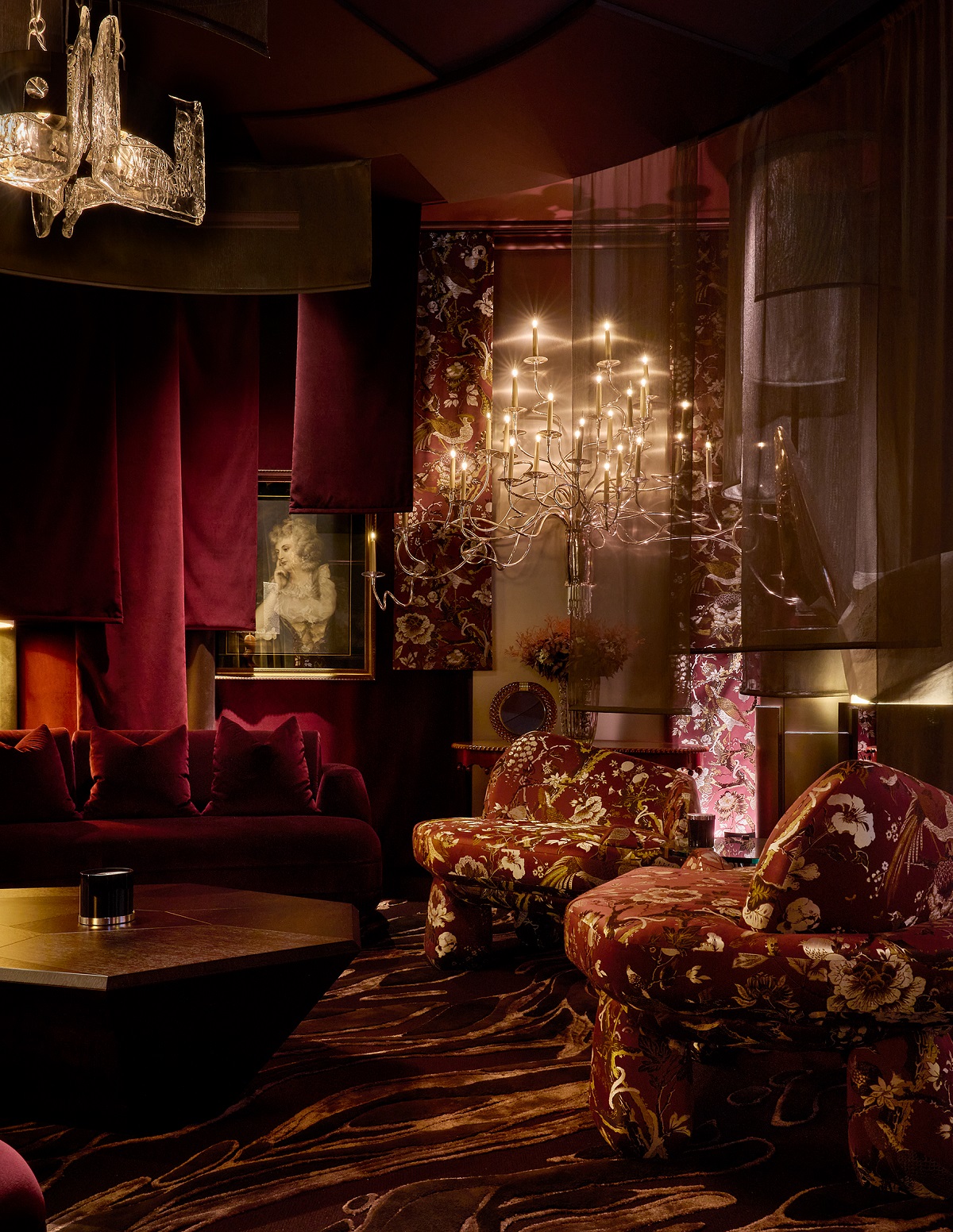
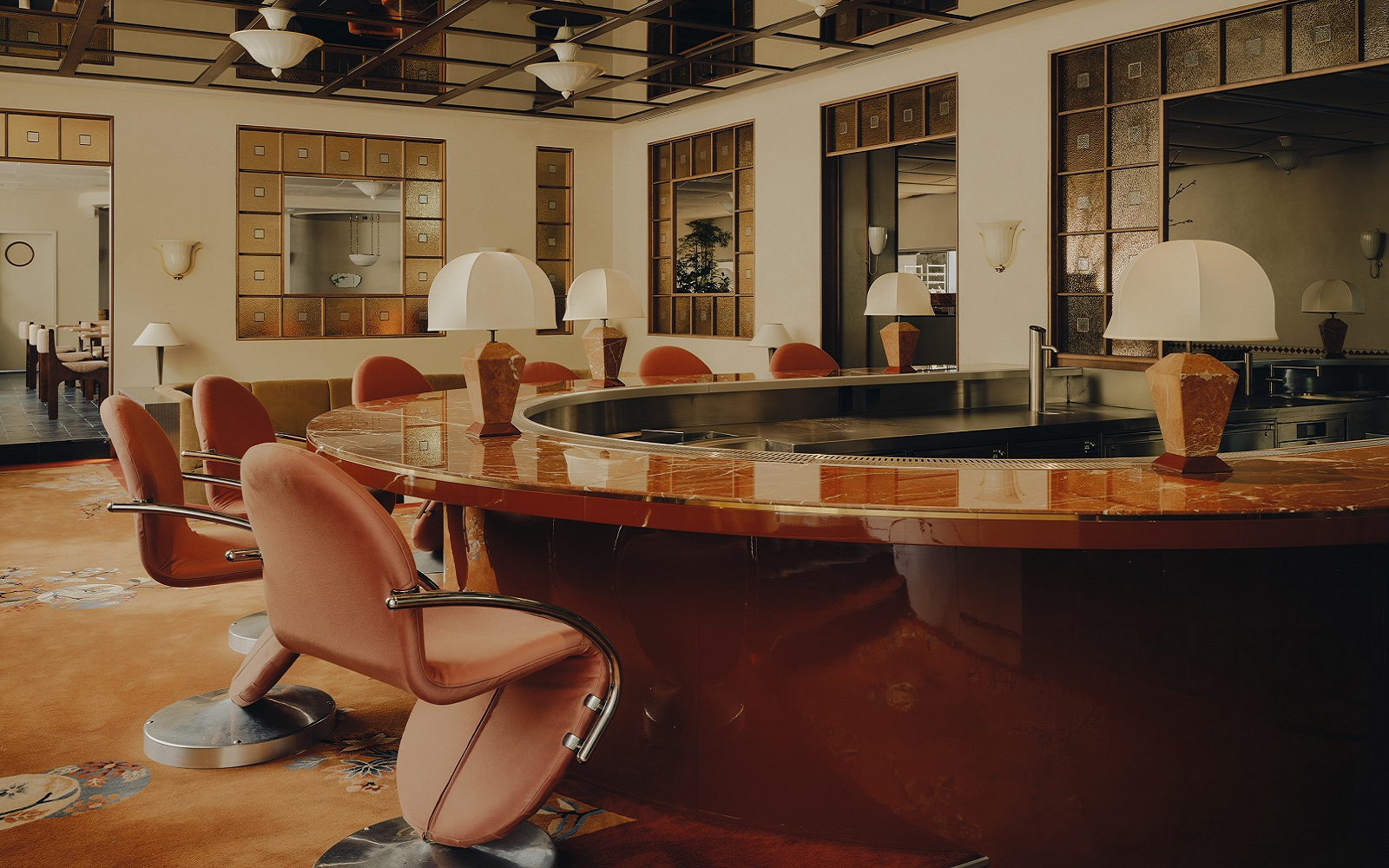
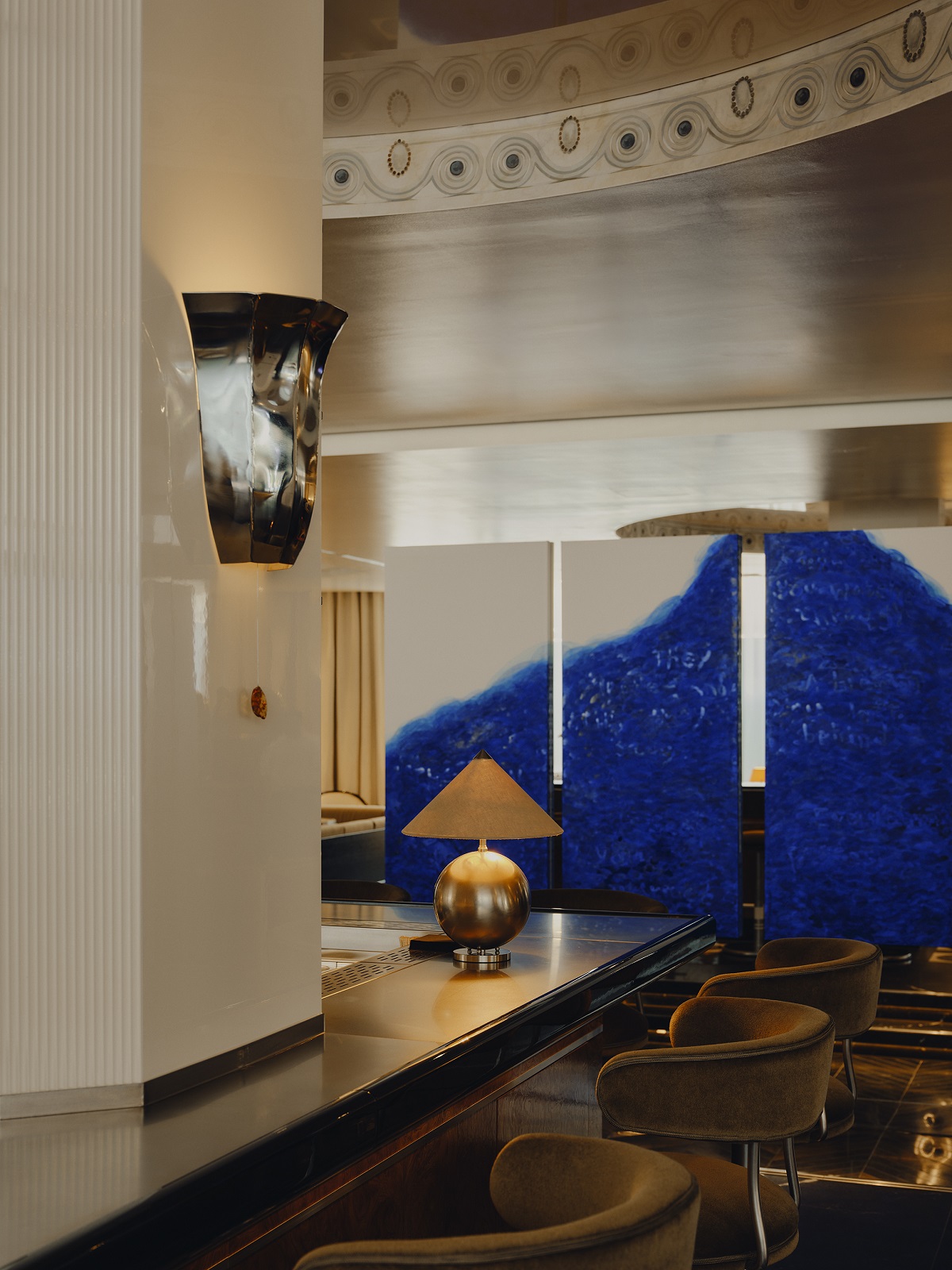
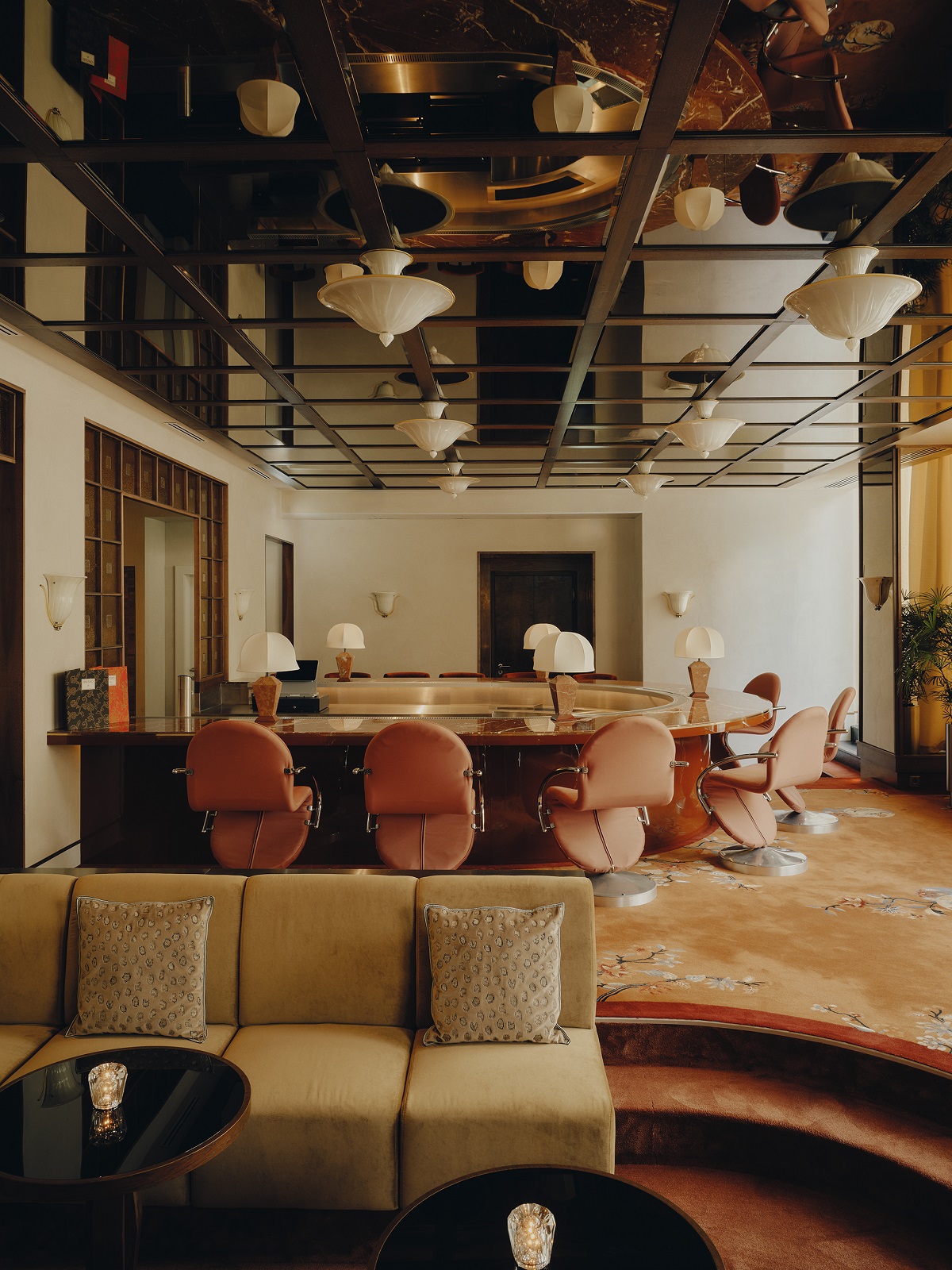
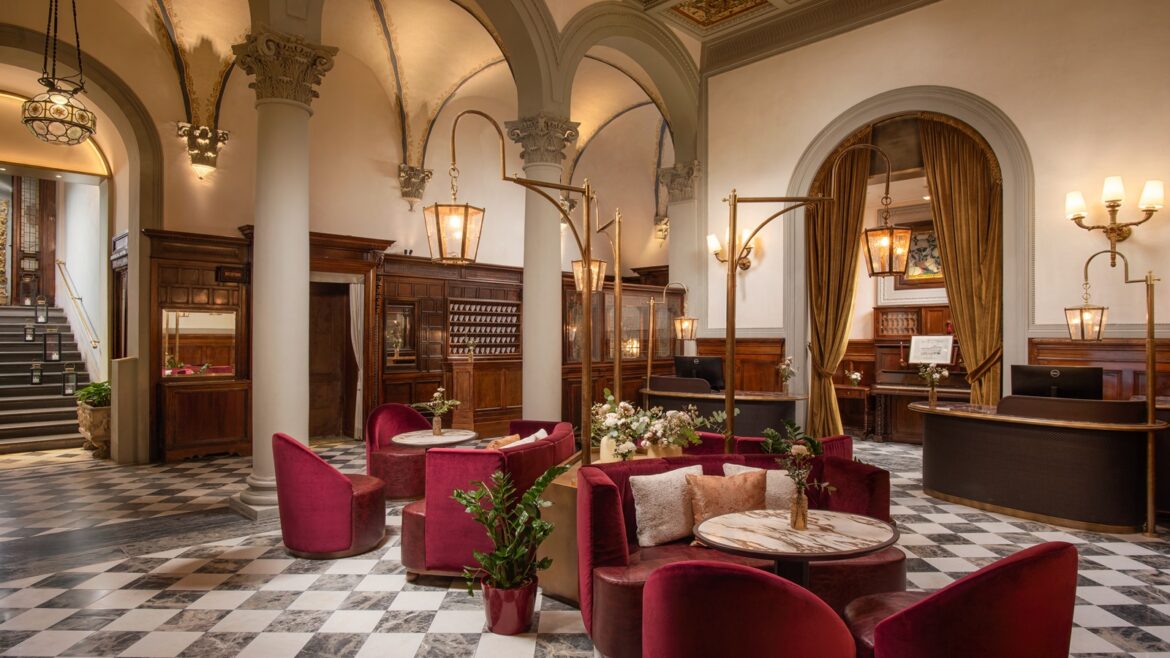
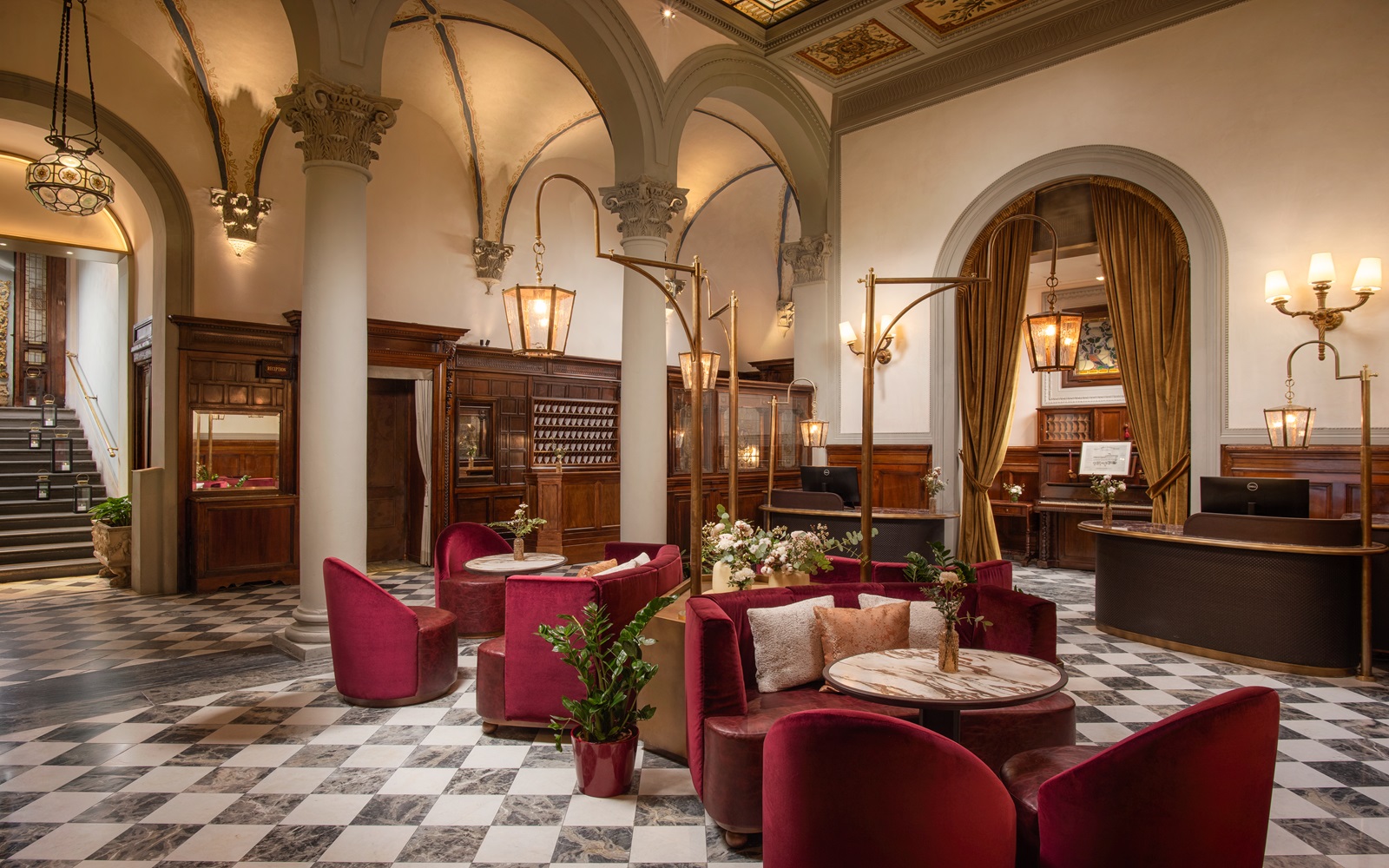
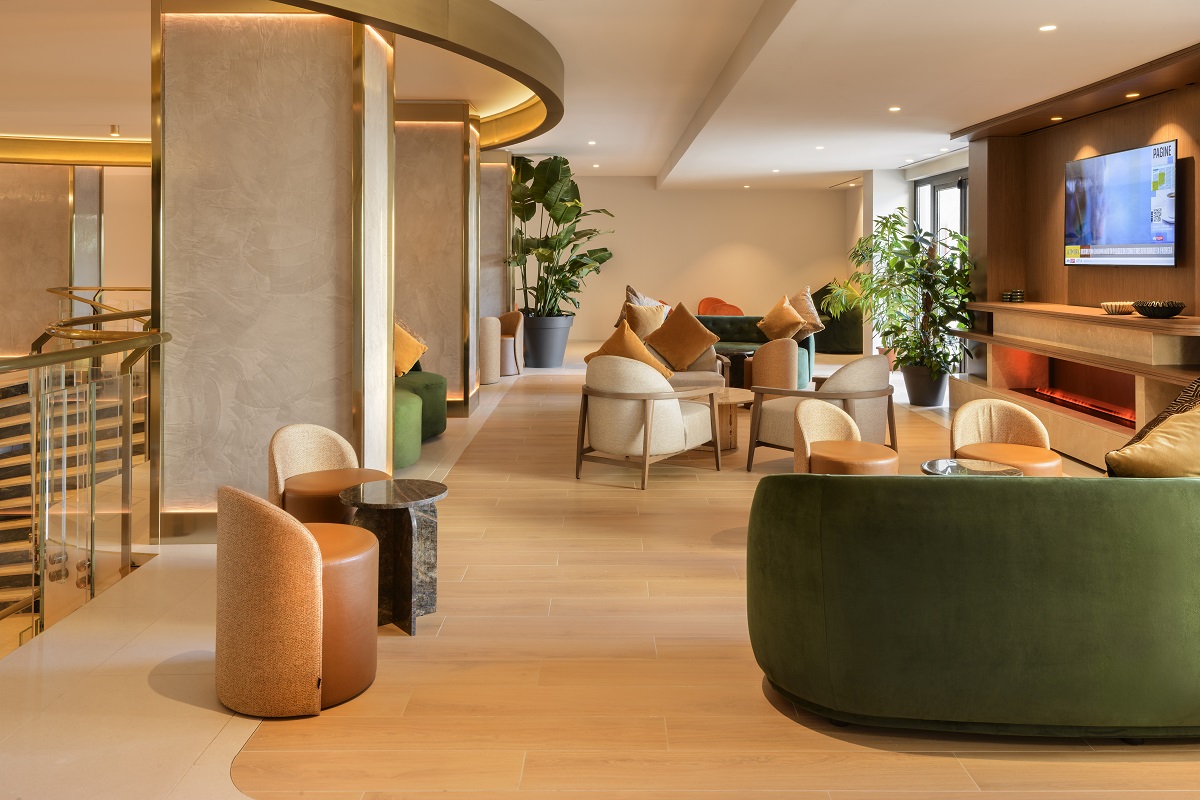
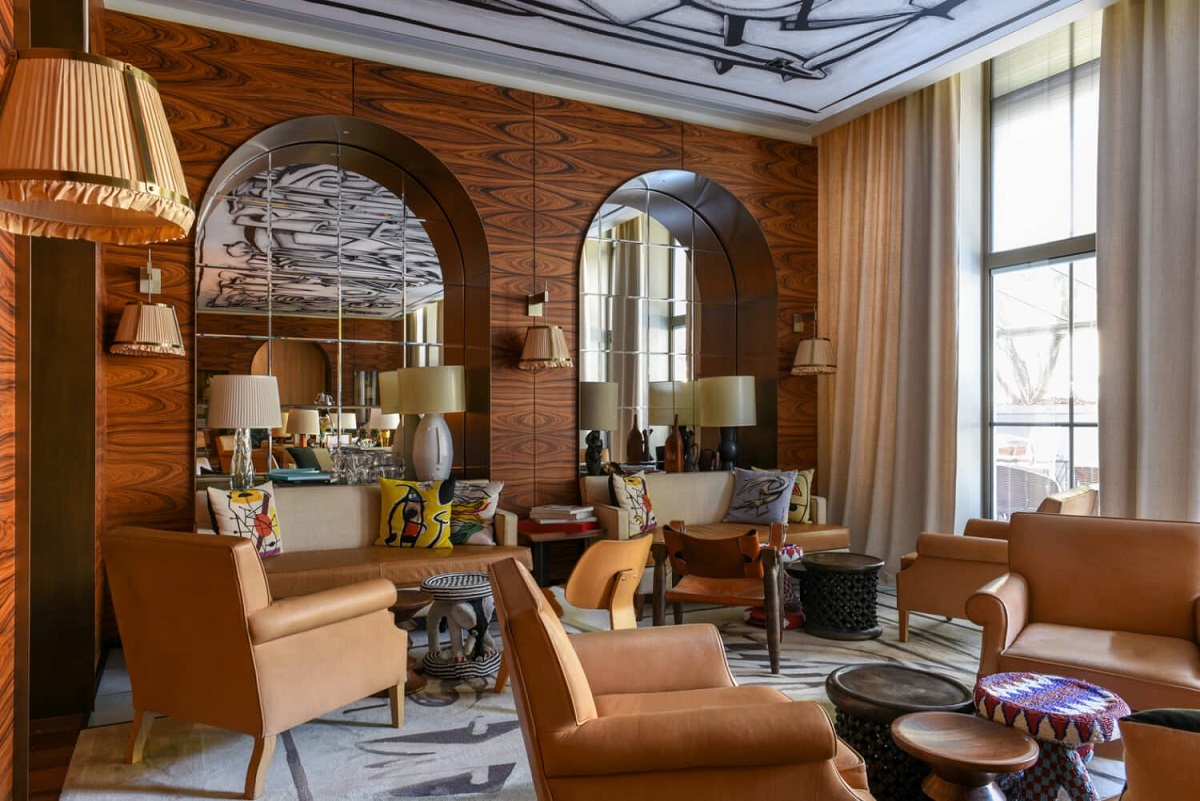
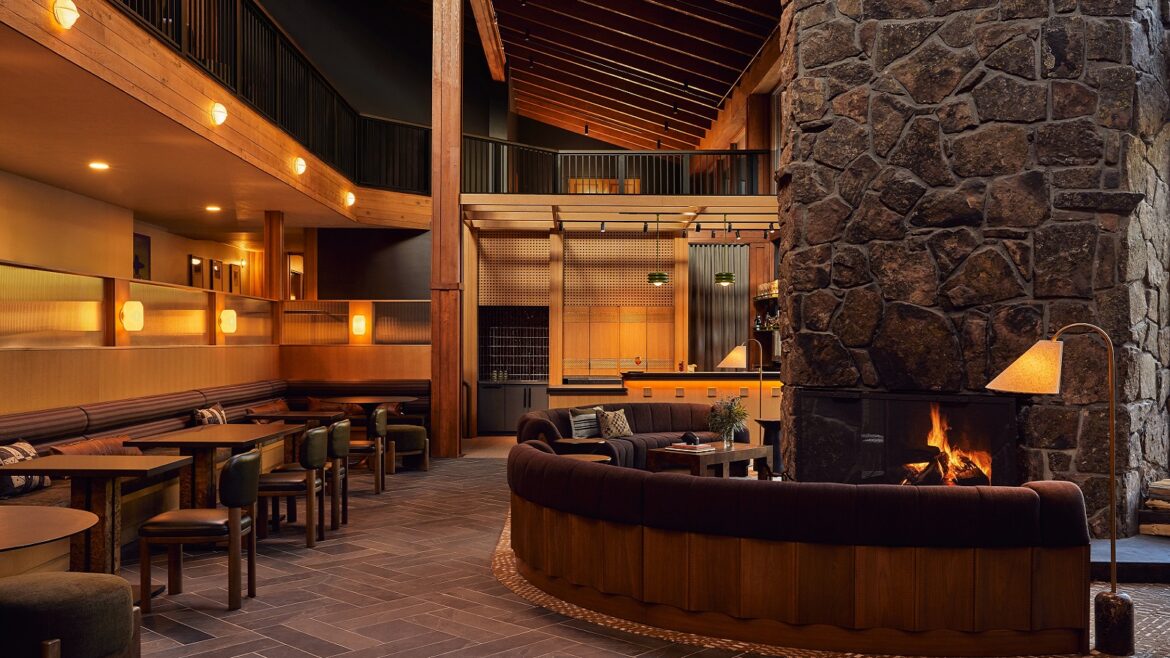
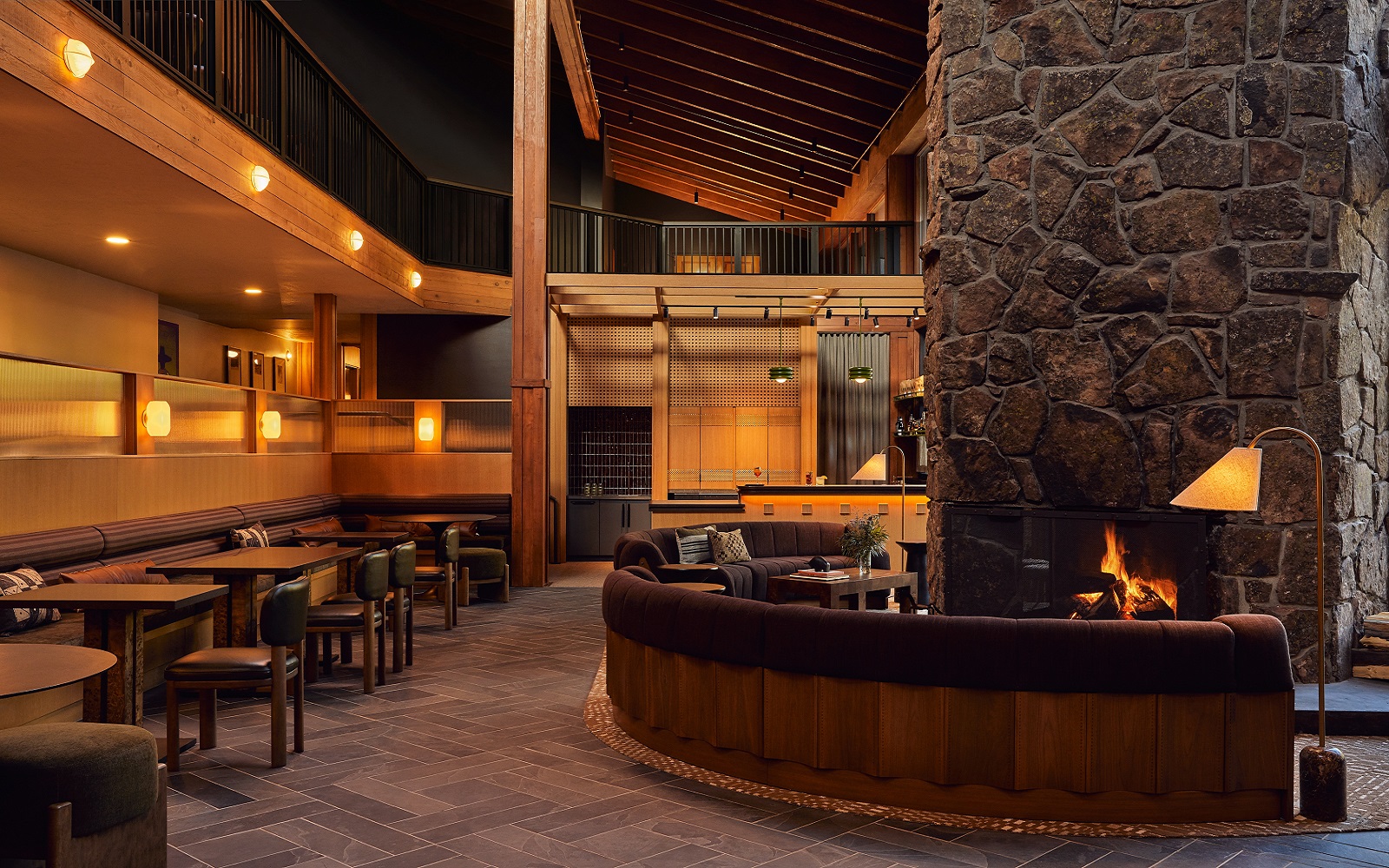
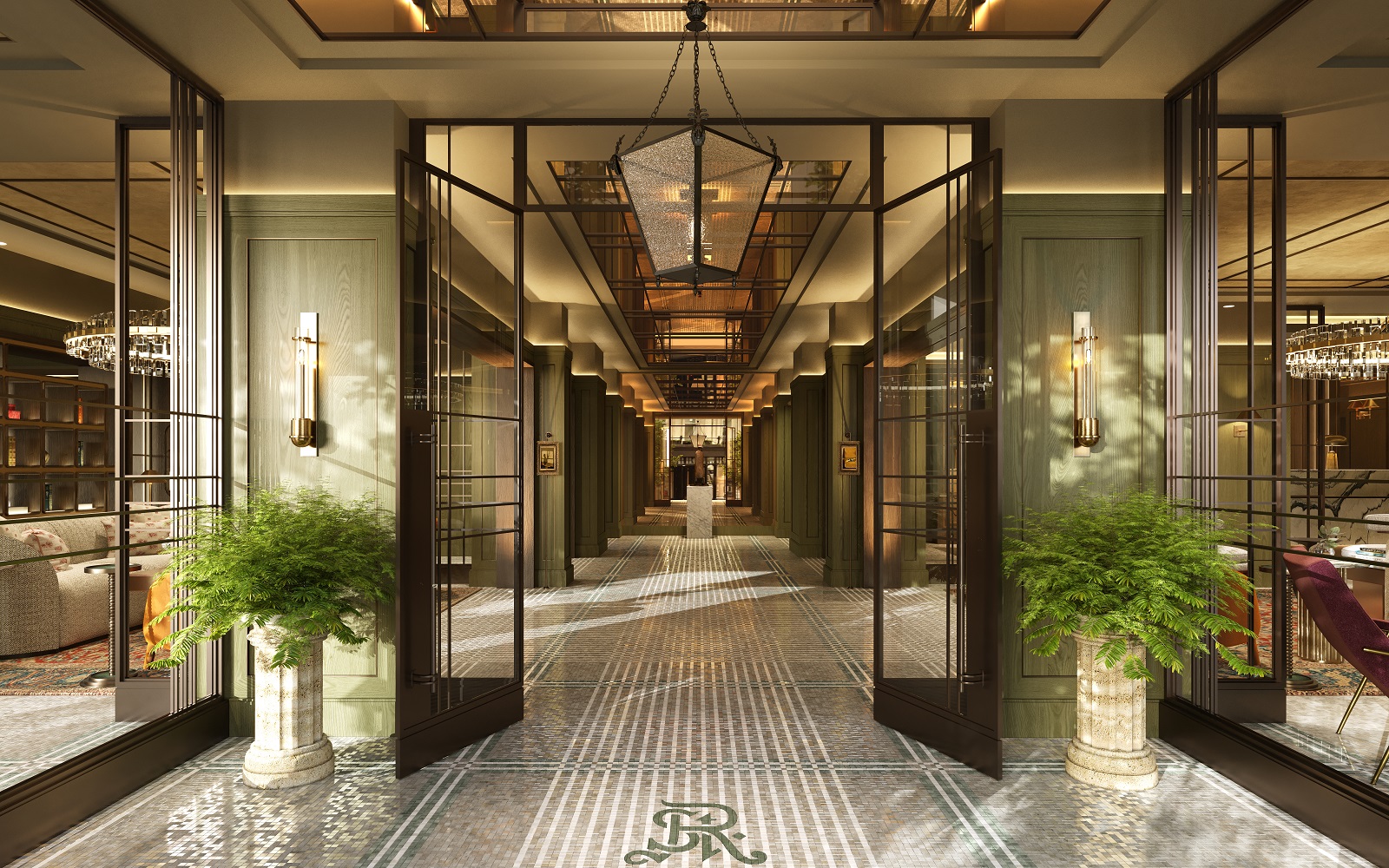
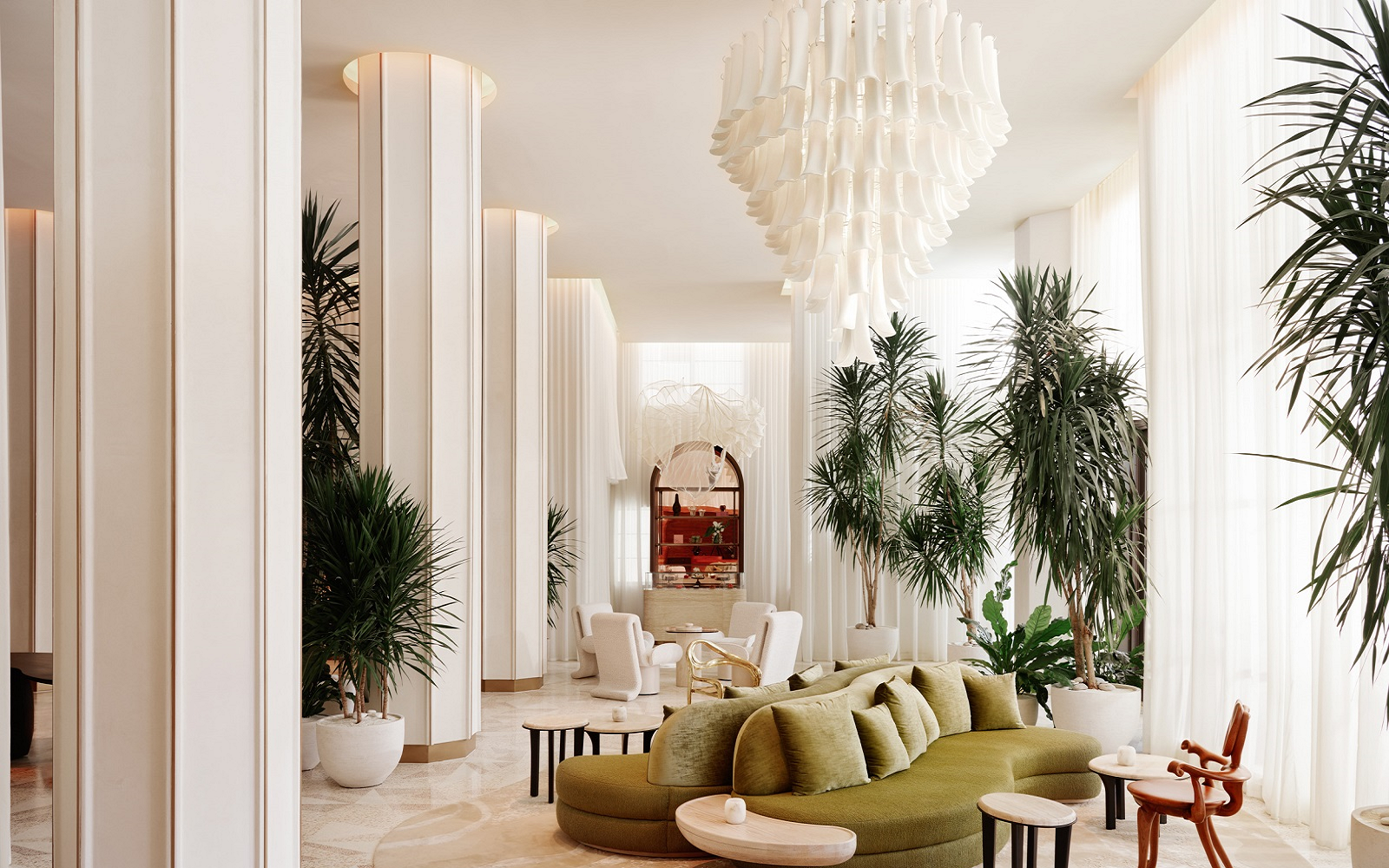
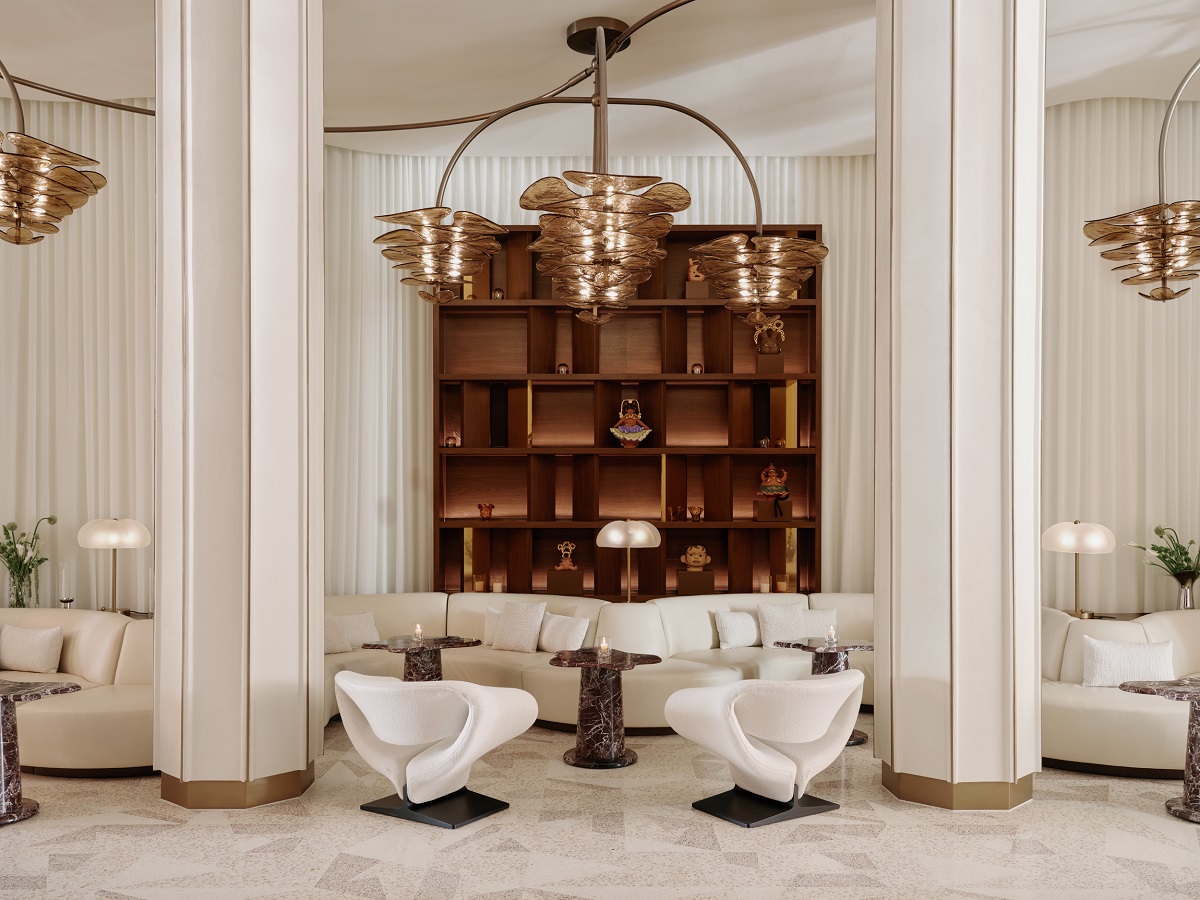
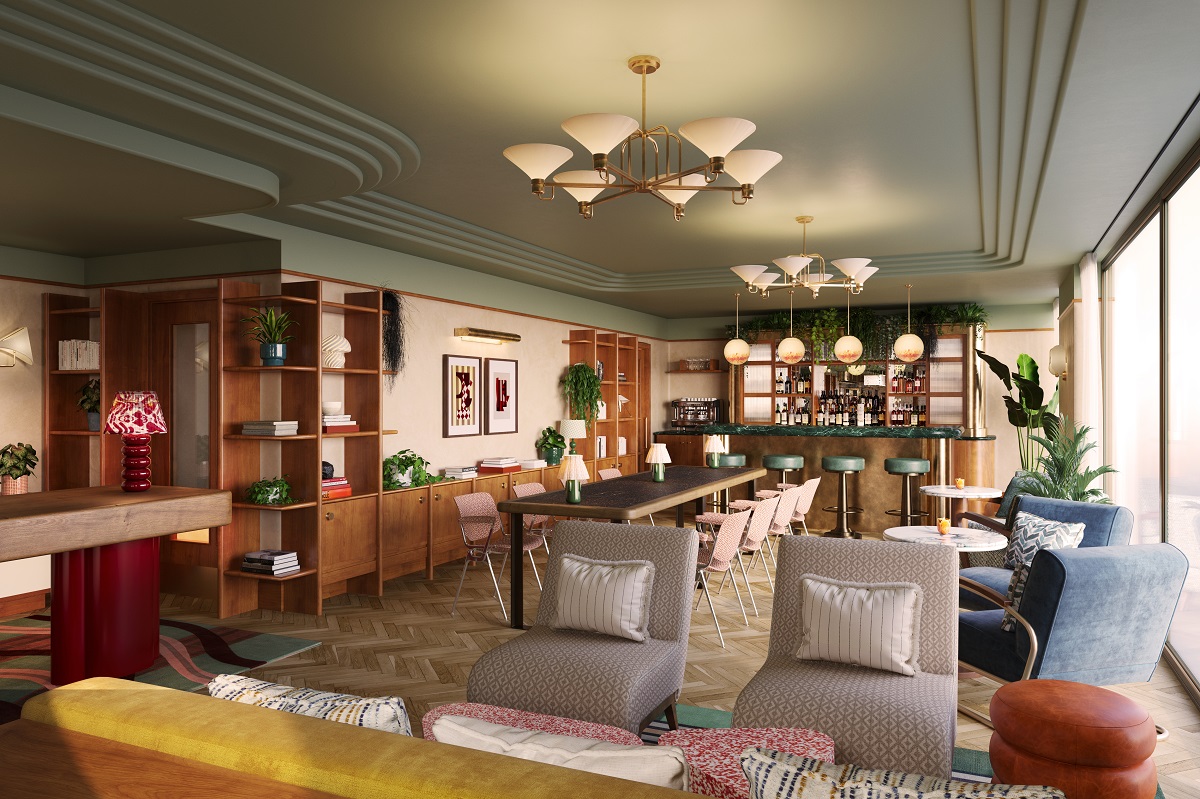
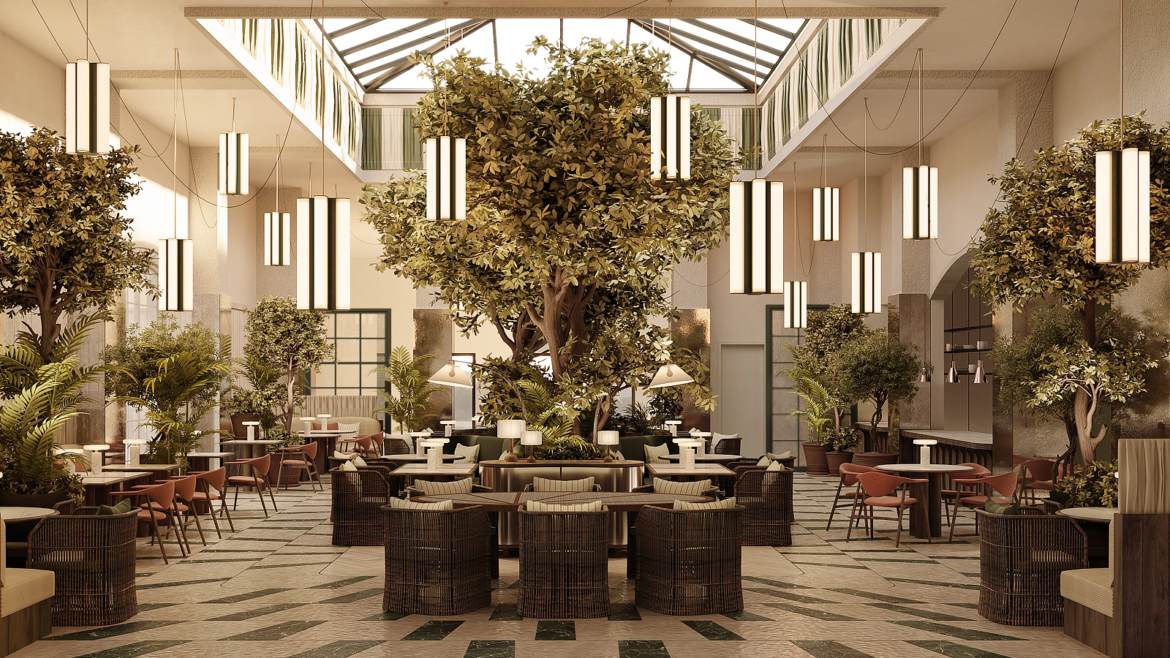
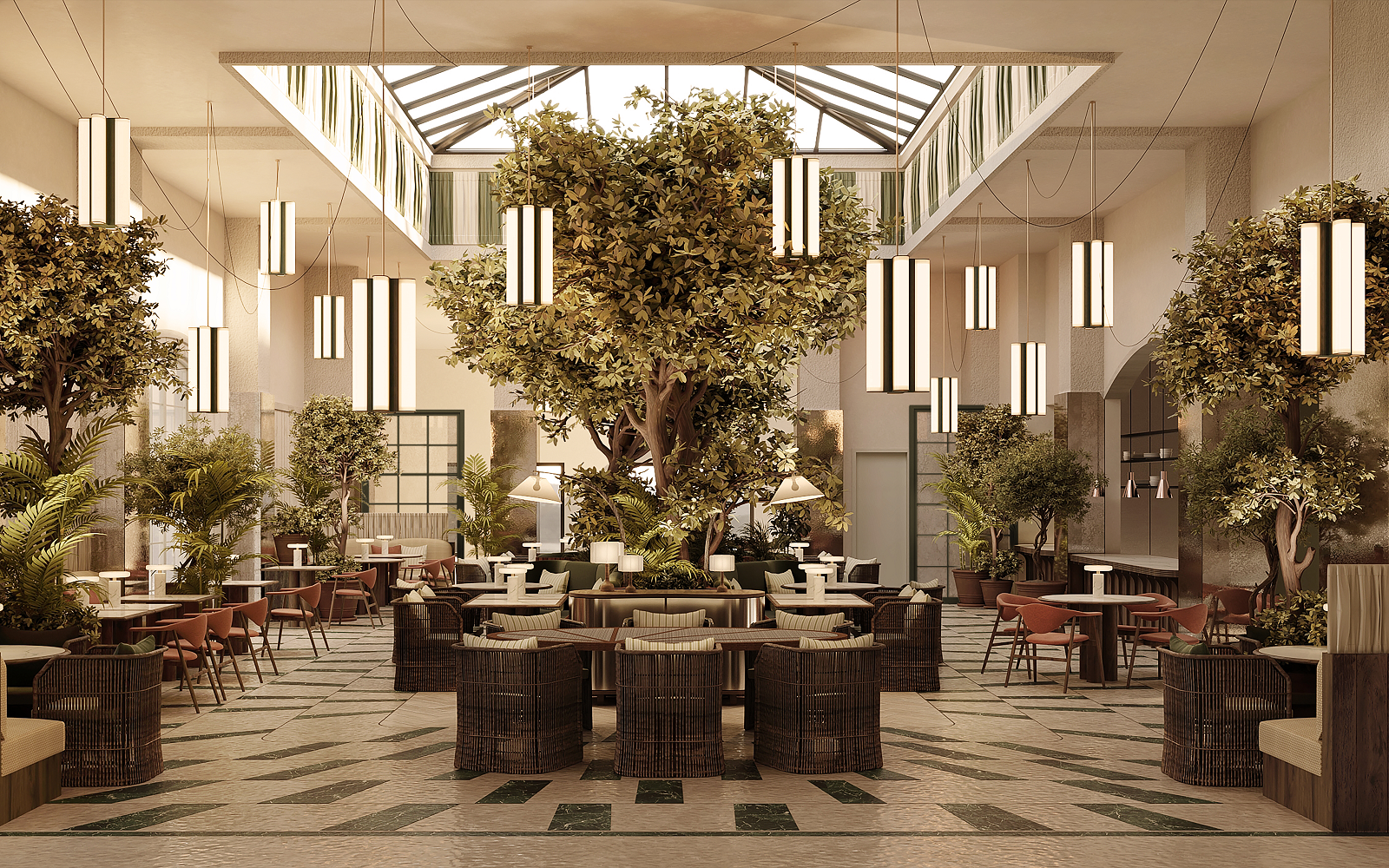
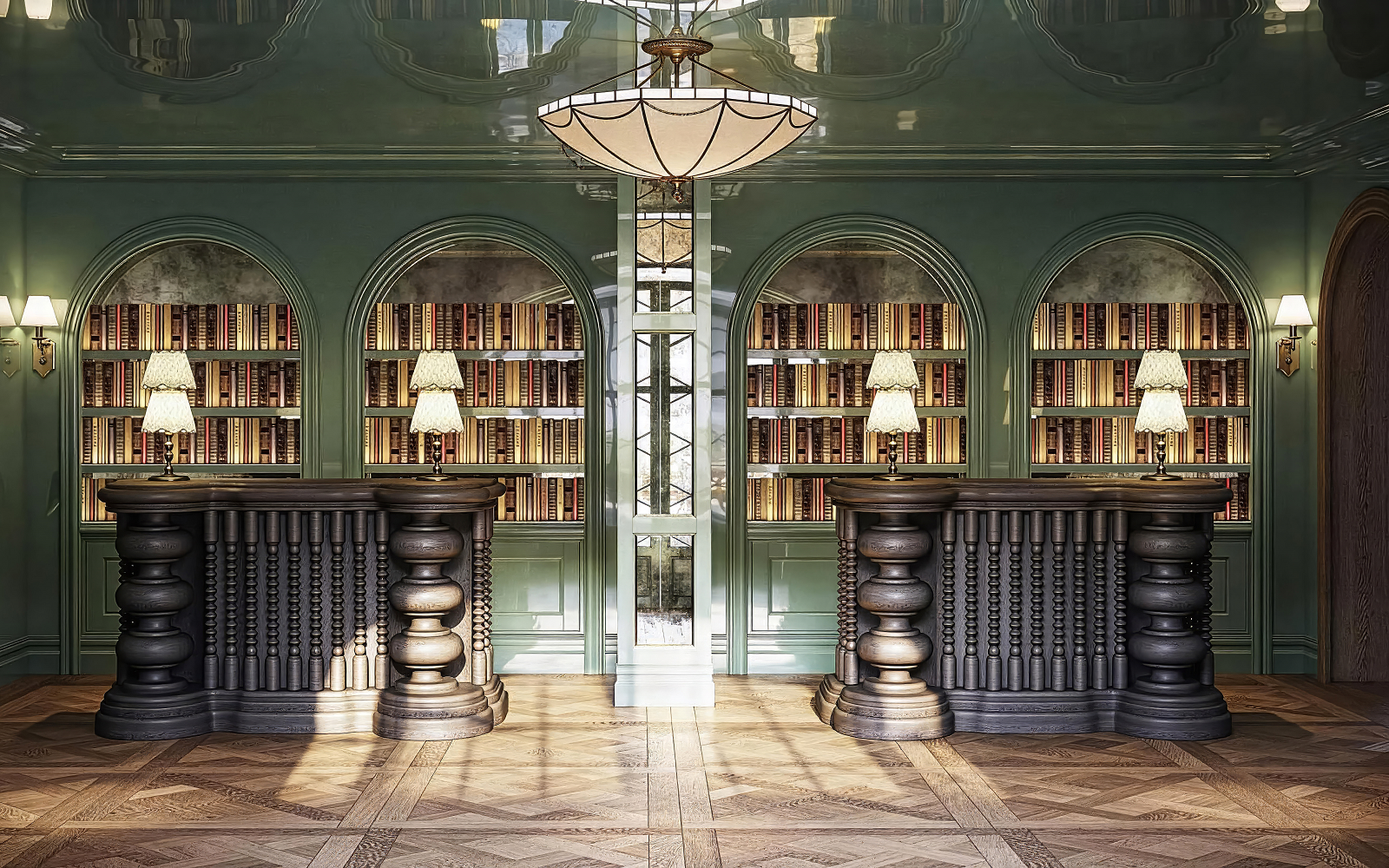
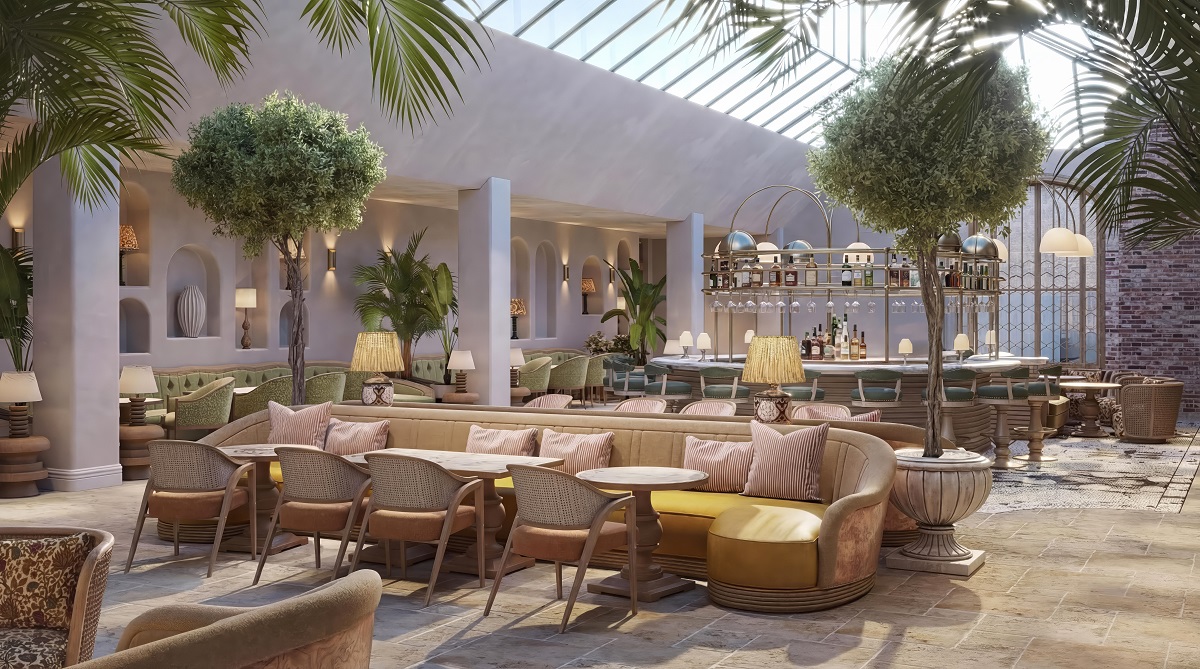
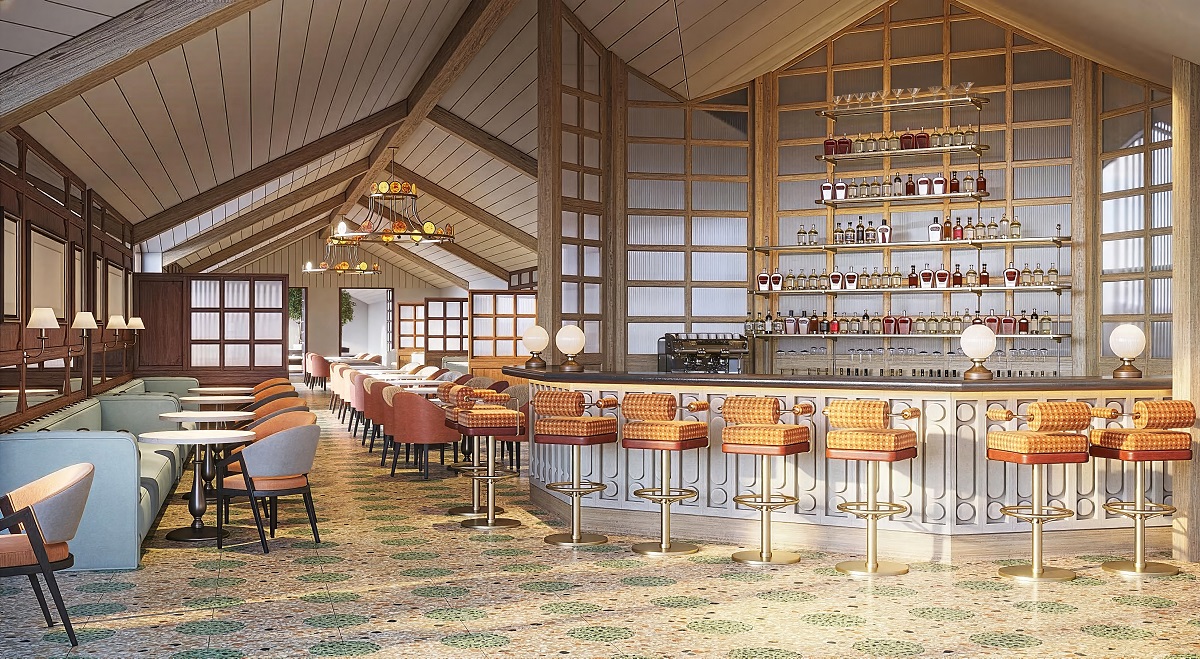
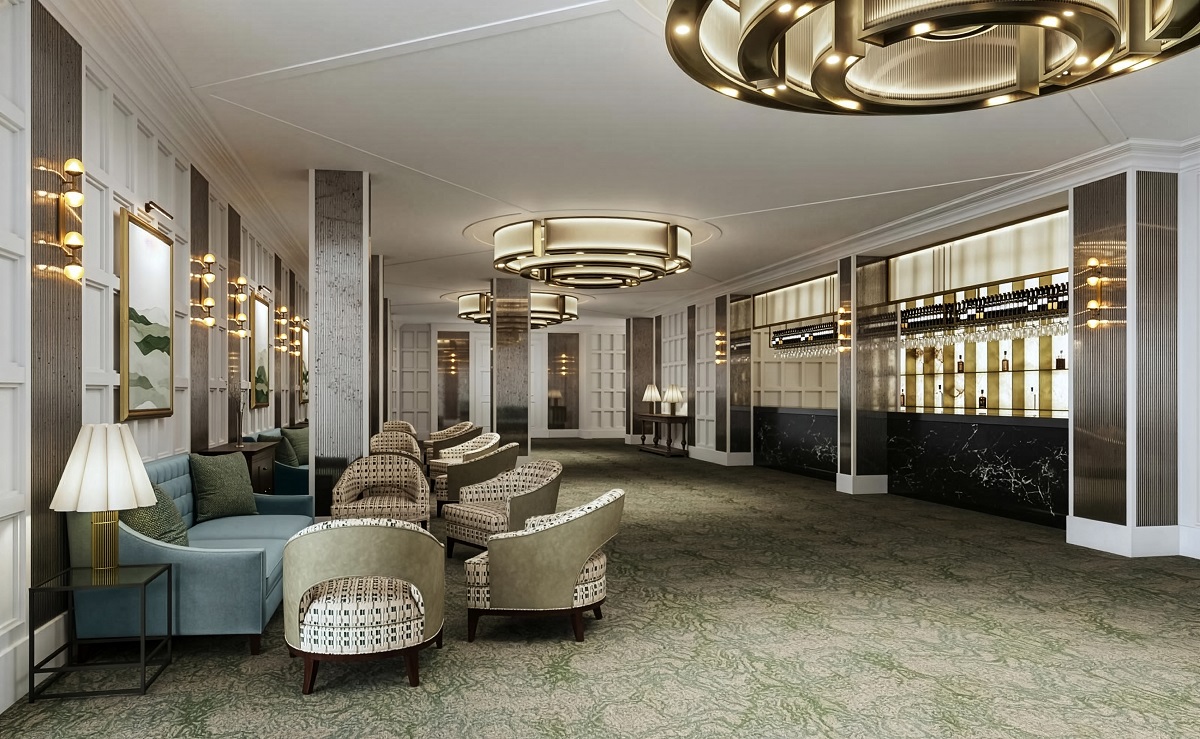
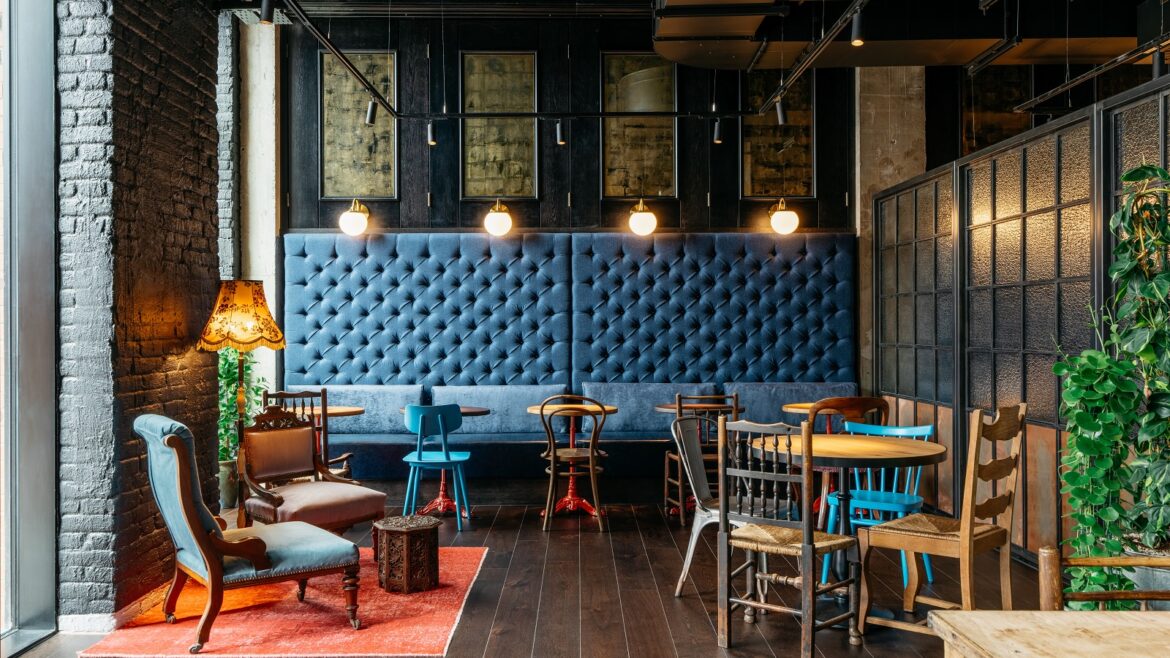
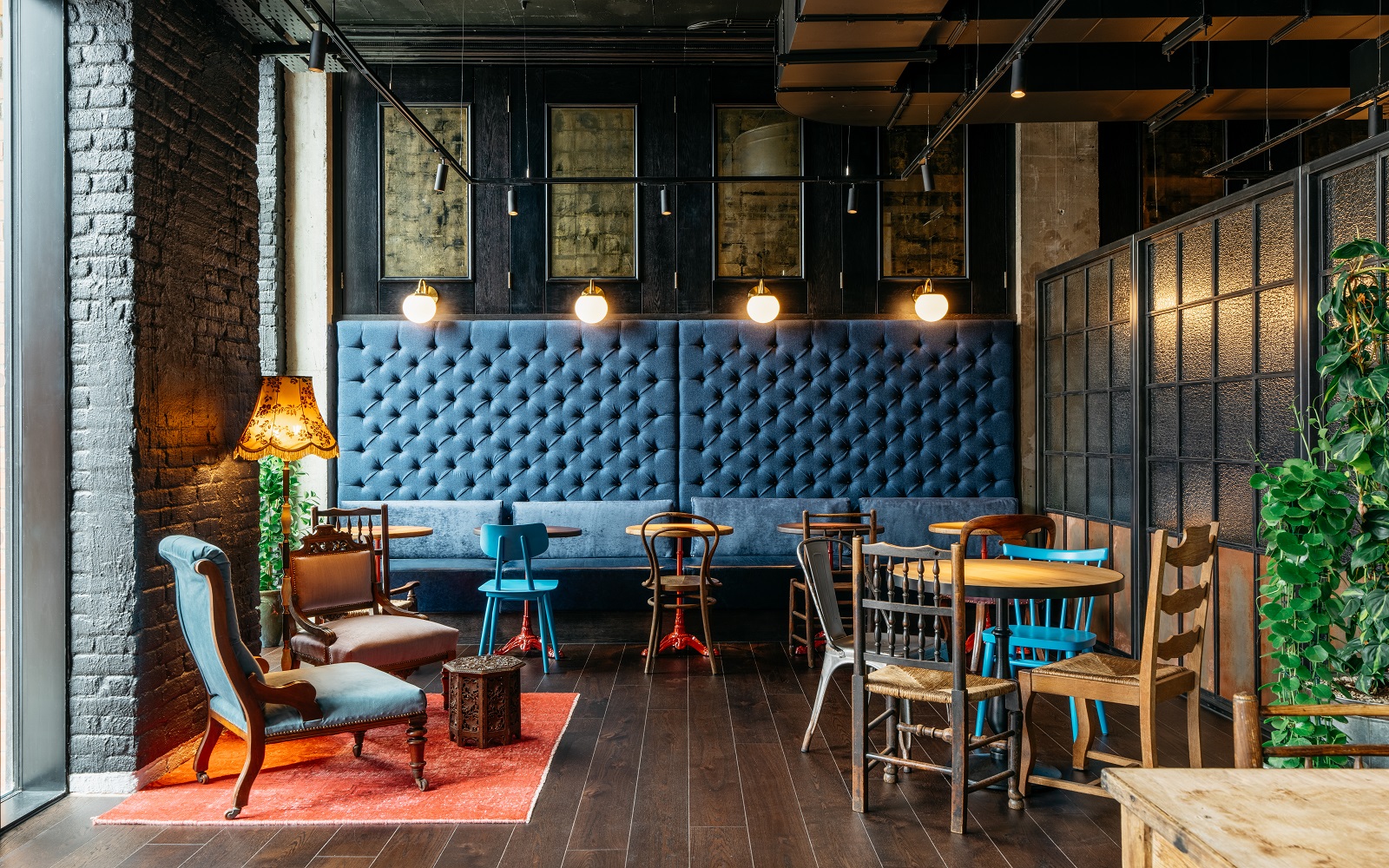
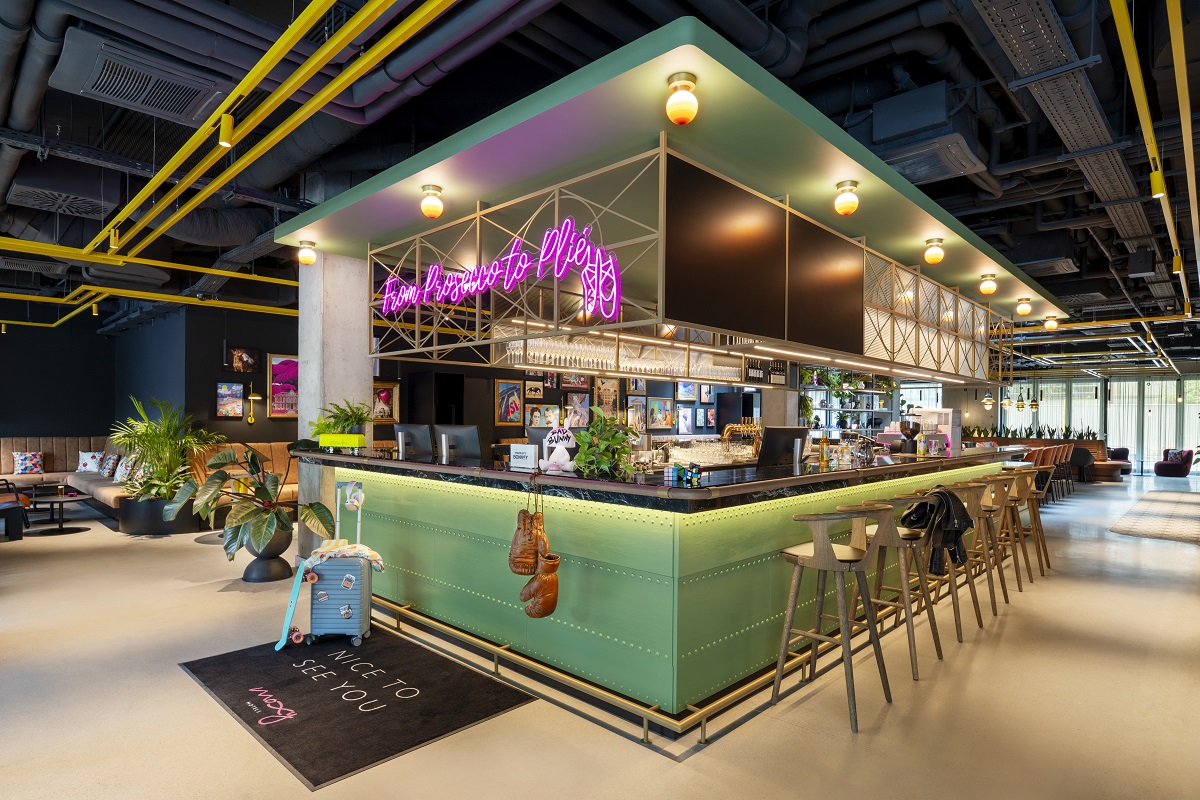
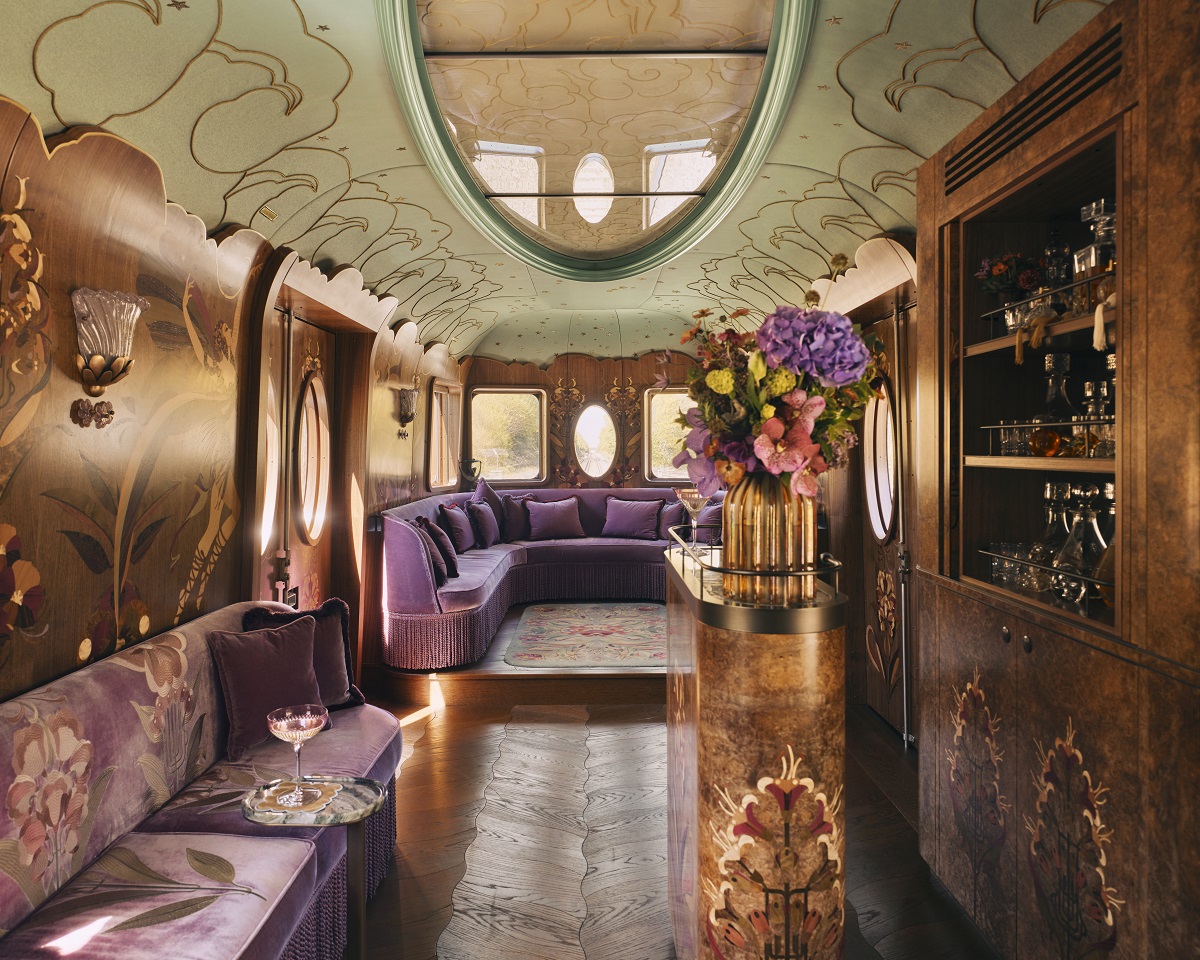
lobby bar in the Dean Muncih

The Dean Munich – at the heart of the city’s cultural rhythm

1024 640 Pauline Brettell
The Dean Munich – at the heart of the city’s cultural rhythm

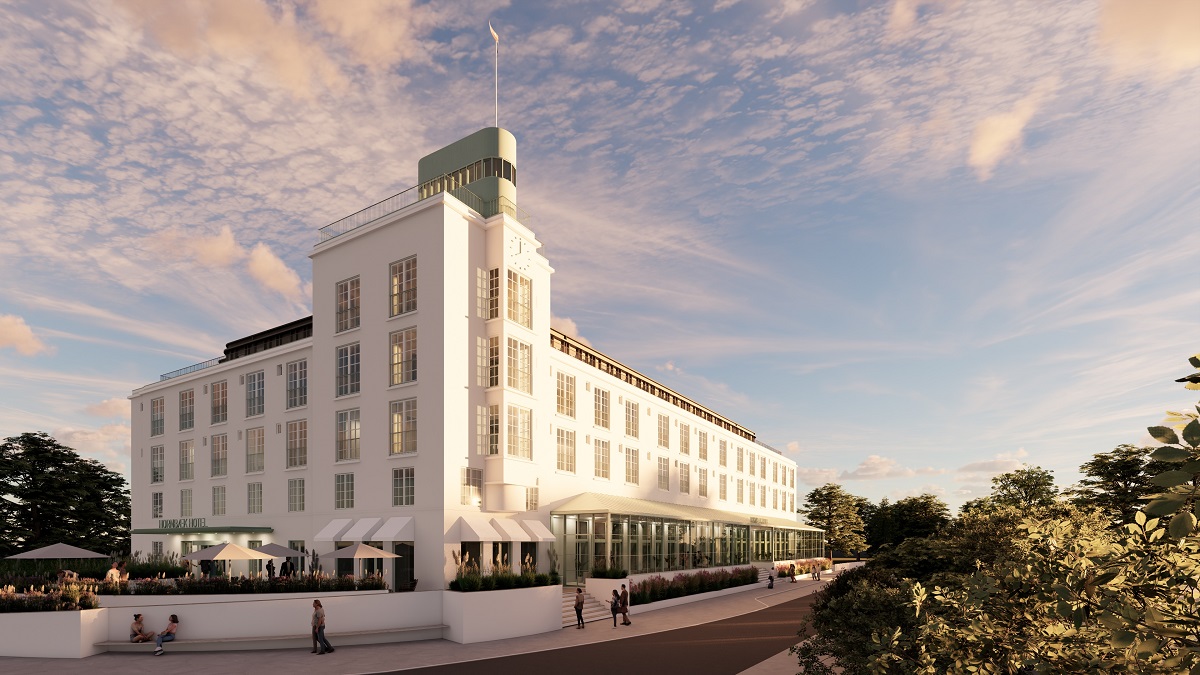
The Irish-born lifestyle hotel brand The Dean, has opened The Dean Munich – the 281-room hotel marks the brand’s largest property to date and its second opening in Germany, following The Dean Berlin earlier this year…

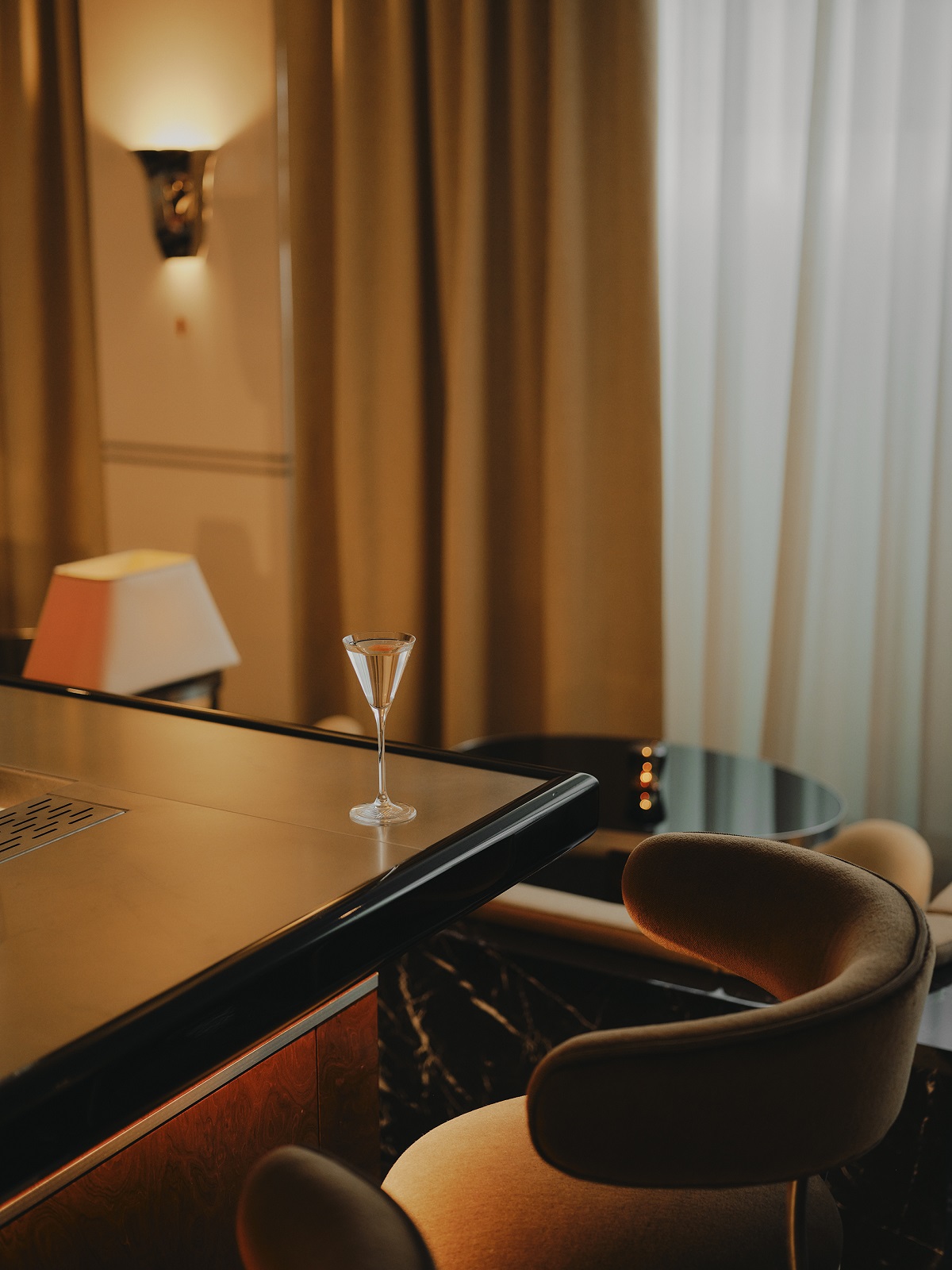
lobby bar in the Dean Muncih

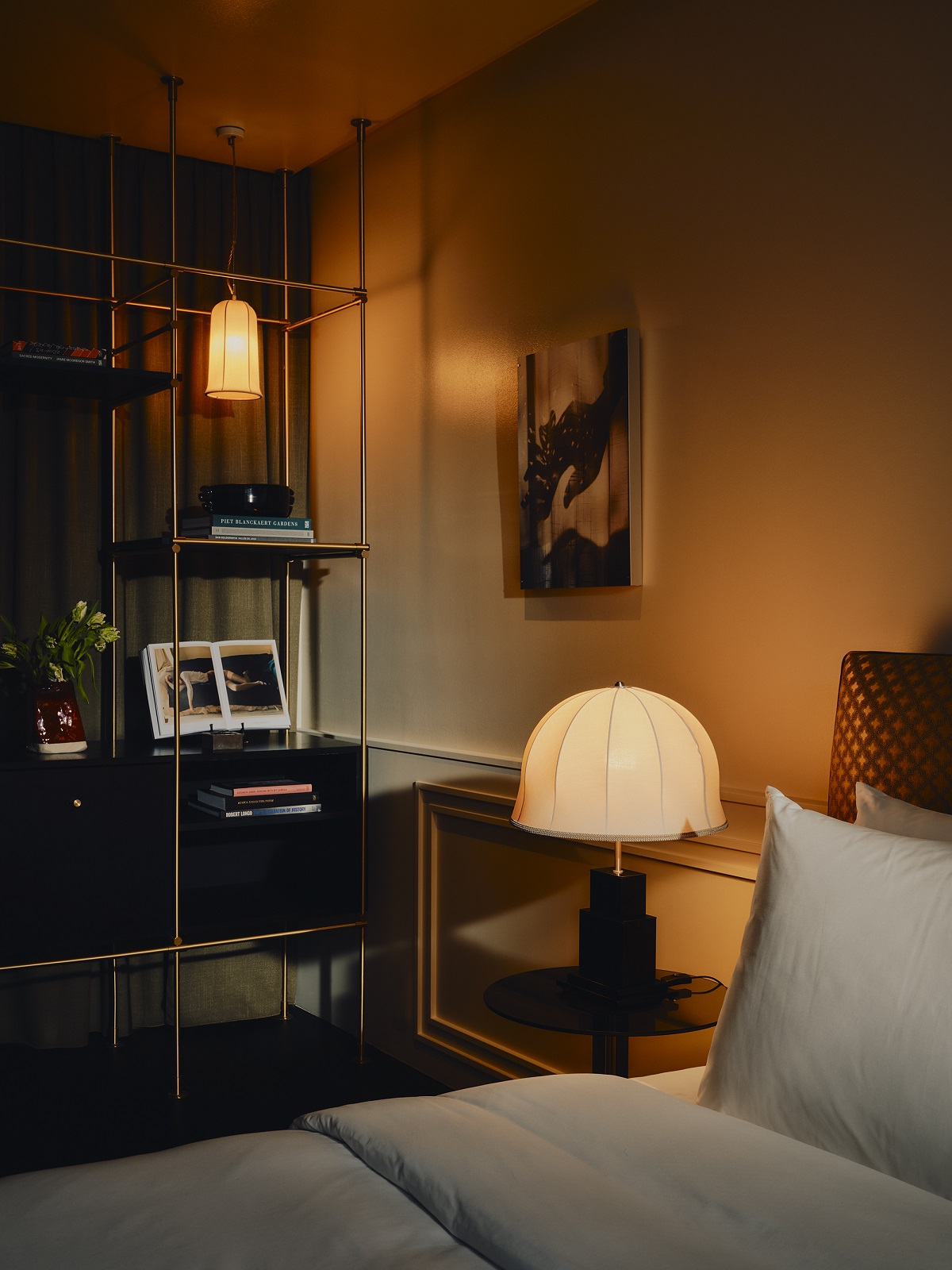
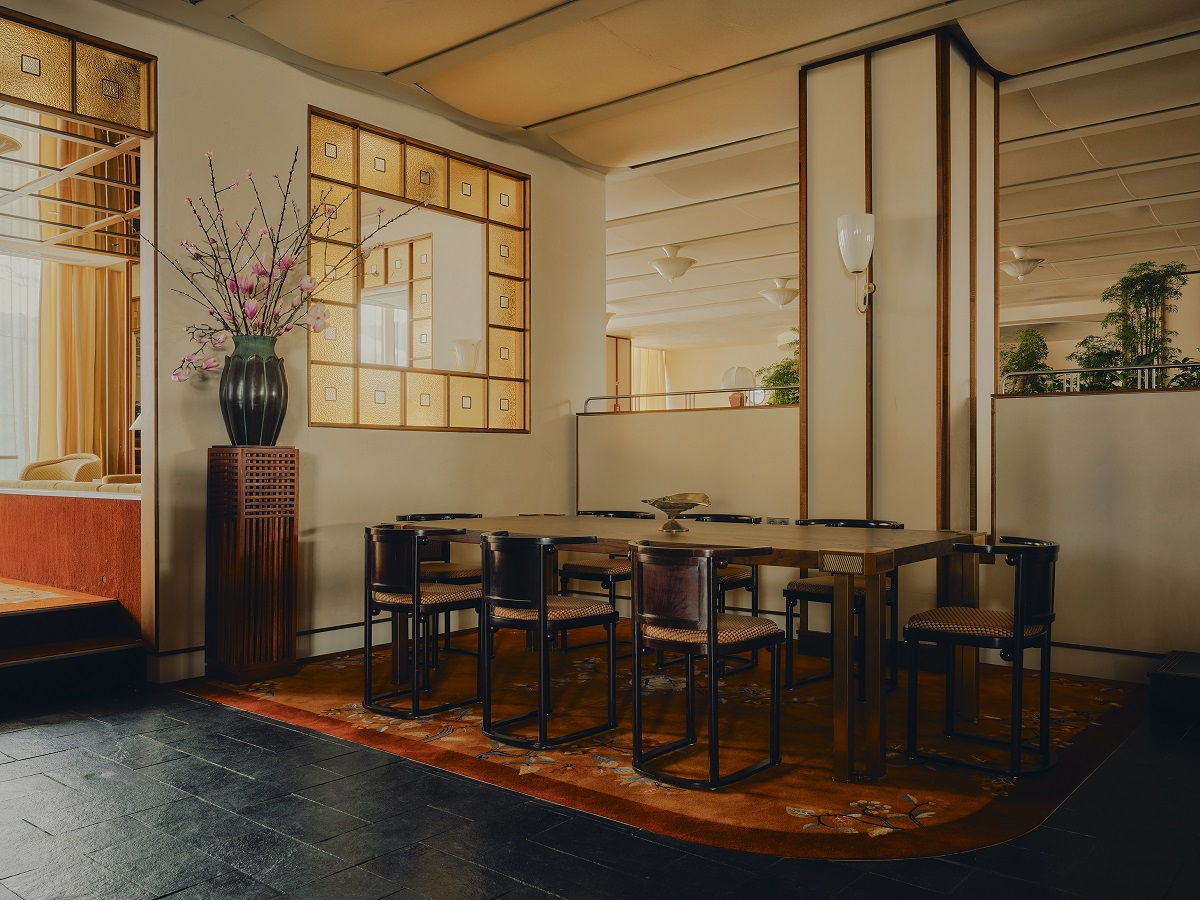
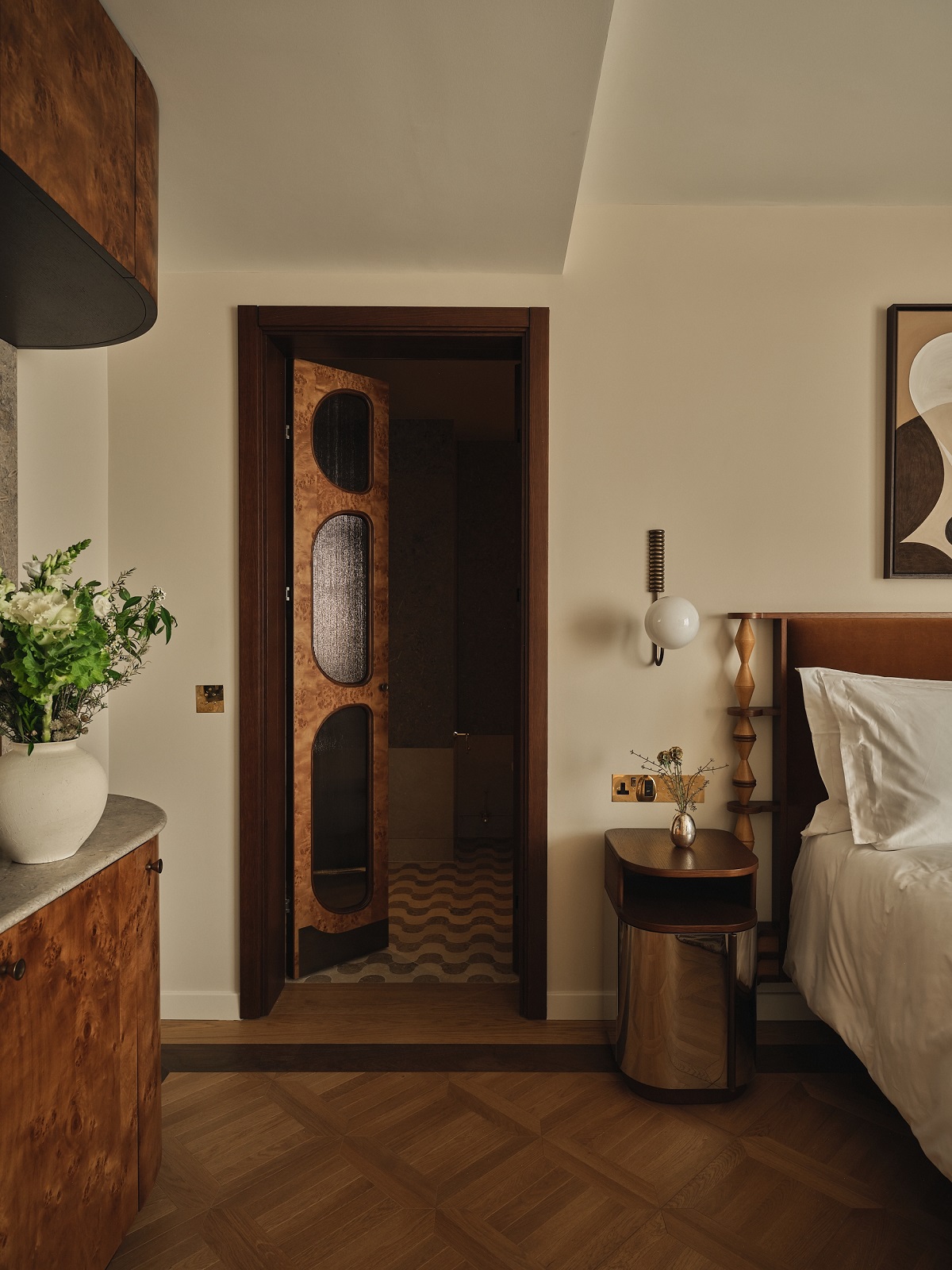
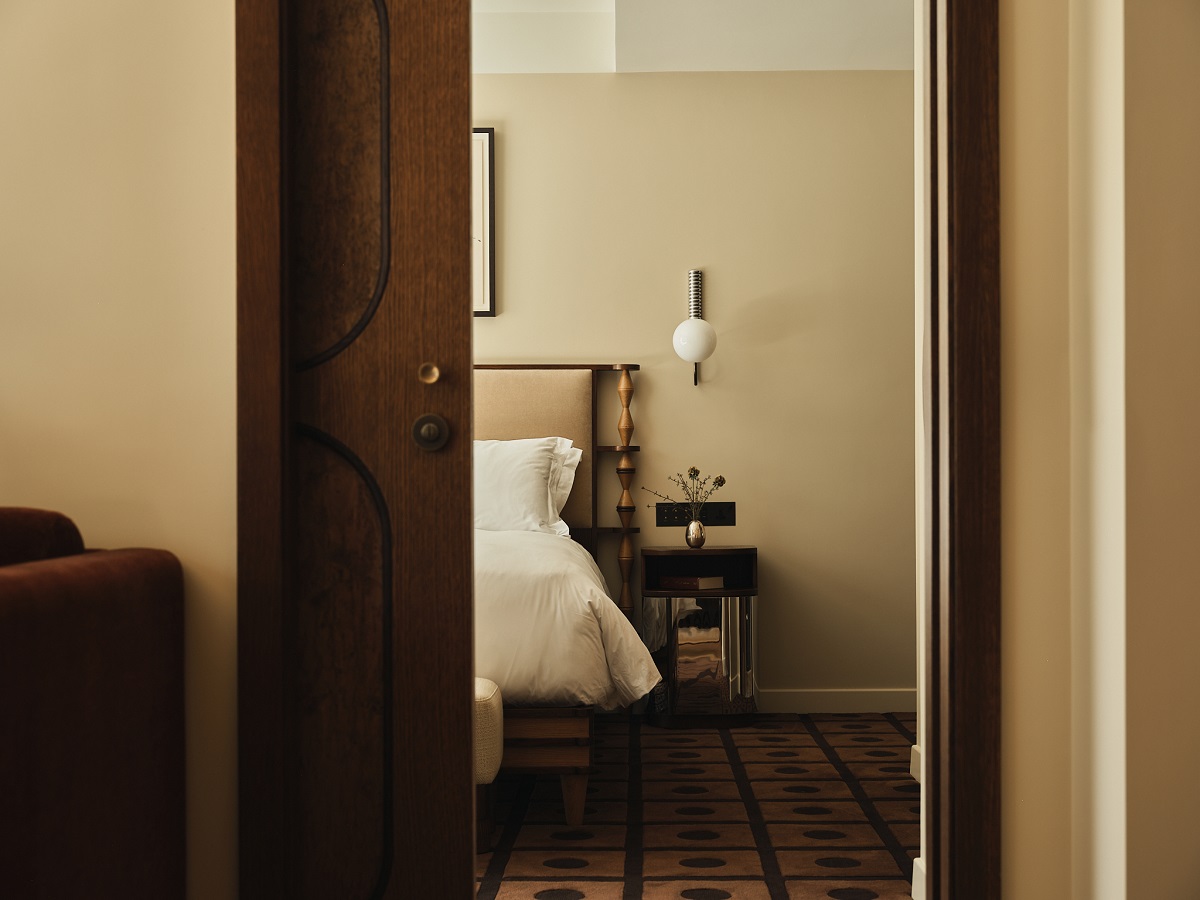
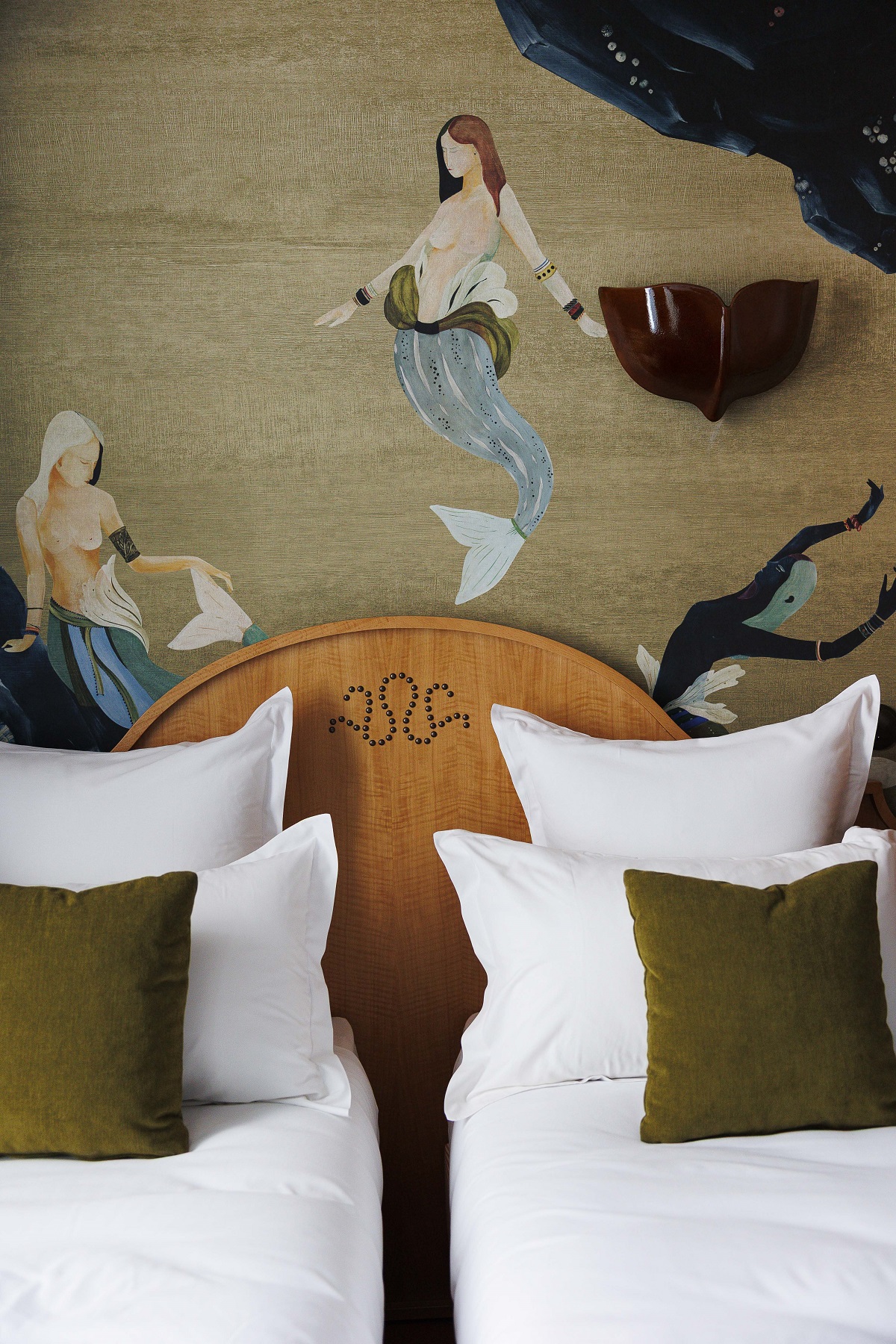
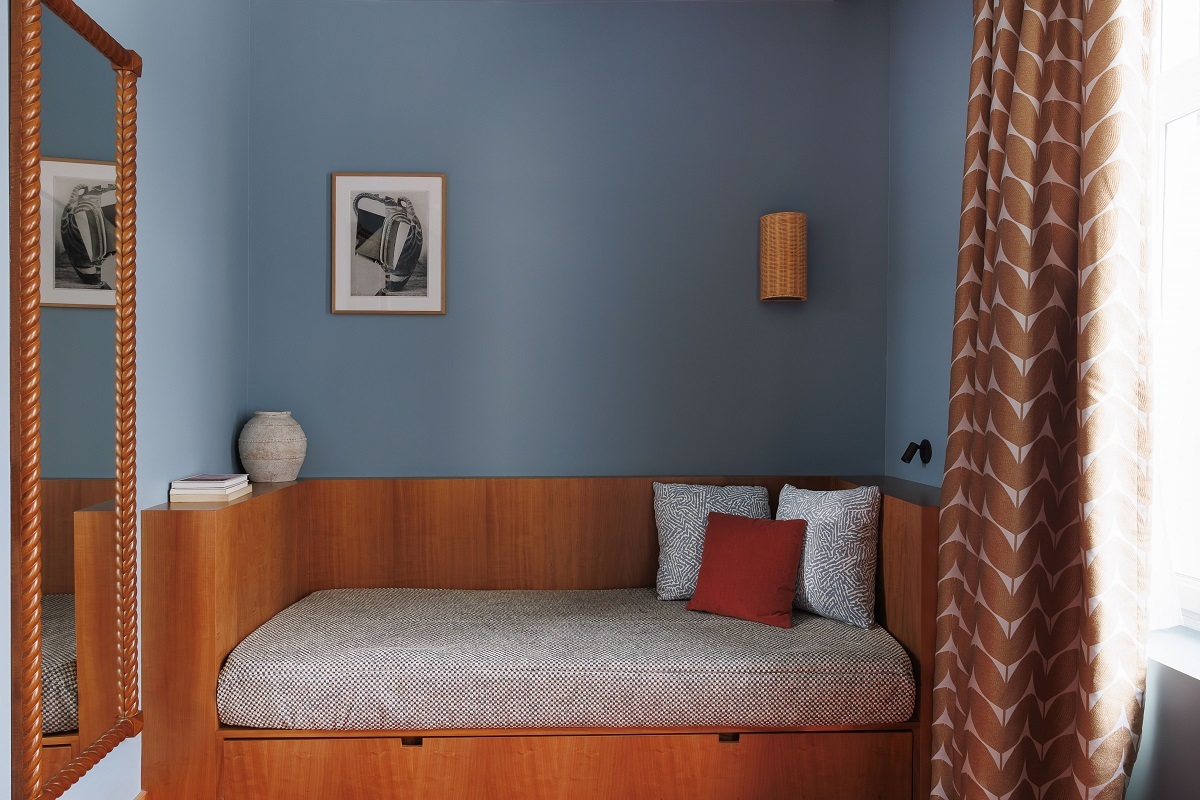
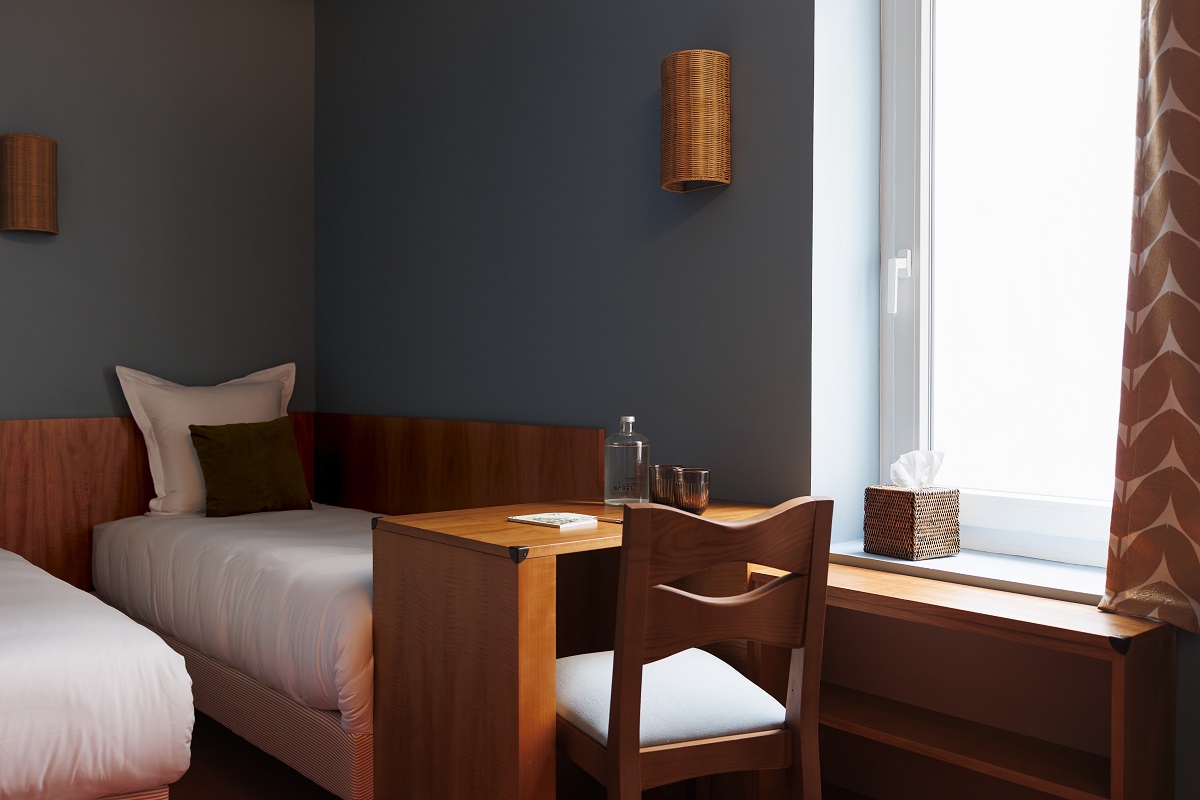
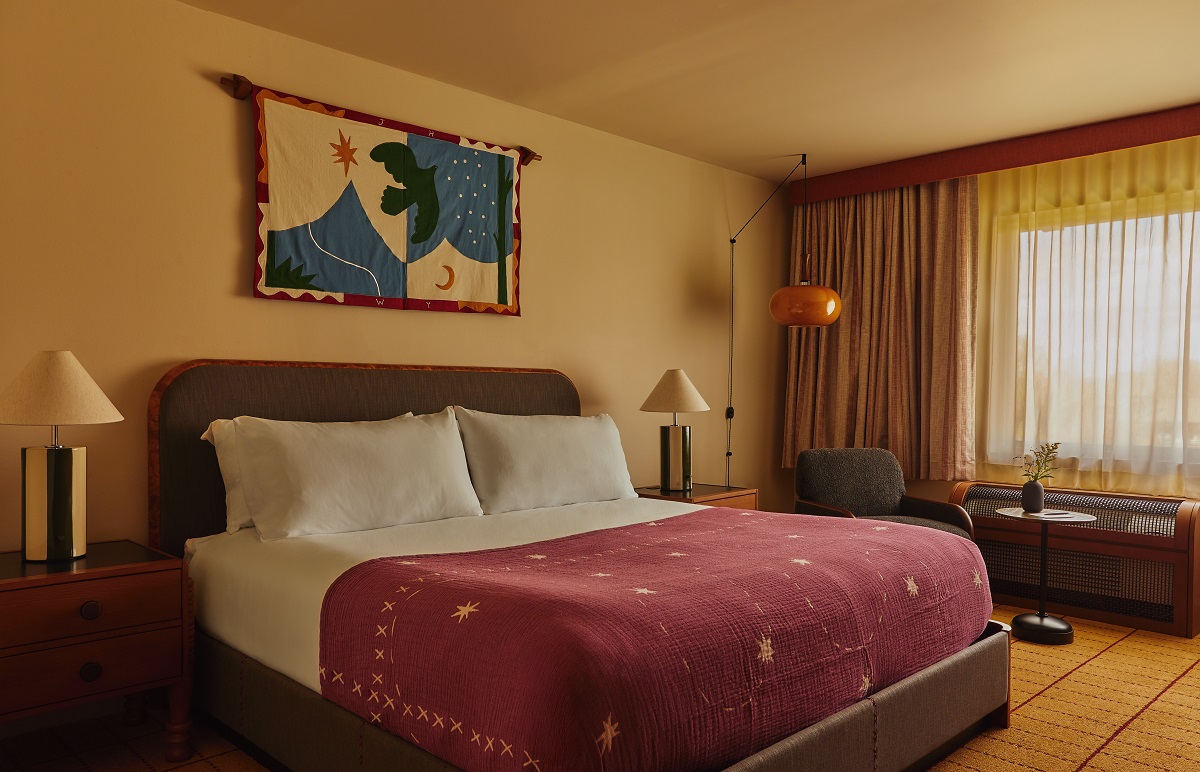
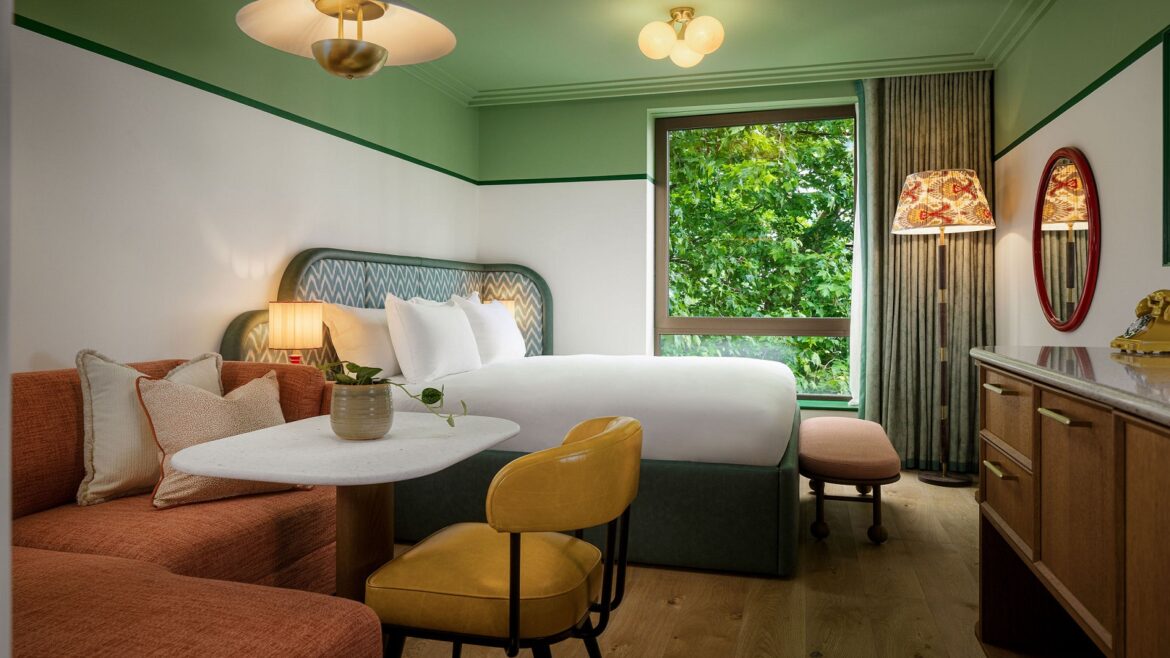
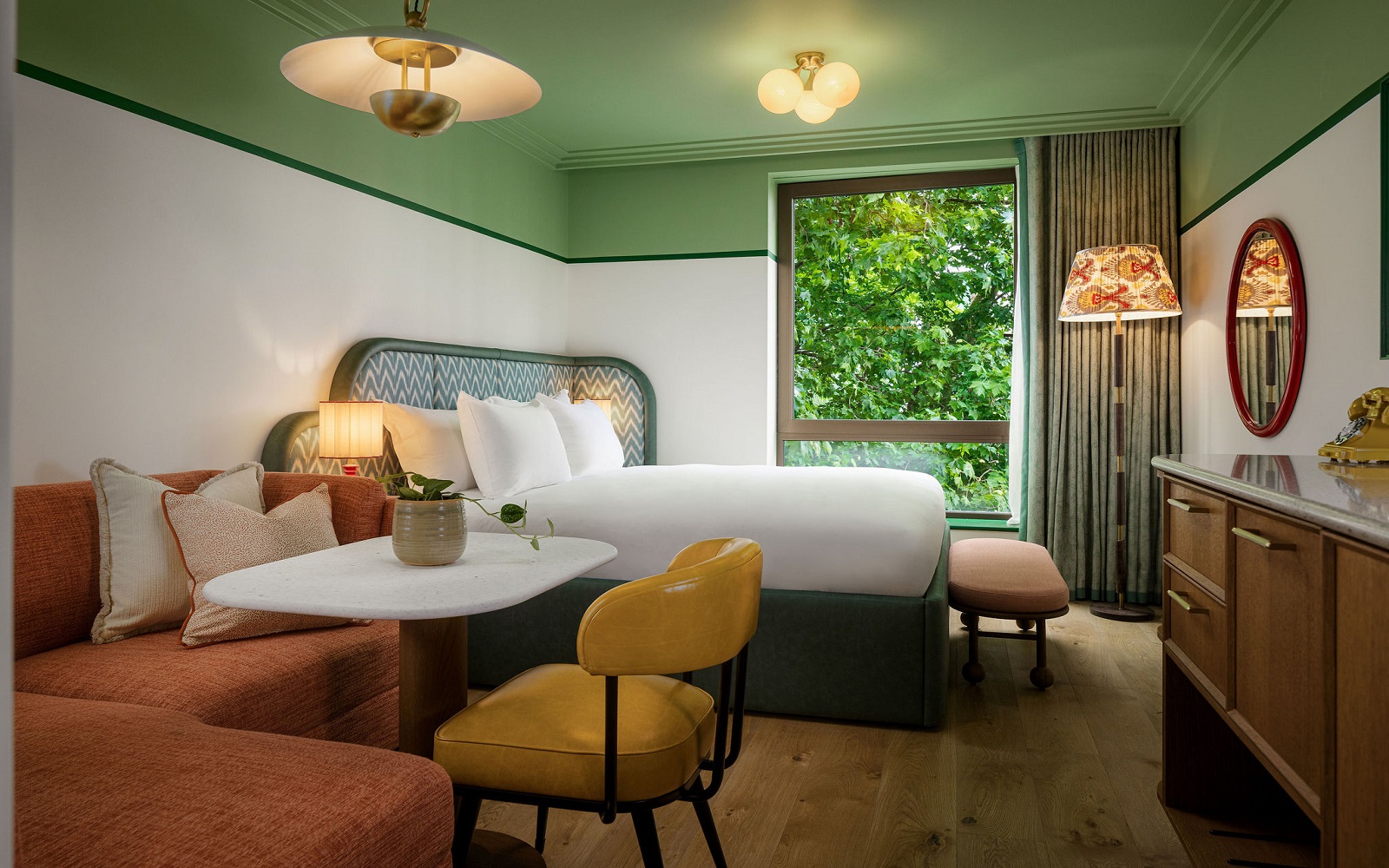
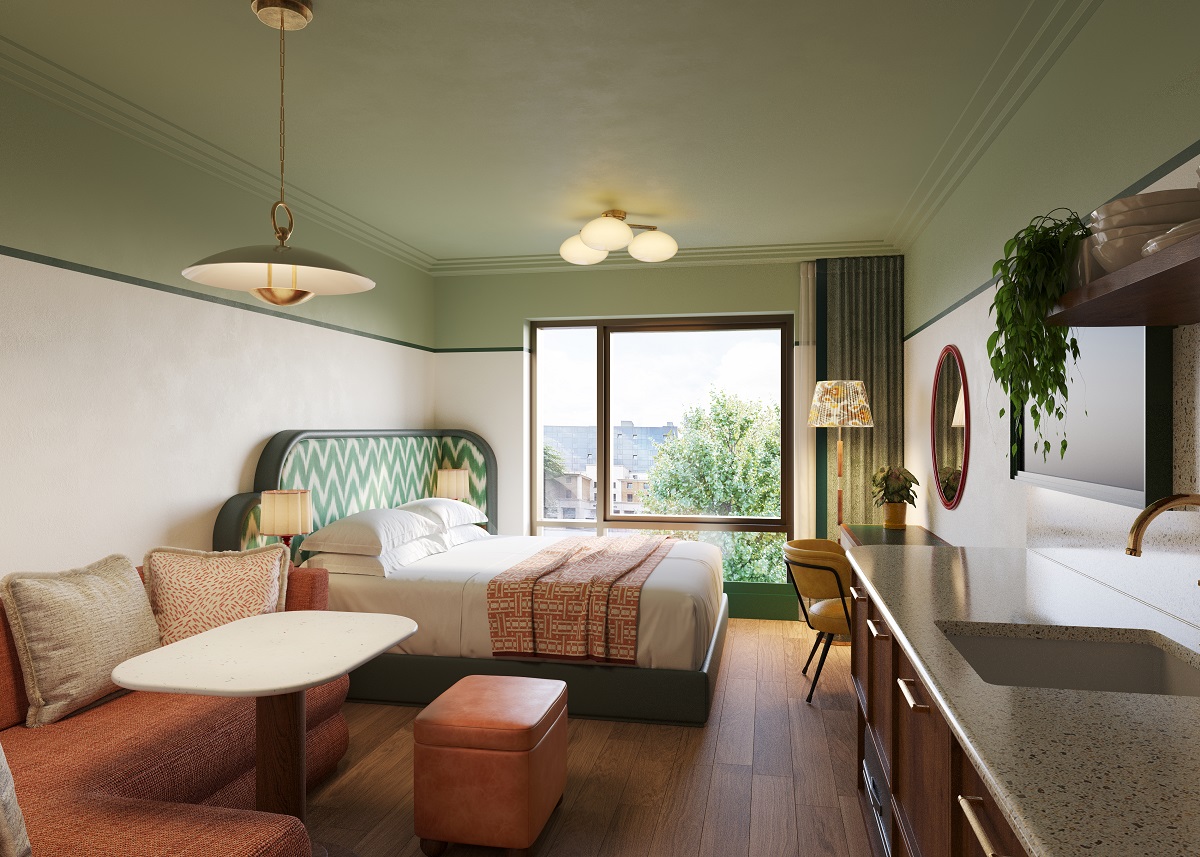
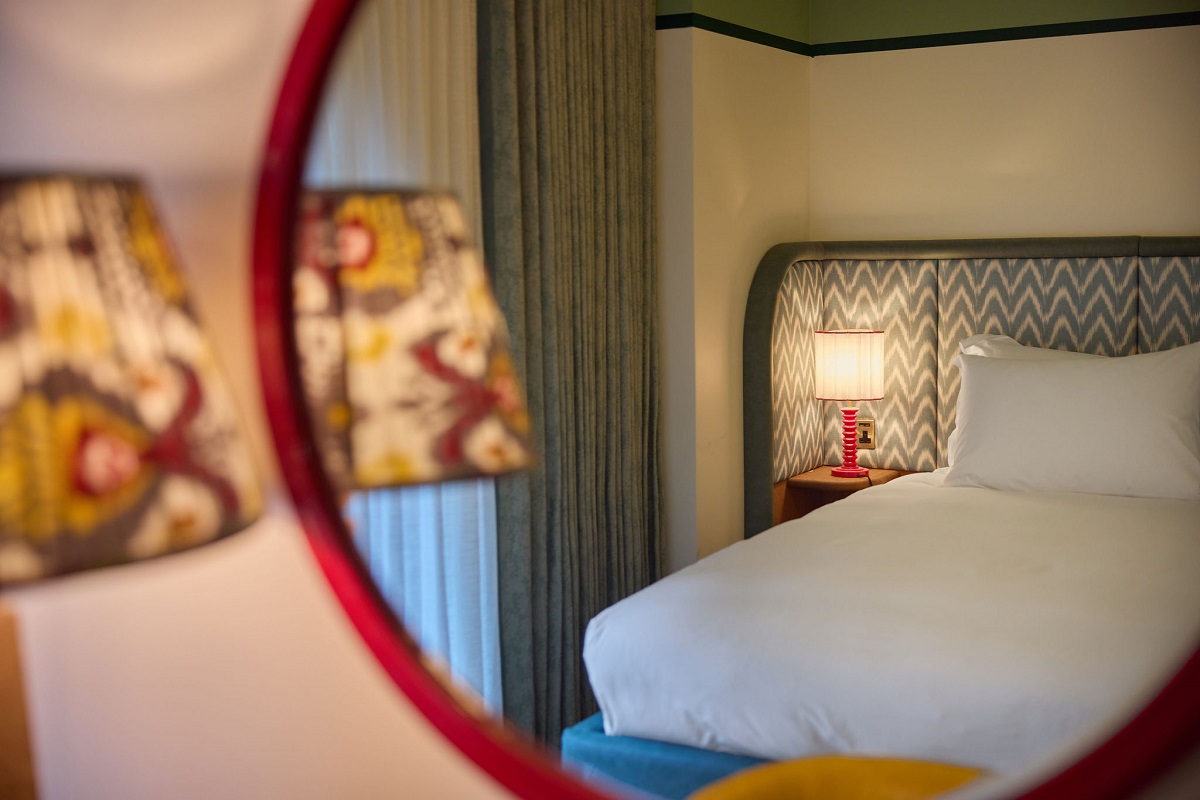
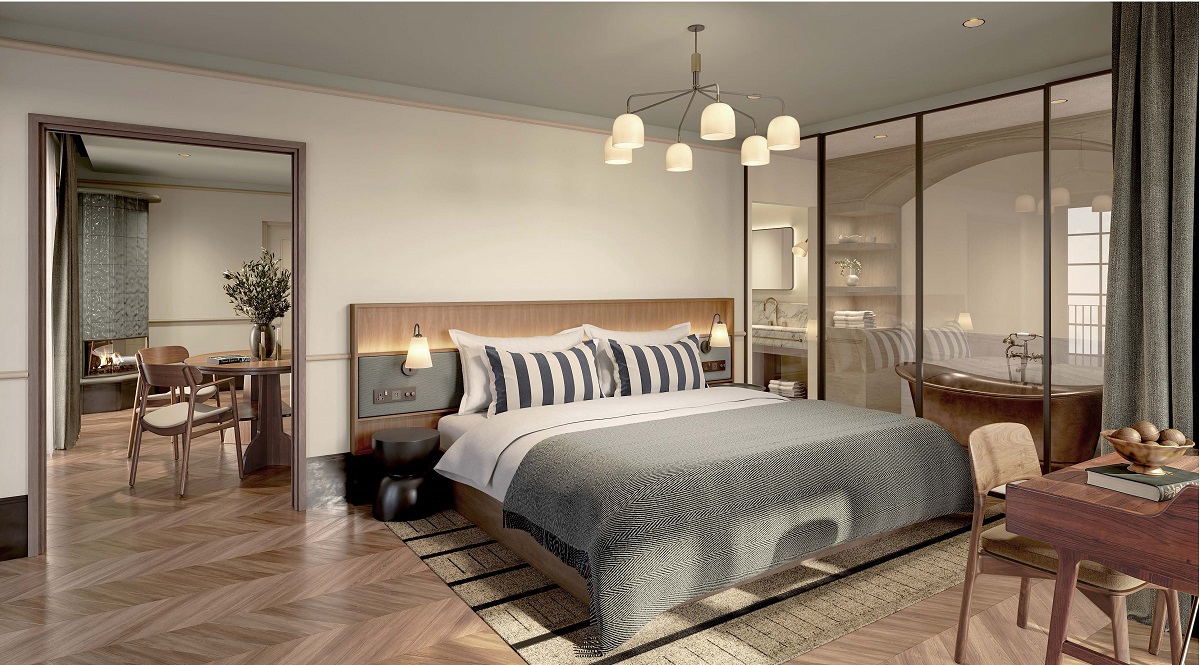
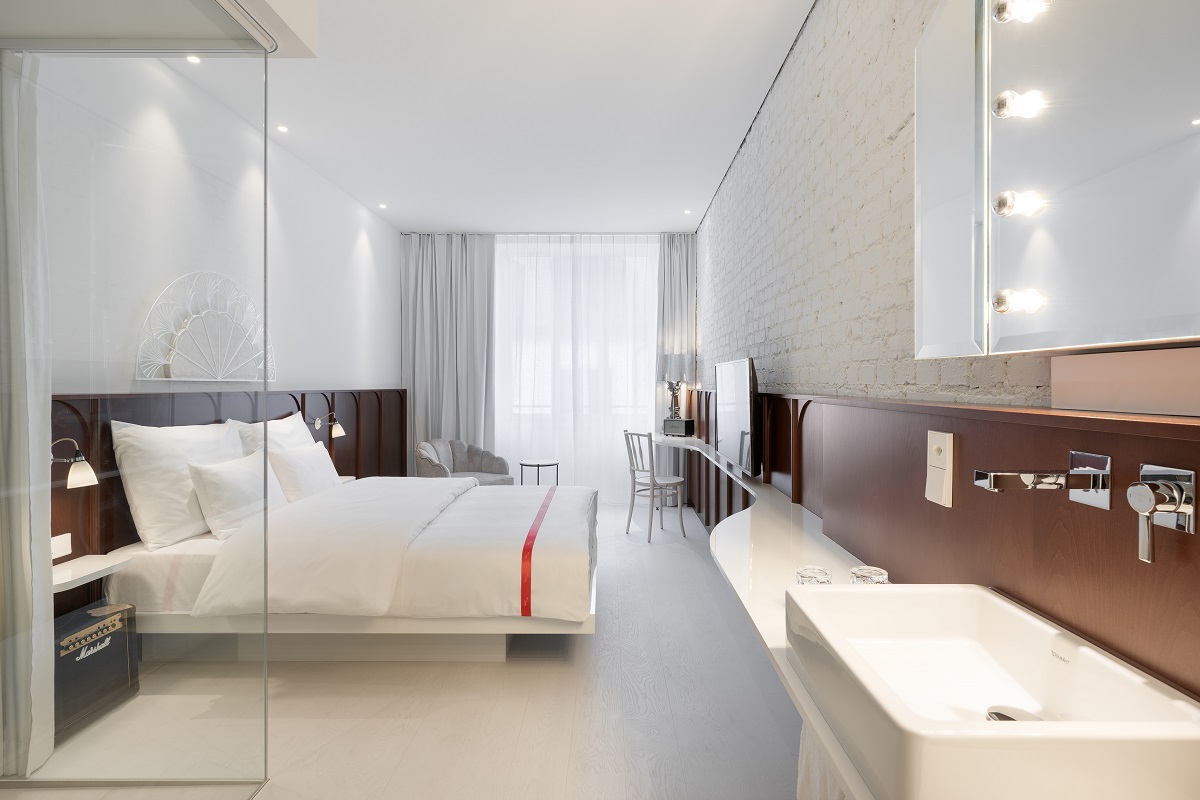
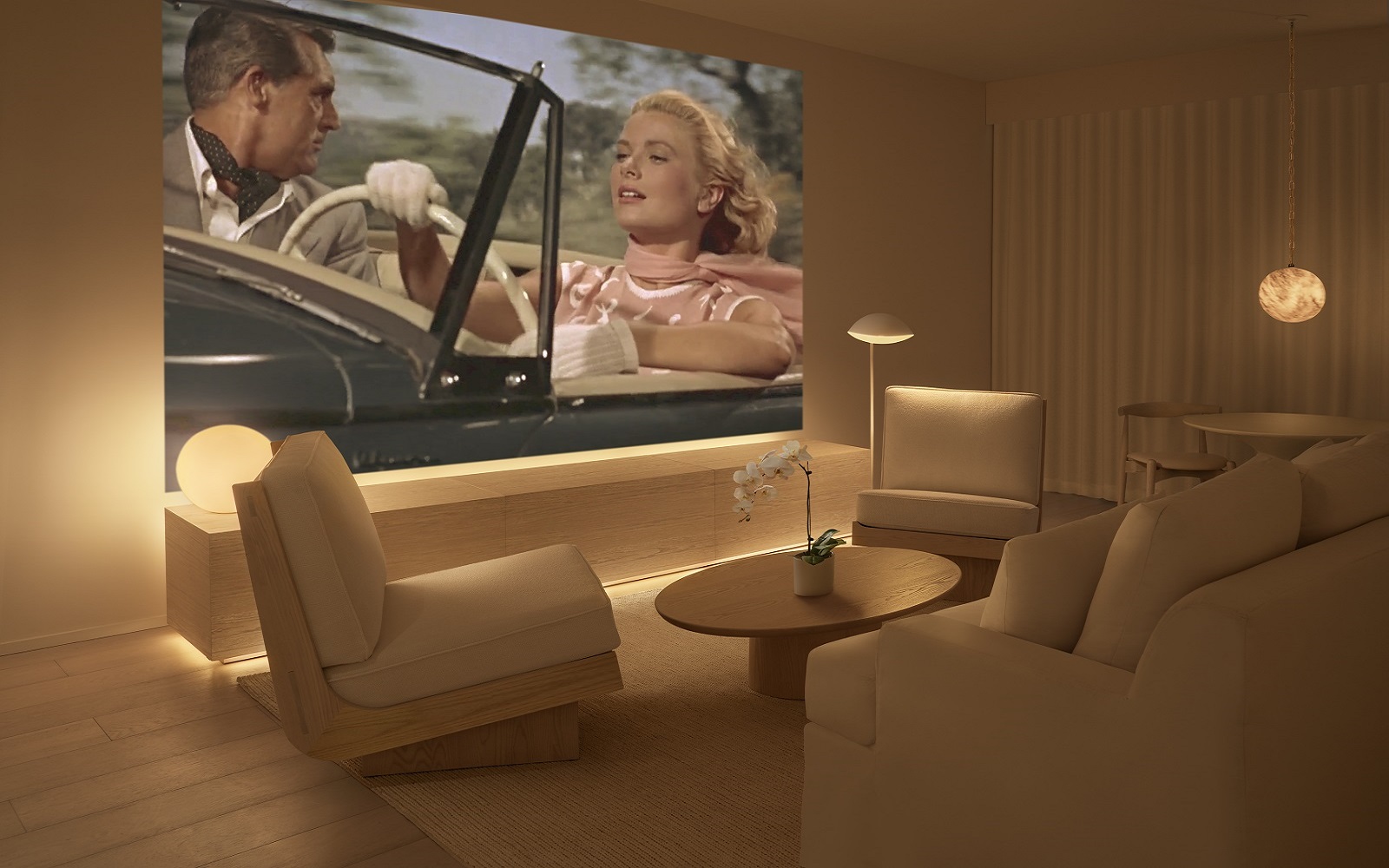
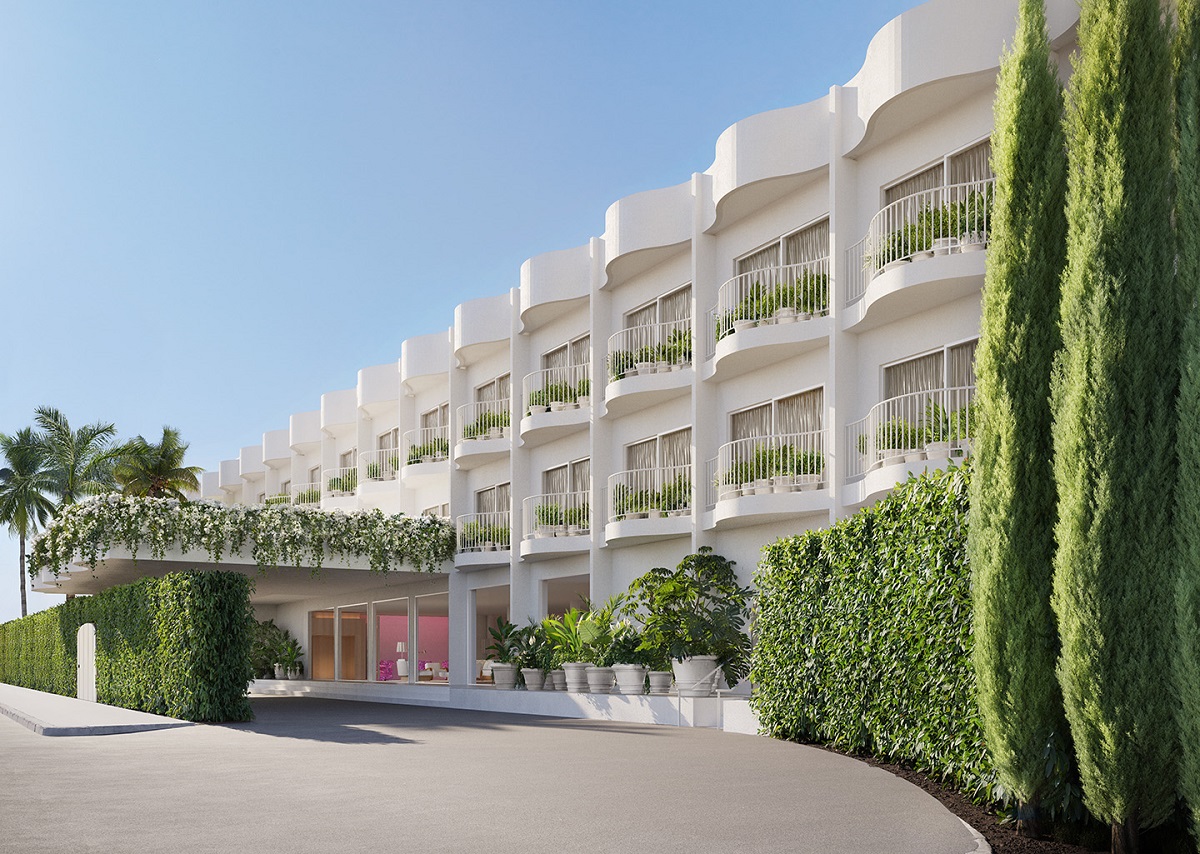
The Dean Munich follows the building’s layered story where guests can expect an elevated amenity offering, enhanced by bespoke DS & Durga fragrances inspired by Ireland’s natural landscape. Guestrooms are intentionally paired back, featuring a soothing palette of gentle greens. Subtle Jugendstil curves and refined detailing bring warmth and tactility, while discreet touches of 1980s influence echo the livelier spirit found in the public spaces.

curved blue wall in the lobby The Dean Munich

Image credit: The Dean Munich

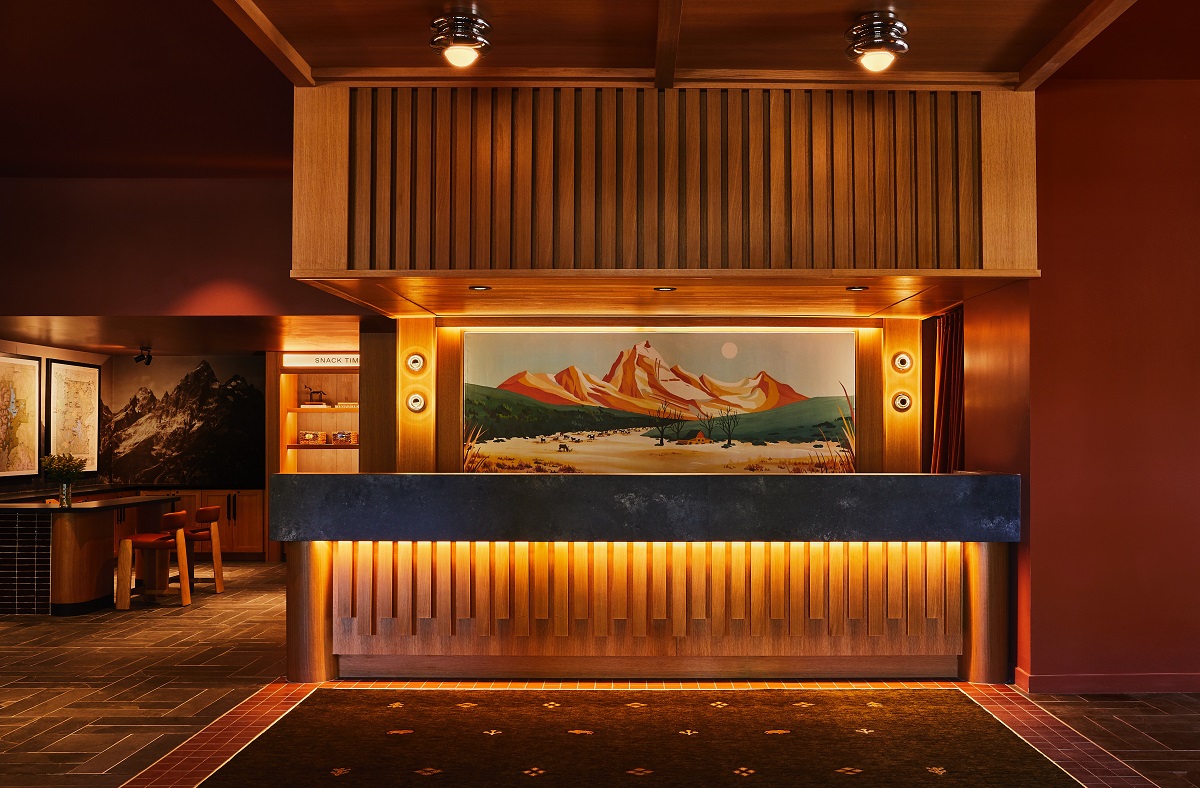
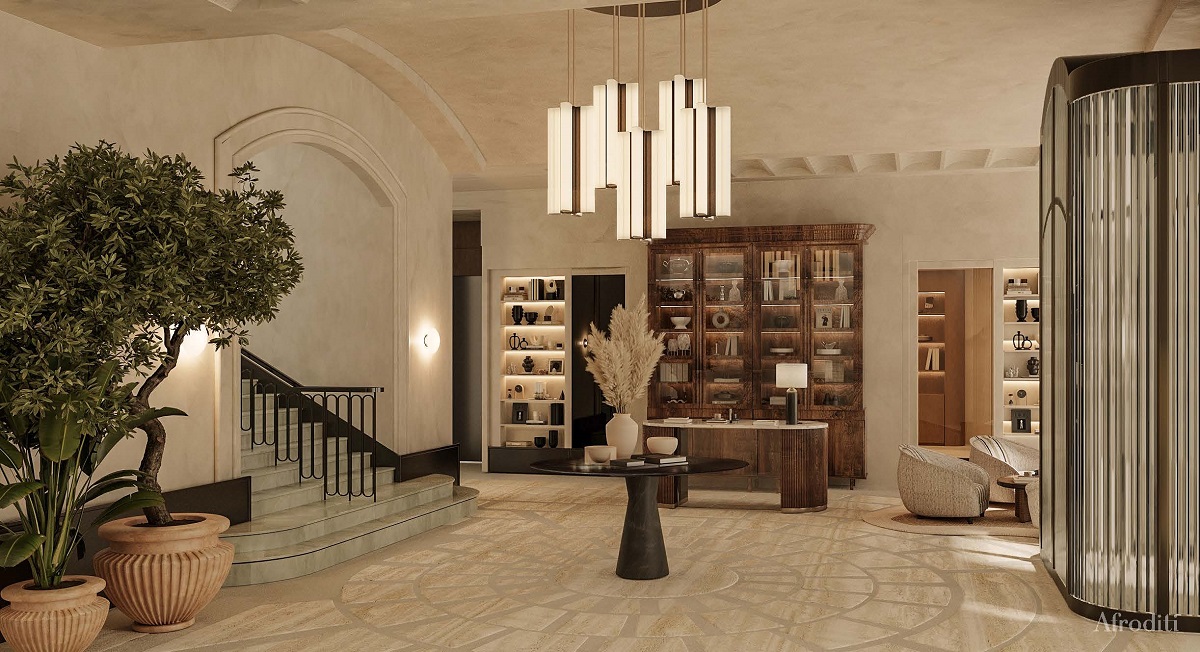
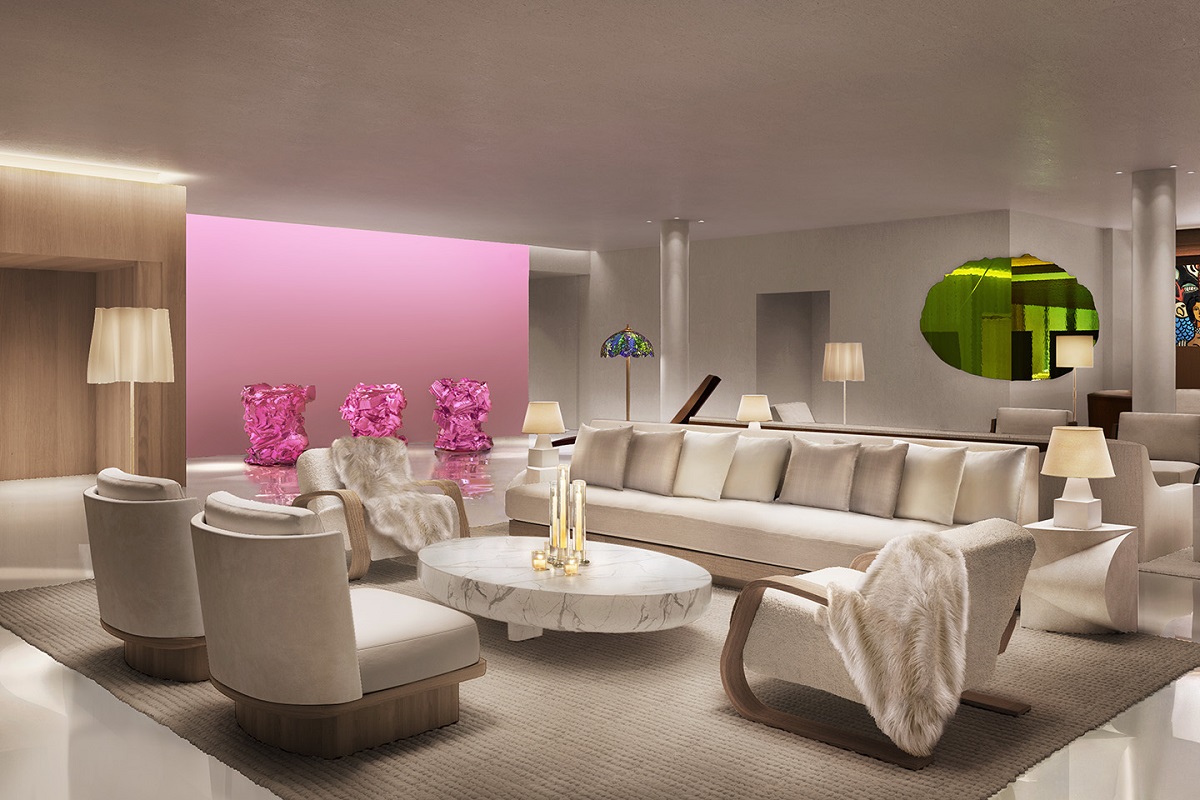
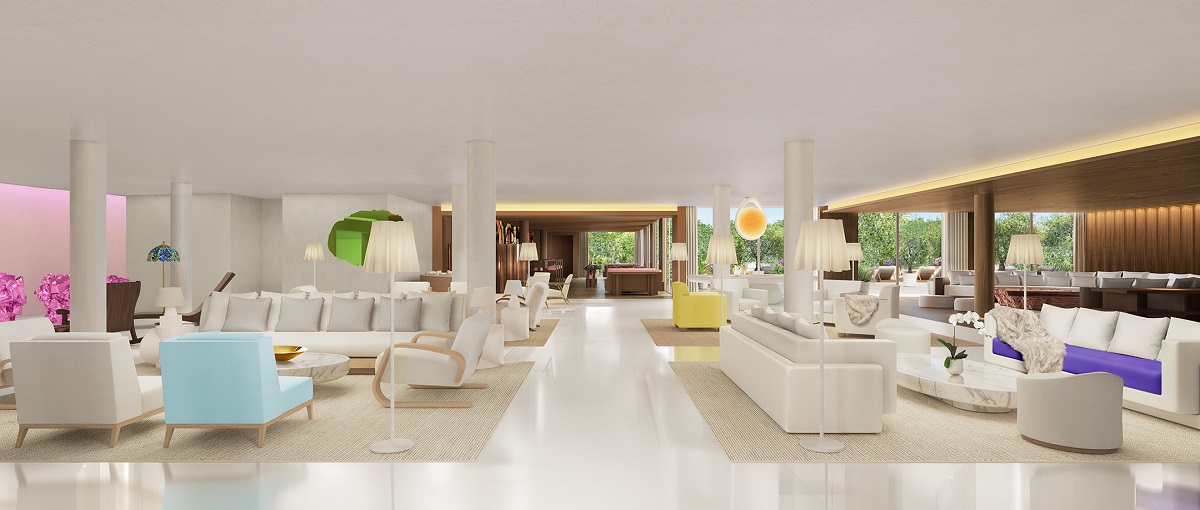
Guests can expect considered interventions like contrasting trims, lighting, and subtle reflective surfaces within the public spaces. The Lobby has cream lacquer walls, soft upholstery and a signature symbolic eye motif nodding to post-modern mysticism. Within the rooms, smart tech, tactile detailing and considered comfort in all room categories which range from Standard Rooms through to the top of the range ‘The Dean Suite’ and ‘The Penthouse Suite’ fit for a spacious stay.

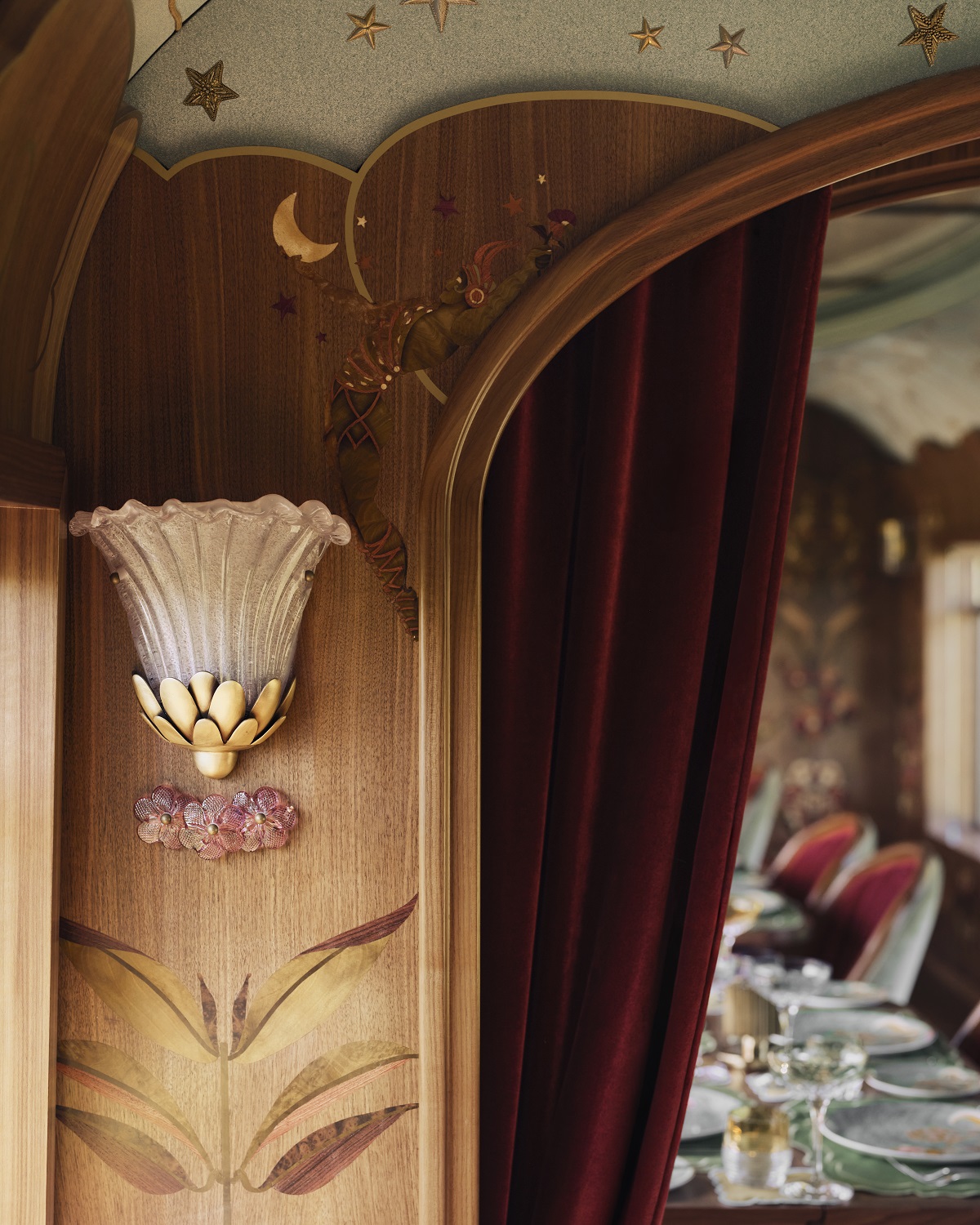
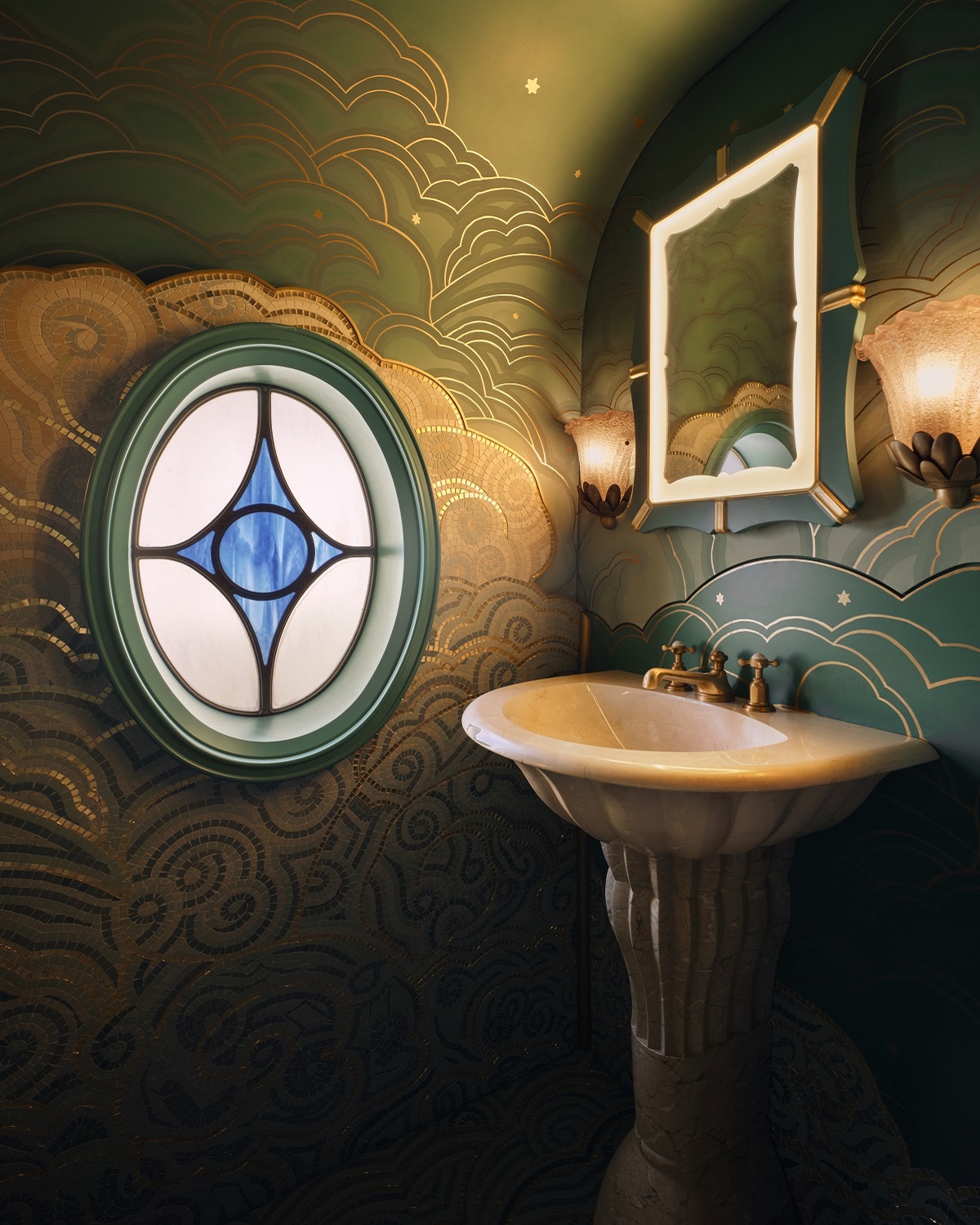
Internationally recognised designer Tatjana von Stein has shaped the heart of the property in her design of the hotel’s social and gathering spaces, combining inspiration from Bavaria’s Art Nouveau heritage (Jugendstil) and the hedonistic creative energy of the 1980s, into an interior language that bridges eras.

For von Stein, who grew up in Munich, the project carries personal resonance: ‘’This is a city rooted in history but always drawn to reinvention,” commented von Stein. “I wanted to capture that tension-somewhere between elegance and exuberance-and let it guide every surface, object and gesture. The design also brings to life a side of Munich only locals truly know: its rich musical and cultural spirit, quietly woven into the character of the city.’’

Drawing from two pivotal moments in Munich’s cultural history, the design concept creates Jugendstil influences expressed through natural motifs, curved lines, tactile warmth and crafted detailing and 1980s Munich nightlife references in glossy surfaces, lacquered finishes and subtly theatrical lighting.

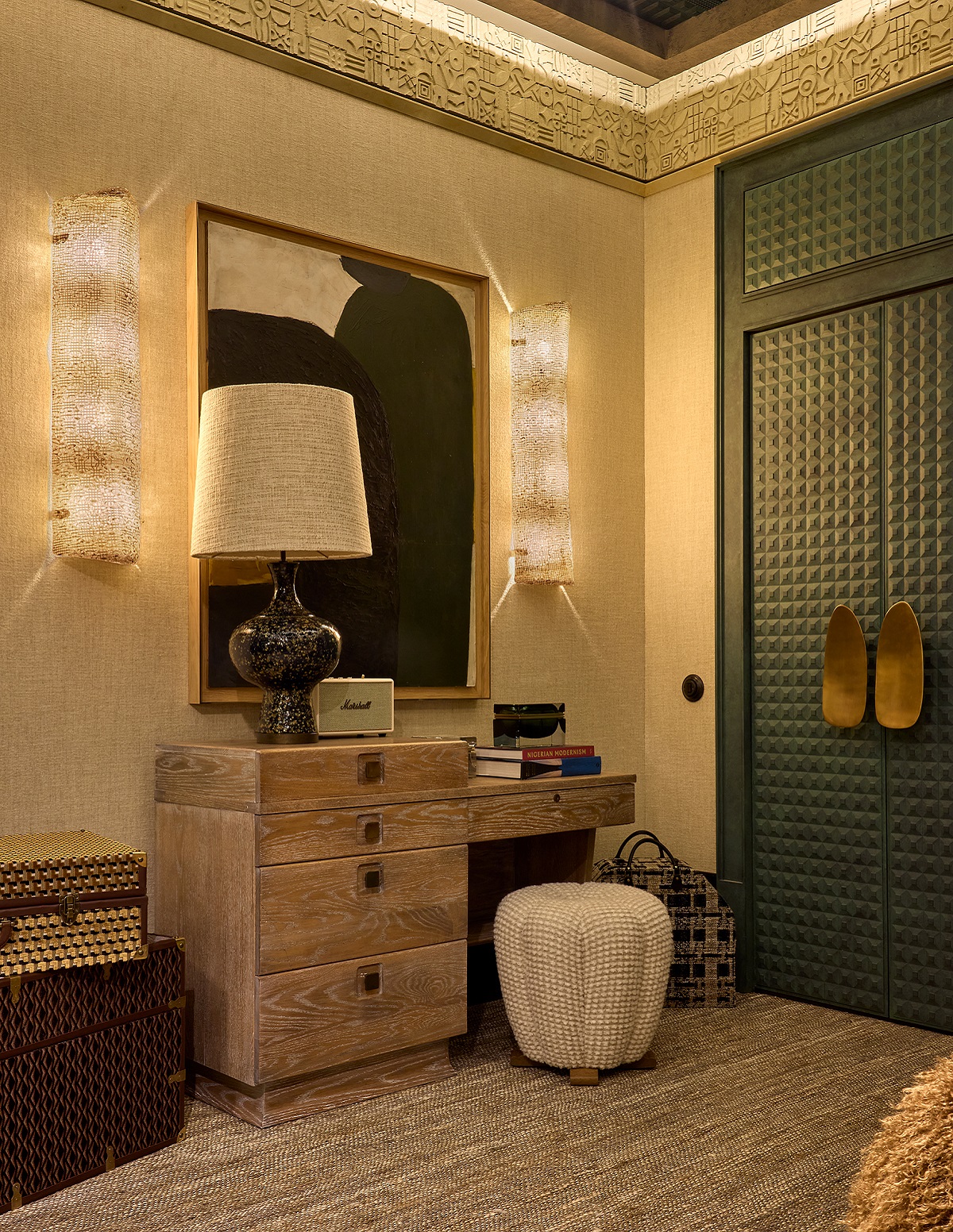
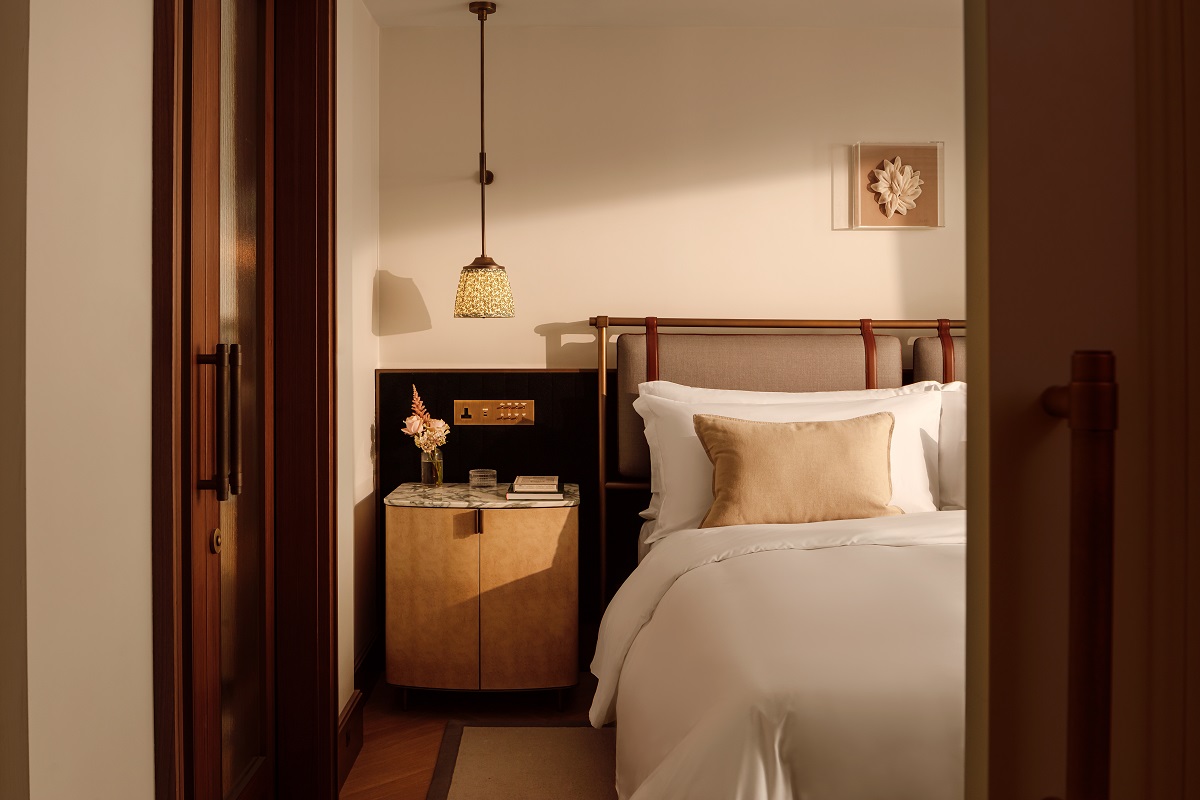
low lighting in guestroom suite in The Dean Munich

Image credit: The Dean Munich / Dean Hearne

Throughout the hotel, custom furniture and lighting designed by Tatjana von Stein Studio sits alongside vintage pieces and lighting sourced from Cologne-based Studio Kuhlmann and a bespoke sound system by Friendly Pressure. The result is a hotel that is visually layered, emotionally resonant, and culturally alive.

To anchor the hotel in its location, The Dean Munich launches with a site-specific art programme titled ‘The City Beneath the City’, curated by Christian Ganzenberg, author, curator and Director of Munich’s international art festival, Various Others. The programme reflects the hotel’s location and community. Inspired by Italo Calvino’s ‘Invisible Cities’, the collection focuses on Munich-based contemporary artists, explores the unexpected layers of a traditional art city through the lens of contemporary voices from today’s art scene.

It invites guests to encounter art not only on walls, but as part of their journey through the building, from the lobby to the rooms. As part of this vision, Ganzenberg invited artists such as Ju Young Kim, whose sculptural work blends Art Nouveau elements with everyday infrastructure, and Veronika Hilger, whose paintings exist in the realm between memory and the surreal, to a commission by Jieun Park in the public spaces. Interactive works by Sebastian Quast surprise in their materiality in the hallways, while photographers from Der Greif Studio inhabit the guest rooms, as well as commissions by artist such as Ossian Fraser, who used material from the hotel site in the works’ creation. An intricate narrative that uncovers the imagined and remembered layers of Munich – ‘The City Beneath The City’.

Ibasho restaurant and seating

Image credit: The Dean Munich / Dean Hearne

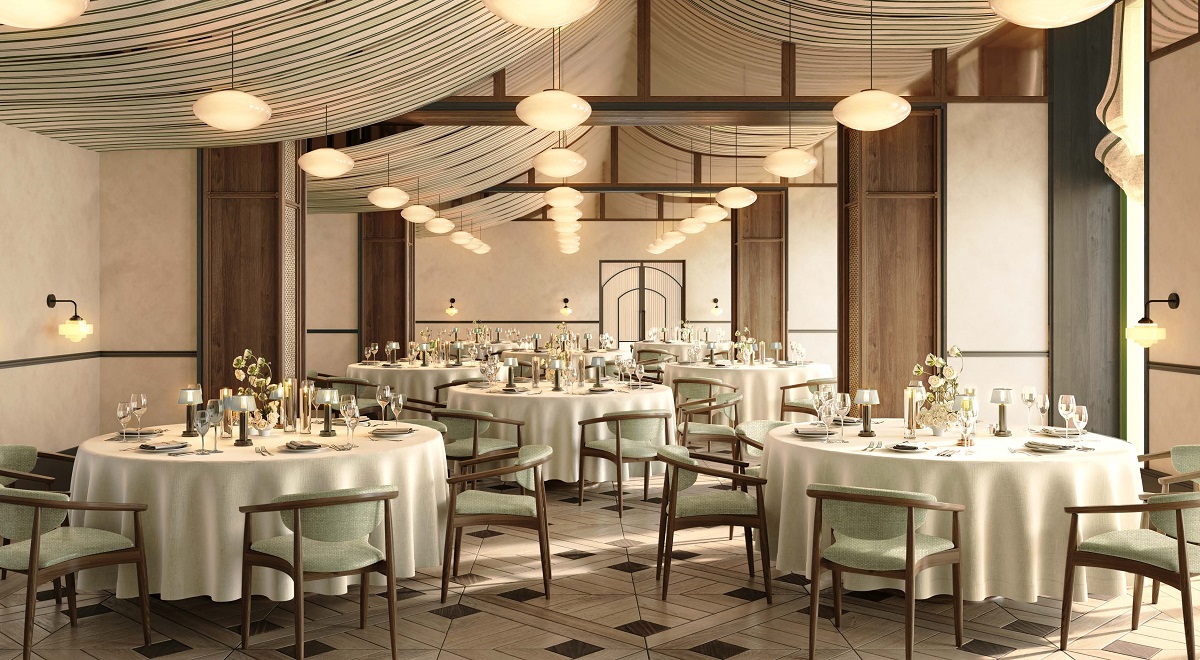
Launching exclusively at The Dean Munich, Ibasho marks the debut of the hotel’s signature restaurant, a modern Japanese dining experience shaped by seasonality, precision and playful presentation. Guests can expect a menu concepted by consultant Chef Alex Craciun, working closely alongside Ibasho’s kitchen team to bring the concept to life. Craciun’s experience across Michelin-starred kitchens in Japan as well as his partnership establishing Sosharu in London and most recently his own restaurant, Aces Food Craft.

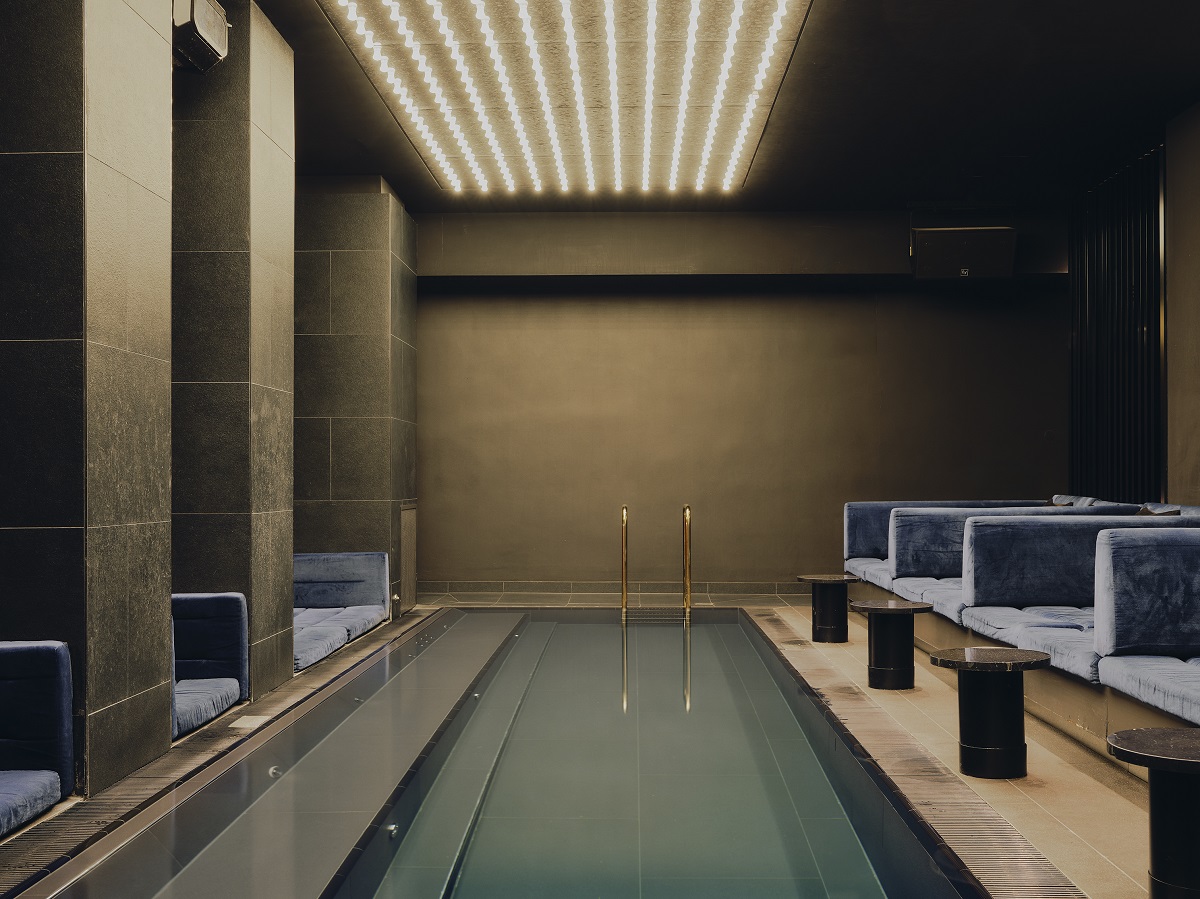
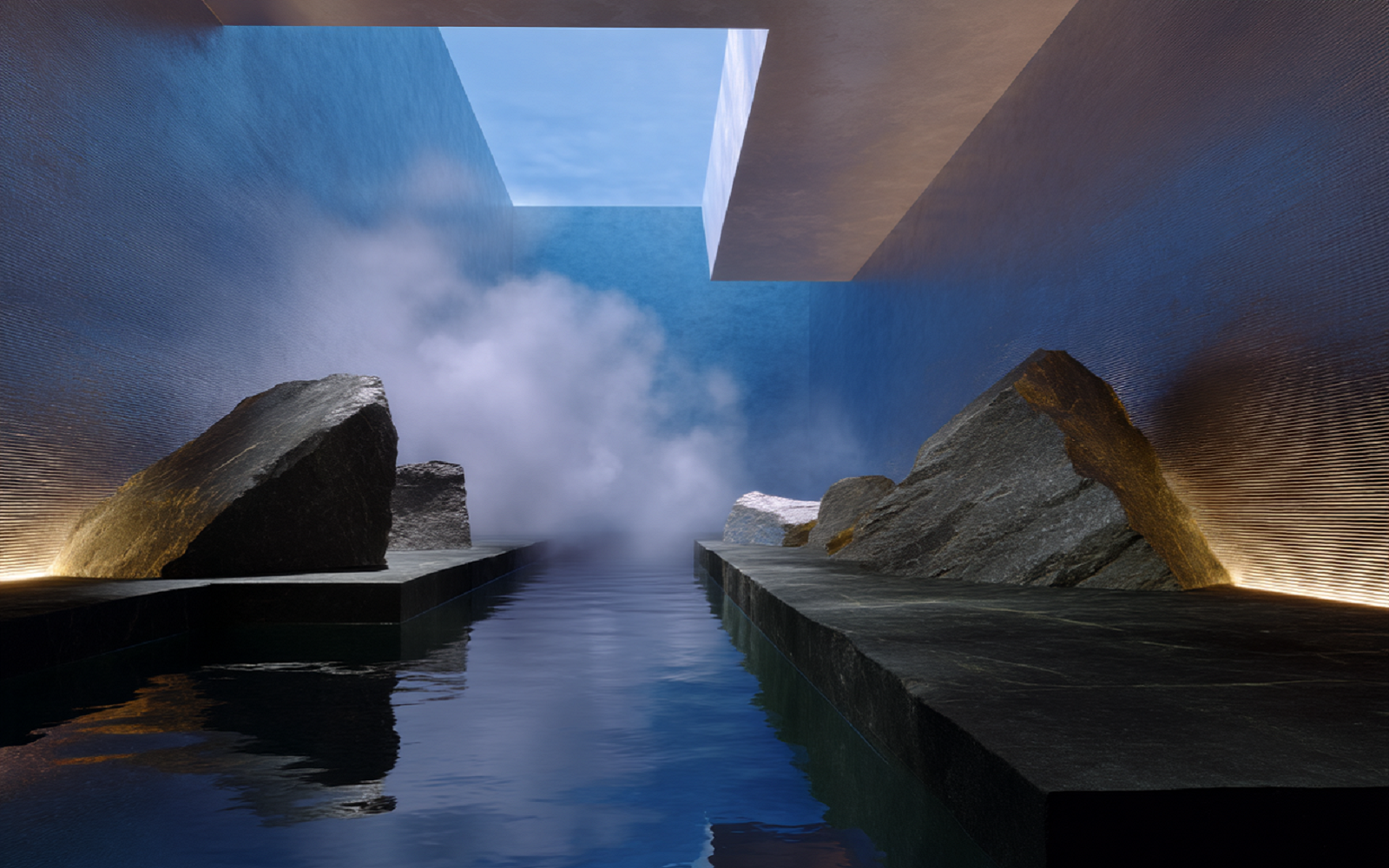
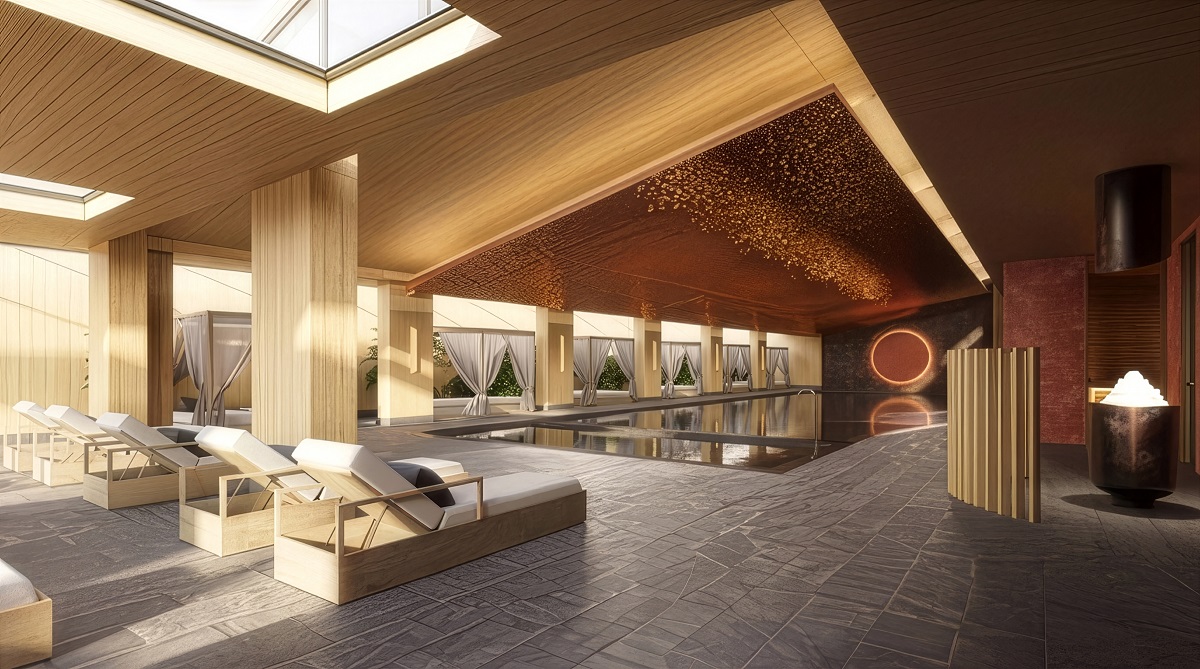
Power, The Dean’s signature fitness and wellness concept which features an indoor pool, sauna, steam room and treatment room.

Image credit: The Dean Munich / Dean Hearne

The property also houses Power, The Dean’s signature fitness and wellness concept which features an indoor pool, sauna, steam room and treatment room. A premium, design-led space, Power goes beyond the traditional gym to deliver guided, music-driven group training alongside best-in-class recovery. Class formats will include high-energy MetCon sessions, as well as Restore and Flow classes focused on mobility, longevity and balance, all delivered in an immersive environment. The facilities will house industry-leading equipment, dedicated recovery zones and a thermal suite with contrast therapy.

The central location places it at the heart of the city’s cultural rhythm, moments from Marienplatz, Viktualienmarkt and Munich’s historic streetscapes. From leafy river walks along the Isar to the hum of cafés, galleries and late-night bars, the neighbourhood brings the spirit of the original to a new setting, one where The Dean aims to create uncommon experiences that celebrate the city’s creativity, craftsmanship and modern energy.

Main image credit: the Dean Munich

Starwood Hotels - Collin Den Ten (L), David Duran (R)

Starwood strengthens leadership at two key hotels

1024 640 Stuart O'Brien
Starwood strengthens leadership at two key hotels

Luxury hospitality group appoints experienced General Managers to lead 1 Hotel Austin ahead of its opening and guide the next phase of Treehouse Hotel Manchester…

Starwood Hotels - Collin Den Ten (L), David Duran (R)

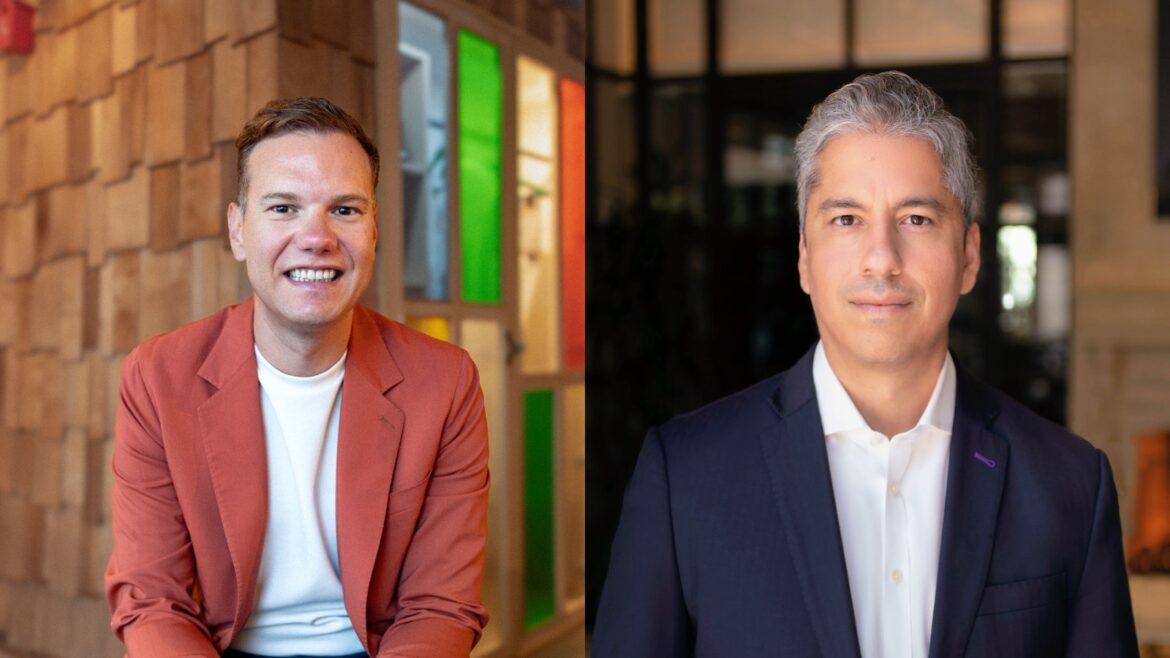
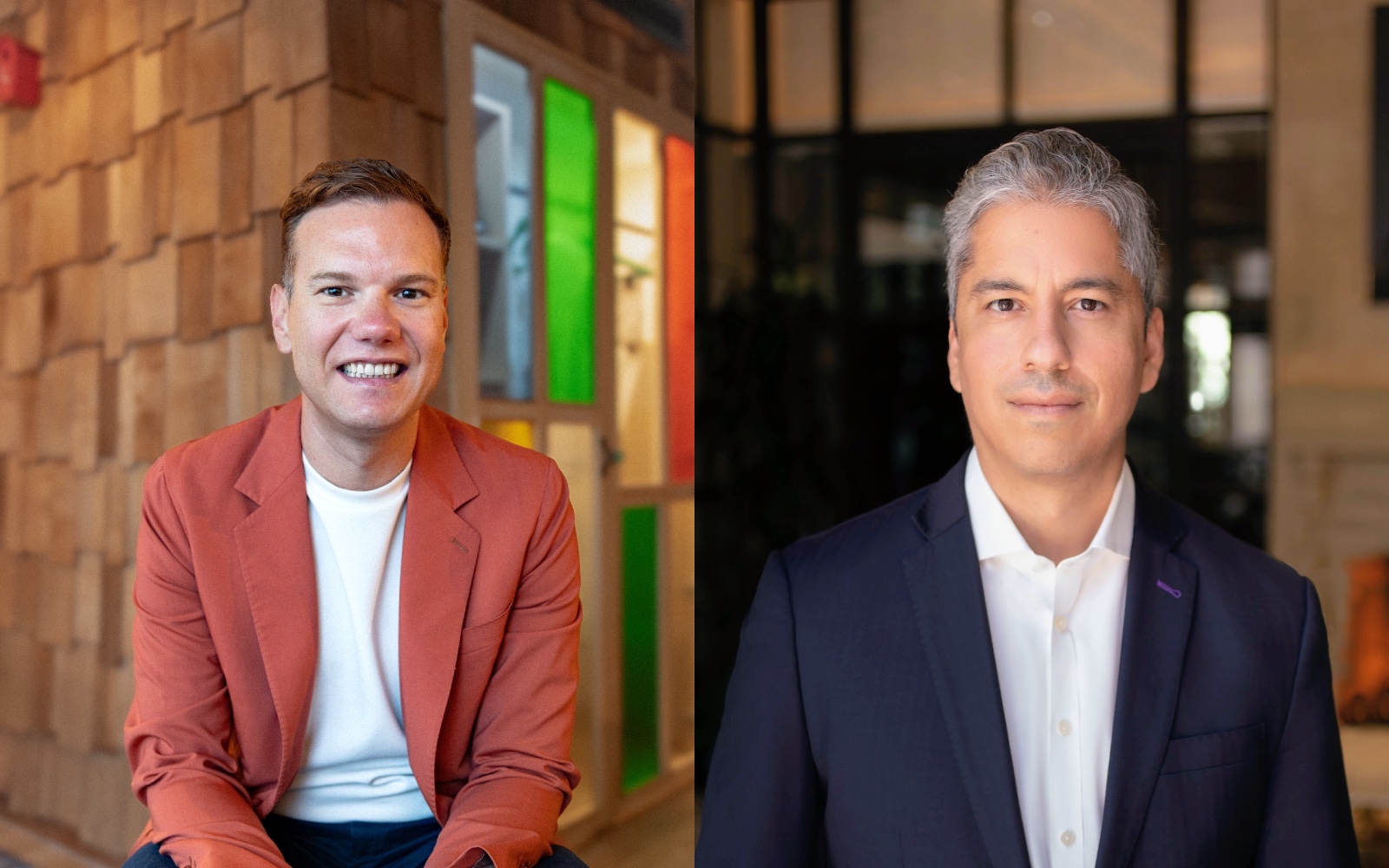
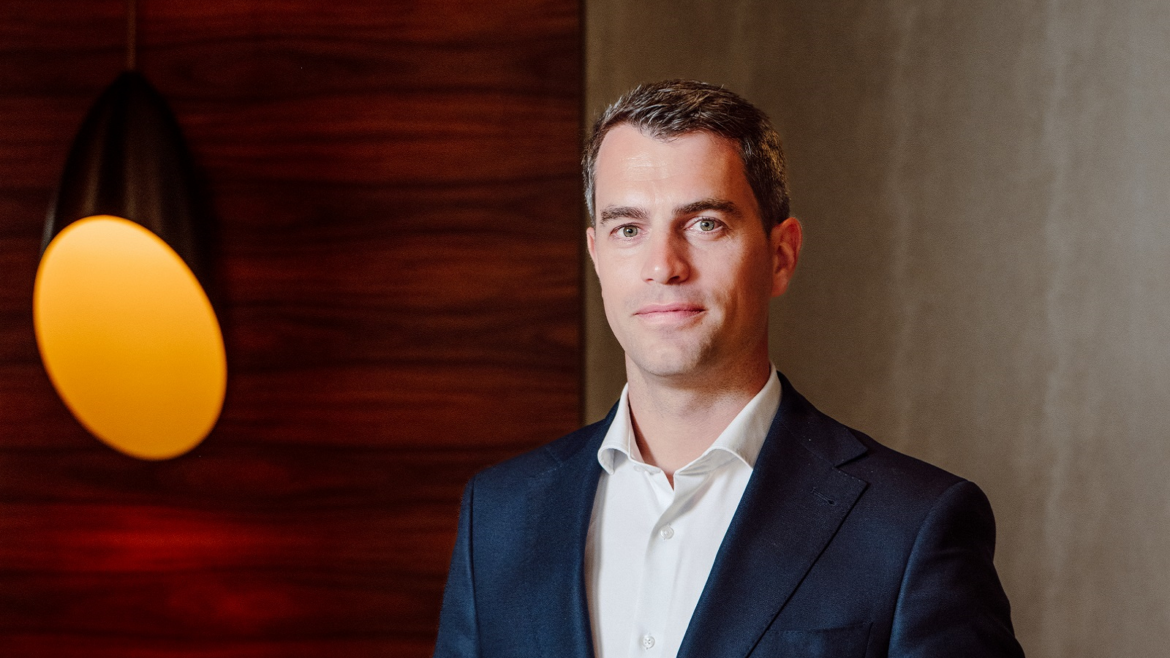
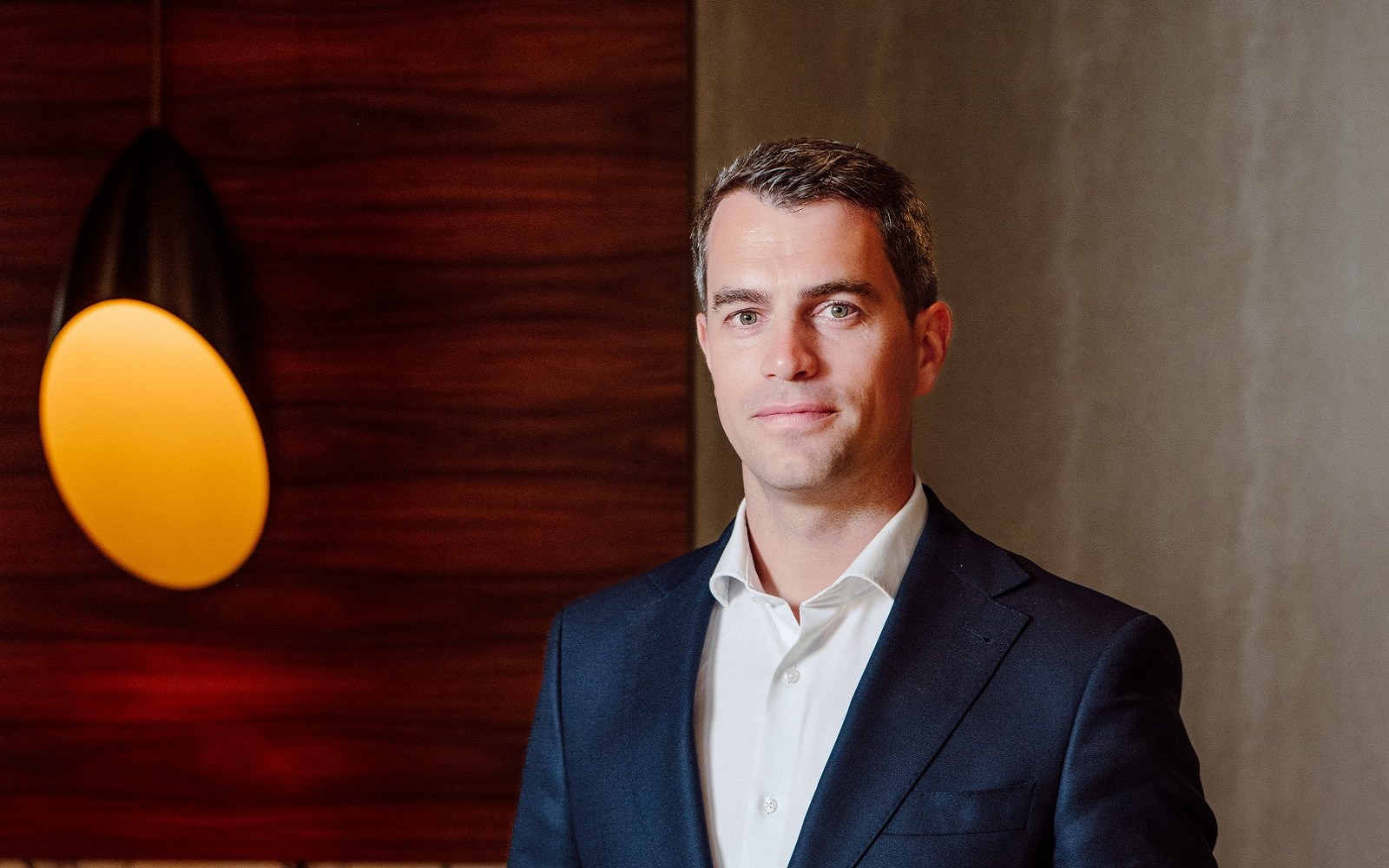
Starwood Hotels has confirmed the appointment of David Duran (pictured, above right) as General Manager of 1 Hotel Austin and Collin Ten Dam (pictured, above left) as General Manager of Treehouse Hotel Manchester.

In a statement, Starwood Hotels CEO Raul Leal said: “Collin and David each bring strong operational expertise, leadership, and hospitality experience that will support our continued growth,” said  “Collin brings experience in lifestyle properties and David in luxury hotel operations and openings. Together, they are strong additions to the 1 Hotels and Treehouse Hotels teams, and we look forward to their impact as we elevate the guest experience and expand our portfolio.”

Starwood says Duran will oversee all aspects of hotel operations at 1 Hotel Austin, while advancing the brand’s mission-driven approach to hospitality. With more than 20 years of experience spanning luxury hotel operations and food and beverage leadership, he will play a central role in guiding the property through its pre-opening phase ahead of its August 2026 debut and establishing 1 Hotel Austin as a leading hospitality destination in the city.

Duran joins 1 Hotel Austin following his role as General Manager of Pendry San Diego (Montage International), where he oversaw a 317-key property with six food and beverage outlets and led a team of more than 500 associates. He also supported multiple task force initiatives with Montage International, helping opening teams develop operational processes and brand standards for current and future Pendry properties: experience that will be instrumental as 1 Hotel Austin prepares to welcome its first guests.

Duran said: “What drew me to 1 Hotels is the brand’s ability to create exceptional guest experiences while remaining deeply connected to nature, community, and place. The opportunity to help shape the guest experience at 1 Hotel Austin from day one is incredibly rewarding. I look forward to working alongside the team to create a hotel that reflects the spirit of Austin while delivering the thoughtful service and experiences that define 1 Hotels.”

Ten Dam, meanwhile, brings a well-rounded background in leadership, financial management, and guest experience excellence to Treehouse Hotel Manchester. Starwood says he will play a key role in guiding the hotel’s continued growth, including overseeing the debut of the highly anticipated 14th floor, home to The Nest rooftop bar, Sister Moon, a new rooftop restaurant from Chef Sam Grainger and collaborators Luke Cowdrey and Justin Crawford, and nine premium suites with skyline views.

Opening as part of the final phase of the hotel’s debut, Starwood says these additions will further strengthen Treehouse Hotel Manchester’s position as one of the city’s leading lifestyle destinations. Ten Dam will also help position the property as a distinctive, high-performing presence in the Manchester market while championing sustainability initiatives and responsible operations in line with Starwood Hotels’ broader commitment to positive environmental and social impact.

Ten Dam brings extensive leadership experience from senior roles at Marriott International, most recently as Cluster General Manager for Leeds Marriott Hotel and Delta Hotels York, where he led two flagship properties in the Pennines region, driving guest satisfaction, operational excellence, revenue growth, and strategic initiatives that strengthened market positioning and owner returns.

Ten Dam said: “I’m thrilled to join Treehouse Hotel Manchester at such an exciting time for the property. I look forward to working with the team to build on the hotel’s success as we prepare to unveil new rooftop experiences, including Sister Moon, The Nest, and The Hideout. This next phase represents an exciting opportunity to enhance the guest experience and further establish Treehouse Hotel Manchester as one of the city’s leading lifestyle destinations.”

Main Image Credit: Starwood Hotels

Fairmont Southampton - Ocean Club (Render)

Fairmont unveils global luxury hotel renovation programme

1024 640 Stuart O'Brien
Fairmont unveils global luxury hotel renovation programme

Major redevelopment projects across Europe, North America and Asia reflect Fairmont’s long-term investment in heritage, wellness and contemporary luxury, with landmark properties including The Savoy, Fairmont Southampton and Fairmont Grand Hotel Geneva leading the transformation…

Fairmont Southampton - Ocean Club (Render)

Fairmont Hotels & Resorts is embarking upon a significant global renovation programme, encompassing 20%  of the Fairmont portfolio across the Americas, Europe, Africa, and Asia.

This includes major redevelopment projects at both Fairmont Southampton in Bermuda and Fairmont Grand Hotel Geneva in Switzerland, with both slated for reopening in Fall 2026 and 2027 respectively. 

“Fairmont has always been a place where the world gathers, and this remains true today,” commented Omer Acar, Chief Executive Officer, Fairmont Hotels & Resorts. “Our hotels, whether historic treasures or modern masterpieces, are always central to life’s most important moments. While we celebrate our profound heritage, Fairmont is unequivocally a brand of the future. New properties like Fairmont Doha, Fairmont Hanoi, and Fairmont Tokyo are defining the urban landscapes and cultural narratives of their cities, just as our original grand hotels did. Our commitment lies in continually renovating and adapting our heritage hotels, guaranteeing they deliver unparalleled experiences for our discerning guests globally.”  

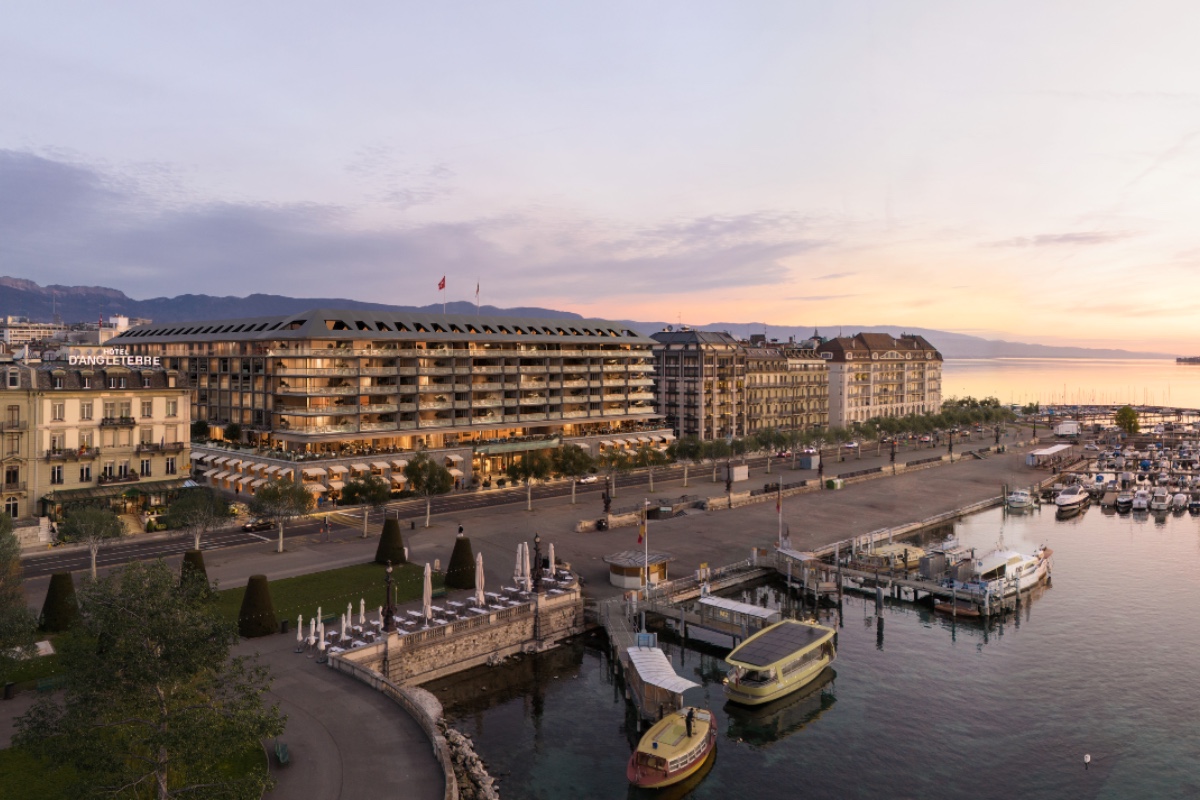
Fairmont Grand Hotel Geneva

Fairmont Grand Hotel Geneva | Image credit: Fairmont Hotels & Resorts

Key Active Renovations

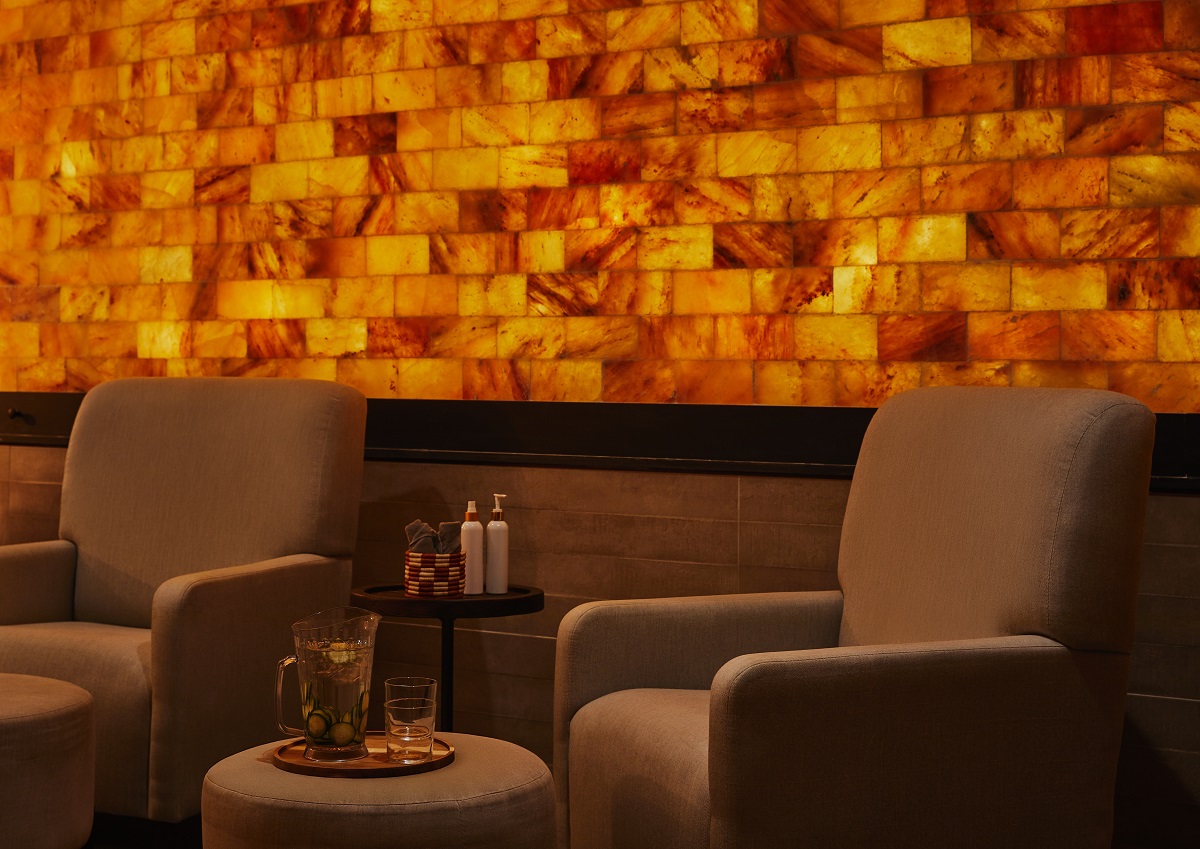
Fairmont Pacific Rim – Vancouver, British Columbia, Canada: The Wellness Club at the Forbes Five-Star Fairmont Pacific Rim is Vancouver’s premier destination for elevated self-care and holistic wellbeing. Bringing together the newly renovated Fairmont Spa, a state-of-the-art fitness center in partnership with HOUSE Concepts, Wish Dry Bar, and MedLiv Medical Clinic, the club offers a fully integrated luxury wellness experience designed for movement, recovery, nourishment, mind and longevity. The newly elevated Forbes Five-Star spa experience has the addition of a new Himalayan Salt Sauna, an intimate couples’ lounge, and elegant stone flooring throughout the space, with completion slated for end of June 2026. Reimagined as a contemporary sanctuary in the heart of Vancouver, Fairmont Spa at Fairmont Pacific Rim brings an enhanced wellness journey designed to restore balance, elevate wellbeing, and redefine luxury wellness in the city. 

Fairmont Southampton – Bermuda (Main Image): The iconic Fairmont Southampton has embarked on the largest renovation project in Bermuda’s history. Led by Gencom, a Miami-based investment firm and international development group, the USD $550 million redevelopment will completely reimagine the resort’s 593 guestrooms, including 44 suites and a dedicated Fairmont Gold experience. Perched along the island’s iconic South Shore, the resort offers sweeping ocean views and direct access to Bermuda’s renowned pink-sand beaches. Set to reopen in late 2026, with the Palmetto Beach Club debuting ahead of the full resort, Fairmont Southampton will usher in a new era of luxury for the island. Designed by interior architect Tori Stori, the transformed resort will introduce an entirely new food and beverage landscape, alongside the spectacular new Beach Club featuring a half-Olympic-sized resort pool, oceanfront grill and private cabanas, further cementing Southampton’s position as Bermuda’s premier oceanfront destination. A state-of-the-art Fitness Centre, more than 45,000 square feet of meeting and event space, and an award-winning 18-hole Par 3 golf course complete an offering of extraordinary depth and ambition.

The Savoy – London, United Kingdom: One of the most celebrated addresses in the world, The Savoy is undergoing an active renovation that reflects Fairmont’s commitment to preserving iconic heritage while continuously elevating the guest experience. The hotel’s restoration spans both its storied Art Deco and Edwardian wings: following the acclaimed reveal of reimagined Edwardian bedrooms and suites in 2025, the Art Deco bedrooms are set to be refreshed and revealed in Summer 2026, continuing a program of careful, considered renewal across the hotel. Each phase honors the character of this legendary address while meeting the expectations of today’s most discerning guests.

Fairmont Chateau Laurier – Ottawa, Ontario, Canada: Ottawa’s Fairmont Château Laurier continues its considered evolution. An extensive guestroom and bathroom renovation program is now underway, with model room completion targeted for July 2026 and lobby renovations set for completion in December 2026, ensuring this national landmark remains as vital as its rich history. The acclaimed Akira Back restaurant opened to guests in March 2026, bringing a bold new culinary chapter to the hotel, and this May saw the debut of Émilie’s Terrace – a new outdoor dining destination with sweeping views across Parliament Hill, the Ottawa River and the historic Rideau Canal. 

Fairmont Tremblant – Mont-Tremblant, Québec, Canada: Fairmont Tremblant is completing a comprehensive guestroom renovation program, with the unveiling of a new Presidential Suite set for fall 2026. Extending over 1,200 square feet, the suite will be the most spacious guestroom at the resort, featuring a grand open-concept living space anchored by a fireplace, an elegant dining area, a master bedroom and a spa-inspired bathroom with double vanity, freestanding bathtub and oversized walk-in shower. Designed for privacy and seamless service, the suite includes a discreet enclosed pantry. The Presidential Suite debuts alongside the completion of the resort’s wider guestroom renovation, marking a significant milestone in Fairmont Tremblant’s ongoing transformation in the Laurentians. 

Fairmont Waterfront – Vancouver, British Columbia, Canada: The first phase of Fairmont Waterfront’s four-year transformation is now complete, unveiling 96 renovated guest rooms that reflect the hotel’s Pure Coastal Luxury identity. Inspired by Vancouver’s natural surroundings, the redesigned spaces feature elevated amenities and finishes. Renovations will continue this fall, with future phases including additional guest rooms, the lobby, ARC Restaurant + Bar, pool patio and Fairmont Gold. 

Fairmont Grand Hotel Geneva – Geneva, Switzerland: One of three properties in the Fairmont portfolio currently closed for full transformation, Fairmont Grand Hotel Geneva is undergoing a sweeping renovation. The restoration encompasses the building’s iconic facade with the addition of elegant loggias to rooms overlooking Lake Geneva. The entire interior is also being reimagined – including more than 400 guest rooms – bringing the various elements of this storied address together into a cohesive whole: a landmark hotel, exceptional dining, an outstanding bar and much more.   Fairmont Grand Hotel Geneva is set to reopen in 2027 – a definitive luxury destination for international travelers and Genevans alike. 

Fairmont Le Château Frontenac – Quebec City, Quebec, Canada: Quebec City’s legendary Fairmont Le Château Frontenac is embarking on a transformative expansion of its celebrated Fairmont Gold experience. The program will add 34 new Gold guestrooms alongside a full renovation of the Gold Lounge, growing the inventory from 70 to 104 rooms. A comprehensive renovation of 203 standard guestrooms and 13 suites will deliver refined architectural finishes and entirely renewed furnishings throughout, with completion targeted for 2028.

Recently Completed 

Fairmont Jasper Park Lodge – Jasper, Alberta, Canada: Originally conceived as a collection of luxury tents established on the shores of Lac Beauvert by the Grand Trunk Pacific Railway in 1915, Fairmont Jasper Park Lodge has undergone a comprehensive, multi-phased repositioning, culminating in the reopening of its iconic main lodge in early June 2026. The transformation introduces a reimagined guest arrival experience, fully redesigned guest rooms, three new lounge and dining experiences, as well as an elevated retail destination and Adventure Concierge. Together, these enhancements redefine the 700-acre resort, which now welcomes guests to a distinctly elevated Jasper experience just in time for the summer season.

Fairmont Pittsburgh – Pittsburgh, Pennsylvania, USA: Fairmont Pittsburgh has just completed a considered refresh of its guest rooms and Health Club, further elevating the hotel’s position as the standard-bearer for luxury hospitality in downtown Pittsburgh. Guest accommodations have been thoughtfully reimagined to balance contemporary elegance with the sweeping skyline views that define the property’s setting, while the renewed Health Club has been crafted as a dedicated space for relaxation and rejuvenation. Together, these enhancements reflect Fairmont Pittsburgh’s ongoing commitment to delivering an exceptional guest experience – one that has welcomed travelers to the heart of Pittsburgh’s business, cultural and entertainment districts for over 15 years. 

Fairmont Orchid – Waimea, Hawaiʻi, USA: Fairmont Orchid on Hawai’i Island completed a multi-million dollar property transformation in June 2025, with the resort’s guest rooms, Fairmont Gold floor and meeting and event spaces all fully refreshed. Honoring the rich culture of the destination, the renovation draws on fluid layouts that mirror the ocean’s natural flow, color palettes inspired by the island’s landscapes, and textures rooted in traditional Hawaiian craftsmanship. The reimagined Fairmont Gold floor introduces a chic, modern Hawaiian aesthetic – offering private check-in, dedicated concierge support, locally-inspired cuisine and hors d’oeuvres at golden hour on the lanai. Building on the completion of its acclaimed full guestroom renovation, Fairmont Orchid continues its evolution with a second chapter of investment. The Kilohana meeting room is receiving a considered renovation – celebrating its iconic koa wood panels alongside a new finishing kitchen – completing in August 2026. At Brown’s Beach House, the resort’s signature oceanfront restaurant, a new signature cocktail captures the spirit of the transformation: the Mauna Kea Glow, crafted with Don Fulano Blanco Tequila, triple sec, calamansi purée and shiso syrup, finished with honey sourced from the resort’s own on-site hives. 

Fairmont Kea Lani – Maui, Hawaiʻi, USA: Fairmont Kea Lani recently welcomed a significant new chapter in its dining story with the return of Kō, the resort’s celebrated signature restaurant. Reimagined under Executive Chef Matt Dela Cruz, whose family roots trace back to Hawaiʻi’s sugarcane era, Kō draws on the culinary traditions that shaped the islands, sourcing ingredients from Maui’s own farmers, fishermen and food producers. The restaurant’s refreshed space and new menu, which Chef Dela Cruz describes as “elevated comfort”, reopened late last year, alongside an entirely new cocktail program drawing on the same rich multicultural heritage.

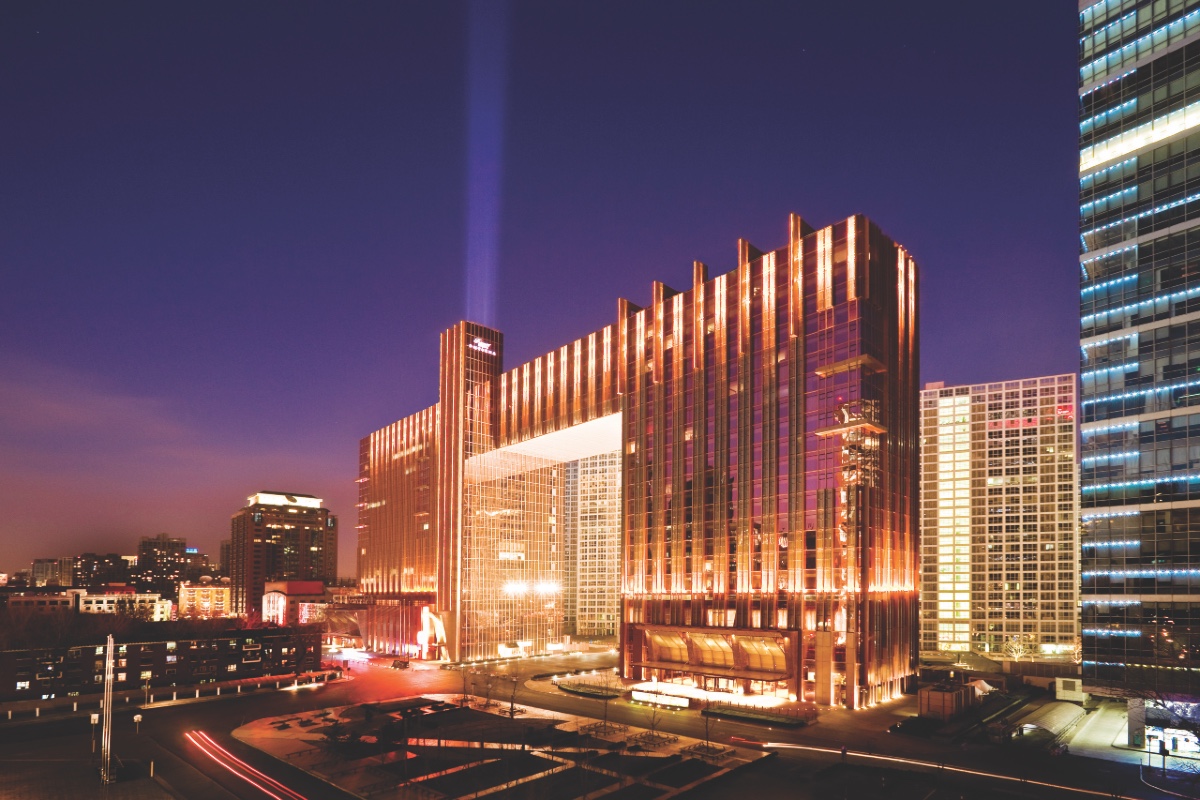
Fairmont Beijing

Fairmont Beijing | Image credit: Fairmont Hotels & Resorts

…And Renovations Coming Soon

Fairmont Winnipeg – Winnipeg, Manitoba, Canada: Fairmont Winnipeg is undergoing a complete property transformation spanning all guestrooms, the lobby level, the Fairmont Gold Lounge and fitness and pool facilities. As the hotel describes it: “This is not a renovation. It is a reinvention – grounded in place, crafted with vision, and designed to celebrate the spirit of this remarkable city.” The hotel will close to guests on 1 July 2026, with reopening targeted for summer 2027. 

Fairmont Beijing – Beijing, China: Fairmont Beijing will close its doors on 1 September 2026 to embark on a complete renovation, marking the beginning of a significant new chapter for one of the brand’s landmark addresses in Asia. The full scope and details of the transformation will be shared in due course, with the reopening date to be announced separately. 

Further Transformations in the Americas and Africa: 

Across the wider portfolio, Fairmont’s culture of reinvestment continues at pace, including:  

Fairmont Banff Springs – Conference Center renovation on track for February 2027. 

Fairmont Empress, Victoria – The historic Bengal reopens as the hotel’s breakfast room. 

Fairmont Grand Del Mar, San Diego – Addison by William Bradley restaurant renovation completed. 

Fairmont Royal York, Toronto – A thoughtful transformation of their East Retail Promenade is underway and will be unveiled later this year. 

In Africa Fairmont Nile City in Egypt is also undergoing active renovations. 

Image Image Credit: Fairmont Hotels & Resorts 

Sanipex

Sanipex: smart control brought to the bathroom

1024 640 Sienna Shipton
Sanipex: smart control brought to the bathroom

Sanipex Group is partnering with Ekinex to launch Home Automation, a new category designed for homes and hospitality spaces where lighting, climate, sound and access come together through intelligent, design-led control…

Sanipex

Bringing together advanced technology and refined interior design, this category introduces solutions that enhance comfort, convenience and efficiency while integrating seamlessly into contemporary living environments. From lighting that adapts to the mood of a room to climate, audio, access and automated scenes, Home Automation creates spaces that respond intuitively to the way people live, work and relax.

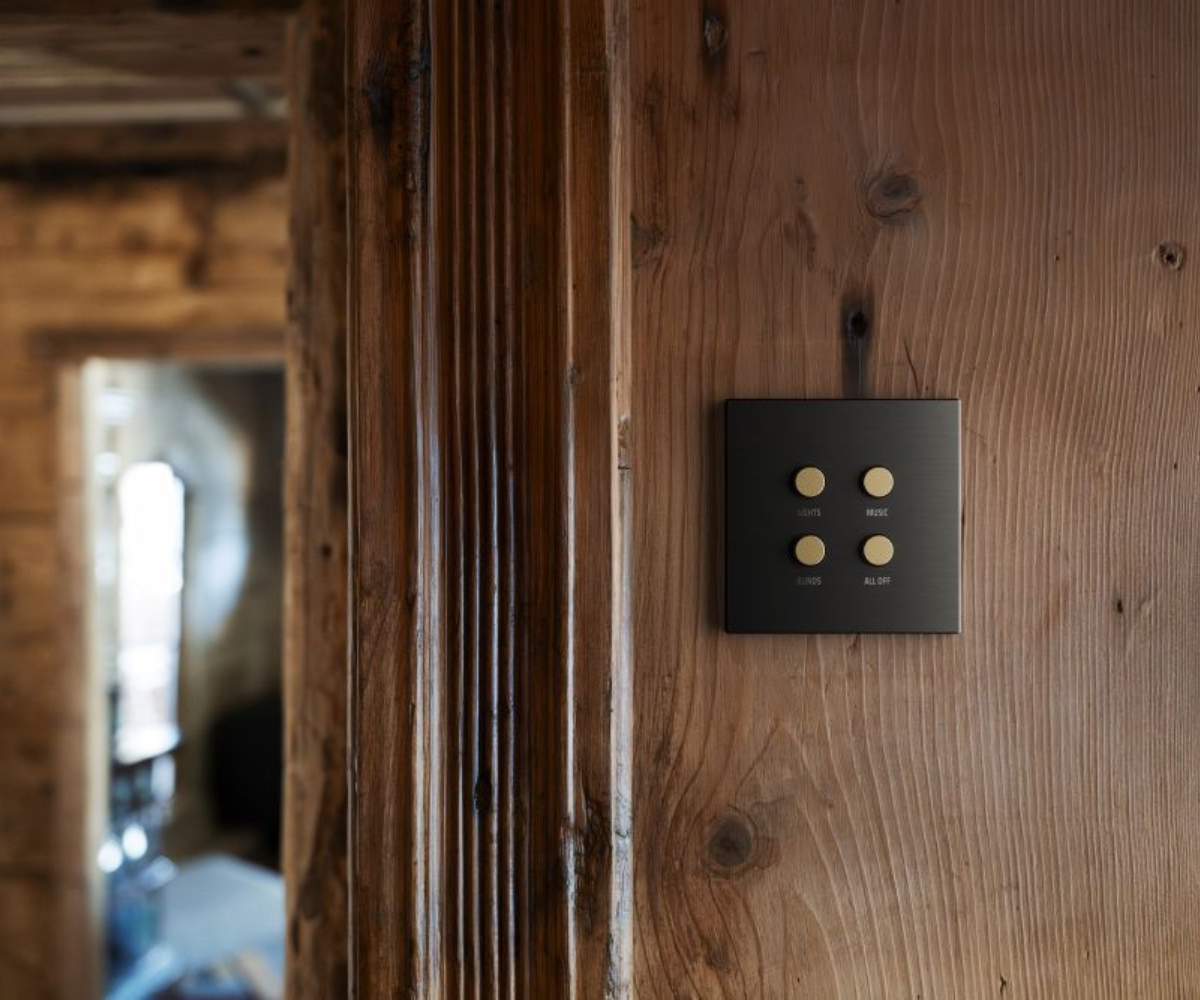
Sanipex brown light control on wooden wall panell

Image credit: Sanipex

A new layer of Intelligent Design

The finest spaces are defined not only by their materials and finishes, but by how effortlessly they function. Home Automation adds a new layer of intelligence, enhancing the way a space works without disrupting its aesthetic.

Built on the globally recognised KNX standard, the EKINEX ecosystem allows lighting, climate, shading, audio and access to work together seamlessly. The result is a home or hospitality environment that feels comfortable, responsive and easier to manage, with the system working quietly in the background. This intelligent layer supports the way a space feels and performs, while remaining carefully integrated within the architecture.

Controls designed for contemporary interiors

There is a fine line between intelligent control and visual distraction. As one of the few visible parts of an automation system, a wall-mounted control needs the same care as any architectural detail. Ekinex controls bring lighting, climate, scenes and room functions into easy reach, sitting naturally within the surrounding interior.

Ekinex collections including ERA, Proxima, Signum, 20venti, 71 and FF combine intuitive functionality with refined design. Available in a range of architectural finishes, including metal, brass, Fenix NTM and technopolymer, these controls fit neatly within the residential and hospitality interiors while maintaining a considered aesthetic.

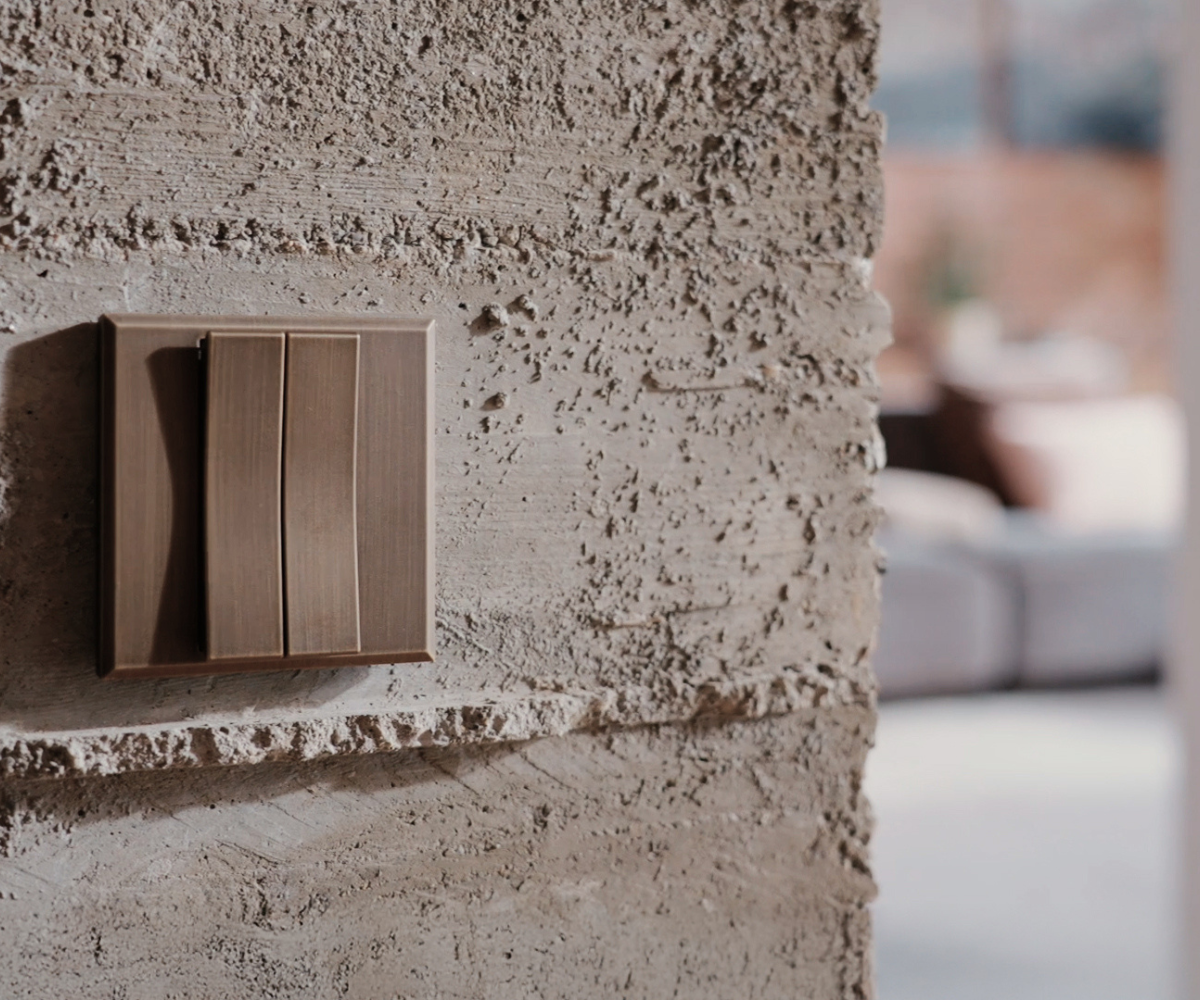
brass Sanipex switch plate on raw concrete wall

Image credit: Sanipex

A complete ecosystem for modern living

Home Automation extends far beyond wall controls, bringing multiple technologies together into one connected system. Within the Ekinex ecosystem, Delégo provides a platform for visualisation and supervision, allowing users to manage lighting, climate, blinds, energy and security from smart devices or touch panels. Sentio supports seamless multiroom audio, allowing music to move smoothly from room to room and set the tone throughout the home.

For access and entertainment, Dico offers IP-based video door entry, while Revélo discreetly conceals screens until they are needed, helping maintain a clean and uncluttered interior aesthetic. Together, these solutions suit villas, apartments, private entertainment areas and contemporary family homes where technology needs to feel intuitive, coordinated and easy to use.

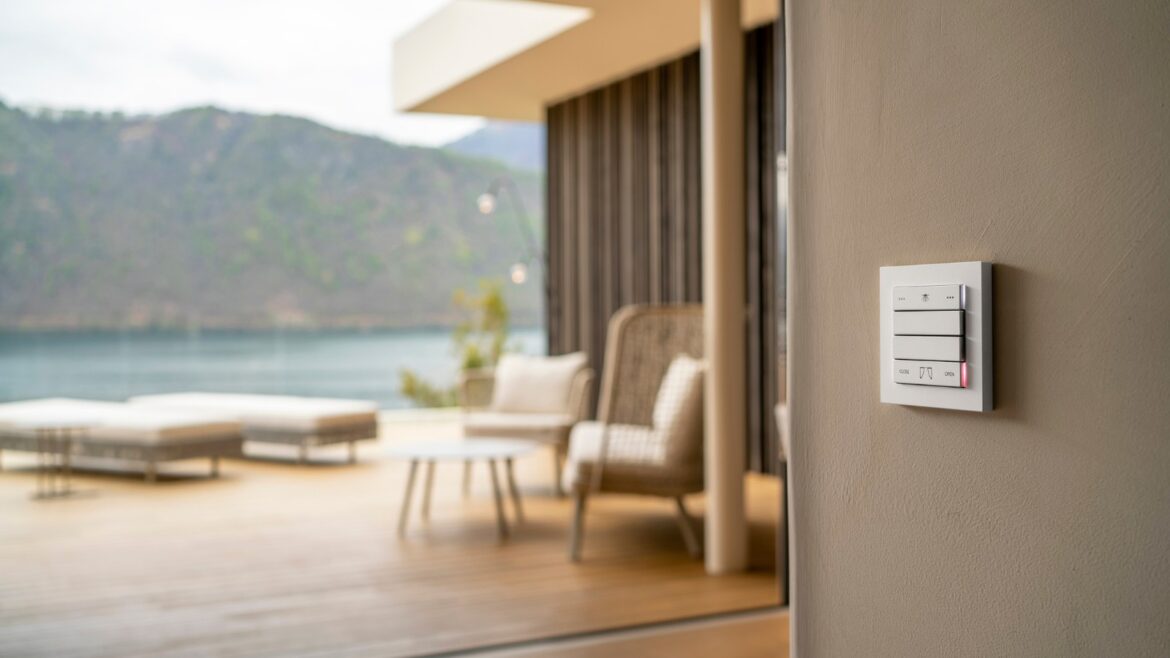
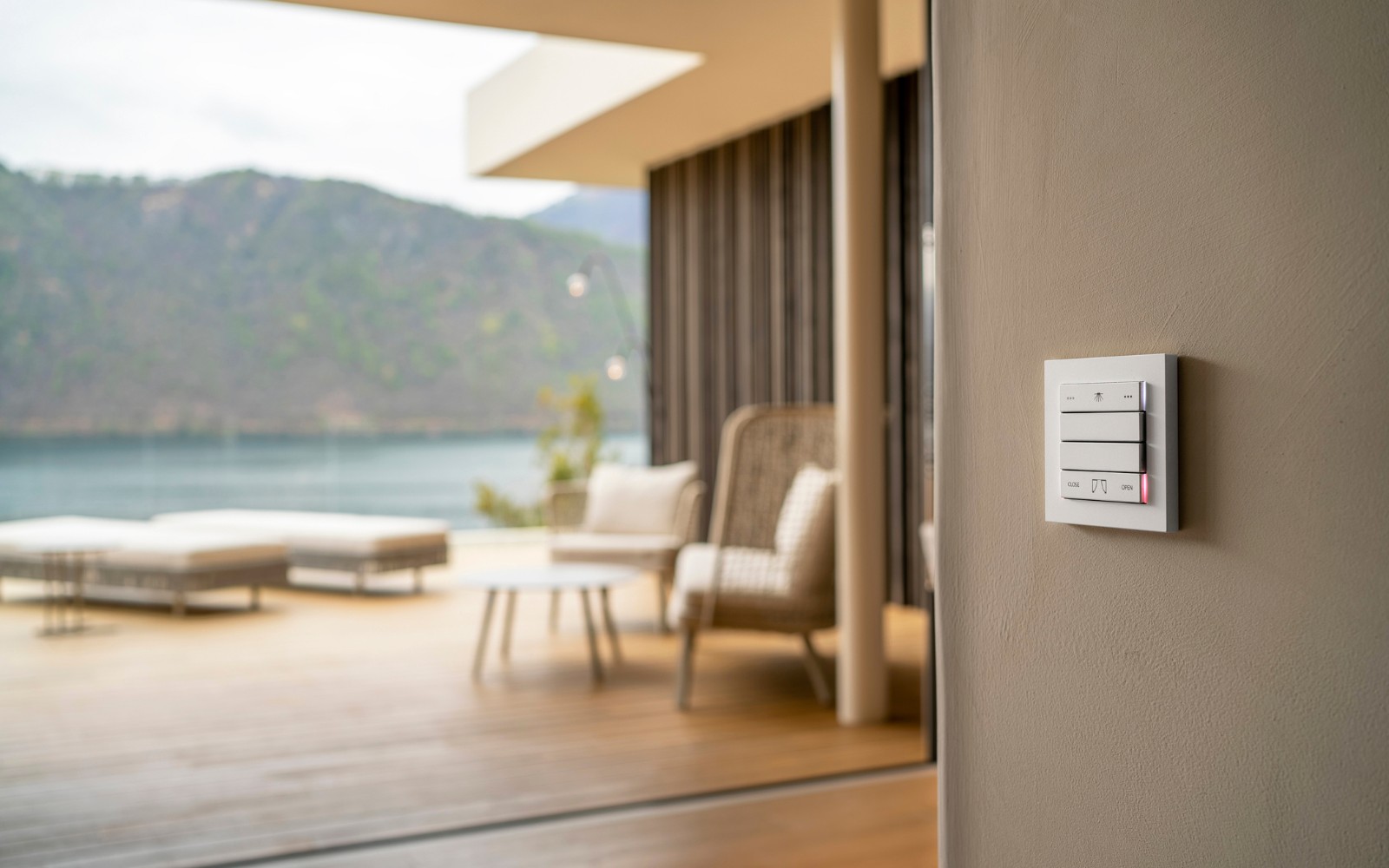
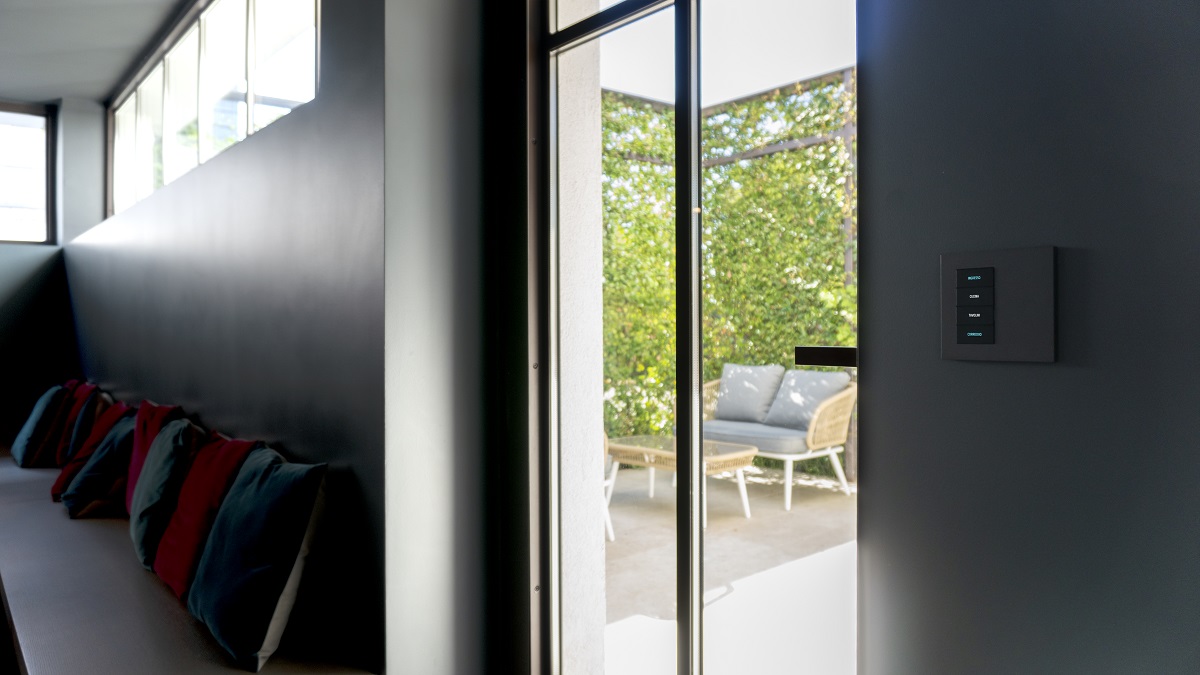
automated room control next to glass door

Image credit: Sanipex

Tailored automation for hospitality

For hospitality projects, Home Automation supports both guest comfort and operational efficiency. Through Delégo Suite, lighting, climate, blinds, access and audio can be managed through a centralised platform, helping create responsive environments across guest rooms, wellness areas, lounges, restaurants and public spaces.

For operators, the system keeps management and energy control straightforward. For guests, it helps create a stay that feels comfortable, intuitive and thoughtfully tailored.

Home Automation solutions are now on display at SANIPEX GALLERY on Sheikh Zayed Road, where homeowners, designers, architects, developers and hospitality professionals can experience Ekinex technologies firsthand within the professional area of the showroom.

The launch of Home Automation marks an important expansion of SANIPEX GROUP’s portfolio, complementing its existing offering across bathrooms, surfaces, kitchens, outdoor living, lighting and hardware. By introducing intelligent automation solutions for residential and hospitality projects, SANIPEX GROUP provides a more joined-up approach to creating connected, thoughtfully designed spaces.

Contact the SANIPEX team for product demonstrations, project support and expert guidance on integrating Home Automation into your next project.

Sanipex is one of our Recommended Suppliers and regularly features in our Supplier News section of the website. If you are interested in becoming one of our Recommended Suppliers, please email Katy Phillips.

Main image credit: SANIPEX GROUP

Hometels in Chiswick, Southampton and Belfast have transitioned from room2 to Second Nature

Lamington Group launches Second Nature

1024 640 Pauline Brettell
Lamington Group launches Second Nature

Lamington Group has announced the launch of Second Nature, the new brand for its Hometel portfolio, marking the next stage in the company’s evolution after a decade of developing and operating one of the UK’s most distinctive hospitality concepts…

Hometels in Chiswick, Southampton and Belfast have transitioned from room2 to Second Nature

From today, the company’s Hometels in Chiswick, Southampton and Belfast have transitioned from room2 to Second Nature, with all guest-facing touchpoints, including signage, uniforms, in-room collateral and digital channels, adopting the new identity. Future openings, including York in May 2027, together with developments in Cambridge, Leeds, and Shepherd’s Bush, will all launch under the Second Nature brand.

The rebrand reflects the evolution of the business rather than a change in the guest experience. When room2 launched in 2016, it introduced the Hometel: a new category combining the comfort and flexibility of apartment living with the atmosphere and service of a hotel. Over the past decade, Lamington Group has continually refined that proposition, creating a hospitality experience that has evolved far beyond its original identity.

room2 Belfast transitions to Second Nature

Image credit: Lamington Group

The Hometel concept remains unchanged, but the business has outgrown the room2 name. Second Nature better reflects the quality of today’s guest experience and provides the platform for the company’s next phase of growth.

Robert Godwin, CEO of Lamington Group, commented: “When we launched room2, we weren’t trying to build a brand. We were trying to prove there was a better way to stay. We believed people shouldn’t have to choose between an apartment and a hotel, so we created the Hometel and spent the next decade building, operating and refining it ourselves. Over that time, our understanding of what great hospitality can be has evolved enormously. The room2 name belonged to the business we started. Second Nature reflects the business we’ve become.”

The launch of Second Nature also marks the next phase of Lamington Group’s growth strategy. Having established and proven the Hometel concept through its own portfolio, the business is now focused on expanding through a combination of new developments, leases and hotel management agreements. Today it operates more than 330 keys, with a confirmed development pipeline of approximately 2,200 keys and a long-term ambition to build a 5,000-key pipeline.
Central to that growth is a belief that sustainability should improve commercial performance, not simply environmental performance. Rather than treating sustainability as an additional cost, Lamington Group has embedded it into the way it designs, develops and operates its hotels, with a strategy centred on Net Zero, Circularity and Health & Wellbeing.

“We’ve always believed that doing the right thing should also be the commercially smart thing,” added Godwin. “Better buildings perform better. They cost less to operate, create healthier spaces for guests and teams and generate stronger long-term returns. We don’t see sustainability as an initiative alongside the business. We see it as fundamental to building a better hospitality business.”

This philosophy is continually tested through dedicated innovation rooms at the company’s Chiswick and Belfast Hometels, where new technologies, materials and operational improvements are trialled before being introduced across the wider portfolio.

Second Nature represents the next chapter in Lamington Group’s evolution. The Hometel concept remains unchanged, but the ambition to redefine modern hospitality continues to grow.

Main image credit: Lamington Group

Mamula Island by Banyan Tree - Boka Bay Entrance View

Banyan Tree makes its European debut at Mamula Island

1024 640 Stuart O'Brien
Banyan Tree makes its European debut at Mamula Island

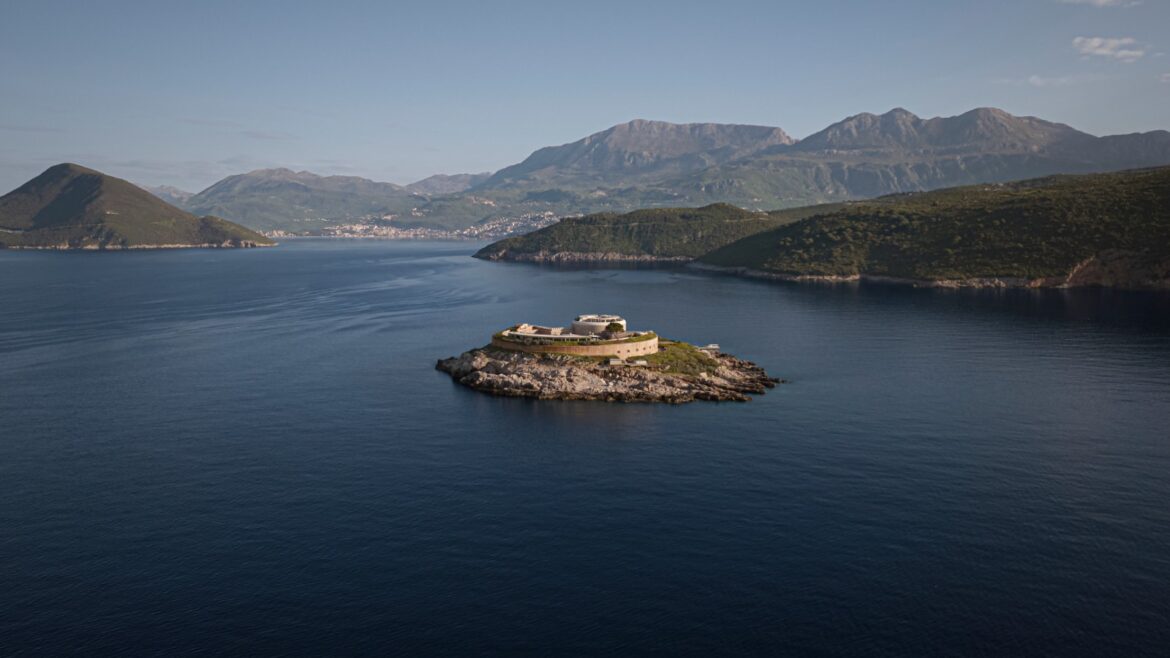
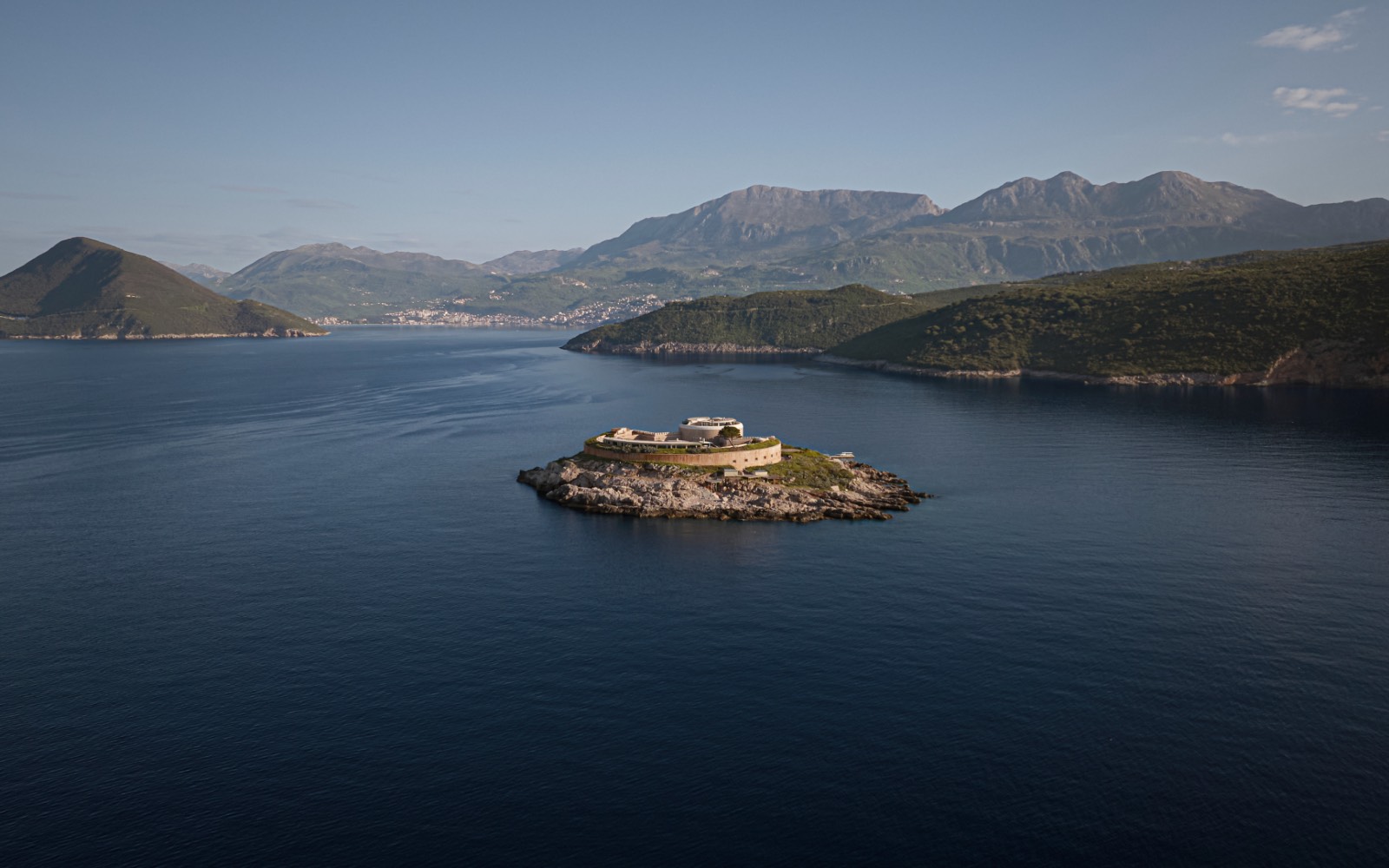
Housed within a meticulously restored 19th-century fortress at the gateway to Montenegro’s Bay of Kotor, Mamula Island by Banyan Tree blends heritage, wellness and contemporary luxury in one of the Adriatic’s most extraordinary settings…

Mamula Island by Banyan Tree - Boka Bay Entrance View

Banyan Group has officially unveiled Mamula Island by Banyan Tree in its first full season under its flagship Banyan Tree brand, marking Banyan Tree’s first resort in Europe.

Set on a secluded islet at the entrance of the UNESCO-listed Bay of Kotor (known locally as Boka Bay), Mamula Island by Banyan Tree is housed in a restored 19th-century fortress encircled by sea and sky, with far-reaching views across the Adriatic.

Following its addition to the Banyan Tree portfolio, the 32-room island sanctuary now features the brand’s award-winning Banyan Tree Spa, alongside refreshed brand experiences spanning destination-led dining, cultural programming, wellbeing and nature-based discovery.

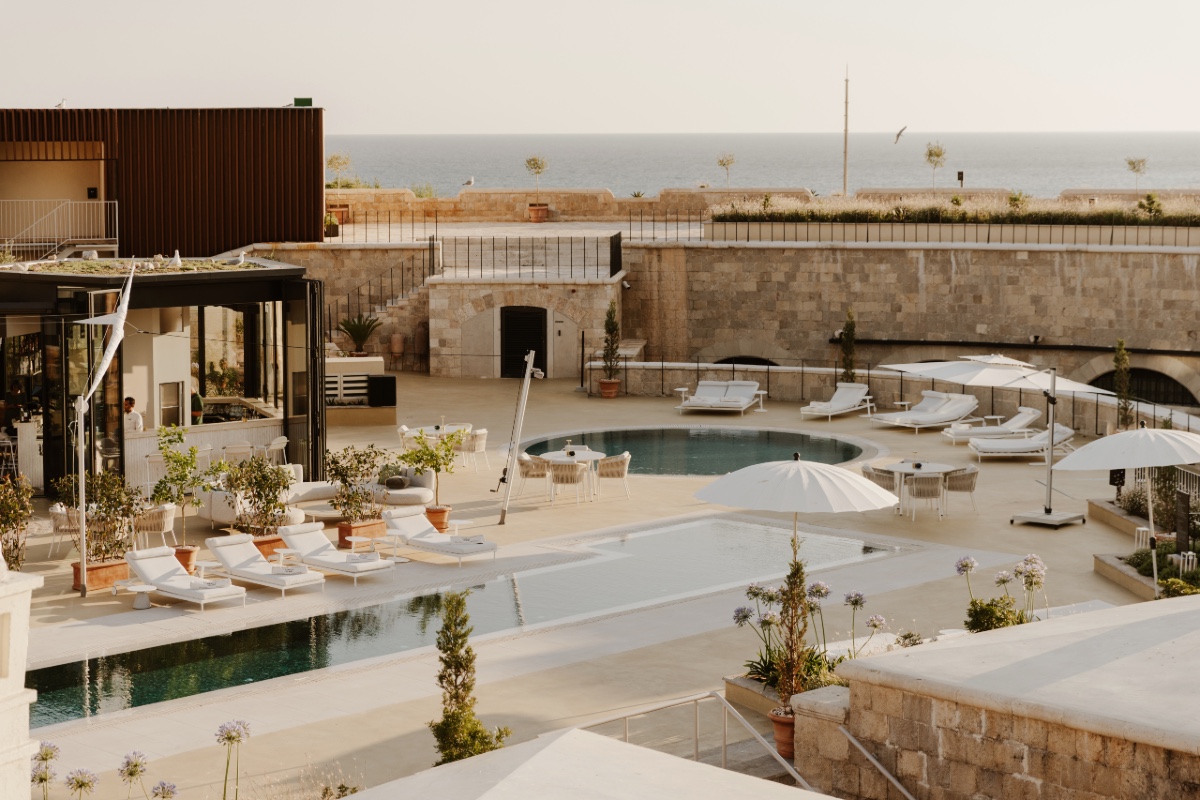
Mamula Island by Banyan Tree - Parasol

Mamula Island by Banyan Tree – Parasol | Image credit: Banyan Group

A Guardian of the Bay of Kotor

Originally built in the 1850s, Fort Mamula once served as a coastal defence fortification at the entrance of the Bay of Kotor. Its seven-year restoration was led by developer Samih Sawiris, in partnership with Lisbon-based MCM Architecture & Design, Montenegrin conservation and architecture studio Projektor, and local heritage authorities.

Interior design was overseen by Piotr Wisniewski and weStudio Berlin, combining mid-century influences, local craftsmanship and bespoke furniture. Across the resort, natural stone, aged brass, solid oak and organic textiles create interiors that are warm, understated and enduring.

The arch, a defining feature of the original fortress, is reinterpreted throughout the resort, including in a custom-made furniture line developed for the hotel. The design also draws on local artisanal traditions, from pottery and joinery to abstract fine art, creating a contemporary retreat grounded in the island and the wider region.

Rooms and Suites Overlooking the Adriatic

The journey to the island begins with a private boat transfer across Boka Bay or a helicopter flight from Dubrovnik or Tivat, with views over Montenegro’s coastline and the Adriatic Sea.

The Adriatic is a constant presence throughout the resort, with all rooms and suites offering sea views. Heritage Suites are set within the original fortress structure, preserving stonework and heritage features, while newly built rooms and suites feature contemporary interiors, floor-to-ceiling windows and private terraces. The Heritage Sky Suites have been recognised as “Best Hotel Suite” at AHEAD Awards Europe and ranked among the world’s top ten suites.

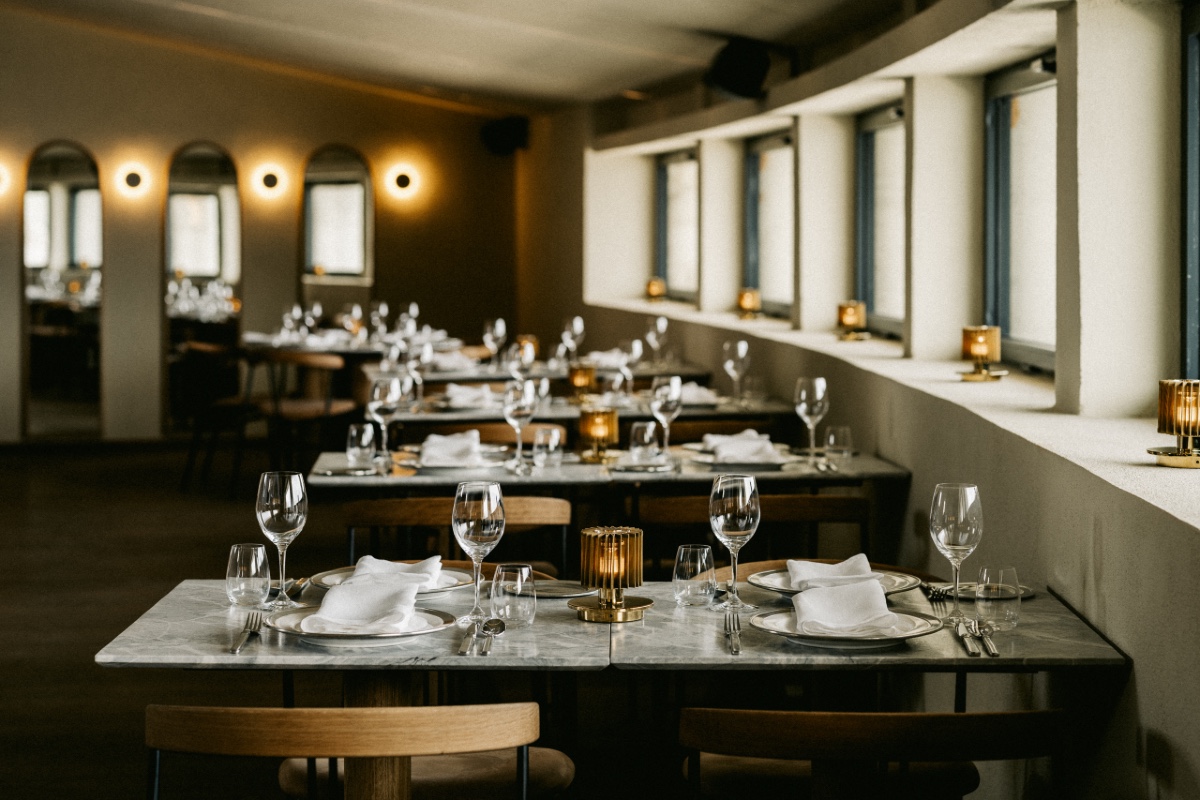
Mamula Island by Banyan Tree - Kamena

Mamula Island by Banyan Tree – Kamena | Image credit: Banyan Group

Dining Across Land and Sea

Dining at Mamula Island by Banyan Tree is shaped by local produce, fresh seafood and the micro-seasonality of the Montenegrin coast. Parasol, set at the heart of the fortress beside three outdoor pools, offers a crudo concept centred on just-caught seafood, while Kamena Restaurant overlooks the Adriatic and highlights land-led flavours and locally harvested ingredients.

Perched on the edge of the island, Celeste offers a relaxed outdoor terrace experience inspired by coastal cooking traditions from Italy, the Caribbean and the Levant. As evening falls, guests can gather at Pinea Bar, an intimate speakeasy-style bar offering handcrafted cocktails and vinyl nights under the stars.

A Restorative Island Journey

Located within the historic fortress tower, Banyan Tree Spa offers a wellbeing experience guided by the brand’s 8 Pillars of Wellbeing. Treatments draw on local plants, oils and natural elements, with rituals designed to reflect the island’s setting and the restorative qualities of the surrounding landscape.

The spa features an indoor gym, ritual rooms, Finnish and herbal saunas, steam room, halotherapy room, flotation chamber and experience shower. Guests can also experience hydro and weightless therapies, including a meditative float experience, as well as traditional Thai, Javanese Indonesian and Chinese healing therapies, therapeutic bodywork and the brand’s signature Royal Banyan treatment.

Beyond the spa, the island offers space for quiet restoration and outdoor discovery. At the northern tip of the island, a serviced beach features sunbeds, individual coves and views towards Herceg Novi, with direct access to the island’s natural coastline.

Guests can explore the island, coastline and Luštica Peninsula by kayak, paddleboard, water bike or e-bike. Further afield, curated experiences include Boka Bay, sunrise swims in the Blue Cave, Kotor Old Town, Royal Lovćen and Cetinje, Skadar Lake and the Tara River. Luštica food tours and local discovery experiences connect guests with Montenegro’s history, landscapes and coastal life.

Creative and Cultural Programming

Cultural programming is central to the Mamula Island experience. A new Artists-in-Residence programme brings local and regional creatives to the island, with workshops, exhibitions, maker sessions, opera evenings, live music and the Operosa Music Festival offering guests a closer connection to the region’s creative community.

Mamula Island by Banyan Tree is also available for full island buyout for weddings, private events and retreats, with a collection of distinctive venues spanning the restored fortress, open-air terraces, gardens, spa facilities and beach.

Main Image Credit: Banyan Group

STEP GUARD floors

Restrained Elegance: STEP GUARD flooring for intentional hotel design

1024 640 Pauline Brettell
Restrained Elegance: STEP GUARD flooring for intentional hotel design

The 2026 hospitality interior is about how a space makes guests feel, with the concept of quiet luxury increasingly favoured in hotel design spaces for its restrained, elegant aesthetic – in this landscape, the floor serves a fundamental role…

STEP GUARD floors

With designers increasingly looking to high-end residential spaces for inspiration to create calm, intentional environments that leave guests with long-term emotional impact, the floor underpins it all. It is one of the largest continuous surfaces in any property that guests interact with from the moment they check in until they leave. Today’s hospitality designers face a challenge: balancing warm, grounded aesthetic with the operational demands of hospitality spaces. STEP GUARD SPC flooring bridges the gap between high-end aesthetic and commercial performance requirements.

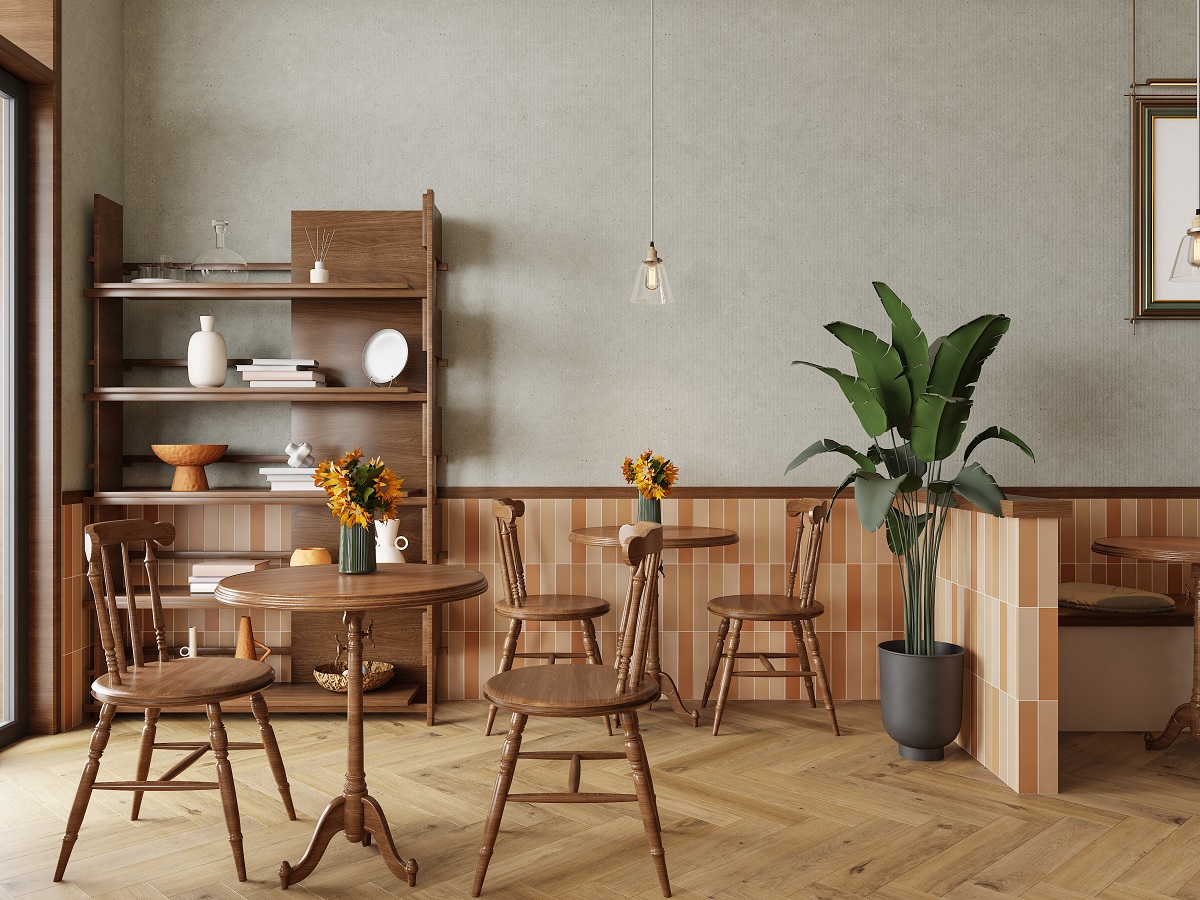
wooden chairs and table in restaurant setting with wooden floor and wall panelling

Image credit: STEP GUARD Floors & Walls

Reclaim Nature for Commercial Spaces
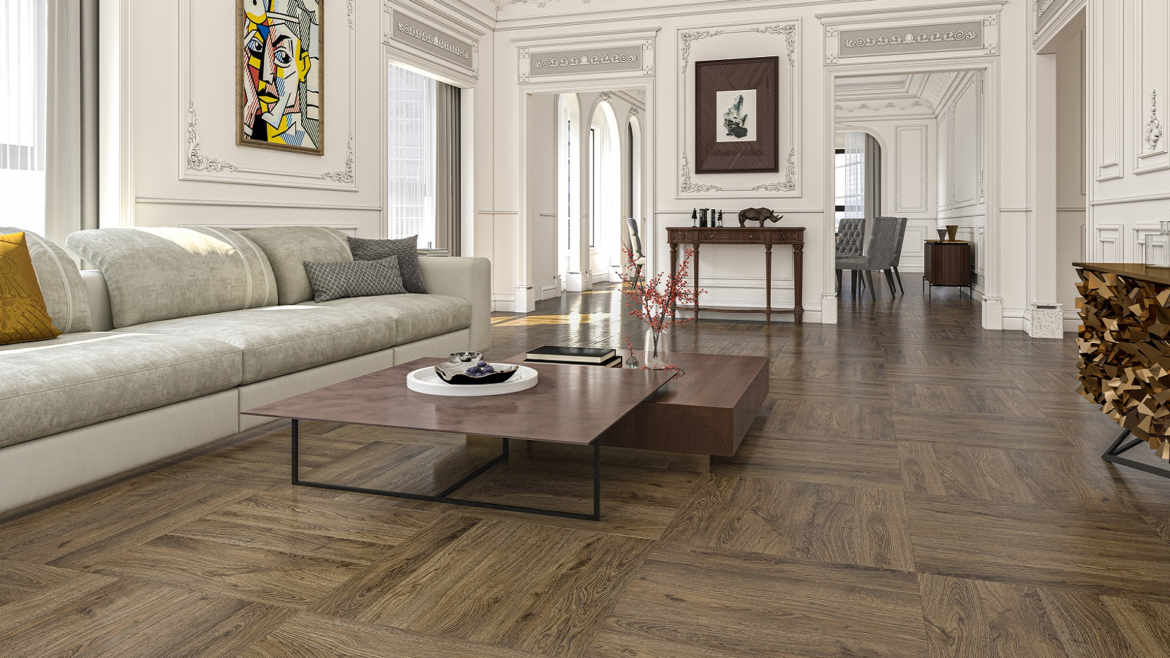
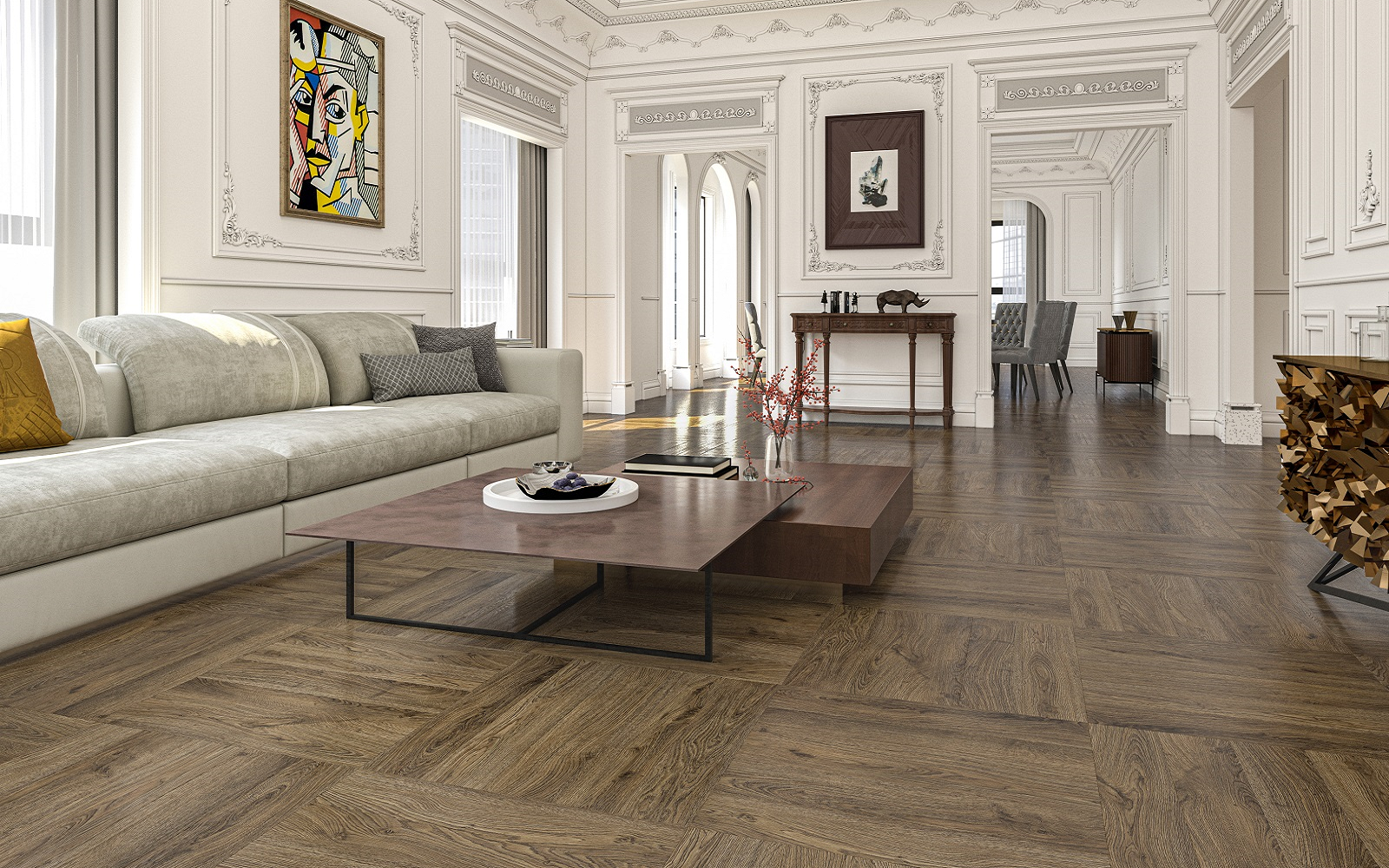
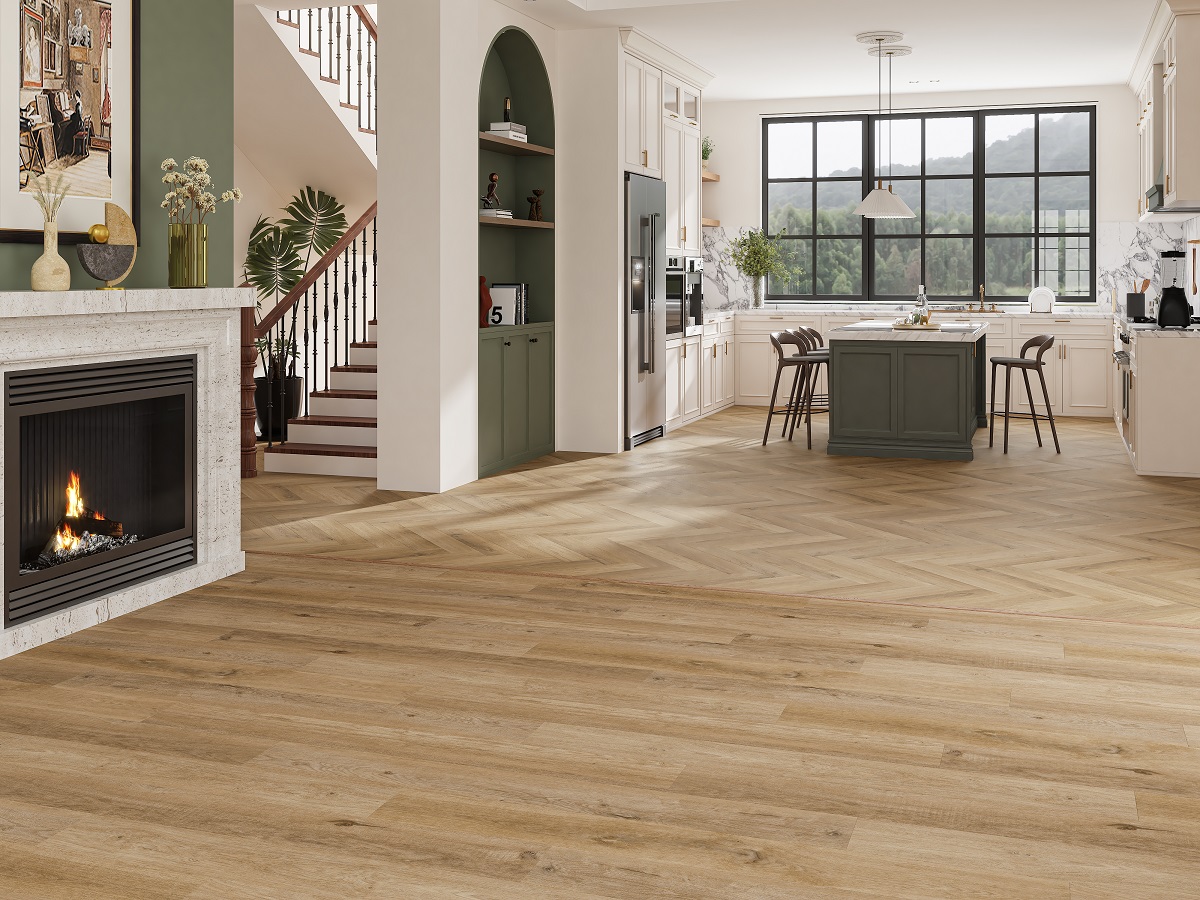
Modern travelers seek authenticity and a sense of place. They are turning away from high-contrast, overly stylised finishes toward grounded, tactile textures. STEP GUARD 2026 collections embody this evolution through a curation of natural designs: The new wood-look design for SPC floors captures the nature of wood grain with EIR surface and a warm, essential color palette ranges from welcoming oak to deeply characterized walnuts. Same colourways are available in both standard planks and herringbone patterns for zoning. Stone-look SPC wall panel and rigid flooring draws inspiration from travertine, limestone, and sandstone. By focusing on organic, tonal variation, and honed finishes, these surfaces offer an authentic, discreet style that feels grounded.

wooden floor with zoning layout

Image credit: STEP GUARD Floors & Walls

These collections merge modern aesthetics with heavy commercial performance and low-maintenance longevity. By eliminating the fragility of natural wood and the cold rigidity of traditional tile, STEP GUARD transforms natural textures into a flexible, creative tool for any hospitality environment, including high-traffic lobbies, guestrooms, bathrooms, and utility spaces.

bathroom design with stepguard flooring

Image credit: STEP GUARD Floors & Walls

Functional Flooring Across Spaces
Traditionally, hospitality flooring design relied on rigid material zoning: tile at the entryway, a separate hard surface near the minibar to guard against spills, and carpet around the bed for warmth. While it is functional, this fractured approach slices the room visually and complicates maintenance for housekeeping teams managing multiple surfaces. Using a unified flooring design across different zones or extending it to the walls creates an expansive visual. Because STEP GUARD SPC flooring offers moisture, impact, and stain resistance, it can be used cohesively in bedrooms, bathrooms, hallways, and more. Using SPC rigid vinyl flooring across different spaces consistently improves housekeeping efficiency while providing guests with a clean, hygienic, and beautiful environment.

stepguard vinyl flooring creates natural surface look in bathroom

Image credit: STEP GUARD Floors & Walls

Guest Safety and Operational Longevity
A beautiful interior loses its luxury status the moment it fails operationally. Outdated, worn, or slick flooring actively erodes brand trust and directly compromises the guest experience. In hospitality, a surface must withstand extreme demands that residential floors never face: enduring daily abrasion, rolling luggage wheels, heavy room service carts, high heels, and the static loads of heavy furniture. STEP GUARD SPC floors address these high-traffic realities without compromising on design. STEP GUARD SPC flooring is certified Class 33 for heavy commercial use, meeting the structural durability requirement for hotel environments. Furthermore, engineered with an R10 slip-resistance rating, it ensures traction underfoot, keeping guests safe while maintaining a flawless, premium aesthetic.

A Foundational Choice for Modern Hotel Brands
Hospitality design is evolving into integrated solutions, in which floors and walls are specified in the earlier stages as branding elements. By delivering the depth of natural materials alongside the functional requirements, STEP GUARD allows designers to build cohesion from the lobby to the guestroom and supports modern hospitality aesthetic demands.

STEP GUARD is one of our Recommended Suppliers and regularly features in our Supplier News section of the website. If you are interested in becoming one of our Recommended Suppliers, please email Katy Phillips.

Main image credit: STEP GUARD Floors & Walls

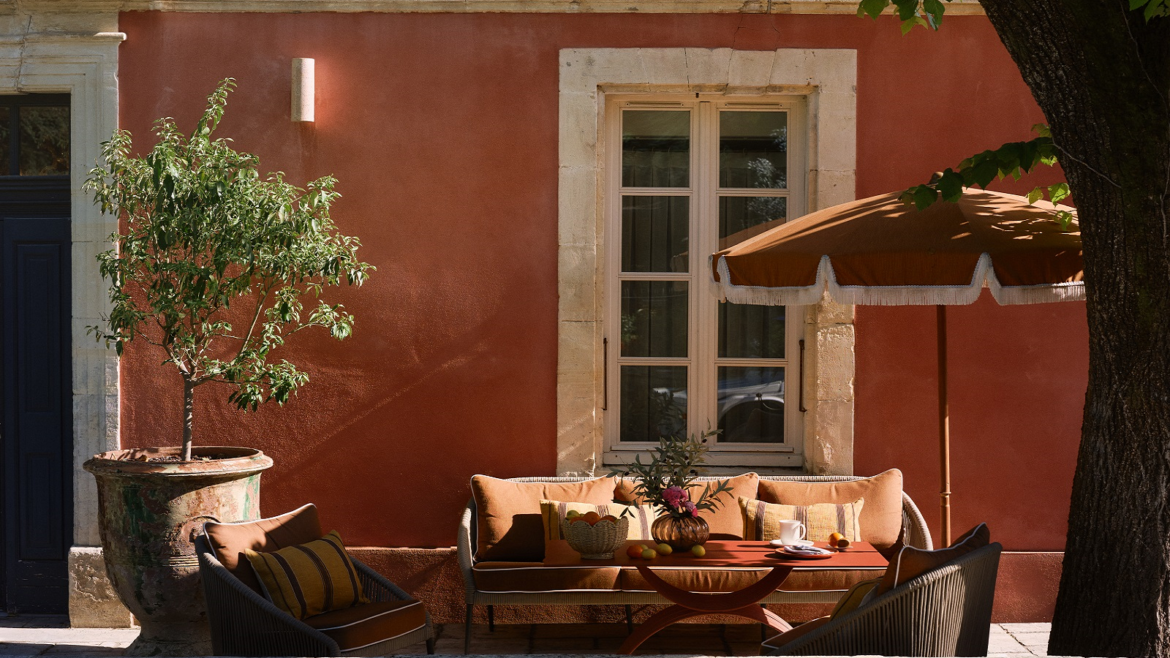
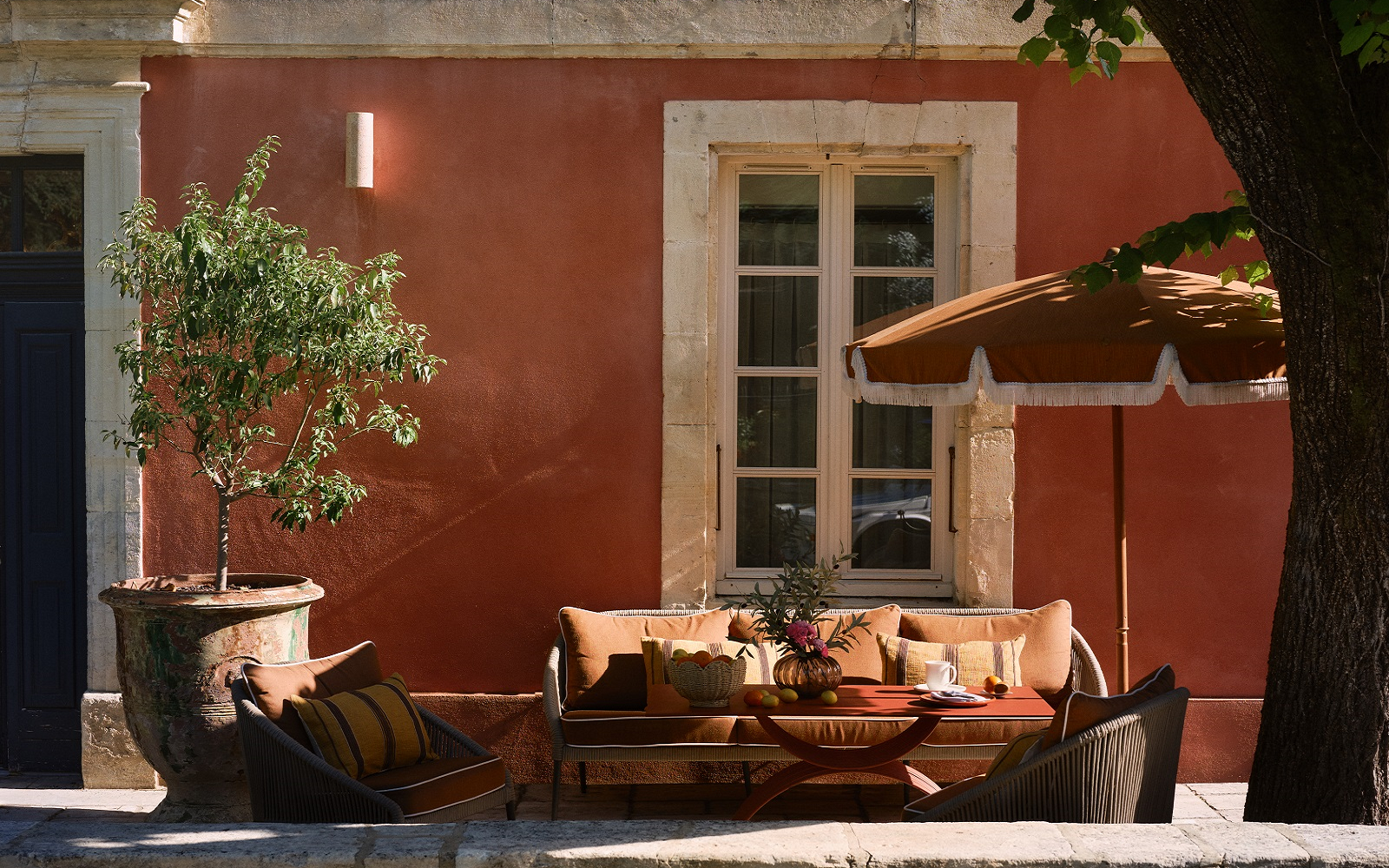
pink plaster, umbrella and couch outside villa augusta

Villa Augusta – a home before a hotel

1024 640 Pauline Brettell
Villa Augusta – a home before a hotel

In the heart of Provence’s Drôme region, Maison Numéro 20 brings its signature touch to Villa Augusta – a former Tricastin manor house set just outside the charming village of Saint-Paul-Trois-Châteaux…

pink plaster, umbrella and couch outside villa augusta

Nestled within a lush, wooded park of nearly 4,000 square metres, the four-star Villa Augusta and its 23 rooms offer an intimate retreat where stone, light, and the gentle patina of age together shape a Provence that feels private, quiet, and deeply alive.

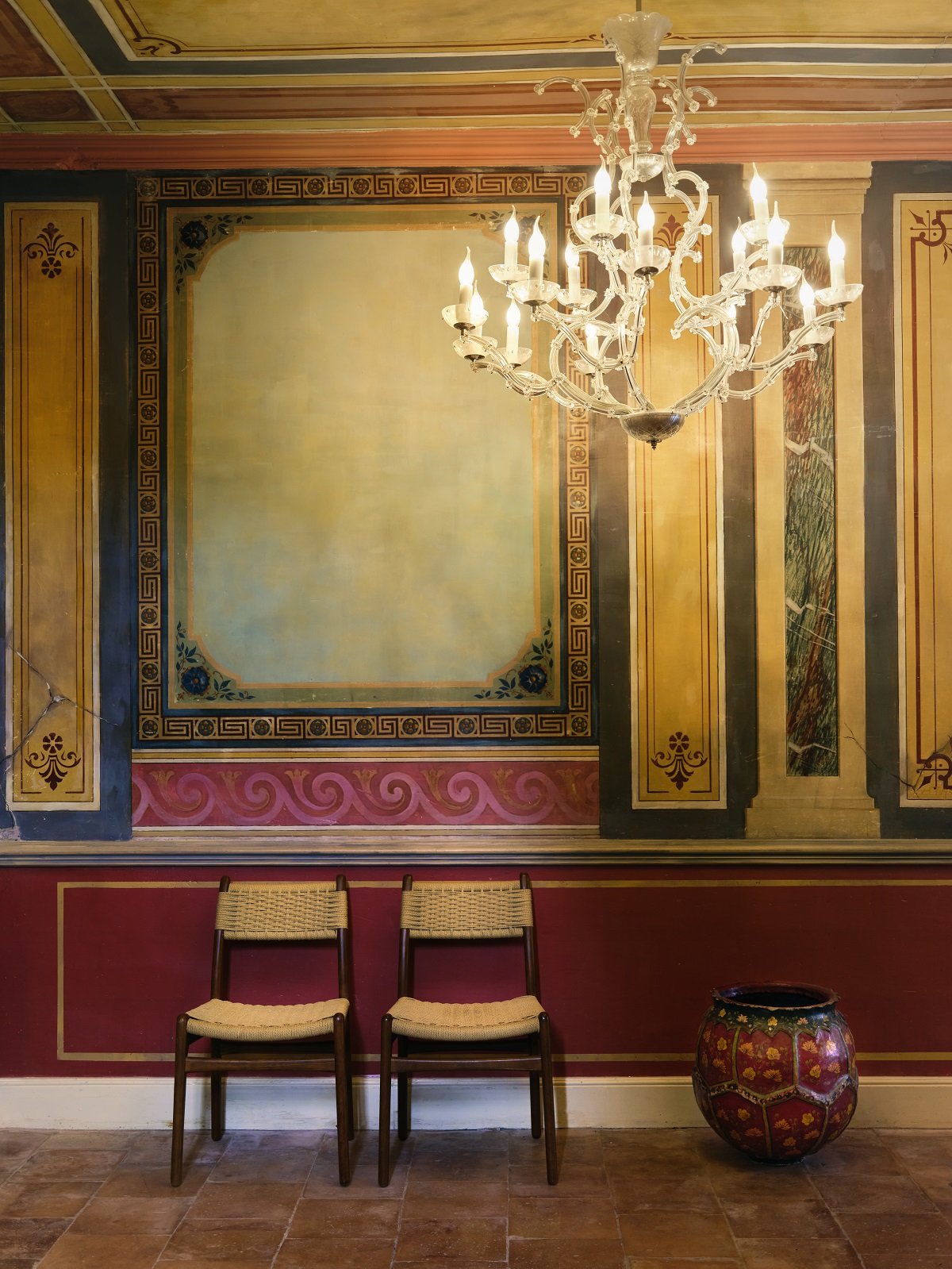
2 chairs below fresco and chandelier in Villa Augusta

Image credit: Villa Augusta / Pauline Chardin

From the moment one enters, the tone is set: the traditional reception desk gives way to a large communal table flanked by an antique bookcase – as though stepping into a private home. The transition from outside to inside is seamless, guided by the luminous southern light. At the heart of the space, a rotunda serves as the architectural centrepiece of the bastide, housing an installation by Art et Floritude – a large metal vase adorned with hand-painted metal olive branches.  Cushions bearing olive motifs and delicate white passementerie flow throughout the furnishings and seating, weaving a quiet thread of continuity across the spaces. Overhead, a ceiling fresco extends the home’s solar language, weaving together suns, branches, and painted bees – a subtle signature of the place.

classical vase, mid century furniture in eclectic design of villa augusta

Image credit: Villa Augusta / Pauline Chardin

The bar embraces the same spirit, rendered in a more eclectic register. Graphic-grained wood, 1970s armchairs, local flea market finds, and antique Medici vases come together without hierarchy, somewhere between memory and modernity. The white passementerie reappears as a quiet thread, drawing guests toward the hotel’s restaurant, where refined cuisine is crafted daily around the seasonal produce of the Drôme provençale.

The corridors themselves become an architectural statement. In the hotel’s contemporary wing, a bespoke sun motif woven into the carpets traces one’s path like an imprint of light. The walls are dressed in rope, worked like a textile marquetry – almost sculptural in quality. In the older wing, the material vocabulary shifts entirely: a cracked, hand-painted decorative patina reveals the layered history of the Tricastin structure – like a visible memory of time.

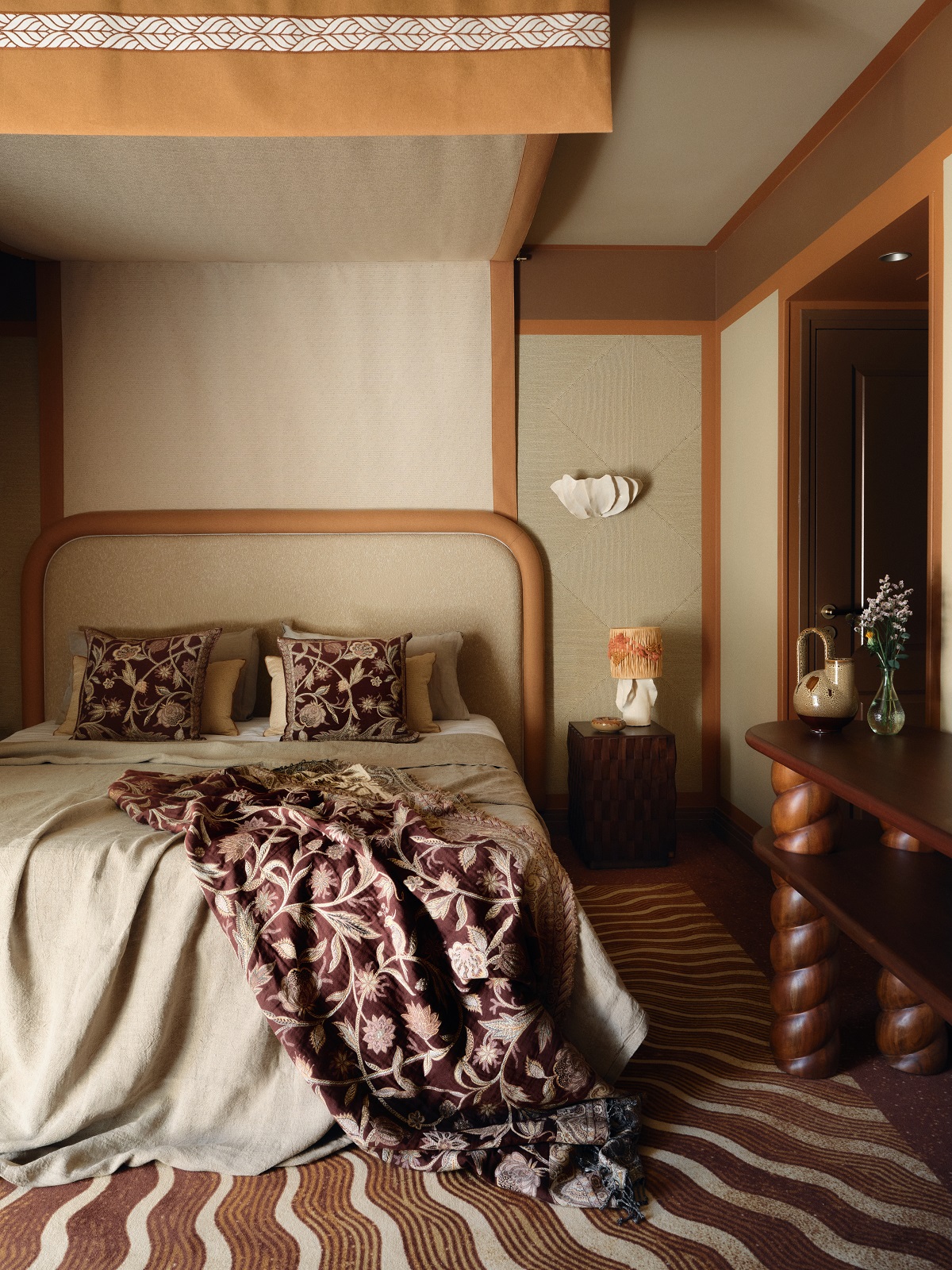
This dialogue between eras continues naturally across all 23 rooms, each conceived as a singular, serene sanctuary. The spaces feel enveloping, structured around canopy beds and bed canopies. Light is gentle. The palette moves through earth, honey, sand, and linen – in direct conversation with the surrounding landscape.

guestroom with period and vintage details

Image credit: Villa Augusta / Pauline Chardin

Materials – stone, wood, natural textiles – are chosen for their tactile beauty. Some rooms draw inspiration from the printed cottons that arrived from India via the port of Marseille as early as the 16th century, the very fabrics that gave birth to the richness of Provençal textile tradition. The adjoining bathrooms are tiled in a trellis pattern, echoing the region’s characteristic gardens, their pergolas, and the play of light filtering through the greenery.

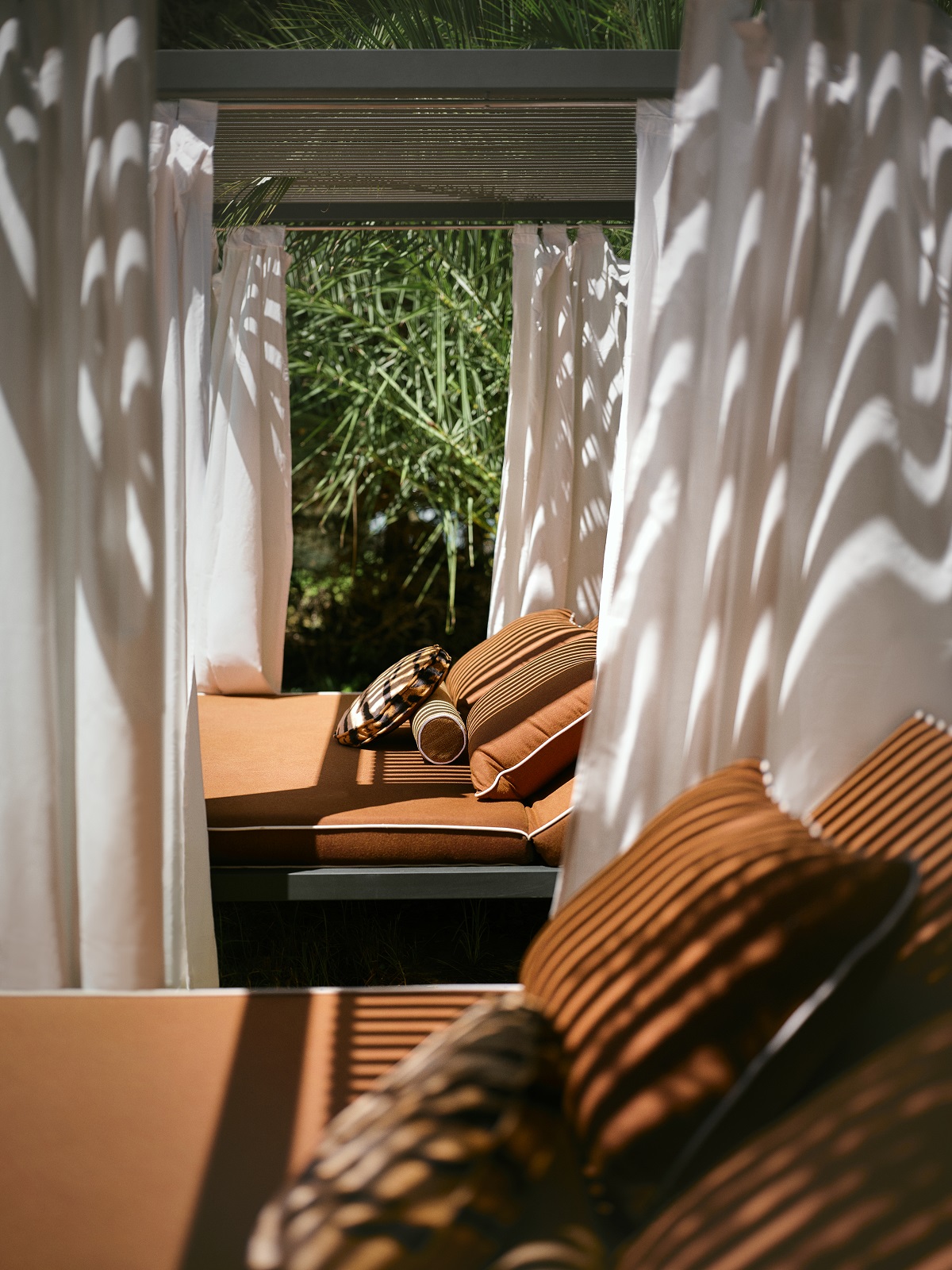
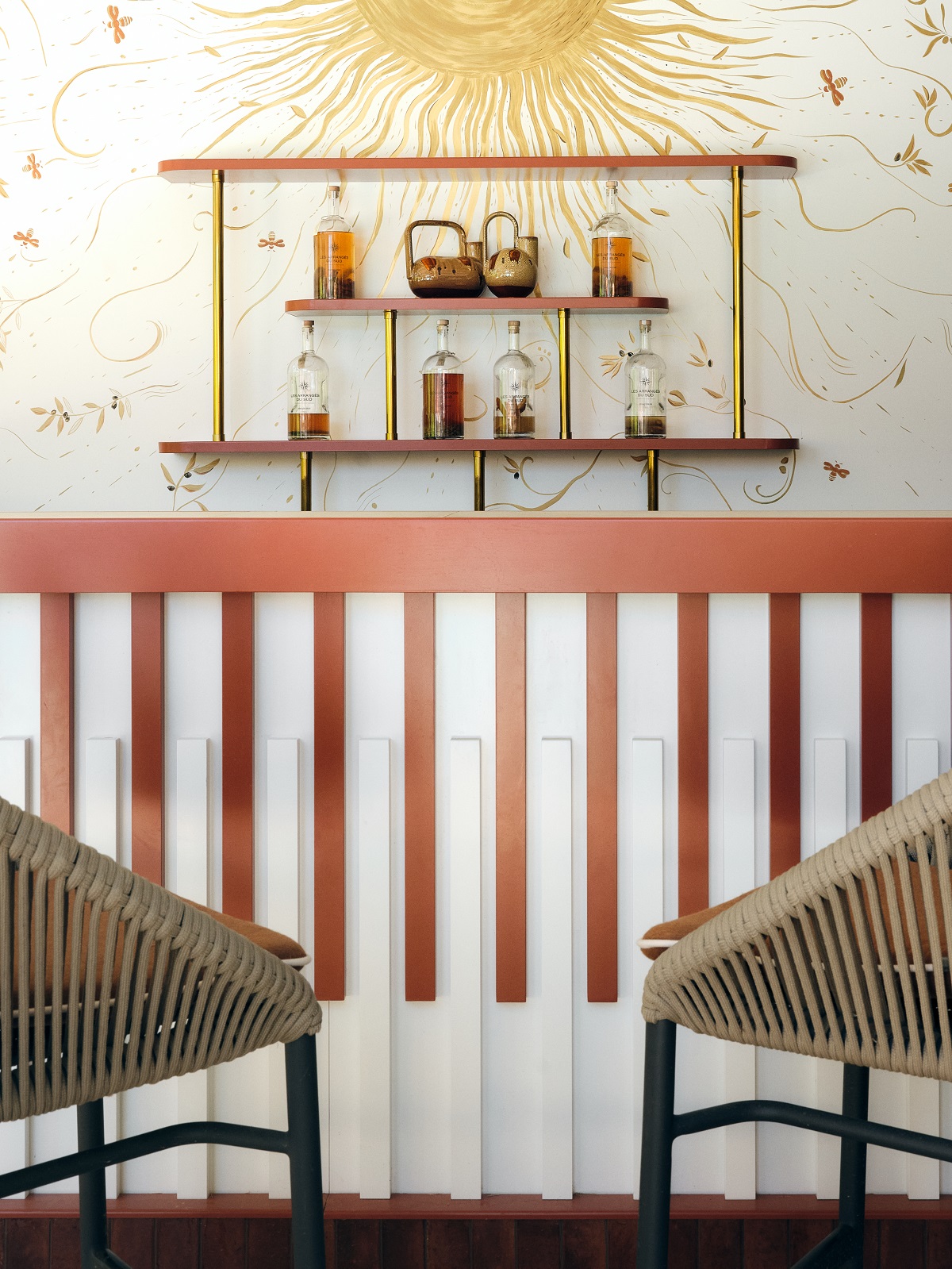
Outside, Villa Augusta opens onto its park. The swimming pool, edged with terracotta-toned sun loungers, sits within a quiet landscape in the shade of a centuries-old cedar. The pool bar takes on a freer, more painterly spirit – a golden sun in a naive, folkloric style fills one white wall, while an equally radiant fresco overhead seems to merge with the endlessly blue sky beyond.

Nearby, guests can explore fields of flowers, vineyards, hills, and garrigue by Méhari – the iconic open-top French beach car. A few minutes away, Saint-Paul-Trois-Châteaux reveals its understated heritage: a Romanesque cathedral, ancient laneways, and Gallo-Roman history.

In this idyllic setting, Villa Augusta does not impose itself. It unfolds – elegantly and unhurriedly – through the artistic sensibility of Oscar Lucien Ono, founder of Maison Numéro 20.

Main image credit: Villa Augusta / Pauline Chardin

wolves-of-tokyo-indoor-seating-blue-lamps-landscape

Wolves of Tokyo – a Japan Noir project by Run For The Hills

1024 640 Pauline Brettell
Wolves of Tokyo – a Japan Noir project by Run For The Hills

Wolves of Tokyo brings together the raw cinematic energy of Japan noir with meticulous attention to detail and craft. Every element works in concert to create something unforgettable…

wolves-of-tokyo-indoor-seating-blue-lamps-landscape

Perched overlooking Olympia, Wolves of Tokyo is an elevated space promising an immersive experience, seamlessly blending Japanese aesthetics, mixology, and an atmosphere of celebration. Designed by Run For The Hills with ambiance shifts from a relaxed afternoon retreat to a pulsating evening hotspot, with live DJ performances curated to capture the essence of Tokyo’s diverse music scene, transforming the rooftop into a dynamic social hub as the sun sets.

wolves-of-tokyo-japanese-restaurant

Image credit: Wolves of Tokyo

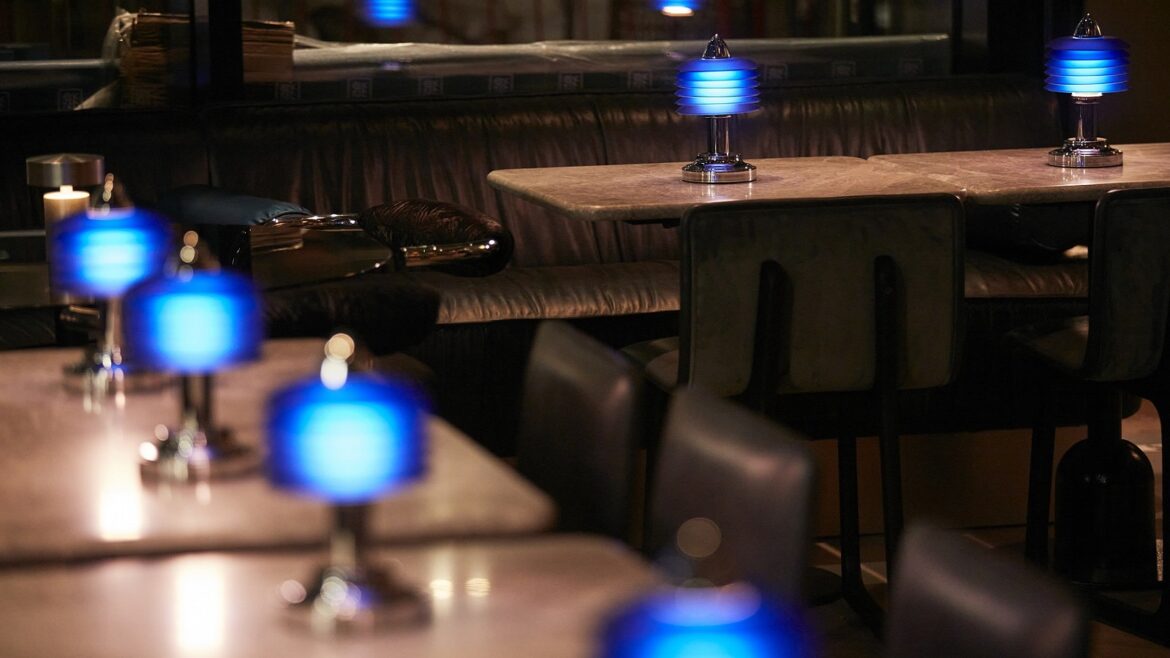
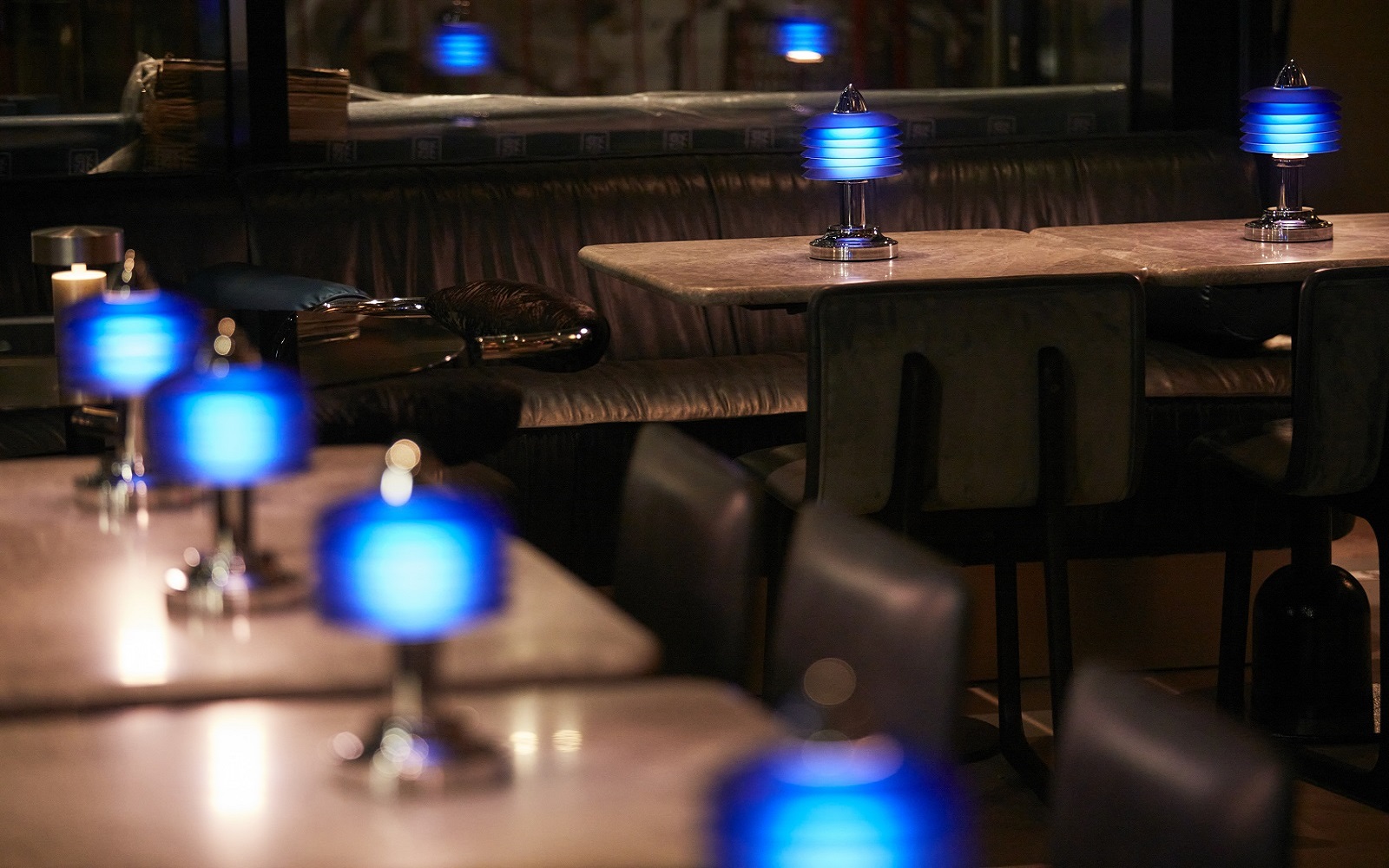
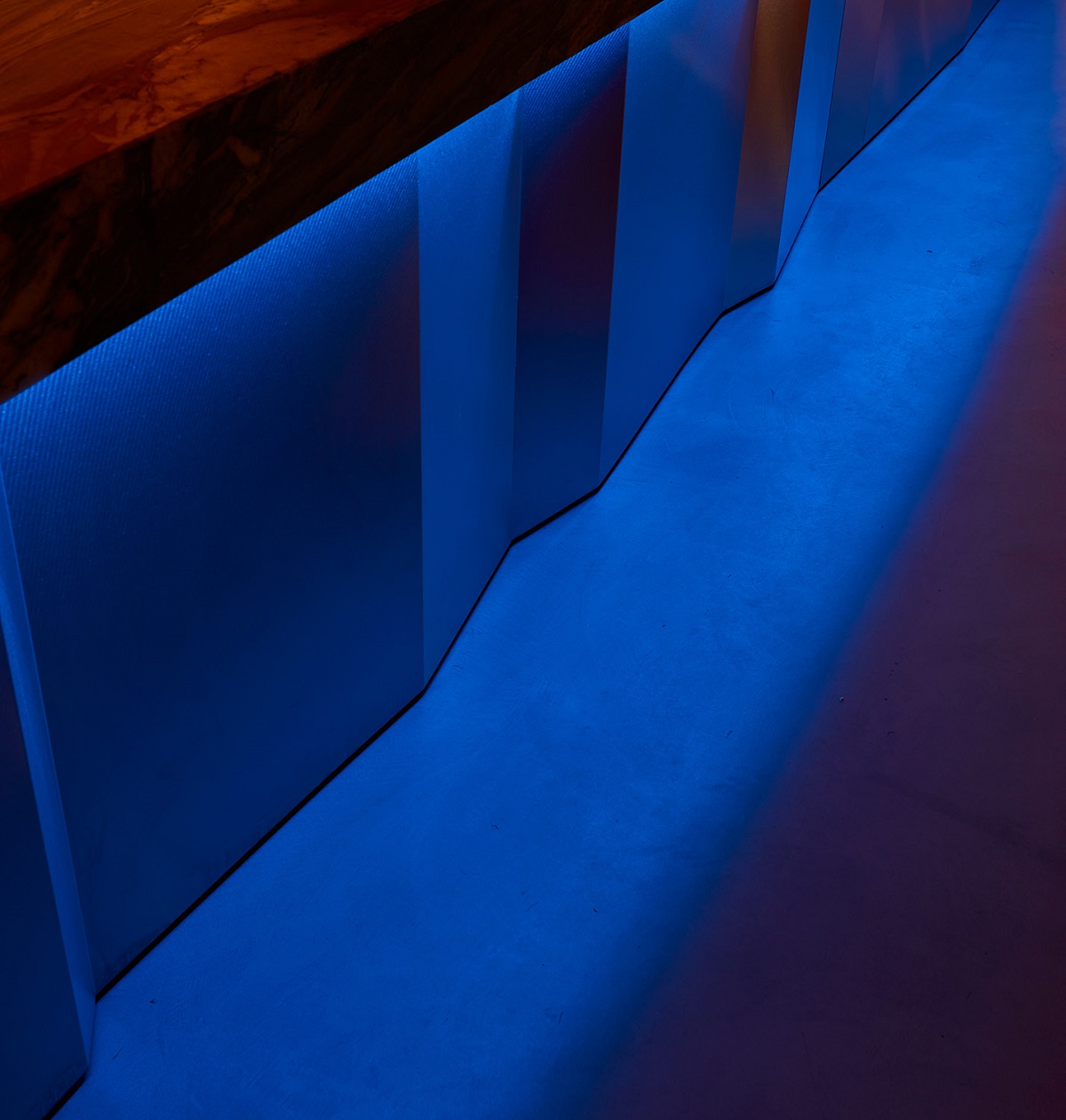
Downstairs in Wolves, the scheme notches down by night: with portable table lamps creating candlelight at every table, with chic glows of light underneath booths and banquettes, lending an almost electro-cinematic, filmic feel. A rich tapestry of history meets technology and night life street culture. Cool, super trendy and tapping into Japan’s aching coolness. Stripped back raw, the buzz of bright lights big city. Neon art, fused with a modern twist on centuries-old artistic craft principles.

The visual language of the branding draws from cinematic noir – shadowy, atmospheric imagery that feels like stills from a 1960s thriller. Window blind shadows became a key graphic motif, casting dramatic patterns and depth.

“Diving deep into Japanese culture, idioms and the country’s golden age of cinema, we eventually landed on Wolves of Tokyo – a bit dangerous and alluring in equal measure, with exactly the right cinematic weight. From there everything followed: the torii gate hidden in the logotype, Lady Zee as a character rather than just a room, the lacquer red against midnight blue. A brand that knows exactly what it is.” Chris Trotman, Founding Creative Director, Run for the Hills

private-dining-wolves-of-tokyo-shelves-lightbox-ret

Image credit: Wolves of Tokyo

The interiors have been conceived as a a film-set worthy Tokyo life smorgasbord of bright lights, cool city vibes. Super cool dining, karaoke craziness. A full throttle space transitioning with lighting through day & night – truly unforgettable. Mirroring the cinematic weight of the brand, the Run for the Hills interiors team developed an equally intoxicating schematic – taking the project from concept and spatial exploration through look and feel, schematic development and full tech design, designing a huge collection of bespoke pieces from bar joinery and wait stations to unique lighting designs, custom finishes and upholstery.

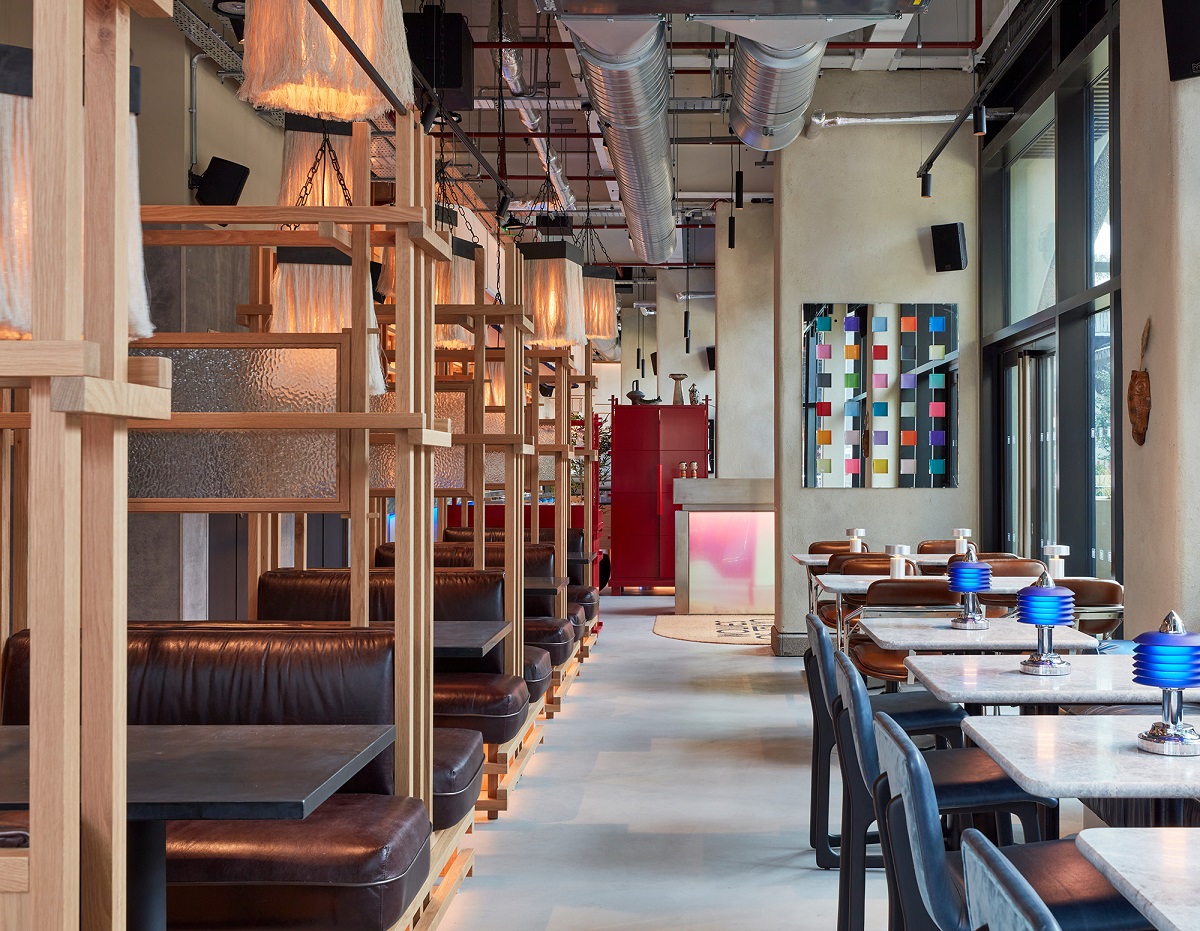
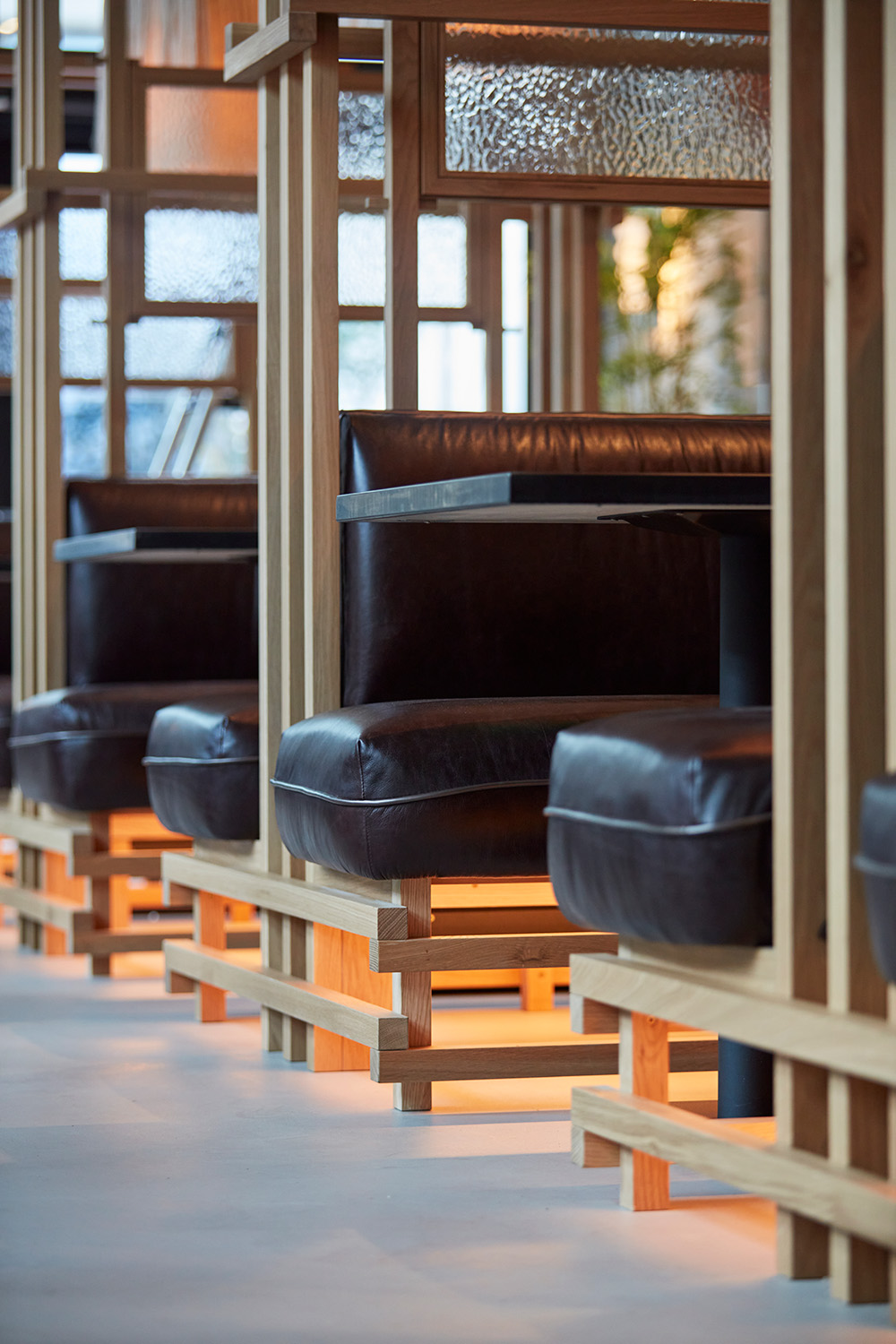
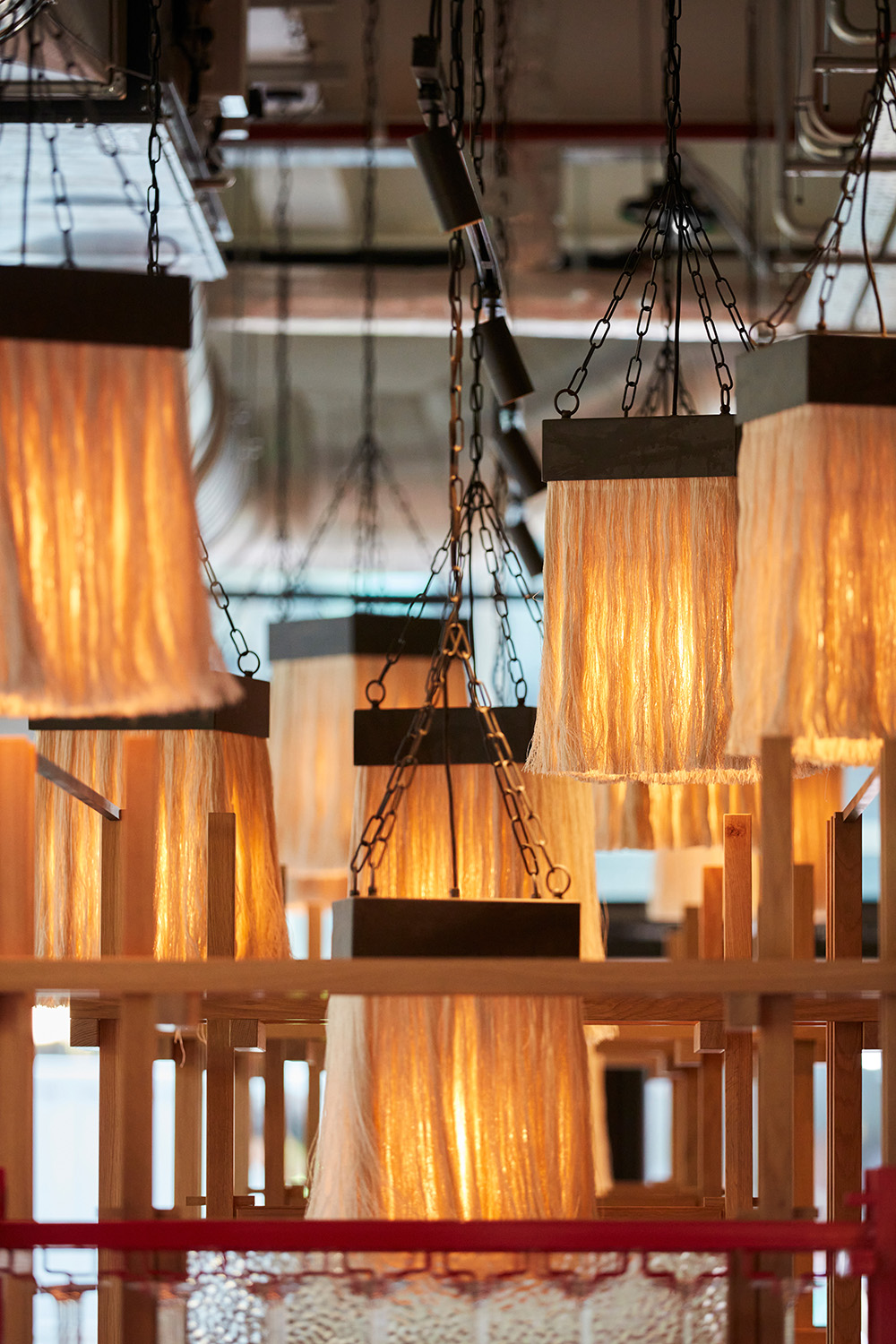
The interior is layered with bespoke Japanese tasselled lanterns and a hero gantry light installation crafted from rich paper, casting ambient pools of light through the space. Japanese dovetail wooden structured booths anchor the dining areas, complemented by a wooden Japanese style gantry and tasselled fabric gantry framing the room with sculptural detail. Deep indigo blue booth seating sits on chrome legs, whilst blue lacquered reflective tables catch and play with the light, shifting from mercurial magic by night to casual cool by day.

dark blue round table and booth designed by Run for the Hills for Wolves of Tokyo

Image credit: Wolves of Tokyo

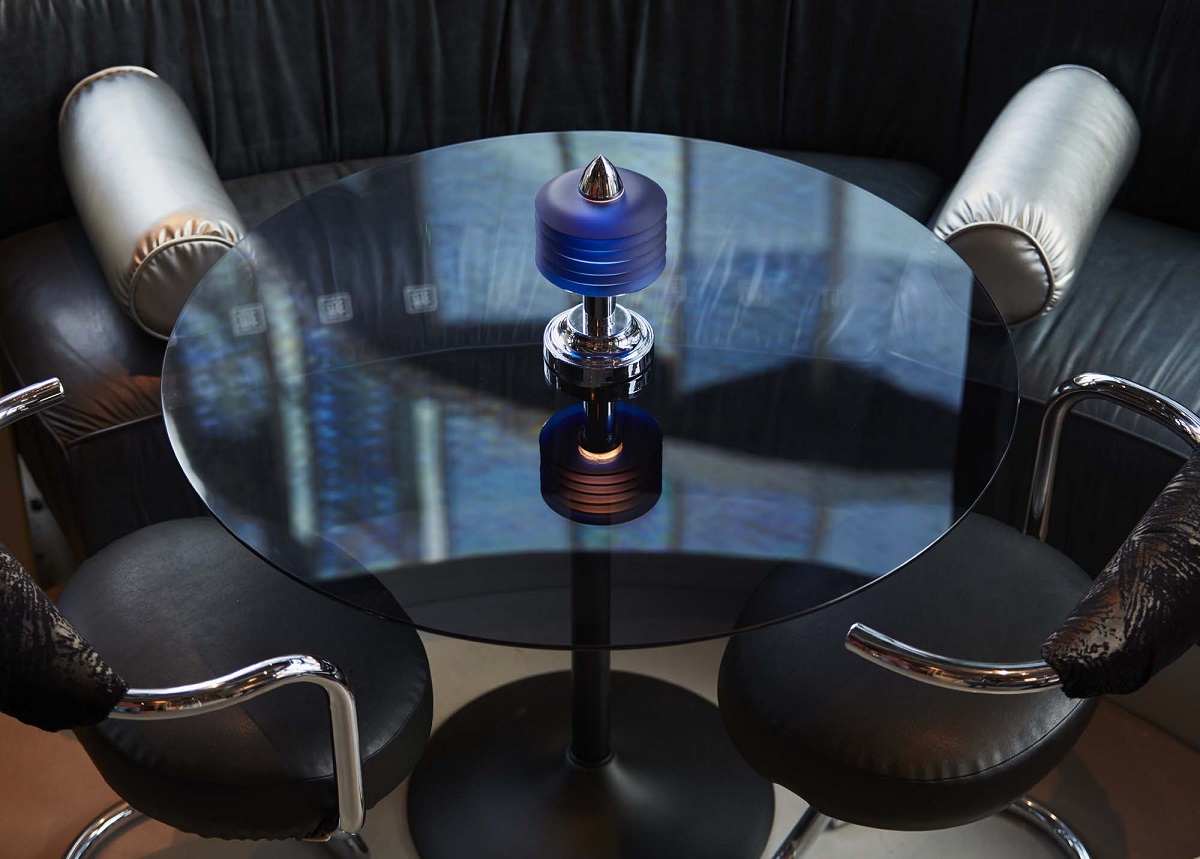
Clever fitted seating and custom booth formations maximise covers along the long, narrow ground floor whilst preserving open flow for diners and staff alike. Design details include 1970s-inspired chrome serpent chairs upholstered in rich dark velvets, smoked glass tables on chrome tulip bases, conical stainless legs, custom banquettes detailed with ruching, creased leather, metallic braid trims and silk brush fringe – every piece a work of designer art.

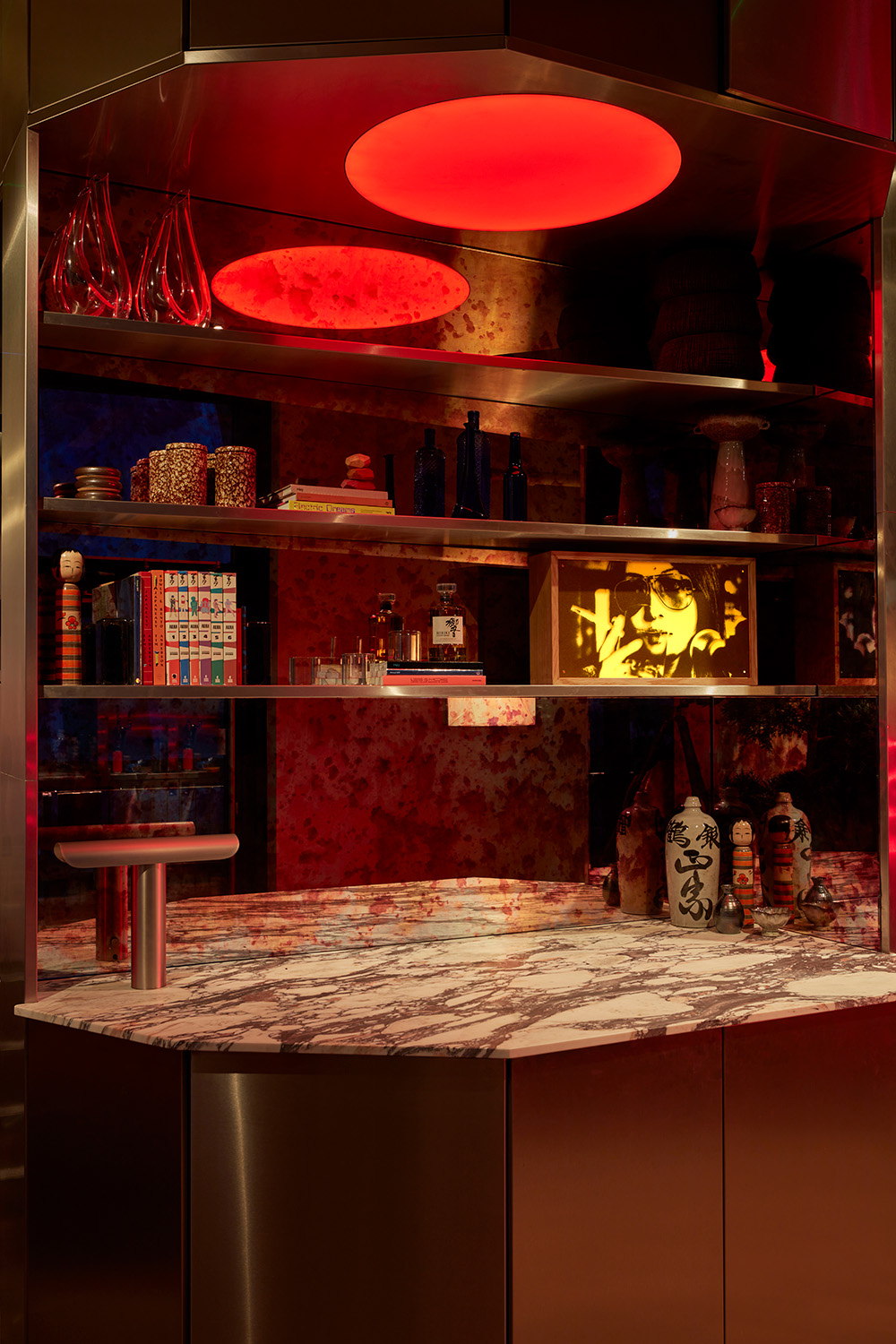
The bar and sushi counter are the beating heart of Wolves – washed in colour-change light, waterfall violet marble and gleaming steel. A celebration of raw finishes meeting traditional Japanese craft principles. The semi-open sushi kitchen forms a theatre in itself, with chefs at work becoming part of the experience. Above the counter, a timber-jointed gantry shelving with knotted detail glows softly down onto beautifully plated sushi, whilst an angular stainless back bar sparkles with integrated light over reeded antique mirrored tiles. Throughout the main bar, sushi counter and PDR joinery, a colour-change lighting system morphs the mood from warm golden daylight through to electric blues, reds and hot neon pinks – completely transforming the atmosphere from day into night.

ridged-bar-front-wolves-of-tokyo-blue

Image credit: Wolves of Tokyo

Lady Zee’s apartment sits on the ground floor in its own dedicated space – fashioned for group meetings, private hire, dinner celebrations and feel-good parties. An achingly cool setting, with a double-height gleaming stainless steel service bar, neon-hot colour change wine display and a state-of-the-art audio-visual system, transforming from sun-dappled daytime meetings and lunches into intimate dining as the sun sets. With hidden karaoke beckoning the night away.

wolves-of-tokyo-private-dining-room

Image credit: Wolves of Tokyo

“Wolves is a film-set kind of place — every one of our booths, every banquette and joinery detail coming from a place of design love, every choice of fabric, material or trim a considered, curated design moment. Immersive design is what we love, taking people on a journey from the moment they enter, playing with light and shade, for metamorphosis during day-to-night transitions.” Anna Burles, Founding Creative Director, Run for the Hills

Light and texture does much of the storytelling throughout the space. Custom designed lightboxes act like cinematic stills, glowing in deep reds and bruised blues, while others cast the warmer, more intimate flicker of candlelight. A Run For The Hills designed Tokyo street scene plays out as a triptych black decal across framed mirrors. A larger mirror piece with coloured acrylic blocks brings a contemporary edge.

The design team’s art is displayed in a variety of ways: framed and hung on walls, propped on shelves, and suspended in unusual forms. Japanese twigs clustered in unusual vessels, curated and layered ceramics, vintage and new Japanese objects – arranged across gantry shelving and dining surfaces, creating moments of cultural discovery and narrative depth throughout the space. Vintage wood blocks, koi carp vases, and handcrafted brushes sit alongside modern pieces, each telling a story of tradition meeting contemporary cool.

Image credit: Wolves of Tokyo

Curated style books occupy prime real estate on wait station counters and PDR shelves – thoughtfully selected titles covering Japanese food, architecture, design and lifestyle. Beyond functioning as décor, many feature striking imagery that the team repurposed as art, with photographs and illustrations extending the narrative across walls, mirrors and light boxes throughout the space. All becoming part of the storytelling, blurring the line between decoration and curated experience.

Main image credit: Wolves of Tokyo

Skopos STUDIO designs

Skopos Studio – new BOUTIQUE Design Schemes for 2026

1024 640 Pauline Brettell
Skopos Studio – new BOUTIQUE Design Schemes for 2026

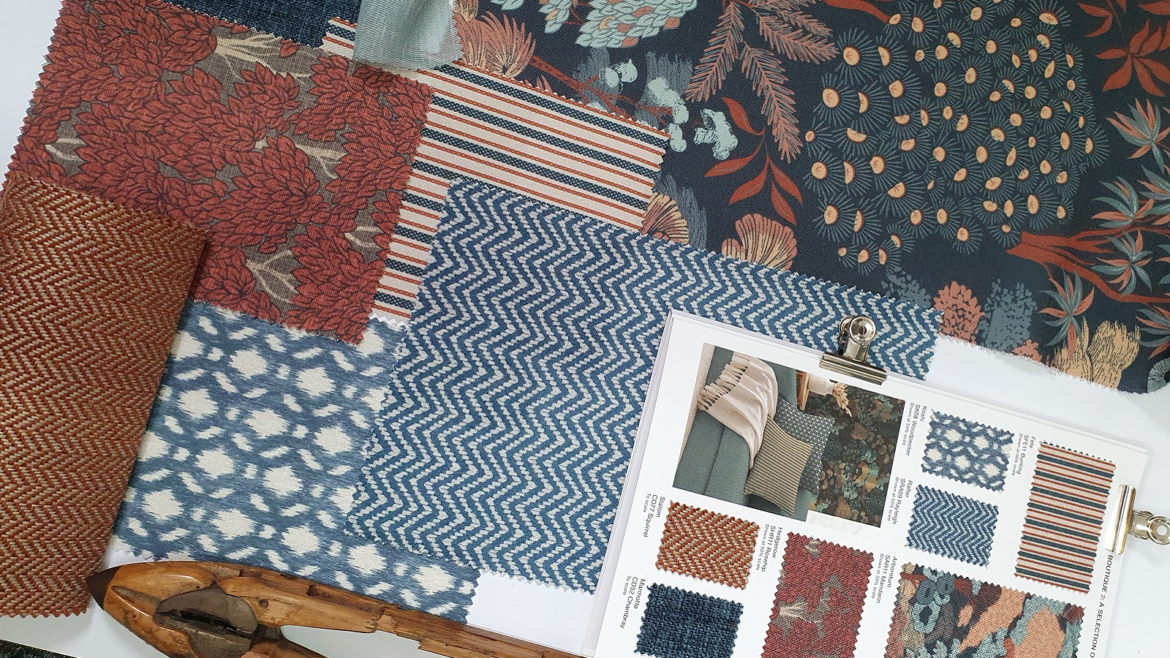
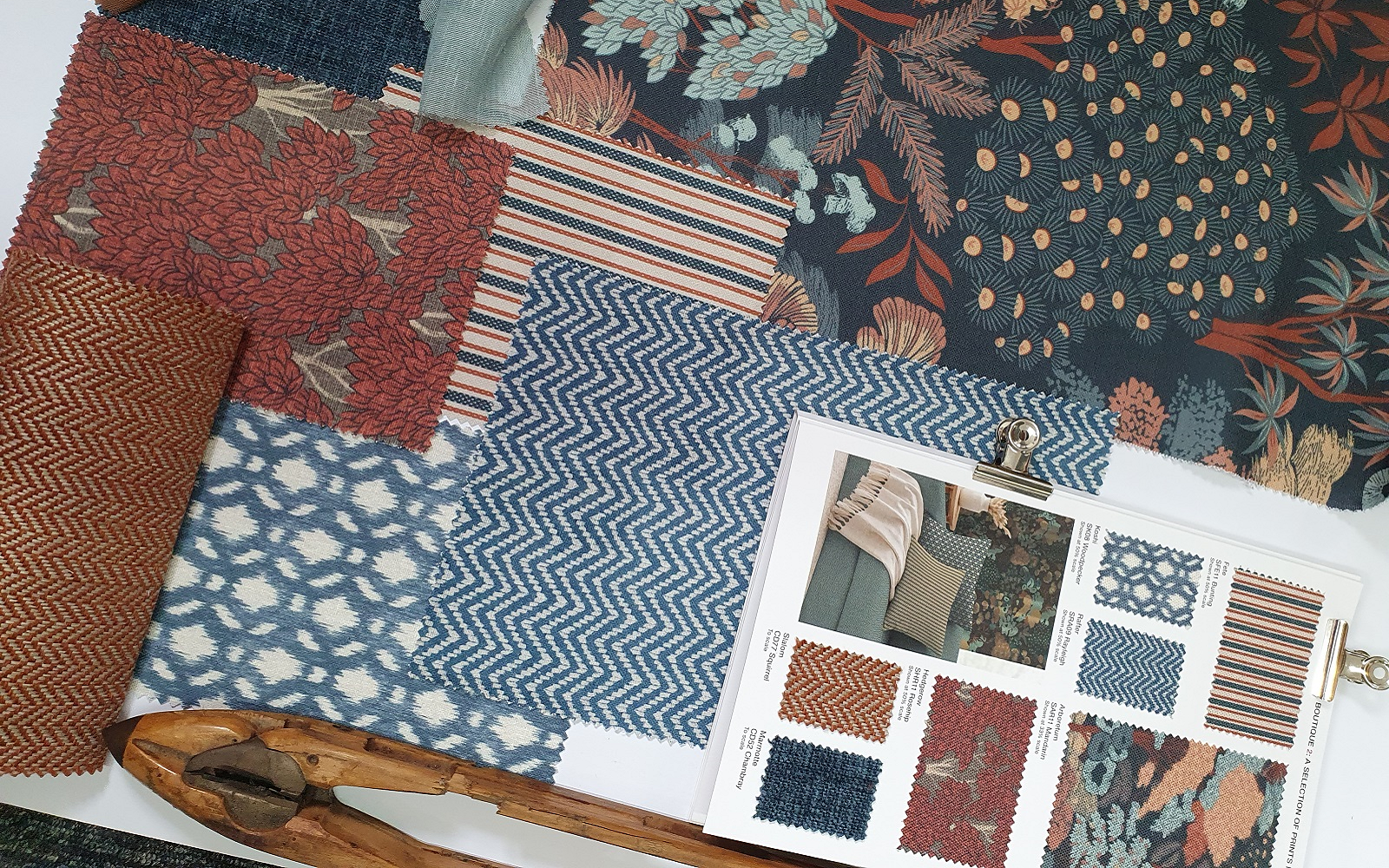
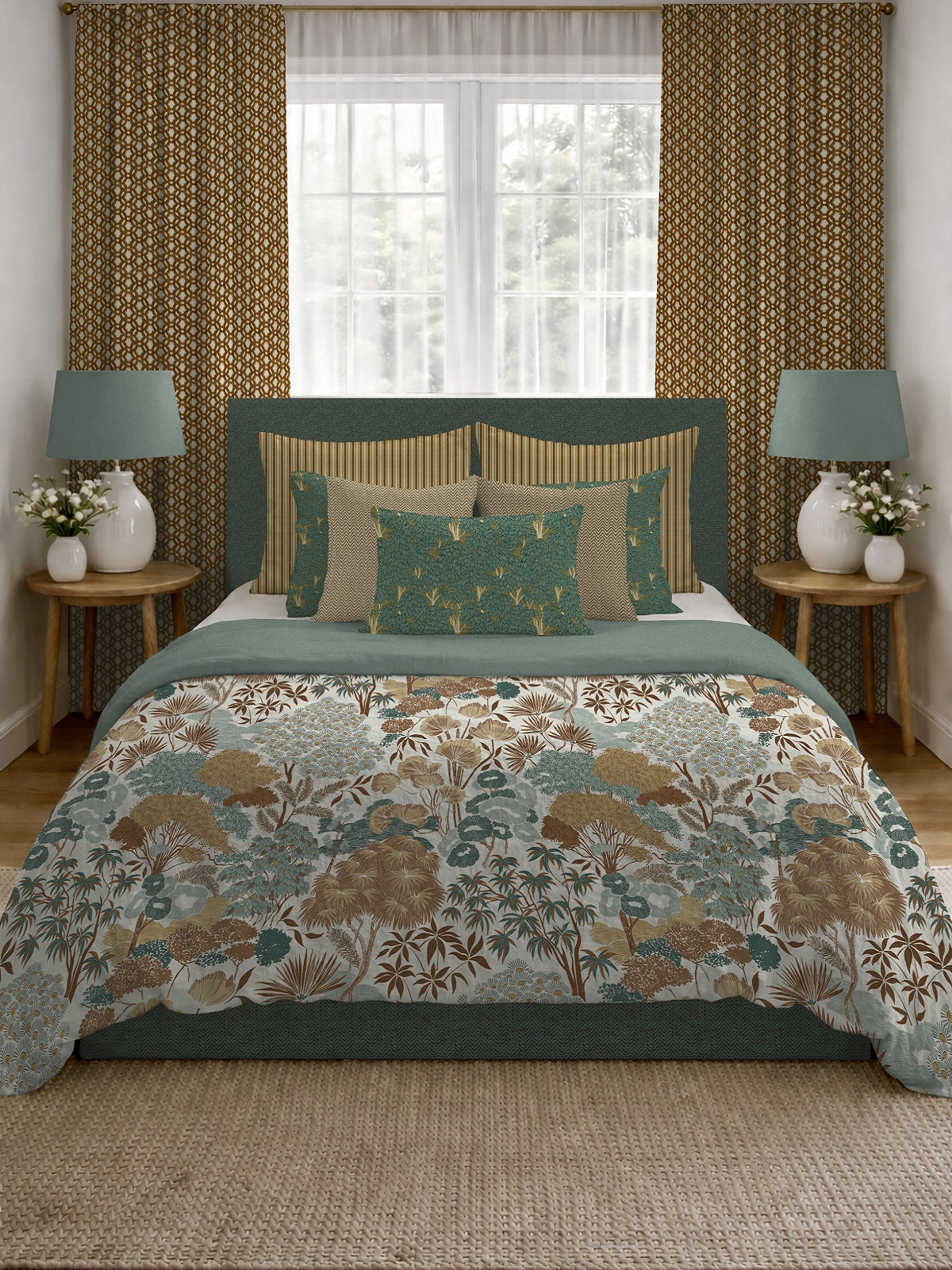
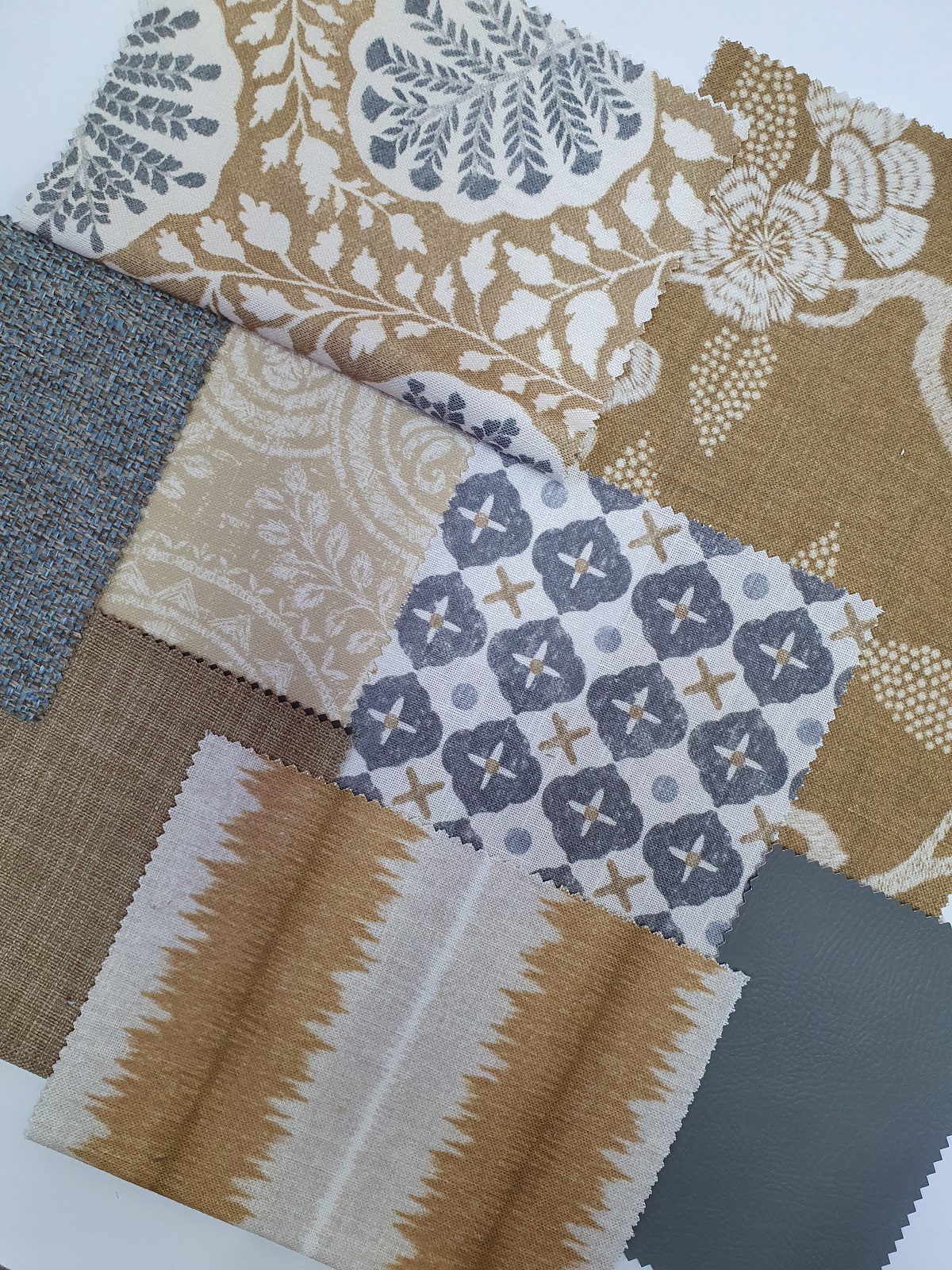
Skopos has been building up the STUDIO library since the end of 2025, and recognised the obvious popularity of particular patterns, with many schemeboards produced and built around key designs – after this bedding in time, it now seems perfect to shake things up a little…

Skopos STUDIO designs

The beauty of the Skopos STUDIO is that, as an ever-growing library, the design team are always working on the next ‘big thing’, to provide more ideas for up-coming projects, and inspiration for refurbishment schemes, while supporting and strengthening the full printed fabric offer.

Skopos STUDIO has already proved itself to be an outstanding success. A different way of doing things, the collection presents each design as an individual ingredient to be considered as a part of the overall scheme with other patterns, textures and weaves, and room components, allowing the designer to specify with confidence.

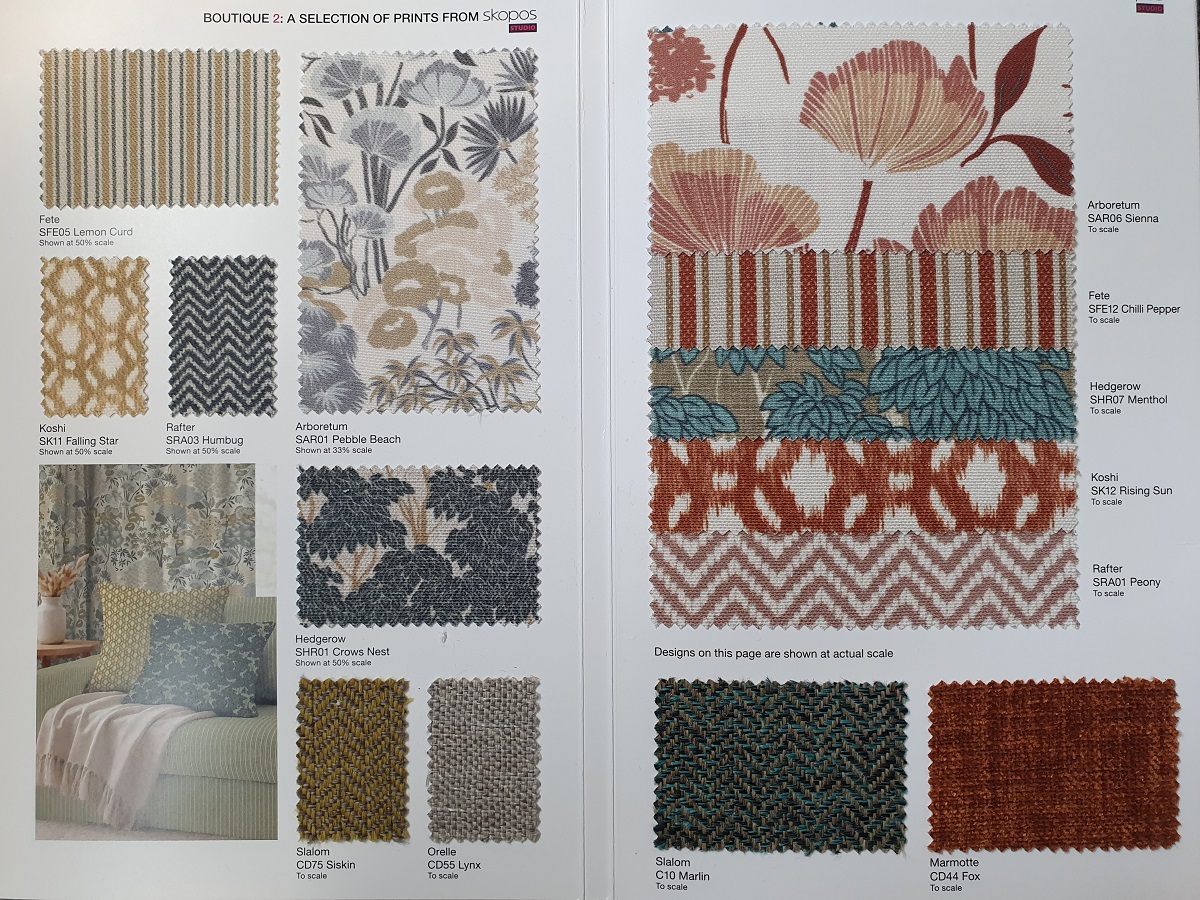
Boutique 2 shadecard

Image credit: Skopos

The Skopos STUDIO binder sits in many designers’ libraries as a ‘go-to’ tool for designing and specifying schemes across hospitality, leisure and other residential (including care) environments. Studio designs can find their way onto furniture, curtains, bedding, cushions and blinds; with a vast choice of flame retardant base-cloth options, covering velvets, blackouts, linen effect and even antimicrobial upholstery choices, making apt interior statements within different schemes and matching project budget requirements. New base-cloths are continually being developed, with new velvets for drapery, chunky upholstery weaves and new blackout qualities among the latest options.

Skopos has been building up the STUDIO library since the end of 2025, and recognised the obvious popularity of particular patterns, with many schemeboards produced and built around key designs such as Arboretum, Fenix Stripe, Palmyra and Amelie. Noting that many end users work differently to our core specifiers, the design team have cherry-picked a few of the designs that we believe work well together and presented them in their own BOUTIQUE collection cards. An easy to offer solution for the end user, the pages within our Boutique cards skillfully mix together botanicals, trellis and geometric designs and stripes in a range of colour-shemes, for a quick room solution.

Providing an easy option, or simply, an easy-to-carry reference tool, BOUTIQUE from Skopos STUDIO knits together designs to provide scheme suggestions that may just hit the mark, or get near to it for your next project? Within each Boutique card, Skopos offers six different inspiring colour-schemes.
Boutique 1 and 2 shade-cards are now available to order via your account manager or online and slot perfectly into any of the Skopos binders.

Samples from our BOUTIQUE cards and STUDIO library are available immediately via skoposfabrics.com/studio-prints

Skopos is one of our Recommended Suppliers and regularly features in our Supplier News section of the website. If you are interested in becoming one of our Recommended Suppliers, please email Katy Phillips.

Main image credit: Skopos

Porta Rossa Hotel Firenze Colbert Collection reimagined by THDP

1024 640 Sophie Harper

Porta Rossa Hotel Firenze Colbert Collection reimagined by THDP

Where 13th-century Florence meets contemporary hospitality design, THDP has completed a quietly transformative redesign of one of Italy’s oldest hotels…

There is a particular kind of design challenge that comes with working inside a building that has already outlasted empires. For award-winning hospitality design studio THDP, the task of reimagining the guestrooms and public areas of Porta Rossa Hotel Firenze Colbert Collection – one of Italy’s oldest hotels – was precisely that kind of undertaking. Not a reinvention. Not an imposition. But a careful, considered act of revelation.

Set in the historic heart of Florence, just steps from the city’s most iconic landmarks, Porta Rossa Hotel Firenze occupies a singular place in the Italian cultural landscape. Housed within a historic structure featuring original frescoes, vaulted ceilings, decorative plasterwork, and a 13th-century tower, the hotel received the European Design Award in 2010 – a recognition of the distinctive architectural character it had already long possessed. The brief to THDP, then, was not to add to this legacy, but to honour it.

“The project is rooted in a careful reading of Florence’s identity, where craftsmanship, materiality, and atmosphere form the foundation of the design,” explains Claudia Mazzucato, Associate Director and Project Leader at THDP. “Working within such a layered historical context calls for restraint. The aim was never to change the space, but to reveal it, allowing what is already there to surface naturally through a contemporary layer that sits quietly within it.”

THDP’s approach is structured around three core principles: Heritage as Protagonist, Renaissance Reinterpreted, and Timeless Layering. Together, they form the philosophical backbone of a project that has no need to compete with its surroundings.

Image credit: Minor Hotels

Existing architectural features have been carefully preserved and put centre stage, rather than concealed behind a new aesthetic. The classical Florentine architectural language is translated into a contemporary vocabulary of proportion and rhythm, and all new interventions are conceived as quiet additions that complement, rather than overwhelm, the historic fabric.

The result, in THDP’s own framing, is a quiet expression of luxury where elegance emerges through harmony, authenticity, and material richness. Given the building’s extraordinary bones, it is a vision well-suited to its context.

In the public areas, THDP has developed a layered identity that responds to the monumentality of the architecture while introducing warmth and human scale.

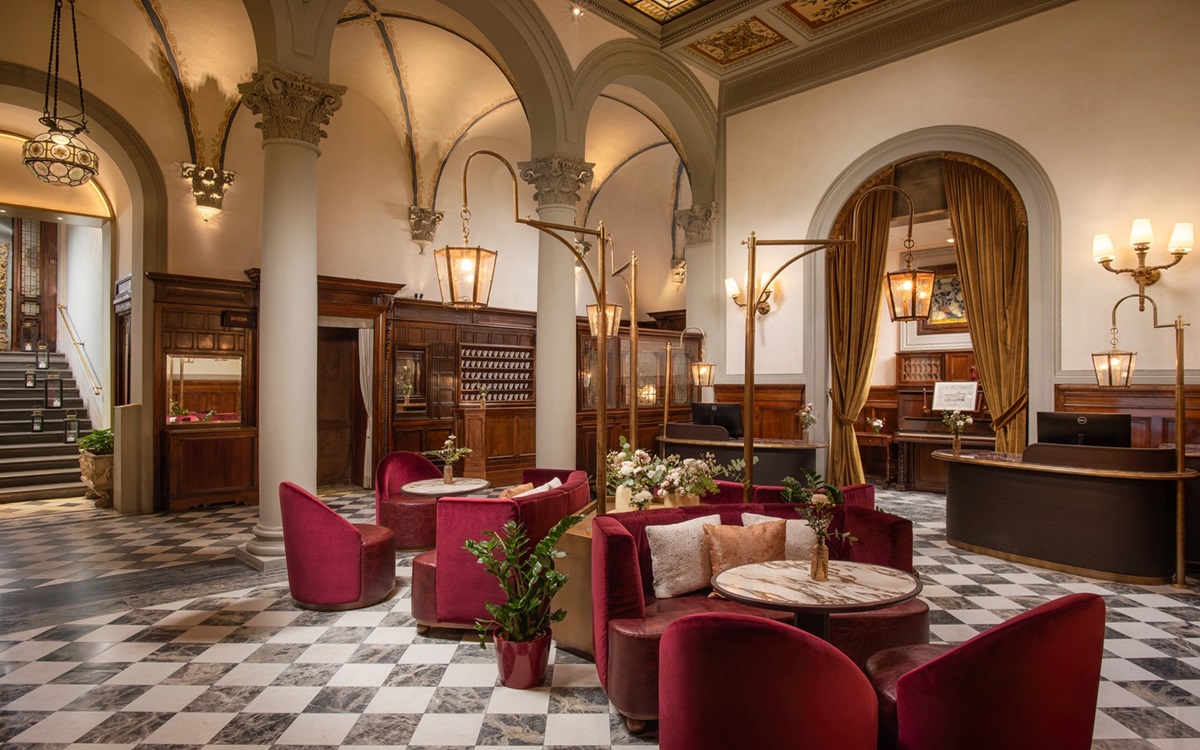
The reception sets the tone immediately. Bespoke desks are wrapped in textured leather, while original timber panelling has been reinterpreted with woven leather inlays and brass detailing – an explicit nod to the leatherworking traditions for which Florence has long been celebrated. Custom brass lighting, recalling the lanterns of the city’s historic porticos, casts a warm, candle-like glow that deepens the sense of atmosphere.

Image credit: Minor Hotels

At the heart of the lobby, a generously scaled banquette functions as a contemporary piazza – an informal gathering point that encourages the kind of unhurried interaction that Florentine civic life is built upon. Nearby, a former storage cabinet has been transformed into one of the project’s most theatrical interventions: a tea niche framed by a decorative wallcovering inspired by the frescoes of Botticelli.

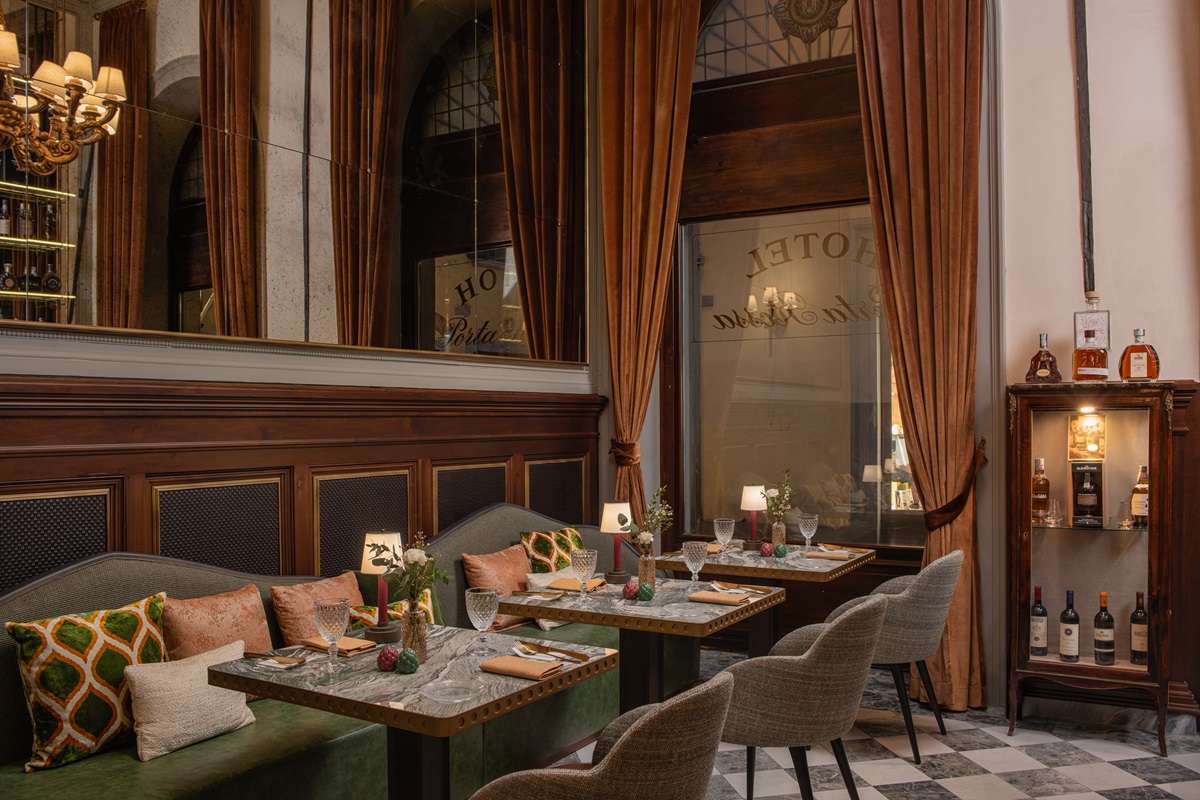
The bistro bar introduces a livelier energy through antique mirrored back panels and a full-height bottle display that creates strong visual connections across the space, and beyond the windows, with the surrounding city. Throughout all of the public areas, Levanto marble, dark timber, brass, and leather work in combination to establish a cohesive material palette that feels rooted and refined.

The guestrooms have been conceived as calm and contemplative retreats; spaces that evoke the intimacy of a Renaissance palazzo without resorting to pastiche.

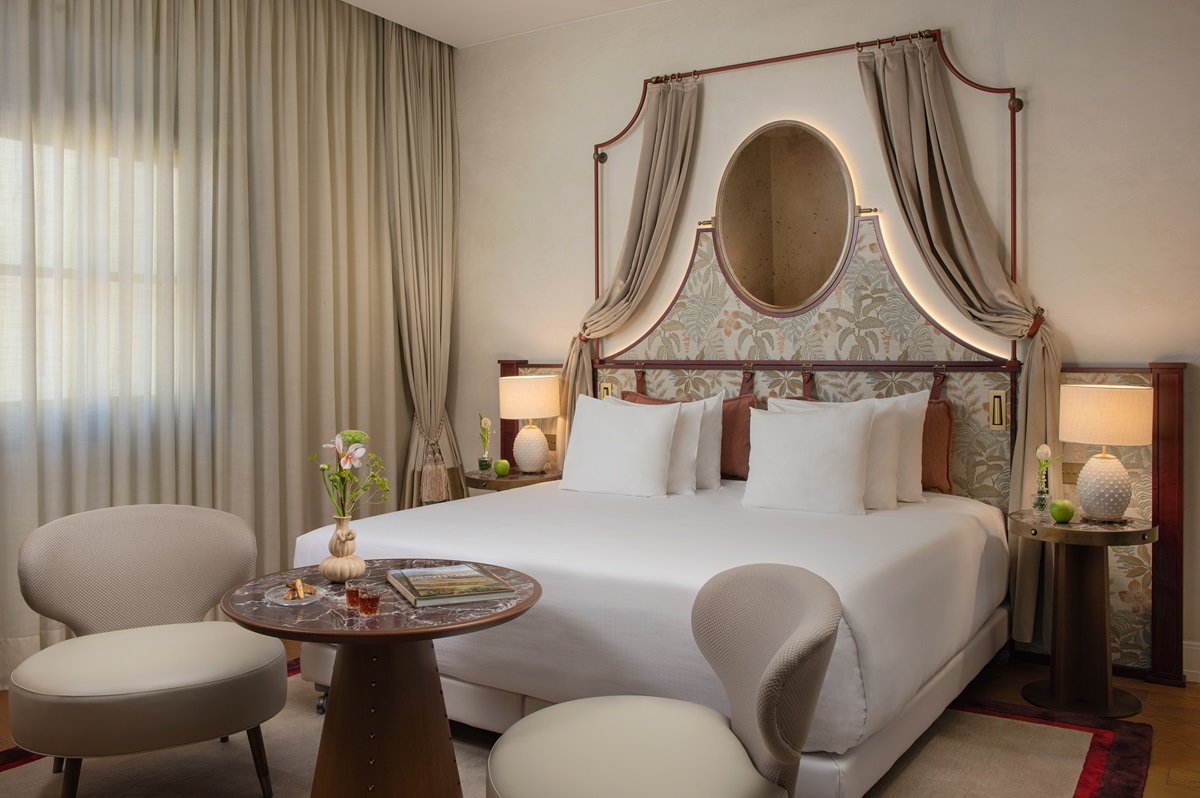
Draped headboards and softly articulated wall canopies create a sense of gentle enclosure, while layered textiles, leather, and refined surface finishes build a quietly tactile experience. The headboard itself pays direct homage to the hotel’s name: Porta Rossa, meaning ‘Red Door’, is referenced through a deep burgundy framework, while an inset embroidered-effect wallcovering draws from the vocabulary of Renaissance textiles to introduce decorative depth without excess.

“Luxury here is not expressed through excess, but through atmosphere; through proportion, materiality, and the ability of a space to create a sense of calm and belonging,” says Mazzucato.

One of the project’s most inventive moves is the transformation of the guestroom floor lounges into a sequence of intimate piazzette – private gathering spaces that extend the guest journey beyond the room itself.

Image credit: Minor Hotels

Each space draws its character from a distinct palette inspired by the mineral pigments found in Renaissance frescoes. The Winter Garden is expressed in deep emerald, evoking the enclosed palazzo courtyards of the city’s aristocratic past. The Grand Tour room adopts lapis lazuli tones that speak of travel, collected curiosities, and a sense of wonder. The Library Parlour offers softer amethyst hues, centred around a marble fireplace, creating perhaps the most contemplative of the three.

Bespoke chandeliers, composed of layered circular iron frames and candle-like diffusers, unify the sequence with subtle variations in lampshade design and leather detailing distinguishing each space’s individual identity.

What distinguishes THDP’s work at Porta Rossa is not any single gesture, but the cumulative effect of many small ones – the way local craftsmanship in ceramics, textiles, woodworking, and leatherwork is woven into the design not as decoration, but as a living cultural language.

Florence is a city in which beauty is inseparable from making. Generations of artisans have kept that spirit alive in workshops throughout the city, and THDP has embedded it into the fabric of this redesign in a way that feels authentic rather than performative.

The boundary between past and present, as Mazzucato describes it, becomes “almost imperceptible, not through imitation, but by drawing from the past to create something that feels timeless.”


Main image credit: Minor Hotels

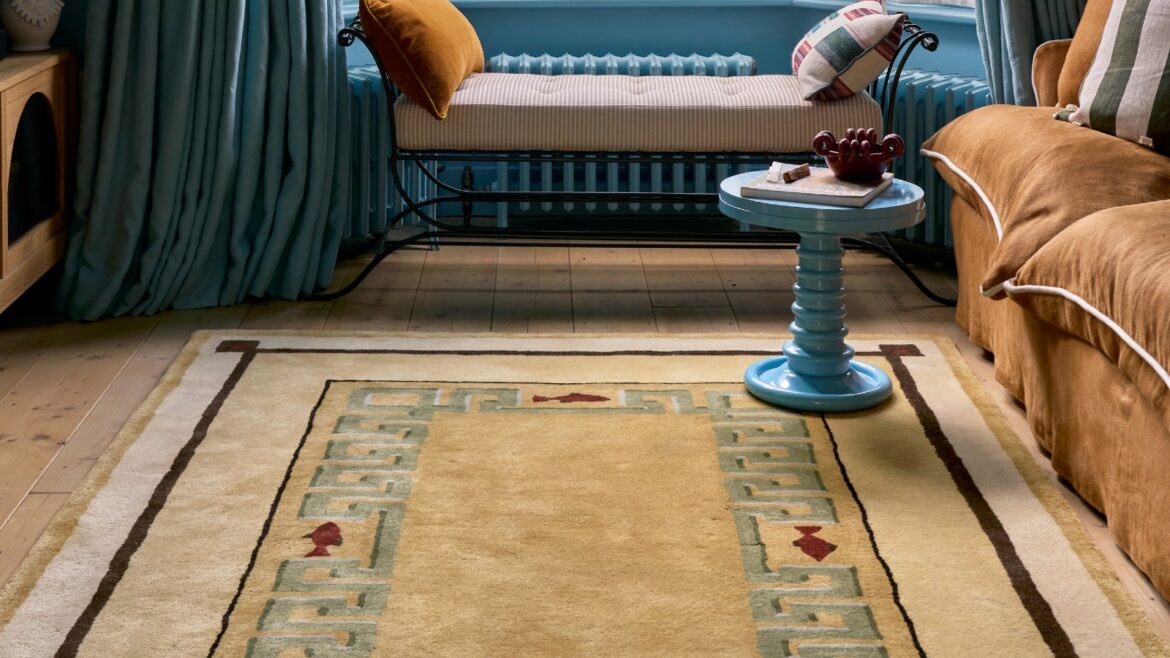
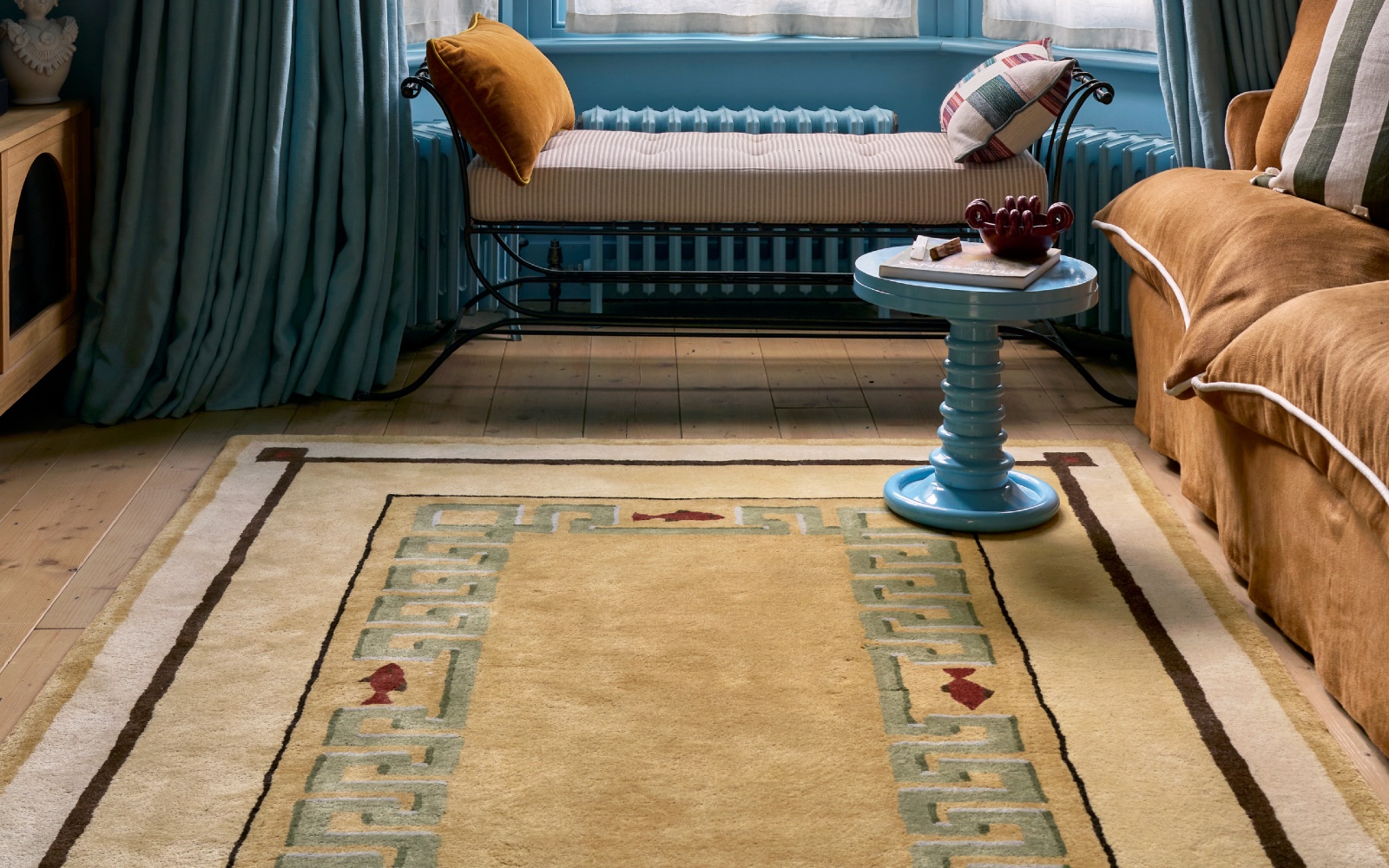
Pelican carpet rug on the floor with ochre walls and decorative door

The Art of the Floor: how the right rug can transform a hotel interior

1024 640 Pauline Brettell
The Art of the Floor: how the right rug can transform a hotel interior

For those who understand how a room is actually experienced, the floor is where it begins  – it sets the register, it tells you, before you’ve touched anything, what kind of place you’re in…

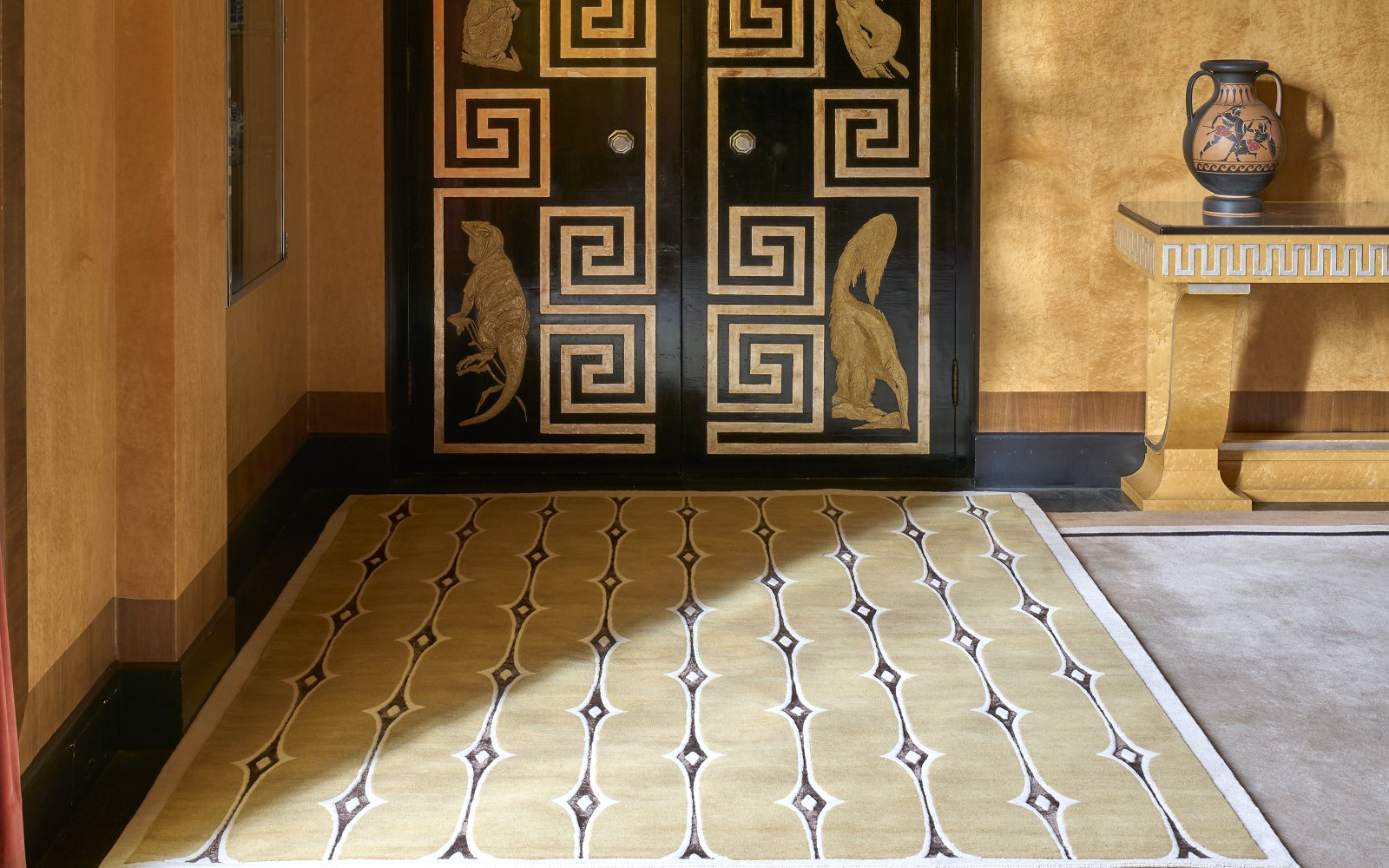
Pelican carpet rug on the floor with ochre walls and decorative door

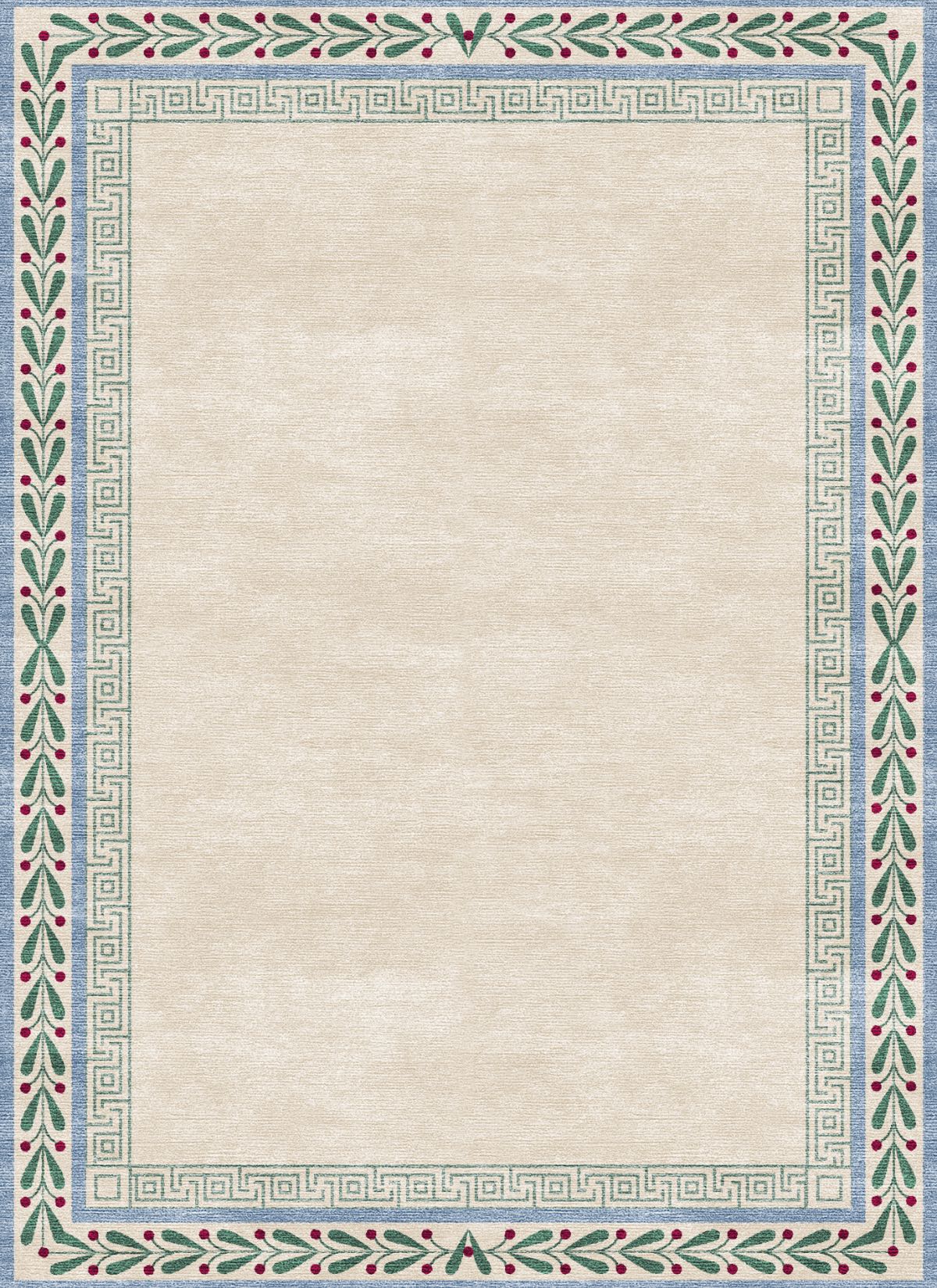
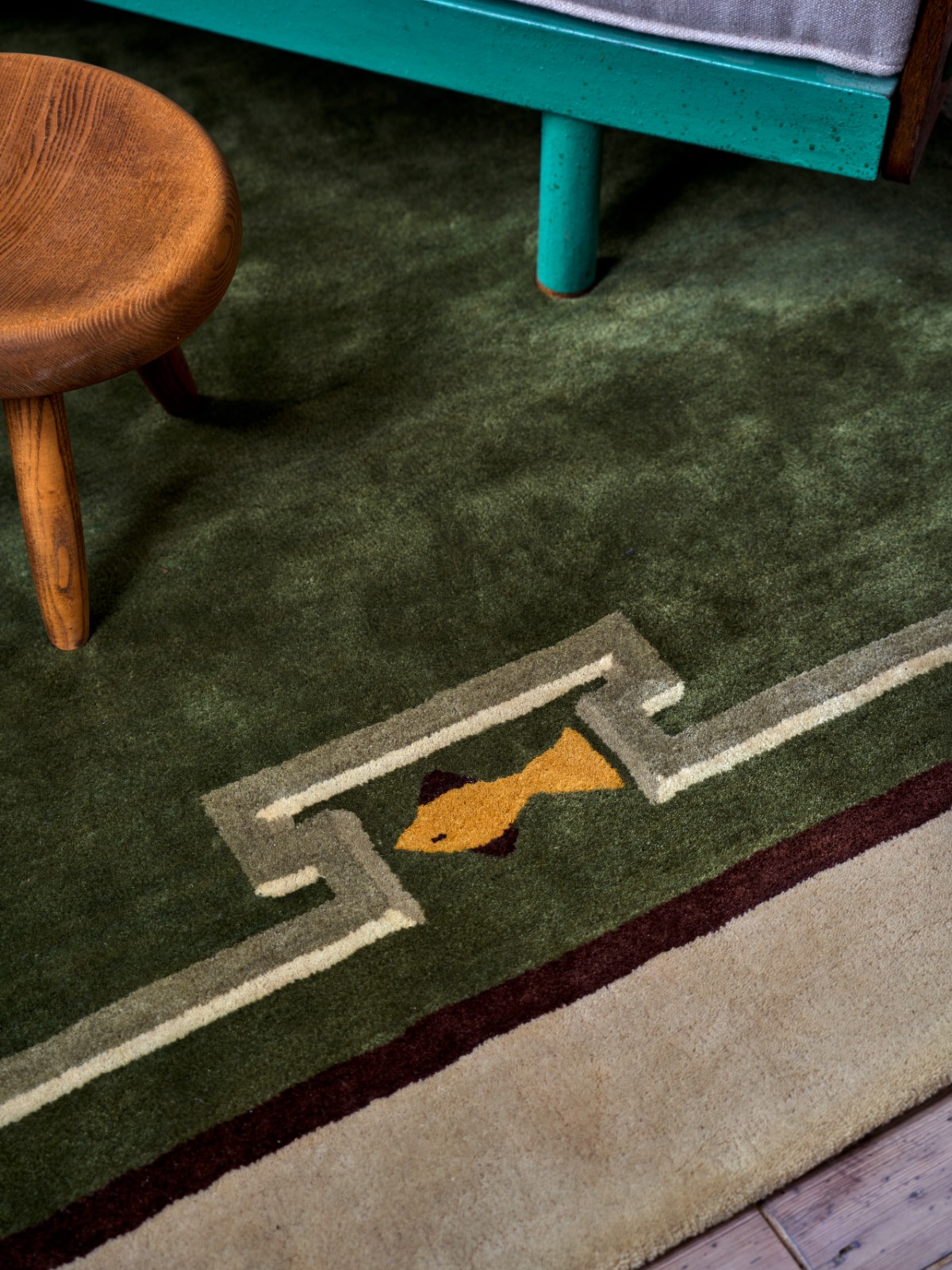
It’s a conviction that sits at the heart of everything we do at Pelican House. We work directly with skilled artisans in Nepal and India to produce rugs that function as much as objects of craft as they do floor coverings and two pieces from our current collections speak particularly well to what’s possible in a hotel setting.

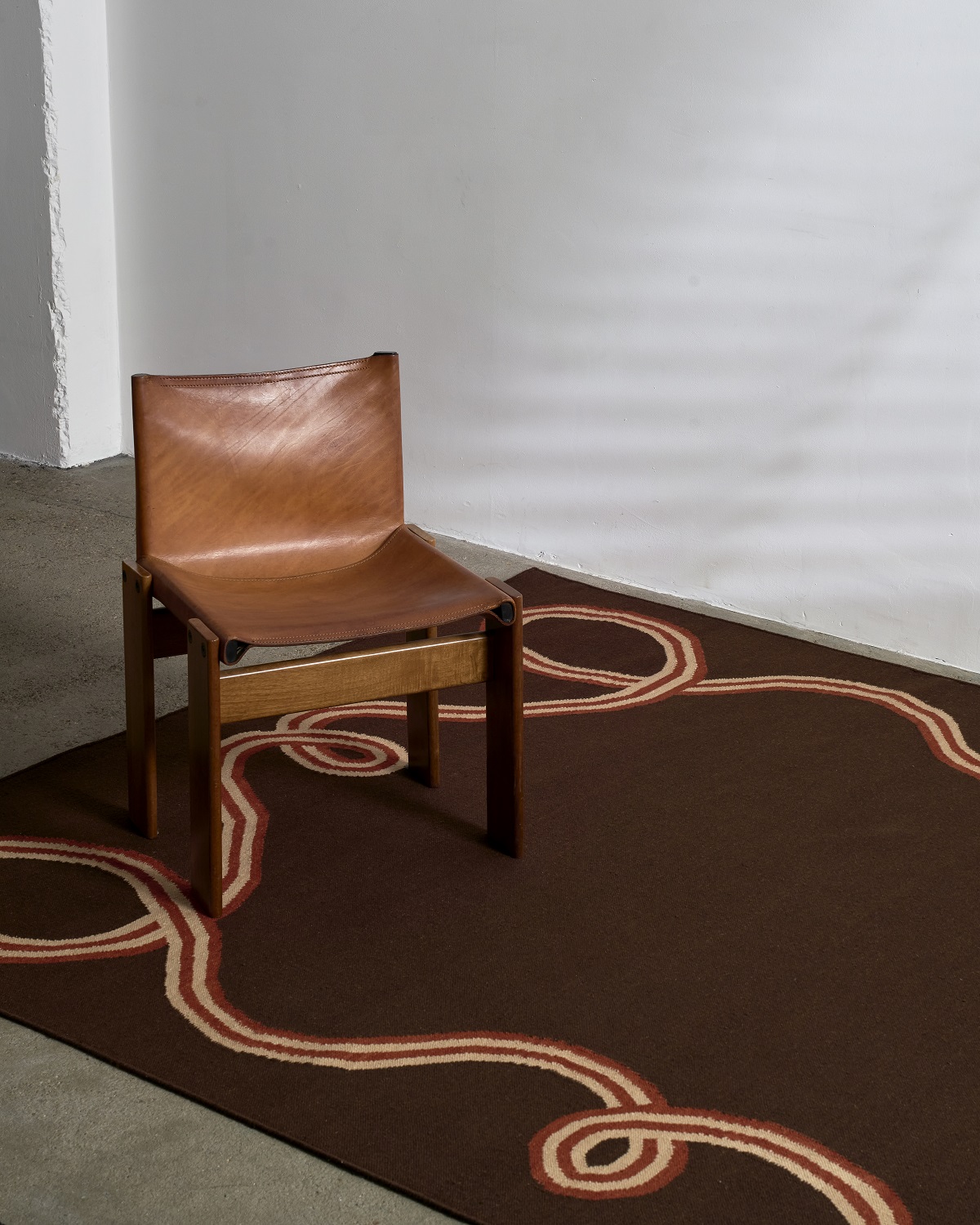
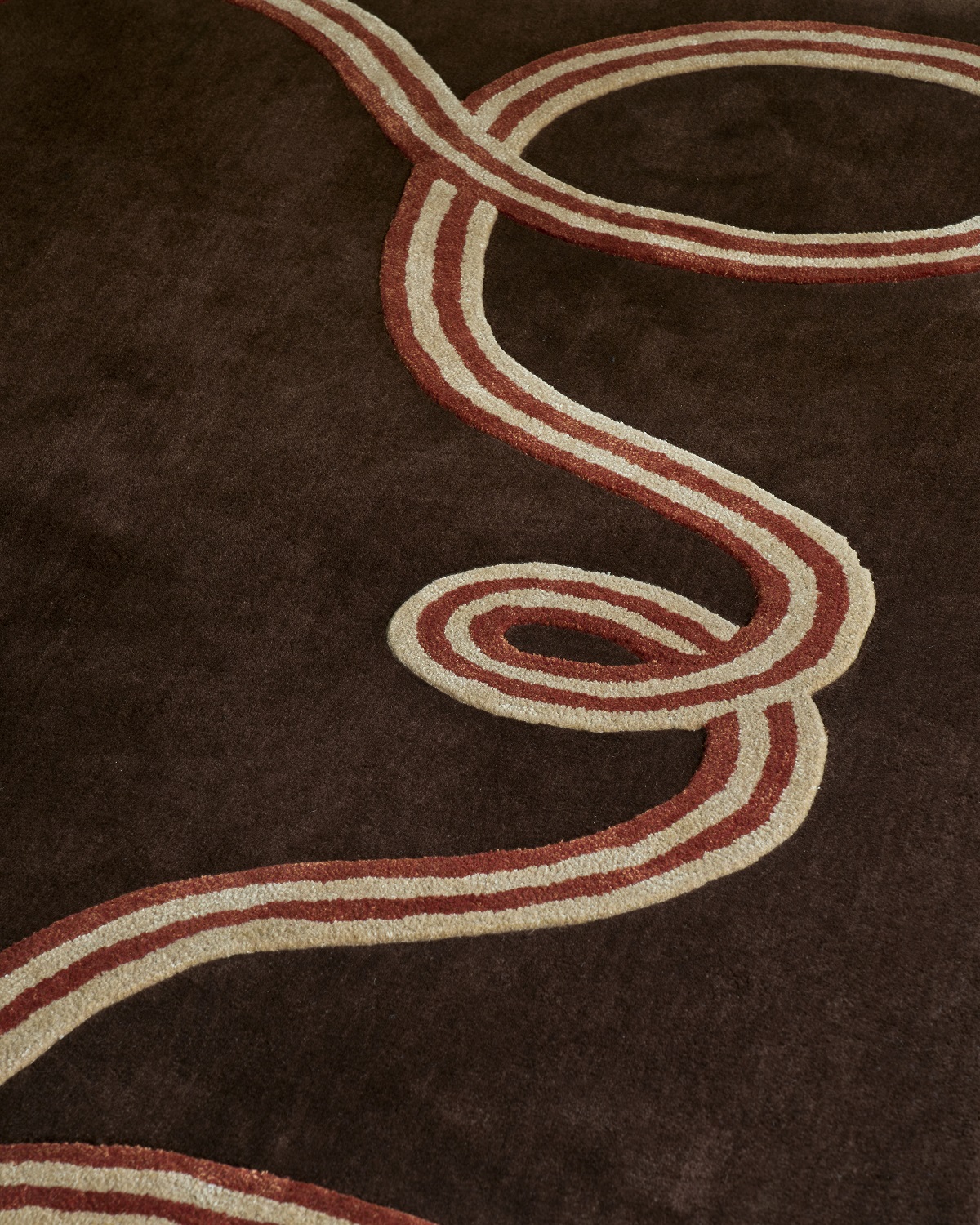
Sutra Clay, from our Sona collection, is a study in quiet luxury. Inspired by the flow of handspun thread and the natural rhythms of weaving, it is hand-knotted by skilled artisans in India using Himalayan wool and silk. Varying pile heights throughout the design give the surface a sculptural quality, while the clay colourway adds richness and grounding, warm enough to bring life to a neutral scheme, restrained enough to let the craftsmanship speak. The silk content lends a luminosity that shifts with the light, making it a piece that rewards the kind of lingering attention that hotel guests, unlike most, actually have time to give. For guestrooms, suites, or any space that needs to feel quietly exceptional, Sutra Clay is a considered choice.

Sedra, from our Talis collection, takes a different approach. One of our most immersive Art Deco designs

Image credit: Pelican House

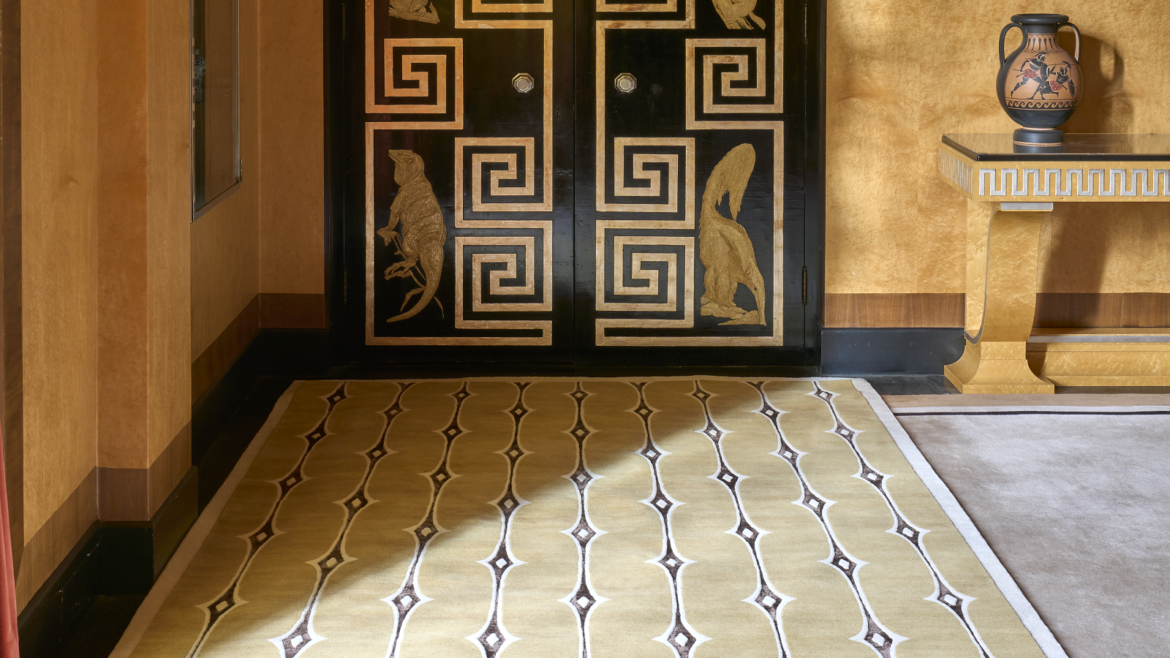
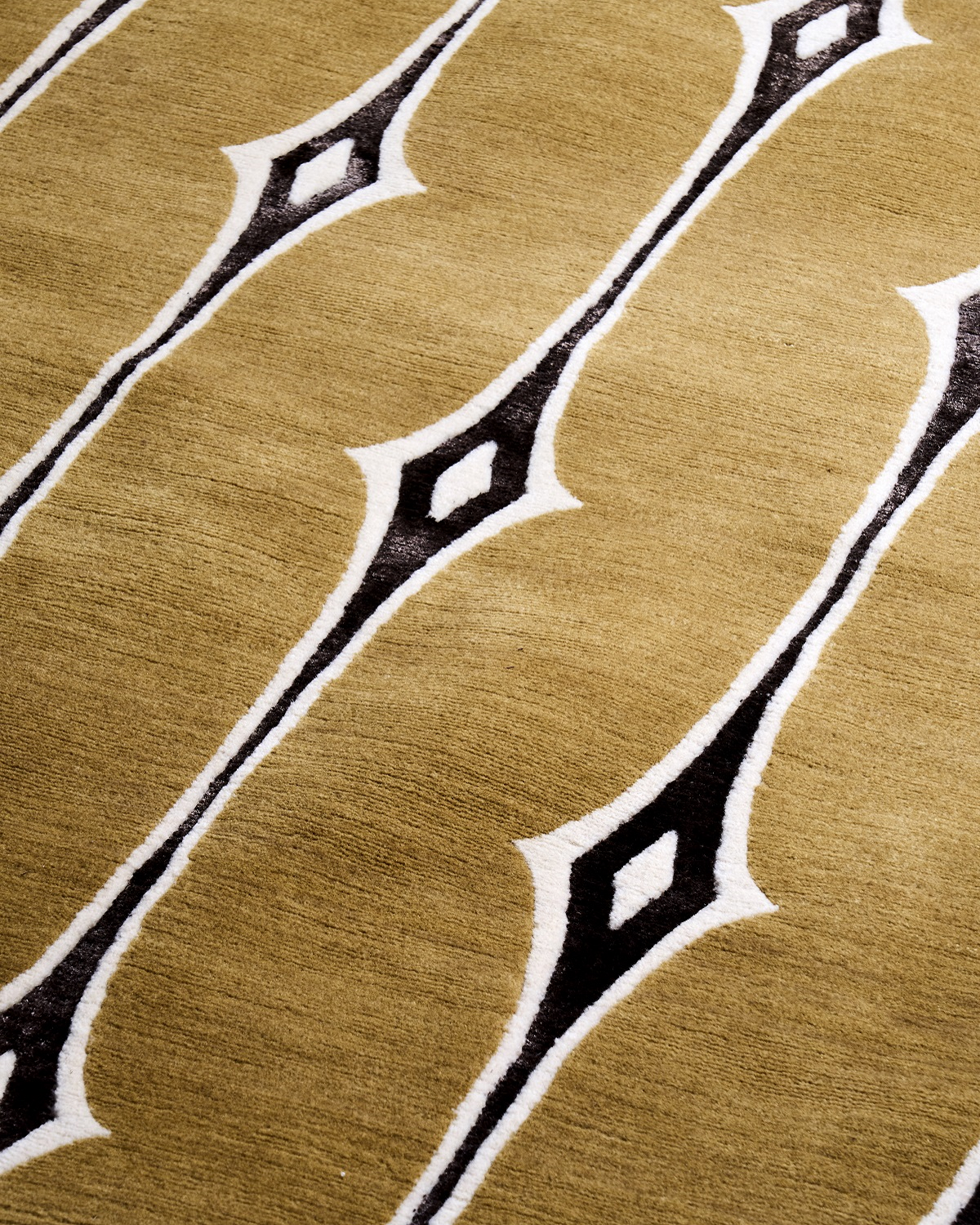
Sedra, from the Talis collection, takes a different approach. One of our most immersive Art Deco designs, it fills the floor with rhythm and movement, vertical columns of sinuous, hourglass-shaped forms repeat across a field of warm gold, creating an all-over pattern that feels both bold and refined. Hand-knotted in Nepal at 100 knots per square inch from New Zealand wool and bamboo silk, the materials carry a depth and sheen that brings the geometry to life underfoot.

Where Sutra Clay settles into a room, Sedra anchors it, a natural focal point for a lobby, a bar, or a dining space with the confidence to hold a strong design identity.

Together, the two pieces illustrate something we think about constantly: that a rug is not a finish. It is a foundation. The decision made at floor level shapes everything that happens above it, the way furniture sits, the way light reads, the way a guest feels when they walk in.

As with all of our pieces, both Sutra Clay and Sedra are available made to order and can be customised in size and colourway for projects.

Pelican House is one of our Recommended Suppliers and regularly features in our Supplier News section of the website. If you are interested in becoming one of our Recommended Suppliers, please email Katy Phillips.

Main image credit: Pelican House

The St. Regis Costa Mujeres Resort, Cancún - a refined enclave between land and sea in Mexico

The St. Regis Costa Mujeres Resort, Cancún – a refined enclave between land and sea

1024 640 Pauline Brettell
The St. Regis Costa Mujeres Resort, Cancún – a refined enclave between land and sea

The newest St Regis address in Mexico connects ancient Maya heritage with the rhythm of the Caribbean, balancing city energy with coastal seclusion…

The St. Regis Costa Mujeres Resort, Cancún - a refined enclave between land and sea in Mexico

St. Regis Hotels & Resorts has announced the opening of The St. Regis Costa Mujeres Resort, Cancún, an elegant beachfront retreat where the natural beauty and cultural richness of the Yucatán Peninsula meet the brand’s celebrated traditions and bespoke service. Located just north of Cancún in the tranquil enclave of Costa Mujeres, the resort introduces a sophisticated new expression of luxury in the Mexican Caribbean, framed by white sand beaches, crystalline waters, protected mangroves, and the world’s second-largest barrier reef.

aerial view from the ocena side of The St. Regis Costa Mujeres Resort, Cancún

Image credit: The St. Regis Costa Mujeres Resort

Positioned near the historic El Meco archaeological site, the resort draws inspiration from the region’s enduring Maya heritage and deep connection to land and sea. Thoughtfully designed to balance contemporary refinement with the spirit of the destination, The St. Regis Costa Mujeres Resort, Cancún offers immersive experiences shaped by the rhythms of the Caribbean, seamlessly blending cultural storytelling, coastal seclusion, and the signature rituals that define the St. Regis experience.

“From its founding by John Jacob Astor IV over a century ago, the vision of St. Regis has been shaped by a spirit of exploration, journeying to the world’s most enchanting destinations and creating places that embody both grandeur and a lasting allure,” said George Fleck, Senior Vice President and Global Brand Leader for St. Regis Hotels & Resorts. “Today, across our expanding resort portfolio, we honor that legacy by bringing the brand’s signature rituals, refined sense of celebration, and modern glamour to extraordinary locales around the globe. With The St. Regis Costa Mujeres Resort, Cancún, we extend this heritage to one of the Mexican Caribbean’s most captivating settings and curating exceptional experiences in destinations that inspire and endure.”

lobby bar with constellation inspired lighting ST Regis Costa Mujeres

Image credit: The St. Regis Costa Mujeres Resort

Designed by renowned architectural firm Sordo Madaleno, The St. Regis Costa Mujeres Resort, Cancún emerges as a striking composition of glass and concrete that moves in harmony with the surrounding coastline. Inspired by the region’s natural beauty and enduring Maya heritage, the resort reinterprets local mythology and craftsmanship through a contemporary and refined design language.

Throughout the property, layered materials and artisanal details draw inspiration from the region’s cultural and natural heritage. Intricate stonework references the nearby ancient Maya port of El Meco, while sculptural lighting nods to the celestial symbolism of Ixchel and Itzamná. In the lobby, a dramatic chandelier evokes the movement of the Caribbean Sea and the flowing waters of the region’s sacred cenotes. Woven textures, bentwood furnishings, hand-painted murals, and abstract tilework celebrate the artistry of the Yucatán Peninsula, while brass accents, custom fixtures, and subtle references to the sacred Ceiba tree connect the interiors to the region’s enduring cultural legacy.

guestroom with seaview STRegistCostaMujeres-Room

Image credit: The St. Regis Costa Mujeres Resort

The St. Regis Costa Mujeres Resort, Cancún features 163 guestrooms and 50 suites, including expansive accommodations with private balconies overlooking the Caribbean Sea and the region’s lush natural landscapes. Signature suites, including the Caroline Astor and the Presidential Suite, offer elevated residential-style living thoughtfully designed for the most discerning travelers.

The property shelters nine distinct food and beverage outlets, introducing a dynamic culinary program that sets a new standard for resort dining in the region. Inspired by the cultural richness of the destination, the resort’s culinary philosophy blends local ingredients and traditions with global techniques and refined execution. Costa Coral, the resort’s all-day dining venue showcases time-honored Mexican culinary traditions through a refined, contemporary lens, while Fish Market highlights Caribbean-inspired seafood and fresh local catch. Palmare Grill brings beachside flavors to life with a menu rooted in Mexican coastal cuisine, and Shami elevates the experience with a rooftop concept that fuses Japanese technique with vibrant ingredients of the Mexican Caribbean.

restaurant with curved wall overlooking the ocean STRegisCostaMujeres-FishMarketRestaurant

Image credit: The St. Regis Costa Mujeres Resort

At the heart of the resort is a commitment to transformative wellbeing. Inspired by the ancient spirit of Costa Mujeres, The St. Regis Spa offers a thoughtfully curated wellness journey featuring a thermal circuit with aromatic steam, hydrotherapy experiences, the tranquil Iridium Lounge, and 16 bespoke treatment suites, including two Signature Spa Suites with private jacuzzis and dedicated relaxation areas. Treatments blend internationally renowned skincare with traditional Mexican healing ingredients, highlighted by the resort’s signature Sea Salt Spa Treatment inspired by the Maya civilization’s sacred connection to the mineral. Guests can also enjoy an oceanfront infinity pool and a state-of-the-art fitness center with sweeping Caribbean Sea views.

With approximately 900 square metres of event space, including the Astor Ballroom, The St. Regis Costa Mujeres Resort, Cancún offers an elegant collection of indoor and outdoor venues designed for weddings, celebrations, corporate gatherings, and milestone occasions.

“St. Regis has long defined where luxury chooses to be, and Costa Mujeres marks an important next chapter in the brand’s expansion across Mexico,” said Federico Greppi, President of Marriott International, Caribbean and Latin America. “With this opening, we are bringing St. Regis to one of the country’s most sought-after emerging destinations, reinforcing our commitment to growth in the region and the growing appeal of Costa Mujeres as a luxury market.”

The opening of The St. Regis Costa Mujeres Resort, Cancún, marks a significant milestone for both the brand and the destination, further establishing Costa Mujeres as a premier luxury enclave, defined by its sense of privacy and exclusivity.

Main image credit: The St. Regis Costa Mujeres Resort

Harilela Hotels has set its sights on Singapore as the third home for its acclaimed hotel brand The Hari

The Hari Singapore set its sights on 2027

1024 640 Pauline Brettell
The Hari Singapore set its sights on 2027

Harilela Hotels is aiming for a spring 2027 opening in Singapore as the third home for its acclaimed hotel brand The Hari, complementing the existing properties in London and Hong Kong…

Harilela Hotels has set its sights on Singapore as the third home for its acclaimed hotel brand The Hari

The 2027 opening will see the Holiday Inn Singapore Orchard City Centre transformed into a luxury 326-bedroom hotel featuring a rooftop pool, executive lounge, dining and wellness experiences, and The Hari’s signature revolving rota of artwork.

rooftop pool The Hari Singapore

Image credit: Harilela Hotels

British designer Tara Bernerd, whose distinctive vision has shaped both The Hari London and The Hari Hong Kong, will bring her signature approach to The Hari Singapore. Balancing contemporary elegance with a strong sense of place, the design creates layered interiors that feel both sophisticated and welcoming, reflecting the energy and cultural character of Singapore.

British designer Tara Bernerd, whose distinctive vision has shaped both The Hari London and The Hari Hong Kong, will bring her signature approach to The Hari Singapore.

Image credit: Harilela Hotels

“This hotel, like our sister properties in Belgravia and Wan Chai, will embody relaxed elegance punctuated by eccentricity, wit, culture and genuine heartfelt hospitality,” said the brand’s founder, Dr. Aron Harilela. “Singapore is key to our ambition to evolve The Hari in major international destinations.”

Grounded in the Harilela family’s commitment to exemplary hospitality, each of The Hari hotels is a celebration of culture, design and impeccable service. The Hari Singapore will be the third hotel to open under the ‘The Hari’ brand. The first hotel, The Hari London opened in August 2016, followed by The Hari Hong Kong in December 2020. The Harilela Group was established in 1959 and is still wholly owned by the Harilela family. The Harilela Group is the parent company of Harilela Hotels which owns 15 properties across Hong Kong, China, Asia, Europe, and the US.

Main image credit: Harilela Hotels

Solid-larch-end-grain-3-1-scaled wood flooring from the Solid Wood Flooring Company

Flooring with character – why End Grain Oak is back in the conversation

1024 640 Pauline Brettell
Flooring with character – why End Grain Oak is back in the conversation

The Solid Wood Flooring Company’s end grain oak flooring offers a more unusual alternative to traditional plank or parquet flooring…

Solid-larch-end-grain-3-1-scaled wood flooring from the Solid Wood Flooring Company

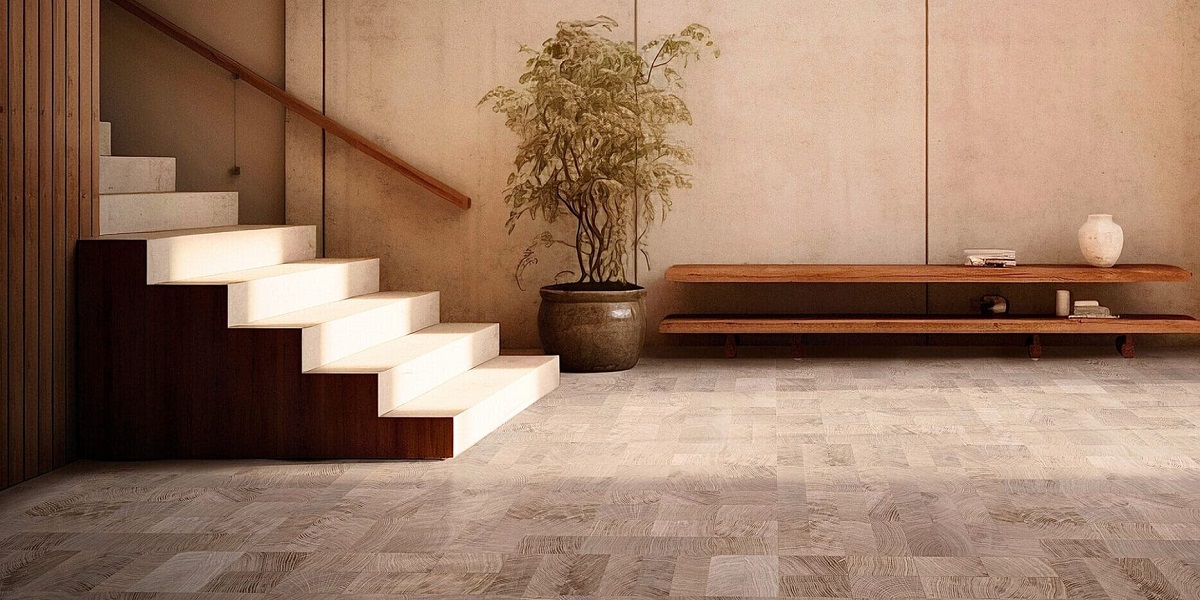
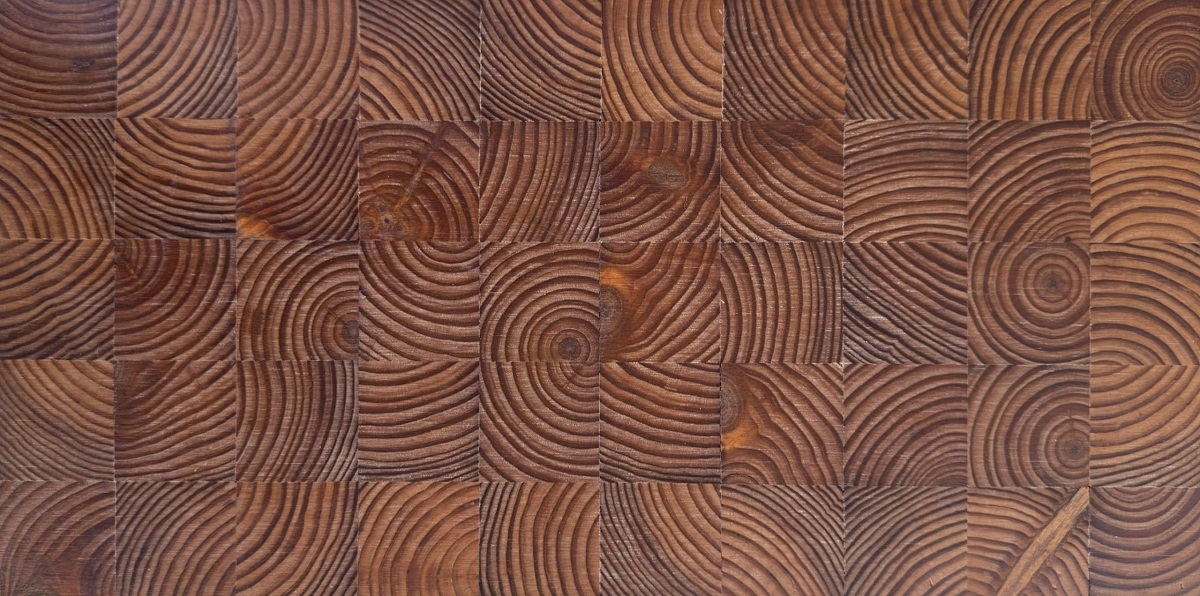
End grain oak has a different feel to a standard timber floor. It’s still warm, natural and recognisably oak, but the block pattern gives it more texture and personality. You notice the grain, the rings and the variation in each piece, which makes the finished floor feel less uniform and much more characterful. That’s part of its appeal for hotels, restaurants, bars, members’ clubs and design-led homes. These are spaces where the floor should do more than cover the room. It should help set the mood, add depth and support the overall material story.

SOLID-END-GRAIN-PLANKS-2-scaled-

Image credit: The Solid Wood Flooring Company

A more interesting way to use oak
The Solid Wood Flooring Company’s end grain oak flooring offers a more unusual alternative to traditional plank or parquet flooring. Sometimes called butcher’s block flooring, end grain is made from the ends of European oak logs rather than the long face of the board. This exposes the growth rings and gives the surface its distinctive pattern and texture.

The result is still very much a timber floor, but it reads differently in the space. Instead of long linear grain, the surface has a more rhythmic, almost mosaic-like quality. It feels crafted without feeling overly decorative, which makes it especially useful when designers want the flooring to add something to the scheme rather than simply sit beneath it.

Made for spaces with personality
End grain oak works particularly well in interiors where character matters. Boutique hotel receptions, private dining rooms, restaurants, bars, members’ clubs and feature areas can all benefit from a floor with this level of detail.

It also fits naturally with the move towards warmer, more textured interiors. Designers are looking for materials that feel honest, tactile and a little less predictable. End grain oak does that well. Each block has its own markings, so the finished floor has variation and depth without needing a complicated pattern or an overly polished finish.

detail of End-Grain-pine-plank-1-scaled

Image credit: The Solid Wood Flooring Company

A hardworking surface with history
There’s also a practical reason end grain has such a strong reputation. Butcher’s block surfaces have long been used in demanding environments because of the way the timber is cut. Exposing the end of the grain creates a dense, resilient surface with a different structure to standard boards.
For hospitality and commercial interiors, that balance is useful. End grain flooring can bring a strong visual feature to areas that still need to cope with regular footfall, furniture movement and everyday use. As with any timber floor, correct specification, installation and maintenance matter, but the format itself offers both visual and practical reasons to consider it.

Responsible sourcing and made-to-order specification
The Solid Wood Flooring Company’s end grain oak flooring is made from responsibly sourced European oak from FSC-certified forests. For architects, interior designers, developers and contractors, that gives the product a clear responsible sourcing story as well as a strong design identity.
The range is custom-made, so it suits projects where the dimensions, finish and overall look need to be considered properly from the start. End grain products generally require a minimum order of 100m², making them best suited to commercial, hospitality and larger residential schemes rather than small decorative updates.

A floor people will remember
In hospitality design, the most memorable spaces often come down to materials. End grain oak gives designers a way to use timber in a more unexpected format, creating a floor that feels warm, crafted and full of natural character.
For projects where the floor is part of the design story, The Solid Wood Flooring Company can help specify end grain oak to suit the space, brief and wider material palette. Explore the range to see how it could bring character, resilience and responsible sourcing into your next scheme.

The Solid Wood Flooring Company is one of our Recommended Suppliers and regularly features in our Supplier News section of the website. If you are interested in becoming one of our Recommended Suppliers, please email Katy Phillips.

Main image credit: The Solid Wood Flooring Company

Barceló Roma - a renovation inspired by Roman Rationalist architecture

Barceló Roma – a renovation inspired by Roman Rationalist architecture

1024 640 Pauline Brettell
Barceló Roma – a renovation inspired by Roman Rationalist architecture

Following a major investment by Barceló Hotel Group, Barceló Roma enters a new chapter with an interior design concept that blends local identity, sustainability and contemporary design…

Barceló Roma - a renovation inspired by Roman Rationalist architecture

Barceló Hotel Group has announced the opening of Barceló Roma, a new city hotel in the Italian capital and the result of a €41 million investment. Following a complete refurbishment, the hotel pays tribute to 20th century Roman Rationalist architecture and will set a new benchmark for contemporary hospitality in one of Europe’s most visited destinations.

Perfectly situated near Rome’s historic centre and Vatican City, Barceló Roma is a dynamic destination where business, culture and modern city life come together. Its 352 rooms blend sophisticated design, comfort and high-quality finishes, offering something for all types of guests.

Barcelo Roma hotel lobby

Image credit: Barceló Roma

“We are delighted to celebrate the opening of the Barceló Roma, a project that perfectly reflects our vision of contemporary hospitality, whilst showcasing the unique identity of one of the world’s most fascinating destinations,” says José Ramón Álvarez Cervela, Director of the Urban Europe Division at Barceló Hotel Group.

A tribute to ‘The Other Rome’: Barceló Roma is inspired by ‘The Other Rome”, a concept that pays tribute to the city’s Rationalist and Modernist architecture, which reshaped Rome throughout the 20th century. The project reinterprets classical Roman monumentalism through a contemporary lens, combining materials such as travertine and concrete with the clean, geometric lines that define this architectural movement.

Barcelo Roma swimming pool

Image credit: Barceló Roma

The architectural design was led by the Rome-based studio SpacePlanners, while the interiors were created by the Milan-based Chiara Caberlon Studio. Inspired by its surroundings, the hotel’s design draws on the Tenuta dell’Acquafredda Nature Reserve and the ancient Roman road Via Aurelia, resulting in an aesthetic that blends nature, history, and contemporary life.

Through the use of refined materials, sophisticated lighting, and a carefully curated colour palette – featuring amber and green tones inspired by the natural landscape, terracotta accents rooted in Roman architectural tradition, and golden metallic details that add bright, elegant touches – the interiors blend contemporary sophistication with historical references. The result is a place that connects past and present, offering an authentically Roman experience from a modern perspective, with a particular focus on wellbeing and sustainability.

One of the project’s most distinctive features is its main staircase, an architectural feature with a striking visual impact. Its contemporary design, combined with layered lighting and a mix of materials, makes it one of the hotel’s most iconic spaces.

conference and meeting space in Barcelo Roma

Image credit: Barceló Roma

A strategic location for MICE: “Italy represents a key strategic market within our European expansion plans, and Rome, with its global appeal and strong demand for both business and leisure, plays a central role in this vision. The opening of the Barceló Roma marks an important milestone in strengthening our presence in the country and consolidating our position amongst the leading European city destinations. Looking ahead, we are confident that the Barceló Roma will establish itself as one of the city’s leading hotels in the MICE sector and as a flagship property for our brand in Italy, offering a distinctive experience that combines design, innovation and excellent service,” said José Ramón Álvarez Cervela, Director of the European Urban Division at Barceló Hotel Group.

With this opening, Barceló Hotel Group reinforces its commitment to MICE in one of Europe’s leading city destinations, further positioning Rome as a strategic hub for business tourism and international events. With over 1,400 square metres of space dedicated to events and conferences and 8 meeting rooms, Barceló Roma is designed to host corporate meetings, conferences and exclusive events in an elegant and highly functional setting.

Beyond its strong business infrastructure and appeal, Rome offers a wealth of cultural, culinary and entertainment options, alongside a wide range of museums, exhibitions and urban experiences that allow visitors to balance their professional commitments with leisure time.

With this addition, Barceló Hotel Group continues to expand its international footprint and strengthen its presence in key urban destinations through projects that combine design, expertise and a connection with the local community.

Main image credit: Barceló Roma

Alchemy 38 hydrotherapy pool

Alchemy 38 – a deep dive into holistic wellness design

1024 640 Pauline Brettell
Alchemy 38 – a deep dive into holistic wellness design

Woven into Manhattan’s healthcare hub on the Upper East Side, Alchemy 38 is a holistic therapeutic programme designed to foster reflection, relationship building and renewal…

Alchemy 38 hydrotherapy pool

Alchemy 38 is a wellness retreat developed in response to how physical and mental well-being are often treated in isolation or through systems that feel clinical and fragmented. Its holistic therapeutic programme is designed to foster reflection, relationshipbuilding and renewal, much like the brain forms new neural pathways through psychotherapy.

The name 38 reflects the underlying structure of the experience: 3 representing the triad of mind, body, and spirit, and 8 symbolizing infinite cycles of renewal and transformation. Together, 38 defines a system of transition — between states of being, between spaces, and between the internal and external self.

The design is built around three core pillars: the disciplined geometry of Manhattan’s grid, the transformative nature of neurogenesis, and Shinrin-yoku, the Japanese practice of forest bathing. Materially, the project is grounded in a restrained palette of hinoki wood, glass, basalt, lime plaster, and microcement,
integrated with smart technologies and lighting systems that regulate atmosphere, circadian rhythm, and thermal conditions.

Alchemy 38 is staffed with practitioners balancing traditional and contemporary methods. The program unfolds as eight core ritual rooms and three supporting social spaces, each acting as a calibrated threshold guiding guests through release, restoration, and re-emergence across three levels comprised of
approximately 2000 square metres.

t_therapy suite lumen

Image credit: Alchemy 38

“The architecture of health is an act of empathy. It recognises that wellbeing is not a luxury amenity but a biological necessity; that design, at its highest form, is a healing art.” Yasmine Ammar, Designer

The Manhattan Grid
‘The Greatest Grid’ is a defining element of Manhattan. Established in 1811 as New York’s first major civic plan, the grid marked a milestone in the history of urban planning and embodied the city’s vision of brazen ambition. Within the Upper East Side, this ordered system fostered dense concentrations of intellectual, cultural, and institutional exchange, where researchers, physicians, artists, and thinkers operate within a tightly interconnected urban fabric.

Within the project, the grid is reinterpreted as an architectural system of orientation, rhythm, and transition. Its disciplined geometry is not only spatial but experiential, expressed through subtle architectural moments such as window proportions, wall details, ceiling millwork, and the delineation of rooms and threshold spaces. In this context, the grid becomes more than geometry; it acts as a therapeutic vessel for structure, clarity, transformation, and re-emergence.
Ultimately, the Manhattan Grid serves as the rational spine of Alchemy 38, establishing order and legibility while allowing the retreat’s emotional and sensory layers to unfold.

Image credit: Alchemy 38

Neurogenesis
Neurogenesis is the biological process through which the brain forms new neural pathways, enabling adaptation and cognitive renewal over time. Once believed to occur only during early development, contemporary neuroscience has revealed the brain’s ongoing capacity for change in response to external stimuli and social interaction. Within the project, neurogenesis is interpreted as both transformation and connection. The retreat’s therapeutic program fosters the formation of new pathways at both the individual and collective scale, mirroring the ways neural networks and human relationships emerge through structure, atmosphere, and communion.

This pillar shapes the retreat through a sequence of spaces that balance introspection and interaction. A series of shared rituals unfold across thoughtfully crafted private and communal settings, creating opportunities for transformation through inward reflection and interpersonal exchange.

In this context, neurogenesis becomes a metaphor for renewal through both space and shared experience.

_elixir bar_tea lounge

Image credit: Alchemy 38

Shinrin-yoku (森林浴)
Shinrin-yoku, or ‘forest bathing,’ is a Japanese practice of mindful immersion in nature. Developed in Japan during the 1980s in response to growing urbansation and technological overstimulation, it emphasises the restorative effects of the forest environment on both the body and mind. Within Alchemy 38, Shinrin-yoku is translated through an abstracted interpretation of nature. Sculptural forms inspired by geological formations, layered lighting evocative of light filtering through tree canopies, and a restrained palette of natural materials create spaces defined by calm, softness, and quiet immersion.

Shinrin-yoku also shapes the retreat’s spatial journey, unfolding through moments of compression and openness, shadow and light, stillness and immersion. From intimate therapy suites to thermal and hydrotherapy spaces, the sequence echoes the experience of moving through a forest.

A restrained palette of hinoki wood, glass, basalt stone, lime plaster, and microcement grounds the retreat in warmth and tactility, while discreet smart technologies regulate circadian rhythm and thermal comfort throughout the day. In this context, Shinrin-yoku becomes a means of reconnecting guests with themselves and their surroundings through the restorative power of nature.

Designer Ammar works fluidly between refined minimalism and more expressive, maximalist gestures, unified by a consistent pursuit of sophistication through proportion, colour theory, material intelligence, and meticulous attention to detail. Sustainability and wellness remain central to her philosophy, informing a careful approach to material selection, energy efficiency, and the integration of smart technologies. Through this lens, her work seeks to create environments that are not only visually harmonious, but also restorative — spaces that reconnect humans to nature, awaken the senses, and elevate the quality of life.

Main image credit: Alchemy 38

Inside the factory: lighting the way with Mullan

1024 640 Sophie Harper

Inside the factory: lighting the way with Mullan

Last year, Sophie Harper travelled to County Monaghan to go behind the scenes at one of Ireland’s most acclaimed lighting manufacturers to discover the magic of Mullan is actually rooted in something far deeper than the glow of a filament…

There is a particular quality to the natural winter light in rural Ireland. It arrives low and golden through bare hedgerows, catches the silver of frost on old stone walls, and disappears fleetingly by 4pm. Driving through County Monaghan in the early morning, winding along roads flanked by soft hills and the odd farmhouse chimney exhaling woodsmoke into the chill air, I couldn’t help but think there was something fitting about making a pilgrimage to a lighting company in a landscape that seems to understand, viscerally, just how much light matters.

Mullan Village is not the kind of place you stumble upon; you must mean to go there. And yet, pulling into the courtyard of what is now the Mullan Lighting facility, it becomes immediately obvious why Founders Mike and Edel Treanor chose this spot, and this mill, to build something lasting.

The village of Mullan was once a thriving rural centre in the 1850s, its flax mill providing employment for the small community of workers who lived in its cottages. In the early twentieth century the mill closed, and the village fell quiet. A shoe factory breathed life back into it in the 1920s, but that too shuttered in the 1970s, and for over a quarter of a century the buildings sat empty.

Mike and Edel had been enjoying world travels, but on their return to Ireland were struck by the after effects of the 2007 crash. With work in their respective fields (architecture and education) proving unpredictable, an idea came to mind – a metaphorical and physical light lit up – and with a nudge in the right direction from Mike’s father who had experience in lighting and electrical components, the couple set about making plans to build their own company from the ground up.

Image credit: Mullan Lighting

In 2009, they got the keys to the old mill, and starting small they began to carve out space within the abandoned building, breathing new life into its timeworn walls. They started with a skeleton staff, and steadily grew – as a team and a business. Now, the mill has evolved into the beating heart of the village, with over 100 employees, and Mike and Edel taking on other buildings to renovate and revive as a direct result of the success of their initial vision.

Today, the complex hums with purpose: the clatter of metalwork, the low drone of polishing equipment, the purposeful movement of craftspeople between departments. Many of the people who now work here have also made their home in the restored mill houses of the village. It is, in every sense, a community that has been switched back on.

Touring the facility with Lee Grieve, Mullan’s knowledgeable Business Development Manager, we begin, unexpectedly, in the ceramics department, staring in awe at the number of items waiting to be fired in the kiln – including a fun looking tableware range. Each item is shaped and fired by hand, and the results carry that irreducible quality you can only achieve when human touch is part of the process. Mike and Edel bought the kiln four years ago to start making ceramic components on site – one of the many things they have embraced to ensure the whole manufacturing process takes place under their own roof.

Image credit: Mullan Lighting

We head to the fabrication department, where raw metal is shaped, bent, brazed, and welded into the component parts that will eventually become a finished fixture. The work here is precise and physical and there is a satisfying directness to it, a sense that the finished product is genuinely being wrought rather than assembled from pre-formed parts. At this point, I’m offered my very own little brass dinosaur cut expertly from a laser cutter, and we head to the finishing department to check out the polishing and antiquing processes.

To give a light an antique brass finish, the antiquing department does this through a chemical process. The polishing department produces polished and satin brass finishes by working the brass components by hand and using a hard wheel to achieve the satin effect. The powder coating department sprays components in a wide range of colours, which then go into an oven to lock in the finish. Standing and watching all of these processes is mesmerising – seeing components transform immediately into pieces that start taking on the design and character of the finished product.

All of Mullan’s lights are completely handmade and made to order. When an order is placed, it takes three weeks to be manufactured in the factory. This is not a conveyor-belt operation. Every piece moves through a series of specialist departments, each staffed by skilled craftspeople who have often been with the company for years and bring a quiet, earned expertise to their work.

Image credit: Mullan Lighting

The design studio is where things get genuinely exciting for anyone working in hospitality design. Mullan offers a completely bespoke lighting service, guiding the client through the entire process – from initial concept to design, the manufacture of samples if required, through to the finished product. The walls here are pinned with technical drawings, finish samples, and photographs of completed installations in hotels, restaurants, and bars around the world.

The company has the capacity to manufacture both high-volume quantities of a single product and entirely one-off bespoke pieces – a flexibility that makes it unusually well-suited to the hospitality sector, where a major hotel project might require hundreds of consistent pendants for guestrooms alongside a handful of statement pieces for a lobby or restaurant. The design team works closely with architects and interior designers from the earliest stages of a project, and the trade programme is well established, offering meaningful support to specification professionals.

Image credit: Mullan Lighting

Mullan’s team of skilled designers and artisans work closely with clients to bring their vision to life, ensuring that each piece not only illuminates but also enhances the space it inhabits. Spending time with several members of the team during the tour, this comes across not as a marketing line but as a genuine operating principle. There is a real pride here – in the craft, in the building, in what the company represents for this small corner of Ireland.

Stepping back outside into the sharp winter air, the village around me is still and golden in the late afternoon light. The mill houses are lit from within. It turns out that the most compelling thing Mullan Lighting has illuminated isn’t a hotel lobby or a Michelin-starred restaurant, impressive as those installations are. It’s the village itself.

The only regret? I couldn’t find a way to pack one of those ceramic pendants into my carry-on without the team noticing. Next time, perhaps.


Mullan Lighting is one of our Recommended Suppliers and regularly features in our Supplier News section of the website. If you are interested in becoming one of our Recommended Suppliers, please email Katy Phillips.

Main image credit: Mullan Lighting

glass ceiling pendants by Northern Lights over reception table

Northern Lights makes British lighting more accessible

1024 640 Pauline Brettell
Northern Lights makes British lighting more accessible

In a bold move, Northern Lights has introduced updated trade pricing across its Signature Collection, designed to support architects, interior designers and specifiers sourcing decorative lighting for hospitality, residential and commercial projects…

glass ceiling pendants by Northern Lights over reception table

The new pricing model from Northern Lights makes British artisan lighting more accessible, whilst retaining the premium materials, craftsmanship and integrity for which Northern Lights is renowned.

wall lights by Northern Lights next to bedThe George Hotel

Image credit: Richard Blaxall / Photerior

The collection continues to reflect the company’s commitment to high-quality UK manufacturing, supported by extensive design flexibility and customisation options. The change reflects significant development in production capabilities, sourcing and operational efficiencies, enabling Northern Lights to strengthen its long-term manufacturing foundations while sharing the benefits with the design community.

At a time when rising costs continue to challenge much of the manufacturing sector, the move reflects Northern Lights’ confidence in its manufacturing strategy and commitment to delivering greater value to the design and procurement community.

Donna Bruce - Managing Director at Northern Lights

Donna Bruce | Image credit: Northern Lights

Donna Bruce, Managing Director at Northern Lights, commented: “At Northern Lights, we’ve always believed that success isn’t about working harder, it’s about working smarter. Over the past few years, we’ve made significant improvements in our manufacturing capabilities, streamlining production processes and identifying efficiencies across our operations. These enhancements have strengthened how we work, supporting British manufacturing and creating efficiencies that allow us to deliver greater value without compromising on quality. We remain committed to proving that British craftsmanship, exceptional quality and competitive pricing can coexist. Our focus has been on removing inefficiencies, embracing innovation and ensuring that the benefits of those initiatives are shared with our customers. The products remain the same. The craftsmanship remains the same. Our commitment to British manufacturing remains the same. What has changed is our ability to deliver greater value. As a result, we are pleased to introduce updated trade pricing across our Signature Collection, making our British-made lighting more accessible for specification across a wider range of projects.”

The updated trade pricing is now available via Northern Lights’ Design Partner Programme, where both new and existing trade clients can instantly access live pricing, quotations, sample requests and tools through a dedicated online account.

Access online: Register for Design Partner Access
Alternatively, contact [email protected] to request a PDF hard copy of the latest pricing.

Northern Lights is one of our Recommended Suppliers and regularly features in our Supplier News section of the website. If you are interested in becoming one of our Recommended Suppliers, please email Katy Phillips.

Main image credit: Northern Lights

Capella Hotel Group appoints new Regional General Manager, Southeast Asia

1024 640 Sophie Harper

Capella Hotel Group appoints new Regional General Manager, Southeast Asia

Capella Hotel Group has appointed Christian Westbeld as Regional General Manager, Southeast Asia overseeing Capella Singapore, Capella Ubud and Capella Hanoi… 

Hailing from Frankfurt, Germany, Christian Westbeld’s path into hospitality leadership spans 25 years across four continents including F&B and senior management roles at Raffles Hotels & Resorts in Dubai, Beijing and Singapore, followed by senior operations leadership at MGM China’s large scale integrated resorts, before returning to Raffles Singapore as General Manager in 2017.

Most recently, Westbeld served as Managing Director of Raffles Singapore, where he oversaw the landmark restoration, relaunch and repositioning of the hotel, considered one of the most significant heritage transformation projects in the region and industry. His role also included responsibilities as Regional General Manager Raffles Indonesia.

Westbeld now takes the helm at Capella Singapore, the brand’s flagship property which opened in 2009. Spread across 30 acres of lush grounds and tropical rainforest on Sentosa Island, the property blends restored colonial Tanah Merah heritage buildings from the 1800s with contemporary architecture by Norman Foster, reflecting a meeting of history with Capella’s design philosophy.

Its 113 rooms and suites are complemented by 10 private manors with plunge pools in both colonial and contemporary configurations, alongside 81 serviced residences ranging from one-bedroom suites to three-bedroom duplexes, landmark F&B destinations as well as event spaces. Recognised on Condé Nast Traveler‘s coveted Gold List this year and Forbes Five-Star rated for 14 consecutive years, Capella Singapore continues to stand as a benchmark for service quality, facility excellence and overall guest experience.

Westbeld’s leadership philosophy is rooted in people before process. He takes a genuine interest in the individuals around him, whether guests or colleagues, and this has shaped how he builds teams and leads properties over the years. On the ground that translates into a hands-on presence characterised by spending time with his teams and in the operation, cultivating service and belonging, centred on anticipating needs before they arise.

Roland Fasel, President, Capella Hotel Group, says, “It’s with pride that we welcome Christian to the Capella family. Christian brings a valuable combination of market knowledge, operational rigour and a deep understanding of the Capella brand. His roots in the Singapore market run deep, and the relationships he’s built across the industry are a true asset – but what sets him apart is his belief that hospitality is ultimately about people. That’s something we hold close at Capella. His appointment marks an exciting new chapter, and Capella Singapore is the perfect home for his talents as we continue to strengthen the synergy of the region.”


Mian image credit: Capella Hotel Group

Mandarin Oriental introduces its new resort - Mandarin Oriental Punta Negra, Mallorca

Mandarin Oriental introduces its new resort – Mandarin Oriental Punta Negra, Mallorca

1024 640 Pauline Brettell
Mandarin Oriental introduces its new resort – Mandarin Oriental Punta Negra, Mallorca

Mandarin Oriental Punta Negra, Mallorca, an exquisite transformation on the island’s coveted southwest coastline in Calvià, has opened as the brand’s third property in Spain, following Mandarin Oriental, Barcelona and Mandarin Oriental Ritz, Madrid… 

Mandarin Oriental introduces its new resort - Mandarin Oriental Punta Negra, Mallorca

Originally home to the historic Hotel Punta Negra, the Mandarin Oriental Punta Negra, Mallorca site is framed by Aleppo pine trees, secluded coves and sweeping Mediterranean views. Preserving the spirit of its past while embracing a contemporary vision, the resort blends contemporary design, Mediterranean spirit, and the island’s natural beauty and heritage in harmony.

Mandarin Oriental Punta Negra

Image credit: Jack Hardy / Mandarin Oriental

Set across lush gardens and dramatic coastal terrain, the property features 131 elegantly appointed rooms and suites, a world-class collection of dining destinations, a signature wellness sanctuary, and carefully selected leisure and cultural experiences.

Every journey is designed to be seamless from the very first moment, and guests may arrive in effortless style with an exclusive private yacht transfer service. At the resort, guests might enjoy the thoughtfully designed art pathway that connects galleries and site-specific installations, or the world-class golf courses and scenic cycling routes across the island. Tennis by the sea and yoga sessions overlooking Punta Negra’s coastline offer further ways for guests to immerse themselves in the island experience.

Mandarin Oriental Punta Negra

Image credit: Jack Hardy / Mandarin Oriental

The gastronomic experience reflects a rich Spanish food culture where life revolves around the table and, at Mandarin Oriental Punta Negra, Mallorca, local traditions meet visionary creations from internationally acclaimed chefs. Each chef expresses a distinct identity and each restaurant serves up its own world of flavours, textures and emotions.

Rooted in cultural authenticity and elevated by contemporary expertise, the Spa at Mandarin Oriental Punta Negra, Mallorca offers more than treatments. It presents a holistic lifestyle of wellbeing, blending Mediterranean soul with Oriental philosophy to create a refined sense of balance, calm and renewal.

Light, shadow and thoughtful design create serene spaces for relaxation and reflection. Connected to the Mediterranean Sea, Punta Negra celebrates Mallorca’s culture, landscapes and luxurious lifestyle.

Main image credit: Jack Hardy / Mandarin Oriental

Bespoke switches and socket outlets in Focus SB Ambassador Square faceplate style are specified to complement eclectic interior details of guest rooms and suites of London’s newest hotel, The Newman Fitzrovia.

Case study: Focus SB makes a statement at The Newman

1024 640 Pauline Brettell

Bespoke switches and socket outlets in Focus SB Ambassador Square faceplate style are specified to complement the eclectic interior details of guestrooms and suites of one of London’s newest hotels, The Newman Fitzrovia…

Bespoke switches and socket outlets in Focus SB Ambassador Square faceplate style are specified to complement eclectic interior details of guest rooms and suites of London’s newest hotel, The Newman Fitzrovia.

Focus SB’s expert design, manufacturing and projects management team is delighted the company’s premium electrical accessories are specified for London’s  The Newman on Newman Street in Fitzrovia. Three years in the making, this is a unique flagship project from international hospitality management company Kinsfolk & Co.

The Newman appointed London-based Pernille Lind and Richy Almond of Lind + Almond, known for designing spaces with an understated worldly eclecticism, to lead on the design of the 81-bedroom hotel. Working closely with dedicated regional Focus SB Business Development Manager Mike Johnson and Paul Brackley, Founder & CEO of award-winning British hospitality brand Kinsfolk & Co, Lind + Almond had the flexibility to create bespoke solid brass bedhead panels finished in Chocolate Bronze, featuring contrasting Unlacquered Polished Brass round button dry contact retractive keypad switches for an aesthetically-pleasing and tactile KNX installation.

(left) Focus SB Ambassador Square 4-gang round button keypad with engraving. (right) Bedside panel, Ambassador Square with 1x 1-gang 13A switched socket, 1x USB charger Type A&C, 1x 6-gang keypad with round dry contact retractive switches, KNX installation. Unlacquered Polished Brass finish. | Image credit: Ursula Armstrong

Design and finish continuity with unique contrast detail was achieved across multiple eye-catching switches and sockets specified for The Newman Penthouse and guest suites, in Unlacquered Polished Brass and Chocolate Bronze finishes.

Bespoke Focus SB products specified included 4-gang and 5-gang round button dry contact retractive keypad switches with laser marking, vertical plates with a shaver socket and volume control (bathrooms) and multi-service bedhead panels finished in Chocolate Bronze with 1-gang 13A switched socket, 1x USB charger Type A&C, 1x 6G round button keypads with contrasting Unlacquered Polished Brass buttons.

Focus SB Ambassador Square with 1x 1-gang 13A switched socket, 1x USB charger Type A&C, 1x 6-gang keypad in Chocolate Bronze with contrasting dry contact retractive button switches in Unlacquered Polished Brass | Image credit: Ursula Armstrong

It was important to the designers for this level of flexibility of metal finishes across multiple decorative accessories, and Focus SB was able to deliver.

“Metal finishes play a significant role in tying together the material palette of a project. Having the flexibility to specify complementary finishes across accessories allowed us to maintain consistency and ensure the detailing felt intentional rather than generic,” commented Richy Almond on Focus SB’s bespoke products and services. “Their willingness to collaborate and adapt finishes helped ensure that technical components integrated seamlessly into the design language. Being able to customise elements meant the electrical accessories became part of the architectural detailing rather than something that sat awkwardly on top of it.”

Focus SB features Founders of Lind + Almond, Pernille Lind and Richy Almond in an interview about the design inspiration behind The Newman boutique hotel interiors. Visit Focus SB to read the full article.

This article is part of our paid content offering. To explore sponsored editorial opportunities with Hotel Designs please contact Katy Phillips.

Main image credit: The Newman

Following in the footsteps of BABEL Belleville and the MyHotels group, BABEL Lille champions a form of hospitality that is responsible, socially engaged and deeply rooted in its local communit

BABEL Lille Hotel: a stopover on the Spice Route

1024 640 Pauline Brettell
BABEL Lille Hotel: a stopover on the Spice Route

Following the Silk Road journey imagined at BABEL Belleville, BABEL Lille has opened its doors this summer, setting its sights on the historic Spice Route…

Following in the footsteps of BABEL Belleville and the MyHotels group, BABEL Lille champions a form of hospitality that is responsible, socially engaged and deeply rooted in its local communit

Inspired by the city’s rich trading heritage and its strategic position at the crossroads of Europe’s major capitals, BABEL Lille tells a story of travel, exchange and discovery. Designed by interior architect Chloé Nègre, the property evokes the stopovers of a traveller returning from the northern ports. Each of its 71 rooms unfolds like a contemporary cabinet of curiosities, blending carefully sourced antiques with bespoke creations.

detail of bespoke headboard with octopus motif in Babel lille hotel

Image credit: Alice Casenave

BABEL Lille is a contemporary urban inn located in the heart of one of the city’s most dynamic neighbourhoods, just a short walk from both train stations. Drawing inspiration from distant horizons as much as from the street next door, the hotel celebrates the maritime history of Flanders, long-haul voyages and the global trade routes that shaped Lille, a historic cultural crossroads nourished by its hidden waterways.

To bring this narrative to life, the hotel entrusted its design to interior architect Chloé Nègre. Conceived and thought as the residence of a modern-day corsair collecting treasures throughout his journeys, the hotel is filled with antiques, handcrafted pieces and bespoke furnishings. Chloé Nègre creates a timeless aesthetic by combining noble natural materials,  custom-designed objects, vintage finds and antiques.

The result is a place that feels suspended between different time dimensions, where multiple stories coexist and where guests are invited to connect, exchange and find inspiration. From the moment guests enter, the lobby sets the tone. A welcoming lounge furnished with one-of-a-kind vintage pieces sourced from Désuet offers a comfortable place for guests to relax. On the floor, a carpet featuring a mermaid motif lies beneath a Chloé Nègre-designed octopus-shaped light fixture. Natural light filters through stained-glass windows created by Lille artisan Hugo Lepoutre. The artist from Lille chose to depict a giant octopus among scales and ropework inspired by Art Nouveau.

Spread across six floors, the hotel’s 71 guestrooms are imagined as the stopovers of a traveller returning from the ports of the North. Spice-toned palettes, raw linen, patinated brass, rich velvets, aged wood and antique tiles create an atmosphere steeped in discovery. Each room tells its own story, like a contemporary cabinet of curiosities, bringing together vintage objects, custom-made pieces and reclaimed materials.

Throughout the hotel, a curated collection of artworks explores the theme of travelling, the Spice Route and the world of corsairs. Curated by Amélie Maison d’Art, a contemporary Parisian art gallery. The rooms depict a fictional world of a fictional sea life. Some rooms feature hand-painted mermaid murals created
by decorative painter Lucille Boitelle, who also designed the patterns found on the hotel’s corridor carpets.

The headboards that are already iconic at BABEL Belleville are crafted either from marine-blue or sandy zellige tiles with botanical motifs, or from wood inlaid with octopus-inspired designs. Every detail has been thoughtfully considered: wall sconces evoke mermaids’ tails, while braided mirror frames reference maritime ropework traditions.

bedroom detail Babel Lille

Image credit: Alice Casenave

In the bathrooms, basin sinks take inspiration from ancient amphorae, vessels that have travelled across centuries and seas. These statement pieces are crafted by Maison Herbeau, the last family-owned French manufacturer specialising in sanitary ceramics, located only a few kilometres from the hotel. They are paired with functionalist Art Nouveau-inspired cabinetry.

Guests are welcomed by a signature spice-infused fragrance blending lemon, cardamom, chilli pepper and cedarwood, featured throughout the MAW (My Aromatic Wish) body care collection and complemented by in-room tea service. Whether you decide to stop alone or with company, Babel Lille offers four different rooms, which can accommodate up to four guests. Families can choose from Family Rooms, Connecting Rooms or spacious 32 square metre apartments featuring a queen-size bed, two single beds and a kitchenette.

single beds in babel lille guestroom with wooden chair and desk at bed end

Image credit: Alice Casenave

Throughout the day, the hotel’s vibrant bar serves as its beating heart. A meeting place for travellers and local residents alike, it reinterprets the spirit of historic taverns with large communal tables, comfortable banquettes, collected curiosities and beverages inspired by the Spice Route. The menu also features BABEL wafers, inspired by the famous Northern French waffles traditionally flavoured with brown sugar. The concise, purpose-driven drinks menu highlights local producers and artisans,  alongside sustainably sourced MUDA coffee and homemade reinterpretations of regional treats.

A discreet door near the hotel entrance leads to an intimate private lounge designed for meetings, seminars and conferences. A large mural by Lucille Boitelle adorns the walls, evoking historic maritime charts and navigational maps.

Like BABEL Belleville  and  the wider MyHotels group, BABEL Lille embraces a model of hospitality that is responsible, socially conscious and locally rooted. Its commitments include circular economy practices, short supply chains, eco-certified products, recycled and reclaimed materials, responsible  energy management and ongoing environmental training for staff.

As with its Paris property, BABEL Lille aims to showcase the richness of its region by working closely with hyper-local suppliers, Lille-based artists, craftspeople and community organisations. The hotel is envisioned as a welcoming, vibrant and accessible place where travellers and local residents come together. Much like the city itself, BABEL Lille fosters dialogue between cultures, craftsmanship and generations.

Main image credit: Alice Casenave

Gilles Bontems joins Evok Collection as GM of Brach Paris

Gilles Bontems joins Evok Collection as GM of Brach Paris

1024 640 Pauline Brettell
Gilles Bontems joins Evok Collection as GM of Brach Paris

Evok Collection has appointed Gilles Bontems as General Manager of Brach Paris, bringing with him a career built within some of the most prestigious names in luxury hospitality…

Gilles Bontems joins Evok Collection as GM of Brach Paris

A respected hospitality professional, Gilles Bontems has developed his expertise within leading international luxury hotel groups in France and abroad. Prior to joining Evok Collection, he served as Hotel Manager at Park Hyatt Paris-Vendôme. He previously held the positions of Hotel Manager and Director of Operations at Hôtel Martinez in Cannes, as well as Director of Operations at Le Méridien Nice.

Throughout his career, he has also gained extensive experience in food & beverage and lifestyle-driven hospitality environments, serving as Director of Food & Beverage at the Sheraton Brussels Airport Hotel and holding various management positions in Switzerland, Belgium, and France. This diverse background has given him a comprehensive operational vision, a strong attention to detail, and a deep commitment to service excellence, qualities that lie at the heart of luxury hospitality.

Brach Paris reception

Image credit: Guillaume De Laubier / Brach Paris

As the flagship property of the Brach brand, Brach Paris embodies a vibrant, urban, cultural, and deeply human approach to luxury. Conceived as a destination to experience as much as a hotel to stay in, Brach Paris brings together hospitality, gastronomy, wellness, and local community life through a singular and distinctive energy.

In this context, Gilles Bontems will be responsible for further strengthening Brach Paris’ reputation in France and internationally, enhancing the excellence of the guest experience, and supporting the teams in a continued dynamic of growth, desirability, and fidelity to the spirit of the house.

This appointment reflects Evok Collection’s ambition to create and nurture hospitality destinations with strong personalities, where emotion, authenticity of service, and attention to detail come together to deliver a demanding yet enduring vision of hospitality.

Main image credit: Evok Collection

Milano EVO also integrates Vibro-Music technology, transforming the treatment itself into a sensory journey. LEMI

Harmony Lounge and Milano EVO – a new language of multisensory wellness from LEMI

1024 640 Pauline Brettell
Harmony Lounge and Milano EVO – a new language of multisensory wellness from LEMI

Today, true luxury lies in the ability to create immersive, multisensory experiences; environments where design, technology and emotion converge to redefine the way we perceive relaxation – it is within this vision that LEMI introduces two complementary yet distinct solutions: Harmony Lounge and Milano EVO…

Milano EVO also integrates Vibro-Music technology, transforming the treatment itself into a sensory journey. LEMI

Different in purpose, yet deeply connected by a shared philosophy, both Harmony Lounge and Milano EVO, represent a new approach to wellbeing, where the body is not simply supported, but gently guided into a state of balance.

Harmony Lounge embodies the essence of pure relaxation. More than a chaise longue, it is conceived as a destination within the space —  an invitation to pause, disconnect and reconnect. Its elegant tilting movement, available in the Standard version, follows the natural alignment of the body, creating a fluid transition into comfort. In the Premium version, this experience becomes even more profound, thanks to the integration of Vibro-Music technology and targeted heating.

spa set with MilanoEVO_2

Milano EVO | Image credit: LEMI

Milano EVO, on the other hand, interprets wellness through a more operational yet equally immersive perspective. Designed as a professional spa table, it combines performance and aesthetics with remarkable precision. Its sculptural wooden base and refined finishes make it a true design element, while its advanced ergonomics ensure optimal support during every treatment. Like Harmony Lounge, Milano EVO also integrates Vibro-Music technology, transforming the treatment itself into a sensory journey.

At the heart of both solutions lies this innovative system. Vibro-Music is not simply an additional feature — it is a new language of interaction between technology and the body. By converting sound frequencies into delicate vibrations diffused through the structure, it creates a subtle yet powerful sensory dialogue. Music is no longer just heard; it is perceived physically, resonating through the body in a continuous, enveloping flow.

This vibration, combined with the gentle warmth provided by integrated heating systems, generates a deep sense of release. Muscles gradually relax, breathing slows, and the mind enters a state of calm awareness. It is a form of wellbeing that goes beyond the physical dimension, reaching a more intimate and emotional level.

Harmony Lounge | Image credit: LEMI

In Harmony Lounge, this experience is designed to be contemplative and introspective — a moment suspended in time, where external stimuli fade and inner balance is restored. In Milano EVO, the same technology enhances the treatment process, supporting both the operator’s work and the client’s comfort, without ever disrupting the harmony of the environment.

Both products also reflect LEMI’s commitment to design and craftsmanship. Clean lines, refined proportions and carefully selected materials allow them to integrate seamlessly into a variety of settings, from luxury spas to private wellness suites. Every detail is conceived to enhance the atmosphere, creating spaces that are not only functional but emotionally engaging.

Ultimately, Harmony Lounge and Milano EVO represent two expressions of the same vision: a wellness experience that is fluid, intuitive and deeply personal. A vision in which technology becomes invisible, design becomes essential, and comfort becomes a natural extension of the body.

Because today, true innovation in wellness is not about adding complexity, but about creating harmony — between movement and stillness, sound and silence, body and mind.

LEMI is one of our Recommended Suppliers and regularly features in our Supplier News section of the website. If you are interested in becoming one of our Recommended Suppliers, please email Katy Phillips.

Main image credit: LEMI

Roundtable: Human-Centred Design – Biophilia’s Role in Guest Wellbeing

1024 640 Sophie Harper

Roundtable: Human-Centred Design – Biophilia’s Role in Guest Wellbeing

Earlier this year, Hotel Designs pulled up a seat with Indigenus Founders, Peter and Jacqui van der Post to talk with an inspiring group of designers and architects to explore how biophilic principles can transform the guest experience…

As travellers increasingly seek spaces that restore calm and connection, hospitality design is evolving beyond aesthetics towards environments that nurture the human experience. To explore what that really means in practice, Hotel Designs, in association with Indigenus, convened a roundtable at Tollgard’s flagship showroom in London – a fitting setting, its warmly layered interiors a quiet argument for the very principles under discussion.

Bringing together some of the industry’s leading designers and architects alongside Indigenus Co-founders Peter and Jacqui van der Post, the conversation moved from the superficial to the deeply considered: probing where biophilia is done well, where it falls short, and what it would take for the hospitality industry to fully embrace design that is, above all, human.

Left to right/top to bottom: Alejandra de Cordoba Estepa, Principal of Architecture, HBA; Peter van der Post, CEO & Founder, Indigenus; Jacqui van der Post, Director, Indigenus; Wiktoria Kopycka, Associate Design Director, OBMI; Jing Lan, Senior Designer, David Collins Studio; Sophie Harper, Editor, Hotel Designs, Ed Murray, Partner, Studio Moren; Una Barac, Executive Director, Atellior; Staffan Tollgard, Founder & Creative Director, Tollgard; Jennifer de Vere-Hopkins, Associate Principal, Jestico + Whiles; Andrea Christodoulou, Creative Director, House of Dre

Sophie Harper: Biophilia is sometimes reduced to a living wall and a few potted plants. What does genuine biophilic hospitality design look like to you?

Ed Murray: It starts with the building itself – with orientation, with how light moves through a space across the day. A living wall applied to a corridor that gets no natural light and has no airflow isn’t biophilic design; it’s a prop. Genuine biophilic architecture considers nature from the ground up: solar gain, views, the relationship between inside and outside. You can’t bolt it on at the end.

Wiktoria Kopycka: I’d add that it’s about continuity. In the best projects I’ve worked on, you feel a consistent thread from arrival to departure – the same language of material, light, air and texture running through the whole building. The moment it becomes a feature rather than a philosophy, something is lost.

Jacqui van der Post: Biophilia in the built environment isn’t decoration – it’s a relationship, and that’s what the guest should feel with the natural world; even in the middle of a city. That might be through design that reflects the local landscape, or a material that has its own history and provenance. It doesn’t have to be grand; it has to be honest.

Peter van der Post: And that honesty matters for longevity too. We work with living plants. A living wall that’s dying is one of the most anti-biophilic things you can encounter. If you can’t commit to the maintenance, choose something else. Nothing undermines a wellness narrative faster than a corridor full of brown leaves.

Alejandra de Cordoba Estepa: What I come back to is the idea of intuitiveness. A space that has been designed with genuine biophilic thinking feels right before you understand why. You slow down. You breathe a little deeper. You notice things. That’s the effect of materials that have texture, of ceilings that aren’t sealed off with uniform light, of spaces that have rhythm and pause built in.

Staffan Tollgard: Looking around this room – which is where we live with these ideas every day – what makes it feel the way it does isn’t any single object. It’s the layering. Patinated leather next to raw linen next to a piece of aged oak. Each material has a story, a provenance, a life. That’s what biophilia really is: choosing things that feel like they belong to the natural world rather than having been manufactured away from it.

Sophie: Guest expectations around wellness have shifted dramatically. Are hotels commissioning biophilic design because they believe in it, or because it’s become a marketing expectation – and does that distinction matter for the outcome?

Una Barac: It absolutely matters. You can always tell when a brief has been written around a trend rather than a conviction. The budget doesn’t stretch to the details that would make it real, and you end up with something that photographs well but doesn’t actually feel like anything.

Andreas Christodoulou: I’ve had clients who arrive with a mood board full of organic shapes and moss panels, and then baulk at the cost of real stone or quality timber. That tension reveals where the commitment actually lies. If the budget is going to the digital check-in screen and the biophilia is funded with what’s left, you know where the priorities are.

Jennifer de Vere-Hopkins: Though I’d push back slightly on the cynicism. I think for many operators, the journey starts with the marketing expectation and becomes something more genuine through the design process. A good designer can use that initial brief – however trend-driven – as an opening to educate the client and move them somewhere more authentic. I’ve seen it happen.

Jing Lan: In my experience, the operators who arrive with genuine conviction are often the ones who have themselves been guests somewhere exceptional – a ryokan in Japan, a lodge in Botswana – and have understood viscerally what it means to feel held by a space. They’re not following a trend; they’re trying to recreate a feeling. Those are the most rewarding commissions.

Wiktoria: And that feeling, once you’ve had it, becomes the brief. Which is actually a brilliant starting point for a designer.

Sophie: Scent, sound, airflow, texture – biophilia extends well beyond the visual. Which of these sensory layers do you feel is most underutilised in hospitality design?

Ed: Airflow, without question. We spend enormous energy on what people see and almost none on what they feel in terms of air quality and movement. A guest who walks into a room that has been sealed and climate-controlled to within an inch of its life will never feel fully at ease, no matter how beautiful the interiors are. The body knows. Opening a window, allowing a cross-breeze, using materials that breathe – these things are rarely in the brief but are profoundly felt.

Alejandra: Scent is underestimated. There’s a reason we remember places by smell – it’s the most direct route to emotional memory. But it’s also where hotels get it most wrong, because they default to synthetic fragrance that’s applied rather than inherent. The scent of beeswax on wood, of natural fibre, of live greenery – these are the things that work at the level the body actually processes. You don’t need a diffuser if the materials are doing their job.

Jing: Sound is the one that I find most challenging to address, because acoustics are often determined by architectural decisions made very early in the process. Softly trickling water can be used as an acoustic anchor in a lobby – not decorative, but genuinely functional. It masks mechanical noise, creates a point of calm, and is entirely natural. Guests don’t register it consciously, but the effect is significant.

Una: Texture is my answer, particularly in guest rooms. We’re so focused on how surfaces look that we forget they will be touched – repeatedly, intimately. The difference between a tactile natural linen and a synthetic that feels like it’s coated in something is enormous to a body settling in for the night.

Peter: We think about this a lot with our products – not just how something looks but how it sits in a space, whether it roots a corner or breathes with it. The material, the weight, the finish. These things contribute to the overall sensory register of a room in ways that are subtle but cumulative.

Sophie: Public spaces and guest rooms demand very different things emotionally. How do you calibrate biophilic principles differently across those two environments?

Andreas: In a lobby or restaurant, you’re designing for energy – for the sense of arrival, of possibility, of encounter. The biophilic elements there can be more declarative: a dramatic tree, a water feature, a ceiling that references the canopy above. But in the guest room, the register has to drop entirely. You’re designing for the nervous system at rest. Softer textures, warmer tones, the kind of quiet that asks nothing of you.

Alejandra: I’d also say that lighting is the lever that moves most dramatically between the two environments. In a public space, you’re working with the rhythm of the day and the energy of the crowd; there’s a role for daylight pooling, for shade and brightness alternating. In a bedroom, you’re designing for the circadian system – warm, low, adaptable. The biophilic principle is the same: light should do what natural light does. But the application is entirely different.

Sophie: Many hospitality projects are renovations of hard, industrial or heritage buildings with few natural elements. What are your most effective strategies for introducing warmth and nature into spaces that seem to resist it?

Ed: Honest material contrast. In an industrial building – brick, steel, concrete – I don’t try to disguise those elements. I work with them, and introduce nature as counterpoint. The rawness of the building makes the softness of a timber floor or the presence of a large plant more powerful, not less. The contrast does the work.

Wiktoria: Water is underused as a retrofit strategy. You don’t always need windows onto a garden. A carefully considered water element, even a modest one, can shift the whole temperature of an industrial space. It adds movement, sound, humidity. It changes how the air feels.

Jing: Light is my starting point in a heritage building. Before introducing any material or planting, I ask: where does the light actually want to go, and can we open up the route? Very often, Victorian or industrial buildings have light sources that have been blocked by later interventions. Uncovering them is itself a biophilic act.

Peter: From our perspective, what matters in a resistant space is anchoring – giving the eye and the body points of rest within a challenging envelope. A considered plant placement in a steel-framed industrial space isn’t decoration; it’s orientation. It tells you where you are, gives you something living to relate to.

Una: And narrative helps enormously. In a heritage building especially, the history of the place can itself become the biophilic thread: the idea that this building has grown and changed over time, like an organism, is deeply biophilic.

Sophie: If you could change one thing about how the hospitality industry commissions or briefs design – to make genuinely human-centred, biophilic spaces more achievable, what would it be?

Jennifer: Invite the designer into the brief before it’s written. So often we arrive to find the budget already allocated, the programme already fixed, the decisions that most affect wellbeing already made. If we were in the room when the priorities were being set, we could argue for the things that matter: airflow, natural light, quiet, material quality.

Andreas: Separate the budget for wellbeing from the budget for aesthetics. The two are not the same thing, and when they’re conflated, wellbeing loses every time, because it’s harder to photograph.

Wiktoria: Allow time. Biophilic design that works is never rushed. The thinking, the sourcing of genuine materials, the integration of living elements – it all requires time that the industry is increasingly reluctant to give. The projects I’m most proud of are always the ones where the client trusted the process.

Ed: And be honest about maintenance. Every beautiful biophilic decision – the living wall, the tree in the lobby, the planted terrace – has a cost beyond installation. Design it into the budget from the beginning, or design something that doesn’t need it. But don’t create something living and then not keep it alive.

Across an evening of frank, generous and animated conversation, a clear picture emerged: biophilic design, at its most effective, is not a visual style but a philosophy rooted in deep understanding of human need. Whether the question was one of material honesty, sensory layering, spatial calibration or client trust, every voice around the table returned to the same principle: that spaces which genuinely serve the guest are spaces that feel natural: layered in experience and quietly, persistently alive.

Indigenus is one of our Recommended Suppliers. If you are interested in becoming one of our Recommended Suppliers, please email Katy Phillips.

Main image credit: Indigenus

Schlüter‑Systems Expands DILEX Range with High‑Performance DILEX‑STF Structural Profile

Schlüter‑Systems Expands DILEX Range

1024 640 Pauline Brettell
Schlüter‑Systems Expands DILEX Range

Schlüter-Systems proudly introduces the new Schlüter-DILEX-STF, a structural movement profile engineered to deliver long-lasting performance in both underground and overground applications…

Schlüter‑Systems Expands DILEX Range with High‑Performance DILEX‑STF Structural Profile

Setting a new benchmark for structural protection, Schlüter‑Systems has expanded its DILEX Range with High‑Performance DILEX‑STF Structural Profile. For projects and environments where durability, safety, and reliability are critical, the DILEX-STF sets a new benchmark for structural protection.

Designed to absorb both horizontal and vertical movement, the DILEX-STF ensures floor coverings remain intact when subject to movement in the structure. continuous foot traffic and heavy loads. This makes it an ideal solution for area with extensive foot and forklift traffic such as warehouses, airports, shopping centres, railway stations and any area where floor surfaces are maintained with cleaning machines.

life_DILEX-STF_airporthall_2000_01_s (1)

Image credit: Schlüter‑Systems

Maintenance free and made from aluminium, DILEX-STF is available in two widths and three heights, for flexible specification options, ensuring seamless integration into a broad range of project requirements.

Key benefits:

Suitable for both underground and overground applications

Absorbs horizontal and vertical movement in the structure, protecting floor coverings

Available in two widths and three heights for installation flexibility

Ideal for areas with high footfall or heavy loads

Long-lasting and maintenance-free solution

With the DILEX-STF, Schlüter-Systems continues its commitment to delivering technically advanced innovations that combine functionality, durability, and design excellence. This latest addition to the Schlüter range ensures that specifiers and installers have a robust, future-proof option for safeguarding tile, stone and other floor coverings in demanding environments.

Schlüter-Systems is one of our Recommended Suppliers and regularly features in our Supplier News section of the website. If you are interested in becoming one of our Recommended Suppliers, please email Katy Phillips.

Main image credit: Schlüter-Systems

Regency Square Suites _ Suite 4 _ ©James French

Regency Square Suites – a new design-led stay on Brighton’s seafront

1024 640 Pauline Brettell
Regency Square Suites – a new design-led stay on Brighton’s seafront

On Brighton’s Regency Square, a restored seafront townhouse dating back to the 1820s has been reimagined as a collection of ten luxury design-led suites, blending heritage architecture with a calm, contemporary aesthetic inspired by the English coast…

Regency Square Suites _ Suite 4 _ ©James French

Throughout Sigma Plus Regency Square Suites, original Regency proportions have been retained, with high ceilings, large windows and restored period detailing creating a strong sense of space and light. Suites range from studios to expansive three-bedroom apartments, designed for both short stays and longer visits. Each is fully self-contained, with well-equipped kitchens, living areas and workspaces, offering a more flexible alternative to traditional hotel stays.

window with seaview in Regency Square Suites_Suite 3_ ©James French

Image credit: James French

Half of the suites are south-facing, with views across Regency Square gardens to the sea beyond. Standout spaces include Suite Three, where a sweeping bay window frames uninterrupted views of the i360 and the West Pier, while the penthouse has been conceived as a more intimate retreat, with a softer, more atmospheric feel.

Each suite has been individually conceived within a cohesive design language. Coastal references run subtly throughout, from curved headboards to aquamarine tones in bathrooms. The project has been developed in collaboration with local designers, makers and artists, with a strong emphasis on Brighton and Sussex-based suppliers.

sage green walls and bedhead in guestroom Regency Square Suites _ Suite 5_

Image credit: James French

Against a historic backdrop, the interiors are deliberately restrained. A palette of solid oak, walnut and stone is combined with velvet bouclé, wool rugs from Brighton-based interiors company Mister Smith Interiors and textured wall finishes to create a calm, considered environment.

The restoration was carried out in collaboration with architect Chloe Lewis of Lewis Macmillan, who worked to reinstate original features including traditional room proportions, cornicing, ceiling roses and architraves. Interior designer Melanie Barnes, of Elixir Interior Design, led on the interiors, taking a material-led approach that combines natural finishes with local craft to create a relaxed coastal feel.

“It’s that contrast I’m always drawn to,” commented Barnes. “A strong heritage framework, but with clean lines and a sense of ease. Beautiful, but also deeply liveable.”

a collection of 3 vintage style glass ceiling lampshadesRegency Square Suites _

Image credit: James French

A defining feature of the project is its commitment to local makers and materials. Lighting has been commissioned from Sussex-based studio Spark & Bell, kitchens are by Hove supplier Kitchens by Khan, and wardrobes have been crafted by A G Joinery. Artwork has been sourced from Brighton gallery King & McGaw alongside work by local artists, including a botanical mural by Clara Wilkinson.

Sustainability runs consistently throughout the project. Materials are sourced predominantly from the UK, while refillable products and biodegradable alternatives replace single-use plastics.

couch with coffee table in cream and natural interior in Regency Square Suites _ Suite 3

Image credit: James French

Designed with both comfort and longevity in mind, each suite combines high-spec finishes with practical living. Bathrooms feature smart toilets with bidet functions, while high-quality linens, non-feather bedding and carefully selected toiletries ensure a consistently high standard.

Sigma Plus Regency Square Suites has been developed by S Holiday Homes, part of S Hotel Group, the group’s first hospitality property in the UK. The result is a distinctly Brighton kind of stay, rooted in its architectural past, connected to its creative community, and designed with a level of care that reveals itself over time.

Main image credit: James French

Motto by Hilton in Brazil

Motto by Hilton opens first hotel in Brazil

1024 640 Pauline Brettell
Motto by Hilton opens first hotel in Brazil

Hilton, in partnership with REVPAR INCORPORTAÇÕES and MUV Empreendimentos and Atlantica Hospitality International, has opened Motto by Hilton Recife Antigo, marking the debut of the lifestyle brand in Brazil…

Motto by Hilton in Brazil

Designed for travelers seeking to immerse themselves in the heart of the destination, the 132-room Motto by Hilton Recife Antigo, affectionately known as the “Venice of Brazil” for its picturesque canals, colorful colonial architecture, and vibrant cultural traditions, also represents Hilton’s entry into Recife.

Motto-by-Hilton-Recife-Antigo-Entrance

Image credit: Motto by Hilton

“As we continue expanding our portfolio in key destinations across Latin America, we are thrilled to introduce a new brand in Brazil,” said Maxime Verstraete, Vice President, Brand Management, Caribbean and Latin America, Hilton. “Motto by Hilton Recife Antigo is shaped by the energy of the city and encourages gathering, creating a new type of stay for guests looking for one-of-a-kind local experiences in one of Brazil’s most captivating destinations.”

The hotel architecture and décor reflect the diverse landscapes of Pernambuco state, nestled between the arid interior and the sea. The ground floor embraces rustic design with warm earth tones, symbolising the drought of the interior. The rooftop space evokes the lightness and openness of the sea. Guest corridors feature Cordel literature-inspired illustrations, while colourful artisanal carpets foster authentic community connection.

hotel lobby

Image credit: Motto by Hilton

Guestrooms are adorned with forest-inspired wallpapers and equipped with multi-functional furniture, including bunk beds and sofa beds. Guests have more flexibility with Hilton’s pioneering Confirmed Connecting Room technology, which offers several connecting room configurations to accommodate groups of all sizes. There are 42 connecting rooms, with the option to link up to four at once.

guestroom with bunkbed in Motto-by-Hilton-Recife-Antigo-Bunk-Room

Image credit: Motto by Hilton

Dining outlets are designed to be integral to the neighbourhood’s scene, welcoming both guests and locals. From the rooftop restaurant, guests enjoy daily breakfast with sea or river views, while the coffee shop on the ground floor welcomes guests and non-guests visiting Recife Antigo. The culinary spots are highly creative spaces where every detail tells a story that reflects the nobility and diversity of the region, contrasting with the delicious simplicity of the blend of flavours.

Located two blocks from the historical downtown area called ‘Marco Zero’, Motto by Hilton Recife Antigo is the ideal home base for guests wanting to fully experience Recife’s charm, its golden Boa Viagem Beach, vibrant Afro-Brazilian culture, and historic colonial architecture.

Motto by Hilton Recife Antigo joins Hilton’s portfolio of more than 25 hotels currently welcoming guests in Brazil, reinforcing the company’s commitment to add nearly 30 additional hotels. Across the Caribbean and Latin America, Hilton operates nearly 300 hotels and resorts, with more than 160 properties in various stages of design and construction.

Main image credit: Motto by Hilton

wooden verandah at Troutbeck Cottages

Troutbeck debuts its River Cottages

1024 640 Pauline Brettell
Troutbeck debuts its River Cottages

With respectful nods to its past, the Troutbeck estate has been updated to include four river cottages under the guidance of Champalimaud Design…

wooden verandah at Troutbeck Cottages

The newly constructed Cottages are distinctly ‘Troutbeck’ in their understated residential and collected style, offering refuge and respite in exceptional comfort. Slightly elevated above the landscape, tall windows and expansive porches offer westerly views of the Troutbeck estate.

interior of Troutbeck_Cottages

Image credit: Troutbeck

Situated within a private enclave, two one-bed and two two-bedroom Cottages offer full-service accommodations for up to twelve adults, when booked together. The Cottages are nestled amongst a naturalistic landscape of native wildflowers, trees and shrubs reinvigorated by Reed + Hilderbrand, the landscape architecture practice. Designed by Stonehill Taylor, in deference and reference to early American architectural forms including Benton Cottage (c. 1890) at Troutbeck.

wood panelling, fireplace and forest views in Troutbeck_Cottages_

Image credit: Troutbeck

With interiors by Champalimaud, all four cottages echo the natural tones and textures found throughout the firms work at Troutbeck. Four-poster king-sized beds by Ian Ingersoll, antique blanket boxes as coffee tables and Marcel Breuer chairs continue the ‘quintessentially Troutbeck’ approach to a collected environment, while Hoosier-style minibars and tiled gas fireplaces complete the understated-but-well-lived country house experience.

bedroom in Troutbeck_Cottages_with four poster bed, white linen and views outdoors

Image credit: Troutbeck

All accommodations offer king beds with Frette linens and bathrobes, and bath products by Wildsmith, the plant-powered, cruelty-free skincare line from the United Kingdom. All four River Cottages contain work by Thompson Street Studio founded by artist Kiva Motnyk.

The River Cottages continue the Troutbeck paradigm of offering residential understatement, overlaying the amenities and services for which the One Key MICHELIN Troutbeck is renowned, including wellness treatments and daily movement classes at the Barns; a much lauded and impeccably sourced restaurant, in-room dining, seasonal swimming pool, pool grill, tennis courts and flyfishing pools; in addition to inspiring shared spaces, expansive grounds, riverside firepits, hammocks, gazebos and year round curated cultural programs to enjoy.

Main image credit: Troutbeck

Hyatt Regency Grand Reserve Puerto Rico

Leadership announcement for Hyatt Regency Grand Reserve Puerto Rico

1024 640 Pauline Brettell
Leadership announcement for Hyatt Regency Grand Reserve Puerto Rico

Hyatt Regency Grand Reserve Puerto Rico has announced the appointment of Morty Valldejuli as the property’s new Managing Director, along with Gabriel Armando Emanuelli as its new Director of Sales & Marketing…

Hyatt Regency Grand Reserve Puerto Rico

Bringing over 50 years of combined experience with expertise rooted within Caribbean hospitality, the seasoned hoteliers with deep Puerto Rican ties have been tasked with ushering the 579-key resort into its next chapter.

Having spent over two decades leading branded and independent properties across the Caribbean and United States, Morty Valldejuli’s arrival at Hyatt Regency Grand Reserve is a homecoming, as he spent many of his formative years in Puerto Rico throughout different stages of his early life. He attended college on the island at the University of Sacred Heart in San Juan before kickstarting what has become a decorated international hospitality career, which has taken him from New Orleans to the Cayman Islands and beyond. Most recently, he served as the inaugural managing director of the Hotel Bourré Bonne, which he successfully opened and established as Louisville’s most luxurious lifestyle hotel. Prior to that, he built a storied career path with Pyramid Global Hospitality, working with the leading management company for over 15 years, serving as the steward of some of the company’s top-performing hotels, which became recognised under his purview for their strong operational and guest satisfaction results.

“Sitting on an exclusive 1000-acre private peninsula at the foothills of El Yunque Rainforest, home to the island’s biggest lagoon-style pool and most famous golf course, Hyatt Regency Grand Reserve offers a premier home base to experience some of the most authentic and beloved corners of Puerto Rico,” said Morty Valldejuli, Managing Director. “We are eager to usher in the next era of prosperity at the resort, and look forward to continuing to showcase the very best of the island, welcoming guests in true Boricua spirit.”

Hyatt Regency Grand Reserve Puerto Rico

Image credit: Hyatt Regency Grand Reserve Puerto Rico

Joining him is Gabriel A. Emanuelli as the resort’s director of sales & marketing. A true local and established leader within the Puerto Rican industry, Emanuelli developed his sales, marketing, and hospitality expertise over the course of 25 years spent working on the island, helping shape Puerto Rico’s growth as both a leisure and meetings destination. A Certified Meeting Planner (CMP), Certified Destination Specialist (CDS) and a former tourism industry board leader, Gabriel worked with the Westin Río Mar Beach Resort, Hyatt Dorado Beach Resort, Hyatt Regency Cerromar Beach Resort, and Hotel Rumbao San Juan throughout his career – establishing a proven track record of exceeding revenue goals, driving operational excellence, and delivering exceptional guest experiences, which he looks forward to bringing to Hyatt Regency Grand Reserve.

The newly appointed executives arrive ready to build upon the resort’s established track record as a leader across both group business and leisure travel segments. The decorated property received AAA’s coveted Four Diamond designation for the first time in 2023, followed by accolades in the events space by both Northstar Meetings Group Stella Awards and Smart Meetings Smart Stars Awards. Most recently, the resort was named one of the top ten best resorts in the Caribbean by USA Today’s 10BEST Readers’ Choice Awards in 2026.

Hyatt Regency Grand Reserve was acquired earlier this month by Henderson Park, the international private equity real estate firm, in a joint venture with leading hospitality management company, Pyramid Global Hospitality, as the operating partner. The acquisition marks both companies’ first investment in Puerto Rico.

Main image credit: Hyatt Regency Grand Reserve Puerto Rico

LUX_ Lake Kivu - Scenery

The Lux Collective launches landmark five-resort luxury tourism circuit in Rwanda

1024 640 Pauline Brettell
The Lux Collective launches landmark five-resort luxury tourism circuit in Rwanda

Luxury hospitality operator The Lux Collective makes its debut in Rwanda with the launch of LUX* Lake Kivu and SALT of Akagera, the first two properties within the Group’s landmark five-resort Rwanda Tourism Circuit…

LUX_ Lake Kivu - Scenery

Set across the country’s most iconic destinations, the openings introduce the internationally acclaimed LUX* and SALT brands – ushering in a new era of luxury hospitality shaped by regenerative tourism, immersive nature-led travel and cultural connection.

LUX* Lake Kivu – a luxury contemporary lakeside escape in Karongi
Located on the shores of scenic Lake Kivu in Rwanda’s western region, LUX* Lake Kivu offers an intimate luxury retreat overlooking one of Africa’s Great Lakes. Designed for slow travel, the 14-key resort combines contemporary hospitality, wellbeing and destination-inspired experiences. Framed by panoramic lake and hillside views, its suites and private villa provide calm restorative spaces to reconnect with nature.

Portrait shot of a young male Mountain Gorilla (gorilla beringei beringei) who is feeding nettles. The gorilla belongs to the habituated "Amahoro"-group in the Virunga Mountains of Rwanda.

Image credit: The Lux Collective

Known as a premier birdwatching haven, guests can explore Lake Kivu through curated water experiences, wellness rituals and locally inspired dining, while discovering Rwanda beyond the property. Signature LUX* Extraordinary Experiences include Napoleon Trek with a guided dawn or dusk hike up Napoleon Island as thousands of fruit bats take one sweeping flight, while The Island Run features a relaxing private boat trip to Lake Kivu’s surrounding isles including the popular Blue Monkey Island (home to vervet monkeys) and Swimming Cows Island. The Gorilla Morning is a full-day Volcanoes National Park excursion for rainforest trekking and close encounters with mountain gorilla families. From Cherry to Cup highlights Rwanda’s renowned coffee heritage from plantation to tastings alongside local communities. Elevated culinary experiences at its international restaurant Cleo, lakeside destination dining Riva and Maison LUX* café & bar, complemented by Sunrise Yoga Practice and the LUX* ME Spa, complete the holistic approach to luxury contemporary travel.

Positioned within reach of Nyungwe Forest, Volcanoes National Park and the western tourism corridor, LUX* Lake Kivu serves as both a gateway to discovery and tranquil lakeside escape. Blending understated luxury with a strong sense of place, the resort reflects the LUX* brand’s philosophy to immersive travel rooted in design, sustainability and wellbeing.

SALT of Akagera_Sunset

Image credit: The Lux Collective

SALT of Akagera – a purpose-led eco-luxury safari retreat in Akagera National Park
Overlooking Lake Ihema within Akagera National Park, Rwanda’s only Big Five reserve and Africa’s celebrated conservation success story, SALT of Akagera introduces a luxury five-star eco-safari experience grounded in authenticity, simplicity and sustainability. The reimagined 60-key lodge is the world’s first SALT safari property, bringing the brand’s humanistic hospitality approach to Rwanda’s eastern savannahs.

Set amidst diverse ecosystems of lakes, wetlands, woodlands and savannahs rich in wildlife, SALT of Akagera offers a restorative wilderness retreat that fosters connections with nature, culture and place. Inspired by its surroundings, the design blends natural materials, earthy tones and locally crafted details to create a warm, intimate safari experience.

From wildlife encounters and guided safaris to locally inspired cuisine and wellness programming, the property encourages conscious travel. Seasonal menus draw on Rwanda’s volcanic soil, lake fish, honey, coffee, fresh produce from nearby farms. A zero-waste, farm-to-table philosophy guides the culinary offering.

SALT of Akagera_Elephants at Akagera National Park

Image credit: The Lux Collective

Signature SALT experiences include Root to Table, a dining journey tracing Rwanda’s agricultural heritage from soil to plate, Boma Nights beneath the stars with open-fire cooking of regional flavours, and Beyond the Gate offering behind-the-scenes insight into Akagera’s conservation efforts as the largest protected wetland in central Africa. Home to the Big Five, SALT of Akagera places conservation and local connection at the heart of the guest experience, delivering meaningful travel for the culturally curious.

Across both properties, Rwanda’s culture and heritage are interwoven through local partnerships, artisan collaborations, community-led initiatives and responsible sourcing. Guided by strong ESG principles and The Lux Collective’s Circle of Care framework, operations champion sustainable development via local procurement, conservation awareness and community uplift. At SALT of Akagera, SALT Shakers and Skill Swap connect guests with local communities, artisans and conservation efforts, fostering shared learning and cultural exchange.

The Lux Collective Chief Executive Officer Olivier Chavy said, “The launch of LUX* Lake Kivu and SALT of Akagera marks a significant milestone in our vision for Rwanda and expansion across Africa. Together with our partners, we are creating Rwanda’s first world-class luxury tourism circuit, connecting distinct destination experiences while celebrating the country’s unique identity and generating lasting value for communities. These openings reflect our commitment to regenerative tourism and to elevating Rwanda on the global luxury travel map.”

Together, LUX* Lake Kivu and SALT of Akagera herald the next chapter of the ultra-luxury Rwanda Tourism Circuit, with three future developments planned for 2028 across Volcanoes National Park, Nyungwe National Park and Akagera National Park. Rooted in purposeful hospitality and destination-led experiences, the growing portfolio reflects The Lux Collective’s passion to redefine sustainable luxury travel with impact across Africa and beyond.

Main image credit: The Lux Collective

The Dali EDITION - Lobby with Erhai Lake Views

The Dali EDITION – reflecting the region’s cultural richness through a contemporary lens

1024 640 Pauline Brettell
The Dali EDITION – reflecting the region’s cultural richness through a contemporary lens

Defined by the dramatic interplay of Cangshan Mountain’s peaks and the stillness of Erhai Lake, Dali unfolds as a place shaped by nature, heritage, and a long-standing spirit of artistic and cultural exchange…

The Dali EDITION - Lobby with Erhai Lake Views

Set along the slopes of Cangshan Mountain at an elevation of 2,090 meters, The Dali EDITION overlooks the expansive Erhai Lake, a landscape shaped by centuries of trade routes and cultural exchange connecting Southwest China with its neighboring regions. Within close reach of Dali Railway Station and Dali Fengyi Airport, the hotel is positioned as a gateway to the region’s most enduring landmarks, including the Cangshan Mountain Scenic Area, the Three Pagodas, and Dali Old Town, anchoring the property within both the natural and cultural fabric of the destination.

“Dali carries a remarkable identity, shaped over centuries by exchange, artistry, and landscape,” said George Fleck, Senior Vice President and Global Brand Leader, EDITION. “With The Dali EDITION, we saw an opportunity to honor that history while introducing a distinctly contemporary point of view – one that reflects EDITION’s continued, thoughtful growth in China and our belief in creating places that feel both grounded and of the moment.”

Image credit: The Dali EDITION / Marriott Bonvoy

The hotel features 151 rooms and suites, including a collection of private villas with swimming pools, each thoughtfully oriented to frame views of the surrounding mountain, lake, or landscaped gardens. Conceived by Shenzhen Cheng Chung Design, the hotel unfolds as a modern neighbourhood, quietly integrated into its natural setting. Interiors are anchored in materials drawn from the region – including aged timber, bluestone, and Erhai Lake pebbles, resulting in spaces that feel tactile, restrained, and intentional. Uninterrupted views inform the hotel’s materiality and palette, using Dali’s natural elements as a guiding canvas. Expansive glazing and open layouts create a sense of fluidity, balancing Eastern craftsmanship with a distinctly refined, international sensibility.

white on white bathroom design with window for view from the bath

Image credit: The Dali EDITION / Marriott Bonvoy

This design language extends within the guestrooms, where scale, proportion, and natural light establish a prevailing sense of calm. Beginning at 60 square meters, most rooms are oriented with views of Erhai Lake or Cangshan Mountain, with interiors layered in tactile materials and soft lighting to create an atmosphere of understated ease. Bathrooms, finished in white stone and articulated through subtle level changes and sunken soaking tubs, offer moments of stillness and retreat. At 250 square meters, the Presidential Suite expresses luxury through clarity and composition. An indoor pool, private courtyard, and expansive terrace extend the living room experience, while floor-to-ceiling windows reinforce a sense of openness and connection to the landscape. Ceilings rising over five meters, anchored by a suspended fireplace and a sculptural stone chandelier, introduce balance and a quiet drama to the space.

 The Dali EDITION - KUSHO restaurant in twilight

Image credit: The Dali EDITION / Marriott Bonvoy

At The Dali EDITION, culinary experiences are guided by seasonality and a close connection to the land, with local ingredients sourced from the hotel’s vegetable garden and fruit orchard, offering a new interpretation of Yunnan’s diverse flavors. Dining venues are designed as light-filled, tranquil spaces, allowing the culinary experience to take center stage. Market at EDITION presents an all-day dining experience rooted in a farm-to-table philosophy, with open kitchens that highlight craft and immediacy. KUSHO is centered on wood-fired cooking, drawing on the intensity of local hardwood charcoal to create a menu defined by clarity, depth, and precision. The brand’s signature Lobby Bar anchors the hotel’s social rhythm, transitioning from daytime tea service to evening cocktails, balancing moments of connection with quiet retreat. The hotel will also feature a Chinese Restaurant, where elements of Bai architecture unfold throughout the space, with lines, textures, and materials harmoniously interwoven to create a dining environment that reflects the surrounding landscape.

Main image credit: The Dali EDITION / Marriott Bonvoy

Pounda Resort Paros, a member of Radisson Individuals_pool 6

Pounda Resort Paros – a new Cycladic beachfront address for Radisson Individuals

1024 640 Pauline Brettell
Pounda Resort Paros – a new Cycladic beachfront address for Radisson Individuals

Pounda Resort Paros, a 94-room freshly renovated beachfront resort in Pounda, Paros, has opened, bringing Radisson Individuals to one of Greece’s most sought-after island destinations…

Pounda Resort Paros, a member of Radisson Individuals_pool 6

Set directly by the sea and less than a minute from the ferry connection to Antiparos, the Pounda Resort Paros offers Mediterranean dining, a sea-view pool bar, a 200 sqm outdoor swimming pool, all with sunset views over the Aegean.

The opening comes as Paros continues to grow in international appeal, balancing Greek charm with rising demand for lifestyle-led travel, beach escapes, water sports, and island-hopping experiences. With its beachfront position in Pounda, the resort combines a calm seaside atmosphere with easy access to Parikia, Antiparos, and some of the island’s most recognizable cultural and natural attractions.

lobby with seating in Pounda Resort Paros, a member of Radisson Individuals_

Image credit: Radisson Individuals

Joep Peeters, Chief Operating Officer Franchise EMEA, Radisson Hotel Group, commented: “Paros has become one of the Mediterranean’s most exciting island destinations, admired for its natural beauty, Mediterranean character, and growing appeal among international travelers. Pounda Resort Paros perfectly reflects the spirit of Radisson Individuals, distinctive hotels with their own personality, shaped by the destinations they belong to. We are delighted to welcome the resort to our portfolio and introduce guests to a relaxed beachfront experience in one of Greece’s most captivating island settings.”

The property, a member of Radisson Individuals, offers 94 guest rooms and suites designed with a clean Greek aesthetic, combining white tones, simple Mediterranean architecture, natural materials, and warm wood details. The design is inspired by the relaxed atmosphere of Paros, with boho elements in the common areas and light, earthy decoration throughout the property.

Many rooms offer sea views or close proximity to the water, creating a strong connection to the resort’s beachfront setting. Family rooms include bunk beds, making the property particularly suitable for families seeking a comfortable island stay with easy access to the beach, pool, and nearby activities.

The resort’s main restaurant offers Mediterranean cuisine centered around Greek products, with menus designed to reflect the flavors and simplicity of island dining. Guests can enjoy fresh, seasonal dishes in a relaxed resort setting, with a focus on local ingredients and Greek culinary traditions. The pool bar, positioned close to the sea, offers light refreshments throughout the day. With sunset views from the pool area, it provides a natural gathering point for guests looking to unwind after a day by the beach, exploring Paros, or visiting nearby Antiparos.

white Greek island guestroom aesthetic with bunkbedsPounda Resort Paros, a member of Radisson Individuals_Family Room 1

Image credit: Radisson Individuals

Leisure is centered around the resort’s 200 sqm outdoor swimming pool, located close to the sea and surrounded by umbrellas and sunbeds. The pool area offers open views toward the water and becomes one of the resort’s standout settings at sunset. The resort’s beachfront setting places guests directly into the easy rhythm of island life, with the sea just steps away and sunset views shaping the day.

“Reopening this hotel after its renovation is a big moment for us. We have put a lot of focus on creating a fresh, comfortable space that reflects the laid-back energy of Paros while offering the level of service guests expect from a Radisson Individuals property,” said Angelos Gaviotis, Hotel Manager of Pounda Resort Paros, a member of Radisson Individuals.

With its beachfront setting, sunset views, Cycladic design, and direct connection to both Paros and Antiparos, Pounda Resort Paros, a member of Radisson Individuals, opens as a relaxed new island address for travelers looking to experience the natural beauty and effortless charm of the Cyclades.

Main image credit: Radisson Individuals

Collection of Richard Allan London scarf prints on easels

The silk scarf’s second life – from fashion icon to hospitality statement

1024 640 Pauline Brettell
The silk scarf’s second life – from fashion icon to hospitality statement

Once a staple of the world’s most stylish wardrobes, the silk scarf is now emerging as a powerful branding and design tool for the hospitality industry, corporate sector and interior design market…

Collection of Richard Allan London scarf prints on easels

Long associated with luxury fashion and timeless elegance, the silk scarf is finding a surprising new audience.

The story begins in the 1960s, when silk scarves enjoyed their golden age. At a time when a scarf was not merely an accessory but an expression of sophistication and personal style, British designer Richard Allan built an international reputation for creating distinctive silk scarf collections that combined artistry with craftsmanship.

Richard allan scarf tied in casual knot to a designer handbag

Image credit: Richard Allan London

Founded in 1962, Richard Allan’s eponymous design house became known worldwide for its bold, beautifully crafted silk scarves that captured the creativity and cultural spirit of the 1960s and 1970s. Made in Britain, the designs reflected an era of artistic innovation, optimism and self-expression, earning recognition for their striking colour palettes, originality and enduring appeal.

Today, Richard Allan’s daughter, Cate Allan, is giving new life to the archive. By carefully recolouring and reinterpreting many of the original designs for a contemporary audience, she continues a legacy that celebrates British design, craftsmanship and artistry while ensuring the work remains relevant for a new generation.

Brown London scarf

Image credit: Richard Allan London

More than half a century after the company’s founding, those same design principles are finding expression in new markets. As hotels increasingly seek distinctive ways to differentiate themselves, custom-designed silk scarves are being reimagined as luxury retail products, corporate gifts and powerful brand ambassadors. A beautifully crafted scarf can communicate the identity of a property, destination or heritage brand far more memorably than conventional merchandise. For guests, it becomes both a keepsake and a wearable reminder of an experience.

The trend reflects a broader shift within hospitality towards creating meaningful and authentic connections with visitors. From boutique hotels to international luxury groups, there is growing demand for products that combine craftsmanship, storytelling and exclusivity. Silk scarves, with their blend of artistic expression and practical elegance, fit naturally into this space.

Image credit: Richard Allan London

Uniform design is another area attracting renewed interest. Rather than relying solely on traditional corporate attire, organisations are exploring bespoke scarf and tie motifs as extensions of their visual identity. A signature pattern can add distinction to staff uniforms while reinforcing brand recognition in a subtle yet sophisticated way.

The possibilities extend beyond fashion altogether. Drawing from an extensive archive of designs dating from the 1960s and 1970s, Richard Allan is also transforming silk scarf artwork into framed pieces, limited-edition prints and decorative silk panels. What was once wearable art is increasingly finding a place in hotels, offices and private residences, where the intricate patterns and rich visual narratives bring character, colour and authenticity to interior spaces.Drawn from the iconic Richard Allan archive of silk scarf designs circa 1960 and 1970, a new collection of artwork prints

What makes this resurgence particularly compelling is the growing appreciation for heritage. In an age of fast-moving trends and increasingly digital experiences, businesses are rediscovering the value of craftsmanship, provenance and enduring design. Historic textile archives, once viewed solely through the lens of fashion, are now recognised as versatile creative assets with applications across hospitality, branding, retail and interiors.

For a company rooted in the silk industry, this presents an opportunity not simply to preserve a legacy but to reinvent it. Designs originally conceived for the fashion world can be adapted for contemporary environments without losing the artistic integrity that made them distinctive in the first place.

The silk scarf remains one of fashion’s most enduring accessories, but its future may prove even more versatile than its past. As luxury brands, hotels and designers search for meaningful ways to stand apart, the silk scarf is enjoying a remarkable second life—bridging heritage and innovation, craftsmanship and commerce, fashion and art.

Sometimes the most contemporary ideas are the ones waiting to be rediscovered in the archive.

Richard Allan London is one of our Recommended Suppliers and regularly features in our Supplier News section of the website. If you are interested in becoming one of our Recommended Suppliers, please email Katy Phillips.

Main image credit: Roly Roques-O’Neill / Richard Allan London

wood and stone interior surfaces in the Trailborn Jackson Hole_Lobby_Credit Christian Harder, Courtesy of Tra

Trailborn Jackson Hole – combining Western heritage with a design-forward sensibility

1024 640 Pauline Brettell
Trailborn Jackson Hole – combining Western heritage with a design-forward sensibility

Trailborn Hotels & Resorts has opened Trailborn Jackson Hole, the brand’s largest property to date and first all-season ski-in/ski-out resort…

wood and stone interior surfaces in the Trailborn Jackson Hole_Lobby_Credit Christian Harder, Courtesy of Tra

Located at the base of Snow King Mountain, just a short drive to two of the country’s most visited national parks – Grand Teton National Park and Yellowstone National Park – the 203-room property marks Trailborn’s continued expansion into full-service, resort-style properties, introducing a new chapter for the brand with a fully immersive, year-round mountain experience and full-service spa.

wooden front desk and panelling with western painting in Trailborn Jackson Hole_Front Desk

Image credit: Christian Harder / Trailborn Hotels & Resorts

A complete reimagination of the former Snow King Resort Hotel, Trailborn Jackson Hole blends the town’s Western heritage with a contemporary, design-forward sensibility. A design collaboration between Trailborn Hotels & Resorts’ in-house Studio team, Vida Design and DYNIA Architects, the hotel preserves its 1970s chalet architecture while introducing a refined material palette of reclaimed wood, native stone, and blackened steel.

guestroom

Image credit: Christian Harder / Trailborn Hotels & Resorts

A reconfigured, mountain-facing lobby creates a central gathering space, anchored by bespoke lighting and craft-inspired detailing. Guest rooms balance warmth and functionality with tailored millwork, stitched accents, and layered textures, many with balconies and views of Snow King Mountain and the surrounding Tetons.

“Jackson has long stood out as an unparalleled destination that captures the very best of our country’s natural beauty, and we could not be more excited to debut Trailborn’s next property in a place that means so much to our team and to us,” said Ben Weinberg, Co-Founder and Co-CEO of Trailborn Hotels & Resorts.

“We’ve always been drawn to the spirit of Jackson and aimed to create a welcoming, family-friendly resort that reflects its character while offering an elevated, experience-driven stay. We’re honored to be the next stewards of the resort and to collaborate with the local community to shape what it becomes,” added Mike Weiss, Co-Founder and Co-CEO of Trailborn Hotels & Resorts. “With thoughtful design, expanded amenities, and access to world-class skiing as well as Grand Teton and Yellowstone National Parks, we hope to create a place that feels meaningful for both locals and travelers and serves as a social hub for this extraordinary destination.”

set table with vintage painting and wood panelling in . Trailborn Jackson Hole_Old Timer_ restaurant

Image credit: Christian Harder / Trailborn Hotels & Resorts

Culinary offerings anchor the resort’s guest experience with two distinct, design-led concepts. Old Timer Restaurant & Bar debuts as an après-inspired American grill rooted in Jackson’s ski and mountain heritage, pairing alpine comfort dishes with a classic cocktail program in a space defined by crackling fireplaces, warm woods, and subtle nods to the building’s 1970s roots.

Mountainside Bar & Café is the resort’s new all-day gathering space, expanding the hotel’s food and beverage offerings across some of its most inviting settings – from the heart of the lobby and surrounding lounge to the pool deck and outdoor spaces, all framed by panoramic mountain views. Seamlessly transitioning from slow mornings with coffee and light fare to a lively evening après scene, the bar and café offer refined cocktails and shareable plates designed for recounting the day’s adventures.

salt block wall and chairs in Ember Lily Spa

Image credit: Christian Harder / Trailborn Hotels & Resorts

Ember Lily, a new spa experience by Trailborn, debuts as Jackson Hole’s newest and largest wellness destination – and the hotel group’s first full-service spa. Inspired by a mythical flower, Ember Lily blends the warmth and grounding energy of a glowing ember with the perennial lily, a symbol of renewal and rebirth. Designed to support recovery after outdoor adventure, the spa welcomes both guests and locals with a curated retail marketplace, halotherapy salt lounge, recovery room, separate women’s and men’s lounges, and an outdoor spa deck featuring a hot tub, cold plunge, and sweeping Teton views. The extensive treatment options range from ‘Alpine Deep Recovery’ and ‘Mother Nurture’ massages to ‘Stone Crop Hydration’ and ‘Wildflower Renewal’ facials. Additional amenities include dedicated massage and facial treatment rooms, changing rooms with showers and steam rooms, a co-ed infrared sauna, and contract therapy experiences with hot and cold plunges.

green lowslung seating with wooden panelling in Trailborn Jackson Hole_Alley-Oop

Image credit: Christian Harder / Trailborn Hotels & Resorts

Additional resort amenities and shared spaces include the Alley-Oop – an expansive game room featuring a two-lane duckpin bowling alley, TV lounge, shuffleboard, board and video games, and plenty of photo-worthy moments – as well as an outdoor pool and hot tub, a curated retail market stocked with locally sourced goods, and family-friendly programming like live music, movie nights on the lawn, karaoke, and daily Apres Hour. Guests can also enjoy Teton Meadow, an event lawn with a kids’ play area and fire pits available for weddings and private events with the Tetons as the backdrop.

Trailborn Jackson Hole offers over 22,000 square feet of flexible indoor and outdoor event space, designed to accommodate corporate retreats, conferences, incentive travel, weddings, group buyouts, and community gatherings, solidifying its position as one of the country’s most distinctive and sought-after group destinations. Featuring reception spaces with Teton views, sunlit breakout rooms, and expansive outdoor terraces, the resort offers venues that move effortlessly from productive daytime sessions to memorable evening celebrations.

As part of Trailborn’s “Keep Extraordinary” initiative, which supports the local communities and natural wonders near Trailborn properties, a portion of every direct booking funds the Jackson Hole Land Trust and its mission “to protect and steward Northwest Wyoming landscapes for current and future generations.”

Trailborn is also a founding brand of the newly launched Outdoor Collection by Marriott Bonvoy.

Main image credit: Christian Harder / Trailborn Hotels & Resorts

Ever Bloomfield blur the line between shelter and landscape

Ever Bloomfield – blurring the line between shelter and landscape

1024 640 Pauline Brettell
Ever Bloomfield – blurring the line between shelter and landscape

Ever Bloomfield sits at one of the most extraordinary natural addresses in Australia – a 14-key retreat on the Daintree Coast, where the ancient rainforest and the living reef exist in rare proximity…

Accessible only by boat or helicopter, Ever Bloomfield is a place of genuine distinction, open to guests of all ages, and built around the belief that what people carry home from a great stay is not what they’ve touched, but what they’ve felt.

Designed by Wolveridge Architects – one of Australia’s most acclaimed architecture firms, with deep experience in Queensland’s wet tropics – and interior designed by Jacqui Dunn Interiors, the property has been conceived to blur the line between shelter and landscape. Suites are built from local timber and stone, with a colour palette drawn from the Daintree foliage itself and original artwork and accessories by local Indigenous and Daintree artists throughout. The effect is immersive and considered: a deep sense of place felt from the moment of arrival.

wooden deck with bar, pool and sea view

Image credit: Ever Bloomfield

Communal spaces are designed with equal care. The Long Room is light-filled at breakfast and lunch with uninterrupted rainforest views, shifting to something altogether more evocative at dinner – candlelit and unhurried, set among artefacts drawn from Bloomfield and Daintree history. The Pool Lounge invites the kind of afternoon that requires very little of anyone. And the Speak Easy – theatrical, intimate, and deliberately removed from the world outside – is the kind of bar that earns its place in the memory: dark amber light, a pool table, slow drinks, and good conversation.

Image credit: Ever Bloomfield

“Ever Bloomfield has been shaped by a genuine belief that the best hospitality is felt rather than performed – that what guests remember isn’t a checklist of inclusions, but the people who made the place come alive for them,” said Matt Casey, CEO of Ever Lodges. “We’re proud to be opening a property that is entirely itself – rooted in this landscape, shaped by the people who know it best, and built around the kind of experience that stays with you.”

Overseeing the guest experience is General Manager Patrick Barrie, whose career spans some of Australia’s most celebrated hospitality environments – qualia, Saffire Freycinet, and Longitude 131°. His approach is rooted in the belief that the culture of a place is felt before it is seen, and that the most meaningful hospitality flows from teams who are genuinely cared for in return.

guestroom with four poster bed Ever-Bloomfield-Queenslander-Interior-web

Image credit: Ever Bloomfield

“Bloomfield has something rare – a setting that asks something of you,” said Patrick Barrie, General Manager of Ever Bloomfield. “It asks you to slow down, to pay attention, to be present. Our role as a team is simply to make that easy, to take care of the details so that guests can give themselves over to the place entirely. What I’m most proud of is the team we’re bringing together here. These are people who love this part of the world, who find the reef and the rainforest genuinely extraordinary, every time. That enthusiasm is contagious, and it shapes every interaction.”

freestanding open air bath on balcony

Image credit: Ever Bloomfield

Ever Bloomfield sits at one of the most ecologically extraordinary meeting points on earth – where the world’s oldest surviving rainforest meets the world’s largest coral reef system. The property offers guests direct access to two UNESCO World Heritage environments within a single stay.

The expedition program is central to the Ever Bloomfield experience. A full-day Great Barrier Reef Safari takes guests by custom vessel across the Coral Sea to Cedar Bay, East and West Hope Islands, and Pickersgill Reef – snorkelling coral gardens, engaging in citizen science, and enjoying a chef-prepared lunch on board. The Daintree Rainforest UTV Adventure moves through the Daintree’s unique terrain by guided side-by-side, traversing rainforest, open savannah, and paperbark forest alive with birdlife. The CREB Track and Roaring Meg Falls Journey – one of Far North Queensland’s great remote drives – concludes with a smoking ceremony with Traditional Owners, a walk-through forest to the falls, lunch at an outdoor rainforest kitchen, and an afternoon of creek swims.

Ever Bloomfield is the latest addition to Ever Lodges – an Australian portfolio of lodges designed to create meaningful, place-led travel experiences. Shaped by nearly 30 years of insight and deep listening, Ever focuses on connection – to land, to people, and to self. Its properties sit gently within their natural surroundings and are brought to life by guides, hosts, and culinary talent who share a deep care for Country.

Main image credit: Ever Bloomfield

Avi Brosh, Founder of Palisociety and Stijn Oyen, Managing Director of Design Hotels

Design Hotels announces a landmark portfolio expansion with Palisociety

1024 640 Pauline Brettell
Design Hotels announces a landmark portfolio expansion with Palisociety

Design Hotels has entered into agreements with the owners of 16 hotels across nine U.S. destinations operated by Palisociety to join Design Hotels’ portfolio, marking the largest portfolio addition in the brand’s history…

Avi Brosh, Founder of Palisociety and Stijn Oyen, Managing Director of Design Hotels

Design Hotels has announced a landmark portfolio expansion with Palisociety, the Los Angeles-based independent hospitality brand known for its design- forward hotels in key U.S. markets.

With the properties it operates joining Design Hotels, Palisociety and its hotel owners become part of a global network that champions visionary ownership and original design across the world. Representing over 1,000 total keys across the United States, 16 hotels are set to join the Design Hotels portfolio in the coming months.

theatrical red curtains and leather chairs in Beverly Hills hotel

Image credit: Palisociety

Part of Marriott International, Design Hotels is a global collection of more than 300 independently owned, design-led hotels. Building on strong portfolio growth in 2025, Design Hotels is expected to surpass 100 hotels across the Americas this year, a historic first for the brand. These deals represent a significant alignment between Design Hotels and Palisociety, two brands united by a shared commitment to individuality, storytelling, and neighbourhood – focused hospitality. Both brands have been built around the power of community, offering memorable experiences and inspiring events that foster connection, all designed to nurture the culturally curious.

“Design Hotels has always been a home for founders, visionaries, and original thinkers. Avi Brosh and Kirsten Leigh Pratt have built Palisociety with the same independent mindset that defines our global community – creating hotels with character, cultural relevance, and a genuine connection to place. The alignment between our brands was immediate. We share a belief that great hospitality is personal, distinctive, and shaped by the people behind it, making this collaboration a natural evolution for both brands,” said Stijn Oyen, Managing Director of Design Hotels.

hotel lobby with tiled floor, wooden table, plants and baskets

Image credit: Palisociety

Founded in Los Angeles in 2008, Avi Brosh’s Palisociety operates a collection of more than 20 hotels, residences, and restaurants with a keen focus on bespoke design, neighbourhood-inspired culture and programming, signature amenities and accoutrements, and a distinctly independent point of view. The brand’s portfolio comprises five sub-brands: Palihouse, Palihotel, Le Petit Pali, ARRIVE by Palisociety and an assortment of independently branded properties, all designed to feel timeless and comfortable, while remaining deeply connected to their neighborhoods and driven by inspiration and creativity. From the brand’s original Palihouse West Hollywood flagship in Los Angeles to the newest Le Petit Pali St. Helena in Napa Valley, California, Brosh’s steadfast vision of modern-day hospitality has led Palisociety to numerous best hotels awards, international accolades and continued growth.

“Design Hotels has long been a symbol of creativity, vision and inspired hospitality in the industry, and we are thrilled to introduce our collection of hotels into their portfolio,” said Avi Brosh, Founder of Palisociety. “Palisociety has always been driven by our love of design, culture and independence, and this agreement feels like a natural extension of those shared passions that hotel enthusiasts will undoubtedly appreciate.”

Palisociety’s member hotels will also be able to leverage Design Hotels’ services which span public relations, sales, digital marketing, web design, and content creation as well as Marriott’s global distribution channels.

These deals reflect the continued growth of boutique hospitality and reinforce Design Hotels’ mission to support visionary hoteliers whose properties stand apart.

Main image credit: Palisociety & Design Hotels

The Brit List Awards 2026: Reasons to Apply

1024 640 Sophie Harper

The Brit List Awards 2026: Reasons to Apply

With just six weeks to go until the forms are closed down for this year’s awards submissions, we wanted to give you a few reminders as to why applying for a Brit List Award is one of the easiest things you can do to receive an accolade for your work over the last year…

Launched in 2016, The Brit List Awards will be celebrating its tenth anniversary this year on 5th November at Ministry of Sound London. To celebrate, we will be hosting an elaborate masquerade ball – with a number of surprises to delight and entertain our guests.

As with every edition of The Brit List Awards, the November ceremony is a highlight in the industry’s event calendar, and is an opportunity to celebrate the work of all the incredibly talented people behind some of the most awe-inspiring hospitality projects, worldwide.

As well as an opportunity for recognition for their work, winners of each category receive a bespoke award, crafted by Egger, and the top 25 Interior Designers, Architects, and Hoteliers, are listed in the event’s annual publication, The Brit List.

One of the best things about The Brit List Awards, is that they are FREE to enter. That’s because we want everyone to be given the opportunity to have their work recognised – not just those who can afford an extortionate application fee. We even keep ticket costs low, so that everyone – from the smallest to the largest studios and organisations – can justify coming along on the night to support their friends and peers.

Did you know… if your submission is shortlisted, the applicant named on the form will receive free entry to the awards ceremony!

This year, we have a record number of 15 awards categories, they are:

With entry for submissions being FREE, yes FREE – no cost, zero pennies, zilch – this also means you can be nominated, or nominate someone else to receive an award. Their work will need to be verified, and evidence put forward, but if you’re contacted by the Hotel Designs team in September and offered a ticket to the awards that you weren’t expecting, that will be because someone else has put you forward… Mr/Ms/Mrs Popular!

So, what do you need to know in order to apply for a Brit List Award 2026?

Entry forms need to be complete and submitted, with images, by no later than 17:00 BST on Friday 31st July 2026.

Answer the questions on the form clearly and concisely, focusing on key points that align with the criteria.

You can enter as many categories as you wish because… no no, no no no no, no no no no, no no, there’s no limit!

You can nominate a friend or colleague, or a project you haven’t worked on – you just need to be able to complete the submission form and have access to imagery to support your submission.

Put a placeholder in your diary for 5th November – we’re talking a different kind of fireworks display for our party, but you won’t want to be anywhere else.

If you have been shortlisted, you’ll be contacted by the end of September 2026.


So what are you waiting for? You’ve got to be in it to win it – don’t count on someone else doing it for you – enter now and be in with a chance of winning a shiny trophy to display in your water closet!

cimbali coffee machine at Alila Shanghai

The architecture of coffee: Inside Alila Shanghai’s sensory hospitality experience

1024 640 Pauline Brettell
The architecture of coffee: Inside Alila Shanghai’s sensory hospitality experience

At Alila Shanghai, coffee is no longer approached as a simple amenity or transactional beverage offering – instead, it has become part of the hotel’s spatial and sensory identity, carefully woven into the rhythms, rituals and emotional texture of the guest experience…

cimbali coffee machine at Alila Shanghai

Set within a contemporary interpretation of Jiangnan-inspired design, the hotel balances Shanghai sophistication with a quiet sense of retreat. Within this environment, coffee functions not merely as refreshment, but as atmosphere: a medium through which architecture, service and hospitality intersect.

The approach reflects a broader philosophy of East-West integration, where traditional tea culture and specialty coffee coexist naturally. Across the property, carefully orchestrated interiors, operational precision and refined equipment integration position coffee as an essential component of the hotel’s narrative rather than a standalone F&B feature.

Chayan@5TH, a secluded tea-and-coffee lounge defined by warm lighting, timber screening and tactile materials,

Chayan@5TH | Image credit: Cimbali Group

Central to this vision is the integration of LaCimbali M200, selected not only for technical performance but for its understated visual presence. Designed by Valerio Cometti – V12 Design, the flagship Italian espresso platform, combines contemporary Italian design with advanced coffee technology, complementing the hotel’s architectural language while supporting consistently high-quality coffee service.

The machines complement the hotel’s restrained material palette and minimalist interiors, blending seamlessly into the architectural composition rather than competing for attention. Precision, consistency and quiet elegance become part of the same design language.

For the hotel team, coffee acts as what they describe as “a powerful emotional anchor”, creating moments of familiarity, ritual and memory throughout a guest’s stay.

Two venues, two interpretations

This philosophy unfolds differently across the hotel’s venues.

At Chayan@5TH, a secluded tea-and-coffee lounge defined by warm lighting, timber screening and tactile materials, coffee is presented as a contemplative ritual. Soft textures and muted tones encourage pause and stillness, while the restrained stainless-steel detailing of the coffee equipment mirrors the calm precision of the surrounding interiors.

By contrast, Secret Roof transforms coffee into a more social expression of coffee culture. Set against panoramic views of Shanghai’s skyline and the historic Zhang Garden, the rooftop terrace reframes coffee as part of the city’s urban theatre. Here, preparation becomes visible, atmospheric and communal, seamlessly integrated into the energy of the open-air setting.

Secret Roof transforms coffee into a more social expression of coffee culture

Secret Roof | Image credit: Cimbali Group

Despite the contrasting moods of the two spaces, the visual coherence remains deliberate. Coffee service is never isolated from the architecture; it forms part of the hotel’s broader choreography of movement, light and interaction.

Shaping the rhythm of a stay

Throughout the day, coffee plays an important role in shaping the pace of the guest experience.

During daylight hours, low-noise operation, diffused lighting and measured service rituals support a slower, more meditative atmosphere. As evening emerges, the experience evolves naturally into a more social cadence, intersecting with cocktail culture and golden-hour gatherings across the hotel’s public spaces.

This fluid day-to-night transition reinforces coffee’s role as a connector within the wider hospitality narrative. Guests encounter it not only as a morning ritual, but as an ongoing sensory rhythm that adapts alongside the mood of the hotel itself.

The distinction between public and private spaces is equally important. In communal areas, coffee service is immersive and theatrical, supported by high-capacity professional equipment that allows preparation to become part of the visual landscape.

Within guestrooms, however, the emphasis shifts toward intimacy, ease and personal comfort. The experience becomes quieter and more restorative, aligned with the expectations of a luxury urban retreat.

Cimbali coffee machine

Image credit: Cimbali Group

Design, performance and sustainability

Materiality and lighting further shape this atmosphere. Natural finishes introduce warmth and tactility throughout the interiors, while carefully calibrated lighting evolves subtly across the day to influence mood and spatial perception. Layouts balance openness with privacy, encouraging moments of pause within the guest journey.

Within these environments, coffee equipment operates simultaneously as functional infrastructure and design object, the visual restraint of the LaCimbali M200reinforcies the hotel’s preference for quiet sophistication over overt spectacle.

The technology behind the experience

While the guest experience remains the primary focus, the operational consistency supporting Alila Shanghai’s coffee offering is driven by the capabilities of the LaCimbali M200 platform. Designed for high-performance hospitality environments, the machines combine advanced digital control systems with a multiboiler architecture that allows baristas to manage multiple extractions simultaneously while maintaining exceptional temperature stability.

Independent boilers, precision PID temperature management and pressure profiling technology provide greater control over extraction parameters, helping ensure consistency across different coffee styles and service volumes. During peak periods, workflow automation features support effective and reduce recovery times between shots, allowing service teams to maintain quality while handling increase demand.

The M200 also incorporates energy management systems that optimise consumption during quieter operating periods, supporting both sustainability objectives and long-term operational efficiency. These capabilities remain largely invisible to guests yet contribute significantly to the seamless coffee experience that characterises the property’s hospitality philosophy.

Alila Shanghai’s commitment to craftsmanship also extends into sourcing and sustainability. Collaborations with local specialty roasters allow the hotel to feature traceable beans that reflect Shanghai’s growing coffee culture, while precision-focused brewing systems ensure consistency across service. The technological infrastructure underpinning this offering reflects the same commitment to quality, efficiency and sustainability that defines the wider guest experience.

Yet these technical elements remain intentionally understated, aligned with the hotel’s philosophy of excellence that is experienced rather than announced.

A contemporary interpretation of ritual

Importantly, Alila Shanghai does not position coffee in opposition to the city’s deeply rooted tea traditions. Instead, the hotel frames its approach as a contemporary continuation of ritual culture, a “modern tea ceremony” shaped through coffee. The emphasis is placed on mindfulness, craftsmanship and sensory awareness rather than speed or consumption.

The result feels distinctly Shanghai: globally informed yet deeply connected to local cultural rhythms.

Service choreography plays an equally important role in sustaining this atmosphere. Staff training prioritises what the hotel describes as “invisible craftsmanship”, highly precise execution delivered without unnecessary performance. Intuitive technology allows baristas to focus less on machine operation and more on guest interaction, ensuring that hospitality remains effortless and human centred.

Looking ahead, the hotel sees coffee becoming increasingly integral to luxury hospitality identity and spatial differentiation. Future developments include tea-and-coffee fusion beverages, expanded single-origin offerings and deeper collaborations with local roasters, further strengthening the property’s role as a contemporary urban retreat that bridges Shanghai aesthetics with Italian coffee craftsmanship.

At Alila Shanghai, coffee is no longer simply served. It is designed, staged and experienced as part of the architecture of hospitality itself.

Cimbali Group is one of our Recommended Suppliers and regularly features in our Supplier News section of the website. If you are interested in becoming one of our Recommended Suppliers, please email Katy Phillips.

Main image credit: Cimbali Group

Waldorf-Astoria-London-Admiralty-Arch-Exterior

The big reveal – Waldorf Astoria London

1024 640 Pauline Brettell
The big reveal – Waldorf Astoria London

The highly anticipated Waldorf Astoria London, set within one of the capital’s most recognisable landmarks, has opened reservations ahead of its autumn debut  – we stepped inside for a closer look…

Waldorf-Astoria-London-Admiralty-Arch-Exterior

Positioned on The Mall opposite Buckingham Palace in St James’s, the restored Grade I listed monument will welcome overnight guests for the first time in its history. The transformation of the historic Admiralty Arch monument into a luxury Waldorf Astoria hotel, marks the next chapter for one of London’s most ambitious restoration projects, and a defining milestone for Waldorf Astoria in the United Kingdom.

Spanning 200,000 square feet and standing at the ceremonial heart of London, Admiralty Arch has long been synonymous with national pageantry and state occasions. Commissioned by King Edward VII in memory of Queen Victoria and designed by Sir Aston Webb, the architect behind the Buckingham Palace façade, it was conceived as a defining gateway to the capital.

Waldorf-Astoria-London-Admiralty-Arch-Admiral-Residence-Bedroom

Image credit: Waldorf Astoria London – Admiralty Arch

“As custodians of Admiralty Arch our vision has been to restore this extraordinary building with the care and respect its history deserves, preserving its architecture, craftmanship, and character for future generations. Together with some of the UK’s finest historians, artisans, and conservation experts, and in partnership with Hilton, Clare Smyth, and Daniel Boulud, we are shaping its next chapter, honouring its remarkable past while ensuring it remains an enduring icon for the century ahead,” said Leonard Sebastian, Reuben Brothers.

“Opening reservations marks a defining moment for the hotel, and we are immensely proud to bring this extraordinary building to life for the city,” said Guillaume Marly, General Manager. “We can’t wait to reawaken Admiralty Arch, transforming a national monument into a destination that feels unmistakably London: historic in stature, contemporary in spirit. It will be a place that is both timeless and entirely of the moment.”

Waldorf-Astoria-London-Admiralty-Arch-Victory-Residence

Image credit: Waldorf Astoria London – Admiralty Arch

“Waldorf Astoria London – Admiralty Arch represents a rare convergence of history, place and possibility,” said Dino Michael, Senior Vice President and Category Head, Hilton Luxury Brands. “To open a building of such cultural and national significance to overnight guests for the first time is both a privilege and a responsibility. It reflects our vision for Waldorf Astoria as a brand that inhabits the world’s most meaningful destinations, where heritage is not preserved as a backdrop, but reinterpreted as a living, contemporary experience for today’s luxury travellers.”

The hotel will feature 114 elegantly designed rooms, suites and residences. Each space is carefully crafted to respect the building’s historic architecture while introducing the understated elegance and service for which Waldorf Astoria is known. Expansive residential and signature suites will occupy more than half of the accommodation space showcasing a distinctly residential expression of luxury. The names of the residences and signature suites will reference the building’s unique history and naval heritage, including the Nelson Suite, St James’s Residence and Victory Residence, named after HMS Victory.

Waldorf-Astoria-London-Admiralty-Arch-Mansard-Bedroo

Image credit: Waldorf Astoria London – Admiralty Arch

Extending Waldorf Astoria’s legacy of pairing world-class culinary talent with destinations, Waldorf Astoria London – Admiralty Arch will debut two destination restaurants by Clare Smyth MBE and Daniel Boulud. The two globally celebrated chefs, whose restaurants together hold eight Michelin stars, will bring their distinctive culinary approaches to Coreus and Café Boulud.

Set within the former home of the First Sea Lord, Coreus will be Smyth’s fine dining concept celebrating the UK’s coastal heritage, with menus centred on sustainably sourced seafood, British produce and seasonal ingredients. Café Boulud, located on the rooftop, will mark Boulud’s return to London with an all-day dining format, spanning breakfast, pastries and afternoon tea through to lunch and dinner. Positioned at the top of Admiralty Arch, the restaurant and terrace will offer one of London’s most distinctive rooftop dining settings, pairing Boulud’s cuisine with sweeping views across St James’s Park and Buckingham Palace.

Waldorf-Astoria-London-Admiralty-Arch-Spa-Arrival-Corridor-

Image credit: Waldorf Astoria London – Admiralty Arch

A collection of grand and intimate event spaces, including a ballroom spanning almost 330 square metres featuring a nine-metre antique Murano chandelier restored in Rome, will accommodate a range of occasions, from gala dinners and weddings to conferences and brand events. Guests will arrive via a dedicated entrance, descending the building’s original oval staircase to the ballroom below.

In contrast to the building’s grand public spaces, the hotel’s spa offers a more private and intimate experience, shaped by Waldorf Astoria’s philosophy of intuitive, personalised care. The spa will serve as a haven of calm with individual and couples’ treatment rooms, a sauna, steam room and hydrotherapy pool, complemented by a private relaxation area. Skilled therapists will curate treatments designed to restore balance and renewal. Designed to feel discreet and self-contained, the spa is complemented by state-of-the-art fitness facilities.

Main image credit: Waldorf Astoria London – Admiralty Arch

Four Seasons Hotel and Residences Cartagena - where history, modernity and the promise of what’s next blend seamlessly

Four Seasons Hotel and Residences Cartagena – a seamless blending of history, modernity and the promise of what’s next

1024 640 Pauline Brettell
Four Seasons Hotel and Residences Cartagena – a seamless blending of history, modernity and the promise of what’s next

In a city that is continually transforming, a collection of storied buildings has been thoughtfully reborn for a new generation – Four Seasons Hotel and Residences Cartagena has opened with an atmosphere of timeless elegance and elevated hospitality…

Four Seasons Hotel and Residences Cartagena - where history, modernity and the promise of what’s next blend seamlessly

Ideally located in the vibrant Getsemaní neighbourhood with its myriad plazas, galleries, shops and cafés, Four Seasons is just steps to the UNESCO World Heritage Site Walled City, the famed Camellón de los Mártires, the Parque Centenario across the street and the contemporary convention centre next door.

“Welcoming a third Four Seasons to Colombia, joining our Bogotá and Casa Medina Bogotá properties, marks an important milestone in the continued expansion of our global portfolio,” said Rainer Stampfer, Four Seasons President, Global Operations, Hotels and Resorts. “In partnership with the ownership group, San Francisco Investments, and an inspiring team of creative and culinary visionaries, we are proud to introduce a Four Seasons experience defined by genuine care, thoughtful craftsmanship, and a deep connection to Cartagena’s unique character.”

wide shaded terrace with arches overlooking the garden

Image credit: Four Seasons Hotel and Residences Cartagena

“Our team is thrilled to share the city we proudly call home with guests from near and far,” added General Manager Annie Monnier. “Cartagena is an incredibly dynamic destination – alive with history, colour, and culture – and we’ve curated bespoke experiences that reflect its vibrant spirit. With a deep love for the city, our team is dedicated to crafting thoughtful, personalized itineraries that celebrate what inspires you most.”

Following a years-long restoration and enhancement of the remarkable group of historic buildings, Four Seasons Hotel Cartagena is a modern interpretation of the city’s rich heritage and international influences. Cartagena’s historic legacy and Caribbean spirit come to life in the colour palettes, materials and textures at every turn.

At the heart of the extraordinary team of architects and designers who contributed to the project is the late François Catroux, a French designer widely noted for his effortless blend of elegance and comfort. This project, one of his very few in the hospitality realm, was among his last and adds another beautiful chapter to his legacy, particularly in his vision for the spaces in the former Club Cartagena, a 1920s landmark, thoughtfully reimagined, and the hotel’s signature suites.

white couch in front of wooden four poster bed in four Seasons Cartagena

Image credit: Four Seasons Hotel and Residences Cartagena

Additional design expertise included WATG and Wimberly Interiors in harmony with Catroux’s interior designs; French studio SBM Interior Design and internationally renowned AvroKO for the hotel’s original food and beverage concepts; and Switzerland’s Enea Landscape Architecture, with the landscape design of rooftop venues and gardens throughout the hotel led by Colombian landscape architect Carolina Jaimes, Managing Director of Enea’s Americas operations, as well as lighting by Lang Lighting Design.

Numerous local artists and artisans also contributed to the look and feel of Four Seasons Hotel Cartagena, including Alejandro Hernández (sculptural plaster relief elements); Eloin Rivera (large-scale landscape pieces); Miguel Cárdenas (in-room artworks); and Colombian designer Poli Mallarino (furniture and textiles).

cream and white hotel guestroom

Image credit: Four Seasons Hotel and Residences Cartagena

Beyond the stunning lobby with its grand staircase and soaring glass atrium, guests can select from 131 guest accommodations, including an exceptional collection of 27 colonial-style rooms and suites within its heritage buildings. In these rooms, guests will find meticulously preserved architectural features, bespoke furnishings and handcrafted details that bring to life François Catroux’s vision of Spanish colonial character married with contemporary elegance. The namesake Catroux Suite – the hotel’s presidential suite with private elevator access – offers two bedrooms framed by colonial era architecture, including a furnished terrace with a handcrafted, Moorish inspired ceramic fountain by María Cecilia Franco Berón.

The hotel’s contemporary rooms and suites are reached via intriguing passageways and quiet courtyards. Inside, guests will be welcomed with refined simplicity reflecting the modern city, with soft colour palettes, artworks by Miguel Cárdenas and sculptural elements by Alejandro Hernández as well as custom furnishings bathed in natural light.

A limited number of Private Residences by Rodriguez Valencia Arquitectos are also housed within the hotel, offering a sophisticated lifestyle fully serviced by Four Seasons and with seamless access to all amenities.

evening lights in open air courtyard atFour Seasons Hotel and Residences Cartagena

Image credit: Four Seasons Hotel and Residences Cartagena

With eight restaurant and bar venues, Four Seasons Hotel Cartagena is a food and drink lover’s destination unto itself. The Grand Grill is a modern interpretation of the classic steakhouse tradition featuring premium cuts and seafood in the elegant setting of the former Club Cartagena, a concept developed by Major Food Group. Bar Lelarge, also located in the former Club Cartagena and named for its original architect Gastón Lelarge, perfectly complements The Grand Grill in an intimate, sophisticated setting. Its cocktail program highlights local, seasonal fruits with a subtle Cuban influence, alongside premium spirits and fine wines, conceptualized by Major Food Group.

Four Seasons rooftop bar with view over the city

Image credit: Four Seasons Hotel and Residences Cartagena

El Palmar, with its sweeping 360-degree rooftop views, is an elevated escape from the lively streets below, and a perfect spot to take in spectacular Caribbean sunsets, glass in hand, as music accompanies the moment. Atrio is the heart of the hotel, where international travellers and local residents gather in a lively lobby lounge set beneath a soaring glass ceiling, with striking black and white marble floors and lush greenery evoking an old-world tropical ambiance.

Located within a restored heritage building, Umari Spa offers a contemporary wellness experience in the serene atmosphere of the former cloisters. Taking inspiration from the umari plant – known locally for its association with nourishment and spiritual growth – spa treatments incorporate Colombian botanicals and other natural ingredients with ancestral healing traditions.

A round-the-clock fitness centre is equipped with state-of-the-art gym equipment, personal training options, and a regular schedule of yoga, stretching and guided movement sessions. Two rooftop pools offer panoramic city and harbour views, and the very walkable Getsemaní is ideal for exploring local culture, with the hotel’s concierge team ready to chart a path to suit any interest.

Image credit: Four Seasons Hotel and Residences Cartagena

With a variety of event spaces, additional options for creative gatherings throughout the hotel and numerous picture-perfect backdrops for speeches, ceremonies and celebrations, Four Seasons Hotel Cartagena is destined to become the city’s preferred address for business meetings, inspired social gatherings, and dreamy weddings.

The centrepiece is the beautiful Ballroom de la Veracruz for gatherings of up to 300 guests. Set in a restored historic space, it boasts modern chandeliers by Wimberly Interiors beneath a dark, vaulted ceiling accented by checkboard flooring. At one end is a raised area, ideal as a performance stage or for an elevated head table, topped by a fabulous brick dome with a just-rediscovered, centuries-old fresco.

The smaller Ballroom Centenario is named for the park across the street, with a wall of windows offering a leafy backdrop with the Walled City’s clock tower in the distance, accommodating up to 100 guests. The LeLarge meeting room is just steps away, suggesting options for breakout meetings, or perhaps a private space for guest speakers or wedding couples. Two additional rooms are perfect for board meetings or intimate breakout sessions, while two elevated outdoor terraces are great choices for welcome drinks and private dinners.

Main image credit: Four Seasons Hotel and Residences Cartagena

Room Mate Hotels Palazzo dei Fiori. Located between Piazza San Marco and the Ponte dell’Accademia

Room Mate Palazzo dei Fiori – redefining the art of staying in Venice

1024 640 Pauline Brettell
Room Mate Palazzo dei Fiori – redefining the art of staying in Venice

Venice has no shortage of grand hotels, but few properties currently capture the spirit of the city’s cultural renaissance quite like Room Mate Palazzo dei Fiori…

Room Mate Hotels Palazzo dei Fiori. Located between Piazza San Marco and the Ponte dell’Accademia

Located between Piazza San Marco and the Ponte dell’Accademia, Palazzo dei Fiori, an extraordinary 16th-century Venetian palazzo, has quietly become one of the most coveted addresses of the season — not only for its privileged location, but for the immersive design universe created by acclaimed architect and interior designer Teresa Sapey.

Palazzo dei Fiori Lobby

Image credit: Room Mate Hotels

Originally commissioned by Nicolò da Ponte, the 87th Doge of the Venetian Republic, the historic building has been reimagined as an elevated hospitality concept where Venetian heritage meets contemporary creativity. Rather than functioning as a traditional hotel, Palazzo dei Fiori combines luxurious suites with an exclusive collection of fully serviced design apartments.

The property includes 16 apartments and 33 rooms distributed across four floors, allowing families, groups of friends and long-stay international guests to experience Venice with a level of intimacy and flexibility rarely found in traditional luxury hotels. Spacious living areas, canal views and residential-style layouts are paired with elevated hospitality services, creating an atmosphere that feels both private and deeply connected to the city’s cultural energy.

blue couch with orange cushions in resored palace TULIPANO PALAZZO DEI FIORI

Image credit: Room Mate Hotels

Each apartment has been conceived as an individual sensory world inspired by Venice’s secret gardens and floral heritage, featuring bespoke furniture, curated artworks, rich textures and vibrant colour palettes that reinterpret the city’s romantic identity through Teresa Sapey’s unmistakable visual language. High ceilings, preserved architectural details, hidden alcoves and canal views coexist with contemporary Spanish and Italian design pieces, creating a property that feels both cinematic and deeply personal.

Image credit: Room Mate Hotels

Beyond accommodation, Palazzo dei Fiori has rapidly evolved into one of Venice’s most talked-about cultural hotspots. During the opening week of the Venice Biennale, the property hosted an exclusive one-hour immersive performance by New York producer and performer Jordan Roth, transforming the palazzo into a theatrical stage suspended between fashion, art and performance. Inspired by the Renaissance figure Irene di Spilimbergo, Roth’s intervention attracted international attention further positioning Palazzo dei Fiori as one of the season’s defining cultural destinations.

The story goes beyond celebrity as Palazzo dei Fiori represents a new generation of Venetian hospitality: experiential, design-driven and emotionally immersive. It is a place where guests can inhabit Venice rather than simply visit it — whether arriving for the Biennale, a multi-generational family escape or a long weekend surrounded by art, architecture and contemporary culture.

Main image credit: Room Mate Hotels

RAK-MAXIMUS-Sassi-Kitchen_1

Product watch: I Sassi Matera from RAK Ceramics

1024 640 Pauline Brettell
Product watch: I Sassi Matera from RAK Ceramics

RAK Ceramics introduces I Sassi Matera, a surface inspired by the extraordinary architectural landscape of the Sassi di Matera, a UNESCO World Heritage site defined by its ancient cave dwellings…

RAK-MAXIMUS-Sassi-Kitchen_1

In a unique cultural reference, the I Sassi Matera collection brings together history, materiality and design to create a collection rooted in heritage yet expressed through a contemporary lens.

The collection draws inspiration from the natural formation of Matera itself, where soft calcarenite stone, shaped over time by water and wind erosion, defines the texture and character of the landscape. This geological identity becomes the foundation for a refined ceramic interpretation that captures depth, movement and authenticity in surface form.

product image of RAK_Sassi_Matera_DarkGrey-on full wall of yoga room

Image credit: RAK

Developed as part of the wider I Sassi Collection, alongside I Sassi Borgogna, the Matera design reflects a carefully considered fusion of materials and aesthetics. It combines the Borgogna background with layered decorative flakes, creating a surface that is entirely unique in its expression. Notably, both I Sassi Matera and I Sassi Borgogna share the same base background, ensuring a seamless visual connection and a perfectly balanced colour relationship between the two designs. This coordinated approach enhances continuity across the collection while allowing each surface to maintain its own distinct identity.

I Sassi Matera is available in dark greige, dark ivory, dark sand and grey, with coordinated decors designed to extend creative flexibility across applications. Offered in 90x180cm, 120x120cm and 60x120cm formats, the collection supports a wide range of design requirements, from large scale architectural installations to more detailed interior compositions.

With its layered material narrative and precise aesthetic harmony, I Sassi Matera reflects RAK Ceramics’ commitment to transforming historical inspiration into contemporary surface design, where heritage and innovation coexist in a refined and enduring expression.

RAK Ceramics is one of our Recommended Suppliers and regularly features in our Supplier News section of the website. If you are interested in becoming one of our Recommended Suppliers, please email Katy Phillips.

Main image credit: RAK Ceramics

building cladding from Architextural

Exterior finishes for hotel spaces – a fresh perspective from Architextural

1024 679 Sienna Shipton
Exterior finishes for hotel spaces – a fresh perspective from Architextural

From entrances and terraces to exterior columns and covered walkways, 3M DI-NOC Exterior from Architextural brings texture, character and considered surface design to outdoor hospitality environments…

building cladding from Architextural

Every hotel has an arrival moment. Sometimes it’s grand and theatrical. Sometimes it’s quiet, understated and personal. Either way, the surfaces surrounding that moment matter.

Exterior columns, entrance surrounds, wall panels and covered walkways are often among the first details a guest notices. If those surfaces feel tired, inconsistent or disconnected from the interior scheme, the experience can start to feel fragmented before the door even opens.

3M DI-NOC Exterior offers a way to bring these surfaces back into the design language of the hotel. With finishes inspired by materials such as wood, stone, metal and abstract textures, it allows existing exterior details to be refreshed rather than replaced.

For designers, that opens up a useful question: does the surface need to be removed, or does it simply need to be reimagined?

Tokyo facade clad in -DI-NOC Exterior from Architextural

Image credit: Architextural

Outdoor spaces with interior thinking

The line between indoor and outdoor hospitality design has become much softer. Covered terraces, courtyard dining areas, spa gardens and external lounge spaces are often designed with the same atmosphere and attention to detail as the interior. That continuity can be difficult to achieve when working with existing exterior surfaces. Materials may have aged differently. Previous refurbishments may have left behind a mix of finishes. Practical surfaces may no longer support the mood of the scheme.

This is where exterior film can be especially effective. A timber-inspired finish can introduce warmth to a sheltered outdoor bar. A stone effect can bring structure to a feature wall. A darker architectural finish can give an entrance area more presence without relying on heavy construction work.

The point is not to make the outside look like the inside. It is to let both spaces feel part of the same design conversation.

Refurbishment without unnecessary replacement

There is a quiet confidence in choosing to work with what is already there.

In hospitality refurbishment, replacement is not always the most intelligent route. If the substrate is sound, the surface is suitable and the design challenge is visual rather than structural, refinishing can offer a more considered alternative.

3M DI-NOC Exterior is designed for external applications, with weather resistant finishes created to maintain colour and appearance despite exposure to UV and changing outdoor conditions. For hotel projects, this makes it possible to refresh selected exterior surfaces while reducing the need to strip out and replace existing materials.

That matters in live hospitality environments. Less disruption. Less downtime. Less visual compromise during the refurbishment process. It also supports a more responsible way of thinking about design: not always asking what can be added, but what can be retained, improved and given a longer life.

Texture, restraint and detail

Exterior design does not always need to shout.

Some of the most successful hospitality spaces are built on restraint: a warm surface at the entrance, a considered material around a terrace, a feature wall that adds depth without taking over the scheme.

The strength of the 3M DI-NOC Exterior range is its ability to introduce texture and finish in a controlled way. Woodgrains, stone effects, metallics and abstract designs can be used to create focal points, soften functional areas or bring visual consistency across different exterior details.

Designed for the realities of hospitality

Outdoor hotel environments are not static. They are exposed to weather, cleaning, guest traffic, operational wear and the constant pressure of looking presentable. That is why exterior specification needs to consider more than appearance. The finish has to be suitable for the surface, the environment and the way the space will be used.

3M DI-NOC Exterior is durable, dimensionally stable and designed for exterior use. It can be installed across a range of suitable substrates and, with professional application, offers a way to refurbish in situ without the scale of disruption associated with more traditional replacement methods.

As with any specialist finish, the success of the project depends on correct specification, surface preparation and installation. The best results come when product choice and practical application are considered early in the design process.

A more considered surface story

Outdoor solutions in hospitality are often discussed in terms of furniture, planting, lighting and layout. Surfaces deserve the same attention. They hold the scheme together. They influence how a space feels. They can make an arrival more memorable, a terrace more inviting, or an external feature feel more connected to the wider hotel experience.

3M DI-NOC Exterior gives designers another way to approach those surfaces. It allows existing elements to be refreshed, reworked and brought into a new design narrative without defaulting to removal and replacement.

For hotel projects where the structure still works, but the finish no longer tells the right story, exterior architectural film offers a quieter, smarter and more flexible way forward.

3M DI-NOC Exterior is available from Architextural, with samples, specification support and installer guidance available for hotel projects.

Architextural is one of our Recommended Suppliers and regularly features in our Supplier News section of the website. If you are interested in becoming one of our Recommended Suppliers, please email Katy Phillips.

Main image credit: Architextural

green tiled wall - orange pillar - painted mural in Salted Egg Darwin

Salted Egg Darwin – a bold and immersive dining design

1024 640 Pauline Brettell
Salted Egg Darwin – a bold and immersive dining design

TFE Hotels’ Salted Egg Darwin, has opened, unveiling a design that reflects the Northern Territory’s tropical environment and Darwin’s cultural connection to Asia…

green tiled wall - orange pillar - painted mural in Salted Egg Darwin

Designed by Sydney-based Nic Graham & Associates, the restaurant introduces a vibrant new expression of the Salted Egg brand, bringing together Asian influences with a contemporary, locally grounded design approach.

“In keeping with its surrounds, the space has been designed to feel like an open verandah using Pan-Asian design features,” commented lead designer, Nic Graham.

At the heart of the venue is a seamless indoor-outdoor experience, anchored by a large adjoining verandah overlooking a lush courtyard. Enhanced seating zones and layered planting create a relaxed, open atmosphere that responds directly to Darwin’s climate and lifestyle, encouraging guests to move effortlessly between interior and exterior spaces and supporting the Territory’s slower, more social pace of dining.

Salted Egg Darwin_

Image credit: Dishin Up Darwin

While the design embraces a tropical sensibility, it deliberately moves away from a traditional plantation or colonial aesthetic. Instead, it offers a modern, textural interpretation shaped by Asian dining culture, Darwin’s laid-back energy, and the brief to create a more locally resonant identity for the brand.

According to Nic Graham, Salted Egg Darwin represents a clear evolution of the brand, which was born on Melbourne’s iconic Flinders Lane – one of the country’s most recognised dining streets. “In Darwin, the concept has been scaled up and reimagined for its new environment, with a flexible layout that supports all day dining,” he said. “The space shifts naturally from bright and casual daytime use to a more atmospheric evening setting.”

Graham’s design references range from bustling hawker-style eateries and late-night dining culture across Singapore, Malaysia and Vietnam and are expressed through materiality and detail. Split bamboo lines the walls and ceilings, introducing rhythm and tactility, while matchstick blinds recall the vernacular architecture of Darwin homes.

A palette drawn from the region’s red earth and pink salt tones is set against darker flooring, creating depth and a subtle sense of theatre. The result is a warm, glowing interior that evolves throughout the day, creating a distinctive visual identity within the waterfront precinct.

Delivering the project in Darwin brought a distinct set of supply chain challenges brought about by a Tropical Cyclone. The design team collaborated closely with a local builder and prioritised sourcing materials locally where possible, adapting the design to suit what could be accessed within the region while maintaining the overall design vision. This approach not only addressed logistical constraints but also helped embed the project more deeply in its local context.

A key feature within the space is the inclusion of locally crafted elements, most notably woven pendant shades created by Larrakia artist and emerging elder, Lorraine Williams. Made from pandanus leaves traditionally used by Aboriginal women to weave baskets and dilly bags for gathering and carrying food, the pendants bring cultural depth and authenticity to the space.

banquettes and tables in Salted Egg Darwin

Image credit: Dishin Up Darwin

“All of the materials are sourced from the surrounding bush, only using native plants, roots, fruits, leaves and bark to produce the natural dyes which are boiled over an open fire, with time and ash deepening the colours,” Williams explained. “The fibres are then woven using a mix of under over and coiled techniques, which I learned from my elders as a child.”

According to Nic Graham, the pendants reflect generations of cultural knowledge and practice, connecting the restaurant to place through both material and story. Excitingly, there is also potential to further expand the integration of First Nations artwork over time

Hand in glove with design, the menu offering reflects a similar balance of origin and place. First established in Melbourne, Salted Egg quickly built a following for its interpretation of Southeast Asian cuisine. Its arrival in Darwin introduces the brand to a city deeply connected to the region’s culinary traditions, within one of the Northern Territory’s most active dining precincts.

Located within the Darwin Waterfront precinct alongside TFE Hotels’ dual branded Adina-Vibe hotels, Salted Egg Darwin is positioned as both a destination restaurant and an extension of the hotel experience. Seating up to 125 guests, the space supports a mix of dining occasions, from informal breakfasts to long lunches and evening dining. The result is a project that brings together architecture, interiors, and hospitality with a clear sense of intent.

Main image credit: Dishin Up Darwin

Orient Express Corinthian exterior

New hotel openings – June 2026

1024 640 Pauline Brettell
New hotel openings – June 2026

From storied icons to design-led newcomers, here are a few of the hotel openings and unveilings for June that are all making a bold mark on the hospitality platform across the globe…

Orient Express Corinthian exterior

Heritage restorations, bold reinventions and boundary-pushing new builds continue to shape the hospitality landscape, as a fresh wave of properties open their doors or reveal transformative redesigns. From the anticipated Art Deco revival of Delano Miami and the residential elegance of Mandarin Oriental, The Landmark Hong Kong, to a sailing yacht inspired by the golden age of travel and a contemporary reimagining of Tuscany’s countryside hospitality, each project reflects a distinctive vision of place, design and guest experience.

Orient Express Corinthian

cabin suite bedroom in Orient Express Corinthian

Image credit: Orient Express Corinthian

Orient Express Corinthian, the first of the two Orient Express yachts, set sail to cruise the Mediterranean, Adriatic and Caribbean seas. A sleekly lined jewel of technology designed by Chantiers de l’Atlantique in partnership with Accor, Orient Express Corinthian will be the world’s largest sailing yacht. Spanning an impressive 220 metres and sporting 4,500 square metres of sails mounted on three inclinable masts, the ship will be able to reach a speed of 17 knots propelled solely by the wind.

Designed by architect Maxime d’Angeac, Artistic Director of Orient Express, the yacht will boast exceptionally refined décor inspired by the golden age of the Orient Express and the spirit of innovation and comfort that has bestowed legendary status on this iconic brand.

Sheltering 54 suites all measuring between 45 square metres and 230 square metres, each suite is designed as a luxurious bubble offering passengers complete intimate spaces and utmost comfort. 48 of the suites are located on decks 4, 5 and 6, while six premium class suites are situated on deck 7. Featuring panoramic bay windows guaranteeing stunning views, the suites have all been designed as cocoons opening onto the sea. Havens of peace, relaxation and contemplation, the suites offer passengers intimate surroundings in which to read, write, eat and drink, or simply relax while admiring the view. All of the rooms are decorated with wood, leather and marble fashioned by exceptionally talented, meticulously selected craftsmen and women.

Delano Miami

Image credit: Robert Rieger / Delano Miami

Reimagining the Delano, Elastic Architects honours its Art Deco origins with careful restoration of historical features inclusive of the exterior facade, terrazzo flooring, and the Delano logo. The original hexagonal columns, light wells and mezzanine bridge spanning the lobby, and fully restored Delano Pool and gardens have also been rebuilt.

Restorations will be complemented by imaginative recreations throughout the property, such as Rose Bar, the ultraglamorous, cocktail destination nestled off the Lobby, as well as new elements including a fourth-floor pool exclusively accessible to guests and Club members.

The historic Delano Pool has been carefully restored to its signature elegance, reinforcing its status as the centerpiece of the hotel’s vibrant outdoor experience. In its modern iteration, the pool will serve as the centerpiece of the culinary destination Gigi Rigolatto, the crowning accent to the inviting and celebratory environment.

Mandarin Oriental, The Landmark

Mandarin Oriental The Landmark, Hong Kong has announced it will reopen on 1 June 2026, marking the highly anticipated return of one of the city’s most loved hotels.

Image credit: Mandarin Oriental, The Landmark

Located in the heart of Central, Mandarin Oriental The Landmark, Hong Kong returns with a renewed arrival experience, refreshed rooms and suites, and expanded culinary and wellness offerings, marking a new era for this celebrated Asian property. Reimagined by Hong Kong interior architect Joyce Wang, founder and principal of Joyce Wang Studio, its 109 rooms and suites offer an intimate residential base in the city, while seven Michelin stars on the seventh floor affirm its place among Asia’s distinctive culinary destinations.

The hotel’s 109 rooms and suites have been entirely refreshed by Wang, continuing the residential narrative of the public spaces. Starting at 42 square metres, the L450 rooms are conceived as spacious urban sanctuaries, featuring lightened timber floors, patinated walls, Fromental silk wall coverings and custom rugs inspired by historic brickwork patterns found across the city.

Chapter Chianti

Image credit: Chapter Chianti

Chapter Chianti has opened its doors in the rolling hills of Tuscany’s iconic Chianti region, just 45 minutes from Florence. The 82-room property marks the second opening in the Chapter Italia Portfolio, developed by Marco Cilia following the success of Chapter Roma in 2019. Set within a restored 16th-century medieval village spanning over 99 acres, the property redefi nes rural Italian hospitality by introducing bold contemporary design to one of the country’s most tradition-steeped landscapes.

Where guests might expect rustic Tuscan charm, Chapter Chianti delivers something entirely unexpected. South African designer Tristan Du Plessis of Studio A has transformed the historic hamlet into a design-forward destination that challenges convention while respecting heritage – combining the reliability and ease of a world-class hotel with the individuality, warmth, and creativity of an independent destination to create a hotel with a soul. Rather than leaning into terracotta and antiques, Du Plessis employs clean architectural lines, exposed stone, sculptural lighting, and modern Italian design pieces to create spaces that feel more urban lifestyle hotel than countryside retreat, yet remain deeply connected to the landscape and history of the site.

Ruby Frida, Stockholm

colourful mix of furniture and chairs in the Ruby Frida_Lounge

Image credit: Ruby Frida

A bold new beat in the heart of the city, and shaped by Stockholm’s sixties soul, Ruby has opened Ruby Frida in Stockholm. It is the brand’s first property in Sweden and an electric new addition to its ever-growing global portfolio. Housed in a transformed 1960s landmark, the building has been carefully reimagined into a mixed-use destination, combining hospitality, offices, restaurants, and retail spaces. Music is woven throughout the experience, from curated sound programmes to live acts in the evening and in-room Marshall amplifiers and Bluetooth speakers, connecting guests more closely to the city’s creative culture.

Eréma, Milos

Image credit: Eréma Milos

Opening on the southeastern coast of Milos in the Greek Cyclades, Eréma (meaning ‘wilderness’ in Greek) is a new 41-suite clifftop retreat from Greek-owned Empiria Group. Drawing inspiration from the island’s volcanic terrain, the clifftop property has been designed with LEED Gold certification in mind, using advanced sustainable practices such as energy-efficient building systems, native landscaping, and water-conservation to ensure a minimal footprint.

Inside is the vision of Athens-based Interior Design Laboratorium, where mineral-driven colour palettes, handmade mosaics, natural textures, and bespoke furnishings create a calming, earth-toned aesthetic throughout. Every suite comes with a private pool and panoramic Aegean views, while two Mediterranean-Greek restaurants, the holistic Elios Spa, and outdoor yoga platform reinforce the hotel’s connection to land and sea. With Milos emerging as one of Greece’s most sought-after island destinations, Eréma is poised to become one of its defining luxury openings, just a short drive away from buzzy Adamas Port and golden Provatas Beach.

Elizabeth Unique, Venice

Image Credit: Elizabeth Unique, Venice

Set within a restored 17th-century palazzo, Elizabeth Unique Venice brings an intimate and residential feel to local-favourite neighbourhood, Cannaregio. With sister properties in Rome and Bologna, the 14-room hotel was designed by Milan-based Cristina Celestino Studio, who preserved original architectural details – decorative ceilings, wooden beams, and floors. Spa Suites come with their own private sauna, and interiors throughout the hotel layer a refined palette of Venetian terrazzo, marble details, ambient lighting, and a curated selection of artworks by contemporary Italian artists represented by hotel partner, Galleria Russo.

The culinary concept focuses on classic Italian cuisine and regional specialties prepared according to time-honoured recipes, and the restaurant’s hidden garden terrace adds further character to the charming retreat. Located in Cannaregio – known for its bacari (wine bars), local trattorias, and the historic Jewish Ghetto (the oldest in the world), the hotel offers a slower, more immersive take on Venice, within walking distance of Rialto Bridge and St Mark’s Square.


ENVI Paje

ENVI Paje (Zanzibar, Tanzania)

ENVI Paje | Image credit: Preferred Hotels & Resorts

Zanzibar’s newest beachfront wellness lodge, ENVI Paje offers a barefoot luxury experience on the sapphire lagoon and pristine white sands of Paje Beach. Designed for travellers seeking wellness, renewal, and a deeper connection with nature, this intimate, oceanfront sanctuary features just 22 villas. Guests can embark on bespoke Wellness Journeys, blending a holistic range of experiences from meditative and wellbeing sessions to eco-conscious practices, local cultural immersion through crafts and cookery, water sports and beach activities. A range of treatments at The Sanctuary spa further enhance the experience, all guided by ENVI’s Signature African Wellbeing Philosophy, which pairs tradition and modern science.

Main image credit: Orient Express Corinthian

Manila city skyline from the Junior Suite Living and Dining area at Mandari

Mandarin Oriental returns to Manila

1024 640 Pauline Brettell
Mandarin Oriental returns to Manila

Reimagined for a new generation, Mandarin Oriental Makati, Manila introduces a contemporary expression of Filipino luxury shaped by craftsmanship and innovation…

Manila city skyline from the Junior Suite Living and Dining area at Mandari

Rising above Ayala Triangle Gardens, a two-hectare park at the intersection of Makati Avenue, Ayala Avenue and Paseo de Roxas, the 98.7-metres-tall hotel marks more than the opening of a new luxury address. It signals the return of Mandarin Oriental to the city where it helped shape Manila’s social and cultural landscape for generations from 1976 to 2014.

Mandarin Oriental Manila - makati-hotel-exterior-garden

Image credit: Mandarin Oriental

For nearly four decades, the original Mandarin Oriental Manila served as one of the capital’s most recognised gathering places, welcoming influential figures from across business, diplomacy, society and culture. Reimagined for a new generation of global travellers, creatives and business leaders, the hotel introduces a contemporary expression of Filipino luxury shaped by craftsmanship, innovation and the Group’s legendary service.

The hotel will feature 275 rooms and suites, an extensive Spa and Wellness floor, five dining and bar concepts, and a collection of versatile event spaces designed for celebrations, business gatherings and cultural occasions.

central feature chandelier in living room of hotel suite Manila makati-stay-TwoBedroomPresidentialSuite-living-area

Image credit: Mandarin Oriental

“Our return to Manila marks an exciting new chapter for Mandarin Oriental,” said Laurent Kleitman, Group Chief Executive of Mandarin Oriental. “The Philippines is one of Southeast Asia’s most vibrant and culturally rich nations, offering a compelling blend of heritage, creativity and global ambition. This hotel will capture the essence of destination, bringing together exceptional design, immersive experiences and our legendary service to create a distinctive reflection of Manila’s energy and character. Its addition further advances Mandarin Oriental’s strategic growth across Southeast Asia, strengthening our presence in the region’s key gateway cities and deepening our connection with one of the world’s most dynamic travel markets.”

“The return of Mandarin Oriental represents a defining moment for Makati,” said Jaime Urquijo Zobel de Ayala, Head of Urban Estates Group at Ayala Land, Inc. “We are proud to welcome back a brand that has long been part of the city’s cultural and social fabric. As Makati continues to evolve and redefine urban living, the reopening of Mandarin Oriental reflects our commitment to innovation, excellence, and world-class experiences. It also sets a new benchmark for luxury hospitality in the Philippines.”

makati - manila TwoBedroomPresidentialSuite

Image credit: Mandarin Oriental

Developed in partnership with Ayala Land, one of the Philippines’ leading property developers, the hotel occupies a prestigious address within Makati, Metro Manila’s cosmopolitan financial and lifestyle district.

Each of the hotel’s rooms and suites has been designed to reflect the textures, light and movement of the Philippine landscape. Natural materials, warm timber tones, woven detailing and artisanal finishes from Filipino craftsmen are layered with floor-to-ceiling windows and soft natural light to create spaces that feel both residential and refined.

Designed for multigenerational travel, the hotel offers a range of spacious accommodations and flexible configurations to suit every occasion. Entry-level Deluxe Rooms begin at a generous 50 square metres, featuring panoramic city and park views, walk-in wardrobes, and separate bath and shower areas. For families and groups travelling together, the hotel offers connecting room options as well as dedicated Family Deluxe Rooms and Suites, each with expansive living spaces, vanity desks and generous bathrooms designed for extended comfort.

bed and seating area with views over Manila in the junior suite mandarin oriental makati

Image credit: Mandarin Oriental

The property’s dining collection will reflect Manila’s evolving culinary landscape through a mix of contemporary Cantonese, Filipino and international cuisine, craft cocktails and intimate social spaces. Designed as vibrant gathering places for both local residents and international travellers, the restaurants and bars will celebrate Filipino warmth, craftsmanship and creativity through enticing menus, locally inspired ingredients and elevated hospitality experiences.

Spanning 800 square metres, the Spa and Wellness floor has been designed as a serene refuge that draws meaning from its surroundings. Overlooking the lush canopy of Ayala Triangle Gardens and the ever-evolving Makati skyline, a stunning 25-metre outdoor swimming pool anchors the experience, offering a rare moment of stillness within one of Metro Manila’s most vibrant districts.

view into Junior Suite Bathroom City View 2 at Mandarin Oriental Makati, Manila L

Image credit: Mandarin Oriental

Signature therapies draw on the ancient healing traditions of the Philippines: Hilot, the indigenous practice of therapeutic massage and energy realignment, and Sukob ng Manggagamot, which weaves spiritual ritual with herbal medicine and native botanicals. These time-honoured practices are reimagined through Mandarin Oriental’s renowned approach to restorative wellness, alongside state-of-the-art fitness facilities and dedicated spaces for yoga, mindfulness and holistic movement.

Designed to host both grand celebrations and more intimate gatherings, the hotel’s event spaces provide an exceptional setting for life’s most meaningful personal moments and significant business occasions alike, brought to life through legendary service, refined design and exceptional attention to detail.

The centrepiece is the Grand Hall, spanning 740 square metres with an eight-metre ceiling height and capacity for up to 1,000 guests. It is divisible into three halls and complemented by The Gallery pre-function space. A further selection of flexible function rooms, meeting rooms and a boardroom provide versatile settings of occasions of every scale.

Enhanced by direct access to Ayala Triangle Gardens, the hotel will also offer opportunities for outdoor celebrations, cultural programming and immersive brand experiences within one of Manila’s most prestigious urban settings.

Main image credit: Mandarin Oriental

harmony lounge by Lemi next to indoor spa pool

Harmony Lounge: the future of spa relaxation

1024 640 Sienna Shipton
Harmony Lounge: the future of spa relaxation

In an era where the concept of wellness has evolved into a complete multi-sensory experience, LEMI introduces Harmony Lounge, a chaise longue that redefines the way relaxation is perceived and experienced…

harmony lounge by Lemi next to indoor spa pool

More than a simple furnishing element, it becomes a true wellness destination within the space, capable of transforming any environment into an intimate and refined haven dedicated to regeneration. Designed to meet the most sophisticated needs of modern spa settings, Harmony Lounge seamlessly combines advanced technology with a pure and elegant aesthetic, offering a new dimension of comfort and well-being. 

Created for the most exclusive locations, from luxury spas to private wellness suites, Harmony Lounge turns every moment into an unparalleled sensory journey. The Standard version, featuring a smooth and elegant electric tilting movement, gently accompanies the body towards the ideal position, promoting natural alignment and a deep sense of release. Every gesture becomes effortless, every breath slower and more conscious, as the body gradually lets go of tension.

2 HArmony lounge spa chairs from Lemi alongside spa pool

Image credit: LEMI

For those seeking a deeper and more immersive experience, the Premium version elevates relaxation to a new level. Through the integration of vibro-acoustic technology and targeted heating, Harmony Lounge establishes a subtle yet powerful dialogue with the body. Gentle vibrations spread through the structure, synchronised with sound frequencies, while warmth envelops the body in a comforting embrace. This combination creates a unique sensory environment, where tension dissolves and the mind is guided into a state of profound calm. 

The true essence of Harmony Lounge lies in its ability to resonate with the individual. It is not just about physical comfort but about creating a harmonious connection between body and mind. The delicate balance between movement, sound and warmth generates a fluid and continuous experience, where every element contributes to a feeling of lightness and inner stillness. It is an invitation to slow down, to reconnect, and to rediscover a more authentic rhythm.

Harmony Lounge Spa chair LEMI

Image credit: LEMI

Crafted with carefully selected, high-quality materials, Harmony Lounge is also an expression of refined design and Italian craftsmanship. Its clean lines, soft volumes and sophisticated finishes allow it to integrate naturally into a wide variety of environments, enhancing the overall atmosphere without overwhelming it. Whether placed in a contemporary spa or a more classic setting, it becomes a focal point of elegance and comfort. 

Beyond its aesthetic and technological qualities, Harmony Lounge by LEMI represents a new philosophy of wellness. It responds to the growing need for spaces that are not only functional but also emotionally engaging, where every detail contributes to creating a meaningful and memorable experience. It is designed for those who seek more than a treatment — for those who desire a moment of true disconnection from the outside world and a return to themselves. 

LEMI Group is one of our Recommended Suppliers and regularly features in our Supplier News section of the website. If you are interested in becoming one of our recommended suppliers, please email Katy Phillips.

Main image credit: LEMI Group

BobW Stuttgart Exterior

Bob W to bunker-down in Stuttgart

1024 640 Pauline Brettell
Bob W to bunker-down in Stuttgart

AI and tech-powered hospitality operator Bob W, has announced plans to open a new 136-unit aparthotel in Stuttgart’s historic Bad Cannstatt district – here’s what we know…

BobW Stuttgart Exterior

Scheduled to open in 2027, the new Bob W property will occupy a site spanning more than 3,000 square metres and is built on the location of a former World War II bunker. The development will feature 136 smart apartments across five floors, alongside a communal kitchen and lounge, co-working space, laundry facilities and a 550-square-metre fitness area.

daimler references in the Bob W Stuttgart Lounge

Image credit: Bob W Stuttgart

The fitness area on the ground floor will be operated by FITSEVENELEVEN, the design-led premium fitness brand known for its high-quality interiors, modern equipment and community-driven BODYCLUB concept. As a second tenant alongside Bob W, this adds a strong lifestyle and wellbeing component to the property and creates a complementary offer for guests, local residents and the surrounding urban neighbourhood.

Located just a short walk from Bad Cannstatt railway station, the property will provide guests with convenient access to Stuttgart city centre and the wider region, while offering an immersive experience rooted in the neighbourhood’s rich history.

Nearly 150 years after Gottlieb Daimler invented the world’s first portable combustion engine in Bad Cannstatt, the new Bob W property will celebrate the district’s pioneering spirit through a locally inspired design concept. Automotive design elements will reference Daimler’s workshop, tropical wallpapers will pay homage to Stuttgart’s famous Wilhelma Zoo, and regional travertine stone will reflect the city’s renowned mineral springs and spa heritage.

washing machines and tropical wallpaper in the communal washetaria in BobW Stuttgart

Image credit: Bob W Stuttgart

The Stuttgart project forms part of Bob W’s major push across the DACH region, where the company has 12 confirmed new openings across nine cities in Germany, Austria and Switzerland, including Stuttgart, Frankfurt, Dortmund, Cologne, Bonn, Vienna, Graz, Salzburg and Locarno. The expansion reflects Bob W’s confidence in the long-term growth of the region, where demand for flexible, design-led, tech-powered accommodation continues to grow across both business and leisure travel.

Niko Karstikko, Co-founder and CEO of Bob W, said: “Stuttgart is a city defined by innovation, craftsmanship and a strong sense of identity – qualities that align perfectly with what we aim to deliver through every Bob W property. Bad Cannstatt offers a unique opportunity to bring together local heritage, thoughtful design and modern hospitality in a way that creates a truly memorable guest experience.

“Germany continues to be a key growth market for Bob W and we are excited to strengthen our presence in the country while continuing to expand across the wider DACH region.”

white and grey guestroom with white panelling above the bed in BobWStuttgart

Image credit: Bob W Stuttgart

Sebastian Emberger, Co-founder of Bob W, added: “As a German native, the DACH region is especially close to home. We know these markets well and have strong conviction in their long-term fundamentals, as well as their position as Europe’s largest intra-regional travel market. We see a clear opportunity to introduce a new category of hospitality to cities where guests increasingly want flexibility, quality and local character.

“With the locations of our new properties, we aim to expand and consolidate our long-term growth strategy for the DACH region. We are experiencing stable demand across Germany, Austria and Switzerland, and our pipeline of openings in Stuttgart, Vienna and eight other cities reflects both our confidence in the market and our commitment to responsible, sustained growth.”

The property is being developed by THRIVE 2039 eG, a Stuttgart-based real estate and investment platform focused on future-oriented urban concepts, technology-enabled assets and sustainable value creation. The development is being delivered together with apm projektmanagement GmbH, Hamburg, as development partner, bringing specialist expertise in project steering, cost and risk management, and the execution of complex construction projects.

The development is pursuing DGNB certification and is designed to balance operational efficiency, long-term flexibility and a high-quality guest experience. The Stuttgart opening reflects Bob W’s broader European expansion strategy, as the company partners with landlords, developers and investors to bring design-led, tech-powered hospitality to major urban destinations.

Image credit: Bob W Stuttgart

The JW Marriott Ranthambore Resort & Spa features 127 accommodations, including private villas, and is located near Ranthambore National Park

Marriott hits a milestone moment

1024 640 Pauline Brettell
Marriott hits a milestone moment

Marriott International has announced the opening of its 10,000th property globally, the JW Marriott Ranthambore Resort & Spa, marking a historic milestone for the company as it approaches its 100th anniversary…

The JW Marriott Ranthambore Resort & Spa features 127 accommodations, including private villas, and is located near Ranthambore National Park

“Marriott was founded 99 years ago as a nine seat root beer stand, and as of today, has grown into a global portfolio of 10,000 properties spanning 146 countries and territories. I’m immensely proud of this tremendous milestone, made possible by our global teams and the owners who continue to place their trust in Marriott brands,” said Marriott International President and CEO Anthony Capuano. “Marking this accomplishment with a property carrying the JW Marriott brand is especially meaningful given its naming after our co-founder, J. Willard Marriott. He and Alice S. Marriott built an incredible legacy of opportunity, service, and innovation that we’re privileged to carry forward.”

The JW Marriott Ranthambore celebrated the opening with associates and company leaders, including David Marriott, Chairman of the Board, and Rajeev Menon, President, Asia Pacific excluding China (APEC), along with the resort’s owner Nilesh Gadhiya and the Gadhiya family.

The JW Marriott Ranthambore Resort & Spa features 127 accommodations, including private villas, and is located near Ranthambore National Park

JW Marriott Ranthambore Resort & Spa | Image credit: Marriott

Situated a short drive from Ranthambore National Park, the resort offers an immersive luxury retreat with 127 thoughtfully designed accommodations, including private villas, guestrooms, and suites. On property, guests can reconnect with nature and experience elevated dining through a range of diverse dining experiences, from modern Indian cuisine and regional specialties to locally inspired botanical cocktails.

With the JW Marriott brand portfolio now comprising over 130 properties globally, this opening strengthens the company’s unrivaled luxury portfolio, which spans seven brands representing nearly 700 properties in 74 countries and territories, offering guests transformative experiences in the world’s most sought-after destinations.

The Westin Playa Vallarta

The Westin Playa Vallarta | Image credit: Marriott

As Marriott continues striving to meet the evolving needs of every traveller and trip purpose, the company has recently celebrated several exciting openings, spanning midscale to luxury, including:
• The St. Regis Budapest opened in April and marked the brand’s debut in Hungary. Set within the iconic Klotild Palace, one of the city’s most renowned architectural landmarks, the property introduced the brand’s timeless sophistication, signature rituals and anticipatory service to Budapest’s most distinguished address.
• The Westin Playa Vallarta, an All-Inclusive Resort officially opened as Westin’s first all-inclusive property in Mexico. Located along the shores of Banderas Bay, the resort introduces a refined, experience-driven interpretation of stress-free, all-inclusive travel.
• Artik Suzhou, Apartments by Marriott Bonvoy opened earlier this year, marking the brand’s debut in Greater China. Located in the heart of the historic city of Suzhou, the property blends contemporary design with the refined elegance of Suzhou’s centuries-old cultural heritage.
• StudioRes by Marriott Greensboro Airport officially opened its doors in May, about a year after signing. The new-build property was developed using modular construction and joined one of the company’s newest brand portfolios, catering to extended-stay guests.

Main image credit: JW Marriott

newmor new collection samples

Newmor unveils three new collections shaped by nostalgia, texture and decorative detail

1024 640 Pauline Brettell
Newmor unveils three new collections shaped by nostalgia, texture and decorative detail

Newmor Wallcoverings has unveiled three new collections for Spring Summer 2026, drawing inspiration from its Nod to Nostalgia trend forecast…

newmor new collection samples

Commercial interiors continue to move towards warmer, more layered spaces with greater emotional connection. Reflecting this shift, the new collections from Newmor explore the enduring appeal of craftsmanship, decorative detail, and materials rich in character and familiarity. Rather than replicating the past, the new designs reinterpret classic influences through a contemporary lens, balancing texture and refinement for today’s hospitality and commercial spaces.

The launch introduces three distinct collections, Canvas Luxe, Aurelia, and Refract, each offering a different interpretation of nostalgic design influences while reflecting the growing demand for interiors with a strong sense of connection.

Canvas Luxe powder room

Canvas Luxe | Image credit: Newmor

Canvas Luxe is a natural evolution of one of Newmor’s bestselling plain designs, inspired by the delicate irregular texture of woven canvas fabric. Enhanced with a detailed emboss and matte finish, the collection brings understated depth and tactility to interior schemes while maintaining a refined and versatile aesthetic.

Canvas Luxe closeup

Canvas Luxe | Image credit: Newmor

Aurelia takes inspiration from vintage mirrors and antique gilded finishes, layering textured prints and subtle patina effects across a beautiful and luminous mylar base. Available in 12 colourways, the palette features warm, muted tones inspired by natural materials, designed to work effortlessly across a wide range of hospitality and commercial environments.

Aurelia wallcovering behind desk in room set desk

Aurelia | Image credit: Newmor

Named after the Latin word for ‘golden’, the collection combines warmth, radiance and aged elegance to create surfaces that feel decorative yet sophisticated. The six colourways encapsulate the radiance of classic metallic finishes ranging from soft silver and pewter through to rich rusts.

Aurelia closeup

Aurelia | Image credit: Newmor

Completing the launch, Refract introduces a more architectural direction. Influenced by Brutalist forms and the movement of light across surfaces, the design combines a concrete-inspired texture with fine metallic detailing. The subtle reflection of light from different angles elevates this Brutalist style. The design is available in a palette of six mineral-inspired hues includes shades of stone layered with accents of Verdigris, smoky quartz and soft mauve.

Refract wallcovering in black behind slimline table

Refract | Image credit: Newmor

Rose Campbell, Head of Design and Marketing at Newmor Wallcoverings, commented: “Designers are increasingly creating interiors that feel more layered, characterful and emotionally engaging, particularly across hospitality spaces where atmosphere and individuality play such an important role. Inspired by our Nod to Nostalgia trend forecast, the new collections reinterpret decorative influences in a contemporary way, balancing design integrity with the practical performance needed for commercial interiors.”

Manufactured in the UK, the collections continue Newmor’s focus on combining design flexibility with commercial performance, supporting designers across hospitality, workspace, marine and wider contract.

Newmor Wallcoverings is one of our Recommended Suppliers and regularly features in our Supplier News section of the website. If you are interested in becoming one of our Recommended Suppliers, please email Katy Phillips.

Main image credit: Newmor

RENDER - St Regis London Lobby

The St. Regis London – reimagining a landmark address

1024 640 Pauline Brettell
The St. Regis London – reimagining a landmark address

The St. Regis London is preparing for its debut in the heart of Mayfair this Autumn, bringing the storied legacy of the brand to one of London’s most coveted addresses…

RENDER - St Regis London Lobby

Following a full renovation, the hotel occupies a landmark position at the intersection of Bond Street and Conduit Street, on the doorstep of the city’s most distinguished fashion, art and cultural destinations. Inspired by the vision of John Jacob Astor IV, founder of the original St. Regis in New York City in 1904, The St. Regis London reinterprets his enduring philosophy of residential-style luxury for a distinguished Mayfair address.

The St Regis London Junior Suite 1

Image credit: St. Regis Hotels & Resorts

The architectural transformation of the hotel, previously The Westbury, unveils new floors, expanded public spaces, two exclusive wellness suites and 193 guestrooms, including 66 suites. Designed by Richmond International, the interiors are inspired by Mayfair’s distinctive character, referencing the bespoke craftsmanship of Savile Row, the quiet glamour of Bond Street’s fashion houses and the cultural legacy of the neighbourhood’s galleries and auction rooms.

Crowning the hotel, the Penthouse Suite offers a 150 square metre private terrace and panoramic 360-degree views stretching across the London skyline.

The property will debut with Le Perroquet, an all-day French brasserie by acclaimed Chef Daniel Rose, marking his first venture in the capital city, following a celebrated career in Paris with acclaimed La Bourse et La Vie and in New York, at Michelin-starred Le Coucou.

The St Regis London Junior Suite

Image credit: St. Regis Hotels & Resorts

For the first time, Sarabande Foundation’s House of Bandits gallery will curate and display the property’s entire art collection featuring over 1,000 artworks by more than 80 artists for the hotel’s bedrooms, suites and public spaces. Bespoke commissions by artists, supported by this creative foundation established by Lee Alexander McQueen, will transform the property into a living gallery, with each piece being inspired by the destination and deeply rooted in the hotel’s history and future.

“The St. Regis London is set to become the city’s newest cultural heartbeat and gathering place,” said Marco Novella, General Manager, The St. Regis London. “In the heart of Mayfair, we have created a destination where timeless rituals are reimagined for today’s global luminaries. Returning to the roots of true luxury, which is considered and personal, every Host at St. Regis London is committed to intuitive service, as we prepare to open our doors at this distinguished address”.

Anchored by the signature St. Regis Butler Service, richly layered interiors, and an intimate central courtyard, The St. Regis London brings the brand’s enduring traditions of bespoke service, cultural patronage and refined social rituals to the heart of Mayfair. At the centre of every stay is a dedicated St.Regis Butler, delivering anticipatory service that has defined the brand for more than a century.

Main image credit: St. Regis Hotels & Resorts

Solid surface worktop from Velstone in hotel Cosmic Asher

In conversation with: Velstone – hotel projects demand more than just a product

1024 640 Pauline Brettell
In conversation with: Velstone – hotel projects demand more than just a product

Hotel operators, developers and designers are increasingly looking for long-term partners who can provide more than just a product. Sameer Sawant, Director at leading solid surface manufacturer and supplier Velstone, talks to us about how hotel projects require a completely different approach to specification and delivery…

Solid surface worktop from Velstone in hotel Cosmic Asher

In hospitality design and construction, the conversation is changing. Product quality alone is no longer enough. For hotel operators managing tight refurbishment schedules, phased installations and demanding brand standards, success depends on working with long-term partners who understand how hotel projects work.

The focus is often on aesthetics, finishes and guest experience which, of course, matter enormously. However, having worked on hotel projects for more than 10 years alongside leading brands such as Holiday Inn, Holiday Inn Express IHG and Fairfield by Marriott, hotel projects are rarely just about supplying a solid surface product.

Solid_surface_Hotel_Reception_Cygnet_Onyx

Image credit: Velstone

They’re about understanding the pressures developers, operators and contractors are under and how to deal with phased refurbishments, strict timelines, operational pressures and the reality that many hotels remain live while work is taking place.

Unlike many other sectors, hotel projects involve a huge amount of coordination. In refurbishments especially, installations are frequently completed in stages, with contractors given access to only a small number of rooms at a time to minimise operational downtime. Every room that sits empty during works is a room that is not generating income.

Major hotel groups now also want suppliers to operate within broader framework agreements to support projects at scale while maintaining consistent service standards, rather than simply providing materials on a project-by-project basis.

Solid_Surface_Hotel_Bathroom_Lunar_Sand

Image credit: Velstone

These frameworks are comprehensive and cover agreed pricing structures, delivery expectations and rebate mechanisms. Brands today expect loyalty and consistency from their supply chain partners and these frameworks create long-term partnerships on trust.

One of our biggest advantages at Velstone is we have complete control over quality and production schedules as we manufacture and deliver the finished product ourselves. In hospitality, where projects are often phased and hotels remain operational during works, that level of control is incredibly important and gives hotel clients confidence that projects will remain on track, even when things can unexpectedly change.

Whether it’s a phased city-centre refurbishment, a landmark new-build hotel or a apartment-style, longer-stay hotel, hospitality projects require suppliers who can think beyond product alone.

Ultimately, hospitality comes down to understanding that successful hotel projects are driven by partnership as much as specification.

Velstone is one of our Recommended Suppliers and regularly features in our Supplier News section of the website. If you are interested in becoming one of our Recommended Suppliers, please email Katy Phillips.

Main image credit: Velstone

The PuLi silhouette image

The PuLi Group announces strategic leadership appointments

1024 640 Pauline Brettell
The PuLi Group announces strategic leadership appointments

The PuLi Group has appointed Dean Winter as Chief Executive Officer and Vittorio Dincao as General Manager of The PuLi Shanghai, marking a pivotal moment in the brand’s evolution from a standalone hotel to a global portfolio…

The PuLi silhouette image

The PuLi Group has appointed Dean Winter as Chief Executive Officer and Vittorio Dincao as General Manager of The PuLi Shanghai, marking a pivotal moment in the brand’s evolution from a standalone hotel to a global portfolio spanning some of the world’s leading destinations. The appointments come as the group prepares to unveil the transformation of its flagship Shanghai property and mark the beginning of an ambitious new phase of growth.

Dean Winter | Image credit: The PuLi

Winter brings more than three decades of leadership across some of the world’s most respected luxury hotel brands, most recently serving as Managing Director at Swire Hotels. He will lead the group’s strategic direction, brand development, and portfolio growth, working alongside a seasoned executive team as the group advances its expansion across key Asian markets.

By 2035, The PuLi Group aims to operate 20 hotels (with an additional nine in development), branded residences, and an expanding retail and e-commerce presence – maintaining 80% of its footprint in Asia and 20% internationally. He will also oversee The PuXuan in Beijing and The RuMa in Kuala Lumpur, managed under Urban Resort Concepts.

Vittorio Dincao - GM of The PuLi Shanghai

Vittorio Dincao | Image credit: The PuLi

Vittori Dincao brings nearly two decades of international luxury hospitality experience across Europe, the Middle East, and Greater China. Most recently, as Executive Manager of Hotel Operations at Galaxy Entertainment Group in Macau, he played a central role in the successful launches of Capella and Raffles at Galaxy Macau. Prior to his time in Macau, he was Executive Assistant Manager at Hotel Cipriani in Venice and held senior pre-opening roles at Rosewood Hong Kong and Atlantis Dubai.

Dincao will lead The PuLi Shanghai through the final phases of its renovation, encompassing all 229 guest rooms alongside a dedicated wellness floor, all public spaces, dining outlets and an expansive 377square metre penthouse. The transformation reimagines the guest experience while preserving the essence that has defined the hotel since its inception, creating spaces that are both contemporary and rooted in culture.

“The PuLi has always stood for calm, restraint, and cultural authenticity,” said Winter, “I’m delighted to join at a time of exciting evolution, and look forward to meeting the many talented team members that have devoted their careers to this unique organisation. Together we will work to heighten the experience of our guests and establish our hotels as some of the finest expressions of luxury in the industry.”

“It is with a deep sense of purpose that I join The PuLi Shanghai at this meaningful moment,” commented Vittoria Dincao. “This hotel has always represented a particular kind of luxury, one rooted in restraint, authenticity, and calm. My focus will be on nurturing the team, elevating every guest touchpoint, and ensuring The PuLi remains a true sanctuary.”

Main image credit: The PuLi Shanghai

Delano Miami lobby

Delano Miami – reshaping a legacy

1024 640 Pauline Brettell
Delano Miami – reshaping a legacy

The Delano is now open, presenting a refined, reimagined experience that serves as a heartfelt tribute to Miami…

Delano Miami lobby

This bold new chapter for the Delano honours the legacy of its predecessor while redefining it for a new era. The hotel marks the U.S. debut of Paris Society, a leading global hospitality group headquartered in Dubai and Paris, with the opening of Mimi Kakushi and Gigi Rigolatto, two of its most acclaimed restaurant concepts arriving on American shores for the first time. The Source by Delano, a new wellness concept, will redefine a holistic social spa experience for visitors and Miami locals alike. Guests will also be able to explore a tailored retail space, as well as engaging in a reimagination of the beloved Rose Bar, the famed original venue from the previous incarnation of Delano.

entrance to Delano miami with art deco pillars and viantage car

Image credit: Robert Rieger / Delano Miami

Reimagining the Delano, Elastic Architects honours its Art Deco origins with careful restoration of historical features inclusive of the exterior facade, terrazzo flooring, and the Delano logo. The original hexagonal columns, light wells and mezzanine bridge spanning the lobby, and fully restored Delano Pool and gardens have also been rebuilt.

Entering the lobby, guests will be immersed in the rich heritage of the hotel, greeted by a reimagining of the property’s classic white curtains lining the walls, incorporation of the original Salvador Dalí “Leda Chair” and the statement walk-way that connects the spiral staircase to second floor spaces as well as The Source. Auditory arrangements complimented by the animated hum of conversation accompany the unmistakably Delano atmosphere, where immersion is elevated further through the mild permeation of the beloved signature fragrance. Not to be missed are The Calvet Chair by Antoni Gaudí, Lenny Kravitz’s The Lucite Piano and Murano glass Narcisso chandeliers.

white interior with statement chandelier in Delano lobby

Image credit: Robert Rieger / Delano Miami

Restorations will be complemented by imaginative recreations throughout the property, such as Rose Bar, the ultraglamorous, cocktail destination nestled off the Lobby, as well as new elements including a fourth-floor pool exclusively accessible to guests and Club members.

The historic Delano Pool has been carefully restored to its signature elegance, reinforcing its status as the centerpiece of the hotel’s vibrant outdoor experience. In its modern iteration, the pool will serve as the centerpiece of the culinary destination Gigi Rigolatto, the crowning accent to the inviting and celebratory environment.

grand piano in lobby

Image credit: Robert Rieger / Delano Miami

For its new chapter, Delano will nurture a refined spirit of community through its art program, one that positions local emerging creatives at the forefront for a global audience. Curated by artist and social historian Nicola Green and her studio, this strategic development and implementation of artwork in collaboration with the wider design team at the property gives guests an informed and distinctly Delano art collection. Featured artists include Nina Surel, Edouard Duval Carrie, Marielle Plaisir, Emma Ortiz and Natalie Galindo, Richard Rodriguez, Alejandra Aristizabal and Jeronimo Villa and Cornelius Tulloch & Alejandra Aristizabal, whose works are interspersed throughout the property.

Delano-Miami-Ocean-View-Room-804-00268

Image credit: Robert Rieger / Delano Miami

An impressive 171 guestrooms and suites, including Poolside Bungalows and the Penthouse Suites, make up Delano’s accommodations. Each room is characterised by expansive windows, uniquely configured to allow for sea views, extensive natural light, neutral colour palettes and curved architectural detailing.

Poolside Bungalows will extend two stories of space available to guests – a living area that opens up to Gigi Rigolatto designed for entertainment and a more intimate upper level with additional residential amenities, including bedrooms and full baths displaying artworks by Cornelius Tulloch and Alejandra Aristizabal.

Delano will introduce two Penthouses to its room categories overtaking the 14th floor, The Ocean View Penthouse and City View Penthouse, two elegant, expansive spaces designed for both leisure and intimate, high-profile events. Each room features three king beds, large private terraces with lounges, private kitchens, and dining spaces ideal for entertaining. The City View Penthouse additionally includes a private bar across the private terrace, and both suites can be combined to form a full-floor 7-bedroom configuration.

In addition to the two culinary concepts from the Paris Society, Delano Miami Beach will also incorporate a recreation of the iconic Rose Bar. This cocktail destination is located just off the lobby and accommodates eight seats, Murano glass Narciso chandeliers that have been fully restored to their original condition. The bar menu offers a fresh take on the glamour of 1980s nightlife, making Rose Bar a modern escape characterized by dusky lighting, sculptural textures and low-slung velvet seating. Rosso Lepanto marble accents enhance the space, emphasizing the distinctive burgundy tones of the bar.

bar stools in front of red reflective Rose Bar

Image credit: Robert Rieger / Delano Miami

An additional new feature for Delano Miami Beach is the Delano Members Club, conceived as a community of globally minded, culturally engaged members from Miami and beyond. Delano Members Club is shaped with guidance from a curated committee of leading voices across art, film, fashion, music, business, and technology. Members of Delano will have access to Mimi Kakushi, The Source by Delano, the fourth-floor pool and gym, Beach Club and curated, cultural events developed to engage and enhance the community.

The retail concept within Delano Miami Beach, Nothing Finer, is a heritage-inspired lifestyle store that offers an elegant yet unpretentious selection of products that reflects the spirit of the hotel brand with creations from independent brand Chez Dede and the hotel’s signature scent. This opening follows the announcement of a new chapter for Delano, with the signings of Delano SoHo New York and Delano London, which will bring the brand’s unmatched elegance and iconic style to some of the world’s most exciting destinations.

Delano Miami Beach reenters the landscape of Miami with a contemporary refinement, establishing itself firmly as a cornerstone property with impeccable reference to its history and emblematic of a new legacy.

Main image credit: Robert Rieger / Delano Miami

green ceiling and white wall and green headboard in the July with hypnos mattress

Case study: relaxing with Hypnos in The July London Victoria

1024 640 Pauline Brettell

Located in the heart of London Victoria, just moments from the station, theatres and some of the capital’s most recognisable landmarks, The July London Victoria, with the help of Hypnos, brings a fresh approach to flexible city stays…

green ceiling and white wall and green headboard in the July with hypnos mattress

Combining the freedom of serviced apartments with the design, hospitality and social atmosphere of a lifestyle hotel, the newly opened The July hotel has been created for modern travellers seeking a more relaxed and residential experience in the city, a place designed for living, not simply staying.

This Amsterdam-born brand has built its reputation around spaces that allow guests to live, work and unwind more naturally while away from home. At The July London Victoria, this philosophy comes to life across 114 thoughtfully designed apartments, ranging from studios to larger residential-style stays suited to extended visits. Fully equipped kitchens, comfortable living spaces, co-working areas, wellness facilities and flexible social spaces create an environment that appeals to a broad mix of guests, from business travellers and digital nomads to couples enjoying a weekend in London and families exploring the city.

seating and bar and workspace in The July - London Victoria__Reception

Image credit: The July – London Victoria

Central to the guest experience is a strong sense of comfort and ease. Interiors, created in collaboration with Fettle and The July’s in-house design team, combine Art Deco influences with warm colours, natural materials and playful details, creating spaces that feel welcoming rather than overly formal. Sleep plays an important role within this experience, leading The July to partner with British bedmaker Hypnos Contract Beds throughout the property.

guestroom with seating and kitchen space

Image credit: The July – London Victoria

Hypnos mattresses were selected to complement the relaxed, residential feel of the interiors, while delivering the durability and long-term performance required for modern hospitality. Handcrafted in the UK using responsibly sourced materials and traditional techniques, they are designed to support both short city breaks and extended stays, where consistent comfort becomes increasingly important to the guest experience.

view of bed in hotel guestroom through round mirror

Image credit: The July – London Victoria

Beyond the apartments themselves, The July London Victoria has been designed to encourage guests to settle in and make use of the wider spaces throughout the property. The Idler restaurant and bar sits at the centre of this experience, offering an all-day dining concept grounded in British seasonality with Mediterranean influences. Whether guests are stopping in for breakfast before a meeting, cocktails before the theatre, or a relaxed evening meal after exploring the city, The Idler brings an approachable neighbourhood energy to the hotel.

Additional amenities including a gym, sauna, co-working spaces and meeting rooms further reinforce the brand’s flexible approach to hospitality, recognising that modern travel increasingly blends business, leisure and longer-term living.

Hypnos is one of our Recommended Suppliers and regularly features in our Supplier News section of the website. If you are interested in becoming one of our Recommended Suppliers, please email Katy Phillips.

Main image credit: The July – London Victoria

central double volume atrium and dining space with tree in the middle - CORI Hornbæk Hotel

CORI Hornbæk Hotel – a new expression of coastal luxury on the Copenhagen Riviera

1024 640 Pauline Brettell
CORI Hornbæk Hotel – a new expression of coastal luxury on the Copenhagen Riviera

Slated for September 2026, CORI Hornbæk Hotel ushers in a refined, design-led hospitality offering on Denmark’s quietly coveted north coast…

central double volume atrium and dining space with tree in the middle - CORI Hornbæk Hotel

Positioned as a year-round resort, the CORI Hornbæk Hotel brings a distinctive Scandinavian aesthetic to a destination long favoured by discerning travelers and Copenhagen’s creative collective. Located 40 minutes from the capital, the idyllic seaside town has remained a hidden gem and tranquil sanctuary, composed of weathered beach houses and dune-backed sands. Hornbæk Beach – widely regarded as one of the country’s most beautiful stretches of coastline – is defined by soft white sands, calm swimmable waters, and a quality of light that has drawn artists and designers for generations. Now, CORI Hotel enjoys a front-row position on the beachfront.

exterior facade render - CORI Hornbæk Hotel

Image credit: CORI Hornbæk Hotel

Designed by the award-winning Afroditi Krassa, whose portfolio includes Rosewood Hotels, Harrods London, and One&Only Aesthesis in Athens, and part of the prestigious Leading Hotels of the World collection, the resort features 77 rooms and suites as well as five townhouse apartments. Each space is conceived as a private sanctuary, balancing Scandinavian elegance with a sense of ‘barefoot luxury’ and reconnecting to nature. The interiors feature bespoke carpentry produced on the owners’ nearby farm, blending artisanal craftsmanship with international style. A highlight of the property is the one-bedroom Sky Suite, featuring its own private terrace and curved floor-to-ceiling windows that offer a rare, dual perspective of both sunrise and sunset over the dunes.

Tower Suite CORI Hornbæk Hotel

Image credit: CORI Hornbæk Hotel

“For us, CORI is more than a hotel. It is a labor of love and a tribute to the architectural heritage of the Danish Riviera. This building was originally conceived in 1935 as a ‘Badehotel,’ which was a place for healing by the sea, and we felt a profound responsibility to restore Ole Falkentorp’s functionalist icon to its former glory while modernizing it for a new era. Our vision was to create a space that respects the quiet, understated wealth of Danish culture while offering a level of international, ‘barefoot luxury’ that feels both welcoming to our local Hornbæk community and irresistible to global travelers.” – Jesper Brunander, owner of COPI, developer of CORI

Returning the building to its 1930s origins as a ‘Badehotel’ (seaside hotel), CORI’s wellness offering is rooted in the restorative power of the sea and Scandinavian lifestyle. The CORI Spa is a holistic wellbeing destination where nature and innovation converge to offer experiences focused on longevity, relaxation and balance. Opening later this year following the hotel’s debut, the spa is rooted in the rhythms of the Danish coast – designed as a sensory haven featuring rounded architectural lines and natural materials that nurture underfoot. The experience is centered around a striking greenhouse-inspired indoor pool designed to blur the boundary between indoors and out.

Reception_lobby CORI Hornbæk Hotel

Image credit: CORI Hornbæk Hotel

Each spa experience draws on natural ingredients and Nordic traditions, inspired by the rhythms of the surrounding coast and the building’s original mission of healing through nature. CORI is the only spa in Scandinavia to collaborate with its spa partner brands, which include Tata Harper, Raeso, Raaw Alchemy and Manasi7.

Led by renowned chef Brian Mark (formerly at one Michelin-starred Søllerød Kro), Cori Table presents a modern, vibrant Nordic coastal culinary experience enriched with Mediterranean influences. With a setting for up to 55 guests, the restaurant is designed for meaningful socialising and long, effortless conversations in a lively space that carries the ease of familiarity and intimacy.

tented roof in hotel dining and Function room

Image credit: CORI Hornbæk Hotel

The culinary philosophy emphasizes seasonality and locality, with the kitchen working closely with coastal fishermen and Danish farmers, letting exceptional, seasonal ingredients guide the menu. Plant-based dishes and lighter expressions are naturally integrated, supporting the hotel’s broader wellness philosophy of longevity and wellness. Like the design philosophy, the food ethos is about restrained excellence – the food focuses on flavor before noise, where Nordic clarity meets sincere, approachable dining.

The restaurant features a beach-facing terrace to capture the sunrise and operates daily for breakfast, lunch, and dinner, remaining a welcoming spot for both local residents and international guests.

Complementing the restaurant is The Jetty, a destination that captures the historic spirit of Hornbæk’s harbor, where locals and visitors have gathered for generations to watch the sunset. Following the natural rhythm of the coast, the beverage program transitions from morning coffee and restorative longevity juices to refined zero-proof drinks and signature sunset cocktails served at the water’s edge.

Reception_lobby CORI Hornbæk Hotel

Image credit: CORI Hornbæk Hotel

“In developing CORI, we wanted to move beyond the traditional seaside aesthetic and create something truly visionary that celebrates the incredible natural light and raw beauty of this coastline. By blending Scandinavian restraint with Mediterranean warmth, we have created a year-round sanctuary where guests can feel physically and mentally ‘elevated,’ whether through a Michelin-caliber meal from Chef Brian Mark Hansen or the reinvigorating ritual of a cold sea plunge followed by our innovative longevity treatments. It is a place where the rhythm of the waves lulls you to sleep and every detail is designed to help you exhale.” – Anya Brunander, CEO & Co-Owner of COPI

aerial view of landscape and beach with hotel rendering - CORI Hornbæk Hotel

Image credit: CORI Hornbæk Hotel

Beyond the resort, guests can explore the cultural and natural riches of the region, such as the UNESCO-listed Kronborg Castle – the setting of Shakespeare’s Hamlet – and museums, including the Louisiana Museum of Modern Art, where contemporary art is set against sweeping coastal views. Active guests can utilize the tranquil trails of Hornbæk Plantage, a protected forest of pine and heathland, or engage in water sports and boat trips, including the hotel’s own J.Craft boat for private tours, along the Riviera.

Main image credit: CORI Hornbæk Hotel

Clerkenwell Design Week 2026 colour installation

Craft, Conscience and Clerkenwell: CDW 2026 in review

1024 640 Pauline Brettell
Craft, Conscience and Clerkenwell: CDW 2026 in review

As the calendar turns over to May, there is always a particular energy around Clerkenwell – designers and makers open their doors, and we all move with purpose between showrooms and installations, on a mission to discover the shape and design of things to come…

Clerkenwell Design Week 2026 colour installation

This year – unbelievably its 15th edition – Clerkenwell Design Week felt both bigger and more considered. The festival has grown into a city-wide conversation about what design is for, who it serves, and how it must evolve. It felt like there were two key themes running through these conversations at CDW 2026: the craft of bespoke design, and of course, the importance of sustainability, which is no-longer an optional side-show, but part of the introduction, body and conclusion of any design conversation.

Clerkenwell Design Week 2026

Image credit: Clerkenwell Design Week 2026

For those working in design across the hospitality sector, both of these threads carry significant weight, and it is when they intertwine, that the magic occurs! Hotel design is all about creating environments of heightened experience – places where guests expect and notice texture, scale, material and light in ways they may not at home or at work – what is clear from the days spent treading the Clerkenwell pavements, CDW 2026 demonstrated that both suppliers and designers are responding to the complexity and demands of contemporary design with understanding, and creativity – which, in the case of CDW, is frequently fuelled with lashings of Aperol Spritz!

For designers, the district’s unrivalled concentration of showrooms opening their doors (around 160 of them apparently) provide a pool of inspiration, and this year CDW marked the opening of a few new kids on the Clerkenwell block. Australian brand ABI Interiors timed its opening with the festival, showcasing its distinctive approach to bathroom and kitchen specification in a space that was designed in collaboration with neighbours Conran & Partners. The beautifully curated environment reflected a broader trend seen throughout the festival: manufacturers investing in experiential showrooms that allow designers to engage with products within fully realised settings rather than traditional (and dull?) display formats.

Moodboard for Interior Design including brass taps from ABI Interiors

Image credit: ABI Interiors

The reimagined TOTO showroom is another example of this experiential approach, and has been conceived as a “choreographed journey through material, atmosphere, and experience.” At the heart of the showroom, on the lower ground floor, is a sequence of Customer Experience Toilets designed by Squire & Partners, envisioned as a three-room journey, Clay, Timber and Stone, each defined by natural materials and a distinct sensory character. Texture, lighting, sound and fragrance work in harmony to create calm, immersive spaces that demonstrate how considered design can elevate everyday rituals. Advanced Lutron lighting controls enable visitors to explore different lighting moods, reinforcing TOTO’s philosophy that the bathroom is more than a functional space; it should be an environment designed for comfort and wellbeing.

a selection of three bathroom sets in the TOTO Clerkenwell showroom

Image credit: TOTO

With my CDW Day one complete, and my dance card for day two quickly filling up, I headed across town to my digs for the duration of the event. Bob W London Kensington opened earlier this year, housed in a classic Victorian property and in a central location, it already ticked several boxes. Also, in light of the conversations on the Clerkenwell programme, it did make me feel a little better about life and the planet, to know that I was staying in a room that was 100% offset, and supporting a brand that claims on its website to be  “Against Greenwashing and Sustainable AF!” Bob W has been spearheading the ‘Show Us Your Numbers’ campaign calling for the hospitality industry to strip off and reveal the ‘naked numbers’ behind its carbon footprint.

seating and lounge area in bob-w-london-kensington

Image credit: Bob W

Day two at CDW dawned and I headed out, Bob W digital-key in hand, to grab a coffee, and grapple with the caffeinated, trainer-clad crowds of Clerkenwell. Happily I stumbled across Brew House by Studio Egret West – an installation built from 600 BrewBricks made from around 300 kg of waste coffee grounds collected from London cafés. Aside from demonstrating how everyday waste can be reintroduced into the building cycle, it also illustrated one of the joys of this event – that simple and meaningfull solutions can sit comfortably alongside conversations about luxury and longevity.

Brands across the board showcased materials that put circularity and sustainability as a key element in the design conversaiton. Fabric supplier Edmund Bell showcased collections like Maverick – a recycled blackout fabric manufactured from recycled yarns, designed specifically for hospitality, workplace and public buildings – proving that sustainable production and technical performance are not in tension. It is the kind of product that makes a specification conversation easier, because the performance case and the sustainability case are made simultaneously.

Similarly Swedish flooring brand, Bolon, introduced Back2Bolon: a take-back initiative that makes its flooring and rugs genuinely circular. Bolon products can be returned to the brand’s recycling plant at end of life, where the materials are transformed into new floors and rugs. For hotel design where flooring plays a key role both in the design story and the budget reality, this kind of closed-loop offer is increasingly key in the conversation balancing aestheics and sustainability.

Storytelling, layering, creating design memories and feelings over form – the value of bespoke design drew together all these threads at different points of the CDW conversations showrrooms and installations – and wove the conversation into the bigger picture. Bespoke design, once a niche design concept is now part of the broader process. For some, bespoke is the answer to practical considerations where nothing off the shelf fits and design skills are stretched to find solutions, for others it is that added element that elevates a design story.

Sloane light from Franklite

Image credit: Franklite

Hotel Designs sat around the Franklite table with some noteable designers to dig a little deeper into the bespoke and customisation conversation. From one-off commissions and material selection, to tailored lighting schemes and site-specific narrative frameworks – it became clear that bespoke design is being used not merely as an aesthetic choice, but as a deliberate strategic tool for brand differentiation, and long-term value. At the heart of this conversation is the role of storytelling and the understanding that the most compelling hospitality spaces don’t simply look distinctive – they feel curated. Bespoke design is an important part of the process that develops the story, creates a unique sense of place, and is part of the experience that unfolds from arrival to departure in a succesful design.

Resonance installation at CDW

Image credit: Sam Frost / Clerkenwell Design Week

Among the brands championing individuality and storytelling through design, the bright and bold Clerkenwell presence of Timorous Beasties, is always a drawcard for me. Known for its provocative approach to pattern and textile design, the Glasgow-based studio showcased both new and classic collections that continue to challenge expectations, while celebrating craftsmanship and artistic expression.

Staying on the surface of things – another more whimsical wallcovering on show, again all about storytelling and craftmanship, was the Monkey Puzzle Tree’s ‘Up Hill Down Dale’. This trademark real cork wallpaper in a vibrant, full-colour design was created in collaboration with Yorkshire painter and multimedia artist Olivia Beau. The design pulls you into a story on the surface, while championing the equally important story running through the collection of craft and collaboration, along with a considered and sustainable production process.

Up Hill Down Dale Monkey Puzzle Tree 3 (1)

Image credit: The Monkey Puzzle Tree

Moroso’s Play With Fire installation continued this dialogue, exploring the evolving relationship between materials, craftsmanship and contemporary design practice. The installation showcased how traditional making techniques can be reinterpreted through innovative processes and bold creative expression, highlighting the enduring value of skilled craftsmanship in shaping modern design.

This year CDW demonstrated that while innovation remains important, the conversation is shifting towards more thoughtful design solutions – products designed to last longer, materials selected with greater care. It was not all about those launching the most products, but those facilitating the most meaningful discussions. In a market increasingly focused on experience, authenticity and environmental responsibility, the ability to engage in these conversations is possibly becoming more valuable than any individual product launch.

Moroso showroom News-CDW26-2

Image credit: Moroso

The growing emphasis on craftsmanship was an important thread running through all the installations and conversations. Across exhibitions and showroom presentations, handmade processes and artisanal production methods were celebrated not as nostalgic luxuries but as sustainable alternatives to disposable design. Importantly, craft, authenticity and longevity emerged as interconnected values.

Running alongside this, the spirit of collaboration and the importance of dialogue has long been one of Clerkenwell Design Week’s defining characteristics as the entire district becomes a meeting place where ideas are exchanged as freely as QR codes, and this year was no exception. One of my last stops of the event was the Beyond the Brief panel hosted by Hotel Designs in collaboration with Majestic London.

Majestic London and Hotel Designs panle talk at CDW 2026

Image credit: Majestic London / CDW 2026

Hosted by SPACE Magazine editor Jess Miles, the discussion brought together designers and suppliers who dug a little deeper into that close partnership between clients, designers and manufacturers. Drawing on experience across luxury hotels, residential projects and cruise ship interiors, the panel emphasised that outstanding bespoke design is driven not by a single vision, but by shared expertise, technical knowledge and a commitment to exceptional detail.

For hospitality designers navigating a rapidly changing landscape, Clerkenwell Design Week once again delivered what it does best: inspiration grounded in practicality, innovation rooted in craftsmanship and a clear reminder that good design begins with dialogue.

Save the date for 2027!

Main image credit: Sam Frost / Clerkenwell Design Week

Nobu Hotel Madrid balcony with city view

Nobu to debut in Madrid with its fifth Spanish property

1024 640 Pauline Brettell
Nobu to debut in Madrid with its fifth Spanish property

As Madrid continues to cement its position as one of Europe’s most exciting cultural and luxury destinations, Nobu Hospitality announces that Nobu Hotel Madrid will officially open in September…

Nobu Hotel Madrid balcony with city view

Opening in the city during a period of global attention – from the arrival of Formula 1 to its growing influence across fashion, art and gastronomy – Nobu Hotel Madrid marks the brand’s fifth Spanish property, bringing its signature pillars of exceptional dining, thoughtful design and heartfelt service to the capital for the first time.

guestroom with city views in nobu madrid

Image credit: Nobu Hospitality

At the centre of the experience is a tri-level Nobu restaurant, bar and lounge. Alongside a rooftop terrace with views across the Madrid skyline, the venue is envisioned as a vibrant social destination where international visitors and locals come together against the backdrop of the city. Led by architecture and design studio, GRONDA, the restaurant’s interior incorporates subtle Japanese nuances to create a timeless design language based on harmony, materiality, and light. This philosophy has also guided GRONDA’s design scheme in common areas, such as the hotel lobby.

The collection of 50 guestrooms and suites, along with public spaces such as the wellness area, have been designed by Studio Caramba, providing an urban refuge in the heart of the city. Interiors feature warm wood tones, organic textiles, deep green accents, and softly layered lighting, while floor-to-ceiling windows offer sweeping views over Madrid. The Nobu Suite is the hotel’s signature top-floor retreat, complete with 105 square metres of elevated living space and a private terrace.

cream and brown interior in hotel suite nobu madrid

Image credit: Nobu Hospitality

Natasha Hargan, General Manager, commented: “The opening of Nobu Hotel Madrid marks a significant milestone for Nobu globally, and especially in Spain, joining our portfolio of properties in San Sebastián, Barcelona, Marbella and Ibiza. Located in the heart of Madrid, the hotel will serve as an urban sanctuary, where distinctive design, world class Nobu cuisine, exceptional service, and a deep connection to the city’s culture come together to create a vibrant destination for both guests and the local community.”

Designed to elevate every aspect of the guest experience, the hotel offers exclusive Nobu in-room dining and priority access to Nobu restaurant. Thoughtful touches include Nobu Signature Beds, BYREDO bathroom amenities and secure parking on request, while a dedicated wellness area and state-of-the-art Technogym fitness centre provide a tranquil environment to unwind and recharge.

Located on Calle Alcalá, the hotel is positioned between the iconic Plaza de Cibeles and the bustling Puerta del Sol. Its neighbourhood, Las Cortes, is one of the most cultural and dynamic districts, defined by charming streets and steeped in literary history. Centrally located, it offers guests an authentic connection to contemporary city life.

Main image credit: Nobu Hospitality

the family-owned five-star hotel Das Central in Sölden

Case study: Alpine architecture and Japanese bathing culture from TOTO

1024 640 Pauline Brettell
Case study: Alpine architecture and Japanese bathing culture from TOTO

The TOTO WASHLET is part of the ambitious renovation project that has transformed the luxury family-owned hotel Das Central in Sölden, Austria…

the family-owned five-star hotel Das Central in Sölden

Across the world, Japanese culture and aesthetics continue to attract growing interest. Within hospitality, bathroom concepts inspired by Japanese bathing culture, centred around relaxation, purification, wellbeing and harmony, are also gaining momentum.

Hotel Das Central - Sölden - Autriche - case study TOTO

Image credit: Jessica Machon

At the family-owned five-star hotel Das Central in Sölden, this philosophy has been realised through an ambitious renovation project. Located in Austria’s Ötztal Alps, the hotel is now characterised by natural materials, generous spaces and a spectacular Summit Spa. Japanese bathing culture has also found its place within the bathrooms through the integration of the innovative TOTO WASHLET.

“Exclusive bidet toilets have become a standard feature in five-star hospitality, which is why we selected TOTO WASHLET to meet the highest standards of comfort, hygiene and design down to the finest detail,” explained owner Angelika Falkner.

Hotel Das Central - Sölden - Autriche - case study TOTO ©Jessica Machon

Image credit: Jessica Machon

Situated in the heart of Sölden yet peacefully nestled within the Alpine valley, the hotel, founded in 1969, is among the region’s most established destinations. Combining Tyrolean tradition with an international lifestyle, it has become a benchmark among Alpine five-star hotels. A true architectural highlight, the Summit Spa was constructed as an extension atop the existing building.

Offering panoramic views across the Ötztal Alps, the wellness space features a striking glass infinity pool that appears to float above the rooftops. Visible from the hotel entrance, surrounding streets and even nearby gondolas, the new spa has become an integral part of the village landscape.

Hotel Das Central - Sölden - Autriche - case study TOTO

Image credit: Jessica Machon

The renovation was designed by MIKA Projektmanagement GmbH and Wimreiter & Partner GmbH, with the aim of expanding the hotel while establishing a distinctive architectural identity. Clean lines are combined with materials deeply rooted in Alpine building traditions, with natural stone, timber and tactile surfaces shaping the atmosphere throughout.

“We wanted to create the most natural feeling possible for the hotel, relying on a proven quartet of cool stone, local wood, smooth leather and warm loden materials,” explained Michael Waschl, illustrating the balance between Alpine authenticity and timeless elegance.

Large glazed openings invite the surrounding mountain landscape indoors. Architecture and nature interact closely, shaping the character of the entire hotel. The same approach extends to the suites and guest rooms, where high-quality materials, refined lines and thoughtful detailing create spaces dedicated to calm and relaxation.

guestroom with bed against wooden panelled wall in Hotel Das Central - Sölden - Autriche - case study TOTO
Image credit: Jessica Machon

The hotel’s international outlook is particularly evident in selected suites, where guests can experience TOTO WASHLET. Offering warm-water cleansing, intuitive controls and advanced comfort features, WASHLET reflects a design philosophy rooted in hygiene and wellbeing. While this technology has been part of everyday life in Japan for decades, it is increasingly regarded as a hallmark of luxury hospitality across Europe.

At Das Central, the understated design of WASHLET integrates seamlessly into the hotel’s refined bathroom architecture, contributing to a holistic wellness experience.

Image credit: Jessica Machon

Das Central approaches architecture as a form of experience. Materials, light and views are designed to evoke emotion and make each stay truly memorable. Owner Angelika Falkner describes the vision behind the concept: “A spa above the rooftops of Sölden, a place to gather and toast with breathtaking views, and suites with that extra special touch. This is how we aim to surprise our guests and create unforgettable moments.”

“One of the project’s greatest challenges was the extremely short timeframe between two seasons,” explained the planning team led by Michael Kajnih at Mika Projektmanagement GmbH. The renovation had to be completed within a narrow window to reopen in time for the next ski season. Challenging Alpine access, changing weather conditions and limited storage capacity required precise coordination between all trades and deliveries. The result demonstrates how careful planning and high-quality execution can succeed even in highly complex conditions.

TOTO is one of our Recommended Suppliers and regularly features in our Supplier News section of the website. If you are interested in becoming one of our Recommended Suppliers, please email Katy Phillips.

Main image credit: Jessica Machon

Kerzner International appoints new Head of Global Operations for One&Only SIRO and rare finds

1024 640 Pauline Brettell
Kerzner International appoints new Head of Global Operations for One&Only SIRO and rare finds

Kerzner International has announced the promotion of Mattheos Georgiou to Head of Global Operations, further strengthening the company’s executive leadership team as it continues to expand its portfolio of pioneering hospitality brands around the world…

In this newly expanded role, Mattheos Georgiou will oversee three of Kerzner International’s distinctive brands; One&Only Resorts and Private Homes, the ultra-luxury collection of one-off resorts and private homes; SIRO, Kerzner’s disruptive fitness and recovery hospitality brand; and rare finds, a collection of resorts celebrating the essence of place and soulful, authentic experiences.

Kerzner International - Mattheos Georgiou

Image credit: Kerzner International

Reporting to Philippe Zuber, Chief Executive Officer of Kerzner International, Georgiou will lead the continued evolution, operational excellence and strategic growth of the three brands, ensuring each remains true to its individual identity while delivering the exceptional guest experiences for which Kerzner is renowned. This evolved structure will further strengthen Kerzner’s global operational platform, uniting specialist leadership across operations, food and beverage, wellness and longevity, quality, and experiences under his direction. In close partnership with the resort and hotel General Managers, who act as the on-property extensions of this framework, the structure is designed to ensure alignment and agility across the portfolio.

Having joined Kerzner International in 2022 as Global Vice President of Operations, Georgiou has played a pivotal role in elevating service standards and guest experience delivery across the portfolio. His collaborative leadership style, unwavering commitment to quality, and ability to inspire high-performing teams have been instrumental in enhancing the guest experience and supporting internal talent growth across the business.

white couch and light wood surfaces in SIRO guestroom

SIRO | Image credit: Natelee Cocks

Of his new role, Mattheos Georgiou commented: “It is a privilege to lead these three extraordinary brands, each with its own powerful identity, guest promise and growth trajectory. One&Only, SIRO and rare finds represent some of the most exciting propositions in hospitality today, from one-off ultra-luxury resorts and private homes in exciting destinations, to performance-led fitness and recovery, to experiences that celebrate the spirit of a destination. I look forward to working closely with our teams across the globe to continue elevating our distinctive approach to hospitality, nurturing talent, and supporting the next phase of growth for these remarkable brands.”

Philippe Zuber, Chief Executive Officer of Kerzner International, added: “Mattheos is a natural connector with a proven ability to bring people together around bold ideas, and whose expertise in luxury, and passion for people have made a significant impact since he joined Kerzner. In his new role as Head of Global Operations, his strategic acumen, vision and deep understanding of our brands will be fundamental in continuing to drive value to our guests, employees, homeowners and partners around the world. We have absolute confidence in his ability to lead these brands into their next chapter of evolution.”

With more than three decades of international hospitality experience, Georgiou has held senior leadership positions at some of the world’s most highly regarded hotels and resorts, and over the course of his career, has built a proven track record in portfolio development and accelerating business performance. A Greek national who studied and spent much of his childhood in Germany, he is fluent in Greek, German and English, with additional knowledge of Russian and Japanese. His global perspective, entrepreneurial mindset and passion for travel, nutrition and fitness align closely with Kerzner’s commitment to creating experiences that are deeply personal, emotionally resonant and distinctly of their place.

Georgious’ appointment comes at a pivotal moment for Kerzner, as the company continues to advance its global growth strategy across its portfolio. Kerzner International’s continued investment in strengthening its global leadership structure underscores its commitment to protecting and enhancing its portfolio of trailblazing hospitality experiences, while driving sustainable growth across established and emerging markets.

Main image credit: One&Only Moonlight Basin

lobby with bookshelves behind reception desks and centred feature light in Fairmont Cheshire, The Mere

Sneak peek – Fairmont Cheshire, The Mere

1024 640 Pauline Brettell
Sneak peek – Fairmont Cheshire, The Mere

Nestled within 157 acres of the picturesque Cheshire countryside, with breathtaking views over The Mere lake, Fairmont’s newest property – Fairmont Cheshire, The Mere – opening in July, will be the brand’s fourth hotel in the UK…

lobby with bookshelves behind reception desks and centred feature light in Fairmont Cheshire, The Mere

A celebrated countryside estate in full swing, Fairmont Cheshire, The Mere was made for spirited gatherings with a legacy of ‘life well played’. Guests can book a multitude of experiences across all elements of the iconic resort, including: deluxe overnight stays in one of its 116 beautifully appointed bedrooms including 23 spacious suites; distinctive dining at Gordon Ramsay at The Mere; afternoon tea and champagne at The Orangery; classic British fare and vibrant Indian cuisine at The Club Lounge; a nutritious post-treatment smoothie at Spa Bar; elevated wellness experiences at Fairmont Spa; and a round of golf on its 18-hole championship course. Fairmont Cheshire, The Mere perfectly blends true country style with a touch of classic elegance in the heart of Cheshire.

seating and plants in The-Orangery - Fairmont Cheshire, The Mere

Image credit: Fairmont Hotels & Resorts

The highly anticipated transformation of this historic property into Fairmont Cheshire, The Mere represents its most significant evolution yet. From its mention in the Domesday Book of 1086, through its time as a leisure estate and private club, and now returning to its roots as a hotel, The Mere has always been a place of rich history. This Fairmont Hotels & Resorts transformation does more than elevate The Mere to a standalone luxury hotel; it thoughtfully builds upon its existing legacy as a beloved, lived-in estate, deeply rooted in local loyalty and a storied past. The result is a contemporary countryside address that truly embodies its heritage of shared celebration and cherished moments.

The-Club-Lounge in Fairmont Cheshire, The Mere

Image credit: Fairmont Hotels & Resorts

“Fairmont Cheshire, The Mere offers a countryside sanctuary designed for pause and restoration within beautifully appointed surrounds. Guests can indulge in pure serenity at the calming spa which draws inspiration from the lake, savor celebratory moments in the refined Club Lounge after a round of golf, and experience world-class, British and international cuisine at Gordon Ramsay at The Mere, all within a quintessentially British rural setting. At Fairmont, we like to ‘Make Special Happen’, and we cannot wait to bring this celebratory sentiment to Cheshire,” said Claudia Kozma Kaplan, Chief Brand Officer, Fairmont Hotels & Resorts.

indoor Spa and pool Fairmont Cheshire, The Mere

Image credit: Fairmont Hotels & Resorts

Following a £35 million acquisition and an additional spend of £90 million to its comprehensive transformation by Select Group, the property will deliver Fairmont’s  hospitality and heartfelt service to the region for the first time. Set to become a vibrant social epicentre, the opening of the hotel marks a significant new addition to the Northwest of England’s luxury travel and lifestyle landscape.

“Fairmont Cheshire, The Mere represents a defining milestone for Select Group. It is the realisation of a vision we committed to when we first acquired this exceptional property. Our ambition from the outset was to create something that would set a new standard for luxury hospitality in the North West of England, and partnering with Fairmont, one of the world’s most iconic luxury hotel brands, has allowed us to do exactly that,” commented Israr Liaqat, Group Chief Executive Officer, Select Group.

Grand-Ballroom-Reception Fairmont Cheshire, The Mere

Image credit: Fairmont Hotels & Resorts

Perfectly primed for celebrations of all sizes, the hotel offers optimum spaces for grand occasions and events. The Grand Ballroom presents endless possibilities for gatherings of every scale, from conferences and networking moments to memorable occasions. This impressive 1,000 square meter ballroom can host up to 1,000 guests. It seamlessly blends indoors with outdoors, playing upon the estate’s character by combining classical details with a refined contemporary sensibility and sweeping views across parklands and greenways. Additionally, four dedicated boardrooms with landscape views provide perfect venues for meetings or private dining.

“Fairmont Cheshire The Mere is a place defined by its setting — the lake, the fairways and the sense of space that surrounds it, all of which create a natural feeling of ease and connection,” said Gary Johnson, General Manager, Fairmont Cheshire, The Mere. “We look forward to welcoming guests into this new chapter of the estate, whether they are here for dining, golf or wellbeing, and to see the hotel once again become a place for great company, meaningful occasions and a life well lived.”

Main image credit: Fairmont Hotels & Resorts

Evok Collection announces the opening of Brach Roma - Q1 2027

Evok Collection sets a date for Brach Roma

1024 640 Pauline Brettell
Evok Collection sets a date for Brach Roma

Evok Collection announces the opening of Brach Roma in the first quarter of 2027: a new address in the heart of the historic city centre…

Evok Collection announces the opening of Brach Roma - Q1 2027

With Rome, Brach will be unveiling its third destination, following Brach Paris and Brach Madrid and continues to shape an international brand with an instantly recognisable character: a living, urban, cultural expression of luxury, designed to engage in dialogue with the city.

The project is led by real-estate company Zaka Investments, on behalf of Evok Collection, both owned by Pierre Bastid and partnered with Famille C Participations – the investment fund of the Courtin–Clarins family – a strategic shareholder of Evok Collection.

As in Paris and Madrid, Philippe Starck is responsible for the artistic direction of Brach Roma

Image credit: Brach Roma

Housed in a landmark 5,000‐square metre building, formerly a school, fully reimagined to become a 5‐Star Luxury hotel, Brach Roma embodies the Brach philosophy: an address that lives at the pace of its neighbourhood, as much for travellers as for Romans. Restaurant, patio, bar, rooftop, sport & wellness: a collection of experiences gathered in one place, all guided by the same exacting standards of style, detail and service.

As in Paris and Madrid, Philippe Starck is responsible for the artistic direction of Brach Roma, bringing to life the brand’s DNA: an inhabited, vibrant, understated expression of luxury, where people come as much for the atmosphere as for the experience. Brach Roma articulates a clear vision of what a living place should be: not a passing trend, but a lasting address capable of establishing its own rhythm, its own scene, its own community, and a distinctive presence in the city.

Brach Roma will shelter 60 guestrooms and suites with terraces, a rooftop space, Brach Restaurant with patio and Italian bar, and a Sport & Wellness Club with 25‐metre pool.

Who is Evok Collection?
Since 2014, Evok Collection has been imagining and developing exceptional destinations shaped by a distinctive vision of luxury: sensitive, cultural and profoundly human. Each property is born from a clear intention: to create vibrant spaces infused with emotion, where aesthetics converse with meaning. Beauty is lived, service is elevated through the art of the gesture, and hospitality is expressed through genuine attention.

Through its two brands, Nolinski and Brach, Evok Collection explores two complementary languages: Nolinski, more contemplative, where culture and tranquillity define an art of time; Brach, vibrant and expressive, where urban energy becomes elegance and shared experience. Both are united by the same ambition: to create places that stand out for their presence, their atmosphere, and the stories they tell.

Main image credit: Brach Roma

ss_prod_kerdiline_g3_showerboard [Screed]

KERDI from Schlüter-Systems – a complete waterproofing system

1024 640 Pauline Brettell
KERDI from Schlüter-Systems – a complete waterproofing system

Schlüter-Systems’ product innovations have always guaranteed that bathrooms, wetrooms and steam rooms are properly waterproofed; it is the company’s mission after all…

ss_prod_kerdiline_g3_showerboard [Screed]

The high performance Schlüter-KERDI membrane was developed in the 1980’s for bonded waterproofing assemblies with ceramic tile and natural stone coverings. It is a crack-bridging waterproofing membrane of soft polyethylene with a special fleece fabric laminated on both sides for effective anchoring in the tile adhesive. Fast-forward almost four decades and a range of complementary products has been developed for use in conjunction with the KERDI-membrane, defining Schlüter-Systems as a dependable one-stop shop for everything needed to create a stylish and fully functioning wet environment.

bathroom prepeared using KERDI from Schlüter-Systems - a complete waterproofing system

Image credit: Schlüter-Systems

Such products from the KERDI range, including waterproofing sealing bands like KERDI-TS, pipe collars, prefabricated corner pieces, are all designed to make waterproofing a wet area a breeze, all whilst forming a complete system that leaves no gap exposed to the elements, preventing leaks. As an alternative to the waterproofing membrane, KERDI, which is designed to add waterproofing to an existing background, which is even, flat and load bearing, the company’s BBA Agrément-certified tile backerboard, KERDI-BOARD offers a solution as a prefabricated, waterproof substrate with multiple uses; from a fully waterproofed wall that can be directly tiled onto, or to create finishing touches such as a bench or shelving.

Sophie Sutherland, Marketing Manager explained, “A key aspect to successfully waterproofing a bathroom or similar setting is for the various elements to be fully compatible to create a continuous line of defence or barrier against water penetration; the water should also be effectively removed from the area into the drainage system. In addition, the system must be straightforward to install and able to cope with any stresses resulting from routine usage or movement in the substrate. This holistic approach ensures that no weak points are left exposed, which could otherwise lead to costly water damage over time.”

wet tiles in black tiled bathroom florr using kerdi liner from schluter

Image credit: Schlüter-Systems

Accordingly, in developing the Schlüter-KERDI-LINE range of products, such as the Schlüter-KERDI-LINE G3 drain, the company worked closely with architects to ensure the solutions met both technical requirements and aesthetic expectations and deliver the best outcomes for all concerned. The end result was a low height shower drain that can handle the complexities of different projects, making it an ideal choice for modern design environments where performance and appearance go hand in hand.

The Schlüter-KERDI-LINE-G3 is a horizontal outlet linear drain which is usually installed with a preformed shower tray into a screeded floor or suspended timber floor. Importantly, it too has been recognised with a BBA Agrément certificate, and complies with BS EN 1253, providing a 50mm water seal and anti-blockage protection based on the industry recognised 8mm ball bearing test. The drain is available in lengths from 500-1200 mm with central, offset, and dual outlets and is suitable for perimeter or intermediate installation. As is standard for Schlüter linear drains, it also comes with a pre-adhered collar of Schlüter- KERDI membrane to allow for reliable connection to the bonded waterproof assembly.

While the G3 drain has an overall height of just 78mm, to facilitate a suitably shallow depth to the overall installation, the logical next step was to introduce a compatible low-profile shower tray, offering flush transition for level access. Therefore, in 2020 the Schlüter-KERDI-SHOWER-LTS range of shower trays was unveiled, featuring a preformed slope as a way of creating consistent falls on the floor of tiled showers. The ergonomically designed tray provides a low-height, simple solution. While its fall of 1 in 80 is significantly less than the 1 in 50 gradients typical of competitors, it is fully compliant with BS EN 5385.

The shower trays and drain along with the rest of the Schlüter-KERDI range have been developed to accept a full selection of natural stone finishes as well as conventional and large format floor tiles between six and 20mm thick. For added luxury, and to introduce comfort, as many high-end hotels or residential projects require, Schlüter-DITRA-HEAT-DUO provides surface heating for a warm underfoot feeling. DITRA-HEAT-DUO is multifaceted, providing uncoupling, sound insulation and a quicker heat-up response time, where the heat is transferred directly to the covering above due to the fleece backing.

Schlüter-Systems is one of our Recommended Suppliers and regularly features in our Supplier News section of the website. If you are interested in becoming one of our Recommended Suppliers, please email Katy Phillips.

Main image credit: Schlüter-Systems


hotel lobby YOTEL NYC

YOTEL strengthens senior leadership team

1024 640 Pauline Brettell
YOTEL strengthens senior leadership team

YOTEL, has announced the appointment of Paul Harnedy as Chief Operating Officer, alongside two senior leadership promotions – this enhanced team will drive forward the brand’s global expansion strategy, with plans to triple the portfolio by 2031…

hotel lobby YOTEL NYC

Joining YOTEL as Chief Operating Officer, Paul Harnedy will oversee global hotel operations and commercial strategy across the brand’s growing portfolio of city centre hotels, airport hotels (YOTELAIR) and flexible, extended stay properties (YOTELPAD). He will play a key role in driving operational and commercial excellence across the business, further strengthening owner relationships and supporting delivery of the company’s growth strategy.

 Paul Harnedy appointed as ChiefOperating Officer YOTEL

Paul Harnedy | Image credit: YOTEL

A highly respected hospitality professional with more than 30 years’ experience leading and developing multi-site operations across Europe and the US, Harnedy joins YOTEL from Cedar Capital Partners, where he served as Executive Vice President and Head of Asset Management. In this role, he was responsible for overseeing the operational and commercial performance of an international hotel portfolio spanning multiple markets globally.

Prior to this, he held senior positions including Chief Operating Officer and Managing Director at Amaris Hospitality, Vice President Operations at Interstate Hotels & Resorts, and Operations Director roles with both InterContinental Hotels Group and RBH. Throughout his career, Harnedy has demonstrated a strong track record of delivering sustainable, long-term business success across a wide range of performance metrics, including exceptional profit growth, customer service levels and employee engagement.

YOTEL has also strengthened its senior leadership team with the internal promotions of Michael Whitehead to Senior Vice President, People, Talent & Learning, and Ryan Dance to Senior Vice President, Commercial Strategy.

Having spent seven years with the business, Whitehead will now lead YOTEL’s global HR function, focusing on employee engagement, organisational development and learning and development.

Dance will oversee the company’s integrated commercial strategy across revenue management, sales, marketing, commercial operations, and digital and ecommerce to support sustainable global growth.

Phil Andreopoulos, Chief Executive Officer, YOTEL, commented: “As we scale YOTEL’s global footprint, the strength of our leadership team becomes increasingly critical. Paul brings a wealth of operational experience across international, multi-brand hospitality businesses and a clear understanding of what it takes to deliver consistency at scale. Alongside the promotions of Ryan and Michael, these appointments reflect our focus on building the operational and commercial capability needed to support disciplined, sustainable growth as we expand in both new and existing markets”.

The leadership announcements follow the recent unveiling of YOTEL’s five-year strategic growth plan, which will see the brand reach 100 hotels open and signed worldwide by 2031, with a focus on opportunities across Europe, North America and Asia-Pacific. The strategy is also supported by YOTEL’s exclusive agreement with Hilton, helping to unlock further international growth opportunities.

Main image credit: YOTEL

mural from murapsec

Muraspec Murals – a bold new launch

1024 640 Pauline Brettell
Muraspec Murals – a bold new launch

Muraspec has proudly unveiled its newest collection of digitally printed murals, designed to transform surfaces into powerful design statements…

mural from murapsec

Inspired by the latest colour trends, Muraspec murals are created to elevate both commercial and residential interiors. From nature-led designs that bring the outdoors in to bold, expressive compositions that add depth, character, and visual impact, each mural enhances the aesthetic, atmosphere, and long-term value of a space. Supported by the expertise of its senior digital product team, every design can be tailored to your vision, with colour changes, visual refinements, and scale adjustments all possible, offering endless creative possibilities with Muraspec Digital.

geometric wallcovering design - new collection from Muraspec

Image credit: Muraspec

Behind every mural is Muraspec’s unmatched digital printing quality. Produced using state-of-the-art Swiss printing technology and VOC-free, Greenguard Gold certified UV ink systems, our murals deliver exceptional clarity, sharp detail, and outstanding colour consistency. Our low-energy, low-emission production process uses advanced digital printers with exceptional efficiency in accordance with ISO 20690:2018. This allows fast production and highly competitive lead times while maintaining the highest environmental standards.

Printed on a wide range of premium base materials produced by Muraspec on site, our digitally printed murals are cleanable, lightfast, CE compliant, and supplied with biocide to help inhibit microbial growth where required. Combining advanced technology, senior expertise, sustainability, and expert craftsmanship, we bring your vision to life with confidence and precision.

muraspec New Collection

Image credit: Muraspec

The new Muraspec Mural Book also includes a curated set of standard wallcoverings for every mural design, making it easy for designers to create balanced and harmonious schemes for their projects. In addition, thousands of standard products are stocked in our Kent factory and are readily available for immediate shipment, helping to make your project completion time truly magical.

With an extraordinary legacy rooted in British craftsmanship since the 1850s, Muraspec continues to lead the global wallcoverings industry. Serving elite clients across hospitality, healthcare, retail, commercial offices, cruise ships, and residential sectors, we combine innovation, artistry, and reliability, bringing world-class wallcovering solutions to every surface.

Muraspec Wallcoverings is one of our Recommended Suppliers and regularly features in our Supplier News section of the website. If you are interested in becoming one of our Recommended Suppliers, please email Katy Phillips.

Main image credit: Muraspec

render - facade Four Seasons Sevilla

Four Seasons announces plans for Sevilla

1024 640 Pauline Brettell
Four Seasons announces plans for Sevilla

Slated for 2028, Four Seasons, together with Spanish real estate investment firm Blasson, has announced plans to expand its presence in Spain with a new hotel in Sevilla…

render - facade Four Seasons Sevilla

Located in the heart of the city on Plaza Nueva, Four Seasons Hotel Sevilla will occupy a landmark building in the Arenal Quarter. As Andalucía’s capital known for its rich history, the hotel’s central location places it near Sevilla’s most celebrated entertainment, culinary, and cultural attractions, including the UNESCO World Heritage sites of the Sevilla Cathedral, Archivo de Indias, and Royal Alcázar.

“Sevilla is a city defined by its culture, history, and beauty, and it is a privilege to introduce Four Seasons to this remarkable destination as we continue to build our unique portfolio of luxury experiences globally,” said Alejandro Reynal, President and CEO, Four Seasons. “As our presence in Spain grows, Four Seasons partnership with Blasson establishes a thoughtfully restored luxury offering that reflects the spirit of Sevilla while delivering the elevated service and genuine care that our guests know and trust.”

Four Seasons Hotel Sevilla

Image credit: Four Seasons

The hotel will offer approximately 55 guest rooms in an intimate, five-storey setting. The building, which dates back to the mid-20th century, will undergo a complete revitalization before welcoming guests to skyline views, open-air terraces, and completely reimaged guestrooms. Accommodations will range from 40 to 117 square metres, including an expansive Presidential Suite. Architecture will be led by Madrid-based Lamela, and interiors brought to life by AD100 honouree Belén Domecq.

“Our investment in Sevilla reflects our confidence in its continued growth as a leading destination for luxury tourism, and we are so pleased and grateful to embark on this project with the support of the municipality,” commented Enrique Benjumea, Founding Partner, Blasson. “Opportunities of this scale are increasingly rare. We are creating a destination that will welcome travellers to an exceptional setting that reinforces our shared commitments to sustainable tourism while showcasing the unparalleled hospitality, culinary, and wellness experiences that only Four Seasons can seamlessly deliver.”

Four Seasons Hotel Sevilla will bring three new and distinct outlets for guests and locals to enjoy. Plans include a street-level restaurant with direct access to Plaza Nueva, a rooftop restaurant and bar with expansive city views, and a dynamic gathering place and lounge on the ground floor. Additional amenities will include a spa, fitness centre, and a rooftop swimming pool overlooking Sevilla’s historic skyline.

Building on the success of the company’s award-winning properties in Madrid and Mallorca, the arrival of Four Seasons in Sevilla underscores the luxury hospitality leader’s continued focus on intentional growth in destinations that offer deep cultural resonance and meaningful experiences for luxury travellers.
Sevilla continues to attract global attention as a premier destination.

WOW!house 2026 The Parlour by Martin Kemp Design

Step into WOW!house 2026

1024 640 Pauline Brettell
Step into WOW!house 2026

Now in its fifth year, WOW!house has become a cultural touchstone, welcoming visitors to immerse themselves in the original vision of world-class interior designers and architects – we took a walk through the 22 full-size rooms and outdoor spaces that spark wide-ranging conversations about the current spirit of design – and what comes next…

WOW!house 2026 The Parlour by Martin Kemp Design

Distinct golden threads weave through WOW!house 2026, as designers explore ideas that reflect and shift through time: past, present, future. Refracting the past through a new lens, WOW!house 2026 designers maintain a reverence for craft and collaboration with expert artisans and specialists, while embracing media as a form of expression, and technology as both experience and function. With a heightened focus on technology, many designers have deployed lighting systems, audio systems, smart screens…and not just in the Immersive Room.

Fluidity is another of these threads –  look for more curved walls and round spaces as a counterpoint to rooms grounded with classical proportions and straight lines. Interior architecture that contributes to a sense of movement – and potential for change.

Cocooning, with layers of fabric all around, materials chosen to support comfort and a sense of safe haven – and walls designed to embrace. Spaces that reveal themselves slowly offer up surprises – look for hidden doors, special alcoves, little niches, rooms within rooms. Culture, celebrating creativity in a wider societal context, refining ideas and reflecting currents in art, collecting and interiors with refinement, honouring historical precedents and embracing how they move forward.

All these threads and elements come togehter in a collaborative vision of what is WOWing this year!

Arriving in style
Building on last year’s striking sense of welcome, there is a new collaborative vision for arrival, with a designer, an architect and landscape architects working together to create a dialogue between the Entrance Garden, main Facade, and this year’s most exciting addition – the Garden Folly. This charming new feature comprises a facade that Darren Price of Adam Architecture designed to complement his grand WOW!house frontage and a jewel box interior, the Garden Folly Room by Studio Enass.
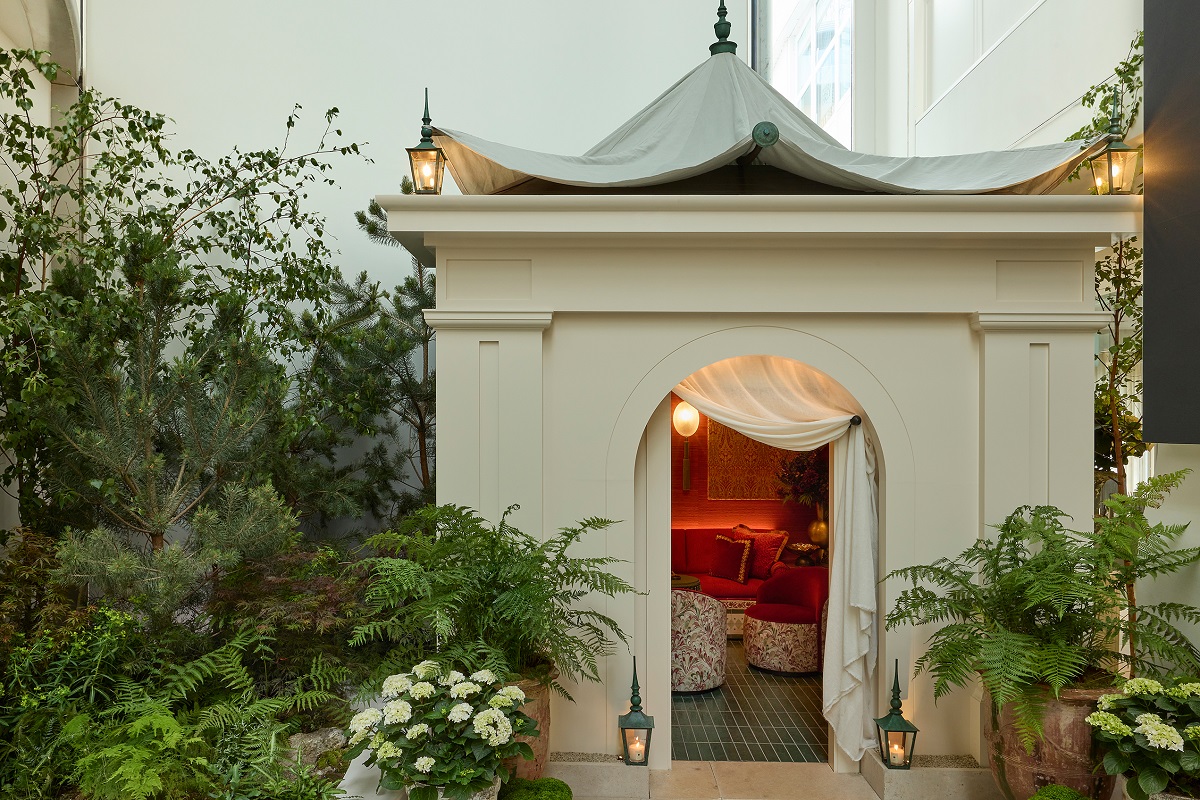
Garden Folly Facade by Darren Price of Adam Architecture for Hector Finch009

Garden Folly Facade by Darren Price of Adam Architecture for Hector Finch | Image credit: James McDonald

Atmosphere before architecture. Built to enchant, the Garden Folly offers a new element of surprise in the landscape of WOW!house 2026. In what Price calls a ‘moment of permission,’ it allows him free rein to play with rules of classical architecture, nodding to the fun formality of the 18th-century. Central to the build is the collaboration with lighting designer Hector Finch whose new verdigris finish makes its global debut.

Garden Folly Room by Studio Enass
A precious jewel box, layered with velvet seating, intricate coquillage, a decorative mirrored ceiling and vivid, patterned tiles. Blending her own heritage with Mannerist and Rococo notes, founder Enass Mahmoud brings softness and sensuality to an opulent oasis, part tropical idyll, part North African hotel. Based in London and Dubai, her practice honours individuality, culture and craftsmanship.

Artorius Faber Entrance Garden by The Gardenists
Hay Hwang translates English landscape tradition into something deeply liveable. “The arched loggias, the lion mask fountain, the rhythm of the columns – every element has grammar and precedent,” she says. “It’s classicism, but worn lightly.” British stone by Artorius Faber provides an authentic foundation for the simple, powerful planting and naturalistic luxury that characterise The Gardenists’ style, inspired here by Georgian walled gardens and Capability Brown.

Size Group Facade by Darren Price of Adam Architecture
Scene: London, with the social season in full swing. The city hums with carriage wheels and conversation. Crossing the square, you come to a familiar house, which Darren Price has reimagined with a deft hand and discerning eye, and built with expert craftsmanship by Size Group. He salutes the architects who shaped Georgian London – Sir John Soane, Nicholas Hawksmoor, George Dance the Younger and John Nash – but iterates without imitating. This year, Price thoughtfully reworks elements from his 2025 WOW!house design, and reveals newly built architectural gestures, including a sheltered loggia, with elevated platforms to introduce depth, rhythm and a heightened sense of arrival.

Entrance Hall by Francis Sultana
A refined homage to the great British entrance hall heralds artistry, authority and excellence. Merging English design and Continental flair, Francis Sultana reinvents precedent in collaboration with artisans and craft-based brands. But this is no historical throwback. Filled with contemporary art and collectable design, exquisite elements delight and surprise at every turn. That process is his lifeblood as a designer and as Artistic Director and CEO of David Gill Gallery. An Ambassador of Culture for Malta, Sultana’s influence is far-reaching, with advisory roles at the Victoria & Albert Museum, the Serpentine Gallery, the Design Museum, London, PAD London and as a member of the Royal Academy International Circle.
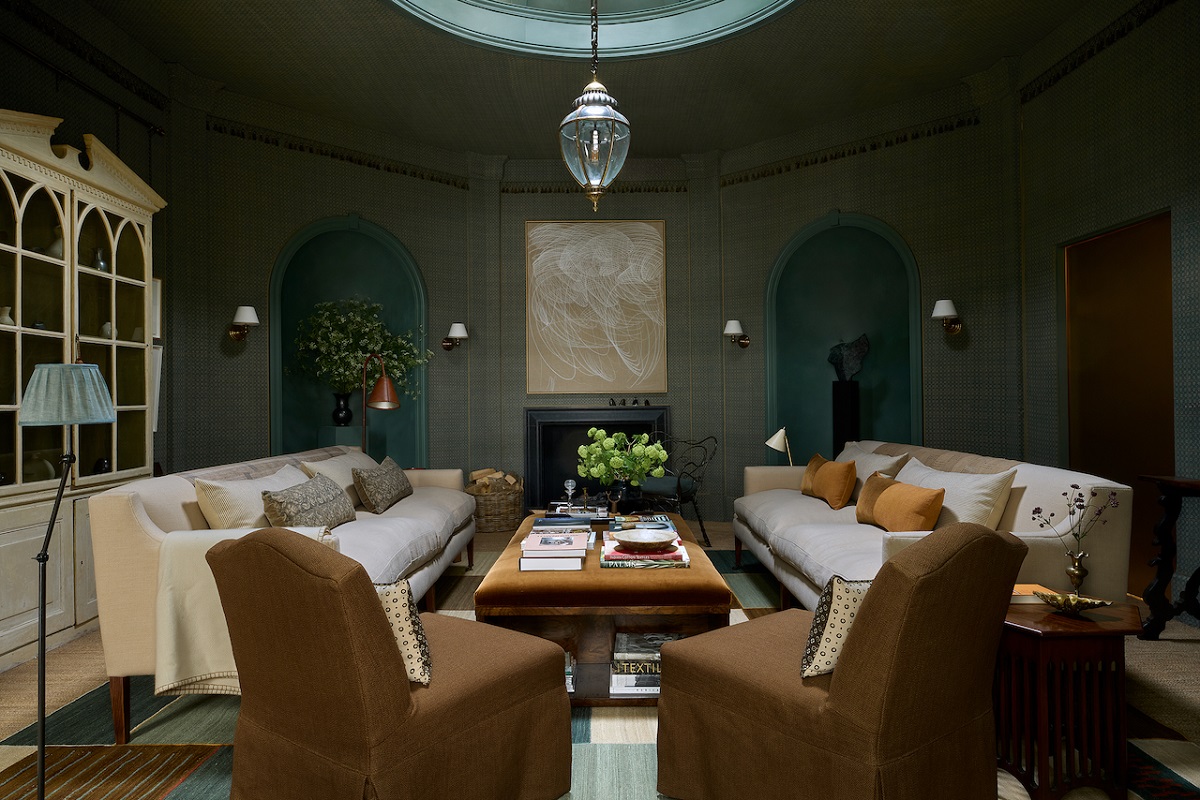
WOW!house2026

Turnell & Gigon Group Drawing Room by Albion Nord | Image credit: James McDonald

Turnell & Gigon Group Drawing Room by Albion Nord
After a rollicking dinner, no one wants the evening to end. Guests retreat to this octagonal drawing room where formality and invitation go hand in glove. While the architecture skews Georgian, layered with hand-blocked Filling Spaces walling fabric and bespoke trimmings made by Les Passementeries de l’Ile de France, both from Turnell & Gigon Group, and Tim Page rugs, together with soulful antiques, this room feels like a home for bright young things who believe in craftmanship, artistry and the idea that “there is no beauty without character.” As a studio with a penchant for breathing new life into period homes – and the Britannic Explorer train cars – Albion Nord creates “places that demand not only to be admired but to be engaged with, enjoyed. Lived in.”
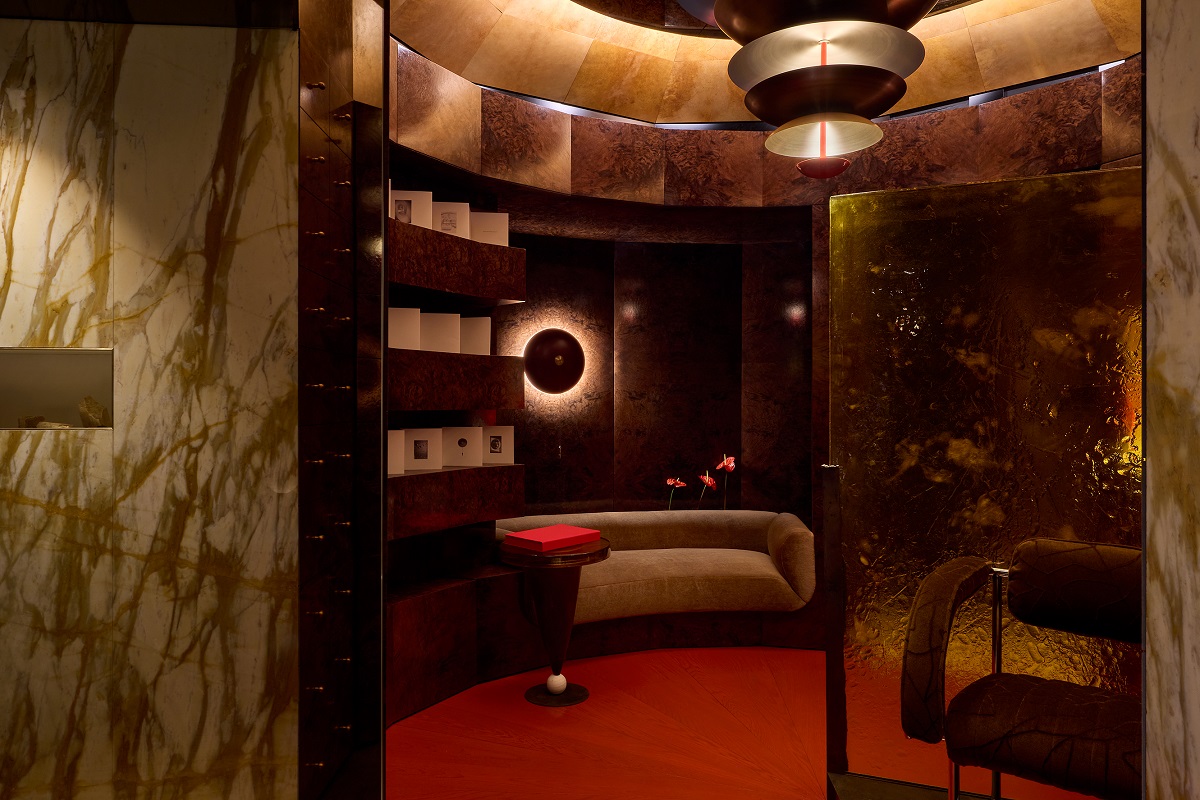
Shepel’ Library by Roisin Lafferty | Image credit: James McDonald

Shepel’ Library by Róisín Lafferty
“Libraries represent something profoundly resonant to me. They are places of introspection, imagination and cultural memory,” Lafferty commented. “They hold stillness, but also possibility.” She conjures a world where tempo softens, everything outside fades and discovery takes over. With hidden alcoves and concealed doors (exquisite joinery is the work of Shepel’), the space has an uninterrupted flow shaped by discipline and restraint, hallmarks of this Irish designer’s practice. Reimagining Art Deco’s architectural grandeur and precise craftsmanship, she creates a seamless cocoon with sweeping curves of bespoke joinery, a dark and moody palette, intricate marquetry and high-gloss lacquer. A tucked-away sensory installation allows guests to enter her creative psyche.
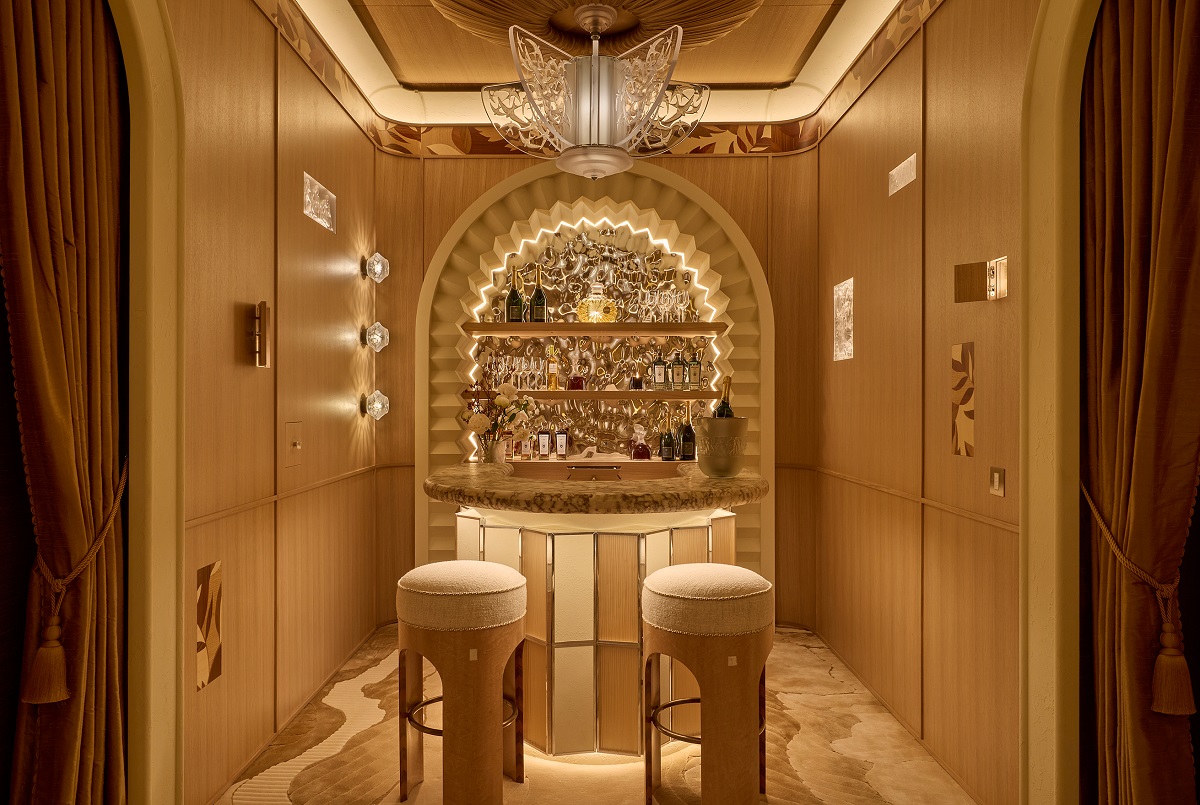
Lalique Home Bar by Elicyon | Image credit: James McDonald

Lalique Home Bar by Elicyon
Seductive. Shimmering. Just 20 square metres, the Home Bar offers a journey for the curious, celebrating Lalique’s unmistakable artistic identity and its century-long mastery of crystal. Here, the material is fundamental, not just ornament – integral in lighting, objects, furniture and architectural panels. The result is serene yet spirited, a cabinet of curiosities that balances ethereal drama and playful touches: backlit alcoves, hidden compartments, mirrored planes and unexpected niches. Elicyon’s founder Charu Gandhi’s international upbringing, formal architectural training and enquiring intellect all inform her considered approach to this intimate space for extraordinary entertaining – complete with champagne fridge and a hint of goddess worship.
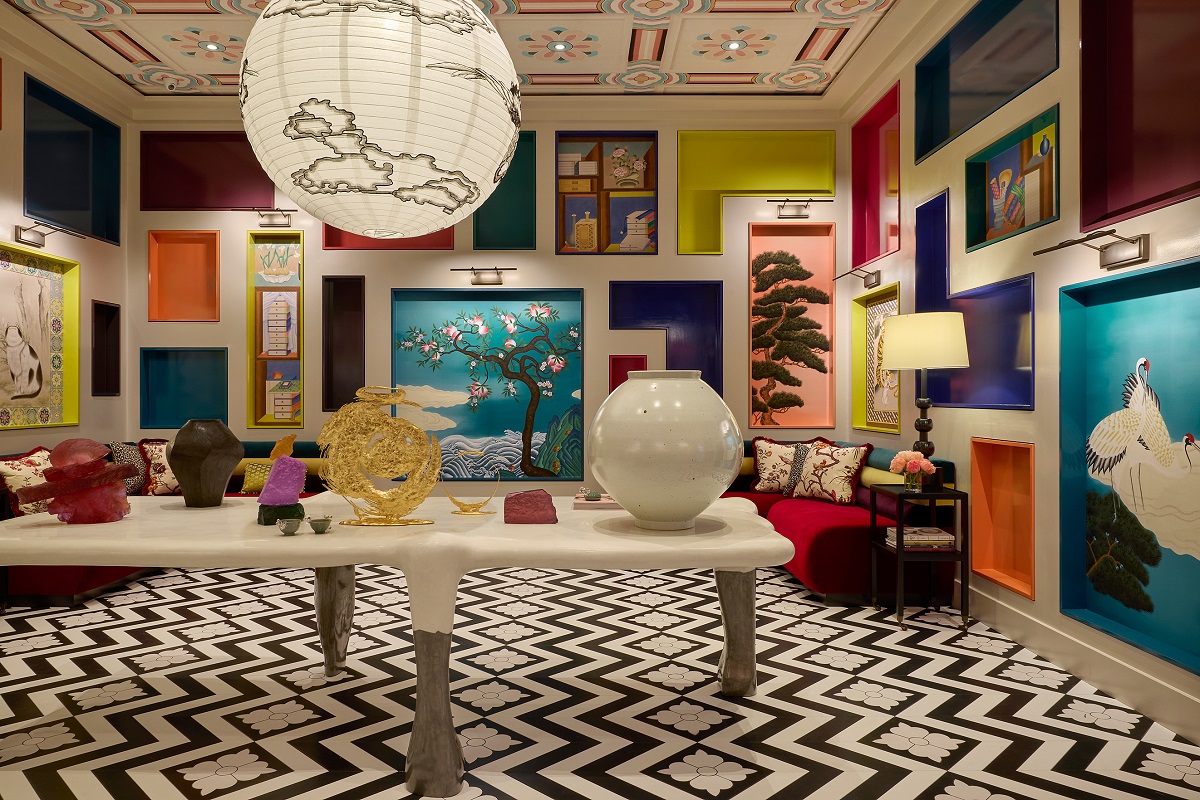
wowhouse2026

Benjamin Moore Minhwa Salon by Young Huh | Image credit: James McDonald

Benjamin Moore Minhwa Salon by Young Huh
Unapologetic maximalism celebrating Korean folk art and personal heritage – that’s how this New York-based designer creates a vivid, modern interior, as vibrant in narrative as it is in hue. Inspired by the Millions Room at Schönbrunn Palace with its Indian miniature paintings set inside baroque panelling, Huh insets lacquered walls with minhwa panels, hand-painted by Fromental using an array of Benjamin Moore paints. The result is immersive and joyful – an imaginative room where craft and cultural memory unfold in harmony.

Phillip Jeffries Morning Room by Sara Cosgrove
A quiet, analogue sanctuary, this morning room resists the velocity of modern life, a fantasy really! Informed by nostalgia for slower rituals – reading print magazines, long conversations, uninterrupted time and drawing boards, it is enveloped in Phillip Jeffries’ ethereal ‘Aura’ wallpaper, whose textures evoke the lightness of a couture gown with layers of the finest silk, floating on air. With a background as Head of Interior Design at Harrods, it’s no surprise Cosgrove draws on fashion to inform her aesthetic. Here, celadon, cream and lavender tones create a diaphanous sense of calm. This is a contemplative space shaped by poetry, clarity and quiet confidence, expressing this Dublin-based designer’s mantra: Design that elevates.

Salvesen Graham The Collection Primary Bedroom by Salvesen Graham
We’re here for the frill of it. Dusty pink, rhubarb and roses. Block print and flamestitch. A soaring four-poster bed and an elegant Regency fireplace. Channelling the spirit of a historic American home – loved and lived in by Brits, this transatlantic dreamscape offers a poised dialogue between architecture and decoration. Coffered ceilings, cornicing and panelled walls provide gravitas, softened with fabrics from Salvesen Graham’s latest collection. A literary spirit unfolds through books, antiques and firelit corners, creating a mindful retreat – a restorative vision of modern life.
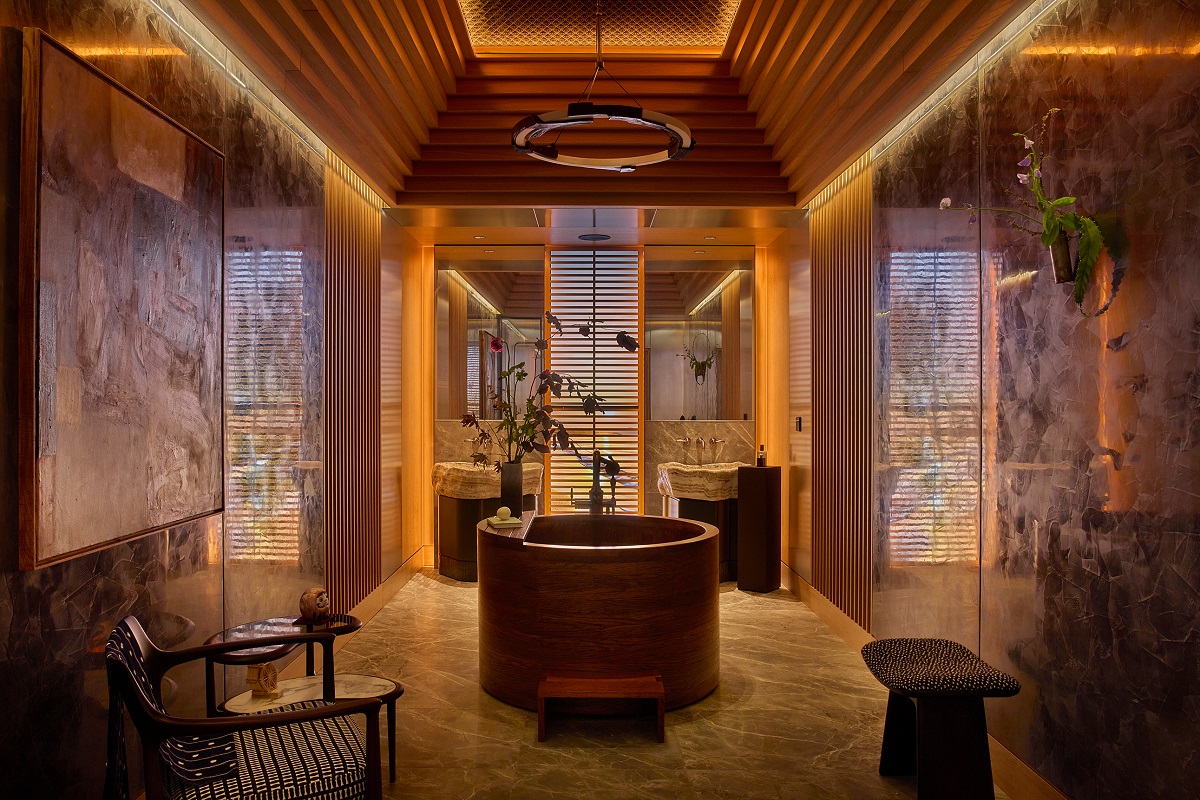
WOW!house 2026

Samuel Heath Primary Bathroom by Rigby & Rigby | Image credit: James McDonald

Samuel Heath Primary Bathroom by Rigby & Rigby
Shaped by Scandinavian and Japanese bathing rituals, this timeless space for wellness balances authentic materials and technological innovation. Refined aesthetics set a meditative tone, centred on a sculptural ofuru bathtub. In contrast, immersive digital landscapes evolve on large-scale screens, ‘transporting’ guests anywhere in the world. Layered Japanese textiles harmonise with bespoke artwork and Samuel Heath’s exceptional fittings that testify to British craftsmanship. The result is elegant, sensory and captivating. The bathroom’s rich combinations present a starting point for a wider product range, launching a collaboration between Rigby & Rigby and Samuel Heath.

Munder Skiles Courtyard by Richard Miers
Aged walls with gentle patina frame a serene, enduring retreat – an outdoor room where classical structure meets contemporary craftsmanship. Bespoke pieces from Munder Skiles gather around a central fountain, with cream limestone underfoot and layered plantings that complete the composition. Generous enough to hold mature trees, sculptural willow planters add rhythm and texture. Here, nature and design find balance. The result is a contemplative space for gathering and reflection, where people feel connected to each other and the natural environment.

Black Edition at Romo Speakeasy Salon by Studio Duggan
Draw back the curtains. Step inside. It’s like living nestled in a box of chocolates. At once intimate, theatrical and decadent, this is a salon for a modern-day torch singer – a stylish woman building an empire all her own. The room takes its cues from Black Edition fabrics. Walls wrapped in lustrous, dark brown linen have the sheen of softened lacquer. A bespoke plaster frieze anchors the tented ceiling. Generous curtains, loosely pinned back, heighten the sense of enclosure. The hidden bar is playfully concealed within ‘Imani’ wallcovering. Wall-to-wall carpet grounds the room with freshness and flourish. “Visitors will encounter moments of delight and intrigue, reinforcing the room’s central narrative: a meeting of tradition and contemporary expression,” Duggan explains.

The Parlour by Martin Kemp Design
When Grace Jones is the muse, expect the unexpected. Is it a Bond girl’s private domain? “Over the years, we have focused quietly on designing and building a strong client roster and body of work, much of which remains private,” Kemp said. “There is a natural sense of intrigue around what we do, and this room seeks to express that spirit.” Circular in plan, the Parlour encourages conversation and the free exchange of ideas in a discreet hideaway. Ethereal and voluminous drapery creates depth and movement, controlling sightlines and the flow of experience. The atmosphere of enveloping comfort is charged with an awareness that the room is like a treasured moment, one off and never to be repeated.  In its inimitable fashion, the studio is launching a furniture collection in this space, each piece encountered slowly on its own terms.

Misia for Casamance Group Bedroom Suite by Henri Fitzwilliam-Lay
This room has all the alluring glamour and optimism of Art Deco, yet it’s hard to place in any one era, rich in inspiration from travel through different times and places. The heady mix of Casamance fabrics, geometric plasterwork, carved wood, verdigris detailing, wall-to-wall carpet and modernist furniture celebrates the centenary of the Paris expo that gave the movement its name. However, this former fashion stylist avoids pastiche, reinterpreting rather than just recreating the Deco style. She leans into the movement’s utopian aspect, its spirit of experimentation and internationalism with nods to Brazilian and Nigerian modernism, and a hint of Brutalist style. There is a real sense of expansion to the room. Escapism in its purest form – you could be anywhere, at any time.

Ca’ Pietra Bathroom by De Rosee Sa
Early summer light. The promise of warmth on sun-baked stone. Nostalgia soaking into your bones. Step into this Mediterranean idyll, the kind of bathroom you’d find in a perfectly aged hotel, firmly grounded with crafted architectural stonework from Ca’ Pietra, overlooking a garden, with the sea just beyond. You can almost hear the crickets, sense citrus in the air, perhaps catch the distant sound of a motorboat on the sea. Cinematic and slightly faded from time, the sun – and memory – it’s atmospheric and transportive, like so much of the work this London- and Lisbon-based husband-and-wife team bring to life, with an affinity for place, the past – and people.
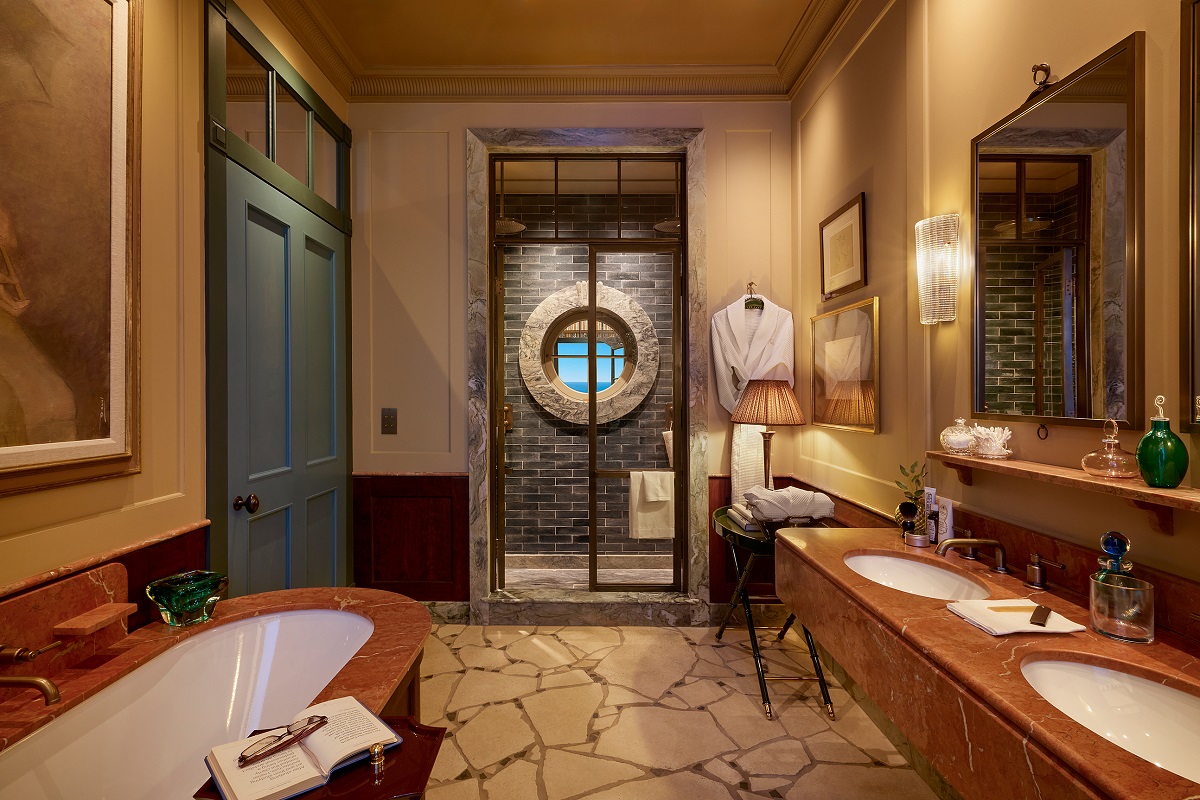
WOW!House Ca' Pietra Bathroom by De Rosee Sa

Ca’ Pietra Bathroom by De Rosee Sa | Image credit: James McDonald

Zardi and Zardi Withdrawing Room by Sean Symington Design
Park Avenue meets English country manor. This is a room for a woman who lives with her best pieces every day. The champagne coupes may be slightly chipped, the seating gracefully worn, but this diva knows just who she is and what she wants, which is to be surrounded by friends and family, music, fun – and bubbles. Long evenings would unfold gently in Symington’s take on a Georgian withdrawing room, with a bespoke games table almost always at play. The scheme centres on Zardi & Zardi’s ‘Primavera’ print, based on an archival design at Sir John Soane’s Museum, and its striking tapestry ‘La Belle Vie – The Dance’. Antiques, traditional upholstery, decorative details and contemporary art balance formality, frivolity and plenty of flair!

THG Paris Powder Room by Studio Mark Andrew
New York by day, Paris by night. The world’s your oyster. Imagined for a globetrotting client who feels at home anywhere around the world, the sophisticated Powder Room is a world unto itself. “Bathrooms used to be where we unplugged – a zen space – now we’re designing technology quietly within bathrooms to make everyday rituals feel like five-star experience,” designer Mark Partner discussed. “We want everything to glow, warm, or respond to your mood and voice effortlessly.” Their starting point: a sculptural tap custom made by THG Paris, innovative, eye-catching and fit for WOW!house.
Nucleus Immersive Room by Russell Sage Studio

Nucleus Immersive Room by Russell Sage Studio | Image credit: James McDonald

Nucleus Immersive Room by Russell Sage Studio
Known for blending functionality and opulent, heritage-inspired aesthetics, this studio’s astounding range of work includes five-star hotels, exclusive members’ clubs, restaurants and private houses. Some favourites: Glenmorangie House, the Fife Arms – and now, Lilibet’s Mayfair. Here, Sage reimagines home entertainment in what he calls ‘the Momentarium’ which combines luxury hand-craftsmanship with state-of-the-art audio-visual and lighting technology. Sage’s goal: to make memories tangible through a nuanced exchange between design, engineering – and human emotion. Integrated from the outset, systems disappear visually but elevate the experience, with ceiling- and wall- mounted screens creating atmosphere. “What inspires me about Nucleus is their ability to translate complex technology into something elegant and intuitive,” he explained. Nucleus Founding Director Durgesh Sinh agrees: “The most powerful rooms are not driven by equipment; they are shaped by intention.”

Schumacher Dining Room by Max Rollitt
Specificity is key for this interior designer, furniture maker and antiques dealer who imagines a room from the 18th century “at late afternoon, with the low sun coming in through the windows and the candles lit ready for guests.” His aim: to infuse the reference-rich room with warmth and joy – and make it work for today. No wonder we’re angling for an invitation to that 12-seat table. Every detail is meticulous, which is why he’s tapping into Schumacher’s archive for a luxurious terracotta damask to cover the walls, a lush silk and wool tablecloth and weighty, textural curtains. And although he’s looking backward, don’t be fooled – Rollitt’s got technical tricks up his sleeve to achieve the “proper drama” he’s after, especially when it comes to lighting.

Martin Moore Kitchen with Samantha Bartlett
Rooted in the poetry of nature, the kitchen is conceived as a living environment that reflects the arc of a day. As the heart of the house, its atmosphere transitions and welcomes everyday rituals, supporting convivial evening gatherings, slow mornings and precious family time. Bartlett contemporises heritage references in a refined composition that brings together materials that will continue to patinate and evolve – tactile bronze handles, Martin Moore’s linear grained fumed oak cabinets and exquisitely veined stone to complement soft green walls. In a graceful embrace of time passing, this is designed to be a lovely place where memories are made.
WOW!house - Perennials and Sutherland Garden Terrace by Fettle Design

Perennials and Sutherland Garden Terrace by Fettle Design | Image credit: James McDonald

Perennials and Sutherland Garden Terrace by Fettle Design
Inspired by Perennials’ latest collection, La Dolce Vita, Fettle Design embraces the joyful spirit of relaxed Mediterranean living, where colour, texture and craft come together in a celebration of outdoor revelry, peaceful moments and simple luxuries. Curved architectural niches create a gentle rhythm along the walls, framing moments of greenery and sculpture. Bold pattern, striking marbles and Sutherland’s outdoor furniture layer together to evoke the warmth of the seaside towns where life is for living. Lush, inviting and alive with colour, the garden terrace feels like stepping into a warm holiday afternoon. Rosé all day – and a swan dive into clear turquoise water.

WOW!house 2026 The Parlour by Martin Kemp Design Design | Main image credit: James McDonald

Room-2-Kove-Hotel-_-Spa-Mykonos-MGallery-Collection-29

Kove Hotel & Spa Mykonos – MGallery Collection unveils a new chapter of Cycladic elegance on Mykonos

1024 640 Pauline Brettell
Kove Hotel & Spa Mykonos – MGallery Collection unveils a new chapter of Cycladic elegance on Mykonos

Revealing a more intimate side of Mykonos, Kove Hotel & Spa Mykonos – MGallery Collection has opened, offering guests a sun-soaked private beach and the quiet rhythm of the Cyclades, while providing the brand a strategic foothold in Mykonos’ thriving luxury market…

Room-2-Kove-Hotel-_-Spa-Mykonos-MGallery-Collection-29

Set between Ornos and Korfos, the 35-room Kove Hotel & Spa Mykonos – MGallery Collection occupies a rare position between two of Mykonos’ most distinctive coastlines. On one side, Ornos offers calm, sheltered waters ideal for swimming; on the other, Korfos is shaped by wind and movement, known for its open horizon and dynamic energy. This duality defines the experience at Kove Hotel & Spa Mykonos – MGallery Collection. Being just minutes from Mykonos Town, the hotel maintains a quieter rhythm, centered on privacy, light, and a more considered sense of retreat.

outdoor terrace with private pool and sunloungers Kove Hotel & Spa Mykonos

Image credit: Jonathan Candotti /MGallery Collection

Maud Bailly, CEO of Sofitel, Sofitel Legend, MGallery Collection & Emblems said: “The launch of Kove Hotel & Spa Mykonos – MGallery Collection is a significant milestone for us, not just in expanding our footprint in Greece, but in deepening our commitment to authentic, story-led hospitality. This property perfectly embodies MGallery Collection’s ethos of celebrating the unique character of its destination, and we are incredibly proud to partner with the Daktylides family, who have seamlessly blended heritage and heartfelt passion for more than 45 years. Their profound understanding of Mykonian culture and dedication to exceptional service is invaluable, ensuring Kove Mykonos offers a truly immersive and heartfelt experience.”

The property is part of the Daktylides family’s long-standing presence on the island, a hospitality journey that began in 1979 with a modest bed and breakfast founded by George and Elefteria Daktylides. Over the decades, the family has played a defining role in the evolution of Mykonos as an international destination, steadily building a portfolio of hotels that balance scale with a strong sense of identity.

Today, the new generation continues to shape that legacy, combining deep local knowledge with a forward-looking approach to hospitality.

Marios Daktylides, General Manager at Myconian K Hotels commented: “Kove reflects a more personal way of experiencing Mykonos, one that is quieter, more intuitive, and closely connected to the island itself. Joining MGallery Collection allows us to share that perspective more widely, while preserving the character and sense of place that have always defined what we do.”

With 35 rooms and suites, the property is designed with a residential sensibility that adapts to different styles of travel. More compact rooms follow a minimalist approach, suited to guests who spend their days between sea, pool, and island exploration, while larger suites extend into generous terraces with private Jacuzzis or plunge pools.

guestroom-Kove-Hotel-_-Spa-Mykonos-MGallery-Collection-Room_

Image credit: Jonathan Candotti /MGallery Collection

Dining unfolds with a focus on seasonality and locality. At eNa, the hotel’s signature restaurant, menus are shaped by daily sourcing and a philosophy of simplicity, often centered around fresh catch and ingredients drawn from the surrounding region. The rooftop terrace, overlooking both Ornos and Korfos, becomes a natural gathering point throughout the day, particularly at sunset, when the shifting Aegean light defines the atmosphere.

Wellbeing is centered around the Cave Spa, a secluded, stone-carved environment designed for stillness and restoration. Wellness treatments draw on natural elements and traditional techniques, complemented by outdoor spaces for yoga and meditation.

Every MGallery Collection hotel invites guests to capture its signature M Moment – a meaningful and memorable experience designed to spark curiosity and broaden the mind and soul. Here, before Mykonos stirs, guests are invited to set sail on a private dawn passage to Delos, sacred birthplace of Apollo and Artemis. From the nearby dock, the boat glides across an Aegean washed in gold. Guided by a private historian, guests can explore the island’s silent ruins before the first visitors arrive. As sunrise touches the Terrace of the Lions, ancient stones awaken in radiant light. A Cycladic breakfast awaits by the sea: fresh bread, island honey, seasonal fruits, and local delicacies. A rare encounter where myth, history, and the serenity of the Aegean become one.

Pool-Kove-Hotel-_-Spa-Mykonos-MGallery-Collection-1

Image credit: Jonathan Candotti /MGallery Collection

With over 125 boutique hotels worldwide, MGallery Collection continues its selective expansion in Greece – an icon of culture, coastline, and island-laced escapism – bringing the brand’s signature of story-led design and meaningful, memory-making stays to the Aegean.

Building on its presence with Athens Capital Hotel – MGallery Collection, NIKO Seaside Resort Crete – MGallery Hotel Collection, and Athens Capital Suites – MGallery Collection , the future opening of Nírema Hotel & Spa Samos – MGallery Collection and today, Kove Hotel & Spa Mykonos – MGallery Collection extend the collection’s footprint beyond the capital and into the Greek islands. This momentum continues with four additional hotels already in the pipeline, including Chania and in the wider Athens region, further reinforcing MGallery’s ambition to anchor distinctive properties across Greece’s most culturally and geographically compelling destinations.

Main image credit: Jonathan Candotti / MGallery Collection

Rocabella and ABI Interiors - boutique hospitality meets artisan craft A preview of the Antique Collection by ABI Interiors

Case study: Rocabella and ABI Interiors – boutique hospitality meets artisan craft

1024 640 Pauline Brettell
Case study: Rocabella and ABI Interiors – boutique hospitality meets artisan craft

Set along Australia’s iconic Gold Coast beachfront, a pair of sculptural residences has quietly reset the benchmark for design-led living – Rocabella a statement collaboration between award-winning developer GRAYA and Australian architectural fixtures brand ABI Interiors…

Rocabella and ABI Interiors - boutique hospitality meets artisan craft A preview of the Antique Collection by ABI Interiors

Rocabella, showcasing a preview of the Antique Collection by ABI Interiors, delivers the kind of considered material storytelling that the best boutique hotels have been chasing for years. Spanning five levels each, the two villas were conceived with a singular ambition: to evoke the feeling of a resort without ever leaving home. It is an idea that resonates well beyond residential design. For hoteliers and specifiers working in the UK hospitality sector, Rocabella offers a compelling case study on how hardware and finish selection can elevate an interior from polished to genuinely memorable.

Rocabella residential development with fittings by ABI Interiors

Image credit: ABI Interiors

The Antique Collection: Aged Character, Engineered to Last
Central to Rocabella’s material palette is ABI Interiors’ Antique Collection: taps (specifically antique brass taps), showers, sinks, and accessories finished in tones that feel quietly aged yet are engineered for the demands of high-traffic environments. The four latest finishes include Antique Aurum, Antique Steel, Antique Bronze, and Antique Slate.

Each piece is crafted from 304 and 316 stainless steel and refined through ABI’s proprietary three-step tumbling process, combining ceramic and vibrational technology to produce an organic, textured surface that carries the warmth of vintage metalwork without the maintenance liability. Antique Aurum, Antique Bronze, and Antique Slate are sealed with PVD coating for lasting protection against tarnishing, corrosion, and wear. Antique Steel is left raw and uncoated, maintaining its industrial, textured appearance over time.

marble sink in Rocabella with taps and fittings from Antique Collection by ABI Interiors

Image credit: ABI Interiors

“When I was first investigating what colours to use in this house, I was in the ABI showroom, and I saw a brand new colour: Antique Bronze. I personally like pared-back tones. I don’t like anything too shiny, too glossy, so the aged finish really suited the style of the home,” commented GRAYA Founder, Rob Gray.
The appeal goes beyond aesthetics. In high-end residential and hospitality settings alike, finishes that dull within a few years are a persistent frustration.

“We want our homes to not just look good in the first year, and then three or four years later be dull or deteriorate,” Rob continued. “If you get the right finishes and products from day one, it’s never going to change the look.”

The UK boutique hotel market continues to mature, and guests increasingly respond to interiors that feel authored rather than assembled. Rocabella demonstrates that hardware need not sit in the background. The Antique Bronze tapware anchors a broader palette of Silver Travertine and textured render, creating a layered material narrative, the kind of tactile detailing guests notice and remember.

For designers specifying on UK hospitality projects, the collection addresses a practical gap. Achieving an authentic aged-metal aesthetic has traditionally meant either accepting high-maintenance unlacquered brass or settling for printed finishes that lack depth. ABI’s approach, artisanal texture paired with PVD durability, sits between those poles, backed by a 25-year warranty.

Coming to the UK
ABI Interiors has been steadily deepening its UK presence, from its original showroom at Design Centre, Chelsea Harbour, to a new flagship space in Clerkenwell. Spanning two levels at 250 Goswell Road, the Clerkenwell Showroom has been conceived as an immersive environment blending residential and hospitality design.

Later this year, visitors will be able to experience the Antique Collection in person as it arrives in the UK market. Developed for both hospitality and high-end residential applications, the range represents the next chapter in ABI’s expansion, bringing the same balance of aged character and long-term durability seen throughout projects such as Rocabella.

Rocabella stands as evidence that finish and fixture design, when treated as an integral part of the architectural vision, can shape the character of a space as powerfully as the floor plan or facade itself. Once the collection arrives on UK shores, it will offer designers and hoteliers a new way to create interiors that feel layered, memorable, and built to endure.

ABI Interiors is one of our Recommended Suppliers and regularly features in our Supplier News section of the website. If you are interested in becoming one of our Recommended Suppliers, please email Katy Phillips.

Main image credit: ABI Interiors

Fairmont La Hacienda Hotel golf course and view to Gibraltar, L

Fairmont La Hacienda Costa del Sol announces new GM

1024 640 Pauline Brettell
Fairmont La Hacienda Costa del Sol announces new GM

Fairmont La Hacienda Costa del Sol has announced the appointment of Thomas Peruzzo as General Manager of the resort, bringing more than 25 years of experience leading prestigious ultra-luxury hotels, lifestyle resorts, and wellness destinations across Europe and the Middle East…

Fairmont La Hacienda Hotel golf course and view to Gibraltar, L

Fairmont La Hacienda Costa del Sol seamlessly blends Spanish tradition with contemporary luxury in an environment that captures the essence of innovative and refined hospitality. The resort has already garnered worldwide recognition as a place where luxury, signature cuisine, and Andalusian authenticity come together in perfect harmony.

Thomas Peruzzo GM Fairmont La Hacienda Hotel , San Roque, Andalucia. Spain

Thomas Peruzzo | Image credit: Fairmont La Hacienda Hotel

Combining deep operational expertise with strategic brand innovation, Thomas Peruzzo has successfully repositioned flagship assets under Kerzner International and Armani Hotels & Resorts, delivering record profitability, elevated guest satisfaction, and award-winning service cultures.

During his tenure at Armani Hotel & Residences Dubai, Thomas secured a Michelin star and achieved zero waste to landfill alongside Green Globe re-certification. As Area General Manager for Armani Hotels & Resorts, he oversaw the brand across the GCC and Europe, led the pre-opening and brand strategy for Armani Hotel Diriyah Gate, and sustained Forbes Star Ratings with record post-pandemic guest satisfaction. Recognised among the Top 30 General Managers in the Middle East (2025) and honoured as Most Inspiring General Manager of the Year (2022), Peruzzo is deeply committed to shaping the future of integrated luxury and wellness-driven destinations.

Most recently, he led One&Only Za’abeel and SIRO Dubai, Kerzner’s first dual-branded urban flagship, where he delivered a full commercial turnaround and achieved record profitability within 12 months, while also earning Kerzner’s award for Highest Yearly Colleague Engagement Score.

Main image credit: Fairmont La Hacienda Costa del Sol

Due to open its doors 2nd July 2026, the 26-room property, Méros, will sit in a prime position in Naousa

Méros – the stylish new bolthole from Santikos Collection

1024 640 Pauline Brettell
Méros – the stylish new bolthole from Santikos Collection

Located on the under-the-radar (for now) Greek Island Paros – Méros, Santikos Collection’s latest opening is preparing to make waves this summer…

Due to open its doors 2nd July 2026, the 26-room property, Méros, will sit in a prime position in Naousa

Due to open its doors July 2026, the 26-room property, Méros, will sit in a prime position in Naousa, offering mesmerising sea views. Part of the family-run Santikos Collection, the hotel will debut with fully refurbished interiors, outdoor and pool areas.

Méros leans into the language of the Aegean, whitewashed contours, hand-cut stone, generous arcs of light, yet resists the expected clichés

Image credit: Méros, Santikos Collection

Set against the luminous backdrop of Paros, the island’s newest hideaway reimagines Cycladic design with a quietly confident modern lens. The property leans into the language of the Aegean, whitewashed contours, hand-cut stone, generous arcs of light, yet resists the expected clichés. Instead, it favours a palette of chalky neutrals and sun-warmed textures. There’s a sense of studied restraint: minimalism softened by natural materials, sculptural details that never overpower and an overall aesthetic that invites the eye to rest.

What emerges is a hotel shaped by mood – interiors drift into open-air lounges; shadows move slowly across lime-plastered walls; and the boundary between indoors and outdoors becomes almost irrelevant. Rather than imposing itself on its surroundings, the property sits effortlessly within them.

suite with balcony in Méros, in natural and neutral tones

Image credit: Méros, Santikos Collection

Famed for its snow-white marble since ancient times (Parian marble was used to create masterpieces such as the iconic Venus de Milo statue), the island of Paros is now better known for its laidback charm and pristine beaches, with the breezy bays of the south-east coast drawing kite and windsurfers. The buzzy port town of Parikia, dominated by a traditional white windmill, has long been a popular stopover for island-hoppers, with ferries pausing here en route to other Greek Islands. In-the-know visitors, however, head to Naousa, a ridiculously picturesque fishing village that’s considered to be one of the prettiest spots in the Cyclades. Slender cobbled alleys burst with clouds of bougainvillea, while the harbour brims with traditional fishing boats.

restaurant Méros, Santikos Collection

Image credit: Méros, Santikos Collection

Paros itself is ideally sized for exploring, with all the island’s sights within easy reach by car. There are dreamy beaches galore, with windsurfers flocking to spots such as Golden Beach and Santa Maria for consistent winds and sparkling waves. Then there’s Kolymbithres with its lunar-like rock formations, Faragas with its icing-sugar soft sands washed by translucent seas and Monastiri, known for its emerald waters and sophisticated scene. Head inland and you’ll find a different side to the island, with perfectly preserved medieval villages dotted among the pine-cloaked hills. Magical Lefkes is well worth a visit, with its brilliant white Cycladic architecture punctuated by blue doors, paintbox-bright flowerpots and timeless squares filled with coffee-drinking residents. Then there are the tiny, fortified villages of Prodromos and Marpissa, blissfully quiet even during high season.
Main image credit: Méros, Santikos Collection

Drawn from the iconic Richard Allan archive of silk scarf designs circa 1960 and 1970, a new collection of artwork prints

Product watch: the Quiet Collection from Richard Allan London

1024 640 Pauline Brettell
Product watch: the Quiet Collection from Richard Allan London

Drawn from the iconic Richard Allan archive of silk scarf designs circa 1960 and 1970, this new collection of artwork prints marks a thoughtful evolution – a quiet reframing of bold design…
Drawn from the iconic Richard Allan archive of silk scarf designs circa 1960 and 1970, a new collection of artwork prints
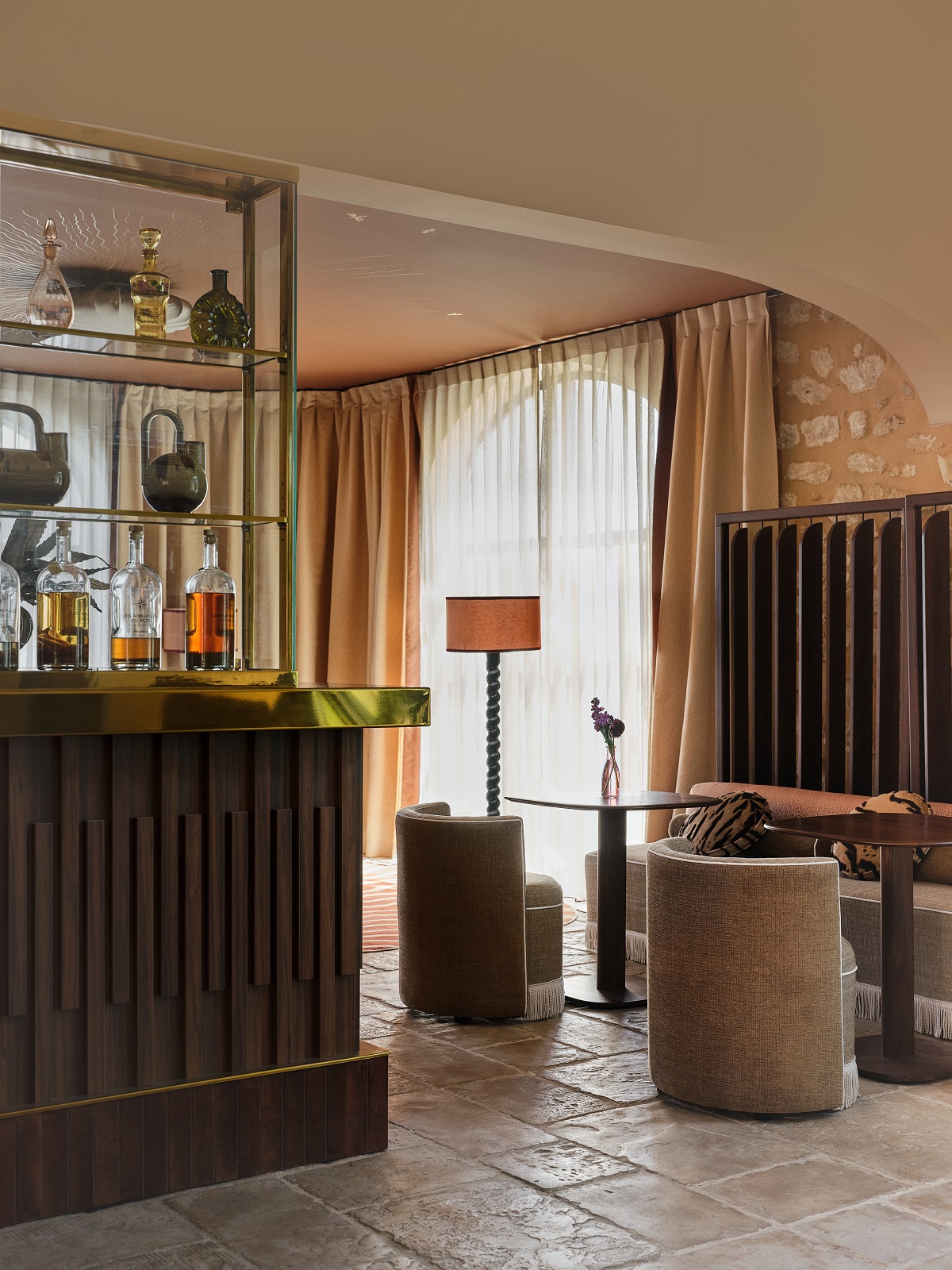
Long celebrated for their unmistakeable abstract designs and bold use of colour, the Richard Allan artworks are reinterpreted here in a quieter visual language, one that aligns naturally with the demands of modern spatial design. Celebratory, expressive and unmistakably of their era, these works now speak in a quieter, more contemplative language.

bedroom detail with bed next to window and framed art above the bed - Maren soft grey

Maren | Image credit: Roly Roques-O’Neill / Richard Allan London

Presented in monochromes and neutrals, the focus shifts to composition, rhythm and form. The clarity of line and balance of pattern allow the artworks to sit comfortably within layered interior schemes, supporting rather than competing with architectural and interior elements, furniture, materials and lighting. This restraint makes the collection particularly suited to hotels, restaurants, workplaces and shared environments where cohesion and atmosphere are paramount.

The prints are designed to integrate seamlessly into diverse interior landscapes, from minimal and contemporary spaces to richly textured, character-led environments. Their tonal simplicity introduces a sense of calm and continuity, while the strength of the original design ensures each piece retains its own identity. The result is artwork that contributes to the overall narrative of a space, yet remains compelling when viewed in isolation.

framed Richard Allan print Manhattan on the wall in contemporary London apartment

Manhattan | Image credit: Roly Roques-O’Neill / Richard Allan London

Whilst the ‘Quiet’ collection is just that, it includes a variety of designs: Maren, a serene abstract in soft greys with touches of green-blue, evocative of shells, sea grasses or unfurling ferns. Arranged in a gradient of three shades from deeper to lightest, its a beautiful trio placed together or each placed singly are equally evocative, uplifting and restful; striking Aster, is an abstract, strong and elegant floral. Both these designs are intended to bring character and a connection to nature into interior spaces.

Elegance is a series of graceful loops dancing to the four corners with perfect lightness of movement, while Hepworth flows in sculptural forms, line and space ordered harmoniously, abstract, mesmerising and thought provoking. Manhattan, based on the east – west grid of streets brings more geometric lines, yet conveying movement. At first glance its simplicity of form yet the fascination of the pattern invites the viewer to stay longer.

The Richard Allan studio is very open to working with bespoke colours for projects and making bespoke sizes to suit a space. Each artwork is a limited edition print of 100, numbered and signed on museum grade etching paper, embossed with the original Richard Allan Scarves company seal for provenance as an original 1960s-70s silk scarf design from their extensive archive.

In luxury hospitality, where art serves not only as decoration but as a vehicle for experience, the Quiet Collection of prints introduces calm, tonal sophistication. They move easily across contexts – guest rooms, corridors, lobbies, suites and communal spaces – offering flexibility and coherence in large-scale projects, bringing visual continuity while maintaining the individuality and narrative of each room, not competing, but rather with quiet confidence, complimenting the overall interior design.

Richard Allan London is one of our Recommended Suppliers and regularly features in our Supplier News section of the website. If you are interested in becoming one of our Recommended Suppliers, please email Katy Phillips.

Main image credit: Roly Roques-O’Neill / Richard Allan London


the newly reimagined InterContinental Sydney Coogee Beach Hotel introduces a fresh interpretation of coastal luxury

Modieus introduces a new wave of coastal luxury at InterContinental Sydney Coogee Beach

1024 640 Pauline Brettell
Modieus introduces a new wave of coastal luxury at InterContinental Sydney Coogee Beach

Set along Sydney’s eastern shoreline, the newly reimagined InterContinental Sydney Coogee Beach Hotel introduces a fresh interpretation of coastal luxury to one of the city’s most iconic beachfront destinations…

the newly reimagined InterContinental Sydney Coogee Beach Hotel introduces a fresh interpretation of coastal luxury

Designed by Woods Bagot, the extensive refurbishment repositions the InterContinental Sydney Coogee Beach hotel for today’s modern traveller, combining relaxed sophistication with a stronger connection to its oceanfront setting.

The transformation includes 198 guestrooms and suites, many featuring expansive ocean views, floor-to-ceiling glazing and wraparound balconies that immerse guests in the changing light and atmosphere of the coastline. Soft textures, curved detailing and layered materials create interiors that feel both elevated and deeply connected to place.

modieus carpets in InterContinental Sydney Coogee Beach Hotel

Image credit: Modieus

Working alongside Woods Bagot, Modieus Carpets supplied a combination of bespoke Axminster carpet and printed carpet tile solutions throughout the hotel, carefully tailored to the different functional and aesthetic demands of each space.

Within guestrooms and suites, bespoke 80/20 Axminster carpet introduces warmth, softness and understated luxury underfoot, complementing the calm coastal palette and fluid architectural detailing throughout the interiors. Axminster was also selected for the corridors, where its durability and long-term performance make it particularly suited to high traffic hospitality environments while maintaining a refined residential feel.

modieus carpets in InterContinental Sydney Coogee Beach Hotel in striped woven sand colours

Image credit: Modieus

In the hotel’s multifunctional meeting rooms and ballroom spaces, 100% nylon printed carpet tile solutions offered greater flexibility, allowing the design to respond to the practical requirements of adaptable event environments while maintaining a cohesive visual language across the wider property.

Leah Manwaring, Design Manager at Modieus, said: “Working closely with Julia Fairleigh and Monique Mifsud, under the direction of Tracey Wiles, Principal and Regional Interior Design Leader at Woods Bagot, it was important that the flooring complemented the relaxed coastal character of the interiors while still performing to the demands of a busy hospitality environment. The way the guestroom and suites carpet responded to light was a key part of the design approach. We selected a lustrous nylon yarn that introduced a subtle silk-like elegance and softness underfoot, while delivering the durability and resilience needed across the hotel.”

Modieus floor tiles in hotel function room

Image credit: Modieus

The project was delivered collaboratively by Leah Manwaring and Marjo Weibel at Modieus, combining creative design development with technical flooring expertise across the different hospitality environments.

Xander Okhuizen, Founder of Modieus, added: “Projects like InterContinental Sydney Coogee Beach Hotel demonstrate why expertise in specification is so important within hospitality design. Different spaces demand different performance characteristics, and our role is to ensure the flooring solution not only supports the creative vision but also performs beautifully long term. By combining Axminster and printed carpet tile in the right areas, we were able to deliver both flexibility and durability while maintaining a cohesive guest experience throughout the property.”

Modieus is one of our Recommended Suppliers and regularly features in our Supplier News section of the website. If you are interested in becoming one of our Recommended Suppliers, please email Katy Phillips.

Main image credit: Modieus

JAZ Elite Amara - Marsa Alam

JAZ Elite Hotels introduces a new vision of coastal luxury

1024 640 Stuart O'Brien
JAZ Elite Hotels introduces a new vision of coastal luxury

Blending immersive experiences with design-led beachfront destinations, JAZ Hotel Group unveils a refined hospitality concept shaped by place and atmosphere…

JAZ Elite Amara - Marsa Alam

JAZ Hotel Group has launched JAZ Elite Hotels, a new brand identity bringing together a curated selection of its most distinctive high-end properties. Marking a clear shift in direction, the brand reflects a redefining coastal luxury across the world’s most alluring shores, where experience, setting, and atmosphere shape the stay as much as service itself.

Rather than expanding its footprint, the group is focusing on elevating the experience, creating a curated portfolio that feels intentional and distinctive, aligned with how people travel today, ushering in a new era for JAZ Elite Hotels.

JAZ Elite Hotels - Case Del Mar Beach

JAZ Elite Hotels – Case Del Mar Beach | Image credit: JAZ Hotel Group

For over two decades, JAZ Hotel Group has built a strong presence across key destinations, known for its consistency and accessibility within the hospitality space. With JAZ Elite Hotels, the group enters a more defined territory, one that prioritizes individuality over uniformity and depth over scale, responding to a new generation of travelers seeking connection, atmosphere, and meaning in where they choose to stay.

the portfolio brings together a collection of beachfront sanctuaries where contemporary design meets pristine nature, JAZ Elite Crystal in Almaza Bay, JAZ Elite Asteria in Sahl Hasheesh, JAZ Elite Riviera, JAZ Elite Amara and JAZ Elite Maraya in Marsa Alam, JAZ Elite Palace in Sharm El Sheikh, JAZ Elite Casa Del Mar in Hurghada and JAZ Elite Aurora in Zanzibar, with further additions planned to open in 2026, including JAZ Elite Cavo in Sokhna and JAZ Elite Nejma in Marsa Alam.

JAZ Elite Hotels - Mividaspa

JAZ Elite Hotels – Mividaspa | Image credit: JAZ Hotel Group

Each destination offers a distinct experience, defined by its location, architecture, design, and the character of its surroundings. At its core, JAZ Elite Hotels reimagines the traditional all-inclusive concept, shifting it from a fixed model into a more fluid and personalized experience. Guests are given the freedom to shape their stay through a range of curated dining through JAZ Flavors, integrated wellness offerings through Mividaspa and curated experiences, creating a seamless and adaptable approach to hospitality.

This evolution comes at a time when global travel is shifting toward more experience driven forms of luxury, where guests place equal value on how a place feels as much as how it functions. JAZ Elite Hotels responds to this shift by creating environments that are immersive, emotionally engaging, and rooted in their surroundings.

JAZ Elite Hotels - JAZ Elite Asteria

JAZ Elite Hotels – JAZ Elite Asteria | Image credit: JAZ Hotel Group

As Alaa Akel, Chairman and CEO of JAZ Hotel Group, said: “JAZ Elite Hotels represents a natural evolution of how we see luxury today. It is not about doing more, but about doing better, refining what already exists and shaping experiences that feel more intentional, more connected, and more distinct to each destination.”

With JAZ Elite Hotels, JAZ Hotel Group sets a new direction for its high end portfolio, reinforcing its role in shaping a more contemporary vision of luxury hospitality across the region, where experience led-travel feels more connected.

Main image credit: JAZ Hotel Group

Undergraduate-by-Hilton-Lounge-Rendering

Undergraduate by Hilton – new upper‑midscale brand launched building on the success of Graduate by Hilton

1024 640 Pauline Brettell
Undergraduate by Hilton – new upper‑midscale brand launched building on the success of Graduate by Hilton

Hilton has announced the launch of Undergraduate by Hilton, a new upper-midscale brand developed to serve a broader range of college and university markets…

Undergraduate-by-Hilton-Lounge-Rendering

Building on the success of Graduate by Hilton, the brand introduces a complementary expression of college-town hospitality. Undergraduate will extend Hilton’s presence with a flexible model designed to unlock development opportunities at scale and a cost structure suited to the demand in more campus-driven markets.

The brand has long-term expansion potential of 400-500 hotels, with the first property anticipated to open in 2027. This is in addition to market opportunities identified for the Graduate brand.

Undergraduate-by-Hilton-Front-Desk-Rendering

Image credit: Hilton

Undergraduate by Hilton is designed for travellers visiting college towns, from students and families, to alumni, sports fans, business travelers and conference attendees. These destinations see consistent, year-round demand tied to tours, athletic weekends and campus gatherings, often placing pressure on hotel availability – particularly for options that balance character, quality and price point. Undergraduate responds to this dynamic with a campus-connected hotel concept that reflects the social rhythm of college life, paired with the consistency and reliability of a Hilton stay, offering a more flexible, accessible complement to the Graduate by Hilton experience.

“We saw a clear opportunity to bring the energy, design and experiences people love about campus communities to more university towns with this new brand. Undergraduate by Hilton unveils an exciting new era of college‑town hospitality, expanding how we show up for campus-connected travelers – offering more stay options while supporting disciplined, long‑term growth across our portfolio,” said Chris Nassetta, President and CEO, Hilton. “Undergraduate reflects the ongoing momentum of our Lifestyle portfolio, which is one of the most dynamic areas of expansion for our company as we plan to grow to offer 700 Lifestyle hotels globally by 2028, with 60 opening this year alone.”

Undergraduate-by-Hilton-Library-Rendering

Image credit: Hilton

“Undergraduate by Hilton unveils an exciting new era of college‑town hospitality, expanding how we show up for campus-connected travellers – offering more stay options while supporting disciplined, long‑term growth across our portfolio.”

Each Undergraduate by Hilton property is designed to balance development efficiency with a guest experience that feels energetic and rooted in the pace of college life. With a model that supports both new builds and conversions in close proximity to campus, the brand pairs a structured, scalable approach with thoughtful opportunities for owners to reflect the spirit of their local campus communities while delivering the consistency guests expect from Hilton.

Undergraduate-by-Hilton-Room-Rendering

Image credit: Hilton

Key elements include:

Social public spaces built to feel like an always-on, off-campus hangout, with a dynamic lounge and library-inspired areas to welcome guests, students and locals throughout the day.

A prototypical approach that is cohesive yet flexible, allowing hotels to easily and enthusiastically tap into their local college culture through authentic customisation, a robust art program and simple details described as “retro the right way.”

Guest rooms are crafted as “creative classrooms” supporting a range of stay occasions, combining bold, purposeful design with adaptable layouts anchored by a dedicated study corner and functional storage.

A barista-led all-day market and social space designed as an energetic off-campus hangout, featuring grab-and-go retail, curated essentials and cult-favorite items designed for on-the-go convenience from morning through late evening.

A cocktail program powered by Authentic Hospitality, the group behind buzzy New York City venues like Ray’s and Pebble Bar, amps up the bar offering for properties seeking a more elevated experience. Channeling the spirit of a favorite college dive bar, menus playfully elevate campus classics.

“We’re continuously evolving how we connect with the next generation of travelers by creating new ways to stay within the places that matter most to them,” said Chris Silcock, President, Global Brands and Commercial Services, Hilton. “With Undergraduate by Hilton, we’re broadening the stay experiences we offer, pairing community-led experiences with the scale of Hilton’s global platform to expand choice and deliver long-term value for owners.”

Undergraduate complements Graduate by Hilton, the company’s fully bespoke, design-driven upper-upscale lifestyle brand in university destinations, which has nearly 60 hotels in various stages of development in new collegiate markets like Tuscaloosa, Ala.; Manhattan, Kan.; Syracuse, N.Y.; Savannah, Ga.; Laramie, Wyo.; Flagstaff, Ariz.; and Boulder, Colo.

The recent launches of new brands, including Outset Collection by Hilton, which has recently opened properties in San Diego, Calif. and Richmond, Va., and Hilton’s exclusive agreement with lifestyle brand YOTEL, the first brand under Select by Hilton, have fueled one of Hilton’s fastest-growing categories.

Main image credit: Hilton

360 Hotel Boutique and SPA (Selfoss, Iceland)

Preferred Hotels & Resorts – a summer pipeline

1024 640 Stuart O'Brien
Preferred Hotels & Resorts – a summer pipeline

From Zanzibar wellness retreats to restored European landmarks, the latest additions to the Preferred Hotels & Resorts portfolio celebrate design-led hospitality, cultural immersion and distinctive sense of place…

360 Hotel Boutique and SPA (Selfoss, Iceland)

Preferred Hotels & Resorts has announced an array of new hotel openings for summer 2026, spanning destinations from a beachfront wellness retreat in Zanzibar to a restored historic hideaway in Valletta, Malta. Each property offers travellers a distinctive sense of place shaped by thoughtful design, local culture, and authentic experiences. Together, these openings reflect the brand’s commitment to connecting guests with inspiring destinations through character-rich stays and meaningful hospitality.

Gran Hotel Claridge Granada (Granada, Spain) – launched May 2026 (L.V.X. Collection)

Gran Hotel Claridge Granada (Granada, Spain)

Gran Hotel Claridge Granada (Granada, Spain) | Image credit: Preferred Hotels & Resorts

Bringing Granada’s rich heritage to life, this new 70-room luxury boutique hotel offers a sophisticated stay just steps away from the Granada Cathedral and iconic Alhambra. Housed in the historical Plaza de Villamena, named after a 17th-century Spanish sculptor known for his religious artworks, the hotel serves as a gateway into Granada’s timeless architecture and culture. Guests can look forward to experiencing the hotel’s signature restaurant rooted in the culinary traditions of Andalusia, an additional rooftop restaurant and lounge with sweeping views of the surrounding landmarks and the distant Sierra Nevada mountains, and a boutique wellness experience offering luxurious spa treatments and tailored fitness programmes.

ENVI Paje (Zanzibar, Tanzania) – launching June 2026 (Lifestyle Collection)

Zanzibar’s newest beachfront wellness lodge offers a barefoot luxury experience on the sapphire lagoon and pristine white sands of Paje Beach. Designed for travellers seeking wellness, renewal, and a deeper connection with nature, this intimate, oceanfront sanctuary features just 22 villas. Guests can embark on bespoke Wellness Journeys, blending a holistic range of experiences from meditative and wellbeing sessions to eco-conscious practices, local cultural immersion through crafts and cookery, water sports and beach activities. A range of treatments at The Sanctuary spa further enhance the experience, all guided by ENVI’s Signature African Wellbeing Philosophy, which pairs tradition and modern science.

ENVI Paje (Zanzibar, Tanzania)

ENVI Paje (Zanzibar, Tanzania) | Image credit: Preferred Hotels & Resorts

Romègas Hotel (Valletta, Malta) – launching June 2026 (L.V.X. Collection)

In the heart of Malta’s capital stands the new boutique Romègas Hotel, housed in a 500-year-old palazzo originally built for the distinguished Knight of Malta, Mathurin Romègas. After meticulous restoration works to carefully preserve the building’s heritage while introducing modern comforts, this architectural icon will feature 23 individually designed rooms and suites, with interiors inspired by Valletta’s rich history and crafted by renowned Maltese designers Camilleri Paris Mode. Traditional terrazzo floors, wood paneling, and a striking hand-carved stone façade create an authentic yet contemporary atmosphere. Guests can enjoy views of the sepia city streets from traditional Maltese balconies, while the rooftop pool offers stunning vistas of Valletta, the bay, and Manoel Island. A destination restaurant by renowned chef Marvin Gauci, along with a chic bar, completes this intimate and refreshingly independent city retreat.

Bless Ibiza The Site (Ibiza, Spain) – launching June 2026 (Legend Collection)

Located in a prime beachfront setting, just minutes from Ibiza Town and the airport, this landmark 461-room resort forms part of The Site Ibiza, a curated lifestyle destination featuring over 12 restaurants, including concepts led by Michelin-starred chefs, alongside Ibiza Gallery’s luxury retail offering. Conceived as a contemporary lifestyle destination, the hotel blends refined design by Lázaro Rosa-Violán with elevated wellness and Ibiza’s vibrant social energy, creating a seamless balance between relaxation and immersive experiences. Accommodation ranges from elegant guestrooms to expansive sea-view suites, while internationally acclaimed venues including COYA, LEÑA, and Sublimotion position the resort among Ibiza’s leading culinary and social hubs. Guests can also enjoy multiple pools, rooftop venues overlooking the Mediterranean, a holistic spa offering, and direct access to one of the island’s most iconic beachfront settings.

Last Word Makanyane (Madikwe Game Reserve) – launching July 2026 (Lifestyle Collection)

 Cradled within Madikwe Game Reserve, an exclusive and malaria-free wilderness area, Last Word Makanyane offers an intimate safari escape with just eight river-facing suites set on secluded, family-owned land. Twice-daily game drives bring guests close to the Big Five, while guided bush walks and birdwatching provide a deeper connection to the destination. Each suite features expansive glass windows for uninterrupted wildlife viewing, complemented by interiors that blend natural textures with contemporary comfort. Between adventures, guests can relax by the pool and savour beautifully prepared meals in the lodge or under the open African sky.

360 Hotel Boutique and SPA (Selfoss, Iceland) – launching July 2026 (L.V.X. Collection)

Nestled in the heart of Iceland’s Golden Circle and just 50 minutes from Reykjavik, this 31-room luxury boutique retreat offers an immersive escape surrounded by volcanic mountains and expansive countryside views. Rooted in the philosophy of slow luxury, the property is designed to foster stillness, reconnection, and a deep appreciation for Iceland’s natural beauty. Guests can relax in geothermal pools, rejuvenate in the spa featuring a cold pool and sauna, or enjoy intimate experiences such as the private cinema and Hnaus Restaurant, where acclaimed Icelandic chefs craft seasonal menus using locally sourced ingredients and sustainable practices. Ideally positioned for exploration, the hotel provides access to some of South Iceland’s most iconic attractions, including Gullfoss waterfall, the Geysir geothermal area, Þingvellir National Park, glacier hikes, whale watching, and Northern Lights excursions during the winter season.

Serras Sevilla (Seville, Spain) – launching September 2026 (Legend Collection)

 Located just steps from the Seville Cathedral and anchored in the heart of the historic centre, this 43-room boutique hotel offers a lens into the city’s storied past. Designed by renowned Spanish architect Aníbal González between 1915 and 1917, the property stands as a landmark of Andalusian architecture, seamlessly blending old-world grandeur with contemporary luxury. Guests can savour the region’s vibrant culinary traditions across three distinctive dining venues, including an iconic rooftop terrace with sweeping views of the cathedral, or unwind beside the rooftop swimming pool.

Main image credit: Preferred Hotels & Resorts

Zoffany x Michael S. Smith Indoor Outdoor fabric collection

Inside the Zoffany x Michael S. Smith Indoor Outdoor fabric collection

1024 640 Stuart O'Brien
Inside the Zoffany x Michael S. Smith Indoor Outdoor fabric collection

Inspired by archival documents, historic textiles and Cecil Beaton’s Winter Garden, this Zoffany collaboration combines timeless decoration with technical innovation…

Zoffany x Michael S. Smith Indoor Outdoor fabric collection

Redefining outdoor décor, Zoffany x Michael S. Smith Indoor Outdoor Fabrics blends archival design with exceptional quality and durability. Fabrics are printed to last and woven from performance-led materials specially selected for their finish and handle, allowing for seamless transition between indoor and outdoor schemes.

Michael S Smith commented: “I have long found that there is a missing component in the interiors offering. I’ve always loved vintage fabric and the patina of its prints… but it doesn’t last. This collection combines two things that I love: technical design and the ability to print indoor and outdoor fabric in a way that recalls vintage fabric, has a sense of history to it, but also endures.”

The designer hand-selected original documents from Zoffany’s archives as blueprints, introducing new palettes, patterns and textures inspired by sources as varied as French chintz and Japanese silks. Unexpected details, including print marks and ink bleeds, add authenticity while bringing a fresh interpretation of storied documents and their narratives.

Zoffany x Michael S. Smith Indoor Outdoor fabric collection

Zoffany x Michael S. Smith Indoor Outdoor fabric collection | Image credit: Sanderson Design Group

The collection introduces 13 brand-new designs, encompassing stripes, florals and plains, that evoke an archival essence rarely seen in outdoor fabric. With coordination at its heart, a curated colour palette and thoughtful use of scale allow the fabrics to be effortlessly layered and styled. Emphasising the importance of harmony in design, Michael S. Smith shared, “Coordination is everything. In interiors, you want an aesthetic that’s grounded and is reflective of the surroundings. The palette was important. We used colours that sit beautifully inside and look beautiful in outdoor light, anywhere in the world.”

Peter Gomez, Zoffany’s Lead Designer, added, “It’s interesting to explore how to build a collection and bring it together with a clear purpose – having someone view the archive through a fresh lens and curate how things will be used in practice. The result is a lovely combination of Michael’s expertise in interior design and product with our knowledge of design history and manufacturing – bringing all of that together to create something unique.”

Zoffany x Michael S. Smith Indoor Outdoor fabric collection

Zoffany x Michael S. Smith Indoor Outdoor fabric collection | Image credit: Sanderson Design Group

Cascading foliage, abundant florals, and daylit windows of Cecil Beaton’s famed Winter Garden set the stage for Zoffany x Michael S. Smith Indoor Outdoor Fabrics. Influential fashion journalist and interiors authority Hamish Bowles brought his inimitable presence to the storied conservatory, posing alongside standout designs from the collaboration while an unexpected scene-stealer, Stella the pug, made her modelling debut. The scene echoes Beaton and his pug, Simba, photographed in the very same setting in the 1960s – an image that Michael sought to recreate.

Draped from the ceiling and wrapped around furniture specially selected by the American interior designer, fabrics infused the glasshouse with archival resonance and confidently coordinated colour. Redefining outdoor décor, the collection marries Zoffany’s technical mastery with Michael’s discerning eye to deliver durable, performance-led textiles designed to thrive indoors or out, in modern or heritage spaces alike.

Sanderson Design Group is one of our Recommended Suppliers and regularly features in our Supplier News section of the website. If you are interested in becoming one of our Recommended Suppliers, please email Katy Phillips.

Main image credit: Sanderson Design Group

blue banquette and eclectic wooden chairs in Ruby Molly Dublin

Ruby Hotels takes on the Big Apple

1024 640 Pauline Brettell
Ruby Hotels takes on the Big Apple

Ruby Hotels, part of IHG Hotels & Resorts’ leading premium portfolio, has announced plans to introduce its signature blend of character, charm and efficient design to New York City…

blue banquette and eclectic wooden chairs in Ruby Molly Dublin

The soon-to-convert Ruby New York City marks the second U.S. signing for the brand in only a few months, alongside a forthcoming Chicago hotel – both projected to open in 2027.

Ruby New York City will invite lifestyle-minded travelers into a soulful, high-energy environment shaped by the rhythm of the city. The 24/7 lobby bar will serve as the social heartbeat of the hotel for guests and locals alike, echoing the vibrant atmosphere that defines Ruby’s European portfolio. Across 187 thoughtfully designed rooms, guests will find everything they need and nothing they don’t. From signature cozy beds to rainfall showers and premium finishes, each space is built for effortless comfort.

Ruby Mimi Zurich | Image credit: Ruby Hotels

Located along Manhattan’s famed Avenue of the Americas, Ruby New York City will place guests steps away from popular landmarks such as Herald Square, the Empire State Building and Madison Square Garden. A comprehensive renovation set to begin later this year will transform an 18-story, historic 1930s-era building into a flagship for the Ruby brand.
Jolyon Bulley, CEO, Americas for IHG, said: “Ruby’s arrival in New York City reflects our momentum in bringing the brand’s distinctive experience and flexible model to major U.S. urban markets. With two properties now planned in iconic, gateway cities, we’re just beginning to unlock Ruby’s growth potential. We also look forward to building on our longstanding relationship with the team at AC Developers to make New York’s first Ruby a must-stay destination.”

Local hotel, residential and commercial developer AC Developers will be the owners of Ruby New York City, while Aimbridge Hospitality will oversee its operations.

Andrew Weiss, co-founder, AC Developers, added: “New York City is the ideal home for Ruby Hotels, a brand that balances an inviting and memorable lifestyle experience while appealing to cost- and style-conscious travelers. We welcome the opportunity to bring the first Ruby hotel to New York in collaboration with IHG.”

Founded in Germany in 2013, Ruby Hotels’ 40* open and pipeline global properties predominantly span Europe’s largest and most prominent cities. Beyond its U.S. expansion, Ruby’s 2026 global signings to date include its first planned hotel in Belgium and new properties in Germany and Italy. These additions further IHG’s ambition to grow Ruby to more than 120 global hotels during the next decade and more than 250 during the next 20 years.

The forthcoming Ruby New York City also builds on IHG’s recent expansion across the market. Luxury and lifestyle brand Kimpton recently opened the doors to two new properties – Kimpton Era Midtown – New York and Kimpton Ashbel New York – Park Avenue. IHG premium brand voco hotels opened its largest Americas hotel in Times Square, a 32-story property also owned by AC Developers. Later this year, IHG’s renowned Crowne Plaza brand also will return to Times Square with the opening of a newly converted hotel.

Ruby Molly Dublin | Main image credit: Ruby Hotels

Amanvari, Mexico - Accommodation, Beachfront Casita,

Sneak peek: Amanvari – the new Aman sanctuary on Baja’s East Cape

1024 640 Pauline Brettell
Sneak peek: Amanvari – the new Aman sanctuary on Baja’s East Cape

True to Aman’s philosophy of creating destinations that seamlessly integrate into their surrounds, Amanvari, meaning ‘peace’ and ‘water’ in Sanskrit, has been designed as an architectural response to a dramatic environment where desert horizons, estuary channels and the deep blues of the Sea of Cortez shape every experience…

Amanvari, Mexico - Accommodation, Beachfront Casita,

Set in the exclusive Costa Palmas community, the 18-Casita sanctuary and its limited collection of Aman-branded residences will bring privacy, peace and intuitive service, hallmarks of Aman, to this remarkable stretch of coastline for the very first time. Defined by a rare convergence of ecosystems – ocean, desert and estuary – the resort frames expansive views towards the Sierra de la Laguna mountains and beyond.

Designed by Elastic, with initial contribution from Heah & Co., the resort offers an immersive connection to both place and landscape in one of Mexico’s most elementally inspiring settings: towering Cardón cacti, the largest in the world, stand as guardians of the landscape, while the rose scent of Red Copal trees fills the air. The silver-blue leaves of the Blue Hesper palm glimmer in the desert light, Peninsular Spiny lizards navigate rocky outcrops in territorial rituals and iridescent Xantus hummingbirds swoop overhead – just a handful of the region’s plants and creatures awaiting discovery.

Amanvari - True to Aman’s philosophy of creating destinations that seamlessly integrate into their surrounds

Image credit: Aman

Embracing this rich setting, Amanvari provides access to a curated coastal lifestyle as part of the private Costa Palmas community. This includes a Robert Trent Jones II-designed golf course, organic farms and orchards, a private marina and yacht club and miles of swimmable beachfront. From diving with manta rays and sea turtles, in the ancient coral reefs of Cabo Pulmo National Marine Park — one of the oldest living reef systems on the Pacific coast of North America – to thrilling off-road expeditions into the Sierra de la Laguna, where a waterfall feeds crystalline pools in a mountain ecosystem found nowhere else on the peninsula, the destination offers a wealth of opportunities for boundless exploration.

“Amanvari marks a continued evolution of our vision to create destinations that are intrinsically connected to their environment,” said Vlad Doronin, Chairman and CEO of Aman Group. “On the East Cape, where desert landscapes unfold into the Sea of Cortez, there is a rare sense of scale, stillness and natural rhythm. Amanvari has been designed to frame and celebrate this, inviting guests to engage with the land and sea in a way that feels both immersive and effortless. As we open reservations, we also mark an important moment in our continued expansion in the Americas, and we look forward to sharing the spirit of this remarkable coastline through the eyes of Aman.”
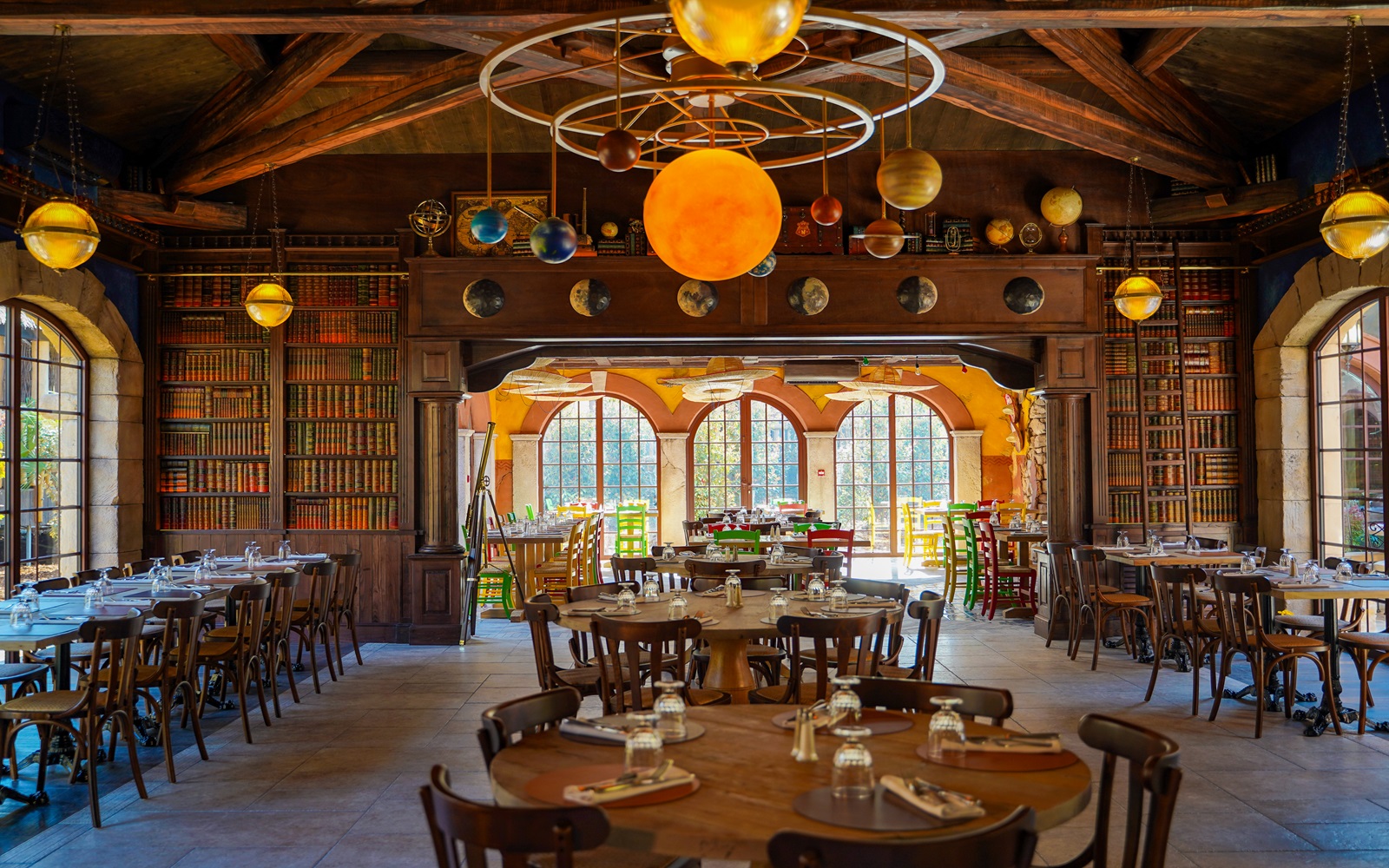
2 chairs and a table in front of floor to ceiling window with sea view at Amanvari

Image credit: Aman

Where indoor and outdoor living merge, Amanvari is conceived as a composition of discreet structures that respond to the contours of the land, simultaneously grounding and elevating guests as they move through the property. Either immersed in the peaceful palm grove, oriented towards sweeping views of the Sea of Cortez or with direct access to the sand, each 82-square-metre Casita is designed with expansive terraces, a private heated pool, outdoor shower and areas for lounging and sleeping that change with Baja’s shifting light throughout the day.

Finished in fair faced white concrete, meticulously prepared and hand-applied on site by master artisans, each casita embodies a timeless sense of elegance, clarity and restraint. Interiors follow the same philosophy, reflecting the land with a material palette of natural stone, timber and plaster, while bespoke furnishings and technology bring discreet yet contemporary functionality to enhance the guest experience.

double vanity on either side of window with sea view at Amanvari

Image credit: Aman

Dining at Amanvari celebrates both global culinary highlights and the vibrant flavours of the region, with a collection of venues ranging from Aman’s signature Italian, Arva, to Sesui, an authentic Japanese concept encompassing a 10-seat omakase counter as well as à la carte tables. Locally influenced small bites and refreshments are served at both the Lounge Bar and The Pool, while Luma embraces unhurried dining by the sea, serving Mexican cuisine inspired by open-fire cooking and coastal traditions. Private dining experiences further ground guests in the destination, with beachside gatherings and multi-course journeys inspired by regional culinary tradition.

Meanwhile, the Aman Spa and Wellness centre expresses the brand’s longevity-focussed wellness philosophy through a holistic offering rooted in Mexico’s ancestral wisdom and healing rituals. At its heart is a contemporary take on a Temazcal (sweat lodge), honouring traditional purification practices, complemented by two signature Hydro Houses, featuring a traditional banya and hammam, designed to support restoration. The space also features six private treatment rooms, a dedicated Beauty Salon with head spa, tranquil outdoor relaxation areas and an open-air Yoga Pavilion positioned for sessions surrounded by nature. A 24-hour Fitness Centre offers a more dynamic approach to wellbeing, while signature treatments incorporate Aman Essentials products following the Grounding, Purifying and Nourishing pathways.

For those drawn to a more permanent connection to this remote setting, Aman Residences are realised as a natural extension of the Aman lifestyle and the environment itself. Thoughtful landscaping and far-reaching views create a deep sense of immersion, while expansive courtyards and private swimming pools invite a continuous connection between interior and exterior living. Privacy is integral to the design, with discreet entrances and considered arrival sequences reinforcing a quiet sense of retreat.

Main image credit: Aman

Exuvia collection Brintons

Product watch: Exuvia from Brintons

1024 640 Pauline Brettell
Product watch: Exuvia from Brintons

Brintons, a global leader in high-quality woven carpets, has announced the launch of Exuvia, the latest Self Expression Spring 2026 collection from Senior Designer Maxine Kane, shaped by transformation and renewal…

Exuvia collection Brintons

Exuvia is a powerful, narrative-led collection that explores transformation through time, revealing how environments evolve, adapt, and carry their histories forward.

Rooted in the meaning ‘to shed an outer layer in order to grow,’ Exuvia draws inspiration from the evolving landscape of a country park in Haydock, England, Kane’s hometown.

Haydock was once one of the richest coal mining areas in the UK, with as many as 13 collieries operating at one time. That history carries weight, especially knowing that Wood Pit, the last to close in 1971, was also the site of a devastating disaster in 1878 that claimed the lives of 189 men and boys. Inspired by a site that evolved from coal mines to landfill to restored landscape, the collection captures a layered story of transformation and renewal. Comprising 16 designs, Exuvia is structured as a series of life cycles grouped into four “lives,” each representing a moment in time and expressing how the land has been shaped, redefined, and ultimately transformed. Through considered colour palettes and layered textures the collection is both visually compelling and rich in depth, meaning a lasting connection to a place.

“This land has not always been gentle. It has lived many lives,” Kane shared. “This collection comes from both personal experience and collective memory.”

dark grey period style interior with Brintons_Exuvia carpet in charcoal design

Image credit: Brintons

Opening with a dark, raw, and elemental palette, the first life draws directly from the site’s industrial origins. Deep charcoals and softened greys dominate, layered with textural patterns that echo fractured ground, mineral formations, and the imprint of machinery. Subtle flecks of bright colour break through the surface, suggesting the energy and pressure held beneath. The designs are informed by the legacy of Lyme Colliery and Wood Pit Colliery, anchoring the narrative firmly in Haydock’s past and establishing a powerful foundation for the collection.

The second life shifts into a more expressive and nostalgic palette, capturing a sense of freedom and discovery. Deep charcoal ground colours are layered with warm ochres, burnished golds, and hints of mossy green, creating a rich contrast that feels both playful and untamed. The patterns become more gestural and organic, echoing worn paths, scattered markings, and the spontaneity of movement across open land.

“It became a playground of barren land and boundless imagination,” reflected Kane. “Here we built camps and dens, we carved paths with the tyres from bike rides, and we left our marks on the desolated soil.”

Over time, the site turned into a landfill, reshaped by layers of what was discarded. The third life reflects this shift through a heavier, more complex palette, where earthy browns, tarnished golds, and charcoals are broken by unexpected flashes of colour. Discarded and rough, it speaks of waste and abandonment, yet reveals a kaleidoscope of colour through specks of plastic. It reflects the consequences of careless waste, with dense, fragmented textures echoing the buildup of materials and moments of vibrancy suggesting beauty within disorder.

The landfill was eventually transformed into Lyme and Wood Pit Country Park, marking a story of renewal and re-turn. As promised, the landfill company planted trees across the land, laying the foundation for regeneration.The landscape began to soften as green blooms spread and life stirred once more. Today, winding paths and open green spaces invite movement and connection, while a memorial stands in quiet remembrance of the 189 miners who lost their lives in the Wood Pit disaster of 1878.

The palette for the fourth life reflects this transformation, shifting into rich greens, vibrant pinks, and gentle earth tones, with patterns that feel more fluid and organic. It is a landscape restored, where nature reclaims its place and a new sense of calm emerges from what once was. Haydock’s evolution from an industrial site to a thriving green space underscores the collection’s central idea that change does not erase history, but builds upon it. This philosophy sits at the heart of Exuvia.

Brintons is one of our Recommended Suppliers and regularly features in our Supplier News section of the website. If you are interested in becoming one of our Recommended Suppliers, please email Katy Phillips.

Main image credit: Brintons

Designed as a feminine, fresh, and refined interior, Evelina transforms a busy corner of the Zona Romántica into a clear canvas defined by gentle curves

Evelina – a serene setting where flour, fire and time take shape

1024 640 Pauline Brettell
Evelina – a serene setting where flour, fire and time take shape

The design for Evelina expresses one of Talo Atelier’s central ambitions: to understand interior architecture as a quiet presence, capable of accompanying rather than imposing, and of making an experience memorable through restraint, light, and material…

Designed as a feminine, fresh, and refined interior, Evelina transforms a busy corner of the Zona Romántica into a clear canvas defined by gentle curves

The design for Evelina by Talo Atelier expresses one of the studio’s central ambitions: to understand interior architecture as a quiet presence, capable of accompanying rather than imposing, and of making an experience memorable through restraint, light, and material. Founded by Tadeo López Toledano, the studio has shaped its practice through a balance between the essential and the sensory.

In this restaurant, that approach finds a scale where every gesture must be legible, serene, and welcoming at once. Evelina unfolds as a setting attentive to the rhythm of the table, the passage of the day, and the wellbeing of its guests, reaffirming Talo’s commitment to creating spaces upheld by a restrained and enduring beauty.

wood and glass details in bar area of Evelina restaurant

Evelina | Image credit: Talo Atelier

The project was born out of a clear intention by its owners: to imagine a delicate, clean, and fresh restaurant with a relaxed and natural elegance. Talo Atelier translated this premise into a spatial response grounded in a rigorous refinement of atmosphere, palette, and material presence. From the outset, the aim was to create a serene backdrop that would allow the menu to take center stage, privileging pale tones and neutral registers – not as absence, but as a generous frame for the colour and vitality of the dishes.

round wooden table , cream banquette and table setting in Evelina

Evelina | Image credit: Talo Atelier

Located in Puerto Vallarta’s vibrant Zona Romántica, Evelina engages directly with its dynamic urban surroundings. Rather than limiting the intervention to the interior, Talo developed an identity that begins at the perimeter: soft-edged volumes and successive curves transform the existing octagonal geometry with quiet elegance. This enveloping modulation, visible from the street and accentuated by light, makes an invitation of the entrance and establishes a distinct presence within a busy commercial context.

Inside, the space is conceived to contain without enclosing, allowing meals to unfold naturally over time. Talo worked with the human scale as an instrument of comfort, creating a dining room that feels warm, calm, and enveloping. Circular tables in pale wood, upholstered seating in soft tones, generous backrests, and warm lighting contribute to an atmosphere that supports conversation and lingering. By day, the space feels clear and bright; by evening, the light deepens, creating a more intimate ambiance.

Evelina achieves a rare balance: open yet sheltered, connected to the city while maintaining its own identity. The material elements are resolved thanks to local craftsmanship and a network of Mexican partners. Hand-applied finishes, a terrazzo bar cast on site, bespoke lighting, and carefully detailed jointing reflect a meticulous approach where every element contributes to the overall experience. Surfaces – ranging from sandy-toned walls to serene-grain woods and subtly textured stone – carry the imprint of craft, reinforcing a sense of calm and continuity.

curved feature ceiling and light wood and cream interior at evelina

Evelina | Image credit: Talo Atelier

While architecture and interior design define the primary language, Evelina is most fully understood in dialogue with its culinary concept, centered on wheat flour, fire, and the quiet discipline of time. In collaboration with chefs Maycoll Calderón and Marifer Durán, the restaurant embraces processes such as slow fermentation, handmade pasta, and wood-fired cooking. This shared vision translates into a spatial approach that avoids excess, allowing the ritual of the table to become the true focal point.

With Evelina, Talo Atelier delivers a restaurant of notable formal clarity while reinforcing its growing interest in hospitality projects. In Puerto Vallarta, the result introduces a new way of inhabiting a space – one that accompanies guests from lunch through evening, feels intimate yet refined, and establishes a lasting sense of place.

Evelina | Main image credit: Talo Atelier

view across dolomites from sauna at Hotel Hubertus

Hotel Hubertus elevates wellness in the heart of the Dolomites

1024 640 Stuart O'Brien
Hotel Hubertus elevates wellness in the heart of the Dolomites

The iconic Dolomites retreat unveils new spa experiences, immersive design enhancements and deeper connections to nature following an extensive seasonal transformation…

view across dolomites from sauna at Hotel Hubertus

Hotel Hubertus, the family-owned retreat set in the heart of the Dolomites and renowned for its panoramic valley views and iconic spa concept, has unveiled a series of new enhancements following its seasonal closure, further strengthening its position as one of Europe’s most distinctive wellness destinations.

Already recognised globally for its architecture-driven spa experience, the property has introduced a refined expansion of its wellness offering, combining immersive design with an even stronger focus on regeneration and nature connection.

Hotel Hubertus

Image credit: Markus Ranalter / Hotel Hubertus

A key element of this evolution is the hotel’s continued commitment to its surrounding ecosystem. The project places strong emphasis on working with local architects and using locally sourced materials and produce, ensuring that the property feels intrinsically connected to the valley rather than imposed upon it. This philosophy reinforces Hotel Hubertus’ identity as a natural extension of its landscape, thoughtfully integrated into its environment rather than standing apart from it.

Hotel Hubertus

Image credit: Markus Ranalter / Hotel Hubertus

The highlight of the new development is an expanded sauna landscape, including a newly created “underground” sauna discreetly integrated into the landscape. The redesign introduces a cohesive architectural language with herringbone design elements throughout, enhancing the sense of harmony between structure and nature. The wellness offering now includes a panoramic sauna dedicated to guided infusion rituals at 82°C within a nude area, a biosauna at 55°C designed for softer, restorative heat experiences, and a steam bath at 45°C focused on gentle regeneration. These are complemented by additional outdoor saunas and a steam bath area, further extending the property’s immersive wellness journey.

Hotel Hubertus

Image credit: Markus Ranalter / Hotel Hubertus

New programming also introduces Sunday infusion rituals, designed to elevate the weekly wellness experience, alongside the addition of a dedicated meditation room that strengthens the hotel’s holistic approach to wellbeing.

Beyond the spa, Hotel Hubertus has also reimagined key social spaces, including a redesigned reception area and a new panoramic bar. The bar has been conceived as a warm, intimate meeting point where guests can enjoy signature drinks, conversation, and sunset views across the Dolomite landscape.

With wellness travel and design-led hospitality continuing to grow in demand among international audiences, particularly from the US market, these enhancements position Hotel Hubertus as an even stronger reference point in the global luxury wellness space.

Main image credit: Hotel Hubertus

AXOR One Affusion Pipe

AXOR brings hydrotherapy into the luxury hotel bathroom

1024 640 Stuart O'Brien
AXOR brings hydrotherapy into the luxury hotel bathroom

Inspired by the principles of Kneipp therapy, the latest addition to the AXOR One range, the AXOR One Affusion Pipe, transforms the guest bathroom into a restorative wellness experience…

AXOR One Affusion Pipe

As the modern luxury hotel guest is often seeking more than a place to stay, creating spaces that support wellbeing can enable them to return home feeling restored, rejuvenated and reconnected. The bathroom is a critical space where hoteliers can deliver authentic wellness experiences that create lasting impressions and drive guest loyalty.

AXOR One Affusion Pipe

AXOR One Affusion Pipe | Image credit: Hansgrohe

Kneipp therapy, a 19th-century wellness philosophy developed by Sebastian Kneipp, includes the use of cold-water treatments to boost the immune system and circulation and even improve concentration and lower blood pressure. And is one element that can be incorporated to create that important point of standout.

AXOR One Affusion Pipe

AXOR One Affusion Pipe | Image credit: Hansgrohe

Expanding the popular AXOR One shower range, the AXOR One Affusion Pipe, helps bring the principles of Kneipp water hydrotherapy into contemporary hospitality interiors with ease.

While such experiences have traditionally been confined to spa and wellness facilities, the new AXOR One Affusion Pipe set allows designers to incorporate a laminar mono-spray specifically designed for controlled cold-water applications within bathroom schemes that go that bit further. Available in a range of AXOR FinishPlus finishes, including, Brushed Red Gold, Brushed Bronze and Brushed Brass, it allows hoteliers and designers to integrate the product seamlessly within wider bathroom palettes and material schemes to help create a cohesive end result that inspires the senses.

The AXOR One Affusion Pipe is available in the UK through AXOR retail partners.

hansgrohe is one of our Recommended Suppliers and regularly features in our Supplier News section of the website. If you are interested in becoming one of our Recommended Suppliers, please email Katy Phillips.

Main image credit: hansgrohe

roof terrace - Moxy_Budapest_Dowtown_Opening_May_2026_

Moxy Hotels checks into Hungary

1024 640 Pauline Brettell
Moxy Hotels checks into Hungary

Marriott’s Moxy Hotels has debuted in Hungary with the opening of Moxy Budapest Downtown – located in one of Budapest’s most energetic neighbourhoods, the hotel brings the brand’s playful, experience driven hospitality to the city…

roof terrace - Moxy_Budapest_Dowtown_Opening_May_2026_

The new Moxy Budapest Downtown is set in a former dance institution located in a neighbourhood renowned for its architecture, creative scene and nightlife. The hotel playfully showcases subtle references to ballet, movement and the free-spirited legacy of Empress Elisabeth (“Sisi”), a former Queen of Hungary, throughout its design.

Created by internationally recognised Austrian architects and designers BWM, the interiors blend industrial textures and theatrical lighting to create a bold ambience, anchored by a large graffiti artwork by local artist Áron Hidvégi in the lobby, reflecting the contrast between Budapest’s historic identity and its modern creative energy.

Moxy Budapest downtown lobby seating area with graffiti

Image credit: Moxy Hotels

“Moxy Budapest Downtown marks an important milestone for the brand as it enters the Hungarian market. Budapest’s creative energy, nightlife and cultural scene make it a perfect fit for Moxy Hotels, and we look forward to welcoming guests to the brand’s latest European opening,” said Sandra Schulze Potgieter, Vice President, Premium, Select & Midscale Brands, Europe, Middle East & Africa, Marriott International.

True to Moxy Hotels’ boundary breaking spirit, the fun starts at Bar Moxy, where guests enjoy a welcome cocktail while a crew member checks them in. Lively public areas and curated programming are designed to spark spontaneous moments, creative encounters and shared experiences.

guestroom with double bed and chair Moxy_Budapest_Dowtown_Opening_May_2026_030

Image credit: Moxy Hotels

Moxy Budapest Downtown’s 281 guest rooms offer modern comfort, functional technology and a workspace. Guests can enjoy the hotel’s 24/7 fully equipped fitness centre and connect with colleagues at two purpose-built meeting and event spaces. The hotel design takes fun hunters sky high for cocktails at its rooftop bar Saddle & Sky. Inspired by Sisi’s passion for horse riding, Saddle & Sky will be joined by future restaurant concepts at street level as the hotel hopes to become part of the neighbourhood’s social fabric.

central bar in lobby Moxy_Budapest_Dowtown_Opening_May_2026_047

Image credit: Moxy Hotels

Developed by Hungarian real estate developer and investment firm Forestay Group, the project forms part of a broader urban revitalisation vision for central Budapest. Beyond introducing the first Moxy Hotels property to Hungary, the development contributes to the ongoing transformation of Kazinczy Street and the surrounding district into a vibrant mixed-use urban destination combining hospitality, gastronomy, culture and community spaces.

Moxy Budapest Downtown also has a strong commitment to sustainable urban development. The project earned BREEAM Excellent certification, positioning it among the region’s leading environmentally conscious hospitality developments. The main sustainability features include energy-efficient building systems, solar panels, and more than 80 EV charging stations. As part of the project, 81 mature trees and more than 10,000 perennial ornamental plants and shrubs have been incorporated into the area surrounding the hotel, contributing to greener urban spaces and enhanced biodiversity in the heart of Budapest.

Main image credit: Moxy Hotels

PUBLIC West Hollywood – is this Ian Schrager’s most groundbreaking hotel?

1024 640 Pauline Brettell
PUBLIC West Hollywood – is this Ian Schrager’s most groundbreaking hotel?

PUBLIC West Hollywood has been described as a bag of contradictions – built around multiple ideas that coexist, overlap, and evolve in real time, working together to create a new place and experience that feels truly independent, effortless, and entirely new…

For five decades, Ian Schrager has been throwing away every tried-and-true rule of hospitality and has gone off into his own personal direction. From the seismic cultural explosion of Studio 54 in 1977, to more than 40 original one-of-a-kind hotels worldwide and countless new concepts and ideas for restaurants, bars, nightclubs, and other entertainment facilities, he has continued to set new standards and reinvent the entire hospitality industry.

His career has never been simply about design, visuals or even nightlife. His projects have always been about people, creating windows into society itself, defining and evoking the cultural milieu, capturing the moment and the zeitgeist.

pink wall and installation alongside white furniture in hotel lobby

Image credit: PUBLIC West Hollywood

“It’s been a really great ride. I’ve always sought to go where no one else has gone. To stand alone. To always be subversive to the status quo. To be rebellious, always break the rules, go off into uncharted territory, and blaze a new trail. It’s what makes me breathe. In fact, it’s the only reason I am still at it today. It’s a thrill for me and tremendously gratifying to continue to astonish people and blow them away. I’ve always found that the inherent trap, contradiction and danger of success is either in repeating yourself or abandoning what made you successful in the first place. Despite this apparent contradiction, I have always sought to create something that is so well conceived and executed, it couldn’t possibly be copied. You can always tell the real thing from the replica. This is where the magic lies – where the total what’s created is more than the sum of the individual parts, and where completely unlikely and disparate elements come together to create something truly surprising, unique and that has never been done before… that’s the secret sauce and the pixie dust.” – Ian Schrager

That balancing act where something finally emerges – rebellious yet refined, sophisticated yet disruptive – has defined every project Schrager has undertaken, and PUBLIC West Hollywood is no exception.

Exterior (Daytime) of PUBLIC West Hollywood - Rendering

Image credit: PUBLIC West Hollywood

PUBLIC West Hollywood is born from a fundamental realisation: that the most compelling ideas don’t come from a single point of view, but from the collision of influences, energies, and perspectives that creates something completely unexpected and unanticipated. Schrager has always worked this way – bringing together opposing forces, balancing tension with harmony. Somehow a cohesive idea emerges from this chaos and apparent disarray.

Most hotels boast about what they have, but PUBLIC West Hollywood is equally defined by what it doesn’t have. It combines the best of residential, office and hotel living to form a new genre…a modern one, and a new identity. There is no celebrity chef vying for attention, no traditional front desk slowing down the process and acting as a barrier between guests and experience. The modern traveler just really wants to get up to their room as fast as possible – jettisoning the old fashion idea of sitting and waiting for your room while sipping on champagne.

Lobby (3) at PUBLIC West Hollywood - Rendering

Image credit: PUBLIC West Hollywood

No unsightly black big bulky TV dominating the room, no blinking lights in the nightclub, and no predictable ‘minimal design’ formula masquerading as luxury. Instead of thoughtless clutter, theatrics and gratuitous gestures, everything is stripped back to very its essence and to what truly matters: intimacy, warmth, connection and comfort.

Less is not only more, it’s better. In the words of the great Leonardo Da Vinci, “Simplicity is the ultimate sophistication.”

In a world full of sameness, PUBLIC stands apart, not by addition only, but by thoughtful subtraction as well. Schrager commented, “It’s a one-of-a-kind editing process that requires constant observation. It’s quite challenging because we never know which detail is the detail that will push a project over the top. I have always outworked everybody else and worked with the most talented people in the world, who never even worked on hotels before, by the way. This allowed for the emergence of fresh new ideas despite how risky this was taking a gamble with multi-million-dollar projects.”

Guest Room at PUBLIC West Hollywood - Photo

Image credit: PUBLIC West Hollywood

Seventy-five percent of the hotel’s public space is outdoors, encompassing everything that is quintessentially Southern California and a microcosm of Los Angeles – dining under the sky, relaxed working, lounging in the sun, late-night gatherings under the stars, sports and health and wellness. The food and beverage offerings are deliberately unassuming, easy, and casual, stripped of pretension, yet still rich with flavor and authenticity – just great food, simply done, rooted in quality and freshness, and reasonably priced.

At the heart of it all is The Roof, a three-quarters of an acre private park with 360-degree spectacular vistas of the Hollywood Hills, Downtown LA and the LA Basin… the only private park in LA. It is an unparalleled oasis right in the middle of a world-class city. Ideal for private events and complete with undulating topography, sports, daily wellness classes, picnic tables, campfires, art installations, and an oversized 30-foot outdoor movie screen. Equal parts
playground and sanctuary, it is inspired by the great parks of the world including Central Park, Tuileries Garden, Hyde Park, Griffith Park – although smaller, it stands shoulder to shoulder and is utterly unique to Los Angeles.

minimal cream and white Guest Room (2) at PUBLIC West Hollywood - Photo

Image credit: PUBLIC West Hollywood

The guestrooms are equally emblematic: ANTI-DESIGN, simple, even effortless, sophisticated, and refined, distinguished not only by their originality, but more importantly, not by how it looks but by HOW THEY MAKE YOU FEEL. There are no wasted design flourishes – each detail is designed to create comfort and ease while embodying a distinctly Californian spirit.

Designed with technology and intimacy in mind, they blur the line between a private retreat, sleep, fun, play, work, rest and entertainment space – a fresh idea. Each room is its own private screening room. Featuring an 11-foot-wide floor to ceiling original projection surface and specially designed short throw laser display projector with 5,000 lumens and 4k enhancement – rivalling a true movie theatre experience in the privacy and intimacy of your own bedroom. From the acoustics to the image clarity, every element enhances the cinematic experience, bringing a touch of Hollywood to the guestrooms. Indeed, it is your own private movie theater in the heart of the film capital of the world.

Pool Deck at PUBLIC West Hollywood - Rendering

Image credit: PUBLIC West Hollywood

And when the sun goes down, PUBLIC reveals another side with a nightclub experience Schrager describes as “tantamount to dancing in a sealed-off immersive sound stage, where you can actually feel the vibrations of the music in addition to hearing it.” With an emphasis on sound and an elegant symphony of black design details, finishes, and materials, it is a speakeasy-style after-hours club, slightly dangerous (because you don’t know what will happen next) and built for intimate conversation but also pure abandonment and non-stop sweaty dancing – the evolution of Studio 54.

At its core, PUBLIC is built on Schrager’s radical premise: LUXURY FOR ALL. It’s a new idea for a new age. This is not the outdated, analogue version of luxury defined by wealth, exclusivity, or hollow status symbols. It’s a new luxury… without the old fashion elements that traditionally defined luxury. This is luxury reimagined – egalitarian, democratic, emotional. Luxury here means comfort, ease, humanity, freedom and no distractions. It’s about great service that is personal, attentive, unscripted, and unpretentious, great style that is both provocative and timeless, great entertainment and experience that makes your heartbeat faster. PUBLIC breaks down barriers, delivering the ultimate luxury – the freedom of choice and time all at a tremendous value that makes it accessible to everyone.

The Roof at PUBLIC West Hollywood - Rendering

Image credit: PUBLIC West Hollywood

Schrager continued “The very system of a hotel itself and high costs to create products stifle and do not encourage or reward innovation…or taking chances or risks… to do something original. It has created a generation of hoteliers as lemmings, who keep doing the same monotonous things over and over repeating themselves but in a different colour. It’s akin to a group of circus elephants where each grabs the tail of the one in front of it, parading around the circus ring. It not only results in the uniformity of all hotels in their look and operation, but also the very business model…asset free or light, and financial risk avoidance. The public deserves and wants more.”

PUBLIC West Hollywood represents both a continuation and a reinvention. It is truly independent, unclassifiable, and original – born from a global mix of collaborators but grounded firmly in the soul of California. Like every project Schrager has ever undertaken, it seeks to disrupt the industry, shake up the status quo, and set a new benchmark for what hotels can be.

Main image credit: PUBLIC West Hollywood

Nolinski Golfe de Saint-Tropez in Gassin

Evok Collection to open Nolinski Golfe de Saint-Tropez in 2027

1024 640 Stuart O'Brien
Evok Collection to open Nolinski Golfe de Saint-Tropez in 2027

The luxury hospitality group Evok Collection, brings its Nolinski brand to the Riviera for the first time, transforming the former Mas de Chastelas into a refined five-star retreat…

Nolinski Golfe de Saint-Tropez in Gassin

Evok Collection has confirmed that the Nolinski Golfe de Saint-Tropez in Gassin will open in April 2027, marking the first time Nolinski has ventured beyond an urban setting.

Following Paris and Venice, the brand arrives in Gassin, on the doorstep of Saint‐Tropez, in an iconic location: the former Mas de Chastelas, set within three hectares of landscaped gardens.

Nolinski Golfe de Saint-Tropez in Gassin - Pool

Nolinski Golfe de Saint-Tropez in Gassin – Pool | Image credit: Evok Collection

Here, everything is a matter of style and rhythm: lingering lunches, returns from the beach, golden hour at the bar, late dinners, intersecting encounters, coupled with a genuine ease for group and family stays, thanks to thoughtful attention paid to every generation.

The project is led by Zaka Investments (real‐estate company) on behalf of Evok Collection (hotel operator), both owned by Pierre Bastid and partnered with Famille C Participations (the investment fund of the Courtin–Clarins family), a strategic shareholder of Evok Collection.

Nolinski Golfe de Saint-Tropez in Gassin - Bedroom

Nolinski Golfe de Saint-Tropez in Gassin – Bedroom | Image credit: Evok Collection

Space and gardens set the scene; the rest is a matter of rhythm. Nolinski Golfe de Saint-Tropez is conceived as a destination in its own right: a place to lunch, to gather, to get ready, to dine, and to extend the evening, embracing that distinctly Tropezian blend of lightness and elegance. An address that fully embraces pleasure, energy, and the simple desire to be there.

Imagined and designed by Nathan Litera, Nolinski Golfe de Saint-Tropez will express the Nolinski design language in a Riviera interpretation: clean lines, sensuous materials, omnipresent light, and a staging of everyday life shaped for summer. From morning through to night, the dining venues, bar, pools and wellness club deliver a complete five‐star experience, while the kids’ club and teen zone allow families to enjoy the destination without compromise.

Main image credit: Evok Collection

Pelican House

Water-inspired rugs for hospitality spaces – a marine edit from Pelican House

1024 640 Stuart O'Brien
Water-inspired rugs for hospitality spaces – a marine edit from Pelican House

Drawing on coastlines, rivers and the shifting tones of the sea, Pelican House’s handcrafted rugs bring texture, atmosphere and quiet storytelling to hospitality interiors…

Pelican House

At Pelican House, design has always started with a story. The stories behind our marine-inspired pieces are ones of coastlines, waterways and the particular quality of light that only exists near water and they translate into rugs that bring that atmosphere into a hospitality space without trying too hard.

Here are four designs from our current collection that belong in this conversation.

Rook Inland and Rook Moss

Both part of the Harlequin Collection, Rook Inland and Rook Moss are two colourways of the same geometric design. The Harlequin series takes its cues from classic architectural and decorative forms, strong borders, considered structure, and reimagines them for the modern interior.

Rook Inland reads as an inland waterway in muted tones: earthy greens and naturals that suggest river landscapes without shouting about it. Rook Moss goes deeper, into the saturated greens of wetland and bog, where water and vegetation become the same thing. Both are handwoven, made to order, and available in custom sizes, which makes them practical choices for hotel projects where standard dimensions rarely apply. They are versatile enough to work across a range of schemes, and distinctive enough to deserve their place as a focal point.

Nile carpet design from Pelican House

Nile | Image credit: Pelican House

Nile

The Nile rug is made using the Tibetan hand-knotting method: yarn wrapped carefully around two warps and a temporary rod, cut to form a pile of thousands of individual knots. It takes time. It takes skill. The result is a surface with a density and depth that you genuinely feel underfoot.

Named for one of the world’s great rivers, Nile is the kind of piece that earns its place in a lobby or suite, not through decoration for its own sake, but through the integrity of how it’s made and the presence it brings to a room.

Apollonia

Apollonia | Image credit: Pelican House

Apollonia

Apollonia is part of our Havens collection, created in collaboration with Lucy Williams. The collection draws from the landscapes and places Lucy returns to — England, Wales and the Greek Islands, and Apollonia is firmly rooted in the Aegean. Sun-bleached, layered, and quietly expressive, it carries the character of Greek craft traditions without being a pastiche of them.

Like all our rugs, Apollonia is handmade by skilled artisans in India and Nepal. We work with Label Step and Good Weave, both organisations focused on fair trade, safe working conditions and the elimination of child labour in the handmade carpet industry. Our ethical standards aren’t a footnote; they’re the foundation.

All four pieces are available in bespoke sizes for trade and hospitality projects. If you’re working on a marine-themed brief, or simply looking for the kind of rug that brings something real into a space, we’d love to talk.

Pelican House is one of our Recommended Suppliers and regularly features in our Supplier News section of the website. If you are interested in becoming one of our Recommended Suppliers, please email Katy Phillips.

Main image credit: Pelican House

Nekajui, A Ritz-Carlton Reserve, Guanacaste, Costa Rica - 10 Design

10 Design appoints Andrew Liu as Studio Lead in San Francisco

1024 640 Pauline Brettell
10 Design appoints Andrew Liu as Studio Lead in San Francisco

10 Design, the global architecture and master planning practice, has appointed a new Studio Lead for its San Francisco offices, further strengthening its global leadership team…

Nekajui, A Ritz-Carlton Reserve, Guanacaste, Costa Rica - 10 Design

10 Design, a member of 10N – a collective created by Egis – is a global architecture and master planning practice. Headquartered in London, a dynamic team of 400 architects and designers is located across nine global studios – London, Hong Kong, San Francisco, Dubai, Edinburgh, Miami, Dallas, Shenzhen, and Singapore.

Andrew Liu | Image credit: 10 Design

Andrew Liu joins the practice from Arquitectonica International, where he served as Managing Director/Design Lead. Returning to San Francisco, where he first began his professional career, Liu brings more than 35 years’ experience delivering high-profile real estate projects across the United States, China and Southeast Asia. His portfolio includes complex mixed-use developments spanning multiple continents, such as The Infinity; Avalon Mission Bay III; Trinity Plaza; Royalton, Imperium, Maven Towers at Capitol Commons; MixC Shenyang; Grand Hyatt Residences III; and the Intercontinental BGC Manila.

Liu’s appointment follows the strategic announcement of Sabrina Klor as Chief Executive Officer of 10 Design last September and support the practice’s continued growth across key international markets. He will build on 10 Design’s established global footprint of more than 400 architects and designers across Europe, Asia, the Middle East and the Americas.

“San Francisco serves as an exciting platform for 10 Design’s continued growth across the Americas. I look forward to working closely with Sabrina and the studio to deliver design excellence in distinctive, commercially robust projects that draw upon 10 Design’s international expertise and make a positive contribution to the region.” – Andrew Liu, Studio Lead, San Francisco at 10 Design

“This appointment represent an important step in strengthening our global leadership and reinforcing our commitment to key international markets. Andrew brings distinct expertise, proven leadership and design ambition that strongly align with our vision for 10 Design. I am delighted to welcome them as we continue to evolve and grow the practice worldwide.” – Sabrina Klor, CEO of 10 Design.

Main image credit: Nekajui, A Ritz-Carlton Reserve / 10 Design


black axor one tap over basin

Case Study: AXOR One brings sculptural simplicity to Princess Yachts’ X90 models

1024 640 Stuart O'Brien
Case Study: AXOR One brings sculptural simplicity to Princess Yachts’ X90 models

Designed by Barber Osgerby, the AXOR One collection combines refined aesthetics and understated luxury to complement the evolving design language of Princess Yachts.

black axor one tap over basin

The hansgrohe AXOR One, designed by Barber Osgerby, exemplifies a dedication to the essence of simplicity and reinterprets archetypal forms through radical innovation. Characterised by slim silhouettes, flat surfaces, soft edges and balanced proportions – it is now being used on board the latest Princess Yacht X90 models in Brushed Black Chrome.

Axor One by Hansgrohe in yacht bathroom design

Image credit: Hansgrohe

Mary Hall, Principal Creative Designer & Design Studio Manager at Princess Yachts, talks about using the AXOR One range on their boats:

“The X90 marked the beginning of a new design direction for us, and the AXOR One range proved to be the perfect fit, both in its sculptural form and refined aesthetic, as well as in its colour options, which complement and elevate the X90 palette of bronze accents.

“Our ethos has always been about quality and understated elegance; it’s something that runs through every boat we build, and it’s in everything we do, from design through to finish. We create clear differences across our ranges so each class has its own styling story. The AXOR One ranges were selected to offer our clients the best product both in quality and aesthetic, and to take our flagship models to the next level.

“Princess Yachts has been using Hansgrohe’s brands for many years. We’ve also built a long-standing partnership, not just in the products themselves but in the personal support behind them, which makes a real difference to how we work. The team understand our requirements and limitations, and work closely with us to offer the best product for our clients within these parameters.”

hansgrohe is one of our Recommended Suppliers and regularly features in our Supplier News section of the website. If you are interested in becoming one of our Recommended Suppliers, please email Katy Phillips.

Main image credit: hansgrohe

COMO Cordeillan-Bages - Aerial View

COMO Cordeillan-Bages opens in the heart of Bordeaux wine country

1024 640 Stuart O'Brien
COMO Cordeillan-Bages opens in the heart of Bordeaux wine country

The luxury hospitality brand COMO transforms a historic Médoc estate into a refined gastronomic retreat rooted in wine, wellness and contemporary French living…

COMO Cordeillan-Bages - Aerial View

COMO Hotels and Resorts has unveiled the 28-room COMO Cordeillan-Bages, marking the brand’s debut in Bordeaux’s revered Médoc region.

Set within a restored 19th-century property, the opening heralds a new chapter for a historic Left Bank landmark, realised in close collaboration with the Cazes family, owners of the renowned Château Lynch-Bages.

Family-owned and united by a shared philosophy of craftsmanship, discretion and enduring quality, COMO and the Cazes family come together through a mutual respect for heritage, exceptional hospitality and the culture of exceptional food and wine. As a contemporary hotel and gastronomic destination, the new property embodies the art of living in the Médoc, of a destination hotel deeply rooted in its terroir.

COMO Cordeillan-Bages - Bedroom

COMO Cordeillan-Bages – Bedroom | Image credit: COMO Hotels and Resorts

Located in Pauillac, the hotel is surrounded by rolling vineyards and storied châteaux that define Bordeaux’s most celebrated appellations. As COMO’s second wine-focused property in France, alongside COMO Le Montrachet in Burgundy, COMO Cordeillan-Bages continues the brand’s ongoing dialogue between place and gastronomy.

Gastronomy lies at the heart of COMO Cordeillan-Bages, in a collaboration with celebrated Chef Fabien Ferré, who is overseeing the hotel’s culinary direction. In 2024, Ferré made history by becoming the youngest chef ever to go from zero to three Michelin stars for his restaurant La Table du Castellet in Provence.

The château’s interiors have been reimagined by acclaimed Italian designer Paola Navone, balancing contemporary clarity with respect for the building’s heritage. A restrained palette of greys, whites and metallic blues creates understated elegance, while tactile textiles, custom furniture and lime-washed walls bring warmth and character.

This calm, purposeful approach continues at Le Cordeillan. Flooded with daylight, the restaurant features soft neutral tones and tactile finishes with a strong sense of connection to the historic setting. Monochrome ceramic centrepieces by artist Benoît Breymand offer a subtle sculptural note, intentionally restrained to complement the cuisine. A vineyard-facing terrace immerses guests in the Médoc landscape, while the Living Room and Bar extend the experience with relaxed, informal elegance.

Across the hotel, Navone’s renovation introduces coherence and contemporary comfort, encompassing 28 spacious rooms and suites, including two signature COMO Suites. Throughout, materials reflect the quiet refinement of rural Bordeaux, seamlessly blended with COMO’s signature aesthetic of warmth, clarity and lasting appeal.

Guests will also be introduced to the award-winning COMO Shambhala wellness philosophy. Facilities include a 25-metre heated outdoor pool, fully equipped gym, sauna and in-room wellness amenities.

Beyond the vineyards, guests are immersed in the Médoc’s wider landscape – from the restored village of Bages, just a six-minute walk away, to pine forests and Atlantic beaches 30 kilometres from the hotel.

“The opening of this historic landmark offers COMO the opportunity to collaborate with one of France’s most sought-after chefs and offer guests privileged access to Château Lynch-Bages, firmly establishing COMO Cordeillan-Bages as a benchmark address rooted in culinary excellence and place,” said Olivier Jolivet, CEO of COMO Holdings.

COMO Cordeillan-Bages is COMO’s third property in France, joining COMO Le Montrachet in Burgundy and COMO Le Beauvallon in the Gulf of St Tropez.

Main image credit: COMO Hotels and Resorts

Keli Restaurant-Madrid_EdReeve-14

Rockwell Group Madrid unveils the design for Keli

1024 640 Pauline Brettell
Rockwell Group Madrid unveils the design for Keli

New York-based Rockwell Group, with satellite offices in Madrid and Los Angeles, has unveiled the interiors for Keli – a restaurant located in the Salamanca neighbourhood of Madrid, with a design focussing on storytelling through conviviality…

Keli Restaurant-Madrid_EdReeve-14

Located in a three-storey building in the elegant Salamanca neighbourhood, Keli is a 224-seat, 600 sqm Spanish restaurant and Art Programme from Kike Sierra, a Madrid-based restaurateur. Rockwell Group’s Madrid office previously collaborated with Sierra on Victoria, a music bar in Madrid that transforms into a nightclub.

The design of the restaurant draws from a heartfelt invitation into someone’s home. ‘Keli’ is a colloquial term for ‘house’ in Spanish, and ‘vente a mi keli’ is a friendly way of saying ‘come to my house’. Rockwell Group envisioned the restaurant as a home-away-from-home gathering, where each floor and room represents a different chapter of a worldly, well-travelled host’s life. The restaurant unfolds like a private residence, where each space is an intimate, art-filled vignette, inviting guests to explore and connect as if moving through someone’s treasured home.

colour drenched in red - the games room in Keli Madrid

Image credit: Ed Reeve

The bold colours and geometric designs throughout the restaurant are inspired by the vibrant colour palette of Pedro Almodóvar’s films. Luxurious materials are layered with bespoke artwork, creating moments of discovery and reflection through texture, mirror and intimacy throughout the space.

Eva Longoria, Partner, Madrid Office at Rockwell Group commented: “For this project, we drew inspiration from our city’s domestic charm, art traditions and vibrant street culture. Combining these elements into a layered collage of colour, geometry and texture has created a restaurant that feels both cosmopolitan and deeply personal, a tribute to hospitality as a form of storytelling.”

mezzanine floor wih art and resored parquet floor in KeliRestaurant-Madrid_EdReeve-13

Image credit: Ed Reeve

The mezzanine space features an existing Versailles parquet floor, which has been restored and revitalised. The kitchen creates an intimate and casual atmosphere, with geometric blue and white tiling and communal counter-height tables. A blue satin-finish ceiling reveals an oversized yellow lacquered metal lamp that resembles a kitchen hood. The library bar and lounge offer guests a cosy retreat, evoking warmth and comfort through seating and materiality.

Wood shelving, art and tactile fabrics create a collector’s environment, with a palette of wood, leather and striking patterns. The bar features a leather tambour die and a stone top, anchored by original columns, with custom chandeliers inspired by Madrid streetlamps. Stairs from the library lead to the main dining room and bar on the second floor. The outdoor terrace dining area boasts umbrellas and colourful furniture, forming a natural extension of the indoor restaurant.

Keli Restaurant-Madrid

Image credit: Ed Reeve

While the ground floor is the social hub of Keli, the second floor provides a more intimate space, encompassing the bar and dining area. Fluted red-painted wooden walls and a bar die create an immersive atmosphere, with rich golden-yellow drapes lining the opposite wall. The tambour walls and drapes extend into the dining room, which features a black and white marble floor, informal tables and relaxed seating arrangements, alongside a wraparound red and white upholstered banquette with portraits of famous Spanish figures. Also located on the second floor is a wine cellar, entirely clad in cork, featuring burgundy upholstered furniture and black lacquered tabletops, forming a sensual, immersive cocoon.

bathroom in KeliRestaurant-Madrid_EdReeve-8

Image credit: Ed Reeve

The basement design celebrates leisure, music and play – transforming the space into a nocturnal stage for intimacy and performance. A playful hidden door leads to a secret games and music room. The colour palette pairs vibrant reds with rich, tactile materials, echoing the playful nature of the space. The game room walls are clad in channel-tufted red velvet, while red carpet, red marble tabletops and red velvet-upholstered furniture complete the look. The music room is a darker, moodier space, finished in warm wood with shelving and a wooden pegboard displaying records and artefacts. A rich blue and black checkered carpet complements the fluted leather bar die, while stainless steel light fixtures reflect light and movement in an energetic way.

library bar with red lights and art on the wall in KeliRestaurant-Madrid_

Image credit: Ed Reeve

The art programme in the restaurant is central to its storytelling, transforming Keli into an evolving living gallery. As guests move through the space, they can experience a diverse array of art. Artist Miguel Caravaca is featured in the library with a painting of the Pachá Madrid, a well-known nightclub, commissioned for Keli. Also in the library are limited edition prints of expressive portraits of Madrid by various artists, including Javier Mariscal, Manuel Marsol, Jacobo Pérez-Enciso, Inma Serrano, Javier Zabala, David Yerga, Maru Godas, Violeta Lópiz and others. The Mezzanine showcases a mural by Javier de Juan of ‘the gods of Olympus in Madrid’, a witty reinterpretation of myth through urban life, created specifically for the restaurant.

blue ceiling and bespoke blue tiles cutlery design in Keli Madrid

Image credit: Ed Reeve

In the kitchen, Luis Úrculo has created a series of site-specific cobalt-blue tile murals depicting kitchen utensils, bridging art and craft. Maggie Cowles, a New York-based illustrator, has created a table illustration at Keli for the menus. The bar and dining area embrace prints by Madrid Artist Coco Dávez known for her portraits of international icons and Spanish figures, blending pop and documentary styles. The game room and music room feature photography by Sonic Editions, which celebrates music, play and performance.

Keli unfolds as a richly layered journey through space, art and emotion – a restaurant conceived not merely as a place to dine, but as a living portrait of Madrid’s spirit and sociability. Through its domestic narrative, cinematic palette and deeply integrated art programme, Rockwell Group Madrid has crafted an immersive environment where hospitality becomes a form of storytelling, and each room offers a new moment of discovery. The result is a warm, characterful destination that feels both intimate and exuberant: a house of many stories, open to all who enter.

Main image credit: Ed Reeve

BBC Olympic Studio

Lacquered engineered oak – bringing barefoot luxury to marine interiors

1024 640 Stuart O'Brien
Lacquered engineered oak – bringing barefoot luxury to marine interiors

The Solida Wood Flooring Company takes a look at how lacquered engineered oak flooring is helping designers create calm, refined marine interiors that balance durability with barefoot luxury…

BBC Olympic Studio

As high-end marine design continues to evolve, the expectation is no longer simply durability at sea, but the seamless translation of residential luxury into a marine environment. Increasingly, designers are looking to replicate the calm, refined feel of a penthouse interior on board, and flooring plays a central role in achieving this.

Lacquered engineered wood flooring, particularly in lighter tones such as smooth white lacquered American oak, offers a specification-led solution that balances performance, stability, and aesthetic clarity without compromise.

The role of wood in creating tranquillity

Natural wood flooring introduces a sense of calm that is difficult to achieve with harder, colder materials such as stone or tile. Underfoot, engineered oak delivers a warmer, quieter surface, a key consideration in enclosed marine environments where acoustics and comfort directly impact the user experience.

This “barefoot luxury” is a recognised principle in high-end interior design. The tactile quality of wood, combined with its natural thermal properties, creates a softer transition between spaces. In marine applications, where occupants are often barefoot, this becomes a functional as well as aesthetic benefit.

Lighter finishes, such as white lacquered boards, further enhance this effect by reflecting natural light and contributing to a more open, expansive feel within often compact layouts.

Smooth White Lacquered American Oak Flooring

Smooth White Lacquered American Oak Flooring | Image credit: The Solid Wood Flooring Company

Why lacquered finishes perform in marine settings

From a specification perspective, the choice of finish is critical. Lacquered boards provide a sealed surface layer, protecting the timber beneath from moisture ingress. Unlike oiled finishes, which penetrate the grain and leave it more exposed, a UV-cured lacquer creates a durable top layer that resists water, staining, and general wear.

This makes lacquered engineered boards particularly well suited to marine environments, where humidity levels and exposure to moisture are consistent considerations. The sealed surface also simplifies maintenance, an important factor in both private yachts and commercial marine hospitality settings.

Stability and installation performance

Engineered construction is another key factor. By bonding a real wood wear layer to a stable core, engineered boards significantly reduce movement caused by changes in temperature and humidity. This ensures predictable performance when used alongside climate control systems or underfloor heating, both of which are increasingly specified in high-end marine projects.

Boards are typically installed using a full glue-down method, providing a secure, stable fit. Compared to more rigid materials such as tile or stone, engineered planks offer a degree of flexibility, allowing them to better accommodate minor structural movement without compromising the integrity of the floor.

This combination of stability and tolerance is essential in marine environments, where movement is inherent.

White UV Oiled European Oak

White UV Oiled European Oak | Image credit: The Solid Wood Flooring Company

Cohesive design across all spaces

One of the key advantages of plank-format engineered flooring is its ability to run continuously throughout an interior. From main living areas through to cabins and private quarters, a consistent flooring specification creates visual cohesion and enhances the perception of space.

This approach aligns with broader design trends in both residential and marine interiors, where continuity of materials is used to create a more considered, architectural finish.

The versatility of oak, particularly American red oak, supports this. Its distinctive grain pattern introduces natural variation and individuality, ensuring that each installation feels unique while maintaining a consistent overall tone.

A material aligned with modern specification

Beyond aesthetics and performance, responsibly sourced engineered wood flooring also aligns with the growing emphasis on sustainability within design and construction. As highlighted across The Solid Wood Flooring Company’s range, FSC and PEFC certification ensure that timber is sourced from responsibly managed forests, supporting environmental compliance without compromising on quality.

For architects, designers, and specifiers working in marine environments, lacquered engineered oak offers a material that meets multiple criteria: durability, stability, comfort, and design coherence.

In a sector where expectations continue to rise, it provides a solution that delivers both the performance required at sea and the refined, understated luxury expected on land.

The Solid Wood Flooring Company is one of our Recommended Suppliers and regularly features in our Supplier News section of the website. If you are interested in becoming one of our Recommended Suppliers, please email Katy Phillips.

Main image credit: The Solid Wood Flooring Company

Bellonias Villas

Santorini’s Bellonias Villas unveils refined new look

1024 640 Stuart O'Brien
Santorini’s Bellonias Villas unveils refined new look

The beachfront Santorini retreat has reopened with redesigned suites that blend Cycladic simplicity, contemporary craftsmanship and understated luxury…

Bellonias Villas

Bellonias Villas, a peaceful, contemporary beach hotel on the black volcanic sands of Kamari on Santorini in Greece, has completed a total room renovation, with the property re-opening with a sleek, refined new design for the 2026 season.

Natural, simple elegance is at the heart of this property, with 26 one-bedroom beach suites scattered alongside the black volcanic beach, on the east coast of the island overlooking the mountain of ancient Thira. This boutique hotel is also home to Elia Restaurant, a pool-side cocktail bar, and its own private stretch of glittering beach, making it all about stylish, unpretentious luxury and beachside relaxation.

Bellonias Villas

Bellonias Villas | Image credit: Bellonias Villas, Vangelis Paterakis

The renovation project conveys the passion and creativity of the local owners, in combination with the innovation and fresh thinking of up-and-coming Greek architects, craftspeople and artists. Redesigned rooms fuse traditional Cycladic architecture with modern minimalism: a local pressed cement technique has been used for the walls and built-in bedside tables, and wooden shutters, arched ceilings, and stone-tiled floors pay homage to the island’s timeless aesthetic.

Bellonias Villas

Bellonias Villas | Image credit: Bellonias Villas, Vangelis Paterakis

Rich, dark-toned wooden furniture and cabinetry, made by a local carpenter, sits in combination with Didimon Dark marble in wardrobes, Traventino marble table tops, and Sinai pearl marble kitchenette counter-tops, all crafted by a local marble technician. Bespoke lighting, curated artworks and low-profile beds bring a quietly sophisticated contemporary edge, styled with linens and soft furnishings with a muted, earthy palette that invites rest and relaxation.

The exterior bar, pool area, restaurant and reception, all designed by Athens-based design gurus K Studio, remain as they were originally.

Bellonias Villas

Bellonias Villas | Image credit: Bellonias Villas

For a spot of pampering, a wellness area including whirlpool tub, gym, steam, sauna and treatment room is available for guests to book on request. For those wanting a more active day, SUP paddleboards are available to take to the water, and a host of tailor-made tours and excursions around Santorini can be arranged, as can bike rental, and private boat trips for an uninhibited discovery of the island from the water.

Bellonias Villas sits alongside the black volcanic beach of Kamari, on the eastern shores of Santorini. With its own serene stretch of beach, the hotel has an excellent position in a peaceful part of Santorini. With a handful of shops and restaurants along the boardwalk, guests can take an ocean-side stroll straight from their room. This is a world away from crowded caldera sunsets – a slower rhythm to the islands usual pace.


Main image credit: Bellonias Villas

black walls and floors with view over rainforest at Silverback Lodge, Uganda

Uganda’s Silverback Lodge redefines contemporary safari conventions

1024 640 Pauline Brettell
Uganda’s Silverback Lodge redefines contemporary safari conventions

Inside Silverback Lodge – one of Uganda’s most distinctive gorilla trekking lodges – architecture is not imposed on the landscape or shaped by inherited safari conventions but dictated entirely by the protected rainforest itself, resulting in a striking piece of present-day African design…

black walls and floors with view over rainforest at Silverback Lodge, Uganda
Silverback Lodge sits on a forested ridge above Uganda’s Bwindi Impenetrable Forest National Park

Image credit: Silverback Lodge

Relaunched in 2025, Silverback Lodge sits on a forested ridge above Uganda’s Bwindi Impenetrable Forest National Park, offering rare, front-row access to one of the world’s most profound wildlife encounters – mountain gorilla trekking.

The redesigned lodge, operated by Marasa Africa, represents the group’s first project in reimagining African safari accommodation for a new generation of travellers. Blending modern design with an authentic sense of place, the lodge introduces a modern expression of African identity that resonates with guests seeking both cultural depth and refined aesthetics. This transformation signals the beginning of a broader evolution across the portfolio, with further renovations underway.

Silverback - Reception -

Image credit: silverback Lodge

“The design of Silverback Lodge was a deliberate departure from the colonial safari style that has long defined traditional safari aesthetics,” discussed Tanya Madhvani, Founder of Marasa Africa. “Throughout the process, we embraced sharp, elongated lines and a stylish African design language that responds sensitively to the surrounding rainforest. Our vision was to create the impression of a ‘sliver in the mist’, a structure carefully angled to preserve uninterrupted views of the forest canopy – almost disappearing into it.”

Silverback Lodge was designed by South African practice HesseKleinloog in collaboration with STUDIO Jana + Koos. Spanning 3000 square metres, the property comprises a 450 square metre main lodge, a 150 square metre ‘Wellnest’ spa and gym and 12 guestrooms (‘nests’) each measuring 47 square metres.

Silverback - Guest Area - 3

Image credit: Silverback Lodge

Shaped by the site’s steep terrain and restricted footprint, the architecture responds sensitively to its surroundings. Rather than imposing on the ancient landscape, the lodge is conceived as an elongated, angular structure, carefully oriented to preserve the uninterrupted forest views.

Positioned on elevated ground with direct access to Bwindi Impenetrable Forest National Park, the composition draws the outside in at every turn, framing the dense rainforest as a constant visual presence.

The lodge celebrates African artisanry, with a strong emphasis on collaboration with Ugandan artisans and creators. Locally sourced materials are propelled into refined architectural and interior elements, with locally quarried stone, mild steel, rebar, custom hand-trowelled plaster and Ugandan slate all shaped and finished by hand, allowing their natural patinas and textures to remain visible.

black bespoke chairs overlooking rainforest in black and brown interior

Image credit: Silverback Lodge

Imported materials have been used sparingly and intentionally. Elements such as black decking, were deliberately set back into shadow to not compete with the surrounding landscape. Throughout the project, there was a constant tension between longevity and sustainability within the East African context, carefully balancing durability, transport logistics, and environmental impact.

dining room in black and brown with focal wall hanging from Milaya Project

Image credit: Silverback Lodge

Handcrafted details add further depth and meaning to the design while supporting local communities. Custom woven chairs were created in collaboration with Ride 4 A Woman in Buhoma Village, while embroidered message banners were created by The Milaya Project, supporting refugee women in Bidibidi. Ceramic artefacts were produced by Ceramics Uganda, and sculptural installations were crafted from reclaimed poaching snares in partnership with Snares to Wares. Traditional Ankole horn craftsmanship is woven into room details and barware, while waste steel from construction was repurposed into rebar plinths and bespoke design features, reducing excess waste and embedding sustainability into the project at every level.

Silverback guestroom_Nests -

Image credit: Silverback Lodge

Silverback Lodge was thoughtfully developed within the footprint of the existing property, limiting expansion and preserving the integrity of the surrounding landscape. The architecture responds directly to the environment, with deep overhangs and shaded walkways built to provide shelter from Bwindi’s heavy rainfall, while interior courtyards and integrated planting reinforce the connection between built space and forest.

Local sourcing was prioritised throughout, from construction materials to furnishings, reducing reliance on imports while supporting regional craftspeople and suppliers. This considered approach underpins a broader commitment to conservation and long-term community engagement.

black wooden deck with firepit and black furniture overlooking mountains

Image credit: Silverback Lodge

The interiors were shaped by the profound experience of encountering a gorilla in its natural habitat, an event often regarded as both spiritual, unforgettable and rare, this became the driving force behind creating inspiring spaces that balance quiet reflection with moments of joy and connection.

By day, natural light and open views anchor the experience in the forest beyond. By night, carefully layered lighting introduces a more atmospheric dimension, casting depth and shadow across textured surfaces. In the main lodge, the bar forms a central focal point, defined by recessed lighting, raw rebar detailing and mirrored elements. Guest rooms are composed as calm, restorative spaces, supporting both preparation for and recovery after trekking. Each room is carefully oriented to frame uninterrupted views, allowing the surrounding rainforest to remain the defining feature throughout the stay.

Main image credit: Silverback Lodge

The Tawny Hotel - The Owlets

Case Study: The Tawny Hotel expands nature-led hospitality with The Owlets

1024 640 Stuart O'Brien
Case Study: The Tawny Hotel expands nature-led hospitality with The Owlets

Thoughtfully restored farm buildings on the Basford Estate blend heritage character, family-friendly luxury and a strong connection to nature…

The Tawny Hotel - The Owlets

Launched in 2021, the award-winning Tawny Hotel in Staffordshire is renowned for its distinctive, deconstructed approach to hospitality. Set within 70 acres of rewilded gardens and woodland on the Consall Hall Estate, the hotel weaves secluded cabins, waterfront retreats and hillside treehouses into a landscape designed for rest, exploration and immersion in nature.

Continuing to evolve this vision, The Owlets form a collection of five thoughtfully restored farm buildings, reimagined as family-friendly escapes. Tucked away on the adjoining Basford Estate, alongside The Tawny’s Fledgling properties, the cottages offer one-to-four-bedroom accommodation, combining the privacy of a self-catered stay with access to the hotel’s luxury amenities.

The Tawny Hotel - The Owlets

The Tawny Hotel – The Owlets | Image credit: Hypnos

Inspired by their surroundings and proximity to the RSPB Consall Nature Park, each cottage is individually named after British butterflies: Meadowfold, Silverleaf, Duskhollow, Bluebell and Amberwing, and designed to reflect a strong sense of place, with heritage features, soft natural palettes and a relaxed, nostalgic charm.

Originally part of Basford Hall Farm, The Owlets celebrate the careful restoration of historic buildings, with Meadowfold Farmhouse dating back to the 17th century. Working with Louise Platt Interiors, the five escapes have been sensitively transformed to balance character with contemporary comfort.

The Tawny Hotel - The Owlets

The Tawny Hotel – The Owlets | Image credit: Hypnos

Interiors draw inspiration from the surrounding landscape, with nature-led tones, stone and terracotta finishes, and layered botanical details. A strong sense of craftsmanship runs throughout, from bespoke cabinetry to antique accents and copper freestanding baths, complemented by Hypnos handcrafted mattresses. Hand tailored using traditional techniques, with genuine border side-stitching to enhance durability, edge support and long-term performance, they deliver exceptional comfort and support a truly restful night’s sleep.

Each cottage benefits from its own private garden with alfresco dining and BBQ facilities, alongside The Tawny’s signature outdoor spa baths. At the centre of the collection, a shared heated swimming pool sits within landscaped gardens, complemented by a courtyard designed for relaxed family moments, complete with outdoor games including a giant chess board.

The Tawny Hotel - The Owlets

The Tawny Hotel – The Owlets | Image credit: Hypnos

Far from a typical self-catering stay, The Owlets offer a carefully curated experience that blends space, privacy and connection, with access to The Tawny’s wider offering, including its 3 AA Rosette restaurant, The Plumicorn, and a range of tailored activities.

To enhance the experience for families, The Tawny has introduced ‘Little Gardener Kits’, encouraging younger guests to explore the surrounding landscape, alongside additional touches such as in-cottage pottery workshops and curated movie night hampers.

A strong commitment to sustainability underpins the development of The Owlets and the wider Tawny estate. Working with conservation architects, the restoration has been approached with sensitivity, while biomass heating and the introduction of solar energy support a reduced environmental impact. This considered approach to comfort and environmental responsibility is reflected in the specification of Hypnos Lansdowne Signature mattresses across The Tawny estate, handcrafted using natural, traceable British wool, aligning with The Tawny’s commitment to sustainable hospitality.

The Owlets remain fully connected to the wider Tawny experience, with access to countryside walks, spa treatments and nearby destinations including the Peak District.

“At The Tawny, everything we do focuses on enhancing the guest experience. It’s the small touches from thoughtful details, personalised and warm service, teamed with excellent food, and a good night’s sleep that make the biggest difference. Thanks to our deconstructed design, our bedrooms are peppered across the 70-acre rewilded estate, enabling guests to connect with nature and wildlife, while unwinding in spaces designed for comfort and relaxation. The same applies to our collection of private rentals on our neighbouring estate, The Fledglings and The Owlets. Each addition reflects our commitment to sustainability and helping our guests feel completely at home.” – Josh Chadwick, General Manager, The Tawny Hotel

Hypnos is one of our Recommended Suppliers and regularly features in our Supplier News section of the website. If you are interested in becoming one of our Recommended Suppliers, please email Katy Phillips.

Main image credit: Hypnos

British Pullman, A Belmond Train, presents the design details of Celia, a new private dining and events carriage

Presenting Celia – the new private dining and events carriage from the Britsh Pullman, Belmond

1024 640 Pauline Brettell
Presenting Celia – the new private dining and events carriage from the Britsh Pullman, Belmond

The British Pullman, A Belmond Train, has drawn back its suitably theatrical curtain on the design details of Celia, a new private dining and events carriage imagined and designed by visionary filmmaker Baz Luhrmann, together with Oscar-winning costume and production designer, Catherine Martin…

British Pullman, A Belmond Train, presents the design details of Celia, a new private dining and events carriage

Drawing inspiration from the British countryside, Shakespeare, and the extravagant and flamboyant flair characteristic of a Baz Luhrmann film set, the design concept of The British Pullman’s Celia follows the narrative of the Australian director’s fictional muse Celia. An emblem of playfulness and after-hours mischief, the imagined West End leading lady was gifted her own Pullman car in 1932 in honour of her era-defining performance as Titania, Queen of the Fairies, in A Midsummer Night’s Dream. As such, every detail of the carriage weaves together her life story and Shakespearean vernacular, creating a dreamlike cinematic atmosphere through every aspect of the carriage’s interiors.

artist drawing of British Pullman_Celia Carriage

Image credit: Yukiko Noritake

Stepping onto Celia you are immediately transported into another world. A bygone era of nostalgic luxury, Celia’s layout mimics the acts of a play and is revealed one by one thanks to two gigantic velvet curtains which individually space out and reveal on cue, the carriage’s storied compartments. The first is the bar lounge, a cinematic sanctuary complete with parquet floors and walls decorated in intricate patterns, floral motifs and enchanting fairies. In the separate snug, an elaborate pink, red, green and yellow carpet which rolls its way up to a plush tasselled purple velvet sofa decorated with pillows.

Catherine Martin commented: “Celia tells the story of a true and authentic narrative. From the beginning, the project was always about unearthing the voyage and discovery of the British landscape and discovering it from within. The central design was built around storytelling in mind and how guests created their own narratives within the world of Celia. The carriage has been designed in such a way that it is modular and extremely customisable so guests can dial in their own experience in the fantastical make belief world Baz and I have created.”

Baz Luhrmann and Catherine Martin_Photo_Credit_Hugh Stewart

Baz Luhrmann and Catherine Martin | Image credit: Hugh Stewart

The magic continues in the Dining Room. A celebration of contemporary heritage, here, patterned marquetry mirrors the quintessentially dandy English landscape. Gentle florets feature prominently throughout the interiors, especially the pansy, a symbol of British nostalgia, love and for the Victorians, forbidden romance. Throughout, bold greens, blousy browns and deep reds mimic the theatrical flair of the West End stage, as do the naval style windows and backlit glass ceilings designed to give the impression of being inside a theatrical jewel box. Elsewhere, green and maroon scalloped chairs make up the elaborately detailed timber dining table.

Celia Lounge Aboard British Pullman, A Belmond Train, England

Image credit: Ludovic Balay

To encapsulate the world of Celia, all of the carriage’s spaces were meticulously considered from conception. Catherine Martin has utilised the expertise and vision of several handselected British artisans; she worked with with long-term Belmond collaborators including marquetry artisans Dunn & Son, leading British bespoke furniture designer Bill Cleyndert, as well as Tony Sandles Bespoke Glass studio, embroiders Hand and Lock, and J.K Interiors. Historic British manufacturer of fine bone China, Duchess China collaborated with the designer on the tableware’s look and feel. Catherine Martin has also handpicked British suppliers for the carriage’s food and beverage elements including David Mellor for the cutlery and Waterford Crystal for the glassware As such, all of the plates, glassware and dishes have been individually selected to give the impression that they are part of someone’s own personal collection of crockery. A signature scent, personally selected by Baz Luhrmann and Catherine Martin has been developed to further immerse guests into the world of Celia.

All of Celia’s interiors allude to the English landscape the British Pullman traverses through. Pansies, a reference to the flower that is squeezed into the ear of Titania in Shakespeare’s play, feature heavily throughout the carriage’s textured pieces. Materiality is also at the heart of Celia’s design story. The marquetry in particular has been crafted to evoke the feeling of being part of the train’s 1930s narrative. Tri-coloured wooden masterpieces line the carriage depicting fantasy scenes which find their roots in the pastimes of rural England.

Celia, the actress is caught in the moment, immortalised in the marquetry as Titania. To add to the textured feeling of the carriage, parquet floors complement the marquetry to give the impression guests are travelling through England’s storied forests. All the textured materials and interchangeable mood lighting has been installed to add to the sense of cinema in the carriage and can be adapted and customised on every British Pullman journey. A fabric covered ceiling has also been added to exemplify the space’s acoustics to help enhance live performances.

artist impression - British Pullman_Celia Carriage

Image credit: Yukiko Noritake

Every element of Celia has been created to be bespoke. From the moment guests make a booking they will have direct access to a personal guest experience curator, a brand-new addition specifically created for Celia guests. All aspects of the experience will be meticulously planned from off-train excursions to personal menus and wine preferences, discussed and agreed upon directly with the carriage’s dedicated chef and team before boarding the British Pullman. On the day of the journey, guests will be collected via private luxury transfer from any London hotel or within the Greater London area and then brought to London’s Victoria Station. On arrival, guests will be chauffeured to board Celia and enjoy welcome drinks, courtesy of their own dedicated team of stewards for the day. The journey begins in the bar and lounge area of the carriage, where champagne flows and stories begin to unfold. To heighten the suspense, giant theatrical curtains have been installed to give guests a sense of cinematic theatricality throughout. When lunch or dinner is served, the curtains will open to reveal the dining space bar and lounge which will then have been transformed into an entertainment space equipped with a stage and dance floor. Live performances, as well as playlists and DJ sets, can be arranged in advance and will be discussed at the time of booking.

Commenting on the arrival of Celia, Senior Vice President of Trains & Cruises at Belmond Gary Franklin said: “The British Pullman has long been an incredible train and with the addition of Celia, it is set to become even greater. Both Baz Luhrmann and Catherine Martin have brought a new layer of timeless imagination to one of the UK’s great train journeys. Celia introduces an entirely new kind of private dining experience, not just to trains, but also to the British capital. It is a rare and unique opportunity to create your own journey at a level of bespoke luxury not seen before, crafted and envisioned by two of the world’s leading design duos. Nothing about Celia is prescriptive. Celia is all about creating your own world and that, thanks to Baz Luhrmann and Catherine Martin, is creative storytelling at its best.”

Main image credit: Ludovic Balay

2 beds in Hotel corduroy with decorative textile wallhanging behind

Hotel Corduroy – a coastal retreat rooted in Montauk’s surf culture and community

1024 640 Pauline Brettell
Hotel Corduroy – a coastal retreat rooted in Montauk’s surf culture and community

Hotel Corduroy, a new boutique hotel from hospitality investment firm Blue Flag Capital, is now open at the edge of Montauk just ahead of the summer season, introducing a design-forward coastal retreat rooted in the town’s surf culture and creative spirit…

2 beds in Hotel corduroy with decorative textile wallhanging behind

Developed in partnership with in-house management company Collared Martin Hospitality, the 29-room Hotel Corduroy is a thoughtful reimagining of the former Sunset Montauk, bringing a fresh perspective to one of the East End’s most storied seaside destinations.

Originally built in 1983, the property has been transformed in collaboration with interior design firm Ward + Gray into an intimate, high-design retreat. While the interiors are entirely new, architecture by Workshop/APD preserves the site’s three original buildings, maintaining the character of the existing structure while subtly elevating the overall guest experience.

Hotel Corduroy | Image credit: Matt Kisiday

Inspired by Montauk’s layered history, Hotel Corduroy draws from the area’s surf culture, maritime craft, and Atlantic landscape. Interiors feel collected and quietly expressive, with layered textures, sun-faded tones, and subtle references to 1960s coastal living. The lobby sets the tone for the rest of the hotel, conceived as an intimate living room with simple, functional forms and vintage pieces that recall the ease and informality of a nostalgic surf-era atmosphere. A curated retail shop completes the space, featuring a selection of snacks, drinks, sun care, and apparel from brands such as Faherty, who have also outfitted Corduroy’s uniforms.

Outdoors, the Lawn serves as the social heart of the property, where sofas and loosely arranged lounge chairs invite gathering throughout the day against sweeping views of the bay. Guests have access to a private beach area at Sunset Beach, along with complimentary beach gear and bikes for exploring Montauk, including the nearby marina.

wood, natural colours and textiles in the Hotel Corduroy guestroom design

Hotel Corduroy | Image credit: Matt Kisiday

“We’ve always felt Montauk stands apart from the rest of the Hamptons with its independent, laid-back, and free-spirited energy, and that’s exactly what we set out to capture with Hotel Corduroy. Drawing inspiration from the town’s creative surf culture and strong sense of community, the property was designed as a place where guests can come together, settle in, and feel at home,” said Eric Freitas Orford, Managing Director, New York.

Each of the 29 guest rooms reflects Montauk’s raw coastal character, with layered textures, custom furnishings that feel collected over time, and a sun-faded palette evoking years of exposure to salt air. Exterior corridors are outfitted with seating, creating moments for morning coffee, sunset drinks, and spontaneous connection.

striped carpets under wooden table and sofa with cushions in Hotel Corduroy

Hotel Corduroy | Image credit: Matt Kisiday

“Every property we take on is an opportunity to honor what already exists while evolving it for today,” said Jason Brown, Co-Founder and CEO of Blue Flag Capital. “Expanding into Long Island felt like a natural next chapter for us. We couldn’t be more excited to continue our focus on destinations with a strong identity and long-standing demand, where we can thoughtfully reinvest and help restore a deeper sense of place for both guests and the surrounding community.”

Marking Blue Flag’s first opening in New York, Hotel Corduroy expands the brand’s design-driven portfolio beyond Nantucket and Martha’s Vineyard. It also signals the beginning of a broader East End presence, with Faraway Sag Harbor set to debut on the waterfront this June, followed by Oyster Estate in Greenport later this summer. Blue Flag and Collared Martin will also bring the Faraway Hotels brand to Faraway Jackson Hole in June.

Main image credit: Matt Kisiday

Fun fact: I’m usually the person friends rely on to organise trips, schedules, and group plans.

Workhighlights: Successfully coordinating events from planning through to delivery and seeing everything come together on the day.

Fun fact: I’m a keen cyclist and will happily bore people with copious amounts of cycling chat. My top cycling experience (so far) would have to be riding in the spectacular mountains of Crete.

Work highlights: Charles joined Forum Events in 2022. With a background in publishing, editorial media and events, Charles brings a wealth of experience to his role as Senior Production Manager. Having being involved with SPACE from the outset, he is excited to see the brand grow and develop.

Fun fact: People tell Sienna she gives off Bridget Jones vibes, and she loves to bake, always making sure there are shortbreads floating around the office

Work highlights: Sienna joined Forum Events & Media Group while studying Communications and Media, starting in the sales team where she managed and helped launch the first the PA Life Leading Venues of London SHOWCASE, where she built relationships with luxury venues across the capital. Drawn to the stories behind these spaces, she naturally transitioned into the editorial team, creating social media and editorial content. Upon graduating in June 2026, she is excited to be joining as Assistant Editor for Hotel Designs and SPACE.

Fun fact: When not working, Jess can usually be found tending to her kitchen garden in the Sussex countryside or foraging for herbs in the nearby woods. A keen grower, she recently studied a RHS Level 2 Diploma in the Principles of Horticulture during her spare time.

Work highlights: Jess joined SPACE magazine in 2022 and has since progressed from Assistant Editor to Editor. During this time, she has worked across many aspects of the publication – from shaping editorial strategy and overseeing operations to contributing to art direction and representing the brand on stage at industry events including Surface Design Show and WOW!house.

Alongside her role at SPACE, Jess has built a creative career spanning the arts, culture, design and travel sectors. Prior to joining the magazine, she spent more than a decade in the commercial art industry, in artist liaison, gallery management, and curating collections for the hospitality sector across hotels and cruise ships. During this time, she also worked on freelance projects as a writer, photographer, and creative content producer.
 
Jess studied photojournalism at London College of Communication and the Danish School of Media and Journalism and holds a first-class BA (Hons) in Culture, Criticism and Curation from Central Saint Martins.

Fun fact: Katy has spent years perfecting all kinds of accents and loves a good impersonation!

Work highlights: Katy has been with Hotel Designs since the beginning, way back in 2015 when Forum Events & Media Group acquired the brand.

During this time, she has fostered many meaningful relationships with clients from across the hospitality spectrum, as well as playing a pivotal role in the launch of The Brit List Awards, Hotel Designs MEET UPs, client-led roundtables and panel talks, brand and website redesigns, HD Wellness Sets, DESIGN POD podcast, Hotel Designs LIVE panel talk series, Accessible Design Talks and more. Katy is always on the lookout for the next opportunity to help grow the Hotel Designs brand even further.
 
Most recently Katy has stepped in to the role of Publisher at SPACE magazine, the printed bi-monthly publication focused on hotel design, architecture, and development.

Together these platforms offer a comprehensive 360-degree service encompassing digital media, print publishing, and live events – providing unparalleled value to advertisers, partners, and readers alike.