Hotel Designs

NEWS AND ANALYSIS FOR HOTELIERS, DESIGNERS AND INDUSTRY SUPPLIERS
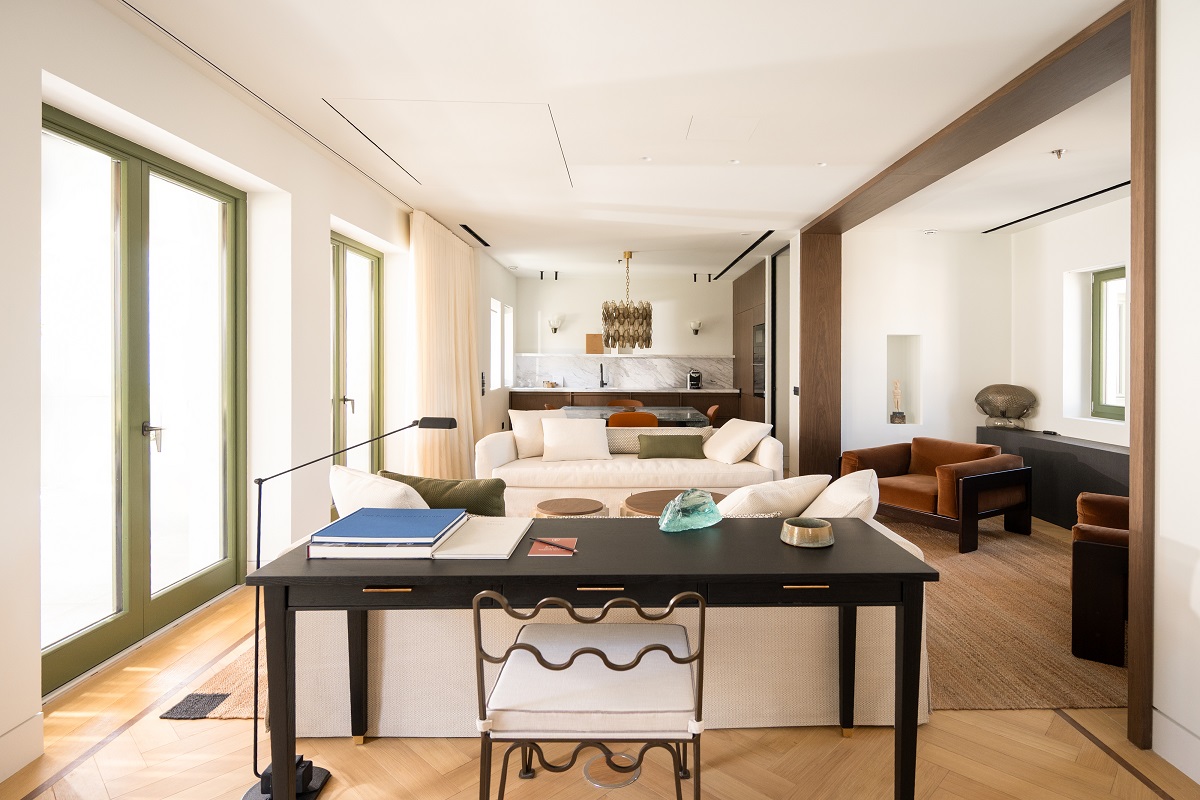
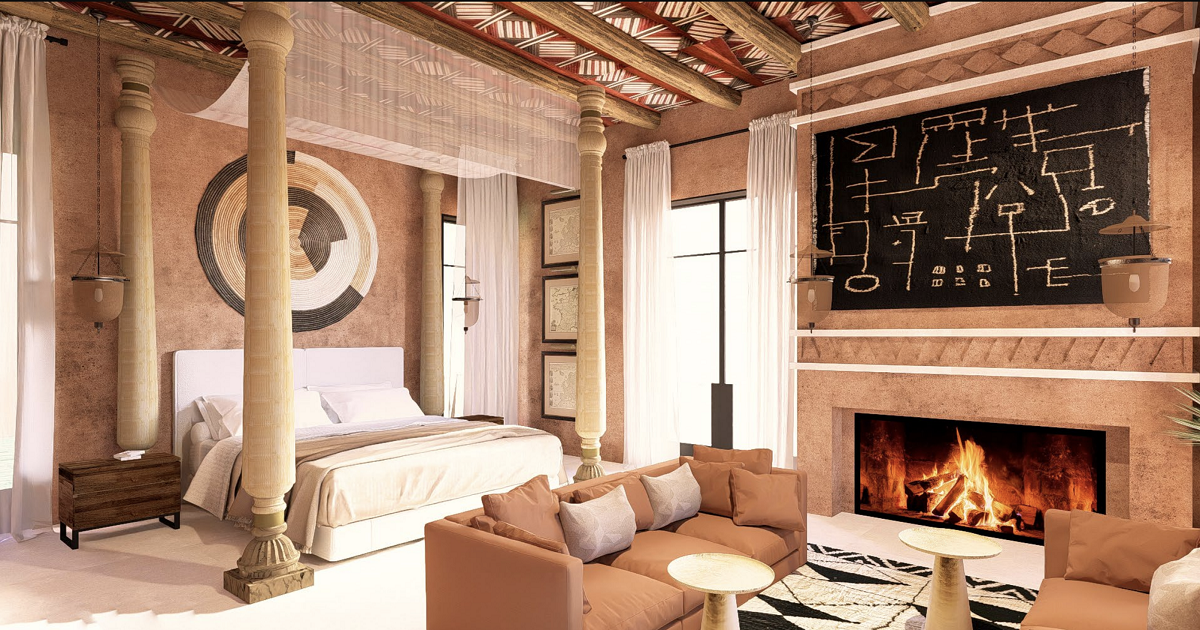
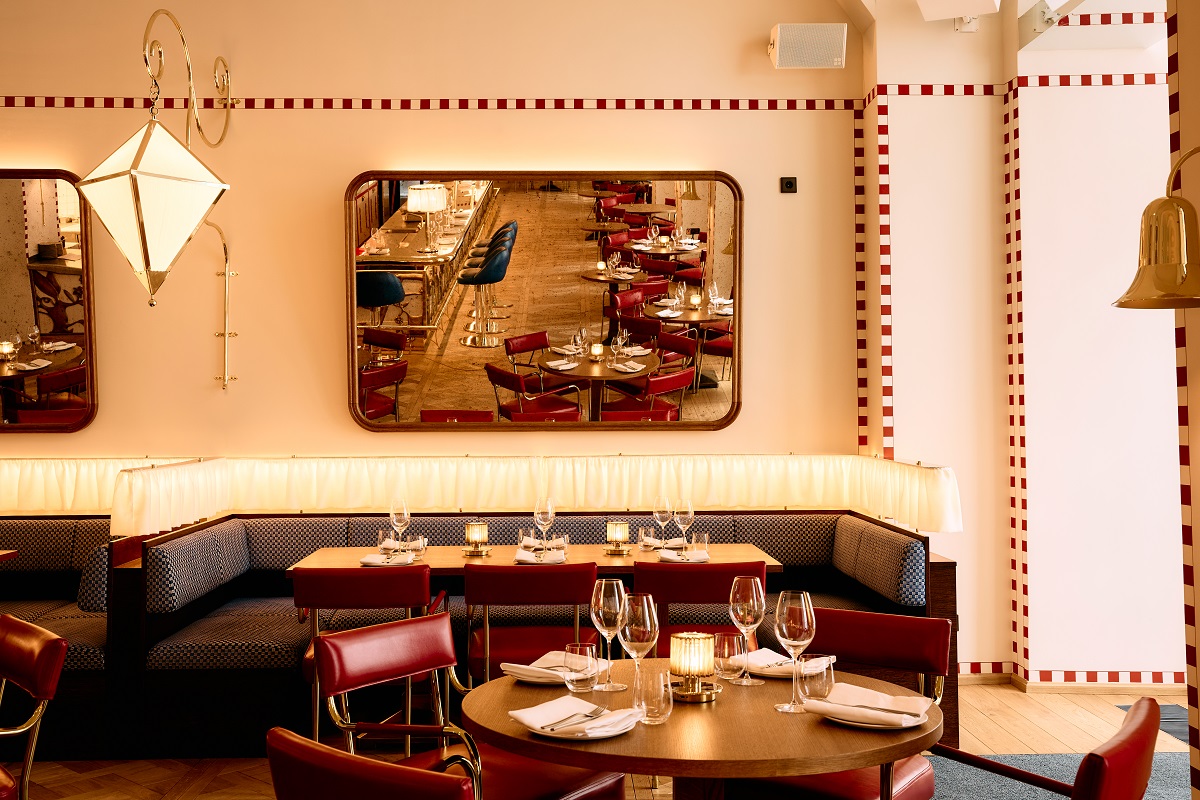
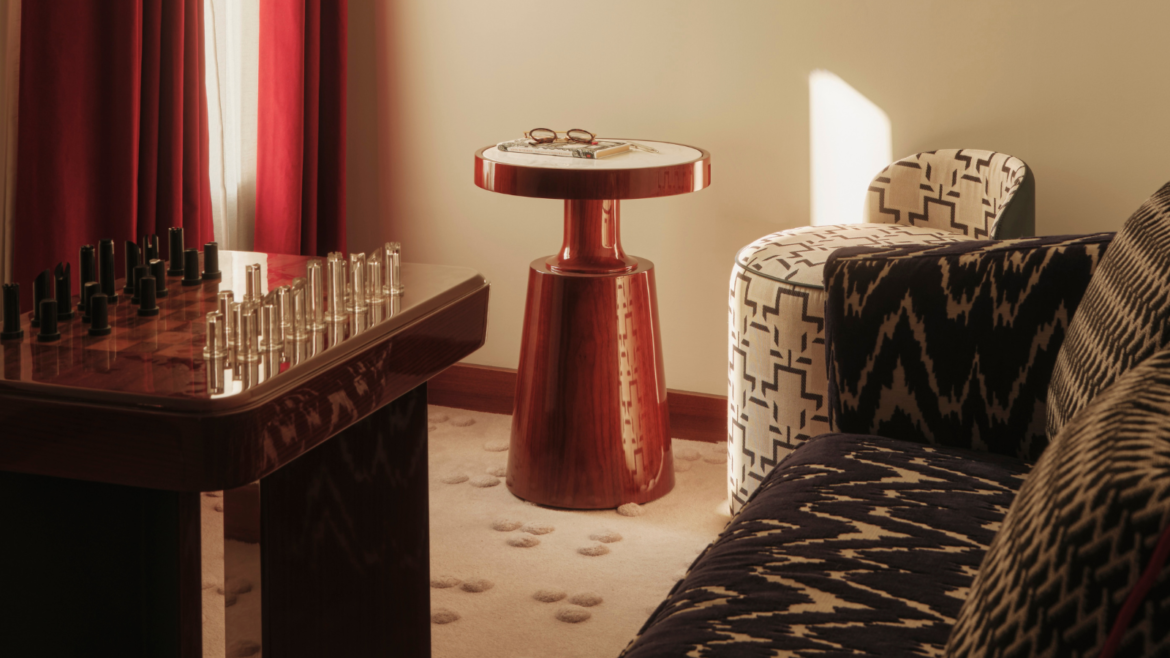
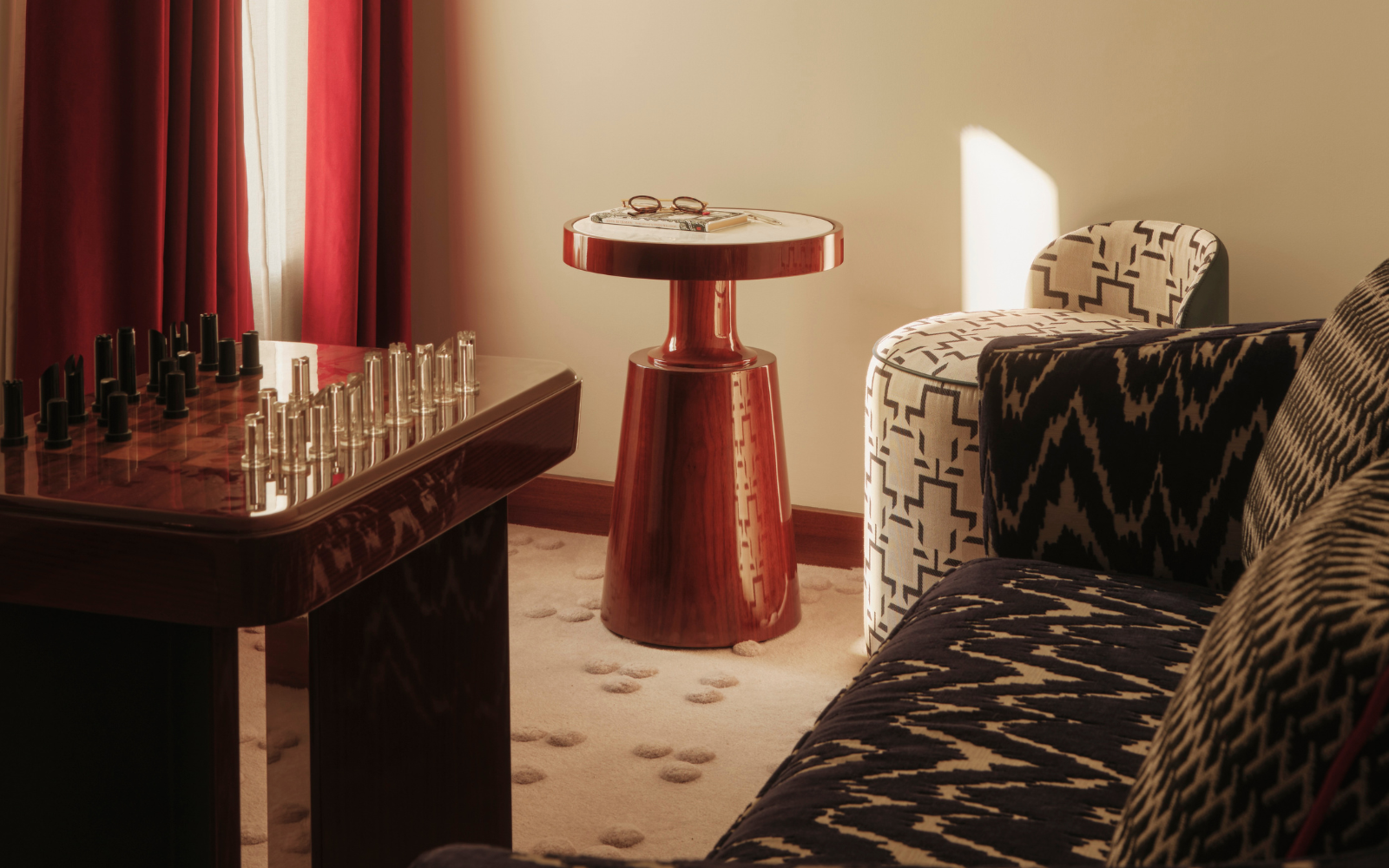
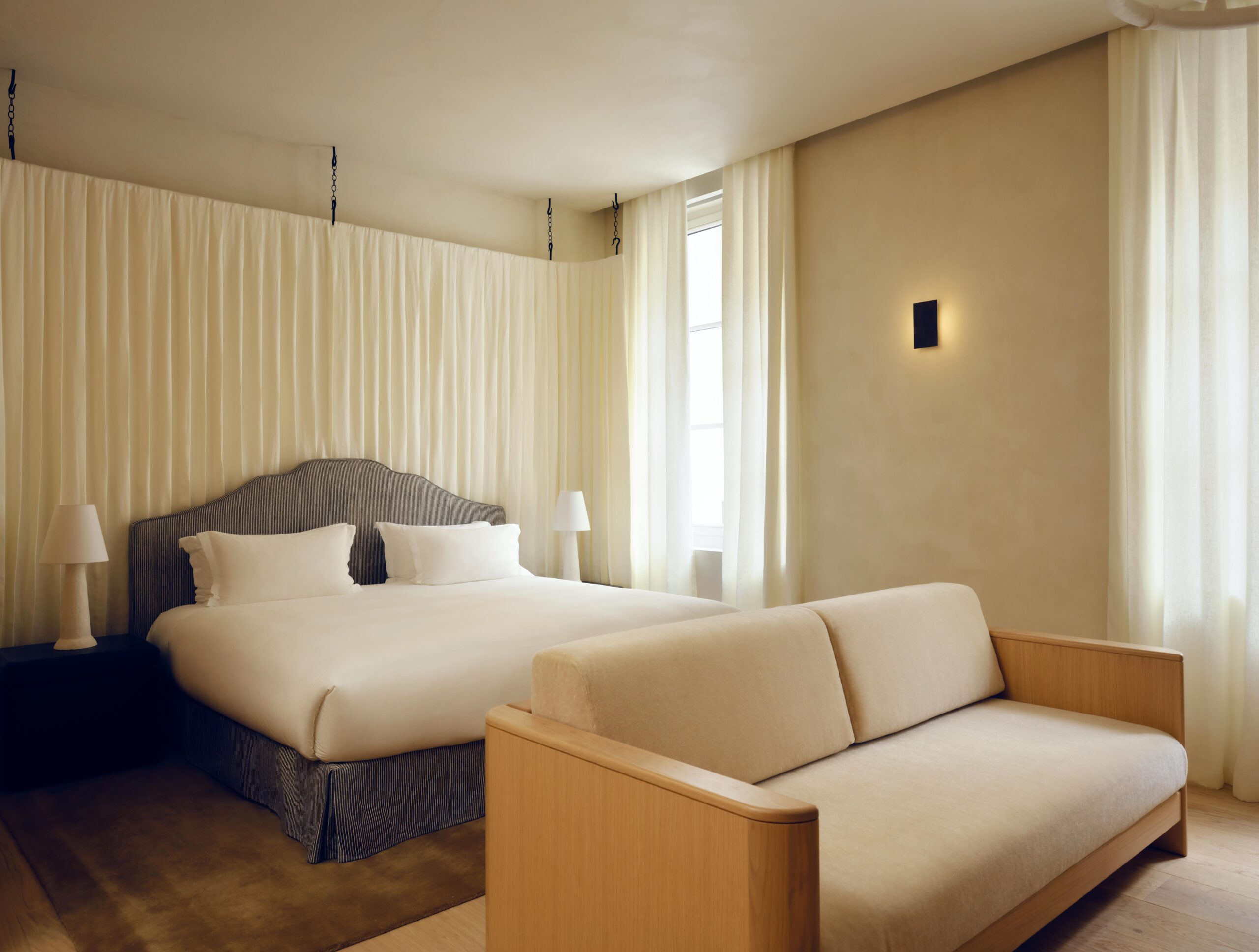
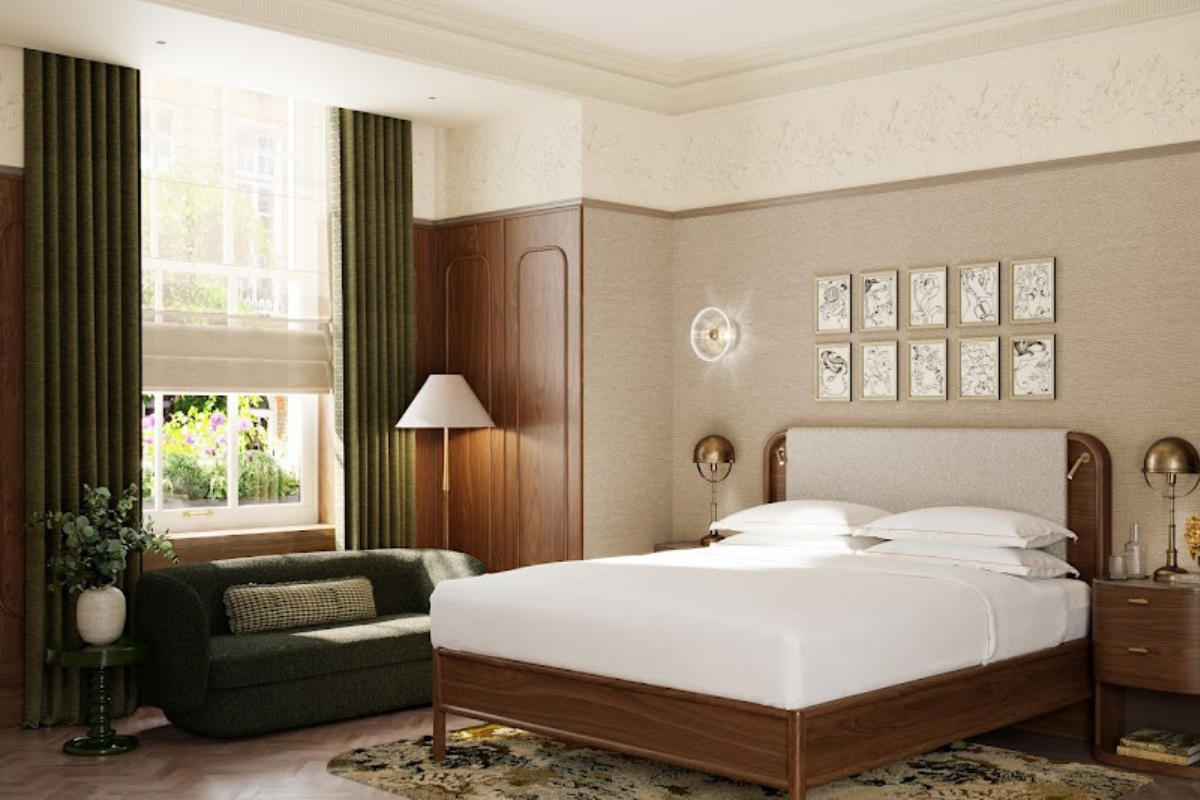
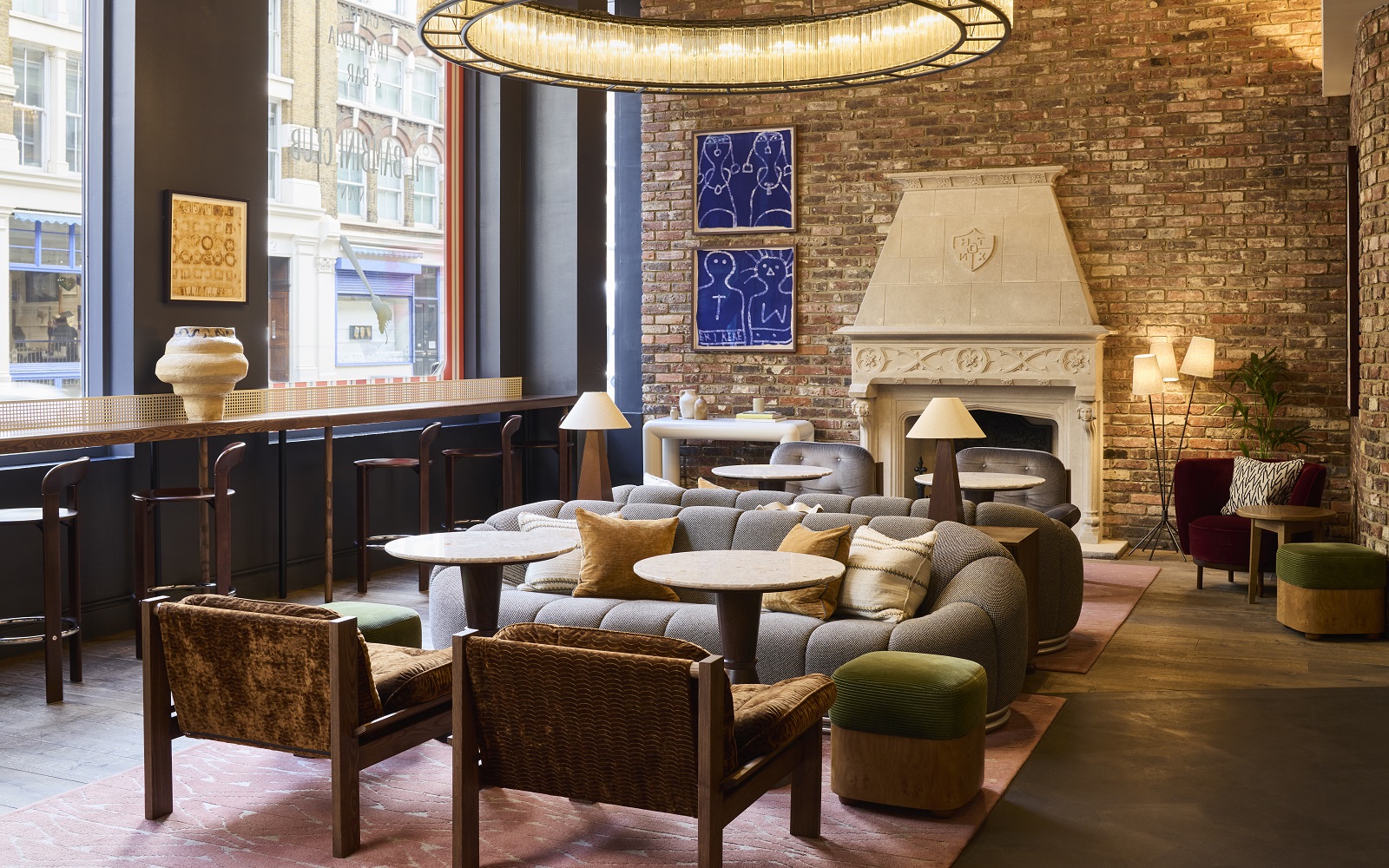
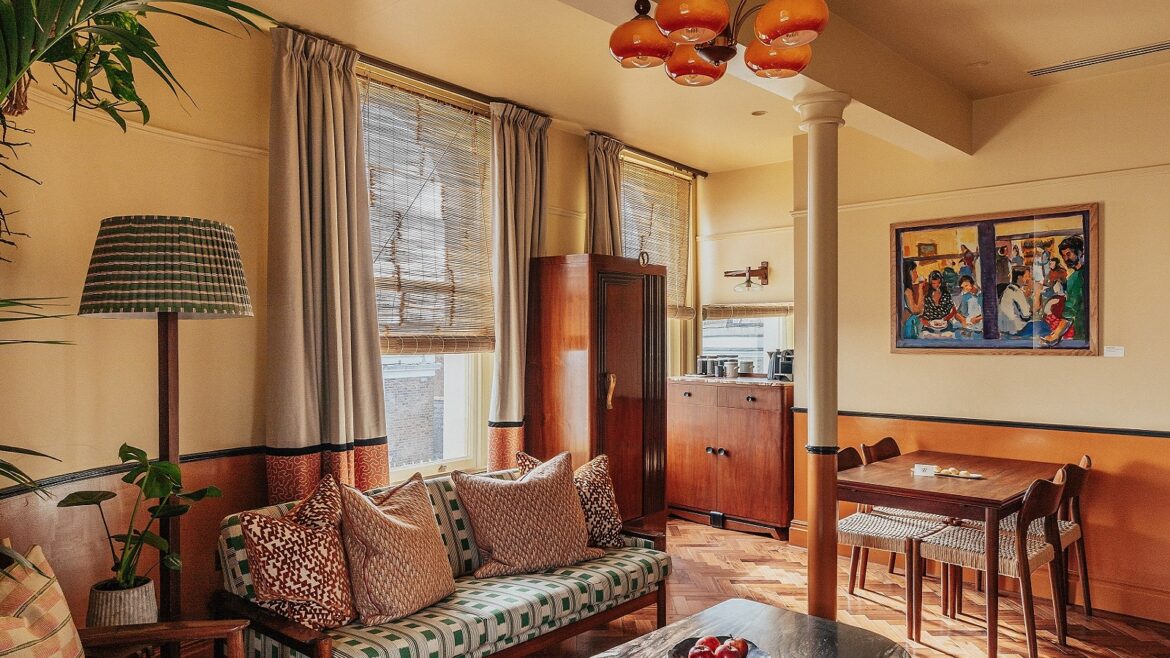
couch, lamp and home-style furniture in Portobello Lodgings

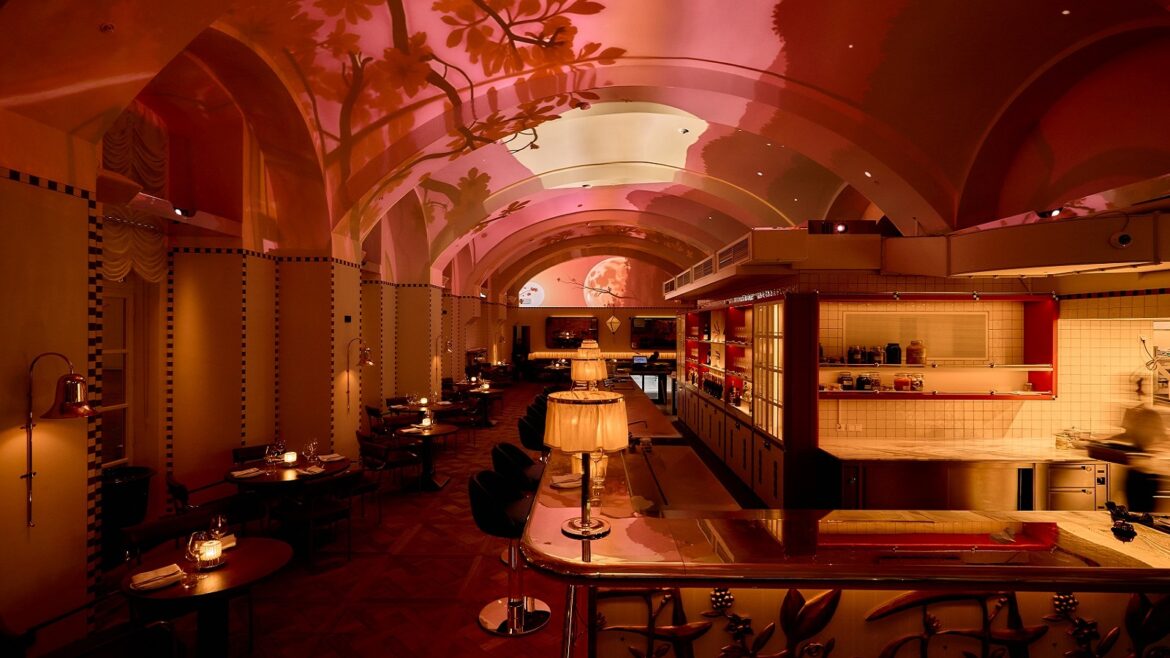
Bringing home Bombay: designing Dishoom’s first guest residence

1024 640 Pauline Brettell
Bringing home Bombay: designing Dishoom’s first guest residence

The Permit Room lodgings are more than a guest suite; they are a meticulously crafted Bombay residence. Ian Roome, director at interior architecture and design studio Macaulay Sinclair describes the journey – conceptually and physically – to entering this bold new world…
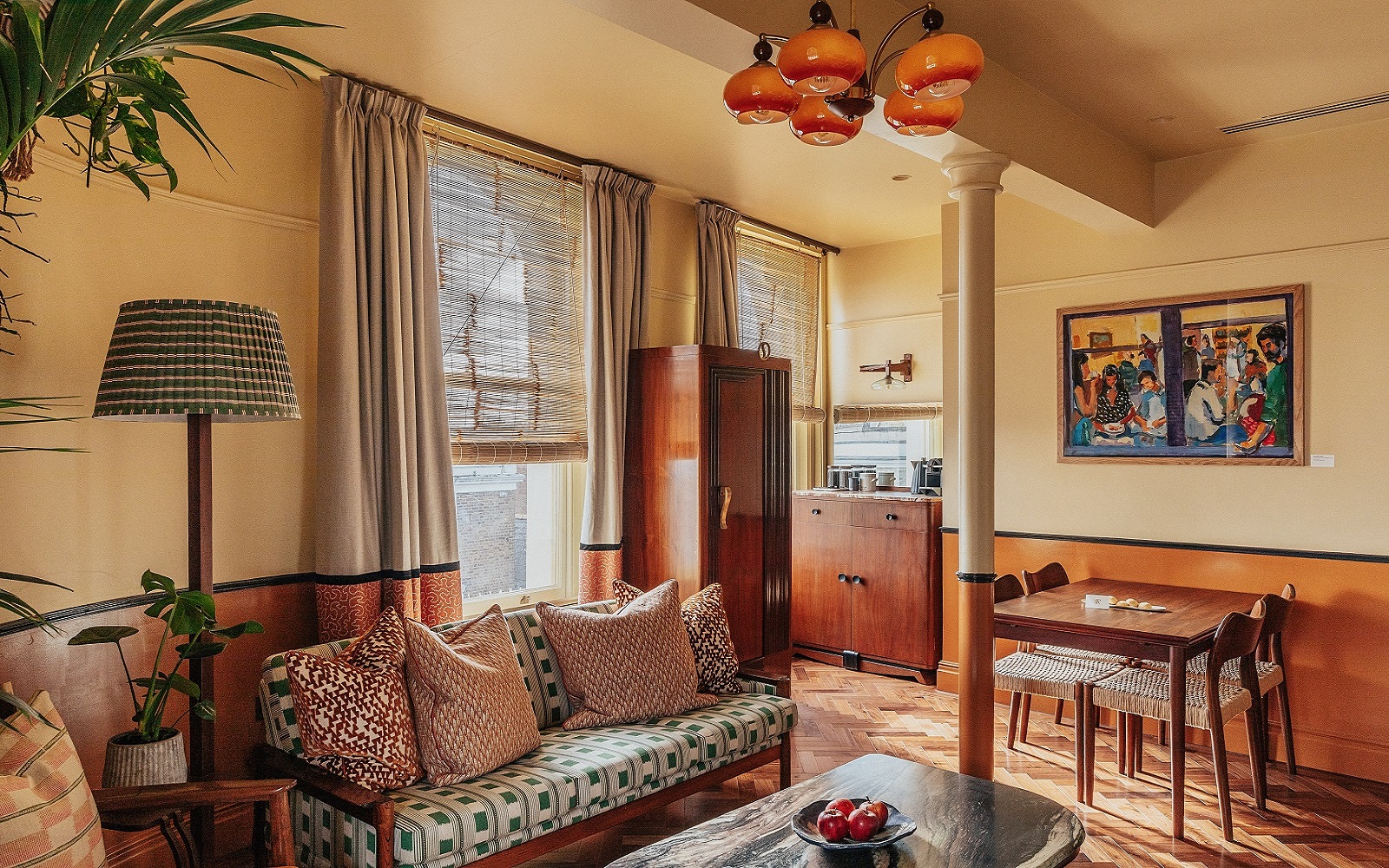
couch, lamp and home-style furniture in Portobello Lodgings

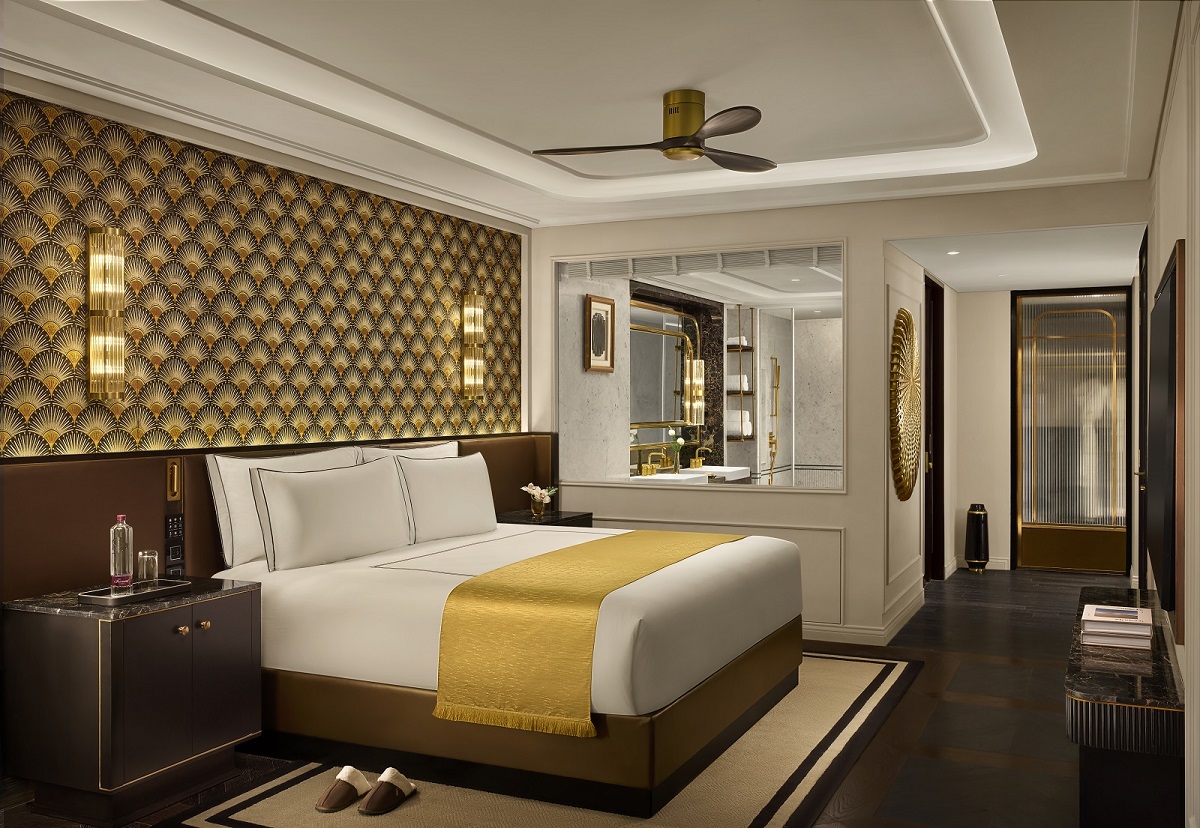
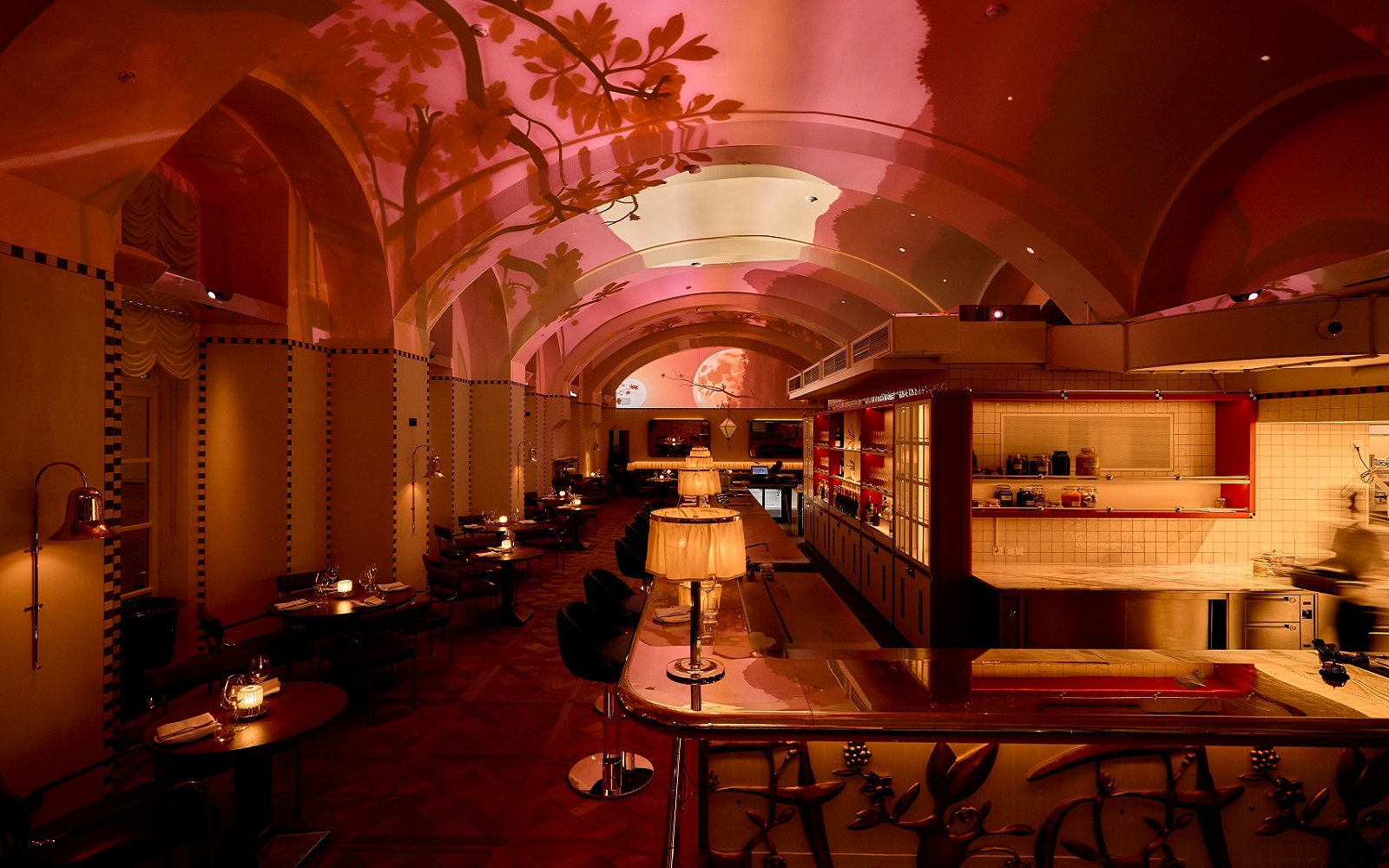
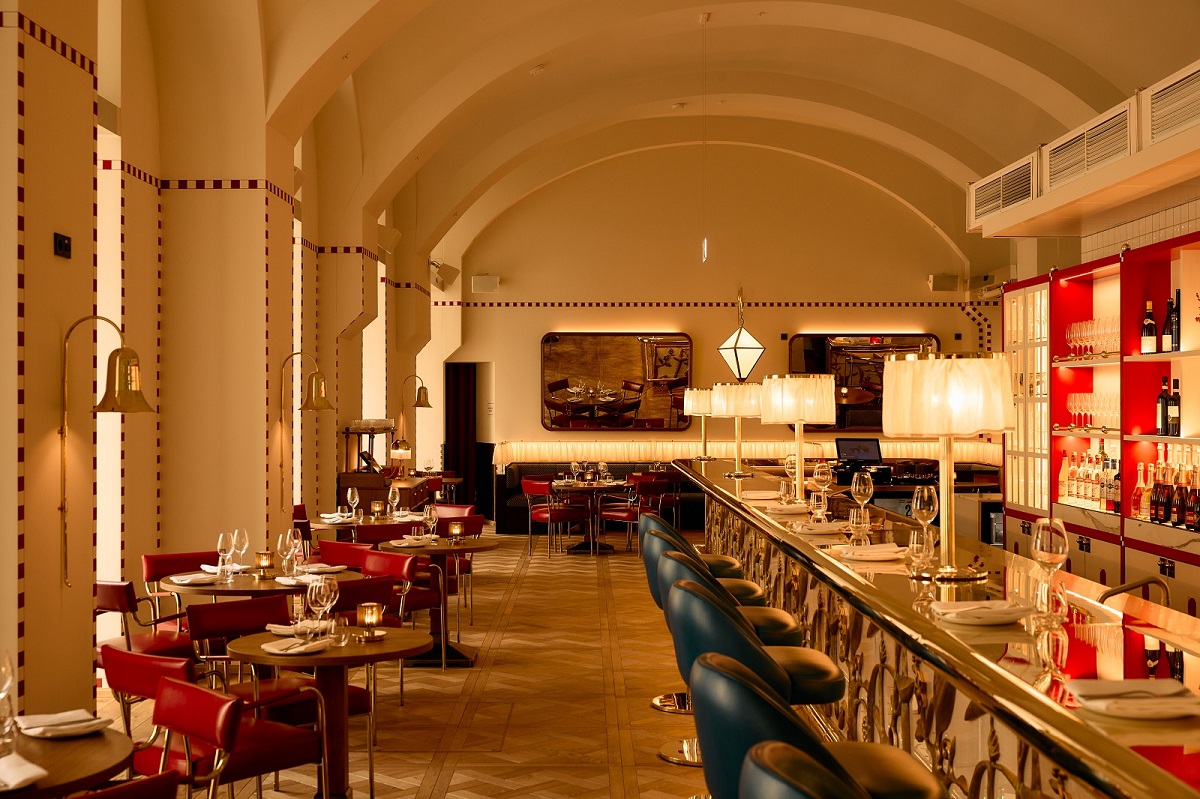
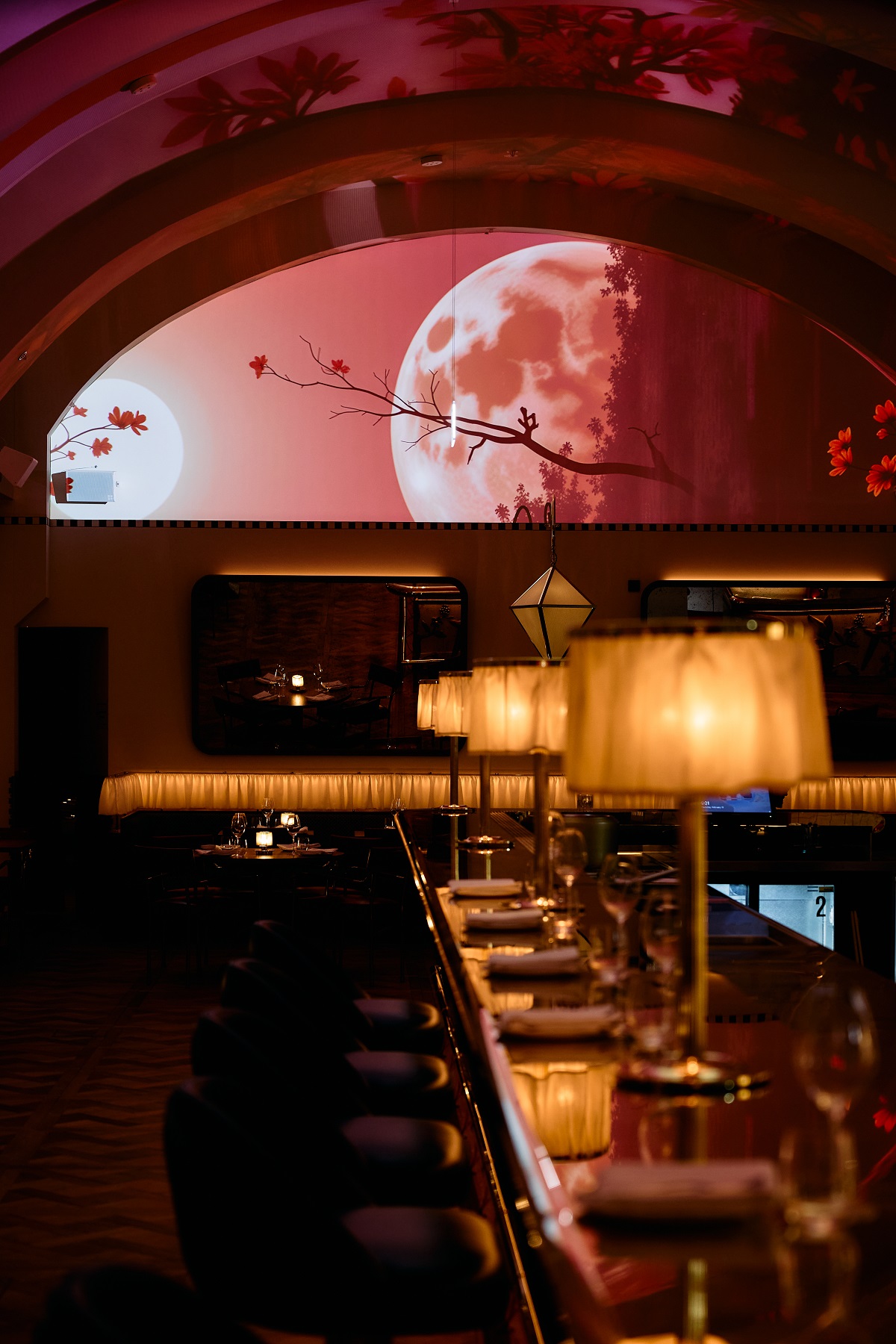
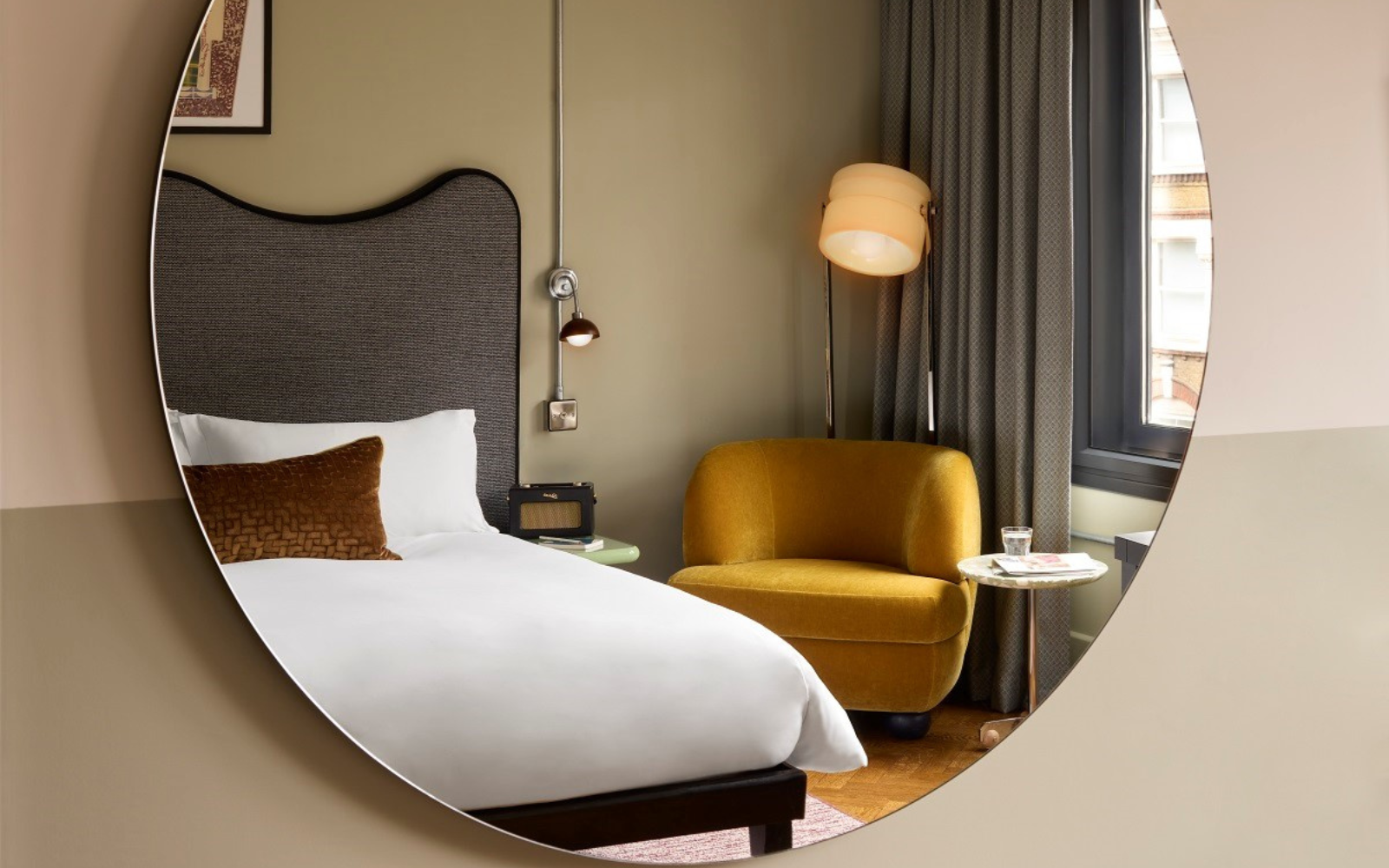
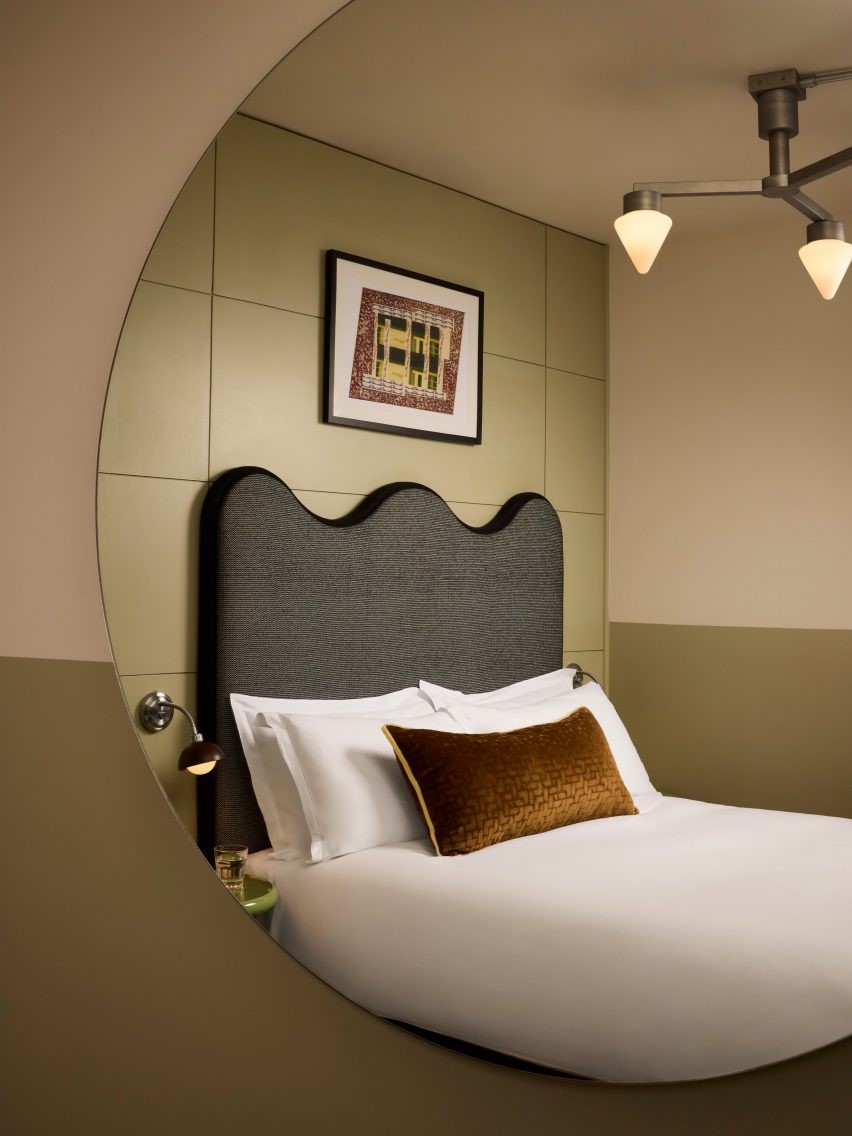
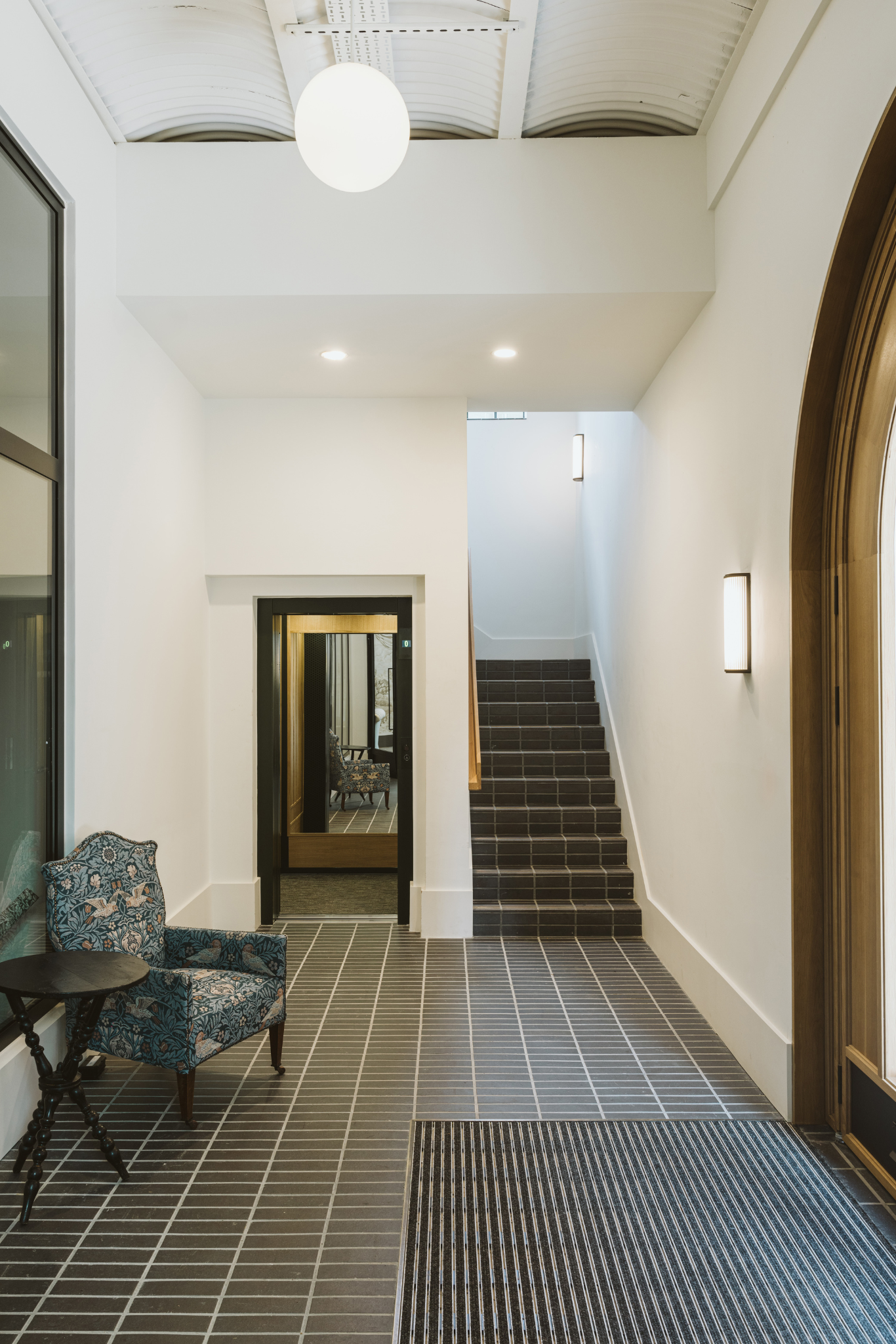
Moving into the existing premises of an old pub with rooms meant there was already an overnight guest feel to the space – however, the design concept was directly inspired by residences and lodgings in Mumbai. Rather than soulless hotel rooms, this was about a curated experience and an extension of the Permit Room brand that people know and love.

The guest is at the heart of the entire design journey. Similar to Dishoom where a fictional character is created to build the concept of each restaurant, the guests are the protagonists of the Permit Room lodgings, with the design framed entirely from their perspective.
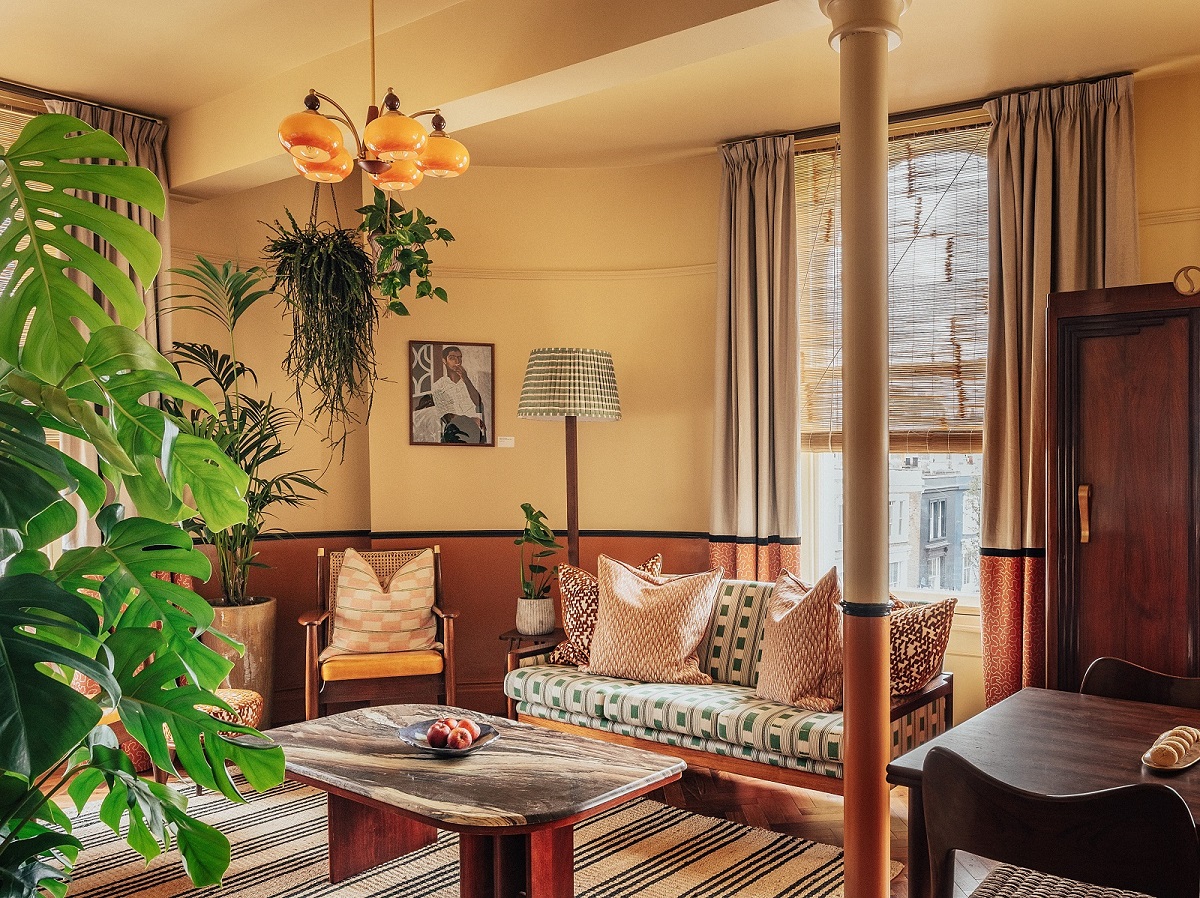
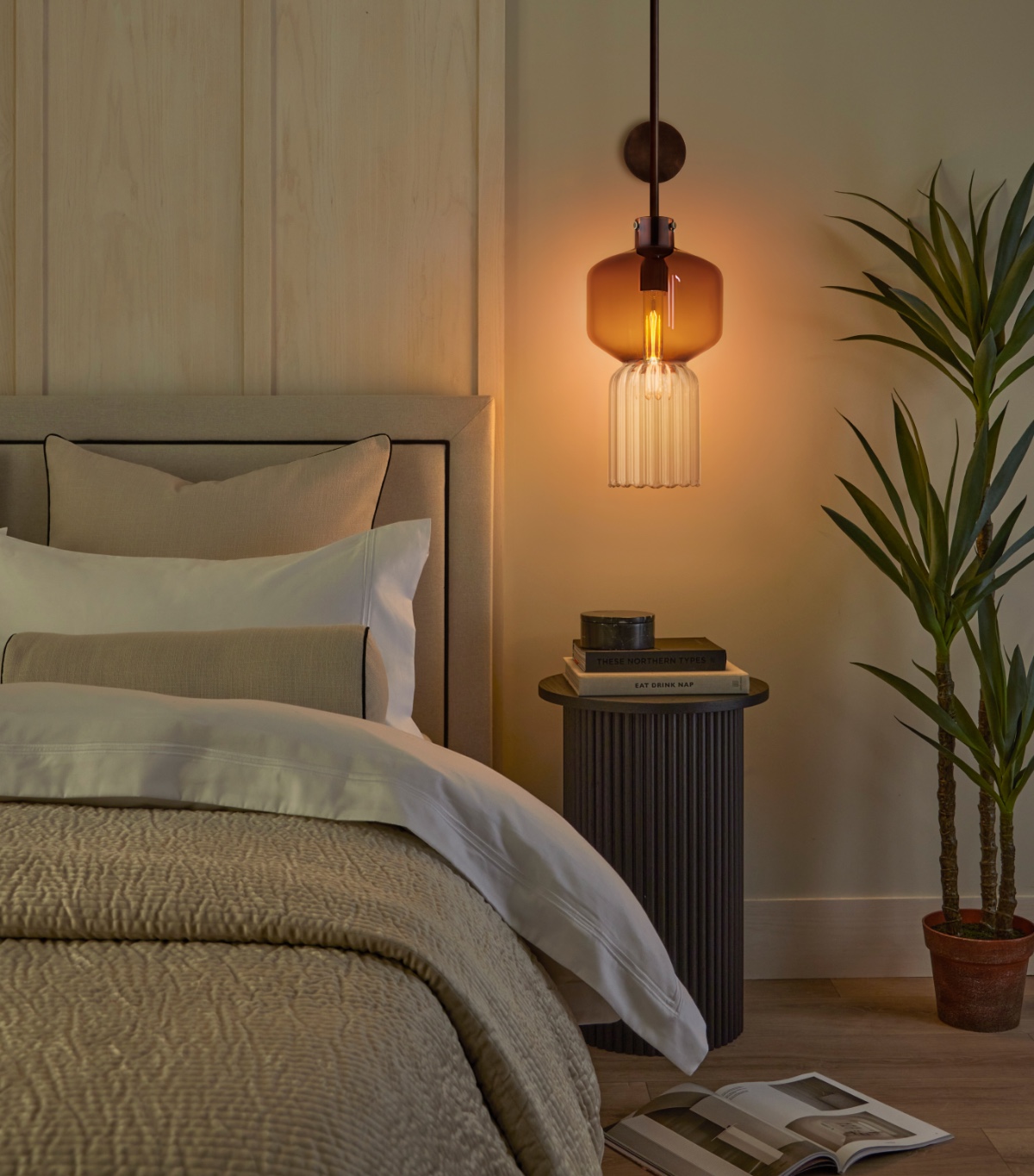
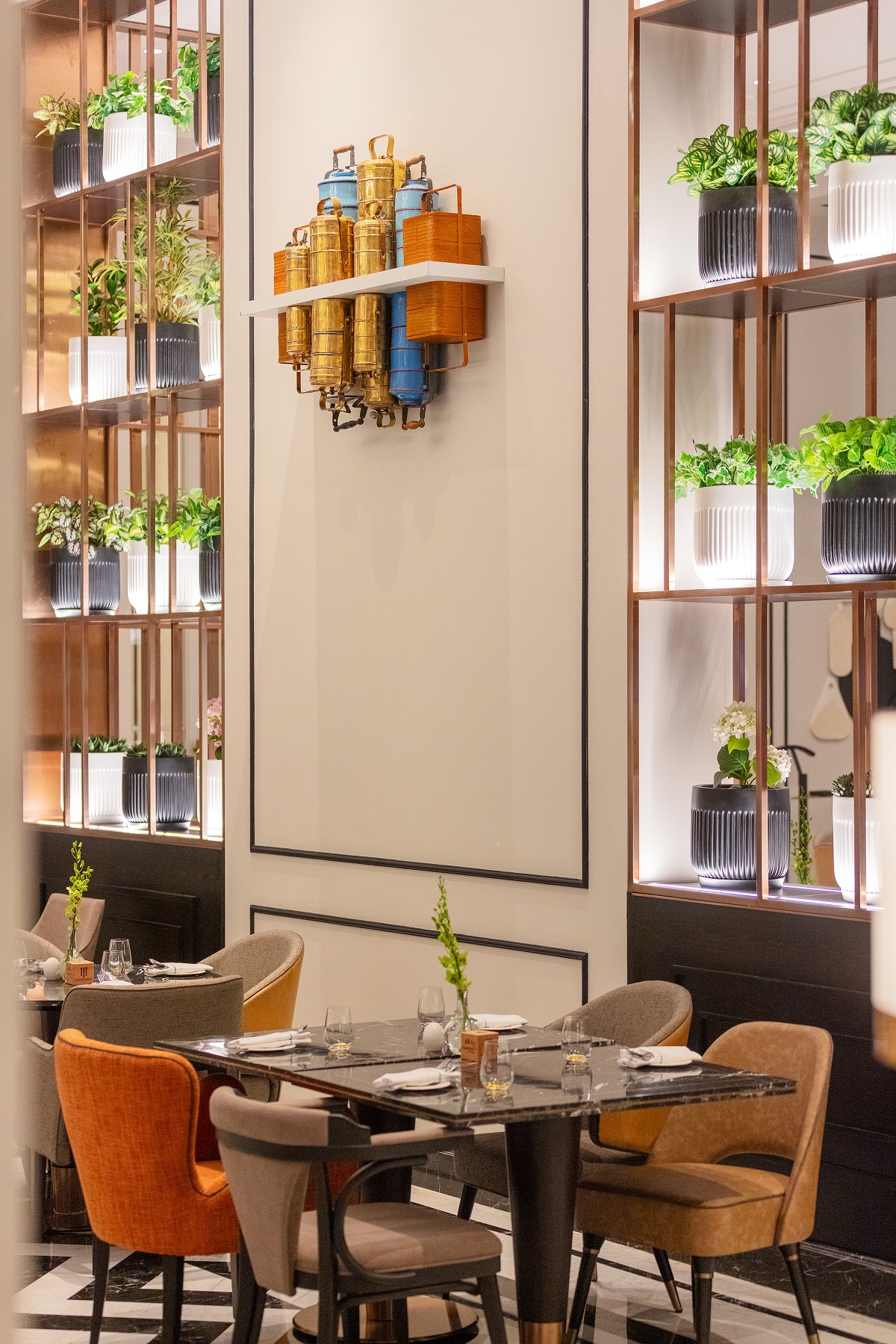
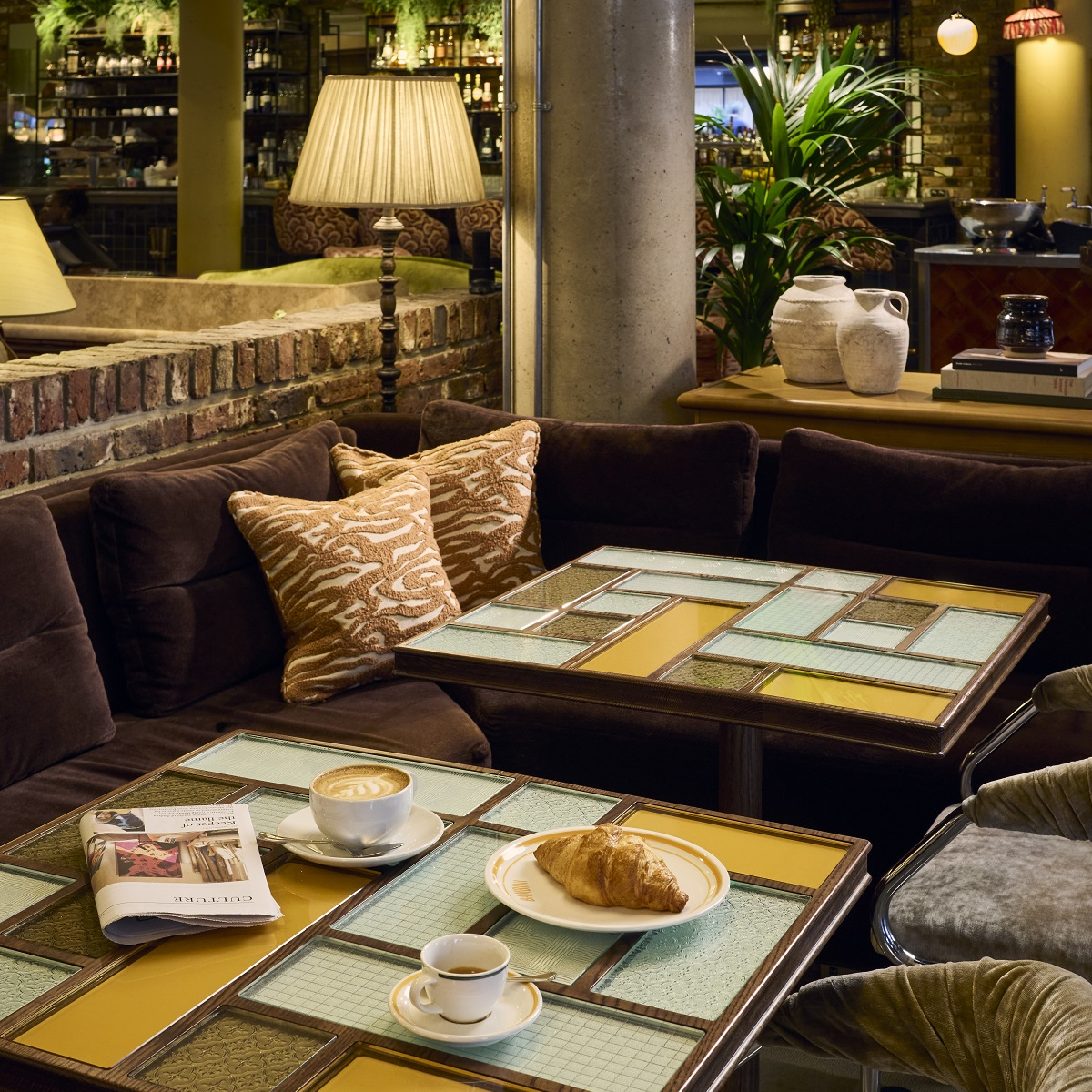
plants and vintage light in Permit Room on Portobello Road

Image credit: Permit Room

Macaulay Sinclair’s deep, longstanding relationship with the team ensured authentic execution of this design, including the research trips to Mumbai to source genuine pieces that lend a subtle oddity to the space. For the guests that are looking for something different, and who are willing to embrace the abstract, all modern efficiencies are shunned from the start of the booking process – guests need to phone up to reserve, are handed a physical key instead of swipe cards and are encouraged to leave a note in a handwritten guestbook.

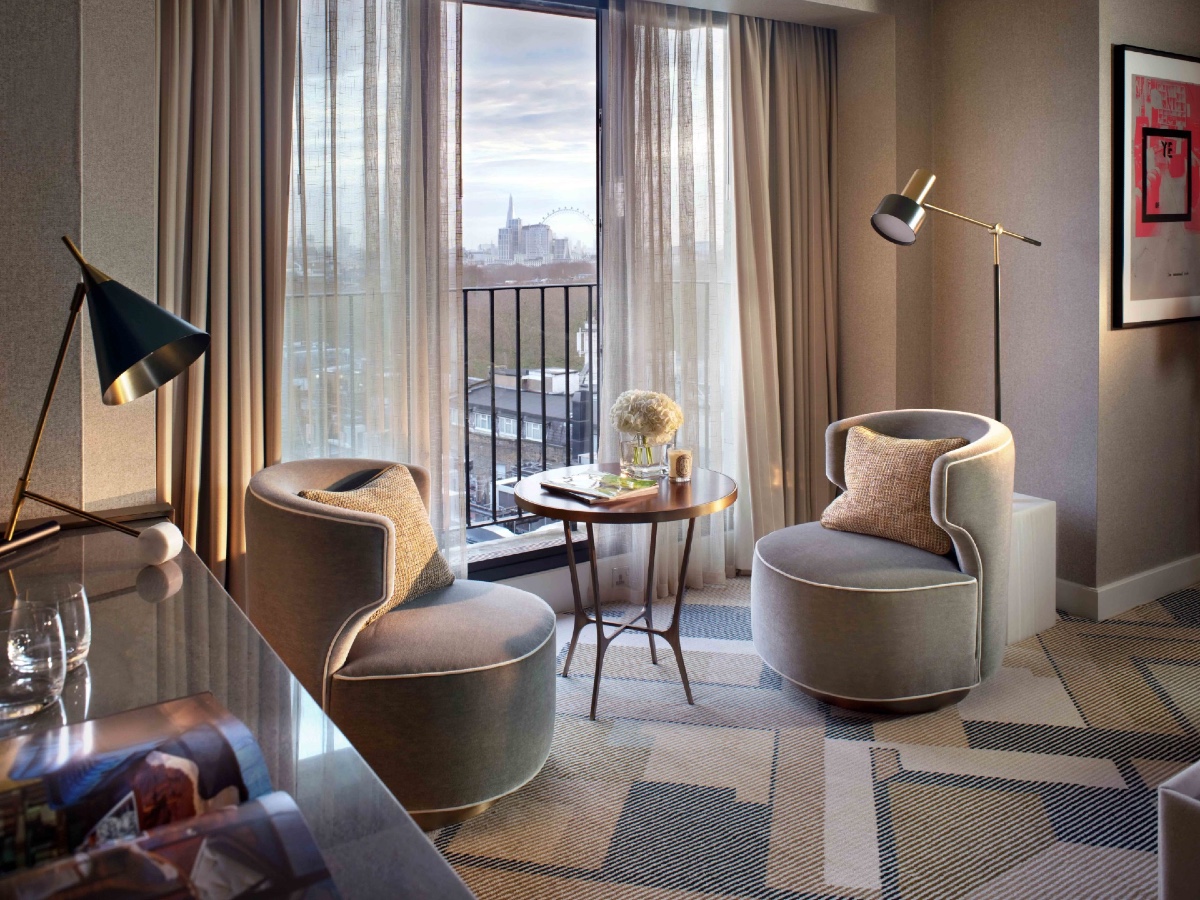
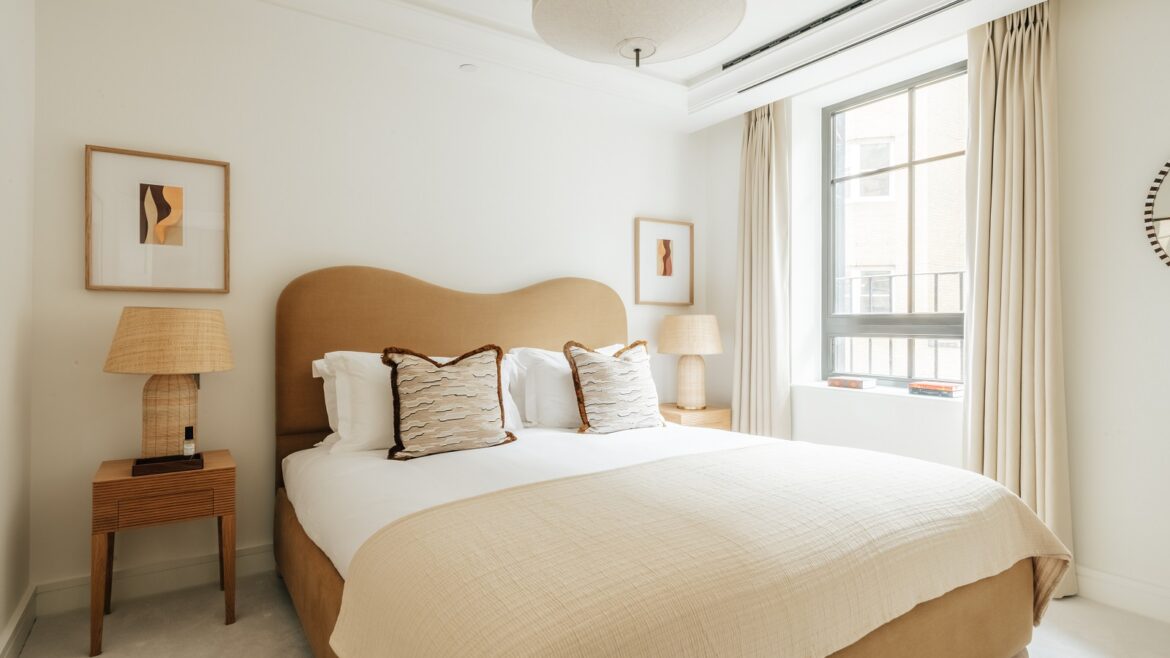
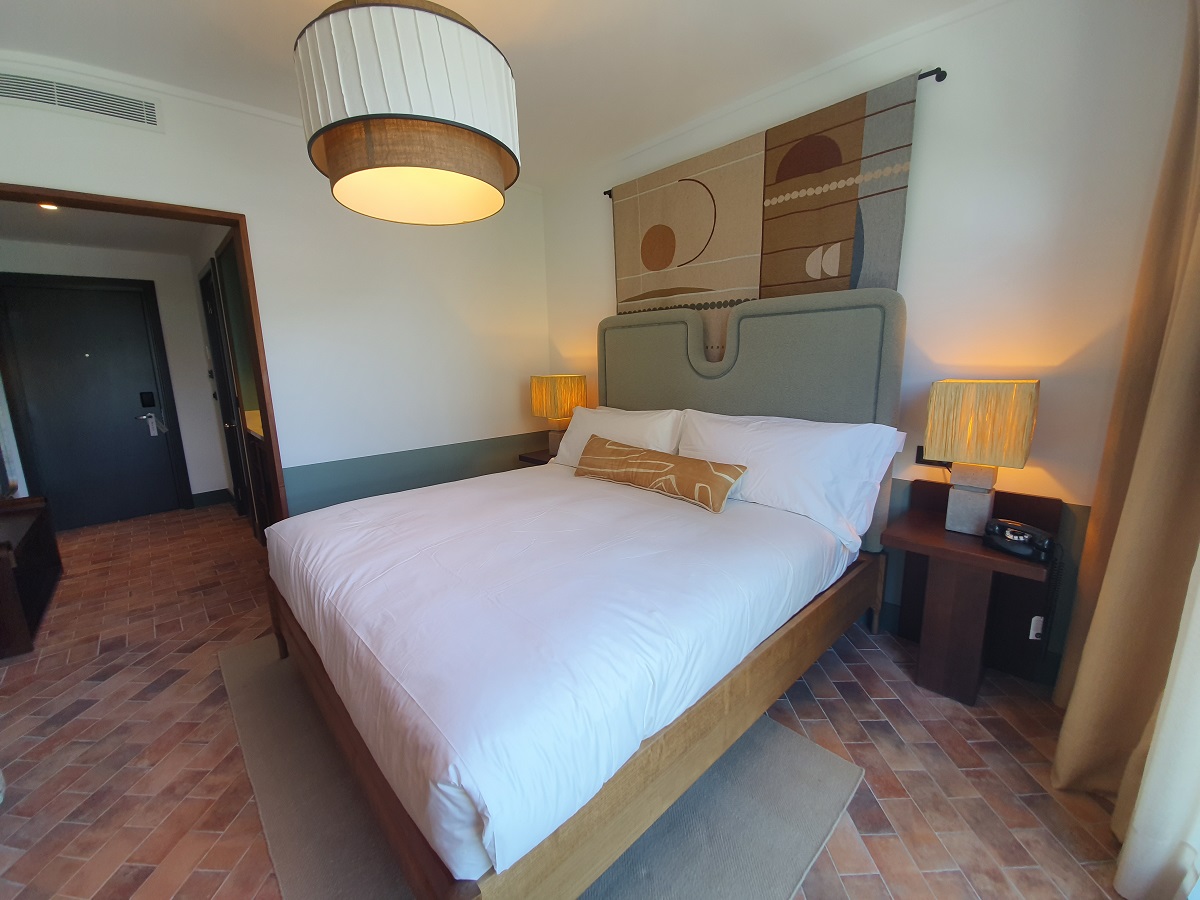
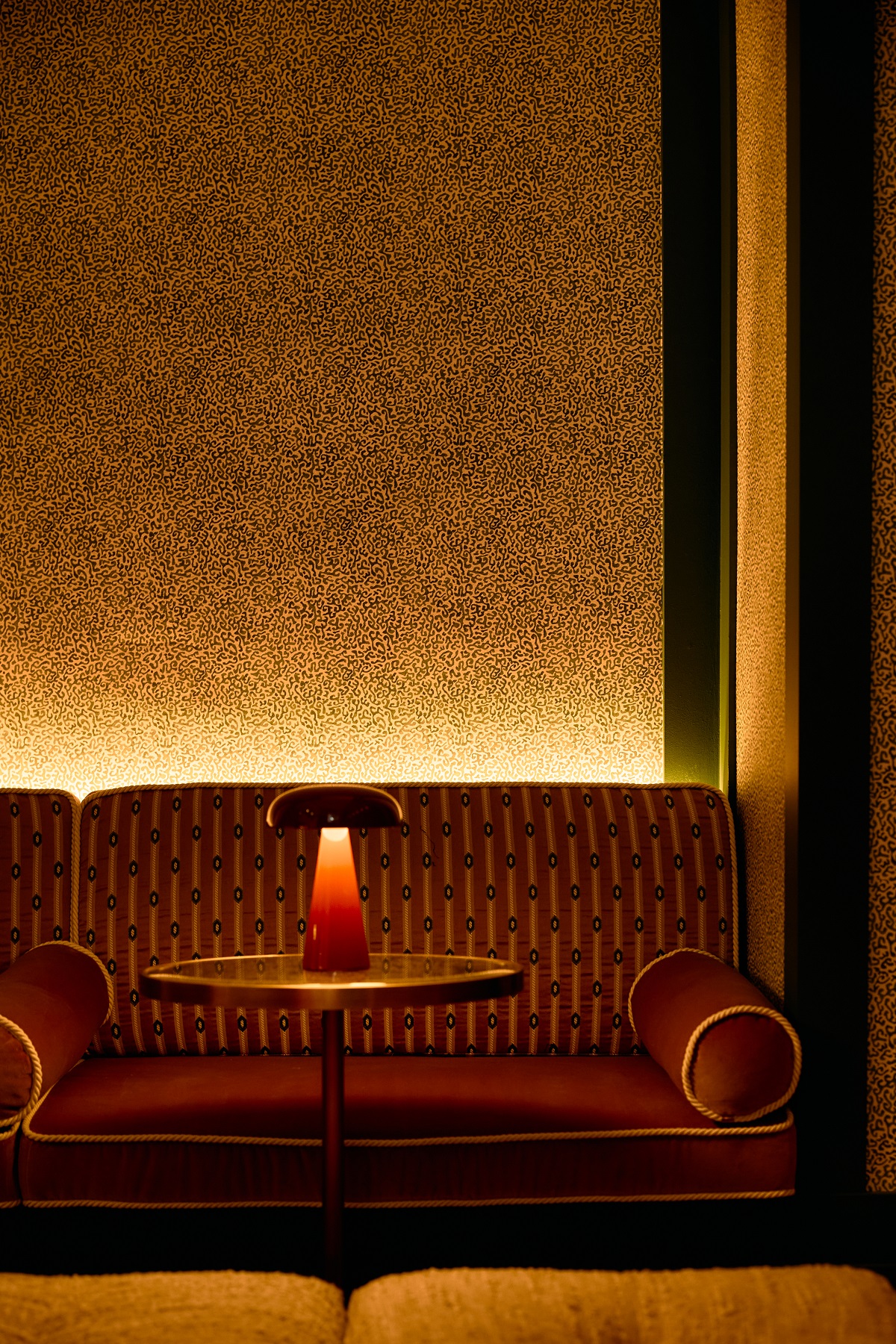
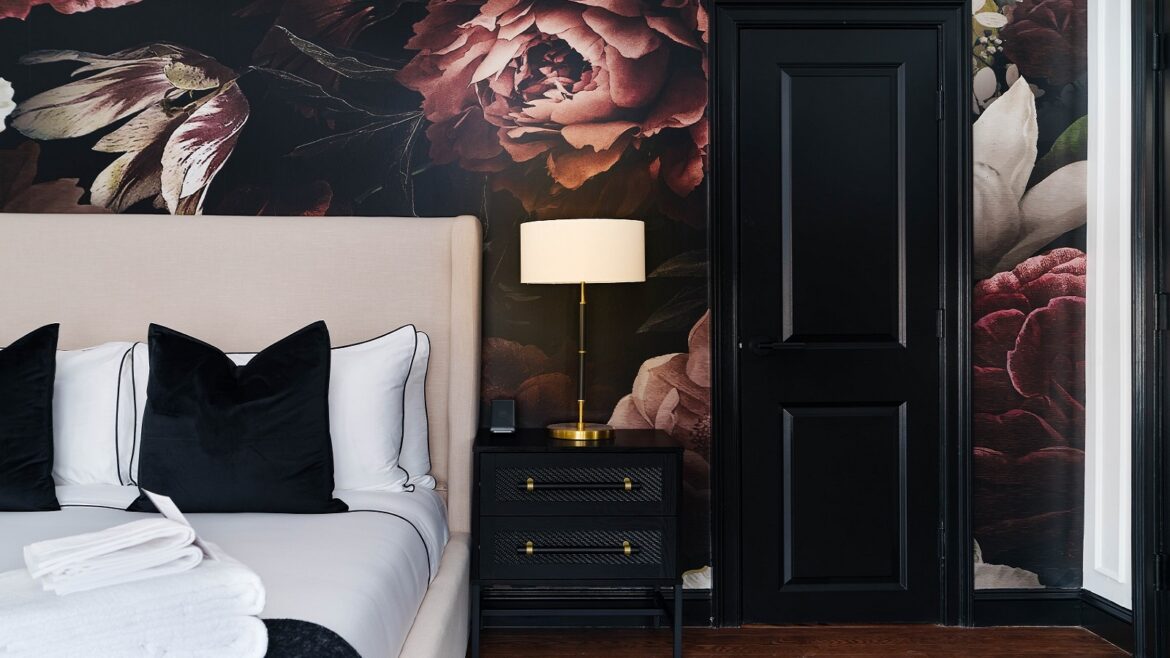
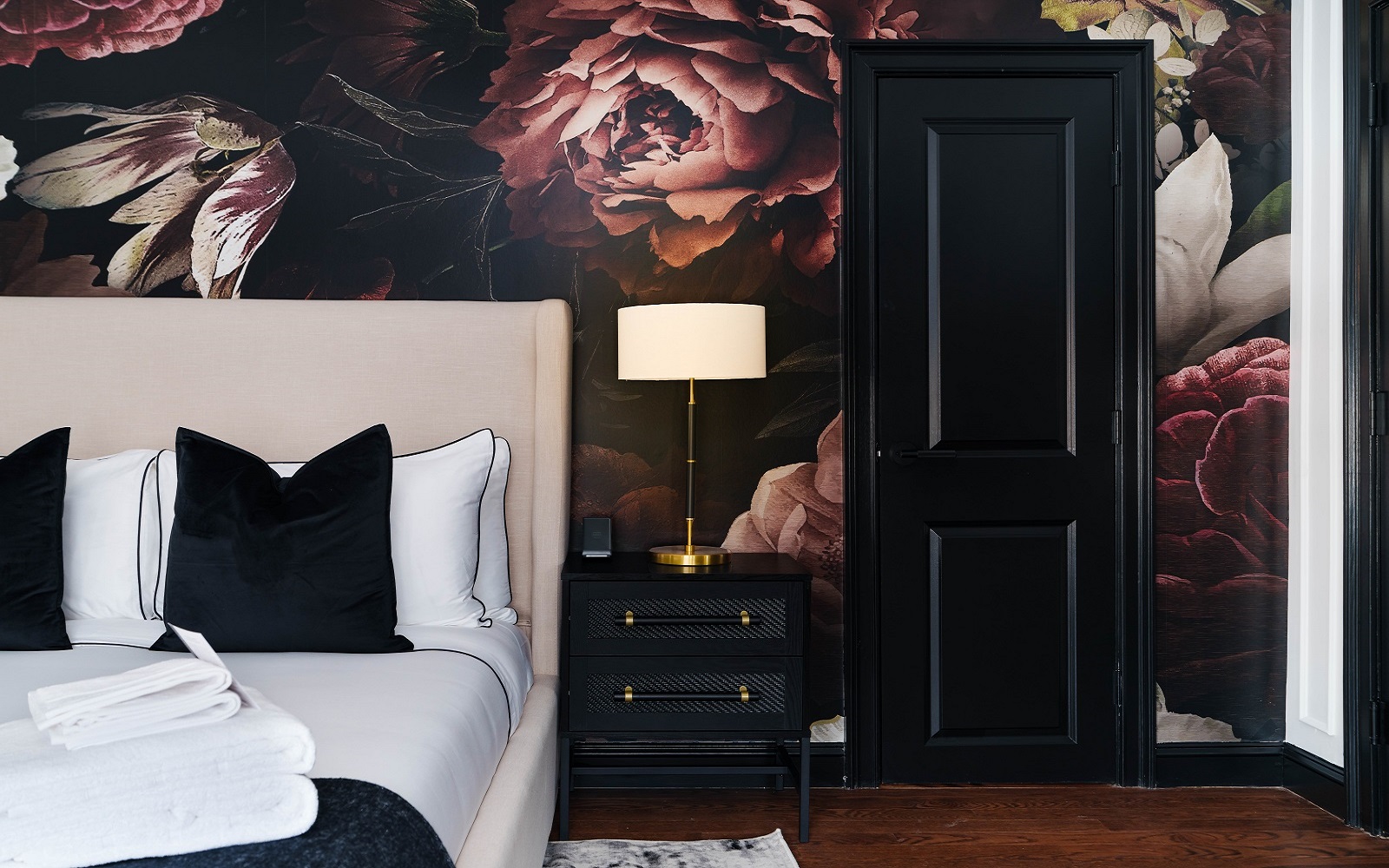
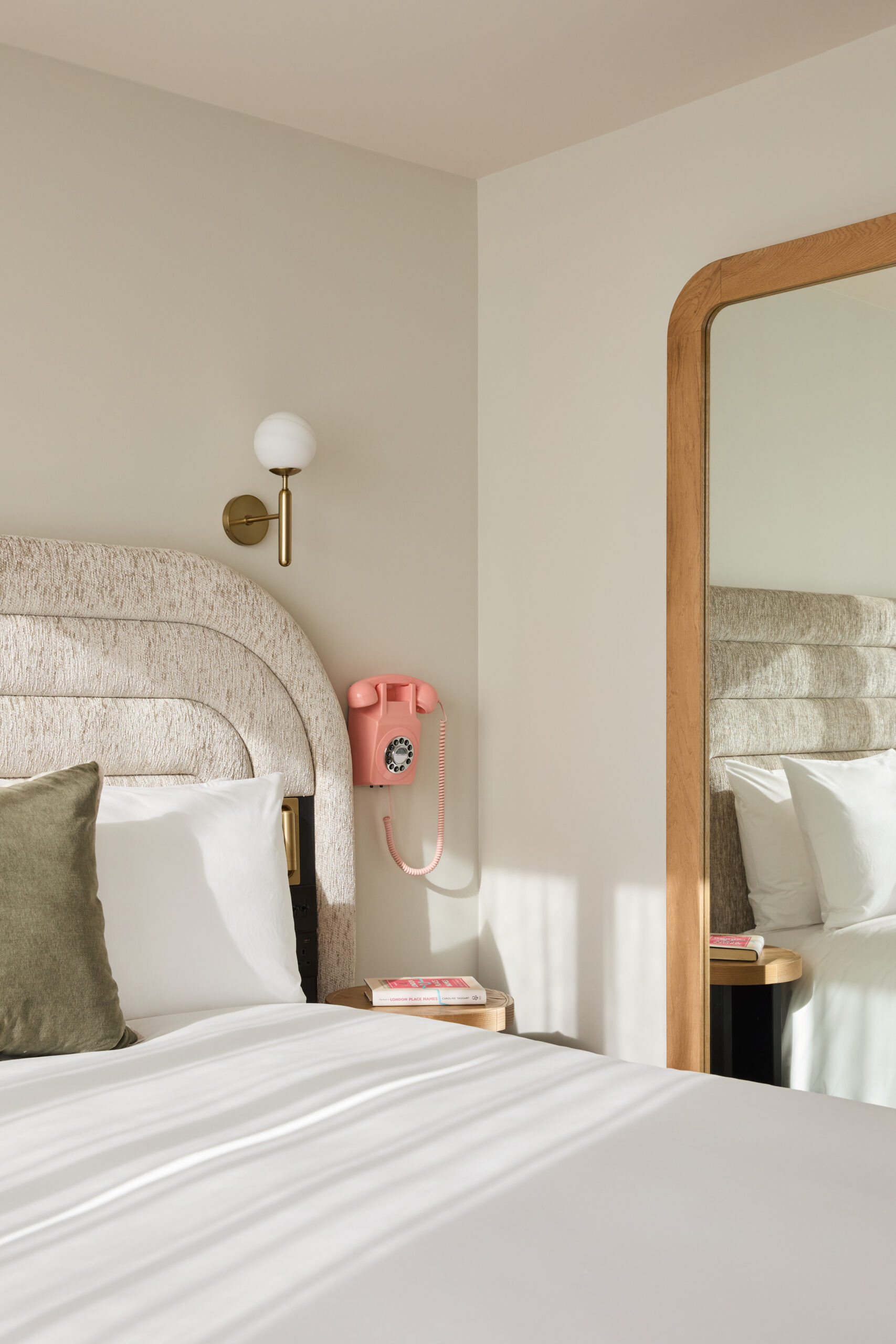
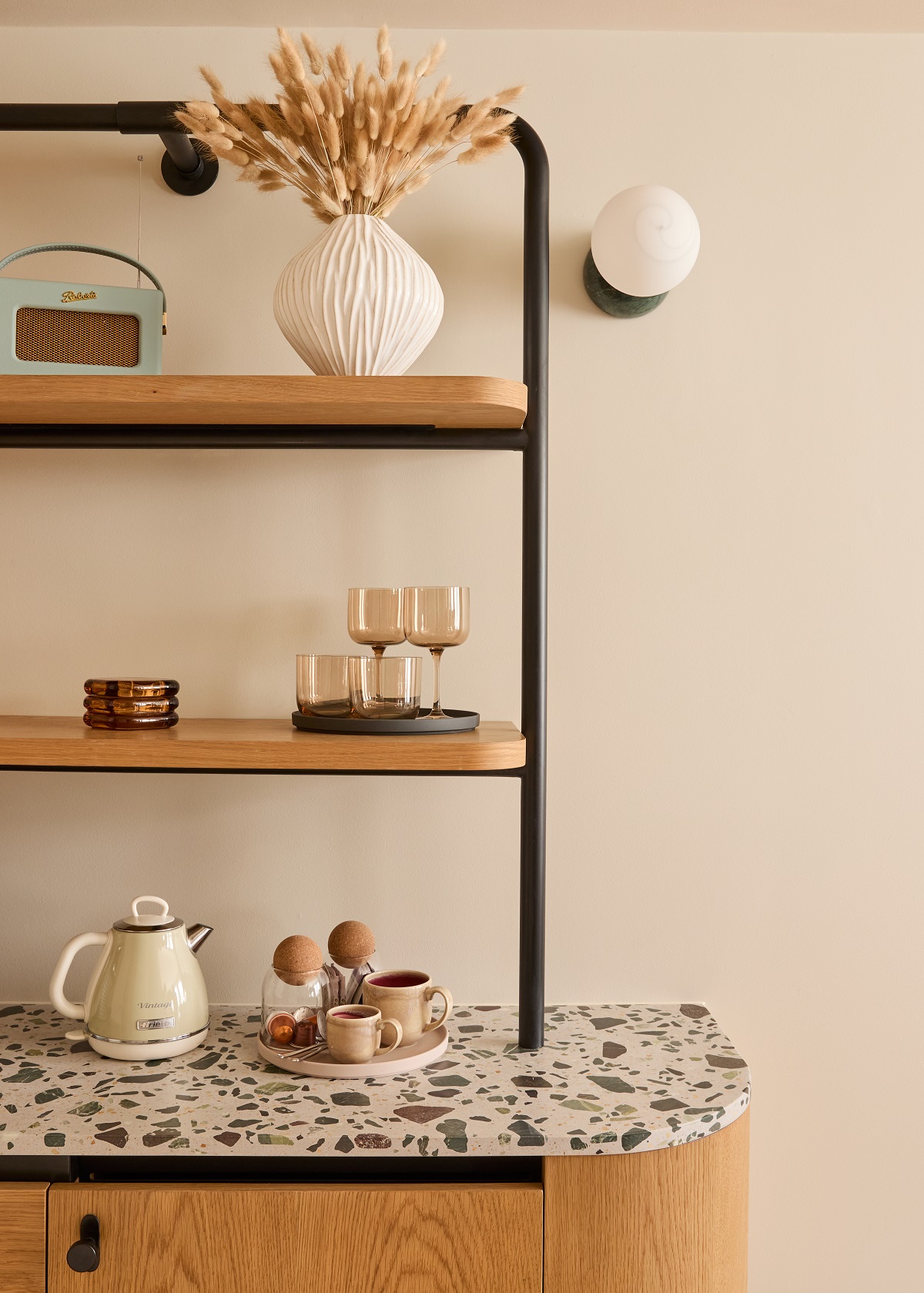
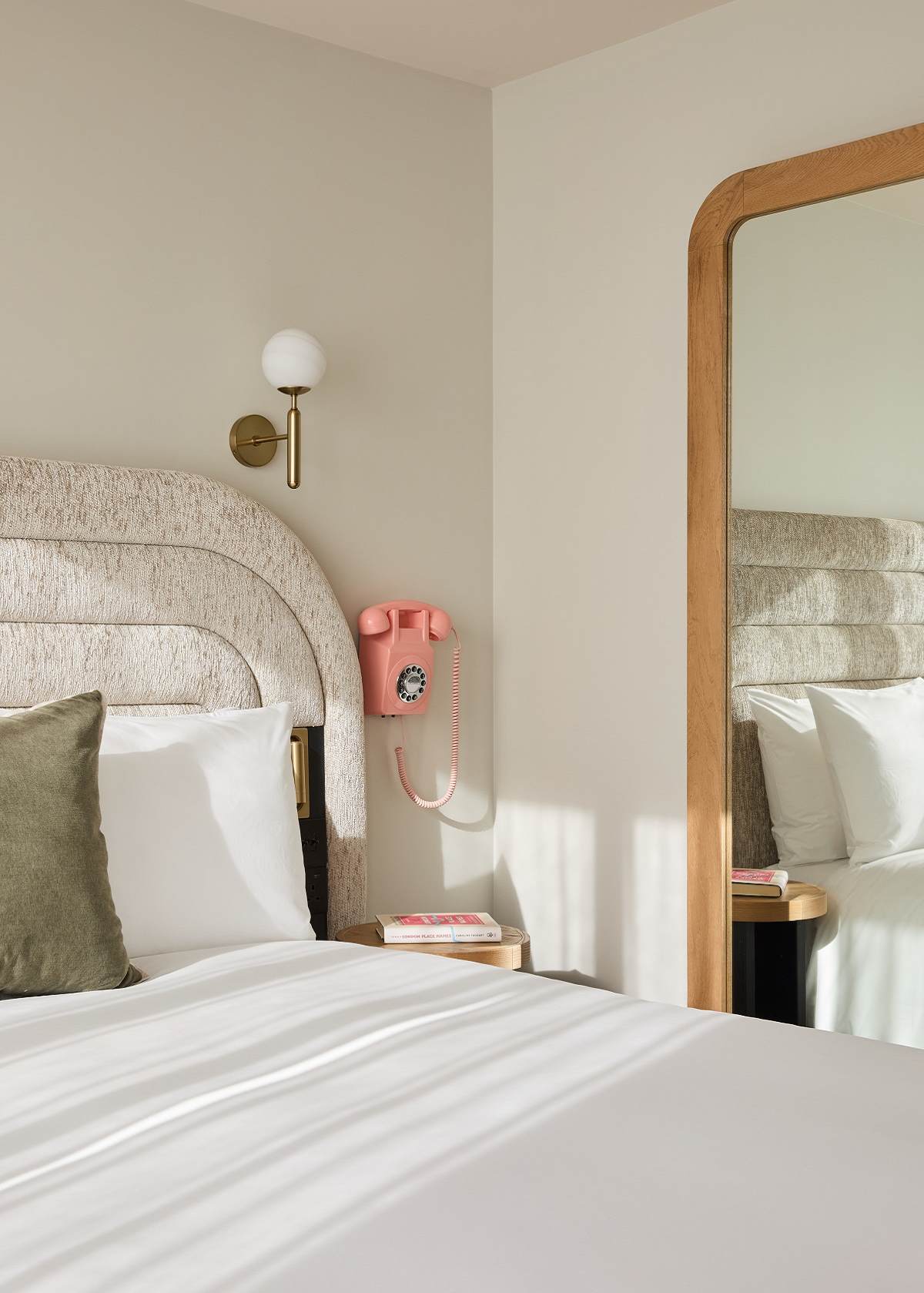
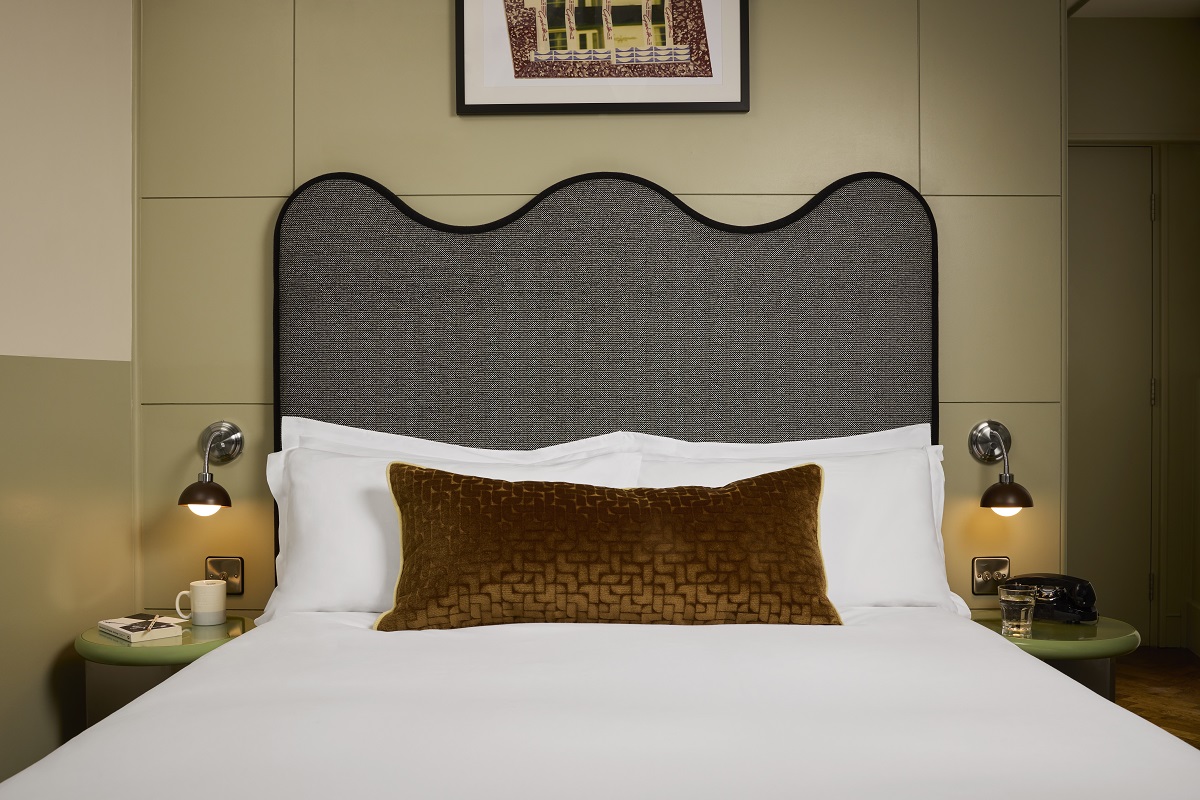
The original space consisted of three bedrooms, which were reconfigured into two double ensuites with a generous lounge space, designed to feel like someone’s apartment where guests could fully relax. From the seating area to the television and an old-style phone for calling down, everything was focused on the end-user’s need for comfort and a unique, lived-in atmosphere.
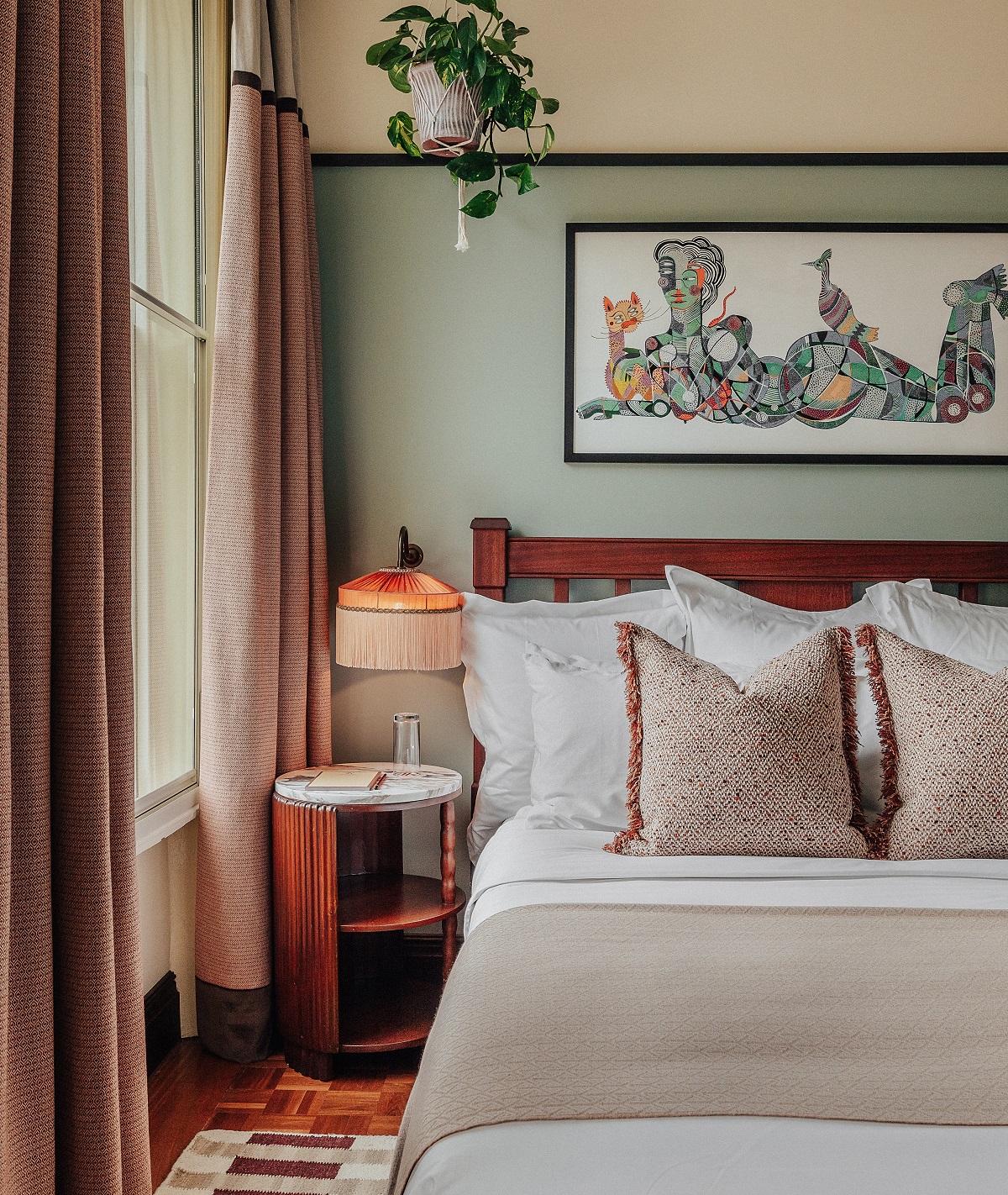
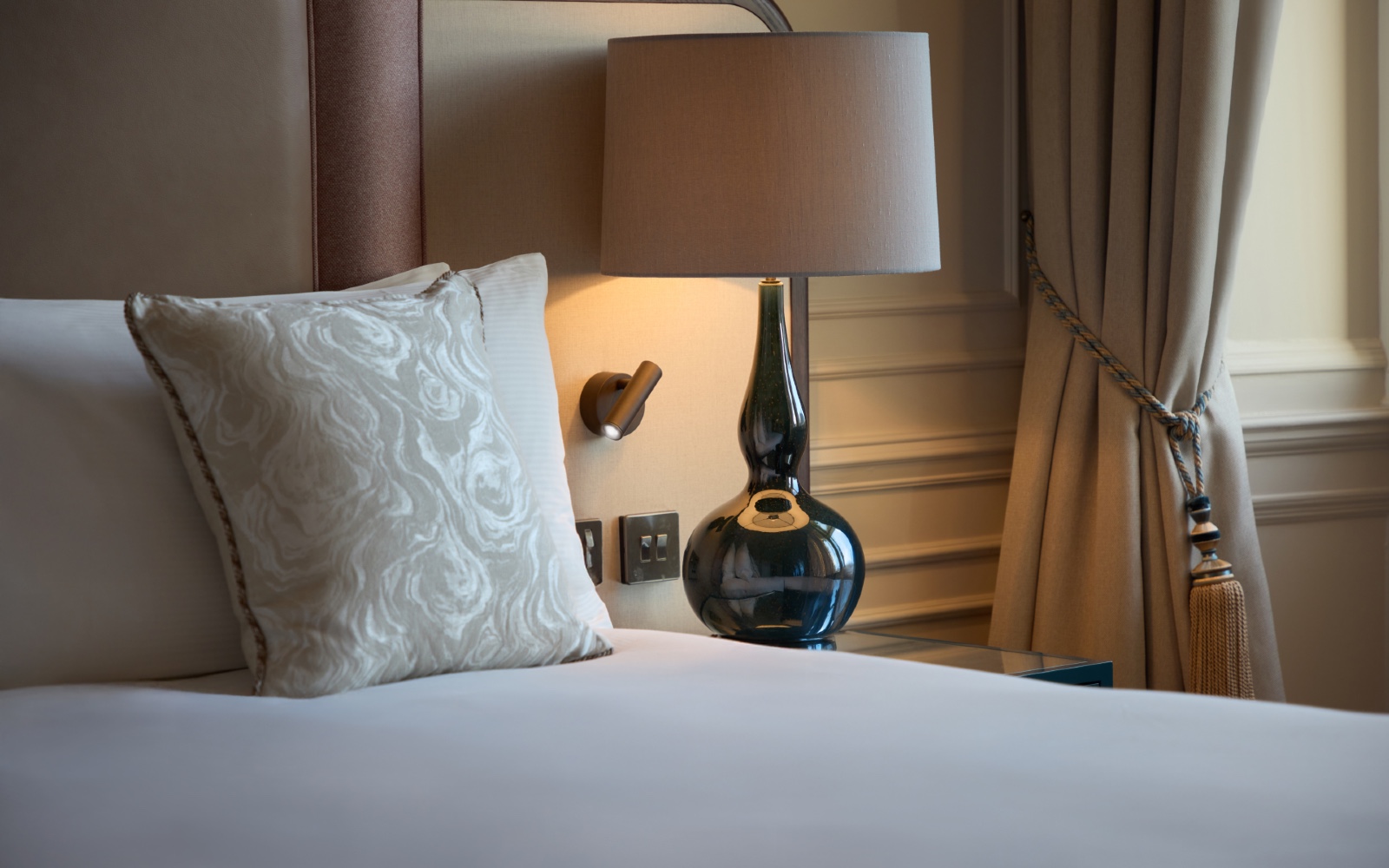
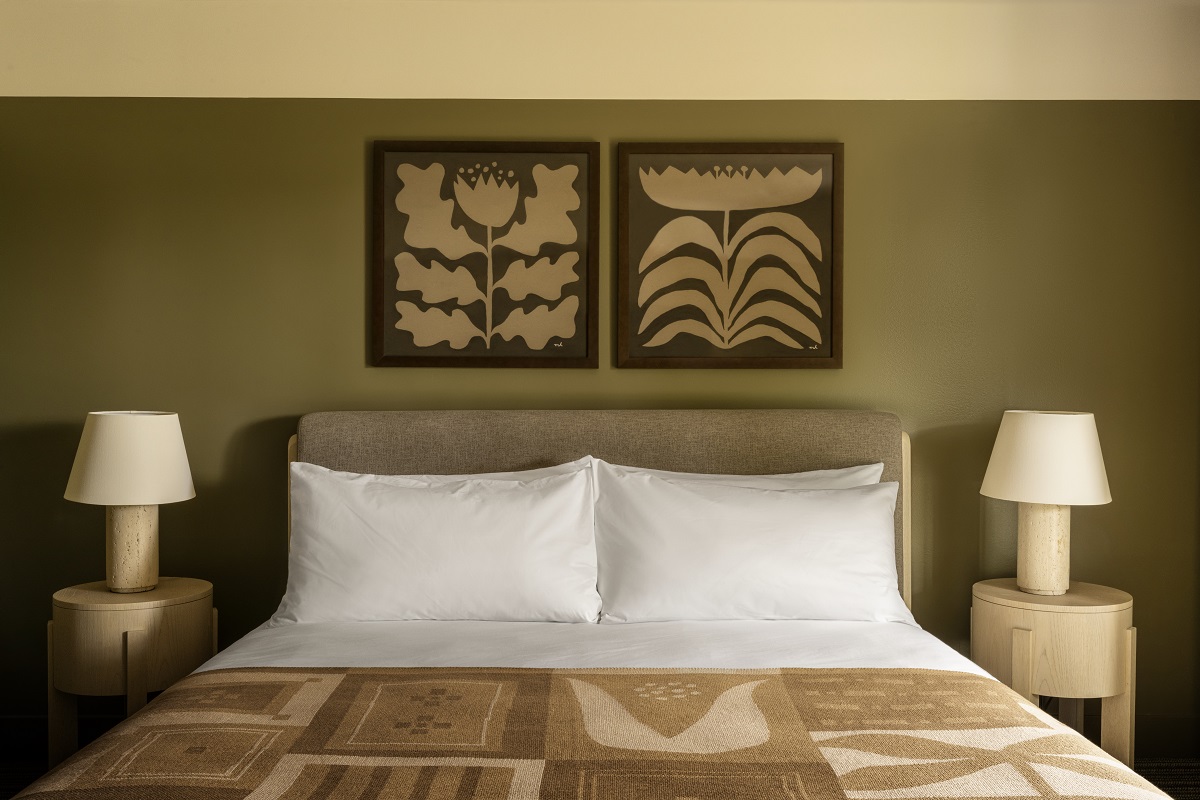
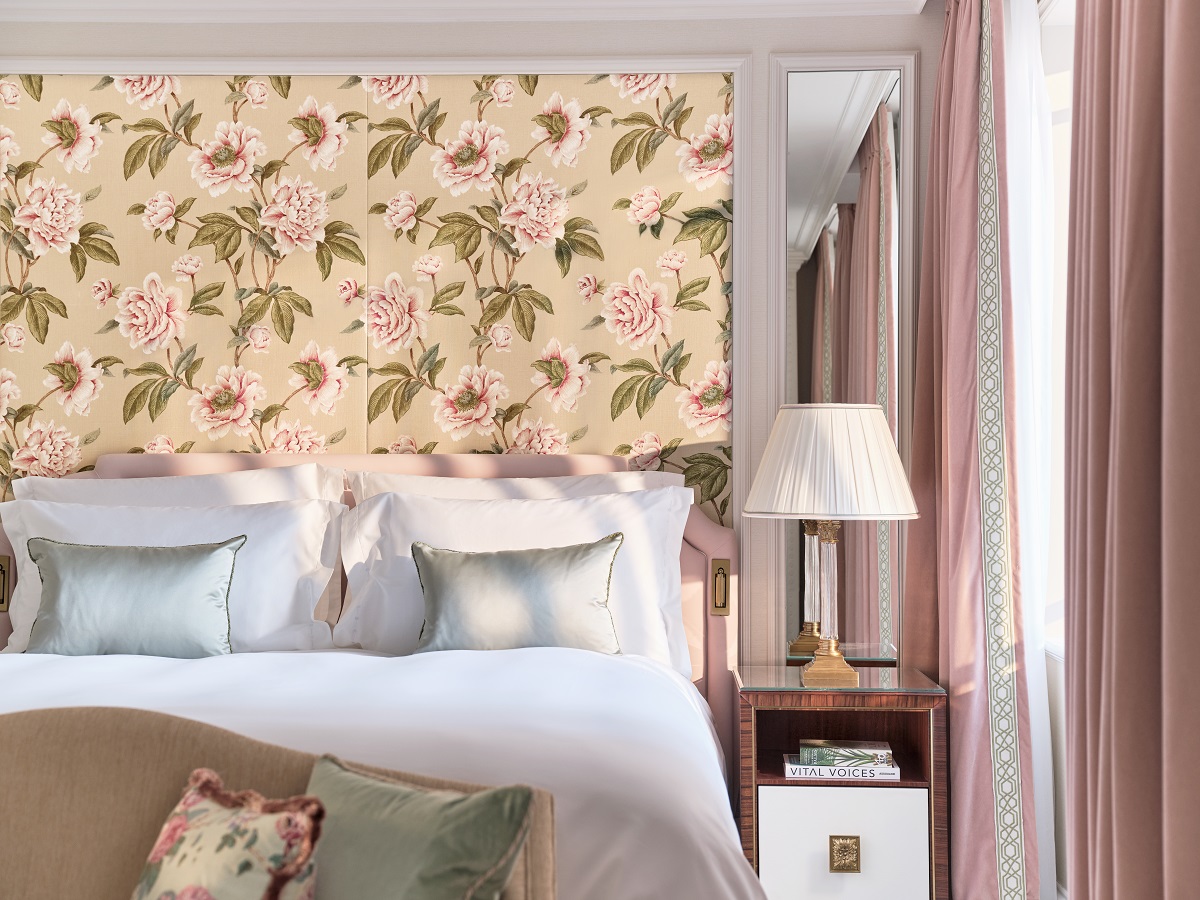
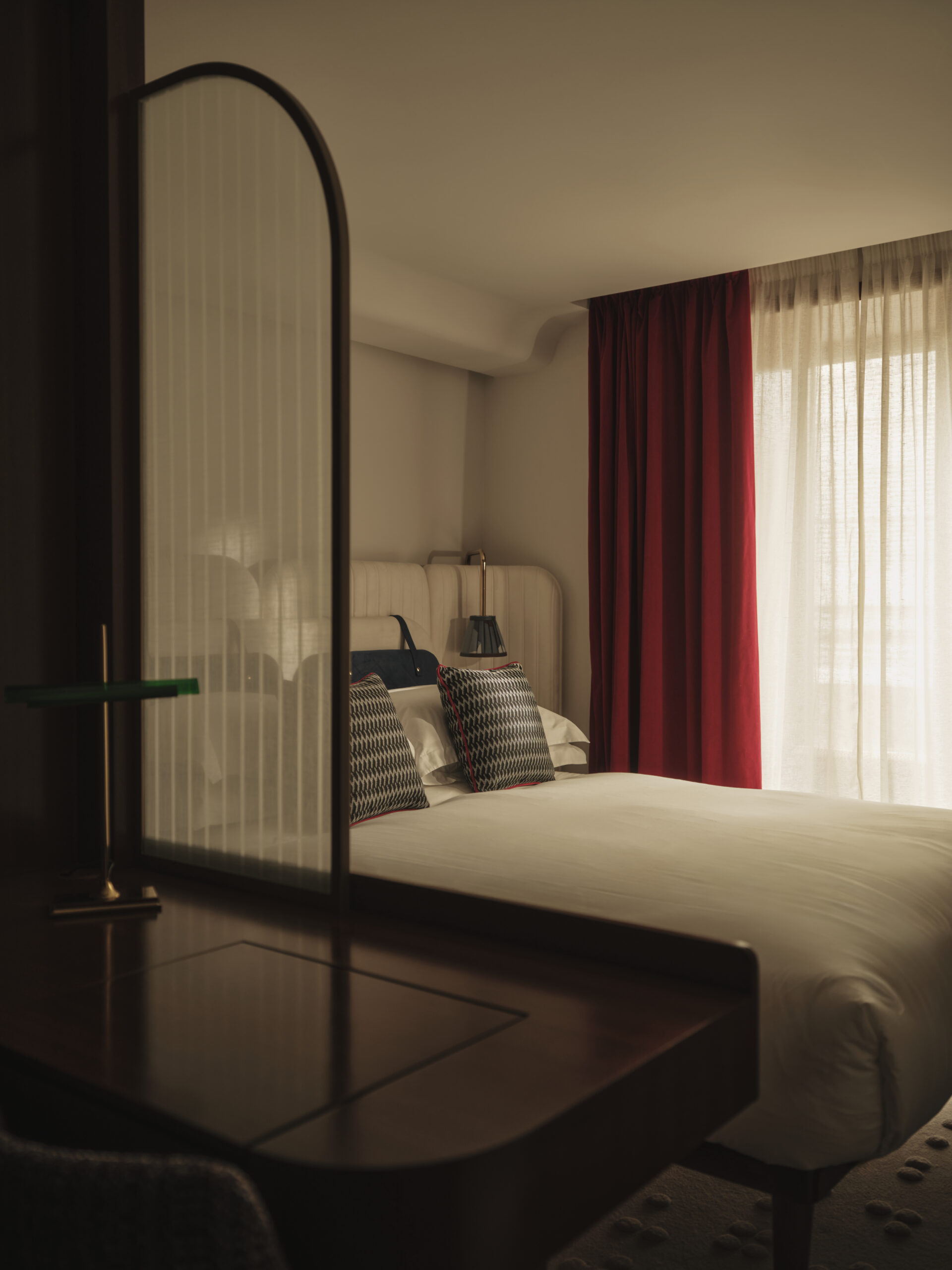
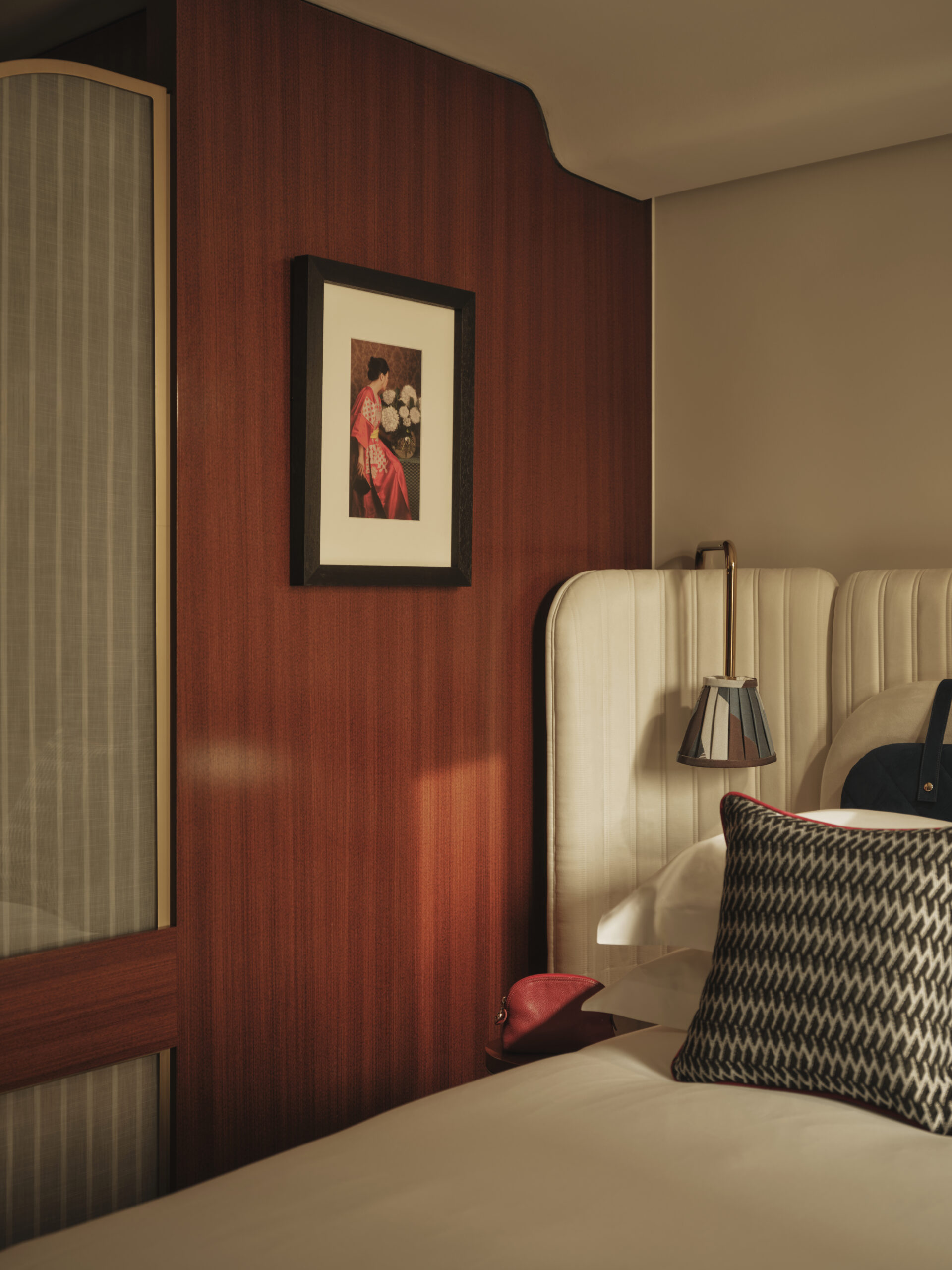
Portobello_Lodgings_bed detail

Image credit: Permit Room

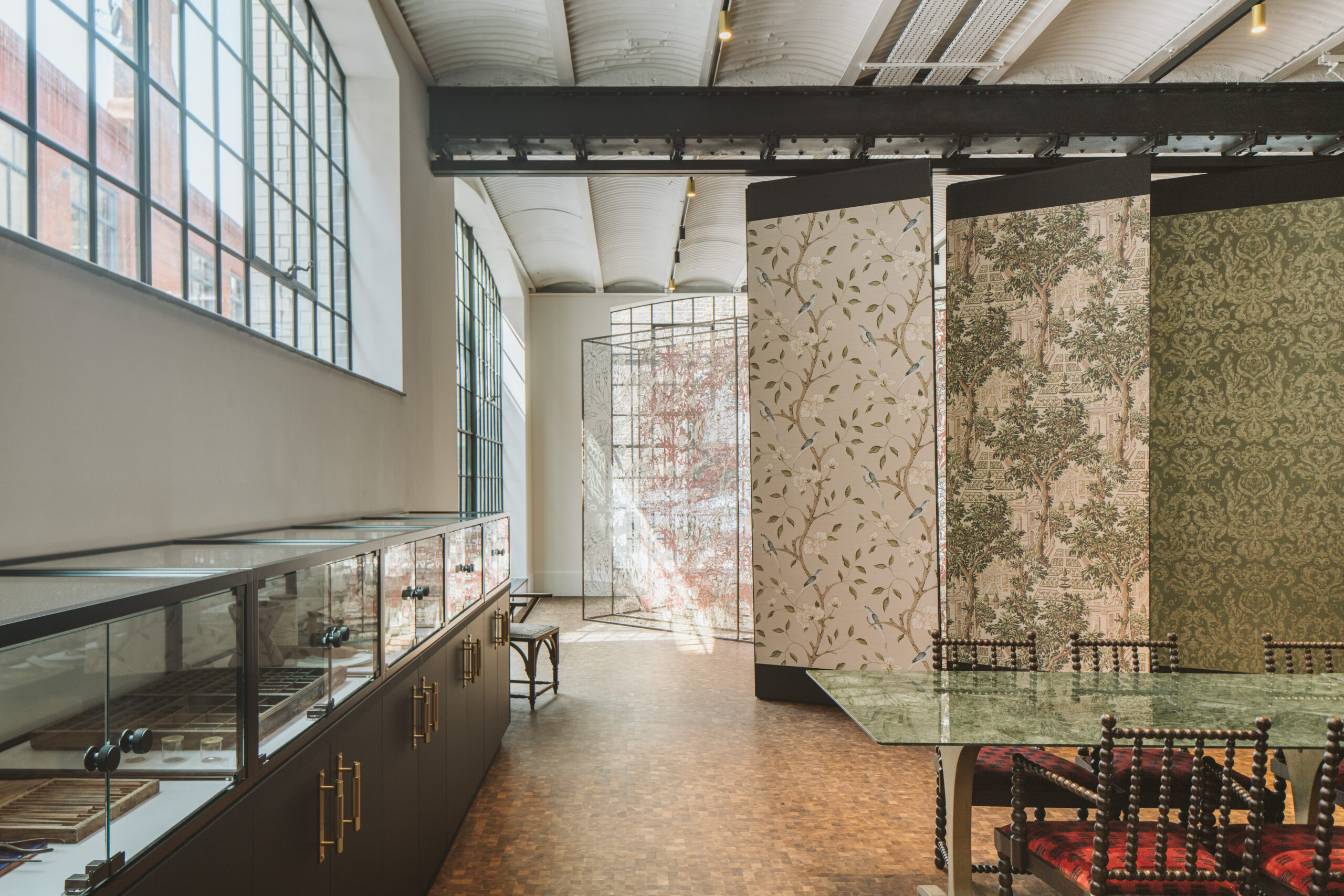
To achieve this ambience, as with all Macaulay Sinclair projects, every decision was meticulous, and each addition was considered and intentional. We wanted an experience that appeals not just to the eye but to the senses, with careful consideration given even to textures and smells. The distinctive Bombay style relies on achieving something subtly behind Western design trends – a signature element that the team has consistently applied across Dishoom, Permit Room, and now the lodgings. Key pieces of furniture such as the dining table, sofas, beds, and wardrobes all embody this aesthetic. This level of detail was made possible through strong relationships forged with local suppliers and collectors, enabling an indulgent and considered procurement process where every element was intentionally selected.

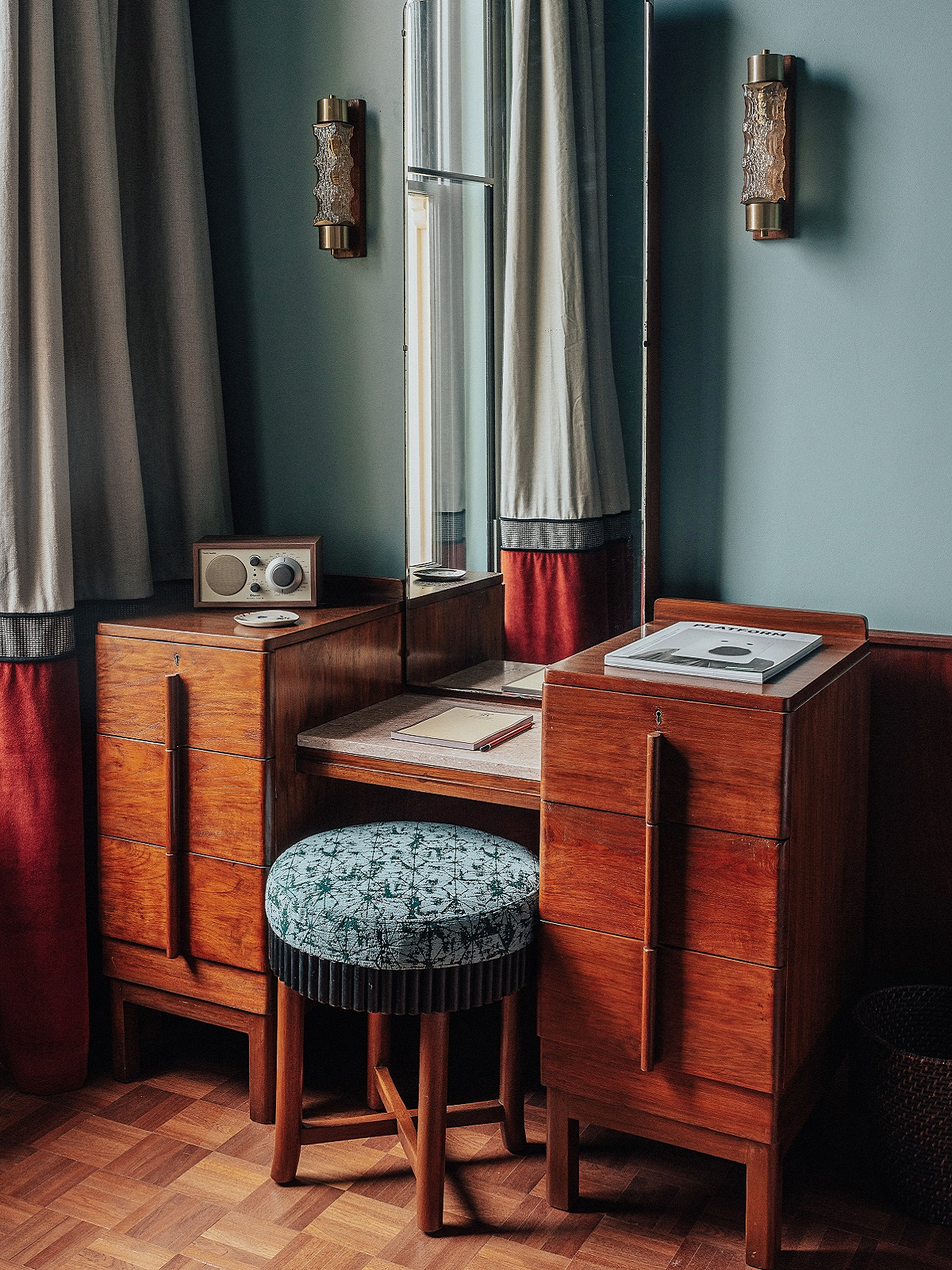
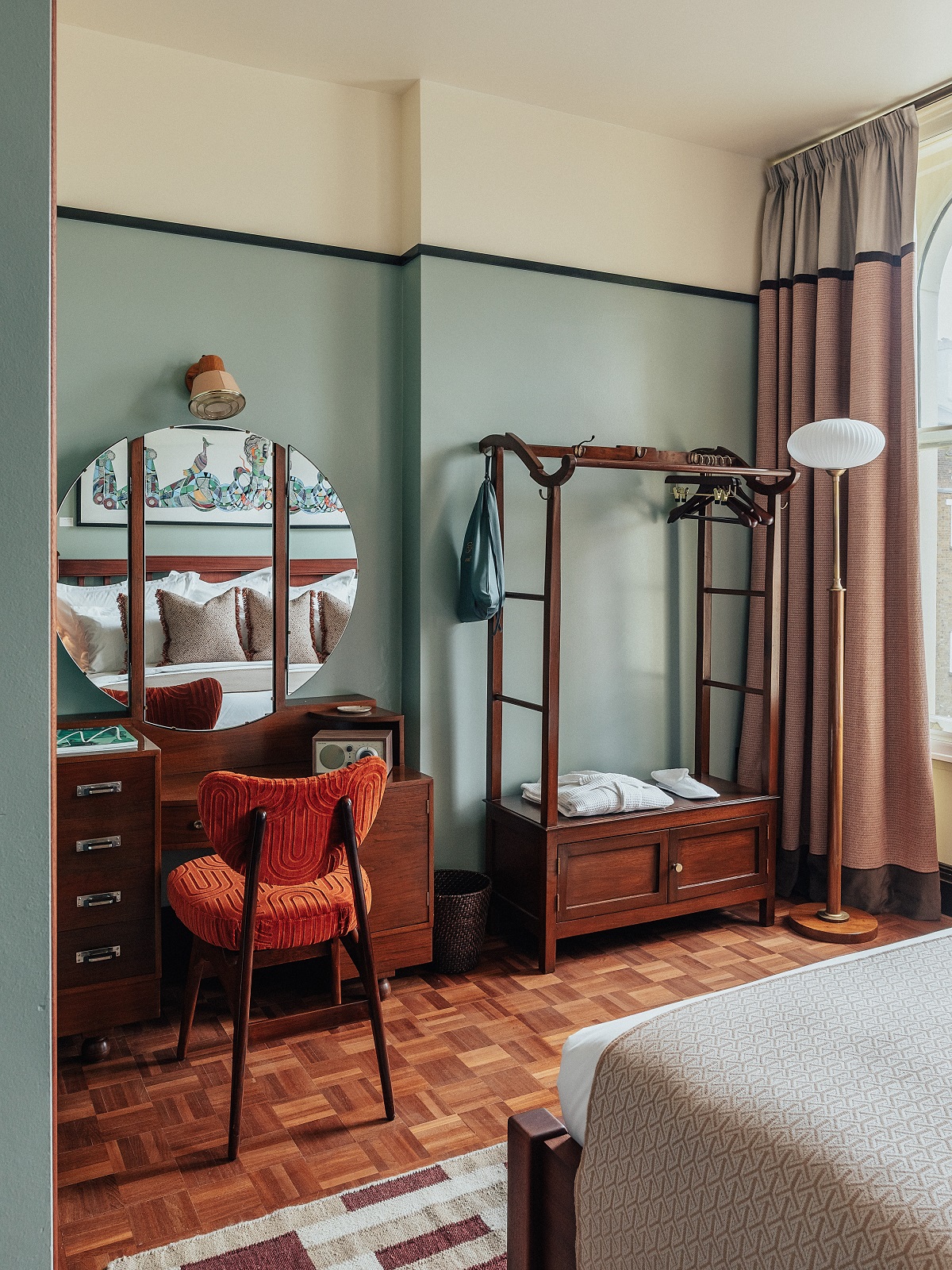
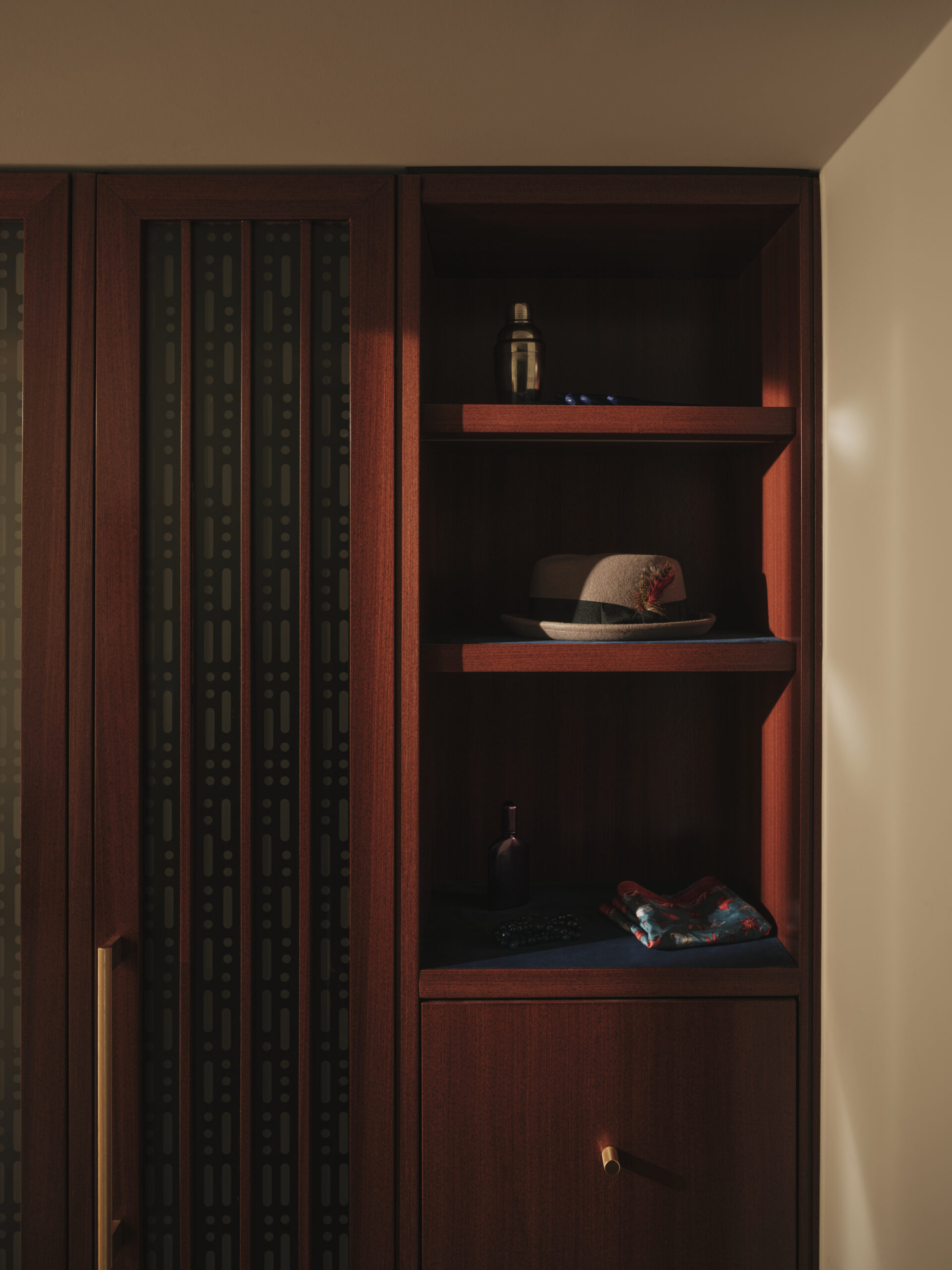
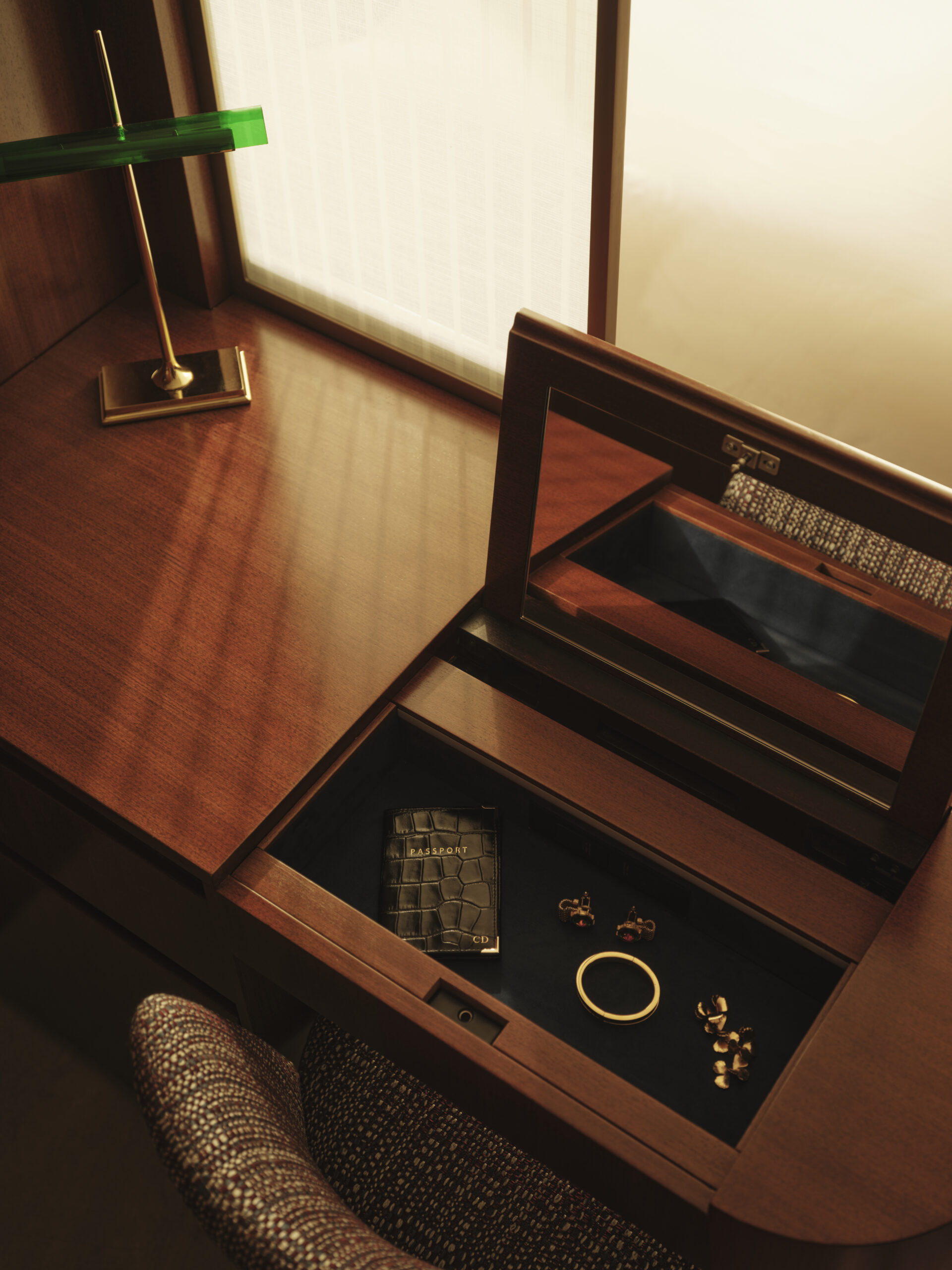
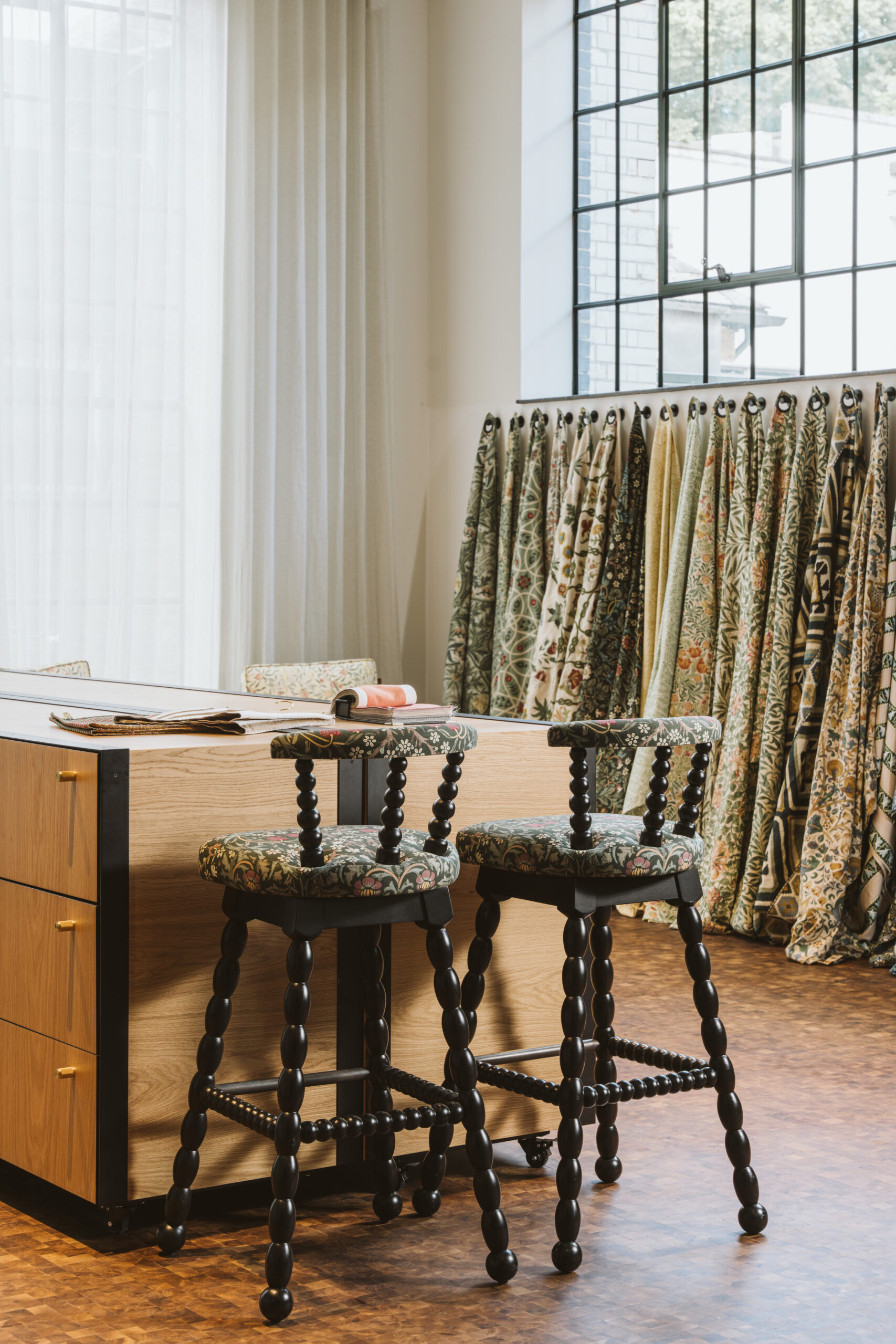
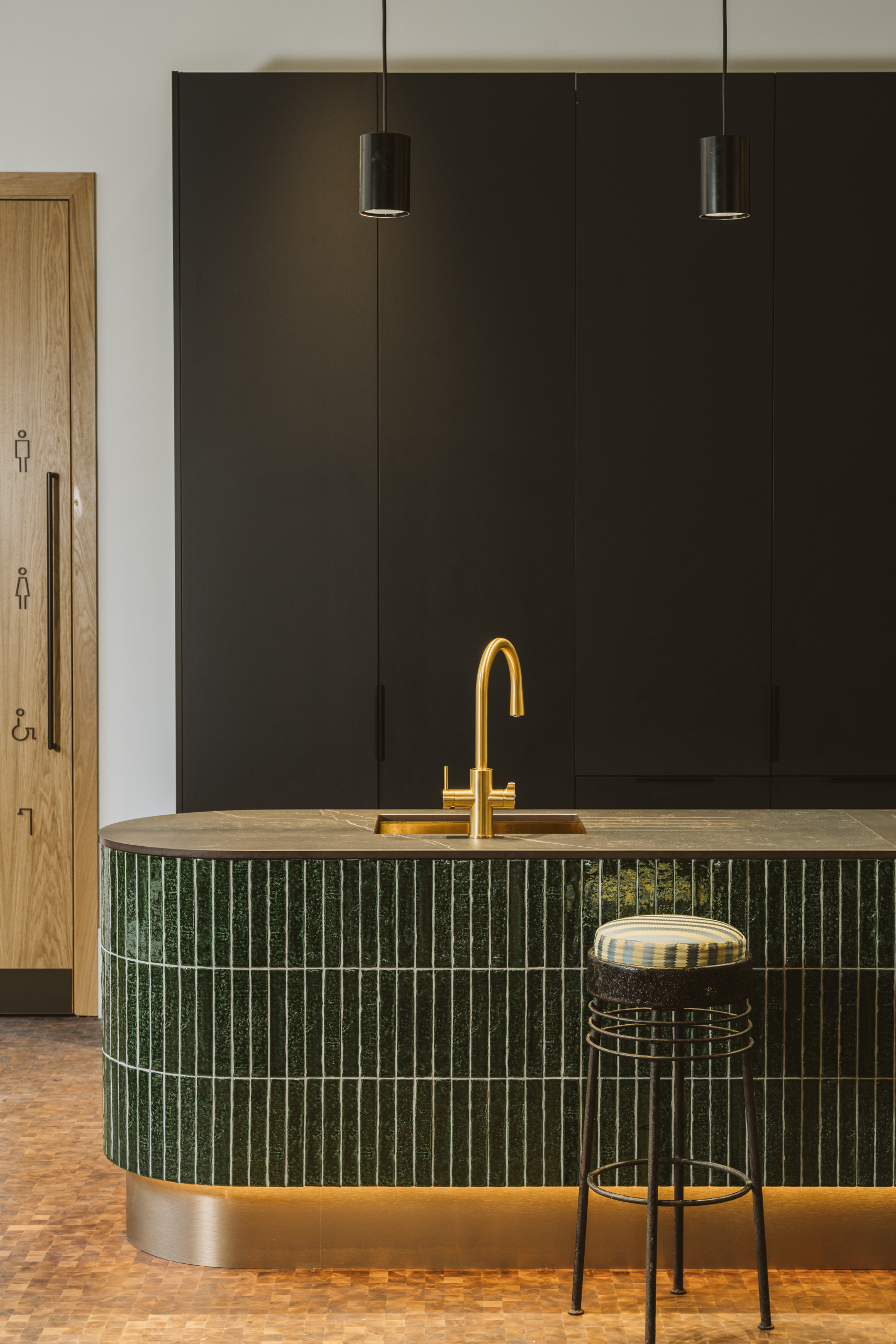
Each piece tells a story just like this, from a vintage cocktail cabinet to a full-length dressing table and rattan armchairs, hand-selected from Mumbai’s bustling markets. Antique lighting is then later rewired, and furniture pieces are painstakingly restored using traditional techniques like hand French polishing, then reupholstered with high-quality fabrics, with colours and tones carefully chosen to align with the overall narrative. These unique furnishings bring a sense of craft and personality that mass-produced pieces simply cannot replicate.

To integrate the Permit Room venue downstairs and its deep-rooted love of toe-tapping music, a vintage turntable and a carefully curated vinyl collection were included to invite guests to unwind during their stay.

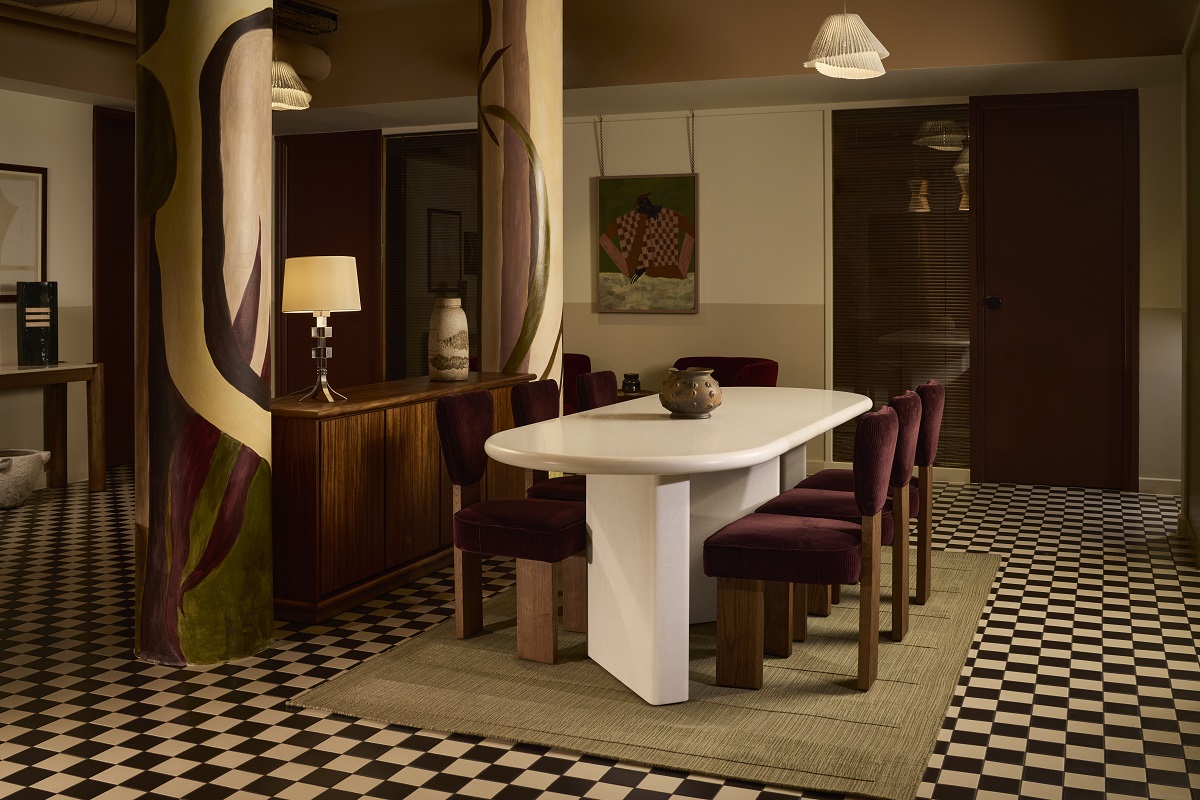
Set on the corner of Notting Hill’s famous Portobello Road, the former Colville Hotel, a Victorian boozer was steeped in rich London history. To pivot this into the mid-century Bombay aesthetic was not just about the layout or items, but about replaying parts of this history and elements embedded deep in this culture.

Drawing heavily from Mumbai’s heritage, the Kekee Manzil – residence of one of India’s most notable, artistic families – played a starring role. The century-old home to art connoisseur Kekoo Gandhy and his wife Khorshed is a stunning, sea-facing, stone building that is known for being a defining moment in India’s modern art movement, serving as a meeting place for artists and a hub for the country’s first contemporary art gallery.

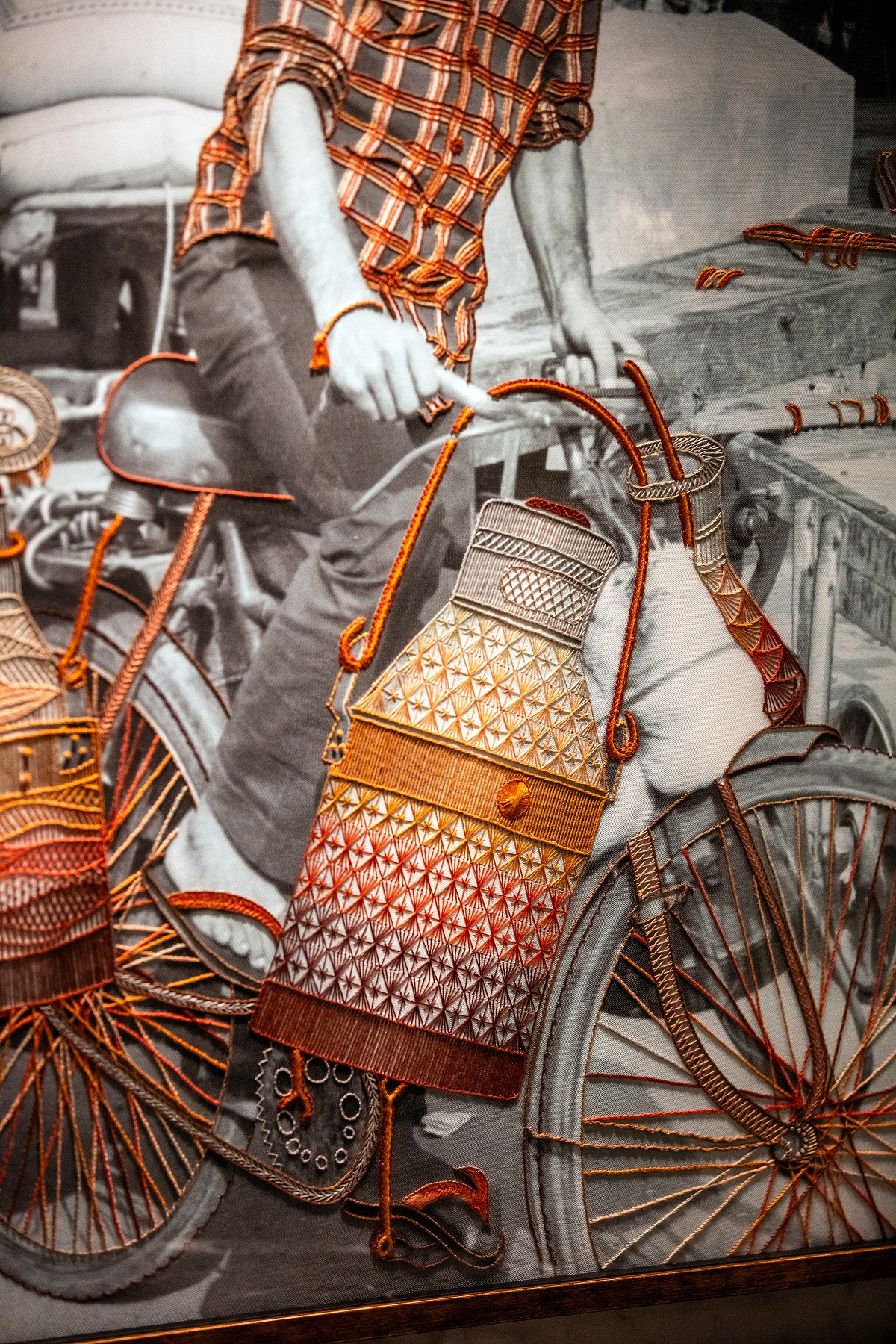
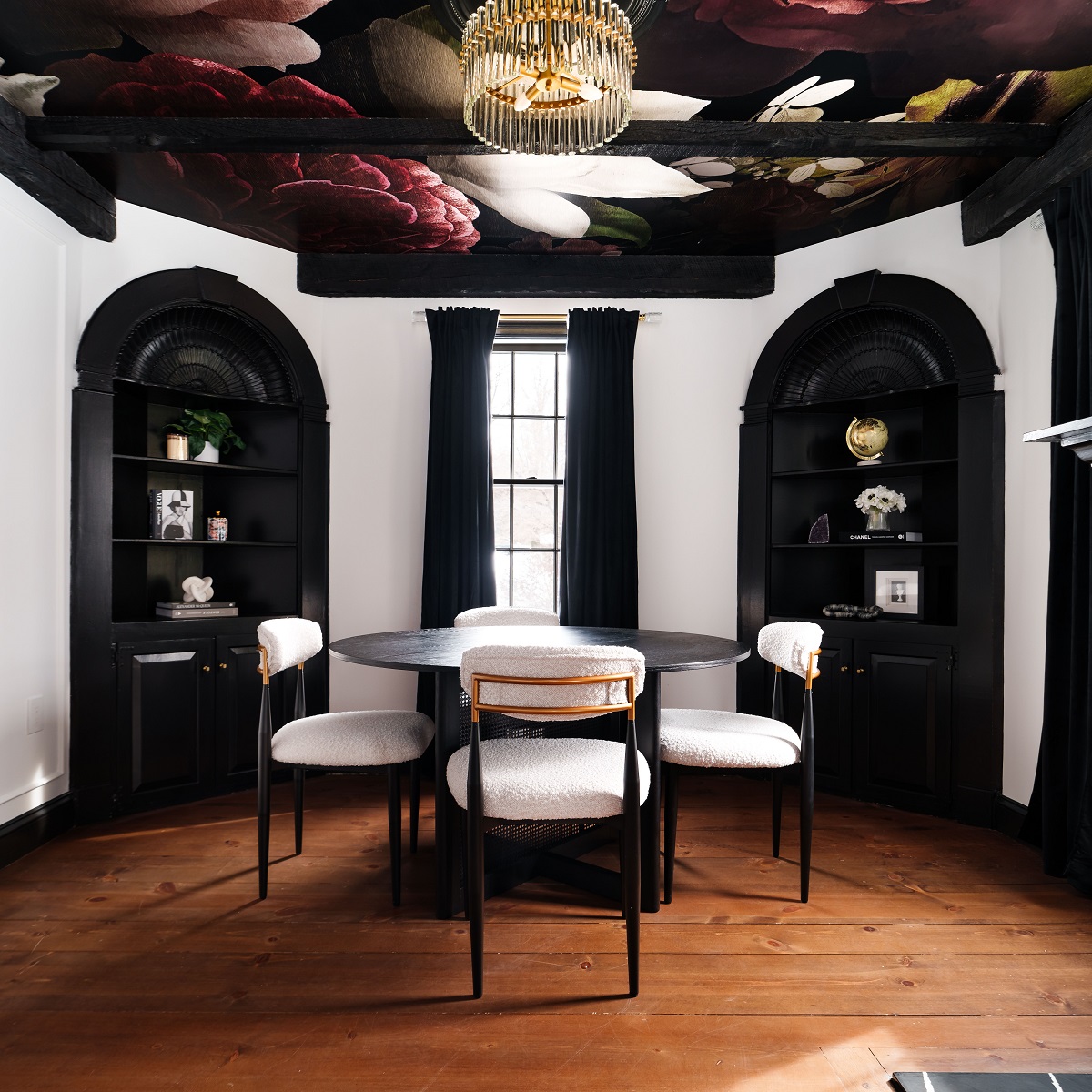
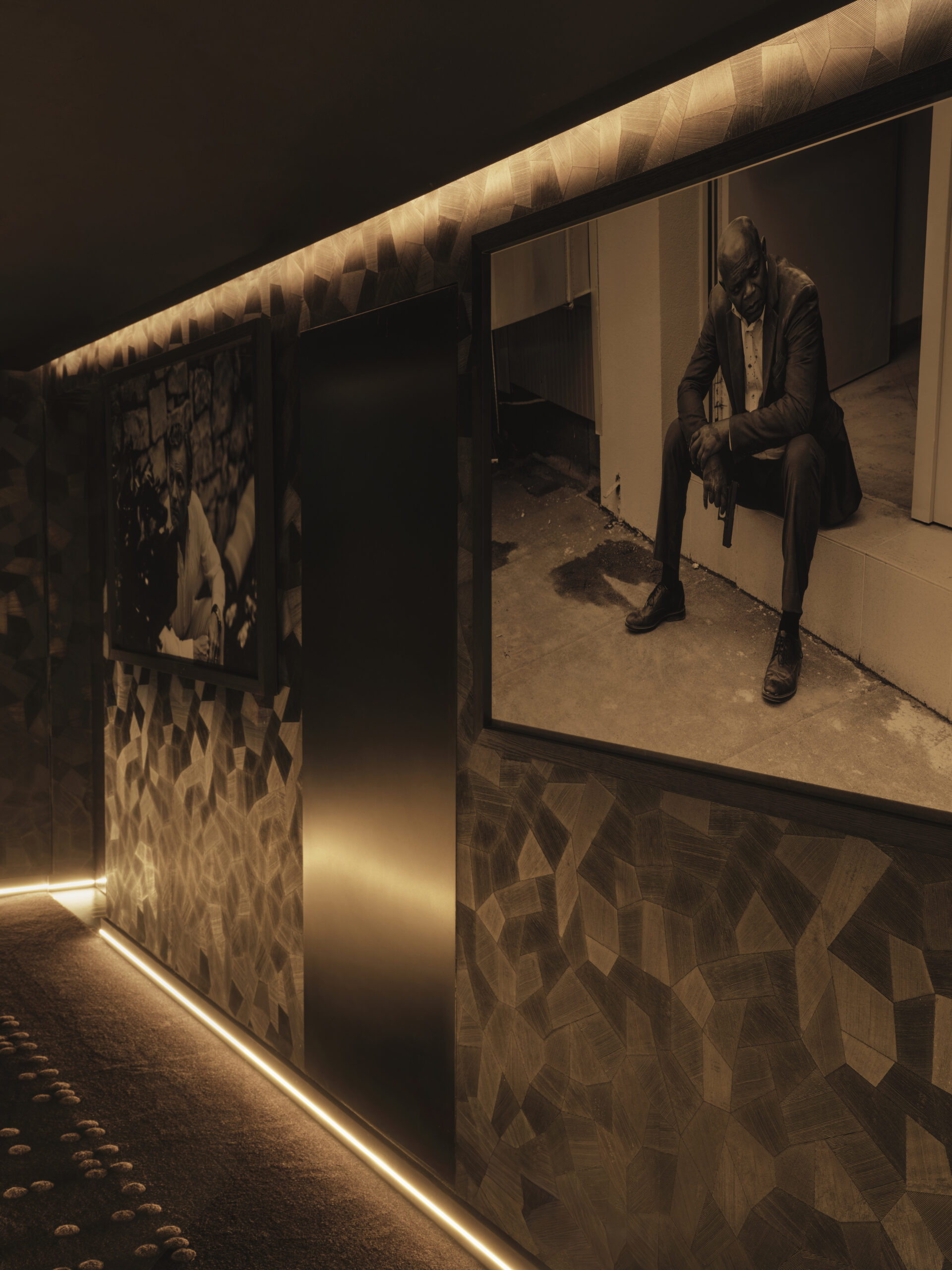
This foundation allowed the lodgings to embrace a braver, bolder, and more colourful aesthetic than perhaps would be seen within the main Dishoom brand. The art-centric approach is cemented by a curation of over 30 original artworks by South Asian artists, directed by Rajiv Menon, with careful attention to layering and positioning. Further design cues for character came from the Sea Green Hotel and Bentleys Hotel – classic Mumbai designs. By incorporating these deep cultural and artistic references, the space achieves a sense of place that is both historically rich and profoundly authentic.
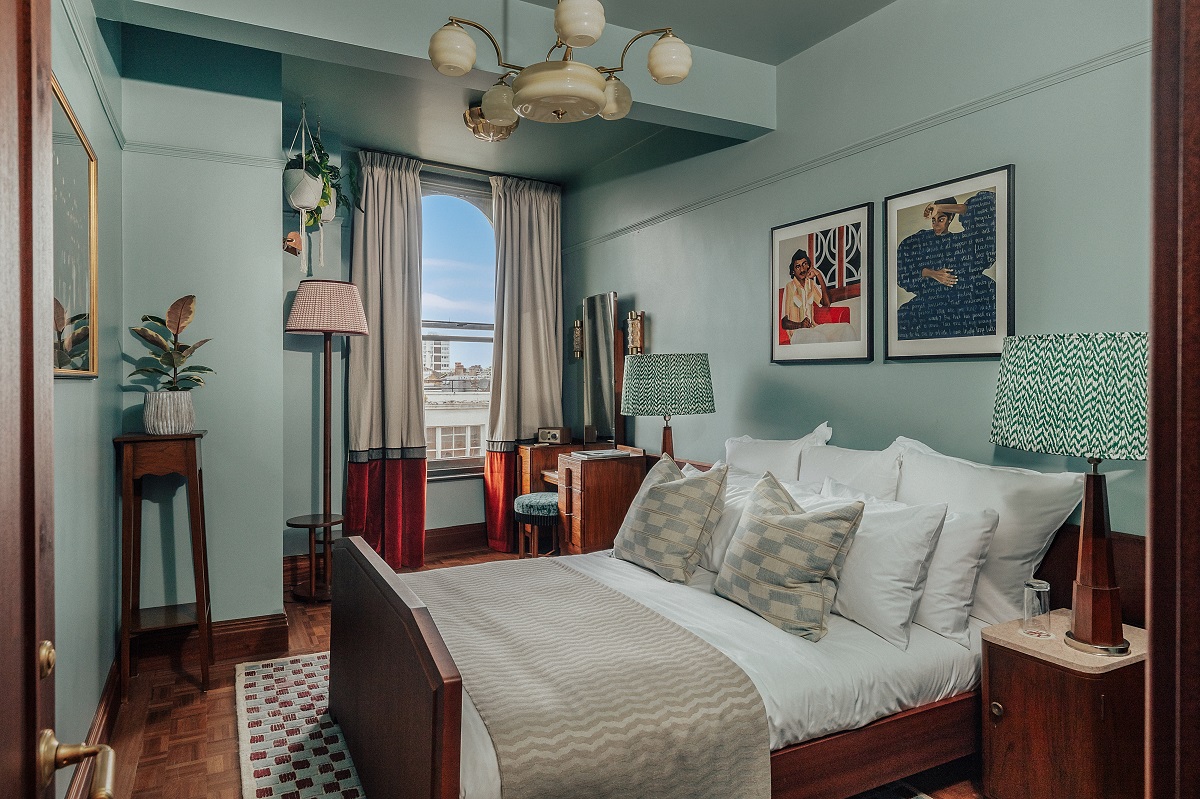
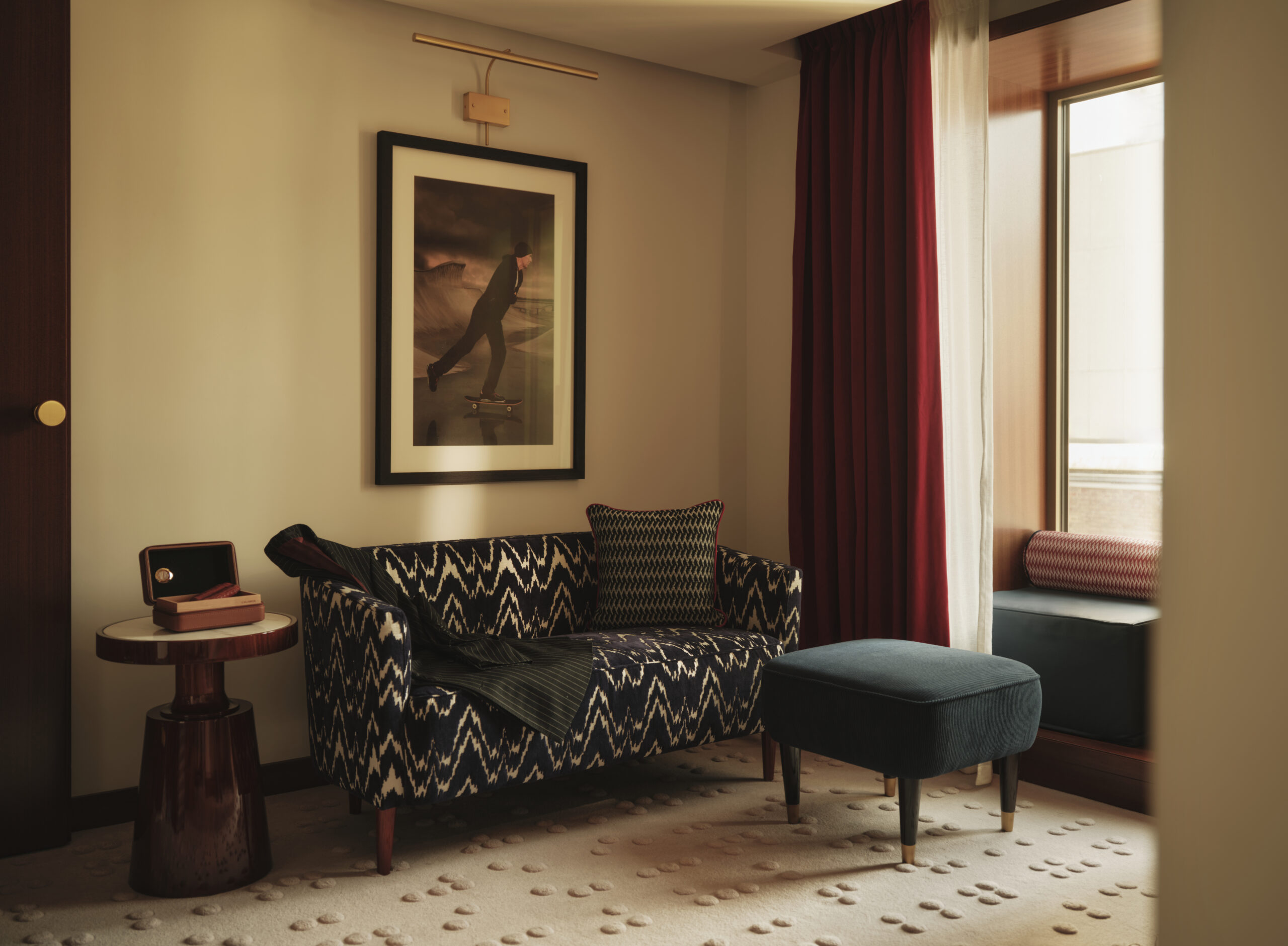
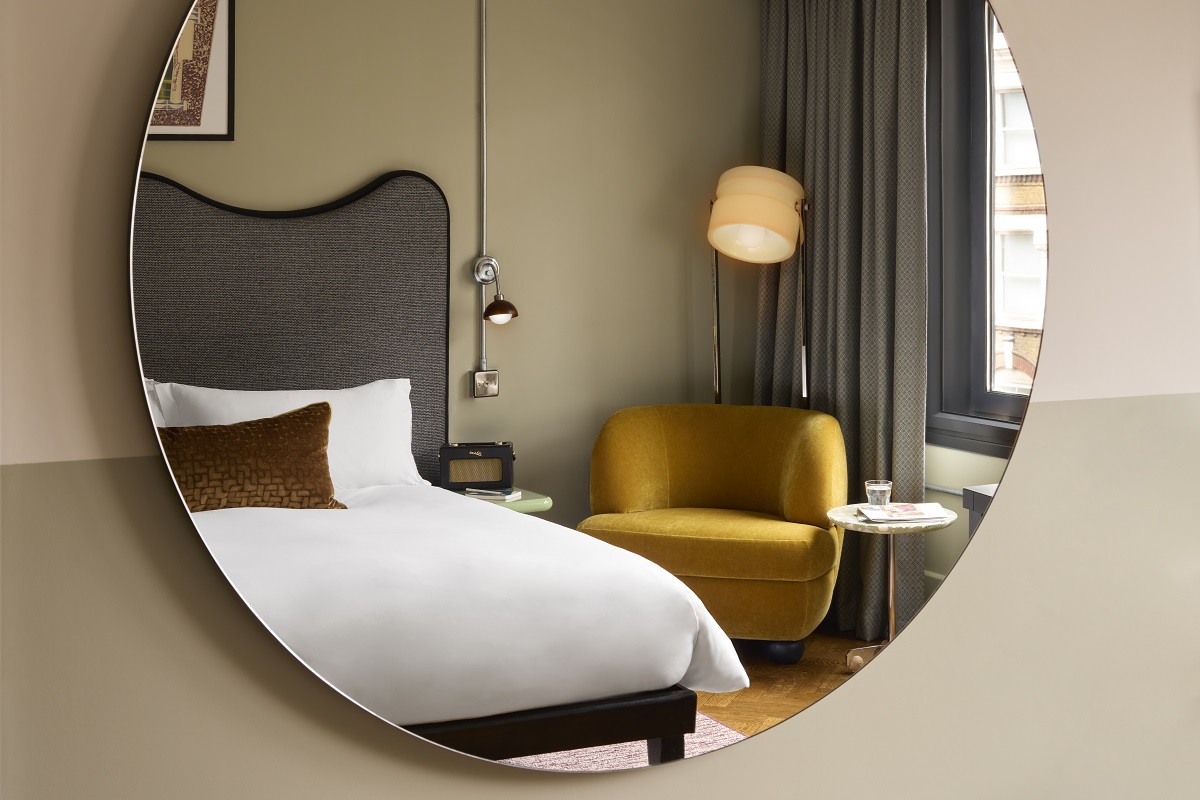
vintage aesthetic in Portobello_Lodgings_06

Image credit: Permit Room

The project required carefully balancing luxury guest needs with authentic design concepts. A key challenge was adapting Indian design elements for a UK setting; for instance, while traditional Bombay homes often lack carpets, this wouldn’t meet local comfort expectations. The solution was the design decision to use parquet flooring for a warmer aesthetic. Similarly, authentic Bombay blinds were used for the visual aesthetic, but their functional shortcomings led to the addition of secondary glazing and blackout blinds to ensure complete guest comfort. The space was meticulously tested – including feedback from client team trips – to ensure every detail, down to the placement of sockets by the bed, was functional and contributed to the overall seamless experience. These final touches ensured that every aspect of the guest’s interaction was worked through to achieve the envisioned outcome.

The Permit Room lodgings are a testament to design’s power in achieving a unique balance between the privacy of a rental hideout and the amenities and hospitality of a full-service hotel. After the restaurant closes (from midnight to 6 am), guests are essentially alone in the building, reinforcing this sense of exclusivity. This focused attention on individual hosting and an immersive experience arguably redefines guest expectations, especially for those seeking a special, boutique stay in Portobello.

This project isn’t just an extension of a brand; it’s a testament to the power of design to transport guests, tell a story, and create a truly unforgettable experience that feels less like a hotel stay and more like coming home.

Main image credit: Permit Room
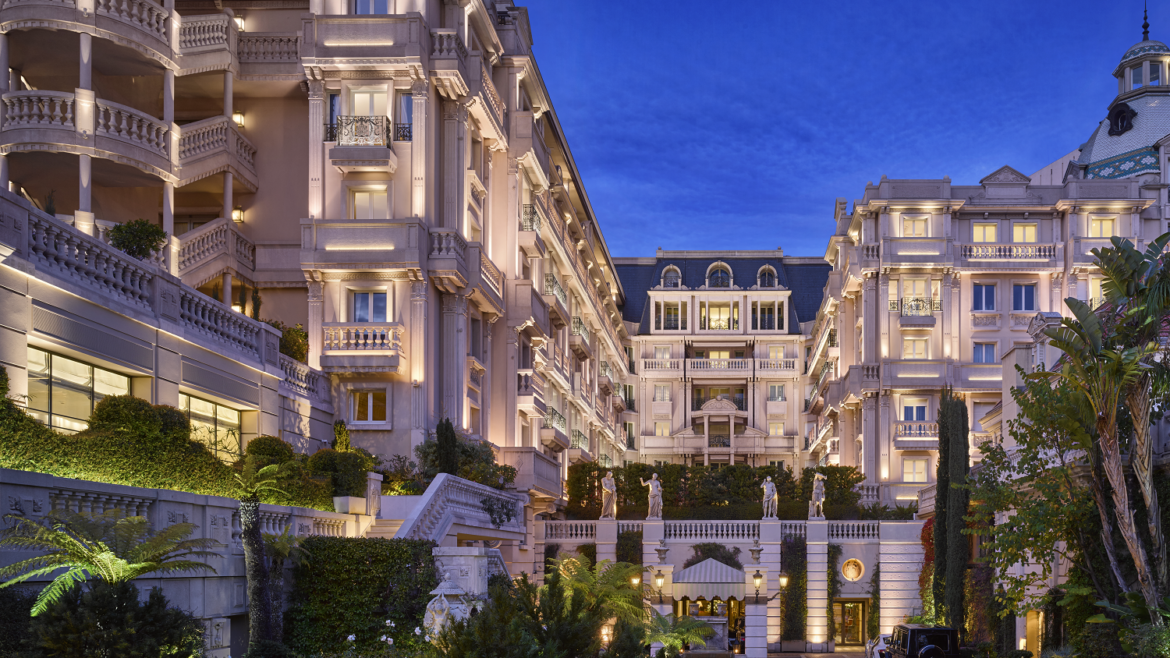
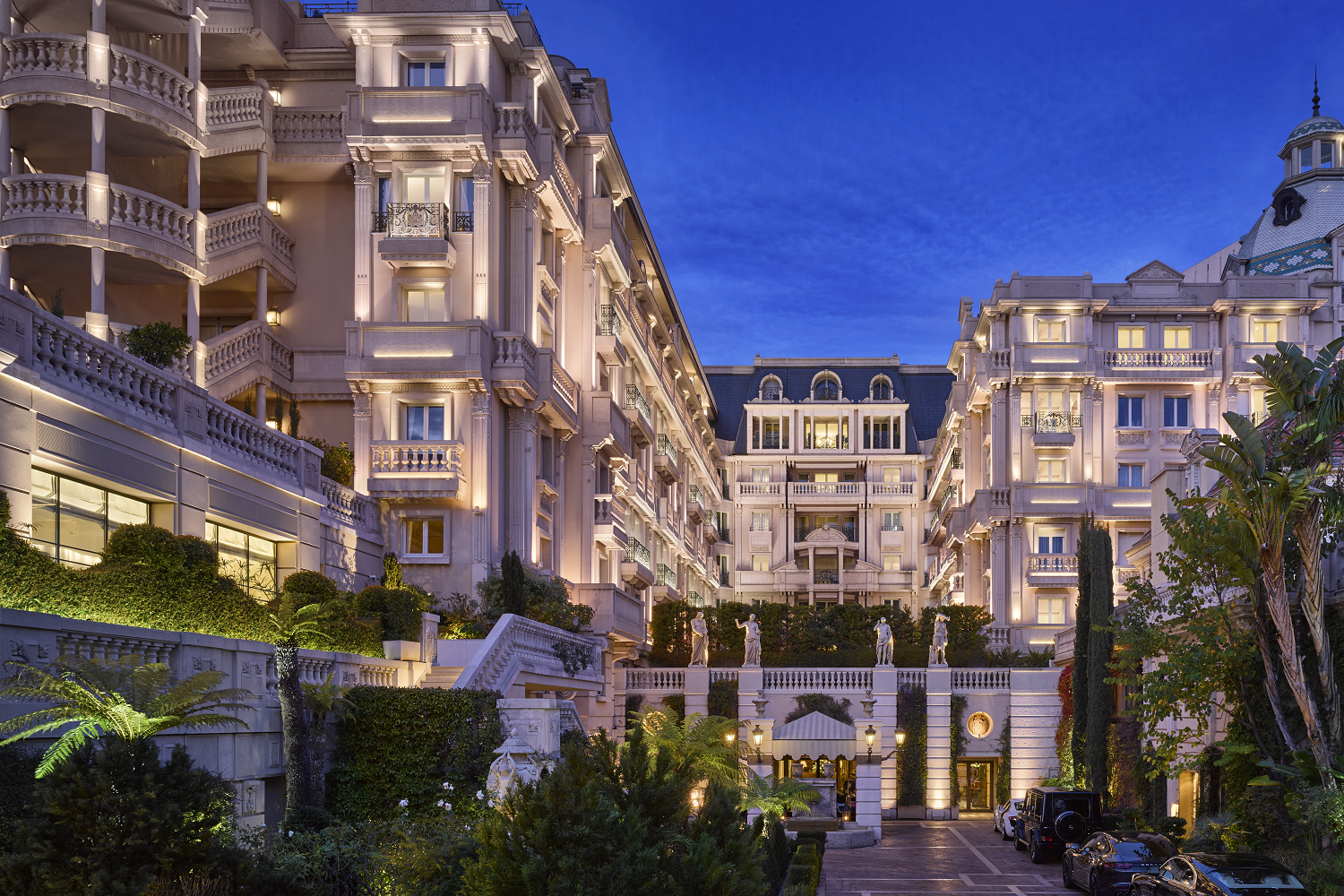
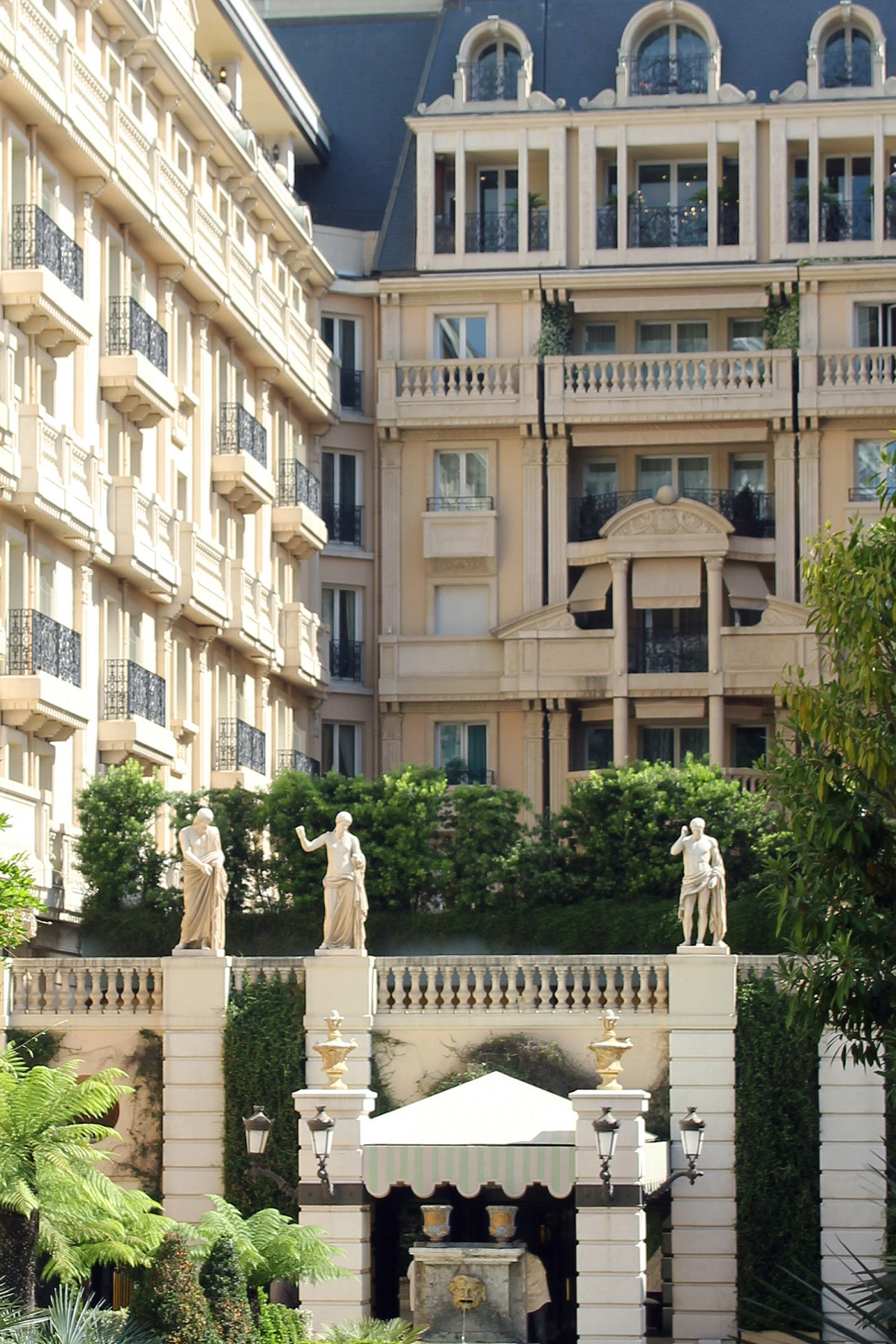
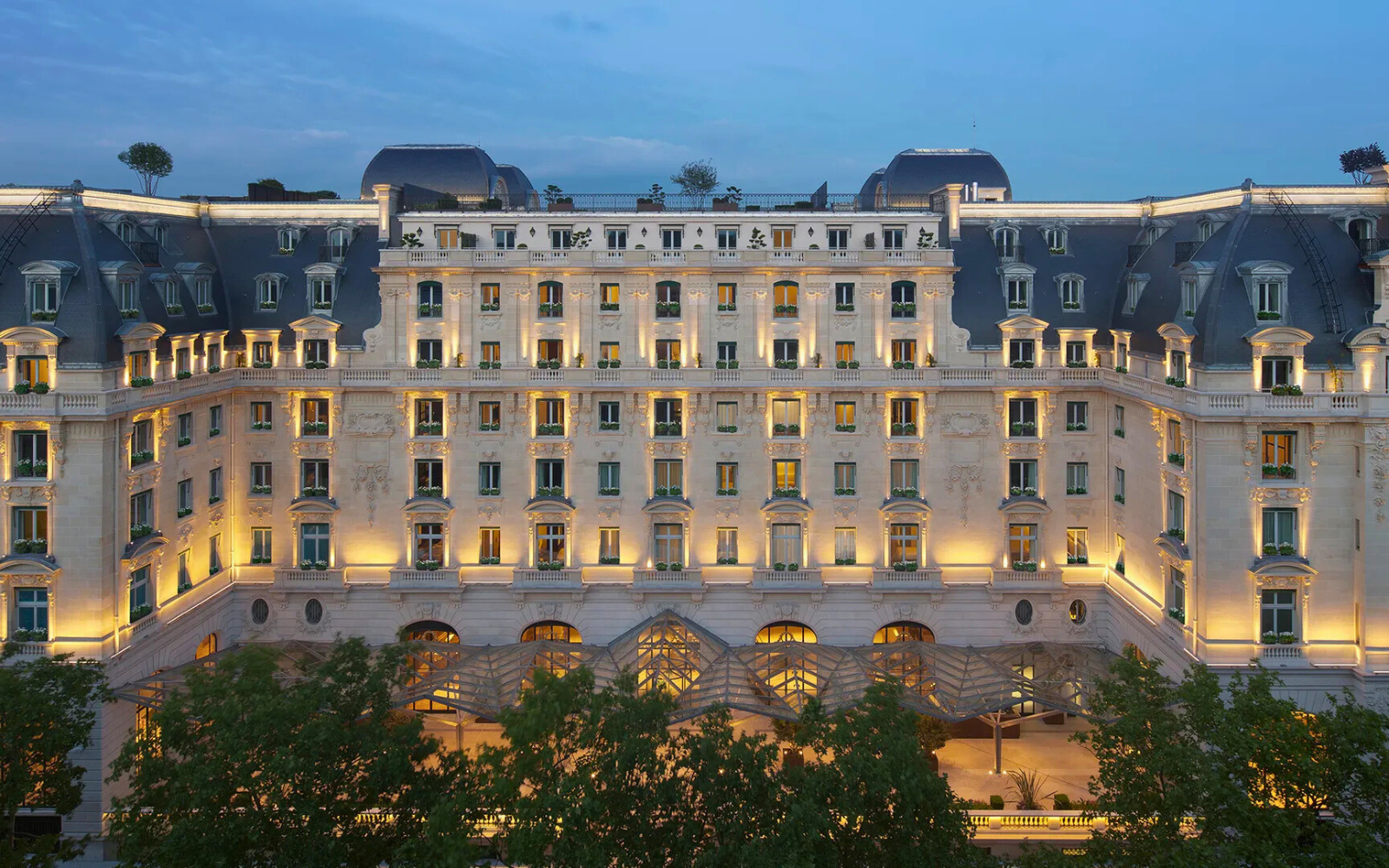
Hotel Metropole Monte-Carlo - evening view of hotel facade

Hotel Metropole Monte-Carlo appoints new General Manager

1024 683 Pauline Brettell
Hotel Metropole Monte-Carlo appoints new General Manager

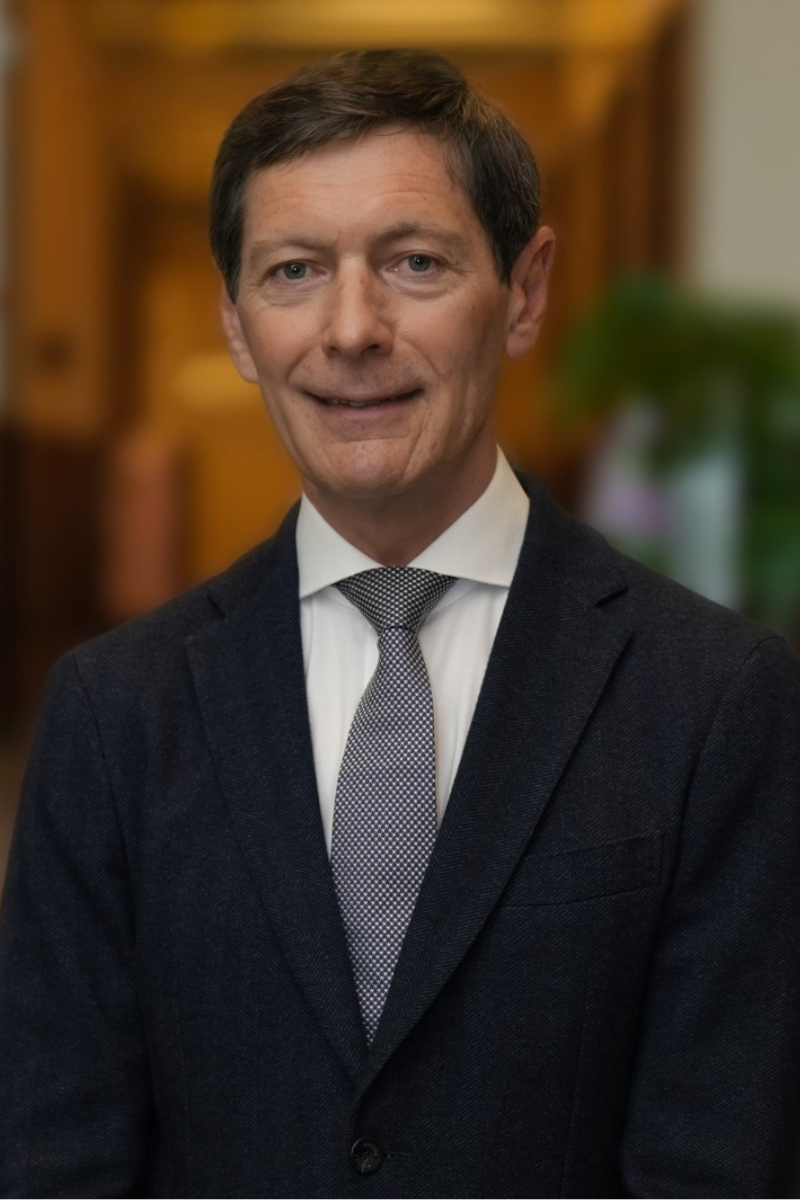
Hotel Metropole Monte-Carlo has announced the appointment of Klaus Kabelitz as General Manager, succeeding Serge Ethuin, who has led the hotel for more than ten years and played a pivotal role in its development…

Hotel Metropole Monte-Carlo - evening view of hotel facade

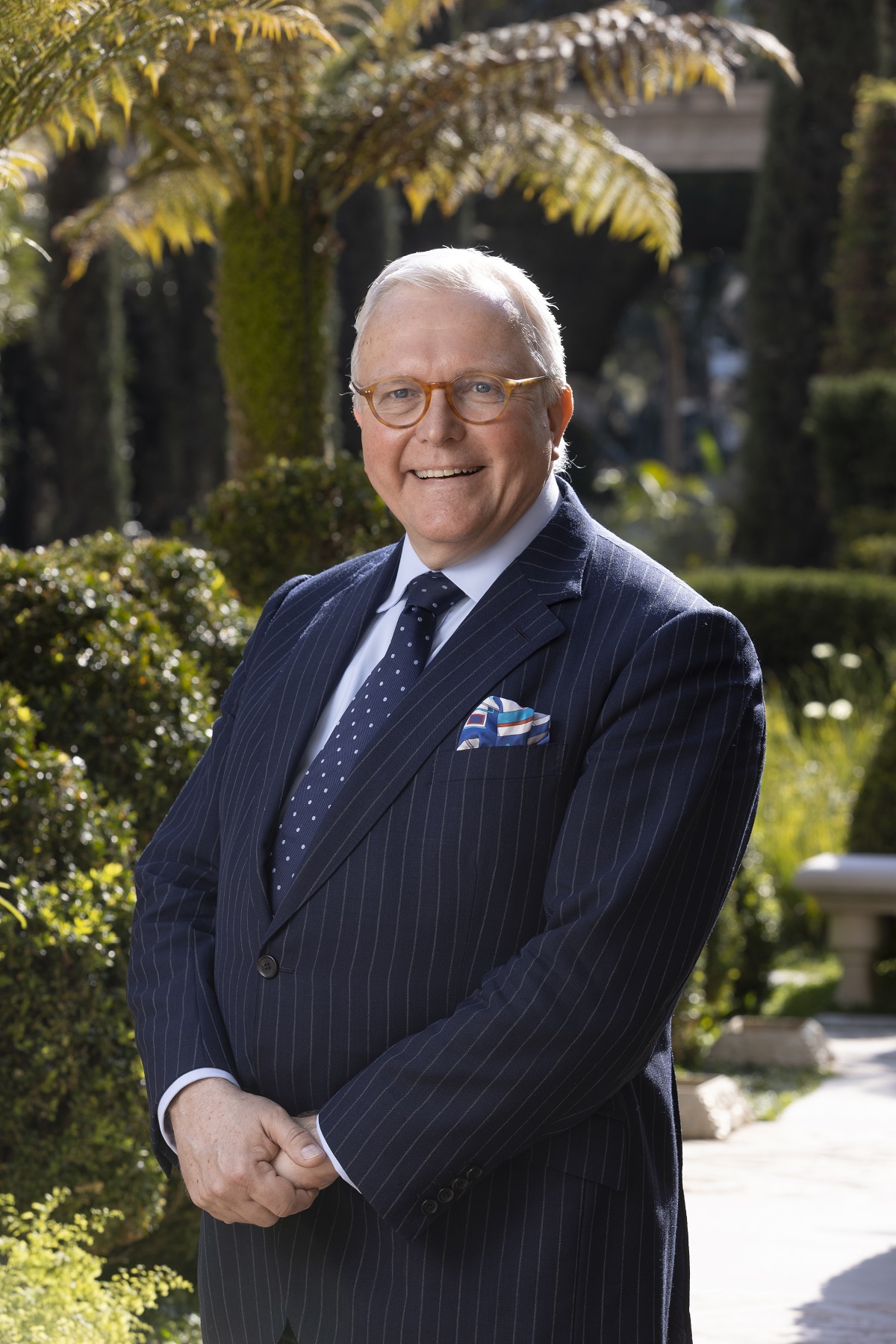
With more than 45 years’ experience in luxury hospitality across Europe and the United States, Kabelitz brings extensive experience in hotel leadership to one of the Principality of Monaco’s most established addresses.

Kabelitz most recently served as General Manager of The Kensington in London, part of The Doyle Collection, a role he has held since September 2024. During this time, he led the repositioning of the hotel as a luxury property and actively contributed to its strategic development. Prior to this, he was Hotel Director aboard Seabourn Quest, overseeing all hotel operations and supporting the ship’s post-pandemic relaunch.

His previous experience also includes senior leadership roles as General Manager of The Biltmore Mayfair for LXR Hotels & Resorts and The Cadogan London for Belmond, where he oversaw the hotel’s opening and established its presence on the London hospitality scene. Earlier in his career, he held positions at El Encanto in Santa Barbara and Le Richemond in Geneva, as well as nearly fourteen years with The Maybourne Hotel Group, including serving as General Manager of The Berkeley.

Hailing from Germany, he began his career at Claridge’s as Rooms Division Manager and trained within international groups including Four Seasons Hotels & Resorts and Hilton International.

Commenting on his new role, Kabelitz said, “Joining Hotel Metropole Monte-Carlo is a true honour. The hotel embodies a unique art of living, where history meets contemporary elegance. Together with the teams, whose talent and commitment I greatly admire, I look forward to further enhancing the influence of this exceptional property and enriching the experience of every guest.”

His appointment follows a period of significant transformation at Hotel Metropole Monte-Carlo. Over the past year, the hotel has revealed 45 newly renovated rooms and suites designed by Jacques Garcia, offering a refreshed interpretation of its signature style, alongside the opening of the new Guerlain Spa at the end of last summer, introducing a full treatment menu and redesigned wellbeing spaces.

Main image credit: Hotel Metropole Monte-Carlo / W. Pryce

Lucknam-Park-Emblems-Collection - Accor

Accor collection brands – a pipeline reflecting the evolving trends in hospitality development

1024 640 Pauline Brettell
Accor collection brands – a pipeline reflecting the evolving trends in hospitality development

With more than 125 hotels in the pipeline, Accor’s collection brands are accelerating their global expansion, combining individuality with the power of scale…

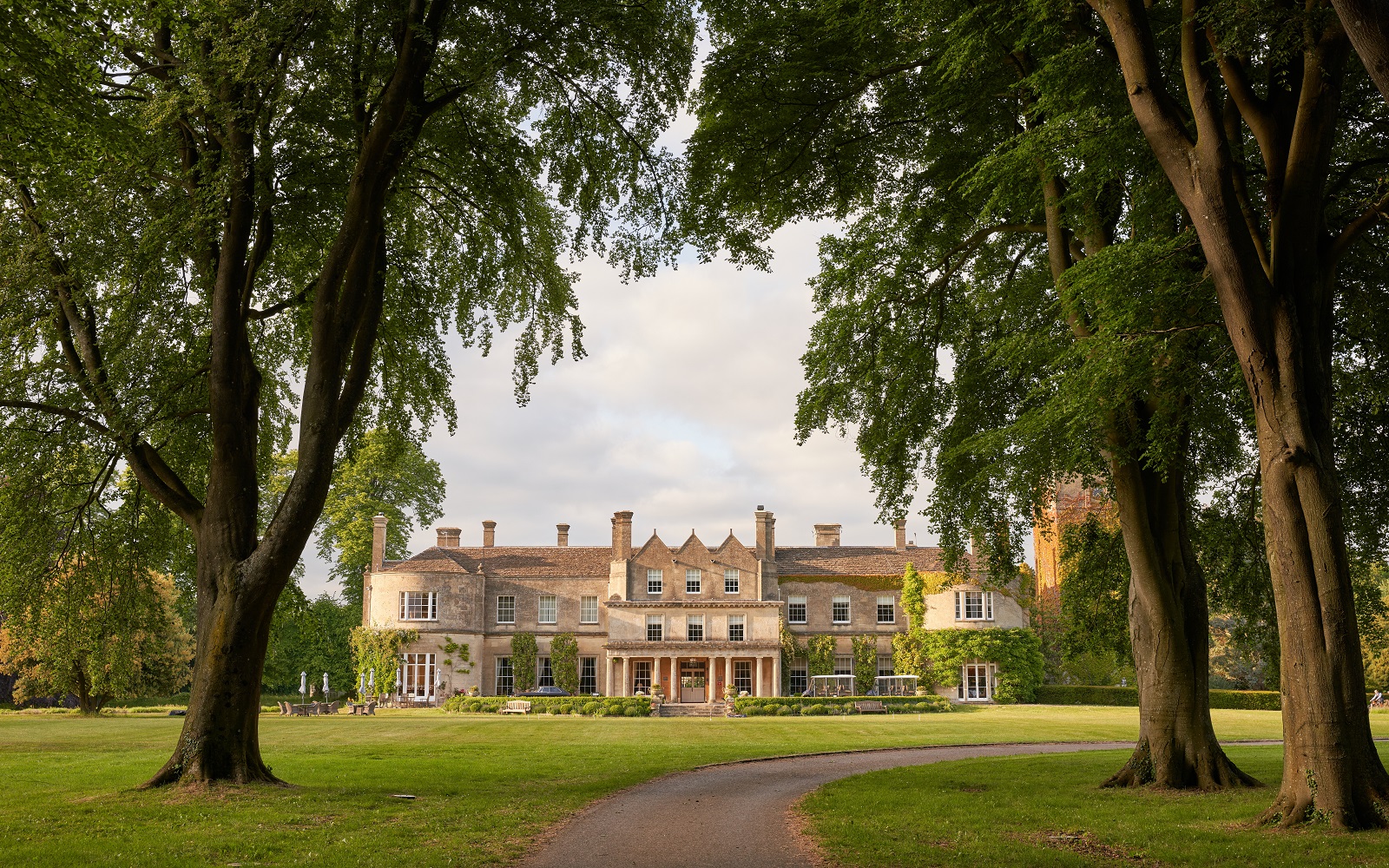
Lucknam-Park-Emblems-Collection - Accor

Accor currently operates over 180 hotels worldwide across Emblems Collection, MGallery Collection, and Handwritten Collection, as well as Morgans Originals and Paris Society Hotel Collection, which are both part of Ennismore. With more than 45 hospitality brands, Accor has strategically curated the largest and most diverse brand portfolio in the hotel industry.

The surging momentum behind Accor’s collection brands is deeply intertwined with evolving trends in hospitality development. Increasingly, independent property owners are seeking the dual advantage of robust operational support and expanded customer reach beyond their immediate local or regional markets. However, for many of these hotels, this search is particularly nuanced, as they also possess a powerful and meticulously cultivated local identity that they’ve proudly nurtured over many years. The Group’s stable of collection brands perfectly respond to this need by preserving the individuality and unique essence of each hotel while unlocking immediate access to sales and marketing support, global distribution, revenue management systems, and the ALL Accor booking platform and loyalty program.

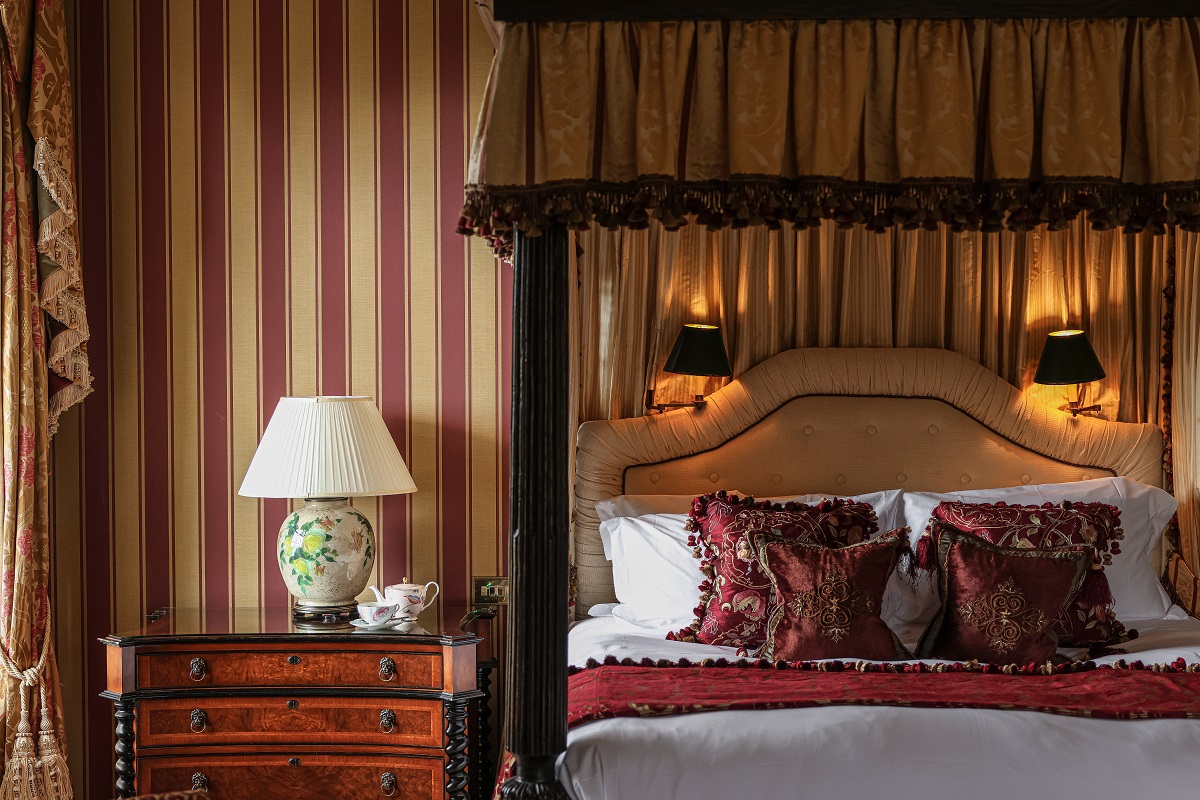
detail of period bed , wooden furniture and striped wallpaper

Image credit: Lucknam Park Hotel & Spa

One of Accor’s newest entries on the collection brands scene is Emblems Collection, which has established itself as a refined luxury soft brand. With 13 properties in the pipeline, representing more than 1,000 rooms, Emblems aims to reach 60 properties globally by 2032. Each property is carefully chosen for its exceptional character, telling its own story of culture, creativity and craftsmanship. Located in hand-picked locations and prime neighborhoods or amidst breathtaking natural landscapes, Emblems Collection properties combine a distinctively charismatic allure with an elevated sense of intimacy and residential flair.

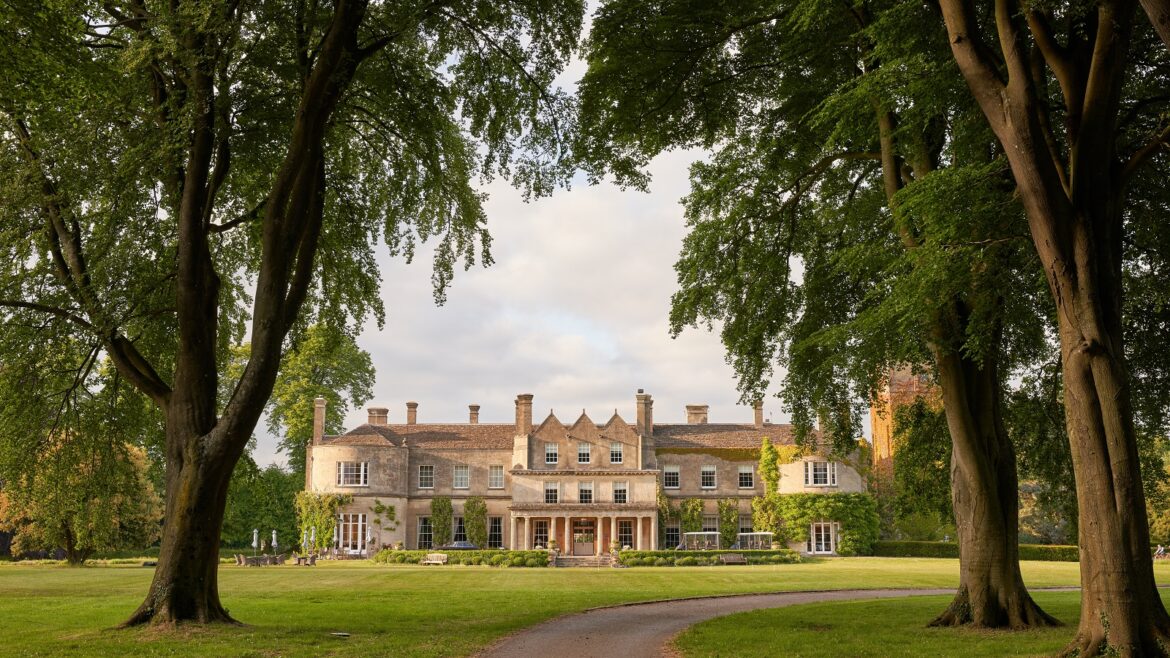
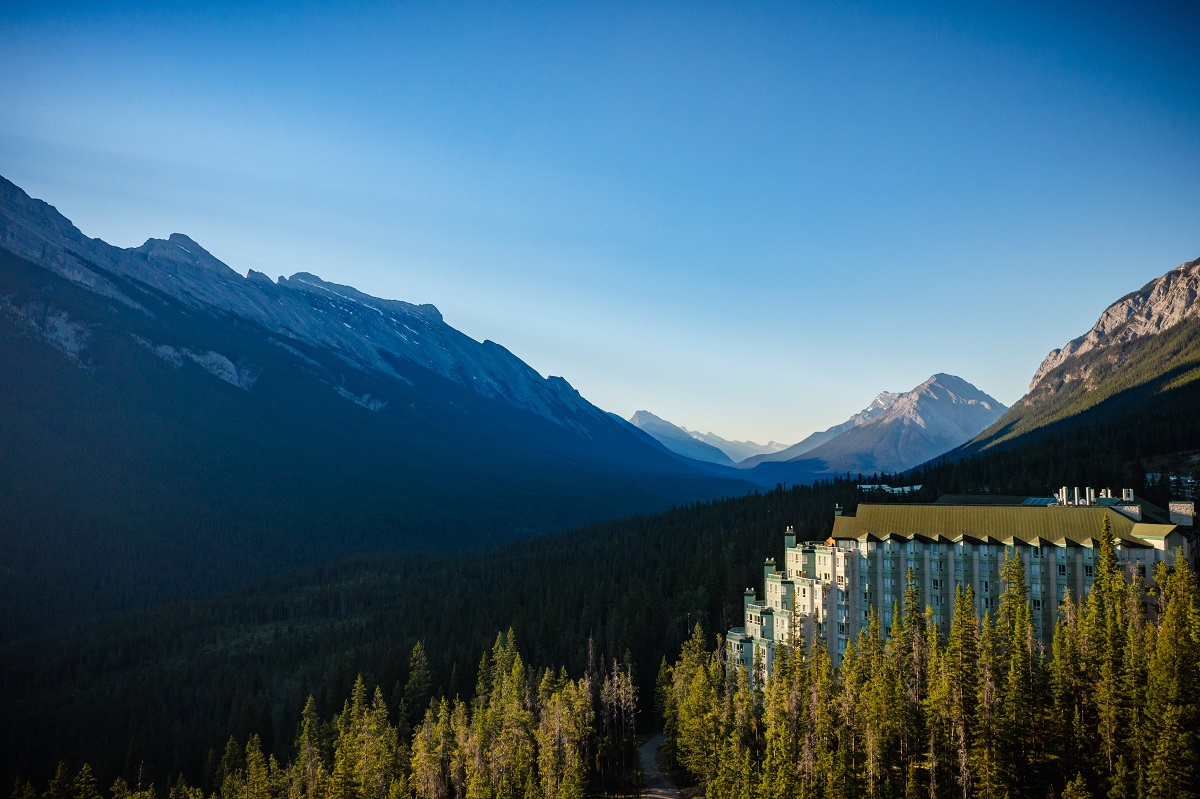
The opening of Lucknam Park Hotel & Spa, Emblems Collection in the United Kingdom in November 2025 marked a defining milestone as the brand’s first address. The 51-room country estate is renowned for its Michelin-starred dining, wellness facilities and equestrian heritage. In North America, the upcoming opening of Rimrock Banff, Emblems Collection in June 2026 will introduce the brand to the famed Canadian Rockies following a comprehensive renovation program. Six additional openings in Greece and Italy by early 2027 further demonstrate the brand’s selective yet strategic expansion ambition.

Rimrock_Banff_Emblems_Collection_outside_Credit_-_Life_Outside_Studio

Rimrock Banff | Image credit: Life Outside Studio

MGallery Collection continues to strengthen its global leadership with 125+ hotels currently operating and 50+ addresses in the pipeline. The brand has grown by nearly 30% since 2022, supported by a balanced mix of conversions and new developments. In Europe, France remains the brand’s leading market, with recent openings such as L’Isle de Leos Hotel & Spa – MGallery Collection in Provence and Le Talaia Hotel & Spa – MGallery Collection in Biarritz. In Greece, the strong performance of Athens Capital – MGallery Collection and the opening of Athens Capital Suites – MGallery Collection, the first standalone suites concept in the brand’s history, demonstrate the ability to scale within culturally significant urban destinations. Five additional hotels are in the pipeline, reflecting MGallery’s plan to more than double its footprint in the country by 2029. In Albania, the 2025 opening of Green Coast Hotel – MGallery Collection marked the brand’s arrival in one of Europe’s most up and coming destinations.

Athens Capital Suites | Image credit: MGallery Collection

Additional projects, such as the celebrated debut of South Palms Resort & Spa Panglao – MGallery Collection in Southeast Asia last summer, along with a strong lineup of openings throughout other major markets globally, further reinforce MGallery’s international momentum, supported by a positioning that combines design-led hospitality, storytelling and local authenticity with Accor’s global commercial infrastructure.

Ennismore continues to expand its curated collections through its two collection lifestyle brands, Morgans Originals and Paris Society Hotel Collection. These brands operate at the intersection of hospitality, culture and community.

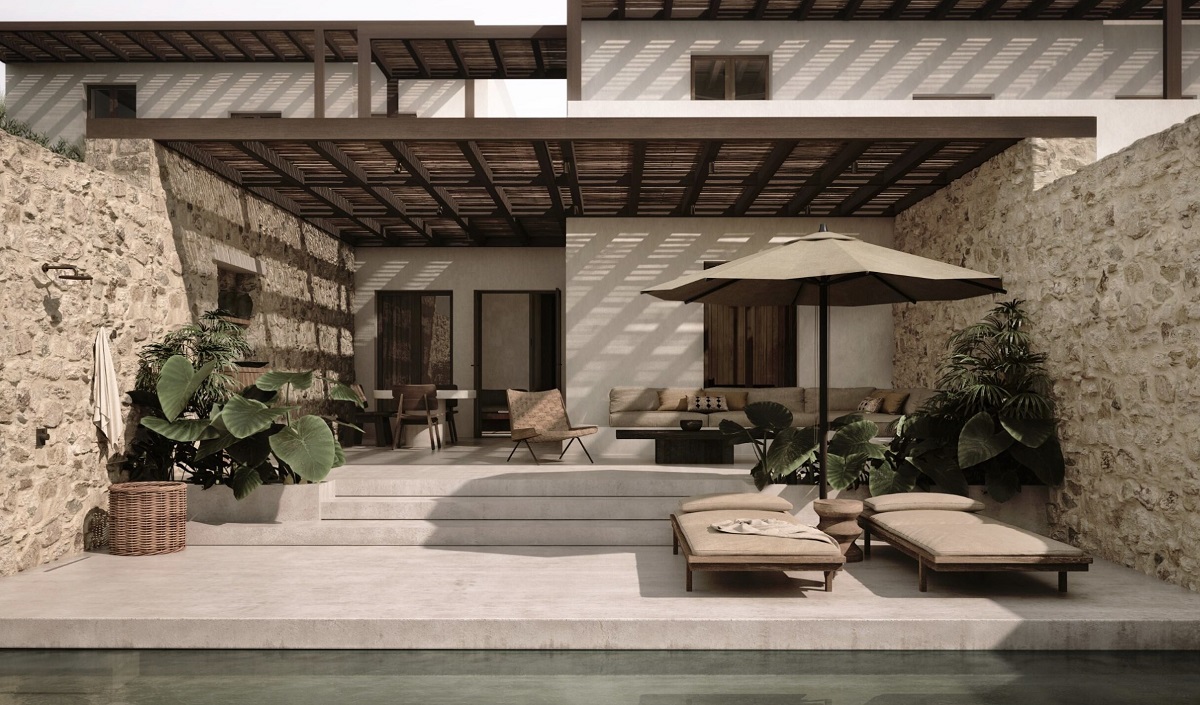
Ushering in a new era of hospitality in 1984, Morgans Originals introduced a different kind of hotel, one guided by character of its setting and the individuality of the people who moved through it. Today, Morgans Originals is a collection of independent hotel brands united by that same spirit and rooted in an iconic cultural story. Marking Ennismore’s debut in Greece and India, two hotels opening under the Morgans Originals umbrella this year include LUURA Paros and Roswyn Mumbai.

LUURA Paros | Image credit: Morgans Originals Hotels

Paris Society Hotel Collection, launched in 2025, brings together an exclusive and extraordinary collection of iconic, unique destinations that capture the essence of each location through its distinct elegance, charm and culture. The collection includes the country estate, Abbaye des Vaux-de-Cernay, France; the mountain resort, Le Refuge de Solaise, France; and the incredible resort on the Golden Horn of Istanbul, Aliée, Turkey.

Agnès Roquefort, Global Chief Development Officer, Luxury & Lifestyle brands, Accor, said: “Our collection brands across Luxury & Lifestyle allow us to collaborate with visionary founders and independent owners to unlock properties with strong identity and cultural relevance. Whether it’s through Emblems Collection, MGallery or Ennismore’s Morgans Originals and Paris Society Hotel Collection, we are building a portfolio that combines individuality with global prestige and performance. This success is significantly underpinned by the strength of Accor’s powerful commercial ecosystem, which, on average, drives 80% of our collection hotels’ revenue across loyalty, distribution, and sales channels.”

Paris Montmartre Sacré Coeur, Handwritten Collection, Paris,

Paris Montmartre Sacré Coeur | Image credit: Handwritten Collection

Launched in 2023, Handwritten Collection has rapidly grown its network. Designed to bring together characterful independent hotels shaped by the personality and passion of their hosts, the brand has already surpassed 40 hotels open and counts an additional 45+ hotels in the pipeline.

Recent openings across France, Belgium, Greece, the Netherlands, Hungary, and Romania in 2025 illustrate the speed and adaptability of the model. The brand’s growth is closely linked to conversion opportunities and properties such as Hotel Maison Maastricht Centrum – Handwritten Collection and Bucharest Unirii Square – Handwritten Collection demonstrate how individual concepts can integrate seamlessly into Accor’s global systems while preserving their individual identity.

A member of Accor handwritten collection - Wonil hotel Perth reception and seating

Wonil Hotel Perth | Image credit: Handwritten Collection

Camil Yazbeck, Global Chief Development Officer, Premium, Midscale & Economy brands, Accor, commented: “Handwritten Collection perfectly captures what many independent hoteliers are looking for today – a brand that respects their story, their personality and their operational independence, while giving them immediate access to Accor’s global platform. The brand’s rapid expansion across the world demonstrates the strength of this approach, with conversion opportunities a major driver of this success, allowing us to integrate distinctive properties quickly and efficiently into our ecosystem. By leveraging Accor’s 360-degree solutions, spanning sales, distribution, loyalty, marketing, procurement, technology, sustainability, and design and technical services, our owning partners can drive revenue growth, protect margins, and preserve the unique identity of their assets.’’

While collection brands currently represent 3% of Accor’s global operating network, they now account for 8% of the Group’s development pipeline – a clear indicator of forward momentum which is only expected to increase. For owners and independent hoteliers seeking global visibility, a trusted partner, and relevant brand association, Accor’s collection brands offer a compelling opportunity. By combining entrepreneurial freedom with commercial performance, they unlock long-term value for owners while delivering differentiated experiences for guests.

Main image credit: Lucknam Park Hotel & Spa

Naturalmat - The Lydford Bed in House Linen starts from £1,950 for a Small Single (4)

Spring Refresh: introducing the Lydford by Naturalmat

1024 640 Stuart O'Brien
Spring Refresh: introducing the Lydford by Naturalmat

Naturalmat introduces the Lydford, a thoughtfully crafted bed that blends mid-century design with sustainable materials and handcrafted comfort.

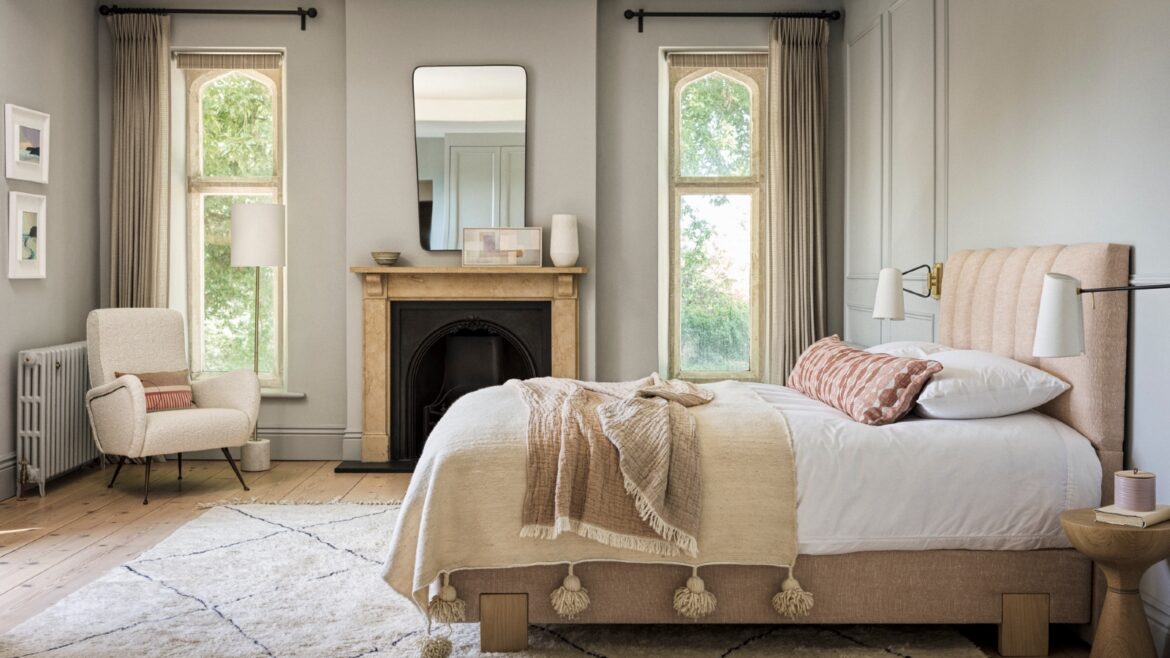
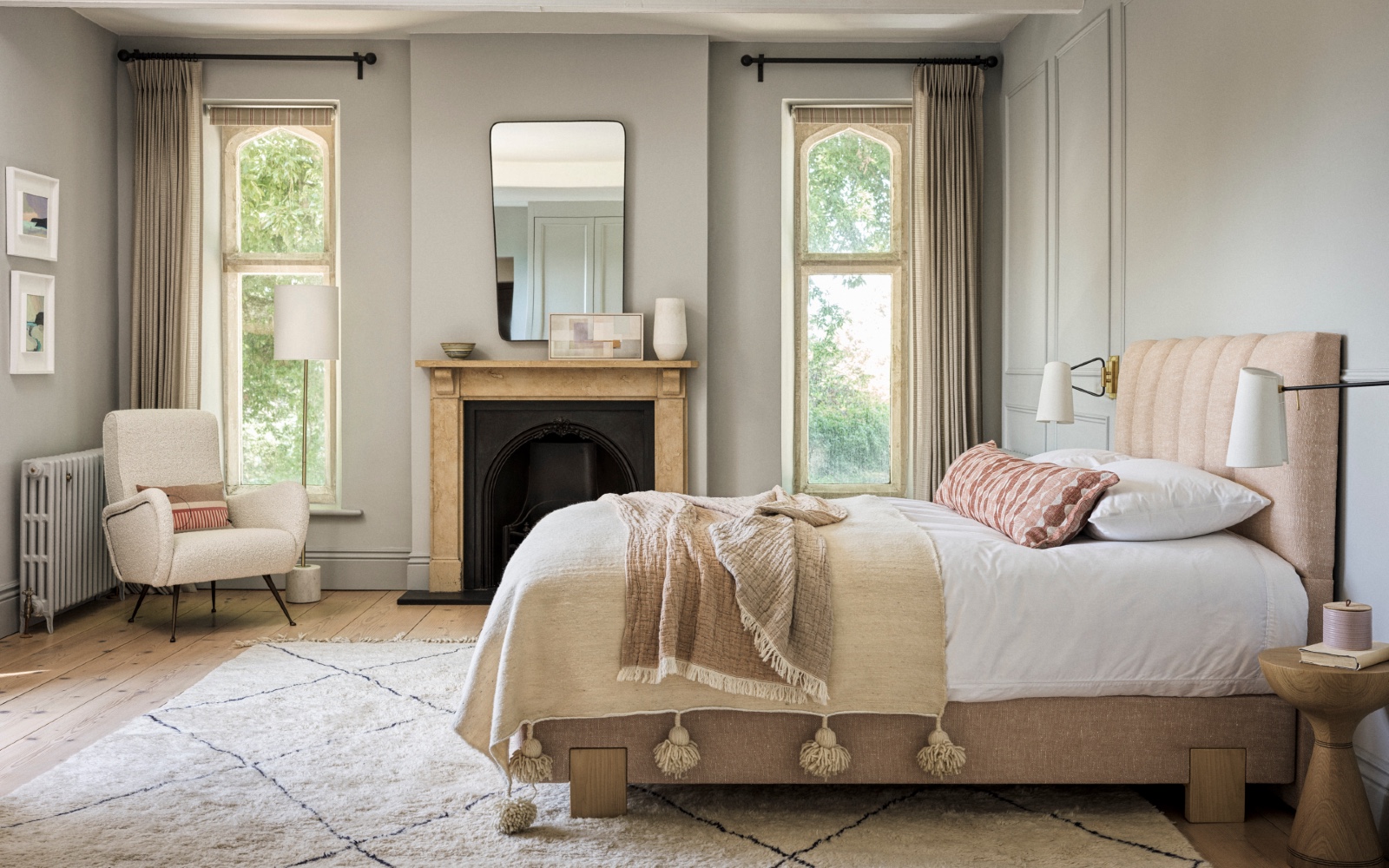
Naturalmat - The Lydford Bed in House Linen starts from £1,950 for a Small Single (4)

Launching this March, the Lydford is the latest design from Devon-based sustainable bed and mattress makers Naturalmat. Named after a historic little village on the edge of Dartmoor, this thoughtfully crafted new addition to the range is rooted in the brand’s commitment to natural materials, balancing expert craftsmanship with inviting comfort.

Drawing inspiration from timeless mid-century modern silhouettes and two of Naturalmat’s favourite elements, the Lydford combines tactile natural fibre upholstery with a distinctive design feature: embedded solid timber legs. Its plush, vertically fluted headboard takes its cues from 1950s upholstery, introducing sculptural softness and era-inspired detailing to the bedroom.

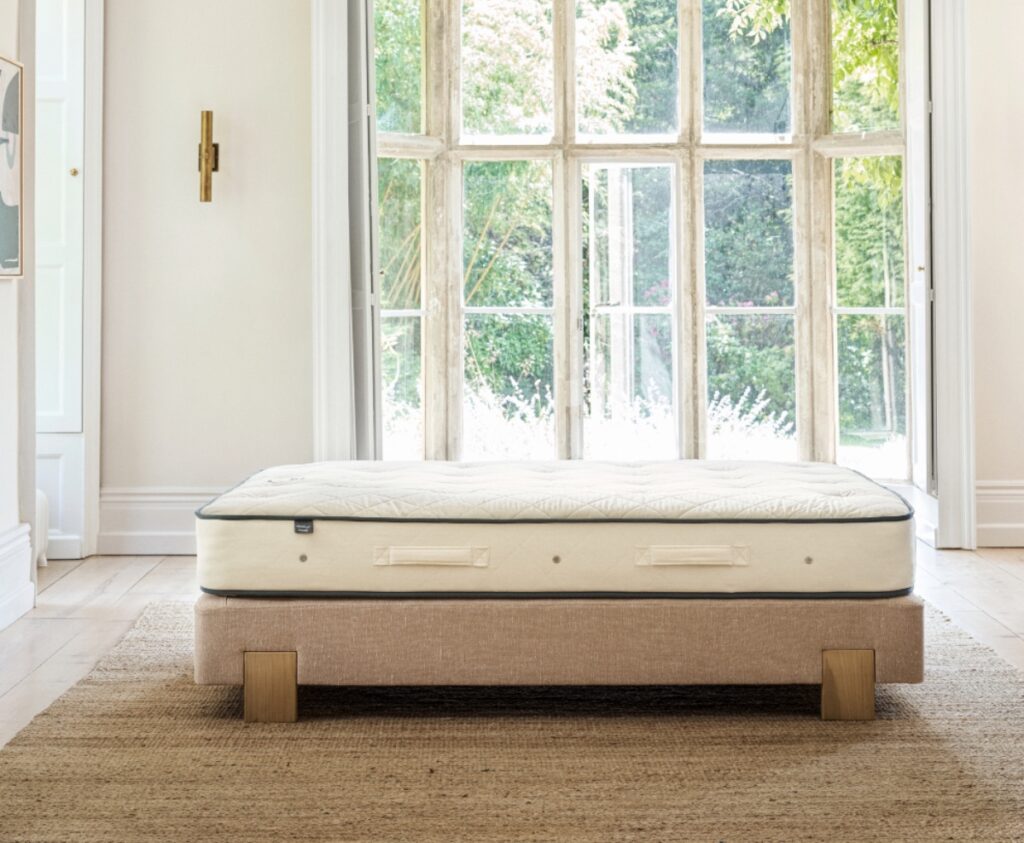
In keeping with the B Corp brand’s commitment to sustainable materials, the headboard is generously filled with a unique layering of cushiony recycled denim – a second lease of life for offcuts from the clothing industry – and organic wool from local farmers in the Southwest. The bed base is also upholstered with organic wool and coir for natural spring, breathability, and ventilation, to create a healthy and comfortable sleep environment.

Naturalmat, The Lydford Bed Base from £950

Naturalmat, The Lydford bed base | Image credit: Naturalmat

Shown here, upholstered in a beautifully slubby-woven 100% linen with a soft peach tint, this spring-inspired shade introduces a gentle warmth, texture, and lightness without overwhelming the space. It pairs harmoniously with other tactile layers like Naturalmat’s linen Crinkle throw, extra long bolster cushion, and a lofty-pile rug that adds a cocooning softness underfoot.

The Lydford is available as a complete bed, headboard, or bed base only. Customers can choose from Naturalmat’s versatile range of natural house fabrics or opt for a bespoke fabric of their choosing to complement their personal style.

Naturalmat is one of our Recommended Suppliers and regularly features in our Supplier News section of the website. If you are interested in becoming one of our Recommended Suppliers, please email Katy Phillips.

Main image credit: Naturalmat

Private Studio (Mason & Fifth, Belsize Park)

Mason & Fifth announces new Belsize Park location

1024 640 Pauline Brettell
Mason & Fifth announces new Belsize Park location

After the success of the Primrose Hill, Bermondsey, and Westbourne Park sites, London-based hospitality and lifestyle brand Mason & Fifth have announced its plans for a new Belsize Park location…

Private Studio (Mason & Fifth, Belsize Park)

Following  in the footsteps of its beautifully designed, flexible lifestyle buildings in Bermondsey, Primrose Hill and most recently Westbourne Park, Mason & Fifth is set to open its fourth location in Belsize Park, the historic redevelopment of the Ivy Bank estate, lovingly restored and ready to open its doors in May this year.

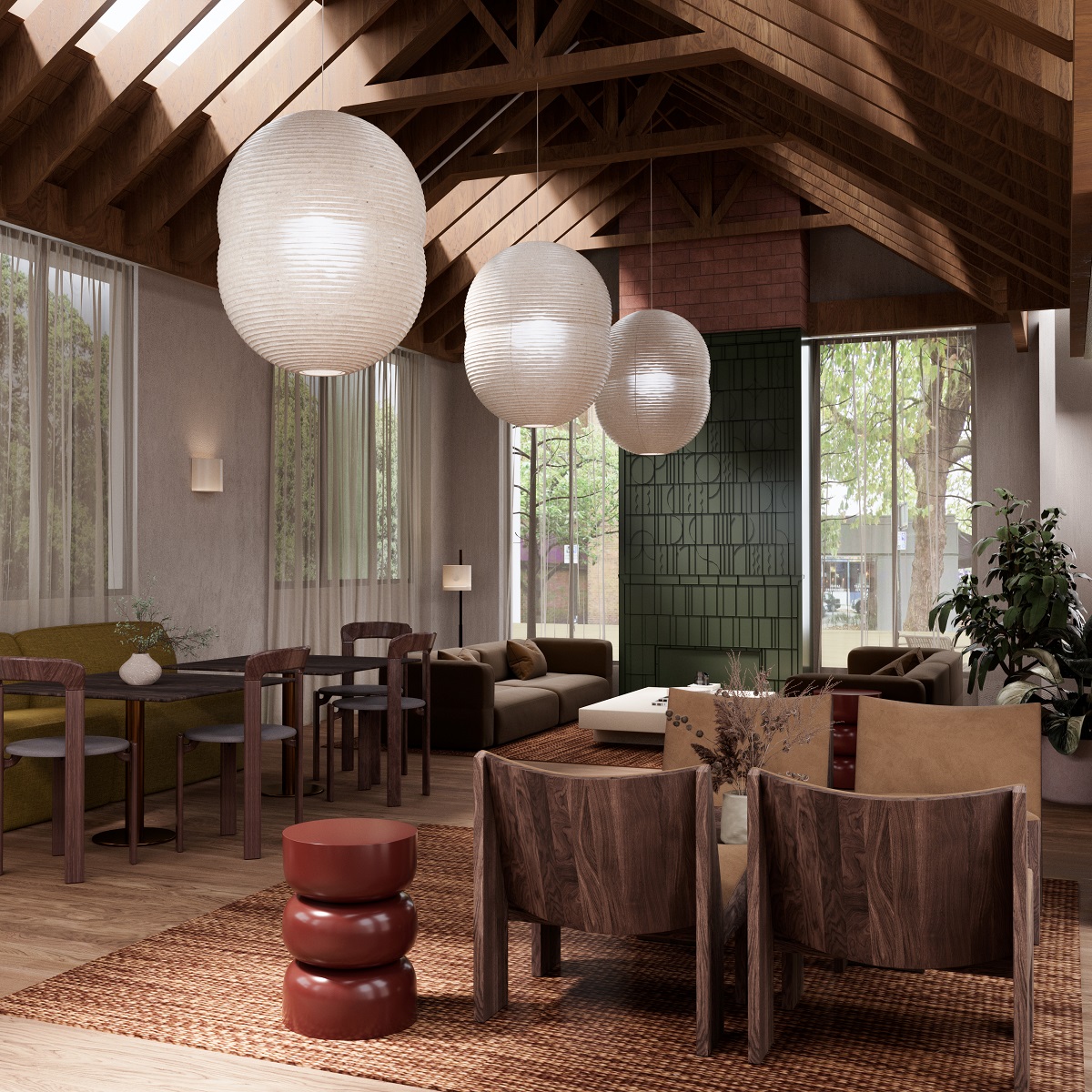
white paper pendant lights below wooden beams and wooden floors in Shared guest lounge 2 - Mason & F

Image credit: Mason & Fifth

Perched among the leafy streets of Belsize Park, the brand’s latest boutique guesthouse sits within the neighbourhood’s village-like setting, surrounded by independent boutiques, artisan bakeries and creative studios. The latest addition to the Mason & Fifth collection continues the tradition of selecting London’s most sought after neighbourhoods, offering beautifully designed private studios alongside thoughtfully curated communal spaces.

Each stay blends comfort, lifestyle and community, bringing together like-minded guests and cultivating a growing following for this flexible, modern way of living.

There are spaces for guests to gather, in the airy double-height guest lounge with slouchy sofas, comfy seats and two feature chimneys crafted to enhance the space and create the perfect atmosphere for relaxation, the restored chimney breast boasts modern design features, along with bespoke tables and chairs to work ‘from home’ from.

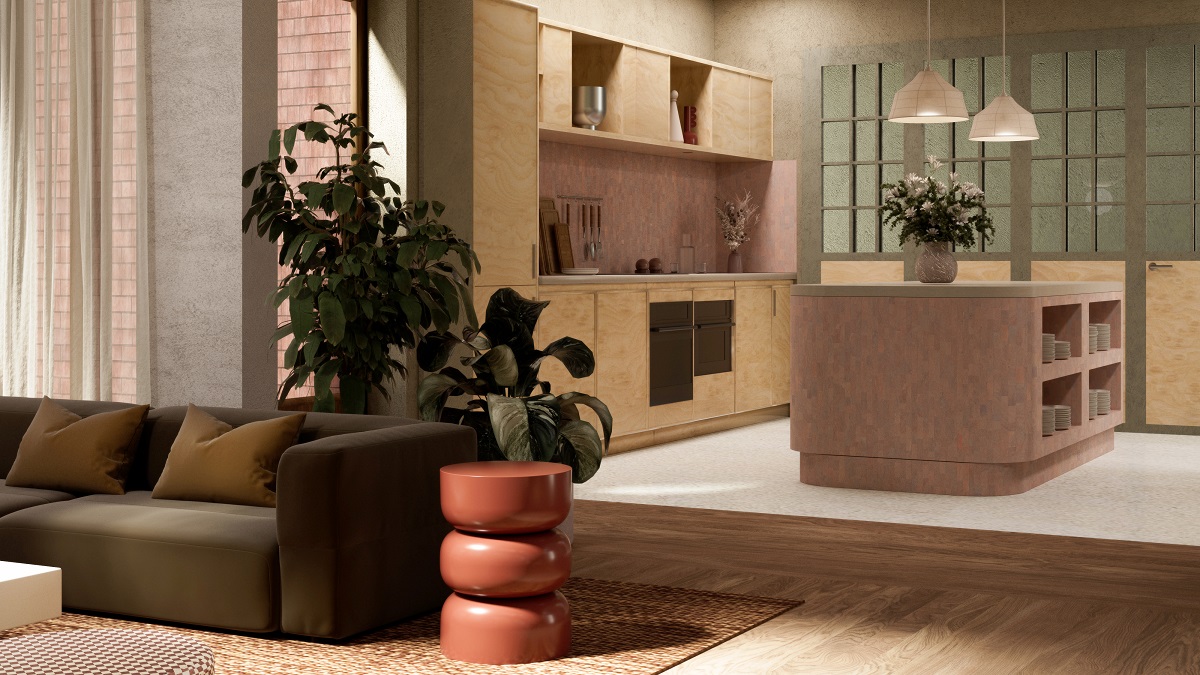
Shared open kitchen 2 - Mason & Fifth, Belsize Park (Render)

Image credit: Mason & Fifth

There’s a communal open kitchen for guests to use as their own – and each morning there’s a help-yourself breakfast bar with fresh fruit, granola and yoghurt, freshly baked bread, fresh juices and coffee for guests to enjoy.

Every weekend begins with, ‘Wine Down Fridays’, where guests are invited to enjoy a glass of wine from the local bottle shop, hosted by the House Team, a chance to unwind and connect.

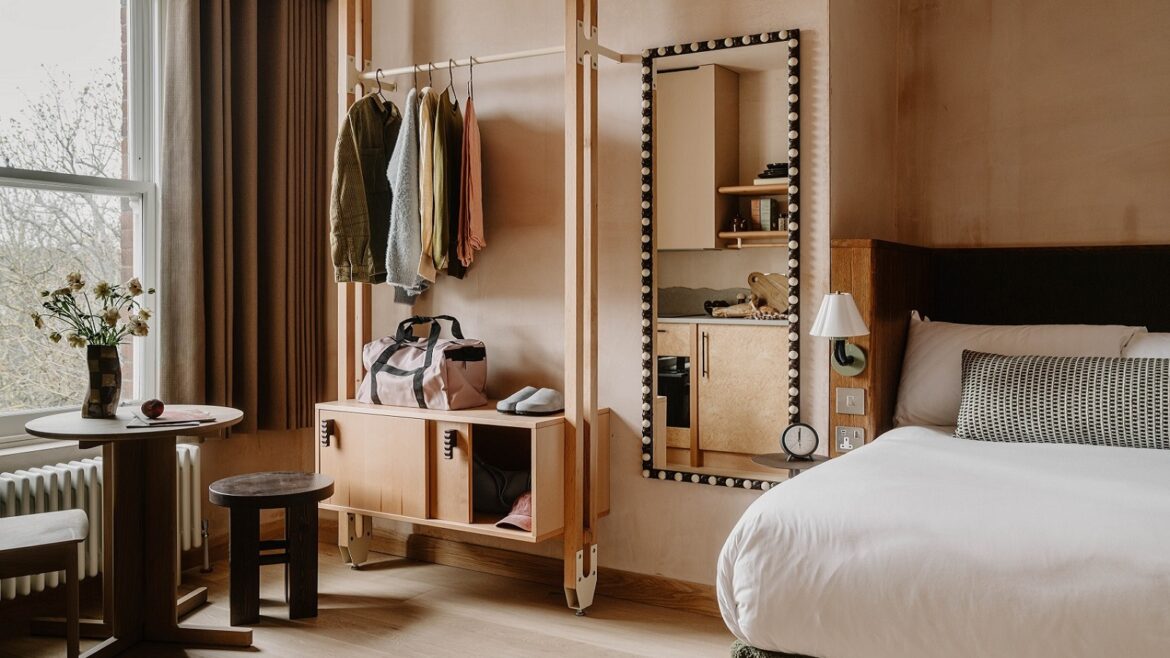
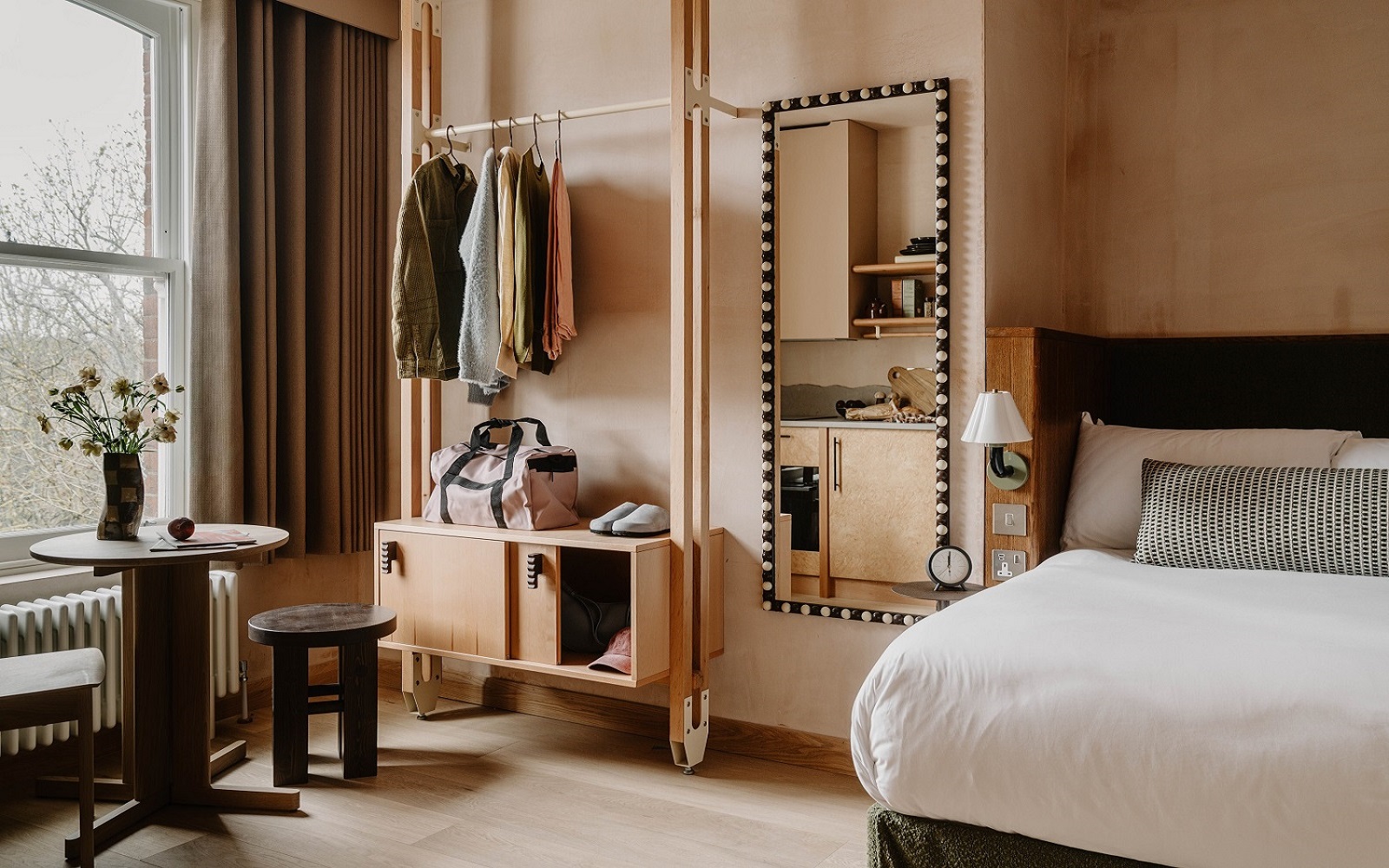
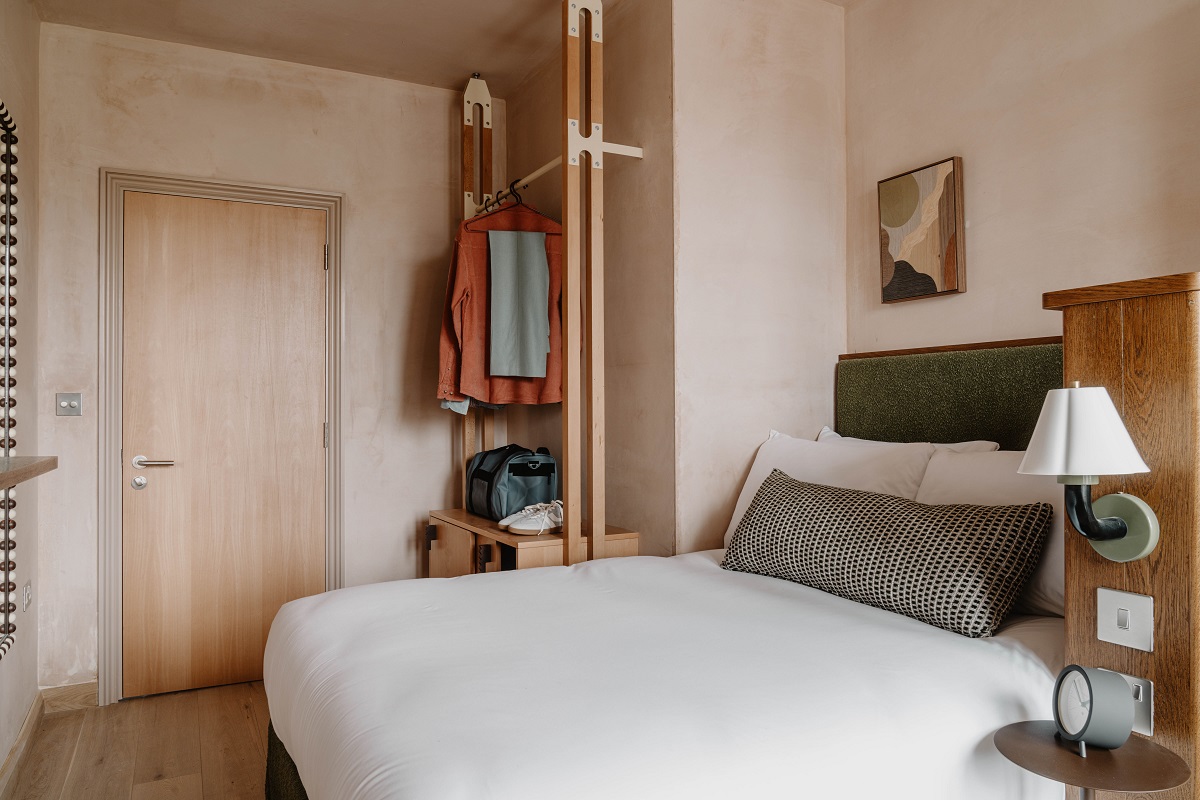
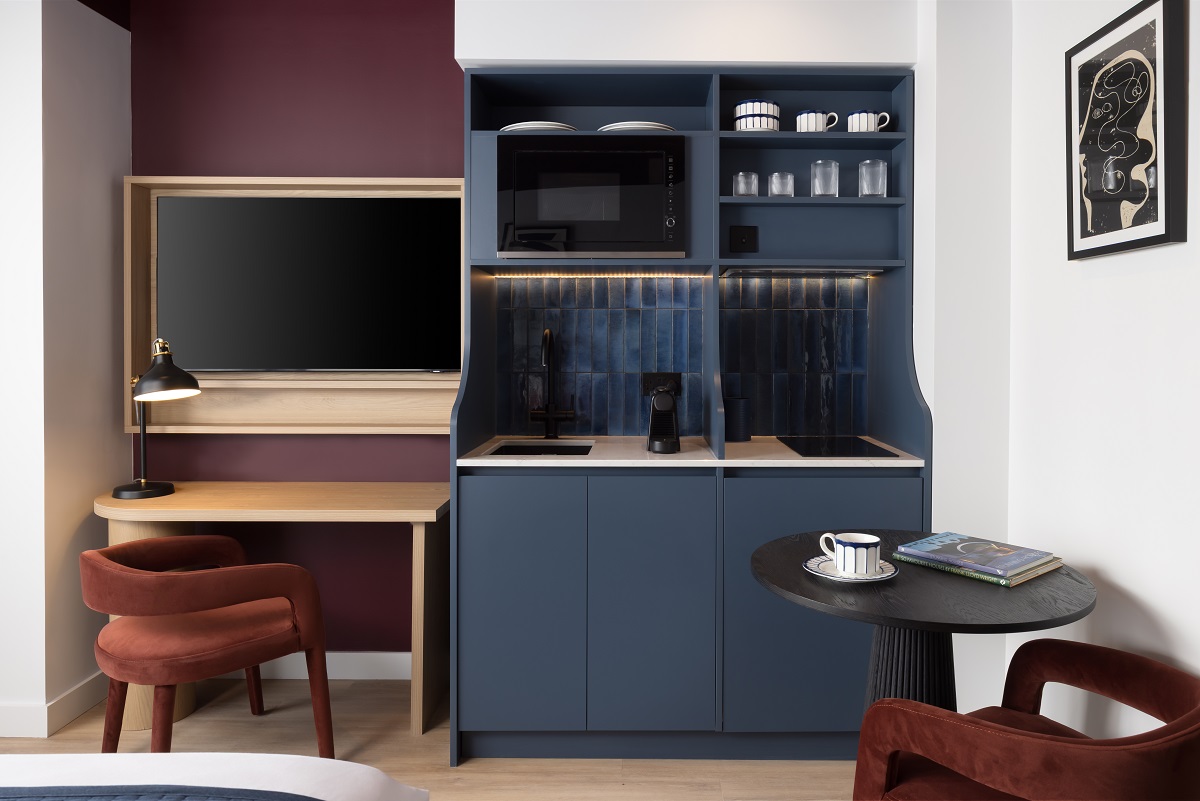
There are four thoughtfully designed studio categories, each created to feel like a calm, peaceful space to call home, with en-suite bathrooms and kitchenettes with everything you need. The Classic studios are cosy and light-filled, featuring timber floors and natural finishes. The Classic Plus studios offer a little extra space for added comfort, while Classic Biggie studios are ideal for those who love room to spread out or are staying as a pair.

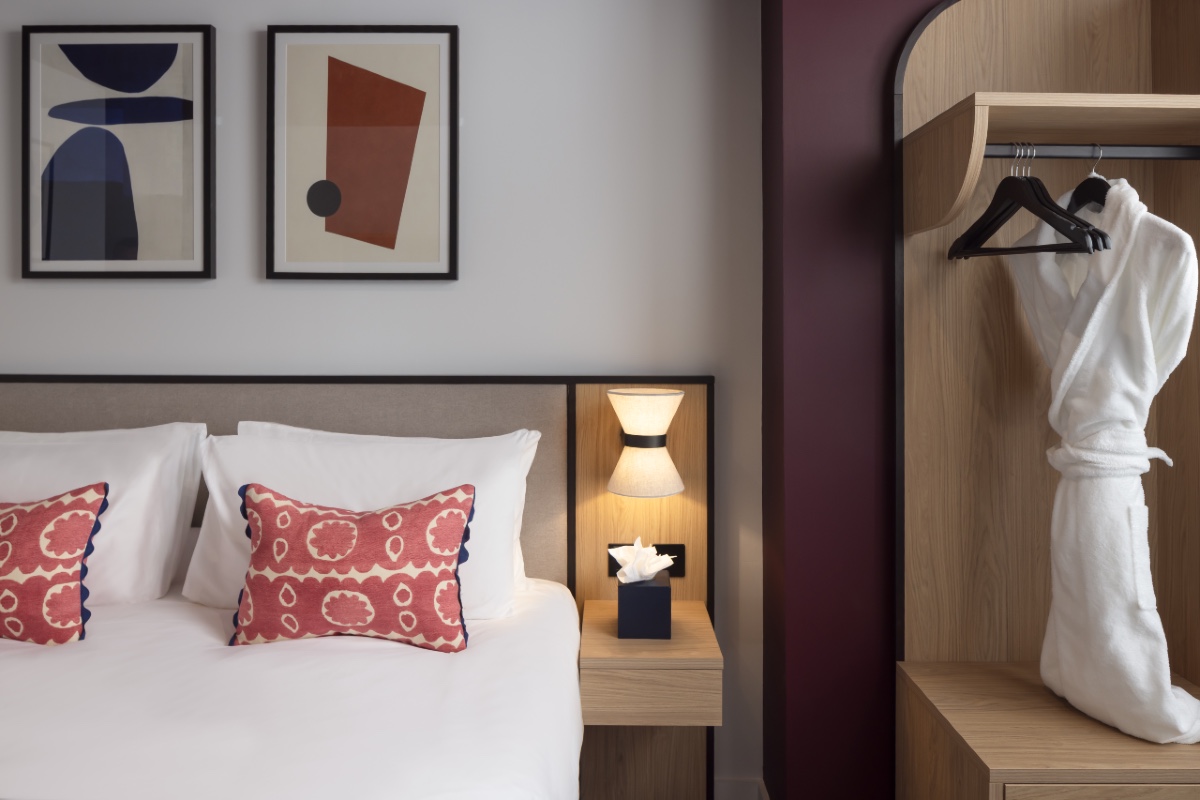
Belsize Park Studio bed with white linen , open wardrobe and wooden surfaces

Image credit: Mason & Fifth

For the most elevated experience, the two Best in House studios are housed on the top floor, with vaulted ceilings and sofa-beds making them suitable for families, with one also having a bath in addition to a shower. Every studio comes fully furnished with luxury mattresses, smart TVs, superfast Wi-Fi, organic bathroom products and regular housekeeping.

The interiors at Mason & Fifth, Belsize Park embrace a philosophy of low impact and sustainable living, with quiet richness, carefully honouring the heritage of the restored estate. A sensitive and stripped back approach reveals the building’s original textures, celebrating repair over replacement. Throughout the studios, generous volumes and abundant natural light are complemented by timber floors, soft linens and timber furniture, creating a number of spaces that feel calm and grounded.

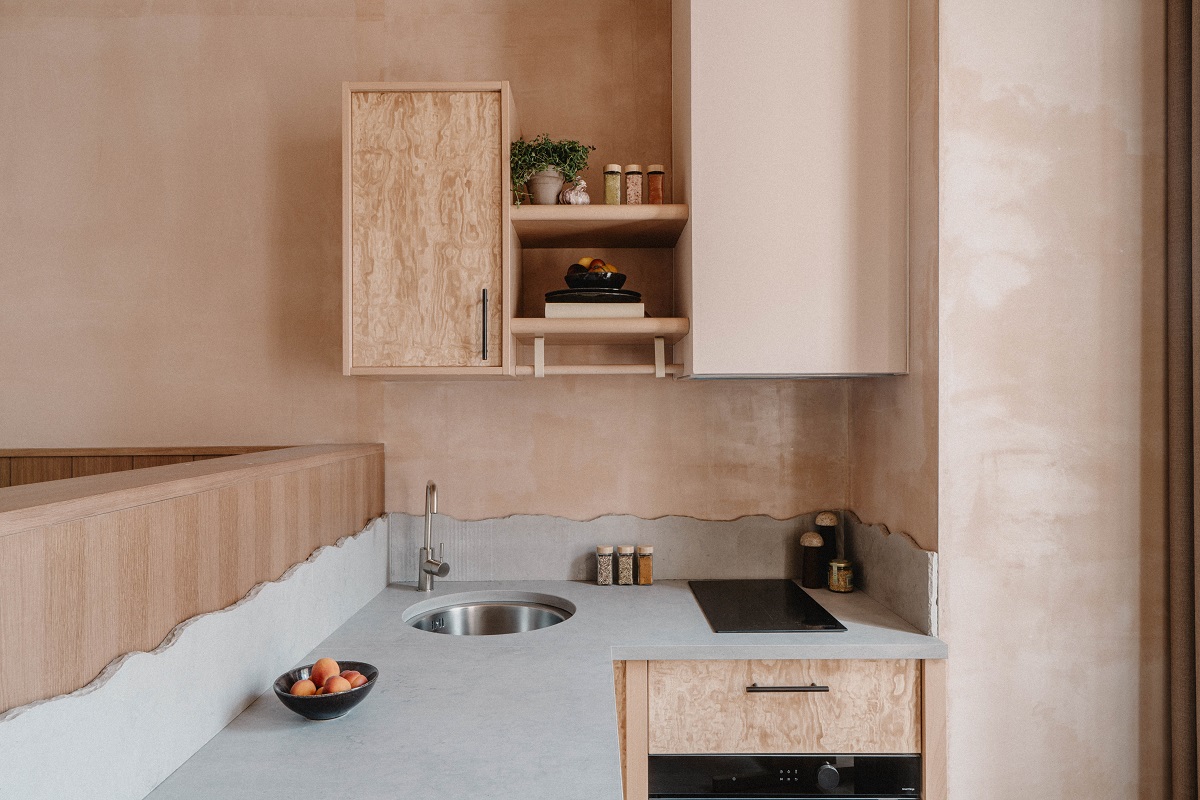
 Kitchenettes feature live edge limestone worktops crafted from rejected stone and wooden surfaces

Image credit: Mason & Fifth

Kitchenettes feature live edge limestone worktops crafted from rejected stone, wardrobes are conceived as demountable systems inspired by mid-century design. In the communal areas, a striking double-height timber extension forms the heart of the building, bringing together the kitchen, dining and workplaces beneath sculptural chimney breasts in hand glazed tiles. Throughout, collaborations with British markers and artists add layers of character and authenticity through craftsmanship, resulting in warm tactile and thoughtful interiors, a refined yet relaxed backdrop for modern, flexible living in Belsize Park.

Mason & Fifth Founder Ben Prevezer commented, “Mason & Fifth, Belsize Park marks an exciting new chapter for us in one of our favourite areas in London. Each building we open is thoughtfully shaped by its neighbourhood, and we hope to be a welcome addition to this special London community’’.

With excellent transport connecting the building to Central London and a stone’s throw away from Hampstead Heath and Primrose Hill, this makes Belsize Park, a hidden green gem in the city’s heart.

Main image credit: Mason & Fifth

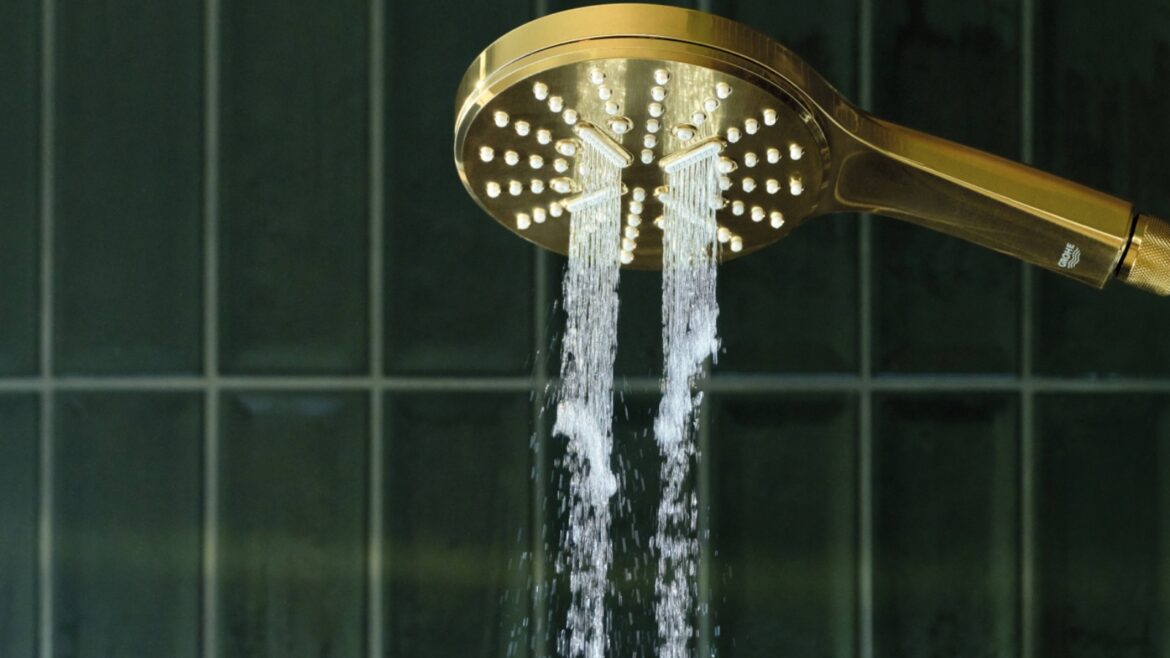
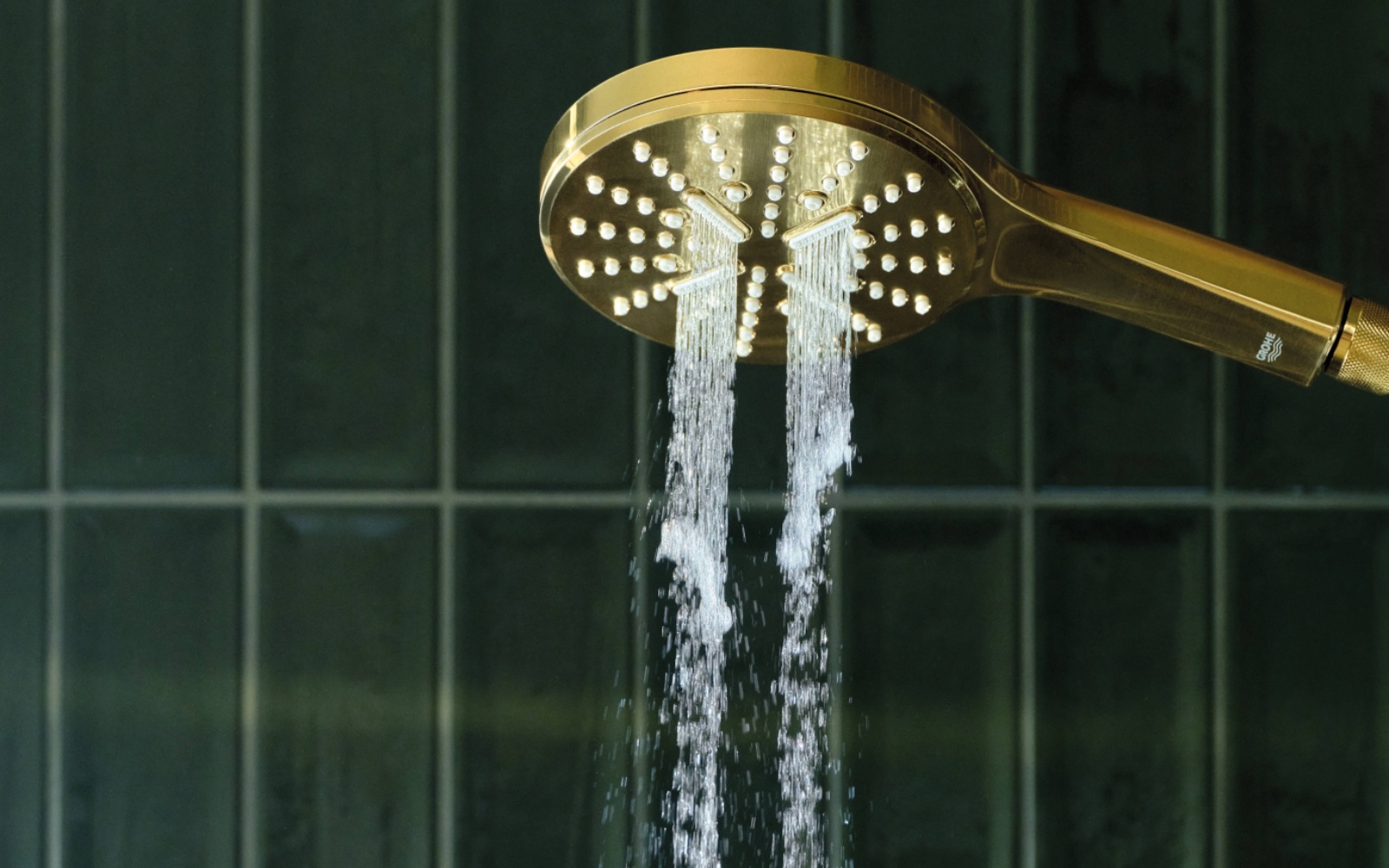
GROHE Rainshower 130 SmartActive ActiveMassage Spray

GROHE champions a personalised shower experience with unique sprays

1024 640 Stuart O'Brien
GROHE champions a personalised shower experience with unique sprays

GROHE explores how showering is evolving into a daily wellness ritual, with user-focused design and sensory performance enhancing moments of relaxation and recharge.

GROHE Rainshower 130 SmartActive ActiveMassage Spray

Showering is increasingly perceived as a moment to pause and personal retreat, with a clear majority associating it first with relaxation (64%), followed by wellness (41%) and me-time (40%).

That’s according to GROHE, which commissioned a representative survey with OPINION market research and consulting in five countries (Belgium, France, Ge rmany, Italy and the Netherlands). The survey was conducted in March 2024, with a total of 2,501 people interviewed. GROHE, a leading global brand for complete bathroom solutions and kitchen fittings, has responded to the survey’s results with shower solutions that focus on comfort, sensory quality and user-centric performance.

The brand’s goal is to create a shower experience that may last only minutes, but its impact lingers long after. Whether recharging or relaxing, the feeling stays throughout the day. A key example is the GROHE Rainshower 130 SmartActive hand shower, featuring the ActiveMassage spray, GROHE’s invigorating massage spray.

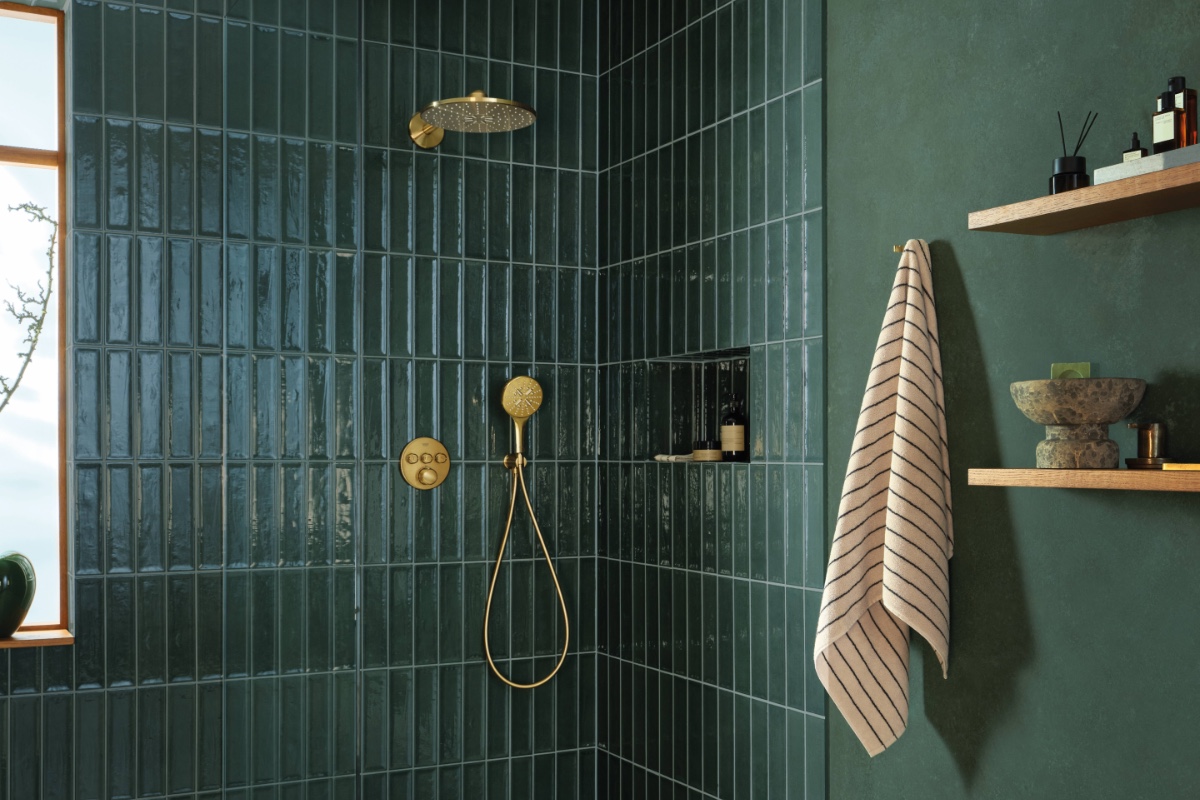
GROHE Grohtherm SmartControl Cool Sunrise

GROHE Grohtherm SmartControl | Image credit: GROHE

Tested comfort: ActiveMassage spray delivers a feel-good shower experience

GROHE’s ActiveMassage spray was evaluated in a long-term application test conducted by a renowned German testing and analysis institute. Over a four-week period, the massage spray was compared with a soft rain spray setting using the GROHE Rainshower 130 SmartActive hand shower. The assessment focused on subjective user perception and overall shower experience.

The results underline the strong approval of the massage spray:

  • 92% agreed that “the massage spray feels pleasant on the skin”
  • 87% stated that “using the massage spray gives an invigorating start to the day”
  • 79% confirmed that “the massaging effect of the spray makes showering a feel-good experience”

Wellness-driven showering and spray variety

The above-mentioned study not only shows that showering has become a daily wellness ritual for many users, offering moments to unwind or recharge but also clearly indicates that features play a decisive role in shaping this experience. Precise water control is ranked as the most desired shower feature by more than four out of five respondents2. Together with water-saving functions and the ability to easily switch between hand and head shower, this highlights how control and adaptability define modern shower expectations. Clearly differentiated spray patterns further support a conscious choice between relaxation and revitalisation, turning water into a sensory experience rather than a purely functional one.

Minutes of recharge, hours of impact

The concealed shower system GROHE Grohtherm SmartControl which is complemented by the GROHE Rainshower 130 SmartActive hand shower offers exactly this sensation. It reinforces the experience while bringing desired features from the survey together. With a simple push-turn of a button on the SmartControl thermostat, users gain precise control over water volume, easily switch between hand and head showers and select their preferred spray patterns. The head shower offers two sprays — gentle PureRain and powerful ActiveRain — across a generous 310mm diameter for full coverage.

Complementing the surveyed ActiveMassage, the GROHE Rainshower 130 SmartActive hand shower boasts Jet and Rain sprays, conveniently selected via the SmartTip on the back.

Whether as a stand-alone or part of a complete system, GROHE Rainshower 130 SmartActive exemplifies how targeted spray performance and user-focused design can transform the bathroom into a place of everyday wellbeing.

GROHE is one of our Recommended Suppliers and regularly features in our Supplier News section of the website. If you are interested in becoming one of our Recommended Suppliers, please email Katy Phillips.

Main image credit: GROHE

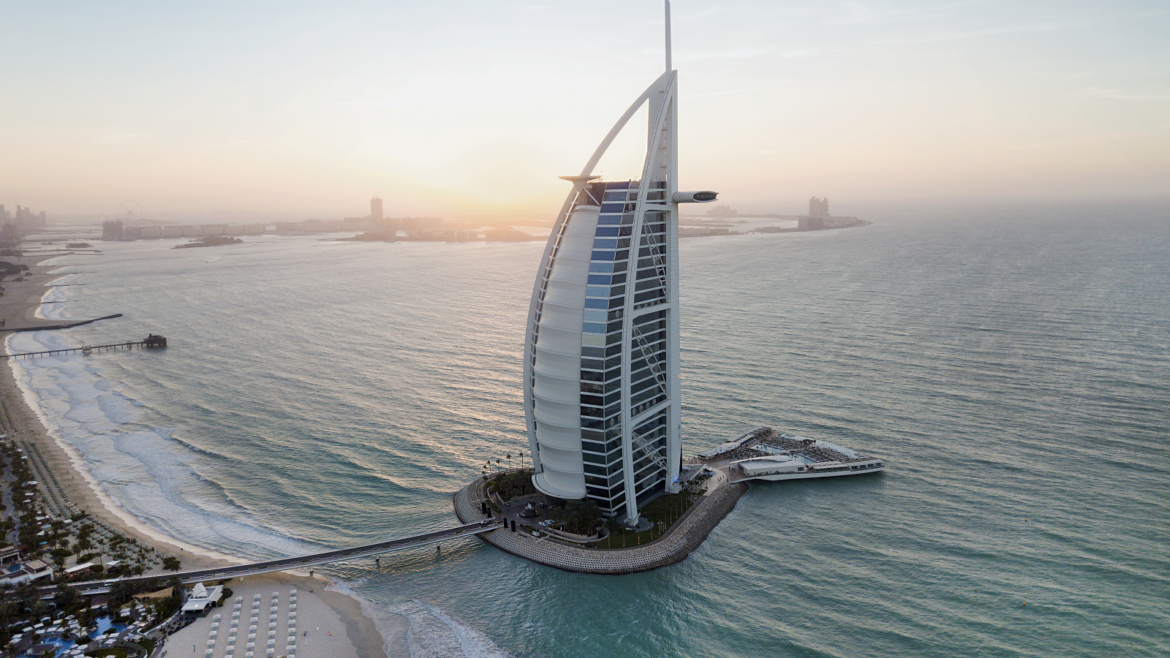
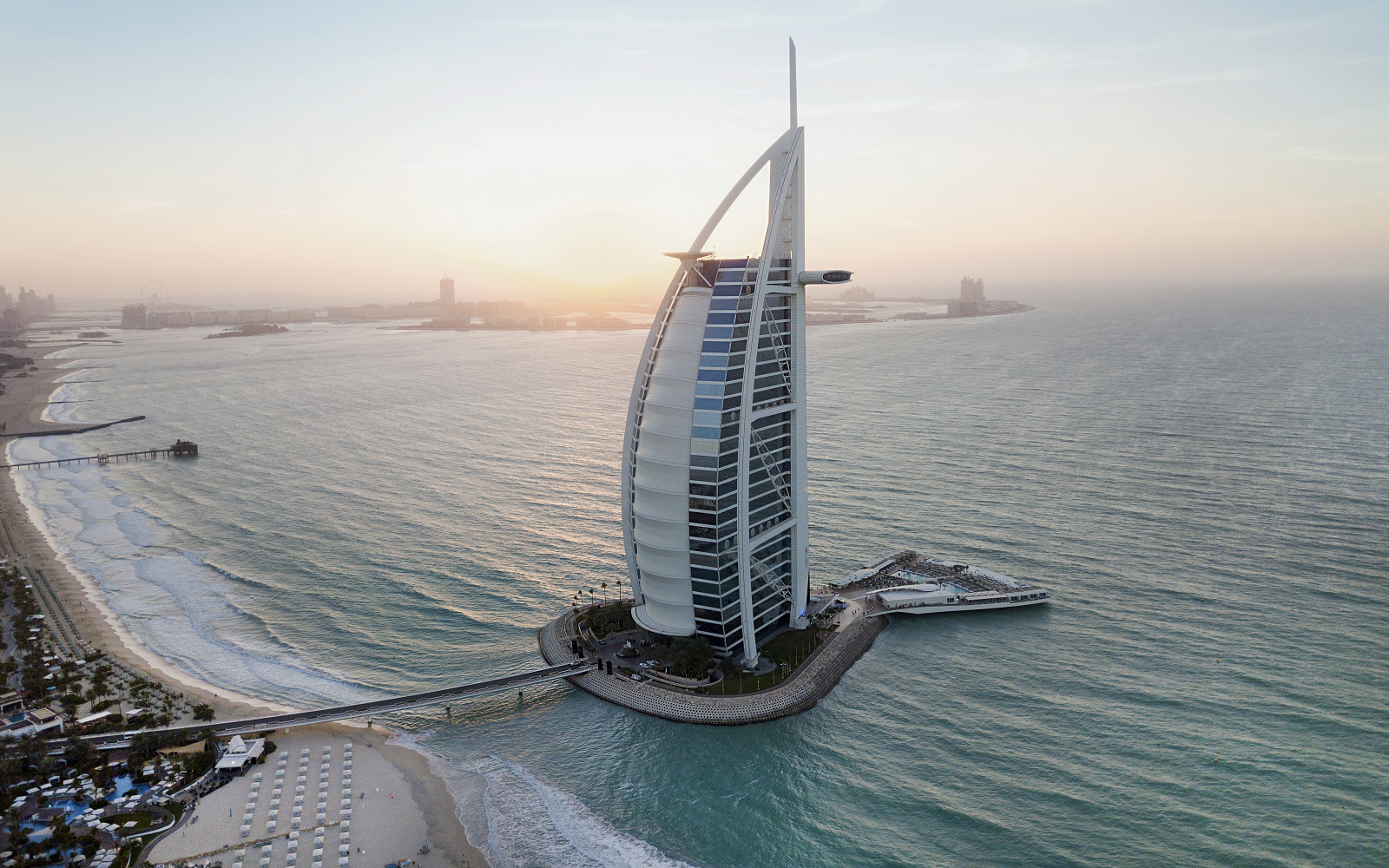
Burj Al Arab Jumeirah - Aerial at Sunset

Preserving the legacy – Jumeirah Burj Al Arab announces a phased restoration

1024 640 Pauline Brettell
Preserving the legacy – Jumeirah Burj Al Arab announces a phased restoration

The iconic Jumeirah Burj Al Arab is set to undergo a carefully phased and thoughtful restoration programme – led by interior architect Tristan Auer – designed to safeguard its legacy for generations to come…

Burj Al Arab Jumeirah - Aerial at Sunset

Since opening in 1999, Jumeirah Burj Al Arab has stood as an architectural and cultural icon of modern luxury, with its dhow sail silhouette shaping the identity of the skyline of Dubai. From its launch, it set new international standards, pioneering personalised butler service and changing the face of luxury hospitality. With an odyssey of over twenty-five years of continuous operations, the conservation of the architectural masterpiece will see its distinctive interior décor enhanced with the same attention to detail as preserving a work of art.

Following a rigorous and strategic selection process, the restoration planned for approximately 18 months, will be led by Tristan Auer, with a mission to preserve Jumeirah Burj Al Arab’s cultural cachet. Renowned for his refined approach to restoration, his work reflects a deep respect for heritage, craftmanship and detail that brings a contemporary sensibility to timeless spaces.

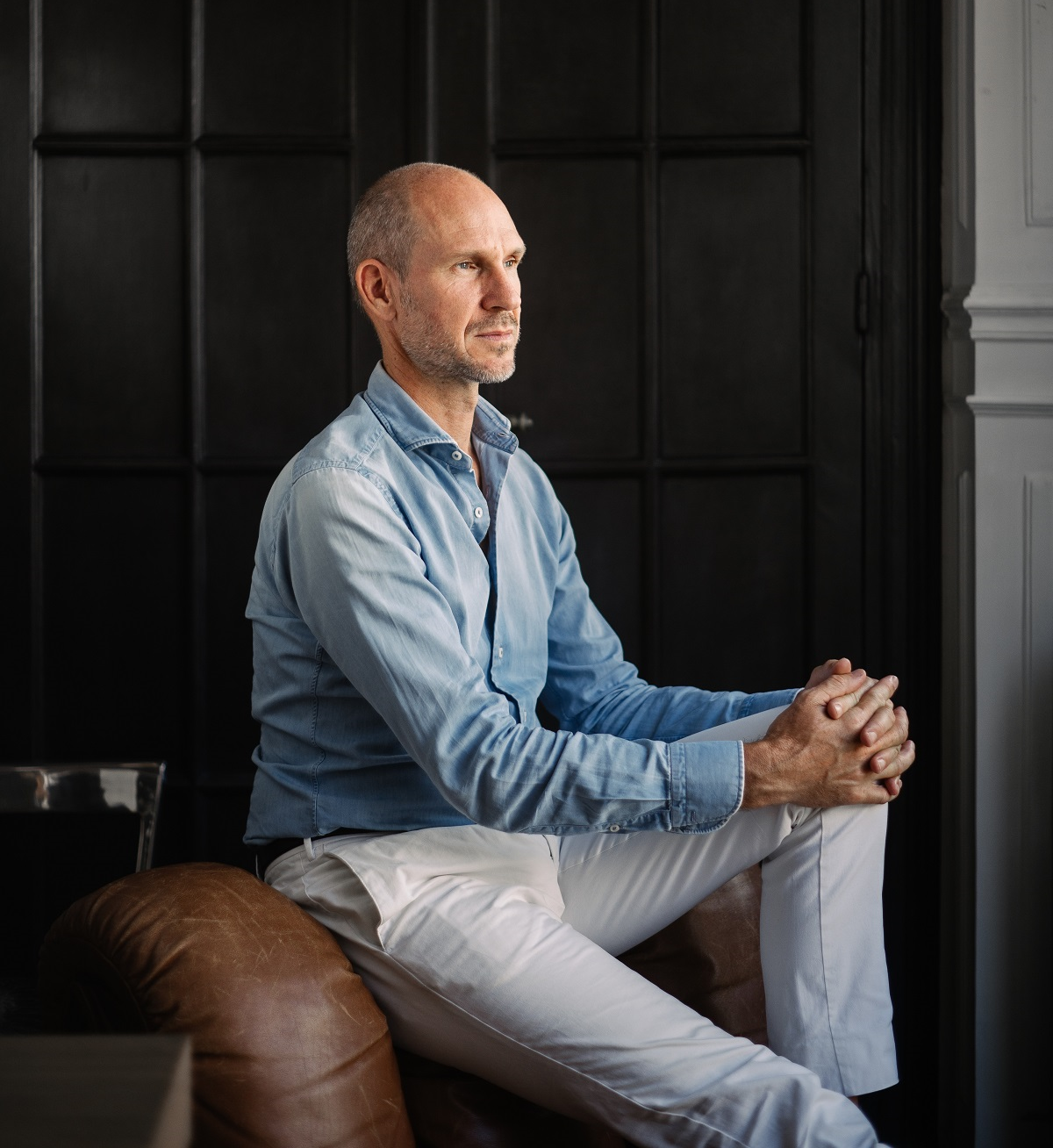
portrait of interior designer Tristan Auer

Image credit: Tristan Auer

Auer, a leading interior architect on the contemporary international stage, founded his studio in Paris in 2002, after honing his eye alongside two very different yet complementary figures – Philippe Starck and Christian Liaigre. Since then, he has left his mark on some of the world’s most prestigious addresses, from private residences to restaurants, hotels and palaces such as Hôtel de Crillon in Paris and the iconic Les Bains Douches transformation. His singular design language and contribution to the international standing of French craftsmanship have earned him wide recognition, including the title of Designer of the Year and multiple awards in hospitality design.

Thomas B. Meier, Chief Executive Officer of Jumeirah said of the restoration programme: “Jumeirah Burj Al Arab is far more than an architectural landmark; it is a symbol of ambition, craftsmanship and enduring excellence. For the last 27 years, this exceptional property has served guests with the same passion and world-class standards that distinguish it from any other hotel in the world. This restoration programme marks a new chapter in the story of Jumeirah Burj Al Arab, one that will carefully preserve the heritage of what is currently the sole property in our Jumeirah limited-edition collection of iconic landmark addresses defined by design distinction and prestige.”

Tristan Auer, Interior Architect behind the restoration added: “Being entrusted with the very first restoration of a property of this calibre in Dubai – the Jumeirah Burj Al Arab, a timeless icon of the region – is a profound privilege. To carry forward, with the utmost dedication, the legacy of such an extraordinary landmark is both an honour and a responsibility.”

Jumeirah Burj Al Arab, Dubai’s most iconic hotel and a global symbol of Arabian hospitality, stands tall as the flagship property of Jumeirah’s exceptional portfolio. Its elegant sail-shaped structure, one of the world’s most photographed superstructures, redefines luxury hospitality worldwide. With its 198 suites and overall opulent interior design featuring Swarovski crystals, marble, and gold leaf, the hotel exudes grandeur and sophistication.

The hotel’s outstanding offerings have earned numerous accolades, embodying unparalleled luxury as the jewel in Dubai’s glittering crown.

Main image credit: Jumeirah

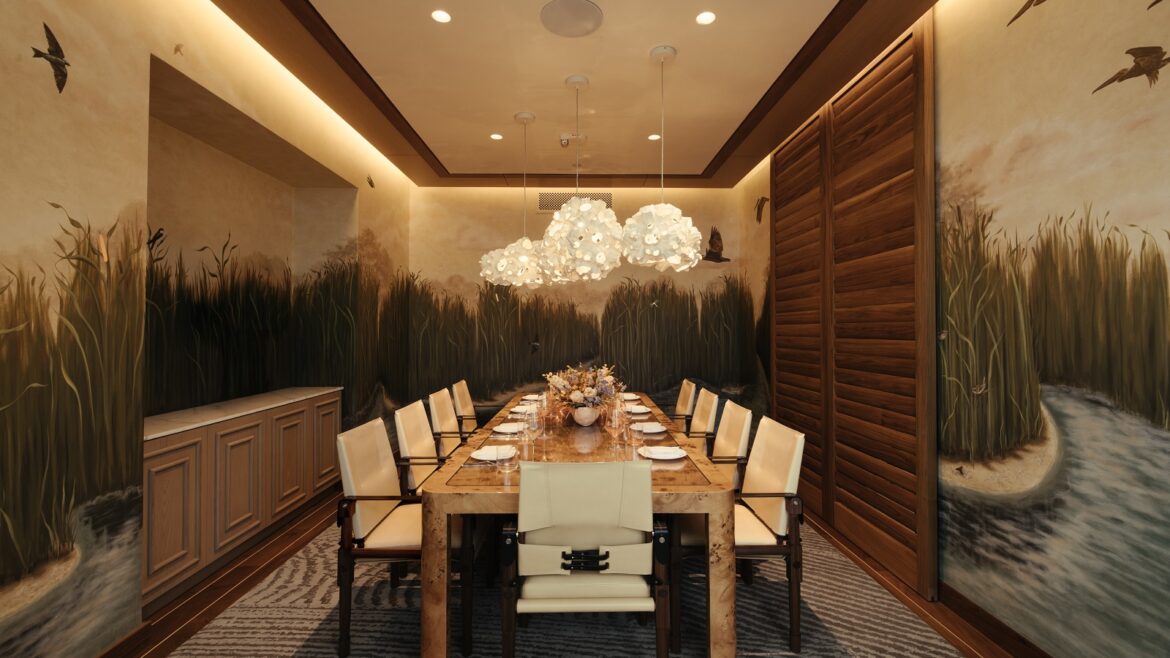
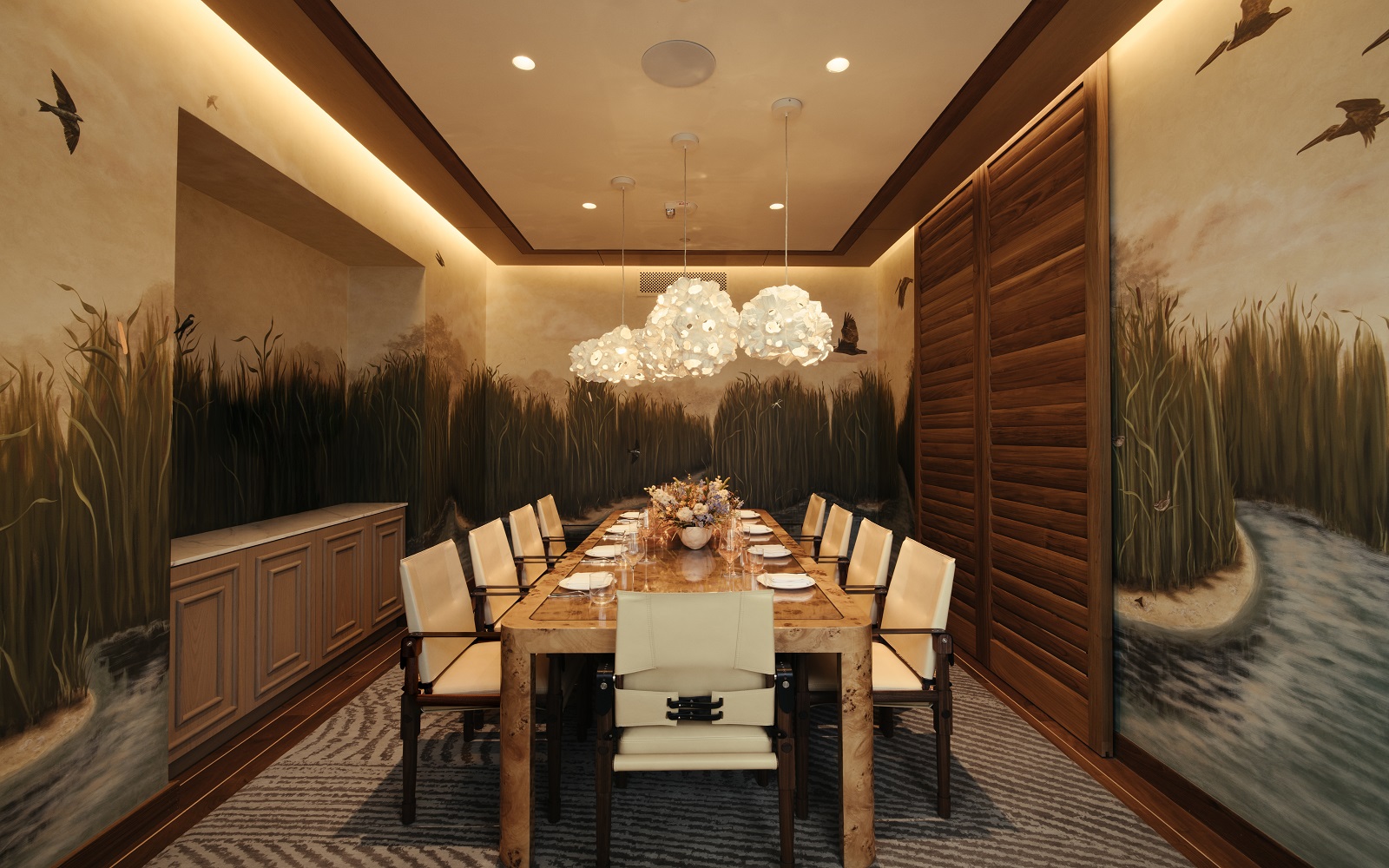
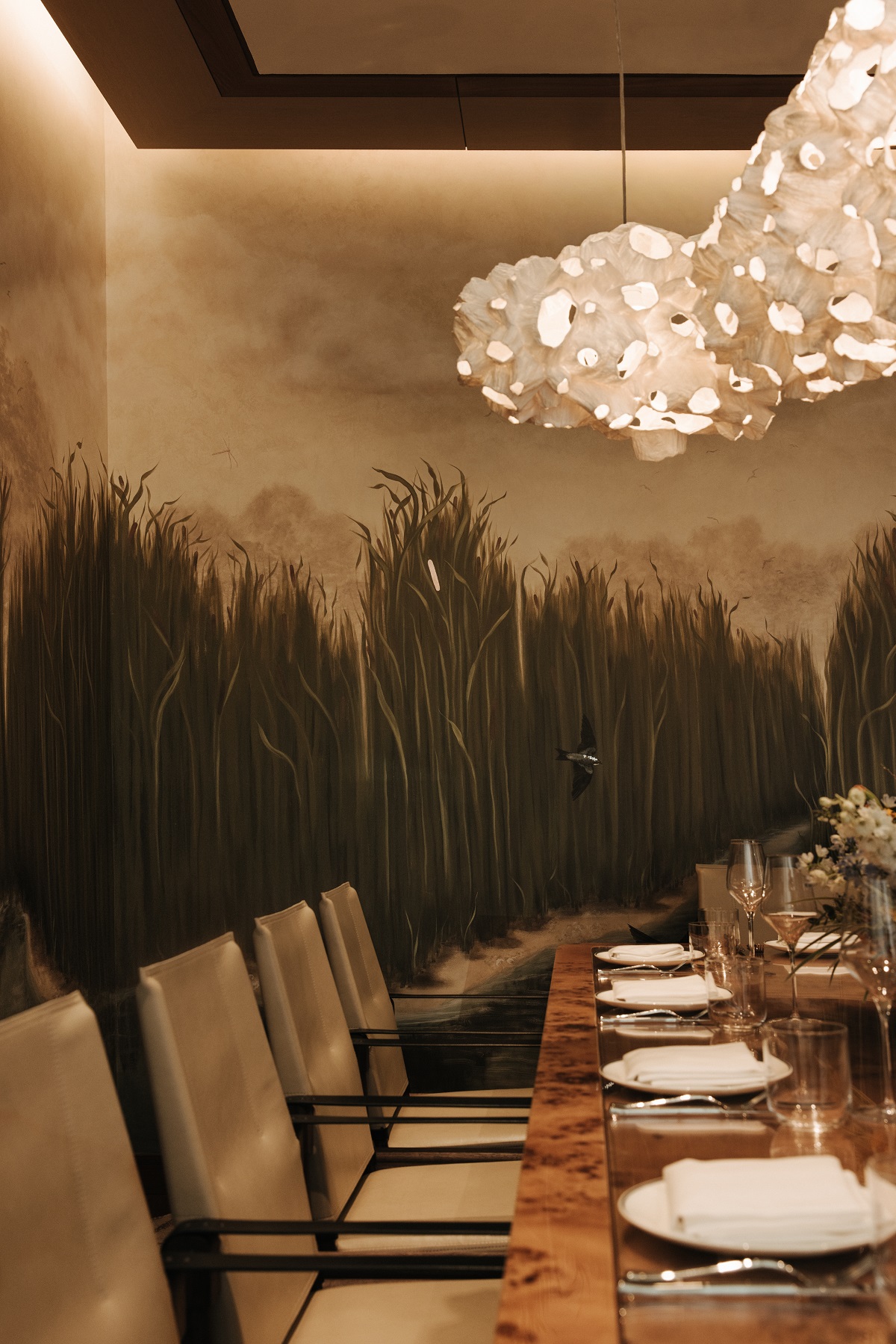
private dining room in The Crossing restaurant which features an immersive custom mural created by Lonesome Pictopia

The Crossing – a restaurant designed to reflect the natural beauty of its setting

1024 640 Pauline Brettell
The Crossing – a restaurant designed to reflect the natural beauty of its setting

Multidisciplinary design firm Meyer Davis, led by Will Meyer and Gray Davis, has delivered a refined blend of Lowcountry charm and modern luxury to The Crossing, the signature restaurant at The Cooper Hotel, Charleston…

private dining room in The Crossing restaurant which features an immersive custom mural created by Lonesome Pictopia

Located along the banks of the Cooper River, The Cooper Hotel, a luxury waterfront hotel in Charleston, is home to a new culinary destination, The Crossing. Meyer Davis’ design for The Crossing draws from the surrounding marshlands and the area’s nautical history, creating a destination that reflects the natural beauty of its setting.

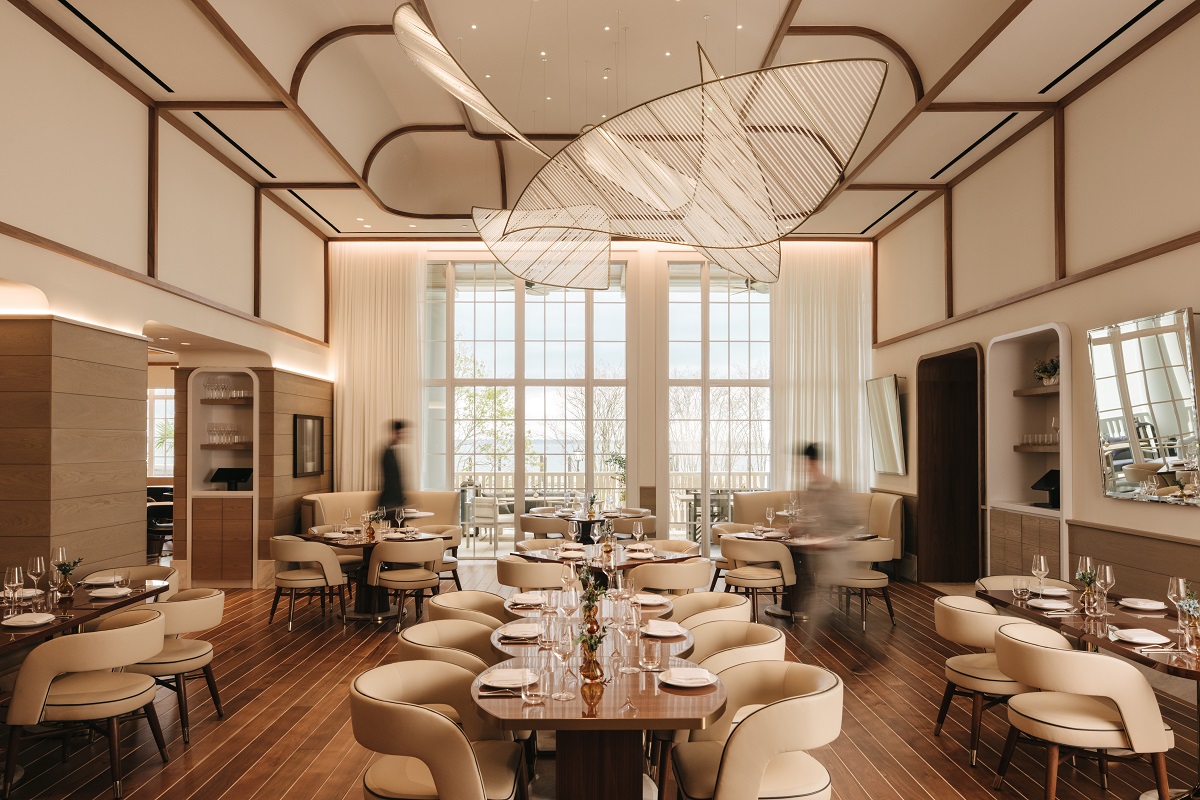
The Crossing restaurant with vaulted ceiling in wood and cream design by Meyer Davis

Image credit: Jovani Demetrie

The studio aimed to evoke a yacht-like and maritime sensibility throughout. The dining room dramatically overlooks the mouth of the Cooper river, with teak millwork and custom drapery that features a hand-painted map of the area. At the chef’s table, guests experience the energy of the open kitchen, with the culinary scene spilling into the dining area. The space is designed to make diners feel connected to the activity and craftsmanship of the kitchen.

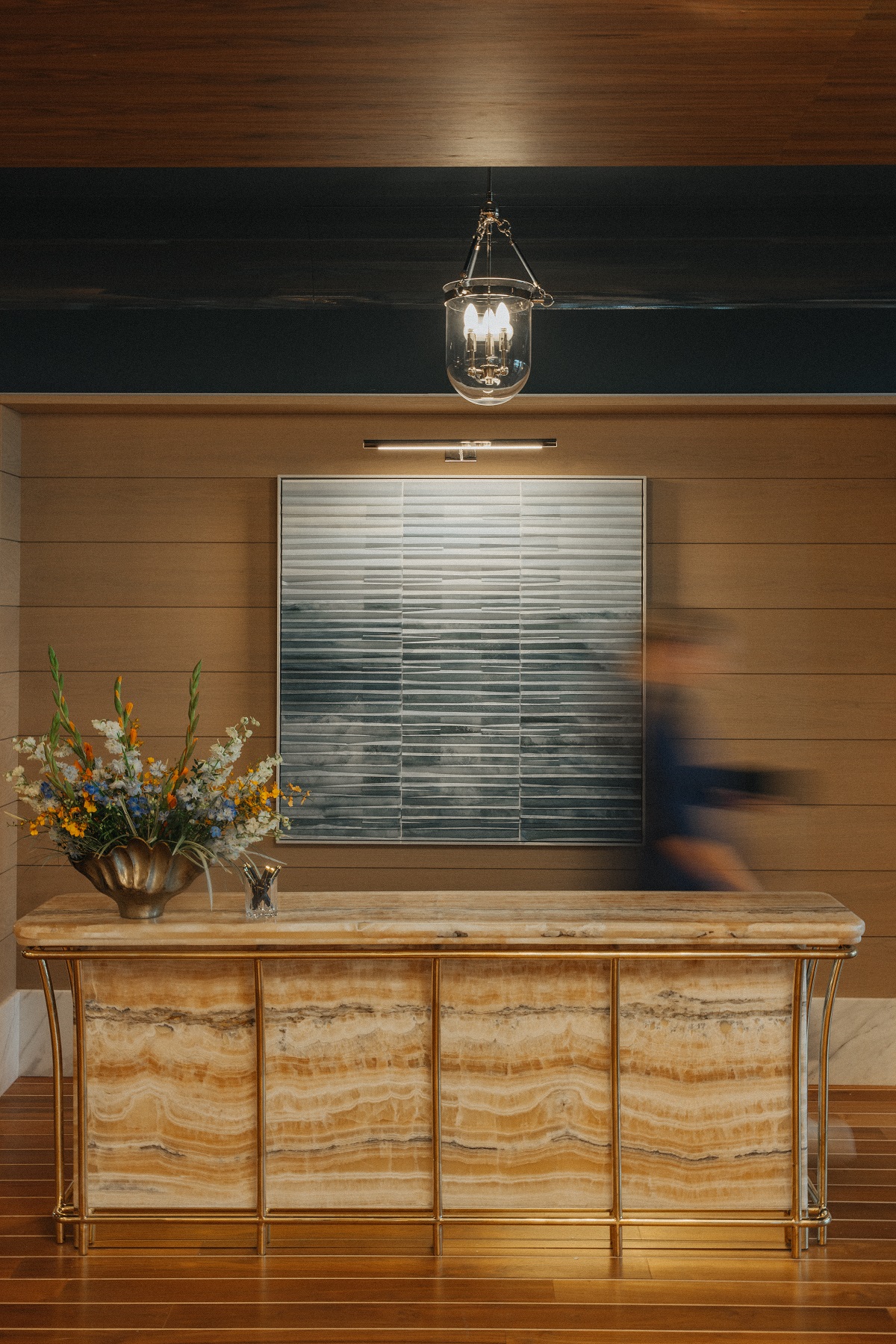
Accentuated throughout the millwork are Honey Onyx slabs, chosen for its rich tones of caramel brown, gray blues, and creams that mimic the surrounding river and marshlands, grounding the space in its natural environment. Further enhancing the guest experience is the private dining room, which features an immersive custom mural created by Lonesome Pictopia.

“This room is a jewel box – an intimate space that lets you step into a lowlands retreat. “It’s truly a special place.” – Will Meyer

The outdoor terraces create a seamless transition from indoor dining, inviting guests to enjoy expansive views of the Cooper River while dining al fresco. Echoing the natural materials and refined finishes found throughout the interiors, the terraces reinforce a cohesive design language. Basket-weaving details inspired by Charleston’s traditional craftsmanship are woven throughout the space—most notably in the bar dies and elevator lobby paneling – offering a subtle nod to the city’s cultural heritage.

The Crossing restaurant designed by Meyer Davis

Image credit: Jovani Demetrie

“Our goal was to create a design that would make the restaurant feel inseparable from its environment –where the river, the history, and the sense of movement are all part of the experience. It’s about creating something timeless, yet unmistakably Charleston.” – Gray Davis

Throughout the restaurant, yacht-inspired luxury is thoughtfully balanced with Lowcountry tradition, resulting in spaces that feel both elevated and deeply rooted in place. By drawing from Charleston’s maritime heritage, natural surroundings, and culture of craftsmanship, Meyer Davis has created an experience that feels immersive rather than imposed—one that invites guests to slow down and connect with the waterfront setting.

Main image credit: Jovani Demetrie

Northern Lights Jewel Chandelier

Artisan glass and asymmetric forms – Northern Lights unveils sculptural ceiling collection

1024 640 Stuart O'Brien
Artisan glass and asymmetric forms – Northern Lights unveils sculptural ceiling collection

Blending craftsmanship with experimentation, Northern Lights’ latest collection explores asymmetry, materiality and light to redefine statement ceiling design…

Northern Lights Jewel Chandelier

Northern Lights reveals its 2026 ceiling collection – a series of customisable, sculptural statements where material, form, and light converge to anchor interiors with vertical drama. Precision-designed and handcrafted in Britain, the collection reflects a considered balance of craft, engineering, and authentic design.

Purposeful irregularity defines the direction – asymmetry inspired by natural crystals, cut gemstones, and flowing organic forms gives many pieces a dynamic identity.  Other pieces examine precision, geometry, and architectural clarity, shaping atmosphere and bringing bold, layered presence.

Solace_Pendant_CloseUp_

Solace Pendant | Image credit: Northern Lights

The designs celebrate decades of artisan glassmaking, expressed through hand-slumped and kiln-fused forms, tinting, hand-cut panels, and custom moulds.  Natural alabaster, rich brass, and precision metalwork complete the material palette, with each carefully crafted to maximise texture, material expression, and light interaction.

From the cascading movement and delicate glasswork of Veil to the faceted brilliance of the gemstone-inspired Jewel, the collection reveals a series of distinct sculptural identities.

Ember demonstrates traditional fused glass techniques, combining kiln temperature experimentation with hand-cut, coloured panels to create striking patterns – a subtle nod to Northern Lights’ heritage in glass techniques.

Northern Lights Jewel Chandelier

Northern Lights Jewel Chandelier | Image credit: Northern Lights

Jewel is inspired by cut gemstones. 3D prototyping defined scale, geometry, and balance, while multi-faceted, hand-coloured glass captures and reflects light across each surface. Solid brass anchors the design, uniting structure with sculptural elegance, resulting in a piece that transforms interiors with jewel-like presence.

Veil casts a delicate cascade of shimmering light through leaf-like glass forms. Seeded glass sheets are precision-cut, hand-slumped, and partially frosted, creating subtle depth and a soft, layered glow. Integrated LED spotlights enhance the interplay of light and shadow, producing a composition that’s both refined and expressive.

Solace combines sculpted alabaster with an amber-tinted glass tube, creating two distinct layers of balanced illumination. Brass framing and the stone’s subtle veining add texture and refinement, producing a pendant that’s both sculptural and serene.

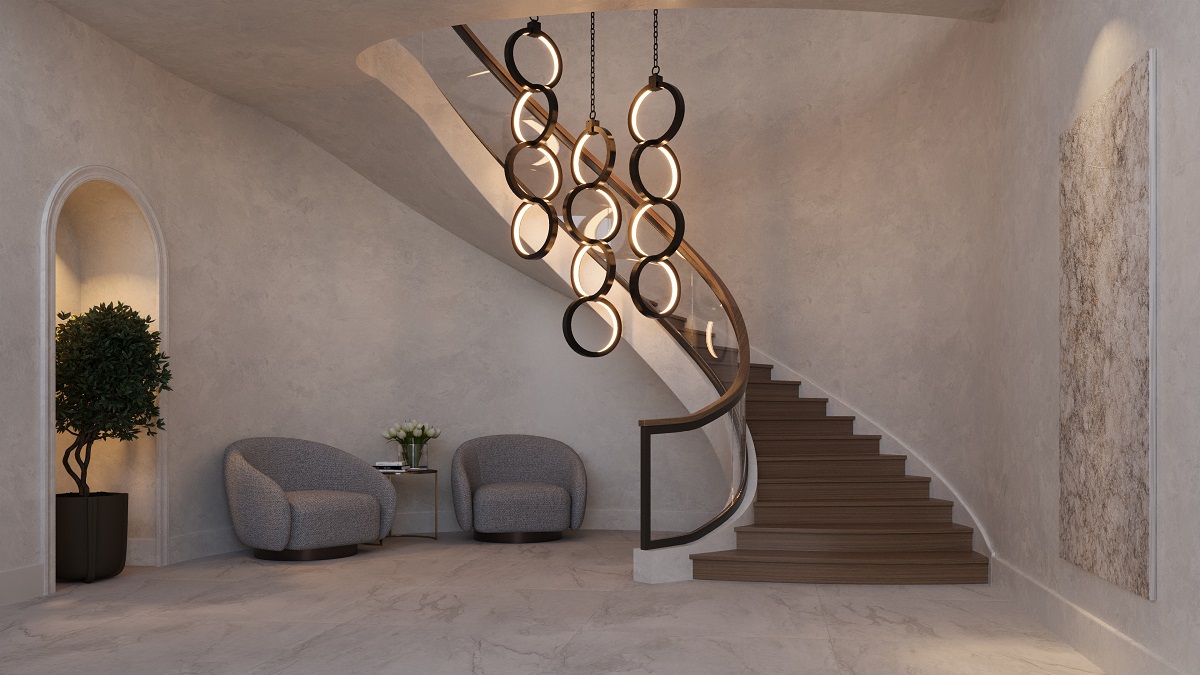
Link_Pendant from Northern Lights above staircase

Link Pendant | Image credit: Northern Lights

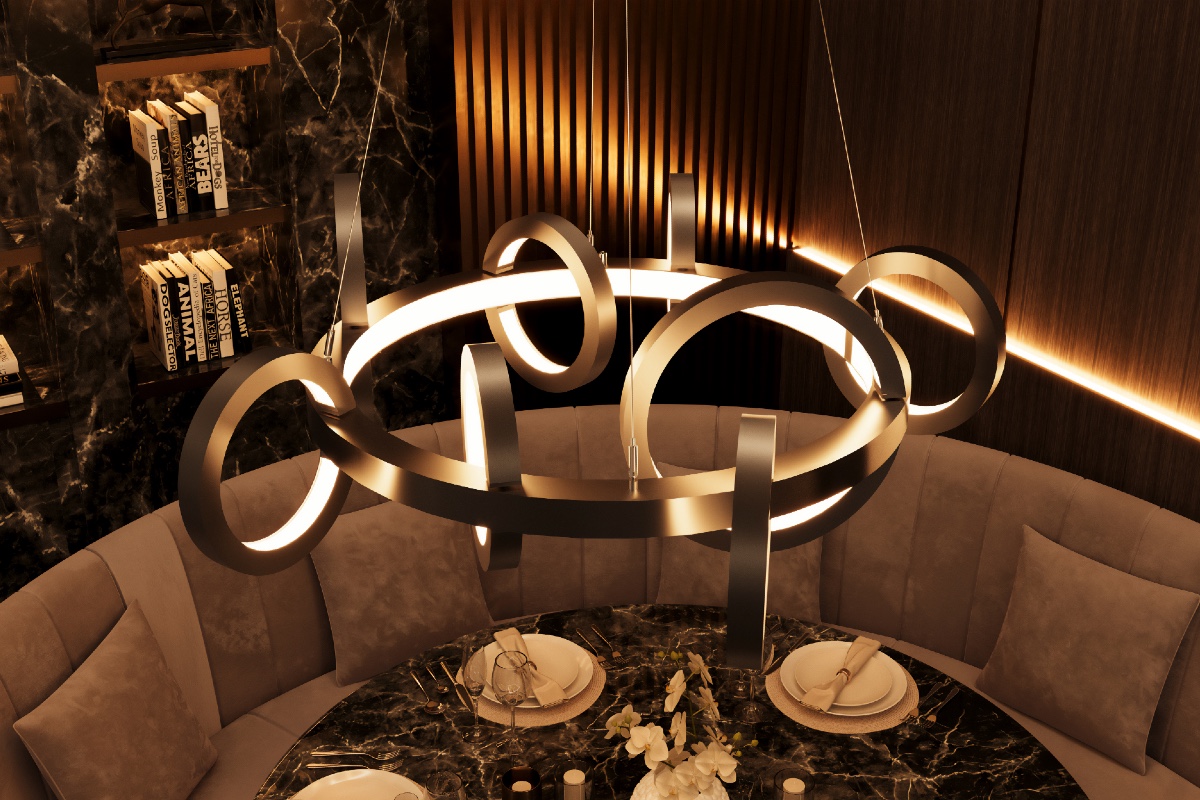
Link is available as both a linear pendant and statement chandelier, conceived from fabricated metalwork in interlinked rings with integrated LEDs, creating a striking architectural presence.

Throughout the collection, layered illumination and material pairings create depth, warmth, and atmosphere, uniting each piece in a cohesive vision.

“At the heart of this launch is a focus on material behaviour and design experimentation,” explained Michael Jackson, Head of Design at Northern Lights. “Each piece emerged from hands-on exploration of light and material interaction. We pushed glass, alabaster, and metal to reveal their full potential, shaping forms that hold space, command presence, and create visually rich narratives.”

Northern Lights Link Chandelier

Link Chandelier | Image credit: Northern Lights

Deep customisation is integral to the design language.  Handcrafted in Northern Lights’ Derbyshire HQ, the collection offers designers an unrivalled level of creative control. Scale, proportions, materials, tiers, drops, and configurations can all be adapted, enabling truly tailored lighting solutions.

An exclusive preview of the story and craft behind selected designs will be presented at Clerkenwell Design Week at Bagnodesign A&D Gallery on 21st May.

Northern Lights is one of our Recommended Suppliers and regularly features in our Supplier News section of the website. If you are interested in becoming one of our Recommended Suppliers, please email Katy Phillips.

Main image credit: Northern Lights

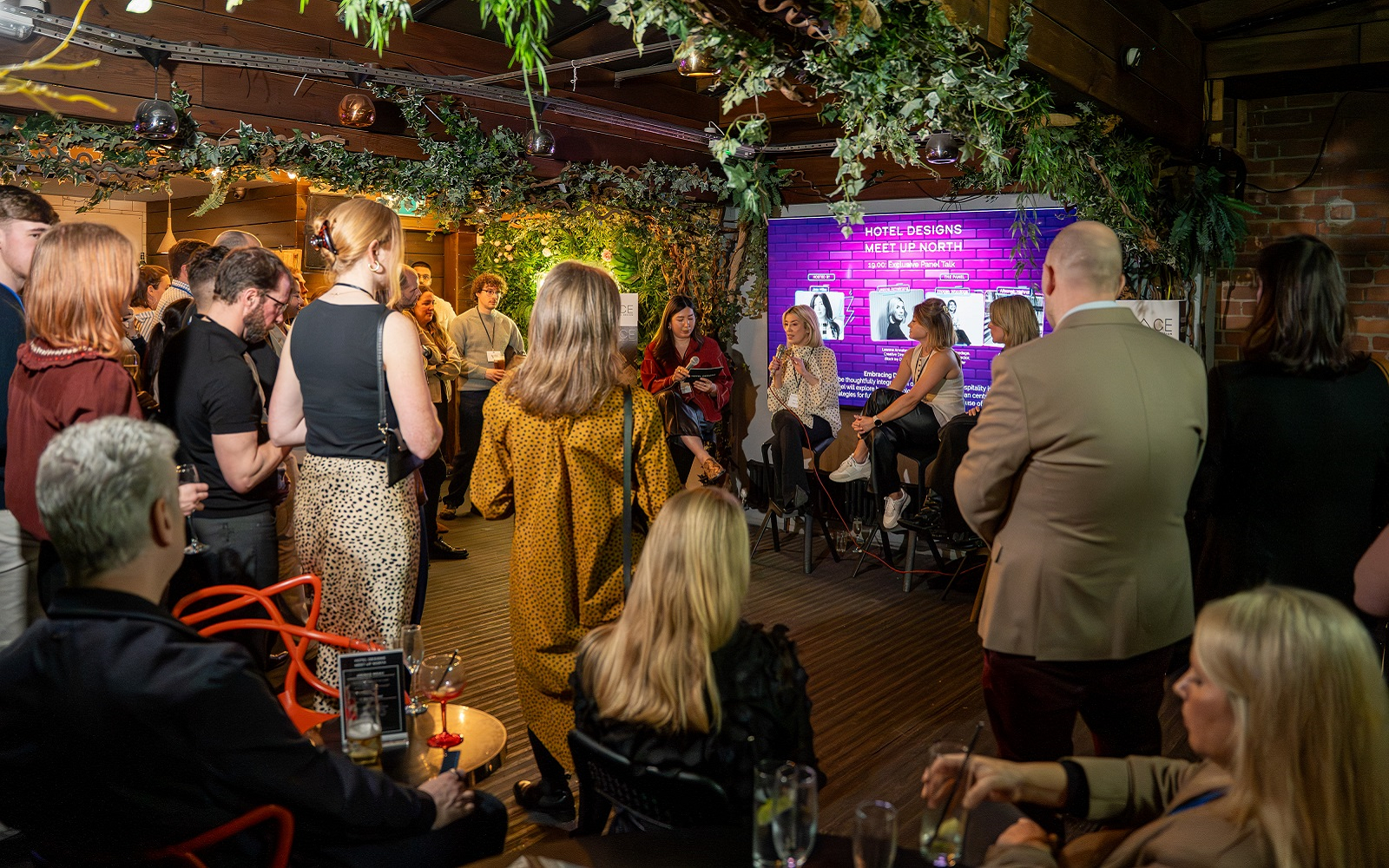
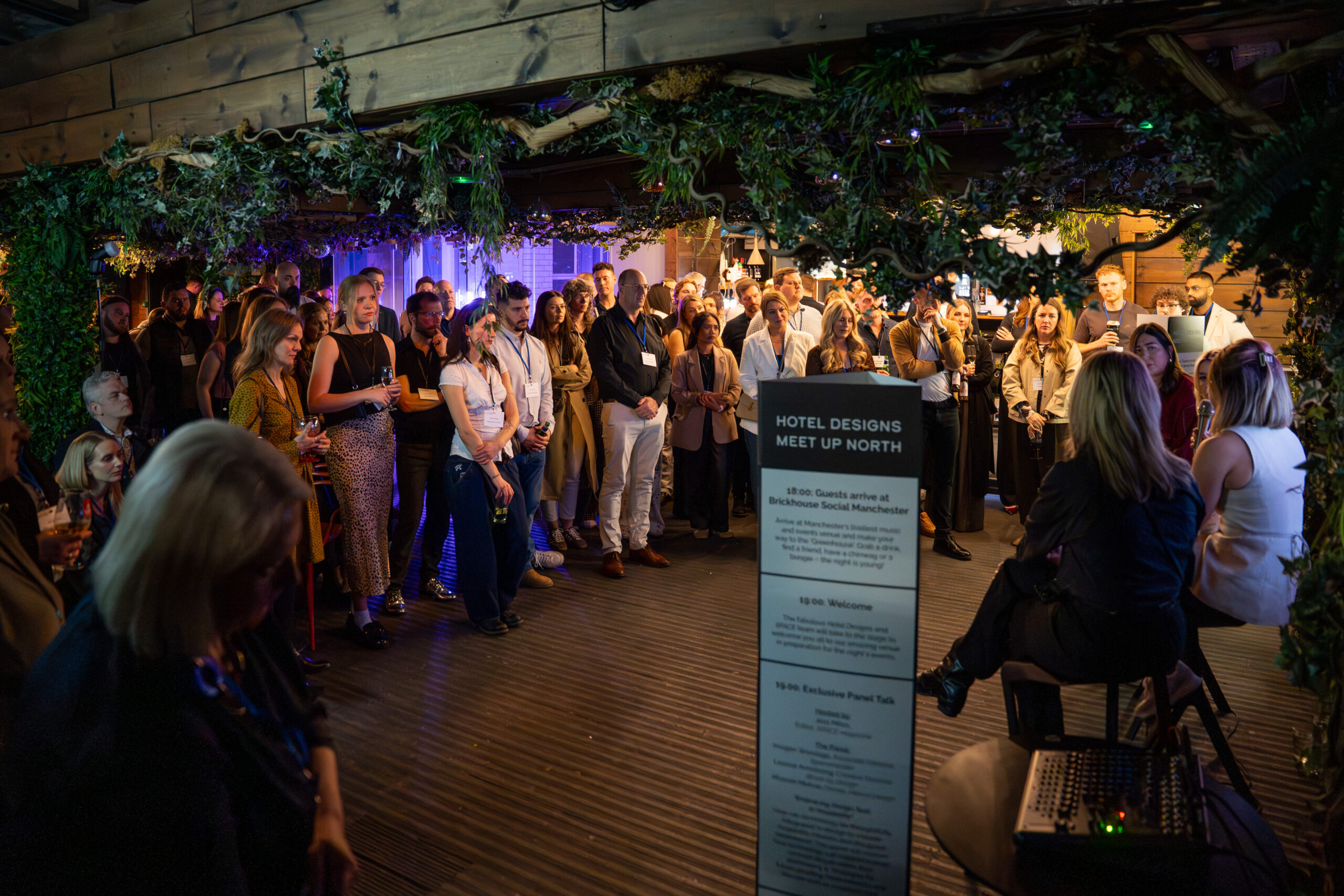
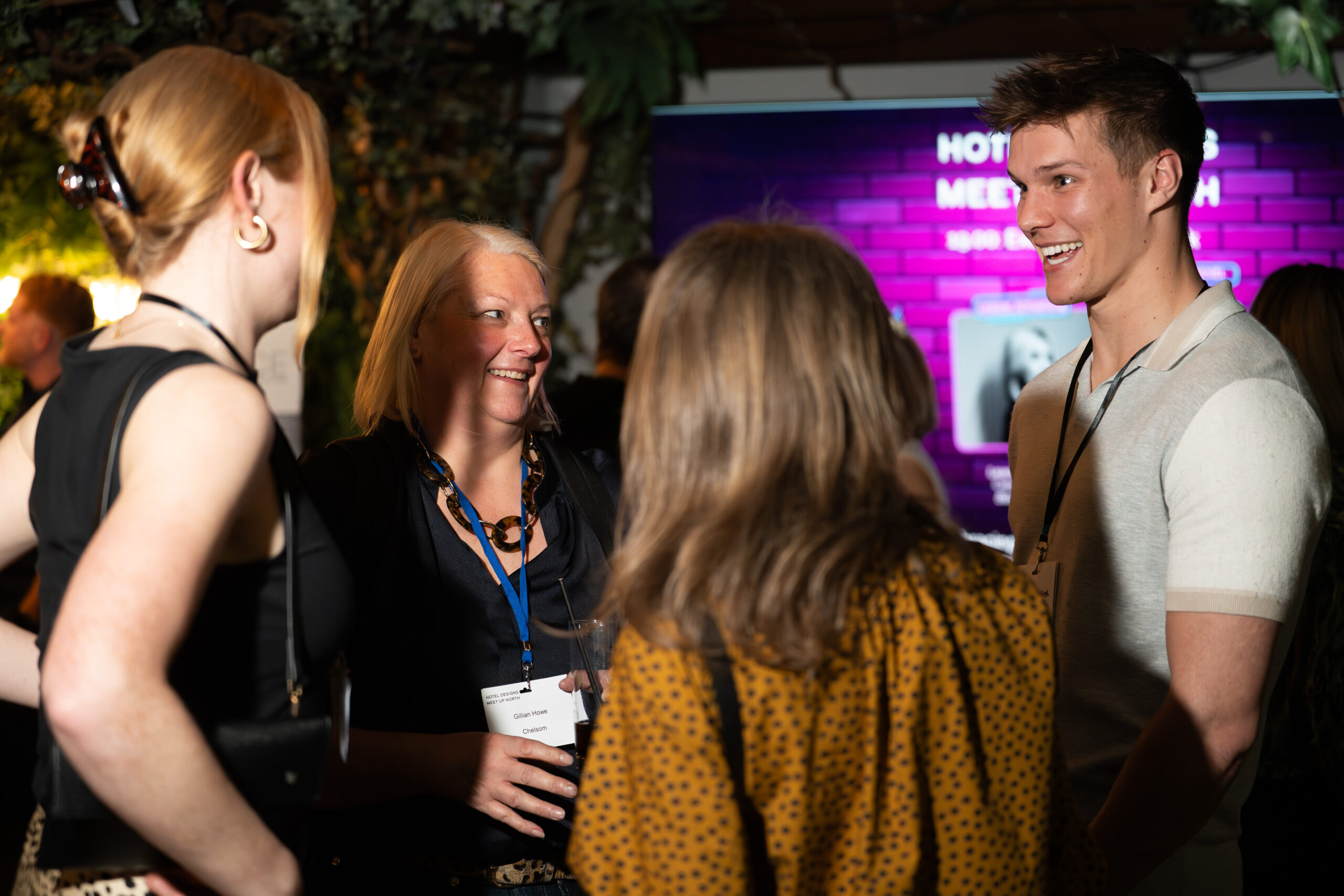
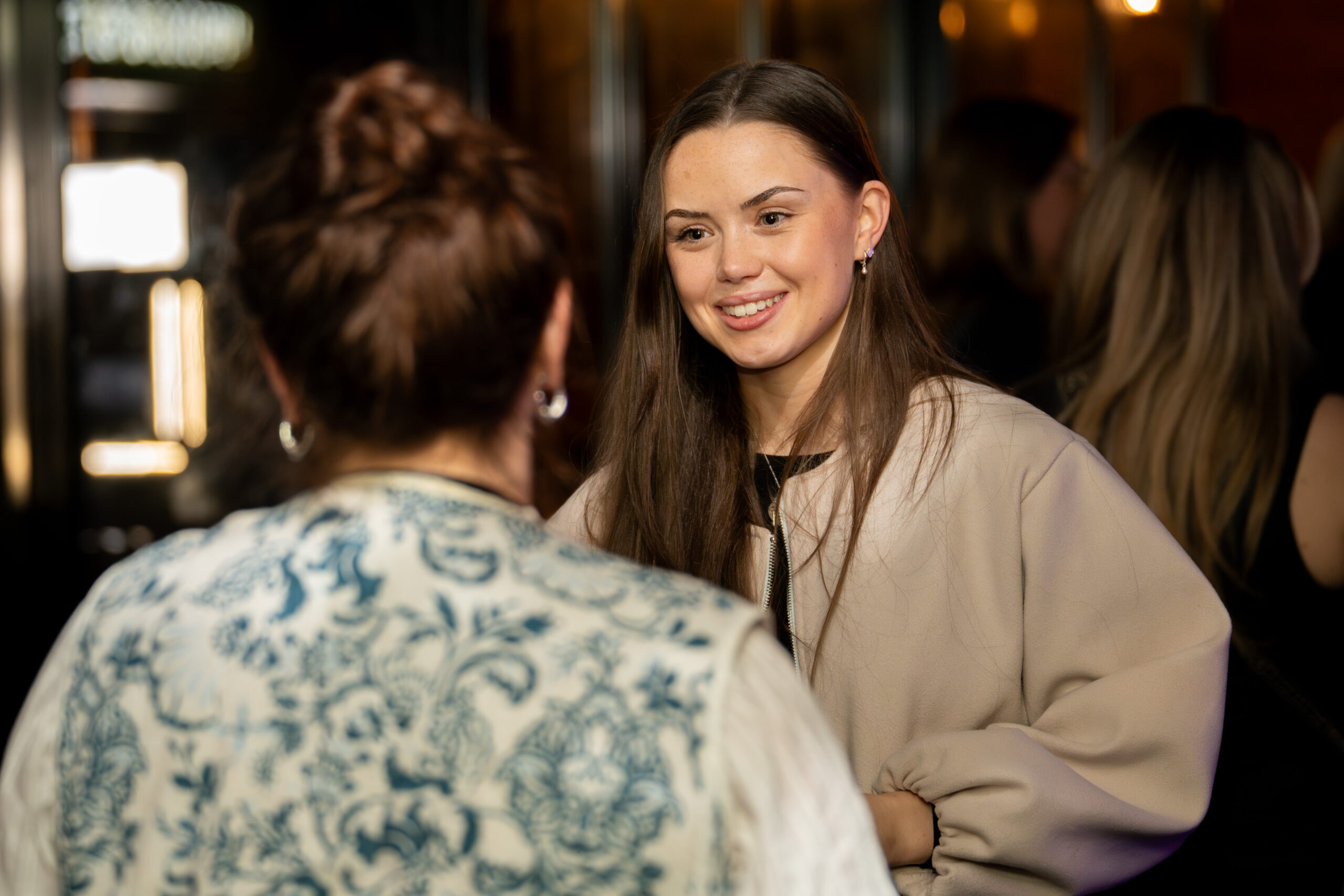
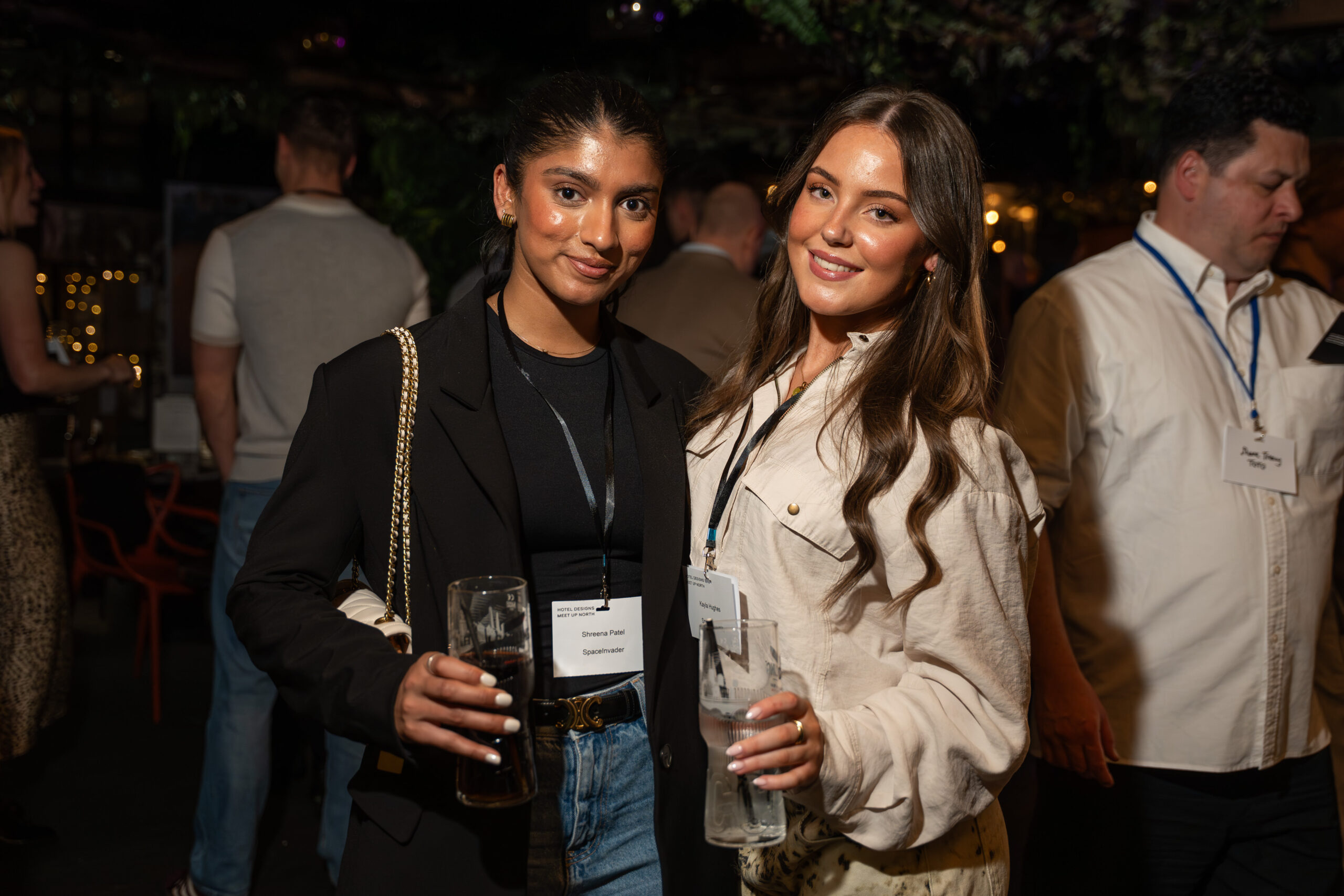
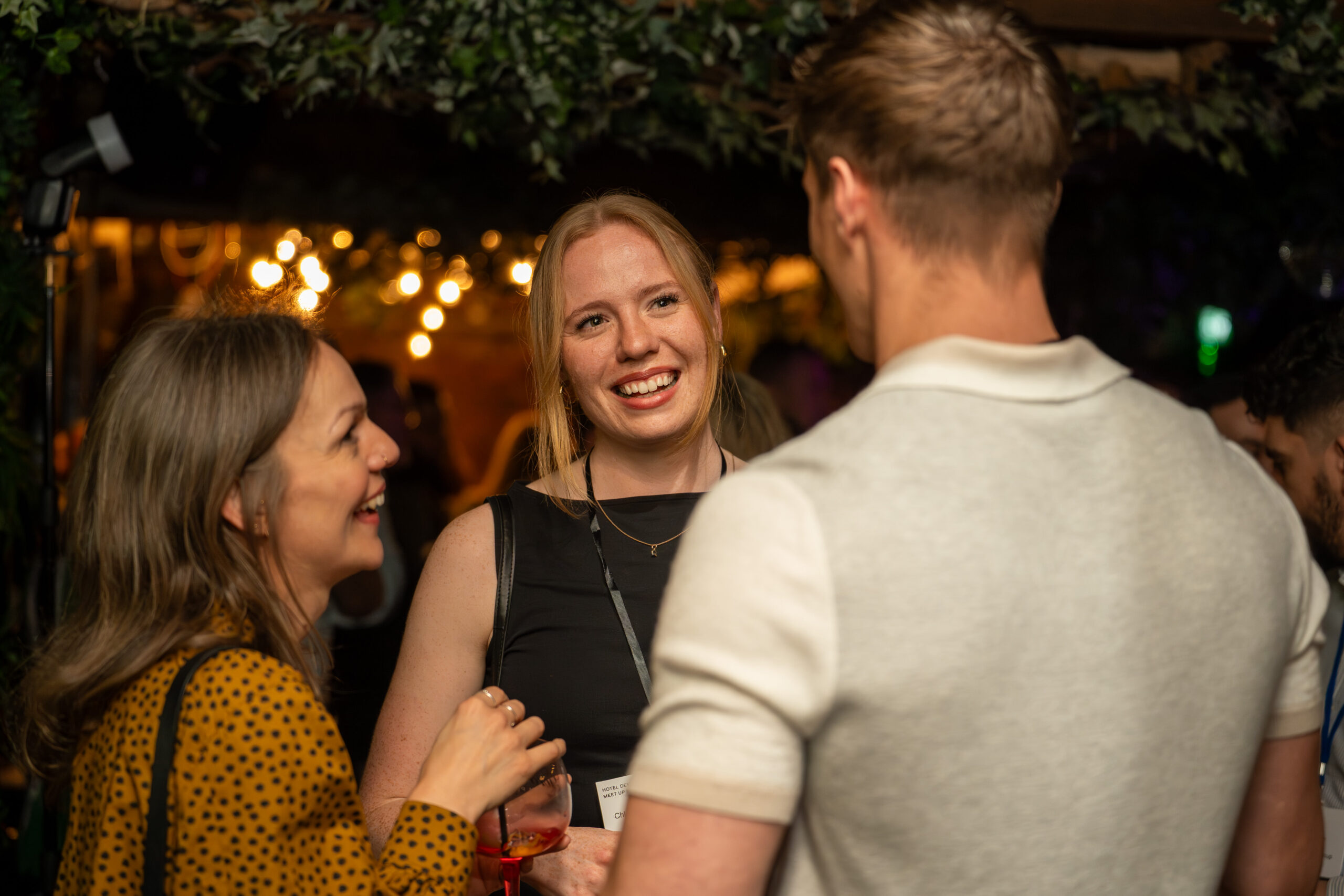
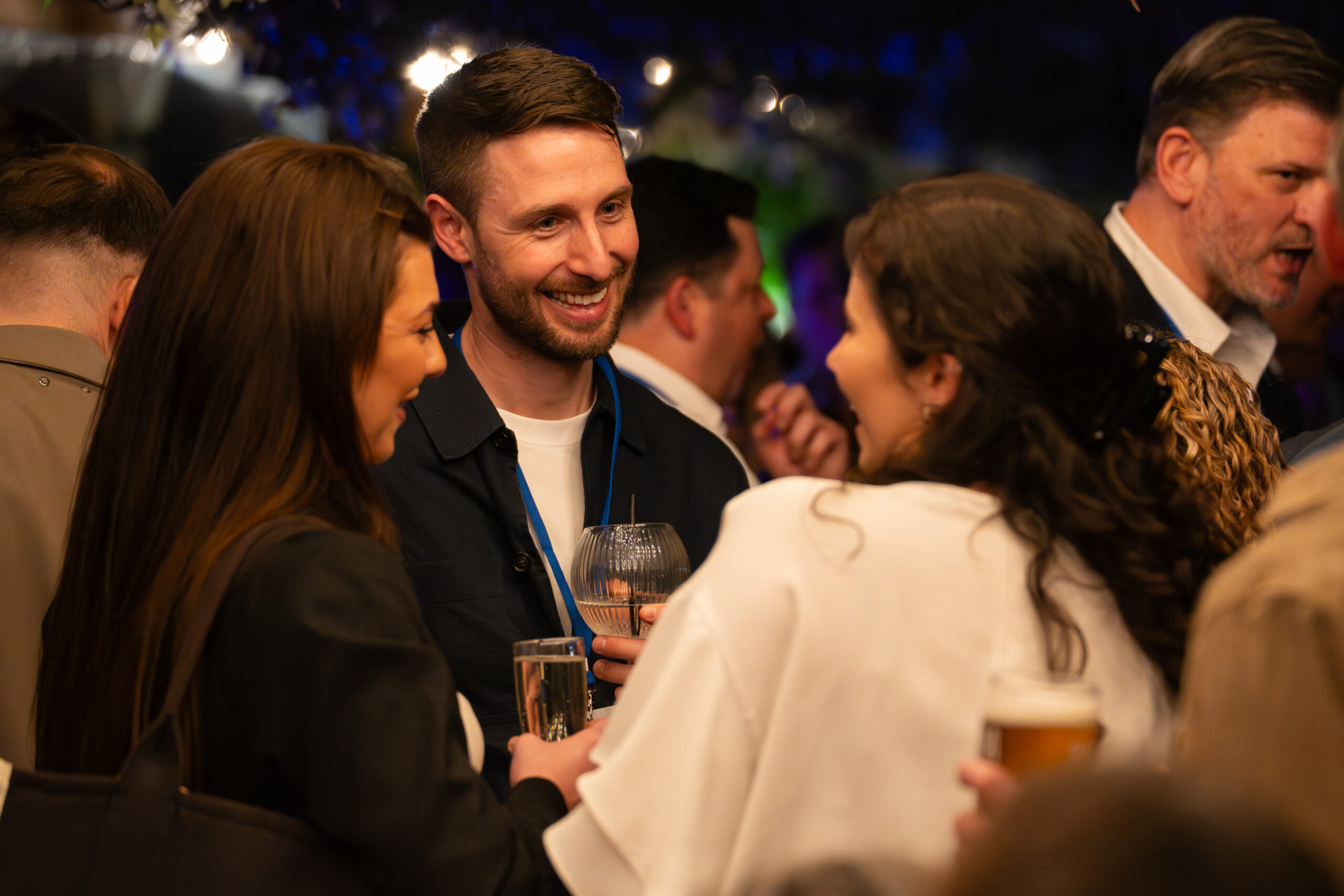
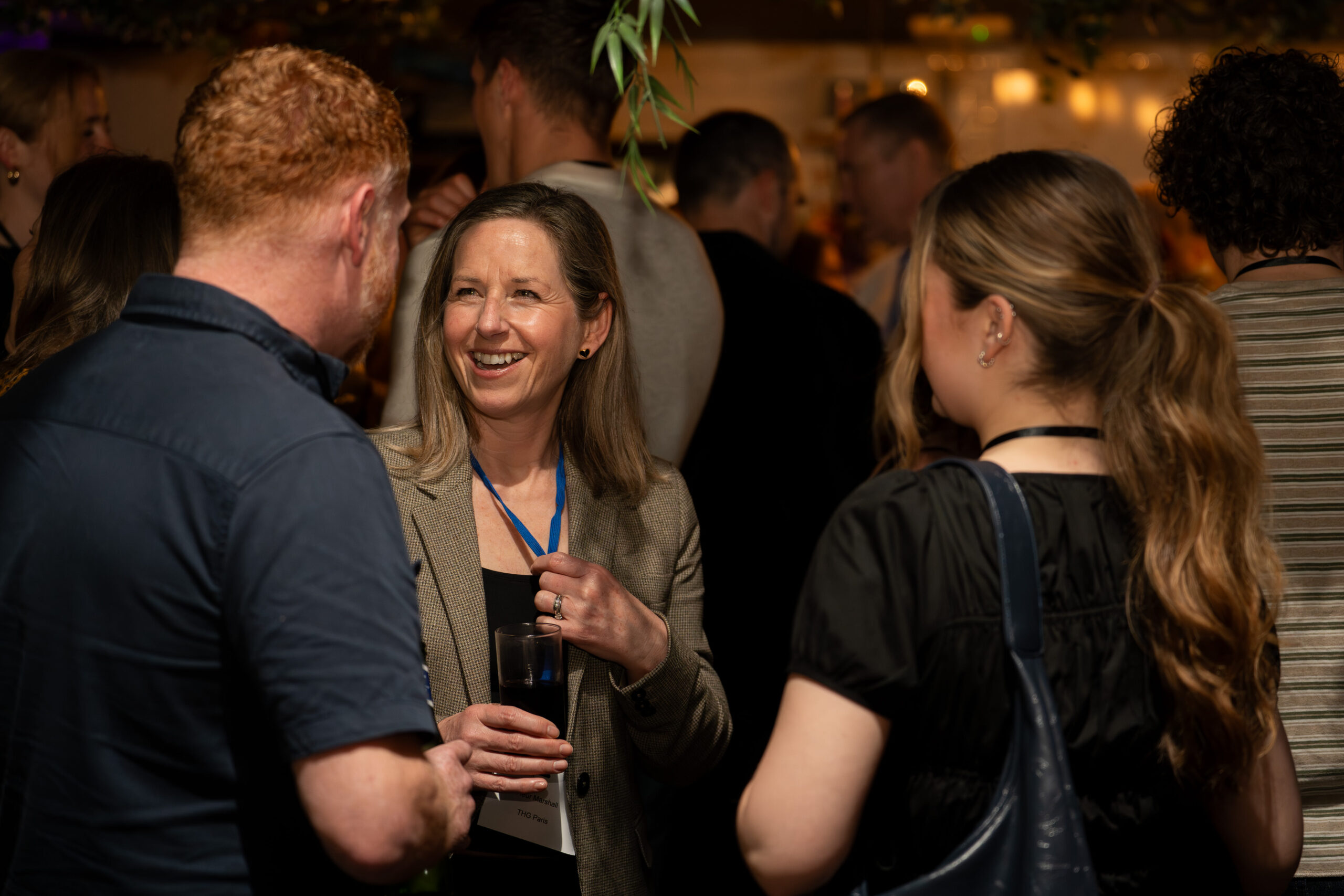
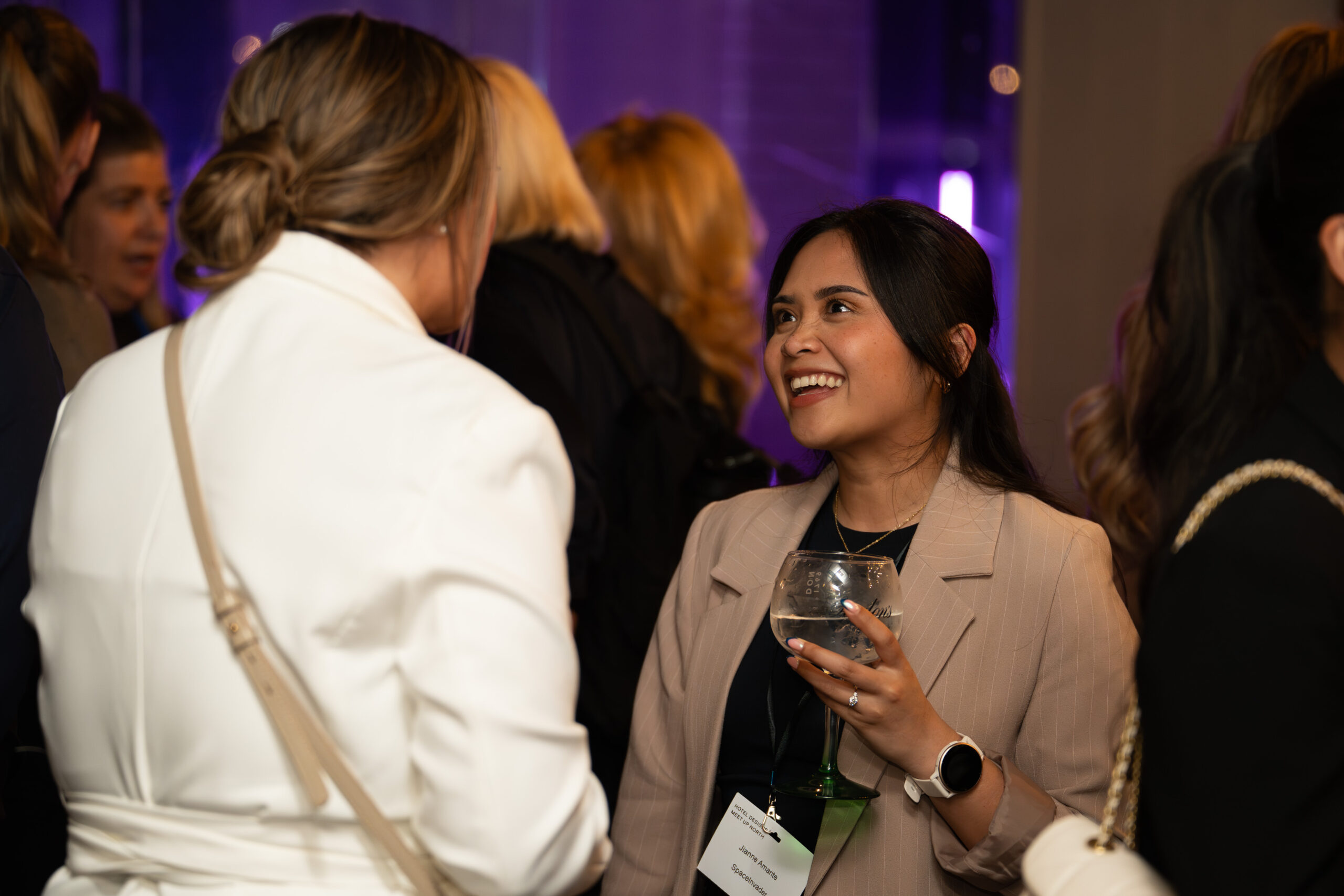
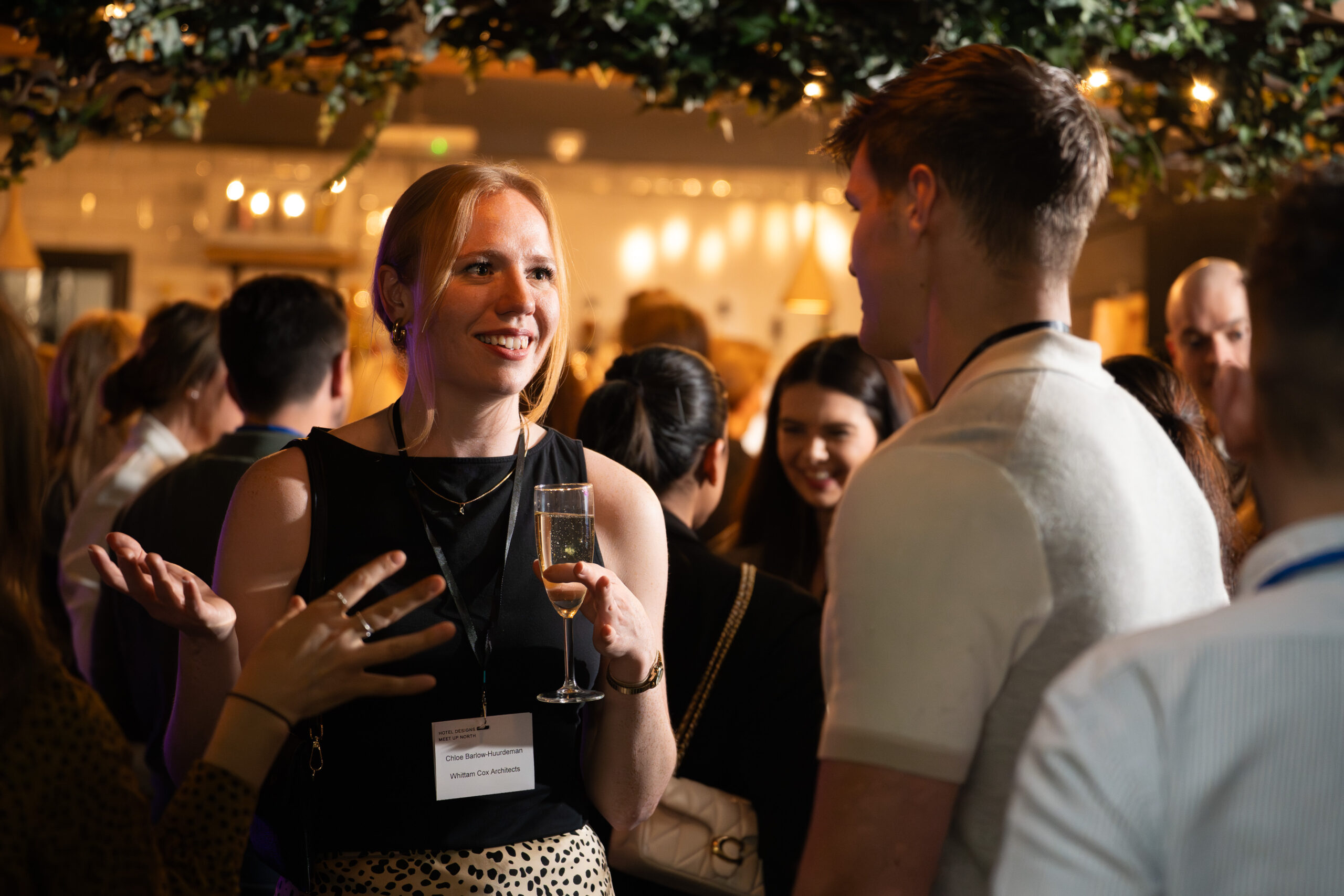
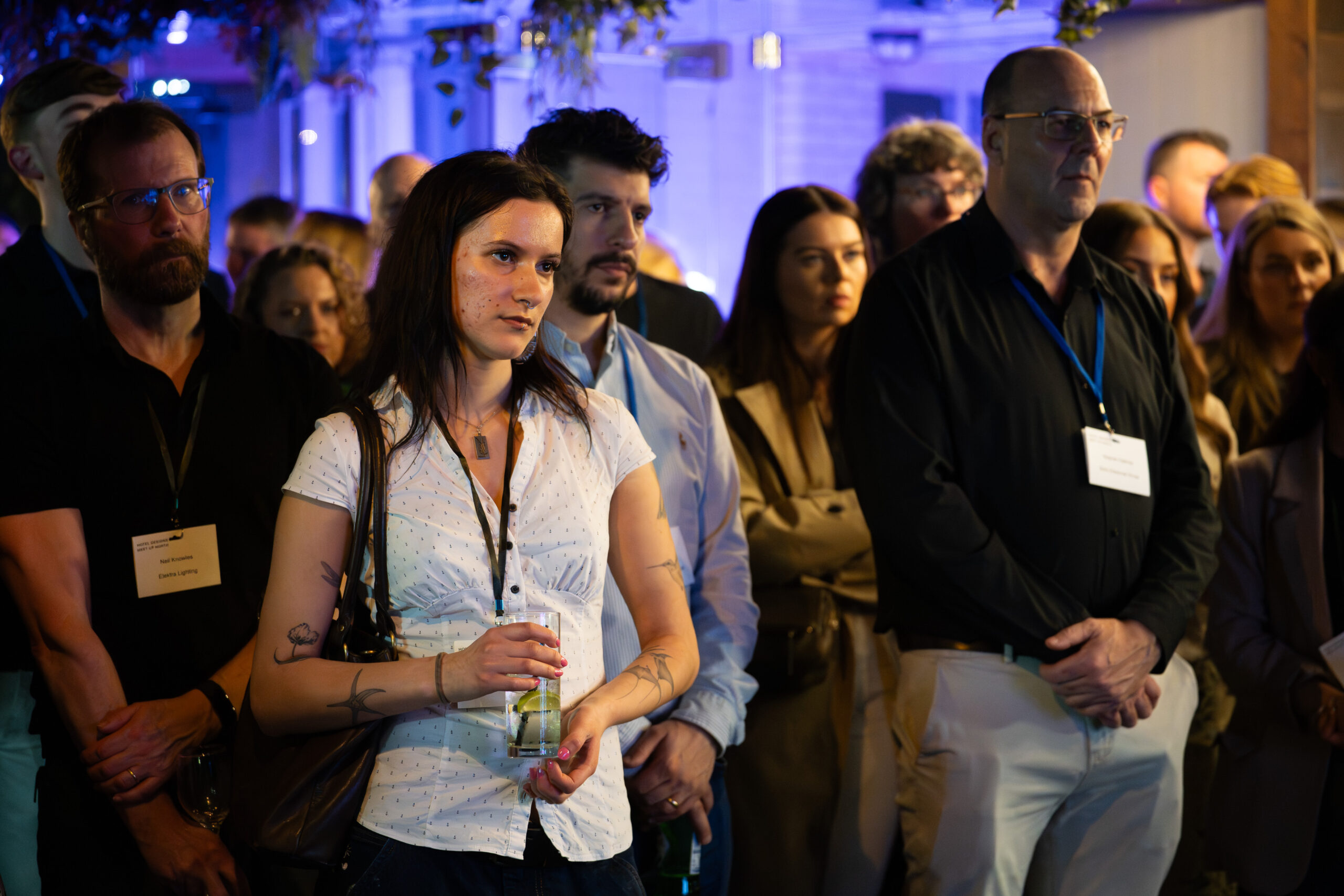
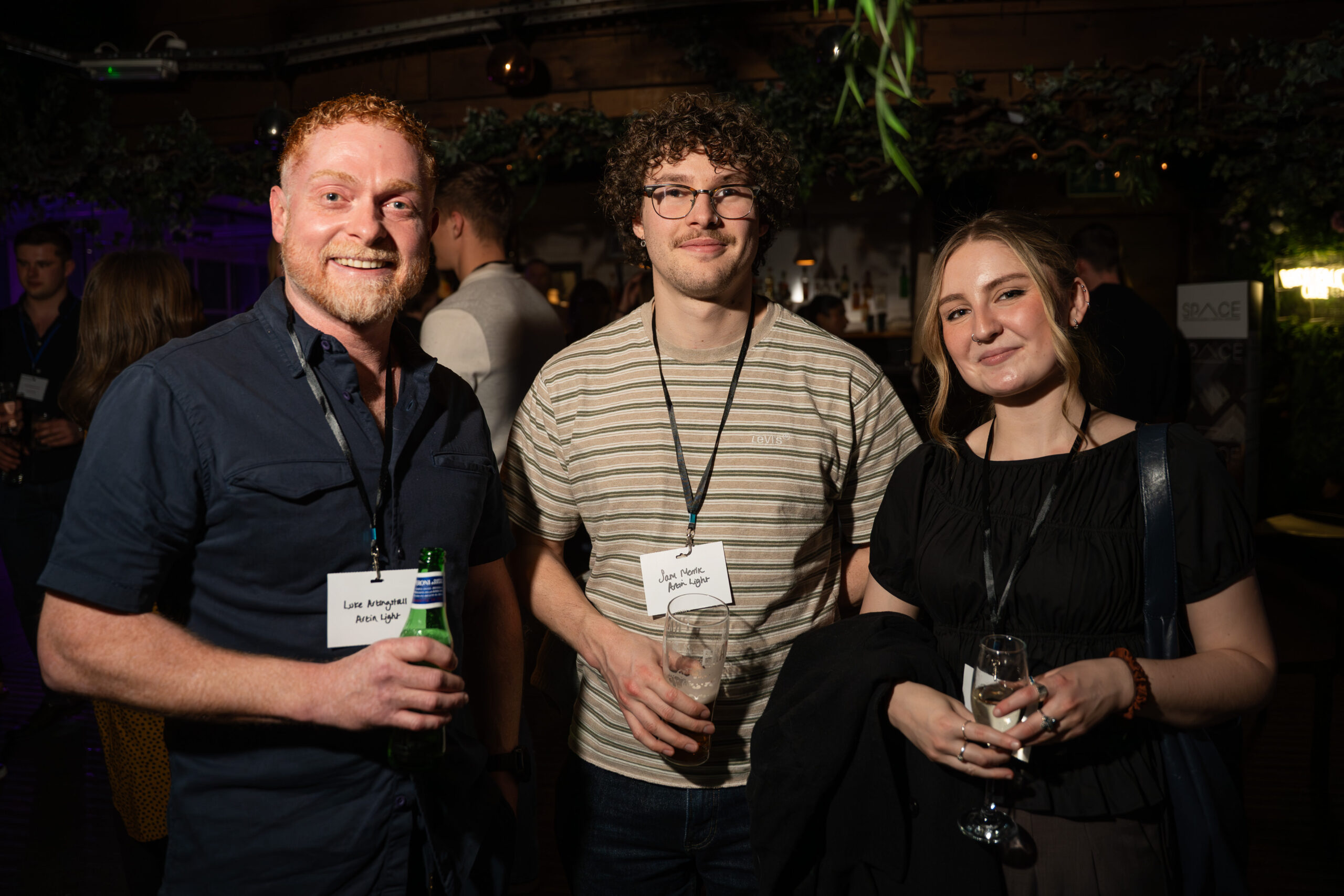
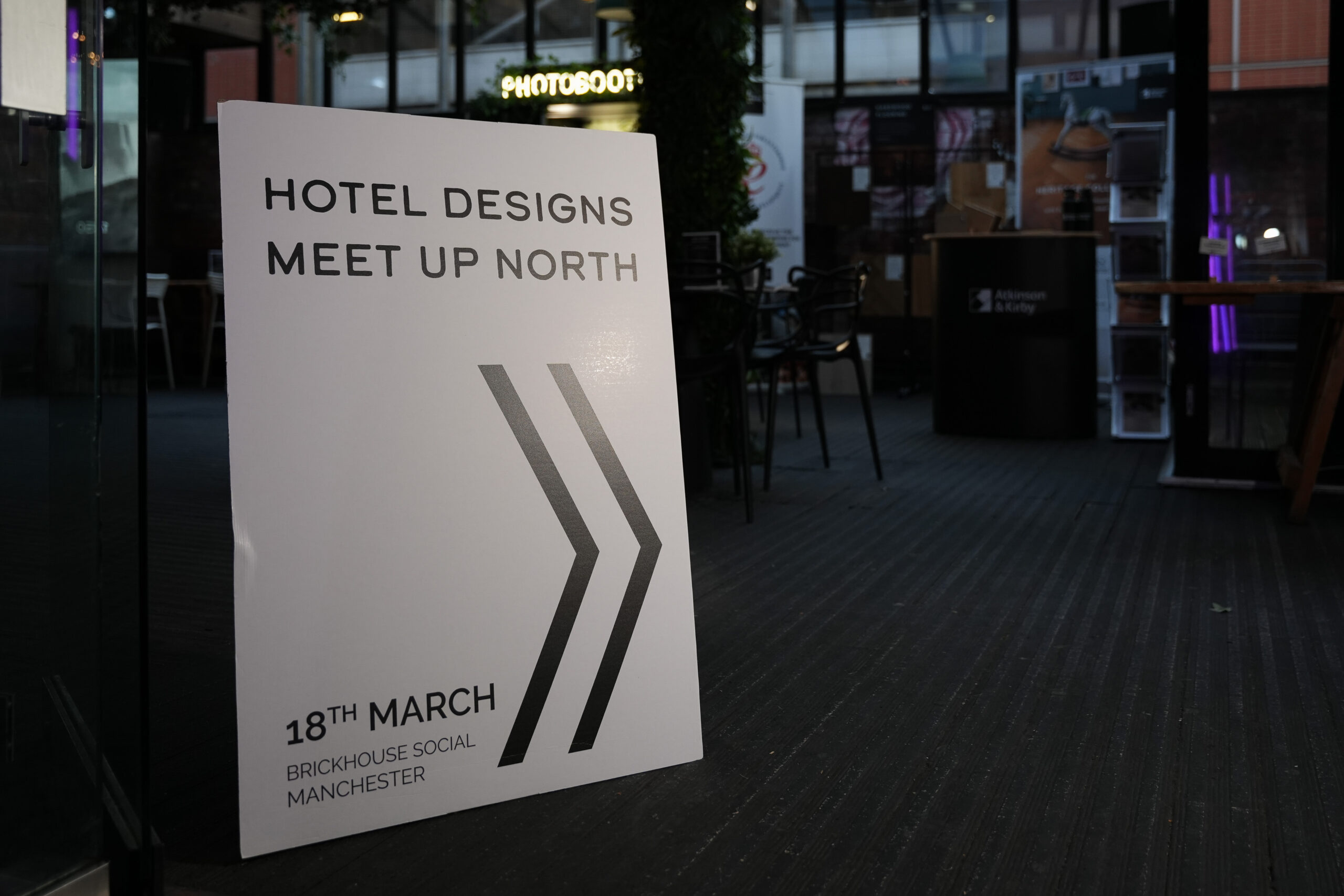
MEET UP North panel discussion Hotel Designs and SPACE Magazine

In conversation at MEET UP North – Embracing Design Tech in Hospitality

1024 640 Pauline Brettell
In conversation at MEET UP North – Embracing Design Tech in Hospitality

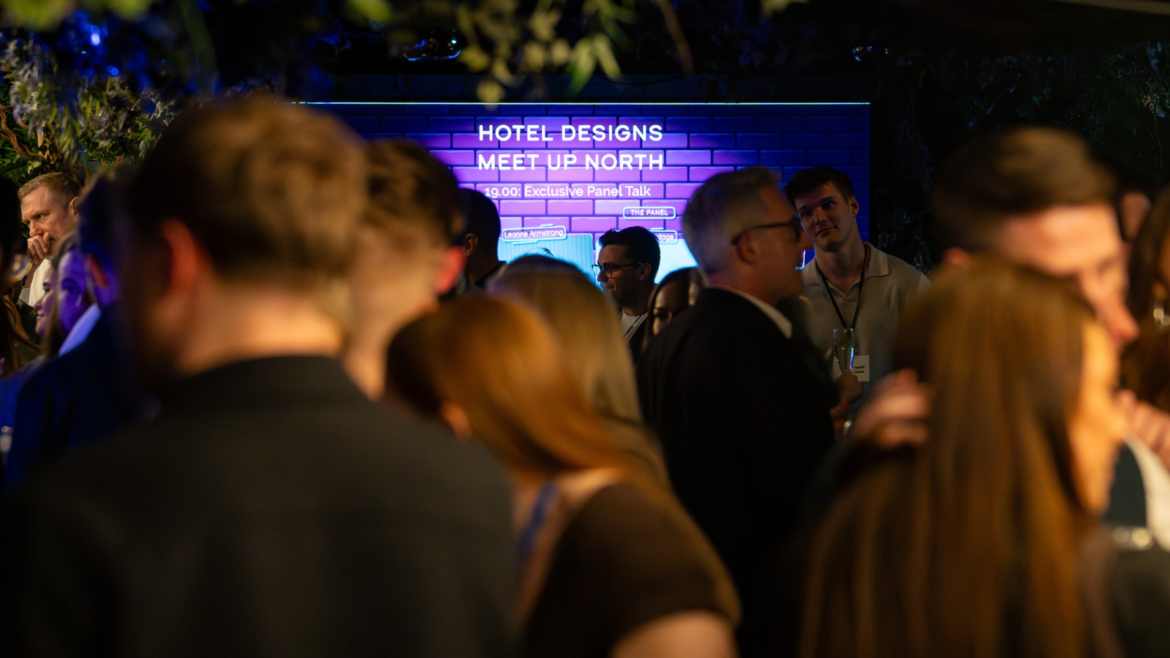
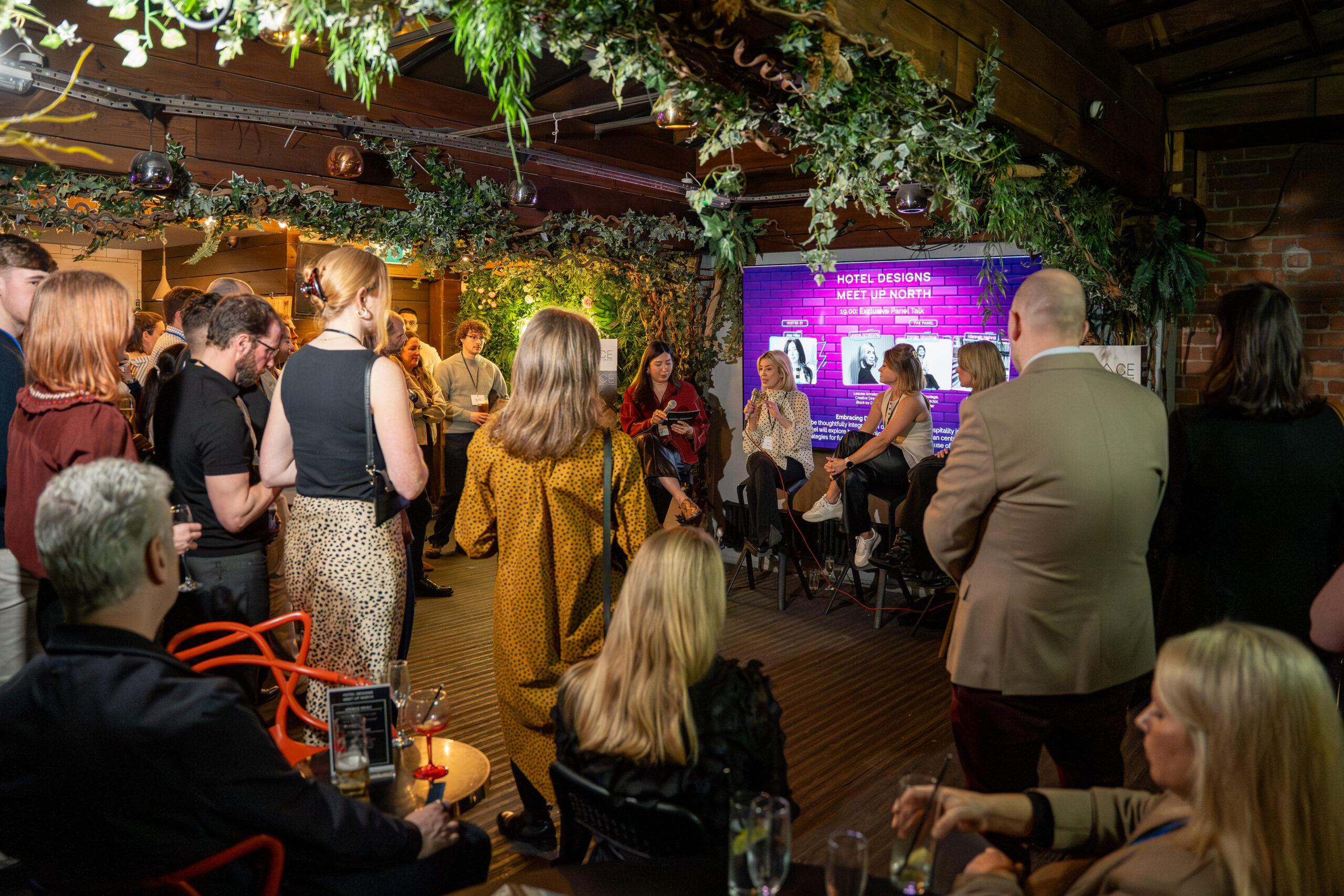
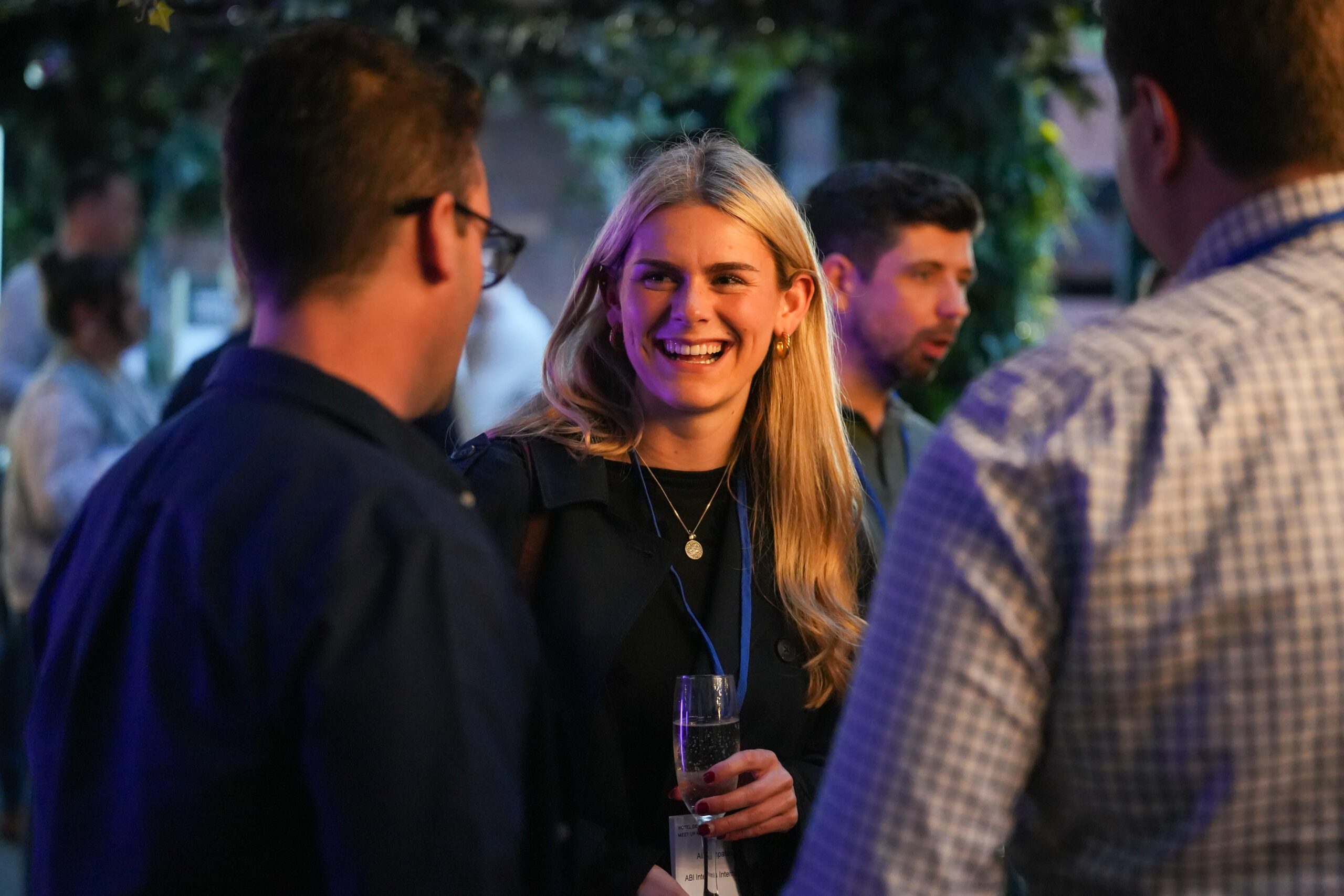
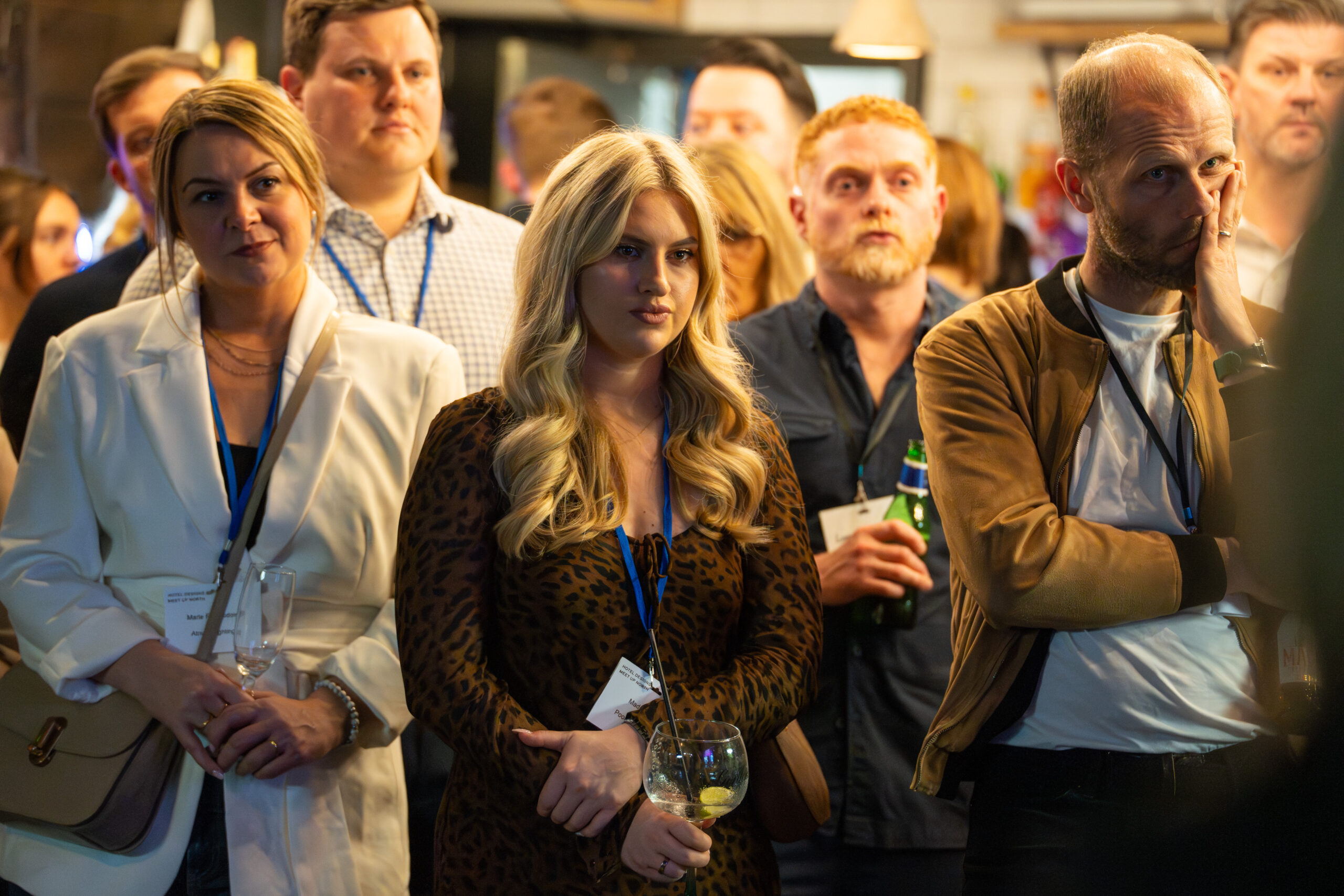
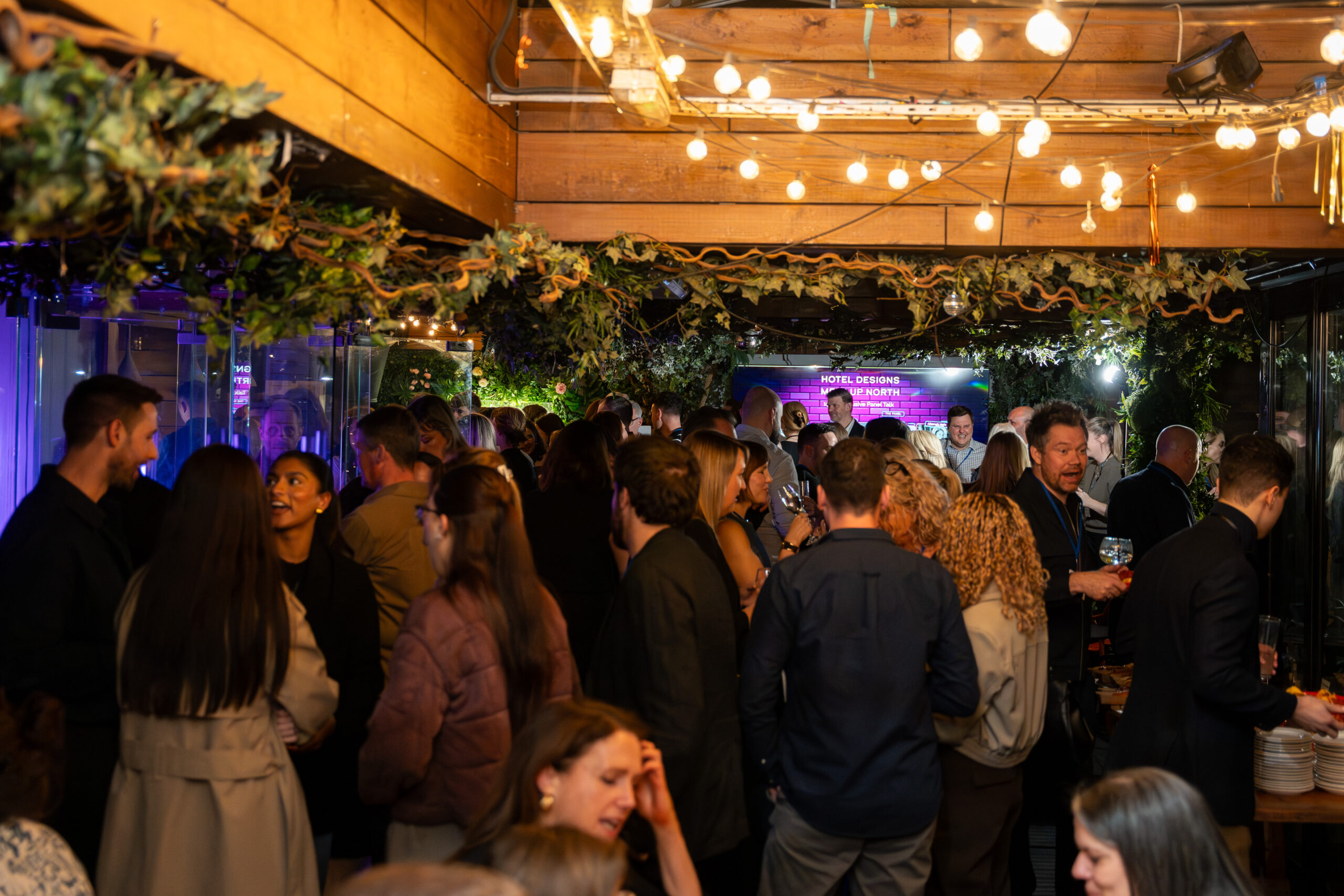
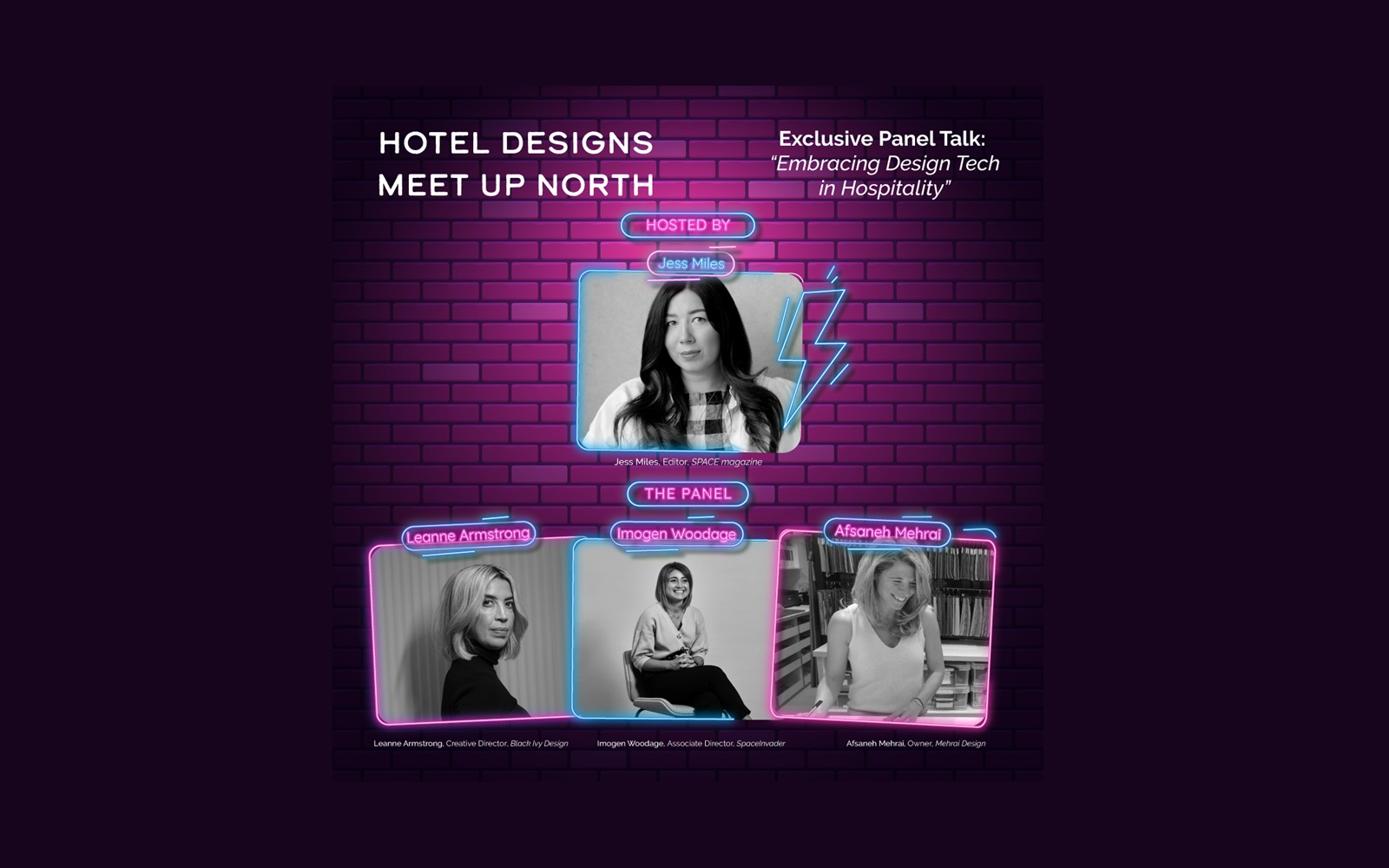
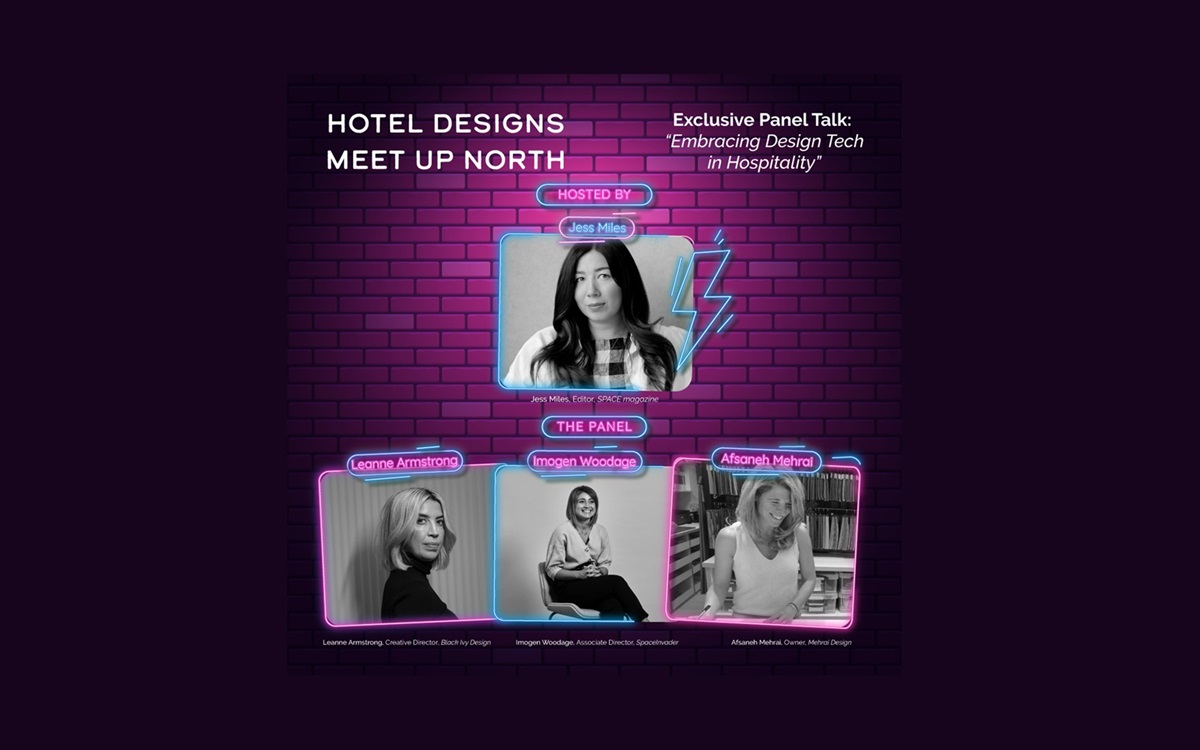
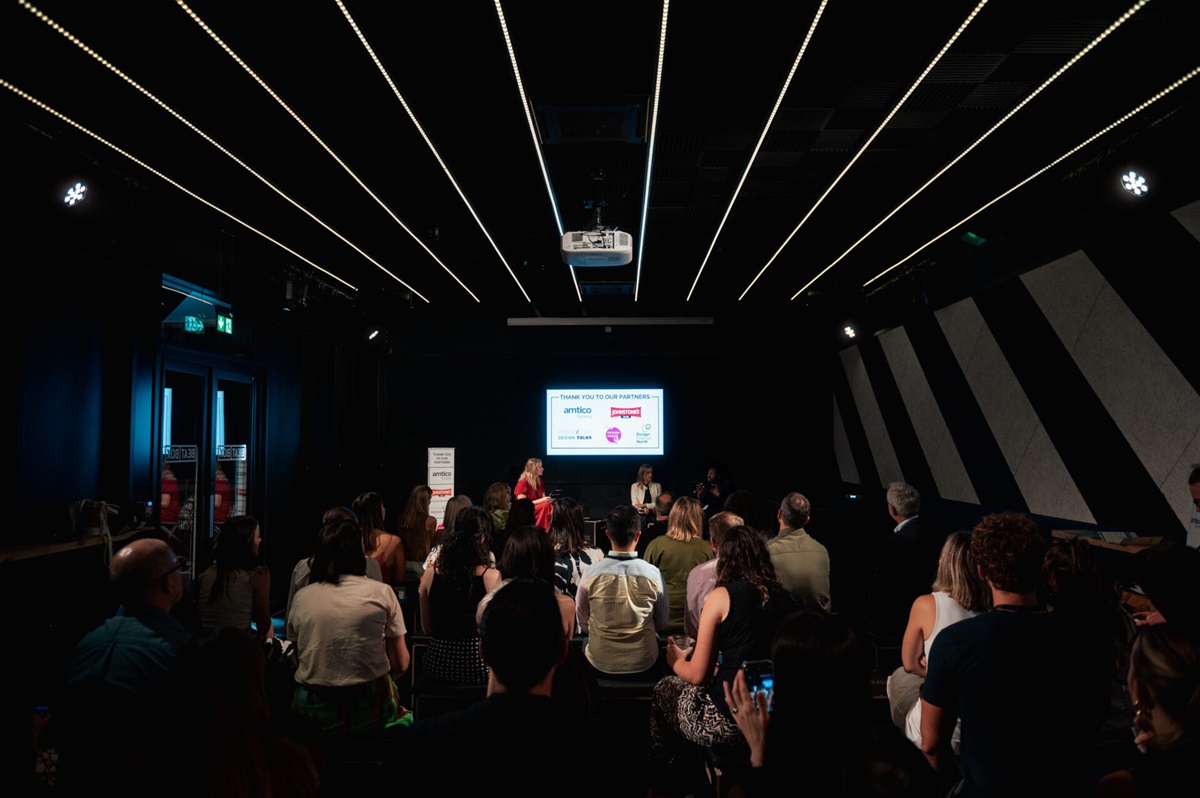
As technology continues to evolve at pace, its influence on hospitality design is becoming both inevitable and increasingly complex. At the recent MEET UP North panel discussion, industry leaders came together to explore how designers can embrace digital innovation while preserving the human-centred experiences that define great hospitality…

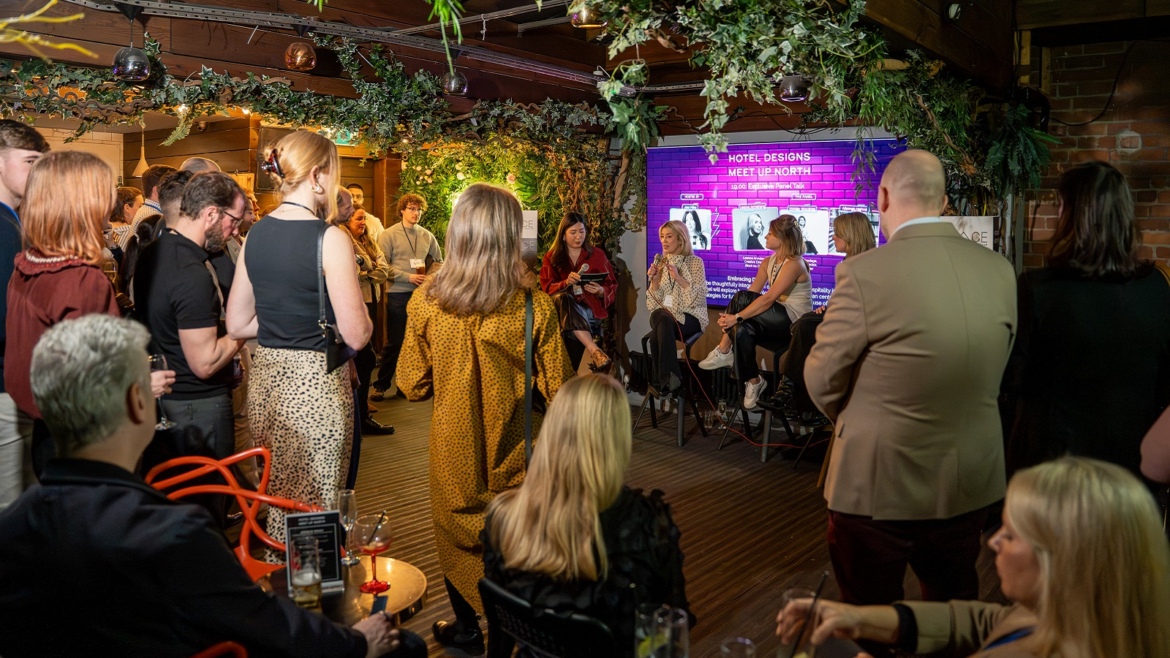
MEET UP North panel discussion Hotel Designs and SPACE Magazine

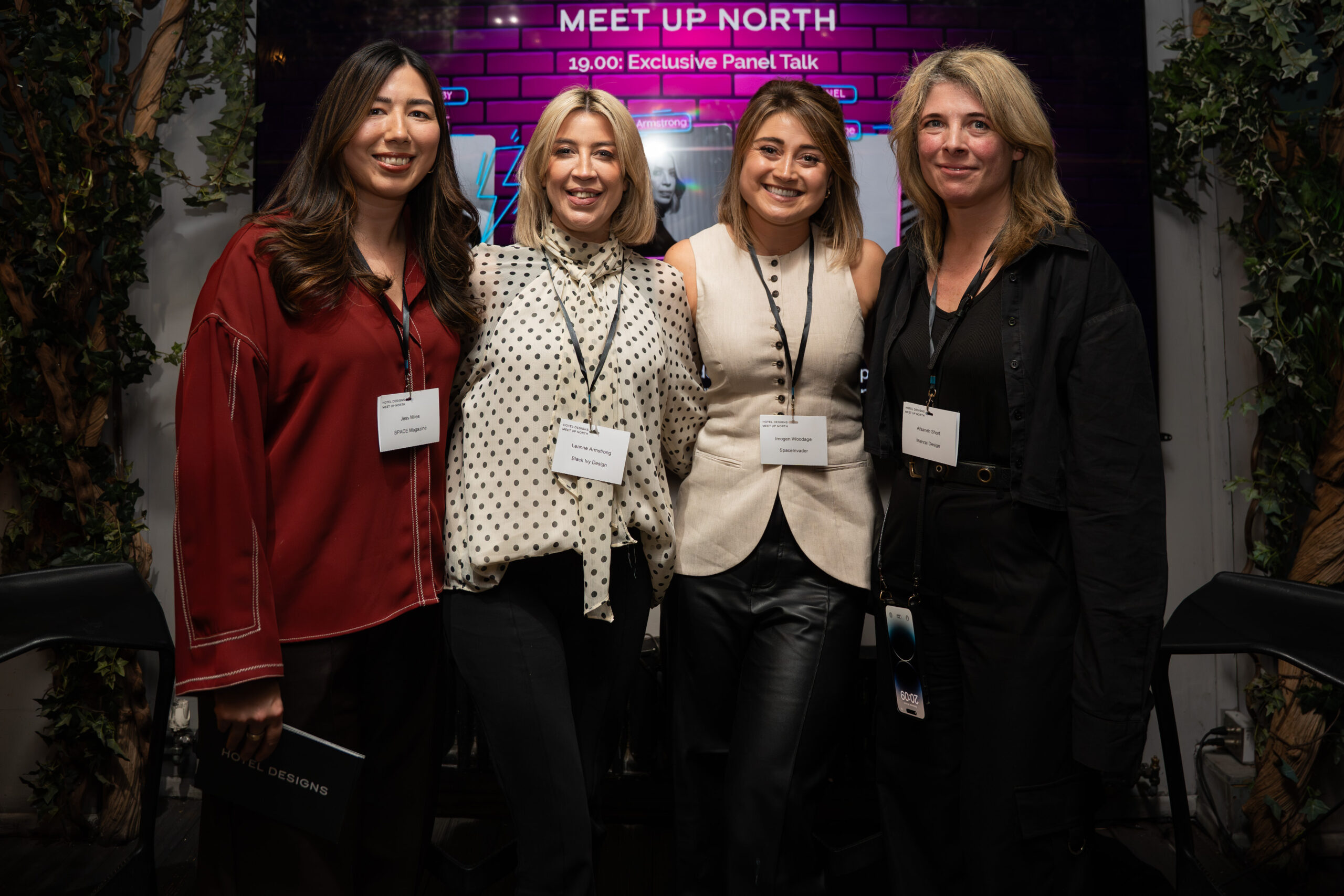
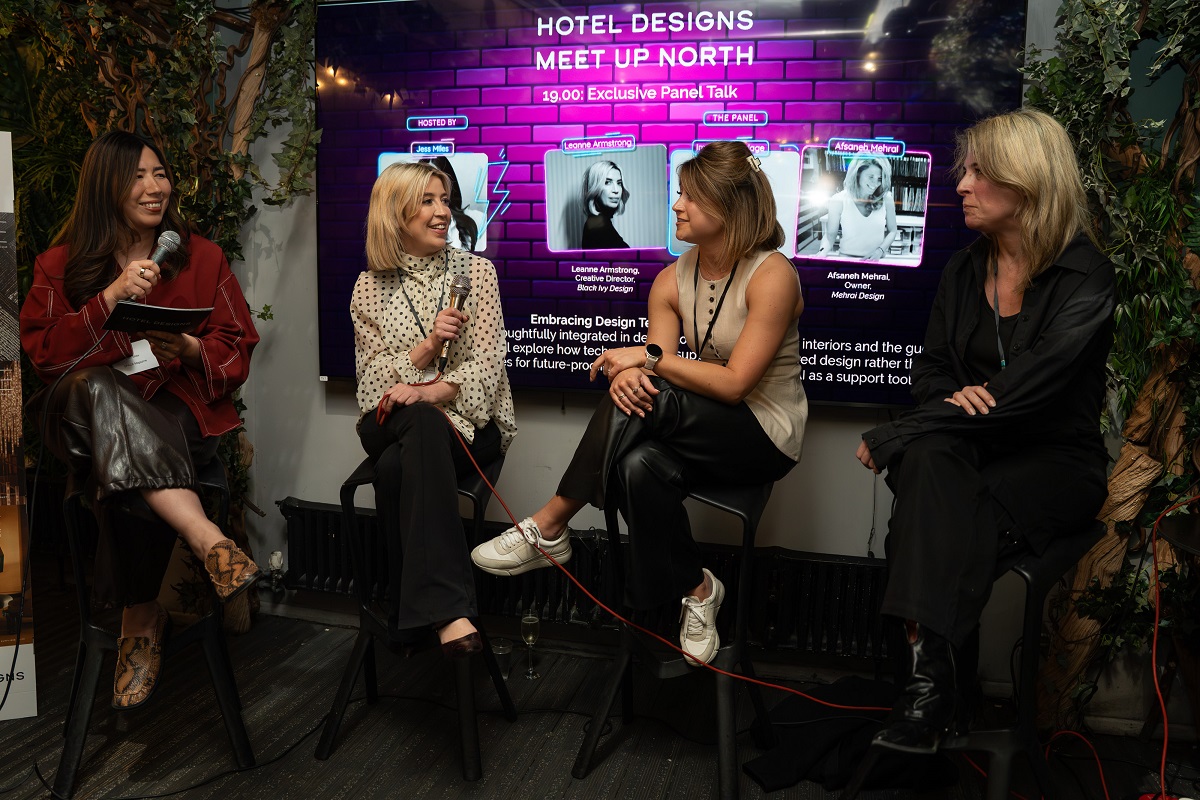
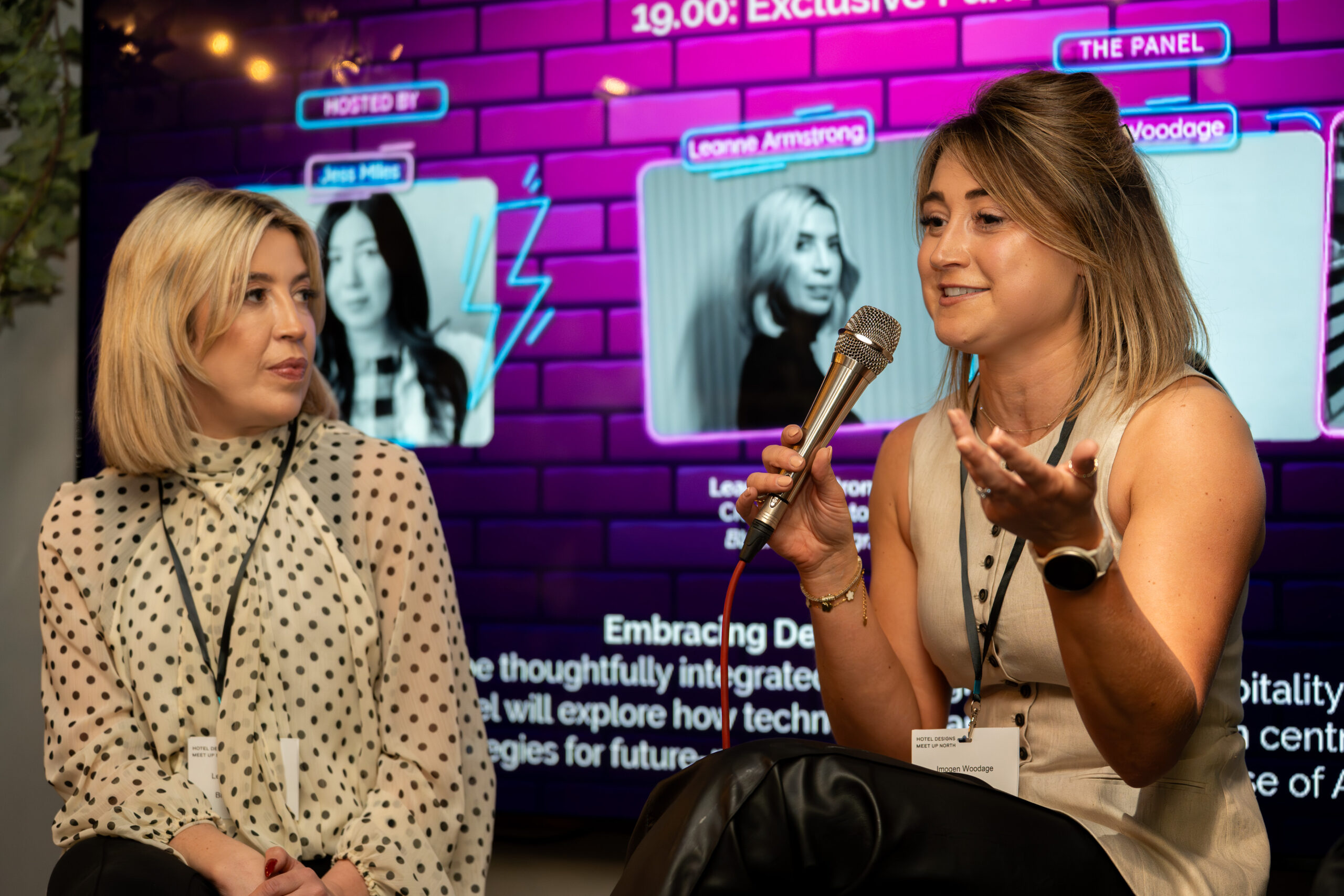
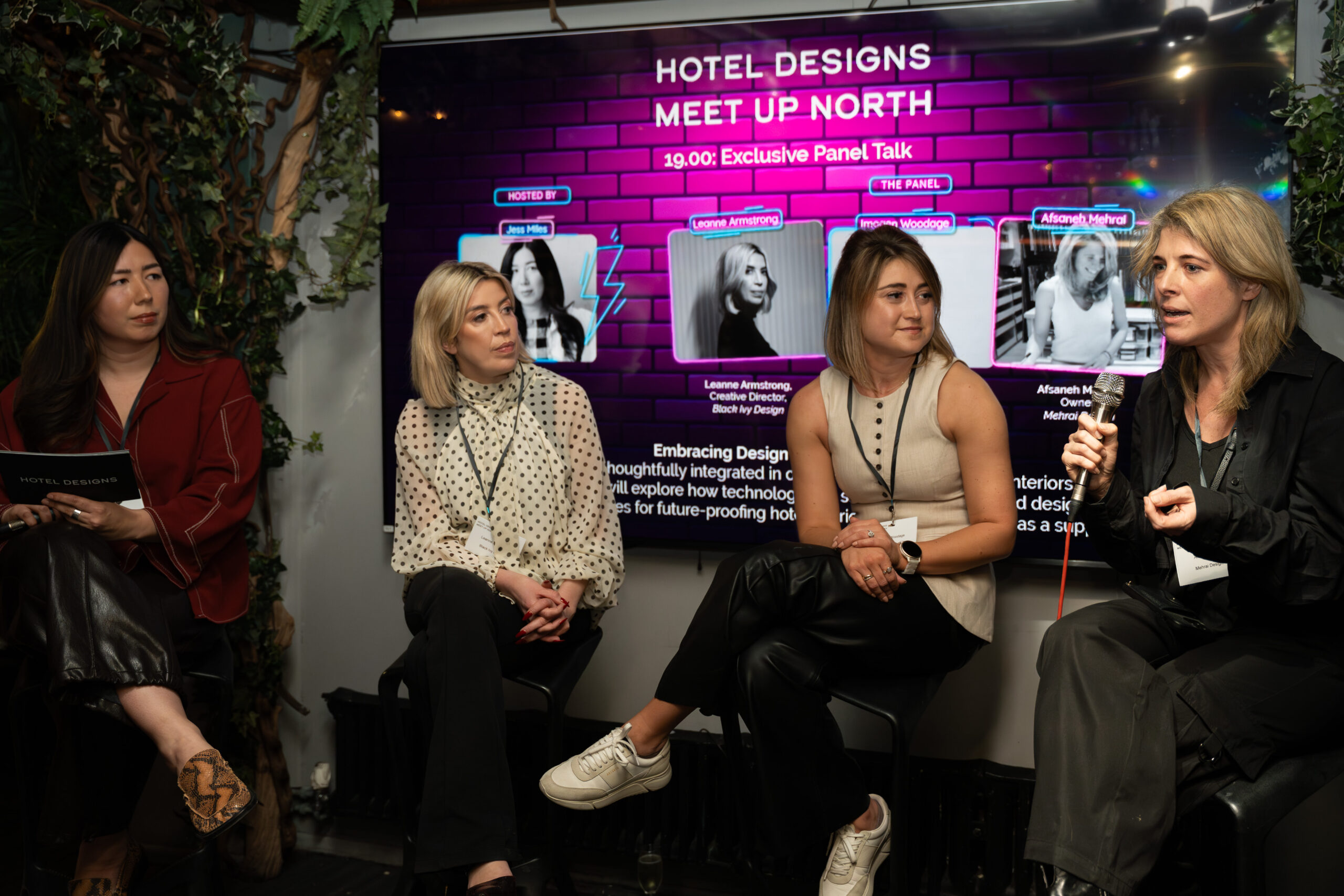
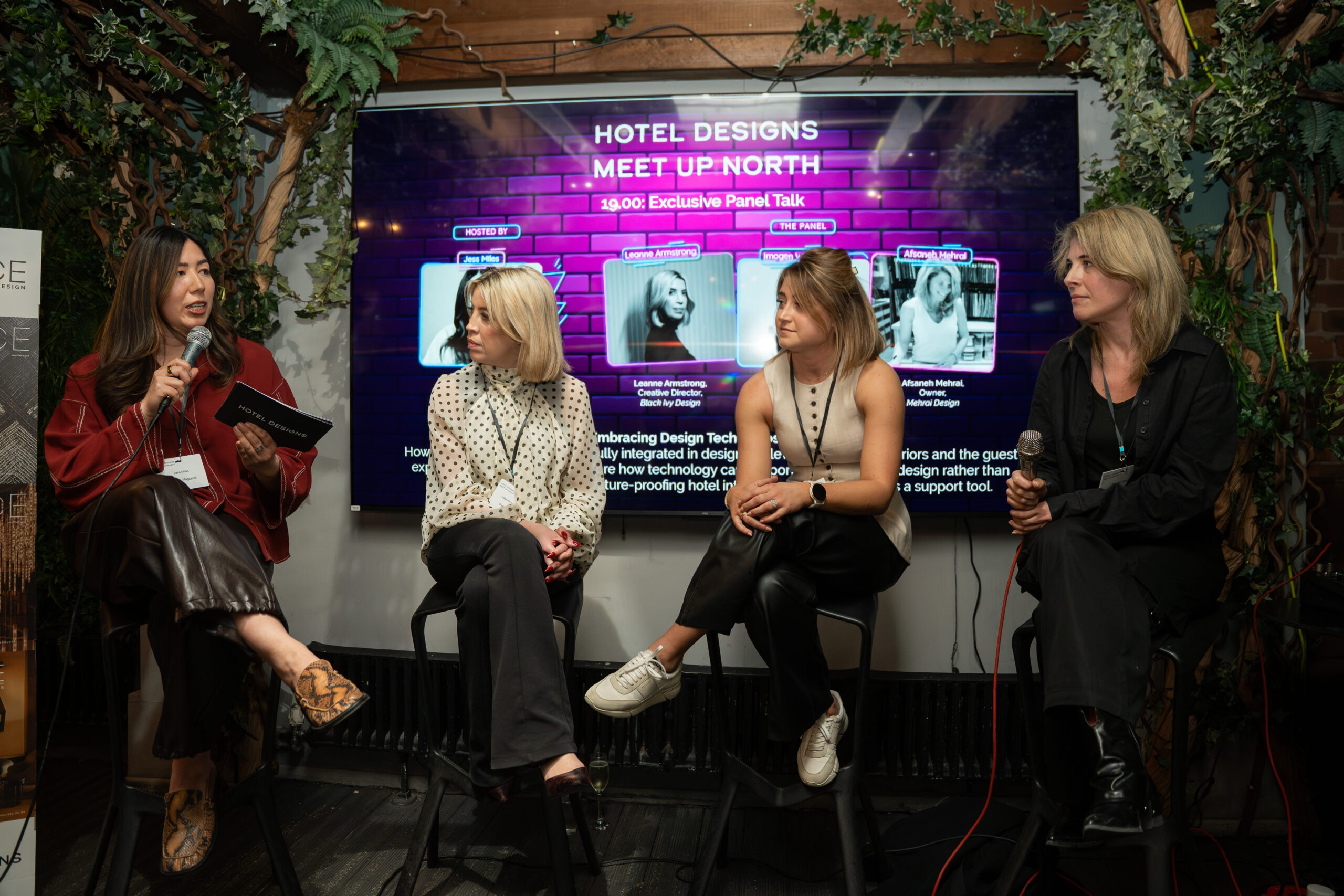
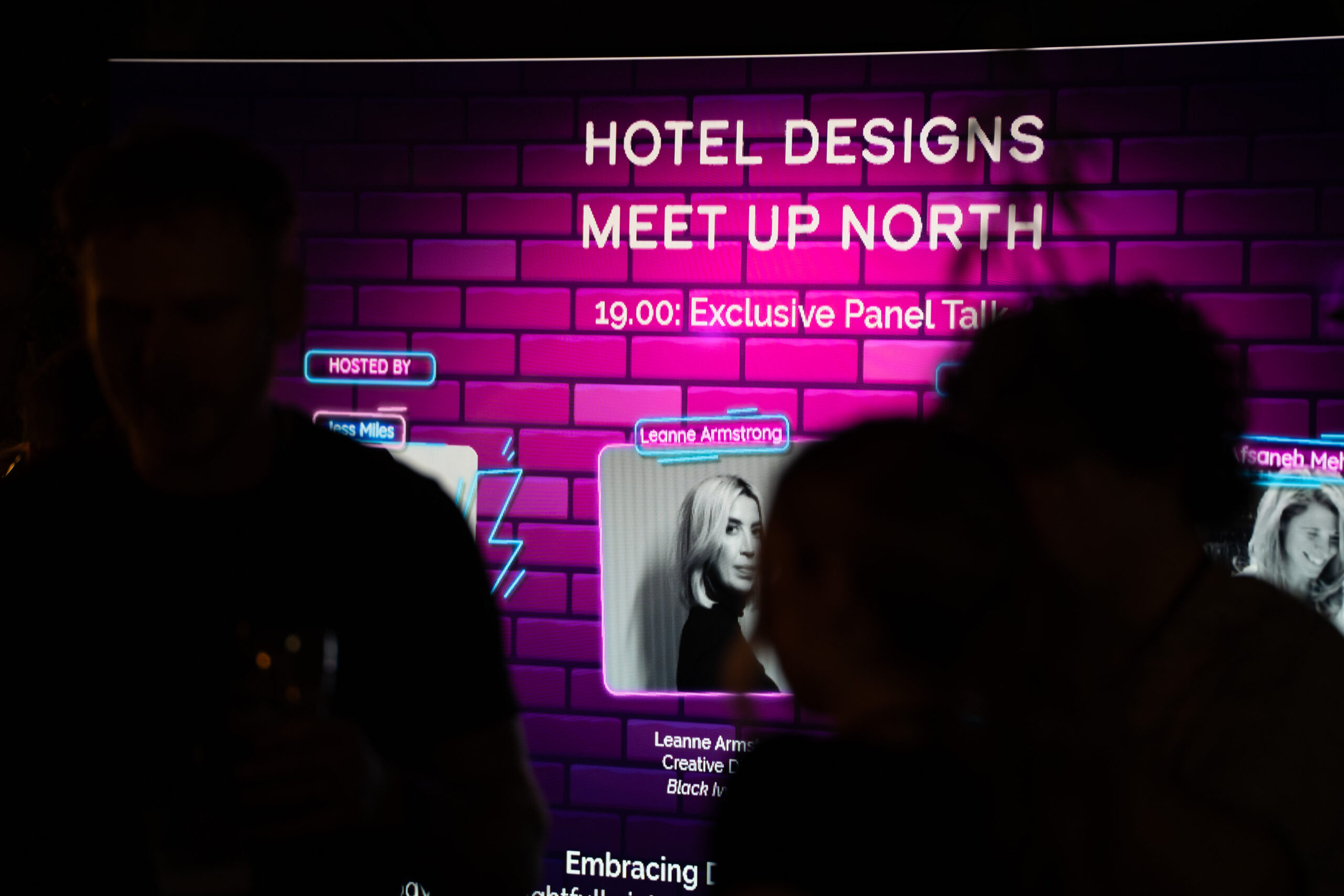
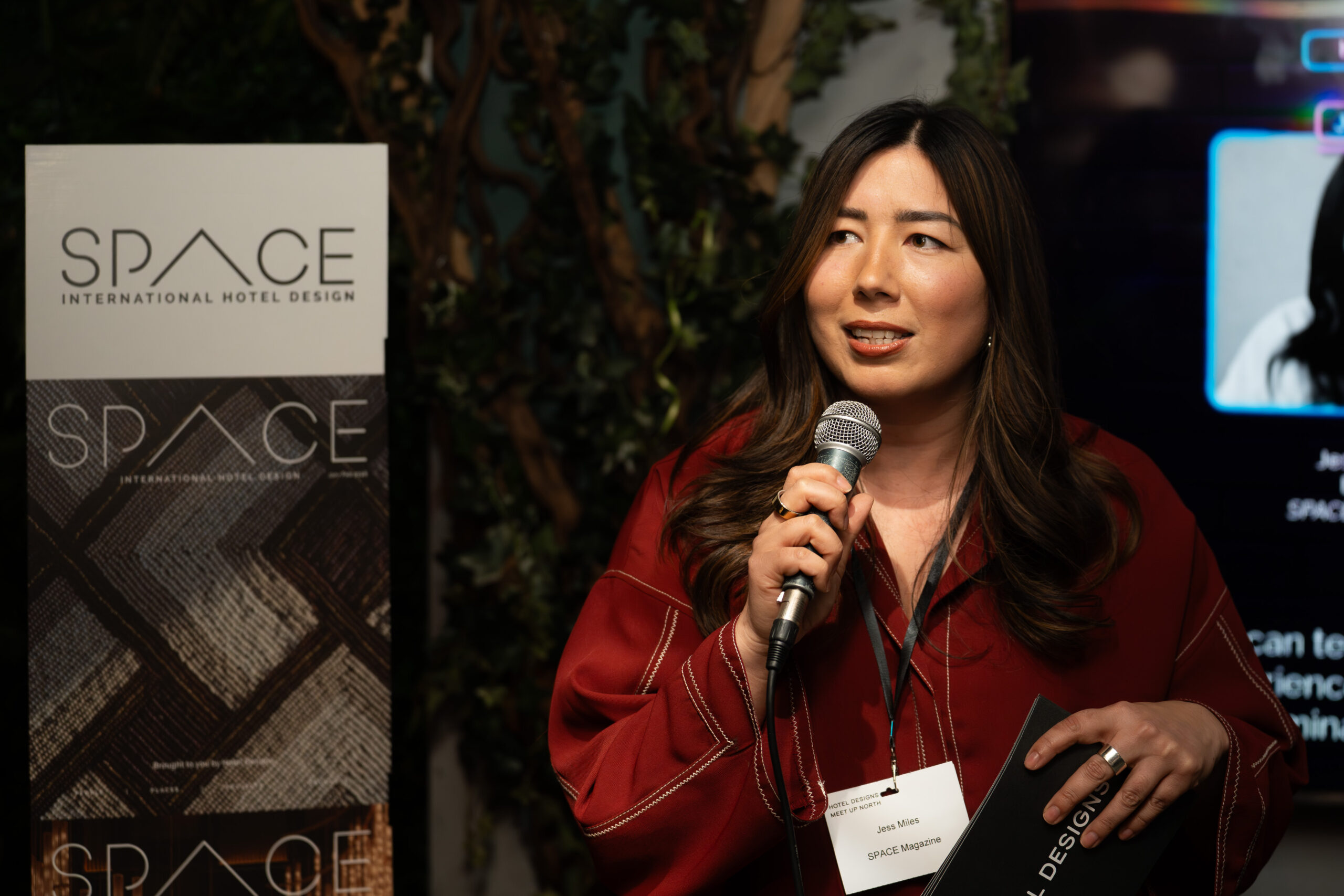
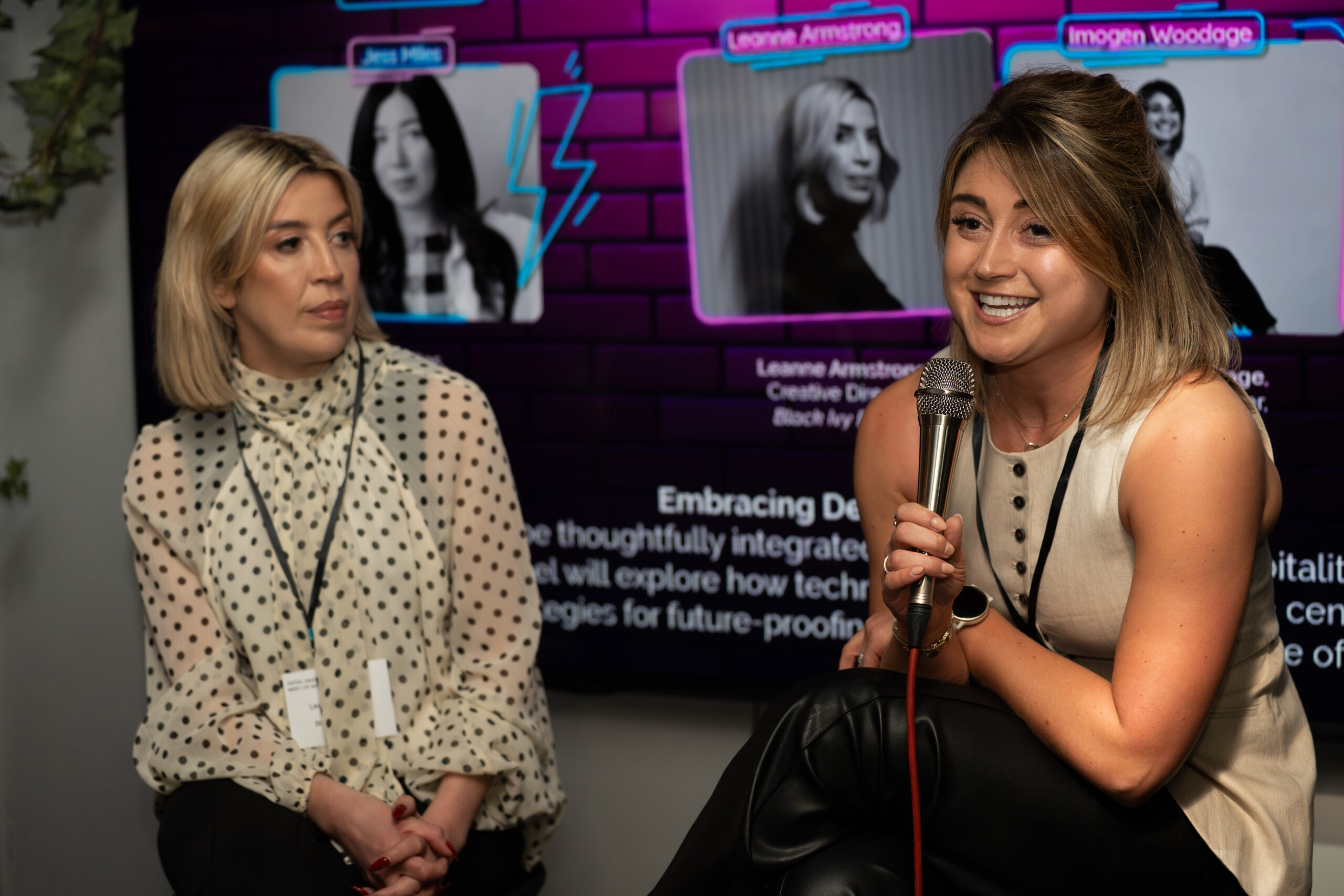
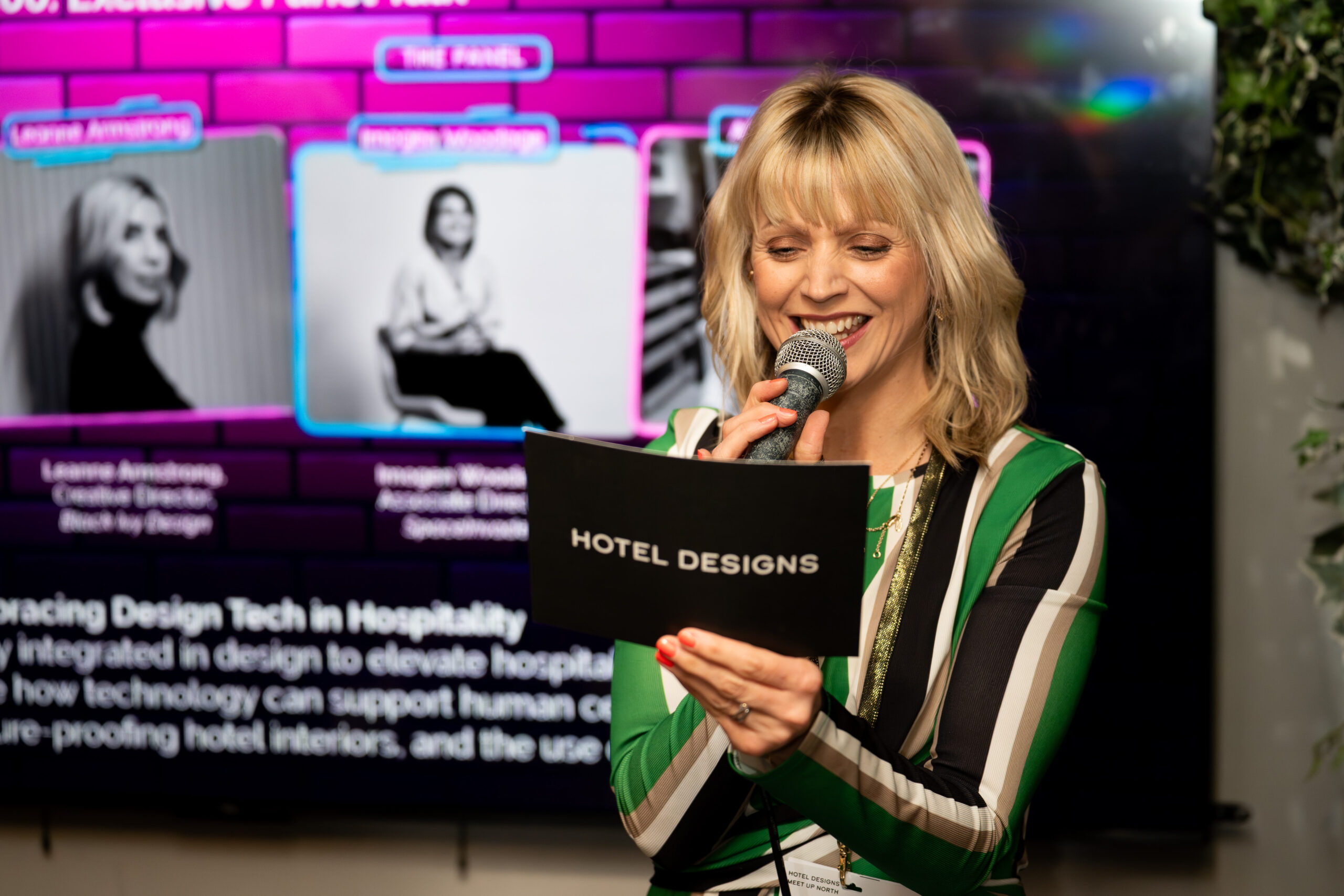
Moderated by Jess Miles, Editor of SPACE Magazine, and featuring insights from Afsaneh Mehrai, Founder & Designer, Mehrai Design; Leanne Armstrong, Creative Director, Black Ivy Design; and Imogen Woodage, Associate Director, SpaceInvader, the conversation unpacked how technology is reshaping not only guest experiences, but also the design process itself.

On the panel: Jess Miles, SPACE Magazine, Afsaneh Mehrai, Mehrai Design, Leanne Armstrong, Black Ivy Design, Imogen Woodage, SpaceInvader | Image credit: Tangerine Photography

Embracing Innovation to Support Efficiency
Opening the discussion, each panellist reflected on how technology is embedded within their day-to-day practice. From design software and communication tools to emerging innovations that improve efficiency, technology plays a quiet but vital role behind the scenes. Crucially, it also opens opportunities to introduce clients to new solutions that enhance spatial experience and customer engagement.

As pointed out by Afsaneh Mehrai, “AI is approached as a collaborative tool rather than a creative replacement. It supports early-stage research, helps test ideas, and builds narrative direction that can be shared with clients. While powerful, it still requires careful curation and quality control.”

The Invisible Layer of Guest Experience
A key theme throughout the panel was the idea that the best technology in hospitality is often the least noticeable. “When integrated well, you shouldn’t notice it at all,” Imogen Woodage explained. “ Rather than dominating a space, technology should enable seamless functionality. In hotel guestrooms, for example, the thoughtful positioning of sockets, switches and environmental controls can significantly shape the user journey – often without the guest consciously realising it.”

Operational shifts are also influencing spatial design. As digital check-in systems and streamlined processes become more common, traditional reception desks are shrinking – both in size and formality. However, panellists noted that while automation is advancing, it has not yet reached a point where it can fully replace human interaction. As a result, designers are increasingly tasked with creating flexible, future-proof spaces that accommodate both digital and staffed service models.

“Operators are leaning on tech more these days, and it’s changing how we designers think about interiors,” discussed Leanne Armstrong. “We’re moving away from purely static designs toward spaces that can adapt in real time. That means planning hidden infrastructure early — we spend a lot more time coordinating with tech teams from the start, so the operational side (energy saving, security, personalisation) enhances the atmosphere instead of fighting against it.”

Panellists also pointed to lessons from adjacent sectors such as retail and workplace design. While self-service technology is becoming more prevalent, the consensus was clear: context is everything. Just as banks have reintroduced counters after over-automating, hospitality must strike a careful balance – recognising when guests value efficiency and when they seek human connection.

MEET UP North – Panel Discussion: Embracing Design Tech in Hospitality

Image credit: Tangerine Photography

Engaging the Senses Through Smart Design
Technology is also playing a growing role in shaping atmosphere and emotional engagement. From ambient scenting to curated soundscapes, multisensory elements are now standard in many hospitality environments.

At Mehrai Design, “We’re designing through the senses – sight, sound, touch, smell and temperature – and tech is helping us layer those in a more fluid way,” shared Mehrai. “It’s almost acting like a ‘sensory DJ’ – subtly adjusting light, sound, scent, temperature and air quality so the space responds to you. It takes interiors from being static to something more transformative, which is exciting looking to the future.”

Lighting, in particular, was highlighted as a powerful design tool. Whether used to accentuate materials and artwork or to automatically transition spaces from day to night in line with circadian rhythms , it enhances both functionality and mood.

“There’s something really interesting around day-to-night activation,” added Mehrai. “Spaces that gently shift with you – lighting softens, temperature adjusts, even scent can be introduced subtly through HVAC to calm the nervous system. It’s almost a kind of spatial bio-hacking, influencing mood, dwell time and behaviour in a very considered way.”

Technology as a Creative Tool – Not a Shortcut
As the discussion turned to the design process, the conversation addressed a growing misconception: that technology, particularly AI, diminishes creativity. In reality, the panel argued, these tools are only as effective as the designers using them. AI can support tasks such as research, image sourcing and editing, and even written communication, but “If you are using it as a cheat code, then you will lose that authenticity behind your designs,” Woodage argued. “It can be used as a tool to help speed up certain processes, for example, but it can’t recreate human intuition when it comes to understanding scale and the touch and feel of materiality.”

“Technology isn’t replacing creativity; it’s just another set of tools,” agreed Armstrong. “The real value comes from knowing when and how to use it, and when to step away from it.”

Image credit: Tangerine Photography

“From an interior design perspective, we’re still working very intuitively from the outset. We’re creating atmosphere through materials, light and spatial flow,” Mehrai agreed . “But we now have far greater access to information and options. That can lead to decision fatigue for clients, which is where our role becomes even more important in curating and guiding.”

Raising Expectations in a Digital Age
Digital visualisation tools, including CGIs and VR walkthroughs, are now integral to communicating ideas with clients. However, they are not without limitations. While they help bring concepts to life, they must be complemented by physical materials, mock-ups, and physical walk throughs to fully understand how a space will perform in reality.

Woodage shared a SpaceInvader pitch that balanced the best of both worlds, “We recently produced a 3d printed model alongside CGIs for a project so that the client could pick up the furniture and move it around the model. The impact this had was really positive; another example of using advancement in technology positively.”

On the other hand, there is also the question of heightened client expectations when it comes to timelines, with the increasing sophistication and speed of visualisation tools putting pressure on designers for instant or perfect results, before meeting the realities of the live environment. Despite this, the panel emphasised that technology is not the defining factor in winning projects. Relationships, problem-solving ability and responsiveness to client needs remain at the heart of successful collaborations.

Image credit: Tangerine Photography

Looking Ahead: Balancing Innovation and Intuition
As the session concluded, the conversation turned to the future of hospitality design. Where should the line be drawn between automation and creative intuition? The consensus was clear: technology should enhance, not dominate. Hospitality, at its core, is about human connection – how guests are welcomed, how they feel within a space, and the lasting impressions they take away.

While designers will continue to explore and test new technologies, the industry must remain grounded in empathy, creativity and experience-led thinking. Looking forward, there is also a desire for innovation that supports practical challenges – particularly around supply chains, production timelines and material availability. Advances in these areas could significantly ease pressure at the delivery stage of projects.

“Ultimately, the best future for hospitality design will be one where technology handles the heavy lifting and the precision work, freeing up designers to focus on what we do best: creating beautiful, emotionally resonant spaces that people genuinely love spending time in,” said Armstrong

A Human-Centred Future
“The design industry will always be a creative industry. You need the human touch, the emotion, the care, the empathy, the problem solvers. Without creative intuition, we will be limiting what we can produce. But, of course, across all aspects of our life we are always looking for ways to be more efficient and reach results or solve problems efficiently,” Woodage concluded.

The key takeaway from the panel conversation on the night, was that while technology will continue to shape the future of hospitality, it is not a replacement for good design – it is a tool to enable it. By embracing innovation thoughtfully and selectively, designers can create spaces that are not only efficient and future-ready, but also rich in character, comfort and human connection.

Main image credit: Tangerine Photography

Mandarin Oriental The Landmark, Hong Kong has announced it will reopen on 1 June 2026, marking the highly anticipated return of one of the city’s most loved hotels.

Mandarin Oriental The Landmark, Hong Kong unveils its next chapter

1024 640 Pauline Brettell
Mandarin Oriental The Landmark, Hong Kong unveils its next chapter

Mandarin Oriental The Landmark, Hong Kong has announced it will reopen on 1 June 2026, marking the highly anticipated return of one of the city’s most loved hotels…

Mandarin Oriental The Landmark, Hong Kong has announced it will reopen on 1 June 2026, marking the highly anticipated return of one of the city’s most loved hotels.

Located in the heart of Central, Mandarin Oriental The Landmark, Hong Kong returns with a renewed arrival experience, refreshed rooms and suites, and expanded culinary and wellness offerings, marking a new era for this celebrated Asian property. Reimagined by Hong Kong interior architect Joyce Wang, founder and principal of Joyce Wang Studio, its 109 rooms and suites offer an intimate residential base in the city, while seven Michelin stars on the seventh floor affirm its place among Asia’s distinctive culinary destinations.

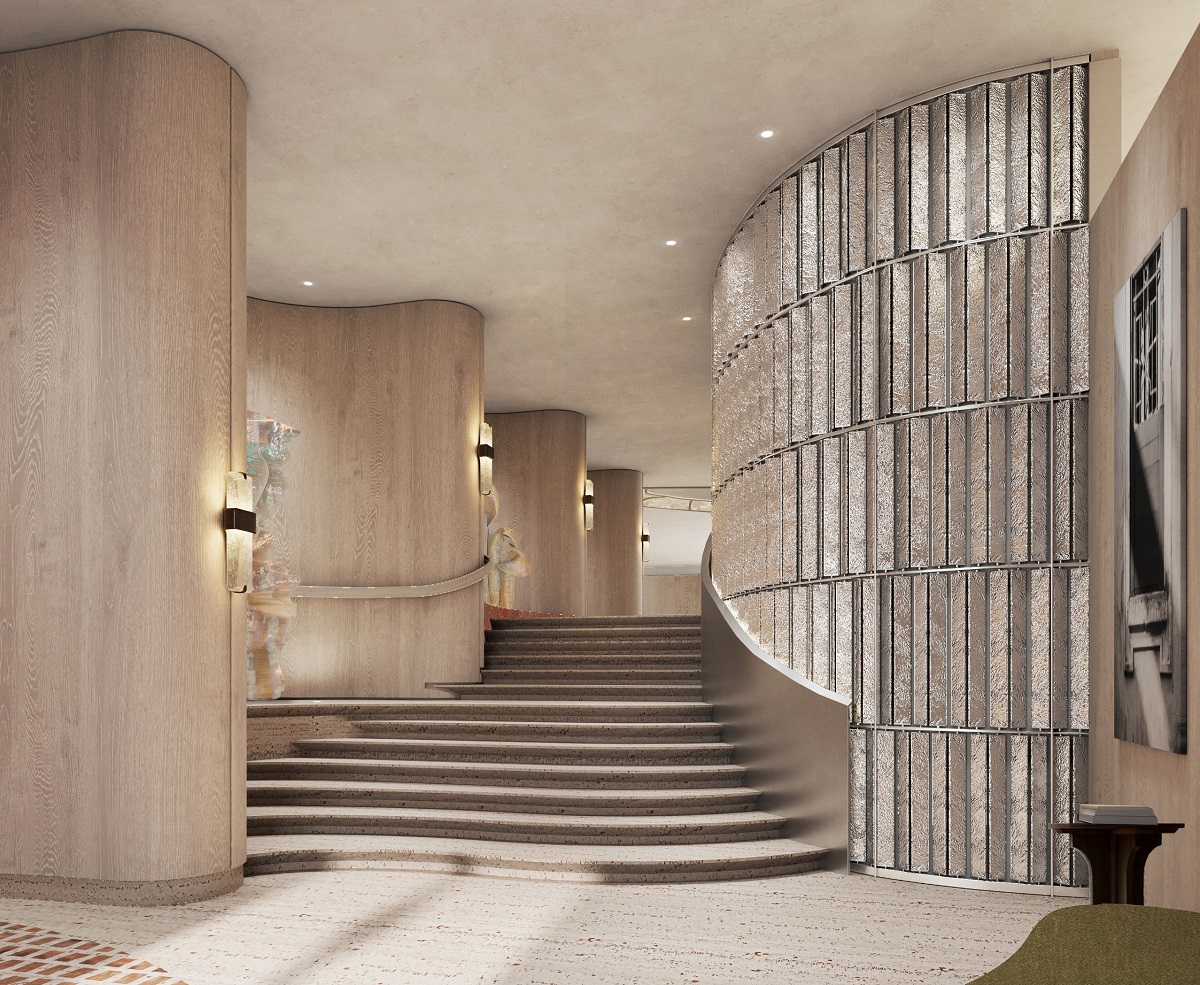
curved wall and staircase in lobby design Mandarin Oriental

Image credit: Mandarin Oriental The Landmark, Hong Kong

The journey begins at a new entrance on Queen’s Road Central, creating a considered transition from the energy of the city to the calm within. Inside, the arrival sequence draws on the grand residences of Hong Kong’s past, carefully reinterpreted for today. Warm terracotta tones and deep greens echo the façades and gardens of historic homes such as Yu Yuen in the New Territories and Tai Fu Tai, with its distinctive blend of Qing Dynasty and Western influences.

A curved stone staircase gently guides guests upward, transitioning from the mansion-like foyer to an intimate lobby lounge above. Alcoves carved along the ascent display commissioned artworks on sculptural plinths. Inspired by the cityscape, these works echo Hong Kong’s skyline and energy and are reflected in carpet designs, tapestries and gilded glass mirrors in lifts and corridors.

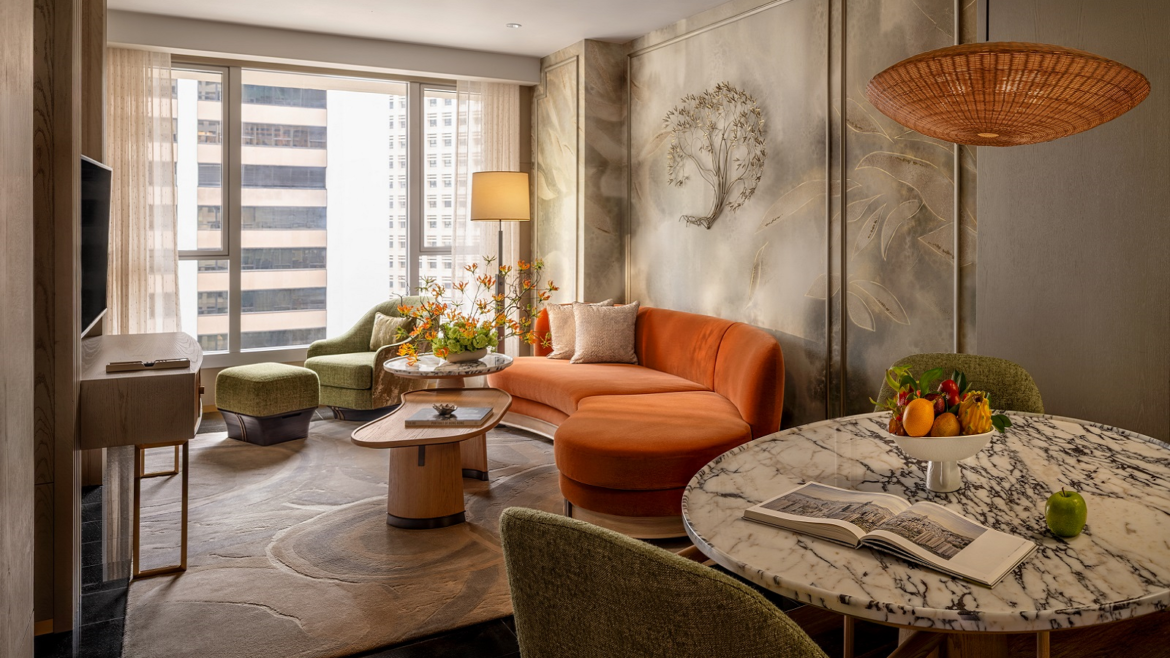
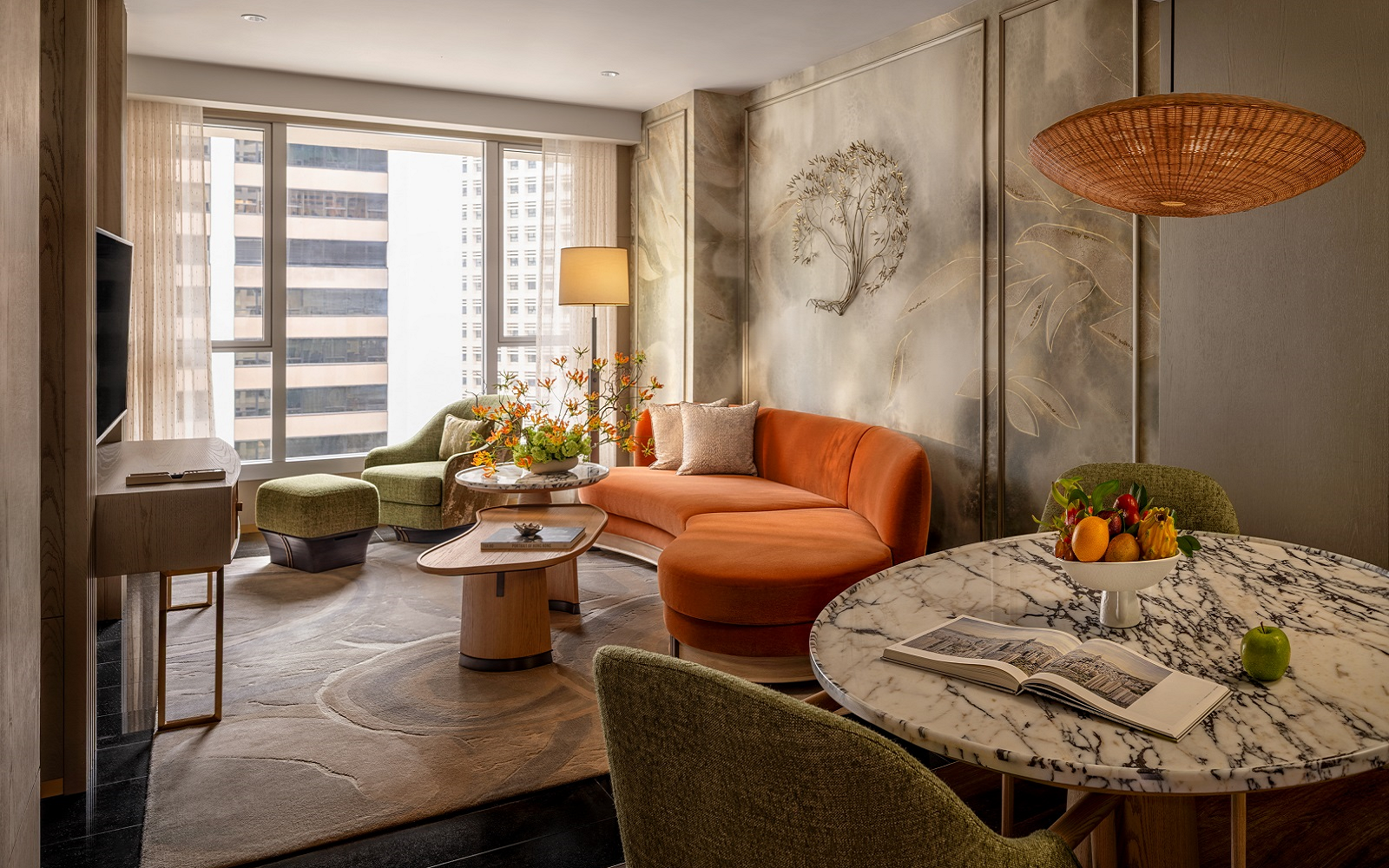
guestroom with floor to ceiling windows looking out over hong kong

Image credit: Mandarin Oriental The Landmark, Hong Kong

Wang commented: “For this latest renovation, we were inspired by the identity of our hotel as a pied-à-terre for our guests to feel the pulse of Hong Kong. Curated pieces are windows into expressions of our city through the lenses of both local and international, and emerging and established artists. As you journey through the hotel, we hope these storied perspectives fill you with curiosity and contemplation, at the ready to strike up conversations.”

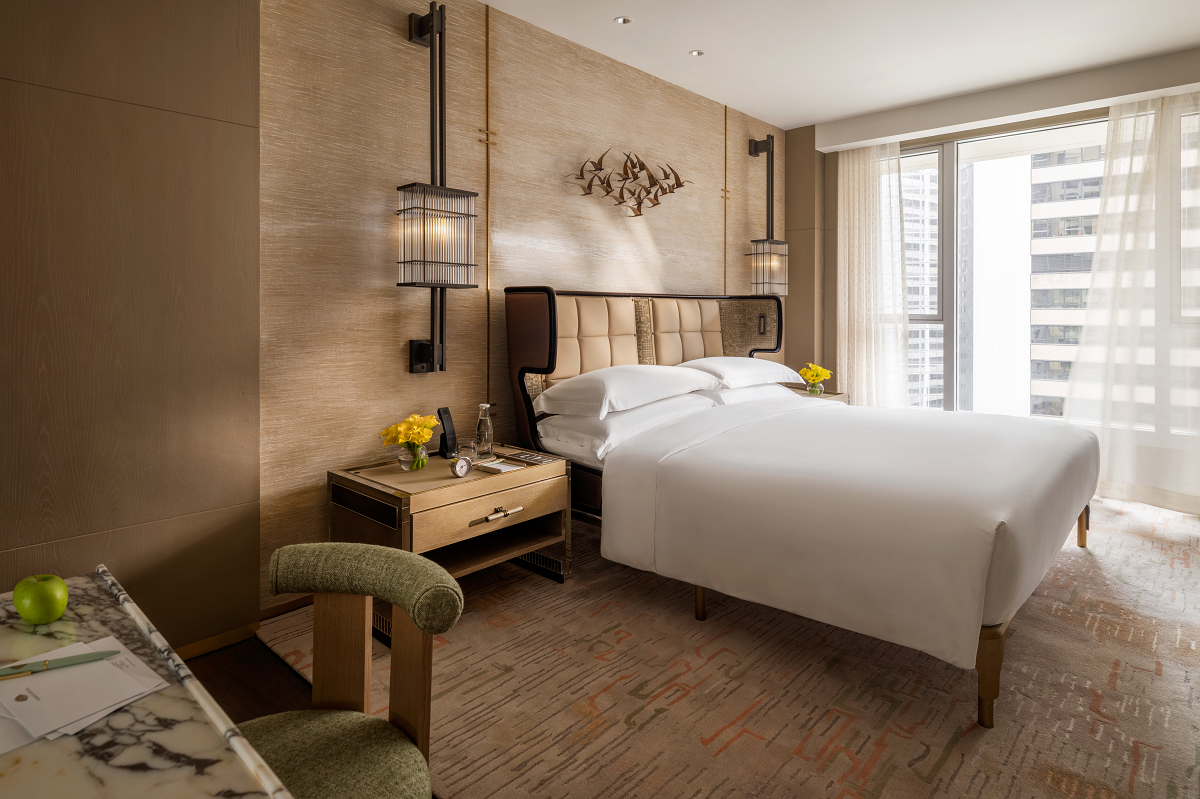
The hotel’s 109 rooms and suites have been entirely refreshed by Wang, continuing the residential narrative of the public spaces. Starting at 42 square metres, the L450 rooms are conceived as spacious urban sanctuaries, featuring lightened timber floors, patinated walls, Fromental silk wall coverings and custom rugs inspired by historic brickwork patterns found across the city.

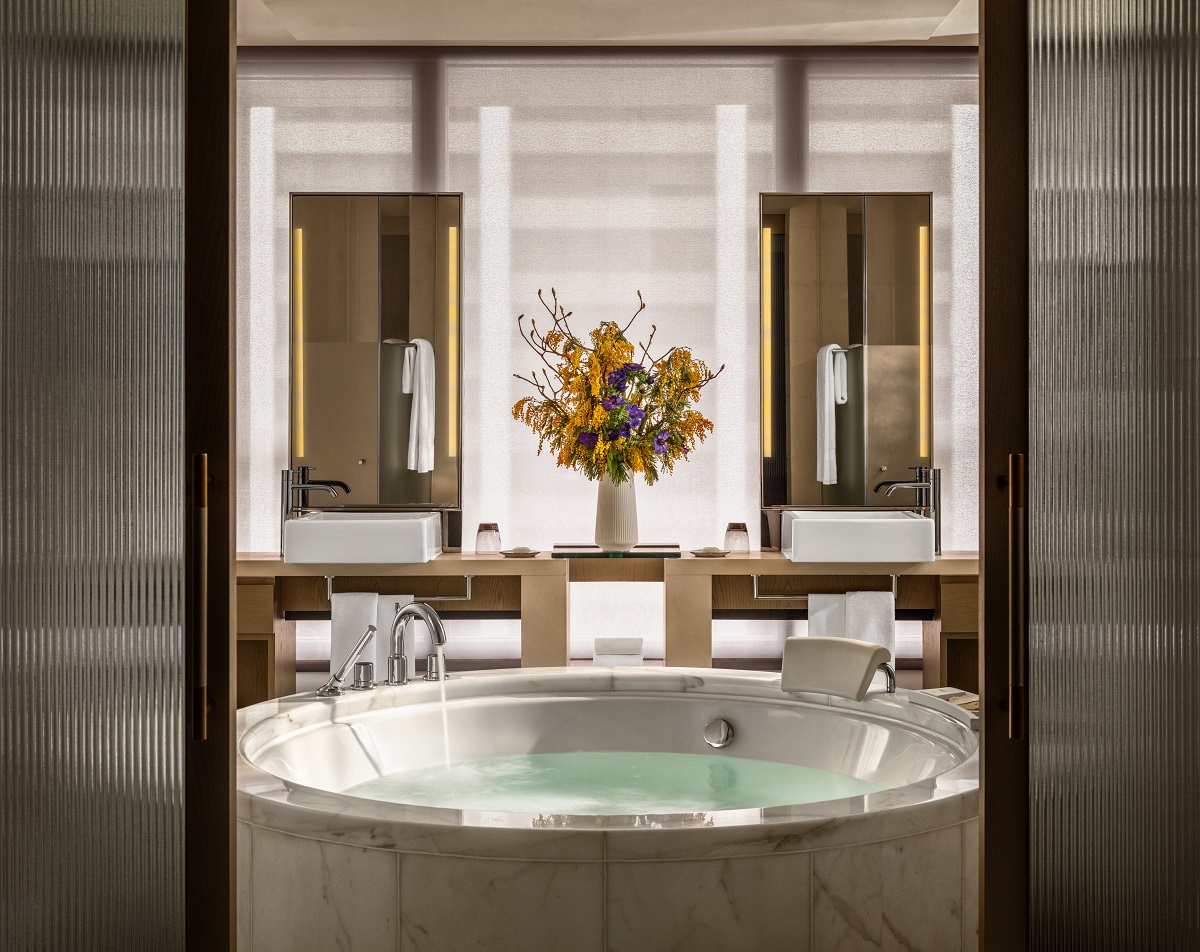
King or twin beds, with sculpted quilted leather headboards, are dressed in Quivera 530-thread-count linen, while L600 rooms and above retain the hotel’s signature curved, glass-walled bathrooms, centred on its iconic seven-foot round bathtub.

statement round bath in guest suite in Mandarin Oriental The Landmark, Hong Kong

Image credit: Mandarin Oriental The Landmark, Hong Kong

At 167 square metres, the Entertainment Suite is a refined residence, equally suited to intimate gatherings. It features a state-of-the-art entertainment wall, a Gaggenau kitchen, private dining for eight, and a master bedroom equipped with the FreshBed climate-controlled sleep system.

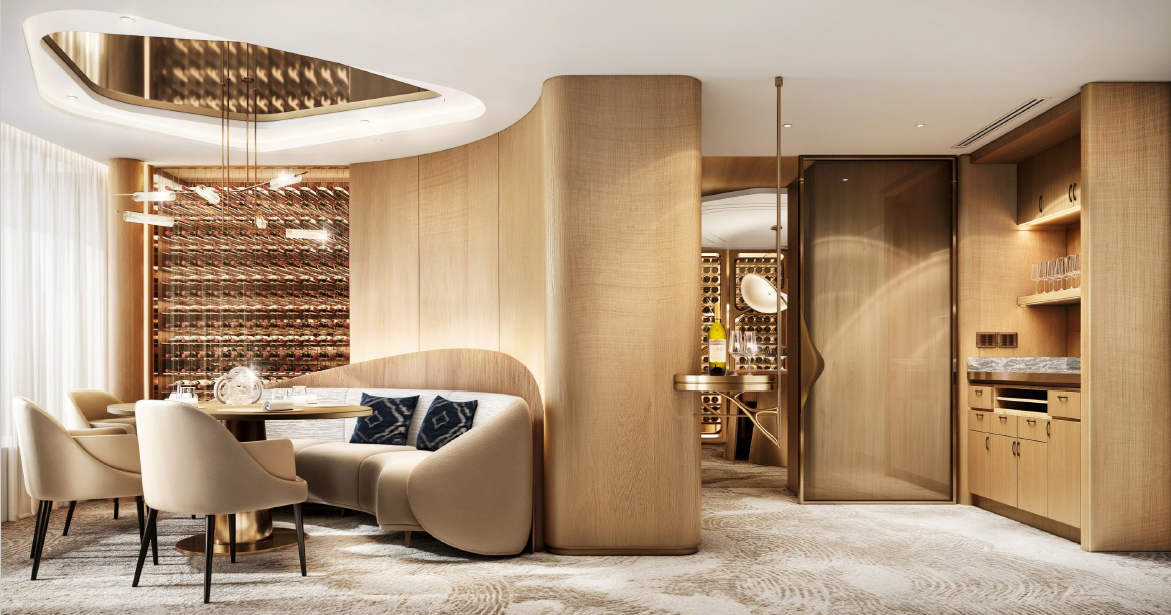
Over the course of two decades, Mandarin Oriental The Landmark, Hong Kong has evolved into one of Asia’s premier fine-dining destinations under the leadership of Culinary and Food & Beverage Director Richard Ekkebus. That culinary vision continues to set the pace. Amber, the flagship restaurant, holds three Michelin stars and a Michelin Green Star. Chef Richard Ekkebus’ cuisine is grounded in classical French technique, enriched by his long-standing presence in Hong Kong, resulting in layered, precise cooking rooted in sustainability and defined by a distinct Asian sensibility. Heightening the experience is the introduction of The Cellar Immersion, an immersive food and wine journey held within Amber’s dramatic cellar. This new signature destination goes beyond usual pairings and offers a curated sensory exploration of terroir, craftsmanship, and vintages.

Amber-Wine-Cellar

Image credit: Mandarin Oriental The Landmark, Hong Kong

On the same floor as Amber are three-Michelin-starred Sushi Shikon, Michelin-starred Kappo Rin, and contemporary French bistro SOMM. Completing the remarkable culinary offering is new champagne bar BLANC DE NOIRS, dedicated to premium cuvées.

Also new is COMMUNE, an artisan coffee atelier conceived as a vibrant social hub at the heart of the lobby. Designed as both a welcoming first touchpoint for arriving guests and a destination in its own right, it invites the city’s residents and visitors to pause, connect and savour expertly crafted coffee within an atmosphere of understated elegance.

Chef Ekkebus commented: “After 21 years of being part of this remarkable journey, the reopening of Mandarin Oriental The Landmark, Hong Kong feels like an extraordinary new chapter. This new era celebrates an exceptional collection of restaurants and bars, together holding seven MICHELIN Stars and one Green MICHELIN Star, and we are proud to continue shaping its story through creativity, craftsmanship, and an unwavering commitment to sustainability.”

reception area in Mandarin-Oriental-Spa-_-Wellness-Reception

Image credit: Mandarin Oriental The Landmark, Hong Kong

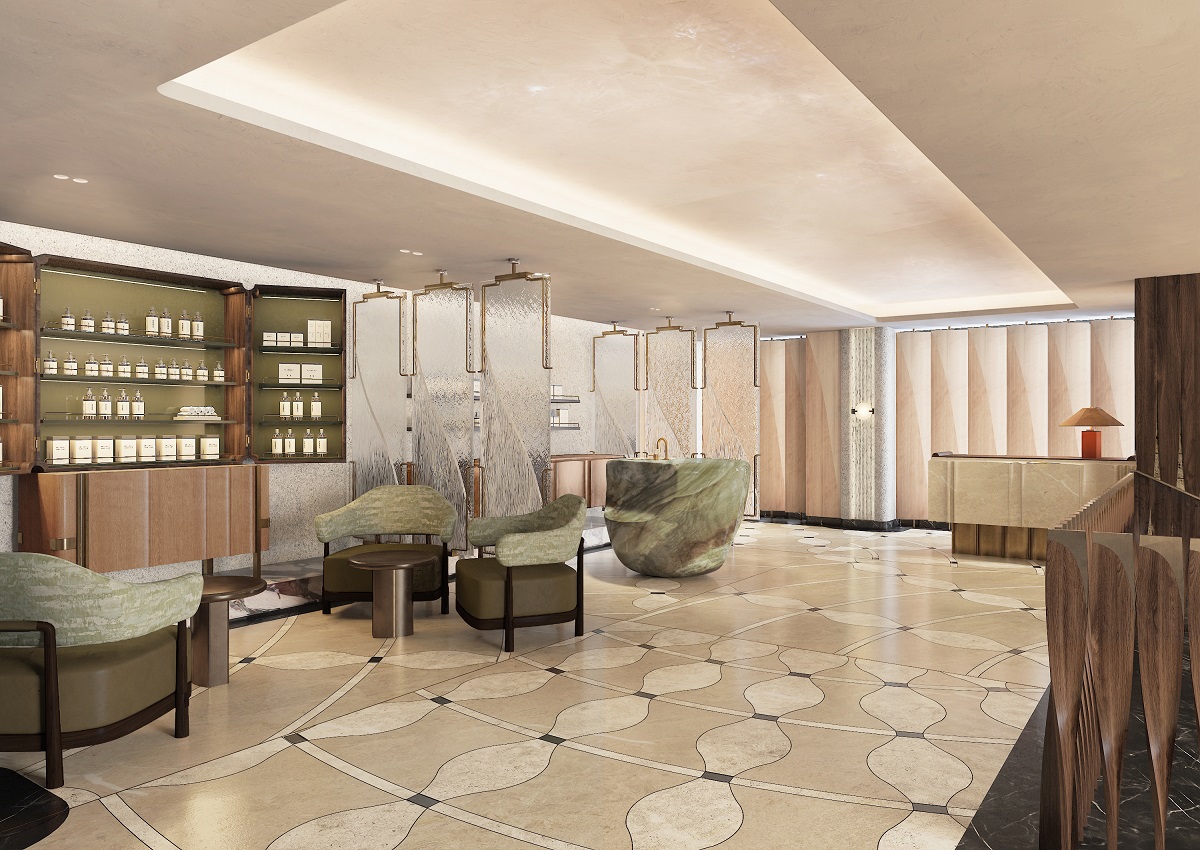
The refreshed Spa will offer a unique urban wellness hub, seamlessly blending contemporary therapies, holistic healing techniques, and innovative fitness experiences. Guests and members can enjoy dedicated studios for Yoga, Pilates, and Gyrotonic, alongside a state-of-the-art gym, a sparkling lap pool, and extensive thermal amenities. Treatments blend Eastern traditions with Western modalities and include exclusive Hammam and Rasul rituals.

The environment is crafted to enhance movement, rhythm, and mindful living, becoming the premier destination for holistic wellbeing in Central Hong Kong.

“This reopening marks an important moment for Mandarin Oriental The Landmark. More than a return, it introduces a renewed vision for the hotel – more personal, more deeply connected to Hong Kong, and more considered in every detail. It is a confident step into the next chapter of this much loved property,” says Michael Groll, General Manager, Mandarin Oriental The Landmark, Hong Kong.

Main image credit: Mandarin Oriental The Landmark, Hong Kong

Bœuf sur le Toit

Bœuf sur le Toit: a living stage where design and performance collide

1024 640 Stuart O'Brien
Bœuf sur le Toit: a living stage where design and performance collide

Bœuf sur le Toit enters a new era as heritage, performance and contemporary design converge in a theatrical reimagining of one of Paris’s most iconic venues…

Bœuf sur le Toit

Few hospitality venues embody the spirit of Parisian creativity as vividly as Bœuf sur le Toit, in Paris, France. Since its opening in 1922, the legendary address has existed at the intersection of art, music, performance and social life, a place not merely to dine, but to experience. Today, following a sensitive interior reinvention by designer Alexis Mabille, Bœuf sur le Toit enters a new chapter, demonstrating how heritage‑driven design can remain theatrical, dynamic and deeply relevant.

From the outset, the venue has always been conceived as more than a restaurant. It is both setting and stage, where live performance plays a defining architectural role. Musicians, dancers and performers inhabit the space alongside guests, blurring the line between spectator and participant. This sense of immersion informs every design decision, transforming the interiors into an active component of the evening rather than a static backdrop.

Bœuf sur le Toit - Lounge

Bœuf sur le Toit – Lounge | Image credit: Ege Carpets

A Heritage Reimagined Through Design

Alexis Mabille’s approach honours the soul of this historic address while reinterpreting it for a contemporary audience. Drawing inspiration from Bœuf sur le Toit’s golden decades — the 1920s, 30s and 40s — the interior translates Art Deco glamour through a modern lens. The result is confident, expressive and unmistakably theatrical.

Graphic lines, mirrored surfaces and layers of reflection amplify movement, while warm marquetry wood introduces intimacy and depth. Accents of gilded bronze catch the light, heightening the drama without overpowering the space. These elements work in harmony, creating an atmosphere that feels both lavish and welcoming.

Crucially, artists remain central to the experience, a direct nod to the venue’s storied past. The original Bœuf sur le Toit was a hub for creative figures such as Jean Cocteau, Picasso, Erik Satie, Coco Chanel and Christian Dior. Improvised concerts and artistic encounters gave rise to the expression “faire un bœuf” (to jam together) a phrase still used today. Mabille’s design ensures this legacy remains tangible and alive.

Bœuf sur le Toit - Restaurant

Bœuf sur le Toit – Restaurant | Image credit: Ege Carpets

A Bespoke Flooring Collaboration

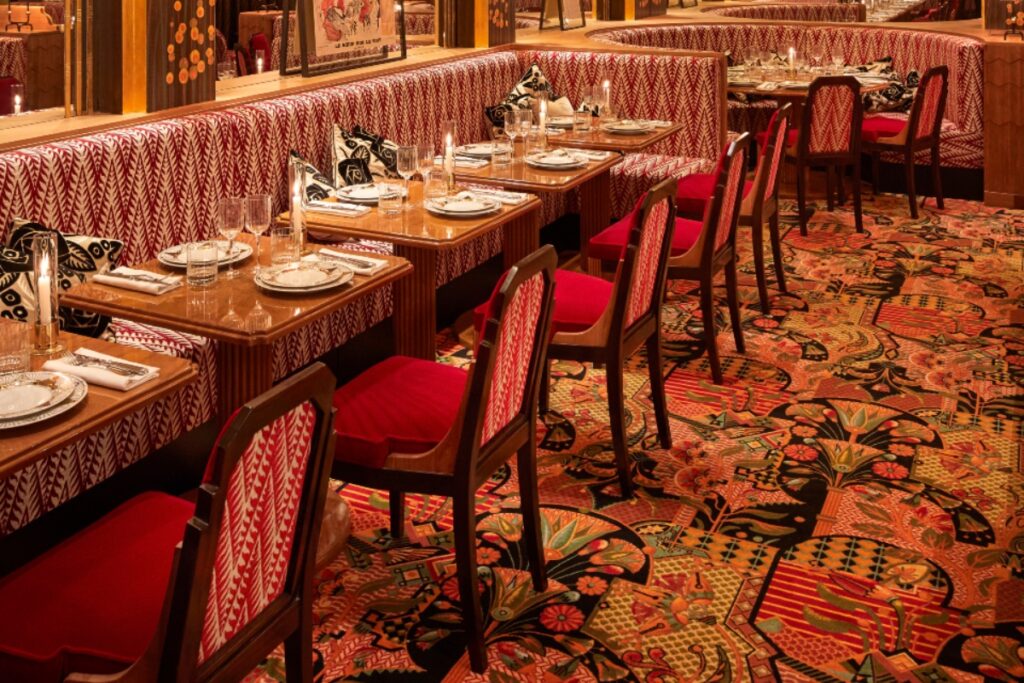
Within this richly layered interior, flooring was conceived not as a background element, but as an integral part of the spatial narrative. Working closely with the design team, Ege Carpets developed entirely bespoke carpet designs, created specifically for Bœuf sur le Toit using its Highline concept, which offers complete creative freedom.

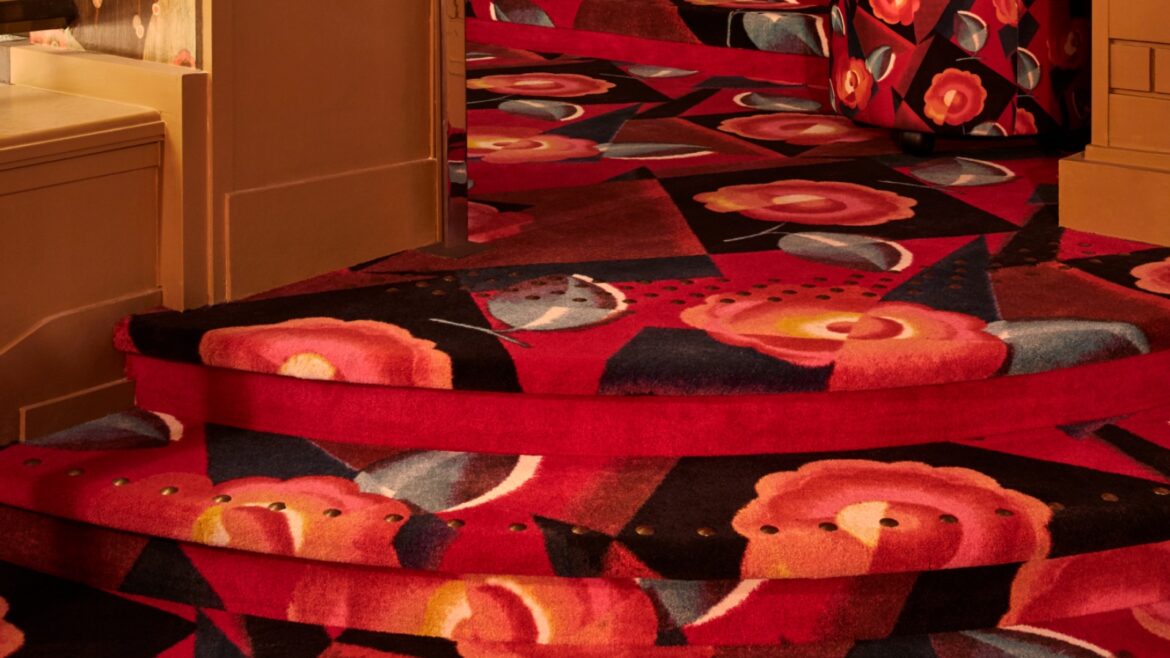
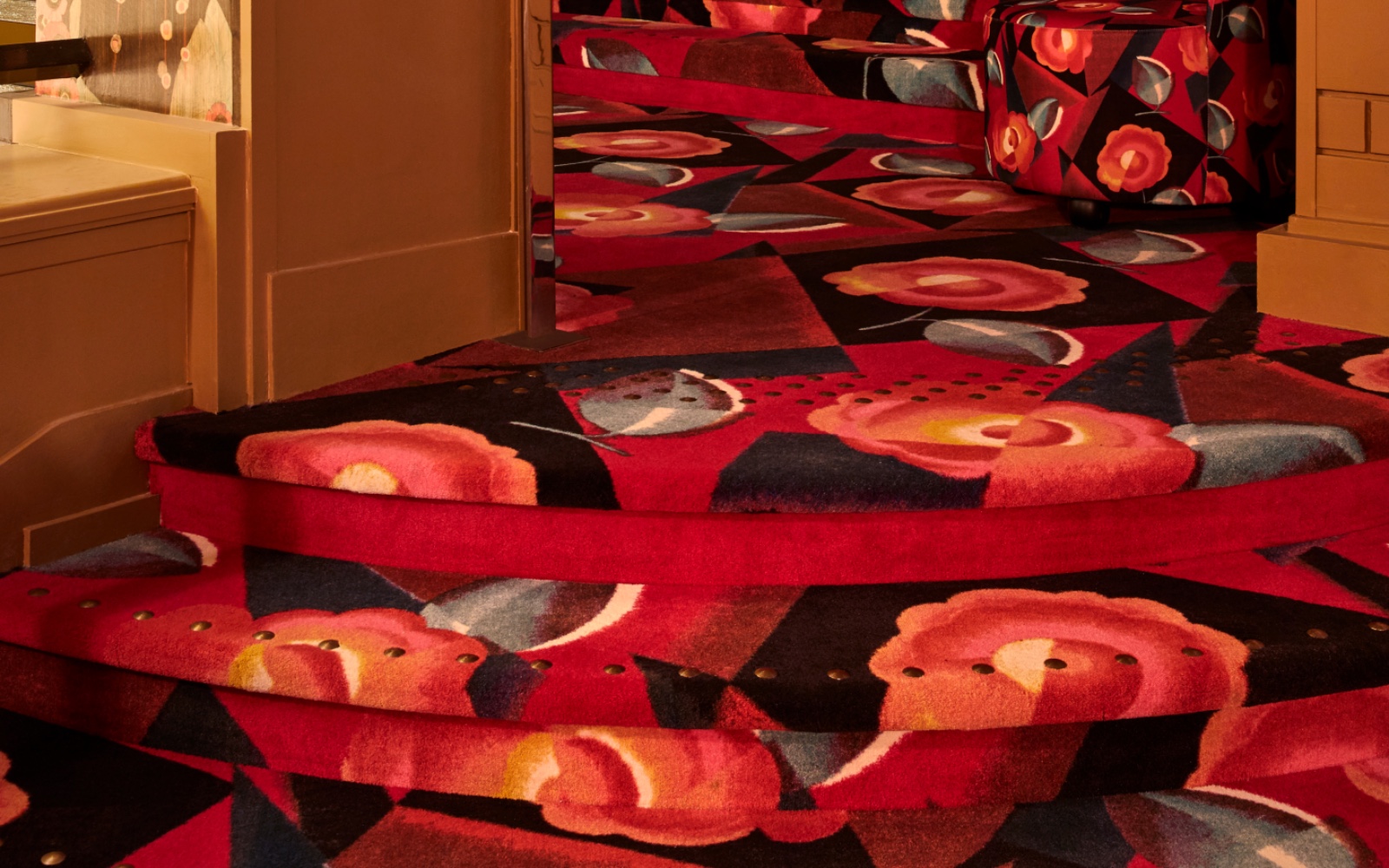
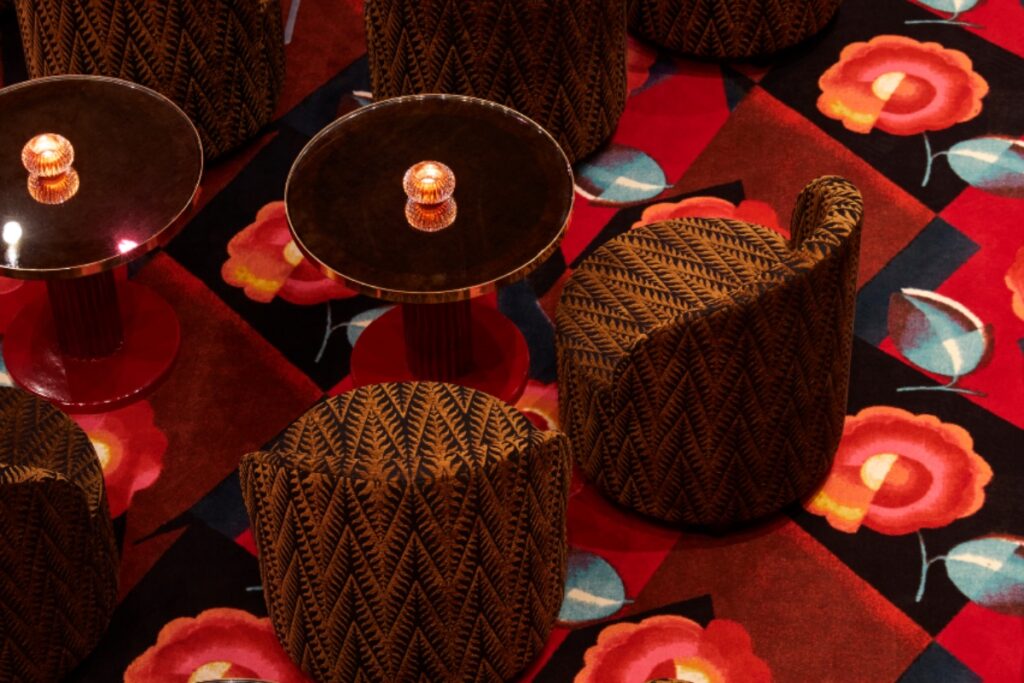
Here, the floor becomes a natural extension of the décor, expressive yet refined, textured yet balanced. Colour, pattern and texture were developed in dialogue with the architecture and interiors, ensuring the flooring echoes the venue’s theatrical spirit while supporting its functional needs. The carpet enhances acoustics and comfort, anchoring the energy of live performance without competing with it visually.

Through this collaboration, Ege Carpets combined technical expertise with artisanal sensibility, translating the designer’s vision into woven form. The result is a floor deeply rooted in the identity of the space, where heritage meets boldness, and bespoke craftsmanship subtly reinterprets a Parisian icon for contemporary audiences.

Bœuf sur le Toit - Bar

Bœuf sur le Toit – Bar | Image credit: Ege Carpets

Designing an Evolving Experience

Another defining strength of Bœuf sur le Toit lies in its spatial fluidity. Rather than functioning as a single destination, the venue unfolds as a sequence of interconnected environments. Guests move seamlessly from restaurant to bar, into the Music Hall, through the smoking room and onward to private salons, without ever leaving the building.

Design encourages exploration and social interaction, reinforcing the idea that hospitality spaces can be dynamic, responsive and experiential. The floors accompany the smooth transitions from space to space with a balance of intimacy and spectacle, allowing moments of high energy to coexist with quieter, reflective interludes.

Ege Carpets is one of our Recommended Suppliers and regularly features in our Supplier News section of the website. If you are interested in becoming one of our Recommended Suppliers, please email Katy Phillips.

Main image credit: Ege Carpets

Kempinski Group announces the acquisition of Augustine Hotel Prague

Kempinski Group announces the acquisition of Augustine Hotel Prague

1024 640 Pauline Brettell
Kempinski Group announces the acquisition of Augustine Hotel Prague

Luxury hospitality group Kempinski Hotels has announced the acquisition of Augustine Hotel, Prague – the groups first acquisition in over 50 years, marking a key milestone in the company’s asset heavier business evolution…

Kempinski Group announces the acquisition of Augustine Hotel Prague

This wholly owned acquisition of Augustine Hotel marks a significant step in the company’s strategic shift towards an asset-heavier approach to its global portfolio, under the stewardship of Barbara Muckermann, CEO, Kempinski Group. Furthermore, this is the first acquisition for Kempinski Hotels in over 50 years, since the investment in Hotel Vier Jahreszeiten Kempinski Munich in 1970.

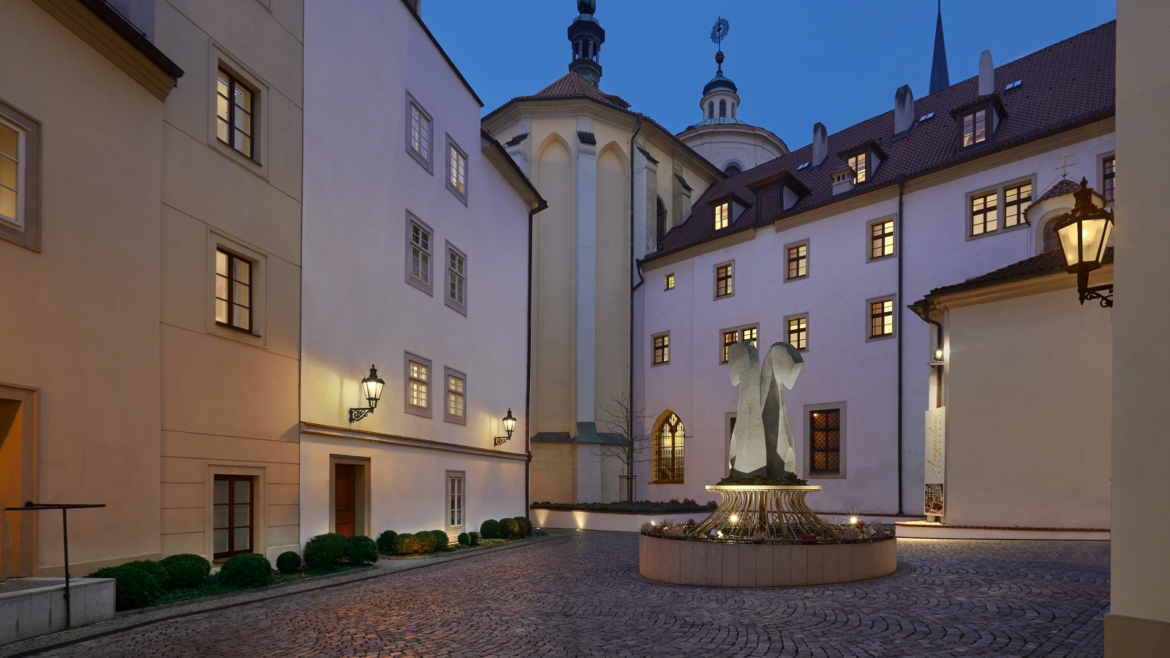
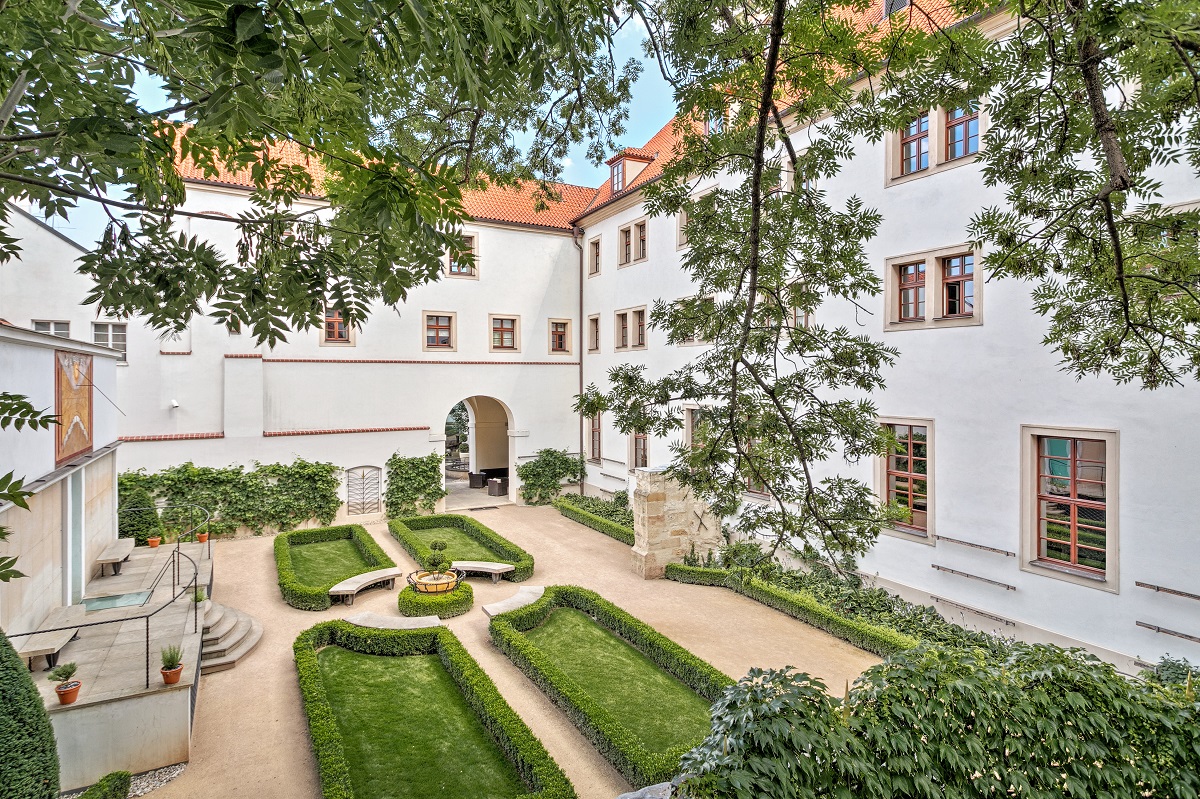
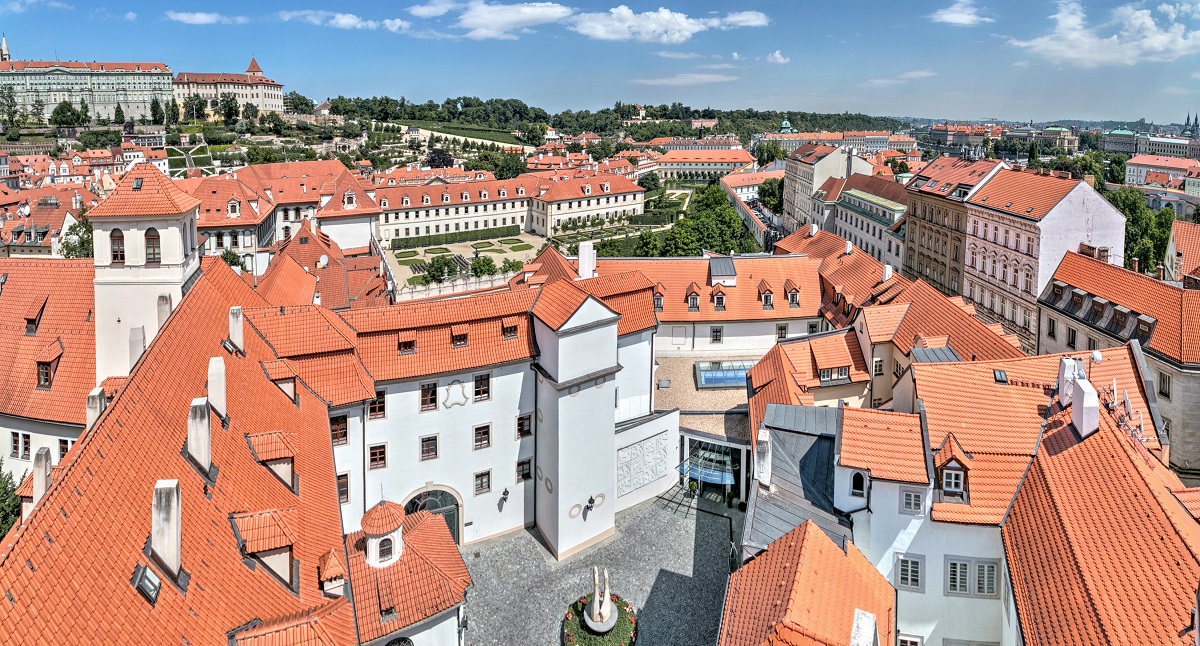
Located in historic Malá Strana (Lesser Town) beneath Prague Castle, Augustine Hotel, Prague stands within the walls of the Augustinian Monastery of St. Thomas, a historical site dating back more than 800 years and remains a living, working community of Augustinian monks that preserve a daily routine of worship, work, and study. The property occupies a carefully delineated portion of the historic site, creating an extraordinary dialogue between past and present, maintaining age-old scriptures that hold learnings from centuries of contemplative life.

Augustine Hotel Prague_Sundial Garden

Image credit: Kempinski Hotels

The acquisition reflects Kempinski’s broader strategic recalibration towards direct investment and ownership of landmark properties to control the guest experience from beginning to end.

“Kempinski was founded on a simple belief: that hospitality should enable guests to experience the best of The Good Life, ” commented Muckermann. “Since its origin, Kempinski has defined luxury not as status or formality, but as generosity and joy; curating experiences from the heart of the destination and deriving richness from its culture and communities. As we evolve our business and brand strategy we are bringing this heritage back to life with the modern day traveller in mind.”

“Opportunities to acquire hotels like Augustine Hotel, Prague are exceptionally rare. This investment offered a unique and compelling opportunity to secure a heritage asset in a top-tier European luxury destination while also creating a grand showcase for The Good Life as the future of Kempinski as an ultra luxury brand.”

aerial view Augustine Hotel Prague_Exterior Wide

Image credit: Kempinski Hotels

Augustine Hotel, Prague features 101 guest rooms including 20 suites, many of which feature original vaulted ceilings and wooden beams, retaining the authentic structure of the monks’ former living quarters; speciality restaurants including two distinct bar concepts including The Refectory Bar, previously the monastery’s former dining hall; a spa and fitness center; The Monastic Library, a library hall housing a collection that spans centuries of theological and scientific thought; over 400 sqm of meeting space; and more than 650 sqm of outdoor terraces and gardens. The property combines meticulously preserved architectural heritage with contemporary five-star standards of service and has long attracted an international clientele, including heads of state, cultural figures and global business leaders.

Muckermann commented further, “Rather than pursuing uniformity, we believe that Kempinski’s brand strength lies in its collection of highly individual properties, many of which are historic, architectural landmarks and are deeply resonant of the destinations’ culture and community. As a storied hotel that is recognised for its deep history, cultural significance and architectural heritage, Augustine Hotel, Prague is not only an ideal addition to Kempinski’s heritage-led, global portfolio, it is set to become the first truly physical and experiential representation of the Kempinski of the Future. We look forward to welcoming this iconic hotel into the Kempinski family as a flag bearer for the brand’s continued leadership in luxury hospitality.”

Gordon Drake, Chief Financial Officer, Kempinski Group, added, “From a business perspective, well-located luxury hospitality assets with strong brand equity and cultural significance offer resilience across market cycles and an opportunity for a significant return on investment. Furthermore, through direct ownership we are better placed to reposition the Augustine Hotel, Prague as being one of the very finest hotels in Prague and create significant value from the asset elevation.”

Under Kempinski’s ownership, Augustine Hotel, Prague will operate as a white label, luxury hotel from 1st April, 2026 until late 2026. Kempinski is committed to investing in design-led refurbishments of all rooms and public spaces in line with the Kempinski of the future blueprint whilst remaining focused on preserving the buildings’ architectural integrity and historic character. The hotel will be reflagged as Kempinski in late 2026.

Main image credit: Kempinski Hotels

paintings curated by Artiq in Six_Senses_London_Whiteley's_Bar_

Artiq unveils a sensory art journey at Six Senses London

1024 640 Pauline Brettell
Artiq unveils a sensory art journey at Six Senses London

An art tour of Six Senses London at The Whiteley through the Artiq lens: renewal, tactility and the modern renaissance of a London landmark…

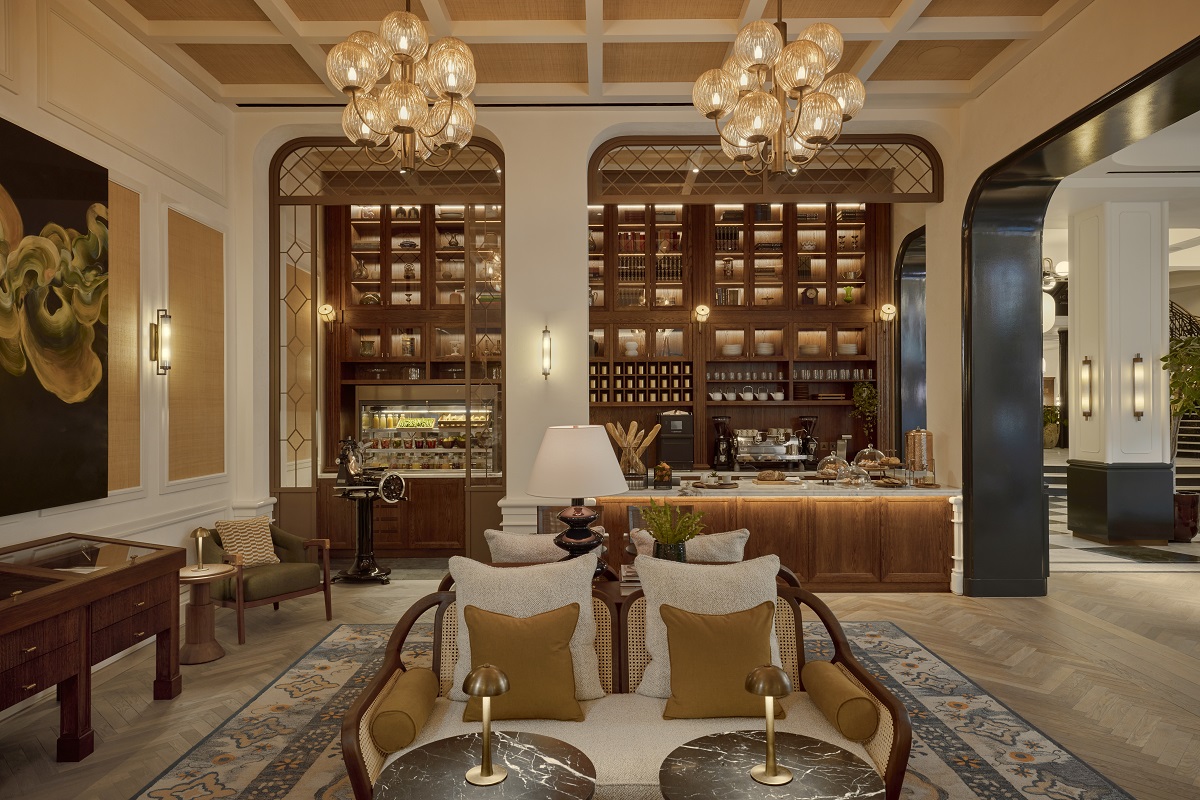
paintings curated by Artiq in Six_Senses_London_Whiteley's_Bar_

Artiq has curated and commissioned a significant, building-wide art collection for Six Senses London, marking the next chapter in the evolution of The Whiteley – London’s first great department store and one of Bayswater’s most recognisable Grade II listed landmarks.

Spanning lobby, restaurant, bar, members’ spaces, meeting rooms and spa, the predominantly commission-led collection has been conceived as an integrated cultural programme rather than a decorative addition. Responding directly to the architecture, interior materiality and historic identity of The Whiteley, the works form a cohesive narrative shaped by tactility, tone and atmosphere.

Six_Senses_London_Whiteley's_Bar_Interiors

Image credit: Six Senses London

Once described as an “emporium of the senses”, Whiteley’s original ambition provides the conceptual foundation. Artiq’s curatorial approach reinterprets this legacy through contemporary practice, bringing together a roster of largely London-based artists whose work explores texture, process and material intelligence. The result is a layered and immersive collection that unfolds gradually throughout the building – reinforcing Six Senses’ commitment to wellbeing, sustainability and sensory awareness.

Isabelle Guyer, Senior Curator of Artiq, commented: “Each work contributes to a wider story of renewal. Subtle references to landscape, geology, textile and gesture echo the hotel’s interior palette and architectural rhythm, creating moments of pause and depth within spaces designed for gathering, restoration and reflection.”

Patrick McCrae, CEO of Artiq, added: “The Whiteley carries extraordinary cultural memory. Our ambition was to honour that history while ensuring the collection feels entirely of its moment. By commissioning artists whose practices centre material, sustainability and process, we’ve created a body of work that supports the hotel’s philosophy of considered living – one that reveals itself over time and strengthens the guest experience in lasting ways.”

The collection has been curated around the framework of three pillars.

Six_Senses_London_Whiteleys_Cafe_Interiors

Image credit: Six Senses London

Emporium of the senses

Inside the hotel, every space, designed by interior design firm AvroKO, is conceived to support spiritual balance and physical wellbeing. The art collection extends this ethos. Through layered surfaces, considered juxtapositions and a palette drawn from the natural world, the works invite quiet introspection and heightened sensory awareness.

Balance guides the curatorial approach: harmonious yet gently dynamic compositions bring subtle energy to lobbies, bars, guestrooms and spa areas. The outside is drawn inward through references to geology, landscape and organic form, echoing the hotel’s material language of timber, stone, ceramic and woven textiles.

Luca Ferraro, Senior Design Manager at AvroKO, commented: “Honouring Whiteley’s historic emporium, our selection acts as a visual bridge across time. Championing British artists, we mixed traditional paintings with tactile pieces, grounding this landmark in a modern experience that embodies Six Senses’ values.”

Sustaining wellness

Rooted in connection to the local environment, the collection foregrounds artists whose practices embrace sustainable production methods and mindful material sourcing. In dialogue with Six Senses’ environmental advocacy, the curation privileges reverence, restraint and renewal.

Foraged pigments, recycled materials, hand-processes and low-impact methodologies reflect a shared awareness of impact. The works evoke awe for the natural world while nurturing both inner calm and collective responsibility.

Modern renaissance

The collection engages directly with Whiteley’s past, recognising the building as a site of ambition, spectacle and civic confidence. That legacy is carried forward through contemporary practices that prioritise material, process and restraint.

Historic detail and architectural rhythm inform the works without being overtly quoted. References surface in structure, palette and texture rather than ornament. What emerges is a confident moment of renewal – a dialogue between eras that feels deliberate, intelligent and entirely current.

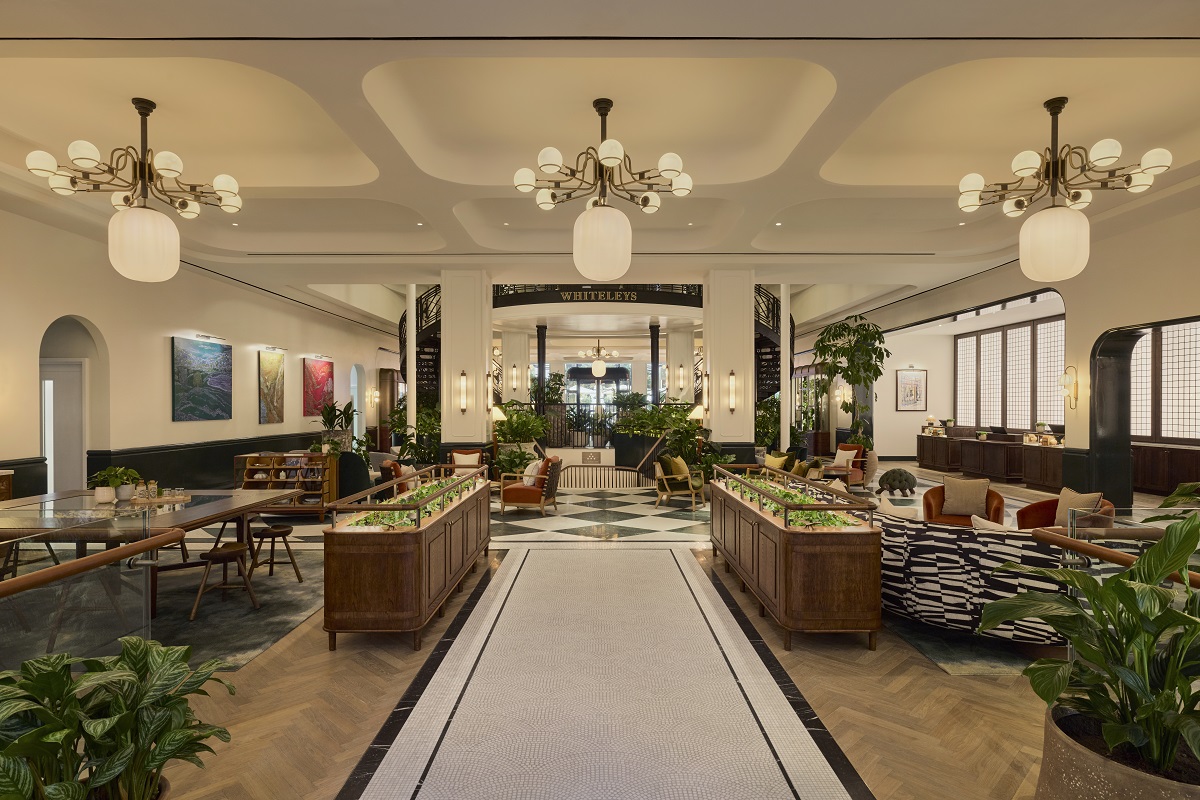
Six_Senses_London_Lobby

Image credit: Six Senses London

The lobby: texture, gesture, grounding

The predominantly commission-led body of work in the lobby establishes the collection’s holistic intent. Unifying textiles, expressive mark-making and material-led processes, the works anchor the arrival experience with warmth and composure.

Working through the art historical trope of landscape, Sam Llewellyn-Janes explores natural history and deep time. Drawing on geology, astronomy and pre-historic and contemporary flora and fauna, his practice examines humanity’s relationship to the material world.

Central to his commissioned works are rubbing drawings. Through contact and transfer, frottage becomes a method of layering strata of carefully selected objects. The resulting compositions are materially indexed – recording texture and presence while collapsing the boundary between object and image. The works carry a palpable sense of time, echoing the building’s layered narrative.

Rooted in intuitive mark-making, Rachael Addis creates abstracted landscapes through the accumulation of layered paint and pattern. Influenced by formative years between the Lake District and Asia, and informed by Zen Buddhism and 1950s Abstract Expressionism, she approaches the painted surface as both physical and contemplative space.

For Six Senses London, she abandoned traditional brushes in favour of found and recycled materials, including discarded toy fragments. Rhythmic, meditative gestures build densely worked surfaces inspired by London’s shifting urban landscapes, rendered in elevated jewel tones that echo the hotel’s interior palette.

A conceptual textile and screen-print artist, Janine Saul interrogates the boundaries between craft and contemporary fine art. Her experimental screen-printing processes and spatial installations explore texture, movement and the tension between control and intuition.

Blending craft, conceptual thinking and spatial awareness, her works reveal the unseen emotional qualities of space – a fitting dialogue with a building defined by reinvention.

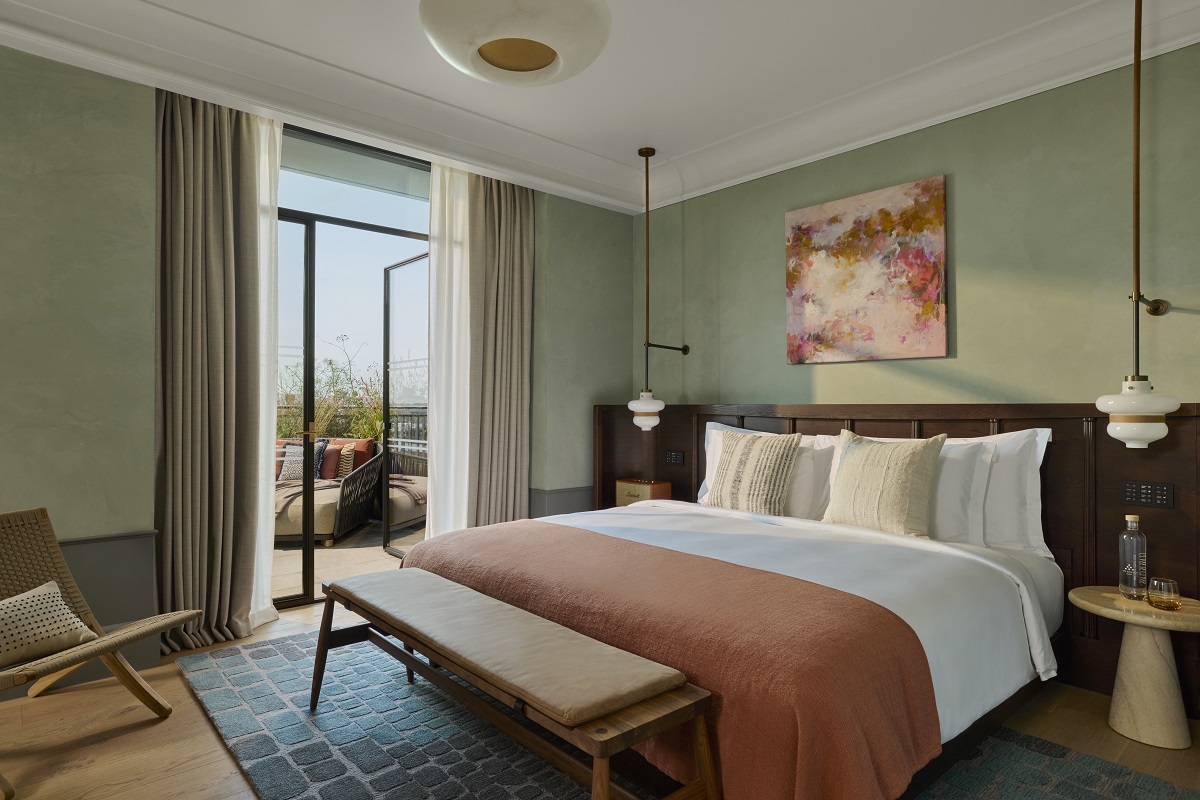
Six_Senses_London_Whiteley_Suite_Room_Bed

Image credit: Six Senses London

Ground floor: alchemy and elemental form

Within the Alchemist Library, bespoke works by Genevieve Levold and Ana Benavides unfold in fluid, jewel-toned compositions of deep green, burnished gold and mineral blue. Echoing the bar’s rich palette, the paintings evoke shifting landscapes and elemental movement.

Layered gestures and luminous tonal transitions create a sense of alchemy in motion – nature distilled into immersive, sensorial form.

In the lift lobby and bathrooms, modernist works by Sam Wood blend rural and urban influences through relaxed, gestural drawing and floral and architectural motifs, while works by Laura Menzies introduce further tonal dialogue and spatial softness.

First floor: through the window

Under the central skylight of the members’ floor, Through the Window brings together London-based artists exploring memory, interiority and emotional light. Inspired by architectural transparency and quiet openness, the collection encourages reflection beneath the glazed canopy.

Artists include Matt James Brown, Pam Winbolt, Marta Adalis, Paula Bosco, Lisa Price, Carla Noronha, Olha Pryymak, KP Khin, Marcus Aitken, Juliet Ferguson-Rose, Linda Khatri, Nowshin Prenon, Gala Bell, Fiona White and Valerie Kuzina – forming a contemplative constellation that softens and humanises the club environment.

In the meeting rooms, works by Julita Elbe and Charlotte Cuny introduce clarity, compositional restraint and textural nuance.

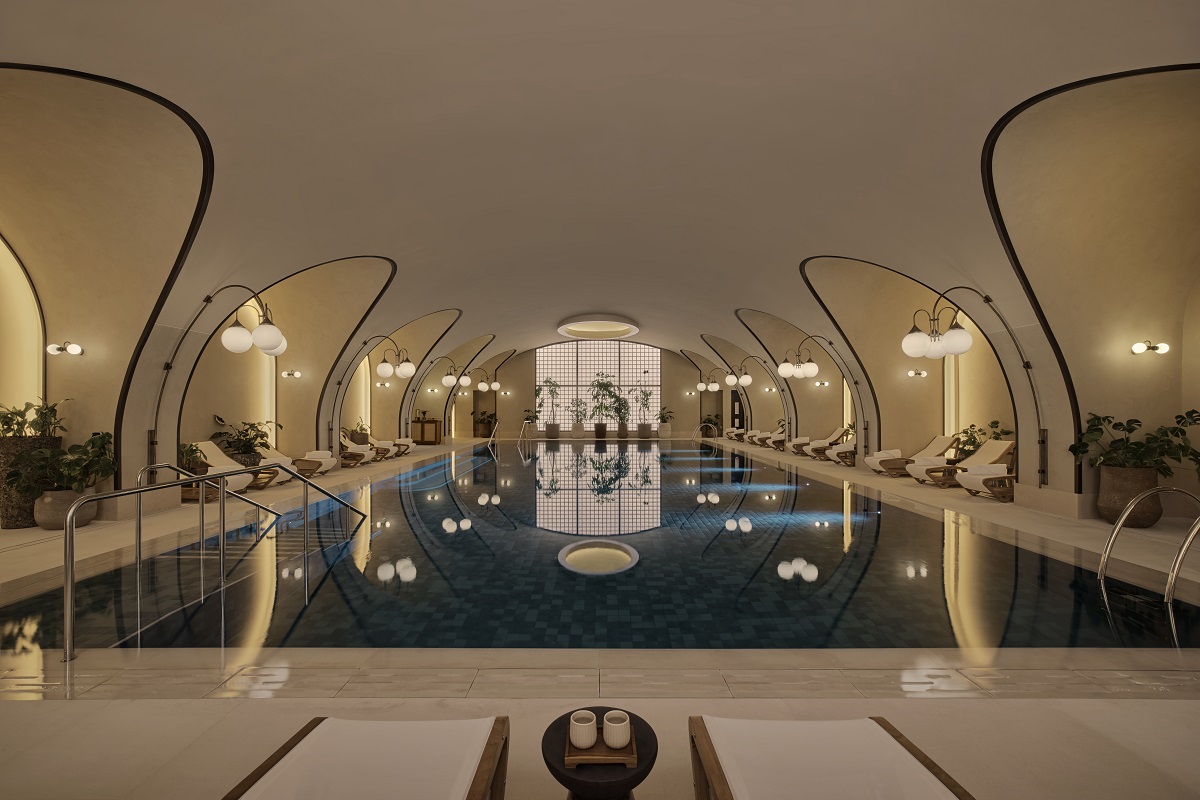
curved alcoves around indoor poolSix_Senses_London_Pool

Image credit: Six Senses London

The spa: materials of the earth

In the Whiteley x Six Senses Spa, art and wellness converge. Commissioned works offer moments of visual stillness and subtle delight, inspired by the delicate rhythm of nature.

Lisa-Marie’s meticulous practice centres on handmade watercolours created from foraged earth minerals. Rejecting commercially available paints, she sources pigments from varied environments, weaving a direct bond between material and landscape.
Immersing herself in both urban and rural terrains, she translates the sights, sounds and scents of place into a restrained, mineral-rich visual language. Each stroke carries the energy of the land from which it derives – aligning seamlessly with Six Senses’ philosophy of ecological awareness and embodied wellbeing.

A new chapter for The Whiteley

Throughout Six Senses London, the art collection is embedded within the fabric of the building. It moves with the architecture, aligns with the interior materiality and reinforces the hotel’s emphasis on sensory awareness and wellbeing.

The works build presence gradually. Texture, tone and process create depth across spaces designed for gathering, restoration and retreat — shaping an experience that feels cohesive, grounded and distinctly of its setting.

In a neighbourhood long overlooked and now in renewal, this collection signals a more nuanced form of luxury – one grounded in tactility, sustainability and cultural depth.

Artiq is one of our Recommended Suppliers and regularly features in our Supplier News section of the website. If you are interested in becoming one of our Recommended Suppliers, please email Katy Phillips.

Main image credit: Six Senses London

marriott apartments bangkok

Hotels versus living solutions – in conversation with Paul Hiriart at HSP

1024 640 Pauline Brettell
Hotels versus living solutions – in conversation with Paul Hiriart at HSP

In 2026, one of the most significant shifts in hospitality is no longer about luxury versus lifestyle, or brand versus brand. It is about hotels versus living solutions. Paul Hiriart from Hotel Solutions Partnership (HSP)talks to us about this shift while unpacking what Marriott’s long-stay push reveals about this trend…

marriott apartments bangkok

Over the past few years, Marriott International has been one of the most visible players accelerating into long-stay, serviced apartments, branded residences, and hybrid hotel-living models. What started as a portfolio diversification strategy has now become a core growth engine, actively shaping how hotels are designed, sold, and operated.

Paul Hiriart from Hotel Solutions Partnership (HSP)

Paul Hiriart, HSP | Image credit: Hotel Solutions Partnership

But this is not a Marriott story alone.
Across the industry, major groups are following similar paths, driven by the same structural forces: changing guest behavior, owner demand for yield stability, and cities where traditional transient demand is no longer the only driver. The question in 2026 is no longer whether long-stay and hybrid models make sense. The real question is whether hotels are truly ready to operate them.

Why long-stay is accelerating now
Guests are no longer booking only nights. They are booking periods of life. Remote work, blended business and leisure travel, relocation, project-based assignments, and lifestyle mobility have all reshaped expectations. A growing segment of guests wants space, not just rooms, privacy without isolation, and hotel services, but on their own terms.

For owners, long-stay and hybrid formats promise more stable occupancy, reduced seasonality, and diversified revenue streams. This is why long-stay is now firmly embedded in development pipelines.

marriott-executive-apartments-london-canary-wharf

Marriott Executive Apartments, London Canary Wharf | Image credit: Marriott

Marriott as a signal, not an exception
Marriott’s scale in this space makes it a clear reference point. The group has expanded aggressively across serviced apartments, extended-stay brands, and branded residential products, positioning itself where hospitality meets real estate and lifestyle.

At the same time:
• Accor continues to grow its extended-stay and aparthotel platforms,
• Hyatt Hotels Corporation pushes lifestyle and mixed-use formats,
• Hilton Worldwide strengthens premium and focused-service long-stay offerings.

Different strategies. Same direction.
Long-stay is no longer a niche. It is becoming a structural pillar of hospitality growth.

A long-stay hotel is not simply a hotel with bigger rooms. Operationally, everything changes. Housekeeping cadence shifts from daily routines to flexible, guest-driven models. F&B becomes optional or fragmented. Staffing profiles move closer to residential services than classic hotel operations. Brand standards are harder to apply consistently over longer stays. Many teams underestimate this complexity.

Hotels designed for transient guests struggle when stays stretch from three nights to three months. Service culture, cost structures, and guest relationships must all adapt.

Marriott Executive Apartments, Bangkok-townhall-sukhumvit/

Marriott Executive Apartments, Bangkok | Image credit: Marriott

The execution gap in 2026
In 2026, the execution gap around long-stay is becoming visible. Some assets perform extremely well, delivering strong margins and high guest satisfaction. Others suffer from unclear service positioning, frustrated teams, confused guests, and owners disappointed by underwhelming returns. The difference is not the concept. It is operational clarity and discipline.

What owners should focus on
Owners must ask sharper questions upfront. Who is the real target guest, and for how long? What services are truly needed? How is staffing structured over a full operating cycle? How quickly can the asset stabilise?
Brand affiliation helps, but it does not replace operational thinking.

What operators must accept
Long-stay is not a lighter version of hospitality. It is a different operating model.
Success requires rethinking service frequency, retraining teams, adapting performance metrics, and aligning expectations with owners early. The groups that succeed will be those that stop treating long-stay as an add-on and start treating it as a core business.

A broader industry takeaway
Marriott’s long-stay momentum is a signal, not an outlier. Hospitality in 2026 is expanding beyond nights and into lives. Hotels are no longer competing only with other hotels, but with residential, rental, and lifestyle solutions.
Once again, execution is the differentiator.

Main image credit: Marriott International

1 Hotel Seattle studio suite

Starwood Hotels announces leadership promotions

1024 640 Pauline Brettell
Starwood Hotels announces leadership promotions

Starwood Hotels, the hotel brand management company that operates 1 Hotels, Baccarat Hotels, and Treehouse Hotels, has announced the promotion of three leaders across its operations and property teams…

1 Hotel Seattle studio suite

Starwood Hotels continues to expand its global footprint across the Americas, Europe, the Middle East, and Asia Pacific. With a growing portfolio of properties open and in development across key global markets, the company remains focused on thoughtful expansion while strengthening its presence in destinations around the world. As the company grows, experienced leadership across both corporate and property teams remains central to delivering strong operations and performance across the portfolio.

New Appointments

Shadi Omeish has been promoted to Senior Vice President of Operations, Americas; Ashley Gochnauer has been named Area Managing Director overseeing 1 Hotel San Francisco, 1 Hotel Seattle, and Treehouse Hotel Silicon Valley; and Onal Kucuk has been appointed Area General Manager of 1 Hotel Nashville and 1 Hotel Austin

“We’re proud to recognize Shadi’s continued leadership as our portfolio keeps growing across the Americas and beyond,” said Raul Leal, CEO of Starwood Hotels. “He’s had a huge hand in strengthening operations across our hotels and supporting the teams who make it all happen every day. This promotion reflects the impact Shadi has already made and the confidence we have in the leadership he’ll continue to bring as we keep building what’s next.”

lobby1Hotel_Seattle

Image credit: 1 Hotel Seattle

Omeish, an award-winning hospitality leader with nearly three decades of international experience, has been promoted to Senior Vice President of Operations, Americas, where he will continue to lead operational performance across Starwood Hotels’ growing portfolio throughout the region. Having held senior leadership positions with globally recognized brands including Four Seasons Hotels & Resorts, MGM Resorts International, and Starwood Hotels & Resorts, Omeish brings deep operational expertise to the role. In this expanded role, he will work closely with general managers and regional leadership teams to strengthen day-to-day operations, enhance overall hotel performance, and support the continued growth of the company’s brands across its 17 operating properties. He will also play a key role in supporting upcoming openings across the Americas, including 1 Hotel Austin, 1 Hotel & Homes San Miguel de Allende, 1 Hotel Cabo, 1 Hotel Hudson Valley, Baccarat Residences Brickell Miami, Treehouse Hotel Brickell, and Treehouse Hotel Miami Beach. Since joining the company in 2016, Omeish has held several leadership roles across the portfolio, including General Manager of 1 Hotel South Beach and 1 Hotel West Hollywood, Area Managing Director, West Coast, Regional Vice President, West Coast, and most recently Vice President of Operations, Americas.

“Onal and Ashley have been doing an incredible job leading their teams and delivering strong results. Expanding their reach is a strategic advantage. They know our brands inside and out, they care deeply about their people, and it shows. Their expanded roles are well earned, and we’re excited to see them continue raising the bar for our guests and our hotels,” continued Leal. “The energy and enthusiasm these individuals inject into our journey will make us uncopiable.”

yellow gingham pool caban and yellow inflatable duck on pool in treehouse silicone valley

Image credit: Erin Kunkel / Treehouse Silicon Valley

Gochnauer has been promoted to Area Managing Director overseeing 1 Hotel San Francisco, 1 Hotel Seattle, and Treehouse Hotel Silicon Valley. Most recently serving as Area General Manager of 1 Hotel San Francisco and Treehouse Hotel Silicon Valley, Gochnauer now assumes broader oversight across the three properties, working closely with property leadership teams to drive operational performance, support team development, and maintain the brand’s standards for guest experience. She played a key role in the opening of Treehouse Hotel Silicon Valley and previously led the debut of 1 Hotel San Francisco as General Manager, bringing valuable experience in launching and scaling new properties. Gochnauer brings more than 20 years of hospitality experience to the role, having held leadership positions with brands including Viceroy Hotels, The London, Kimpton Hotels, and Starwood Hotels & Resorts. Throughout her career, she has been closely involved in hotel openings and transitions, building strong teams and maintaining high operational standards.

Onal Kucuk has been promoted to Area General Manager overseeing 1 Hotel Nashville and the upcoming 1 Hotel Austin. Most recently serving as General Manager of 1 Hotel Nashville, Kucuk will now expand his leadership to include the highly anticipated debut of 1 Hotel Austin, set to open in late summer 2026, where he will play a key role in guiding the property through its pre-opening and launch. Since joining the brand, he has led operations at 1 Hotel Nashville, overseeing the hotel’s guestrooms and suites as well as its food and beverage and wellness offerings. Kucuk brings extensive experience in luxury and lifestyle hospitality, having previously served as General Manager of The Guild Hotel in San Diego and held leadership roles with Hyatt at properties including Ventana Big Sur and Thompson Chicago. Earlier in his career, he spent more than a decade with Starwood Hotels & Resorts in a range of operational leadership roles, including Black Belt–Area Director of Six Sigma for the Midwest.

Borges ceramic lamp by Northern Lights at Caledonian Edinburgh ©Pellier

Bespoke meets hybrid: strategic lighting for guestrooms (pt.4)

1024 640 Guest Author
Bespoke meets hybrid: strategic lighting for guestrooms (pt.4)

In this penultimate chapter in its five-part series, Northern Lights explores how a hybrid approach to bespoke lighting is helping designers balance creativity, cost and complexity in luxury hospitality spaces…

Borges ceramic lamp by Northern Lights at Caledonian Edinburgh ©Pellier

In today’s luxury hospitality market, hotel brands demand unique, exceptional experiences. Emotional impact, atmosphere, and intimacy define what makes a stay memorable, particularly in guestrooms.

At the same time, designers face mounting pressures: tight timelines, commercial targets, and technical constraints must all be reconciled with creative ambition. Lighting sits at the intersection of aesthetics, function, and complexity – preserving design intent amid practical realities defines true ingenuity. Designers must balance the warmth and intimacy of ambient schemes, the clarity of task lighting, and seamless integration of controls – all while managing cost, procurement, and programme pressures.

Bespoke desk & floor lamp with alabster resin at Four Seasons Park Lane ©Richard Waite

Four Seasons Park Lane – Lighting by Northern Lights | Image credit: Richard Waite

The Role of Bespoke

Northern Lights, renowned for delivering bespoke lighting across complex, experimental, and large-scale hotel projects, argues that not every element needs full customisation to achieve impact and brand synergy.

“Luxury is often assumed to equate to fully bespoke solutions but considered approaches balance creativity with strategy. Statement pieces that define the guest experience or act as brand touchpoints warrant full custom development, while other components can be adapted from our customisable collections,” explained Michael Jackson, Head of Design at Northern Lights. “The key is commercial intelligence: allocating bespoke investment where it delivers maximum impact and pairing it with adaptable components to create cohesive, tailored bedroom schemes.”

Hybrid Solutions – enabling creative freedom

Northern Lights applies decades of bespoke expertise to its Luxury Signature Collection, offering fully customisable solutions that balance creativity with programme realities. With design and manufacturing under one roof, every aspect can be tailored to the unique demands of the space – from scale, form and materials to unique configurations and technical integrations.

This hybrid model combines the reliability and speed of pre-designed collections with the creative freedom of bespoke design, giving designers a strategic advantage.

The principle is clear: hybrid solutions offer creative empowerment. Designers can focus on building the guest experience, confident that bespoke lighting ambitions can coexist with commercial constraints.

Customised Corvus Wall Light for Hilton Newcastle Gateshead ©Northern Lights

Hilton Newcastle Gateshead | Image credit: Northern Lights

Material Innovation as a Protective Tool

Careful selection and inventive use of materials protect design intent even when budgets or timelines are constrained. Lighter base materials with advanced coatings can replicate the richness of solid metal at a fraction of the weight and cost without compromising aesthetics or tactile quality. Engineered composites and specialist glass treatments deliver high-end visual impact while offering practical benefits such as reduced weight, structural efficiency, and cost-effective fabrication. These decisions ensure the design vision is maintained, even under programme pressures 

Intelligent Solutions

Northern Lights transformed a Corvus pendant from the Luxury Signature Collection into a bespoke bedside wall light for Hilton Newcastle Gateshead’s guestroom roll-out, combining luxury, speed, and tailored precision.

For The Peninsula Hotel, the team experimented with a liquid-metal coating in place of a solid brass base, achieving the desired five-star aesthetic while respecting budget constraints.

At Four Seasons Park Lane, floor lamps with alabaster-resin bases replicated the presence and opulence of marble while reducing weight and cost, with integrated sockets and USB ports seamlessly incorporated.

Meanwhile, at Caledonian Edinburgh, part of Hilton’s Curio Collection, Northern Lights combined Luxury Signature Collection fittings with bespoke pieces to deliver a coherent, high-spec scheme across both bedrooms and public areas.

Mareto ceramic lamp by Northern Lights at Caledonian Edinburgh

Mareto ceramic lamp at Caledonian Edinburgh | Image credit: Northern Lights

In an era where luxury must satisfy experience, quality, and commercial pragmatism simultaneously, the most effective lighting strategies blend bespoke designs with customisable collections, supported by material innovation and considered experimentation. This dynamic approach enables designers to deliver hospitality lighting schemes that are distinctive, balanced, and intelligently executed.

Read series part 1: The challenges of luxury hotel bedroom design 

Read series part 2: The strategic role of sample rooms in hotel design

Northern Lights is one of our Recommended Suppliers and regularly features in our Supplier News section of the website. If you are interested in becoming one of our Recommended Suppliers, please email Katy Phillips.

Main image caption and credit: Borges ceramic lamp by Northern Lights at Caledonian Edinburgh ©Pellier

Azuma Farm Koiwai - a new luxury 'farm life' resort brand

New hotel openings – April 2026

1024 640 Pauline Brettell
New hotel openings – April 2026

From reimagined heritage icons to design-led countryside retreats, the list of new hotel openings this month shines a light on the shifting definition of luxury that is shaping hotel design across the boards…

Azuma Farm Koiwai - a new luxury 'farm life' resort brand

This months round-up of new hotel openings spotlights a compelling mix of heritage restorations, brand debuts and thoughtful reinventions. Leading the charge is Azuma Farm Koiwai, a rural retreat, setting the tone for a collection that blends cultural authenticity with contemporary design. Continuing the journey, a Belle Époque palace on the Côte d’Azur enters a new era, a Venetian landmark is reborn, and boutique concepts reshaping destinations from Vienna to Mykonos, all reflect a broader shift towards experiential, place-led hospitality.

Azuma Farm Koiwai

japanese ryokan inspired bath in Azuma Farm accomodation

Image credit: Azuma Farm Koiwai

Guided by legendary hotelier Adrian Zecha, Azuma Farm Koiwai is a new luxury resort brand retreat by Azumi Japan and East Japan Railway Company, and is set within Koiwai Farm’s historic 3,000 hectares natural landscape. The property is conceived as an intimate countryside escape set within the storied grounds of Koiwai Farm in Iwate Prefecture, one of Japan’s most historic farmstead landscapes. The property is the first destination under the newly launched Azuma Farm brand.

Zecha, Co-Founder and Chairman of Azumi, introduced the brand as a modern interpretation of the ryokan, inspired by his longstanding admiration for Japanese culture and heritage. Conceived to express the themes of sea and water, Azumi reimagines one of Japan’s most iconic hospitality forms for a contemporary audience.

Como Le Beauvallon

Image credit: COMO Le Beauvallon

COMO Hotels & Resorts has taken its signature style to Le Beauvallon, a striking Belle Epoque palace, which first opened in 1914. The property encapsulates the essence of the Cote D’Azur lifestyle: with 10 acres of terraces and gardens with palms and umbrella pines overlooking the Bay of Saint-Tropez, a glamorous Mediterranean beach club, and a private pontoon for yacht tenders. Occupying a beachside location and adjacent to the renowned Golf Club de Beauvallon, the hotel is only eight minutes by boat from the vibrant heart of ‘St Trop’ on the other side of the bay.

Now, after nearly a decade of playing host to unforgettable celebrations and events, this Riviera icon is beginning a new chapter. Its 25 sea-facing suites will be available for individual guest stays, marking a shift from a private events venue to a classic hotel. The opening marks the first part of a significant two-phase development for Le Beauvallon in collaboration with COMO.

Finca La Bobadilla

Finca La Bobadilla Lobby

Image creditL Finca La Bobadilla

Finca La Bobadilla, now part of the family-owned Spanish group Único Hotels, will reopen this month following an extensive renovation to reflect the brand’s signature style and design. The property is a 73-key rural estate set across 350-hectares with its own olive groves, vineyard, Equestrian centre and pine forests in the Sierra de Loja and has been designed as both a luxury stay and a gateway to true Andalusian culture, nature and community. The property is designed to evoke a traditional village or “cortijo”, with whitewashed buildings, arched walkways, courtyards and fountains woven through the architecture.

Each room/suite has a bespoke design with natural tones and materials of wood, marble, and terracotta, all with countryside views, and some with their own private roof terrace, garden, and working fireplaces. The family-friendly offering is deeply rooted in Andalusian tradition but with a timeless feel, while offering locally-sourced dining (including the first restaurant in the Granada province to get a Michelin star), holistic wellness and Flow Spa, plus experiences to explore the grounds and region

Miiro Spittelberg

Miiro Spittelberg_Vienna_Lobby_with couch and tables under hand painted ceiling

Image credit: James McDonald

Miiro Spittelberg has opened as the brand’s second property in Vienna. Located in Vienna’s culturally vibrant Spittelberg district, just behind the MuseumsQuartier, the hotel is set within one of the city’s most distinctive neighbourhoods. Characterised by its cobbled streets, artisan heritage, independent galleries and lively café culture, the area offers an authentic glimpse into Vienna’s contemporary creative scene.

The property brings together 132 stylish guest rooms and suites where playful design meets effortless comfort. Think warm, calming neutrals splashed with bold bursts of colour, layered with natural textures and soft, mood-setting lighting. Designed by Archisphere, each room channels Miiro’s proudly local spirit, with locally sourced artwork, cosy reading corners, plush bedding, Le Labo toiletries and rainfall showers. Blending sleek modern lines with creative details inspired by the energy of Vienna’s buzzing 7th District, the hotel provides everything needed to feel at home in the city.

Orient Express Venezia at Palazzo Donà Giovannelli

orient express venezia

Image credit: Orient Express Venezia

An eight-year renovation of a 15th-century Venetian palace has culminated in the debut of Orient Express Venezia at Palazzo Donà Giovannelli. Once home to the Duke of Urbino and the Donà and Giovannelli families, this historical address begins a new hospitality chapter, honouring the legacy of a noble mansion while embracing the spirit of the iconic brand.Breathtakingly transformed by Aline Asmar d’Amman for Orient Express Venezia, guests are invited on a transformative voyage through the centuries across the 47 guestrooms and suites.

The Zetter Bloomsbury

guestroom detail in Zetter Bloomsbury with view into bathroom

Image credit: Thurston / Zetter

Bringing The Zetter’s distinctive, personal approach to hospitality to one of the capital’s most storied and cultured quarters, The Zetter Bloomsbury has opened, occupying six interconnecting Georgian townhouses near Russell Square. The 68-bedroom property, designed by James Thurstan Waterworth, draws inspiration from Bloomsbury’s intellectual spirit, a neighbourhood long defined by writers, collectors and creatives, while retaining the personal warmth and character that distinguish The Zetter’s Marylebone and Clerkenwell properties.

The design by Waterworth steers away from hotel convention, in favour of something more residential and collected. Antique finds, vintage lighting and rich textiles come together to create rooms that feel intuitively curated. Each of the guestrooms has been thoughtfully designed with a this collector’s spirit the individuality of each room reflecting the building’s domestic origins, and serving as a reminder that these were once interconnected family homes.

HYDE Perth

HYDE Perth guestroom

Image credit: HYDE Perth / Ennismore

HYDE Perth has opened, positioning itself as a new cultural destination in the heart of the city and marking a defining moment for the global lifestyle brand. The 121-room hotel is HYDE’s first purpose-built property for the brand, realised through a complete transformation of a late-1960s building that was stripped back to its structural bones and entirely reimagined.

Located in Perth’s CBD, HYDE Perth brings the brand’s music-led DNA into conversation with the city’s light, landscape and creative spirit. Equal parts relaxed and electric, the hotel draws from HYDE’s origins in the early 2000s Los Angeles club scene while embracing a distinctly Australian sensibility. The result is a destination that feels intuitive rather than orchestrated – social, expressive and grounded in its surroundings.

Le Bel Hôtel Oléron – MGallery Collection

Le Bel Hôtel Oléron

Image credit: Le Bel Hôtel Oléron

Located off the west coast of France, Le Bel Hôtel Oléron – MGallery Collection shelters 102 rooms, including eight suites, all offering views of the surrounding pine forest or the ocean. Set within a protected Natura 2000 site between the Saint-Trojan national forest and Gatseau beach, the hotel blends natural materials, soft woods, and sandy, mineral tones inspired by the seaside houses of Oléron and the Hamptons. The property offers a a culinary identity crafted by Michelin-starred chef Pierre Gagnaire, a main restaurant with a terrace, an intimate table d’hôte, two bars, and beach service. A revitalised marine spa and thalassotherapy centre, along with outdoor wellness experiences, will immerse guests in the island’s serene natural beauty.

Omeon Mykonos

shaded terrace with seaview at Omeon Mykonos

Image credit: Omeon Mykonos

Omeon Mykonos has officially opened as a reimagined five-star, adults-only (16+) retreat, following an extensive refresh, into a design-led sanctuary rooted in quiet luxury, emotional restoration and contemporary Cycladic living. More than a rebrand, Omeon represents a deliberate repositioning, both of the property and of Mykonos itself. Conceived as a refined counterpoint to the island’s party-driven legacy, Omeon introduces a wellness-first hospitality concept designed for couples and culturally attuned travellers seeking privacy, atmosphere and meaningful escape. Operating through to October 2026, the 38-room boutique retreat establishes itself not as a seasonal hotspot, but as a brand-first lifestyle destination shaped by architecture, spa culture and intentional service.

Main image credit: Azuma Farm Koiwai

Blue wall and blue couch upholstered in Edmund Bell recycled velvet

Beyond the expected: rediscovering Edmund Bell’s upholstery collection

1024 640 Stuart O'Brien
Beyond the expected: rediscovering Edmund Bell’s upholstery collection

Known for its window solutions, Edmund Bell reveals a deeper design story through an upholstery collection that combines tactile elegance with contract-grade performance…

Blue wall and blue couch upholstered in Edmund Bell recycled velvet

In hospitality design, certain names become synonymous with specific product categories. Edmund Bell is one of them, widely recognised for its expertise in curtain linings, blackouts and sheers. But beyond these familiar touchpoints lies a quieter, less widely recognised strength – upholstery.

It is perhaps one of the industry’s best-kept secrets, that Edmund Bell offers a comprehensive upholstery range suitable for hotels and other contract environments. Yet for designers seeking materials that balance performance with a refined aesthetic, it is a collection worth revisiting.

fabric samples in different colours of Crush from Edmund Bell

Crush | Image credit: Edmund Bell

A shift towards tactile, layered interiors

As hotel interiors continue to evolve, there has been a noticeable shift towards spaces that feel more residential, more tactile and more considered. Upholstery plays a central role in achieving this, softening architectural lines, adding depth and encouraging a sense of comfort that today’s guests increasingly expect.

Edmund Bell’s upholstery range responds to this demand with a selection of fabrics that prioritise texture as much as tone. Rather than dominating a scheme, these fabrics are designed to sit comfortably within it, supporting layered, cohesive interiors.

Take Crush, for example. With its softly distressed appearance and rich, tactile finish, it introduces a sense of relaxed luxury that works particularly well in lounge areas and guestrooms aiming for a more informal, lived-in feel.

In contrast, Aspen offers a more structured aesthetic. Its woven texture delivers subtle visual interest while maintaining a clean, contemporary look, making it a versatile choice for schemes that favour understated design.

edge of chair showing detail of upholstery fabric

Aspen | Image credit: Edmund Bell

Performance, without compromise

Of course, in hospitality settings, visual appeal is only part of the story. Upholstery must perform, often under significant pressure. Edmund Bell’s approach is grounded in this reality. Fabrics within the range are developed to meet the demands of high-traffic environments, offering durability, resilience and ease of maintenance without sacrificing comfort.

New additions to the collection further reinforce this balance – Ripple brings a refined, textural quality to upholstery with its gently undulating surface. The design introduces movement and depth in a subtle, controlled way, ideal for interiors that prioritise restraint over statement.

Behind its soft aesthetic lies a robust specification. With a weight of 485gsm and achieving 50,000 Martindale rubs, Ripple is engineered for longevity. Strong pilling and rub fastness results, combined with a flame-retardant back coating and compliance with key international fire standards, make it a dependable choice for demanding hospitality environments. Available in 13 considered colourways, it offers both versatility and quiet confidence.

edge of chair and fabric detail - Ripple upholstery fabric from Edmund Bell

Ripple | Image credit: Edmund Bell

Material innovation meets modern expectations

Sustainability continues to influence material choices across the hospitality sector, and upholstery is no exception. Reflecting this shift, Edmund Bell has introduced Lavish, a recycled velvet upholstery fabric that brings a more conscious approach to specification.

Velvet has long been associated with luxury interiors, but Lavish reinterprets this classic material for contemporary projects, combining softness and depth of colour with a more responsible composition. It allows designers to retain a sense of indulgence while aligning with evolving environmental priorities.

A collection worth bringing into focus

For many in the design community, Edmund Bell’s upholstery offering may not yet be front of mind. But as hospitality interiors become increasingly layered, tactile and performance-driven, the role of upholstery continues to grow in importance.

With fabrics such as Crush, Aspen, Ripple and Lavish, the collection demonstrates a clear understanding of what modern hotel schemes demand: materials that are as durable as they are design-led.

For those already specifying Edmund Bell for window treatments, the upholstery range presents an opportunity to extend that relationship, bringing consistency, reliability and a cohesive material palette across the entire scheme.

And for those discovering it for the first time, it may just be the missing layer in creating interiors that feel as good as they look.

Edmund Bell is one of our Recommended Suppliers and regularly features in our Supplier News section of the website. If you are interested in becoming one of our Recommended Suppliers, please email Katy Phillips.

Main image credit: Edmund Bell

Philippe Starck’s first project in Vietnam will be Nhà Estate

Philippe Starck unveils his vision for Nhà Estate, Vietnam

1024 640 Pauline Brettell
Philippe Starck unveils his vision for Nhà Estate, Vietnam

Nhà Estate, the first project imagined by Philippe Starck in Vietnam will be located in Ho Tram, a beachfront location a few hours from Ho Chi Minh City, with the design inspired by the surrounding natural beauty…

Philippe Starck’s first project in Vietnam will be Nhà Estate

Located on a peninsula between the Ray River and the sea, Nhà Estate comprises just 38 private villas in Ho Tram’s best-preserved area. Each waterfront home is individually designed to achieve a seamless integration with the outdoors, honouring the site’s original beauty as if the architecture had emerged naturally from the terrain.

At the invitation of Vietnam-based international investors and developers Larfa Properties and AppleTree Group, the project represents the first time Starck has lent his creative vision to a residential concept in Vietnam, a place that Starck imagined as if “it has always existed, timeless in its elegance and poetry. An elsewhere in Vietnam.”

render of Nhà Estate, the first project imagined by Philippe Starck in Vietnam

Image credit: Nhà Estate

With a career spanning over four decades, Philippe Starck has conceived a vast portfolio of global icons, from everyday objects to architectural landmarks, always with the human experience at the core. To him, a space truly succeeds when it stirs the emotions and fosters a deep harmony between people, their community, and the environment. It was therefore only natural that it all started with a human encounter between the Merlin family and Philippe Starck – a meeting that was meant to be, between partners sharing the same values, the same philosophy and ethics.

When they discovered the unique landscape of Ho Tram, together they recognised the rare opportunity to create a place rooted in truth, honest in its design and intelligent in its purpose: a preserved place built to endure, where architecture becomes a natural extension of the landscape.

All the elements were in place to start a creative collaboration: the right people, the right land and the right vision. As Starck explains, “Nhà Estate is a home of life and humanity, honesty and harmony. Here, everything is imagined to awaken intelligence, inspire creativity. It is a place to be more in love, more alive and more human.”

Starck fully embraced the local landscape, ensuring that Nhà Estate reflects a global spirit rooted in a profound respect for Vietnamese culture. The project serves as a bridge between Starck’s humanistic creative vision and an Eastern sensibility – one that prioritises a kinship with nature, a spirit of community, and a graceful balance between heritage and progress.

The project is conceived as a village with a highly organic masterplan, shaped by the harmony of sea and river and complemented by a beach club, restaurants, and generous communal spaces. At the same time, Nhà Estate remains closely connected to nearby attractions, including golf courses, restaurants, bars, and water-sports activities.

The architecture is shaped through subtle dialogues between land and water, warmth and luminosity, openness and privacy, lightness and durability. The foundation of each home is formed from solid stone masses, evoking ancient constructions. From this grounded base, the upper levels open up through expansive glass frames and refined structures, Each Nhà Estate villa is conceived to allow natural light, sea breezes, and the surrounding landscape to flow into every living space, always with views of the water.

For many years, Vietnam’s high-end resort real estate market has been defined by scale and investment volume. Nhà Estate, however, takes a different path by placing emphasis on the quality of experience and the relationship between people and their living environment.

The emergence of Nhà Estate is closely tied to the transformation of Ho Tram, one of the few coastal stretches in southern Vietnam that has preserved much of its pristine character. Located roughly two hours from Ho Chi Minh City, the area is gradually becoming a key resort destination, known for its long beaches, untouched forests, and rare natural ecosystem.

Ho Tram has become an ideal setting for the two development partners, Larfa Properties and AppleTree Group, to shape this project. With decades of experience in the luxury real estate sector, both share a common approach: creating places with cultural depth and enduring value, rather than developments driven by short-term market demands.

“We believe that the true value of a project does not lie in short-term profit, but in its ability to endure and be appreciated over time,” says Eric Merlin, CEO of AppleTree Group. “Nhà Estate was conceived as an unconventional development. It is a philosophy of living, where architecture, nature, and people rediscover their balance. Our aspiration is to create a place that holds meaning today and continues to matter for generations to come.”

Main image credit: Nhà Estate

onefifty fenchurch King Suite

onefifty fenchurch boutique aparthotel opens in the City of London

1024 640 Stuart O'Brien
onefifty fenchurch boutique aparthotel opens in the City of London

Thackeray Group enters the hospitality sector with onefifty fenchurch, a design-led luxury aparthotel bringing extended-stay living to the heart of the City of London.

onefifty fenchurch King Suite

Thackeray Group has opened onefifty fenchurch, a 33-apartment independent luxury aparthotel in the City of London, operated by Vertiq Hospitality Partners. The property marks the Group’s entry into the hospitality sector and caters to growing interest in high-end extended stays within the Square Mile.

Located at 150 Fenchurch Street, the aparthotel occupies a highly connected City address, placing guests at the centre of London’s financial district, moments from Fenchurch Street Station, Tower Hill and key transport links. While firmly embedded in the Square Mile, the experience inside offers a calm retreat above the pace of the city; a balance increasingly sought after by business, leisure and extended-stay guests.

The opening follows a 24-month, £12 million conversion of a former early-2000s office building into a luxury aparthotel, reflecting a broader shift within the City towards flexible, design-led accommodation aligned with evolving patterns of work, travel and longer stays.

galley kitchen space and tv in aparthotel onefifty fenchurch

Image credit: onefifty fenchurch

Apartments

onefifty fenchurch offers 33 contemporary apartments designed for modern city living and shorter and longer stays in the heart of the Square Mile. Calm and residential in feel, each apartment provides a refined base for guests living, visiting, and working in the City.

Accommodation includes Queen and King Studios and One Bedroom Apartments, with select City View and accessible options, ranging from approximately 17-31 square metres. All apartments feature fully equipped kitchenettes, walk-in showers, high-quality Egyptian cotton linen and towels, and complimentary high-speed Wi-Fi, alongside practical in-room amenities such as air conditioning, blackout curtains and flat-screen smart TVs.

Bathrooms are stocked with Bamford’s elevated bath and body amenities, adding a considered wellness element to the in-room experience. A discreet 24-hour front office and fob-controlled access provide wrap-around reassurance and privacy, with concierge support and housekeeping available on request.

bed detail, wardrobe and dressing gown in onefifty fenchurch

Image credit: onefifty fenchurch

Shared spaces

Shared facilities have been designed to support both wellbeing and productivity. These include a boutique gym fitted with a Peloton treadmill, a dedicated yoga and Pilates studio equipped with Alo Yoga mats and accessories, and a small number of quiet, private work studios for focused calls or online meetings away from guest apartments.

A communal lounge and an artisanal pantry provide relaxed spaces to pause, recharge or work throughout the day, reinforcing onefifty fenchurch’s balance of independence and service.

Concept and design

onefifty fenchurch sets a new standard for aparthotel living in London’s Square Mile, combining the comfort and autonomy of apartment living with the service of a boutique hotel.

Architecture was led by Falconer Chester Hall, with interiors by Studio Mark Andrew. Together, the teams have created a distinctly residential feel, focusing on comfort, quality finishes and thoughtful detailing to deliver interiors that feel refined and timeless.

The aparthotel offers spaces designed to balance the demands of City life. Dedicated wellness areas, shared lounges and private workspaces support both productivity and wellbeing, allowing guests to live, work and unwind in refined surroundings throughout their stay.

The Address

onefifty fenchurch offers immediate access to some of the capital’s most celebrated dining, galleries and landmarks. From Leadenhall Market and the Walkie-Talkie’s Sky Garden to the Tower of London and the River Thames, the surrounding area reflects the City’s evolving character.

Excellent transport connections, including Fenchurch Street Station, Tower Hill and direct access to London City Airport, further reinforce the aparthotel’s appeal for both business and leisure travellers.

“onefifty fenchurch represents a natural evolution for Thackeray Group,” said Brett Palos, Chairman and co-founder of Thackeray Group.

“Across our developments, we’ve always focused on creating spaces that support how people live and work, with wellbeing at the centre. With onefifty fenchurch, we’ve applied that same thinking to hospitality, creating a luxurious aparthotel that prioritises comfort, balance and quality of experience. Partnering with Vertiq Hospitality Partners ensures the hotel is underpinned by the operational expertise needed to deliver that vision from day one.”

Main image credit: onefifty fenchurch 

Villeroy & Boch Antao Country Progressive

Antao by Villeroy & Boch: integrating nature into hotel bathrooms

1024 640 Stuart O'Brien
Antao by Villeroy & Boch: integrating nature into hotel bathrooms

Villeroy & Boch’s Antao collection brings nature-inspired design into hotel bathrooms, creating calming, wellness-led spaces that elevate the guest experience…

Villeroy & Boch Antao Country Progressive

Hotel guests value any opportunity to truly switch off. The bathroom has become one of the most important spaces for that reset – a place to pause, unwind, and enjoy a sense of quiet luxury.

Furniture plays a surprisingly powerful role in shaping that experience, and Villeroy & Boch’s award‑winning Antao collection has been created to bring a calming, nature‑inspired harmony into every stay.

Drawing inspiration from the tranquillity of a mountain lake, Antao translates the soft, asymmetric shapes found in nature into furniture that instantly feels soothing and intuitive. Playing with the imperfect shape of a dewdrop, the collection uses shapes, colours and materials to create a sense of harmony. This shared design brings every product together – from ceramic to bath, furniture, mirrors and taps.

Villeroy & Boch Antao Luxury Allbeige Life on Mars

Villeroy & Boch Antao Luxury Allbeige Life on Mars | Image credit: Villeroy & Boch

The gentle contours help the whole bathroom feel more balanced and inviting, working beautifully alongside more structured or architectural elements in a hotel setting.

Crafted from high‑quality natural materials, the furniture introduces warmth and authenticity through real wood and marble surfaces. The collection is offered in a varying colour palettes and natural wood finishes, including Warm Walnut and Honey Oak, each chosen for their ability to bring a calmer, more harmonious feel to the bathroom. These finishes pair effortlessly with a wide range of design styles, helping hotels create spaces that feel both contemporary and restorative.

The wall‑mounted vanity units enhance this sense of lightness by appearing to float, opening up the room and giving guests a clearer, more welcoming environment. Inside, thoughtful storage solutions help guests settle in easily, keeping everyday items neatly organised while maintaining the clean, uncluttered aesthetic that defines the collection. A soft push‑to‑open mechanism ensures effortless use.

Villeroy & Boch Antao Classic Progressive Minimalism

Villeroy & Boch Antao Classic Progressive Minimalism | Image credit: Villeroy & Boch

While Antao creates a seamless, harmonious look on its own, the collection finishes and forms allow it to blend beautifully with minimalist, warm contemporary or even rustic interiors. Whatever the design direction, Antao helps transform the bathroom into a wellness‑focused retreat – without overshadowing a hotel’s unique character.

The collection’s refined balance of craftsmanship, aesthetics and functionality has earned it both the iF Design Award 2023 and the Red Dot Design Award 2023, underscoring its ability to elevate the guest experience through thoughtful, nature‑inspired design.

Villeroy & Boch / Ideal Standard is one of our Recommended Suppliers and regularly features in our Supplier News section of the website. If you are interested in becoming one of our Recommended Suppliers, please email Katy Phillips.

Main image credit: Villeroy & Boch

King Balcony Room_Hill House at Trailborn Mendocino_Courtesy of Trailborn Hotels & Resorts

Trailborn Hotels & Resorts launches its first West Coast destination

1024 640 Pauline Brettell
Trailborn Hotels & Resorts launches its first West Coast destination

Trailborn Hotels & Resorts, has announced the summer opening of Hill House at Trailborn Mendocino, the first of two properties that will make up the Trailborn Mendocino campus…

King Balcony Room_Hill House at Trailborn Mendocino_Courtesy of Trailborn Hotels & Resorts

Hill House at Trailborn Mendocino will start welcoming visitors this summer, providing a refined guest experience and unparalleled access to the region’s iconic redwood forests, renowned wine country, and Pacific coastline. The hotel’s upcoming debut marks Trailborn’s expansion to the West Coast and the next chapter in the brand’s growing national portfolio.

Hill House at Trailborn Mendocino is a 44-room, quaint retreat in a historic property perched above Mendocino Village with sweeping views of the Pacific and surrounding bluffs, serving as a serene base for exploring Mendocino. By thoughtfully restoring the former Hill House Inn, Trailborn has preserved the name and spirit of a beloved local landmark while introducing a revitalised accommodation to frequent travelers and attracting new visitors to the region.

ional house set in large open grounds - Exterior_Hill House at Trailborn Mnedocino_Courtesy of Trailborn Hotels & Resorts

Image credit: Trailborn Hotels & Resorts

With ocean view guestrooms, welcoming gathering spaces, expansive grounds, a variety of bespoke amenities and programming, and flexible event venues, Hill House will serve not only as a refined hotel for guests, but also as a vibrant community hub for meetings, celebrations, and everyday connection.
Onsite amenities include Hill House Wine & Grocer, walking paths and picnic areas, and a versatile food and beverage concepts, while curated excursions range from sea cave kayaking, winery tours, and horseback riding along the coast to wellness programming and amenities like yoga, forest bathing, and a sound and movement studio. The property also offers the largest indoor event venues in Mendocino along with multiple outdoor spaces, ideal for intimate gatherings, full-property takeovers, unforgettable weddings, and thoughtful work retreats.

yoga mats laid out in large communal space with wooden ceiling in The Landing Hill House

Image credit: Trailborn Hotels & Resorts

“We’re excited to bring new life to these historic properties and to be part of the Mendocino community,” said Mike Weiss, Co-Founder and Co-CEO of Trailborn Hotels & Resorts. “This stretch of coastline is incredibly special, and Hill House has long been part of that story. Our approach is centered on preserving what makes this place meaningful, celebrating its history, honoring the landscape and creating experiences that feel true to Mendocino.”

The Mendocino Hotel at Trailborn Mendocino will open in early 2027, completing the Trailborn Mendocino campus with 20 additional rooms and 25 Garden Suites. The property will introduce Moonwave, a New American restaurant, alongside a restored historic lobby bar, market, parlor and library. Rooted in the spirit of Mendocino, the hotel will celebrate the town’s rich history while serving as a welcoming gathering place for both the local community and travellers alike.

detail of bed with woven cover and bespoke art above the headboard in guestroon Hill House Mendocino

Image credit: Trailborn Hotels & Resorts

Easily accessible from the greater Bay Area, Sacramento, and Northern California, Mendocino has long been a beloved escape for city dwellers seeking fresh air, scenic beauty, and a slower pace of travel, making Hill House at Trailborn Mendocino an ideal setting for the brand’s first West Coast property.

Trailborn Hotels & Resorts is one of the fastest-growing brands in hospitality, bringing boutique hotels and resorts built for adventure to the great American outdoors. Each Trailborn puts guests at the heart of the country’s most extraordinary destinations – from national parks to coastal cliffs, and snow-capped mountains to sun-soaked beaches – and combines elevated design with local experiences to create unforgettable moments.  Trailborn’s portfolio includes Trailborn Surf & Sound in Wrightsville Beach, North Carolina; Trailborn Grand Canyon in Williams, Arizona; Trailborn Highlands in North Carolina’s Blue Ridge Mountains; and forthcoming properties in Jackson Hole, Wyoming and Mendocino, California.

Main image credit: Trailborn Hotels & Resorts

A Sunset Strip Icon Reemerges as The Valorian Los Angeles Curio Collection by Hilton - hotel lobby

The Valorian Los Angeles – a Sunset Strip icon reemerges

1024 640 Pauline Brettell
The Valorian Los Angeles – a Sunset Strip icon reemerges

 A new chapter begins on the Sunset Strip as Mondrian Los Angeles reemerges as The Valorian Los Angeles, Curio Collection by Hilton…

A Sunset Strip Icon Reemerges as The Valorian Los Angeles Curio Collection by Hilton - hotel lobby

Perched at the center of iconic Sunset Boulevard, this trendsetting luxury hotel has long been a destination for tastemakers and travelers, originally brought to life in 1996 as the Mondrian with an unmistakable design sensibility, and later reimagined through a major redesign in 2018 that reinforced its status as a modern West Hollywood icon. Cinematic and confident, the property channels the creative energy of West Hollywood while introducing a refreshed sense of style and experience along the Sunset Strip.

The Valorian facade and signage with mural

Image credit: The Valorian

As part of the rebrand and relaunch, the hotel will be operated by Pivot, the lifestyle operating group of Davidson Hospitality Group, and will join Curio Collection by Hilton, a global portfolio of distinctive hotels designed to immerse guests in one-of-a-kind moments in the world’s most sought-after destinations. The affiliation allows The Valorian to maintain its individuality while benefitting from Hilton’s global scale and distribution platform.

“The Valorian marks the next evolution of a hotel that has long helped define the Sunset Strip,” said Randy Diamond, Regional Vice President of Operations for Pivot. “We are preserving the edge, creativity and sense of occasion that made this property iconic, while elevating the guest experience through a refined new identity, Hilton’s global platform, and the introduction of White Rabbit Sky Lounge for the next era of West Hollywood.”

turquoise and white bed with white chair and table in guestroom at The Valorian Los Angeles

Image credit: The Valorian Los Angeles

“The Valorian is a natural fit for Curio Collection by Hilton,” said Brooke Thomas, Brand Leader, Curio Collection by Hilton. “It captures the creative spirit and cultural energy that define West Hollywood, while delivering a one-of-a-kind experience that is deeply rooted in its location. That is exactly the kind of experience Curio Collectionis built to offer across its growing global portfolio.”

Inside, The Valorian continues to deliver the surreal-meets-sophisticated design experience that has defined the property for decades, from its dramatic arrival sequence of 30-foot entry doors to interiors layered with bold color, rich texture, and atmospheric lighting. The experience unfolds with deliberate artistry. Guests step into a lobby conceived as a living work of art, an immersive space that intrigues and rewards exploration.

statement chandelier above glass and white table in the penthouse

Image credit: The Valorian Los Angeles

The hotel will continue to showcase a dynamic program of rotating art installations and cultural activations, rooted in West Hollywood’s enduring creative spirit. Guestrooms and suites reflect the bright, modern aesthetic introduced in the property’s redesign, with sweeping views of the Sunset Strip, the Hollywood Hills, and the downtown Los Angeles skyline. The hotel also features a collection of distinctive suite experiences thoughtfully designed for longer stays, special occasions, and distinctly West Hollywood weekends.

Skybar_Twilight rooftop Pool

Image credit: The Valorian Los Angeles

The hotel’s legendary rooftop enters a new era with the debut of White Rabbit Sky Lounge, formerly the acclaimed SkyBar. Set high above the city, White Rabbit pairs panoramic views of the Hollywood Hills and the downtown Los Angeles skyline with an elevated, design-forward atmosphere, now complemented by dynamic day-to-night programming that transitions seamlessly from sunlit lounging to late-night energy. New seasonal activations and immersive experiences will debut throughout the spring, alongside a curated cocktail list that spotlights inventive, spirit-forward creations. Together, these elements set the stage for a refined social destination, with a fresh aesthetic evolution set to be unveiled in early summer.

Casa Madera will continue to welcome guests without interruption, remaining an essential part of the property’s culinary identity. Celebrated for its energetic atmosphere and polished approach to modern dining, the restaurant continues to draw both hotel guests and locals for an immersive experience as The Valorian enters its next chapter.

Main image credit: The Valorian Los Angeles

guestroom with white linen and green plant from Colbert collection, Minor Hotels

Minor Hotels introduces Colbert Collection

1024 640 Pauline Brettell
Minor Hotels introduces Colbert Collection

Minor Hotels, has announced the launch of Colbert Collection – a new global soft brand in the premium segment, bringing together independent hotels united by a shared philosophy: that the most unforgettable travel experiences are felt rather than explained…

guestroom with white linen and green plant from Colbert collection, Minor Hotels

Conceived for travellers seeking emotional depth, and authentic connection, Colbert Collection unites characterful properties across the world — each distinctly itself yet bound by a quiet elegance and a passion for culinary and cultural expression. The collection draws inspiration from the convivial atmosphere of Parisian boulevard cafés and the cultural vibrancy of the original Colbert bistro in London, part of The Wolseley Hospitality Group, which operates a collection of European dining concepts and is owned by Minor International (MINT), the parent company of Minor Hotels.

Rooted in the belief that hospitality’s true power lies in connection, the brand celebrates moments sparked over a shared table, the sensory richness of a carefully crafted dish, the spark of curiosity that comes from discovering local art and culture.

Each hotel in the collection preserves its individuality, allowing its identity to be shaped by the spirit of each place — its creativity, its craftsmanship, its flavours, and its stories. Minor Hotels offers to hotel owners a foundation of global commercial expertise and operational strength, enabling each property to thrive on its own terms while aligning with Colbert’s signature sensibility: refined, emotionally resonant, quietly sensual, and grounded in culinary and creative curation.

The (he)art of the brand
At the heart of the brand are its guiding pillars—the art of gathering, the art of place, and the art of taste —each shaping the guest experience with intention and emotional depth. The art of gathering reflects the Colbert spirit of easy togetherness: moments where guests naturally connect through shared cultural encounters, artist conversations, or quietly joyful aperitivos that echo the warmth of local culture. The art of place honours each hotel’s dialogue with its surroundings, inviting guests into spaces that feel deeply rooted in their destination’s stories, and creative energy—hotels that do not simply sit in a location but actively converse with it. The art of taste celebrates culinary curiosity elevated to an art form, where ingredients, traditions, and techniques come together not merely to nourish, but to narrate a story.

“Colbert Collection represents a new chapter for Minor Hotels,” said Dillip Rajakarier, CEO of Minor Hotels. “This brand captures specific opportunities in the market, enabling us to meet the evolving needs of modern travellers and owners alike. It celebrates individuality and invites guests to discover hotels that are deeply rooted in their own worlds while connected by a common sensibility. With Colbert Collection, each property is free to express its own story, while supported by the strength of our global commercial powerhouse and operational expertise.”

pouring cocktails on a marble table surface

Image credits: Colbert Collection / Minor Hotels

Strategic evolution of Minor Hotels’ growth model
Colbert Collection joins Minor Hotels’ existing portfolio of hotel brands — The Wolseley Hotels, Anantara, Minor Reserve Collection, Elewana Collection, Tivoli, NH Collection, nhow, Avani, NH, iStay and Oaks — and reflects the group’s commitment to offering its partners and guests a broader range of brand propositions, particularly in the fast-growing soft brand segment.

It aligns with the global growth strategy of Minor Hotels, reinforcing its “asset-right” approach: a flexible model that combines ownership, lease, management, and franchise agreements depending on each market and project’s needs. While Minor Hotels remains committed to its ownership and lease model within the asset-heavy position, the group is prioritising asset-light growth. The majority of the future expansion will be driven through management and franchise contracts, enabling greater profitability and scalability for partners. In this context, Colbert Collection represents a highly attractive proposition for independent hotel owners who value their individuality, while seeking to enhance their commercial performance and join a system with strong competitive advantages, supported by the credibility and reach of a leading international hospitality group.

Through its franchise model, Minor Hotels provides small and mid-sized hotel owners with convenient conversion solutions supported by its global salesforce and distribution systems, advanced revenue management and technology, a robust loyalty programme and strong brand equity, all while preserving each property’s local identity.

Colbert Collection will debut in Italy with its first launch in spring 2026 and will continue to expand into culturally rich destinations around the world, including the UK, Spain, Austria, and the UAE, offering travellers a refined yet welcoming experience shaped by artistry, culinary excellence, and the simple joy of connection.

Main image credit: Colbert Collection / Minor Hotels

tiled niche in shower wall using kerdiboard from schluter

Product watch: Schlüter-Systems KERDI-BOARD

1024 640 Stuart O'Brien
Product watch: Schlüter-Systems KERDI-BOARD

Schlüter-Systems’ KERDI-BOARD is redefining hotel bathroom design, offering architects a waterproof, versatile solution for seamlessly integrated seating, storage and bespoke interiors…

tiled niche in shower wall using kerdiboard from schluter

In modern hotel design, bathrooms have evolved from functional spaces into signature areas that define the guest experience. Durability and design flexibility are crucial, particularly in moisture-prone environments such as spas, steam rooms, and hotel bathrooms.

This is where Schlüter-Systems’ KERDI-BOARD comes into play – a versatile, waterproof backerboard that goes far beyond a standard tile substrate, also serving as a key building material for custom architectural elements in hospitality projects.

detail of kerdiboard

Image credit: Schlüter-Systems

KERDI-BOARD is a lightweight, tileable, waterproof panel with a fleece surface that allows direct bonding with cementitious tile adhesive. Its design provides architects and specifiers with a stable, thermally insulating, and fully waterproof substrate that can be tiled without additional membranes, when properly integrated into a complete waterproofing system. It also has the incredible ability to support creative, functional designs, from shower benches to bespoke built-in furniture.

Where traditional high-end bathroom furniture often relied on carpentry and separate moisture barriers, KERDI-BOARD offers a simpler, more integrated solution. It can be cut, shaped, and assembled into three-dimensional forms, enabling designers to build seating, benches, and storage directly within the tile environment. The result is a seamless, cohesive aesthetic that feels intentional and effortless rather than retrofitted.

Custom shower and steam room seating

Hotel spa areas and suites often incorporate built-in benches and seating in shower or steam rooms. These features must be able to withstand humidity, and rigorous cleaning cycles. KERDI-BOARD excels in these conditions as the core resists moisture ingress, while the fleece surface ensures a secure bond with tile adhesive.

Architects can design elegant seating that blends seamlessly with tiles and improve accessibility. Whether it’s a curved seat or a minimalist bench, KERDI-BOARD provides the structural canvas for this bespoke furniture without the weight. Taking it a step further, designers can also have DITRA-HEAT under tile heating applied to the seated area for extra comfort.

Tiled furniture and storage solutions

When it comes to luxury hospitality design, storage should be both functional and aesthetic. Whether it be shelving, tiled cupboards, or niches, KERDI-BOARD offers a durable alternative to conventional storage. In areas where high humidity is constant, these integrated storage solutions offer unmatched resilience, are easy to clean, and provide coherent waterproofing.

detail of bathroom design using kardiboard

Image credit: Schlüter-Systems

Integrated niche: KERDI-BOARD-N

For recessed storage and display, Schlüter-Systems has developed a prefabricated niche solution that elegantly combines with KERDI-BOARD:

  • KERDI-BOARD-N niches are prefabricated storage made of KERDI-BOARD, available in multiple standard sizes, delivered complete with integrated waterproofing collars that combine with their KERDI waterproofing membrane. They can be installed vertically or horizontally – allowing specifiers to incorporate storage that feels authentic.

The niche system supports high-end design, offering functional storage while reinforcing a tailored feel within luxury hospitality.

For architectural interiors within hospitality, Schlüter-Systems KERDI-BOARD stands out not just as a waterproof substrate for floors and walls, but as a creative medium for furniture and storage. Its waterproof performance and compatibility with tile allow designers to reimagine built-in seating, storage and bespoke furniture as important parts of the tiled environment rather than an afterthought.

For architects and specifiers striving to deliver bathrooms that feel thoughtful and seamless, KERDI BOARD and its companion niche system – KERDI-BOARD-N – unlock new possibilities in function and finish.

Schlüter-Systems is one of our Recommended Suppliers and regularly features in our Supplier News section of the website. If you are interested in becoming one of our Recommended Suppliers, please email Katy Phillips.

Main image credit: Schlüter-Systems

Set in the heart of the Tuscan countryside, the Corinthia Borgo di Perolla

Corinthia Hotels expands its Italian portfolio

1024 640 Pauline Brettell
Corinthia Hotels expands its Italian portfolio

Corinthia Hotels has announced a new development in Italy with the signing of an agreement to develop, lease and operate a luxury resort, Borgo di Perolla, Tuscany. Here’s what we know…

Set in the heart of the Tuscan countryside, the Corinthia Borgo di Perolla

Set in the heart of the Tuscan countryside, the Corinthia Borgo di Perolla will transform a collection of vintage, historic buildings into a luxury resort experience that brings together heritage, nature and contemporary elegance. Surrounded by rolling landscapes and within easy reach of the medieval town of Massa Marittima, the coast, the beaches of Castiglione della Pescaia and Punta Ala, and the region’s celebrated hot springs, the setting combines rural seclusion with exceptional access to some of Tuscany’s most desirable attractions.

The development, set to open in 2030, is being undertaken in partnership with entrepreneur Gaetano Buglisi and his BGenera Group of companies. The project was advised by Fortvny, alongside Harry Mills Sciò, all of whom share a vision to create a sustainable Tuscan retreat of enduring value. The resort lies at the heart of the 13th-century Perolla Estate: a 1,300-hectare landscape of sustainably managed woodland, olive groves and vineyards, enriched by historic sites and crossed by ancient trails.

 Corinthia Borgo di Perolla site

Image credit: Corinthia Hotels

Designed by Milan-based alErta design studio, Corinthia Borgo di Perolla, Tuscany will sensitively restore and repurpose historic structures into a refined, village-style retreat rooted in authenticity and a strong connection to its surroundings. Design works are underway following which works will commence to launch the hotel by end of 2030. Centred around a lively piazza to foster connection and conviviality, the resort will feature 80 keys, including suites and private villas, together with a carefully curated collection of restaurants and amenities celebrating local cuisine and seasonal produce.

A strong farm-to-table philosophy will sit at the heart of the culinary offering, supported by organic farming on the estate and ingredients produced locally, including olive oil, wine, and honey. The result will be a food and beverage experience that is closely tied to the rhythms, produce and traditions of the region.
The resort will also feature dedicated wellness and event spaces, including a restored historic chapel for weddings and private celebrations. A branded residential component will further strengthen the appeal of Borgo di Perolla, Tuscany as a long-term lifestyle destination.

Simon Naudi, Group CEO of Corinthia Group, commented: “We are delighted to partner with Gaetano Buglisi on a new project that so clearly aligns with our values. As our third property in Italy, Borgo di Perolla, Tuscany marks an important step in strengthening Corinthia’s presence in this wonderful market. It will be a destination shaped by its environment, its community and its heritage – brought to life through a shared vision of sustainable luxury and meaningful guest experiences.”

Gaetano Buglisi, Founder and CEO of BGenera Group, said: “Our vision is to redefine excellence in hospitality by drawing inspiration from one of Italy’s most enduring ideals: the art of living well. In a borgo, time unfolds differently, life is shared, and everyday moments are shaped by beauty, connection and authentic experiences. Through this partnership, we want to shape a destination where history, landscape and lifestyle come together in a way that feels timeless.”

Corinthia Borgo di Perolla, Tuscany will be a significant addition to the brand’s growing Italian portfolio and reflects its strategy of developing distinctive, experience-led properties in key markets. With its blend of historic character, natural beauty and carefully curated experiences, the resort is poised to become a new benchmark for luxury hospitality in Tuscany.

The signing represents Corinthia’s third hotel in Italy, following the opening of Corinthia Rome in March 2026, with Corinthia Lake Como scheduled to launch in 2028. More broadly, it underscores the brand’s continued investment in Italy and its wider strategy to grow a portfolio of distinctive luxury destinations across Europe, Asia and the Middle East.

Capella Kyoto_Capella Suite_Tea Room
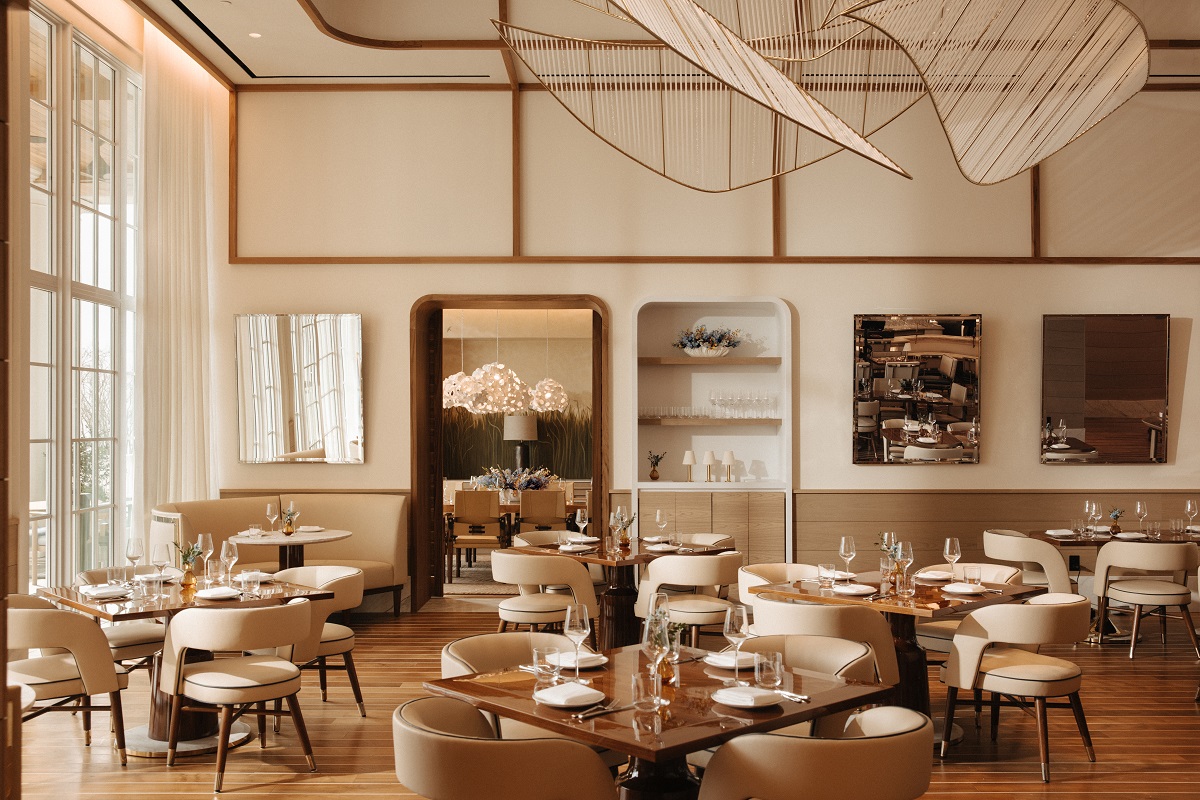
A modern-day machiya – Capella debuts in Kyoto

1024 640 Pauline Brettell
A modern-day machiya – Capella debuts in Kyoto

Set in the historic Miyagawa-cho kagai (geisha district), Capella Hotels and Resorts’ inaugural property in Japanhas opened its doors just as Kyoto’s legendary cherry blossoms reach their fleeting peak…

Capella Kyoto_Capella Suite_Tea Room
Designed by Kengo Kuma & Associates and Singapore-based Brewin Design Office, the 89-key Capella Kyoto reimagines the city’s traditional machiya (townhouse) and reinterprets Kyoto’s characteristic spatial composition—the layered sequence of narrow alleys, hidden gardens, and interior thresholds—arriving at a moment when the city is at its most transcendent: streets canopied in sakura, air scented with spring, and the ancient rhythms of Gion very much alive.

Designed by Kengo Kuma & Associates and Singapore-based Brewin Design Office, the 89-key hotel reimagines the city’s traditional machiya (townhouse)

Image credit: Capella Kyoto

Clive Edwards, Senior Vice President, Operations, commented: “Kyoto is one of the world’s greatest cradles of craft, ritual, and tradition, and Capella Kyoto has been conceived to honour that legacy in full. Japan has long been a destination we have deeply admired, and we have been intentional about introducing our brands here. Building on the success of Patina Osaka, which opened last year, we look forward to welcoming guests to Capella Kyoto as the next chapter in that journey — and the beginning of a deeper story in Japan. Every detail — from the unseen artistry embedded in the architecture to the most personal moments of service — reflects our belief that true luxury is the feeling of being deeply cared for, and being profoundly connected to a place and its living culture. Together, our properties are a heartfelt expression of Japanese culture that’s shaped by a genuine embrace of its traditions, people, and spirit.”

Built on the former site of Shinmichi Elementary School, Capella Kyoto is part of a three-part development along Shinmichi Street together with the restored Miyagawa-cho Kaburenjo Theatre and a new community centre — carrying forward a legacy of learning, culture, and community.

Capella Kyoto_Geta Naito

Image credit: Capella Kyoto

At the heart of the development is the Kaburenjo itself: for generations the private training ground of Kyoto’s geiko and maiko, and a defining symbol of the kagai. Now restored, it grants Capella guests access to performances — a living tradition Kyoto has guarded for centuries.

The 89-room property rises four storeys, with accommodations ranging from Deluxe City Rooms to the 206-sqm top-floor Capella Suite. Among the most sought-after are the Premier Theatre Rooms — named for their outlook over the Kaburenjo — and the two Gion Suites, each with a direct view of Kenninji temple. Six Onsen Suites feature private hot spring baths, while the Capella Suite commands the full sweep of the Higashiyama skyline.
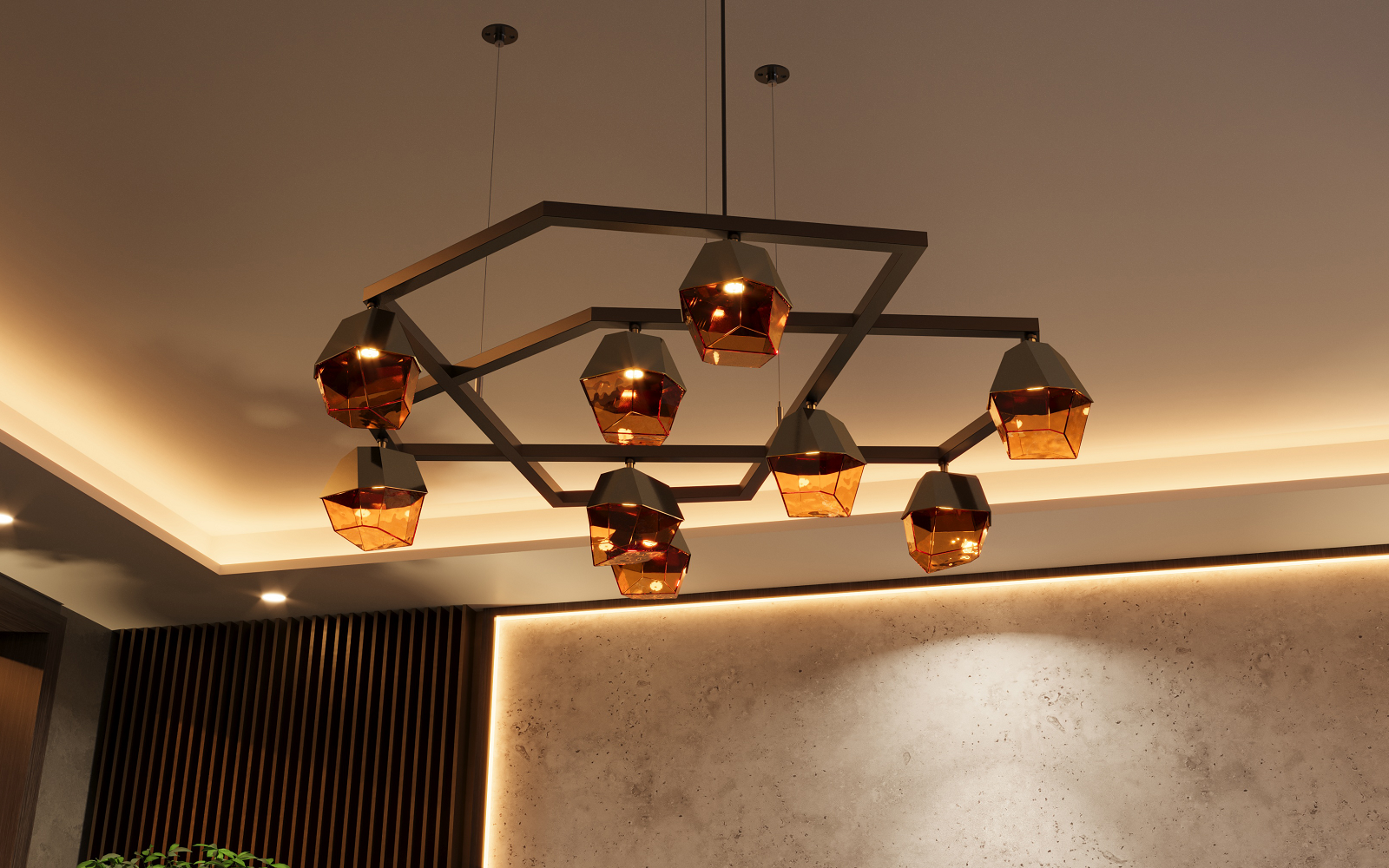
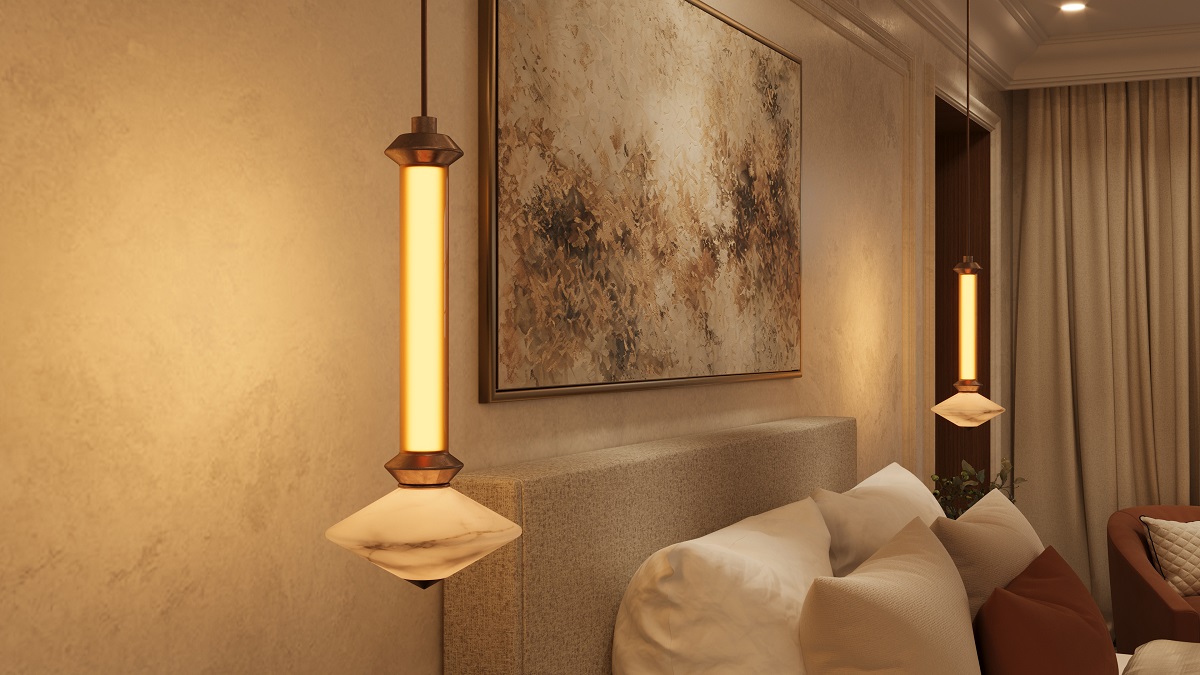
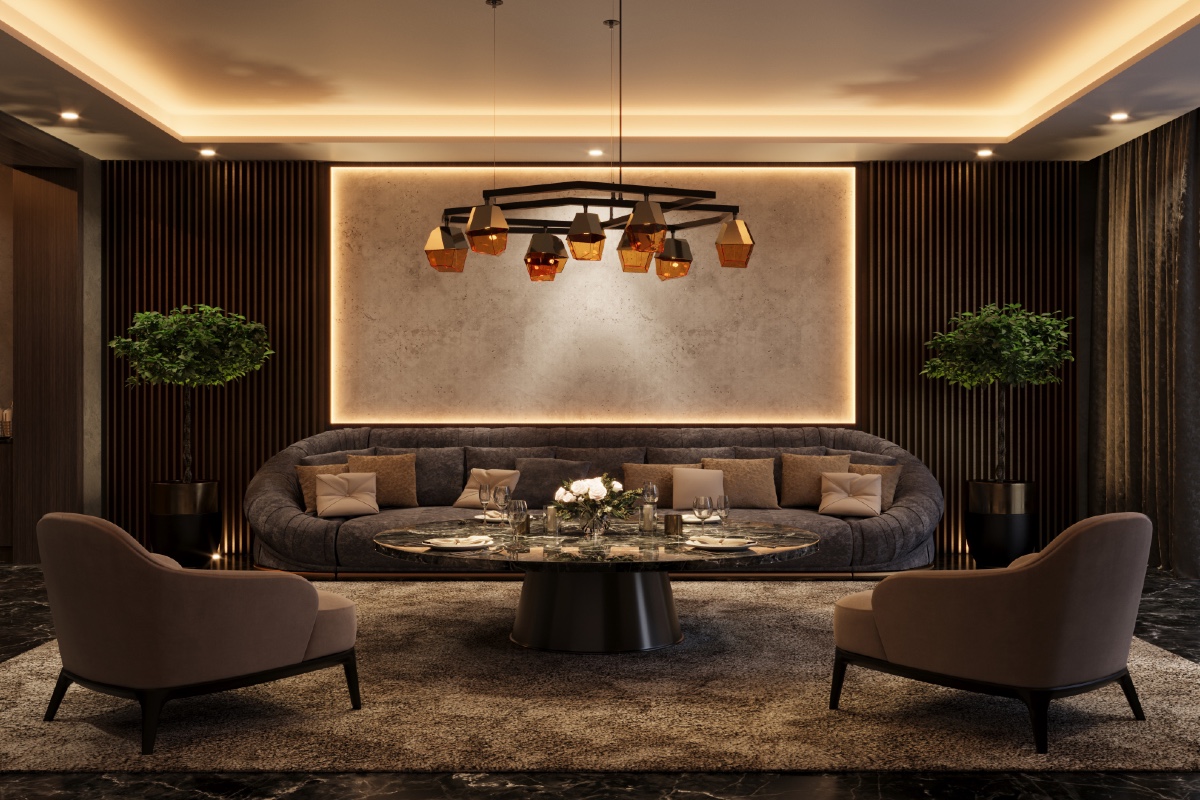
textured art and wall hanging in the hotel - Capella Kyoto

Image credit: Capella Kyoto

From both the bedroom and the lounge, guests look out over the pagodas and rooftops of Higashiyama, with the iconic five-tiered silhouette of Yasaka Pagoda visible against the mountain ridge. The suite’s elevation above Miyagawa-cho also places guests at the best vantage point for one of Gion’s most elusive sights: geiko and maiko, dressed for the evening, making their way through the laneway below to the ochaya where they are engaged.

The hotel is home to SoNoMa by SingleThread, created in partnership with SingleThread, the Three-Michelin-starred restaurant based in Sonoma, California by Kyle and Katina Connaughton. As the signature restaurant of the property, SoNoMa by SingleThread offers an intimate 12-seat counter and a 20-seat lounge bar in the style of an ochaya (traditional teahouse). Helming the restaurant is Chef Keita Tominaga, who will celebrate the seasonal agriculture of both Kyoto’s Kansai region and California’s Dry Creek Valley through the lens of local farmers and craftspeople.

lights above table and bar seating in Capella Kyoto

Image credit: Capella Kyoto

SingleThread Entremets, a dedicated patisserie programme led by Executive Pastry Chef Emma Horowitz and Chef Miu Morita, formerly of Michelin Three-Star L’Effervescence in Tokyo, offers seasonal confections for onsite enjoyment or packaged takeaway.

Yoi is a late-night dining destination offering kappo with a modern twist — a refreshing concept in Kyoto’s largely casual after-hours scene. The soul of Kyoto is revealed through one of Japan’s intimate dining traditions, where chefs prepare and present seasonal dishes directly before their guests — elevated here by innovative handcrafted cocktails. The space itself honours the local community through reclaimed timber and lighting fixtures sourced from the former Shinmichi Elementary School, quietly preserving the memory of the neighbourhood’s past.

Lanterne, the all-day French brasserie, reimagines Parisian café culture through Kyoto’s quiet craftsmanship, blending marble, herringbone floors, and pale woods with the serene sensibility of Japanese design.

natural materials and curved surfaces in Capella Kyoto_Auriga Spa

Image credit: Capella Kyoto

Wellness at Capella Kyoto is anchored by Auriga Spa, the brand’s signature sanctuary inspired by lunar cycles and holistic rituals. The spa features three private onsen rooms, wet and dry saunas, four treatment rooms, and a fitness centre. Signature treatments draw from both Japanese tradition and contemporary wellness practices, offering guests pathways to restoration that are rooted in the rhythms of the ancient city.

Through “Capella Curates,” the hotel’s signature cultural programming, guests are granted access to Kyoto’s most closely held traditions — experiences rarely, if ever, open to visitors. Front-row seats at the revived Miyagawa-cho Kaburenjo Theatre — the historic home of Kyoto’s geiko and maiko, and for generations the private heart of the kagai — allow guests to witness the classical performing arts in the intimate surroundings where they are still taught and practised today. A private ochaya encounter offers a more personal audience with a maiko, in a teahouse that remains by-invitation only. A visit to a 150-year-old sandal atelier offers the chance to commission a bespoke pair, made by hand in the manner of old Gion. And a kintsugi workshop led by an urushi lacquerware master reveals the Japanese art of repairing what is broken — making it, in the process, more beautiful than before.

Main image credit: Capella Kyoto

Red Rustic streaked Oak Luxury Vinyl Flooring

Product watch: why Impervia flooring is a smart choice for your next hotel installation

1024 640 Stuart O'Brien
Product watch: why Impervia flooring is a smart choice for your next hotel installation

Impervia flooring offers hotel designers and operators a future-proof solution that combines durability, design flexibility and enhanced guest comfort.

Red Rustic streaked Oak Luxury Vinyl Flooring

The right hotel flooring elevates guest experience, operational efficiency, and long-term sustainability. For hotel designers and operators seeking a balance between aesthetics and performance, Impervia flooring could be the solution that you’ve been waiting for.

Impervia’s luxury vinyl tile (LVT) and rigid composite flooring systems combine the visual appeal of natural materials with advanced technical performance. They are engineered to meet the demands of high-traffic hospitality environments.

Hotels experience constant footfall around the clock, so flooring surfaces need to be up to the challenge. Impervia flooring is specifically engineered for durability, with resistance to dents, scratches and stains, so it maintains its appearance over time. The rigid multi-layer construction and commercial-grade wear layer make it particularly suited to areas such as lobbies, corridors and F&B spaces.

Low slip risk in wet conditions

Water on hard surfaces, such as polished ceramic or porcelain, drastically reduces friction and increases the risk of slips, falls, and serious injuries. Areas like swimming pools, Jacuzzis, and bathrooms are almost constantly wet, necessitating a low-slip, high-traction surface to ensure safety for guests and staff. This is particularly important when considering compliance with health and safety standards, as well as reducing the risk of slips in high-traffic spaces.

Waterproof performance where you need it 

From bathrooms and spas to kitchens and bar areas, Moisture is unavoidable in hospitality settings. Impervia flooring is fully waterproof, preventing warping or damage in even the most moisture-prone environments. This makes it a reliable specification for guestrooms, wellness spaces and back-of-house areas, where traditional materials like wood may struggle to perform consistently.

Calcatta Glazed Porcelain Tile

Impervia Calcatta Glazed Porcelain Tile | Image credit: The Solid Wood Flooring Company

A quietly reliable guest experience

Impervia flooring integrates built-in underlayers designed to absorb sound and reduce noise transfer between rooms and floors. For hotels, this translates into quieter corridors, more restful guestrooms and an overall enhanced sense of privacy – and hopefully a good night’s sleep for all your guests.

Flooring for hotel ambience

Impervia flooring for hotel ambience | Image credit: The Solid Wood Flooring Company

Design flexibility without compromise

We love the look of natural wood, but we know it’s simply not suited to modern hospitality environments. One of Impervia’s strongest advantages is its ability to replicate the look of natural wood and stone with remarkable realism.

Impervia allows designers to achieve high-end aesthetics without the cost, maintenance or performance limitations of traditional materials. This flexibility allows seamless transitions between spaces while maintaining a cohesive design language.

Designed with refurbishment in mind

We know that downtime can be costly to your business. Impervia flooring features a click-lock installation system and can often be laid directly over existing subfloors, reducing installation time and disruption.

If you’re planning a refurbishment project, this means you’ll be open again a lot sooner!

Low maintenance, but high efficiency

Impervia flooring requires minimal maintenance—no specialist treatments, waxing or polishing—helping housekeeping teams work more efficiently. Its stain resistance also reduces the impact of spills and day-to-day wear, supporting a cleaner, more consistent presentation across the property.

Brushed white oiled oak

Impervia brushed white oiled oak | Image credit: The Solid Wood Flooring Company

Sustainability and compliance

Sustainability is increasingly central to hotel design. Impervia flooring is manufactured with environmentally conscious materials and carries FloorScore certification for indoor air quality, supporting green building standards such as LEED and BREEAM.

Many Impervia products are also recyclable, supporting circular design strategies and helping hotels meet ESG targets.

Fumed oak floors engineered wood

Impervia fumed oak floors engineered wood | Image credit: The Solid Wood Flooring Company

A future-proof flooring solution for hospitality

Design, durability and guest experience need to align when designing for hotels, and Impervia flooring delivers a holistic solution. Its combination of aesthetic versatility, technical performance and operational efficiency makes it ideally suited to modern hotel environments.

For designers, it unlocks creative freedom. For operators, it ensures reliability and cost-effectiveness. And for guests, it contributes to a quieter, more comfortable and visually refined stay.

The Solid Wood Flooring Company is one of our Recommended Suppliers and regularly features in our Supplier News section of the website. If you are interested in becoming one of our Recommended Suppliers, please email Katy Phillips.

Main image credit: The Solid Wood Flooring Company

facade and front entrance to The Dallas EDITION Hotel and The Residences

The Dallas EDITION Hotel – marking the brand’s first location in Texas

1024 640 Pauline Brettell
The Dallas EDITION Hotel – marking the brand’s first location in Texas

Kaizen Development Partners (Kaizen) and Douglas Elliman Real Estate (DEDM) has announced that EDITION Hotels has been selected as the official hotel and residential flag for Chalk Hill, the highly anticipated mixed-use development poised to anchor the gateway to Uptown Dallas…

facade and front entrance to The Dallas EDITION Hotel and The Residences

The Chalk Hill development introduces The Dallas EDITION Hotel as well as The Residences at The Dallas EDITION, marking the brand’s first location in Texas and signaling a defining new chapter for luxury hospitality and residential living in the city. Located at 3031 N. Harwood Street on a prominent 2.5-acre site with direct access to the Katy Trail and the Dallas North Tollway, Chalk Hill will introduce a 214-key five-star hotel and 60 luxury residences under EDITION Hotels.

skyline view in render The Dallas EDITION Hotel and The Residences at The Dallas EDITION

Image credit: Binyan Studios

With EDITION as the hospitality and residential anchor, the project sets a new benchmark for design, innovation, and service for Dallas residents and guests, positioning this property as one of the most exclusive residential offerings in the city.

“Chalk Hill reflects the remarkable evolution we’re seeing in Dallas residential development,” said Catherine Lee, President of Douglas Elliman Development Marketing, Texas. “As the city continues to attract global investment and a new generation of luxury buyers, hospitality-driven living has become an essential part of that growth. Douglas Elliman has been fortunate to work on many EDITION-branded residences around the world, and bringing that caliber of design, service, and international prestige to Dallas for the first time marks an exciting new chapter for the city.”

Conceived by legendary hotel impresario Ian Schrager in partnership with Marriott International, EDITION is internationally recognised for redefining modern luxury through emotional design, cultural resonance, and intuitive service. The brand’s acclaimed global portfolio blends immersive architecture, culinary excellence, and personalised hospitality into a singular lifestyle experience. At Chalk Hill, that ethos will translate into a hotel and residential offering designed for those who value authenticity, architectural integrity, and service delivered with quiet precision.

render The Dallas EDITION Hotel and The Residences at The Dallas EDITION

Image credit: Binyan Studios

“Dallas embodies energy, growth, and sophistication, making it the perfect home for the EDITION brand,” commented Dana Jacobsohn, Chief Development Officer, North America Luxury and Global Mixed-Use. “We’re proud to work with Kaizen Development Partners to introduce EDITION’s signature approach to lifestyle luxury to this vibrant city. The Residences at The Dallas EDITION are set to deliver a new benchmark for taste-making design, innovation, and unparalleled service for the most discerning residents.”

The Residences at The Dallas EDITION will introduce a new generation of ownership to Dallas, one defined by clarity of scale, sculptural restraint, and seamless indoor-outdoor living. Interiors are masterfully conceived by bonetti/kozerski architecture, the design firm behind several iconic EDITION properties worldwide, bringing their signature language of material integrity and refined minimalism to Texas. Architecture is led by BOKA Powell, whose four decades of shaping the Dallas skyline bring deep local knowledge to the global collaboration.

Landscape architecture by SWA in collaboration with SCDA integrates biophilic design principles, drawing nature upward into terraces, gardens, and elevated outdoor spaces throughout the property.

interior render of living space with city skyline view in render The Dallas EDITION Hotel and The Residences at The Dallas EDITION

Image credit: Binyan Studios

“The work we are doing with EDITION is a tribute to the city’s evolution and the legacy we are helping shape,” said Derrick Evers, Managing Partner and Chief Executive Officer of Kaizen Development Partners. “With its history, scale, and visibility, Chalk Hill demanded a thoughtful, design-driven approach. By bringing EDITION to Texas for the first time, we are creating a destination where global sophistication meets Dallas soul.”

Each of the 60 residences will open onto a private terrace, extending living spaces into the landscape and reinforcing a dialogue between architecture and environment. At the pinnacle, a twenty-ninth floor, 6,866 square foot penthouse with more than 3,300 square feet of private outdoor space will crown the tower as a glass pavilion in the sky, an offering without precedent in Dallas residential living.

rooftop pool with city skyline view in render The Dallas EDITION Hotel and The Residences at The Dallas EDITION

Image credit: Binyan Studios

Beyond the residences, the 214-key hotel will feature a signature restaurant and bar, ballroom and meeting spaces, a cinematic pool deck, and a full-service spa anchored by hydrotherapy and recovery-focused amenities. A holistic well-being Center will offer fitness, movement, and longevity experiences guided by a dedicated Wellness Concierge, reinforcing a lifestyle where hospitality and home are seamlessly intertwined. Residents will enjoy preferred access to the hotel’s culinary programming, wellness offerings, and EDITION’s signature service philosophy, refined over decades and delivered with intuitive sophistication.

With the announcement of EDITION as its hotel and residential flag, Chalk Hill firmly establishes itself as one of the most consequential developments in Dallas’ next chapter. Together, Kaizen, DEDM and EDITION are introducing a level of hospitality-driven living that redefines expectation and positions Uptown Dallas within a global dialogue of contemporary luxury.

Main image credit: Binyan Studios

Case study: Hypnos helps deliver intentional design in Claridge House by SLO

Case study: Hypnos delivers intentional design in Claridge House by SLO

1024 640 Pauline Brettell
Case study: Hypnos delivers intentional design in Claridge House by SLO

Located in the heart of Mayfair, Claridge House by SLO introduces a new chapter in London serviced living, redefining modern luxury through a philosophy of Slow Livingt – to deliver this experience, SLO selected the Eden Project Harmony Mattress by Hypnos, the brand’s most sustainable mattress…

Case study: Hypnos helps deliver intentional design in Claridge House by SLO

Set behind a heritage façade, Claridge House by SLO is a refined collection of luxury serviced apartments has been created for both short stays and extended visits, offering a calm, residential sanctuary that feels like a private home rather than a traditional hotel. At the heart of SLO is the belief that time, presence and wellbeing are the ultimate luxuries. Every element of the guest experience is designed to encourage a more intentional pace, from discreet, design led interiors to high touch, personalised hosting. British craftsmanship, natural materials and a strong sense of place run throughout Claridge House by SLO, creating an atmosphere that is understated, restorative and deeply comfortable.

detail of bed and bedside table with Hypnos mattress in Claridge House by SLO

Image credit: Michael Barrow

Sleep is treated as a foundational guest need at SLO, particularly for guests staying weeks or months at a time. Rather than approaching sleep as a standard amenity, the brand has designed it as a holistic system, considering mattress performance alongside lighting, air quality, materials and calming rituals that support deep rest and recovery. This approach reflects SLO’s wider focus on wellbeing led luxury, where comfort is carefully considered and quietly refined.
To deliver this experience, the Eden Project Harmony Mattress by Hypnos, the brand’s most sustainable mattress, was selected.

Handcrafted in the UK, the Eden Project Harmony Mattress is made using a considered blend of natural fibres, including Responsibly Sourced Wool British wool, along with banana, orange, pineapple and cotton fibres. Naturally breathable, these materials help regulate temperature and support a comfortable, restorative sleep environment. Beyond materials, Hypnos’ low impact delivery approach, including the use of electric and biofuel powered vehicles, aligns with SLO’s operational sustainability goals. Designed with responsible end of life in mind, the mattress can be collected by Hypnos for recycling.

guestroom with bed and bedside table with Hypnos mattress in Claridge House by SLO

Image credit: Michael Barrow

“SLO is a luxury hospitality concept centred on wellbeing and sustainability, backed by over a decade of Nestor’s hospitality experience and operational expertise,” commented Fran Milsom, CEO, Nestor & SLO. “Every detail in our residences is chosen for purpose, longevity, and comfort. Hypnos’ commitment to British craftsmanship and sustainably sourced materials reflects the values that define SLO.”

Sustainability at SLO is underpinned by a robust and measurable ESG framework that informs design decisions, operations and partner selection. Rather than positioning sustainability as a surface level gesture, the brand focuses on long term responsibility, from building retrofit and material choices to the partners it works with. Hypnos plays a key role within this approach, supporting both environmental responsibility and guest wellbeing.

“Sustainability in operations is about real numbers, not gestures. Hypnos’ responsibly sourced materials and considered approach to manufacturing and delivery help us reduce environmental impact in meaningful ways,” added Javier Llorente, Group Head of Operations and Guest Experience, Nestor & SLO. “At SLO, we define luxury through wellbeing and responsibility, and Hypnos enables us to deliver both at a consistently high standard.”

Claridge House by SLO is where guests can truly slow down and feel at home. Sleep is central to that experience, especially for longer stays, and Hypnos stood out for its craftsmanship, sustainability credentials and ability to deliver exceptional comfort.

Together, SLO and Hypnos represent a new vision for urban luxury hospitality, one that is calm, considered and quietly indulgent, where sustainability enhances the experience rather than limits it, and where sleeping well is an essential part of living well.

Hypnos is one of our Recommended Suppliers and regularly features in our Supplier News section of the website. If you are interested in becoming one of our Recommended Suppliers, please email Katy Phillips.

Main image credit: Michael Barrow

GROHE Essence Vessel Basin

GROHE expands Essence ceramic bathroom range

1024 640 Stuart O'Brien
GROHE expands Essence ceramic bathroom range

GROHE’s latest Essence expansion brings calm, contemporary design and cutting-edge functionality into the modern bathroom…

GROHE Essence Vessel Basin

The bathroom is one of the most intimate spaces in the home, a sanctuary where personal well-being is nurtured and the essence of one’s individuality is celebrated.

As such, it is crucial that this space reflects the unique personality and preferences of its occupant. Catering to the demand for a bathroom space that reflects style and wellness, global bathroom manufacturer, GROHE, has expanded its best-selling Essence ceramic range to include new basin lines for a refreshing take on bathroom fixtures.

Renowned for its organic inspiration and subtlety, the Essence ceramic collection is defined by its gentle curved forms and slender profiles that bring a sense of calm to the bathroom. Designed for those who see the bathroom as a space for relaxation and contemplation, Essence combines timeless elegance with innovative functionality.

GROHE Essence Counter top basin

Image credit: GROHE

Elina Enqvist-Twomey, Leader, Product Management, Fixtures – GROHE UK, said “With our new Essence range we’re delighted to give customers a modern, yet timeless addition to the bathroom that provides style and functionality in equal parts. The new range focuses on sleek and slim silhouettes that lean into Essence’s nature-inspired shape, evoking feelings of simplicity, purity and ultimately calm.”

The expanded collection includes two new basin lines catering to modern design trends, as well as refreshing updates to the existing Essence WC ceramic collection with new technologies.

GROHE Essence Counter top basin

Image credit: GROHE

The new Essence thin-rimmed basins offer a sculptural take on modern ceramics with customers able to choose between an elegant vessel basin or a timeless countertop design, both featuring an impressive super-slim 5mm thickness around the entire rim.

The modern vessel basin is available in two round designs (40cm and 45cm) as well as an elegant oval option (60cm). The vessel design combines minimalist style and maximum hygiene with its state-of-the- art shape and surface. The timeless countertop basin also comes in a choice of three sizes 50cm, 60cm, and 80cm, all in the Essence collections signature lozenge silhouette. Designed to bring harmony and purity to the bathroom, the countertop basin features an overflow and a punched hole for the tap.

Both designs provide a smooth and tactile finish in GROHE’s signature White Alpine finish. In addition, cutting-edge surface technologies ensure ultimate cleanliness: the GROHE AquaCeramic antistick coating repels dirt and limescale, while the GROHE HyperClean glazing has an antibacterial effect.

Refreshing the wider collection, the GROHE Essence wall-hung WC has been updated to include GROHE’s state-of-the-art flush technology for advanced hygiene. Now featuring the GROHE TripleVortex flush technology, which uses three water outlets to create a powerful but silent, splash-free and efficient swirl that cleans every corner. Elsewhere, cutting-edge surface technologies ensure ultimate cleanliness: the GROHE AquaCeramic antistick coating repels dirt and limescale, while the GROHE HyperClean glazing has an antibacterial effect, plus thanks to the bowl’s rimless design germs and dirt have no place to hide.

GROHE is one of our Recommended Suppliers and regularly features in our Supplier News section of the website. If you are interested in becoming one of our Recommended Suppliers, please email Katy Phillips.

Main image credit: GROHE

Lefay Dolomiti_Indoor Outdoor Pool

Marriott announces joint venture with luxury wellness hospitality brand Lefay

1024 640 Pauline Brettell
Marriott announces joint venture with luxury wellness hospitality brand Lefay

Marriott International and the Leali family, founders of Lefay, have announced plans to bring the luxury wellness hospitality brand into the Marriott portfolio – combining Lefay’s approach to holistic wellbeing with Marriott’s global scale…

Lefay Dolomiti_Indoor Outdoor Pool

Founded in Italy in 2006 by Domenico Alcide and Liliana Leali, Lefay is known for its immersive resorts in natural settings and its proprietary Lefay SPA Method, which blends scientific research with holistic wellness traditions. The brand’s philosophy centers on space, serenity, and sustainability and aims to redefine modern luxury through wellbeing and authenticity. Lefay will be the first brand in Marriott’s portfolio dedicated exclusively to luxury wellness.

view of Lefay Dolomiti and view across mountains

Image credit: Lefay Dolomiti

The Lefay portfolio features two award-winning luxury resorts in Lago di Garda and Dolomiti Italy – both located in nature‑rich leisure destinations. Additionally, the brand’s pipeline includes three properties under development in Tuscany, Southern Italy, and the Swiss Alps. The existing and pipeline resorts will operate under long-term hotel management agreements with the new joint venture, to which Lefay will contribute existing brand and intellectual property assets. The Italian real estate assets will continue to be held by the brand’s founders. Together, the parties intend to grow the brand around the world, leveraging Marriott’s powerful development capabilities.

“Marriott is thrilled to collaborate with the Leali family as we grow our luxury wellness portfolio,” said Anthony Capuano, President and CEO, Marriott International. “Luxury is increasingly defined by wellbeing, purpose and meaningful experiences. We are excited to introduce Lefay to our customers around the world and thoughtfully expand Marriott’s presence in the luxury wellness space.”

bed surrounded by curtain and with view outdoors to pool and lake

Image credit: Lefay Lago di Garda

“Our family founded Lefay nearly twenty years ago with a clear vision: to create destinations where wellbeing, nature and health come together authentically,” said Domenico Alcide and Liliana Leali, founders of Lefay. “We are deeply honoured to begin this collaboration with Marriott and to further advance our vision of bringing the Lefay brand to the world.”

Each Lefay property is designed as an eco‑resort, emphasising architectural harmony with the natural environment, expansive indoor‑outdoor spaces, sustainable materials, and wellness programs that integrate movement, nutrition, and preventative health. Guests may choose from à‑la‑carte treatments or structured multi‑day wellness programs, all rooted in the brand’s holistic philosophy.

Lefay will complement Marriott’s existing Luxury Group portfolio while appealing to a rapidly expanding global audience seeking transformative travel experiences focused on health and longevity.

indoor pool with floor to ceiling glass overlooking forest

Image credit: Lefay Dolomiti

“Lefay represents a new expression of luxury, one that is wellness‑first, deeply experiential, and emotionally resonant,” commented Tina Edmundson, President of Luxury, Marriott International. “As guest expectations continue to evolve, our collaboration with Lefay will allow us to thoughtfully extend our luxury offerings into a space where wellbeing is not just an amenity, but the heart of the travel experience.”

“Lefay is proud to join Marriott’s Luxury Group, alongside some of the most prestigious hotel brands such as The Ritz-Carlton, St. Regis, EDITION and The Luxury Collection,” said Alcide Leali, CEO of Lefay. “Together, we are poised to accelerate the global expansion of the Lefay brand and further reinforce Lefay’s position as a leading name in luxury wellness hospitality.”

The relationship between Marriott and the Leali family reflects a shared vision to preserve Lefay’s distinct identity and Italian heritage while supporting its long‑term growth through carefully selected destinations that align with the brand’s values.

Main image credit: Lefay Dolomiti

Sofitel Residences Buenos Aires Madero Fachada aerea

Sofitel launches its first Branded Residences project in Argentina

1024 640 Stuart O'Brien
Sofitel launches its first Branded Residences project in Argentina

Sofitel expands into Argentina’s luxury residential market with an ambitious new Buenos Aires development that blends French elegance, world-class service and iconic city living…

Sofitel Residences Buenos Aires Madero Fachada aerea

Sofitel has launched its first branded residences in Argentina, under Sofitel Residences Buenos Aires Madero brand.

This innovative project marks an important step for Sofitel globally, expanding its footprint in the luxury residential market. It is also the brand’s first residential project of its kind in the Americas and the third worldwide.

Sofitel Residences Buenos Aires Madero will be developed in collaboration with Northbaires, a renowned Argentine company specialising in high-end and luxury real estate. The complex will be located in the prestigious Dique 4 area of Puerto Madero, offering unparalleled views of the city and its landmarks, including the Buenos Aires skyline and the Obelisk, as well as open skies, the river, and the lush Buenos Aires Ecological Reserve. This privileged location ensures that residents will enjoy both the vibrant urban lifestyle and the tranquility of the surrounding nature.

The development will feature 43 floors of modern luxury residences, totaling 188 apartments and 343 parking spaces. Designed to the highest standards, the residences will offer premium amenities, including eight state-of-the-art elevators ensuring exceptional mobility throughout the complex.

Sofitel Residences Buenos Aires Madero Piscina exterior

Image credit: Sofitel

Philippe Trapp, Regional Vice President of Operations at Sofitel, said: “We are bringing our distinct French enthusiasm and high-quality service to the real estate market in Argentina. Sofitel Residences Buenos Aires Madero will establish a new lifestyle that seamlessly blends the French art de vivre with local culture in one of the city’s most exclusive areas.”

Marcos Juejati, co-founder of Northbaires, added: “This partnership introduces a new product to Argentina’s ultra-exclusive real estate market, high-standard residences built to international specifications and located within the most consolidated micro-areas.”

Rodolfo Miani, partner at architectural firm BMA, said: “We aspire for this to become an iconic development for Buenos Aires, benefiting from exceptional visibility. From an architectural perspective, it presents a unique challenge due to its privileged views, distinctive surroundings, and differentiated accessibility.”

This new development further solidifies Sofitel’s position in Argentina’s luxury segment, with a strong focus on real estate and business diversification.

Accor One Living and project details

Sofitel Residences Buenos Aires Madero is supported by Accor One Living, an innovative industry platform offering a 360º approach to the development, design, and operation of mixed-use projects and branded residential communities. Through Accor One Living, owners, guests, and partners are connected to Accor’s diverse ecosystem of brands, expertise, and solutions, creating a continuous flow of new opportunities to live, work, and enjoy.

The project is expected to be completed in 2030. It is part of Sofitel’s strategy to expand its luxury brand presence in the region. With Sofitel Residences Buenos Aires Madero, the brand will strengthen its presence in the Southern Cone, where it already operates Sofitel La Reserva Cardales and Sofitel Buenos Aires Recoleta in Argentina, and Sofitel Montevideo Carrasco & Spa in Uruguay.

Sofitel Residences Buenos Aires Madero NQS_NORTHBAIRES_SOFITEL PUERTO MADERO_VIEW 05_LIVING U1_SD

Image credit: Sofitel

Guilherme Cesari, Vice President of Luxury & Lifestyle Development for Accor in South America, added: “Sofitel adds value to this real estate development through essential aspects such as brand reputation, luxury service standards, including concierge assistance and a sophisticated restaurant, among other offerings that make this project stand out in the luxury segment. This represents a new venture into luxury associated with real estate development. Thanks to its strategic location, we are confident it will be a success for owners seeking premium products, services, and experiences, as well as investors and commercial partners.”

Main image credit: Sofitel

orange couch and patterned floor in Fairmont Mumbai

Hotel review: checking in to Fairmont Mumbai

1024 640 Guest Author
Hotel review: checking in to Fairmont Mumbai

Fairmont Hotels & Resorts – a member of the Accor portfolio – in partnership with Shrem Airport Hotels launched Fairmont Mumbai last year. Contributor Katha Nauriyal checked in to experience luxury, along with a generous dose of art, wellness and indulgence…

orange couch and patterned floor in Fairmont Mumbai

As part of a global portfolio that includes Fairmont Udaipur Palace, The Fairmont Peace Hotel in Shanghai, Fairmont The Palm in Dubai, The Plaza in New York and The Savoy in London, Fairmont Mumbai carries forward the brand’s design-driven hospitality. It welcomes you with over 100 artworks and installations, in a collection that spans sculptural pieces, embroidery, wire-mesh works, graphic art, bas-reliefs, and handcrafted objects.

front porch and entrance Fairmont Mumbai with view into artwork A Walk in the Garden

Image credit: Fairmont Mumbai

“Globally, Fairmont properties are recognised for their strong design identities rather than a single recurring artwork. What unites them is a shared design philosophy – iconic architecture, a deep sense of place, and art that feels contextual rather than imposed. At Fairmont Mumbai, this legacy continues through a collection that reflects both global Fairmont sensibilities and the spirit of the city it inhabits,” shared Rajiv Kapoor, General Manager at Fairmont Mumbai.

Despite being just a two-minute drive from Chhatrapati Shivaji Maharaj International Airport, the property does not feel like a typical airport hotel. “Fairmont Mumbai was never envisioned as a conventional airport hotel. Rather than viewing its proximity to the airport as a limitation, Fairmont Mumbai embraces it as an opportunity to create a true destination, one that reflects the soul of the city.”

In fact, for travellers flying in and out of Mumbai, looking for a quick introduction to the city, the hotel serves almost as a mini art gallery in its own right. Its design takes inspiration from Mumbai, the golden age of Art Deco, and the nostalgia of the 1920s – a defining era that shaped the city’s cultural and architectural identity.

It features four distinct restaurants, a signature bar and 446 well-appointed rooms – including 48 suites. Upon arrival, you’re greeted by a lobby and arrival sequence that instantly offer a glimpse into Mumbai’s spirit. The lobby showcases signature artworks created in collaboration with Indian master artisans. Railway-inspired design elements capture the city’s rhythm of movement, connection, and shared spaces, offering an intuitive introduction to the city from the moment you arrive.

The pièce de résistance is ‘A Walk in the Garden’. It’s inspired by Mumbai’s historic Hanging Gardens and the 1920s Art Deco era. At its centre is a radiant sun motif – symbolic of light, renewal, and optimism – rendered in mother-of-pearl inlay that transitions from sunrise to sunset. Surrounding this are stylised floral forms influenced by Art Nouveau, brought to life using traditional Indian crafts including metal repoussé from Banaras, carved wood blocks from Rajasthan, embroidery on canvas from Lucknow, and intricate inlay work. Together, the piece celebrates nature, craftsmanship, and India’s artisanal heritage through a distinctly Bombay-inspired narrative.

art deco inspired guestroom with gold detail in Fairmont Mumbai

Image credit: Fairmont Mumbai

The adjacent grand staircase, with its Art Deco landmark installation and brass railway map, reinforces this idea of movement and city identity in a single, impactful sequence. Complementing this is ‘Kaleidoscope: A View of Mumbai’s Art Deco Heritage’ – a striking hexagram-inspired artwork that acts as a visual map of the city. Through layered geometry and mirrored motifs, it brings together iconic landmarks such as Chhatrapati Shivaji Maharaj Terminus, Taraporewala Aquarium, and Sneha Sadan, with Fairmont Mumbai positioned at its centre. The piece reflects Mumbai’s rhythmic architectural language and its ability to balance nostalgia with progress – capturing the city as timeless, intricate, and constantly evolving.

Also keep an eye out for the 1920s Railway Ticket Replica—a brass reinterpretation of an original Mumbai train ticket, evoking the nostalgia and romance of the bygone era. Similarly, ‘Between Lines: A Pause in Motion’ is an embossed map of Mumbai’s suburban rail network paired with a solitary traveller, capturing the quiet tension between departure and arrival.

The storytelling continues at The Merchants (the hotel’s all-day dining restaurant) where the city’s legendary dabbawala system (a century-old network delivering home-cooked meals across the city) are proudly showcased through decor and art. For a more intimate expression of the design, Madeleine de Proust (tea lounge) is worth a brief pause. Its botanical artworks and muted palette reflect a quieter interpretation of the era, tastefully contrasting with the speed and drama of the public spaces.

Additionally, the Fairmont Spa & Longevity is intentionally designed for rejuvenation, with a Techno-Gym powered by AI technology. At its heart lies Blu Xone, a space that enhances vitality, slows aging, and supports holistic well-being. The setting is curated to conduct therapies like Cryotherapy, Hyperbaric Oxygen Therapy, Red Light Therapy, Intermittent Vacuum Therapy and Intermittent Hypoxic Therapy.

Fairmont Mumbai, in many ways, feels less of a stopover and more a destination in itself. Expect luxury with a big dose of art, wellness and indulgence.

Main image credit: Fairmont Mumbai

3 Conran & Partners designers working on sketches of the new ABI Interiors Clerkenwell showroom

In conversation with: ABI Interiors and Conran & Partners on a new Clerkenwell showroom

1024 640 Meghan Taylor
In conversation with: ABI Interiors and Conran & Partners on a new Clerkenwell showroom

Australian brand ABI Interiors has partnered with London design studio Conran & Partners to create a residential-inspired Clerkenwell showroom for collaboration, events and specification. Here, the two brands discuss the vision behind the new space…

3 Conran & Partners designers working on sketches of the new ABI Interiors Clerkenwell showroom

As ABI Interiors prepares to open its second London showroom in the heart of Clerkenwell, the Australian-born brand is entering a new chapter in its growth within the international specification market. Designed in collaboration with Conran & Partners, the space has been conceived not simply as a product showcase, but as an immersive environment that blends elements of residential, hospitality and retail design.

In this conversation, Mark Poulain, UK Commercial Director at ABI Interiors, and Simon Kincaid, Partner and Principal Interior Designer at Conran & Partners, discuss the thinking behind the project and the synergy between the two brands. From creating a ‘home-from-home’ setting that encourages collaboration and conversation, to balancing operational needs with a highly considered design narrative, the new showroom reflects a shared vision for how design brands engage with architects, designers and clients today.

Ahead of its opening in late spring, Mark and Simon explore how the partnership has shaped the concept, and how the Clerkenwell space has been designed to evolve alongside the needs of the hospitality and specification industries.

Hotel Designs: What is it about the DNA of ABI Interiors and Conran & Partners that creates such strong synergy between the two brands?

Simon Kincaid: With ABI Interiors, there’s a clear focus on modernity and innovation, and those are qualities that strongly resonate with Conran & Partners’ design approach. There is a residential thread that runs through how ABI promotes itself and designs its products – something deeply rooted in the brand’s heritage.

That perspective aligns closely with our own. At Conran & Partners, we apply residential design principles across hospitality and commercial projects, creating spaces that feel considered, comfortable and authentic.

Mark Poulain: Absolutely, Simon. From our perspective, as a premium manufacturer, we’re keen to collaborate with a premium London design house that shares our history, integrity, and standards.

With our new showroom just at the end of your road, the opportunity to build a genuine partnership has been fantastic.

Simon: We also noticed elements within the ABI portfolio that are boutique and bespoke. That’s something we value as well — applying boutique design principles at scale. If you can retain a level of detail, something abstract, unusual or crafted within a large scheme, it keeps the design feeling human and connected, rather than losing that personal touch.

Ultimately, in Clerkenwell, an area with so many showrooms, the key is creating a space that truly responds to visitors’ needs and works for you operationally — somewhere that encourages clients, specifiers and collaborators to keep coming back.

Renders of the new Clerkenwell Showroom of ABI Interiors, designs by Conran & Partners

Renders of the new Clerkenwell Showroom of ABI Interiors, designs by Conran & Partners

HD: What is the shared vision for the new ABI experience so far?

Mark: For us, stepping into the London specification market, and Clerkenwell specifically, is about putting ABI Interiors firmly on the map within the international specification community. It’s the next stage in our journey, connecting our Australian roots with the UK market and everything in between, so it’s a very important moment for our growth.

It also represents a new route to market for the business. Historically, we’ve been very consumer-focused, but this move allows us to engage more directly with designers, specifiers and commercial projects. Clerkenwell is exactly where we want to be to support that next phase.

From the outset, we talked about creating a ‘home-from-home’ environment — a semi-immersive experience where visitors might feel as though they’re sitting in their own kitchen or dining space. It’s intended to be a collaborative environment where conversations can happen naturally.

Ultimately, we want to position ourselves as a trusted partner and advisor. It’s not about pushing products; it’s about working alongside clients and supporting their projects in the right way. The concept design so far really captures that vision.

Simon: At Conran & Partners, we work across multiple sectors — residential, hospitality and retail — and what’s interesting about this project is that it blends elements of all three.

The concept was to balance hospitality and retail. Upstairs feels more domestic, a flexible space for welcoming guests, hosting events, and working as a team. Downstairs is the heart of the showroom, designed to showcase the full product range and evolve over time.

While it functions as a retail environment, the focus is on introducing visitors to the ABI Interiors brand through a welcoming, residential-style experience rather than a purely transactional one.

On the ground floor, for example, the kitchen island integrates elements of the product range so visitors can experience them at the right scale and in a natural setting. Additional pieces are incorporated within the joinery, creating a premium retail experience where the products can be both discovered and understood within context.

The materials, lighting and tactile qualities of the space also draw heavily from hospitality design. That sense of atmosphere and flexibility helps people feel comfortable, encouraging them to spend time in the space and return again.

Mark: One of the most rewarding aspects of this project has been the partnership itself. Simon and I have known each other for many years from a specification perspective, but this is the first time we’ve had the opportunity to work together in a client-designer relationship.

The Conran & Partners team have really understood what we’re trying to achieve. They’ve captured the depth and quality of our product offering and integrated it thoughtfully into the space, which will allow us to showcase the brand in a much richer way.

We’re incredibly excited about the result. The attention to detail and the way the products are presented will give us a fantastic platform as we open the showroom in late spring.

Moodboard for Interior Design including brass taps from ABI Interiors

Image credit: ABI Interiors

HD: How has the collaboration between ABI Interiors and Conran & Partners influenced the creative direction and design of the showroom?

Mark: For us, the collaboration has been key to how the project has evolved. From the beginning, we wanted to give the team an open brief so they had the freedom to create something truly special. I think they’ve taken our objectives for the building and translated them into a design that will work incredibly well for us.

There’s a real understanding of what we’re trying to achieve as a brand, and that deep appreciation of our business has resulted in a concept that feels both thoughtful and practical.

Simon: During the briefing process we spent a lot of time exploring both the aspirational and operational requirements. It’s important to separate out the design aesthetic and concept from the practicalities of how the space will actually function.

In this project, part of that thinking was about carefully integrating — and in some cases discreetly concealing — operational elements within the design. One of the key ideas we developed together was what we described as ‘purposeful flexibility’.

The different areas within the showroom each have a clear role, whether that’s for product display or consultation, but they can also adapt when needed. If you’re hosting an event, for example, or refreshing the product displays, the spaces can easily shift and evolve.

Throughout the process we worked very closely with Mark and the wider team, bringing together creative direction, operational needs and brand storytelling. The relationship was very positive and fluid, with a strong level of trust in delivering the concept.

ABI Interiors brass taps in pink terracotta bathroom

Image credit: ABI Interiors

HD: How does the showroom reflect the evolving needs of the hospitality and design industries?

Mark: What we’re creating with this showroom is something a little different from what’s currently in the market. We wanted to design a space where clients and collaborators can come in, feel relaxed and experience a genuine sense of partnership.

Of course, there’s still the need for a highly detailed product showroom — which is what the lower ground floor delivers — but the wider environment is about creating a place for conversation and collaboration.

Hospitality design itself is evolving. There was a period where hospitality spaces were increasingly drawing inspiration from residential design. In many ways, that relationship is now working both ways, and what we’re creating here — a warm, welcoming, residential-feeling environment — is very much in line with how hospitality spaces are developing today.

Simon: Across both specification and retail environments, there’s a growing focus on creating spaces that have energy and a sense of immersion. It’s not just about displaying products, it’s about creating an experience where visitors can connect with the brand as much as the products themselves.

Flexibility has also been an important consideration. For example, the joinery has been designed so that product displays and finishes can be easily changed over time. New ranges can be introduced and materials refreshed while the overall architectural framework of the showroom remains consistent.

Another key part of the brief was thinking carefully about the different types of visitors who will use the space. That’s something we’re particularly passionate about in design: putting the user first.

In this case, that could mean commercial specifiers visiting for a project, design studios bringing in client teams, individuals discovering the brand for the first time, or long-standing partners returning to explore new collections. The showroom has been designed to accommodate all of those different interactions and scales of engagement.

Mark: I think that will become very clear once the doors open. Our consumer audience, our commercial partners and our hospitality clients will all be able to use and enjoy the space. It’s designed to be welcoming and relevant to everyone who interacts with the brand. We’re looking forward to welcoming clients, colleagues, partners and friends from across the industry to experience the new Clerkenwell showroom with us.

ABI Interiors is one of our Recommended Suppliers and regularly features in our Supplier News section of the website. If you are interested in becoming one of our Recommended Suppliers, please email Katy Phillips.

Main image credit: Ray Phillips

dining room with gold chandelier and garden trellis wallpaper in The dorchester Royal suite

A new chapter at The Dorchester – the Royal Suite revealed

1024 640 Pauline Brettell
A new chapter at The Dorchester – the Royal Suite revealed

The Dorchester is set to reveal its new Royal Suite – designed by interior designer Pierre-Yves Rochon, the Royal Suite represents the final stage in the guestroom renovations in the hotel’s most significant transformation in over thirty years…

dining room with gold chandelier and garden trellis wallpaper in The dorchester Royal suite

Occupying a vast corner of the eighth floor, the Royal Suite rises above Hyde Park with a sense of command and panoramic views of Hyde Park’s treetops, the Serpentine lake and beyond. Seamlessly blending the timeless grandeur of The Dorchester with contemporary touches, Rochon took inspiration from British landscapes, with the suite featuring floral wallpaper, soft pastel tones, bespoke patterned carpets and Versailles parquet floors.

“The new Royal Suite at The Dorchester is a testament to the art of craftsmanship,” said general manager Luca Virgilio. “The suite embodies the spirit of London and the best of British, where every detail has been carefully considered. The combination of elevated, thoughtful design and light-filled rooms with spectacular views across Hyde Park make it the perfect residence for the world’s most remarkable guests.”

pastel floral wallpaper behind double bed in deluxe suite

Image credit: The Dorchester Collection

Inspired by its setting beside Hyde Park, The Dorchester has partnered with The Royal Parks Charity and will be donating a portion of Royal Suite proceeds, supporting its ongoing mission to care for and conserve the famous collection of urban parks in the world.

The design allows for up to four rooms to be connected, creating a combined space of more than 478 square metres. This spacious set up makes it one of the largest hotel suites in London.

The master bedroom blends English neoclassicism with a 1950s aesthetic of pastel colours, where guests can delight in panoramic views of the London skyline. A separate seating area is dressed in ivory and pastel fabrics in light blue, pale pink and green. The space opens onto a large dressing room and a spacious, marble-clad bathroom including a double shower.white bathroom with gold chandelier in The Dorchester

The generous principal sitting room runs the full length of one aspect, its layout allowing different moments to exist at once. A 1950’s inspired mirrored fireplace is the focal point of the room, complemented by an 18th-century neoclassical style decorative ceiling. The space is completed by bespoke furniture pieces including ottomans by Henryot & Cie and armchairs upholstered in English garden-inspired fabrics by GP & J. Baker.

Beyond the sitting room, the dining room reveals itself in further delight. With seating for up to 10 guests, framed by windows overlooking the park, it unfolds with jewel-like intensity, wrapped in patterned walls and mirrored above, echoing the theatrical palette of the hotel’s ground floor The Promenade and Artists’ Bar. Floor to ceiling windows offer views of Hyde Park, while elegant De Gournay wallpaper brings the feeling of nature inside. A private kitchen ensures that The Dorchester’s extraordinary culinary team, led by culinary director Martyn Nail, can provide intimate in-suite dinners.

doors opening on to private study in The Dorchester royal suite with red lacquer desk in the middle

Image credit: The Dorchester Collection

The suite also includes a separate study, featuring a more classic theme, with a mahogany bookcase paired with Tisserant light fittings. A Chinese-inspired red lacquer desk and a cane armchair complete the private area.

The new Royal Suite follows the hotel’s most significant transformation in over thirty years, including the renovation of all guest rooms and suites, The Promenade, Vesper Bar, Artists’ Bar and The Grill, as well as florist and cake boutique Cake & Flowers. In addition to the Royal Suite, last year The Dorchester revealed the renovation of its Oliver Messel Suite, which was the result of more than 2,000 hours of specialist craftsmanship.

Main image credit: The Dorchester Collection

Clerkenwell Design Week - Canary Clock Tower

Clerkenwell Design Week: Circular Design and the Architecture of Listening top the agenda for 15th edition

1024 640 Stuart O'Brien
Clerkenwell Design Week: Circular Design and the Architecture of Listening top the agenda for 15th edition

Clerkenwell Design Week 2026 celebrates 15 years with a forward-looking programme exploring circular design and the power of sound in shaping our built environment…

Clerkenwell Design Week - Canary Clock Tower

As Clerkenwell Design Week (CDW) prepares to mark its 15th anniversary across EC1 this May, the festival is sharpening its focus on two salient themes: sustainability and sound. Across Clerkenwell’s venues, streets and green spaces, Design Interventions, the festival’s curated series of large-scale installations, will challenge designers and visitors alike to reconsider how we build, consume, celebrate and experience the spaces around us.

Sustainability: Championing Circularity

From recycled structures to circular product design, CDW 2026 puts environmental responsibility at the heart of its programming.

One of the festival’s most striking Design Interventions, The Canary Clock Tower by George King Architects is a tall sculptural landmark inspired by Clerkenwell’s historic tradition of clockmaking. Just as a clock makes time visible, this tower makes air quality visible by displaying real-time pollution data through analogue dials crafted from recycled plastic offcuts supplied by Smile Materials. The structure itself embodies circularity: a lightweight frame of reclaimed scaffolding, a tactile timber base, and a fully recyclable outer skin. At the top of the tower, a caged canary weathervane turns with the wind — a quiet nod to the canary in the coal mine, and a call to consider the air we breathe every day. After the festival, George King Architects will explore relocating the piece to a permanent public setting so its message can endure, with all plastic components returned to Smile Materials for full recycling.

REDDIE Dialogue Jepara Range

REDDIE Dialogue Jepara Range | Image credit: Clerkenwell Design Week

French designer Alexane Quenderff continues the theme of circularity with his five BinSight Benches which are made entirely from waste materials considered too difficult to recycle. Each bench is fitted with a QR code linking to an interactive quiz that challenges visitors to identify the waste materials used, turning a functional object into an education in circular thinking.

Showrooms across Clerkenwell reflect this trend with new launches throughout the festival. Progressive Australian/Indonesian furniture brand Reddie, launches its first European showroom in EC1, unveiling its collection of made-to-order chairs, desks, shelving and sofas crafted from reclaimed Indonesian teak salvaged from old railways and houses.

Swedish flooring brand Bolon introduces Back2Bolon, a take-back initiative that makes its flooring and rugs fully circular. Products installed without permanent adhesive can be returned to Bolon’s recycling plant, where materials are transformed into new floors and rugs, closing the loop from design to rebirth and significantly reducing CO₂ emissions compared to virgin production.

At Commercial Interiors on the Green, Edmund Bell presents Maverick, a recycled blackout fabric designed for hospitality, workplace and public sector interiors. Manufactured from recycled yarns, it delivers reliable light exclusion, flame retardancy and a contemporary textured finish, proving that sustainability and specification performance are no longer in conflict.

sample board with recycled Maverick collection fabric from Edmund Bell

Maverick, Edmund Bell | Image credit: Clerkenwell Design Week

Sound: Architecture Through Listening

Alongside sustainability, CDW 2026 explores the theme of sound, from immersive community installations to award-winning acoustic workplace solutions.

Design Intervention Recreatura is an immersive, sound-led installation that invites visitors to reimagine architecture through listening. Using a binaural experience, they explore two historic sites in Clerkenwell through the voices, memories and soundscapes of local residents, revealing the textures and stories embedded in the neighbourhood. After listening, visitors respond by drawing on ceramic tiles—an important material in Clerkenwell’s architectural heritage—and placing them within a cube installation in Charterhouse Square. The tiles gradually form a collective structure, transforming shared sounds and memories into an evolving architectural artwork.

At Commercial Design In the Park, German-Polish acoustic booth manufacturer BOX17 makes its debut at CDW with its new, award-winning Cube 1 Stand. Conceived to bring biophilic warmth to the modern workplace, its interior is lined with premium Italian wool felt, creating a calming and tactile environment.

Outside the entrance to Old Sessions House, The BAUX Floating Pavilion will demonstrate how acoustic design can shape both architecture and how we experience spaces by showcasing the Swedish brand’s new X-FELT Floating collection.

Beyond the Surface fabric collection by Luum for furniture brand Teknion

Beyond the Surface fabric collection by Luum for furniture brand Teknion | Image credit: Clerkenwell Design Week

As part of the Clerkenwell Design Awards, Design Milk supported by the American Hardwood Export Council (AHEC), invites UK design students and recent graduates to design a distinctive award object in American cherry, celebrating the timber’s natural warmth and character. Showrooms and exhibitors across EC1 will be launching new lighting, furniture, fabrics and more throughout the three days of the festival, proving its status as one of the world’s premier platforms for design.

Clerkenwell Design Week 2026 takes place across EC1, London, from 19 – 21 May. More details about the festival will be announced in due course. For more information, please visit clerkenwelldesignweek.com – registration is now open.

Main image credit: Clerkenwell Design Week

Rome Cavalieri, A Waldorf Astoria Hotel has announced the commencement of a transformative room restyling project - spearheaded by design firm, Tihany Design - marking a new chapter in the storied hotel's more-than-60-year legacy

Hotel Rome Cavalieri unveils its two-year project

1024 640 Pauline Brettell
Hotel Rome Cavalieri unveils its two-year project

Rome Cavalieri, A Waldorf Astoria Hotel has announced the commencement of a transformative room restyling project – spearheaded by design firm, Tihany Design – marking a new chapter in the storied hotel’s more-than-60-year legacy…

Rome Cavalieri, A Waldorf Astoria Hotel has announced the commencement of a transformative room restyling project - spearheaded by design firm, Tihany Design - marking a new chapter in the storied hotel's more-than-60-year legacy

The two-year design project comes on the heels of the grand renovation and evolution of Rome Cavalieri’s crowning Michelin three-star restaurant, La Pergola, in 2024. In embarking on this highly anticipated comprehensive renovation of all guestrooms and suites, the hotel will pay homage to its locale and the elegant yet inviting residential atmosphere synonymous with Waldorf Astoria Hotels & Resorts.

Rome Cavalieri, A Waldorf Astoria Hotel has announced the commencement of a transformative room restyling project - spearheaded by design firm, Tihany Design A Waldorf Astoria Hotel has announced the commencement of a transformative room restyling project - spearheaded by design firm, Tihany Design

Image credit: Rome Cavalieri

Katharina Schlaipfer, Vice President, Operations, Continental Europe, Hilton said, “Rome Cavalieri has a long-standing legacy as a symbol of luxury hospitality in Rome, and we’re delighted to see this next phase of the hotel’s evolution. This significant investment reinforces our long-term commitment to Italy and ensures the hotel continues to set the benchmark for luxury hospitality in the Eternal City.”

“Our goal was to honour the hotel’s extraordinary heritage while reimagining its spaces through a contemporary lens, enhancing comfort, elegance, and functionality,” commented William Fisher, General Manager, Rome Cavalieri, A Waldorf Astoria Hotel. “Beyond the aesthetic transformation, this project elevates the way our guests experience hospitality, creating more intuitive and inspiring environments that support genuine, seamless, and personalised service. At the same time, it instills a renewed sense of pride among our team members, empowering them to deliver an even higher level of excellence and reinforcing Rome Cavalieri’s position as an enduring icon of Roman luxury and hospitality.”

new guestroom design in Rome Cavalieri Waldorf Astoria

Image credit: Rome Cavalieri

Leading the project is the noteworthy design firm, Tihany Design. With an impressive portfolio spanning hotel, cruise, and dining interior projects across the world’s most iconic properties – including The Breakers in Palm Beach, Daniel by Daniel Boulud, and Per Se by Thomas Keller – principal Alessia Genova and her talented team of designers and architects will bring the hotel’s new elevated design to life. Their visionary approach honours Rome Cavalieri’s distinguished classicism while establishing a sophisticated dialogue with the timeless elegance of Rome and the Waldorf Astoria brand.

The new guestroom and suite designs draws inspiration from the Eternal City’s rich palette of patterns, textures, and colours, incorporating a sophisticated combination of soft pale greens, warm terracotta accents, and fresh travertine tones that echo the Roman landscape. Tihany Design is taking great strides to complement the hotel’s existing architecture to create a harmonious balance between beloved existing elements and new décor and furnishing accents for guests to admire. For example, the bathrooms will retain the original Carrara Marble finishes, which are being carefully restored, while upgraded high-end fixtures and refined amenities including spacious walk-in showers are being added to cater to today’s modern travellers.

marble bathroom in Rome Cavalieri with shower

Image credit: Rome Cavalieri

Guests can also look forward to new custom designed furniture, crafted exclusively in Italy, which is an approach that underscores Rome Cavalieri’s commitment to supporting Italian artisans and showcasing the country’s renowned craftsmanship. New beds, in-room seating, and wall accents will incorporate premium materials including fine fabrics and leather from the region. Among the new standout furnishings will be a striking standalone bar cabinet featured in every Imperial executive-level room with a distinctive design featuring a fully mirrored exterior that will enhance the sense of depth and light while introducing a refined residential feel.

The hotel will remain open throughout the duration of the work, which will take a phased approach with minimal disruption to the guest experience, allowing Rome Cavalieri to continue welcoming visitors. As of today, the hotel foresees that the first new rooms will be ready for guests to experience in late spring 2027.

Main image credit: Rome Cavalieri

Four Seasons Park Lane - Lighting by Northern Lights © Richard Waite (1)

Delivering luxury at pace: rethinking hotel bedroom lead times (pt.3)

1024 640 Guest Author
Delivering luxury at pace: rethinking hotel bedroom lead times (pt.3)

In this third in a five-part series for Hotel Designs, Northern Lights throws its focus directly on the bedroom – one of the most scrutinised spaces in a hotel – where the tension between speed of delivery and uncompromising design is palpable…

Four Seasons Park Lane - Lighting by Northern Lights © Richard Waite (1)

For years, extended lead times have been accepted as an inevitable part of luxury hotel delivery. Twenty-two weeks for decorative lighting became the norm – a timeline shaped by sequential workflows, layered approvals, and globally distributed supply chains. In an era of longer development cycles, this model was workable.

Today, it is increasingly unviable. Programmes are tighter, openings are fixed, financing structures leave little tolerance for delay, and guest expectations continue to rise. The bedroom – already one of the most scrutinised spaces in a hotel – must now be delivered faster, across hundreds of keys, without diminishing the precision that defines luxury. The tension is clear: speed is required, but compromise is not acceptable.

Hoxton sample room with bespoke standing lamp by Northern Lights

Hoxton sample room | Image credit: Northern Lights

Where Delays Actually Occur
Contrary to common perception, long lead times rarely stem from manufacturing alone. Delays accumulate earlier – at design freeze, during stakeholder approvals, or when late-stage technical adjustments require redesign. Each pause pushes procurement back, compressing production windows and increasing risk.

Lighting is particularly exposed. As a product that sits at the intersection of aesthetics, engineering, and compliance, it often evolves deep into the design programme. Small specification shifts – finish changes, dimming protocols, mounting details – can trigger rework if engineering and sourcing are not aligned from the outset.

Hybrid Manufacturing: Luxury at Speed
Northern Lights, renowned for its rapid, programme-led approach, is reshaping the lighting industry’s timelines. By cutting months from the usual 20+ week schedules and easing pressure on design and procurement teams, they deliver sample rooms in as little as 3 weeks and full project rollouts from just 10 weeks.

Powered by a flexible manufacturing model and a hybrid of bespoke and customisable collections, Northern Lights reduces risk and accelerates delivery without compromising craft or quality. Strategic use of domestic and international manufacturing ensures critical path elements remain close to the project team while benefiting from global efficiencies.

Four Seasons Park Lane - Lighting by Northern Lights

Four Seasons Park Lane | Image credit: Richard Waite

Their projects demonstrate this capability in action. Sample rooms for Four Seasons Park Lane, including specialist glass tubes to solid marble bases, were produced at their Derbyshire HQ in just 6 weeks from sign off, giving complete control over every detail. Phase I of the rollout was manufactured from their international arm in just 4 weeks from Silver Seal approval, achieving artisan-level lighting at speed and scale.

Customised products from the brand’s Luxury Signature Collection along with UK prototyping enabled early design tweaks for Hilton Newcastle Gateshead. This hands-on approach prevented inefficiencies and costly delays later in the programme. For The Hoxton hotels, pressurised timelines meant technical drawings were developed within 48 hours, and full mock-up fittings delivered within 6 weeks, including specialist machined aluminium and custom glass elements.

Table lamp roll-out for The Hoxton Shoreditch ©Northern Lights

Table lamp roll-out for The Hoxton Shoreditch | Image credit: Northern Lights

Precision Under Pressure
The persistent assumption that faster means compromise is outdated. When sample rooms are expedited, engineering runs concurrently with aesthetic refinement, and manufacturing pathways are strategically structured, bedroom lighting programmes can be executed at pace.

Luxury today is defined not by delay, but by precision under pressure. Northern Lights proves that meticulous, high-quality lighting can be delivered faster, smarter, and at scale – setting a new benchmark for speed, creativity, and excellence in hotel bedroom lighting.

Read series part 2: The strategic role of sample rooms in hotel design 

Northern Lights is one of our Recommended Suppliers and regularly features in our Supplier News section of the website. If you are interested in becoming one of our Recommended Suppliers, please email Katy Phillips.

Main image credit: Richard Waite

hotel lobby YOTEL NYC

Hilton announces exclusive agreement with YOTEL

1024 640 Pauline Brettell
Hilton announces exclusive agreement with YOTEL

Hilton has announced an exclusive agreement with YOTEL – a franchise agreement that expands Hilton’s network, filling a distinct customer need in the growing lifestyle segment in a manner consistent with its proven asset-light model…

hotel lobby YOTEL NYC

With highly efficient hotels in urban markets, YOTEL has pioneered ways to meet changing guest needs through stays that feature smart room design, and clever tech-enabled features. The franchise agreement with Hilton allows YOTEL to continue to independently manage and license its brand at 23 hotels across 10 countries, with a goal of more than tripling its portfolio in the coming years.

yotel lobby and reception with branding

Image credit: YOTEL

YOTEL will be the first brand in the newly established Select by Hilton. Select by Hilton is designed to grow into a brand that creates new ways to stay for guests, with the trust, confidence, and perks they expect from Hilton. High-quality, established hotel brands that join Select by Hilton will retain their own identity and brand management while they connect to the award-winning Hilton Honors loyalty program and enjoy the benefits of Hilton’s superior distribution and technology platforms.

Launched in London in 2007, YOTEL has extended its innovative brand to hotels in key markets like New York, Tokyo, Amsterdam, Glasgow and Singapore with smart, efficient room designs that feature the YOTEL SmartBed, which can transform from a flatbed to a sofa with the touch of a button, and techforward features like automated luggage storage.

YOTEL Tokyo guestroom

Image credit: YOTEL

“The addition of YOTEL to Hilton’s network is the latest example of our commitment to capital efficient growth through a relationship that is both complementary to our existing brand portfolio and offers guests thoughtfully designed, sleek new ways to stay with Hilton in key urban locations around the world,” said Christian Charnaux, Executive Vice President and Chief Development Officer, Hilton. “This agreement further strengthens our network effect by connecting a beloved independent brand like YOTEL into the powerful Hilton Honors network and commercial distribution system, while preserving what makes the brand unique.”

PhilAndreopoulos, Chief Executive Officer of YOTEL

Phil Andreopoulos, Chief Executive Officer YOTEL | Image credit: YOTEL

The Hilton brand increases visibility and demand for YOTEL without altering the experience that defines YOTEL’s brand, which will continue to operate with the same quality, intelligent design, and service style.

“Hilton brings unmatched global distribution and loyalty scale to our brand and business,” said Phil Andreopoulos, Chief Executive Officer of YOTEL. “YOTEL’s relationship with Hilton allows us to expand our reach while staying true to who we are. What changes for YOTEL is access – not identity – in a capital-light, and scalable way.”

Once integrated into Hilton’s network, Hilton Honors members staying at participating YOTEL properties will enjoy the benefits of Hilton Honors, the award-winning guest loyalty program for Hilton’s brands. The first hotels are expected to be available for booking through Hilton channels later in 2026.

Main image credit: YOTEL

Octagon and Artis from Villeroy & Boch are two standout basin collections transforming how hospitality spaces use colour, shape and ceramic craftsmanship

Product watch: Octagon and Artis from Villeroy & Boch set a new standard in hotel bathroom design

1024 640 Pauline Brettell
Product watch: Octagon and Artis from Villeroy & Boch set a new standard in hotel bathroom design

Octagon and Artis from Villeroy & Boch are two standout basin collections transforming how hospitality spaces use colour, shape and ceramic craftsmanship…

Octagon and Artis from Villeroy & Boch are two standout basin collections transforming how hospitality spaces use colour, shape and ceramic craftsmanship

Hotel bathrooms have become one of the most expressive spaces in modern hospitality design. Long gone are the days when they were purely functional. Today, hotels use bathrooms to immerse guests in comfort, luxury and a sense of considered indulgence. Within these spaces, the washbasin has quietly become one of the most defining elements – a piece that can introduce personality without overwhelming the design. Villeroy & Boch’s Octagon and Artis collections show just how much impact a well‑designed basin can have.

Octagon is a true example of how simplicity on the outside can reveal something unexpected within. The basin’s exterior is clean and minimal, yet inside it opens into a faceted, crystal‑like shape crafted from ceramic. This level of refinement reflects Villeroy & Boch’s long heritage in ceramic artistry, where the craftsmanship is just as important as the final look.

Originally created for luxury hotel settings, the Octagon has evolved into a standout choice for a wide range of hospitality spaces. Its compact 42 cm diameter makes it ideal for guest bathrooms or smaller suites, where designers often want something eye‑catching without sacrificing space. The matt finishes, Stone White and Pure Black, help it slot naturally into almost any scheme – whether that’s a calm, spa‑like setting or something bolder and more glamorous. Beyond aesthetics, Octagon owes its sharp lines and durability to TitanCeram, a ceramic material engineered for slim edges and long‑lasting strength, making it well suited to high‑traffic hotel environments.

Alongside Octagon, Villeroy & Boch’s Artis collection brings another layer of design versatility to hotel bathrooms. Artis has recently been expanded with new full‑surface matt colours – Pure Black, Almond, Nightfall and Teal – offering designers a wider palette to work with. These colours were developed as part of an enduring trend toward deeper, richer tones that create a subtle statement in bathroom spaces. Nightfall (a deep blue), Almond (a warm neutral), Pure Black and Teal (a vibrant blue‑green) each offer a distinct mood, giving hotels plenty of freedom to shape the atmosphere they want guests to feel the moment they step inside.

Artis also comes in a wide choice of shapes – round, oval, square and rectangular – and includes smaller guest‑bathroom versions designed to bring strong design impact to compact spaces. The basins are made from TitanCeram, the same high‑performance material behind Octagon, giving them thin, refined edges and a durability that suits both boutique and high‑turnover hotel environments. For designers, this means they can experiment with colour and form without compromising on practicality.

One of the strengths of both collections is their ability to work across different design styles. Octagon pairs beautifully with Villeroy & Boch’s Finion furniture range but also looks striking on natural stone or timber countertops. Artis, with its wide colour and shape options, is equally as flexible – ideal for hotels that want to create a signature bathroom look across different room types while still maintaining a consistent design language.

Villeroy & Boch / Ideal Standard is one of our Recommended Suppliers and regularly features in our Supplier News section of the website. If you are interested in becoming one of our Recommended Suppliers, please email Katy Phillips.

Main image credit: Villeroy & Boch

render of dining room in virgin Limited Edition Marrakech

Virgin Limited Edition launches its second property in Morocco

1024 640 Pauline Brettell
Virgin Limited Edition launches its second property in Morocco

Virgin Limited Edition, part of the hospitality group Virgin Hotels Collection, has announced the development of a brand-new hotel near Marrakech, due to launch in 2027…

render of dining room in virgin Limited Edition Marrakech

Set within a 10-hectare private agricultural estate, the development marks a long-term agreement between Virgin Limited Edition and Marrakech-based luxury real estate developer Sazanes Immobilier. Construction is already underway to create the 37-suite small luxury hotel, inspired by Moroccan craftsmanship and Berber traditions, with an exclusive residential project also in the pipeline.

render Virgin Limited Edition - Marrakech Hotel (3)

Image credit: Virgin Limited Edition

Located a 25-minute drive from central Marrakech, the estate will offer an exceptional base to explore the city’s culture, cuisine and craftsmanship, while providing a peaceful retreat beyond the buzz of the Medina. Positioned one hour from Virgin Limited Edition’s Kasbah Tamadot, in the foothills of the Atlas Mountains, the new Marrakech estate will also create the ideal opportunity for guests to twin-centre two distinct experiences within the same portfolio – an escape within easy reach of the vibrant city paired with an inspiring mountain retreat.

Plans for the new estate, nestled within an organic farm of citrus orchards, olive groves and vegetable gardens, include three restaurants, a Chef’s Table and a speakeasy bar, supplied with home-grown, seasonal produce. A comprehensive wellness offering, including a traditional Moroccan wellness facility with a hammam and 40-metre signature swimming pool, as well as a range of sports and recreation activities, such as tennis, padel and horse riding are also set to be incorporated in the offering. Central to the guest experience will be a curated programme of immersive and cultural experiences that all Virgin Limited Edition properties are renowned for.

natural surfaces and moroccan aesthetic in render of interior for Marrakech hotel

Image credit: Virgin Limited Edition

Sustainability and local culture are at the heart of the project, with buildings on the estate discreetly nestled amongst the farmland to reflect the authentic agricultural heritage of the region. Their design will showcase local materials such as stone and wood and artworks by Moroccan and African artists will be celebrated throughout the interiors. A uniquely positioned and versatile events space will lend itself to a pop-up exhibition space, giving local artists a platform to showcase their works.

four poster bed, couch and fireplace in Marrakech hotel

Image credit: Virgin Limited Edition

Joe Margison, CEO of Virgin Hotels Collection, commented: “Morocco has an incredible heritage of hospitality, and we are excited to bring our approach of offering exceptional experiences and service with soul to a second Moroccan setting. “We are delighted to be partnering with Sazanes Immobilier, who share our long-term vision and commitment to creating extraordinary escapes with people at their heart. We are thankful to them for entrusting us to bring our unmistakable Virgin Limited Edition ethos to this project and together create a retreat that is unique, memorable, and deeply rooted in its destination.”

The Chreky family, founders of Sazanes Immobilier, added: “Our vision for this estate is to create a destination that feels intimately connected to its surroundings, shaped by the land and traditions of Moroccan design. We are delighted to be working with Virgin Limited Edition to bring this vision to life and introduce a new luxury retreat just outside Marrakech.”

Main image credit:Virgin Limited Edition

Image credit: Harlequin / Sanderson Design Group

Nominations open soon for Sanderson’s Rising Star Craft Award

1024 640 Meghan Taylor
Nominations open soon for Sanderson’s Rising Star Craft Award

Nominations for Sanderson and the Queen Elizabeth Scholarship Trust (QEST)’s 2026 Rising Star Craft Award open 13th April…

Image credit: Harlequin / Sanderson Design Group

Now in its second edition, the biennial Rising Star Craft Award – brought to you by Sanderson and the Queen Elizabeth Scholarship Trust – celebrates emerging craftspeople who demonstrate exceptional skill, dedication to their discipline, and a meaningful contribution to their community and the wider craft sector.

Nominations open on Monday 13th April and close on Friday 5 June, with nominations open to UK makers. Entries must be submitted by a credible referee and are limited to early-to-mid career craftspeople with two to seven years of professional practice, who demonstrate strong foundational skill, commitment to their craft, and ongoing development of their expertise.

Finalists will be selected by a panel of judges including QEST CEO Deborah Pocock, Sanderson Design Group CEO and QEST Chair Lisa Montague, former Crafts editor and QEST Ambassador, Debika Ray, The World of Interiors Style Director Ruth Sleightholme, and Hugo Macdonald, curator, consultant, and Design Critic at Wallpaper*. They will be joined by Hanny Newton, recipient of the inaugural 2024 award, recognised for her pioneering use of straw as a sustainable alternative to metal threads.

The selection process includes an interview at Voysey House – Sanderson’s historic headquarters and home to its design studios and archive – followed by an award ceremony in October.  The winner will receive a £25,000 prize to support the development of their craft.

Lisa Montague says: “We are delighted to see the Sanderson Rising Craft Award return for its second iteration – a fantastic opportunity to celebrate emerging talent and champion the strength of British creative industries. Nurturing and preserving heritage craft, and opening the doors to the world of design, sit at the very heart of our mission at Sanderson.”

“It’s inspiring to witness the breadth, depth, and diversity of young craftspeople in our industry, and I look forward to meeting this cycle’s cohort.”

Deborah Pocock says: “We’re hugely grateful to Sanderson for their continued support of this important craft prize which helps craftspeople at a pivotal moment in their journeys. Through opportunities like this, we can champion the power of craft, give new voices a platform, and help ensure the next generation of makers can develop their skills and ambitions.”

“We’ve already seen the transformational impact the prize can have through Hanny Newton, the inaugural winner, and we look forward to seeing what this year’s applicants will bring.”

Sanderson Design Group is one of our Recommended Suppliers and regularly features in our Supplier News section of the website. If you are interested in becoming one of our Recommended Suppliers, please email Katy Phillips.

Main image credit: Sanderson Design Group

The Farmhouse at Inns of Aurora - a Farmhouse journey designed by Hart Howerton

Inns of Aurora – a Farmhouse journey designed by Hart Howerton

1024 640 Pauline Brettell
Inns of Aurora – a Farmhouse journey designed by Hart Howerton

Interdisciplinary design firm Hart Howerton led the architecture, interiors, and landscape for the Farmhouse at Inns of Aurora Resort & Spa, approaching the project with a holistic vision, anchoring it within the broader story of Aurora’s past and present…

The Farmhouse at Inns of Aurora - a Farmhouse journey designed by Hart Howerton

Throughout its history, the Aurora Inn evolved in purpose, first as a stopover for travellers, later as a residence hall for Wells College in the 1960s, and in May 2003, the Aurora Foundation extensively restored and reimagined the Aurora Inn. Today, the Aurora Inn serves as the flagship property of Inns of Aurora Resort & Spa, a nationally-recognised resort that layers the spirit of a simpler time with a contemporary approach to wellness and design.

exterior view of historic farmhouse at Inns of Aurora in the snow

Image credit: Chris Mottalini

The Inns of Aurora stands as a luxury-boutique escape in the heart of the Finger Lakes, awarded One MICHELIN Key in 2025 for its exceptional hospitality offerings. Now, the Farmhouse stands as the next piece in this legacy. Originally built in 1835 as the centerpiece of Benjamin Gould’s robust 140-acre farm, this red brick Greek Revival home had stood as one of the last major historic structures in Aurora left unrestored. Hart Howerton oversaw the architecture, interiors, and landscape for the Farmhouse. The design approach began with a faithful restoration of the original red brick home, affirming their belief that honouring the past can create meaningful places for the present. The masonry was repointed and cleaned, the trim recreated, and the columned porch restored to its historic prominence. Its revival is both symbolic and functional. Symbolic because it represents the completion of a long-term project of preservation, and functional because it expands the Inns of Aurora’s offerings, creating a new retreat designed for gatherings of families, friends, and more.

seating in the farmhouse designed by Hart Howerton with period furniture and contemporary lighting

Image credit: Chris Mottalini

The Farmhouse also plays an important role as a bridge within the Inns of Aurora as a whole. Down in the village, the five historic inns each carry the language of the 19th century, while up on the hillside the Spa at the Inns of Aurora, also designed by Hart Howerton, introduced a new, pared back agricultural aesthetic. The Farmhouse sits between the two, both physically and conceptually. Its red brick core ties it to the historic architecture of Main Street, while its new wing adopts the contemporary language of the Spa. Connected through light-filled galleries, the design stitches together the larger campus so that the resort reads as a complete composition rather than separate parts.

The Farmhouse also signals an evolution in who the Inns of Aurora can attract. While the five historic inns reflect a more traditional guest experience, the Farmhouse and its new studios introduce a contemporary offering.

Building upon the original home, Hart Howerton crafted a new addition, which houses six guest studios. The design is a deliberate contrast from the original Farmhouse, drawing from a pared down contemporary agricultural language similar to the Spa with simple gabled roofs, standing-seam metal and painted brick. The addition connects to the Farmhouse through light-filled galleries and bridges, creating a composition where old and new stand side by side, each legible in its own right. The architecture minimizes visual impact, allowing the historic home to remain the focal point while the new work establishes its own quiet presence.

Inside the historic home, the front-facing parlors, dining room, and study retain their original layout. These rooms are layered with rich colors, custom wall coverings, and selections from an extraordinary collection of American art. The four suites within the Farmhouse are the most expansive rooms in the Inns of Aurora portfolio, featuring five-fixture baths, walk-in closets, and preserved millwork. Bathrooms pair stone and tile with muted palettes of pale blue and cream, elevated with brass fixtures.

The new wing offers a different but complementary experience. The meadow studios embrace a more contemporary sensibility with natural oak millwork, handmade ceramic tile, and large windows that frame views of Cayuga Lake and the Spa. The design takes advantage of the gabled volumes, allowing for high ceilings and abundant natural light. A guest-facing eat-in kitchen anchors the ground floor, designed for both casual use and private chef dinners. An enclosed sunroom extends the interior outward, connecting to landscaped gardens and a Japanese-inspired courtyard. Fire pits and outdoor rooms expand the sense of retreat in every season.

The Farmhouse brings the Inns of Aurora full circle. Its restoration preserves one of the village’s last historic homes, while its new wing introduces the contemporary language first established at the Spa. Hart Howerton’s design ties these eras together, ensuring that the resort reads as a complete composition and a place where history and modern life stand side by side.

Main image credit: Chris Mottalini

A deep, Victorian, double-ended claw-foot bath from House of Rohl in Fowey Hall Hotel

Case Study: House of Rohl makes a statement in Fowey Hall Hotel

1024 640 Pauline Brettell
Case Study: House of Rohl makes a statement in Fowey Hall Hotel

Part grand Edwardian house, part seaside retreat, Fowey Hall Hotel has long occupied a place in the collective imagination – its recent refurbishment, led by Studio Jill, softly edits that story…

A deep, Victorian, double-ended claw-foot bath from House of Rohl in Fowey Hall Hotel

Perched above the estuary on Cornwall’s south coast, Fowey Hall Hotel is a place where heritage loosens its tie – and from the outset, this ambition was clear. As designer and Studio Founder Jill Higgins describes it, the hotel should feel “like entering a relaxed, country, family home.” That deceptively simple statement underpins a design approach that resists spectacle in favour of warmth and tactility. This is not heritage as a museum piece, nor coastal design by way of shorthand. Rather, it’s a layered interior narrative that allows the building – and its setting – to exhale.

guestroom with seating alcove in Fowey Hall Hotel designed by Studio Jill

Image credit: Fowey Hall Hotel

The original house is rich in architectural detail and finely proportioned rooms that demand design discipline. “The architectural details in the main house such as cornicing, panelling are so decorative and finely detailed that we wanted to let the building breathe visually,” Higgins explained. Where contemporary interventions were required – most notably the new openings into the bar – they were treated as deliberate insertions. Their junctions with the historic fabric are carefully articulated, allowing old and new to coexist without mimicry.

Cornwall is present throughout Fowey Hall Hotel, but never in the obvious ways. “Reconnecting the hotel with its location and the community was a key aspect of the project,” continued Higgins. Local artists and craftspeople were commissioned to create bespoke furniture, wallpapers and artworks, embedding the hotel within its cultural landscape.

bathroom with light blue scalloped tiles and roll top bath with yellow surround from House of Rohl

Image credit: Fowey Hall Hotel

The coastal influence is subtle, revealed gradually. “It was a delicate balance between creating a sense of place and avoiding cliched stereotypes,” Higgins notes. Guests discover illustrated wallpapers (by local artist Nicole Heidaripour) that line bedroom drawers, wooden crab doorstops and artworks that nod to maritime life. Colour plays a crucial role here: soft greys and blues echo the Cornish skies and sea, warmed with brown tones and punctuated by accents of yellow.

Nowhere is this balance between calm and character more evident than in the bathrooms, where House of Rohl’s Victoria + Albert baths become both functional centrepieces and gentle design statements. Many guestrooms feature freestanding baths chosen not simply for their sculptural qualities, but for how they converse with the wider interior.

The Monaco bath, with its minimalist silhouette, brings a contemporary note to the bathrooms in the modern wing. Finished in matt and painted in RAL 3009 Oxide Red or RAL 7003 Moss Grey, it introduces confident colour without overwhelming the space. Its elegance lies in restraint – an object that grounds the room. In contrast, the Cheshire bath speaks directly to the building’s heritage. A deep, Victorian, double-ended claw-foot design, it feels entirely at home within the original house. Painted in RAL 7000 Squirrel Grey and the unexpectedly joyful RAL 1012 Lemon Yellow, it becomes a focal point that is both playful and paired back, introducing a note of warmth that subtly reinforces the hotel’s family-friendly character. For designers, it’s a reminder that historic references need not be monochrome – or overly serious – to feel authentic.

“A calm neutral palette with pops of colour through accents such as the baths and key joinery pieces,” is how Higgins described the guestroom strategy. It’s an approach that allows individuality across rooms while maintaining coherence across the hotel.

white and grey bathroom with House of Rohl bath and basin fitted into sloped ceiling alcove

Image credit: Fowey Hall Hotel

Across all three parts of the building – the original house, the modern wing and the spa bedrooms – there is a consistency of material language. Bathrooms connect visually to their adjoining rooms through joinery, texture and tone, rather than overt matching. “Texture and material add three dimensionality to a space without having to relying on colour and print,” Higgins explains, likening the approach to the layered subtlety of the natural landscape itself.
This emphasis on tactility underpins the hotel’s sense of understated luxury. Bathrooms are designed to make guests feel “relaxed, a sense of understated luxury with an attention to detail and little touches which you wouldn’t necessarily have at home.” That philosophy is evident in the quality of fittings, the weight of materials and the thoughtful inclusion of family-friendly details – from handmade wooden stools to playful tiling and striped accessories.

Although often described as a family hotel, Fowey Hall avoids the visual cues typically associated with that label. Instead, its interiors are, in Higgins’ words, “grown up but not stuffy.” Dog portraits in charcoal, bespoke joinery, and carefully chosen artwork speak to the hotel’s inclusive ethos without diluting its design integrity.

It is telling that Higgins points to the library and the morning room as spaces that best capture the hotel’s spirit: rooms where traditional elements sit comfortably alongside bold stripes, woven textures and contemporary craftsmanship, all framed by extraordinary views over the estuary.
Ultimately, what guests remember is the accumulation of considered decisions: the way old and new meet, how colour is deployed with confidence, and how a grand coastal house has been reimagined as a place that feels genuinely lived in. Or, as Higgins hopes, “the attention to detail, playful touches” – the hallmarks of a design that understands both its past and its present.

House of Rohl is one of our Recommended Suppliers and regularly features in our Supplier News section of the website. If you are interested in becoming one of our Recommended Suppliers, please email Katy Phillips.

Main image credit: Fowey Hall Hotel

Gym equipment from Life fitness

Transforming hotel fitness spaces into high performance assets

1024 640 Meghan Taylor
Transforming hotel fitness spaces into high performance assets

Life Fitness explores how hotels can – and are – transforming gyms into performance-driven wellness spaces that elevate guest experience and strengthen brand identity…

Gym equipment from Life fitness

Hotel fitness spaces were once viewed as a simple amenity – functional, predictable, and largely untouched by fitness trends. Today, that expectation has changed. As wellness continues to shape travel decisions, hotels have a growing opportunity to transform fitness areas into thoughtfully designed environments that support guest wellbeing and reflect the brand’s commitment to quality.

With the average hotel stay now around 1.5 days, guests often have limited time to train – yet expectations remain high. Today’s travellers are looking for fitness environments that help them maintain their routines while away from home; seeking spaces that are well-designed and deliver purposeful training experiences.

At Life Fitness / Hammer Strength, we don’t view hotel fitness facilities as a box‑ticking exercise, but as an important extension of the overall guest experience and one that can differentiate themselves from competitors. When designed thoughtfully, they can become performance‑driven spaces that reflect the same level of care and brand identity as a hotel’s lobby, restaurant or guest rooms.

Gym equipment in hotel space from Life fitness

Image credit: Life Fitness

Where performance meets brand experience

Hotel decision‑makers increasingly understand that wellness is a revenue driver, not a cost centre. Fitness environments that are engineered for performance become valuable differentiators – supporting positive reviews, repeat stays, and stronger brand positioning.

A well-designed fitness space doesn’t just function better; it reinforces the hotel’s brand story. Equipment such as the Life Fitness Symbio™ cardio series and Hammer Strength products signal quality, innovation, and a genuine investment in guest wellbeing.

The ability to customise our equipment, from paint finish to upholstery, allows it to blend seamlessly into the hotel’s overall aesthetic. It’s these details that shape how guests perceive the experience and contribute to lasting impressions long after checkout.

Designing for how guests actually train

Today’s travellers want to maintain their fitness routines while away from home. They want functional training spaces for dynamic movement; strength zones calibrated for progressive overload; selectorised machines that ensure biomechanical integrity; and cardio solutions that deliver an intuitive user experience and advanced data metrics.

Creating an effective hotel fitness environment requires more than simply placing equipment in a room. Successful spaces are carefully designed to support how guests move and train, including:

  • Dedicated training zones for strength, functional, performance cardio and recovery
  • Thoughtful layout and flow to remove friction points and maximise usability
  • Smart equipment selection that optimises movement patterns, not just fills the floor space
  • Strategic material choices that elevate the hotel’s brand within the space

When these elements come together, the fitness space becomes a natural extension of the hotel brand – welcoming, intuitive and designed with the guest in mind.

Gym equipment in hotel space from Life fitness

Image credit: Life Fitness

A competitive advantage through wellness

Upgrading hotel fitness facilities isn’t simply about adding more equipment; it’s about creating a wellness environment that supports both guest expectations and revenue generation. Done well, the gym becomes:

  • A driver of guest satisfaction
  • A competitive differentiator
  • A visible commitment to guest wellbeing

Life Fitness / Hammer Strength work with partners, from major global hospitality brands to independent hotels, delivering more than just premium equipment; we offer a strategic advantage. By creating spaces that are designed for how guests want to move, train, and feel, hotels can unlock a new tier of wellness experience and deliver lasting value across every stay.

This article is part of our paid content offering. To explore sponsored editorial opportunities with Hotel Designs please contact Katy Phillips.

Main image credit: Life Fitness

render of hotel lobby in the transformation of Sofitel Rio de Janeiro Ipanema into the brand’s first flagship hotel in Brazil

Sofitel Rio de Janeiro Ipanema – a transformation set to redefine the brand in Brazil

1024 640 Pauline Brettell
Sofitel Rio de Janeiro Ipanema – a transformation set to redefine the brand in Brazil

With its inauguration scheduled for end of 2026, Sofitel has announces the transformation of Sofitel Rio de Janeiro Ipanema into the brand’s first flagship hotel in Brazil…

render of hotel lobby in the transformation of Sofitel Rio de Janeiro Ipanema into the brand’s first flagship hotel in Brazil

Designed to embody French Zest and Carioca Soul, and marking a new chapter for the brand, Sofitel Rio de Janeiro Ipanema will emerge as a renewed icon on Ipanema Beach, offering 172 rooms and suites and a bold expression of Sofitel’s contemporary vision of luxury hospitality.

facade with plants of Sofitel Rio de Janeiro Ipanema

Image credit: Sofitel

“This flagship transformation reflects Sofitel’s long-term commitment to Brazil and to the ‘Cidade Maravilhosa’ (Marvelous City), as Rio de Janeiro is known worldwide, a city whose cultural vitality and seaside elegance naturally resonate with the brand’s DNA. Reimagined under new ownership and guided by an ambitious architectural and design vision, Sofitel Rio de Janeiro Ipanema will elevate the guest experience through a refined dialogue between French Zest and the vibrant Carioca Soul. More than an evolution, the project marks a strategic milestone for Sofitel in Latin America – setting a new benchmark for the brand in the region and reaffirming its confidence in destinations with strong cultural identity and global appeal.” — Maud Bailly, CEO of Sofitel Legend, Sofitel, MGallery & Emblems

Designed by architect Patricia Anastassiadis, the project presents an ambitious and contemporary interpretation of quiet luxury – expressed through comfort, hospitality, and sophistication, without ostentation. The transformation reimagines the hotel’s privileged beachfront location as a seamless extension of its surroundings, fully embracing the natural and cultural landscape of Ipanema.

Guests and visitors will experience the meeting of two worlds: the timeless elegance of the French Riviera and the vibrant, sun-filled energy of Rio de Janeiro. From the first ‘bonjour’ upon arrival to the refined design language throughout the property, every detail reflects Sofitel’s commitment to authentic, emotionally resonant luxury.

Rooftop at Sofitel Rio de Janeiro Ipanema with seating around a central tree

Image credit: Sofitel

Taking full advantage of its exceptional setting, the hotel offers panoramic views of Ipanema Beach, the iconic sunset, and the Dois Irmãos hills. The building will stand as the tallest in the area, offering a unique 360-degree perspective over the city and the ocean.

“Sofitel Rio de Janeiro Ipanema marks the meeting point between a sophisticated atmosphere and freedom and the French gaze that falls in love with the Carioca soul. The project embodies lightness and warmth, creating common ground between Brazilian movement and French elegance.” — Patricia Anastassiadis, Architect.

The interiors showcase a curated selection of Brazilian design and contemporary art, reinforcing Sofitel’s commitment to cultural dialogue and local excellence. Furniture by Oscar Niemeyer, Sergio Rodrigues, Zanini de Zanine, and sculptural pieces by Hugo França are complemented by works from Artur Lescher, panels by Heloisa Crocco, paintings by Teodoro Dias, and a selection of Brazilian photography.

Natural textures inspired by sand, sea, and sky, the warm tones of Rio’s sunsets, and the presence of Brazilian ceramics are seamlessly integrated throughout the hotel, ensuring that the surrounding landscape becomes an intrinsic part of the guest experience. Glass façades envelop the first three floors of the building, which will feature two entrances — one on Avenida Vieira Souto and another on Rua Maria Quitéria — reinforcing the hotel’s connection to the neighborhood and its urban rhythm. A ground-floor bar with a balcony and direct street access reflects a distinctly Carioca way of living the beach and the city.

guestroom Sofitel Rio de Janeiro Ipanema

Image credit: Sofitel

As Sofitel’s flagship in Brazil, the hotel will offer a comprehensive range of experiences aligned with the brand’s highest global standards. Facilities include a spa dedicated to wellness and longevity, a fully equipped fitness center, and a rooftop infinity pool with solarium and bar. Located on the 21st floor, Club Millésime, Sofitel’s executive lounge, will offer personalised services and exclusive access for Club Millésime room guests and members of Accor’s highest loyalty tiers. The entire third floor will be dedicated to meetings and events, designed under the Meeting Residence concept — a more intimate, residential approach to corporate gatherings, fully equipped with state-of-the-art technology.

Haute cuisine plays a central role in the Sofitel Rio de Janeiro Ipanema experience. Beginning on the 22nd floor, a signature restaurant led by a Michelin-starred chef will offer elevated dining with panoramic views. Three additional venues will complement the offering: a rooftop bar, an all-day dining restaurant, and a beachfront restaurant on the ground floor, allowing guests and visitors to experience Ipanema’s atmosphere in refined comfort. A Beach Club further extends the lifestyle experience, reinforcing the hotel’s role as a social and cultural hub for both travellers and locals.

“Hospitality is an art that unites cultures. The Carioca welcomes with joy, warmth, and spontaneity, while the French bring elegance, refinement, and savoir-faire. Sofitel Rio de Janeiro Ipanema was transformed to meet the expectations of an increasingly discerning clientele, offering an inspirational and personalized experience. This flagship transformation takes place at a very positive moment for Accor’s luxury portfolio in Rio de Janeiro, reinforcing our commitment to excellence and cultural authenticity,” concluded Netto Moreira, General Manager of Accor’s luxury cluster in Rio de Janeiro.

Main image credit: Sofitel

Marriott launches Series by Marriott

Marriott launches Series by Marriott

1024 640 Pauline Brettell
Marriott launches Series by Marriott

Marriott announced plans to introduce its locally designed collection brand Series by Marriott in Europe following the signing of five hotels in the United Kingdom with Splendid Hospitality Group, and six projects with the Amapa Group in Italy…

Marriott launches Series by Marriott

Marriott International today announced plans to introduce Series by Marriott in Europe following the signings of 11 projects across the United Kingdom and Italy and in collaboration with Splendid Hospitality Group and the Amapa Group. Fuelling the company’s growth momentum in the midscale segment, Series by Marriott aims to deliver reliable, affordable accommodation complete with all the essentials, providing travellers the comfort to unwind and immerse themselves in the surrounding location.

Render of a Guestroom at the Series by Marriott Hotel in Rimini, Italy

Image credit: Marriott International

Globally announced in May 2025, Series by Marriott is Marriott’s new global collection brand that spans the midscale to upscale segments, designed to deliver a simple and approachable experience for travellers with a focus on fundamentals and well-executed basics – all while preserving local identity. Hotels in the portfolio are expected to feature:
• Modern, comfortable accommodation
• Essentials delivered well for a seamless experience
• Locally inspired design reflecting cultural cues and neighbourhood aesthetics
• Grab & Go options offering convenient food and beverage offerings for modern travellers

“There continues to be strong demand for affordable accommodation across the region, and our collaboration with Splendid Hospitality Group and Amapa Group allows us to bring an approachable, locally relevant experience to travellers across the United Kingdom and Italy while delivering on the essentials of a hotel stay,” said Neal Jones, President, EMEA, Marriott International. “We see strong potential to further expand the Series by Marriott brand across the continent, which has been created to bring established, regionally relevant brands and hotels into the Marriott portfolio with industry-leading revenue generation capabilities and affiliation cost structures. Owners will have the ability to maintain their portfolio’s independent identity while leveraging the power of our award-winning Marriott Bonvoy loyalty programme with nearly 271 million members globally.”

Marriott plans to further strengthen its collaboration with Splendid Hospitality Group following an agreement to bring five hotels into the Series by Marriott portfolio. The existing properties are situated in Earls Court, Euston, Kings Cross in London and other prime regional locations. Across the portfolio, Splendid plans to offer travellers a reliable stay with comfort, quality and efficiency along with smart functional design and the essentials done right. Both organisations are also in discussions for additional projects under Series by Marriott in the UK.

Render of a Guestroom at Splendid's Series by Marriott Hotel in Earls Court

Image credit: Marriott International

Splendid Hospitality Group is one of the UK’s fastest-growing privately owned hospitality groups, with a diverse portfolio of 24 hotels with over 2,500 rooms across luxury, midscale and select-service brands. Splendid and Marriott collaborated to introduce the Four Points Flex by Sheraton brand in the UK in 2023.

Nadeem Boghani, Executive Chairman, Splendid Hospitality Group said, “We are immensely proud to be launching Series by Marriott in the UK, which marks a new chapter in Splendid Hospitality Group’s growth story. This continued collaboration with Marriott reflects our shared belief that great hospitality is about thoughtful design, authentic experiences, and an unwavering focus on the guest.”

As part of its agreement with Marriott, Amapa Group plans to transform five of its existing properties in Montesilvano, Peschici, Pomezia, Rimini and Venice, and rebrand them under a new brand that will join the Series by Marriott portfolio. In addition, the deal also includes the development of a new build hotel in Valmontone.

Render of a Guestroom at the Series by Marriott Hotel in Pomezia, Italy

Image credit: Marriott International

Amapa’s portfolio today comprises 21 hotels in operation across Italy. The agreement between Marriott and Amapa further strengthens the collaboration between both organisations, following the successful openings of Courtyard by Marriott Milan Linate and Residence Inn by Marriott Milan Linate.

Ezio Romani, Chief Executive Officer of Amapa commented, “Working with Marriott International to bring Series by Marriott to Italy is a significant milestone for Amapa. Through this agreement, we will combine our deep understanding of Italian hospitality with Marriott’s global expertise and powerful distribution network, creating benefits for guests across these properties.”

Jerome Briet, Chief Development Officer, EMEA, Marriott International commented, “Midscale is one of the most dynamic growth segments across Europe’s hospitality sector today, driven by travellers who want great value without compromising on quality and consistency. We remain focused on building on the rapid expansion of midscale offerings in the region, to meet the demand of owners and franchisees looking for an efficient conversion of an existing hotel or portfolio of hotels.”

With the launch of Series by Marriott in Europe, Marriott continues to experience extraordinary growth in the midscale segment across the region. The company entered Europe’s midscale segment in 2023 with the launch of Four Points Flex by Sheraton, a conversion-friendly midscale brand, which today represents the fastest growing brand for the company in the region with 40 open properties with over 4,500 rooms across seven markets since its debut. In addition to Series by Marriott, the company also aims to continue expanding StudioRes, an extended-stay midscale brand that launched in the U.S. and has received significant interest from developers across Europe.

Main image credit: Marriott International

Bedroom at the Equinox Hotel New York looking into the luxury hotel bathroom

Designing the luxury hotel bathroom: the details that define five-star interiors

1024 640 Meghan Taylor
Designing the luxury hotel bathroom: the details that define five-star interiors

Lusso Stone explores how luxury hotel bathrooms have become indulgent sanctuaries, using sculptural design, natural materials and thoughtful layouts to elevate guest experience…

Bedroom at the Equinox Hotel New York looking into the luxury hotel bathroom

In the world of luxury hospitality, the bathroom has evolved far beyond its traditional function. Today, it is often considered the emotional centre of a hotel suite – a private sanctuary where guests can relax, recharge and experience a deeper sense of indulgence.

For leading interior designers and hospitality brands, the bathroom is no longer an afterthought. Instead, it has become a defining feature of the guest experience, with carefully considered layouts, statement pieces and tactile materials working together to create a space that feels both restorative and memorable.

Luxury interiors brand LUSSO has seen this shift first-hand through its work with prestigious hospitality and residential developments around the world, including Palm Jumeirah in Dubai, New York’s Equinox Hotel and the iconic Claridge’s in London’s Mayfair. These projects demonstrate how thoughtful design and elevated materials can transform a functional space into a focal point of modern luxury.

Amber bath from Lusso Stone in luxury hotel bathroom at The Croft

Amore Amber Bath from Lusso Stone, at The Croft | Image credit: Lusso

The rise of the bathroom as a centrepiece

In many luxury hotels, the bathroom now rivals the bedroom as the most impressive room in the suite. Travellers increasingly look for generous layouts, spa-inspired features and sculptural design elements that elevate their stay.

“A hotel bathroom is where guests begin and end their day,” says Mike Whitfield of LUSSO. “It’s a space that has the power to restore, rejuvenate and elevate the entire experience of the room.”

Freestanding baths have become one of the most recognisable symbols of this approach to design. Positioned to take advantage of natural light or scenic views, these statement pieces act as both functional elements and architectural features.

Within hospitality settings, a sculptural bath or oversized rainfall shower can instantly signal luxury, encouraging guests to slow down and enjoy the ritual of bathing. 

Elevated materials and timeless design

The use of exceptional materials is another defining characteristic of luxury hotel bathrooms. Designers increasingly prioritise surfaces that are not only visually striking but also tactile and durable.

Stone and marble remain the materials of choice, offering both longevity and a refined aesthetic that ages gracefully over time. Their natural veining and texture create subtle variations that ensure every space feels unique.

LUSSO’s signature stone baths, crafted from its proprietary Cortese stone composite, are often chosen for hospitality environments due to their sculptural quality and durability. These pieces combine modern silhouettes with the tactile richness associated with natural stone, creating focal points that complement both contemporary and classical interiors.

Statement pieces that define the space

Beyond materials, luxury bathrooms often rely on carefully chosen statement pieces to establish visual impact.

Freestanding baths, expansive vanity units and floor-standing bath taps frequently anchor the room’s design. These elements create a sense of scale and drama, even within more compact suites.

At New York’s Equinox Hotel, the bathroom experience is designed to mirror the property’s philosophy of high-performance living and wellness. In one of the hotel’s suites, the spa-grade bathroom features a mirrored dressing area alongside its most striking element – the Vetrina freestanding bath from the LUSSO collection.

Chosen by the Rockwell Group design team, the Vetrina bath’s deep curves, smooth matte black finish and contemporary silhouette complement the hotel’s sleek aesthetic. The sculptural bath creates a focal point within the space while providing guests with the ultimate environment to unwind and recharge.

Designing within iconic hospitality spaces

Luxury bathroom design becomes even more nuanced when integrated into historic or heritage hotels, where interiors must respect architectural legacy while still delivering modern comfort.

At Claridge’s in Mayfair, one of London’s most celebrated hotels, this balance between tradition and contemporary design is particularly evident. Known for its timeless elegance and Art Deco heritage, Claridge’s has long set the benchmark for luxury hospitality.

To ensure guests can relax and unwind in refined surroundings, each suite features a beautifully appointed bathroom designed to echo the hotel’s understated glamour. In one of these spaces, the Picasso freestanding bath from LUSSO takes centre stage.

With its deep curves and timeless design, the Picasso bath sits comfortably within the classic interior, complementing marble surfaces and elegant fittings. The sculptural form provides guests with the perfect place to indulge in a long, restorative soak during their stay at the legendary hotel.

Global perspectives on luxury

Across the world, luxury hotel bathrooms reflect both international design standards and regional influences.

In developments such as the residences of Palm Jumeirah in Dubai, bathrooms often mirror the grandeur of their surroundings. Expansive layouts, dramatic stone surfaces and statement baths help create spaces that feel both opulent and calming – an approach that aligns with the Middle East’s distinctive expression of hospitality luxury.

While each project varies in aesthetic, the fundamental principles remain consistent: generous space, exceptional materials and carefully curated focal points that encourage relaxation.

Bedroom at the Equinox Hotel New York looking into the luxury hotel bathroom

Equinox Hotel, New York | Image credit: Lusso

Layout and spatial flow

While aesthetics are essential, the most successful luxury bathrooms are also defined by thoughtful spatial planning.

Designers focus on creating distinct zones for bathing, grooming and relaxation while ensuring the space remains intuitive to navigate. Even within compact hotel suites, subtle zoning can make a bathroom feel open and effortless.

“A luxurious bathroom should feel generous and uncluttered,” Mike Whitfield explains. “Every element needs to work in harmony so the guest experience feels seamless.”

Lighting that shapes atmosphere

Lighting is another crucial component of luxury bathroom design. Rather than relying on a single overhead source, designers typically layer several lighting elements to shape the ambience of the room.

Ambient lighting creates a warm and welcoming glow, while accent lighting highlights mirrors, artwork or architectural features. Backlit mirrors and dimmable switches allow guests to adjust the atmosphere according to their mood or time of day.

Soft lighting combined with reflective surfaces such as marble and polished metals helps enhance the overall sense of calm.

The sensory details that define luxury

While statement features set the stage, the smallest details often leave the most lasting impression.

Luxury hotel bathrooms frequently incorporate sensory elements designed to elevate everyday routines. Plush towels warmed on heated rails, carefully selected toiletries and subtle signature fragrances all contribute to a sense of comfort and indulgence.

Guests often remember the softness of the linens, the scent of the bath products or the satisfying weight of a beautifully crafted tap. These seemingly minor details reinforce the perception of quality and help create a memorable stay.

Bubble bath in luxury hotel bathroom

Whitworth Hall | Image credit: Lusso

Bringing hotel luxury into the home

The growing influence of hospitality design has also shaped residential interiors, with many homeowners seeking to recreate the indulgent atmosphere of five-star hotels.

Freestanding baths, walk-in rainfall showers and layered lighting are increasingly common features in contemporary homes.

“Hotel design focuses on balance, precision and emotional impact,” Whitfield says. “Those same principles can easily be applied to residential interiors.”

By combining thoughtful spatial planning, natural materials and carefully curated details, everyday bathrooms can become restorative spaces that feel closer to a private spa than a purely functional room.

Ultimately, the best hotel bathrooms succeed because they elevate simple routines into meaningful moments – transforming an ordinary space into one that feels quietly extraordinary.

This article is part of our paid content offering. To explore sponsored editorial opportunities with Hotel Designs please contact Katy Phillips.

Main image credit: Lusso

In conversation with: Ala Zreigat and Óscar Engroba, Founders of Astet Studio

In conversation with: Ala Zreigat and Óscar Engroba, Founders of Astet Studio

1024 640 Pauline Brettell
In conversation with: Ala Zreigat and Óscar Engroba, Founders of Astet Studio

Astet Studio founders Ala Zreigat and Óscar Engroba sit down with Hotel Designs to discuss the power of narrative in hospitality design, revealing how context, culture and craftsmanship shape projects from London to Barcelona…

In conversation with: Ala Zreigat and Óscar Engroba, Founders of Astet Studio

For Astet Studio, hotel design begins not with form or function, but with story. The Barcelona-based practice, led by founders Ala Zreigat and Óscar Engroba, approaches hospitality interiors as emotional journeys shaped by place, culture and atmosphere. From the urban interiors of Aethos London in Shoreditch to the Mediterranean-infused venues at METT Barcelona, the studio’s work explores how narrative, materiality and proportion can transform spaces into immersive guest experiences. In this conversation with Hotel Designs, the duo reflect on their philosophy, the influences behind two standout projects, and the evolving role of storytelling in contemporary hospitality design.

lobby in Aethos London designed by Astet

Image credit: Aethos London

Hotel Designs: To begin, let’s start with the broad brushstrokes – how would you describe the Astet philosophy when approaching hotel design?

Ala Zreigat: For us, hospitality design begins with narrative. Every project starts with listening – to the place, to its cultural layers, to the people who will inhabit it. We see space as a sequence of emotions rather than a static composition, very much inspired by cinema: atmosphere, tension, light, anticipation. This narrative foundation becomes the emotional backbone of the entire project.
Óscar Engroba: From that emotional starting point, materiality, proportion, and lighting become tools to express the story. We never separate aesthetics from storytelling – they are the same process. If a material, line, or gesture doesn’t strengthen the narrative, it doesn’t belong. The result is spaces that feel intuitive, context‑driven, and deeply human.

HD: Aethos London has cerainly made an impact on the London design scene – can you walk us through the core concept behind this project?

AZ: Aethos London was our first project in the city, and we quickly felt that the existing interiors were too heavy and sombre. Our intention was to infuse them with lightness, warmth, and a renewed energy aligned with the dynamism of Shoreditch. We drew from the area’s industrial and textile heritage, as well as its constantly evolving artistic culture, to create a layered sensory experience. By balancing the building’s bold structure with softer materials and a brighter palette, we brought a fresh atmosphere that resonated deeply with both staff and guests, many of whom expressed feeling more at ease and connected within the space after the transformation.

HD: Can you expand on some of the  specific cultural, historical, or architectural influences shaped the design of Aethos London?

OE: Shoreditch is defined by overlapping identities: its industrial history, street culture, craftsmanship and multicultural life. We wanted the design to capture the tension between tradition and rebellion. Architecturally, we expressed this duality through controlled proportions and contrasting materials. For example, in the lobby, metals and rawer surfaces are balanced by layered fabrics, crafted details and softer textures.

interior design of 1925 vermuteria in METT Barcelona by Astet studio

Image credit: METT Barcelona

HD: Mett Barcelona is another standout Astet project. How did the vibrant local context of Barcelona influence its design direction?

AZ: For METT Barcelona, the design draws on Mediterranismo, an artistic interpretation of Noucentisme. The project looks to Mediterranean landscape and cultural heritage while embracing contemporary craftsmanship. These references shape the interiors through proportion, balance and material choices, allowing atmosphere to emerge without relying on literal historic gestures. Ceramic tiling inspired by the Cerdà Plan’s hydraulic pavements connects the spaces to Barcelona’s urban history, alongside subtle references to Catalan artistry and craft.

HD: How did the design brief for Mett Barcelona differ from, for example, that of Aethos London, and what opportunities did that present?

ÓE: At Aethos London, we worked within an existing building with a strong architectural presence, so the approach focused on retaining and elevating the original fabric through contemporary interventions. The scope extended beyond guestrooms to include the public areas, as well as the refurbishment of MITSU, developed from the former Nobu restaurant. At METT Barcelona, the brief centred on hospitality food and beverage, creating two distinct venues under a shared concept. Vermuteria and Albarada were conceived to support aperitifs and dining through proportion, balance and a Mediterranean sensibility expressed through material choices.

HD: Each hotel project has a distinct identity – what is your process for ensuring a design feels both site‑specific and cohesive within your studio’s aesthetic?

AZ: Our process always begins with listening to the context: the place, its cultural layers and the people who will inhabit it. From there, we build a narrative that guides the design and ensures the project feels rooted in its location. What keeps the work cohesive across projects is our focus on atmosphere, proportion and material coherence, shaping spaces as lived experiences through light and tactility.

HD: Sustainability is an increasingly important aspect of hospitality design. How have you integrated sustainable principles into these projects?

ÓE: For us, sustainability is about longevity – designing spaces that remain emotionally and aesthetically relevant over time. We prioritise materials that age gracefully, local craftsmanship, and the reuse of architectural elements whenever possible. In Aethos London, for example, much of the existing structure was preserved while being reinterpreted through a brighter, more contemporary lens.

mitsu restaurant designed by Astet studio

Image credit: MITSU

HD: Can you share a design element or material choice in Aethos London that best communicates the guest experience you aimed to deliver?

AZ: One element that communicates the guest experience is the graffiti mural in the lobby. It reinterprets Shoreditch graffiti through a Japanese artistic lens, introducing a gesture that is clearly connected to the neighbourhood’s street culture. Positioned at the arrival space, it welcomes guests while setting the tone for the hotel’s dialogue between urban expression and crafted interior detail.

HD: And in Mett Barcelona, what design decisions were made to create a sense of place there?

ÓE: We incorporated materials deeply tied to Barcelona’s identity – ceramics inspired by hydraulic pavements, oak, stone, subtle colour palettes. These choices, combined with balanced proportions and custom furniture, create a quiet but unmistakable link to the city’s Mediterranean character.

Abarada restaurant design by Astet studio

Image credit: METT Barcelona

HD:  Across your recent portfolio, do you have a design favourite or an element you are most proud of?

AZ: It is difficult to choose a single element. What we value most across our projects is the ability to translate context into spatial experience. Each project begins by understanding the place, its cultural layers and how people will inhabit it. When proportion, materiality and atmosphere come together in a coherent way, the space begins to feel natural and rooted in its context, and that is often the most rewarding part of the process.

HD: How do you balance the functional requirements of hospitality spaces with the desire to create expressive, memorable interiors?

ÓE: Function and expression are inseparable. A space only becomes memorable if it works intuitively. We finetune proportions, circulation, lighting, and durability until the space feels effortless. When nothing feels missing and nothing feels unnecessary – that’s when the design is complete.

bar style seating in front of counter and display in Louis Vuitton Le Café in Beijing.

Image credit: Louis Vuitton Le Café, Beijing

HD: Looking ahead, are there upcoming hotel projects or design directions you’re excited to explore next? What’s in the 2026 Astet portfolio?

AZ: The past year marked an important milestone for us with the completion of Louis Vuitton Le Café in Beijing. This project allowed us to explore the intersection of brand identity, cultural heritage, and spatial narrative in a very nuanced way. It reaffirmed our belief that hospitality today is not tied to typology, but to how people inhabit space emotionally. Looking ahead, we’re excited to continue working at this intersection of culture and experience, designing spaces that feel both rooted and transportive.
ÓE: For 2026, our focus expands across several regions, from new Aethos developments to Mett Ibiza, a listening bar in Reykjavik, and further collaborations with longterm partners. After completing the LV project – where spatial rhythm, proportion, and material craft were essential — we’re bringing that same level of precision to the next phase of our international work. We’re also strengthening the studio’s structure, launching a furniture line, and opening a satellite office in Asia to be closer to ongoing developments.

Main image credit: Astet Studio

NoMad Hotels announces the promotion of Kristen Millar to Chief Brand Officer

Kristen Millar appointed Chief Brand Officer for NoMad Hotels

1024 640 Pauline Brettell
Kristen Millar appointed Chief Brand Officer for NoMad Hotels

NoMad Hotels has announced the promotion of Kristen Millar to Chief Brand Officer, overseeing creative direction and brand expression as the group enters its next phase of international growth…

NoMad Hotels announces the promotion of Kristen Millar to Chief Brand Officer

Opening its first project in Asia later this year with NoMad Hilton Singapore and a major new location in Detroit set to be unveiled in the iconic Michigan Central building in early 2027, Millar will now lead NoMad’s global brand and design strategy, crafting layered, bespoke experiences across all brand touchpoints. Overseeing creative direction and brand expression, the position will ensure a seamless and cohesive presence across the brand’s international locations, from interior design to digital platforms to carefully curated art programming.

exterior render of NoMad Detroit

Image credit: NoMad Detroit

As NoMad expands its global luxury portfolio and meets growing demand for high-end experience-driven stays, she will be central in introducing the brand to new markets and reinforcing its position in the rapidly evolving luxury lifestyle sector.

Millar holds 16 years of experience in the hospitality industry, from leadership roles at premier New York restaurants including Eleven Madison Park, to building the brand architecture of NoMad, where she previously served as Global Brand Director. During this time she has been instrumental in shaping the evolution of the NoMad brand identity since its initial launch in New York in 2012. Through her strategic leadership, discerning creative vision, and deep understanding of the brand’s core values, Millar has elevated design standards and curated immersive cultural programming, ensuring that every NoMad experience embodies the brand’s signature approach to luxury hospitality.

“NoMad is a brand that embodies meaningful storytelling, cultural exchange and the interflow of creativity and hospitality,” commented Kristen Millar, Chief Brand Officer, NoMad. “NoMad thrives on local and global collaboration, and we will continue to unite the finest talent in design, art curation, food and beverage to craft a rich, layered guest experience. It is with great joy and honour that I take on this central role in the brand’s expansion as we introduce NoMad to new markets, and the next 12 months will be some of the most exciting in the brand’s history. We believe that real legacy lies in thoughtful evolution – paying homage to the past, while shaping a future defined by attention to detail, artistry, and highly personal moments.”

Andrew Zobler, Founder & CEO, The Sydell Group added: “With several major launches ahead – including our first in Asia and the highly anticipated NoMad Detroit – our brand is entering a critical phase of global growth. I’m thrilled to continue collaborating with Kristen in her new role as Chief Brand Officer. Her creative vision and deep understanding of our core values have been vital in shaping NoMad’s international presence, and I am confident she will continue to advance our brand as we expand into new regions.”

NoMad sits within Hilton’s expanding portfolio of world-class brands, offering innovative luxury and lifestyle hospitality for guests seeking distinctive experiences in the world’s most desirable neighborhoods. NoMad Singapore and NoMad Detroit will soon join NoMad’s acclaimed London outpost, which opened in 2021.

Main image credit: Aaron J Hurley

chairs and tables in The Barceló Hotel Group Royal Hideaway Hotels & Resorts Casablanca

The Barceló Hotel Group takes Royal Hideaway Hotels & Resorts to Morocco

1024 640 Pauline Brettell
The Barceló Hotel Group takes Royal Hideaway Hotels & Resorts to Morocco

The Barceló Hotel Group continues to expand its presence in Morocco, where it already has nine properties in six cities – the grand opening of Royal Hideaway Casablanca marks the arrival of the Royal Hideaway Hotels & Resorts brand in the country and the African continent…

chairs and tables in The Barceló Hotel Group Royal Hideaway Hotels & Resorts Casablanca

Designed as a five-star hotel, Royal Hideaway Casablanca delivers a hospitality concept that combines business and leisure travel in a fantastic urban setting. The establishment reflects the distinctive focus of Royal Hideaway Hotels & Resorts, based on discrete excellence, attention to detail and an authentic connection to the destination.

reflective gold ceiling in the lobby of Royal Hideaway Casablanca

Image credit: Barceló Hotel Group

Inspired by Casablanca’s architecture, art and cosmopolitan nature, the hotel design reflects the local identity and contemporary vision through materials, textures and spaces meticulously devised to converse with history and the city. Each area has been designed to convey Casablanca’s cultural pulse through a simple and timeless aesthetic in which Moroccan craftsmanship coexists with contemporary lines and architectural solutions created for better light, spaciousness and interactions with the surroundings. The interior design accompanies the guest experience throughout the stay, enhancing the feeling of interconnected spaces and the urban nature of this five-star hotel.

Royal Hideaway Casablanca shelters 310 rooms and suites, ranging from Deluxe rooms to the Presidential Suite, for a relaxing experience aligned with an urban lifestyle. Each stay has been configured as a personal space that combines fine materials and local craftsmanship.

detail of bed with white linen and blue cushions in guestroom of Royal Hideaway Casablanca

Image credit: The Barceló Hotel Group

The F&B offerings at the property represent one of the hotel’s pillars of experience and a meeting point between cultures. Through a meticulous selection of spaces and concepts, the dining options combine Moroccan and Mediterranean culinary traditions with international influences, resulting in contemporary cuisine that showcases ingredients, technique and the destination’s identity. As a result, the restaurants cater to various moments throughout the day and an array of uses, from business meetings to social and leisure events. This approach bolsters Royal Hideaway Casablanca’s role as a top venue in the city’s social scene, open to guests and locals alike.

The concept is made up of several restaurants and bars that have been carefully selected to shape the culinary experience at the hotel. Azurita is known for its 100% local essence. The menu pays tribute to Moroccan and Mediterranean culinary traditions through dishes that combine technique, ingredients and a contemporary interpretation of the two cuisines. Luminà Restaurant features international fare as well as show cooking stations that bring diners closer to the flavours and rituals of the local cuisine.

restaurant Royal Hideaway Casablanca (14)

Image credit: The Barceló Hotel Group

The tour continues at Club des Athlètes, whose social nature combines sports broadcasts, cocktails and casual dining for informal meet-ups. The experience is rounded out with Cocoa Café – inspired by Parisian cafés – a spot for breakfast or aperitifs and everything in between, and ends at Al-Manara Rooftop, where fusion cuisine, signature mixology and music come together in a space with views of the city and the ocean.

The hotel also features a Wellness area, a key part of the hotel experience, that includes a traditional hammam, massage booths, beauty treatments and a complete fitness area. These spaces are designed to accompany guests during their stay, offering moments of personal care and relaxation in the heart of the city.

green tiled wall surfaces , plants and cream and green furniture in Royal Hideaway Casablanca

Image credit: The Barceló Hotel Group

This versatile hotel philosophy also applies to the business segment, thanks to a vast area for meetings and events. Royal Hideaway Casablanca has seven modular rooms and an auditorium that are naturally integrated with the rest of the hotel, underscoring its reputation as a leader in the city’s MICE segment.

The experiences at Royal Hideaway Casablanca have been created as a natural extension of guest stays in order to bring visitors closer to the destination’s culture, food and well-being. These range from private dinners overlooking the Atlantic to culinary masterclasses that teach traditional recipes and techniques first-hand.

rows of chairs in conference space in Royal Hideaway Casablanca

Image credit: The Barceló Hotel Group

As part of its differentiated positioning, Royal Hideaway Casablanca has an external cultural advisor who helps promote the connection between the hotel and the city’s cultural and creative life. This person coordinates the cultural events calendar, designs the Royal Experiences and arranges collaborations with local artists, craftspeople and professionals to strengthen the bond between the hotel and the destination.

The opening of Royal Hideaway Casablanca solidifies the Barceló Hotel Group’s commitment to Morocco, one of the most strategic markets for the company in Africa. This new hotel marks a decisive step in solidifying its presence in the country, where it currently manages ten hotels in six cities – Agadir, Casablanca, Fez, Marrakesh, Rabat and Tangier – making it the Spanish hotel chain with the strongest presence in Morocco.

The arrival of the Royal Hideaway Hotels & Resorts brand in the country not only expands the Barceló Hotel Group’s offering in a key destination, but also represents a milestone for its portfolio by adding a high-end hotel concept that combines elegance, personality and an experience that is deeply connected to the cosmopolitan spirit found in Casablanca, where it already manages two establishments.

Main image credit: The Barceló Hotel Group

Aosta Brass Disc Bathroom Wall Light with Glass Globe 16.2cm

Lighting the modern hotel bathroom with Mullan

1024 640 Meghan Taylor
Lighting the modern hotel bathroom with Mullan

With layered lighting and refined materials shaping guest experience, thoughtfully crafted fittings from Mullan Lighting can transform the hotel bathroom into a space of comfort and design confidence…

Aosta Brass Disc Bathroom Wall Light with Glass Globe 16.2cm

The hotel bathroom has moved on from being purely functional. In many properties it now carries as much design weight as the bedroom — an intimate space that guests use multiple times per day, where comfort and finish quality are instantly obvious.

Materials do a lot of the heavy lifting: stone, terrazzo, timber and quality brassware bring warmth and tactility. But lighting is what makes those materials read properly. Too many bathrooms still rely on ceiling downlights alone, which can flatten surfaces and throw shadows across the face at the mirror. A better approach is simple: layer the light, and place it where people actually need it.

At mirror height, wall lighting should do two things well: provide even facial illumination and sit comfortably within the room’s aesthetic. Textured glass is a strong option here because it softens glare and adds detail without adding noise. The Louise rippled glass brass bathroom wall light gives a gentle diffusion with a subtle sparkle from its prismatic shade — particularly effective alongside natural stone and warmer palettes. If the scheme calls for a quieter look and a smoother wash of light, the Louise wall light opal glass delivers the same proportions with a calmer, more muted output.

Louise rippled glass brass bathroom wall light - @tomasborza

Louise rippled glass brass bathroom wall light | Image credit: @tomasborza

For wider vanity runs — especially in suites with double basins — linear mirror lighting can reduce the need for multiple fittings while keeping light consistent across the full width. The Valencia double bathroom mirror light plays that role well, offering a clean solution that reads as purposeful rather than overly decorative.

Where a bathroom needs a touch of character — in heritage buildings, transitional interiors or spaces with a more crafted feel — a shaped arm can add presence without overpowering the scheme. The Darya swan neck wall light brings that recognisable curve, helping the lighting feel integrated into the architecture rather than applied to it.

Darya swan neck wall light - @tomasborza

Darya swan neck wall light | Image credit: @tomasborza

Ceiling lighting is often where bathrooms lose atmosphere. A single recessed grid can feel generic, while a considered ceiling fitting helps set tone and proportion. In smaller bathrooms, a semi-flush ceiling light such as the Anath ceiling light can provide general illumination without lowering the visual ceiling line or cluttering the plan. In larger bathrooms or suites, a broader fitting like the Aquarius ceiling light offers more generous ambient coverage, supporting softer and more even illumination across the space.

Wet zones require their own logic. In shower rooms and wet rooms, specification must be led by performance as much as appearance, and higher ingress protection becomes non-negotiable. The Darya industrial brass ceiling light fits naturally into these areas, bringing durability and a solid presence where conditions demand it.

Darya industrial brass ceiling light - @tomasborza

Darya industrial brass ceiling light | Image credit: @tomasborza

Put together, these layers allow a bathroom to function properly in the morning — bright, clear and shadow-free — while still feeling relaxed in the evening. As bathrooms are filled with reflective surfaces, choosing glass and finishes that soften light (rather than bounce it harshly) makes the space more comfortable, not simply more ‘designed’.

The modern hotel bathroom doesn’t need gimmicks. It needs proportion, restraint and lighting placed with intent. Done well, it’s one of the clearest signals of a hotel’s quality — and one of the details guests remember most.

Mullan Lighting is one of our Recommended Suppliers and regularly features in our Supplier News section of the website. If you are interested in becoming one of our Recommended Suppliers, please email Katy Phillips.

Main image credit: Mullan Lighting

Azuma Farm Koiwai - a new luxury 'farm life' resort brand

Azuma Farm Koiwai – a new luxury ‘farm life’ resort brand

1024 640 Pauline Brettell
Azuma Farm Koiwai – a new luxury ‘farm life’ resort brand

Guided by legendary hotelier Adrian Zecha, Azuma Farm Koiwai is a new luxury resort brand retreat by Azumi Japan and East Japan Railway Company, set within Koiwai Farm’s historic 3,000 hectares natural landscape, is now open...

Azuma Farm Koiwai - a new luxury 'farm life' resort brand

Azuma Farm Koiwai, set to open April 2026, is a new boutique nature retreat developed through a collaboration between Azumi Japan and East Japan Railway Company (JR East). The property is conceived as an intimate countryside escape set within the storied grounds of Koiwai Farm in Iwate Prefecture, one of Japan’s most historic farmstead landscapes. The property is the first destination under the newly launched Azuma Farm brand.

zen and minimalist guestroom in azumi forest villa with white cotton and natural wood

Image credit: Azuma Farm Koiwai

Founded more than 130 years ago on what was once barren volcanic land, Koiwai Farm has been transformed through generations of careful stewardship into one of Japan’s most lush pastures and diverse forests. Spanning 3,000 hectares of pasture and farmland, Koiwai is regarded as a model of coexistence between people and nature. Azuma Farm Koiwai will occupy an eight-hectare section of this landscape, surrounded by verdant trees and offering sweeping views of Mount Iwate.

Azumi Japan has been guided by hotelier – and Aman Resorts Founder – Adrian Zecha, Co-Founder and Chairman, who introduced the Azumi brand as a modern interpretation of the ryokan, inspired by his longstanding admiration for Japanese culture and heritage. Conceived to express the themes of sea and water, Azumi reimagines one of Japan’s most iconic hospitality forms for a contemporary audience. Its inaugural property, Azumi Setoda, opened in 2021 in Setoda, Onomichi City in Hiroshima Prefecture, on Ikuchijima in the Seto Inland Sea, and is set within a restored historic salt merchant’s estate.

japanese ryokan inspired bath in Azuma Farm accomodation

Image credit: Azuma Farm Koiwai

Azuma Farm represents a wholly separate vision, shaped by a deep appreciation for Japan’s forests, mountains, and agrarian traditions. The concept explores a different cultural lens, one rooted in nature, rural heritage, and mindful living, to offer an elevated farm-stay experience that complements, rather than parallels, the coastal sensibility of Azumi.

The Azuma Farm brand embraces the philosophy of ‘Farm Life,’ a way of living centered on harmony with land, seasons, food, and community. At Azuma Farm Koiwai, this philosophy shapes the retreat’s design, culinary approach, guest programming, and deep integration with the surrounding environment.

Azuma Farm Koiwai will also serve as a gateway to the broader Tohoku region, introducing travelers to regional artisans, culinary traditions, landscapes, and multi-destination journeys curated around the diversity of northeastern Japan.

Main image credit: Azuma Farm Koiwai

Hotel Designs MEET UP North 2026

In pictures: MEET UP North 2026 – digital thinking in Manchester

1024 640 Meghan Taylor
In pictures: MEET UP North 2026 – digital thinking in Manchester

Hotel Designs took MEET UP North back to Manchester for 2026, strengthening the northern design network while shining a spotlight on technology’s growing role in shaping hospitality spaces…

Hotel Designs MEET UP North 2026

On Wednesday 18th March, Hotel DesignsSPACE and Event Partner Atkinson & Kirby, headed north for one of the most anticipated networking events in the calendar. Returning to one of its favourite cities, MEET UP North 2026 took over Brickhouse Social, setting the stage for an evening of connection, conversation, and creativity.

Designers, hoteliers, architects, and suppliers from across the UK gathered in one of Manchester’s most vibrant neighbourhoods, ready to exchange ideas and spark new collaborations. Known for its energetic and informal atmosphere, MEET UP North once again struck the perfect balance between industry insight and social buzz.

Guests enjoyed a dynamic mix of networking, complimentary drinks, and street-food-style bites, with conversations flowing easily between both familiar faces and new connections.

But beyond the buzz of the room, it was the thought-provoking content that truly defined the evening. This year’s panel, titled ‘Embracing Design Tech in Hospitality’, explored how emerging technologies are transforming the way hospitality spaces are conceived, designed, and experienced.

Moderated by SPACE Editor Jess Miles, the panel brought together a line-up of leading design voices: Imogen Woodage, Associate Director, SpaceInvader; Leanne Armstrong, Creative Director, Black Ivy Design; and Afsaneh Mehrai, Founder, Mehrai Design.

Together, the panel unpacked how technology – from AI-driven design tools to guest-facing innovations – can be integrated into hospitality spaces in a way that enhances, rather than overwhelms, the human experience. The discussion highlighted both the opportunities and challenges facing designers as the industry navigates an increasingly digital future.

HD and SPACE Publisher Katy Phillips commented: “On a sunny spring evening in Manchester, with the room packed and conversations sparking in every corner, the panel showed that the most successful hotel designs are those where technology elevates human connection rather than competing with it.

“Seeing so many designers, architects, and suppliers come together was a reminder of why we host these events in the first place — to strengthen the industry through real, in‑person connection. Last night proved just how powerful that is. Onwards now to MEET UP London on 29th April.”

As with every MEET UP North, the conversation didn’t stop when the panel ended. The insights shared sparked further discussion well into the evening, as guests continued to connect over food, drinks, and a lively atmosphere.

With a room full of specifiers, decision-makers, and creative leaders, the event once again proved its value as more than just a networking opportunity. It offered a space to exchange ideas, sense-check emerging trends, and build meaningful relationships that will shape future projects.

As the night unfolded in Manchester, MEET UP North 2026 reinforced its reputation as a must-attend event for the UK’s hospitality and design community – where innovation meets interaction, and business meets a brilliant night out. Check out the image gallery below!

Next up: MEET UP London 2026

MEET UP London is Hotel Designs’ annual UK capital networking event for the UK hospitality and design community. Scheduled for 29th April 2026 at BOXPARK Shoreditch, this evening event offers a dynamic blend of industry insight and connection through social engagement and, for the first time at our London event, a panel discussion to unite accessibility experts with the design and hospitality industry through our Accessible Design Talks series.

Book your tickets to MEET UP London here. 

All image credits: Tangerine Photography

london skyline at sunset with view of Park Hyatt London - ‘River Thames Residences’

Park Hyatt brings its branded residences to London

1024 640 Pauline Brettell
Park Hyatt brings its branded residences to London

Park Hyatt Residences, the first Park Hyatt-branded residences in London, will launch to market later this year, introducing ready-to-move-in private residences with incredible expansive views of the London skyline situated above the Park Hyatt Hotel…

london skyline at sunset with view of Park Hyatt London - ‘River Thames Residences’

Set on the banks of the River Thames, the Park Hyatt London Residences development shelters 103 meticulously crafted residences each with exceptional views that set a new standard for cosmopolitan, riverside living in Nine Elms. Launching to market by Knightcrest, the luxury multi-disciplinary property consultancy backed by visionary London developer and placemaker Valouran, the residences will be offered to a global audience seeking long-term value, world class hotel service, industry integrity and elevated design credentials in central London.

World-class architecture by Kohn Pedersen Fox (KPF) establishes a refined riverside landmark, while interiors have been designed by a carefully curated roster of global designers. South African-born, London- based Christian Bense is the first interior design partner to be announced for the project, poised to bring his considered design flare, craftsmanship and understated elegance to the development’s offering. The two dedicated show apartments by Bense – a three-bedroom and a one-bedroom residence with breathtaking uninterrupted views of the skyline from the 26th floor, will debut on launch. Further design collaborators will follow, reinforcing the project’s design-led positioning and long-term collectability.

Park hyatt London Residences interiors have been designed by designer Christian Bense

Image credit: Christian Bense Studio

To lead the commercial strategy and sales direction of Park Hyatt Residences, Knightcrest has named Henry Barrow as Sales Director. Barrow has spent over a decade defining London’s luxury residential market and has been involved with some of the city’s most successful projects. At Park Hyatt Residences a world-class buyer experience will be delivered from the start. Under the leadership of industry veteran Charles Leigh, the team will build on their proven track record in the super-prime residential market which has included projects such as Twenty Grosvenor Square and The Whiteley.

Charles Leigh, Managing Director at Knightcrest commented; “We are proud to announce the launch of this exceptional opportunity: hotel-serviced apartments in a riverside development. Knightcrest brings together a highly experienced team with a proven track record in delivering strategic sales, marketing and PR campaigns for some of London’s most prestigious residential schemes, with a particular speciality and focus on branded residences, having already worked with Four Seasons and Six Senses, and now Park Hyatt. Henry’s appointment further strengthens Knightcrest experience and offering and we are delighted to have him on board as this project enters an exciting new phase”

Henry Barrow, Sales Director at Knightcrest added; “I’m delighted to join Knightcrest at such a pivotal moment with the launch of Park Hyatt Residences. We’re introducing a fresh, sophisticated approach to London’s luxury market, redefining riverside living and elevated design in Nine Elms. The development offers an exceptional combination of design, à la carte hotel service, and a lifestyle for discerning buyers seeking something truly distinctive in the capital.”
Christian Bense, Founder at Christian Bense Studio: “Following a successful partnership with the Valouran team at 60 Curzon, Mayfair, I am delighted to now be teaming up once more to deliver two exceptional apartments at Park Hyatt Residences in Nine Elms. The location, unparalleled views of the river, together with the architecture of this new landmark building, provide considerable inspiration for the design of these spaces and I look forward to introducing schemes that are befitting of this prestigious new development.”

Park Hyatt Residences combines the privacy of a personal sanctuary with the five-star hospitality of the neighbouring hotel Park Hyatt London River Thames. Residents will have exclusive access to exceptional dining, wellness, concierge and business amenities, all within one of central London’s fastest-evolving neighbourhoods. The residences offer breathtaking views across the Thames and London’s skyline and are conceived as a turnkey product.

Main image credit: Park Hyatt Residences London

chair and table silhouetted against ocean view in Dexamenes Seaside Hotel

New Seaview Terrace Suites for Dexamenes Seaside Hotel

1024 640 Pauline Brettell
New Seaview Terrace Suites for Dexamenes Seaside Hotel

Dexamenes Seaside Hotel re-opens for the season with new suites and an exciting culinary program, marking the next chapter of this Greek postwar winery’s continually evolving story…

chair and table silhouetted against ocean view in Dexamenes Seaside Hotel

The vision of entrepreneur-turned-hotelier Nikos Karaflos, who enlisted K-Studio to transform an abandoned wine factory into a hotel that opened in 2019, has restored fermentation tanks as suites; a pop-up restaurant in a silo tank; and former offices as wellness spaces. Now, the eight new Seaview Terrace Suites honour the original ethos while offering a fresh perspective.

K-studio_Dexamenes

Image credit: Claus Brechenmacher & Reiner Baumann

Designed as an elevated structure atop the concrete tanks (the Beachfront Wine Tank Suites), each features a wall of folding, floor-to-ceiling windows that blur indoor-outdoor living, along with a generous veranda and a wooden, pergola-like canopy that appears to float above, unsupported. At the far edge of the terrace, a water channel frames the panoramic view to the horizon and from the CocoMat bed, all that can be seen is two calming, cosmic blue zones: the sky and the Ionian Sea.

design by K-studio of new Dexamenes suites facing the ionian sea

Image credit: Claus Brechenmacher & Reiner Baumann

Light and airy, the suites continue the original materials palette, pared-back aesthetic, and spatial organisation, with an open wardrobe and a bathroom separated by a wall of textured glass. Just as the accommodation options have expanded, so too has the culinary concept. The 1920s silo tank— one of several unique food and drink venues on the property—opened as dex.Silo.01, a space for curated fine dining suppers, in 2024.

minimalist guestroom interior by K-studio for Dexamenes

Image credit: Claus Brechenmacher & Reiner Baumann

Created in collaboration with consultant chef Gikas Xenakis, there are three existing themed experiences. The Traditional, Illegal series highlights how traditional, sustainable foods and practices have been outlawed by modern regulations. The Zymosis experience comments on the phenomenon of fermentation (which has a direct connection to the history and DNA of Dexamenes). And Full Moon, No Moon (held only when there is a full or new moon)
combines a site-specific video projection and cosmic soundscape in a ritual dedicated to the moon.

Joining the line-up this summer is Tomato, a showcase of one of the staple ingredients in Greek cooking. Taking both a gastronomic and educational approach, the menu will shine the spotlight on varieties from various regions, as well as different cooking techniques, through contemporary interpretations of classic dishes such as Yemista and Hondromenoudelo. There is also an upcoming wine and food pairing, which will be held in the Dexamenes vineyard, and continued food activism programming that pushes boundaries and confirms the hotel as a cultural platform, beyond the norms of a holiday resort.

minimalist guestroom interior by K-studio for Dexamenes

Image credit: Claus Brechenmacher & Reiner Baumann

Dexamenes is a member of the Design Hotels portfolio in which each property reflects the ideas of a visionary hotelier, an ‘Original’, someone with a passion for genuine hospitality, cultural authenticity, thought-provoking design and architecture – it is clear how the vision of Dexamenes champions these values, and how the K-Studio design, rooted in heritage and context, amplifies the vision.

Who is Design Hotels?

Design Hotels represents and markets a curated selection of over 300 independent hotels in more than 60 countries across the globe. In 2017, it launched Further, a traveling laboratory for experiential hospitality that transforms hotels across the globe into temporal hubs of thematic exploration. The mission behind Further aligns with the values of the future-facing Promad, a new generation of traveller embracing progressive travel and global nomadism. First identified by Design Hotels in collaboration with leading futures consultancy The Future Laboratory, the purpose-driven, self-actualising Promadic movement is set to shape the future of hospitality.

Who is K-Studio?

K‑Studio is a design practice based in Athens, Greece for over 20 years. Founded by brothers Dimitris and Konstantinos Karampatakis, the studio comprises a multidisciplinary team working across hospitality, residential and the public realm. The practice is grounded in a considered, curious approach to its projects that produces immersive designs that are rooted in heritage and context, creating spaces that are built to last.

Main image credit: Claus Brechenmacher & Reiner Baumann

Sekers introduces two versatile collections for contemporary hospitality interiors

Fifties and Rowan: Sekers’ new statement fabrics for hospitality design

1024 640 Meghan Taylor
Fifties and Rowan: Sekers’ new statement fabrics for hospitality design

Sekers unveils elegant, sustainable fabric collections designed to enhance hotel and leisure interiors with style, performance, and timeless sophistication…

Sekers introduces two versatile collections for contemporary hospitality interiors

Sekers has unveiled two new fabric collections designed for contract hospitality environments, combining refined aesthetics with technical performance and sustainable credentials. The Fifties sheer collection and Rowan upholstery fabric both reflect the brand’s continued focus on high-quality textiles suited to the evolving needs of hotels, resorts and leisure spaces.

Fifties: sheer elegance inspired by mid-century glamour

The Fifties collection is a sophisticated range of wide-width sheers created specifically for hospitality and leisure interiors. Comprising five distinctive designs, each offered in five complementary colourways, the collection brings a refined sense of atmosphere to guestrooms, lounges and public areas.

All fabrics in the range meet global recycling standards, reinforcing Sekers’ commitment to more sustainable textile production while maintaining the flame-retardant properties required for contract applications.

Designed to drape beautifully, the sheers gently diffuse natural light, creating soft, inviting environments suited to premium hospitality settings. The designs reinterpret Sekers’ heritage through a contemporary lens, balancing delicacy with subtle structure

From quietly architectural sheers to softly shimmering textures, each fabric draws inspiration from the glamour of 1950s eveningwear, introducing understated radiance and timeless sophistication to interior schemes.

Rowan: sustainable upholstery with technical performance

Alongside Fifties, Sekers has introduced Rowan, an upholstery collection crafted from 100% recycled polyester. The fabric features a classic jacquard construction with a traditional small-scale herringbone pattern, offering a versatile aesthetic suited to both contemporary and classic hospitality interiors.

Available in a palette of 17 colours, Rowan is designed to deliver both style and durability. The fabric incorporates advanced stain-repellent technology that actively resists common hospitality stains such as food, beverage and oil-based marks, allowing for straightforward maintenance with simple sponge cleaning using water and mild soap.

Engineered for high-traffic environments, Rowan achieves a Martindale abrasion rating of 40,000 rubs and is certified for IMO, US and UK contract use.

Together, the Fifties and Rowan collections highlight Sekers’ approach to hospitality textiles: combining elegant design, responsible material choices and robust technical performance for modern hotel interiors.

Sekers is one of our Recommended Suppliers and regularly features in our Supplier News section of the website. If you are interested in becoming one of our Recommended Suppliers, please email Katy Phillips.

Main image credit: Sekers

vaulted, painted ceiling in Rascal restaurant in Wilde Vienna

Rascal at Wilde, Vienna Fleischmarkt

1024 640 Pauline Brettell
Rascal at Wilde, Vienna Fleischmarkt

The interiors at Rascal, sheltered within Wilde Vienna and curated by Stephanie Barba Mendoza, strike a balance between preserved architectural details and contemporary finishes, creating a space that feels both warm and quietly dramatic…

vaulted, painted ceiling in Rascal restaurant in Wilde Vienna

Rascal, a new destination restaurant in Vienna’s first district, has opened its doors at Wilde, Vienna Fleischmarkt, offering a playful, modern take on traditional Austrian cuisine in one of the city’s most historic settings. Housed in Vienna’s former grand post office, the brasserie breathes new life into a landmark building. Retaining its original character, high ceilings and original architectural details are complemented by Rascal’s confident, contemporary design, framing a setting that feels both intimate and lively.

vaulted ceiling in Rascal Wilde vienna with tables on window side and bar running on internal side

Image credit: Rascal at Wilde, Vienna Fleischmarkt’

With seating for 91 guests and a late-night bar extending festivities on Fridays and Saturdays, Rascal’s warm, welcoming atmosphere sees the restaurant set to become a true neighbourhood favourite – whether stopping by for a solo midweek dinner or settling in for a leisurely weekend gathering with friends and family. Its impressive interiors, inviting ambience and celebratory menu, paired with moments of tableside theatre, come together to create a unique and immersive dining experience for both visitors and city locals, one that guests can enjoy time and time again.

The restaurant interiors come from the drawing board of Stephanie Barba Mendoza who spent a decade leading projects at Martin Brudnizki Design Studio, and strike a balance between preserved architectural details and contemporary finishes, creating a space that feels both warm and quietly dramatic.

The design draws inspiration from the rebellious curiosity of Vienna at the turn of the 20th century and from the landmark building that once served as the district’s main communication hub for over 150 years. Taking cues from radical art movements such as the Viennese Secession and Wiener Werkstätte, the interiors channel the progressive spirit of the space and of Wilde, merging art and gastronomy. Guests dine beneath a canopy of living artwork by celebrated artist SHA., a light installation that evolves with the seasons.

Layered bespoke detailing with rich materials has been introduced throughout the restaurant, to create a space that feels both elevated and warmly inviting. Sculptural brass wall lights cast a subtle glow across the space and a hand-painted chequered border frames the room, echoed by similar motifs on the back bar and subtly repeated throughout the restaurant to create a cohesive visual language. The effect recalls panelling once found in traditional Viennese coffee houses, where decorative devices were used to articulate walls and define the character of a space. Above the datum line, the ceiling projection begins, establishing a gentle visual transition within the interior.

chequered detail on wall framing mirror above banquette

Image credit: Rascal at Wilde, Vienna Fleischmarkt’

Chequered geometry, a hallmark of Secessionist designers like Josef Hoffmann and the wider Jugendstil movement, informs key elements of the space, including the upholstered banquette seating. The intricate fretwork of the bar front references Secessionist-era jewellery, complemented by deep jewel-toned leather in rich reds and blues across seating and bar stools. Polished wood tables set the stage for dining, while each banquette is framed by a playful reinterpretation of classic café curtains, crafted from a textural fabric traditionally used for Austrian blinds, further infusing the space with Viennese café culture.

Rascal has been designed to cater for events and group dining, offering three family-style set menus crafted to encourage conversation and celebration. Menus are paired with a curated drinks list that moves effortlessly from aperitifs and sparkling selections to late-night cocktails. The restaurant can also be reserved for exclusive events, while the night bar is available for private dining for up to 16 guests, perfect for more intimate gatherings or special occasions.

Main image credit: Rascal at Wilde, Vienna Fleischmarkt’ 

dark oversized floral wallpaper in Garden-Gables_Guest-Rooms_

Garden Gables – a historic Berkshires property reimagined

1024 640 Pauline Brettell
Garden Gables – a historic Berkshires property reimagined

A new chapter begins in Lenox Massachusetts this spring, as Garden Gables, a thoughtfully restored boutique hotel, prepares to open its doors…

dark oversized floral wallpaper in Garden-Gables_Guest-Rooms_

Originally built in 1780 as Butternut Cottage, this historic property has long been woven into the cultural fabric of Lenox. Under new ownership, Garden Gables has undergone a meticulous restoration that honours its storied past while elevating it for today’s traveller. The result is a 16-room retreat where historic character meets intentional design.

oversized floral print on ceiling with dark wood detailing below

Image credit: Garden Gables

The interiors of Garden Gables were designed by Jessica Sullivan of Jessica Sullivan Design, whose vision was to create spaces that feel layered, atmospheric, and deeply connected to the home’s history. The property presented an opportunity to preserve the architectural character of the home while introducing a refined, contemporary sensibility. Rather than dramatically altering the structure, the design approach focused on working with the existing architecture, allowing the historic proportions, windows, and craftsmanship to guide the layout and mood of each space.

The interiors embrace a moody, textural palette that departs from the traditional light-and-airy New England aesthetic often associated with the Berkshires. Deep tones, natural materials, and warm lighting create an atmosphere that feels intimate, quiet, and sophisticated. Throughout the hotel, guests will find layered textures and carefully curated furnishings that bring warmth and depth to the historic setting. Rich fabrics, natural woods, stone, and soft linens work together to create rooms that feel both timeless and contemporary.

four poster bed in front of oversized dark floral wall covering

Image credit: Garden Gables

Each of the 16 guest rooms was designed individually, allowing the character of the historic home to inform the design of each space. Variations in ceiling height, architectural details, and room proportions provided opportunities to create distinct experiences from room to room while maintaining a cohesive aesthetic across the property.

Thoughtful details were incorporated throughout the guest experience, from plush linens and signature robes to curated amenities that complement the overall design atmosphere. These elements reinforce the sense that Garden Gables is less like a traditional hotel and more like a carefully designed historic residence in the heart of Lenox.

black walls and shelving behind cream upholstered chairs

Image credit: Green Gables

Room categories range from Classic Queens and Kings to spacious Suites and Signature Cottages, offering accommodations suited for couples, families, retreat groups, and wedding parties. Select suites include private porches or exterior decks, allowing guests to take in the beauty of Lenox throughout the seasons.

Beyond its guest rooms, Garden Gables is positioned as an elegant home base for visitors exploring the Berkshires’ renowned cultural and natural offerings. Located just moments from Tanglewood, world-class performance venues, museums, boutiques, restaurants, and hiking trails, the hotel invites guests to immerse themselves fully in the region’s artistic and scenic richness.

“Garden Gables is more than a hotel,” said Eric Sullivan, Managing Partner at Sullivan Capital. “It is an invitation to experience Lenox and the Berkshires at their finest. Where history, elegance, and a deep sense of place converge.”

Main image credit: Green Gables

Majestic London bespoke shower

Majestic London on streamlining specifier support

1024 640 Meghan Taylor
Majestic London on streamlining specifier support

With dedicated expert support, detailed technical resources, and bespoke engineering capabilities, Majestic London streamlines the specification process for premium shower enclosures…

Majestic London bespoke shower

Majestic London Showers has established itself as a leader in premium shower enclosure design, offering a specification capability that blends engineering precision with design‑led flexibility. The brand’s approach centres on supporting architects, designers, and specifiers from concept to completion, ensuring that even the most ambitious bathroom environments can be realised with confidence.

bathroom with corner shower cubicle with glass door

Image credit: Majestic London

Majestic London provides a dedicated specification service designed specifically for professionals who require accuracy, technical clarity, and aesthetic refinement. This includes one‑to‑one consultations, available both in person and virtually, giving specifiers direct access to the full Majestic London portfolio alongside expert guidance on legislative requirements, installation considerations, and bespoke design possibilities. Detailed product information, CAD files, drawings, and samples further streamline the specification journey, ensuring every project is grounded in technical certainty.

Majestic London’s specification capability is strengthened by the expertise of its specifier team, including Sarah Roche and Sharon Davies, who each bring over two decades of industry experience to the brand. Working in parallel roles, they support architects and designers with deep technical knowledge, practical installation insight, and a refined understanding of both standard and bespoke enclosure solutions.

Their experience enables them to guide specifiers through product suitability, compliance, and design feasibility with confidence. Together, they provide a consultative, detail‑driven service that ensures every project, whether residential, hospitality, or fully bespoke, benefits from Majestic’s engineering precision and design‑led approach.

Left to right, headshots in black and white of Majestic London's Sarah Roche and Sharon Davies

Sarah Roche (left) and Sharon Davies (right) | Image credit: Majestic London

Since 1968, Majestic London has been at the forefront of both aesthetic and technical innovation in glass shower screens. Their engineering capabilities span frameless, semi‑framed, and bespoke solutions, all crafted with meticulous attention to detail. The portfolio includes hinged doors, sliding systems, walk‑in panels, bath screens, and fully customised enclosures, each manufactured using premium materials such as 10mm toughened safety glass, adhering to BS EN 12150. Products like the Rio hinged frameless enclosure demonstrate the brand’s commitment to durability, elegance, and compliance with rigorous standards.

Majestic London’s Beyond Bespoke service further elevates its specification offering, enabling designers to explore curved glass, fluted finishes, steam room configurations, and highly individualised layouts. This capability is especially valuable for luxury residential, hospitality, and spa environments where differentiation and craftsmanship are essential.

With comprehensive project management, technical support, and a portfolio defined by engineering excellence, Majestic London remains a trusted partner for specifiers seeking premium, design‑led showering solutions. Contact Sarah or Sharon for any of your specification requirements.

Majestic London is one of our Recommended Suppliers and regularly features in our Supplier News section of the website. If you are interested in becoming one of our Recommended Suppliers, please email Katy Phillips.

Main image credit: Majestic London

Chess table, coffee table and settee at The Shepherd Mayfair

In conversation with: Timothy Shepherd – crafting The Shepherd Mayfair

1024 640 Meghan Taylor
In conversation with: Timothy Shepherd – crafting The Shepherd Mayfair

Timothy Shepherd of Shepherd& talks the design behind The Shepherd Mayfair, London’s new boutique hotel opening summer 2026…

Chess table, coffee table and settee at The Shepherd Mayfair

Originally conceived while he was Managing Director at BGY ID, the design of The Shepherd Mayfair project reflects Timothy Shepherd’s distinctive approach to hospitality design, prioritising craftsmanship, contextual storytelling, and a detail-oriented sense of luxury.

Situated at the gateway to historic Shepherd Market, the 82-room hotel reinterprets the scale and character of Mayfair’s eighteenth- and nineteenth-century mansions through a contemporary, residential lens. In this interview, Timothy reflects on the evolution of the project, whose timeline included the founding of his own interior, architecture and digital design studio Shepherd&, exploring how subtle narrative details, layered materials, and playful experiential elements contribute to creating a hotel environment that feels both personal and cohesive.

Hotel Designs: Can you walk us through the original concept for The Shepherd Mayfair?

Timothy Shepherd: There wasn’t a formal brief – it was more a conversation. I already knew the owners from previous projects and understood their desire for a boutique hotel that felt rooted in Mayfair rather than overtly branded. The aim was to capture the quiet confidence of the area’s historic mansions through artisanal materials and personal, human details.

I developed the initial concept in three to four weeks, and it has remained largely unchanged. That early interpretation of Mayfair’s elegance – expressed through bespoke joinery, warm timbers, and subtle layering – guided the entire project.

From the outset we were also conscious of the building’s relationship with Shepherd Market, whose intimate character informed interiors that feel refined yet relaxed. The owners trusted that interpretation, which allowed the design to evolve organically.

HD: How did you approach designing a boutique luxury hotel within the constraints of a 1970s structure while maintaining comfort and elegance?

TS: It was about layering context and detail. The existing structure wasn’t designed for boutique hospitality, so we reinterpreted it through the interior experience rather than trying to fight the building. Layout adjustments, bespoke joinery, and careful use of lighting and materials helped soften transitions between spaces.

We also looked to Mayfair’s historic townhouses for inspiration, echoing their rhythm of rooms and corridors. Circulation spaces were made slightly darker and more atmospheric, so the guest rooms feel brighter and more welcoming. Custom joinery, tailored lighting, and thoughtful acoustics helped conceal the building’s quirks, creating a calm, cohesive sense of luxury that feels effortless rather than overtly designed.

Lounge area with artwork at The Shepherd Mayfair

Image credit: Felix Speller

HD: How did you ensure that each guest room retained a sense of individuality while still feeling cohesive within the overall hotel aesthetic?

TS: Each room has bespoke joinery, layouts, and details shaped by the building’s proportions. Some have window seats overlooking Shepherd Market, others have slightly different seating arrangements or desk configurations.

However, the palette, materials, and scale unify them. Timber finishes, soft upholstery curves, and a consistent colour language create a shared identity. Guests experience variation without dissonance, maintaining a consistent narrative across the hotel.

HD: Much of the furniture and joinery appears bespoke – what were some of the challenges in creating pieces that fit the unique dimensions and quirks of the building?

TS: The building is from the 1970s, so nothing was standard. Every room presented a slightly different set of dimensions, and we couldn’t rely on off-the-shelf typologies. For example, we wanted to maximise every inch of space in the rooms, which meant we had to carefully size every joinery piece. A small adjustment in one area could gain an extra 100mm in a shower, which makes a huge difference in luxury perception.

Even pieces that look similar across rooms are bespoke in their details. Walls shift slightly, floors aren’t perfectly level, and ceilings differ. We had to tailor everything from joinery to the banquettes, sofas, and cabinetry. We even collaborated closely with artisans like Moroso for furniture, who have ‘the Michaelangelo of foam cutting’, and who shaved prototypes down to exact tolerances. The work isn’t just drawing in an office, it’s an ongoing, iterative process with craftspeople who can think differently and solve unexpected challenges.

HD: Collaboration with suppliers seems central to the project – how do you select partners who can execute such precise and detailed craftsmanship?

TS: Selecting the right suppliers is about more than quality; it’s about shared problem-solving and commitment. For instance, if a bed couldn’t fit through a lift, the solution wasn’t to compromise – it was to design a bed that could be delivered in pieces and reassembled without losing design integrity. Every door pivot, every drawer, every upholstered piece required dialogue and iterative problem-solving.

We worked with artisans who are exceptional at what they do but may not have extensive marketing presence. People like that don’t just manufacture, they contribute creatively – offering solutions we might not have thought of. This is the sort of collaboration that elevates a project from good to exceptional. You’re celebrating the craft as much as the design, and in a boutique hotel, that shows in every detail guests interact with, even subconsciously.

HD: How do operational requirements, like staff workflows and room logistics, influence your interior design decisions?

TS: Operational realities are inseparable from design. We had to consider circulation, luggage storage, room service, and maintenance at every turn. For instance, the beds were raised to allow flight cases underneath. Wardrobes were designed so luggage could be tucked away neatly without cluttering the room. Even seemingly small things, like a chess table with a little suede-lined drawer that pulls out for cutlery storage, is designed to enhance functionality while maintaining the luxury feel.

Staff workflow dictated how spaces were shaped. Double doors, pivot doors, and soft lighting panels were all designed not just for aesthetics, but for privacy and usability. This is the layer of design often invisible to guests but crucial for a seamless experience. It’s about thinking like a guest and like an operator simultaneously – every element must work perfectly on both fronts.

HD: What role does layering – through lighting, art, textures, and furniture – play in creating a hotel environment that feels both luxurious and personal?

TS: Layering is everything. Lighting sets mood, textures give tactility, art introduces narrative, and furniture defines how people use the space. When these elements interlock thoughtfully, the hotel feels personal and curated rather than staged.

Luxury often comes from subtle complexity. Guests may not consciously analyse why a space feels comfortable, but the layering of materials, proportions, and lighting shapes that perception.

HD: Many elements in the hotel have personal or narrative significance – how do you balance storytelling with functional design?

TS: Storytelling enriches the guest experience without overwhelming it. For example, artwork in the bar and curated vintage pieces tie the hotel to history and personal narrative, creating layers guests can uncover. But each piece also had to work functionally within the hotel’s daily operations.

HD: Photography and presentation were emphasised during the project – how important is visual storytelling in conveying your interior design vision?

TS: Photography by Jack English and George McLeod capture the essence of the space and its narrative. We layered context through both images and physical design, showing how materials, lighting, and scale interact. A photograph should make the design feel tangible and accessible, emphasising both comfort and craftsmanship.

Artwork on the walls of The Shepherd Mayfair

Image credit: Felix Speller

HD: The hotel includes playful touches, like a custom chess table and vanity mirrors – how do you determine which whimsical or experiential elements to integrate into a space?

TS: I look for moments that surprise or delight without feeling contrived. The chess table in The Shepherd’s rooms, for example, isn’t just decorative. It’s a functional piece with suede-lined drawers for cutlery, polished veneers, and subtle references to culture and storytelling – The Queen’s Gambit has made chess sexy and exciting again.

Similarly, the vanity mirrors rise and unlock with the key card, illuminating the guest at exactly the right moment. These are small interactions, but they communicate care, luxury, and thoughtfulness. This approach allows guests to uncover layers of experience naturally, giving a sense that the hotel has personality and thought behind every detail. Luxury, to me, is as much about delight as it is about function.

HD: Communication between architects, interior designers, contractors, and suppliers can be fragmented – how did you maintain alignment to ensure seamless execution of the hotel interiors?

TS: Communication was constant. Weekly discussions, site visits, and collaborative problem-solving prevented misalignment. Everyone – from the general manager to the contractors – were encouraged to share insights. This continuity is rare, but it’s essential.

HD: How do you balance practicality and luxury in a hotel where both comfort and bespoke design are expected by discerning guests?

TS: Luxury isn’t about excess – it’s about thoughtful practicality. Every design choice, from bed height to storage, is about guest comfort. It’s the seamless combination of utility and artistry that makes a space feel truly luxurious.

Timothy Shepherd’s vision for The Shepherd Mayfair shows that true luxury lies in thoughtful detail. From bespoke joinery and layered materials to subtle experiential touches, every element reflects the building, its neighbourhood, and its guests. Opening summer 2026, the hotel is sure to capture the intimacy of Shepherd Market while offering a contemporary boutique experience where comfort, craftsmanship, and personality come together seamlessly.

Main image credit: Felix Speller

DoubleTree Hotel_Courtesy of Studio RYS

RYS Architects turns the page – rebranding to Studio RYS with expanded leadership and vision

1024 640 Pauline Brettell
RYS Architects turns the page – rebranding to Studio RYS with expanded leadership and vision

RYS Architects, a leading multidisciplinary architecture and design firm, has announced the next iteration of the brand with a refreshed visual identity, expanded services, and a new name: Studio RYS…

DoubleTree Hotel_Courtesy of Studio RYS

Founded in 1989 in San Francisco by award-winning architect Robert Y. Sauvageau, AIA, Studio RYS has built a legacy defined by integrity, quality, and service. Today, it turns the page to a fresh chapter – honouring its founding vision, “do great work and have fun while doing it,” and looking confidently toward the future.

Robert Y. Sauvageau, Bhavini Hardev, and Lisa A. Haude

From L to R: Robert Y. Sauvageau, Bhavini Hardev, and Lisa A. Haude | Image credit: Studio RYS

Joining Savageau as Principals are Bhavini Hardev, AIA, and Lisa A. Haude, ASID, RID, NCIDQ, NEWH, advancing Studio RYS into a full-service studio rooted in authenticity, purpose, and storytelling. This next phase brings a comprehensive suite of services, including architecture, interior architecture, interior design, project management, custom furniture and fixtures, and art and styling. These offerings allow Studio RYS to approach every project holistically, integrating function and narrative-driven design at all levels.

“This new era represents both the culmination of 37 years of work and relationships, and the start of an exciting chapter,” said Sauvageau. “With Bhavini and Lisa – whom I have worked closely with over the years – joining me as Principals, the studio is energised with fresh perspective and expertise, enabling us to expand our services and continue creating built environments that uniquely tell our clients’ stories.”

Based in Chicago, Haude will also lead the firm’s new Midwest office. As Principal of Interior Design, she is a creative visionary known for guiding her teams with grace and crafting memorable spaces. With over 25 years of experience, Haude applies her deep passion for design to every facet of Studio RYS’s work. Widely recognised as an influential voice in the industry, she shares her expertise through her projects, media stories, speaking engagements, mentorship, and international accolades.

“After founding my own firm, PDG Studios, and growing both as a designer and business leader, joining RYS as Principal marks a pivotal moment in my evolution,” commented Haude. “It gives me the opportunity to merge my design and industry experience in a highly collaborative environment, shaping meaningful spaces while mentoring the next generation of design leaders.”

Hardev, Principal of Interior Architecture, returned to the firm last year, where she initially began her career 20 years ago. She brings nearly two decades of award-winning industry experience, guiding Studio RYS’ vision, mentoring her teams, and shaping every design with clarity and purpose. Known for her problem-solving approach, Hardev ensures a cohesive design process where each project’s story unfolds from the inside out.

“After spending nine formative years at Studio RYS early in my career, returning as Principal truly felt like coming home,” added Hardev. “I’m excited to draw on the lessons I’ve learned along my professional and personal journey to guide and manage the firm’s strategic vision.”

Studio RYS’s rebrand introduces a striking yet elegant new logo, refreshed color palette and typography, and updated website and social media channels, all designed to showcase the firm’s commitment to creating extraordinary spaces grounded in the environments that surround them.

Main image credit: DoubleTree Hotel / Studio RYS

The Fonteyn Collection from BAGNODESIGN, curved bath tub and curved floating sink

Product watch: the Fonteyn Collection from BAGNODESIGN

1024 640 Meghan Taylor
Product watch: the Fonteyn Collection from BAGNODESIGN

Designed to evoke the mid-century transition to statement-led aesthetics, BAGNODESIGN has launched Fonteyn – a sophisticated new bathroom range defined by sculptural curves and fluid movement…

The Fonteyn Collection from BAGNODESIGN, curved bath tub and curved floating sink

Leading bathroom brand BAGNODESIGN, part of the SANIPEX GROUP, has launched the Fonteyn Collection, a new range defined by its graceful curves, sculptural forms, and timeless elegance; capturing the fluidity and finesse of movement, echoing the refinement of mid-century modern design.

Having been unveiled at prominent industry events including HIX 2025 and KBB Birmingham 2026, Fonteyn is designed as a complete solution for creating cohesive bathroom schemes across a variety of finishes.

Designed to evoke the refined transition of the 1940s and 50s into the statement-led aesthetics of the 1960s, the Fonteyn Collection combines sculptural curved forms, luxurious finishes, and intricate detailing to deliver a complete bathroom solution for retailers, specifiers, and design professionals.

The collection integrates every element of bathroom design into a cohesive and aspirational offering. Its mixers and accessories feature beautifully detailed craftsmanship, available in five distinctive brassware finishes, while the ceramics range includes statement basins, WC, and bidets in six versatile finishes.

The furniture selection offers curved vanities in three finishes (Urban Grey, Walnut and Mahogany), paired with mix-and-match stone-effect or terrazzo countertops, complemented by two classic BAGNOQUARTZ bathtubs in a classic Matt White, positioned as statement pieces for contemporary hotel suites. Elegant SANAURA wall lights complete the mid-century aesthetic, ensuring every aspect of the bathroom is harmonised.

From intricate brassware craftsmanship to the sculptural forms of the ceramics, the Fonteyn Collection is designed to elevate both residential and hospitality projects, providing designers and specifiers with a fully coordinated design narrative. Fonteyn delivers aspirational style and luxury detailing that appeals to discerning homeowners while simplifying project coordination for design professionals.

Who is BAGNODESIGN? 

BAGNODESIGN Ltd is a luxury bathroom brand within SANIPEX GROUP, founded in Dubai in 1995. With over 20 years’ experience, it supplies high-quality bathroom fixtures, fittings, tiles, and plumbing materials globally through retail, wholesale, and project channels, delivering innovative design solutions across more than 25 countries.

Sanipex is one of our Recommended Suppliers and regularly features in our Supplier News section of the website. If you are interested in becoming one of our Recommended Suppliers, please email Katy Phillips.

Main image credit: BAGNODESIGN/SANIPEX GROUP

On the historic Piazza del Parlamento, Corinthia Rome opens the doors of a grand neoclassical palazzo,

Corinthia Rome throws opens its grand neoclassical doors

1024 640 Pauline Brettell
Corinthia Rome throws opens its grand neoclassical doors

On the historic Piazza del Parlamento, Corinthia Rome has opened the doors of its neoclassical palazzo, marking the Italian debut for Corinthia Hotels…

On the historic Piazza del Parlamento, Corinthia Rome opens the doors of a grand neoclassical palazzo,

The Corinthia Hotel brand-commitment to modern heritage is expressed through the restoration of a historic palazzo long associated as a stronghold of the Bank of Italy. Carefully reimagined as a hotel, the project preserves the architectural integrity, from its monumental structure to its original 1920s frescoes. The 9,700-square-meter, 60-key hotel marks the first Roman address for Italy’s famed chef Carlo Cracco and includes panoramic penthouses and a subterranean spa inspired by ancient bathing rituals, set within the building’s original vault.

gold ceiling reflecting lighting in Ocra bar corinthia Rome

Image credit: Jonathan Maloney, What The Fox Studio

Located in the neighborhood of Campo Marzio, moments from the Pantheon, Roman Forum and Spanish Steps the property is owned by Reuben Brothers and is their second hotel to be operated by Corinthia Hotels. Designed by Pio and Marcello Piacentini, the property was constructed between 1913 and 1921. The restoration that gave rise to Corinthia Rome was envisioned not simply as a renovation but as a considered revival of the building’s architectural and cultural legacy. Led by hospitality design studio GA, the structure has returned to its original proportions, stripped of later interventions and reinterpreted through rigorous historical and philological research, revealing mosaics, stuccoes, cornices, painted ceilings and marble detailing.

The hotel’s art collection continues this dialogue between past and present. Curated by international art consultancy VISTO, the program reflects Rome’s tradition of artistic patronage, commissioning contemporary artists to create new works for the building. Featured Italian artists include Elisa Grezzani, whose monumental tapestry anchors the collection, alongside Francesca Longhini, Alice Faloretti and Maddalena Negrone. Displayed throughout the hotel, the works include both preparatory sketches and finished pieces, revealing the journey from concept to completion.

The symbolic heart of this rebirth is the former Council Chamber overlooking Palazzo Montecitorio, now transformed into the Theodoli Heritage Suite. A space of remarkable narrative presence, it preserves the original 1920s frescoes by Giulio Bargellini and a ceiling by Guglielmo Janni – an allegorical map tracing the history of Italian currency. Where pivotal financial decisions were once made, guests now rest beneath a painted cycle of civic virtues, symbolic processions and images of national prosperity. Now, as Corinthia Rome, that original language is reinterpreted: a former seat of power reopens to the city as a place where value is measured not in reserves, but in beauty, time and human connection.

view from above, central courtyard in hotel with tables and chairsCorinthia_Rome_ Piazzetta

Image credit: Jonathan Maloney, What The Fox Studio

Corinthia’s grand boutique ethos is demonstrated through grand architecture and the vibrant social life of the hotel which is curated by Italy’s celebrated chef Carlo Cracco in his Roman debut. At Viride, overlooking the interior garden, contemporary Italian cuisine is expressed through a refined, seasonal dialogue with exceptional produce. Piazzetta evokes Rome’s tradition of lively, open-hearted hospitality, while Ocra Bar, in warm nocturnal tones, sets the scene for aperitifs and late evenings.

“Corinthia Rome was created to be experienced,” says Danilo Zucchetti, Managing Director. “We invite the world to visit and fill this rediscovered building with vibrant energy. The authentic connection with Rome and its inhabitants is what matters most to us and is what makes the experience truly memorable, both for our guests from all over the world and for the Romans themselves”

double bed with mirror behind and window in front in corinthia rome

Image credit: Jonathan Maloney, What The Fox Studio

The 60 rooms, including 21 suites, are designed as private residences within the historic fabric of the building. Generous in proportion and filled with natural light, they feature high ceilings and large windows overlooking Rome or the inner courtyard. Restored architectural details are paired with contemporary furnishings, creating a measured balance between heritage and modern comfort.

The suites express the hotel’s grand residential spirit. From the duplex Campo Marzio Suites to the Chigi Suite with its sweeping rooftop terrace, from the Arte Suite to the Theodoli Heritage Suite, each offers a distinct interpretation of Roman character. The Aurea Penthouse crowns the collection – inspired by the Domus Aurea and designed for complete privacy above the city.

freestanding bath and marble vanity in Corinthia_Rome_Superior_Room
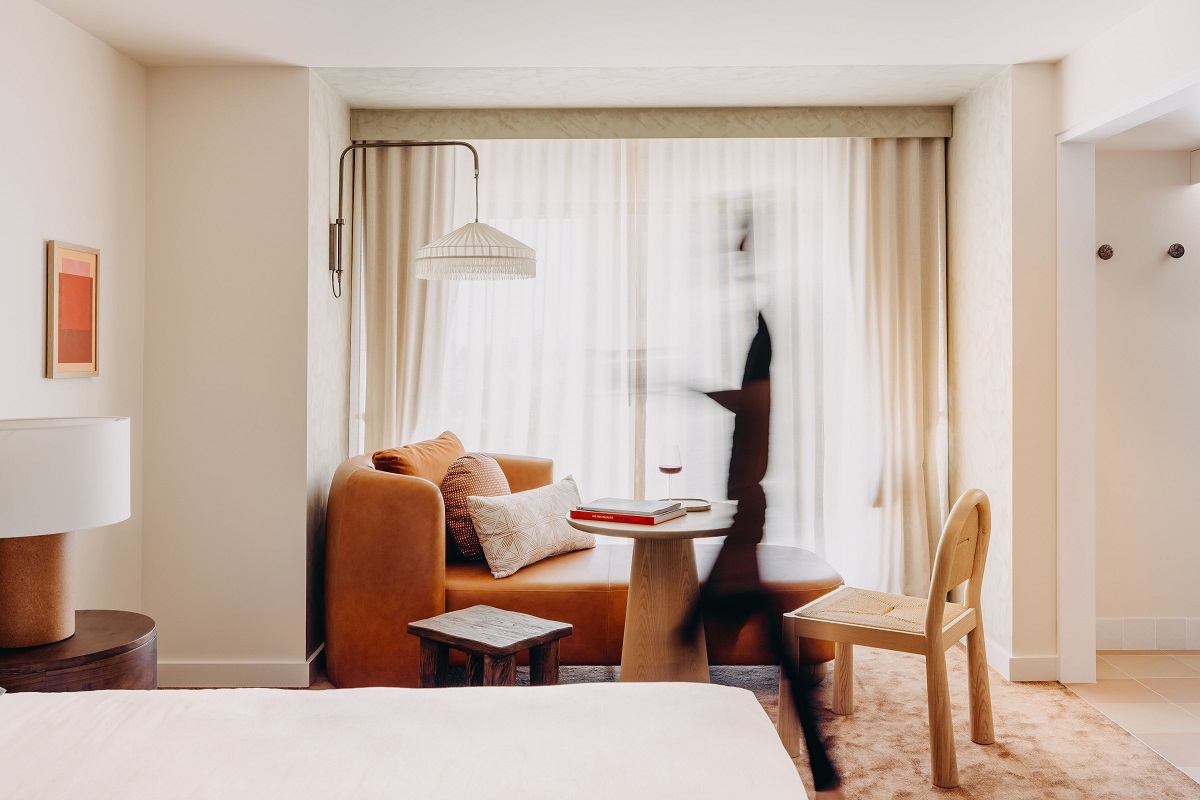
Image credit: Jonathan Maloney, What The Fox Studio

Where the bank vault once safeguarded financial reserves, it now protects a sense of personal time. Inspired by the ritual of Roman bathing, the Corinthia Spa is an intimate, subterranean space shaped by water, mineral stone and softened light – a quiet counterpoint to the city above. The treatment menu developed in collaboration with Italian brand Seed to Skin and 111Skin London, combines botanical intelligence with clinical innovation in rituals focused on deep regeneration. With signature treatments such as The Chrysalis and Reverse Signature Facial, the partnership with Seed to Skin brings international guests a distinctly Italian approach to wellness – marrying Tuscan botanicals with advanced performance.

Corinthia Rome returns a historic landmark to the city, reimagined for contemporary life as Rome’s eternally artful enclave.

Main image credit: Jonathan Maloney, What The Fox Studio

TLEE Spas + Wellness Appoints Ana Goldstein-Kogan as Senior Architect + Wellness Designer Seasoned architecture professional to lead translation of wellness concepts into buildable realities San Francisco (March 3, 2026) – TLEE Spas + Wellness, a leading spa development firm with a design forward, hospitality-driven approach, is pleased to announce the appointment of Ana Goldstein-Kogan to Senior Architect + Wellness Designer. Drawing on more than two decades of design and project management experience, Ana Goldstein-Kogan brings a strong focus on architectural design leadership and wellness integration to her new role. At TLEE Spas + Wellness, Goldstein-Kogan will lead the design of spa and wellness facilities from schematic design through construction documentation, as well as develop architectural drawings, plans and details tailored to luxury hospitality standards. Simultaneously, she will undertake the translation of wellness philosophies like thermal bathing, hydrothermal therapies, and holistic treatment modalities into spatial and architectural solutions across TLEE Spas + Wellness projects. With a focus on advising materials, finishes and sustainable practices that align with wellness principles, Goldstein-Kogan will ensure every project is both aesthetically inspiring and technically sound. “I’m honored to join the team at TLEE Spas + Wellness and transform visionary wellness concepts into thoughtfully executed spaces,” said Ana Goldstein-Kogan, Senior Architect + Wellness Designer at TLEE Spas + Wellness. “At a firm renowned for elevating the wellness industry, I’m eager to bring my architectural expertise to projects that push boundaries and set new standards in spa and wellness design.” In addition to leading the internal design team, Goldstein-Kogan will work directly with clients, operators, architects, and brand partners to integrate specialized wellness environments into larger hospitality and mixed-use developments. “We are thrilled to welcome Ana as our Senior Architect + Wellness Designer,” said Jeanine Allpress-Cliffe, Vice President at TLEE Spas + Wellness. “Her depth of architectural leadership and experience within luxury residential and hospitality environments strengthens our ability to deliver sophisticated, globally relevant wellness destinations. Ana’s appointment marks an important step as we continue expanding our global presence and elevating our design capabilities.” Prior to joining TLEE Spas + Wellness, Goldstein-Kogan spent 12 years at Clodagh Design, serving as Studio Director, where she led luxury residential and hospitality interiors worldwide. While at Clodagh, she first connected with Tracy Lee, Founder of TLEE Spas + Wellness, during a collaboration on an Auberge Resorts project—an early intersection of their shared focus on wellness-driven hospitality. Clodagh is widely regarded as one of the original pioneers of modern spa design, establishing a holistic, nature-based design language long before wellness became a defining force in hospitality. During Ana’s tenure, the firm received the Leader in Sustainability Award from the Global Wellness Summit, reflecting its longstanding commitment to environmentally and socially responsible design. Goldstein-Kogan later served as Vice President of Design at Related California, overseeing architecture and interior design. Most recently, she held a senior leadership role at Steinberg Hart, contributing to large-scale architectural and mixed-use projects and further strengthening her expertise in integrated, multidisciplinary design. Goldstein-Kogan holds a bachelor’s degree in architecture and fine arts from the Rhode Island School of Design. She is a registered architect and licensed through the National Council of Architectural Registration Board, fluent in Spanish, and deeply passionate about sustainability and wellness-centered design. For more information on TLEE Spas + Wellness, please visit https://tleespas.com/ # # # About TLEE Spas + Wellness TLEE Spas + Wellness brings an unparalleled level of passion, professionalism, and adaptability to the creation of exceptional spas and wellness experiences. They approach each project with fresh eyes, looking for ways to raise the bar and set it apart, with a proven track record of success through a collection of award-winning projects, discerning clients, and leading brands. For more information about TLEE Spas + Wellness, visit www.tleespas.com. Media Contact: TLEE Spas PR T

TLEE Spas + Wellness appoints Ana Goldstein-Kogan as Senior Architect + Wellness Designer

1024 640 Pauline Brettell
TLEE Spas + Wellness appoints Ana Goldstein-Kogan as Senior Architect + Wellness Designer

TLEE Spas + Wellness has announced the appointment of Ana Goldstein-Kogan to Senior Architect + Wellness Designer – drawing on more than two decades of design and project management experience, Goldstein-Kogan brings a strong focus on architectural design leadership and wellness integration to her new role…

TLEE Spas + Wellness Appoints Ana Goldstein-Kogan as Senior Architect + Wellness Designer Seasoned architecture professional to lead translation of wellness concepts into buildable realities San Francisco (March 3, 2026) – TLEE Spas + Wellness, a leading spa development firm with a design forward, hospitality-driven approach, is pleased to announce the appointment of Ana Goldstein-Kogan to Senior Architect + Wellness Designer. Drawing on more than two decades of design and project management experience, Ana Goldstein-Kogan brings a strong focus on architectural design leadership and wellness integration to her new role. At TLEE Spas + Wellness, Goldstein-Kogan will lead the design of spa and wellness facilities from schematic design through construction documentation, as well as develop architectural drawings, plans and details tailored to luxury hospitality standards. Simultaneously, she will undertake the translation of wellness philosophies like thermal bathing, hydrothermal therapies, and holistic treatment modalities into spatial and architectural solutions across TLEE Spas + Wellness projects. With a focus on advising materials, finishes and sustainable practices that align with wellness principles, Goldstein-Kogan will ensure every project is both aesthetically inspiring and technically sound. “I’m honored to join the team at TLEE Spas + Wellness and transform visionary wellness concepts into thoughtfully executed spaces,” said Ana Goldstein-Kogan, Senior Architect + Wellness Designer at TLEE Spas + Wellness. “At a firm renowned for elevating the wellness industry, I’m eager to bring my architectural expertise to projects that push boundaries and set new standards in spa and wellness design.” In addition to leading the internal design team, Goldstein-Kogan will work directly with clients, operators, architects, and brand partners to integrate specialized wellness environments into larger hospitality and mixed-use developments. “We are thrilled to welcome Ana as our Senior Architect + Wellness Designer,” said Jeanine Allpress-Cliffe, Vice President at TLEE Spas + Wellness. “Her depth of architectural leadership and experience within luxury residential and hospitality environments strengthens our ability to deliver sophisticated, globally relevant wellness destinations. Ana’s appointment marks an important step as we continue expanding our global presence and elevating our design capabilities.” Prior to joining TLEE Spas + Wellness, Goldstein-Kogan spent 12 years at Clodagh Design, serving as Studio Director, where she led luxury residential and hospitality interiors worldwide. While at Clodagh, she first connected with Tracy Lee, Founder of TLEE Spas + Wellness, during a collaboration on an Auberge Resorts project—an early intersection of their shared focus on wellness-driven hospitality. Clodagh is widely regarded as one of the original pioneers of modern spa design, establishing a holistic, nature-based design language long before wellness became a defining force in hospitality. During Ana’s tenure, the firm received the Leader in Sustainability Award from the Global Wellness Summit, reflecting its longstanding commitment to environmentally and socially responsible design. Goldstein-Kogan later served as Vice President of Design at Related California, overseeing architecture and interior design. Most recently, she held a senior leadership role at Steinberg Hart, contributing to large-scale architectural and mixed-use projects and further strengthening her expertise in integrated, multidisciplinary design. Goldstein-Kogan holds a bachelor’s degree in architecture and fine arts from the Rhode Island School of Design. She is a registered architect and licensed through the National Council of Architectural Registration Board, fluent in Spanish, and deeply passionate about sustainability and wellness-centered design. For more information on TLEE Spas + Wellness, please visit https://tleespas.com/ # # # About TLEE Spas + Wellness TLEE Spas + Wellness brings an unparalleled level of passion, professionalism, and adaptability to the creation of exceptional spas and wellness experiences. They approach each project with fresh eyes, looking for ways to raise the bar and set it apart, with a proven track record of success through a collection of award-winning projects, discerning clients, and leading brands. For more information about TLEE Spas + Wellness, visit www.tleespas.com. Media Contact: TLEE Spas PR T

At TLEE Spas + Wellness, Goldstein-Kogan will lead the design of spa and wellness facilities from schematic design through construction documentation, as well as develop architectural drawings, plans and details tailored to luxury hospitality standards. Simultaneously, she will undertake the translation of wellness philosophies like thermal bathing, hydrothermal therapies, and holistic treatment modalities into spatial and architectural solutions across TLEE Spas + Wellness projects. With a focus on advising materials, finishes and sustainable practices that align with wellness principles, Goldstein-Kogan will ensure every project is both aesthetically inspiring and technically sound.

“I’m honored to join the team at TLEE Spas + Wellness and transform visionary wellness concepts into thoughtfully executed spaces,” said Ana Goldstein-Kogan, Senior Architect + Wellness Designer at TLEE Spas + Wellness. “At a firm renowned for elevating the wellness industry, I’m eager to bring my architectural expertise to projects that push boundaries and set new standards in spa and wellness design.”

studio for wellness movement at Halehouse Spa designed by TLEE

Image credit: Auberge Resorts Collection

In addition to leading the internal design team, Goldstein-Kogan will work directly with clients, operators, architects, and brand partners to integrate specialized wellness environments into larger hospitality and mixed-use developments.

“We are thrilled to welcome Ana as our Senior Architect + Wellness Designer,” said Jeanine Allpress-Cliffe, Vice President at TLEE Spas + Wellness. “Her depth of architectural leadership and experience within luxury residential and hospitality environments strengthens our ability to deliver sophisticated, globally relevant wellness destinations. Ana’s appointment marks an important step as we continue expanding our global presence and elevating our design capabilities.”

Prior to joining TLEE Spas + Wellness, Goldstein-Kogan spent 12 years at Clodagh Design, serving as Studio Director, where she led luxury residential and hospitality interiors worldwide. While at Clodagh, she first connected with Tracy Lee, Founder of TLEE Spas + Wellness, during a collaboration on an Auberge Resorts project—an early intersection of their shared focus on wellness-driven hospitality.

Clodagh is widely regarded as one of the original pioneers of modern spa design, establishing a holistic, nature-based design language long before wellness became a defining force in hospitality. During Ana’s tenure, the firm received the Leader in Sustainability Award from the Global Wellness Summit, reflecting its longstanding commitment to environmentally and socially responsible design.

Goldstein-Kogan later served as Vice President of Design at Related California, overseeing architecture and interior design. Most recently, she held a senior leadership role at Steinberg Hart, contributing to large-scale architectural and mixed-use projects and further strengthening her expertise in integrated, multidisciplinary design.

Goldstein-Kogan holds a bachelor’s degree in architecture and fine arts from the Rhode Island School of Design. She is a registered architect and licensed through the National Council of Architectural Registration Board, fluent in Spanish, and deeply passionate about sustainability and wellness-centered design.

Main image credit: TLEE Spas+Wellness

Plaid carpet with Philippine-inspired patterns from Brintons

Brintons designer introduces new collection rooted in Philippine heritage

1024 640 Meghan Taylor
Brintons designer introduces new collection rooted in Philippine heritage

Luxury woven carpet manufacturer Brintons has announced the launch of the Self Expression Winter 2026 Collection, by Senior Designer Cherise Porretto…

Plaid carpet with Philippine-inspired patterns from Brintons

Inspired by the Maria Clara gown, a historic ensemble rooted in Philippine tradition, Brintons‘ new TERNO carpet collection draws on the Philippine heritage of the brand’s Senior Designer, Cherise Porretto.

Drawing on the Maria Clara garment’s distinctive use of layered fabric and colour, the design references one particular element known as dos paños, or ‘two cloths’. This layer symbolises the balance created when contrasting elements are brought together. With this new collection, Cherise has translated the concept into contemporary surface design through considered pattern, harmonious colour relationships, and rich texture.

The collection features seven distinct plaid patterns, each defined by contrast and balance. Embroidery-inspired details intersect with saturated colour, creating dynamic compositions that range from striking to refined and offer designers flexibility across a variety of interiors.

Plaid carpet from TERNO collection with Philippine-inspired patterns from Brintons

TERNO | Image credit: Brintons

At the heart of TERNO is a deeply personal narrative. As a child, Cherise interviewed her grandmother for a school project, rewriting her life story in the first person and then being chosen to perform it on stage.

“My grandmother introduced me to a version of the Maria Clara gown when she gave me one to wear on the evening of the performance. I remember feeling so proud to tell her story and wear the dress. I was drawn to how unexpected colours and textures came together so naturally, and that sense of harmony guides my work today.”

Cherise invites designers to reconsider tradition not as something static, but as something living and adaptable.

“Through this collection, I want the audience to reflect on what it means to reinterpret tradition: to honour the past, while adapting its forms to the present. The Maria Clara gown becomes more than a costume. It becomes a symbol of continuity, resilience, and personal reinvention. I hope these designs spark curiosity about cultural legacy, and encourage deeper engagement with history, identity, and artistic expression.”

With TERNO, Brintons continues its focus on craftsmanship driven design that supports creativity and self expression in contemporary interiors.

Brintons is one of our Recommended Suppliers and regularly features in our Supplier News section of the website. If you are interested in becoming one of our Recommended Suppliers, please email Katy Phillips.

Main image credit: Brintons

Hotel Indigo Turks & Caicos Grace Bay opens on Grace Bay Beach

Hotel Indigo Turks & Caicos Grace Bay opens on Grace Bay Beach

1024 640 Pauline Brettell
Hotel Indigo Turks & Caicos Grace Bay opens on Grace Bay Beach

Hotel Indigo Turks & Caicos Grace Bay, part of IHG Hotels & Resorts, developed by owners Molo Hotel Group and managed by Lighthouse Hotel Management, has opened as the brand’s first hotel property in Turks & Caicos…

Hotel Indigo Turks & Caicos Grace Bay opens on Grace Bay Beach

Reflecting the island’s relaxed spirit, Hotel Indigo Turks & Caicos Grace Bay is rooted in the brand’s ethos of serving the curious traveller – people who are inspired by new places, new people, and new ideas. The boutique property blends deep relaxation, meaningful socialisation, and authentic cultural immersion with a tranquil tropical getaway.

swimming pool with checked tiles surrounded by sunloungers and palm trees

Image credit: Hotel Indigo

As The World’s Neighbourhood Hotel, a brand initiative celebrating the people, places and experiences that distinguish the neighbourhood, Hotel Indigo Turks & Caicos Grace Bay mirrors the relaxed rhythm of its surrounding community in design, décor, and culinary expression. The intimate, 56-room hotel delivers a rich, locally inspired stay.
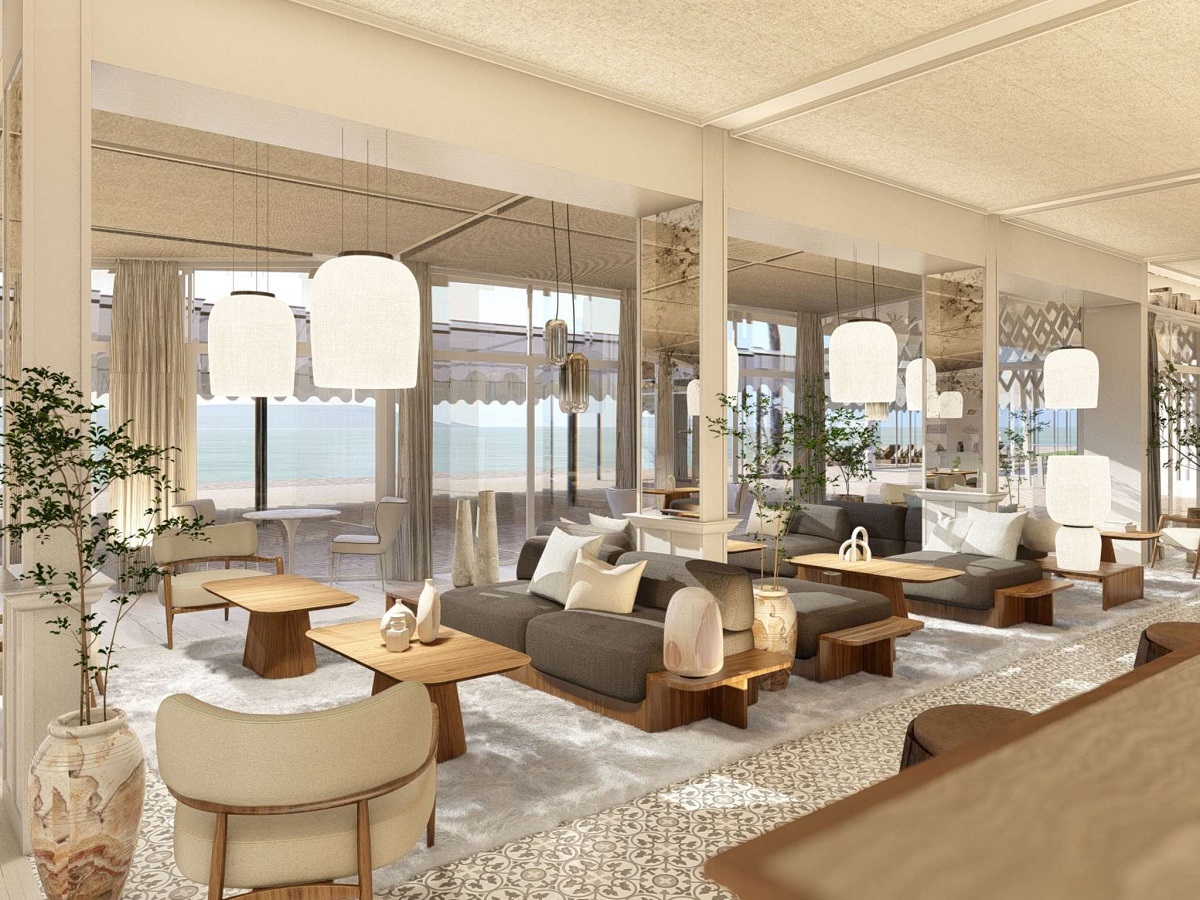
A pristine white-sand backdrop sets the scene for guests. The design-forward property, complete with a patterned infinity pool backdrop, colourful decor, and state-of-the-art amenities, invites guests into a world of whimsical serenity. Just a few minutes’ walk from Grace Bay Beach, one of the Caribbean’s most celebrated stretches of sand, guests can spend long days basking on powder-soft shores as clear turquoise waters lap the coast.
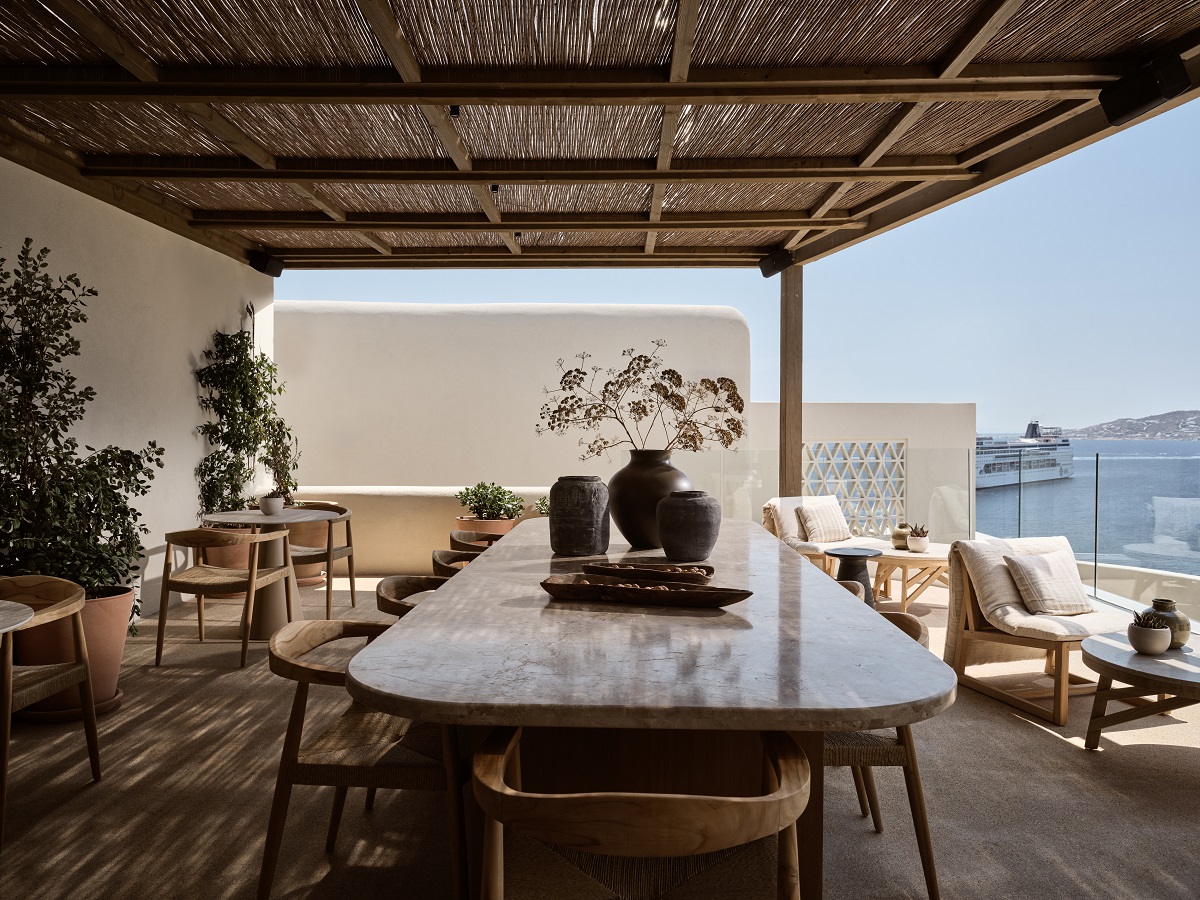
bedroom with glass doors opening on to beach view
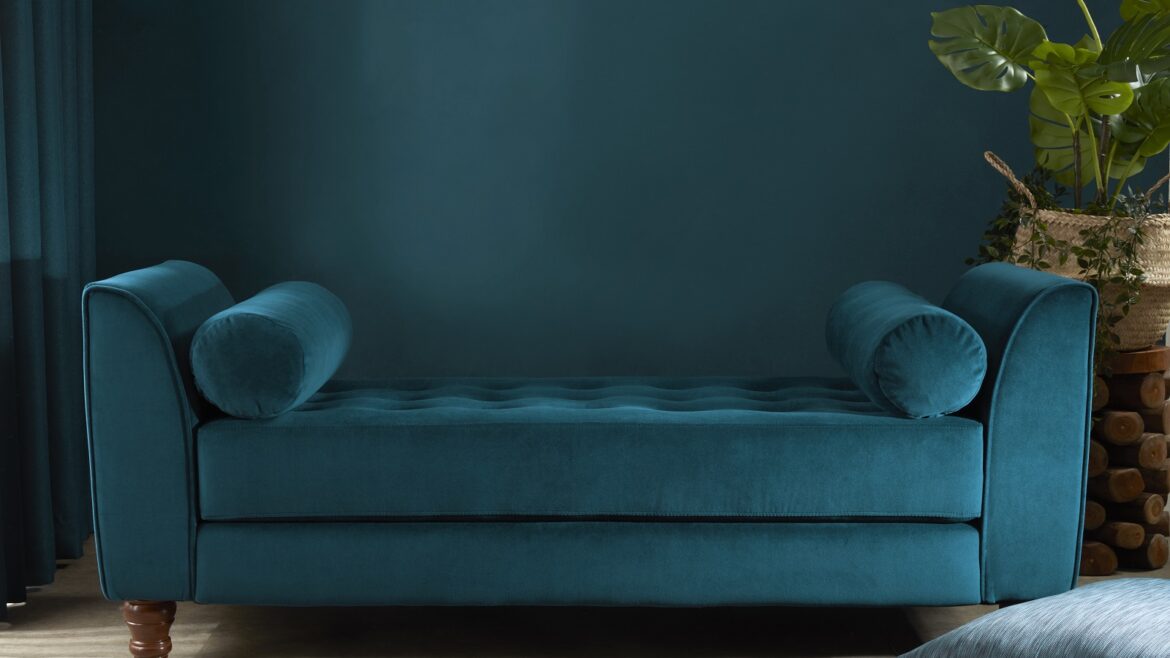
Image credit: Hotel Indigo

Each of the hotel’s 56 guestrooms evokes a sense of playful energy and elegance, harmoniously blending crisp contemporary touches with colorful decor. Accommodations offer options for couples, families, solo travellers, and multi-generational groups, while interconnecting rooms provide the perfect mix of comfort and connection for larger parties. Throughout the spaces, vivid colour palettes, woven textural wall art, and timber paneling revealing tropical patterns create a lively yet relaxing atmosphere.

Two distinct dining options anchor the hotel’s neighborhood-driven culinary approach. At the heart of the hotel, Il Forno offers a relaxed Italian dining experience with a Caribbean twist, ideal for decadent breakfasts, informal lunches and leisurely dinners, complete with its own pizza oven. In the evening, the restaurant beckons with rum-forward mixes, craft cocktails, local bites, and authentic Caribbean tunes. Brango offers specialty urban coffee in a Caribbean setting, serving an all-day stop-by, sit-in, and take-away selection.

restaurant and bar opening on to pool and palm trees

Image credit: Hotel Indigo

Amenities of Hotel Indigo Turks & Caicos Grace Bay include an infinity courtyard pool with daybeds, a state-of-the art fitness center, loaner bicycles for exploration, an outdoor cinema area, a boutique shop, and complimentary transport to the nearby Grace Bay Village. Guests will also enjoy complimentary beach set-ups, while additional equipment for scuba diving, jet skiing, and boating can be arranged for guests eager to explore the island’s vibrant underwater landscape.

Mark Illingworth, General Manager of Hotel Indigo Turks & Caicos Grace Bay commented: “As we officially open the doors to Hotel Indigo Turks & Caicos Grace Bay, we are honored to welcome the Hotel Indigo brand – and IHG Hotels & Resorts – to our celebrated Caribbean island. We are delighted to share our piece of paradise with a new standard of boutique hospitality, thoughtfully connecting guests to our vibrant culture with expressive design, indulgent culinary experiences, curated social spaces, and the exceptional hospitality of our team members at Hotel Indigo Turks & Caicos Grace Bay.”

Main image credit: Hotel Indigo

The Wolseley Hotel New York - exterior rendering

Minor Hotels takes The Wolseley to New York

1024 640 Pauline Brettell
Minor Hotels takes The Wolseley to New York

Minor Hotels has announced the global launch of The Wolseley Hotels, with its inaugural property set to open in New York City in early 2027. Here’s what we know…

The Wolseley Hotel New York - exterior rendering

Located steps from Bryant Park in Midtown Manhattan, The Wolseley Hotel New York will mark the brand’s first hotel worldwide and establish New York as the flagship destination for The Wolseley Hotels. The opening will also introduce The Wolseley restaurant and bar to the United States for the first time, bringing one of London’s most celebrated dining institutions to an international stage.

The hotel occupies the landmark building at 130 West 44th Street, originally constructed in 1905 as the clubhouse for The Lambs Club and designed by the distinguished architectural firm McKim, Mead & White. Long associated with Broadway’s creative community and New York’s cultural elite, the address remains an enduring symbol of the city’s theatrical and artistic heritage. Blending British sophistication with New York’s cultural energy and architectural pedigree, the property will usher in a new chapter of refined hospitality in one of the world’s most dynamic cities.

The Wolseley Hotel New York will feature 76 generously proportioned guest rooms and suites, thoughtfully conceived to combine classical elegance with modern restraint. The design brings together refined interiors, thoughtfully considered layouts, and bespoke craftsmanship, expressing the brand’s distinctive identity while delivering an effortless, contemporary luxury experience.

At the heart of the property will be The Wolseley New York — the brand’s first United States location and the culinary flagship for North America. Serving as the social centre of the hotel, the restaurant will carry forward the grand café tradition and polished European sensibility established by The Wolseley Piccadilly, offering all-day dining, signature cocktails, and a vibrant yet refined atmosphere.

Complementing the restaurant will be an intimate cellar-level speakeasy bar designed to provide a more discreet and atmospheric setting, along with a fully reimagined wellness and wellbeing centre that reflects the brand’s commitment to holistic luxury and guest comfort.

The Wolseley Hotels draws inspiration from its London namesake — renowned for its Art Deco elegance, refined hospitality, and enduring appeal as a gathering place for cultural, business, and civic leaders. In New York, this legacy will be reinterpreted through a distinctly cosmopolitan lens — sophisticated yet welcoming, grand yet intimate. Guests will experience discreet, highly personalised service paired with a vibrant culinary programme that anchors the hotel’s identity. Bespoke in-room amenities, thoughtful detailing, and a refined social energy will create an environment that feels both internationally polished and unmistakably New York.

Dillip Rajakarier, Group CEO of Minor International, parent company of Minor Hotels, commented, “The launch of The Wolseley Hotels marks an exciting new chapter for Minor Hotels. Inspired by the enduring success of The Wolseley in London, our vision is to create hotels anchored in culinary excellence, architectural character, and a genuine sense of occasion. The Wolseley Hotel New York establishes our first flagship and sets the standard for the brand’s global expansion.”

Aviv Laurence, CEO of owner BJGH, added, “Introducing The Wolseley restaurant and bar to the United States through our New York flagship is a defining moment. Together with Minor Hotels, we are creating a destination that celebrates heritage, hospitality, and the enduring appeal of classic European luxury.”

As the inaugural property under The Wolseley Hotels brand, The Wolseley Hotel New York represents Minor Hotels’ entry into the United States luxury hotel segment. The New York flagship establishes the foundation for a selective and deliberate global rollout, with future properties planned for some of the world’s most cosmopolitan cities across Europe, North America, Asia, and the Middle East. Each destination will be carefully curated to uphold the brand’s distinctive identity, where culinary excellence, elegant design, and gracious service converge.

Main image credit: Minor Hotels

Organic circle mirror showing reflection of bed at Hoxton Shoreditch

ABI Interiors brings refined detailing to new Hoxton, Shoreditch

1024 640 Meghan Taylor
ABI Interiors brings refined detailing to new Hoxton, Shoreditch

A thoughtful refurbishment reimagines an East London design icon, where softened architecture, enduring materials and carefully specified details from ABI Interiors elevate hospitality…

Organic circle mirror showing reflection of bed at Hoxton Shoreditch

Nearly two decades after opening its doors, The Hoxton Shoreditch has entered a considered new era. Long synonymous with the creative pulse of East London, the hotel’s latest refurbishment honours that legacy while embracing a more elevated, design-led expression of the Hoxton identity.

Among the brands contributing to the transformation is ABI Interiors, which has been specified for the bathroom refresh. Central to the scheme is the Aliro Rounded Rectangle Mirror in Stainless Steel — a piece that subtly reinforces the project’s softened architectural language.

“With its gently curved edges and refined silhouette, the mirror introduces a softened architectural detail to the bathroom space that complements the hotel’s evolved design language,” says Mark Poulain, Commercial Director at ABI Interiors.

the Aliro Rounded Rectangle Mirror in Stainless Steel from ABI Interiors

The Aliro Rounded Rectangle Mirror in Stainless Steel | Image credit: ABI Interiors

Balancing form and function, the mirror enhances light and spatial flow, echoing the warmth and nuanced geometry that now define the interiors. It is a detail that speaks to the broader narrative of the refurbishment — one where industrial character meets residential comfort, and where thoughtful materiality elevates the everyday guest experience.

“Inclusion within this landmark refurbishment represents a shared commitment to enduring design: pieces that feel at once contemporary and timeless, seamlessly integrated within spaces that prioritise both beauty and utility,” Poulain continues.

Specifying for scale

“ABI Interiors addresses the need for enduring fixtures through a commercial offering grounded in robust materials, precision engineering and timeless silhouettes — ensuring that what is specified today continues to perform throughout the lifecycle of the property,” says Poulain.

For ABI Interiors, this begins with commercial-grade durability. Products are engineered for longevity in demanding environments and are backed by warranties of up to 10 years for commercial applications — offering reassurance to operators as well as specifiers.

Organic circle mirror showing reflection of bed at Hoxton Shoreditch

Image credit: ABI Interiors

The brand’s model is also built around simplicity: one partner, every space covered. From brassware and bathroom accessories to hardware and signage, ABI streamlines procurement by enabling designers to specify across multiple categories through a single, cohesive supplier. The result is clarity in communication, consistency in finish, and efficiency in delivery.

In the evolution of The Hoxton Shoreditch, this considered methodology allows for a seamless integration of product and place — where carefully specified detailing reinforces a broader architectural story, and where enduring design elevates the guest experience at every touchpoint.

ABI Interiors is one of our Recommended Suppliers and regularly features in our Supplier News section of the website. If you are interested in becoming one of our Recommended Suppliers, please email Katy Phillips.

Main image credit: ABI Interiors

Pale facade of Le Narcisse Blanc Hotel, dappled with sunlight from trees lining the boulevard

Hotel review: Le Narcisse Blanc Hôtel & Spa, Paris

1024 640 Meghan Taylor
Hotel review: Le Narcisse Blanc Hôtel & Spa, Paris

Behind Paris’s grand monuments blooms a quieter seduction: Le Narcisse Blanc Hôtel & Spa, where Belle Époque romance, petals and perfume unfurl like a delicate flower…

Pale facade of Le Narcisse Blanc Hotel, dappled with sunlight from trees lining the boulevard

Tucked neatly into Paris’s 7th arrondissement, Le Narcisse Blanc Hôtel & Spa – part of the Lignée Hotels group – offers a delectable balance of intimacy and elegance. Just moments from the Eiffel Tower, the Alexandre III Bridge and the Grand Palais, the boutique hotel sits sweetly alongside some of Paris’s most imposing landmarks.

Taking inspiration from the Belle Époque muse Cléo de Mérode – the celebrated dancer and socialite whose presence shaped the artistic life of Paris at the turn of the 20th century – the hotel is delicate, feminine, sensual and magnetic.

From the moment you step inside, you are quietly swathed in a petal-like finesse. Named after the narcissus flower – the daffodil, to you and I, botanical themes run gently throughout the hotel. In fact, the entire experience feels like a carefully crafted lesson in branding. Floral motifs appear everywhere: abundant arrangements greet guests on arrival, blossoms are worked into baroque plasterwork and carved into marble, and bouquets are embroidered across textiles. Even the scent has been considered, with a bespoke fragrance designed to echo light floral notes and subtly evoke luxury.

The entrance hall sets a fresh, romantic tone with understated grandeur. High ceilings, delicate mouldings and softly reflective surfaces create an immediate impression of refinement. Rather than the cavernous lobbies typical of many luxury hotels, the spaces unfold sequentially, like rooms within a grand private Parisian residence. This layout encourages intimacy, allowing guests to move naturally from one area to the next.

At the heart of the hotel sits the lounge, illuminated by a glass roof that fills the space with natural light. Velvet armchairs, brass lighting fixtures and carefully curated decorative details create an atmosphere that feels unmistakably Parisian, with subtle powder-pink accents offering a gentle nod to the elegance associated with Cléo de Mérode.

These aesthetics continue into the Michelin-starred restaurant, Cléo. The palette remains restrained – soft creams, pale greys and warm golds – while rich materials add warmth and depth. Curved furniture, plush upholstery and polished metal surfaces create a dining room that feels bright, sophisticated and inviting.

The Léopold Bar featuring richly toned floral wallpaper layered with modern textures and low lighting

Image credit: Le Narcisse Blanc

Equally inviting, though deliberately more intimate, the Léopold Bar offers a sultrier interpretation of the hotel’s botanical theme. Overlooking the Boulevard de la Tour-Maubourg and seating only a handful of guests, the bar is wrapped in richly toned floral wallpaper layered with contemporary textures and atmospheric lighting. It is the kind of space that encourages quiet conversation and cocktails long into the evening.

The hotel’s design, created by Laurent & Laurence alongside architects from Studio Alkekenge and designer Anne Faivre-Duboz, balances Belle Époque inspiration with contemporary restraint. The narcissus motif appears throughout the property, sometimes literally in wallpaper patterns or painted details, and sometimes more subtly through floral curves and soft silhouettes. These references never feel heavy-handed, instead acting as quiet reminders of the muse behind the hotel’s identity.

This balance between history and modernity continues in the guest rooms. With just 37 rooms and suites, the hotel maintains a sense of exclusivity that defines the overall experience. Each space feels like a private pied-à-terre, combining comfort with carefully considered design.

Materials play an important role here. Velvet armchairs invite guests to sink into their curved forms, while mouldings highlighted with gold detailing add a delicate layer of ornamentation. Sleek, contemporary pendant lighting fixtures introduce a modern edge that prevents the interiors from feeling overly nostalgic. The overall effect is one of quiet luxury: every element appears intentional, yet nothing feels ostentatious.

Many rooms incorporate small architectural moments that reinforce the feeling of inhabiting a Parisian apartment rather than a hotel room. Sofas tucked into alcoves create private reading corners, balconies bloom with flowers overlooking the city’s rooftops, and some suites position bathtubs to capture views across Paris. These thoughtful touches create a strong sense of place, reminding guests that they are immersed in one of the world’s most iconic cities.

Beneath the hotel lies another carefully designed sanctuary: the spa. With subtle Art Deco influences and clean architectural lines, the wellness area introduces a slightly different aesthetic while remaining aligned with the hotel’s sense of refinement. A long, narrow pool stretches through the space, reflecting soft lighting and polished surfaces, while a sauna, jacuzzi and treatment rooms create an atmosphere dedicated to calm and restoration.

Bed and Sofa at Lorenza apartment

Beyond the main hotel, the Lorenza Apartment extends this design philosophy into a more residential format. Designed by interior architect Valériane Lazard, the 55-square-metre apartment reimagines contemporary Parisian living with understated elegance. Named after the final show performed by Cléo de Mérode at the Folies Bergère in 1901, the apartment sits next door to the hotel and is available for long-term rental.

Lazard’s approach focuses on proportion, light and materiality. Clean architectural lines are softened by warm textures and curated furnishings, creating a space that balances modern clarity with timeless charm. The result is a private urban retreat that echoes the hotel’s aesthetic while offering guests the experience of inhabiting a beautifully designed Parisian home.

What ultimately defines Le Narcisse Blanc is the coherence of its design story. Rather than relying on spectacle or grand gestures, the hotel’s interiors emphasise proportion, materiality and subtle references to Parisian history. And, in a city renowned for its luxury hotels, Le Narcisse Blanc distinguishes itself through thoughtful, well-tempered design. For anyone seeking an aesthetic retreat that captures the softer side of Parisian luxury, this meticulously crafted hotel offers an experience that feels both refined and deeply personal.

Main image credit: Le Narcisse Blanc Hôtel & Spa

MarketsClub with modieus carpet on the floor

Axminster in Action: Modieus at The Markets Club, Sydney

1024 640 Pauline Brettell
Axminster in Action: Modieus at The Markets Club, Sydney

Modieus worked with leading interior design studio X+O to deliver a versatile Axminster flooring solution for the newly refurbished Markets Club in Sydney – the brief was to create a welcoming environment for both local residents and the Sydney Markets community, encouraging them to relax, stay longer and return regularly…

MarketsClub with modieus carpet on the floor

The architecture and material finishes specified in this collaboration between Modieus and studio X+O are used to create distinct zones, which include a bar and lounge. The dark, layered palette of black timber, terrazzo, black metal and custom Axminster carpet tiles enhance the moody ambience.

cream chairs on patterned modieus carpet in MarketsClub

Image credit: Modieus

Director and Green Star Associate at X+O, Rebecca Vulic, explained: “From the outset, our vision for The Markets Club was to create a venue that feels opulent yet warm, a place where members and guests feel comfortable settling in and staying longer. We leaned into warm interior colouring to build richness and atmosphere, because warm toned spaces naturally feel more inviting and layered. The carpet pattern was inspired by the lucky number eight, expressed through rounded, interlocking forms that we carried through into architectural features such as the screens, creating a consistent design language across the project. We specified an Axminster construction for its premium finish and robust performance in high traffic hospitality environments. Using carpet tiles provided valuable installation flexibility and is especially beneficial for ongoing maintenance, allowing individual tiles to be replaced easily in high wear areas. The felt backing further enhanced acoustic comfort, supporting a softer, more welcoming ambience throughout the venue.”

MarketsClub with modieus carpet on the floor

Image credit: Modieus

Modieus supplied 1m x 1m Axminster tiles with felt backing. The tile format enabled precise pattern execution while also offering practical advantages in installation and future maintenance, critical in a live hospitality setting. Axminster construction is particularly well suited to demanding hospitality environments due to its pattern clarity, depth of colour and long term resilience under heavy footfall.

Acoustic performance was a key consideration throughout the project. Alongside sound-check plasterboard ceilings, acoustic timber wall panels and integrated acoustic detailing within gaming machine screens, the felt-backed Axminster tiles contributed to enhanced sound absorption, supporting guest comfort across bar, lounge and gaming areas.

Image credit: Modieus

“As flooring specialists, our role is to help designers transform creative vision into flooring solutions that are distinctive, durable and fit for purpose in demanding hospitality environments,” commented Xander Okhuizen, Founder of Modieus. “At the Markets Club, Axminster was the natural choice for its richness and resilience. Specifying it in a tile format added flexibility in installation and long-term maintenance, supporting both the design outcome and the operational needs of the venue.”

Commissioned by Holman Barnes Group, the 330-square-metre redevelopment united three ground-floor tenancies and connected them seamlessly to the existing level one venue, while maintaining live operations throughout. Since reopening, the club has reported a significant uplift in patronage and has received industry recognition for its interior design excellence.

Modieus is one of our Recommended Suppliers and regularly features in our Supplier News section of the website. If you are interested in becoming one of our Recommended Suppliers, please email Katy Phillips.

Main image credit: Modieus

entrance to COMO Cordeillan-Bages lit up at night

COMO Cordeillan-Bages – where heritage meets passion

1024 640 Pauline Brettell
COMO Cordeillan-Bages – where heritage meets passion

COMO Hotels and Resorts has announced the rebirth of a Bordeaux landmark –in a visionary collaboration, the historic Médoc property has reopened as COMO Cordeillan-Bages…

entrance to COMO Cordeillan-Bages lit up at night

Located on Bordeaux’s famed Left Bank, COMO Cordeillan-Bages, slated to open May 2026, marks the luxury hospitality brand’s debut in one of the world’s most revered wine regions, realised in close collaboration with the Cazes family, owners of the prestigious Château Lynch-Bages. The opening reflects COMO’s family-owned philosophy, bringing together two family legacies united by a shared commitment to craftsmanship, finesse and understated luxury, as well as a deep appreciation for exceptional food and wine.

view through window over vineyard

Image credit: COMO Cordeillan-Bages

As COMO’s third property in France, the hotel forms a natural pairing with COMO Le Montrachet in Burgundy. Located in Pauillac, at the heart of the Médoc, the estate is set among rolling vineyards and historic châteaux that define Bordeaux’s most celebrated appellations. The region is long synonymous with excellence in winemaking, heritage and gastronomy — qualities that closely mirror the shared values of COMO and the Cazes family, who are among the region’s most respected estates.

The transformation of the intimate property, distinguished by its turrets dating back to the 17thcentury, is being led by Italian designer Paola Navone, who also reimagined COMO Le Montrachet. Navone’s renovation touches every aspect of the hotel, from its 28 rooms and suites, including two signature COMO Suites to the gastronomic restaurant and the 25-metre outdoor pool and adjacent gym and sauna. The design balances understated elegance with a strong sense of place, blending contemporary comfort with the textures, materials and quiet sophistication. In dialogue with the building’s heritage, the interiors bring clarity, strength and a sense of calm refinement to each space.

sunlounger and swiiming pool at COMO Cordeillan-Bages

Image credit: COMO Cordeillan-Bages / Taylor Yandell

The property is a natural retreat for oenophiles and wine lovers. Through its close relationship with Château Lynch-Bages, guests enjoy exclusive access to experiences rarely available to the public. The hotel is also within easy reach of some of the most renowned vineyards in the world, including three of Bordeaux’s five First Growths.

Beyond the vineyards, the region offers a rich tapestry of experiences. Just a six-minute walk from the beautifully restored village of Bages, guests are immersed in a setting of artisanal boutiques and a convivial bistro, with nearby villages offering a seamless blend of historic charm and contemporary life through independent shops, gastronomic restaurants and wine boutiques. The Médoc’s natural landscape unfolds across expansive vineyards and fragrant pine forests to the sandy Atlantic coastline, just 30 kilometres away, while the hotel sits along the legendary Route des Châteaux — home to some of the world’s most iconic wineries.

tables under the trees by Bordeaux vineyard

Image credit: COMO Cordeillan-Bages

Olivier Jolivet, CEO of COMO Holdings, said “Following the success of COMO Le Montrachet, we are delighted to expand our presence in another of the world’s great wine regions. The Médoc’s heritage and craftsmanship resonate strongly with COMO’s values and with COMO Cordeillan-Bages, we will reimagine Bordeaux’s traditions through a contemporary expression of quiet luxury in the heart of the Médoc”.

“We are delighted to be partnering with a family group of such standing, united by shared values and a common pursuit of excellence. First opened 35 years ago, Cordeillan-Bages was among the pioneering hotels of wine tourism in the region. Today, this collaboration marks a natural continuation of our enduring commitment to the Médoc and to Cordeillan-Bages, while giving the property a new momentum for the years ahead,” said Jean-Charles Cazes, CEO of Château Lynch-Bages.

The opening of COMO Cordeillan-Bages marks the brand’s third property in France, joining COMO Le Beauvallon in the Gulf of Saint-Tropez, which is set to open on 24 April 2026.

Main image credit: COMO Cordeillan-Bages / Jerome Mondiere

aerial view of Hilton Quang Hanh Onsen Resort - an onsen experience in Northern Vietnam

Hilton Quang Hanh Onsen Resort – an onsen experience in Northern Vietnam

1024 640 Pauline Brettell
Hilton Quang Hanh Onsen Resort – an onsen experience in Northern Vietnam

Hilton has announced the opening of Hilton Quang Hanh Onsen Resort, a retreat in the Quang Hanh valley in Cam Pha, Quang Ninh. Rooted in the destination’s natural hot mineral springs, the resort invites guests to experience its onsen-inspired immersions…

aerial view of Hilton Quang Hanh Onsen Resort - an onsen experience in Northern Vietnam

“Hilton Quang Hanh Onsen Resort represents an exciting step forward for our growth in Vietnam and across South East Asia,” said Alexandra Murray, area vice president and regional head of South East Asia, Hilton. “Vietnam’s tourism landscape is evolving rapidly, and we’re seeing more guests broaden their travel beyond major gateways to seek out destinations that offer a different pace and a more restorative stay. With Quang Hanh’s natural hot mineral springs at the heart of the experience, the resort offers travelers a new way to recharge in northern Vietnam.”

natural onsen hot springs at Hilton-Quang-Hanh-Onsen-Resort-Rock-Bath-Inside

Image credit: Hilton Hotels & Resorts

Located in Quang Hanh, an area known for its rare natural hot mineral springs and mountain landscapes, the resort is a 30-minute drive from Ha Long and two and a half hours’ drive from Hanoi. It is also close to notable tourist attractions, including Long Tien Pagoda, Bao Hai Linh Thong Pagoda — one of Ha Long City’s largest pagodas — and Sung Sot Cave.

The resort offers 178 villas and 38 rooms, each featuring a private onsen and access to hot and cold saunas. Guests can choose from rooms and suites for couples and families, as well as two- to four-bedroom villas ranging from 110 to 550 square meters, with generous living and dining areas. The resort’s premium offerings include two 1,250 square-meter Presidential Villas featuring five bedrooms, a karaoke room, private teppanyaki facilities and wine cellar. Currently, 50 villas and all rooms are available for booking, while the remaining villas are set to open towards the end of the year.

Hilton-Quang-Hanh-Onsen-Resort-Private-Onsen-3-Bedroom-Villa

Image credit: Hilton Hotels & Resorts

“From hosting intimate gatherings to grand celebrations, Hilton Hotels & Resorts create meaningful human connections, with our teams proudly serving as ambassadors. As a new discovery for many travellers, Hilton Quang Hanh Onsen Resort will help introduce Quang Hanh to the world, placing guests at the centre of its most compelling experiences,” said Vincent Ong, vice president, Full Service Brands, Asia Pacific, Hilton. “Beyond Hilton’s renowned hospitality and refined art of hosting, guests at this resort will enjoy one-of-a-kind private onsens in every room, along with access to mineral-rich baths.”

Hilton-Quang-Hanh-Onsen-Resort-King-3-Bedroom-Villa

Image credit: Hilton Hotels & Resorts

The resort’s wellness offerings include seamless access to Yoko Onsen Quang Hanh, where guests can enjoy a public onsen featuring 27 onsen baths and 18 baths across male, female and mixed bathing areas, alongside sauna and spa facilities. Beyond onsen facilities, guests can also re-invigorate at the resort’s Eforea Spa, swim in the indoor pool that overlooks lush mountains and verdant landscapes or enjoy the 24-hour fitness center and Kids’ Club.

For gatherings, the resort offers flexible social and meeting spaces, including six private dining rooms and two meeting rooms ranging from 27 to 81 square meters, suited for hosting energizing corporate functions and iconic celebrations.

Dining at the resort is a vibrant celebration of both global and local flavors, offering guests an elevated culinary journey through three thoughtfully crafted experiences. Genji, the resort’s modern Japanese restaurant, features a sushi counter, teppanyaki counter and a thoughtfully curated kaiseki menu, with a total capacity of 210 seats. Genji Bar offers panoramic views alongside afternoon tea, handcrafted cocktails and light bites. The hotel’s all‑day dining venue, Kitchen Craft, home to Western, Asian and Dessert kitchens, is undergoing renovations and is slated to reopen at the end of the year.

Image credit: Hilton Hotels & Resorts

Vietnam currently holds Hilton’s third-largest portfolio in South East Asia with 21 trading hotels. The hospitality company is set to double its portfolio in Vietnam, reinforcing its position as a key market in Hilton’s growth trajectory. The resort’s opening also grows Hilton’s footprint in northern Vietnam, complementing the recently opened Tru by Hilton Ha Long Hon Gai Centre in Quang Ninh Province.

“With a shared vision between Sun Group and Hilton to develop sustainable destinations where international standards go hand in hand with local values, we believe Hilton Quang Hanh Onsen Resort will become a globally recognized onsen retreat that every traveler exploring Vietnam’s heritage region will want to experience” said Nguyen Vu Quynh Anh, deputy CEO of Sun Group and CEO of Sun Group’s Entertainment & Hospitality Division.

Interior of Voysey House, with Crital window above a line of fabric swatches hanging from the wall

Inside Voysey House – the archival home of Sanderson Design Group

1024 640 Meghan Taylor
Inside Voysey House – the archival home of Sanderson Design Group

Now restored as the London headquarters of Sanderson Design Group, Voysey House has returned to its original purpose — a home for design, craftsmanship and the enduring legacy of Sanderson. And with a 75,000-strong archival collection on its third floor, Deputy Editor Meg Taylor leapt at the chance to look around…

Interior of Voysey House, with Crital window above a line of fabric swatches hanging from the wall

Today, Sanderson Design Group is far more than a single heritage brand. It is an international interiors company and custodian of some of Britain’s most significant decorative arts houses — Sanderson, Morris & Co., Zoffany, Harlequin and Clarke & Clarke. From wallpapers and fabrics to paints and licensing collaborations, the Group translates archival design into contemporary interiors across residential, hospitality and global contract markets. That sense of stewardship feels entirely at home within Voysey House’s quietly pioneering architecture.

Designed by the architect and designer Charles Voysey and completed in 1905 as a wallpaper factory for Arthur Sanderson & Sons, Voysey House — now the London base of Sanderson Design Group — remains the only commercial building Voysey ever built.

Grade II listed, Voysey House is widely considered a formative work in the evolution of the modern movement in architecture — and standing before it, that lineage feels entirely plausible. The façade is almost abstract; planes of white brick, disciplined windows, little ornament. It’s easy to see how this building nudged architecture towards modernism’s clarity of form.

Originally built as an extension to the Devonshire Works factory — the redbrick building opposite Voysey on Chiswick’s Barley Mow Passage — the pair were once linked by a third-floor footbridge. In 1928, a fire tore through the redbrick factory, leaving nothing but a ghostly shadow of the former bridge on the upper brickwork. Voysey House survived but Sanderson & Co. did not stay.

What followed was a century of reinvention for the building, at various times a print works, car garage, and architect’s studio. And then, in June 2024, after extensive restoration, Sanderson Design Group came home.

Stepping inside only weeks ago, I was struck by how palpably the restoration feels like a conversation with the past rather than an imposition upon it. “Because it’s Grade II listed, everything has been restored to its pre-fire original state,” said Eleanor Kelly, the Group’s PR & Comms Manager, as we gathered beneath the soaring ceiling, “we kept as much as we possibly could.”

Interior of Sanderson Design Group London HQ, showing glass cases on left and sliding wallpaper segments

Image credit: Jack Hobhouse

The ceilings throughout are original — “they’ve got quite a lot of imperfections,” she added, glancing up affectionately, “but we quite like that.” As do I! The marks and slight irregularities feel like design-fingerprints. Even the infrastructure has been carefully negotiated; new heating and air conditioning systems were designed around the existing proportions, not the other way round.

The Crittall windows are a perfect example of this gentle subversion. They look original — slender, elegant, almost severe — but are in fact double glazed, with a near-invisible five-millimetre vacuum gap. “You wouldn’t believe it, would you?” Eleanor laughed. “They’re not black either. They’re actually a really dark green.” During renovation, the team discovered the earliest frames had been painted that deep green. Today it’s affectionately referred to as ‘Voysey Green’.

Look up in the ground floor showroom and the original steel beams remain proudly exposed. Rather than conceal them, the team has clipped a track rail system onto the beams, allowing wallpaper panels to slide, shift and reconfigure the space. “The whole idea was to make this space suitable for events, with the panels it’s just so easy to adapt. It’s a really dynamic space.”

Underfoot, the story continues. On the first floor, the original pale pitch pine flooring — unusual in the early 1900s when darker finishes were fashionable — has been painstakingly restored. Only a single layer survived here, so the boards run in a different direction from those above. On the second and third floors, two layers remain. “Most of the floors in the building are original,” Eleanor explained. If not original, like on the ground floor, the flooring is an intricate modern parquet design, laid devotionally piece by piece and sanded down.

Upstairs, the building shifts tone from showcase to studio. The second floor hums with contemporary creativity — design studios for Zoffany, Morris & Co. and Sanderson gathered under one roof. Here, conversations slide easily between heritage and innovation.

Zoffany, I’m told, is ‘all about the best of the best’ — intricate block prints that might require ten individual blocks to create a single flower. “It’s super intricate,” Oliver Halshaw, Sanderson Design Group’s UK Contract Manager, smiled, holding up a fabric. “It’s one of my favourites.” It was easy to see why; the depth of colour, the detail, the tactility.

Clarke & Clarke, meanwhile, dominates the mainstream contract market. “It’s our top brand in that market,” I’m told. “We get real volume through it.” Accessible price points, versatile plains, dependable performance — the quiet backbone of commercial interiors.

Manufacturing remains rooted in Britain where possible. “All our wallpapers are made in the UK. All our printed fabrics too.” Embroideries and certain weaves travel further afield — India, Turkey — but the heart of production still beats domestically.

Entrance to Sanderson Design Group archive at Voysey House

Image credit: Jack Hobhouse

On the third floor sits a 12-ton collection comprising around 75,000 pieces dating back to the 1600s. It is housed in what the archivist described as ‘a six-sided box within the building’ — insulated, protected, environmentally controlled, getting it here was no small feat. “Everything came up over the outside of the building and over the fourth-floor balcony,” she said, “it was a mission.”

Arthur Sanderson began in 1860 importing French wallpapers. Early hand-blocked florals sit alongside Japanese leather papers made for the European market. There are staircase papers designed to wrap a stairwell seamlessly, sea creature motifs complete with jellyfish, nursery designs like Oranges & Lemons by Dorothy Hilton, and bold raspberry-red Voysey designs that still feel startlingly modern.

There are original artworks, edges worn by hands that pinned and traced them. Rose and Peony, first produced as a wallpaper in 1914, remains a cornerstone design — revived, reimagined, even reinterpreted by fashion designers. “It’s definitely had a life,” the archivist smiled, pointing to faint hand marks on browned paper.

Advertising ephemera from the 1930s proudly proclaim ‘sun-tested wallpapers’ — a reminder that even then, practicality and beauty were sold side by side. There are mid-century florals under Kenneth Truman’s direction, 1970s celebrity campaigns, and early collaborations with Disney — Snow White, Alice in Wonderland, Dumbo — charming relics of cross-disciplinary creativity.

Most striking of all is the continuity. Morris designs sit in multiple colourways; some in production, others resting quietly. Blocks are still used occasionally for special heritage projects — including commissions for Kelmscott Manor. This is not a static archive; it is an active one. Designers refer to it daily for pattern, colour, texture and feel.

Studio of Sanderson Design Group at Voysey House

Image credit: Jack Hobhouse

Voysey House is not merely a beautifully restored headquarters; it is a living palimpsest. From wallpaper factory to garage to archive-filled design hub, it has absorbed fire, fashion and functional change without surrendering its identity.

In many ways, it embodies the ethos of the company it now houses: a reverence for heritage paired with a willingness to evolve. In its pale brick planes, dark green windows and restored pine floors, one senses not nostalgia but continuity — a quiet, confident modernity that began in 1905 and still feels remarkably fresh today.

Sanderson Design Group is one of our Recommended Suppliers and regularly features in our Supplier News section of the website. If you are interested in becoming one of our Recommended Suppliers, please email Katy Phillips.

Main image credit: Jack Hobhouse

OUT NOW: Global Design Review 2025/2026

1024 640 Sophie Harper

OUT NOW: Global Design Review 2025/2026

This year’s edition of the covetable design tome, Global Design Review, is out now and available to read…

Dubbed the ‘design bible’ for the hospitality design industry, Global Design Review, brought to you by the editors of SPACE, is a dedicated work documenting the best hotel projects and design from the previous 12 months as well as being a celebration of the people who shape the global hotel design landscape – with a carefully curated who’s who of interior designers, studios, and suppliers working across regions, culture, and scales. Organised and designed to be intuitive to navigate, it is practical and comprehensive, making it (we hope) a pleasurable read and constant point of reference throughout the coming year.

“Producing Global Design Review is always an extensive process of research, fact-checking and careful curation by a dedicated team, which means the hard work has been done for you,” said Emma Kennedy, Editor, SPACE. “Bringing together the designers, studios and suppliers shaping hospitality design today in a clear, inspirational way, it’s a resource that connects the industry and makes discovering the very best talent easier than ever.”

This year’s edition highlights some of the world’s most awe-inspiring projects – from the inimitable Capella Taipei in Taiwan, to Rosewood’s first outpost in the Netherlands (and GDR’s cover star) with Rosewood Amsterdam – as well as interviews with the senior team at David Collins Studio for its 40th anniversary, and Chris Godfrey, Global Co-CEO at HBA on the studio’s 60-year legacy.

Inside, you can also find the top 25 Interior Designers, Architects, and Hoteliers from Hotel Designs’ The Brit List Awards 2025 as a reminder of who the stars of their trade in the UK are right now.

We hope Global Design Review becomes a source of inspiration and a practical companion to your work. Use it to discover those who continue to lead the way and to make meaningful connections across the global design community. If it helps spark conversations or support the creation of exceptional projects, it will have fulfilled its purpose.


As a live directory, listings in Global Design Review can be edited throughout the year, so please keep us updated with your own company listings by getting in touch with Charles Dragazis.


Main image credit: Rosewood Hotels & Resorts

the Bristol collection by Bagno brings mid-century charm into the contemporary bathroom

BAGNODESIGN – warming up the bathroom palette

1024 640 Pauline Brettell
BAGNODESIGN – warming up the bathroom palette

As bathroom design becomes more emotionally driven, warmer metallic finishes are offering a softer, more expressive way to specify brassware. Kerrie Black, Group Merchandising & Marketing Director at BAGNODESIGN, explores the growing appeal of warmer tones and what they bring to commercial interiors…

the Bristol collection by Bagno brings mid-century charm into the contemporary bathroom

In recent years, bathroom design has shifted from the purely functional to the experiential, particularly in commercial spaces where creating moments of calm and comfort is now seen as essential. Whether in boutique hotels, high-end offices or wellness-focused hospitality environments, the bathroom is increasingly being designed as a place to slow down and recharge.

This evolution has prompted a rethink in the materials and finishes being specified. While chrome has long been the standard, it is cooler-toned and often lacks the nuance that today’s spaces demand. Designers are now turning towards warmer, more characterful metallics to add depth and softness and to help shape more inviting interior narratives.

M-Line Project Mixer_BUR_01 bagnodesign brushed metal mixer tap


M-Line Mixer in Oyster Burgundy finish | Image credit: BAGNODESIGN

Why warmer finishes?
Warmer metals such as brushed bronze, soft gold and champagne tones lend themselves to more tactile, sensorial interiors. These finishes pair easily with natural materials like timber and stone, as well as with more experimental palettes, making them particularly useful for designers looking to create layered, expressive schemes without compromising on cohesion.

In commercial environments, where emotional connection and visual differentiation are increasingly important, they offer a way to balance practicality with subtle storytelling.

New tones: Oyster and Burgundy
As this palette evolves, new finishes are emerging that push the warm metallic trend further. Two examples are Oyster, a soft, neutral-toned metallic with a pearlescent quality, and Burgundy, a rich, warm-toned surface with a bold, design-led edge.

These tones offer an alternative to the more commonly used brass and bronze and bring a new level of nuance to bathroom fittings and fixtures. Oyster, for example, works well in light-toned spaces where designers want to maintain a clean, airy aesthetic without the starkness of chrome. Burgundy, meanwhile, introduces a deeper note, ideal for moodier schemes where atmosphere and intimacy are key. Both finishes are part of a broader shift towards specifying products not only for how they function, but also for how they feel and how they contribute to the overall tone of a space.

Form meets function
In commercial spaces, durability remains non-negotiable, which is why the technology behind these finishes is just as important as the aesthetic. Many of the new-generation warmer metallics are applied using Physical Vapour Deposition (PVD), a method that enhances scratch and corrosion resistance while achieving a consistent, high-quality surface. This means that warmer finishes are now a viable option for high-traffic environments, without the maintenance issues that have sometimes been associated with coloured brassware in the past.

A design tool for modern spaces
Used thoughtfully, metallics like Oyster and Burgundy can act as accents or anchoring tones within a space, whether through brassware, accessories or detailing. They also support the broader move towards wellbeing-focused design, where softness, tactility and material richness are increasingly being prioritised over high-gloss minimalism.

For designers working across the hospitality, leisure and high-end commercial sectors, these new metallics are part of a wider toolkit for shaping spaces that feel grounded, elegant and human.

Sanipex is one of our Recommended Suppliers and regularly features in our Supplier News section of the website. If you are interested in becoming one of our Recommended Suppliers, please email Katy Phillips.

Main image credit: BAGNODESIGN/SANIPEX GROUP

New structure at SPACE and Hotel Designs

1024 640 Sophie Harper

New structure at SPACE and Hotel Designs

A new year has brought about future-planning for the Hotel Designs and SPACE teams, and as we hit a new season, we also unveil a new structure for both brands as they become increasingly interlaced and prepare for future growth together… 

Following the news of Hotel Designs’ acquisition of SPACE and associated brands last year, 2026 brings with it an exciting transition for the team with changes to the structure of the editorial team.

We wave a fond farewell to Emma Kennedy on 30th March as she embarks on ventures new and hands Editorship to Jess Miles, who takes on her new position from 1st March.

Speaking about leaving the team, Emma Kennedy said: “Making the decision to leave something you love is never easy, and saying goodbye is even harder. Handing over the editorship of SPACE to Jess, who shares the same passion and commitment to delivering the very best, has made it so much easier. Exciting times lie ahead, and I’m looking forward to enjoying the magazine from the other side – as a reader rather than the editor.”

As she prepares to take the reins and lead the magazine forward, Jess Miles said: “After four years at SPACE as Deputy Editor, it feels like a real pinch-me moment to step into the role of Editor. The magazine and the design and hospitality community it serves have become a huge passion of mine, so I’m incredibly proud to lead SPACE into its next chapter – continuing to build on the conversations and connections it fosters across the industry.” She added: “While what comes next is undoubtably exciting, it goes without saying Emma’s departure is of course bittersweet. I’m so grateful for her generous support and mentorship over the years, and for everything she has brought to the title during her time as Editor.”

During the next few weeks, there will be a period of transition where Emma will hand over to Jess. Emma’s last issue of SPACE will be the March/April issue out on 20th March.

As the brands devise a new editorial strategy, we also see Pauline Brettell step up from her role of Writer to Digital Editor from 1st March.

Commenting on her new role, Pauline Brettell said: “It is an exciting time here at Hotel Designs and I am thrilled to step into the role of Digital Editor, where, in collaboration with SPACE we can continue to bring news and conversations that both reflect and shape the world of hotel design. This new energy and focus will drive through exciting new content and collaborations, and I am looking forward to seeing this reflected in what we deliver to our readers.”

Hotel Designs’ Editor Sophie Harper said: “Pauline is the backbone of Hotel Designs’ online presence, and this new title honours her hard work and devotion to keeping our audience informed and connected.”

Deputy Editor Meg Taylor will be leaving the editorial team on 19th March to return to a career in events.

Sophie Harper commented on Meg’s leaving that: “It has been such a fun journey over the last couple of years with Meg by my side. She will be sorely missed, but we wish her all the success she deserves in her career moving forward.”

Katy Phillips said: “Pauline Brettell’s promotion to Digital Editor strengthens the brand’s ability to innovate, expand its digital presence, and deepen its connection with our global audience. Alongside her, Meg Taylor has played a vital role as Deputy Editor, and as she moves on to her next chapter, we’re deeply grateful for the creativity and commitment she has brought to the title.”

From June 2026, Hotel Designs and SPACE will have a new recruit joining the team full-time in Sienna Shipton, who will be supporting both brands as Assistant Editor – and in the meantime will be looking after social media for both.

Commenting on Sienna joining the team, Katy Phillips said: “We’re thrilled to welcome Sienna Shipton, who joins us initially across social media before stepping into the role of Assistant Editor in early summer. Her energy and creativity will add real momentum to both brands.”

Sophie Harper added: “Sienna is a rising star in the making, and I know she’s going to make an impression on our industry. I’m excited to see her career build with Hotel Designs and SPACE and am looking forward to seeing what the next generation has in store for us!”

Left to right: Jess Miles, Pauline Brettell, Sienna Shipton

The changes within the team reflect the direction both brands are moving in, with a focus on the brands remaining separate products, but with a more combined team leading both.

Katy Phillips, Publisher, Hotel Designs and SPACE said of the new structure: “This marks an exciting new chapter for our publishing portfolio. Hotel Designs continues to grow its influence as a leading voice in architecture, design, and hospitality, and at the same time, SPACE is entering a bold new phase, and Jess Miles’ promotion to Editor reflects her vision for the title and her commitment to elevating its storytelling, design intelligence, and industry relevance. We also want to acknowledge Emma Kennedy, whose leadership as Editor of SPACE has shaped the title’s identity and ambition. We wish her every success as she embarks on her next venture.”

“These editorial changes come at a pivotal moment as our bespoke events continue to grow in scale, ambition, and industry impact. Strengthening our editorial team ensures that Hotel Designs and SPACE not only lead the conversation across print and digital, but also bring even greater depth, insight, and authority to the experiences we curate for our communities.”

“Together, this evolving team positions our brands for an exciting future, one defined by stronger digital strategy, renewed editorial ambition, and the continued expansion of our market‑leading events.”

Sarah Beall, Managing Director, Forum Events & Media Group Ltd, said: “We are delighted to announce the strengthened editorial team at Hotel Designs and SPACE bringing together a powerful blend of experience, creativity, and forward‑thinking leadership.”

“Jess brings exceptional commercial awareness and an entrepreneurial flair that continues to elevate the brand. Her depth of knowledge and strategic insight make her an invaluable pillar of the team.”

“Pauline remains the backbone of Hotel Designs’ digital output. Her consistency, attention to detail, and deep understanding of our audience ensure the brand’s online presence remains strong, engaging, and meticulously crafted.”

“Sienna joins with remarkable drive and a genuine passion for learning the industry. Her enthusiasm and fresh perspective are already contributing to the energy and ambition behind our next phase of growth.”

“This dynamic team represents the future of Hotel Designs and SPACE, and we are truly excited to see the vision, expertise, and innovation they will bring to the brand.”

Delano Miami Beach pool

New hotel openings – March 2026

1024 640 Meghan Taylor
New hotel openings – March 2026

From London to Los Angeles, Milan to Miami, March 2026 is shaping up to be a landmark month for global hospitality… 

Delano Miami Beach pool

Our latest round-up of new hotel openings is spotlighting design-led destinations, landmark restorations and bold lifestyle concepts redefining their respective cities. From boutique members’ clubs in Italy and heritage-rich grande dames in Spain, to urban lifestyle hubs in Western Australia and West London, March 2026’s hotel openings deliver a distinct sense of place and personality.

Whether rooted in cultural history, beachfront glamour or immersive wilderness, these seven VIP openings reflect a continued appetite for experiential travel, thoughtful design and community-driven hospitality.

Aethos Milan

Bedroom at Aethos Milan, new hoteling opening March

Image credit: Aethos Milan

Aethos Milan is a boutique members’ club and hotel located in the vibrant Navigli district. Blending eclectic design with vintage Italian style, the property offers 35 individually styled rooms and suites, many with private balconies overlooking the lively neighbourhood. Interiors feature curated vintage furnishings and original décor, creating a cosy retreat in the heart of the city.

Beyond accommodation, Aethos Milan combines flexible workspaces, a boutique gym, yoga studio and a dynamic cultural programme. As part of the wider Aethos community, the hotel fosters connection through events, wellness offerings and curated experiences, positioning itself as a creative social hub for modern Milan.


Delano Miami Beach

guestroom with sea view in Delano Miami Beach

Image credit: Binyan Studios

Originally opened in 1947, the Art Deco landmark that is Delano Miami Beach quickly became a symbol of mid-century Miami style and was famously reimagined in the 1990s by Ian Schrager and Philippe Starck, redefining luxury lifestyle hospitality with minimalist elegance and vibrant energy.

March 2026 will see the property reopen following a complete renovation. The new design preserves historic elements, including the façade, terrazzo floors, hexagonal columns, and vertical paint bands, while introducing contemporary touches by Elastic Architects and Ennismore’s in-house team.

The hotel will feature 171 guestrooms and suites with ocean or skyline views, four dining and bar venues including the revived Rose Bar, a wellness studio and spa, and curated event spaces. Backed by a 2024 strategic partnership with Cain International, the reopening marks a new chapter for the globally expanding Delano brand.


Hotel Indigo London K West Shepherd’s Bush

Hotel Indigo London K West Shepherd’s Bush will open in March 2026 as a design-led lifestyle destination in West London, following a complete transformation of the former BBC Kensington House studios. The hotel will offer 231 rooms and suites, including Signature Suites and Garden Rooms with rare private outdoor space. Interiors combine contemporary lines with warm textures, while incorporating reclaimed materials in a nod to the building’s musical heritage and a commitment to sustainability.

Food and drink will be central to the experience, led by Head Chef Sami Saygi at Flock, an open-kitchen restaurant centred around a statement pizza oven. Local breweries, distilleries and producers will shape a distinctly West London offering, complemented by curated artwork from ArtStory.

Wellness will play a key role with the launch of K West Spa in late 2026, featuring a thermal suite, spa gardens and treatment rooms. Flexible co-working spaces and community-focused events will further position the hotel as a vibrant neighbourhood hub.


Hyde Perth

Hyde Perth has opened in the heart of Perth’s Central Business District, bringing a vibrant new lifestyle hotel to Western Australia. Blending bohemian-chic design with contemporary comfort, the hotel offers spacious rooms and suites designed as a calm retreat from the city’s energy.

At its heart is Farra, a modern Greek restaurant, terrace and pool bar serving hot and cold meze in a lively social setting. Guests can relax at the urban oasis pool, work out in the TechnoGym-equipped fitness suite or join guided yoga sessions. With stylish event spaces and close proximity to dining, shopping, nightlife and the Swan River, Hyde Perth positions itself as a dynamic new hub for locals and visitors alike.


Kulu Ora Lodge, WildPlaces

tented bedroom in Kula Ora

Image credit: Felix Studios / wild Places

Kulu Ora’s March opening marks WildPlaces Africa‘s seventh lodge and a new luxury retreat in Murchison Falls National Park. Set within a newly designated 75,000-hectare low-impact zone shared only with Papa’s Camp, the lodge promises exceptional privacy and rare wildlife encounters in one of Uganda’s most untouched regions.

Overlooking the Nile, Kulu Ora will feature 11 canvas-walled suites, each with a private plunge pool and river views, including a two-bedroom group suite. Thoughtful interiors blend handmade and vintage furnishings with natural materials, reflecting a calm, heritage-led aesthetic. Facilities include a lap pool, spa with locally crafted treatments, and a curated library.

Fully solar-powered and designed for minimal environmental impact, the lodge also sources produce from its onsite garden and supports conservation through a per-night levy funding park protection and community projects.


Mercer Madrid

Wood panelled bedrrom at Mercer Madrid

Image credit: Mercer Hotels

Mercer Madrid is the first luxury property from Mercer Hoteles in the Spanish capital. Located in the prestigious Los Jerónimos district, beside the Prado, Thyssen-Bornemisza and Reina Sofía museums, the five-star grand luxe hotel offers 61 elegant rooms and suites that blend timeless design with contemporary comfort.

Housed in a historic 1905 building designed by architect Enrique Mª Repullés y Vargas, formerly the headquarters of the Spanish Sugar General Society, the hotel has been meticulously renovated to combine architectural heritage with modern sophistication. Interiors reflect a seamless dialogue between past and present, delivering a refined and cosmopolitan experience.

With views over the Madrid Stock Exchange and close proximity to Retiro Park and the Art Triangle, Mercer Madrid positions itself as an exclusive retreat in the heart of the city.


PUBLIC West Hollywood 

When Ian Schrager – Co-Founder of Studio 54 – opens PUBLIC West Hollywood, it will mark the second outpost of his ‘luxury for all’ brand. Created in collaboration with British architect John Pawson, the hotel transforms the former Standard Hotel on Sunset Boulevard into a contemporary lifestyle destination.

The 137-room property will feature three food, beverage and entertainment venues, a pool, a social hub lobby and a 16,000 square-foot landscaped rooftop terrace with panoramic views of Los Angeles. Designed around service, style, entertainment and experience, the hotel reflects Schrager’s vision of democratic luxury.

Main image credit: Binyan Studio

NH Collection Palacio De CóRdoba Tablafina Restaurant 2c9b4a

NH Collection Palacio de Córdoba – blending contemporary design with centuries old architectural soul

1024 640 Pauline Brettell
NH Collection Palacio de Córdoba – blending contemporary design with centuries old architectural soul

Bringing refined design and hospitality to the city’s historic Jewish Quarter, NH Collection Palacio de Córdoba is located in a thoughtfully reimagined 18th century palace situated atop Córdoba’s ancient city walls…

NH Collection Palacio De CóRdoba Tablafina Restaurant 2c9b4a

NH Collection Hotels & Resorts, the premium brand of Minor Hotels, begins a new chapter in the Caliphal city with the debut of NH Collection Palacio de Córdoba. Following a complete restoration, the18th century palace has been reborn as a five-star hotel, renewing its identity through a refined contemporary aesthetic and sophisticated design, while preserving its local authenticity and hallmark exclusive service.

NH Collection Palacio De CóRdoba Lobby 8171e2

Image credit: NH Collection Hotels & Resorts

Situated in the heart of Córdoba’s Jewish Quarter, a designated UNESCO World Heritage Site, the palatial residence, formerly known as NH Collection Amistad de Córdoba, sits on a preserved section of Córdoba’s ancient city wall. The wall’s surviving stretches and architectural elements have been meticulously restored and integrated into its contemporary design, immersing guests amongst centuries of heritage with parts of the hotel, including some guest rooms, offering direct views of these remarkable remains. Its privileged location on the emblematic Plaza de Maimónides is just moments away from many of the city’s most iconic heritage landmarks, such as the Casa Andalusí and the iconic Mosque and Cathedral.

The site now occupied by the hotel originally hosted a Roman domus, before evolving into a Renaissance palace and later into a noble residence between the 17th and 18th centuries. This historical trajectory is reflected today in the richness and layered character of its architecture, where careful preservation of its artistic and structural legacy coexists with an avantgarde spirit.

bedroom in NH Collection Palacio De CóRdoba Premium Room

Image credit: NH Collection Hotels & Resorts

Córdoba stands as a uniquely important cultural destination as the only city in the world with four different UNESCO designations. The Mosque Cathedral, the Historic Centre, the Festival of the Patios and the Caliphal City of Medina Azahara represent an extraordinary heritage of centuries of coexistence. The transformation introduces a new gastronomic concept, marked by the opening of the Tablafina restaurant, and characterful spaces with thoughtful touches designed to connect travellers to the cultural richness of the neighbourhood. The property is organised around three quintessential Cordoban courtyards, Patio de Petra, Patio Mudéjar and Patio del Compás, flooded with natural light, sensory flowers and orange trees, creating serene interior sanctuaries where history and modernity converge.

NH Collection Palacio de Córdoba - Suite View Mezquita Tower-

Image credit: NH Collection Hotels & Resorts

The hotel’s 89 rooms introduce a renewed design that reflects the city’s history with modern details and a calm, refined feel. This includes twelve Junior Suites, each with its own unique decor, and five Suites, all featuring separate living rooms, two spacious bathrooms and breathtaking views of Córdoba’s skyline. Guests can choose between suites with views of the Mosque–Cathedral’s Tower and the ancient city wall or with a traditional private Cordoban courtyard paved with the region’s characteristic pebble mosaic. The interior design embraces clean lines, soft tones and noble materials, preserving the building’s character and turning each room into a sanctuary of calm.

The public spaces have likewise undergone a profound transformation. Both the lobby and the public areas embrace natural light, integrated greenery and harmony with historic architecture. The breakfast room also showcases a refreshed aesthetic that enhances the premium experience of made-to-order preparations and a carefully curated selection of fresh products—an NH Collection hallmark. As part of its well-being offering, the hotel features spaces designed to promote rest and relaxation, including an original outdoor pool nestled within a traditional courtyard and a 24hour gym that allows guests to maintain their fitness routine at any time of day to order preparations and a carefully curated selection of fresh products.

swimming pool in central courtyard-NH Collection Palacio de Córdoba –

Image credit: NH Collection Hotels & Resorts

The opening of Tablafina, a culinary space that pays homage to local tradition through a contemporary lens, elevates the hotel’s culinary offering. Located within one of the majestic 18th century noble houses that form the palace complex, the restaurant unfolds across the three Cordoban courtyards: Patio del Compás serves as the main entrance from the emblematic Plaza de Maimónides.

Inspired by the spirit of Spanish taverns, Tablafina’s menu blends classics with local delicacies. Featured in the ‘Esencia Cordobesa’ selection, emblematic dishes like salmorejo, boneless oxtail stew and the signature flamenquín take center stage while Chef’s Recommendations showcase seasonal products and creative reinterpretations of Andalusian cuisine, establishing the restaurant as a standout culinary address in the city. With seating for around 90 guests. Following its debut in the city, this culinary concept reaches the third major Andalusian capital and expands a trajectory already consolidated in four Spanish cities.

Main image credit: NH Collection Hotels & Resorts

Schlüter-Systems: the name behind the products that deliver performance and design

Schlüter-Systems: the brand behind high-performance, high-design products

1024 640 Meghan Taylor
Schlüter-Systems: the brand behind high-performance, high-design products

As architects and designers increasingly look for innovative hospitality bathroom solutions, Schluter-Systems is the name to know…

Schlüter-Systems: the name behind the products that deliver performance and design

At the centre of Schlüter-Systems‘ offering is products designed around ‘building a complete system’. From waterproofing and uncoupling, to movement joints and underfloor heating, each product works seamlessly together, ensuring durability, efficiency, and design freedom.

This systems-based approach creates peace of mind across the design and build chain and avoids the risk of costly damage once in use. Installations using a complete system of compatible products meet strict building regulations and leaves no stone unturned when it comes to creating a completely watertight bathroom.  

Hospitality bathroom by Schluter-Systems

Image credit: Schlüter-Systems

Underfloor heating and uncoupling membranes 

Efficiency, precision, and reliability are essential in commercial projects. Schlüter-Systems’ DITRA-HEAT underfloor heating and DITRA membranes provide a proven uncoupling solution for tile and stone floors and walls*, ensuring long-lasting performance and durability. By separating the tile covering from the substrate, these membranes help prevent cracks and damage caused by structural movement, protecting the bathroom installation. 

Beyond its protective function, the uncoupling membrane DITRA-HEAT can accommodate heating cables to provide electric floor and wall heating, delivering warm, comfortable surfaces that elevate the guest experience. With thermal insulation and impact sound reduction (DITRA-HEAT-DUO) built into the system, designers can achieve both comfort and performance without compromising on design. 

Black Kerdiline from Schluter-Systems

Image credit: Schlüter-Systems

Waterproofing range 

Schlüter’s waterproofing range ensures that every element – from walls to floors – is fully protected. By incorporating its KERDI waterproofing membrane alongside KERDI sealing bands, architects and designers can confidently design wet areas that are both durable and compliant. Using a full system guarantees that tiles, membranes, and uncoupling work together, significantly reducing the risk of leaks and water-related damage for many years after the installation.  

Complementing this, the KERDI-LINE-G3 linear drain enhances water management with a modern, minimalist profile. By pairing visual appeal with German engineering excellence, these products enable designers to create bathrooms that are both beautiful and highly functional.  

Pale hospitality bathroom with Schluter products

Image credit: Schlüter-Systems

Aesthetics and functionality 

Being able to be flexible with design and aesthetics is crucial in hotel design. Every bathroom must have a visual appeal. Schlüter’s DESIGN-NICHE provides sleek shower storage solutions that can be installed vertically and horizontally, flush with the surface or protruding from the tiling, offering aesthetics whilst maintaining practical functionality.  

Schlüter-Systems’ full-system approach to bathroom design gives hoteliers, architects, and designers confidence that installations will deliver performance, safety, and style. By choosing systems that integrate waterproofing, heating, drainage, and movement solutions, hotels can achieve spaces that impress guests while protecting the building’s structural integrity for years to come. 

*DITRA-HEAT only 

Schlüter-Systems is one of our Recommended Suppliers and regularly features in our Supplier News section of the website. If you are interested in becoming one of our Recommended Suppliers, please email Katy Phillips.

Main image credit: Schlüter-Systems

Meet us in Manchester! MEET UP North 2026

1024 640 Sophie Harper

Meet us in Manchester! MEET UP North 2026

MEET UP North 2026 is just around the corner, and this year the Hotel Designs and SPACE team are bringing the event back to the modish streets of one of our favourite cities, Manchester…

Taking place on 18th March at Brickhouse Social in one of Manchester’s most bustling neighbourhoods, hoteliers, designers, architects, and suppliers will unite for a vibrant evening of conversation, contemplation, and connection.

More than simply an opportunity to network over a few drinks, MEET UP North is known for bringing lively debates and insight from its moderated panel discussions, and this year we’re proud to host a line-up of brilliant design minds to shine a light on technology in our talk: Embracing Design Tech in Hospitality.

This year’s audience is in for a treat as they gather to hear how technology can be integrated into hospitality spaces in a way that enhances, rather than overwhelms, the human experience. Moderated by SPACE Editor, Jess Miles, and accompanied by speakers Imogen Woodage, Associate Director, SpaceInvader, Leanne Armstrong, Creative Director, Black Ivy Design, and Afsaneh Mehrai, Founder, Mehrai Design, the panel will unpack the opportunities and challenges presented by emerging technologies, from AI‑driven design tools to guest‑facing innovations that elevate comfort, efficiency, and personalisation.

While the panel sets the tone for the evening, MEET UP North is equally known for its atmosphere: informal, energetic, and intentionally curated to encourage conversation. During the evening, guests can expect a design-led networking environment with complimentary drinks and street-food-style catering in a room filled with specifiers, decision makers, and creative leaders and the opportunity to connect and build relationships that will influence future collaborations.

The hospitality industry is entering a period of renewed investment and innovation. As hotels rethink their spaces, balancing sustainability, technology, and guest experience. suppliers and designers alike are seeking partners who understand the direction of travel.

MEET UP North provides the space to exchange ideas, sense‑check emerging trends, and build the relationships that underpin successful projects. It’s a chance to step away from the day‑to‑day and reconnect with the wider community driving the sector forward. Weren’t at last year’s event? Here’s what you missed out on at MEET UP North 2025.

With just two weeks to go, the countdown is on. Whether you’re looking to spark new collaborations, gain insight into the future of design tech, or simply reconnect with peers, MEET UP North is set to be one of the most valuable industry evenings of the season.

If you haven’t yet secured your place at the event, there are still tickets available. For hoteliers, designers, investors, and architects, order yours here, and for suppliers, manufacturers, and pr reps, order yours here.

A bit about this year’s sponsor:

We are delighted to be partnering with Atkinson & Kirby this year. A family founded business established in 1903, the team remains closely connected and committed to craftsmanship and innovation in wood flooring.

Sustainability is central to the company’s ethos, and in 2024 the team were honoured with the King’s Award for Enterprise for excellence in Sustainable Development, which is testament to their dedication to responsible timber sourcing and current transition to 100% renewable energy with a pledge to reach Net Zero by 2050 in conjunction with Planet Mark and the UN’s Race to Zero campaign.

Opening in March 2026, Hotel Indigo London K West Shepherd’s Bush

First look – Hotel Indigo London K West Shepherd’s Bush

1024 640 Pauline Brettell
First look – Hotel Indigo London K West Shepherd’s Bush

Opening in March 2026, Hotel Indigo London K West Shepherd’s Bush marks the arrival of one of West London’s most anticipated new lifestyle hotels – here’s what we know…

Opening in March 2026, Hotel Indigo London K West Shepherd’s Bush

Following a complete transformation, the hotel opens as a design-led destination defined by standout food and drink, expansive wellness facilities and a strong connection to its local community.

The hotel will feature 231 rooms and suites, including generously sized Signature Suites and Garden Rooms – offering rare outdoor space in the heart of the city. Designed to feel relaxed yet refined, the interiors balance sleek, contemporary lines with warm textures and layered materials.

guestroom seating and table Hotel Indigo K West Shepherds Bush_

Image credit: Hotel Indigo K West Shepherds Bush

Food and drink sit firmly at the heart of the hotel. A series of social spaces anchor the hotel, centred around an open-kitchen restaurant design. At its heart is the restaurant, Flock, which will be built around a statement pizza oven. Head Chef Sami Saygi will bring his diverse and eclectic background to a relaxed, all-day dining offering.

True to its neighbourhood, the hotel will champion local partnerships collaborating with West London breweries, distilleries and producers to create a distinctly local food and drink experience. The hotel will also celebrate local creativity and history via artwork carefully curated by ArtStory. Local work on display will include pieces by surrealist Helga Stentzel and sculptor Helena Lacy.

Wellness will be a defining feature of the hotel, with the launch of K West Spa later in 2026 set to introduce a large-scale destination spa rooted in a holistic, nature-inspired philosophy and using Ground Wellbeing products. The spa will feature an extensive Thermal Suite, two spa gardens, two dedicated couples suites, six beautifully designed treatment rooms, a fully equipped gym and serene relaxation spaces, positioning Hotel Indigo London K West Shepherd’s Bush as a new benchmark for urban wellness in West London.

Blending business with lifestyle, the hotel also offers flexible co-working spaces, designed for modern working and creative collaboration, alongside an events programme that will see the hotel host talks, cultural moments and community-led gatherings throughout the year.

moss green tiled bathroom and shower in Hotel Indigo

Image credit: Hotel Indigo K West Shepherds Bush

Nicolas Braud, General Manager commented – “The opening of Hotel Indigo London K West Shepherd’s Bush marks the beginning of a new chapter for one of West London’s most storied buildings. We’ve been inspired by the neighbourhood’s rich creative and musical heritage, and our aim is to create a hotel that feels deeply rooted in its surroundings while offering a contemporary, design-led experience for both visitors and the local community. This is about honouring the past while setting a new benchmark for lifestyle hospitality in the area.”

While firmly focused on the future, the hotel’s design subtly nods to the building’s past – once home to the BBC’s Kensington House recording studios – with carefully considered references woven into a fresh, contemporary aesthetic. Reclaimed and reused materials have been thoughtfully incorporated throughout, reflecting a commitment to sustainability and responsible design.

Ideally located moments from Shepherd’s Bush Green, Westfield London and major transport links, Hotel Indigo London K West Shepherd’s Bush is set to become a vibrant new hub for locals and visitors alike – celebrating creativity, connection and modern West London living.

Main image credit: Hotel Indigo K West Shepherds Bush

Airelles Palladio Venice - the first Airelles property beyond the French borders

Airelles Palladio Venice – the first Airelles property beyond the French borders

1024 684 Pauline Brettell
Airelles Palladio Venice – the first Airelles property beyond the French borders

The prestigious French hotel collection Airelles, composed of some of the most spectacular Maisons in France, will unveil its first luxury hotel in Italy in 2026, bringing its legacy of French refinement to the historic city of Venice…

Airelles Palladio Venice - the first Airelles property beyond the French borders

French hotel collection Airelles, has unveiled plans for its eagerly awaited new project, Airelles Palladio, Venice set to open its doors in Venice, Italy in April 2026. Airelles Palladio, Venice will mark Airelles’ ninth address – and the first outside France – in a collection revered for its exceptional French Maisons, including Le Grand Contrôle: the only hotel on the grounds of the Palace of Versailles.

antique venetian wardrobe in hotel guestroom in Venice

Image credit: Vincent Leroux / Airelles

Situated on Giudecca, an island beloved by locals for centuries as a place to escape the bustle of San Marco, Airelles Palladio, Venice will bring the group’s unique ethos to life while paying homage to La Serenìssima. The property was once the site of the Bauer Palladio and comprises three historically significant buildings, as well as a church and extensive gardens of almost one hectare. Airelles Palladio, Venice will offer an array of exquisite facilities and amenities, including 45 beautifully appointed rooms and suites; three elevated culinary destinations, a cicchetti bar, a main bar; a 1700 square metre Airelles Spa and gym with a dedicated wellness garden; three swimming pools; a Kids Club; and a dedicated event space for private functions.

“We are privileged to introduce our first property outside of France with the upcoming opening of Airelles Palladio, Venice” said Anne-Laure Ollagnon, CEO of Airelles. “The opening of this exceptional property is a landmark moment for our brand, and a magnificent addition to both our portfolio and to luxury hospitality in Venice. It is a great honour for Airelles to be the next custodians of this remarkable estate, and we look forward to curating some of the most incredible experiences for our discerning guests.”

bedroom in Airelles Palladio Venice with mural in alcove behind bed

Image credit: Vincent Leroux / Airelles

Renowned for transforming historic properties into immersive experiences, Airelles brings a long legacy of savoir-faire to this latest project. Working closely with artisans, restoration teams and local historians, the brand goes beyond careful restoration, reinterpreting each destination to create moments of real enchantment for guests. This seamless blend of heritage and exceptional hospitality has come to define the Airelles experience.

Overlooking the canal with spectacular views of St. Mark’s Basilica and the Doge’s Palace, the property is uniquely positioned on a peaceful promenade. The hotel’s central building and entrance is the impressive Palladio which surrounds Santa Maria della Presentazione, a historic church adorned with two bell towers. These historic buildings were once a refuge dedicated to the protection of young unmarried women. Established in the late 16th century, the Palladio was designed by the famed architect Andrea Palladio, and will now enter a new era as Airelles Palladio, Venice. The Santa Maria della Presentazione church, a protected heritage site, is being lovingly restored to its former glory. Once the restoration is complete, Airelles Palladio, Venice will provide its guests with exclusive access and private tours of the iconic church.

antique wooden double vanity with venetian mirrors above

Image credit: Vincent Leroux / Airelles

Adjacent to the Palladio is a standalone villa with an illustrious history as an icon of Italy’s golden creative ages. Serving as a residence to a succession of noble Italian families in the 16th century, it later became an elite pensione, catering to an eclectic clientele of painters, writers, and actors. The villa will feature Airelles Palladio, Venice’s most exclusive accommodations and a four-bedroom Presidential Suite with full view of Piazza San Marco, as well as one of the hotel’s upscale dining experiences and bar.

To the rear of the property lies the Conventino, where guests will discover further rooms and suites and an intimate three-bedroom villa with a private garden and swimming pool. Set amongst the property’s expansive gardens, Conventino provides a discreet and tranquil retreat. The soul of Airelles Palladio, Venice will be captured in its thoughtful design and meticulous attention to detail, led by the superb vision of world-renowned architect and interior designer Christophe Tollemer, who has been responsible for the design aesthetic across all Airelles properties.

freestanding bath below antique venetian oil painting

Image credit: Vincent Leroux / Airelles

French linens and fabrics will seamlessly blend with classical Italian stylings, incorporating decadent terrazzo and marble floors, custom Fortuny chandeliers, delicate Murano glass pieces and Rubelli wall-coverings. Inspired by the romantic Venetian backdrop, the colour palette will feature warm ambers, neutral tones, rich mahogany and deep blues. Within the rooms, handpicked antique furniture and historic artefacts, sourced from the most prestigious antique dealers, will be complemented by subtle 21st-century luxuries and intuitive design elements.

“I am honoured to open Airelles Palladio, Venice, a true jewel on Giudecca Island,” commented Étienne Petitpez, General Manager of Airelles Palladio, Venice. “Venice is a city like no other – an open-air masterpiece, where history, art, and beauty converge in an atmosphere of timeless enchantment. With this new chapter, Airelles pays tribute to its magic, blending Venetian authenticity with the excellence of French hospitality. Alongside my exceptional team, I look forward to welcoming our guests and offering them a unique experience, where every detail reflects the splendour of this extraordinary city and the savoir-faire that defines Airelles.”

mustard yellow couch in front of fireplace in guestroom

Image credit: Vincent Leroux / Airelles

Airelles is deeply committed to ensuring a strong connection with the local community and preserving important Venetian landmarks, so the brand has also participated in the restoration of the Doge’s Palace in San Marco and the Giardini del Redentore.

Airelles Palladio, Venice joins a collection of timeless luxury hotels that offers the finest French hospitality at carefully curated Maisons and grand residences. The Airelles collection comprises Les Airelles (Courchevel), Airelles Val d’Isère, La Bastide (Gordes), Château de La Messardière (Saint-Tropez), Pan Dei Palais (Saint-Tropez), Le Grand Contrôle (Château de Versailles), Château d’Estoublon (Les Baux-de-Provence), and Villa Baulieu (Aix-en-Provence).

Main image credit: Vincent Leroux / Airelles

Discover how LEMI redefines professional wellness with Sorrento, a multifunctional treatment bed uniting massage and Head Spa technology in one luxurious, ergonomic, design-led solution.

Product watch: Sorrento – the multifunctional spa bed from LEMI

1024 640 Meghan Taylor
Product watch: Sorrento – the multifunctional spa bed from LEMI

Discover how LEMI, the Italian wellness equipment brand, redefines professional wellness with Sorrento, a multifunctional treatment bed uniting massage and Head Spa technology in one luxurious, ergonomic, design-led solution…

Discover how LEMI redefines professional wellness with Sorrento, a multifunctional treatment bed uniting massage and Head Spa technology in one luxurious, ergonomic, design-led solution.

In the contemporary wellness landscape, where experience becomes an integral part of the treatment, Sorrento emerges as the multifunctional treatment bed by LEMI that redefines the concept of a professional workstation.

Not simply a working tool, Sorrento is a solution designed to support the operator’s gesture and welcome the body into a continuous wellbeing experience.

Sorrento is designed to combine two essential configurations — massage and Head Spa — into a single luxury solution. This approach allows spas, resorts, and beauty centres to optimise their spaces while maintaining the highest standards of comfort, transforming every treatment into a complete care ritual.

Sorrento head spa and massage bed from LEMI

Sorrento head spa and massage bed | Image credit: LEMI

At the heart of the product lies the integrated retractable wash basin, engineered to provide quick and intuitive access without compromising the elegance of the workstation. This system allows for a seamless transition from a body treatment to a Head Spa ritual, naturally supporting every phase of the service. Head Spa technology integrates scalp washing and massage into a single configuration inspired by Japanese techniques, promoting muscle relaxation and stimulating circulation through a delicate and uniform water flow.

Comfort is ensured by a Memory Foam mattress designed to distribute weight evenly and eliminate pressure points, guaranteeing maximum relaxation even during prolonged treatments. The removable and adjustable horseshoe headrest provides optimal ergonomic support for the neck and head, adapting to different operational needs and promoting proper cervical alignment.

The fully electric system with three motors for height, backrest, and legrest adjustment allows operators to fine-tune the position with millimetric precision, improving ergonomic posture and reducing physical strain.

Intelligent functions, such as the dedicated memory for the ideal hair-wash position or the END function that automatically returns the bed to the end-of-treatment position, further simplify operational management.

Sorrento head spa and massage bed from LEMI

Sorrento | Image credit: LEMI

Sorrento is also a design element. The wood and metal base, made from FSC-certified timber supplied by partners committed to sustainable development, represents the meeting point between aesthetics and environmental responsibility, while Spa Essence finishes ensure hygiene and ease of cleaning over time.

Technology, ergonomics, and Italian craftsmanship coexist in Sorrento. Every detail is designed to transform the treatment into a sensory experience, where functionality and aesthetics merge into a harmonious balance. Not just a multifunctional treatment bed, but a new vision of professional wellbeing, where ritual meets precision and comfort becomes an integral part of the experience.

Sorrento Head Spa is not only the future of treatment — it is the promise of a new art of care.

LEMI is one of our Recommended Suppliers and regularly features in our Supplier News section of the website. If you are interested in becoming one of our Recommended Suppliers, please email Katy Phillips.

Main image credit: LEMI

Fettle debuts The Inn at Sundance Mountain Resort

1024 640 Sophie Harper

Fettle debuts The Inn at Sundance Mountain Resort

The mountainside property marks the studio’s first project in Utah, paying homage to the late Robert Redford’s legacy…

International design and interior architecture firm Fettle has unveiled The Inn at Sundance Mountain Resort, a new build with Bull Stockwell Allen as lead architects, that pays homage to the enduring legacy established by the late Robert Redford – as discussed in Hotel Designs‘ podcast, DESIGN POD, last year with Co-founders Tom Parker and Andy Goodwin. Nestled at the base of Utah’s iconic Mount Timpanogos, the 63-room hotel represents a thoughtful evolution of Redford’s original ethos that honours nature and preservation, while anchoring the next chapter for Sundance Mountain Resort.

The design for The Inn at The Sundance Resort is rooted in the origins of the existing Sundance Mountain Resort, first discovered and developed by the late Robert Redford in the 1960s as a collection of small cabins nestled into the wooded hillside. Drawing upon the charm, scale, materials, and sense of seclusion that define the Sundance Resort, The Inn advances the resort’s design language with sensitivity and restraint, much like Redford himself who introduced innovation to the resort with new ideas and subtle nods to Frank Lloyd Wright’s Taliesin West. Original design principles remain central, including respect for the natural topography, preservation of tree lines, and uninterrupted views of Mount Timpanogos.

Image credit: Pablo Enriquez

The interiors reflect the site’s layered cultural history, from Native heritage to the Scottish ownership of the Stewart family, alongside influences from the 1970s and 1980s – a period when Robert Redford was most actively developing the resort, that shaped much of Sundance’s visual identity through emerging modernism, minimalism, and pop art.

“Five years in the making, it has been an incredible honour to be a part of Sundance Mountain Resort’s evolution with the opening of the new Inn,” says Tom Parker, Co-founder of Fettle.

“This project represents a defining milestone for our studio: an opportunity to honour Redford’s ethos while thoughtfully evolving it for a new generation. Every design decision was guided by respect for the land, the history, and the values that have made Sundance so enduring.”

Image credit: Pablo Enriquez

Situated at the base of the ski slopes, the new Inn anchors the heart of the Resort Village, comprising two distinct wings connected by a footbridge spanning the North Fork Provo River. Guests enter through a glazed vestibule leading to a reception area defined by a tartan-fronted desk and a signature Sundance Resort stone fireplace – the focal point of the space. Reclaimed timber flooring, rustic ceiling beams, hand-distressed tongue-and-groove walls, Western-inspired patterns, leather stitch details, and curated art works create an atmosphere of warmth and authenticity. Beyond the reception lies a small library framed with custom millwork and character pieces that encourage quiet reflection.

From the library, guests cross the picturesque footbridge to the adjacent wing, which houses a gallery space featuring rotating exhibitions by local and international artists. The inaugural exhibition, Watercolour Diaries from the Green River will appropriately feature the work of British artist Tony Foster, which depicts the artist’s journeys alongside the Green River, a perfect reflection of the Sundance Resort ethos.

Image credit: Pablo Enriquez

The centrepiece of this second wing is the Living Room, a relaxed, residential-inspired gathering space centred on a communal dining table and open kitchen area. At one end lies a private dining room, while the other is anchored by a cosy fireplace nook framed by custom stained-glass windows by Holdman Studios. Above, a concentric tree-ring mural by local artist Izzi Ballstaudt further validates Sundance Resort’s connection to art and nature, while on either side of the fireplace are custom-carved cedar panels by Haida artist Corey Bulpitt depicting a Northern Flicker and a Hummingbird, both native to the area. The furniture and lighting throughout is a mix of custom designs with thoughtfully selected vintage pieces, creating a balanced dialogue between Western, Scottish, and 1970s cabin design influences.

The guest rooms continue this thematic narrative, offering stream, ridgeline and mountain views. Ranging from king rooms to one-bedroom suites, all share a cohesive design language featuring Ultrasuede-clad walls, patterned window daybeds, and inviting atmosphere.

Image credit: Pablo Enriquez


Main image credit: Pablo Enriquez

Effective 30 January 2026, The Sirēya Desaru Coast became Mandarin Oriental, Desaru Coast, under the management of Mandarin Oriental.

Mandarin Oriental, Desaru Coast – a new era begins

1024 640 Pauline Brettell
Mandarin Oriental, Desaru Coast – a new era begins

Marking a bold new chapter for the resort, The Sirēya Desaru Coast has relaunched as Mandarin Oriental, Desaru Coast, under the management of Mandarin Oriental…

Effective 30 January 2026, The Sirēya Desaru Coast became Mandarin Oriental, Desaru Coast, under the management of Mandarin Oriental.

With the addition of this landmark property, Mandarin Oriental strengthens its global portfolio with its strategic expansion across Southeast Asia. Located along the southeastern shoreline of Johor, Malaysia, Mandarin Oriental, Desaru Coast is tucked within 128 acres of ancient rainforest and a one and a half kilometre beachfront. With its excellent regional and international connectivity, Desaru Coast is an attractive destination for travellers seeking to disconnect in a hidden sanctuary and reconnect with nature.

desaru-coast-contact-drone-view-ocean front

Image credit: Mandarin Oriental

Under the Group’s management, the resort captures the essence of destination through Malaysian culture and craftsmanship, harmoniously integrating the natural environment into its design, dining, recreational and wellness experiences, while offering guests Mandarin Oriental’s legendary service and exceptional experiences, shaped by its dual-Asian roots.

Inspired by the Malay meaning of Desaru, which is ‘village of soft palms,’ the resort is a hidden sanctuary that feels like a world away. Conceived as a natural extension of its surroundings, the property is situated within rainforest and shoreline, anchored by 300-year-old banyan trees that bear witness to its natural legacy.

desaru-coast-stay-four-bedroom-pool-villa-exterior

Image credit: Mandarin Oriental

The resort features 44 suites and one exclusive Four Bedroom Pool Villa. Each suite is generously proportioned from 105 square metres and features a private plunge pool, courtyard and veranda overlooking either the rainforest or the sea, allowing guests to immerse themselves fully in the surrounding natural sanctuary without leaving the resort.

Wellness at Mandarin Oriental is inspired by nature and time-honoured traditions, transforming Malaysia’s rich natural resources into immersive journeys of restoration and balance. The Essence of Desaru is expressed through two signature rituals. Ocean Homecoming restores harmony to body and mind using indigenous elements such as coconut, sea salt and algae, while Jungle Wild Surge reawakens the senses through a guided breathing ritual, followed by a revitalising scrub and massage infused with local herbs and spices drawn from the surrounding rainforest. These experiences are complemented by science-led facial rituals by Augustinus Bader, alongside a 24-hour fitness centre equipped with Technogym, an indoor yoga studio and an open-air yoga pavilion overlooking the sea.

desaru-coast-stay-rainforest-grand-suite-lap-pool

Image credit: Mandarin Oriental

Recreation continues the dialogue with the natural world. A 56-metre infinity pool frames sweeping ocean views, while two additional pools at the beach club sit at the water’s edge. Mindful movement is encouraged through activities including tennis, padel, cycling and Silat Melayu, Malaysia’s revered martial art.

Guided nature walks, jogging trails, water sports and encounters with dusky monkeys and native wildlife deepen the connection to place, inviting guests to slow down, explore and engage with the natural rhythms and biodiversity of Desaru Coast.

desaru-coast-dine-ambara

Image credit: Mandarin Oriental

Culinary offerings at the all-day dining restaurant, lobby bar and beach club will be further strengthened under the helm of Executive Chef Ahmad Fazli Abdulrahman. Chef Fazli was trained in classic French fine dining and has worked in Dubai, Maldives, Saudi Arabia, Singapore and his native Malaysia, where he started his Mandarin Oriental journey at Mandarin Oriental, Kuala Lumpur. With Chef Fazli’s guidance, the signature restaurant Ambara will focus on seasonal provenance from Malaysia’s abundant ingredients. Dusky Monkey will feature Straits-inspired bites and handcrafted cocktails and beverages. Ember Beach Club will continue to offer Asian-style barbeque, with a new beach club concept slated to debut in late 2026, elevating the destination as a signature lifestyle hub for day-to-night coastal living.

Mandarin Oriental will introduce considered updates to further elevate the guest experience. Enhancements include the lobby and arrival area, suites, and beach club. While these updates are carried out, guests will continue to experience Mandarin Oriental’s legendary service and uncompromising quality. The resort will also introduce the region’s first collection of luxury branded residences. Tailored to the destination, Mandarin Oriental Residences will offer discerning homeowners a refined coastal lifestyle.

desaru-coast-homepage-lobby-centre-lounge

Image credit: Mandarin Oriental

“Mandarin Oriental, Desaru Coast is set to become one of Southeast Asia’s most sought after coastal resort, a sophisticated retreat for travellers who value space, nature, and authenticity,” said Laurent Kleitman, Group Chief Executive of Mandarin Oriental. “Mandarin Oriental is proud to help elevate this remarkable destination onto the world stage, and we are committed to shaping its future with care, craftsmanship, and excellence.”

Dato’ Mohamed Nasri Sallehuddin, Chairman of Destination Resorts and Hotels, added, “Mandarin Oriental’s arrival at Desaru Coast marks a proud milestone for Johor and for the destination, bringing together a globally revered luxury brand with the warmth, character and spirit of Malaysia. This partnership reflects our shared commitment to excellence rooted in authenticity, where luxury is shaped by place, culture and purpose. We are especially proud that this collaboration creates meaningful career opportunities for Malaysians with one of the world’s most respected hospitality brands.”

desaru-coast-wellness-spa-pond

Image credit: Mandarin Oriental

Darhim Dali Hashim, Group Chief Executive Officer of Destination Resorts and Hotels, commented, “As Desaru Coast enters its next chapter, our focus remains on delivering distinctive experiences that drive sustainable growth and long-term value. The upcoming launch of the Mandarin Oriental branded residences will further strengthen Desaru Coast’s position among iconic global destinations. With a limited collection of exquisite residences, owners will enjoy access to Mandarin Oriental’s legendary service while reinforcing the destination’s appeal as a year-round address for luxury living.”

“With our partners at Destination Resorts and Hotels and Mandarin Oriental, we are creating more than a hotel at Desaru Coast — we are shaping a destination. The addition of a collection of extraordinary residences, managed by Mandarin Oriental, allows guests and owners alike to form a lasting connection with this place, combining lifestyle, ease of ownership, and long-term value,” said Anil Thadani, Chairman of Symphony Asia and a Director & Founder of Symphony International.

Main image credit: Mandarin Oriental

Sanderson Design Group Harlequin Zamora fabric on sofa

In conversation with: Oliver Halshaw, Sanderson Design Group

1024 640 Meghan Taylor
In conversation with: Oliver Halshaw, Sanderson Design Group

Explore heritage, high-performance fabrics, fire compliance and sustainable, design-led solutions shaping modern hospitality interiors with Sanderson Design Group…

Sanderson Design Group Harlequin Zamora fabric on sofa

Rooted in the rich legacies of its heritage brands Morris & Co., Zoffany, Sanderson, Clarke & Clarke and Harlequin, the Sanderson Design Group continues to shape the contract market with a distinctly British design language.

In an exclusive interview with Hotel Designs, the group’s UK Contract Manager Oliver Halshaw discusses balancing timeless style with modern performance, navigating fire-retardancy compliance, and meeting evolving demands for durability, sustainability and design flexibility across today’s global hospitality and commercial interiors.

Headshot of Oliver Halshaw, UK Contract Manager Sanderson Design Group

Oliver Halshaw, UK Contract Manager, Sanderson Design Group | Image credit: Sanderson Design Group

Hotel Designs: How would you describe Sanderson Design Group’s heritage and its position within today’s interior design and contract markets?

Oliver Halshaw: Our heritage brands, Morris & Co., Zoffany and Sanderson, are steeped in history and brand identity. Our knowledgeable and experienced designers bring classic designs into the 21st century through colour and modern techniques, making them relevant to specifiers globally.

HD: How does Sanderson Design Group balance its reputation for classic British design with the evolving needs of modern commercial interiors?

OH: We have a fantastic range of designs across our brands. The balance comes from treating ‘classic British‘ as a design language rather than a style parameter. Designs are continually redrawn, rescaled and recoloured specifically for contemporary hospitality briefs.

Unfinished work by William Morris being finished painted in studio

The Unfinished Works by Morris & Co. x The Huntington | Image credit: Sanderson Design Group

HD: Contract clients often prioritise durability. What are the key performance indicators you advise designers to look for when selecting fabrics for heavy-use commercial environments?

OH: When discussing durable textiles with designers, I focus on a few essentials. Martindale ratings to be suitable for severe contract use. Strong pilling resistance, and high lightfastness for spaces exposed to sunlight. Available across our brand portfolio, especially within Clarke & Clarke and Harlequin we have unbeatable design paired with products that stand the test of time for all hospitality spaces.

HD: Is there a common misconception you encounter when clients focus heavily on rub test figures alone?

OH: Yes, people often think a higher Martindale automatically means a better, tougher fabric. You can still have weak seams, poor lightfastness, or a construction that bags out. Another misconception is comparing rub counts across completely different fabric types, like velvet vs flat weave. A velvet’s pile will crush and mark long before it wears through, even with a huge Martindale, while a tight flat weave with a lower figure can look smarter for longer in a high traffic bar or restaurant.

HD: Fire retardancy (FR) requirements can vary significantly between sectors and regions. How does Sanderson Design Group support clients in navigating FR specifications and compliance?

OH: FR is one of those topics where an early conversation can save a lot of grief. We work to clear FR regulations by sector and region BS/EN, IMO, NFPA, CAL, ASTM or local equivalents, and use mills set up around those tests. For us that means, confirming end use and country at brief stage, offering inherently FR or FR treated options with supporting test reports, advising on how interliners/foams affect performance, and giving care guidance so cleaning doesn’t undo the FR. The goal is to de-risk specs without losing the look or sustainability story.

HD: How early in the design or specification process should FR performance be considered, and what challenges can arise if it’s left too late?

OH: FR needs to be in the conversation right at concept. Once you know what the project is and where it is, you can start shortlisting fabrics that can realistically pass the required tests. If you leave FR until later in the process you risk lastminute swaps outs which can compromise the overall look, handle or colour; as well as longer lead times and extra costs too.

Sanderson Design Group Harlequin Zamora fabric on sofa

Harlequin Zamora fabric | Image credit: Sanderson Design Group

HD: Sanderson Design Group offers the ability to print designs onto inherent FR base cloths. Could you explain how this enhances both compliance and design flexibility for contract projects?

OH: Digital printing onto inherent FR bases basically lets you have full design freedom on a cloth that’s already passed the key FR tests. The FR is built into the yarn, then we print the pattern on top. It means you can run large scale designs or custom artwork on a stable, durable, compliant base. It also suits shorter runs and creates less waste than more traditional print methods, which helps the sustainability story.

HD: The availability of a wide range of base fabrics, including wide-width options, offers new opportunities for specifiers. Where do you see this being particularly beneficial in commercial interiors?

OH: Wide width FR sheers, dimouts or blackouts can take centre stage when you’ve got floor-to-ceiling expanses of glass, or high ceilings. They cut down seams, look clean and speed up makeup in hotels, resorts and conference spaces. Pairing them with a family of versatile base cloths, sheers, dimouts, upholstery plains and textures lets you run a cohesive story/theme through guestrooms, public areas and F&B spaces, while keeping maintenance simpler and more sustainable.

HD: When selecting between different base cloths, what practical considerations should specifiers keep in mind to ensure longevity and performance in use?

OH: I’d always start with where the fabric will be used. Whether on a bar stool, high-traffic upholstery, or for a guestroom curtain, each need varying levels of strength, weight and drape. Cleaning is important too, busy hotels or care home settings need easy-to-clean, stain-resistant cloths that can handle tougher products. Finally, I asses sustainability and certifications. The ‘right’ base is the one that still looks good and is easy to live with for years to come, not just on opening day.

HD: Collaboration is often key in contract design. How does Sanderson Design Group work with designers and specifiers to support projects from concept through to installation?

OH: In my experience, best results come when we’re involved early, not just asked for a SKU list at the end. We’ll help to line the brief up with our latest or best working collections, and spot where custom print or recolour might help. As a spec develops, we can map designs onto the right FR bases and wallcoverings, talk through standards, and flag any risks before signoff. We back that up with targeted sampling/strikeoffs and clear workroom, hanging and upholstery guidance, so what’s installed behaves as expected.

This approach really pays off on multi-site or phased roll outs, where colour consistency and repeatability over time is important. We back that up with targeted sampling/strike-offs and clear workroom, hanging and upholstery guidance, so what’s installed behaves as expected.

HD: Looking ahead, how do you see contract fabric requirements evolving, particularly in relation to performance standards, sustainability, and design versatility?

OH: Performance and sustainability expectations are only heading one way, and that’s up. Clients want fabrics that tick all the boxes without compromising on comfort, texture or design. Sustainability is fast becoming a non-negotiable too, responsibly sourced natural fibres, credible certifications for any recycled yarns and lower impact printing and finishing.

On the design side, I see more versatile ranges that work across hotels, workspaces and high-end residential style projects, plus easy custom options on trusted FR bases. For me, it’s about using our archive to create fabrics that look great, are properly tested and are kinder to the planet over time.

Sanderson Design Group is one of our Recommended Suppliers and regularly features in our Supplier News section of the website. If you are interested in becoming one of our Recommended Suppliers, please email Katy Phillips.

Main image credit: Sanderson

The NEWH UK Top ID awards for 2025

NEWH UK announces 2026 Top ID Award Winners

1024 640 Pauline Brettell
NEWH UK announces 2026 Top ID Award Winners

The NEWH UK Top ID Awards campaign, recognises the creative excellence of chapter members who champion its mission to support scholarship and education – culminated in a special event that brought together the UK’s design and hospitality community. The 2026 winners will be celebrated on Thursday 19th March at 6:30pm, hosted for the second consecutive year at the VitrA Bathrooms Clerkenwell Showroom…

The NEWH UK Top ID awards for 2025

Each year, NEWH UK honours the creative excellence of chapter members who are aligned with the organisation’s mission to support scholarship and education within the hospitality design industry. Proceeds from ticket sales will go towards NEWH scholarship fundraising efforts for interior design and hotel management students.

This year’s Top ID Award winners are:
• SPARCSTUDIO Design Consultants
• Studio Mica
• LXA Projects Ltd.

Render of a ground floor bedroom in the Botanical Suite of the Montcalm Mayfair. Soft beige walls, curved headboard bed and green curtains form the decor

Image caption: Render of a bedroom in the Botanical Suite | Image credit: Montcalm Mayfair

Nicola Friel, Design & Specification Hub Manager at VitrA commented, “Hosting the TopID Awards for the second year running reflects our ongoing commitment to supporting and celebrating the design community. It’s inspiring to see such outstanding talent recognised and the team at VitrA are delighted to play a part in that.”

Each practice will present its winning project, completed within the past 12 months, followed by the official award presentation.

Studio Mica will showcase Montcalm Mayfair, a refined hotel in the heart of West London. Director & Co-Founder Carolynne Shenton commented: “Studio Mica is thrilled to receive NEWH’s Top ID 2026 Award. It’s an absolute honour to be recognised for our contribution to hospitality design and to stand alongside such a talented global community.”

bathroom designed by Sparcstudio for The Reeds

Image caption: Reeds Lakeside Lodge | Image credit: Exclusive Collection

SPARCSTUDIO Design Consultants will present Reeds Lakeside Lodges, located within the 93-acre estate of South Lodge. Creative Director Beverley Bayes said the award recognises “20 years of dedication to delivering exceptional design with a strong focus on wellbeing.”

LXA Projects Ltd. will highlight its bold Pirana restaurant concept. The team commented: “This award reflects the creativity and dedication of our London studio. It reinforces the trust our clients place in us to create imaginative and well-considered spaces.”

As always, the event promises to be an inspiring evening of celebration and industry connection. Tickets can be purchased via the NEWH website.

Main image credit: NEWH UK

Render of restaurant space at The St Regis Papagayo Resort in Costa Rica, with pale wood

Sneak peek: The St. Regis Papagayo with CHAPI Design interiors

1024 640 Meghan Taylor
Sneak peek: The St. Regis Papagayo with CHAPI Design interiors

International studio CHAPI Design has been appointed interior designer for the highly anticipated The St. Regis Papagayo Resort, slated for a 2027 completion…

Render of restaurant space at The St Regis Papagayo Resort in Costa Rica, with pale wood

Set along more than a quarter mile of pristine beachfront in Costa Rica’s celebrated Guanacaste region, The St. Regis Papagayo Resort is poised to redefine refined living and hospitality in the country.

Located just 25 minutes from Guanacaste International Airport, the resort will feature 120 guestrooms and suites, each thoughtfully oriented to capture sweeping ocean views. Designed to immerse guests in the surrounding tropical environment, the resort will blend tranquil sophistication with the ritualised artistry synonymous with the St. Regis brand.

Lobby at the St Regis Papagayo Resort

Image credit: CHAPI Design

“Our studio will bring its contemporary sensibility to the resort’s interiors, crafting spaces that balance complexity with a deep connection to place,” said Tatiana Sheveleva, Owner of CHAPI Design, who completed the interiors for The St. Regis Cap Cana Resort in 2025.

“Inspired by Costa Rica’s extraordinary natural beauty, our vision is to emphasises natural materials, layered textures and seamless indoor-outdoor transitions.” The overall design scheme will create an atmosphere that feels both elevated and grounded in its surroundings.

“Our goal is to create interiors that feel intuitive to their setting while expressing the quiet sophistication that defines the St. Regis brand,” said Carlos Halabe, Partner at Solana. “Papagayo’s landscape offers an extraordinary foundation, and our design builds on that sense of place with warmth, restraint, and enduring elegance.”

To bring the resort to life, developers Solana has assembled an internationally recognised team of collaborators, including Sordo Madaleno Arquitectos for architecture, Gensler for space planning and layouts, and Maat Handasa for landscape design. Together, the team is creating a destination deeply connected to its tropical terrain while delivering relaxed comfort through thoughtful, contemporary design.

Render of restaurant space at The St Regis Papagayo Resort in Costa Rica, with pale wood

Image credit: CHAPI Design

“Design is fundamental to how guests and residents experience Papagayo,” said Alberto Halabe, Partner at Solana. “CHAPI Design brings a nuanced understanding of how to translate a spectacular natural setting into interiors that feel welcoming, intentional, and aligned with the St. Regis ethos. Their vision is integral to bringing this destination to life.”

Guests of The St. Regis Papagayo Resort will enjoy a curated collection of signature amenities and culinary experiences inspired by the brand’s storied rituals and legacy of refinement. The resort will feature six distinct dining concepts, including Casa Club for casual gourmet dining; The Cliff, a Japanese-Costa Rican fusion restaurant; an exclusive Beach Club & Grill; and the iconic St. Regis Bar & Speakeasy. Additional offerings will include the St. Regis Library, multiple infinity-edge pools, a nature-inspired spa, and more than 10,000 square feet of indoor and outdoor meeting and event space.

Beyond the resort, the property will introduce 143 private branded residences ranging from two to five bedrooms, each offering expansive ocean views and interiors that blend modern elegance with the surrounding landscape. Residences will range from approximately 2,050 to nearly 6,400 square feet, with pricing beginning at $3 million. The pinnacle of the offering is the Astor Mansion, a 21,161-square-foot estate priced at $30 million, featuring six bedrooms, a private pool, wine cellar, and gym.

Groundbreaking on the residences is expected to commence soon with completion of the resort slated for 2027.

Main image credit: CHAPI Design

Fitzroy of London accessible bathroom design

Fitzroy of London – ‘the best hotels design bathrooms for all’

1024 640 Meghan Taylor
Fitzroy of London – ‘the best hotels design bathrooms for all’

Inclusive bathroom specialist Fitzroy of London explores how performance, accessibility and brand expression combine to create adaptable, regulation-ready spaces that enhance guest experience and long-term value…

Fitzroy of London accessible bathroom design

In hospitality design, the guest bathroom is one of the most technically complex and performance-critical spaces within the room. It is where architecture, interior design, product specification and regulatory compliance intersect. Waterproofing, drainage, lighting, ventilation, ergonomics and material performance must all be resolved within a relatively compact footprint – often while meeting stringent accessibility standards. 

Leading hotel schemes recognise that exceptional bathrooms are not designed around a single guest profile, but around a broad spectrum of physical needs and usage requirements. Designing for inclusivity is no longer a specialist consideration or a late-stage compliance exercise; it is an integral component of quality in contemporary hotel design. 

For architects, interior designers and specifiers, inclusive bathroom design presents an opportunity to create environments that are aesthetically resolved and inherently adaptable – without compromising the overall concept. When approached strategically from the outset, inclusivity enhances rather than restricts design ambition. 

Accessible hotel bathroom by Fitzroy of London

Image credit: Fitzroy of London

The bathroom as brand expression

In premium hospitality environments, bathrooms function as an extension of the brand narrative. Materiality, detailing and spatial planning contribute significantly to how guests perceive quality, comfort and attention to detail. 

Walk-in showers, for example, deliver a clean, architectural aesthetic while also improving accessibility. Flush thresholds, linear drainage and frameless glass support a minimalist visual language while eliminating physical barriers. Carefully integrated support rails and fittings can be specified as part of the overall design language rather than appearing as retrospective additions. When inclusivity is embedded at concept stage, the result is a bathroom that feels cohesive and considered, while quietly accommodating a wide range of users. 

Consistency is critical. Visually differentiating accessible bathrooms from standard room types can undermine the coherence of a scheme. By contrast, specifying adaptable solutions across multiple room categories supports both design integrity and operational flexibility. 

For owners and operators, this approach delivers long-term commercial value. Adaptable bathrooms increase room allocation flexibility, reduce the need to hold specific rooms out of inventory and future-proof the asset against evolving regulations and guest expectations. As demographics shift and expectations around accessibility continue to rise, flexibility becomes a commercial advantage rather than simply a compliance requirement. 

Accessible hotel bathroom by Fitzroy of London

Image credit: Fitzroy of London

Designing for dignity 

Regardless of mobility or ability, guests should be able to use their environment independently and with confidence. Achieving this requires early collaboration between designers, technical teams and manufacturers to ensure that layout, structure and services can accommodate both immediate and future requirements. 

Key principles include: 

  • Generous circulation space that satisfies compliance requirements without compromising spatial quality
  • Level-access, step-free showering with appropriate gradients and drainage performance
  • Clear, layered lighting to support visibility, safety and atmosphere
  • Logical fixture placement aligned with building regulations, with consideration for adaptability where appropriate
  • Robust, premium finishes that align with the broader interior concept while meeting durability and slip-resistance requirements

Importantly, inclusive design is not solely about mobility. Considerations such as intuitive controls, acoustic comfort, contrast for visual clarity and ease of maintenance all contribute to a bathroom that performs effectively for every guest. 

Hotels that invest in compliant, adaptable bathroom design benefit from more than regulatory alignment. They enhance guest satisfaction, broaden market appeal, strengthen brand positioning and demonstrate leadership in responsible, future-focused hospitality design. In a competitive market where experience is paramount, the most successful schemes understand that thoughtful bathroom design is not an add-on – it is fundamental to delivering quality at every level. 

Fitzroy of London is one of our Recommended Suppliers and regularly features in our Supplier News section of the website. If you are interested in becoming one of our Recommended Suppliers, please email Katy Phillips.

Main image credit: Fitzroy of London

Interiors of Ailee Residences, designed by 1508 London

Tersane Istanbul partners with 1508 London to shape landmark two-part project

1024 640 Meghan Taylor
Tersane Istanbul partners with 1508 London to shape landmark two-part project

International studio 1508 London will design the signature residences at Tersane Istanbul – a landmark redevelopment transforming Türkiye’s largest industrial heritage site. Here’s a sneak peek…

Interiors of Ailee Residences, designed by 1508 London

On the historic shores of Istanbul’s Golden Horn, a new chapter in design-led urban regeneration is unfolding. Tersane Istanbul, the ambitious redevelopment of the city’s 600-year-old Ottoman shipyards, has unveiled a collaboration with globally renowned interior design studio 1508 London to craft the interiors for its signature residential offerings: Yalı Apartments (Zone 1 – Velaris) and Ailée Residences (Zone 2).

Glass exterior of Ailee Residences Istanbul, overlooking beach and oceana

Ailée Residences | Image credit: Tersane Living / 1508 London

The partnership signals a defining moment for the waterfront destination, positioning design at the forefront of its transformation from historic industrial docklands into a contemporary cultural and lifestyle district.

“Tersane Istanbul represents an extraordinary convergence of heritage, craftsmanship and contemporary placemaking — values that sit at the heart of our design approach,” said Hamish Brown, Partner at 1508 London. “This project allows us to create a truly bespoke and enduring residential experience rooted in Istanbul’s unique identity.”

Two expressions, one cohesive vision

The development’s residential component is divided into two complementary zones, each expressing a distinct character while maintaining a cohesive overarching vision.

Yalı Apartments (Zone 1 – Velaris) adopt a more introspective, mature tone. Drawing on Istanbul’s layered past, the interiors combine urban eclecticism with subtle mid-century influences. Rich palettes, tactile materials and carefully proportioned layouts create spaces that feel confident, timeless and grounded in place.

Zone 1 Primary Bedroom

Zone 1 Primary Bedroom | Image credit: Tersane Living / 1508 London

In contrast, Ailée Residences (Zone 2) take inspiration from the neighbouring hospitality concept, Ailée Istanbul. Here, the atmosphere is lighter and more playful. A neutral base palette is animated with sculptural furniture, curated artworks and moments of colour, creating interiors that feel social, expressive and contemporary.

Across both zones, references to the site’s industrial maritime history are conveyed through structure, material weight and spatial rhythm rather than literal motifs. The result is a subtle reinterpretation of heritage, designed to support wellbeing and elevate everyday living.

Zone 2 Penthouse Dining Area

Zone 2 Penthouse Dining Area | Image credit: Tersane Living / 1508 London

Beyond the private realm

Residential amenities, including a Club House and Terrace Pool, are conceived as natural extensions of the home. Intelligent spatial planning maximises daylight and strengthens indoor-outdoor connections, reinforcing a lifestyle centred on gathering, reflection and daily ritual.

“The aim was to create homes that residents grow into over time — spaces that reveal more with each day,” noted Marina Breves, Regional Director at 1508 London. “The interiors evoke the feeling of being well-travelled — considered, personal and quietly expressive.”

A new design landmark for Istanbul

Tersane Istanbul’s broader masterplan integrates luxury hospitality, retail and cultural programming within a revitalised historic setting. The development includes Rixos Tersane Istanbul and Ailée Istanbul, with Delano Istanbul set to follow. Architectural contributions from Foster + Partners and Tabanlıoğlu Architects further reinforce its international design credentials.

Scheduled for completion in 2027, the residential offering positions Tersane Istanbul as a new benchmark in Istanbul’s evolving luxury landscape — where maritime heritage and contemporary design converge on a global stage.

people on the streets during Clerkenwell Design Week

Preview: Clerkenwell Design Week – ‘Design Interventions’ and expanded CDW Awards

1024 640 Pauline Brettell
Preview: Clerkenwell Design Week – ‘Design Interventions’ and expanded CDW Awards

Clerkenwell Design Week (CDW) has announced it will be returning to London’s EC1 on the 19 – 21 May 2026, with a new series of installations and expanded awards that will not only celebrate the best new products and innovations but also the disruptors, dreamers and ‘doers of design’…

people on the streets during Clerkenwell Design Week

Marking the 15th anniversary of this global design festival, a new curated series of large-scale installations will be launched called Design Interventions. Following a call-out from CDW to emerging and established designers and architects for ideas for innovative structures, the strongest submissions will be installed across Clerkenwell. These will encourage interaction and spark conversations about materials and the built environment, while activating EC1 with striking, immersive moments throughout the festival.

Design Interventions: an opportunity to reflect and connect
These site-specific, interactive installations, created by the design and architecture community, will appear in the parks, streets and green spaces of Clerkenwell, as well as in the festival’s venues. Many of these pop-up structures will provide a place to sit, reflect and connect with others while exploring structural and material concepts.

The Fountain of Technicolour Beads (pictured above), has been created by Hong Kong-based multi-disciplinary studio One Bite Design

Image credit: CDW

One of the many Design Interventions selected for this year will be on Clerkenwell Green. The Fountain of Technicolour Beads, has been created by Hong Kong-based multi-disciplinary studio One Bite Design. This immersive terrazzo installation integrates spatial design with social awareness by focusing on Colour Vision Deficiency (CVD). And next to St James’ Church, The Crinkle-Crankle Bench will take pride of place. This series of half crescent benches crafted from natural stone bricks is designed by architectural practice StudioFolk.

Studio Folk_Crinkle Crankle Bench_Visual 01

Crinkle Crankle Bench | Image credit: Studio Folk

Expanded CDW Awards and new venues
Haberdashers’ Hall, will be a new addition to CDW’s list of spectacular venues. Known as The Luxury Edit during the show, this new venue will be hosting the CDW Awards ceremony on Tuesday 19th May, presented in partnership with Design Milk. Following a strong debut last year, the awards will once again celebrate furniture, lighting, materials and interior solutions that are shaping the future of design. New categories will focus on the individuals, teams and ideas challenging conventions and celebrating the creatives driving design forward today.

In addition, as well as being home to a cluster of high-end Italian design brands, The Luxury Edit will host the talks series Design Meets featuring industry bodies, leading brands and industry experts.

A ‘living’ outdoor installation, The Pulse of Becoming, will animate the space outside The Luxury Edit. This Design Intervention, created by recent graduates Musab Umair, Amruta Ramesh Pullawar and Sharath Binu John who are based in Portsmouth, explores the cyclical nature of death, rebirth and life. Chia seeds embedded in two opposing crescent shells will sprout during the festival, turning bare surfaces green.

String at OSH CDW

Image credit: CDW

The Museum of the Order of St John above St John’s Gate (originally built in 1504) is one of the great hidden historical treasures of London and is another new venue for the festival. The atmospheric space, steeped in history, will be the temporary home to INTERIORS FROM SPAIN, a striking platform for contemporary Spanish design produced by London-based design journal Disegno.

Material Source Studio, which showcases products and materials for architects, interior designers and property professionals, and Workplace on the Square outside The Zetter hotel, a platform for design brands catering to offices, are two new additions to CDW’s wide range of venues for 2026. Office design brands will also be exhibiting at Workplace at Goldsmiths’ at The Goldsmiths’ Centre which returns as a festival venue this year.

CONFLUENCE , a monumental origami-inspired installation by Fung+Bedford

CONFLUENCE | Image credit: Fung+Bedford

Returning venues, new installations
St Bartholomew the Great once again becomes the Church of Design, this year’s venue for the coveted Conversations at Clerkenwell programme curated by PR and Brand Consultant Katie Richardson, which will include discussions with leading and emerging designers on topical subjects. Dulux, this year’s sponsor for Conversations at Clerkenwell, is launching a student-focused competition to design the backdrop of the talks stage using a palette of on-trend colours. Several leading international brands will be exhibiting at the Church of Design, and CONFLUENCE, a monumental origami-inspired installation by Fung+Bedford, will be suspended from the ceiling of the 900-year-old Grade I listed medieval church.

The House of Detention returns as the host of Light, showcasing a selection of exciting local and global lighting brands. Visitors will be greeted at the entrance with Loom Light, a 3D-printed light sculpture drawing on the optical language of Op Art, designed by MIMStudios, AI Build and SEAM Design. [d]arc thoughts, an enlightening series of talks curated by [d]arc media, also returns.

 Loom Light, a 3D-printed light sculpture drawing on the optical language of Op Art, designed by MIMStudios

Loom Light | Image credit: MIMStudios

“We’re thrilled to be back in Clerkenwell this May with our new Design Interventions initiative which acts as a creative platform for the incredible talent and imagination of the participating architects and designers,” commented Marlon Cera-Marle, Design Division Director at Media 10, the organiser of the annual design festival. “These thought-provoking installations are set to bring a new interactive dimension to the show. We’re looking forward to another successful year welcoming tens of thousands of people from the UK and abroad to EC1 to discover the latest that global design has to offer.”

A mix of historic and contemporary buildings will once again become venues during CDW26. Across all venues, CDW will feature hundreds of design brands, showcasing furniture, lighting, textiles, surfaces, home accessories and product design. Confirmed exhibitors include String Furniture, Moroso, Swedese, Dornbracht and Vincent Sheppard. Collections from Austria, Denmark and Italy will also return.

Moroso at CDW 2025

Image credit: CDW

Hundreds of showroom partners are an essential part of Clerkenwell Design Week as they host product launches, talks and workshops. A small taste of participating showrooms include: Actiu, Andreu World, Boss Design, Camira, Domus, HAY, Hansgrohe, Herman Miller, Humanscale, J.Adams & Co, Knoll, Muuto, Milliken, Modus, Iris Ceramica, Knoll, Tarkett and Cosentino.

Facilitating the whole event, a new state-of-the-art app replaces the printed, paper guide and tickets in 2026. The CDW app will be an essential digital companion for visitors, helping them tailor their visit and navigate the venues, exhibitors, participating showrooms and much more according to their specific interests.

Clerkenwell Design Week 2026 takes place across EC1, London, from 19 – 21 May. More details about the festival will be announced in due course – registration is now open.

Main image credit: CDW

STEP GUARD fast panel in hotel bathroom design

A STEP GUARD wall solution for evolving hotel bathroom design

1024 640 Meghan Taylor
A STEP GUARD wall solution for evolving hotel bathroom design

Hotel bathrooms continue to evolve as defining guestroom features, often occupying nearly half the space. This shift offers designers and hoteliers a powerful opportunity to express brand identity where first impressions matter most…

STEP GUARD fast panel in hotel bathroom design

As the standard for hospitality bathrooms evolves, textile materials are playing a key role in shaping a unique guest experience. Hotel guests may not consciously analyse wall finishes. However, they instinctively respond to texture and tactility.

FastPanel SPC wall panel responds to this desire for tactile experience with a linear-textured surface option with a limestone-inspired design. The vertical texture adds architectural rhythm while maintaining a clean, contemporary aesthetic.

This has made sophisticated design no longer reserved for five-star resorts. Mid-scale and upper mid-scale properties are increasingly expected to deliver distinctive experiences. Textured SPC panels offer an efficient way to achieve differentiation without introducing the maintenance concerns associated with carved stone installations.

Pale hotel bathroom desigm by STEP GUARD

Image credit: STEP GUARD

The open-plan shift

One of the most significant evolution in the hotel landscape in recent years has been the move toward open-plan hotel rooms. Clear glass partitions and freestanding bathtubs in bedrooms are now common. The intention is to blur the boundaries to create the illusion of space, enhance natural lighting, and foster a cohesive experience throughout the suite. However, when bathrooms are visible from the bedroom, every surface must perform visually as well as functionally.

FastPanel SPC wall panels respond directly to this shift. Inspired by natural stone and organic textures, they capture the aesthetics of materials such as marble, stone, and wood, while delivering the sleek, grout-free finish modern layouts require. FastPanel SPC wall cladding’s expansive design palette enables broad creative applications. The result is a surface that is robust under daily use while unifying the visual language of a space, ideal for open-plan bathrooms.

STEP GUARD fast panel in hotel bathroom design

Image credit: STEP GUARD

Standardisation in a growing brand landscape

While independent hotels still represent a significant portion of the market, global hotel chains now account for more than half of the market share. Their growth is driven by consistency, as guests expect the same level of quality, design, and amenity in all locations.

Thus, developers and operators should specify materials that can be standardized, defined by efficient installation, predictable quality, and finishes that translate across different room concepts.

FastPanel SPC panel addresses this need with a unified installation system and consistent performance standards across a broad design portfolio. For hotel brands planning renovations, this consistency simplifies procurement and reduces complexity on-site.

Another standard, arguably more important than design, is hygiene. For designers, natural materials like marble have long been correlated with luxury. However, beyond their high cost, stones such as marble are porous and require intensive maintenance. As the hospitality industry faces rising labour costs, specifying marble may compromise both aesthetics and hygiene in the long run.

SPC wall panels offer a practical solution for hotel bathroom walls. They are waterproof and non-porous, with no grout lines. These properties make them resistant to mould and staining while requiring minimal effort to upkeep. Moreover, FastPanel SPC panel’s zero-VOC rigid core further supports indoor air quality, enabling faster room turnover with a healthy environment.

In hotel design, the bathroom wall is a defining element of atmosphere, performance, and guest perception. Material selection underpins all three. FastPanel SPC wall panel enables designers to specify a surface that performs over time while supporting a cohesive and memorable design language.

STEP GUARD is one of our Recommended Suppliers and regularly features in our Supplier News section of the website. If you are interested in becoming one of our Recommended Suppliers, please email Katy Phillips.

Main image credit: STEP GUARD

PMG-Delano residences miami - curved window with view from lounge-R

Ennismore and PMG announce first-ever Delano Branded Residences

1024 640 Pauline Brettell
Ennismore and PMG announce first-ever Delano Branded Residences

Ahead of the hotly anticipated reopening of the iconic Delano Miami Beach hotel, this new exclusive branded residential address in Downtown Miami marks the iconic brand’s first branded residential property, and PMG’s second supertall in the city…

PMG-Delano residences miami - curved window with view from lounge-R

Rising 90 stories in Downtown Miami, the newly built development will offer 421 residences, unobstructed views, and immersive amenities, including the Southeast’s first observation floor with a cantilevered glass deck and the legendary Delano Rose Bar, set high above the Miami skyline. Sales are slated to commence this March, with PMG Residential exclusively representing sales.

exterior glass curve and facade of Delano residences observatory

Image credit: ARX Creative

Phil Zrihen, Deputy Group CEO of Ennismore, said: “The launch of Delano’s first branded residences marks a defining moment for the brand, extending its legacy of authentic hospitality, cultural relevance and exceptional design into the residential experience. Miami has always been central to Delano’s evolution, and there is no place better suited to translate the brand’s ethos, creative energy and emphasis on human connection into everyday living. With the reopening of Delano Miami Beach this year alongside this landmark development, we are entering a bold new chapter for Delano in the city where it all began.”

“For decades, Delano has been one of the most influential brands in shaping Miami’s identity,” continued Ryan Shear, Managing Partner at PMG. “As someone born and raised here, I’ve seen firsthand the cultural impact it created — from its iconic MiMo roots to Philippe Starck’s whimsical design and the high-profile nightlife that helped define Miami on a global stage. Bringing Delano to Biscayne Boulevard is a natural next step for Downtown Miami, strengthening the connection between Miami Beach and the city’s evolving urban core. With PMG’s long-standing commitment to thoughtful development, and in collaboration with Ennismore, we’re proud to carry Delano’s legacy forward through a bold new landmark that will help shape Miami’s next chapter.”

Delano Miami residences master bedroom

Image credit: ARX Creative

Envisioned by Conceptual Artist Carlos Ott and architectural firm CUBE 3, the property will stand as an architectural marvel. Interiors are by award -winning design firm Meyer Davis, enveloping residents and guests alike in a refined, contemporary design with Delano’s inimitable look and feel.

Each studio, one, two, and three -bedroom residence features custom kitchen cabinetry fabricated by Italian design house Italkraft, fully integrated Sub-Zero and Wolf appliance packages, custom bathroom cabinetry and countertops, Waterworks bathroom fixtures, and fully built-out closets. Contemporary lighting schemes and advanced smart home technologies will further enhance the living experience.

“This property is conceived as a vertical resort, layered laterally, where each ascent introduces a new environment,” said Will Meyer, Co-Founder, Meyer Davis. “Filtered light, sculptural circulation, and layered landscapes blur interior and exterior, creating a cocoon of energy and calmness that unfolds intuitively, inviting guests to move seamlessly through atmosphere, texture, and experience.”

stone and marble master bathroom with double vanity in Delano_

Image credit: ARX Creative

In alignment with Delano’s legacy of crafting highly immersive, personalised experiences for guests, the residences will offer an engaging array of bespoke spaces exclusive to homeowners. A first for the region situated 850 feet above Miami, the observation floor will feature a cantilevered glass deck and provide remarkable views of Downtown Miami and the Atlantic Ocean, showcasing the city like never before.

An elevated food and beverage offering will also create a lasting impression through its inclusion of Cafe Delano, an all-day signature restaurant, an iconic sky restaurant, and the Rose Bar. The Rose Bar is an intimate and glamorous space reimagined from the original Delano Miami Beach and is set to bring a cinematic and unmistakably Delano nightlife experience. Lastly, select residences will come with a deeded, glass-encased, fully furnished office suite, secure locking access, and complimentary Wi-Fi to deliver a comfortable, turnkey workspace.

Beyond these venues, residents can enjoy the Delano Members’ Club, with world-class cultural programming, alongside a resort-style pool deck featuring a wraparound pool, lounge areas, and a bar, or the Sky Pool, which is 800 feet above Miami’s skyline and offers breathtaking views.

PMG-Delano-Spa

Image credit: ARX Creative

In addition to a state-of-the-art fitness center, offering top-of-the-line equipment and a movement studio, the Delano residence offers a comprehensive wellness experience through The Source by Delano. Designed for the curious and culturally attuned, The Source by Delano blends intuitive spa rituals with bold social activations, giving guests and members a wellness journey that is radiant, revitalizing, and rooted in connection. It includes treatment rooms, a sauna, cold plunge, steam rooms, and private lockers.

The property is supported by Accor One Living, an industry-leading platform that offers a 360º approach to the development, design, and operation of mixed-use projects and branded residential communities, along with access to preferred rates at more than 45 brands and over 5,700 Accor and Ennismore hotels and resorts worldwide.

Main image credit: ARX Creative

seating by fireplace in The Hoxton Shoreditch lobby

The Hoxton, Shoreditch enters a new era

1024 640 Pauline Brettell
The Hoxton, Shoreditch enters a new era

It’s been 20 years since The Hoxton, Shoreditch opened its doors in an old East London car park, marking the first in The Hoxton series – to mark this milestone moment, the Shoreditch hotel has unveiled refreshed interiors from Ennismore’s in-house design team at AIME Studios…

seating by fireplace in The Hoxton Shoreditch lobby

Fast forward 20 years, and The Hoxton brand now spans 19 properties across the UK, Europe and the US, with plenty more on the way including Melbourne, Oslo, Nashville and Mexico City. To mark this milestone moment, the Shoreditch hotel has unveiled refreshed interiors, reworking the original spaces to bring a lighter, more contemporary feel while retaining that signature Hox warmth and layered, lived-in character.

fireplace and seating in the lobby of The Hoxton Shoreditch

Image credit: Ennismore

The refreshed lobby preserves stand-out features that regulars will know and love, including the poured concrete flooring that sits alongside stone fireplaces and iconic large-scale glass pendants, with floor-to-ceiling windows flooding the double-height space with natural light. Shoreditch’s industrial history and heritage of silk weaving, woodworking and glassmaking are quietly referenced through the design, as brick-clad walls are softened by draped fabric lampshades and custom patchwork glass tables that blend Victorian motifs with wired glass. Tactile finishes and dark timbers bring warmth and depth, with comfy lounge chairs and low-slung sofas upholstered in earthy-toned velvet and bouclé and offset by chrome accents and mixed marble coffee tables. High-top tables and window seats invite people-watching and casual working, giving the space the relaxed rhythm of a communal neighbourhood living room.

Art plays a central role, grounding the hotel in its locality with pieces that depict quintessentially East London spots, from Becky Baur’s painting of London Fields Lido to Alys Elisabeth’s giclée prints of the Rio Cinema and Pavilion Bakery, alongside works by exciting London-based illustrators Tommie Liddell and Lucy Mahon. Accessories are predominantly vintage, with much of the furniture reupholstered in collaboration with Rose Raw Rees to give the pieces a new lease of life.

bed with curved headboard in The hoxton Shoreditch

Image credit: Ennismore

Across the hotel, all 210 rooms strike a balance between timeless charm and playful modern touches, with select interconnecting rooms available for groups of friends or families travelling together. Accompanying the existing Shoebox, Cosy and Roomy categories is a new Cosy Up category, complete with mustard sofas and a dedicated drinks area for laid-back stays.

While much-loved details like herringbone parquet flooring and oversized circular mirrors remain, instantly recognisable to returning guests, they are now complemented by a calm and considered colour scheme designed as a haven from the hustle and bustle of Shoreditch.  Muted greens are balanced with earthy yellows and browns, while terrazzo marbles, tan leathers and woven rugs keep things tactile and fundamentally midcentury. Original wooden desks have been revamped with stainless steel tops, with high-shine chrome metals, rounded mint green bedside tables and conical frosted light fixtures introducing a touch of retro-futurism.

round mirror in the guestroom reflecting bed and headboard The Hoxton shoreditch

Image credit: Ennismore

Bathrooms will come in two styles: in some, light grey and rich navy tiling is paired with fluted glass alongside terrazzo and chrome finishes, while others go for custom mint vanity units with glossy brown tiles and hammered glass, balancing elevated elegance with a playful spirit.

The Apartment leans into mid-century warmth and contemporary eclecticism, comprising seven private rooms and a shared Pantry that can, as ever, be hired individually or together for everything from meetings, presentations and parties to press days, private dinners and intimate weddings. Striking checkerboard floors have been retained and are now softened by painted column murals by Charlotte Joseph and graphic textiles including a tapestry style artwork by Melis Duran inspired by Colombia Road Flower Market and the transitional, ever-changing nature of Shoreditch. A palette of sage green and plum is paired with plush seating, timber details and patterned rugs by Pelican House and Sinclair Till for a tactile and intimate feel, while sculptural lighting designs contrast exposed conduit, creating visual interest that plays into the expressive scheme.

dining table and wooden chairs on checked floor in The Pantry The Hoxton shoreditch

Image credit: Ennismore

Il Bambini Club is a lively all-day Italian dining spot bringing a whole new feel to the ground floor restaurant and wider lobby. The restaurant and sections of the lobby were redesigned by French duo Friedmann & Versace in close partnership with AIME Studios, who were tasked with blending two distinct design identities within a single open, industrial canvas. The outcome is a richly layered, glamorous restaurant that evokes the feel of an opulent, retro trattoria and naturally transitions into a classic Hox lobby.

Llama Inn is Shoreditch’s rooftop modern Peruvian hotspot, serving up uninterrupted city views, killer cocktails and an impressive natural wine list. The menu draws inspiration from the diverse culinary heritage of Peru seen through a Brooklyn lens, where the concept was born in 2015. Unbound by tradition, this dual perspective results in a unique style, offering a broad, modern take on Peruvian food and a cocktail list homing in on Pisco and Latin American spirits.

restaurant seating with coffee and croissant in The Hoxton Shoreditch

Image credit: Ennismore

Hox Gallery is an area within each hotels’ public spaces dedicated to showcasing exciting, up and coming local artists through seasonal programming, and in its twentieth year, The Hoxton, Shoreditch has teamed up with photographer and long-time collaborator Ben Hickman on an exhibition that serves as a love letter to East London. A self-taught photographer and full-time romantic, Ben captures the world as he chooses to see it, creating dreamlike yet grounded images with an honesty that gives them real emotional weight. Entitled Warm Observations, the series documents Shoreditch through a tender lens, resulting in images that feel like sun-washed, cinematic fragments of real life.

During the Shoreditch refresh, The Hoxton made a conscious effort to reduce waste and extend the life of existing furniture and fittings. Instead of sending pieces to landfill, Hox fans were invited to purchase items through homeware sales, with everything from one-off vintage finds and mid-century chairs to plush armchairs, statement lighting and even curtains and TVs up for grabs. Not only did this circular approach give the original Hox interiors a second life, it
also created a positive impact beyond the hotel, with all proceeds donated and more than £10.7k raised.

Main image credit: Ennismore

The Ickworth - Ickworth House surrey gardens and facade

The Ickworth – reimagined and reopening

1024 640 Pauline Brettell
The Ickworth – reimagined and reopening

Luxury Family Hotels has unveiled the next chapter for The Ickworth, reopening in May 2026 following a full renovation by StudioJill with a design celebrating its storied history…

The Ickworth - Ickworth House surrey gardens and facade

Set within 1,800 acres of Suffolk countryside and just under two hours from London, The Ickworth’s full refurbishment – including all bedrooms, public areas, wellness facilities and restaurants – has been thoughtfully designed to enhance and reimagine the historic Italianate palace and its surrounding buildings.

design presentation from StudioJill for Ickworth redesign

Image credit: StudioJill / The Ickworth

The transformation is led by interior design studio StudioJill, marking the fifth and final full StudioJill refurbishment within the Luxury Family Hotels collection, following Fowey Hall, Moonfleet Manor, New Park Manor, and most recently Woolley Grange. This milestone project represents a defining moment for the brand, uniting years of collaboration and a design philosophy that balances individuality with a cohesive approach across the portfolio.

“Central to the design approach is a strong sense of place. Our aim was to celebrate the building’s inherent character while making it feel more relaxed and liveable for modern family life. By mixing vintage and contemporary pieces and layering texture, colour and detail, old and new are unified to create interiors that feel both grand and genuinely welcoming” commented Jill Higgins, Founder & Design Team, StudioJill.

presentation image from the drawing board of Studiojill for the conservatory The Ickworth

Image credit: StudioJill / The Ickworth

Public spaces throughout the main house have been reimagined to celebrate The Ickworth’s storied history, while creating an adaptable and welcoming guest experience. Guests step through the doors into a transformed reception space, now open and inviting, blending playful contemporary design with classical architecture. Moving further into the building, The Drawing Room has been reconfigured with versatile seating, while The Library invites guests to explore books and games amid a collection of cosy armchairs. For light refreshments or family dining, The Conservatory offers a bright, light-filled space for guests of all ages. Each area has been carefully designed to also welcome weddings, private events, family celebrations, and meetings.

bedroom presentation The Ickworth

Image credit: StudioJill / The Ickworth

All 37 bedrooms have been redesigned in StudioJill’s signature style, resulting in interiors that feel both thoughtfully curated and elevated. Bathrooms feature contemporary stone finishes, playful patterns, and carefully considered details that enhance the unique character of each room.

The Dower House and Butler’s Lodge offer private, flexible accommodation with multi-bedroom suites and adaptable communal spaces – ideal for multigenerational stays, small weddings, or family celebrations. Located just a short walk from the main house, these residences provide privacy alongside full access to The Ickworth’s family-friendly facilities. Interiors balance elegance with livability, creating a welcoming home-away-from-home.

spa lobby and details render from StudioJill for Ickworth House

Image credit: StudioJill / The Ickworth

Putting wellbeing at the heart of The Ickworth’s transformation, the spa offers a serene and welcoming environment, featuring four treatment rooms, relaxation areas, and a spacious indoor swimming pool. A standout addition is the new steam room, set within the historic herb garden, as well as new changing facilities inspired by the estate’s equestrian heritage. Guests can also enjoy the spa terrace, seamlessly integrated into the gardens, complete with a horse-box-style sauna and a Nordic-inspired hot tub. Wellness experiences are further enhanced by a fully equipped gym, housed in the former stables and thoughtfully designed with leather, timber, and functional detailing that nod to the estate’s heritage.

Children and families remain at the heart of The Ickworth experience. Spaces such as the carousel-inspired Four Bears Den, the dedicated Blue Room for tweens and teens, and the cinema have all been refreshed to reflect the hotel’s signature design ethos. Playfulness, discovery, and a sense of wonder are woven throughout, ensuring younger guests feel celebrated while maintaining the hotel’s refined style.

childrens space in The Ickworth with red and white striped fabric and tent

Image credit: StudioJill / The Ickworth

Throughout the refurbishment, StudioJill’s philosophy of discovery and delight is evident in the details, from bespoke lighting and hand-painted artwork to unexpected textures and colour combinations. Subtle references to travel, collecting and the building’s Italianate roots appear throughout, gently nodding to The Ickworth’s history while firmly grounding the hotel in the present. Above all, The Ickworth remains true to the ethos of Luxury Family Hotels, a place where families can relax, reconnect and return to time and again.

Housed in the East Wing of the historic Italianate Ickworth House, The Ickworth has long been celebrated for its architectural grandeur and sense of scale. Originally conceived in the 18th century by the Hervey family and inspired by continental travel, the building reflects a spirit of curiosity, collecting, and ambition that continues to shape its character today. The estate’s history is deeply entwined with horses, from the 1st Earl’s racehorse Ickworth – winner of the Queen’s Plate at Newmarket in 1712 – to the parkland long devoted to riding. As 2026 marks the Year of the Horse, it is a fitting moment to celebrate this rich heritage.

Main image credit: StudioJill / The Ickworth

Exterior of The Peninsula Paris

Luc Delafosse appointed Managing Director of The Peninsula Paris

1024 640 Meghan Taylor
Luc Delafosse appointed Managing Director of The Peninsula Paris

Entering its 12th anniversary year, The Peninsula Paris has announced the appointment of Luc Delafosse as Managing Director, effective 2 March 2026…

Exterior of The Peninsula Paris

Having held senior leadership roles in key hotels in global cities including London, Beverly Hills, Paris, Monaco, Dubai and Riyadh, Luc Delafosse will bring extensive international luxury hospitality experience to The Peninsula Paris, as he takes up residence as the palace hotel’s Managing Director.

Delafosse succeeds Vincent Pimont, who was recently appointed as the Managing Director of The Peninsula Hong Kong – the Peninsula group’s inaugural hotel which opened in 1928.

Luc Delafosse headshot

Image credit: The Peninsula

Under Pimont’s leadership, The Peninsula Paris continued to strengthen its position as a landmark address in Europe, while achieving strong commercial performance during and after the Olympic Games.

As Managing Director for The Peninsula Paris, Delafosse will oversee all hotel operations, lead strategic commercial initiatives, and steward the brand’s commitment to authentic and exceptionally personalised hospitality.

Commenting on the appointment, Gareth Roberts, Chief Operating Officer of The Peninsula Hotels, said: “We are pleased to welcome Luc Delafosse to The Peninsula Hotels. He has extensive experience in the luxury hospitality industry that makes him well-suited to steer The Peninsula Paris into its next chapter.

“We also extend our sincere gratitude to Vincent Pimont for his outstanding contributions in Paris, congratulate him on his appointment to our flagship property, and look forward to welcoming him to Hong Kong.”

Grand Premier Suite Bedroom at The Peninsula Paris

Grand Premier Suite Bedroom at The Peninsula Paris | image credit: Will Pryce

Luc Delafosse added: “I am truly honoured and excited to join The Peninsula Paris as Managing Director. The Peninsula brand represents the pinnacle of luxury hospitality, blending timeless elegance with exceptional service.

“I look forward to working with the talented team in Paris to further elevate the guest experience and continue strengthening the hotel’s position as one of the capital’s leading luxury hotel destinations.”

Over the course of his career, Luc Delafosse has worked with some of the world’s iconic hotels, including The Ritz London, Hôtel de Crillon Paris and Burj Al Arab Dubai. Most recently, he served as Vice President of Hospitality and F&B Management at Al Khozama Group in Riyadh, where he managed a broad portfolio of hotels (including asset management of the Mandarin Oriental Hotel in Riyadh) and restaurants in Riyadh such as the internationally recognised La Petite Maison.

Main image credit: The Peninsula Paris

Fun fact: I’m usually the person friends rely on to organise trips, schedules, and group plans.

Workhighlights: Successfully coordinating events from planning through to delivery and seeing everything come together on the day.

Fun fact: I’m a keen cyclist and will happily bore people with copious amounts of cycling chat. My top cycling experience (so far) would have to be riding in the spectacular mountains of Crete.

Work highlights: Charles joined Forum Events in 2022. With a background in publishing, editorial media and events, Charles brings a wealth of experience to his role as Senior Production Manager. Having being involved with SPACE from the outset, he is excited to see the brand grow and develop.

Fun fact: People tell Sienna she gives off Bridget Jones vibes, and she loves to bake, always making sure there are shortbreads floating around the office

Work highlights: Sienna joined Forum Events & Media Group while studying Communications and Media, starting in the sales team where she managed and helped launch the first the PA Life Leading Venues of London SHOWCASE, where she built relationships with luxury venues across the capital. Drawn to the stories behind these spaces, she naturally transitioned into the editorial team, creating social media and editorial content. Upon graduating in June 2026, she is excited to be joining as Assistant Editor for Hotel Designs and SPACE.

Fun fact: When not working, Jess can usually be found tending to her kitchen garden in the Sussex countryside or foraging for herbs in the nearby woods. A keen grower, she recently studied a RHS Level 2 Diploma in the Principles of Horticulture during her spare time.

Work highlights: Jess joined SPACE magazine in 2022 and has since progressed from Assistant Editor to Editor. During this time, she has worked across many aspects of the publication – from shaping editorial strategy and overseeing operations to contributing to art direction and representing the brand on stage at industry events including Surface Design Show and WOW!house.

Alongside her role at SPACE, Jess has built a creative career spanning the arts, culture, design and travel sectors. Prior to joining the magazine, she spent more than a decade in the commercial art industry, in artist liaison, gallery management, and curating collections for the hospitality sector across hotels and cruise ships. During this time, she also worked on freelance projects as a writer, photographer, and creative content producer.
 
Jess studied photojournalism at London College of Communication and the Danish School of Media and Journalism and holds a first-class BA (Hons) in Culture, Criticism and Curation from Central Saint Martins.

Fun fact: Katy has spent years perfecting all kinds of accents and loves a good impersonation!

Work highlights: Katy has been with Hotel Designs since the beginning, way back in 2015 when Forum Events & Media Group acquired the brand.

During this time, she has fostered many meaningful relationships with clients from across the hospitality spectrum, as well as playing a pivotal role in the launch of The Brit List Awards, Hotel Designs MEET UPs, client-led roundtables and panel talks, brand and website redesigns, HD Wellness Sets, DESIGN POD podcast, Hotel Designs LIVE panel talk series, Accessible Design Talks and more. Katy is always on the lookout for the next opportunity to help grow the Hotel Designs brand even further.
 
Most recently Katy has stepped in to the role of Publisher at SPACE magazine, the printed bi-monthly publication focused on hotel design, architecture, and development.

Together these platforms offer a comprehensive 360-degree service encompassing digital media, print publishing, and live events – providing unparalleled value to advertisers, partners, and readers alike.