Somewhere between furious and frustrated are where editor Hamish Kilburn’s emotions currently sit after learning about the inexcusably unethical design processes behind many products that are in demand of being specified in hotel design projects globally. But will the industry wake up to realise the human cost of a low-priced product?
Interior designers are taught and trained to create consciously; to look beyond aesthetics, to consider elements such as materiality and sensory touchpoints, in order to transform empty shells into meaningful spaces. By doing so, students arguably hold the key to unlock hospitality’s innovation and future. The initiatives I have seen emerge recently from young designers – most noticeably when judging the Accor Design Awards – are a breath of fresh air. Some are equally completely unrealistic, which is why, in their raw and brilliant state, they should be nurtured for when technology, behaviour and society inevitably catches up (which they will).
Something changes, though, when a student enters the workplace. Firstly, they start getting paid fairly for their efforts. As a result of being part of something far larger and greater, the freedoms of having ownership of a project in its entirety are, however, lost. That void is filled with hurdles you simply cannot simulate, no matter how many modules you take, such as outrageous client demands, brand standards, and your creativity feeling, at times, somewhat muted. If you are a young designer in this position, I’m afraid it is just part of the process, and in relation to other graduates who are struggling to find the first step on the ladder, you are winning. Perhaps, tough, I can offer you some words of wisdom that may or may not help you on your journey. They come from a close friend of mine who recently shared these strands of advice with a colleague of his who was about to embark on a new chapter in their career.
His advice was:
- Nobody likes a drama-queen. You might be dying on the inside but try to come across as cool and in control and you will be admired by everyone.
- Think about the ‘now, next and future’ – carve your plans into these categories and give each one equal attention.
- Stand your ground when you really believe in something.
- Balance art with science. Art alone will divide people. Science alone is cold and lacks emotion.
- Nobody will argue with the data (mostly)
There were actually more than five (at least 15 points in total) but I digress, which wasn’t but should’ve been his next top tip of what not to do. For the purpose of this piece, I want to focus my attention on the fifth statement: “Nobody will argue with the data (mostly)”.
Well, it has come to my attention recently – in fact, like you, I have been aware about it for a while but ignorantly let it sail past my radar without any action or comment being taken – that some manufacturing processes, in this rule-lacking race to bring down the price of products, are deeply and abhorrently unethical. I would like to say that they’re not adhering to ethical standards and/or guidelines, but the truth is that there are no such parameters currently in place. “Blame the brands,” some may argue, but even the companies using these factories that offer a good price are, sometimes with the best intentions, blinded – or choose to shut their eyes – so cannot focus the lens on the social and human costs behind these deals.
One gentleman who is all too aware of the damage that can be caused by moral-abandoning factories is Chris Stimson, the Co-Founder of lighting brand Well-Lit, which I now champion and will amplify hard because of its unapologetically clear stance on ethical manufacturing. I was hosting an exclusive roundtable, exploring this very topic with Stimson and a handful of leading lighting designers, when relayed to us his up-close and personal account with factories that treat their staff badly – he has been arrested three times before (think fly-on-the-wall, Panorama eat-your-heart-out kind of content)!
“I freely admit that I spent the early years of my lighting journey on the wrong side of ethical manufacturing. I knew plenty about lamps, but nothing about the people who made them, or the real conditions in most Asian factories.”, he said. “I made lots of ignorant and naive errors – until I personally witnessed exploitation in factories making bulbs for western brands.
“Unfortunately, sustainability and ethics aren’t quite the same thing. A brand can tick every box for the climate and the circular economy, and still act in ways that most consumers would find entirely unacceptable.”
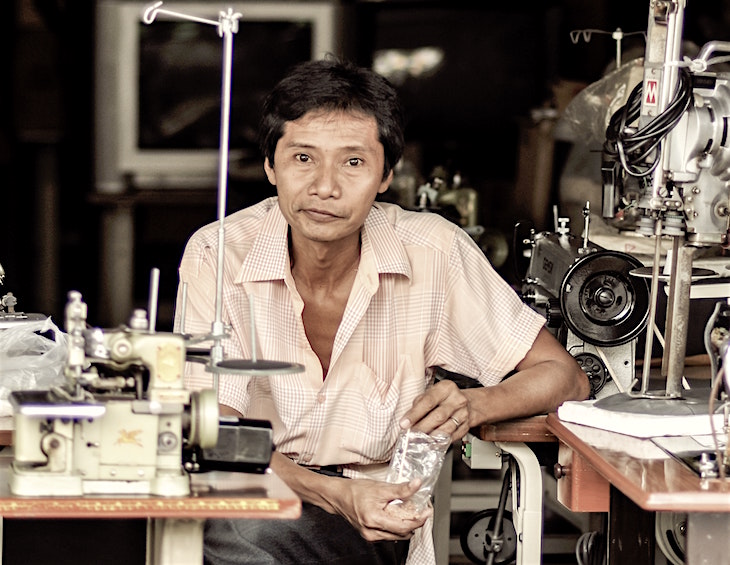
Sadly, as briefs become more specific, deadlines become tighter and budgets have to work harder. Therefore, the demand for cheap specification in this fast-turn-around society takes precedent. As a result, this is one area of the interior design arena that will unfortunately continue to fall into what will soon be disrepair. The people who suffer most will be the people working in the factories, often hundreds of miles away from their families, who have little to no choice but to accept the disgraceful working conditions that are sheltered in some of these factories that many well-known brands with deep pockets for PR and marketing use, perhaps unaware of the truth that is locked from view.
To all brands, internationally, that are currently using marketing tools to amplify ethical, feel-good messages: I urge you to consider thoroughly which factories you decide to partner with. Ask difficult questions. Become a nuisance. Demand the data to back up the grand statements you will undoubtedly receive when hearing about care of and working conditions for the factory workers. This is the only way to separate quality craftsmanship from cheap labour. Even then, with the best will in the world and by asking all the right questions, brands can be lied to and fed misinformation.
As designers, I believe it is your duty to challenge manufacturers and brands – and if you have access, then also the manufacturing process behind products.
However, even with the best will in the world, you will get so far before you find a black hole of information. This is why it is so important for brands to know what happens under the roofs of the factories that are producing their products – the more information you can gather in this area, the better equipped you will be to help create an ethical design landscape that doesn’t sacrifice the welfare of people over price (and quality).
It’s a difficult yet important road to travel for the greater good of design and humanity, but it is not all doom and gloom. I am pleased to see that brands are, it seems, working hard to amplify craftsmanship and authentic design. In a recent roundtable I hosted, I learned that Ennismore is only interested in working with brands that can prove their products have been made ethically. Perhaps, I hope, the tight-knit design team at the studio is setting the tone for others to follow.


Editor, Hotel Designs
Main image credit: Unsplash/JKN