








As sustainability targets intensify, retrofitted industrial and marine lighting by Loomlight offers designers a way to combine character, durability and reduced environmental impact…
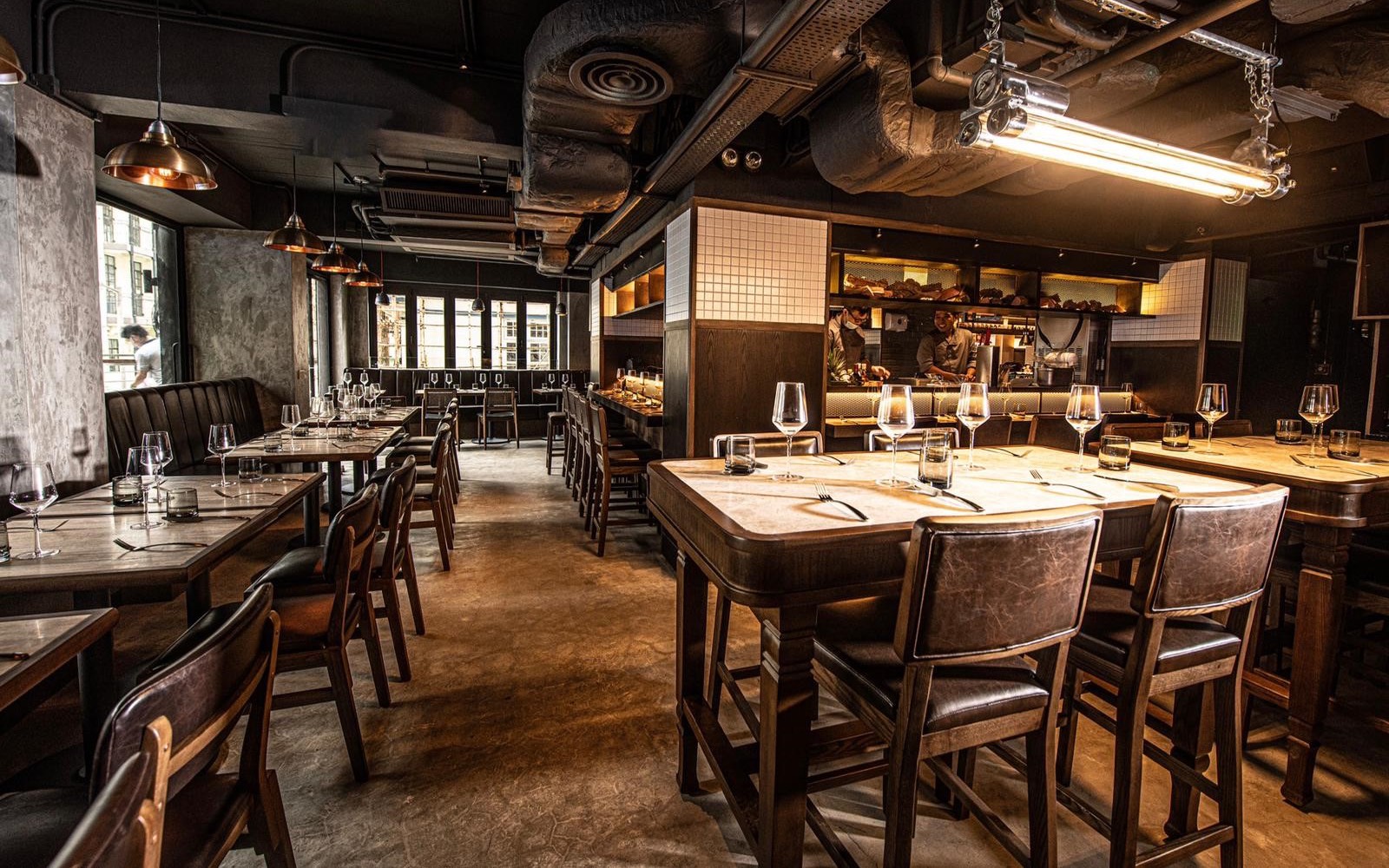
Sustainability is no longer a peripheral consideration within hospitality interior design, but an expectation across the sector. The hotel industry is under increasing pressure to reduce carbon emissions — with targets calling for reductions of up to 66% per room by 2030. Against this backdrop, every design element of a project, including lighting, is being reconsidered through a more sustainable lens.
At the same time, consumer expectations are shifting. Many travellers now express a preference for more sustainable options, and this is increasingly influencing how hotels are designed, specified and marketed. For designers and operators alike, sustainability is no longer just an environmental concern, but a commercial one.
Within this context, circular economy principles are becoming more relevant to hospitality interiors. Rather than relying solely on newly manufactured products, there is a growing emphasis on reuse, refurbishment and extending the lifecycle of existing materials. Retrofitting — the process of restoring and upgrading existing products — plays a key role in this approach, offering a practical and immediate way to reduce environmental impact while maintaining design quality. In practice, this approach is being adopted by specialist lighting suppliers Loomlight, who focus on reclaiming and restoring vintage industrial and marine lighting for use in contemporary hospitality projects.
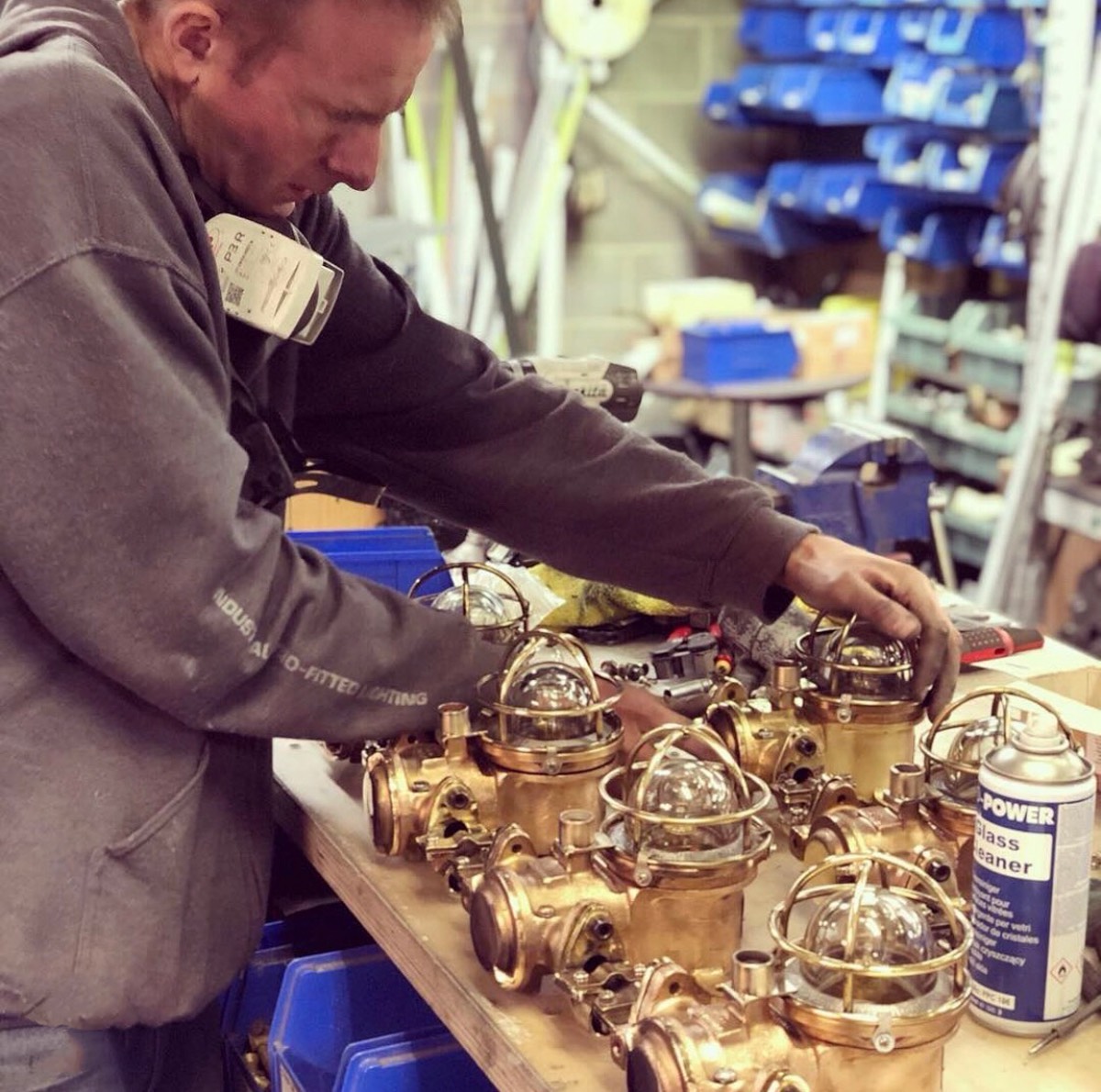
Reclaimed Lighting Workshop | Image credit: Loomlight Design
Originally manufactured for use in industrial environments, cargo ships and naval vessels, these fixtures were engineered for durability in some of the harshest environments — exposed to saltwater, vibration and continuous use. Constructed from robust materials such as cast aluminium, brass, iron and tempered glass, they were designed to perform reliably over long periods, often with minimal maintenance.
Loomlight salvages light fixtures from environments such as factories, railways or large-scale shipbreaking yards and carefully restores them for use in contemporary interiors. This process of reclamation and retrofitting is circular design in practice: rather than discarding well-made products, they are brought back into use, reducing the need for new manufacturing and preserving the material and energy already invested in their production.
“We’ve seen a steady increase in B2B hospitality projects as designers move away from specifying new lights for every scheme,” says Victoria Iliffe, co-founder of Loomlight. “Reclaimed lighting offers something that’s difficult to replicate — it brings instant character, timeless design and the benefits of material reuse.
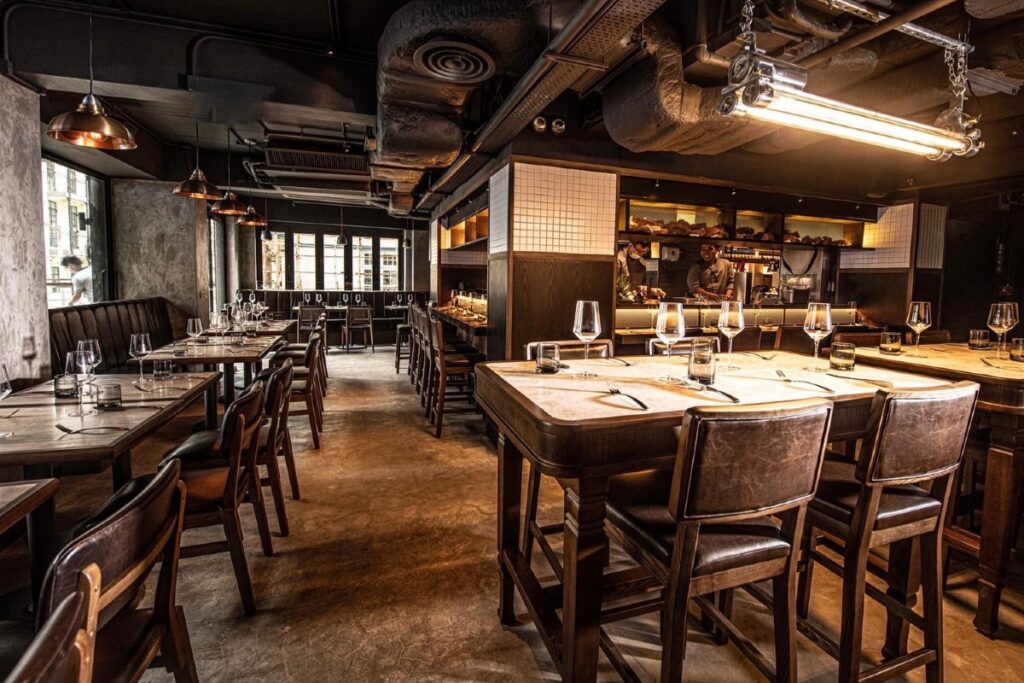
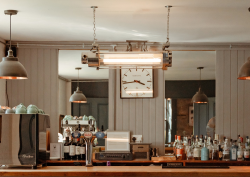
Reclaimed Lighting in Restaurant | Image credit: Loomlight Design
For hospitality environments, this approach offers both environmental and aesthetic advantages. Reclaimed marine lighting introduces an immediate sense of character — a lived-in, authentic quality that cannot easily be replicated. In hotel lobbies, restaurants and bars, these pieces contribute to interiors that feel established and considered, rather than newly assembled.
Durability is another key factor. Designed for demanding conditions, these fixtures are inherently suited to high-traffic, communal spaces. Their robust construction makes them ideal for areas where longevity is essential, reducing the need for frequent replacement and supporting longer design lifecycles.
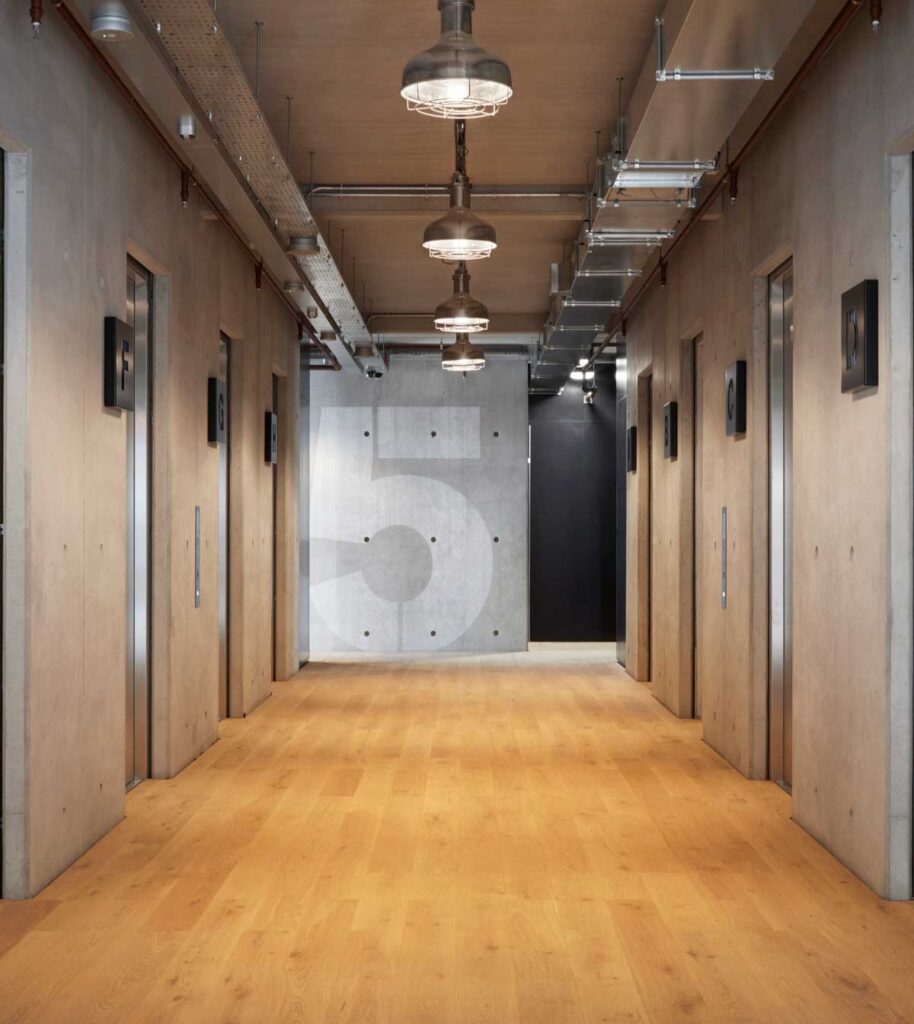
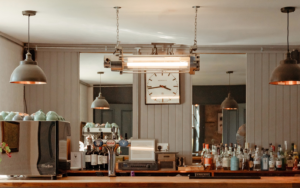
Reclaimed Marine Lighting | Image credit: Jack Hobhouse
From a design perspective, industrial lighting is defined by its functionality. Clean lines, exposed fixings and honest materials create a timeless aesthetic that sits comfortably across a range of hospitality interior schemes. This longevity is an important aspect of sustainability — moving away from trend-driven specification towards pieces that become part of the architecture and remain relevant over time.
Importantly, vintage industrial lighting can also meet the practical demands of larger hospitality projects. Loomlight recover lights in significant quantities, allowing for consistency across corridors, dining areas and public spaces. Alongside this, more unusual pieces — such as searchlights or tube lights — can be introduced as feature elements, creating focal points and adding identity to a scheme.
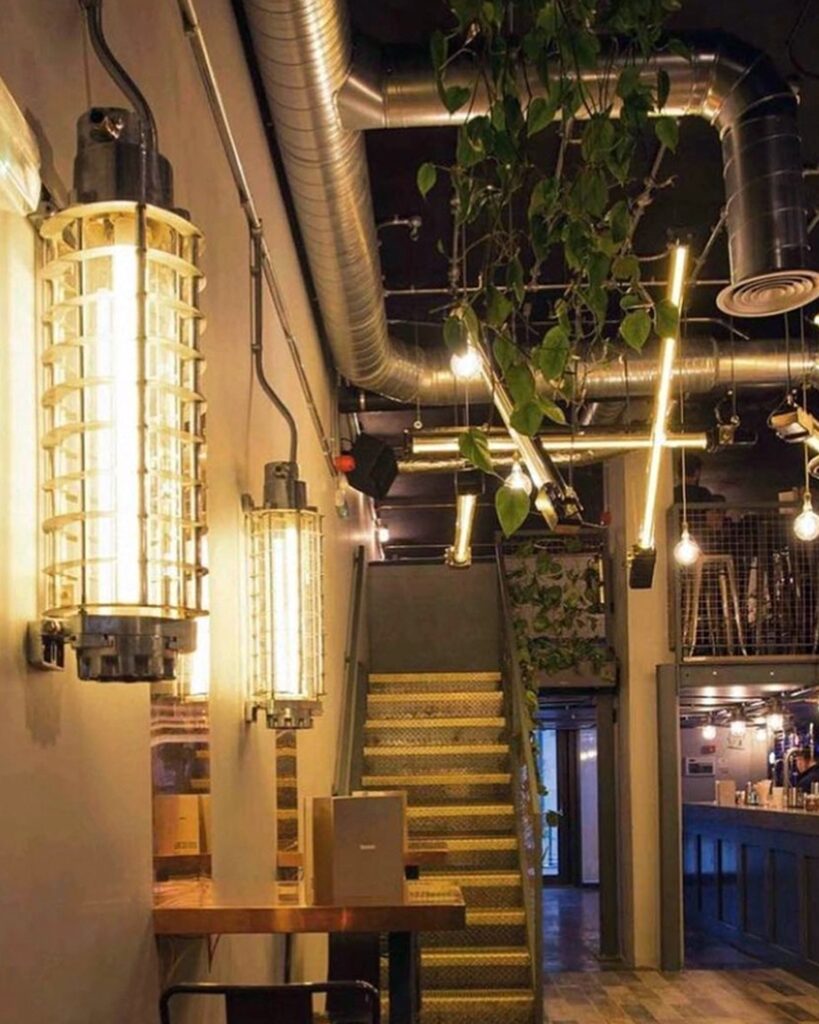
Industrial Strip Lights | Image credit: Loomlight Design
Discover more about industrial strip lights here: https://www.loomlightdesign.com/collections/industrial-strip-lights)
This combination of repeatability and individuality is particularly valuable for designers. It enables cohesive, large-scale application while still allowing for moments of distinction — something that is often difficult to achieve with standardised, mass-produced lighting.
Ultimately, specifying reclaimed lighting supports a circular approach to hospitality design. By prioritising reuse and retrofitting, designers can reduce reliance on new materials, lower environmental impact and extend the life of well-engineered products. As the hospitality sector continues to respond to environmental pressures and evolving guest expectations, vintage industrial and marine lighting offers a compelling solution — combining durability, authenticity and a design language that outlasts trends.
Loomlight is one of our Recommended Suppliers and regularly features in our Supplier News section of the website. If you are interested in becoming one of our Recommended Suppliers, please email Katy Phillips.
Main image credit: Loomlight