











The smarter the system becomes, the more the physical interface matters…
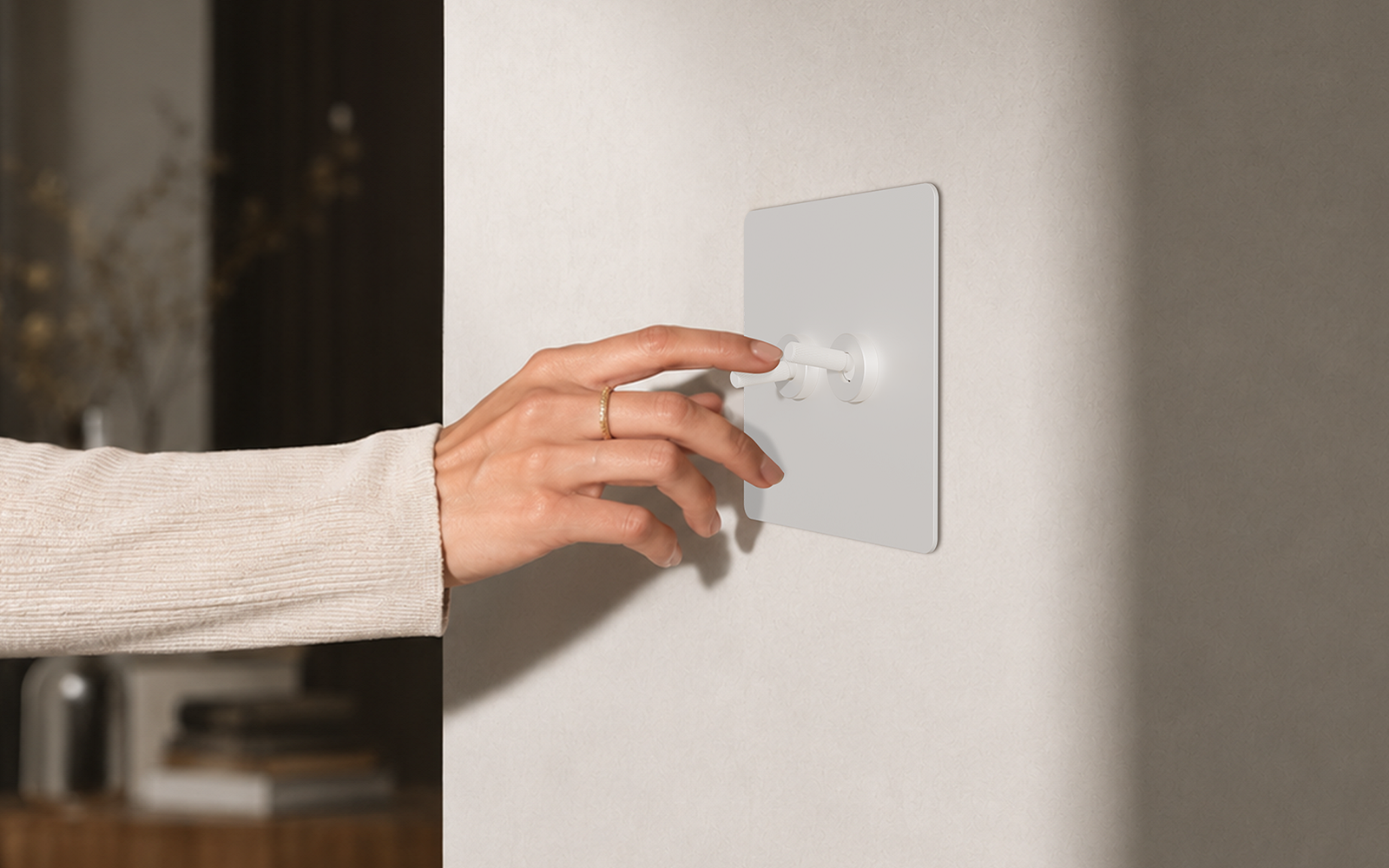
A guest walks into a five-star suite. Natural stone, bespoke furniture, hand-finished brass hardware. Then they reach for the light switch beside the door, and it’s a white plastic panel with a shallow, plastic-feeling click, disconnected from everything around it.
Behind the wall, the system may be highly capable — voice control, automation, connected lighting. In front of the guest, the switch feels generic. The technology has become smarter. Too often, the design of what guests touch has been left behind.
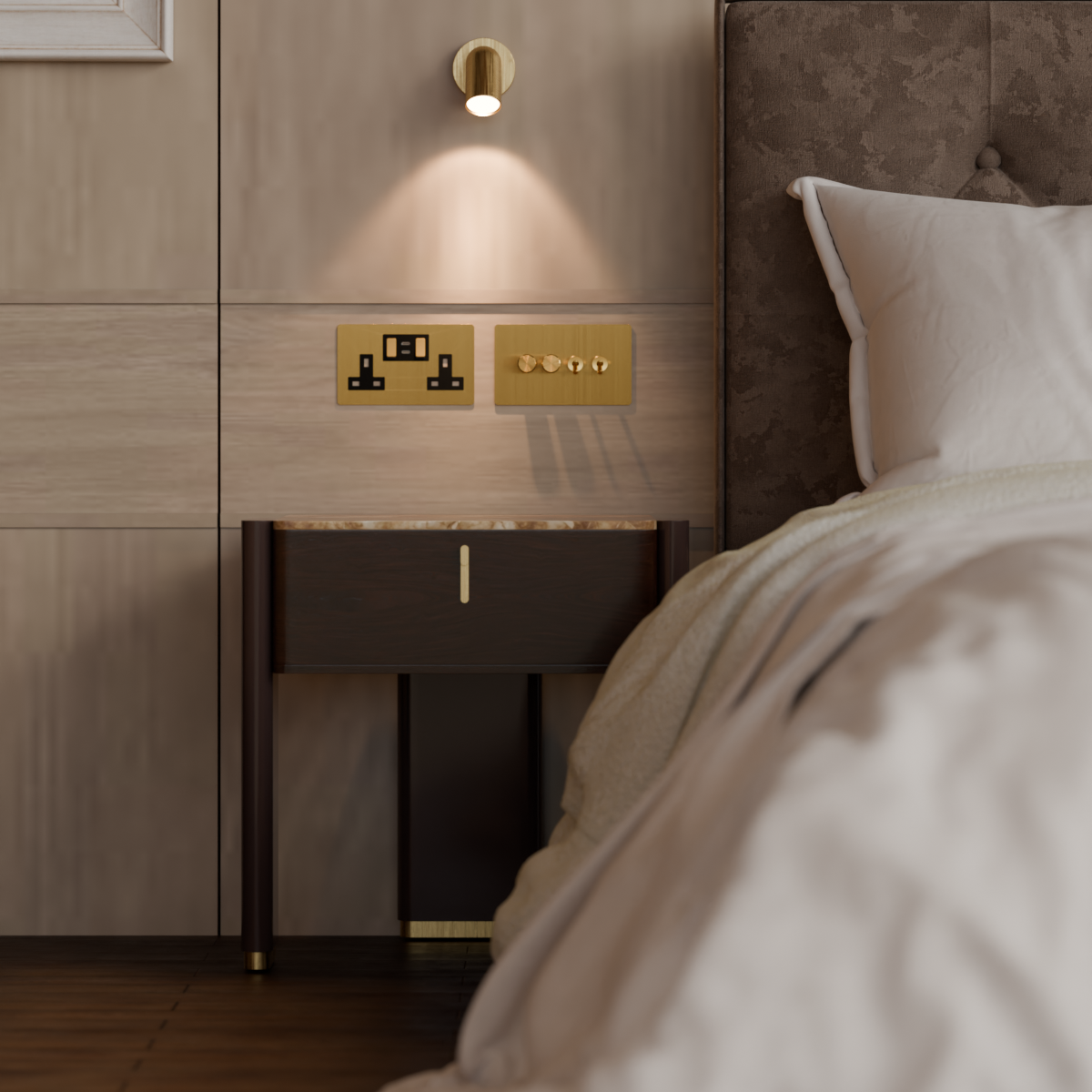
Image credit: Repenic
The Technology Guests Still Touch
Switches, dimmers, sockets and charging points are not simply electrical accessories. They are physical touchpoints between guest and interior — seen, touched and used repeatedly throughout a stay. A switch by the entrance may be the first thing a guest reaches for; a dimmer beside the bed may be used every evening.
The material of a faceplate, the proportion of a control and the way it responds under the hand shape how a room feels. Get these details right, and they quietly elevate everything around them. Get them wrong, and they undermine it just as quietly.
The interface is part of the guest experience, not simply a means of operating the technology behind it.
Where Smart Meets Design
For designers and specifiers, the need is clear: wall controls should combine genuine smart functionality with the materiality, aesthetics and tactile quality expected of a considered interior.
Yet these priorities have traditionally developed along separate paths — smart controls engineered around connectivity and electrical performance, with physical design a secondary consideration; design-led wiring accessories offering the finishes and tactile qualities designers want, but often without the connected functionality modern hospitality projects require.
This creates an unnecessary choice: a product that works intelligently, or one that belongs beautifully in the room.
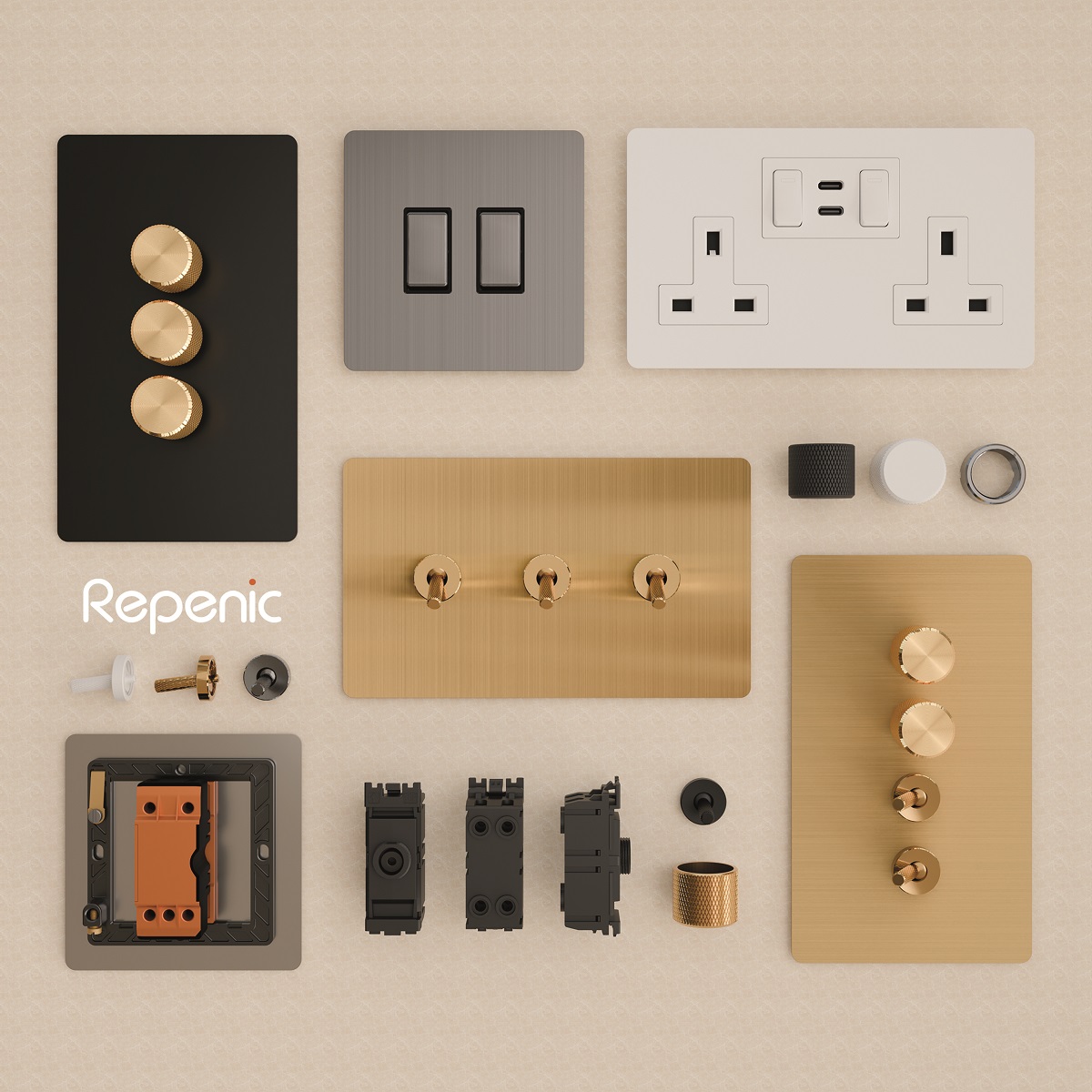
Image credit: Repenic
Intelligence, Without Replacing the Familiar
Repenic takes a different approach: smart technology should enhance familiar physical interaction, not replace it.
Repenic combines Zigbee connectivity, automation and energy monitoring with familiar physical controls, keeping the intelligence behind the interface rather than making it the interface itself. Smart Toggle and Smart Rocker switches retain the direct action of a conventional switch, while Smart Dimmers use physical rotary control for intuitive adjustment.
The intelligence is new; the interaction isn’t.
One Range. Complete the Room.
Repenic brings Smart Toggle Switches, Smart Rocker Switches, Smart Dimmers and Smart Sockets into one coordinated design language, giving designers the flexibility to select the right control for each location without introducing a different aesthetic at every point.
Finishes can be matched for quiet continuity or deliberately contrasted, with solid brushed brass, brushed stainless steel, matt black and matt white providing a consistent material palette across guestrooms, suites and shared areas. Multiple gang configurations also allow controls to be composed according to the requirements of each wall position.
The result is consistency without uniformity: different functions, one considered design language.
The New Luxury Is Better-Integrated Technology
Smart technology upgrades luxury when it removes friction and becomes part of the experience. It undermines luxury when it asks the guest to notice, understand or work around the technology itself.
Go back to that guest at the door. They may never think about the technology behind the wall. They will simply know that the room felt right.
That is where smart technology stops competing with luxury — and starts becoming part of it.
This article is part of our paid content offering. To explore sponsored editorial opportunities with Hotel Designs please contact Katy Phillips.
Main image credit: Repenic