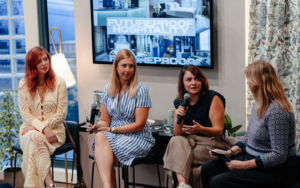













At the Egger Showroom in Clerkenwell during London Design Festival, a panel of hospitality design specialists gathered to ask a deceptively simple question: how do you design a hotel that outlasts the moment it was made for?
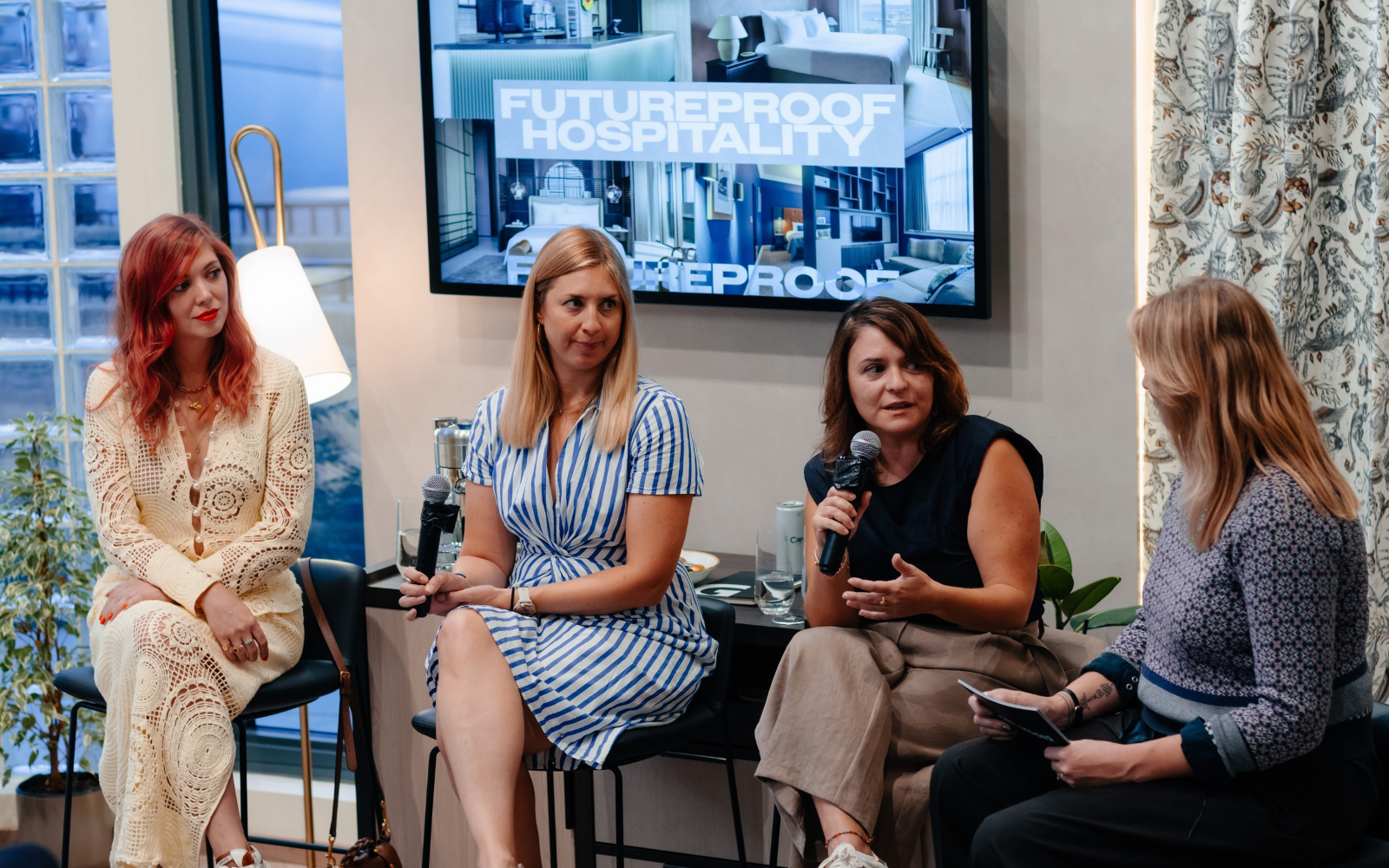
Chaired by Hotel Designs’ Editor Sophie Harper, the discussion brought together Despina Kalapoda of Marriott International, Sarah Williams of Goddard Littlefair and textile designer Emma Shipley. Their answers differed in detail but converged on one idea: what endures is rarely what shouts loudest.
For Despina Kalapoda, longevity begins with discipline. Each Marriott brand rests on fixed principles drawn from who its guest is, with room left for local character. “These are things that each brand needs to remain true to,” she said, giving design a thread that survives every change of fashion. The same logic applies to sustainability: build a solid base, refresh the soft finishes, and question whether anything truly needs replacing. In Barcelona, one hotel was obliged to tile over its bathrooms rather than create waste. Considering sustainability at the development stage, she added, is “way more efficient” than waiting for the next renovation.
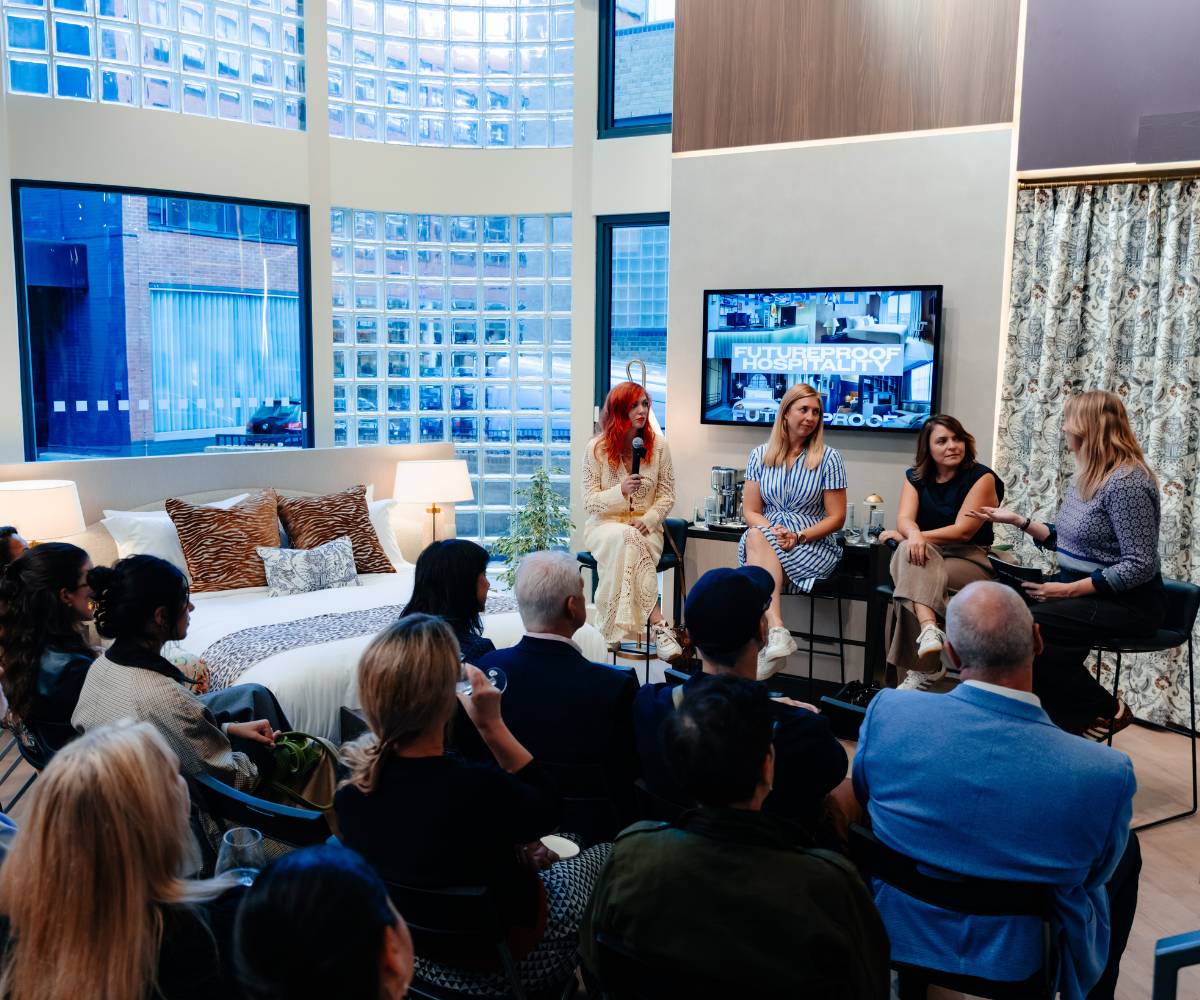
Image credit: Egger
Sarah Williams carried the thought from brand to place. A narrative rooted in landscape, architecture and local culture does not date, she argued, because “That’s not based on trend. That is based on the true DNA of the place.” Even the trickiest brief, a space that serves coffee by morning and cocktails by night, is best solved not by compromise but by invention, with people as part of the performance. At the Corinthia London, for example, a single display table turns afternoon tea into evening theatre. “It’s got to involve the people,” she said. Luxury, she added, has yet to embrace recyclable materials, and designers share responsibility for changing that perception.
Emma Shipley, whose hand-drawn, nature-inspired collections have sold steadily since 2018, offered the human counterpoint. “Humans have always been inspired by nature, and I’m sure that will always continue, especially in this digital age we’re living in,” she said, adding that handcrafted work will only become more relevant. Textiles, she noted, are also the gentlest way to renew a room.
That digital age loomed over the evening’s lightest and most revealing exchange: the humble hotel television. Despina noted waning enthusiasm for in-room screens, while Sarah admitted to a certain resentment, since the TV dictates where the bed, and therefore the view, must go. Her recent treehouse stay, watched over by an Alexa, left her wanting only to escape. Hidden technology, the panel suggested, serves the guest; visible technology too often intrudes.
-

- Image credit: Egger
None of the panel claimed to know what a hotel room will look like in fifty years, but all were agreed that the answer to what makes lasting design work well lies less in any fixed features and more in how you make people feel in any given space. Build flexibly, stay distinctive, and hold on to the human connection at the heart of hospitality. Trends will pass. The feeling, if it is built well, stays.
Main image credit: Egger