Photographer Laurian Ghinitoiu has shared new images of Opus, an innovative glass-façade building that was designed by Zaha Hadid Architects…
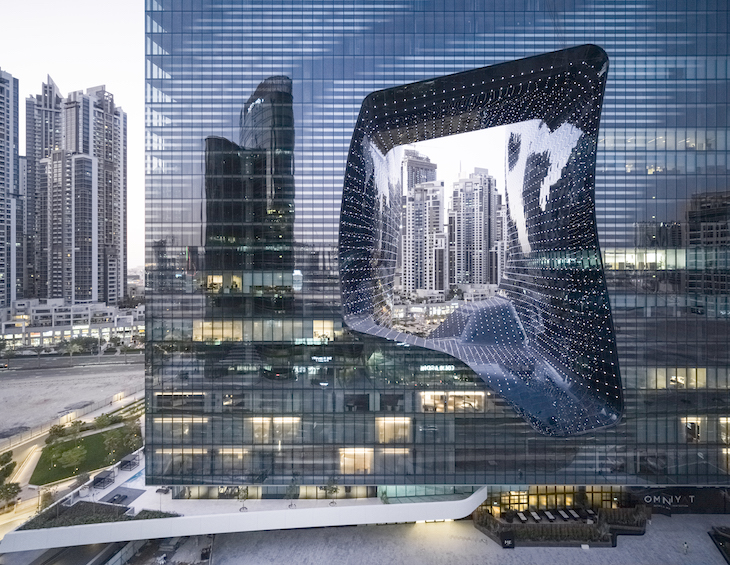
Home to newly opened ME Dubai, the Opus, which conceptualised in 2007 by Zaha Hadid Architects, explores the balance between solid and void, opaque and transparent, interior and exterior.
The late Zaha Hadid herself presented this project as the only hotel in which she created both its architecture and interiors, which gives it a special significance among the architecture firm’s portfolio of work.
“The cube has been ‘eroded’ in its centre, creating a free-form void that is an important volume of the design in its own right.”
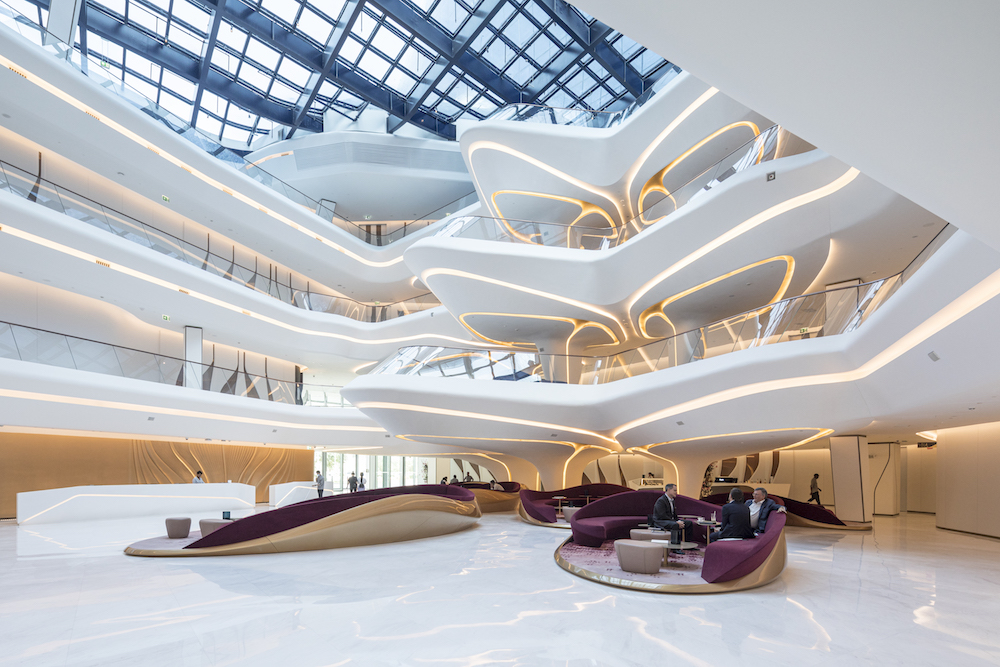
Spanning 84,300 square metres (907,400 square feet), the Opus was designed as two separate towers that coalesce into a singular whole – taking the form of a cube. The cube has been ‘eroded’ in its centre, creating a free-form void that is an important volume of the design in its own right. The two halves of the building on either side of the void are linked by a four-storey atrium at ground level and also connected by an asymmetric 38 metre wide, three-storey bridge 71 metres above the ground.
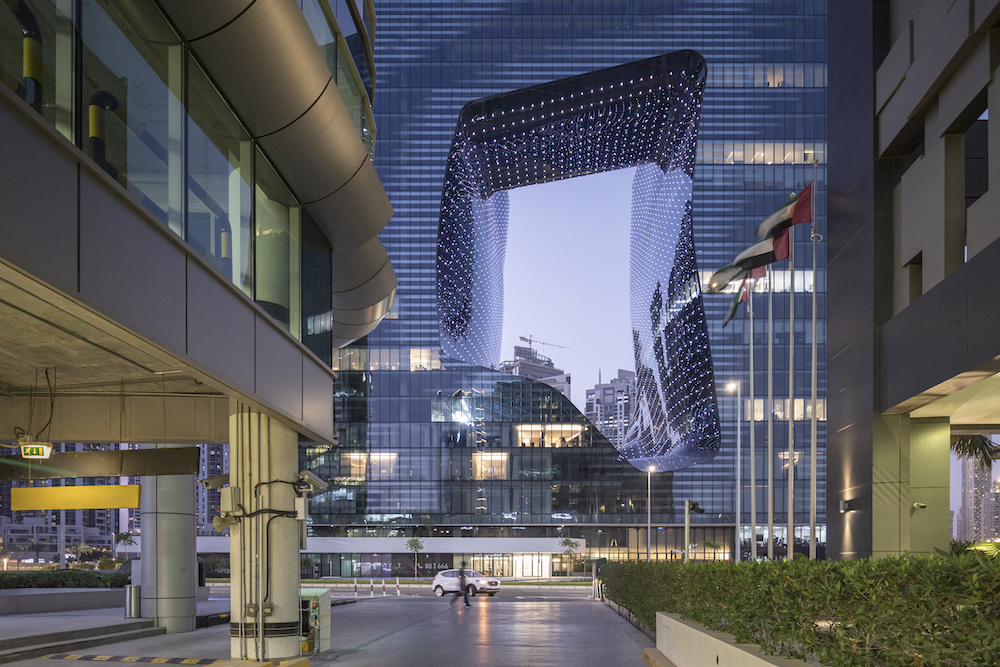
Image credit: Laurian Ghinitoiu
“The precise orthogonal geometries of the Opus’ elemental glass cube contrast dramatically with the fluidity of the eight-storey void at its centre,” explained Christos Passas, project director at Zaha Hadid Architects.
The cube’s double-glazed insulating façades incorporate a UV coating and a mirrored frit pattern to reduce solar gain. Applied around the entire building, this dotted frit patterning emphasises the clarity of the building’s orthogonal form, while at the same time, dissolving its volume through the continuous play of light varying between ever-changing reflections and transparency.
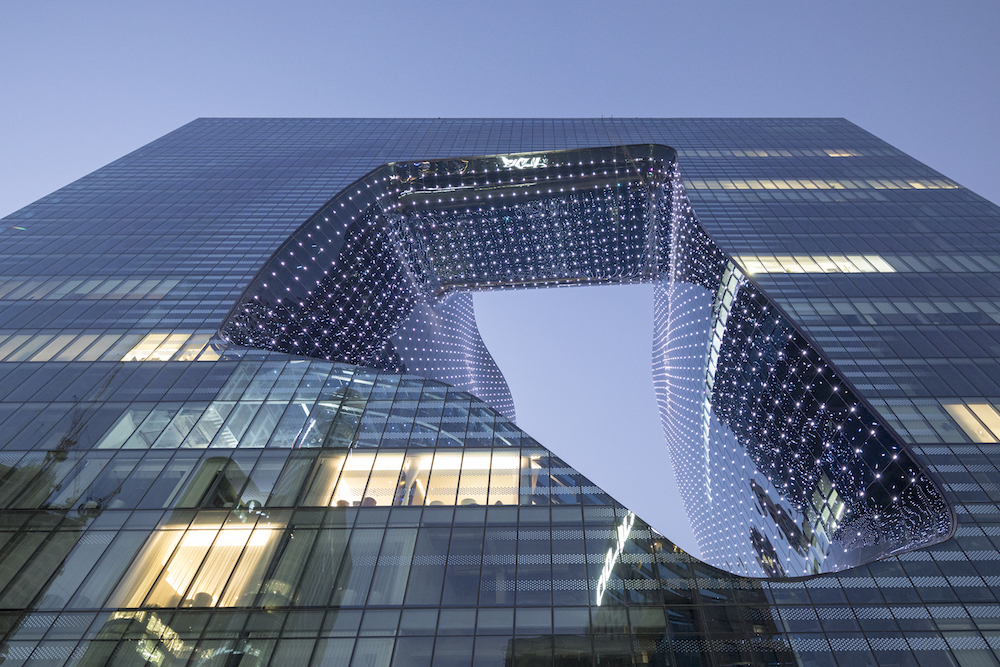
Image credit: Laurian Ghinitoiu
The void’s 6,000 square metre façade is created from 4,300 individual units of flat, single-curved or double-curved glass. The high-efficiency glazing units are comprised of 8mm Low-E glass (coated on the inside), a 16mm cavity between the panes and two layers of 6mm clear glass with a 1.52mm PVB resin laminate. This curved façade was designed using digital 3D modelling that also identified specific zones which required tempered glass.
During the day, the cube’s façade reflects the sky, the sun and the surrounding city; whilst at night, the void is illuminated by a dynamic light installation of individually controllable LEDs within each glass panel.
-
- Image credit: Laurian Ghinitoiu
-
- Image credit: Laurian Ghinitoiu
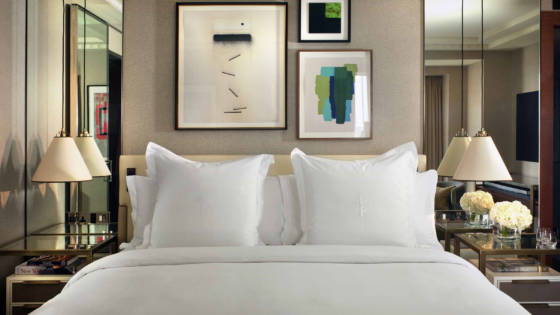
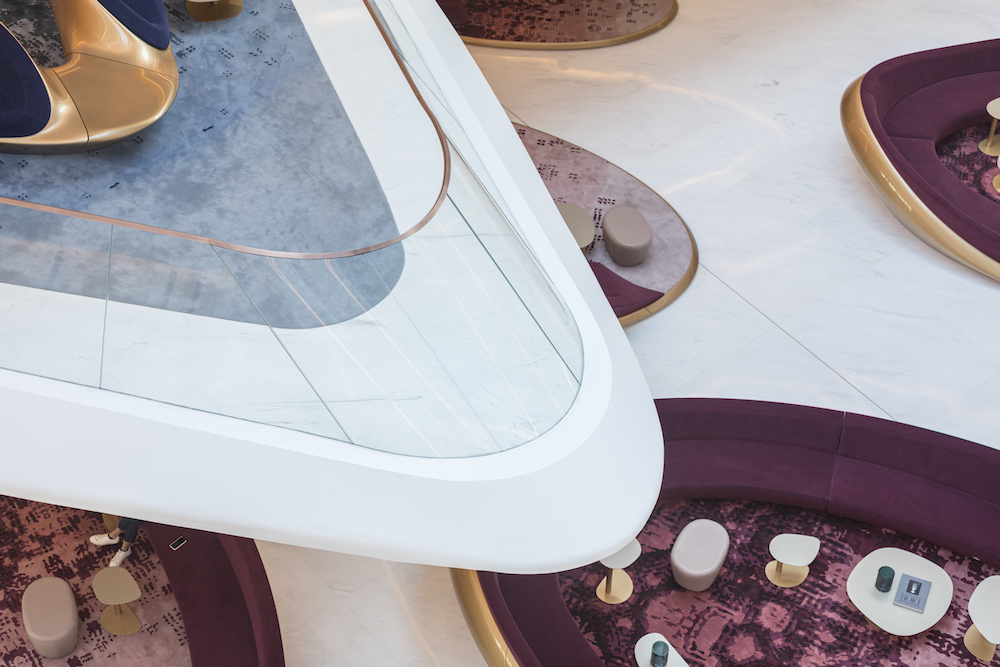
Furniture by Zaha Hadid Design is installed throughout the hotel, including the ‘Petalinas’ sofas and ‘Ottomans’ pods in the lobby that are fabricated from materials ensuring a long lifecycle and its components can be recycled. The ‘Opus’ beds are featured in each guestrooms, while the ‘Work & Play’ combination sofa with desk are installed in the suites. The bathrooms incorporate the ‘Vitae’ bathroom collection, designed by Hadid in 2015 for Noken Porcelanosa, continuing her fluid architectural language throughout the hotel’s interiors.
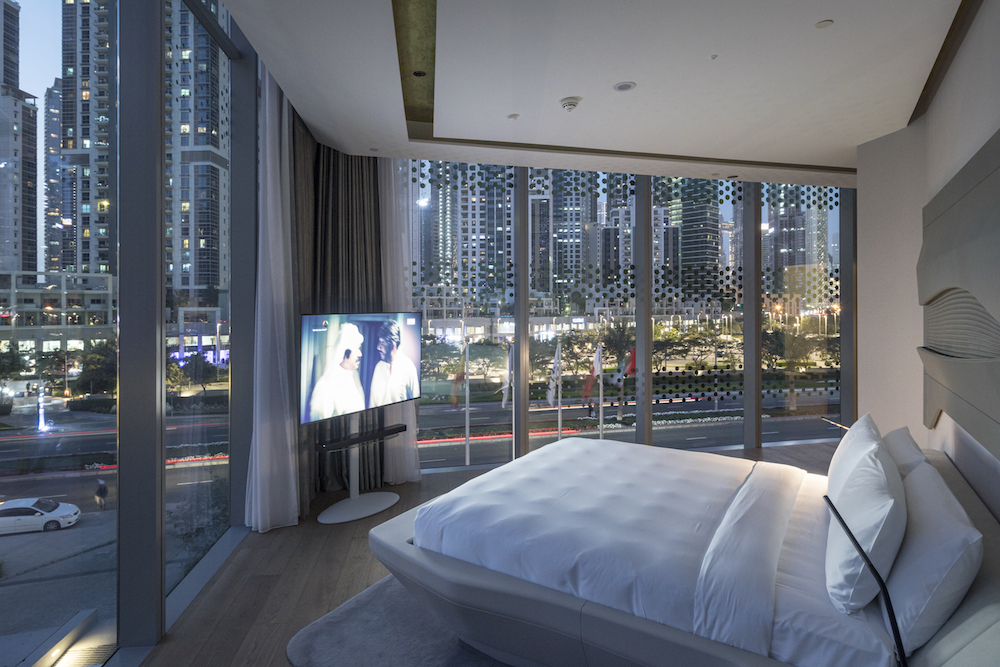
Image credit: Laurian Ghinitoiu
The ME Dubai hotel incorporates 74 rooms and 19 suites, while the Opus building also houses offices floors, serviced residences and restaurants, cafes and bars including ROKA, the contemporary Japanese robatayaki restaurant and the MAINE Land Brasserie.
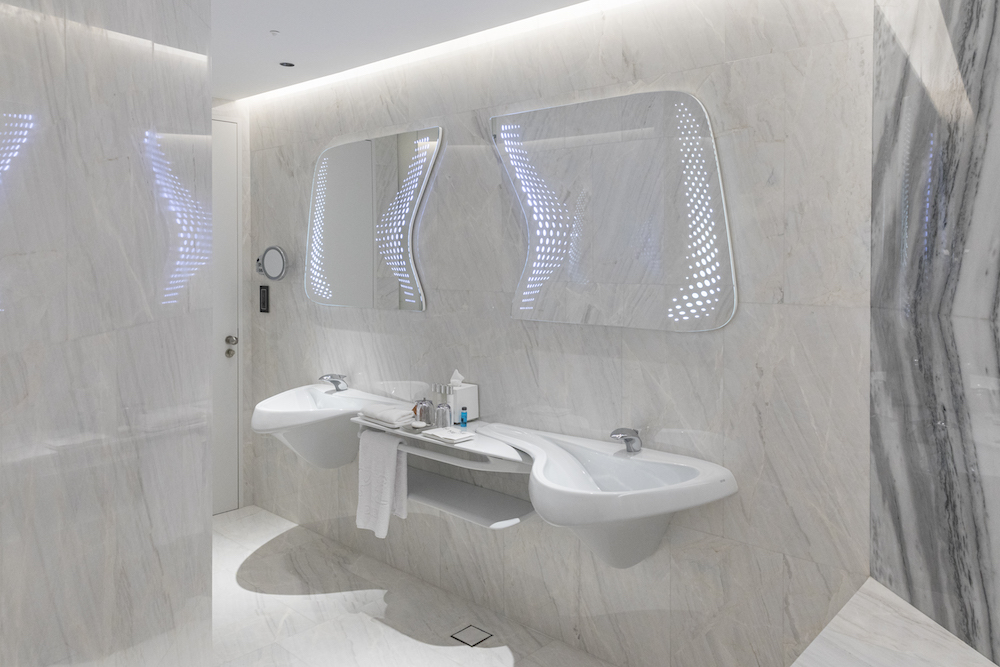
Image credit: Laurian Ghinitoiu
Sensors throughout the Opus automatically adjust the ventilation and lighting according to occupancy to conserve energy while ME Dubai follows Meliá Hotels International initiatives for sustainable practices. Hotel guests will receive stainless-steel water bottles to use during their stay with drinking water dispensers installed throughout the hotel. With no plastic bottles in guest rooms, and a program to become entirely plastic free in all areas, the hotel is also reducing food waste by not serving buffets and has composters to recycle discarded organics.
Main image credit: Laurian Ghinitoiu