











In Conversation: Building an Empire
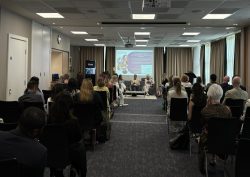
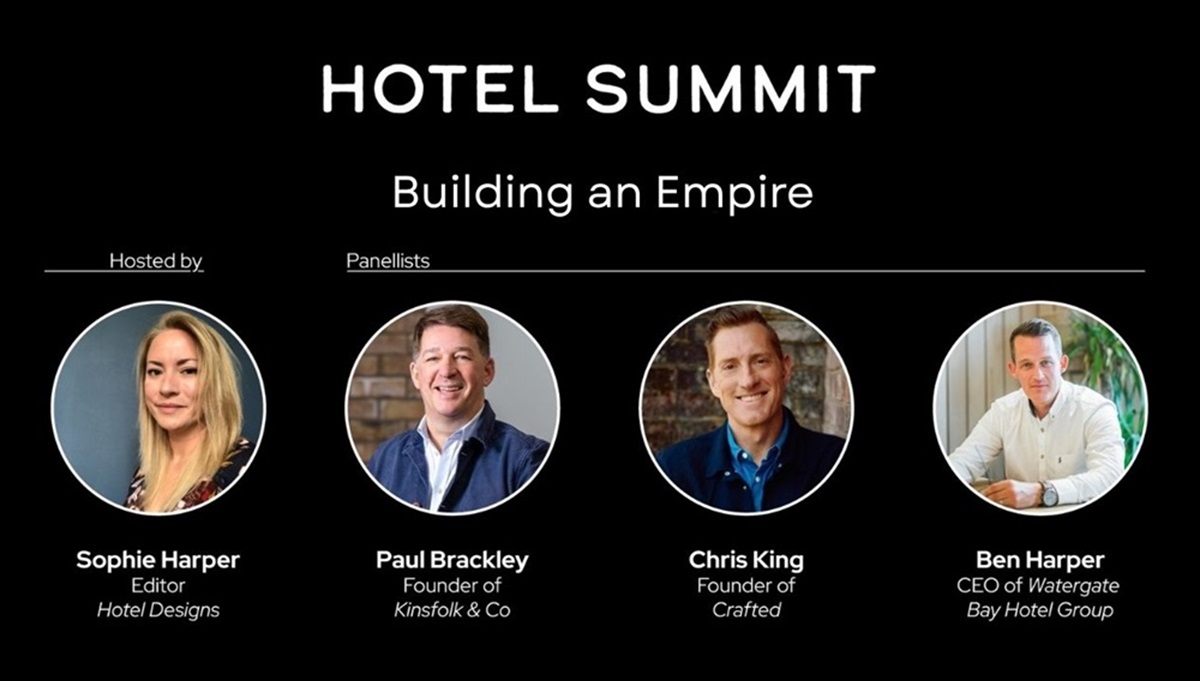
Earlier this year, Hotel Designs Editor, Sophie Harper, hosted a panel discussion at Forum Event’s annual conference, Hotel Summit, to discuss the business of building a hotel brand from nothing, and the people who have to hold their nerve while they do it…
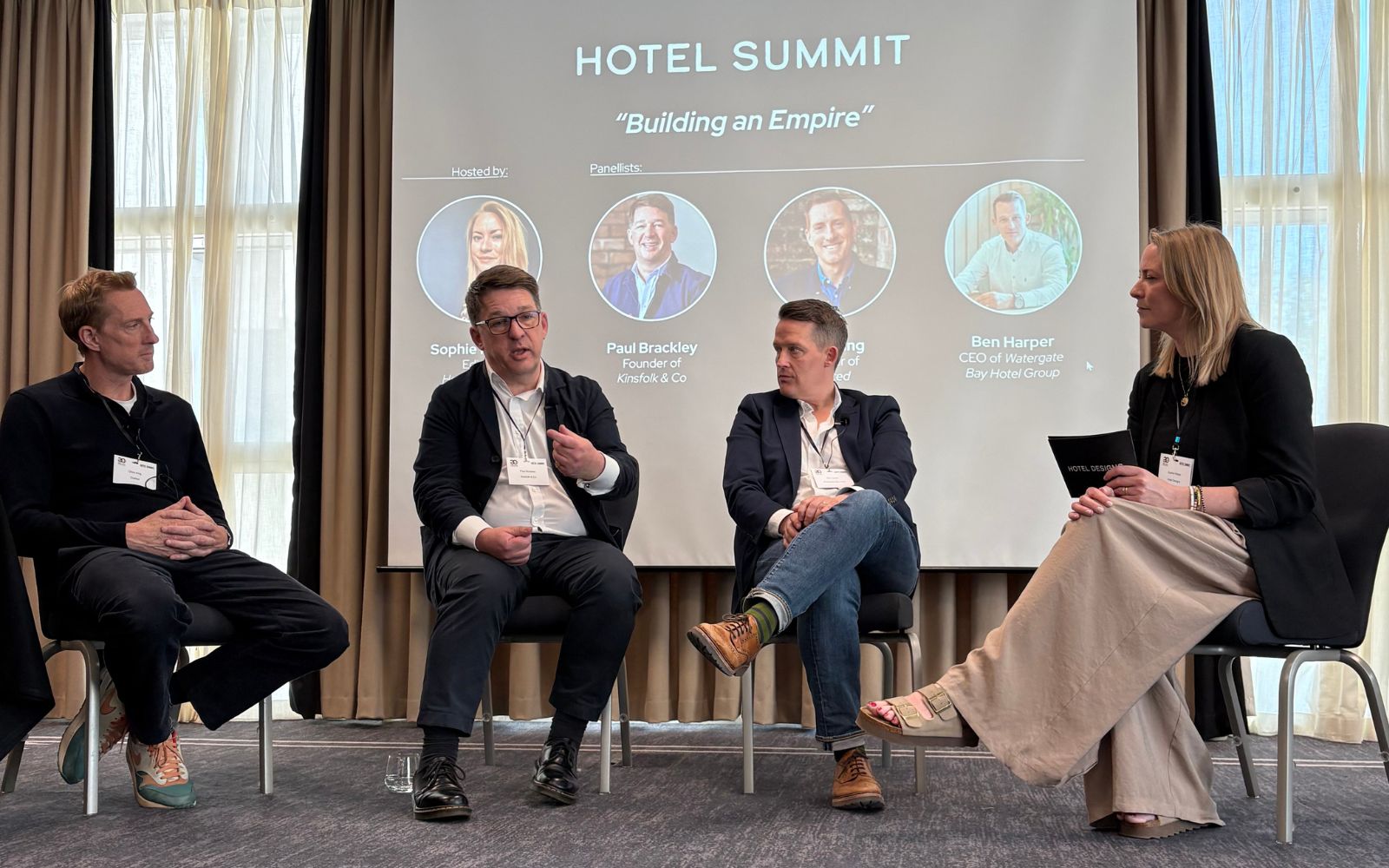
Strapped in for a candid conversation on culture, cash flow and the long road to success were Ben Harper, CEO, Watergate Bay; Chris King, Founder and CEO, Crafted; and Paul Brackley, Founder and CEO, Kinsfolk & Co.
“We think of this as a celebration of your successes and your current projects,” Sophie Harper told the panel as she opened proceedings. “But we want to hear about your careers and the different paths you took to get to the point you’re at now, directly from you.” What followed was an hour that moved between hard-won pride and refreshing honesty about how difficult this industry can be to build a business in.
Three different routes into hospitality leadership
Watergate Bay Group has quietly become one of the most talked-about names in UK coastal hospitality, and Ben Harper’s own path there began within an established family business. The group’s flagship, Watergate Bay Hotel, sits directly on the sand of a two-mile surfing beach in North Cornwall, and has built its reputation on the balance between elemental adventure and genuine comfort – guests can watch surfers from the pool, eat well across three restaurants, and let their children loose in a dedicated kids’ zone, all without leaving the beach. From there, the group has expanded its thinking rather than simply its footprint. SeaSpace, its more recent property in nearby Porth, reimagines the format entirely: a blend of hotel and self-catering apartment living, complete with a health club, padel courts and studios designed for everything from family breaks to extended stays for digital nomads. And through its stake in Another Place, the group’s influence stretches to the Lake District, where Another Place, The Lake sits on the shores of Ullswater with wild swimming, paddleboarding and three restaurants of its own.
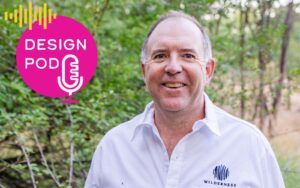
Chris King’s journey has been markedly different, built through a series of distinct chapters rather than one continuous family thread. Today he is Founder and CEO of Crafted at Powdermills, a ‘life-friendly’ hotel and members’ club in Battle, East Sussex, built around a seven-acre lake within 78 acres of ancient woodland. The concept sits deliberately between categories – part country hotel, part boutique retreat, part local club – offering co-working, padel, a sauna and cold-water swims alongside a restaurant menu built on what’s grown nearby.
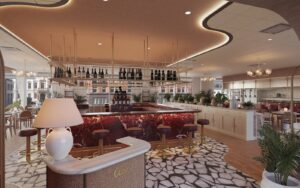
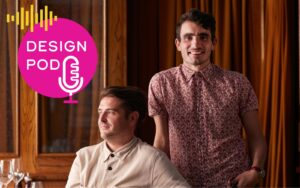
Paul Brackley‘s career, meanwhile, has taken him from the inside of established luxury hospitality brands to building something of his own from scratch – first as a consultancy, and now as an operator with a hotel of its own. Kinsfolk & Co, the international hospitality management company Brackley founded, launched in London in 2023 with a mission built around what it calls a triple-bottom-line approach: balancing commercial performance with social and environmental responsibility. The company now offers everything from full hotel management agreements and asset management to feasibility studies and concept development for owners and investors. Its debut hotel, The Newman, opened in Fitzrovia at the beginning of this year, and has quickly picked up national attention. Built around 81 art deco-influenced rooms, a wellness floor with a hydrotherapy pool and ice lounge, and two of its own dining destinations in Brasserie Angelica and Gambit Bar, The Newman has become the clearest proof point yet of what Kinsfolk & Co’s model can deliver when a consultancy becomes an operator in its own right.
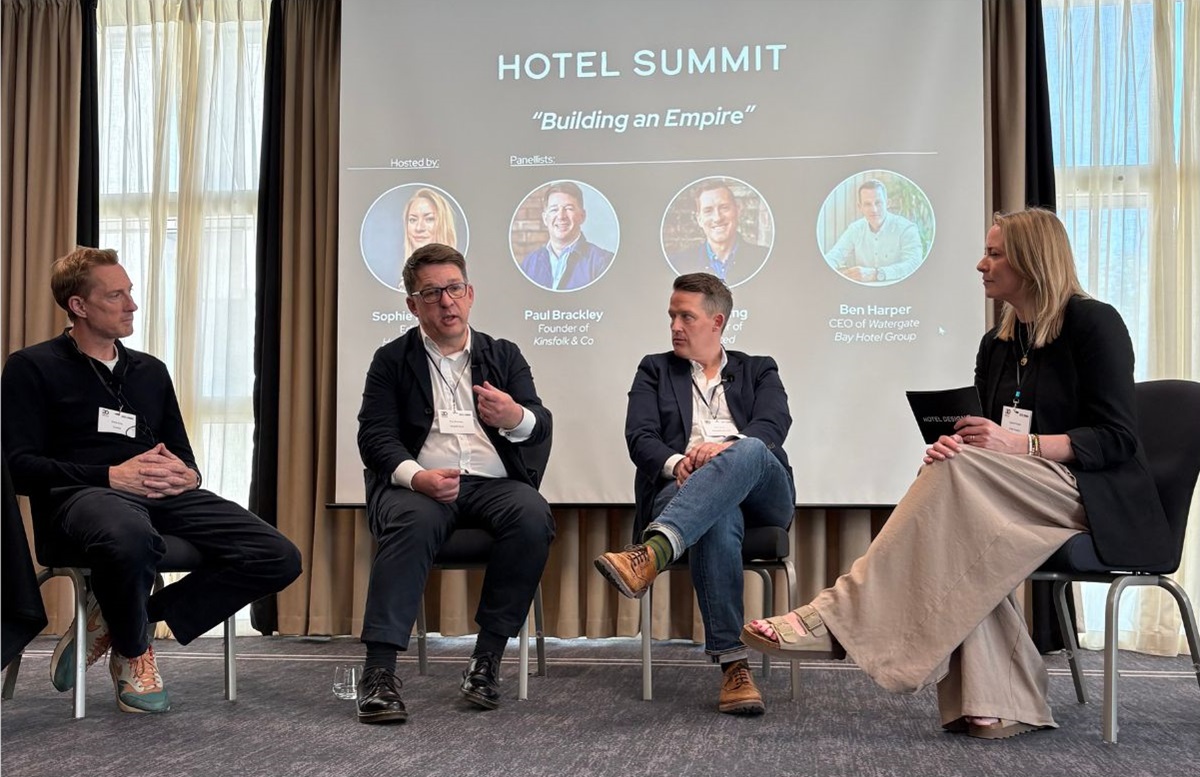
Image credit: Hotel Designs
Culture as the foundation, not the finishing touch
If there was one theme that ran through the entire conversation, it was people. Ben Harper was candid that Watergate Bay Group’s approach to staff welfare – the incentives, the support structures, the sheer effort put into making it a good place to work – is not an add-on to the guest experience, but the reason it exists at all. “When you’re looking after your staff, then they give the guests an amazing experience,” he said, describing a philosophy that runs right through the group, from Watergate Bay Hotel through to SeaSpace.
He pointed to the pandemic as an unlikely turning point. “COVID gave us the opportunity to really kick the tyres on some of the bad stuff about people and culture within hotels – chefs working 70 hours a week in a room where you’re sweating for twelve,” he said. “It’s just not okay. We start in a different way now, where chefs, for example, are working four days on, three off.” The result, he said, is a workforce the group is holding onto far better than it once did – though scaling that culture without losing it remains, in his words, one of the most interesting challenges the business faces. Eight years into building the group, he said he is still working with a small number of long-serving colleagues who are understandably wary of change: “It’s my job to provide clarity and direction so this stuff doesn’t feel like a surprise – but culture has to be at the heart of it.”
Paul Brackley picked up the thread from the perspective of an industry under sustained pressure. “Building a business around people and culture and identity is so important to differentiate and build loyalty and retention,” he said. “But it’s also difficult and expensive now to employ and retain people.” For Kinsfolk & Co, that tension between commercial reality and protecting the culture a brand is trying to build is one of the defining challenges of running a hospitality business today – something he sees played out daily as the team behind The Newman continues to grow.
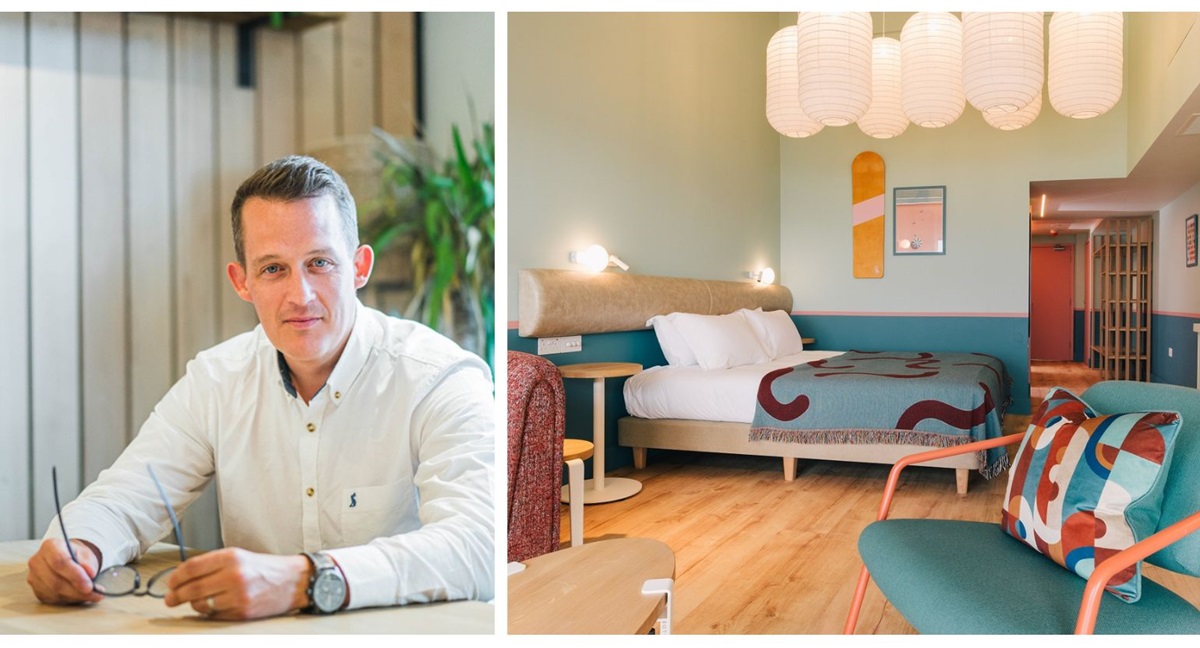
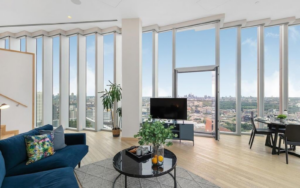
Ben Harper and a guest room at SeaScape. Image credit: Watergate Bay Group
Scaling with authenticity
The conversation turned to what happens when a brand built on personality and locality strives to grow beyond its first site. For Chris King, that question sits close to Crafted’s identity. The business, he explained, has deliberately built its offer around tapping into the local spirit and community of its Sussex setting – from a restaurant menu rooted in what’s grown locally, to a members’ model that invites locals in alongside overnight guests. Scaling that authenticity, rather than diluting it, is the challenge he is now working through as Crafted develops.
Ben Harper described a similar tension in his own words, framing Watergate Bay Group’s growth through the lens of family. “This isn’t my business,” he said. “We have two families in the business, and embracing that familial entrepreneurial mindset while professionalising it and allowing it to scale – bringing the right people with you on that journey – is really interesting.” The same question applies to how lifestyle brands scale with authenticity intact, and how a founding culture survives the transition from single hotel to group.
Talking about the latest addition to the Watergate Bay portfolio, Ben spoke about how accessibility sits at the heart of the SeaSpace story, though not, he was keen to stress, as a headline feature bolted on for effect. The property offers accessible studios and large studios with step-free access and walk-in wet rooms alongside its standard accommodation. “My view is accessibility, ESG – that’s baked in.” He was more animated discussing the model itself: blending a lifestyle hotel with traditional self-catering, translating lessons learned elsewhere in the group’s portfolio for a leisure audience rather than an urban one.
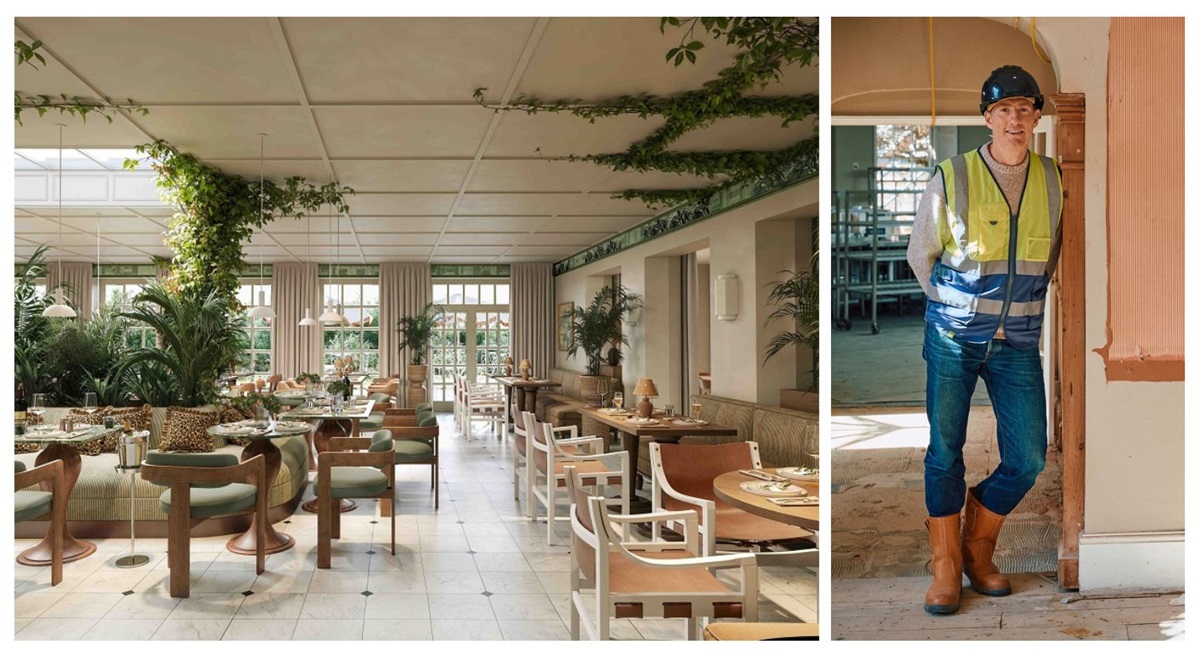
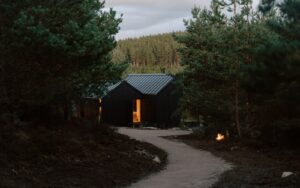
The Restaurant at Powdermills, Crafted and Chris King. Image credit: Crafted
The years nobody sees
Perhaps the most striking part of the discussion was how openly the panel spoke about the financial and emotional cost of building a hospitality business from the ground up. Sophie framed all three as success stories – but pressed gently on where the truth of that success actually lay. “Drawing on your individual experiences, where have you found the scariest, hairiest moments?”
Ben Harper didn’t shy away from the answer. “It’s the perspiration and the inspiration – the blood, sweat and tears,” he said. “It’s a lot about resilience and sticking power, especially early on. You don’t get there until you’ve got a proper operation, with a proper management contract under you.”
Chris King agreed, describing the gap between ambition and reality as something every founder underestimates. “It always takes so much longer than you thought it might, when you set out on the journey,” he said. “It’s really crucial to be honest about the fact that it’s challenging – and it’s scary.” He was careful to note that while the end of his Birch chapter taught him a lot about the hospitality industry, it was, in his own words, “a really tough time” – one he is happy to acknowledge shaped the more considered, more grounded business he has built with Crafted.
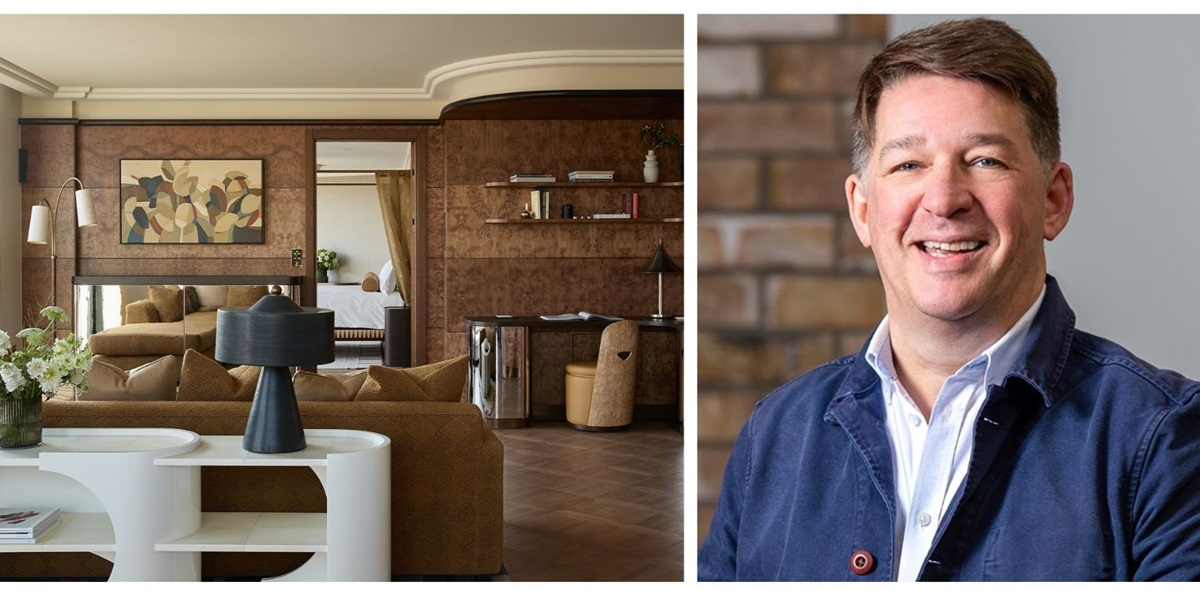
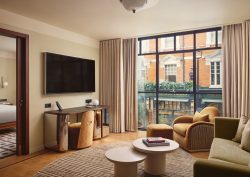
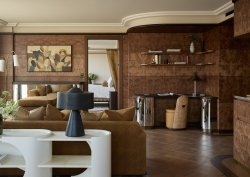
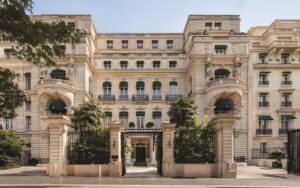
A suite at The Newman and Paul Brackley. Image credit: Kinsfolk & Co.
Retention, resilience and giving back
The discussion also turned to the wider industry’s staffing challenges. Each of the panellists offered a different lens on how they keep good people and help them grow with the business, but the common ground was clear: retention has to be built deliberately, not assumed.
Paul Brackley brought a different kind of story to that conversation – a reminder of what hospitality looks like when the entire industry pulls together. He had recently taken part in Back to the Floor, the Hospitality Action fundraising event held at the Hilton on Park Lane, where more than £400,000 was raised collectively – up from roughly £240,000 two years earlier. Brackley spent the evening serving; clearing plates for a banquet of several hundred guests. “You forget how heavy it is once you start clearing a table, carrying plates,” he said, laughing. “By the time I got home, I was ready to put my feet up.” Beyond the physical reality check, he said the experience gave him a renewed appreciation for what goes on behind the scenes in a big hotel operation. “Banqueting is just another level, isn’t it? The military operation of the kitchen – you forget what goes into serving a banquet like that when you haven’t been in that environment for a while.”
It was a fitting note to close on. For three founders who have each built something different – a coastal hotel group expanding into new formats and locations, a life-friendly retreat rooted in its Sussex landscape, and an international management company already responsible for one of London’s most talked-about new hotels – the principles are the same. Success, they all agreed, is rarely instant, and never without its scars. But as Chris King put it best: “We’re all on a journey. We’re not at the finish line yet.”
The Hotel Summit is a highly focused hotel event in London, bringing together senior hoteliers, design professionals, and leading hospitality suppliers for a full day of networking, seminars, and pre-arranged one-to-one meetings. Hosted at the Hilton London Canary Wharf, this exclusive hospitality event helps attendees discover innovative solutions, explore key trends in the hospitality sector, and build valuable business connections. To find out more about the 2027 event, visit our Hotel Summit page.
Main image credit: Hotel Designs