Following the completion of a handful of luxury hospitality projects in the States, Avenue Interior Design has become known for its refusal to be defined by any one style, as editor Hamish Kilburn learns when he interviews the firm’s founders…
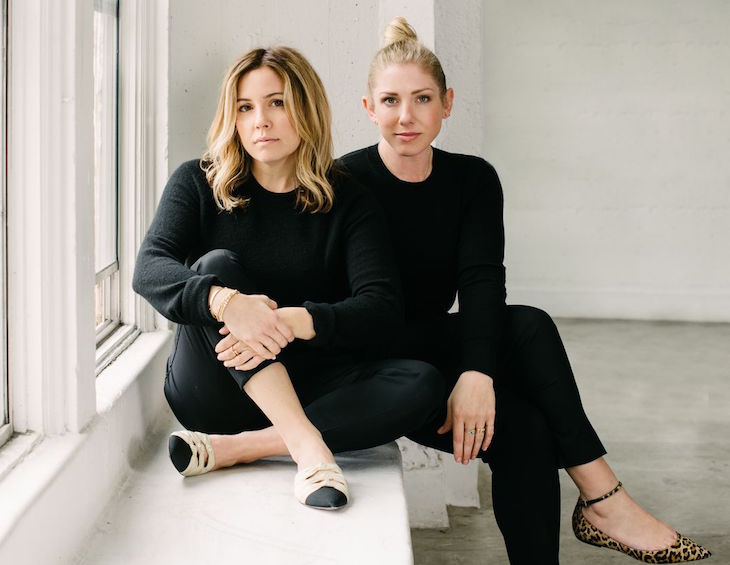
Avenue Interior Design, led by founders Andrea DeRosa and Ashley Manhan, has positioned itself as a small yet mighty powerhouse in an industry full of giants.
Most recently, the firm spearheaded the design for Palms Casino & Resort’ renovation ‘From Dust to Gold’, and brought their skills to boutique properties such as The Ramble in Denver, La Serena Villas in Palm Springs as well as SLS Baha Mar.
-
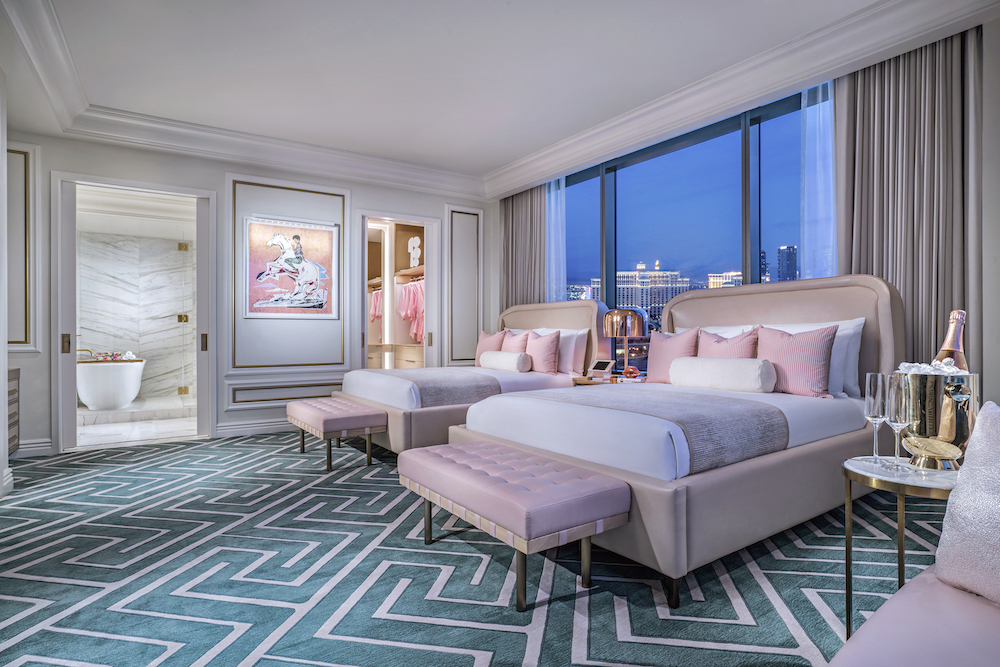
- Image credit: Palms Casino & Resort
-
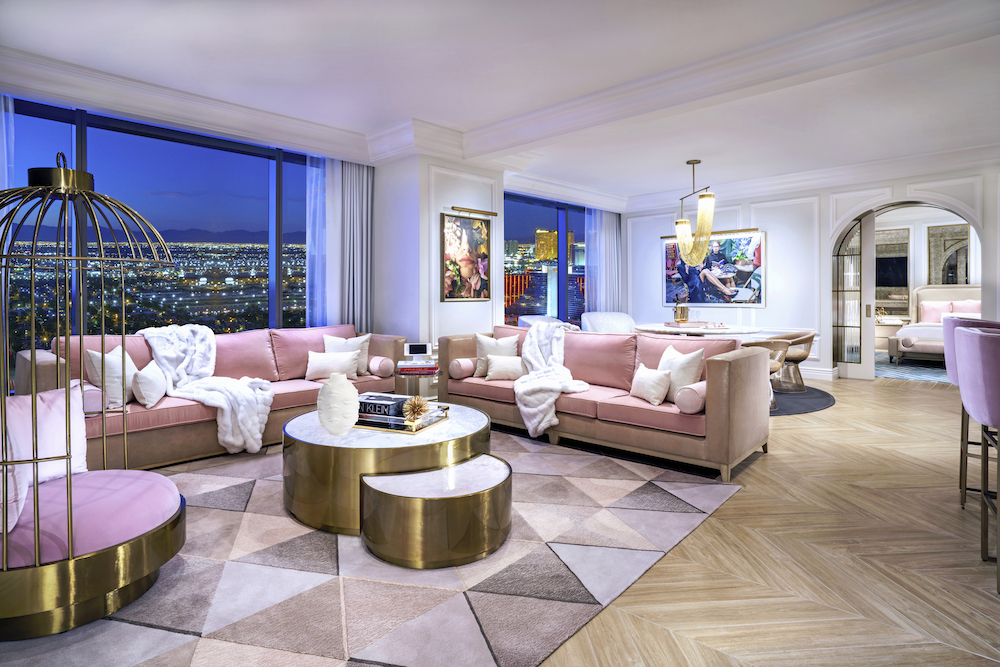
- Image credit: Palms Casino & Resort
With the world of hospitality slowly re-opening, there remain concerns and hesitations among operators and travellers on what will become of the industry. I speak to DeRosa and Manhan, two level-headed designers who understand and respect how design evolves around cultural shifts, in order to explore how the pandemic has affected hotel design decisions.
Hamish Kilburn: Let’s dive straight in, how will public areas look in the post-pandemic world?
Ashley Manhan: Business and convention travel will likely lag compared to leisure travel as we see safer at home orders lift. Convention travel has been a critical component for many hotels as occupancy and F&B revenue are strongly tied to properties located near convention venues or for properties that have large meeting facilities.
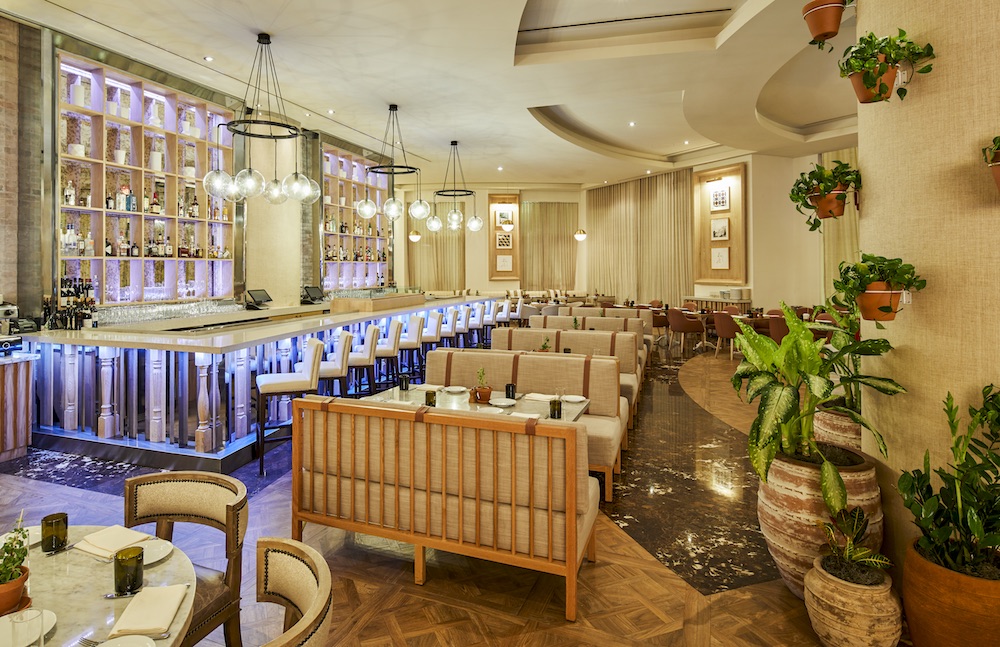
Image credit: SLS Baha Mar
Andrea DeRosa: Accommodating large groups and conventions may require smaller breakout rooms with improved air circulation and potentially live streaming speakers to these smaller rooms. On the F&B front, buffets and family-style plating will likely be put aside for individual plates or packaged meals.
HK: What new/different materials might go into hotel builds now?
AD: Given that COVID-19 transmission has found to be primarily airborne, much consideration is going into upgraded air filtration systems. Increased ventilation and better filtration will be essential components of healthy building strategies. Additionally, we may see the use of mobile and handled UV disinfection systems for sterilisation and disinfecting of high use spaces. In terms of interior finishes and materials, and those selected for FF&E, designers will face the added challenge of selecting materials that can withstand more frequent cleaning and disinfecting.
AM: In terms of lobbies, our current clients are requesting short-term solutions for partitions and countertop shields at transaction points, check-ins, and other places social distancing may not be feasible.
Fitness spaces will likely decrease in size- a trend for some properties already in major urban areas with access to specialised gyms and studios. Look for more in-room fitness options and equipment like yoga mats and lightweight dumbbells.
Restaurants face some of the largest obstacles in terms of social distancing and the use of PPE by diners. Restaurants will surely seat fewer guests to accommodate for social distancing protocol. Menus may go digital or restaurants may offer apps to place orders from your own device. Larger service counters for pickups or extended “grab and go” options maybe also be more prevalent as people warm up to the idea of eating out again.
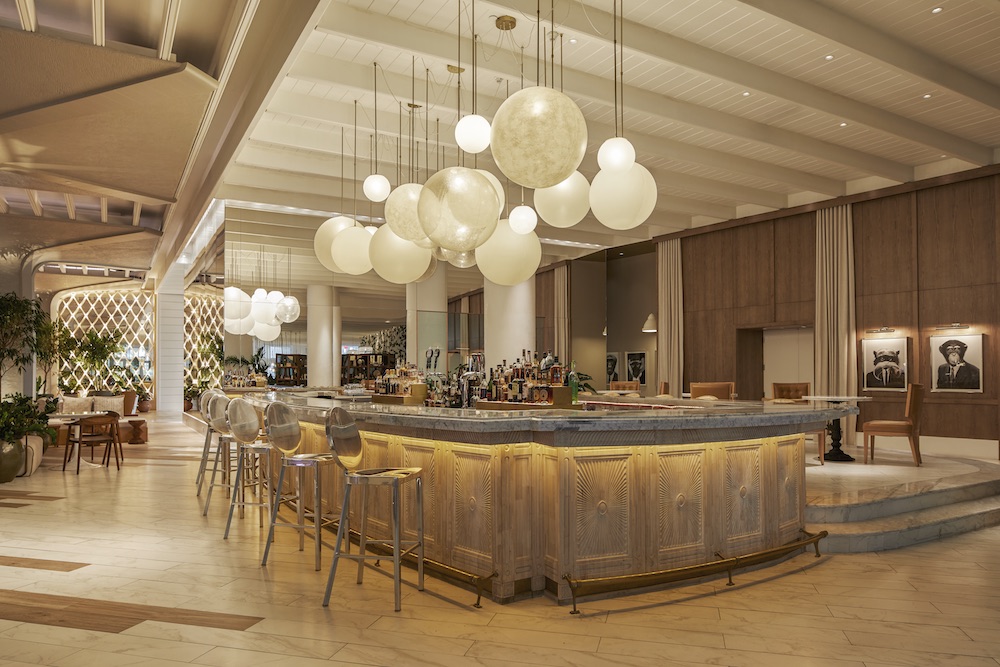
Image credit: SLS Baha Mar
AD: In the short term, we are seeing many hotel brands unrolling programs to build guest confidence and implementing quick, sometimes temporary solutions now while permanent solutions are analyzed and explored. Long term, we anticipate pandemic related measures to be modifiable to give operators the option of adjusting to meet current health risk levels. Such modifications may include digital occupancy signage, movable partitions, and digital projections indicating recommended social distances in queuing areas. A large part of the equation is understanding guests’ demands, expectations, and associations with these changes. There will certainly be varying levels of concern depending on where in the country/world the guest is traveling from. Those guests from the hardest-hit areas are likely to expect greater measures than those traveling from areas less affected. Ongoing observation of guest behavior will inform decisions owners and operators make for long term modifications to their properties.
HK: How can hotels shelter these new hygiene protocols without disrupting the design or the experience?
AM: Taking into consideration that guest safety and wellbeing is, and always has been, a top priority for any property, the next priority remains firmly rooted in good design. Ownership teams require that our commitment to creating a hospitality quality experience remains the top priority just as it was pre-pandemic. Modifications to properties should be subtle, flexible and well-intentioned. This includes careful consideration to the function of the space, the circulation of guests through the space as well as more obvious elements like materials, furnishings and even wayfinding. Creating more space for guests to comfortably, and naturally, socially distance may be as simple as removing a few clusters of lounge chairs in a lobby or replacing a communal table with a series of smaller, movable tables that can be situated individually or easily paired together.
AD: Incorporating decorative, movable screens or drapery also allows for social distancing flexibility while providing a thoughtful, well-designed element to the space. Graphics, signage, and font styles can be utilised in a way that provides informative guidance on precautions or protocol in a way that is consistent with the design language of the brand or property. For new build properties, especially food and beverage venues, you will likely see more fluid floor plans with fewer permanent features to allow for flexibility in furniture layouts and the function of a space.
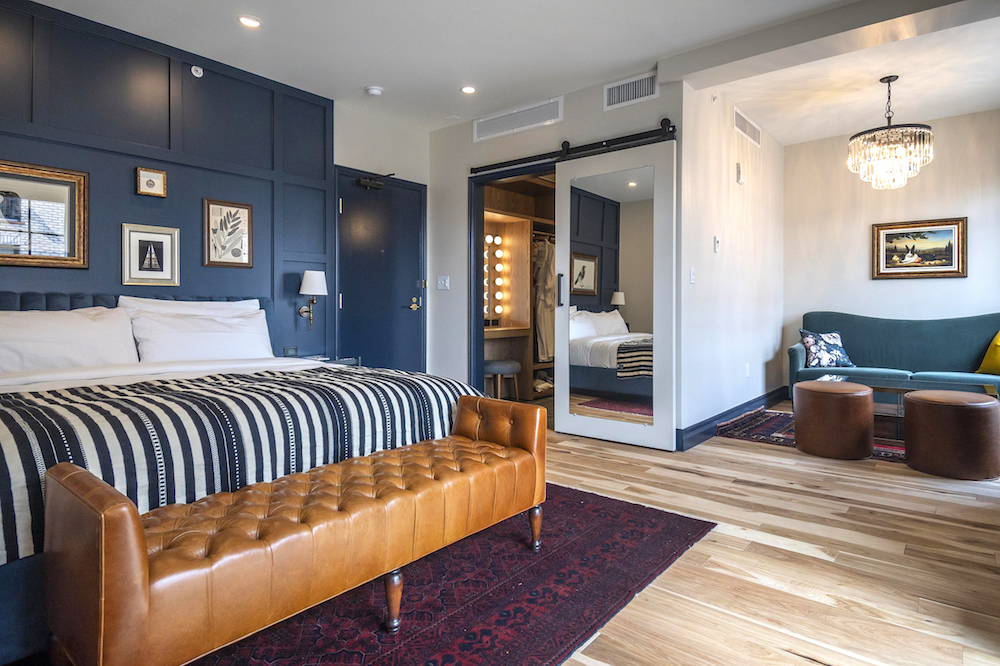
Image credit: The Ramble Hotel
HK: Have you already begun incorporating any changes into the hospitality projects you’re working on?
AD: Many of the modifications we’ve made for our current projects have been temporary or short term solutions that will allow our clients to adhere to guidelines as outlined by local jurisdictions. Before making more costly or broad-sweeping modifications, our clients are waiting to gauge guests’ expectations and behaviours to ascertain what long term modifications should look like. For instance, the addition of automated faucets and hand soap dispensers seem like a logical move, however, for many properties that have been without revenue for the last few months, the expense of a modification requiring any construction or electrical work may be out of the budget. Scale is a monumental consideration as well. The cost of making such a change in a hotel with 50 keys is likely more feasible than making that change in a hotel with more than 1,000 keys.
HK: Have you made any changes to guestrooms in the projects you are working on?
AM: Guestroom size, function, and programming have also been a hot topic amongst designers and Ownership teams. In recent years the emphasis was on creating public spaces so dynamic and engaging it drew people out of their rooms and into the lobby, restaurant, bar, pool, etc. Guestroom sizes were generally shrinking and the furnishings were becoming paired down and multi-purpose in their design. It will be interesting to see if guestroom sizes increase to become more of a mini-sanctuaries that offer personalised guest experiences.
Hotel Designs will be discussing topics such as adding personality in public areas and reassuring the post-corona consumer at Hotel Designs LIVE on October 13. If you are a designer, architect or hotelier, click here to participate for free.
Main image credit: Avenue Interior Design