



Chrome dates. Steel disappears. Brass just keeps ageing – House of Rohl asked four hotel designers – Christine Skaar of KVIST, Marie Soliman of Bergman Design House, Jill Higgins from Studio Jill and Jason Stewert of Rigby & Rigby – on why the value of brass is impossible to replace…
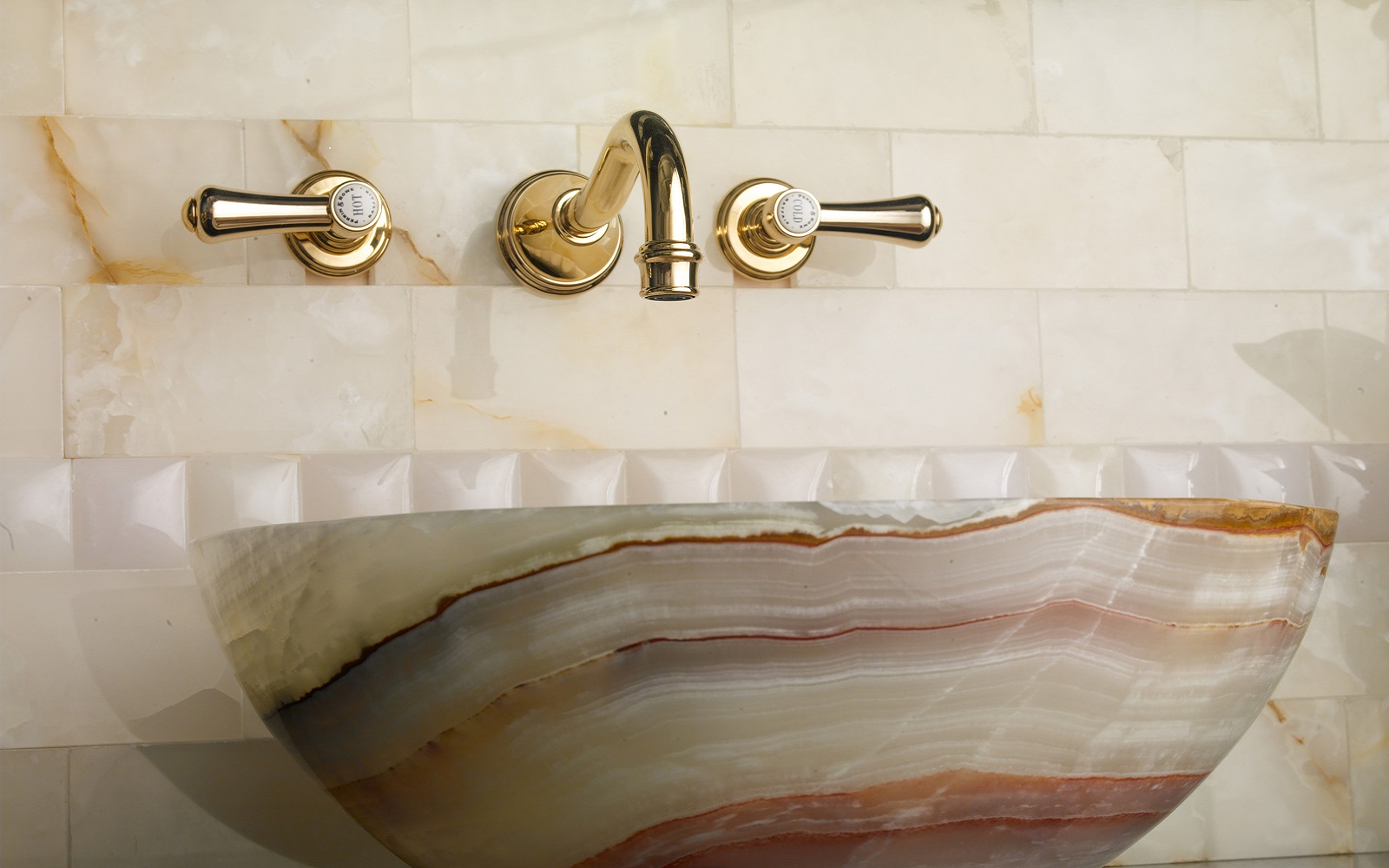
An Egyptian queen would recognise the taps in a Cornish hotel bathroom. Brass has been circulating for five thousand years – jewellery boxes, Edwardian hotel bars and the bath fittings at Fowey Hall. Since it was founded in 1978, Perrin and Rowe (part of the House of Rohl portfolio), has been making a strong case for its brassware using traditional sand casting.
Its pedigree runs deeper than most design vocabulary allows for. Ancient Egyptian artisans were working copper-based alloys into collars, amulets and ceremonial pieces for royalty long before ‘luxury’ was a marketing term, as Marie Soliman of Bergman Design House pointed out – brass represented craftsmanship and permanence before it represented style. “Warm in tone and rich in symbolism, brass complemented gold and precious stones, adorning collars, bracelets, amulets and intricate ornaments worn by royalty and nobility,” she added.
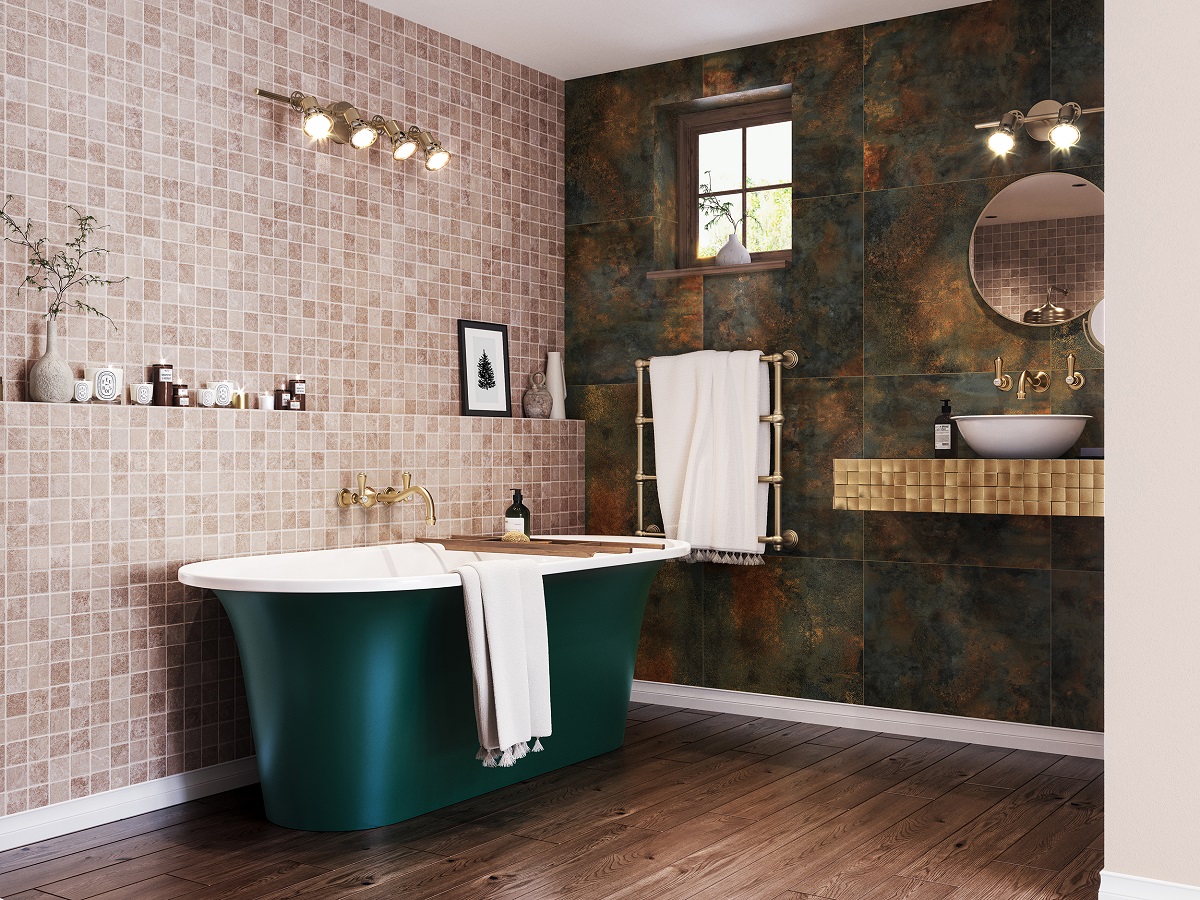
Image credit: House of Rohl
Centuries later, brass foundries in Birmingham were turning out fittings for grand households and, eventually, for hotels: the Waldorf Astoria, the Mandarin Oriental, and every panelled bar that followed their lead. It’s a thread Jason Stewert of Rigby & Rigby traces straight into today’s spec sheets – brass, he said, will always sit in “a designer’s material handbook,” bound up with lighting, silversmithing and the wider luxury goods trade in a way few other metals are.
What keeps brass relevant is behaviour. “Brass is authentic,” said Christine Skaar of KVIST. “Solid brass develops a natural patina rather than simply wearing out, so it ages with the building instead of against it. It has also evolved without changing its identity—different finishes and surface textures satisfy changing tastes while the material itself remains timeless.” Soliman goes further: she loves the material precisely for the way it patinates and shifts colour over the years. “It carries history yet always finds its place within contemporary design because it brings warmth, depth and humanity to a space,” she explained.
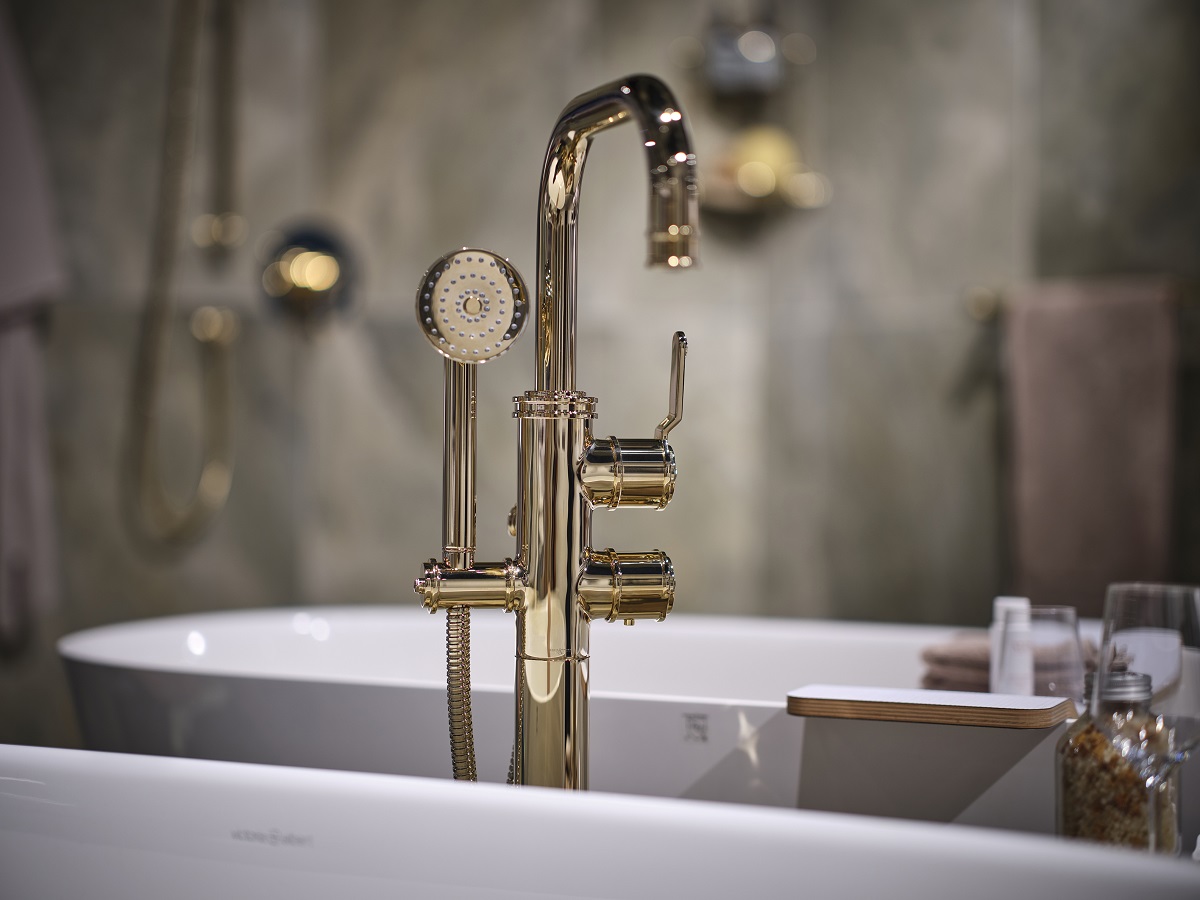
Image credit: House of Rohl
One metal, many moods
What brass offers that cooler metals can’t is warmth. Chrome reflects; brass, in Soliman’s phrase, glows. It softens architecture, flatters timber and stone and shifts in temperature from morning light to evening lamp glow in a way stainless steel – precise, yet static – never quite manages.
Skaar treats that warmth as a full palette. Aged and unlacquered brass reads as honest, full of gravitas; brushed, it turns crisp and contemporary; polished, it’s timeless, built to catch the light; blackened, it takes on something more masculine and architectural. Her preference is to vary the finish of one metal across a scheme rather than mix several – brass throughout, its character shifting room to room while an underlying warmth ties the building together.
Stewert has seen that logic play out commercially at Nammos, Rigby & Rigby’s recent restaurant opening in Mayfair, where brass signage sets the tone before a guest even reaches the door, and brass detailing at the bar sits against timber cladding and woven rope columns. The metal carries, he noted, “a certain status and class associated with it historically” – reading as more of a hero finish than the silver tones it’s so often asked to sit beside.
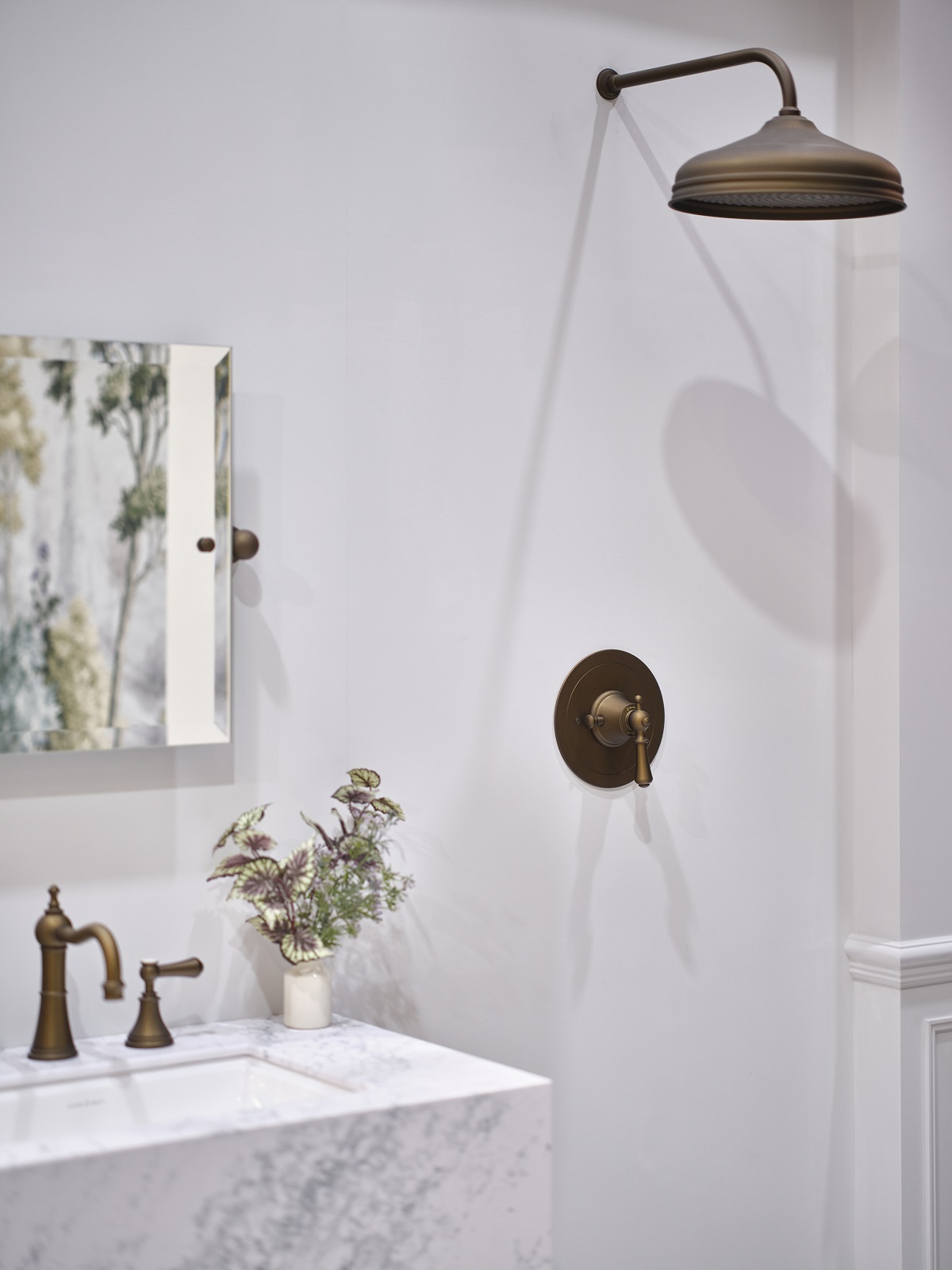
Image credit: House of Rohl
The line between luxury and imitation
All three designers draw the same line, and draw it firmly: brass only reads as luxury when it’s solid. Cheap brass-effect coatings have done real damage to the material’s reputation in recent years, but the difference is immediate the moment you pick up the real thing — luxury, as Skaar puts it, comes from the weight, the mechanics, the detailing and the craftsmanship. Stewert agrees the sector’s imitations have taken a toll on brass’s “brand,” though he’s careful to separate that from the metal itself. Soliman reads the same overuse as a correction rather than a crisis: a reminder that luxury lives in curation and proportion.
Hardware is one of the only surfaces in a building that guests touch every single day – a tap, a handle, a door threshold – and a well-made solid brass fitting performs better immediately, then keeps improving with exactly that handling. Timeless interiors, Skaar argues, were about materials that become more beautiful with age and last. Few finishes pass that test as convincingly as brass, which is why brands built specifically around solid, mechanically robust brassware – Perrin & Rowe among them – remain the reference point for designers unwilling to compromise on what’s underneath the finish. A tap with proper weight and hand-finished detailing behaves less like a fixture than an heirloom: there to be handed on, not replaced.
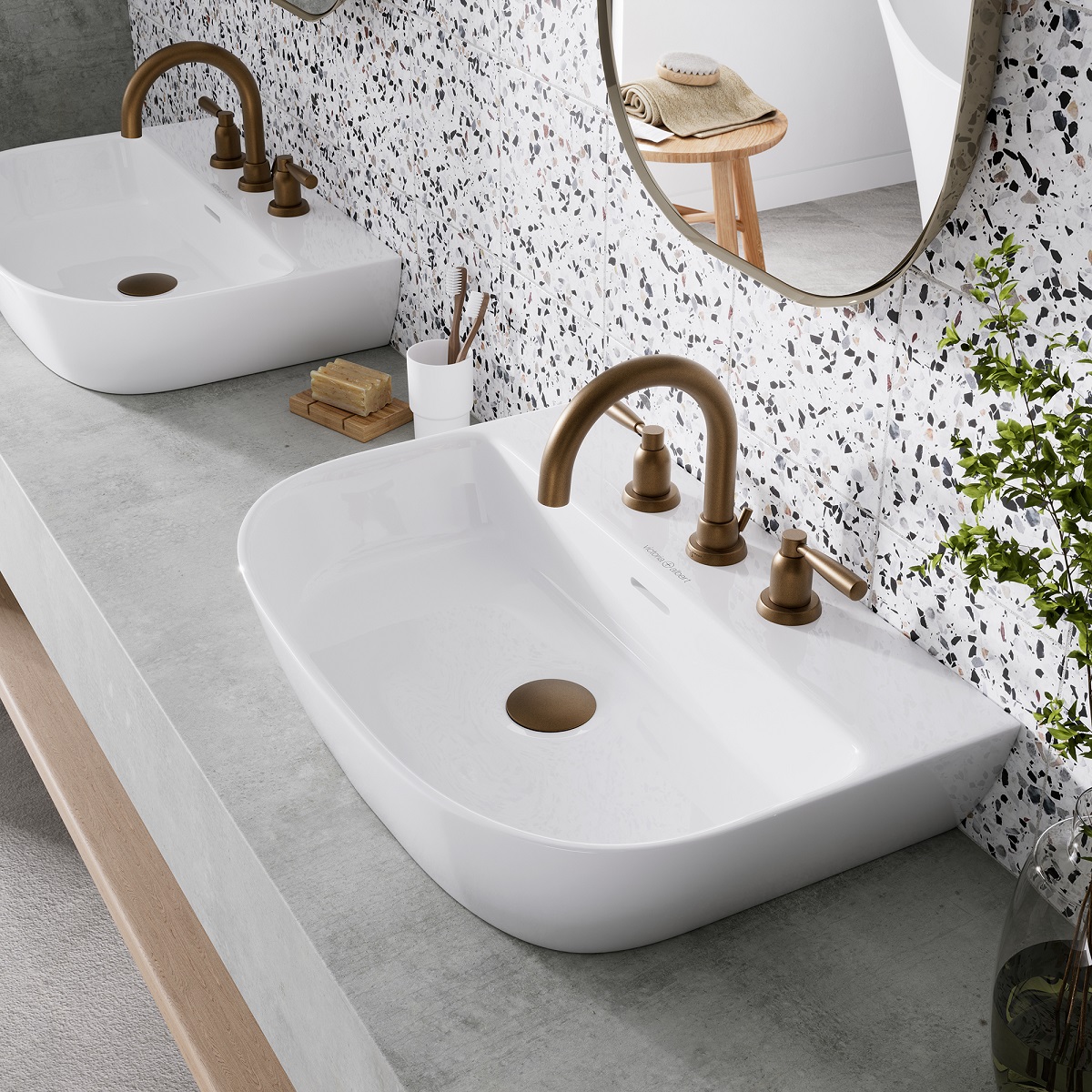
Image credit: House of Rohl
Where the theory meets bathroom suite
Fowey Hall Hotel, perched above the estuary on Cornwall’s south coast, makes the case in built form. Studio Jill’s recent refurbishment – led by founder Jill Higgins – resisted the temptation to over-style a building already rich in cornicing and panelling, letting the architecture “breathe visually” and layering in antique and contemporary pieces so the interiors read as curated rather than decorated.
That discipline shows most clearly in the bathrooms, where freestanding baths from House of Rohl’s Victoria + Albert become quiet centrepieces rather than showpieces. The Monaco bath, finished in confident, unexpected colourways, brings a contemporary note to the modern wing; the Cheshire bath, a deep Victorian claw-foot design, anchors the original house without tipping into pastiche. Higgins calls the effect “understated luxury with an attention to detail” – the same register good brassware operates in, room after room, letting texture and material do the work that colour and print so often get asked to do instead.
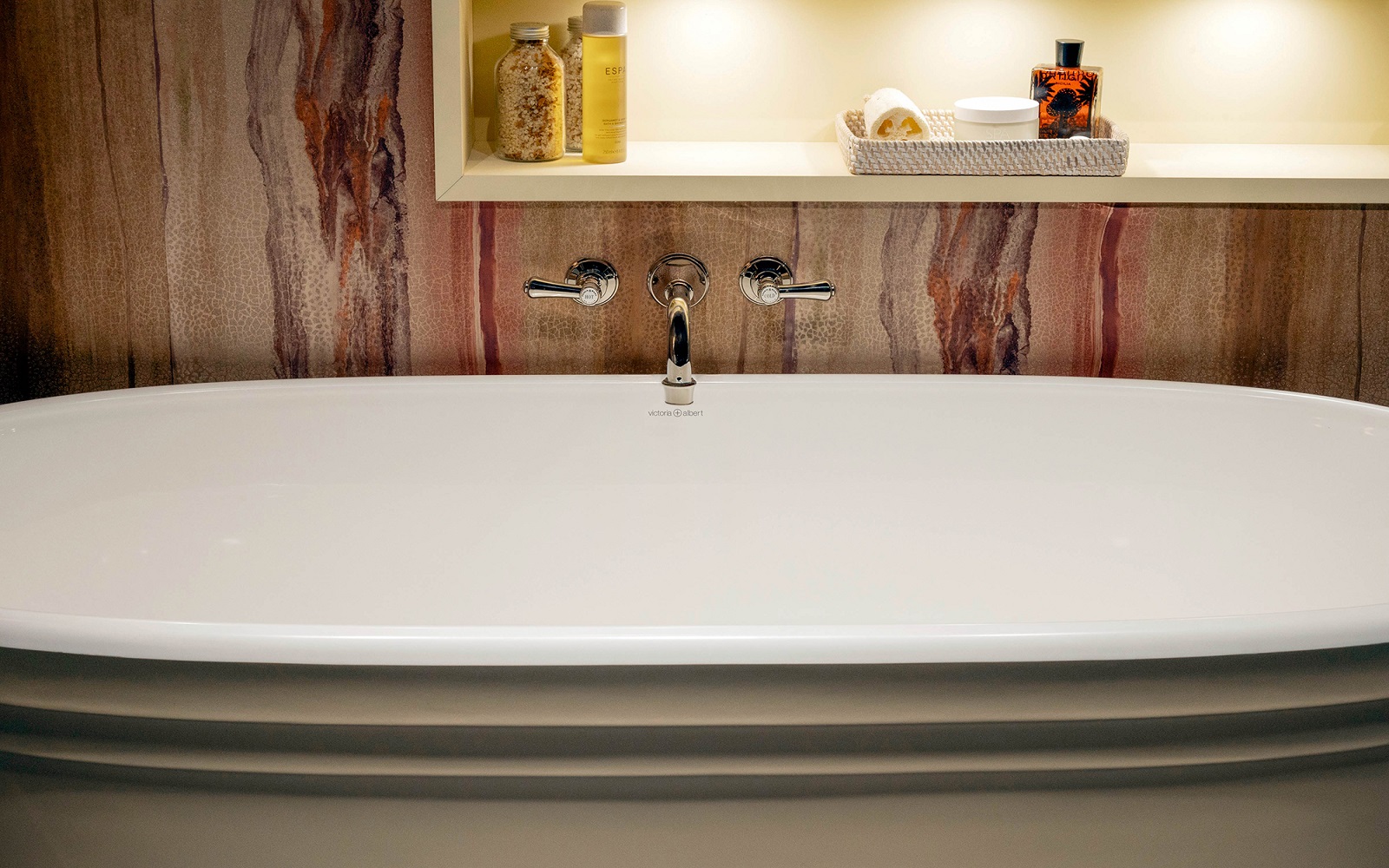
Image credit: House of Rohl
The long view
What separates brass from almost every other finish available to designers today is that it was never trying to look new in the first place. It asks to be touched, to tarnish, to be repolished or left alone and to keep doing all three for decades without complaint – a value for hotel operators weighing lifecycle cost against day-one impact, since it gets better as the budget for refurbishment gets further away.
It also travels unusually well between briefs. A material capable of reading as heritage in a Cornish country house and as nightlife glamour in a Mayfair restaurant is doing more work than most finishes are ever asked to do, which is exactly why none of these three designers treat it as a single decision made once at the start of a project. It’s a vocabulary, deployed differently depending on what a space needs to say and how long it needs to keep saying it.
Specified with restraint, in solid form, from makers who still understand what ‘solid’ is supposed to mean, brass remains one of the few genuine luxury statements left in interior design – not because it’s expensive, but because it’s honest. It carries history, as Soliman says, and still finds its place in the present. Four thousand years in, it shows no sign of needing to prove that again.
House of Rohl is one of our Recommended Suppliers and regularly features in our Supplier News section of the website. If you are interested in becoming one of our Recommended Suppliers, please email Katy Phillips.
Main image credit: house of Rohl