











Sixty years after its first silk scarves defined an era, Richard Allan London’s archive is being reimagined for the wall, the floor and everywhere in between – proof that a great pattern never only belongs to just one surface…
An archive can be many things: a record of the past, a source of inspiration or, when looked at with fresh eyes, the starting point for something entirely new. For Richard Allan London, the archive began with silk.
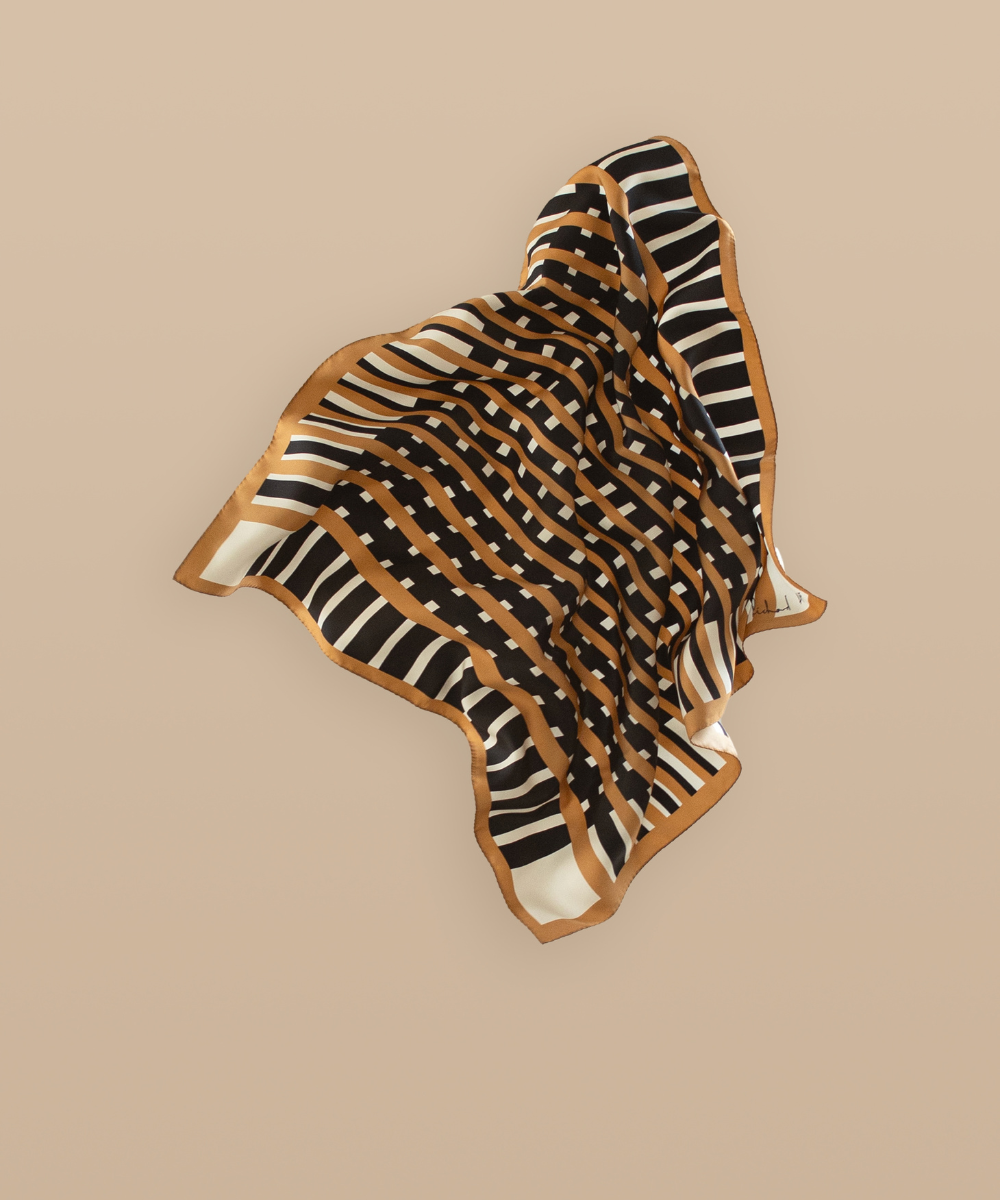
Established in London in 1962, the design house became known for bold, graphic silk scarves that captured the energy and optimism of the 1960s and 70s. Strong compositions, unexpected forms and an instinctive use of colour gave the designs a visual character that has continued to resonate.
Today, those original designs are moving beyond silk scarves into interiors. The expansion of the Richard Allan archive has been driven by a simple question: what happens when these distinctive designs are considered not just as scarves, but as artworks, patterns and sources of colour that can inhabit a space?
The answer has taken the collection from wall to floor, with limited edition fine art prints, silk and velvet cushions and, most recently, a collection of hand-tufted rugs created in collaboration with Roger Oates Design. The fine art prints were the first step. Selected designs from the 1960s and 70s archive have been reinterpreted as limited editions, printed and hand-finished in England on museum-quality etching paper. Many have been recoloured, allowing the original artwork to take on a new mood and palette while retaining its original character.
-
- Image credit: Richard Allan London
For interiors, this creates possibilities beyond simply choosing a piece of art. A print can become the starting point for a colour palette, inform the selection of textiles or provide the visual direction for an entire scheme. The same thinking has informed the development of the cushions and rugs. The designs are no longer confined to a single surface or scale; they can be layered, repeated and translated into different materials, allowing pattern to move through a space.
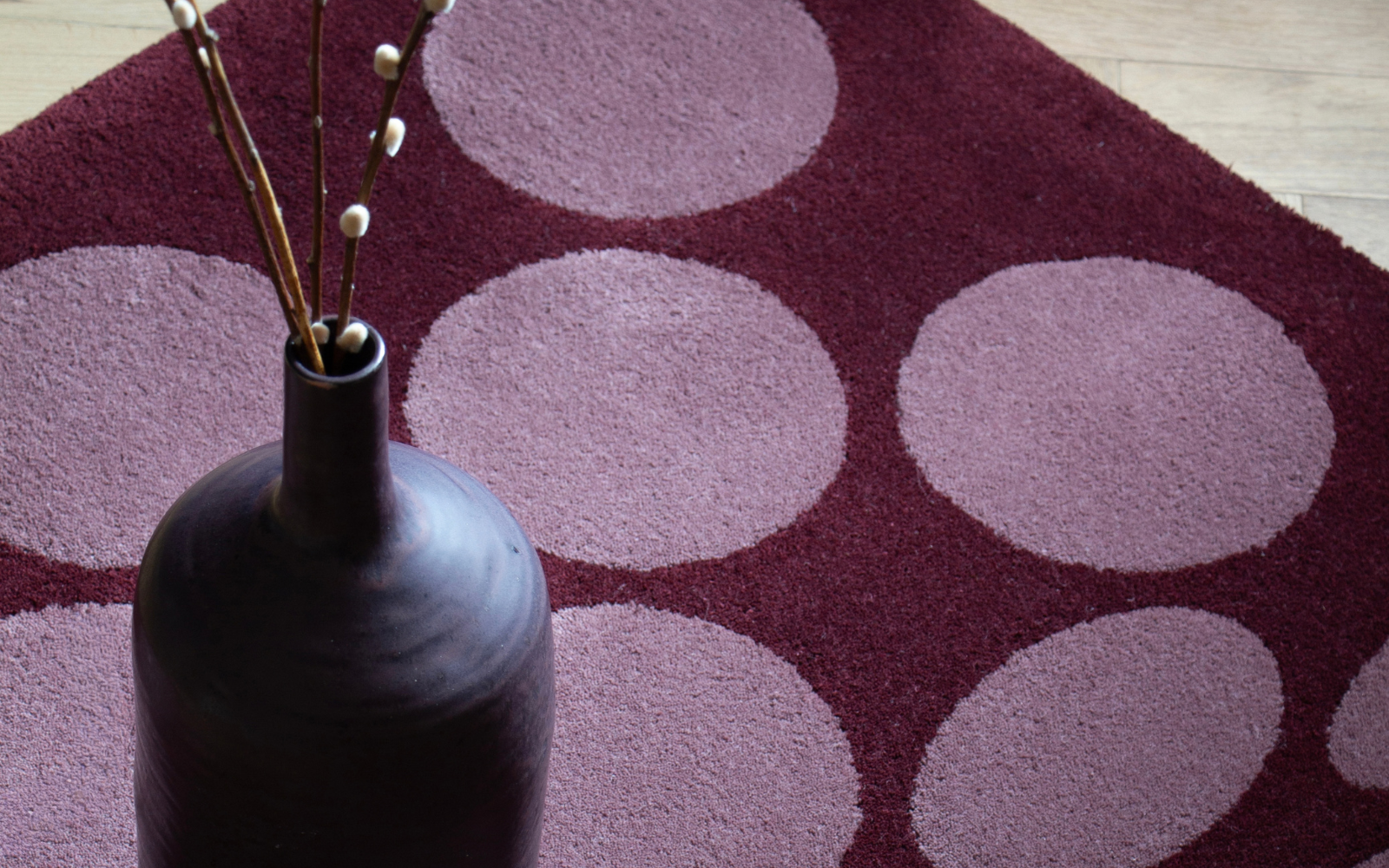
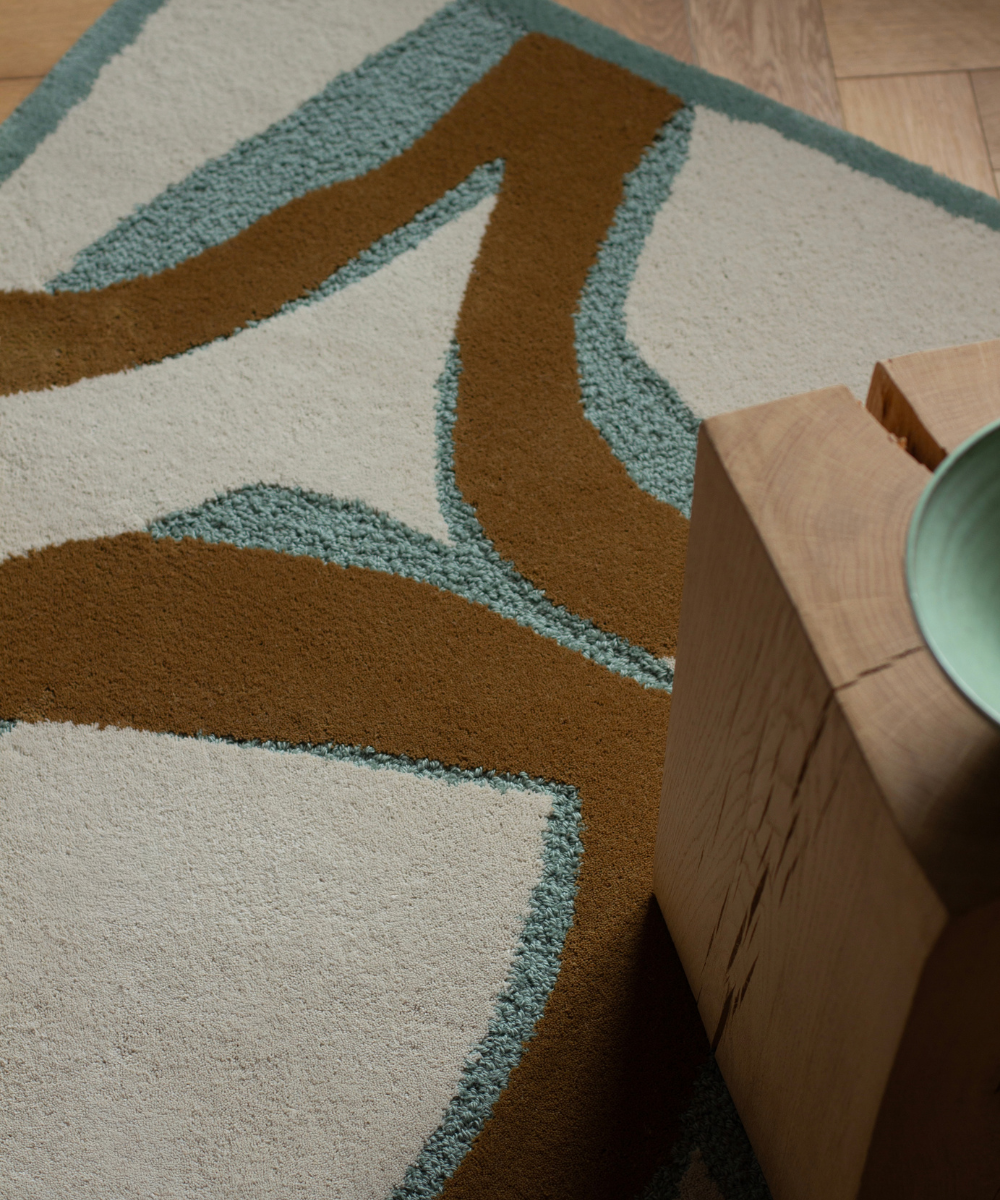
The latest collaboration with Roger Oates Design takes this idea a stage further. Three Richard Allan archive designs – Manhattan, Pebble and Dotty – have been transformed into hand-tufted rugs, made and finished in Devon using British wool. The collaboration brings together two British design names, founded two decades apart, with a shared affinity for bold pattern, colour and craftsmanship: Richard Allan’s graphic design language translated through Roger Oates’ expertise in rug-making.
-
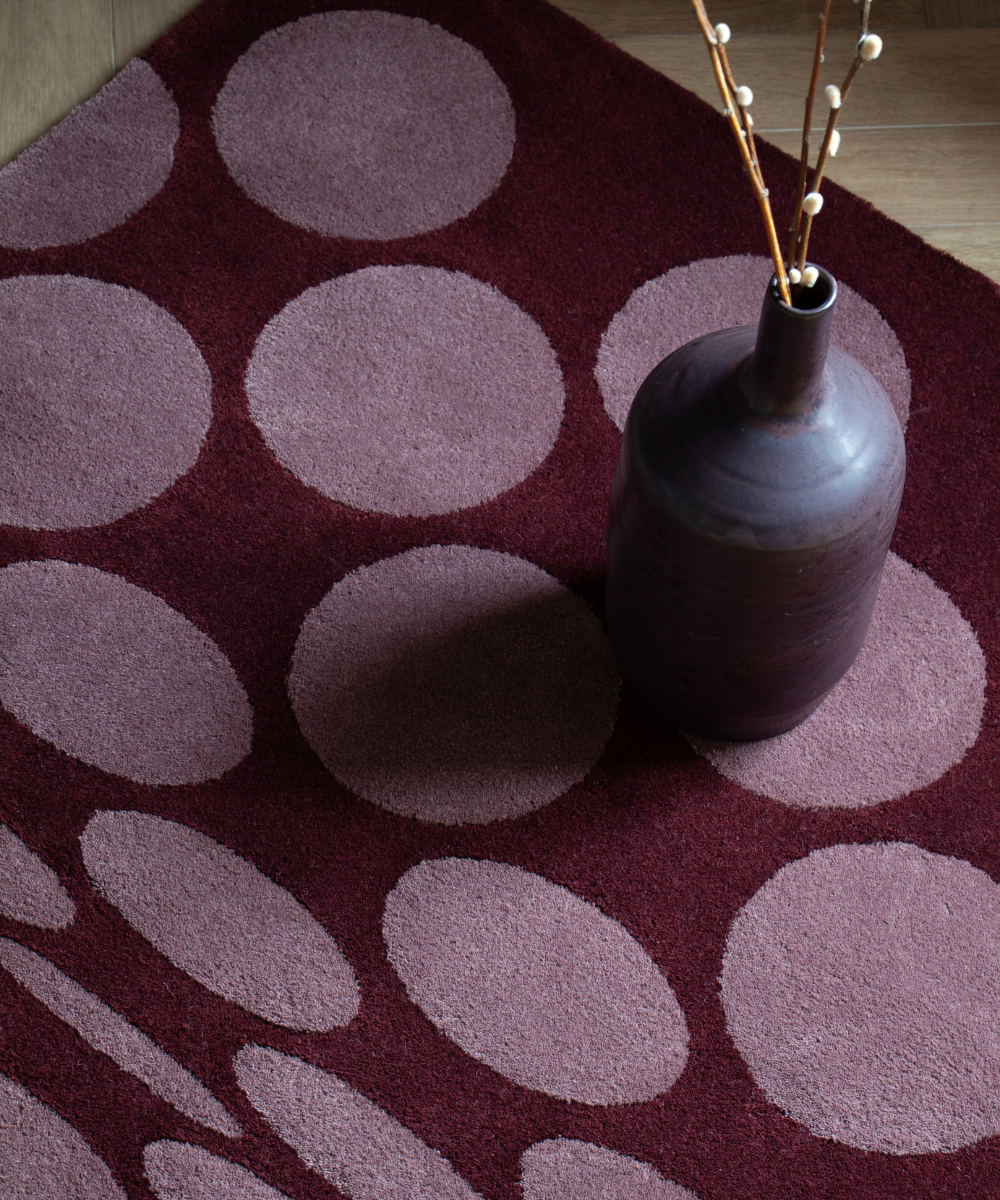
- Image credit: Richard Allen London
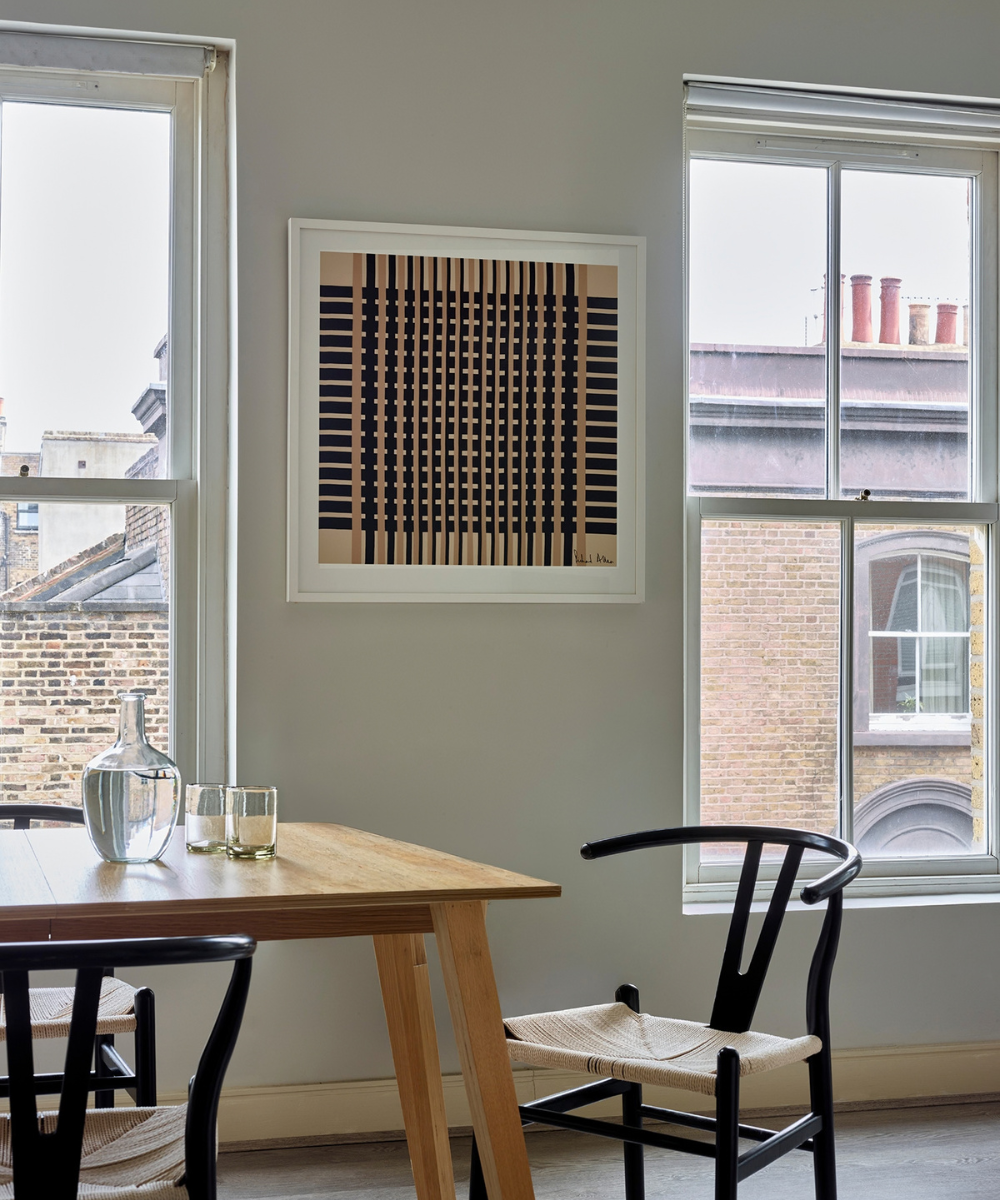
For hospitality and commercial interiors, the crossover holds particular promise. Art, textiles and flooring can play very different roles within a scheme, yet a shared design language can create a sense of cohesion without everything having to match. A Richard Allan print might introduce the key colour story. A rug could pick up its geometry or reinterpret the pattern at a larger scale. Cushions can bring the same palette into a softer, more tactile element. Each piece can stand alone, or become part of a wider visual conversation.
This is perhaps the greatest strength of working with an archive: its relevance does not have to remain in the past. The original designs provide a foundation, but colour, scale, material and context can all change. Richard Allan’s archive has always crossed boundaries between fashion, art and graphic design. Its evolution into interiors feels like a natural extension of that visual language.
More than sixty years after the first Richard Allan scarves were created, the archive is continuing to move forward – from silk to surface, and from a collection of historic designs into a contemporary vocabulary for interiors.
Richard Allan London is one of our Recommended Suppliers and regularly features in our Supplier News section of the website. If you are interested in becoming one of our Recommended Suppliers, please email Katy Phillips.
Main image credit: Richard Allan London / Roger Oates Design