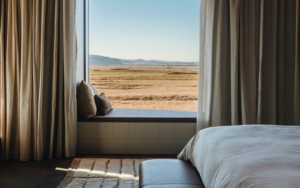











A hotel bedroom has to feel like somewhere the person sleeping in it belongs. It has to feel considered down to the smallest decision, and still feel effortless: a sanctuary that puts you fully at ease while staying connected to the place around it…
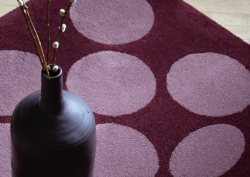
A rug has a large part to play in that role. It either sits back and quietly completes a room through colour, material and texture, or it steps forward and ties the whole thing together through layered, storytelling design.
Which way a room needs it, depends on everything happening above the rug, the busier the headboard or palette, the more that choice matters. A bedroom rug also takes more barefoot traffic than any other rug in the building, and sits close enough to the bed that its scale has to answer to the bed. It has to feel considered underfoot for the two-hundredth guest.
-
- Image credit: The Hoxton
-
- Image credit: Kin House / Barlow & Barlow
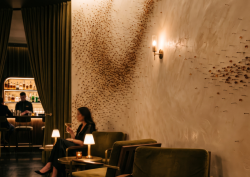
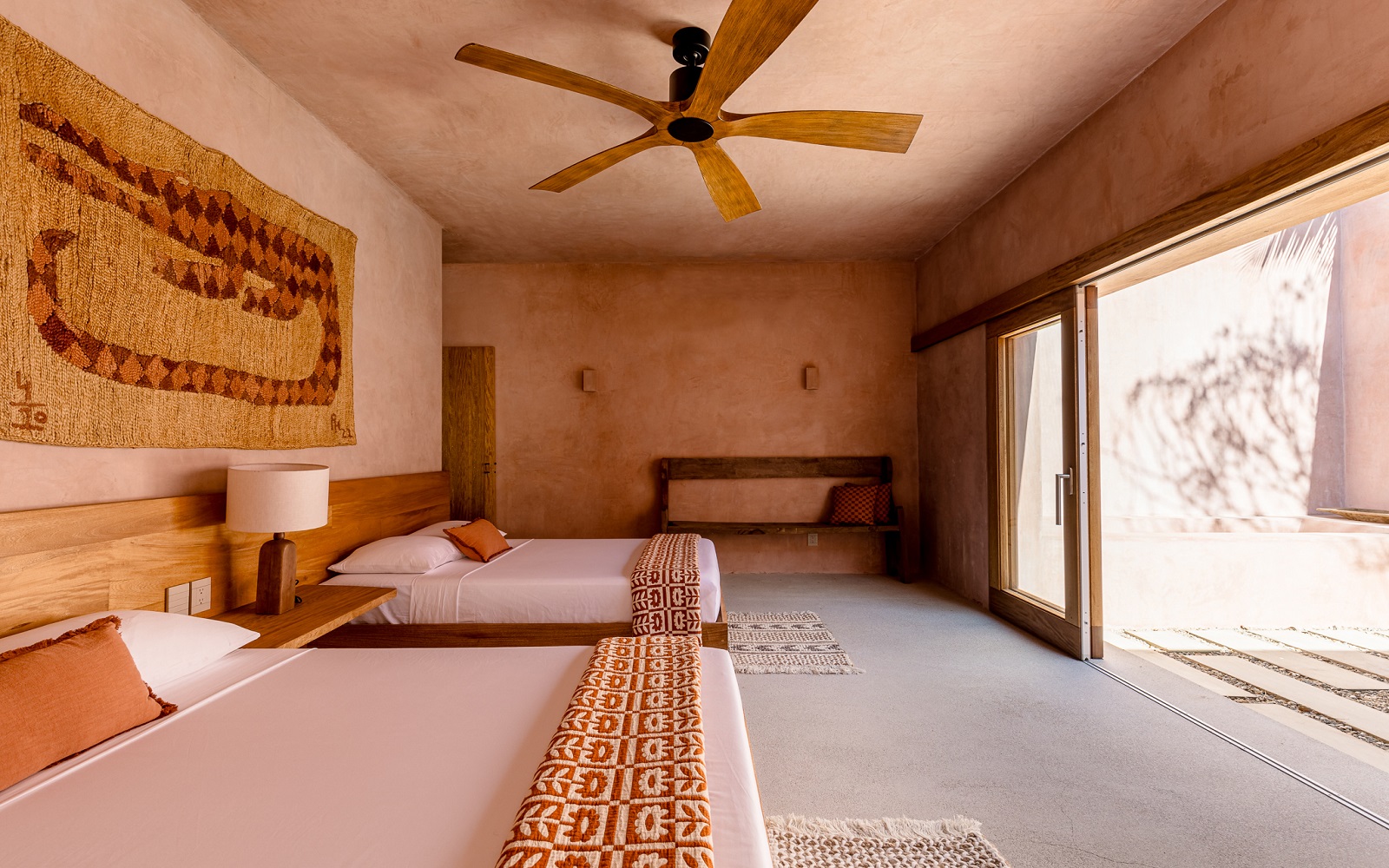
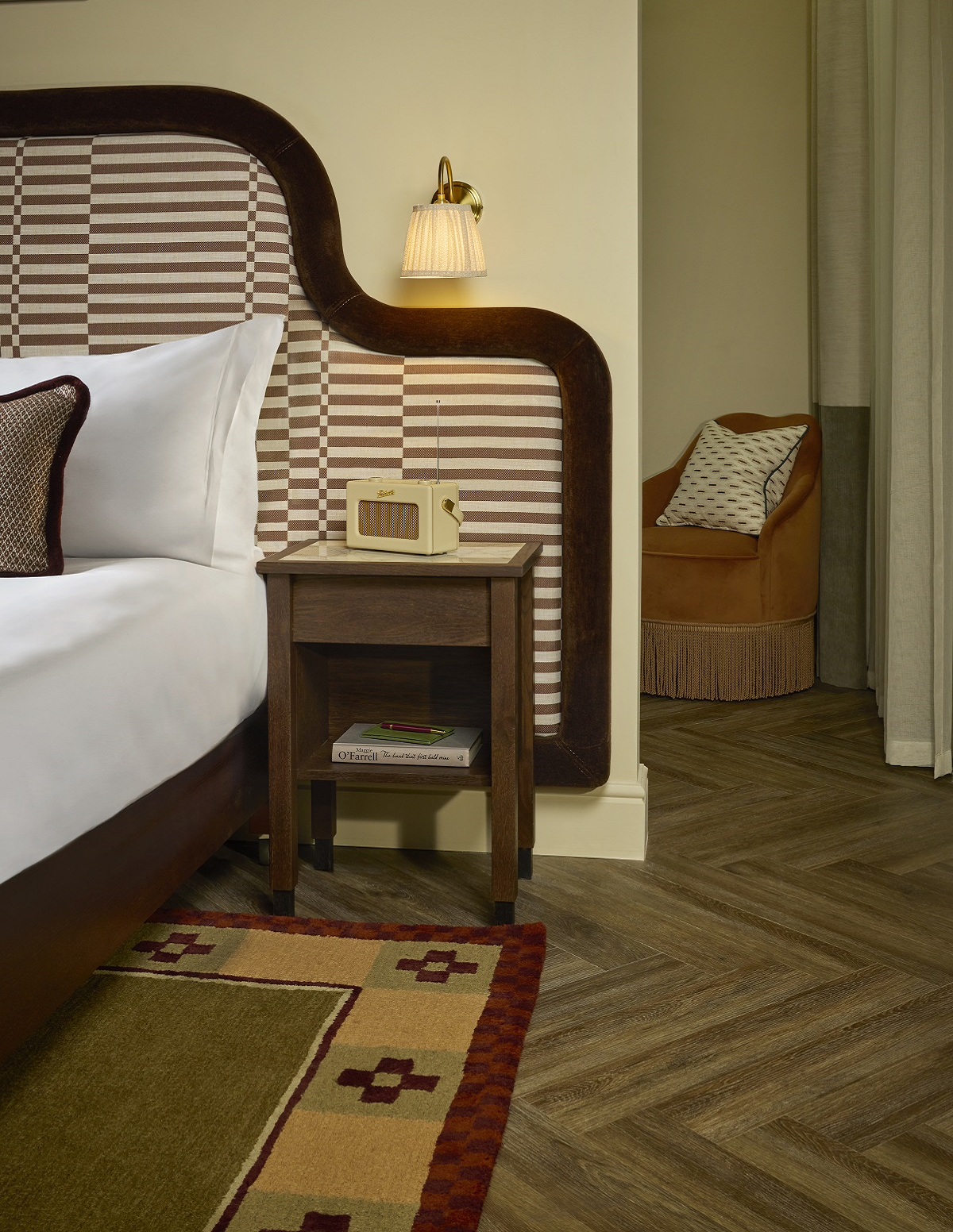
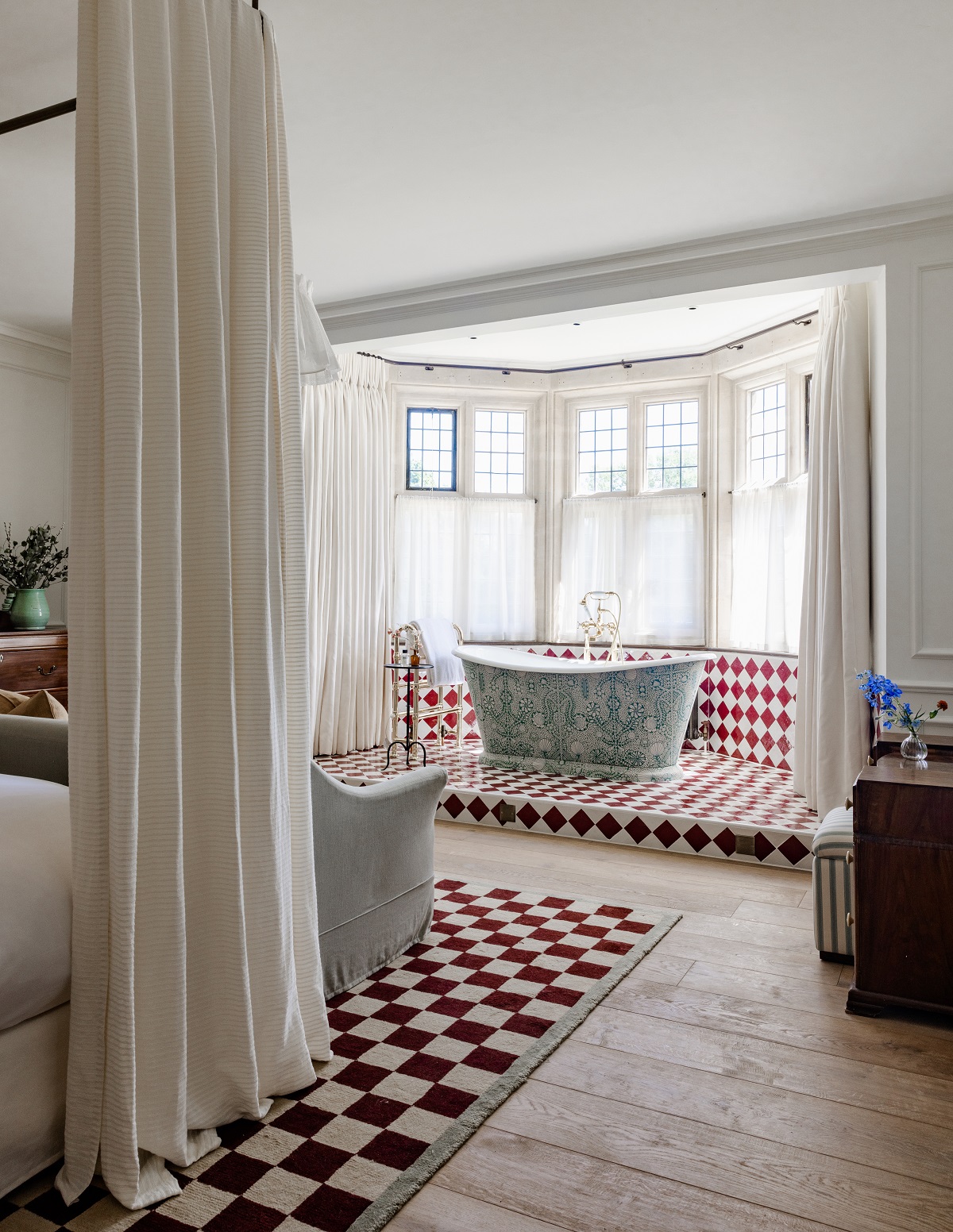
At The Hoxton, Dublin, a bordered Pelican House rug in olive and oxblood plays it bold, matching a busy checkerboard headboard pattern for pattern and tying the room together by meeting its energy head on. At Kin House, Barlow & Barlow made the same bold call from the floor up, a red-and-cream checkerboard running to the edge of a canopy bed, anchoring the room rather than sitting beneath it quietly. In Emma Ainscough’s Chelsea bedroom, the opposite move: a pale rug scattered with tiny florals sits beneath a deep green headboard, understated enough you’d only notice it by its absence. And at Casa Coco in Oaxaca, Mexico, that same restraint moves onto the wall, where hand-braided woven art from Pelican House hangs above the beds.
Bold or subtle, what makes either possible is the same: a handmade piece brings age-old craftsmanship and cultural layering into a space that no machine-made equivalent can fake.
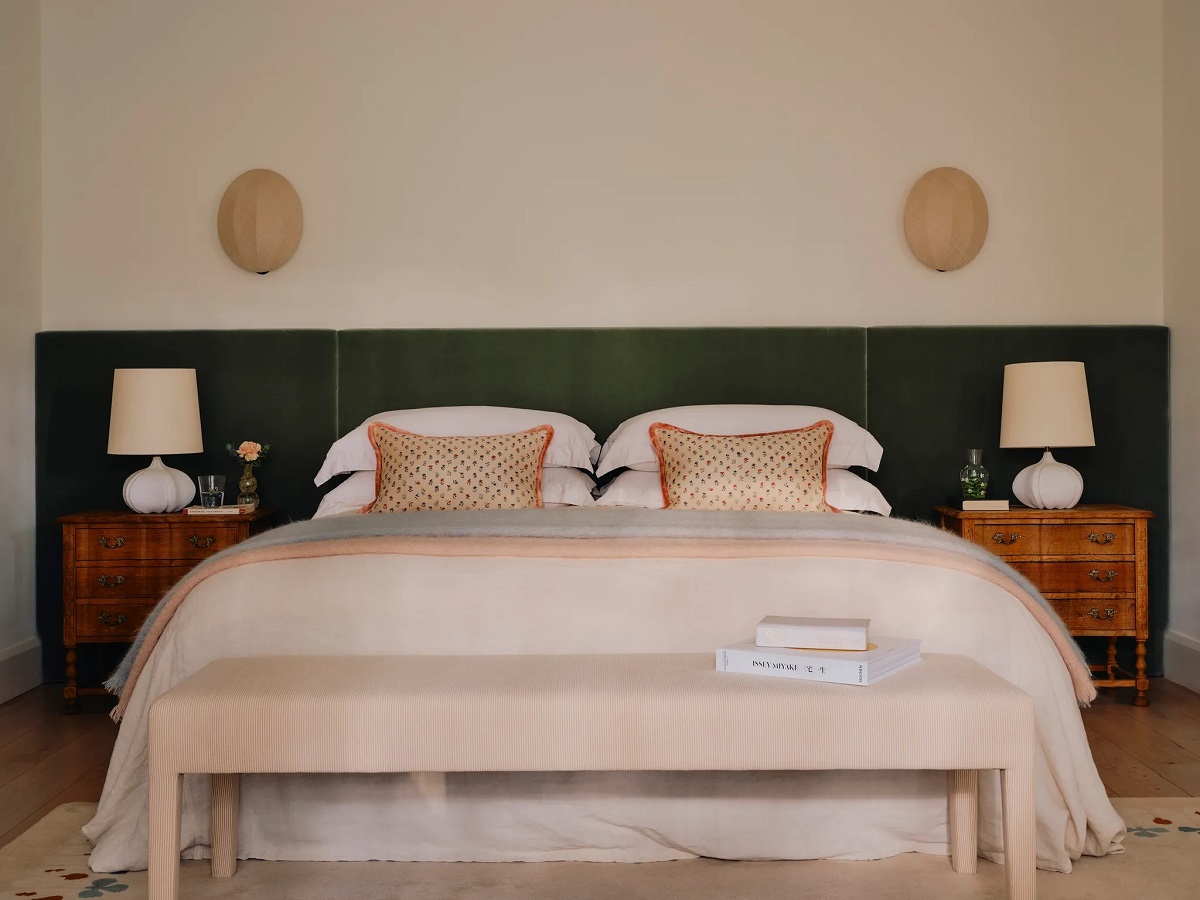
Image credit: Emma Ainscough
At Pelican House, it’s not just about how a rug is made, but who made it. Every rug traces back to the artisans who wove it and the communities we’ve spent years collaborating with, through Label Step-certified supply chains that keep that relationship honest from commission to delivery. A handwoven rug carries generations of technique inside it, passed through families and cooperatives, some centuries old, that no factory loom can hold onto.

Image credit: Pelican House
Buying handmade is a direct line to fair pay reaching the skilled hands that made it, and to weaving communities in India and Nepal passing their craft on rather than losing it. Pelican House grew out of exactly this: years spent working alongside these communities, and a stubborn belief that the people behind a piece deserve the credit for it, not just the label. We think a guest feels that difference in a bedroom even without knowing any of it, whether the rug was ever meant to be noticed at all.
Pelican House’s expert design studio, will design especially for the space, getting involved with the design process as much or as little as you like, tailoring the product to the needs of the space. All with the underlying belief, that design is a force for good.
Pelican House is one of our Recommended Suppliers and regularly features in our Supplier News section of the website. If you are interested in becoming one of our Recommended Suppliers, please email Katy Phillips.
Main image credit: Casa Coco / Pelican House