2025

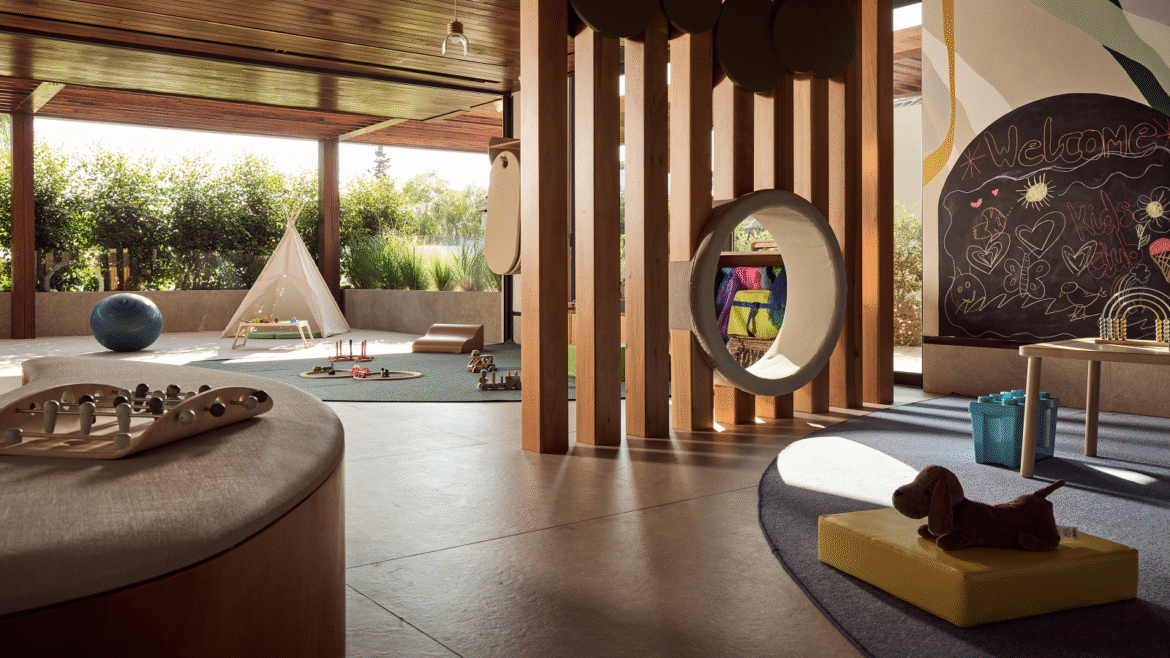
indoor childrens play area and outdoor garden with tipi in hotel design

Child’s play – designing for kids in the luxury hotel arena

1024 640 Guest Author

A GUIDE TO HOTEL DESIGN PT 98:

Once relegated to simple playrooms and minimal amenities, children’s facilities in high-end hotels are now emerging as narrative-rich, design-led environments that reflect the same level of sophistication, cultural depth, and service excellence offered to adults. Megan Wilson, Head of Design at Worldwide Kids discusses some key points in optimising the children’s hotel experience.
For a luxury hotel to succeed in the family market, it must recognise that family expectations have evolved. Today’s guests want environments that are not only beautiful and immersive, but also inclusive and genuinely fun. Adults expect the same design sophistication, comfort, safety and level of service for their children as they do for themselves. The children’s offering can no longer be a ‘nice to have’, it’s a strategic differentiator that defines how a brand values its guests across generations.

portrait - Megan Wilson - head of design Worldwide Kids

Image caption: Megan Wilson, Head of Design, Worldwide Kids | Image credit: Worldwide Kids

Historically, children’s facilities in luxury hotels were treated as an afterthought: a corner playroom, a few toys and perhaps a babysitter service on call. They existed to occupy children rather than engage them. In recent years, however, there has been a transformative shift. Luxury hotels now recognise the children’s experience as part of their brand story and overall guest journey.

Children’s facilities have evolved from transactional spaces to narrative environments. Places that tell a story rooted in the hotel’s culture, ethos, architecture, and sense of place. The key is creating a holistic narrative that children can understand, relate to, and actively engage in. When children’s experiences are woven into the overall guest journey, they become an authentic extension of the brand rather than a separate offering. Children feel valued, safe, and stimulated, while parents can fully immerse themselves in the adult side of luxury, confident their children are in exceptional hands.
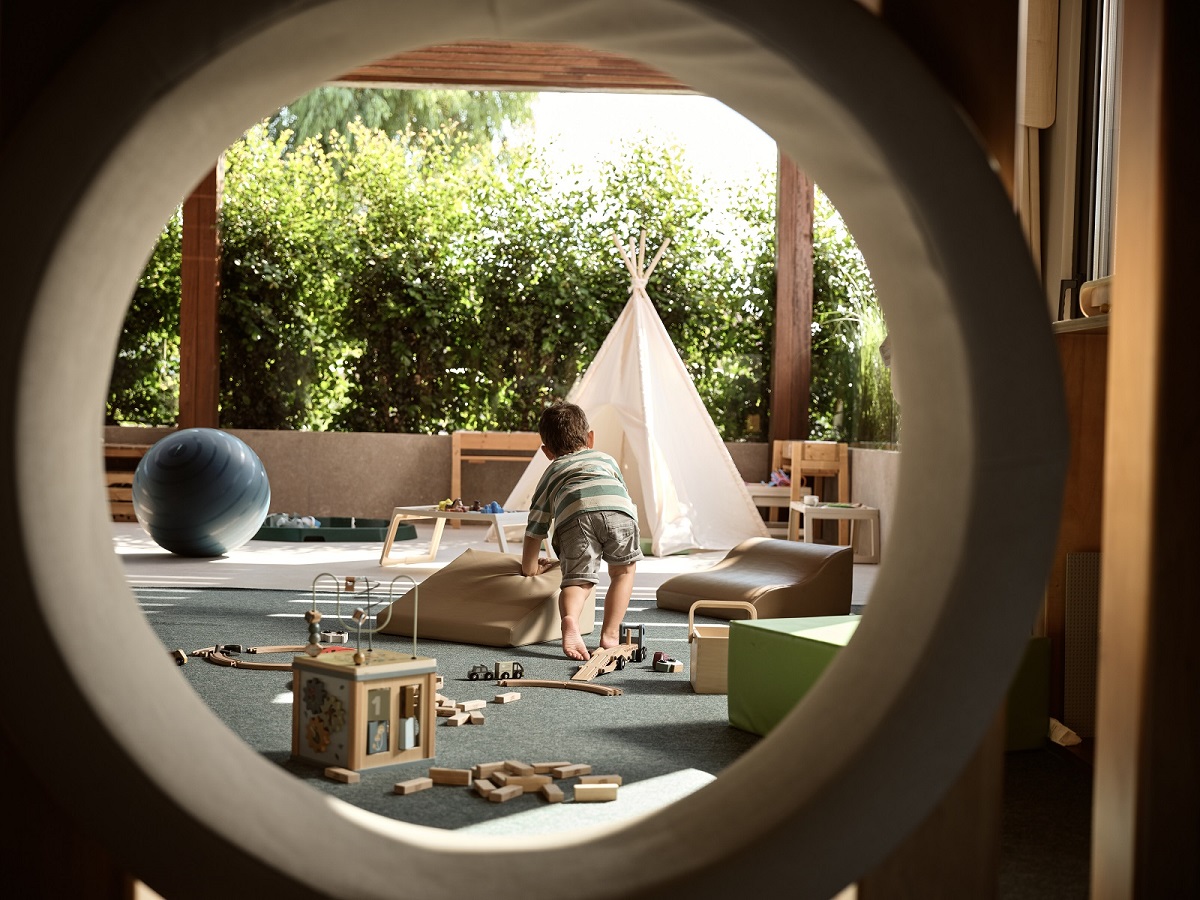
view through a porthole window to outdoor play area in Fiori Kids Club at Contessina Hotel, designed by Worldwide Kids

Image caption: Fiori Kids Club at Contessina Hotel | Image credit: Worldwide Kids

At One&Only, the ‘KidsOnly’ concept embodies the brand’s vision of providing children with a sense of place and purpose within each property, allowing them to explore the local culture and narrative. The design draws on the island’s maritime heritage, particularly shipwrecks scattered along Kea’s coastline. Real stories of the sea are translated into textures, forms, and immersive play experiences, creating an environment that feels adventurous yet refined.

With the right design approach, children become fully engaged, and the environment itself transforms into a springboard for activity and discovery. Thoughtful planning ensures that the property’s concept, aesthetic, and ethos shape every aspect of the children’s experience, from play and learning to exploration and social interaction. Spaces are not only visually appealing but also intentionally stimulating, encouraging curiosity, creativity, and connection. Well-designed areas give staff the flexibility to deliver a rich, evolving programme of experiences that adapts to different age groups, interests, and seasonal needs, making the children’s zone a living part of the hotel where design, programming, and imagination work together.
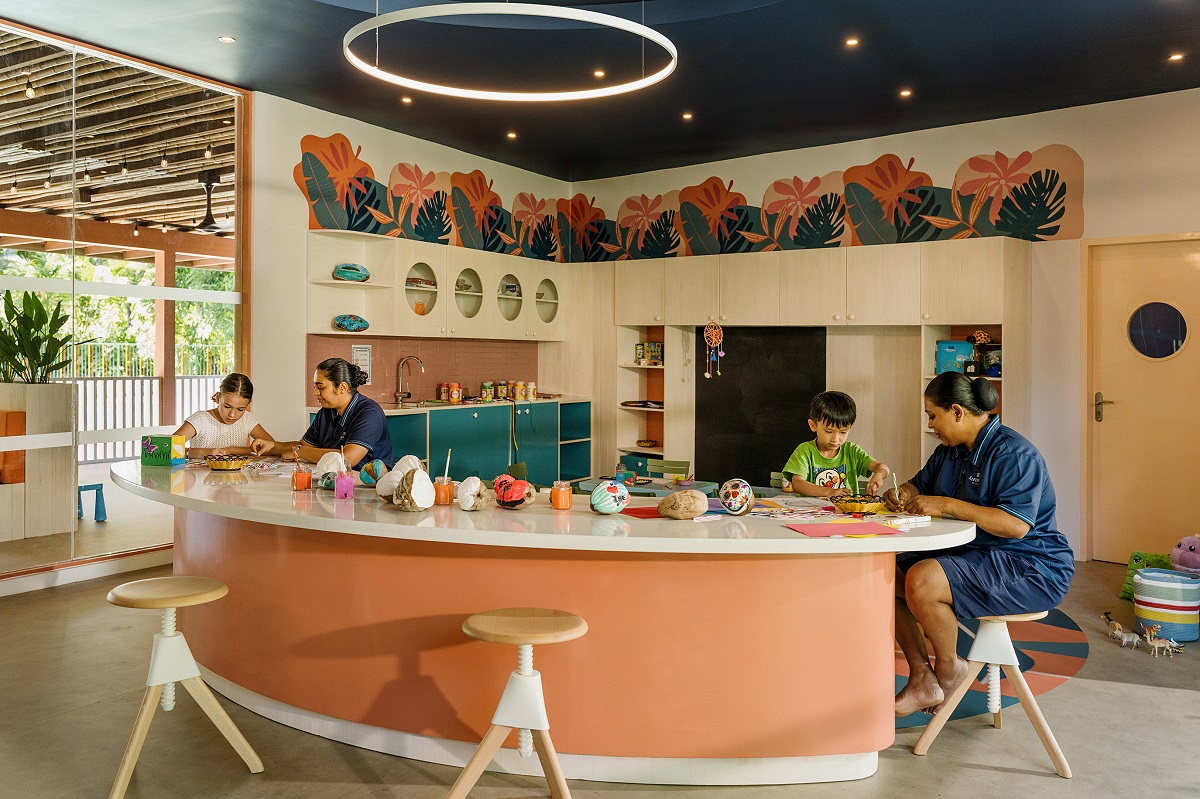
curved craft table with bar stools in hotel kids club

Image caption: Kurumba Kids at Kuruma Maldives | Image credit: Worldwide Kids

Kurumba Kids is rooted in themes of sustainability, island wildlife, and local heritage, inviting children to explore, play, and learn through thoughtfully designed zones. These include crafting stations in the Creative Corner, imaginative building in the Construction Zone, collaborative cooking in the Terrace Kitchen, quiet reading in the Quiet Zone, and group fun in the Interactive Sandbox. Every detail, from biophilic touches to flexible, playful furnishings, encourages hands-on discovery, social interaction, and joyful learning, making Kurumba Kids a space where adventure, creativity, and care for the planet come alive.

Child-focused décor has evolved to resonate with both children and parents, balancing aesthetic appeal with safety, durability, and sensory richness. Materials are increasingly chosen for their tactile quality, natural origins, and sustainability, creating spaces that are inviting and reassuring. Modern children’s facilities integrate educational, cultural, and nature-based elements, reflecting a broader hospitality movement toward purpose, experience, and wellbeing. Interiors often draw on local crafts, art, and heritage, fostering a strong sense of place. Biophilic design, incorporating plants, natural light, and outdoor views, strengthens children’s connection to nature and supports emotional wellbeing.
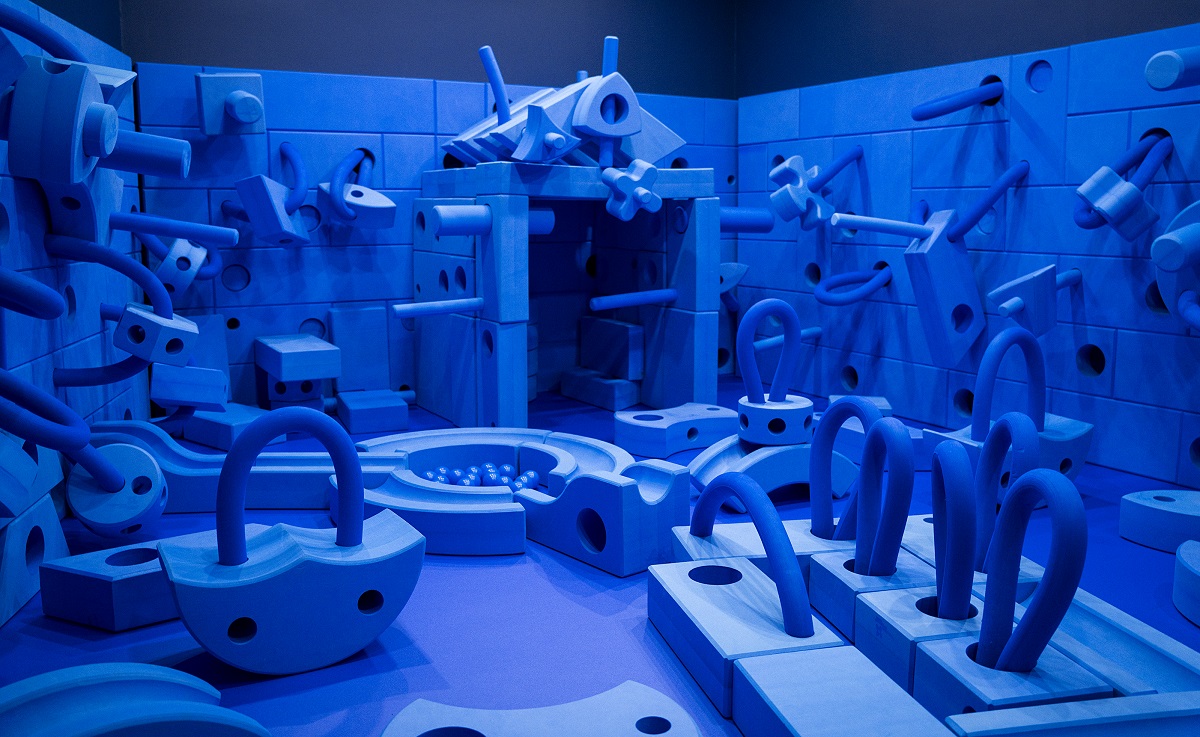
Image caption: Kurumba Kids at Kuruma Maldives | Image credit: Worldwide Kids

Modular, flexible furnishings encourage movement, collaboration, and imaginative play, while quiet zones support reading, reflection, and creative projects. Children’s design should be enriching, offering opportunities for creativity, nature engagement, cultural connection, digital-free play, multi-sensory exploration, and family-inclusive experiences. Ultimately, it’s not just about fun, it’s about meaningful fun that nurtures curiosity, self-expression, and belonging, creating spaces where children and adults alike feel inspired, safe, and at home.

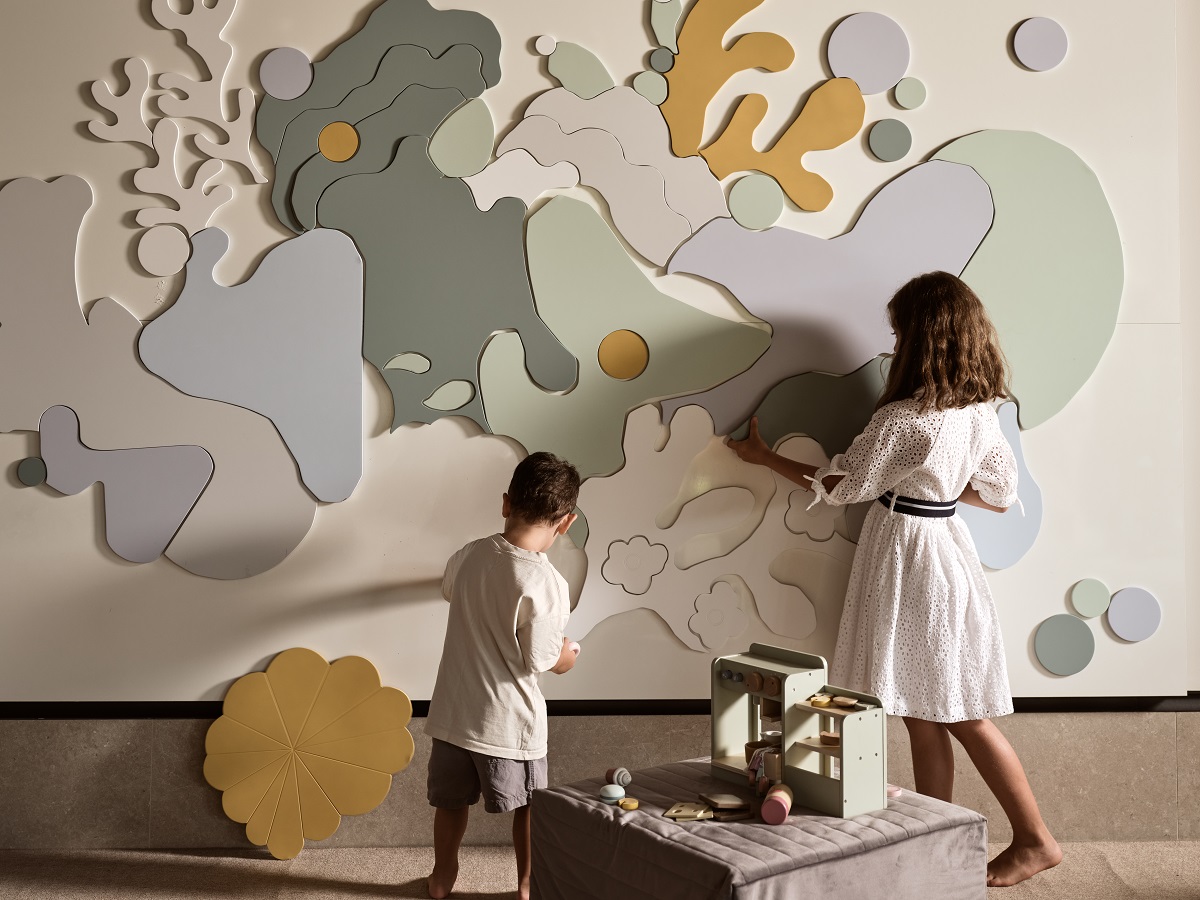
Fiori Kids Club brings the island’s landscapes and heritage indoors through gold-toned floral graphics, soft blues echoing the Blue Caves, natural wood and stone textures, and subtle art-deco touches. Modular furnishings, flexible seating, and interactive zones, including a Creative Corner, Imagination Station, and Woodland Tunnel, encourage artistic expression, imaginative play, sensory exploration, and quiet reflection. Biophilic elements, natural light, and outdoor views foster a connection to the island’s environment, while activities inspired by local culture and ecosystems teach children about heritage and sustainability.
interactive wall design at hotel kids club

Image caption: Fiori Kids Club at Contessina Hotel | Image credit: Worldwide Kids

Considering the diversity of the end user, childcare facility design is inherently complex. There is no ‘one size fits all’. Successful design relies on close collaboration with childcare professionals who understand developmental stages, behavioural needs, and how children of different ages interact with their environment. Designers must carefully address the unique needs and preferences of babies, young children, and teens, ensuring that each age group enjoys stimulating, age-appropriate, and safe experiences.

Key considerations include:
• Age-appropriate fixtures and fittings: Furniture, equipment, and play structures must be designed to suit children’s size and abilities, providing comfort, usability, and engagement.
• Safety considerations: Spaces should account for capacity, safeguarding, circulation, and risk reduction, creating an environment where children can explore freely and securely.
• Luxury finishes: High-quality materials such as timber, natural stone, and premium upholstery bring durability and aesthetic quality to children’s areas without compromising child-friendliness.
• Clear zoning: Different age groups require distinct zones, with good visibility, safe circulation paths, quiet or rest areas, and flexible layouts that support multi-functional use while maintaining safety and comfort.
• Flexibility: Spaces should support multi-purpose programming, adapting to seasonal or functional needs, from drop-in play and structured activities to family events.

When childcare expertise informs design decisions, these spaces are not only visually aligned but also functionally responsive, offering enriching experiences that inspire curiosity, nurture creativity, and foster a sense of belonging. At the heart of luxury hospitality today is the understanding that children are not just guests, they are part of the brand story. When design, programming, and expertise come together seamlessly, the result is a holistic experience where every guest feels valued, safe, and at home.

In the evolving landscape of family luxury, the children’s experience is no longer an afterthought, it is a defining element of exceptional hospitality.

Main image credit: Worldwide Kids
AI image sensorial dawn ritual on the architecture of sleep

The architecture of sleep

1024 640 Guest Author

A GUIDE TO HOTEL DESIGN PT 97:

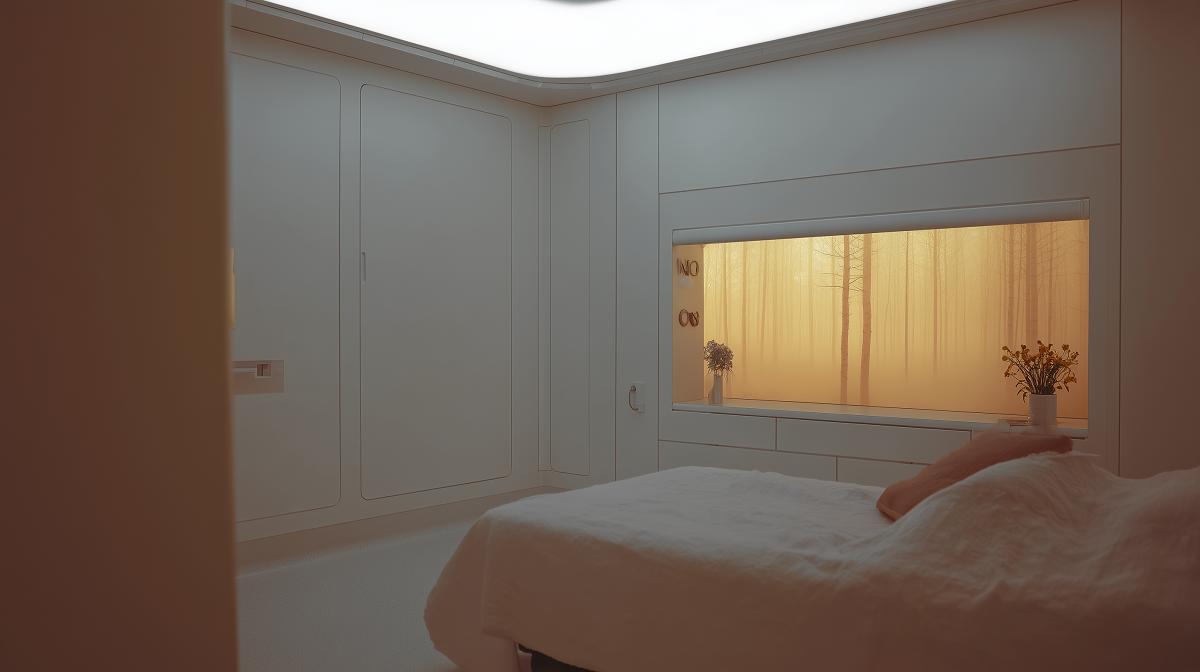
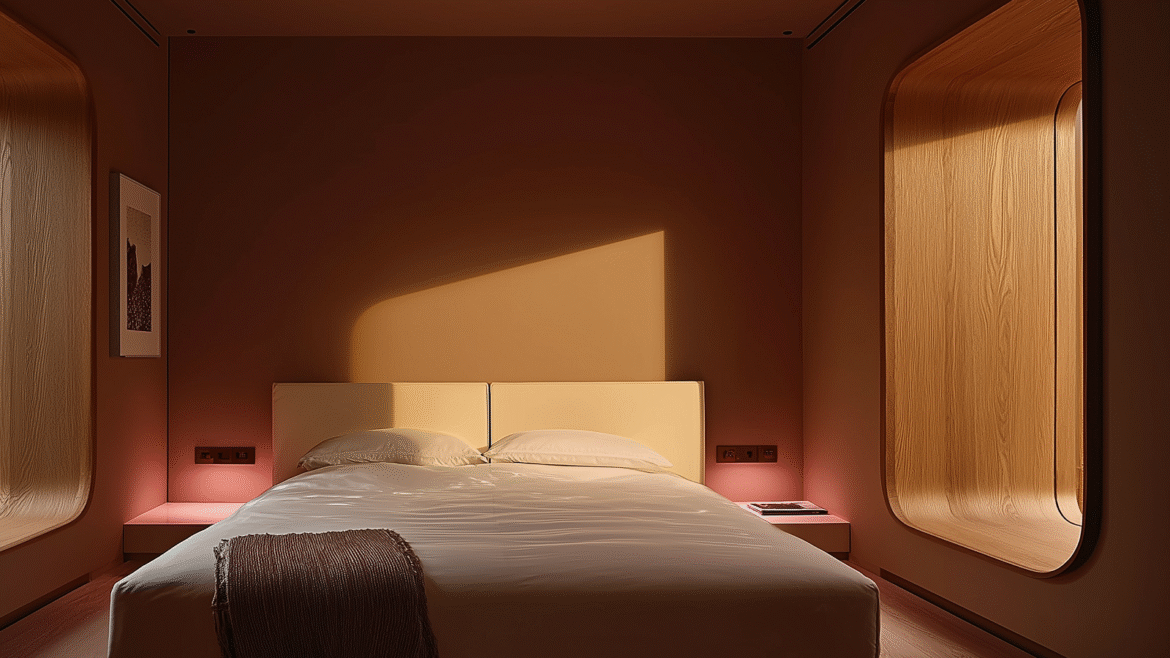
Ramy Elnagar, Founder of White Mirror defines sleep as architecture in motion – a nightly reconstruction of the mind and body. Yet the spaces we sleep within are rarely designed with that architecture in mind.

Bedrooms may be beautiful, but aesthetics alone cannot lull the nervous system into rest. True recovery demands more intentional design – a choreography of light, sound, temperature and touch that tunes the body toward genuine and measurable balance.

At White Mirror, we call this philosophy Experience is Medicine – intentional spaces and experiences designed to deliver positive outcomes on our wellbeing, and also look to inspire better habits that we carry with us into our daily lives. Every texture, hue and frequency we encounter acts as an invisible conversation with our physiology. A flicker of blue light can delay the release of melatonin. A gentle vibration beneath the skin can slow the breath. A soft curve in a wall can whisper safety to the nervous system. The spaces we inhabit are not passive containers; they are living systems that shape how we feel, think, and sleep.

the future laboratory - the architecture of sleep - ai image of bed with light filled window

Image credit: White Mirror

From emotion to evidence

For centuries, architects have spoken about form and function. Today, the frontier is feeling. Through the emerging science of neuroarchitecture, we can now measure what we once only intuited: the way light rhythms regulate circadian cycles, the way biophilic textures lower cortisol, the way spatial acoustics affect brainwave states.

This scientific shift underpins Intentional Spaces: The Power of Place, a new global initiative between Thermengruppe Josef Wund, Johns Hopkins University’s International Arts + Mind Lab, and White Mirror. The project is pioneering the evidence base for neuroarchitecture – how the design of our environments actively shapes emotional, cognitive, and physiological wellbeing.

As Dr. Susan Magsamen of Johns Hopkins puts it, “Everything is an aesthetic experience – the cities we traverse, the rooms in which we live and work, and the sounds, sights, and smells we encounter throughout our day all impact how we feel.” The research is building the foundations of a Sensory Design Playbook – a practical framework for architects and designers to embed neuroscience into the built world. Because as we’re learning, the world we design is designing us back.

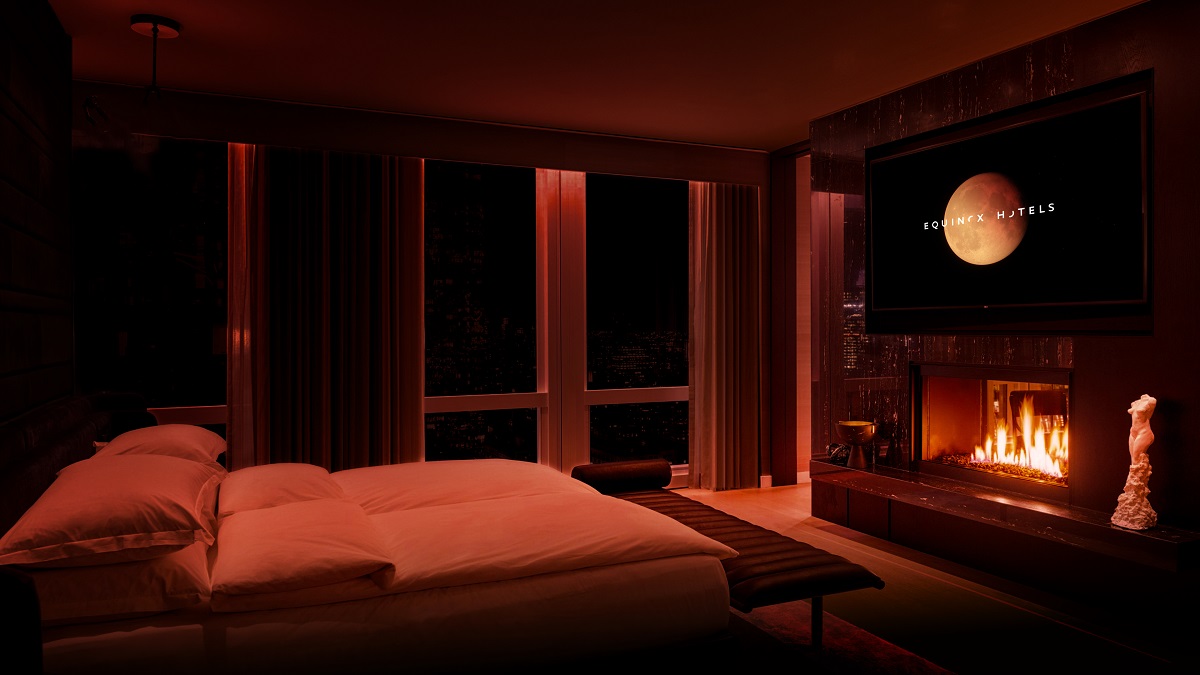
hotel guestroom with white mirror equinox logo on screen above fireplace

Image credit: White Mirror / Equinox

Designing the nervous system

When we design for sleep, we are designing for the most intricate system of all: the human nervous system. Every sensory cue – light, sound, texture, temperature – is a form of communication. The question is whether that communication is supportive or disruptive.

Inside Equinox Hotel New York, in collaboration with Dr. Matthew Walker, we translated the latest sleep science into a living experience. Guests follow a carefully sequenced journey: guided breathwork enhanced by warm-spectrum red and amber light; an audio landscape calibrated to lengthen exhalations and reduce heart rate variability; and a wakescape that replaces alarms with gradual, sensory reawakening. The goal was simple – align the environment with the body’s natural circadian rhythm. The result is a deeper rest, smoother wakefulness and recovery that extends beyond the night.

Such interventions may sound futuristic, but their roots are ancient. Warm light mimics the glow of fire. Rhythmic sound echoes the heartbeat. These primal signals tell the body that it is safe enough to surrender. When design remembers our biology, the body remembers how to sleep.

immersive light installation for the architecture of sleep

Image credit: Arianne Amores / Lupuna

Experience as medicine, explained

Architecture becomes powerful when it transcends the visual to engage the visceral. At Therme Euskirchen in Germany, the Lupuna Forest Bathing installation and experience produced by immersive collective Marshmallow Laser Feast and White Mirror compresses 24 hours of the Amazon rainforest into a 24-minute immersive journey. Guests lie on vibroacoustic loungers as light, scent, and temperature shift around them in synchrony. The experience synchronises body and brain into a meditative state – heart rates slow, breathing deepens, anxiety drops.

Projects like Lupuna prove a simple truth: experience itself can be therapeutic. We can design spaces that regulate physiology the way medicine regulates chemistry.

At Outernet London, with Pixel Artworks, we tested this principle in Room to Breathe – an immersive installation that taught visitors to calm their nervous systems through space itself. Light sequences expanded and contracted like lungs; spatial sound wrapped the listener in a slow, rhythmic cadence. In independent studies, over 84 per cent of participants reported measurable relaxation. This evidence proved that it was not an illusion.

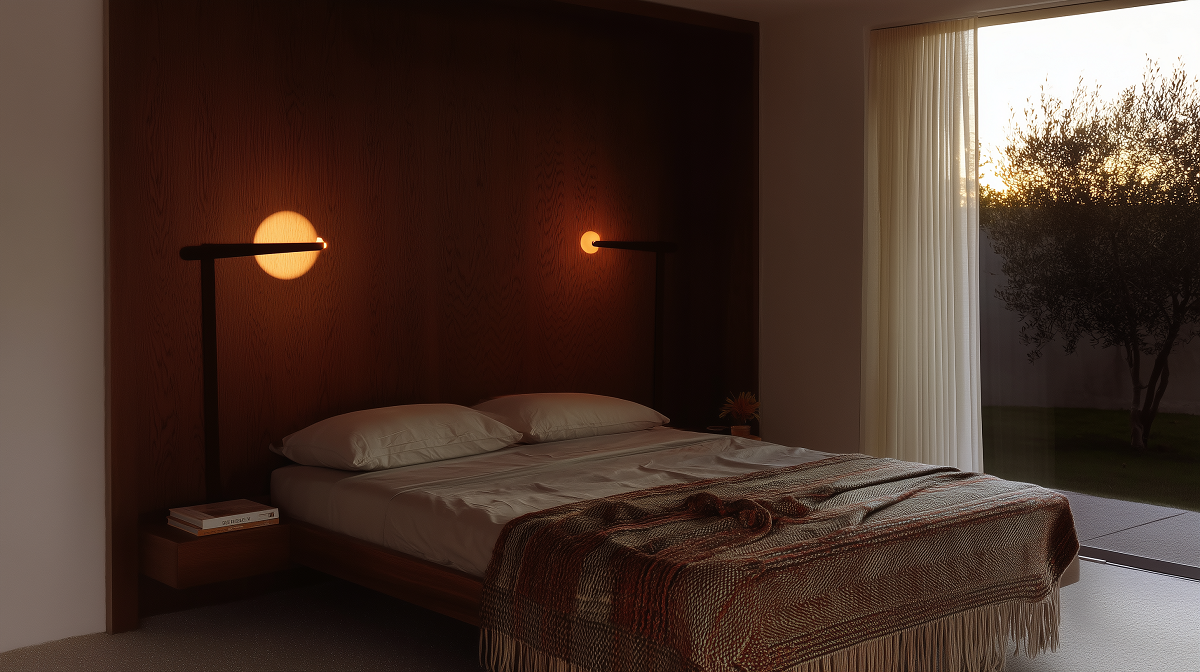
the future laboratory image exploring the architecture of sleep

Image credit: White Mirror

The new measure of design

For decades, the success of a space was measured by square footage, star ratings or generic visual appeal. But the new measure is transformation – the physiological, emotional, and cognitive shift a person carries home after they leave.

In hospitality, this marks a profound shift. I believe the next wave of luxury will be invisible: the feeling of your nervous system being quietly re-tuned after a long journey, the sense that the air itself is helping you breathe easier. Properties that soothe and regulate their guests’ biology will earn loyalty deeper than brand. Because the body always remembers how it felt.

Designing a better night’s sleep

To design for sleep is to design for the most vulnerable, restorative and essential of human states. It is to acknowledge that rest is an active recalibration, one that architecture and mise en scene of a space can profoundly influence.

The architecture of sleep is an act of empathy. It recognises that wellbeing is not a luxury amenity but a biological necessity; that design, at its highest form, is a healing art.

As we move from intuition to evidence, from aesthetics to neuroscience, we begin to see architecture not as backdrop but as medicine – a living, breathing extension of our own nervous system.

Main image credit: White Mirror / The Future Laboratory

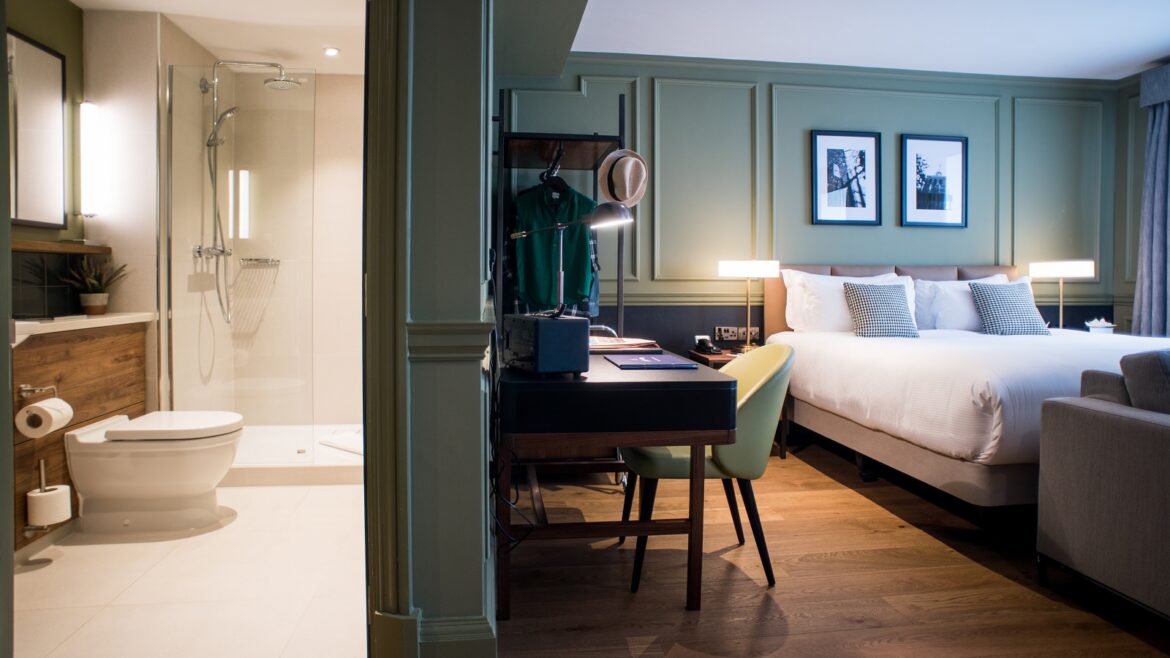
guestroom and bathroom in the Counting House - design by Sibley Grove

Tackling embodied carbon in hotel interiors

1024 640 Guest Author

A GUIDE TO HOTEL DESIGN PT 96

Jeremy Grove, CEO & Design Director at Sibley Grove dives into the details of how we are – or should be – tackling embodied carbon, and why it is one of the most important challenges on the hotel design agenda.

Whilst ‘embodied carbon’ might not be the sexiest of topics, the fact I’ve enjoyed animated discussions about it at nearly every design industry event I’ve attended this year, shows that the challenge of how to measure and tackle embodied carbon in supply chains is being taken seriously. Embodied carbon is the carbon dioxide (CO₂) emissions associated with materials and construction processes throughout the whole lifecycle of a building or product. For hoteliers, project managers and designers alike, understanding this concept is vital to reducing environmental impact, cutting costs and creating spaces with longevity. In hotel interiors, where enormous amounts of materials are consumed for relatively short-term aesthetics, this carbon footprint can be staggering.

The Average Hotel Room = 385 Flights to New York

Whilst there is no universally agreed figure for an average UK hotel room over a 20-year period, a study by AECOM and the UKGBC suggests a new-build hotel might have somewhere between 800 and 1,200 kg CO₂e per m² of embodied carbon. For an average UK hotel room of 30–35 m², this equates to 24,000 to 42,000 kg CO₂e per room at build stage. If we consider that hotels are often refurbished every 7 to 10 years, with interior fitouts accounting for up to 300 to 500 kg CO₂e per m² per refurbishment, over 20 years a new built hotel, with two refurbishments could embody anywhere between 42,000 and 77,000 kg CO₂e per hotel room. To give some context, 77,000 kg CO₂e is the equivalent of 385 one-way flights from London to New York. That’s a significant amount of carbon which the industry must look to reduce, not only from an environmental impact point of view, but also because savvy customers are increasingly expecting the hospitality industry to toe the line when it comes to transparent sustainability policies.

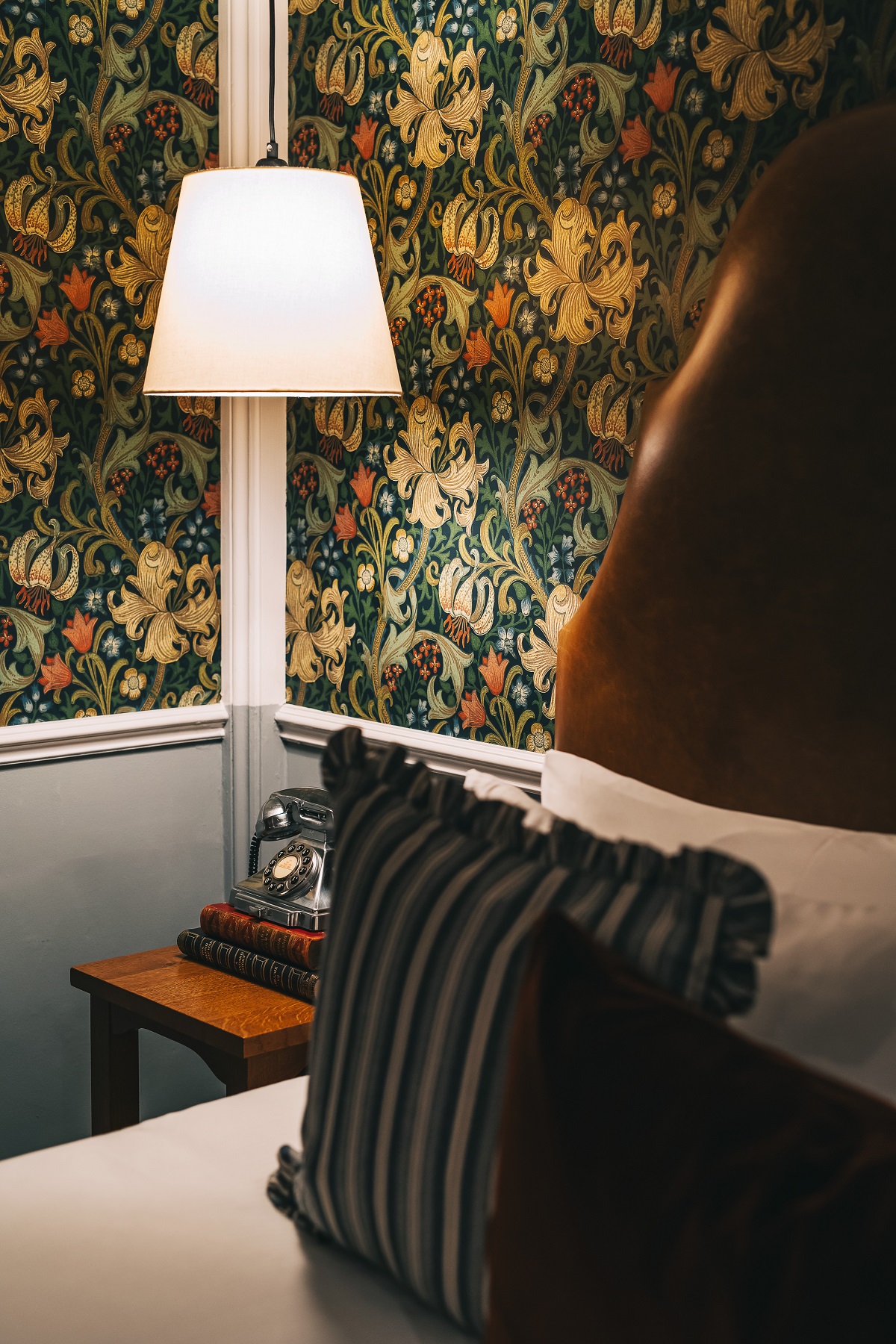
bed detail against floral wallpaper and bedside lamp in Drayton Court

Image credit: Annabel Staff / Drayton Court

Circular Design Inevitably Reduces Carbon

Hotel furnishings, fixtures and fittings are more regularly replaced than most other large buildings, so embodied carbon is a real issue here. Needless to say, interior design matters a lot when it comes to reducing these numbers. At Sibley Grove, we adopt a Design for Disassembly approach. This means designing interiors, furniture and fittings with circularity in mind: easy to take apart, reuse, repair or recycle. Circular design doesn’t just reduce emissions; it creates economic value. Materials can be re-sold, re-used or remanufactured, saving waste and reducing future capital expenditure. It’s one of those rare win-wins in life – considering a hotel build and fitout through the lens of embodied carbon will inevitably lead to cost savings in the long term.

Designing with Longevity in Mind Reduces Carbon + Cost

As with most things, there are a lot of lessons to be learned from the past, when buildings and furnishings were made to last decades, even centuries. We’re currently transforming a neo-gothic building into a luxury hotel and it’s fascinating to see how many of the beautifully appointed features have stood the test of time. We’re restoring and upgrading many of them with the intention that they will last another century without needing to be replaced. Design thinking that considers the longevity of spaces rather than rapid turnover is a simple and fundamental principle in reducing carbon. And often gives a far superior result – a timeless and beautifully crafted tap may cost more upfront, but it will look and feel far, far more elegant that a cheaper bathroom fixture designed to be ripped out at the next refurb.

hotel dining room designed by Sibley Grove

Image credit: The Chamberlain Hotel

Keep Asking Suppliers for Environmental Product Declarations (EDPs)

As interior designers, finding ways to understand the embodied carbon in a supply chain has often proven tricky. We’ve partnered with manufacturers like Kaldewei, whose Environmental Product Declarations (EPDs) provide precise embodied carbon data. This transparency empowers us to make informed, low-impact material choices for a project from the outset. EDPs are something we are increasingly asking new suppliers for. Not every supplier we work with has the capacity or knowledge to implement this scheme, but I still ask because the more we use this as a metric for choosing materials, the more likely it is that suppliers will make that investment – and the more likely this is to become an industry norm. In terms of sustainability, I’ve witnessed that incremental steps are key in moving our industry towards a more sustainable and responsible position.

Main image credit: Annabel Staff / The Counting House

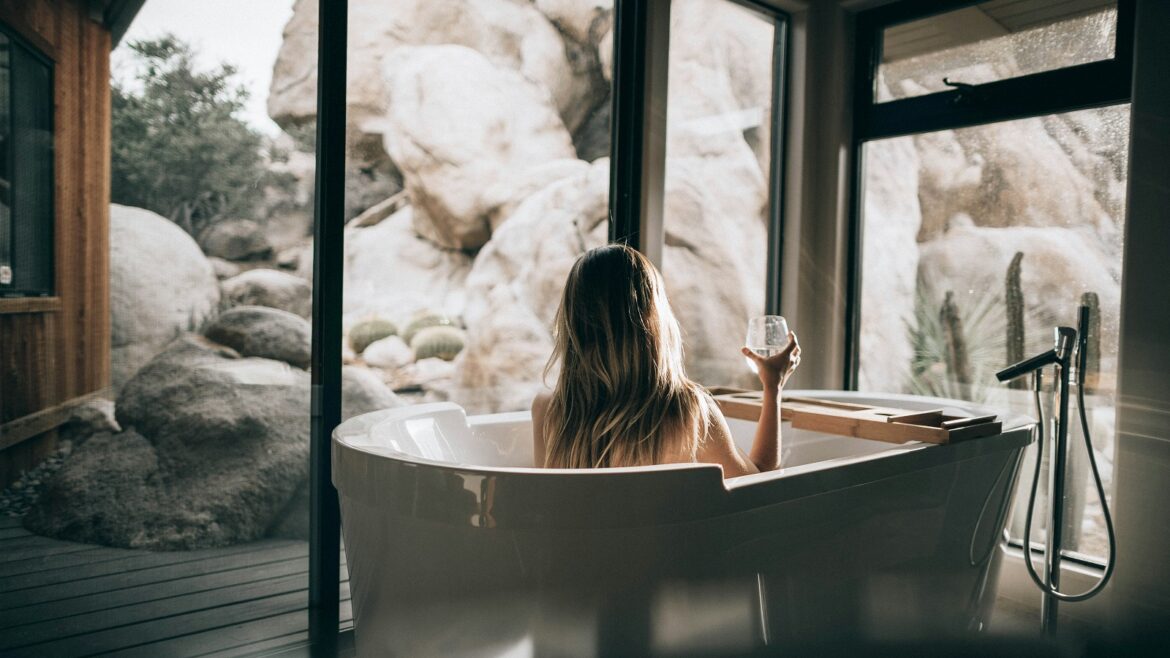
person in luxury soaking bath with a glass of wine and surrounded by natural rock

Wellness travel: the other side of the checklist

1024 640 Guest Author

A GUIDE TO HOTEL DESIGN PT 95:

Diana Goderich, Brand Strategist at WeWantMore talks us through the reality of retreats and rejuvenation, while exploring the opportunities this wellness boom is presenting to the hospitality industry.

Open a magazine, scroll through Instagram, and chances are your feed will tempt you with a new wellness escape: sleep retreats promising to reset your body clock, digital detox camps offering freedom from screens, night-time-only programs designed to harness circadian rhythms. Wellness travel is booming, and wellness trips are predicted to grow by 14.7% by 2027 (Global Wellness Institute 2024). It’s hard not to be seduced by its promise because there seems to be something perfectly designed just for you – no matter whether you identify as a gym rat or a skincare devotee.

Diana Goderich, Brand Strategist at WeWantMore

Image caption: Diana Goderich, Brand Strategist, WeWantMore | Image credit: WeWantMore

The appeal is undeniable. At its best, wellness travel offers rejuvenation, an escape from everyday stressors, the churn of daily demands, and the looming threat of burnout. But once we’ve acknowledged its potential, we also need to ask the harder question: what does the culture of wellness say about our lifestyles, and what role do brands play in creating and supporting it?

Escaping the Everyday Churn

Today, we are spending thousands and flying to far-flung parts of the world to address our basic human needs: to rest, breathe, and unplug. Yet these things are all freely available at home – at least in theory. The reality is that overwork, stress, and pervasive hustle culture drown them out. According to Mercer, 82% of employees worldwide are at risk of burnout (Global Talent Trends 2024). So we are travelling to repair what daily life has broken.

Siripan Deesilatham, visiting lecturer at Royal Holloway University of London, notes in a 2024 study that the reasons behind wellness travel – stress, overwork, lack of rest – are closely tied to quality of life and lifestyle constraints. It is paradoxical that we buy packages that promise balance, when it is our own lifestyles – hyper-accelerated, over-connected, relentlessly optimised – that push us so far from equilibrium in the first place.

Retreats tackle sleep because our everyday rhythms deny it, and technology exacerbates the effects. In the US, over 75% of people (AASM 2023) report losing sleep because of digital distractions. So we seek solutions, signing up for programs to help us disconnect from devices that have colonised our free time.

But is wellness travel less about access to resources and more about the inability to claim them in everyday life? Are we actually addressing and healing unhelpful habits, or just putting a temporary patch over a systemic issue? While studies show that wellness travel provides relief and a reset, the effects are temporary and there is little evidence of sustained impact (Frontier 2023).

person on edge of infinity pool looking out to sea

Image credit: Alex Bertha / Unsplash

The Productivity Trap

Ironically, the pursuit of wellness can generate its own anxiety. As wellness culture continues to grow and permeate every aspect of our lives, its shadow side becomes ever more apparent. Instead of offering relief, wellness culture can feel like indulgent navel-gazing, leaving people with a sense of failure rather than improvement. The very act of seeking care becomes another area for stress and comparison—not liberating and empowering, but debilitating. Holidays, once a reprieve from routine, risk becoming yet another productivity exercise. Rest itself is understood through metrics and performative signalling.

A digital detox not only becomes a recovery from anxiety-inducing tech, but also a badge of honour – proof of discipline and moral elevation. The practice of quantifying biological functions is already underway. Sleep specialists have coined the term orthosomnia to describe the stress caused by worrying about your own sleep quality. Yet sleep retreats promise measurable improvements. Biohacking camps package longevity as a competitive advantage. Digital detox camps market themselves as a few days of liberation from technology but can create guilt and inadequacy when participants struggle to disconnect. Even when done properly, many report feelings of anxiety and isolation during such retreats (Salepaki et al. 2025).

In this discourse, wellness travel itself feels like both a part of the solution and a symptom of the underlying societal condition. It promises respite but reinforces the very logic we’re trying to escape: a culture that struggles with one iota of unproductive time.

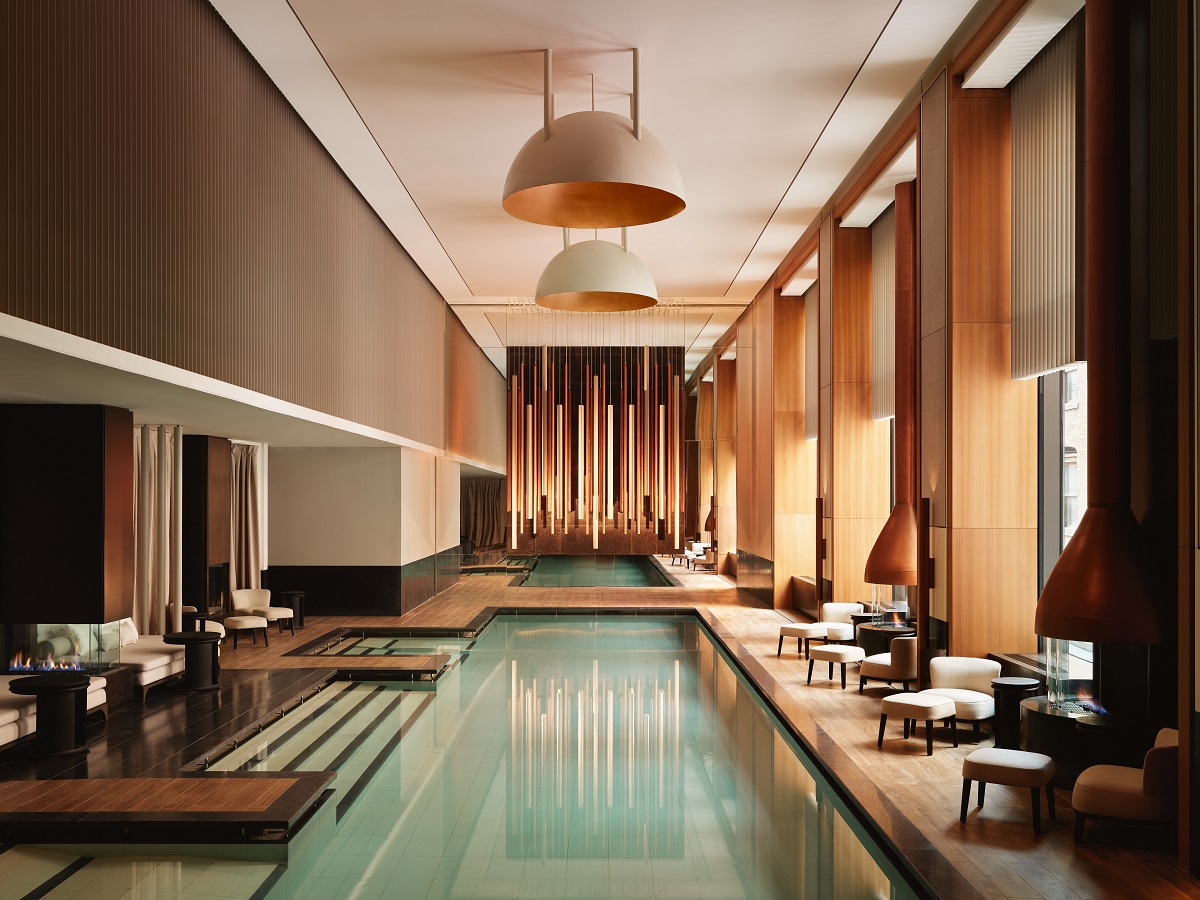
Aman New York - Spa Pool.

Image credit: Aman New York

Some destinations push back against this trend. Places like Eremito in Italy or wellness programming at Aman position their offering not just around quantifiable optimisation but around treating symptoms more deeply. Their programs follow a mind-body-soul approach, combining multiple modalities with immersion in the physical setting and local culture. By blending traditional practices with the surrounding environment, they create unique ‘pathways to longevity.’ Exceptions like these further highlight how unusual it has become to seek wellness simply for its own sake – and not as part of a productivity checklist.

The Sustainability Paradox

If we think about the sustainability of wellbeing, we discover a clear contradiction between what we are told is best and what is happening. Travelling halfway across the world to “detox” undermines the wider notion of wellbeing we claim to pursue. With tourism overall – especially flights – accounting for roughly 9% of global carbon emissions (Nature Communications 2024), what does it mean to talk about balance, care, and repair while simultaneously fuelling carbon-intensive behaviours that threaten planetary health?

So is wellness travel, as a category, harming the very notion it claims to protect: sustainable living and planetary wellbeing?

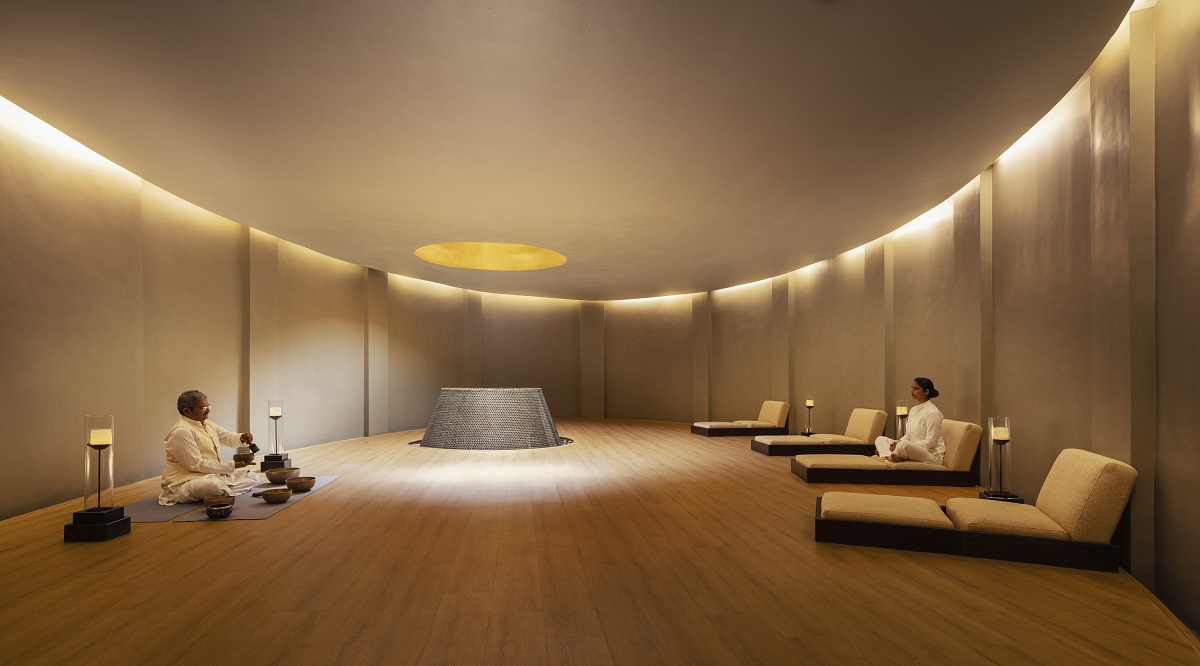
Dhayana meditative circular space

Image credit: Dharana at Shillim

The Opportunity for Hospitality Brands

The category continues to grow exponentially – valued at 651 billion US dollars in 2022 and projected to reach 1.4 trillion by 2027 (Global Wellness Institute 2024) – and the stakes could not be higher. But there is an opportunity to shift the narrative away from quick fixes and checklist-style optimisation toward experiences that genuinely nurture sustainable rhythms of living. It can reimagine wellness not as a one-off fix but as something continuous: an ongoing practice of care that outlives the retreat itself.

For travellers, this means reframing the purpose of wellness escapes—not as luxury commodities to repair the damage of unsustainable routines, but as catalysts for lasting and ongoing change. For brands, it means resisting the lure of gimmicks and leaning into design principles that encourage real restoration—the kind that extends beyond the retreat and builds enduring relationships.

There are already examples showing this is possible. Evolute Institute in the Netherlands offers psychedelic/psilocybin retreats combined with professional coaching. Programs include preparatory sessions to define the focus of the retreat, followed by a two-month integration phase to process and embed learnings into daily life—expanding the impact well beyond the program. Kripalu Center for Yoga & Health in Massachusetts offers time for slowness and reflection, as well as choice in participation, rather than a rigid schedule. One of the available workshops, ‘Integration: Taking Kripalu Home,’ is aimed specifically at planning how to bring insights, practices, and learnings back into daily life.

floating in the lit up pool at Aire Spa London

Image credit: Sparcstudio

Things for brands to consider:

– Design for slowness: Create environments that prioritise unstructured time and quiet, without layering on excessive programming.
– Integration over interruption: Equip travellers with practices they can carry into everyday life, rather than offering one-off detoxes whose effects vanish on return.
– Beyond luxury framing: Position wellness experiences as accessible and ongoing human needs, not elite indulgences.
– Long-term journeys: Encourage repeated connections, whether by returning to the same place or curating linked experiences across locations, to sustain benefits over time.

These opportunities go beyond luxury wellness stays. They create possibilities for hospitality, travel, and booking companies to integrate wellness into their offerings, take proactive steps themselves, and support people’s wellbeing journeys across different places and moments in time.

Reclaiming the Meaning of Travel and Care

In the end, wellness travel reflects both our hunger for restoration and our inability to claim it. Some of us genuinely need the container of travel and structured time away to break the patterns that feel impossible to shift at home. But unless we challenge the deeper dynamics – the commodification of care, the productivity logic disguised as healing—we risk reducing wellness travel to another industry of pressure.

Hospitality brands are uniquely positioned to bridge this gap. They are in a prime position to redefine wellness travel – not as a brief escape for temporary recovery, but as a sustainable way of life that integrates into daily living. For brands bold enough to step away from the checklist, and for travellers willing to reimagine the purpose of their journeys, the opportunity lies in creating rhythms of life that no longer need fixing.

Main image credit: Roberto Nickson / Unsplash

hotel lobby design - OCCA explores sustainable surface materials

An (unconventional) guide to genuinely sustainable surface materials

1024 640 Pauline Brettell

A GUIDE TO HOTEL DESIGN PT 94:

In an era where the term ‘sustainable’ has been diluted by overuse and greenwashing, OCCA’s approach to sourcing materials stands out as a pillar of integrity. Studio Founder and Principal Kate Mooney, along with Purchasing and Procurement Director, Karen Moon, share their thoughts on genuinely sustainable surface materials…

OCCA has built a reputation for creating narrative-led hospitality spaces that marry cutting-edge design with meaningful environmental practices. Founder and Principal Kate Mooney, alongside Purchasing and Procurement Director, Karen Moon, has spotlighted a selection of unconventional eco materials the studio believes will redefine sustainability in design.

Mooney explained the philosophy underpinning their selections: “The challenge today is identifying materials and solutions that genuinely live up to the promise. At OCCA, we rigorously evaluate new materials to ensure they meet the demands of our design vision and our clients’ operational needs while delivering real environmental benefits. These materials are solutions we feel confident integrating into projects without compromise.”

hotel lobby designed by OCCA with different layers and surface treatments

Image credit: OCCA

Repurposing food waste in design

To support a hospitality concept for a global brand, OCCA researched the possibility of products made from food waste – a new use of surplus resources that would otherwise contribute to global waste problems. More specifically, reusable food containers made from repurposed food waste. “These containers represent a closed-loop approach to sustainability,” Moon explains. “Not only are they made from discarded materials, but they’re also durable and endlessly reusable, which is key to reducing single-use plastics in the hospitality industry.”

Beyond containers, furniture is also being reimagined through the lens of food waste. For example, feature tables and chairs manufactured from repurposed agricultural by-products. “The craftsmanship and durability of these pieces prove that waste can be transformed into something beautiful,” Mooney adds. “It’s this kind of material innovation that challenges perceptions and elevates the conversation around sustainability.”

Fabrics from unexpected origins

Eco-conscious textiles have become a focal point for OCCA, with materials derived from milk and fruit waste leading the charge. Uniforms made from milk waste are one example. They use biotechnology to turn milk into sustainable fibre that can be used to make clothing, medical supplies and packaging. “This isn’t just a gimmick,” Moon clarifies. “The fibres are soft, breathable and durable, making them ideal for high-traffic hospitality environments. Plus, they offer an alternative to synthetic fabrics that rely on fossil fuels.”

Similarly, textiles made from pineapple leaves – an agricultural by-product often discarded – are bringing new life to soft furnishings and accessories. “What excites us about pineapple textiles is their versatility,” Mooney notes. “They can be used in everything from wall panels to upholstery, creating opportunities to incorporate eco-conscious materials in striking, tactile ways.”

render of interior design scheme in naturals and neutrals

Image credit: OCCA

Nature-inspired leather alternatives

The search for sustainable alternatives to traditional leather has unearthed a truly groundbreaking option: leathers made from mushrooms. “Mushroom leather is a gamechanger,” says Mooney. “It offers the luxurious look and feel of traditional leather, but with a fraction of the environmental impact. It’s biodegradable, cruelty-free, and incredibly durable.”

OCCA sees this material as a perfect fit for high-end interiors, particularly in furniture, headboards, and decorative finishes. “It allows us to deliver the level of sophistication our clients expect while staying true to our commitment to sustainability,” Moon adds.

render of deck with table and chairs and outdoor furniture

Image credit: OCCA

Outdoor furniture with a purpose

For outdoor spaces, OCCA is turning to furniture crafted from single-use milk cartons, an innovative material that addresses one of the hospitality sector’s biggest waste challenges. “The transformation of disposable packaging into weather-resistant, stylish furniture is a fantastic example of circular design,” says Moon. “It’s a reminder that waste doesn’t have to end up in a landfill – it can be reimagined as something valuable and enduring.”

Authenticity over aesthetics alone

At the heart of OCCA’s material selection process is a deep commitment to authenticity. “We’re not just ticking boxes or chasing trends,” Mooney emphasises. “Every material we propose has been thoroughly vetted – for its environmental credentials as well as its ability to perform in real-world hospitality settings. These are materials we trust. That trust, formed from rigorous research and development, allows us to integrate them into our designs without compromise.”

Moon echoes this sentiment: “Our role in procurement goes beyond sourcing. It’s our responsibility to ensure that every material we specify lives up to the OCCA standard. We believe our clients deserve nothing less.”

A sustainable future for hospitality

As the hospitality industry continues to grapple with its environmental footprint, OCCA’s thoughtful approach to materials sets an inspiring example. By cutting through greenwashing and championing genuinely innovative solutions that spark a deeper conversation, the studio is proving that sustainability and design excellence can go hand in hand. For Mooney, the goal is clear: “We want to create spaces that leave a positive impact on the world. These materials help us achieve that vision, and we’re excited to see how they shape the future of hospitality design.”

OCCA Design is one of our Recommended Suppliers and regularly features in our Supplier News section of the website. If you are interested in becoming one of our Recommended Suppliers, please email Katy Phillips.

Main image credit: OCCA

Tables and lighting in Row on 5 restaurant design by Rosendale design

Light fantastic – the role of lighting in F&B design

1024 640 Pauline Brettell

A GUIDE TO HOTEL DESIGN PT 93:

Dale Atkinson, Founder of interior and architectural design studio Rosendale Design, has recently completed on all three of celebrity chef Jason Atherton’s new restaurant openings. He talks us through the layers of lighting created to lead the diner through the culinary experience…

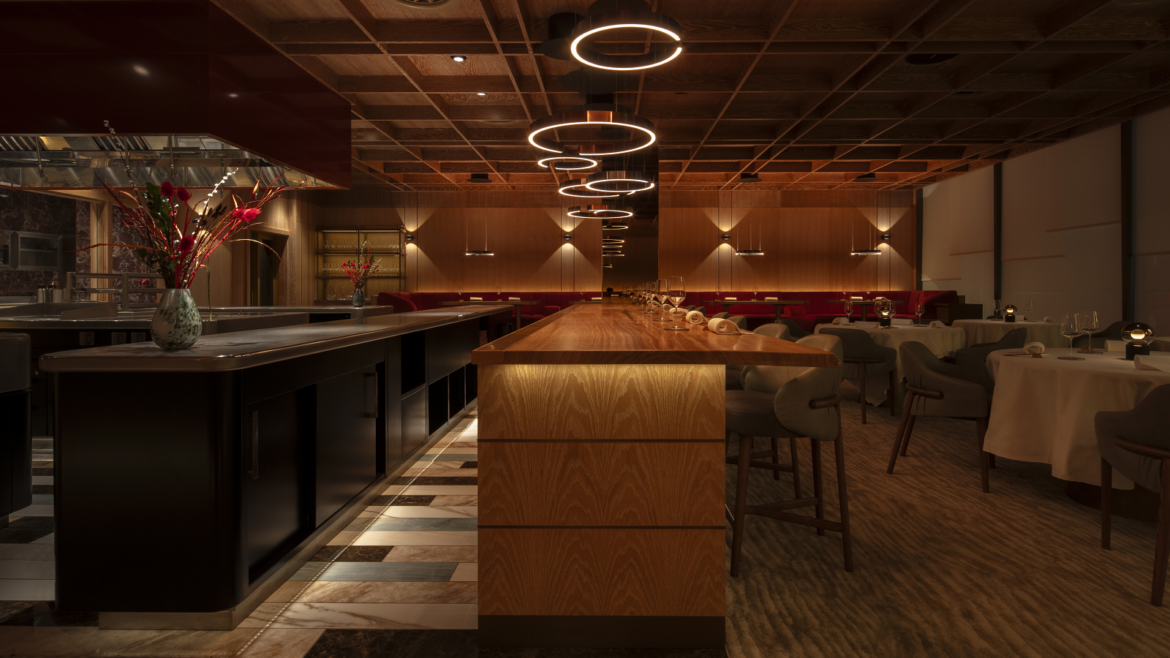
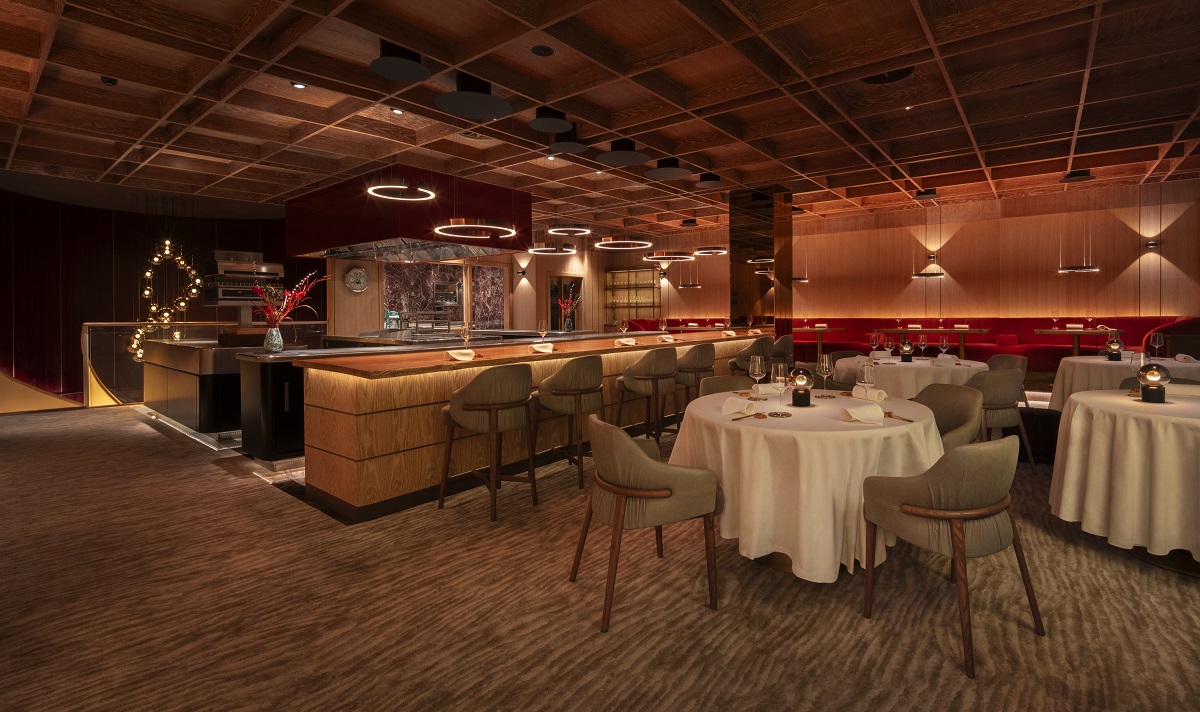
At our most recent opening, Row on 5, lighting was of paramount importance in the scheme because it is used to lead the diner through their culinary experience. The idea with Row, which differs from most restaurants, was that you do not enter and sit in one place for the entirety of the meal but instead are lead on an experiential journey of the senses.

wall lighting and chandelier in Row on 5 restaurant

Image credit: Row on 5

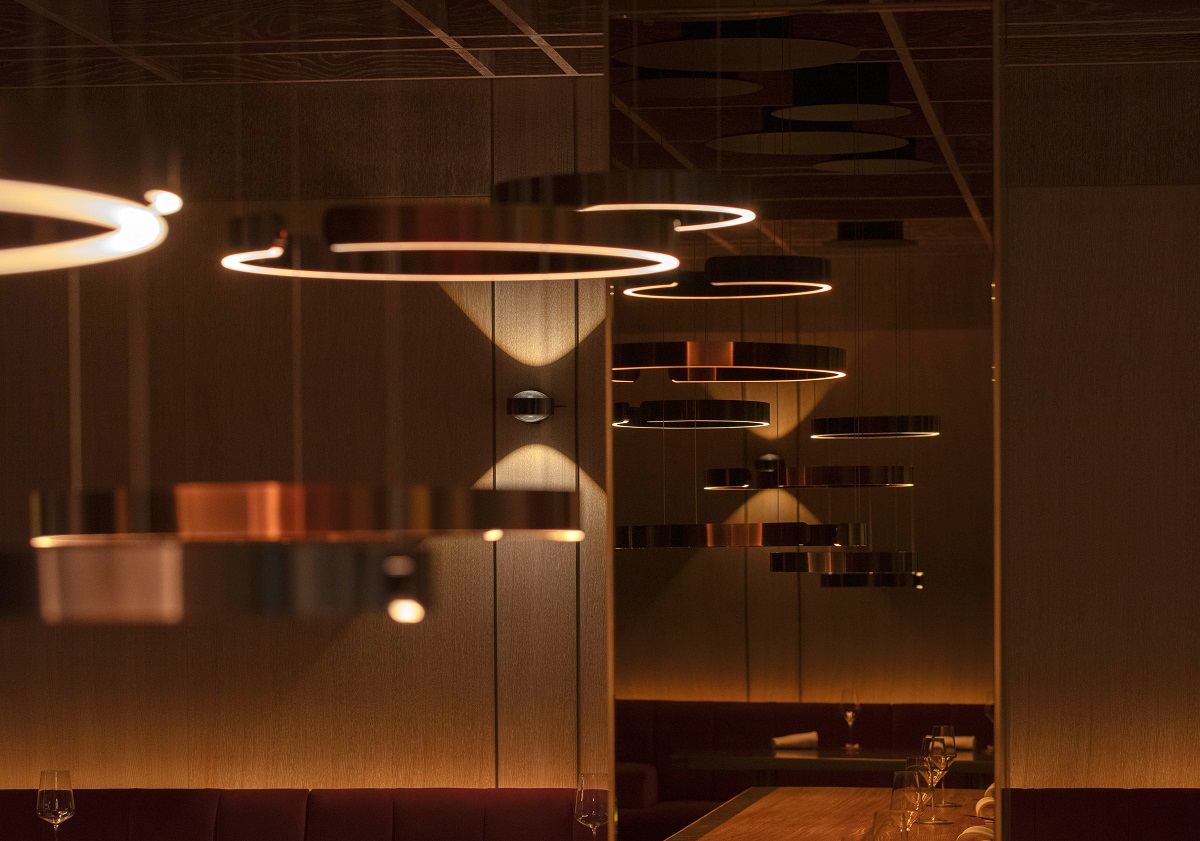
One arrives at the lower ground entrance and is welcomed to the open living room/ kitchen, which is very much like one would find in a residential setting. This immediately disarms the patron of any preconceived expectations. Lighting plays a vital role here as it is soft lighting that is layered from the feature chandelier and cove lighting, to the integral LED lighting in the wine displays. We even included a bioethanol fire to further create a homely atmosphere and of course a bit enchantment.

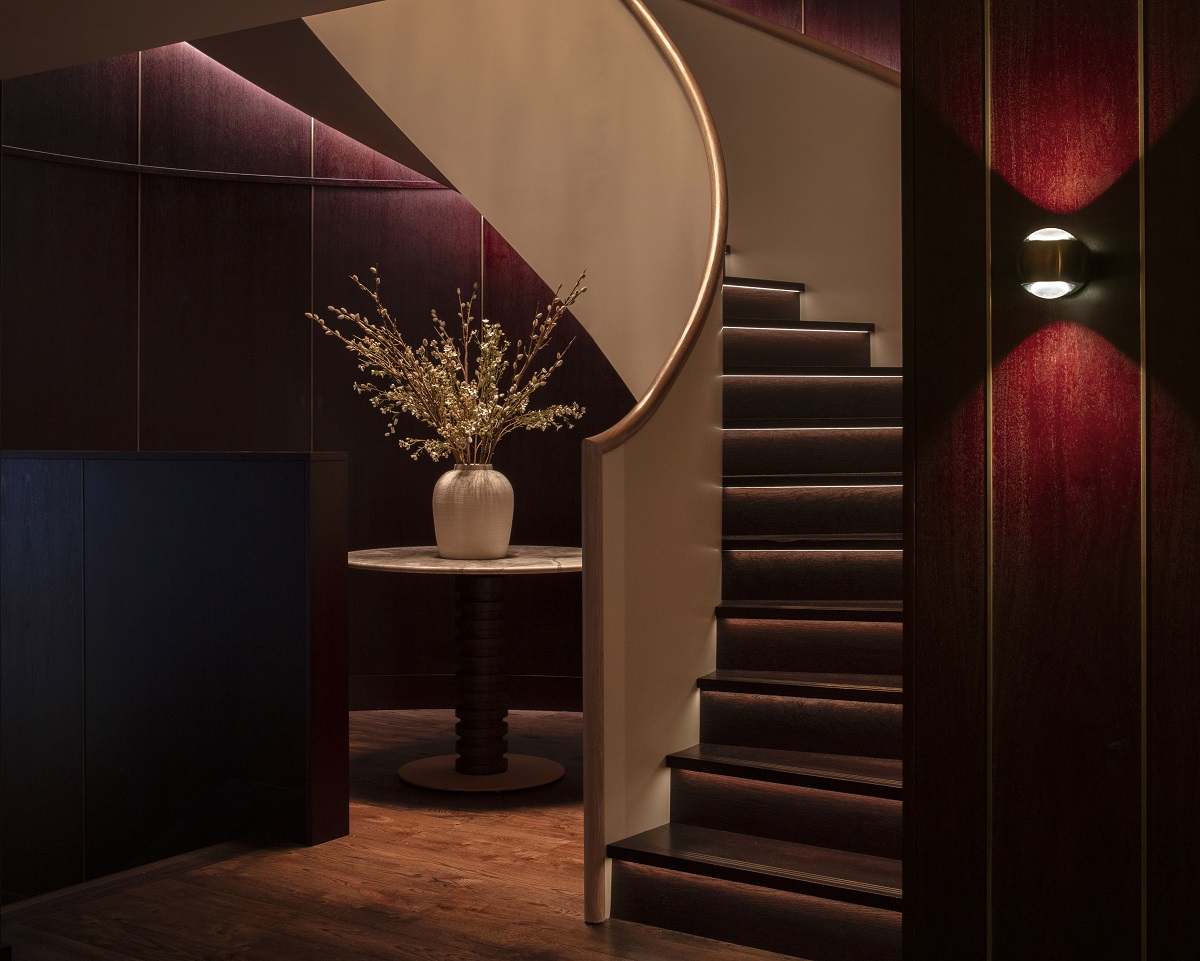
staircase with recessed lighting leading guests into dining room

Image credit: Row on 5

Once the guests have had a couple drinks and some delicious entrees, they are invited up the winding feature staircase that has concealed lighting and creates a beacon that draws one up to the next round. Once upstairs again much of the lighting has concealed sources so one only sees the light effect as opposed to the source which can cause glare. The lighting is again layered in the raised platforms, the skirting of the open kitchen islands and the back of the banquettes. The pendant light fixtures above the table are adjustable and can be raised and lowered with the swipe of a hand (with inbuilt sensors) or the swipe of an app. This allows the chef to lower the pendants above the table that they are about to serve to. Of course, all lighting is high colour rendering, and we recommend using a CRI>95 and no lower than CRI>90.

Row on 5 restaurant design by Rosendale Design

Image credit: Row on 5

Upon finishing their main dishes, the guests are invited to back to the living room, this time a feature light installation above the staircase invites them back down. Reaching the final steps, one will notice that the lighting has again lowered, created a much warmer, romantic setting, really bring the aforementioned fireplace to the fore. The wall lights have been dimmed down bar one, above the aperitif trolley, of course! The diners now experience an even more calming atmosphere and can sink into the extremely comfortable seating and truly unwind indulging in the Petit Fours and probably one too many, ‘one for the roads’.

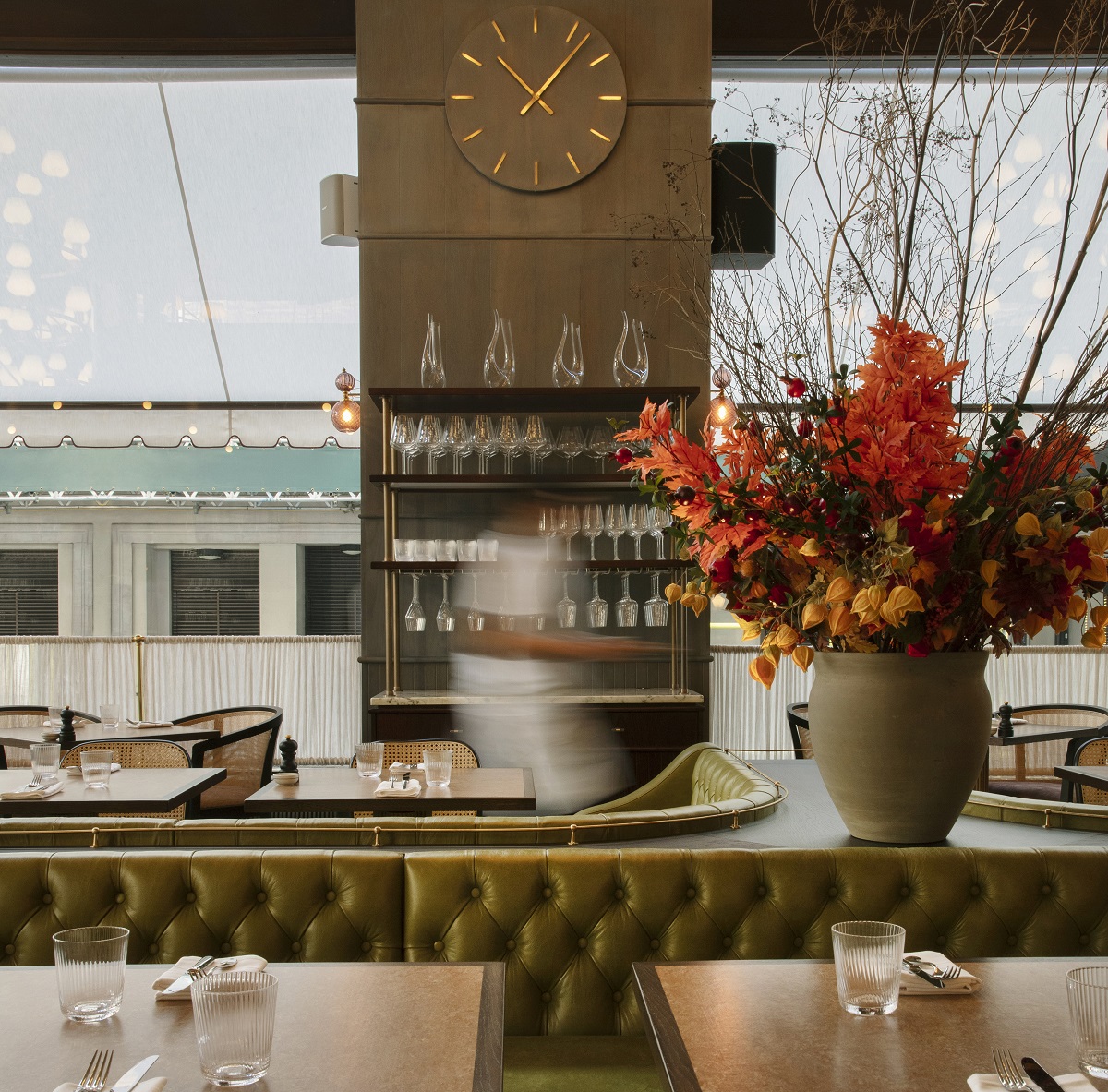
floral arrangement on bar with view across tables to streetside windows

Image credit: Sael London

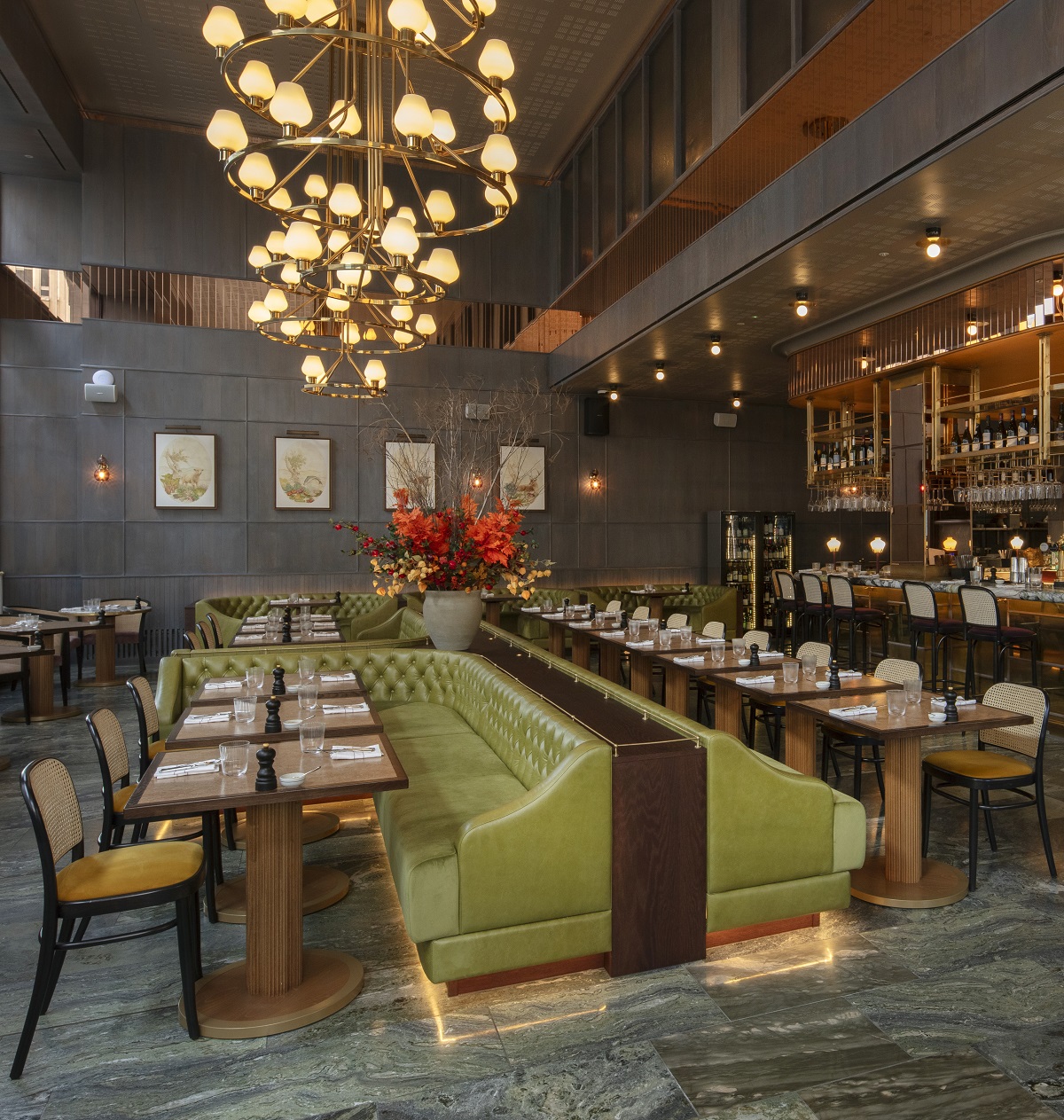
In the design for Sael London, lighting again plays a crucial role but, as it is an all-day dining destination, we also needed to examine and harness the daylight which floods into the space, thanks to the cavernous ceiling height and large dual aspect windows.

interior of restaurant and bar Sael London design by Rosendale Studio

Image credit: Sael London

It was crucial that the restaurant be as welcoming by day as it is by night. Again, layered lighting is key, and each light was considered and light levels individually set according to the time of day. Picture lights above the key artworks that were specifically commissioned for this project help to dictate the mood throughout the day and are supplemented by the light shelves on the waiter stations that create a feature out of the glassware.

The large chandeliers that help to fill the volumous space are always dimmed down and are used only to create a soft ambience where one can escape the hustle and bustle of Piccadilly and indulge in the finest of British produce, by an exceptional British Chef.

tables and bar seating with mirrors and lighting in Three Darlings London

Image credit: Three Darlings

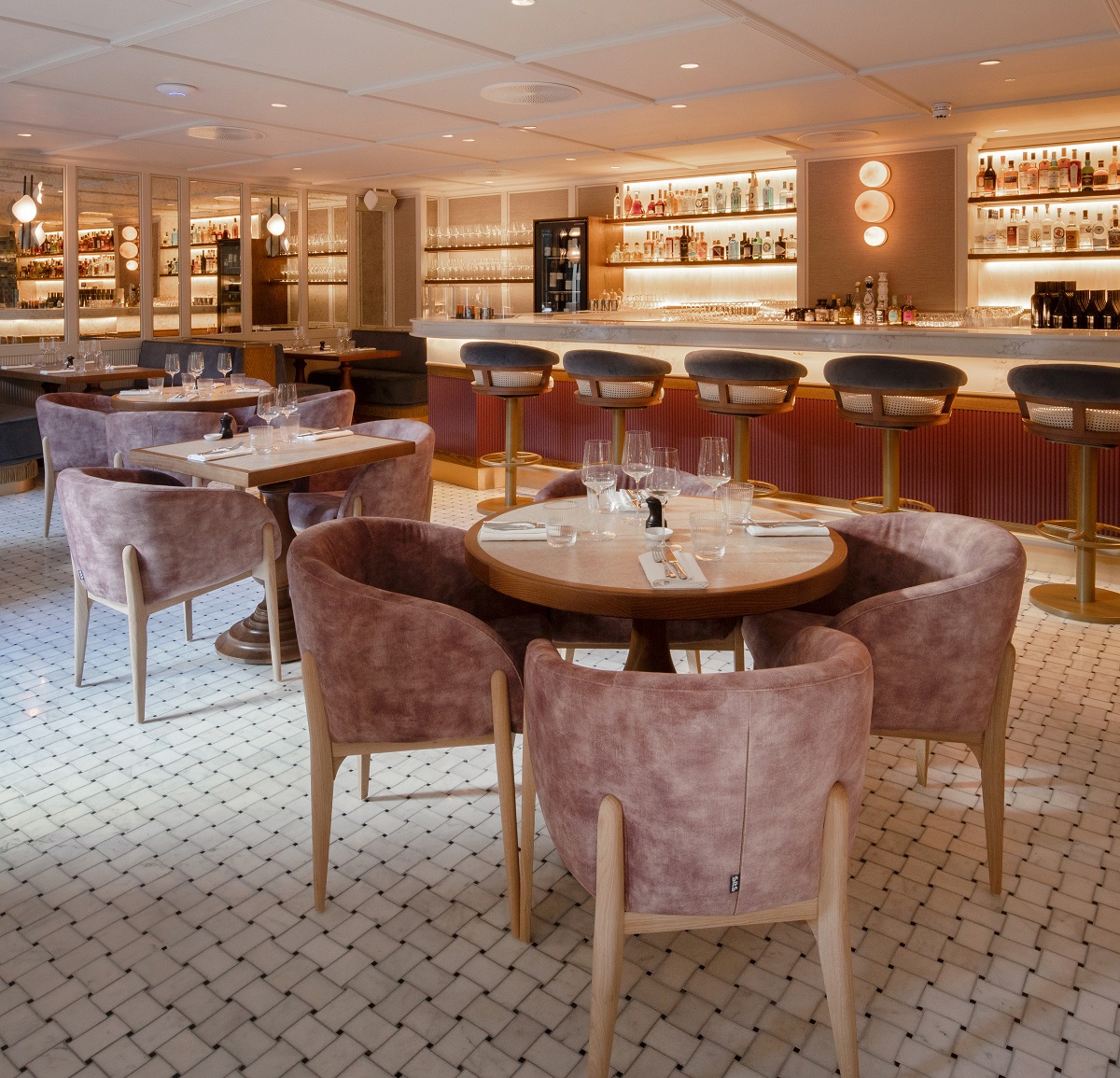
Three Darlings is another all-day diner, where lighting plays such a central role. Here the idea was to maximise the daylight that enters the space by employing light colours and mirrors to help reflect the light into it. Key lighting details were employed such as picture rail lighting to help the space feel more welcoming. Here the bar plays a key role so light was used here to draw people’s attention. The back bar wall is a giant light panel with various bottles in front creating dramatic silhouettes. The open kitchen is another feature where lighting is used to catch one’s attention and highlight the theatre created by the busy chefs expertly plying their trade before your very eyes.

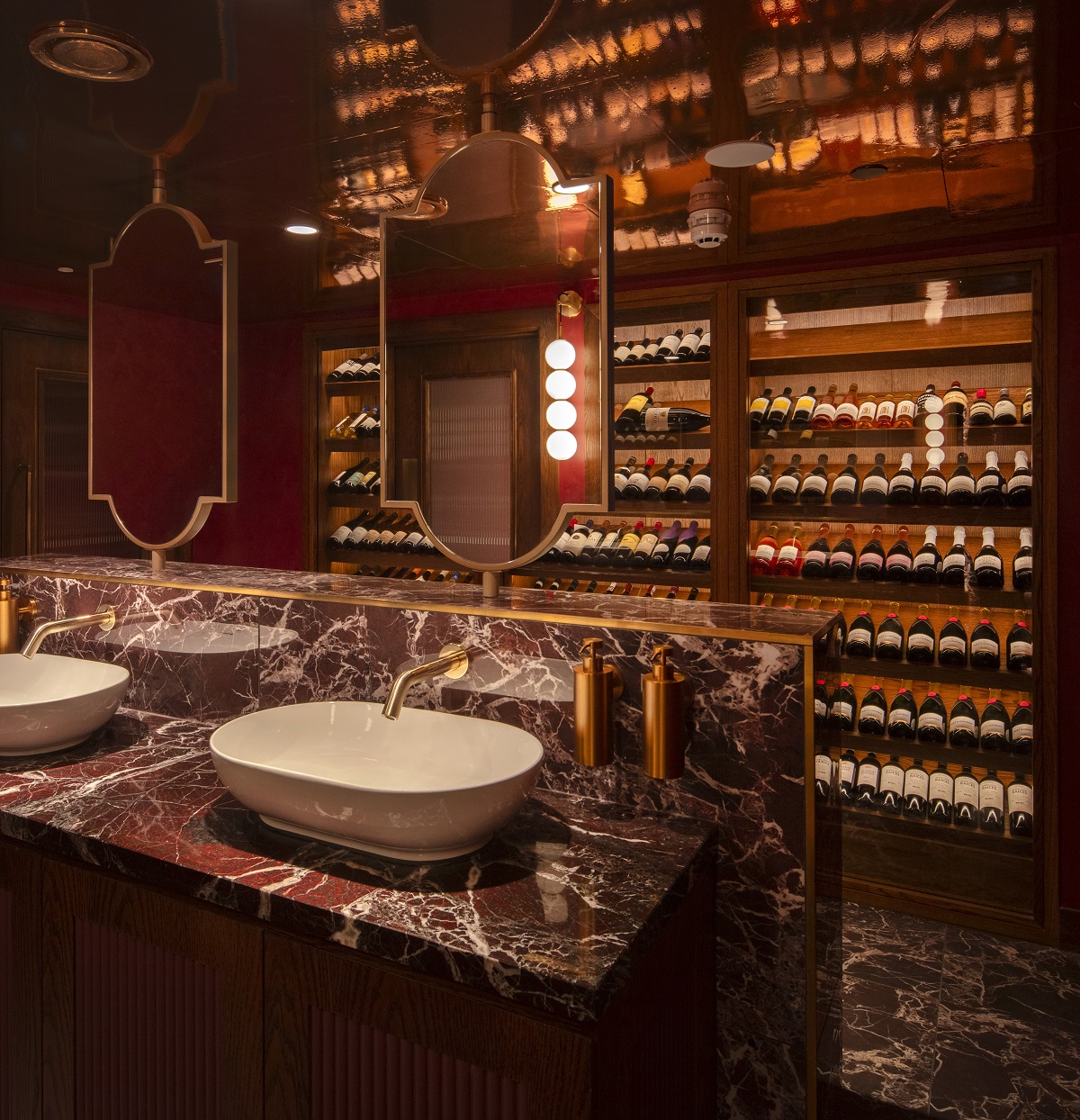
marble vanity in restaurant bathroom with backlit wall into the wine cellar

Image credit: Three Darlings

Downstairs the toilets have an unexpected twist where they are backing on to the restaurant’s wine selection storage. Of course, integral lighting is used here to highlight the bottles and creates a special experience: it is not often one gets to see this within, essentially, the cellar!

Main image credit: Row on 5`