











From hand-stitched heritage to high-tech sustainability, a tour of the Hypnos factory reveals the finer details behind one of Britain’s most respected sleep brands…
Hypnos is one of Britain’s most enduring success stories in luxury manufacturing – fifth-generation, family-run business that has spent over 120 years perfecting the art of handcrafted beds. The brand combines traditional craftsmanship with a forward-thinking approach to sustainability, becoming the world’s first carbon-neutral bedmaker and continuing its journey towards net zero. Today, Hypnos supplies leading hotels, royalty, and global hospitality groups, earning a reputation as one of the most trusted names in sleep.
Last year’s Brit List Awards Headline Partner, Hypnos continues to position itself at the heart of the interiors and hospitality industry. To understand what truly sets the company apart, I stepped inside its Buckinghamshire factory to discover where heritage techniques, innovative materials, and meticulous attention to detail come together to create what many consider ‘the most comfortable beds in the world’ – and what designers can deem some of the most well designed!
Precision at every stage
Inside the factory, the process begins not with springs or stitching, but with data. Every mattress is assigned a unique identity, tracked through tickets, travel numbers, and a sophisticated ERP system. In an industry often associated with mass production, Hypnos takes a different approach: made-to-order manufacturing, where each product is built specifically for its end user.
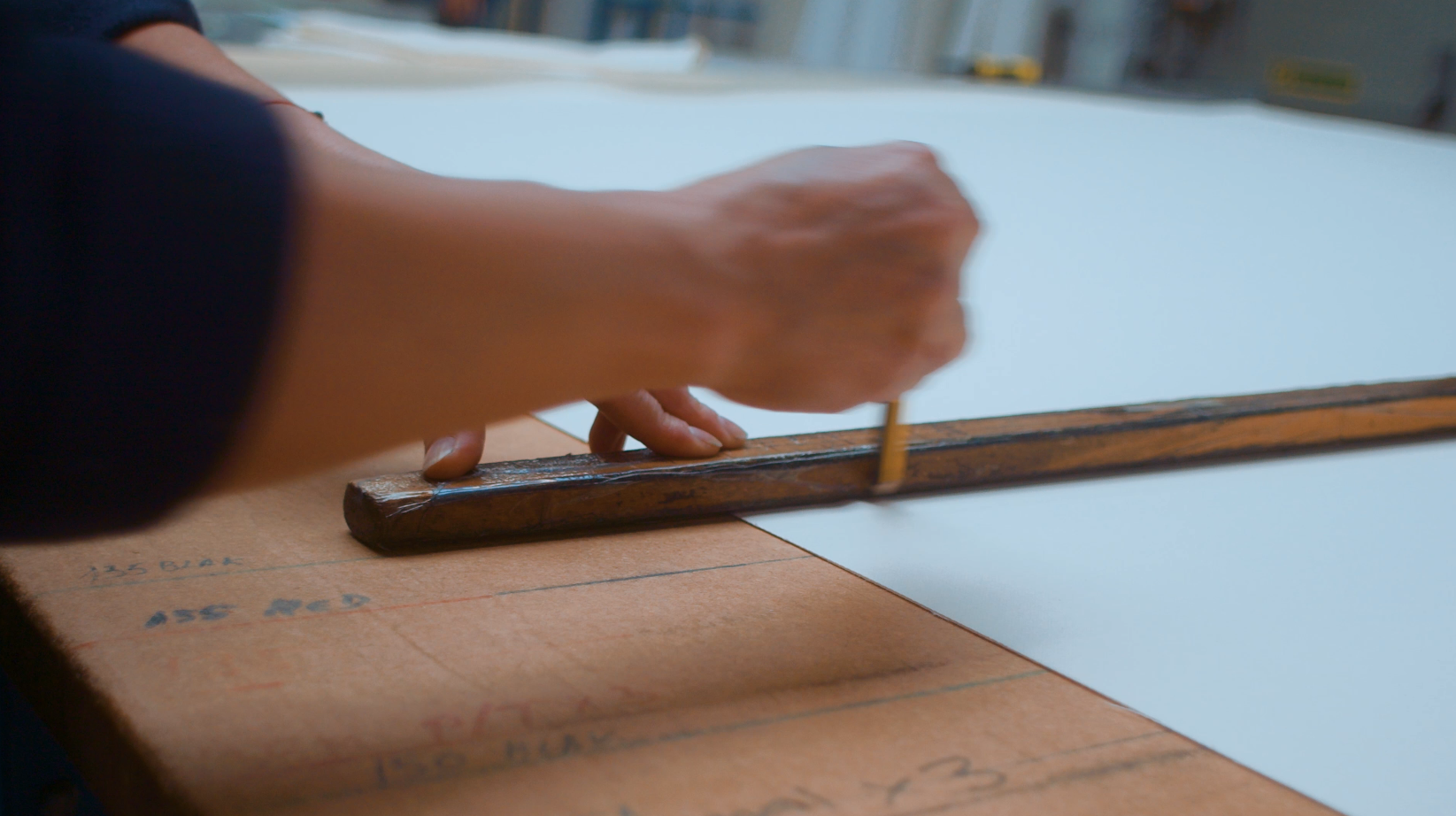
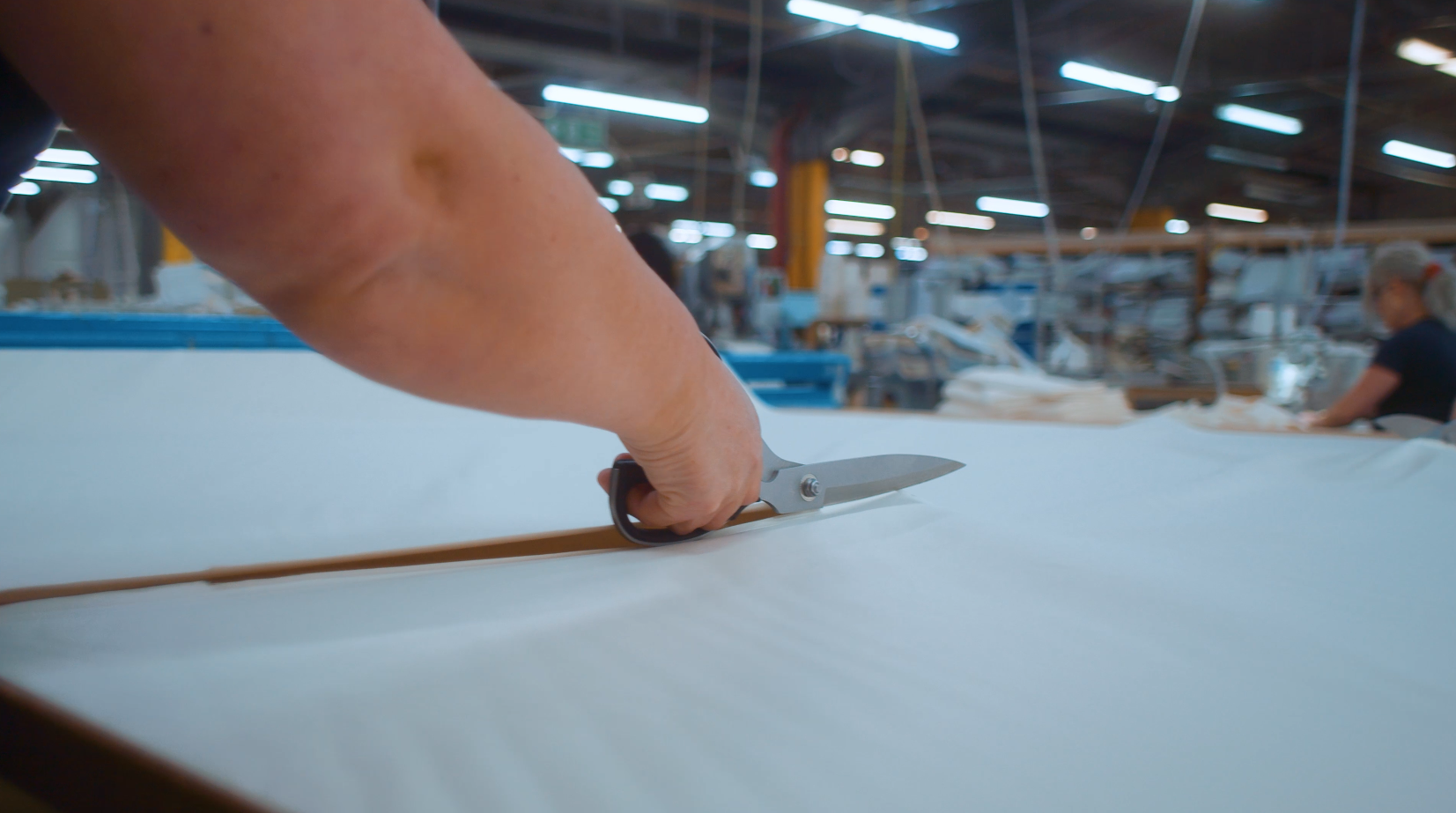
From there, the process unfolds with quiet precision. Fabric is cut manually on large tables, where environmental factors such as humidity and stretch must be carefully accounted for; lighting is also calibrated to reveal imperfections invisible to the naked eye.
In the sewing department, mattress ‘lids’ are assembled and labels are meticulously placed, each one carrying essential information: tension, care instructions, composition, and provenance.
Training here is not rushed. It takes weeks – sometimes months – for staff to reach full proficiency. Skills like tape edging can require up to 20 weeks to master. The emphasis is clear and consistent: quality first.
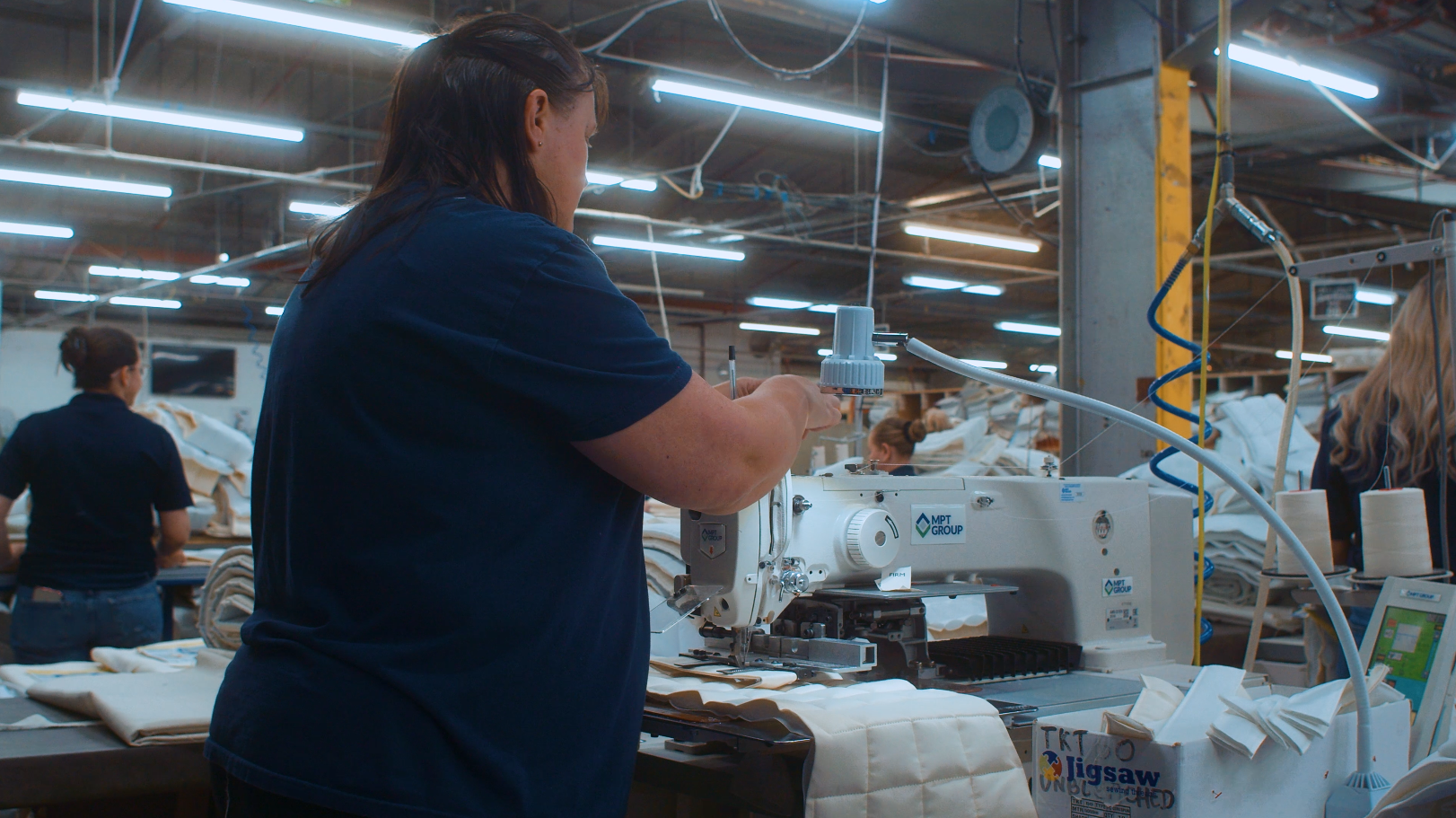
Image credit: Hypnos
Craft meets engineering
As the mattress border takes shape, the process becomes more tactile. Long reels of fabric, nicknamed ‘doughnuts’, are stitched using patterns such as mock stitch and castle stitch, each chosen not just for aesthetics but for structural purpose.
The variations are subtle but significant. Stitch density, size, and pattern all influence how a mattress looks, performs and feels. And while consumers may focus on spring counts, here the narrative is more complex. Comfort, as the team explains, is something of a ‘dark science’ – a balance of materials, layering, tension, and technique. Springs matter, but so do the fibres above and below them, the way they are arranged, and the way the mattress is finished.
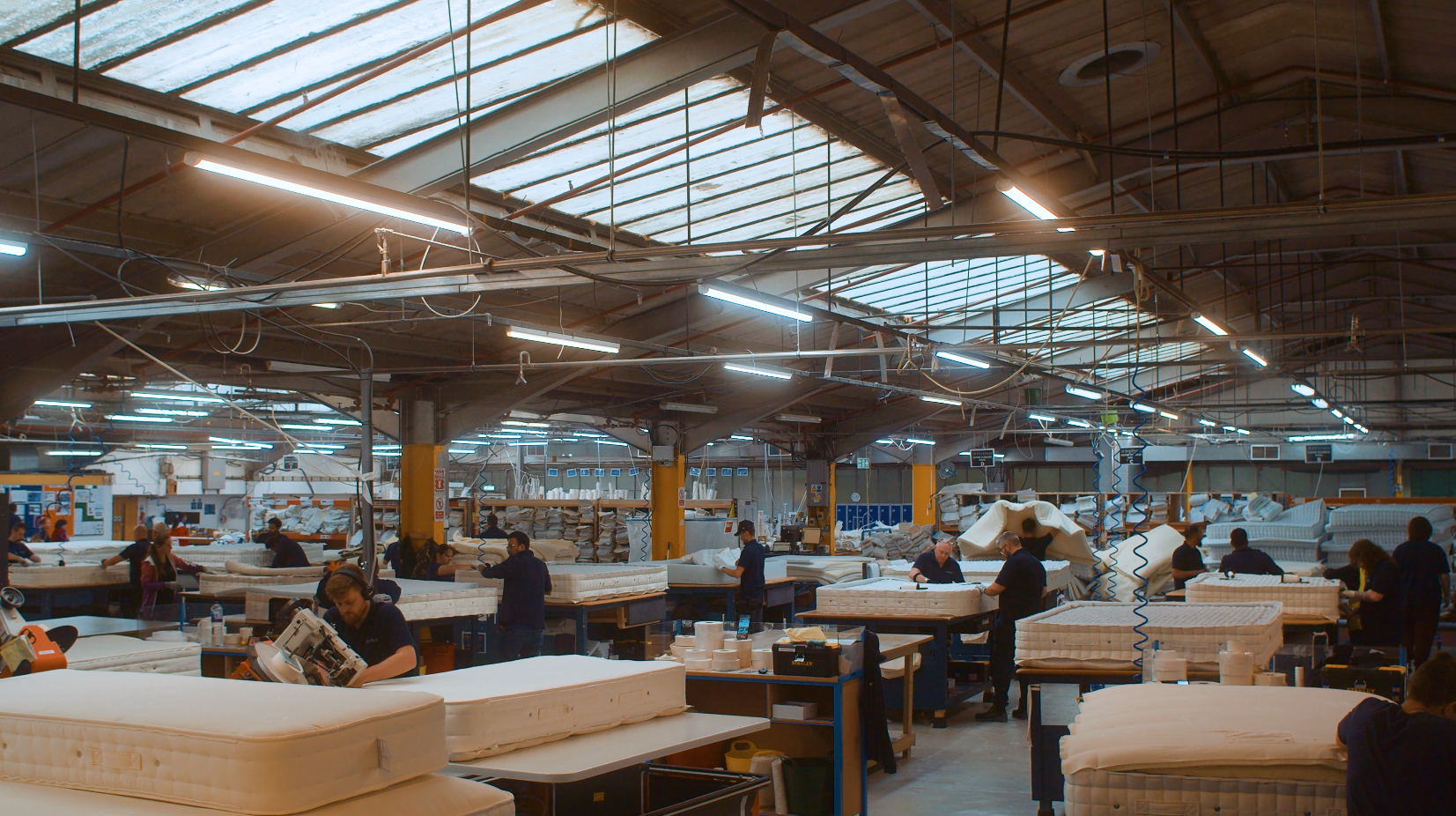
Image credit: Hypnos
Natural materials, modern thinking
In the goods-in department, the scale of the operation is clear. Materials arrive continuously – wool, latex, recycled fibres – feeding a system designed around efficiency and sustainability.
Wool, in particular, tells an interesting story. The same raw fibre can be processed into vastly different textures: soft and airy bonded wool, or dense, felt-like needle wool. Each plays a distinct role within the mattress structure.
Since 2019, Hypnos has taken that story a step further. In a first for the bed industry, it has worked with Red Tractor assured farms to source completely traceable and certified British wool. Through The Woolkeepers initiative, the company works directly with farmers, paying a fair price for their wool and supporting investment in environmental improvements and rural communities.
Crucially, Hypnos can trace certain materials all the way back to their source. Every mattress carries a unique reference code, linking it to specific batches and, in some cases, to individual farms. In 2022, this commitment advanced further, with Hypnos becoming the first brand to introduce wool from British farms certified to the globally recognised Responsible Wool Standard.
This level of traceability is not just impressive; it is essential. It allows for accountability, quality assurance, and, if needed, targeted improvements.
-
- Image credits: Hypnos
Building from the inside out
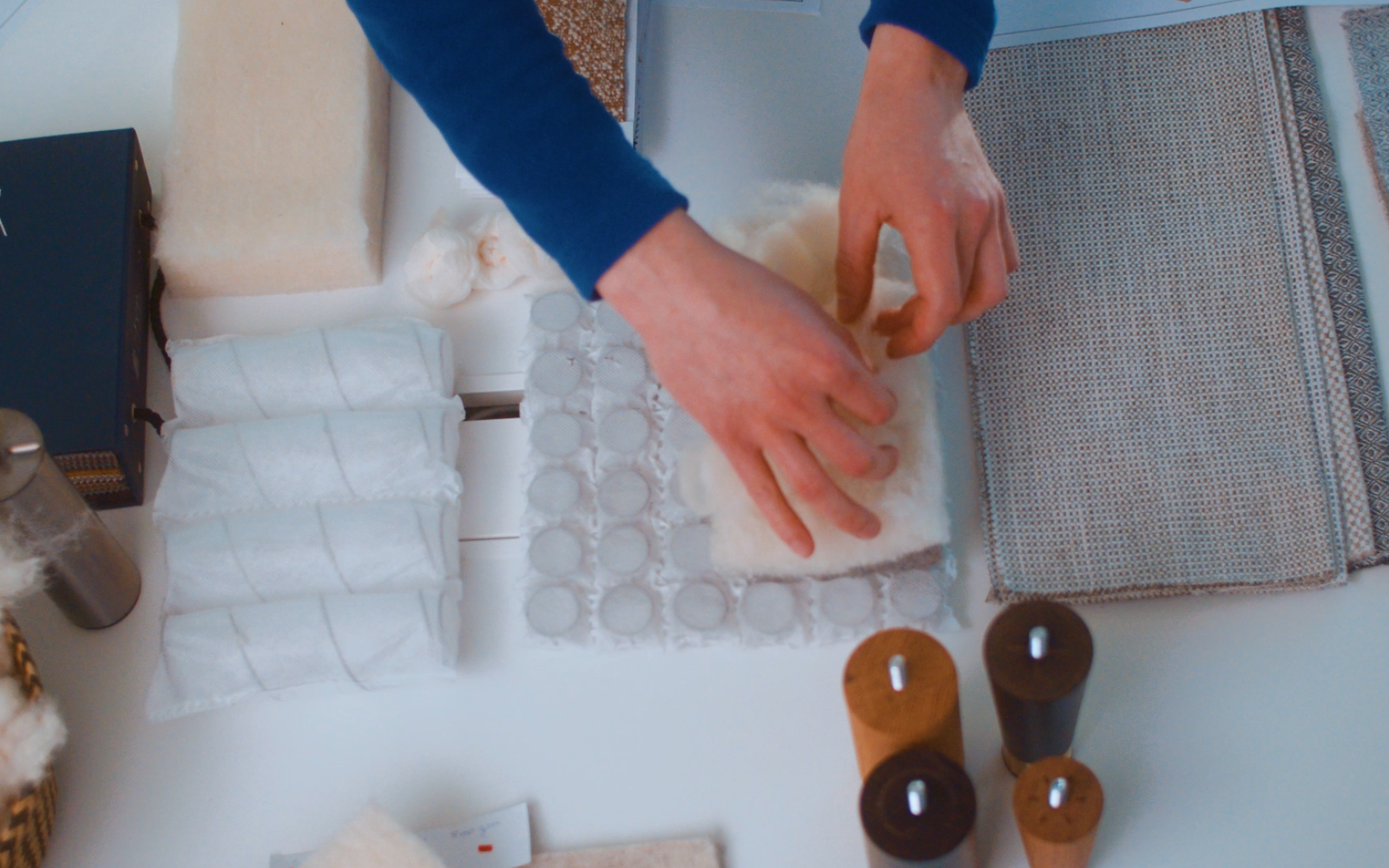
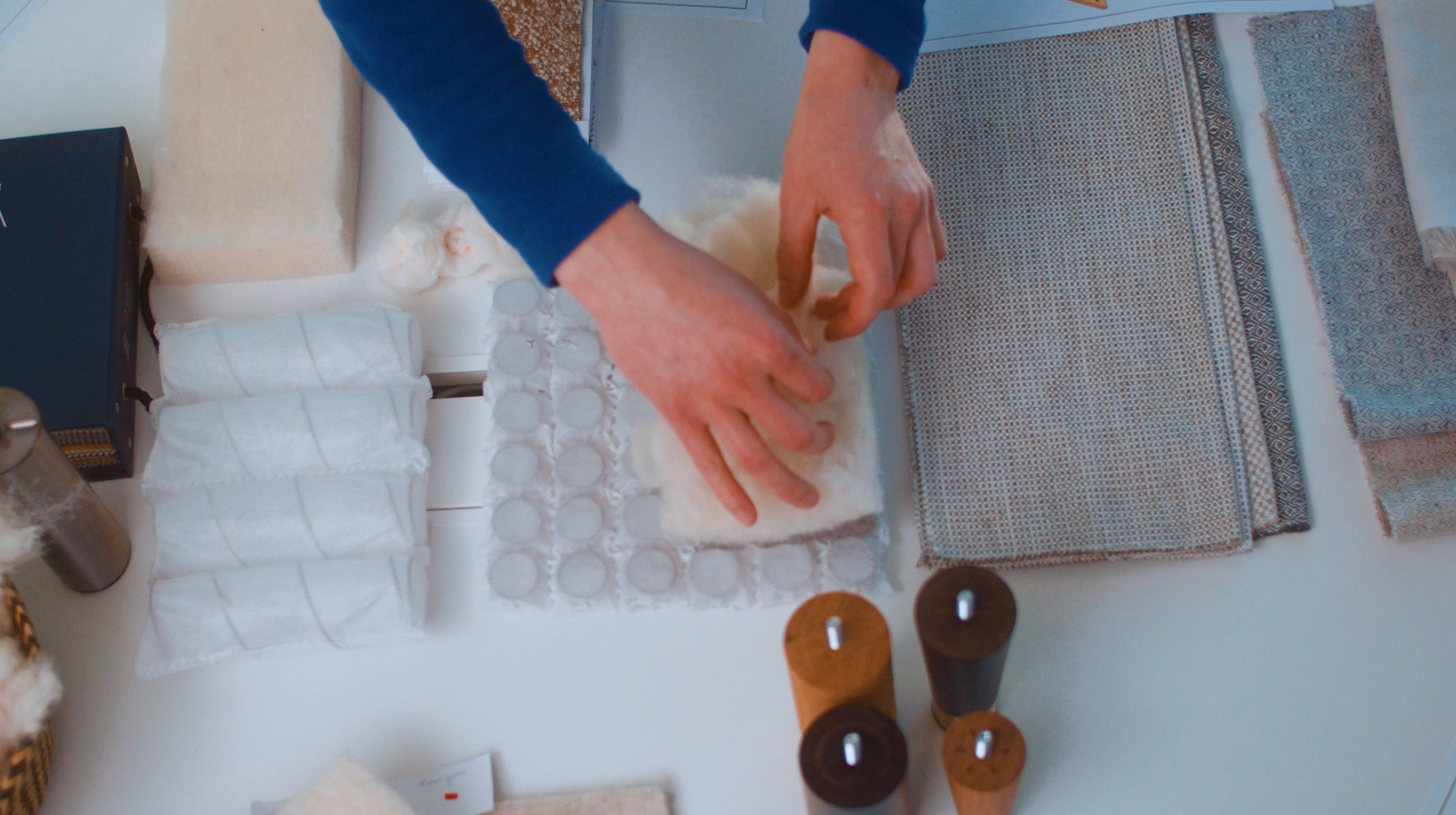
In the kitting area, the mattress begins to take shape. Spring units compressed into tightly wound roll packs are carefully released and prepared. Layers of fillings are assembled according to precise mattress ‘recipes’, each one tailored to a specific design.
Notably, no chemical adhesives are used. Instead, materials are layered loosely and secured later through hand-performed tufting – a traditional technique that aligns with the brand’s commitment to natural construction, and which acutely anchors the structure together.
It’s here that craftsmanship is most visible. A single mattress can take any length of time to complete, depending on its complexity. And throughout, quality checks are constant, with spot checks performed by a quality assurance team. If something isn’t right, it doesn’t move forward.
Behind closed doors
In the product development area, the pace shifts. Here, experimentation takes precedence over production. Prototypes are built, tested, and revised in the pursuit of refinement.
It’s also where heritage meets creativity. Craftspeople with decades of experience work on bespoke pieces, including intricate headboards and specialist commissions.
One standout example: a Union Jack headboard made using fabric from AW Hainsworth, a material also used in ceremonial uniforms. Naturally fire-resistant and deeply rooted in British textile history, it represents the intersection of tradition and innovation. You can see the headboard in all its glory in the factory showroom.
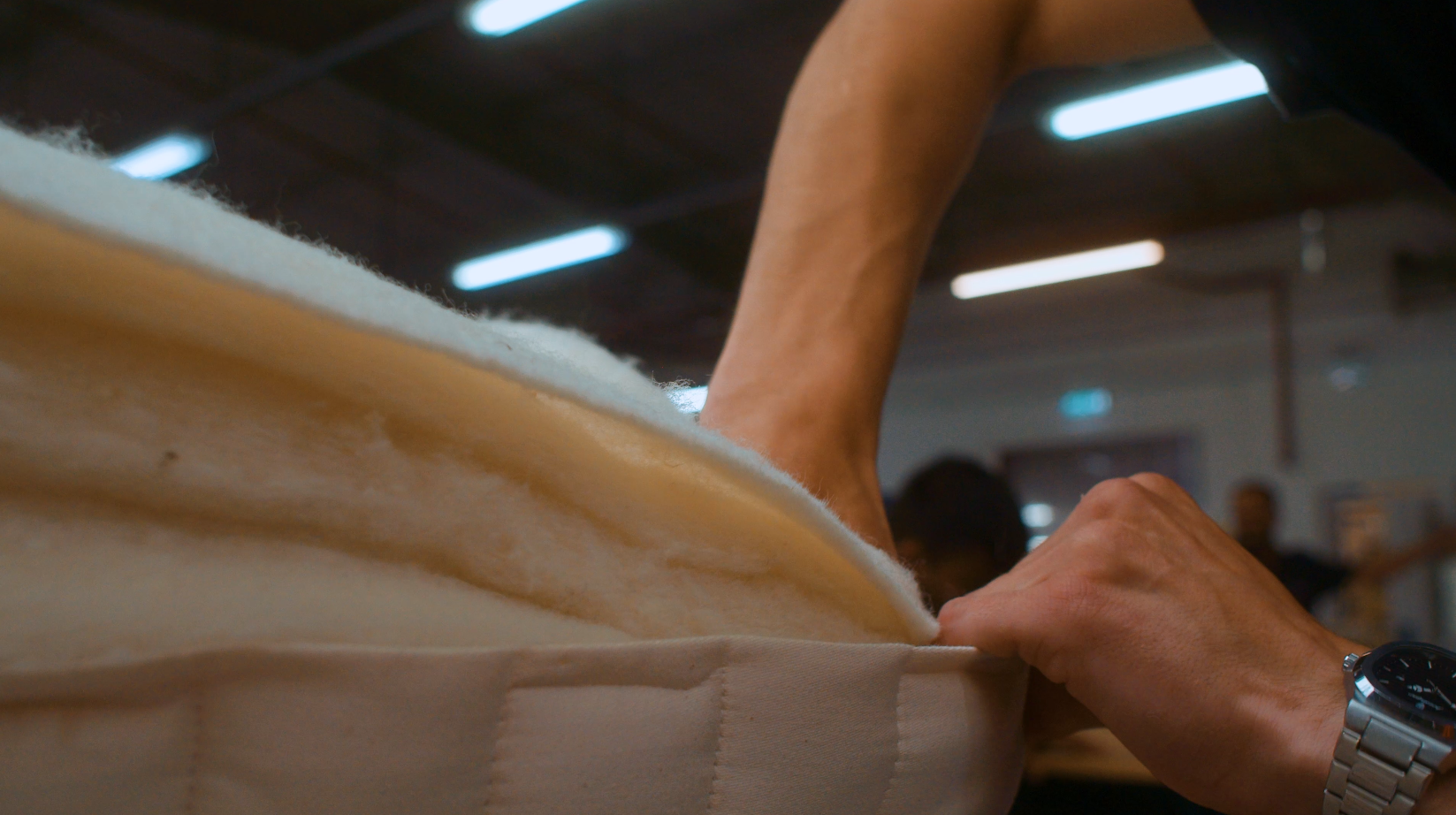
Image credit: Hypnos
A global network with local roots
Despite its strong British identity, Hypnos operates on a global stage. With 24 manufacturing partners worldwide, the company supports clients in Europe, and from Kuala Lumpur to the United States. And expansion plans continue, with growth targeted across the US, United Arab Emirates, and Europe. Yet wherever a mattress is made, the goal remains the same: consistent quality.
As such, a dedicated quality team travels between sites, ensuring standards are upheld. The ambition is simple: to deliver the same experience everywhere.
Designing for hospitality
In the showroom, the focus shifts to the contract market. Here, Hypnos works closely with hotels, offering tailored solutions across two main ranges: Boutique and Signature.
Case studies bring these products to life, including installations in heritage spaces such as Oxford. These environments showcase how mattresses perform in real-world settings – where comfort, durability, and design must align.
Sustainability remains central. From organic collections certified by the Soil Association to innovative materials made from plant fibres used in collaborations with the Eden Project, the company continues to explore new ways to reduce environmental impact without compromising comfort.
-

- Image credits: Hypnos
The Hypnos difference
What lingers most, however, is not the machinery or the materials, but the people. Throughout the tour, there’s a real sense of pride – evident in the way staff engage, the care they take, and the ease with which they welcome visitors into their world.
By the end, one thing is clear: a Hypnos mattress is the culmination of hundreds of technical, material, and human decisions, each playing a part in the final experience. From traceable wool to hand-stitched borders, from global partnerships to local craftsmanship, every detail is thoughtfully considered. And with no signs of slowing down, this is a story still very much in the making.
Hypnos is one of our Recommended Suppliers and regularly features in our Supplier News section of the website. If you are interested in becoming one of our Recommended Suppliers, please email Katy Phillips.
Main image credit: Hypnos