










Inside the factory: lighting the way with Mullan
Last year, Sophie Harper travelled to County Monaghan to go behind the scenes at one of Ireland’s most acclaimed lighting manufacturers to discover the magic of Mullan is actually rooted in something far deeper than the glow of a filament…
There is a particular quality to the natural winter light in rural Ireland. It arrives low and golden through bare hedgerows, catches the silver of frost on old stone walls, and disappears fleetingly by 4pm. Driving through County Monaghan in the early morning, winding along roads flanked by soft hills and the odd farmhouse chimney exhaling woodsmoke into the chill air, I couldn’t help but think there was something fitting about making a pilgrimage to a lighting company in a landscape that seems to understand, viscerally, just how much light matters.
Mullan Village is not the kind of place you stumble upon; you must mean to go there. And yet, pulling into the courtyard of what is now the Mullan Lighting facility, it becomes immediately obvious why Founders Mike and Edel Treanor chose this spot, and this mill, to build something lasting.
The village of Mullan was once a thriving rural centre in the 1850s, its flax mill providing employment for the small community of workers who lived in its cottages. In the early twentieth century the mill closed, and the village fell quiet. A shoe factory breathed life back into it in the 1920s, but that too shuttered in the 1970s, and for over a quarter of a century the buildings sat empty.
Mike and Edel had been enjoying world travels, but on their return to Ireland were struck by the after effects of the 2007 crash. With work in their respective fields (architecture and education) proving unpredictable, an idea came to mind – a metaphorical and physical light lit up – and with a nudge in the right direction from Mike’s father who had experience in lighting and electrical components, the couple set about making plans to build their own company from the ground up.
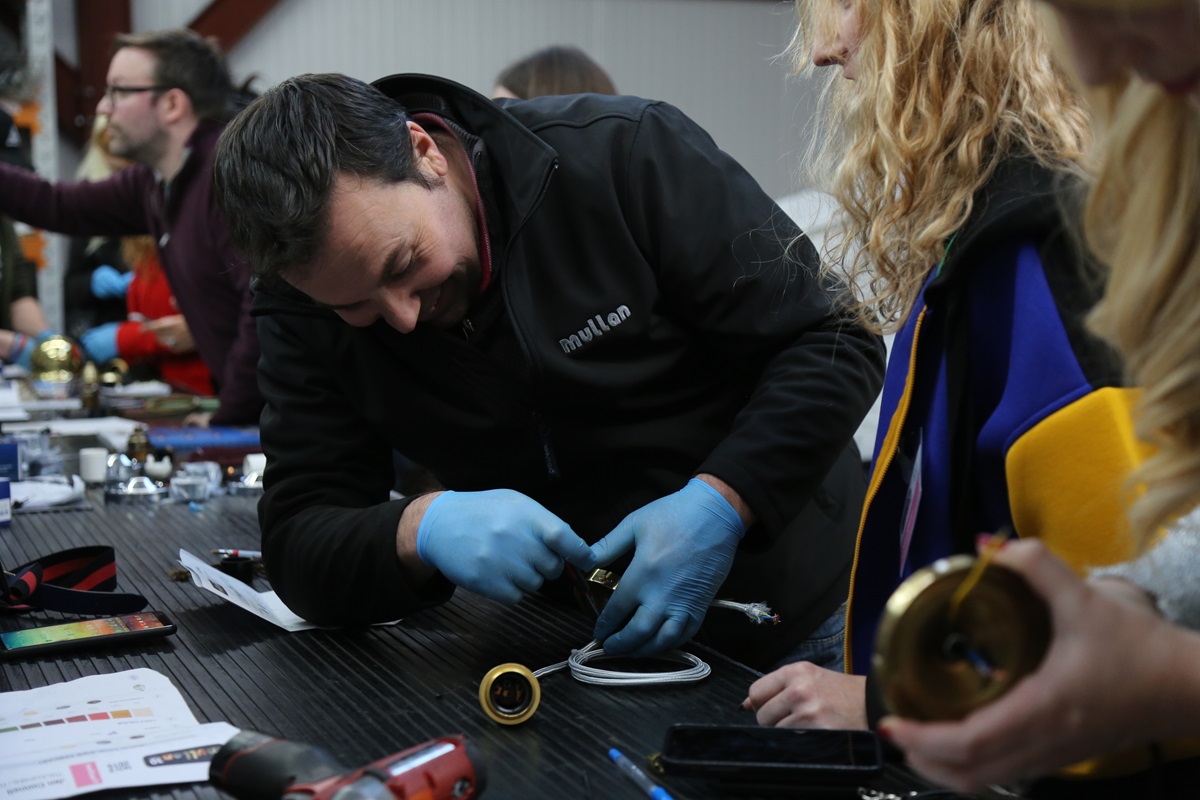
Image credit: Mullan Lighting
In 2009, they got the keys to the old mill, and starting small they began to carve out space within the abandoned building, breathing new life into its timeworn walls. They started with a skeleton staff, and steadily grew – as a team and a business. Now, the mill has evolved into the beating heart of the village, with over 100 employees, and Mike and Edel taking on other buildings to renovate and revive as a direct result of the success of their initial vision.
Today, the complex hums with purpose: the clatter of metalwork, the low drone of polishing equipment, the purposeful movement of craftspeople between departments. Many of the people who now work here have also made their home in the restored mill houses of the village. It is, in every sense, a community that has been switched back on.
Touring the facility with Lee Grieve, Mullan’s knowledgeable Business Development Manager, we begin, unexpectedly, in the ceramics department, staring in awe at the number of items waiting to be fired in the kiln – including a fun looking tableware range. Each item is shaped and fired by hand, and the results carry that irreducible quality you can only achieve when human touch is part of the process. Mike and Edel bought the kiln four years ago to start making ceramic components on site – one of the many things they have embraced to ensure the whole manufacturing process takes place under their own roof.
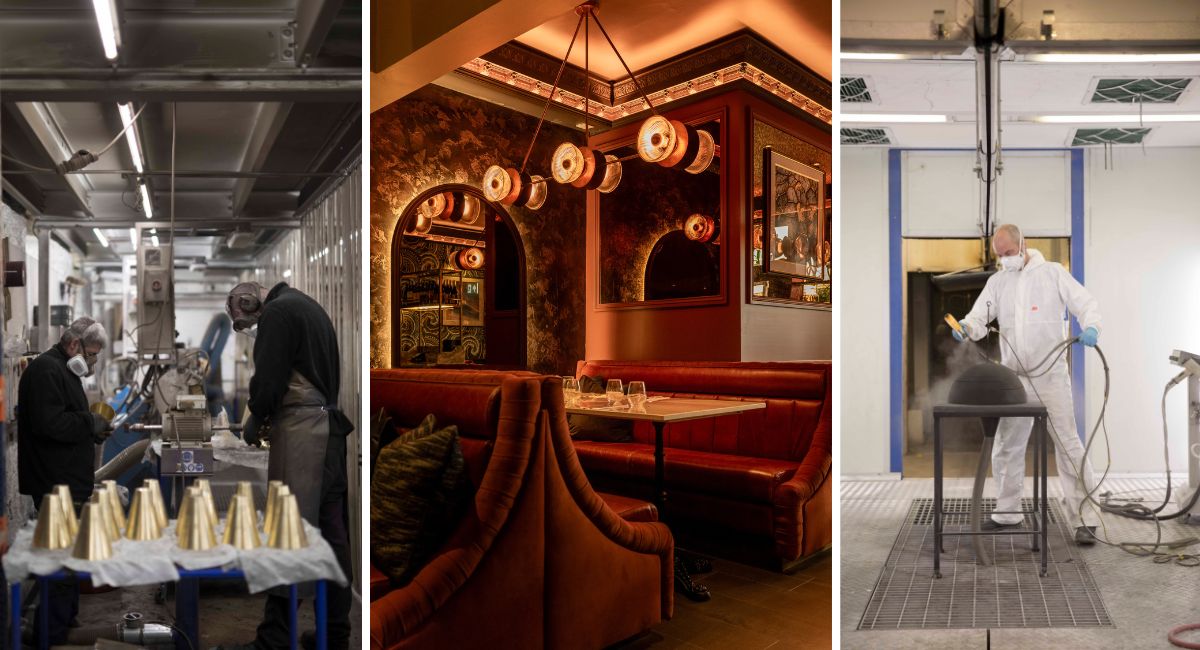
Image credit: Mullan Lighting
We head to the fabrication department, where raw metal is shaped, bent, brazed, and welded into the component parts that will eventually become a finished fixture. The work here is precise and physical and there is a satisfying directness to it, a sense that the finished product is genuinely being wrought rather than assembled from pre-formed parts. At this point, I’m offered my very own little brass dinosaur cut expertly from a laser cutter, and we head to the finishing department to check out the polishing and antiquing processes.
To give a light an antique brass finish, the antiquing department does this through a chemical process. The polishing department produces polished and satin brass finishes by working the brass components by hand and using a hard wheel to achieve the satin effect. The powder coating department sprays components in a wide range of colours, which then go into an oven to lock in the finish. Standing and watching all of these processes is mesmerising – seeing components transform immediately into pieces that start taking on the design and character of the finished product.
All of Mullan’s lights are completely handmade and made to order. When an order is placed, it takes three weeks to be manufactured in the factory. This is not a conveyor-belt operation. Every piece moves through a series of specialist departments, each staffed by skilled craftspeople who have often been with the company for years and bring a quiet, earned expertise to their work.
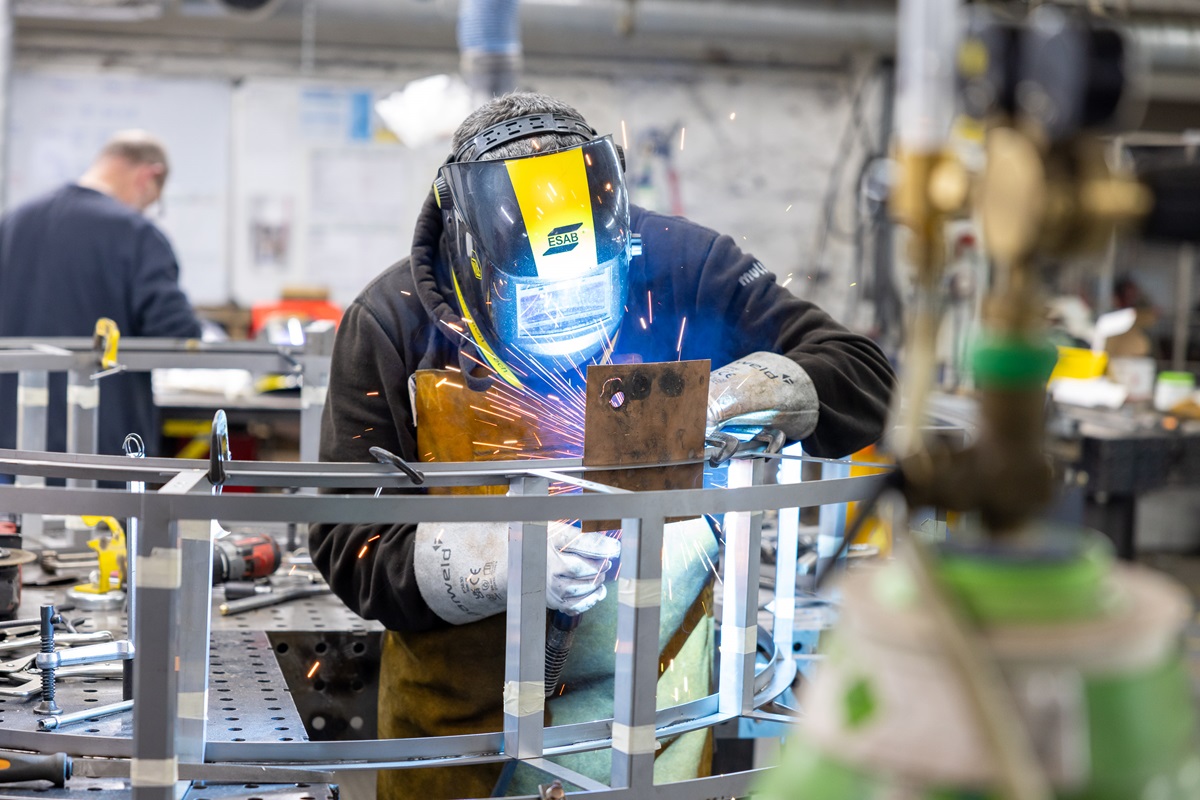
Image credit: Mullan Lighting
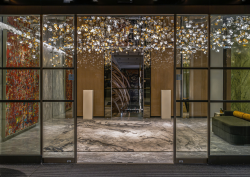
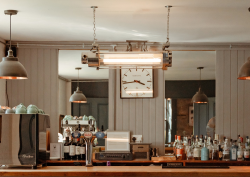
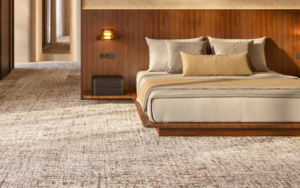
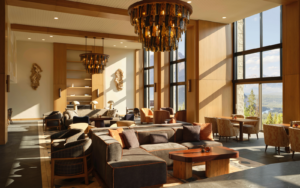
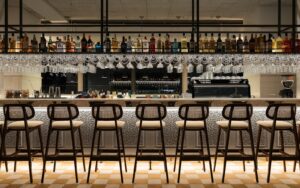
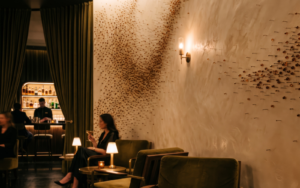
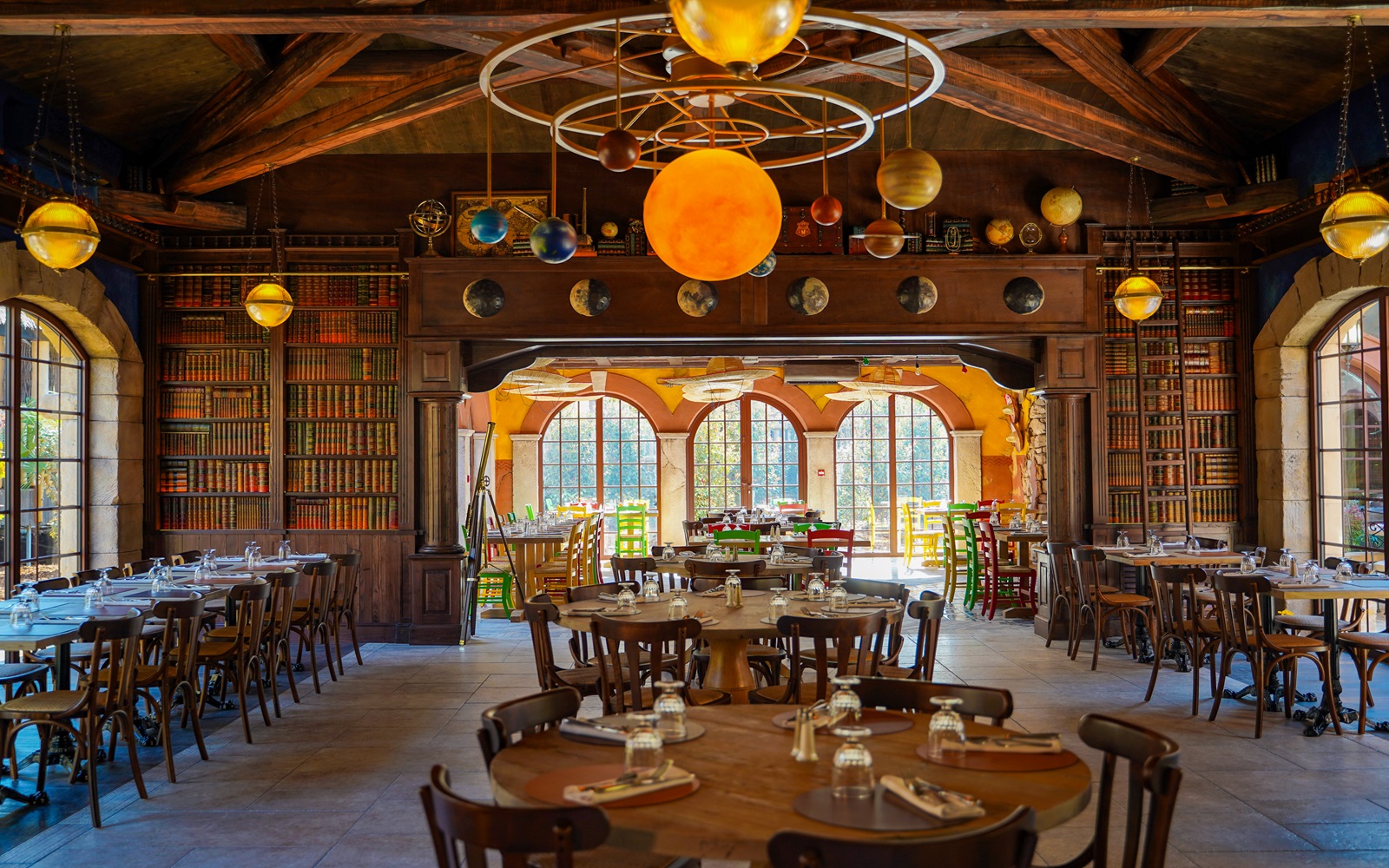
The design studio is where things get genuinely exciting for anyone working in hospitality design. Mullan offers a completely bespoke lighting service, guiding the client through the entire process – from initial concept to design, the manufacture of samples if required, through to the finished product. The walls here are pinned with technical drawings, finish samples, and photographs of completed installations in hotels, restaurants, and bars around the world.
The company has the capacity to manufacture both high-volume quantities of a single product and entirely one-off bespoke pieces – a flexibility that makes it unusually well-suited to the hospitality sector, where a major hotel project might require hundreds of consistent pendants for guestrooms alongside a handful of statement pieces for a lobby or restaurant. The design team works closely with architects and interior designers from the earliest stages of a project, and the trade programme is well established, offering meaningful support to specification professionals.
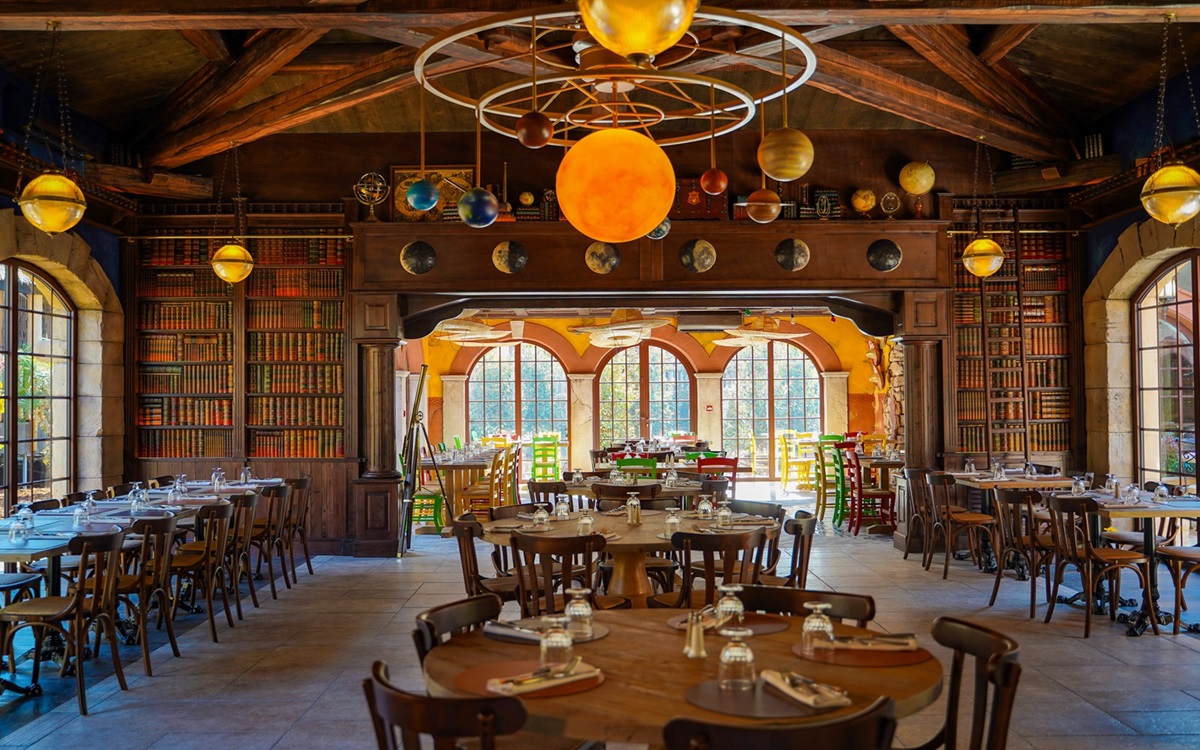
Image credit: Mullan Lighting
Mullan’s team of skilled designers and artisans work closely with clients to bring their vision to life, ensuring that each piece not only illuminates but also enhances the space it inhabits. Spending time with several members of the team during the tour, this comes across not as a marketing line but as a genuine operating principle. There is a real pride here – in the craft, in the building, in what the company represents for this small corner of Ireland.
Stepping back outside into the sharp winter air, the village around me is still and golden in the late afternoon light. The mill houses are lit from within. It turns out that the most compelling thing Mullan Lighting has illuminated isn’t a hotel lobby or a Michelin-starred restaurant, impressive as those installations are. It’s the village itself.
The only regret? I couldn’t find a way to pack one of those ceramic pendants into my carry-on without the team noticing. Next time, perhaps.
Mullan Lighting is one of our Recommended Suppliers and regularly features in our Supplier News section of the website. If you are interested in becoming one of our Recommended Suppliers, please email Katy Phillips.
Main image credit: Mullan Lighting