










In the heart of Provence’s Drôme region, Maison Numéro 20 brings its signature touch to Villa Augusta – a former Tricastin manor house set just outside the charming village of Saint-Paul-Trois-Châteaux…
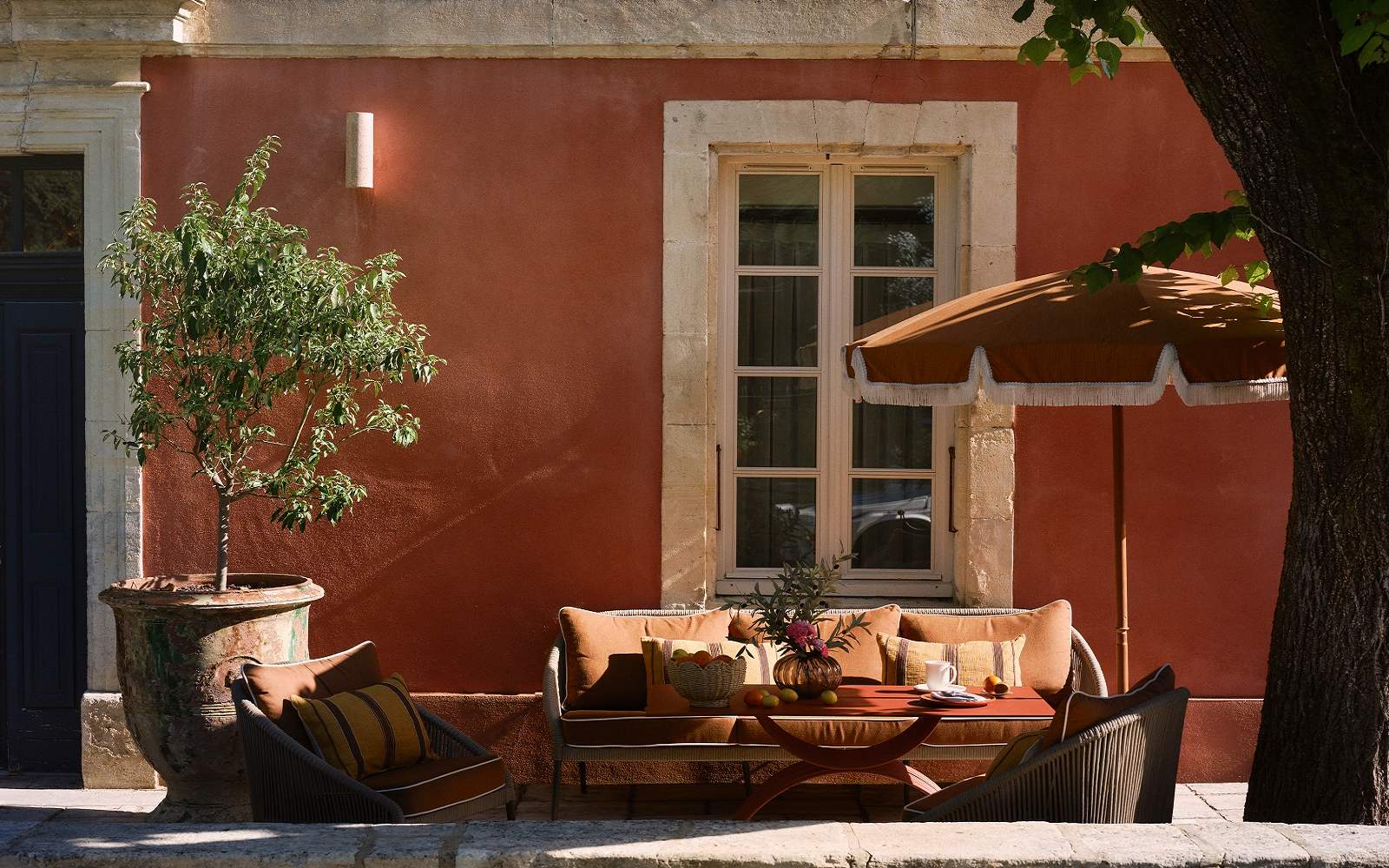
Nestled within a lush, wooded park of nearly 4,000 square metres, the four-star Villa Augusta and its 23 rooms offer an intimate retreat where stone, light, and the gentle patina of age together shape a Provence that feels private, quiet, and deeply alive.
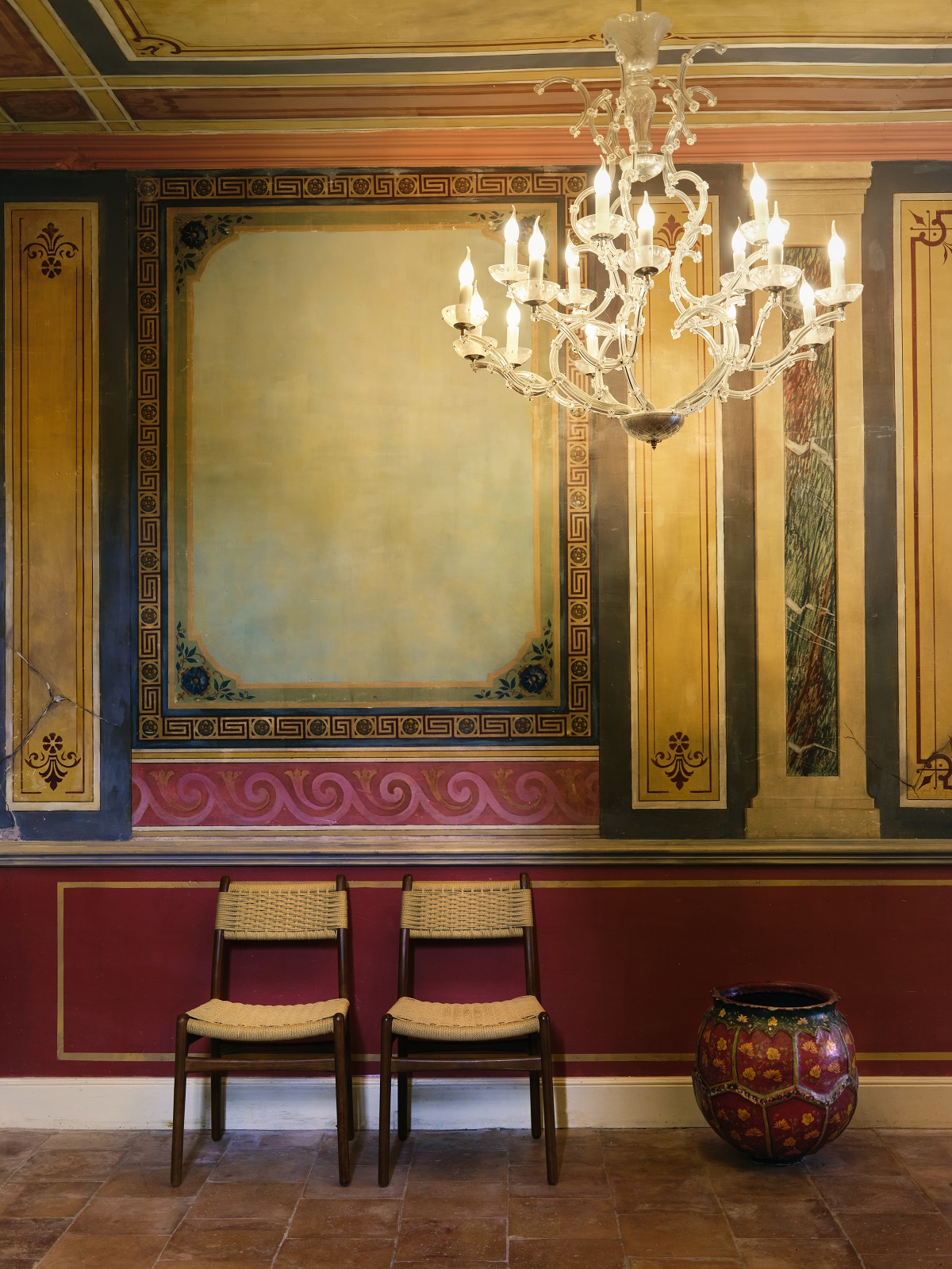
Image credit: Villa Augusta / Pauline Chardin
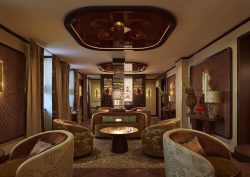
From the moment one enters, the tone is set: the traditional reception desk gives way to a large communal table flanked by an antique bookcase – as though stepping into a private home. The transition from outside to inside is seamless, guided by the luminous southern light. At the heart of the space, a rotunda serves as the architectural centrepiece of the bastide, housing an installation by Art et Floritude – a large metal vase adorned with hand-painted metal olive branches. Cushions bearing olive motifs and delicate white passementerie flow throughout the furnishings and seating, weaving a quiet thread of continuity across the spaces. Overhead, a ceiling fresco extends the home’s solar language, weaving together suns, branches, and painted bees – a subtle signature of the place.
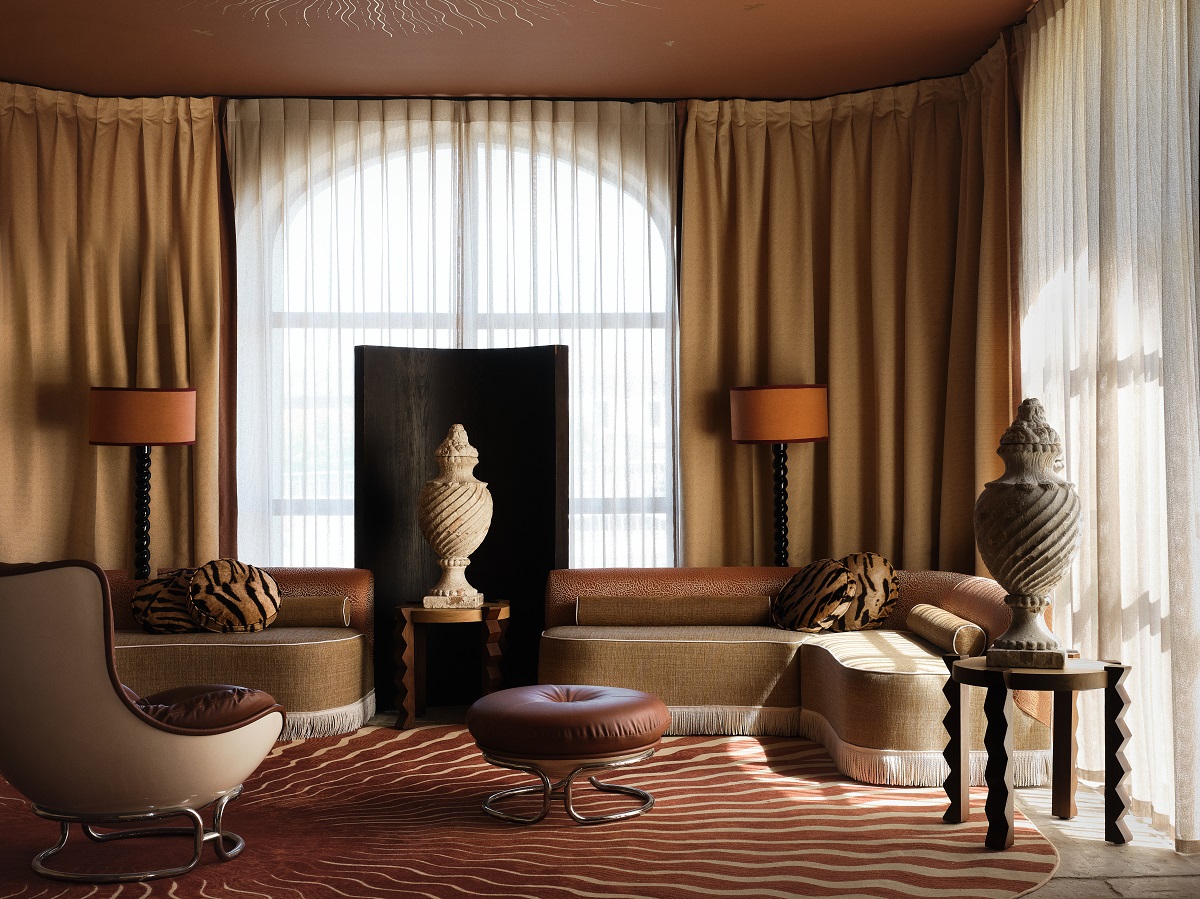
Image credit: Villa Augusta / Pauline Chardin
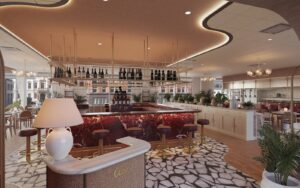
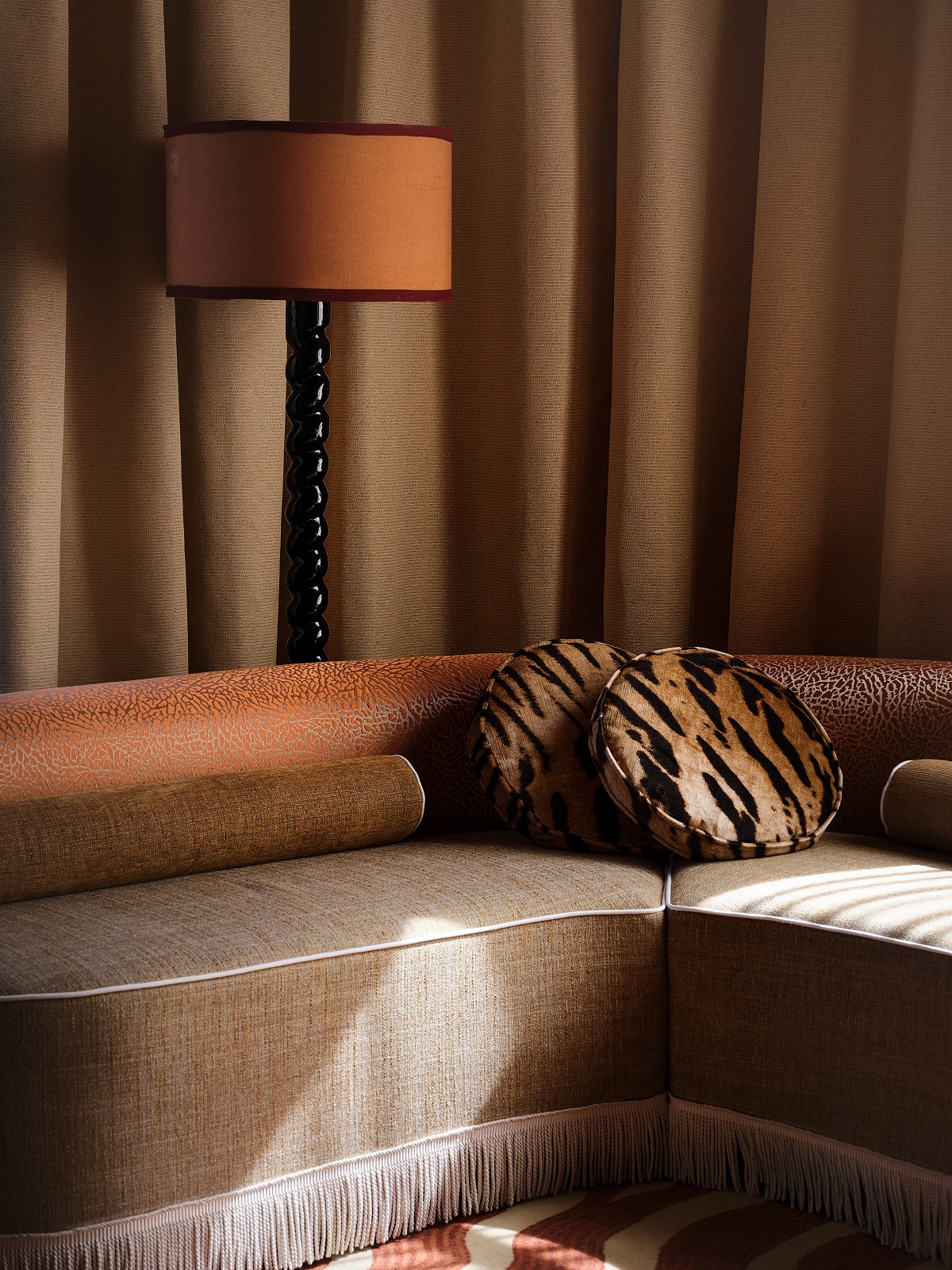
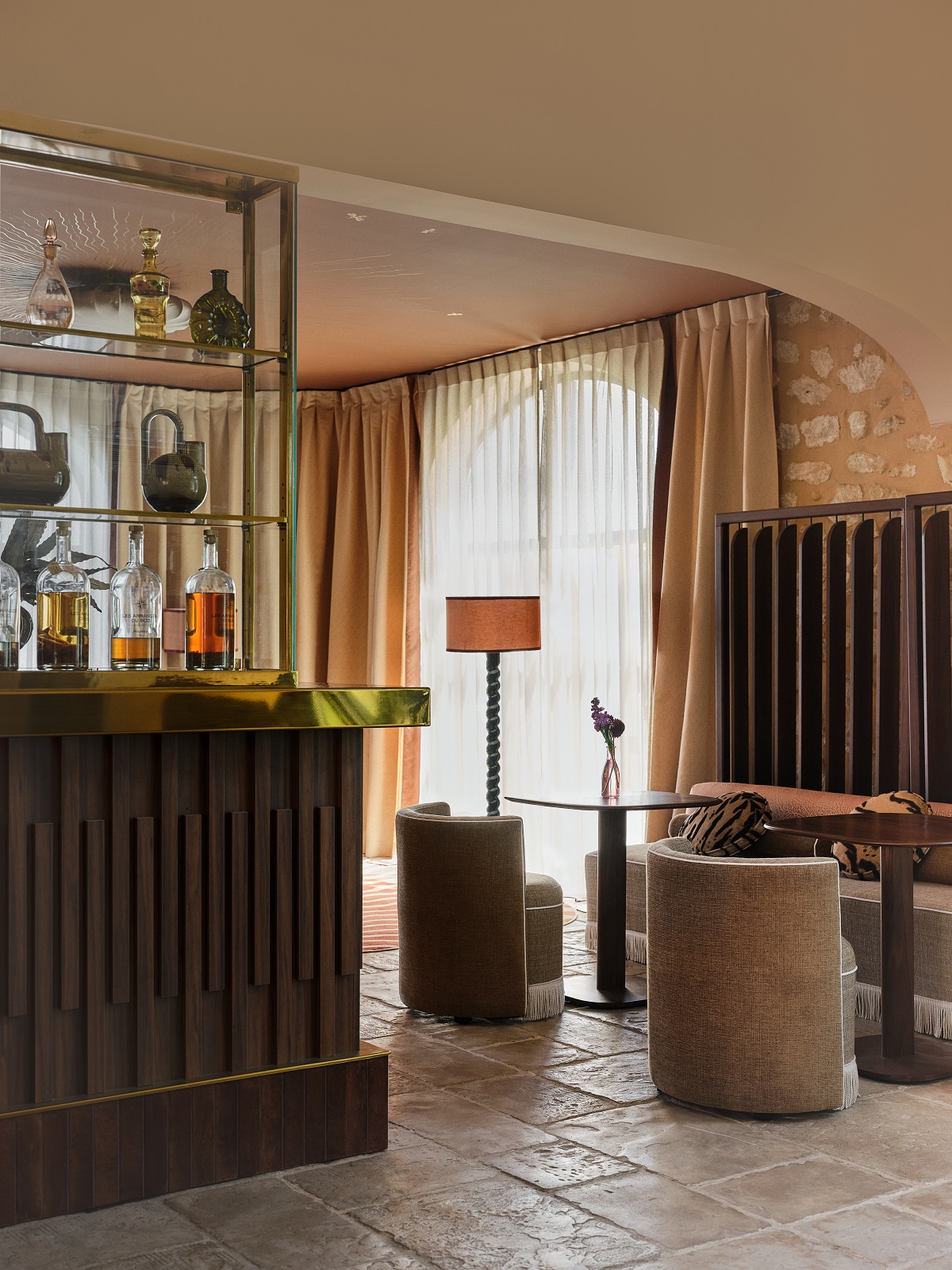
The bar embraces the same spirit, rendered in a more eclectic register. Graphic-grained wood, 1970s armchairs, local flea market finds, and antique Medici vases come together without hierarchy, somewhere between memory and modernity. The white passementerie reappears as a quiet thread, drawing guests toward the hotel’s restaurant, where refined cuisine is crafted daily around the seasonal produce of the Drôme provençale.
-
- Image credit: Villa Augusta / Pauline Chardin
-
- Image credit: Villa Augusta / Pauline Chardin
The corridors themselves become an architectural statement. In the hotel’s contemporary wing, a bespoke sun motif woven into the carpets traces one’s path like an imprint of light. The walls are dressed in rope, worked like a textile marquetry – almost sculptural in quality. In the older wing, the material vocabulary shifts entirely: a cracked, hand-painted decorative patina reveals the layered history of the Tricastin structure – like a visible memory of time.
This dialogue between eras continues naturally across all 23 rooms, each conceived as a singular, serene sanctuary. The spaces feel enveloping, structured around canopy beds and bed canopies. Light is gentle. The palette moves through earth, honey, sand, and linen – in direct conversation with the surrounding landscape.
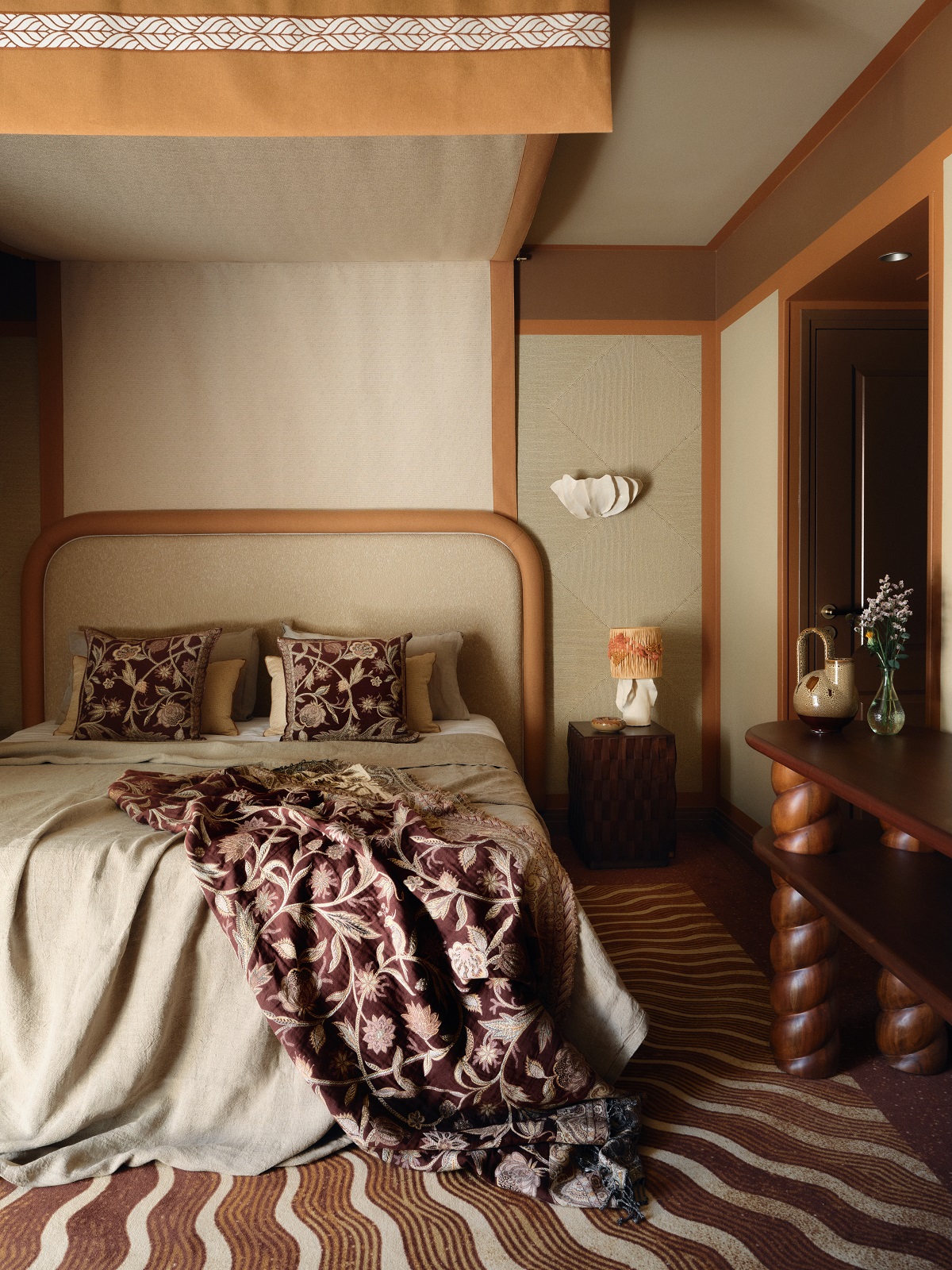
Image credit: Villa Augusta / Pauline Chardin
Materials – stone, wood, natural textiles – are chosen for their tactile beauty. Some rooms draw inspiration from the printed cottons that arrived from India via the port of Marseille as early as the 16th century, the very fabrics that gave birth to the richness of Provençal textile tradition. The adjoining bathrooms are tiled in a trellis pattern, echoing the region’s characteristic gardens, their pergolas, and the play of light filtering through the greenery.
-
- Image credit: Villa Augusta / Pauline Chardin
-
- Image credit: Villa Augusta / Pauline Chardin
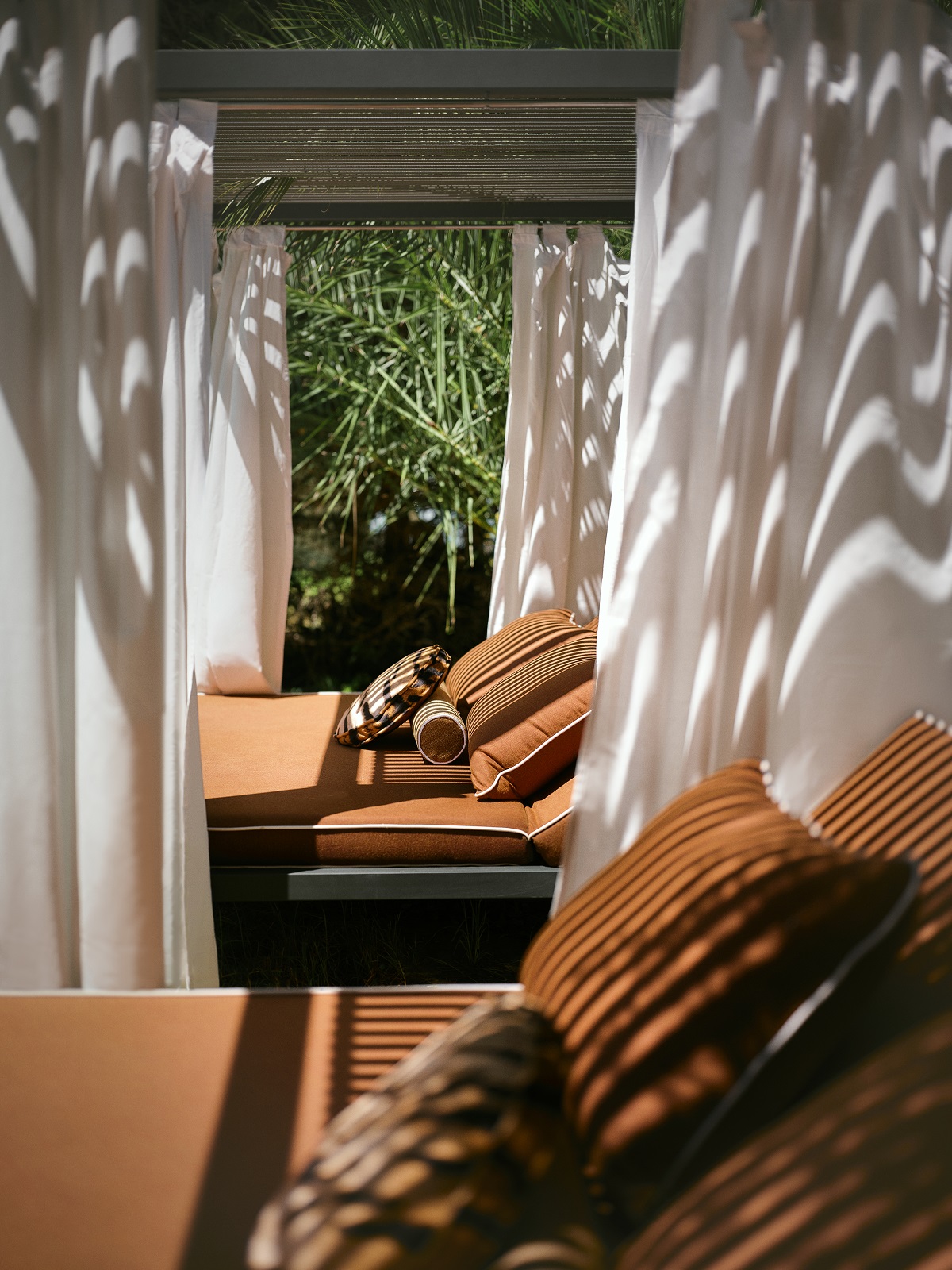
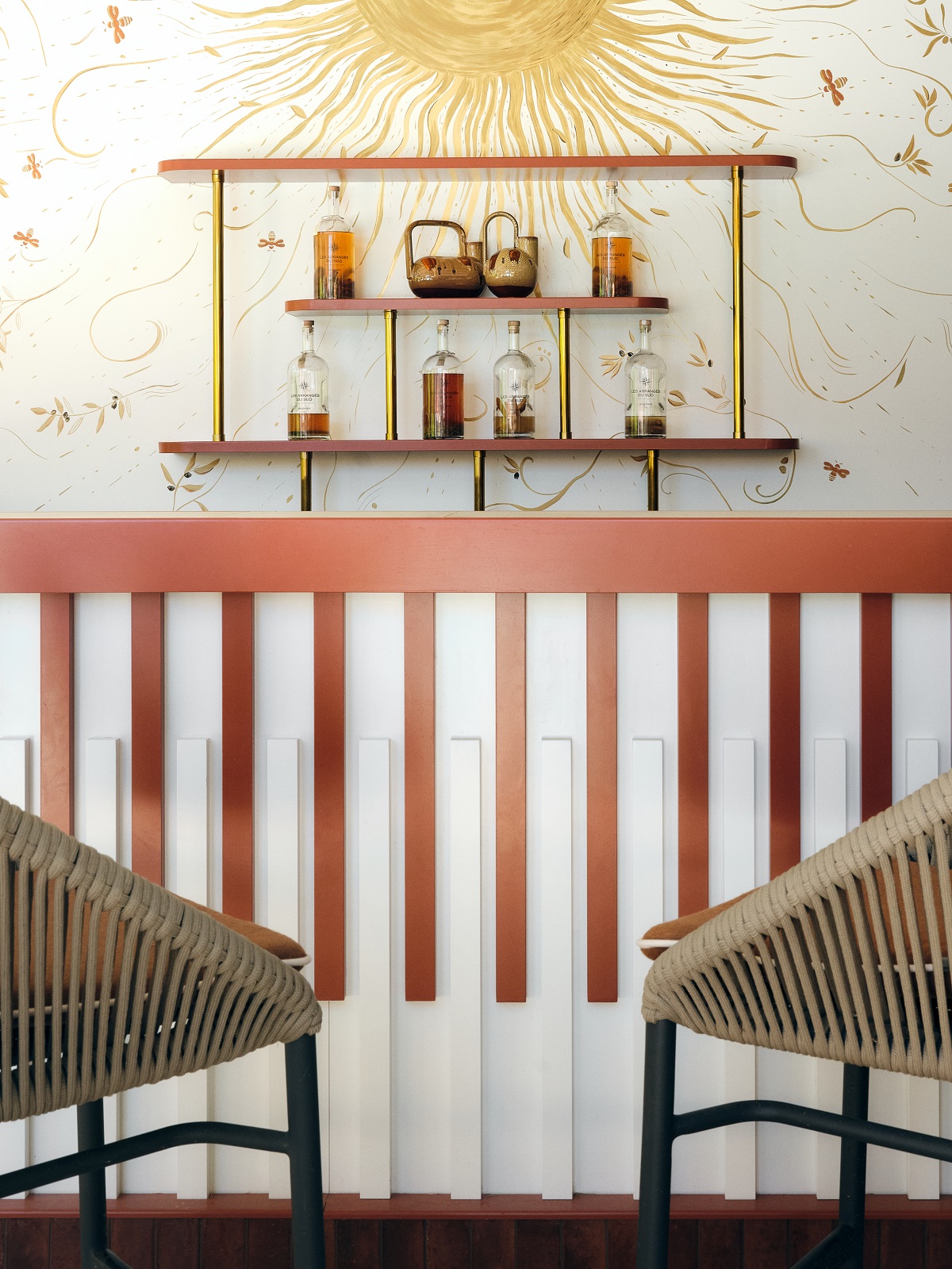
Outside, Villa Augusta opens onto its park. The swimming pool, edged with terracotta-toned sun loungers, sits within a quiet landscape in the shade of a centuries-old cedar. The pool bar takes on a freer, more painterly spirit – a golden sun in a naive, folkloric style fills one white wall, while an equally radiant fresco overhead seems to merge with the endlessly blue sky beyond.
Nearby, guests can explore fields of flowers, vineyards, hills, and garrigue by Méhari – the iconic open-top French beach car. A few minutes away, Saint-Paul-Trois-Châteaux reveals its understated heritage: a Romanesque cathedral, ancient laneways, and Gallo-Roman history.
In this idyllic setting, Villa Augusta does not impose itself. It unfolds – elegantly and unhurriedly – through the artistic sensibility of Oscar Lucien Ono, founder of Maison Numéro 20.
Main image credit: Villa Augusta / Pauline Chardin