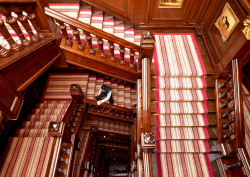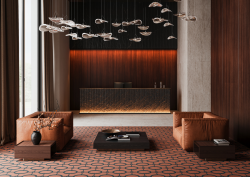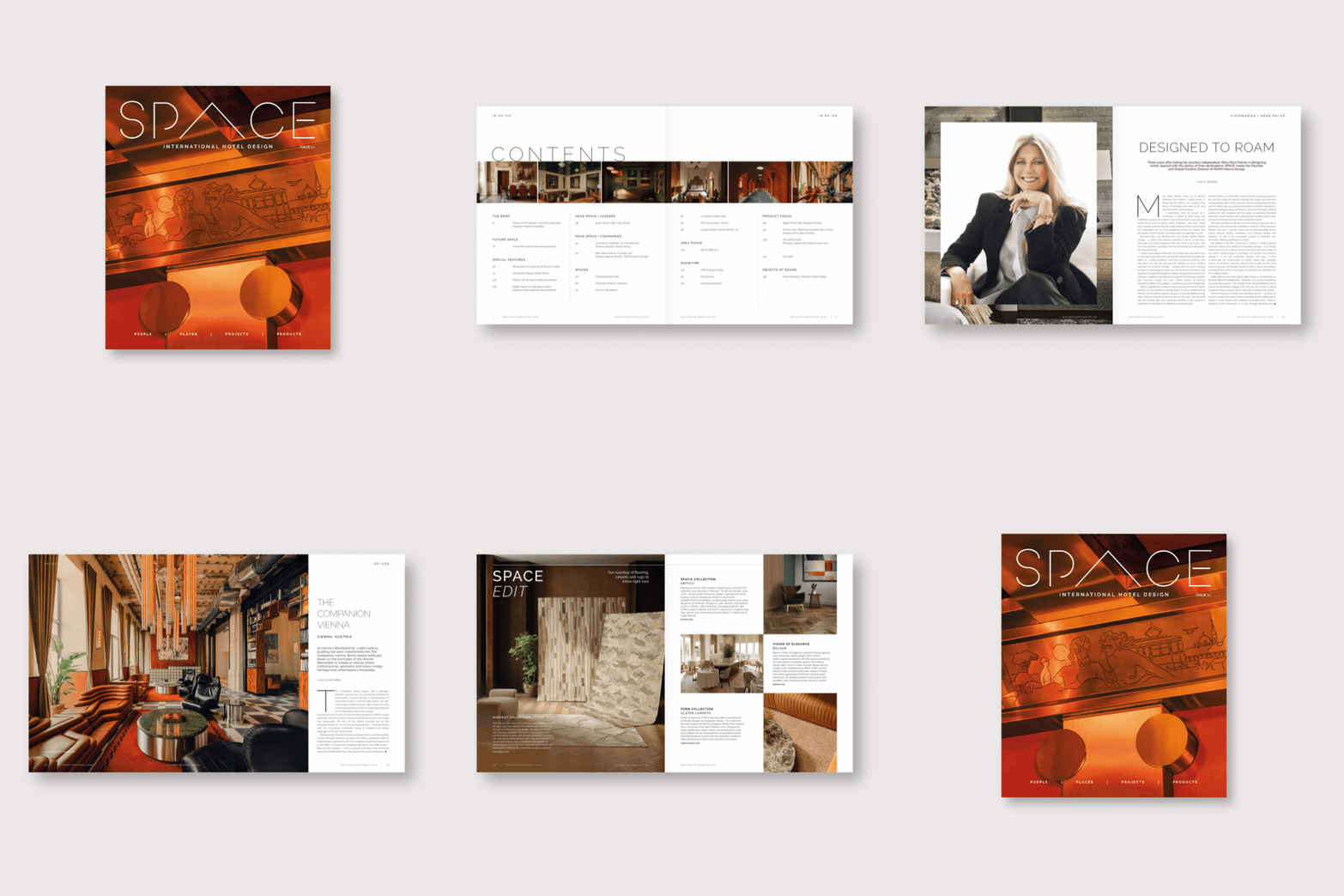













Editor of SPACE, Jess Miles, travels to Portadown to see how Ulster Carpets makes bespoke carpets for the world’s most revered hospitality projects, from package dyeing and patented looms to a design studio that weaves a property’s story into every pile…
After a long, hot summer, it was a welcome change look out at the verdant landscape of Northern Ireland, just hours after leaving the heat-beaten brown of the Sussex countryside. Admiring nature’s enduring carpet seemed a fitting start to the day, before soon arriving at Ulster Carpets in Portadown to take a first-hand look at the craftsmanship behind the luxury carpets made for some of the most acclaimed hospitality projects in the world.
Although it has now grown into a global business with clients and projects of grand scale, Ulster has manufactured on this small-town site since it was founded in 1938, and today keeps all of the process in-house across three UK sites. Dyeing, weaving, inspection, finishing and despatch all take place here in Portadown, where around 95% of Ulster’s carpet is made. The remainder is produced at a second site in Northumberland, while wool is spun first at Ulster Yarns, the company’s mill in Yorkshire. Now a fourth-generation, family-owned company, Ulster remains centred on the people, skills and expertise that have been continually refined over generations of designers, weavers and makers.
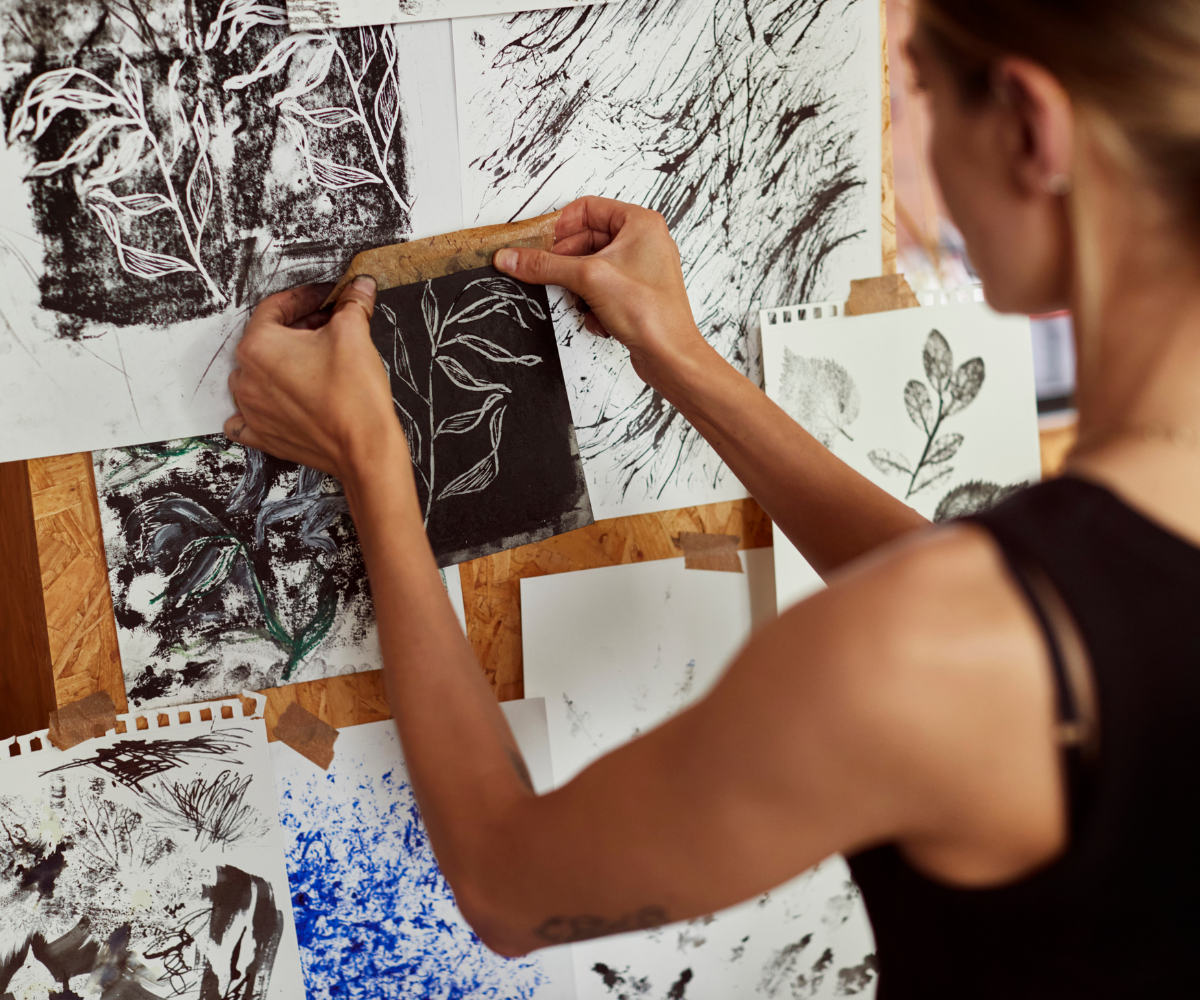
Image credits: Ulster Carpets
Ulster’s commitment to its Northern Irish roots is evident upon arrival, where I’m greeted by the close-knit team who show me around with buckets of passion for the work they do. Among them was Ciara Halligan, Marine Sales Manager, who started out at Ulster as a weaver over 30 years ago. Now she works with clients, drawing on her specialist knowledge to show them the endless possibilities of what Ulster can achieve. But Ciara, it turned out, was no exception. As the tour went on, I realised everyone I met had either spent years at the company or had followed in family members footsteps there. It is a heritage Ulster carries with pride, built on investment in its people and, as I would soon see, its engineering and machinery too.
First stop was the Dyehouse and Energy Centre, which has transformed dyeing at Ulster in terms of both time and sustainability. Gone are the old-school hanks of yarn immersed in huge dye baths. Instead, yarn is wound onto perforated tubes, and the dye is circulated through it – a method known as package dyeing. Heat from used water is recovered to warm fresh water drawn from an on-site borehole, and since the centre opened in 2018, water consumption has fallen by 46%. Better still, the dye penetrates the wool more deeply, giving richer colours.
-
- Image credit: Ulster Carpets
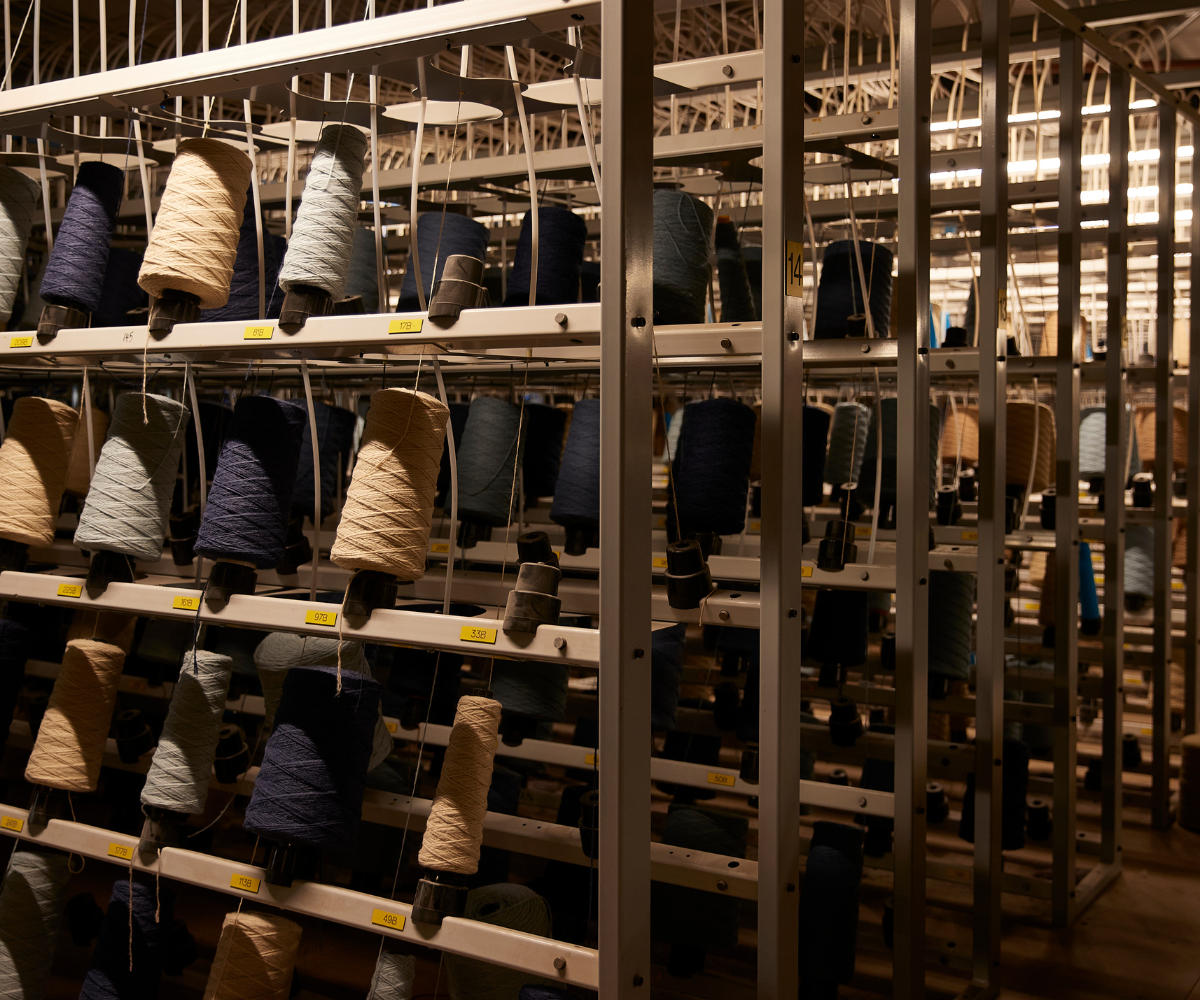
The dyehouse is also home to Ulster’s colour hub, with a bank of over 9,000 colours to draw on. My eyes light up like a magpie to gold when the drawers of tufted colour samples are pulled open, but if none of these are the exact shade needed, a bespoke match can be developed from a client’s material or colour reference.
From there, we – and the yarn – head to the looms. There are 40 Axminster looms in all, each running Ulster’s patented PSYLO weaving technology which allows for up to 25 colours within a single design, creating more intricate concepts full of texture, movement and depth. I also got to see a new generation of looms in action, engineered and built in Sunderland by GTM (a company within the Ulster Group), designed to produce more carpet using less energy per square metre. It was quite the experience standing in the room as the factory floor boomed to the beat of the looms – and watching the many cones of coloured yarn being drawn in and woven into the finished design was nothing short of a visual feast.
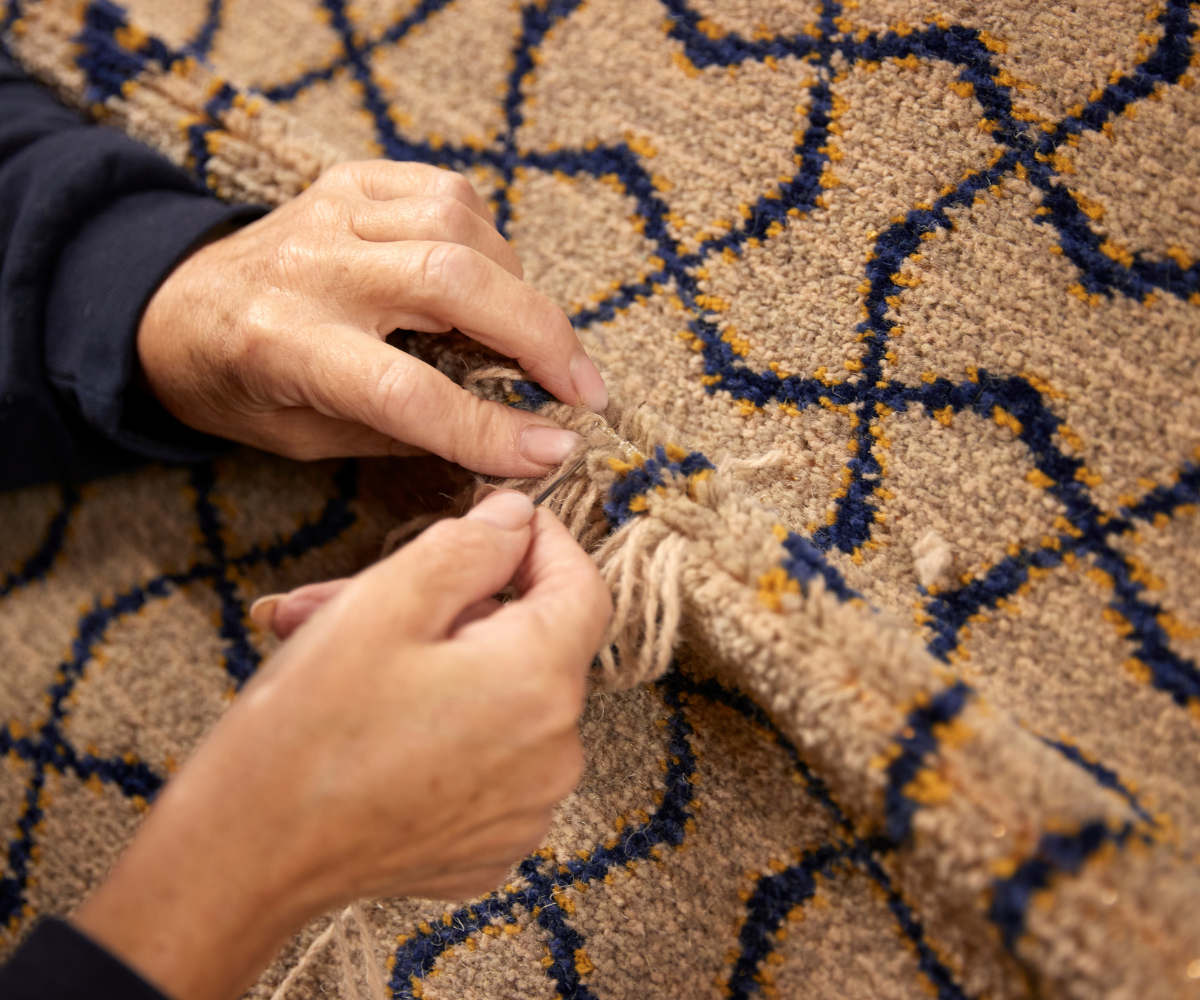
Onward, every inch of every carpet is then visually inspected, with any mending painstakingly done by hand. Before despatch, each order is rolled out side by side to check the pattern lines up across adjoining rolls. Having walked through the end-to-end physical process, I was struck by how meticulous the craft of making carpet is, and I certainly left with a newfound appreciation for it. But what surprisingly captured my attention most was my final stop – the design studio.
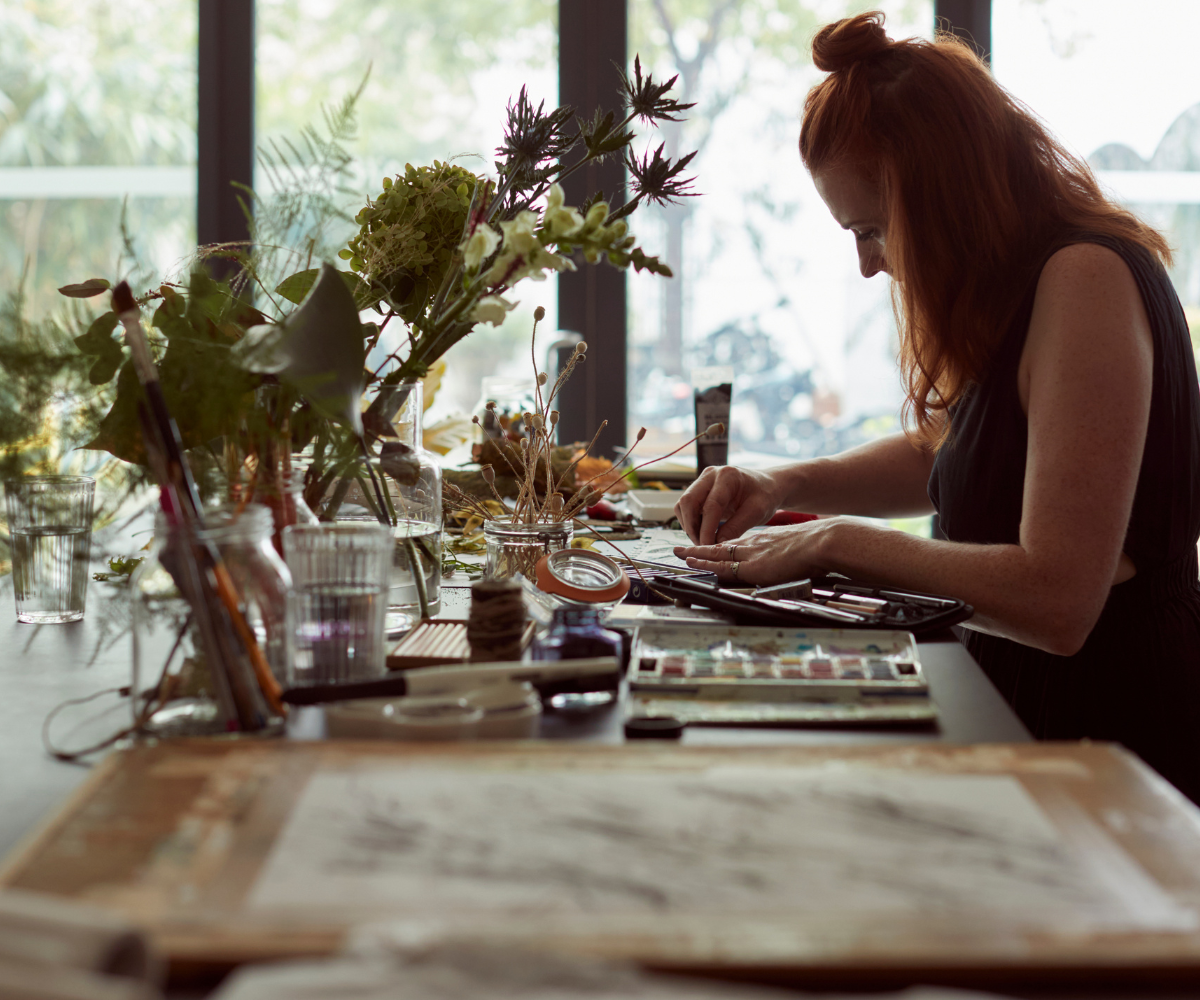
Image credit: Ulster Carpets
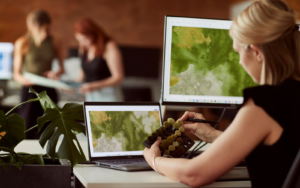
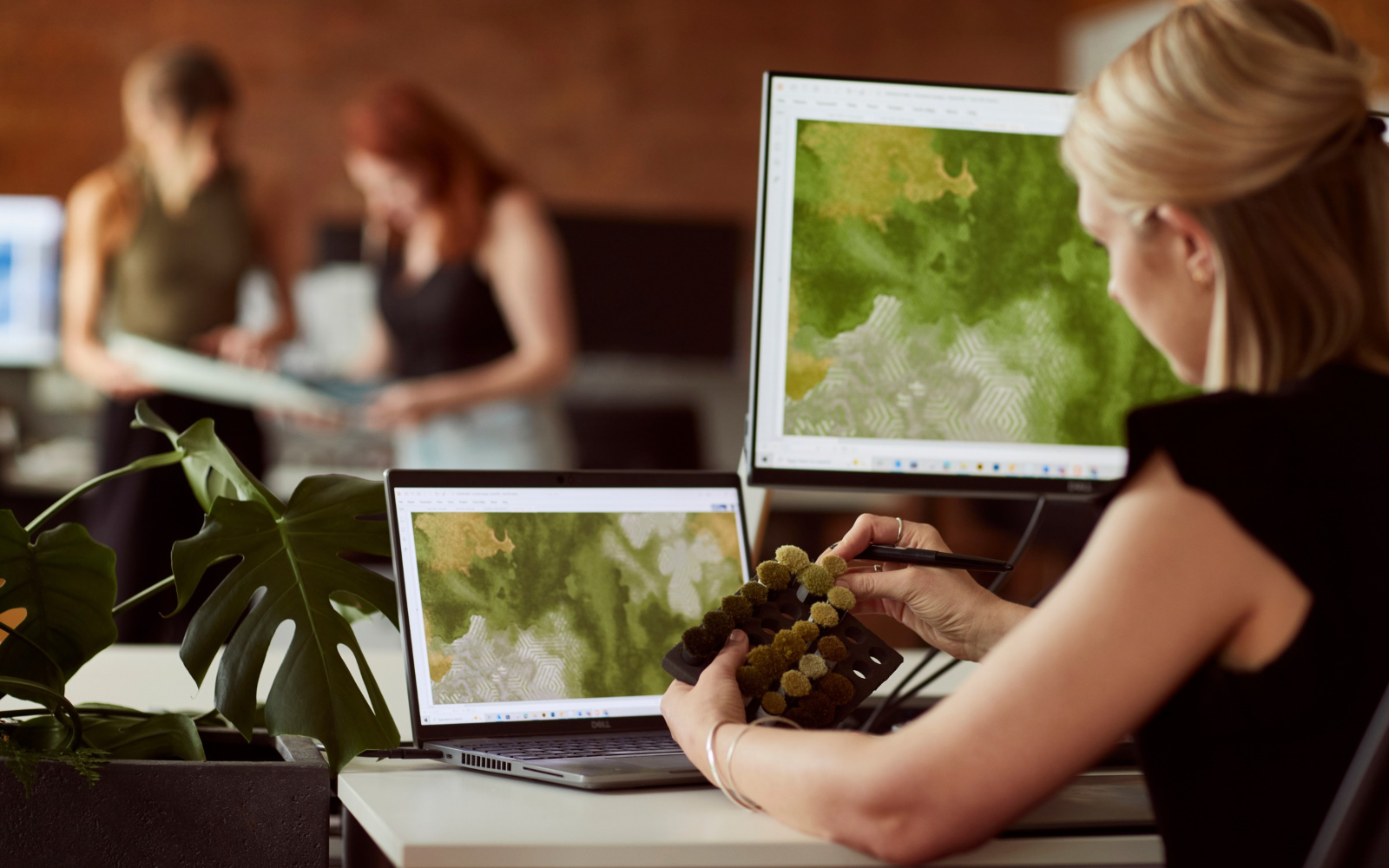
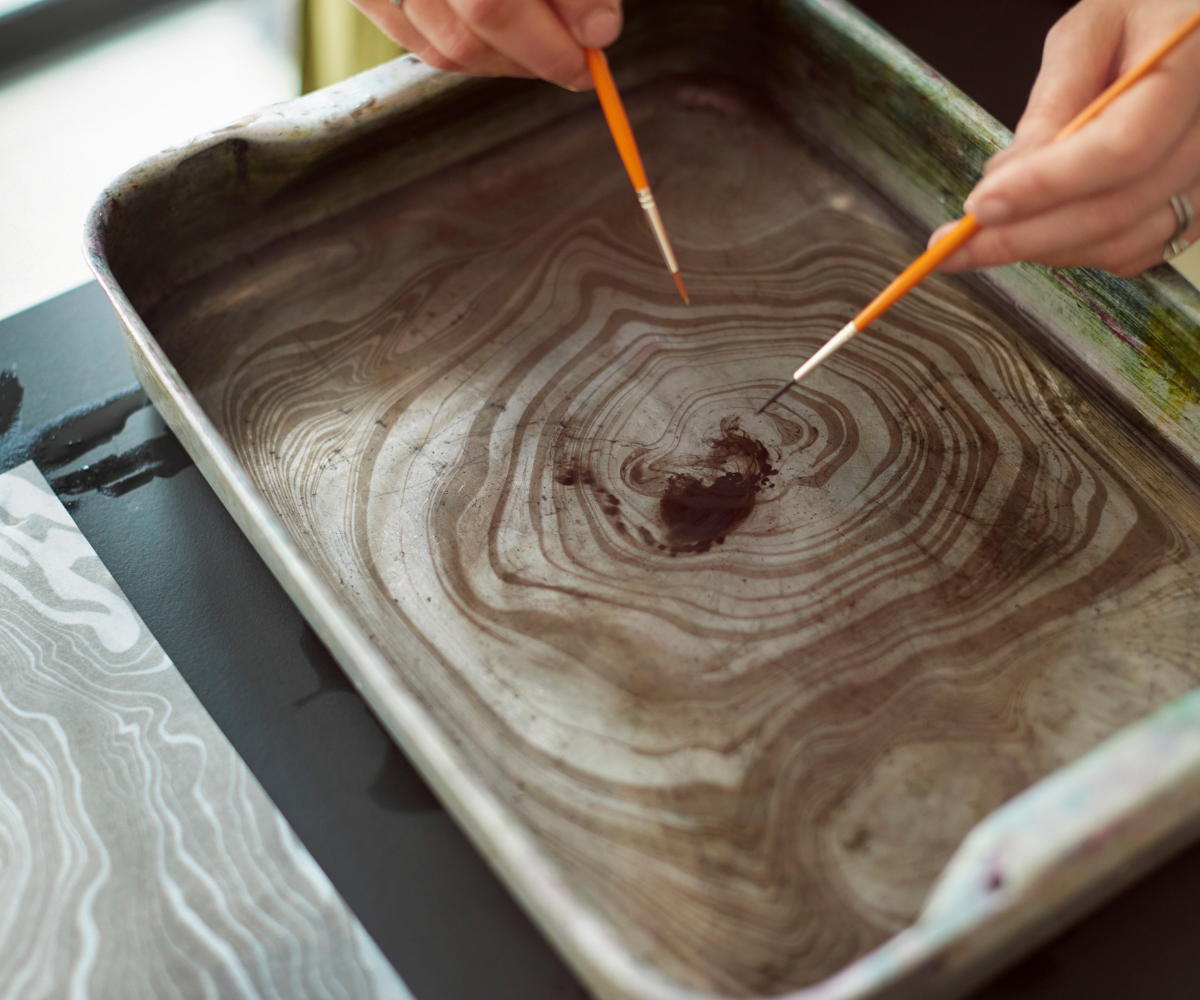
There, Senior Designer Sarah Moffatt showed me the concept for Ulster’s stand at an upcoming trade show. Working to the theme “designed to be remembered”, the team looked to their Northern Irish heritage, drawing on the patina of the local landscape. They photographed corroded metal around the factory and the nearby beaten chalk landscape, then zoomed in on the textures and patterns until they became abstract forms. Warm tones of rust and weathering supplied the base colour palette, with different shades used to create tonal depth and dimension.
It was an insightful illustration of how Ulster approaches its custom work, which makes up the majority of its hospitality projects. Rather than working from existing collections, the team designs bespoke carpet for each property and the individual areas within it, working closely with the interior designer or client to weave the wider narrative of the project into the carpet itself. Storytelling is always a big part of the brief, and Moffatt explained how the team might research a property’s history, from the cultural background right down to its local plant life. On one heritage project, the leaf veining of native plant species was translated into a carpet through colour and form.
-
- Image credit: Ulster Carpets
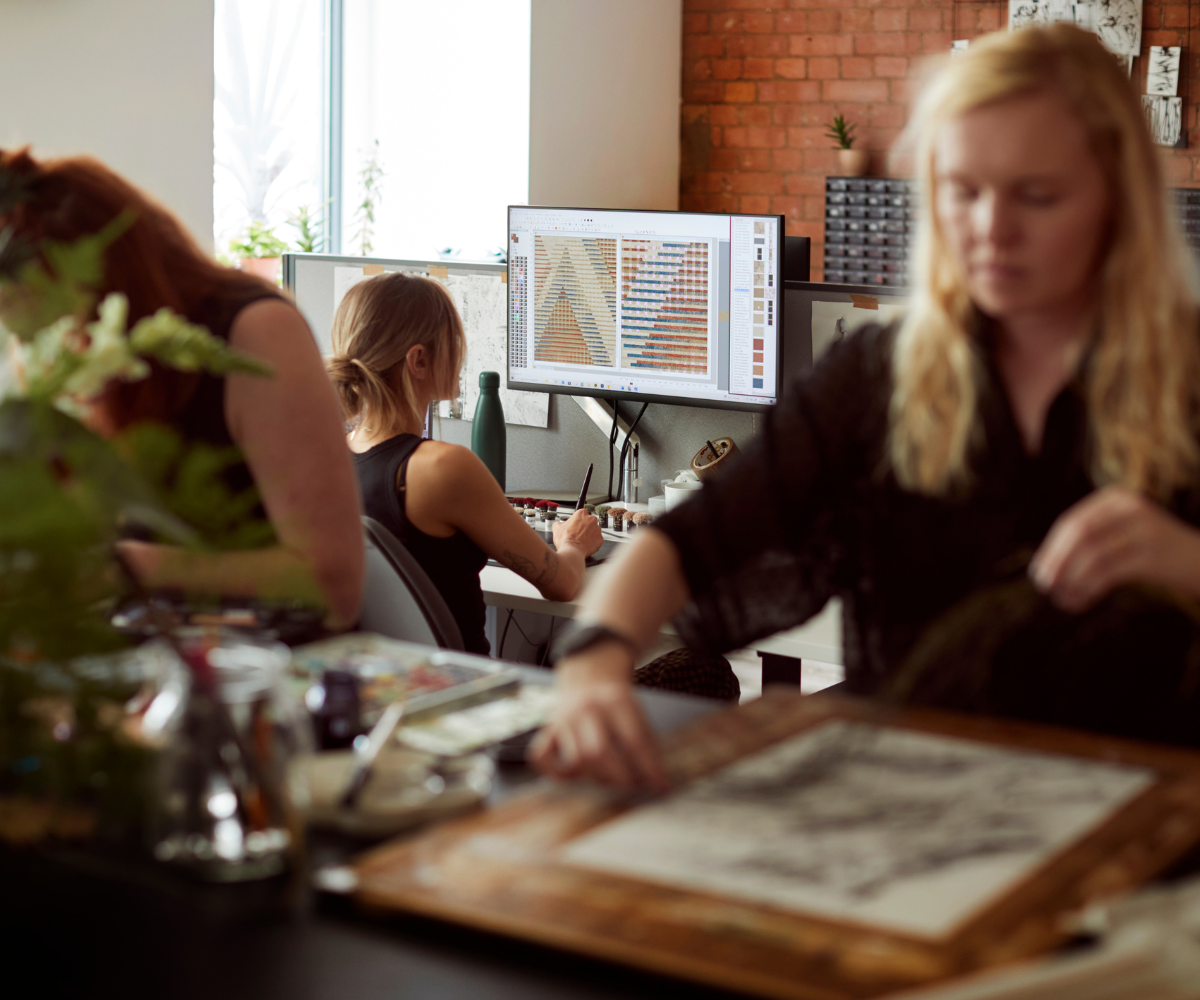
The team’s creative skills also extend to technical problem-solving. One hotel project with unusually curved corridors showed how a design can keep its look and feel while its scale, positioning and movement are adapted to the architecture. That same know-how feeds into sustainability – the design team lays out patterns and panels to minimise waste when the carpet is cut at installation. It is one example of a sustainable mindset that runs across the business, where teams are trained so that they can think critically about the changes they can make day to day in support of wider company initiatives. The process even comes full circle, with handtrials recycled once no longer needed, along with other waste, into Wool Felt and Axfelt Triple Layer underlay at Ulster’s Recycling Hub in Devon.
It is this level of control over every step of the production process, from client relationships and design through to manufacture and export, that makes Ulster special, and it draws directly on the principles of the family company that began here almost 90 years ago. A carpet may sit beneath everything else in a room, but when it has been designed for a specific place, it becomes an impactful part of how that space is experienced and remembered. Next time I tour the latest hotel opening, I will be sure to look down with fresh curiosity, wondering what story lies underfoot and thinking of the many talented hands in Portadown that may well have crafted it.
Ulster Carpets is one of our Recommended Suppliers and regularly features in our Supplier News section of the website. If you are interested in becoming one of our Recommended Suppliers, please email Katy Phillips.
Main image credit: Ulster Carpets