












Accessibility and premium design are no longer competing priorities. Bradley Culmer of Fitzroy of London explains how the new Oxford Doc M Pack and digital configurator aim to make inclusive washrooms as considered as the rest of the hotel…
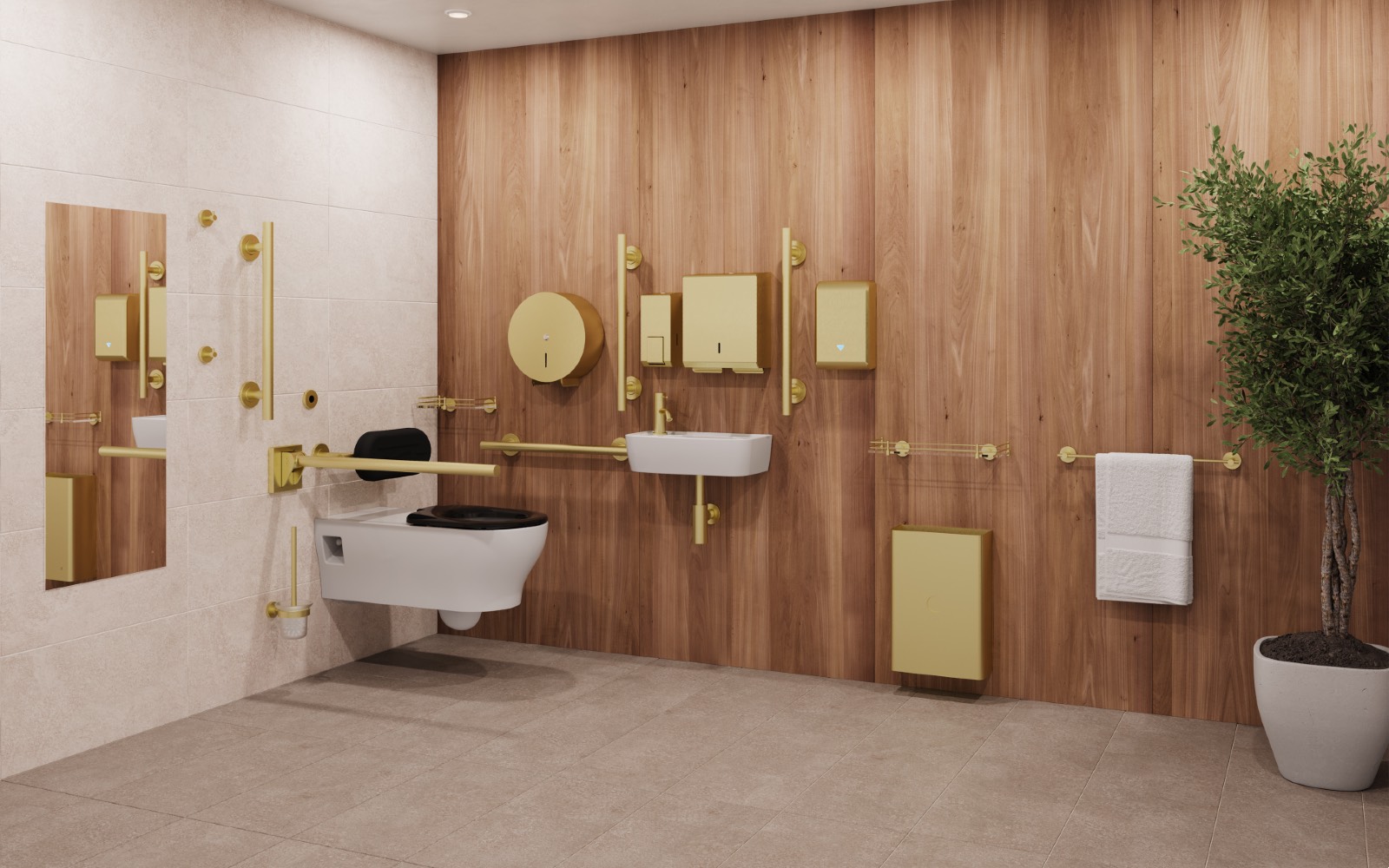
Fitzroy of London has recently launched both the Oxford Doc M Pack and a new digital configurator. What prompted these two launches, and why was now the right time to bring them to market?
Bradley Culmer: We’re seeing a real shift in the way hospitality projects approach accessibility and washroom design. Accessible facilities are no longer something that should be considered separately or added at the end of a project; they need to be integrated into the wider design vision from the outset.
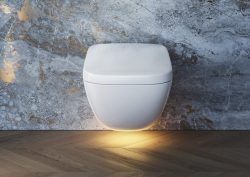
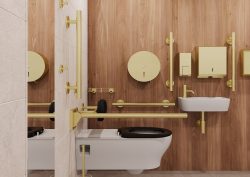
The Oxford Doc M Pack and our new digital configurator respond to two sides of that challenge. The Oxford Pack gives designers a considered, high-quality solution that combines compliance with a premium aesthetic, while the configurator addresses the specification process itself, making it easier and more intuitive for design teams to create compliant layouts. For us, it was about removing some of the complexity around accessible washrooms while giving hospitality designers greater freedom and confidence.
-
- Image credit: Fitzroy of London
Hospitality environments can be particularly demanding, with washrooms experiencing high levels of daily use. What were the key considerations when developing the Oxford Doc M Pack?
BC: Durability was absolutely fundamental. Hospitality washrooms need to perform day after day, often under considerably more pressure than a typical residential environment, but that doesn’t mean designers should have to compromise on appearance.
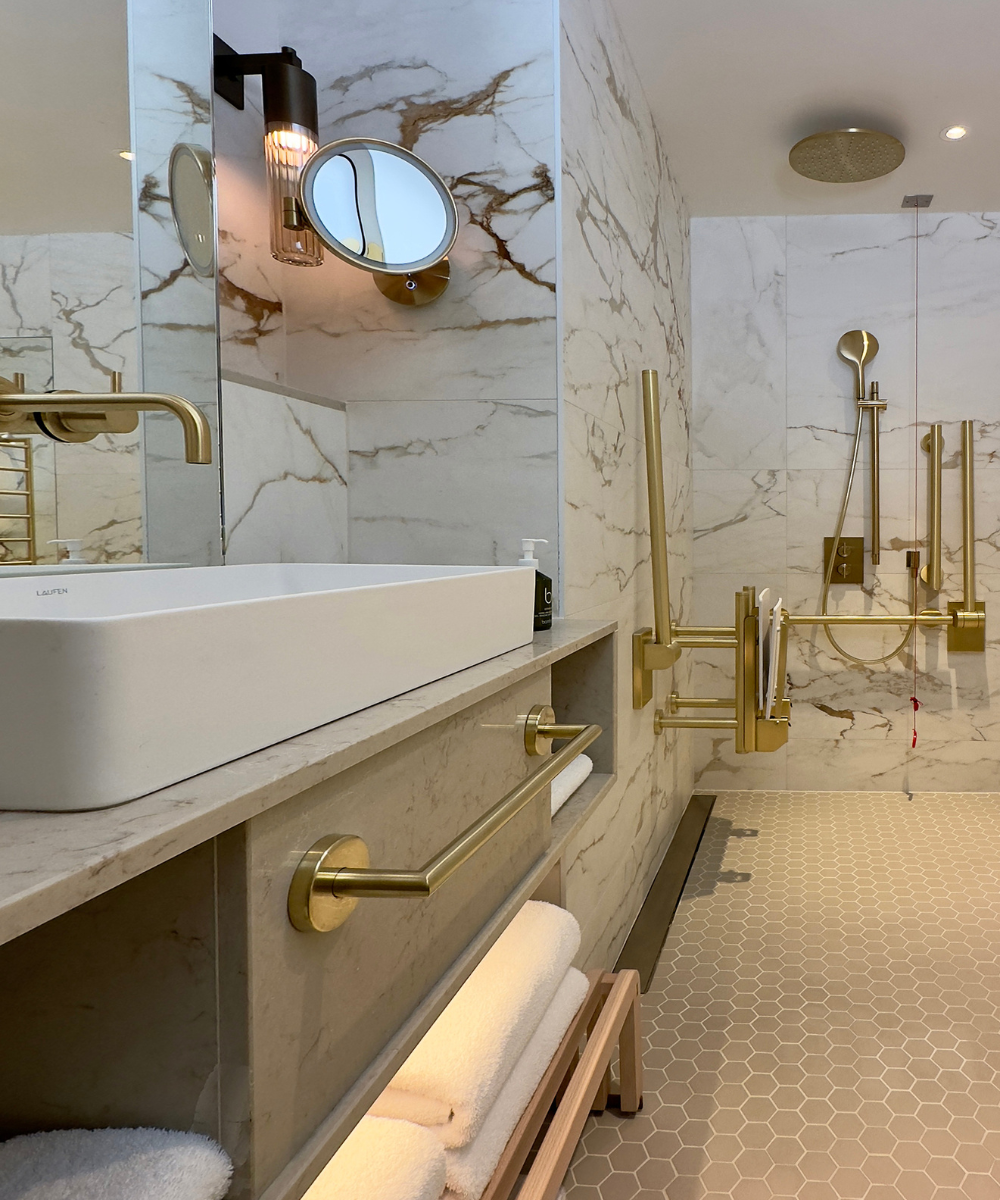
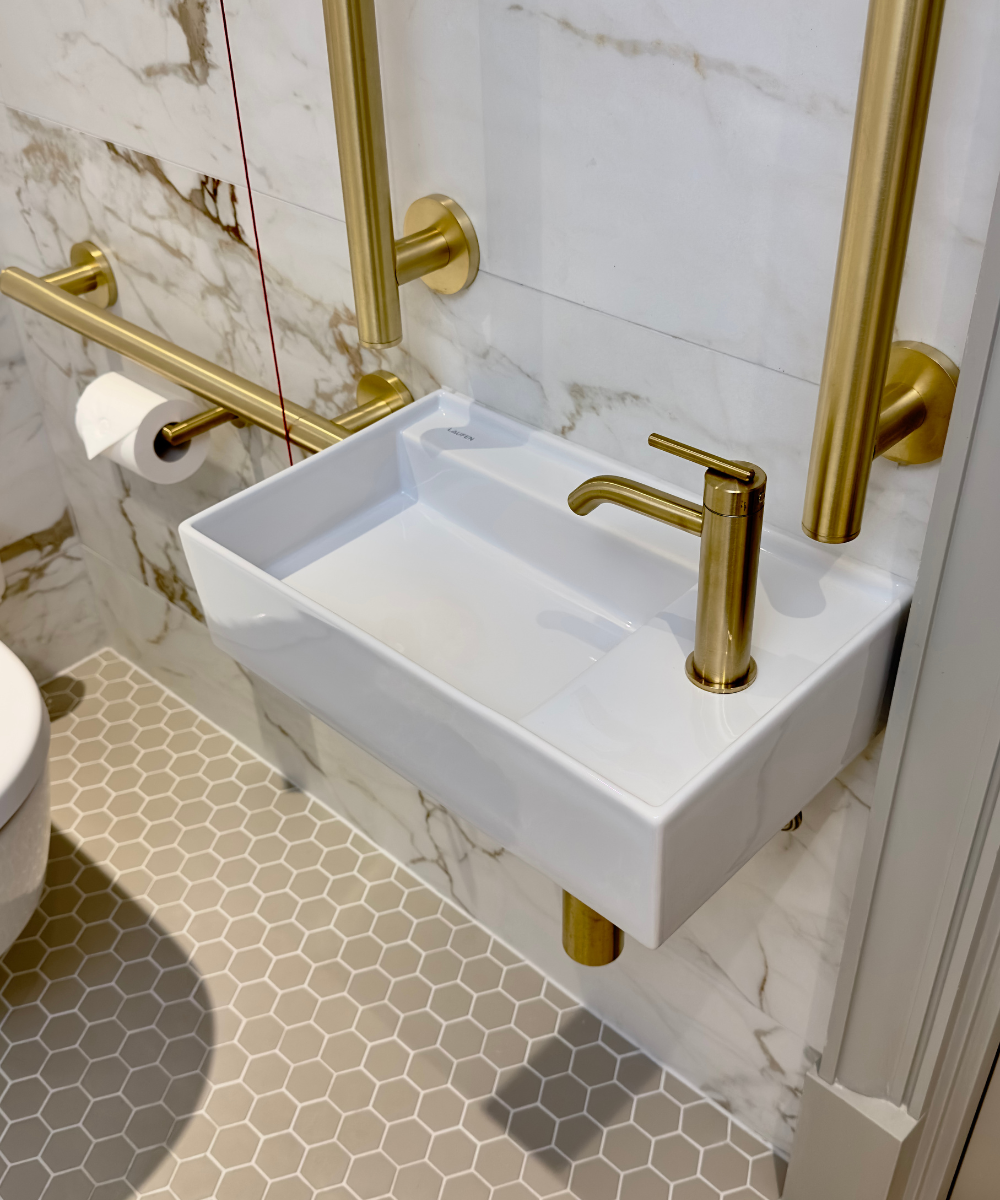
We wanted the Oxford Pack to provide a robust, practical solution while retaining the level of finish expected within contemporary hotels, restaurants and leisure environments. Reinforced mounting points and non-porous surfaces contribute to that durability, while the choice of premium finishes allows the products to sit comfortably within a much broader range of interior schemes. The aim is really to demonstrate that accessible design can be both highly functional and aesthetically considered.
There has traditionally been a perception that accessible washrooms are primarily about compliance. Do you think the hospitality industry is beginning to look at them differently?
BC: Definitely. Compliance remains essential, of course, but the conversation is becoming much broader. Accessibility is increasingly being viewed as part of the overall guest experience and, importantly, as part of good design.
In hospitality, every touchpoint contributes to how a guest experiences a property. An accessible washroom should feel like an intentional part of that environment rather than a separate or purely functional space. We believe there is an opportunity for designers to take a more holistic approach – considering accessibility, usability, materiality, colour, finish and overall ambience together. That ultimately creates spaces that work better for more people without creating a visual distinction between ‘accessible’ and ‘non-accessible’ design.

Image credit: Fitzroy of London
The Oxford Pack is available in five finishes, including Dark Bronze, Matt Black and Satin Brass. How important is material and finish selection becoming within accessible washroom design?
BC: It’s becoming increasingly important. Designers are putting more thought into every detail of a hospitality interior, and washrooms are no exception.
The days of accessible products being available in a very limited visual language are changing. Offering a considered range of finishes means designers can coordinate grab rails, backrests and accessories with the wider palette of the space. For a hotel, for example, that could mean integrating accessible fittings into a scheme using warm metallics, darker architectural finishes or a more understated satin palette. It gives designers the flexibility to maintain a consistent design language throughout the property.
Alongside the physical product launch, Fitzroy has introduced a digital configurator. How do you see technology changing the specification process for hospitality projects?
BC: The specification process is becoming increasingly digital, and we see that as a very positive development. Hospitality projects can involve multiple teams – architects, interior designers, operators, contractors and design managers – so anything that makes communication and specification clearer has real value.
Our configurator allows users to build a compliant Doc M layout, select their preferred components and finishes, and then access the relevant technical information and project-ready documentation. It’s about giving designers greater autonomy while reducing the opportunity for errors. Rather than spending significant time cross-referencing different products and requirements, they can work through the specification in a much more visual and intuitive way.
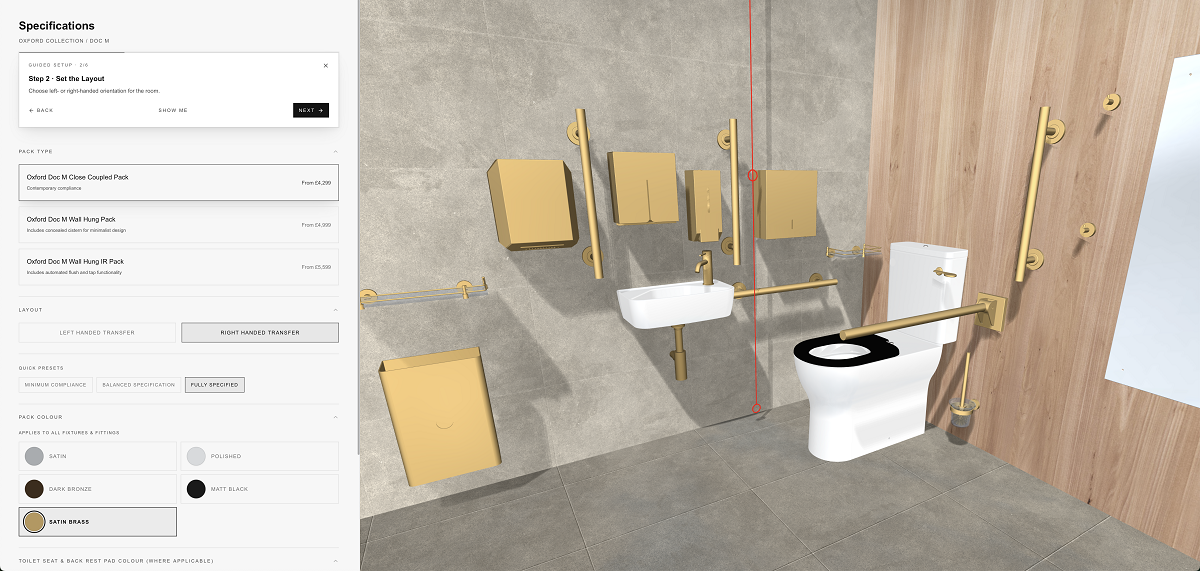
Image credit: Fitzroy of London
Do you think the hospitality industry has a role to play in pushing inclusive design beyond the minimum requirements of building regulations?
BC: Absolutely. Regulations provide an important baseline, but hospitality has an opportunity to go further because the sector is fundamentally about welcoming people and creating positive experiences.
Inclusive design should ideally be considered from the very beginning of a project rather than treated as a box-ticking exercise. When accessibility is embedded into the design process early on, it can become a natural part of the aesthetic and operational strategy. We also think there is a wider conversation to be had around dignity. The best accessible spaces don’t draw unnecessary attention to the person using them. They simply work well, look considered and form part of the overall environment.
What trends are you currently seeing in hotel and hospitality washroom design?
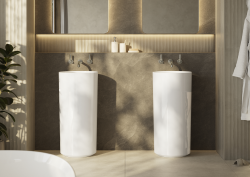
BC: We’re seeing hospitality washrooms becoming much more design-led. There is a greater focus on creating an experience rather than simply providing a functional facility, with stronger use of materials, colour, lighting and detailing.
At the same time, there is a growing expectation that those design ambitions need to work alongside durability, hygiene, maintenance and accessibility. For us, that combination is particularly interesting. Hospitality designers are being asked to deliver spaces that are beautiful, hard-wearing, inclusive and operationally sensible. That creates a real opportunity for manufacturers to think differently about how products are designed and specified.
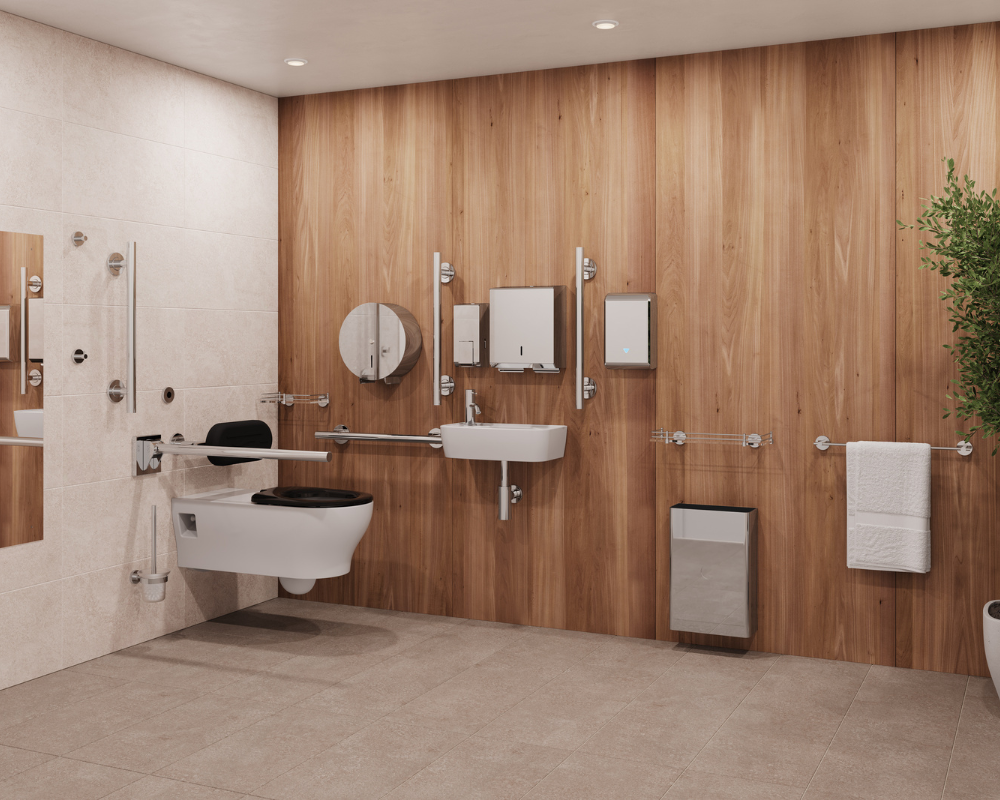
Image credit: Fitzroy of London
Looking ahead, how do you see Fitzroy of London evolving its offering in response to these changing demands?
BC: We’ll continue to focus on bringing together design, performance and practical specification. The Oxford Pack and configurator are important steps, but they form part of a much broader direction for the business.
We’re continuing to listen closely to architects, interior designers, contractors and hospitality operators to understand where the frustrations and opportunities are within the specification process. That feedback will help shape future product development and digital tools. We’re particularly interested in how we can make high-quality, inclusive washroom design easier to achieve across different types and scales of hospitality projects.
What would you like Fitzroy of London to be known for within the hospitality sector over the next few years?
BC: Ultimately, we want to be recognised as a partner to the design and hospitality community rather than simply a product supplier.
That means continuing to develop products that solve genuine challenges, supporting designers with better specification tools and helping make accessible design feel more integrated into the wider hospitality environment. We see a future where accessibility and premium design aren’t viewed as competing priorities. They should work hand in hand, and that’s something we’re committed to contributing to as the industry continues to evolve.
Fitzroy of London is one of our Recommended Suppliers and regularly features in our Supplier News section of the website. If you are interested in becoming one of our Recommended Suppliers, please email Katy Phillips.
Main image credit: Fitzroy of London