








Architects Holiday has announced the launch of two new architect-designed cabins at Great Park Farm – Bathers Cabin and Yogis Cabin – offering a new approach to luxury hospitality where experience forms the primary architectural programme…
The new Architects Holiday cabins join the award-winning Drying Shed Sauna at Great Park Farm, marking the first additions to an expanding collection of highly crafted retreat spaces. Each cabin inverts traditional hospitality design by making restorative practice – whether bathing, movement, or mindful reflection – the central spatial experience.
Bathers Cabin and Yogis Cabin are the first of a new collection coming to Architects Holiday’s Great Park Farm. 2027 will see the arrival of three additional cabins: Chef’s Cabin, featuring a masterclass kitchen crowned with a fruiting green roof; Musician’s Cabin, with an open-plan music room and instruments for immersive sound experiences; and Explorer’s Cabin, designed for those seeking deeper connection with the surrounding landscape.
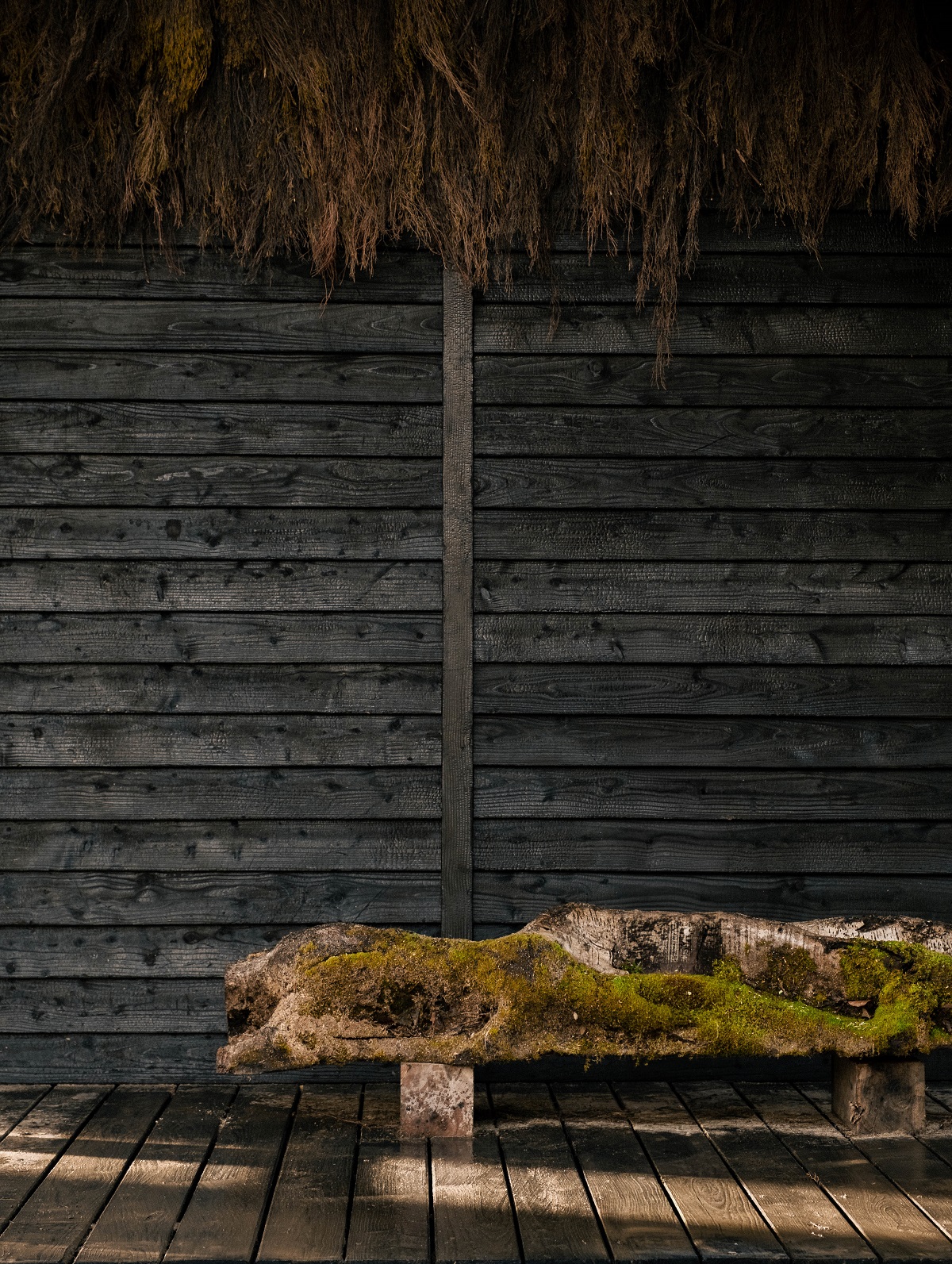
Image credit: Connor Duffy
Each cabin proposes an experimental typology where accommodation becomes secondary to the ritual it enables – whether bathing, movement, music-making, exploration, or gastronomy. Together, they offer an alternative to traditional luxury hotel stays; highly specific architectures for specific practices, rooted in a specific landscape.
With sustainability and craftsmanship at the forefront, both cabins use locally sourced timber, natural insulation materials, and hand-crafted elements that celebrate regional making traditions. The design approach minimises impact on the mature woodland while unlocking the site’s natural beauty, continuing Architects Holiday’s commitment to environmentally conscious design.
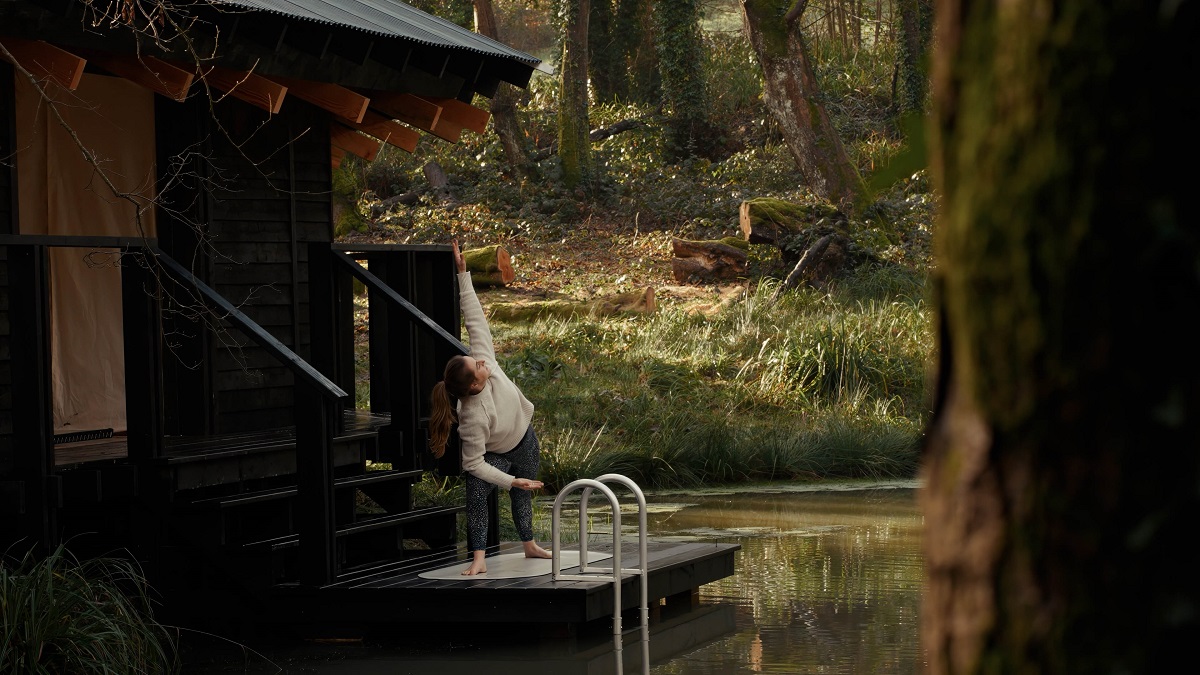
Image credit: Connor Duffy
Architects Holiday was founded by Will Gowland and Harry Kay, who met while studying architecture at university. The retreat was born out of their architecture practice, Built Works, combining their shared vision for environmentally conscious design with a passion for creating spaces that foster rest, reflection, and connection with nature.
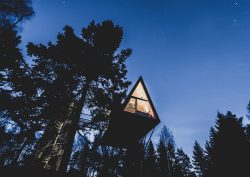
Bathers Cabin is a celebration of bathing rituals – a sanctuary for rest and recovery. Nestled in the most private part of the woodland, every element is designed to restore body and mind through water and tranquillity. At its heart is a hand-crafted spa occupying most of the cabin’s space, within an intimate soaking tub overlooking the forest, plus a secluded rooftop deck with a sauna, hot tub, and ice bath offering complete privacy amongst the trees for a true forest bathing experience.
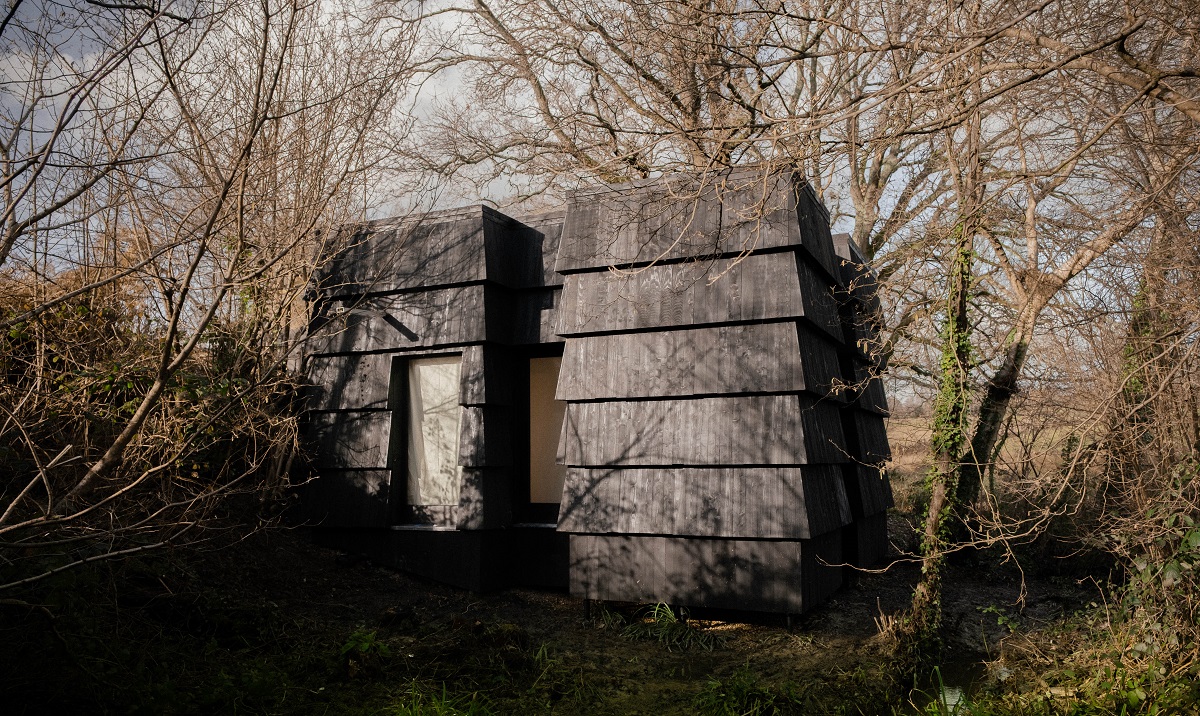
Image credit: Connor Duffy
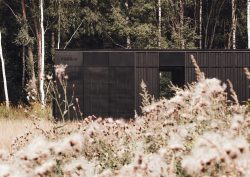
The design draws inspiration from the traditional granaries and grain stores of Southeast England – modest, elevated structures once built to protect produce. This contemporary interpretation of louvered agricultural drying sheds, is clad with larch sourced from the surrounding woodland, treated with Scandinavian pine tar to achieve a rich, blackened finish. Every surface has been considered and crafted by hand, with tiles, textiles, and joinery created using natural materials that celebrate process and imperfection.
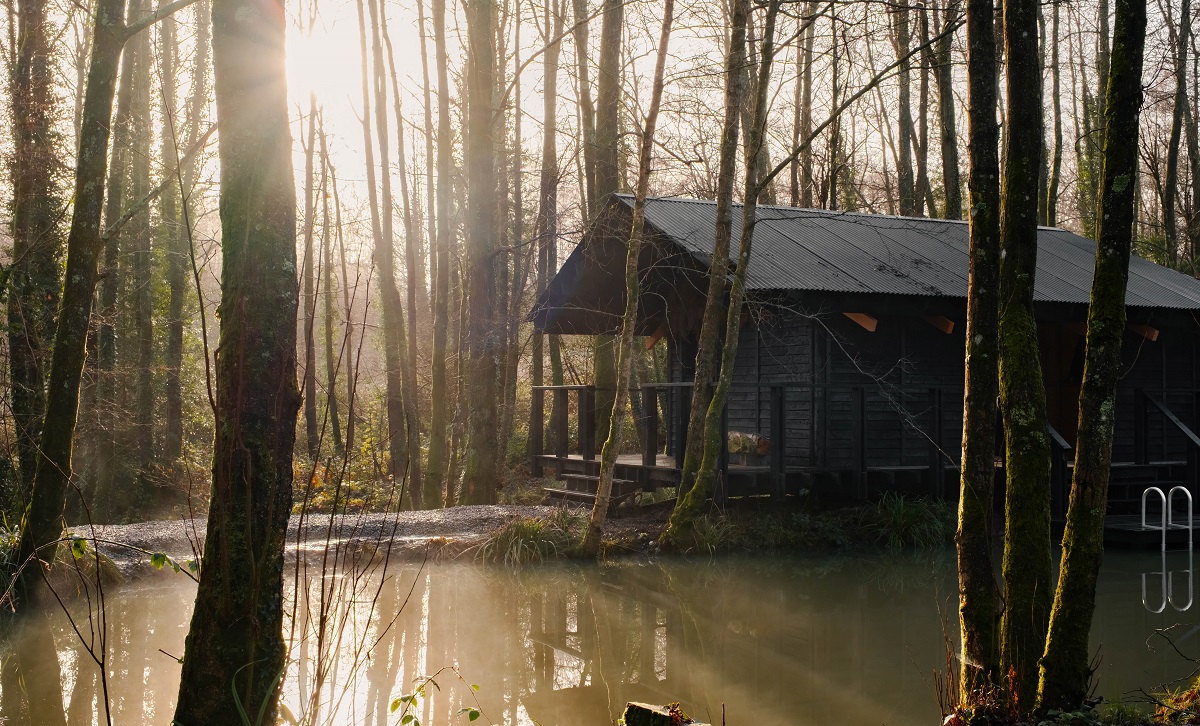
Image credit: Connor Duffy
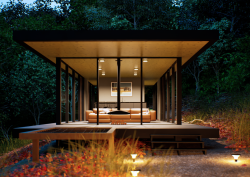
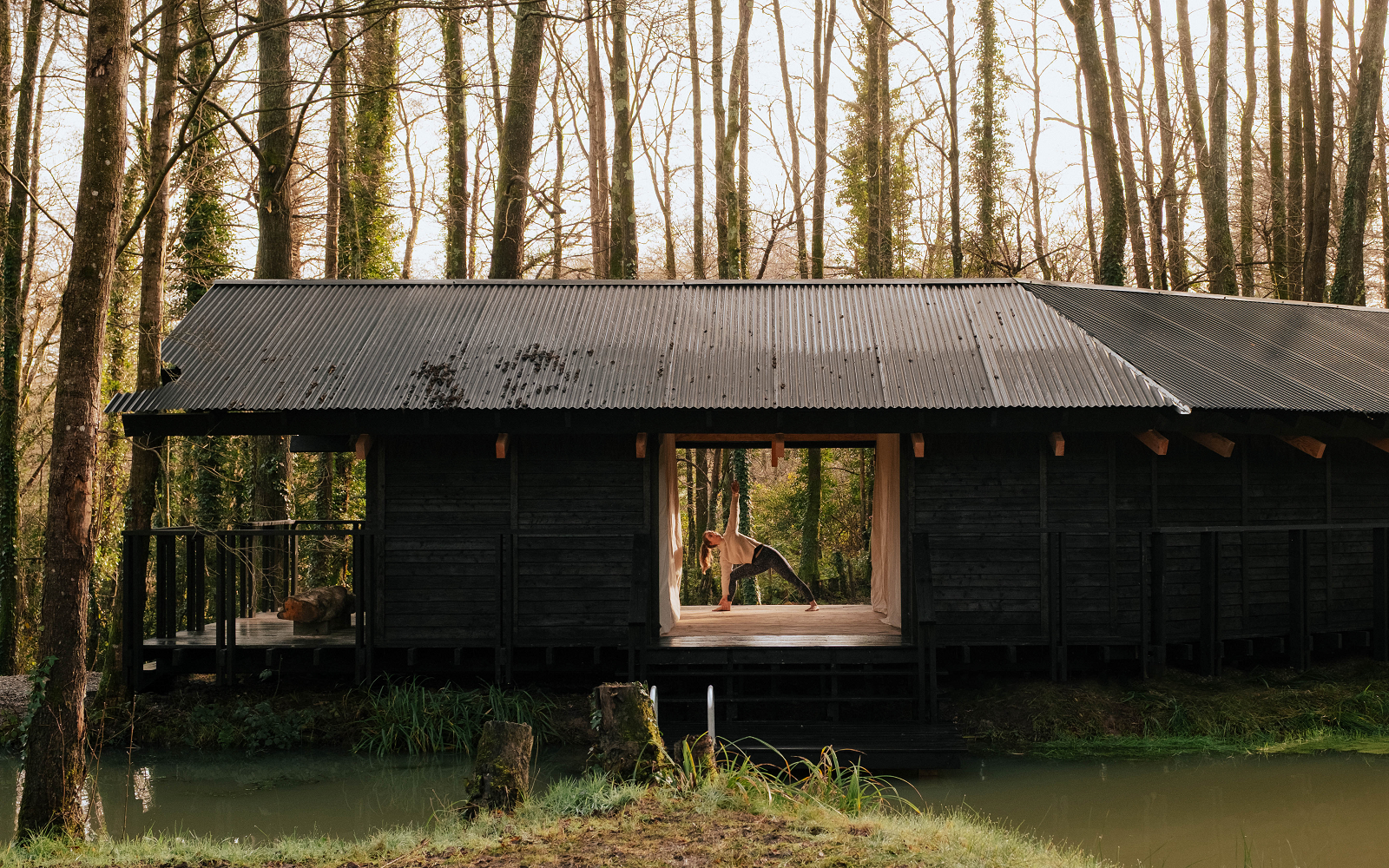
Yogis Cabin is a tranquil space for finding balance through stillness, movement, and connection with nature. Designed around a central yoga studio, the cabin opens east to west with large sliding doors framing views of upright alder trees and a spring-fed natural swimming pool. This orientation connects guests to the natural rhythm of the day, from sunrise light to evening calm. Sheltered by deep eaves, a continuous engawa – a traditional Japanese transitional deck – runs around the perimeter, offering a contemplative threshold between interior and exterior. Beside the pool, a handmade wooden soaking bath sits on the deck, surrounded by woodland stillness.
Every element has been crafted with intention. The larch cladding, felled in the surrounding woodland and charred on site using traditional Japanese techniques, blends the cabin into its forest setting. Douglas fir was hand-selected from the Scottish Borders as well as nearby woodland which was machined locally, to form the structural frame, floorboards, and internal panelling, adding warmth and character to the space. The design synthesises Japanese architectural principles – stacked eaves, sliding screens, deep overhangs – with the local vernacular of modest timber agricultural buildings, creating a dialogue between Eastern restraint and rural English craftsmanship.
Main image credit: Connor Duffy