










Porta Rossa Hotel Firenze Colbert Collection reimagined by THDP
Where 13th-century Florence meets contemporary hospitality design, THDP has completed a quietly transformative redesign of one of Italy’s oldest hotels…
There is a particular kind of design challenge that comes with working inside a building that has already outlasted empires. For award-winning hospitality design studio THDP, the task of reimagining the guestrooms and public areas of Porta Rossa Hotel Firenze Colbert Collection – one of Italy’s oldest hotels – was precisely that kind of undertaking. Not a reinvention. Not an imposition. But a careful, considered act of revelation.
Set in the historic heart of Florence, just steps from the city’s most iconic landmarks, Porta Rossa Hotel Firenze occupies a singular place in the Italian cultural landscape. Housed within a historic structure featuring original frescoes, vaulted ceilings, decorative plasterwork, and a 13th-century tower, the hotel received the European Design Award in 2010 – a recognition of the distinctive architectural character it had already long possessed. The brief to THDP, then, was not to add to this legacy, but to honour it.
“The project is rooted in a careful reading of Florence’s identity, where craftsmanship, materiality, and atmosphere form the foundation of the design,” explains Claudia Mazzucato, Associate Director and Project Leader at THDP. “Working within such a layered historical context calls for restraint. The aim was never to change the space, but to reveal it, allowing what is already there to surface naturally through a contemporary layer that sits quietly within it.”
THDP’s approach is structured around three core principles: Heritage as Protagonist, Renaissance Reinterpreted, and Timeless Layering. Together, they form the philosophical backbone of a project that has no need to compete with its surroundings.
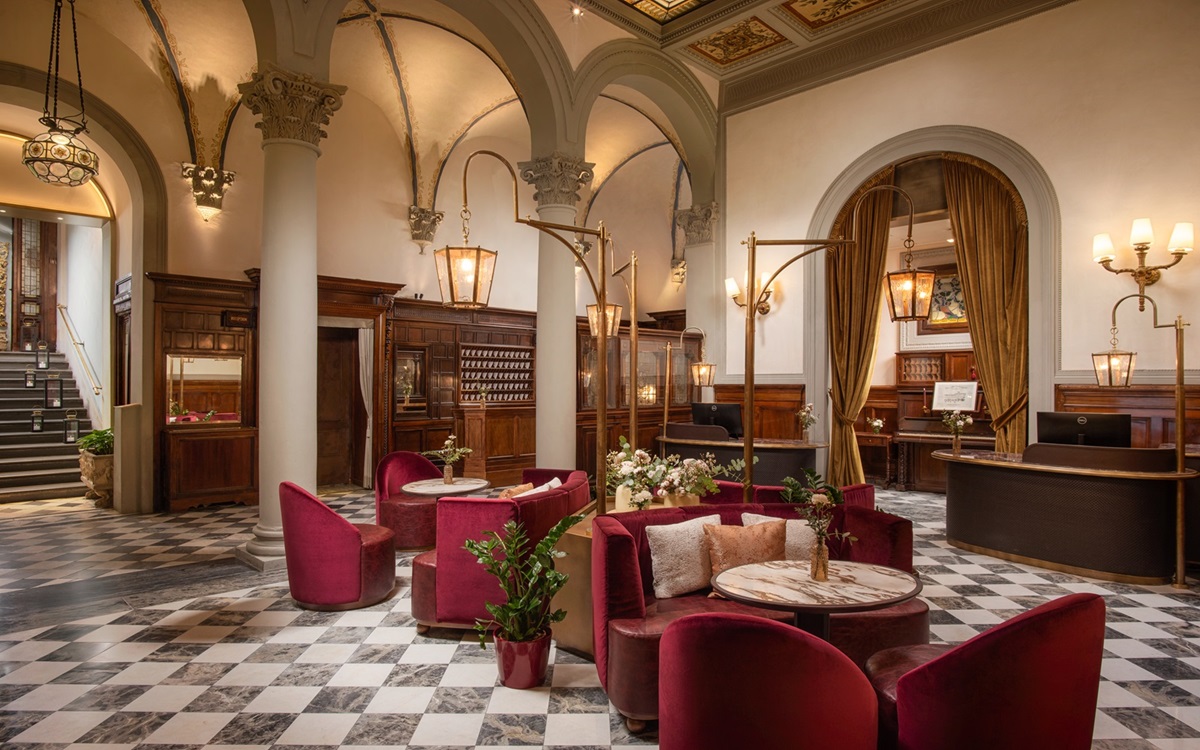
Image credit: Minor Hotels
Existing architectural features have been carefully preserved and put centre stage, rather than concealed behind a new aesthetic. The classical Florentine architectural language is translated into a contemporary vocabulary of proportion and rhythm, and all new interventions are conceived as quiet additions that complement, rather than overwhelm, the historic fabric.
The result, in THDP’s own framing, is a quiet expression of luxury where elegance emerges through harmony, authenticity, and material richness. Given the building’s extraordinary bones, it is a vision well-suited to its context.
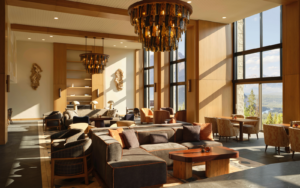
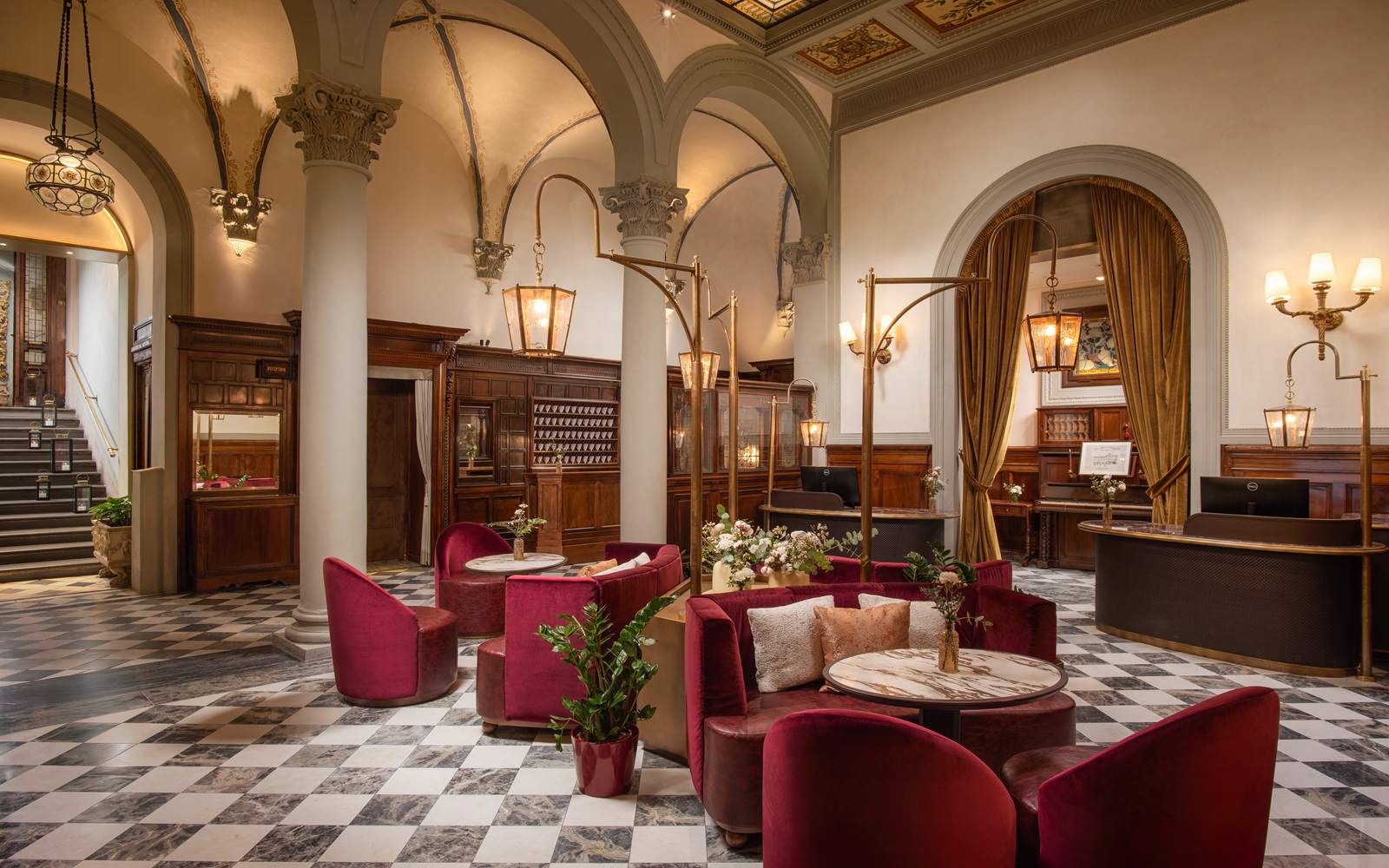
In the public areas, THDP has developed a layered identity that responds to the monumentality of the architecture while introducing warmth and human scale.
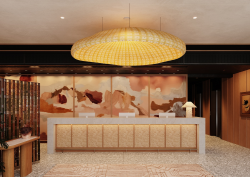
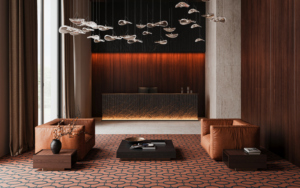
The reception sets the tone immediately. Bespoke desks are wrapped in textured leather, while original timber panelling has been reinterpreted with woven leather inlays and brass detailing – an explicit nod to the leatherworking traditions for which Florence has long been celebrated. Custom brass lighting, recalling the lanterns of the city’s historic porticos, casts a warm, candle-like glow that deepens the sense of atmosphere.
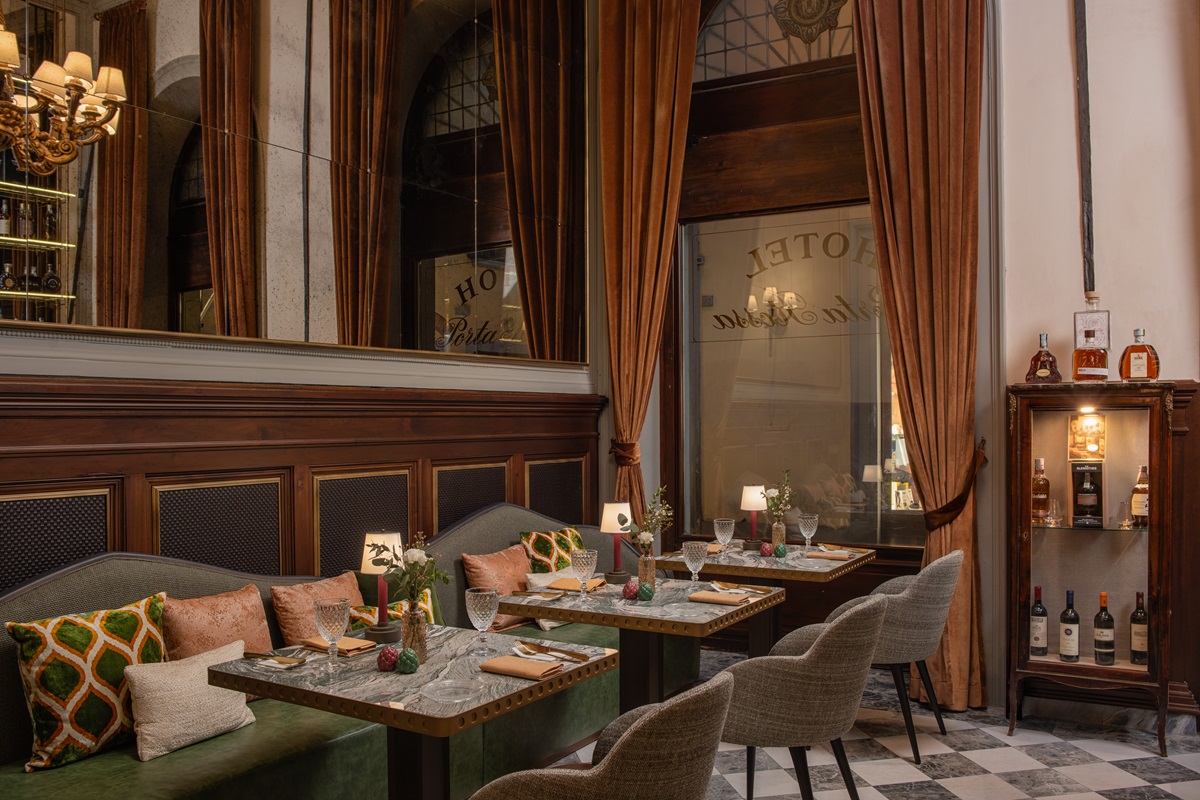
Image credit: Minor Hotels
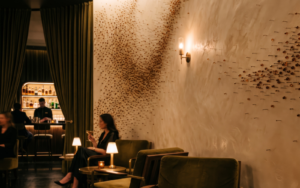
At the heart of the lobby, a generously scaled banquette functions as a contemporary piazza – an informal gathering point that encourages the kind of unhurried interaction that Florentine civic life is built upon. Nearby, a former storage cabinet has been transformed into one of the project’s most theatrical interventions: a tea niche framed by a decorative wallcovering inspired by the frescoes of Botticelli.
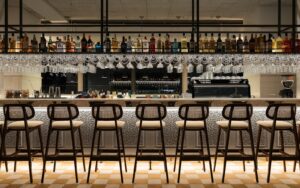
The bistro bar introduces a livelier energy through antique mirrored back panels and a full-height bottle display that creates strong visual connections across the space, and beyond the windows, with the surrounding city. Throughout all of the public areas, Levanto marble, dark timber, brass, and leather work in combination to establish a cohesive material palette that feels rooted and refined.
The guestrooms have been conceived as calm and contemplative retreats; spaces that evoke the intimacy of a Renaissance palazzo without resorting to pastiche.
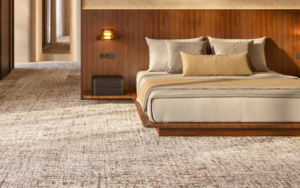
Draped headboards and softly articulated wall canopies create a sense of gentle enclosure, while layered textiles, leather, and refined surface finishes build a quietly tactile experience. The headboard itself pays direct homage to the hotel’s name: Porta Rossa, meaning ‘Red Door’, is referenced through a deep burgundy framework, while an inset embroidered-effect wallcovering draws from the vocabulary of Renaissance textiles to introduce decorative depth without excess.
“Luxury here is not expressed through excess, but through atmosphere; through proportion, materiality, and the ability of a space to create a sense of calm and belonging,” says Mazzucato.
One of the project’s most inventive moves is the transformation of the guestroom floor lounges into a sequence of intimate piazzette – private gathering spaces that extend the guest journey beyond the room itself.
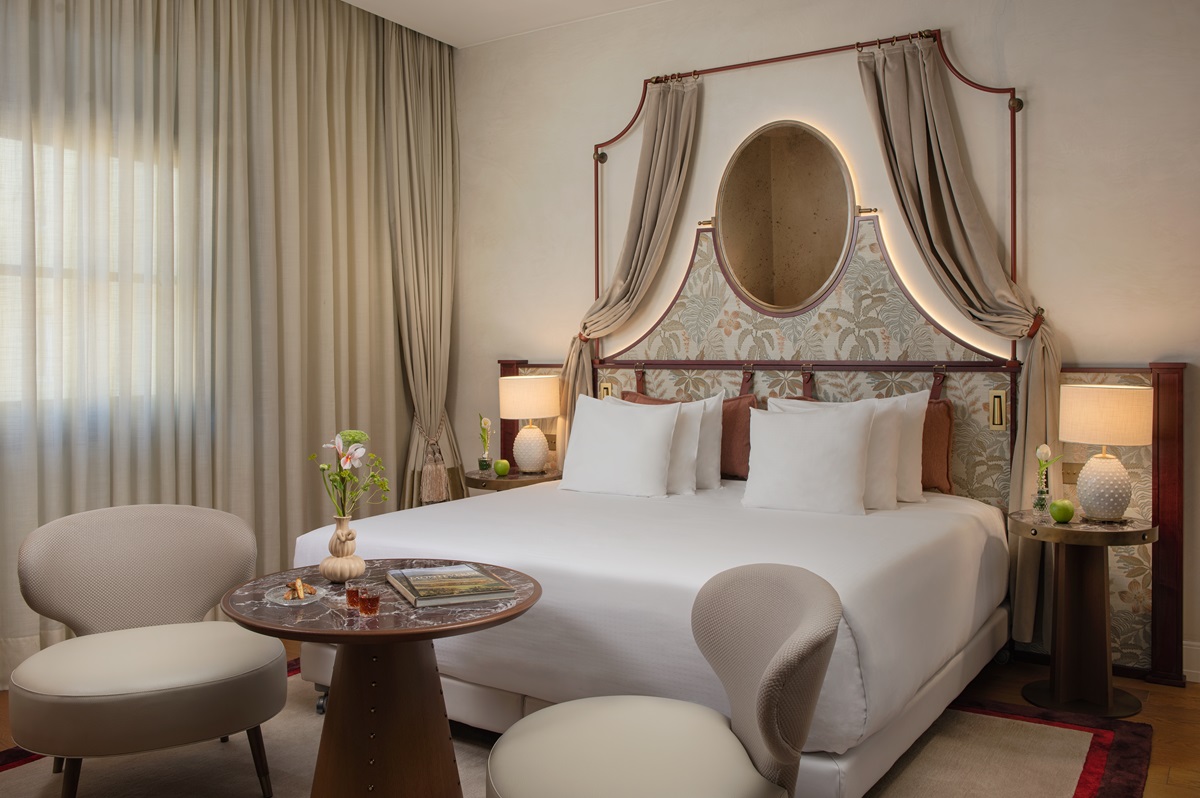
Image credit: Minor Hotels
Each space draws its character from a distinct palette inspired by the mineral pigments found in Renaissance frescoes. The Winter Garden is expressed in deep emerald, evoking the enclosed palazzo courtyards of the city’s aristocratic past. The Grand Tour room adopts lapis lazuli tones that speak of travel, collected curiosities, and a sense of wonder. The Library Parlour offers softer amethyst hues, centred around a marble fireplace, creating perhaps the most contemplative of the three.
Bespoke chandeliers, composed of layered circular iron frames and candle-like diffusers, unify the sequence with subtle variations in lampshade design and leather detailing distinguishing each space’s individual identity.
What distinguishes THDP’s work at Porta Rossa is not any single gesture, but the cumulative effect of many small ones – the way local craftsmanship in ceramics, textiles, woodworking, and leatherwork is woven into the design not as decoration, but as a living cultural language.
Florence is a city in which beauty is inseparable from making. Generations of artisans have kept that spirit alive in workshops throughout the city, and THDP has embedded it into the fabric of this redesign in a way that feels authentic rather than performative.
The boundary between past and present, as Mazzucato describes it, becomes “almost imperceptible, not through imitation, but by drawing from the past to create something that feels timeless.”
Main image credit: Minor Hotels