The sustainable wellness hotel, situated in South Tyrol, Italy, was designed by noa* as an expansion project by embedding it in the terrain, offering guests a spectacular view and the feeling of being emerged in nature in a way that is totally unique. Editor Hamish Kilburn writes…
“Transform a traditional South Tyrolean restaurant into a larger hospitality space, without altering the charming, beautiful landscape with new levels.” This was the brief that design firm noa* was confronted with in a quaint neighbourhood called Fiè, within the wonderful Dolomite scenery of the Sciliar and the Catinaccio.
The Gfell hotel, which is adjacent to the pre-existing Schönblick restaurant, sits isolated on top of a slope that provides views that stretch over unspoiled forests and meadows. The owner was aiming to coordinate this restoration project with top-quality accommodation, building new spaces able to enhance the distinctiveness of the location.
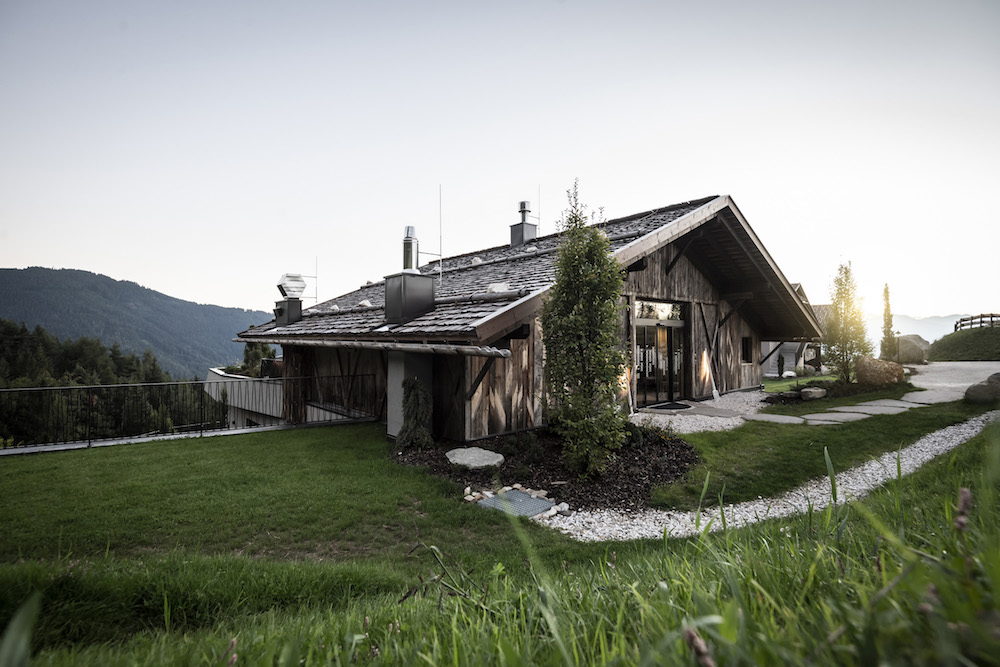
Image credit: Alex Fliz
“We could have added an extra level”, explains the architect Andreas Profanter, a partner at noa*’s studio. “But in line with the contractors, we opted for a less invasive and more environmentally friendly solution, placing the new section inside the hill. So it’s an earth shelter construction that reduces the impact of the operation without taking any views away from the restaurant, whilst in actual fact, providing all the guests at the new hotel with a spectacular panorama. And not only that, but an old barn on site has been refurbished as an additional space for the new hotel.”
It is meaningful, considered and gives a sensitive nod to the building’s past that access to the new spaces takes place through an old barn which sits by the restaurant. The outside of the building has preserved its traditional look thanks to careful restoration works, but the inside holds a surprise for visitors: it has been fully converted to host the hotel’s reception, a lounge and breakfast hall within one large open- space area.
It is an uncommon yet effective design solution from both an environmental and architectural point of view; on the one hand, it repurposes the existing level, deeply- rooted in the heritage and land of the local alpine community; and on the other hand, it breathes new life into a building that would otherwise be neglected or left to decay, transforming it into a place of discovery and surprise.
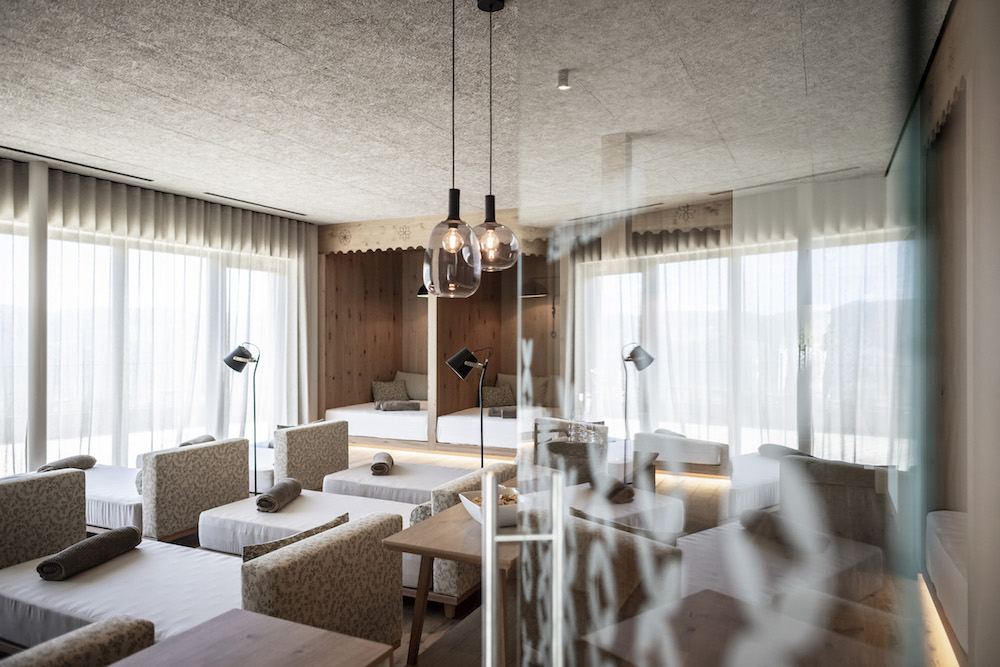
Image credit: Alex Fliz
The hotel, which takes its name from the Gfell meadows (prati di Gfell) area, is an eco gem and a prime example of design working with service conswciously. For example, the hotel boasts the latest insulation technology, ensuring high levels of comfort. The heating and hot water are obtained thanks to a pellet burner, which guarantees “zero impact” on CO2 emissions.
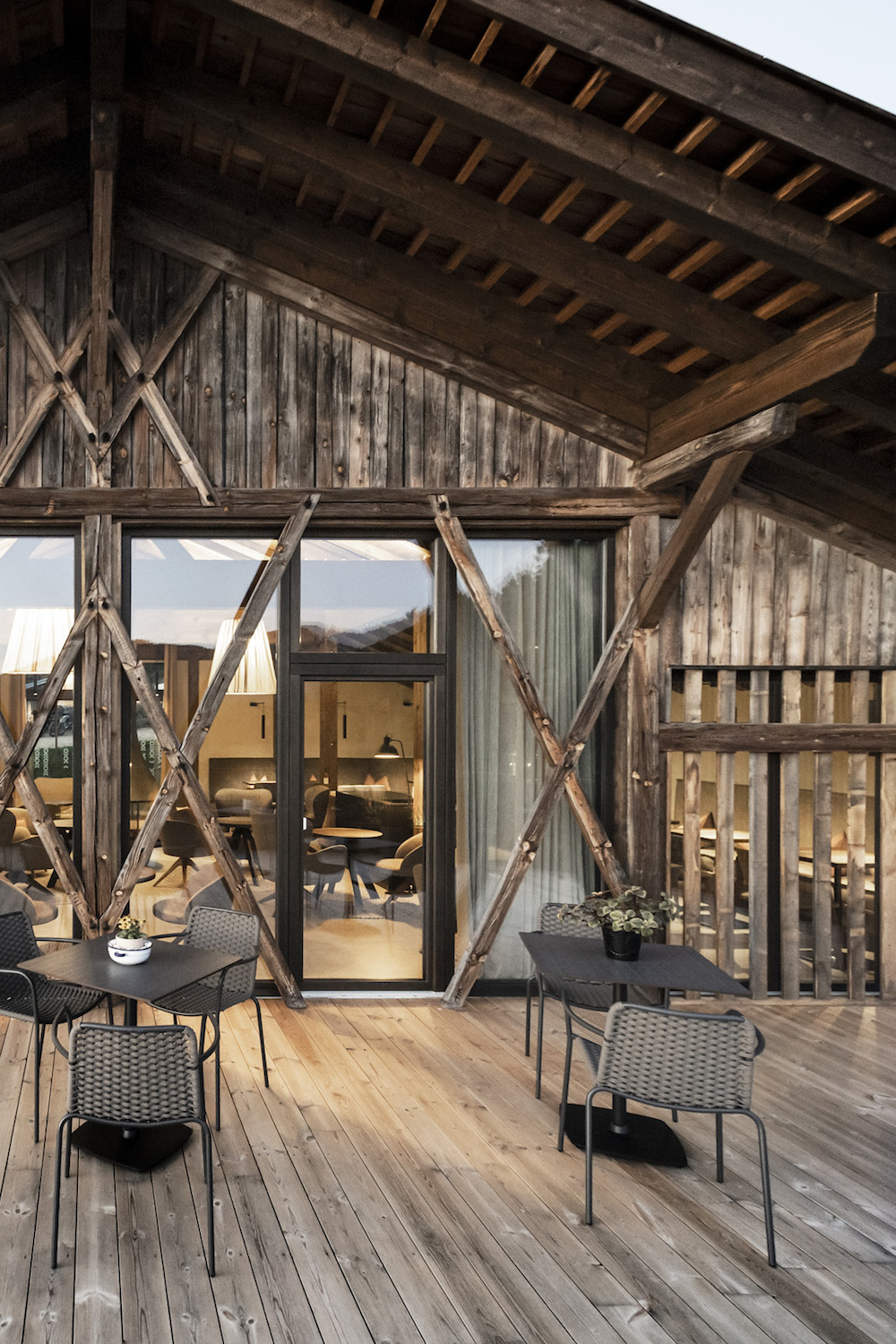
Inside, all rooms and spaces take light from the large window overlooking the valley and they are structured seamlessly under the large wooden truss, which was partly rebuilt from scratch in line with local architectural tradition to restore all the feel of a typical South Tyrolean farmstead.
-
- Image credit: Alex Filz
-
- Image credit: Alex Filz
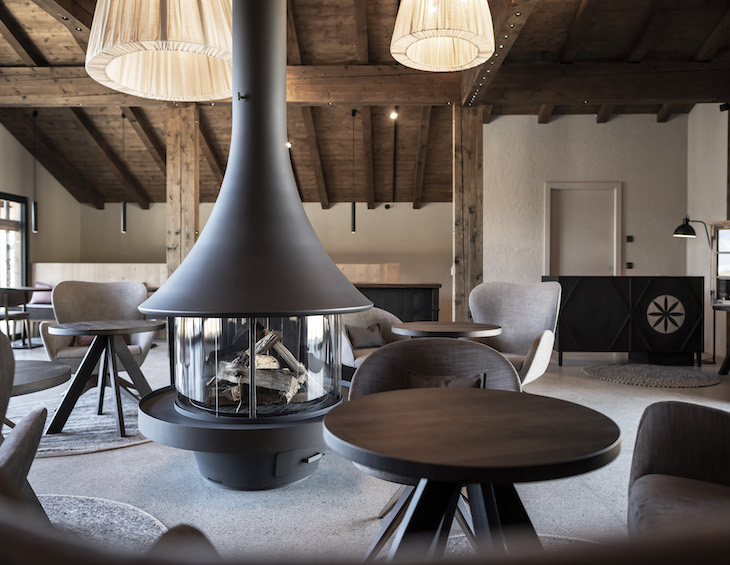
Even the flooring, which makes an impression as a simple original cement screed, aims to reproduce the uneven surface area of the original barn (a specific treatment makes the surface waterproof and stain-resistant, however). In the middle is a spectacular column fireplace reinterpreting the alpine hearth and creating a visual crux around which the different functional spaces revolve. Brise soleil-type wooden panels soften radiation from the sun during the hottest hours of the day, whilst creating aesthetic impact at the same time.
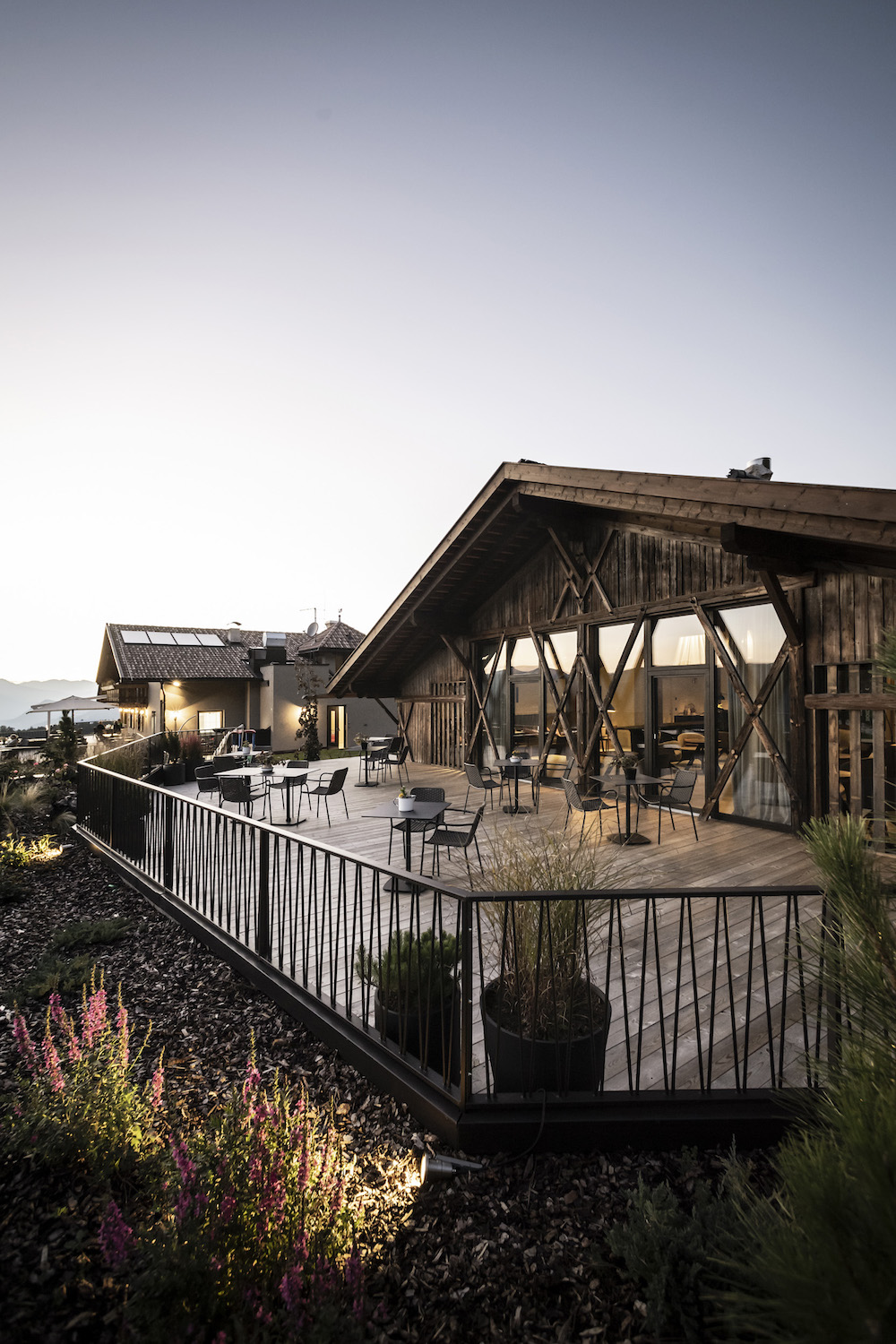
Outside, in line with modern demands for exterior spaces – especially in wellness hotels – the building opens out onto a large terrace that provides guests with a view over the valley.
-
- Image credit: Alex Filz
-
- Image credit: Alex Filz
The new building is developed on two underground levels, which follow the land’s natural slope. Its architecture is almost cancelled out in order to allow for the natural scenery to be read with no interruptions. For noa*, hospitality is about (and in this project more so than ever) continuously seeking out dialogue with nature and providing the latter with the starring role.
There are 17 new rooms, complemented by a wellness area with a sauna and relaxation area. Going down a staircase from the barn, guests enter the lower level which provides access to the new rooms; all of the rooms are the same on both levels (-1 and -2) and are amazing in terms of their features and size.
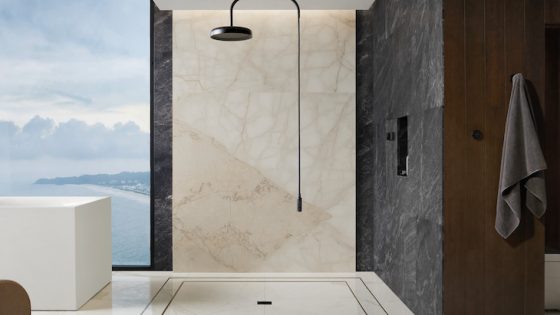
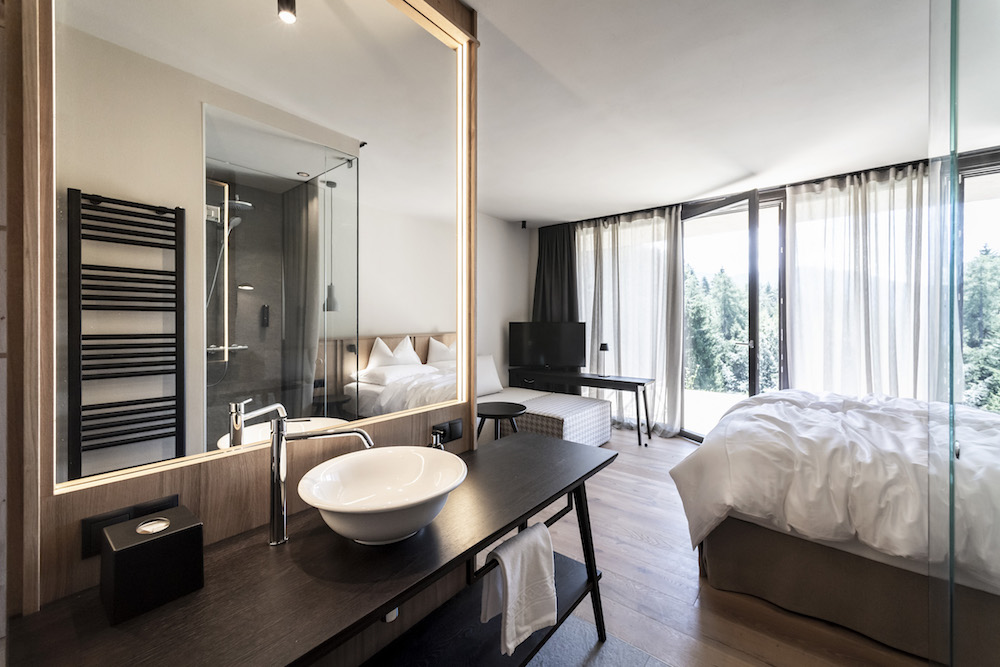
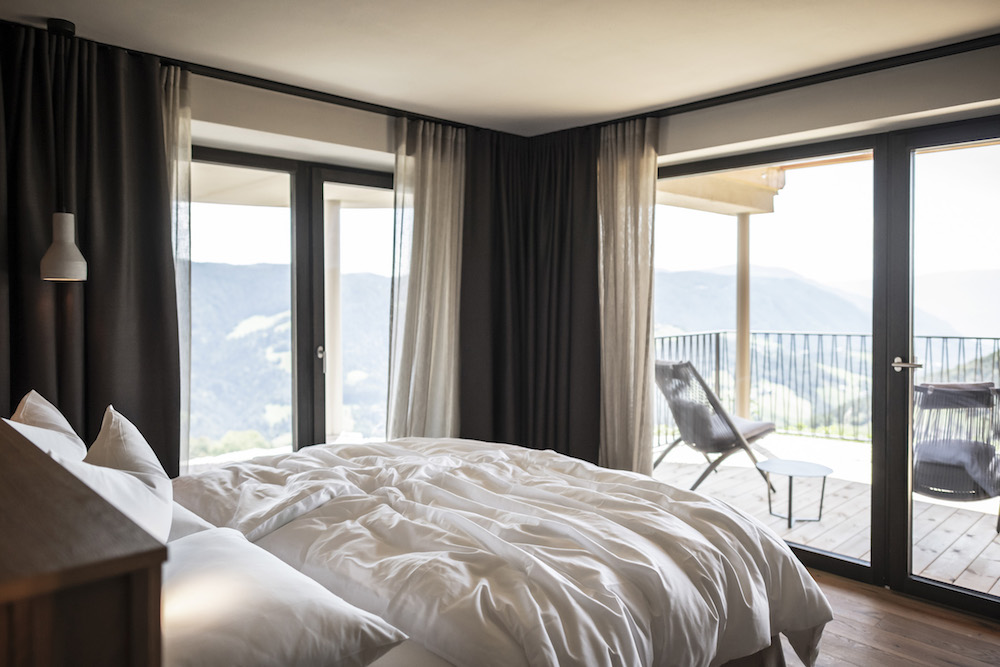
On entering, a wooden entry-type hall (concealing the wardrobes) leads to a bright, open space (25 square metres). The model is that of the suite, with an open bathroom area (except for the toilet and bidet) designed with stone- effect tiles which break up the colour uniformity of the durmast wood chosen for the flooring in the room, whilst a white ceramic vessel sink revokes the traditional country basin in terms of its shape. All the furniture is custom designed in light and natural tones. But most importantly, in each room there is a huge glass window (measuring 4.8 metres in length) that coincides with the façade, showcasing a thrilling view. “There’s nothing in front of us, only pine forests, pastures and mountains”, notes the architect Profanter. The room is complemented by a terrace, featuring wooden flooring (on level -2 it directly borders the lawn) which provides more living space.
The wellness area, which is also on level -1, also shares the splendid view with the rooms, extending out onto wooden terraces where guests can sunbathe or simply relax in the warmer months. Inside, 6 cabins create fully wooden-cladded mini-rooms for individual use, allowing guests privacy and tranquillity whilst they lie down on a soft mattress that is submerged into the flooring. Custom-designed chaise lounges round off the decor. In the wellness area there is a Finnish- and bio-sauna (the latter with a lower temperature), which have a panoramic glass window.
Noa* was actively involved in designing the new hotel at all levels, from the conception and implementation of the architecture to the design of the interiors and furniture, even deciding on the smallest of details. For example, the flower outline motif that is a recurrent theme in the lounge, the wellness area and even the sauna’s interior.
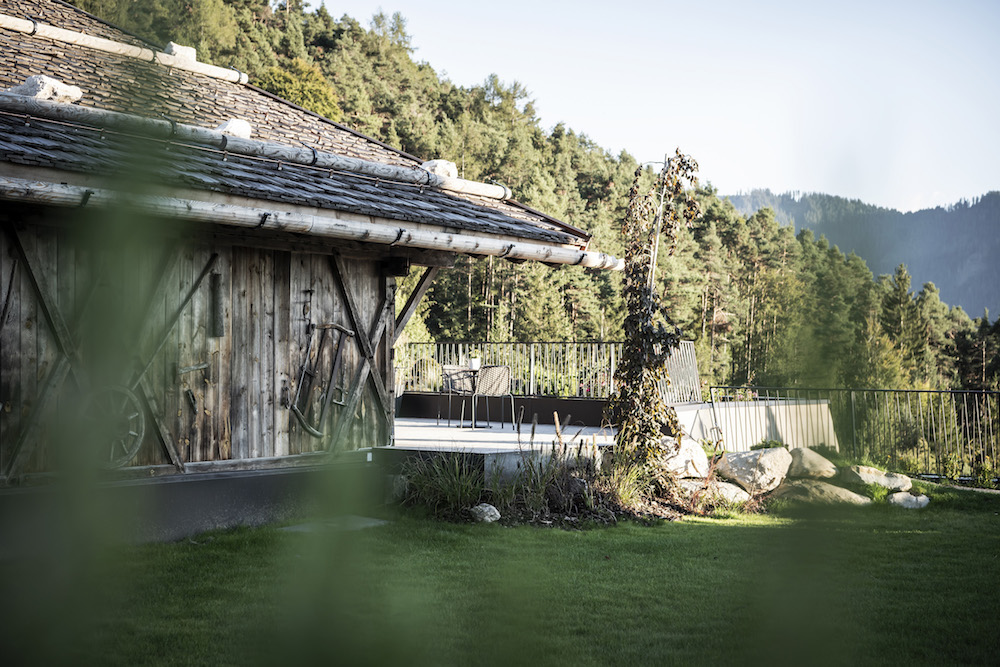
Image credit: Alex Filz
“The interior design was handled with great detail”, explains the interior designer Barbara Runggatscher, who coordinated the project. “We decided on natural materials and fabrics to create a relaxing environment. We chose the darkest tone of durmast wood and paired it with neutral rough-fibre upholstery, like thick-weaved linen and cotton. A large part of the decor was custom-designed with the aim of offering maximum comfort and personalised solutions.”
A good example in terms of functionality is the multi-purpose cabinet in the old barn’s lounge, which if need be can be transformed into a breakfast corner but is also useful for afternoon tea breaks.
The main material used for the interior design was wood, used for furniture (tables, chairs, benches, beds, cabinets…) as well as for the flooring in all the rooms. Here, unprocessed durmast wood was used showing all its knots. This is also a feature of the furniture’s craftsmanship.
In terms of fabrics, the designers went mainly for natural textures and tones which are the perfect union for the wood. Mono-coloured felt or one with a geometric motif was chosen in the rooms for the textile upholstery whilst thick curtains, made with special fireproof fabric ensure the necessary privacy and soften the light during the hours of maximum sun rays.
The attention to aesthetic and functional aspects in the lighting project gave rise to ad hoc lights: for example, the lamps with textile lampshades used in the old barn, with the warm and welcoming lighting that is in full symphony with the upholstery of sofas and armchairs.
Main image credit: Alex Filz