Budget hotels have flourished in recession. Not only will business people trade down, but the ‘bang per buck’ element has become exaggerated as new budget hotels continue to come on stream whilst established hotels postpone refurbishment, waiting to see revenues grow again. Indeed many poor four stars, used to competing with similar establishments through price and the service they offer have become victims of this policy on both fronts. As an hotelier said, “when you drop your price it is akin to dropping your knickers to be popular – once down it is very difficult to get them up again”. Not only is raising prices again difficult but the level of service provided by budget chains like Premier inn, Campanile or Ibis has improved, in part due to ‘facilities creep’ and in part in response to their growing popularity and changing customer profile.
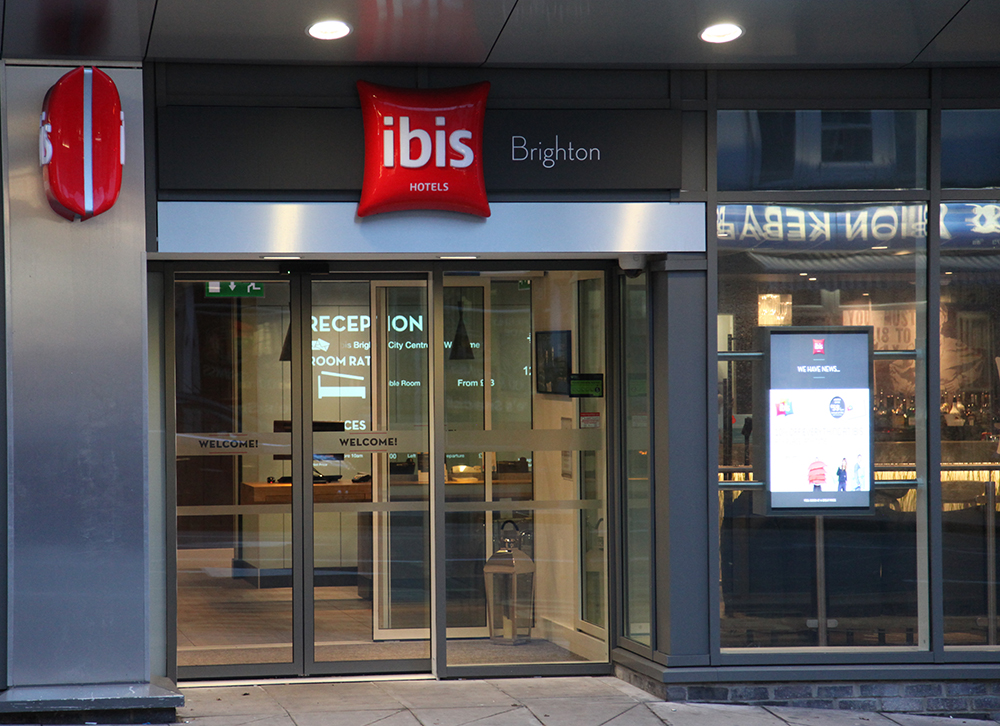
The Ibis Brighton City Centre is a prime example of this change. The new hotel has, says manager Dominic Sauls, been the subject of intense scrutiny by Brighton’s 4 star hotels and has already resulted in at least one bringing forward a refurbishment programme by two years. Brighton hotels are notorious for being shabby, and their financial management has been poor. After the previous recession one chain put 14 hotels on the market, including Brighton hotels, as too far gone to be refurbished (see the transformation on one wrought by new owners in Basingstoke’s Apollo) and after this latest collapse by the economy it is the Grand on Brighton’s seafront, badly served over the years by its owners, that has been put on the sale block.
The replacement of a somewhat seedy casino by the station with the new build Ibis was an opportunity that has been seized with vigour. Whilst the bedroom format (of which more later) is Ibis standard the ground floor public areas are not only proving a successful functioning design, but the operational management is also infusing them with some touches of the eccentricity that has characterised bawdy Brighton since the Prince Regent’s day.
The location is a fifteen minute walk from the sea front but only a few strides from the magnificent glass roofed terminus that is Brighton station. Behind the hotel is the thriving arts and crafts driven area that the North Laines has become, its workers terraced houses and small shops creating a different kind of community to that of the older original Lanes and Georgian terraces and squares of the Brighton along the sea front. Brighton is a University town with a very large student population (the editor did his postgraduate studies here in the old art college) and the colleges drive occupancy along with the business community, as parents come to check up on or bail out their offspring studying here.
The major innovation for the Ibis branding is the introduction of an all-day bistro. Starting with the presentation of the full ‘English’ at breakfast as well as offering food and coffee all day alongside a bar service. This follows other of the budget brands in growing a food offering in addition to their previously bed only offer. This ‘facilities creep’ is the traditional slide up market and other hotels such as Yotel, Tune or Bloc hotels will slide in underneath by offering just a bedroom without any trimmings. Travelodge started a budget revolution in the UK by tacking bedrooms on to a chain of roadside eateries, the Happy Eaters, and Premier Inn separately grew out of Whitbread’s beer and food enterprises so it is not surprising to see other chains developing food services too.
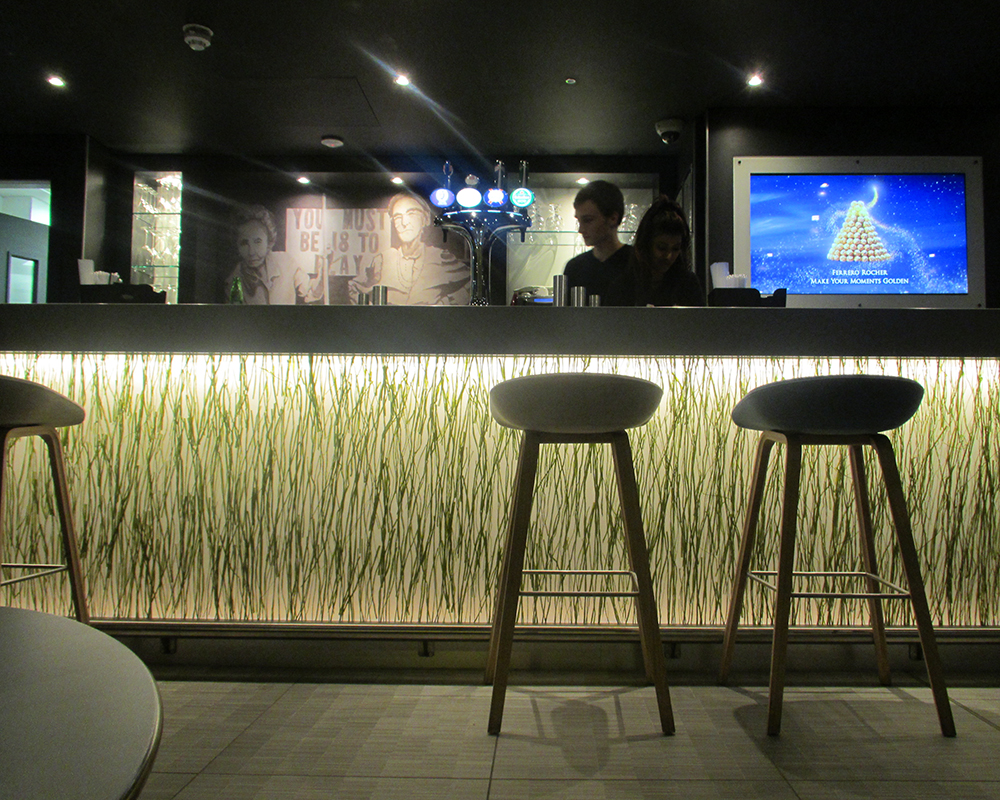
The Ibis in Brighton uses technology to enhance both the service and the guest experience. Electronic keys guard lift access, and electronic signage at reception allows management to tune and alter, for example, rate information almost at will. Thus if there is plenty of space rooms can be discounted but once break even has been reached prices can be altered, much as airlines make discount seat sales of a few seats on the plane and sell the rest at an increased and full fare mark-up.
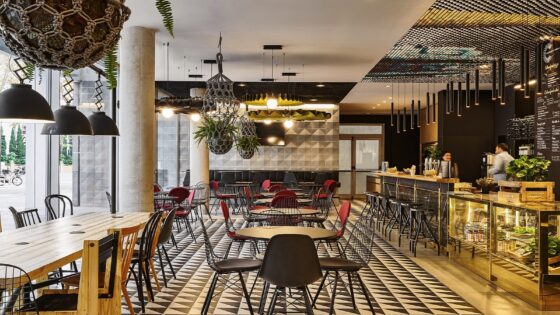
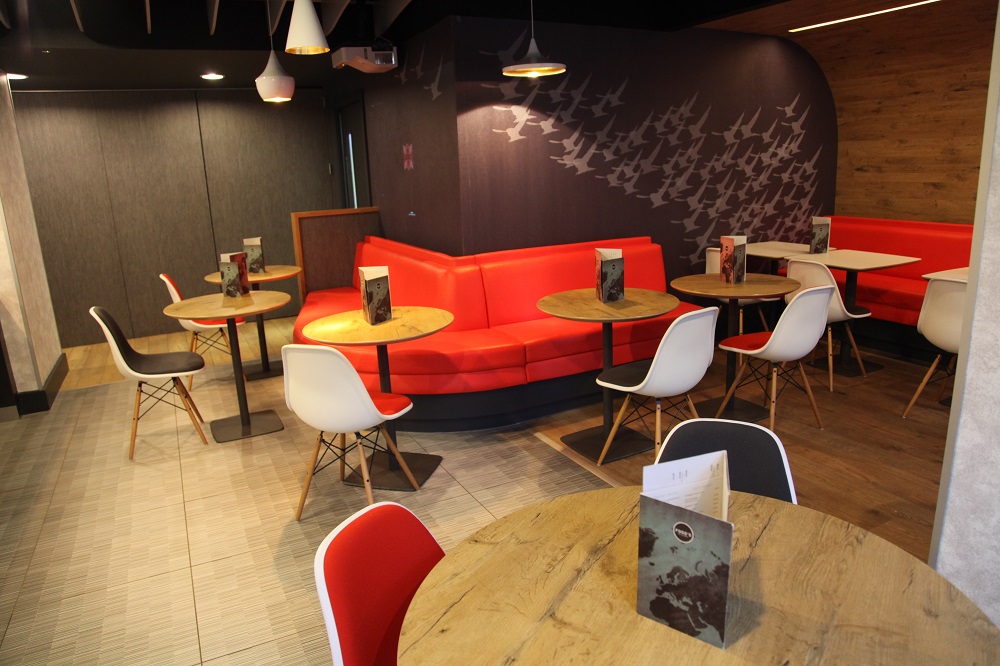
The bistro area is simple and functional and despite its higher rate over surrounding ‘greasy spoon’ restaurants, it is also popular. In part this is due to the endless coffee supply and decnet food. The bar too was busy during my stay. Design of both areas enables service and cleaning to be done simply and easily by few staff, and the colour is bright and cheerful, using the ibis ‘house red’ colouring. Roller shutters conceal coffee machines etc, whilst the bar is a simple extension of the reception counter.
Individual style touches relieve the strict functionality and the use of colour breaks up the space. There are small idiosyncratically designed stool at the bar tables for example, whilst large candle holders light the entrance door lobby. Local art is also being introduced in this area to further help both links with the surrounding community and the individuality of the unit.
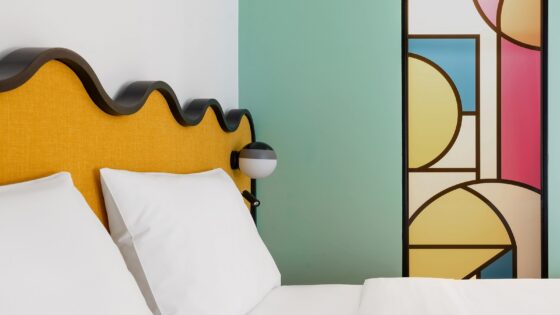
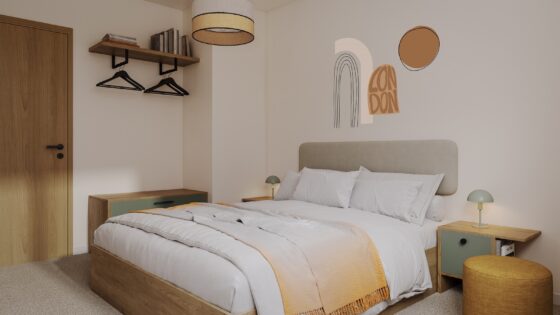
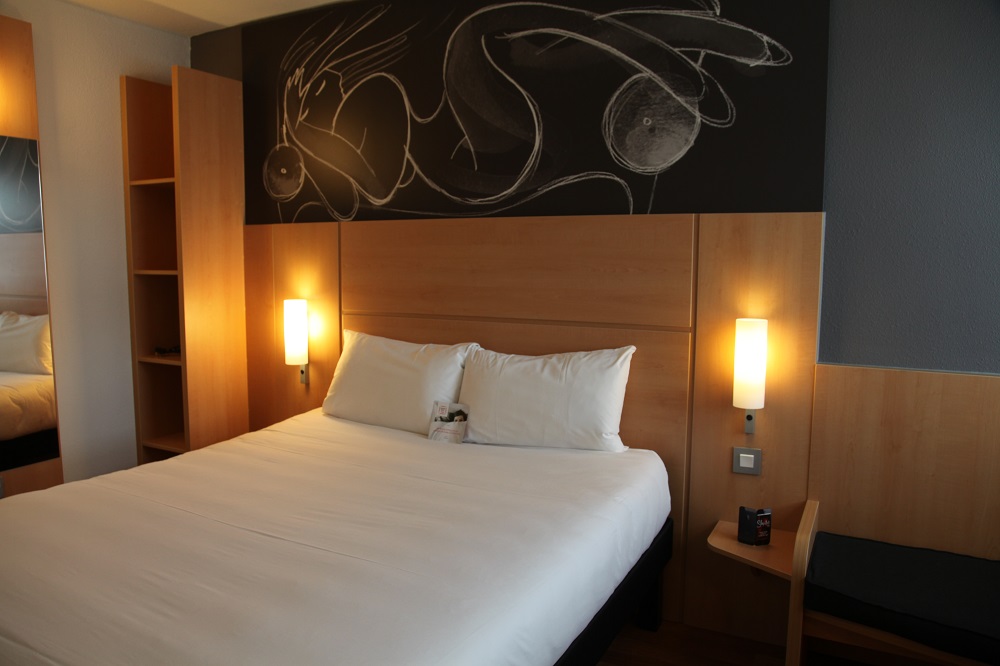
Bedrooms are always the most important area of an hotel, unless you are a party spot, where guests don’t so much sleep as collapse unconscious. The Ibis chain has recognised the competition for a good bed and has invested in new ‘Sweet Bed’ beds with thick comfort enhancing mattress toppers on each. The rooms are effectively soundproofed (except when some muppet doesn’t quite shut the window properly) so a good nights sleep is part of the experience although the chain stops short of the guarantee offered by Premier Inn. Premier Inn boasts it has the best beds (by Directory company Hypnos, the Queens bed makers) but the new beds at Ibis seem to be a match for them.
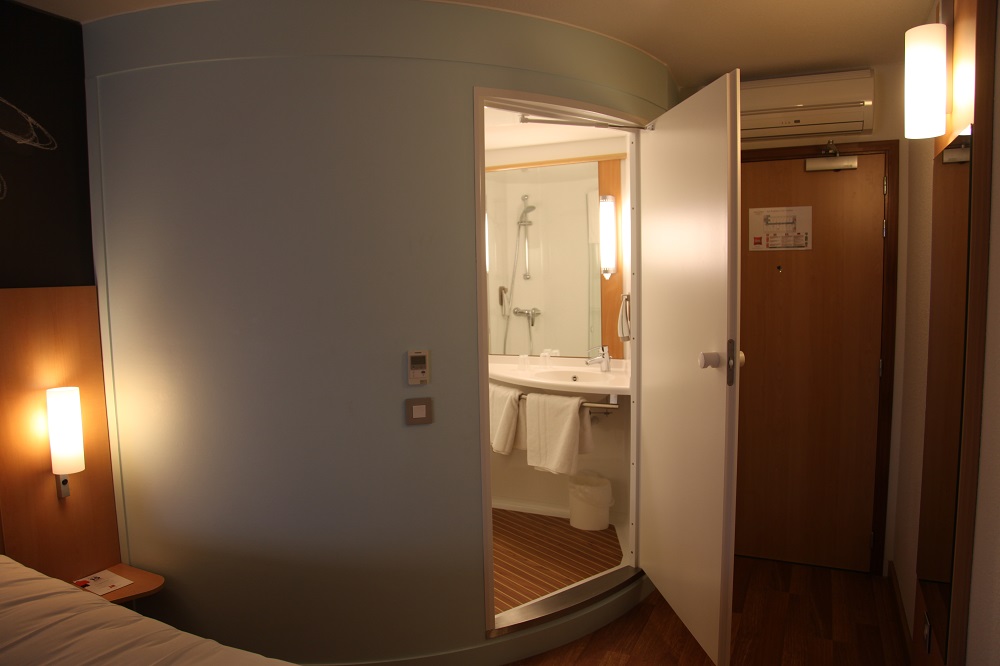
Room design amongst budget hotels has always been pared down to offer all the facilities needed by a guest for as small an installation cost as possible. Preformed units including podded bathrooms, take advantage of offsite manufacture and are just dropped into place. However here the chain has a number of rooms with a bathroom that is a site build, and they are larger than the standard podded unit. So much so that a four star chain providing shower rooms only will find itself with a cheaper competitor at a lower star rating offering a bathroom as good as theirs. In my view the bathroom is an area where competitive edge is being thrown away by hotel developers seeking ever cheaper installations.
If the top luxury hotels are increasingly moving to his and her bathrooms in their offering why do mid-range operators think they can get away with shower only? It is this blindness to the preference of families and the 30% of guest surveyed who state categorically a preference for a bath that should enable four star hotels to differentiate themselves from the budget competition. When even in the budget market hotel groups offer baths as well as showers then the mid -range hotels in competing not just on service but on price too. The star rating authorities (an increasing irrelevance to hotels) are also ensnared in this web by approving five star hotels with shower only offerings.
It is not surprising in this scenario that the manager here has seen executives from his local competition checking out the offer. With a good location and a product that is markedly improved, as HotelDesigns saw in the Accor Blackfriars new builds, this Ibis poses a significant challenge as a new entrant into the Brighton hotel scene.
From a visit by Patrick Goff in November 2013. All images and words are ©Copyright HotelDesigns 2013