










Moving on from design favourites and pet projects, the conversation continues with the designers identifying both challenges and solutions, and concluding with thoughts on the path forward for hotel lobby design…
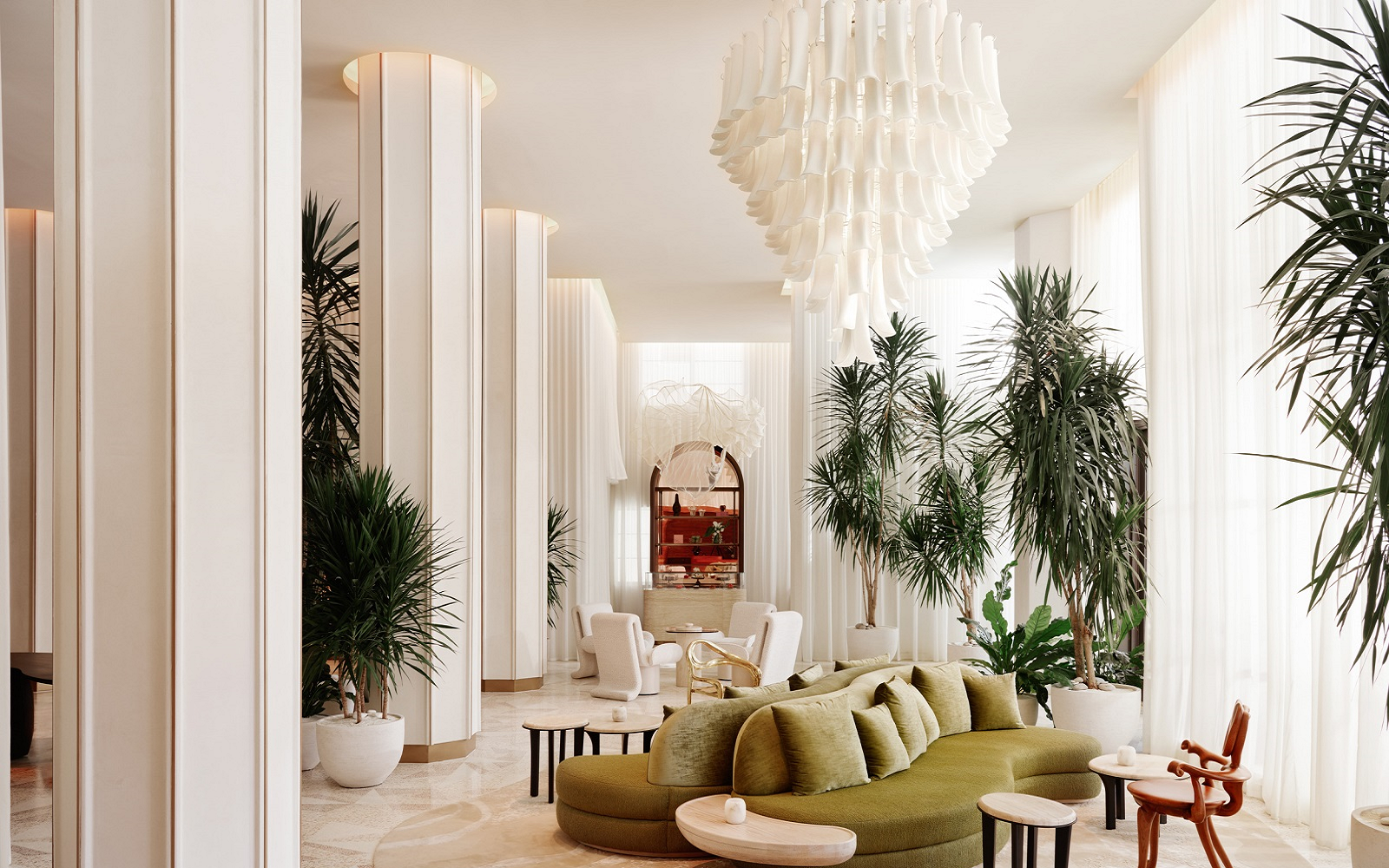
Increasingly, the hotel lobby has become the social heart of the hotel: a workspace, meeting point, bar, restaurant, gallery, living room and, increasingly, a destination in its own right. But with that evolution comes a question: in trying to make the lobby everything to everyone, are we in danger of making it nothing in particular?
We continued the conversation, asking some of the industry’s leading designers to look beyond the obvious and consider what really makes a lobby work. From the practical realities of designing around a live hotel to the sensory choreography of arrival.
The designers
Clint Nagata, Founder and Creative Partner, BLINK Design Group – Marie Soliman and Albin Berglund , Co-founders, Bergman Design House – Jose Rivero and Lee McNichol, Co-founders, Studio Sixty7 – Joana Astolfi, Founder and Creative Director, Studio Astolfi – Nicholas J Hickson, Co-Founder and Technical Director, THDP
The questions
1: Which is your favourite lobby design (not designed by you) and why – what makes it work, and what makes it stand out from the crowd?
2: Which is – in your opinion – your own most successful lobby design?
3: What has been the biggest design challenge (and its solution) thrown at you by a lobby design?
4: A flex too far? Has the lobby – in the challenge to become all things to all people – lost its sense of purpose?
To catch up on the first two questions have a look at our earlier conversation, to see which hotel lobbies get the designer nod of approval!
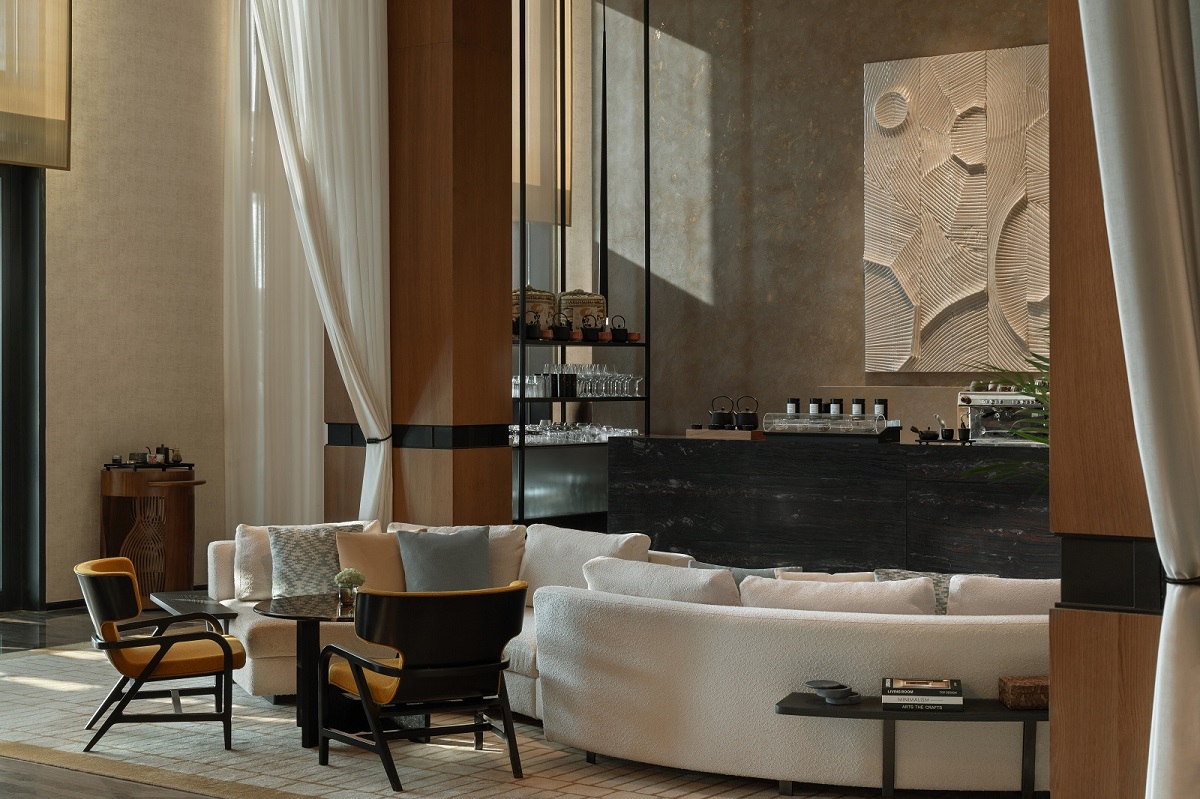
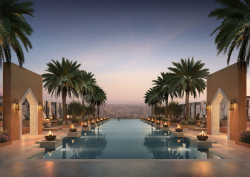
Banyan Tree Dubai | Image credit: Natelee Cocks
Hotel Designs: What has been the biggest design challenge (and its solution) thrown at you by a lobby design?
Clint Nagata: Reimagining what had been Caesars Palace Dubai into Banyan Tree Dubai – transforming the entire arrival experience while the hotel stayed open and trading. Revenue can’t pause for a renovation, so design and construction had to move alongside live guest experience and that choreography is unforgiving. The solution wasn’t a clever trick, it was discipline: knowing exactly what was essential to the new identity and what could wait.
Marie Soliman: The biggest challenge is balancing theatre with practicality, how to make it engaging yet inviting and also functional. A hotel lobby has to welcome hundreds, sometimes thousands, of people every day while still feeling calm, intuitive and effortless. It has to manage luggage, circulation, waiting guests, business meetings, celebrations, spontaneous encounters and moments of quiet all within one space.
Our solution is always to design layers rather than one large room. We create a sequence of experiences with different moods and scales, allowing guests to naturally gravitate towards the atmosphere that suits them. When circulation is intuitive and every seating area has a purpose, the space feels effortless, even though an enormous amount of planning sits behind it.
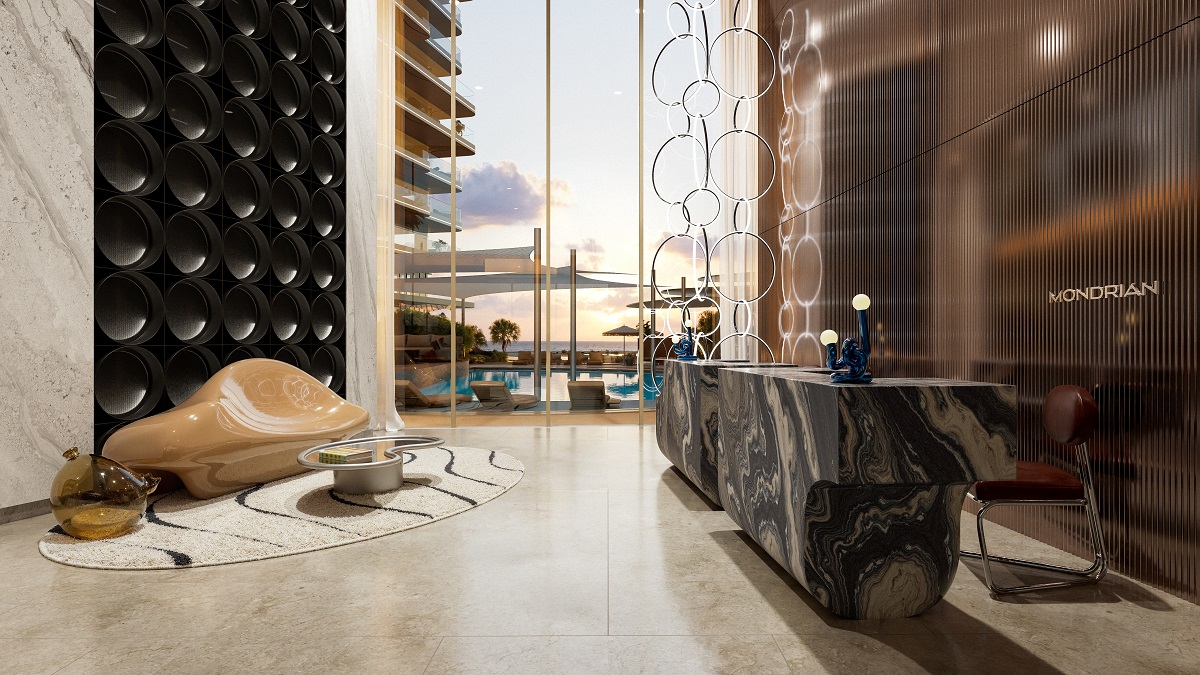
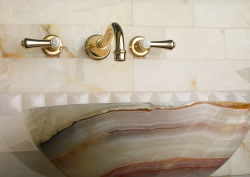
Mondrian Al Marjan Island Beach Residences | Image credit: Bergman Design House / Moma
Jose Rivero and Lee McNichol: One of the biggest challenges in lobby design is creating a space that feels immediately memorable while also remaining functional, comfortable, and true to its context. A lobby has to serve many purposes at once – it is an arrival point, a social space, a first impression of the hotel, and often a reflection of the destination itself. It is also where you get the first feelings of the space – the sounds, the textures and the smells.
Our approach is to begin by understanding the story both we and the client want the space to tell. We then use the architecture, materials, lighting, and spatial planning to support that narrative. The solution shouldn’t be one dramatic gesture; it should be a careful balance of atmosphere, flow, and detail. By creating layers of experience – through texture, natural elements, craftsmanship, and moments of discovery – the lobby becomes a place guests want to spend time in rather than simply pass through, often leaving a ever lasting mark on them
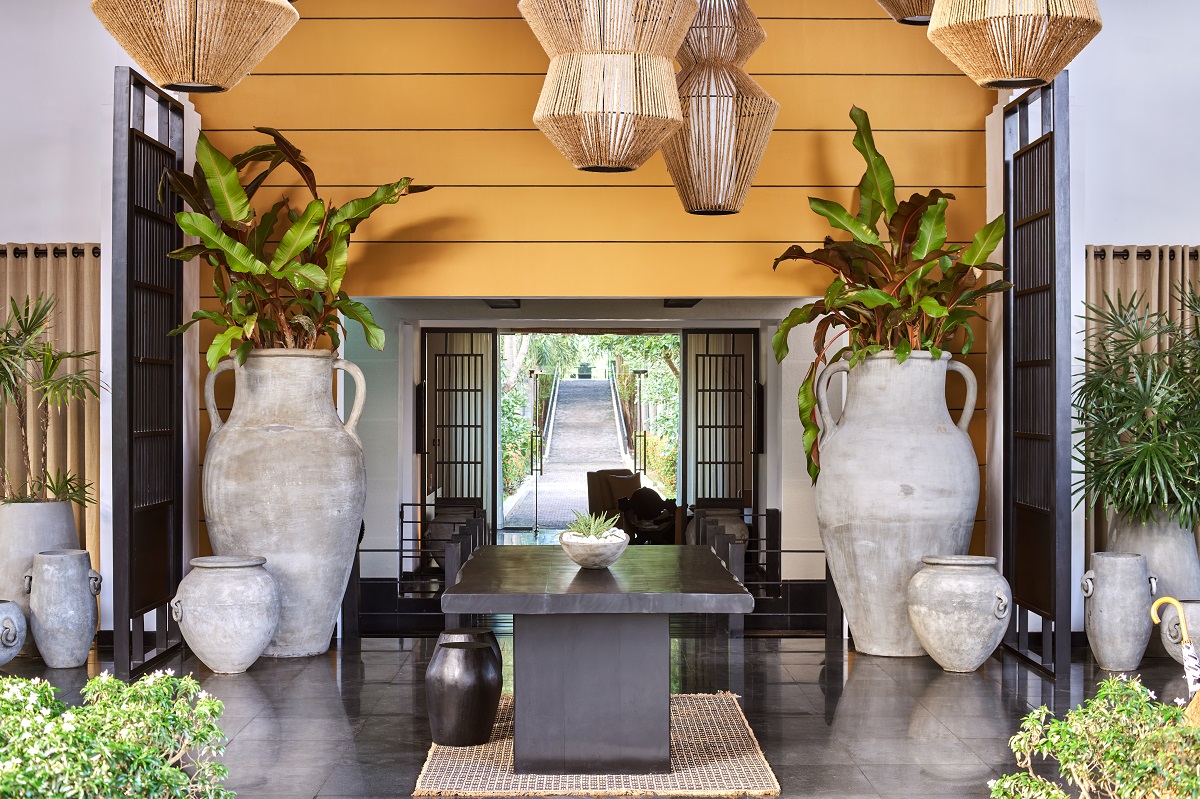
Image credit: Studio Sixty7
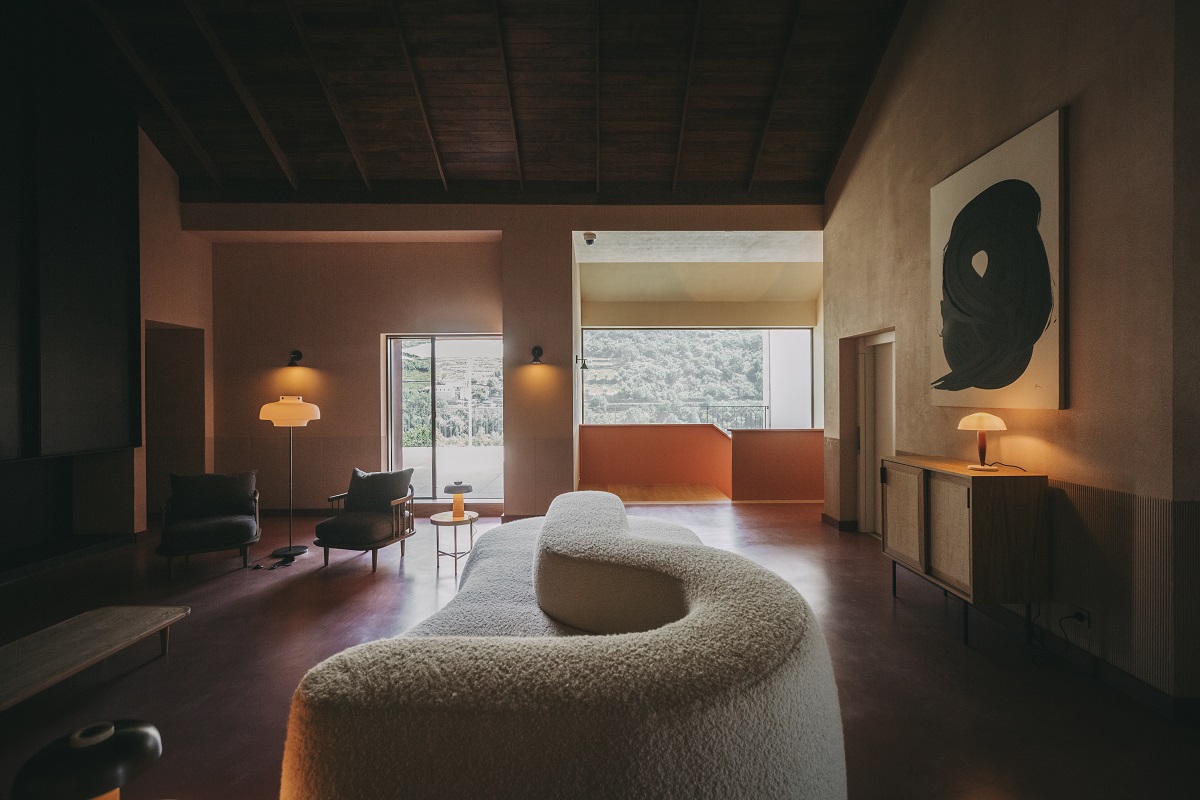
Joana Astolfi: I think one of the biggest challenges of lobby design is to create a space that is not static, and that is why I’ve mentioned the Ett Hem, the Hôtel des Arts et Métiers, The Standard, and these two hotels we’ve designed in Portugal. We want to move away from static lobbies, so that when walking into a lobby, which is usually the first space you experience at a hotel, there is this full immersion, a sensory feel, and you start the experience there and feel you’ve entered a new world.
It is all about creating different atmospheres, hybrid spaces that bring a dynamic and a mutating feel to them.
A space with many functionalities is a great challenge for lobby design. There is a certain amount of intimacy, but at the same time, it is social. You can choose where you want to be, but there is this overall living room feel, and the space needs to be refined with furniture, lighting, objects, and art, in order to bring out this visual warmth and these different environments within one single space.
For me, it is also important to look into arts and crafts to further personalise the space and make it really unique. I think that the idea of a hotel lobby has basically moved away from being a circulation space to become a destination space, a place where people actually want to be.
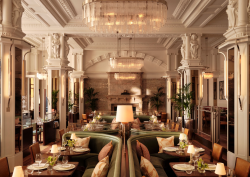
Torel Quinta da Vacaria | Image credit: Luis Ferraz
Nicholas J Hickson: The greatest challenge in designing a lobby is balancing the emotional impact of arrival with its many practical demands. Reception, concierge, luggage handling, security, circulation, waiting, food and beverage and access to lifts must all work efficiently without dominating the guest experience.
There is also rarely one type of user. Leisure guests, business travellers, families, conference delegates and local visitors may all use the space differently. The solution is to think of the lobby not as one large room, but as a collection of connected environments supporting different levels of privacy and activity.
The Hilton Barcelona, for example, incorporated not only a Michelin-starred restaurant and bar into the lobby, but also part of the kitchen itself, bringing theatre, movement and energy into the space. The key was to deconstruct the conventional forms of each food and beverage element and reinterpret them as a series of freestanding sculptural pieces.
Individually, each element had its own identity and function; together, they combined to create a coherent interior landscape. This approach allowed the lobby to feel active and animated without losing its architectural clarity, turning the F&B offer into an integral part of the arrival experience rather than a separate destination within the hotel.
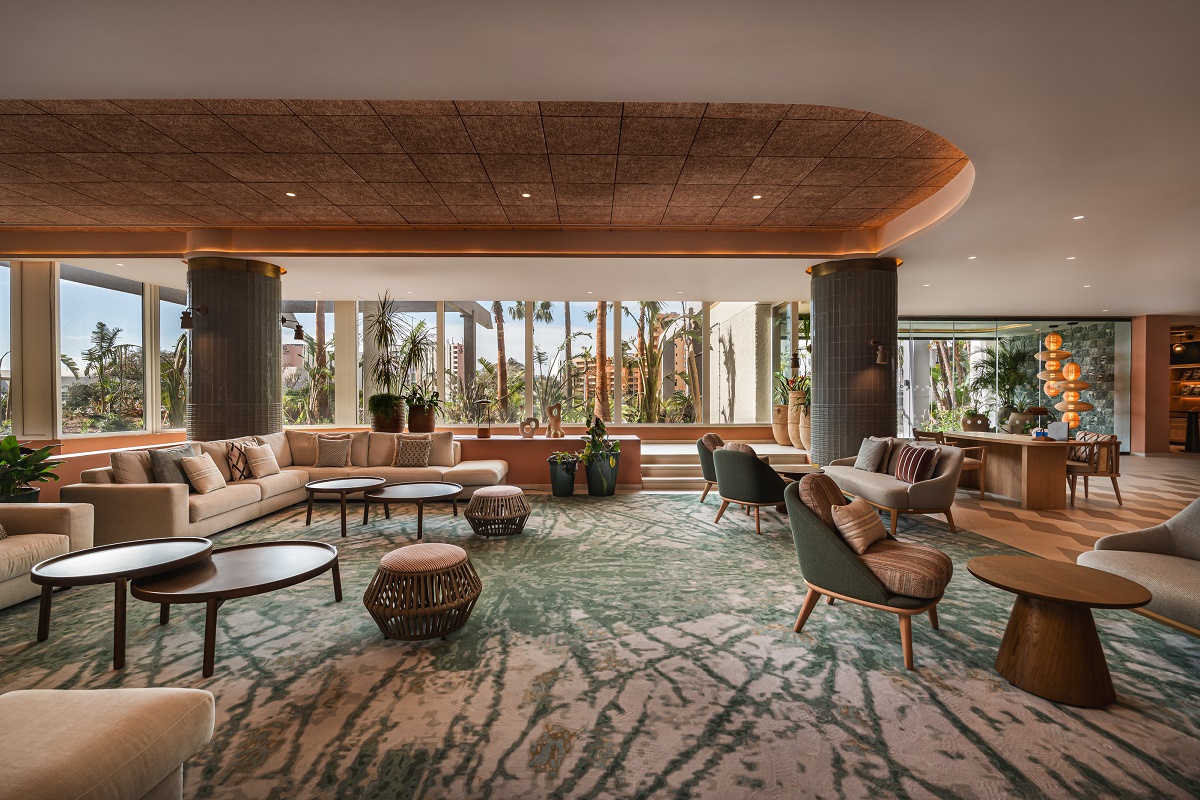
Image credit: Hyatt Regency Vilamoura / G. Miller
Hotel Designs: And in conclusion – are we experiencing a flex too far? Has the hotel lobby – in the challenge to become all things to all people – lost its sense of purpose?
Clint Nagata: A lobby trying to be a co-working space, a bar, a gallery and an arrival experience all at once can lose the one thing it’s actually for – telling a guest, immediately, where they’ve arrived. We talk a lot about hospitality moving from spectacle to liveable space and an over-flexed lobby is spectacle wearing a different costume. Flexibility isn’t what is achieved through this chaos – a lack of a point of view is.
Marie Soliman and Albin Berglund: Only when designers forget that flexibility should serve the story, not replace it, or when it becomes boring and bland. Today’s guests expect more from a lobby than ever before. They want somewhere to work in the morning, meet colleagues in the afternoon and enjoy a cocktail in the evening. That evolution is exciting, but flexibility should never come at the expense of identity.
The strongest hotel lobbies still have a clear point of view. They tell a story, evoke emotion and create a memorable first impression. Adaptability should feel almost invisible, it should enhance the guest experience rather than dominate it.
Ultimately, a lobby should never feel like everything to everyone. It should feel unmistakably like that hotel.
For us, the lobby has evolved from a place of arrival into the beating heart of hospitality. It’s where first impressions are made, where chance encounters become lasting memories, and where a hotel’s personality is felt long before the guest reaches their room.
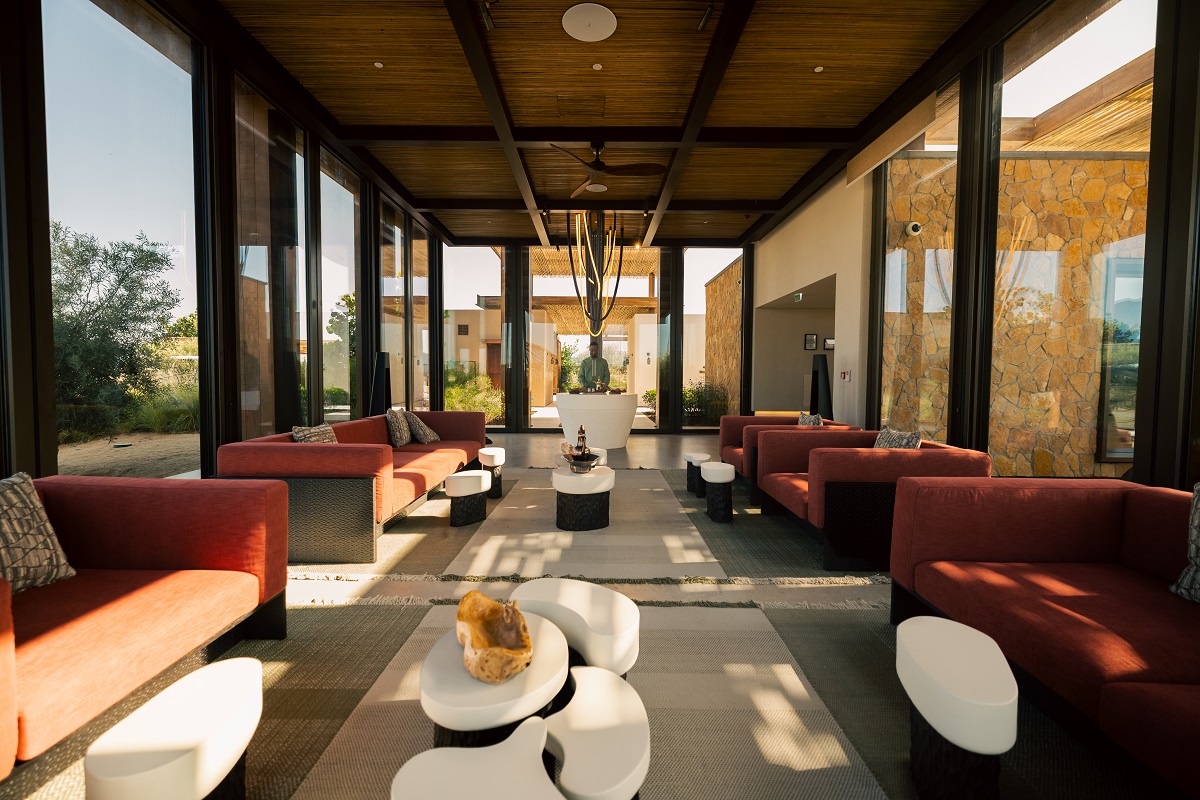
Image credit: Six Senses AMAALA
Jose Rivero and Lee McNichol: There is a risk that lobbies become overly multifunctional and lose their sense of identity. In trying to accommodate every possible use — reception, lounge, workspace, dining, social gathering—the original purpose and emotional impact of the space can become diluted, and the approach gets lost.
We believe a successful lobby should still have a clear design intention and a strong sense of arrival but be a manageable space for the operations.
Flexibility is important, but it should support the experience rather than define it. The most memorable lobbies we find that we have been too, are those that balance adaptability with character, creating spaces that feel welcoming, purposeful, and connected to the identity of the hotel, along with the smell, that stays with you the whole time. All senses are important to create a memorable lobby.
Joana Astolfi: Well, maybe some have become so multifunctional that they might have lost clarity of their original purpose. But, sure, lobbies have evolved into places to work, dine, socialise. All of that is very clear. I like that mutation of the lobby space, moving away from something stationary and traditional to something that is much more dynamic and playful. But I do think that there needs to be a clear narrative and identity of that particular space in connection to the hotel.
People need to remember the atmosphere, the character, the emotion after they leave. That is what makes them want to come back. So, I would say these spaces need to be distinctive and singular, and provide specific experiences that guests and non-guests remember after they leave. This identity is what keeps the design coherent narrative-wise, in materiality, décor, lighting, in the transition between spaces and ambiences, and it has to be functional, especially when it has many different things going on.
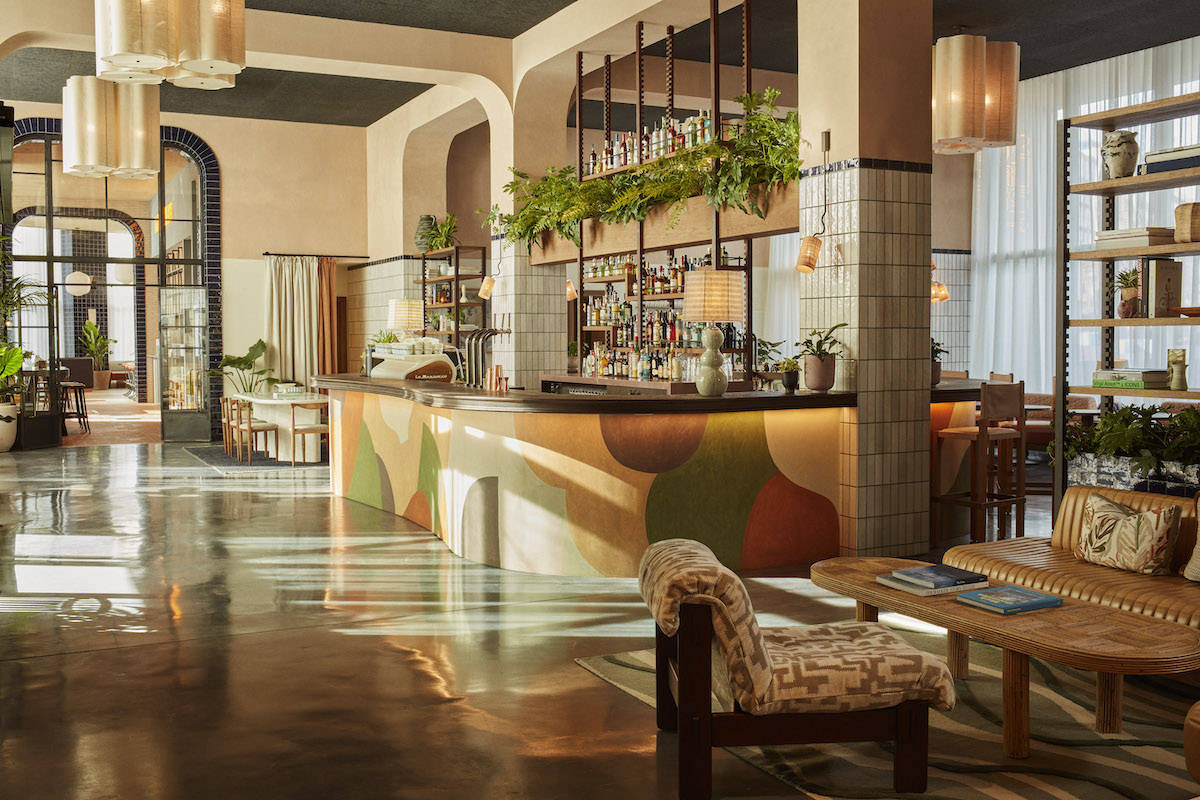
Image credit: The Hoxton / Ennismore
Nicholas J Hickson: Modern lobbies are being asked to perform more roles than ever before. They have become places to work, eat, drink, meet and socialise, often while attracting local guests and generating revenue throughout the day. I do not believe this evolution is negative, provided flexibility does not become the concept itself.
The danger is that a lobby designed to accommodate everything can lose its identity. The most successful examples still communicate a clear idea from the moment a guest enters. Function should be integrated into a strong design narrative rather than allowed to replace it.
A great lobby should be operationally sophisticated but emotionally simple. Guests should feel welcomed, intrigued and comfortable without noticing the complexity being managed around them. When design, operation and human interaction come together successfully, the lobby becomes more than a transitional space: it becomes the heart of the hotel.
Main image credit: Robert Rieger / Delano Miami