











The hidden complexity of hotel design
Last month, Hotel Designs visited Villeroy & Boch’s London Design and Specification Centre to sit down with Jason Cadman, Channel Director for Architects and Designers, to find out more about how involved the bathroom brand is on hotel projects…
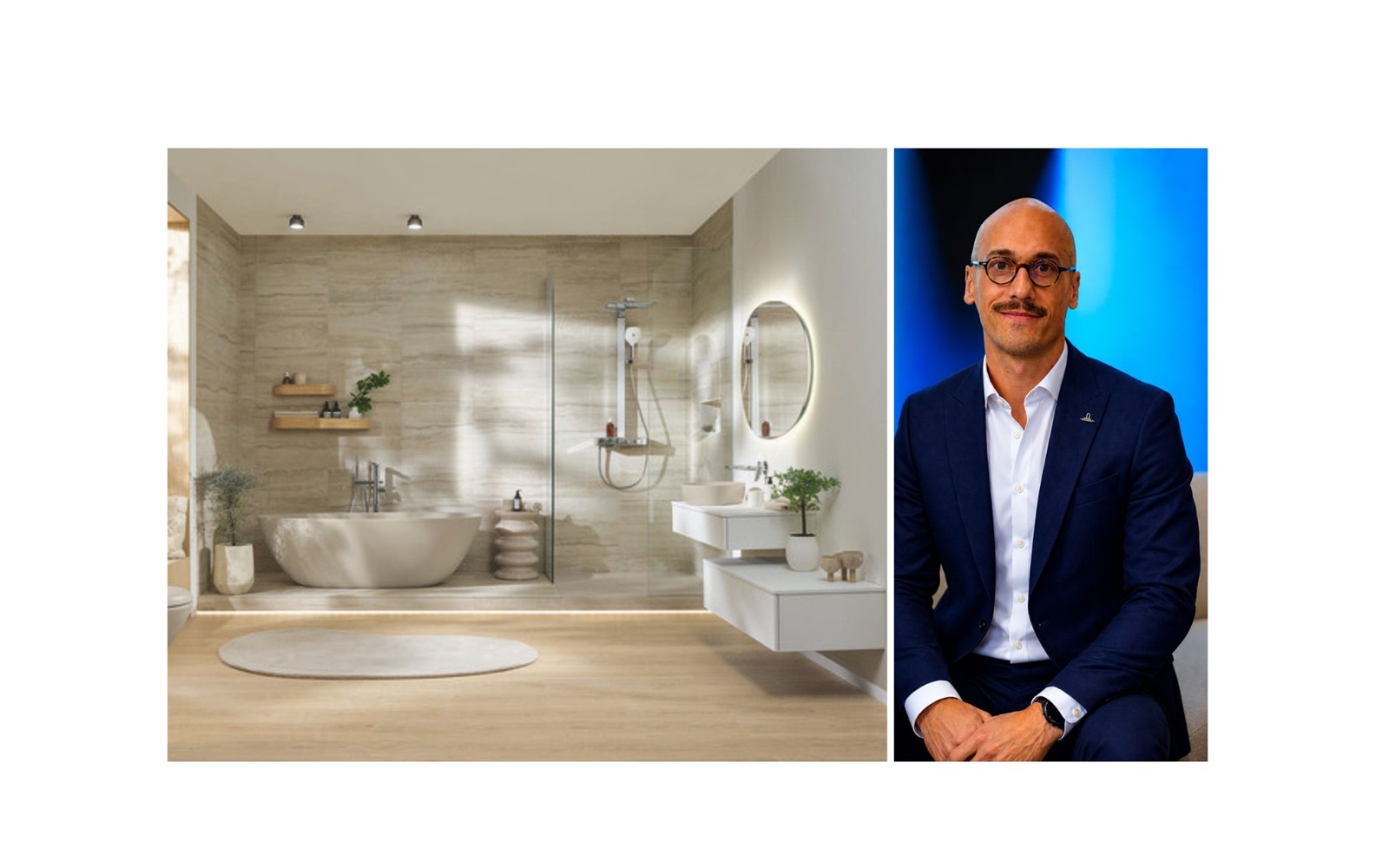
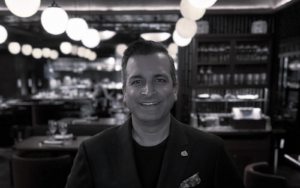
Jason Cadman leads the channel that works with architects and designers across Villeroy & Boch‘s Global Projects team, with a particular focus on hotels – and, crucially, on the people rather than the buildings, and our conversation centred on client relationships, technical complexity, sensory design, and why, in Jason’s words, “quiet is the new luxury.”
I began by asking what a typical day looks like for him. The honest answer, he said, is that there isn’t one. His role sits at the crossroads of marketing, technical support and project delivery, working with a small team – three key account managers for architects and designers, a UK hotel sales manager, and a showroom host – who between them cover everything from first introductions to final installation.
What struck me most was his insistence that the team’s real focus is not the project itself, but the person behind it. “We focus on them as individuals,” he told me. “We don’t focus on their projects, we focus on working with [the practice], whatever project they have, whatever solution they need.” That distinction matters because architects and designers are notoriously difficult to approach cold – trust, he said, is built over years, through networking, showroom visits, events, and the countless smaller moments in between, such as fielding a request for a data sheet or a set of technical drawings.
It also helps, he admitted, that the Villeroy & Boch portfolio now includes Ideal Standard and Armitage Shanks, all under one roof following a merger some 18 months ago. Between them, the brands carry decades of recognition in the UK market, something Jason sees as a genuine advantage as the newly combined team continues to establish itself. “We’re still in our early days of that,” he said, “so there’s a lot of growth that we’re still expecting.”
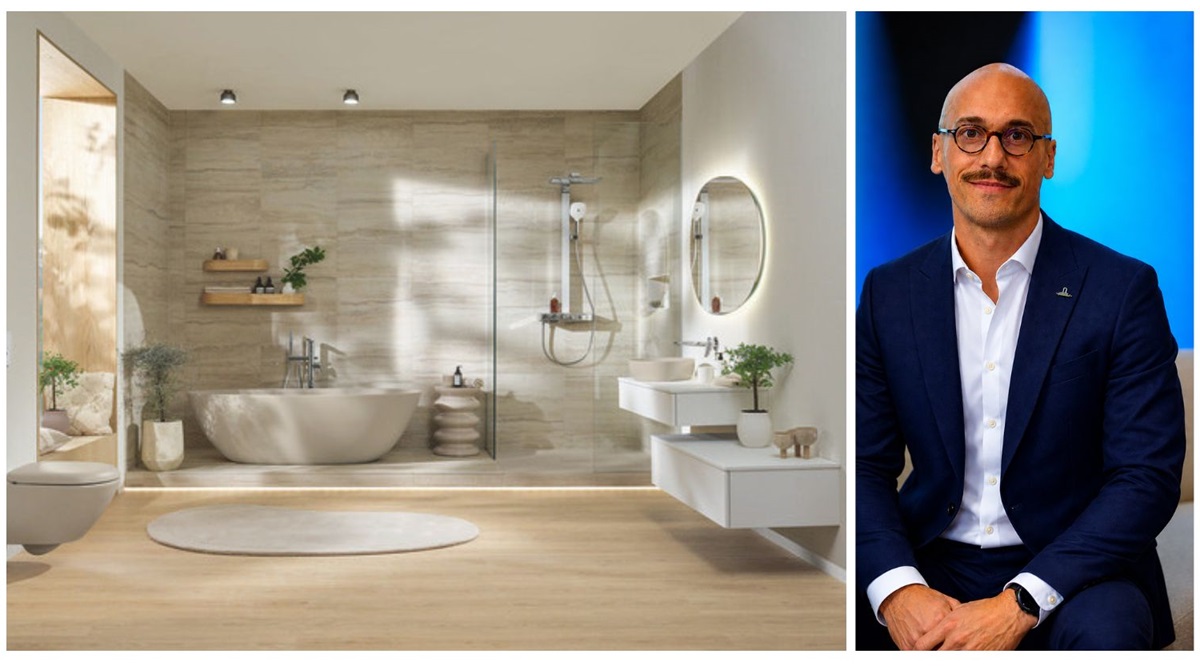
Ask most people what a bathroom manufacturer does, and they’ll describe a product on a shelf. Jason’s biggest frustration, gently expressed, is that this couldn’t be further from the truth. A new-build hotel can take anywhere from two to five years to move from concept to completion, and Villeroy & Boch is involved at almost every stage of that journey: from early design conversations about technical performance and space requirements, through cost consultants and quantity surveyors checking the numbers stack up, to the main contractor’s tendering process and, eventually, the merchants supplying the products on site.
“The common misconception is that we just manufacture products,” he explained, “but actually we’re involved in every moment of the project life cycle, and we do that behind the scenes.” That includes pricing support – something he says is easily overlooked if a project isn’t specified early enough, leaving Villeroy & Boch out of the tendering conversation entirely – as well as design services most people never hear about, including in-house rendering to help visualise how a finished bathroom might look, and a digital configurator tool that pulls together BIM files, CAD drawings, EPDs and data sheets in one place, solving what he describes as one of the biggest bugbears for architects working to a deadline.
Pricing, in particular, is more complicated than it looks from the outside. A project specified today might not be built for another four years, which means manufacturers are often quoting against costs – energy prices among them – that are impossible to predict with any certainty that far out. Being involved early on, Jason says, is one way to manage that risk on both sides.
To bring the point home, he pulled up a slide he’d put together for a colleague new to the business – a visual map of the hotel project life cycle with every external stakeholder (hotel brand, investor, architect, cost consultant, main contractor, merchant, installer) and every internal one (account managers, sales managers, the A&D team, and a dedicated hotel design manager who acts, in his words, as “the conductor” of the whole process) mapped alongside it. It was a striking illustration of just how much sits behind what, to a guest, is simply a tap or a toilet – and of the fact that Villeroy & Boch’s involvement doesn’t end at installation. The company also sends its own engineers to resolve any on-site issues after a hotel has opened, a level of aftercare he says is rare among manufacturers.
Much of that invisible work, he explained, comes down to the parts of a project no guest ever sees – the first-fix and second-fix plumbing decisions that determine where pipework sits and how a bathroom can ultimately be laid out. “If you don’t see something, you don’t know it exists,” he said, “so you don’t really realise how a hotel is actually functioning, how it’s made to feel like a home.” It’s a line that says a lot about his work: success, for Jason, often looks like invisibility – a space that simply feels right, with none of the engineering behind it on show.
That awareness, he laughed, has become something of an occupational hazard. He’d been on holiday in Corfu the week before we met, and found himself unable to switch off, pointing out design decisions to his partner at every turn. “Someone’s thought about that. That’s been thought about.” Further still, Jason admits he researches who designed a hotel before he’s even checked in, tracing a practice’s signature through the finishes and layout of a space. It’s a small window into a bigger truth about the industry: once you understand how much thought goes into a hotel bathroom, you can never quite un-see it again.
Our conversation turned to guest expectations, and how briefs from hospitality clients have shifted in recent years. Wellness, Jason said, has moved well beyond the spa. “Wellness should be part of every space in a hotel – especially in your guest room, and in your bathroom.” His point being that guests should feel at ease the moment they walk in: through neutral tones, soft finishes, curved edges, and materials that feel warm rather than clinical.
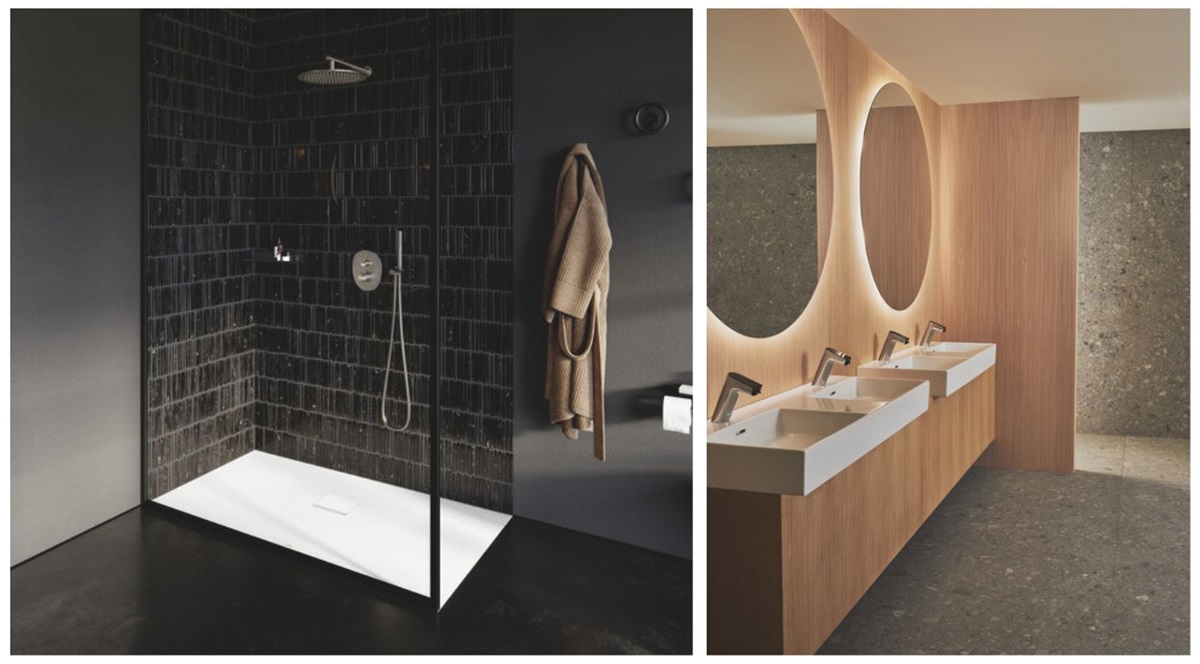
One phrase stuck with me: “quiet is the new luxury.” Jason highlighted products designed with sound, as much as function, in mind – a shower tray engineered to feel soft and warm underfoot, and a bath filler that fills from the base rather than the top, removing the rush of running water that, in most homes, announces exactly what’s happening behind a closed door. It’s a small detail, but one that speaks to a much bigger shift: hospitality bathrooms are no longer just functional spaces, but sensory ones, designed around how a guest feels rather than simply how the room performs.
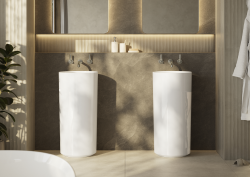
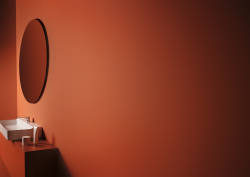
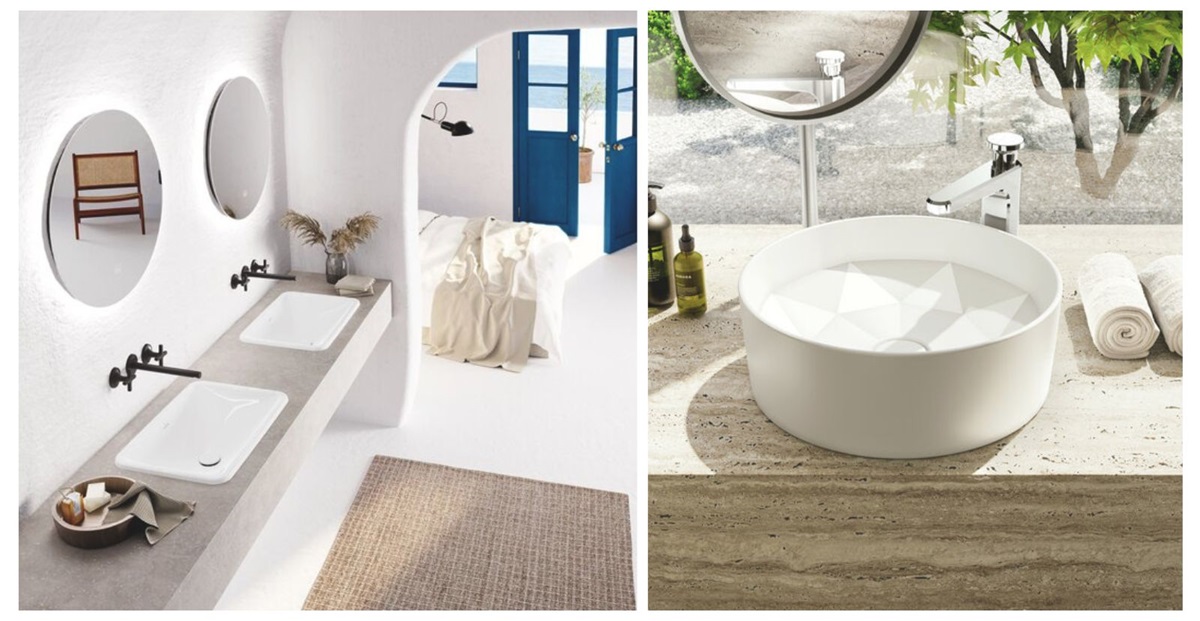
That thinking extends to product design more broadly. The Loop of Friends undercounter basin, for instance, has become popular in hospitality projects precisely because it recedes into the background, allowing worktops, tiling, mirrors and views to take centre stage instead of the basin itself. It’s a subtle but deliberate move away from the freestanding, “jewellery of the space” basin that once dominated luxury bathroom design.
If there’s one trend Jason thinks is worth making note of, it’s the growing UK and European interest in shower toilets – a category long established in Asia and the Middle East but historically slow to catch on here. “If you’d asked me two years ago, we’d probably have had zero live projects in the UK with them,” he said. “Now we have a strong handful, and they’re prestigious ones.”
The barrier to wider adoption in Europe, he believes, has less to do with the technology itself and more to do with usability. “Nobody wants to spend an hour in a hotel bathroom trying to figure out how to turn off a light, let alone work out a shower toilet.” In response, Villeroy & Boch has focused on paring the category back: fewer buttons, slimmer ceramic forms, and a much simpler user experience than the earlier, bulkier products the market associates with the technology. As uptake grows, he expects costs to fall too, opening the category up beyond premium suites and into more mainstream hospitality specifications.
Looking ahead, Jason is most excited about new finishes and materials – warm bronze tones in particular, a trend he believes has genuine staying power in high-end hospitality, alongside new textured ceramic ranges developed using expertise drawn from Villeroy & Boch’s wider design divisions. New products are due to launch at ISH next March, developed in collaboration with a new external designer, alongside continued exploration of 3D-printed ceramics and recycled content.
Underpinning all of it, he said, is a company still finding its shape following the merger – one that, despite tracing its roots back to 1748, still sees itself very much at the beginning of a new chapter. “We’re still evolving,” he told me as we wrapped up. “But that’s what makes it exciting – we’re only just starting.”
It’s a fitting note to end on. What began, in my mind, as a conversation about hotel bathrooms turned into something closer to a study in patience: of relationships built over years, of products engineered for feelings as much as function, and of an enormous amount of invisible work that most of us will never notice – right up until the moment we step into a hotel bathroom and everything, quietly, just works.
Villeroy & Boch is one of our Recommended Suppliers and regularly features in our Supplier News section of the website. If you are interested in becoming one of our Recommended Suppliers, please email Katy Phillips.
Main image credit: Villeroy & Boch