











THG Paris: the mastery of bespoke brassware
THG Paris has always been thought of as the epitome of luxury when it comes to bathroom finishes, but in a recent interview with Luke Calderon, THG’s UK Sales Director, Sophie Harper discovered the brand offers so much more than crystalline taps…
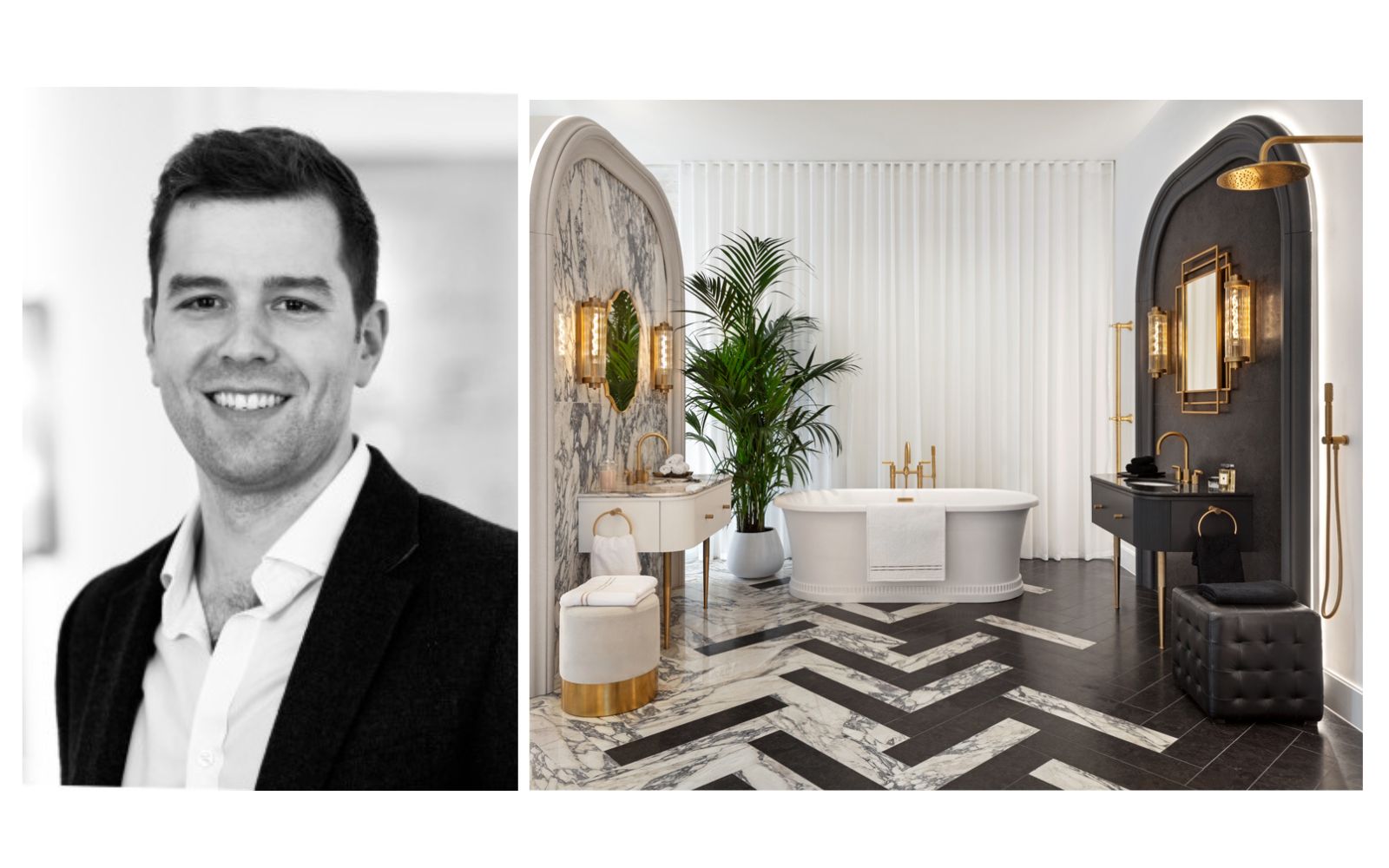
Since 1956, THG Paris has built its name on a simple but radical idea for the time: that bathroom fittings could be as decorative, considered and covetable as fine jewellery. Seventy years on, the French manufacturer is widely regarded as a leader in the high-end bathroom fittings market worldwide, with a portfolio that runs from Lalique crystal and Baccarat glass to collaborations with the F. A. Porsche design studio, and installations in properties from the Prince de Galles in Paris to yacht interiors and hotels across the globe.
In the UK, that legacy lives inside a striking showroom at Chelsea Harbour, where THG relocated two years ago after three decades in Belgravia. Hotel Designs sat down with Luke Calderon, THG’s UK Sales Director, to talk bespoke commissions, the changing face of brassware finishes, and why hotel bathrooms are designed first and installed last.
Luke Calderon’s route into bathrooms began at high-volume manufacturers before he joined Samuel Heath, which he describes as a far more traditional, quintessentially British name. It was there he met Alexandra, now THG’s UK Managing Director, who later asked him to join her at THG – a move he made six years ago.
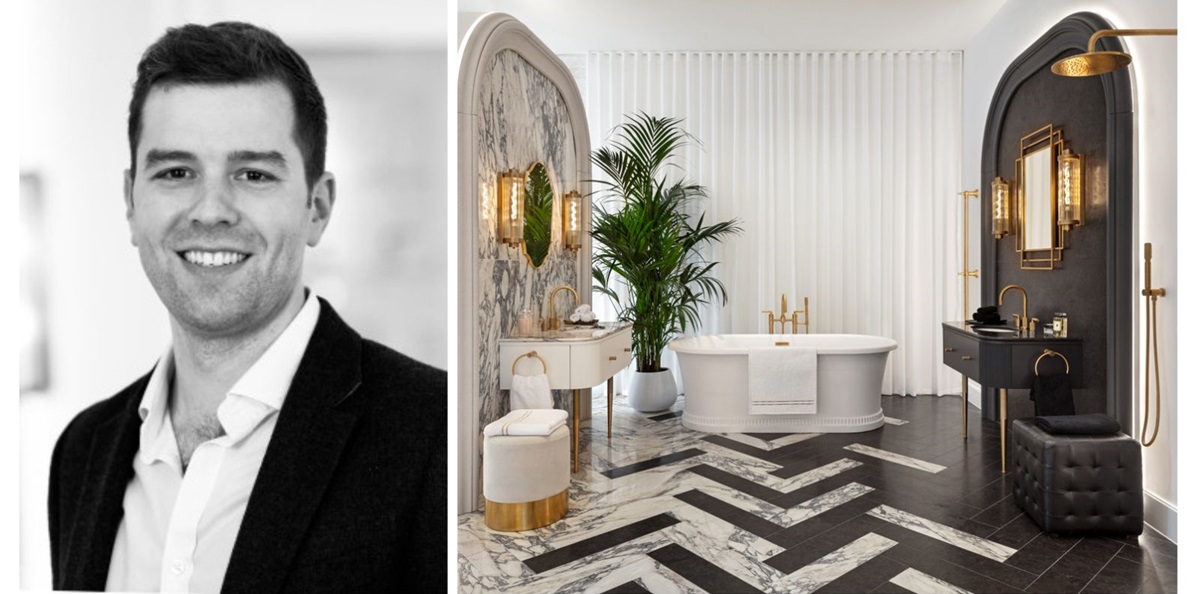
Image credit: THG Paris
THG’s UK story has its own quirks. The London operation was formerly Bathrooms International, a luxury showroom in Belgravia that also carried brands including Waterworks and Cristal & Bronze. When the couple who owned it retired, THG acquired the business and it became THG UK. Two years ago, having outgrown Belgravia, the brand made the move to Chelsea Harbour – part of a wider effort to roll out a consistent showroom concept across THG’s global network.
“There’s been a lot more emphasis on bathrooms,” Luke says. “Gone are the days of just a chrome or nickel boring tap – now you can pretty much do whatever you want.” That shift, he believes, is a large part of why the brand has grown so significantly over the past decade.
The Chelsea Harbour showroom is deliberately sequenced: premium ranges sit at the front “so as not to scare people away,” with the space becoming progressively more ornate – crystal, marble, elaborate detailing – as visitors move towards the back. It’s a reflection of a portfolio that spans roughly 250 collections, with entry-level taps starting around £700 and bespoke pieces running up to £13,000.
That range is unusual for a single brand. “Normally you go to a brand and they have an identity, and they have a price point,” Luke explains. “Whereas with THG, we tend not to have an identity as such, because we collaborate so much.” Designers might come to THG for a modest hotel bathroom or for backlit gold taps in a private residence – and find both within the same brand.
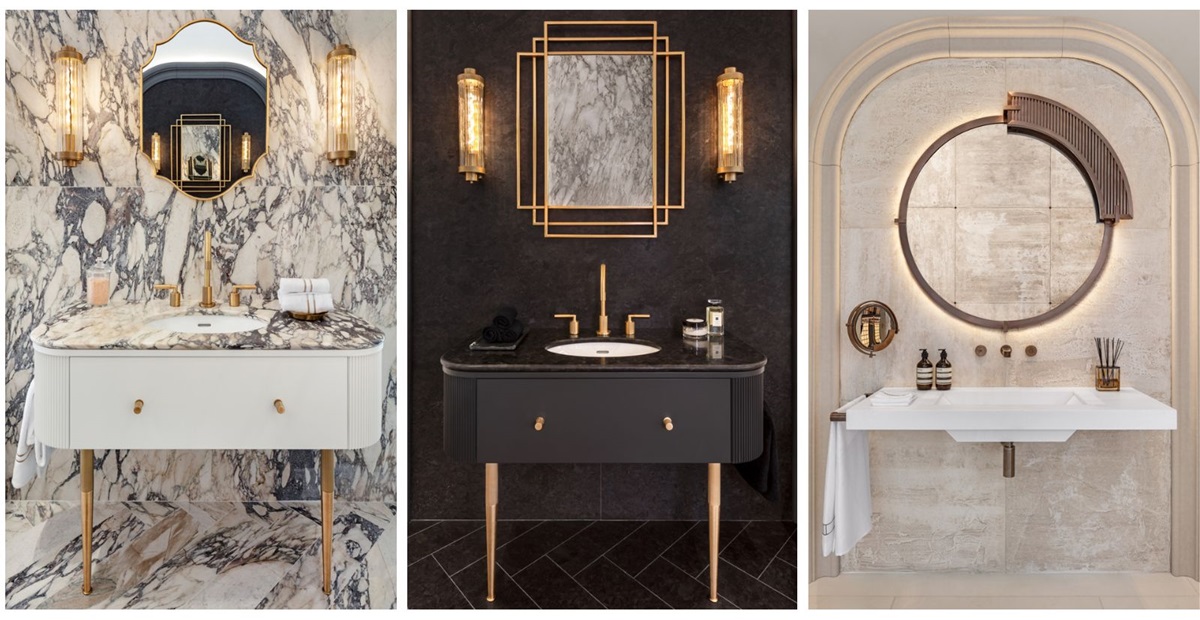
Image credit: THG Paris
Globally, the business skews towards hospitality, though the split shifts by region. In the UK specifically, Luke estimates sales are around 80% residential and 20% hospitality, while projects designed out of London – often destined for Dubai or continental Europe – are closer to 50/50. Price remains a natural ceiling in hotel work, which is why THG is developing a new, more competitively priced range due within the next 12 to 18 months.
If there’s a single idea that defines THG’s relationship with designers, it’s this: the brand owns its own factory, so almost nothing is off the table. “Once you’ve opened the gate of bespoke, everything then is bespoke from there onwards,” Luke says. “We’re known as a ‘yes’ company.”
That reputation has produced some memorable commissions. For a private club in Mayfair, THG recreated the owner’s dachshund as a tap handle. A fully bespoke tap is currently in production for a London hotel that will launch within the next six months – designed from the client’s own drawings, with the client retaining ownership of the finished product. And at Clarence House’s penthouse, THG’s blue Baccarat taps famously appeared, unprompted, in a Vogue photograph of Julia Roberts. “That’s got nothing to do with us,” Luke laughs, “but it made us look fantastic.”
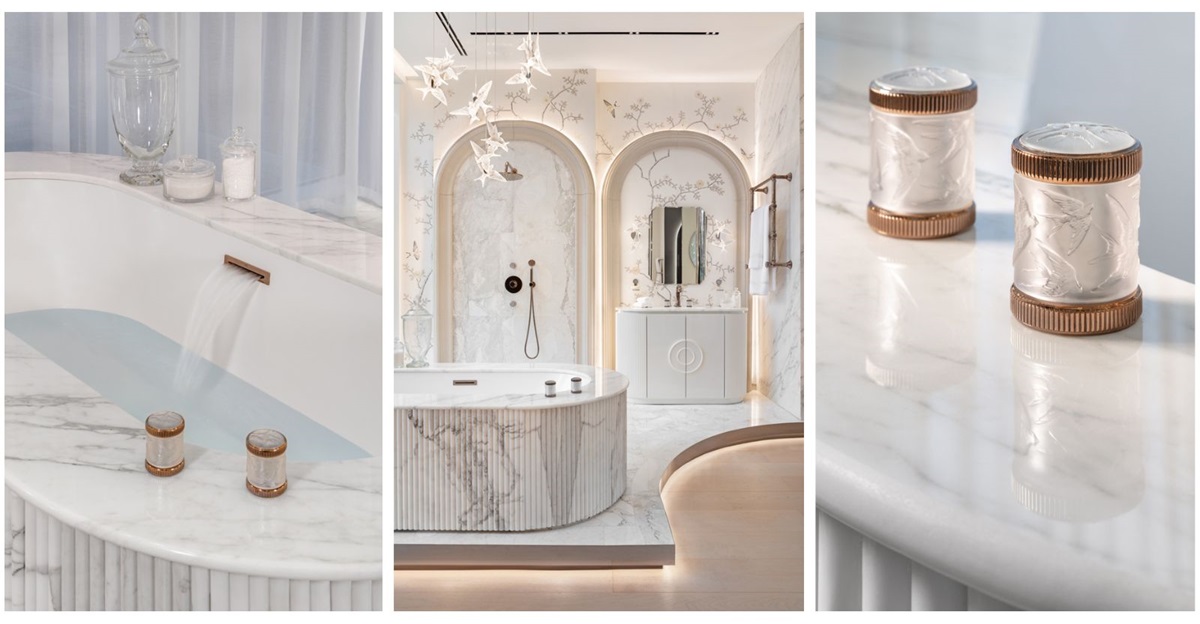
Image credit: THG Paris
He draws a clear distinction between customisation – choosing from 250 ranges in 30 colours, and mixing between collections – and true bespoke work, which starts from a blank page. Around 90% of the showroom’s contact is directly with interior designers; “We take the designer’s lead,” says Luke. “They come to us with ideas, and we just say yes, it’s possible, or no, it’s not.”
That same collaborative instinct feeds THG’s twice-yearly range launches – one in-house design and one created with an external name each year. A new collection with British designer Catherine Pooley launched at Milan Design Week earlier this year. These partnerships typically begin organically, often during a live specification project, and can take up to five years to move from first conversation to launch, given each range has to extend across roughly 2,000 individual products, from taps to robe hooks.
Hotel projects follow an unusual rhythm, Luke explains. Because plumbing and first-fix work has to be locked in early, bathrooms are specified at the very beginning of a build – even though the fittings themselves are among the last things installed. THG becomes involved early with the design team, goes quiet through the middle of the build, then re-emerges around tender and pricing. Manufacturing bespoke ranges can take up to a year, meaning a 200-room hotel might need 12 to 18 months to fulfil in full – with the entire relationship, from first conversation to completed order, often spanning two to four years.
Along the way, THG’s role extends well beyond supplying hardware. The team advises on practical realities – where shower controls should sit so guests aren’t drenched reaching for them, or why the biggest shower head isn’t always the best one. “It’s our job to bring their design and their concept into something that works,” says Luke.
One recent highlight is The Dorchester, where THG fittings were specified across every guest room rather than being reserved for penthouses or premium suites alone – a project Luke counts among the brand’s biggest recent wins. THG’s footprint now spans showrooms and subsidiaries in Paris, London, Milan, New York, Shanghai and Frankfurt, with distributor partnerships extending the brand further still.
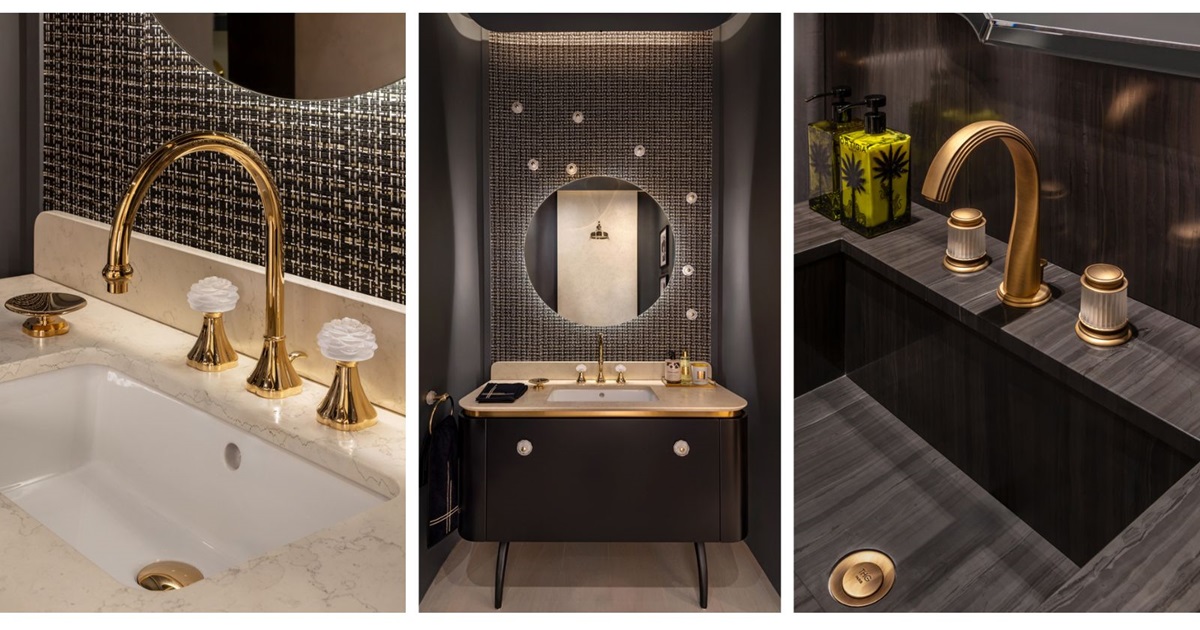
Image credit: THG Paris
Finish has become the defining trend of the past several years. Traditional chrome endures because it’s durable and low-maintenance, but the rise of PVD (physical vapour deposition) plating has made warmer, more characterful finishes – matte brass in particular – viable for hospitality use without the tarnishing risk once associated with gold or nickel. The catch, Luke notes, is cost: PVD is inherently expensive, so demand for these finishes constantly runs up against project budgets.
Sustainability adds a further layer of tension. Designers want statement showers with multiple functions; regulations increasingly cap flow rates at 10 litres per minute. “It is a bit of a balancing act between the two,” Luke says, “because the last thing you want is a penthouse in the Dorchester with a shower head that’s just dribbling.”
Asked whether accessibility factors into THG’s product thinking, Calderon is unequivocal. With many hotel brands required to make around 10% of rooms accessible, THG’s in-house manufacturing means it can adapt almost anything: longer basin tap levers, sensor-operated electronic taps, bottle traps that allow wheelchair access beneath basins, room-length grab rails, and push-operated rather than lever shower valves.
He’s candid that brassware is the easier part of the equation – furniture and sanitaryware in this space tend to be less design-led, though THG has partnered with specialists such as Fitzroy of London to help close that gap. Sometimes the solution is as simple as clearly marked hot and cold indicators. THG is also developing a CPD module on bathroom specification for architects and designers, covering fundamentals that apply across all manufacturers, with a further module planned on sustainability standards such as BREEAM.
So what’s next? Luke doesn’t expect radical technological change in bathroom design over the next decade or two. “Bathrooms are sort of timeless,” he says, noting that digital taps have never quite found their audience. Instead, he expects the emphasis to fall on sustainability – particularly water consumption – and on designing products built to last 15 to 20 years, reducing the environmental cost of replacement over time.
For designers weighing up THG, Luke’s pitch is straightforward: a single brand spanning simple chrome basics through to the ornate, alongside the continuity of matching accessories – robe hooks, towel rails, shower door rails – across every range. “The idea is that you can keep that continuity, in both the design and the finish,” he says. “That’s something a lot of manufacturers can’t offer.”
THG Paris is one of our Recommended Suppliers and regularly features in our Supplier News section of the website. If you are interested in becoming one of our Recommended Suppliers, please email Katy Phillips.
Main image credit: THG Paris