








Inside Silverback Lodge – one of Uganda’s most distinctive gorilla trekking lodges – architecture is not imposed on the landscape or shaped by inherited safari conventions but dictated entirely by the protected rainforest itself, resulting in a striking piece of present-day African design…
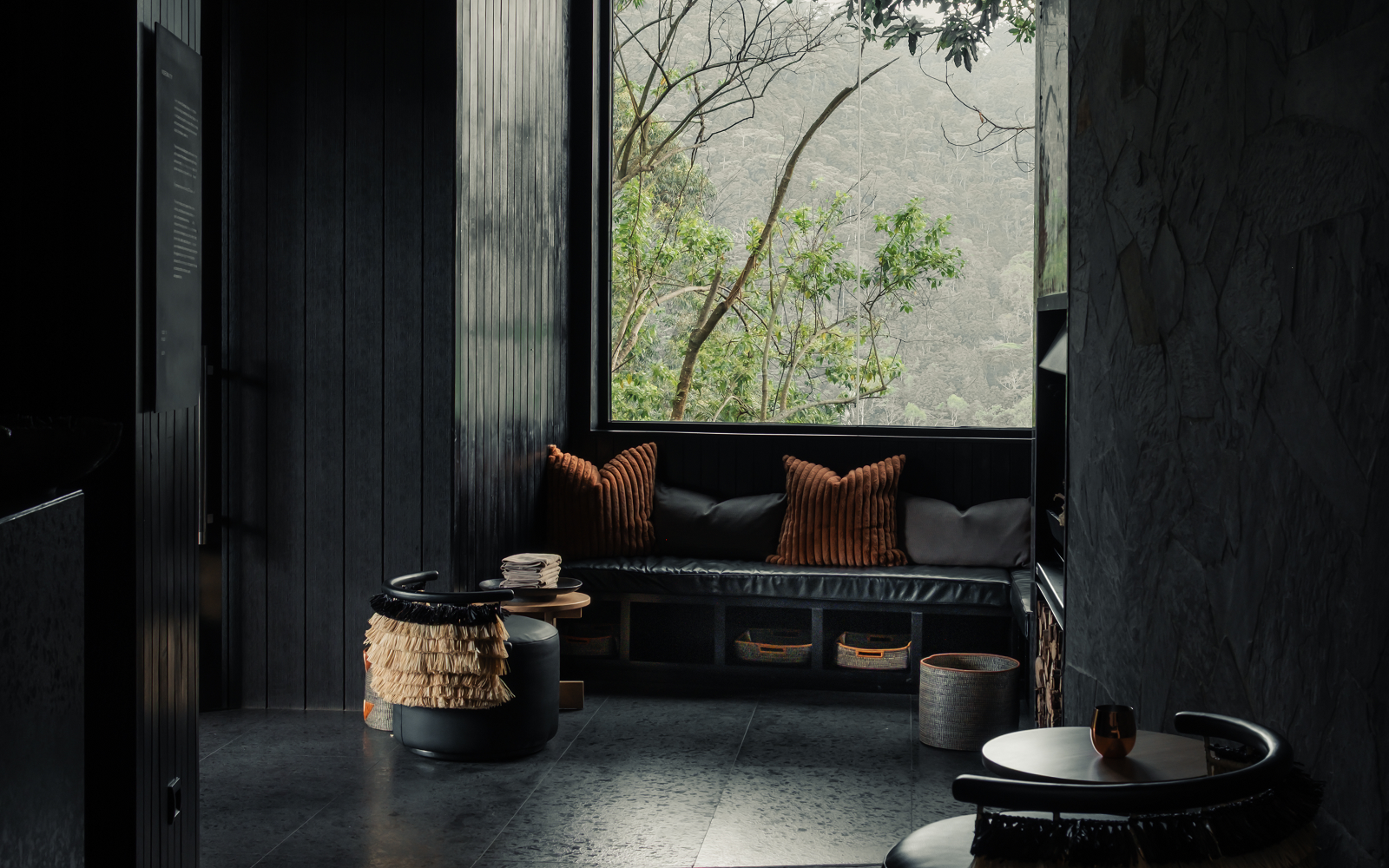
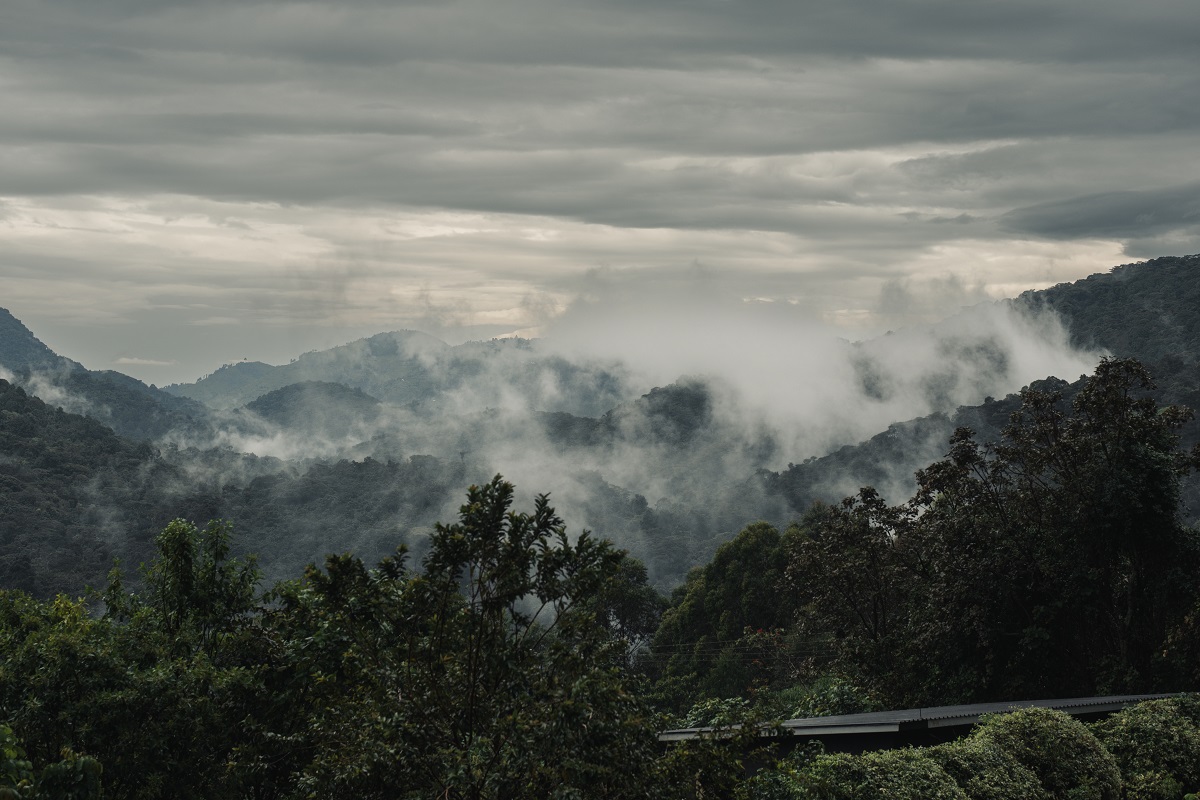
Image credit: Silverback Lodge
Relaunched in 2025, Silverback Lodge sits on a forested ridge above Uganda’s Bwindi Impenetrable Forest National Park, offering rare, front-row access to one of the world’s most profound wildlife encounters – mountain gorilla trekking.
The redesigned lodge, operated by Marasa Africa, represents the group’s first project in reimagining African safari accommodation for a new generation of travellers. Blending modern design with an authentic sense of place, the lodge introduces a modern expression of African identity that resonates with guests seeking both cultural depth and refined aesthetics. This transformation signals the beginning of a broader evolution across the portfolio, with further renovations underway.
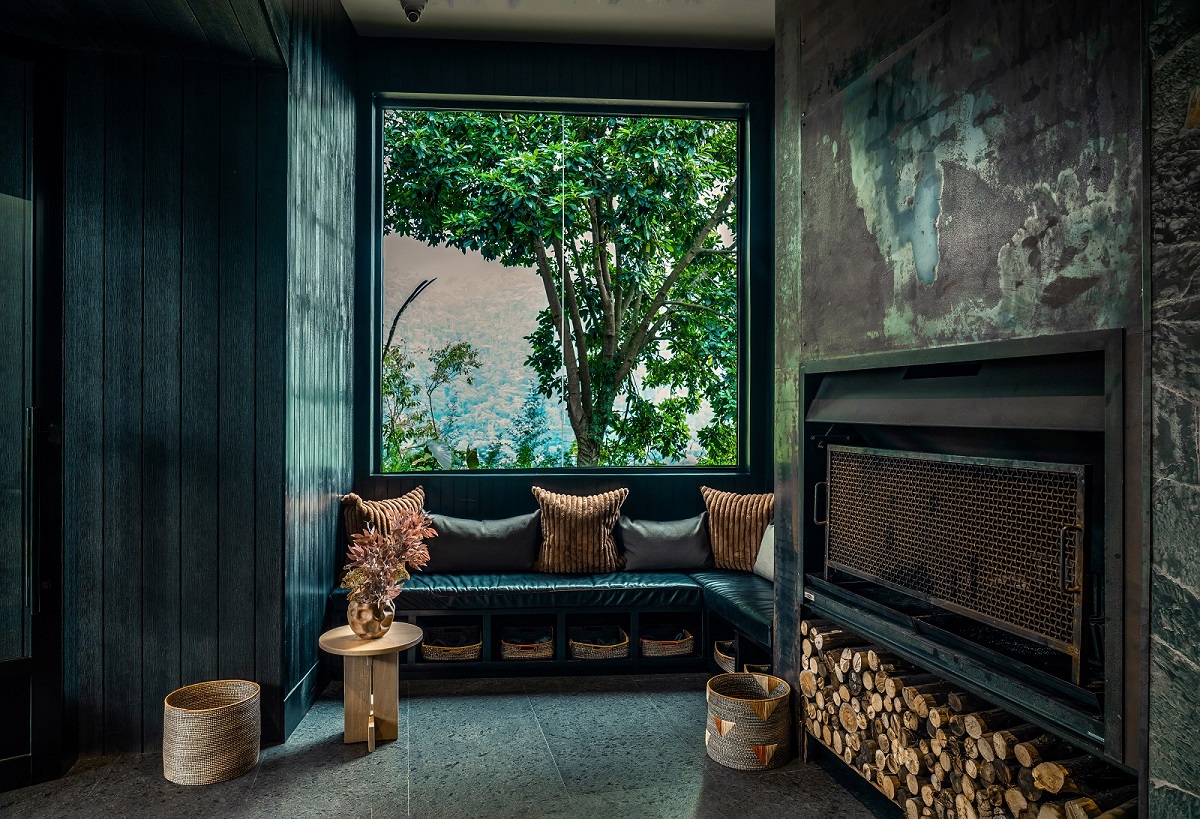
Image credit: silverback Lodge
“The design of Silverback Lodge was a deliberate departure from the colonial safari style that has long defined traditional safari aesthetics,” discussed Tanya Madhvani, Founder of Marasa Africa. “Throughout the process, we embraced sharp, elongated lines and a stylish African design language that responds sensitively to the surrounding rainforest. Our vision was to create the impression of a ‘sliver in the mist’, a structure carefully angled to preserve uninterrupted views of the forest canopy – almost disappearing into it.”
Silverback Lodge was designed by South African practice HesseKleinloog in collaboration with STUDIO Jana + Koos. Spanning 3000 square metres, the property comprises a 450 square metre main lodge, a 150 square metre ‘Wellnest’ spa and gym and 12 guestrooms (‘nests’) each measuring 47 square metres.
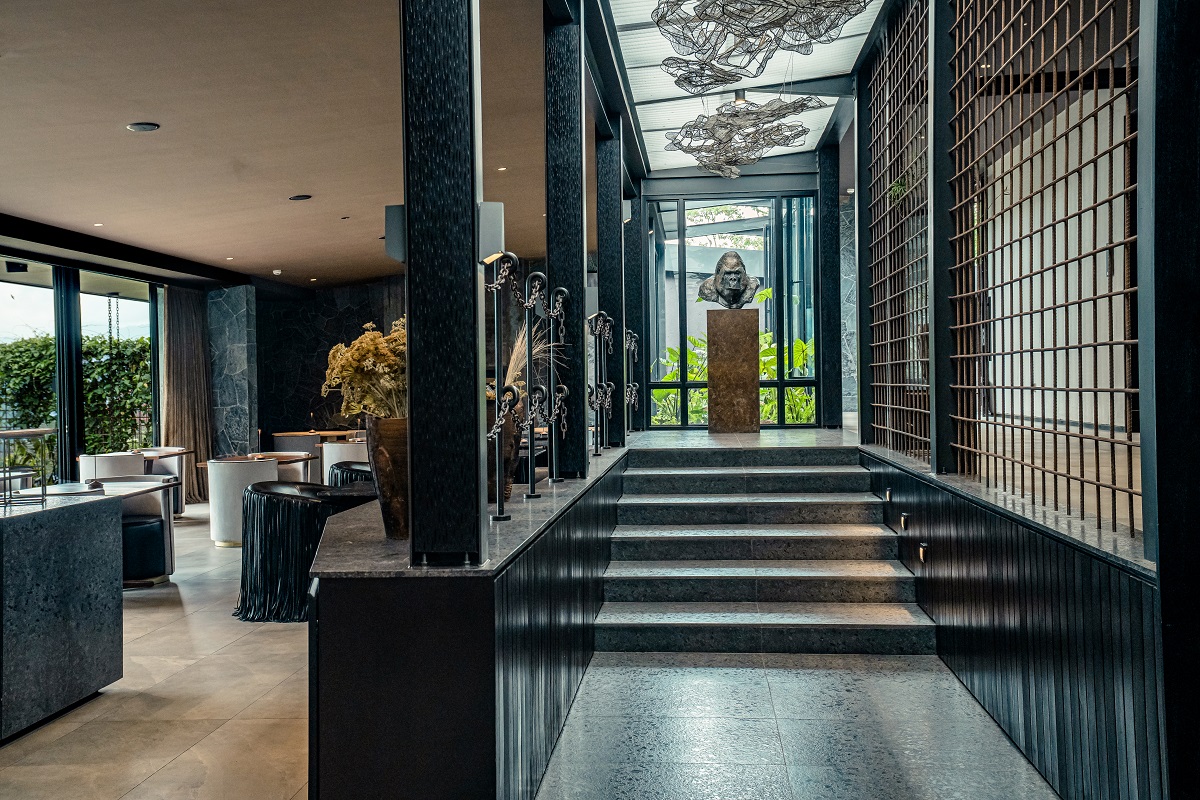
Image credit: Silverback Lodge
Shaped by the site’s steep terrain and restricted footprint, the architecture responds sensitively to its surroundings. Rather than imposing on the ancient landscape, the lodge is conceived as an elongated, angular structure, carefully oriented to preserve the uninterrupted forest views.
Positioned on elevated ground with direct access to Bwindi Impenetrable Forest National Park, the composition draws the outside in at every turn, framing the dense rainforest as a constant visual presence.
The lodge celebrates African artisanry, with a strong emphasis on collaboration with Ugandan artisans and creators. Locally sourced materials are propelled into refined architectural and interior elements, with locally quarried stone, mild steel, rebar, custom hand-trowelled plaster and Ugandan slate all shaped and finished by hand, allowing their natural patinas and textures to remain visible.
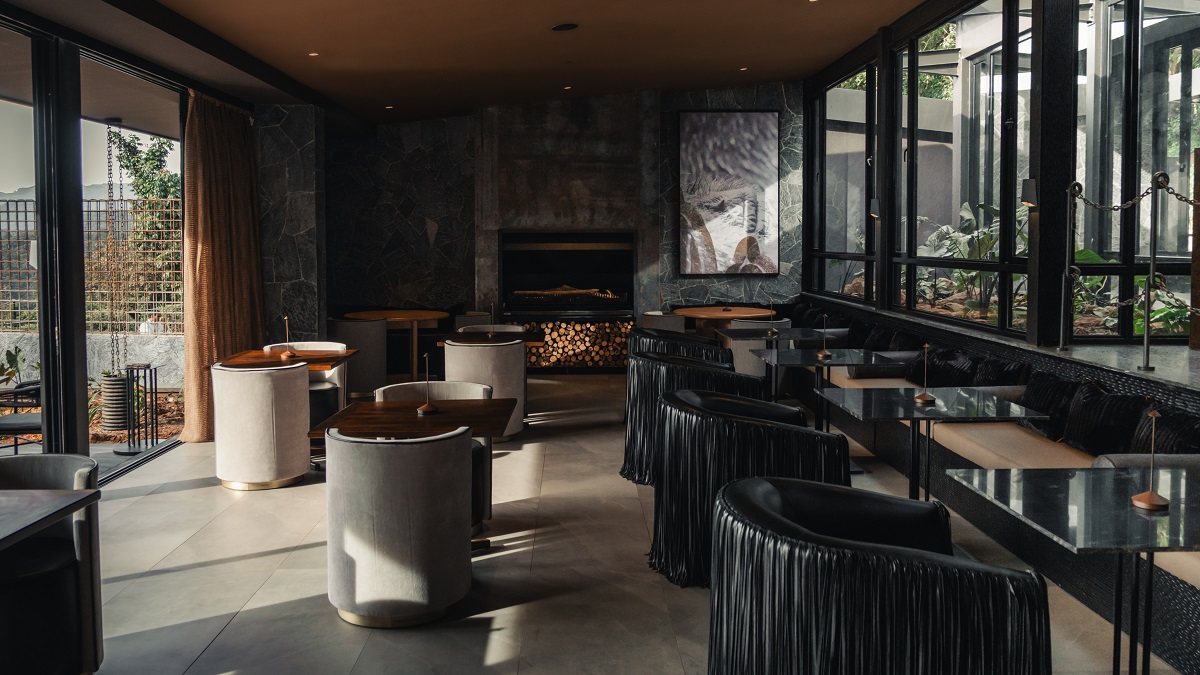
Image credit: Silverback Lodge
Imported materials have been used sparingly and intentionally. Elements such as black decking, were deliberately set back into shadow to not compete with the surrounding landscape. Throughout the project, there was a constant tension between longevity and sustainability within the East African context, carefully balancing durability, transport logistics, and environmental impact.
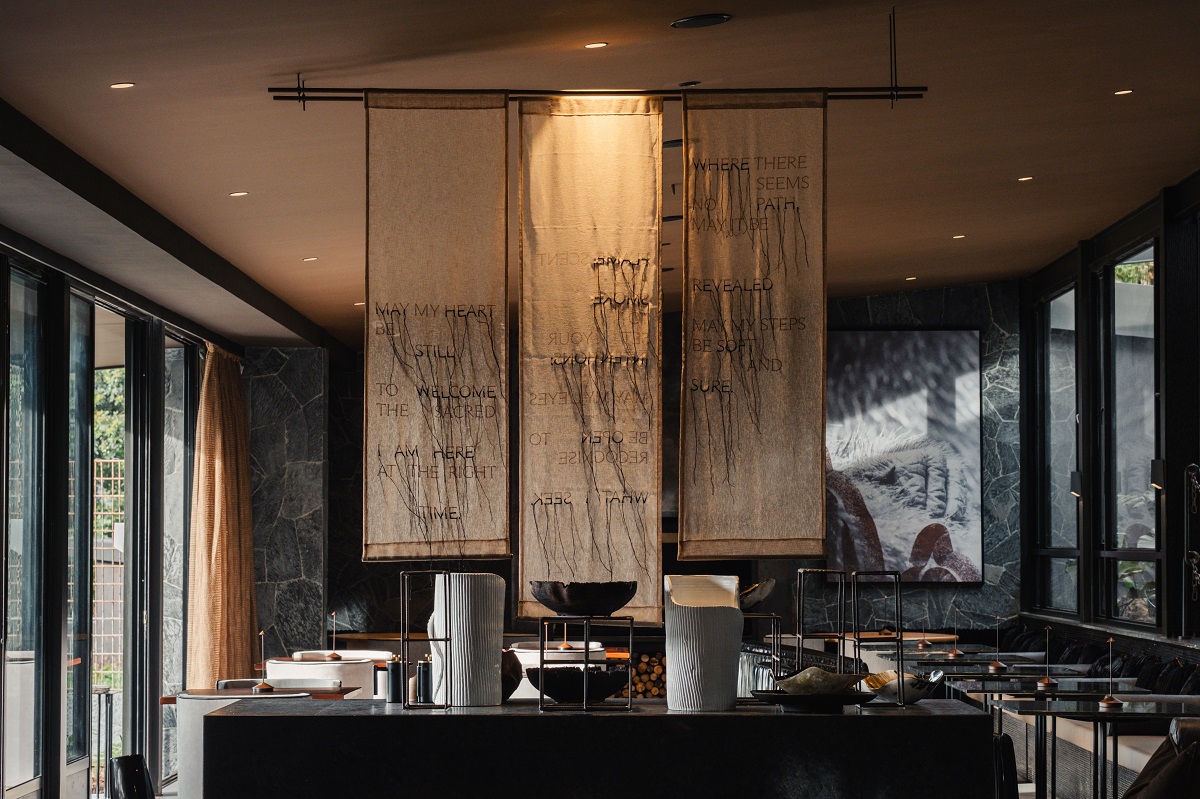
Image credit: Silverback Lodge
Handcrafted details add further depth and meaning to the design while supporting local communities. Custom woven chairs were created in collaboration with Ride 4 A Woman in Buhoma Village, while embroidered message banners were created by The Milaya Project, supporting refugee women in Bidibidi. Ceramic artefacts were produced by Ceramics Uganda, and sculptural installations were crafted from reclaimed poaching snares in partnership with Snares to Wares. Traditional Ankole horn craftsmanship is woven into room details and barware, while waste steel from construction was repurposed into rebar plinths and bespoke design features, reducing excess waste and embedding sustainability into the project at every level.
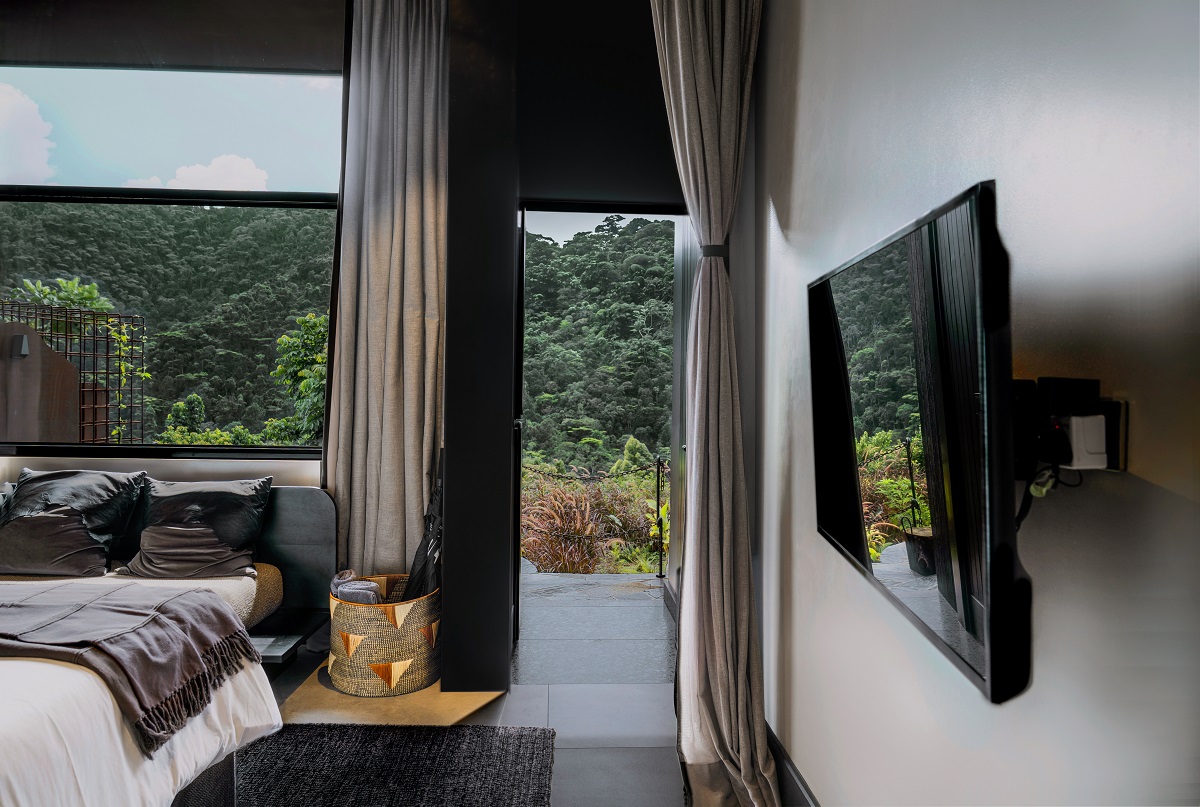
Image credit: Silverback Lodge
Silverback Lodge was thoughtfully developed within the footprint of the existing property, limiting expansion and preserving the integrity of the surrounding landscape. The architecture responds directly to the environment, with deep overhangs and shaded walkways built to provide shelter from Bwindi’s heavy rainfall, while interior courtyards and integrated planting reinforce the connection between built space and forest.
Local sourcing was prioritised throughout, from construction materials to furnishings, reducing reliance on imports while supporting regional craftspeople and suppliers. This considered approach underpins a broader commitment to conservation and long-term community engagement.
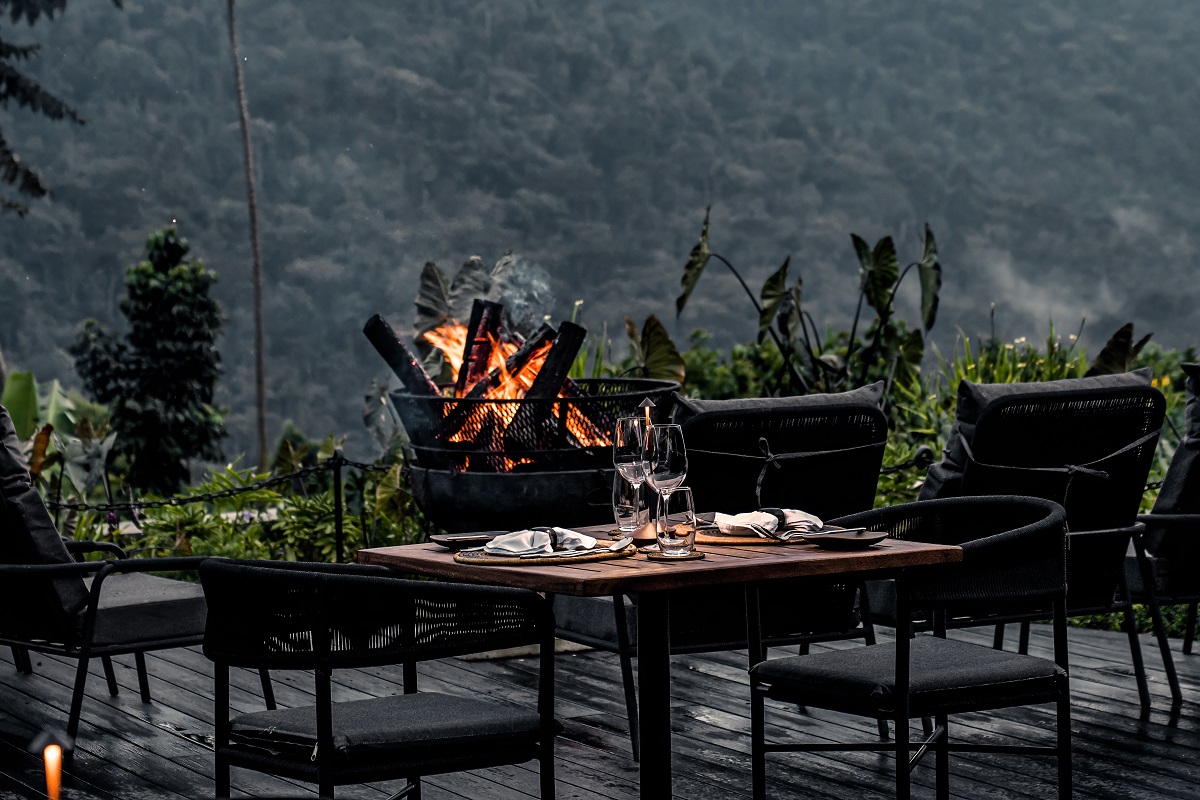
Image credit: Silverback Lodge
The interiors were shaped by the profound experience of encountering a gorilla in its natural habitat, an event often regarded as both spiritual, unforgettable and rare, this became the driving force behind creating inspiring spaces that balance quiet reflection with moments of joy and connection.
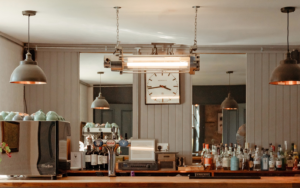
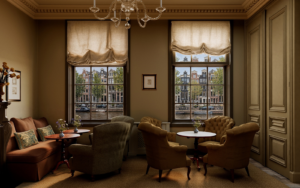
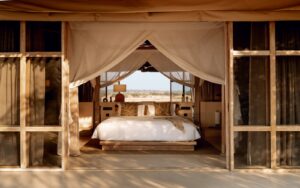
By day, natural light and open views anchor the experience in the forest beyond. By night, carefully layered lighting introduces a more atmospheric dimension, casting depth and shadow across textured surfaces. In the main lodge, the bar forms a central focal point, defined by recessed lighting, raw rebar detailing and mirrored elements. Guest rooms are composed as calm, restorative spaces, supporting both preparation for and recovery after trekking. Each room is carefully oriented to frame uninterrupted views, allowing the surrounding rainforest to remain the defining feature throughout the stay.
Main image credit: Silverback Lodge