









Is this the end of The Line for Saudi Arabia’s Wall City?
NEOM is known for its ambitious projects, but has The Line proven to be too ambitious to reach completion? With a number of reports on the progress (or lack thereof), Saudi Arabia’s walled city has come under scrutiny yet again for having unrealistic targets…
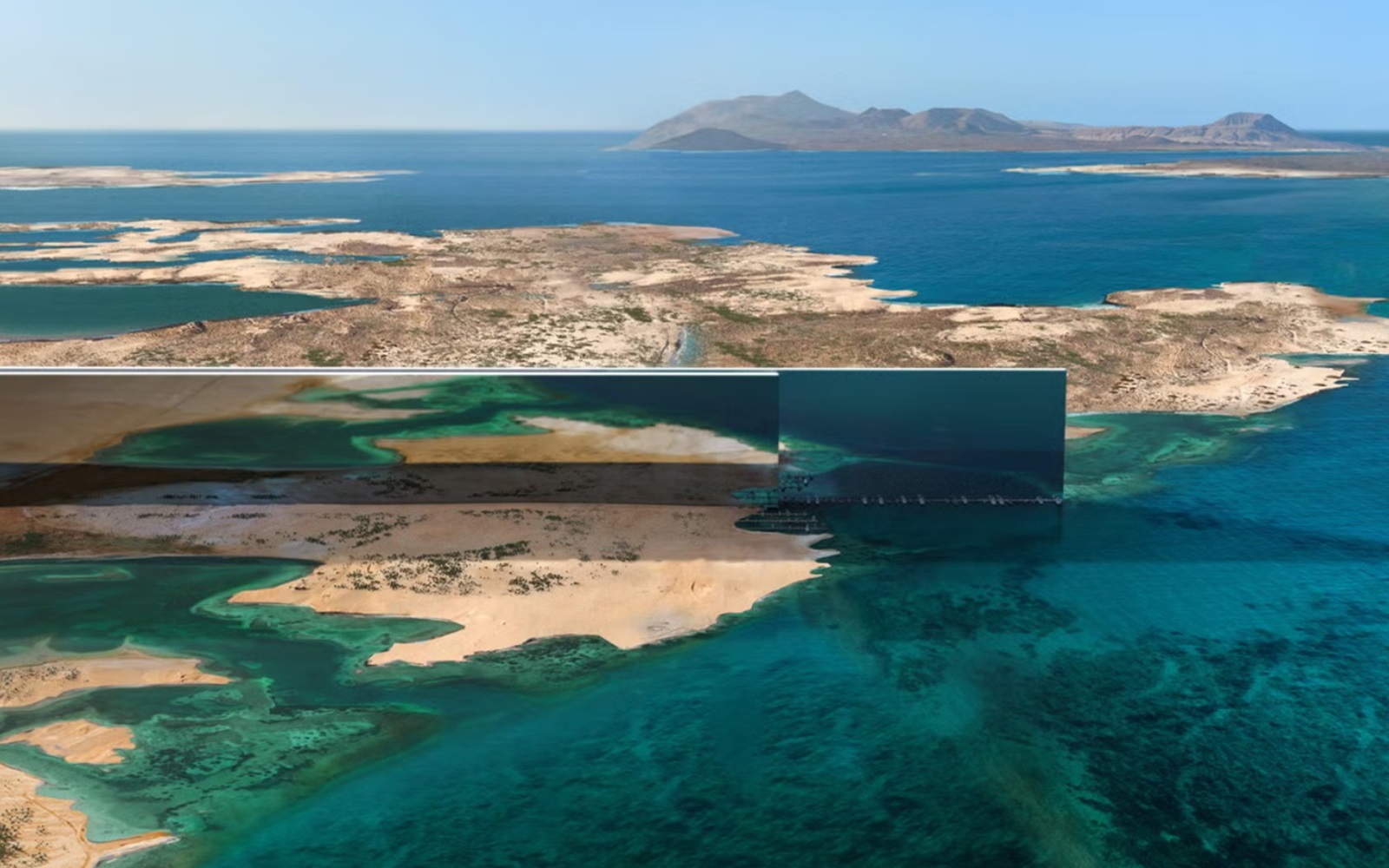
When Saudi Arabia unveiled The Line in 2021, the megacity was positioned as the crown jewel of NEOM – the $500 billion, futurist region at the heart of Vision 2030. The original concept was audacious: a mirrored city extending 170km through the desert, 500m high and 200m wide, designed to house nine million residents and eliminate cars, emissions, and sprawling infrastructure altogether. It promised a radically new way to live, plan, and experience urban life.
Five years on, The Line is still making headlines, but its execution, design planning, and physical progress tells a story of unrealistic ambitions and lack of investment. So, is this the end of The Line – or is there still hope for the giga-project?
What progress has been made on The Line so far?
On the ground in northwest Saudi Arabia, construction has indeed begun – though not at the scale or speed first imagined. What has materialised most visibly is earthworks, trenching, and piling: deep foundations being laid along segments of the stretch where The Line is planned. Multiple reports in 2024 noted that over 120 foundation piles were being installed weekly, making it one of the largest piling operations globally.
At the same time, NEOM had begun systematic neighbourhood planning and design work for the first phase. A consortium of world-class partners – including Delugan Meissl Associate Architects (DMAA), Gensler, and Mott MacDonald – were appointed to lead urban design, planning, and engineering, with DMAA specifically tasked with evolving a vertically organised, three-dimensional masterplan to challenge conventional city formats.
Yet when observers visit the site or scrutinise satellite imagery, the vertical, glass-walled city remains largely unrealised outside isolated, preparatory works. Beyond foundational trenches and earth movement, very little vertical superstructure is apparent in areas beyond specific pilot zones such as the ‘Hidden Marina’.
Design and planning revisions to The Line
The original architectural vision – a continuous mirrored façade encapsulating residential, commercial, and recreational spaces stacked across multiple levels – remains foundational to The Line’s identity. When first unveiled, NEOM described The Line as providing “all facilities within a five-minute walk” and connecting residents via a 20-minute end-to-end high-speed rail, entirely powered by renewable energy. However, adaptations to that vision have emerged as the project is more realistically scrutinised:
- Phased urbanisation: Rather than instantly building 170km straight through the desert, NEOM is prioritising a phased approach. Early planning focuses on smaller, functional neighbourhoods within Phase One, each with bespoke design and environmental planning. DMAA’s role extends beyond masterplan concepting to ensuring design continuity as multiple architects tackle individual districts, with work having started in 2025.
- Neighbourhood detail and ecology: With consultants now onboard for microclimate modelling, mobility, logistics, and ecological sustainability, design work moves beyond futuristic renderings towards context-specific urbanism – responding to Saudi Arabia’s harsh desert conditions, solar orientation, and environmental sensitivities.
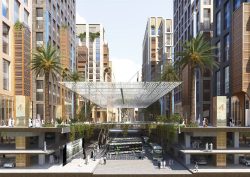
- Hidden Marina prototype: One of the most tangible built expressions of the concept so far is the ‘Hidden Marina’ – a segment where excavation, canal creation, and preparatory works will include mixed-use leisure facilities with hotels and retail, as well as residences for up to 200,000 people. This area could serve as a prototype ‘plug-in’ city model for future expansions, although adjustments are being put to Prince Mohammed bin Salman, who chairs NEOM, to reconsider elaborate elements of this section that simply go against the laws of physics.
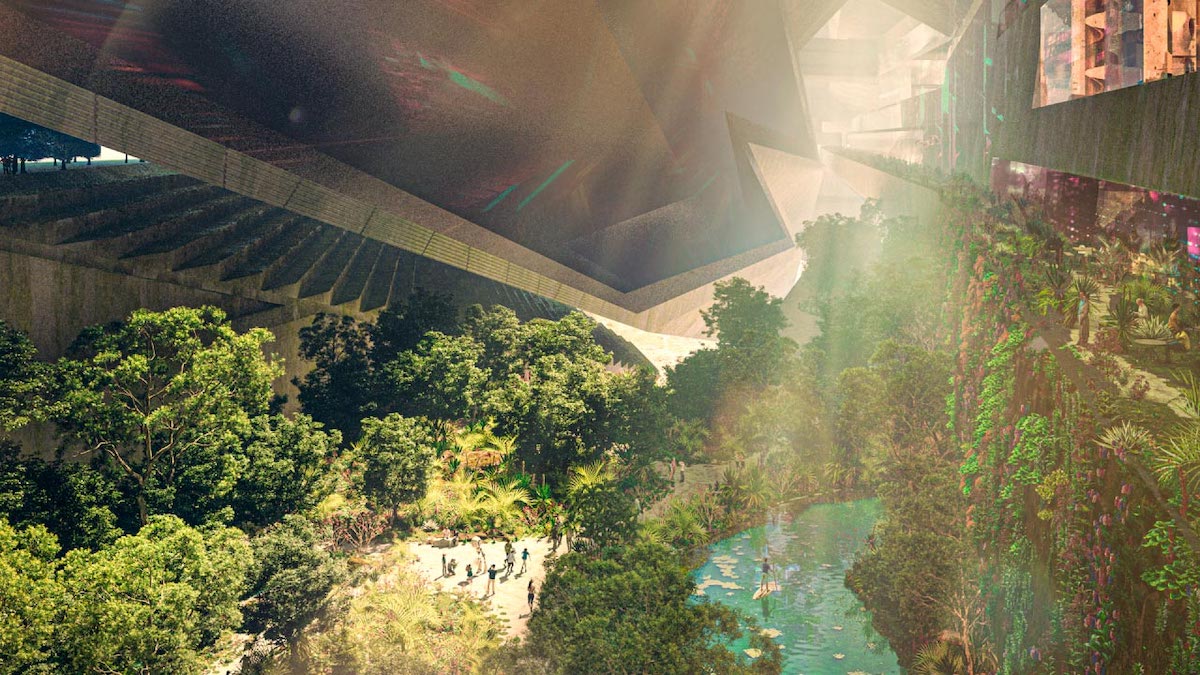
Image credit: NEOM
Economics and practical adjustments
The estimated costs of The Line have ballooned far beyond early projections. Internal evaluations – including a Wall Street Journal analysis – have suggested the final total for The Line might stretch into the trillions of dollars, far exceeding the original $500 billion valuation and challenging the Saudi government’s ability to fund without significant private investment.
Secondly, there have been workforce reductions and strategic pauses. Reports indicate a reduction of roughly 35% in the construction workforce and relocation of many staff from the remote site to Riyadh, driven in part by rising expenses and shifting priorities. Some construction across vast sections has been paused or slowed.
Moreover, the timeline has been reassessed. While NEOM initially suggested partial occupancy of some segments by 2030, independent analysis points towards more modest ambitions for initial usable sections, with complete build-out potentially stretching into the 2030s and beyond. In fact, some reports have projected that full realisation of the entire linear city could take until the 2070s or 2080s given current investment and pacing.
International reporting signals that The Line has faced a moment of reckoning – shifting from a near-utopian narrative to a pragmatically scaled strategy. According to sources familiar with internal discussions, parts of the original mega-length city have been reconsidered, with some observers noting a reduction in modules and a reassessment of functional priorities.
Critics and analysts point to this as a natural outcome of pivoting from an unproven futuristic idea towards a risk-managed, deliverable megaproject: refining phasing, managing costs, and focusing on neighbourhood viability before whole-city ambition. Strategic reviews by the Public Investment Fund and its consultants attest to this shift, highlighting cost containment and prioritised delivery over unrealistic ambitions.
NEOM and Vision 2030
Within Saudi Arabia’s overarching Vision 2030 – the blueprint to diversify the economy beyond oil – The Line serves both symbolic and practical roles. It is intended to elevate NEOM as a global hub for innovation, tourism, and sustainable living. Yet its evolution also reflects broader economic recalibrations in the kingdom. Declining oil revenues, competing budget demands (from infrastructure to international events like Expo 2030 and the 2034 FIFA World Cup), and global market pressures have prompted adjustments in pace and scope across Saudi mega projects.
There is also a complementary narrative inside the kingdom that reframes design revisions not as retreat but as strategic optimisation – a response to real-world complexity that tempers aspiration with executional confidence. From this vantage, the city’s design and planning maturation is a natural evolution towards feasibility, rather than abandonment.
So, is this the end of The Line?
In short, no. But the likely outcome is that it will be a different version of what was originally planned, and will take a lot longer to materialise than hoped. The Line remains among the most intriguing urban experiments of the 21st century – a project that has captured global attention with its mirrored walls and bold rejection of traditional city forms. Yet what is unfolding in the Saudi desert is not exactly the seamless translation of promotional renderings into steel and glass. What is happening instead is a layered, adaptive process where design innovation meets economic reality, and where pioneering ambitions are being repackaged into deliverable, phased progress.
2026 will uncover more information on the project’s progress, but as work continues and The Line evolves into its first functional ‘neighbourhoods’, it’s likely the build will focus less so on its length or height, but more so on its quality and adaptability to ensure the build of each module and success of the overall project.
Main image credit: NEOM