At IHS London 2025, accessibility experts Ed Warner MBE and James Dixon-Box joined Hotel Designs Editor Sophie Harper to explore how hotels can communicate accessible design more clearly – from online information to staff training – and why doing so benefits both guests and business…
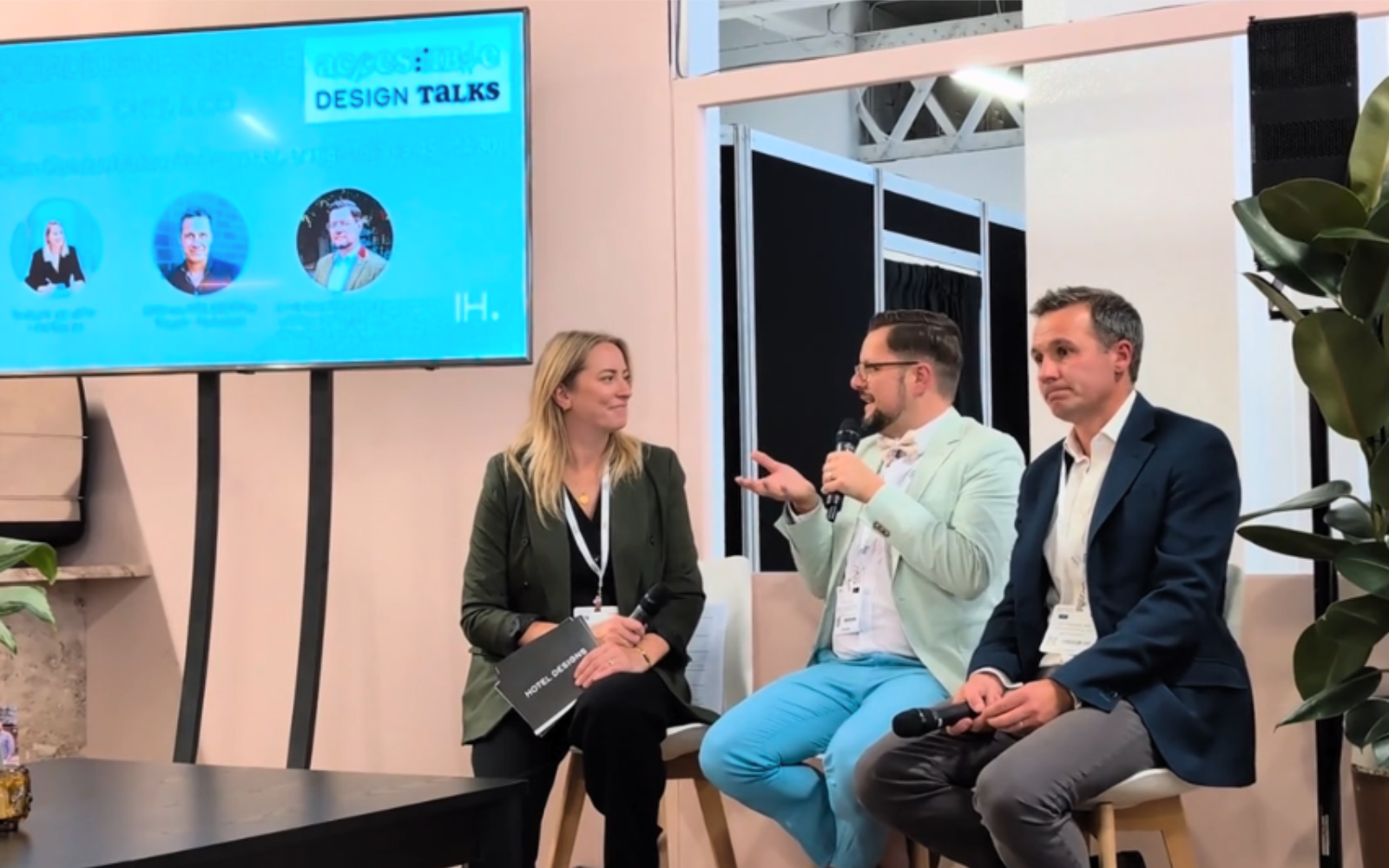
In early October, Hotel Designs Editor Sophie Harper took to the Independent Hotel Show London’s Social Business Stage to chat with accessibility experts Ed Warner MBE, CEO and Co-Founder of Motionspot, and James Dixon-Box, Operations Director at Marsham Court Hotel and the UK Government’s Disability & Access Ambassador for Hospitality. Together, they explored how hotels can better promote and communicate their accessible services – from website clarity to staff confidence.
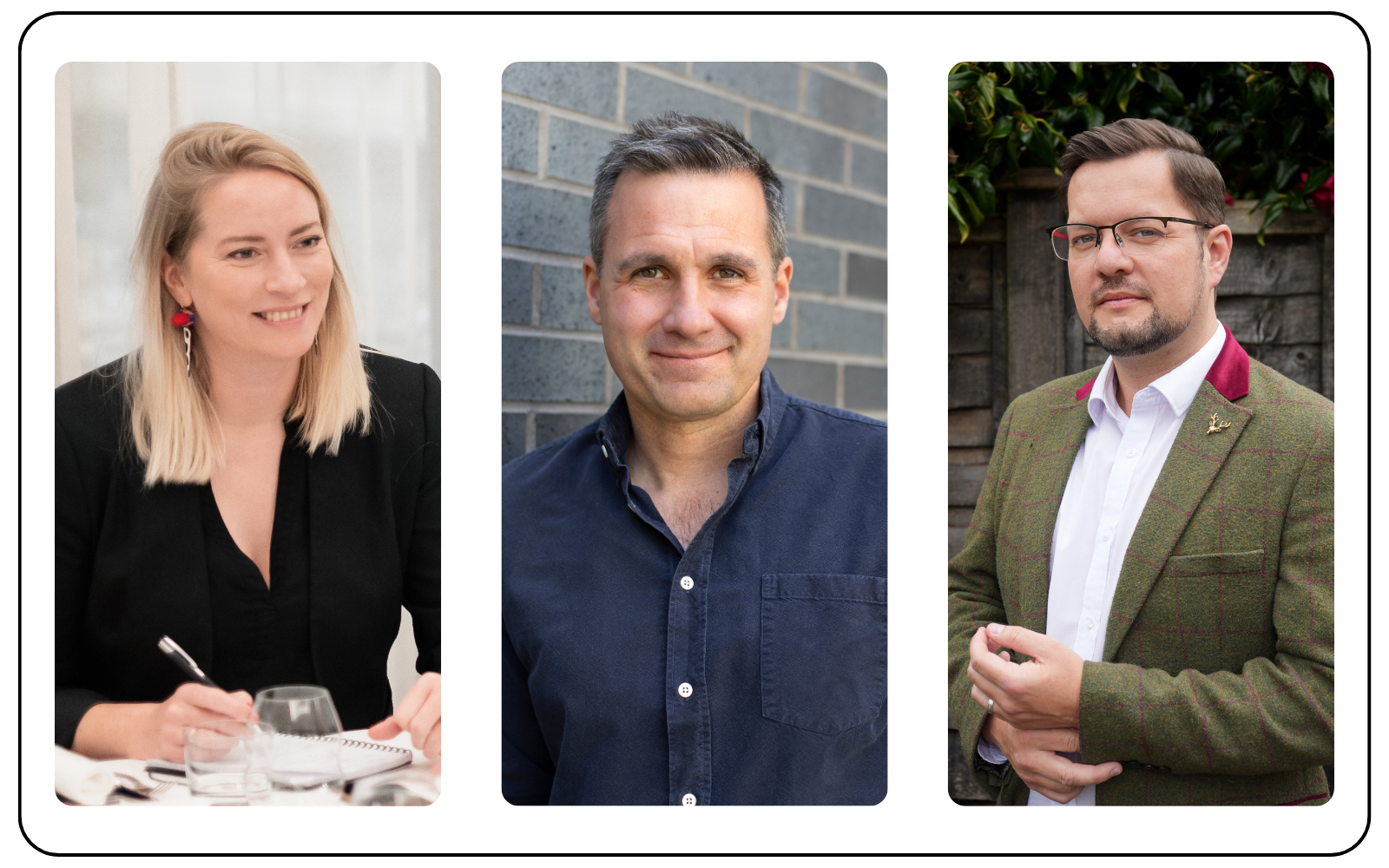
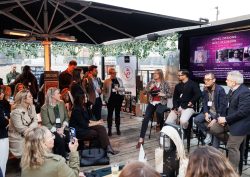
(L-R): Host Sophie Harper, Editor of Hotel Designs; Ed Warner MBE, CEO and Co-Founder of Motionspot; James Dixon-Box, Operations Director at Marsham Court Hotel and the UK Government’s Disability & Access Ambassador for Hospitality.
While previous Accessible Design Talks have focused on the physical aspects of accessible hotel design, this third instalment shifted the spotlight to operations and communication – the vital bridge between design intent and guest experience.
Drawing on both personal and professional insight, James and Ed shared practical, often overlooked strategies to help hoteliers build truly inclusive businesses. What follows is a round-up of their valuable advice.
Too much information? Never!
At Marsham Court Hotel, the team have worked hard to improve the property’s website. Adding their accessibility policy was a first step, but as they discovered, for disabled guests who often have unique needs, broad statements aren’t enough.
“We needed to provide very specific information,” explains James. “Now we have an accessibility specification sheet with all our equipment details available online, and we can also email it to prospective guests.”
Another impactful addition has been video tours. “They don’t need to be big or professionally edited,” James adds. “Even if filmed on an iPhone, what people want is information – to see how they’ll get into the hotel, around it, and into their rooms.”
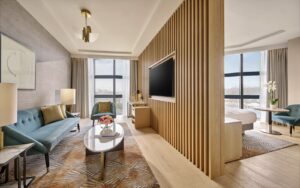
Ed agrees, emphasising the importance of visuals. “Good photographs of your accessible rooms, with clear explanations of features, really help. Guests also want to know how check-in, dining, and other facilities work for them. It’s about communicating accessibility upfront through imagery.”
Visual communication also benefits guests whose first language isn’t English, or those who are neurodivergent. “Adding symbols or pictures to signage – for toilets, restaurants, parking – helps everyone,” says Ed. “Too much text can overwhelm guests with dyslexia or sensory sensitivities.”
Font choice plays a role too. Sans-serif fonts such as Arial or Calibri are easier to read, while using all-capitals in titles or signage can confuse screen readers. “A reader will spell a word written in all caps, instead of reading it,” James notes, “so mixed case is much more accessible.”
Small changes, big differences
Sometimes accessibility improvements are surprisingly simple. Installing a hearing loop, offering menus in accessible formats, or ensuring lighting is adjustable can make a big difference. James also highlights a small but powerful change – the bed design.
“Only around 16 hotels in the UK have hoists in guestrooms, but it doesn’t have to be complicated,” he explains. “You don’t need to install hoists permanently. Just make sure your bed allows for one to be used: if it’s flush to the floor, a hoist can’t fit underneath, but a four-inch gap makes all the difference – it is now completely accessible for a portable hoist.”
Inclusive design works for everyone
Accessibility isn’t just about meeting specific needs – it is about improving the experience for all guests.
Ed recalls working on the White Horse Inn in Dorking, where two accessible rooms became the hotel’s most popular. “Even when disabled guests weren’t staying, families booked for the interconnecting rooms, and business travellers liked the open wet rooms and easy luggage access,” he says. “Designing inclusively makes spaces better for everyone.”
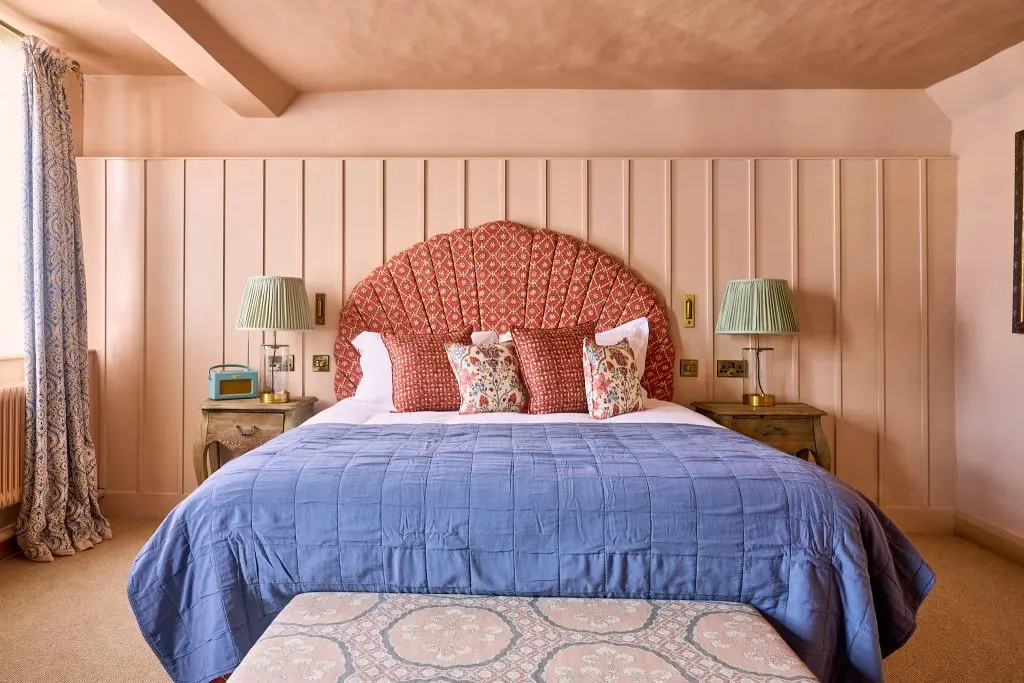
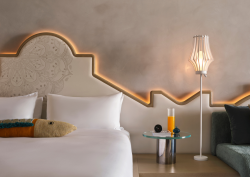
Accessible guestroom at the White Horse Inn, Dorking | Image credit: White Horse Inn
The proof is in the pudding
Making accessibility a priority isn’t only the right thing to do – it is smart business. The panel noted that with one in five people in the UK living with a registered disability, the potential market is vast. Hotels that invest in accessible design often see higher occupancy and stronger repeat bookings.
Hotel Brooklyn in Manchester is a standout example, says Ed. “Of its 190 rooms, 18 were designed for accessibility. They found that those 18 rooms were the most popular in that hotel and delivered an additional £250,000 of net profit per year because of the loyalty and repeat bookings. It opened them up to a very different market.”
James reports similar success at Marsham Court Hotel: “Over the summer, our accessible rooms had 5% higher occupancy than our standard ones – we were struggling to keep up with demand.”
To cater for a range of guests, many accessible room features can now be removed or concealed, such as this ceiling track hoist in an accessible room of the Hotel Brooklyn, Manchester | Video credit: Motionspot.
Training creates confidence
Building accessible spaces is only half the job, ensuring staff understand and can confidently talk about accessibility is essential.
“It’s about giving the team the confidence to deliver,” says Ed. “Empower them to ask helpful, respectful questions like, ‘How can I make this easier for you?’ rather than worrying about saying the wrong thing.”
At Marsham Court, accessibility awareness starts from day one. It is part of the induction process, and each year the team focuses on a different area – from deaf awareness to neurodiversity – to deepen understanding and keep the topic front of mind.
“When accessibility becomes part of everyday conversation, it stops being awkward,” says James. “New staff see it as normal practice, and that confidence reassures guests too.”
For your team as well as guests
Accessibility isn’t just beneficial for guests, the panellists highlight the benefits staff too. With many employees having hidden disabilities or neurodiverse conditions, creating an open, supportive environment helps them to thrive.
At Marsham Court, around 15% of employees have disclosed a disability, something James attributes to the hotel’s inclusive culture. “Because we’re known as an accessible business, people feel safe being open with us,” he says. “They know we’ll support them in their roles.”
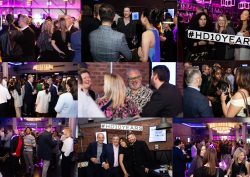
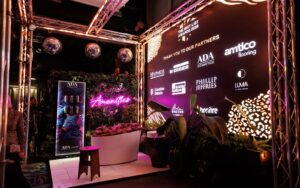
Image credit: Independent Hotel Show
Becoming a Disability Confident employer
A practical step for any hotel is to join the UK Government’s Disability Confident scheme. With three levels of accreditation, it offers a clear framework for developing inclusive policies and communicating your commitment publicly. “It doesn’t cost much to join,” notes James. “But it gives you structure and shows both customers and employees that you take accessibility seriously.”
Listen and learn
“When we began this journey, we just listened,” says James. “We talked to charities, to guests, and to other hotels already doing great work. The more you listen, the more confident you become that you’re making the right decisions.”
Ed agrees. “The hospitality industry is all about caring and people. Listening is one of the most important parts of communication – and the key to creating a truly inclusive experience.”
Main image credit: Hotel Designs