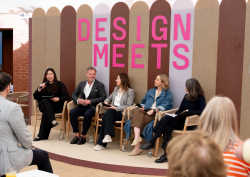











Opening the seminar programme at the Interior Design & Architecture Summit (IDAS), Laying the Foundations turned away from the subject most design events lead with, and towards the part rarely discussed on stage. Four studio founders talked candidly about the business behind the design – from first clients and cash flow to fee psychology, fractional teams and the myths of studio ownership that are most untrue…
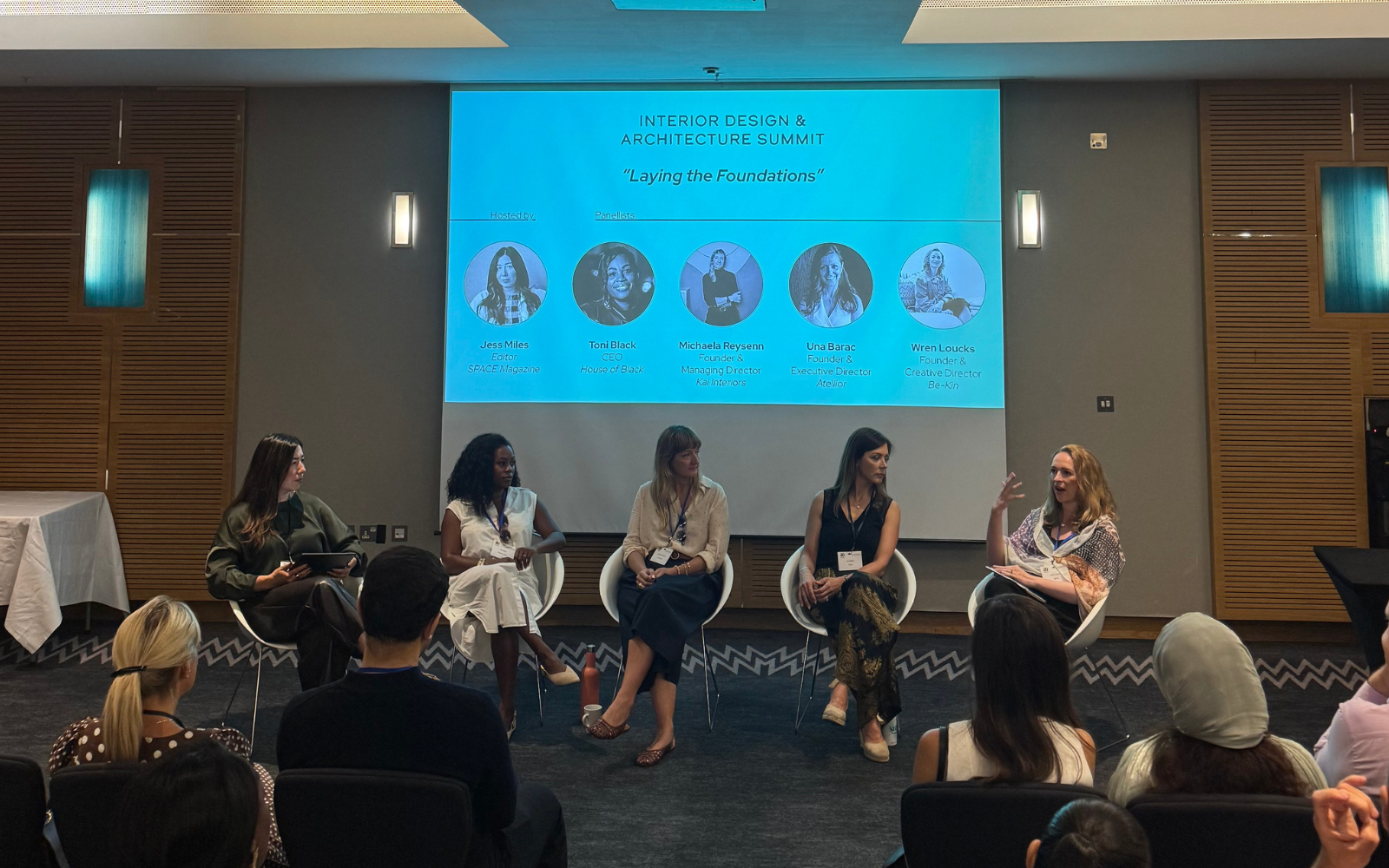
“In the design world, we often talk about creativity, but a very crucial part of successful studios is the business side of things,” said Jess Miles, Editor of SPACE Magazine, introducing the session.
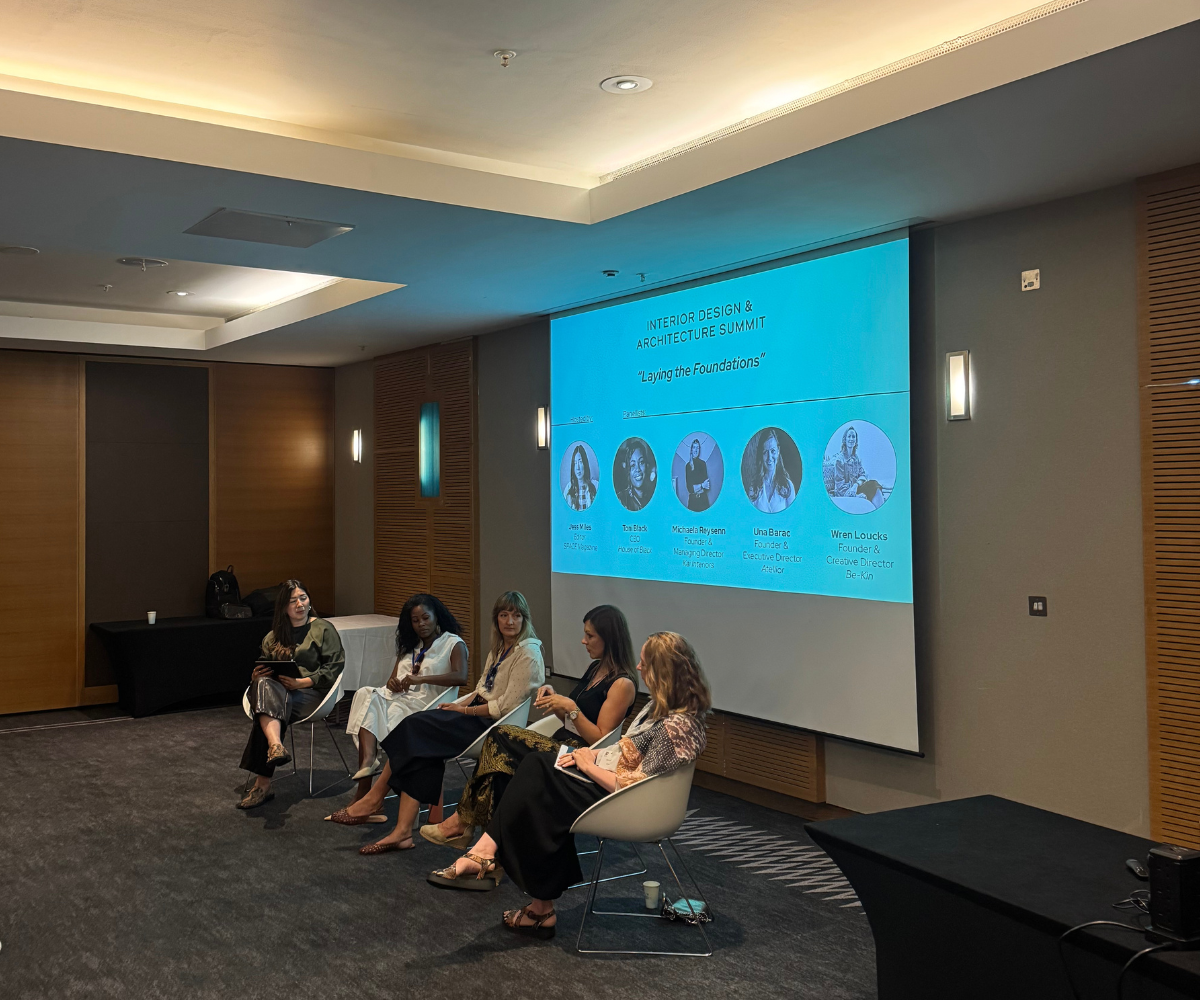
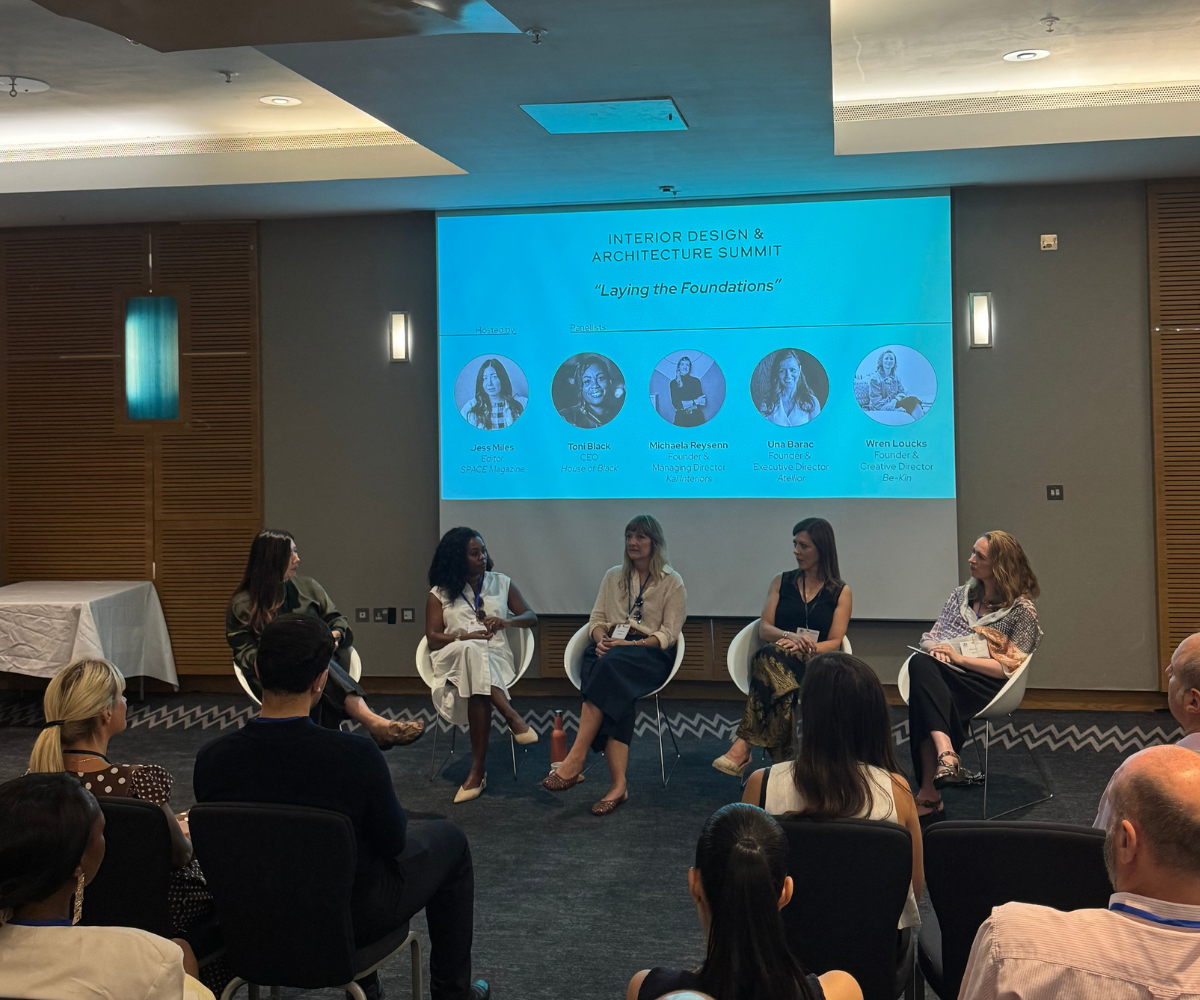
Joining her were:
- Toni Black, CEO and Founder, House of Black
- Michaela Reysenn, Founder and Managing Director, KAI Interiors
- Una Barac, Founder and Executive Director, Atellior
- Wren Loucks, Founder and Creative Director, Be-Kin
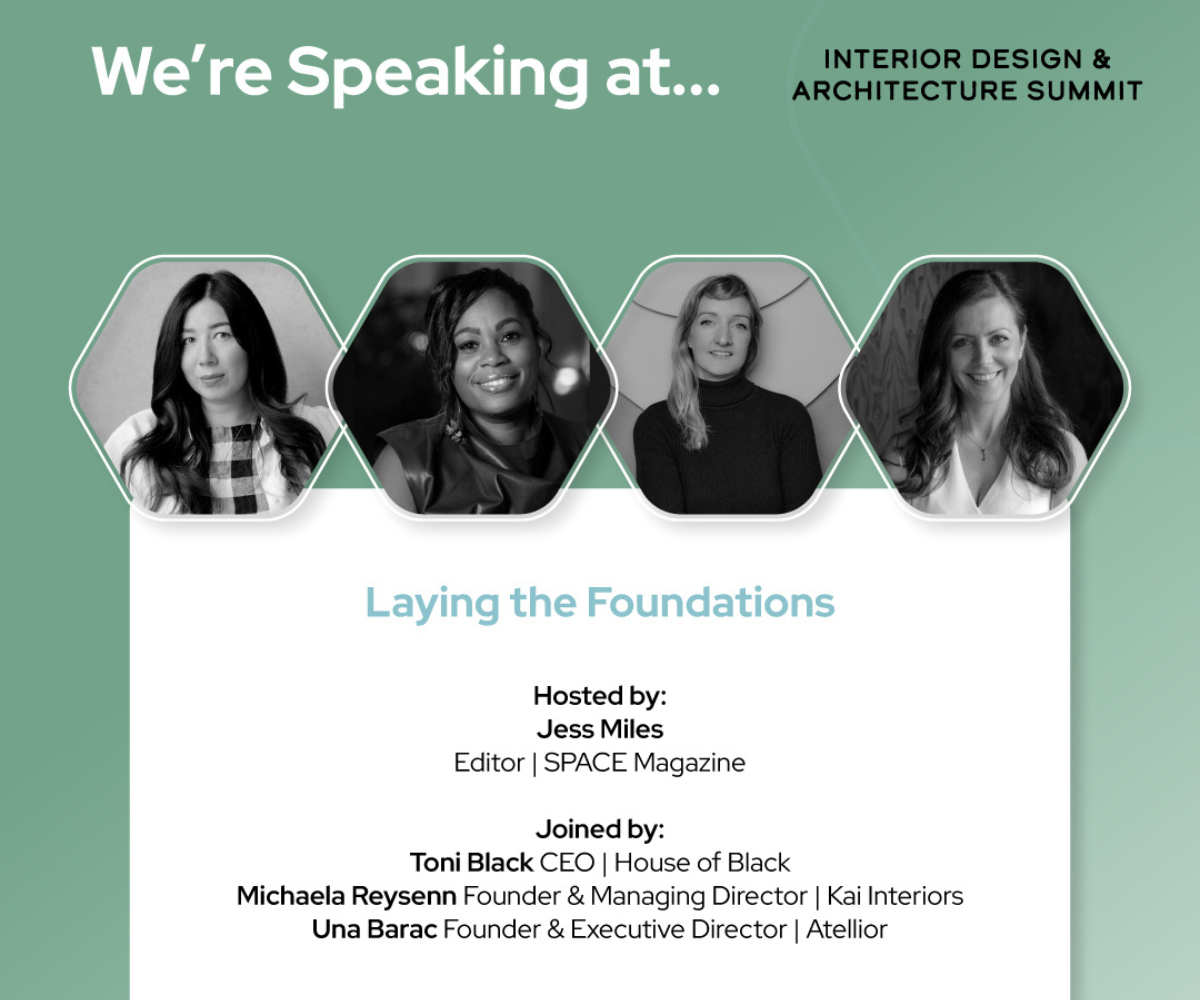
Image credit: Hotel Designs
Four routes to going it alone
None of the four arrived at ownership the same way, and are all at different stages of the journey, from a studio approaching its 20th year, to one barely six months old. Michaela Reysenn moved to London after her degree but couldn’t get hired. “I couldn’t get a job as an interior designer – no one would give me a chance,” she said. Working two jobs, she built a £200 website and took projects on for free, until the restaurant she was working in asked her to design its next venue. It was shortlisted for a design award almost immediately. To which she thought, “I better take this seriously!”
Una Barac followed a more corporate path. A trained architect, she spent seven years at Foster + Partners before moving to Scott Brownrigg, where she spent 14 years running hospitality and residential interiors – until, as she put it, “I hit the glass ceiling and thought, I don’t want to do this anymore.” She negotiated her exit around the Croatian office she had opened years earlier: “I said, I’m going, but I’m taking Croatia, because you can’t run it. You haven’t got the local connections.” Twenty-three people left with her on the day, with no non-competes in place. Though daunting without the big support network, “I had jobs I’d already built, and continued running client relationships.”
Toni Black described herself as “a baby in the game”, with House of Black six months old at the time of the panel. She joined Blacksheep around eight years ago to build out its luxury hospitality work and became a partner, but the two ends of Blacksheep’s portfolio never sat comfortably alongside one another. “There was always a blur when I used to go out and talk about the studio’s work and say something like, ‘We’re working with Four Seasons,’ for people to say, ‘but you guys do Five Guys, right?’” Launching the luxury work as a new division wasn’t clear cut enough, so creating House of Black was the answer – a sister agency to Blacksheep rather than a complete break from it, with Blacksheep continuing as it is and Black’s team moving across with her.
Wren Loucks came to the UK from Canada and worked in studios that sponsored her visa, until an Arts Council talent visa removed the constraint. “It’s kind of like winning the lottery, because it means that you can do whatever you want.” She then founded Be-Kin in 2020, nine months into a part-time MBA, making it through the other side of the pandemic to celebrate six years in business.
-
- Image credit: Hotel Designs
Cash flow, fees and knowing your value
In a sector where projects run for years and payment terms slip, the panel agreed that pipeline management is not optional. “You can’t rely on the one client or job, because sometimes projects pause,” said Black, arguing for deliberately over-extending on leads. “You need to have a little bit more than you can manage, because you can’t plan for the future.” Barac agreed it’s about forward thinking – “You’ve got to be six months ahead. You’ve got to be thinking, what’s my pipeline looking like?”
On fees, Reysenn was candid that the difficulty at the start is internal. “The hardest thing with fees at the beginning is knowing your value. As a designer you love what you do, so I almost feel bad charging people.” A design fee psychology course she took early on reframed it – clients push back on a single number partly because design resists valuation. “If you weigh some gold, it’s that value. With design, it’s different.” Her studio now offers three-tiered options instead. “You’re giving clients the choice,” she said, and the tier a client picks reveals both their budget and what they actually value.
Loucks agreed the value perception of design can be a battle, but structures her fees differently, tying rates to a defined scope and a fixed period of time. “As interior designers, we are essentially selling time. So, we’re selling human resource and human design thinking,” she said. “Our businesses are not not-for-profits.” She also never delivers a fee by email alone. “I’ll have a very open conversation. We’ll go through the scope really carefully together so that they understand,” she shared. “And that was uncomfortable at the start, especially when you’re presenting six figures.” Barac added that she anchors fees to RIBA work stages and a set programme, so that time spent is visible when a client has yet to sign off a concept.
Community over competition
The panel was unanimous that the design industry is more generous than its reputation suggests, but that the support has to be sought out. “Nobody goes, yeah, I can’t wait to go to a room full of strangers and just nurse my glass of wine or a coffee awkwardly!” said Barac. “But if you want to run your own business, you don’t have a huge amount of choice – because if you put all your eggs in one basket and just follow one corporate client, if they slow down with their workload, what are you going to do?”
Reysenn made the case for suppliers as an under-used part of that network, connecting studios to one another and to extra capacity. “You’re only as good as your team, you’re only as good as your suppliers as well,” she said. “If they’re going to not deliver on time or send you the wrong thing, it’s going to reflect badly on you.”
A more fluid workforce
For Reysenn, one of the biggest shifts of recent years is in how teams are built. She has deliberately kept KAI small and nimble, which made it easier to adapt through Brexit and the pandemic, and fills the gaps with fractional hires – including an operations director one day a week. “I can’t have somebody full time on that role, because we’re not big enough. But actually having that person one day a week is so valuable.” She also sees the change in the CVs arriving: two years now reads as a long stint, and candidates increasingly run something else alongside design.
Barac framed the same shift as a retention question. “Am I better off without this person in entirety, or should I just take them for three days a week? And also, it’s less of an overhead for you.” Both pointed to mothers returning to work as the clearest example. “They’ve probably been in a really high-level role where they’re so well educated and have got such a massive skill set, but now they can’t commit to that full-time role anymore,” said Reysenn. The panel all agreed fractional work is a gap that can work well for both employee and employer.
Growing without imploding
An audience question on growth was responded to with the most consistent advice of the session: to go slower than you think. “It’s winning more work, isn’t it?” said Barac on what prompted Atellior’s growth. “But I always try not to grow too fast, because if you lose the hold over quality, that’s when you very quickly also lose the trust of the clients. I’ve seen businesses expand really quickly and then implode.” Diversifying by sector and geography, she added, had kept Atellior steady when UK hospitality slowed.
Reysenn described KAI’s growth as gradual by default rather than design, driven by LinkedIn connections and word of mouth. “We’ve never really invested in marketing at all. It’s something we’re starting to do now,” she said. Black focused on the cost base. “It’s just making sure that your overheads still stay at a point that you can control if anything drops. And your growth is your pipeline, right?” Flexibility, she argued, is what allows a studio to scale back to its core team without breaking.
The pearls of wisdom
Asked for one thing they wished they had known, Black returned to asking for help. “We have many skills, but we don’t have everything,” she said. “Your circle can’t be yourself. You’re not a magician, you’re human, and it’s okay to fail. It’s okay for a client to be terrible, for payments not to come in. You just have to keep going – and don’t be embarrassed to reach out to others.”
Reysenn focused on the flexibility myth. “People always talk about when they’ve got their own business, maybe they’ll have more flexibility. And in many ways you do,” she said. “But people underestimate the fact that you never turn off. Your work’s never done, at least for me.” Barac’s advice was short but sweet – “Trust the process, trust yourself, and trust your team and your clients.”
Loucks linked the business back to the founder. “The more I work on myself, the bigger my business grows as well. There’s a real connection between my own personal development and evolution and the business.”
The Interior Design & Architecture Summit (IDAS) is an annual event hosted by Forum Events & Media, bringing senior designers, architects and key industry suppliers together for a day of pre-arranged meetings, networking and seminars. If you are interested in exhibiting at the 2027 event or if you are a senior designer and/or architect and would like to attend the event, please contact 01992 374100 or email [email protected].
Main image credit: Hotel Designs