










As technology continues to evolve at pace, its influence on hospitality design is becoming both inevitable and increasingly complex. At the recent MEET UP North panel discussion, industry leaders came together to explore how designers can embrace digital innovation while preserving the human-centred experiences that define great hospitality…
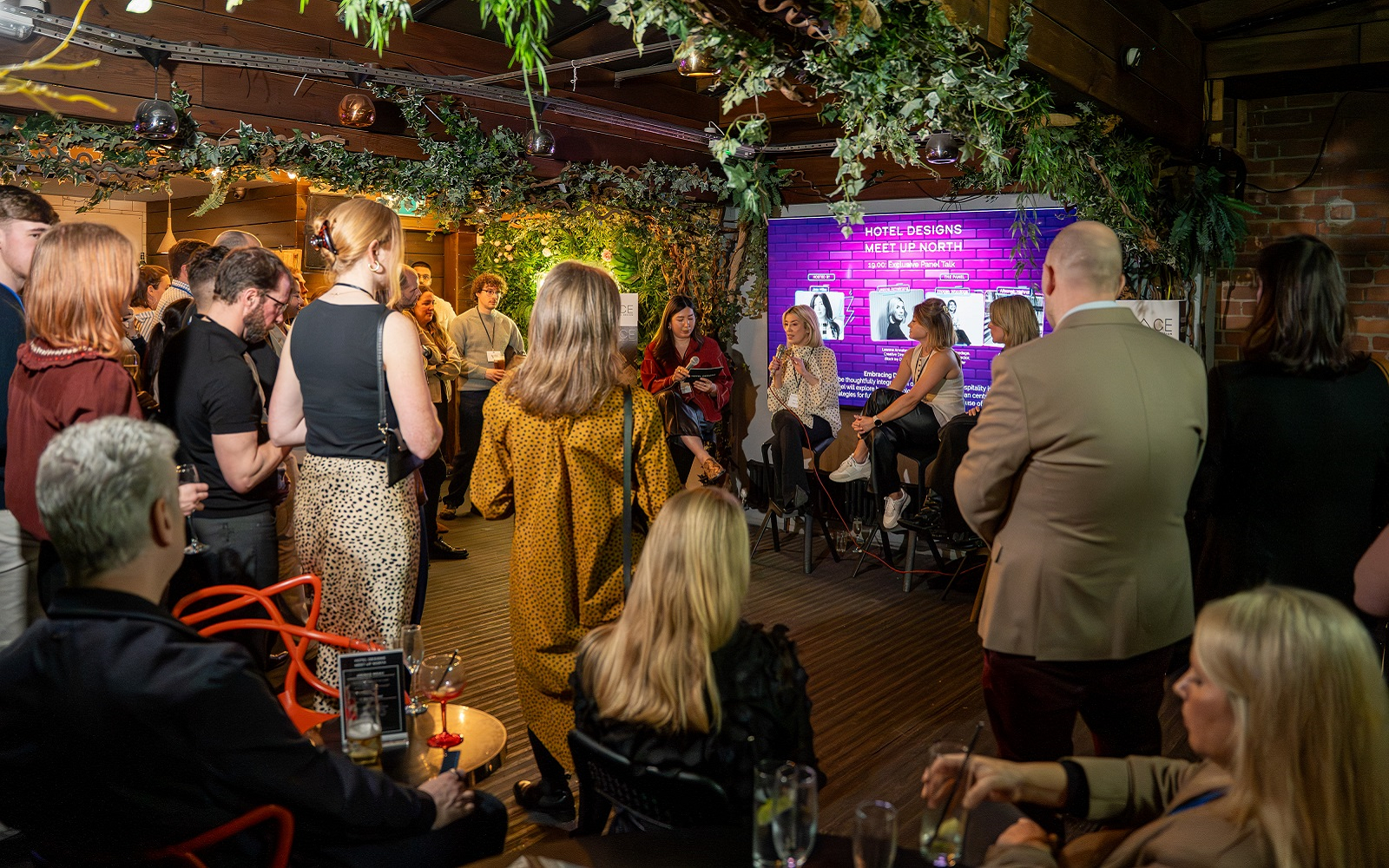
Moderated by Jess Miles, Editor of SPACE Magazine, and featuring insights from Afsaneh Mehrai, Founder & Designer, Mehrai Design; Leanne Armstrong, Creative Director, Black Ivy Design; and Imogen Woodage, Associate Director, SpaceInvader, the conversation unpacked how technology is reshaping not only guest experiences, but also the design process itself.
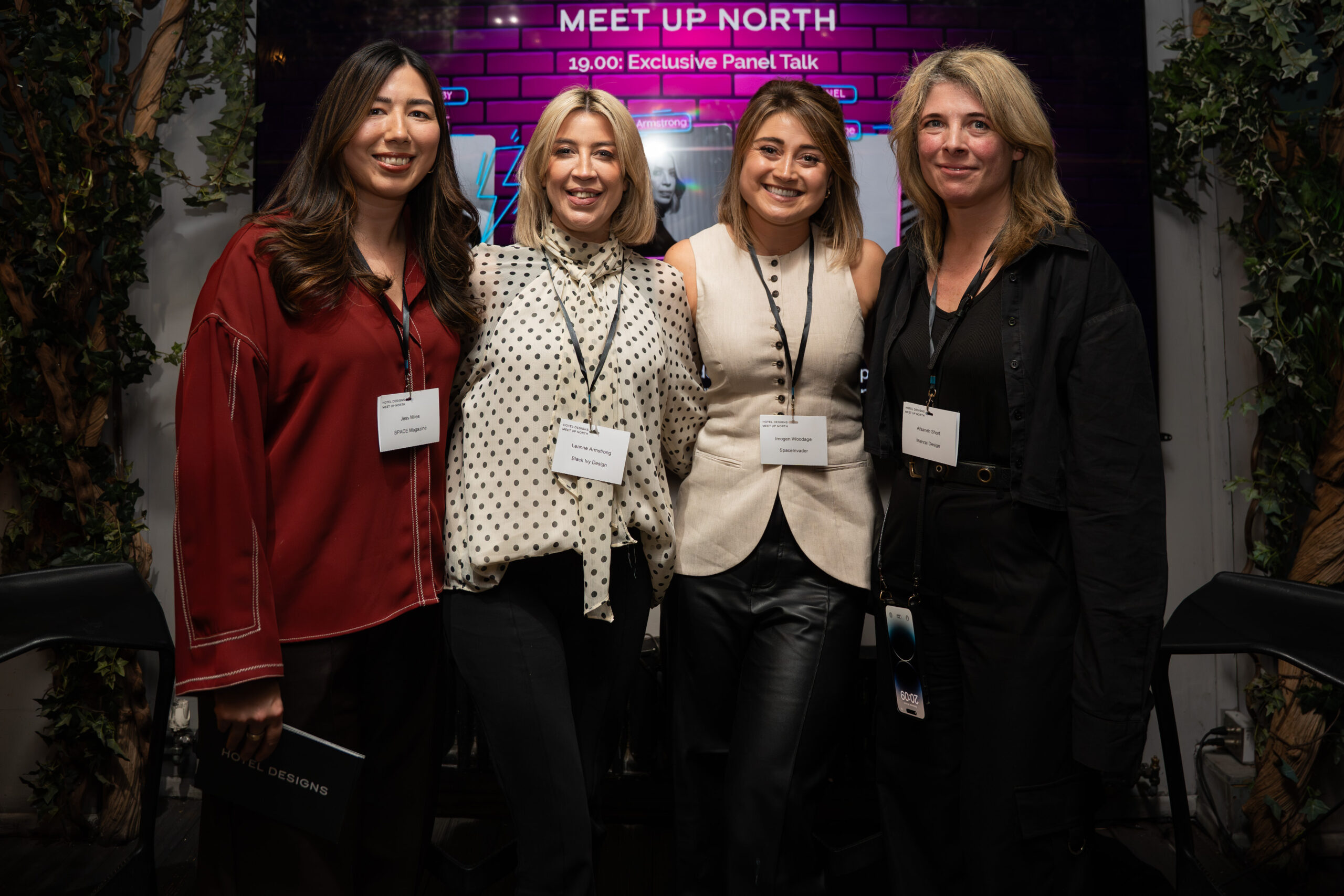
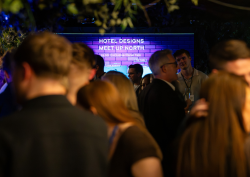
On the panel: Jess Miles, SPACE Magazine, Afsaneh Mehrai, Mehrai Design, Leanne Armstrong, Black Ivy Design, Imogen Woodage, SpaceInvader | Image credit: Tangerine Photography
Embracing Innovation to Support Efficiency
Opening the discussion, each panellist reflected on how technology is embedded within their day-to-day practice. From design software and communication tools to emerging innovations that improve efficiency, technology plays a quiet but vital role behind the scenes. Crucially, it also opens opportunities to introduce clients to new solutions that enhance spatial experience and customer engagement.
As pointed out by Afsaneh Mehrai, “AI is approached as a collaborative tool rather than a creative replacement. It supports early-stage research, helps test ideas, and builds narrative direction that can be shared with clients. While powerful, it still requires careful curation and quality control.”
The Invisible Layer of Guest Experience
A key theme throughout the panel was the idea that the best technology in hospitality is often the least noticeable. “When integrated well, you shouldn’t notice it at all,” Imogen Woodage explained. “ Rather than dominating a space, technology should enable seamless functionality. In hotel guestrooms, for example, the thoughtful positioning of sockets, switches and environmental controls can significantly shape the user journey – often without the guest consciously realising it.”
Operational shifts are also influencing spatial design. As digital check-in systems and streamlined processes become more common, traditional reception desks are shrinking – both in size and formality. However, panellists noted that while automation is advancing, it has not yet reached a point where it can fully replace human interaction. As a result, designers are increasingly tasked with creating flexible, future-proof spaces that accommodate both digital and staffed service models.
“Operators are leaning on tech more these days, and it’s changing how we designers think about interiors,” discussed Leanne Armstrong. “We’re moving away from purely static designs toward spaces that can adapt in real time. That means planning hidden infrastructure early — we spend a lot more time coordinating with tech teams from the start, so the operational side (energy saving, security, personalisation) enhances the atmosphere instead of fighting against it.”
Panellists also pointed to lessons from adjacent sectors such as retail and workplace design. While self-service technology is becoming more prevalent, the consensus was clear: context is everything. Just as banks have reintroduced counters after over-automating, hospitality must strike a careful balance – recognising when guests value efficiency and when they seek human connection.
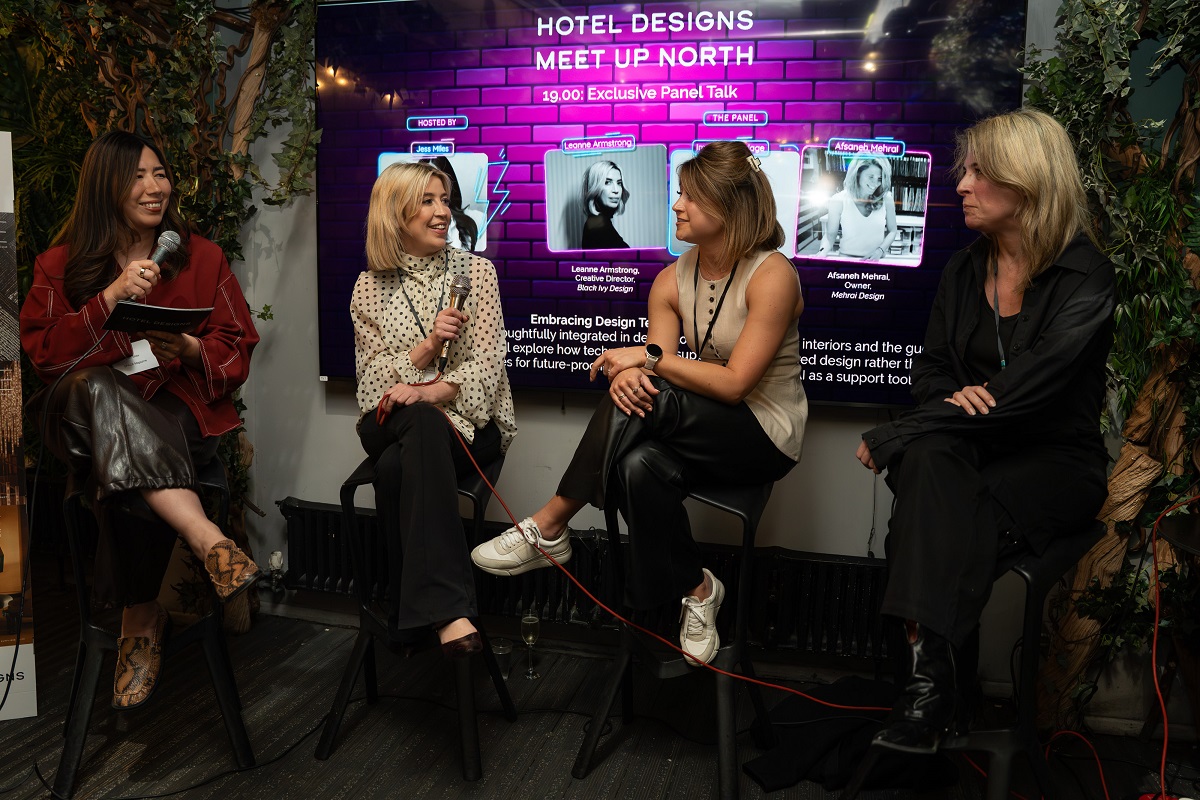
Image credit: Tangerine Photography
Engaging the Senses Through Smart Design
Technology is also playing a growing role in shaping atmosphere and emotional engagement. From ambient scenting to curated soundscapes, multisensory elements are now standard in many hospitality environments.
At Mehrai Design, “We’re designing through the senses – sight, sound, touch, smell and temperature – and tech is helping us layer those in a more fluid way,” shared Mehrai. “It’s almost acting like a ‘sensory DJ’ – subtly adjusting light, sound, scent, temperature and air quality so the space responds to you. It takes interiors from being static to something more transformative, which is exciting looking to the future.”
Lighting, in particular, was highlighted as a powerful design tool. Whether used to accentuate materials and artwork or to automatically transition spaces from day to night in line with circadian rhythms , it enhances both functionality and mood.
“There’s something really interesting around day-to-night activation,” added Mehrai. “Spaces that gently shift with you – lighting softens, temperature adjusts, even scent can be introduced subtly through HVAC to calm the nervous system. It’s almost a kind of spatial bio-hacking, influencing mood, dwell time and behaviour in a very considered way.”
Technology as a Creative Tool – Not a Shortcut
As the discussion turned to the design process, the conversation addressed a growing misconception: that technology, particularly AI, diminishes creativity. In reality, the panel argued, these tools are only as effective as the designers using them. AI can support tasks such as research, image sourcing and editing, and even written communication, but “If you are using it as a cheat code, then you will lose that authenticity behind your designs,” Woodage argued. “It can be used as a tool to help speed up certain processes, for example, but it can’t recreate human intuition when it comes to understanding scale and the touch and feel of materiality.”
“Technology isn’t replacing creativity; it’s just another set of tools,” agreed Armstrong. “The real value comes from knowing when and how to use it, and when to step away from it.”
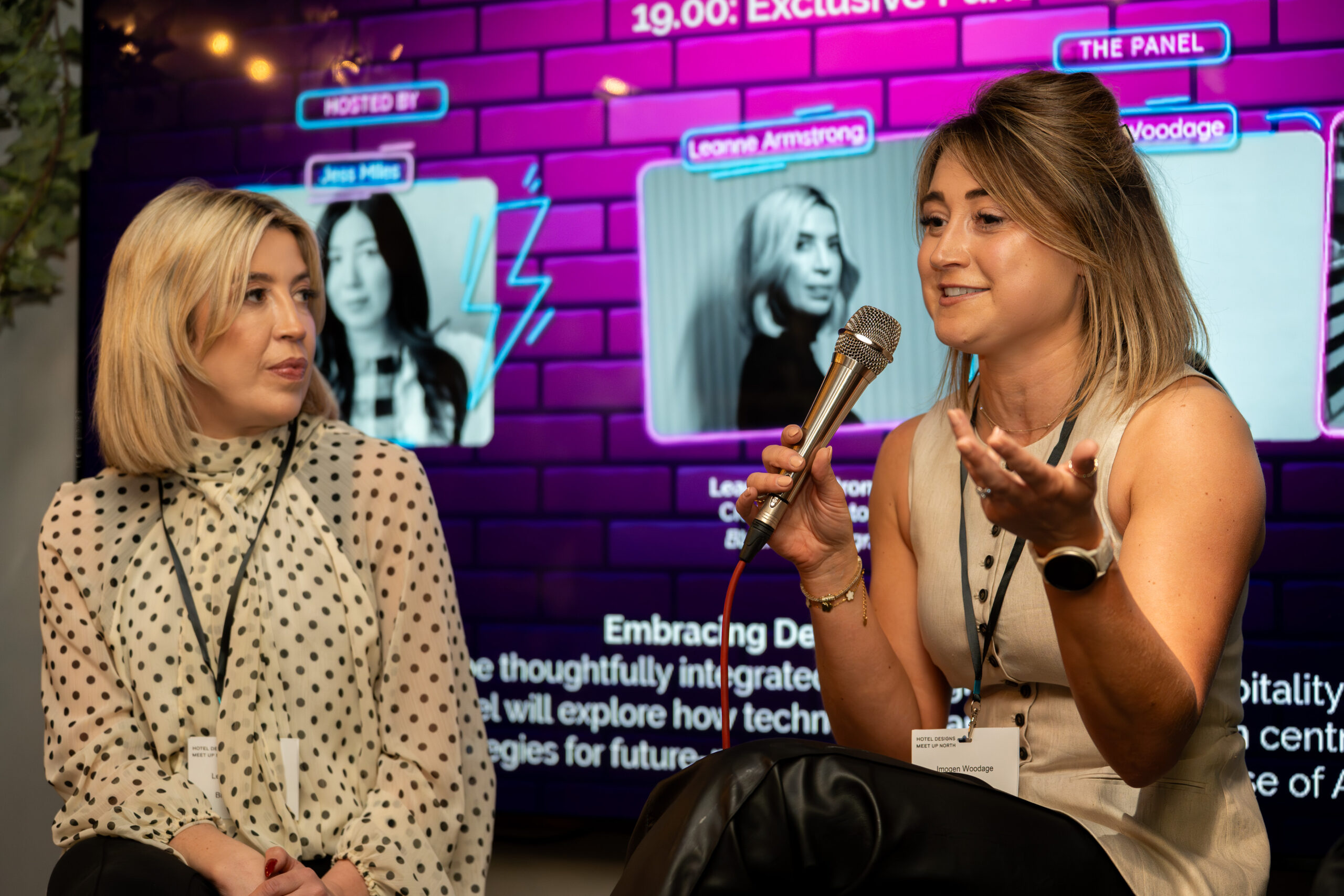
Image credit: Tangerine Photography
“From an interior design perspective, we’re still working very intuitively from the outset. We’re creating atmosphere through materials, light and spatial flow,” Mehrai agreed . “But we now have far greater access to information and options. That can lead to decision fatigue for clients, which is where our role becomes even more important in curating and guiding.”
Raising Expectations in a Digital Age
Digital visualisation tools, including CGIs and VR walkthroughs, are now integral to communicating ideas with clients. However, they are not without limitations. While they help bring concepts to life, they must be complemented by physical materials, mock-ups, and physical walk throughs to fully understand how a space will perform in reality.
Woodage shared a SpaceInvader pitch that balanced the best of both worlds, “We recently produced a 3d printed model alongside CGIs for a project so that the client could pick up the furniture and move it around the model. The impact this had was really positive; another example of using advancement in technology positively.”
On the other hand, there is also the question of heightened client expectations when it comes to timelines, with the increasing sophistication and speed of visualisation tools putting pressure on designers for instant or perfect results, before meeting the realities of the live environment. Despite this, the panel emphasised that technology is not the defining factor in winning projects. Relationships, problem-solving ability and responsiveness to client needs remain at the heart of successful collaborations.
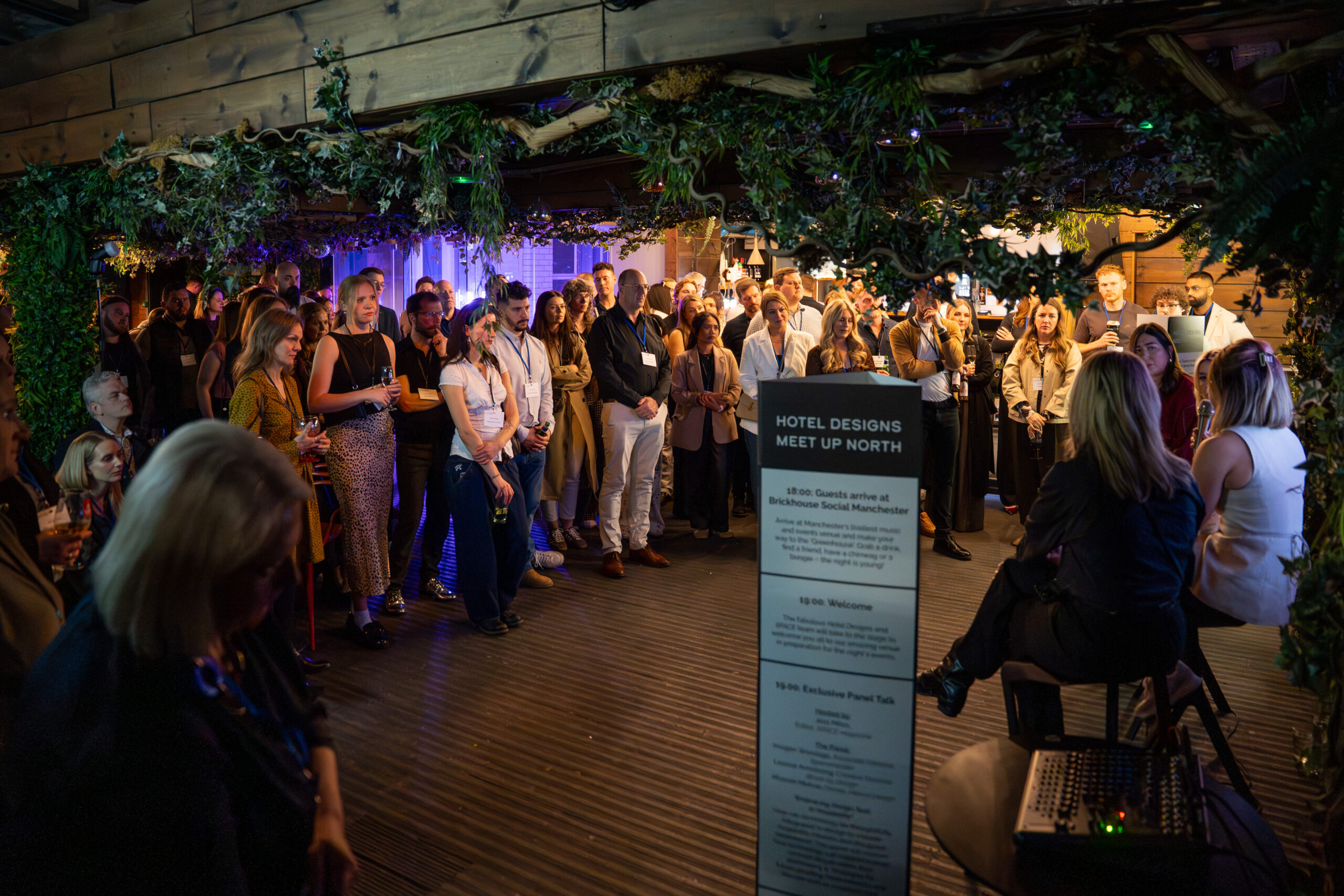
Image credit: Tangerine Photography
Looking Ahead: Balancing Innovation and Intuition
As the session concluded, the conversation turned to the future of hospitality design. Where should the line be drawn between automation and creative intuition? The consensus was clear: technology should enhance, not dominate. Hospitality, at its core, is about human connection – how guests are welcomed, how they feel within a space, and the lasting impressions they take away.
While designers will continue to explore and test new technologies, the industry must remain grounded in empathy, creativity and experience-led thinking. Looking forward, there is also a desire for innovation that supports practical challenges – particularly around supply chains, production timelines and material availability. Advances in these areas could significantly ease pressure at the delivery stage of projects.
“Ultimately, the best future for hospitality design will be one where technology handles the heavy lifting and the precision work, freeing up designers to focus on what we do best: creating beautiful, emotionally resonant spaces that people genuinely love spending time in,” said Armstrong
A Human-Centred Future
“The design industry will always be a creative industry. You need the human touch, the emotion, the care, the empathy, the problem solvers. Without creative intuition, we will be limiting what we can produce. But, of course, across all aspects of our life we are always looking for ways to be more efficient and reach results or solve problems efficiently,” Woodage concluded.
The key takeaway from the panel conversation on the night, was that while technology will continue to shape the future of hospitality, it is not a replacement for good design – it is a tool to enable it. By embracing innovation thoughtfully and selectively, designers can create spaces that are not only efficient and future-ready, but also rich in character, comfort and human connection.
Main image credit: Tangerine Photography