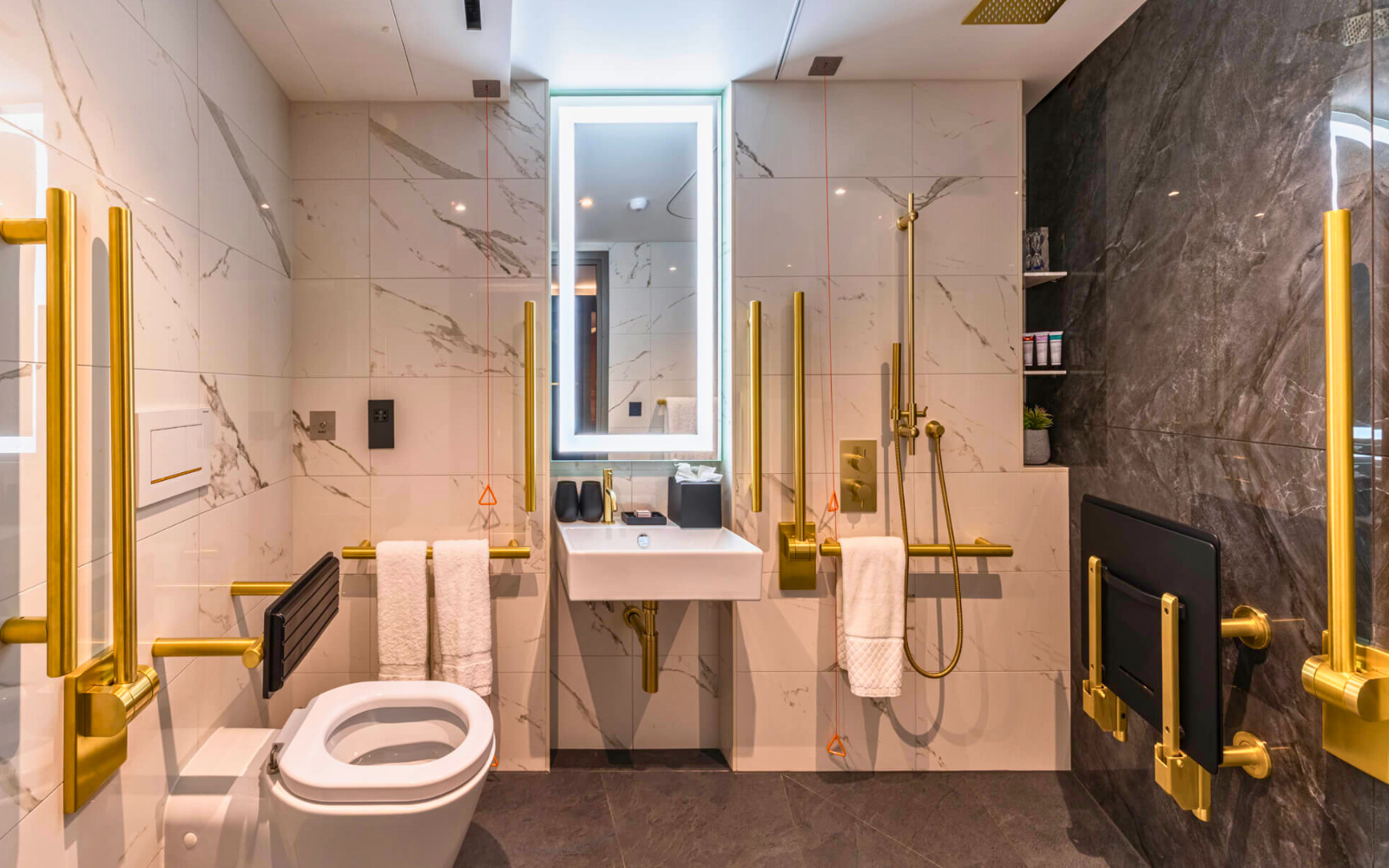
In hospitality design, the guest bathroom is one of the most technically complex and performance-critical spaces within the room. It is where architecture, interior design, product specification and regulatory compliance intersect. Waterproofing, drainage, lighting, ventilation, ergonomics and material performance must all be resolved within a relatively compact footprint – often while meeting stringent accessibility standards.
Leading hotel schemes recognise that exceptional bathrooms are not designed around a single guest profile, but around a broad spectrum of physical needs and usage requirements. Designing for inclusivity is no longer a specialist consideration or a late-stage compliance exercise; it is an integral component of quality in contemporary hotel design.
For architects, interior designers and specifiers, inclusive bathroom design presents an opportunity to create environments that are aesthetically resolved and inherently adaptable – without compromising the overall concept. When approached strategically from the outset, inclusivity enhances rather than restricts design ambition.
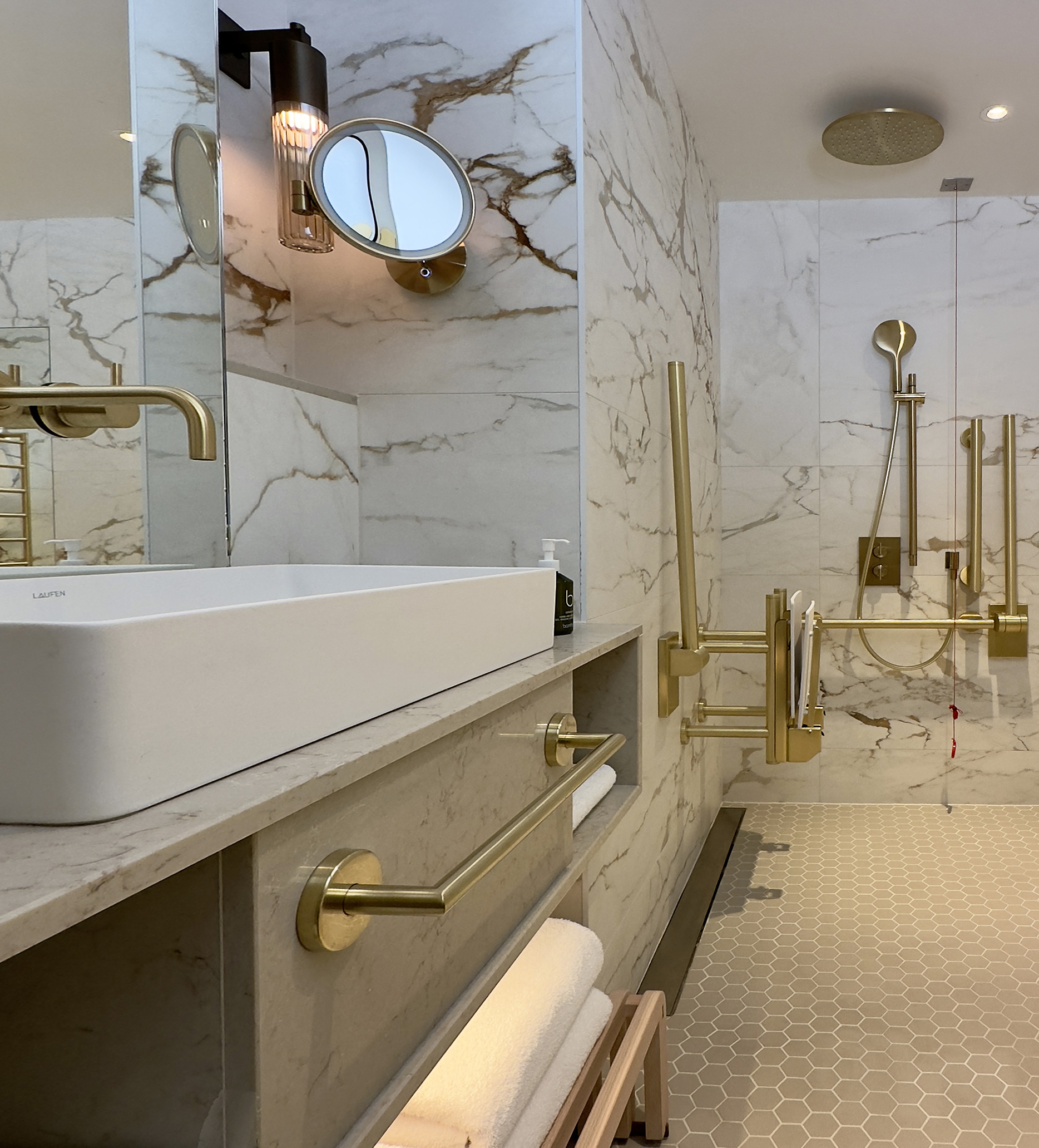
Image credit: Fitzroy of London
The bathroom as brand expression
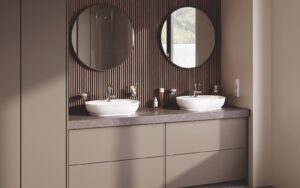
In premium hospitality environments, bathrooms function as an extension of the brand narrative. Materiality, detailing and spatial planning contribute significantly to how guests perceive quality, comfort and attention to detail.
Walk-in showers, for example, deliver a clean, architectural aesthetic while also improving accessibility. Flush thresholds, linear drainage and frameless glass support a minimalist visual language while eliminating physical barriers. Carefully integrated support rails and fittings can be specified as part of the overall design language rather than appearing as retrospective additions. When inclusivity is embedded at concept stage, the result is a bathroom that feels cohesive and considered, while quietly accommodating a wide range of users.
Consistency is critical. Visually differentiating accessible bathrooms from standard room types can undermine the coherence of a scheme. By contrast, specifying adaptable solutions across multiple room categories supports both design integrity and operational flexibility.
For owners and operators, this approach delivers long-term commercial value. Adaptable bathrooms increase room allocation flexibility, reduce the need to hold specific rooms out of inventory and future-proof the asset against evolving regulations and guest expectations. As demographics shift and expectations around accessibility continue to rise, flexibility becomes a commercial advantage rather than simply a compliance requirement.
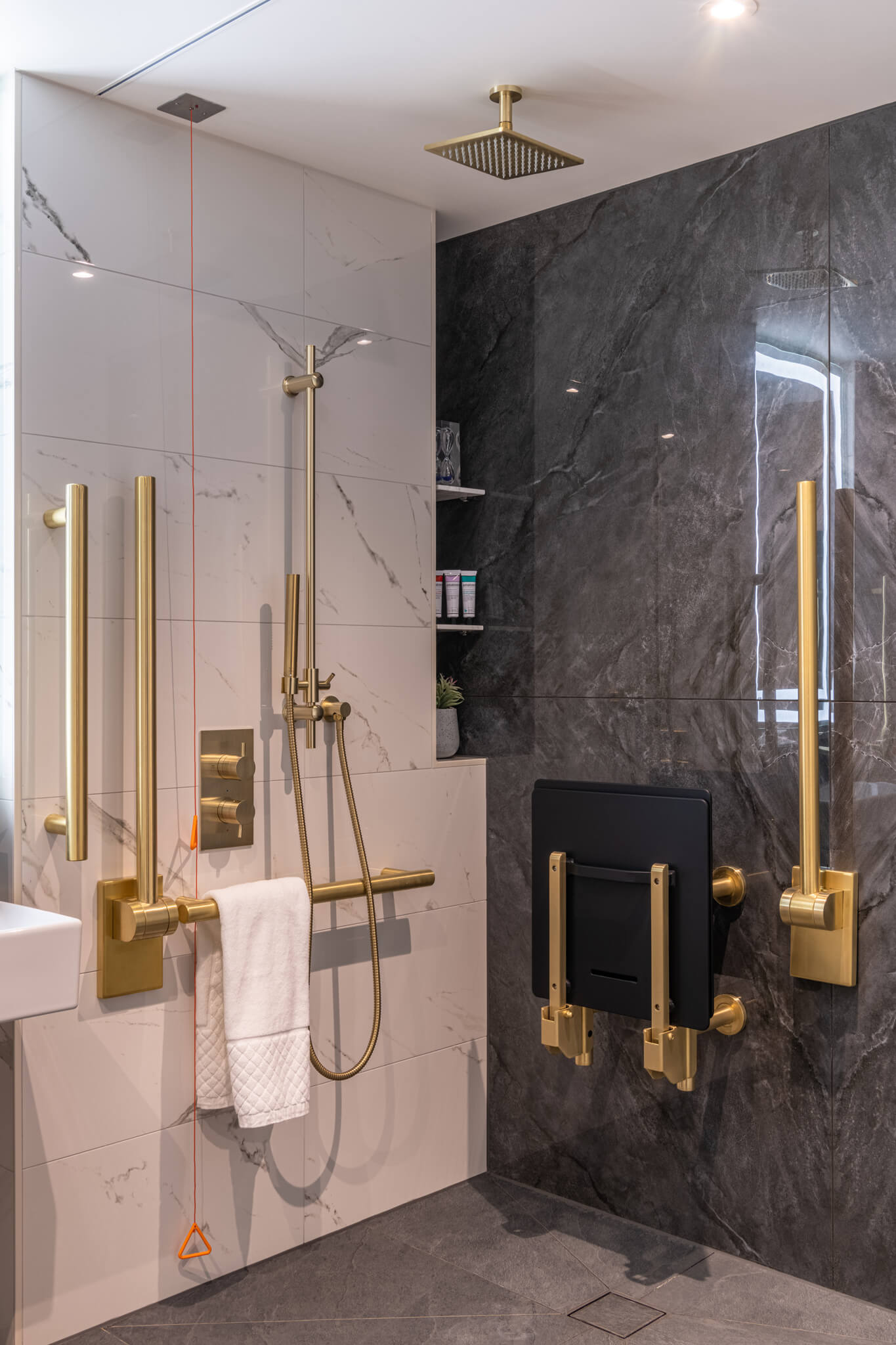
Image credit: Fitzroy of London
Designing for dignity
Regardless of mobility or ability, guests should be able to use their environment independently and with confidence. Achieving this requires early collaboration between designers, technical teams and manufacturers to ensure that layout, structure and services can accommodate both immediate and future requirements.
Key principles include:
- Generous circulation space that satisfies compliance requirements without compromising spatial quality
- Level-access, step-free showering with appropriate gradients and drainage performance
- Clear, layered lighting to support visibility, safety and atmosphere
- Logical fixture placement aligned with building regulations, with consideration for adaptability where appropriate
- Robust, premium finishes that align with the broader interior concept while meeting durability and slip-resistance requirements
Importantly, inclusive design is not solely about mobility. Considerations such as intuitive controls, acoustic comfort, contrast for visual clarity and ease of maintenance all contribute to a bathroom that performs effectively for every guest.
Hotels that invest in compliant, adaptable bathroom design benefit from more than regulatory alignment. They enhance guest satisfaction, broaden market appeal, strengthen brand positioning and demonstrate leadership in responsible, future-focused hospitality design. In a competitive market where experience is paramount, the most successful schemes understand that thoughtful bathroom design is not an add-on – it is fundamental to delivering quality at every level.
Fitzroy of London is one of our Recommended Suppliers and regularly features in our Supplier News section of the website. If you are interested in becoming one of our Recommended Suppliers, please email Katy Phillips.
Main image credit: Fitzroy of London