To complete our editorial series with Exclusive Tents, we ask Paul Zway, the brand’s founder, to push the preconceptions to one side and tell us what glamping really looks like on the international hotel design scene…
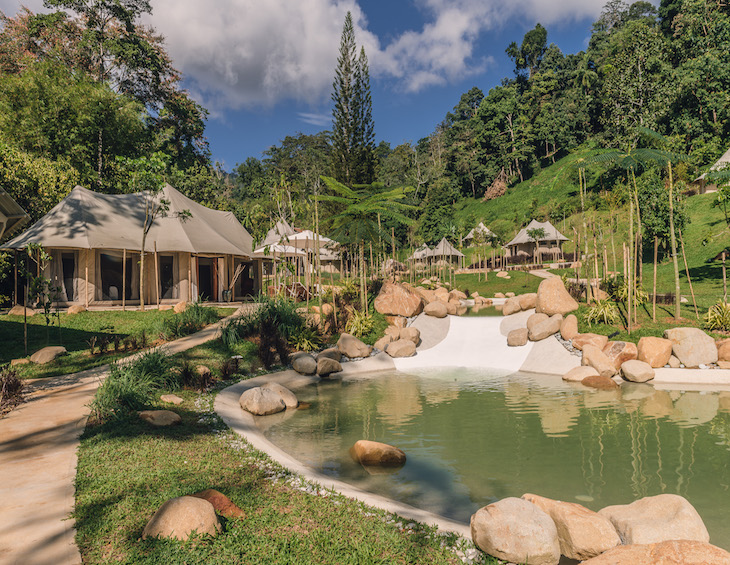
The word glamping is a portmanteau of “glamorous” and “camping”. It was first used in the United Kingdom around 2005 and but only added to the Oxford dictionary more than a decade later.
Although the word is new, glamping in the true sense of the word has been documented for centuries and in most cases referred to a great variety of tents and canvas covered wagons. Historically it would have been more accurate to refer to the style of camping as luxurious or even opulent camping rather than glamorous camping.
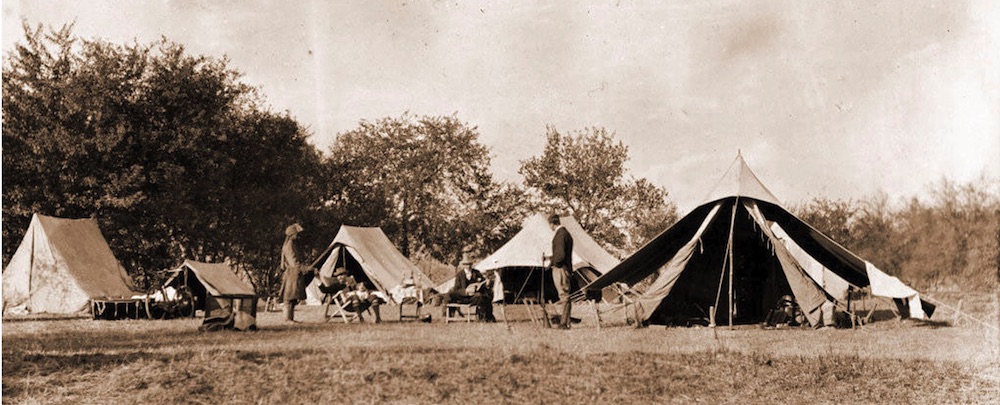
Image credit: Exclusive Tents
Most of these tent constructs were constantly moved in the progression of wars or colonisation, and some designs are still used today by nomadic societies in regions such as the Middle East, Asia and Africa using a wide variety of materials including goat hair, wool felt and animal hides.
Tent frames and coverings varied greatly over the centuries from tusk, bone and stick frames with animal hide and/or vegetation coverings with cotton canvas emerging as the predominant and most practical covering whilst tent frames have also evolved to steel, turned wooden poles, bamboo and other newer more sophisticated materials.
Early tent dwelling with luxuries was evident from before the Roman era and featured prominently in Hannibal’s historic crossing of the Alps into Italy with his herd of legendary African elephants in the second of the three Punic Wars.
The Romans used tents extensively in their numerous military campaigns and occupation of other lands. During this era, tents for officers, people of status and dignitaries were mostly opulent, comfortable and luxuriously comfortable.
Perhaps the most impressive was the ottomans extensive use of tents to the extent that their encampments were so extensive that they could legitimately have been termed “tent cities”.
Through Medieval times (the Middle Ages) between the 5th and late 15th century tents in a variety of designs played a very similar roll during these turbulent times.
Native American tribes used their well-known and distinct conical tipis dating back to at least the 15th Century.
The Mongolians were famous for their yurts and it is said that Genghis Khan’s tent was so big and elaborate that is was setup upon a wheeled platform 9 meters (30 feet) in diameter and mounted on a huge wheeled cart pulled by 22 oxen.
Napoleon Bonaparte’s tents were masterpieces with 18th century tapestry and gilt embroidery and he himself through his various campaigns, spent a large portion of his active adult life living in tents.
Eskimos with their Igloo designs pre-dated the evolution of dome and bubble tents.
When participating in Hunting Safaris into India and Africa, royalty and their wealthy guests required luxuries including baths, comfortable furniture, fresh clothes and excellent food and alcohol. The British and French with their numerous wars and hunting parties gave rise to Campaign Furniture (also known as Bivouac furniture). Campaign furniture is both beautiful and compact in design, has a minimalistic footprint, is foldable, stackable and includes chest type items. Most of this furniture is made from wood, leather, and cane with brass trims. Campaign furniture with the additional refinement thereof over the years, often features in modern day glamping interiors.
In many historical traditions the tent interiors consisted of ornate carpets/rugs and pillows with colourful gilt drapery on the inside with no hard furniture except perhaps for low tables.
Modern day glamping as we now know it started in Africa around the mid 1950’s but tents were relatively small and modest with a cot, “pee pottie” (under the bed), clothes locker, metal washstand, simple folding table and chairs, and kerosene lamps. Toilets, showers and the kitchen/dining areas were mostly shared common facility areas within the camp.
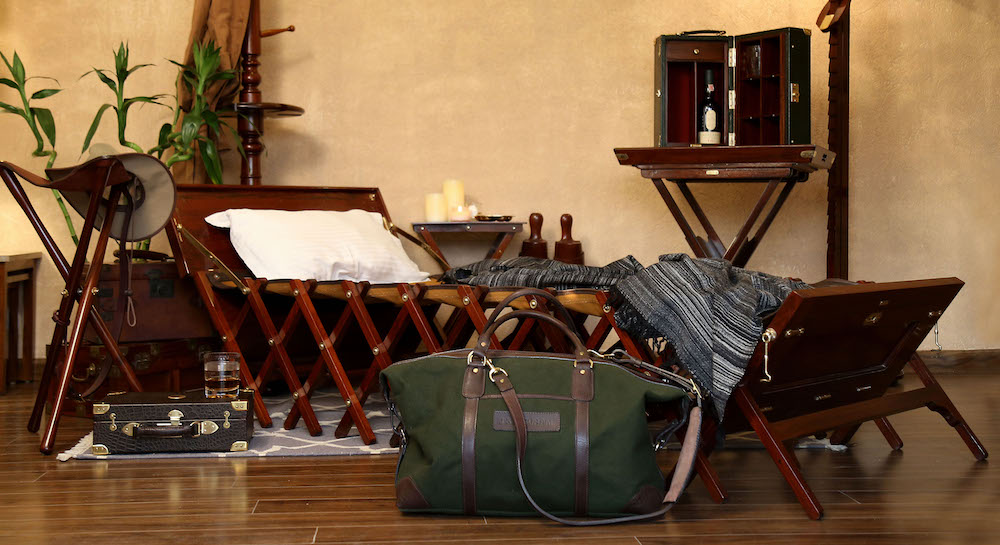
Image credit: Exclusive Tents
In the 70’s and 80’s glamping took on a more serious role when tent designs became somewhat more creative and quality improved with new canvas fabrics that were more durable and 100 per cent waterproof. Even though still rustic, interiors became more comfortable creating a “cosier” atmosphere for the guests. Many of these were hunting camps and safari lodges where the tents included ensuite bathrooms that catered directly to the wealthier guests. Today glamping destinations whether large or boutique, can be found in virtually every country in the world and is affordable for many according to the degree of luxury, cuisine, experience and service.
To be true to the name, modern glamping is primarily in tents though domes, canvas covered wagons also fit the bill. However, there are also many other structures such as wooden pods/cabins, metal cubes, shipping containers, cabins, tree houses and pods – to name but a few – which are emerging at a rapid pace and being integrated into the glamping market.
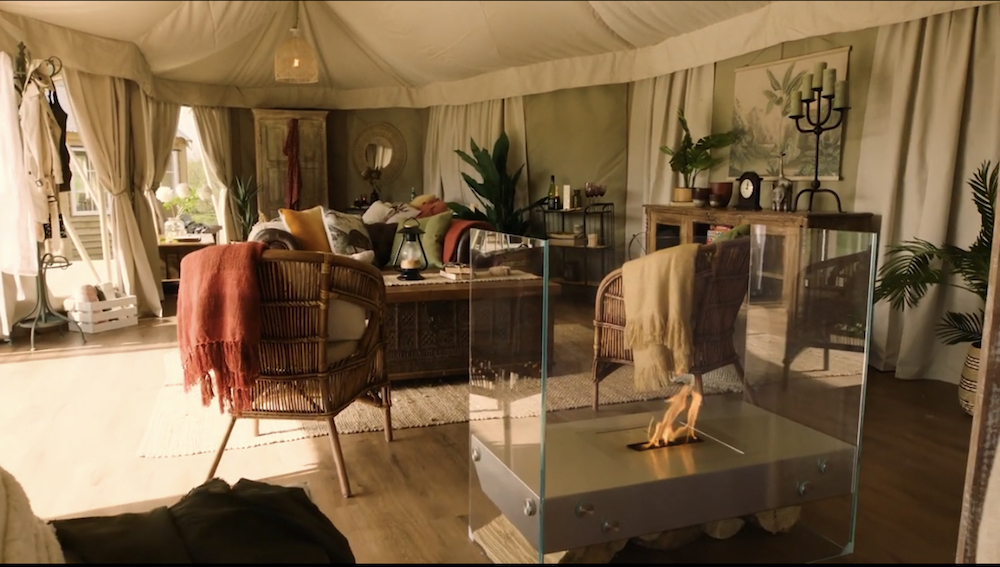
Image credit: Exclusive Tents
Exclusive Tents has consciously chosen to stay true to its passion for tents and tent dwelling with our focus purely on luxury tented structures. We strive to remain masters of our domain rather than become a jack of all trades, with the clear objective of constantly improving and innovating on design, quality, elegance, craftsmanship, style and functionality.
Glamping has and will continue to evolve, particularly since Covid-19 which saw so many people locked down for extended periods of time and with so many restrictions placed on travel, in particular international travel. People are more inclined to visit local open air and natural settings to find a way to relax and feel safe with family and/or friends, seeking space, luxury and privacy in an experiential fashion – this is exactly what glamping is all about. The hospitality industry is having to evolve and adapt to meet the challenge of a post pandemic world. Wellness, wellbeing, health, nutrition, space, nature, peace of mind, and disconnection in some instances, are becoming central to this evolution.
In practical terms, there is very little that one cannot do with a tent that one can do with a conventional structure – when you know how.
Wood or aluminium framed windows and doors can be easily installed into a tent with relatively little effort though a lot of people remain nostalgic for the traditional zip-up roll-up openings.
These ‘exclusive tents’ are truly multi-functional and, as well as providing accommodation, they can be used for many other purposes and applications, they can and are also used as permanent homes.
Exclusive Tents considers multiple aspects of tent ownership and use, for example having recently developed an artistic and elegant rainwater harvesting system whereby rainwater can be stored in tanks under the tent platform or underground.
Lightning is also an issue in some places and a lightning deflection system is another unique feature that can be installed into an Exclusive Tent if required.
Certain installations will require a fire dousing sprinkler system to be incorporated into a tent, this is yet another challenge that Exclusive Tents has met and resolved.
Insulation is an increasingly important consideration in hot and cold climates, especially where a HVAC system or wood burning stove is required. Exclusive Tents has a variety of insulation options available for the canvas tent roof and walls. The insulation acts not only a thermal barrier, but also an acoustic barrier which is also an important consideration when it comes to glamping. Fireplaces or wood burning stoves commonly feature in tents: Not only to create an ambiance but to also to heat the tents during the winter months or for year-round use in high elevation locations.
Modern fireplaces are clean and very elegant and allow for installation freedom within the tent, with extraction through the floor and out from under the tent platform.
The tents are built to be functional all year round even in extreme hot (50C+) or cold (-35C) conditions.
Exclusive Tents have transitioned their tents to an extremely robust roof frame which has been engineered to resist winds up to a safe speed of 180 k/mph (without steel cable bracing lines), yet retaining the elegant roof lines and aesthetics for which they are renown. This engineering zeal accommodates high internal weight loads (lights/fans/pendants) and external loads for snow, hail, and wind.
Exclusive Tents already offer a high-end portfolio of Exclusive Campaign furniture, and will soon be manufacturing their Exclusive collections of Safari, Island, and Rustic furniture.
Whilst Exclusive Tents crafts tents designed for extreme weather conditions, they are also designed to be able to be dismantled rapidly, for example should the tents find themselves in the path of a catastrophic storm.
With this evolutionary expansion taking place in the glamping industry, it is critical to maintain privacy and enhance the connection between the living space and the natural environment. Thoughtful design, master planning, landscaping, and integration of the tent (together with its platform), will capitalise upon the full potential of good quality tents – offering an idyllic experience that seamlessly combines exquisite comfort with an unequalled connection to the natural world.
Exclusive Tents are resolutely eco-friendly, with a minimal footprint in complete alignment with the guardianship / kaitiakitanga of the environment. The direct connection between tented living space and the outside, with its closeness to nature, creates the opportunity for guests to embrace the inclusivity of mental and physical well-being. The tent is in essence a “living” structure as it ebbs and flows with nature. Spending time in a tent is experientially unique, and can offer guests the opportunity to connect with their primordial selves.
Glamping has come a long way and it most certainly presents the greatest opportunities for hospitality in this post-pandemic world.
Exclusive Tents International is one of the brands that has taken advantage of our Industry Support Package. To keep up to date with supplier news, click here.
Main image credit: Exclusive Tents