Written for Hotel Designs by Tatiana Sheveleva, Founder of CHAPI Design, this piece explores the shift from formulaic hotel interiors to sensory-led, anti-trend luxury. Discover how emotion, material innovation, and subtle design interventions are redefining the way guests experience hospitality…

There was a time – not so long ago – when hotel design clung white-knuckled to a familiar rulebook: neutral palettes, predictable comforts and a gentle avoidance of anything too sensory, scientific or strange. Technology was discreet; texture was controlled; anything experimental was dismissed as gimmickry – a flirtation with the unnecessary.
Then something shifted…

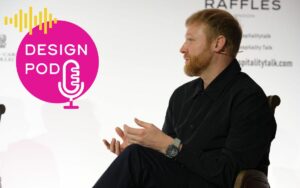
Tatiana Sheveleva, Owner and Founder of CHAPI Design | Image credit: CHAPI Design
Designers began listening to how guests physically responded to spaces – the quiet metrics of nervous systems, sleep cycles, soundscapes and touchpoints across public areas. And suddenly, the very things we once tiptoed around stepped out of the shadows and into the centre of serious hospitality conversation.
Stepping into 2026, is this the era of the anti-trend? An epoch where design rejects the expected, challenges the derivative and embraces the once-unwelcome with conviction?
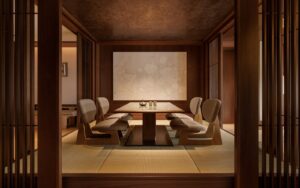
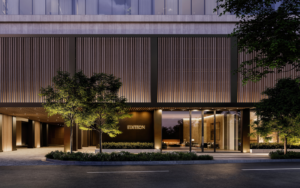
At CHAPI Design, this is the terrain where we work best. From the richly atmospheric interiors of St. Regis Cap Cana to the sensory and narrative-led public areas of Luminara, Ritz-Carlton Yacht Collection, and the emotionally attuned residential language of Residence 22 at Ritz-Carlton Costa Rica, our studio’s most rewarding work has always lived in that space between intuition and innovation.
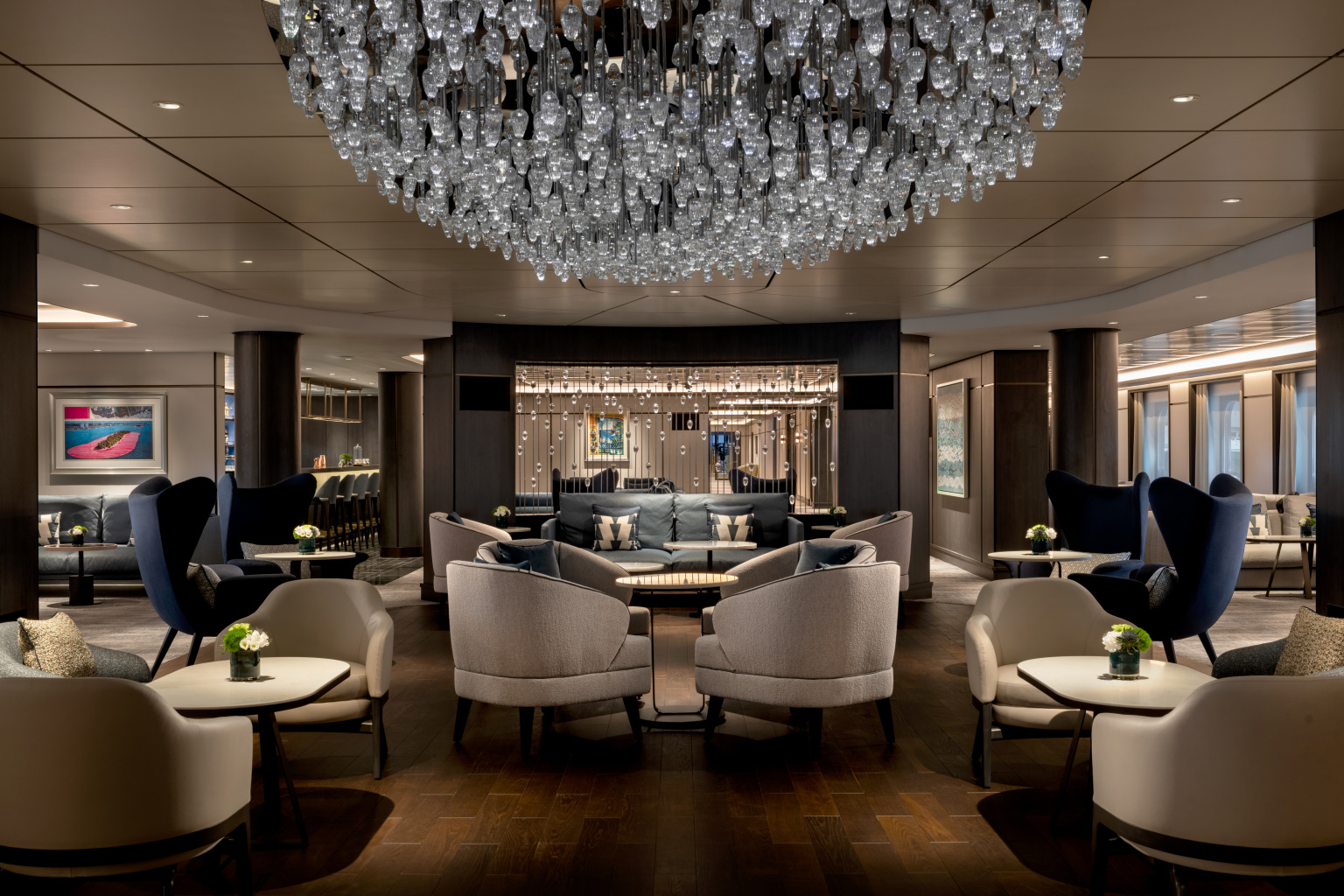
Image credit: Don Riddle
When ‘gimmick’ becomes grounded: the rise of sensory intelligence
For years, hotels avoided overt sensory stimulation for fear it felt outside a designer’s remit: the scented corridor and the sound-mapped spa belonged to operations, not design.
But neuroscience has finally caught up with intuition, and we now have data for what designers have always suspected: the senses are architecture, shaping memory, mood, circadian rhythm, wayfinding and emotion.
Even the concept of haptics, once relegated to futurist expos, are now being explored in hospitality prototyping. We use tactile research to understand how materials calm the body, how surfaces invite rest, how textures signal luxury without excess. Sound is now a design material in its own right. And scent – long a stealth branding tool – has matured into a sophisticated spatial strategy.
-
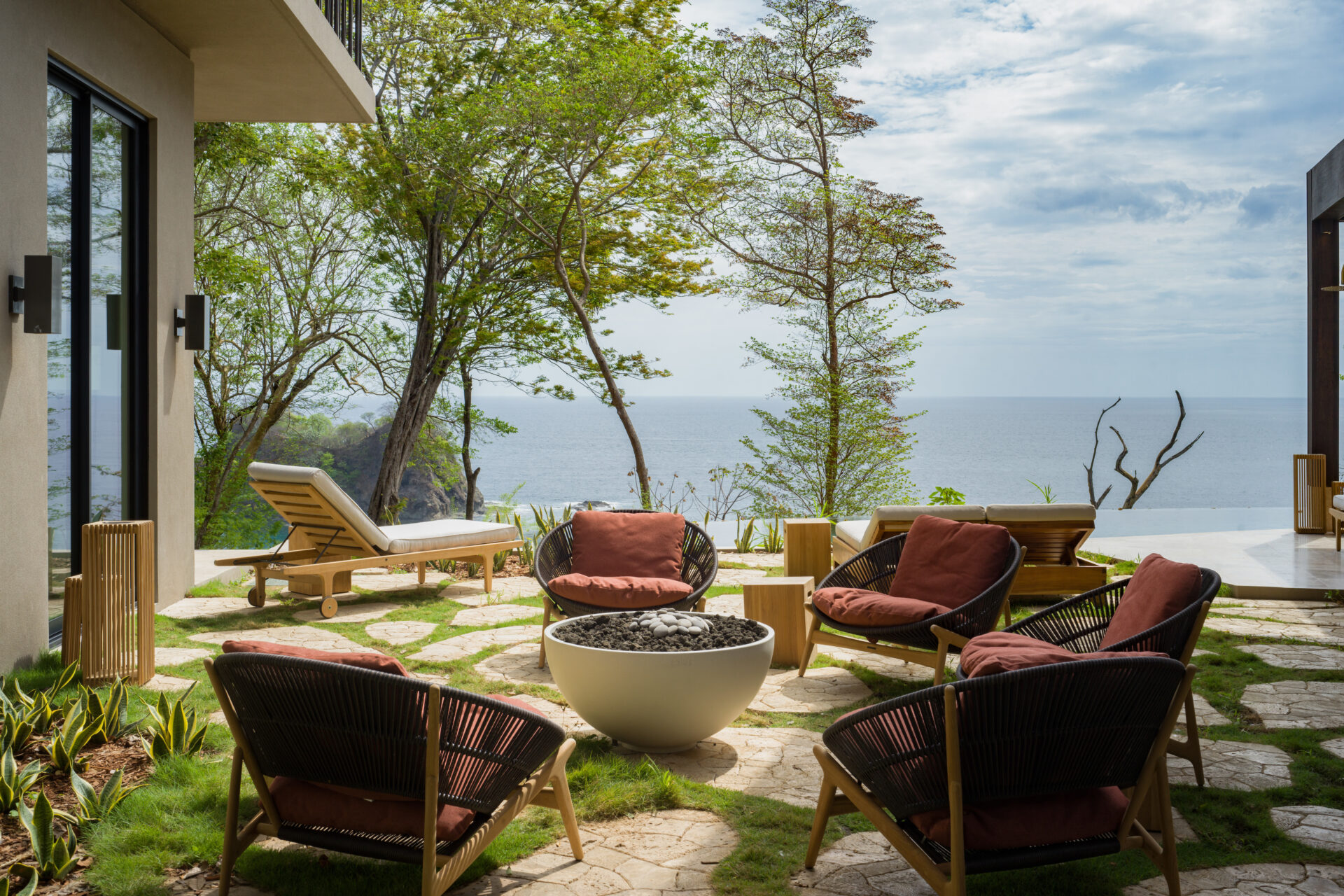
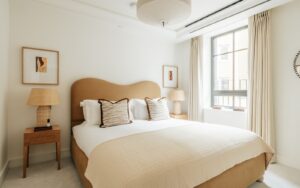
- Residence 22 at Nekajui | Image credits: Tatiana Sheveleva Designer
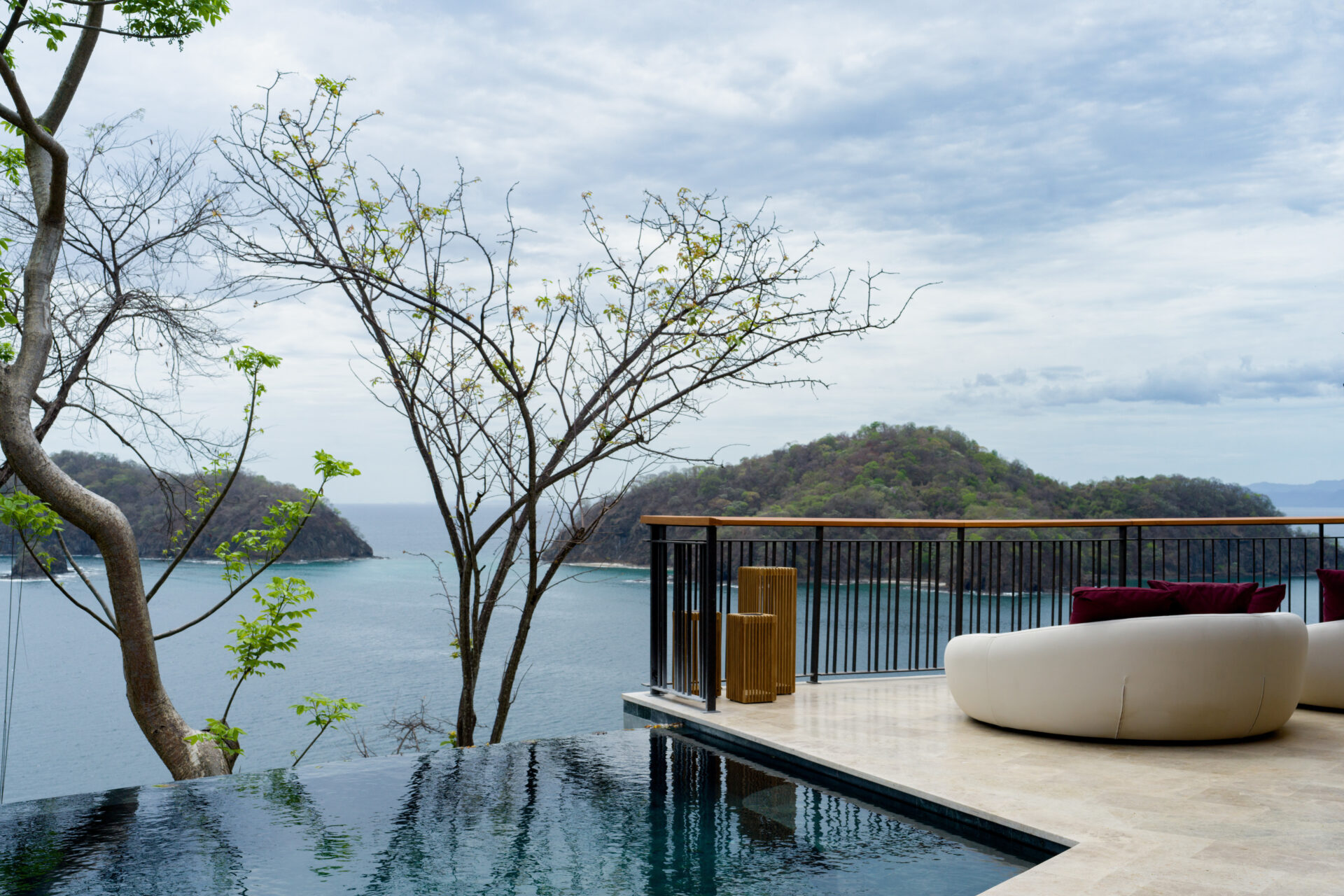
If early sensory design was spectacle, today it is subtlety. Invisible interventions, enormous returns: deeper rest, improved reviews, and stronger emotional stickiness. There is now less “look what this room can do,” and more “I don’t know why, but I feel better here.”
The materials we didn’t see coming
Design history is littered with innovation that felt ‘too out there’ before it felt inevitable.
Mushroom leather. Pineapple fibre. Olive-skin textiles. Stone formed from discarded shells. Timber engineered from agricultural waste. Panels pressed from coffee grounds. These are all now being explored and in some instances specified as commercial solutions.
For our luxury projects, we continue to search beyond the marketing gloss to find materials that are both technically resilient and creatively liberating. What excites us is always the story: materials hold ecosystems, craft, chemistry and culture. They form the connective tissue between concept and guest experience.
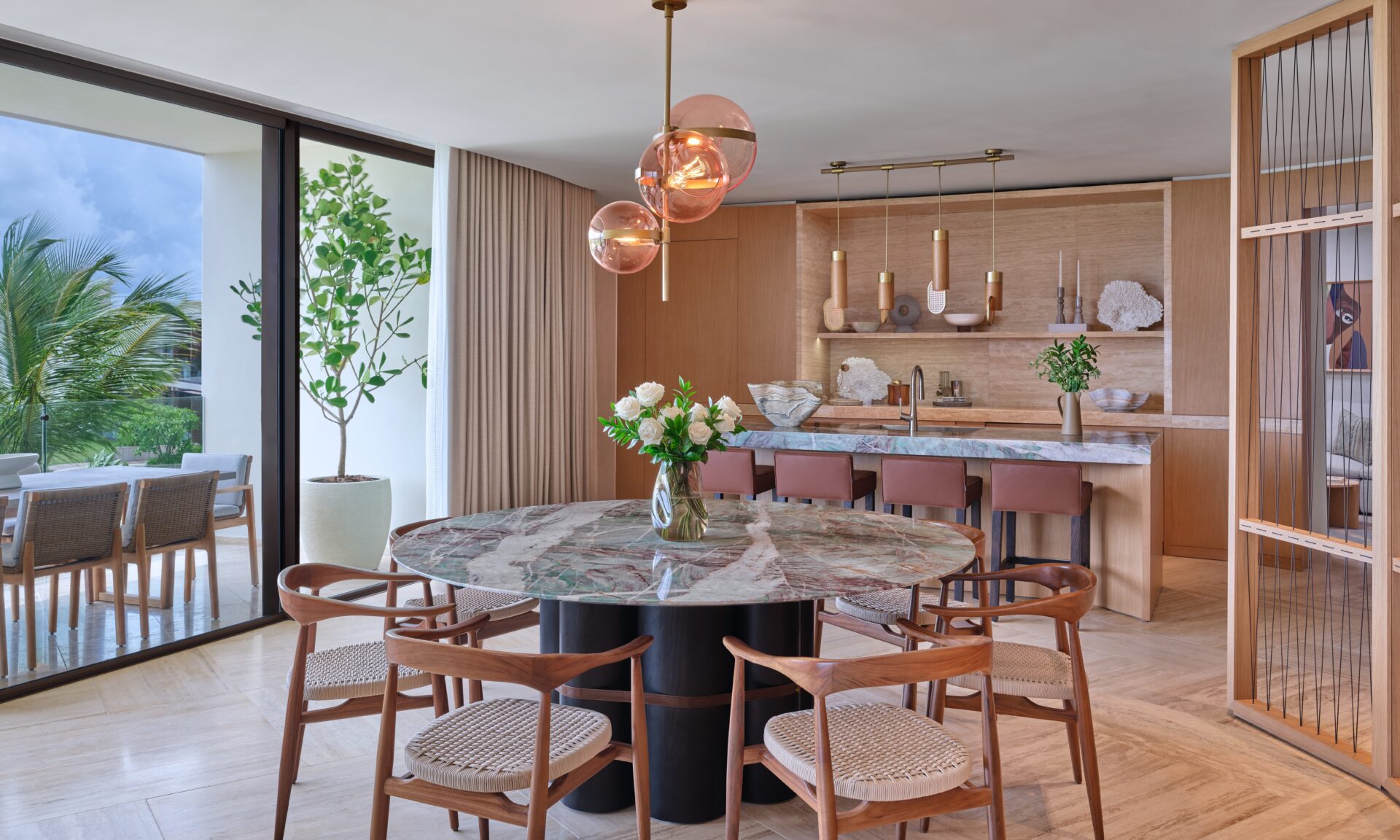
St Regis Capa Cana | Image credit: CHAPI Design
Where home meets hotel
The boundary between hotel and home didn’t blur – it shattered. Branded residences surged across Asia, the Middle East and North America, with Europe now catching up at speed. The sector is projected to double by 2030, and this time Europe is firmly in the spotlight.
Guests no longer want to visit a brand; they want to live inside it. Residential sophistication has entered hospitality not as a superficial ‘home-like’ gesture, but as a deep lifestyle consideration.
Developers are commissioning hotels inside residential towers. Brands are building private homes. Hospitality borrows the rituals of domesticity; residential design borrows the theatre of hotels. Belonging is being redesigned.
We see this convergence reshape everything: circulation, lighting layers, cabinetry detailing, FF&E durability, technology integration, spatial choreography – and, critically, branding.
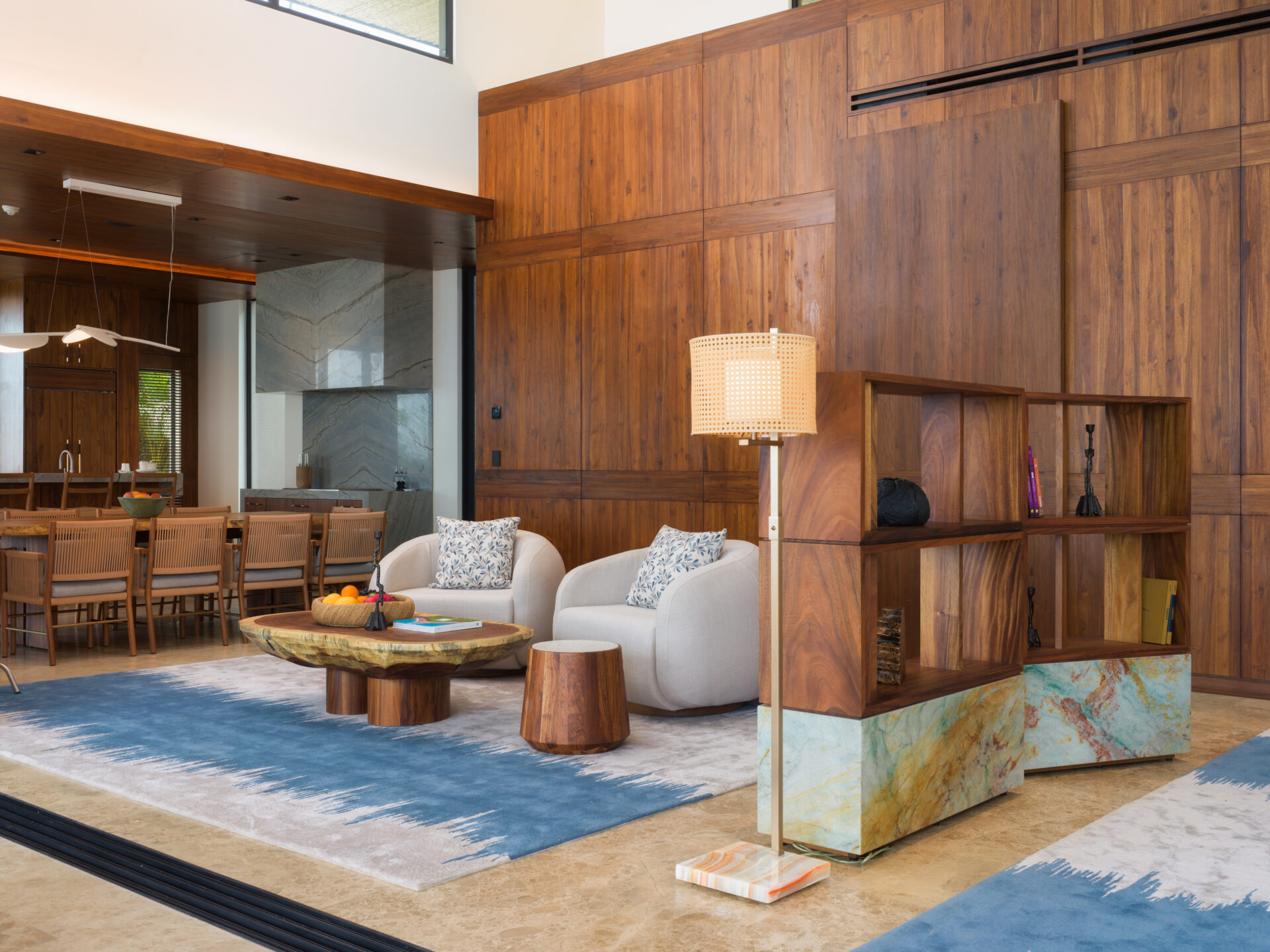
Residence 22 at Nekajui | Image credit: Tatiana Sheveleva
If you’re not designing the brand, you’re not designing the space
A decade ago, aesthetics could carry a concept. Today, a hospitality environment without a brand strategy is an empty stage with beautiful curtains. Every surface, sound and sensory cue must articulate identity – clearly, consistently, subconsciously.
Designers must understand:
- tone of voice
- behavioural rituals
- guest psychographics
- operational realities
- cultural nuance
- the emotional lexicon of place
It’s no longer enough to ‘chase luxury’. We must design narratives that can be lived.
Anti-template thinking
If the early 2000s was the age of the design formula – the lifestyle-hotel blueprint that Schrager perfected – today’s anti-trend is the rejection of templates altogether. At CHAPI Design, we’ve learned that every project has its own genetic code.
You cannot cut-and-paste personality. You cannot generalise a locality, and you cannot standardise emotion. Meaningful design now requires deep, site-specific research – anthropological, ecological, behavioural, operational, cultural, and even neurological. It is slow, meticulous work, and it is absolutely worth it when the aim is a space that truly endures.
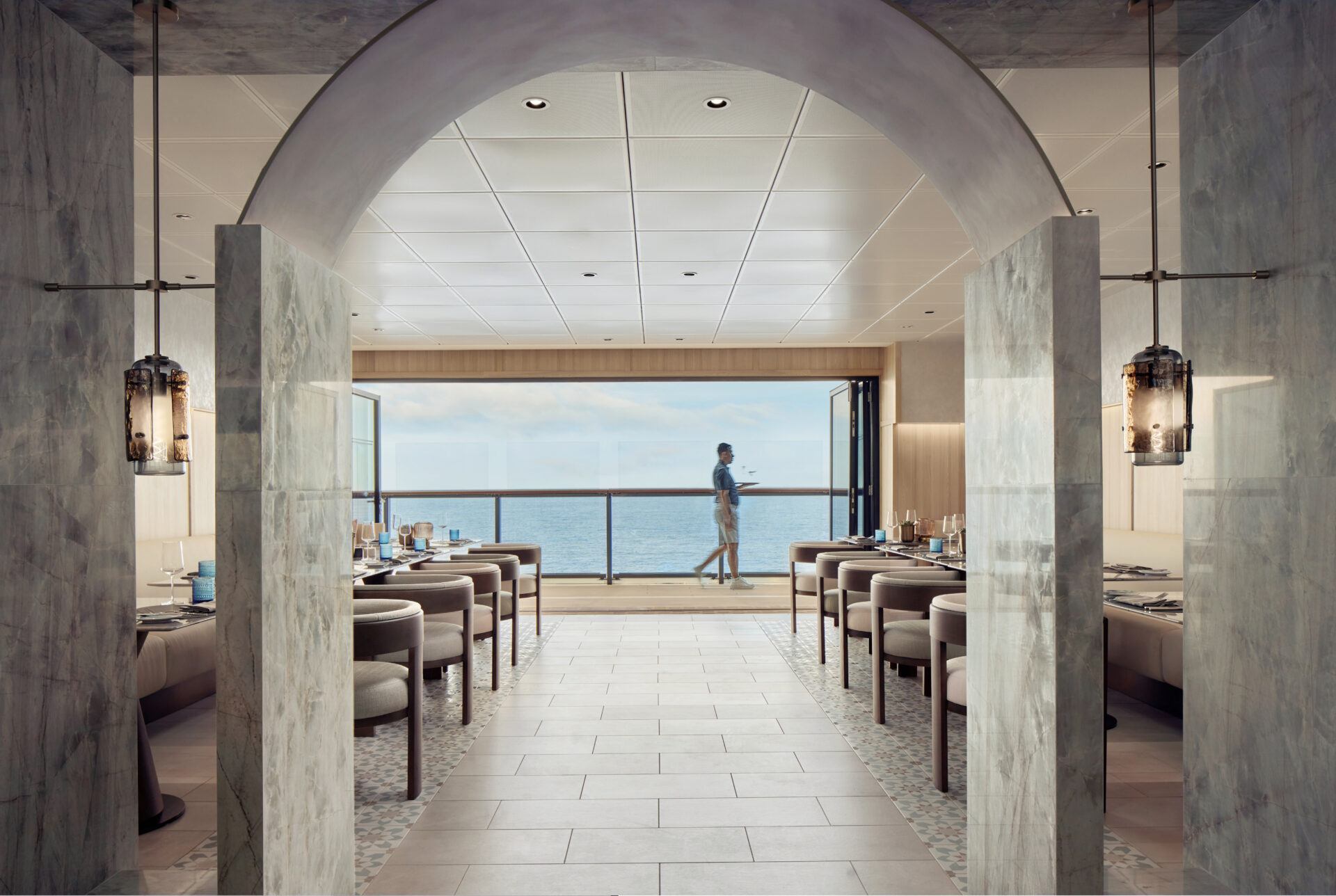
Mistral on Luminara | Image credit: Edgardo Contreras
The new luxury? Feelings that don’t need explaining
If we view anti-trends as recalibrations rather than disruptions, we create space for the industry to mature. The most forward-thinking hotels invest in the intangible: the softness of light on skin; the quiet warmth of a material that once lived a different life; the brand story you can’t articulate, but instantly recognise; the rest that feels scientifically orchestrated yet aesthetically effortless.
Call it, if you like, emotional intelligence. Call it design maturity. We call it progress. And to us, this is the most exciting shift of all.
Main image and credit: Luminara Yacht artwork | Edgardo Contreras