In partnership with Silentnight, Hotel Designs gathered wellness and design experts at the Independent Hotel Show London 2025, for a panel that explored sleep as a new dimension to hospitality design…
Sleep is undeniably a cornerstone of wellbeing. Whether you’re a nine-hours-a-nighter, an absolutely-no-lighter, or a white-noise-requirer, we all know how a good (or bad) night’s sleep can shape our day – or holiday.
As hotels strive to create that ‘home away from home’ experience, the impact of sleep quality on guest health, wellbeing and satisfaction has moved to the forefront of hospitality thinking, reshaping design in the process. From lighting and acoustics to mattress technology, travellers are seeking personalised spaces that help them feel their best, whatever their reason for travel. Sleep, in turn, is emerging as a defining element of holistic wellness in modern hotels.
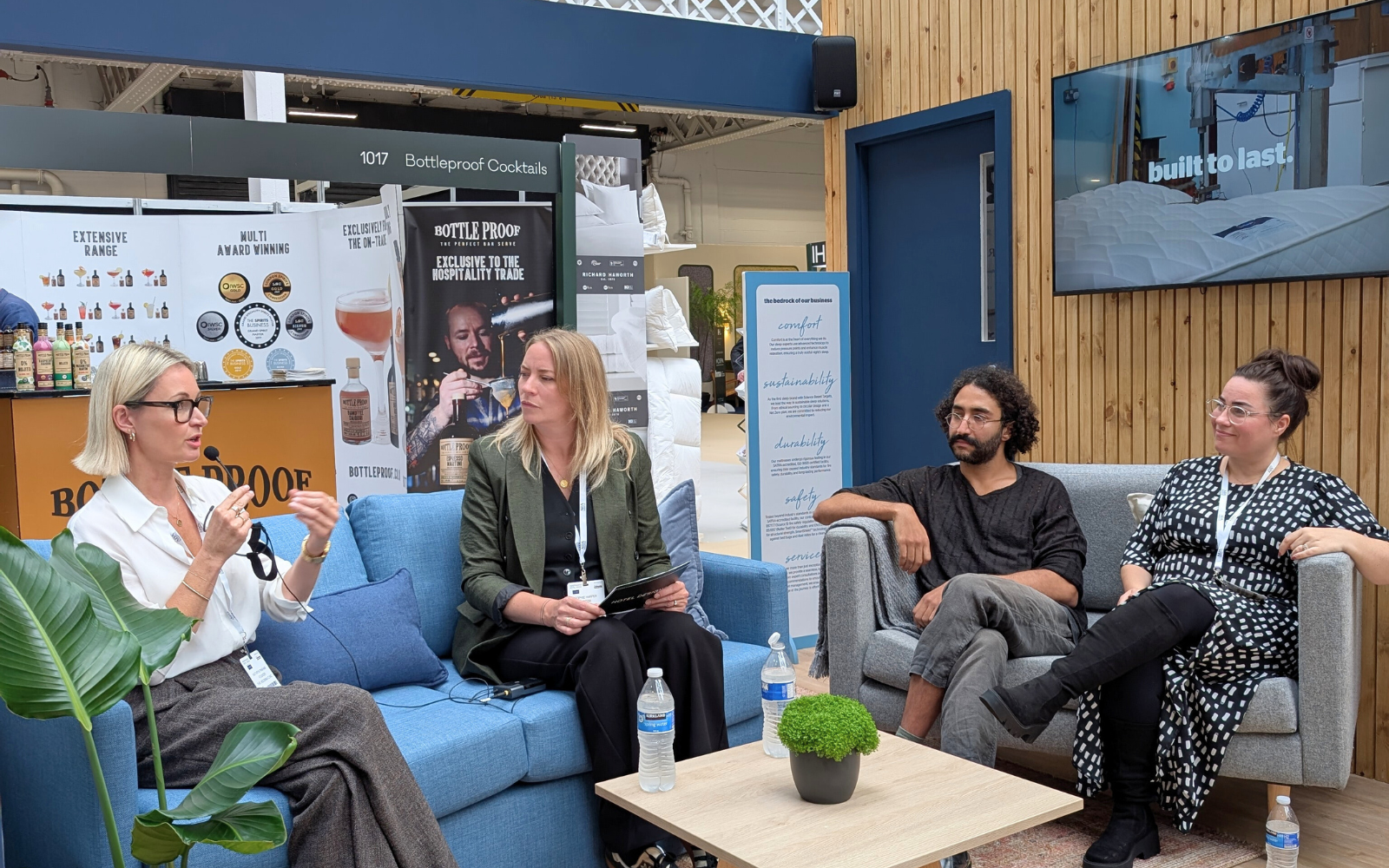
At last month’s Independent Hotel Show London, Hotel Designs and Silentnight brought together three wellness-by-design experts to explore the topic of sleep tourism. Hosted by HD Editor Sophie Harper, the panel featured Katie Edgar, Director of Interior Design at YOTEL; Ramy Elnagar, Immersive Wellness Specialist and Co-Founder of White Mirror; and Kathryn Pinkham, Insomnia Therapist at The Insomnia Clinic.

(L-R): Kathryn Pinkham, Insomnia Therapist at The Insomnia Clinic; Ramy Elnagar, Immersive Wellness Specialist and Co-Founder of White Mirror; Katie Edgar, Director of Interior Design at YOTEL.
Rethinking the ‘perfect’ night’s sleep
Sophie Harper opened the conversation by asking sleep psychologist Kathryn Pinkham whether ‘sleep’ is something hospitality should be taking seriously. Her answer? “Yes, definitely!”
Discussing what hotels can do to support guest’s in having a good night’s sleep, Kathryn actually suggests dialling it all back. “There’s always been such a pressure for hotels to provide the perfect night’s sleep. Some people just don’t sleep well away from home, and if you have a sleep problem, a relaxing hotel doesn’t mean that you are suddenly going to have a great night’s sleep.”
“What I would love for us to move towards is for hotels to educate the people who might struggle to get a good night’s sleep, on what can they be doing differently.”
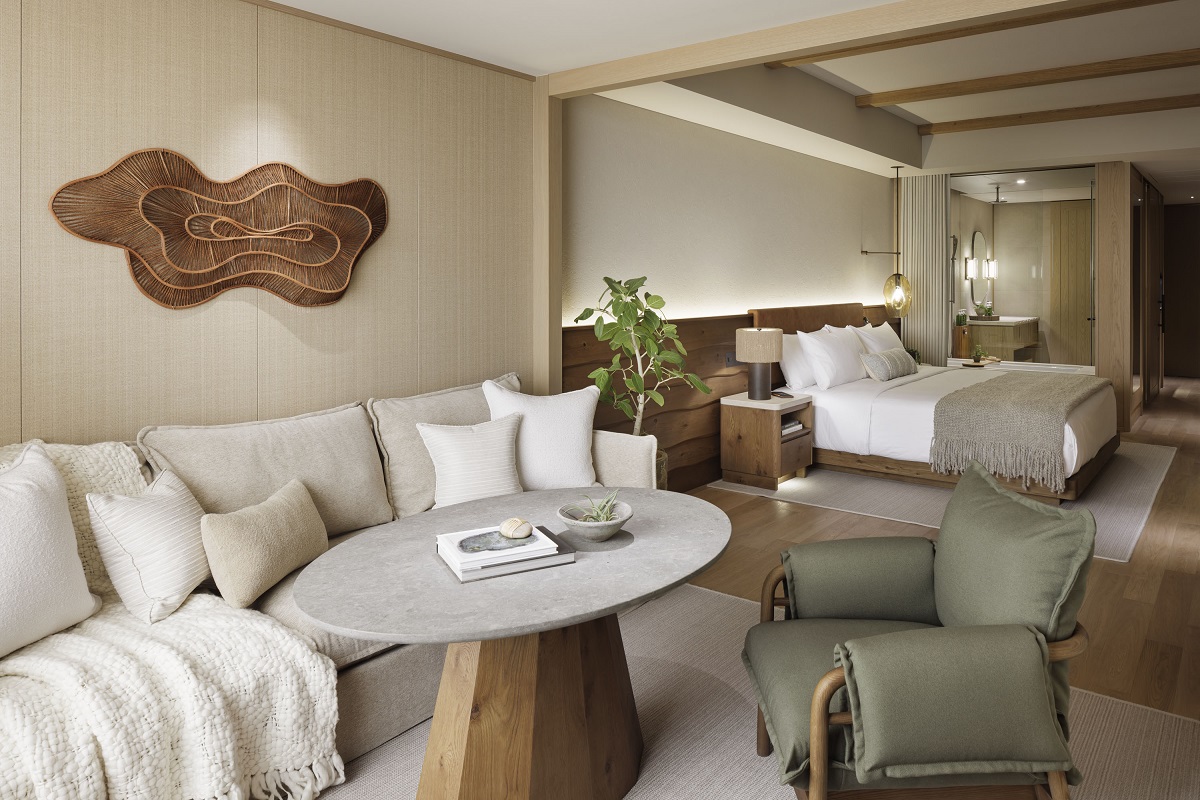
Image credit: 1 Hotel Tokyo / Sohei Oya and Nacasa & Partners Inc
Kathryn suggests hotels provide guests with in-room alternatives, so that they don’t toss, turn and stress in bed if they can’t sleep. “Think about providing a chair or a space with books, somewhere that guests can sit and read away from the bed. Alternatively, provide headphones so a poor-sleeping guest can watch the television without disturbing a person they may be sharing with.”
Possibly ending the age-old argument of whether hotel rooms should or shouldn’t have televisions, Kathryn adds that it’s “far better to sit and relax, watching TV, than it is to lie in bed getting hot and bothered because you can’t sleep.” Entertainment options also benefit jet-lagged travellers. “Hotel’s should be asking ‘what can we put in the room to take the pressure off guests, so that an individual enjoys their night, even if they can’t sleep.'”
Technology: help or hindrance?
When it comes to technology, Sophie asked the panel when it’s helpful to wellbeing – and when it’s too much.
Drawing on ten years of experience at the intersection of technology and wellness, Ramy Elnagar explains that tech has both helped and hindered. “There’s a concept called orthosomnia, which is where people wake up in the morning and go straight on their phone and check their ‘sleep score’.” But, he adds, this kind of obsessive behaviour isn’t always conducive to rest.
However, technology can also enhance relaxation through features like circadian lighting, noise masking, ambient music, and vibration acoustics – when used subtly. “You want the hotel interior to look organic and [chiefly] you want it to feel safe. You want guests to have an option to take part in a certain program, not be something they are forced into.” The goal, he says, is to promote calm, not stress, after all.
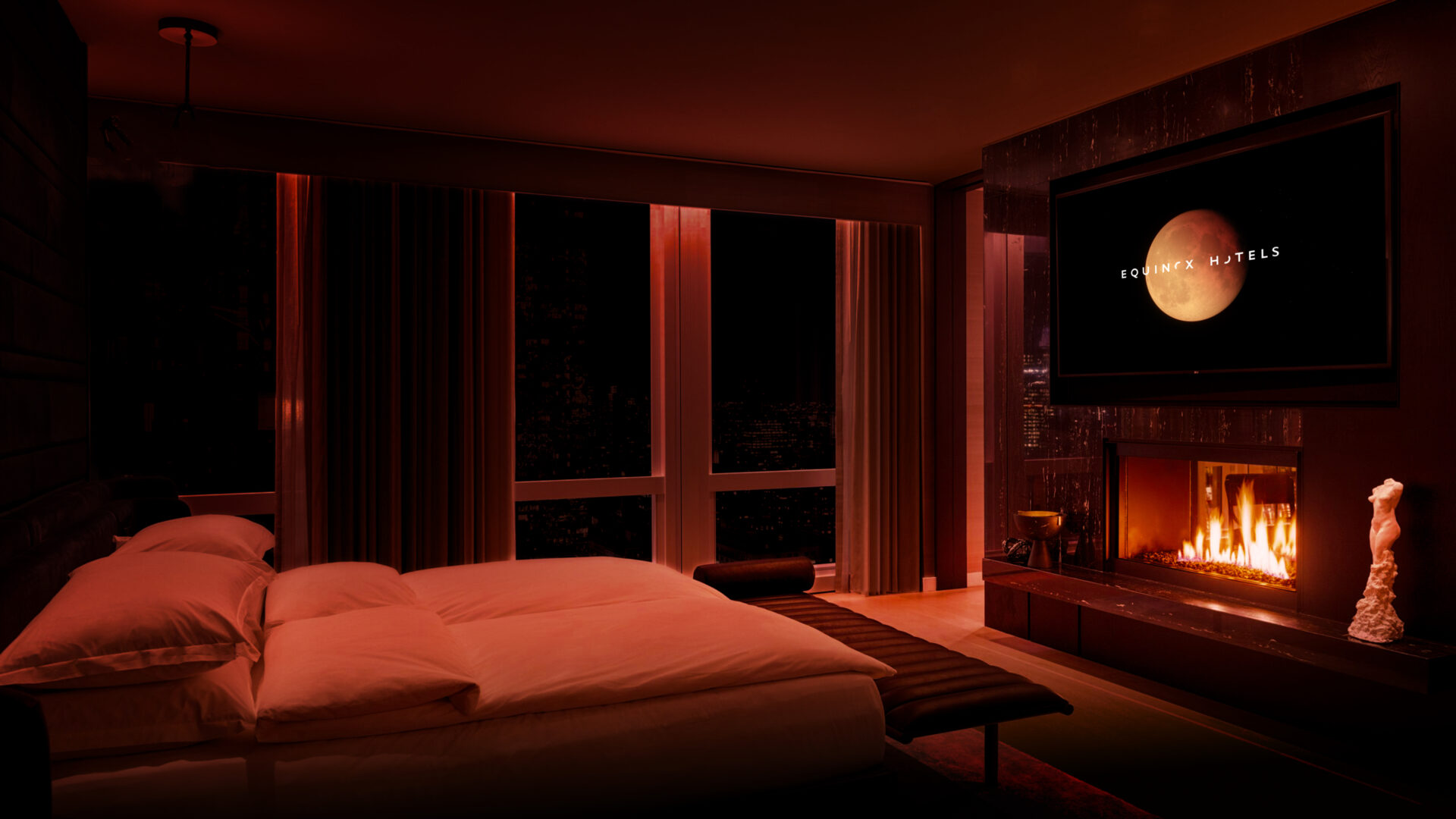
Image credit: Equinox Hotels / White Mirror
Ramy highlighted a project White Mirror recently completed with Equinox Hotels and Dr Matthew Walker, the neuroscientist and author of Why We Sleep. “When you walk into a room, if you’ve given permissions, [using AI] you can ask the room for exactly what you would like (lighting, sound etc), or it can ask you. It’s an interesting way to interface with the space, not just with screens, but more auditory experiences.”
“And it doesn’t have to be really expensive!” Ramy adds. “People think technology means that you need to make two or three really expensive items, but we’ve successfully hacked light dimmers so you have light guided breathing. Imagine the whole room, all the lights will breathe in and breathe out with you. We’ve also had small layers of vibrations added on top of a mattress – not a very expensive mattress – but just a layer of vibration on top, and suddenly you have a vibroacoustic therapy experience.”
Designing for calm
But the journey to a good night’s sleep doesn’t just start in the guest room. As Katie Edgar explains, ‘sleep tourism’ begins at the entrance, with several key touch points throughout a hotel affecting a guest’s wellbeing, mood, and quality of rest.
“The first touch point is arrival,” Katie notes, “at YOTEL, you have the opportunity to choose how you check-in, dependent on how you feel that day; there is both self check-in and the more traditional ‘greeter’ check-in.”
She continues: “The next part is considering how, once someone’s checked in, they experience a moment where, for the first time, they’re alone within a hotel. We’ve considered how they might feel along that corridor journey. We don’t want them to feel overwhelmed or unsafe.”
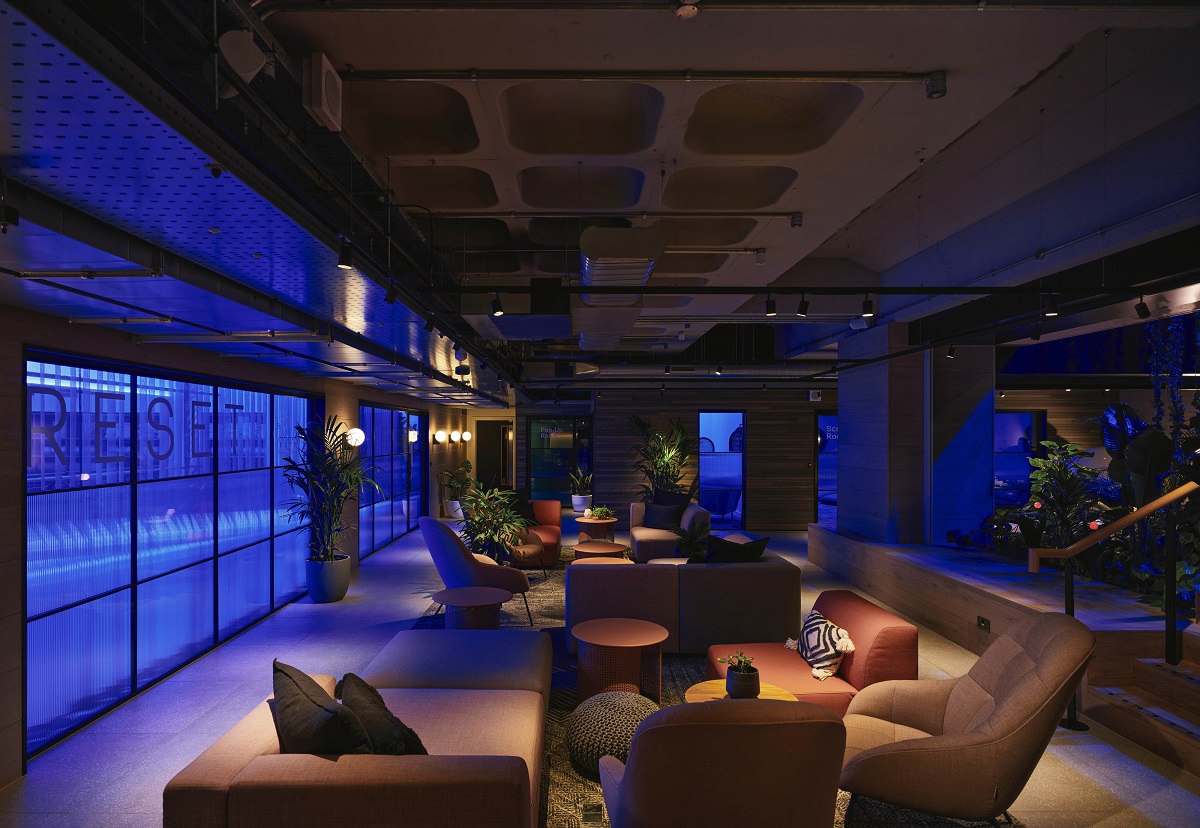
YOTEL Glasgow | Image credit: Artin
YOTEL have deliberately designed their corridors in darker shades and with dimmed lighting. “Through colour research, we’ve concluded that the darker halls actually make people feel more calm,” Katie explains, “plus, dark corridors then open up into a light and bright bedroom, so there’s a nice contrast too.”
Dynamic lighting within YOTEL rooms allows guests to shift hues depending on mood or desired outcome. Red or amber light supports melatonin production (the sleep hormone), while blue or white tones stimulate alertness. Guests can also scan a QR code for room information and answer questions about how they’re feeling, receiving tailored wellbeing suggestions in return.
Ramy says he often receives briefs to ‘bring the spa into the guestroom’, to promote wellbeing and better sleep. One recent project saw a shower that could seal and transform into a private steam room. Having personally tested the effects of contrast therapy, he recommends a steam followed by a cold rinse: “Being able to reset the body, almost shock it with a steam and then cold shower, washes off the day and prepares you before bed.”
Designing for rest, not perfection
As the panel made clear, the future of sleep tourism lies not in extravagant gadgets or lofty promises, but in quiet, human-centred design. True rest is achieved when hotels create environments that feel calm, safe, and adaptable – where guests are supported, not pressured, to sleep well.
From lighting and acoustics to the psychology of arrival, every design touchpoint can shape how a guest feels before they ever close their eyes. Subtle technologies, gentle sensory cues, and spaces that encourage relaxation rather than performance all contribute to that elusive ‘home away from home’ feeling.
Ultimately, designing for sleep is about empathy: understanding that rest looks different for everyone, and crafting spaces that give guests permission to unwind, however they do that best.
Bad sleeper? Hear insomnia therapist Kathryn Pinkham’s guide to doing it better:
Main image and video credit: Hotel Designs