#7 Circadian lighting: rethinking our relationship with time & light
https://hoteldesigns.net/wp-content/uploads/2022/04/ruvim-noga-o0R4iqk1eRQ-unsplash-1024x640.jpg 1024 640 Hamish Kilburn Hamish Kilburn https://secure.gravatar.com/avatar/81d2884aeeac3c45e38c47cacc508c2178bab773320ff2d6a83bdcc803d93aec?s=96&d=mm&r=gCircadian lighting and science is shaping the way in which hotel buildings are created and designed. Inside, lighting is altering how guests use and journey through spaces, as well as how they experience wellness. In our latest article in the Hotel Designs Lab series, Ari Peralta, Founder of Arigami, interviews Dr. Helga Schmid, circadian artist and author…
For thousands of years, before the development of artificial lighting, our ancestors’ days were ruled by the rising and setting of the sun. And even after centuries of technological advancement and societal change altered our lives immeasurably, our human biology still bears the stamp of that rhythm.
Over the last 15 years, there has been a substantial growth in our understanding of circadian science and human chronobiology. New scientific insight continues to transform the way in which we create, engage with and appreciate lighting itself. In contrast with our always-on society, Dr. Helga Schmid’s work invites guests to slow down, disconnect from the burden of time and realign with nature’s flow.
Helga is an author, lecturer and artist, and the founder of Uchronia (time utopia), a platform for critical and imaginative thought on our contemporary time crisis, challenging current perceptions and offering alternative ways of being in time. In her work, she creates immersive installations, time-based performances and temporal experiences.
She partnered with Somerset House to develop an innovative 24-hour event that ran from sunset to sunset. Guests were invited to interact with installations, conversations, performances and recordings designed around the seven stages of human circadian rhythms (sleep, wake-up, concentration, nap, movement, intuitive, sleepiness).
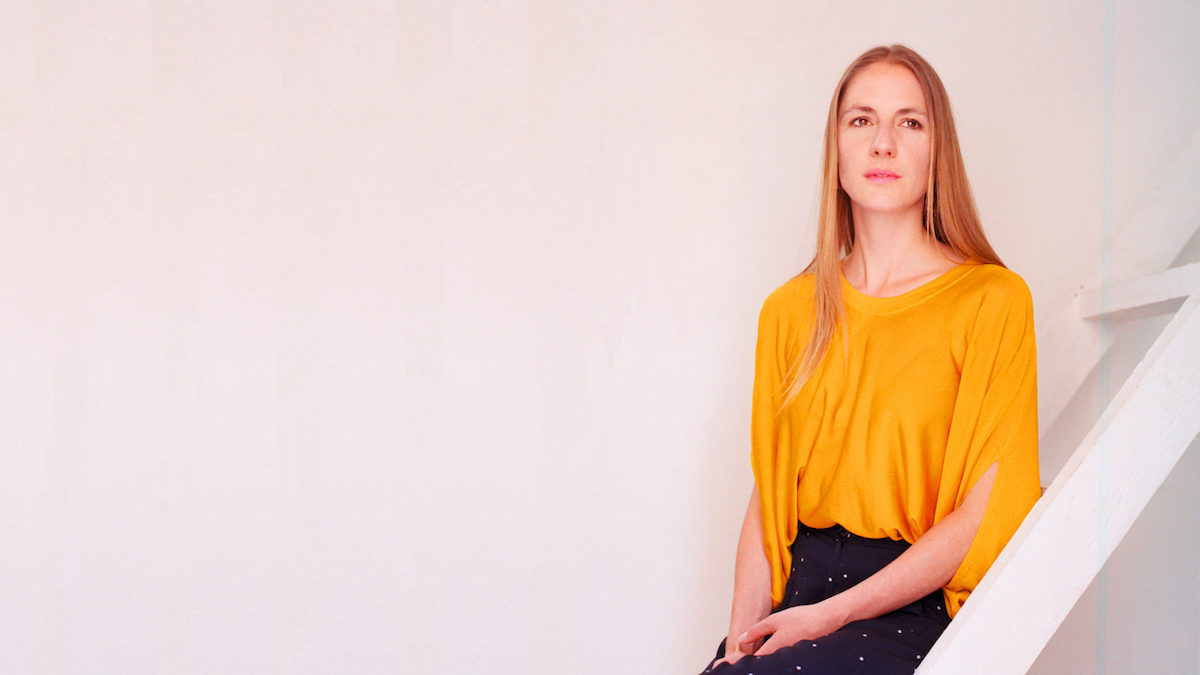
Image caption: Dr. Helga Schmid, Circadian Artist and Author. | Image credit: Circadian Dreams / Francisco Ibáñez Hantke
Ari Peralta: What is circadian wellness and why should designers, architects and hoteliers take notice?
Helga Schmid: Circadian wellness is a concept based on the human body clock. It’s related to the human circadian rhythm, from Latin circa and dies, ‘around a day’. The circadian rhythm is a biological rhythm that touches every aspect of health and wellbeing. Your body clock can tell you what is the best time for concentration, creative thinking, physical exercise, up to when to get the best quality of sleep. However, often people’s lives today are dominated by clock time and a fast-paced societal rhythm. They experience a high, external time pressure throughout the day and have lost their natural relationship to their body clock.
Circadian wellness is about the rediscovery of your own, individual body rhythm. For instance, some people need five hours of sleep, some eleven hours, and not every day is the same. Often the sleep patterns change slightly on an individual basis from day to day in relation to your age, gender and genes. Circadian wellness is the key to a healthy lifestyle. Our circadian rhythm is related to the experience of every aspect of our lives: how much we concentrate, how easily we fall asleep, how we experience pain, or how imaginative we are in our thinking. If we are in sync with our body clock, we can be present in the moment and significantly improve the quality of our lived experience.
“In order to improve circadian wellness, we need to open up the window of time and allow guests to be independent of clock time. We need temporal flexibility in terms of service, and modularity in lighting and spatial design.” – Dr. Helga Schmid, Circadian Artist and Author.
AP: How has your interdisciplinary education and experience shaped your work?
HS: I have a background as a designer, artist, researcher and educator. Currently, I am a resident at Somerset House and Acting Programme Director of Graphic Design Education at London College of Communication. In 2019 I was honoured as one of “London’s Most Influential People 2019 in AR/ VR” by a national news organisation.
In 2018/19 I was designer in residence at the Design Museum in London. My design and artistic practice has won awards and shown internationally on a variety of platforms, for instance at the Dia Art Foundation NY, Istanbul Design Biennial 2018, Z33 – House for Contemporary Art in Belgium, the Design Museum, V&A Museum, and Whitechapel Gallery in London; and published by BBC, e-flux, Blueprint and Dezeen.
Prior to teaching, I was a researcher in the architecture and design department at the Museum of Modern Art. I have received international awards, including the Type Directors Award and a Fulbright and a DAAD scholarship. I hold a master’s degree from the School of Visual Arts in New York as well as a PhD from the Royal College of Art in London.
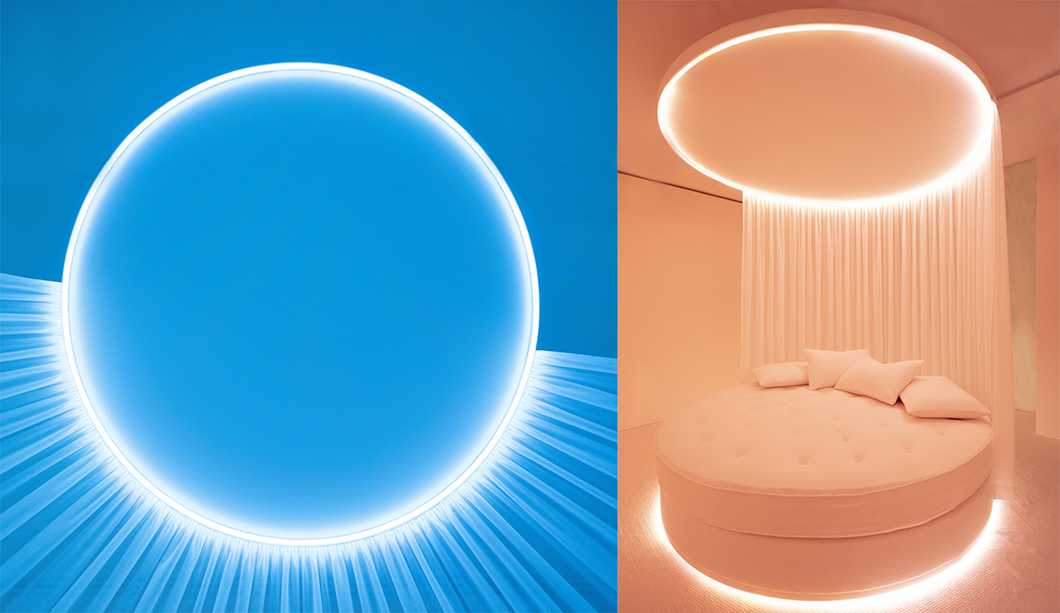
Image credit: Arigami. | Image credit: Circadian Dreams / Francisco Ibáñez Hantke
AP: Where do you draw inspiration from?
HS: My work is situated at the intersection of art, design and science. I find it very inspiring to collaborate and work with people coming from very different fields and engage with their ways of working and perspectives on the world. This reaches from chronobiologists, architects, sociologists, philosophers, up to lighting designers or food stylists. It inspires me to discover human and non-human approaches by exploring the multiverse of rhythms of plants, mushrooms and animals, as well as immersing myself into a diverse range of temporal cultures across the globe. For instance, in June I am going on a clock-free research trip to the Norwegian island of Sommarøy – in 2019 they declared it a Time Free Zone. As it never gets dark from May to July, they started a synchronisation experiment without using any clocks.
AP: What is Uchronia?
HS: Uchronia is a platform for critical and imaginative thought about our contemporary time crisis, challenging current perceptions and offering alternative ways of being in time. The original concept derives from ‘utopia’. In the same manner as utopia, uchronia is defined as ‘no time’ or ‘non-time’ from the Greek ‘ou-chronos’. The word uchronia was first used by the French philosopher Charles Bernard Renouvier in his novel Uchronie (L’Utopie dans l’histoire) in 1876. In my work, I explore the term from a different perspective – that is, uchronia as a temporal utopia. I ask how we can think about time outside of the norms of clocks and calendars. Uchronia advocates temporal freedom, wellbeing and social change, promoting a positive relationship with, and experience of, time in the now and the long now.
AP: How could the Uchronia platform be used to improve hotel guest wellness?
HS: Contemporary life is dictated by external time-givers (clock time, day-night rhythm), but what happens if we concentrate on our body and our individual time signature, and design a hotel based on the circadian rhythm?
In my installations and performances, the space acts as a clock. A day is divided into seven different phases based on peak daily times for logical reasoning, concentration, muscle strength, up to melatonin secretion and highest body temperature. A light and sound scape as well as the interior design relates to your body phases, with a bright blue tone that activates you, an intensive red-orange which make you sleepy, and darkness which brings you to a sleep/dream state.
By introducing the uchronian concept to the typology of a hotel, the guests are invited to rediscover and experience their own body clocks in a unique way. The traditional spatial design of living rooms and bedrooms becomes irrelevant when the bodily rhythm provides new criteria for wellbeing.
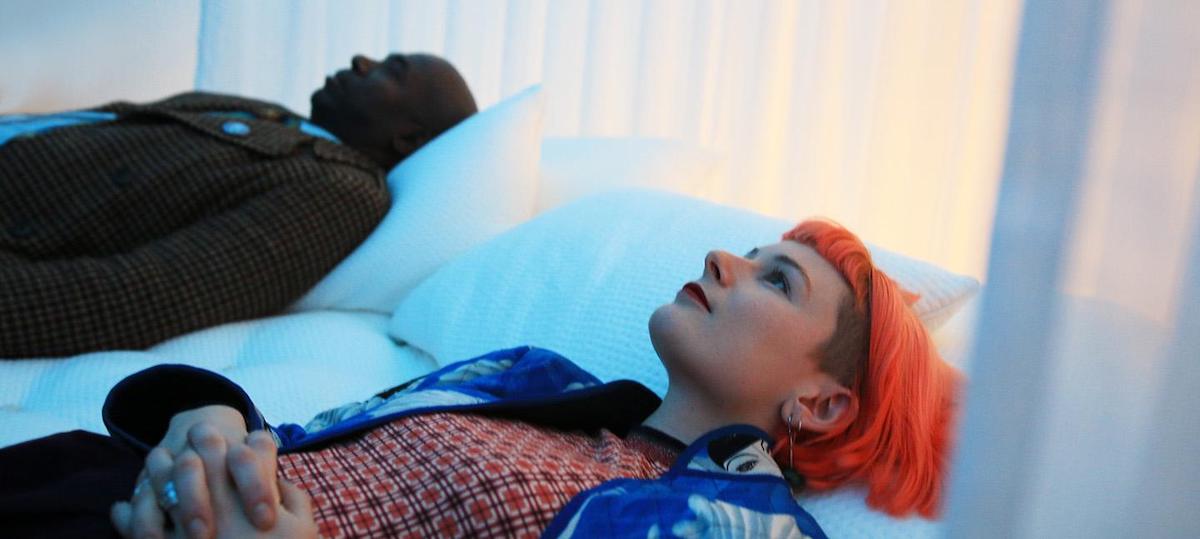
Image credit: Arigami
AP: Do you have any recommendations on how to apply circadian science insights to improve guest experience?
HS: Spaces/rooms are currently designed to be used for multiple purposes and throughout different times of the day. But how flexible are they to adjust to the ideal conditions in relation to the individual body rhythm of their guests? For instance, natural light is the most influential time-giver to synchronise the internal to the external day for the human body. By designing lighting in hotels in relation to the circadian rhythm and offering a variety of lighting solutions, each guest can explore their own needs independent of clock time. The same is true for the interior design, food services, special treatments, etc. We are all different chronotypes (eg. ‘owls’ and ‘larks’) and if we allow ourselves to relax and not use an alarm clock, we start and end the day at different clock times.
> Since you’re here, why not read our exclusive report on circadian lighting, in association with Franklite?
Arigami is a research and innovation consultancy focused on wellbeing. We help our partners strategise, validate and measure wellbeing. We believe the industry must evolve, and with nimble research, we can maximise the impact of wellbeing strategies. It’s time to work together to transform hospitality into the leading industry combating anxiety and stress and improving the health of travellers globally.
Main image credit: Unsplash