A GUIDE TO HOTEL DESIGN PT 97:
Ramy Elnagar, Founder of White Mirror defines sleep as architecture in motion – a nightly reconstruction of the mind and body. Yet the spaces we sleep within are rarely designed with that architecture in mind.
Bedrooms may be beautiful, but aesthetics alone cannot lull the nervous system into rest. True recovery demands more intentional design – a choreography of light, sound, temperature and touch that tunes the body toward genuine and measurable balance.
At White Mirror, we call this philosophy Experience is Medicine – intentional spaces and experiences designed to deliver positive outcomes on our wellbeing, and also look to inspire better habits that we carry with us into our daily lives. Every texture, hue and frequency we encounter acts as an invisible conversation with our physiology. A flicker of blue light can delay the release of melatonin. A gentle vibration beneath the skin can slow the breath. A soft curve in a wall can whisper safety to the nervous system. The spaces we inhabit are not passive containers; they are living systems that shape how we feel, think, and sleep.
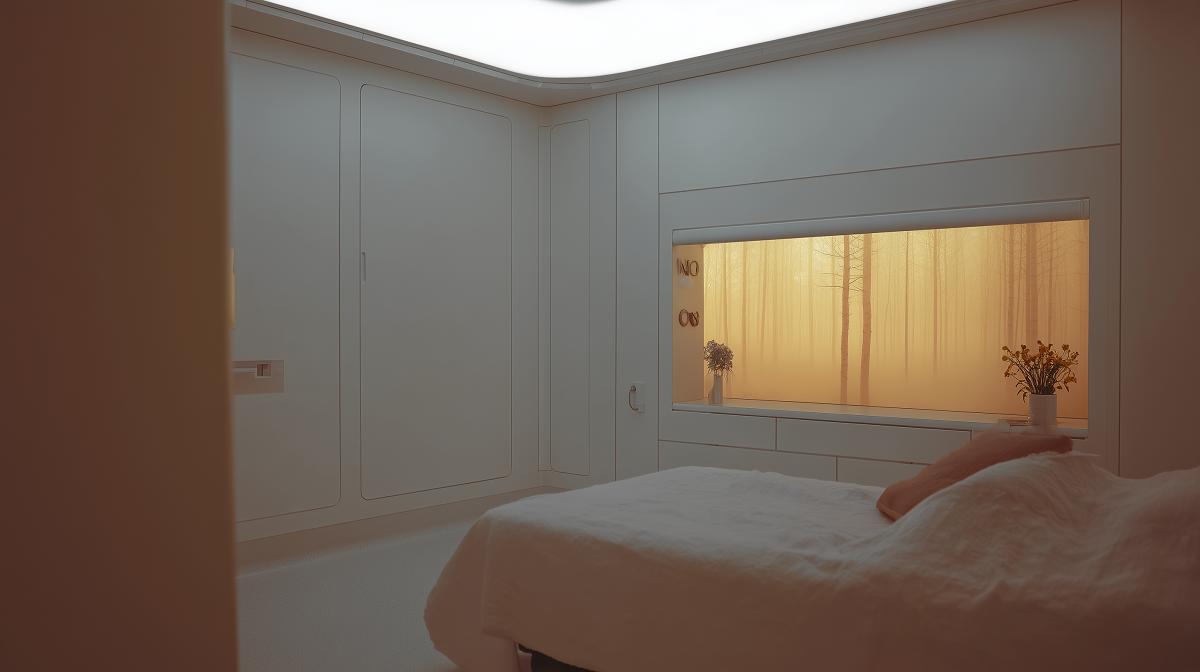
Image credit: White Mirror
From emotion to evidence
For centuries, architects have spoken about form and function. Today, the frontier is feeling. Through the emerging science of neuroarchitecture, we can now measure what we once only intuited: the way light rhythms regulate circadian cycles, the way biophilic textures lower cortisol, the way spatial acoustics affect brainwave states.
This scientific shift underpins Intentional Spaces: The Power of Place, a new global initiative between Thermengruppe Josef Wund, Johns Hopkins University’s International Arts + Mind Lab, and White Mirror. The project is pioneering the evidence base for neuroarchitecture – how the design of our environments actively shapes emotional, cognitive, and physiological wellbeing.
As Dr. Susan Magsamen of Johns Hopkins puts it, “Everything is an aesthetic experience – the cities we traverse, the rooms in which we live and work, and the sounds, sights, and smells we encounter throughout our day all impact how we feel.” The research is building the foundations of a Sensory Design Playbook – a practical framework for architects and designers to embed neuroscience into the built world. Because as we’re learning, the world we design is designing us back.
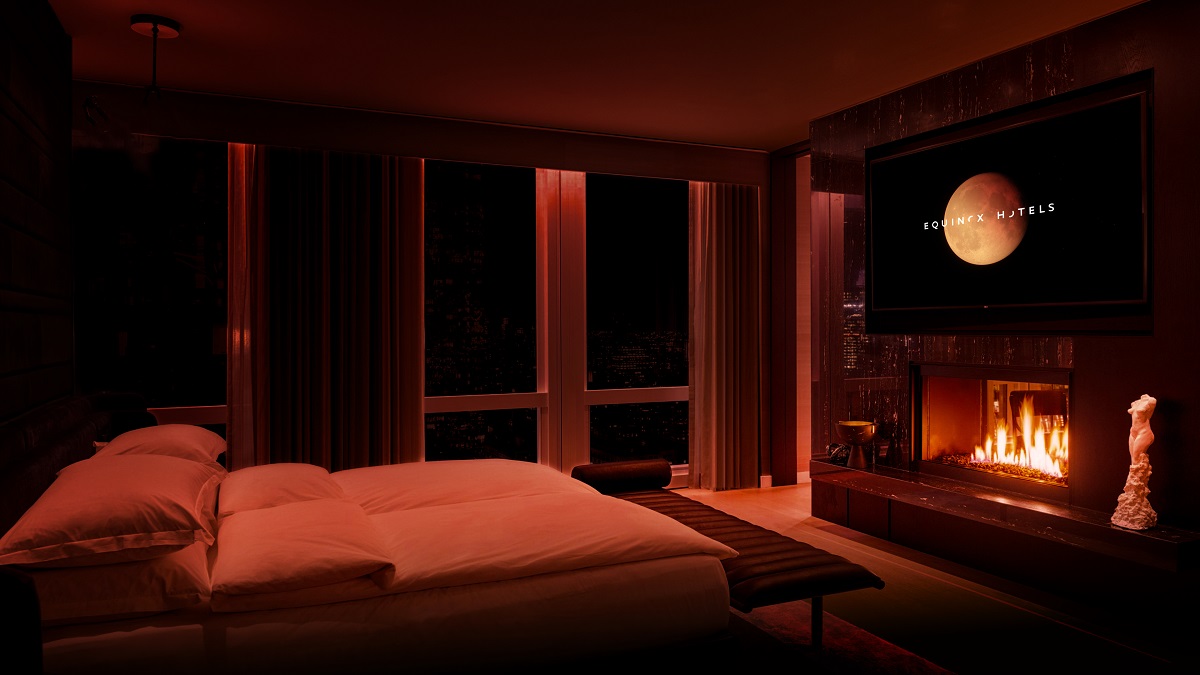
Image credit: White Mirror / Equinox
Designing the nervous system
When we design for sleep, we are designing for the most intricate system of all: the human nervous system. Every sensory cue – light, sound, texture, temperature – is a form of communication. The question is whether that communication is supportive or disruptive.
Inside Equinox Hotel New York, in collaboration with Dr. Matthew Walker, we translated the latest sleep science into a living experience. Guests follow a carefully sequenced journey: guided breathwork enhanced by warm-spectrum red and amber light; an audio landscape calibrated to lengthen exhalations and reduce heart rate variability; and a wakescape that replaces alarms with gradual, sensory reawakening. The goal was simple – align the environment with the body’s natural circadian rhythm. The result is a deeper rest, smoother wakefulness and recovery that extends beyond the night.
Such interventions may sound futuristic, but their roots are ancient. Warm light mimics the glow of fire. Rhythmic sound echoes the heartbeat. These primal signals tell the body that it is safe enough to surrender. When design remembers our biology, the body remembers how to sleep.

Image credit: Arianne Amores / Lupuna
Experience as medicine, explained
Architecture becomes powerful when it transcends the visual to engage the visceral. At Therme Euskirchen in Germany, the Lupuna Forest Bathing installation and experience produced by immersive collective Marshmallow Laser Feast and White Mirror compresses 24 hours of the Amazon rainforest into a 24-minute immersive journey. Guests lie on vibroacoustic loungers as light, scent, and temperature shift around them in synchrony. The experience synchronises body and brain into a meditative state – heart rates slow, breathing deepens, anxiety drops.
Projects like Lupuna prove a simple truth: experience itself can be therapeutic. We can design spaces that regulate physiology the way medicine regulates chemistry.
At Outernet London, with Pixel Artworks, we tested this principle in Room to Breathe – an immersive installation that taught visitors to calm their nervous systems through space itself. Light sequences expanded and contracted like lungs; spatial sound wrapped the listener in a slow, rhythmic cadence. In independent studies, over 84 per cent of participants reported measurable relaxation. This evidence proved that it was not an illusion.
Image credit: White Mirror
The new measure of design
For decades, the success of a space was measured by square footage, star ratings or generic visual appeal. But the new measure is transformation – the physiological, emotional, and cognitive shift a person carries home after they leave.
In hospitality, this marks a profound shift. I believe the next wave of luxury will be invisible: the feeling of your nervous system being quietly re-tuned after a long journey, the sense that the air itself is helping you breathe easier. Properties that soothe and regulate their guests’ biology will earn loyalty deeper than brand. Because the body always remembers how it felt.
Designing a better night’s sleep
To design for sleep is to design for the most vulnerable, restorative and essential of human states. It is to acknowledge that rest is an active recalibration, one that architecture and mise en scene of a space can profoundly influence.
The architecture of sleep is an act of empathy. It recognises that wellbeing is not a luxury amenity but a biological necessity; that design, at its highest form, is a healing art.
As we move from intuition to evidence, from aesthetics to neuroscience, we begin to see architecture not as backdrop but as medicine – a living, breathing extension of our own nervous system.
Main image credit: White Mirror / The Future Laboratory