












AKAN is a family-owned collection of distinctive hotels, all of which share a common thread of Moroccan heritage, generosity and connection – we spoke to Youssef Benabbès Tâarji to find out how the brand is shaping a new chapter in Moroccan hospitality…
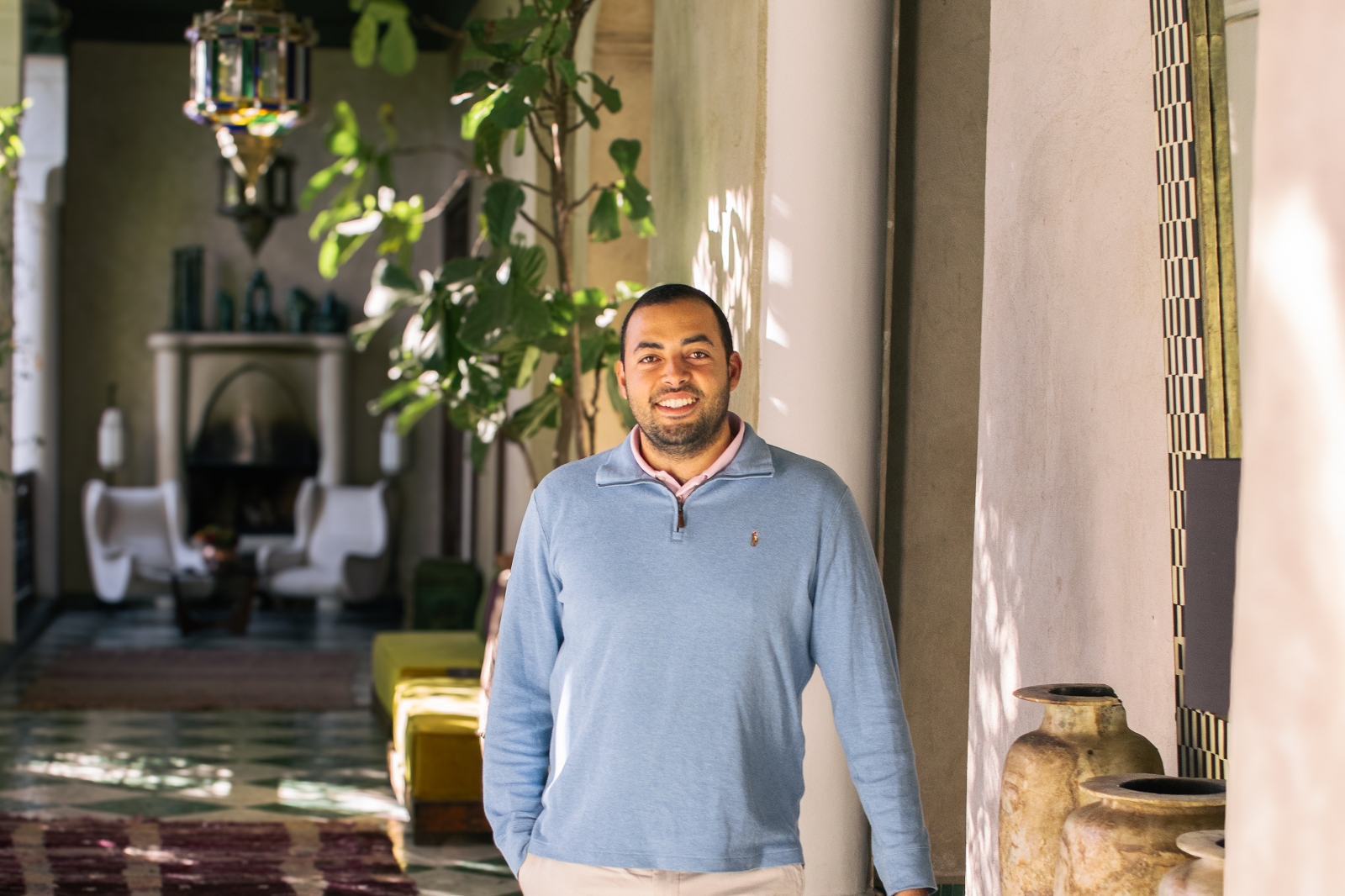
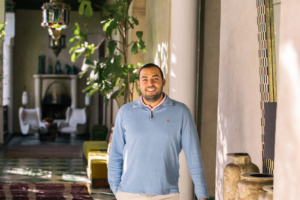
Following on from the recent El Fenn Review, we spoke to Youssef Benabbès Tâarji, Co-Founder and Head of Development and Asset Management at AKAN, to gain a little more insight into what it means to bring a new perspective to a legacy built over three generations.
We explore how the group is protecting the spirit of El Fenn and the other distinctive properties in its portfolio, while defining what comes next for the brand.
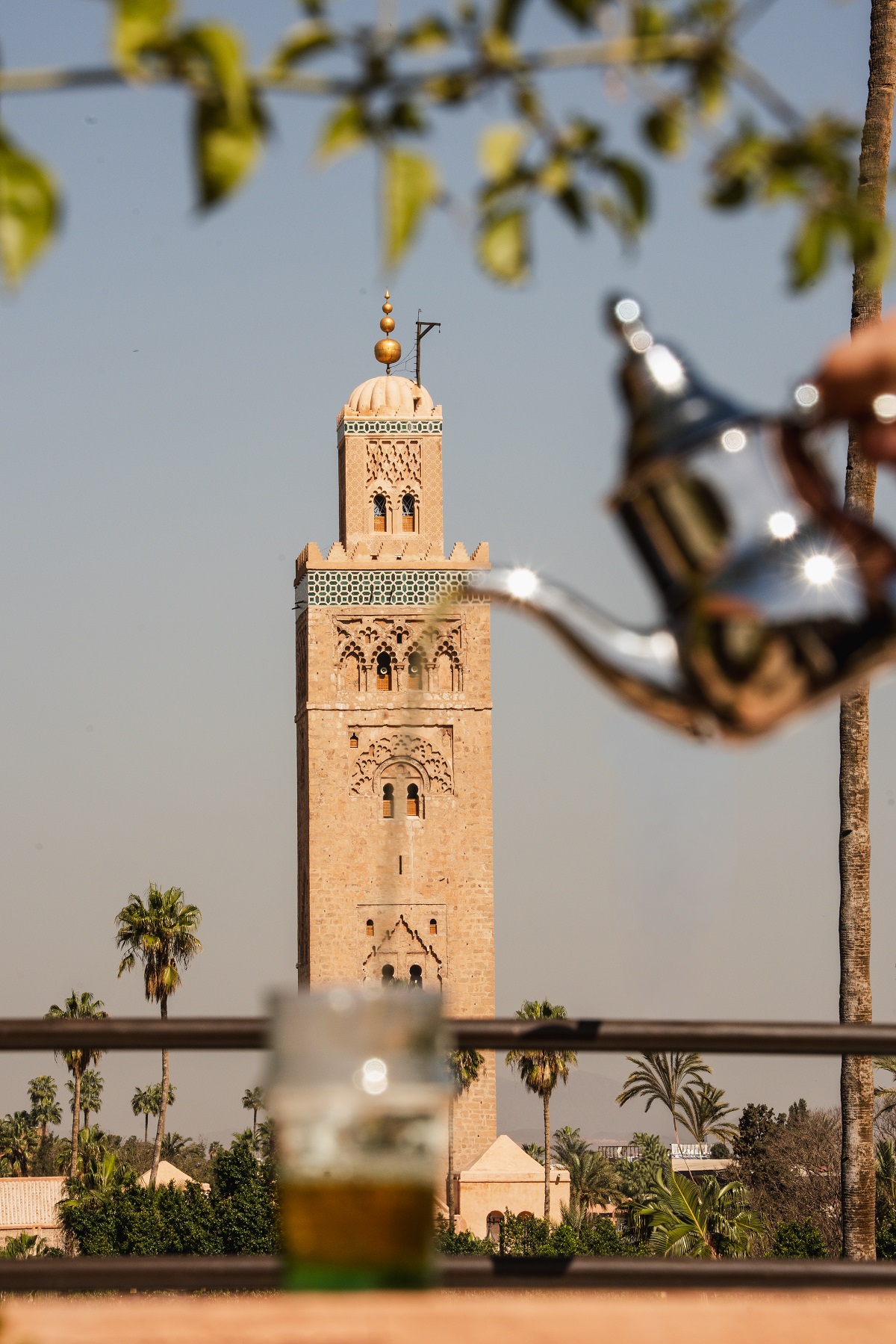
Image credit: Villa des Orangers
Hotel Designs: AKAN is a family-led brand – can you tell us a little about the story behind the brand and how does that sense of family influence the way you build the business?
Youssef Benabbès Tâarji: Both Marrakech and hotels have been in my family for generations. My great great grandfather was Marrakchi and my grandfather Ahmed was born in the medina in the 1930s. In fact, he grew up only a few streets from what is now El Fenn and became one of the pioneers of Moroccan tourism when he co-founded Holidays Services in 1973. My father Jalil then built our family’s hotel group over the following decades and AKAN is the third act, my chapter, alongside my cousin Malika, who is AKAN’s CFO. Three generations of one family, three movements of the same engagement: to receive people in our country as one opens one’s home.
The story of the three houses reflects that approach. It took my father just three minutes to answer an email about the possible sale of La Villa des Orangers. We hadn’t even looked at a spreadsheet but it was pure emotional recognition.
We knew Les Deux Tours for years because my grandparents live nearby in the Palmeraie and had made it one of their favourite places to dine long before it became ours. And El Fenn is a house every Marrakchi knows by name, a landmark in the city we grew up in. Each acquisition was less a deal than a homecoming.
That family dimension shapes everything. We are building something to last for the next generation, not a portfolio to trade. Our teams are treated as part of the household too. Many of them have been with our houses for more than two decades.
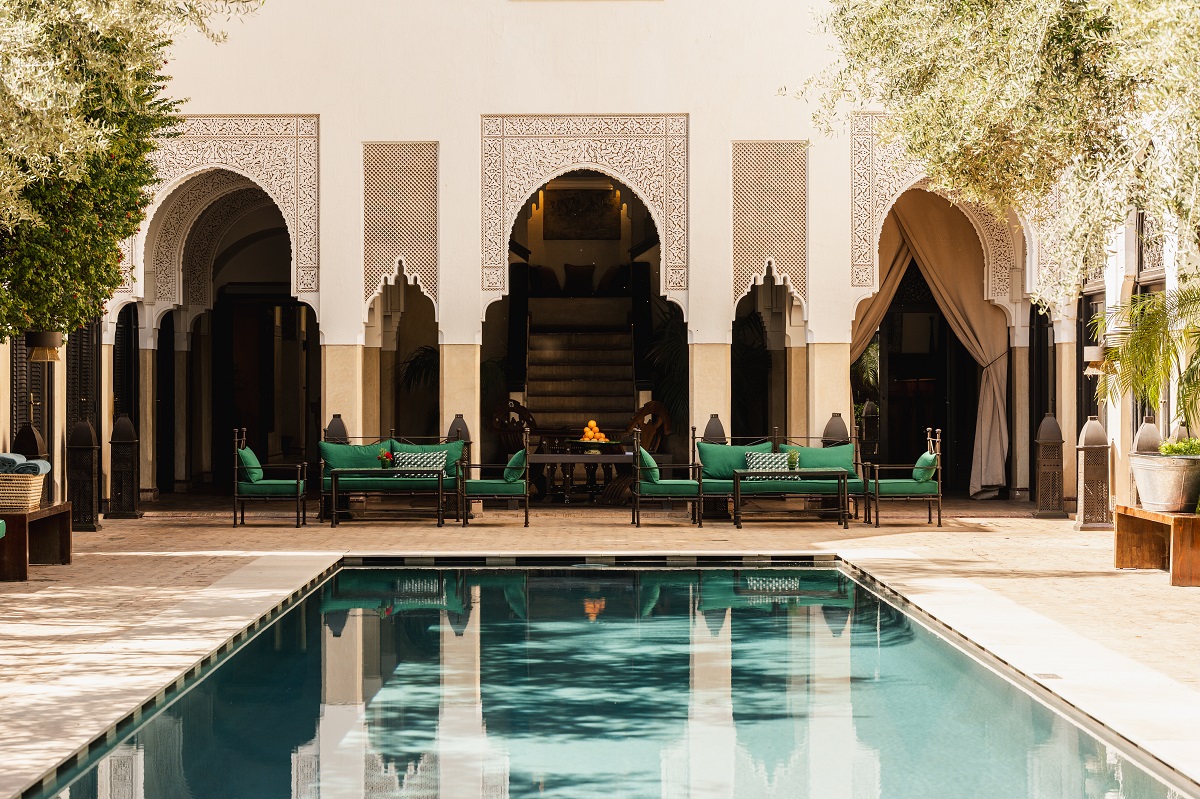
Image credit: Villa des Orangers
HD: There is something inherently personal about a family-built hospitality brand. How important is that sense of personal connection to the way AKAN operates?
YBT: I think personal connection is what transforms any brand from surface-level to one that goes far deeper – and that’s what people connect to. In a world of slick marketing and messaging, people can feel when something has true depth.
So for us, AKAN isn’t just a brand. It is a collection of singular houses, each one reflecting different facets of Morocco. Our teams are largely Moroccan, they work in houses that celebrate their own culture, under owners who are themselves Moroccan. There is a different kind of engagement that comes from that, and guests feel it even when they cannot name it.
The most meaningful part of a stay is not always what happens inside the walls. It’s important of course but so too are the moments when a guests connects outside the hotel to the living culture around them – meeting a master ceramicist and watching them turn a piece of clay, sitting with the women of a Berber embroidery collective, crossing paths with an artist in residence at El Fenn. Those encounters are only possible because our teams are of this place, and because we know these makers personally. Hospitality, for us, begins with opening the door to the people who make Morocco what it is.
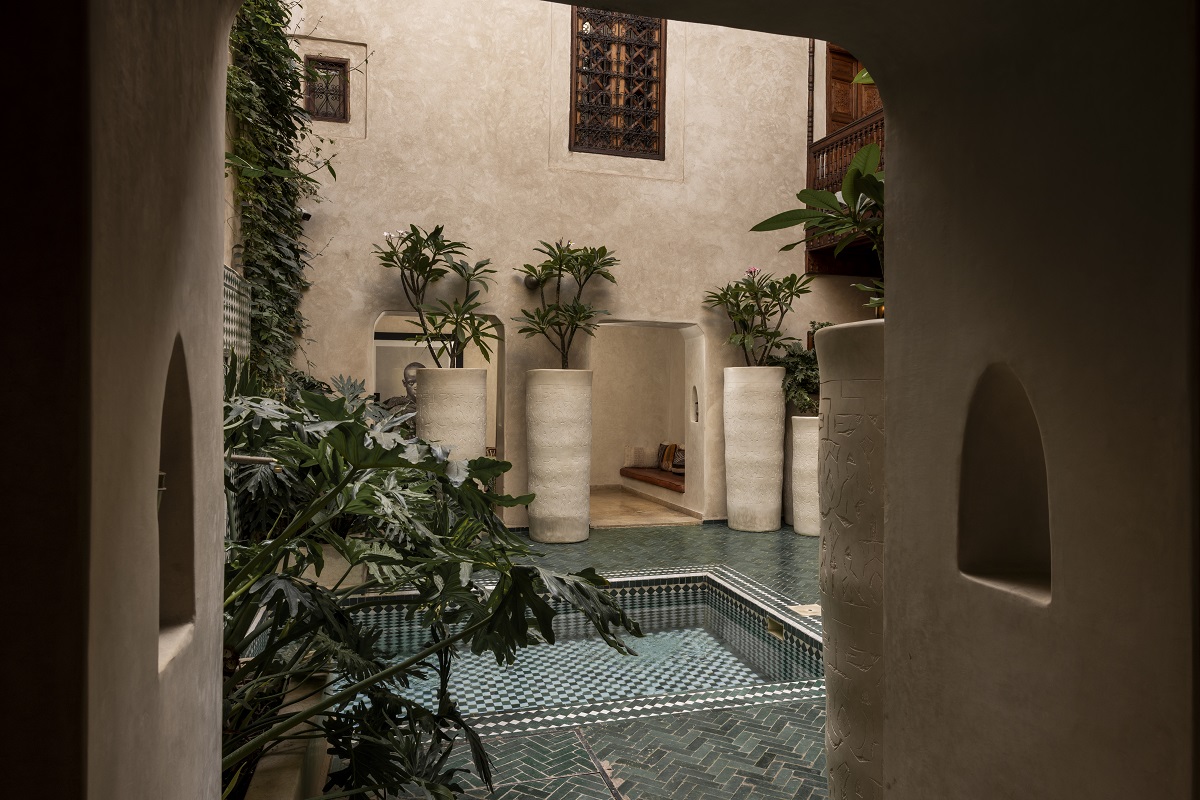
El Fenn | Image credit: Moggi Photography
HD: How do you define the difference between an AKAN hotel and simply a hotel that happens to be in Morocco?
YBT: There is a very Moroccan reflex I recognise in myself and in almost everyone I know. When a friend from abroad says they are coming to visit, we all quietly turn into ambassadors for our own country. We start drawing up an itinerary, this workshop, that terrace at sunset, this friend who weaves, that maker who should not be missed. We cannot help it. It is genuine pride, and it is generosity in its most Moroccan form. That same impulse is behind AKAN. Our guests are received as friends we want to share the country with, with insider access to the traditions, ateliers and communities they could not find on their own.
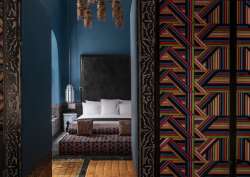
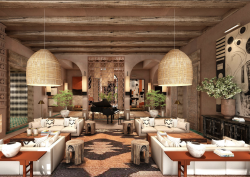
Each of our three houses offers something different. At El Fenn, it’s art, design and the energy of the medina. Les Deux Tours offers architecture, nature and wellness rituals in a quieter part of Marrakech. La Villa des Orangers holds the classical traditions of Marrakchi hospitality, with gastronomy and craft at its centre.
The common thread however is that we are not interpreting Morocco from the outside. This is our home. The Morocco we share is for the curious, from those who live it.
HD: What are the values that you want every AKAN property to share, regardless of where it is or what it looks like?
YBT: Four values run through all our houses: rooted in place, human at heart, generous in spirit, and a role as tastemakers and curators.
Rooted in place means each house speaks its own geography and its own history. We do not import a signature. Human at heart is expressed in the way our teams work and the way guests are received. Generous in spirit is the one I hold closest. We champion the artisans, artists and makers who made Marrakech what it is, not only the houses we own. Being tastemakers means having a real point of view on art, on food, on craft, and being confident enough to share it.
The thread running through all four is a very Moroccan idea of hospitality. Walking through the medina today, a stranger can still stop you to tell you the story of the door you are standing in front of, or invite you home to quietly serve you meat he had been saving for a special occasion. It is generosity as an instinct, and welcome as an offering, not a service.
Every AKAN house expresses that instinct in its own way.
-
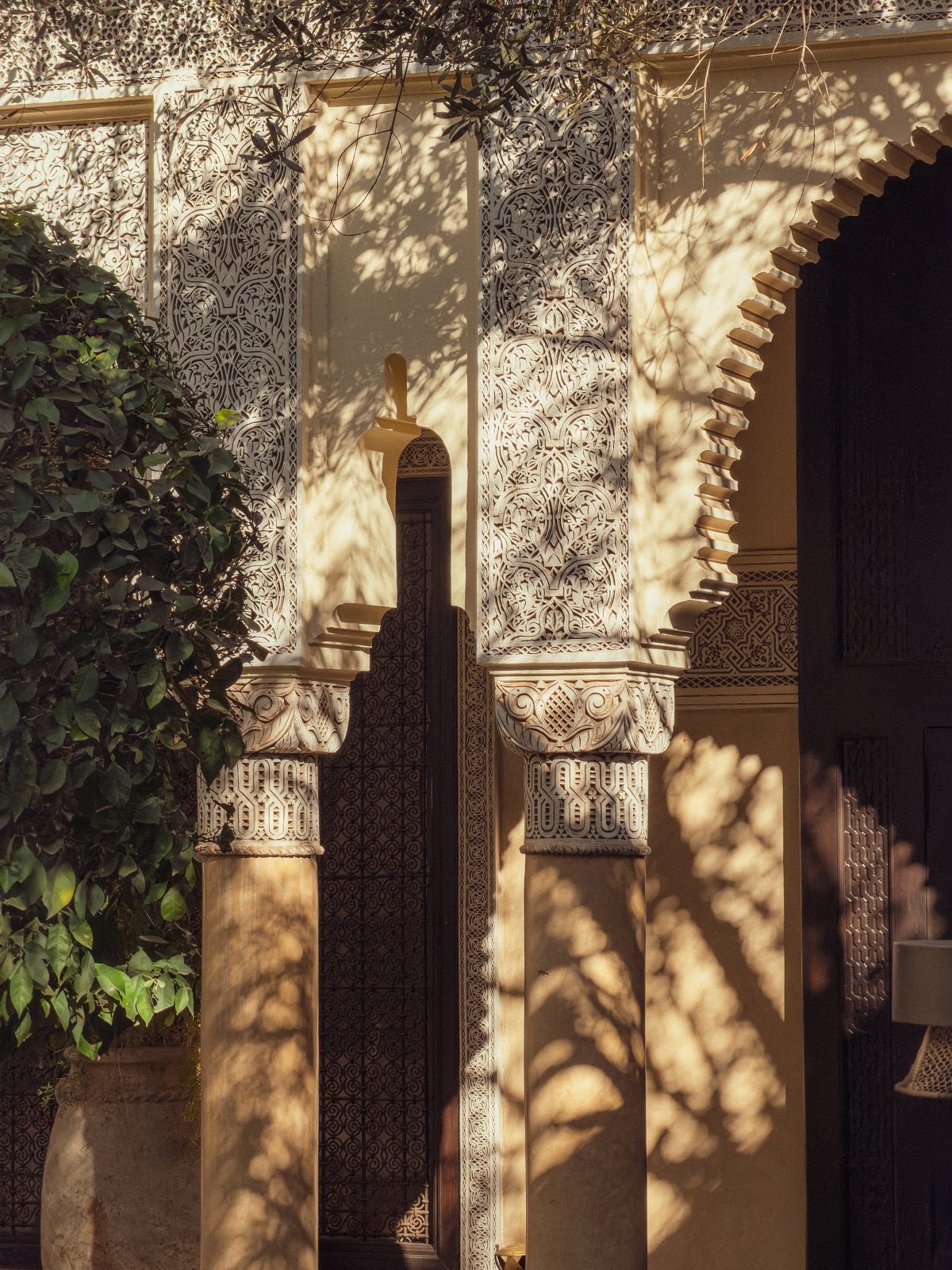
- Image credit: Villa des Orangers
-
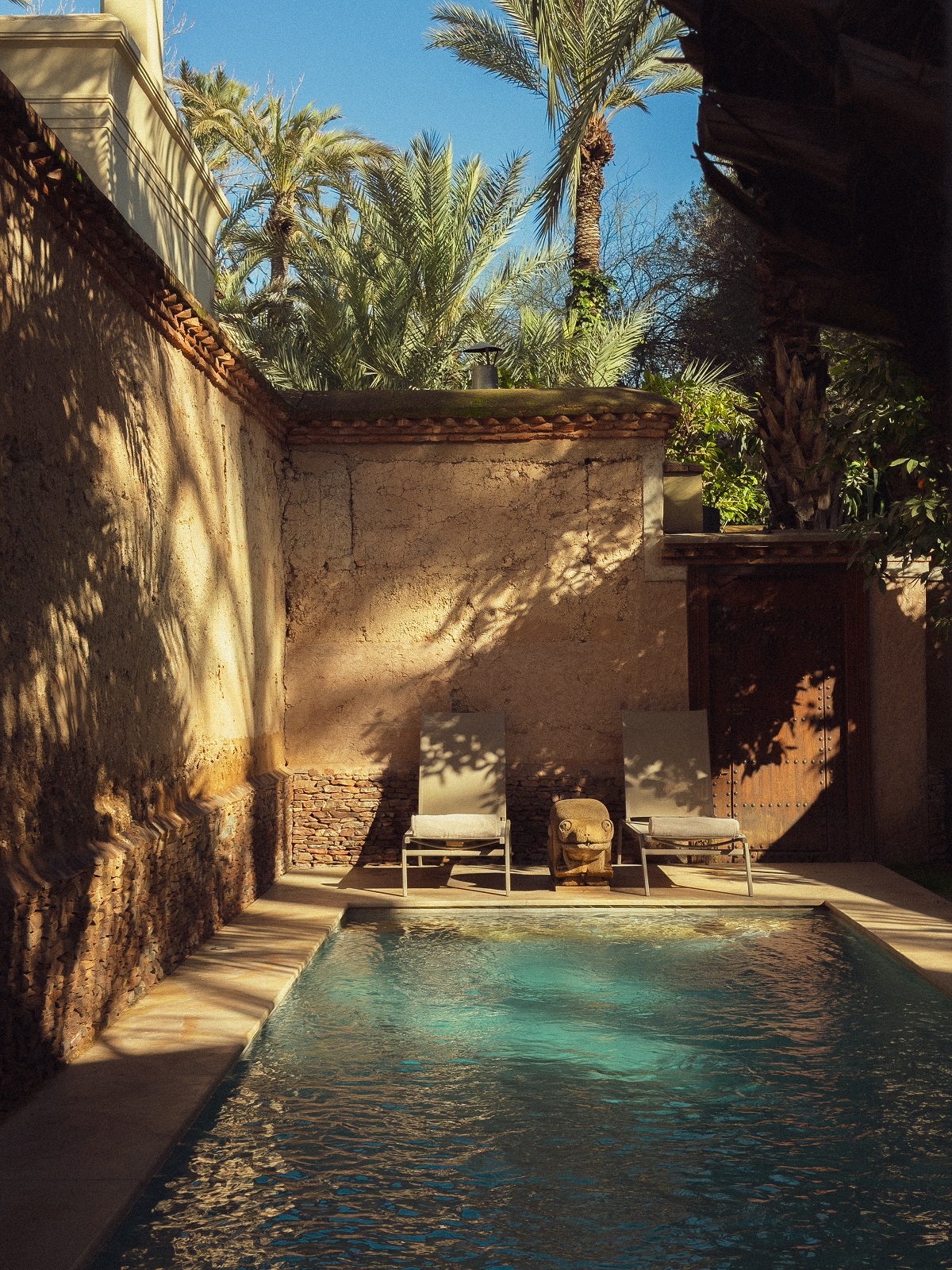
- Image credit: Villa des Orangers
HD: What does growth mean for AKAN — more hotels, new destinations, or expanding into different aspects of the hospitality and lifestyle world?
YBT: Growth, for AKAN, has two directions. The first is depth. An important part of the coming years is what happens inside our existing houses: the cultural programme and artist residencies at El Fenn, the potager to plate work of our chef at Les Deux Tours, the gastronomic and craft traditions we honour at La Villa des Orangers. Across the collection, we are developing retreats to allow people to experience Morocco more deeply, as well as partnerships such as the one we are shaping with the Montresso Art Foundation, and a new educational programme for Marrakech students focused on hospitality and heritage crafts. That is growth that gives back, to the crafts, to the community, to the country. It matters to us more than growth in numbers.
The second direction is longer term and closer to a dream. Morocco is so diverse. From the red clay of Marrakech through the whitewashed building of Essaouira to the riads in Fès embellished with the most refined zellige and stucco in the country. Each place has its own architecture, light and receiving.
Our ambition is to compose over time, a collection of houses that lets a traveller experience all these aspects of Morocco. Not a hotel chain, but a living experience of the country’s many facets. Any new house we take on must reveal something that was absent previously from the collection.
HD: What do you think international visitors are looking for from Morocco today that perhaps they weren’t looking for 10 or 20 years ago?
YBT: The shift is from spectacle to substance. Twenty years ago, Morocco was often a cartoon of souks, snake charmers and a certain orientalist imagery. Today’s travellers want to discover more about the layered, complex nature of our country. Yes – there are beautiful traditions here. But Morocco is also a youthful, vibrant and incredibly forward-thinking country.
Marrakech for instance now has a serious contemporary art scene. The 1-54 Contemporary African Art Fair, MACAAL, the Musée Yves Saint Laurent, foundations such as Montresso, and El Fenn all helped open that up to international travellers who arrive knowing there is a real conversation to have. They want to leave having learnt something. And that is exactly the traveller AKAN was built for.
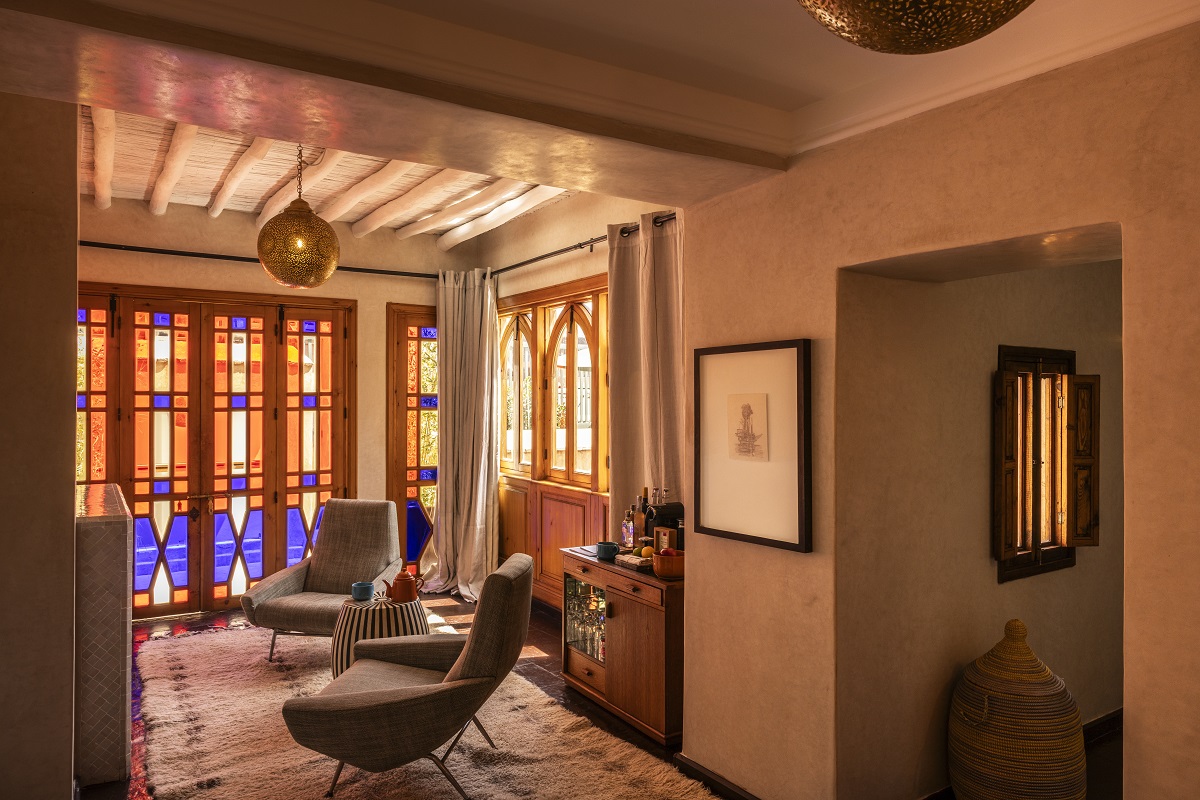
El Fenn | Image credit: Moggi Photography
HD: We’re seeing a shift away from formal hotel experiences towards something much more relaxed, personal and residential. Is this something you recognise in your own projects?
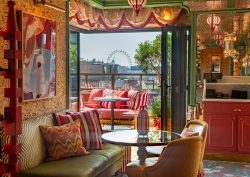
YBT: That kind of personal, residential experience is inherent in Morocco. Hospitality here has always started in the home. Take El Fenn as an example. It began with just six rooms as a home and organically grew. But today it still retains that personal feeling of staying with a friend who happens to have an extraordinary art collection. That was Vanessa Branson’s original instinct, and one we protect.
Relaxed for us also does not mean less care. In fact, it demands more because the service has to be intuitive rather than scripted. There is no dress code or reservation script for instance at Sol Sun Days, our new Sunday sunset music sessions on the El Fenn rooftop. Just a way of bringing hotel guests and Marrakchis together over drinks and a DJ set, the city and the house converging. That is what residential hospitality really means, a place that lives, and lets you live in it.
-
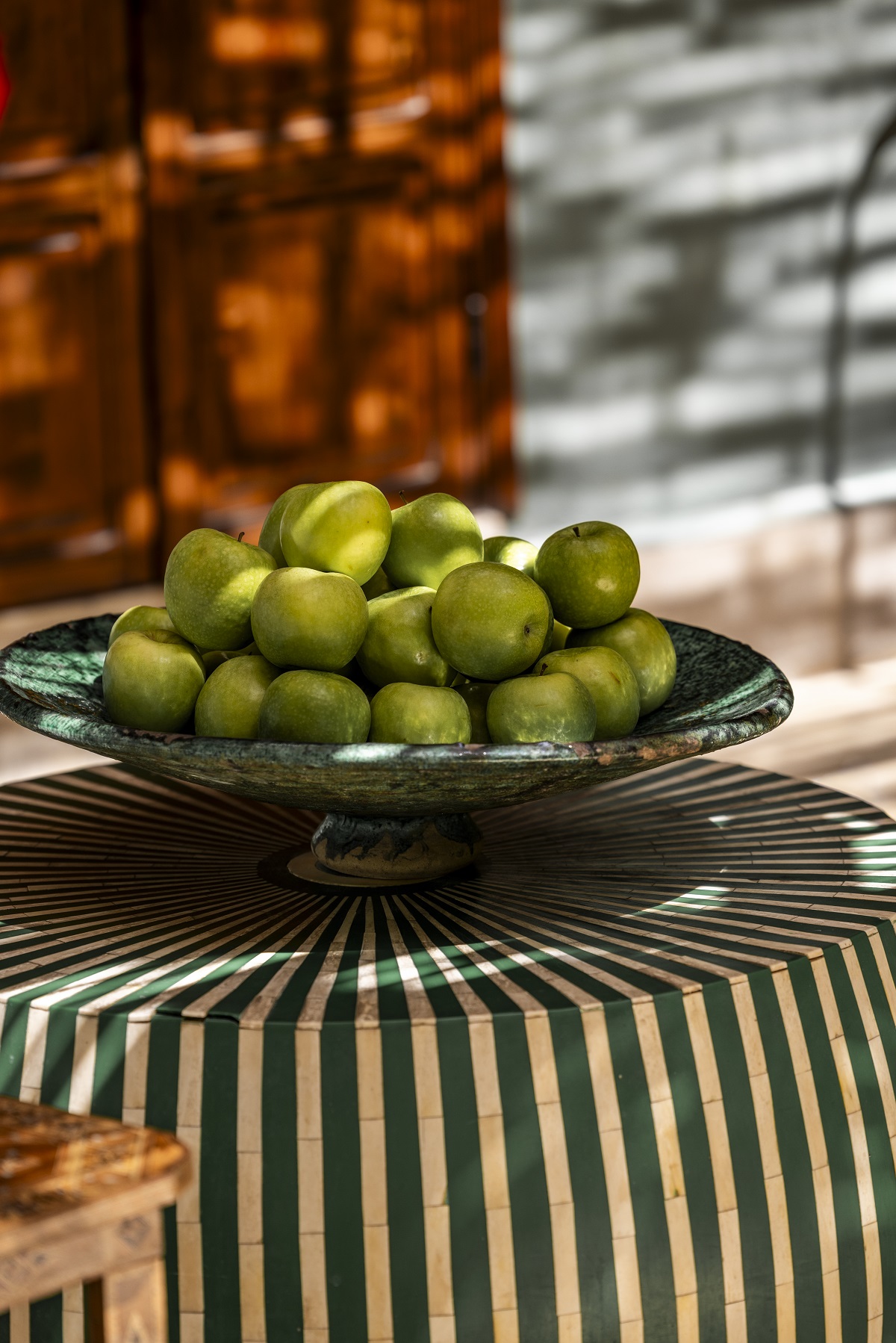
- El Fenn | Image credit: Moggi Photography
HD: Looking ahead, what would you like the next chapter of AKAN to say about Morocco and its place within the global hospitality landscape?
YBT: That Morocco is a leader in global hospitality, not a backdrop for someone else’s imagination.
For decades, many of Morocco’s most recognisable boutique properties were created by foreign founders, often beautifully with deep love for the country, but always with an outside perspective. AKAN is the first collection of luxury boutique hotels wholly owned by a Moroccan family, and we are building it to stand alongside the world’s great hotel names, on our own terms, with our own voice, without translating ourselves into a global template.
The next chapter is also about exchange in both directions. A key strand of our upcoming Everything Old Is New Again residency, curated by Roger Karera ahead of 1-54, is the collaboration between South African ceramicist Zizipho Poswa and master ceramicists at Serghini Pottery. It’s about looking back but also forward and taking Moroccan creativity into the world whether through art, gastronomy, music or design. Morocco for the curious. That is the door we hold open.
Shining the light on El Fenn…
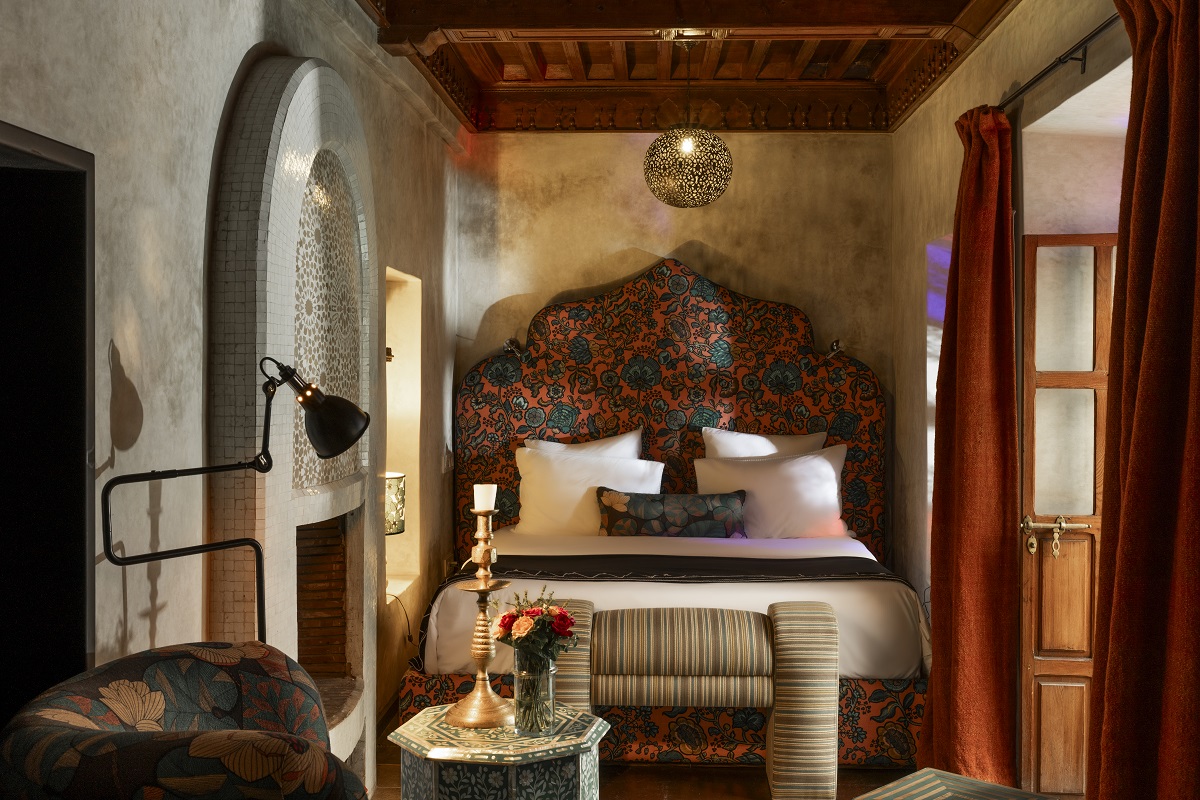
Image credit: Moggi Photography
HD: El Fenn has become synonymous with a very particular vision of Marrakech. What has been the challenge of taking on such a strong brand and moving it forward?
YBT: The challenge is knowing what to protect and what to evolve. People love the colour, art and sense of walking into someone’s home at El Fenn and that’s exactly what we are protecting. Vanessa remains closely involved as Cultural Ambassador, and her relationship with the artists and creative community of Marrakech is irreplaceable.
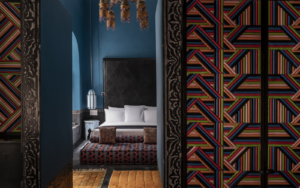
What I hope we offer is Moroccan depth and long-term stewardship. So if we do decide to intervene, during a large refurbishment project over the summer for instance, we do so in El Fenn’s own language. New hand-made zellige we commissioned for instance was an unusual combination of deep turquoise threaded with traces of red. The technique is six hundred years old. The colour is ours. That is the right relationship between preservation and evolution. They are not opposites, they require each other.
Behind the scenes, we are investing significantly in what guests will never see: energy systems, staff facilities, infrastructure. A house built over twenty years deserves to be set up for the next fifty. Our job is not to reinvent El Fenn. It is to carry it forward.
HD: What have you learnt about designing hospitality spaces through working on El Fenn that you might make you approach things differently?
YBT: That a space should feel collected over time, not decorated in one go. El Fenn was built riad by riad over twenty years, eight interconnected riads today, and that layered quality is what makes it impossible to replicate. It is a lesson in patience. The best interiors reveal themselves slowly, and they hold up because they have been genuinely lived in.
Also, that art belongs where people live. El Fenn’s extraordinary collection hangs on gallery walls but also in the café, bedrooms and meeting rooms. It even sits on floors in the form of sculpture. And all this changes how art is encountered. The huge frescoes that renowned Moroccan artist painted on the signature red walls in our entrance corridors are a good example. You are enveloped in her imaginary garden from the moment you step over the threshold.
It’s also key to bring makers in early. Craft is not a finishing touch, it is design. The hand stitched leather floors and the copper baths at El Fenn are as much part of the architecture as the walls themselves. And the riad itself teaches you to design inward. Courtyards, light, shade, colour. Everything we need is already there in the architecture. Our job is to listen to it.
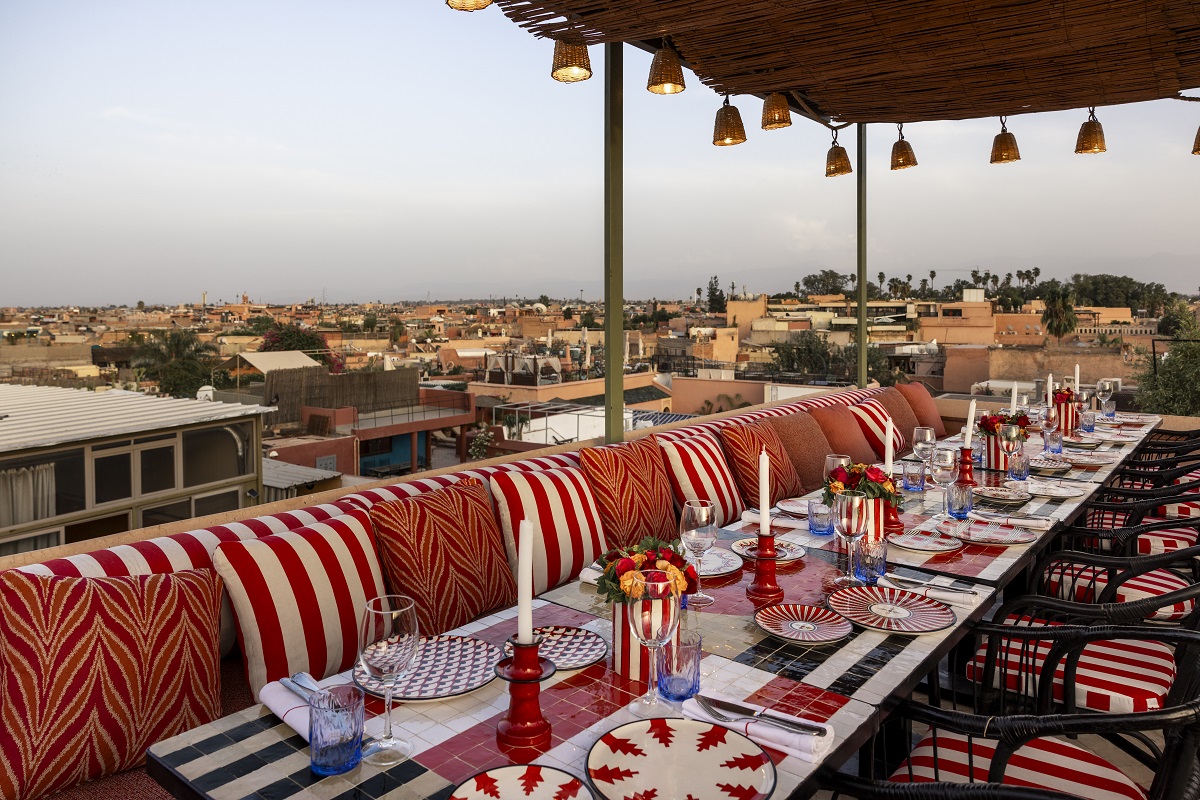
El Fenn | Image credit: Moggi Photography
Quickfire
1: What is one misconception about Moroccan design that you would like to challenge?
That it is a fixed vocabulary of lanterns, zellige and pastiche. Moroccan design is not a museum piece, it is a living, contemporary practice that survives by being used, transformed and reinvented every day.
2:What should a guest take away from staying at El Fenn (or any AKAN hotel) beyond the boutique?
A real connection to Morocco, the emotion left behind by a person, a maker, a taste, a scent, a place, and the curiosity to come back. Guests should feel excited before they land, and connected long after they leave.
3: Best rooftop bar/restaurant in Marrakech not under the AKAN umbrella?
Comptoir Darna. It carries a very Moroccan soul in its decor and its oriental dancers, but it lives entirely in the present, with a fusion menu, a live band mixing Gnawa with electric guitars and saxophone, and DJ nights that turn the room into something else altogether. It is a place that shows Morocco is not a fixed image. It moves.
Main image credit: AKAN