











Hotel review: Jade Mountain and Anse Chastanet, St Lucia
The Caribbean has held a lengthy reputation for being a stand-out destination when it comes to awe-inspiring beach holidays, but when Nick Troubetzkoy visited St Lucia in the 1970s, he saw something infinitely more meaningful than a nice place to enjoy a sundowner, and so began a journey to share a unique vision in the most monumental way. Sophie Harper checked in to Jade Mountain and Anse Chastanet to find out more about the passion project that turned into a legacy…
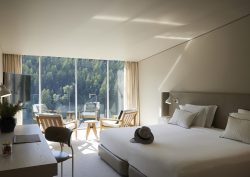
Jet lag is generally something most of us try to avoid or prepare for – changing our sleep routines and eating habits to get around the grogginess that comes from travelling across time zones, but sometimes jet lag affords us little surprises that would otherwise be missed. For me, waking at 4am on my first day at Anse Chastanet, I was acutely aware of the quiet, looking out from my bed into the pitch black and feeling the soft breeze – not from an open window, nor from open doors to the balcony, because there is no need for either of those things when your suite simply has no fourth wall.
I promise I’m not exaggerating when I say an entire side of the room isn’t there – it’s the most remarkable design feature I think I’ve encountered during a hotel stay. When you’re perched high above the treetops, looking across the dense mass of tropical plants and verdant rainforest across the bay to the Pitons at dawn (St Lucia’s twin volcanic spires), pink clouds forming behind the two peaks as the sun slowly rises and the wildlife wakes – a number of whom visited me during my stay, uninvited, but quite welcome – it is quite the ethereal moment, all thanks to Nick Troubetzkoy’s vision, which has been 50 years in the making.
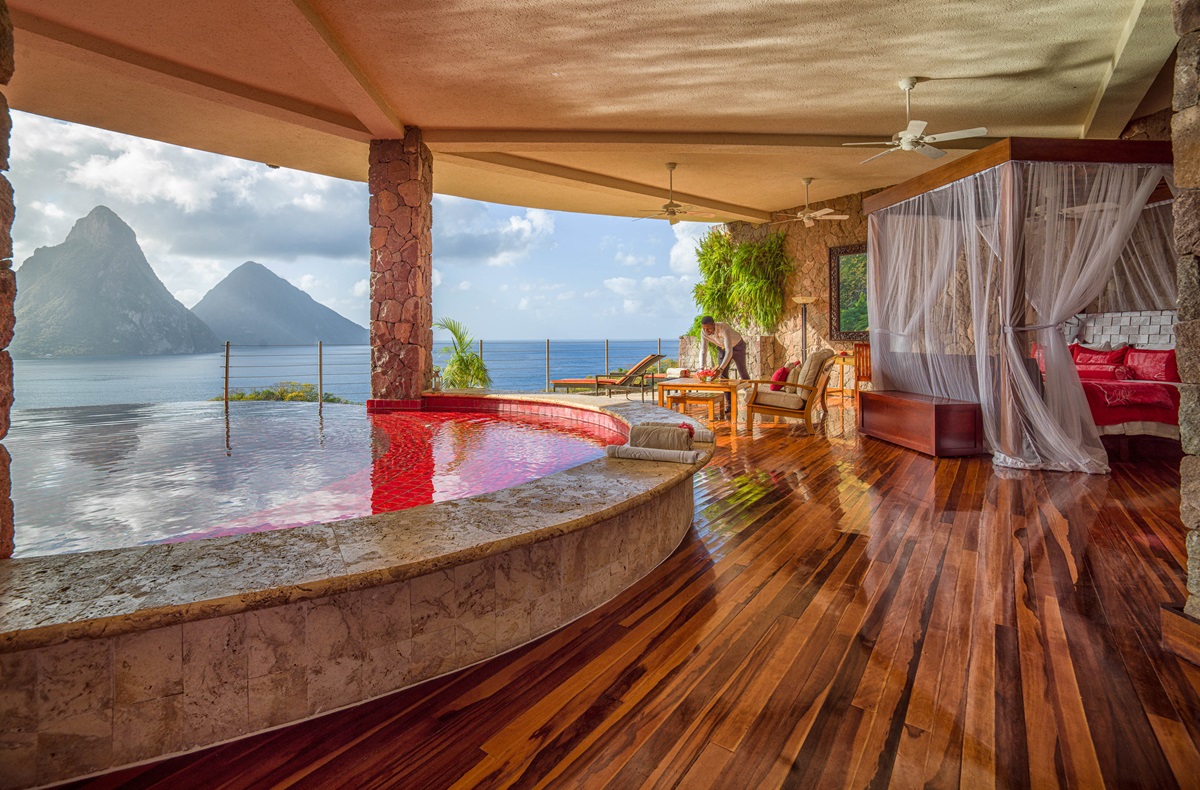
Image credit: Jade Mountain
Anse Chastanet and Jade Mountain are sister hotels that share the same plot of land and connection to nature, stemming from an architectural project that kept growing and evolving – one informing the other. Anse Chastanet came first; the story began in 1970s St Lucia, when Nick – a young architect at the time – arrived on the island to work for a Canadian firm and simply never left. He bought Anse Chastanet in 1974, which was a modest 14-room property at the time, and spent the following decades growing it, room by room, into the 49-room resort it is today, spread across a 600-acre estate with two beaches on the island’s south-western coast. Every expansion was designed individually; nothing here was built from a repeated template.
Jade Mountain, which opened decades later, was conceived as an evolution of that same philosophy rather than a separate venture – Nick Troubetzkoy’s answer to the question of how much further in harmony with the landscape could actually go. The answer, it turns out, is very far indeed.
Sadly, Nick passed away in late 2024, and staying here now carries a slightly different weight than it would have a few years ago – you’re not just touring a hotel, you’re touring somebody’s life’s work, completed. Karolin Troubetzkoy, who joined the business in the 1980s after falling for St Lucia during a hospitality placement (and, not incidentally, falling for Nick too), has run the resorts’ operations and marketing for decades and continues to lead them today alongside son Yasha, who serves as Assistant Managing Director. It’s a proper family business in the least corporate sense of that phrase – three other Troubetzkoy children went into different careers, but the ones who stayed, stayed because they wanted to, not because the business needed filling.
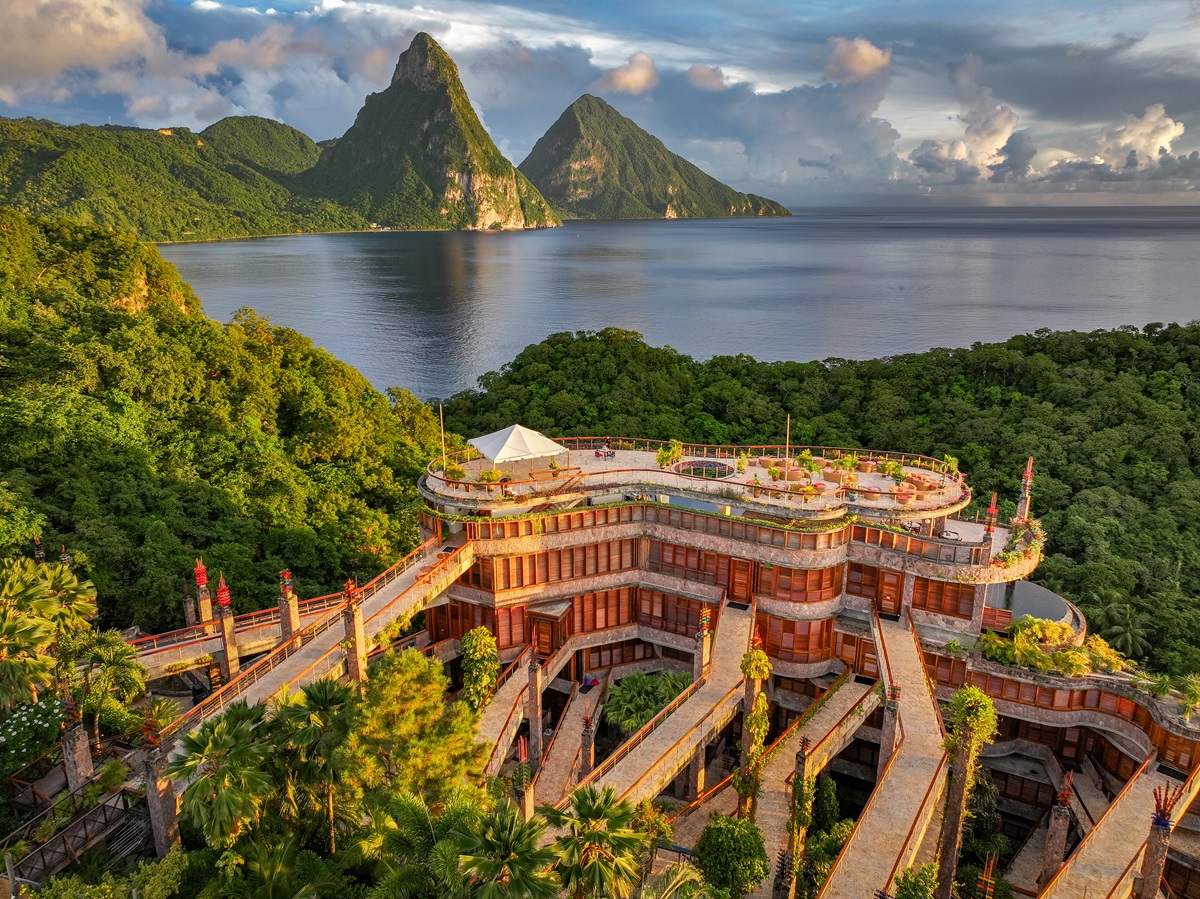
Image credit: Jade Mountain
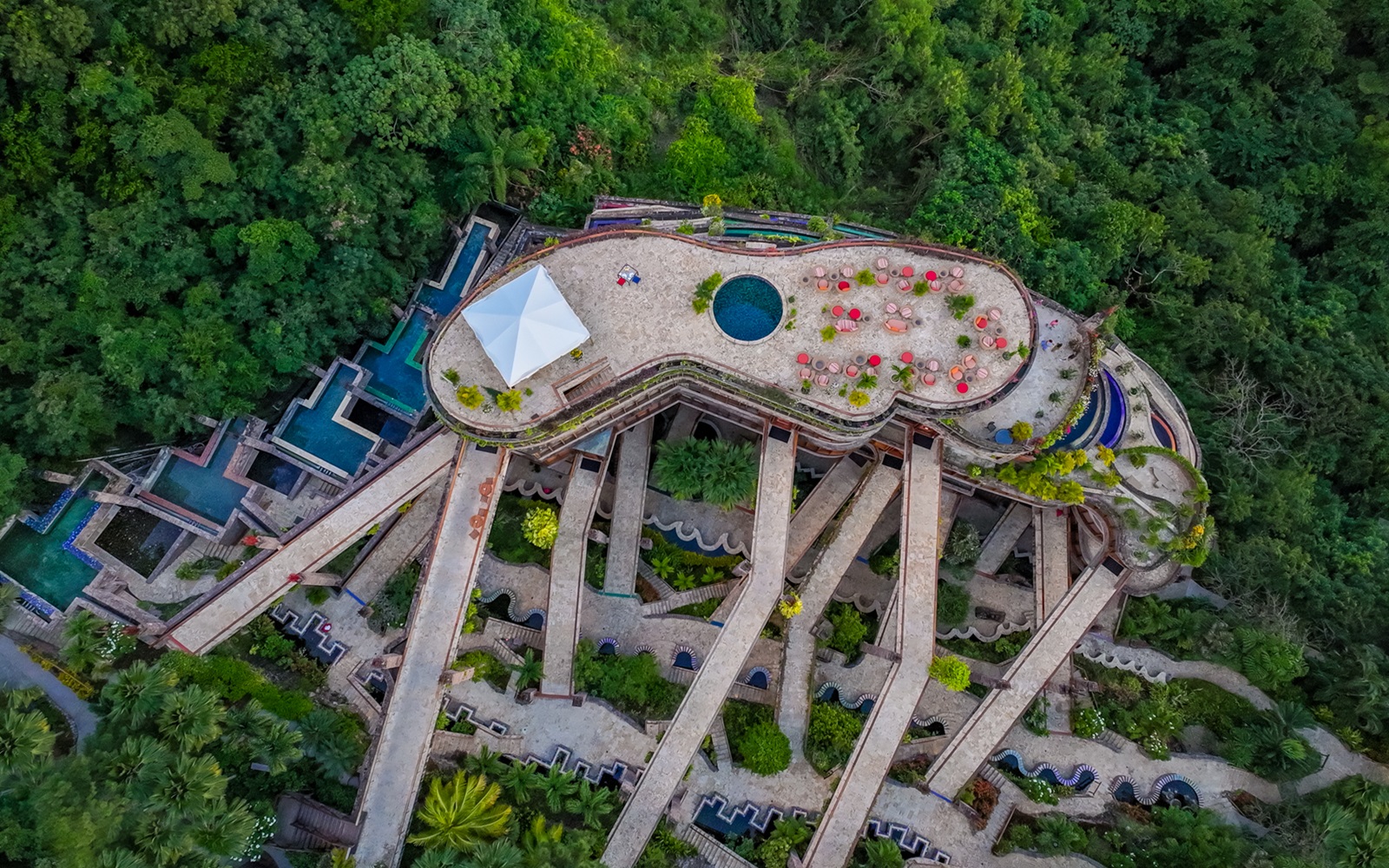
Here’s the thing about Jade Mountain that photographs never quite capture: it doesn’t feel designed so much as grown. Nick described the process himself as one without a master plan – he had, in his words, “the luxury of being able to deliberate,” which made it “difficult to plan ahead” but let the building “metamorphose until it took the shape it now has.” That’s an unusual thing for an architect to admit, and it shows. The resort reads less like a blueprint executed and more like a coral reef – organic, asymmetrical, growing upward and outward in whatever direction made sense given the mountain underneath it.
Individual stone bridges connect each of the 29 ‘sanctuaries’ (Jade Mountain doesn’t really do ‘rooms’), each one a freestanding structure with its own private infinity-edge pool and that now-famous missing fourth wall. There is no glass. There is no screen. The boundary between your bedroom and the rainforest is a suggestion at best. Materials matter enormously here, and it’s worth knowing what you’re actually looking at when you run your hand along a wall: excavated volcanic rock, dug out during construction, was recycled straight back into the structure rather than trucked away; the pillars and much of the woodwork are indigenous tropical hardwood; the floors are locally quarried limestone, chosen partly because it’s naturally slip-resistant around all that open water. None of this was imported for effect. It was, quite literally, lying on the doorstep.
Anse Chastanet, the older sibling, wears its architecture differently – more colourful, more art-filled, rooms individually designed, with furnishings, textiles, and even staff uniforms rooted in St Lucian craft traditions. Staying at both back-to-back, you notice the correlation: the hand-set stonework, hand-finished wood, and a near-total absence of anything that looks machine-stamped.
The astonishing part, and the part I didn’t fully appreciate until Karolin mentioned it over dinner, is that the entire Jade Mountain project was built by hand, largely by workers from the neighbouring town of Soufrière – more than 500 St Lucians were involved in its construction, and Nick was famously vocal about his respect for the island’s masons and woodworkers, whose skill is genuinely the star of the show here.
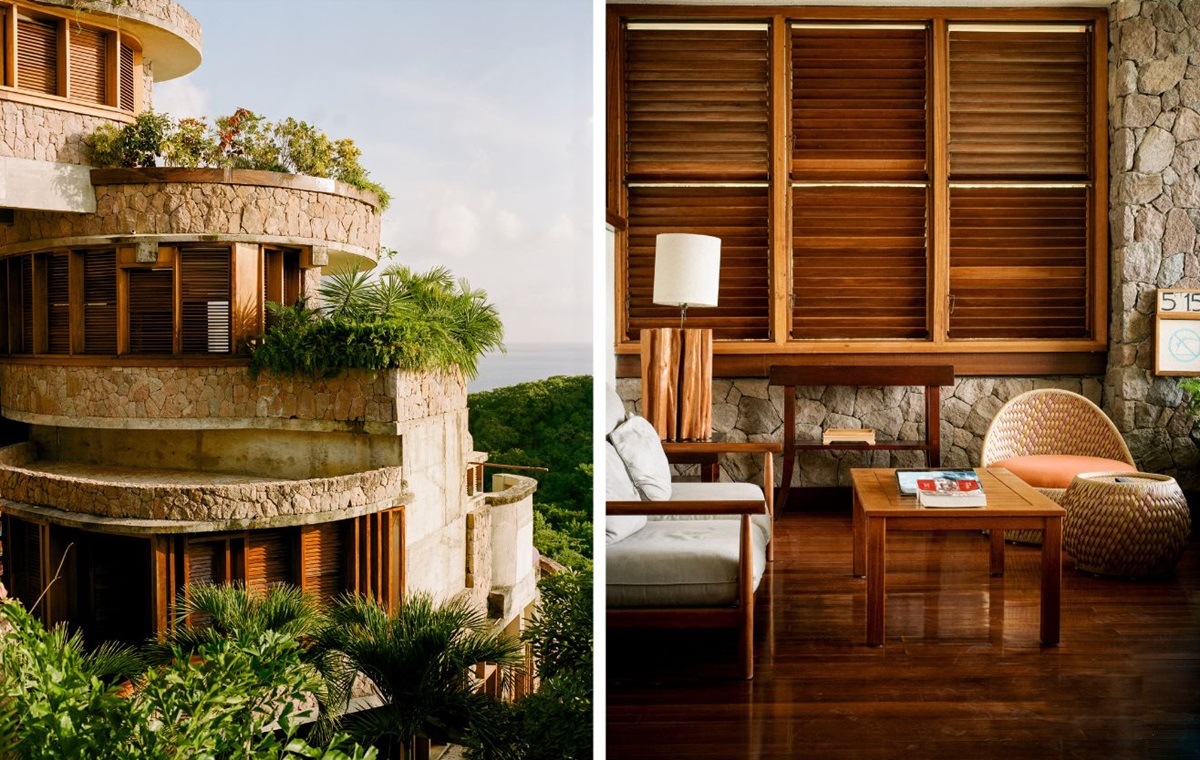
Image credit: Jade Mountain/Anse Chastanet
Because the buildings have so little in the way of enclosed walls, interior design here means something different than it does anywhere else I’ve stayed. There’s very little furniture doing the work of dividing space – the landscape does that. A four-poster bed sits under an open roofline with the tree canopy visible beyond it. An elevated, open-air bathroom is positioned specifically so that the view from the tub is the same view you’d get standing on the terrace – nothing wasted, no room left facing a wall.
Handmade furnishings are everywhere and none of it feels staged. Heavy wooden pieces, imported linens on the beds, art and craftwork sourced locally. Down at Anse Chastanet, this tips further into colour: bold fabrics, local artwork on the walls, and a sense that the rooms were curated by the people of St Lucia. Both properties share a specific discipline, though: no televisions, no clocks, no telephones in the rooms. It’s a deliberate design philosophy as much as an aesthetic one – the whole point is separation from the world and it’s genuinely disorienting, in a good way, to realise on day two that you have no idea what time it is – and don’t especially care.
When it comes to sustainability, Nick Troubetzkoy was, by his own account, environmentally conscious before ‘green’ was a marketing category, driven initially by a fairly unglamorous problem: the sheer volume of waste a five-star, all-inclusive-adjacent resort generates, and a genuine discomfort with dumping it on a small island community.
That discomfort turned into infrastructure. Jade Mountain became the first hotel in the Caribbean to achieve LEED Gold certification, and both Nick and Karolin were founding figures behind the Soufrière Development Foundation and the Soufrière Marine Management Area – organisations focused on sustainable use of the region’s land and marine resources, not just the resort’s own footprint.
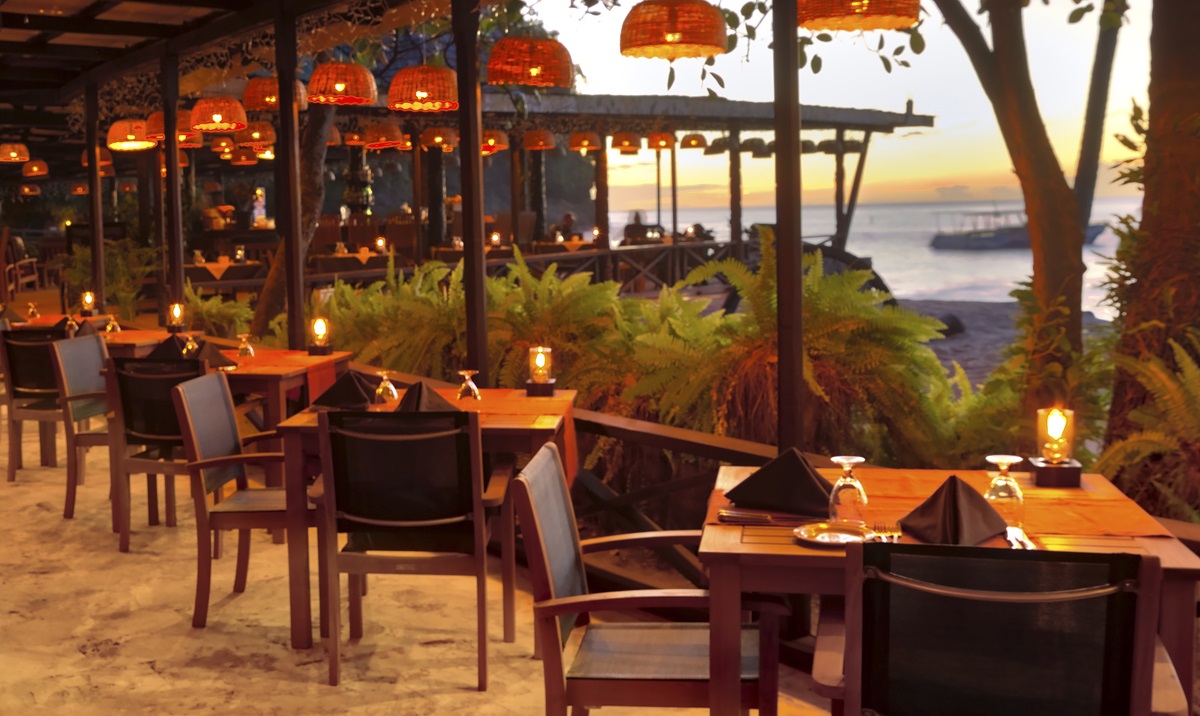
Image credit: Anse Chastanet
More recently, the resorts have leaned into guest-facing sustainability work rather than keeping it behind the scenes. There’s an active coral reef restoration project that guests can participate in directly, which – according to Karolin, has had a knock-on effect of turning holidaymakers into genuine advocates once they’ve spent an afternoon literally rebuilding reef structure with their own hands. There’s ongoing land reforestation work using indigenous plant species, a push to cut single-use plastics (the resorts signed onto the UN’s Global Tourism Plastics Initiative), water conservation measures, and staff training programmes designed to embed sustainable practice into daily operations rather than treating it as a seasonal campaign. In 2023, the pair picked up the Caribbean Tourism Organisation’s Caribbean Sustainable Tourism Award, along with a Lifetime Achievement Award at the Caribbean Hotel and Resort Investment Summit.
The “local, local, local” mantra Nick coined from the beginning goes beyond materials and architecture. From the outset, the guiding idea was to minimise what’s sometimes called ‘tourism leakage’, the phenomenon where a destination’s tourism revenue mostly flows straight back out to foreign suppliers and ownership groups. The Troubetzkoys built and furnished as much as possible using local labour and local goods specifically to keep the economic benefit inside Soufrière.
That philosophy extended into building entirely separate local businesses to create livelihoods beyond the hotel gates: a scuba centre at Anse Chastanet, an organic farm supplying the kitchens, and even a chocolate laboratory working with locally grown cacao – which guests can experience first-hand by taking a chocolate making course (as a serious chocoholic, this was a dream come true for me). Between the two properties, the Troubetzkoy family has become one of the largest private employers on the island, with several hundred full-time staff – a genuinely significant footprint for a business that started as a 14-room guesthouse.
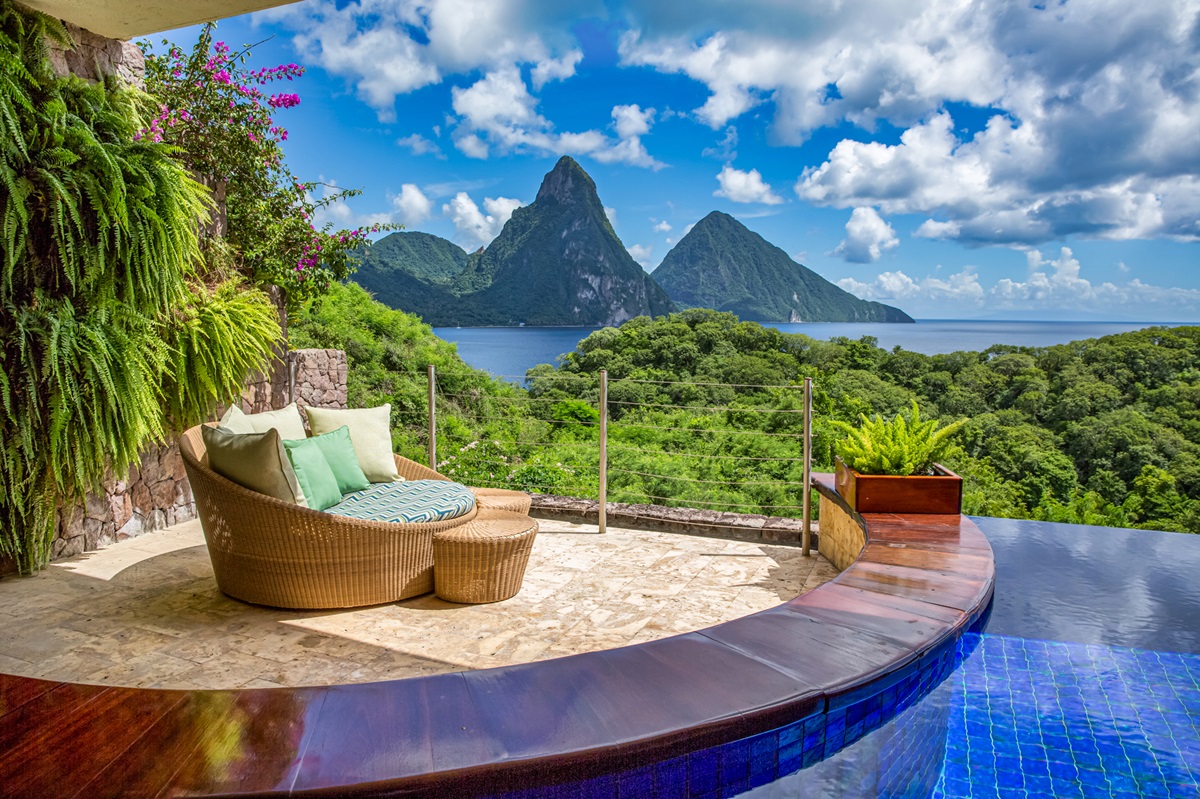
Image credit: Jade Mountain
You feel this on the ground in small ways: staff who’ve been here for years and speak about the Troubetzkoy family with love and the estate with real ownership in their voice, not the rehearsed script energy you sometimes get at big resort chains; produce on the dinner table that comes from the hotel grounds rather than off a container ship; a sense that the hotel is embedded in Soufrière rather than fenced off from it.
Jade Mountain and Anse Chastanet aren’t for everyone, travellers looking for a white box with a television and air conditioning that seals out every insect noise probably won’t appreciate what this corner of of the island has to offer. What you get staying at Anse Chastanet and Jade Mountain is something closer to staying inside a fifty-year love letter – one man’s stubborn, ultimately vindicated belief that a building could be grown out of a mountain rather than dropped onto one, using the hands and materials of the community around it, without asking that community to absorb the environmental cost.
It’s rare that a hotel’s marketing story and its lived reality actually line up this closely. Here, walking the stone bridges at dusk with the Pitons doing their slow colour-change through orange and violet, they absolutely do.
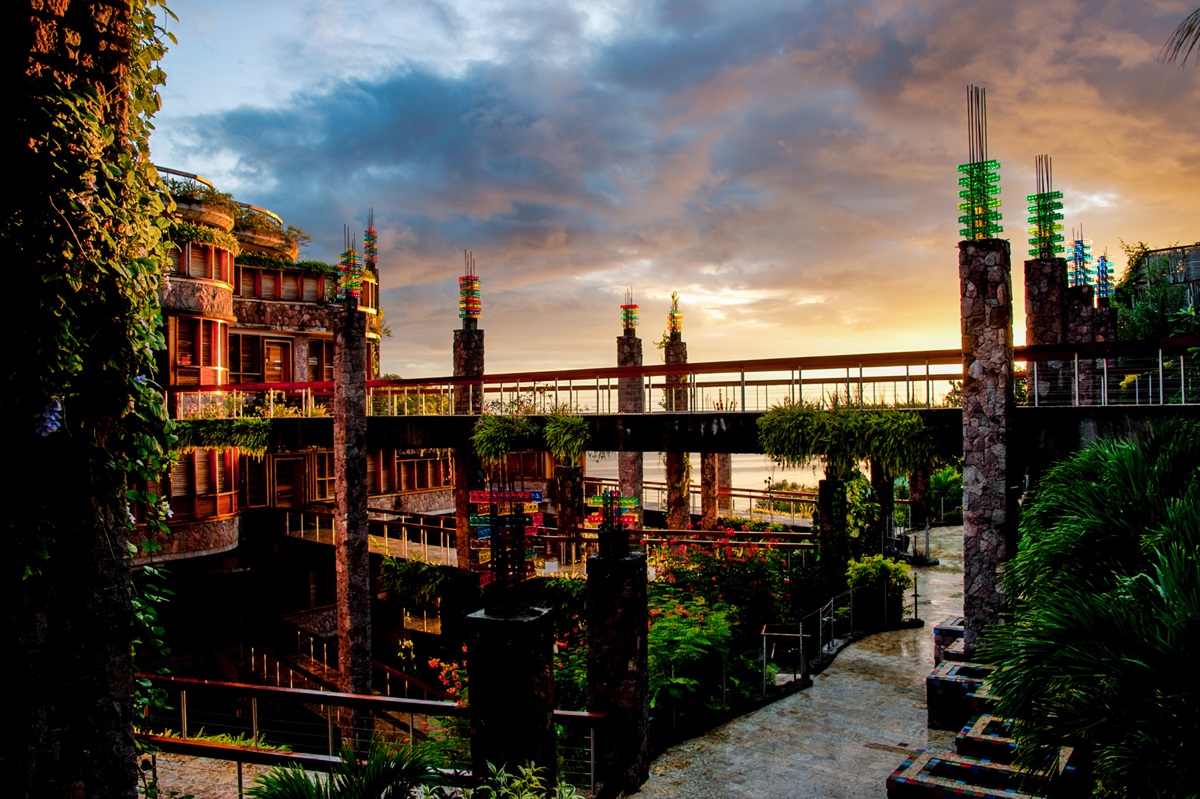
Image credit: Jade Mountain
Main image credit: Jade Mountain