











Now restored as the London headquarters of Sanderson Design Group, Voysey House has returned to its original purpose — a home for design, craftsmanship and the enduring legacy of Sanderson. And with a 75,000-strong archival collection on its third floor, Deputy Editor Meg Taylor leapt at the chance to look around…
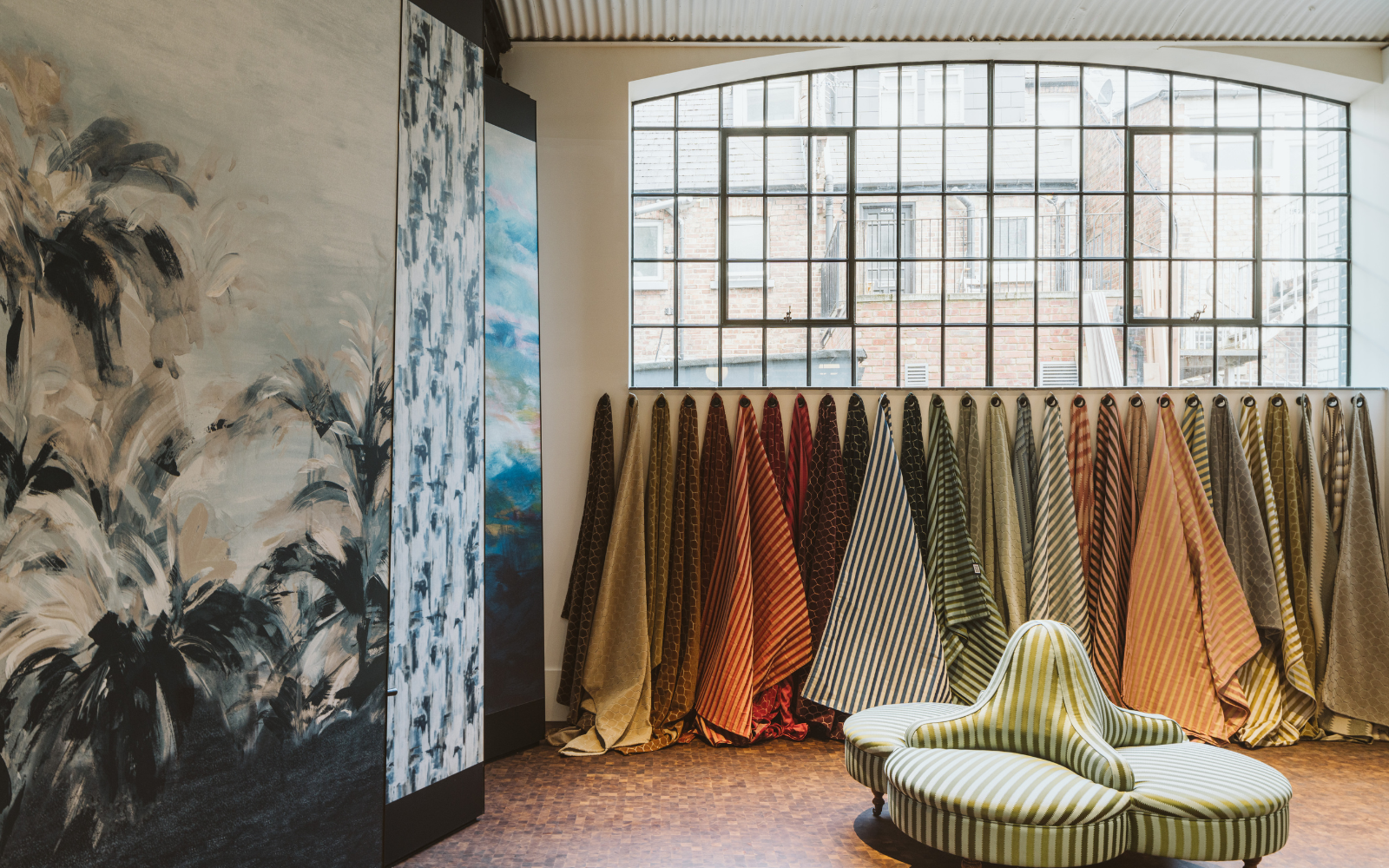
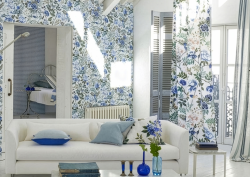
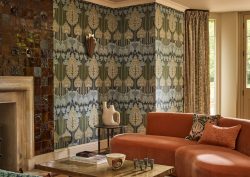
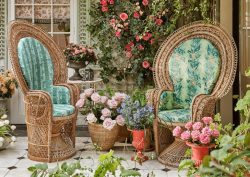
Today, Sanderson Design Group is far more than a single heritage brand. It is an international interiors company and custodian of some of Britain’s most significant decorative arts houses — Sanderson, Morris & Co., Zoffany, Harlequin and Clarke & Clarke. From wallpapers and fabrics to paints and licensing collaborations, the Group translates archival design into contemporary interiors across residential, hospitality and global contract markets. That sense of stewardship feels entirely at home within Voysey House’s quietly pioneering architecture.
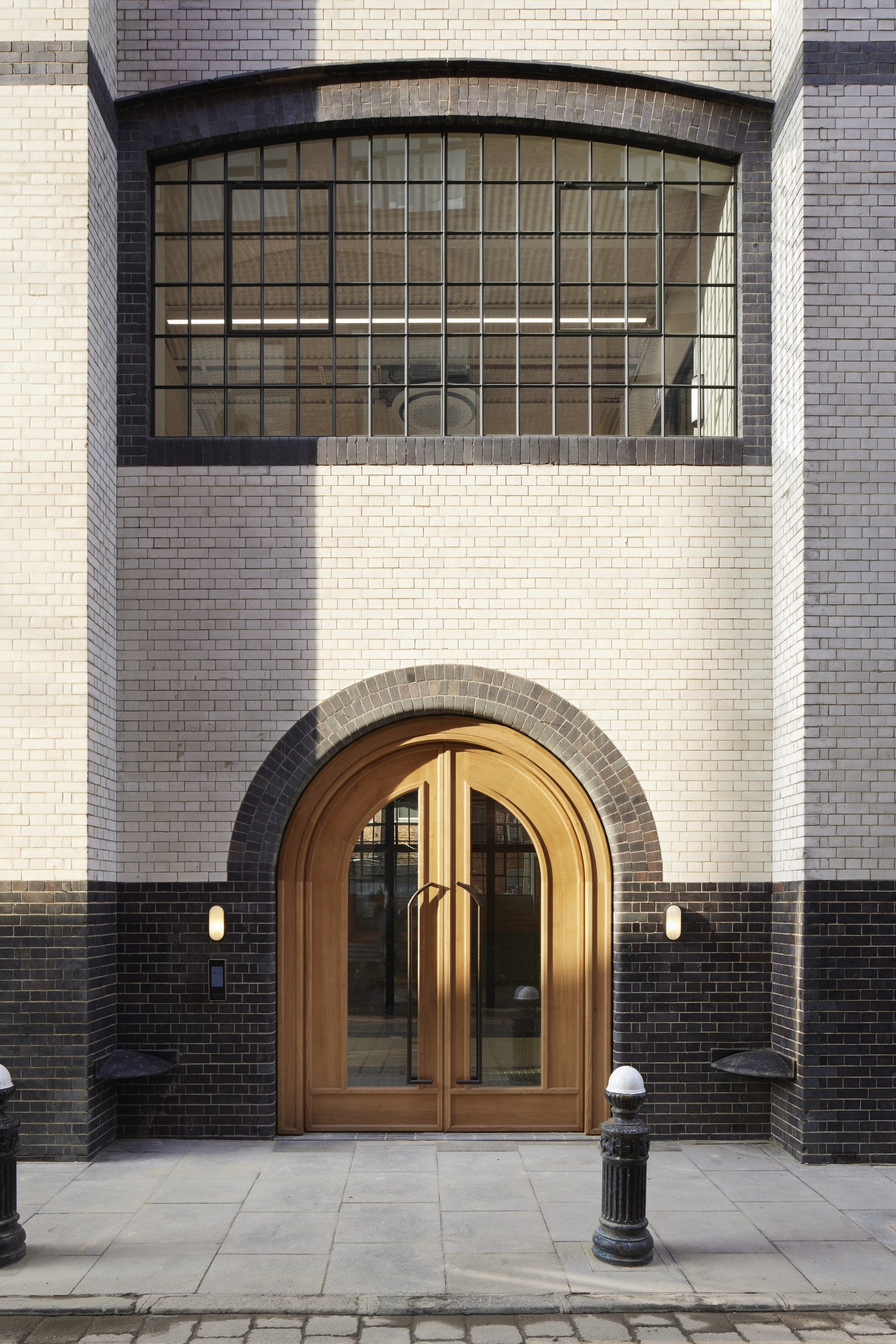
Designed by the architect and designer Charles Voysey and completed in 1905 as a wallpaper factory for Arthur Sanderson & Sons, Voysey House — now the London base of Sanderson Design Group — remains the only commercial building Voysey ever built.
-
- Image credits: Jack Hobhouse
Grade II listed, Voysey House is widely considered a formative work in the evolution of the modern movement in architecture — and standing before it, that lineage feels entirely plausible. The façade is almost abstract; planes of white brick, disciplined windows, little ornament. It’s easy to see how this building nudged architecture towards modernism’s clarity of form.
Originally built as an extension to the Devonshire Works factory — the redbrick building opposite Voysey on Chiswick’s Barley Mow Passage — the pair were once linked by a third-floor footbridge. In 1928, a fire tore through the redbrick factory, leaving nothing but a ghostly shadow of the former bridge on the upper brickwork. Voysey House survived but Sanderson & Co. did not stay.
What followed was a century of reinvention for the building, at various times a print works, car garage, and architect’s studio. And then, in June 2024, after extensive restoration, Sanderson Design Group came home.
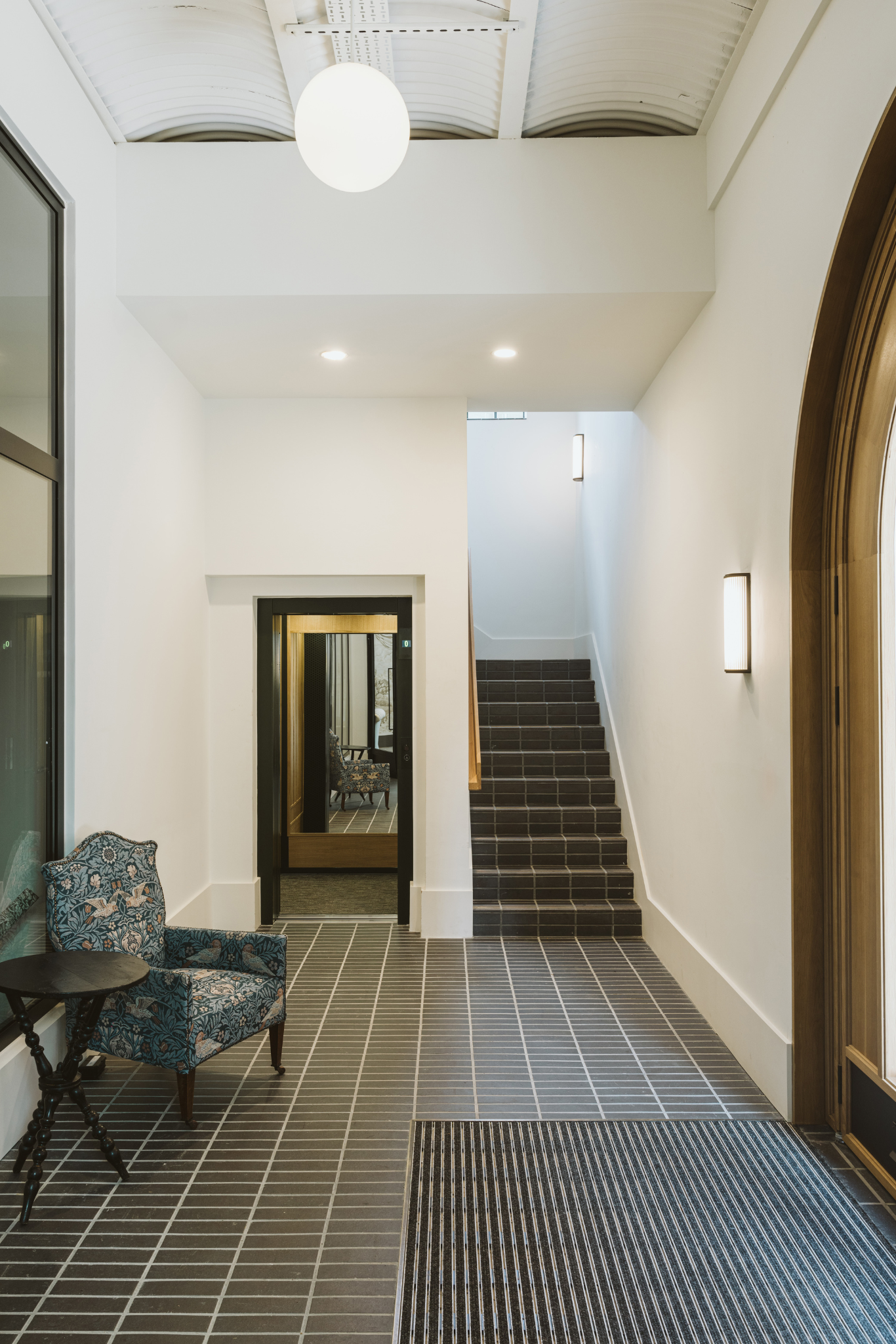
Stepping inside only weeks ago, I was struck by how palpably the restoration feels like a conversation with the past rather than an imposition upon it. “Because it’s Grade II listed, everything has been restored to its pre-fire original state,” said Eleanor Kelly, the Group’s PR & Comms Manager, as we gathered beneath the soaring ceiling, “we kept as much as we possibly could.”
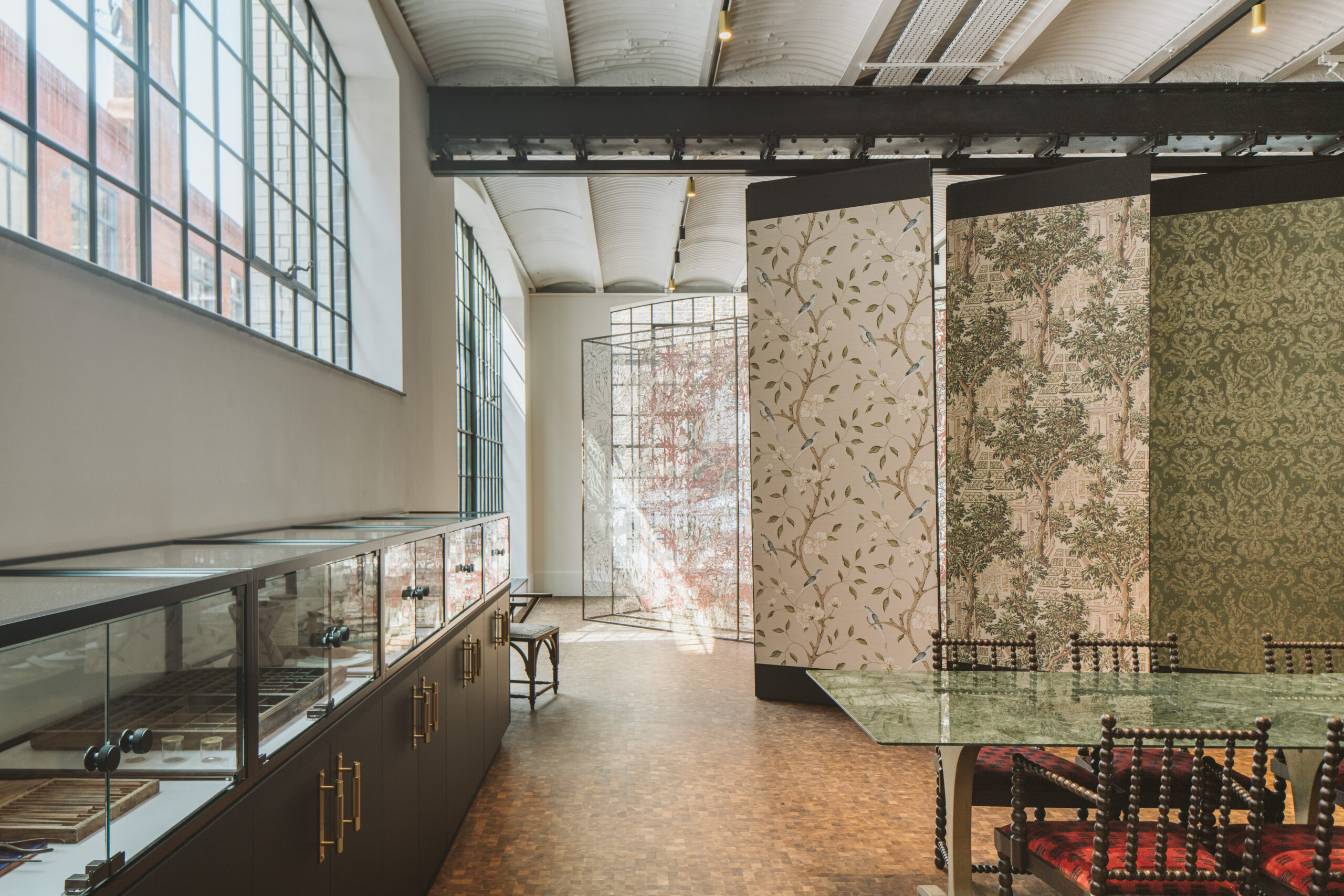
Image credit: Jack Hobhouse
The ceilings throughout are original — “they’ve got quite a lot of imperfections,” she added, glancing up affectionately, “but we quite like that.” As do I! The marks and slight irregularities feel like design-fingerprints. Even the infrastructure has been carefully negotiated; new heating and air conditioning systems were designed around the existing proportions, not the other way round.
The Crittall windows are a perfect example of this gentle subversion. They look original — slender, elegant, almost severe — but are in fact double glazed, with a near-invisible five-millimetre vacuum gap. “You wouldn’t believe it, would you?” Eleanor laughed. “They’re not black either. They’re actually a really dark green.” During renovation, the team discovered the earliest frames had been painted that deep green. Today it’s affectionately referred to as ‘Voysey Green’.
Look up in the ground floor showroom and the original steel beams remain proudly exposed. Rather than conceal them, the team has clipped a track rail system onto the beams, allowing wallpaper panels to slide, shift and reconfigure the space. “The whole idea was to make this space suitable for events, with the panels it’s just so easy to adapt. It’s a really dynamic space.”
Underfoot, the story continues. On the first floor, the original pale pitch pine flooring — unusual in the early 1900s when darker finishes were fashionable — has been painstakingly restored. Only a single layer survived here, so the boards run in a different direction from those above. On the second and third floors, two layers remain. “Most of the floors in the building are original,” Eleanor explained. If not original, like on the ground floor, the flooring is an intricate modern parquet design, laid devotionally piece by piece and sanded down.
-
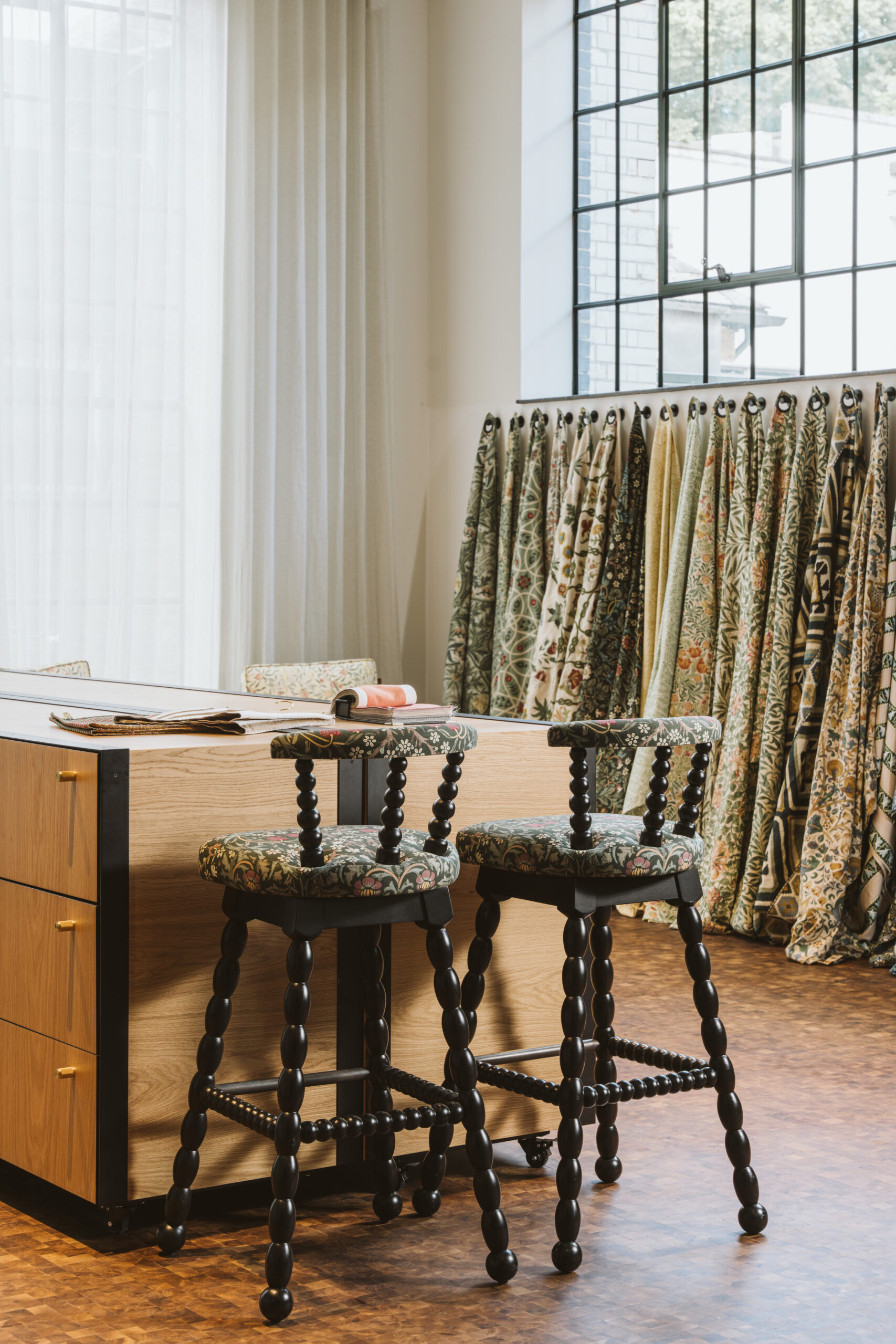
- Image credits: Jack Hobhouse
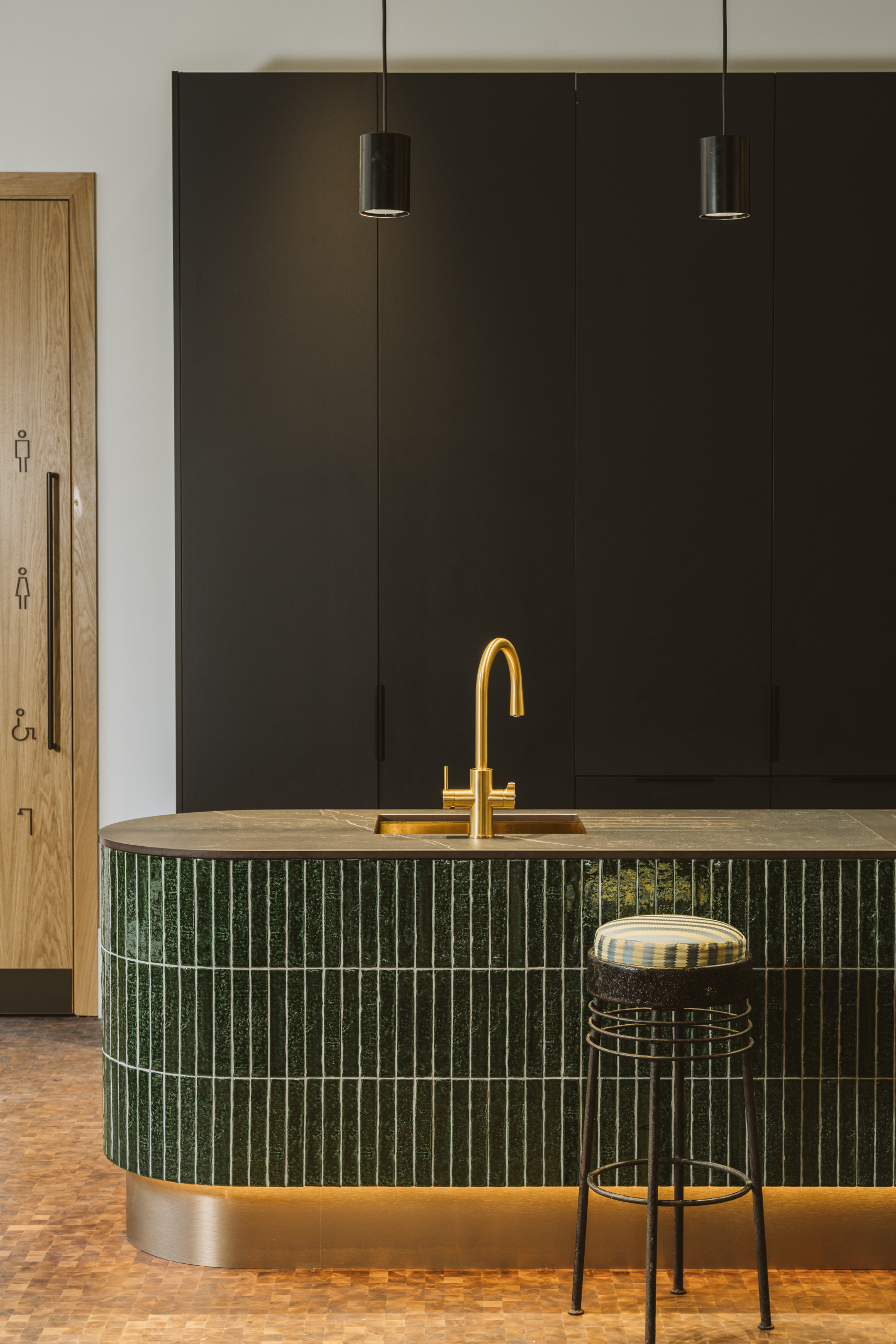
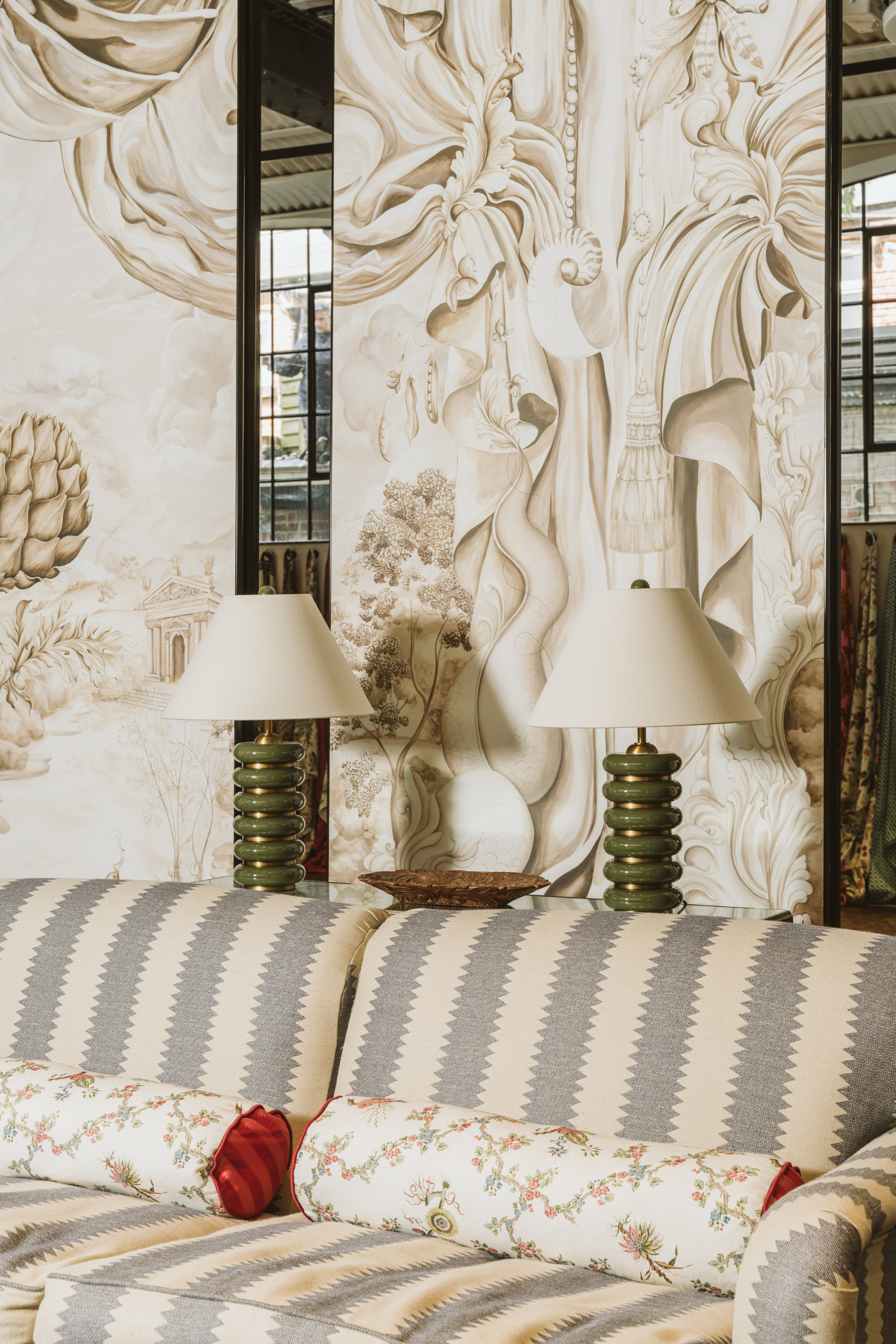
Upstairs, the building shifts tone from showcase to studio. The second floor hums with contemporary creativity — design studios for Zoffany, Morris & Co. and Sanderson gathered under one roof. Here, conversations slide easily between heritage and innovation.
Zoffany, I’m told, is ‘all about the best of the best’ — intricate block prints that might require ten individual blocks to create a single flower. “It’s super intricate,” Oliver Halshaw, Sanderson Design Group’s UK Contract Manager, smiled, holding up a fabric. “It’s one of my favourites.” It was easy to see why; the depth of colour, the detail, the tactility.
Clarke & Clarke, meanwhile, dominates the mainstream contract market. “It’s our top brand in that market,” I’m told. “We get real volume through it.” Accessible price points, versatile plains, dependable performance — the quiet backbone of commercial interiors.
Manufacturing remains rooted in Britain where possible. “All our wallpapers are made in the UK. All our printed fabrics too.” Embroideries and certain weaves travel further afield — India, Turkey — but the heart of production still beats domestically.
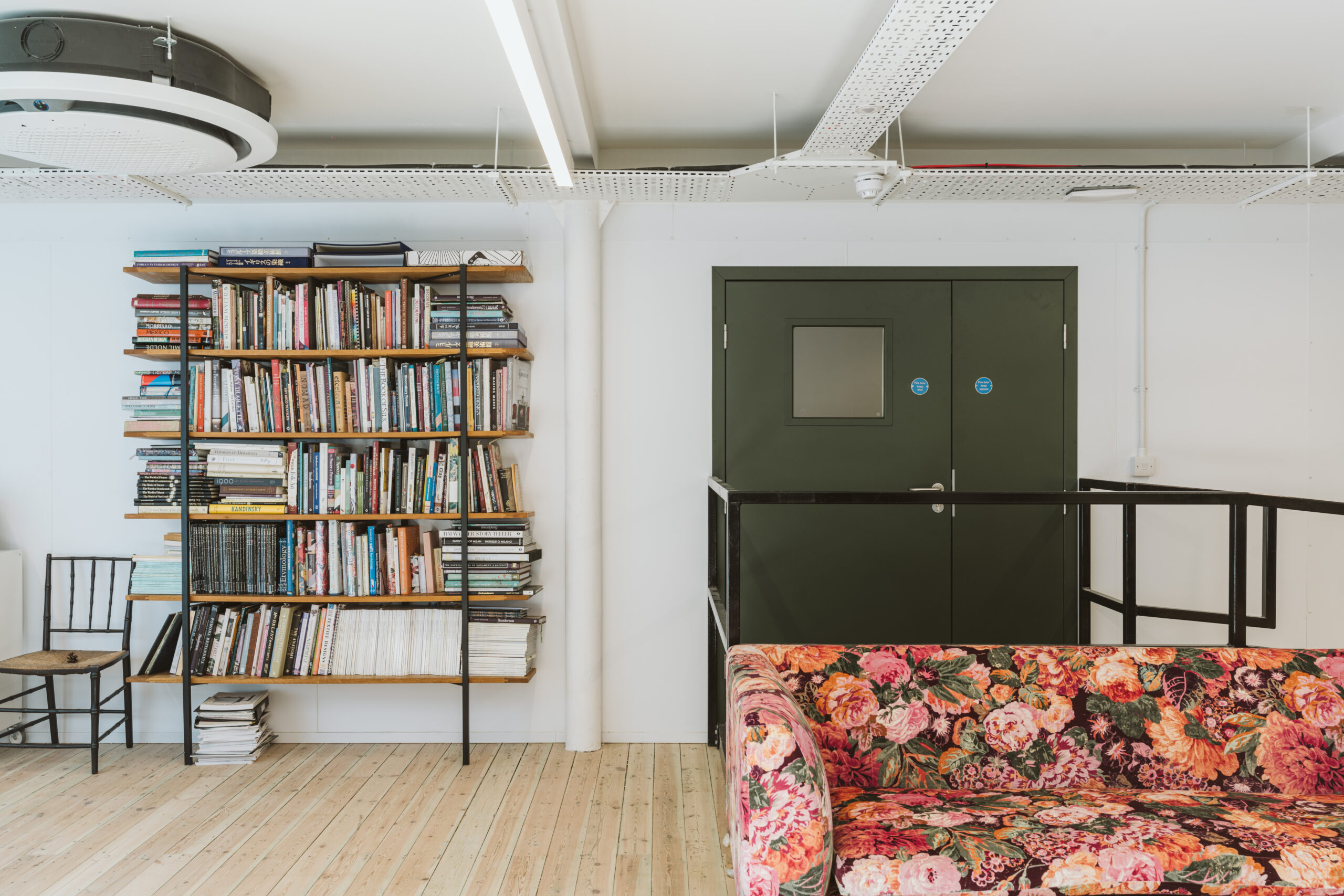
Image credit: Jack Hobhouse
On the third floor sits a 12-ton collection comprising around 75,000 pieces dating back to the 1600s. It is housed in what the archivist described as ‘a six-sided box within the building’ — insulated, protected, environmentally controlled, getting it here was no small feat. “Everything came up over the outside of the building and over the fourth-floor balcony,” she said, “it was a mission.”
Arthur Sanderson began in 1860 importing French wallpapers. Early hand-blocked florals sit alongside Japanese leather papers made for the European market. There are staircase papers designed to wrap a stairwell seamlessly, sea creature motifs complete with jellyfish, nursery designs like Oranges & Lemons by Dorothy Hilton, and bold raspberry-red Voysey designs that still feel startlingly modern.
There are original artworks, edges worn by hands that pinned and traced them. Rose and Peony, first produced as a wallpaper in 1914, remains a cornerstone design — revived, reimagined, even reinterpreted by fashion designers. “It’s definitely had a life,” the archivist smiled, pointing to faint hand marks on browned paper.
Advertising ephemera from the 1930s proudly proclaim ‘sun-tested wallpapers’ — a reminder that even then, practicality and beauty were sold side by side. There are mid-century florals under Kenneth Truman’s direction, 1970s celebrity campaigns, and early collaborations with Disney — Snow White, Alice in Wonderland, Dumbo — charming relics of cross-disciplinary creativity.
Most striking of all is the continuity. Morris designs sit in multiple colourways; some in production, others resting quietly. Blocks are still used occasionally for special heritage projects — including commissions for Kelmscott Manor. This is not a static archive; it is an active one. Designers refer to it daily for pattern, colour, texture and feel.
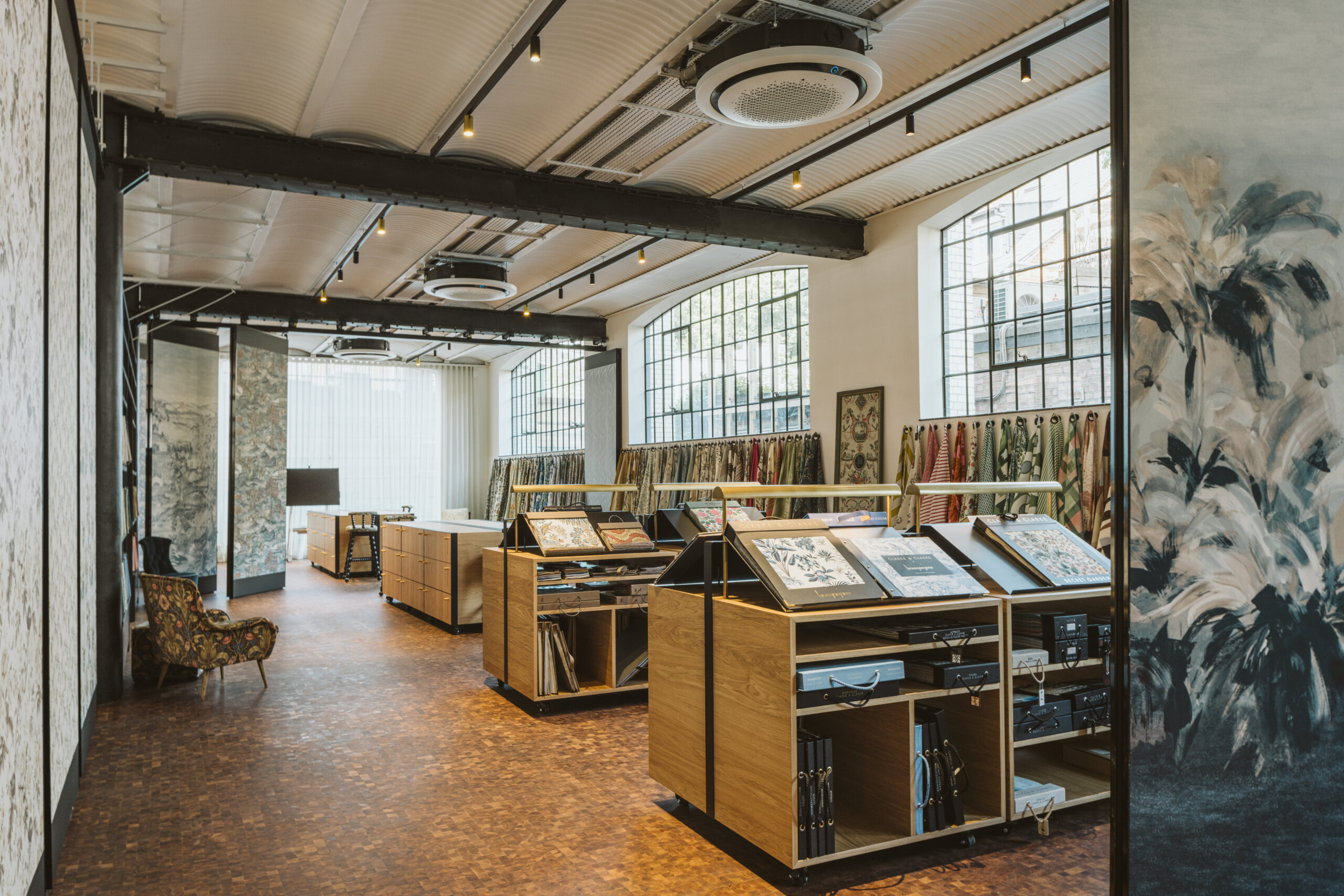
Image credit: Jack Hobhouse
Voysey House is not merely a beautifully restored headquarters; it is a living palimpsest. From wallpaper factory to garage to archive-filled design hub, it has absorbed fire, fashion and functional change without surrendering its identity.
In many ways, it embodies the ethos of the company it now houses: a reverence for heritage paired with a willingness to evolve. In its pale brick planes, dark green windows and restored pine floors, one senses not nostalgia but continuity — a quiet, confident modernity that began in 1905 and still feels remarkably fresh today.
Sanderson Design Group is one of our Recommended Suppliers and regularly features in our Supplier News section of the website. If you are interested in becoming one of our Recommended Suppliers, please email Katy Phillips.
Main image credit: Jack Hobhouse