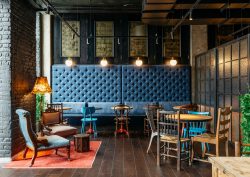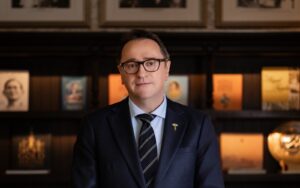










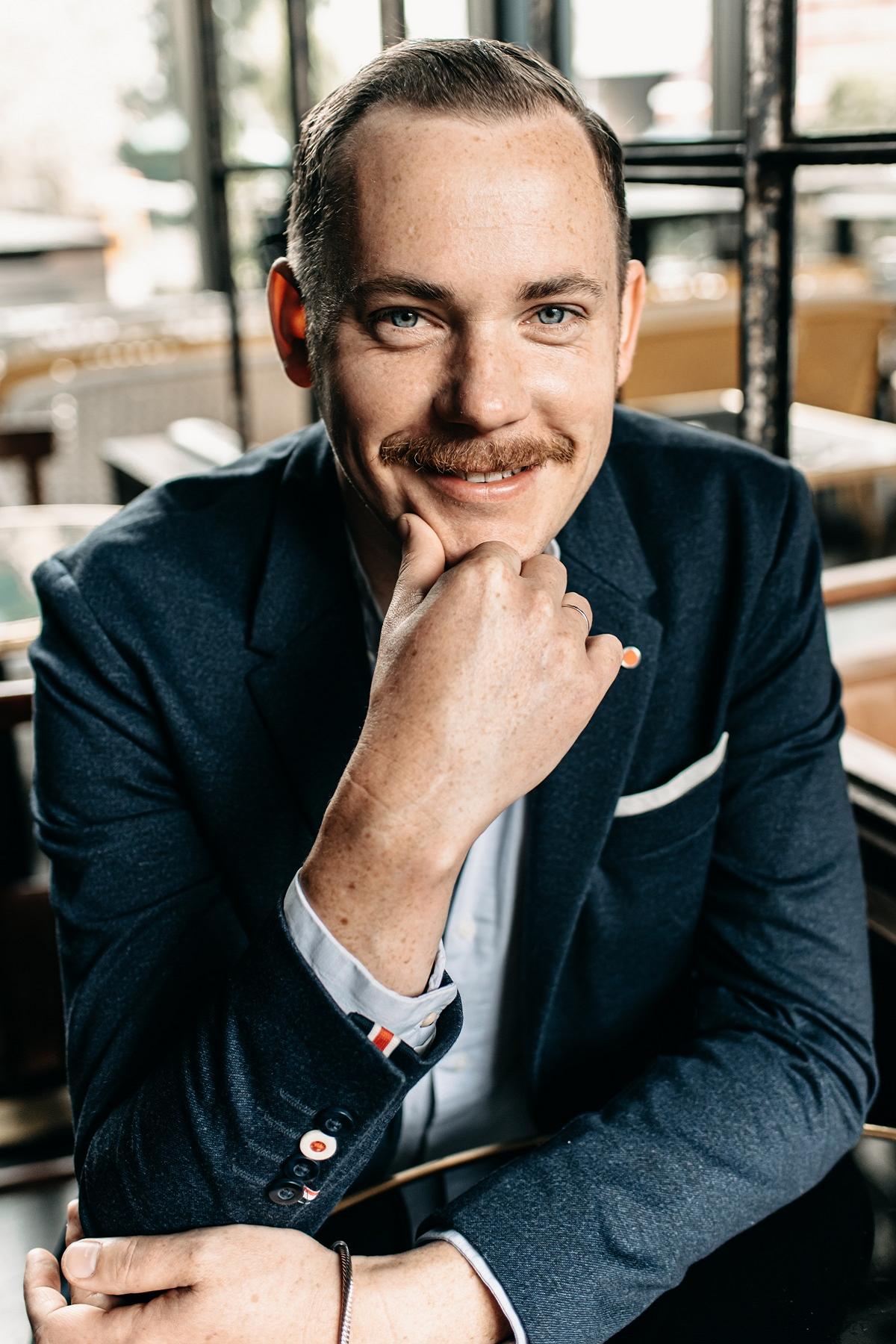
Ruby Hotels recently opened its latest property in Rome – Ruby Giulia – and at the helm of this project was Matthew Balon, Head of Design at Ruby Hotels. Known for his chic creations that combine technical expertise with a strong sense of narrative, we posed a few questions to get beyond the surface of this new Ruby…
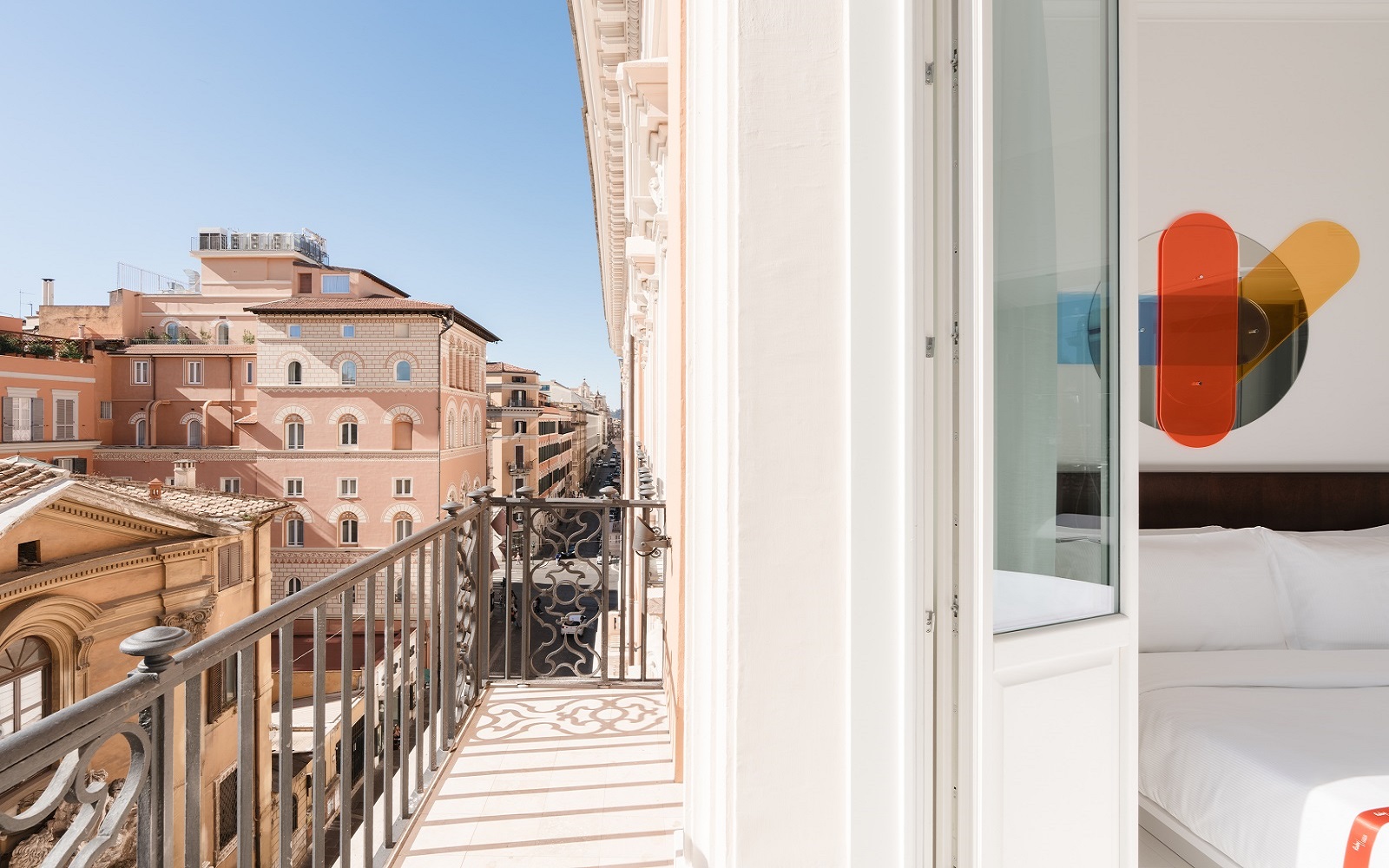
Under Balon’s guidance, Ruby Giulia has transformed a historic space into a contemporary, design-forward hotel that balances character, comfort, and urban authenticity.Inspired by the building’s former life as a Ministry of the Interior office, the hotel’s design draws inspiration from the glamour and intrigue of 1970s spy thrillers and is situated right in the heart of the Eternal City.
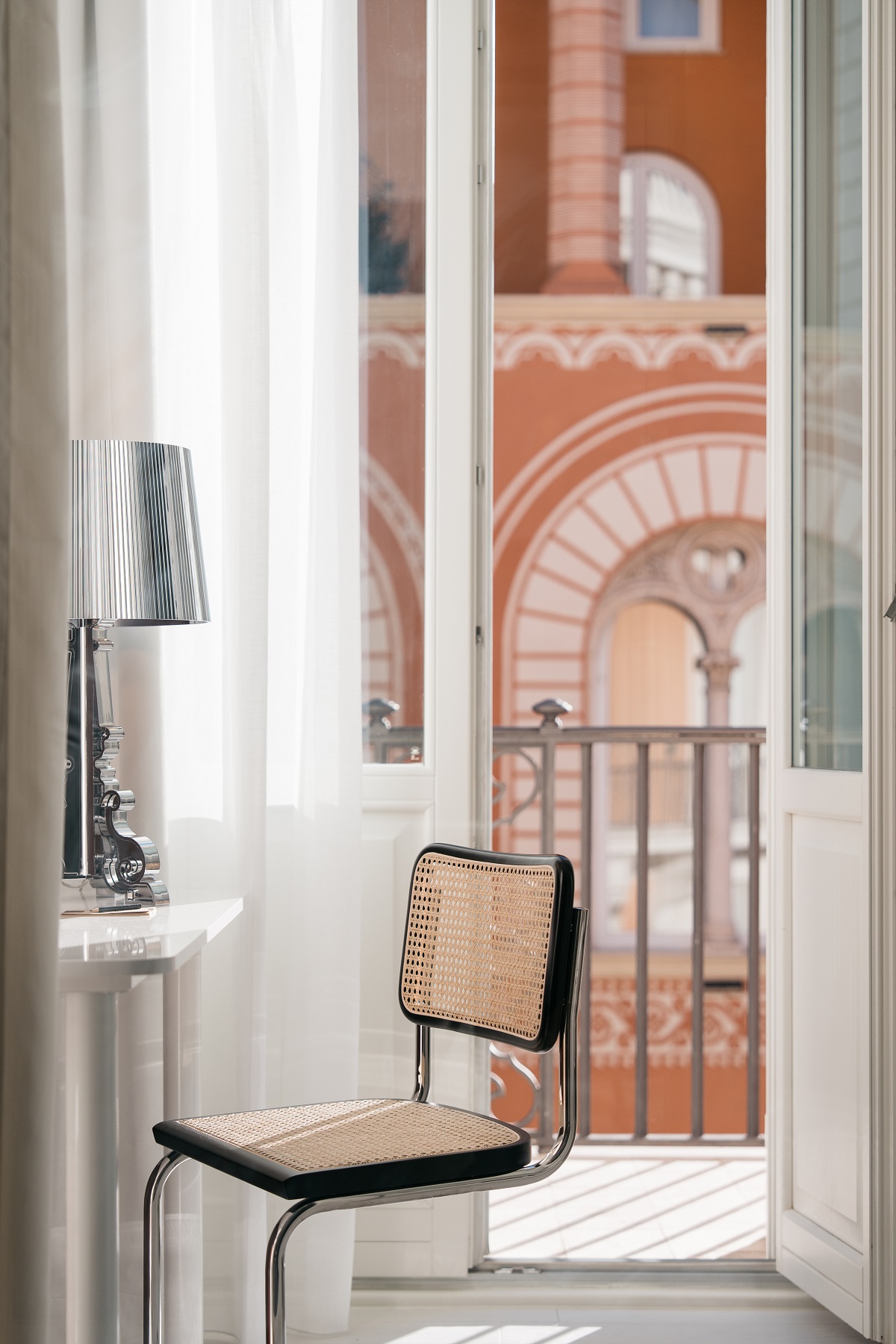
Hotel Designs: You mentioned that Ruby Giulia takes inspiration from 1970s spy films and the building’s government past. How did this narrative come to life?
Matthew Balon: The design story grew directly out of the building and its context. Ruby Giulia is housed in a former government building that once accommodated departments linked to internal security. Rather than turning this history into a literal theme, we approached it with a sense of fun. Inspired by the glamour and tension of 1970s spy films, From Rome with Love translates ideas of observation, intrigue and identity into atmosphere, materials and spatial sequences. The result is cinematic but playful, rooted in history without being nostalgic.
HD: Rome has such a strong architectural identity. How did the city influence your approach?
MB: Ruby Giulia offers a different take on what Rome can be. It pivots from the monumental, the classical, and offers a different experience. We wanted to create spaces that feel more approachable yet elevated, like you’re living your Roman fantasy, not just visiting.
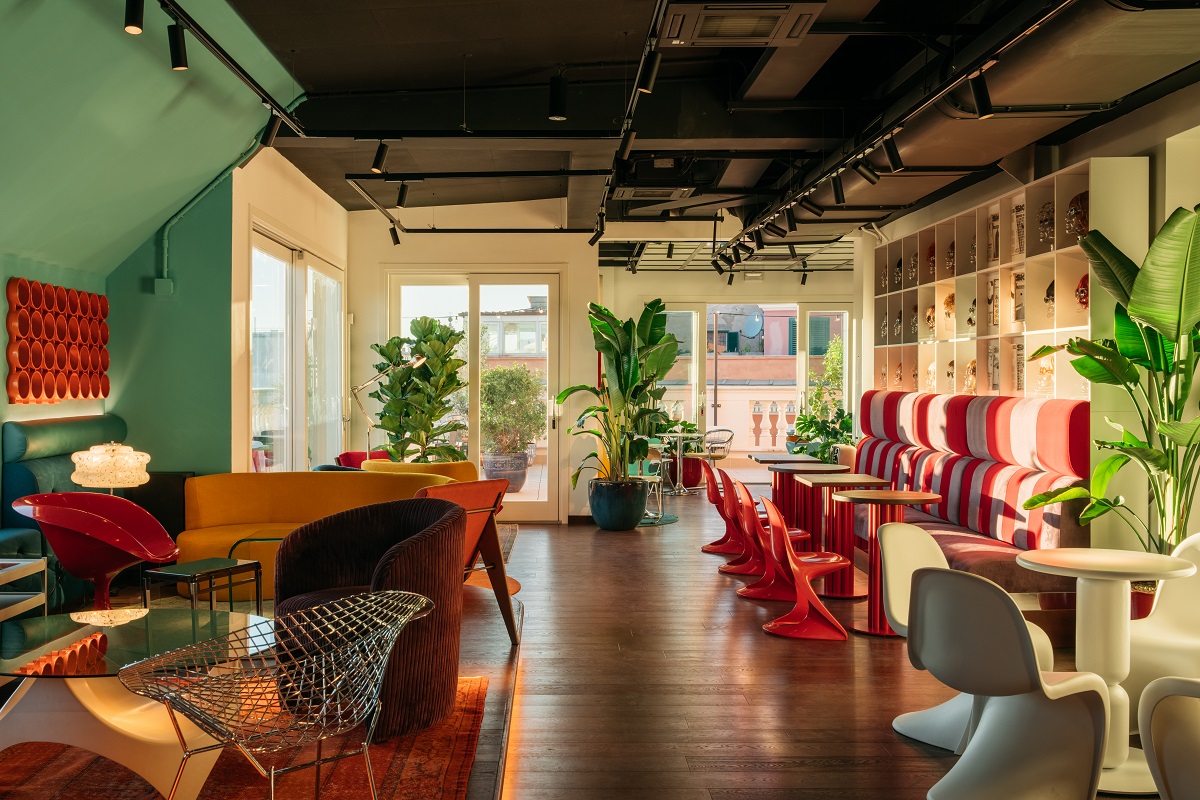
Image credit: Ruby Hotels
HD: What did the creative process look like for developing this design in particular?
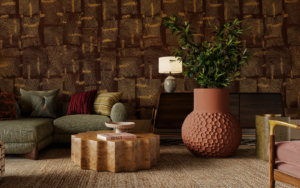
MB: We began by understanding the building’s past and its urban context. Those insights provided a firm foundation for the design story, which in turn inspired the colors, materials and spatial decisions. Cinematic references, Italian design and subtle historical cues were added to the mix to create a coherent interior language.
HD: Were there any challenges working within a former Ministry of the Interior office building?
MB: Working with an existing, historical building always comes with complexity. Structural conditions, legacy layouts and technical constraints require careful planning. Our goal is always to highlight the unique features of a structure to create spaces that are firmly rooted and truly memorable.
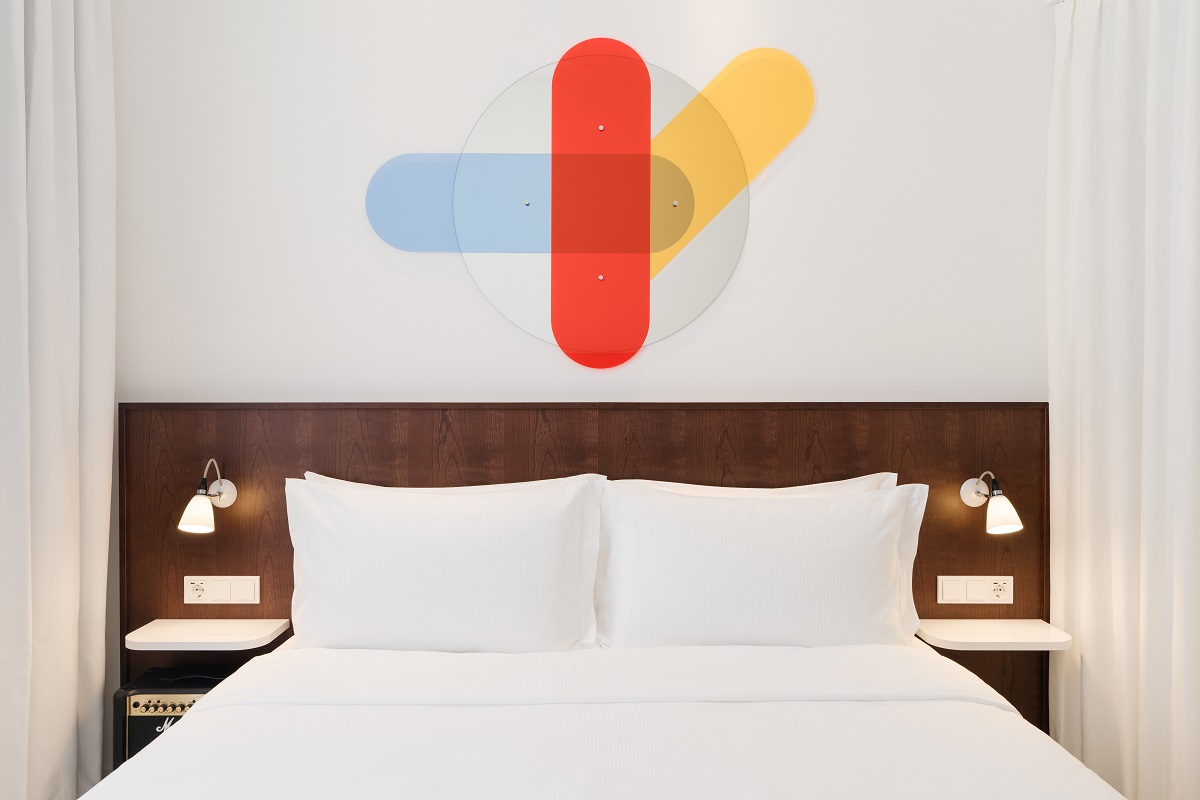
Image credit: Ruby Hotels
HD: Ruby Hotels champions a ‘Lean Luxury’ philosophy. How does Ruby Giulia express this?
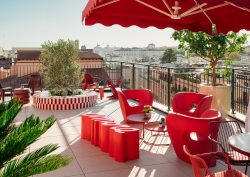
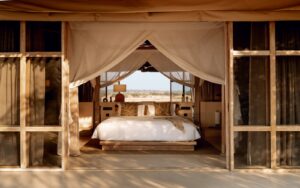
MB: At Ruby Giulia, Lean Luxury is defined by a deliberate focus on comfort, ease and atmosphere. In the rooms, this translates into high quality beds, blackout curtains and rainfall showers, all designed to support rest and recovery like a little haven in the heart of the city. Luxury is expressed through quality rather than excess. The impressive rooftop terrace, with panoramic views over Rome definitely adds a luxury touch as well. Across private and social spaces, Lean Luxury at Ruby Giulia means investing where it truly enhances the guest experience and simplifying everything else.
HD: How does sustainability and efficiency factor into your design choices?
MB: Sustainability begins with reuse. Transforming an existing building rather than building new preserves resources and reduces environmental impact. Beyond that, efficiency is embedded in spatial planning, technical systems and material choices. We love vintage furniture at Ruby and are always happy to reuse existing pieces and give them a second life. The goal is to create hotels that are not only expressive today but viable and responsible over decades.
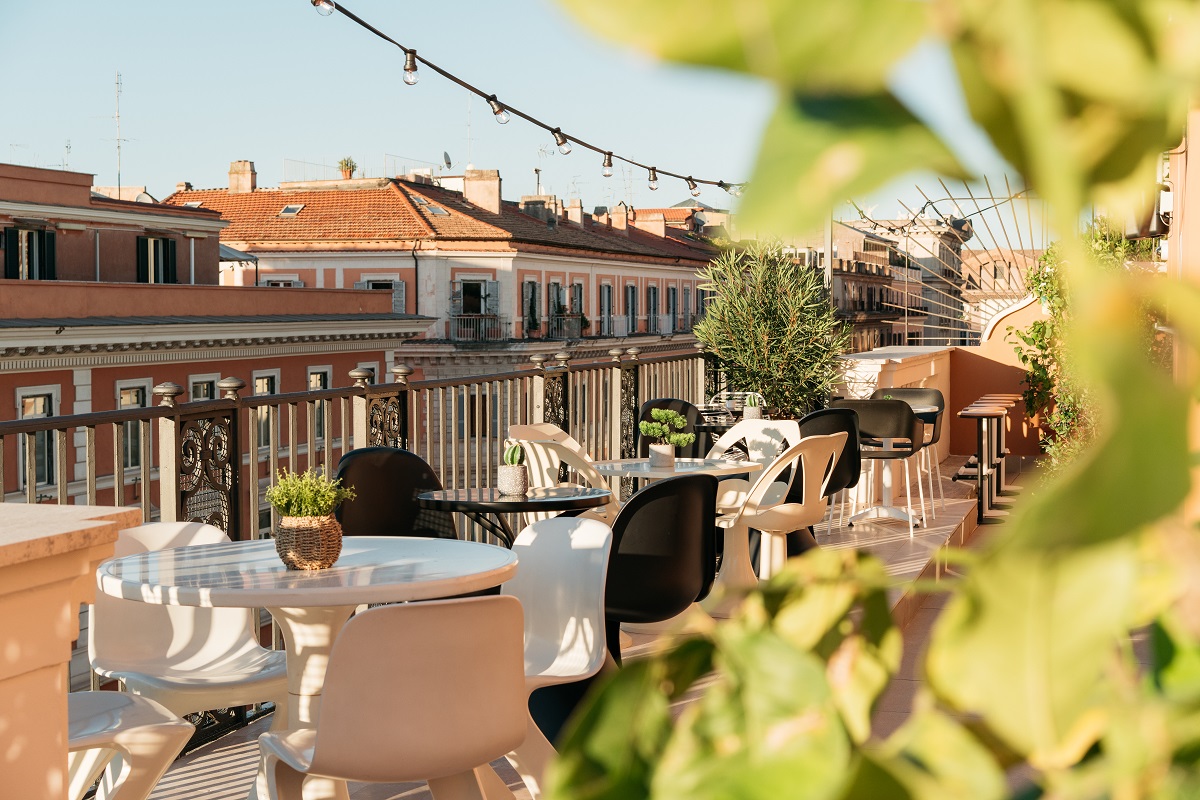
Image credit: Ruby Hotels
HD: You’ve been shaping Ruby Hotels’ design identity since 2017. How has your vision evolved?
MB: Our core principles were clearly defined from the start and continue to guide our work today. Over time, our approach has become more refined, allowing us to handle complexity with greater efficiency. We are more focused on the design story than ever before, through all stages of the process, to make sure it truly shines. Beyond that, context and longevity remain important, ensuring that each hotel expresses its own identity while remaining unmistakably Ruby.
HD: What was most rewarding about designing a hotel in Rome?
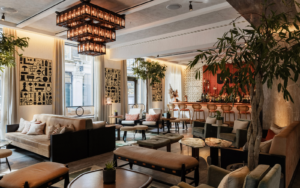
MB: Roman culture is so rich and varied it was a unique challenge to discover how Ruby fits in this context. With its stunning location, penthouse-style public areas and rooftop bar, Ruby Giulia really delivers on the Roman experience. It’s very satisfying to work on a project that gives guests the feeling of being a neighbourhood local during their stay.
HD: Finally, what’s next? How do you see hospitality design evolving?
MB: Hospitality design is becoming more intentional and more selective, with a growing focus on relevance over spectacle. At Ruby Group, we see design as a long-term commitment rather than a short-term statement. We continue to invest in adaptive reuse, interesting storytelling and spaces that work operationally while creating an emotional connection. The most effective design is the kind that feels effortless, works quietly in the background and still leaves a lasting impression.
Main image credit: Ruby Hotels