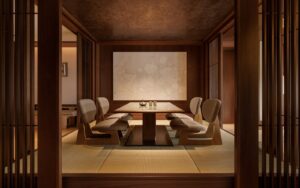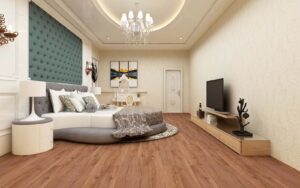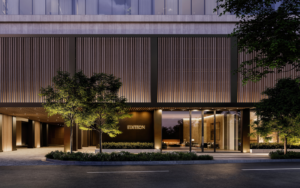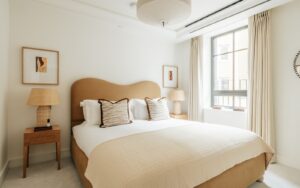
In contemporary hospitality design, surfaces have become a defining architectural element. Walls, finishes and materials no longer act as a backdrop alone; they shape atmosphere, guide movement and influence how guests experience a space. Increasingly, it is lighting — and its relationship with these surfaces — that brings this design intent into sharp focus.
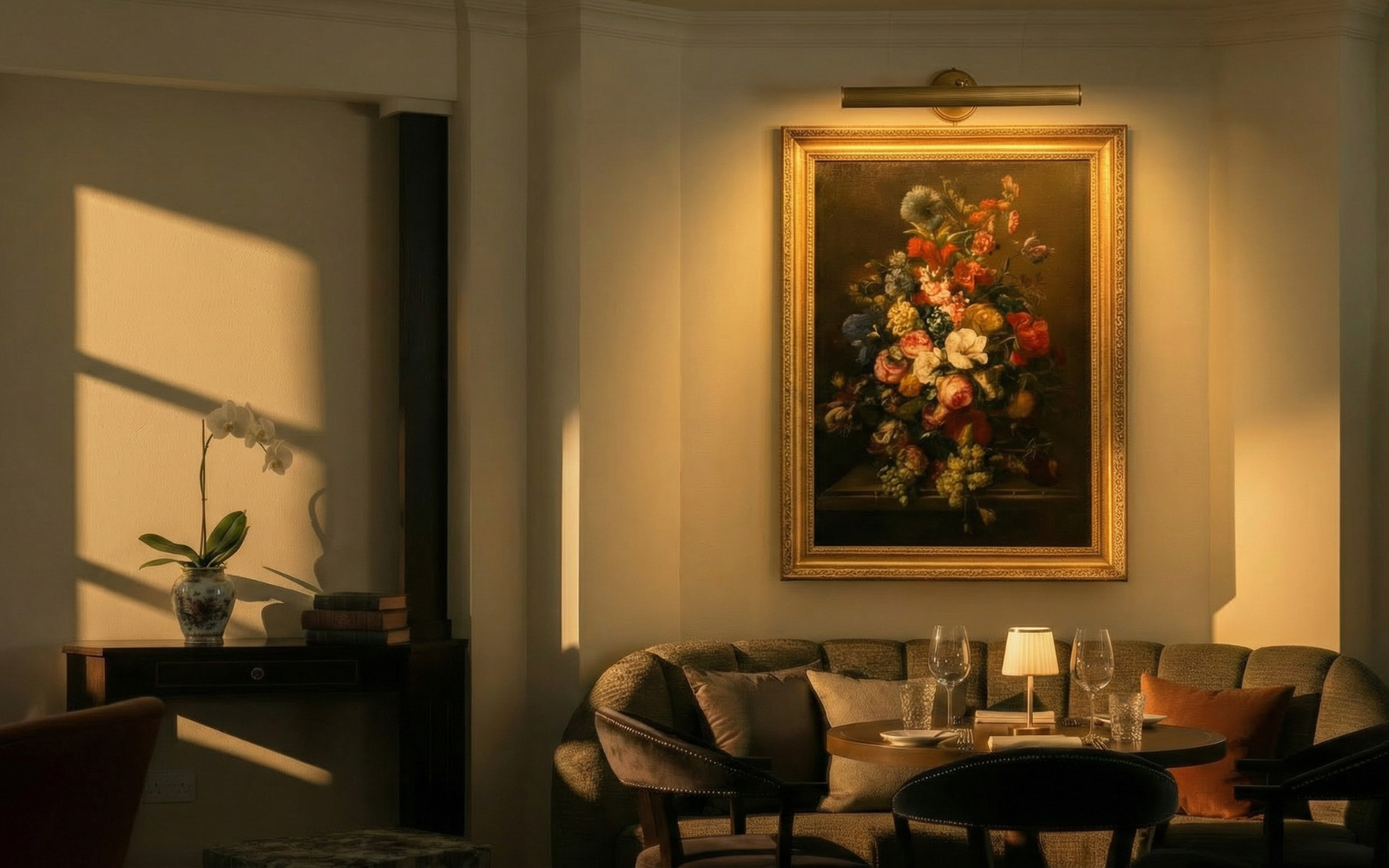
Textured materials such as reeded timber, ribbed plaster and brushed metal depend on directional light to reveal their depth and character. Rather than relying on uniform ambient illumination, designers are specifying precise, considered lighting to articulate surfaces, establish rhythm and introduce visual structure. Light becomes a tool for interpretation, revealing detail and reinforcing architectural intent.
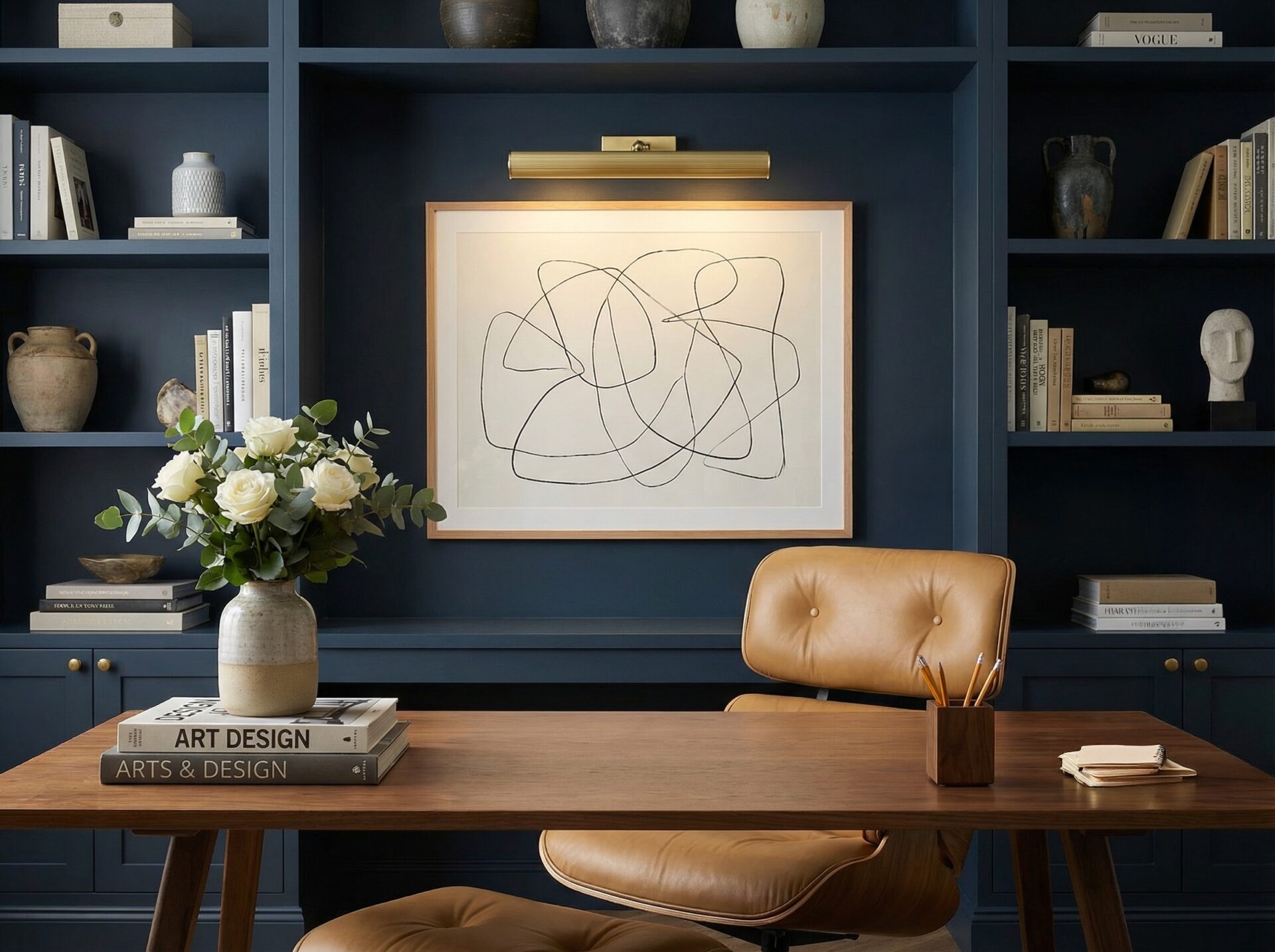
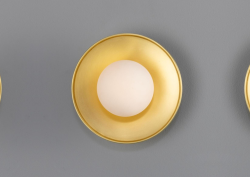
Cambridge Adjustable Reeded Picture Light in Brass finish | Image credit: Mullan Lighting
How can lighting create intimacy and comfort in guest rooms?
Within guest rooms, lighting is applied with a lighter, more restrained touch. Here, the focus shifts from visual drama to comfort and balance. Surfaces tend to be tactile and understated, encouraging a sense of calm and retreat. In these private environments, lighting often acts as a framing device — highlighting select elements without overwhelming the room.
Introduced as part of Mullan Lighting’s latest picture light designs, the Bilbury Collection responds to this intimate scale. Positioned above an artwork, headboard feature or textured wall finish, Bilbury delivers focused illumination that draws attention to detail while maintaining a sense of quiet clarity. Its compact proportions feel deliberate, allowing light to enhance the surface beneath without visual clutter.
Reeded detailing within the collection echoes many of the textures specified in contemporary guest room schemes. This subtle articulation allows light to interact gently with material, adding depth and warmth without distraction — a considered approach that supports restfulness and cohesion.
-
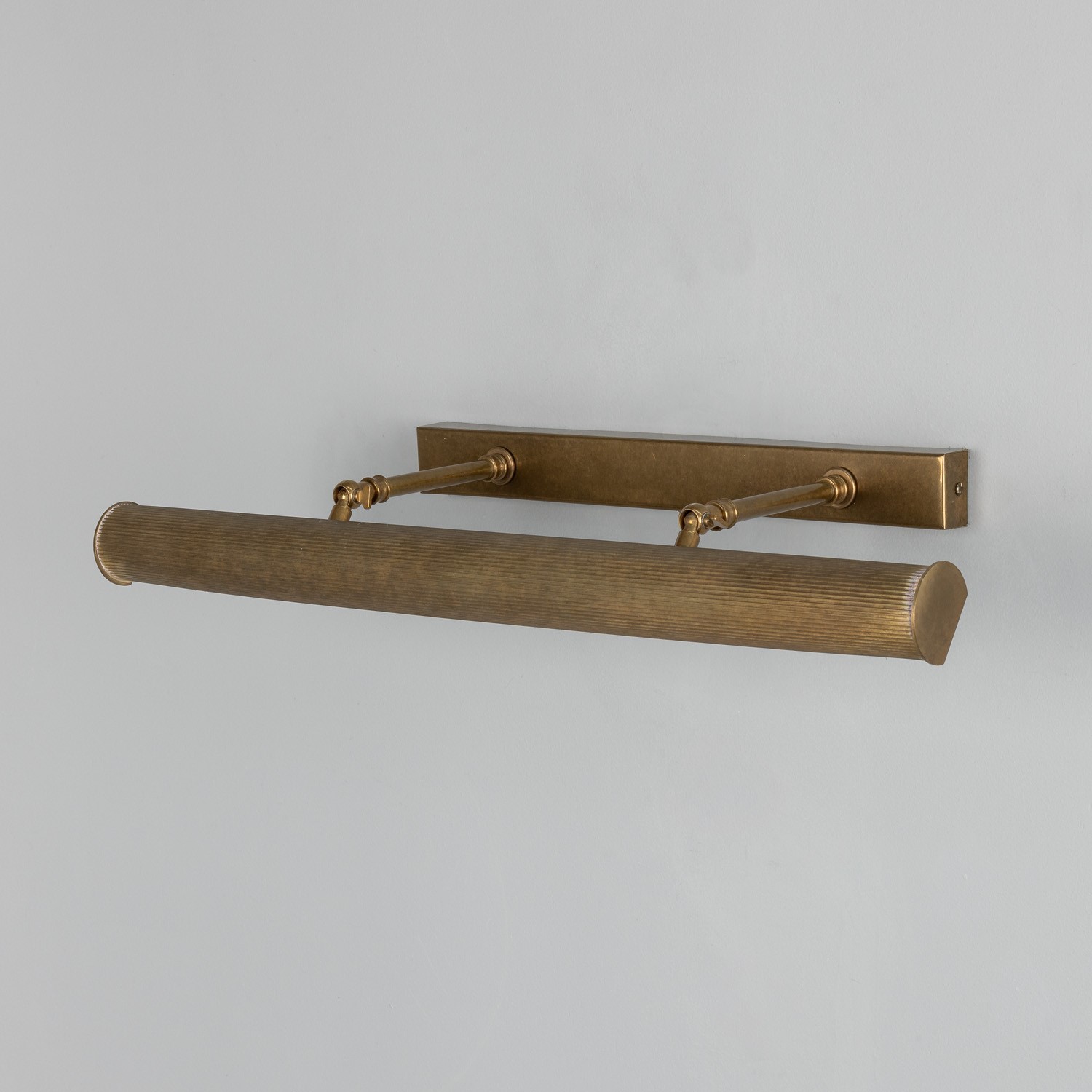
- Cambridge Adjustable Reeded Brass Picture Light
-
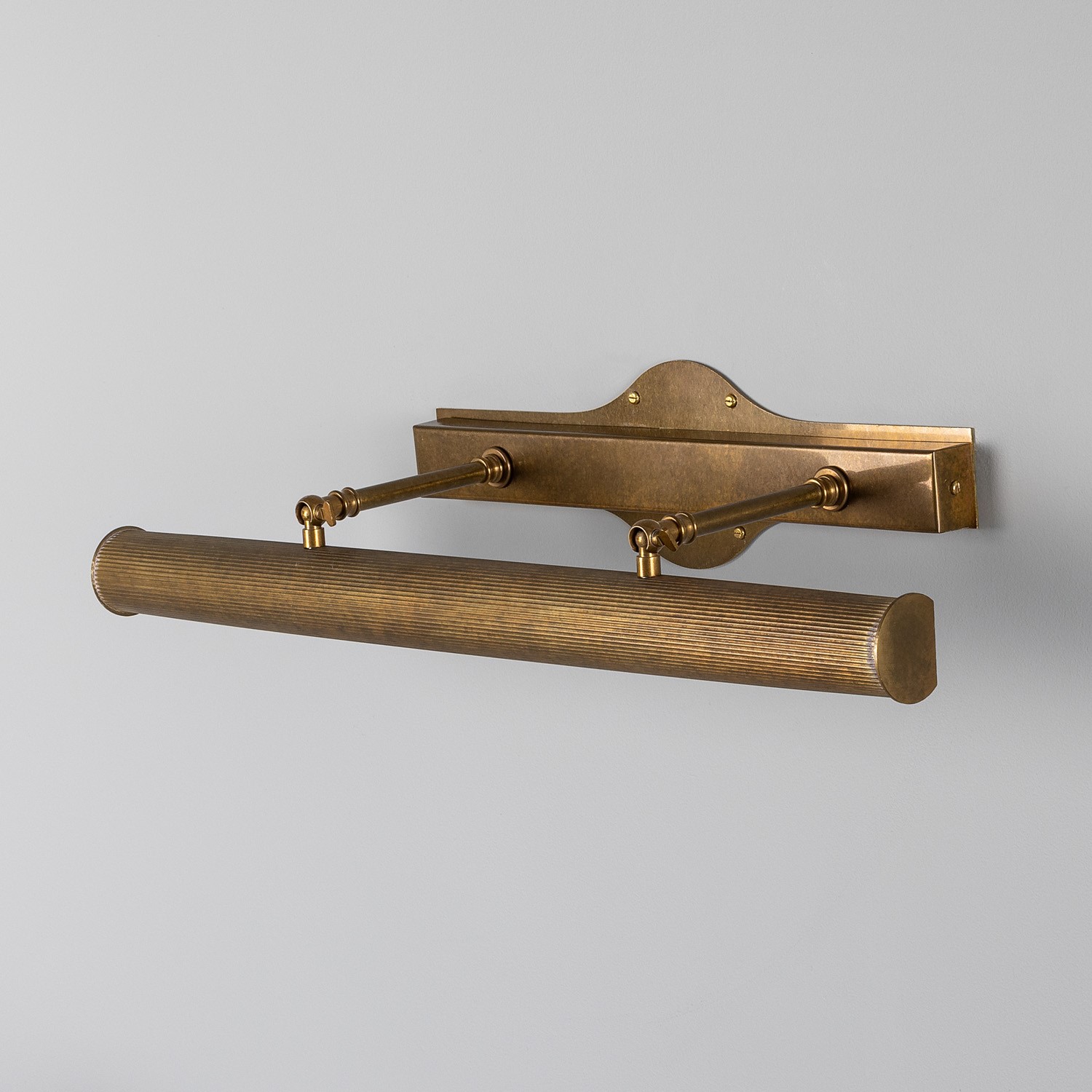
- Bilbury Adjustable Reeded Brass Picture Light | Image credits: Mullan Lighting
What lighting strategies work best for hotel public spaces?
Public areas such as lobbies, corridors and lounges demand a distinctly different lighting strategy. Larger wall planes and extended sightlines require fixtures that respond to scale while supporting wayfinding, legibility and flow.
Part of Mullan Lighting’s newest picture light offerings, the Cambridge Collection is designed specifically for these broader environments. Its extended form distributes light across wider wall surfaces, making it well suited to illuminating sequences of artworks, panelled lobby walls or large-scale feature installations. When used in repetition, Cambridge establishes rhythm and continuity while remaining visually composed and architecturally aligned.
Available in multiple sizes, the collection offers flexibility across public spaces of varying proportions. Larger formats complement expansive architectural features, while smaller versions maintain consistency in transition areas, creating a cohesive lighting language throughout the hotel.
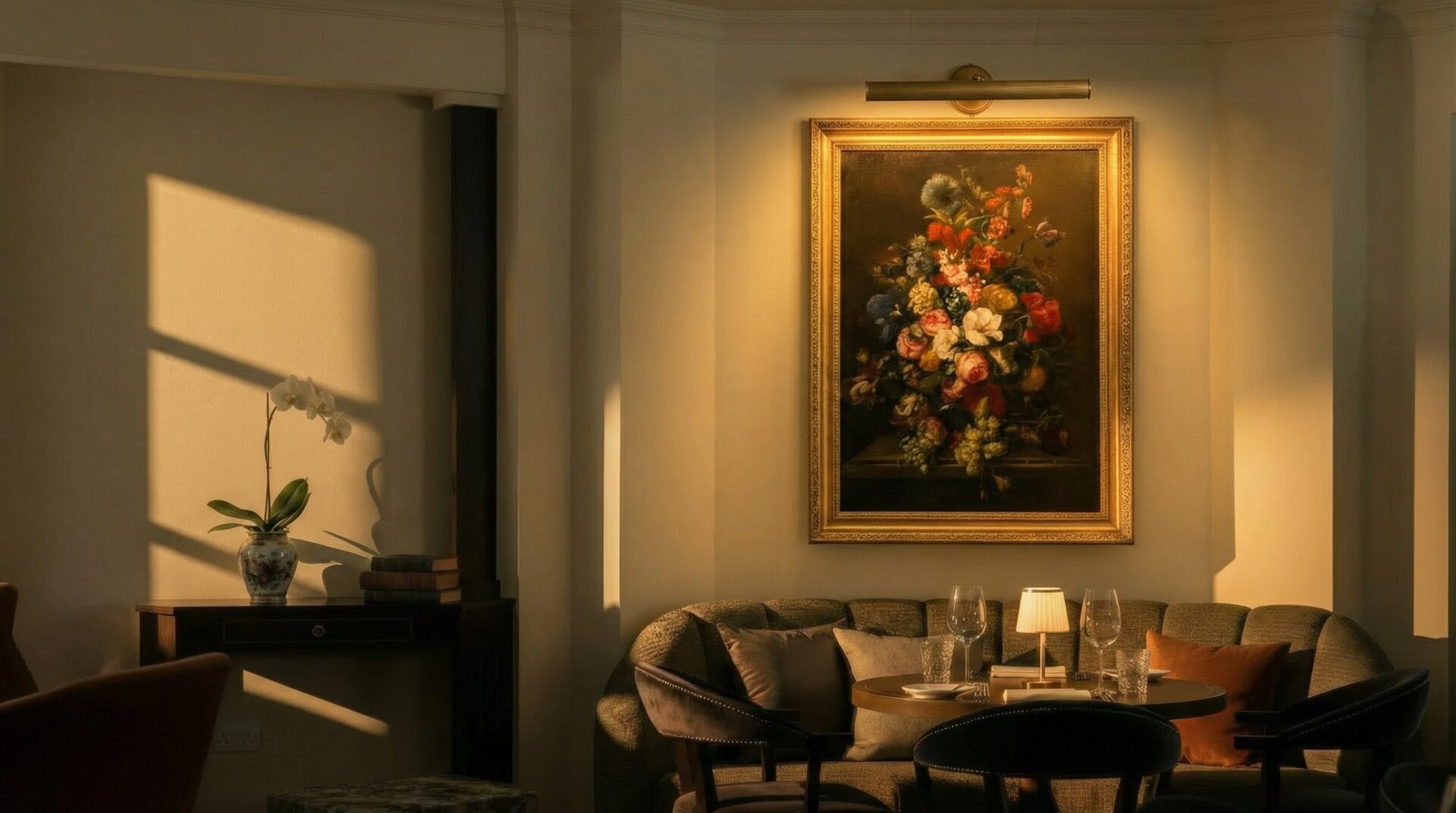
Image credit: Mullan Lighting
Why is directional lighting central to architecture?
Across hospitality interiors, there is a growing preference for lighting that supports architecture rather than competes with it. Directional fixtures such as those found in the Bilbury and Cambridge collections allow materials and surfaces to take centre stage, with light adding depth, definition and clarity.
When lighting is carefully aligned with surface, scale and proportion, interiors feel more resolved. Walls read more clearly, materials reveal their true character, and spaces transition naturally from private to public. The result is hospitality environments that feel refined, cohesive and enduring — spaces where lighting quietly enhances the guest experience through thoughtful design.
Mullan Lighting is one of our Recommended Suppliers and regularly features in our Supplier News section of the website. If you are interested in becoming one of our Recommended Suppliers, please email Katy Phillips.
Main image credit: Mullan Lighting