The Imperial Hotel, Kyoto will officially open its doors in Spring 2026, marking a pivotal expansion as the first new Imperial Hotel to debut in three decades…

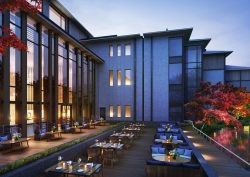
Located in Kyoto’s Gion district, the new boutique The Imperial Hotel, Kyoto, is housed in the restored Yasaka Kaikan—a nationally registered tangible cultural property originally constructed in 1936. The property will present guests with three architecturally distinct accommodation styles: Extension, Preservation, and Renovation. These spatial concepts reflect the historical evolution of the Yasaka Kaikan and are brought to life by two architectural partners: Obayashi Corporation, leading exterior restoration, and architect Mr. Tomoyuki Sakakida of New Material Research Laboratory, responsible for the project’s interiors.
The restoration of the Yasaka Kaikan in Kyoto is a remarkable story of architectural continuity and cultural preservation, led by Obayashi Corporation, the same company that built the original structure nearly 90 years ago. Led by Mr. Masahiro Inoue, Executive Manager of the Architectural Design Department at Obayashi Corporation, his team worked to preserve and adapt the building while reinforcing its structure using modern methods.
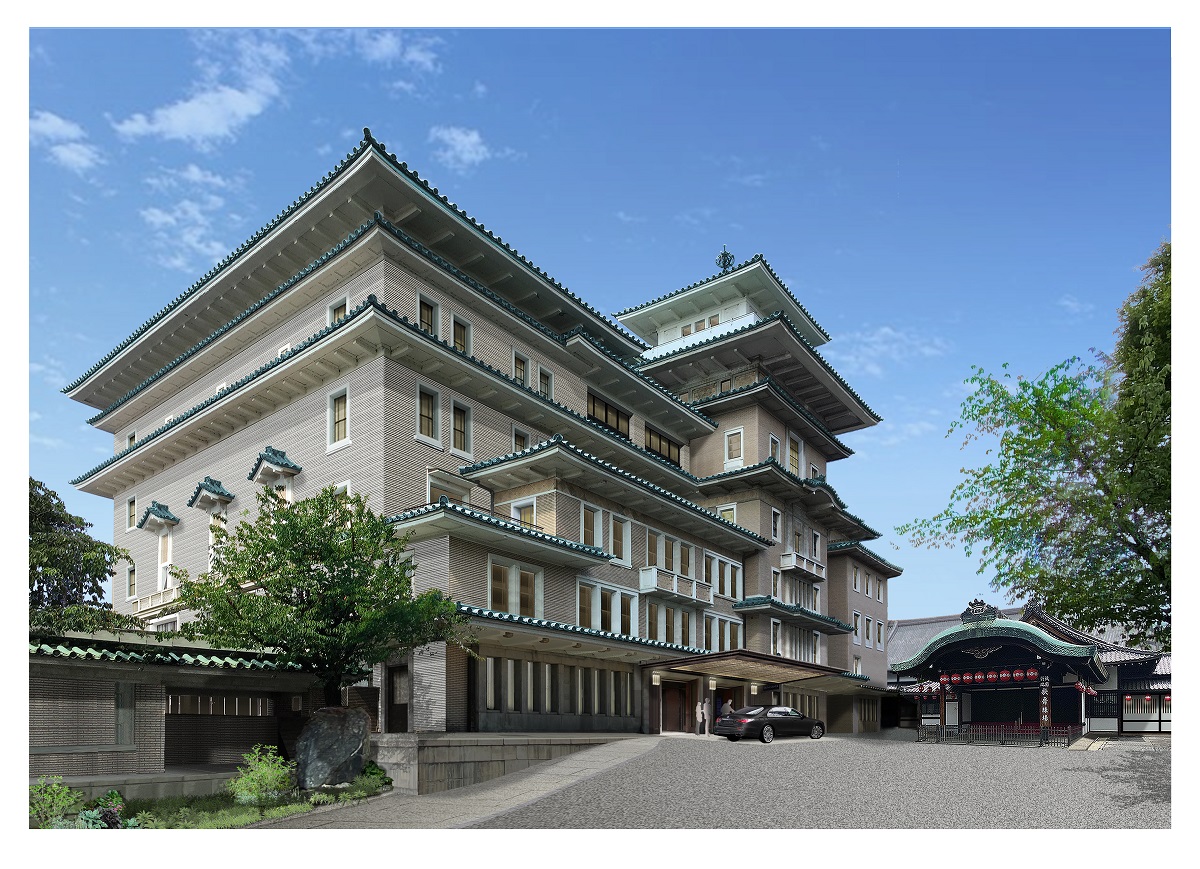
Image credit: The Imperial Hotel
“Some parts retain their 88-year-old look, while others use 88-year-old preserved materials,” said Inoue. “The building significantly weaves together an aesthetic sense and preserved memories. That was our top priority.” The exterior renovation included salvaging approximately 10% of the original decorative tiles and reproducing fragile terracotta ornamentation using 3D scanning for accurate surveying to restore the original, enabling the hotel to maintain continuity with its cultural roots.
Interiors were designed by architect Mr. Tomoyuki Sakakida, Director of New Material Research Laboratory, whose creative direction embraces the ethos of ‘Old is New.’ This philosophy reinterprets Japan’s architectural past through a contemporary lens while honouring Kyoto’s climate, materials, and traditional sensibility.
-
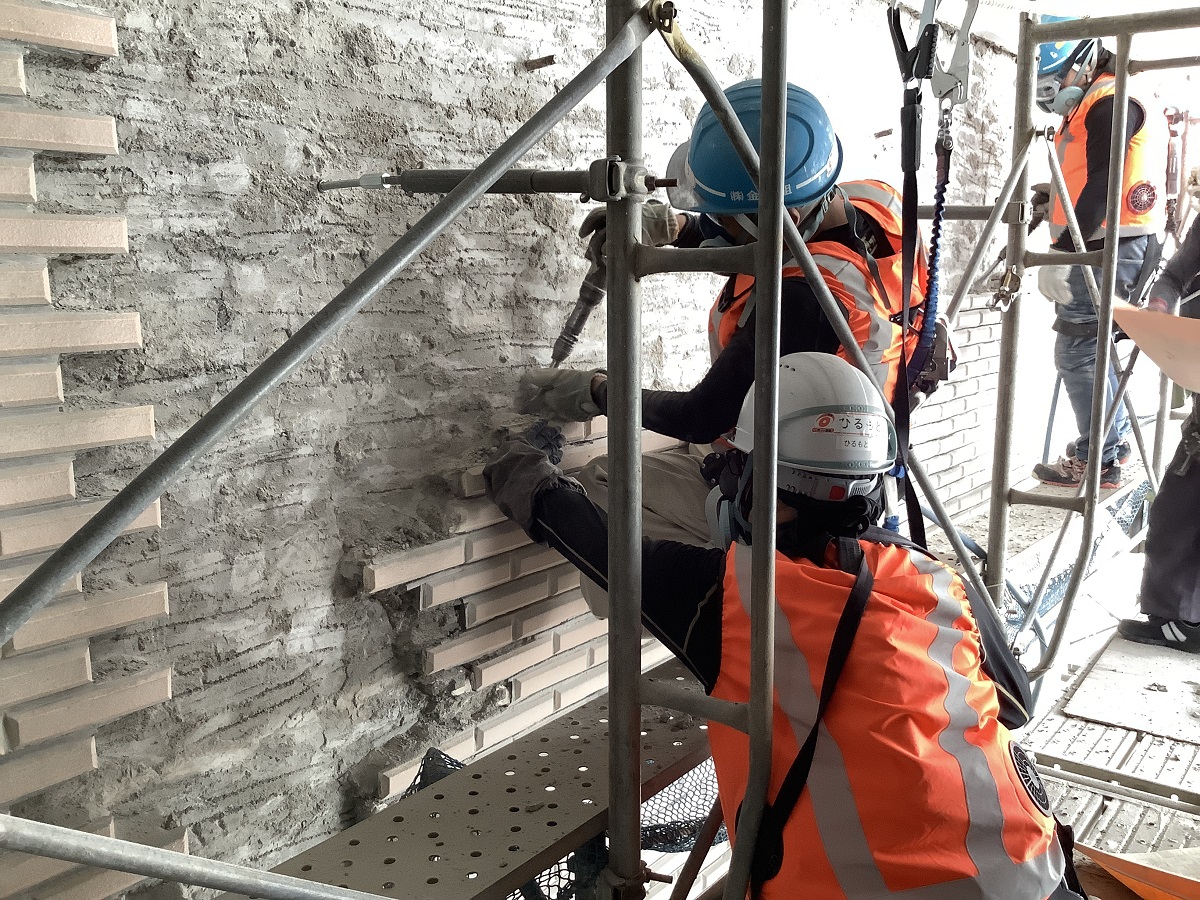
- Image credit: Obayashi Corporation
-
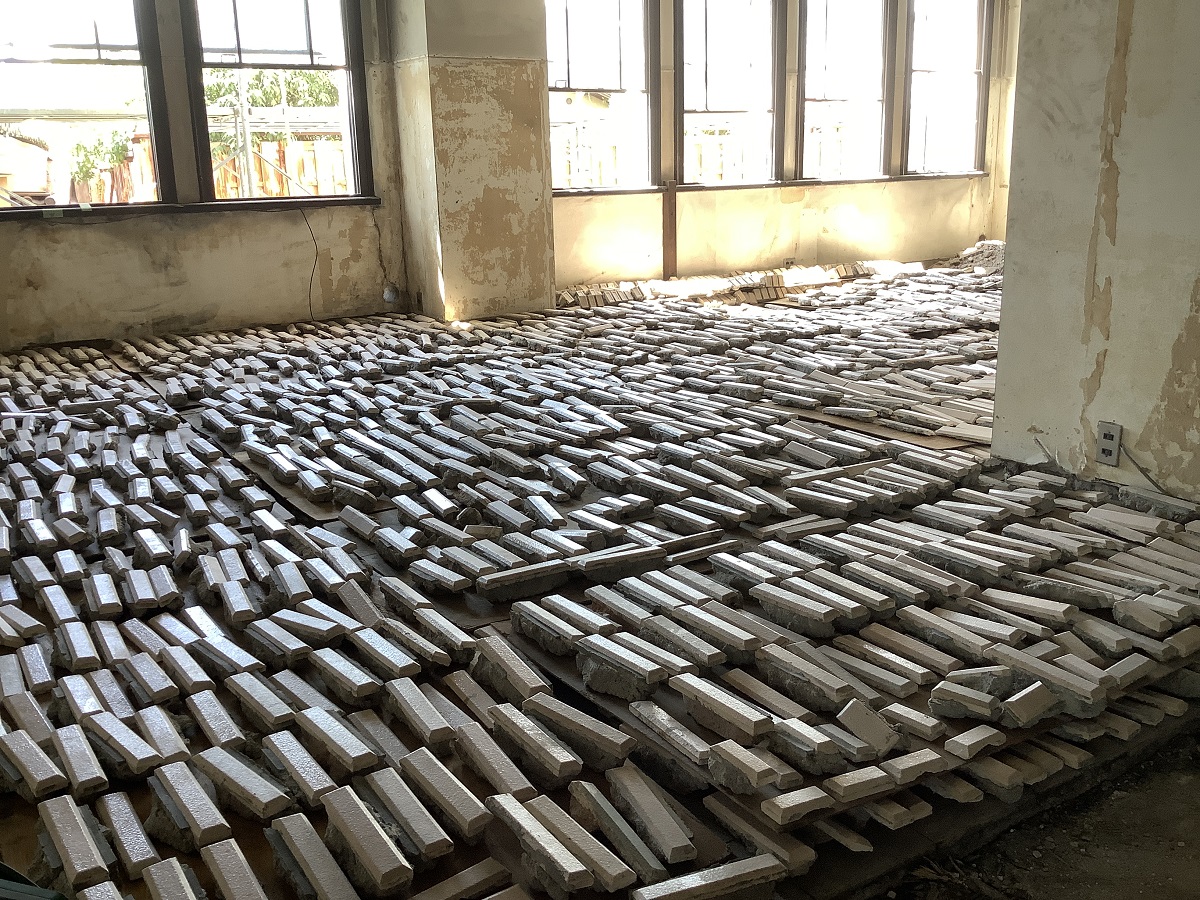
- Image credit: Obayashi Corporation
“Kyoto cherishes old things but also embraces new culture,” said Sakakida. “That contrast is the soul of this project. Since the Industrial Revolution, artistic and cultural shifts such as the Arts and Crafts movement in the UK and the Mingei folk craft movement in Japan have marked a return to hand craftsmanship,” he explained. “Now, more than a century after the advent of modernism, there seems to be a certain sense of stagnation in the air, and a renewed appreciation for the old is taking hold. That, I believe, is why the concept of ‘Old Is New’ is resonating with people.”
Interiors throughout the hotel incorporate exceptional domestic materials including Japanese marble, Ōya stone, and Tamina-ishi, selected to align with the abundance of Japan’s nature and the tactile culture of its architecture.
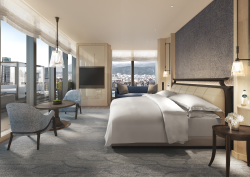
Each of the 55 guestrooms is thoughtfully shaped by its structure’s history and spatial orientation—offering guests not just accommodation, but a layered experience of Kyoto’s past and present. The design of each area evokes a distinct emotional atmosphere, defined by three architectural narratives.
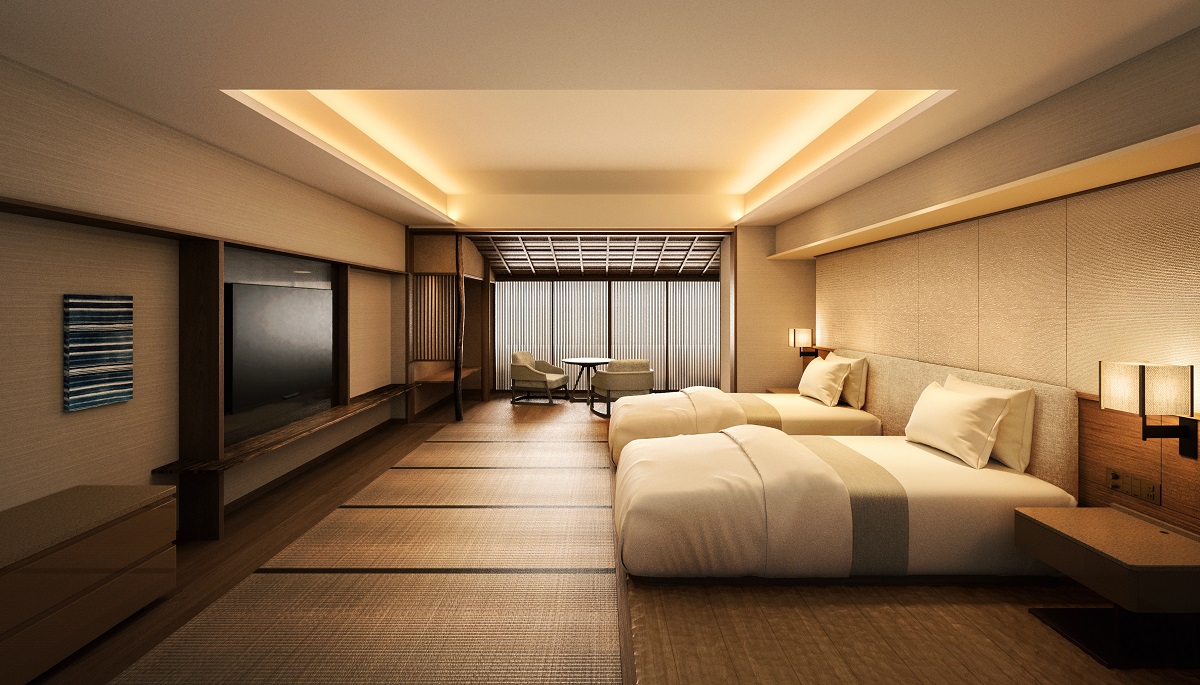
Image caption: Extension Area | Image credit: The Imperial Hotel
Extension Area
Located in the newly constructed north wing, guestrooms in the Extension area were designed to harmonise visually with the district’s iconic machiya wooden townhouses. The architecture respects Gion’s strict 12-meter height regulations, allowing the new construction to blend seamlessly into the surrounding townscape. Inside, these rooms are modern reinterpretations of Japanese tradition and grounded in a serene aesthetic. The use of 100% natural Japanese tatami-mat flooring – a first for the Imperial Hotel brand – creates a tactile connection to Japan’s domestic traditions. Minimalist furnishings and handcrafted textures in earth tones invite guests into a space of peaceful refinement. The quiet elegance here is deeply tied to Japanese ideas of wabi-sabi: understated beauty and impermanence.
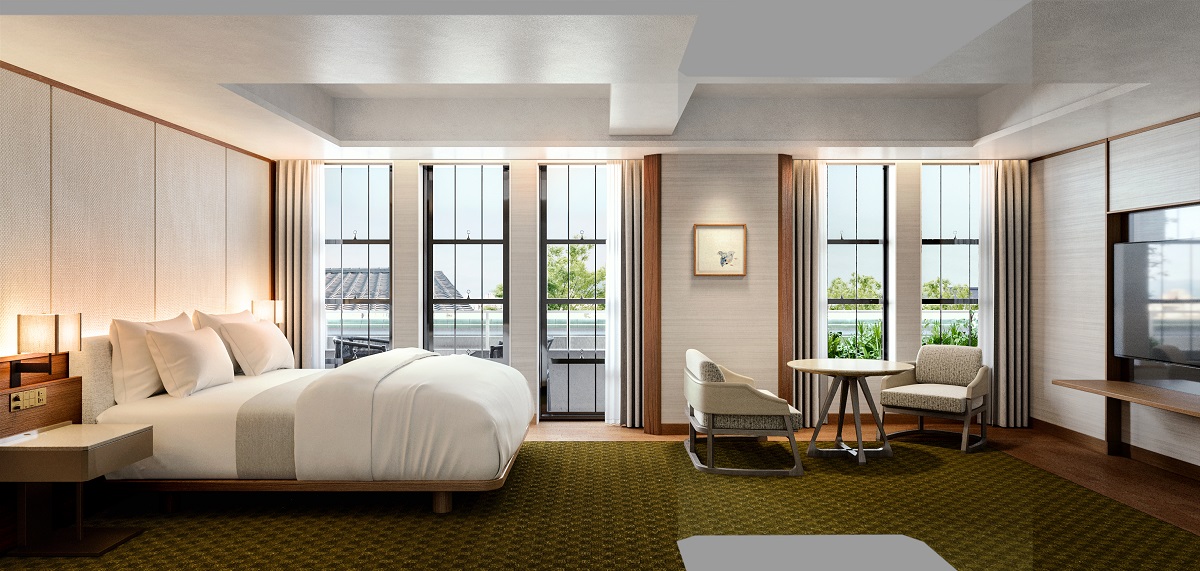
Image caption: Preservation Area | Image credit: The Imperial Hotel
Preservation Area
These guestrooms are situated along Hanamikoji Street and face the Gion Kobu Kaburenjo theatre, placing guests at the physical and cultural centre of Gion. The rooms retain original beams, pillars, and window frames of the Yasaka Kaikan – features gently restored to show their age and patina, not conceal it. In several rooms, private balconies open onto the Gion Kobu Kaburenjo grounds, often hearing the melodies of shamisen and kouta, creating an atmosphere of cinematic intimacy. These spaces are immersive by nature – giving guests the sensation of stepping into a story that began nearly a century ago.
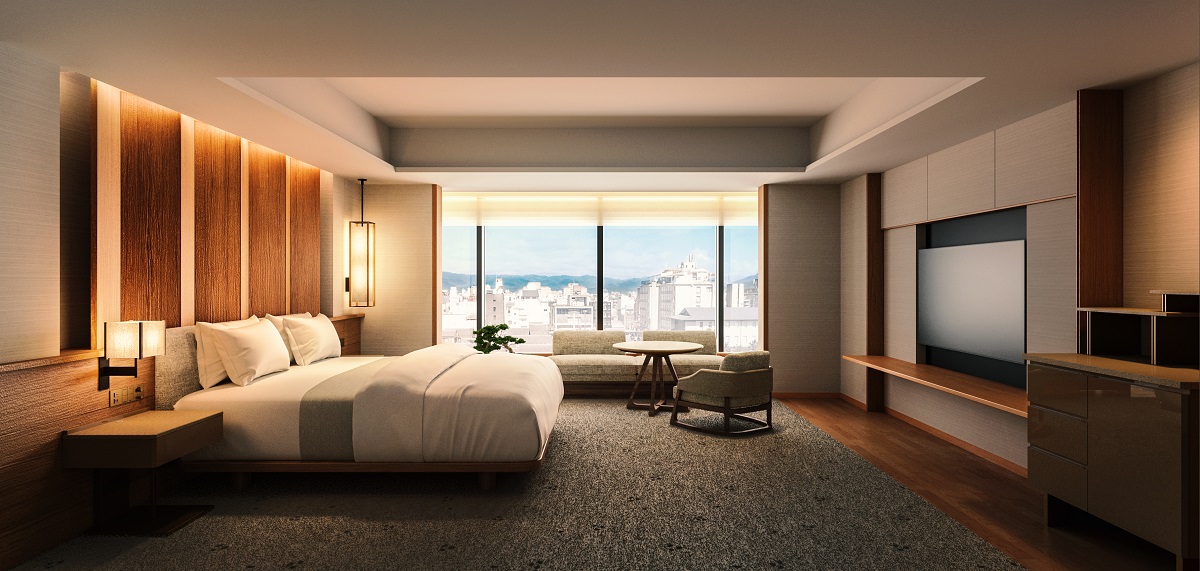
Image caption: Renovation Area | Image credit: The Imperial Hotel
Renovation Area
These rooms retain the silhouette and massing of the original Yasaka Kaikan while embracing minimalist spatial planning with contemporary interiors. Wide windows open onto scenes that shift throughout the day—from soft morning mist along the Higashiyama ridgeline to the golden hour glow on ochre walls and tiled rooftops. Neutral colour palettes are punctuated by tactile materials: Yakusugi wall boards shaped like a folding screen, brushed metal accents, and locally fired ceramics. These rooms speak to balance – where past meets present in a rhythm that feels distinctly Kyoto.
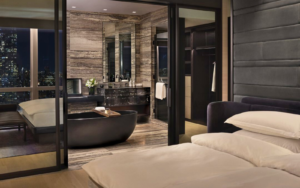
Positioned in the Renovation area, the Imperial Suite is the hotel’s most refined expression of its architectural and cultural vision. This 193 square metre sanctuary includes a 128 square metre master room, 57 square metre terrace, and exclusive 8 square metre access to the original Yasaka Kaikan rooftop gazebo – a sculptural feature preserved from the 1936 building. From two expansive terraces on the north and east sides, guests can take in sweeping views of both the townscape and the Higashiyama Mountains.
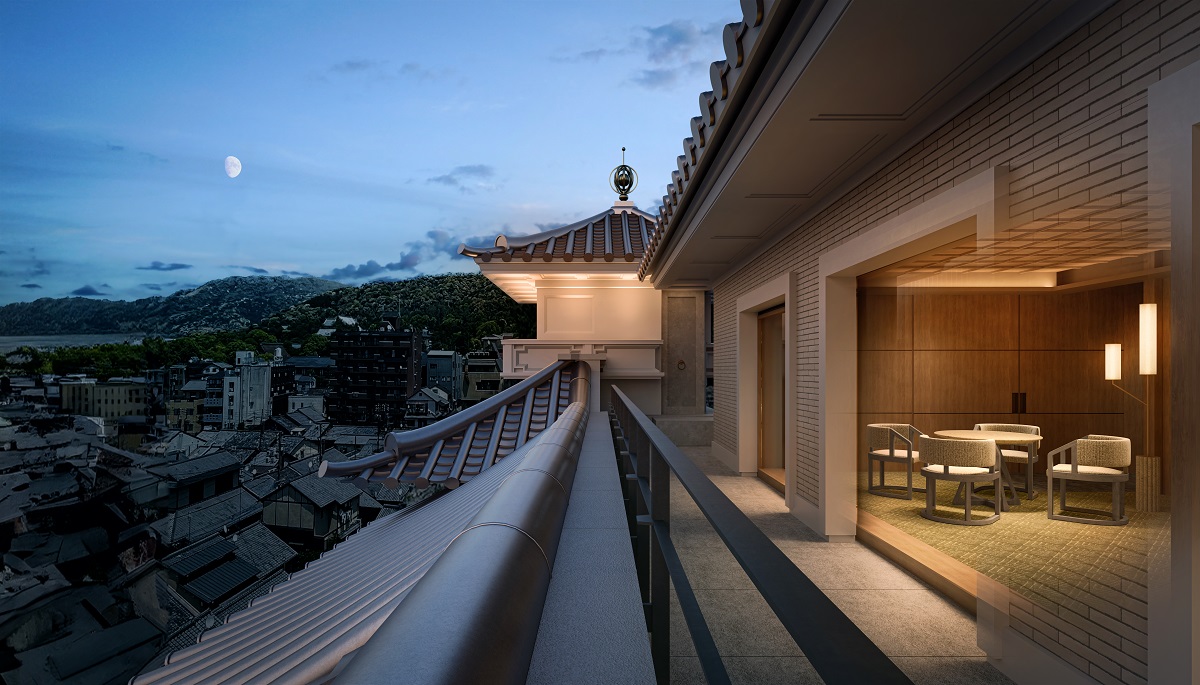
Image caption: The Imperial suite | Image credit: The Imperial Hotel
The suite’s interior showcases custom furnishings, curated art pieces, and a unique floor plan shaped by the silhouette of the Yasaka Kaikan. Ambient lighting, organic textures, and handcrafted copper roofing details foster calm and contemplation.
“Unforgettable experiences await guests in the gazebo—an iconic jewel of the Yasaka Kaikan,” said Ms. Reiko Sakata, General Manager of the Imperial Hotel, Kyoto. “The suite also features thoughtfully curated furnishings and materials that reflect Kyoto’s legacy, offering a one-of-a-kind immersive experience only possible at the Imperial Hotel.”
The Imperial Hotel, Kyoto is scheduled for construction completion in October 2025 and will officially open in Spring 2026. In April 2025, the hotel joined The Leading Hotels of the World, affirming its commitment to craftsmanship, heritage, and exceptional service. This will be the first new Imperial Hotel property to open in three decades, joining Tokyo, Kamikochi, and Osaka in the company’s prestigious portfolio.
Main image credit: The Imperial Hotel