Marrakech has long been a magnet for creative spirits, and one of the newest and brightest stars in the Marrakchi firmament, Jnane Rumi, is stepping centre stage. Writer Pauline Brettell meandered through the centuries old Palmeraie to discover a reimagined oasis full of the artistry and soul of Moroccan design – past present and future…

Like so many Moroccan properties, Jnane Rumi is hidden from view by clay walls and cascading bougainvillea, with no hint of the artistic canvas on the other side – well, possibly that traffic-light-red cactus sculpture next to the gate should have been a hint, as we wrestled with maps and phones to make sure we were pressing the right bell! Once inside, walking past textured olive trees and towering palm trees, there is an immediate sense of being welcomed into a space that is both private and welcoming.
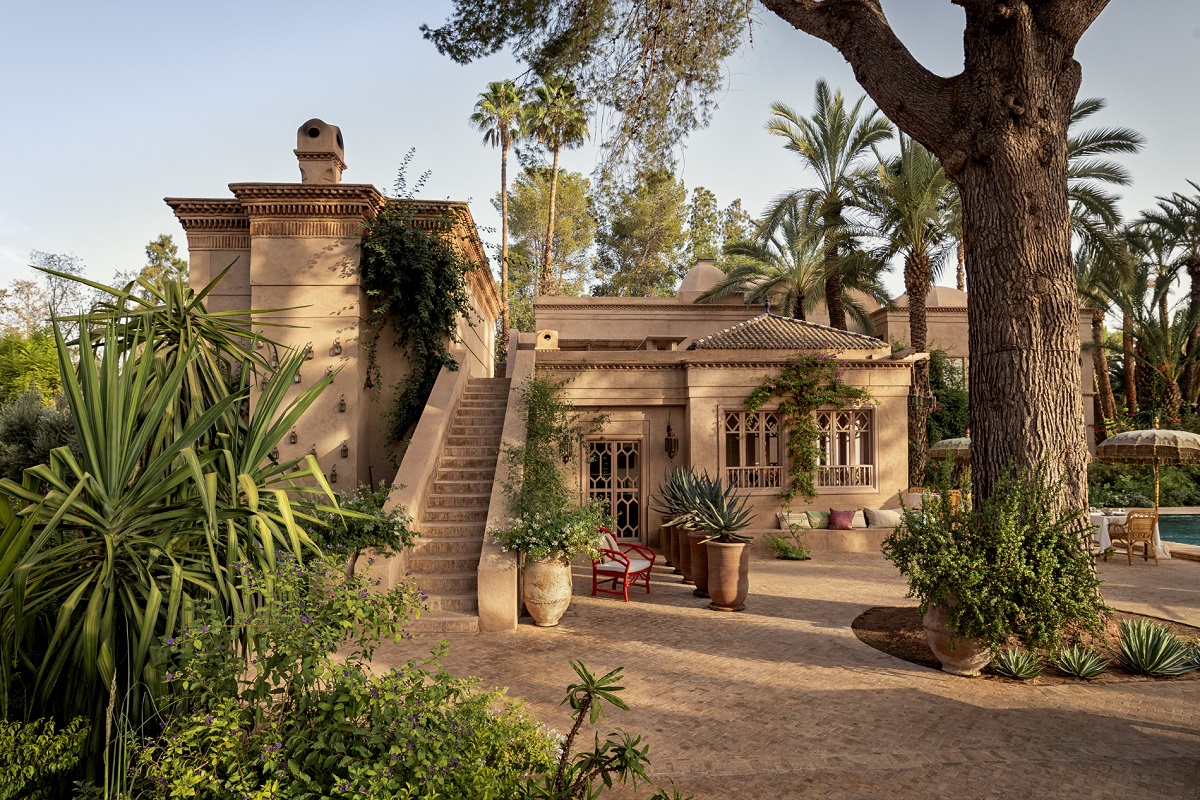
Image credits: David Dumon / Jnane Rumi
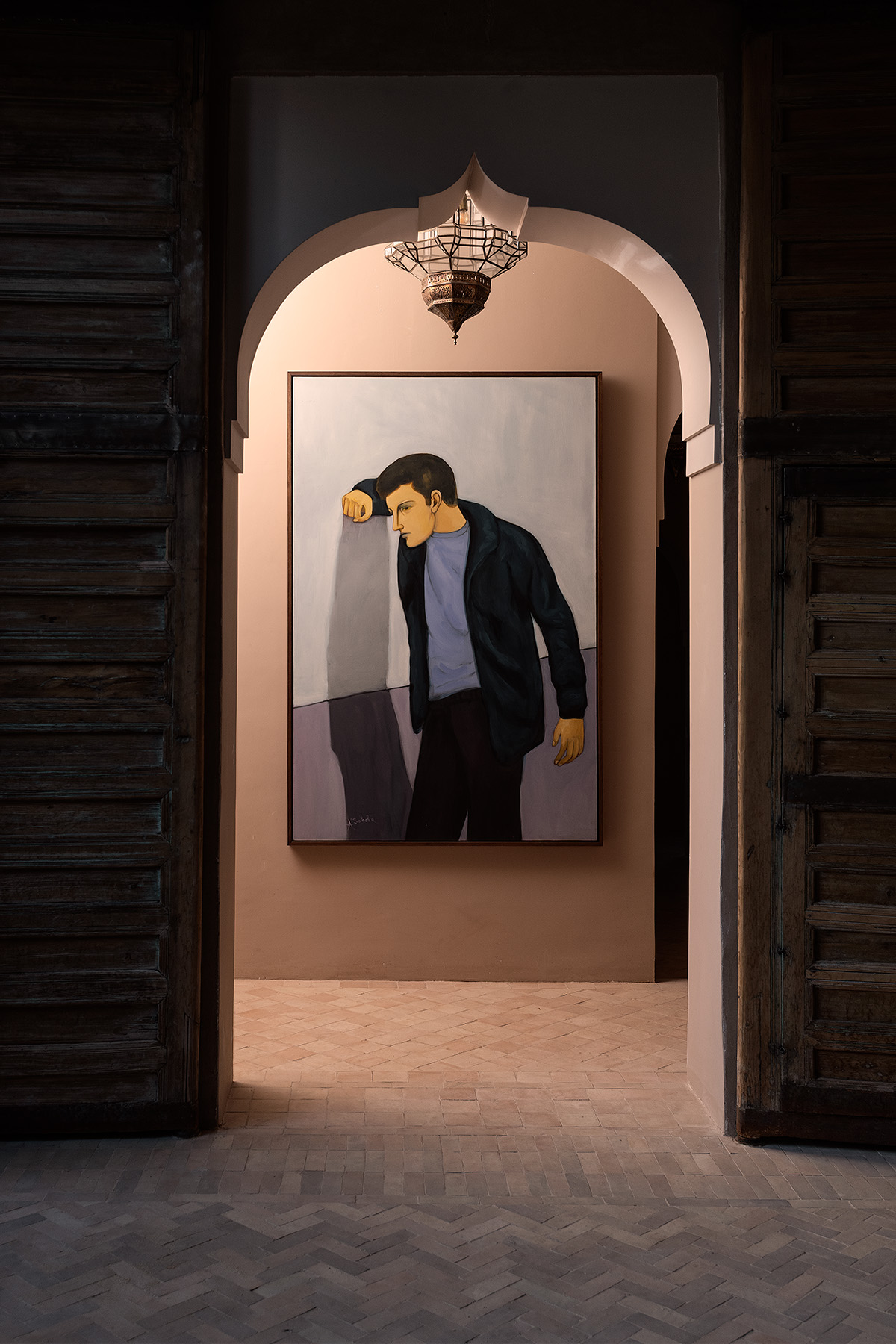
Originally the home of the influential designer and architect Charles Boccara, Jnane Rumi has been brought into a new era by its current owners, Dutch art lawyer Gert-Jan van den Bergh and his wife Corinne, a somatic therapist and sculptor. Seeing the property as a natural meeting point between cultures, they have reshaped it into a vibrant gallery, a hotel, a home. Today, contemporary North African pieces sit comfortably beside European artworks, all thoughtfully selected under the eye of Moroccan artist and creative consultant Samy Snoussi.
-
- Image credits: David Dumon / Jnane Rumi
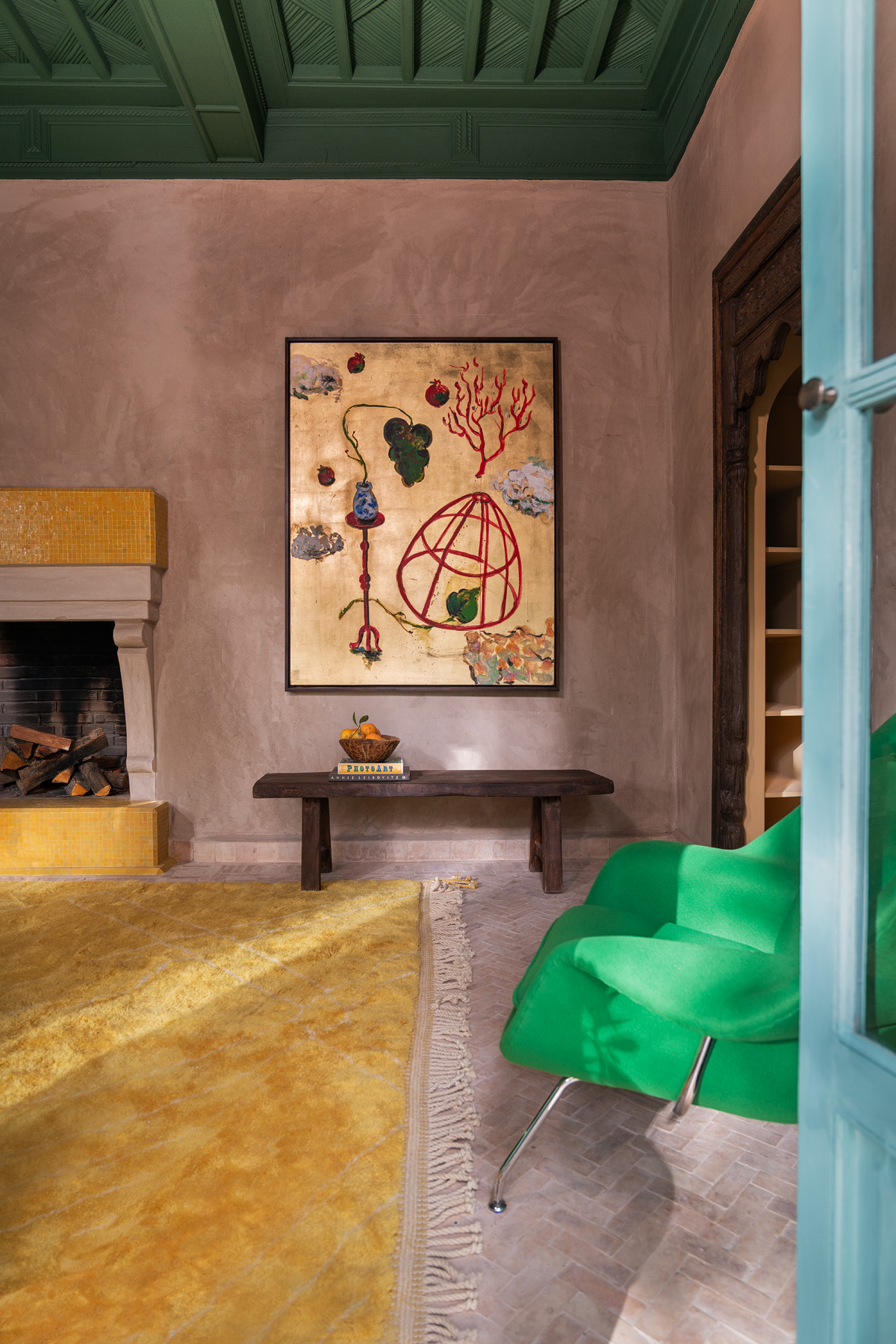
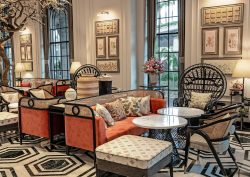
Inside, the space balances history with fresh perspective. Boccara’s hallmark features – the brick-domed ceilings, sunlit loggias, beehive-style fireplaces, and gracefully arched French windows – have been carefully restored by architects Nicolas Bodé, Quentin Wilbaux, and Christophe Simeon. The overall atmosphere feels both timeless and subtly contemporary, as if caught in a effortless conversation between past and present. And it was below one of those hallmark brick-domed ceilings that I was invited to kick off my shoes, slide on some slippers, and simply slow down to enjoy all the quiet luxury this property has to offer.
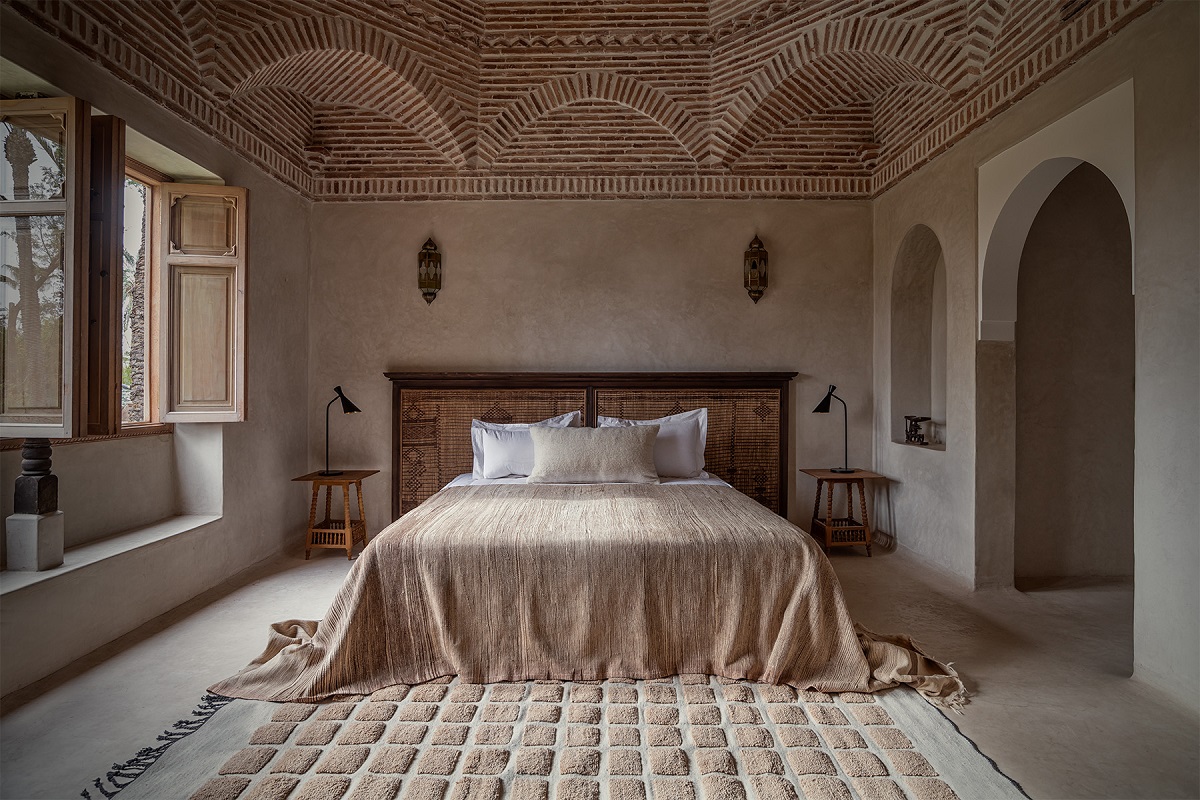
Image credit: David Dumon / Jnane Rumi
Strolling through the grounds the following morning was a delight of discovery, passing by quiet corners inviting you to sit and read a book (or just sit!), and culminating in more social spaces around the swimming pool. Stumbling across the brightly painted handmade furniture from the north was the perfect place for a little coffee and conversation, before heading indoors for a more curated experience.
Catching up in conversation with the General Manager, we spoke about the openness of the space, both in terms of design and in philosophy. While the 13 guestrooms are clearly meticulously run as a small luxury hotel, there is also a sense of being welcomed into a home. This brings with it a looseness of time, a de-regulation, that is perhaps the ultimate luxury. This philosophy spills, most tangibly, over into the design of the public areas where there are no barriers between the working office space, the lounge, the kitchen – Jnane Rumi is an open space on all fronts.

Image credit: David Dumon / Jnane Rumi
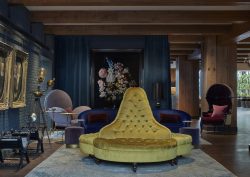
And yes, while Jnane Rumi’s walls certainly display a joyful and eclectic collection of art – pieces that do cross continents and straddle the gap between the traditional with the contemporary – it might be my personal penchant for all things woven and underfoot that draws my attention to the floor. The carpets that trail through the rooms and corridors are just as captivating: that deep sunshine-yellow pile beneath the green ceiling, the geometric pink weft threaded with hints of turquoise in the warp – glorious!
-
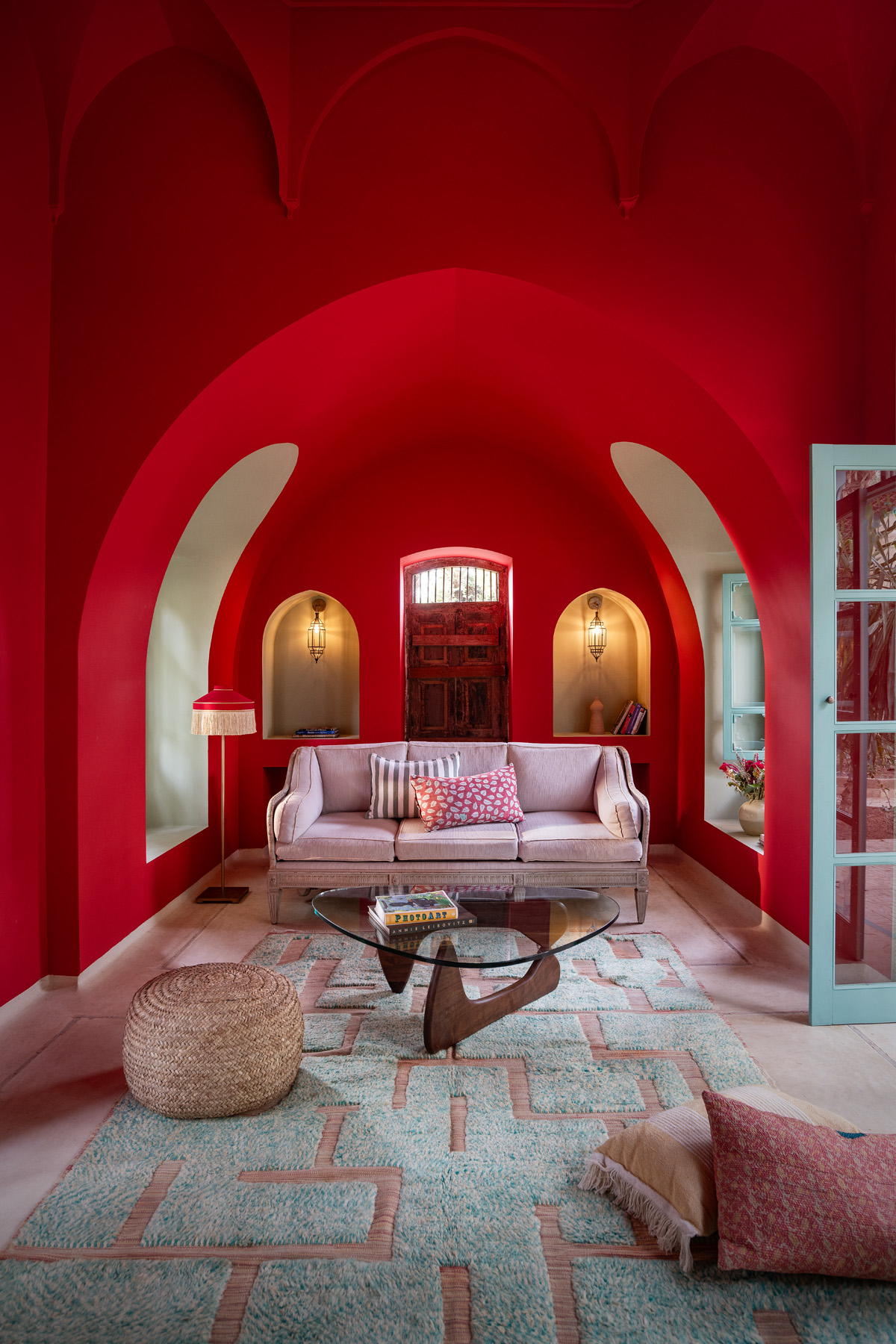
- Image credits: David Dumon / Jnane Rumi
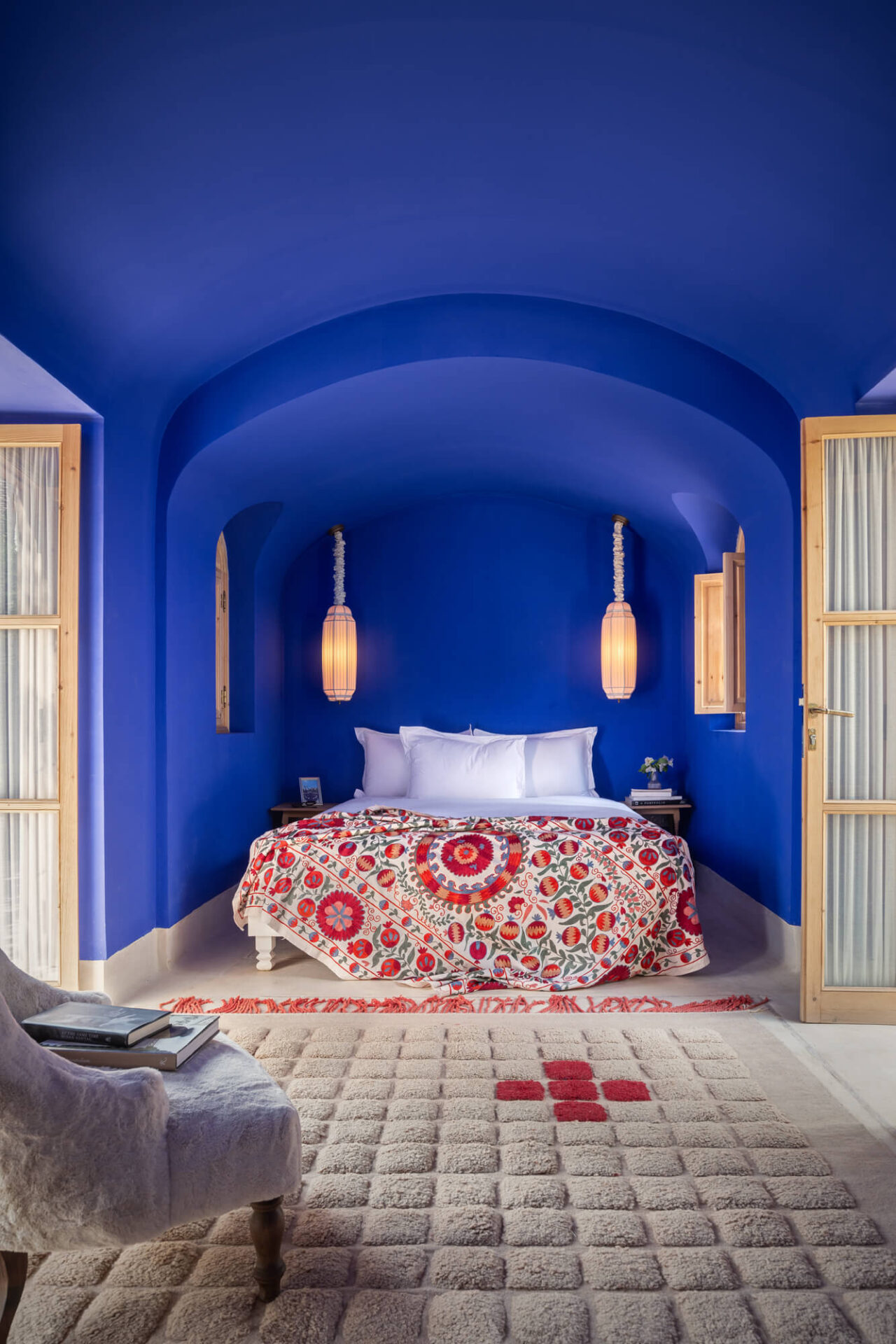
While there are many broad and bold brushstrokes that run through the design, they are all framed and grounded by the quiet pink plaster of the traditional structure. The classic Boccara shapes and proportions are the perfect foil for the more playful elements. The colour palette is equally tempered by this, as bright and even acidic colours somehow still veer into the realm of earthy. There is a feeling of the colours coming from the same soil as the clay walls.
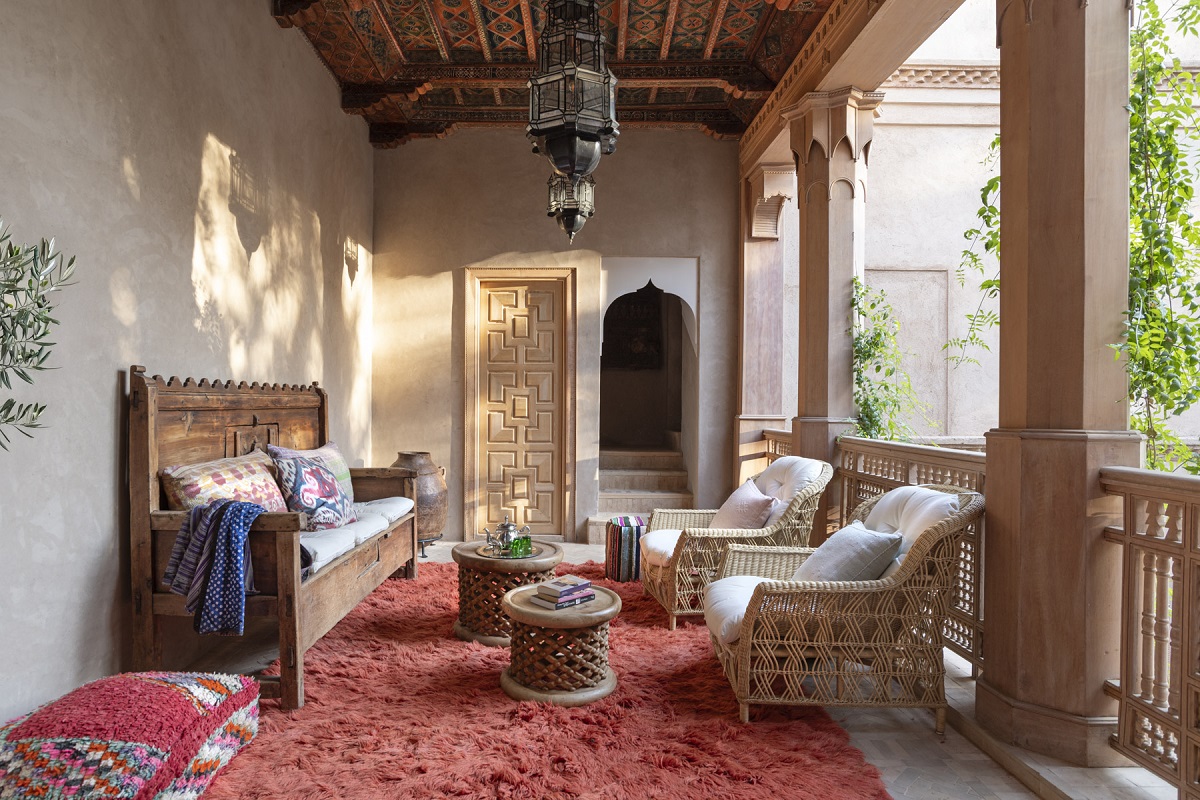
Image credits: David Dumon / Jnane Rumi
As owner Gert-Jan van den Bergh explained: “We’ve created a place where you can be completely yourself while experiencing the highest standards of comfort and authenticity. For us, travel should build bridges – through art, through conversation, through genuine human connection.”
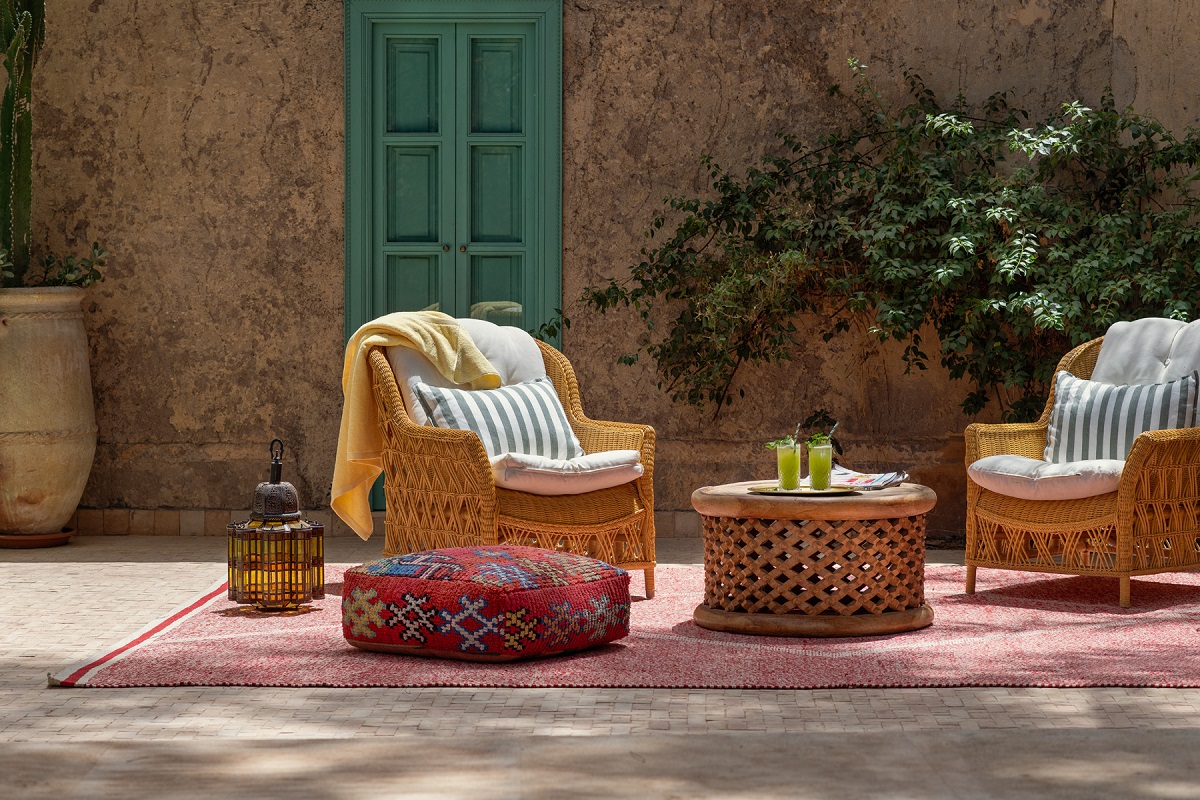
Image credit: David Dumon / Jnane Rumi
And now as 2026 unfolds day by day and week by week, and conversations around hotel design trends and slow luxury continue to gather, I am drawn back to these stolen moments in the Marrakech sunshine. Settled into a sunlounger beneath a palm tree, mint tea at my side, everything seemed to fall into place: the true luxury of taking time, immersed in an environment full meaningful, bespoke details. Jnane Rumi, in my view, has quietly got it right, leading its guests along the meandering path of slow luxury with a confidence that feels refreshingly unselfconscious, unhurried and not forgetting those fabulous carpets – all punctuated by some refreshingly off-piste splashes of colour!
Main image credit: David Dumon / Jnane Rumi