








Driving down field lined roads and through quaint villages, the route to East Peckham has no resemblance to the London neighbourhood it shares a name with. Nestled amid the rolling Kent countryside, it’s an unlikely home for one of the country’s leading wallcovering manufacturers – yet Muraspec has quietly gone about its business in this bucolic setting for more than 170 years, on a site whose roots lie not in wallcoverings, but in leather…
Two tanning businesses, the Bryant Leather Company and the Bristol tannery Gerrish & Gwyn, merged in the late 1950s to form Brymor, which began manufacturing heavy-duty wallcoverings for hotels and other commercial interiors. In 1998, Brymor began trading as Muraspec undergoing a rebrand rather than a change of hands – the name a merging of the French term for walls and specification.
Though no longer producing leather, high on the spire of the factory’s striking white HQ sits a weathervane topped with an iron cow balanced on a compass, a quiet nod to the tannery that once stood here. It is also, I am told, the only wallcovering manufacturer of its kind in the south-east; most UK competitors are based further north, which, paired with a fast rail link to London, makes East Peckham a convenient stop for specifiers wanting to see the full process – from first sketch to finished roll – in a single visit.
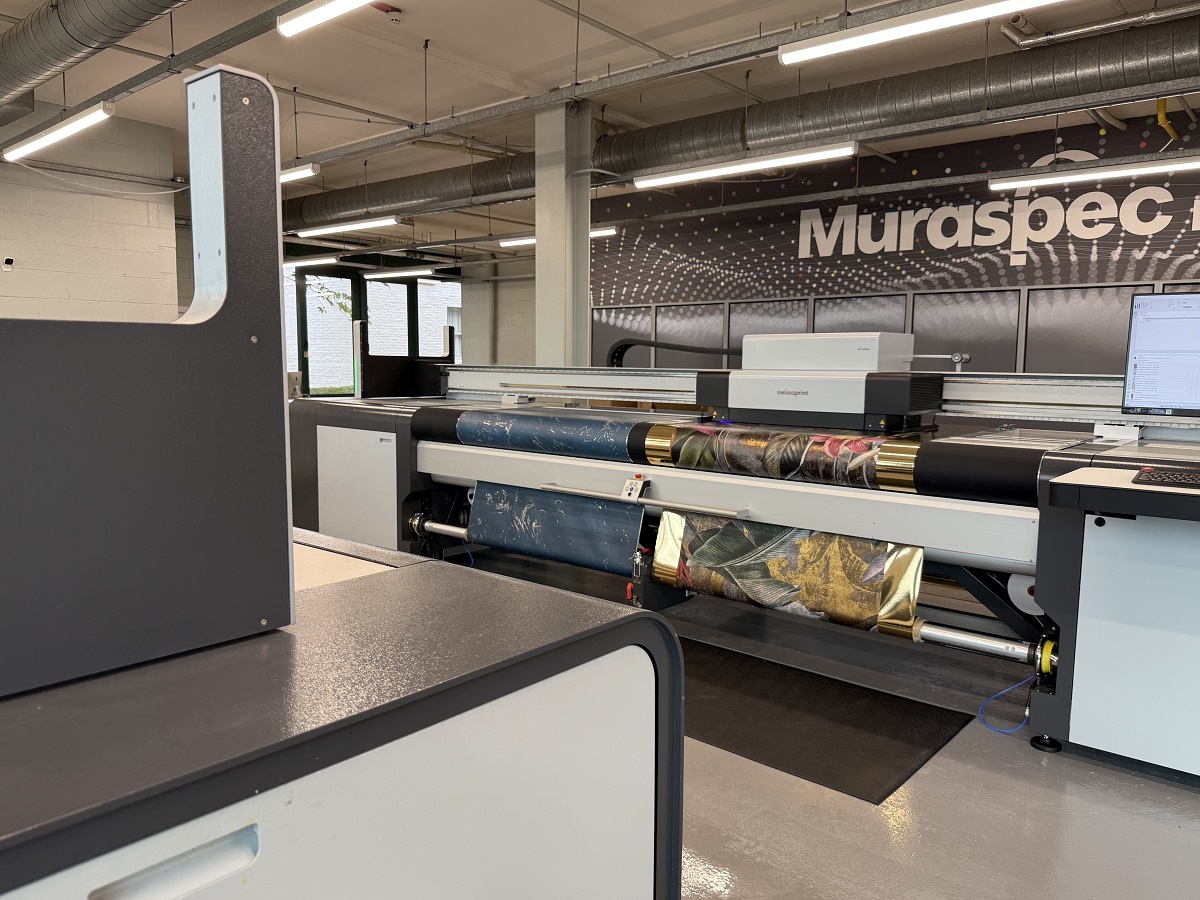
Image credit: Muraspec
I was shown that process by Matt Hayes, design studio and product manager, and John Langfield, design process and digital manager – a pairing that gave me the best possible view of how a Muraspec wallcovering comes together, from the drawing board to the production line.
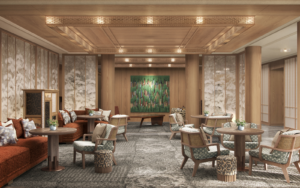
Upstairs, in the studio – officially, studio and product development – Hayes explained that around 80% of the work here is bespoke, developed in collaboration with clients rather than pulled from standard collections. A customer arrives with a starting point, sometimes no more than a mood or a reference image, and the studio develops concepts on spec, refining ideas until a design is approved for sampling. Hospitality remains by far the largest sector, a shift that accelerated as open-plan working reduced commercial wall space; healthcare has followed a similar path, with care environments increasingly designed to feel like the hotels they are trying to evoke.
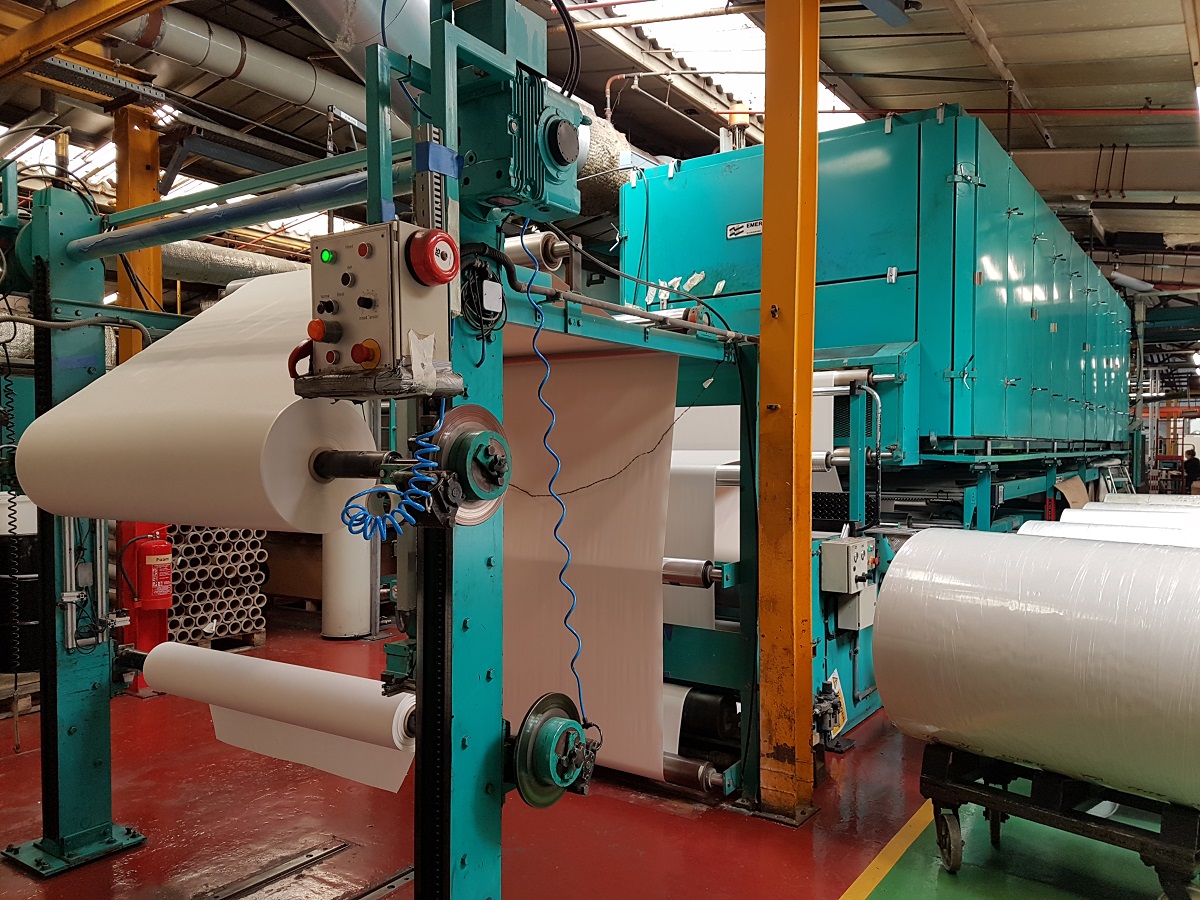
Image credit: Muraspec
As I’m given an overview of the experience for bespoke clients, it becomes clear that the beauty of working with Muraspec is that the whole process happens under one roof, removing the miscommunication and delay that comes from splitting design and manufacture across sites. A brief goes directly from the person specifying it to the person making it, with nothing lost in translation and no delay between decisions.
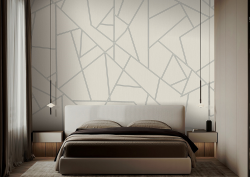
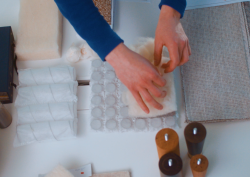
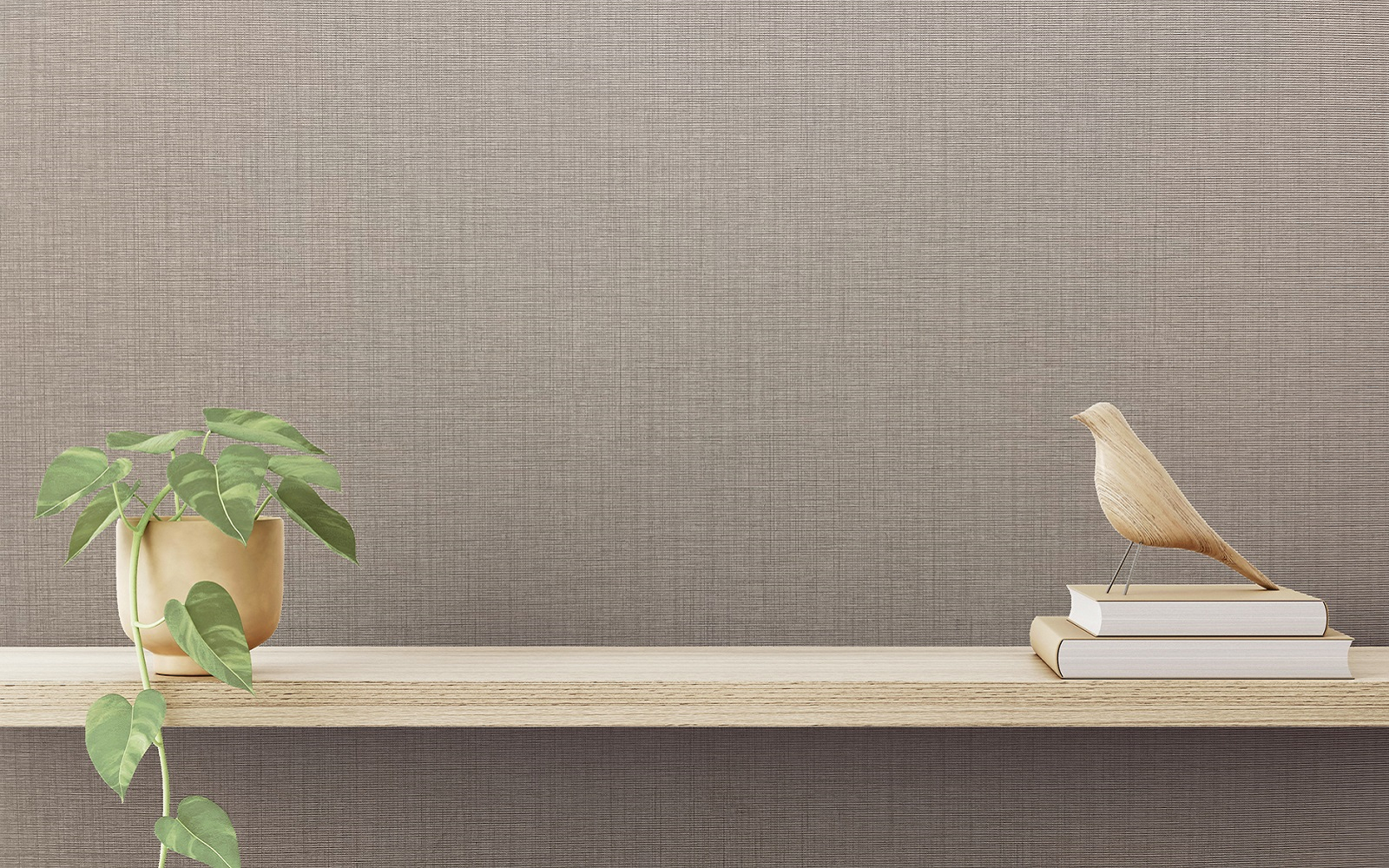
Back on the studio floor, Hayes talked me through sample boards showing how Muraspec’s factory-made and digitally printed ranges are produced. One example – a vinyl wallcovering finished to resemble a woven fabric – demonstrated the process particularly well: the pattern is engraved onto large metal cylinders, then pressed into heated PVC at around 200 degrees, forming the material to the texture of the roller as it passes through. It is convincing enough that it is easy to forget it is not fabric at all, even upon close visual and physical inspection.
-
- Image credit: Muraspec
The logic, according to Hayes, is durability and cost – a genuine silk wallcovering looks wonderful but will not survive years of commercial wear the way a PVC equivalent will. The same applies to Muraspec’s grasscloth-effect finishes, printed and embossed rather than woven from natural fibres, which do not fade or discolour the way the real material can.
Digital and factory-made products serve different purposes, and choosing between them is central to how the studio advises clients. Factory production, run on printing cylinders, is limited to around four or five colours per design and works to a repeat pattern, but can deliver a tactile, embossed finish digital cannot replicate alone. Digital, by contrast, removes those limits on colour and scale entirely – a corridor thirty metres long poses no more difficulty than a single panel – but costs more per metre and, printed flat, lacks that dimensional texture. Increasingly, the studio combines the two, finishing a factory-made base with a digital print on top.
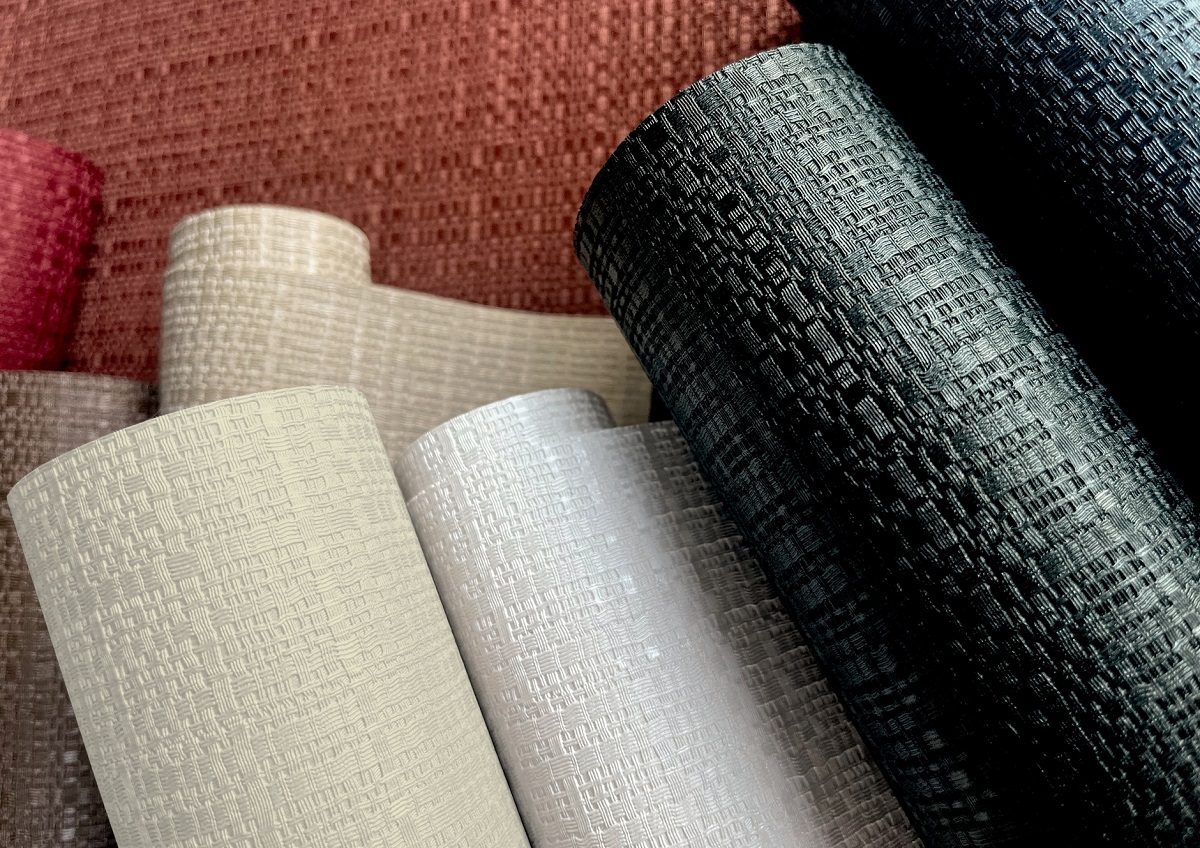
Image credit: Muraspec
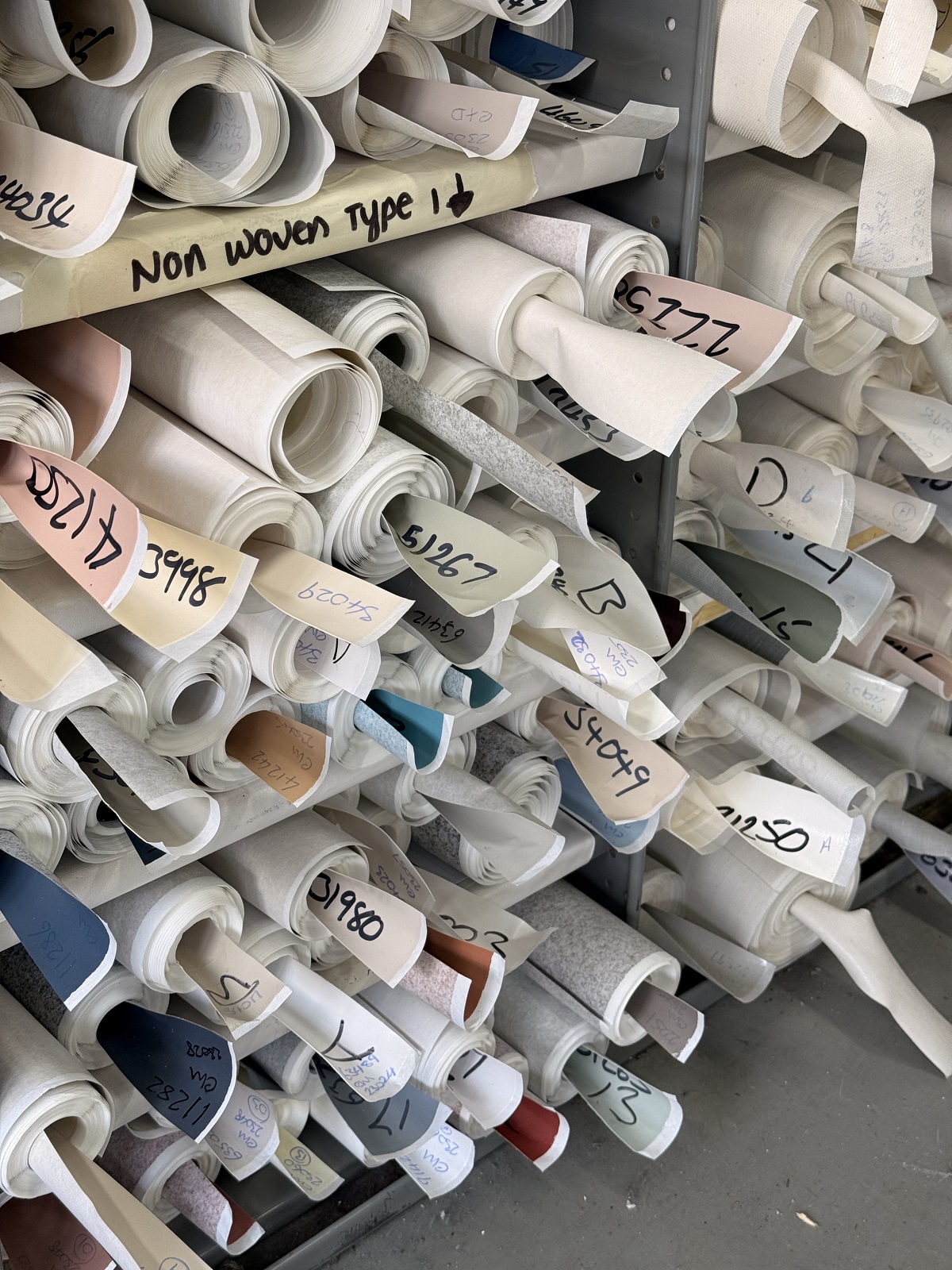
Downstairs, the UV printers work much like a domestic inkjet but scaled up to an elite level. Print heads fire ink in passes across the material, cured almost instantly by a UV lamp built into the carriage. A layer of white ink goes down first wherever opacity is needed, so some areas sit flat and matte while others – left without the white base – take on the character of the material beneath. Every material printed on here, Langfield noted, is also made in the factory upstairs; nothing is bought in.
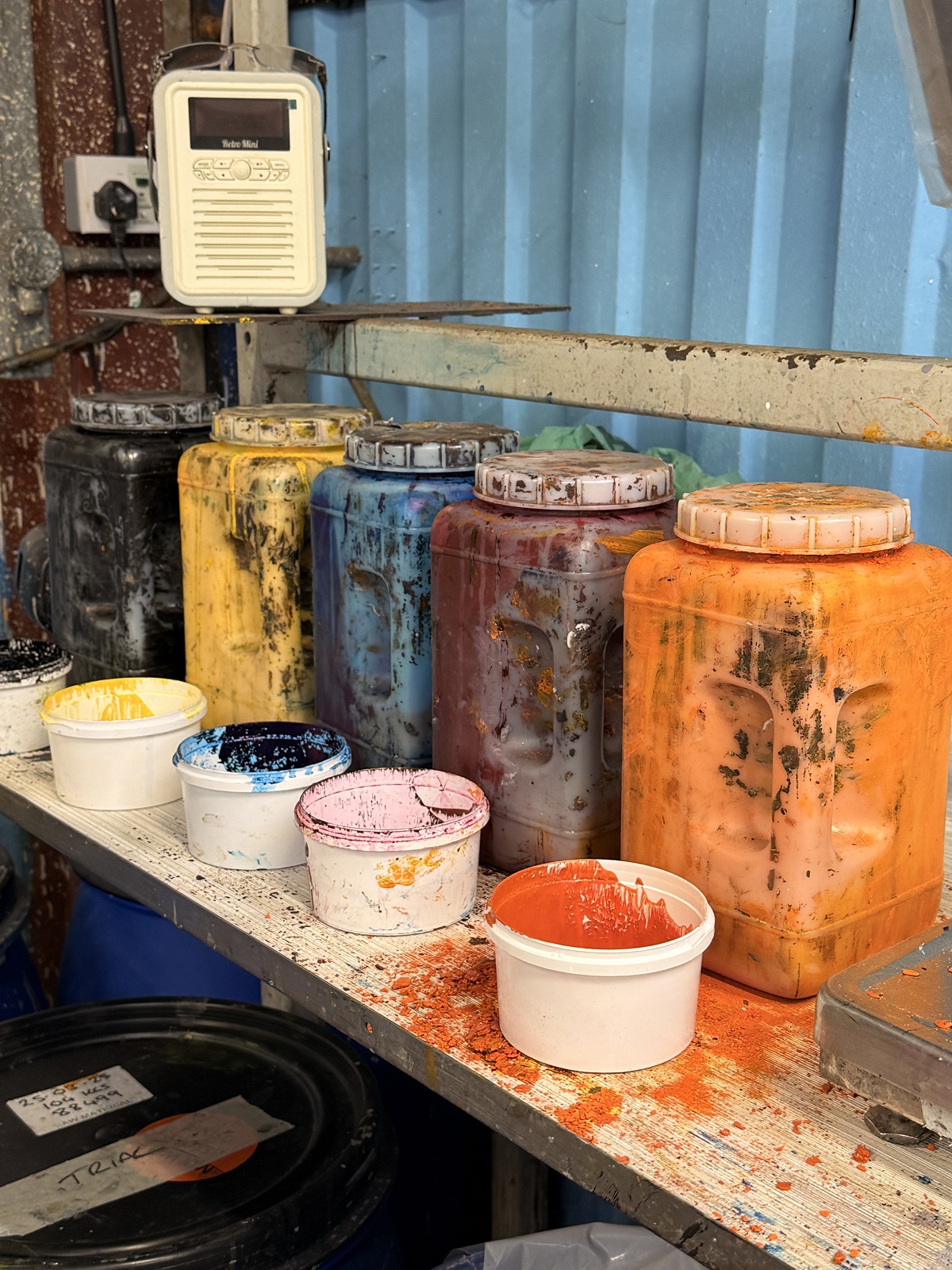
The most craft-led part of the tour is the design lab, where colours are matched to a client’s reference sample entirely by eye. A technician mixes small batches of vinyl paste, testing against the target until it is right, then records the exact recipe against a unique project code so the same colour can be reproduced accurately even years later. Alongside sits equipment close to forty years old – engraving cylinders and print presses still in daily use, maintained by Muraspec’s own in-house engineers.
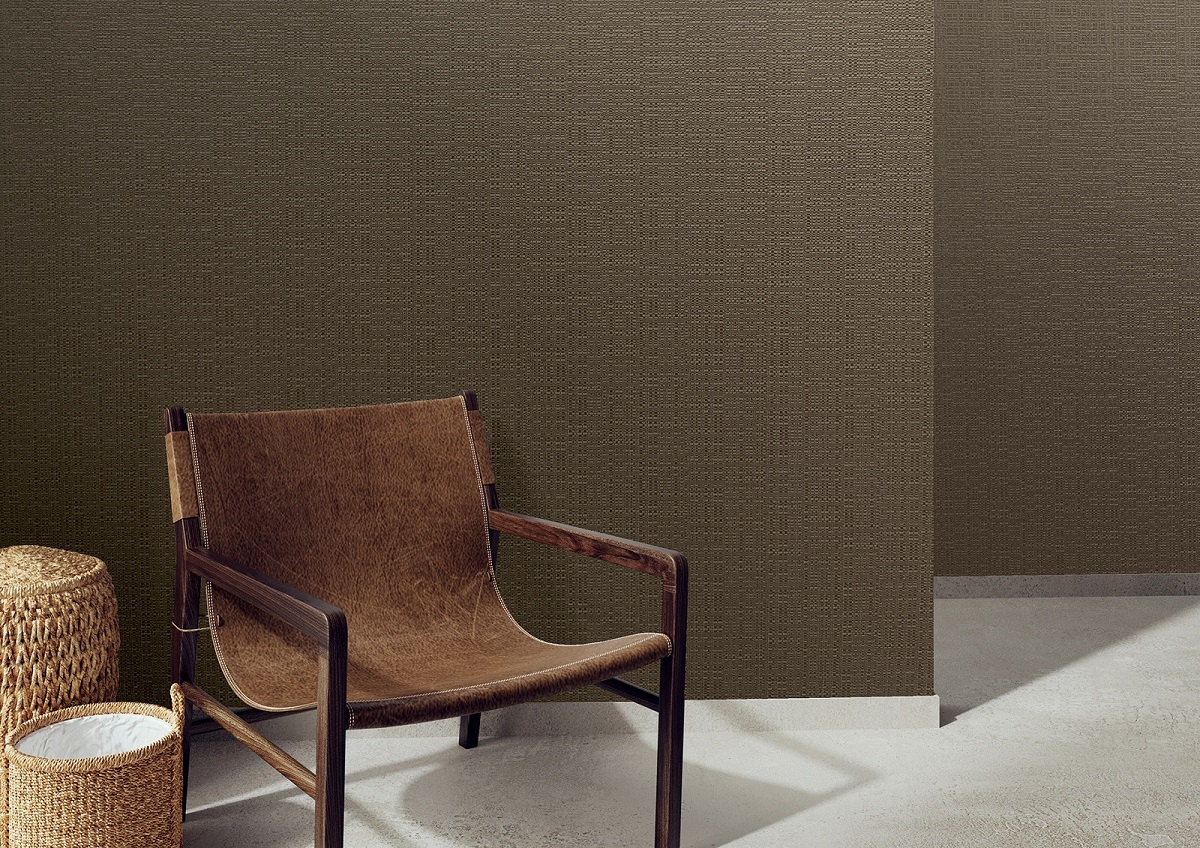
Image credit: Murapsec
Some of the finest texture work still depends on a single specialist engraver with decades of experience, who can spend months hand-cutting a pattern into a roller – a reminder that, for all the fantastic work done by laser engraving, UV printers and CAD software, some of what Muraspec makes is still done by hand and a true craft.
It’s easy to walk into a wallcoverings factory expecting a straightforward story – but, as they say, expect the unexpected. What Muraspec’s East Peckham site makes clear is a manufacturer that has spent more than 170 years honing its craft, now channelled into a level of in-house control, from first sketch to finished sample, that few competitors in this category can match.
Muraspec Wallcoverings is one of our Recommended Suppliers and regularly features in our Supplier News section of the website. If you are interested in becoming one of our Recommended Suppliers, please email Katy Phillips.
Main image credit: Muraspec