








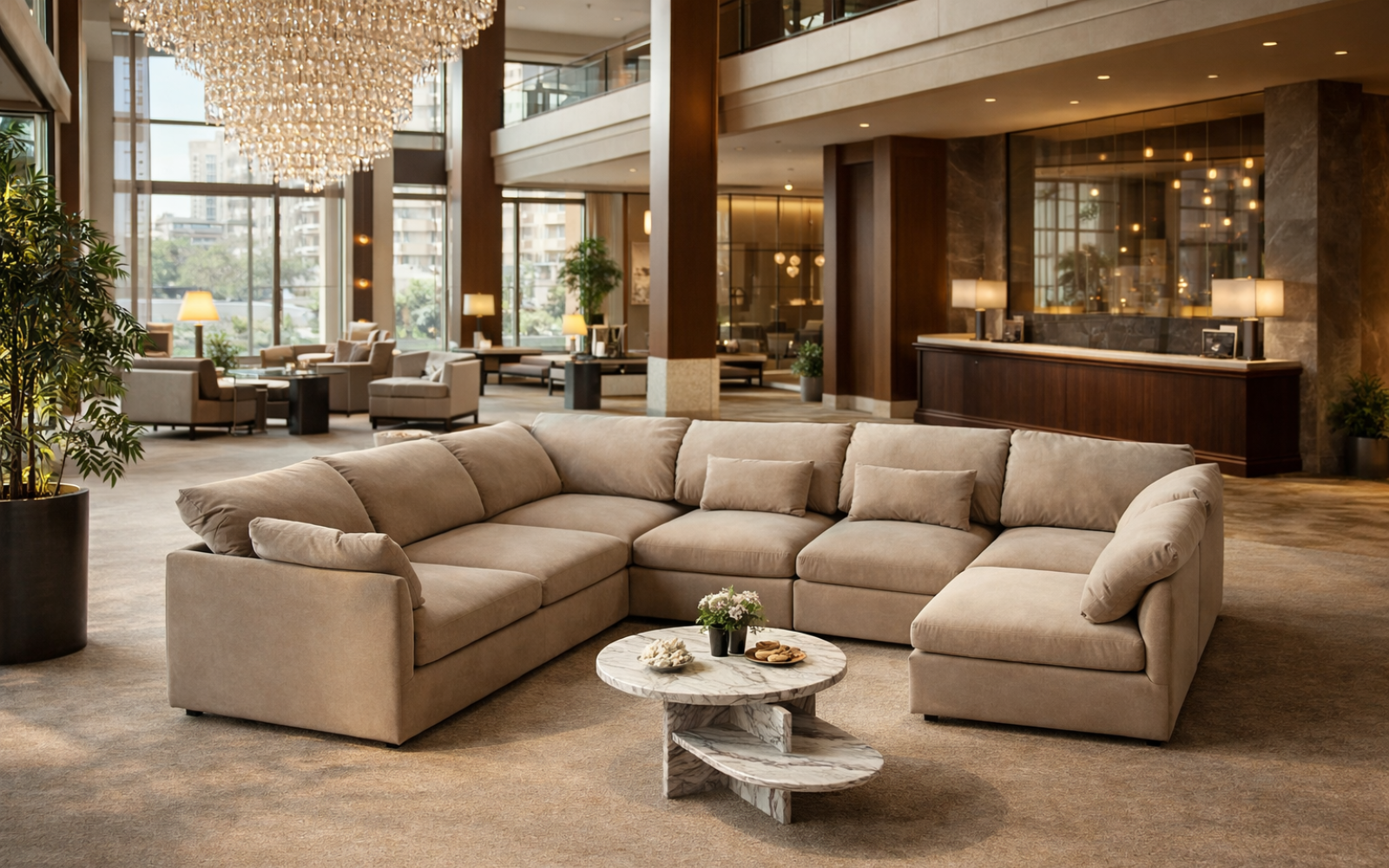
Innovation in hospitality furniture design rarely arrives with spectacle or demand explanation. More often, it reveals itself quietly – through ease of use, through the confidence of proportion, through the sense that a space simply works. At BoConcept, this quality is not incidental. It is the result of a design culture grounded in collaboration, where innovation emerges less from disruption than from an understanding of how people move through, pause within, and return to spaces.
Nowhere is this more apparent than in hospitality environments. Hotels, lounges and shared interiors must accommodate both transience and familiarity: guests encountering a space for the first time, and others returning often enough to notice its subtleties. In such settings, innovation succeeds only when it feels intuitive – when furniture supports experience rather than interrupting it.
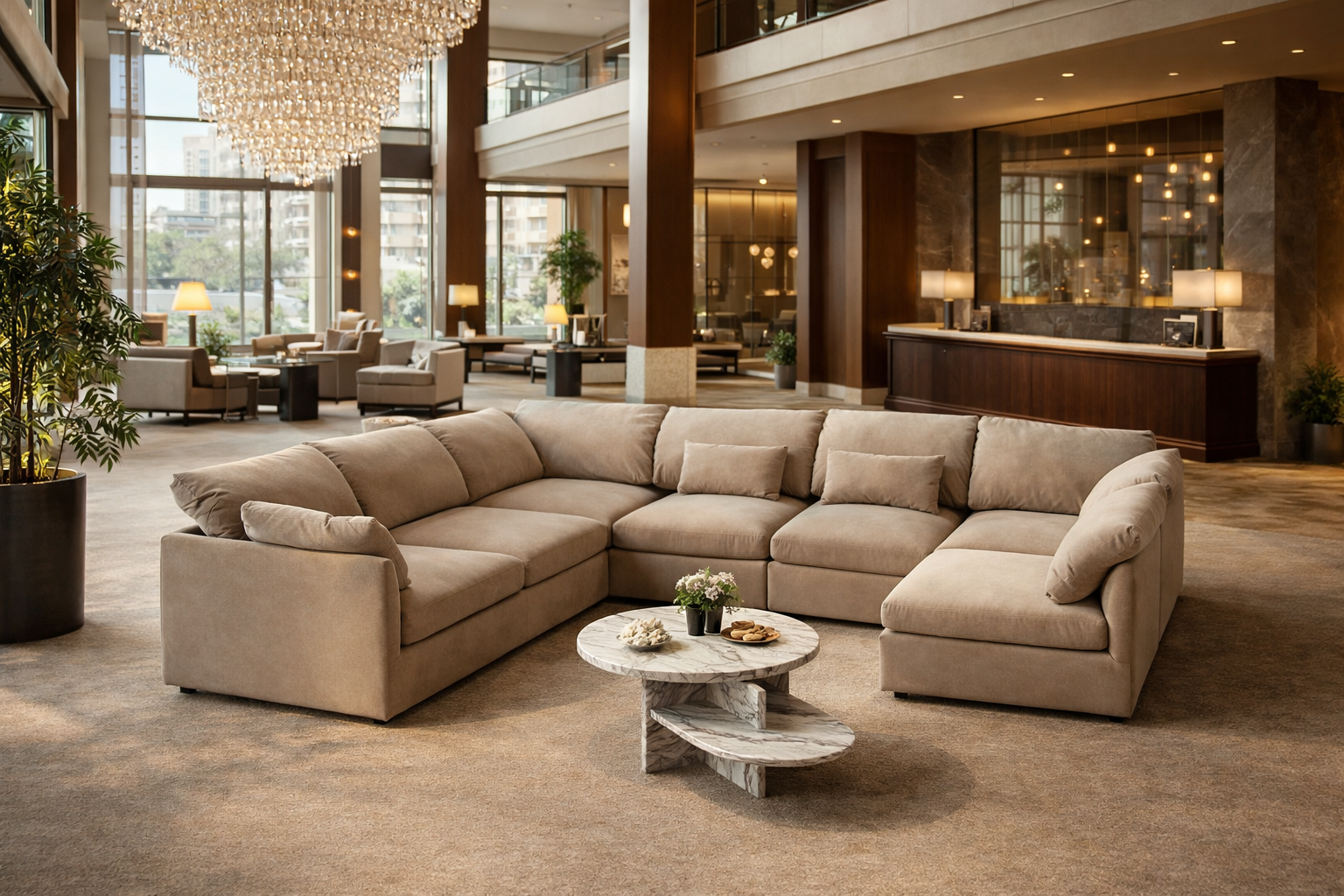
Milano | Image credit: BoConcept Trade and Contract
That sensibility is evident in BoConcept’s collaboration with Claudio Bellini Studio on the Milano collection. Conceived as an architectural sofa system, Milano approaches seating not as an object but as a landscape. Its modularity allows it to adapt to different spatial rhythms, while its low, generous proportions encourage a relaxed, contemporary posture.
Bellini’s concept of ‘skeleton and skin’ – a precise outer structure enclosing a soft, inviting interior – creates a tension that feels particularly suited to hospitality: controlled and composed on the outside, sensorial and welcoming within. Innovation here is not declarative; it is embedded in flexibility, longevity and emotional comfort.
This sensitivity to human behaviour runs through BoConcept’s wider design network. Henrik Pedersen, one of the brand’s most prolific collaborators, often begins with sensation rather than form.
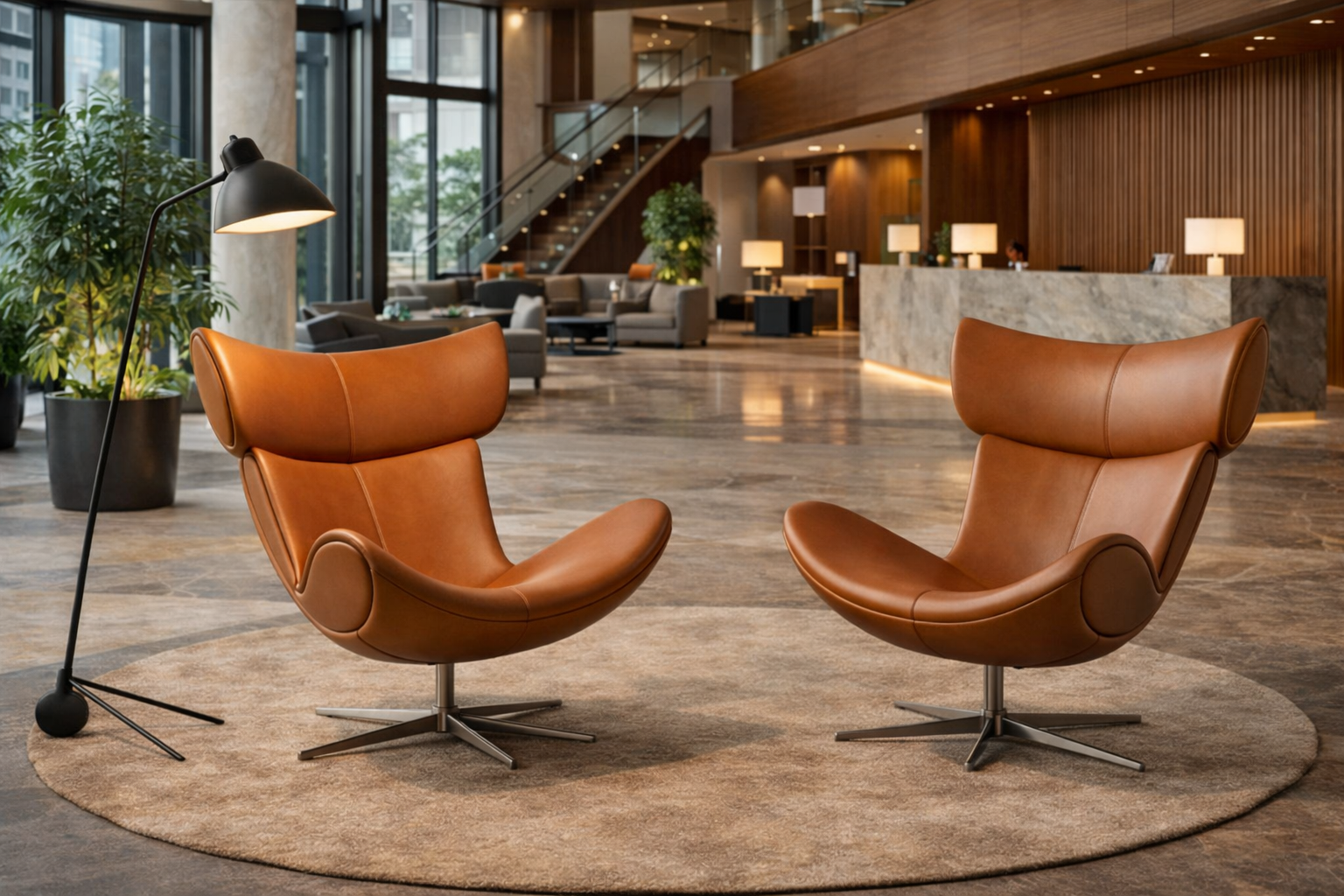
Imola | Image credit: BoConcept Trade and Contract
The Imola chair, inspired by the suspended tension of a tennis ball in motion, poses a simple question: can a statement piece feel effortless? Its answer is physical rather than verbal. The Adelaide chair follows a similar logic, pairing a sculptural shell with unexpected softness, blurring the line between precision and ease – an important balance in spaces designed for both lingering and flow.
A different expression of innovation appears in BoConcept’s collaboration with Bjarke Ingels Group (BIG) on the Nawabari collection. Drawing inspiration from the Japanese art of rope binding, Nawabari translates the logic of tension and restraint into sculptural seating forms. The result is expressive yet calm, distinctive without being disruptive. In hospitality settings, Nawabari introduces character while remaining approachable – objects that invite use and curiosity in equal measure. BIG’s contribution brings a spirit of informality and play, softened by BoConcept’s commitment to clarity and comfort.
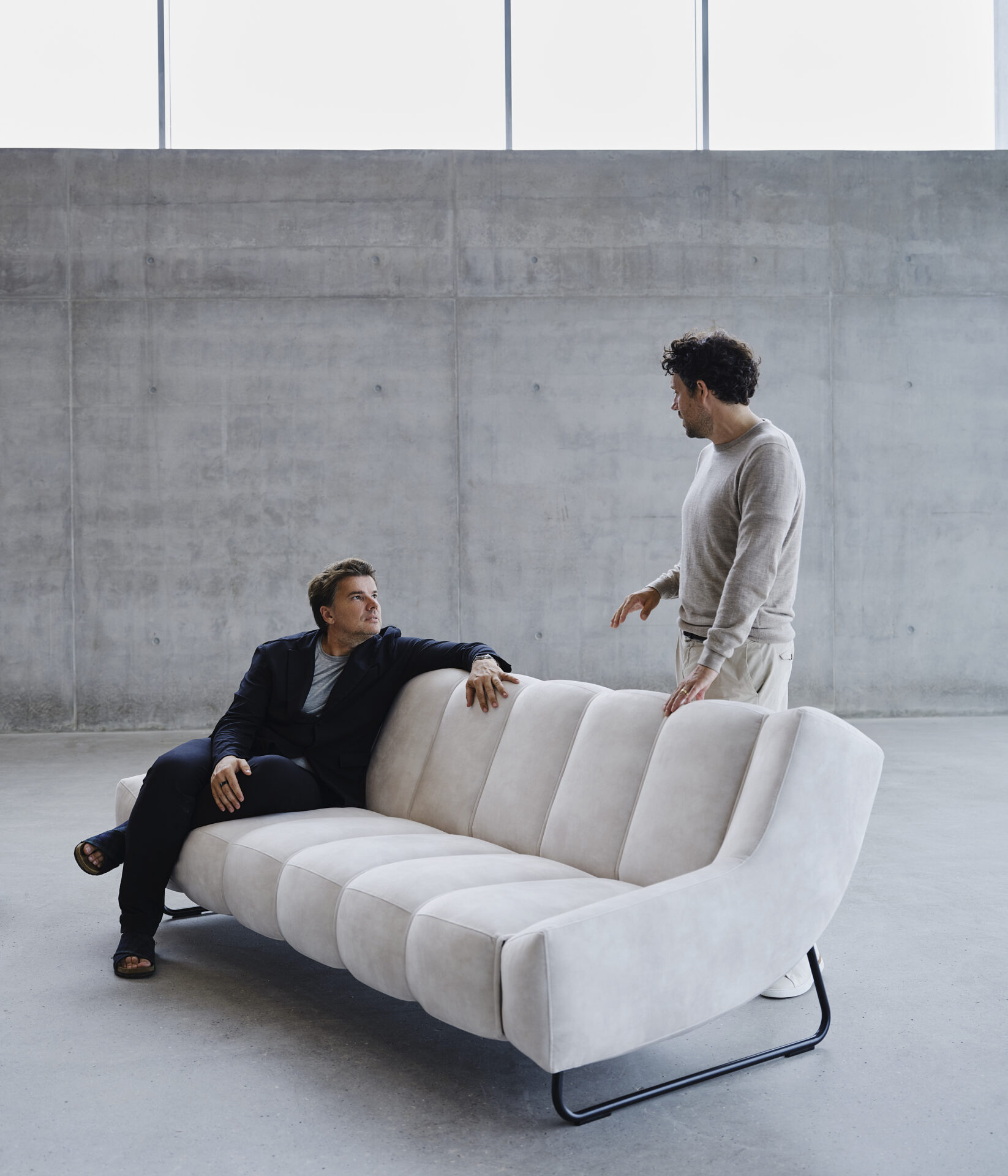
(l-r) Bjarke Ingels and Jakob Lange of BIG | Image credit: BoConcept Trade and Contract
Where some designers explore innovation through concept or emotion, Morten Georgsen approaches it through refinement. His Santiago dining table demonstrates how subtle shifts in proportion and material can transform functionality into experience. With its curved tabletop and sculptural pillar legs, Santiago balances visual softness with structural presence – qualities well suited to dining environments that must feel both social and composed.
The Hamilton dining chair extends this thinking further, combining cocooning comfort with a slim, flexible profile and multiple base options. Together, the designs speak to an understanding of hospitality spaces as places of repeated use, where comfort, durability and visual harmony must coexist.
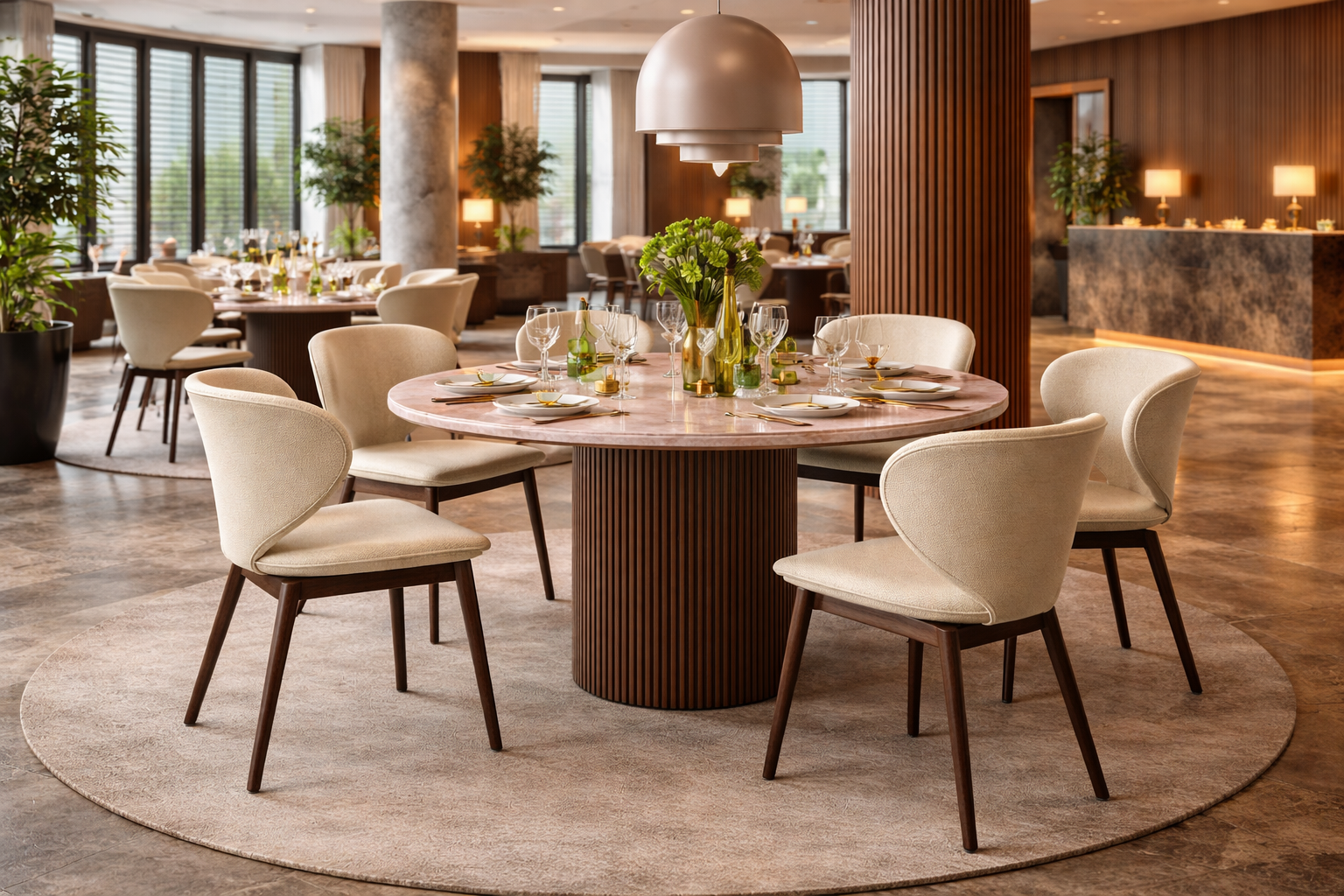
Santiago table and Hamilton chairs | Image credit: BoConcept Trade and Contract
More recent collaborations reflect changing expectations of shared interiors. Charlotte Høncke’s Sweet Art collection introduces softness, tactility and indulgence into BoConcept’s design language. Sculptural and sensorial, its organic forms and confectionery-inspired palette respond to a broader shift in hospitality towards spaces that feel less formal and more nurturing. In lounges and boutique settings especially, Sweet Art’s accent pieces blur the boundary between public and private, encouraging moments of pause, comfort and delight.
So why does furniture innovation feel so natural? Because, at its best, it is not designed to impress in isolation. It is designed to belong. BoConcept’s approach treats innovation as a cumulative effect – emerging from dialogue between designers, from respect for context, and from a close observation of how people gather, move and rest.
When furniture is shaped by these considerations, innovation becomes almost invisible. It does not demand attention; it earns trust. And perhaps that is the quiet paradox at the heart of design progress: when innovation is done well, it doesn’t feel new at all. It feels inevitable.