











There are buildings that quietly hum in the background of a city’s skyline – and then there are those that command your attention. The Hotel Arts Barcelona definitely belongs to the latter, as it makes its design statement in full throated Freddie and Montserrat style…
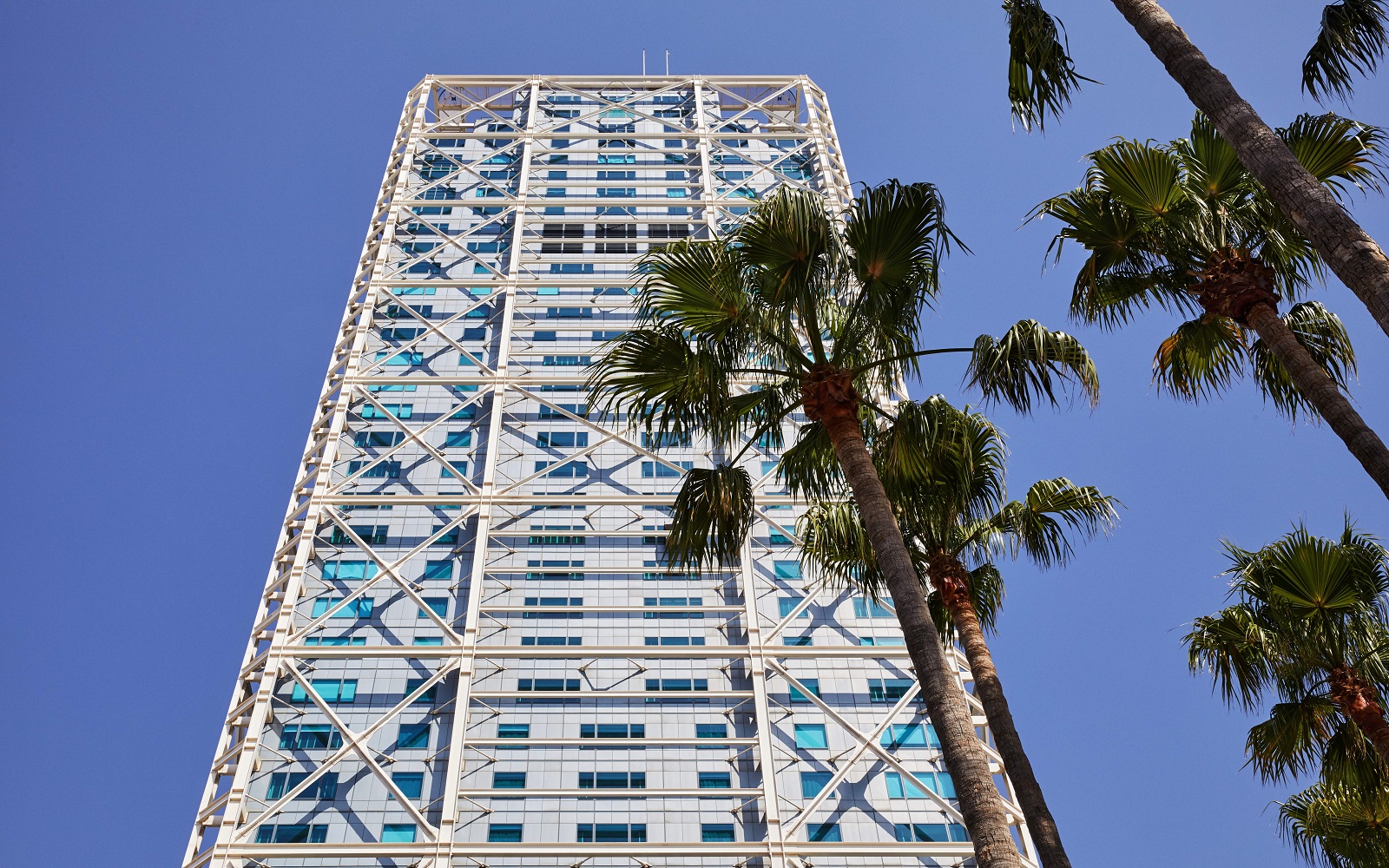
And indeed, I challenge anyone to not hum at least a few bars of that opening Olympian anthem while visiting this hotel – a bold architectural exclamation mark, which until recently has taken first spot on the tallest-building-in-Barcelona podium. It does feel fitting that it has now been nudged into second place by that Grande Dame of Design in the city, La Sagrada Familia, as it reaches its final pinnacle of expression.
And like the Sagrada Familia, Hotel Arts has also undergone an extensive redesign, putting this iconic seafront tower back in the spotlight, not simply as a luxury hotel, but as a tangible expression of Barcelona’s design soul. The hotel, originally completed in the late 1990s as part of the city’s Olympic-era rejuvenation, was once synonymous with international glamour — an emblem of the new Barcelona rising out of its industrial shell. Today, it stands not only revitalised but redefined, as it sheds its glossy past for a layered, more nuanced expression and design.
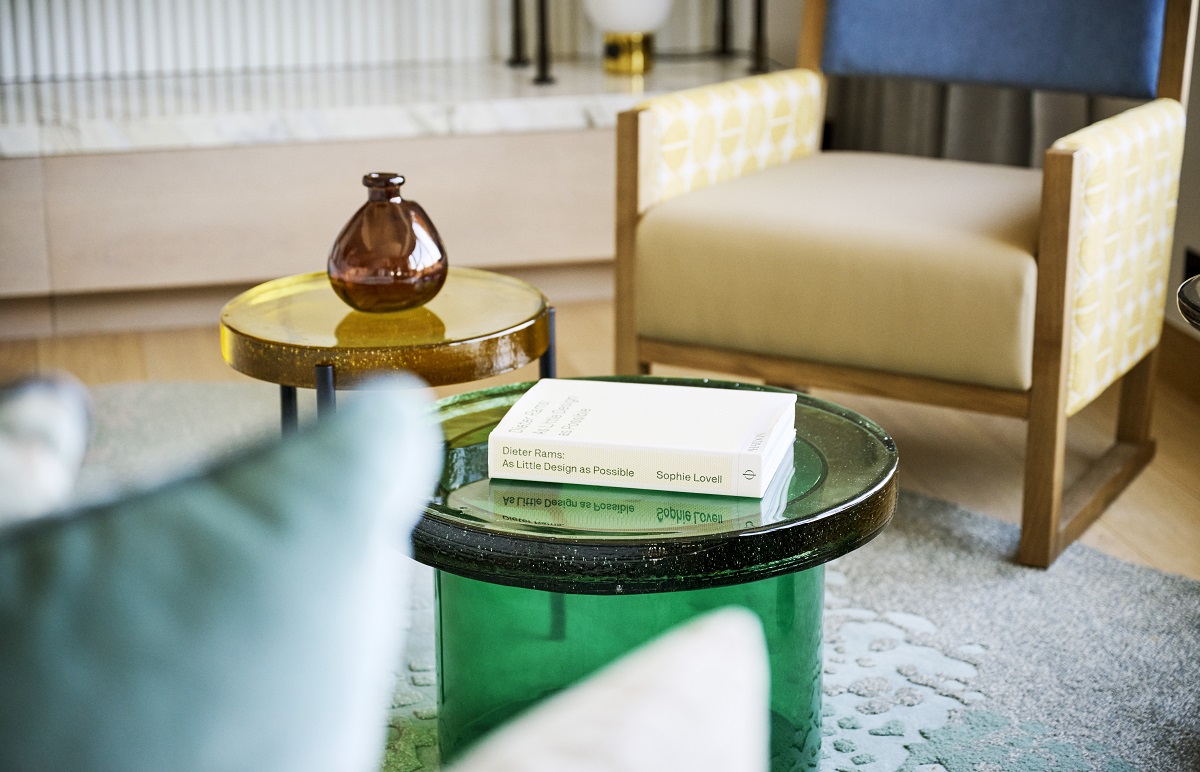
Image credit: Marriott
This transformation, led by design studio Meyer Davis has taken on every space – from public areas and meeting rooms to guestrooms and the spa, with a modern design and refined furniture elements that both reflect and reframe the hotel’s distinctive identity and sense of place. With all the guestrooms and suites recently signed off, it was the perfect time to experience both completed elements and those in transition.
And being more of a bijoux and boutique kind of traveller, I surprised myself how much I loved being encased in that statement SOM architectural exoskeleton that literally framed every view – you could say I took to it like a (Frank Gehry) fish to water…
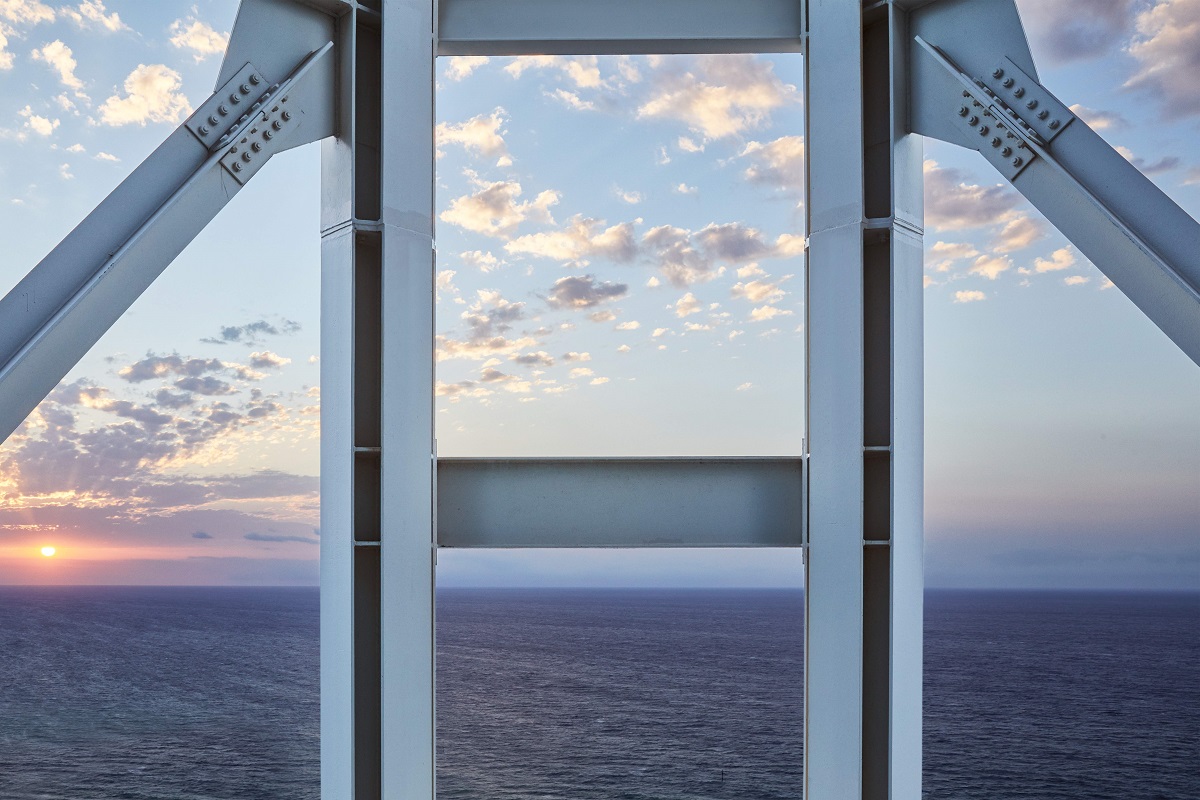
Image credit: Hotel Arts Barcelona / Marriott International
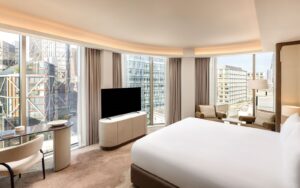
The visibility of the external framework from within, gives you a very tangible connection to the architecture and the structure of the building, which is difficult to explain – you feel both grounded and suspended at the same time, while discovering every well-designed corner of the undeniably luxurious suite. Every view felt curated and every space felt defined, which in combination with vistas of both land and sea, can only be described as breathtaking .
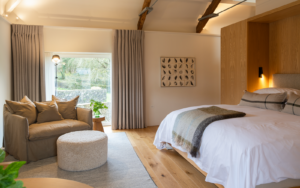
The interior of the suite sits in perfect dialogue with both the view and the architecture – nothing fights for attention, instead all the elements work together, give each other space. To maximise this interplay into the rooms and suites, Meyer Davis removed the dividing wall between the bedroom and the bathroom to open up the layout, allowing natural light to flow freely and gently.
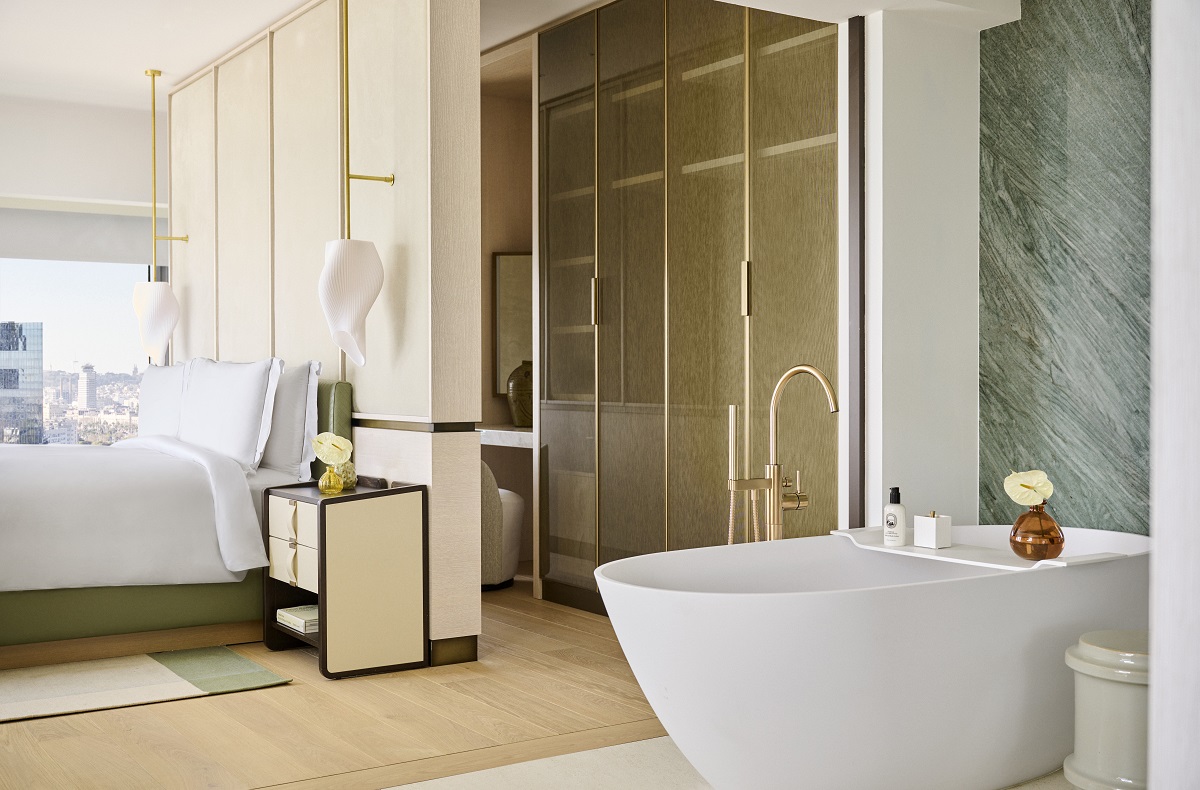
Image credit: Marriott
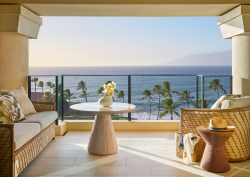
Depending on the room’s orientation, the palette shifts: soft blues and sandy tones for those facing the sea, and warmer, earthy hues for those looking out towards the mountains.
“We wanted the design to feel deeply connected to its surroundings,” explained Svetlana Samardzic, Senior Associate, Director at Meyer Davis, when discussing the project. “Our cues came from the coastal landscape, the textures of the old city, and Barcelona’s rich craft traditions.”
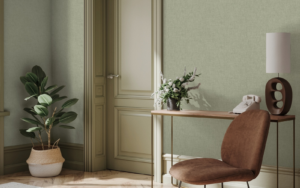
In my case, with a view over the Mediterranean stretching to the horizon without even lifting my head from my pillow, the interior surfaces, textures and colours certainly did feel like an extension of the landscape, all composed with a painterly restraint. Ochre, terracotta, and sea-glass green reflecting Barcelona’s natural palette. The furniture is a carefully assembled cast of modern classics — some mid-century, some custom — all chosen to feel lived-in rather than staged.
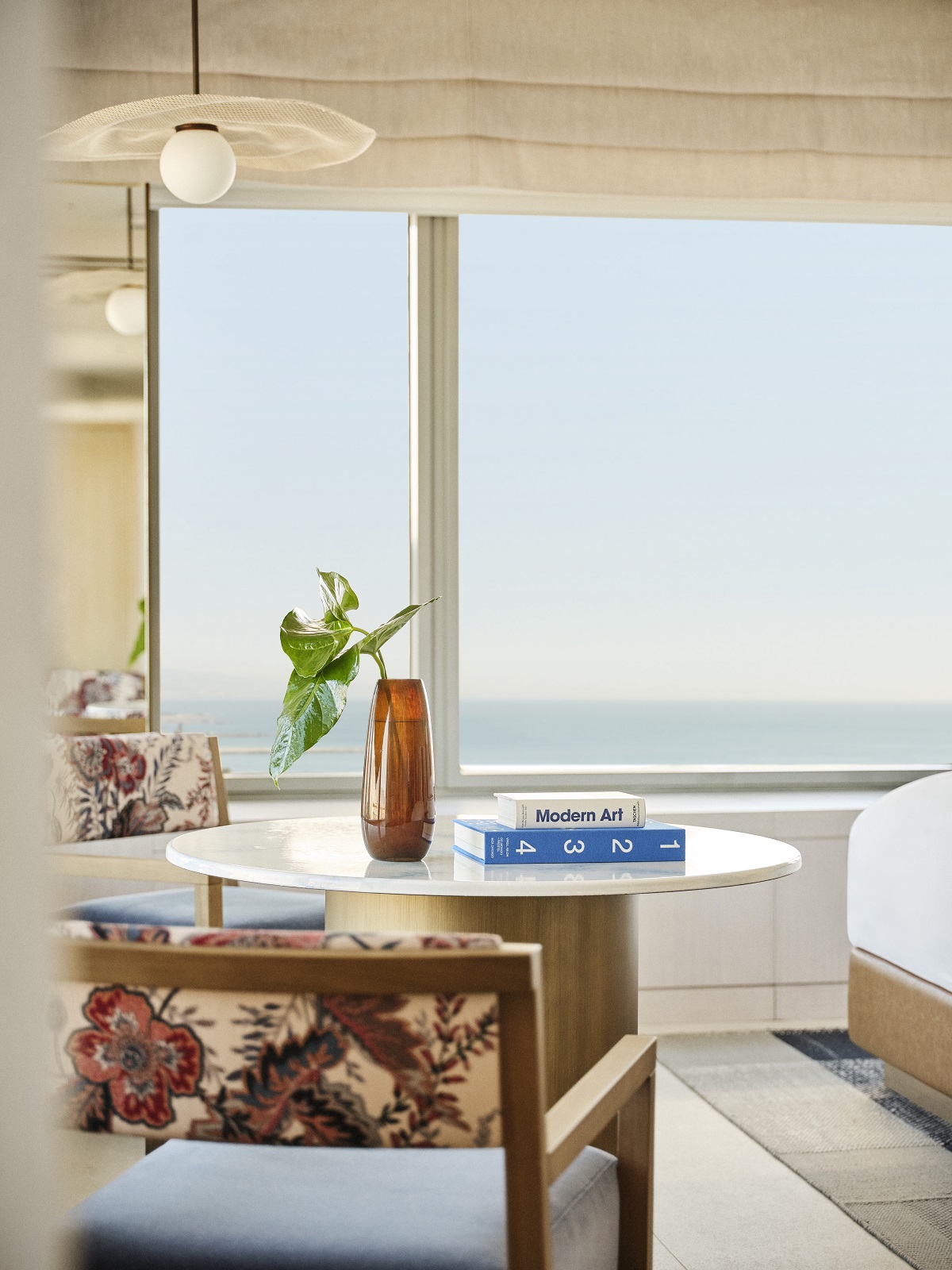
Image credit: Hotel Arts Barcelona / Marriott International
While the bones of the building remain unchanged, its skin and soul have been reimagined by the team at Meyer Davis, with a reverence for both context and contrast. The rooms are all underpinned with a sense of quiet luxury, yet this luxury has a tactile honesty and a materiality that grounds it clearly in its Catalonian context
“The 44-story tower’s structural system evolves as it rises, adding significant complexity to the design process. Our goal was to create a unified concept that filled each of the 432 guestrooms and suites with natural light and expansive views” Svetlana Samardzic, Senior Associate, Director, Meyer Davis
The lighting in each guest room and suite is another eye-catching element. Not only is natural light optimised in the redesign – how can it not be with the morning sunrise literally filling your line of vison from the bath, the bed or wherever else you choose to lay your hat – but lighting elements throughout go way beyond the simply functional, with designs that are both individually sculptural and an integral part of the whole.
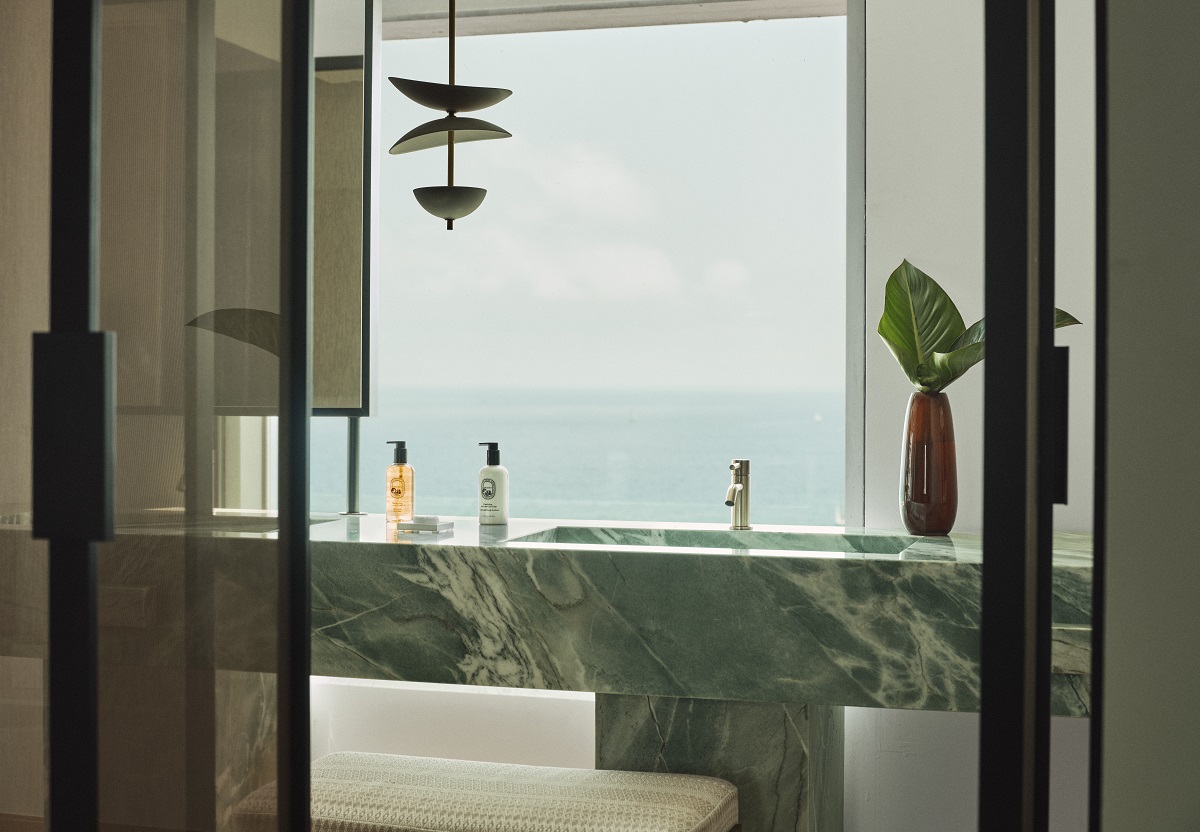
Image credit: Marriott
And looking out of the window (as if there is ever an option), the eye is drawn to that other design classic that has become synonymous with both the hotel and the city – that aforementioned Frank Gehry fish sculpture that shifts in colour and appearance as the sun moves by and a constant reminder of the art in Art Hotel.
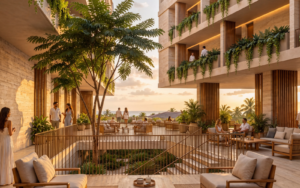
The interaction between El Peix and the SOM tower, provides an interesting dynamic to the outdoor space of the hotel, as both these city landmarks truly occupy space. Sitting relaxing at the pool, with a ‘vermut’ in hand, guests are literally framed by two design icons of the 1990’s. The soaring, geometric tower rises like a monument to engineering precision, while Gehry’s golden fish glimmers and curves toward the sea, capturing the warmth and motion of Mediterranean light. Together, they create a dialogue between rigidity and fluidity, technology and art — transforming what could be a typical hotel terrace into a sculptural landscape
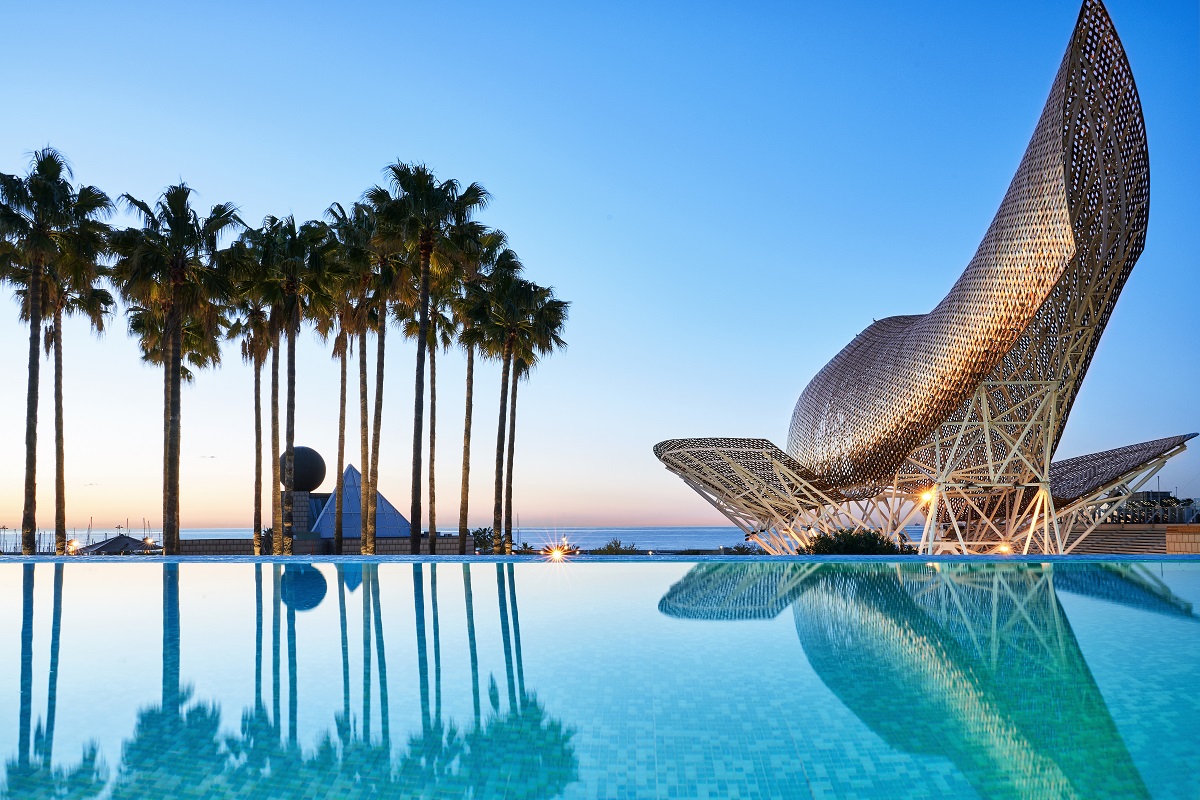
Image credit: Hotel Arts Barcelona / Marriott International
Hotel Arts Barcelona may have a storied past, but its future feels even more compelling. It stands once again as a beacon of Barcelona’s evolving design language: bold yet thoughtful, rooted yet international, always looking outward while staying deeply aware of where it comes from.
At every turn, there’s a sense that this redesign isn’t about reinvention for its own sake, but about refinement – an architectural encore rather than a debut. And with the public areas currently being given the same detailed attention by the Meyer Davis team, I am most definitely looking forward to seeing the rest of this story roll-out.
Main image credit: Hotel Arts Barcelona / Marriott International